
24 Best Color Tattoo Ideas for Women: Must-Try (September 2026)
Color tattoo ideas for women come down to a few things: a motif you actually want on your skin, a palette an artist can hold over time, and a placement that suits how you dress and move. A cherry pair and a watercolor galaxy are both color tattoos, but they age very differently.
Below are 24 designs I grouped by mood, placement and how much detail you can live with, each with realistic sizes, pain notes and one way to make it personal. If you want the smallest option first, jump to the cherry pair or the retro rainbow sun. If you have a whole arm free, the wave and the tropical leaf fragment will use it well.
Color Tattoo Ideas for Women: Quick Guide
| Idea | Style | Best placement | Size | Pain |
|---|---|---|---|---|
| 1. Watercolor rose bouquet | Watercolor | Inner forearm | 4 to 6 in | Low to medium |
| 2. Rainbow butterfly | Fine line and watercolor | Upper back | 5 to 7 in | Medium |
| 3. Sunset mountain range | Illustrative scenic | Outer forearm | 6 to 9 in | Medium |
| 4. Peacock feather | Illustrative | Outer upper arm | 5 to 8 in | Medium |
| 5. Neon forearm wave | Illustrative gradient | Inner forearm | 7 to 10 in | Medium |
| 6. Citrus slice splash | Illustrative with splashes | Lower leg | 4 to 6 in | Medium |
| 7. Watercolor galaxy | Watercolor and fine line | Inner wrist | 2.5 to 4 in | Low to medium |
| 8. Coral reef | Illustrative | Outer calf | 6 to 9 in | Medium to high |
| 9. Red cherry pair | Illustrative | Inner wrist | 2 to 3 in | Low |
| 10. Botanical hummingbird | Illustrative botanical | Side of the neck | 3 to 4 in | Medium |
| 11. Stained-glass moth | Illustrative | Upper back | 4 to 6 in | Medium |
| 12. Geometric prism | Geometric | Forearm | 3 to 5 in | Low |
| 13. Autumn leaves | Watercolor | Shoulder | 3 to 5 in | Medium |
| 14. Blue jellyfish | Watercolor illustrative | Inner arm | 4 to 7 in | Medium |
| 15. Red rose with green stem | Traditional illustrative | Side of the forearm | 3 to 4 in | Medium |
| 16. Hibiscus and monstera | Illustrative botanical | Outer thigh | 5 to 8 in | Medium |
| 17. Color-pencil fox | Illustrative realism | Calf | 5 to 7 in | Medium |
| 18. Retro rainbow sun | Illustrative retro | Inner upper arm | 3 to 4 in | Low |
| 19. Floral snake | Illustrative | Forearm | 7 to 12 in | Medium |
| 20. Crescent moon with stars | Illustrative celestial | Behind the ear | 2 to 3 in | Medium |
| 21. Koi in a water splash | Illustrative | Outer arm | 5 to 7 in | Medium |
| 22. Desert cactus cluster | Illustrative | Ankle | 3 to 4 in | Medium |
| 23. Tropical leaf fragment | Illustrative botanical | Upper arm | 6 to 9 in | High |
| 24. Abstract ribbon spiral | Abstract illustrative | Side ribs | 5 to 8 in | High |
Sizes are the finished height or width of the design on skin, not the size of the paper it was drawn on. Ask for healed work when you browse portfolios, since fresh color always looks brighter than it will settle.
1. Watercolor Rose Bouquet
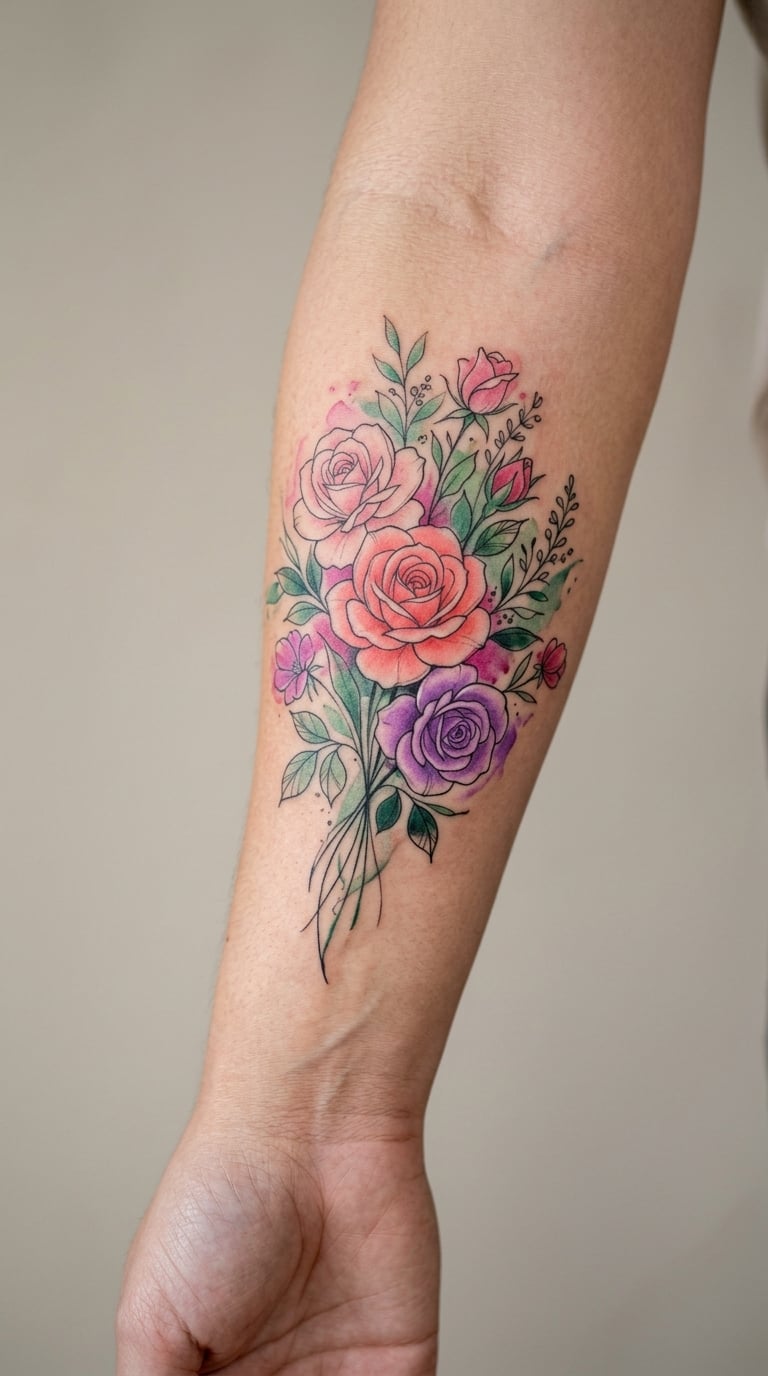
A watercolor rose bouquet is drawn as a loose cluster of three to five blooms where the edges of the color bleed outward instead of stopping at a hard line. Petals sit in translucent pink, coral and violet washes, and the leaves can be a single soft green or left partly unfinished.
People choose it for the softness. Color tattoo ideas for women often lean this way when someone wants something that reads as a flower without looking like a sticker. The loose edges also hide small imperfections, which is a relief on a first piece.
Placement: Inner forearm, upper arm, or along the collarbone line. Size: 4 to 6 inches (10 to 15 cm) tall. Style: Watercolor, sometimes with a thin black outline on the stem only.
Pain: Low to medium on the inner forearm. Expect roughly a one to two hour session. Ageing note: watercolor sits lighter in the skin than packed color, so it softens faster than a fully saturated design.
Make it yours: Use your birth month flowers in place of roses, and keep the palette to two hues so the piece stays quiet under a shirt cuff.
If you want a tighter floral reference, our 14 small rose tattoo ideas for women roundup works well alongside this one.
2. Rainbow Butterfly With Fine-Line Wings
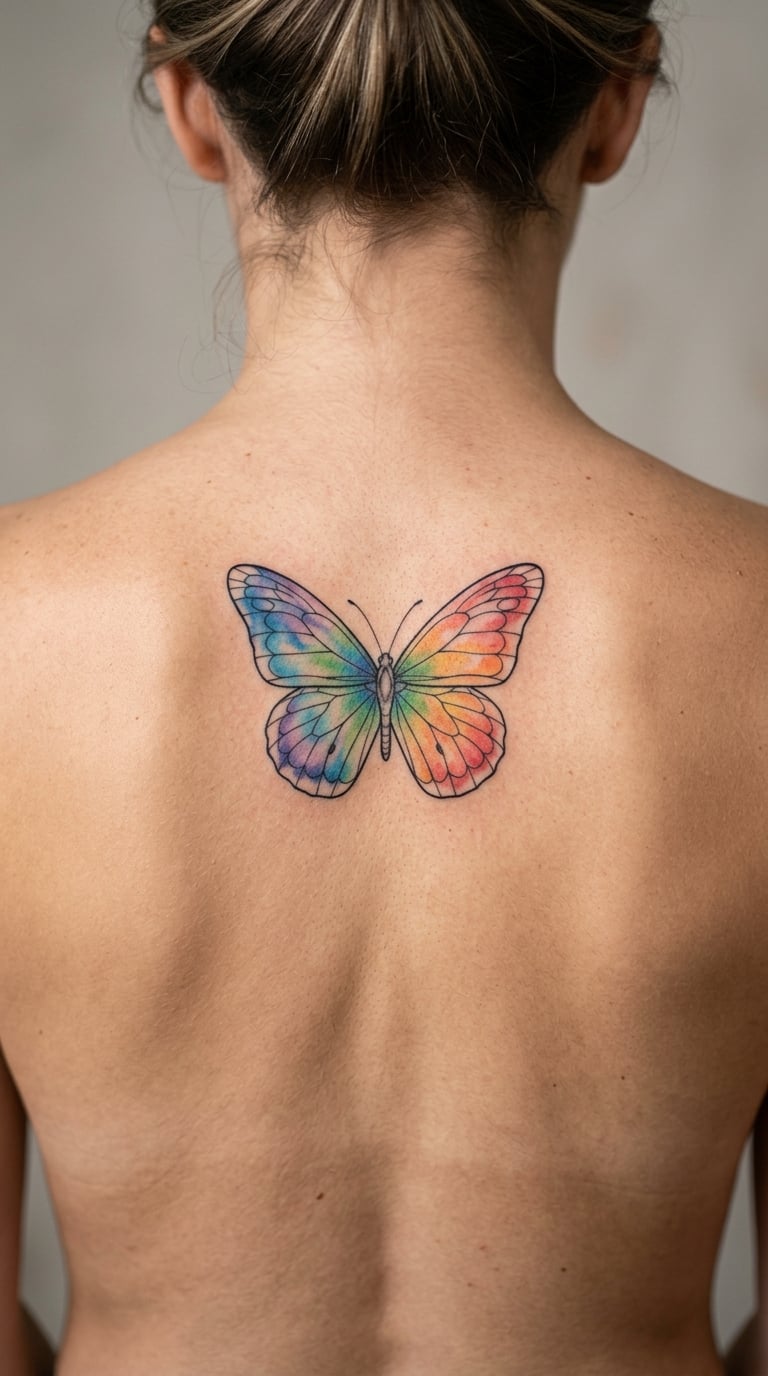
A rainbow butterfly combines a symmetrical shape with two different techniques: fine black line defines the wing edges and antennae, while watercolor fills in translucent bands of red, orange, yellow, green, blue and violet. The colors usually fade into one another rather than sitting in flat blocks.
It gets picked because it looks light and open from a distance and detailed from close up, which makes it a good fit for a back placement that is only seen sometimes. There is no fixed meaning attached to it, though most people describe it as a wish for change or a marker of a transition they had already made.
Placement: Upper back between the shoulder blades, or across one shoulder blade. Size: 5 to 7 inches (13 to 18 cm) wingspan. Style: Fine line with watercolor fill.
Pain: Medium, and the center of the back is sensitive. The fine outlines go in quickly; the color passes take longer. Ageing note: small inner wing details soften within a few years, so ask for slightly heavier line weight than looks right on paper.
Make it yours: Narrow the rainbow to two colors on one side, or have the artist hide a small date under the lower wing.
3. Colorful Sunset Mountain Range
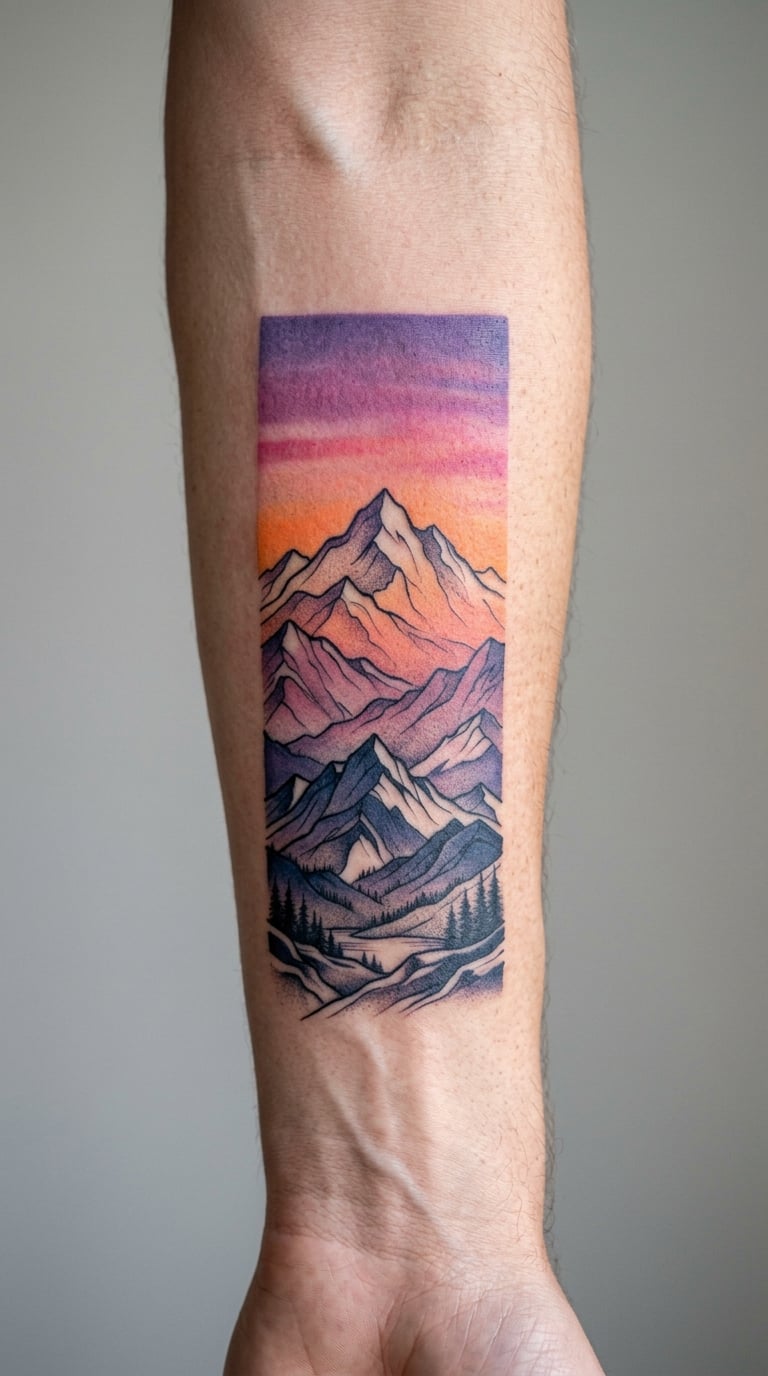
A sunset mountain range stacks three or four jagged silhouettes, each filled with a different band of color: deep orange near the base, then pink, violet, and a thin strip of blue sky at the top. Straight geometric peaks sit in contrast to the soft sky washes.
This one is a favorite when someone wants a scenic piece that feels warm rather than realistic. The layered approach means the piece reads clearly at a small size, and the horizon line gives you a natural place to add something personal without crowding it.
Placement: Outer forearm, outer upper arm, or across the ribs if you go bigger. Size: 6 to 9 inches (15 to 23 cm) wide. Style: Illustrative with geometric blocks.
Pain: Medium on the forearm, higher across the ribs because the skin there is thin and the surface is uneven. Ageing note: those pale orange and pink bands are the first colors to lose punch, so expect a touch-up conversation within a couple of years.
Make it yours: Put the year you moved to your favorite place in the sky band, or reshape the peaks to match a skyline you grew up near.
4. Jewel-Toned Peacock Feather
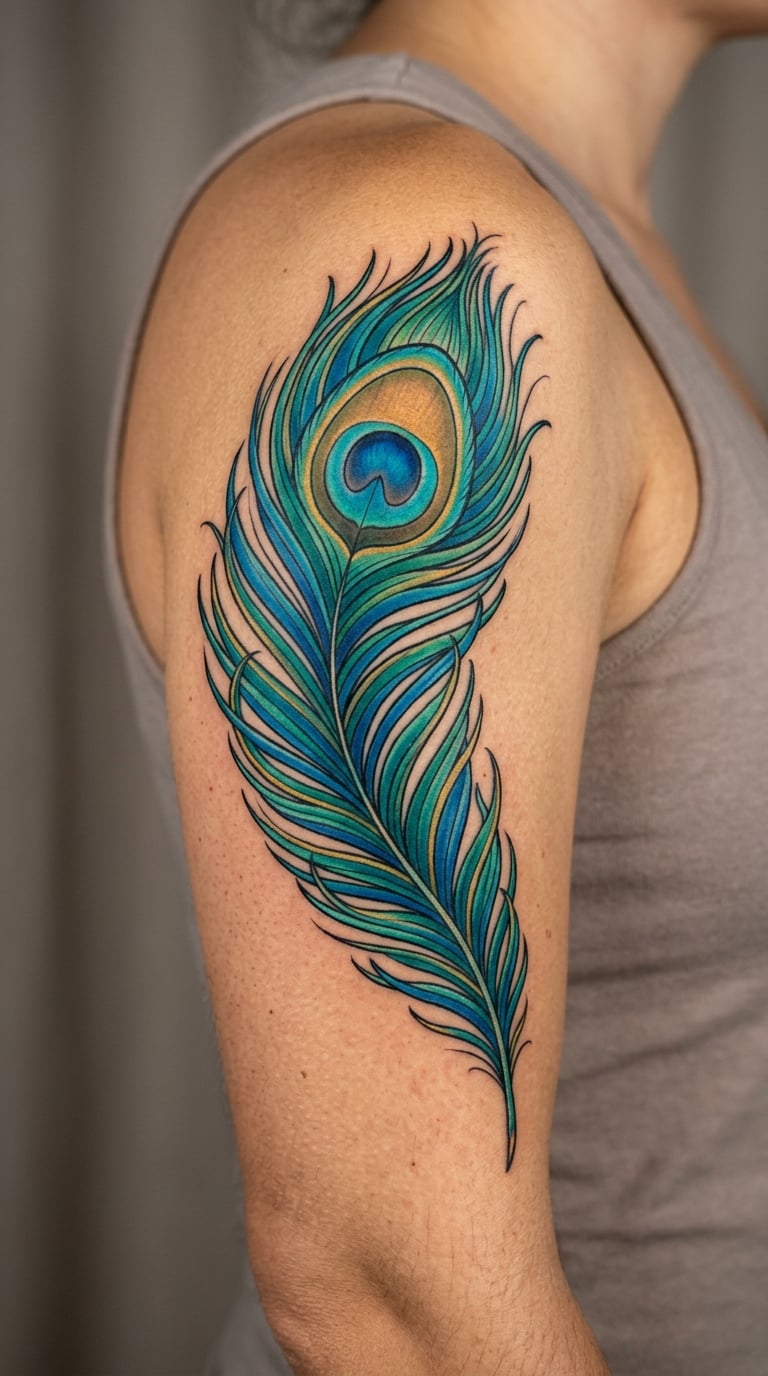
A jewel-toned peacock feather is one long eye-shaped form with a slim shaft trailing behind it. The barbs are drawn in teal, blue and emerald, and the gold is usually reserved for the ring around the eye so the eye stays the focal point.
It is a popular request among color tattoo ideas for women because the shape is graceful but the color work is dense, which is exactly the balance many people are after. The feather is also forgiving to place on a curve: an upper arm or a thigh line follows the natural fall of the barbs.
Placement: Outer upper arm, outer thigh, or along the side of the calf. Size: 5 to 8 inches (13 to 20 cm) long. Style: Illustrative with high-pigment packing.
Pain: Medium, and the gold ring is where the needle does the most passes. Ageing note: the barbs are thin lines, so they can look slightly ragged after five or six years. Darker greens and blues hold their own; the gold is the part that dulls first.
Make it yours: Add a second smaller feather crossing underneath, or swap the teal for a deep plum to match a specific color you wear often.
5. Neon Wave on the Forearm
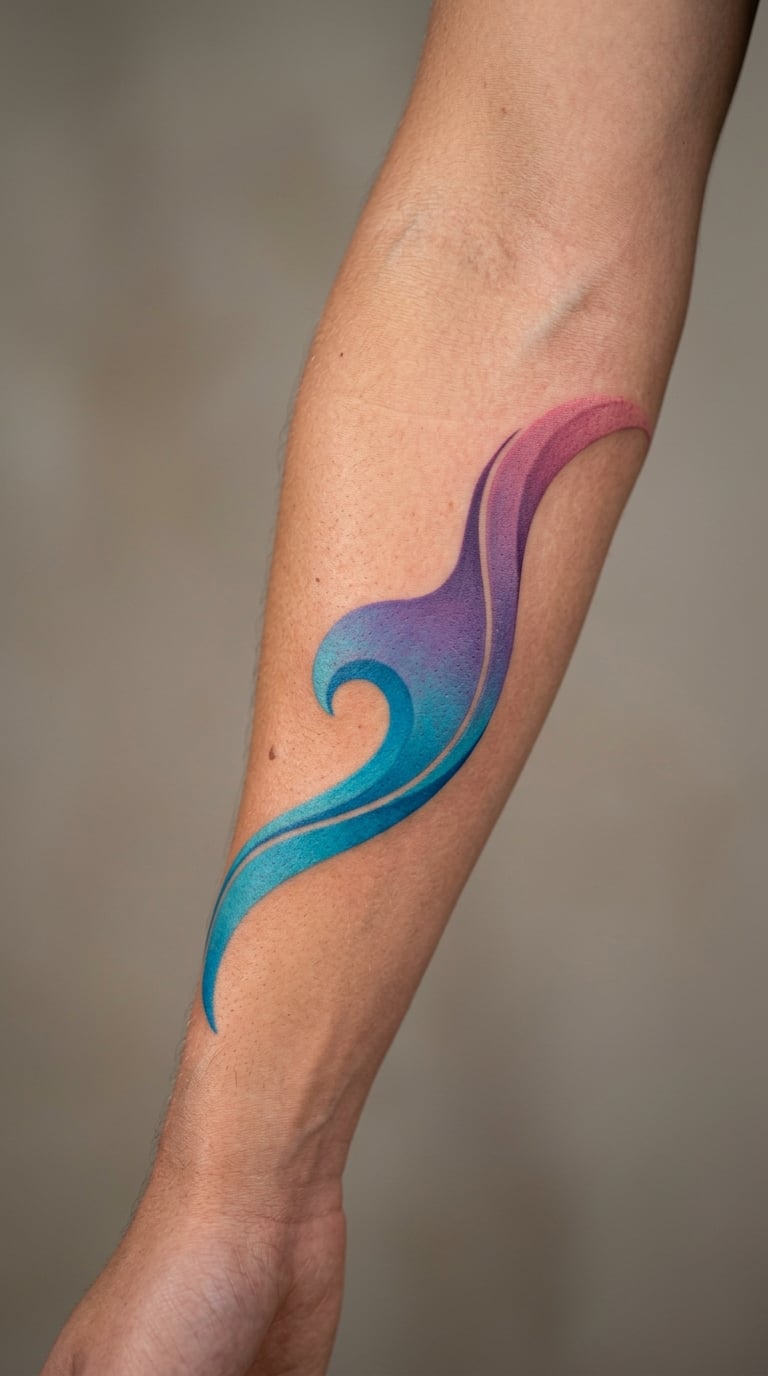
A neon wave is a single sweeping curve that fills with a smooth gradient, usually running turquoise at one end into purple and then hot pink at the other. The crest can be a simple line or a light foam edge, and there is usually no shading underneath it.
This is the design people send an artist when they want something that reads as a tattoo rather than a drawing of a tattoo. Because the color is the whole effect, the gradient has to be laid in as continuous passes, which makes it one of the more technical color pieces on this list.
Placement: Inner forearm along the length of the arm, or wrapping the wrist. Size: 7 to 10 inches (18 to 25 cm) long. Style: Illustrative gradient.
Pain: Medium across the inner arm, and reviewers on r/tattooadvice name the inner arm among the harder spots for a long sitting. Ageing note: the mid-tone violet and turquoise usually look close to one another after a few years, so the contrast flattens before the color fully goes.
Make it yours: Curve the wave to follow an existing line, such as a wrist tattoo or a forearm piece, so the two read as one composition.
6. Citrus Slice Splash
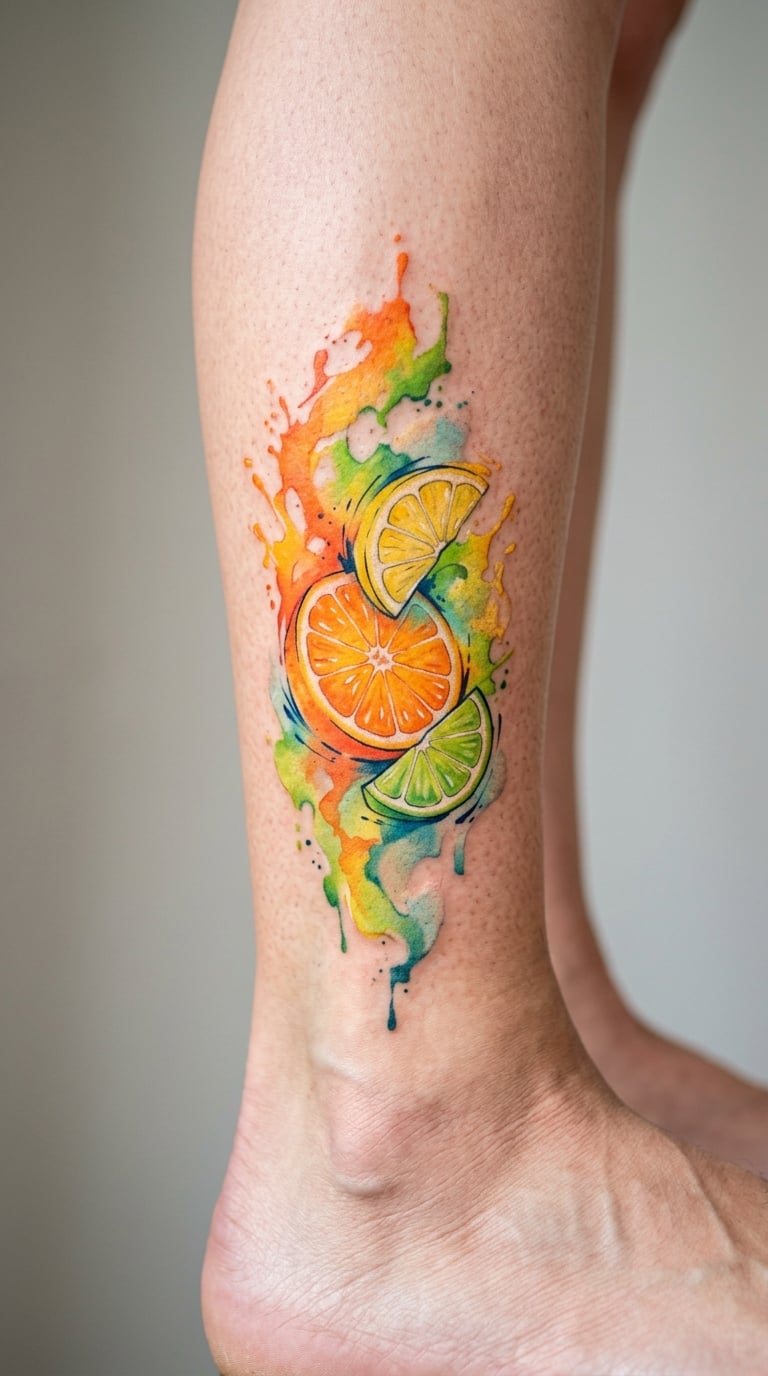
A citrus splash sets two or three slices at slight angles, with the fruit segments outlined in clean color and loose droplets of juice radiating outward. Orange, lemon and lime are the core palette, and the splashes are usually left as pale washes rather than solid drops.
It is cheerful without a joke in it, which is why it keeps showing up in color tattoo ideas for women. The design works at a small size too, since the circular slices stay legible even when the splash detail is dropped.
Placement: Lower leg, ankle, or inner arm. Size: 4 to 6 inches (10 to 15 cm) across. Style: Illustrative with watercolor accents.
Pain: Medium on the shin and low to medium on the inner arm. Expect about an hour and a half. Ageing note: yellow is the fastest-fading ink in almost any palette, and the lemon slice is where that shows first. Reddit tattoo threads mention it again and again, so pick a yellow with a warm bias and expect a touch-up.
Make it yours: Use citrus from a region you have a connection to, or add a single leaf in deep green to anchor the warm colors.
7. Watercolor Galaxy With Fine Stars
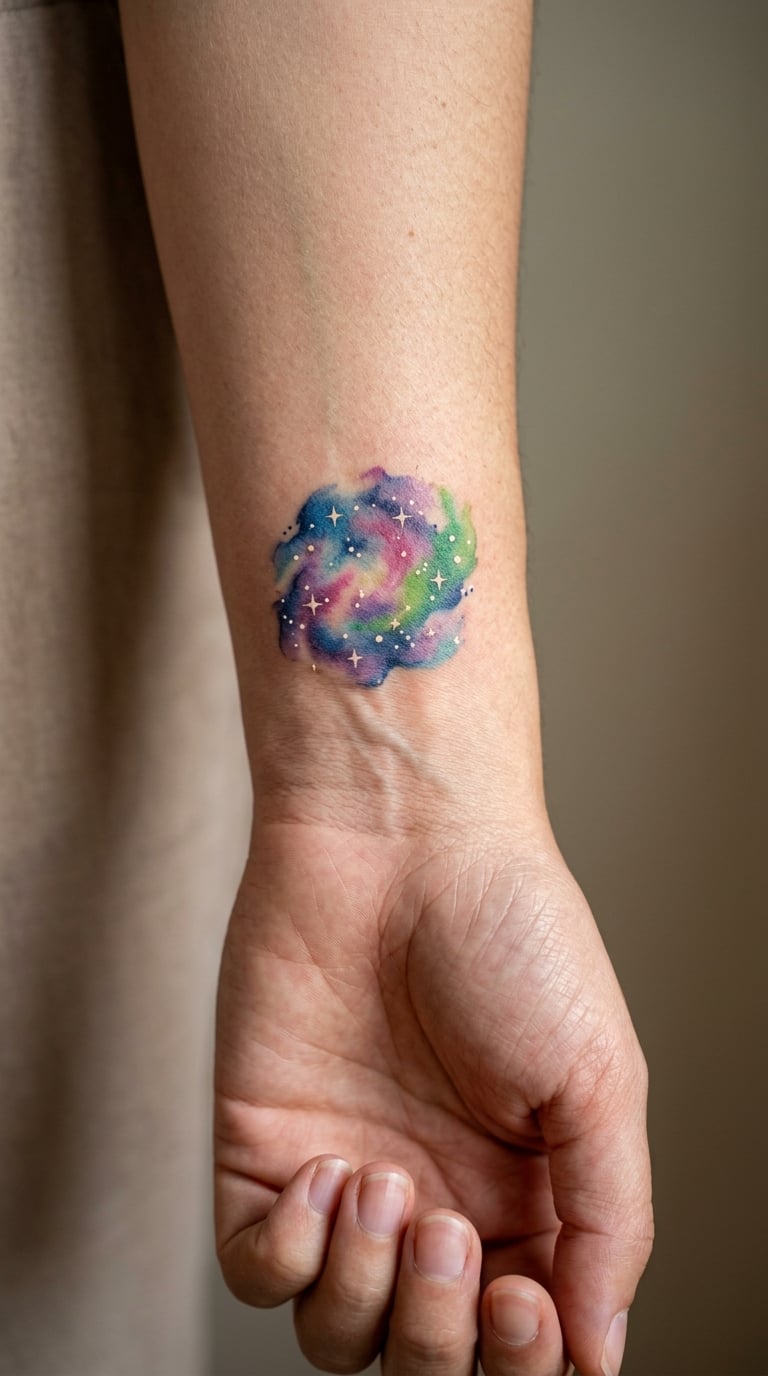
A watercolor galaxy is a soft oval of deep blue, violet and magenta with a hint of green, finished with a scatter of tiny fine-line stars around the edge. The center stays loose and cloudy; the stars are precise. That contrast is the whole point of the design.
It suits people who want a colorful piece that is quiet at arm’s length. Wrist placement keeps it small, and the size means a first session is usually enough.
Placement: Inner wrist, or behind the ear. Size: 2.5 to 4 inches (6 to 10 cm). Style: Watercolor with fine-line star accents.
Pain: Low to medium on the inner wrist. The wrist is bony and the nerve runs close, so the sensation is sharp but brief. Ageing note: the tiny stars are the first casualty. On a piece this small, expect them to blur over the years unless the artist works them heavier than seems right.
Make it yours: Ask for the constellation that matters to you as the star pattern rather than a scatter, and let the wash colors match the season you got it.
For a lighter touch overall, our 18 best fine line tattoo ideas for women covers the minimal end of the scale.
8. Coral Reef in Ocean Hues
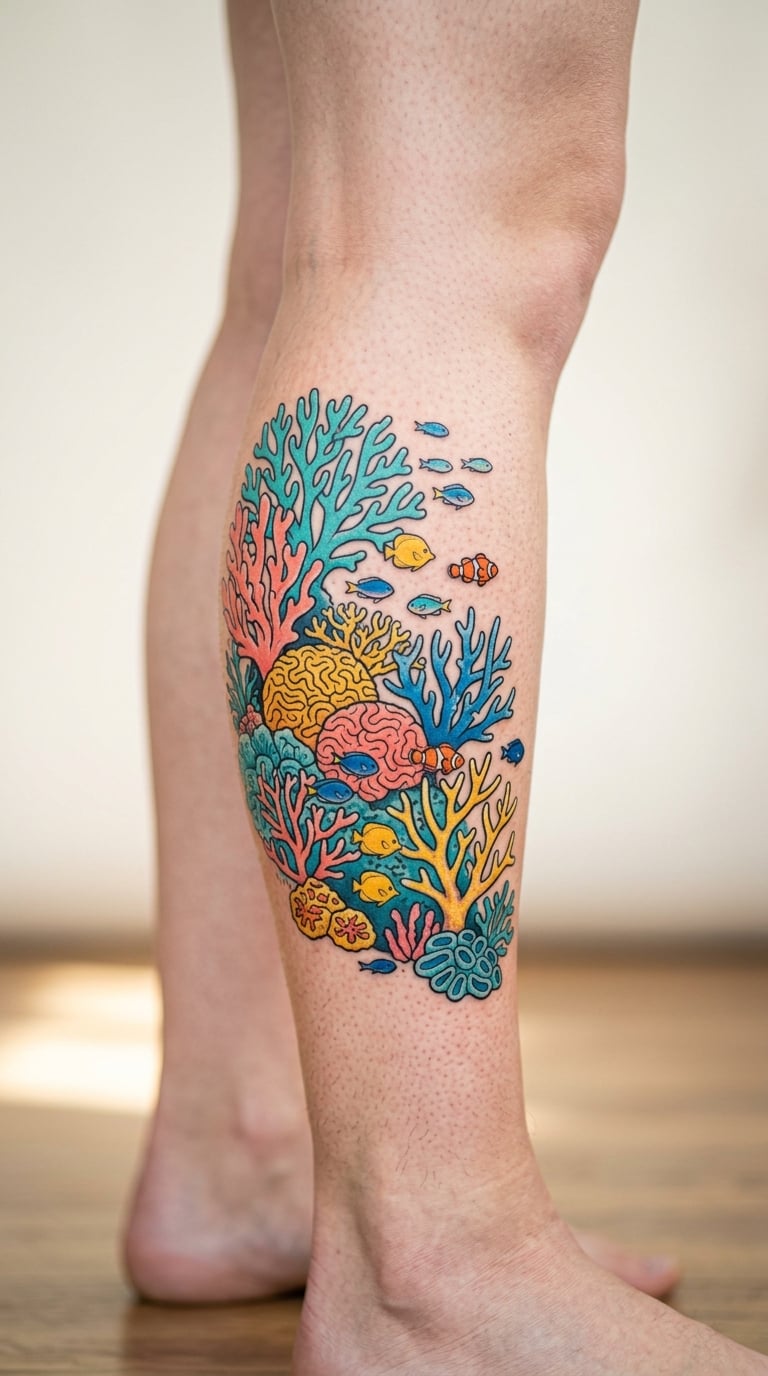
A coral reef composition stacks branching coral, fan coral, two or three shells, and a few small fish in turquoise, coral pink, yellow and blue. The forms are simplified and illustrative rather than scientific, and the negative space between branches is as important as the color.
People come to this design when they want a colorful piece that fills a larger area without turning into one solid block. It also reads well on a curved surface, since the fish and branches can be spaced to follow a calf or a rib line.
Placement: Outer calf, outer arm, or across the back of the shoulder. Size: 6 to 9 inches (15 to 23 cm). Style: Illustrative with flat and blended color.
Pain: Medium to high on the calf, and long. Plan for breaks, and remember that saturated coral pink takes repeated passes to hold. Ageing note: yellow tips on the fan coral go first; the blues and greens stay legible far longer.
Make it yours: Include one species of fish from somewhere you have dived, travelled or grown up, and let everything else stay generic.
9. Red Cherry Pair With Green Leaves
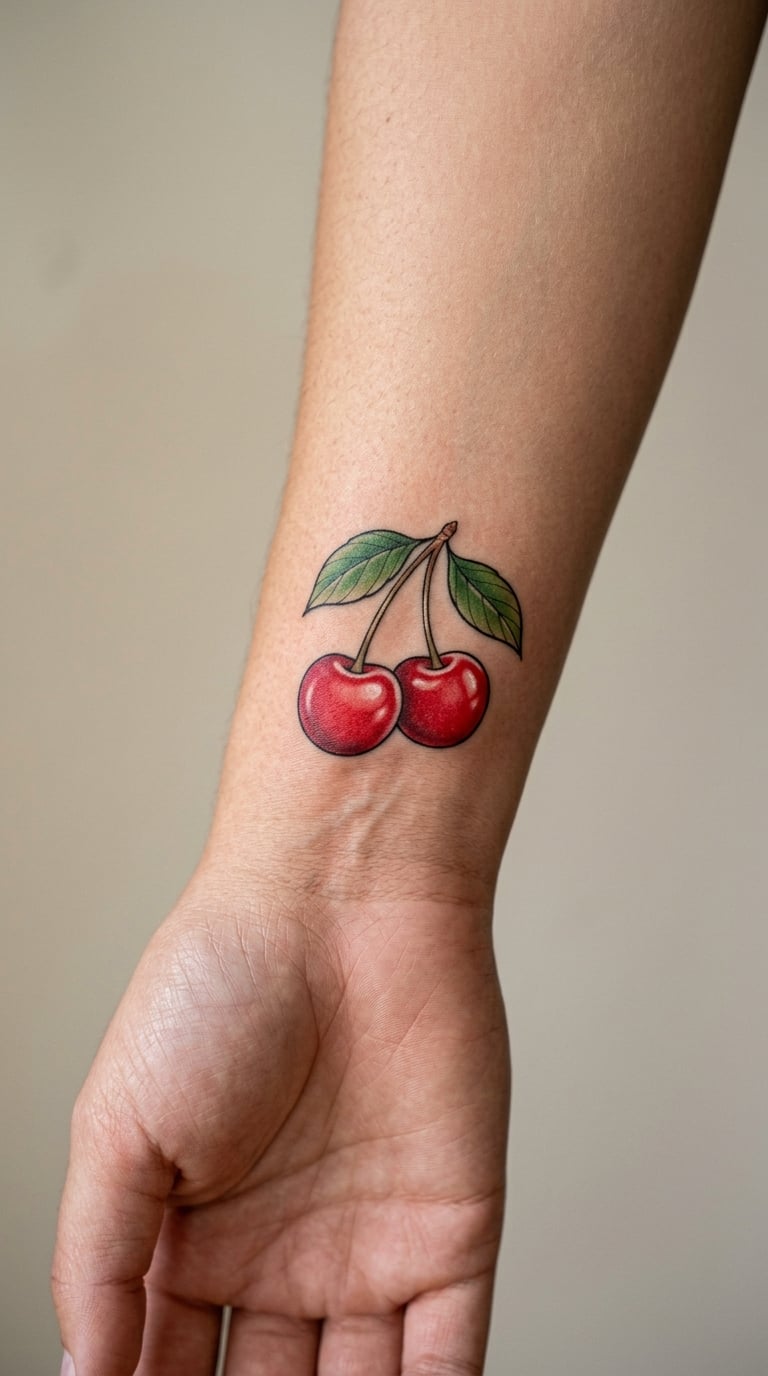
A cherry pair is two round red fruits joined by thin brown-green stems, with two or three leaves above. The red is packed solid with a small white highlight on each cherry, which is what stops it looking flat once healed.
This is the one I suggest most often to someone getting their first color piece. It is small, the shape is forgiving, and a bold red with a green accent is easy to keep looking sharp years later. Our 14 small rose tattoo ideas for women roundup has other options at the same scale if you want to compare.
Placement: Inner wrist, behind the ear, or at the ankle. Size: 2 to 3 inches (5 to 8 cm). Style: Illustrative, with a traditional option if you want heavier outlines.
Pain: Low. Most people describe a cherry pair as a short, manageable sitting of about forty minutes. Ageing note: red is the second fastest color to fade, so ask your artist for a deep, warm red rather than a bright cherry-red that will head toward orange over time.
Make it yours: Make it a matching piece, or add a single stem leaf in a second color to tie it to a color you already wear.
10. Botanical Hummingbird in Motion
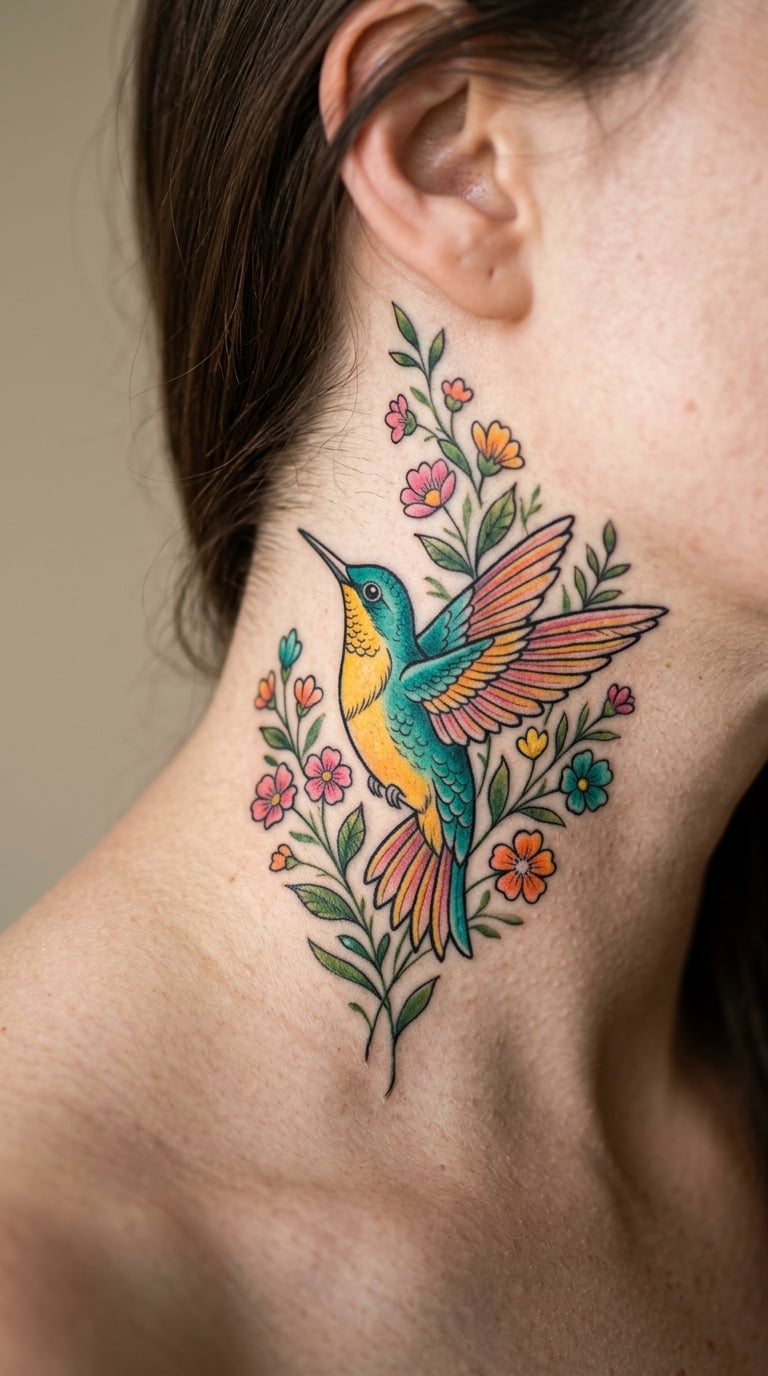
A botanical hummingbird is drawn mid-hover with wings blurred into two pale sweeps, a long beak pointed at a flower, and small leaves and blossoms scattered around the body. Saturated teal, yellow, pink and orange keep the bird readable even at a compact size.
It is one of the more requested color tattoo ideas for women because it is a small, lively scene rather than a single motif, and the movement gives the artist something to do with color blending.
Placement: Side of the neck, inner arm, or behind the shoulder. Size: 3 to 4 inches (8 to 10 cm) for the bird, more if you add a full flower trail. Style: Illustrative botanical.
Pain: Medium. The neck is a sensitive spot and people often brace through it, which makes the sitting feel longer than it is. Ageing note: the pale wing sweeps are the first thing to blur, so keep the wings simple rather than feathered.
Make it yours: Have the beak touch a specific flower, and choose the surrounding leaves from your own garden or a place you visit often.
11. Stained-Glass Moth
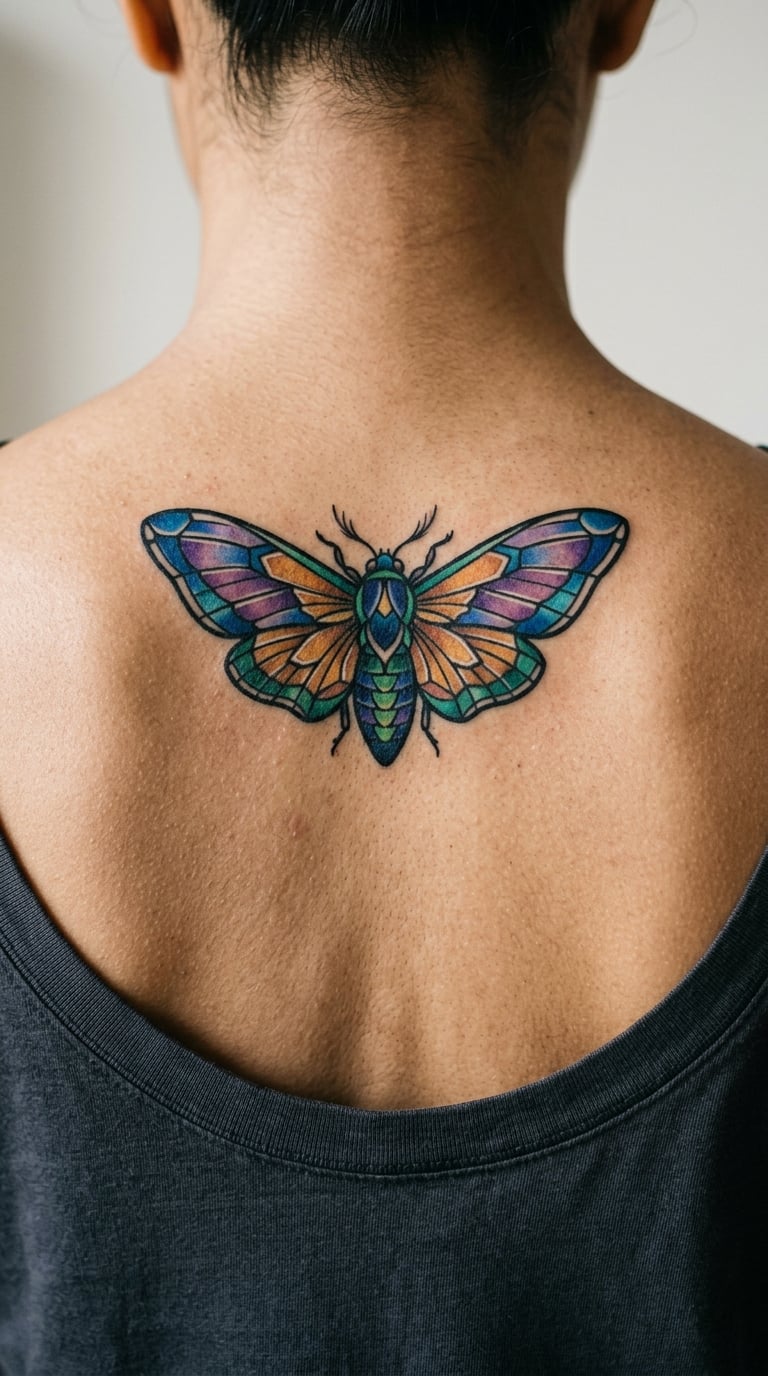
A stained-glass moth has its wings divided into irregular panels by thin black leading, and each panel filled with a different jewel tone: sapphire, deep purple, amber and forest green. The body is usually a solid dark segment that anchors all the color.
The effect is graphic rather than realistic, which is why it holds up as a color piece. It is also forgiving about exact anatomy; nobody is checking whether the wing pattern matches a real species.
Placement: Upper back, forearm, or over the shoulder blade. Size: 4 to 6 inches (10 to 15 cm) wingspan. Style: Illustrative with geometric panel work.
Pain: Medium on the back, lower on the forearm. The panel edges take repeated passes to keep crisp. Ageing note: the black leading lines last the longest, so the design still looks structured even once the panel colors have mellowed.
Make it yours: Build the panel colors from a stained-glass window or a cathedral ceiling you have seen, and ask for two tones inside each panel for depth.
12. Geometric Prism Refraction
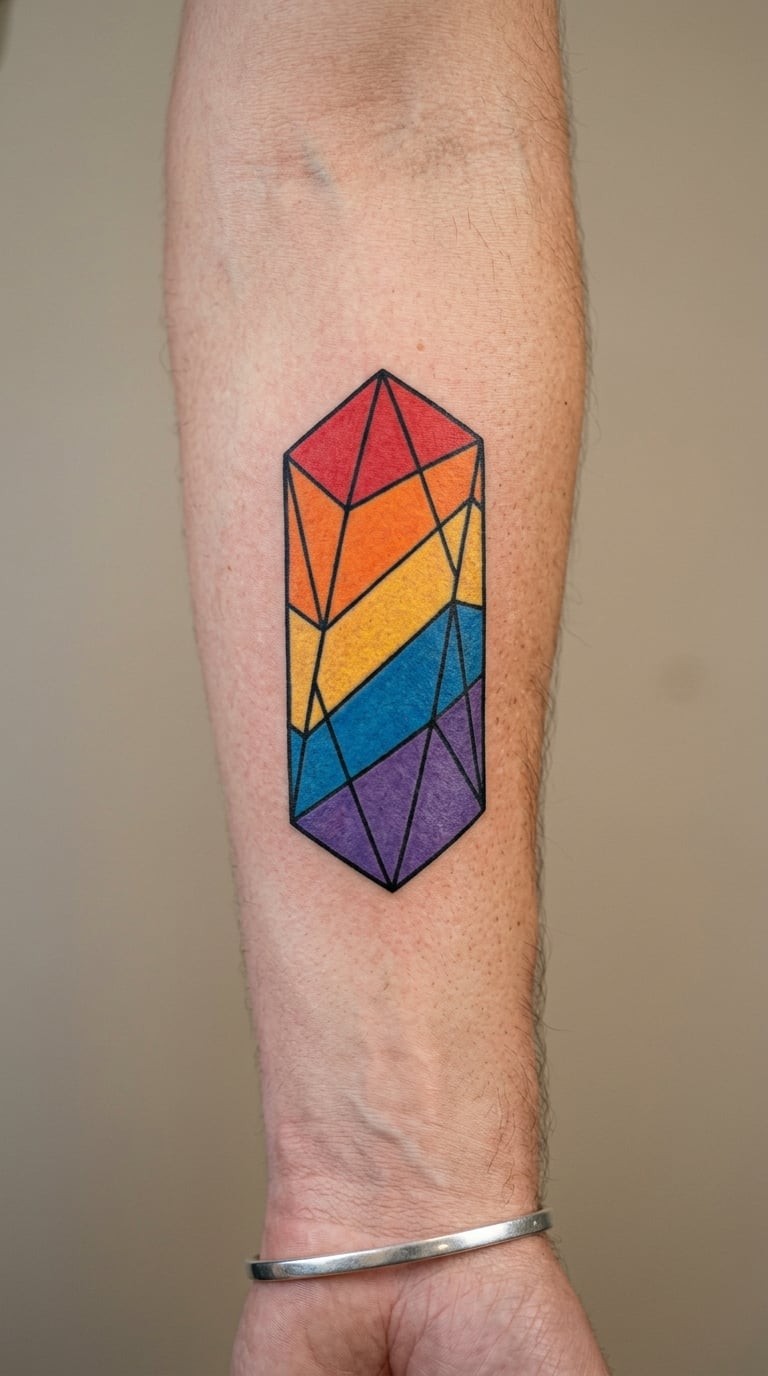
A geometric prism is a simple triangle with a beam entering one side and a fan of separated color bands leaving the other. Red, orange, yellow, blue and violet sit in clean, straight bands with a small gap between each, all held by thin black line.
It is a good pick when you want a colorful tattoo that reads as graphic design rather than illustration. The straight edges make it easy to scale, and it fits neatly between existing pieces without touching them.
Placement: Forearm, inner upper arm, or along the shin. Size: 3 to 5 inches (8 to 13 cm) long. Style: Geometric illustrative.
Pain: Low, and one of the quicker pieces here. Expect around an hour and a half. Ageing note: the yellow and orange bands will need attention sooner than the blue and violet, so ask your artist to build the warm bands a shade deeper than looks necessary.
Make it yours: Order the bands to match a flag, a team color, or the order of colors in a rainbow you drew as a kid.
13. Autumn Leaves in Warm Watercolor
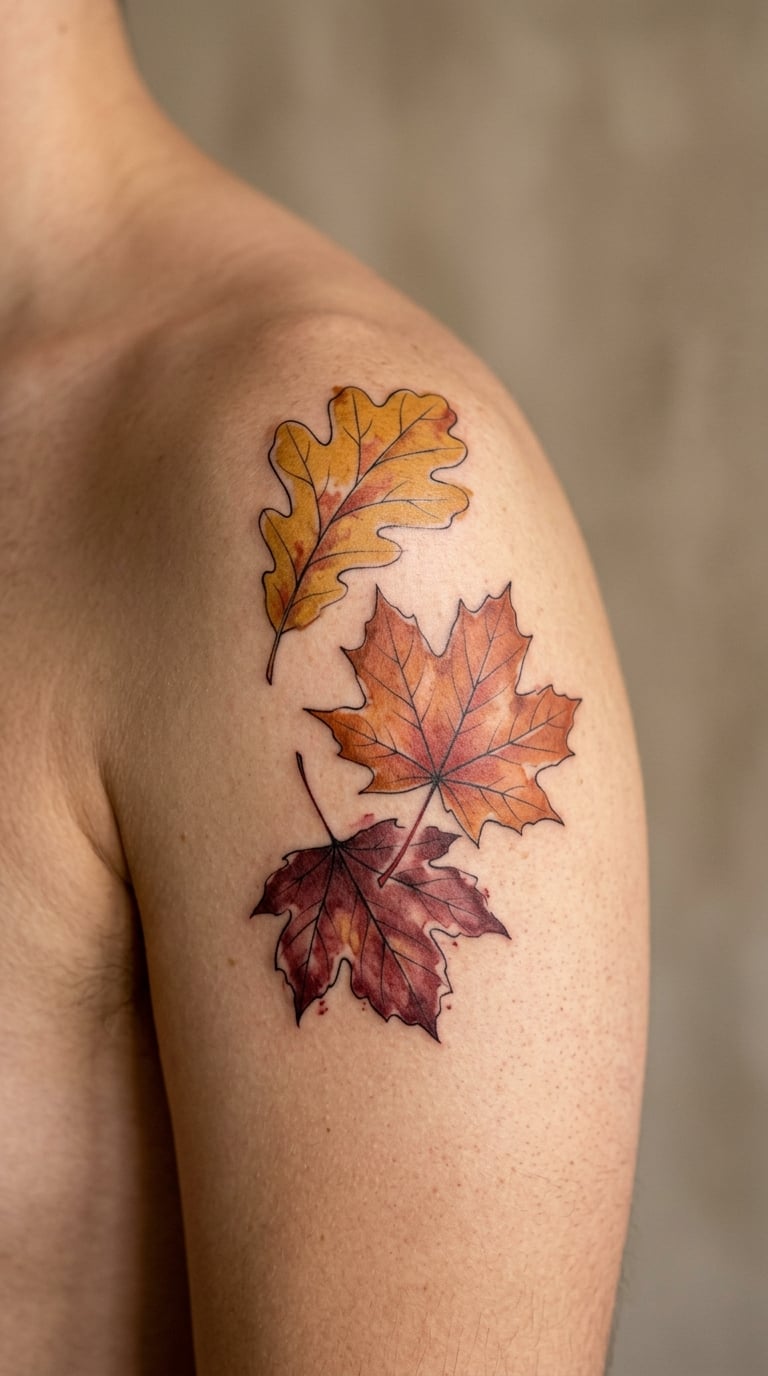
Autumn leaves in watercolor are three or four loose maple and oval leaves, each in a different wash: rust, mustard, burgundy and orange. Veins are suggested with a few thin lines rather than drawn out in full, and the shapes drift apart rather than sitting in a bunch.
It is one of the easier color tattoo ideas for women to get right because watercolor forgives a soft edge, and a leaf has an obvious silhouette to work from. Shoulder placement gives the design some room to spread with the body.
Placement: Shoulder, upper back, or outer arm. Size: 3 to 5 inches (8 to 13 cm) as a group. Style: Watercolor.
Pain: Medium over the shoulder because the collarbone sits right under the surface. Ageing note: mustard is close to yellow in how it behaves, so that leaf will fade first. Darker burgundy typically holds its tone longest.
Make it yours: Add one leaf for every year that mattered to you, keeping the group under five so the piece still breathes.
14. Blue Jellyfish With Flowing Tentacles
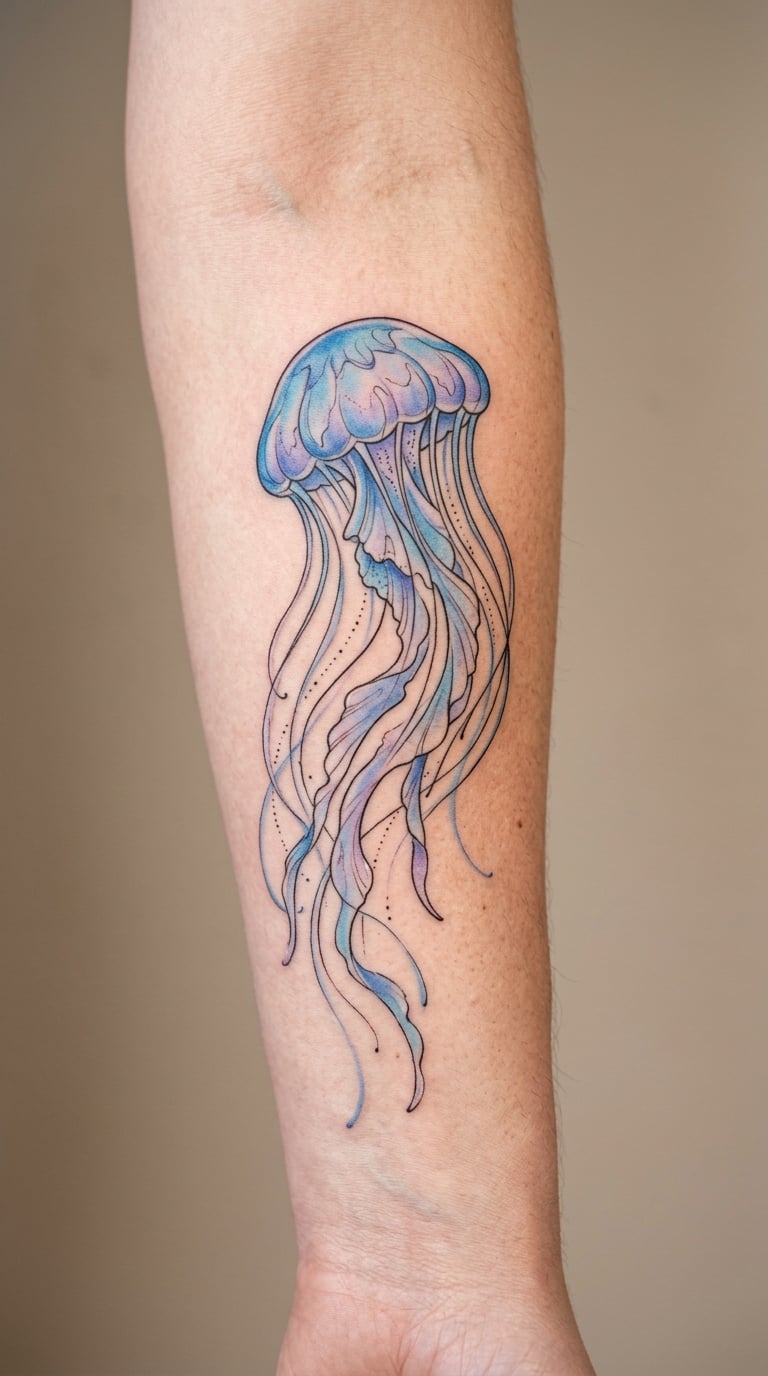
A blue jellyfish is a rounded bell shaded from pale blue at the top into lavender at the bottom, with long tentacles trailing in loose S-curves. Translucency comes from leaving small areas of skin showing inside the bell instead of filling it solid.
It works well vertically, so it suits the inside of an arm where the tentacles can follow the line of the limb. The soft palette also ages more gracefully than a high-contrast design because there is less edge to define.
Placement: Inner arm, calf, or the back of the shoulder. Size: 4 to 7 inches (10 to 18 cm) including the tentacles. Style: Watercolor illustrative.
Pain: Medium. The tentacles are many thin passes rather than one packed area, which people often find easier to sit through. Ageing note: the pale blue bell tends to lighten considerably, so plan for a softer piece than the reference photo.
Make it yours: Match the bell colors to a piece of sea glass or a sunset from a specific trip, and have the tentacles end without a hard stop.
15. Red Rose With Green Stem
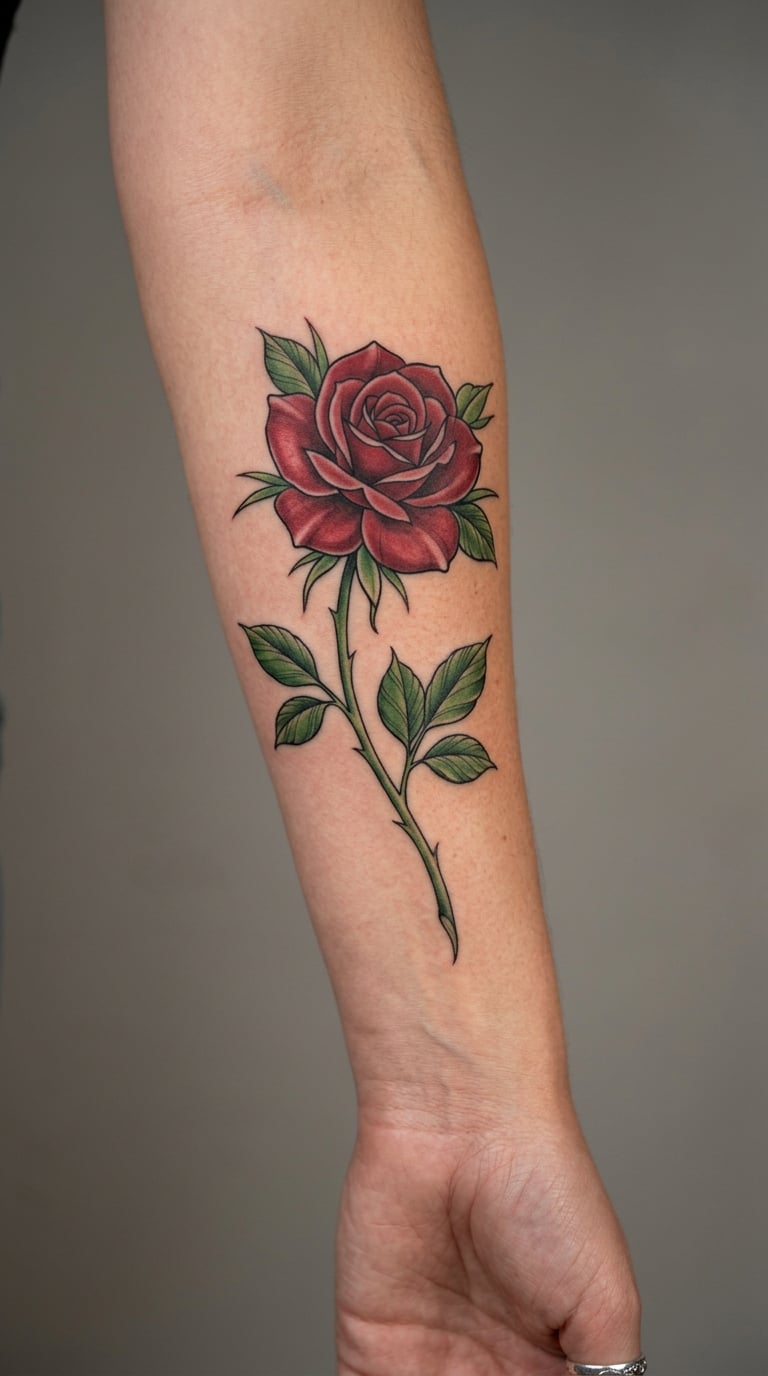
A red rose is the most traditional color design in tattooing: layered petals shaded from a light center highlight into a deep outer red, sitting on a single stem with two or three leaves. The palette is deliberately narrow so the red has to do the work.
It remains a first-tattoo favorite because the shape is instantly recognizable and the shading is forgiving. A rose also scales down cleanly, so the same design works at the wrist or blown up across a thigh.
Placement: Side of the forearm, upper arm, or over the heart. Size: 3 to 4 inches (8 to 10 cm) for a single bloom. Style: Traditional illustrative.
Pain: Medium on the forearm. The shading means repeated passes over the same skin, so the sensation builds rather than spiking. Ageing note: red fades faster than almost anything else, and the green in the leaves goes before the red does, which leaves the stem looking tired first.
Make it yours: Ask for a color mix the traditional style would not normally use, such as a rose in deep magenta with a blue-grey leaf, so it still reads as a rose but not a copy.
16. Tropical Hibiscus and Monstera Pair
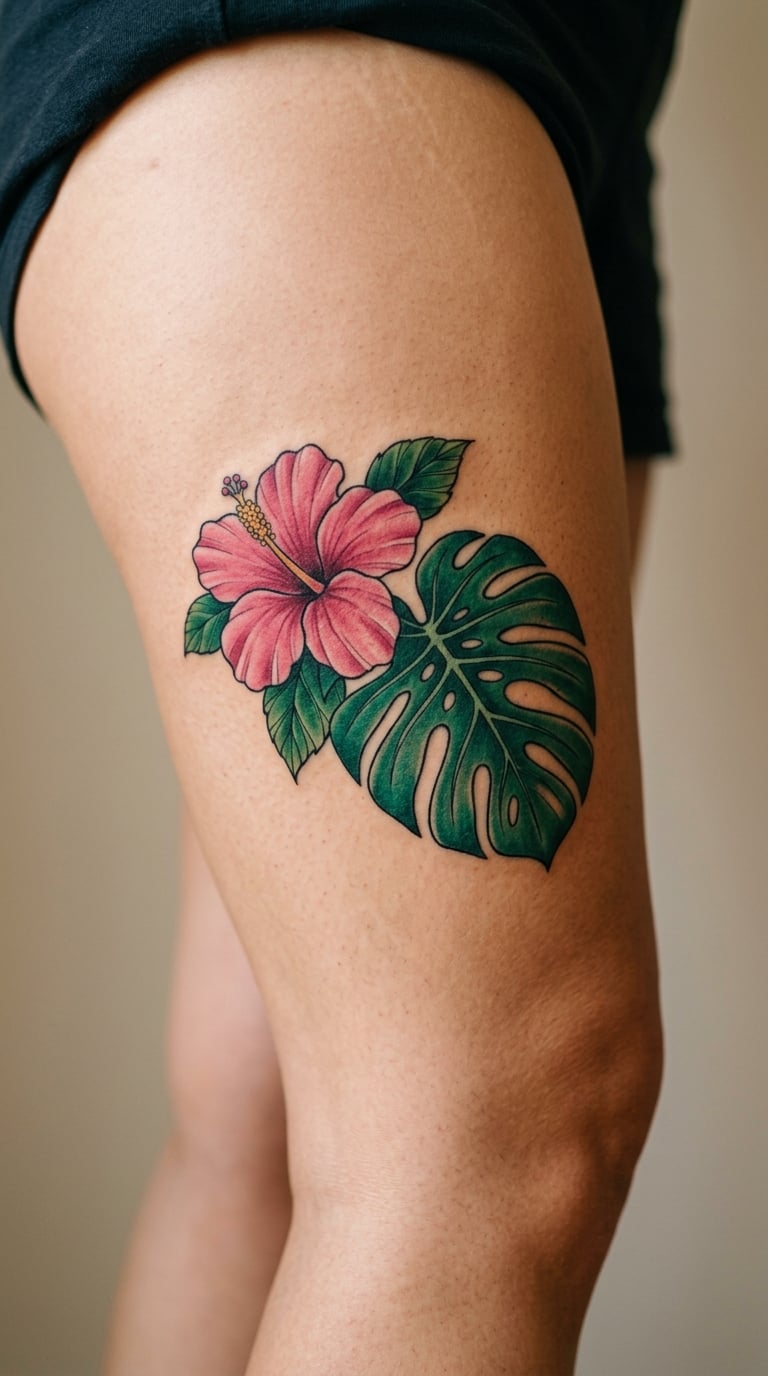
A tropical pair balances one open pink hibiscus with a single deep green monstera leaf, the two shapes overlapping slightly. The hibiscus carries the pink and a small yellow stamen, the monstera is built from layered greens with lighter veins, and a little negative space keeps the leaf from looking solid.
It is one of the most requested color tattoo ideas for women because the two elements are recognizable and the composition stays readable from across a room. Larger pieces can add a second hibiscus and a stem to fill a thigh.
Placement: Outer thigh, hip, or the back of the calf. Size: 5 to 8 inches (13 to 20 cm) tall. Style: Illustrative botanical.
Pain: Medium on the thigh. The green leaf needs a lot of packing, and the outer thigh bruises visibly afterward. Ageing note: saturated pink is a mid-fader; keep the green dark from the start so the contrast survives.
Make it yours: Use a monstera leaf that has an actual split pattern from a plant you have known, or place the pair at the same scale on two matching limbs.
17. Color-Pencil Fox Portrait
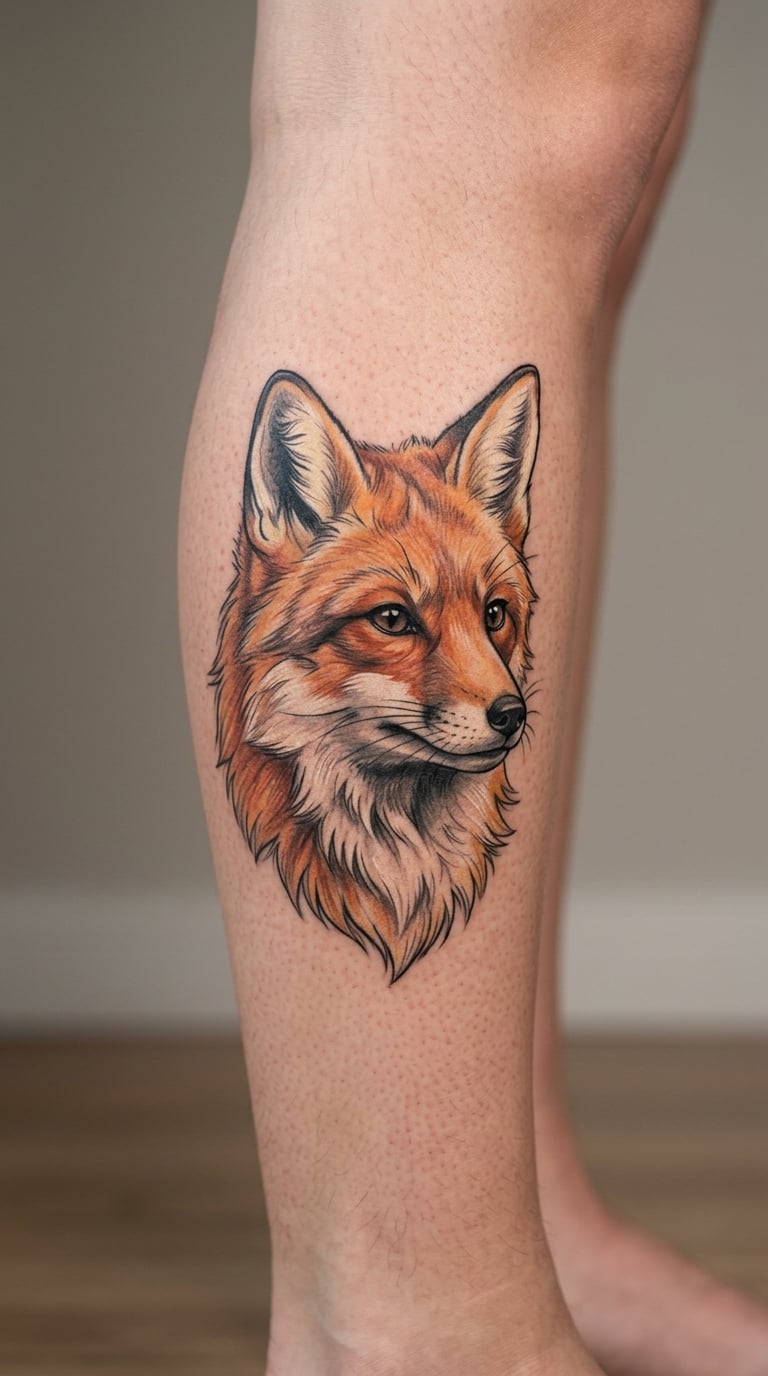
A color-pencil fox portrait is built from visible directional strokes: short marks of orange, rust, cream and charcoal that follow the shape of the face, the ruff, and the slope of the back. It reads like a drawing rather than a painted animal, and that slight sketchiness is deliberate.
The style suits people who want a portrait with real dimension but without the formality of photorealism. A fox is also easier to draw convincingly than most animals because the markings are graphic and the pose is usually alert and simple.
Placement: Calf, outer arm, or upper back. Size: 5 to 7 inches (13 to 18 cm). Style: Illustrative realism with pencil-style stroke work.
Pain: Medium, and the stroke work means a long sitting. Expect two to three hours for this one. Ageing note: fine strokes soften more visibly than filled color, so the portrait gradually loses definition. Ask the artist to keep the eyes and ear edges heavier.
Make it yours: Have the background left as bare skin or add a single low plant line behind the head, and choose the palette from a specific season where you first saw one.
18. Retro Rainbow Sun
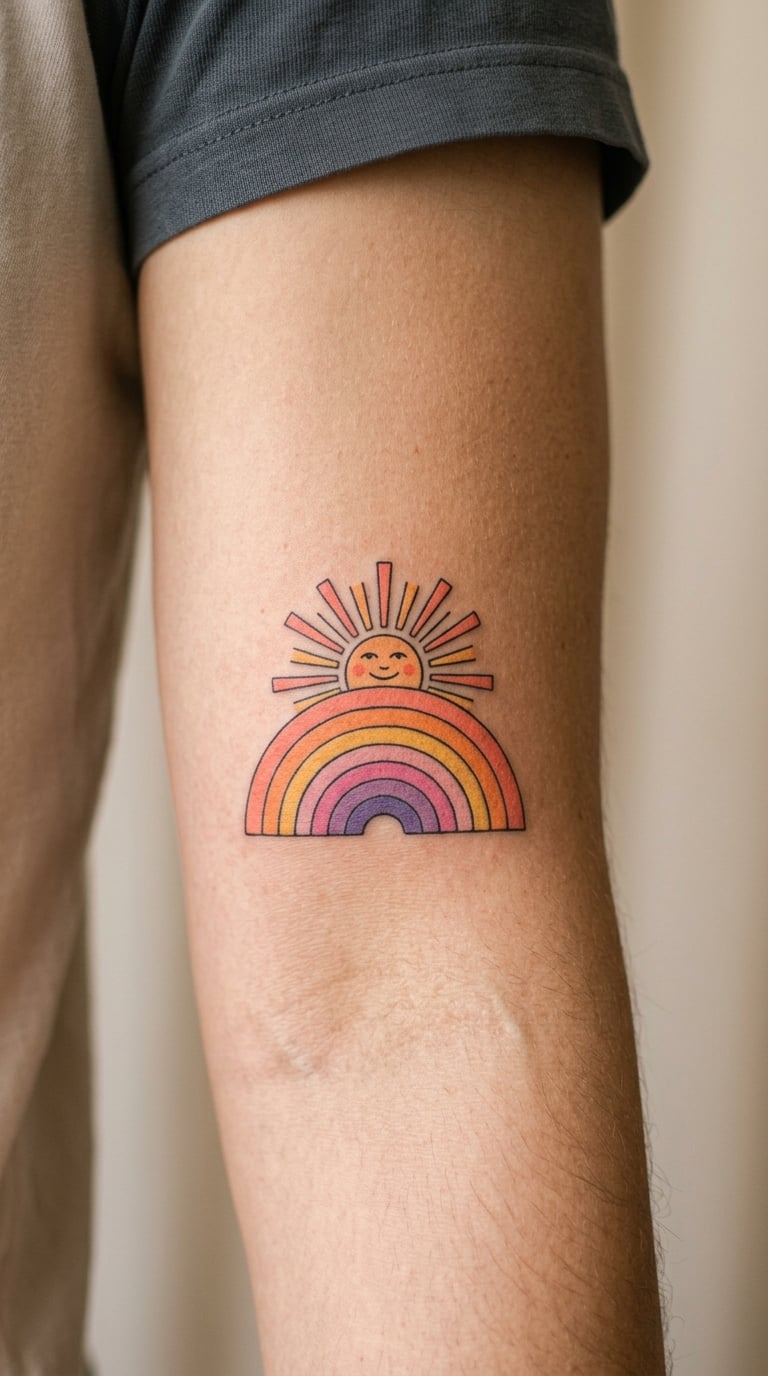
A retro rainbow sun is a semicircle with a simple face, filled in horizontal bands: coral at the top, then yellow, orange, pink and purple. The face is minimal, often just two closed eyes and a short curved mouth, and a few short rays sit around the outer edge.
It is cheerful in a restrained way, and the half-circle shape makes it easy to fit in a small space. Among color tattoo ideas for women it is a good second or third piece, because it can sit alongside a floral without competing.
Placement: Inner upper arm, calf, or just below the collarbone. Size: 3 to 4 inches (8 to 10 cm) tall. Style: Illustrative retro.
Pain: Low to medium. A clean semicircle with straight bands is efficient work, often under two hours. Ageing note: the yellow and coral bands will soften into each other first; the purple and deeper orange tend to separate more clearly over time.
Make it yours: Set the bands to the colors of a specific year or place, and add rays only on the side that shows when you are wearing a particular top.
19. Floral Snake in Emerald and Red
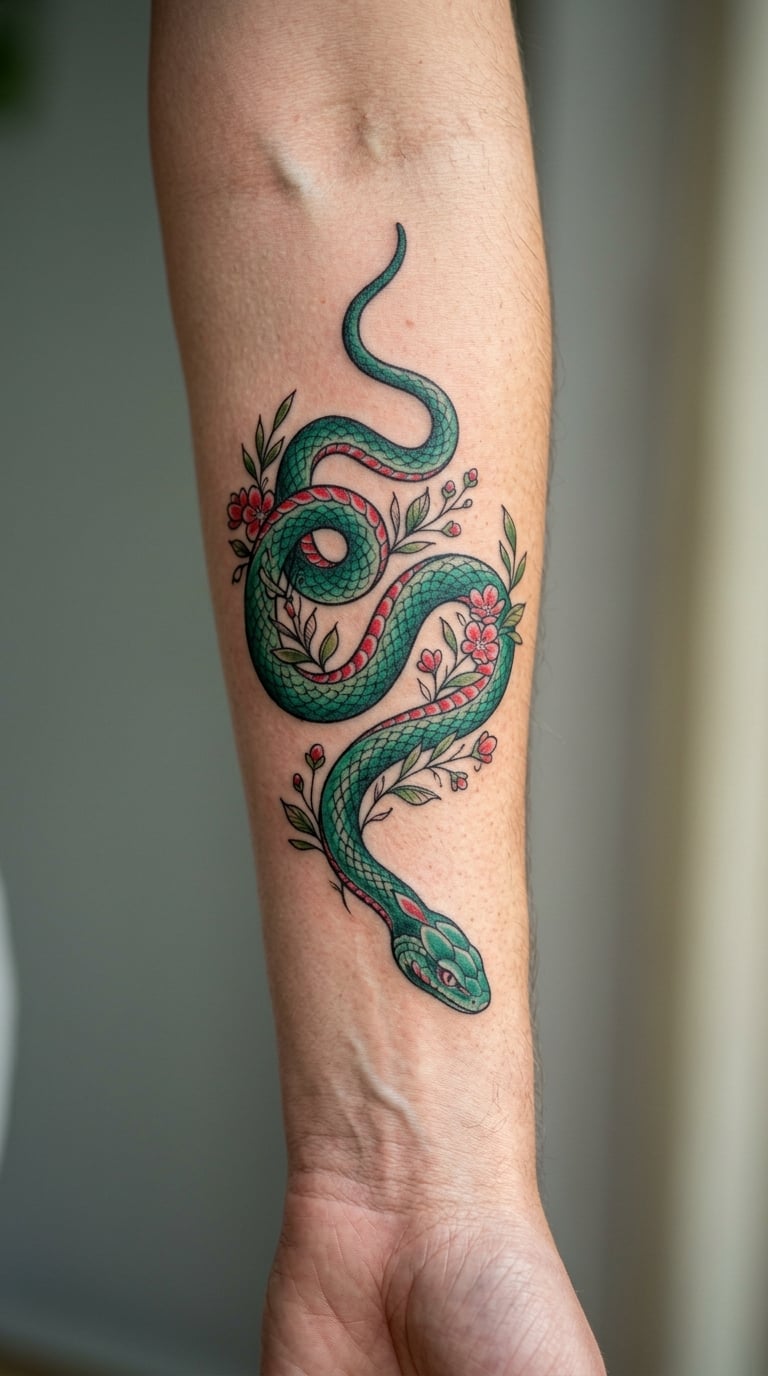
A floral snake follows an S-curve along the limb, body filled with emerald scales, belly segmented in pale cream, and a red tongue at the mouth. Small flowers and leaves sit between the coils, so the empty spaces inside the curve do some of the work.
It suits a long, narrow area of skin. Because the body is one continuous shape, the color can be built in a single confident pass per section rather than a hundred small decisions, which keeps the sitting shorter than the design’s detail suggests.
Placement: Forearm, calf, or the back of the leg from ankle to knee. Size: 7 to 12 inches (18 to 30 cm) long. Style: Illustrative.
Pain: Medium, and a longer sitting than the shape implies. Bone and joint areas cost more than the fleshy parts of the forearm. Ageing note: the scale edges blur over time, and the green will shift toward blue-green on sun-exposed skin, so cover it or plan for a touch-up.
Make it yours: Add a small bloom at the snake’s mouth, or plant real species from a place you have visited in the negative space around the coils.
20. Crescent Moon With Lavender Stars
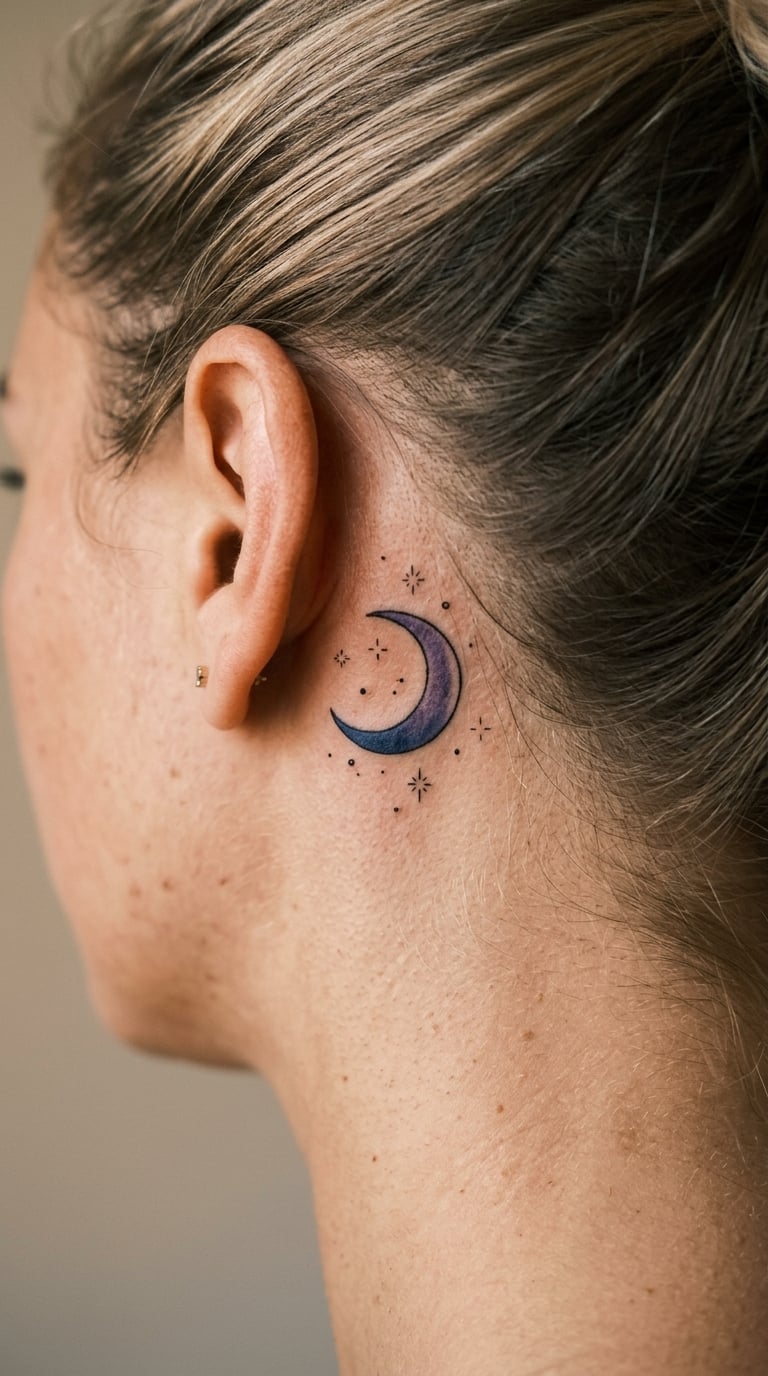
A crescent moon sits in deep blue with a lavender inner glow, and a scatter of small four-point stars floats around it at varying sizes. The crescent can face either way, and the stars are usually fewer than people expect, which keeps it from turning busy.
It is compact enough for anywhere a small piece works, and the palette stays cool rather than sweet, which gives it a quieter read. Behind the ear placement is the most requested version.
Placement: Behind the ear, inner wrist, or at the base of the neck. Size: 2 to 3 inches (5 to 8 cm). Style: Illustrative celestial.
Pain: Medium behind the ear, because the bone is close to the surface and you cannot see the work. Low to medium on the wrist. Ageing note: the tiny stars fade and blur first, so if the stars matter to you, ask for them to be built slightly larger and darker.
Make it yours: Use a real birth month flower instead of the outer stars, or set a specific date into the negative space beside the crescent.
For small back-of-the-neck options, we gathered 20 back of neck tattoo ideas for women.
21. Colorful Koi in a Water Splash
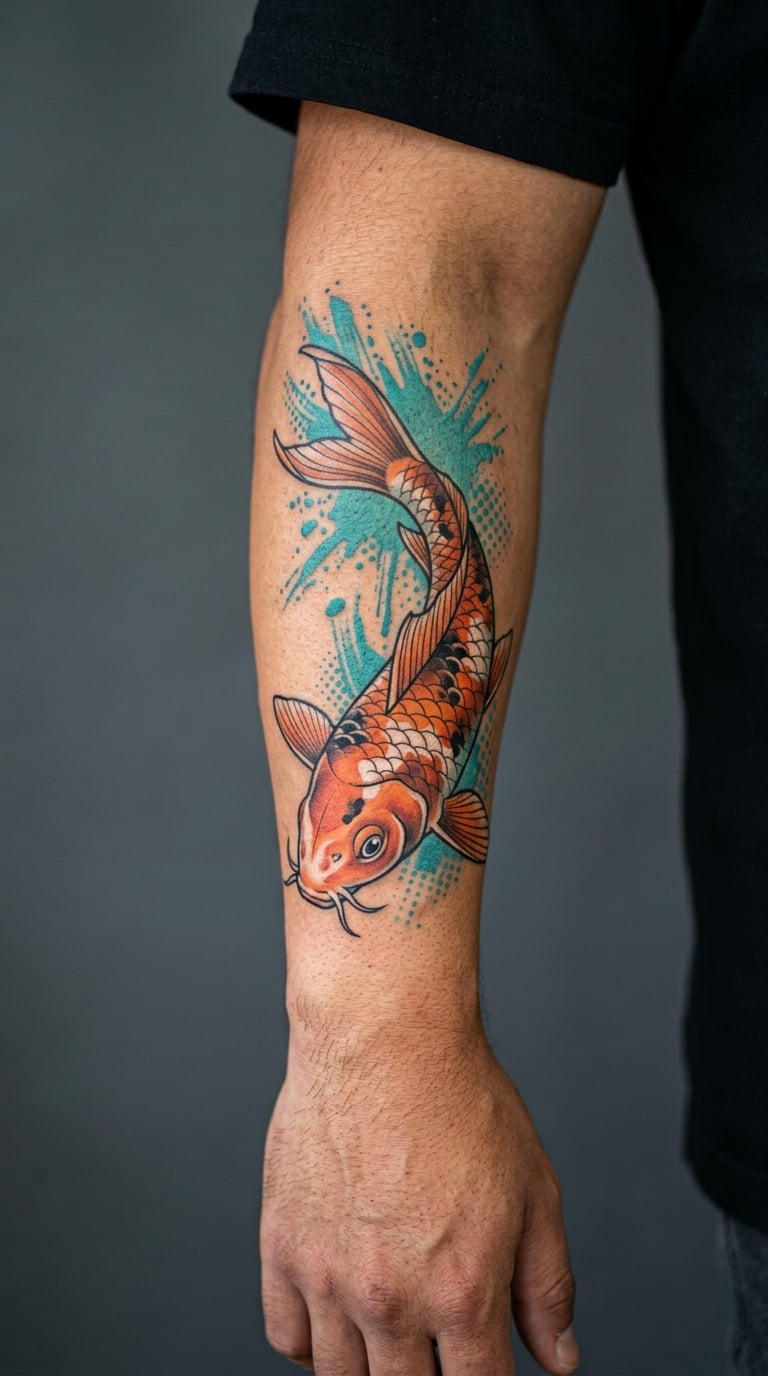
A koi is painted in patches rather than a gradient: orange and white as the base, black markings along the back, and a blue sheen on the scales. The fish is usually curved into a C, swimming out of a turquoise splash that breaks into droplets at the tail.
It reads as one shape with movement, so it holds attention without a lot of background work. The splash can be as loose or as tight as you like, which makes it adaptable to the space you have.
Placement: Outer arm, thigh, or calf. Size: 5 to 7 inches (13 to 18 cm). Style: Illustrative.
Pain: Medium. The scales and the splash both need work, and the tail area sits over bone on the outer arm. Ageing note: black and blue are the longest-lasting colors in the piece, so the markings stay defined even as the orange lightens.
Make it yours: Add a small wave curl under the belly, or have the koi face the direction of an existing tattoo so the two pieces point the same way.
22. Desert Cactus in Sunny Colors
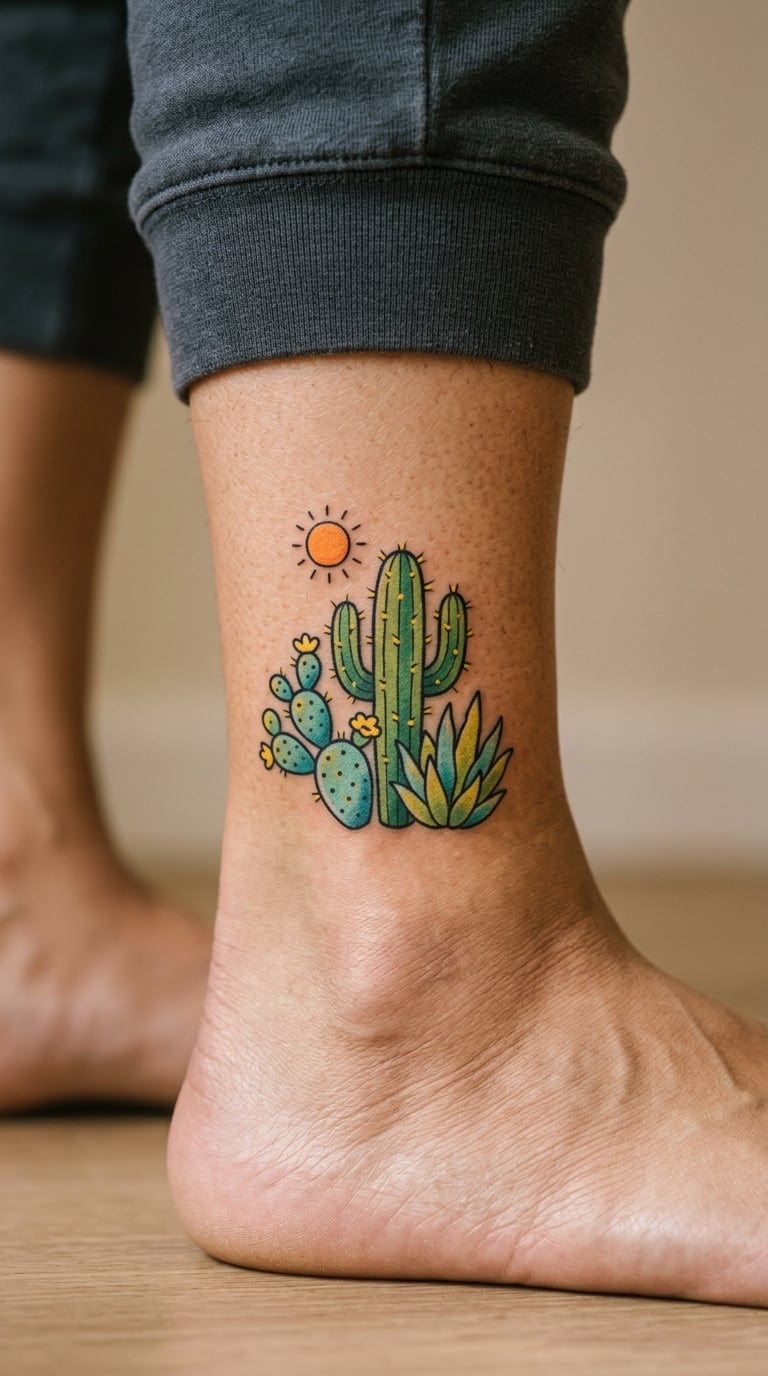
A desert cactus cluster sets three or four columnar cacti in blue-green, olive and a muted yellow, with a small orange sun above and a thin ground line below. The ribs are marked with short evenly spaced strokes, and the shapes stay simple and rounded.
It is a design that carries humor without needing a face or a joke, and the ankle placement suits the vertical arrangement well. The muted greens also work on a range of skin tones because the contrast comes from value rather than brightness.
Placement: Ankle, outer arm, or lower back. Size: 3 to 4 inches (8 to 10 cm) tall. Style: Illustrative.
Pain: Medium. The ankle is bony and awkward to hold still, so people rate it more uncomfortable than painful. Ageing note: the yellow ribs wash out fastest here, and the orange sun is close behind.
Make it yours: Add a small flowering crown to the tallest cactus, or use the spines to spell out a short name in a script only you would recognize.
23. Tropical Leaf Sleeve Fragment
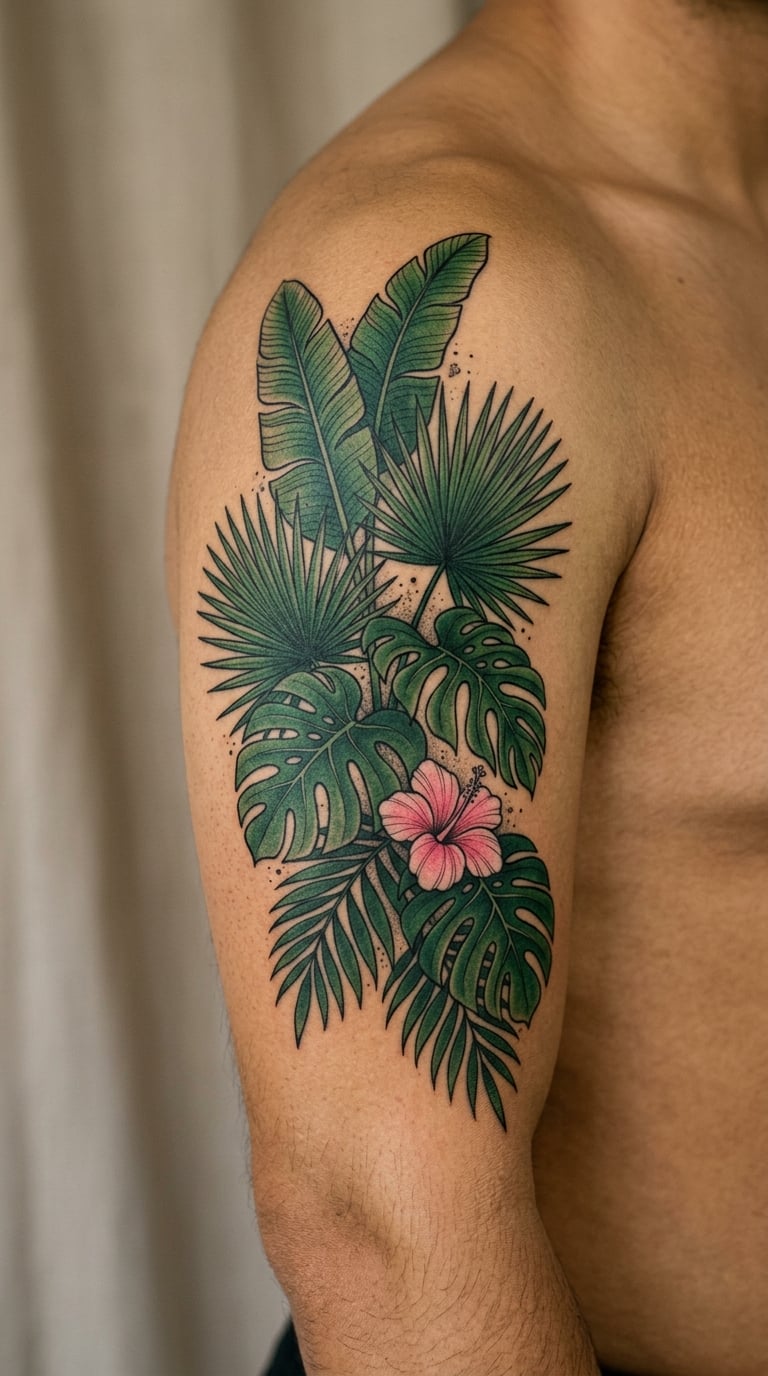
A tropical leaf fragment is a compact arrangement of banana, palm and split-leaf forms layered so the leaves overlap, in greens from deep forest to pale yellow-green, with one pink bloom placed somewhere in the composition to break the green.
It is the piece to ask for when you want a larger arm piece but not a full sleeve. A fragment leaves clear skin at the shoulder or elbow, which makes it much easier to extend later or leave alone.
Placement: Upper arm, shoulder, or outer forearm. Size: 6 to 9 inches (15 to 23 cm) as a fragment. Style: Illustrative botanical.
Pain: High. The upper arm has soft areas near the inner side, and a piece this size will run well past two hours. Ask about breaks in advance, and do not plan anything social for the rest of the day. Ageing note: layered greens blend together over time, so the piece looks softer and less separated than it did fresh.
Make it yours: Use leaves gathered from one trip rather than a generic tropical mix, and put the single pink bloom where a real flower was growing in the same photo.
24. Colorful Abstract Ribbon Spiral
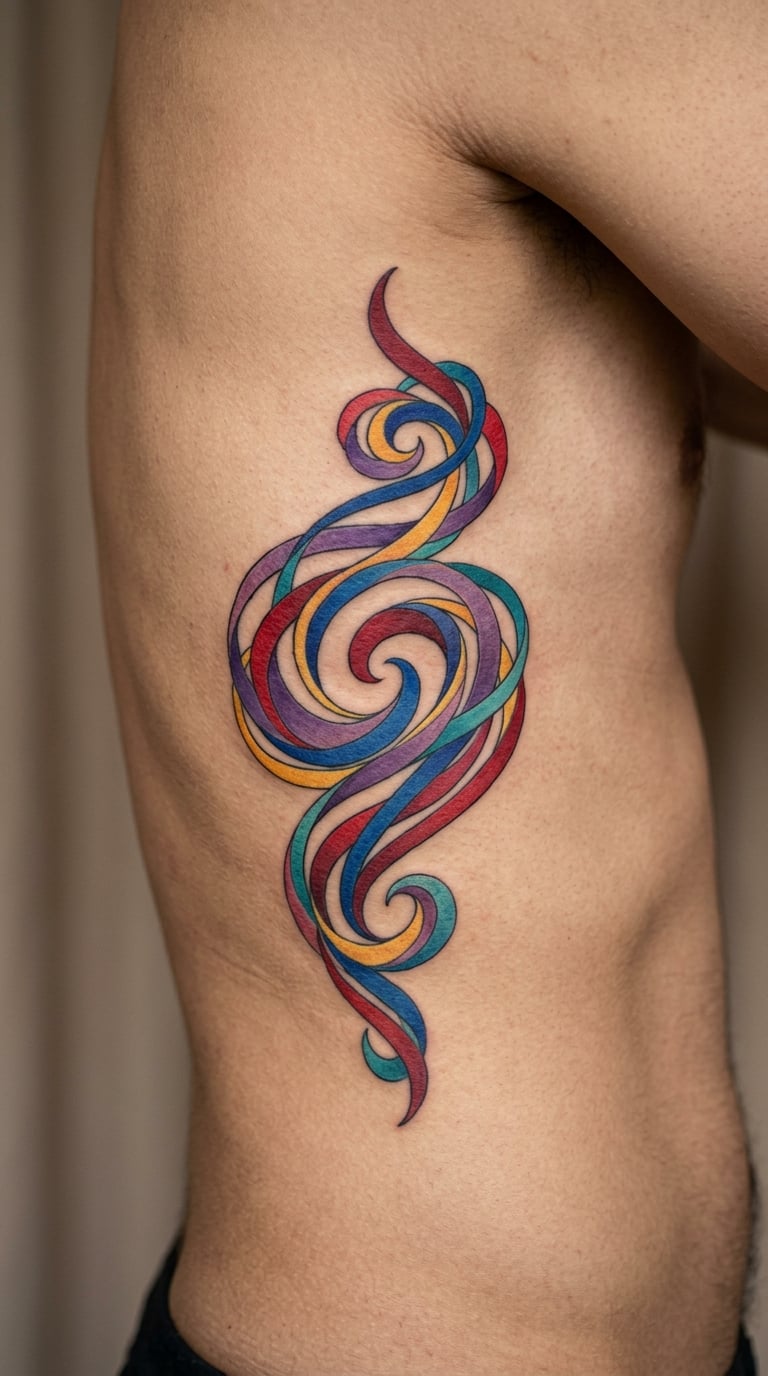
An abstract ribbon spiral builds an interlaced coil out of overlapping bands of red, blue, yellow, purple and teal. Each band has a solid edge and a shaded inner core, and where two bands cross one another appears to pass beneath.
There is no subject to recognize, which is exactly the appeal for people who want a bold statement without a literal image. It is also the hardest design on this list to place badly, because the eye follows the spiral rather than a fixed focal point.
Placement: Side ribs, outer arm, or across the upper back. Size: 5 to 8 inches (13 to 20 cm). Style: Abstract illustrative.
Pain: High. Ribs are named as one of the most painful placements in tattoo community threads, and solid color packing on top of that compounds it. Take breaks, eat beforehand, and expect a long sitting. Ageing note: the thin band edges define the illusion, so they soften faster than the centers of the bands. Fewer, thicker bands hold up better than many thin ones.
Make it yours: Ask the artist to route the spiral around a birthmark, mole, or an existing scar so the shape has a reason to be there.
How to Choose the Right Design
Start with detail level, not motif
Decide how much fine work you want before you pick the subject. A cherry pair and a color-pencil fox are both achievable designs, but one takes about forty minutes and the other runs past two. Artists will happily tell you which motifs their hand is built for, and that conversation saves a lot of redesign later.
Match size to the space you actually live in
Measure the area you want covered and tell your artist the finished dimensions. A 6 to 9 inch composition that looks balanced on a flat sheet will look cramped on a narrow forearm and small on a wide back. If you are unsure, ask for a design that can be resized without redrawing.
Think about the placement’s long-term visibility
Ask yourself where you want to see it in five years. A design on the rib or the back of the shoulder is private by default, which is a real advantage for a first color piece. Hands, neck, and inner forearm are always visible, and sun exposure there is heavier, which matters more for color than for blackwork.
Check the palette against your own skin tone
Bring reference photos to the consultation, and ask to see healed work in similar tones on the artist’s Instagram or in the studio. Yellows and light pastels are the hardest to read on deeper skin; deep reds, forest greens, and strong blues tend to hold. An artist who works across a range of tones will adjust the mix without being asked.
Count what you already have
Look at your existing pieces and measure the gaps. Color reads louder than blackwork, so a new colored piece next to an older black-and-grey tattoo will dominate it unless the sizes are balanced. If you are adding to a collection, decide deliberately whether this piece leads or supports.
Plan for fading from day one
Yellow fades fastest and red comes next, while black, blue and deep green hold longest. That is consistent across Reddit tattoo threads, and it is the reason color choices matter more for these designs than the linework does. Ask the artist to build the fast-fading colors slightly deeper or more saturated than seems necessary, and factor a touch-up into your budget for any design that leans on yellow or light orange.
Cost and Session Time
Color tattoo prices vary more than blackwork prices, because the number of passes over the same skin changes the hours. Ask any artist for a quote based on the finished size you want, and get the quote before the session rather than after.
What drives the price
Size is the first factor: a small piece is usually priced at or near the shop minimum, while anything large is billed by the hour. Then comes style. Watercolor washes and color-pencil stroke work take longer per square inch than flat illustrative color, and so does a design with heavy black outlines. Artist hourly rate and city both matter, and a shop minimum means a tiny tattoo can still cost more than its size suggests.
Realistic US price ranges by size
Very small color pieces of roughly 1 to 2 inches are usually priced at, or close to, the shop minimum, and that minimum varies a lot by studio. Medium pieces of 3 to 5 inches typically land in the low hundreds, and larger color work of 6 inches and up is commonly quoted in the mid to high hundreds, with heavily detailed illustrative and portrait-style pieces at the top of that range. Specialty studios and in-demand artists sit well above those figures, and travel or mobile artists price differently again. Your own artist is the only accurate source for your piece, so ask for a written quote that names the finished size.
Session length and multiple visits
Small color pieces often finish in one sitting of one to two hours. Larger work is commonly split across two or more appointments, and so is anything on the ribs, the spine, or the side of a thigh, where sitting still is the main challenge. Color packing hurts more than line work, so build rest into the plan and agree breaks in advance.
Cost differences from black-and-grey
The same motif in color usually costs more than in black-and-grey, for three reasons: more time on the skin, more pigment changing hands, and a higher chance of a touch-up later. A few artists will quote a black-and-grey version first and add color in a second session, which spreads the cost and lets you see the linework before committing to a palette.
Aftercare Basics
- Follow your artist’s aftercare instructions first. They know exactly what they packed into your skin, and their advice beats anything general you can read.
- Wash gently, twice a day, with plain lukewarm water and unscented soap. Pat dry with a clean towel or paper rather than rubbing.
- Keep it moisturized. A thin layer of a plain ointment your artist recommends helps the skin stay supple while it settles. Thick greasy products are not.
- Protect it while it works. Loose clothing over fresh color reduces snagging and friction, and you should not soak, swim, or cover it tightly for the first couple of weeks.
- Use sunscreen on healed color work. Once the skin is fully healed, daily sun protection is the single most effective thing you can do to slow fading.
- Do not pick or scratch. Flaking is normal. If something looks wrong to you, message your artist with a photo rather than trying to fix it yourself.
One more thing worth expecting: a fresh color tattoo often looks dull, and people regularly post in tattoo advice forums worried a color has vanished in the first few days. That light, slightly washed look in days one to three is normal. The surface ink lifts during healing and the deeper pigment becomes visible again as the skin settles, so give it a few weeks before you judge the result.
Frequently Asked Questions
Which color tattoo fades the quickest?
Yellow fades fastest of all tattoo inks, and red comes next. Orange and light pastels follow, while black, deep blue, and dark green hold their tone the longest. This is one of the most repeated points in tattoo community threads, and it is why artists often build yellows and reds deeper than the reference photo shows. If a design depends on those colors, plan for a touch-up within a couple of years and use daily sunscreen once it is healed.
Do color tattoos look faded while they heal?
Yes, and it surprises almost everyone the first time. In the first one to three days the surface ink lifts and the design can look dull, or like a whole color is missing. The deeper pigment becomes visible again over the following weeks as the skin settles, so the result is not clear until healing is finished. Take a photo on day one and compare it with your healed reference rather than judging it in the chair.
Are small color tattoos a good idea for a first piece?
Small color designs work well as a first tattoo, provided you pick something with a simple silhouette and a limited palette. A cherry pair, a crescent moon, or a small sunset all read clearly at two or three inches and finish in about an hour. The pieces that cause trouble on a first tattoo are the very fine detail ones, where the detail is too small to hold up over the years. Check healed work in a similar skin tone before you commit.
How do I choose a color tattoo artist?
Look for healed work, not studio shots, and specifically for full-color pieces in the style you want. Most artists post their fresh results, which always look brighter than the settled version, so ask to see healed photographs or visit the studio. Ask what skin tones they regularly work on and how they handle a design that leans on yellow or light orange. A clear conversation about fading and touch-ups at the consultation is a good sign.
Do color tattoos need more sessions than black-and-grey?
Often they do, and it comes down to pigment and packing. Getting color into skin takes repeated passes, and saturated areas are harder to work than linework. Small color pieces usually finish in one sitting of one to two hours, while larger or more detailed color work is commonly split across two or more appointments. Artists sometimes do black-and-grey first and add color later on big pieces, which spreads the work and the cost.
Conclusion
If this is your first color piece, the red cherry pair or the retro rainbow sun are the ones I would point you toward. Both have a simple silhouette, a limited palette, and colors that hold their own instead of fading toward nothing.
For someone building an existing collection, the sunset mountain range, the tropical leaf fragment, or the abstract ribbon spiral use a whole area of skin and reward an artist who works in larger pieces. Whichever direction you lean, save the two or three designs that speak to you and take those references to an artist before booking. They will tell you honestly which one your skin tone, your placement, and your healing will support.