
18 Best Fine Line Tattoo Ideas for Women (September 2026)
Fine line tattoo ideas for women are all about one-needle linework small enough to read as a pen sketch, usually somewhere between 2 and 4 inches. Women tend to choose this style for a first tattoo, a piece they can wear to work, or a quiet design that only close friends clock.
September and October are the busiest months for booking here, and spring appointments go about six weeks out. If you are planning a nape, ankle or collarbone piece, start your consultation now rather than in January. What follows is eighteen designs, each with the placement that suits it and an honest note on how it wears over time.
What Is a Fine Line Tattoo?
A fine line tattoo is a small design drawn with a single needle, built from thin outlines and almost no shading, so it looks like an ink illustration on skin. Most sit between roughly 2 x 2 inches and 4 x 4 inches.
That definition trips people up, because the words fine line, tiny tattoo, micro-realism and minimalist all get used for different things. Here is the split most artists actually work to.
- Fine line means a single-needle technique. Line weight is thin, shading is minimal, and the design is built from outlines.
- Tiny tattoo describes size rather than style. A tiny tattoo can be bold, traditional or a full colour rose.
- Micro-realism is fine line used to render a realistic subject, such as a pet portrait or a single bloom, usually in shades of grey.
- Minimalist is a design philosophy. It can be one line, one shape, one word, and it may use any needle.
So when someone says they want a fine line flower, they usually mean micro-realism, and the term is doing two jobs at once. Ask for the subject and the shading level in the same sentence and there is no confusion left.
1. Fine Line Peony Half-Bloom on the Inner Forearm
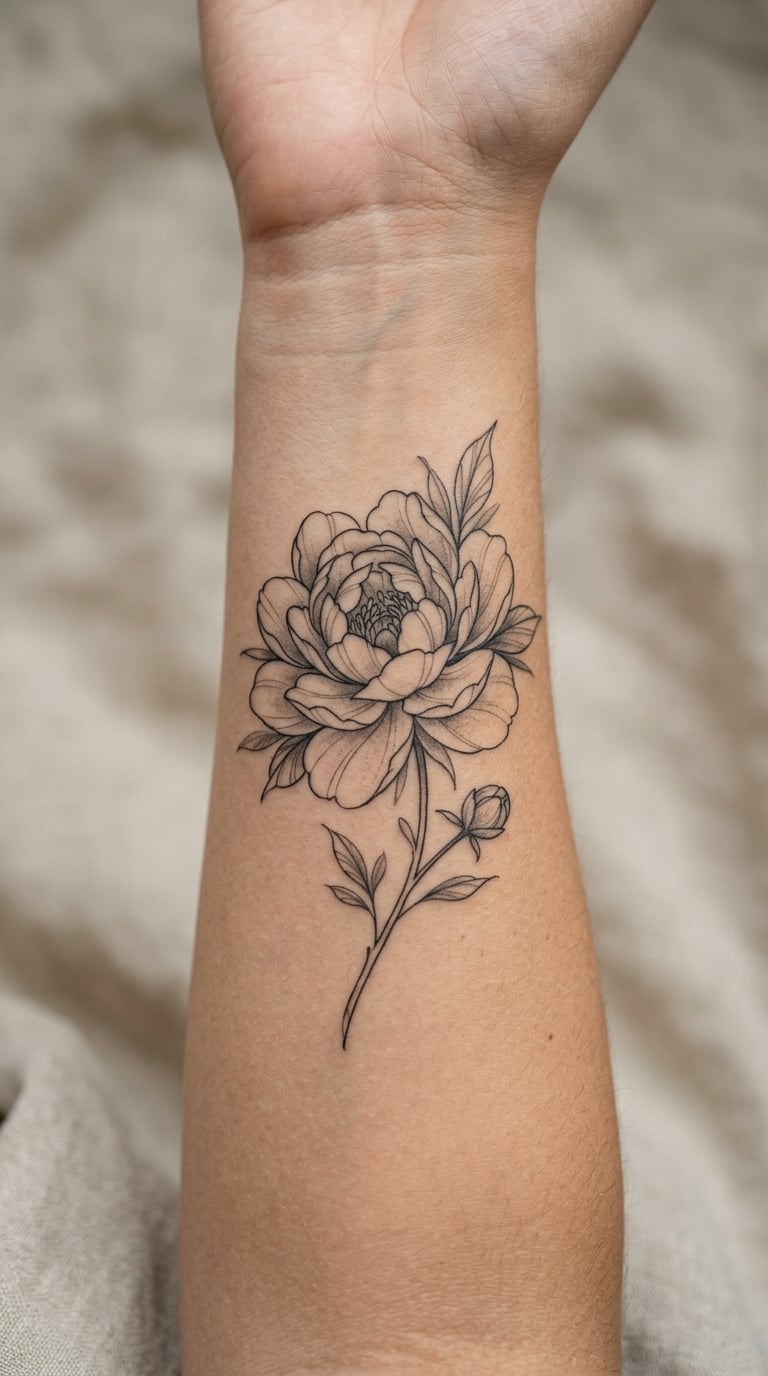
A peony half-bloom is the one design I would put at the top of any fine line tattoo ideas for women list. Half the flower opens, half stays a bud, and that unfinished edge is what makes it read as drawn rather than printed.
On the inner forearm it sits about two inches across, which is the sweet spot for petal detail that will still be legible in five years. Petal edges soften faster than stems, so expect a light touch-up around year three.
Pain and time: Inner forearm ranks about a 4 out of 10, and this size takes 45 to 75 minutes.
2. Single-Line Butterfly on the Outer Ankle
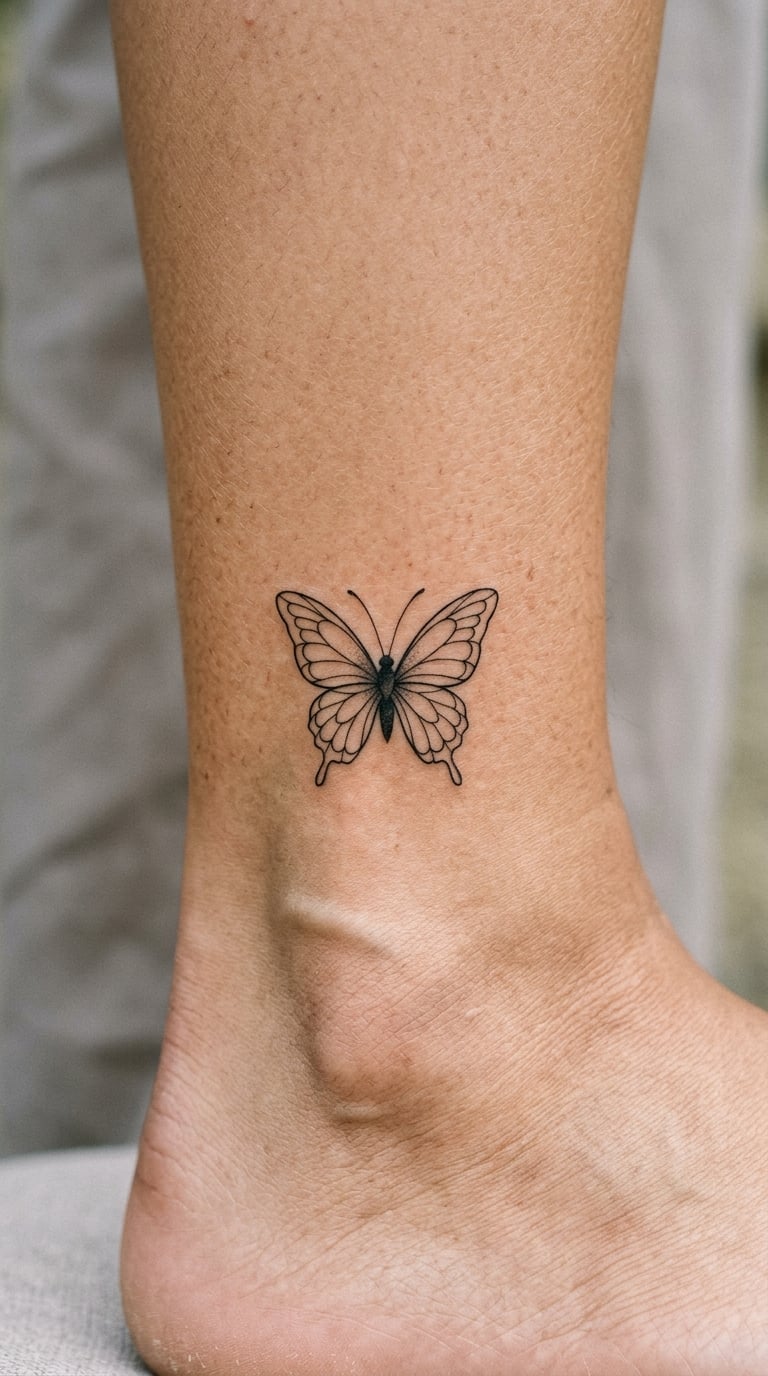
A butterfly in pure outline is the most requested fine line design I see, and the ankle version wears better than anywhere else. Ankle skin moves constantly, and a design that bends with the foot rather than fighting it ages far more gracefully.
Keep it under two inches wide so the wings stay symmetrical. Wings are the first thing to blur, so thicker wing veins and a small shadow under the body give the artist something to hold onto.
Pain and time: Bony and stingy, roughly a 5 out of 10 on the ankle bone itself, and 30 to 50 minutes.
3. Crescent Moon and Three Stars Behind the Ear
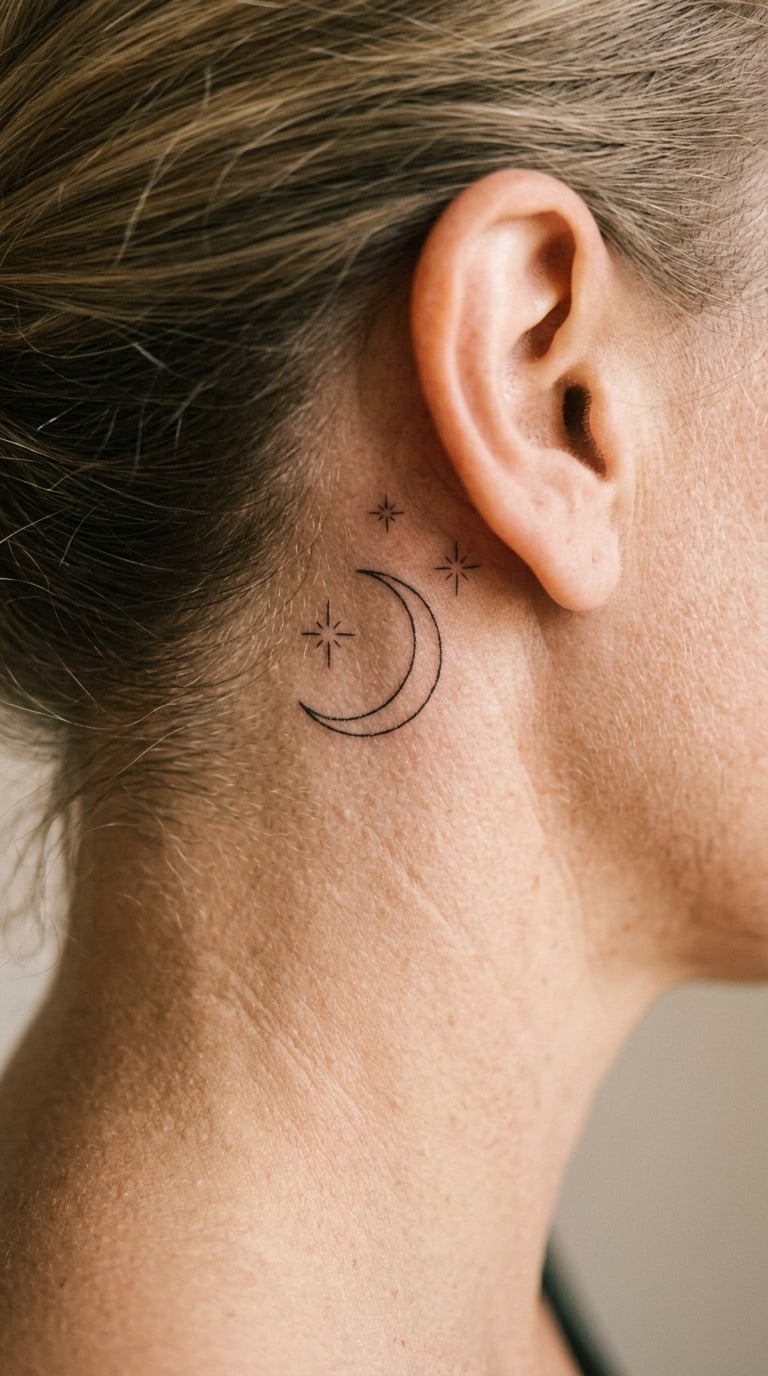
A crescent moon with three small stars behind the ear is the design people notice second, not first, which is exactly why it works for a first tattoo. It shows in profile and reads clearly across a room without shouting.
Ask for the crescent no taller than 2 inches and the stars spaced unevenly, because three stars in a straight row look stamped. Fine line hair work fades faster than other placements because hair and sun hit it daily, so this one needs the most disciplined sunscreen habit.
Pain and time: Behind the ear is a 6 out of 10 because the skin is thin and close to bone. Budget 30 to 45 minutes.
4. One-Word Fine Line Script Along the Collarbone
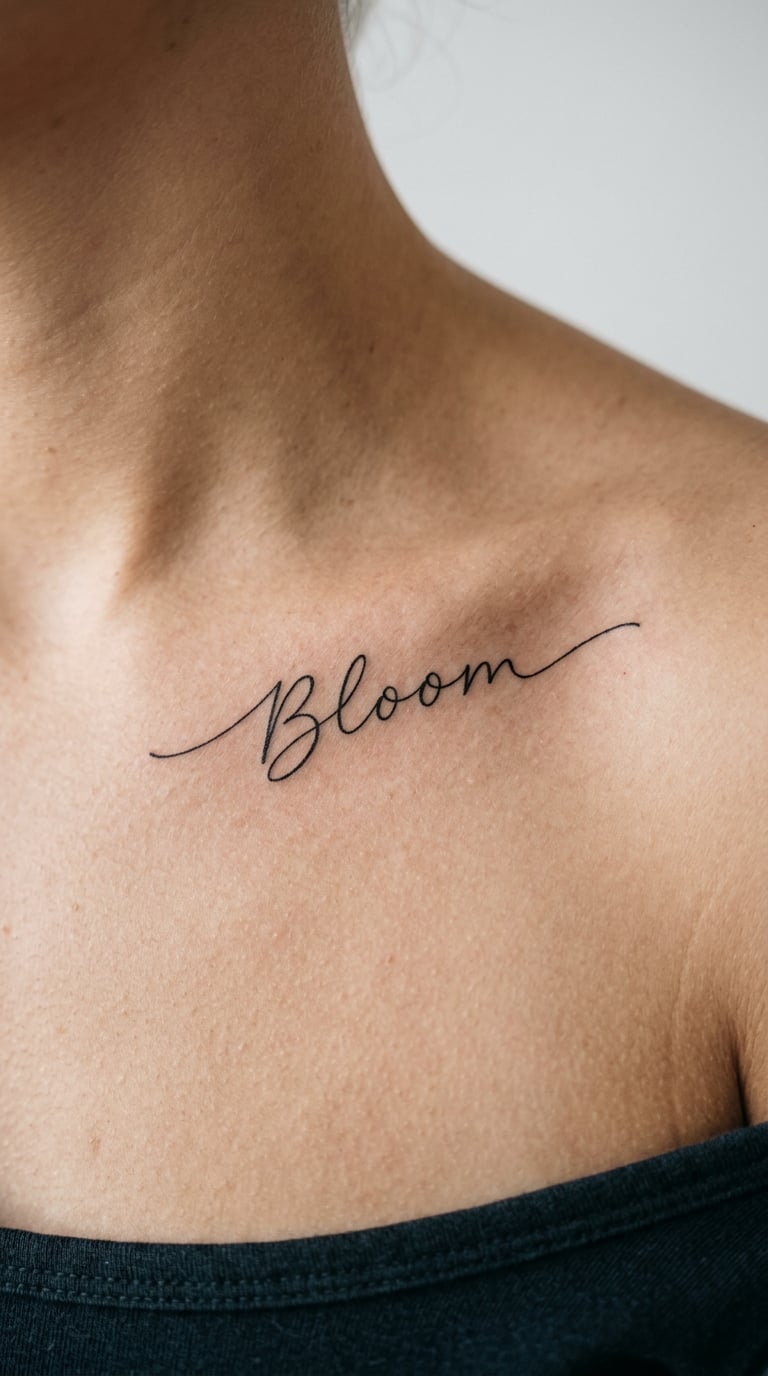
A single word in fine line script is the most personal and the most exposed choice in this gallery. Names, one meaningful word, a surname from a grandmother, a date in words. Whatever it is, keep it to four letters or fewer if it is going on the collarbone.
Collarbone skin stretches when you shrug and creases when you sleep, so long thin script is prone to slight blurring along the middle of the word. A slightly heavier weight on the capital letter and a baseline that follows the bone curve help a lot.
Pain and time: The collarbone is a 5 out of 10, and short script is quick, around 30 to 40 minutes.
5. Hummingbird Hovering at a Blossom on the Ribs
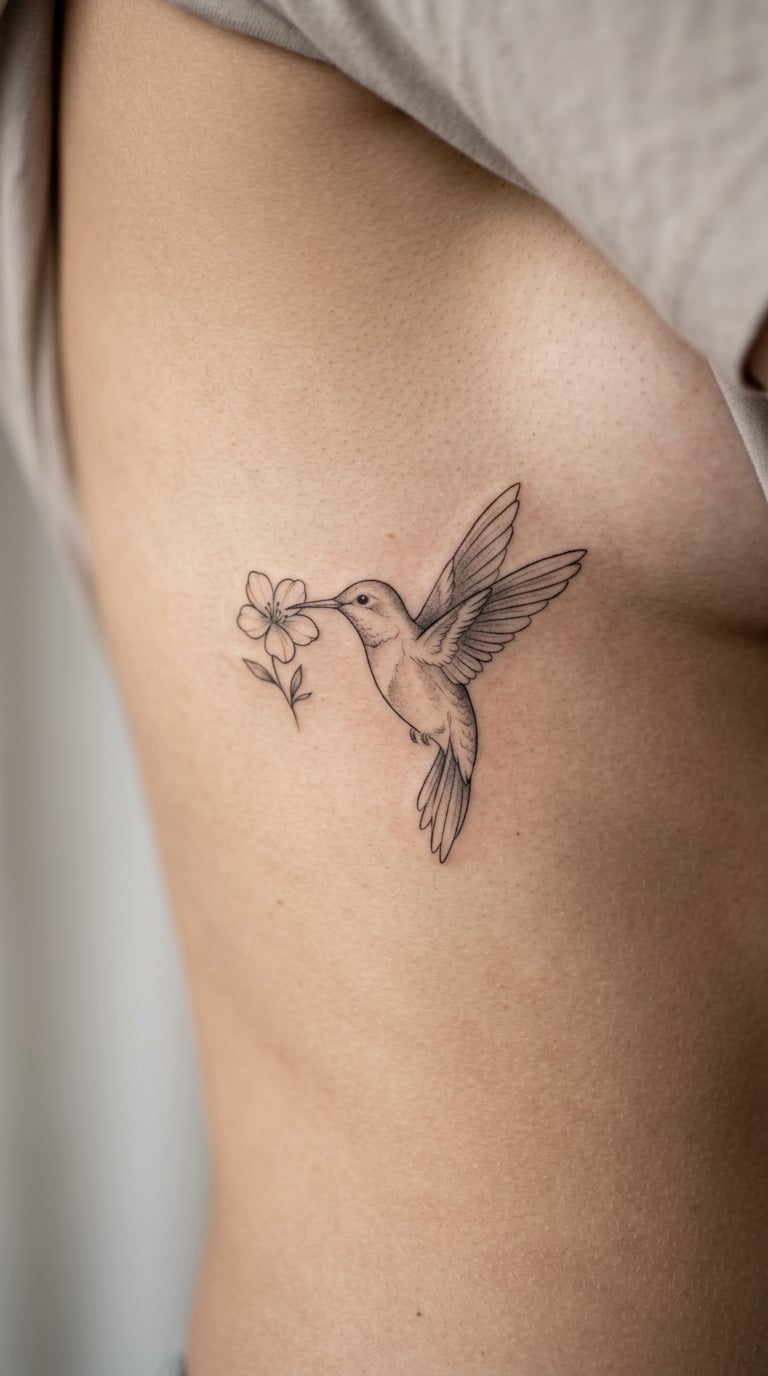
The hummingbird at a blossom is the piece people bring in when they want one small tattoo to carry a lot of meaning. Traditionally it reads as resilience and joy, which is a lot to hold in two inches, but it does it without a line of text anywhere.
Side ribs suit it because the curve of the ribcage already suggests movement. Two to three inches tall works, and the artist should leave the wing tips as loose line rather than solid black, because filled areas fight against the style.
Pain and time: Ribs run about a 7 out of 10. Plan 60 to 90 minutes and take a break halfway.
6. Angel Number 111 on the Inner Wrist
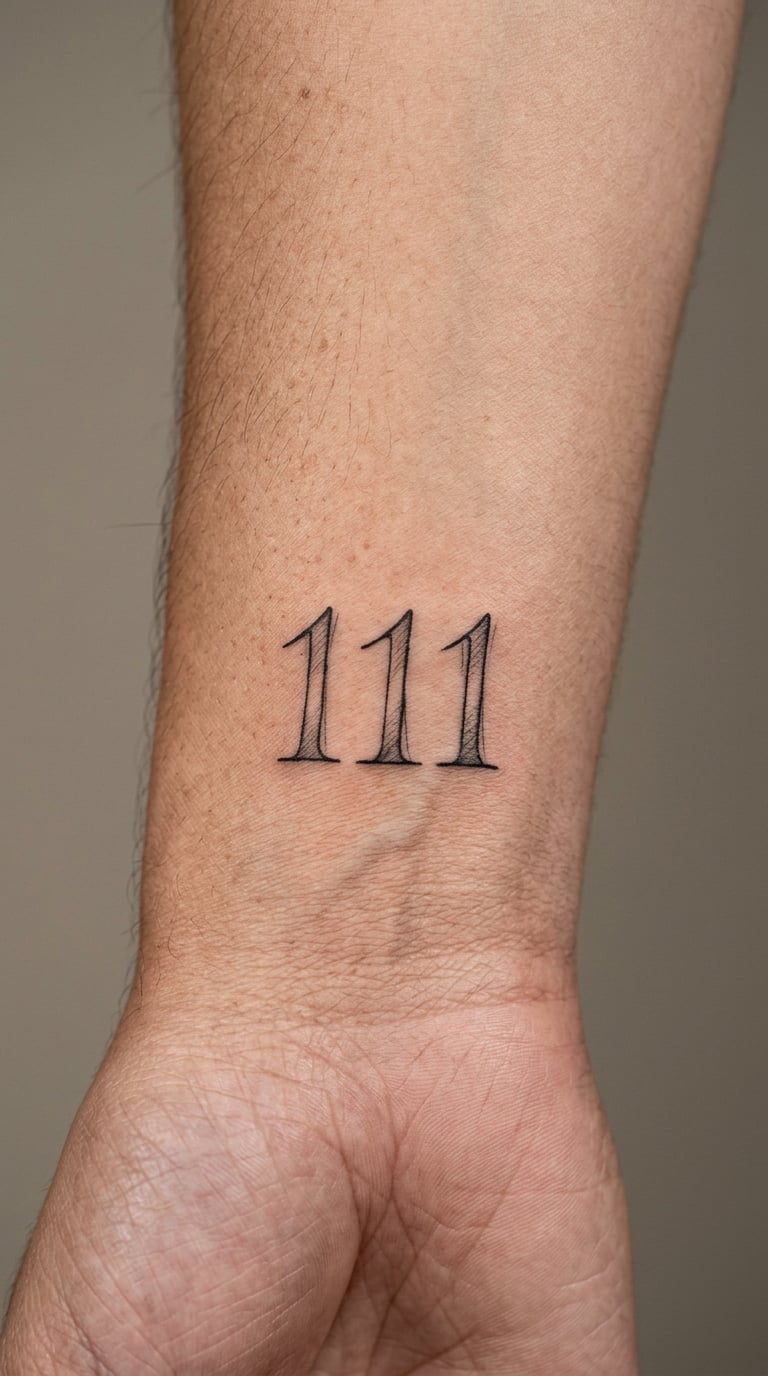
Angel number tattoos are a whole category of their own, and 111 is the one that comes up most. It reads as a new beginning or a nudge to stay on your own path, which is why it turns up around graduation, a new job and a fresh city.
On the inner wrist it is about an inch wide, and numerals are the one motif where heavy-handed shading looks wrong. Keep them hairline and evenly weighted, and pick a font that already leans rather than one the artist has to tilt by hand.
Pain and time: Inner wrist is a 6 out of 10, and three numerals take 20 to 30 minutes.
7. Swallow in Flight on the Nape of the Neck
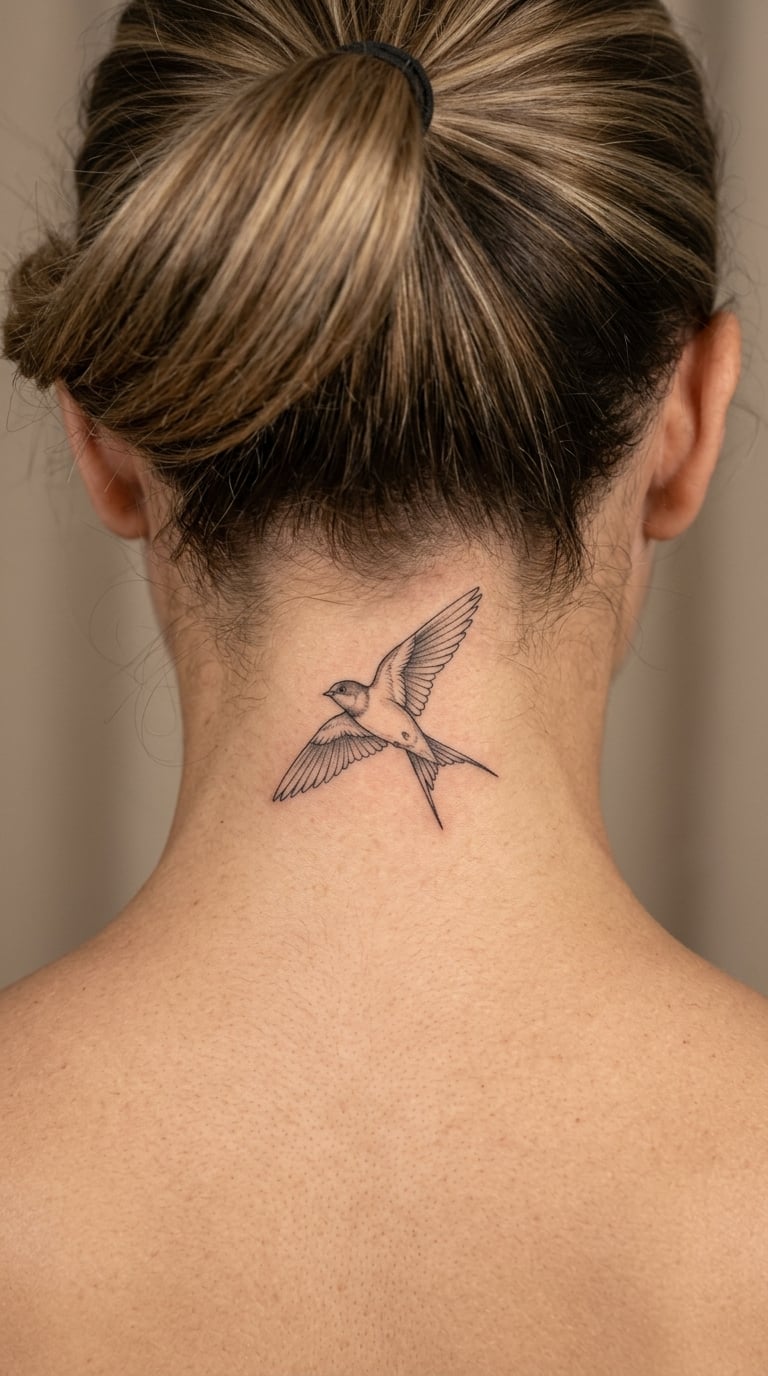
The nape swallow is a classic for a reason. From the front you see nothing, and from behind it sits perfectly in the dip where the neck meets the shoulders, framed by whatever you do with your hair.
Two to three inches across, wings level, body angled slightly so the piece is not symmetrical-looking. Nape skin is thick and holds pigment well, which makes it one of the better placements for thin work, but collars and scarves rub it constantly.
Pain and time: A 4 out of 10, and about 45 to 60 minutes.
8. Fern Stem Climbing Down the Spine
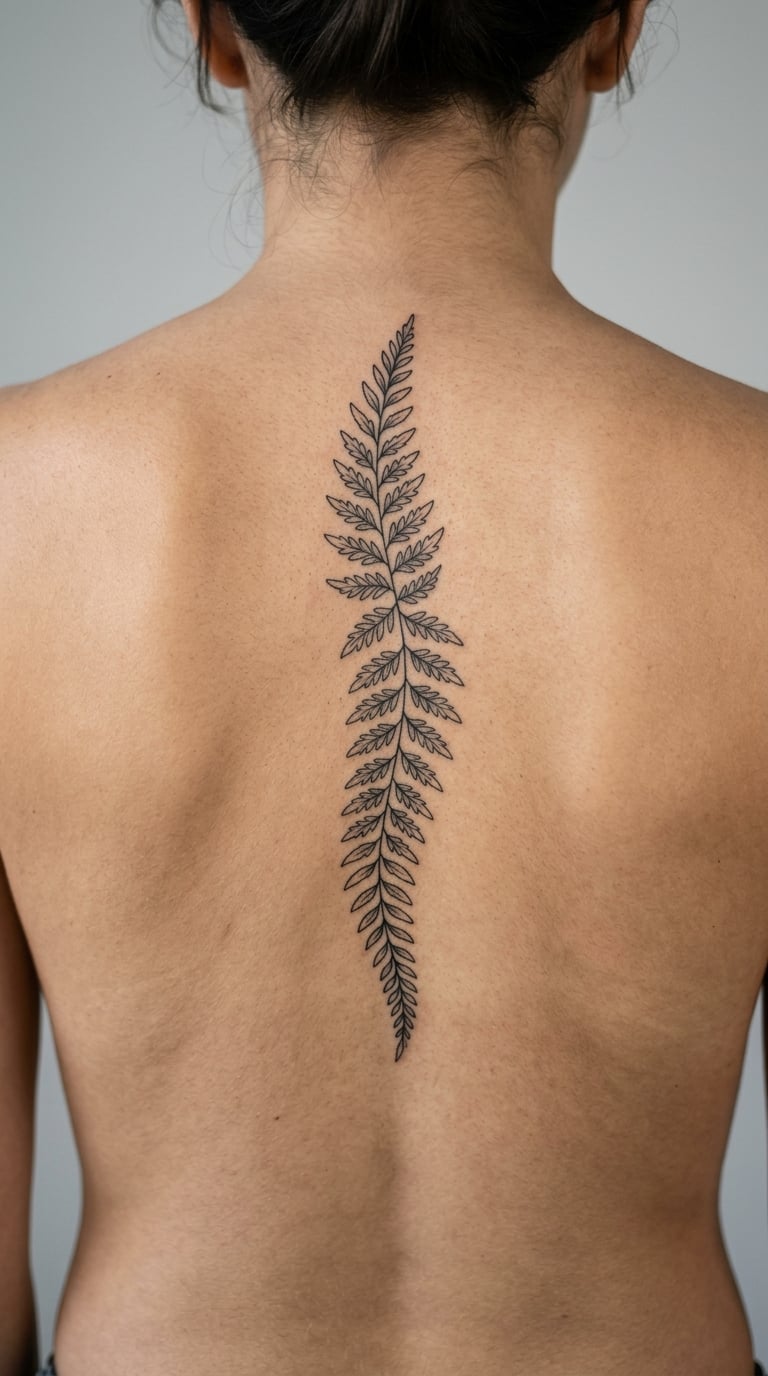
A single stem of fern down the spine is the quietest idea in this set and the one people rarely regret. Ferns traditionally mean endurance and quiet growth, and drawn as one continuous stem it looks like a line running down your back.
Ask for a stem around 4 to 6 inches long rather than the full length of the spine. Any longer and the session gets long enough that line consistency drops off. Leave a small gap of skin at the nape rather than starting at the hairline, where the sun hits hardest.
Pain and time: The back is a 3 to 4 out of 10, but you will be lying still for 60 to 90 minutes, which is its own kind of hard.
9. Fine Line Constellation Map on the Shoulder Cap
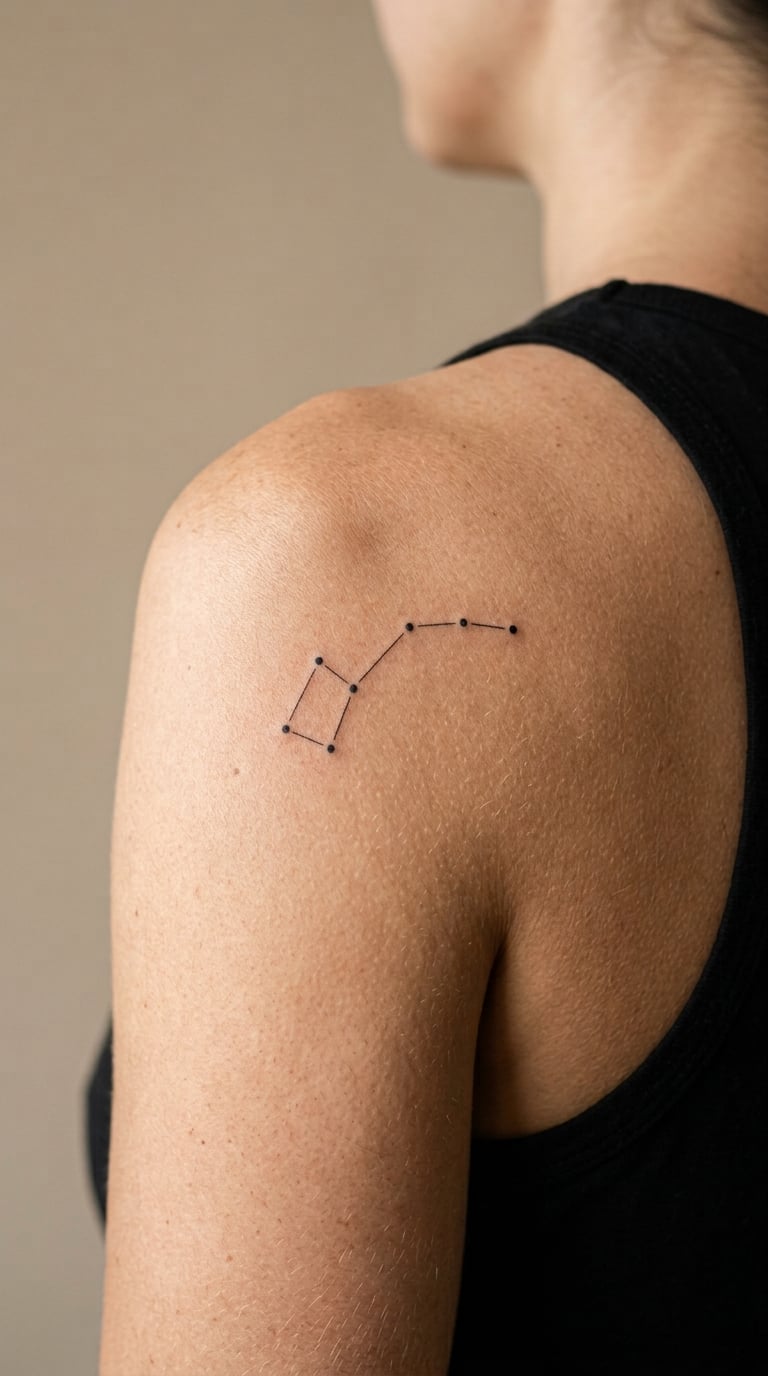
Constellations are the most flexible fine line idea here, because almost any star map carries a story. Someone’s birthday sky, the view from a childhood house, the stars visible on a particular night. The design is dots and hairlines, so it scales from tiny to shoulder-wide.
On the shoulder cap it will fade fastest of any placement here, because short sleeves leave it exposed from March to October. Ask for a slightly larger dot than looks comfortable in the drawing, and a real star map rather than a symmetrical made-up shape.
Pain and time: A 4 out of 10, and 40 to 60 minutes for a small map.
10. Micro-Realist Lotus on the Hip
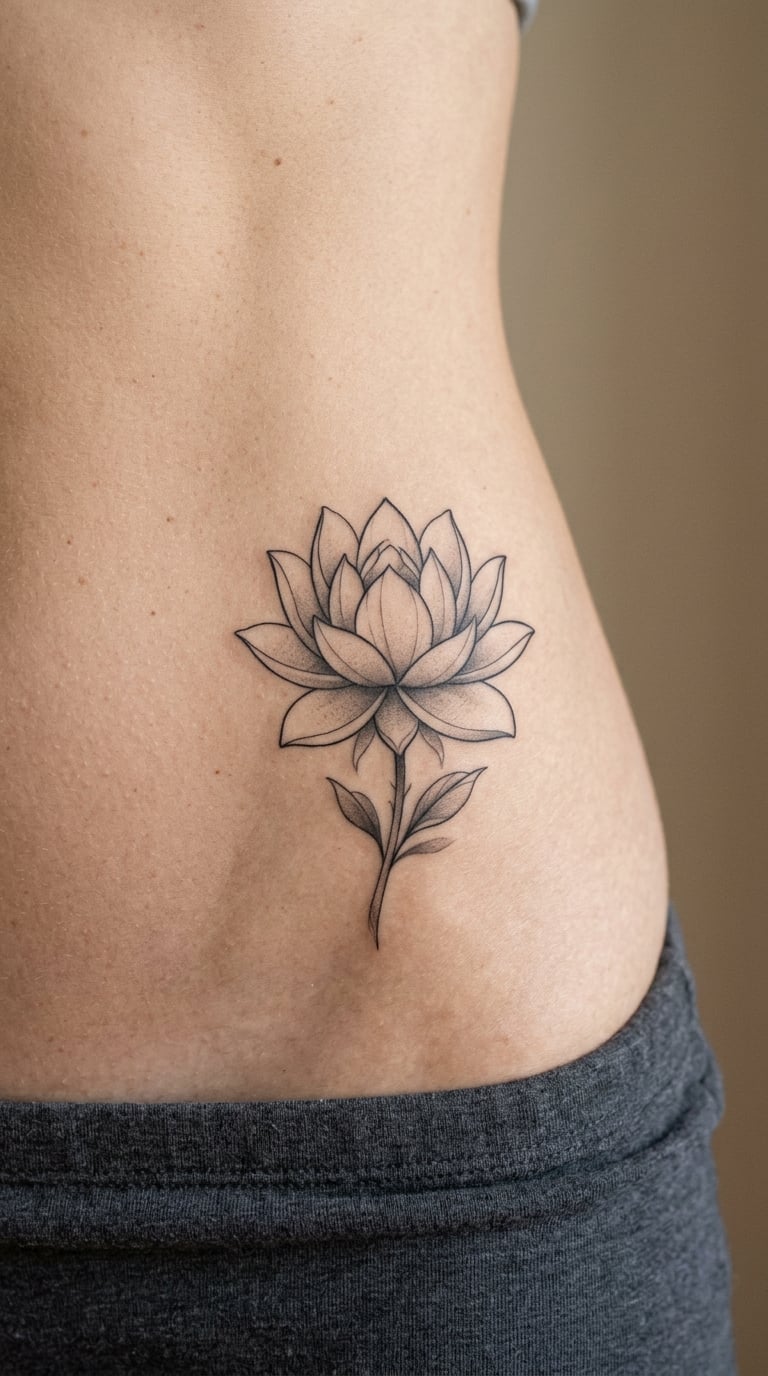
The lotus is the most over-requested design in this category and the easiest to get wrong, so it is here with a caveat. Done as a single bloom with open petals and no background, it is genuinely lovely. Done as a full geometric mandala at three inches, it turns to grey soup.
The hip has stable skin and good space, and it is usually hidden at work, which is a big part of why women choose it. Ask for 2 to 3 inches, petals with visible separation, and shading only in the lower half where a real lotus would sit in shadow.
Pain and time: A 4 out of 10, and 60 to 90 minutes for a shaded bloom.
11. Three Wildflower Stems on the Outer Thigh
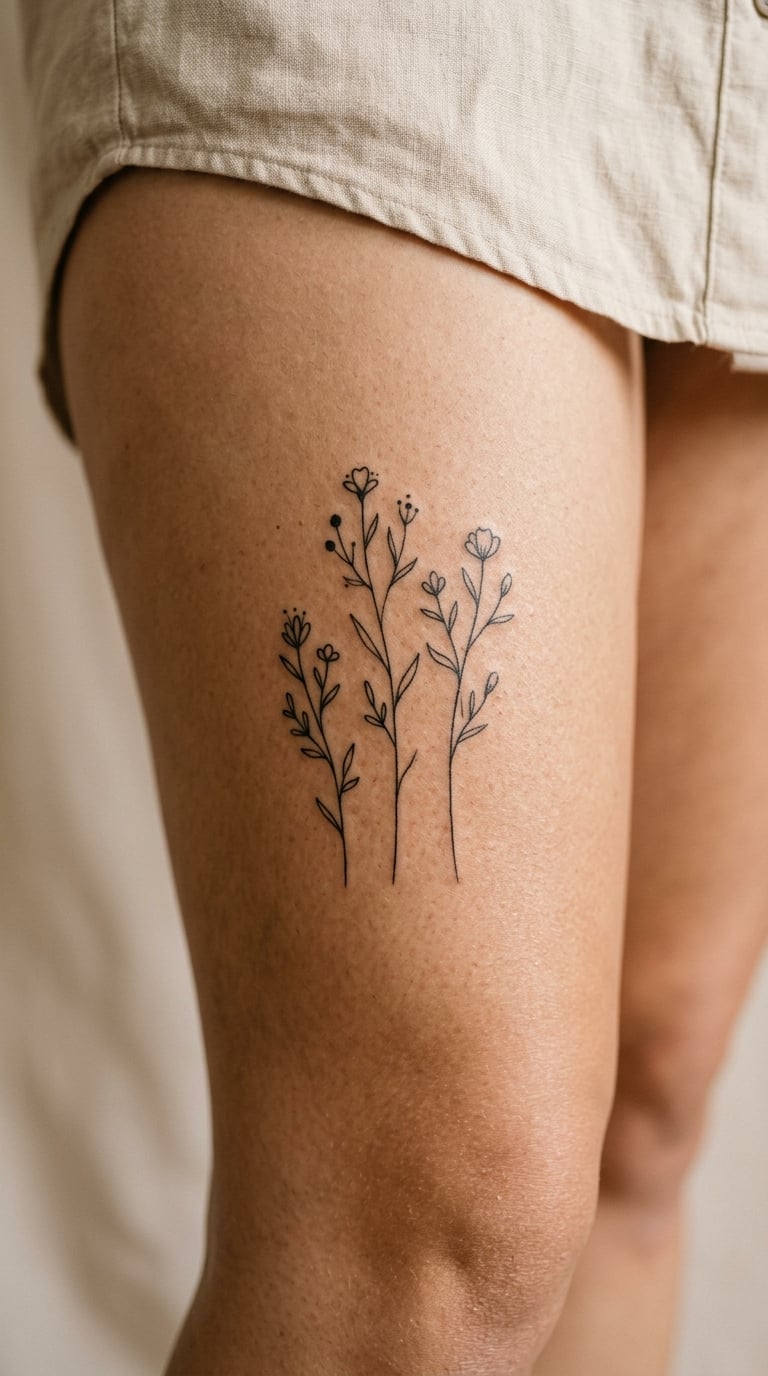
Three wildflower stems at slightly different heights is the version of a botanical that ages best. Real wildflowers have thin irregular stems, so there is less dense line weight to lose, and the whole thing can be done without a single drop of grey.
On the outer thigh you can go wider than you would on the wrist, around 3 to 4 inches, and the stems follow the leg line nicely. Ask for the flowers to be different species rather than three copies, which is the detail that separates good from generic.
Pain and time: A 3 out of 10, and 45 to 60 minutes.
12. Minimal Heart Outline on the Back of the Hand
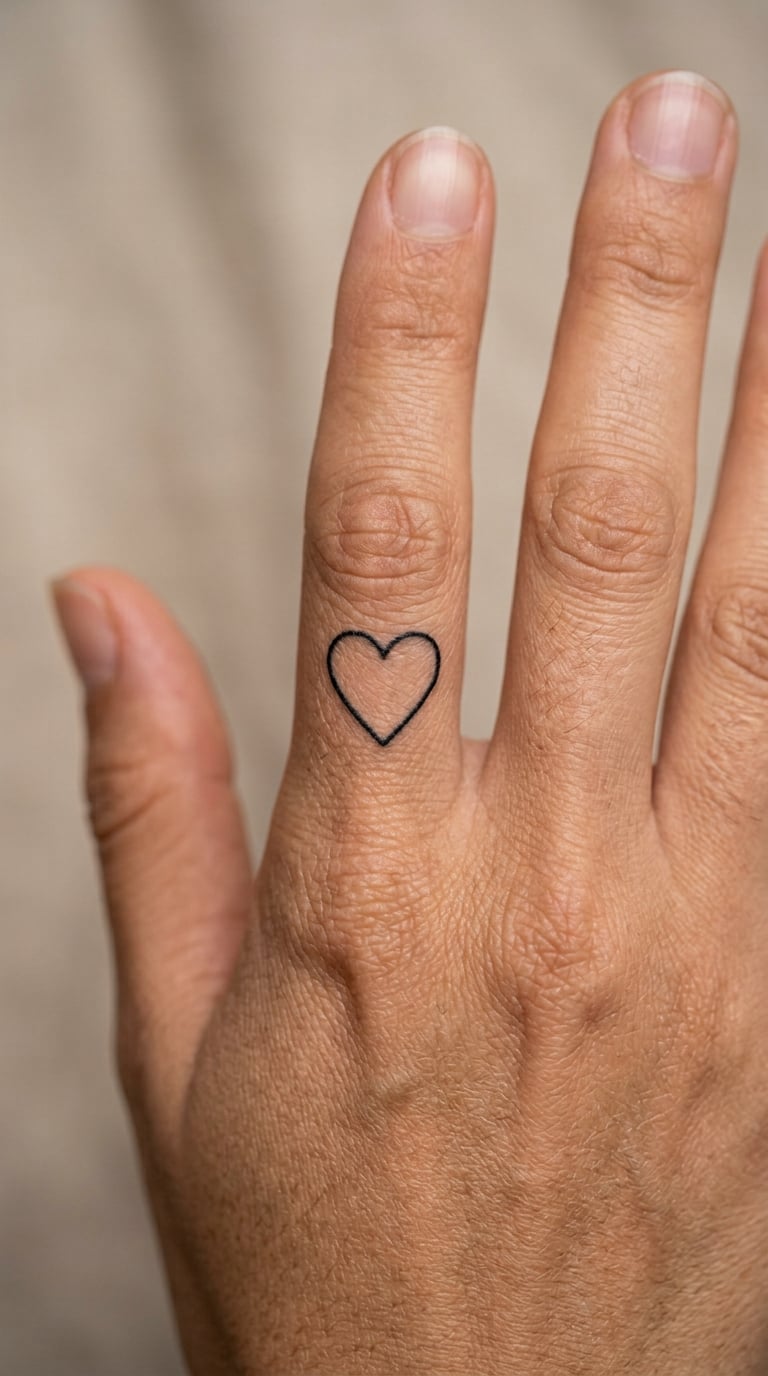
There is a version of the heart tattoo that has been worn out by decades of stock designs, and a version done as a single hairline outline that still looks sharp. It is the same shape. The difference is line weight and restraint.
Back-of-hand skin is sun-exposed all year and creases with every movement, so this one fades and blurs faster than anywhere else on this list. Keep it under 2 inches, and treat sunscreen as part of owning it rather than an extra step.
Pain and time: A 5 out of 10 on the back of the hand, and 20 to 30 minutes.
13. Single-Line Eye on the Inner Bicep
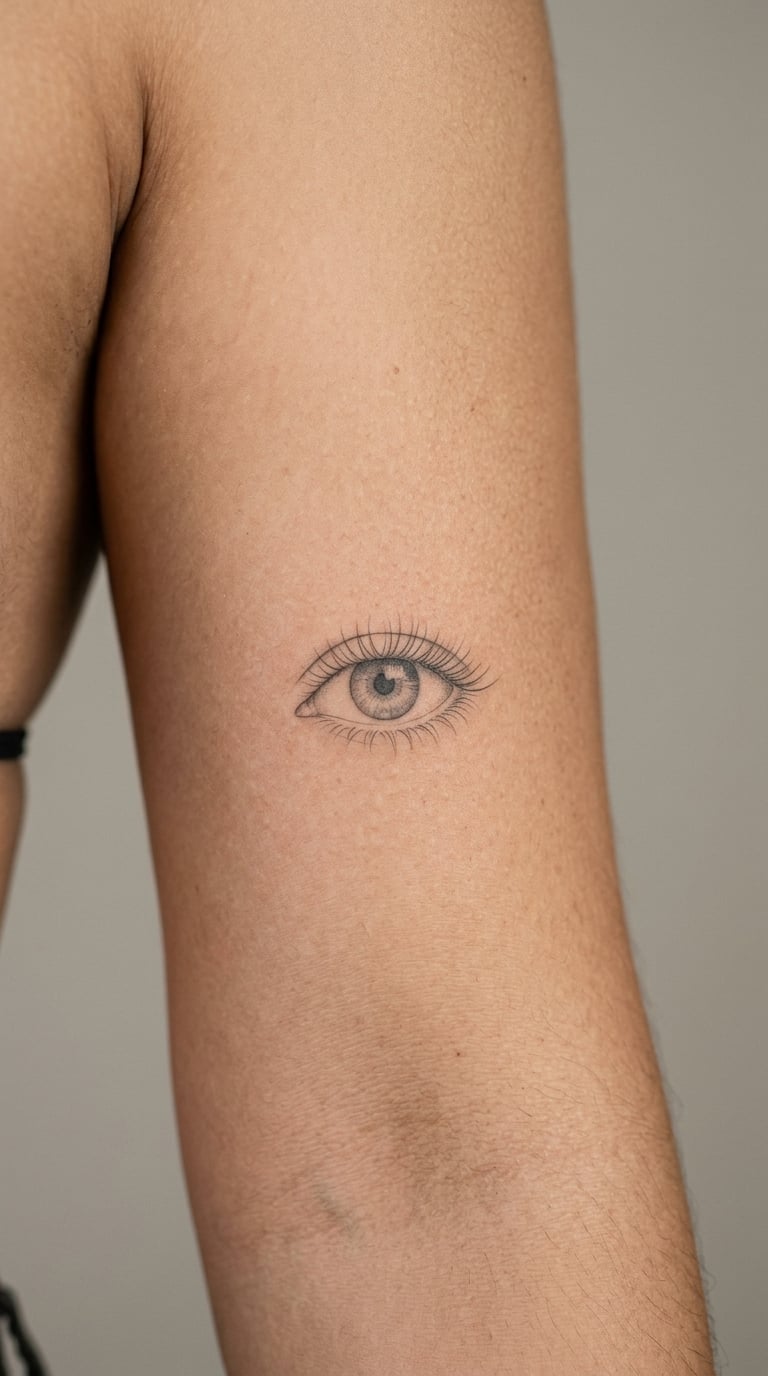
A line-art eye on the inner bicep is understated, easy to cover, and carries the meaning people assign to watching and paying attention. It also happens to sit on skin that is rarely exposed, so it holds its line far better than a hand or collarbone piece.
Two inches tall is enough. The iris is the part that softens fastest, so ask for slightly darker lash lines and a defined upper lid. Many people add a second tiny element years later, so leave room above the brow if that is likely.
Pain and time: A 5 out of 10, and 45 to 60 minutes.
14. Mountain Range Horizon Line on the Calf
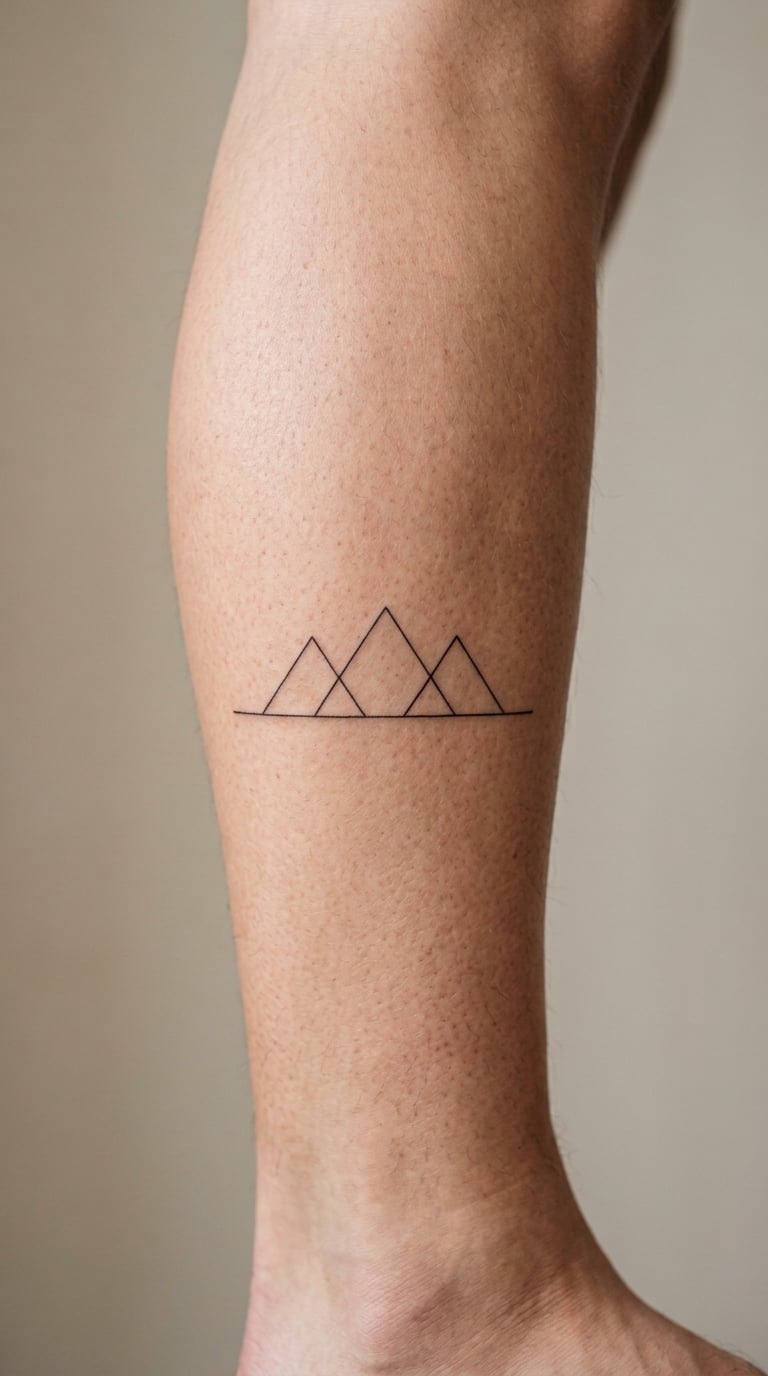
Three peaks on a single straight line is the one design here that is pure geometry rather than illustration, and it suits anyone who wants something abstract without committing to a symbol. Mountain ranges also mark a place, so plenty of people use their own.
The calf is a good canvas for a wide design, and a ridge profile fills a 3 to 4 inch space without crowding. Keep the horizon dead straight and the peaks simple. Every extra contour line on a small ridge is a line that can turn to grey.
Pain and time: A 5 out of 10, and 40 to 55 minutes.
15. Chrysanthemum Sprig on the Top of the Foot
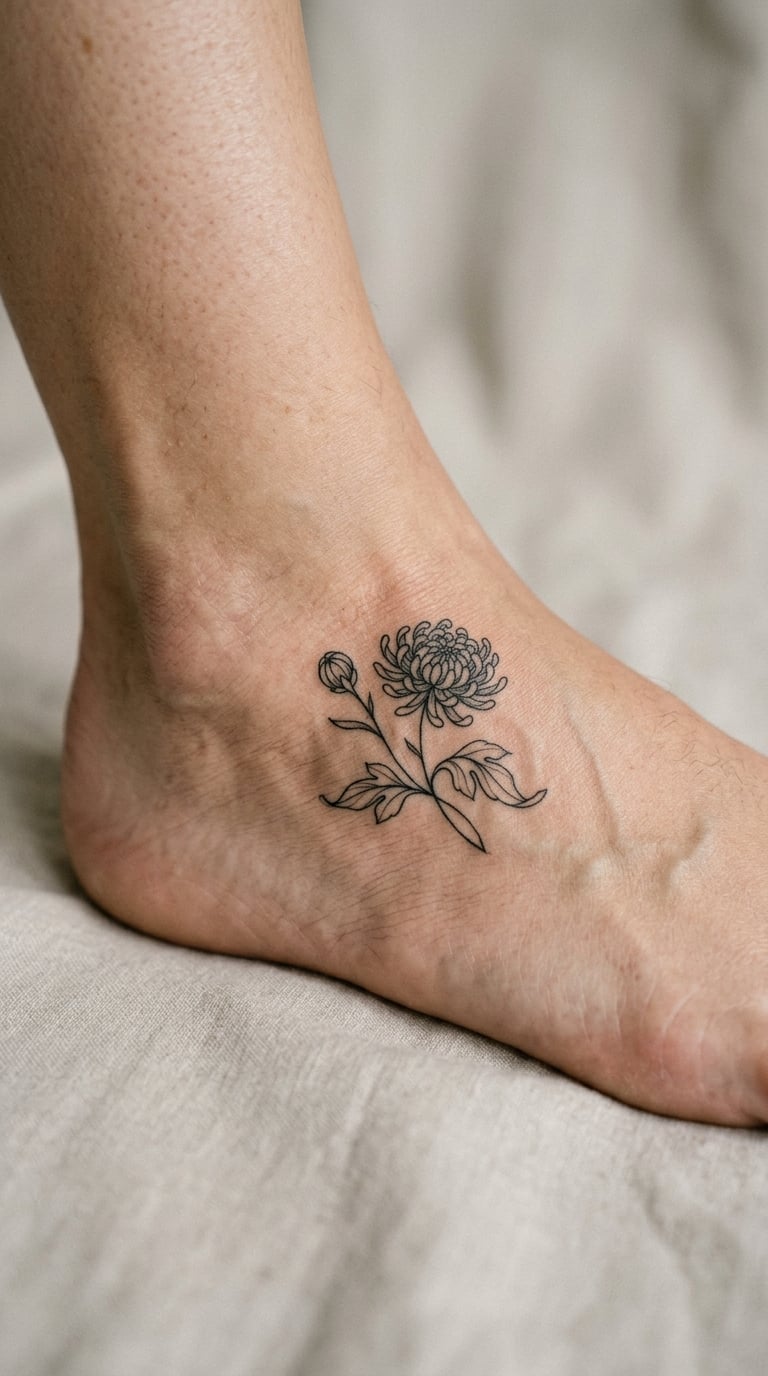
Top-of-foot flowers come and go with the season, and chrysanthemum is a good late-autumn one: dense centre, thin petals, easy to read at small scale. Floral tattoos near the ankle bone tend to age better than people expect because the skin there is thick.
Two inches across the instep is comfortable. Ask for the dense centre to be suggested with a few short strokes rather than a black dot, since a solid centre fades into a smudge long before the petals do.
Pain and time: A 5 out of 10 where the bone sits close to the surface, and 40 to 60 minutes.
16. Single Cherry Branch on the Back of the Upper Arm
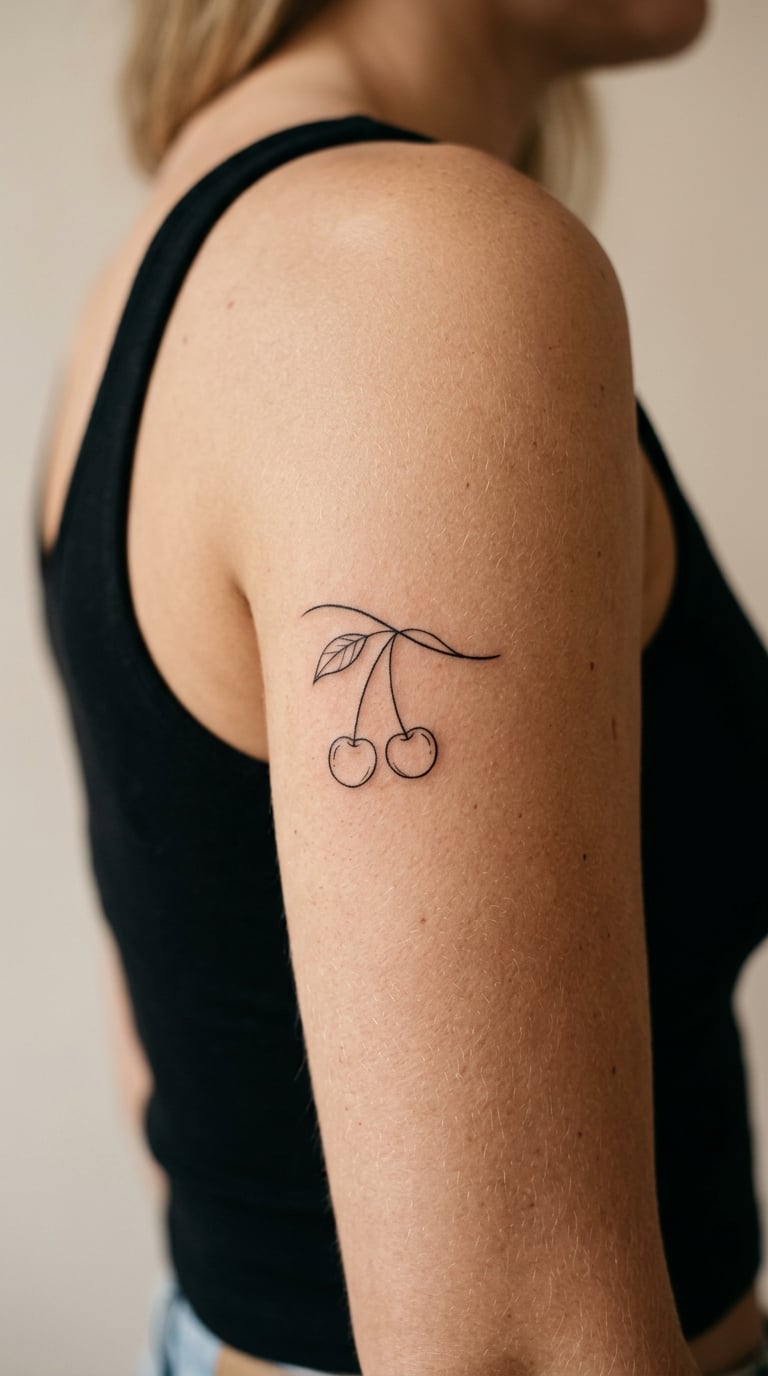
The cherry branch is softer and more decorative than most of the botanicals here, and it suits the back of the upper arm where there is a wide flat area to work with. Two cherries and one leaf is plenty, and any more turns it into wallpaper.
Back-of-arm skin is stable and rarely flexed hard, so this placement holds thin work well. Keep the branch at 3 inches and let it curve slightly with the arm rather than sit straight across it. The cherries should be outline with a single highlight left blank.
Pain and time: A 3 out of 10, and 45 to 60 minutes.
17. Matching Micro Line and Dot for Couples on the Ring Finger
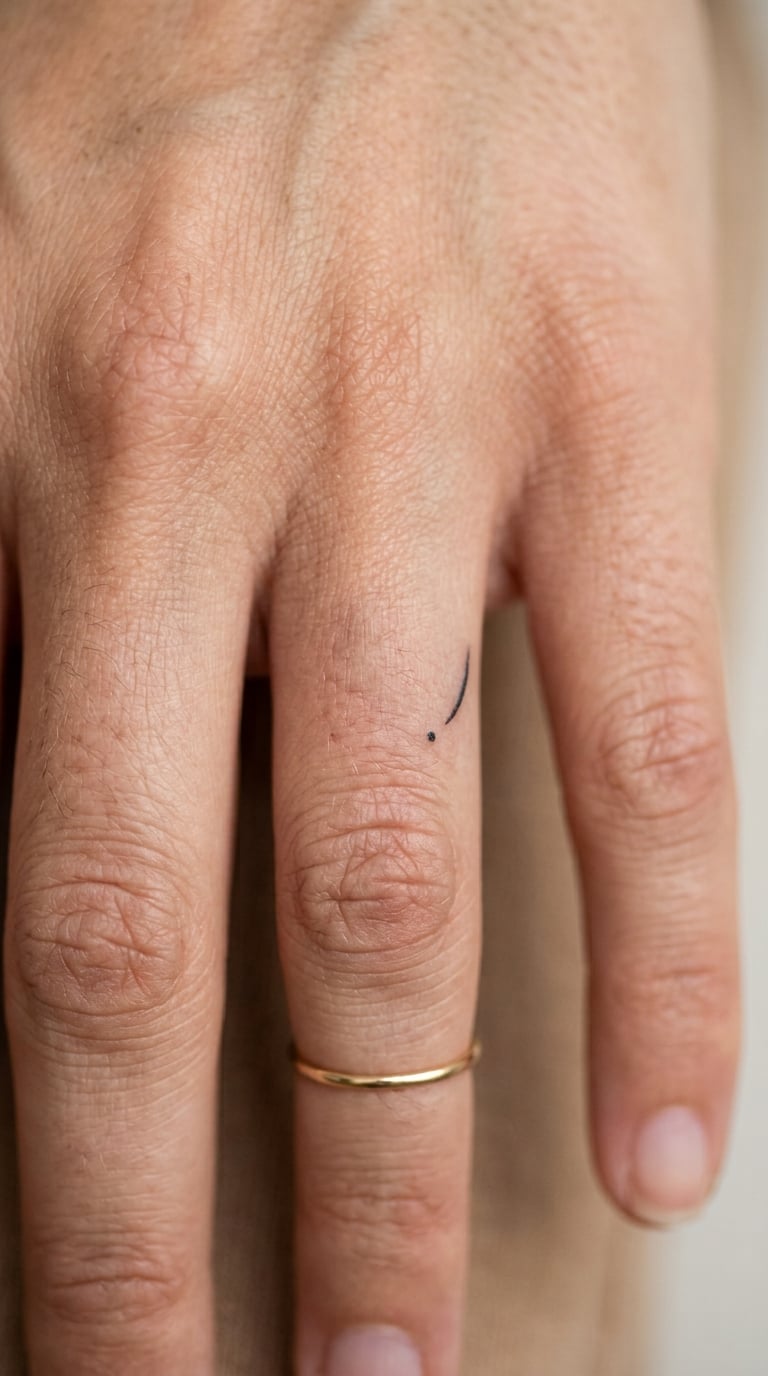
Matching tattoos on the ring finger knuckle are almost always the smallest tattoo two people will ever get, and they are the most likely to blur. A half-inch line and dot can be done in ten minutes and will be soft in three years unless you go in for a free touch-up.
Treat that touch-up as part of the tattoo, not a sign it went wrong. If you want it to survive, come back at six months and again around year two. The alternative is to move the matching piece somewhere more protected, like the inside of both wrists.
Pain and time: A 7 out of 10 on the knuckle, and 10 to 20 minutes per person.
18. Botanical Vine Curving Along the Side Waist
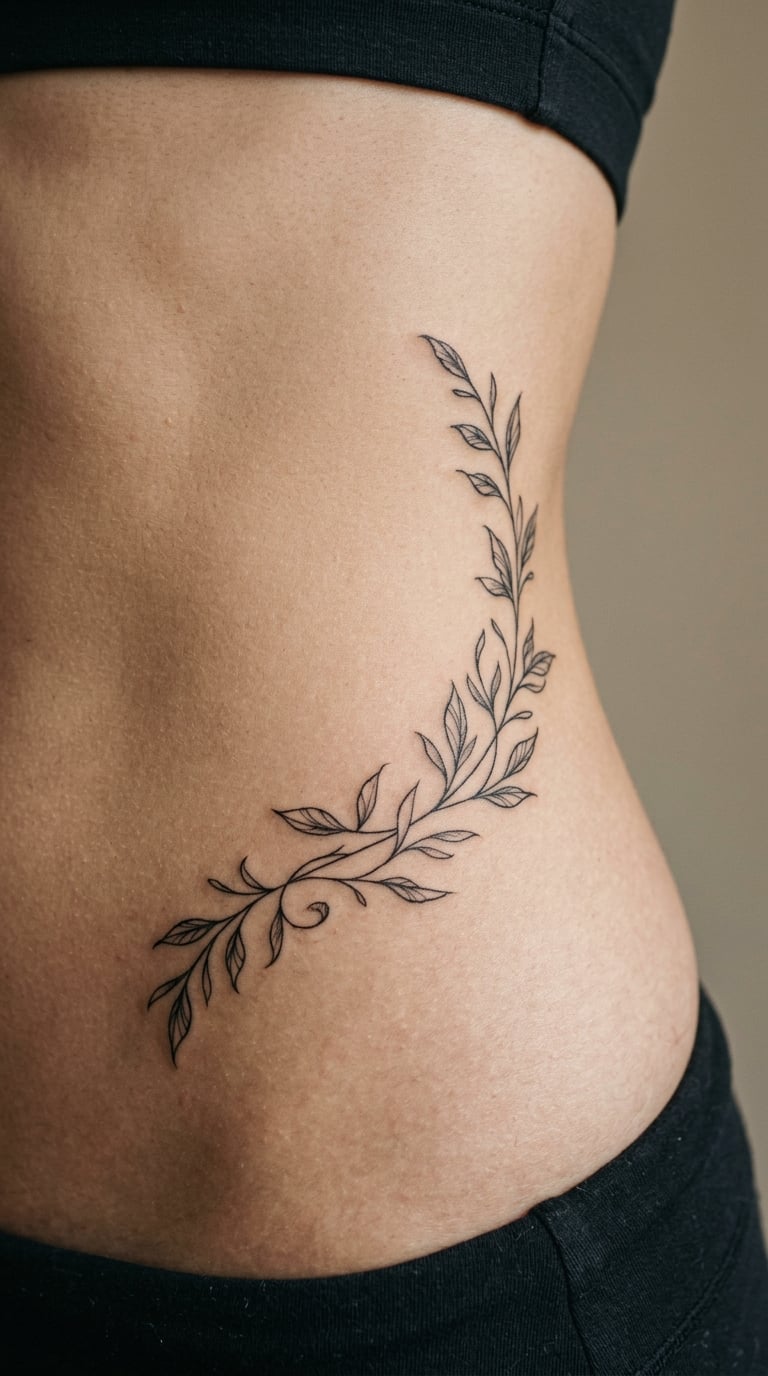
A vine that follows the side waist is the only idea here that uses your shape as the composition. The arc of the waist becomes the arc of the stem, so it looks designed for you rather than placed on you.
Plan the direction with your artist before the session, because a vine that curves up and a vine that curves down read completely differently on the body. Four to five inches is a good length, and the leaves should vary in size instead of repeating evenly. This placement stretches with weight changes, so tell your artist if that is likely.
Pain and time: A 4 out of 10, and 60 to 90 minutes.
Where to Place a Fine Line Tattoo
If you are still deciding, the placement does more for the design than the design does for itself. These are the spots women ask about most, with what actually suits each one.
- Inner forearm: the most versatile flat area, good for peonies, line-art eyes and small scripts. Sits about a 4 out of 10 and takes a full-ink look with a sleeve.
- Collarbone: elegant and visible, but sun-exposed and mobile, so it softens sooner than most.
- Behind the ear: discreet and flattering, one of the fastest to fade because of hair and daily sun.
- Ribs: the most private option and the most flattering line on the body, at the cost of real pain.
- Inner wrist: clean and elegant, constantly moving, so numerals and thin script blur there first.
- Nape of the neck: thick skin that holds pigment well, hidden by hair, and easy to cover at work.
- Hip and side waist: large flat area with good skin thickness, which is why larger botanicals work here.
- Ankle and top of foot: delicate and seasonal, where the bone sits close under the skin.
- Spine and lower back: reads beautifully in profile, and back skin is usually not exposed to sun.
- Back of the hand: very visible and very exposed, so it needs the most sun discipline of anything here.
- Sternum: a strong statement placement that hurts more than people expect.
What Common Fine Line Motifs Actually Mean
Meanings are personal first and traditional second, so treat these as starting points rather than rules. The ones below come up often enough that it is worth knowing what they usually signal.
- Peony: prosperity, good fortune and a happy marriage. Popular for that reason more than any other flower.
- Lotus: rebirth and inner peace, rooted in Buddhist and Hindu imagery and now widely used outside that context.
- Rose: love that balances beauty and pain, with the stem usually softened when the meaning is gentler.
- Wildflowers: freedom and a connection to where you come from, often chosen as a family or home symbol.
- Fern: endurance and quiet growth, and one of the easiest botanicals to keep legible over time.
- Olive branch: peace, reconciliation and the end of something difficult.
- Butterfly: transformation, change and a life that has moved through something.
- Hummingbird: resilience, joy and energy, drawn almost always beside a flower.
- Swallow: homecoming, loyalty and safe return, and the oldest option on this list by a long way.
- Moon phases: change over time and a full cycle rather than one fixed version of yourself.
- Eclipse: a meeting or an ending that made something new, and the moodiest of the celestial options.
- Constellation: a specific place, person or date, usually mapped from something real rather than chosen for looks.
- Angel numbers: 111 for new beginnings, 222 for balance, 333 for encouragement, read as messages to pay attention.
- Heart outline: love without specifying the object, which is why it is still the most requested shape here.
Fine Line Tattoos for Women: What to Know Before You Book
- Look for a single-needle specialist, not a shop that offers everything. Fine line is a technical skill. Ask directly whether the artist works this way as a main part of their practice rather than occasionally.
- Judge healed work, never fresh photos. This is the single most repeated piece of advice from the r/agedtattoos crowd, and it is correct. Studio lighting and fresh swelling flatter everything. Ask to see the same design two years healed. If an artist has none, that tells you what you need to know.
- Ask them to go slightly heavier on deeper skin tones. On deeper skin, a hairline line has less contrast and loses more of itself in the first weeks of healing. Line weight should be adjusted upward, not the design simplified.
- Single needle is charged by the hour. Fine line costs more per hour than a bold piece because it moves slowly. The number you pay depends on size, how dense the detail is, how awkward the placement is and the artist’s experience. Ask for the hourly rate up front, not a total you find out afterwards.
- Expect 30 to 90 minutes for a small piece. Readers on the r/Wellington minimalist thread asked for simple half-hour line work specifically, and that is a reasonable thing to request. If your design needs more than one session, that is worth knowing before the first one.
- Plan the sun protection now, not later. Broad-spectrum SPF 30 or higher on exposed fine line, every day, is the difference between a crisp line and a grey one at year five. Fine line sits high in the dermis with little pigment, so UV hits it harder.
- Do not ask for a fully detailed design at the smallest size. Over-detailed small pieces are the most common disappointment in this style, and the smudge you see online usually started as a request that was too ambitious for its size.
One more thing worth asking at the consultation: what does the artist recommend if this piece blurs in two years. A good answer is a free touch-up within a set window. A vague answer tells you plenty.
Frequently Asked Questions
Do fine line tattoos last long?
They last, but they are the first style to show their age. Because single-needle work sits close to the surface with very little pigment, thin lines soften sooner than bold traditional pieces. With daily sunscreen, no swimming while healing, and a touch-up at six months, a well-executed fine line tattoo usually holds its shape for many years.
Is a fine line tattoo cheaper than a regular one?
Not usually, and this surprises people. Single-needle work moves slowly, so artists charge by the hour and a small fine line piece can cost as much as a much larger bold tattoo. What drives it is size, detail density, how awkward the placement is, and the artist’s experience. Always ask for the hourly rate before you start.
What do fine line tattoos symbolize?
It depends entirely on the motif. Peonies and roses read as love and good fortune, ferns as endurance, butterflies as change, swallows as homecoming, moon phases as transformation, and angel numbers as messages to pay attention. Constellations usually mark a real place, person or date. Meanings are personal, so the design should mean something to you first.
What are the newest fine line tattoo trends for women?
The styles holding up this year are ornamental linework along the ribs and side waist, micro-realism flowers in grey washes, mapped constellations, fine line script on the collarbone, and matching micro pieces for couples. The bigger shift is placement: the side waist and nape are getting far more attention than the classic inner wrist.
What is the most attractive spot for a fine line tattoo on a woman?
There is no single answer, because it depends on the design. The inner forearm and collarbone are the most flattering everyday placements, the nape looks best in profile, and the ribs and side waist suit curving botanical designs. If you want it to stay readable for years, the inner forearm and nape hold thin lines better than the hand or ankle.
What is the 1/3 rule tattoo?
It is a placement idea borrowed from fertility symbolism rather than a design style. The body is imagined as divided into thirds, and a tattoo placed on the lower third is said to represent creation and new life. Most people choosing it today do so because they like where the ink sits, not because of the fertility meaning.
Wrapping Up
Pick two designs from these fine line tattoo ideas for women and put them side by side for a week. One of them will still feel right, and that is the one worth building a consultation around.
Then do the unglamorous part early: ask every artist you are considering for healed work at least a year old, get the hourly rate and the session estimate, and settle the placement before you settle the design. Those three answers prevent almost every regret I hear about this style.