
Do Tattoos on Fingers Last? 2026 Guide to Care & Healing
Do tattoos on fingers last? Yes, but they are the least permanent ink you are likely to sit down for. Hand washing, sunlight, knuckle creases, constant friction and quick skin turnover on the thinnest skin in the body all wear finger tattoos down faster than the same design on an arm or a back. Most people end up booking a top-up somewhere between six months and a couple of years in.
That is the honest version, and it is worth hearing before you pick a design rather than after. Some finger tattoos hold their line for eight years or more. Plenty of others need topping up every year, and the ones that need it most are usually the tiniest, most detailed ones.
Below is what tattooists and long-term wearers actually report, what ages well and what does not, how long healing takes, and what a session in the chair costs you in time and money.
Do Tattoos on Fingers Last? Quick Answer
Finger tattoos last, but they fade sooner than tattoos on less-used areas. Constant movement, hand washing, sunlight, friction and fast skin turnover on the thinnest skin in the body mean they need top-ups sooner, and the fade is patchy rather than a clean, even loss of colour. Most people need a top-up somewhere between six months and a couple of years in.
Bold, simple black line work on a stable spot on the side of a finger holds up far better than a tiny detailed piece on the knuckle. Here is what each part of the picture looks like, from style choices to healing and cost.
Why Finger Tattoos Fade Faster Than Other Tattoos
Nothing about a finger tattoo is unusual in the way it is done. It is the skin underneath that works against the ink.
Faster skin turnover
Skin on your hands regenerates and sheds more quickly than skin on your back, chest or upper arm. Tattoo ink sits in the dermis, and when the layers above it turn over faster, the pigment has less time to settle into a stable, saturated look.
Constant movement
Fingers bend, grip, tap and stretch all day. A design placed over a joint or in a deep knuckle crease gets stretched in two directions repeatedly, which softens line edges and spreads ink into the surrounding skin. Tattooers call that feathering or blowout, and on hands it shows up early.
Friction and water
Door handles, pens, utensils, a phone grip, a steering wheel, a gym bag strap. Every one of those is rubbing against fresh skin with a tattoo on it. Add washing up, showers and hand sanitiser, and you have the two things that wear ink fastest: abrasion and repeated wetting.
Thin skin with little padding
There is very little fat or muscle between the skin on a finger and the bone. Artists have to work close to the surface, and there is not much room to place depth consistently across a small, curved area.
Sun and chemical exposure
Hands are out in daylight all year, and they are the part of you that touches cleaning products, gardening soil and paint thinner. Faded tattoo lines on fingers often turn grey or slightly blue-grey rather than simply lighter, which is what uneven pigment loss looks like.
Weaker lymphatic clearance
Lymphatic drainage helps carry ink particles away over time. The extremities have less of it than the torso, which is one reason a finger tattoo can hold a faded shadow of its original shape long after a forearm piece has cleared or settled.
Do Tattoos on Fingers Fade Evenly? Not Usually
Nobody warns you about this part, and it surprises more first-timers than the fading itself. Finger tattoo fading is blotchy. You lose contrast in some areas first, usually the thinnest shaded parts and anything crossing a crease, while heavier black line can still look sharp right beside it.
People describe a five-year-old finger tattoo most often as a grey smudge rather than a pale version of the original. One wearer’s description from a tattoo forum was closer to the look of a pen scrawl than to the crisp drawing they took in on day one. If you get the tattoo for the drawing, the drawing is what you will miss most.
Do Tattoos on Fingers Last Through Daily Wear?
They survive daily life, but your job decides how well. Here is how common activities land on different placements.
Typing and office work. The top of the index, middle and ring finger rub against a keyboard or desk edge. A design there will soften fastest. A design on the outer side of the same finger fares noticeably better.
Lifting and manual work. If you lift, weld, cook, garden or work with tools, a finger tattoo is a running abrasion test. A bold shape will survive; thin line detail will not keep its edges.
Driving. The ring finger and thumb on your dominant hand grip the wheel all day. Both are high-contact positions.
Sleeping. Roughly a third of a night with a hand under your face puts pressure and warmth onto the outer finger and the back of the hand. It is a low-grade effect, but it never stops.
Exercising. Gym straps, handles, chalk and sweat all reach the same areas. Rinse and pat dry afterwards rather than leaving sweat sitting on it.
One piece of advice from a Mumsnet thread stuck with me: mark the spot on your finger with a pen, then live your normal life for a couple of weeks and see how often you actually touch it. It is the cheapest reality check available before you commit.
Which Finger Tattoo Styles Age Best?
Line weight and contrast matter far more than subject matter. A bold, simple shape with heavy black holds; a grey wash or a hairline detail disappears into the skin.
| Style | How it ages | Holds well? |
|---|---|---|
| Bold black line work | Keeps contrast longest, edges soften first but the shape stays readable | Best |
| Blackwork and solid fills | Holds solid for years, then goes flat grey rather than patchy | Very good |
| Dotwork | Dots blur into a grey patch earlier than people expect, especially over a crease | Mixed |
| Traditional colour | Red and yellow go first; black outlines outlive the shading by a long way | Mixed |
| Fine line and single-needle detail | Softens within a couple of years on fingers, worst on knuckles | Poor |
| Micro-realism | Shading washes out first and leaves an indistinct grey shape | Poor |
| Lettering and script | Letterforms smear together; inner-finger script is the hardest case | Poor |
If a design has to live on a finger, ask your artist to bump the line weight and drop the smallest elements before you sit down. Same picture, bigger lines, far better odds.
Finger Tattoo Placement Guide
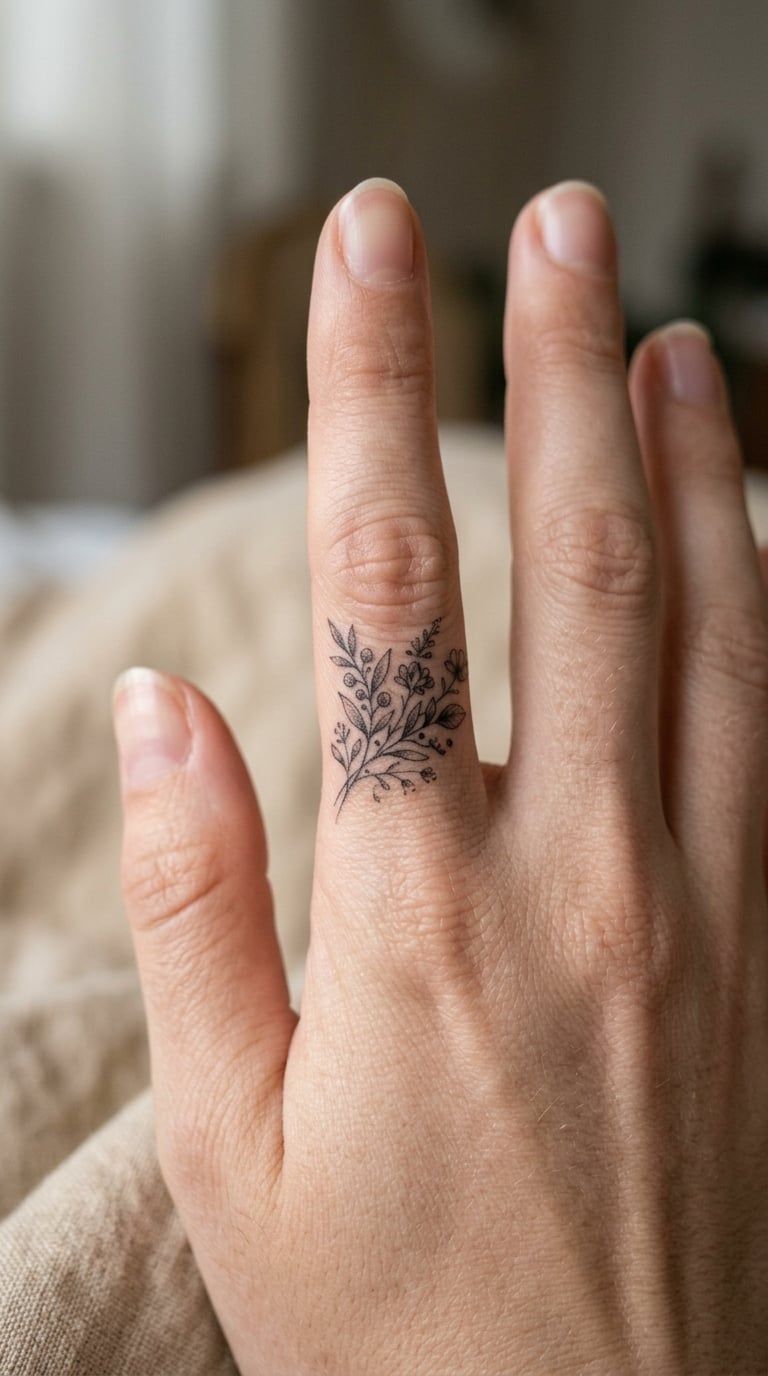
Where you put it changes durability more than most people expect.
Side of the finger. The most forgiving spot on a finger. It is visible, it does not flex with the joint, and the skin is reasonably flat for a small design. Most artists consider this the best compromise between visibility and staying power.
Top of the finger. Visible and popular, but it faces outward into knocks, rings and surfaces. Works for a bold symbol or a single letter. Fine detail here will go soft.
Inner finger. Reads well in photos and can be surprisingly good-looking, but it is the placement most exposed to water, stretching and the underside of the fingertip pressing against surfaces. Tended carefully, people do report inner-finger pieces still looking good after several years.
Knuckles. The most durable-looking and least durable place. The crease across the joint breaks the design in two and fades on nearly every top-up. If you want knuckles, go larger than feels sensible and accept a lifelong top-up habit.
Thumb. The thumb is thick, strong and less used for fine grip work than the other fingers. One Mumsnet wearer reported the thumb piece of a three-finger set was the only one that never needed topping up.
Back of the hand and inner wrist. Not fingers, but worth knowing: the back of the hand fades faster than a forearm, and the inner wrist sits at the opposite end of the spectrum. Plenty of people who want the finger look end up with the back of the hand instead.
Pain Levels by Finger Tattoo Placement
There is very little padding between the skin and the bone, so fingers hurt more than people expect. Individual tolerance varies a lot, and a restless hand is harder to work on than a painful one.
| Placement | Typical pain | What to expect |
|---|---|---|
| Index finger, side | Medium-high | Bony and sensitive, but the hand can usually be held still |
| Middle finger, side | Medium-high | Similar to index, often described as a dull ache |
| Ring finger, side | Medium-high | Thinner than the middle finger, so it registers more |
| Little finger | Medium-high | Small and twitchy, so steadiness is the real challenge |
| Thumb | Medium | Thicker bone structure, often the least painful of the set |
| Knuckle | High | Skin pulls tight over bone and stretches as the joint moves |
| Inner finger | High | Frequently reported as the most painful spot, with a strong nerve component |
| Back of the hand | Medium | Large flat area, easier to work on, still sensitive over the tendons |
Numbing cream is unreliable on fingers. There is not enough tissue for it to sit in, and the effect often fades before a slow, detailed design is finished. Most artists work finger tattoos in short sessions with steady, fast passes for exactly this reason.
Finger Tattoo Cost and Session Time
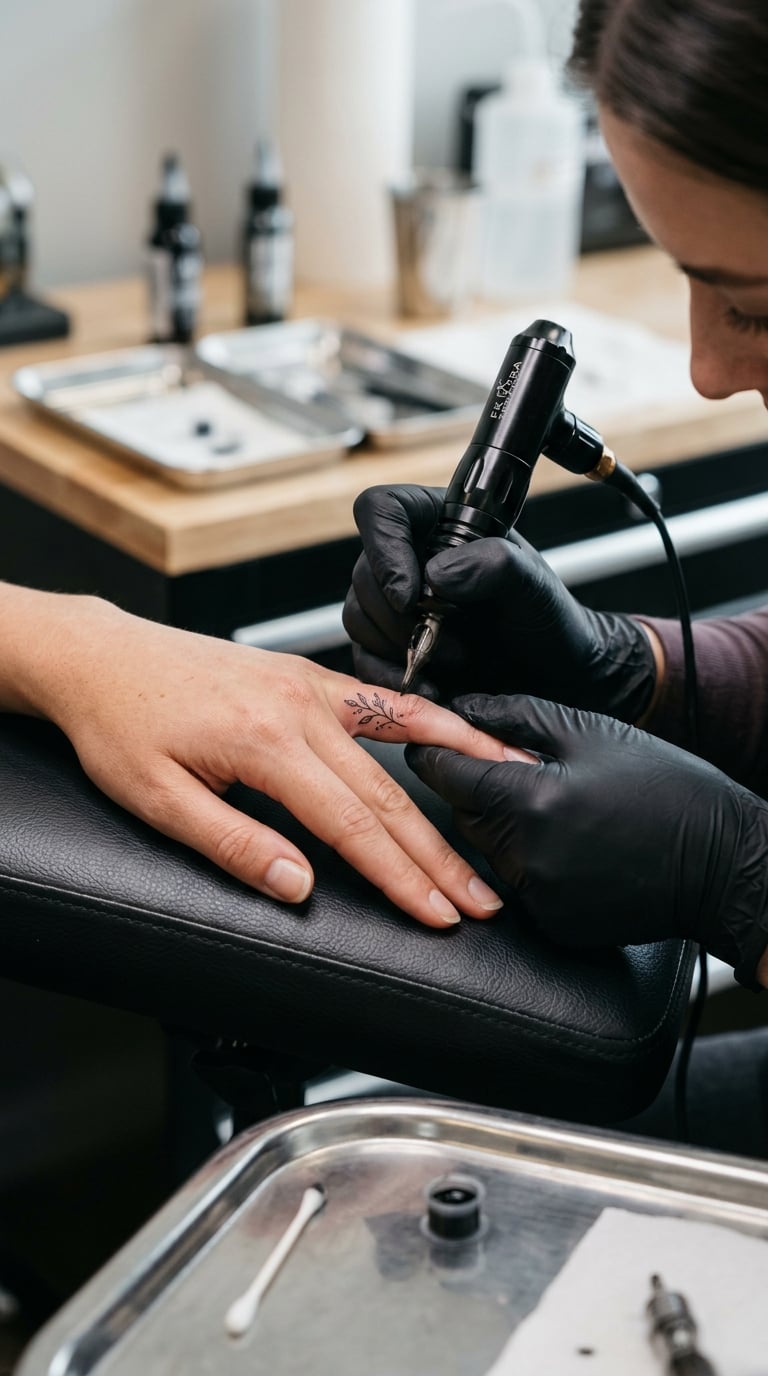
Finger tattoos are priced like any other tattoo: by the hour, with a shop minimum. That is why the minimum matters so much here. A tiny single letter is small work, but the setup, the stencil and the chair time still count, so most studios will book it at their minimum rather than charge less.
| Design | Typical session | What drives the cost |
|---|---|---|
| Single letter or symbol | Under an hour | Usually billed at the shop minimum |
| Small multi-line design | One to two hours | Line count and how much drawing is needed |
| Micro-realism or portrait | Two to four hours | Artist time, shading density, breaks for a restless hand |
| Cover-up over a faded finger tattoo | One to three hours | Covering patchy old ink needs more coverage and often a bold outline |
What pushes the bill up: an artist who specialises in fine detail and charges a premium rate, a design copied from a small reference that has to be redrawn to be readable, and a second session because the hand would not hold still. A bold design is frequently cheaper to tattoo and cheaper to maintain than a detailed one.
Ask about the touch-up policy before you book, not after. Most artists include a free top-up within a stated window for work that has genuinely lost ink, and knowing the window in advance saves an awkward conversation later.
How Long Do Finger Tattoos Take to Heal?
Fingers heal faster than most body sites, often in two to three weeks, partly because of good blood supply. The skin is also thinner and mobile, so the scab flakes away sooner. Plan to judge the result at week six, not week two.
| Time | What is happening |
|---|---|
| Days 1 to 3 | Red, swollen and tender. The hand may throb when it is warm. Lines look far bolder than they will ever be again |
| Days 4 to 7 | Itching starts, loose skin flakes away, the design lightens sharply. This is normal and not a sign it took badly |
| Weeks 2 to 3 | Surface healed. The skin looks matte and slightly raised, and a faint line may seem to be disappearing |
| Weeks 4 to 6 | Colour settles back in. This is the first fair point to judge the tattoo |
| Month 3 and beyond | Any genuine patchy take shows up here, not before. This is the window to raise with your artist |
Most wearers see their first sign of real fading somewhere in the first year, and it is usually the lightest parts of the design rather than the whole thing. One forum poster described losing around a fifth of a finger tattoo within a month while the rest stayed strong, which is a common partial take rather than a failure.
How to Care for a New Finger Tattoo
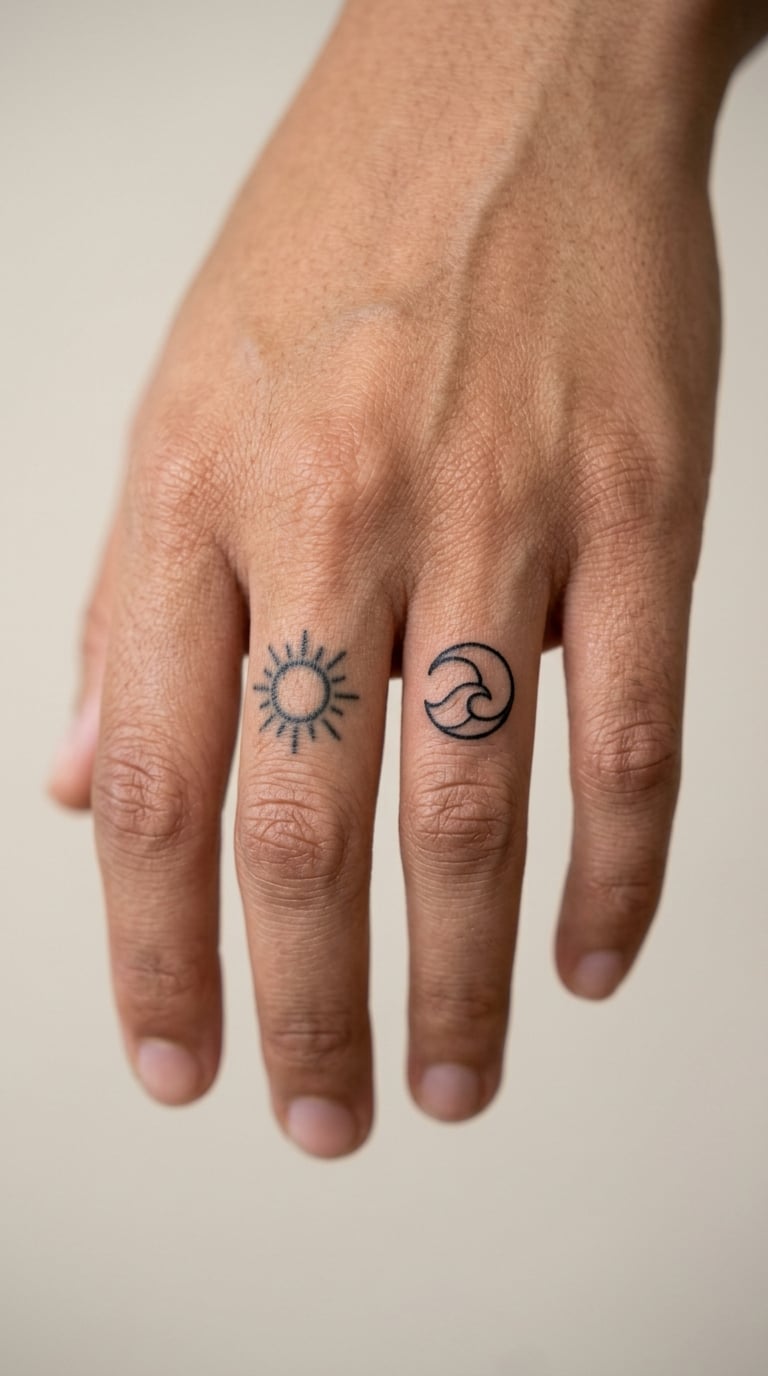
Start with your artist’s aftercare instructions, because they know exactly what they did. Beyond that, fingers need a few specific habits.
- Wash gently, twice a day, for the first stretch. Lukewarm water and a fragrance-free cleanser, then pat dry. Do not soak it.
- Keep it out of water where you can. Gloves for washing up, housework, gardening and swimming. This is the single biggest thing wearers say makes a difference.
- Moisturise once it has stopped weeping. A plain ointment or barrier cream such as Bepanthin early on, then a simple moisturiser for dry skin afterwards. Forum consensus is strongly against drying barrier creams like Sudocrem, which can pull moisture out of the healing skin.
- Leave the scab alone. No picking, no scraping off flakes, no covering it airtight.
- Cover it in the sun. Daily sunscreen on your hands, or keep it under a glove. Faded finger ink has a grey cast that sun protection genuinely slows.
- Skip the numbing cream on later sessions. It does not sit well on fingers, and it can mask what the artist is doing.
If the skin stays hot, swollen, weeping or painful well past the first few days, or if you develop a spreading redness or fever, contact the studio and seek advice from a qualified medical professional. Tattoo artists are not medical providers, and they will say so.
Mistakes to Avoid
Going too small for the detail. A design copied at thumbnail size onto a finger loses its shading first and its recognisable shape second. Ask the artist to redraw it larger, or simplify it.
Lettering over a joint. Knuckle lettering bends with the joint and the crease eats the bottom of each letter. Placed along the side of a finger instead, the same word has a fighting chance.
Inner-finger script. It is the highest-fade, highest-pain, lowest-legibility combination on the hand. If that exact look is what you want, go in knowing it is a picture of a word, not a readable word.
Ignoring which hand you actually use. Your dominant hand grips, writes, stirs and turns keys. That is worth knowing before you choose a side, not after.
Testing a tiny reference straight onto skin. Fine detail that looks right on a screen is a guess until it is on a finger. A good artist will tell you which parts will not hold at that scale.
Judging it in week two. A fresh finger tattoo looks angry, faded and slightly blurry. Most of that settles by week six. Booking a top-up on day fourteen is how people end up over-inked.
Frequently Asked Questions
Do finger tattoos fade away completely?
Usually not on their own. Most finger tattoos soften and lose contrast, going patchy and grey, and settle into a faint version of the original rather than disappearing. Fading further on purpose takes deliberate work and usually a laser tech, and hands and fingers are among the harder areas to clear because of the thin skin and limited lymphatic drainage. If you want a tattoo gone, book a consultation with a qualified removal clinic before assuming it will fade out.
How long does a tattoo on a finger last?
Plan in years, not decades. A bold black design on the side of a finger commonly stays readable for several years, often with one or two top-ups along the way. Fine line, colour shading and micro-detail can lose definition within a year or two. Reports of finger tattoos still looking new after more than eight years do exist, but they are the exception rather than the rule.
Are finger tattoos a bad idea?
They are a bad idea if you want a large, colourful or highly detailed piece that stays crisp for decades. They are a reasonable idea if you want a small, simple symbol you are happy to top up every few years. The decision usually comes down to how much detail you are willing to give up. If detail matters more than location, put the same design on the back of the hand, the inner forearm or the inner wrist instead.
Do knuckle tattoos fade more than the rest of a hand piece?
Almost always. The knuckle crease stretches in two directions every time the joint bends, and it is the first area to lose ink on a hand piece. Wearers with knuckle work report the same spot needing attention on every single top-up. Larger designs across the knuckle hold better than small ones, because there is more ink mass to lose before the shape disappears. Expect to keep returning to it.
What cream should I use on a healing finger tattoo?
Follow your artist’s instructions first, since they know what they did. In general, a plain fragrance-free moisturiser keeps healing skin supple, and a barrier ointment such as Bepanthin is widely used in the first stretch. Forum advice is consistent about avoiding drying barrier creams like Sudocrem, which can draw moisture out of the skin. Gloves for washing up matter more than any product you pick.
Can a faded finger tattoo be covered up?
Yes, but it takes more work and more ink than covering an intact one. Faded finger ink is patchy, so an artist will usually lay a bold outline over the whole shape rather than trying to work into the gaps. Expect a longer session and a bigger, simpler final design than the original. Free top-ups within the artist’s stated window are the better first option, and it is worth asking about that policy before booking anything new.
Conclusion: Choose for Longevity, Not Just Size
Do tattoos on fingers last? They last well enough to be worth having, and not well enough to promise you a design that looks the same in 2026 as it did this week. A bold black shape, kept simple, placed on the side of a finger or on the thumb rather than across a knuckle, gives you the best odds of a tattoo you barely need to think about.
Before you book, mark the spot with a pen for a fortnight and notice how often you touch it. Then find an artist who does hand and finger work regularly, ask what they would change about your design at that scale, and get the touch-up policy in writing. Those three conversations answer more than any photograph online will.