
What Does Tattoo Ink Look Like When Healing? 2026
What does tattoo ink look like when healing? For the first few days it looks darker, glossier and slightly raised, then around day four it goes patchy and dull, and by week two it is flaking, faded and sometimes lighter than the drawing your artist showed you. All three of those are the tattoo mid-heal, not a mistake.
The confusion is understandable, because a healing tattoo genuinely looks worse than the finished one at almost every stage. Most people get a fresh tattoo, watch it dull and peel, and quietly assume the artist did something wrong. They did not, and the ink usually comes back up to full strength over the following weeks.
Surface skin typically settles in two to four weeks, while the deeper layers keep working for two to four months. Knowing the visual sequence is the single most useful thing you can do in that window, because the instinct to pick or scrub at it is what causes the permanent damage. If you want a reference point for how a finished design tends to age, read what tattoo styles age the best before your session rather than after.
What Does Tattoo Ink Look Like When Healing?
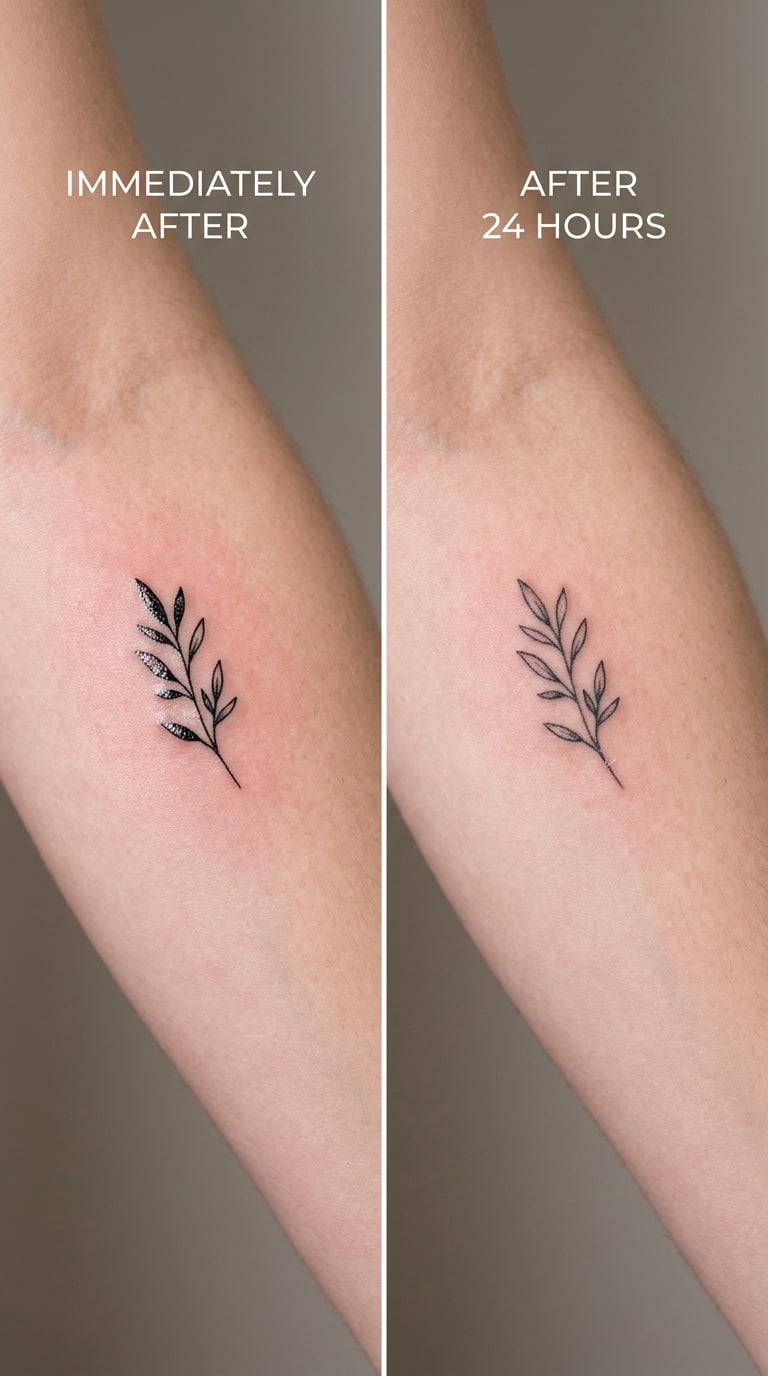
During the first 24 hours, tattoo ink looks saturated, wet or freshly wiped, and noticeably darker than the paper design. The lines are sharp because there is no swelling yet, and the surface still holds a slight sheen from plasma, blood and excess ink wiped away at the end of the session.
A tight band of redness around the design, mild swelling, warmth and tenderness are all ordinary. The skin around the tattoo can look pinker and puffier than the rest of the arm or leg, and if the artist covered it with a clear dressing or a second-skin film, the ink may look muted through the plastic rather than dark.
Things worth contacting your artist about rather than waiting out include redness that spreads well past the tattoo and keeps climbing, thick crusting that keeps growing instead of settling, yellow or green fluid, a fever, or a hot spot that hurts more each day. Your artist is the right first call, and a clinic if they are not available.
One thing that catches everyone out is swelling. A forearm can look fatter for a day or two and the lines seem wider and softer, purely because the tissue underneath is holding water. That blunting of line weight disappears as the swelling goes down.
What Changes Can You Expect During Healing?
The ink settles, dulls, forms a light scab or a dry peel, sheds that dead skin, and then gradually returns toward the colour you saw on the stencil. That is the whole arc, and it happens to nearly everyone in roughly that order.
Settling is the least dramatic part. The surface scab dries, thins and changes colour from dark and glossy to a lighter, matte film. Colour that looked almost black can read as charcoal or grey, and saturated reds often look brick-toned rather than bright.
Then the outer layer of skin starts flaking. The flakes come away in small pieces across the whole tattoo, not in one sheet, and the skin underneath is pink and new. This is the stage that surprises people most, because the design appears to lose detail for a while before the ink pushes back up through the new skin.
Finally the colour returns gradually rather than all at once. Solid blacks and greys come back first and hardest. Lighter and warmer colours take longer and often never reach the exact shade on the paper.
Healing Timeline: What the Ink Looks Like by Week
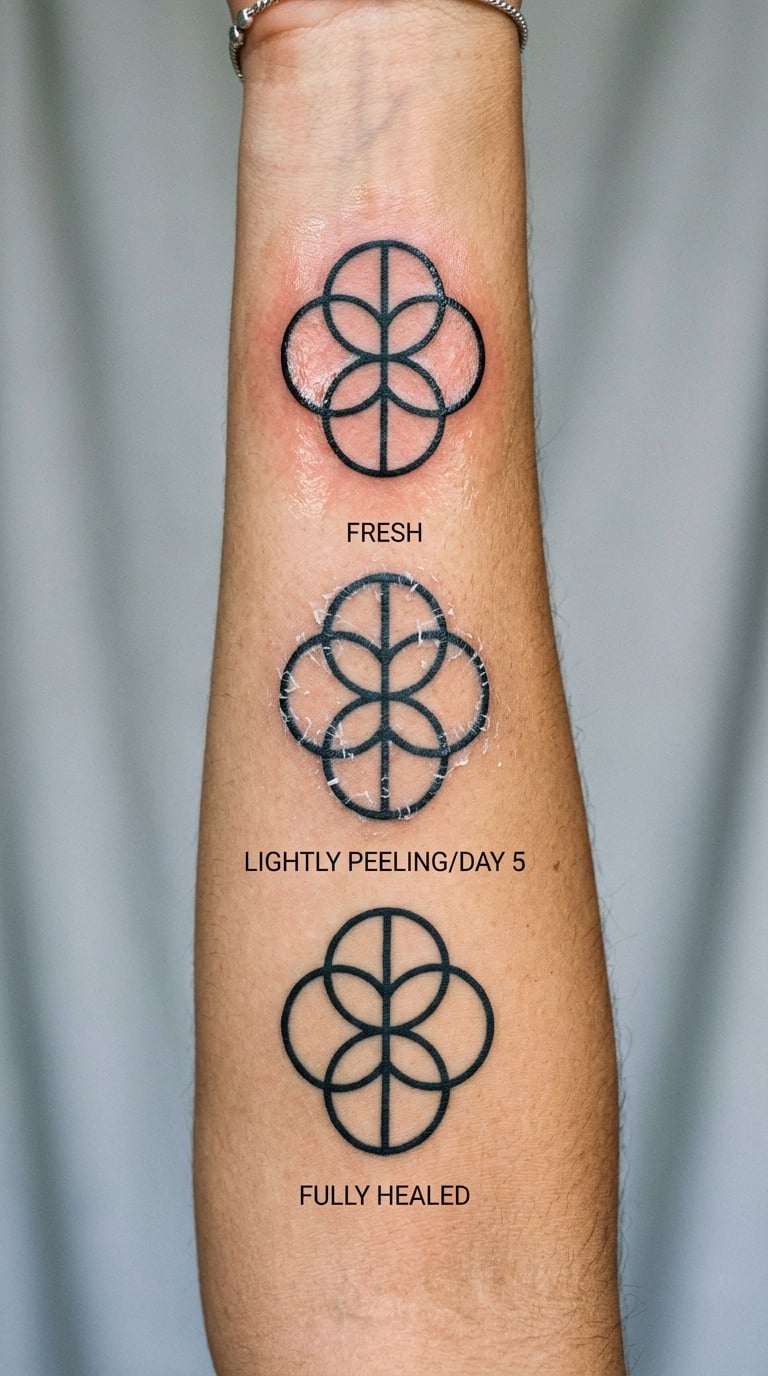
This is the table I wish someone had handed me in the chair. It covers days 1-3, days 4-7, week two, weeks 3-4 and beyond one month, and it separates how the ink looks from what the skin is doing underneath.
| Time | What the ink looks like | What the skin is doing |
|---|---|---|
| Days 1-3 | Very dark, glossy, sharp lines. Slight swelling can blur the edges. | Red, raised, tender and warm. A light film of plasma and excess ink on the surface. |
| Days 4-7 | Darker but flatter and duller. Patchy in places, with lighter areas where ink sat deepest. | A thin scab or dry skin forming. Flaking starts, often in the areas worked hardest. |
| Week 2 | Noticeably lighter, cloudier and matte. Fine lines can look thin or missing. | Peeling and flaking across the whole design. Peak itch and dryness. |
| Weeks 3-4 | Colour pushing back up. Still softer and lighter than the finished result. | New skin closing over the tattoo. Itch fading, skin texture returning to normal. |
| Beyond one month | Sitting flat and matte. True colour and contrast only become readable around 2-3 months. | Surface healed. Deeper layers keep settling for two to four months more. |
Forum threads in r/tattooadvice keep coming back to the same marker for the finish line: at roughly six weeks, with the scabbing done, the tattoo sits flat against the skin and no longer feels raised. If you can run a finger over it and it feels smooth rather than textured, you are most of the way there.
Why Does the Ink Look Darker, Duller, or Cloudier?
Fresh ink sits at or near the surface, so it reads at full strength. Within hours, the body forms a scab and begins rebuilding the outer dermal layers over it, and that new tissue is cloudier than the ink underneath.
That is the whole trick. What you are looking at is ink viewed through fresh skin and a thin scab, so it is desaturated by comparison. The tattoo has not lost pigment. You are viewing it through a temporary filter.
Patchiness has the same explanation with a placement twist. In a heavy blackwork piece, the deepest saturated areas take longer to settle, so a section that was worked harder can look lighter and flatter than a section that got a single pass. The depth of the black also predicts how dramatic the peeling looks, which is why a solid black panel can flake far more than a fine-line outline next to it.
This is also why nobody should book a touch-up because a design looks faint in week two. Talk to your artist, and wait for the colour to return before you decide anything.
What Is Normal Scabbing, Peeling, and Itching?
What tattoo ink looks like when scabbing is normal
Scabbing is a thin, dry layer that follows the lines and the shading, like a faint crust. It is most common on large, dark or heavy-black designs, and tattooers expect it more on those pieces than on a thin fine-line one.
Thick crusting that covers a design in plates, spreads beyond the design, or keeps building into a raised shell is not the ordinary picture, and it is a good reason to message your artist. Let the scab do its job on its own schedule.
What tattoo ink looks like when peeling and flaking is normal
Peeling comes away as small dry flakes across the entire tattoo, and it often starts where the skin moves most. Colour can appear to lift with the flakes, which looks alarming and is the reason so many people start picking.
Do not pick, scrub or exfoliate, even gently. The advice on this is blunt: scrubbing removes ink along with the dead skin. Loose flakes will come away on their own over a few days.
What normal itching feels like and how to manage it
The itch peaks around the second week and spreads across the whole area, not just the lines. It comes from new skin forming underneath and it is genuinely miserable, especially at night when warm bedding makes it worse.
A thin layer of unscented lotion, cool air, and loose cotton clothing help more than almost anything else. If you are using a second-skin film, the adhesive sticking to your clothes and pulling flakes off is the most common complaint people bring to the forums, and it is worth changing to a loose shirt early rather than fighting it.
How Different Ink Colors and Styles May Heal
Ink density and technique change the look more than most people expect, and the two are related: the styles that heal most dramatically are usually the ones holding the most ink.
| Style or color | How it looks while healing | What to expect once settled |
|---|---|---|
| Black | Darkest and most dramatic change. Heaviest scabbing and peeling on bold or solid areas. | Strongest and most stable colour. Returns to full depth first. |
| Bold and block linework | Lines stay readable early, then blur slightly under swelling and scab. | Sharpens back up as the colour returns. |
| Fine line | Thin lines can look weak, faded or briefly missing around week two. | Come back, but hairlines on hands and fingers fade fastest over the years. |
| Shaded and grey wash | Mid-tones look patchy and uneven for the longest. | Even out as the deeper layers settle, sometimes after three months. |
| Colour and red | Bright reds look brick-toned, oranges go yellowish as they settle. | Red is the colour most often affected by dye allergy and fades first. |
| Yellow and white | Go pale almost immediately, especially white highlights on the skin. | The least reliable colours, and the ones that disappear first. |
| Watercolour | Soft edges bloom and bleed into each other, sometimes past the outline. | Softness is part of the style, but the early spread does not fully settle. |
If you are choosing between a first design and something you want to last, it is worth reading which styles hold their line over time before you book.
How Placement and Skin Type Can Change the Appearance
Same ink, same artist, different body part, noticeably different healing. Movement, sun, hair and skin texture all change how the tattoo looks at day seven.
| Placement or skin factor | How it tends to heal and look |
|---|---|
| Knuckles, fingers, elbows, knees | Slower and patchier. Cracking in the creases, and ink wears away from the joint over time. |
| Ribs, sternum, spine | Bruising and tenderness linger longer, and the skin stretches with breathing and movement. |
| Arms and legs | The straightest route, and the easiest to keep an eye on. Shirt and sleeve friction is the main issue. |
| Feet and shins | Often patchier and more faded, partly from footwear and sun exposure. |
| Hairy areas | Hair regrowing through the tattoo hides the flakes and gets in the way of cleaning. |
| Oily or thicker skin | More sheen in the first days, and usually a longer surface recovery. |
| Any placement in strong sun | More fading in the first three months, and unevenly across the design. |
If the ink is a small piece on an area that moves a lot, ask your artist how they plan the design around that movement. Placement and the finished look are one conversation, not two, which matters most for larger work such as a full sleeve.
Pain Levels by Tattoo Placement During Healing
Fresh tattooing hurts more than the healing does, and the two rankings are not identical. A rib tattoo can be brutal in the chair and unremarkable afterwards, while a wrist or ankle tends to stay sore longer because the skin there is thinner and constantly moving.
| Placement | Typical tenderness in early healing |
|---|---|
| Wrist, ankle, inner arm, hand | Low to medium, but the longest-lasting ache of the group. |
| Outer arm, calf, thigh, shoulder | Low, and it settles fastest. Most people forget about it within a week. |
| Chest, back, neck | Medium, mostly from stretching skin and from bedding pressure at night. |
| Ribs, sternum, spine, elbow inner, kneecap | High for the first day or two, then it eases into a dull background ache. |
| Knuckles, fingers, toes, hands | High, with a stiff throbbing quality that returns in waves. |
Everyone reads pain differently, and healing complications vary too, so use this as a rough expectation rather than a promise. If pain gets worse after the first few days rather than better, that is a question for your artist.
Aftercare That Supports Normal Healing
Start with your artist’s instructions, every time. They know what they did, which products they used and how your particular tattoo was worked, and their guidance outranks anything general on a web page, including this one.
Beyond that, the routine is short. Wash gently with fragrance-free soap and lukewarm water, pat dry with a clean towel or paper rather than rubbing hard, and apply a very thin layer of unscented lotion or an ointment they approve of. Thick layers trap heat and encourage scabbing, and petroleum jelly is generally a poor choice in the early weeks.
Protect it from sun, skip swimming and soaking, and wear loose clothing over the area. Change sheets and pillowcases if you can, and if you are using a clear dressing, follow the removal window your artist set rather than guessing.
Removing a second-skin film is its own small problem. Peel it slowly, low angle, and ideally after a shower when the adhesive has loosened. If residue stays, soak a clean cloth and press rather than scrub, because scrubbing is how people take their own ink off.
What Tattoo Ink Cost and Session Time Depend On
Price is not the main question here, so this is the short version. The final figure is driven mostly by size, detail, placement, the artist’s hourly rate and the shop minimum, so two tattoos that look similar on paper can be quoted very differently.
Session length follows detail rather than size. Small fine-line work may finish in well under an hour, while a shaded or colour piece on the forearm is often a multi-hour job, and a full sleeve is split across several sessions. Ask what your artist expects and how many sessions they plan, so you know the shape of it before the first sitting.
Mistakes to Avoid
The most common mistake is picking or scrubbing the peel. It is the one thing the forums and the artists agree on, and it is the fastest route to ink that has genuinely left your skin.
Second mistake is judging a healing tattoo by a photo. Photos are shot warm, lit differently and often days apart, so a day-ten picture next to a day-two picture will always look like a fade. Compare your own progress to your own earlier pictures instead.
Third is reaching for products your artist has not mentioned. Fragranced lotions, harsh scrubs, antiseptics and strong steroid creams all change how the tattoo looks while healing, and none of them speed anything up.
Fourth is sun and water. New ink fades faster than healed ink, so the first three months are the ones worth protecting, and soaking it in a pool, bath, hot tub or lake is the fastest route to a dull finish.
Fifth is booking a touch-up too early. The fading everyone panics about in week two is usually temporary. Wait for the colour to return, then talk to the artist who did the work.
Frequently Asked Questions
Is a tattoo supposed to fade while it heals?
Yes, and this is the part that catches people out. Between about day four and week three, ink sitting under fresh skin and a thin scab looks duller, cloudier and patchier than the finished piece. The pigment has not left. Once the new skin organises and settles over the following weeks, colour pushes back up and the lines sharpen. Judge a tattoo at two to three months, not at two weeks.
Why does my tattoo look lighter after the first week?
Three things stack up. The surface dries out and loses its sheen, the thin scab or dry skin sits over the ink and desaturates it, and new skin forming underneath is cloudier than the pigment itself. A heavier black area can even look lighter than a lightly shaded one for a few days, because the deepest saturated ink takes longest to settle. It all comes back with time and gentle care.
How long does a tattoo take to look fully healed?
The surface usually finishes in two to four weeks, when the tattoo stops feeling raised and stops flaking. The deeper layers settle over two to four months, and that is when the colour and contrast become truly readable. The community marker is about six weeks, when the piece sits flat and no longer feels textured to a fingertip. If you want a judgement on a specific design, ask the artist who tattooed it.
Should I leave tattoo scabs alone or remove them?
Leave them alone. A scab is part of how the wound closes, and picking or scrubbing it takes ink with it, which is how people end up with a permanently lighter patch. Thin scabs on their own come away as the skin underneath forms. Thick raised crusting that keeps growing, or crusting well past the edges of the design, is worth a message to your artist rather than a mirror and a fingernail.
Why do different parts of a tattoo seem to heal at different rates?
Depth of ink is the biggest reason. Heavily saturated blackwork carries more pigment, so it scabs, peels and fades more dramatically, while a lighter section nearby can look nearly finished in the same photo. Placement matters too: knuckles, fingers, elbows and ribs take longer than an outer forearm. Skin thickness, movement and how hard each area was worked all add to it. Uneven healing is normal, not a sign the artist rushed.
When should I judge whether my tattoo has faded?
Wait until two to three months, and give shallow colours longer still. Sun, healing and skin type all affect the settled result, so the honest read comes after the deep layers finish settling. Before that, any lightness is usually temporary and comes back on its own. If you want to know what a finished piece in that style tends to look like, our guide to tattoo styles that age well is a useful reference.
Conclusion
A tattoo that looks dull, patchy, raised and slightly lighter than the drawing is doing exactly what a healing tattoo is supposed to do. Surface healing finishes in two to four weeks, the colour comes back over the next few months, and the piece sits flat by around the six-week mark.
So do the unglamorous thing first: go back to your artist’s aftercare instructions, wash gently, keep the sun and the water off it, and leave the flakes alone. Compare your own day ten to your own day two, not to somebody else’s photo, and message your artist rather than a stranger when something looks different. If you are still deciding what to get, our guide to wave tattoo symbolism is a good place to see how a design’s meaning holds up over time.