
Can You Shower After Getting a Tattoo? Safe Guide (October 2026)
Yes, you can shower after getting a tattoo, but not right away and not the way you normally would. Most artists ask you to wait about 3 to 4 hours, or up to 24 hours, before the first shower, and to keep that shower short, lukewarm and gentle. Going a few days without washing is not the point — a fresh tattoo is an open wound, and keeping it clean is part of healing it.
Those two wait times you keep reading, three to four hours and a full day, are not a contradiction. They are answering different questions: one applies when your artist wraps the tattoo, the other when they send you home bare. The covering your artist puts on decides when you can shower. If you are still not sure which rule applies to you, ask before you leave the chair — nobody minds the question.
If you are still deciding on the design, start with tattoo ideas that symbolize growth for first timers, then come back here for the aftercare side.
Can You Shower After Getting a Tattoo?
Yes. Showering with a new tattoo is allowed and genuinely good for hygiene, as long as you avoid three things: soaking the area, hitting it with direct water pressure, and scrubbing or fragranced soap. Wash lightly, pat dry rather than rub, and put a thin layer of your artist’s recommended product back on afterwards.
Fresh ink sits in skin with a broken surface barrier, so it is more vulnerable to bacteria and more easily dried out, cracked or irritated than intact skin. That is the whole reason for the careful version of showering. It is a wound-care question, not a superstition.
Four rules cover almost every situation:
- Wait for the window your artist gives you — it depends on the covering, not on a universal rule.
- Keep showers to about five to ten minutes while the tattoo is healing.
- Use lukewarm water and a mild, fragrance-free liquid soap, kept off the ink where you can.
- Pat dry with clean paper towel, then reapply a thin layer of ointment or unscented moisturizer.
One note before anything else on this page: your artist’s aftercare instructions outrank any guide, including this one. Artists know what they did in your skin that morning — how deep the work went, how much plasma you were weeping, which areas they disturbed.
How Long Should You Wait Before Showering?
The commonly recommended wait is about 3 to 4 hours after a wrapped tattoo, and closer to 24 hours when you have been sent home with nothing on the skin. Both numbers show up constantly in tattoo aftercare advice because they cover different situations.
Can you shower after getting a tattoo the same day?
Usually yes. Plenty of people get inked in the morning and shower that evening. The deciding factors are the covering and how much plasma the session produced, which is why the same-day shower feels normal to one client and reckless to the next.
| Covering your artist used | Can you shower? | When | Why |
|---|---|---|---|
| Standard wrap or bandage | Wait until it comes off | About 3 to 4 hours, unless told otherwise | It traps plasma and warmth; leaving it on longer invites bacteria |
| Waterproof adhesive film, the clear dressing used for deeper work | Yes, shower with it on | From about 3 to 5 days in, as directed | It is built to stay on through showers and short swims |
| No covering, skin left bare | Yes, very gently | Ideally the next day, or as soon as your artist says | Bare skin has no barrier yet, so the gentlest option wins |
Other things that push the timeline later: a large or heavily shaded piece, a session that ran long and left a lot of plasma on the skin, a placement that rubs constantly such as the inner arm or ankle, and skin that is dry or sensitive to begin with. Sun exposure, swimming and hot tubs are separate bans that run for two to four weeks after the surface heals.
How to Shower Safely After a New Tattoo
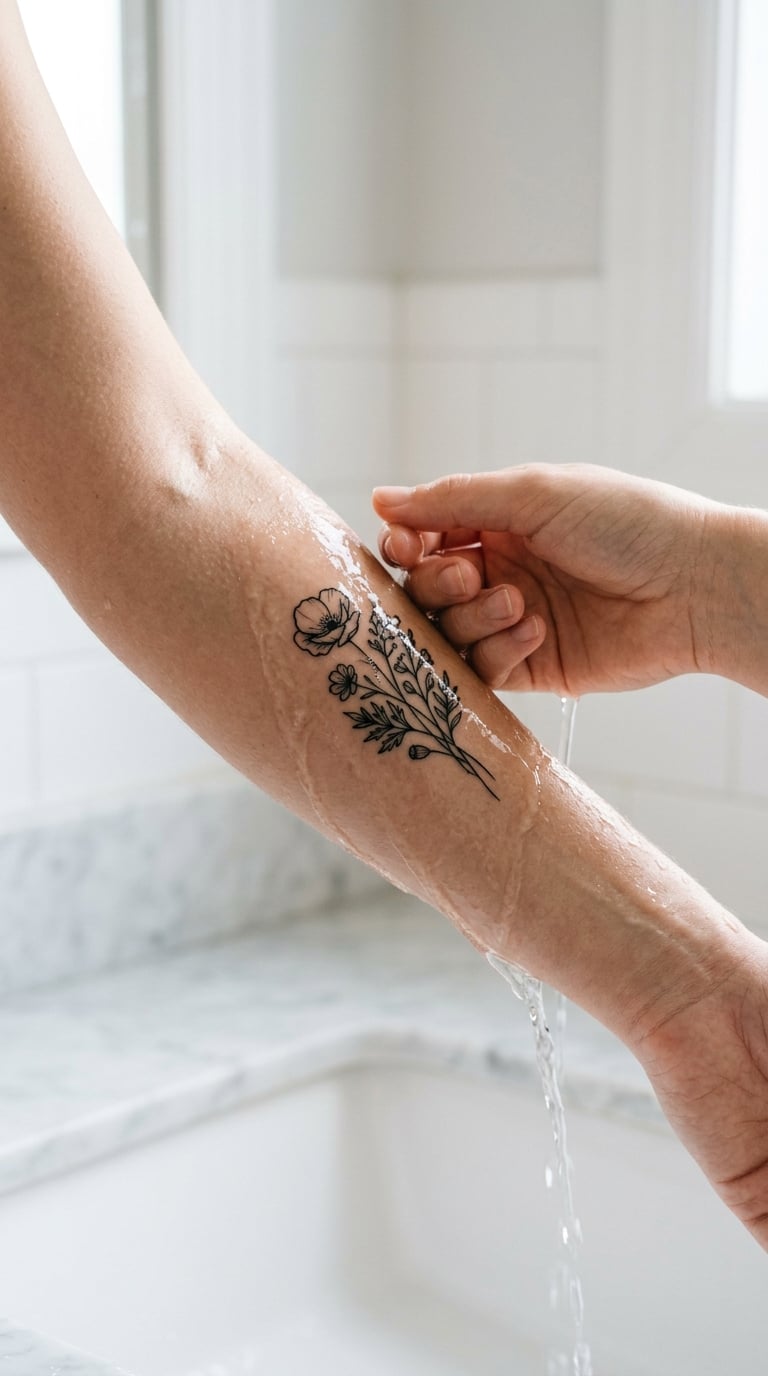
Here is the routine I would run for a first shower, roughly five to ten minutes from tap to dry.
- Take the covering off if the wait is up. Peel it slowly and discard it. If it is stuck, soak a clean cloth in warm water and lay it over the wrap rather than pulling.
- Turn the water down. Lukewarm, never hot. Test it on the inside of your wrist first. Hot water opens pores, strips natural oils and dries fresh skin until it cracks.
- Keep the spray off the ink. Let water run around the tattoo rather than onto it, or cup your hand to soften the flow if you have to.
- Wash your hands first, then use mild liquid soap. Lather in your palms away from the tattoo, fragrance-free and dye-free, then pass it over the area with light circling fingers. No loofah, no washcloth, no exfoliating beads, no bar soap sitting in a dish where bacteria collect.
- Rinse and step out fast. Ten minutes maximum while healing. Long hot showers leave scabs soggy and fragile, which is how people end up peeling ink off by accident.
- Pat dry and moisturize. Blot with clean paper towel or the hem of a clean shirt. Rubbing with a terry towel is the most common regret people describe. Then apply a thin layer of whatever your artist recommended.
Most people wash the area twice a day early on with an antibacterial liquid soap, then taper to once a day as the skin settles. If you have nothing on hand, a mild unscented soap is fine — and improvising with what you own generally works out better than skipping the wash entirely.
What If You Need to Shower Before the Wait Is Over?
Sometimes the shower is not optional. Work calls, a toddler turns the tap, a trip got moved up. A single brief, gentle rinse is not going to ruin a tattoo — the genuinely damaging things are long soaks, hot water and scrubbing.
If you have to go early, keep it to a quick rinse of lukewarm water, wash with clean hands and mild soap, pat dry with paper towel, let the skin air dry for ten to fifteen minutes, then put a thin layer of ointment on. Leave the wrap in place if a waterproof film is still on and doing its job. Do not peel a saturated wrap off a wet tattoo — you will lift skin with it.
If the tattoo looks blotchy or a bit washed out a day after an accidental soak, that is common and usually settles as the skin resettles. Message your artist with a photo rather than guessing. They have seen this pattern many times.
How to Dry and Protect the Tattoo Afterward
Drying is where good intentions quietly go wrong. Rubbing with a bath towel is the move to avoid: towel friction catches the loose flakes that are forming and can pull pigment up with them. Blot, do not rub.
Covering is the other trap. A fresh tattoo needs air and a loose layer of clothing over it, not plastic wrap pressed tight against the ink, which traps sweat and bacteria. Sleep with clean sheets and loose sleeves so the tattoo can breathe, and change out of anything damp straight away.
Go easy on ointment too. A thick, greasy layer blocks air and can encourage congestion and milia. Thin, frequent applications beat one heavy coat. Once the flaking stage passes and the skin is fully healed, most people switch to a plain unscented moisturizer.
Tattoo Care and Healing Timeline by Week
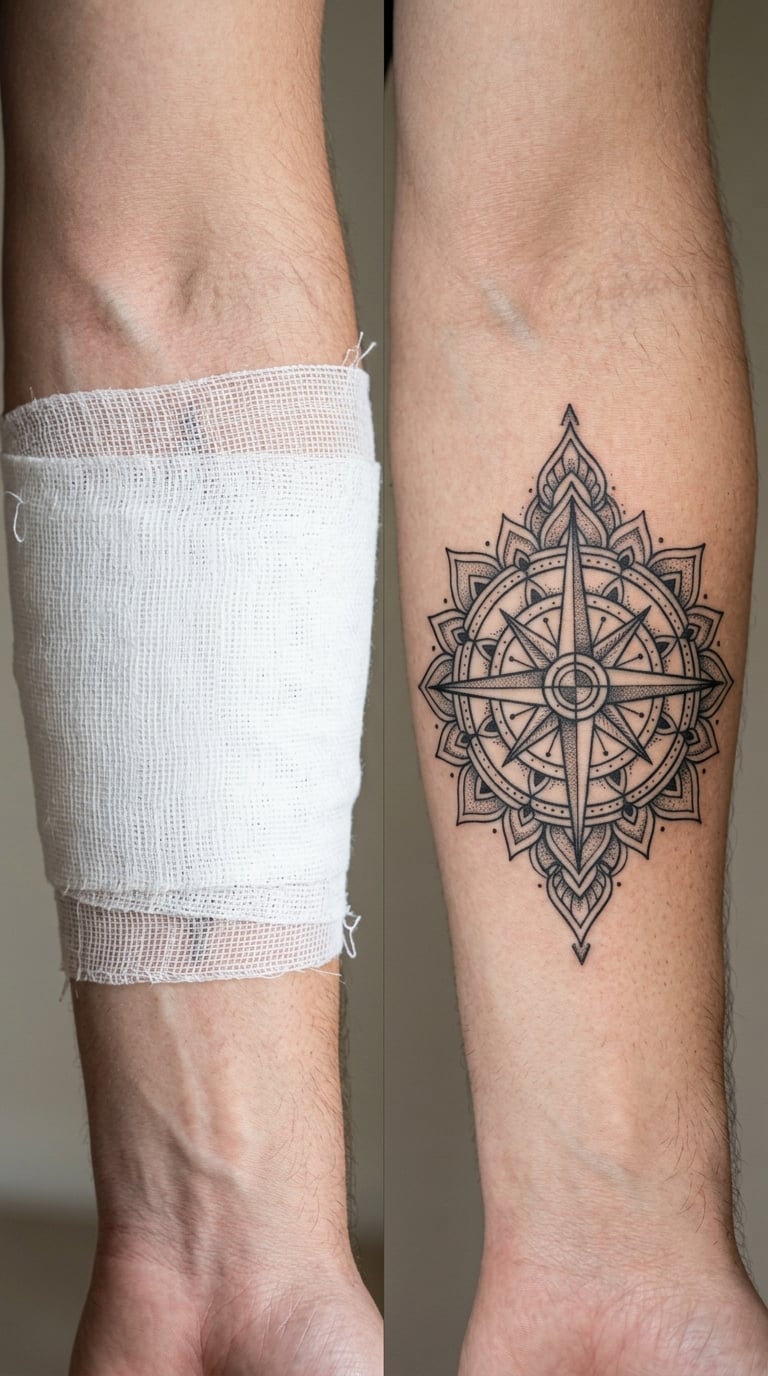
Healing is not linear, and yours will not follow a calendar exactly. This is the typical shape most people see.
| Timeframe | What the tattoo is doing | Shower rules |
|---|---|---|
| First 24 hours | Reddened, raised, may ooze clear plasma | Follow your artist’s wait; gentle rinse only, no soaking |
| Days 2 to 5 | Darker, drier, slight flaking begins | Short lukewarm showers, pat dry, thin ointment layer |
| Days 5 to 14 | Peeling and flaking in patches, itchiest stage | Let flakes fall off on their own, wash once or twice daily |
| Weeks 2 to 4 | Settling, skin smooths, ink looks duller then truer | Still no baths, pools, hot tubs or sun exposure |
| Week 4 onward | Surface healed; deeper layers heal for months | Normal showers return once skin is fully closed with no raw spots |
Baths, hot tubs, pools, lakes and the ocean stay off the menu until the tattoo is fully healed, usually two to four weeks and longer for deeper or heavier work. Sauna and steam rooms are the same idea: heat opens the pores and softens a healing scab.
Pain by Placement: What to Expect
Pain during the session has little to do with showering, but placement affects how exposed you are to splash and how awkward the healing spot is to keep dry and clean.
| Placement | Typical discomfort | Shower note |
|---|---|---|
| Forearm and outer arm | Low to medium | Easy to angle away from the spray |
| Inner arm and armpit area | Medium | Constant movement and clothing friction |
| Hand and wrist | Medium to high | Soaked every single time, hardest to keep dry |
| Foot and ankle | High in spots | Shoes, socks and sweat are constant companions |
| Knee and shin | Medium | Clothing rubs against it while healing |
| Back | Medium to high | Hard to reach, so use a clean hand-held spray |
| Thigh | Low to medium | Usually straightforward |
| Ribs and side torso | High | Tight clothes and movement rub constantly |
This is general guidance, not a fixed outcome. Two people get the same spot and describe it very differently.
How Much Does a Tattoo Cost by Size?
Cost is set by size in two ways: many studios have a shop minimum that covers a small piece, and larger work gets quoted either flat per design or by the hour. Sleeve work, half and full, is almost always quoted as a project rather than a single session fee.
| Size of the piece | Typical US range | What moves it |
|---|---|---|
| Small, up to about 2 inches | About $80 to $200 | Simple line work or a single symbol; often the shop minimum covers it |
| Medium, roughly 2 to 5 inches | About $250 to $600 | Detail, shading, colour work and how long you can sit |
| Large, a full panel or single subject piece | About $700 to $1,800 | Custom drawing, realism, colour, session hours |
| Half sleeve | About $1,200 to $3,000 | Usually split into two or three sessions plus a touch-up |
| Full sleeve | About $2,500 to $6,000 and up | Quoted as a project covering the whole arm over a longer schedule |
What moves a quote up or down is detail level, colour versus black and grey, how much of the body it covers, and how long you can sit in one sitting. Big pieces get split across sessions, and the artist’s hourly rate plus the studio minimum is usually the line item that matters. Location matters enormously too, so a shop minimum in a small town and one in a major city are not the same number. Treat every range above as a ballpark, then ask for the real figure before you sit down.
Ask for the full figure before the first session, including the touch-up visit. If you are planning a sleeve, read black sleeve tattoo ideas for men first so you arrive with a design that suits the shape of the arm.
Mistakes to Avoid
- Soaking. Baths, hot tubs, pools and long hot showers soften scabs and let ink leach out of the skin.
- Scrubbing. Loofahs, washcloths, exfoliating body wash and rough towels all pull flakes off early.
- Fragranced or dyed products. Scented soaps, harsh washes and alcohol-based products dry and inflames healing skin.
- Picking flakes. Let them fall off in the shower on their own. Peeling them is the most common way people pull colour out.
- Wrapping too tightly. Occlusion traps sweat and bacteria against fresh ink.
- Heavy exercise right away. Sweat, gym germs and friction on a healing tattoo are a bad combination for the first stretch.
- Swimming in open water or pools. Chlorine, salt and bacteria all belong after full healing.
- Assuming one timeline fits everyone. Ask your artist for their number rather than adopting a stranger’s.
Two more worth naming: shaving over an area that is not fully closed, and letting direct sun hit healing skin. Both slow things down more than almost anything else people do.
Frequently Asked Questions
Can I shower with a waterproof bandage on?
Yes. A medical-grade waterproof adhesive dressing, the kind tattooists use for deeper or hard-to-protect work, is designed to stay on through showers. Keep it on for as long your artist says, usually a few days, and change it if it peels loose or lifts at the edges. A standard fabric bandage or cling film is not the same thing and should come off before you shower.
What if my tattoo got wet before I was ready?
Do not panic, and do not scrub the skin dry. Rinse the area gently with lukewarm water, pat it dry with clean paper towel, leave it in the air for ten to fifteen minutes, then apply a thin layer of ointment. Never peel a soaked wrap off a wet tattoo. Send your artist a photo so they can tell you whether anything needs attention.
Can I take a bath after getting a tattoo?
Not while the tattoo is healing. Baths sit you in water for a long stretch, which softens scabs and pulls ink out of the skin. Most people wait two to four weeks, until the surface is fully closed with no raw or flaky spots, and longer for heavy or deeply shaded work. Ask your artist to look before you book that bath.
How hot should the water be for a new tattoo?
Lukewarm, and cooler than feels normal on a bad day. Hot water opens your pores, strips the natural oils your healing skin is relying on, and leaves the area dry, cracked and sore. Check the temperature on the inside of your wrist first. If the shower starts to steam up the mirror, it is hotter than you want for fresh ink.
What soap should I use on a new tattoo?
A mild, fragrance-free, dye-free liquid soap is the safe pick. Antibacterial liquid soaps are what most people in tattoo communities reach for, and they work well for an open area. Skip bar soaps sitting in a wet dish, exfoliating body wash, anything alcohol-based, and heavily perfumed products. Lather in your hands away from the ink before you touch the tattoo.
How do I know if something is wrong with my new tattoo?
A little redness, warmth, swelling, itching and clear or pale plasma ooze in the first days is ordinary healing. Get in touch with your artist or a doctor if you see spreading redness or red streaks, yellow or green pus, a bad smell, pain that gets worse instead of better, a fever or chills, or a sore that leaks. A photo of the area is usually the fastest way to get a useful answer.
Conclusion
Showering after a tattoo is fine, and skipping it is not. Follow the window your artist gave you, which usually runs from about 3 to 4 hours after a wrapped tattoo to a full day when you are sent home bare, then keep the first shower short, lukewarm and gentle. Pat dry instead of rubbing, skip the loofah and the scented soap, and put a thin layer of ointment back on when you are done.
If you need to shower earlier than planned, a brief gentle rinse is not the end of the world. Take a photo and message your artist. Updated for 2026.