
20 Best Tattoo Ideas for Miscarriage Remembrance (September 2026)
I’m sorry you are here. If you are searching tattoo ideas for miscarriage remembrance, you are probably working around a specific kind of grief: the kind where there is no scan to keep, no ashes, no grave. Your baby existed, and there may be nothing anyone else can point to.
These twenty designs are written so you can walk into a consultation knowing roughly what you want. None of them carries a fixed meaning. What a nest, a lily or a line of type means is decided by you, and an artist who works on memorial pieces will ask before they draw anything.
There is no right time for this. Some people get inked a few months after a loss, some years later, some never, and all three are fine. If you do go ahead, plan for about 30 to 45 days of visible healing, and think twice if the date is close to an anniversary or a pregnancy you are hoping for.
If you are still deciding what a design should say, our broader remembrance tattoo ideas cover more motifs, and heartbeat tattoo ideas with meaning go deeper on the pulse-line style used here.
Tattoo Ideas for Miscarriage Remembrance: Quick Guide
Small works best. A fine-line design, one or two inches across, on the inner forearm, wrist or ribs gives you something discreet that can hold a date, a flower or a trace symbol like a handprint. Here are all twenty ideas with the details you will want before a consultation.
| Idea | Style | Best placement | Size | Pain |
|---|---|---|---|---|
| 1. Empty nest with a single leaf | Fine line | Inner forearm | 2 in wide | Low |
| 2. Heart with an open centre | Minimalist line | Inner wrist | 0.5 in tall | Low |
| 3. White lily in black and grey | Black and grey | Outer forearm | 1.5 in tall | Low |
| 4. Forget-me-not sprig | Fine line | Side of forearm | 2 in long | Low |
| 5. Single poppy in watercolor | Watercolor | Outer upper arm | 2 in wide | Medium |
| 6. Crescent moon and one star | Fine line | Behind the ear | 1.25 in tall | Medium |
| 7. Butterfly with one open wing | Fine line | Inner wrist | 1 in wide | Low |
| 8. Hummingbird over a heart | Neo-traditional | Side of forearm | 2 in long | Medium |
| 9. Flat line heartbeat | Single-line | Inner wrist | 2 in long | Low |
| 10. Birth date in fine-line type | Fine-line lettering | Inner forearm | 1.5 in long | Low |
| 11. Tiny handprint | Soft blackwork | Inner forearm | 1.25 in tall | Low |
| 12. White poppy with grey leaf | Black and grey | Outer forearm | 1.5 in wide | Low |
| 13. Three stars in dotwork | Dotwork | Wrist | 1 in tall | Low to medium |
| 14. Branches in an open circle | Fine line | Upper arm | 2 in across | Low |
| 15. Single meaningful letter | Script lettering | Inner wrist | 0.5 in tall | Low |
| 16. Grey wash cloud with a seam | Black and grey | Outer forearm | 2.5 in wide | Low |
| 17. Laurel wreath | Blackwork | Outer upper arm | 2 in across | Medium |
| 18. Minimal dove in flight | One-line blackwork | Shoulder | 1.5 in wide | Medium |
| 19. Soft-colour rainbow | Watercolor | Forearm | 2 in wide | Low |
| 20. Two interlocking botanical circles | Fine line | Forearm or thigh | 1.5 in each | Low |
Read that table as a starting point, not a brief. The artist you choose will redraw every element for your skin, your line work and your placement, and you should expect the design on the day to differ from the reference in small ways.
1. Fine-Line Empty Nest with a Single Leaf
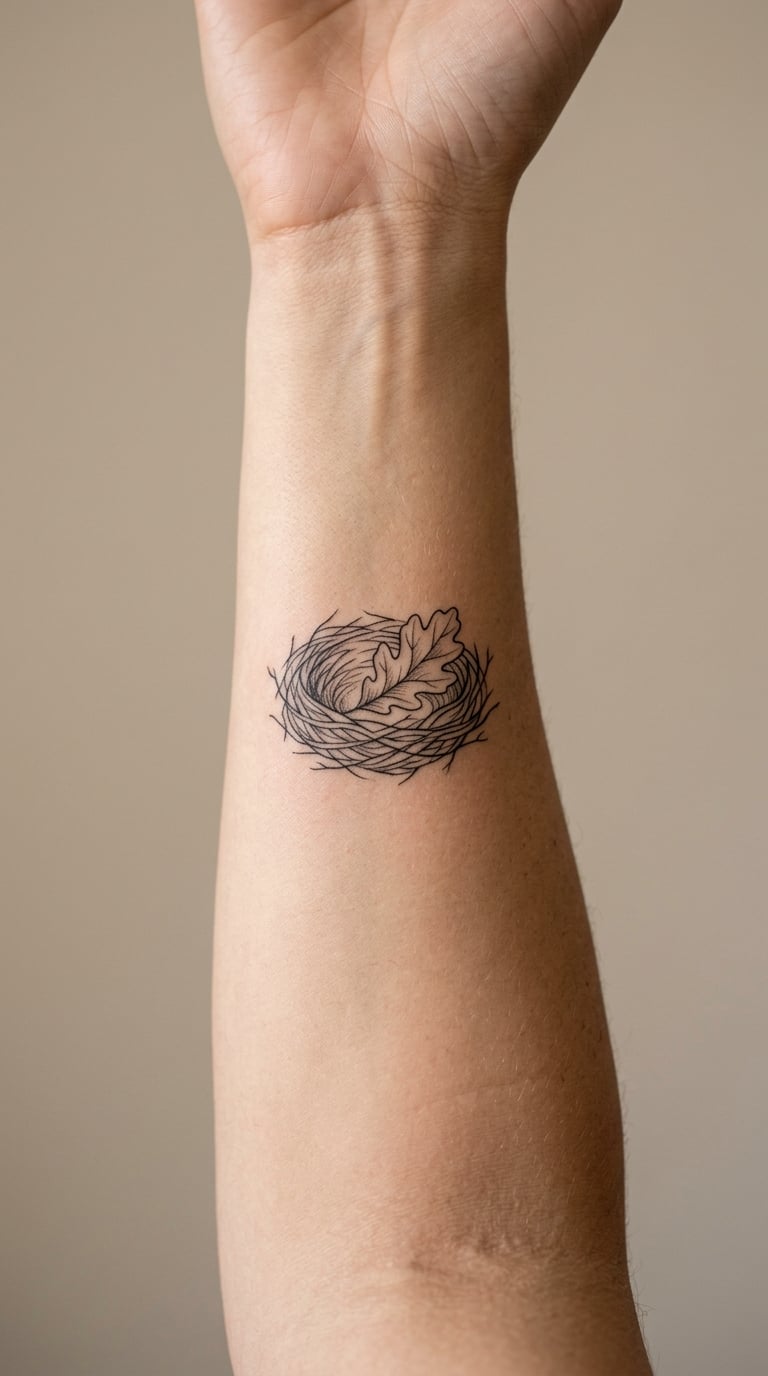
Tattoo ideas for miscarriage remembrance often start with the empty nest, because it does its work without explaining anything. A single-needle outline of a woven cup, with one leaf set slightly apart from the branch beneath it. No shading, or a whisper of grey in the weave only.
Some people read it as absence, others as memory, others just as a shape they like. Placement: inner forearm, inside of the upper arm, or behind the ear. Size: 1.5 to 2.5 inches (4 to 6 cm) wide. Style: fine line. Pain: low on the forearm. The thin line is the weak point, so expect a touch-up every few years if you keep it hairline.
Make it yours: add a hidden date inside the nest, small enough to only show when you look closely.
2. Minimalist Heart with an Open Centre
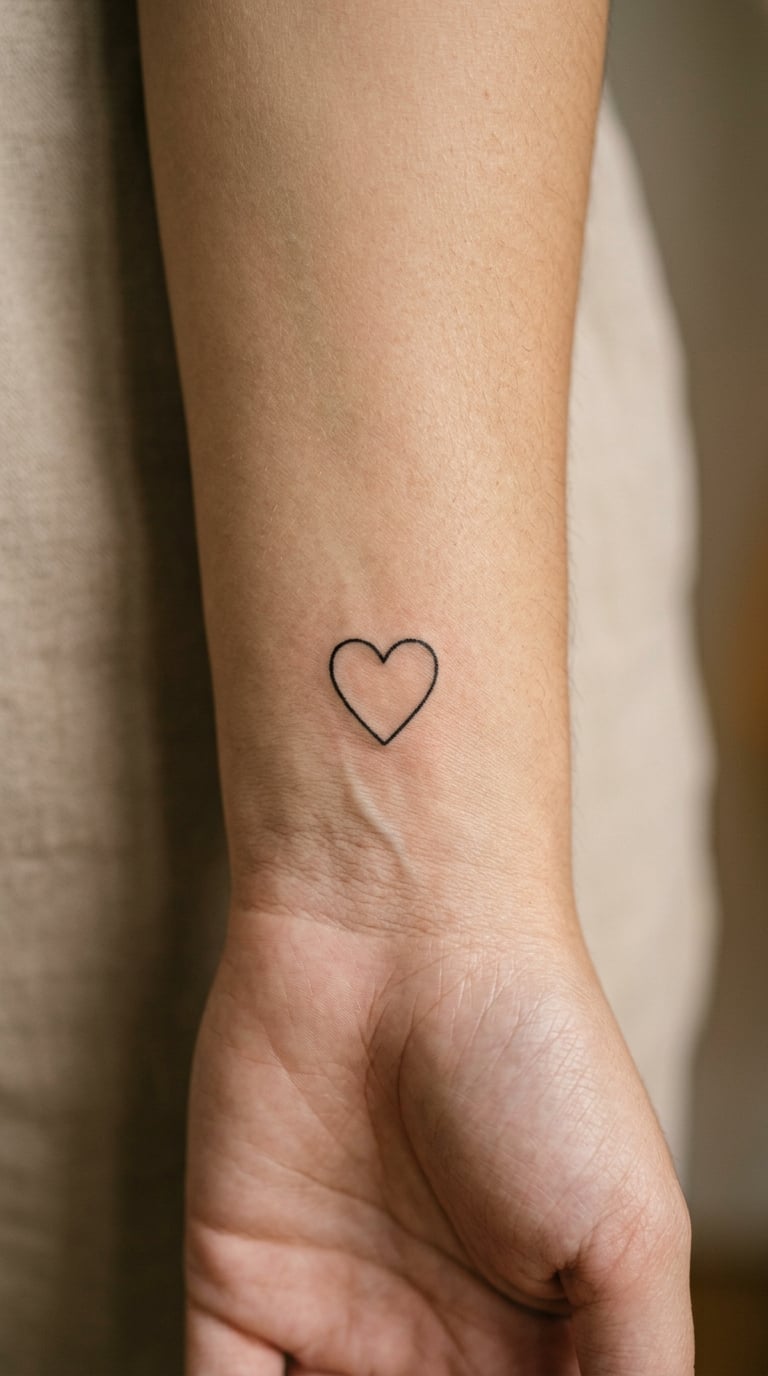
The simplest option on this list. A heart drawn in one continuous line, with the middle left entirely blank. That gap is the point. People choose it as a place to put a private reminder rather than a symbol anyone else has to read.
Ask for line weight that matches the smallest line your artist already heals well, and let them draw the curve freehand. Placement: inner wrist, rib, collarbone, or the crease where the thumb meets the palm. Size: half an inch to three quarters (1.5 to 2 cm) tall. Style: minimalist line. Pain: low. A half-inch heart on the wrist softens noticeably in five or six years and usually needs reworking.
Make it yours: put a single tiny word in the open centre, or leave it empty on purpose.
3. Tiny White Lily in Black and Grey
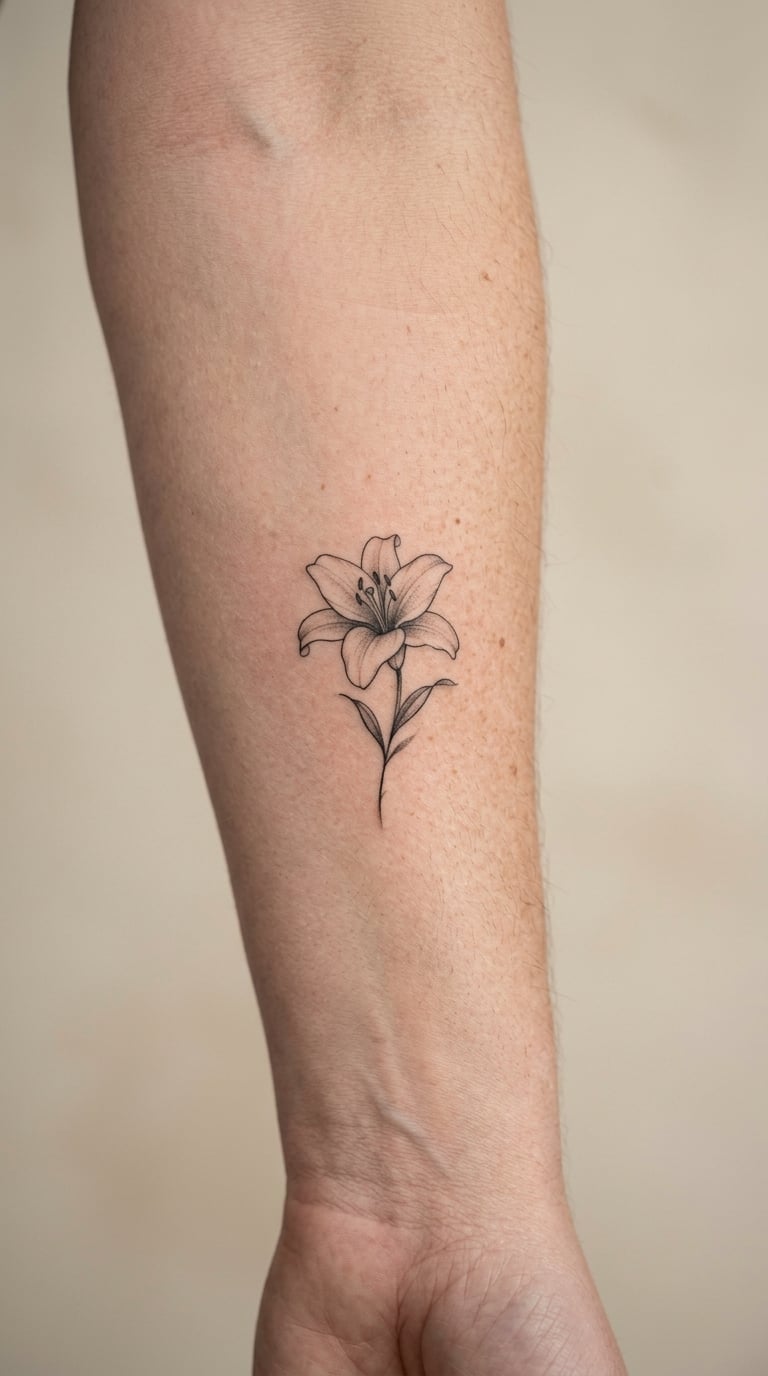
A lily rendered in grey wash with fine veins running through the petals, and just enough black along the outer edges to hold the shape. It reads as soft rather than solemn, which is why a lot of people pick it for a first remembrance piece.
Flower meanings shift between cultures and between individuals, so treat any explanation you find as one reading of many. Placement: outer forearm, rib, or the back of the hand. Size: 1.5 inches (4 cm) tall. Style: black and grey realism, restrained. Pain: low. The petal detail blurs into grey over time rather than disappearing, so it ages more gracefully than outline work.
Make it yours: choose the lily because of a birth month rather than a general love it, then add the month in Roman numerals underneath.
4. Forget-Me-Not Sprig in Fine Line
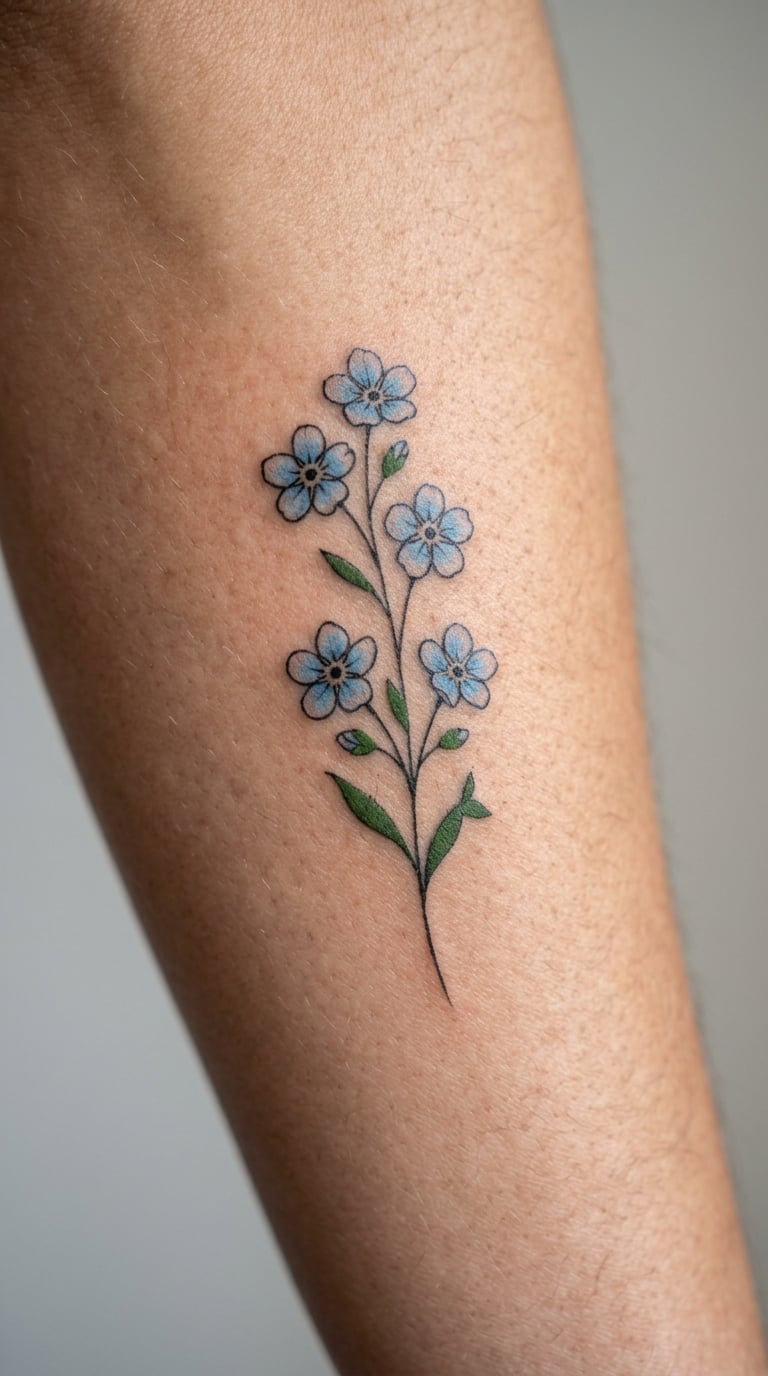
Forget-me-nots are the most-requested flower in this space. A short stem with three to five small flowers, each one five simple petals around a dot of black. The dots are what you see at arm’s length, so the artist should keep them deliberate.
If there is a remembrance reading you want attached, it should come from you, not from the flower. Placement: side of the forearm, ankle, or behind the ear. Size: 2 inches (5 cm) long. Style: fine line with minimal centres. Pain: low. Very small dot work in fine line tends to grey out and need a session.
Make it yours: one flower per baby, with the number of blooms matching the number of losses you are marking.
5. Single Poppy in Watercolor
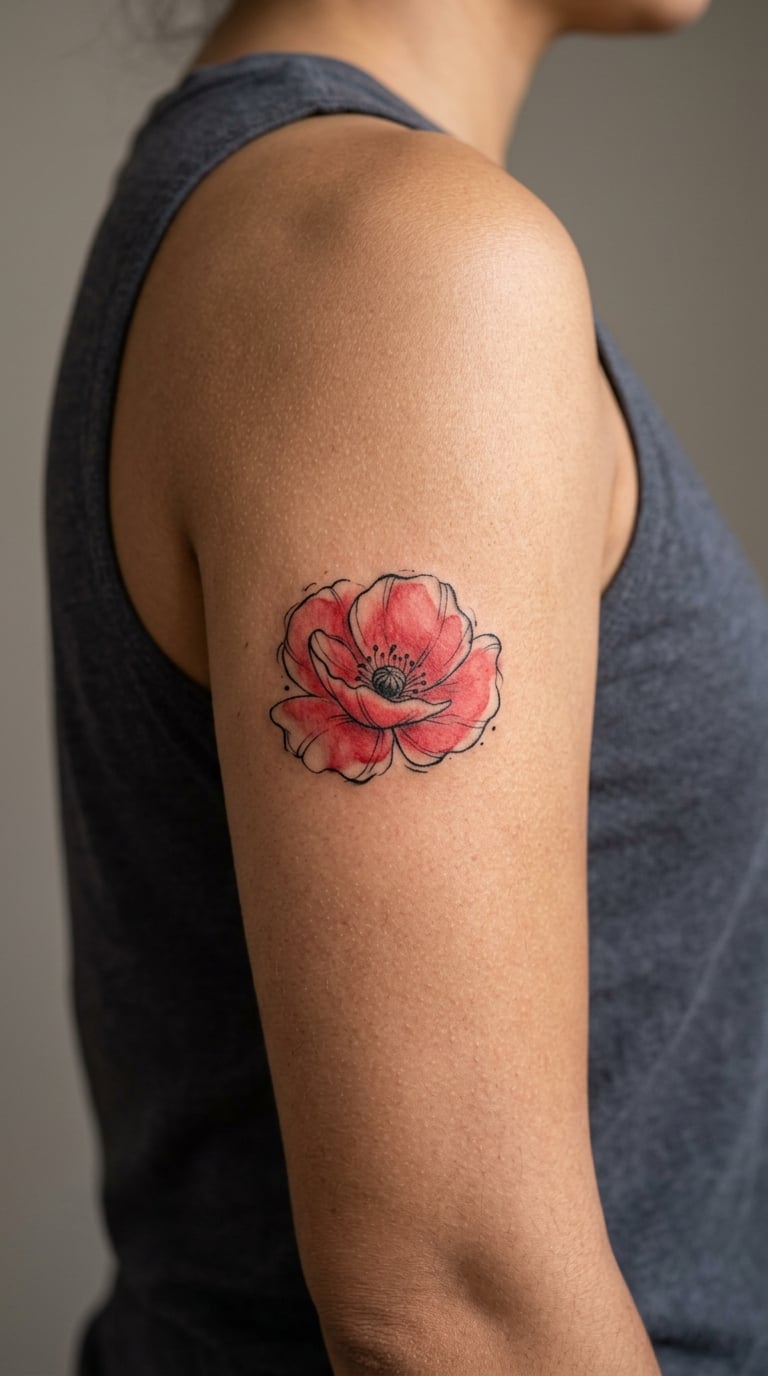
One poppy, not a bouquet. Loose black edges, translucent red pigment bleeding slightly past the linework, and a dark centre with a soft halo around it. Poppy is worn for remembrance in several countries, which gives you a reason for the flower if you want one.
There is no single accepted meaning, and plenty of people choose it only because it is beautiful. Placement: outer upper arm, calf, shoulder, or rib. Size: 2 inches (5 cm) wide. Style: watercolor. Pain: medium on the upper arm, lower on the calf. Light pigment fades noticeably faster than solid black, so plan on a colour refresh in a few years if you want the red to stay.
Make it yours: have the artist use a specific red, such as one mixed from your birth month flower.
6. Crescent Moon Embracing a Small Star
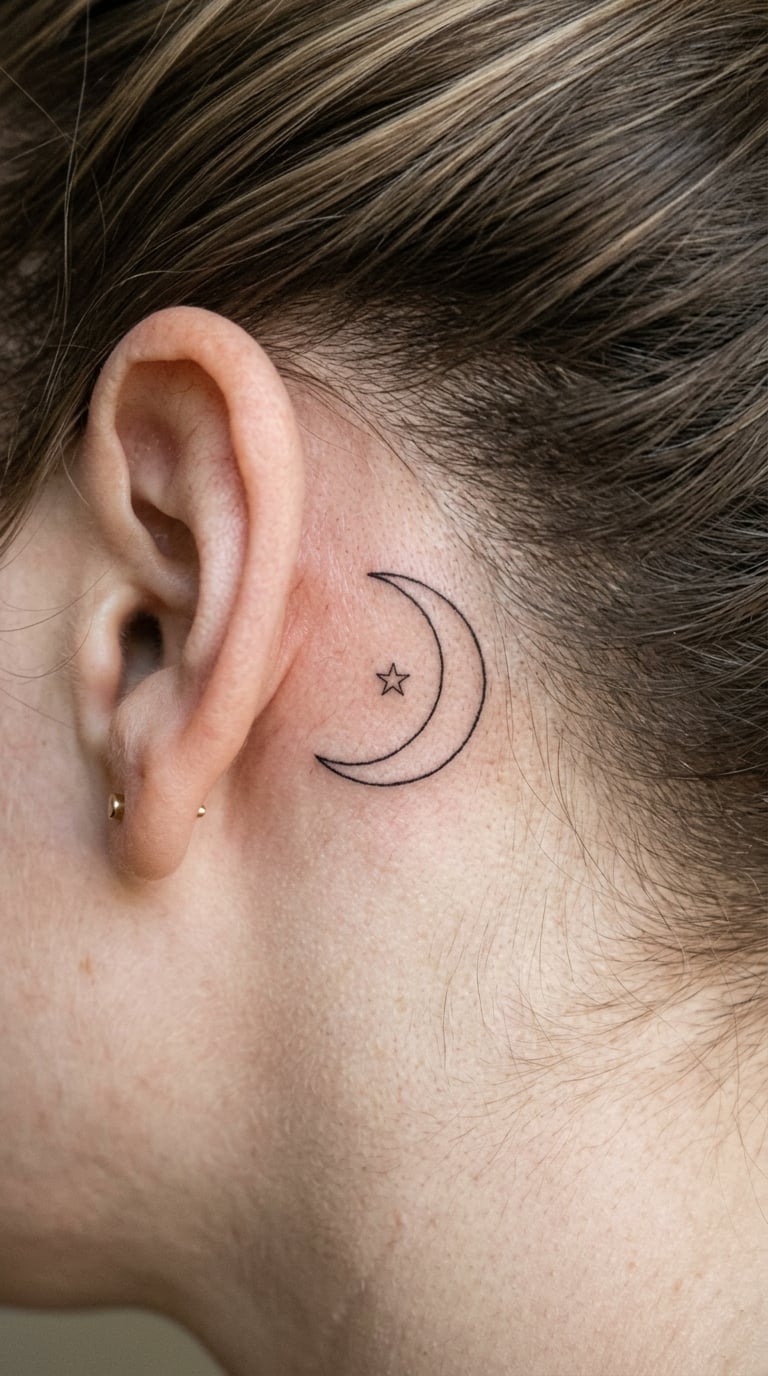
A slim black crescent with one five-pointed star in fine line, tucked close to the inner curve. The composition works because of the gap between the two shapes, so ask the artist to leave real space rather than crowding them.
It is a quiet design rather than a spiritual one, and it works equally well for people who hold no religious belief at all. Placement: behind the ear, on the shoulder, or the inner ankle. Size: 1.25 inches (3 cm) tall. Style: fine line. Pain: medium behind the ear, low on the shoulder. Skin behind the ear rubs against pillows and hair and softens faster than arm placements.
Make it yours: use the star as a place for a date, or choose a constellation shape instead of a five-pointed star.
7. Delicate Butterfly with One Open Wing
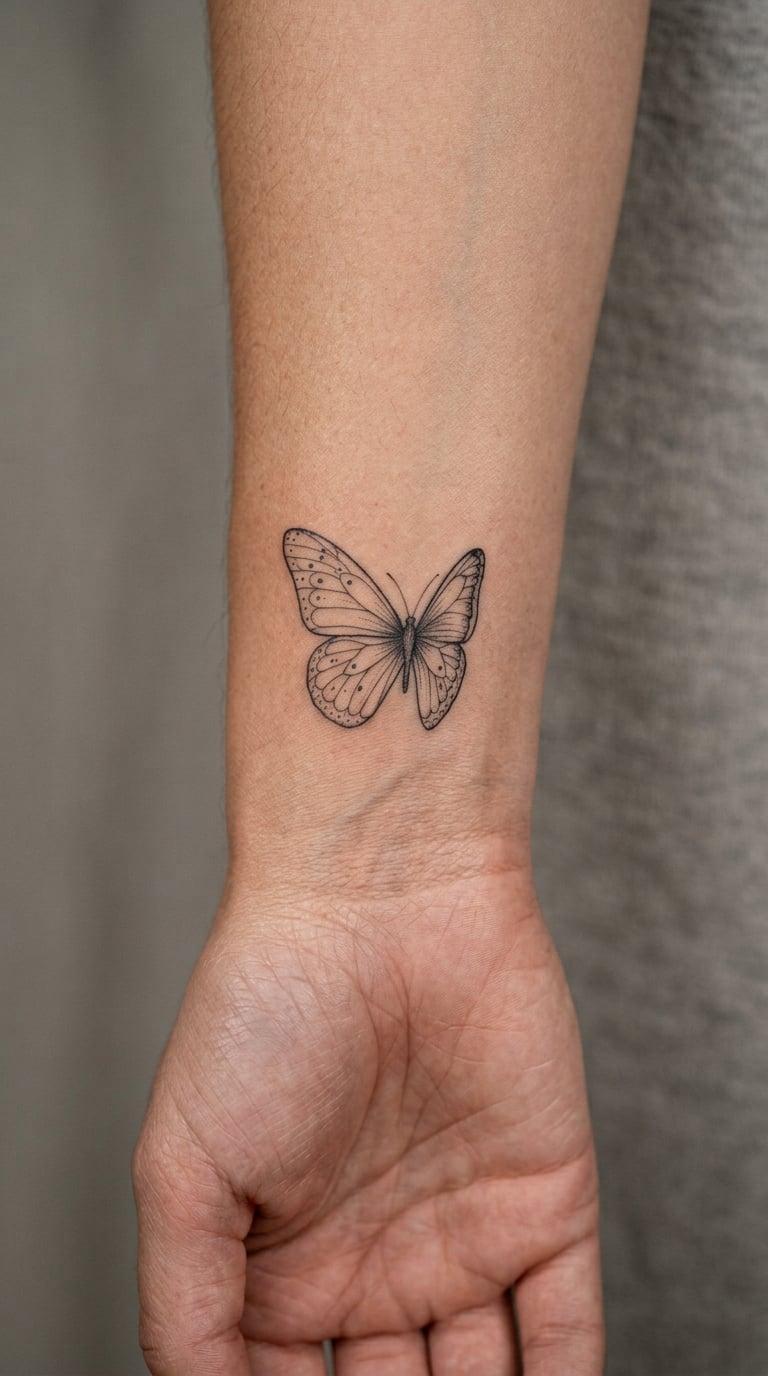
Most butterfly tattoos are symmetrical. This one is not: the upper wing is drawn open and veined, the lower one sits lower and simpler, and the body is a single hairline. Asymmetry is what makes it feel personal rather than decorative.
Butterflies carry heavy transformation symbolism and not everyone wants that. If it is not yours, our fingerprint memorial tattoo ideas lean in a different direction. Placement: inner wrist, ankle, behind the ear, or the shoulder blade. Size: 1 inch (2.5 cm) wide. Style: fine line. Pain: low. Vein detail this small softens into a soft grey shape over roughly a decade.
Make it yours: add a date along the body line in lettering the artist has already rehearsed.
8. Hummingbird Hovering Over a Tiny Heart
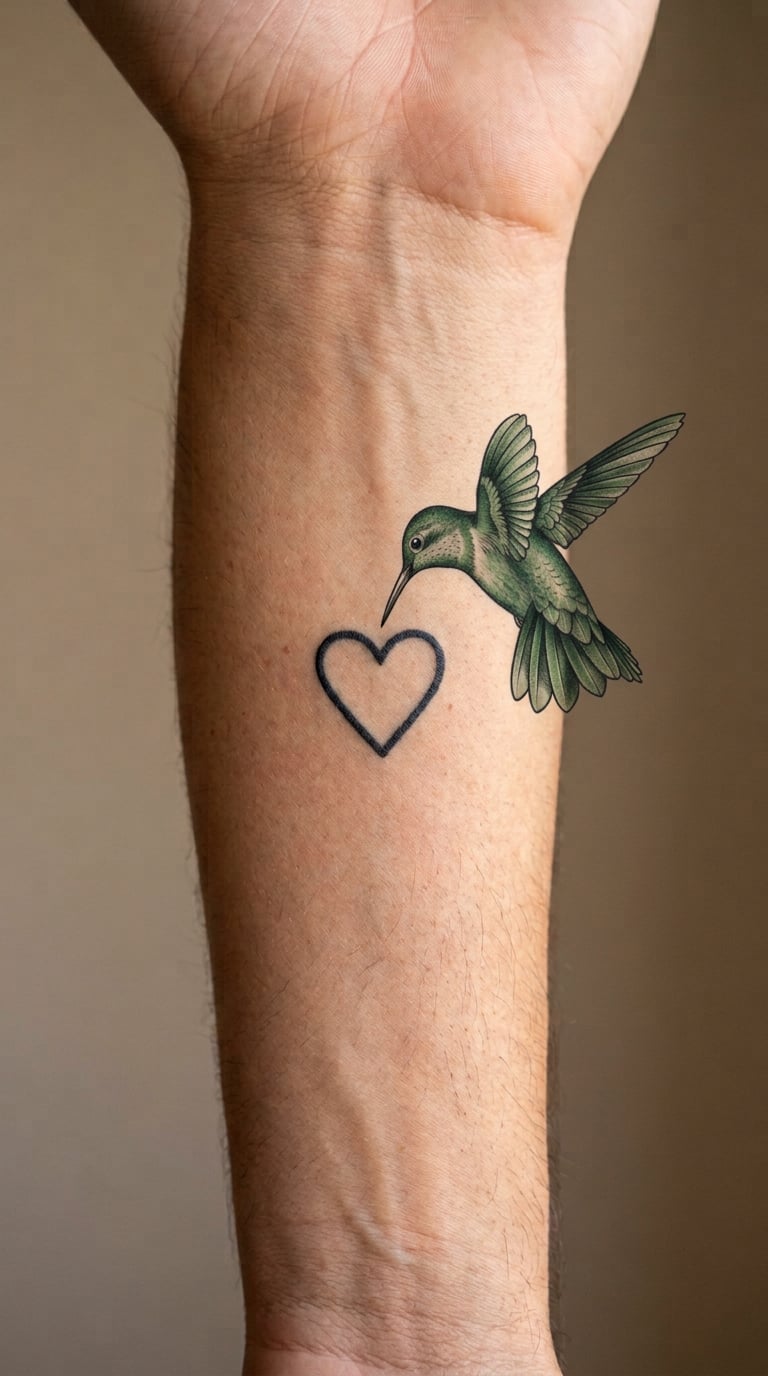
A compact neo-traditional hummingbird with clean black outlines, restrained green shading on the back, and a plain solid black heart beneath it. Two elements is enough. The heart stays unadorned so it does not compete with the bird.
Colour is the trade-off here, because green is one of the first pigments to shift toward olive. Placement: inside of the arm, ribs, or the ankle. Size: 2 inches (5 cm) long. Style: neo-traditional with limited shading. Pain: medium on the ribs, low on the forearm. The wing detail will need a touch-up where the colour lifts.
Make it yours: ask for a shade of green you recognise, or add a small second colour on the heart.
9. Single Flat Line Heartbeat
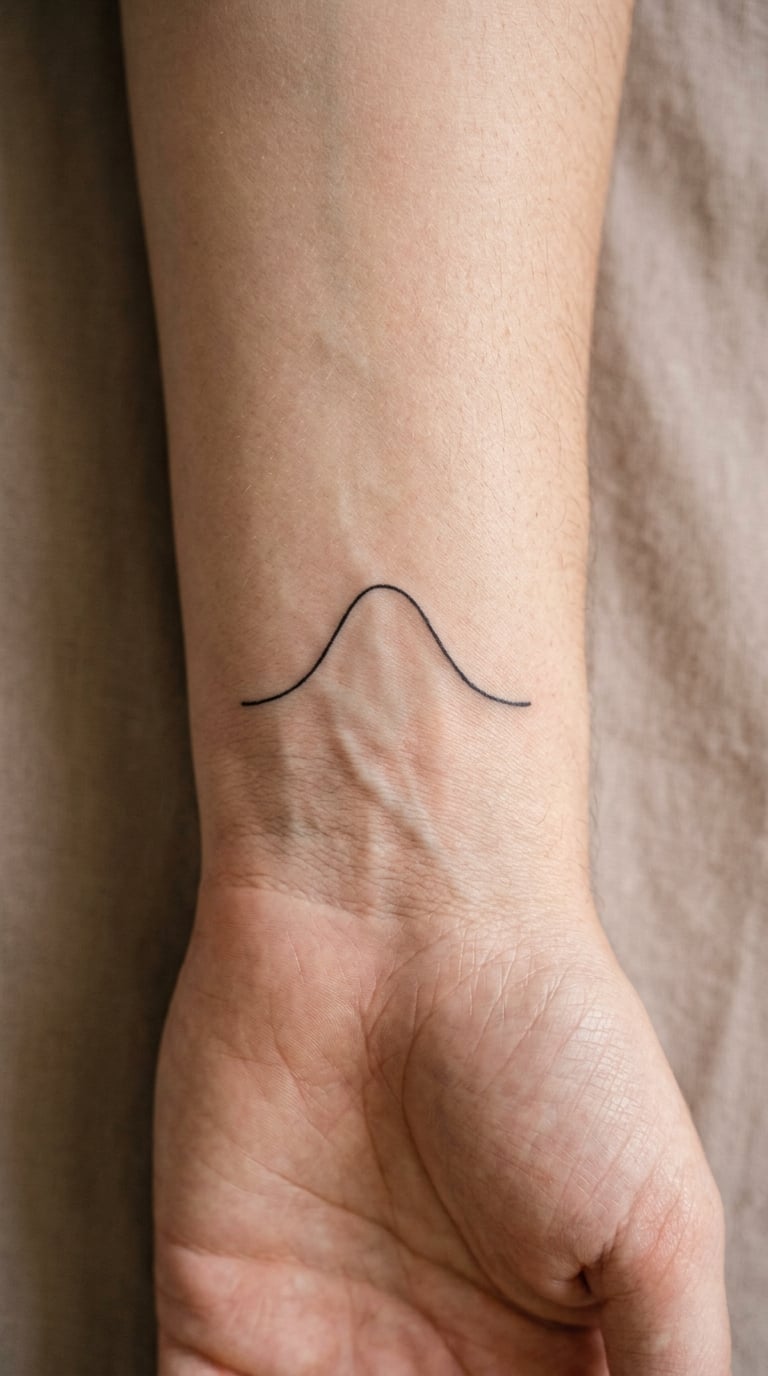
One flat line, one gentle rise and fall, no peaks and valleys from a tracing. Plenty of people trace a real recording, and plenty simply draw a calm-looking line. Either version works, as long as you tell the artist which you want before the stencil.
A traced line can be technically accurate and still feel clinical to the person wearing it. Placement: inner wrist, inner forearm, or the ankle. Size: 2 inches (5 cm) long. Style: single line. Pain: low. One of the first things to fade on a hand-placed line is the flat sections between the peaks, so keep the line slightly weighted rather than hairline.
Make it yours: have the artist end the line in a small open circle instead of a taper.
10. Blank Birth Date in Fine-Line Type
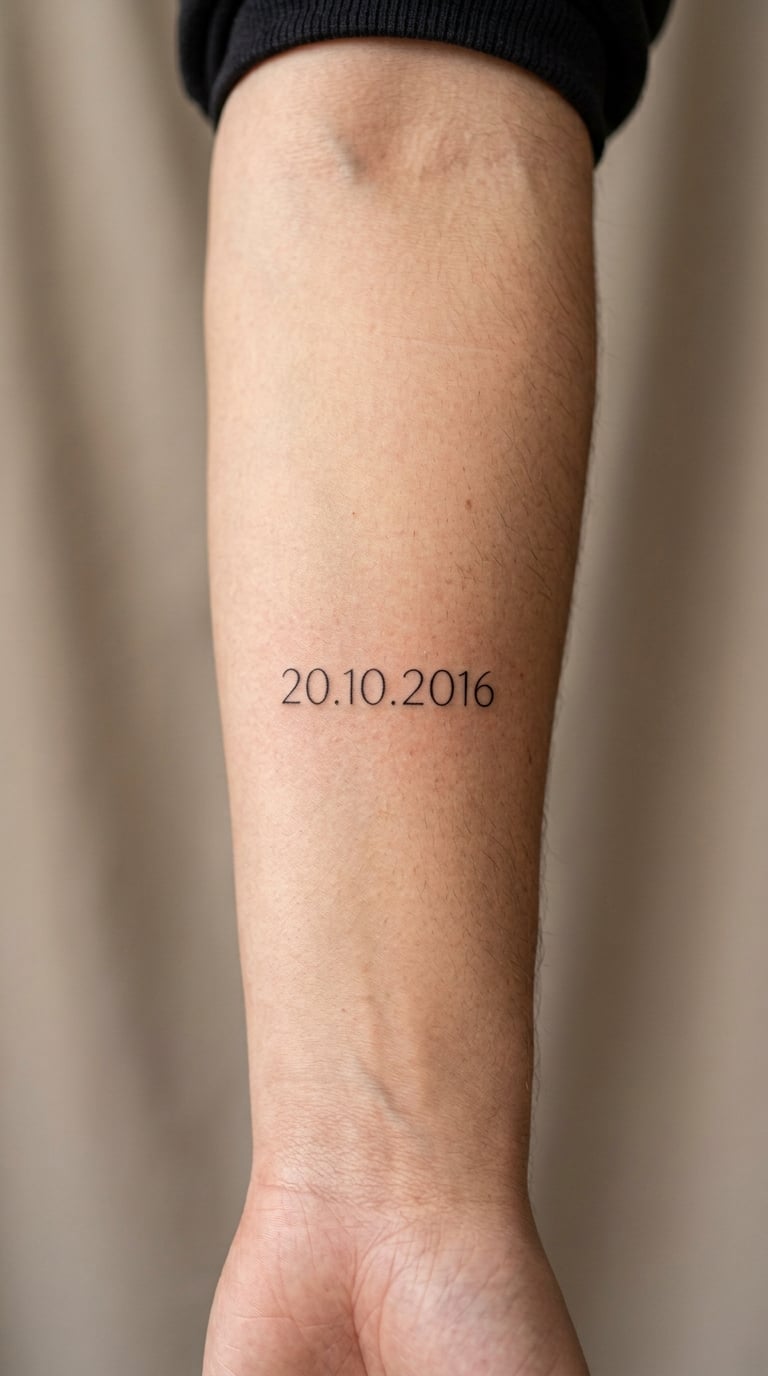
A date, a due date, or the date you were told the news. The lettering is where the work is: narrow, even strokes with no decorative flourishes, and a font the artist has tattooed many times before. Give them the exact date twice and have them write it back to you on paper.
Verify every character before the stencil goes on, because a letter is permanent and a misspelling is the one mistake here that cannot be quietly forgiven. Placement: inner forearm, ribs, or over the heart. Size: 1.5 to 2 inches (4 to 5 cm) long. Style: fine-line lettering. Pain: low on the arm, medium on the ribs. Letters under about a quarter inch tall need frequent reworking.
Make it yours: pair the date with one small motif above it, or move the whole thing behind the ear where only you see it.
11. Tiny Handprint in Soft Blackwork
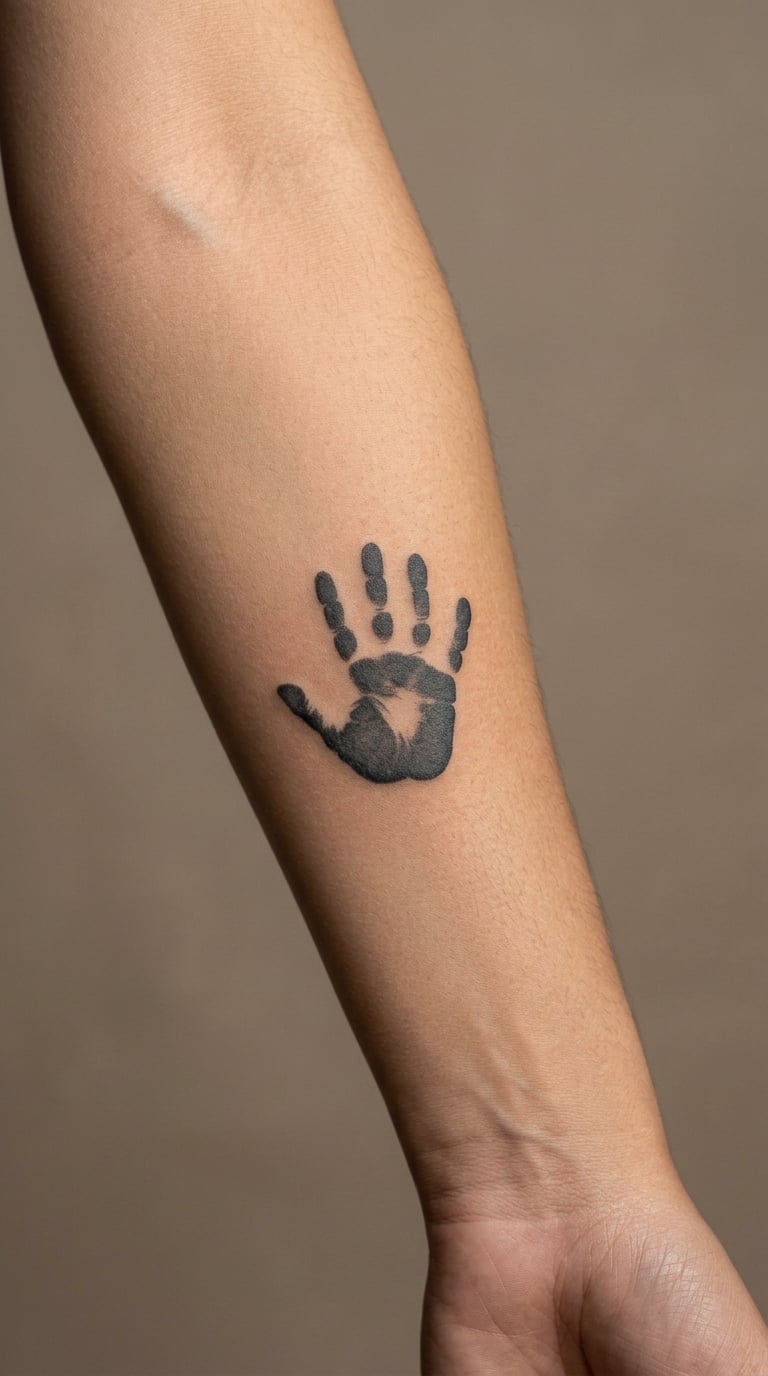
A handprint or a footprint reduced to broad but light black strokes, with five clear fingers and no invented detail. You supply the reference. A drawing, a cast, a photo, or a memory you describe carefully, because the artist cannot guess what a hand you never held looked like.
This is a design that works without a scan or a photograph, which is exactly the situation many people are in. Placement: inner forearm, ribs, or the inside of the upper arm. Size: 1.25 inches (3 cm) tall. Style: soft blackwork. Pain: low. Broad strokes hold their edge far better than hairlines, so this one ages well if the inner gaps between fingers stay open.
Make it yours: have the artist add a ring, a tiny star, or a small birthstone dot at the base of the palm.
12. White Poppy with Grey Leaf
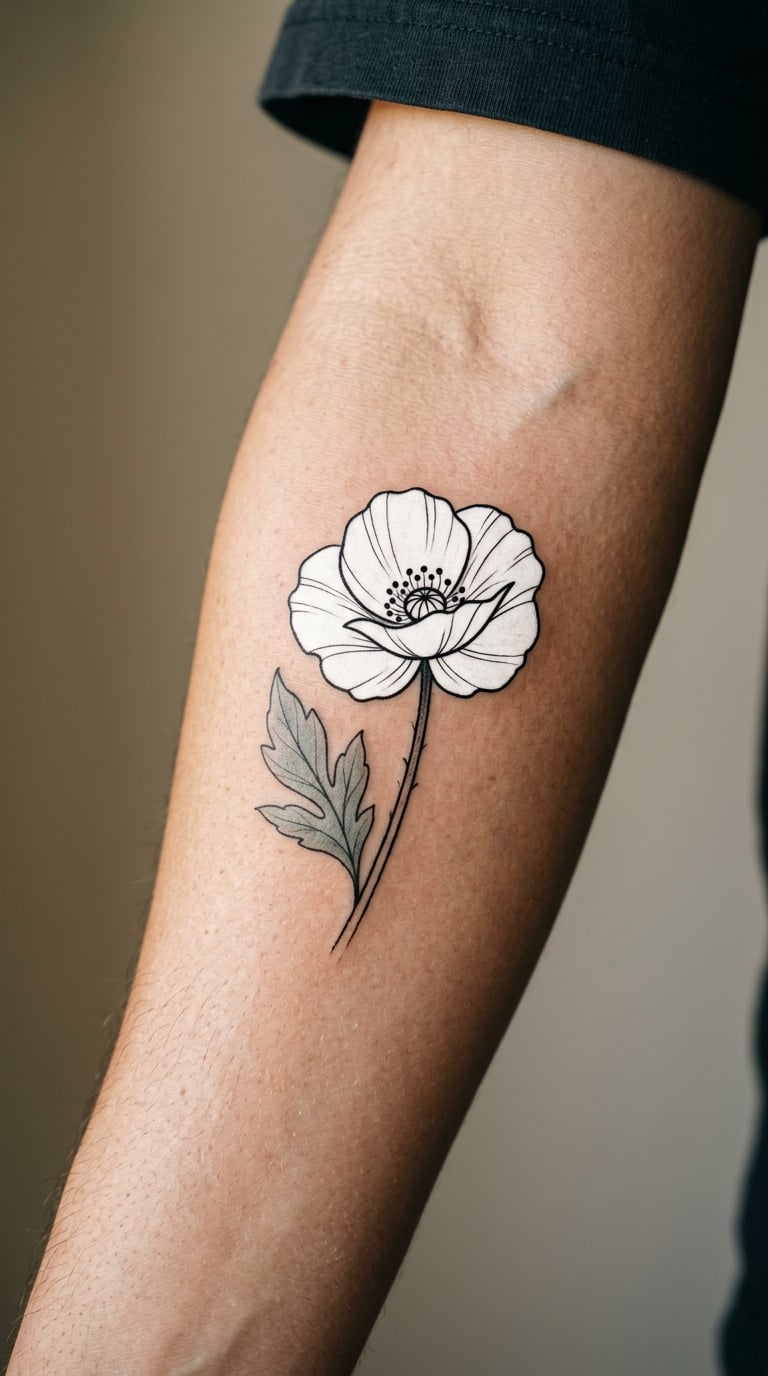
The quieter alternative to a red poppy. Black outline, untouched skin left as the petal colour, and a single leaf filled with muted grey-green. Three elements, and the unfilled petals are what keep it soft.
Poppies are used for remembrance in a number of countries, but the personal reading is yours alone. Placement: outer forearm, calf, or the back of the hand. Size: 1.5 inches (4 cm) wide. Style: black and grey with negative space. Pain: low. Leaving the petals blank means less pigment in the skin, and what is there fades slower than a wash would.
Make it yours: ask for two poppies at different sizes instead of one, for a repeat loss.
13. Three Small Stars in Dotwork
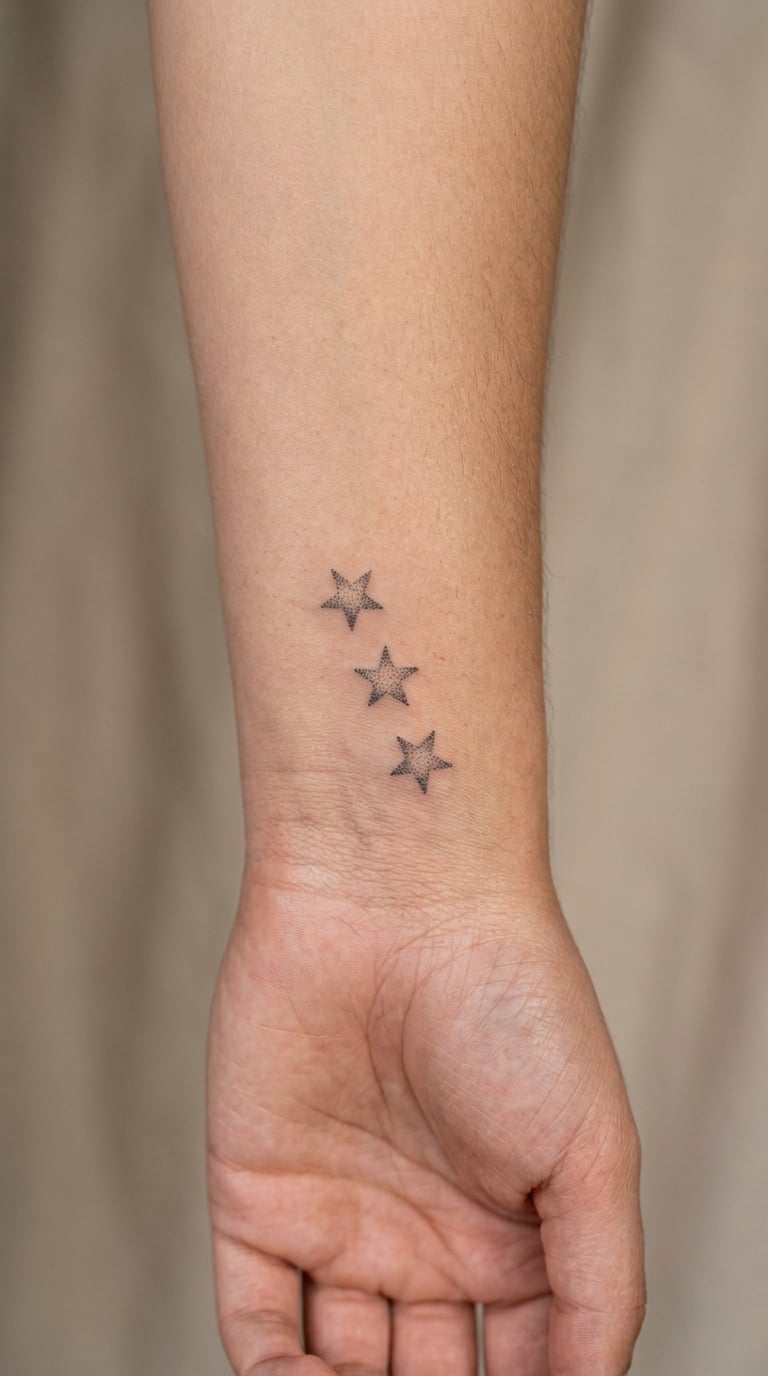
Three stars, each built from stippling rather than solid black, spaced loosely down a vertical line. Stipple dots are slower to tattoo and they give the piece a texture you can see at close range without it reading as busy from across a room.
It looks simple in a photograph and it is one of the slower pieces to tattoo. Placement: wrist, inner arm, or the back of the hand. Size: 1 inch (2.5 cm) tall overall. Style: dotwork. Pain: low to medium, and expect the session to run longer than the size suggests. Tiny dots spread and soften with age, so the stars lose definition within a decade.
Make it yours: use one star per loss and run the count as high as you need, or add a single accent colour to the middle star.
14. Small Branches Forming an Empty Circle
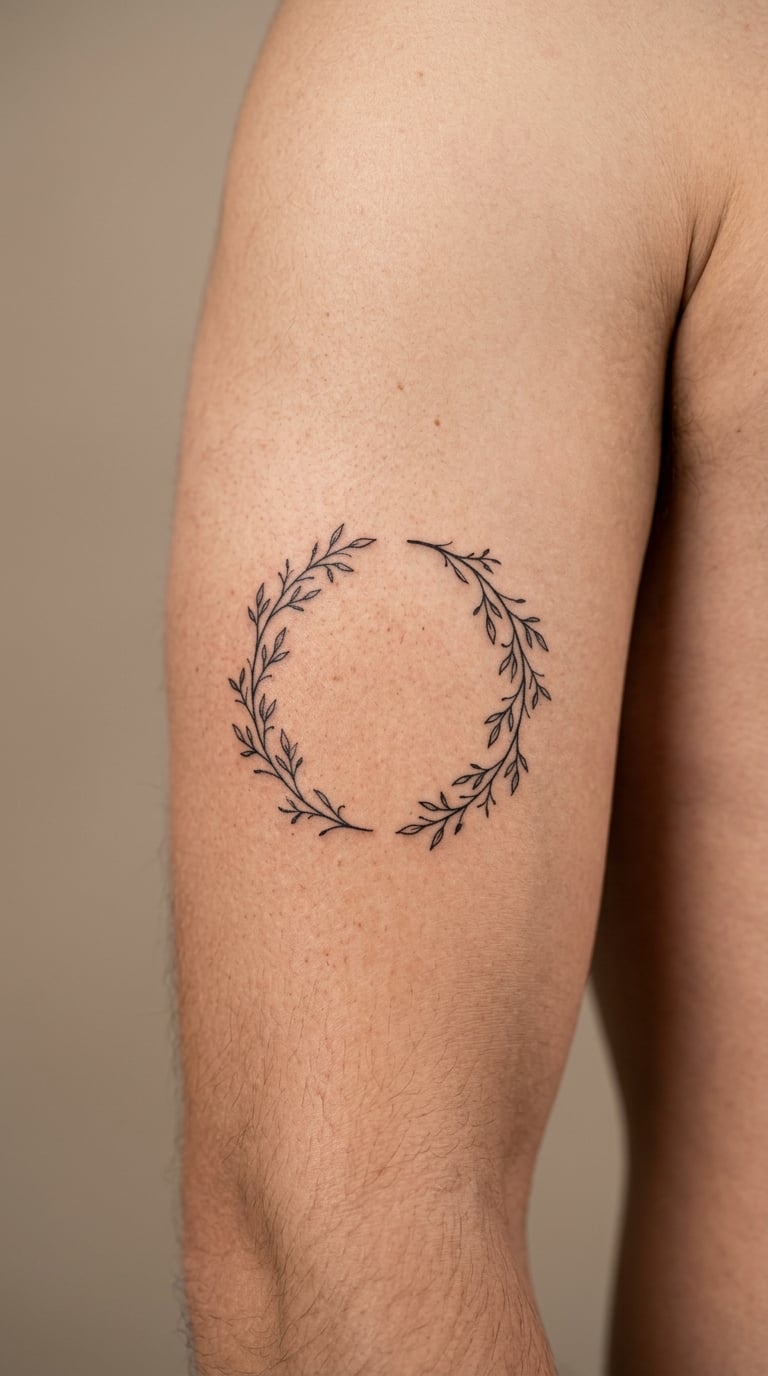
Two fine-line branches that almost close a circle, with a deliberate gap at the top where they fail to meet. Leaves sit sparsely along each branch. The composition leaves air in the middle, and that emptiness is usually why people pick this one.
It is a secular design with no religious content, which matters if you want something that does not presume a belief. Placement: upper arm, rib, or the back of the calf. Size: 2 inches (5 cm) across. Style: fine line botanical. Pain: low. A circular composition has more line length than its diameter suggests, so budget more session time than you would for a filled shape.
Make it yours: make the gap deliberate and wide, or add a tiny motif floating in the empty centre.
15. Dainty Letter with a Significant Initial
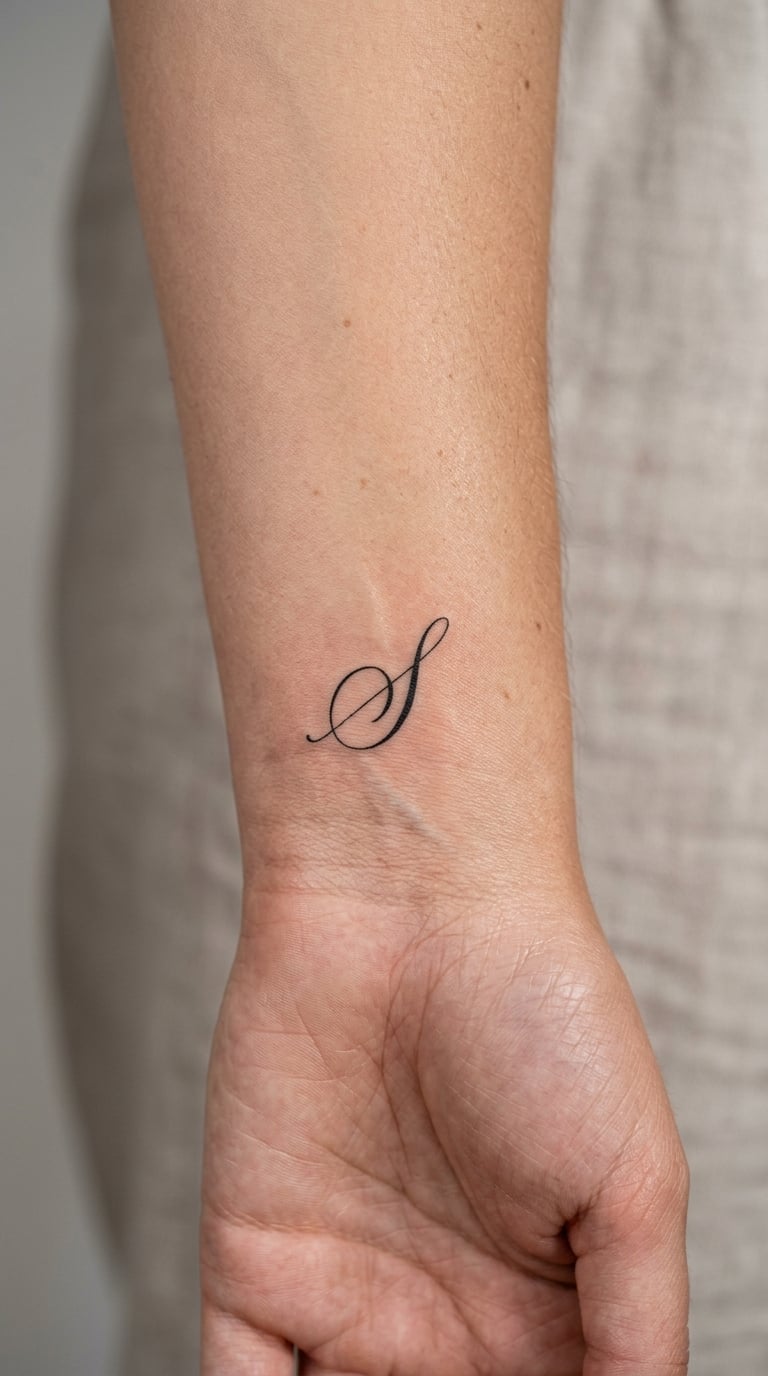
A single letter in fine-line script. A name, a nickname, or one initial, chosen by you, including a name you gave your baby yourself. Script is the least forgiving style on this whole page, so pick a letterform the artist has done many times and ask to see an example on skin.
Thin script blurs first at the thin upstrokes, and a half-inch letter on the wrist will need reworking sooner than almost anything else here. Placement: inner wrist, behind the ear, or the rib. Size: half an inch (1.5 cm) tall. Style: script lettering, fine line. Pain: low. Set a reminder for a check-in at around twelve months, and keep sun off it in summer.
Make it yours: place the letter where only you see it, or underline it with a single hairline that carries more weight than the letter itself.
16. Grey Wash Cloud with a Fine-Line Seam
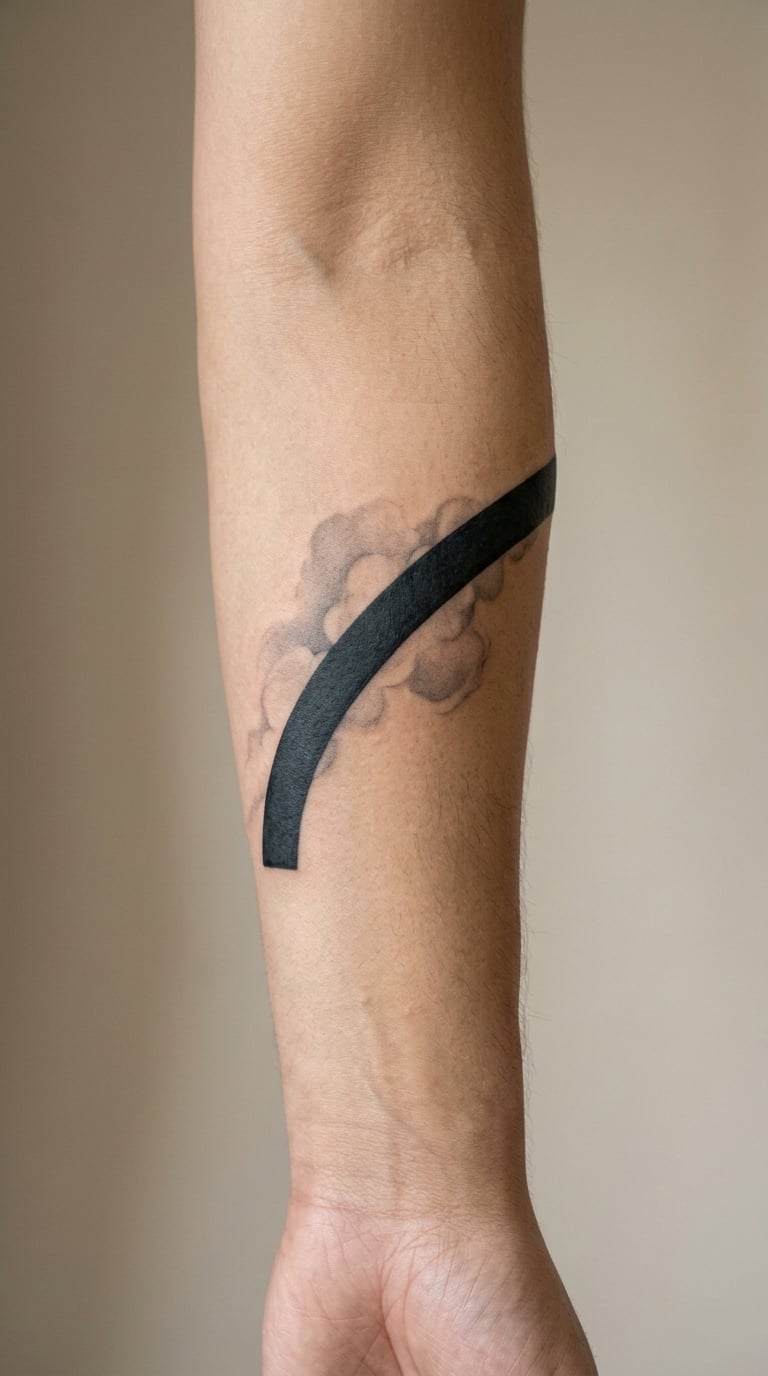
A soft grey cloud built from three or four overlapping washes, crossed by one thin black seam that is either broken or curved. The wash gives it weight and the seam gives it edge, so the piece does not go flat after a few years.
Clouds read differently to everyone, and many people like this for the softness rather than any reading at all. Placement: outer forearm, ribs, or the upper thigh. Size: 2.5 inches (6 cm) wide. Style: black and grey with grey wash. Pain: low. Grey wash is a light pass and heals quickly, but it lightens over time, so expect a refresh if you want the depth.
Make it yours: have the seam run vertically like a fault line, or add one drop of colour at the break.
17. Tiny Laurel Wreath in Blackwork
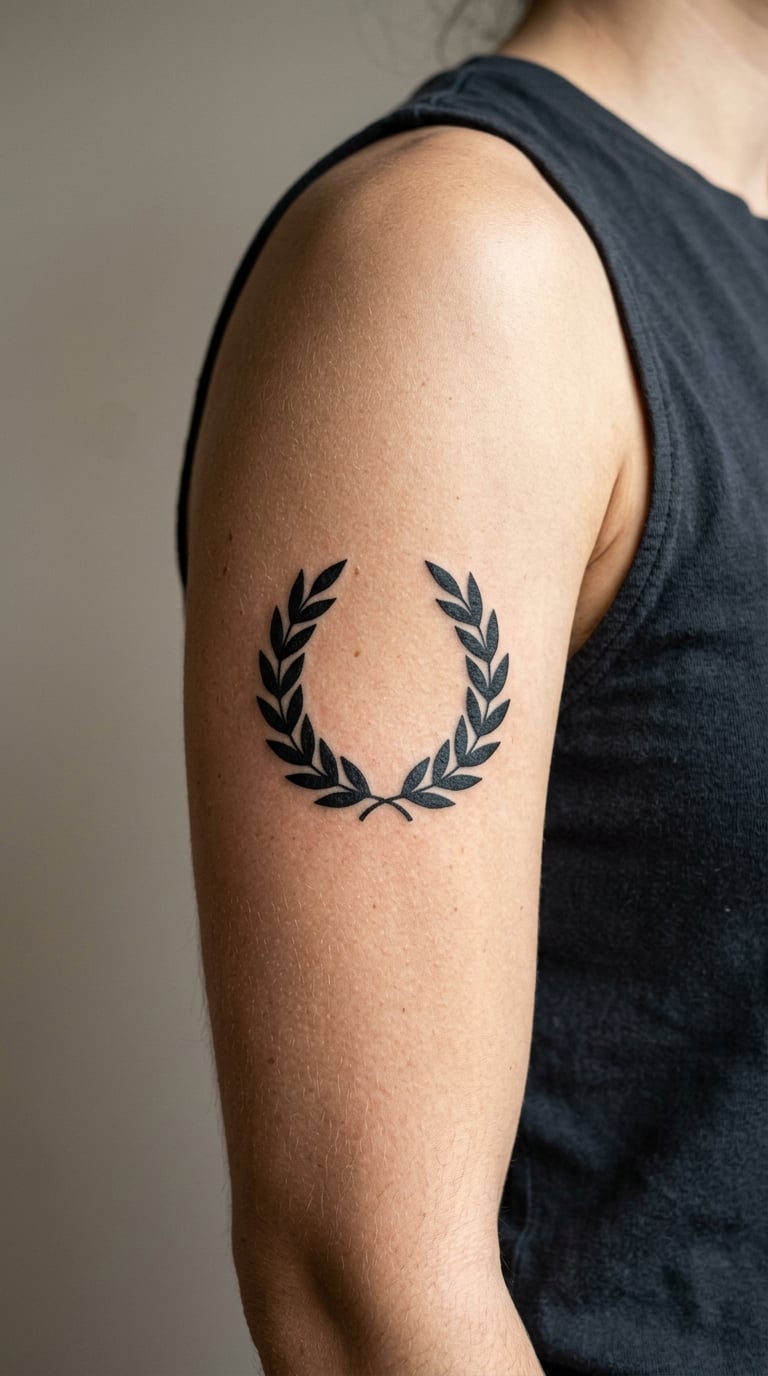
A small open laurel wreath with chunky black leaves, built solid rather than outlined. The open top is deliberate, and so is the heavier line weight, which is what keeps it readable after a decade when a hairlined wreath would not be.
Laurel carries memorial and heritage associations in several cultures, and those associations belong to the wearer rather than the symbol. Placement: outer upper arm, behind the ear, or the calf. Size: 2 inches (5 cm) across. Style: blackwork. Pain: medium on the upper arm, low on the calf. Solid leaves take more needle passes, so this one runs long for its size.
Make it yours: add a small birthstone or gem in the gap at the top.
18. Minimal Dove in One-Line Blackwork
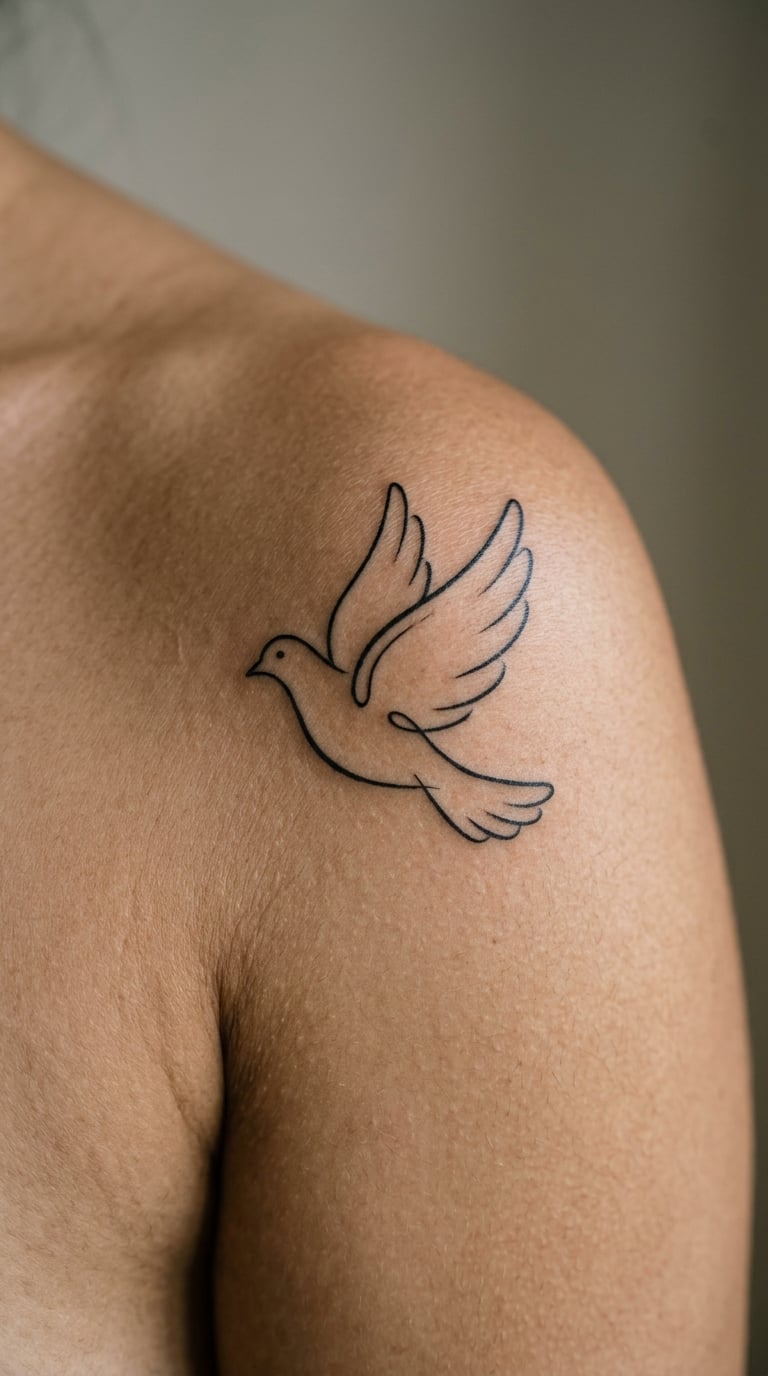
A dove in flight built from economical black linework, with a suggestion of a wing, a small head, and no background, no shadow and no halo. The economy is the style. Fewer lines means the shape stays readable as the skin changes.
Doves are frequently read as peace or remembrance, and plenty of people want the bird without the symbolism attached. Placement: shoulder, upper arm, rib, or the ankle. Size: 1.5 inches (4 cm) wide. Style: one-line blackwork. Pain: medium on the ribs and shoulder, low on the arm. Fine black lines on the shoulder see a lot of sun, which is the fastest way to fade them.
Make it yours: have the wing drawn slightly open, as though it has just taken off rather than is settled.
19. Soft-Colour Watercolor Rainbow
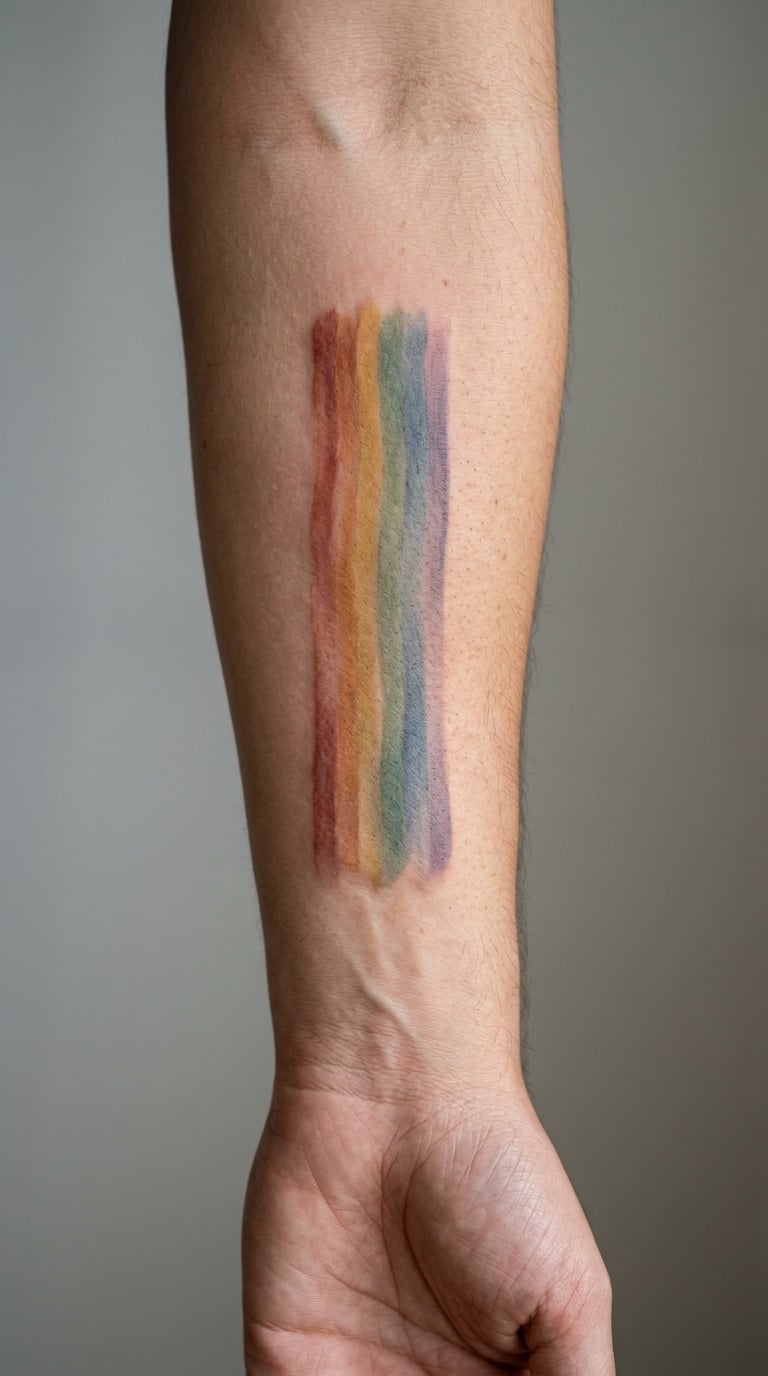
A narrow rainbow made of imperfect translucent bands, muted rather than saturated, with pigment that thins out at one end. A bright rainbow reads as children’s illustration; a soft one reads as a grown-up’s memory of one.
The rainbow has a well-known place in loss communities, and plenty of parents find that language painful, so treat it as one option among many rather than a standard. Placement: forearm, rib, or the calf. Size: 2 inches (5 cm) wide. Style: watercolor. Pain: low. Light washes heal fast and fade faster than solid black, especially on the forearm, so plan for a colour refresh every few years.
Make it yours: name your colours to the artist rather than describing a mood, and ask for them to thin out across the bands.
20. Two Interlocking Botanical Circles
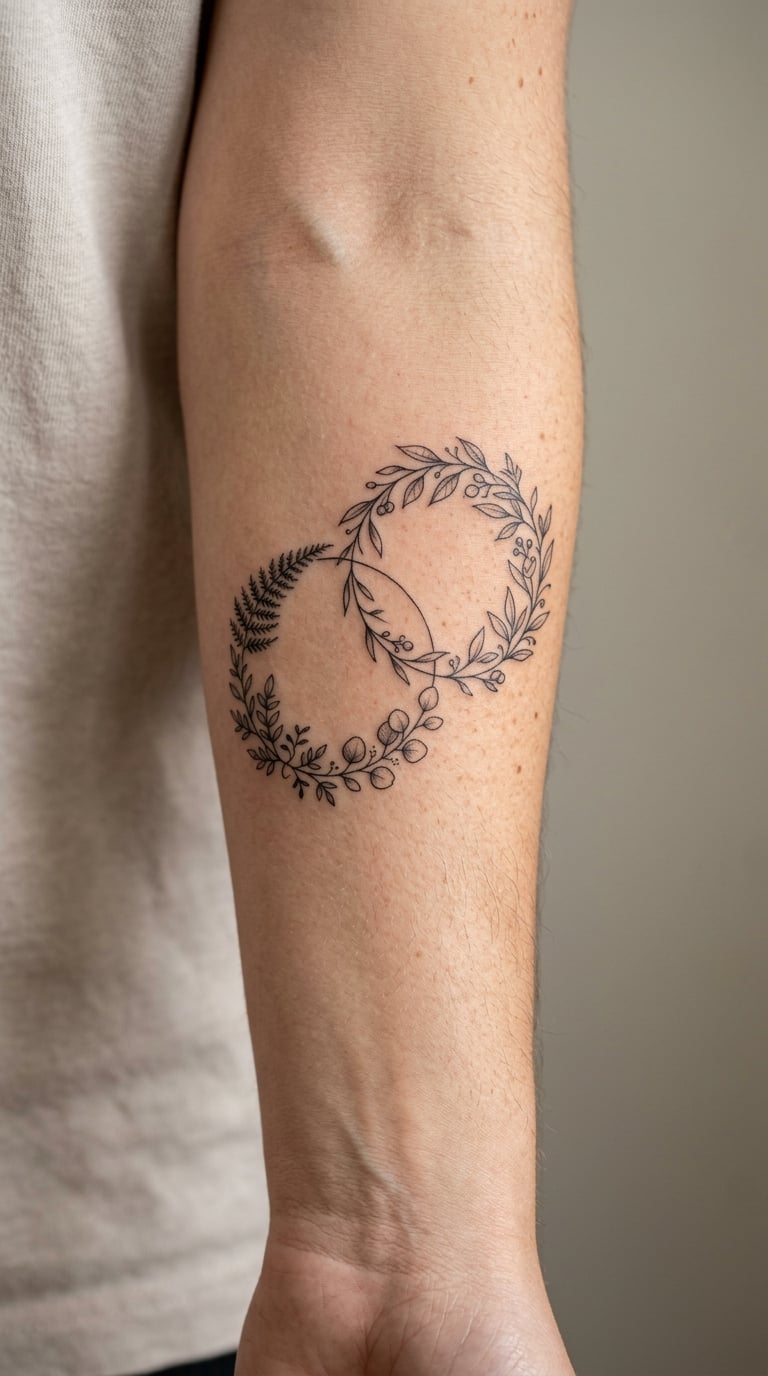
Two fine-line botanical circles that overlap by about a third, each with its own small leaves and no flowers. The overlap is the whole design. It gives you a visual for something held or shared without anyone reading a relationship into it.
This is the one I suggest to people who already have a first fine-line piece and want a companion that reads as a set. Placement: forearm, thigh, or the upper arm. Size: 1.5 inches (4 cm) in diameter each. Style: fine line botanical. Pain: low. Two full circles is a lot of line length, so allow for a longer session even at this size.
Make it yours: tuck a date into the overlap, or add one leaf in a different shade so the two circles stay distinct.
How to Choose the Right Design
Most of these choices come down to five things, and a consultation covers all of them in about half an hour.
- Emotional connection. Pick the one you want to look at on a hard day. If a symbol means something to someone else but nothing to you, it will not keep working.
- Style. Fine line is discreet and elegant but softens first. Blackwork holds its shape longest. Watercolor is forgiving about small imperfections and unkind to fading.
- Size. Under two inches is a first-tattoo size and it hides well. Over three inches and you are committing to something visible and to a session that runs longer.
- Placement. Ribs and the inner forearm are private and sensitive. The wrist and collarbone are visible to everyone. Behind the ear is for close people only.
- Long-term readability. Ask what the design looks like in fifteen years. Fine script and tiny dots are the two things most likely to need reworking.
How to choose tattoo ideas for miscarriage remembrance that age well
Ask the artist to draw your design at the size you actually want and then tell you honestly what it will look like healed, not fresh. A good artist will push back on a heart smaller than half an inch, or a date in lettering thinner than a pencil line, because they know the outcome and they would rather adjust the brief than redo the work.
You are also allowed to say no. There is no deadline, and a design that feels rushed tends to age badly for reasons that have nothing to do with skill.
Cost and Session Time
US pricing is not standardised. Most working artists charge an hourly rate with a shop minimum, and a small fine-line piece usually sits at or near that minimum, while anything coloured or detailed is billed by the hour on top of it. Shops in cities and tourist areas sit at the top of the range; rural studios often sit lower.
- Micro designs, under one inch, one colour or fine line. Usually one short sitting, often at the shop minimum.
- Small designs, one to two inches, blackwork or light grey. Comfortably under an hour, occasionally a second sitting for touch-up.
- Medium designs, two to four inches, or anything in colour. One to two hours, and longer if the artist is building up washes.
- Larger or highly detailed pieces. Multiple sittings, priced per session.
What moves a quote: line weight, how much grey or colour goes in, how small the details are, the placement, and how experienced the artist is. Two designs that look identical in a photo can cost very different amounts. Ask for the total in the consultation, in writing, before the first sitting, and ask what the touch-up policy is before you agree to anything.
Aftercare Basics
Follow your artist’s aftercare instructions above anything written here, because they know how deep they went and how much ink they laid down.
- Follow your artist’s aftercare instructions first. They will tell you how long to keep the covering on and when to start their product.
- Clean gently. Wash with lukewarm water and unscented soap, then pat dry with something clean. No scrubbing, no loofah, no picking at flakes.
- Keep it lightly moisturised. A thin layer of whatever the artist recommends, and nothing thick enough to sit on the skin.
- Leave the covering on for as long as you were told. Plastic wrap and a loose covering are better than a shirt over the top in the first hours.
- Protect it from sun and friction. No tanning beds, no loose shirts over a fresh rib piece, no watch straps or waistbands rubbing the spot.
- Contact the studio if something looks wrong to you. They would much rather hear from you early than guess. This is not medical advice, and your artist will tell you when to speak to a doctor.
Budget a touch-up window of roughly two to twelve weeks for most placements, and expect fine-line work to need attention again over the years. That is normal for this style, not a sign anything went wrong.
Frequently Asked Questions
What symbol is best for a miscarriage remembrance tattoo?
There is no best symbol, only the one that means something to you. The most common choices fall into four groups: dates and numerals, flowers and nature, angel and celestial motifs, and trace symbols such as a heartbeat line or a tiny handprint. Forget-me-nots and poppies are the two flowers people ask about most. Pick from a shortlist of two or three and see which one you still want to look at a year from now.
Is a small remembrance tattoo likely to fade?
Small and fine-line work fades faster than large blackwork, mostly because the lines are thin and sit closer to the surface. Under an inch, expect softening within a decade and occasional touch-ups. Two things slow it down: keep it out of direct sun, and use a line weight your artist already heals well. Nothing you do makes a small tattoo permanent, so choose a size you are comfortable revisiting.
Should a miscarriage memorial tattoo include a date?
Many people do and many do not. A date or due date anchors the memory precisely, which some people want and others would rather leave open. If you do include one, use lettering the artist has done many times, keep letters at least a quarter inch tall, and verify every character on paper before the stencil goes on. Placement matters too: the inner forearm keeps it private, the ribs make it close to the body.
What size is a good first tattoo for this kind of design?
One to two inches is the range most first-tattoo artists recommend for remembrance work. It is small enough to sit on the forearm, wrist or rib without dominating, and it fits into a single sitting. Below half an inch, detail turns to grey. Above three inches, you are committing to a long session and something visible. Bring references and let the artist adjust the scale to your body shape.
Can I get a private miscarriage remembrance tattoo on my wrist?
Yes, and a wrist placement is one of the most common requests. A wrist tattoo is visible in ordinary life, though most people design the piece to read as small or abstract to anyone who has not been told the story. If you want it private, the inner forearm, the ribs under clothing, or behind the ear work better. Placement is worth discussing in the consultation, including how the design will look as you age and as your wrist changes.
Which Idea to Choose First
For a first remembrance tattoo, the minimalist heart with an open centre is the one I would pick. It is half an inch, it sits on the inner wrist, and it is easy to walk into a consultation with.
If you already have fine-line work and want something that reads as part of a set, the two interlocking botanical circles or the tiny laurel wreath will sit well beside it. Whichever you choose out of these tattoo ideas for miscarriage remembrance, bring your references, ask what it looks like healed, and take as long as you need to decide.