
20 Honeymoon Tattoo Ideas: Best Romantic Designs (September 2026)
A honeymoon tattoo is a design chosen to mark the trip you take right after the wedding: usually the destination, the date, or one small detail only the two of you would recognise. Most people want it quiet, not a billboard, and nearly all of them want it to still look good in ten years.
That last point is the one tattooists bring up first. Couples fall for a tiny detailed design in a holiday town, and five years later the fine detail has blurred into a smudge. Every honeymoon tattoo idea below is drawn at a line weight and size that holds its shape on skin, with the placement and ageing notes you would otherwise only learn the hard way.
If your tattoos are meant to be about family rather than travel, our guides to 20 best heartbeat tattoo ideas with meaning, father daughter matching tattoo ideas and mother daughter matching tattoo ideas for small placements cover that side of the map.
Honeymoon Tattoo Ideas: Quick Guide
Every honeymoon tattoo idea below, with style, placement, size and pain
| Idea | Style | Best placement | Size | Pain |
|---|---|---|---|---|
| Overlapping wedding bands | Fine line | Ring finger | 0.2 in (5 mm) line | Medium |
| Compass rose with coordinates | Blackwork | Inner forearm | 2-3 in (5-7 cm) | Medium |
| Watercolor sunset | Watercolor | Inner forearm | 2 in (5 cm) | Low to medium |
| Passport stamp | Micro-realism | Upper arm | 0.4 in (1 cm) | Low |
| Airline route lines | Fine line | Inner wrist | 2-3 in (5-7 cm) | Low |
| Palm tree and mountain | Dotwork | Outer forearm | 3 in (7 cm) | Low to medium |
| Map heart with red dot | Red ink | Outer forearm | 2 in (5 cm) | Medium |
| Infinity with two origins | Fine line | Wrist or ankle | 1.5 in (4 cm) | Low |
| Destination bouquet | Botanical fine line | Inner forearm | 3-4 in (8-10 cm) | Low to medium |
| Airplane trail heart | Blackwork | Outer wrist | 1.5 in (4 cm) | Medium |
| Roman numeral date | Lettering | Inner forearm | 2 in (5 cm) | Low to medium |
| Rose with travel tag | Traditional | Outer forearm | 4 in (10 cm) | Medium |
| Wave and rising sun | Blackwork | Calf or ribs | 3-4 in (8-10 cm) | Low to medium |
| Two birds in flight | Fine line | Inner upper arm | 1.5 in (4 cm) | Low |
| Coordinates in brackets | Fine line | Inner wrist | 1 in (2.5 cm) | Low |
| Matching mountain peaks | One-needle | Forearms or ankles | 1.5 in (4 cm) | Low |
| Cocktail with two straws | Micro-realism | Inner forearm | 1 in (2.5 cm) | Medium |
| Pearl-detail pomegranate | Botanical | Outer forearm | 3-4 in (8-10 cm) | Low to medium |
| Moonlit cabin | Fine line | Calf | 3 in (7 cm) | Low |
| Abstract route and heart | Blackwork | Outer forearm | 4 in (10 cm) | Medium |
1. Fine-Line Wedding Rings on the Ring Finger
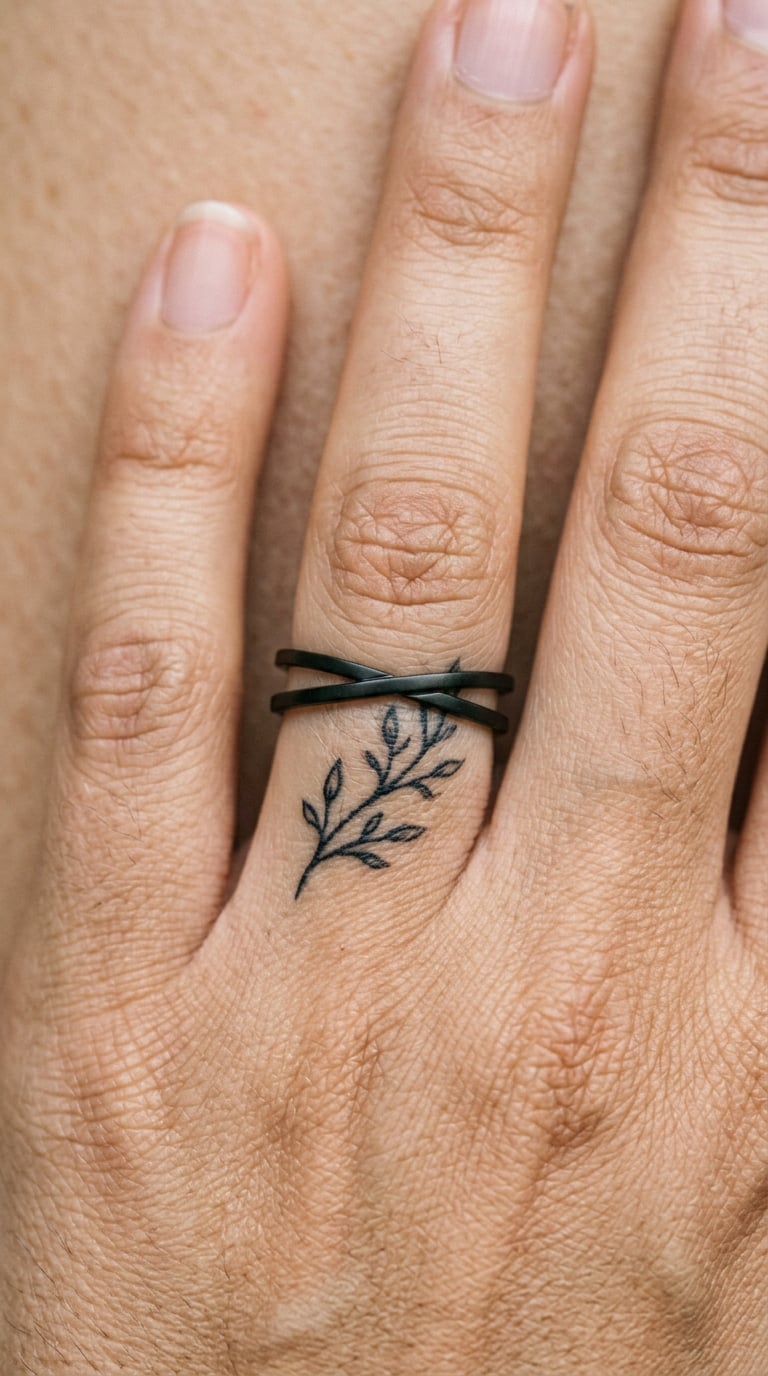
The design is two thin black bands drawn slightly apart, overlapping or offset so one reads as the wedding and the other as everything after it. Line weight matters more than detail here, so a good tattooist will push the single needle a little harder than feels comfortable in the moment.
People choose it because the location does the talking. You do not need a name or a date when the finger is the message.
Placement: ring finger, outer hand or the side of the finger. Size: 0.2 in (5 mm) line, 1 in (2.5 cm) across. Style: fine line. Pain: medium on fingers, because the skin there is thin over bone and there is very little fat to cushion the needle.
Ageing note worth accepting early: finger and hand ink wears against sheets, rings and daily washing, and fine lines fade faster than almost anywhere else. Budget for touch-ups, and pick a line weight that can survive one.
Make it yours: have the inner band carry the wedding date in the smallest lettering your artist is comfortable tattooing, or use two different metals of ink so the overlap is visible.
2. Compass Rose with Wedding Coordinates
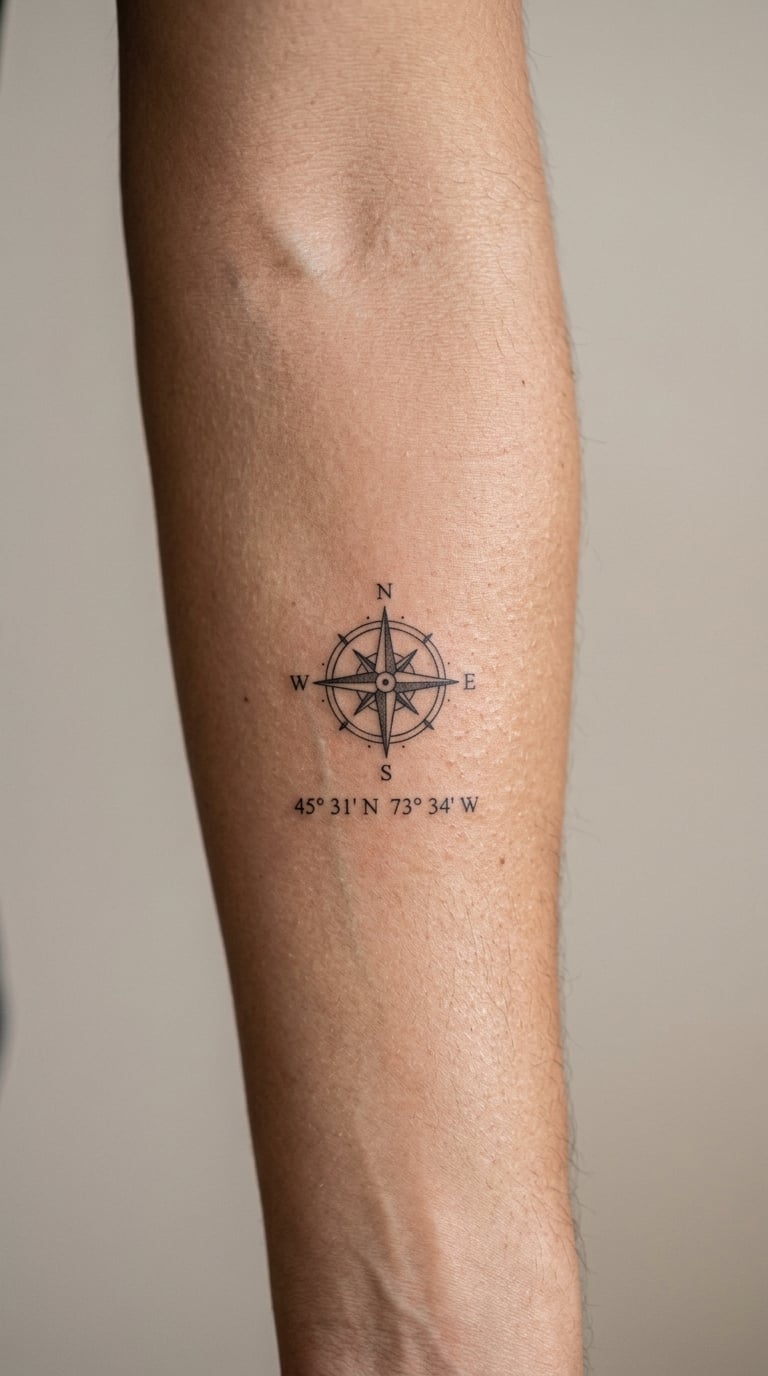
A single-needle compass rose with four clean points, the north point slightly longer than the rest, and the destination’s latitude and longitude set small underneath in clean sans-serif numerals. Some people run the coordinates on a single line beneath the star instead, which keeps the whole piece wide rather than tall.
A compass is a private travel marker, not a claim about direction or fate. That is the appeal for couples who want something that looks like a badge without explaining anything to a stranger.
Placement: inner forearm, outer forearm or upper arm. Size: 2-3 in (5-7 cm) tall. Style: blackwork or fine line. Pain: medium on the forearm, low to medium higher on the upper arm.
Thin hairline star points soften within a few years, so ask for a compass with a small solid centre rather than four open lines that taper to nothing.
Make it yours: use the exact coordinates of the hotel, the beach or the airport you landed at, and check them on two different maps before the stencil goes on.
3. Watercolor Sunset Over the Sea
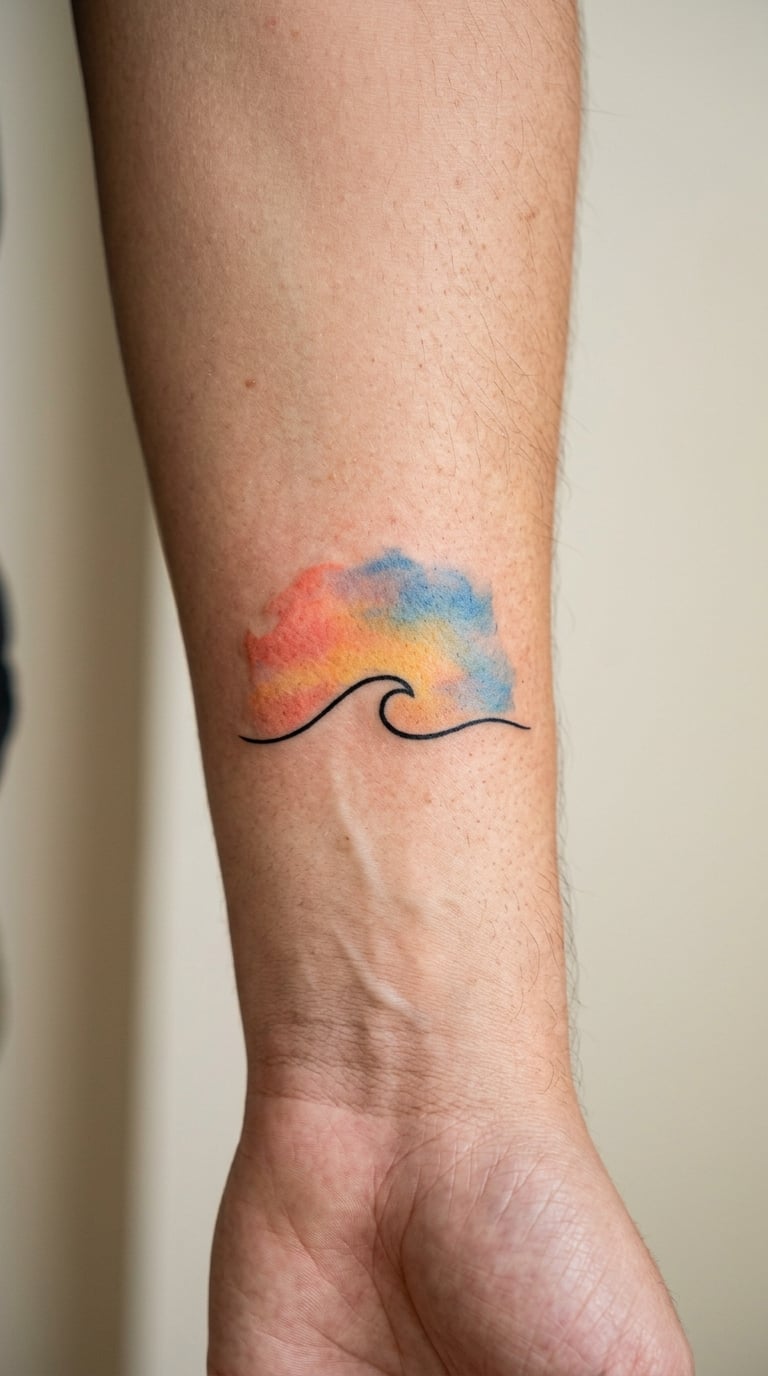
A band of colour bleeding sideways into an unpainted horizon, a soft half-disc in coral or gold, and a single confident black line for the water underneath. Watercolor tattoos need open skin between washes, so the design looks airier than it does on screen.
It usually comes from a specific evening: the sunset you watched from the balcony, the one you talked about for years afterwards. Nobody needs to know that but the two of you.
Placement: inner forearm, calf or ribs. Size: 2 in (5 cm) for a small one, up to 4 in (10 cm) if you want the wash to breathe. Style: watercolor with one black line. Pain: low to medium, depending on placement; ribs are the exception.
Colour is the first thing to go. Yellows and light oranges fade noticeably within a couple of years, so ask for a deeper pigment than the reference photo looks like it needs.
Make it yours: add a small black date or a one-line coastline outline of the destination below the wash.
4. Micro-Realistic Passport Stamp
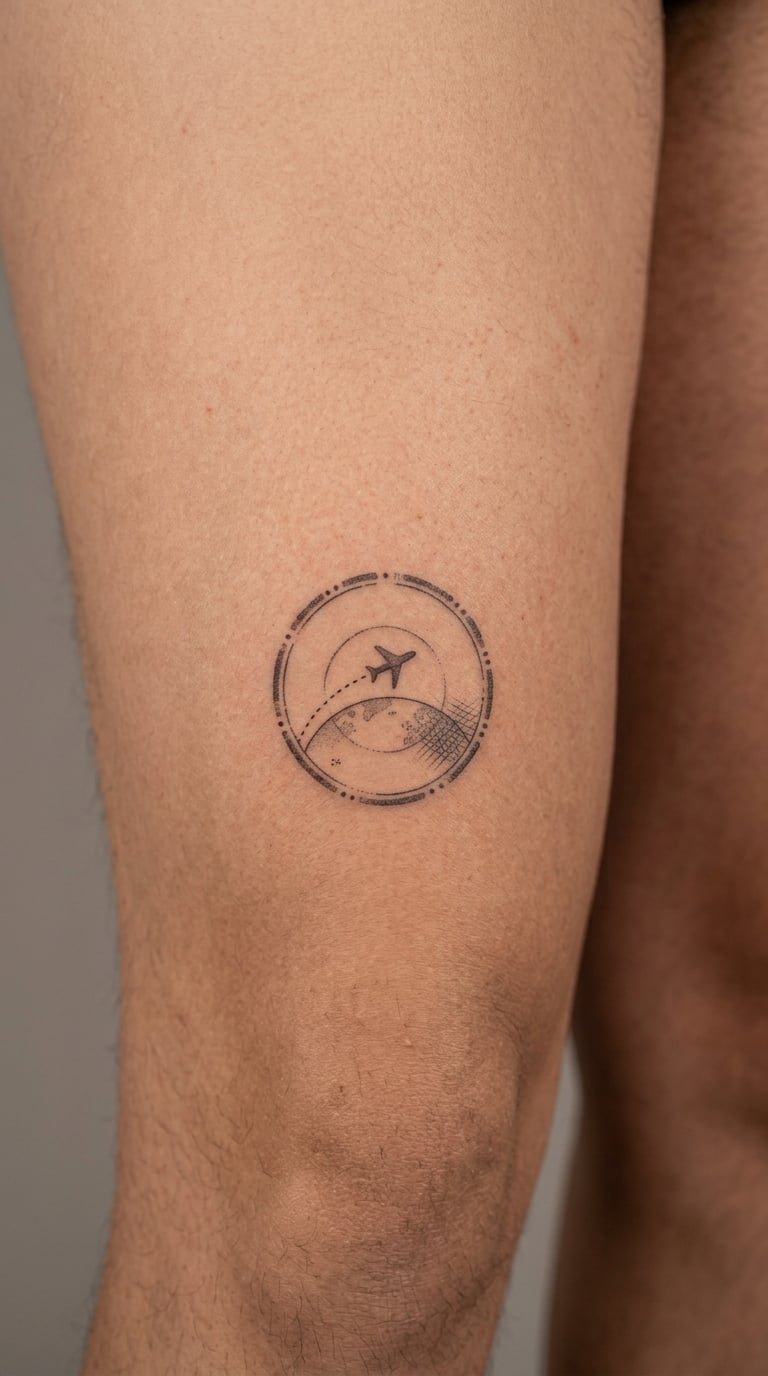
A circular composition with a curved banner of lettering around the edge, a tiny landmark or island silhouette in the centre, and two partial date arcs. Done properly it sits at about 0.4 in (1 cm) across, which is genuinely small but still readable as a stamp rather than a smudge.
It works as a private joke between travellers. Everyone else reads it as a small dark dot with structure.
Placement: upper arm, outer calf, or just above the wrist. Size: 0.4-0.6 in (1-1.5 cm). Style: black-and-grey micro-realism. Pain: low, and short, usually a few minutes.
This is the idea most at risk of ageing badly. Lettering under roughly half an inch blurs, and a destination name in a foreign script is even worse, so keep the text to one short word or use the landmark alone.
Make it yours: add a second stamp a few inches away later, one for the wedding and one for the honeymoon, and let the space between them carry the meaning.
5. Matching Airline Route Lines
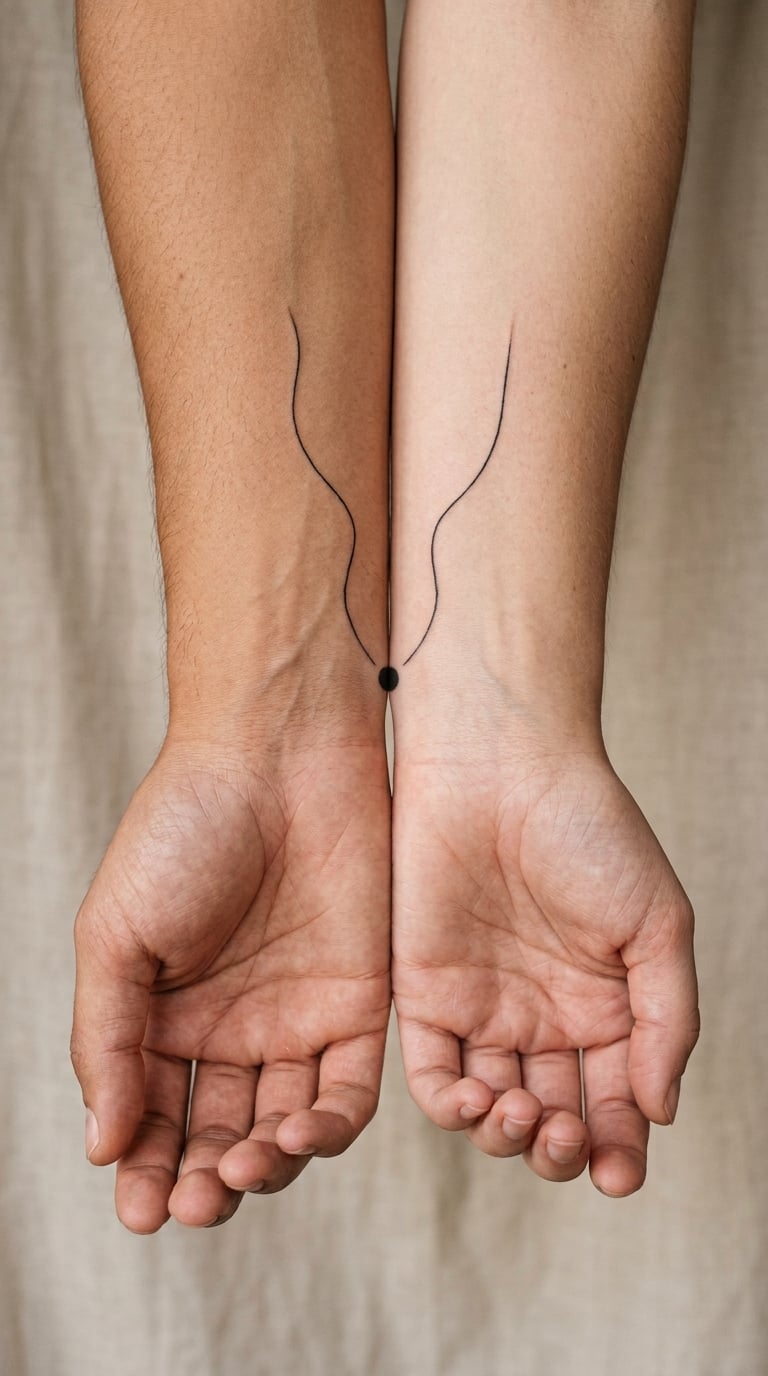
Two minimalist route lines that start at separate dots and meet at one shared point, the way a boarding pass and an arrival card meet on the same trip. Each partner can end their line somewhere different, which is why this works so well for people who like the idea of matching but not the identical cut.
It is the most flexible way to do a couples tattoo: same hand-drawn language, different content.
Placement: inner wrists, inner forearms, calves or ankles. Size: 2-3 in (5-7 cm) long. Style: fine line. Pain: low on the inner forearm, medium on the inner wrist where the skin is thinner.
Wrist and ankle lines rub against sleeves and shoes daily and fade first. Placing the same line higher on the forearm buys years.
Make it yours: have each line start from a different home city and end at the same dot, and use the same ink for both so they still read as a pair.
6. Dotwork Palm Tree and Mountain
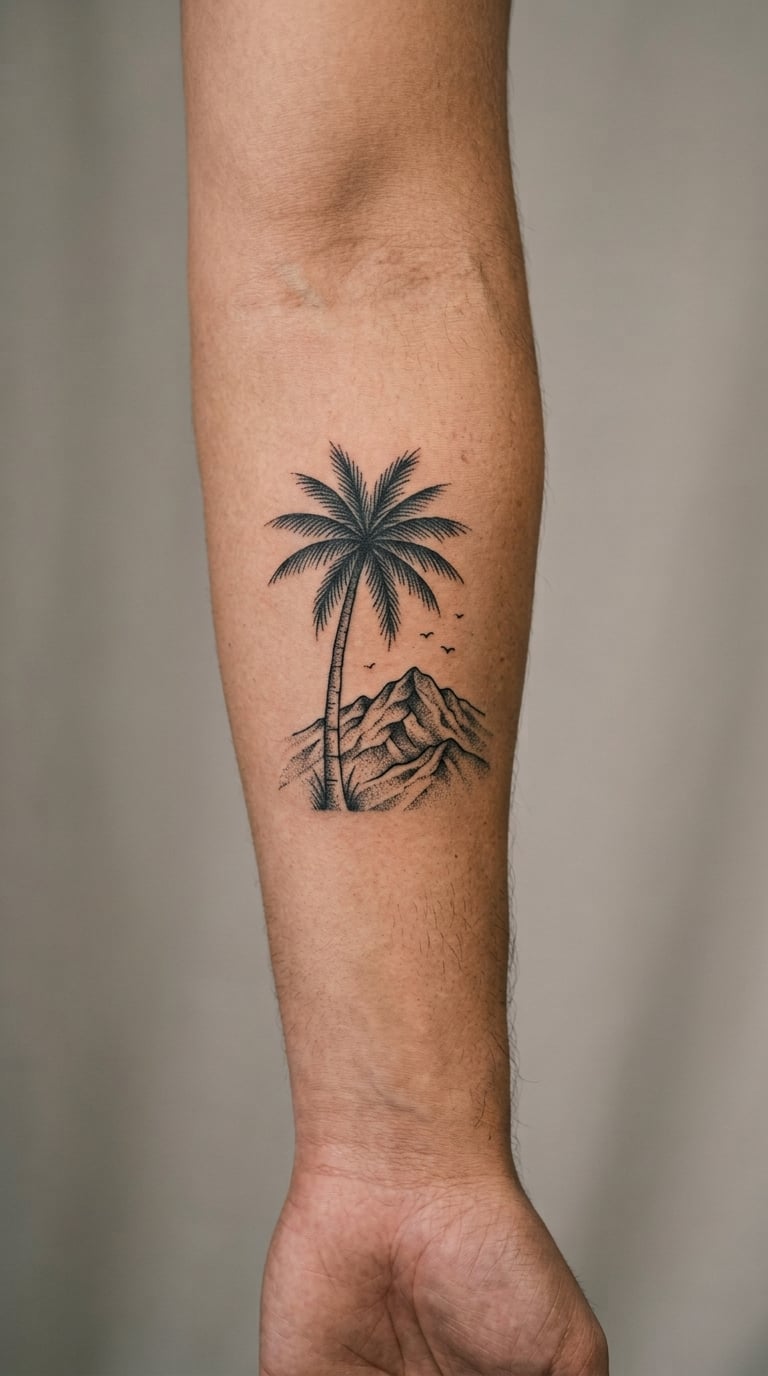
A palm built from staggered dot patterns, a low mountain ridge behind it, and a horizon line holding the two together. Dotwork rewards patience: good pieces vary dot density so the shape has depth without any grey wash at all.
It reads as a destination rather than a relationship, which is exactly the point for couples who already have plenty of hearts and rings on their skin.
Placement: outer forearm, calf, upper arm or side ribs. Size: 3 in (7 cm). Style: dotwork. Pain: low to medium, and rib placements climb fast.
Dots spread very slightly as skin ages and the shading contrast softens, so a design with only two densities holds up better than one that relies on three or four.
Make it yours: add a tiny initial tucked into the horizon, or put a small half-sun disc behind the mountain peak for a second read.
7. Red Ink Map Heart
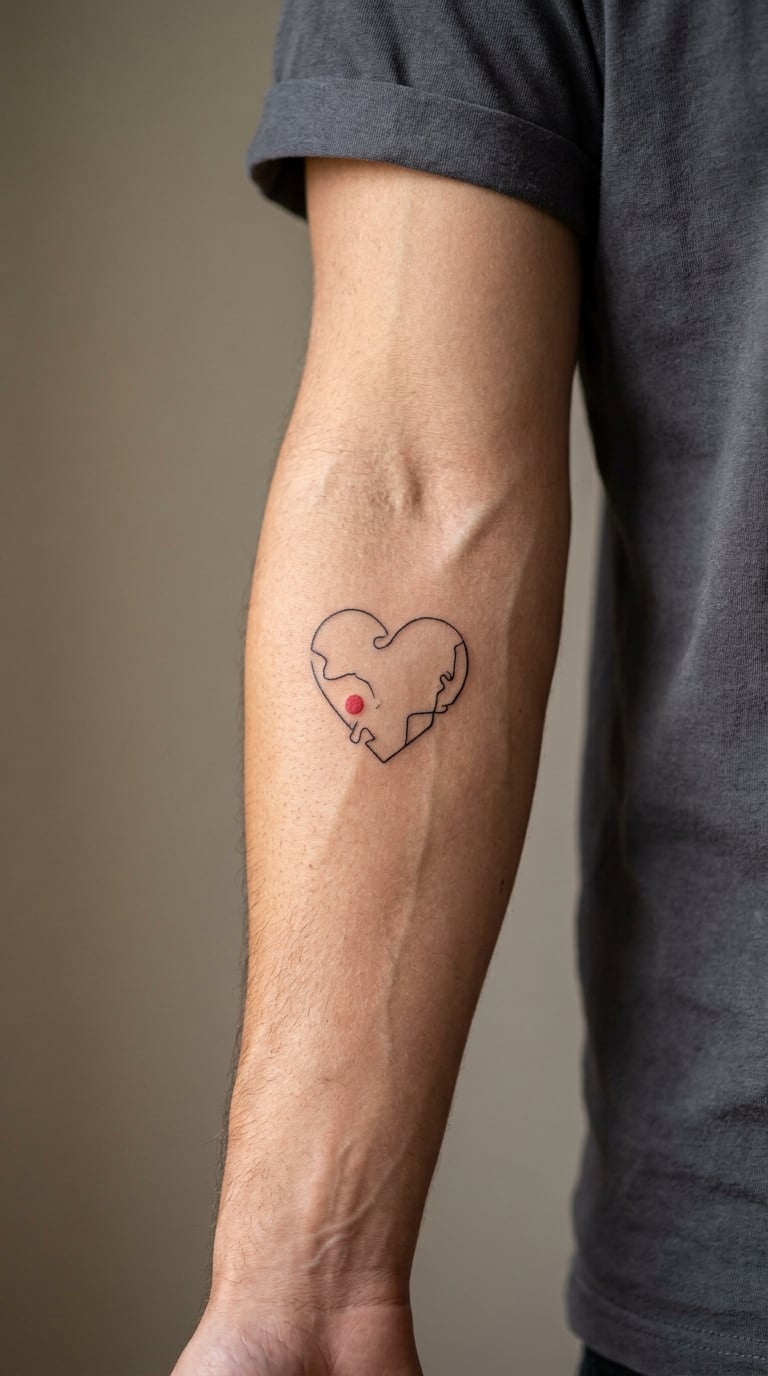
A heart shape drawn with a simplified map route rather than an outline, one small dot marking the destination inside it, and red as the only colour. Red and black together work; full red lines can turn the shape muddy once the ink settles.
It is the most obviously romantic design on this list that still does not look like a greeting card, because the heart is made of geography.
Placement: outer forearm, calf, thigh or ribs. Size: 2-3 in (5-7 cm). Style: red ink with black linework. Pain: medium, more on the ribs and thigh than the forearm.
Red is a bold colour and it fades, particularly in a warm line. Ask for a deep saturated tone and plan on a refresh of the dot if you want it to stay sharp.
Make it yours: trace the actual road or coastline you travelled rather than a generic route, and add the coordinates in tiny black numerals underneath.
8. Fine-Line Infinity with Two Origins
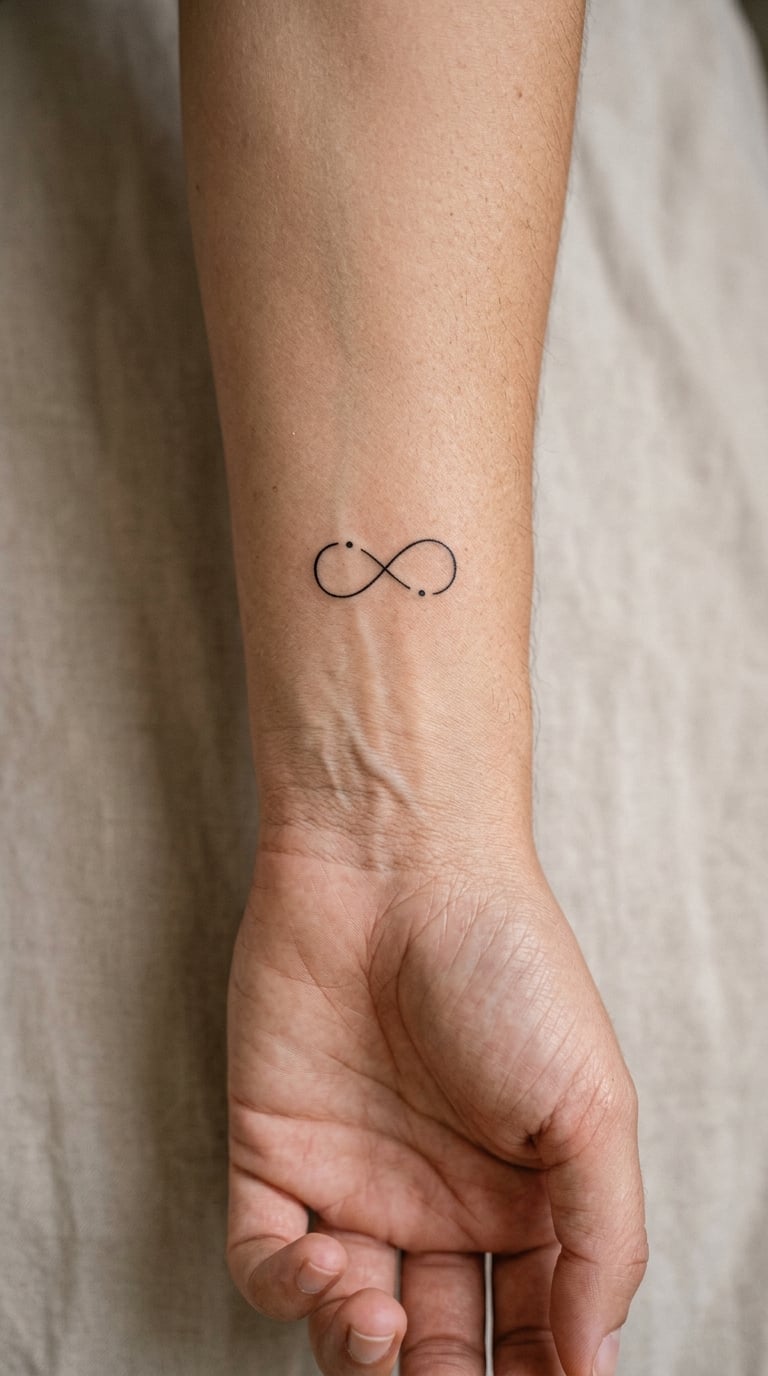
An infinity loop whose two ends begin as separate dots before flowing into one continuous line. That single alteration is what lifts it out of the standard infinity tattoo and gives it a reason to exist as a couples piece.
Two lives coming together is the usual reading, and most couples accept that without needing a more specific story attached.
Placement: wrist, ankle, behind the ear or inner forearm. Size: 1.5-2 in (4-5 cm) across. Style: fine line. Pain: low on the forearm and behind the ear, medium at the wrist crease.
Wrist and ankle placements fade fastest on this design because the lines curve sharply there. If the piece matters, go 0.5 in higher up the arm.
Make it yours: put a small date inside each loop, or label one dot with one destination and the other with the other.
9. Botanical Destination Bouquet
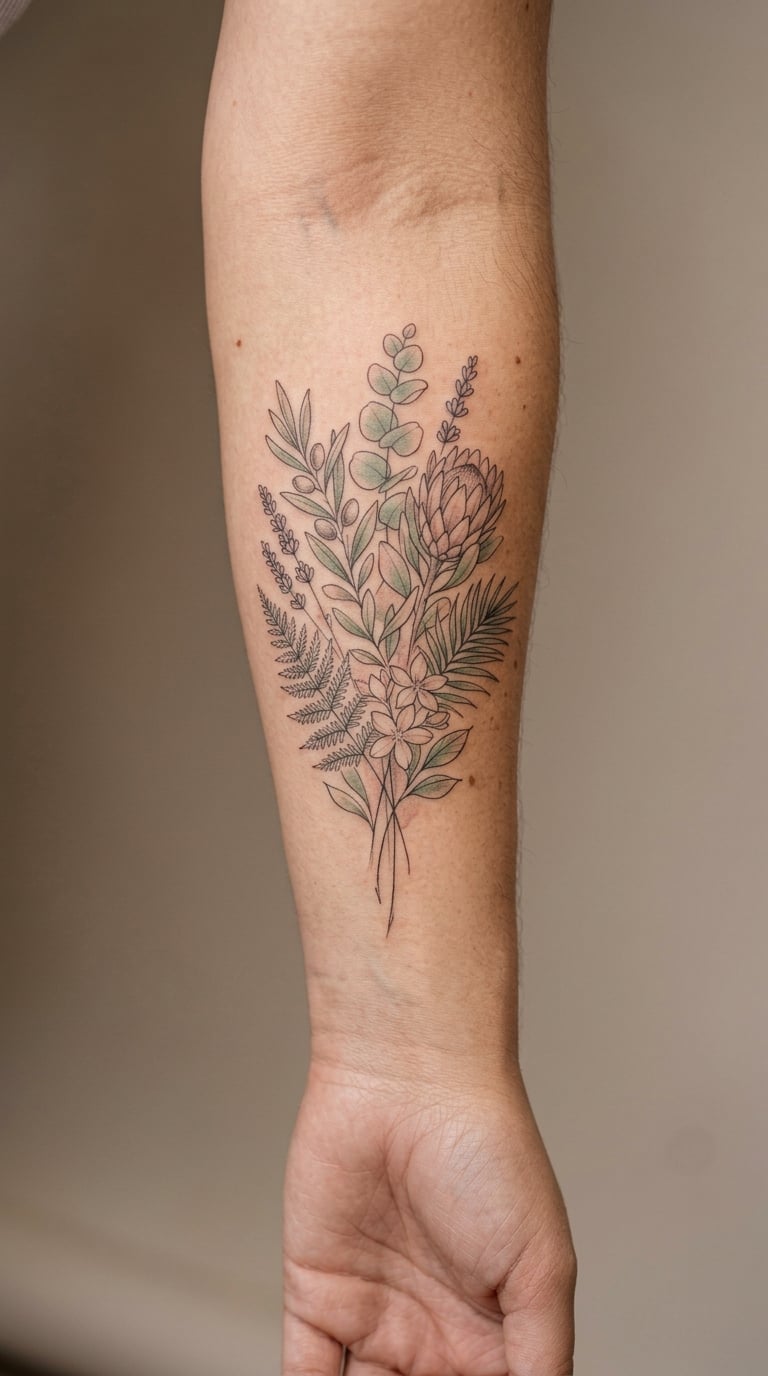
A tied bundle drawn in single-needle line, using the plants that actually grow where you went: frangipani, hibiscus, olive, lavender, protea. Muted green and a single blush wash on one flower keeps it from looking like a full-colour piece that has been shrunk down.
It takes the trip and turns it into a plant study rather than a souvenir, which ages far better than anything with a landmark in it.
Placement: inner forearm, calf, upper arm or ribs. Size: 3-4 in (8-10 cm) tall. Style: botanical fine line with light wash. Pain: low to medium across the arm and calf, higher on ribs.
Stems are the weak point. Hairline botanical lines on a forearm fade sooner than petals do, so keep stems a touch thicker than the reference sketch.
Make it yours: tie the bouquet with a thin coordinate string instead of a ribbon, or have the date curved along the wrap.
10. Blackwork Airplane Leaving a Heart
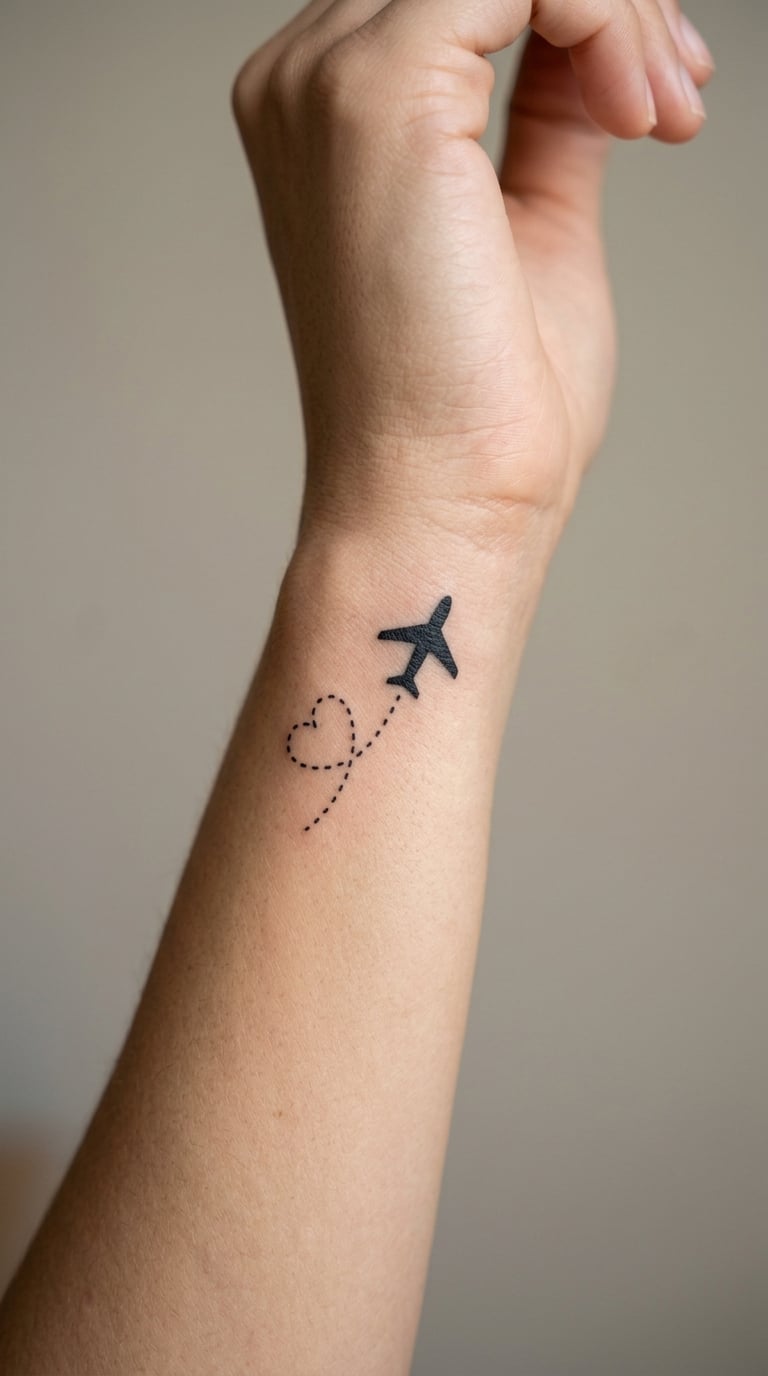
A solid-black plane in profile, a dotted trail of tapering dots behind it, and the dots gradually curving into a heart shape before the trail ends. The dots need spacing that accounts for how much they spread as they heal, otherwise the shape closes up too tightly.
People pick it for a first trip together, and it works as a first tattoo because it reads clearly at a small size without needing shading.
Placement: outer wrist, forearm, calf or shoulder. Size: 1.5-2 in (4-5 cm) long. Style: blackwork. Pain: medium, higher on the wrist than the forearm.
Small dot trails soften and merge within a few years, so the heart gets a little fuzzier and softer. That is normal and does not mean something went wrong.
Make it yours: add a three-letter airport code under the plane, or split the route so the trail leaves from your home city.
11. Roman Numeral Honeymoon Date
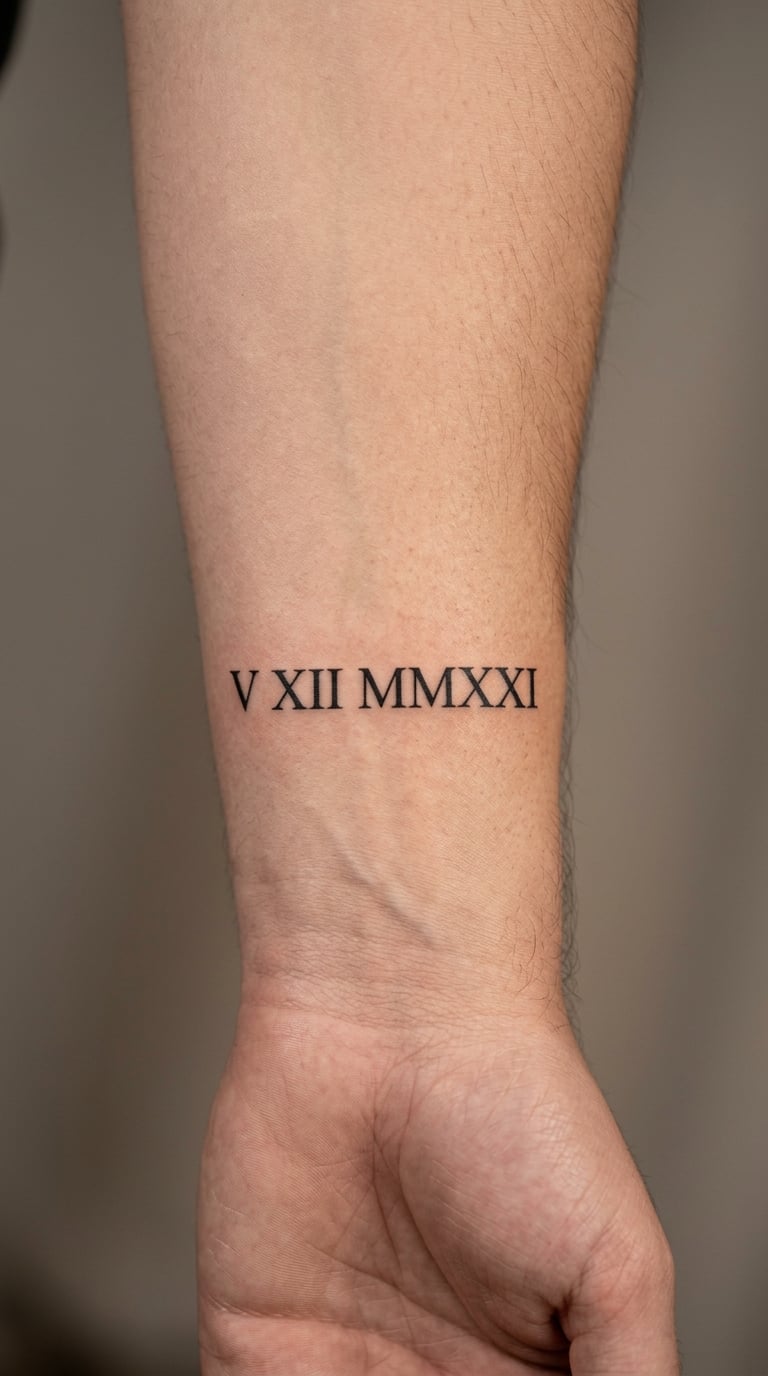
Strong classical lettering with even stroke weight, the numerals spaced generously so they do not crowd, and a serif or simplified roman face depending on how bold you want it. Date format is the detail people argue over: put the wedding or honeymoon date in the order your family reads it, and have the artist write it out once before tattooing.
Numerals carry no fixed meaning beyond the date itself, which is what makes them so easy to personalise.
Placement: inner forearm, inner upper arm, calf or ribs. Size: 2 in (5 cm) long for a date, up to 3 in for a date with initials. Style: lettering. Pain: low to medium, and ribs hurt considerably more.
Lettering holds up well on the forearm and poorly over joints. Keep the number clear of knuckles and wrist creases, where skin folds and the line breaks apart.
Make it yours: add a single destination initial in a matching weight beneath the date, small enough that the numeral still leads.
12. Traditional Rose with Travel Tag
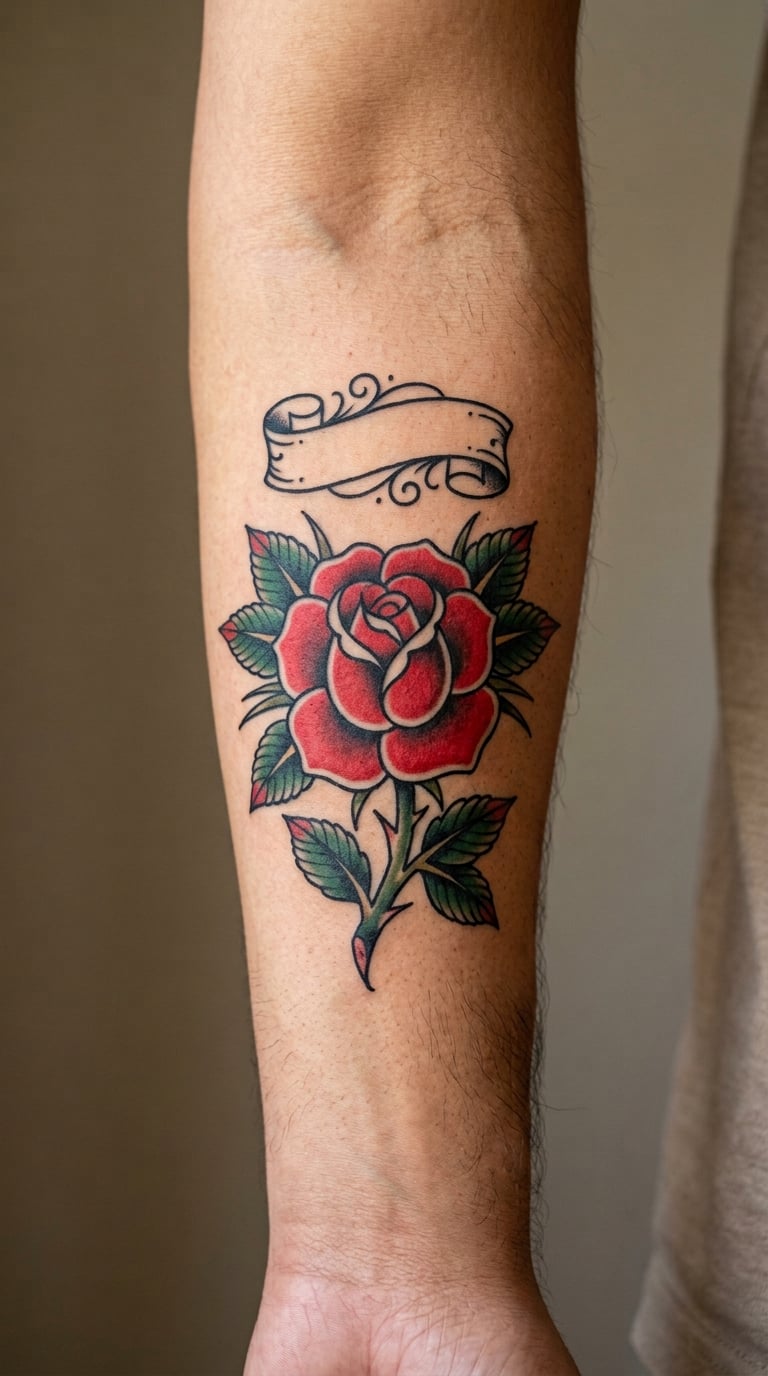
A bold red rose with green leaves in traditional American tattoo style: heavy black outline, even colour, yellow highlights on the petals. Beneath or beside it, a miniature luggage tag or banner carrying a short destination name in simple block lettering.
The rose is the oldest shorthand for love there is, and pairing it with a travel element anchors the design in the honeymoon rather than in a generic romance.
Placement: outer forearm, upper arm, calf or thigh. Size: 4 in (10 cm) tall. Style: traditional. Pain: medium on the arm and calf, high on the thigh and ribs.
Bright traditional red and yellow are among the first colours to soften. A bold outline survives the fade; the fill goes patchy first, and a touch-up in year two is common for this style.
Make it yours: put the date on the tag instead of the place name, and keep the banner lettering to one short word.
13. Wave and Rising Sun in Blackwork
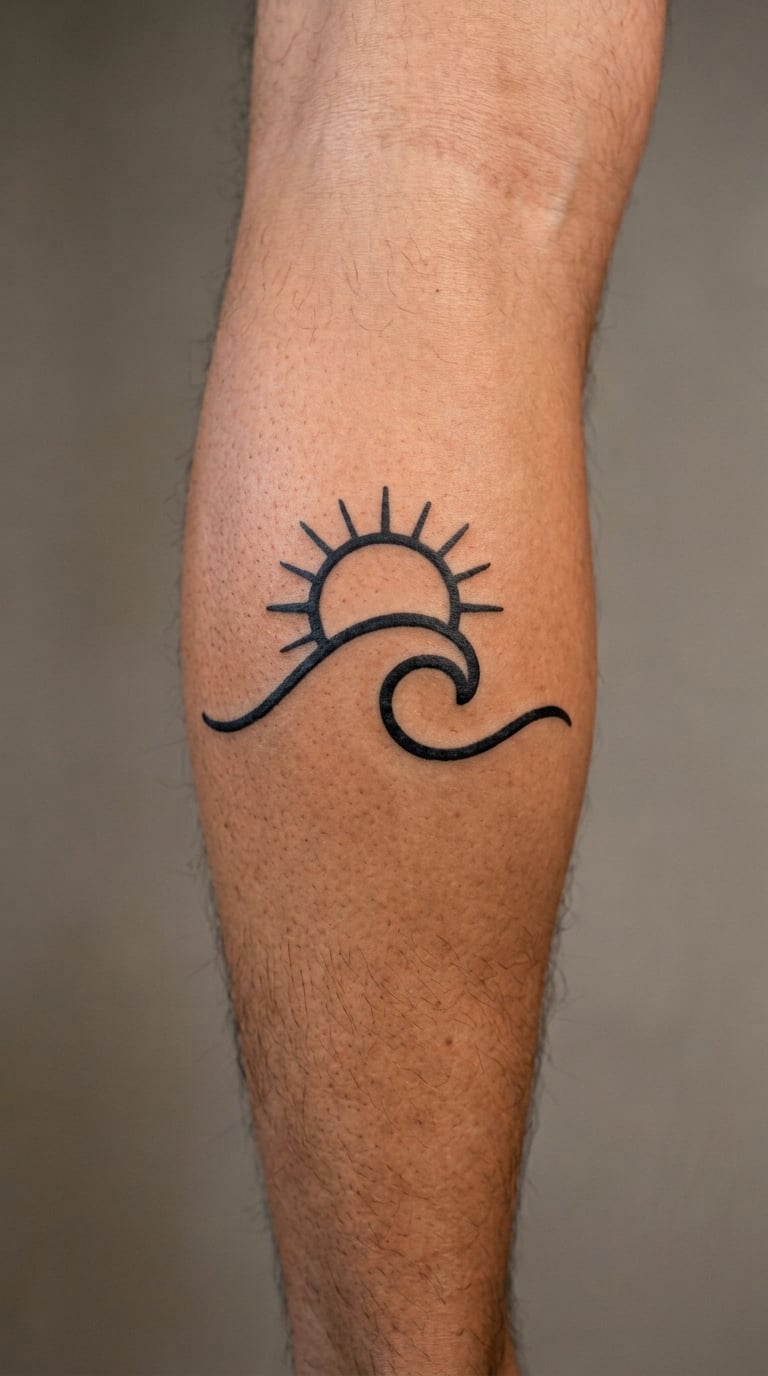
A clean black line that breaks into foam at the crest, curling over a half-risen sun with fine rays behind it. Solid fills on the sun and open line on the water give the design depth without shading gradients that would need redrawing later.
It suits beach, island and surf honeymoons, though people also use it for any trip where the sea was the centre of it.
Placement: calf, forearm, shoulder, ribs or lower abdomen. Size: 3-4 in (8-10 cm) wide. Style: blackwork. Pain: low to medium on the calf and shoulder, high on ribs and lower abdomen.
Black linework ages more gracefully than colour, so this is a good pick for someone who expects their first tattoo to still look deliberate at fifteen years. Expect the foam detail to soften first.
Make it yours: put the coordinates under the sun disc, or add one small solid star above it for a night-sky version.
14. Two Birds in Flight
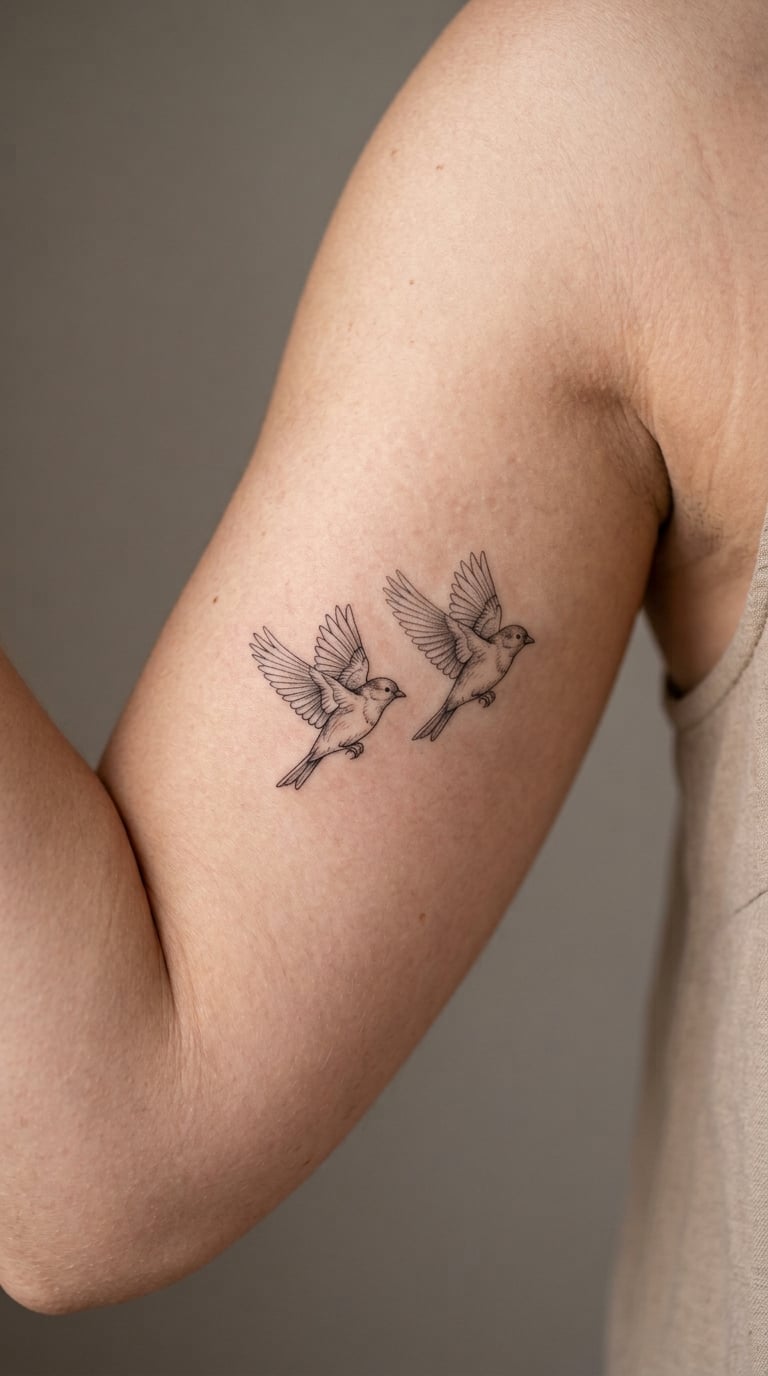
Two small birds in profile with wings raised, drawn in single-needle line and angled toward the same direction so they read as a pair rather than a chase. Two thin arcing lines trailing behind each bird make the movement legible at very small sizes.
Shared travel, companionship, heading the same way. Most couples give it their own private meaning, which is the right way to use any symbol.
Placement: inner upper arm, inner forearm, calf or shoulder. Size: 1.5-2 in (4-5 cm) for the pair. Style: fine line. Pain: low on the upper arm and calf, medium on the inner forearm.
Bird feathers are made of very fine detail, and that detail is the first casualty of a decade of sun and skin change. Simpler wing shapes hold their outline far longer than finely separated feathers.
Make it yours: tint both birds a single colour that matches one of the partner’s existing tattoos, or have one bird slightly larger than the other.
15. Coordinates Inside a Bracket
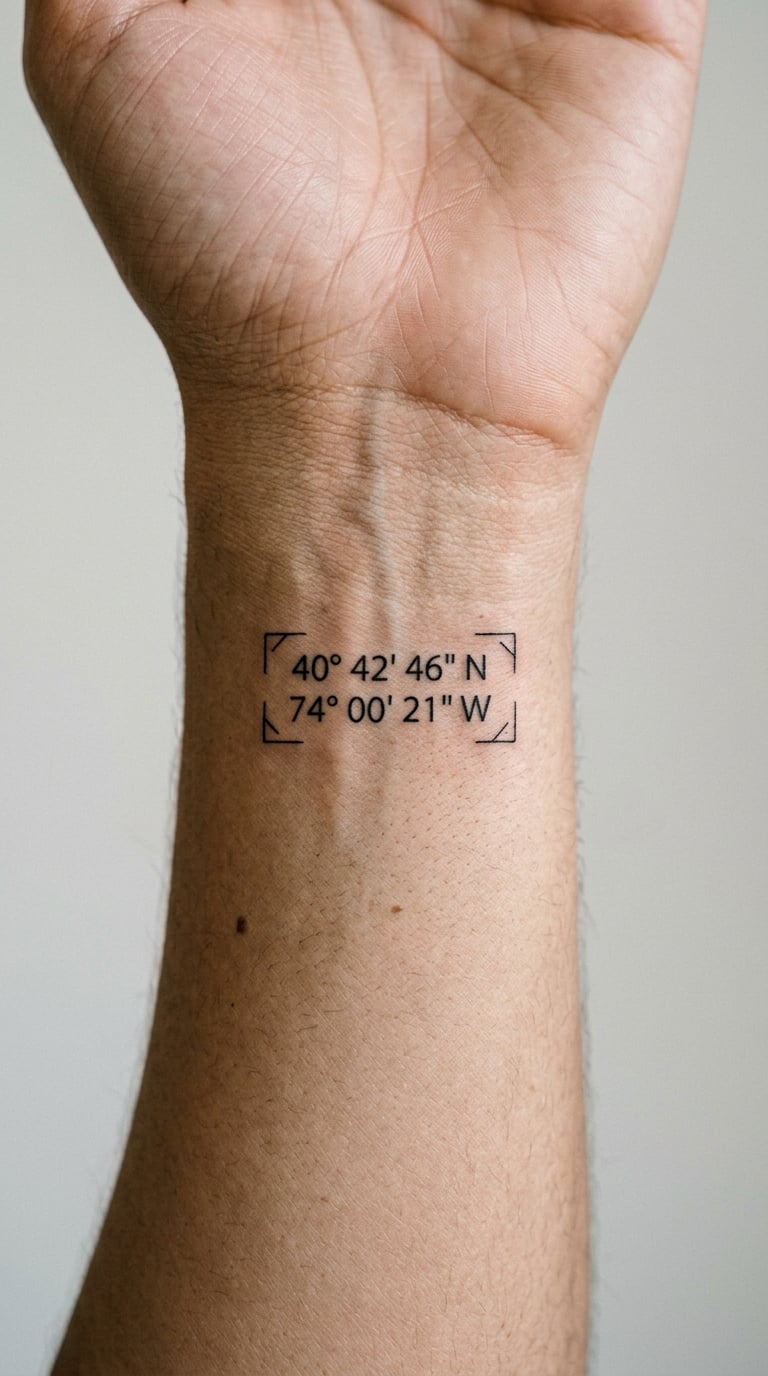
Latitude and longitude enclosed in minimal corner brackets or beside a small map pin, set in a clean geometric sans-serif. A short version with just two sets of numbers stays crisp; the longer version with degrees, minutes and seconds needs more width and more care.
It has a modern traveller look that works whether the couple visited a city, a mountain or an island, and it says very little to anyone who has not been there.
Placement: inner wrist, forearm, calf, upper arm or behind the ear. Size: 1-1.5 in (2.5-4 cm) wide. Style: fine line lettering. Pain: low on the forearm and behind the ear, medium at the wrist.
This is the number that blurs fastest on the list. Give your artist the decimal coordinates to work from, check them on two maps, and avoid anything under three-quarters of an inch across.
Make it yours: add the travel date in a smaller line beneath the brackets, and keep both sets in the same weight so neither competes.
16. Minimalist Mountain Peaks in Matching Ink
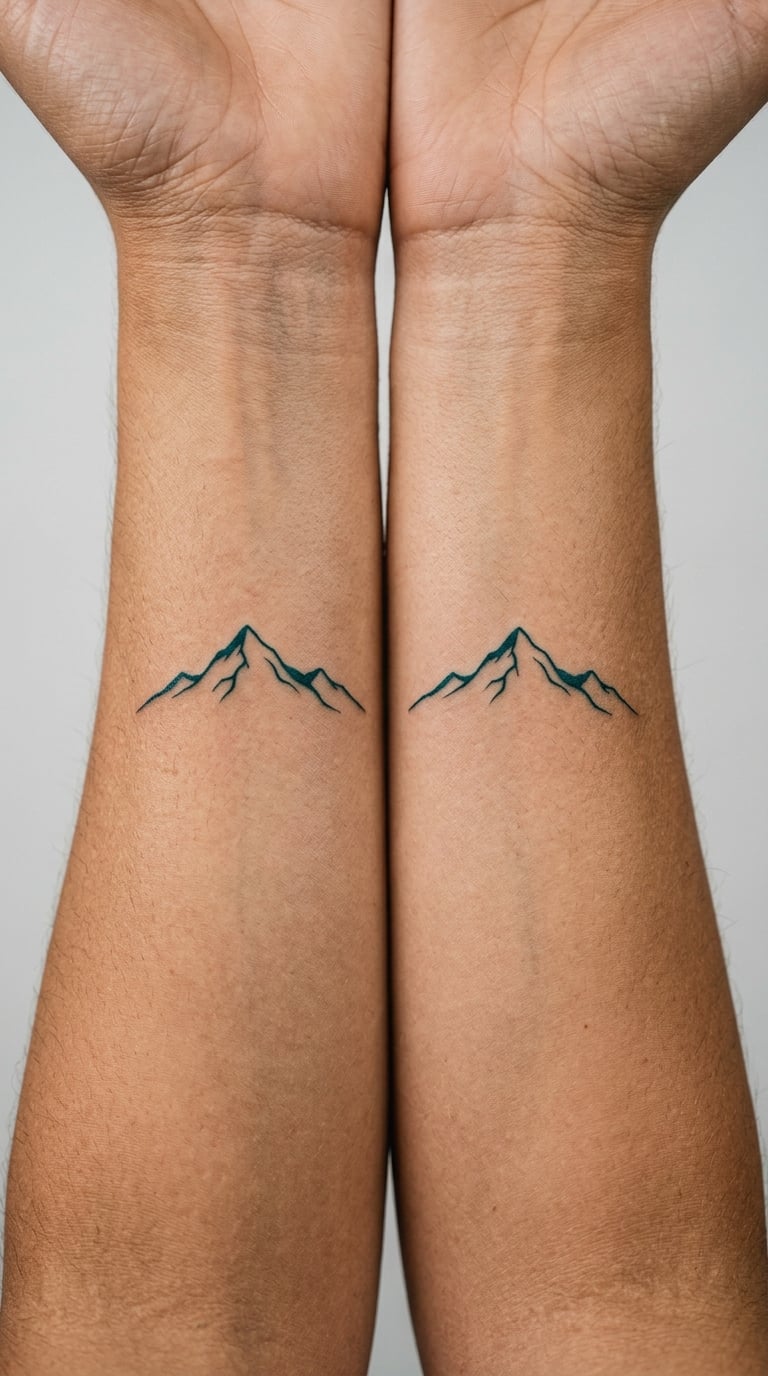
Two or three peaks drawn in one continuous line with a single ridge detail, each partner taking the same drawing at the same size in the same ink. A colour choice other than black, like dark teal or deep navy, is what separates it from a generic mountain tattoo.
It works for a destination range or for a shared milestone, and the drawing is simple enough that both versions can look identical without either feeling like a copy.
Placement: wrists, forearms, calves, ankles or upper arms. Size: 1.5-2 in (4-5 cm) wide. Style: one-needle line. Pain: low on the forearm and calf, medium on wrists and ankles.
Hands and feet wear ink away. On ankles and wrists the peaks lose their apex within a few years, so place them on the forearm or calf if the outline is the point.
Make it yours: give each partner the same drawing in a different single ink colour, and hold one session for both so the lines match in weight.
17. Micro-Realistic Cocktail with Two Straws
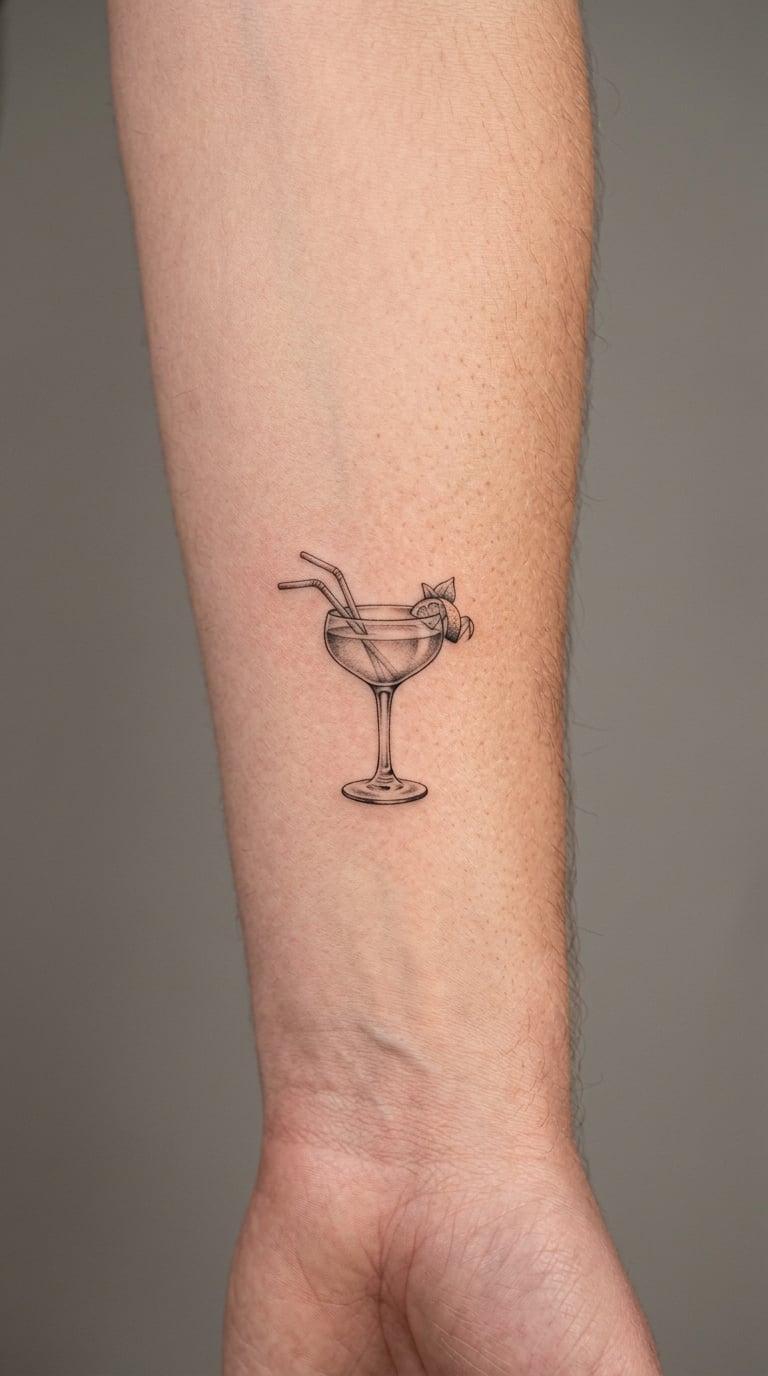
A coupe or tumbler drawn in black-and-grey micro-realism, two thin straws bent at different angles, and one small orange or lime wedge as the only colour. The two straws are the whole idea, so they get more line weight than the glass.
Couples choose it for a specific drink on a specific evening rather than for the drink itself. It is a fun design to explain, which is unusual in this category.
Placement: inner forearm, calf, thigh, shoulder or ribs. Size: 1-1.5 in (2.5-4 cm) tall. Style: micro-realism with one colour accent. Pain: medium, and longer sessions on the thigh or ribs.
At this scale the glass rim and the citrus texture are the weak points. A slightly bolder outline and a simpler garnish will look sharper in five years than a highly rendered one.
Make it yours: add the date under the glass, or a single letter from the venue’s name in tiny script on the base.
18. Pearl-Detail Pomegranate
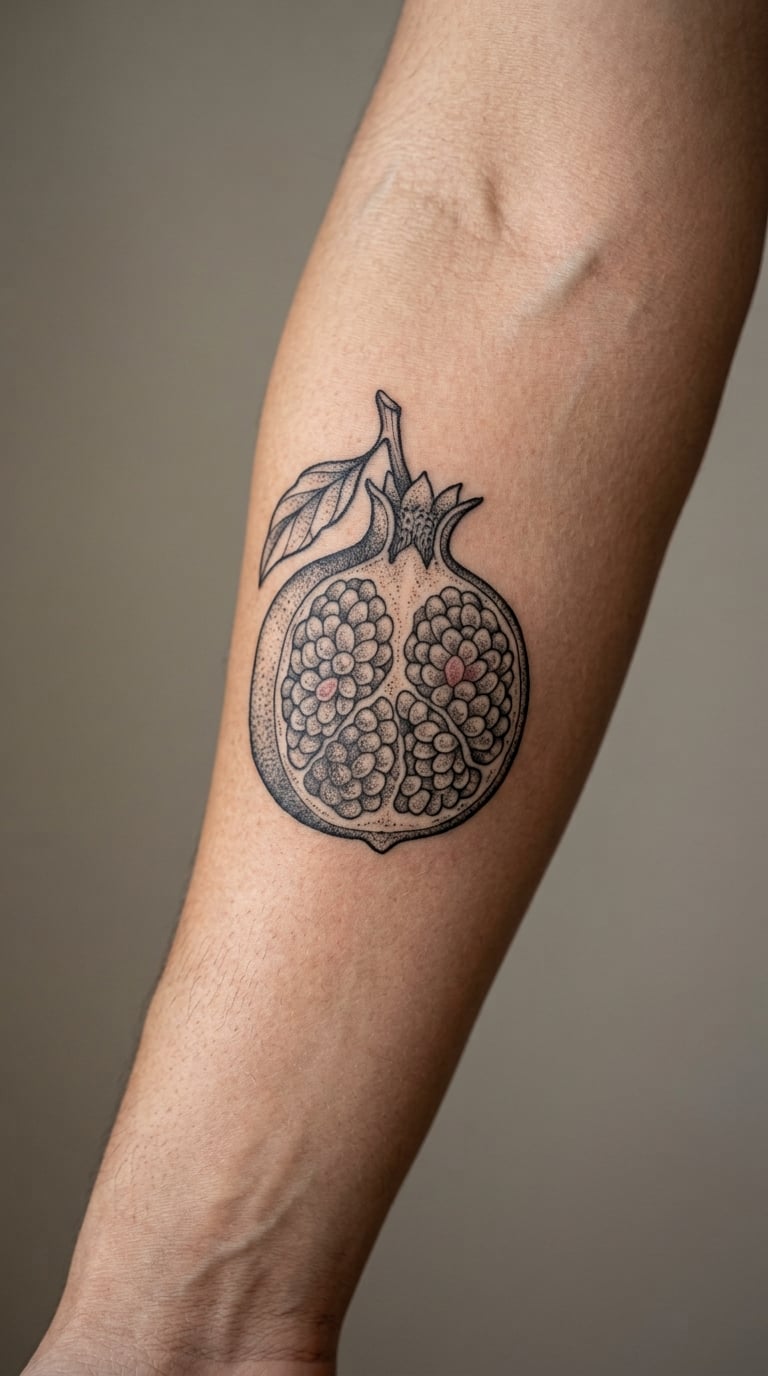
A pomegranate built from fine black outlines with pearl grey shading, clustered seeds visible inside the cut half, and one muted red seed left as the single colour note. The pearl-grey technique is a shaded dot in a light tone rather than a flat grey, which gives the fruit volume.
It is a romantic design with unusual balance: heavy on one side, open on the other, and it holds its shape at a distance.
Placement: forearm, calf, thigh, upper arm or ribs. Size: 3-4 in (8-10 cm). Style: botanical with pearl shading. Pain: low to medium on the limbs, medium to high on ribs and thigh.
Light grey shading fades faster than black line, so the fruit can lose some of its softness while the outline stays sharp. That contrast actually ages quite well.
Make it yours: place the wedding or travel date inside the pomegranate’s open half, curved to follow the fruit.
19. Fine-Line Moonlit Honeymoon Cabin
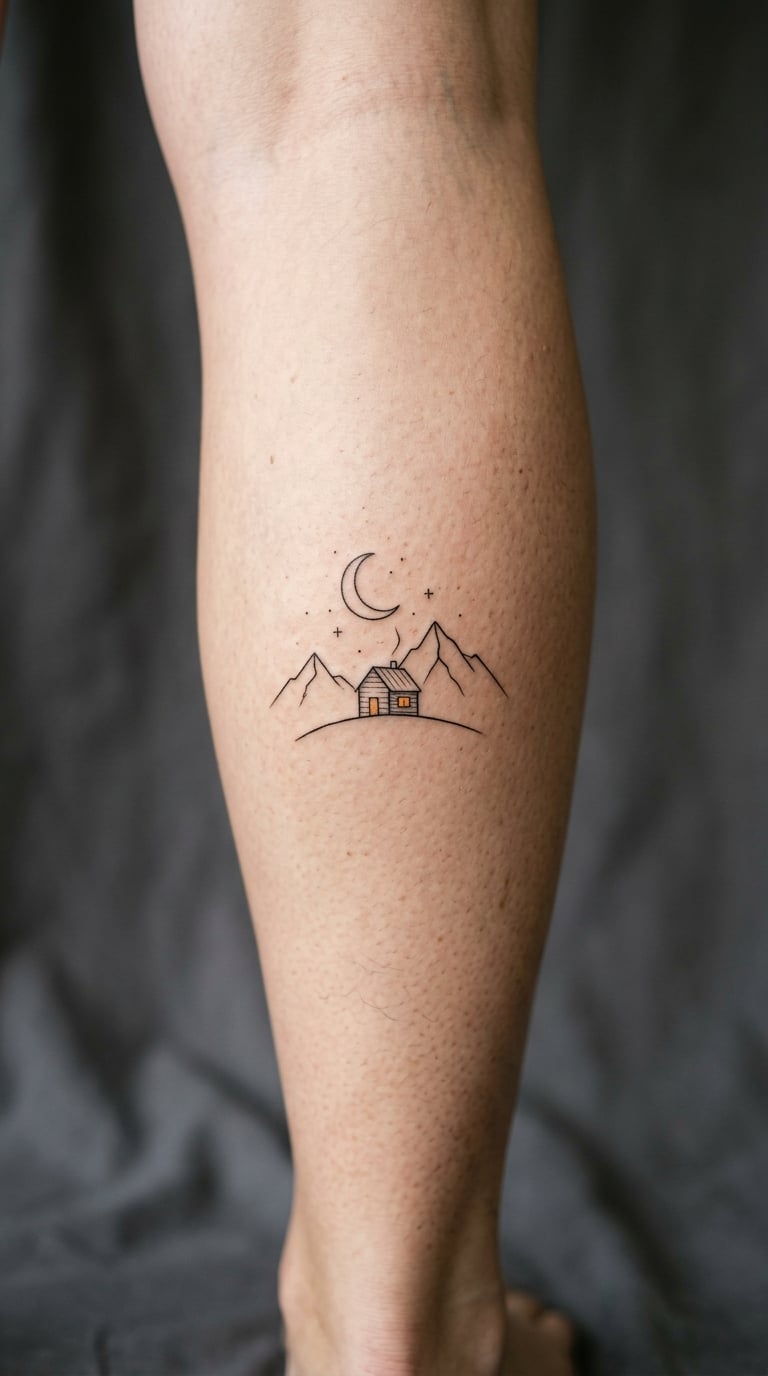
A crescent moon in single-needle line above a small cabin with a lit window, snow line and two simple peaks behind it. The lit window is usually the only solid black shape in the composition, and that one point of contrast does all the work.
It suits mountain, woodland and winter honeymoons, and it also works as a plain cabin for anyone who went somewhere cold and quiet.
Placement: calf, forearm, upper arm or ribs. Size: 3 in (7 cm) wide. Style: fine line with one solid fill. Pain: low on the calf and forearm, medium on the upper arm, higher on ribs.
Interior details like window frames and door lines blur over time, while the moon and the roofline keep their shape. Plan the design so those two elements carry the picture if the small parts go soft.
Make it yours: add your coordinates beneath the roofline, or have the cabin replaced with a shape from your own destination.
20. Abstract Route and Heart in Blackwork
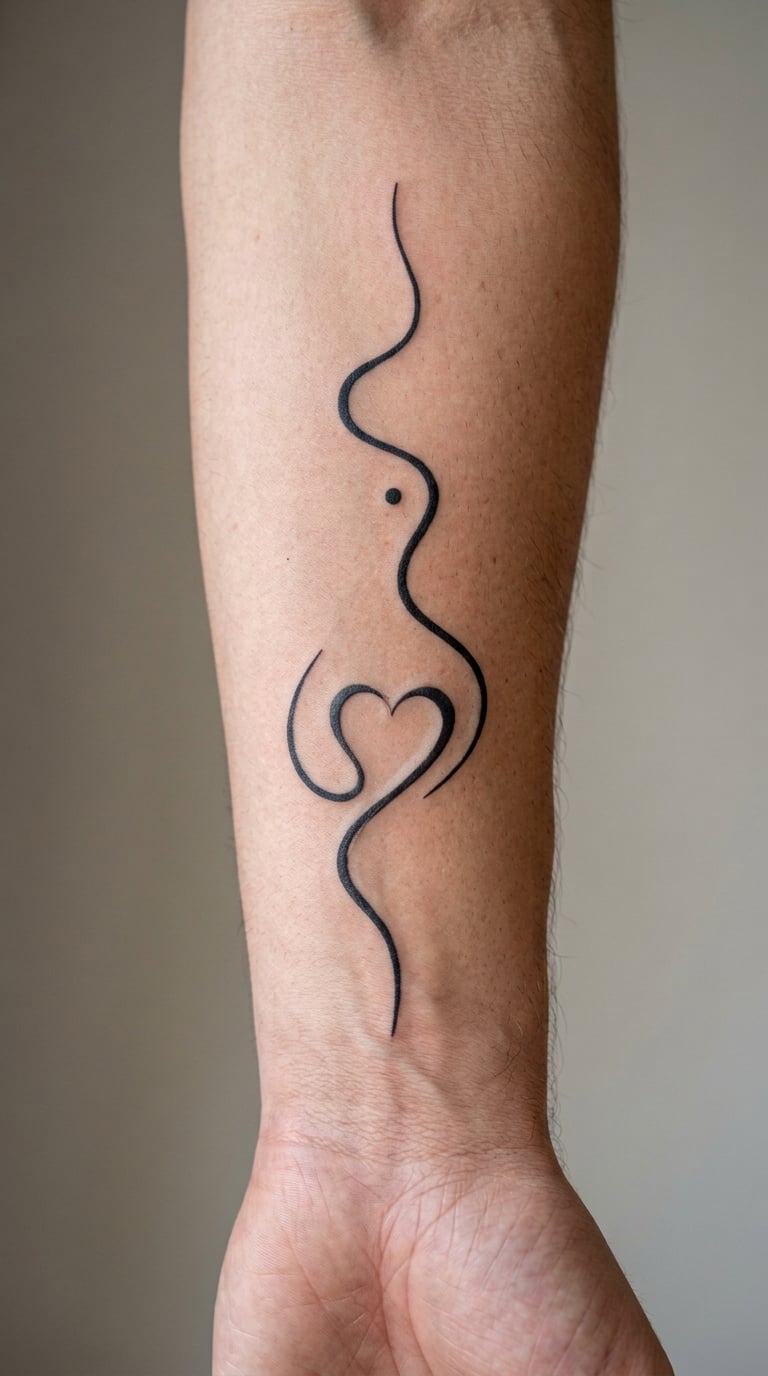
A winding solid-black route running across the placement, one circular location dot, and a heart held in the negative space between two bends of the route. Because the heart is the skin showing through, it changes shape slightly as the body changes over the years.
It is the option for people who find literal hearts and roses too much. The travel reference stays, the romance is implied.
Placement: forearm, calf, shoulder, thigh or ribs. Size: 4 in (10 cm) long. Style: abstract blackwork. Pain: medium on the arm and calf, high on ribs and thigh.
Solid black fills last well, but a negative-space heart loses definition as skin softens or stretches. A tattooist can build the heart from a black outline instead if you want it to hold for good.
Make it yours: use the actual route of your trip, and add one muted colour in the location dot to pick out a detail from the destination.
How to Choose the Right Design
Most regret in this category comes down to the same three things: a design too detailed for the size, a placement that fights with daily life, and a symbol that meant more in the moment than it does now. Work through these five checks before you commit to anything.
- Style first. Fine line, blackwork, watercolor and traditional age very differently. If the idea is longevity, blackwork and bold traditional linework hold up best.
- One anchor detail beats five. A single date, a single dot or a single set of coordinates reads better and lasts longer than a composition with five things happening in it.
- Size to the detail, not to the spot. Anything with lettering, micro-shading or faces needs more than a centimetre across to survive. Under three-quarters of an inch, keep it to shapes only.
- Placement against your actual week. Inner wrists, ankles and ring fingers rub against clothing, shoes and bed linen. Inner forearms, outer arms and calves take wear far better.
- Matching or complementary. Matching tattoos work best at small sizes in the same style; complementary designs give each partner a different piece that shares a palette, a line weight or one element.
Bring reference images, and more of them than you think you need. A tattooist reads a folder of thirty pictures faster than three, and the ones you bring say a lot about what you actually want.
If you are travelling to get inked, send the design to the artist in advance and ask about the consultation before you fly, including whether the piece needs a second sitting to be finished properly.
Cost and Session Time
Tattoo pricing works on an hourly base, and a few variables move a quote more than anything else. Knowing which ones matter lets you decide where to spend and where to save.
- Micro and single-line pieces take minutes, so many shops apply a minimum charge for any session. Hourly rates in the United States typically run from the low hundreds in smaller towns to well above two hundred in major cities.
- Small designs, 2-3 in (5-7 cm) with light shading usually take an hour to an hour and a half, depending on line weight and how many sessions the artist thinks it needs.
- Medium and detailed work, 4 in (10 cm) and up with pearl shading or fine linework often takes two to four hours, and a good artist will split that across two sittings rather than rush it.
- Colour and custom detail complexity add time. Watercolor, a custom map route and micro-realism are all slower than solid black linework.
Shop minimums, city, artist experience, travel to the studio, whether the two of you book back to back, and how many sessions the design needs all feed into the final figure. Ask for the total before you sit down, not after.
Aftercare Basics
Follow your artist’s aftercare instructions first. Everything below is general, and their guidance for your specific piece beats any list.
- Wash the area gently with clean lukewarm water and unscented soap as directed, then pat it dry rather than rubbing.
- Avoid creams, lotions, oils and heavy products on the fresh tattoo until your artist says the skin is ready for them.
- Keep the piece covered loosely where they advise, and skip tight clothing or luggage straps pressing on it during travel.
- Do not pick, scratch or peel anything. If a scab lifts on its own, let it go.
- Monitor how it looks and how it feels through the healing period, and contact your artist, or a healthcare professional if something concerns you, rather than treating advice you find online as a diagnosis.
Sun, salt water and swimming are the three things couples most often plan around on a honeymoon. Keep new ink out of direct sun, ask your artist about timing before you go in the sea, and expect to reschedule the beach day rather than the ink.
Frequently Asked Questions
Should honeymoon tattoos be identical or different?
Both work. Identical matching tattoos suit couples who want the design itself to be the shared element, and they are easiest to keep visually consistent when both are small and done in the same style. Complementary designs, where each partner gets something different but connected, suit people who like the idea of a pair without the look of a uniform. Shared style, shared ink colour or one repeated element are the usual connectors. Couples who go complementary should agree on size and line weight so the two pieces still read as related.
What is the best placement for a small honeymoon tattoo?
The inner forearm is the easiest place to read a small design cleanly, wears well, and can be hidden at work. The outer upper arm and the calf are also forgiving. Wrist, ankle and ring finger placements look good but wear against clothing, shoes and bed linen, so fine detail fades there first. Behind the ear suits very small symbols and stays out of the way. Whatever you choose, look at your own daily routine rather than only at photos of other people with tattoos.
Do fine-line honeymoon tattoos fade quickly?
Faster than most styles, yes. Single-needle linework is thin by definition, and fine lines on hands, wrists and ankles take the longest to hold. Fading is also affected by sun exposure, swimming, and how often the area rubs against fabric. Ask your artist to run a slightly heavier line than the reference photo looks like it needs, keep the piece off the sun while it heals, and plan on a touch-up in the first year. Blackwork and bold traditional lines are the longer-lasting alternatives.
Can I use honeymoon coordinates in a tattoo?
Yes, and they are one of the most personal options available. Check the coordinates on two separate map services before you commit, and decide early whether you want the short decimal version or the longer degrees, minutes and seconds format. The long version needs more width and finer lettering, so give it at least an inch across. Tiny coordinate sets are the single most common choice that blurs within a few years, so scale up rather than squeezing them in.
How much does a personalised honeymoon tattoo cost?
Most studios charge by the hour, and a small fine-line piece may take under an hour while a detailed medium design runs two to four. Many shops apply a minimum to short sessions, so the smallest work is not always the cheapest. Custom work, watercolour and micro-realism all add time, and hourly rates vary widely by city and artist experience. Ask for the full estimate, including any second session, before you sit down, and check whether touch-ups within a set period are included.
Conclusion
If you are getting one tattoo and you want it quiet, the coordinates in brackets or the fine-line infinity with two origins are the easiest to live with and the easiest to hide at work. They are the safest picks on any list of honeymoon tattoo ideas when the goal is a private story rather than a public one.
If you are building a collection, or you want the trip to be the first thing an artist sees when they look at your arm, the blackwork route with a heart in the negative space or the botanical destination bouquet gives you something with more weight and better longevity.
Whichever one you pick, decide the artist first, then the placement, then the final size. The novelty of the honeymoon will fade on its own schedule, and the tattoo should not be designed around it.