
20 Matching Tattoo Ideas for a Group of Five: Best September 2026
Matching tattoo ideas for a group of five work best when the group agrees on one shared design language rather than five identical copies. Everyone picks a piece of the same composition, or the same motif drawn at a size that suits their own placement, and the set still reads as a set when you are all in the same room.
That is the part nobody warns you about. A design that sings on a forearm can look like a scribble on a rib, and identical tattoos on five different bodies rarely look coordinated side by side. The ideas below are built so each person gets real variation in size, style and spot while the group keeps a shared thread.
Matching Tattoo Ideas for a Group of Five: Quick Guide
| Idea | Style | Best placement | Size | Pain |
|---|---|---|---|---|
| 1. Fine-line botanical sprigs | Fine line, one accent | Inner forearm, wrist, behind the ear | 1.5-2.5 in | Low to medium |
| 2. Five-petaled micro flowers | Fine line, pastel centre | Outer wrist, ankle, collarbone | 0.75-1.5 in | Low to medium |
| 3. Connected star constellations | Fine line, dotwork | Inner arm, rib, shoulder, thigh | 2.5-4 in | Medium |
| 4. Birth star maps | Minimal dotwork | Forearm, rib, upper arm | 3-5 in | Medium |
| 5. Minimal wave lines | Fine line, pale blue accent | Wrist, ankle, forearm, rib | 2-3 in | Low to medium |
| 6. Layered mountain ranges | Fine contour or black and grey | Forearm, upper arm, calf, rib | 3-5 in | Medium |
| 7. Radiant sun motifs | Bold black line, yellow accent | Shoulder, upper arm, calf, ankle | 2.5-4 in | Low to medium |
| 8. Moon phase sequences | Black and grey, lavender accent | Inner arm, rib, upper arm, thigh | 2.5-4 in | Medium |
| 9. Heartbeat line segments | Fine line, one red peak | Wrist, forearm, rib, collarbone | 2-3.5 in | Low to medium |
| 10. Geometric knot panels | Fine line blackwork | Forearm, thigh, calf, upper arm | 3-4.5 in | Medium |
| 11. Initial letter tiles | Typography fine line | Wrist, forearm, ankle, behind the ear | 1-1.5 in | Low to medium |
| 12. Laurel half-moons | Black and grey shading | Forearm, upper arm, shoulder, rib | 3.5-5 in | Medium |
| 13. Cherry blossom branches | Fine line, soft grey | Forearm, calf, upper arm, rib | 2.5-4 in | Medium |
| 14. Simple daisy heads | Clean line, yellow centre | Wrist, ankle, forearm, knee | 1-2 in | Low to medium |
| 15. Graphic lightning bolts | Bold blackwork or fine line | Forearm, upper arm, calf, behind the ear | 2-4 in | Low to medium |
| 16. Paper planes with flight trails | Fine line, pale blue dots | Inner forearm, wrist, ankle, rib | 1.5-3 in | Low to medium |
| 17. Turtle shell segments | Symmetrical line, grey stippling | Upper arm, forearm, thigh, calf | 2.5-4 in | Medium |
| 18. Minimal arrow paths | Fine line blackwork | Forearm, wrist, calf, rib | 1.5-3 in | Low to medium |
| 19. Hummingbird silhouettes | Solid black, one accent | Forearm, upper arm, calf, rib | 2.5-4 in | Medium |
| 20. Interlocking puzzle emblems | Bold contour, grey fill | Wrist, forearm, ankle, upper arm | 1.5-3 in | Low to medium |
1. Fine-Line Botanical Sprigs
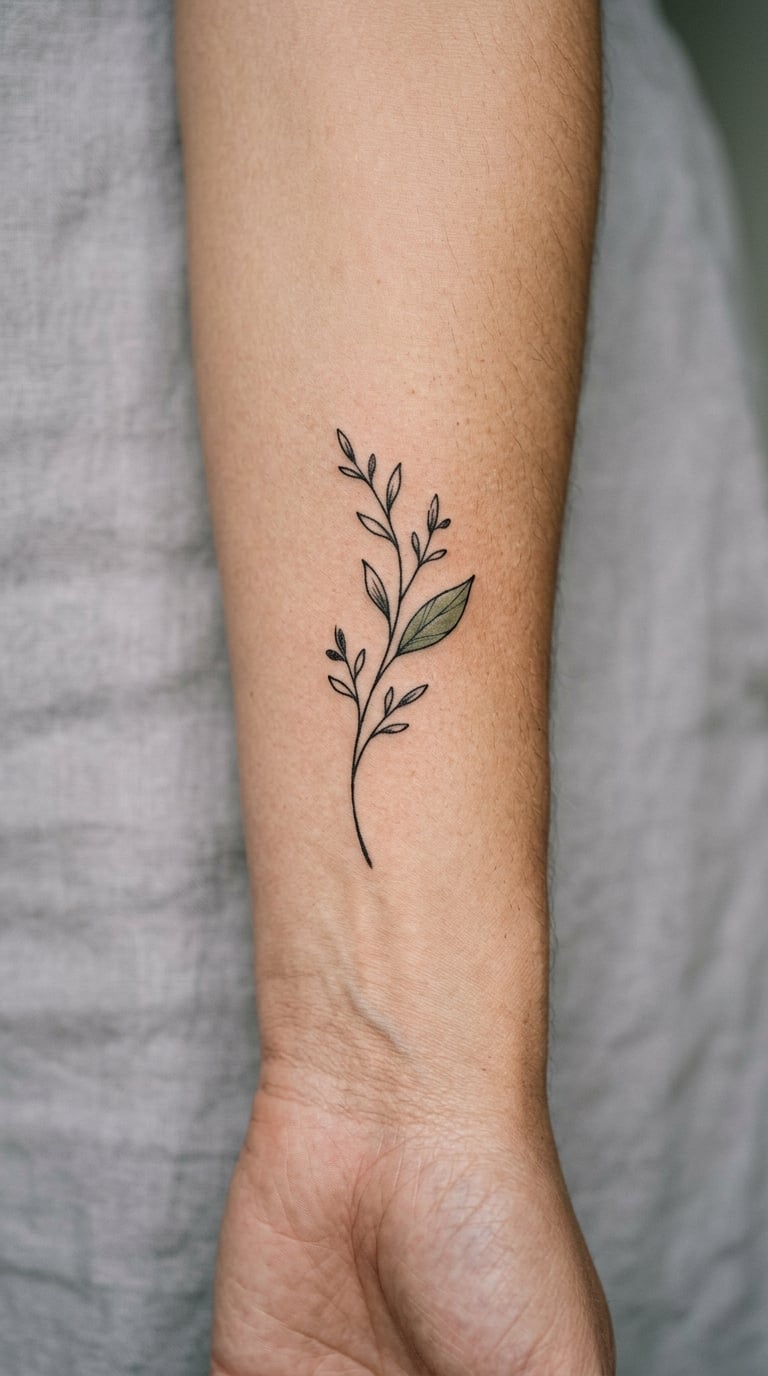
A botanical set is the easiest way to give five people a matching tattoo that does not look copied. Everyone gets the same drawing style, one thin stem and two or three leaves, while the plant changes. Many groups pick something native to a shared place, or a plant one member grew up around.
Placement: inner forearm, wrist, behind the ear, or the side of a rib. Size: 1.5 to 2.5 inches (4 to 6 cm) so the leaf veins still read. Style: fine line with an optional single-colour fill on one leaf.
Pain: low to medium, and fine hairlines on the inner arm soften over the years, especially with sun exposure. Make it yours: add a tiny date below the stem, or let all five share one green accent.
2. Five-Petaled Micro Flowers
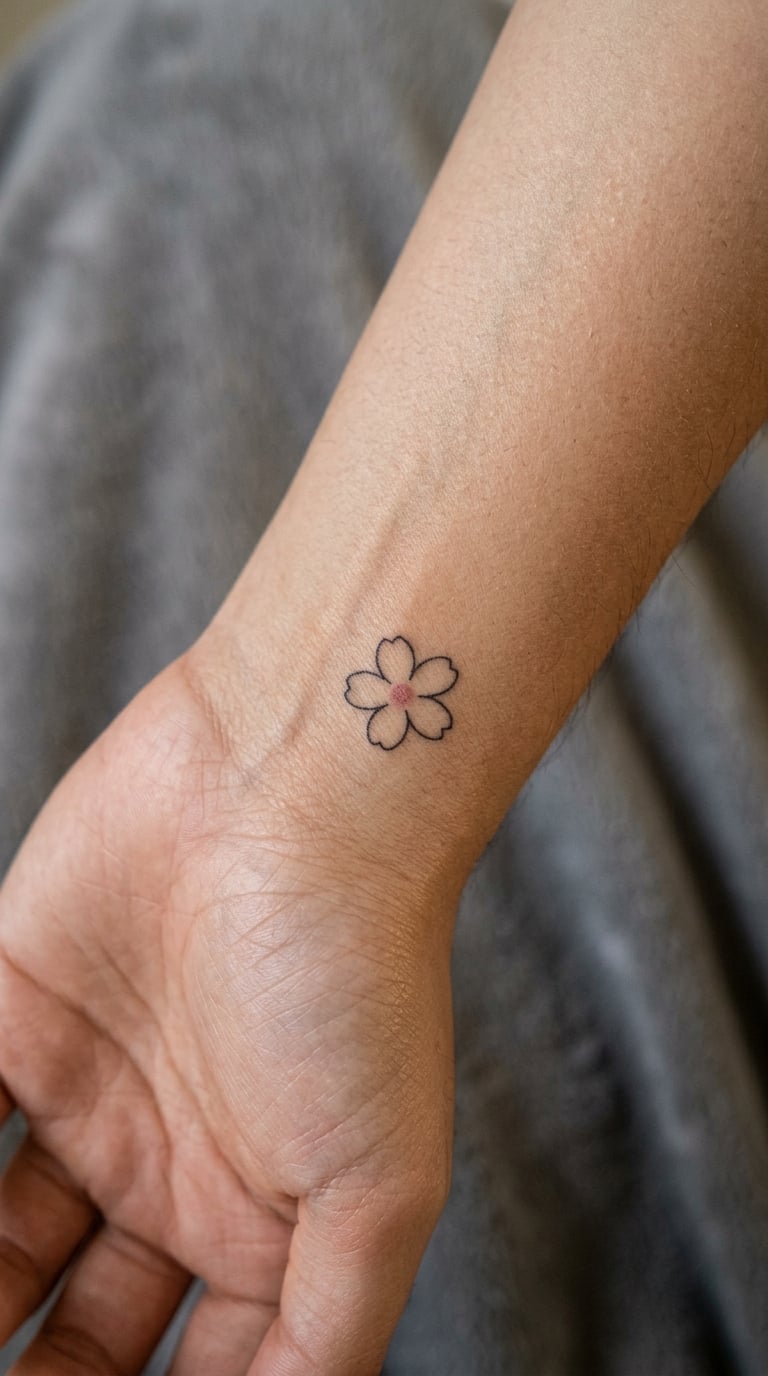
Five petals, five people. The structure stays identical on every tattoo while the flower, the centre colour and the scale change. The shape has to stay simple, because anything more complicated turns to mush once it is under an inch.
Placement: outer wrist, ankle, collarbone, or behind the ear. Size: 0.75 to 1.5 inches (2 to 4 cm). Style: clean black linework with an optional pastel or single-colour centre.
Pain: low to medium. Very thin petal lines can blur with age, so your artist should pick a line weight that still reads in ten years. Make it yours: match birth-month flowers, or give each person a different centre colour on the same frame.
3. Connected Star Constellations
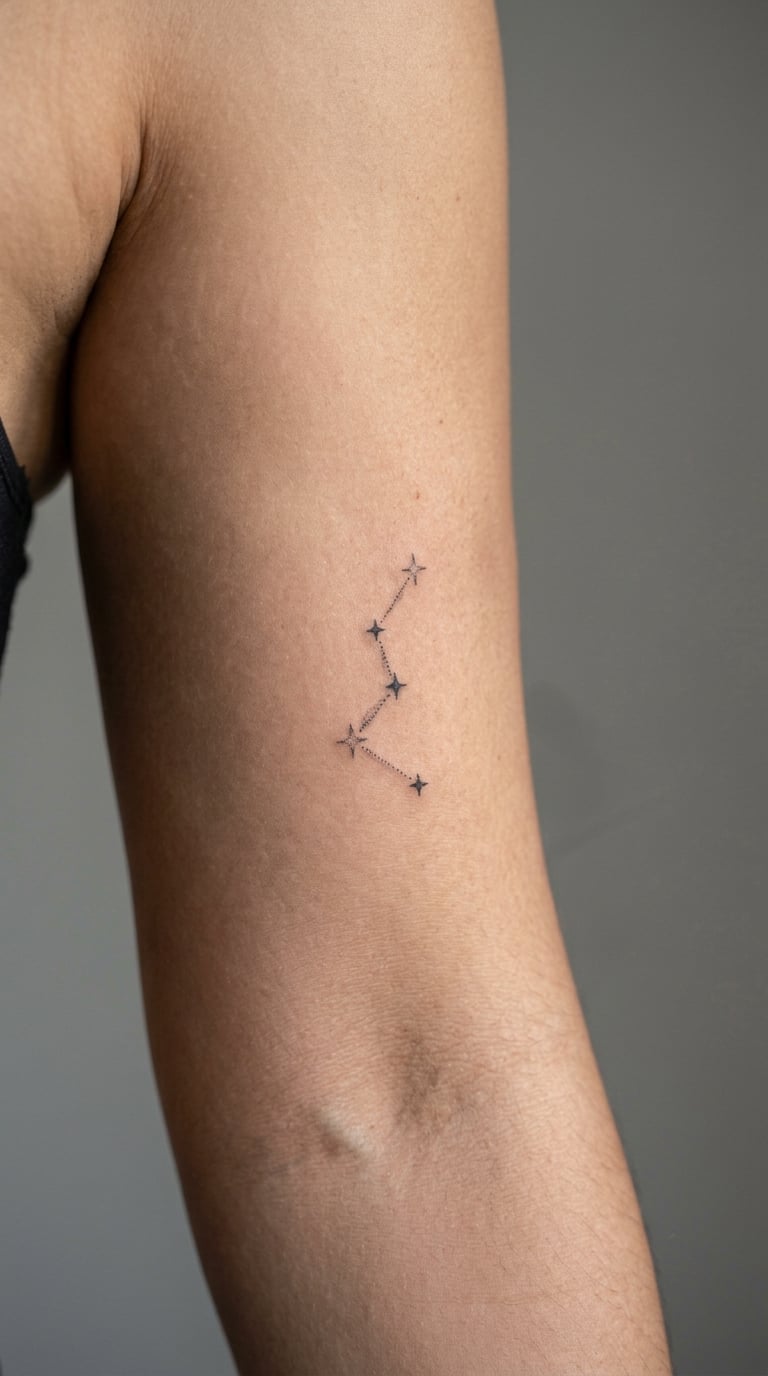
Each person takes one star pattern from the same shared style: fine black stars of similar weight, connected by hairlines, with optional dotwork behind. Pick stars you have actually looked at rather than a set an artist chooses for looks.
Constellations suit a group well because nobody can tell at a glance which one you picked, and asking becomes half the fun.
Placement: inner arm, rib, shoulder, or thigh, depending on star count. Size: 2.5 to 4 inches (6 to 10 cm). Style: fine line, restrained black, or metallic ink for the smallest stars.
Pain: medium. Tiny dots and hairlines need stable healing, so follow the aftercare closely. Make it yours: add the date you all met beneath the star field, or give the set one shared accent star that appears in every piece.
4. Birth Star Maps
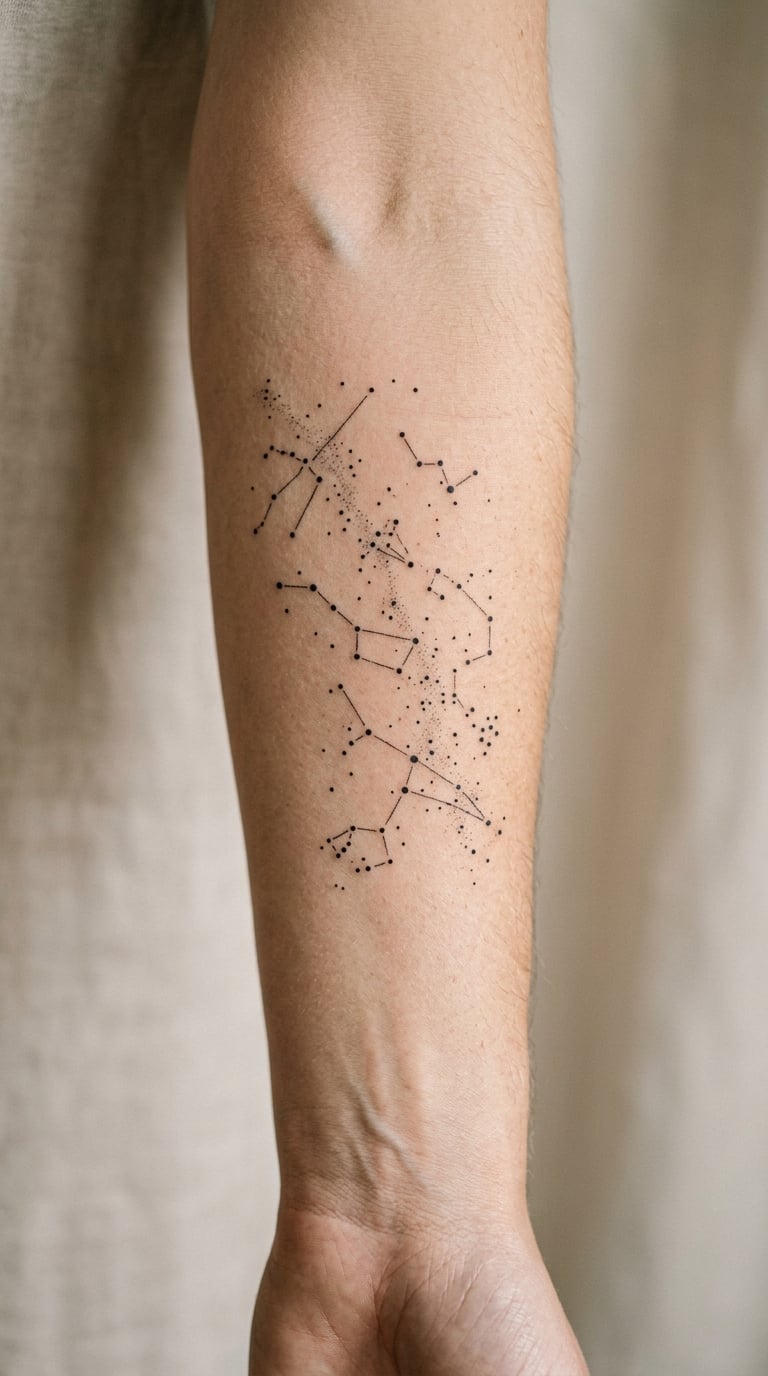
A star map set gives every person a genuinely different drawing inside an identical system. Everyone gets the same scale, dot size and line weight, and then their own sky arrangement goes inside that frame. Simplified versions read better than full charts, which just look like a smudge at tattoo size.
Placement: forearm, rib, upper arm or thigh. Size: 3 to 5 inches (8 to 13 cm) so the dots do not merge. Style: minimal dotwork, mostly black.
Pain: medium. Ultra-fine dots can lose definition over time, which is normal. Make it yours: include birth coordinates or a birth date in small text beneath the map, or mark one shared star that means the same thing to all five.
5. Minimal Wave Lines
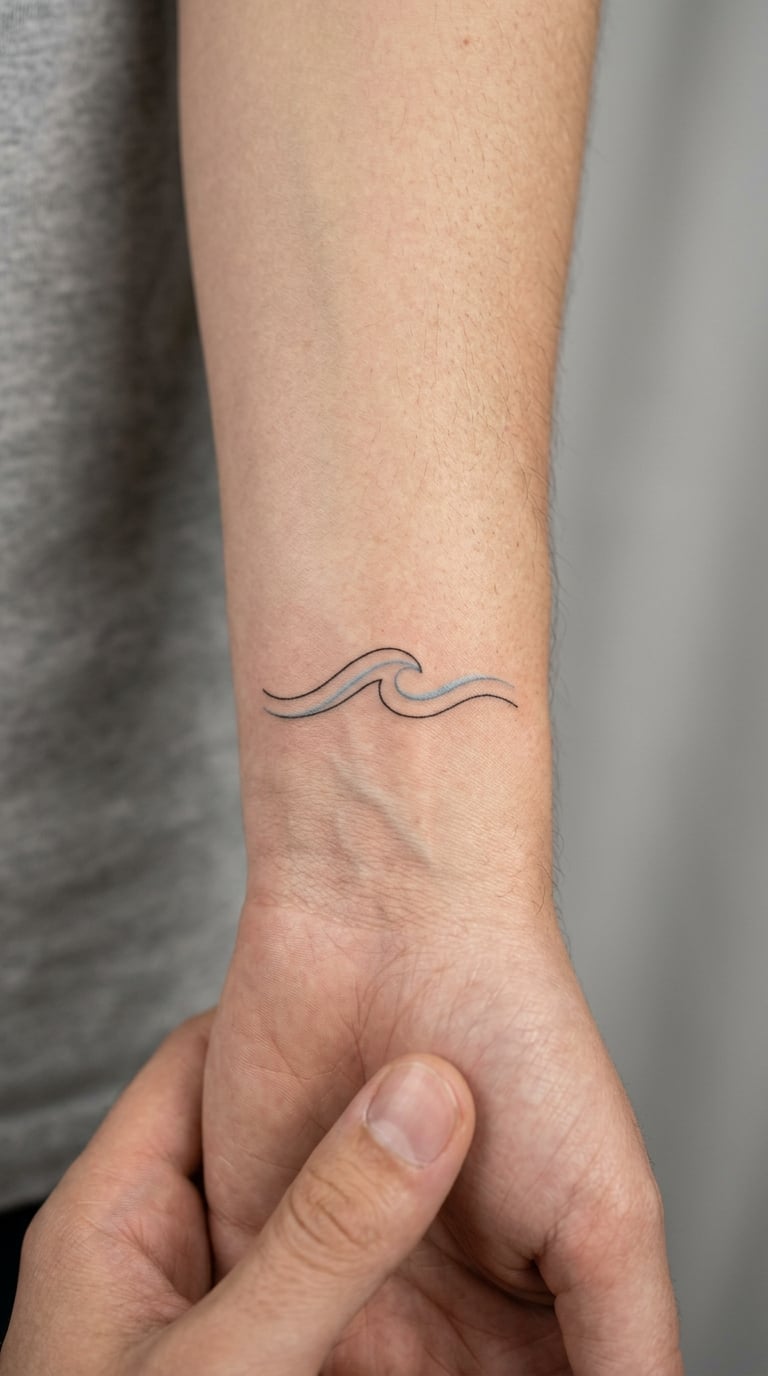
One wave, two waves, three waves. The number changes, the stroke weight does not, and that single shared rule is what makes five different wave tattoos look like a set rather than a coincidence. Ocean imagery tends to suit groups with a shared trip or a coastal hometown.
Placement: wrist, ankle, forearm, or rib. Size: 2 to 3 inches (5 to 8 cm). Style: fine black line with optional pale-blue shading in one line.
Pain: low to medium. Fine lines on frequently moved or sun-exposed areas fade sooner, so ask for a slightly heavier line. Make it yours: put coordinates under each wave, or let each person pick a different number of lines and share one blue accent.
6. Layered Mountain Ranges
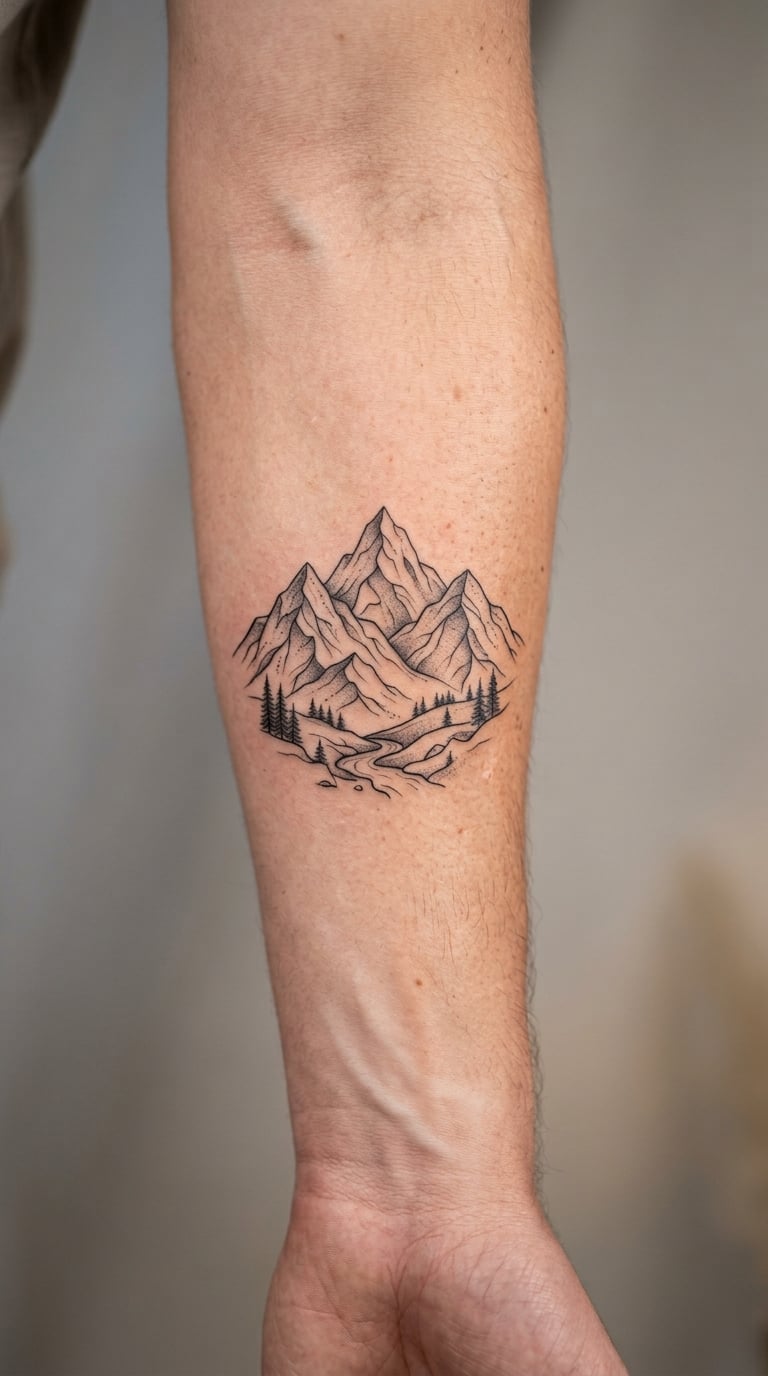
Everyone picks a different range, but the artist draws them all the same way, with matching contour weight and the same peak shapes repeated at different scales. Three peaks for one person, five for another, a single ridgeline for a third. Landscape tattoos usually come from a real place, so sketch the range you actually mean.
Placement: forearm, upper arm, calf, rib or thigh. Size: 3 to 5 inches (8 to 13 cm). Style: line only, black and grey, or restrained colour with one warm sky band.
Pain: medium. Tiny ridge details blur, so fewer lines beat more lines here. Make it yours: trace the range you grew up in, then add the year of a trip all five took together.
7. Radiant Sun Motifs
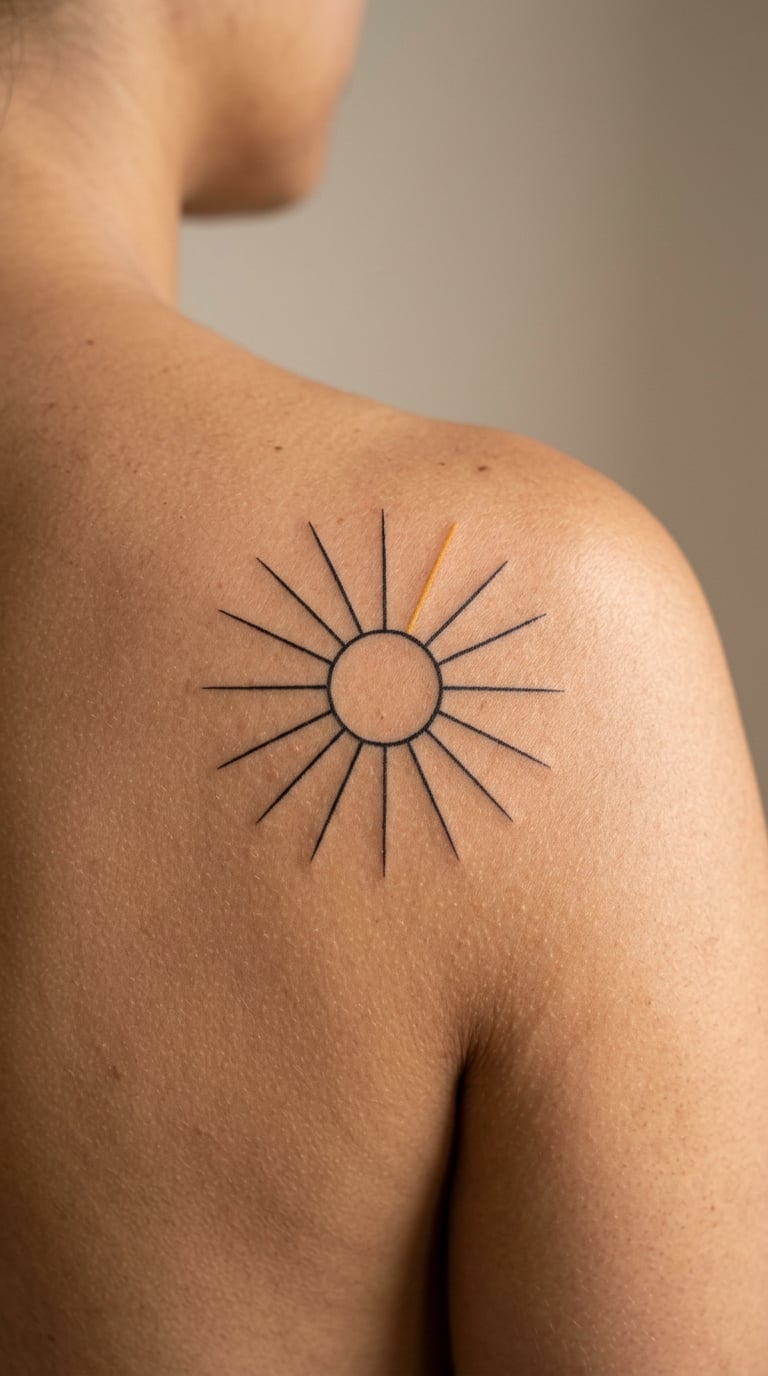
A sun set coordinates through structure rather than detail: a central circle, alternating long and short rays, and one accent colour that appears in every tattoo. Each person varies the ray count, the size and the accent. It reads as cheerful without turning cartoonish.
Placement: shoulder, upper arm, calf, chest or ankle. Size: 2.5 to 4 inches (6 to 10 cm). Style: bold black outlines with an optional yellow or orange fill on one ray.
Pain: low to medium. Fine ray details on fingers lose definition fast, so keep those versions bolder. Make it yours: set the ray count to a birth date, or give all five tattoos the same single yellow ray.
8. Moon Phase Sequences
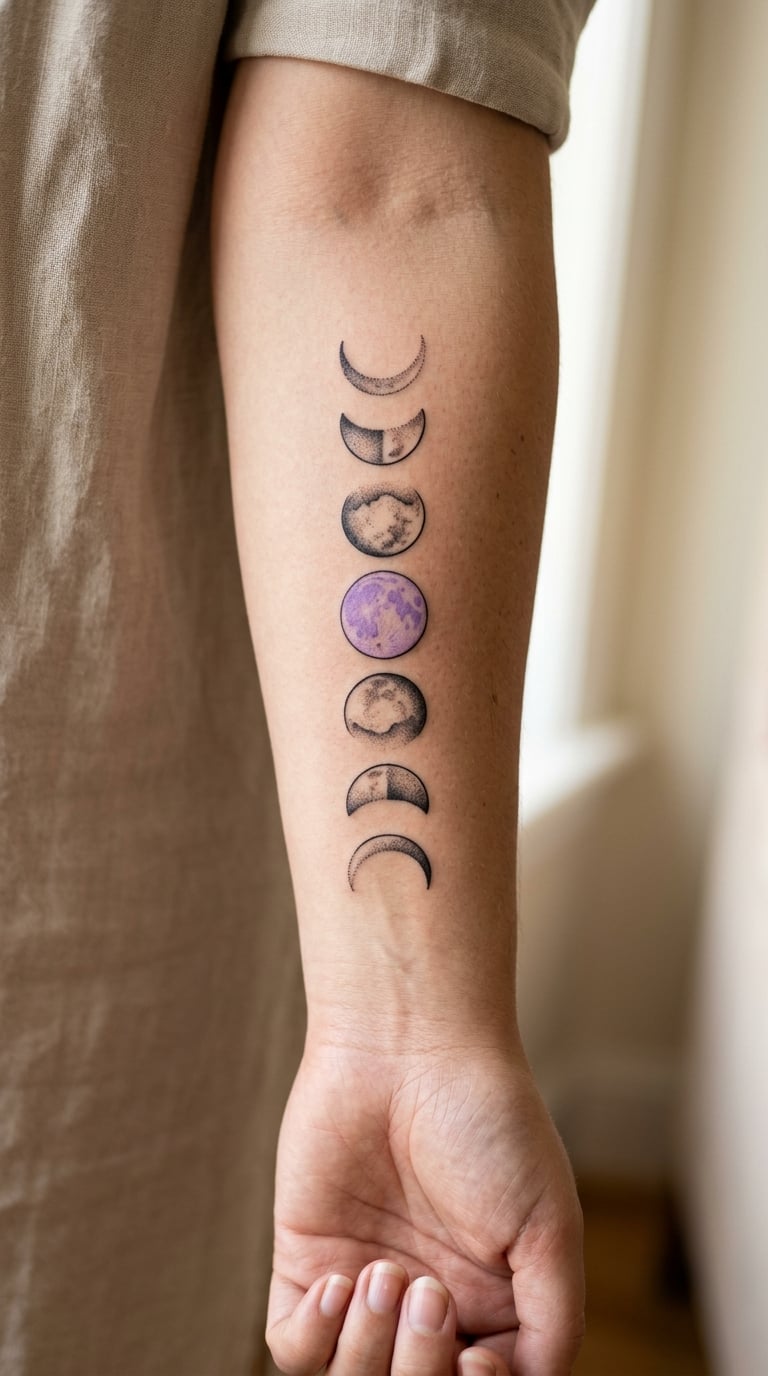
Moon phases fit five naturally because there are visibly different phases to divide up. Each person claims one section of the same sequence, and the group ends up with a complete run between them. People tend to pick the phase that feels like the year they are in, so agree on that before the drawing starts.
Placement: forearm, rib, upper arm, thigh. Size: 2.5 to 4 inches (6 to 10 cm) so the circles stay round. Style: black and grey lunar shapes, optional dotwork, or a single lavender accent.
Pain: medium. Tiny crater details fade, so craters only work at the larger end of the range. Make it yours: place the phases in a line in birth order, or add a date under the one that marked something real.
9. Heartbeat Line Segments
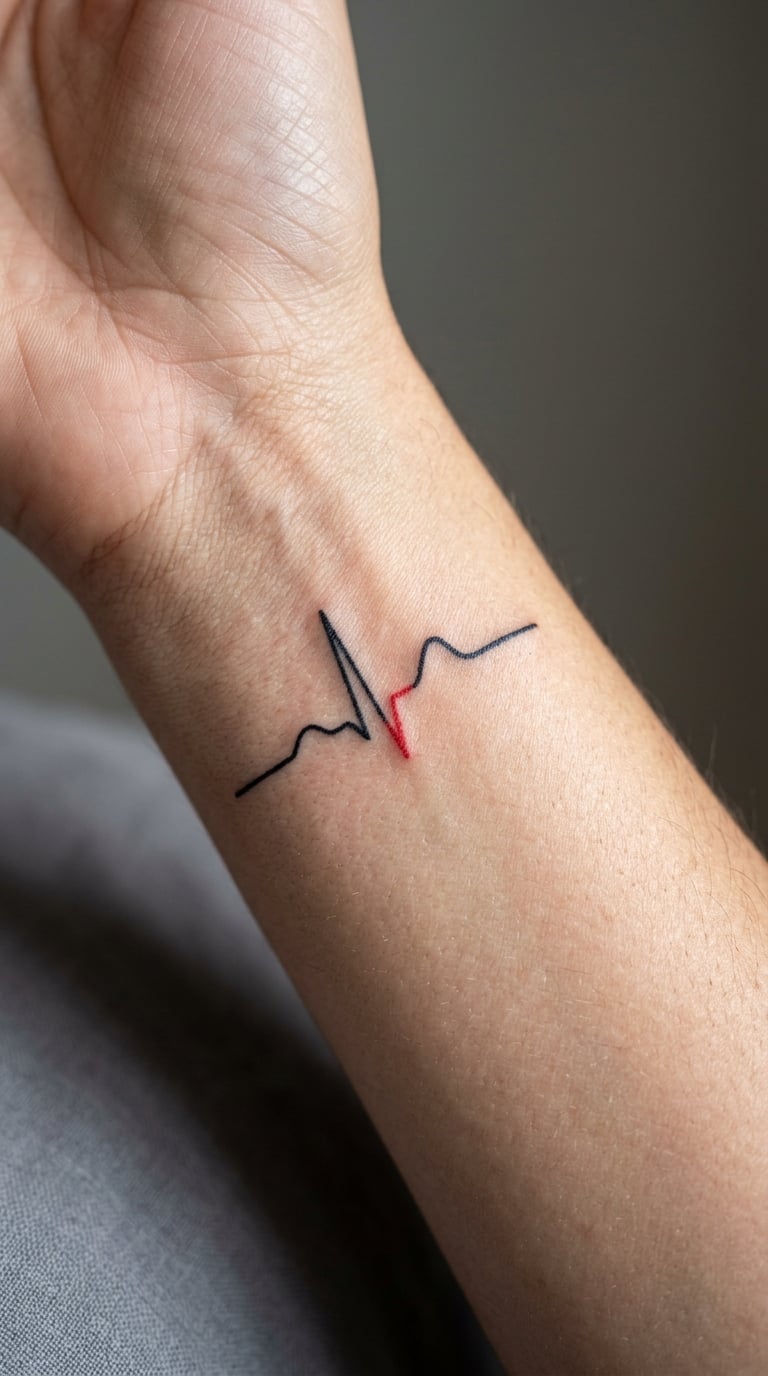
The heartbeat line is usually a pair tattoo. Scale it up and it works for five: everyone gets the same waveform drawn with the same peak shapes, but a different length and a different stretch of the line. Many groups use a real trace from a shared moment rather than a generic squiggle.
Placement: wrist, inner forearm, rib, ankle or collarbone. Size: 2 to 3.5 inches (5 to 9 cm). Style: black linework with one small red accent peak.
Pain: low to medium. Tiny compressed beats blur and merge, so the artist needs real space between them. Make it yours: add initials under the line, or start every tattoo at the same peak so the five line up side by side.
10. Geometric Knot Panels
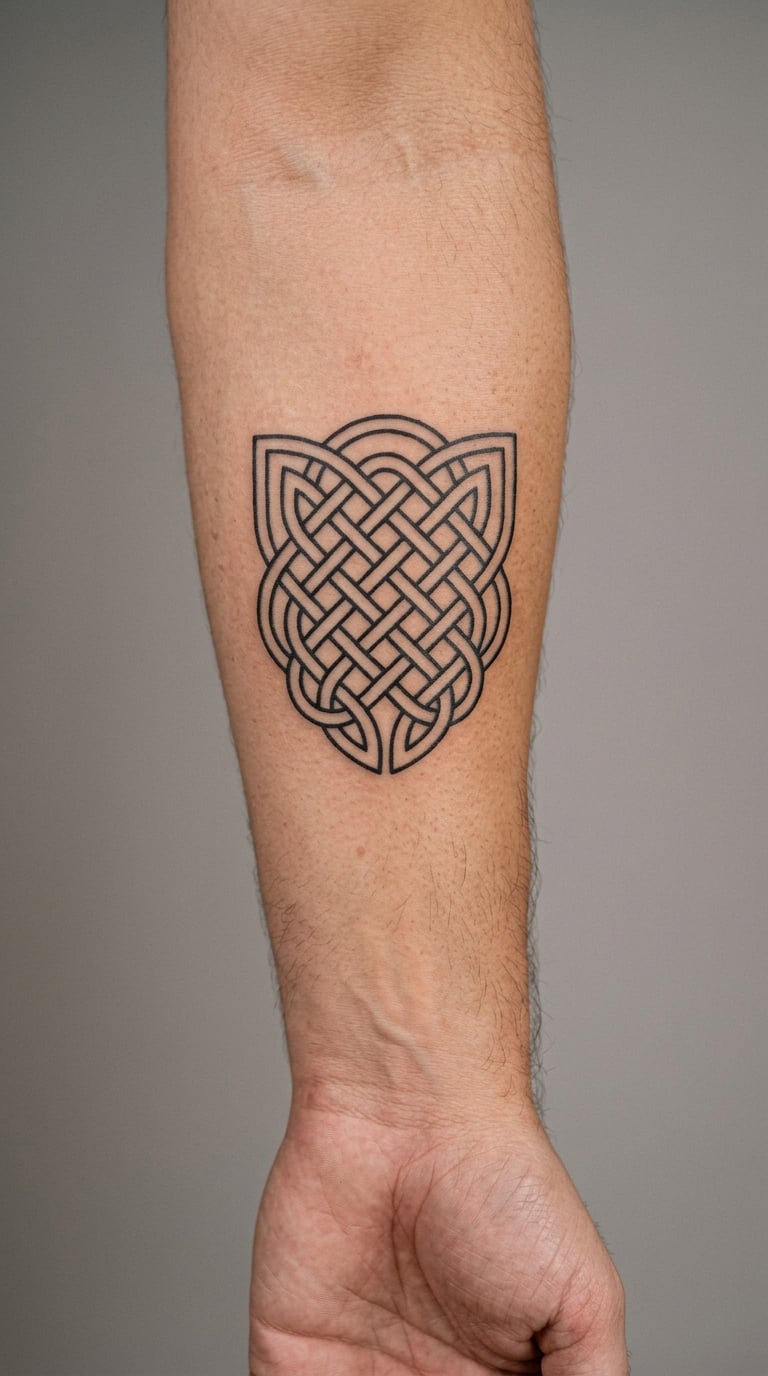
Knot panels are the strongest set for people who dislike anything sentimental on their skin. The connection shows through structure: the same line weight, spacing and degree of symmetry, with each person taking a different segment. Nobody has to claim a meaning, and plenty of groups just like how the shapes sit next to each other.
Placement: forearm, thigh, calf, upper arm or rib. Size: 3 to 4.5 inches (8 to 11 cm). Style: fine line, blackwork, or fine line with dotwork filling the negative space.
Pain: medium. Tight interwoven detail needs unhurried healing and may soften over the years. Make it yours: change the number of loops or the knot pattern, or add one small symbol at the centre that only the group knows.
11. Initial Letter Tiles
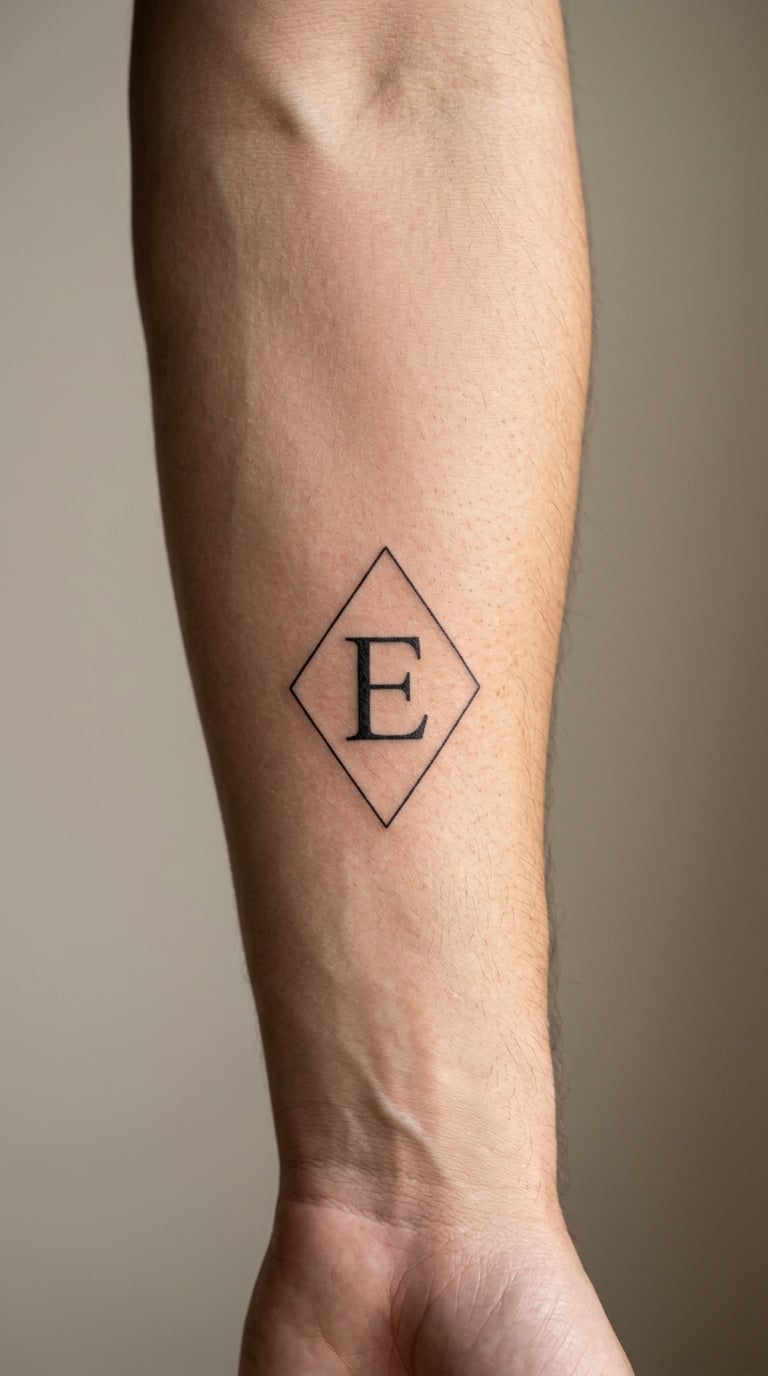
Typography sets are the most personal option here and still photograph as a matching set. Every person gets a different initial inside an identical frame, the same square, circle, diamond or shield, with the same border weight. Agree the typeface once and share the reference, because artists interpret one elegant letter five different ways.
Placement: wrist, outer forearm, ankle, collarbone or behind the ear. Size: 1 to 1.5 inches (2.5 to 4 cm). Style: legible line lettering, optional muted colour fill inside the frame.
Pain: low to medium. Tiny lettering on hands and fingers blurs faster than anywhere else, so keep finger versions larger. Make it yours: add a birth year in small numerals under the tile, or spell a shared surname across all five backs. Our guide to matching tattoos for brothers goes deeper on lettering choices.
12. Laurel Half-Moons
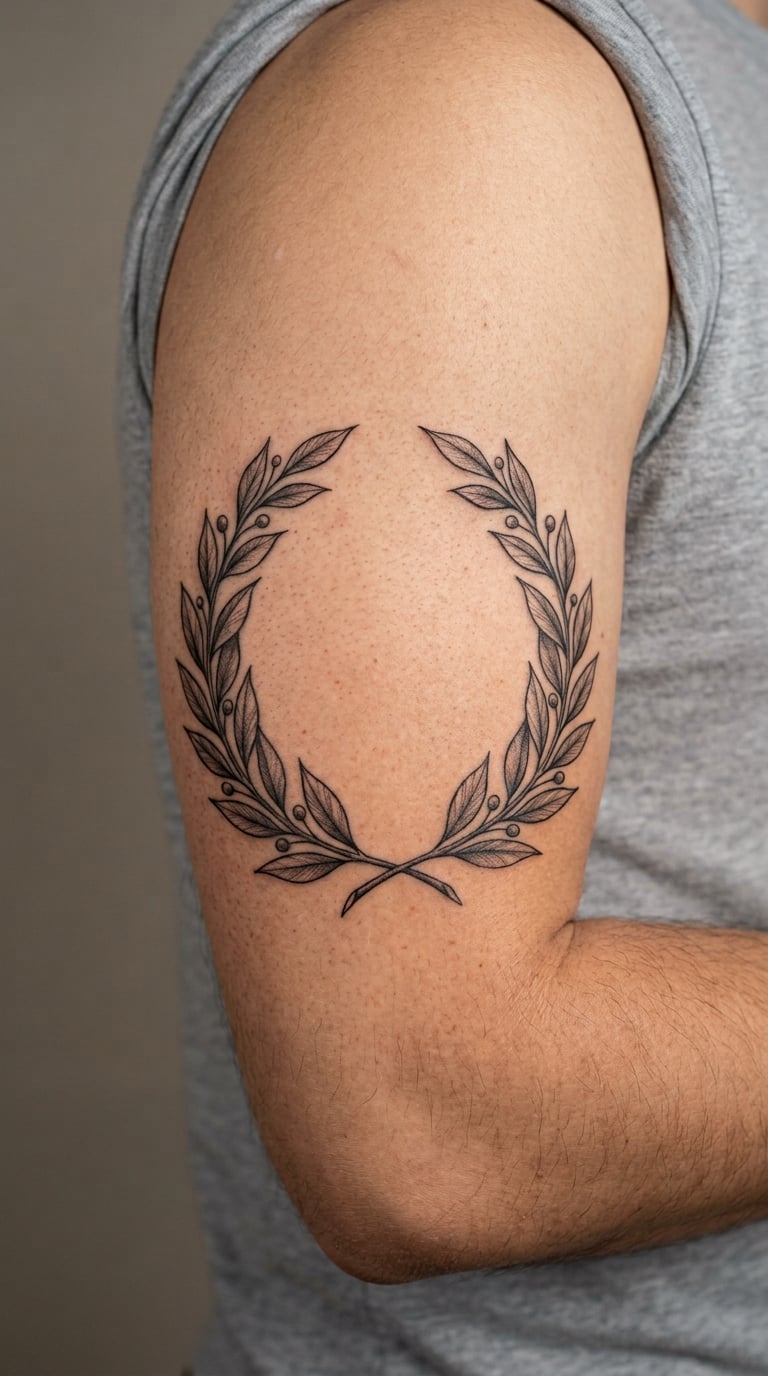
A cropped half-laurel branch gives the look of a wreath without forcing everyone into a full circle. The curve flexes around a forearm, an upper arm or the back of a shoulder, and each person can take a different side. Keeping the leaves pointing the same direction on every tattoo is the small consistency people notice when the five of them are together.
Placement: forearm, upper arm, back of the shoulder, thigh or rib. Size: 3.5 to 5 inches (9 to 13 cm). Style: black and grey shading with fine contour work on each leaf.
Pain: medium. Shading needs time to settle, and tiny leaves need adequate scale. Make it yours: vary the leaf count per person, add a year on one branch, or line all five branches up along a shared arm.
13. Cherry Blossom Branches
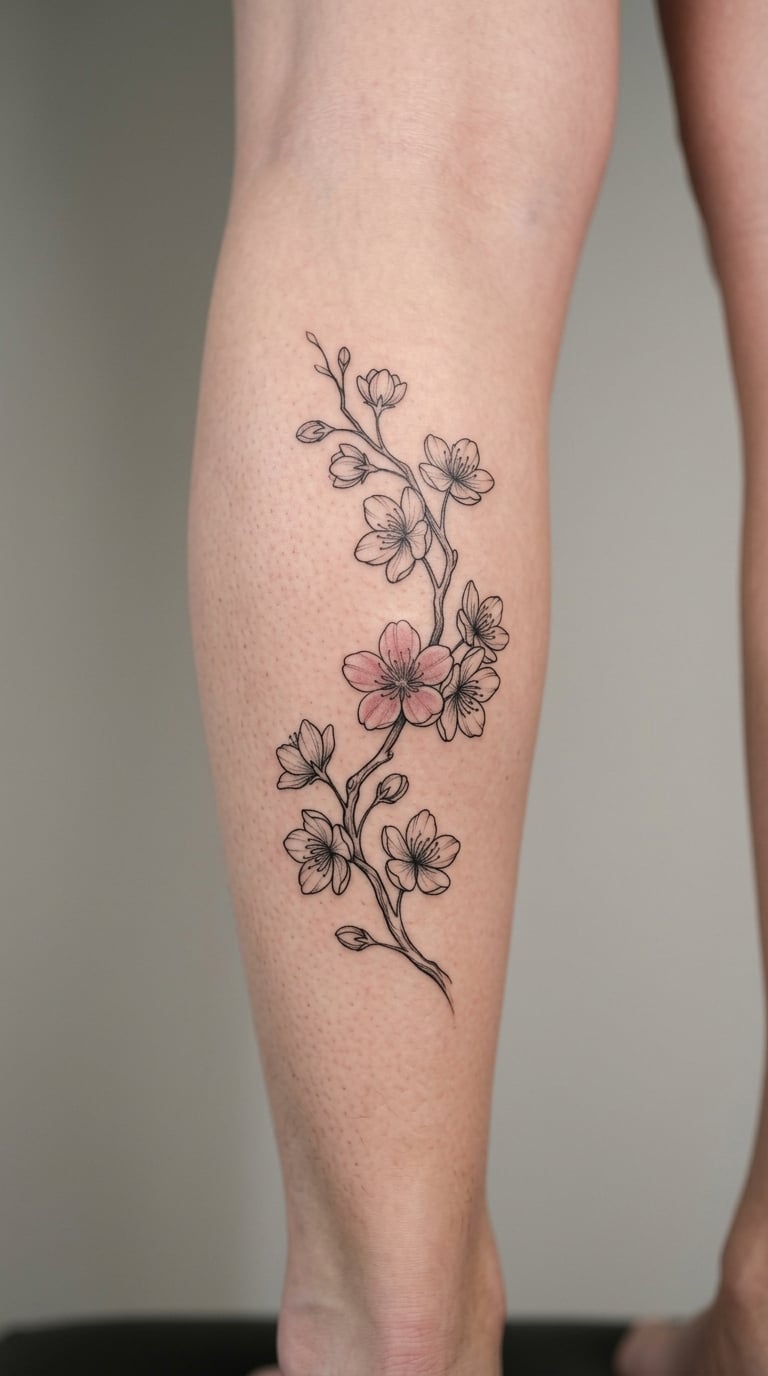
Cropped blossom branches coordinate easily because the shared element is the blossom cluster, not the whole composition. Everyone gets the same style of cluster in the same spot within the design, and the branch grows a different direction on each person. Blossoms are a common pick for groups that all know the same place.
Placement: forearm, calf, upper arm, back of the shoulder, rib. Size: 2.5 to 4 inches (6 to 10 cm). Style: fine black outlines with soft grey shading and optional pink petals.
Pain: medium. Pale colours and small petals fade or soften, so the pink accent should stay light. Make it yours: draw the branch from a tree that mattered to the group, or assign each person a different bloom stage from bud to full.
14. Simple Daisy Heads
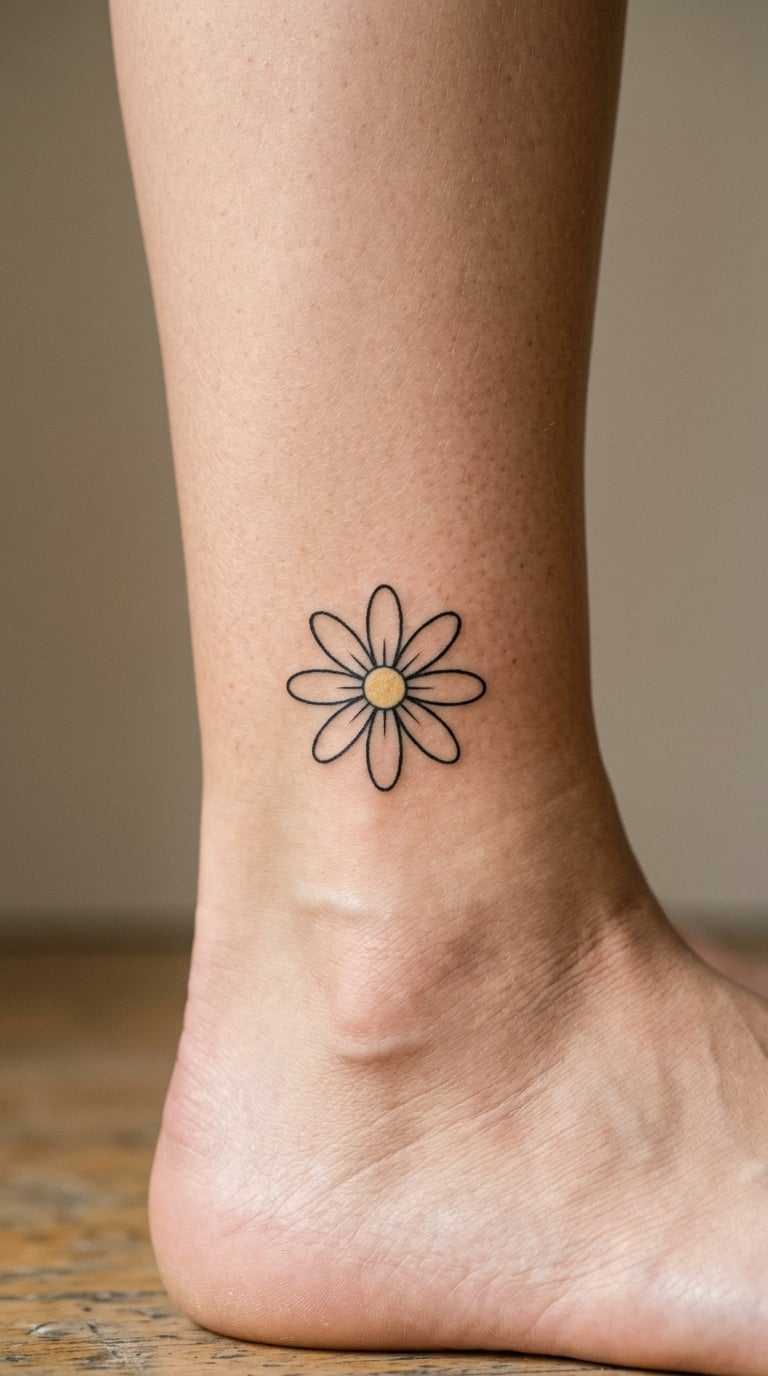
A daisy is a friendly anchor for a group that wants the set to feel light. Everyone shares the silhouette, then varies the petal count, the rotation or the colour treatment so five daisies never look like a mistake. It also scales down further than almost anything else here, which makes it the safe pick for the person who is nervous about getting ink.
Placement: wrist, ankle, forearm, shoulder, knee. Size: 1 to 2 inches (2.5 to 5 cm). Style: clean linework with an optional yellow centre.
Pain: low to medium. Micro petals and finger versions blur within a few years, so the smallest size in the set should be the boldest. Make it yours: use a birth-month colour for each centre, or set the flower beside a date the group shares.
15. Graphic Lightning Bolts
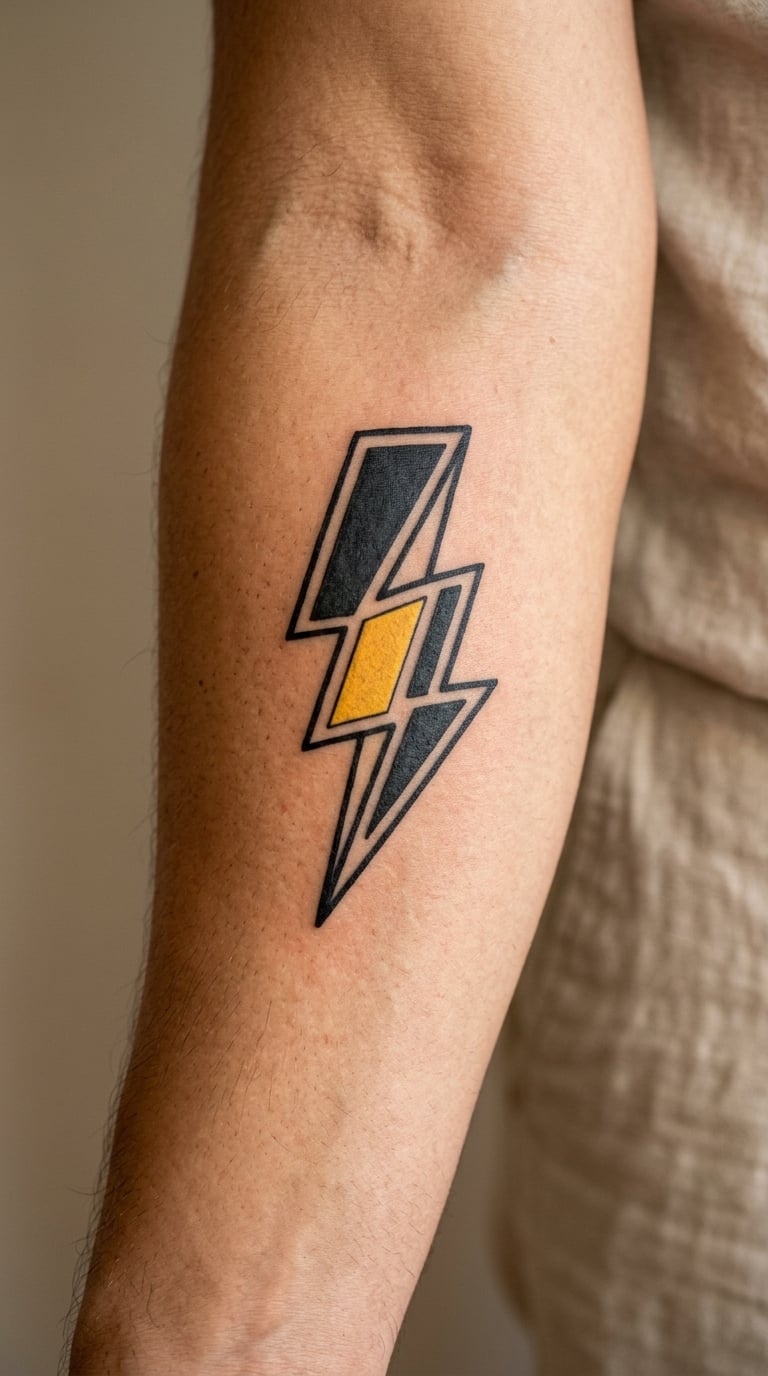
Bolt sets work because the outline is fixed and the size is not. One person takes a small symbol version behind the ear, another takes a large bolt up the forearm, and the shared angles tie them together. Bold blackwork also fades more gracefully than fine line, so this suits a group that wants something readable across a room.
Placement: forearm, upper arm, calf, rib, behind the ear. Size: 2 to 4 inches (5 to 10 cm). Style: bold blackwork, fine-line open version, or an optional yellow fill in one segment.
Pain: low to medium. Very small zigzags on fingers lose definition quickly. Make it yours: add a significant date inside the widest bolt, or use one shared yellow fill across all five tattoos.
16. Paper Planes with Flight Trails
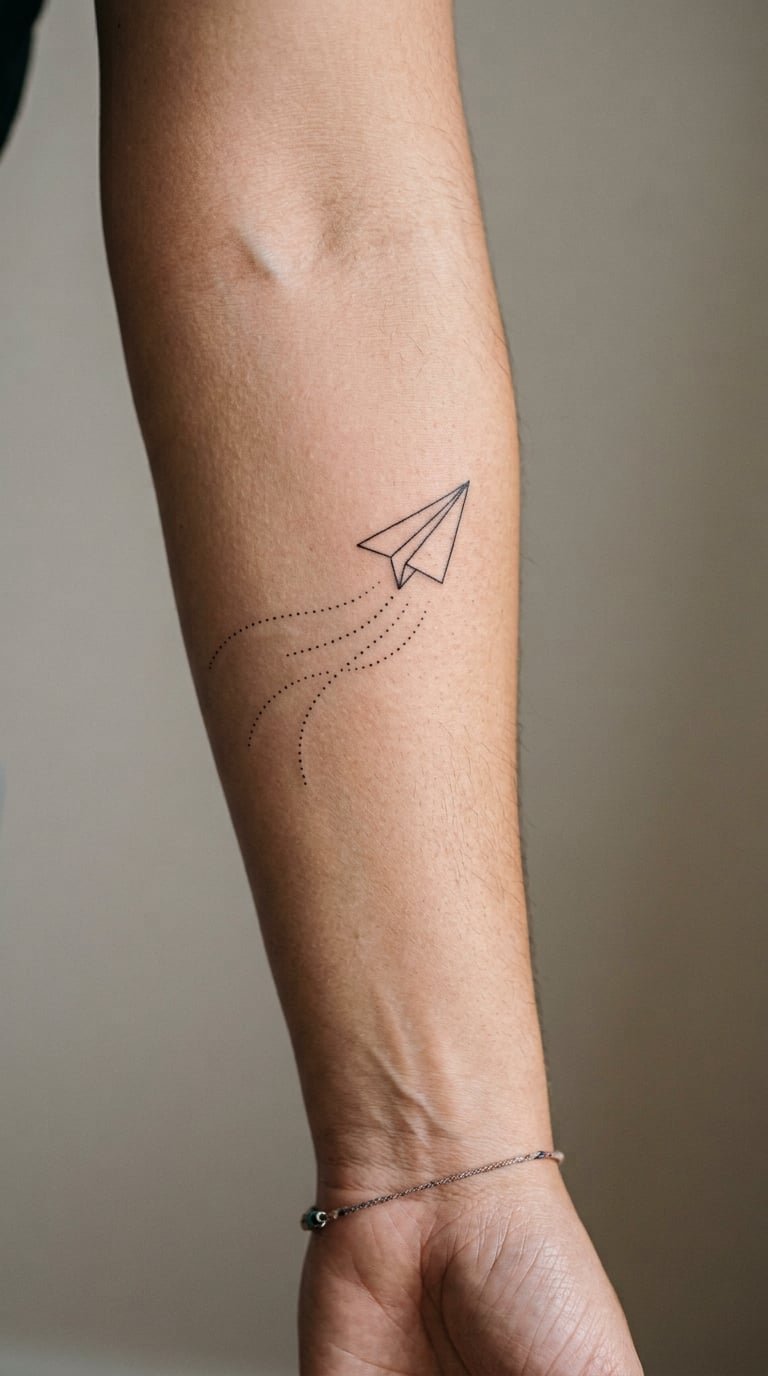
A travel-themed set gives everyone a paper plane and a different number of dotted trails, so the five look like planes leaving from the same place. Naming the destination each person was heading to is what turns it personal, and it works well for a group that has already travelled together or is planning a trip.
Placement: inner forearm, wrist behind the hand, ankle, upper arm, rib. Size: 1.5 to 3 inches (4 to 8 cm). Style: clean fine line, restrained blackwork, optional pale-blue trail accents.
Pain: low to medium. Tiny dots and narrow trail lines blur, so keep the trails loose. Make it yours: add coordinates, name a home airport, or point all five planes at the same next destination.
17. Turtle Shell Segments
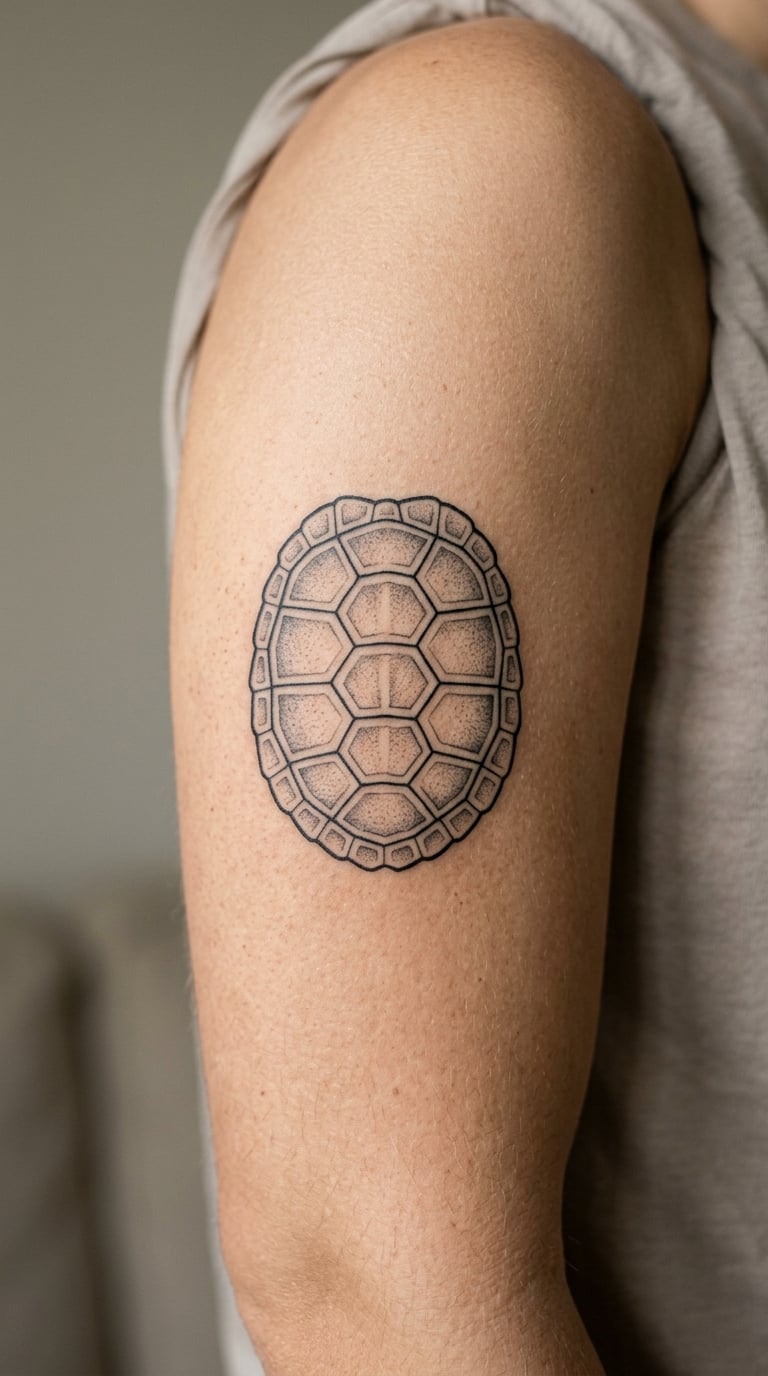
Shell geometry is a strong candidate because the pattern is already symmetrical and balanced, so nobody needs a flattering body shape for it to work. One person takes a full shell, one takes half, one takes a single segment, and the set stays related. That symmetry also hides small placement differences better than most motifs.
Placement: upper arm, forearm, thigh, calf, back of the shoulder. Size: 2.5 to 4 inches (6 to 10 cm). Style: symmetrical linework with black and grey stippling.
Pain: medium. Compact shell patterns blur when the whole motif drops under two inches. Make it yours: vary the scute pattern on each person, add an initial on cropped versions, or run one shared accent line through the centre of every shell.
18. Minimal Arrow Paths
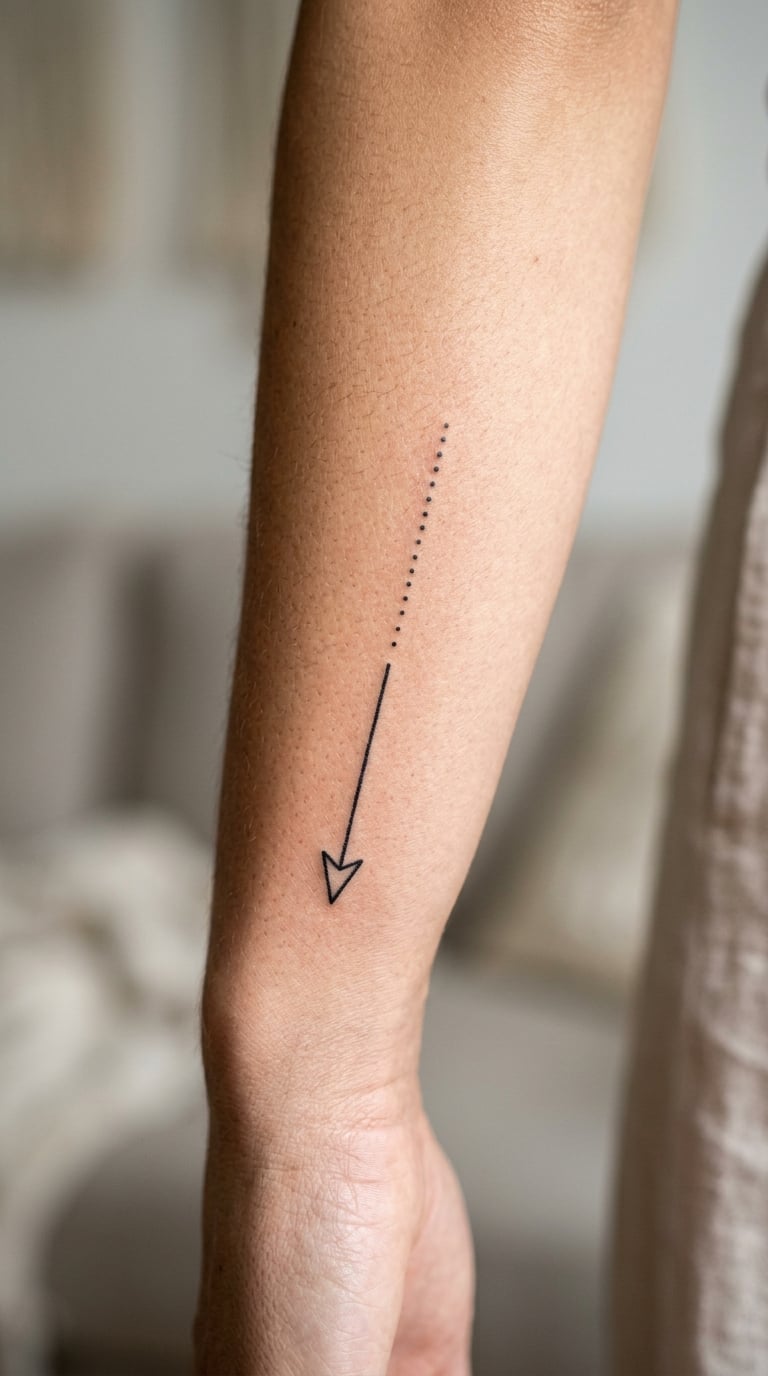
Directional sets use one shared arrow shape, barb proportions and line weight, then vary everything else. Two arrows, three arrows, one arrow with a dotted path behind it. The family resemblance is obvious without the tattoos being copies, and some people choose arrow imagery for a personal event rather than direction in general.
Placement: forearm, wrist, calf, rib, upper arm. Size: 1.5 to 3 inches (4 to 8 cm). Style: fine line or solid blackwork, optional dotted path.
Pain: low to medium. Narrow arrow details on fingers fade quickly, so avoid the smallest version there. Make it yours: aim every arrow at the same place, add a date where the path starts, or use one shared fill colour across the group.
19. Hummingbird Silhouettes
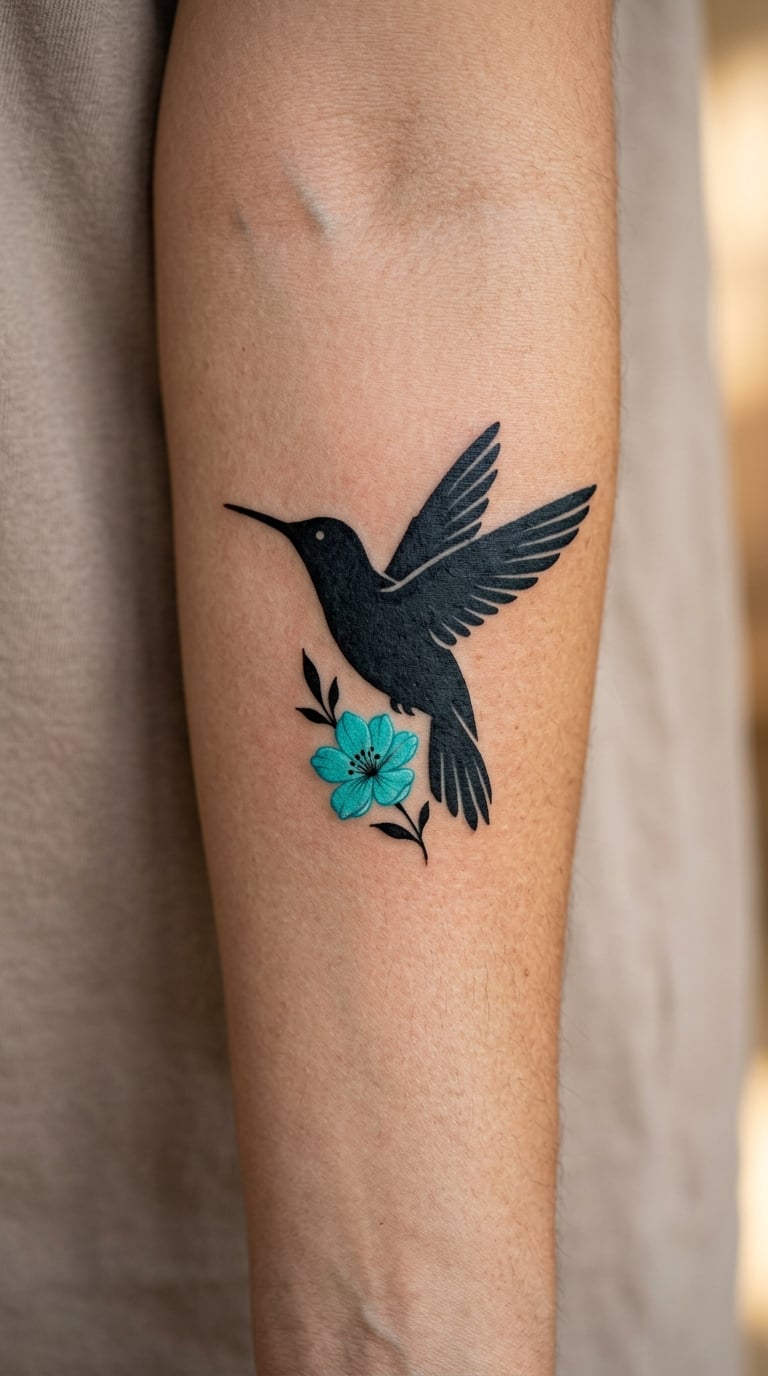
Bird silhouettes coordinate well because the body shape is the constant and the direction is not. Everyone gets the same hummingbird facing a different way, with wing positions varied enough that the five are genuinely distinguishable side by side. Silhouettes also age better than feather detail, which is the practical reason to keep them solid.
Placement: forearm, upper arm, calf, back of the shoulder, rib. Size: 2.5 to 4 inches (6 to 10 cm). Style: solid black, blackwork, or limited colour.
Pain: medium. Very small feather cuts soften, so the silhouette should stay clean. Make it yours: have the birds face each other where placement allows, add a small flower on a shared branch motif, or run one turquoise accent across all five.
20. Interlocking Puzzle Emblems
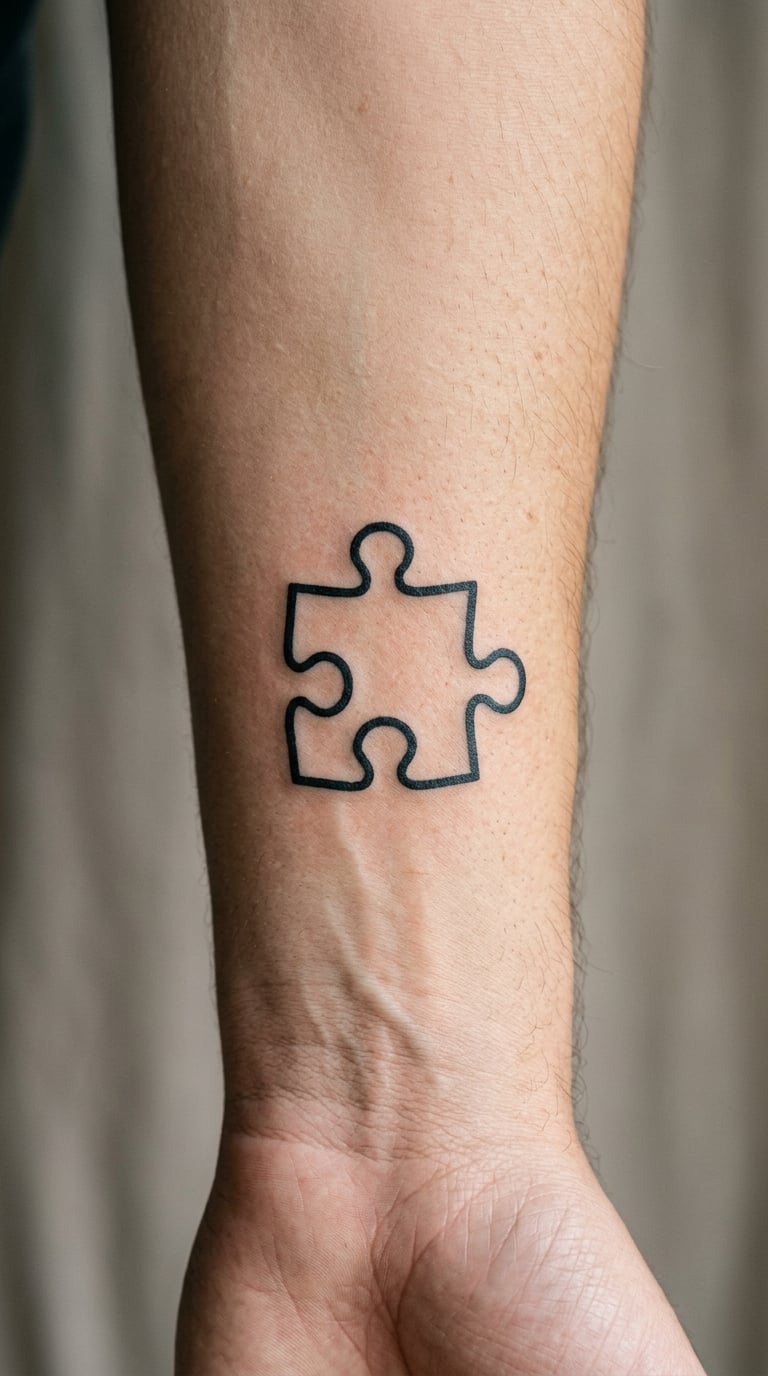
Puzzle pieces say connection without any wording, and a five-person version works because no single piece has to complete a set on its own. Each person gets one piece with a bold contour and a couple of connector tabs, all drawn in the same weight. It is a good pick for a group that finds flowers and script too sentimental.
Placement: wrist, forearm, ankle, upper arm, calf. Size: 1.5 to 3 inches (4 to 8 cm). Style: bold contour lines with black and grey fills, or clean outline only.
Pain: low to medium. Narrow internal details blur, so keep the inside of the piece simple. Make it yours: rotate each piece so the tabs point toward a common centre, add an initial inside one section, or line the five finished tattoos up in the same orientation later.
How to Choose the Right Design
Most groups get stuck on the motif and then rush the decisions that actually matter. Work through these six in order and the design usually picks itself.
- Decide the strategy first: identical, mirrored, or a shared theme where each person takes one element. For a group of five, the third option produces the least regret and the best-looking photographs.
- Agree a line weight, not a picture: describe the style in words, such as single-needle fine line at a medium weight, and let the motif follow. Identical line weight does more for a matching set than identical subject matter.
- Set a minimum detail size: anything thinner than about 1 mm will blur within a few years. Ask the artist to strip back the smallest element before the stencil goes on.
- Match across placements, not positions: a wrist tattoo and a rib tattoo of the same design should differ by at least 20 percent in scale. Send your artist everyone’s placement before booking so the set is drawn to fit five different bodies.
- Pick the colour rule up front: one accent colour shared by all five is more convincing than five individually chosen accents. Keep the rest black and grey so the set still works when the colour fades.
- Protect the person who is unsure: agree before booking that nobody is pressured on the day. A group that designs for five but tattoos four can still work if the fifth element is something easy to add later.
Still comparing options? Our guides to matching family tattoo ideas for four and matching tattoos to get with your best friend cover the same decision points from a different angle.
Cost and Session Time
What a matching tattoo costs depends far more on size, detail and your artist’s rate than on the size of the group. Five people means five separate appointments and five separate charges, so nobody is splitting one bill. US hourly rates for a working artist commonly run from $80 to $200 depending on the city and the studio.
- Small, simple pieces such as a single leaf, a small initial or one wave line are usually quick work, often 30 to 60 minutes, and land roughly in the $80 to $250 range once the shop minimum is applied.
- Medium detailed pieces such as mountain ranges, laurel branches, hummingbirds or star maps commonly take one to three hours and tend to sit between $250 and $800.
- Large or heavily coloured pieces can run past $1,000 once shading, colour and a second session are added, and touch-up visits are often booked separately after the first heal.
Before you commit, ask the shop about its minimum charge, often $50 to $150, any consultation fee, the artist’s hourly rate and whether a second visit is included. Location moves the number a long way, and travel costs on top of that are easy to forget when five people drive to the appointment.
Aftercare Basics
- Follow your artist’s aftercare instructions first, since healing advice varies with the style and the skin.
- Wash the new tattoo gently as directed, then pat it dry rather than rubbing it.
- Keep it away from unnecessary friction, soaking and direct sunlight during early healing, especially on forearms and calves.
- Do not pick or scratch, however tempting it gets during the flaking stage around the second week.
- Use only the products your artist recommends, and skip unprescribed creams and lotions on the fresh tattoo.
- Contact the artist if anything worries you during healing rather than treating it yourself.
Frequently Asked Questions
Do all five people need the same tattoo to make the set match?
No. The set reads as matching through shared style, not shared outline. Fix the line weight, the shading approach and the accent colour rule, then let each person choose a different motif, size and placement. Groups that take one element from a single composition, such as one star from a constellation, usually get the most convincing result.
Can matching tattoos for five friends use different sizes and placements?
They should, and most artists will ask for exactly that. Send everyone their planned placement before the design is finalised so the artist can scale each version. A wrist tattoo usually needs to be around 20 percent smaller than a rib tattoo of the same design for both to look right in the same photograph.
Which tattoo styles coordinate best across different body types?
Styles with an even stroke weight and a simple silhouette hold up best, so fine-line botanicals, wave lines, simple flowers, arrow symbols and puzzle pieces. Dense detail, heavy black-and-grey shading and tiny lettering vary far more between bodies. If the group includes very different builds, simple shapes scale predictably and hide placement differences.
Do matching tattoos in colour cost more than black-and-grey designs?
Usually, yes, and in two ways. Colour work takes longer in the chair, and pigments that need mixing, testing and rebuilding often add time later. For a group of five, a shared single accent colour costs less than five separately chosen palettes, and it keeps the set looking connected once the colour starts to fade.
How should a group choose a tattoo style that will age well?
Choose a line weight thick enough to survive a decade, strip out any detail thinner than about 1 mm, and stay away from fingers and hands for very small work. Black ink and one muted accent colour fade more predictably than bright colour or grey wash shading. Shoulders, arms, backs and ribs also hold line work longer than wrists and ankles.
Which Idea Should Your Group Start With?
If someone in the group is getting their first tattoo, start with the simple daisy heads, the minimal wave lines or the initial letter tiles. They are quick, they scale to any placement, and a first piece should not be a test of endurance.
If the group already collects ink, the star maps, the hummingbird silhouettes and the laurel half-moons give you enough detail to work with and enough room to keep building. Bring all five placements to the consultation, settle the line weight there, and book the sessions a few weeks apart so nobody is stressed about the calendar.