
20 Best Tattoo Ideas for Anxiety and Calm: Minimalist September 2026
Calm tattoo ideas work because they give a busy mind one fixed thing to look at. People choose small single symbols, quiet words, and peaceful nature imagery that stays legible in ten years, and they choose them for grounding rather than as a cure.
What follows is a practical list of tattoo ideas for anxiety and calm, twenty designs an artist could actually draw, with placement, realistic size, style, pain and how each one ages. Autumn and winter are popular booking seasons for exactly this kind of piece, and most people wait 30 to 45 days after a session to judge the final result, so plan a look before you book.
Tattoo Ideas for Anxiety and Calm: Quick Guide
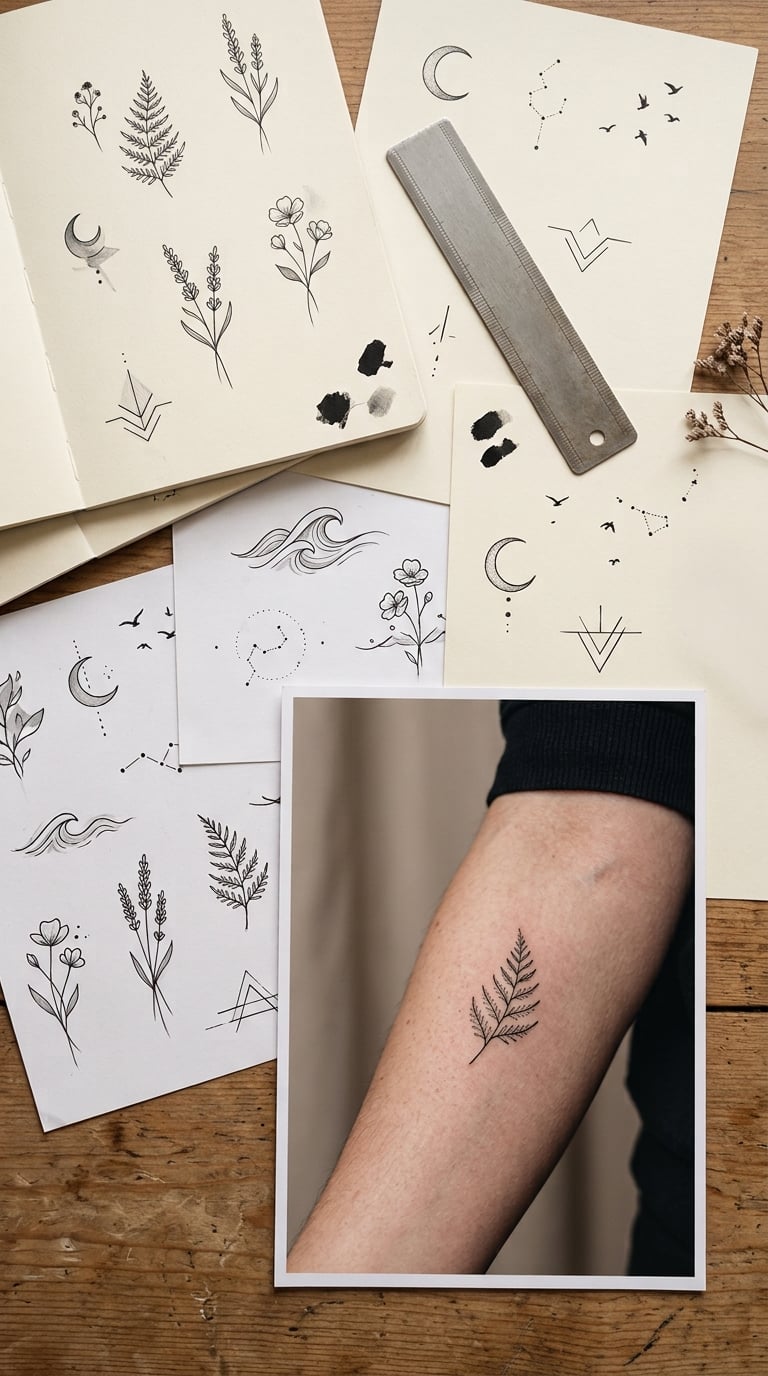
Every design below is described well enough to sketch or to hand to an artist at a consultation. Sizes are finished, healed measurements rather than the size on the day.
| Idea | Style | Best placement | Size | Pain |
|---|---|---|---|---|
| Paper plane | Fine line | Behind the ear | 1.5 to 2.5 in | Low |
| Breathing wave | Single line | Inner wrist | 2 to 3 in | Low |
| Moon phases | Dotwork | Collarbone | 3 to 4 in | Medium |
| Watercolor koi | Watercolor | Inner forearm | 3 to 5 in | Medium |
| Lotus | Single line | Outer ankle | 1.5 to 2.5 in | Medium |
| Botanical branch | Fine line | Rib | 3 to 5 in | High |
| Geometric waves | Geometric | Outer upper arm | 4 to 6 in | Medium |
| Heartbeat line | Fine line | Spine | 4 to 8 in | Medium |
| Mountain horizon | Minimal line | Upper chest | 3 to 5 in | Medium |
| Crescent moon | Blackwork | Side of neck | 1.5 to 2.5 in | High |
| Tree of life | Fine line | Outer calf | 4 to 6 in | Medium |
| Sun with rays | Minimal line | Upper shoulder | 1.5 to 2.5 in | Low |
| Watercolor lotus | Watercolor | Back of hand | 2 to 3 in | Medium |
| Circle outline | Minimalist | Outer forearm | 0.5 to 1.5 in | Low |
| Hummingbird | Dotwork | Shoulder blade | 2 to 3 in | Medium |
| Cloud linework | Single line | Outer hip | 2 to 4 in | Low |
| Feather | Fine line | Inner elbow | 2 to 3 in | Medium |
| Waterfall | Watercolor | Outer thigh | 3 to 5 in | Medium |
| One word | Fine line script | Inner forearm | 1.5 to 3 in | Low |
| Safe-keeping motif | Blackwork | Outer thigh | 2 to 3 in | Medium |
1. Fine-Line Paper Plane Behind the Ear
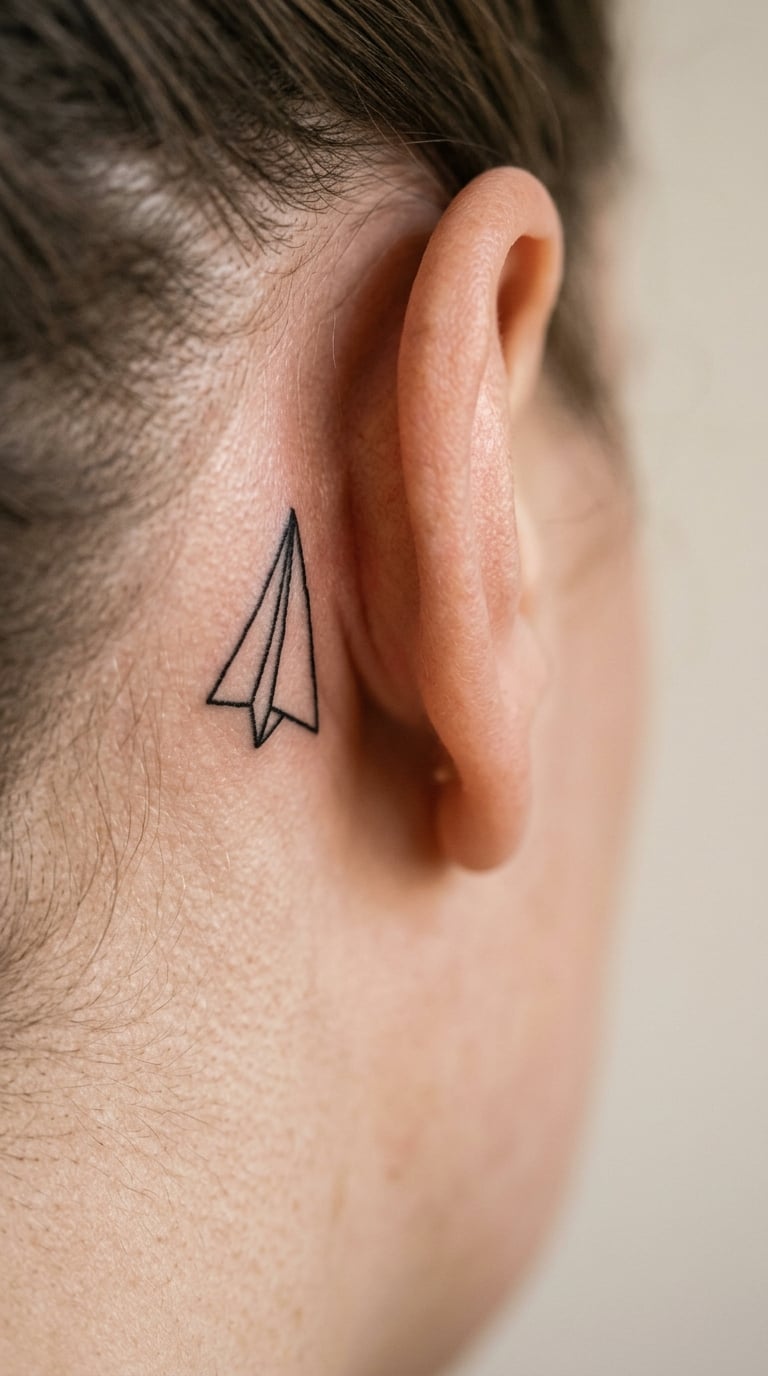
One thin outline, two folded wings, a short line trailing off behind it. That is the whole design, and the restraint is the point: nothing to overthink, nothing that competes for attention in a busy spot.
People pick a paper plane for the smallness of the thing it carries. A message released, a trip taken alone, a period of life that is over but still visible behind you. Wearers in community accounts describe similar quiet pieces as reminders that are theirs alone, not statements for everyone else to read.
Placement: behind the ear, or just under the ear where the skin is thin. Size: 1.5 to 2.5 inches (4 to 6 cm) long. Style: fine line, one weight throughout, no shading. Pain: low, a scratchy tickle that resolves quickly. Behind-ear fine line is the first thing to blur as skin changes, so expect a softer line after a few years.
Make it yours: add a single short line trailing behind the plane, like a flight path, and keep it to one continuous stroke.
2. Minimal Breathing Wave on the Wrist
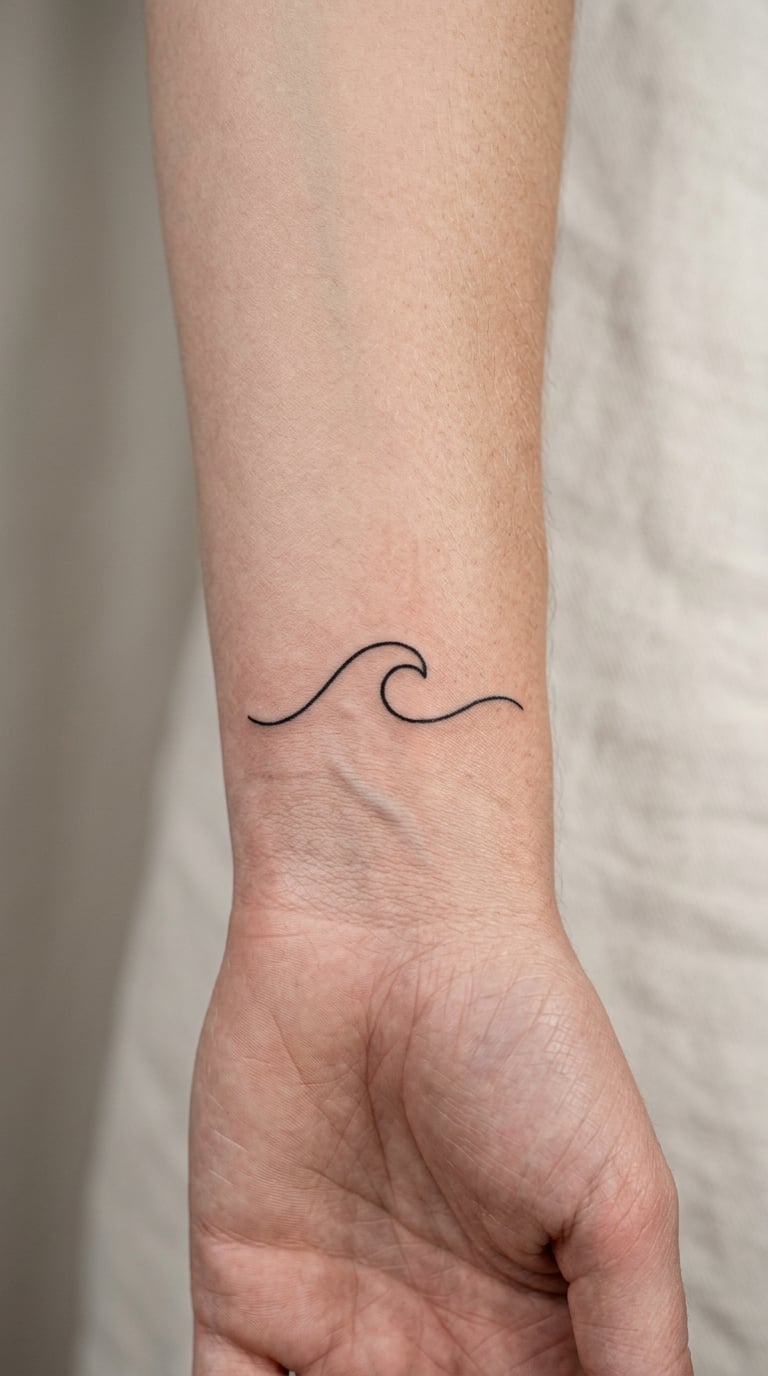
A wave drawn as one unbroken line, rising and falling twice across the wrist, no foam and no shading. The shape rises like an inhale and falls like an exhale, so the design carries the rhythm without a single word on it.
This is the most requested piece in calming tattoo ideas because it is readable in a glance and completely private. It sits where you can see it, which is what makes it useful as a cue during a hard moment.
Placement: inner wrist, running parallel to the forearm. Size: 2 to 3 inches (5 to 7.5 cm) across. Style: single line, consistent weight. Pain: low to medium, wrist skin is thin and the wrist bone is close to the surface. Wrist ink catches sun and hand washing, so a heavier line weight ages better than a hairline one.
Make it yours: make the second wave slightly smaller than the first, so the pattern reads as breath slowing down. If you like word designs too, our peace tattoo ideas that carry quiet symbolism covers that lane.
3. Dotwork Moon Phases on the Collarbone
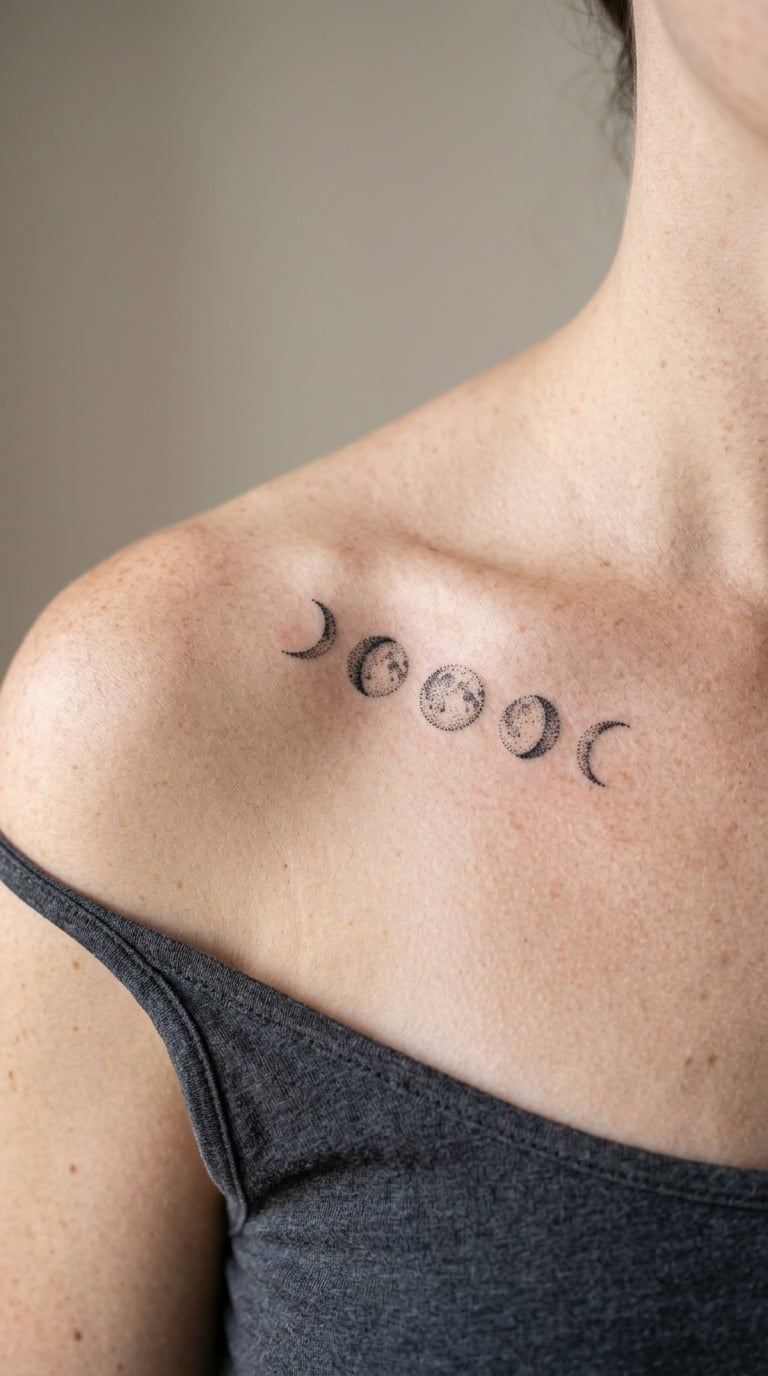
Seven circles in a row, each built from a different density of stippling, moving from dark to light and back again. A small arrow or a scatter of dots between them is optional and often skipped, because the sequence already reads clearly.
Moon phases get chosen for reflection and change, which is a personal reading rather than a promise about your mood. Keep the symbolism at that level. A tattoo does not regulate hormones or quiet a racing pulse, and anyone who tells you otherwise is selling something.
Placement: along the collarbone, or across the top of the chest. Size: 3 to 4 inches (7.5 to 10 cm) wide. Style: dotwork or fine line with grey wash. Pain: medium, bone-adjacent skin makes the needle feel more direct. Stipple dots on the collarbone are the first to soften as the skin moves and stretches with age.
Make it yours: use the birth moon of a date that matters to you rather than the full sequence.
4. Watercolor Koi on the Forearm
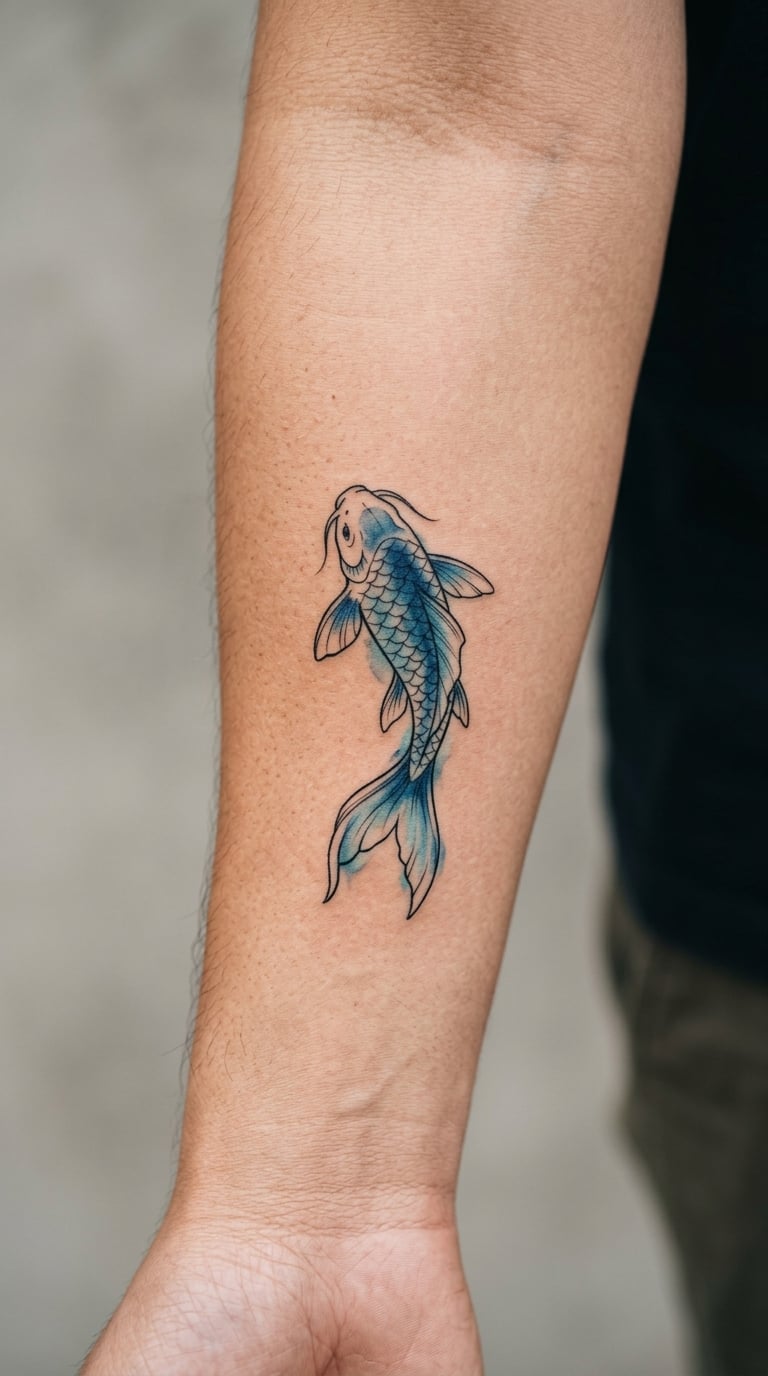
A single koi built from loose washes rather than outlines, black and soft blue bleeding into each other at the edges, a few scales suggested with darker pigment and nothing else. It looks like ink in water, which suits a design meant to look relaxed.
People who want colour but not busyness tend to land here. The fish is often read as persistence, since it keeps moving upstream, but the reason matters less than whether you like looking at it on your own arm every day.
Placement: inner forearm. Size: 3 to 5 inches (7.5 to 12.5 cm) long. Style: watercolor with a few hard black edges for contrast. Pain: medium, and colour means a longer sitting. Watercolor patches are soft by nature, so fading shows up as a general loss of contrast rather than hard edges.
Make it yours: add one small colour drop beyond the body of the fish, a mark of where the ink was headed.
5. Tiny Lotus Linework on the Ankle
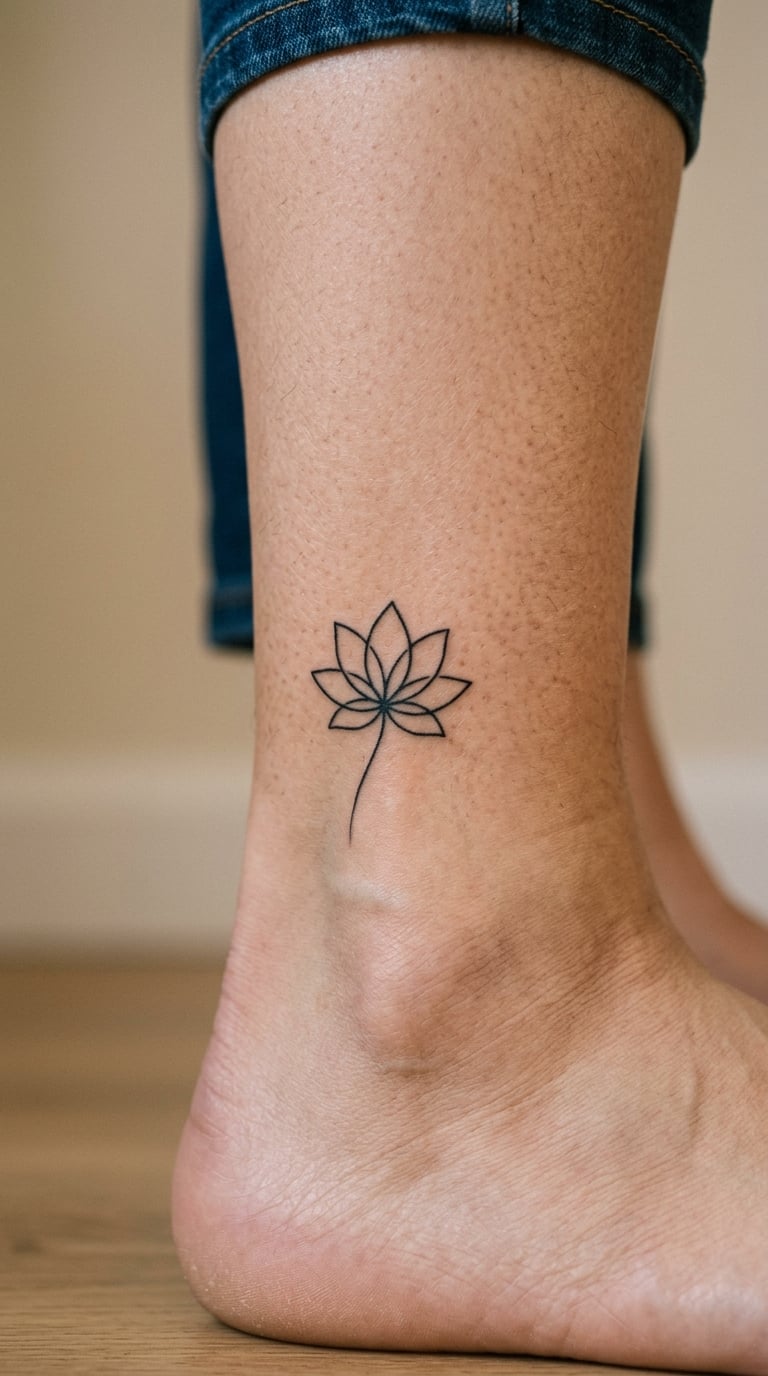
Three to five overlapping petals drawn in one continuous line, no stem, no shading, sitting just above the bone. It reads as a flower at a glance and as an abstract curve up close, which is a nice quality for a small piece.
The lotus is widely used for balance, growth and starting again, and it is one of the most recognisable symbols in the calm tattoo world. That fame cuts both ways: if you want something nobody will recognise, this is not it.
Placement: outer ankle, above the malleolus. Size: 1.5 to 2.5 inches (4 to 6 cm) wide. Style: single line or fine line. Pain: medium, ankle bone is prominent and the session is brief. Ankle linework is one of the faster fade spots because of shoe rubbing and constant movement.
Make it yours: add a single water line beneath the flower, one unbroken stroke, and keep the whole thing under 2 inches.
6. Soft Botanical Branch on the Rib
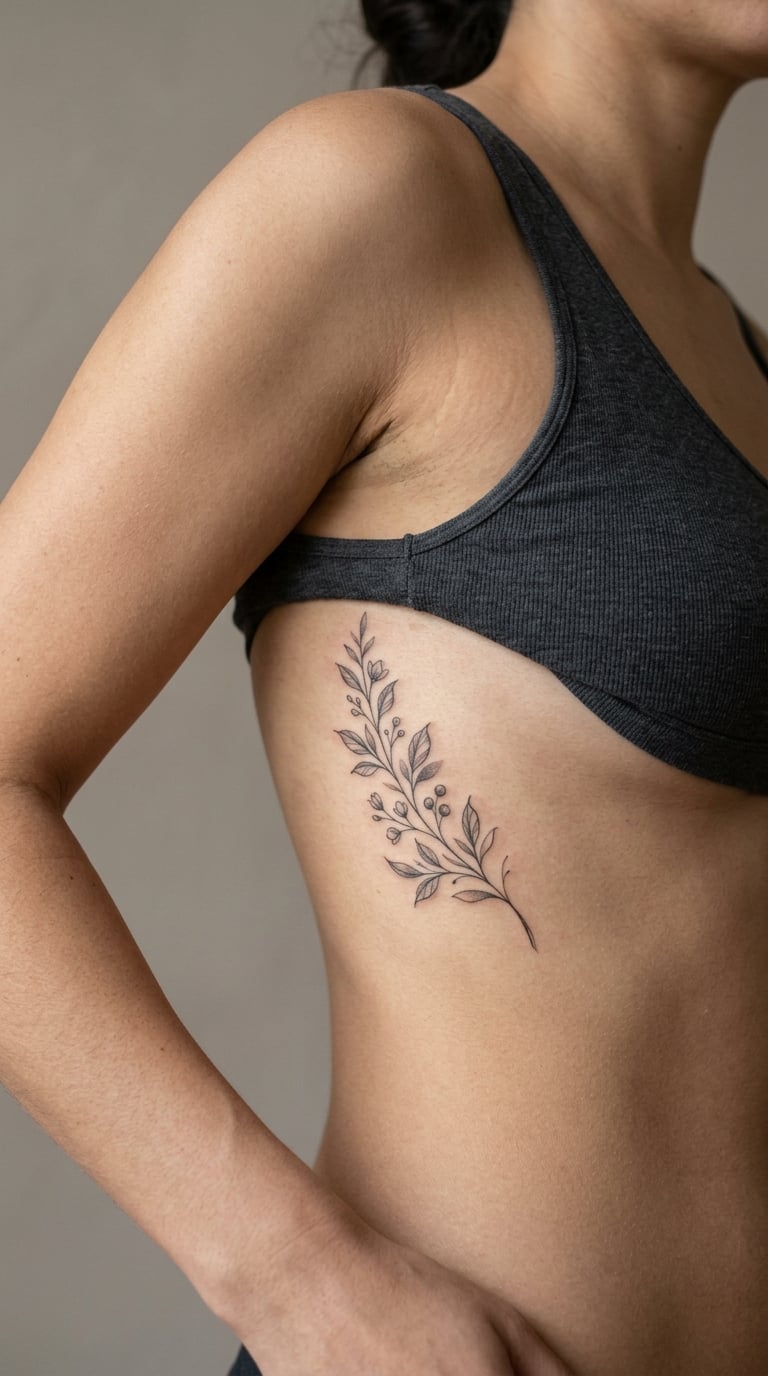
One curved stem with leaves alternating along it, drawn in a light line with a little grey in the leaf undersides. Restraint is what makes this work on a rib, where skin stretches and the design has to flex with you.
People tend to describe this one as growth or a reminder to keep going, usually tied to a specific season of their life. Olive branches and eucalyptus are the two most requested versions. Both are common enough that a small personal detail is worth adding.
Placement: along the side rib, curving with the bone, or higher on the side. Size: 3 to 5 inches (7.5 to 12.5 cm). Style: fine line with light grey shading. Pain: high, ribs are the sharpest common spot and clients who dread this area are not exaggerating. Choose a session length you can manage, and ask for a break halfway.
Make it yours: hand over a pressed leaf of the actual plant so the artist copies the real shape rather than a generic one.
7. Geometric Wave Pattern on the Upper Arm
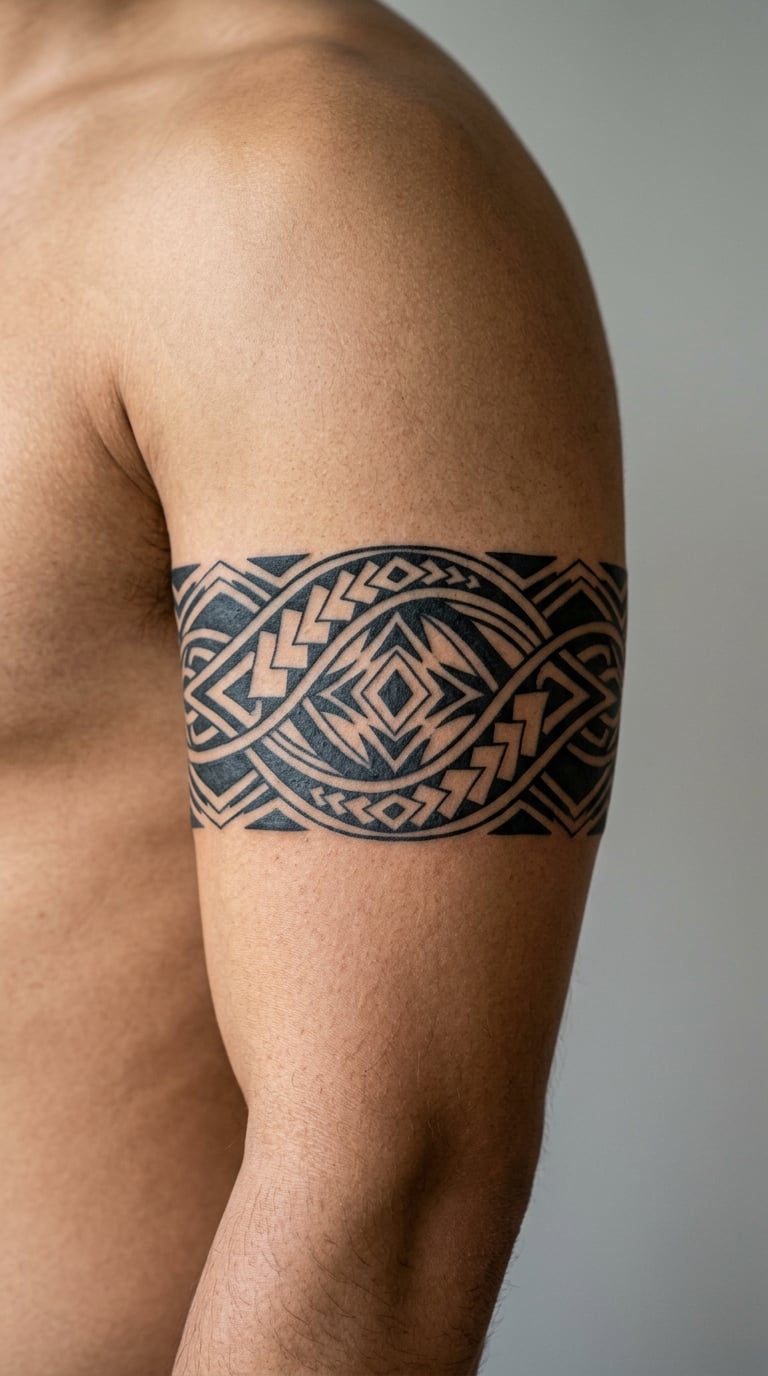
Stacked zigzag and curved bands, each band solid black, repeating up the arm like a printed pattern rather than a drawing. The repetition is the calming element here, similar to counting rows of tiles.
Some people choose geometric work over organic symbols because it is about order instead of meaning. If you are drawn to repetition and symmetry rather than to a story, that is a perfectly good reason, and a good artist will ask you about it.
Placement: outer upper arm, or a half band around the biceps. Size: 4 to 6 inches (10 to 15 cm) tall. Style: geometric blackwork. Pain: medium, the outer arm is a tolerant area. Solid black holds up better than fine shading, though the thinnest black lines inside a pattern still fade first.
Make it yours: vary the spacing between bands, widening one gap slightly, so the pattern is regular without being mechanical.
8. Quiet Heartbeat Line on the Spine
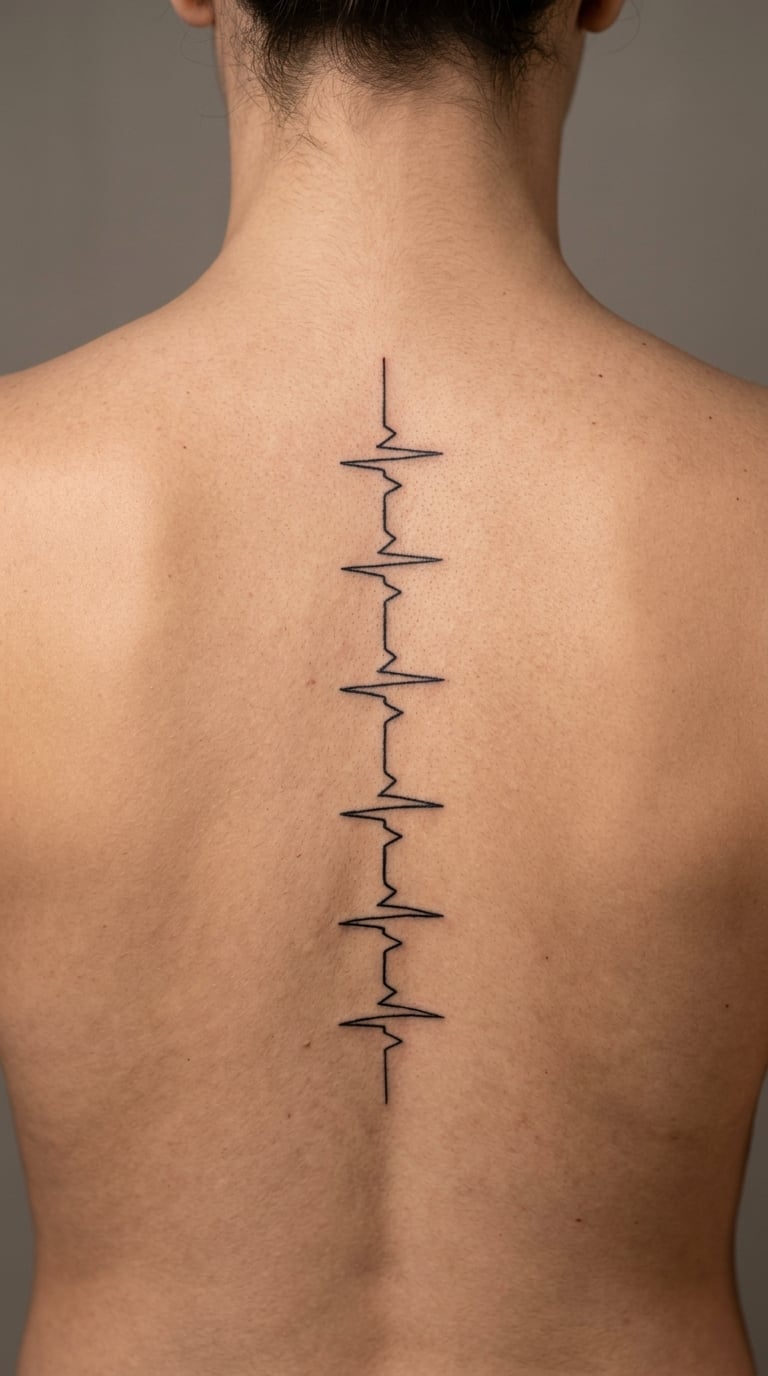
A flat single line with two or three normal beats and one taller spike, the kind of trace a monitor prints when everything is fine. It is a small piece of graphic language that almost everyone already reads correctly.
Most wearers attach it to a date, a person, or a moment worth remembering, and see it as a quiet check-in rather than a warning. Our heartbeat line tattoos and what they mark goes deeper on the variations if you want more than the basic spike.
Placement: vertically along the spine, usually between the shoulder blades. Size: 4 to 8 inches (10 to 20 cm) long, or shorter with a single beat. Style: fine line. Pain: medium, and a long thin design means the machine keeps moving over one sensitive strip of skin, so ask your artist to work in sections.
Make it yours: send a photo of an actual monitor trace you like and let the artist redraw it cleanly.
9. Minimal Mountain Horizon on the Chest
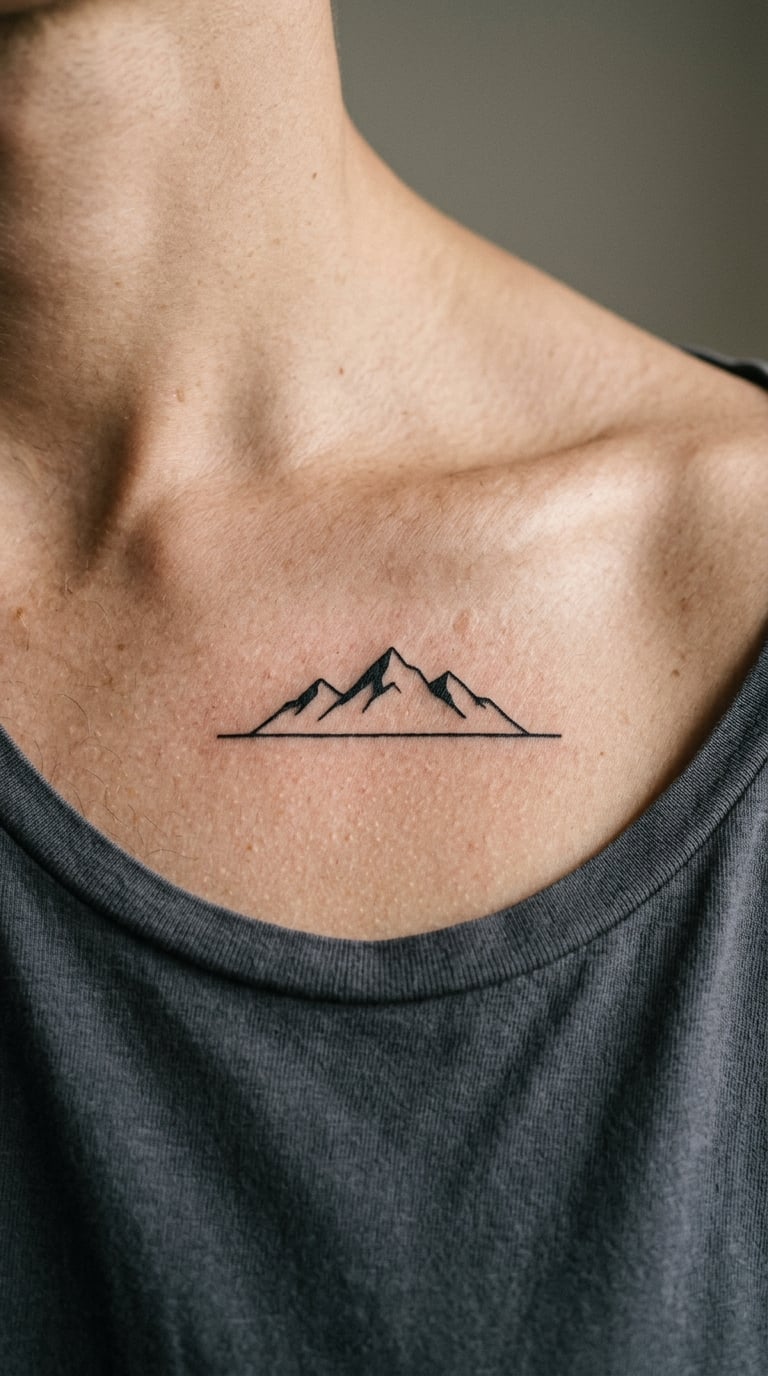
A single horizon line with three or four peaks above it and a soft gradient below, like a photograph taken at dusk. Fewer lines than people expect, and the empty space is deliberate.
Mountain designs tend to be chosen for steadiness, solitude or just a love of being outdoors. The horizontal shape also suits the body, since a wide low design sits naturally on a wide flat area.
Placement: upper chest beneath the collarbone, or between the pecs. Size: 3 to 5 inches (7.5 to 12.5 cm) wide. Style: minimal line with a light gradient wash. Pain: medium, the sternum area is bony. A gradient on the chest is worth keeping very light, since deeper shading shows sun damage faster than line work.
Make it yours: draw your own skyline from memory and hand it over, no detail needed, just the outline of the ridge.
10. Blackwork Crescent Moon on the Neck
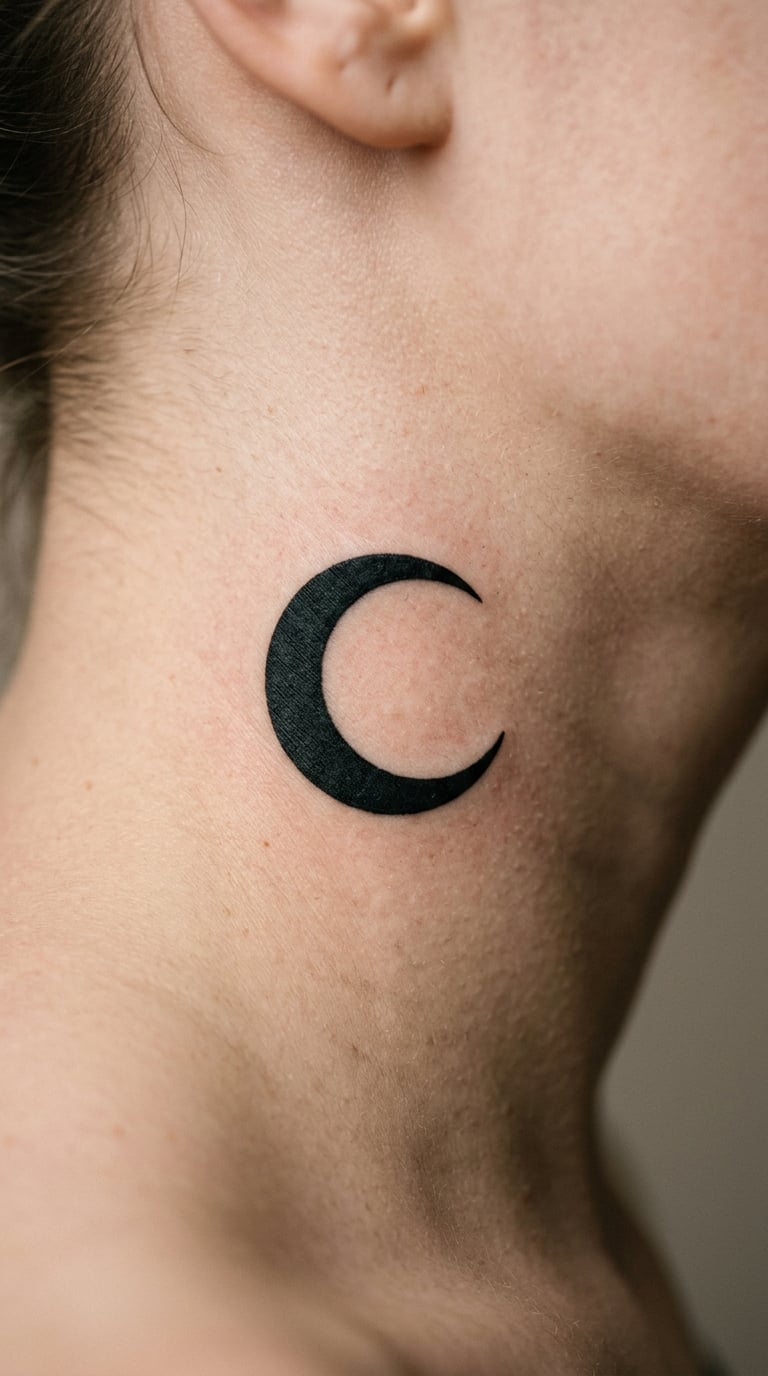
One solid black crescent with a clean inner curve, filled in flat with no gradient and no stars. Solid black is what makes it read from across a room, which is unusual for a design this small.
The crescent is one of the most common motifs in calming tattoo ideas, associated with cycles, rest and the night sky. It is popular enough that you will see it on other people, so if that bothers you, shift the angle or add a personal detail.
Placement: side of the neck, under the jaw or behind the ear muscle. Size: 1.5 to 2.5 inches (4 to 6 cm). Style: blackwork. Pain: high, the neck is thin-skinned and sensitive, and most of the session is quiet sitting. Solid black edges stay defined far better than fine hairlines in the same spot.
Make it yours: rotate the crescent so it opens downward rather than sideways, and let the artist build the curve from one clean line.
11. Fine-Line Tree of Life on the Calf
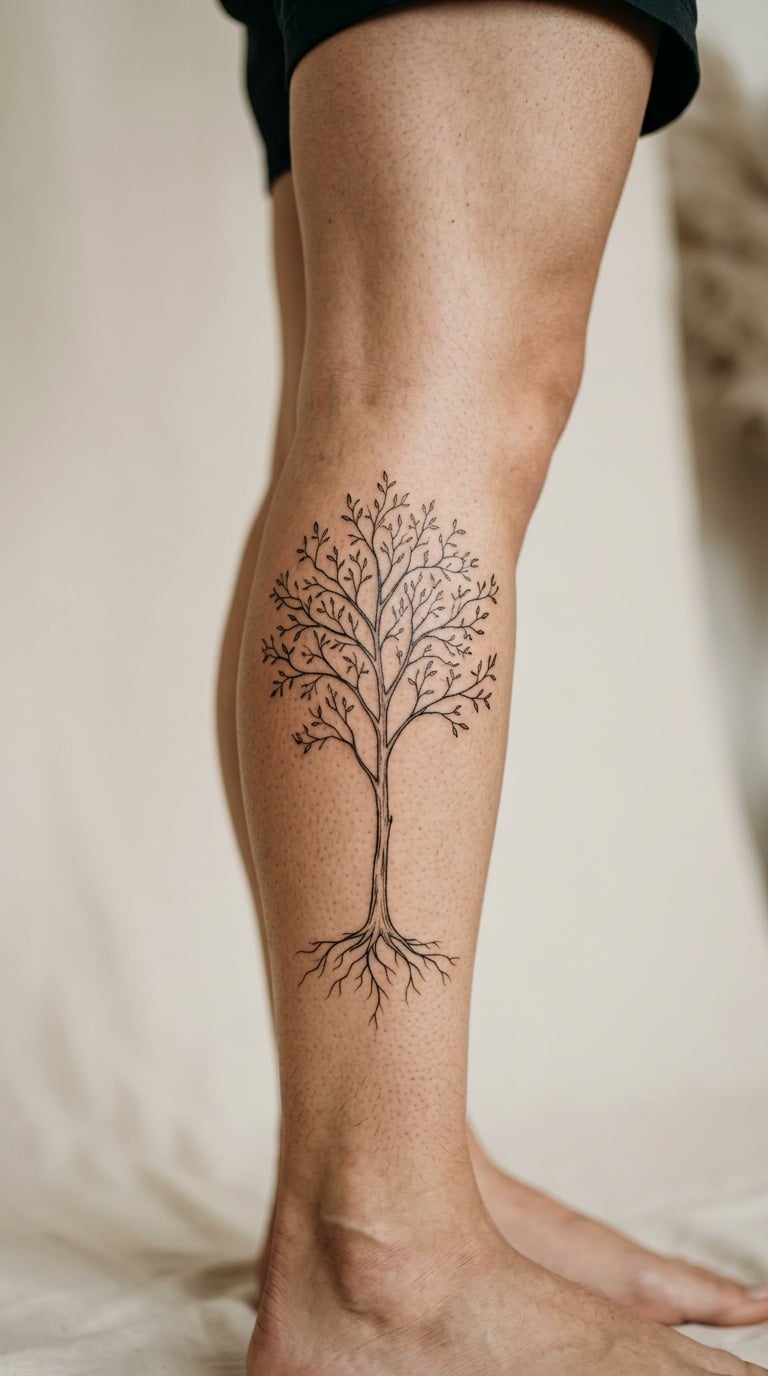
A vertical trunk that thins toward the top, branches spreading in the upper half and mirrored roots in the lower half, all in one consistent line weight. The version that ages well keeps branches simple rather than feathery.
Growth and being rooted are the meanings people attach, and the roots are the part that makes the design read as grounded rather than decorative. Ask for the roots to stay visible; they are often crowded out in a hurry.
Placement: outer calf, running vertically. Size: 4 to 6 inches (10 to 15 cm) tall. Style: fine line. Pain: medium, the calf is comfortable for most people. Fine branches on the lower leg blur first, so keep them short and sparse rather than fine and long.
Make it yours: include initials hidden in the root structure, small enough that they read as part of the drawing.
12. Small Sun with Soft Rays on the Shoulder
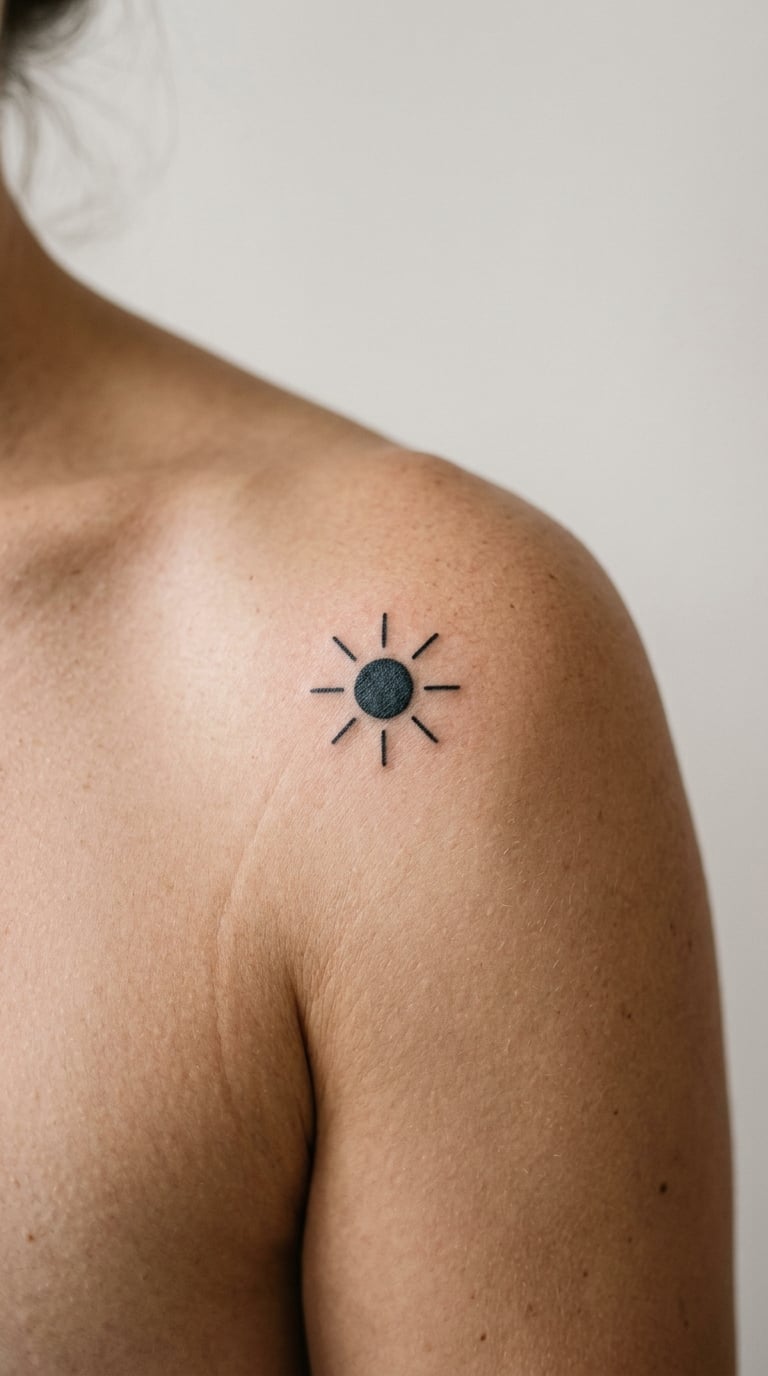
A plain circle with a dozen thin rays spaced evenly around it, nothing else. A dotted circle border is a common alternative, and it makes the piece look more designed without adding weight.
Sun designs are the upbeat option in this list, chosen for warmth and good days rather than for anything solemn. The round shape also sits well on the deltoid, where it curves with the muscle instead of fighting it.
Placement: upper shoulder or deltoid. Size: 1.5 to 2.5 inches (4 to 6 cm) across. Style: minimal line. Pain: low, one of the more forgiving spots for a first sitting. The outer shoulder gets sleeve pressure from bags and seatbelts, so keep the rays short enough to clear that zone.
Make it yours: make one ray longer than the rest, or replace two rays with small dots.
13. Watercolor Lotus on the Back of the Hand
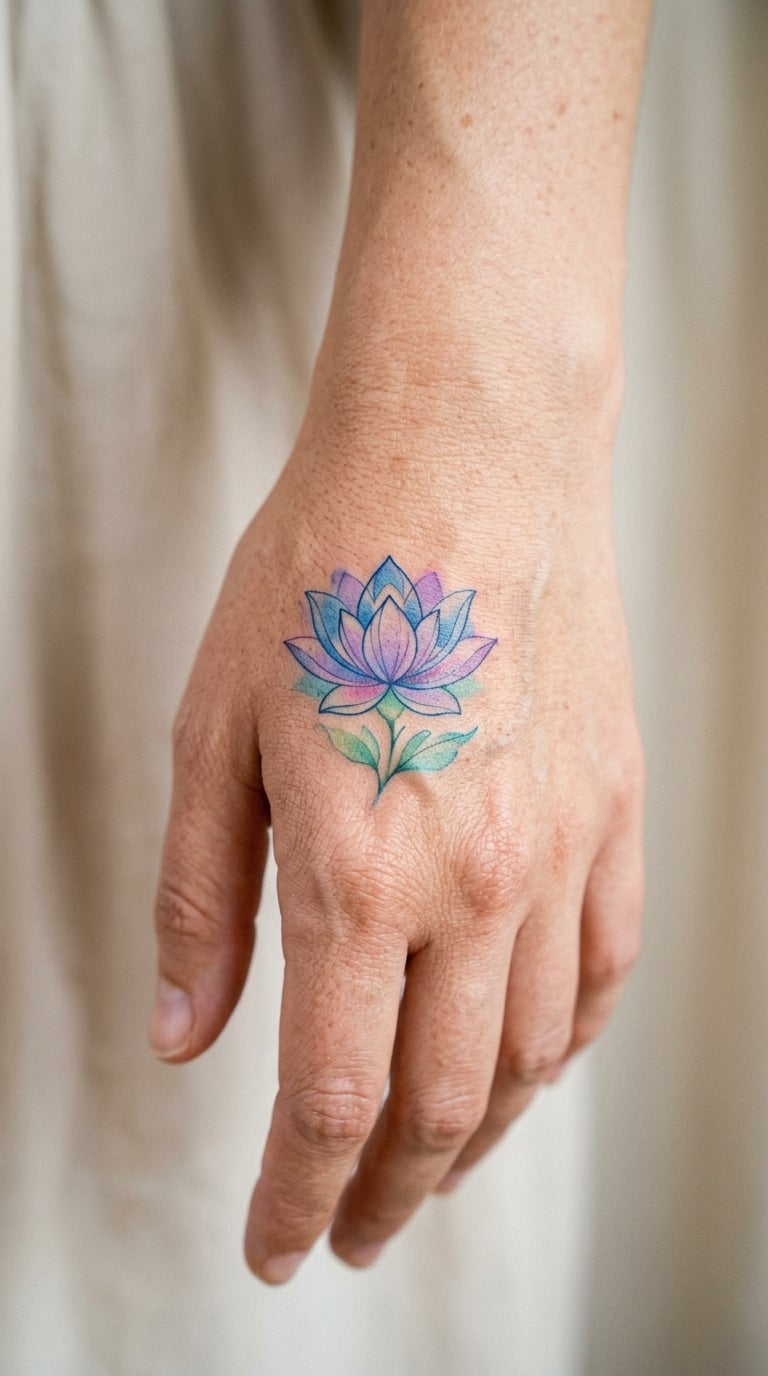
A lotus painted in transparent washes, one colour bleeding into the next, with two or three hard petal edges so the shape stays readable. Too much softness and the flower turns into a smudge within a year.
This is the colourful option for readers who want a real personal symbol and not a line drawing. A flower that opens is easy to read as recovery, but plenty of people just like the shape and the colour, which is reason enough.
Placement: back of the hand, between the knuckles. Size: 2 to 3 inches (5 to 7.5 cm) wide. Style: watercolor. Pain: medium to high, the back of the hand is bony and colour takes time. Hand tattoos fade noticeably faster than the same design on an arm, so plan on a touch-up or a bolder second version.
Make it yours: use one colour only, chosen for a reason you would rather not explain to anyone.
14. Simple Circle Outline at the Sidebar
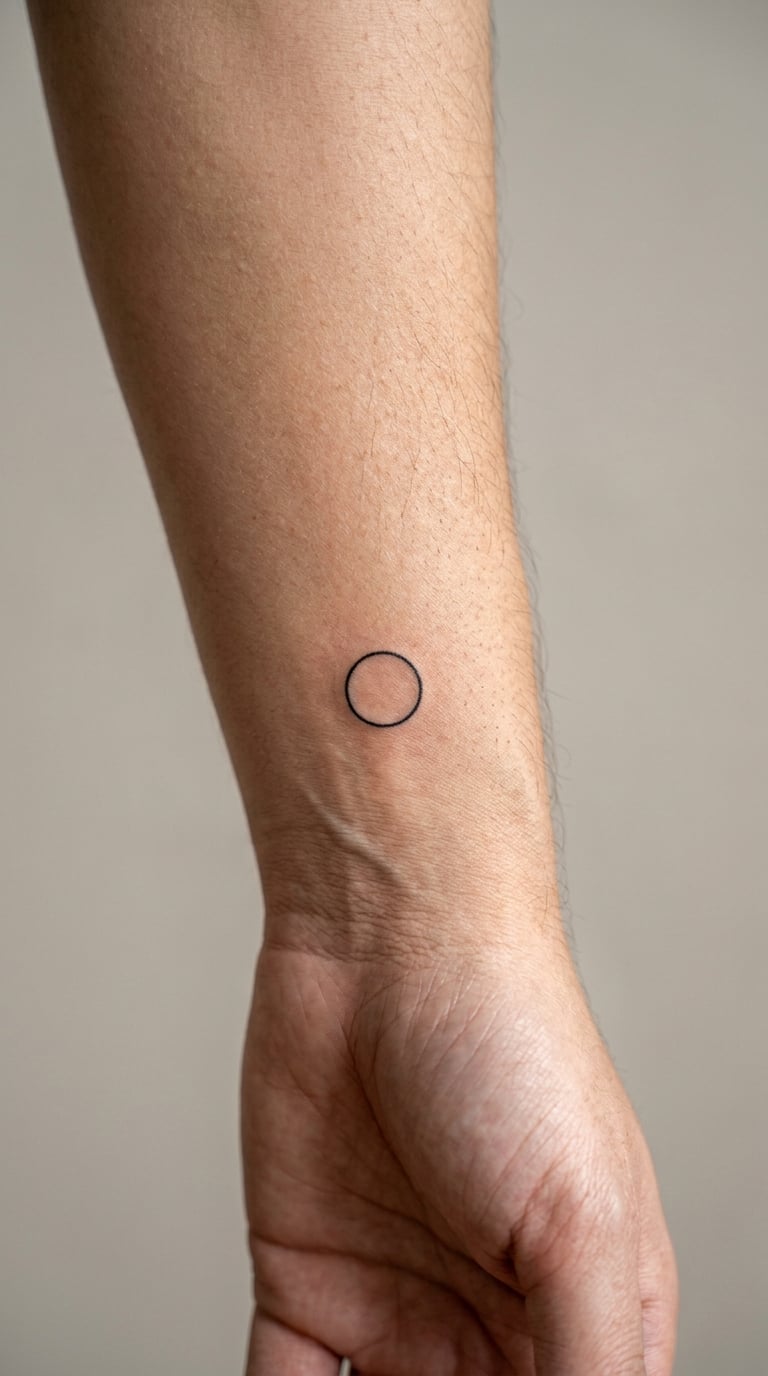
One unbroken line, closed into a circle, about the width of a coin. It takes under a minute to tattoo and it is the easiest design on this list to keep looking intentional for the rest of your life.
Circle motifs go back to the enso, the Zen brush circle painted in one stroke as a record of presence rather than perfection. Most wearers give it their own meaning anyway, often a date or a decision. Nobody else will know which.
Placement: outer forearm near the wrist crease, or the inside of the upper arm. Size: 0.5 to 1.5 inches (1.25 to 4 cm). Style: minimalist outline. Pain: low, and the session is minutes rather than hours. A very thin circle loses its crispness faster than a slightly heavier one, since the whole design is one line.
Make it yours: leave one small gap in the ring, drawn deliberately, so it is clearly a choice rather than a mistake.
15. Dotwork Hummingbird on the Shoulder Blade
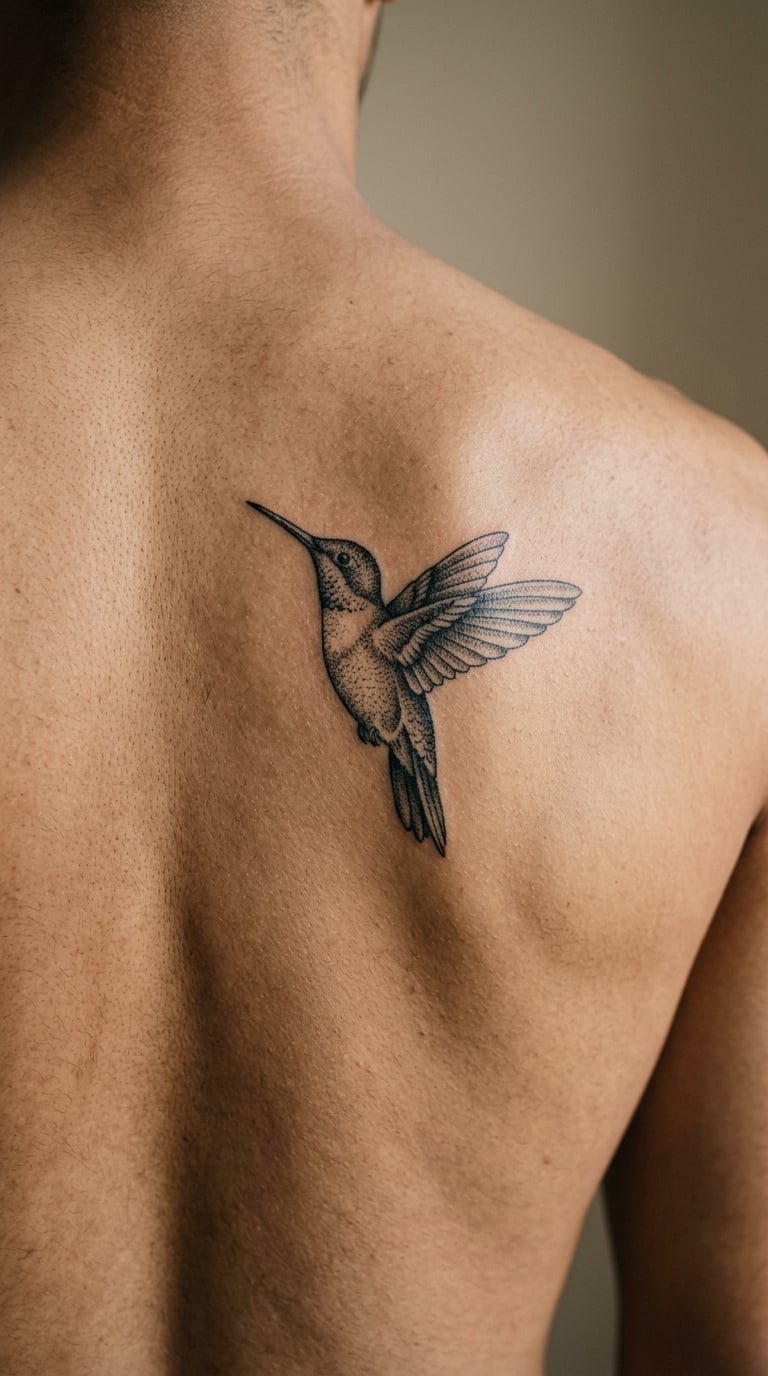
A hummingbird built from stippling, wings mid-beat, body filled with denser dots, beak a single clean line. Dotwork gives you shading inside a shape without any hard outline, so the bird looks soft even at small size.
Lightness and movement are the usual associations, and hummingbirds are popular with people who want energy rather than stillness. It is worth noticing that the symbolism is about motion, not about settling down, which is a fine thing to wear too.
Placement: between the shoulder blade and the upper back, or the inner upper arm. Size: 2 to 3 inches (5 to 7.5 cm) tall. Style: dotwork, with one fine outline for definition. Pain: medium, the shoulder blade is sensitive near the bone. Fine dot detail softens into a grey wash over time, so ask the artist to keep the density contrast strong at the start.
Make it yours: point the beak at a small second dot, like a flower it is about to reach, and keep the second element tiny.
16. Minimal Cloud Linework on the Hip
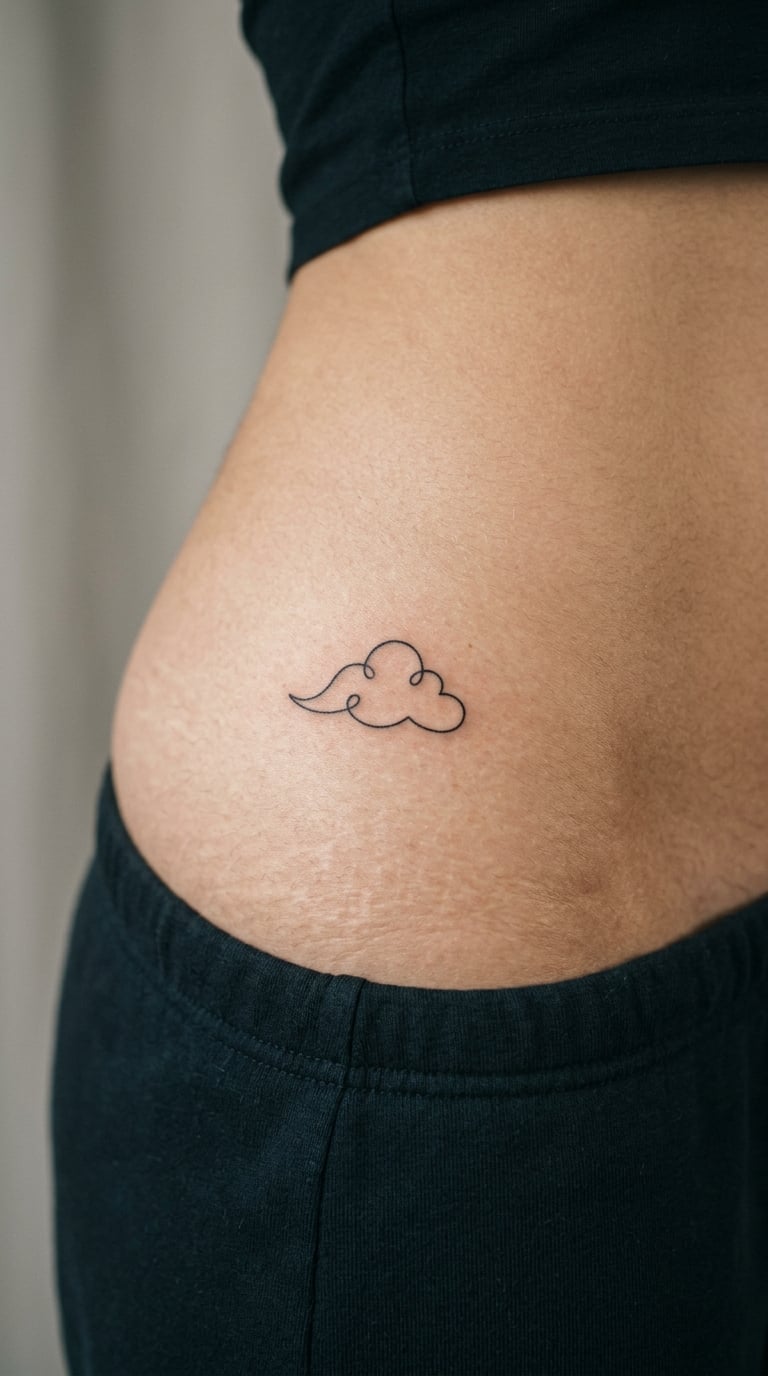
A cloud drawn in one continuous scalloped line, sometimes with a flat base line and sometimes without. Two or three clouds in a row, at different heights, read better than one cloud floating alone.
Clouds get chosen for pause and headroom, the sense of having space above something. The hip placement is a good one for it because the design is wide, and the skin there is stable and rarely exposed to much sun.
Placement: outer hip, above the belt line. Size: 2 to 4 inches (5 to 10 cm) wide for a group. Style: single line. Pain: low, the hip is a quiet area with no bone directly under the needle. Ink on the hip fades more from waistband friction than from sunlight, so keep it above the belt line.
Make it yours: use a row of three clouds in slightly different sizes, which reads as a design rather than a sticker.
17. Fine-Line Feather on the Elbow
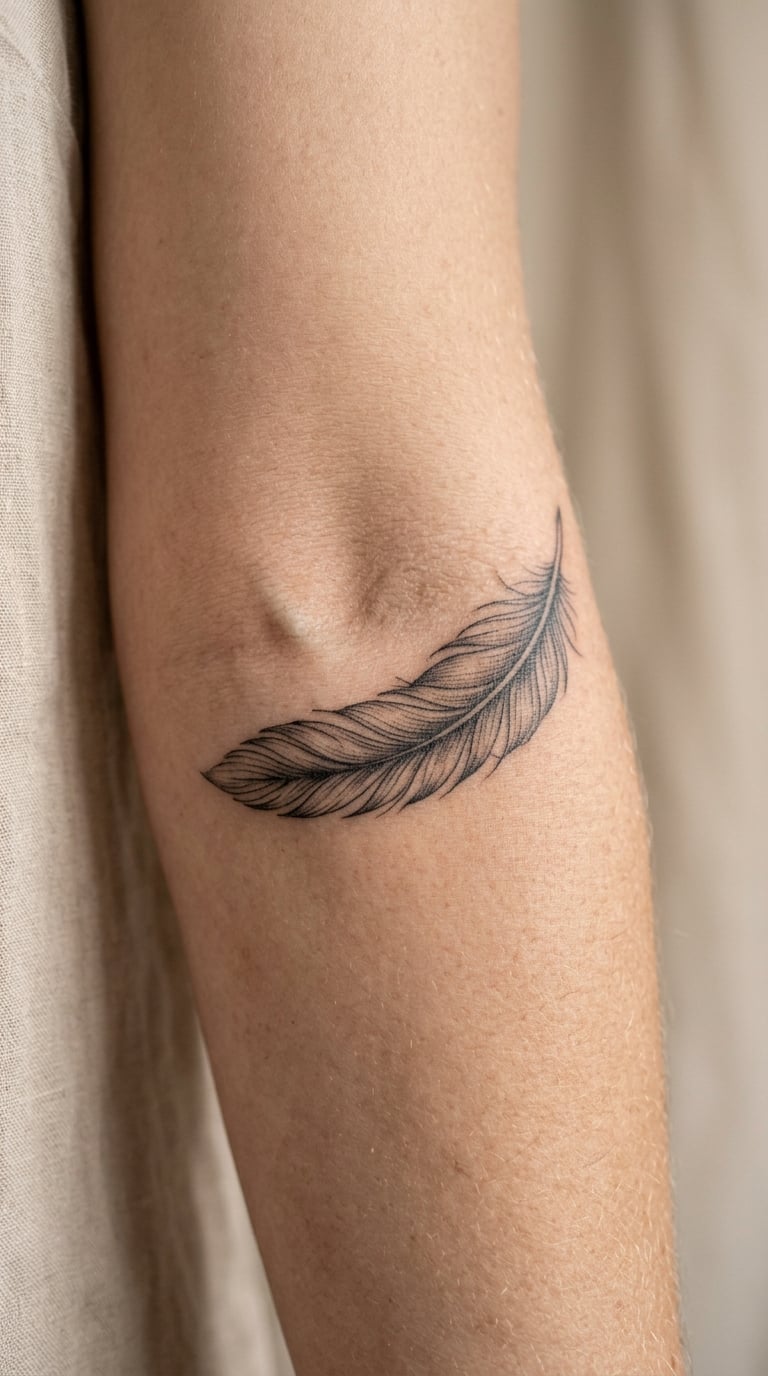
A single feather drawn along the shaft line, with barbs indicated by a few dozen short strokes rather than fully shaded. Most wearers go for a fallen feather look, slightly asymmetric, with a soft curve through the middle.
Feathers carry ideas about lightness and direction that people attach to their own story, often a person or a period they moved through. It is a design that can read as decoration, and there is nothing wrong with that.
Placement: inner elbow, following the crease, or the outer upper arm. Size: 2 to 3 inches (5 to 7.5 cm) long. Style: fine line. Pain: medium, the inner elbow is sensitive and the skin creases constantly. Feather barbs are fine detail on a creasing joint, which is the fastest way to lose definition, so ask for a bolder shaft and a simplified tip.
Make it yours: add a single short line beneath it, like a shadow, to give the feather some lift.
18. Small Waterfall on the Leg
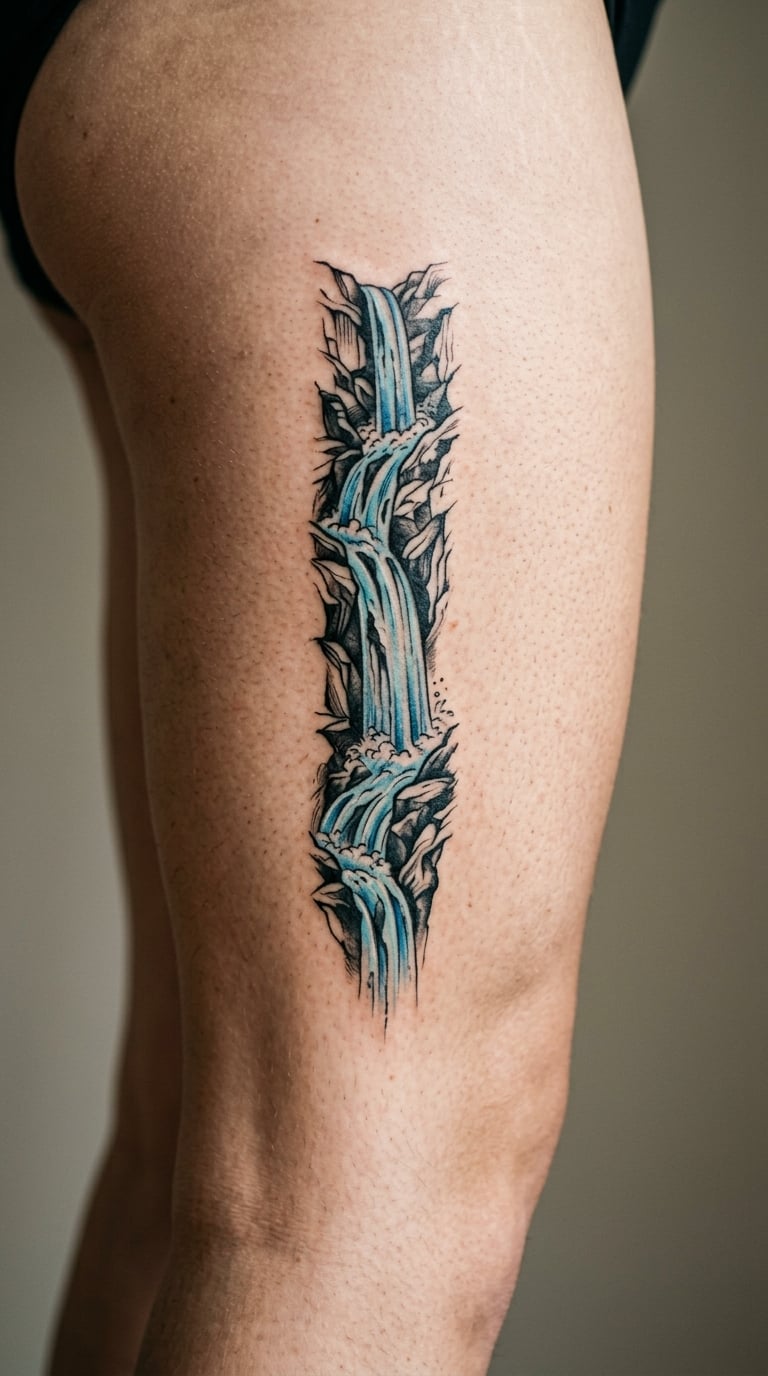
A vertical fall of parallel lines breaking into a few short strokes at the base, with one pool shape underneath. Black outline with a restrained blue wash, kept narrow so it reads as falling water rather than a blue block.
Water is the most common calming image after the moon, and moving water suits people who like the idea of flow rather than stillness. Keep the colour light. A saturated blue on a leg shows every bit of uneven tone and sun exposure.
Placement: outer thigh or calf, running vertically. Size: 3 to 5 inches (7.5 to 12.5 cm) long. Style: fine line with light watercolor. Pain: medium, and the thigh is an easy area that lets a nervous client settle into a longer sitting. The vertical lines in a waterfall lose crispness with age, so thicker strokes are the safer brief.
Make it yours: tuck a single small leaf or stone into the pool at the base, one detail that nobody else will read.
19. One-Word Calm Tattoo on the Forearm
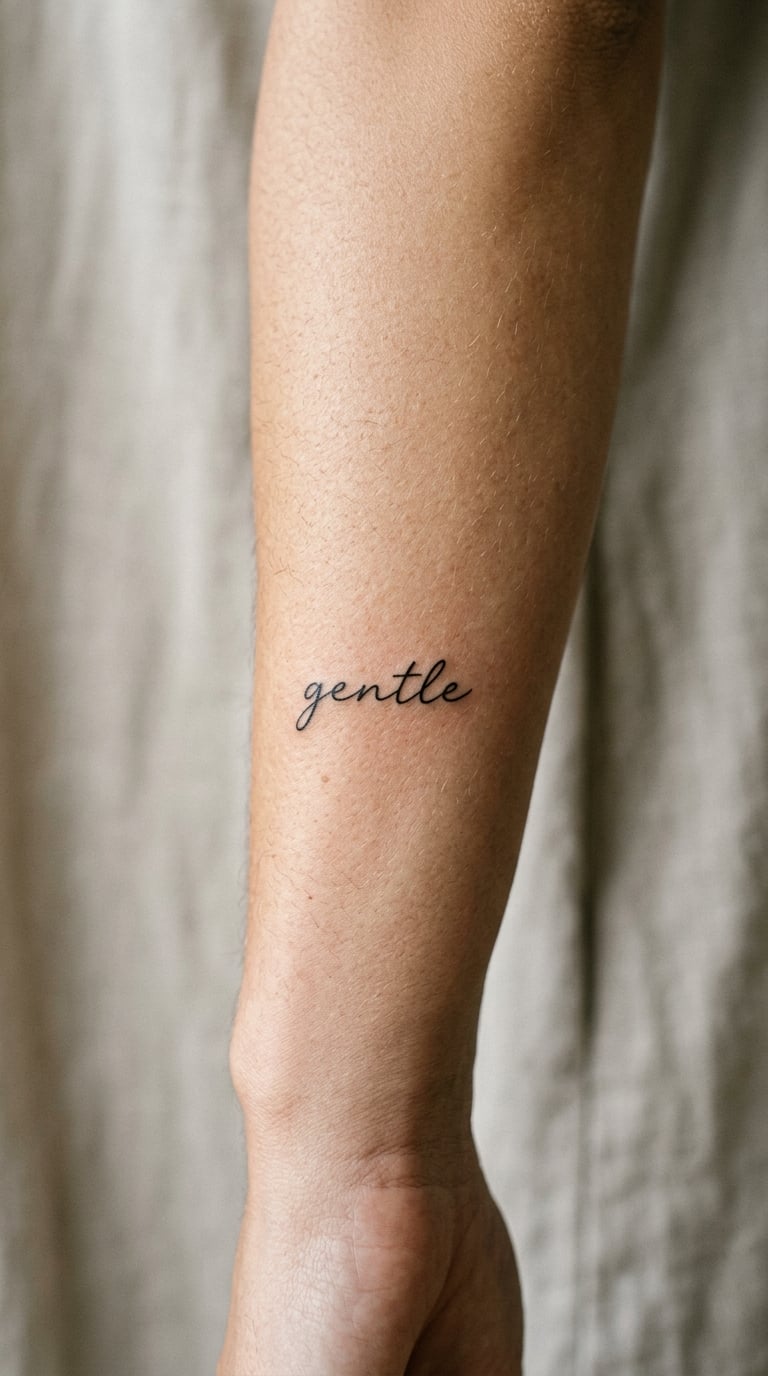
One word in a handwritten or fine script face, thin and lowercase, running along the inner forearm so it reads when you look down at it. Words like breathe, pause, steady, enough and stay come up most often.
Handwriting carries the meaning in these designs, not the word itself. Accounts of mental health tattoos often centre on a single friend’s handwriting used as a grounding cue, which is a good argument for sending your artist a sample rather than choosing a font.
Placement: inner forearm. Size: 1.5 to 3 inches (4 to 7.5 cm) long, depending on word length. Style: fine line script, or a hand-inked look in a clean font. Pain: low to medium, forearm skin is flat and workable. Script is the least durable lettering style, especially on the inner arm, so a slightly heavier line weight is worth asking for.
Make it yours: have one person write the word once, then bring that exact sample to the appointment. If you are still deciding between symbols, our zodiac sign tattoo ideas for men covers the dated-symbol route for readers who want something specific rather than general.
20. Minimalist Safe-Keeping Motif on the Thigh
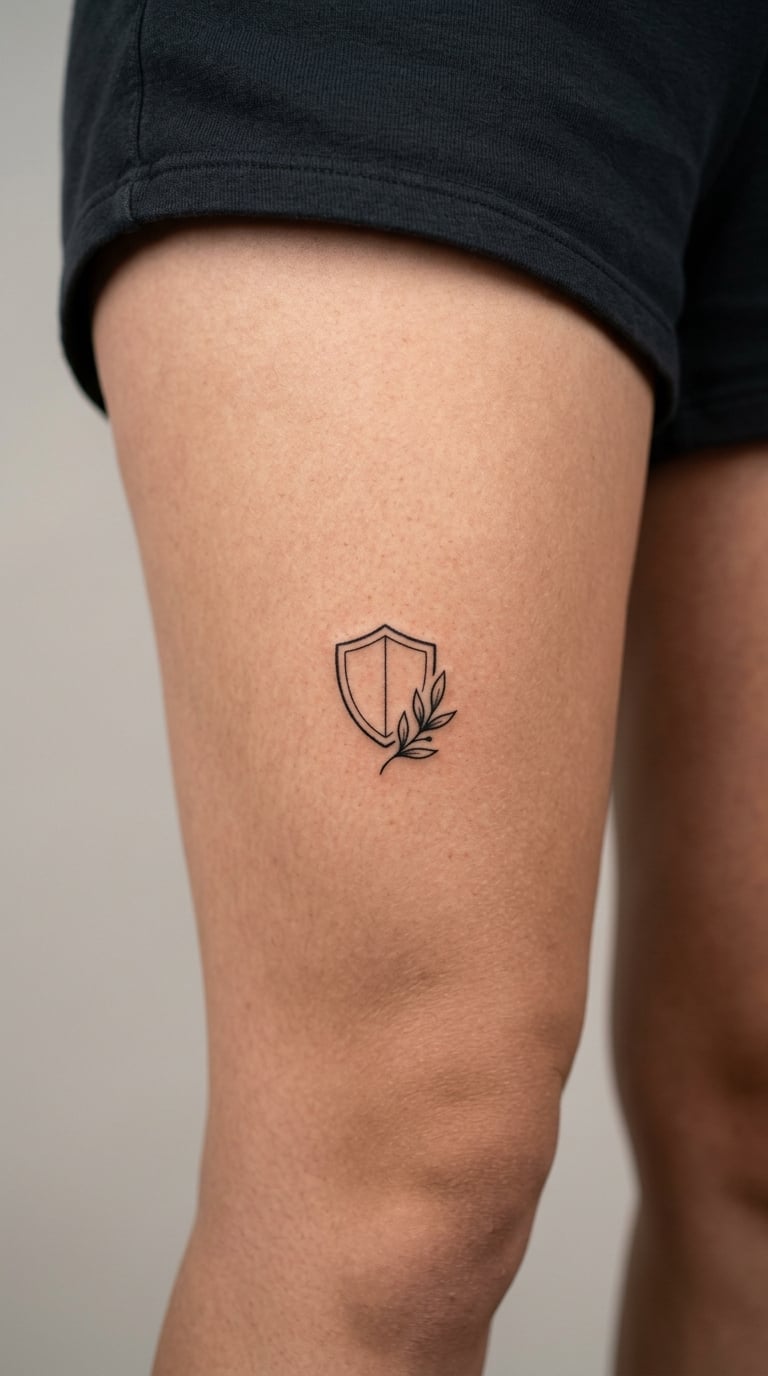
A small geometric shield, a keyhole, or a closed box, drawn flat in black with a single line detail such as a leaf or a star. Kept non-literal, it works as a private emblem rather than a picture of an object.
People describe this kind of design as something that holds or keeps something safe, often tied to a person or a period they got through. Non-literal is the right instinct here, because a literal lock or safe reads as a different idea entirely.
Placement: outer thigh, or the inside of the upper arm. Size: 2 to 3 inches (5 to 7.5 cm). Style: blackwork or bold fine line. Pain: medium, the thigh is comfortable and lets you sit back rather than tense. Solid shapes on a thigh hold well, though the inner thigh near the crease needs care and often fades faster.
Make it yours: put a small initial inside the shape in negative space, so it only shows if you know to look.
How to Choose the Right Design
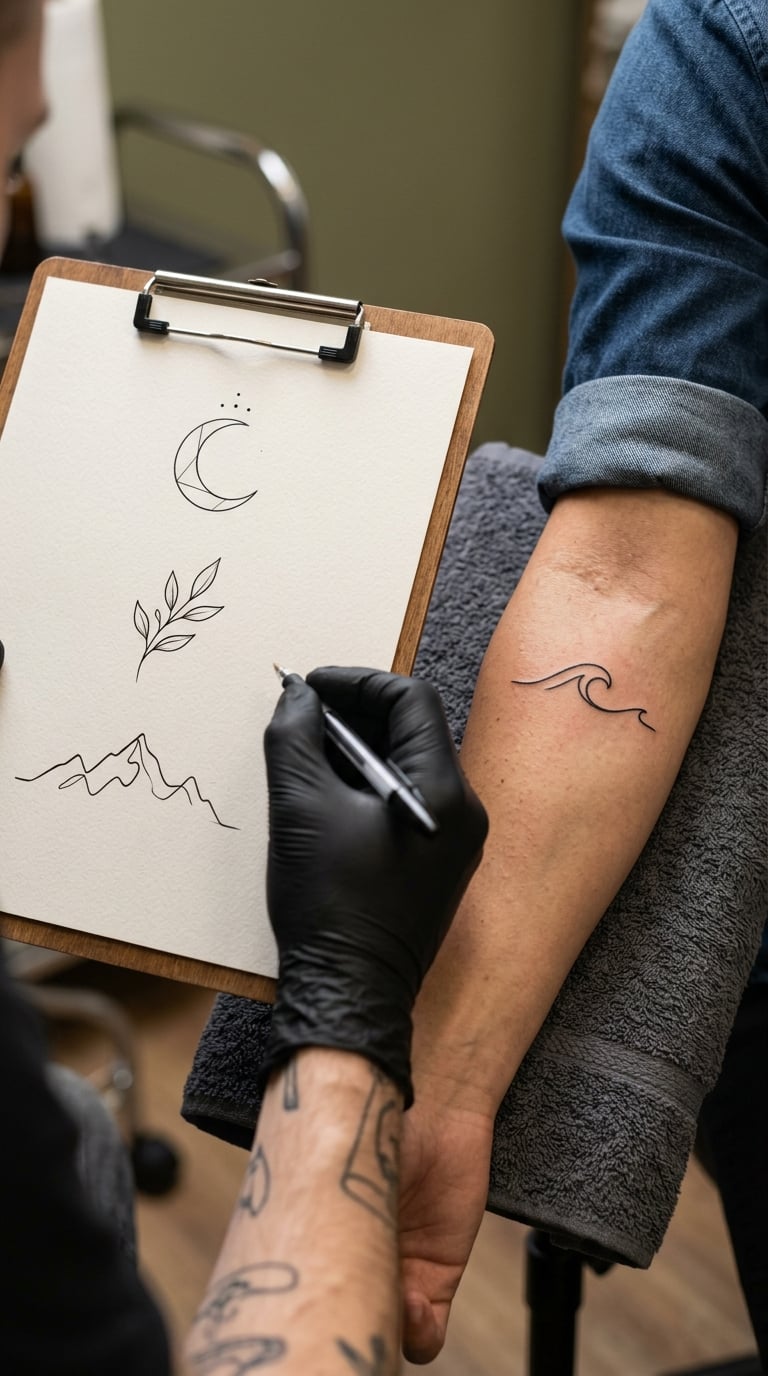
Six things decide whether a calm piece still works in fifteen years, and all six are settled at the consultation rather than in the chair.
Picking a design that will age well
Line weight beats detail, every time. If a design is beautiful at 1.5 inches and needs to be 5 inches to hold its detail, pick a simpler version of it or a bigger placement. Ask your artist what they would change if the piece had to survive a decade of ordinary life.
Sun exposure and movement do most of the damage. Anything on a forearm, hand, ankle or inner elbow fades faster than the same design on a rib, an upper arm or a thigh. Ink on the chest and upper back is relatively protected, which is worth knowing before you fall for a design that only works in that spot.
Matching size, placement and privacy
- Line simplicity. Fewer, heavier lines hold their shape. A design built from hairlines needs a location that does not crease, rub or see much sun.
- Symbol relevance. Pick a meaning you can explain in one sentence to yourself. If you cannot, the design will feel borrowed within a year.
- Placement before scale. Choose the spot, then size the design to that spot. Reversing the order is how people end up with a piece too small to read or too large to sit flat.
- Visibility. Wrist, forearm, chest and neck designs get read by strangers and explained at the coffee machine. Rib, hip, calf, spine and behind-the-ear pieces stay close to you. There is no wrong answer, but pick deliberately.
- Colour restraint. A single accent colour ages better than three. Black and grey always reads cleanly, and if a design only works in full colour, that is fine, just go in knowing it will soften.
- Match the piece to your other ink. A first tattoo wants to be simple and well placed. If you already have a sleeve or a busy forearm, a small quiet piece in a blank area balances better than another detailed one.
One more thing worth deciding early: how much of this do you want other people to ask about? Small inner-arm and rib designs are read as private. Neck and wrist designs read as statements. If explaining yourself to strangers sounds tiring, that is a real design constraint, not a preference to argue with yourself about.
Cost and Session Time
In the US, most studios charge by the hour, and the rate for a working artist usually falls somewhere between 80 and 200 dollars an hour, with the best-known names in cities at the top of that range and rural shops nearer the bottom. A tiny design like the circle outline is often a shop minimum, which many studios set around 100 to 150 dollars. Expect a shop minimum to apply even when the piece takes fifteen minutes.
A small single-line design such as the breathing wave or the paper plane usually takes 20 to 45 minutes. Something like the moon phases, the hummingbird or a one-word script takes 45 to 90 minutes. The full botanical branch, the tree, the geometric pattern or any colour work commonly runs one and a half to three hours.
Detail, colour, placement and artist rate all move the total. Bony or sensitive placements take longer because the artist works more slowly. Colour adds a whole sitting. And a design that a less experienced artist could not execute cleanly will be priced by the person who can.
Book a consultation first, even at studios that do not charge for one. It gives you a realistic session estimate and a chance to find out whether the artist draws in a style you actually like, before any of it is permanent.
Aftercare Basics
Start from your artist’s written aftercare instructions, because they know what they did. Then follow these basics.
- Follow your artist’s aftercare instructions first, and ask for them in writing before you leave the chair.
- Keep the fresh tattoo clean, wash it gently with unscented soap, and pat it dry rather than rubbing.
- Do not soak it in baths, pools, hot tubs or the ocean until it has healed and any scabbing is long gone.
- Leave the scabs alone. Picking them is the most common cause of patchy or uneven healed colour.
- Moisturise a dry or tight area with a thin layer of the ointment your artist recommends, and keep it out of direct sun.
- Wait roughly two weeks before judging the result, and remember the true settled look arrives at four to six weeks.
If the area becomes increasingly red, swollen, hot to the touch, or starts producing thick yellow or green discharge, contact your artist and seek medical advice. Trust the discomfort signal in your own body, and take it seriously.
Frequently Asked Questions
What tattoos represent calm?
The most common calming symbols are the ensō circle, the crescent moon, the lotus, the wave, the mountain horizon and the open circle outline. Words like breathe, pause and steady work in the same way. What matters is that the design has a meaning you can still believe in ten years from now, not that strangers read the right thing into it.
What tattoo is for anxiety?
People most often choose a small single symbol they can see on demand, such as a breathing wave on the inner wrist, a semicolon, a circle outline, or a quiet nature motif on the rib or hip. The common thread is visibility to the wearer and privacy from everyone else, plus a simple shape that survives a long time without needing maintenance.
Can tattoos actually help with anxiety?
Honestly, no tattoo treats anxiety. What one can do is act as a fixed visual cue, the kind of anchor grounding techniques rely on, so a glance at your wrist gives your attention somewhere to land during a spike. Many people describe the ink as a companion rather than a cure. If anxiety is affecting daily life, a doctor or therapist can do far more for you than any design can.
Do small calm tattoos fade faster?
Yes, thinner lines and lighter colour fade sooner, and small designs have less margin for error. Fine line work on hands, wrists, ankles and inner elbows fades fastest because of sun, water and movement, while ink on ribs, upper arms, calves and upper back holds much better. A slightly heavier line weight and a smaller total design are the two easiest ways to buy yourself years of clarity.
What is the least painful placement for a small tattoo?
The outer upper arm, the deltoid, the hip and the outer forearm are the most forgiving spots, with plenty of soft tissue and little bone near the surface. Inner wrists, ribs, the side of the neck and the sternum tend to hurt more. Chest, neck and rib areas also get bumped and scraped in daily life, so a good artist will ask what you do all day before recommending a spot.
How should I pick a design nobody else will understand?
Choose a detail rather than a symbol. A specific date, a private initial hidden in negative space, a word in a friend’s handwriting or a hand-drawn shape from a place that matters to you all carry personal meaning without announcing anything. Broad symbols like the semicolon are widely recognised now, so add one private element if you want the piece to stay yours.
Conclusion: Choose a Design That Feels Personal
If this is your first tattoo, start with something small, quiet and well placed: the circle outline, the breathing wave or the single-line cloud are all forgiving choices that a good artist can nail in one sitting. Save the detailed pieces, the ribs and the fine colour work for when you have a collection and an artist you trust.
Before you book, pick the symbol, pick the placement, and take both to a consultation. Show the artist the references you like, say how big you want it in inches, and ask what they would change to make it last. The right tattoo ideas for anxiety and calm are the ones you will still want to look at when things are quiet.