
How to Sleep After Getting a Tattoo: Positions and Tips (2026)
Learning how to sleep after getting a tattoo comes down to three things: keep pressure off the fresh ink, keep friction low, and keep the bedding clean. Put fresh sheets on before you get home, wear something loose and breathable, and choose whichever position puts the least body weight on the new work. A sheet tucked around the tattoo, never laid straight over it, gives you a buffer all night.
There is no single best sleeping position for every tattoo, and anyone promising you one is guessing. Where the work sits, how big it is, how fresh it is and how you already sleep all change the answer. If you are a side sleeper with a rib piece, you will need a different setup than a back sleeper with a small forearm line.
Whatever your placement, your artist’s aftercare sheet outranks anything you read online. Artists disagree about products and wrapping, and the person holding the machine has seen hundreds of heals. Use the general guidance below to set up your bed, then follow their instructions to the letter.
How to Sleep After Getting a Tattoo: First-Night Essentials
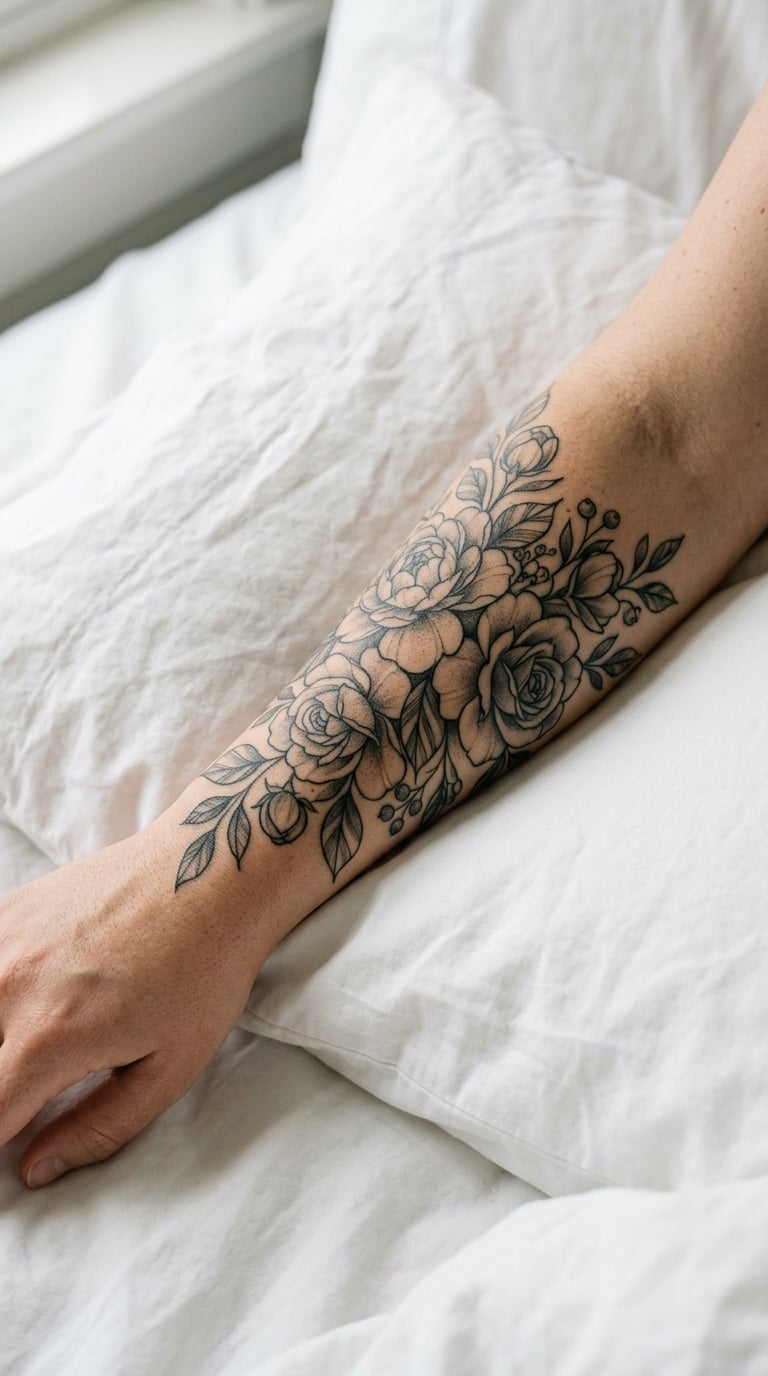
The first night is about isolation, not padding. Fresh tattoo work weeps a clear or pale yellow fluid for the first day or two, and any fabric that touches it directly can wick that fluid and rub the surface.
- Change your sheets the day of the tattoo, not the next morning.
- Wear a loose cotton shirt or a clean old button-up that you do not mind ruining.
- Keep weight, blankets and pets off the inked skin.
- Wrap a clean towel loosely around the area instead of over it, so nothing sticks overnight.
- Follow whatever wrap or film your artist left on, and ask them before you change it.
Resting the tattooed limb on a spare pillow does two jobs at once. It reduces the throbbing that peaks in the evening, and it holds the arm or leg slightly away from the mattress so a restless night does not land on it.
Best Sleeping Positions After a New Tattoo
Back sleeping is the easiest position to work with, because your back takes the weight and your arms, ribs and legs stay clear. It is a good default for the first few nights when the piece is small and on an arm or leg.
Side sleeping is fine as long as you face away from the tattoo and give your body a reason not to roll back. Wedge a firm pillow along your back, or place a body pillow in front of you, so rolling over takes effort. If the tattoo is on the side you normally sleep on, expect the first two or three nights to be a bit of a fight.
Stomach sleeping puts your chest, ribs and front of the thigh under pressure, so it is the worst option for a fresh piece in any of those areas. Plenty of people who sleep face down anyway just accept lighter sleep for a few nights and change the sheets in the morning.
Curling into a ball draws the arms in and presses the forearms against the chest. That is the quiet position that ruins more tattoos than any dramatic face-plant, mostly because it happens without you noticing.
If you do end up with some contact overnight, do not panic and do not peel anything. Get up, wash gently, pat dry with a disposable paper towel and photograph it in daylight before you message your artist.
How to Prepare Your Bed and What to Wear
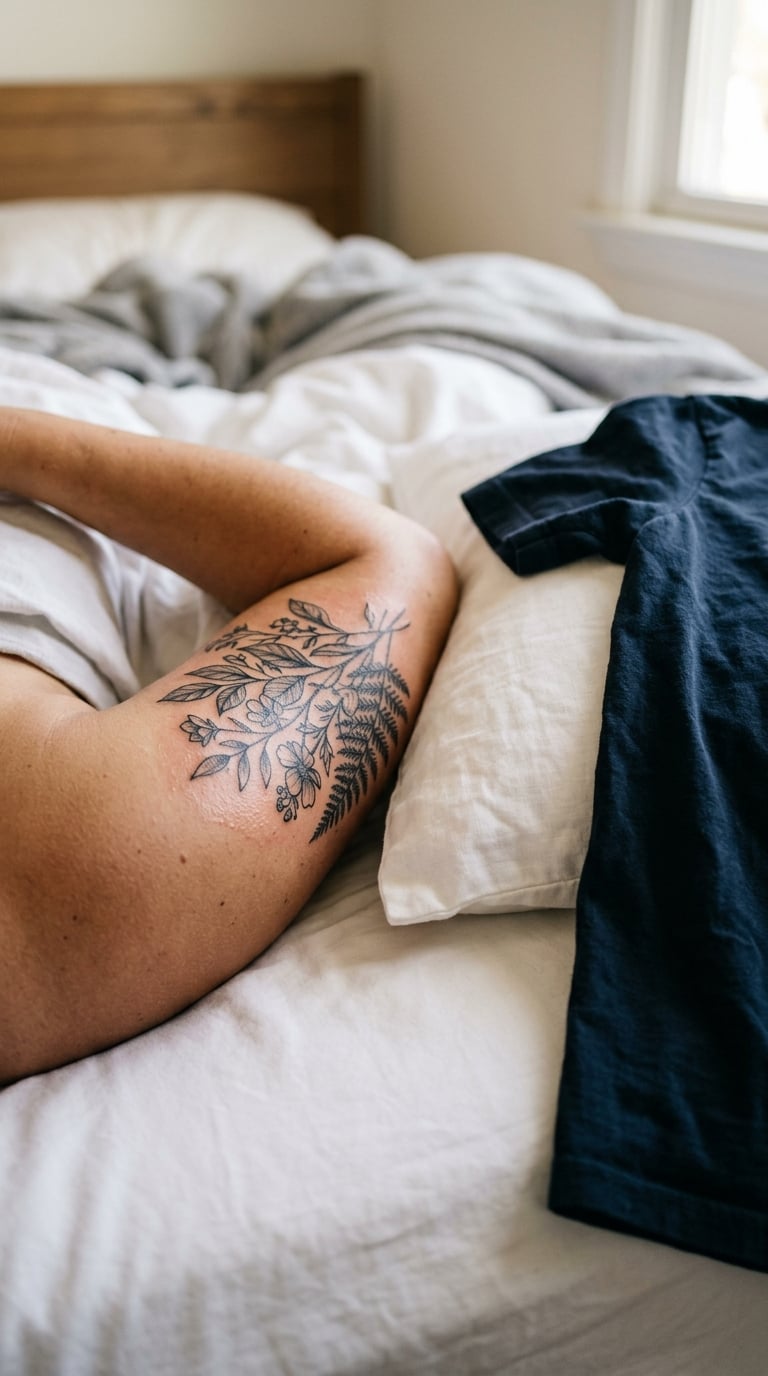
Set the bed up before you leave the studio if you can, because you will be tired and sore by the time you get home. Ten minutes of prep removes most of the temptation to just collapse on top of everything.
- Strip the bed and put on sheets you just washed, or at least ones you would happily lose.
- Use a dark or old pillowcase on the pillow nearest the tattoo, since ink, plasma and ointment all transfer.
- Put a pillow at the foot or side of the bed so the tattooed limb can sit raised and clear.
- Lay out a loose cotton shirt or pyjama set with wide sleeves that will clear the new work.
- Keep the room cool and let pets stay off the bed for the first week.
Sleeve-style and large back pieces need different handling from a small arm piece. For a full sleeve, wear a shirt wide enough that the fabric hangs clear of the shoulder and upper arm, and expect the whole area to feel warm and stiff for a few days.
Back and shoulder tattoos are the awkward ones. You will be lying on the opposite side with the tattoo facing the ceiling, and the sheet will keep sliding toward it, so tuck the sheet edge under the mattress on that side and consider a second pillow between your back and the mattress.
Rib, stomach and side tattoos limit you to back sleeping plus a very careful position change. Chest tattoos on the sternum are similar, since bringing your arms up to your head pulls the skin across the fresh work.
Lower-body tattoos, on the thigh, knee, calf or ankle, are usually the easiest of all. Raise the leg, wear loose shorts or wide pyjama bottoms, and the main risk is the other leg pressing across it while you sleep.
Sleeping Comfort by Tattoo Placement
Every placement has a different pressure profile, so this table compares the pressure you can expect, the positions that work best, one practical adjustment and how the night usually feels. It is a practical risk comparison, not medical advice.
| Placement | Typical pressure | Positions that work | Useful adjustment | Likely comfort |
|---|---|---|---|---|
| Inner or outer forearm | Low unless you sleep curled | Back, opposite side | Elevate the arm on a pillow | Easy after the first night |
| Upper arm or biceps | Low to moderate on that side | Back, opposite side | Wide-sleeve shirt, arm kept clear of your torso | Comfortable with a firm wedge |
| Outer shoulder or deltoid | Moderate when side sleeping | Back, opposite side | Pillow between shoulder and mattress | Moderate, some stiffness |
| Upper back or shoulder blade | High on either side | Back only | Arms crossed low, pillow under forearms | Restless, limited turning |
| Lower back | Very high, most positions press it | Back, optionally on a wedge | Wedge under knees to flatten the lumbar curve | Hardest night of the week |
| Chest or sternum | High on stomach sleeping | Back, opposite side | Keep arms down, loose shirt over the work | Fine if you avoid arms overhead |
| Ribs or side | High when curled or side sleeping | Back, opposite side | Firm wedge behind the back | Tight, breathing feels shallow |
| Hip or upper thigh | Low | Back or either side | Loose shorts, raise the leg | Comfortable quickly |
| Knee or kneecap | Moderate when curled up | Back or opposite side | Bend the leg loosely, no tight sheets | Fine unless you nap curled |
| Ankle or foot | Low | Almost any position | Raise the foot, keep socks loose | Hardly worth thinking about |
| Hand or wrist | Low pressure but constant contact | Back, opposite side | Raise the forearm above the mattress edge | Uncomfortable if it presses flat |
One note on wrists and hands: these tattoos rarely get crushed, but a sleeping hand resting flat against the sheet keeps the skin warmed and damp, which is exactly the condition that makes peeling start early. Keeping the forearm raised solves it.
Tattoo Care Timeline and Sleep by Week
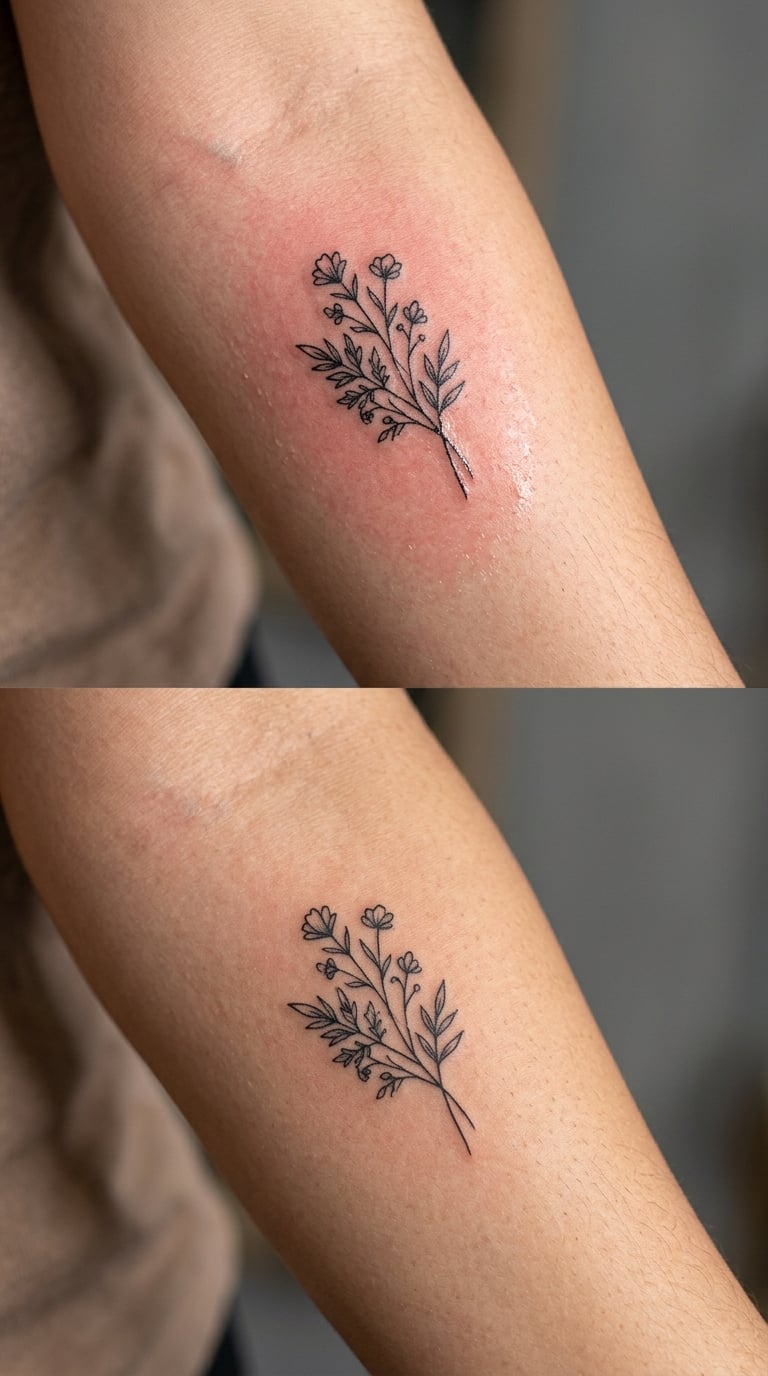
Healing is gradual, and the rules change as the tattoo moves from an open wound to new skin. This timeline shows what is typically visible, how sleeping pressure tends to feel, and when care generally becomes less restrictive. Follow your tattooist’s instructions above any general schedule, because they know how deep your work went.
| Stage | What you will see | How sleep feels | Care focus |
|---|---|---|---|
| Day one | Redness, warmth, mild swelling, possible clear or pale plasma | Sore and throbbing, pressure is uncomfortable | Clean sheets, no pressure, minimal product |
| Days two to three | Ink and fluid residue, skin may feel tight and glossy | Itching starts, tenderness eases | Wash as instructed, thin ointment, change bedding daily |
| Week one | Dryness, flaking or peeling, colour looks hazy under the flakes | Itchy, especially at night, less painful | Moisturise as directed, do not pick flakes |
| Week two | Peeling mostly finished, new skin forming, colour settling | Comfortable, occasional itch | Return to normal soap and moisturiser |
| Weeks three to four | Lines look sharper and more saturated, skin smooths out | No longer tender | Sleeping on it is usually tolerable for most placements |
Most people find the itch peaks around day four or five and fades by the end of week two. Nighttime is when you notice it most, because there is no distraction and heat under a duvet makes it worse.
Cooling balms with menthol are reported by tattooed people as the most useful thing for a night-time itch, though they are not for everyone. If you use one, apply it thinly and keep it off the tattoo itself if it stings, since the skin is still open in places.
What New Tattoos Typically Cost by Size
Sleep is the aftercare question, but budget is the question people actually ask in the chair. Most US tattoo shops bill by the hour, with a shop minimum that covers the first block of time.
| Size | Typical US range | What usually drives it |
|---|---|---|
| Small, under 2 inches | USD 80 to USD 250 | Flat hourly rate against a shop minimum |
| Medium, 3 to 6 inches | USD 200 to USD 600 | Detail level and whether colour or black and grey |
| Large, half sleeve or back piece | USD 800 to USD 2500 | Many hours, larger canvas, finer shading |
| Multi-session | USD 1500 to USD 6000 and up | Full sleeves and large back pieces, usually split over several sittings |
Shop hourly rates in the US commonly run from about USD 80 to USD 250, and the top of that range usually means a booked artist with a wait list. Artist rates, geography, detail, colour, shop minimums and session length all affect the final figure, so treat this table as a planning range rather than a quote.
Budget one more visit than you think you need on a large piece. Artists split long sessions on purpose, because skin that has been open for five hours heals worse than skin given a proper break.
Mistakes to Avoid
Pressing your face or your tattoo into the pillow is the most common avoidable mistake. Cuddling a pillow against fresh ink feels soothing and does the opposite of what you want, so keep the pillow on the other side of the bed.
Wearing tight clothing or synthetic sleepwear traps heat and moisture against the skin. Cotton or bamboo that hangs loose is the safe choice, and an old shirt you have worn since college is the classic move.
Rough sheets and heavy bedding add friction all night. If your weight is high, sleep under something lighter and put the blanket on the side away from the tattoo.
Applying lotion, balm or scented products before bed without asking your artist is a gamble. Layering several products on fresh skin keeps it damp and can slow the heal, and scented products are a known cause of skin reactions while healing.
Covering a fresh tattoo under a tight duvet traps warmth and sweat. A tattoo needs airflow and a cool room, so if you run hot, lower the thermostat rather than wrapping up the work.
Forgetting to change soiled bedding is the most avoidable of all. Plasma, ink and ointment transfer within a night, and a stained pillowcase pressed against healing skin is exactly the friction you are trying to avoid.
Assuming every early skin change is an infection is also worth calling out. Redness, itching and flaking are all normal parts of healing. Signs that deserve a phone call to your artist or doctor are spreading redness, red streaks running away from the tattoo, yellow or green discharge with warmth, a fever, or pain that gets worse after day three instead of better.
Getting back to a rough sleep position too early is the last one. Even a healed-looking tattoo has weeks of new skin underneath, so build up to sleeping on it gradually rather than on day four.
Frequently Asked Questions
Can I sleep on my new tattoo?
Not on night one if you can avoid it. The skin is an open wound and any sustained body weight presses against it for hours, which is a common cause of ink loss and patchy healing. Choose a position that keeps pressure off the work, change your sheets, and sleep on the tattoo once your artist says the new skin has closed, usually around two weeks.
Should I wrap my tattoo overnight or let it breathe?
Follow your artist. If you left the studio with a second-skin film, a breathable transparent dressing like Saniderm or Tegaderm, leave it on and sleep through it. If you have cling film or a sticky bandage, remove it before bed, wash the area, and let it breathe. Wrapping airtight plastic overnight traps sweat and heat against fresh ink.
What if I accidentally slept on my new tattoo?
It happens to almost everyone. Get up, rinse the area with lukewarm water and unscented soap, and pat it dry with a disposable paper towel rather than a cloth one. Never pull fabric that has stuck to the tattoo; wet it with warm water, wait a minute, then peel gently. Photograph it in daylight and message your artist if the skin looks raw.
How long until it is safe to sleep on my tattoo?
Most people can manage light contact on a small arm or leg piece somewhere in the third or fourth week, once the surface has fully re-epithelialised. Back, chest and rib tattoos take longer because they sit against a mattress from any angle. Your artist knows how much skin was disturbed in your session, so ask them before you test it.
Why does my fresh tattoo itch so much at night?
Itching is a normal part of healing and usually peaks around day four to six as new skin forms and old skin sheds. Heat under the duvet makes it noticeably worse at night. Keep moisturising as your artist instructed, keep the room cool, and resist picking, which is the fastest way to pull ink out of a healing line.
Is there one best sleeping position for a new tattoo?
No, and anyone who insists there is has not slept on a rib piece. Back sleeping gives the least pressure, but it is only practical if your tattoo is not on your back. For anything on your torso, the practical answer is back sleeping with a wedge or body pillow that makes turning over awkward, and a tucked sheet edge that stops the bedding sliding onto the ink.
Getting the First Night Right
Strip the bed, put on the loose shirt, and settle into a position that keeps your weight on the side opposite the tattoo. That is the whole job for tonight. Everything else, from wrapping to ointment to how many nights you keep the setup, follows your artist’s instructions rather than a generic list.
If you are still planning what to get next, our picks for tattoo ideas that symbolize protection and minimalist tattoo ideas for anxiety and calm are worth a look before you settle on a placement you will have to sleep around for two weeks.