
How Often Should You Moisturize a New Tattoo? (October 2026)
Moisturize a new tattoo one to two times a day, in a thin layer, and start once the skin has stopped weeping, usually within the first day or two. If your artist told you to wait longer, follow them. Most people over-moisturize rather than under-moisturize, and the fix is almost always less product, not more.
That answer surprises people who have read five different guides and got five different rules. The honest truth is that frequency is the most variable part of tattoo aftercare, and almost all the anxiety about it comes from advice that never explains what “too much” actually looks like.
I have watched friends overdo it in both directions in the first week. The over-moisturizers ended up peeling longer than the people who did almost nothing. So this guide settles the frequency question first, then covers product, placement and the stage-by-stage schedule. Your artist always outranks this page, because they can see your skin and I cannot.
How Often Should You Moisturize a New Tattoo?
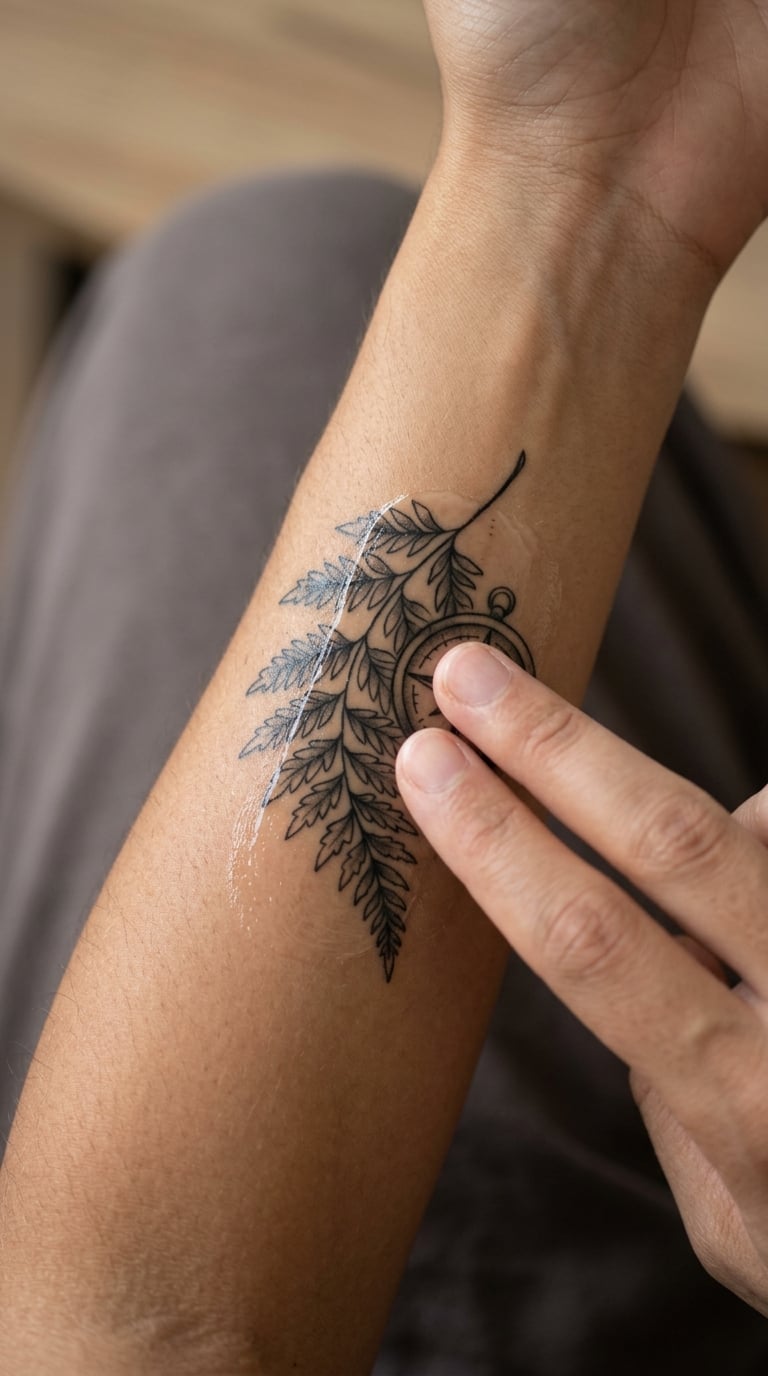
Here is the short version. One to two times a day, thin layer, start when the weeping stops. Do not soak the tattoo, do not scrub it, and do not reapply on a fixed schedule if the skin is not dry.
There are really only two jobs for moisture on a fresh tattoo. Too little and the skin tightens, cracks and scabs, which pulls ink upward and slows things down. Too much and the surface stays soggy, pores clog, small bumps form and healing drags out.
The goal sits between those: the tattoo should look slightly dewy, never glossy. If you can still see skin texture through the product, you have the right amount. If light bounces off it like a mirror, wipe some off.
What Does a New Tattoo Need During the First Few Days?
Wash it. Fresh tattoo skin needs cleaning more than it needs moisturizing, and cleaning is what actually keeps it moving.
Most artists want you to wash with lukewarm water and a mild unscented soap, then pat dry with something clean rather than rub. Twice a day is plenty. Morning and night, right there in the shower or at the sink, is the easiest rhythm to keep.
After washing, give the surface a few minutes before you touch it again. That short window of open air is what the community means by letting it breathe. Moisture works best as something you add back after a wash or after the skin dries out, not as a coat you keep reapplying on top of the last one.
Reapply when the skin feels dry or tight, which is usually right after a wash. Never leave a scab to be softened by scrubbing. A scab that comes off on its own is the scab coming off correctly.
Which Moisturizer Is Best for a New Tattoo?
Plain, unscented and boring is the goal. The community treats three ingredients as deal breakers: fragrance, alcohol and exfoliating acids such as lactic, glycolic or salicylic acid.
A petrolatum-based ointment like Aquaphor is a common first choice in the earliest days. It seals out water, so use it sparingly, and expect the white residue it leaves in the days after application. Many people switch to a plain unscented lotion or an aftercare balm once a light scab appears and the skin starts to peel.
Ordinary body lotion works only if the ingredient list is clean. Heavily fragranced lotions, anything with essential oils, and scented shea-butter blends are the ones that cause burning in the first week.
Whatever you pick should support your artist’s aftercare sheet rather than replace it. The artist knows what they put in your skin and what your particular piece needs.
Should You Wait Before the First Application?
This is the split that causes the most stress, so here is the reconciliation. The rule is simple: your artist’s instruction wins, full stop. If they said to wait three to five days, wait three to five days. If they told you to start after the first wash, do that.
Behind that instruction sits a genuine disagreement, and both camps have a point. Wound-care nurses generally favour a moist environment because skin repairs itself faster when it is not allowed to dry out and crack. Long-experience tattooers often favour letting the tattoo air-dry first, on the view that a sealed surface traps plasma and ink run-off.
Dry healing, where you wash and apply nothing at all for several days, is a legitimate choice rather than a mistake. It suits people whose skin is oily or whose artist asked for it. The trade-off is more cracking and more scabbing, and a stronger chance of the ink looking hazy while that resolves.
Whichever camp you are in, the frequency rule above still holds once you start. Thin layer, once or twice a day, and let the skin dry out in between.
How to Apply Moisturizer Without Damaging the Tattoo
Wash your hands first, properly, not a quick rinse. Your hands carry more than your tattoo needs.
Take an amount about the size of a grain of rice for a small piece, or a pea for a forearm-sized one. That sounds tiny, and it is the number that keeps most people in trouble on day one.
Spread it in short, light strokes with clean fingertips. Do not rub, scrub, or drag the product back and forth. You are smoothing a layer on, not buffing it in.
Run the dewy-not-glossy test. Tilt your arm under a lamp and look at the reflection. If you see a bright highlight across the whole design, you have too much.
Avoid hot showers before application, since heat opens everything up, and stop yourself from touching the tattoo to check it. Most of the damage people inflict on their own new ink comes from inspection, not from showering.
A slightly heavier pass at night is fine. It soaks in while you sleep, and the morning layer can be lighter. Most people settle into exactly that rhythm.
How Often Should You Moisturize a New Tattoo by Healing Stage?
Frequency is not a clock. It is a response to how dry the skin is, and the skin’s dryness follows a predictable curve. This schedule is a reasonable baseline that most people find works.
| Stage | Frequency | Product | What done looks like |
|---|---|---|---|
| Day 0 to 1 | Usually none, or one light pass if the artist allowed it | Artist’s product only | Skin may be weepy, shiny or sore. Just clean and pat dry. |
| Days 2 to 3 | Once or twice a day | Thin ointment layer | Dewy, not glossy. Still no pain beyond mild tenderness. |
| Days 4 to 7 | Twice a day | Ointment or aftercare balm | Skin starts to tighten and flake. Itch replaces soreness. |
| Week 2 | Once or twice a day | Switch to unscented lotion if you were on ointment | Peeling in flakes, like dry skin. Colour looks faded under the flakes. |
| Weeks 3 to 4 | Once a day, only when dry | Any plain unscented lotion | Smooth. Treated as normal skin again, minus sun exposure. |
| Month 2 and beyond | No dedicated tattoo care | Whatever you use on the rest of your body | Healed. The line work should have settled and sharpened. |
If your skin is dry sooner than this table suggests, moisturize. The table is a floor for comfort, not a target to hit.
Tattoo Moisturizing and Healing Timeline by Week
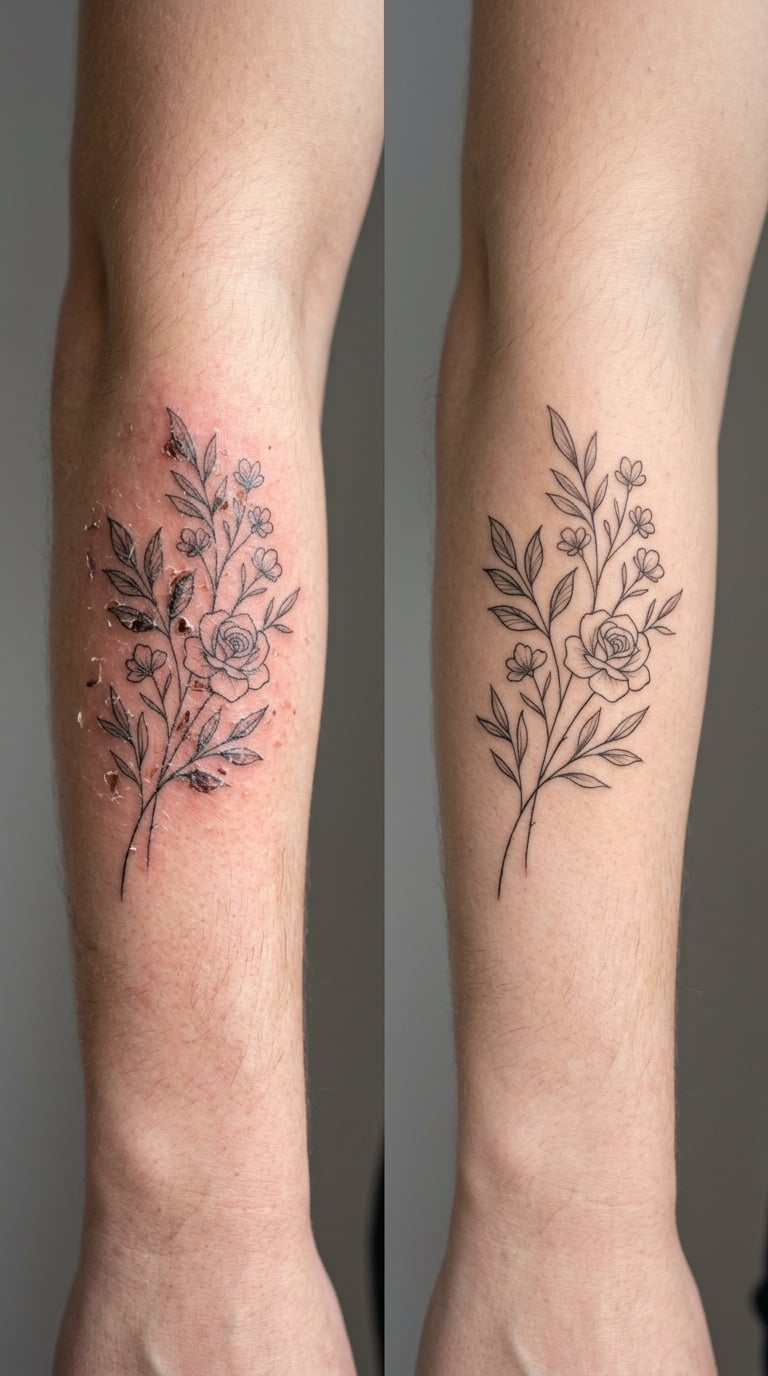
Healing is not linear, and your tattoo will not look identical to the schedule on any given day. Some people barely scab at all. Others peel heavily. Both are normal.
| Week | Typical appearance | Likely dryness | Moisturizing approach |
|---|---|---|---|
| Week 1 | Red, tender, slightly raised, maybe weeping in the first days | Low to moderate, increasing daily | Begin when the weeping stops. Twice a day, thin layer. |
| Week 2 | Peeling and flaking, colour looks muted or faded | Moderate, concentrated in the flake patches | Once or twice a day. Let the flakes come off on their own. |
| Week 3 | New skin underneath, still a little pink and shiny | Low | Once a day when tight, then stop. |
| Week 4 | Mostly healed, dark, heavily packed blackwork may still look raised | Minimal | Treat as normal skin. Keep it out of strong sun. |
That hazy look right after the first peel worries people more than anything else in the process. It is not damage. Ink sits deeper than the surface layer, and the skin has not finished settling. By around the two-month mark the lines normally look sharper and darker than they did at week two.
Pain by Placement: Where New Tattoos May Feel More Sensitive
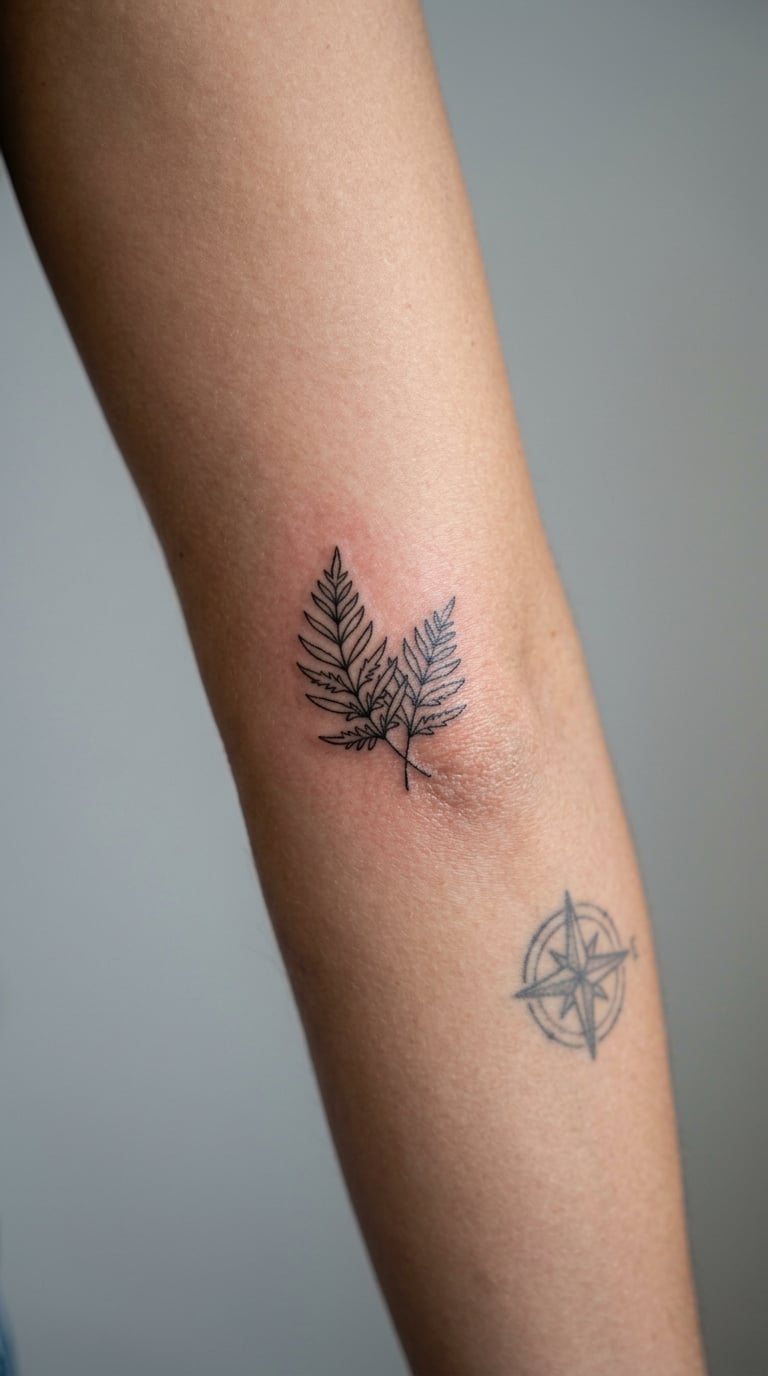
Pain tells you almost nothing about how a tattoo is healing. Plenty of painless tattoos crack and scab, and plenty of brutal ones heal without a hitch. Use this table to plan for friction and dryness, not to diagnose anything.
| Placement | Typical pain | Moisturizing note |
|---|---|---|
| Outer upper arm | Low to moderate | Easy access, rarely stretches. Twice a day suits it well. |
| Forearm or inner arm | Moderate | Contact with sleeves and desks. Expect extra dryness. |
| Wrist | Moderate to high | Rubs against cuffs and watches. Dry out faster than you expect. |
| Elbow or knee | High, and it keeps going | Joint skin stretches every time you move. Cracking is common, so plan for a third light application. |
| Hand or fingers | High | Washing all day at work. Pat dry more often, moisturize more often. |
| Neck | Moderate to high | Collar friction and shaving. Avoid a heavy night layer against your collar. |
| Ribs or side | Moderate to high | Stretches when you breathe and twist. Friction with waistbands is the issue here. |
| Thigh or calf | Moderate | Large flat areas hold moisture well, but work trousers cause rubbing. |
On a high-movement piece, more moisture is often the wrong fix and protection is what the area actually needs. Skin that never gets a chance to dry out tends to crack and split instead of peeling cleanly, and that slows the whole thing down.
Price by Size: What to Budget for a New Tattoo
Tattoos are priced by the hour, not by the design, so size translates almost directly into cost. The table below describes relative tiers rather than fixed amounts, because rates vary enormously by city, shop and artist.
| Size | Typical size in inches | Session length | Where it sits |
|---|---|---|---|
| Small | Under 2 in (5 cm) | Under an hour | Shop minimum tier |
| Medium | 2 to 4 in (5 to 10 cm) | 1 to 2 hours | Mid tier |
| Large | 4 to 8 in (10 to 20 cm) | 2 to 4 hours | Mid to high tier |
| Sleeve scale | Full arm or leg | Many sessions | High tier, planned over months |
Detail drives cost as much as size does. A small piece that is mostly flat black work moves fast. The same footprint with fine shading, white ink or a full colour palette takes far longer, and detail is where the hourly rate really bites.
Three other things move the total: shop minimums, which set a floor regardless of how small the piece is; travel, if your local rates are low; and the consultation, which some shops charge separately. Ask about the hourly rate and the minimum before you commit.
For most first tattoos, the money is better spent on an artist whose aftercare instructions you can actually reach than on the cheapest rate in town.
Mistakes to Avoid
Follow your artist’s aftercare instructions before anything else on this list. Where they differ from general advice, they win.
- Over-washing. Washing once or twice a day is enough. Scrubbing the tattoo strips ink and irritates skin that is trying to close.
- Soaking. Long baths, swimming and pool water soak a fresh tattoo. So does a hot shower that runs directly over it.
- Fragranced or acidic product. Fragrance, alcohol, essential oils and exfoliating acids are the ingredients behind most burning reactions people report.
- Thick layers. The fix for a dry tattoo is a thinner pass, more often, not a heavier one. A sealed, soggy surface clogs pores and forms bumps.
- Picking scabs and peeling flakes. Both come off on schedule if you leave them alone. Pulling them is how people end up with patchy colour later.
- Wrapping it too tightly. A breathable layer for a night of sleep is fine on a large piece. Tight plastic wrap traps sweat and heat against a wound.
- Changing your routine mid-heal. A sudden switch to a new product in week two is when reactions appear. If something is wrong, message your artist rather than experimenting.
Signs You Are Moisturizing Too Much
These are the checks people most often ask about. If two or more show up, cut back to a rinse and pat dry for a day.
- A surface that stays greasy or shiny hours after you apply.
- Small white or red bumps forming on or around the tattoo.
- Skin that never feels fully dry between applications.
- Peeling or flaking that runs longer than about two weeks.
- A scab that keeps reforming instead of hardening and falling away.
- Itch that gets worse after you apply, rather than easing.
Too much lotion rarely damages the artwork. What it does is stretch the healing time, and the cost shows up weeks later as patchy colour rather than as a visible problem in the first week.
When to Call Your Artist or a Doctor
Start with your artist for anything about the tattoo itself, since they can see it. Then consider a medical professional if the redness is spreading rather than fading, the area feels hot to the touch, swelling is increasing, there is pus or yellow discharge, you run a fever, or the pain gets worse instead of settling over several days.
A mild itch, some flaking and tenderness that eases are ordinary healing, not warning signs. This guide is general aftercare information and not medical advice.
Frequently Asked Questions
Should I moisturize a new tattoo every day?
Yes, for most of the first two weeks. Once or twice a day is enough to keep the skin from cracking, and skipping a day only matters if the tattoo is actually dry and tight. Some people do fine with a single morning pass, especially on a small piece. Follow your artist’s aftercare sheet if it specifies something different.
How many times a day should I moisturize a fresh tattoo?
One to two times a day is the safe ceiling most tattooers quote, and a thin layer is the part that matters more than the count. If you are moisturizing four or more times daily, the tattoo is probably staying damp rather than dry. Tie applications to washing instead of a clock so frequency follows what your skin is doing.
Can I use regular body lotion on a new tattoo?
Only if the ingredient list is clean. Unscented, alcohol-free lotions without lactic, glycolic or salicylic acid are generally fine from around the second week. Skip heavily fragranced products, anything with essential oils, and scented shea or cocoa blends. A burn or sting in the first few days usually means the product, not the tattoo.
Should I moisturize a tattoo when it is peeling or scabbing?
Yes, but the aim is comfort, not removal. A very thin layer softens tight skin and takes the edge off the itch, which is what most people are chasing. Do not pick or scrub the flakes or scabs. If the peeling has run past roughly two weeks, reduce the amount rather than increasing it.
How long should I keep a new tattoo moisturized?
For about two weeks of dedicated care, then a light unscented lotion as part of normal skin routine while the new skin finishes settling. By the four-week mark most people stop using a tattoo product entirely. Ongoing care is simply the same as any other skin, with sunscreen on the area once it is fully healed.
What if my tattoo feels tight between moisturizing?
Tightness is a signal to moisturize, not to worry. A thin layer should take the tightness off within an hour or so, and the skin should feel dewy rather than glossy. If tightness returns within minutes of applying, you have either used too little or too much, and the amount is usually the thing to adjust first.
A Simple Moisturizing Routine for Your New Tattoo
Start with what your artist told you, in writing if they gave it to you. If there is no written sheet, wash the tattoo gently twice a day with lukewarm water and a mild soap, then pat it dry.
Moisturize only when the skin is dry or tight, which is most often straight after a wash. One to two times a day, a layer thin enough that you can still see skin texture through it. Lighter in the morning, slightly heavier at night is a rhythm many people settle into.
As the weeks pass, reduce rather than increase. By week three, most tattoos are happier with a once-a-day pass or none at all.
And if you are ever unsure whether you are doing too much, the test is simple: the tattoo should look dewy, not glossy. That single check settles most of the anxiety that sends people searching for another answer. Updated for 2026.