
20 Best Tattoo Ideas That Symbolize Protection (September 2026)
Tattoo ideas that symbolize protection come from amulets, animal guardians, knots, runes and watchful eyes, and people wear them to hold onto a promise through a hard season. The symbols with the longest track record are the hamsa hand, the nazar eye, the Celtic endless knot, the algiz rune and the owl, though a shield, a key or a mountain range does the same job in a plainer line. What matters most is that you can say out loud what the mark means to you and that the artist can draw it cleanly at the size you want.
Most people book a protection piece around a threshold: a new job, a long trip, a new house, a diagnosis, a fresh start after a bad year. Those are the moments I hear about most in the consultation chair, and they are also the moments a tattoo lands hardest.
If you are planning a protective design for autumn, talk to studios now. Booked-out artists are often three to four months out, and healing plus sun exposure in the first weeks matters more than most people expect.
Tattoo Ideas That Symbolize Protection: Quick Guide
Here is all twenty at a glance, in the same order as the sections below. Scan the Style column first if you already know the feeling you want, then check what ages well at your chosen size.
| Idea | Style | Best placement | Size | Pain |
|---|---|---|---|---|
| Fine-line shield with heart | Fine line | Inner forearm | 2 to 2.5 inch | Low |
| Guardian eye in oval | Blackwork | Upper arm | 1.5 inch | Low |
| Howling wolf and three dots | Black and grey realism | Outer upper arm | 3 inch | Medium |
| Traditional owl | Traditional | Shoulder or chest | 4 inch | Medium to high |
| Mountain range in a circle | Minimal line | Forearm | 2 inch | Low |
| Compass rose with star | Geometric | Inner wrist | 2.5 inch | Medium |
| Celtic endless knot | Intricate linework | Calf | 2 inch | Low |
| Hamsa hand with eye | Bold black | Upper arm | 2.5 inch | Low to medium |
| Snake around a dagger | Neo-traditional | Thigh | 4 inch | Medium |
| Geometric turtle | Geometric | Calf | 3 inch | Low |
| Scarab under a sun disk | Blackwork with gold | Shoulder | 2 inch | Low |
| Pair of ravens and moon | Symmetrical blackwork | Upper back | 3.5 inch | Medium |
| Thorned branch circle | Fine line | Rib or thigh | 3 inch | Medium |
| Key with heart bow | Vintage line | Ankle | 2.5 inch | Medium |
| Padlock in laurel | Traditional botanical | Chest or forearm | 2 inch | Low |
| Sword and shield split | Bold blackwork | Outer arm | 4 inch | Medium |
| Bellflower stem | Botanical | Collarbone | 4 inch tall | Medium |
| White tiger in broken circle | Black and grey realism | Upper arm | 4 inch | Medium |
| Wings around a heart | Fine line | Chest | 3 inch | Low to medium |
| Micro crow with a stone | Micro-realism | Behind the ear | 1.5 inch | Medium |
Tattoo Ideas That Symbolize Protection by Style
Read the style first, then the symbol. It saves time, because two people can want the same idea and land on completely different tattoos.
Fine line and minimal: the shield, the thorned branch, the wings around a heart, the mountain in a circle. Single-needle work looks quiet and elegant, but it fades fastest on sun-exposed skin and on hands and fingers.
Blackwork: the guardian eye, the scarab, the sword and shield, the broken circle around the tiger. Solid blacks hold their shape longest and read clearly from across a room.
Traditional and neo-traditional: the owl, the snake and dagger, the padlock in laurel. Bold outlines, flat colour and heavy shading age well and take a bigger canvas.
Geometric and symmetrical: the compass rose, the endless knot, the geometric turtle, the raven pair. Symmetry hides small imperfections and makes a modest size look deliberate.
Realistic and illustrative: the howling wolf, the white tiger, the micro-realism crow. Fur and feather shading looks best at three inches or more, and it needs a long appointment.
Botanical and spiritual: the bellflower stem, the hamsa, the scarab. Thin stems and fine detail need a covered placement and a patient aftercare routine.
1. Fine-Line Shield with a Heart Detail
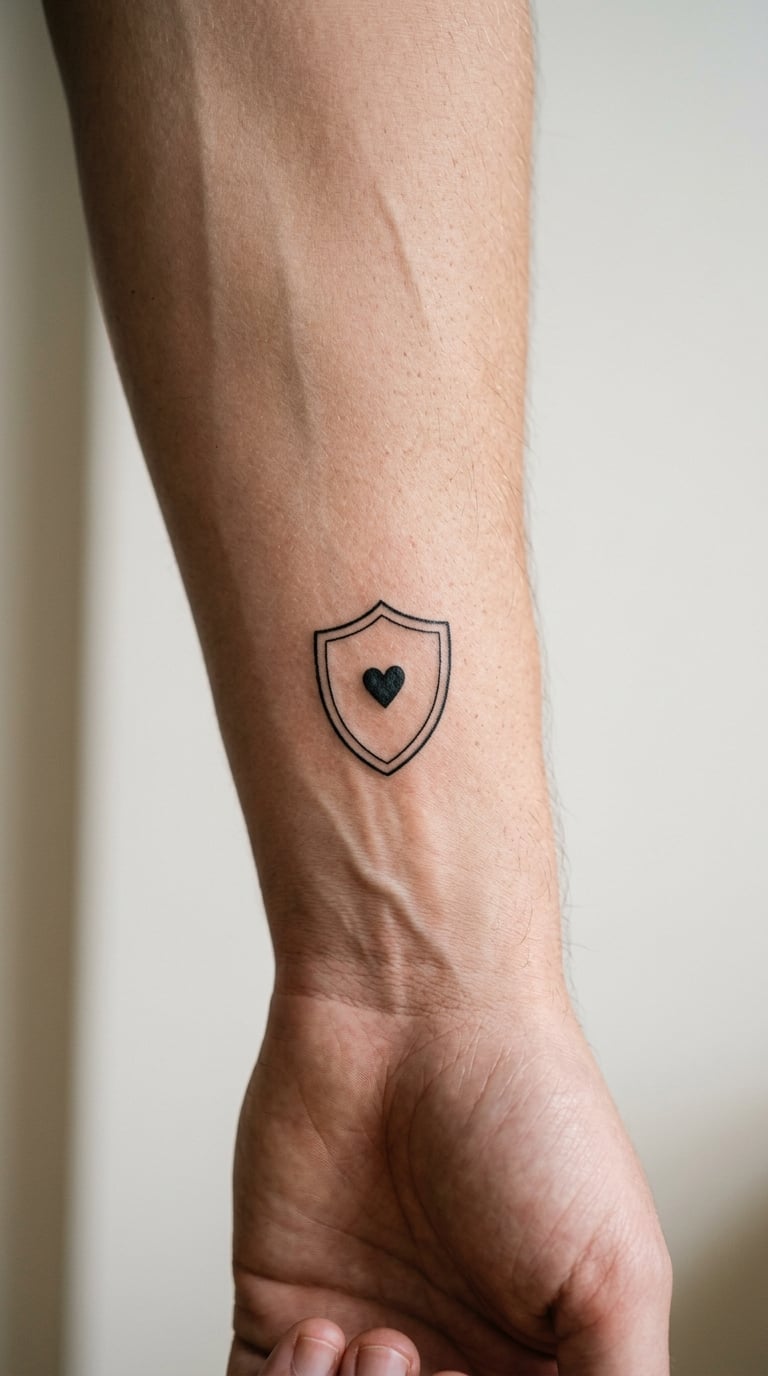
The design is a single-weight black outline of a shield with clean inner parallel lines, and one small solid heart sitting in the lower third. People reach for the shield because it is the most legible protective shape there is, and the heart stops it feeling like armour.
Placement: inner forearm, wrist crease, or just above the ankle. Size: 2 to 2.5 inch (5 to 6 cm). Style: fine line, single-needle with light shading.
Pain: low to medium on the inner arm. Fine line on the inner forearm softens and thins noticeably within a few years, so plan a refresh or a slightly heavier line from the start. Make it yours: set the heart where the shield’s point sits, so it reads as the thing being guarded.
2. Guardian Eye in a Small Blackwork Oval
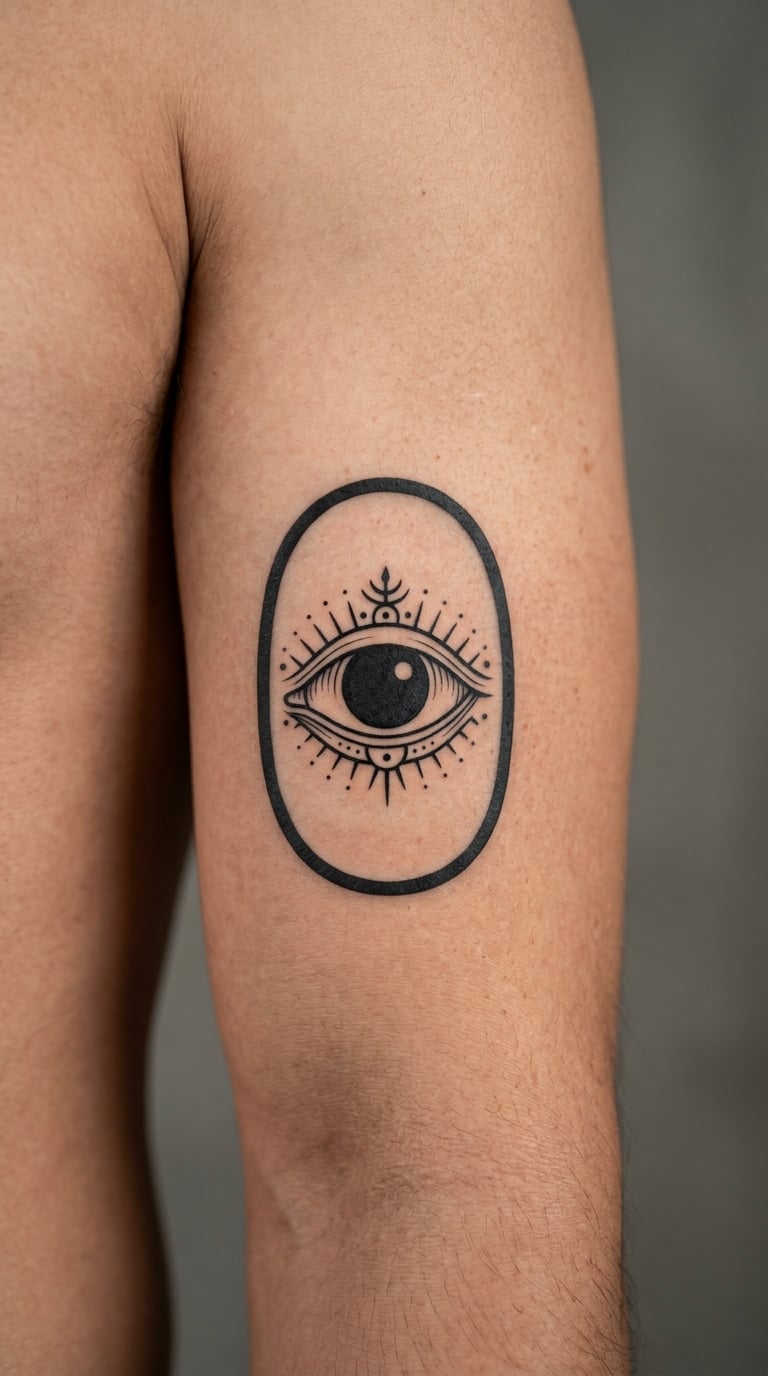
A single almond-shaped eye with a solid iris sits inside a plain oval, drawn in clean blackwork with no decorative rays. People choose eye imagery for awareness rather than for any supernatural promise, and the restraint is what makes it read as confident instead of busy.
Placement: upper arm, sternum, or the back of the hand for a bolder statement. Size: 1.5 inch (4 cm) is the floor for a legible iris. Style: blackwork, solid fill, no shading gradients.
Pain: low on the upper arm, higher on the knuckles of the hand. Oval outlines on the rib and sternum can distort as the body moves over the years, so ask for placement that follows the curve. Make it yours: add a single date along the lower curve, small enough not to fight the eye.
3. Howling Wolf Beneath Three Dots
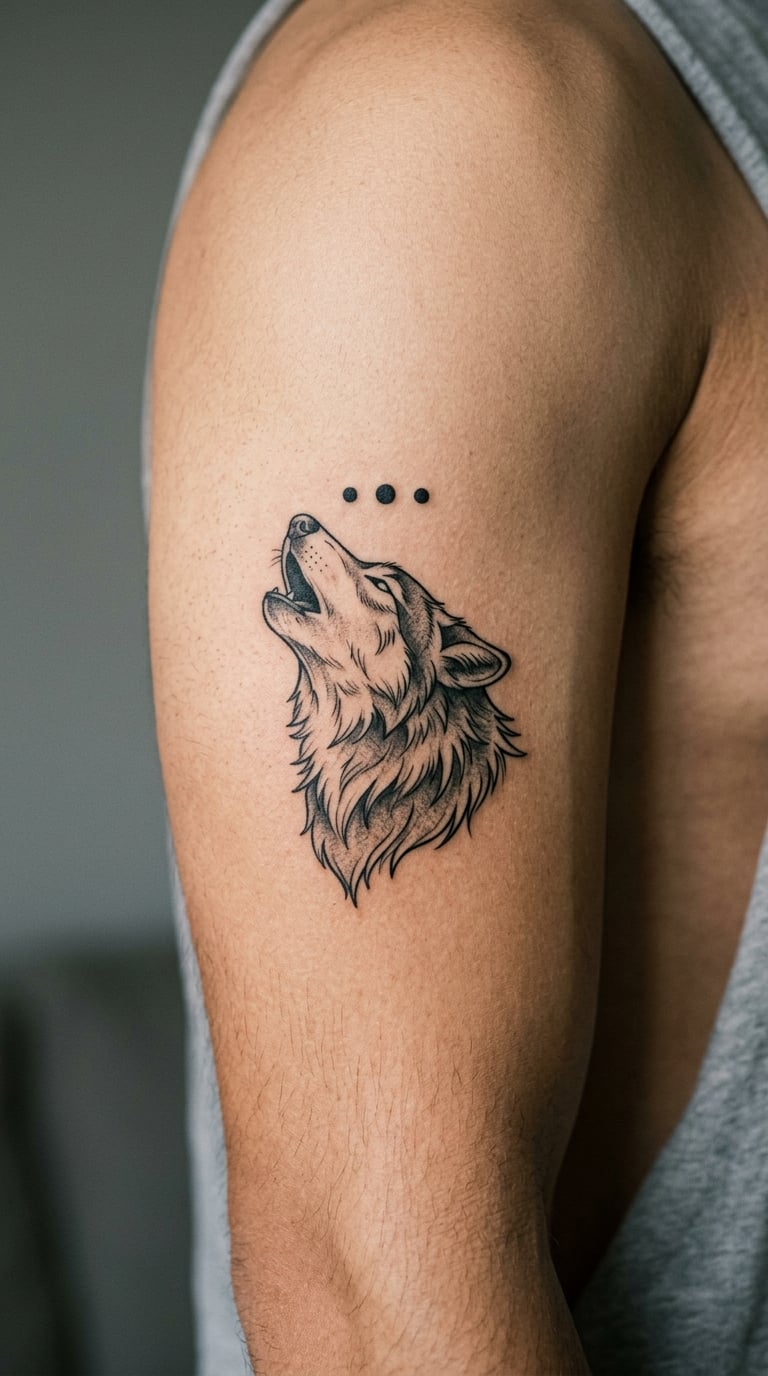
The composition is a wolf head in profile, mouth open, built from black and grey shading rather than flat colour, with three evenly spaced dots underneath. Wolves carry established associations with guardianship, loyalty and family pack, and the three dots are yours to define rather than borrow from a set.
Placement: outer upper arm or calf, where the piece has flat surface. Size: 3 inch (7.5 cm) minimum for the muzzle to hold detail. Style: black and grey realism with a bold outline.
Pain: medium, and longer grey shading sessions get uncomfortable around the rib side of the arm. Fur shading is the first thing to blur, so a bolder contour line buys you a decade. Make it yours: turn the three dots into a small set of coordinates or a birthdate, tucked under the chin line.
4. Traditional Owl with a Protective Stance
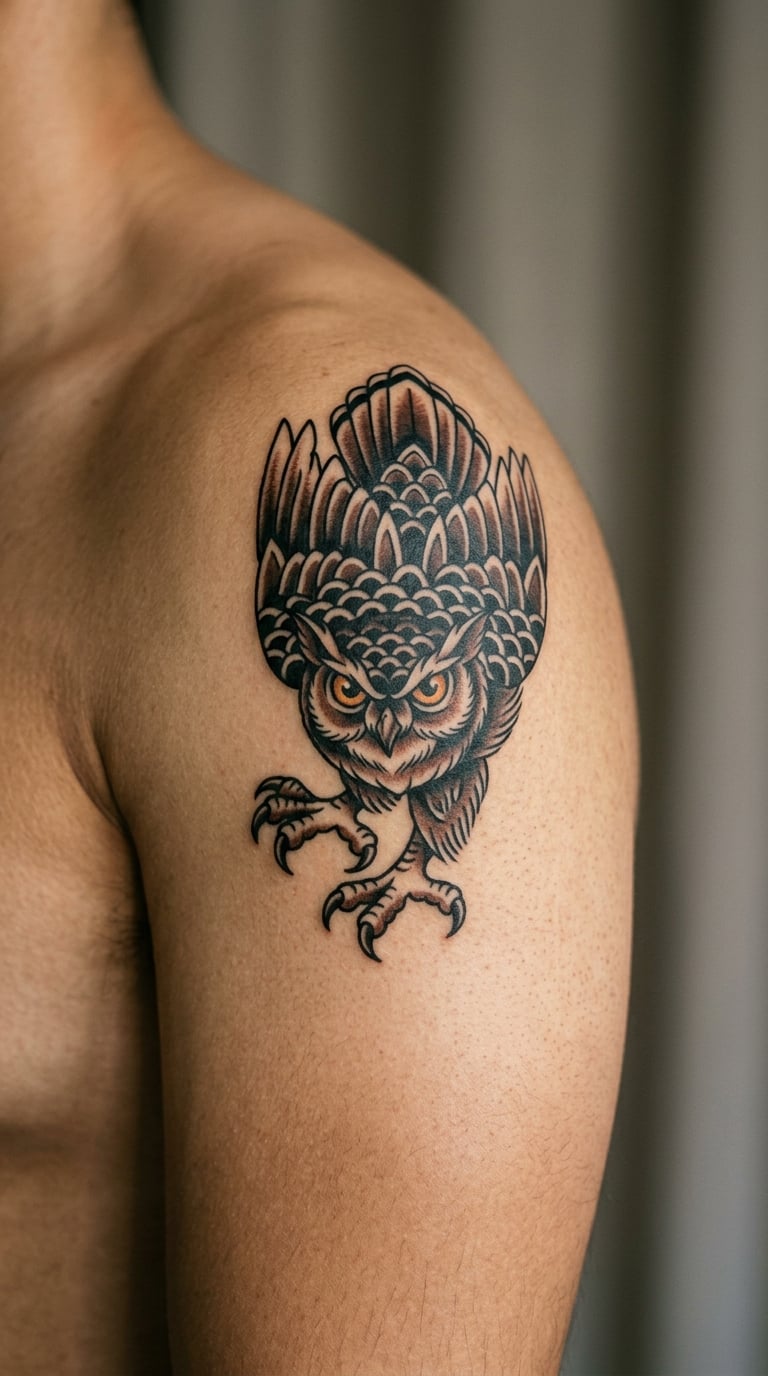
A broad-bodied owl sits front-facing with wings tucked, talons grounded on a small branch, eyes filled with amber. Owls have a long association with watchfulness and wisdom, and this design borrows that weight without claiming the intention belongs to the symbol.
Placement: shoulder, upper chest, or thigh. Size: 4 inch (10 cm) for the full body. Style: traditional American, thick outlines, flat colour and heavy black shading.
Pain: medium on the shoulder, high over the outer arm where bone is close to skin. Bold traditional linework is one of the longest-lasting kinds of tattoo, which suits a piece meant to stay. Make it yours: have the branch replaced with a specific plant from your own life.
5. Minimal Mountain Range Inside a Circle
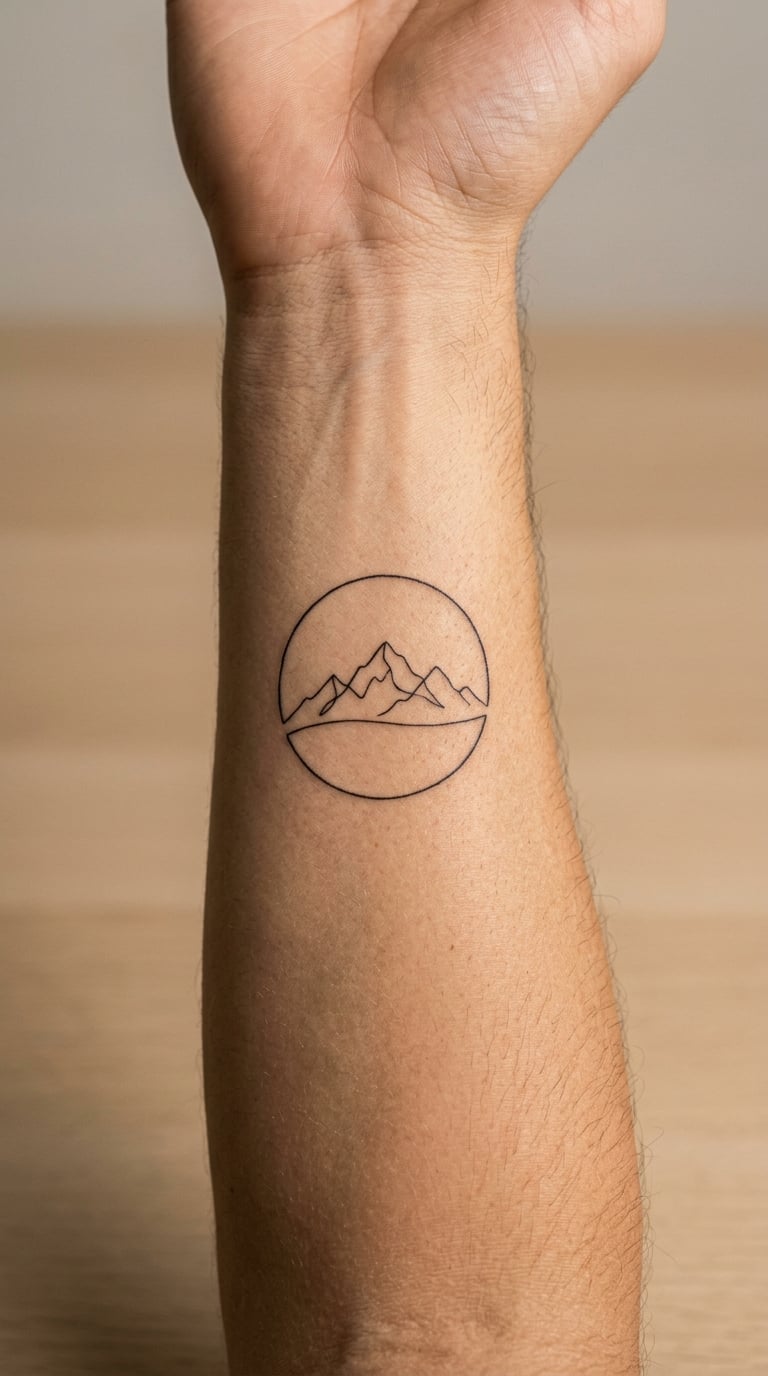
Three triangular peaks drawn in one clean line, contained by a thin black circle, with nothing else in the frame. Mountains stand for steadiness and endurance in most traditions that use them, and the enclosing circle turns a landscape into something held.
Placement: forearm, chest, or the back of the shoulder. Size: 2 inch (5 cm) wide. Style: minimal single-line, or geometric with a solid circle.
Pain: low almost anywhere. A single-line piece on the forearm fades within five to seven years if the skin sees regular sun, so covered placements last much longer. Make it yours: sketch your own local ridgeline from memory so the peaks are a place you have actually stood.
6. Compass Rose with a North Star
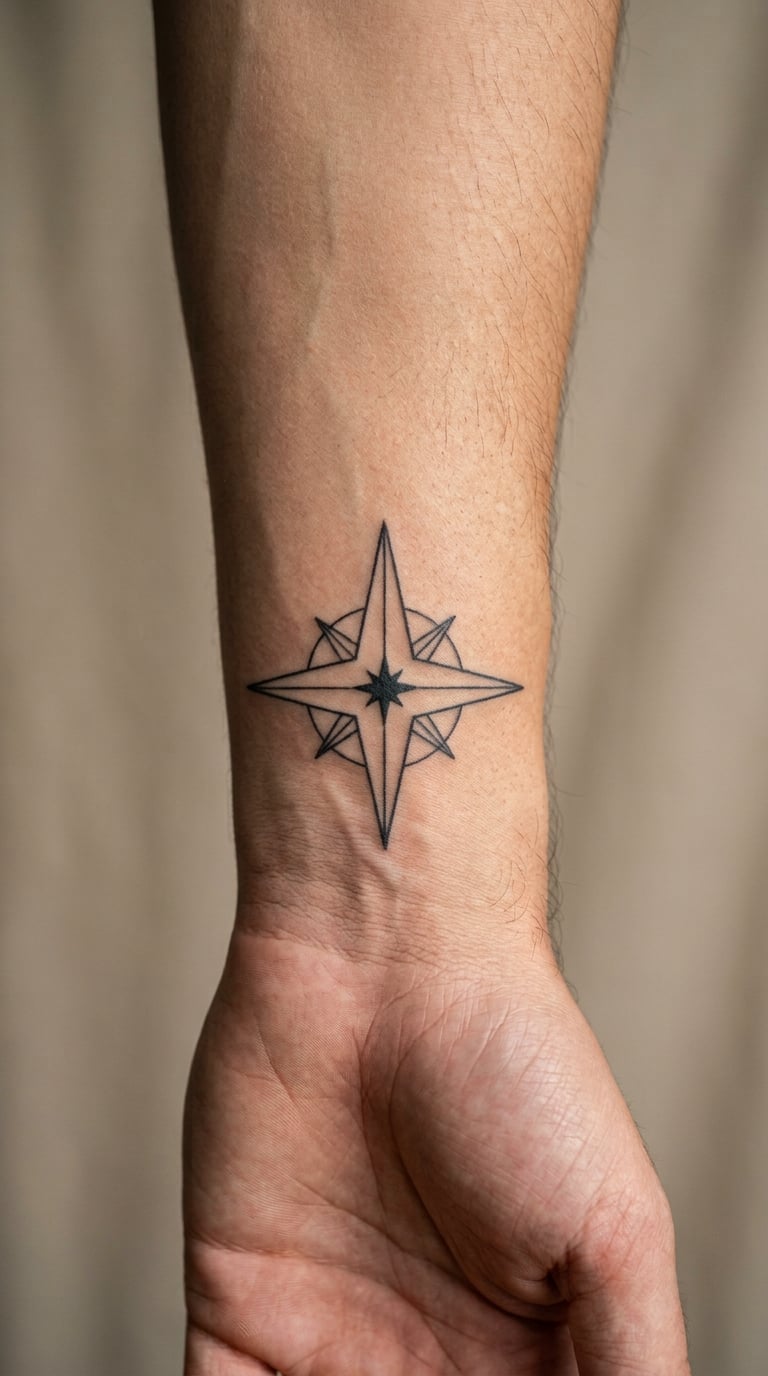
A four-point compass rose drawn with straight geometric strokes, and a small solid star tucked at the centre. Compasses have a long-standing tie to direction and staying true to a course, so this one reads as guidance as much as protection.
Placement: inner wrist, ankle, or behind the ear. Size: 2.5 inch (6 cm). Style: geometric linework with a small solid fill.
Pain: medium on the inner wrist, where the skin is soft and thin. Wrist and ankle tattoos need refreshing sooner than the same drawing on an upper arm, and sun exposure on a bare forearm speeds that up. Make it yours: replace one of the four points with an initial in the same line weight.
7. Celtic Endless Knot on the Side
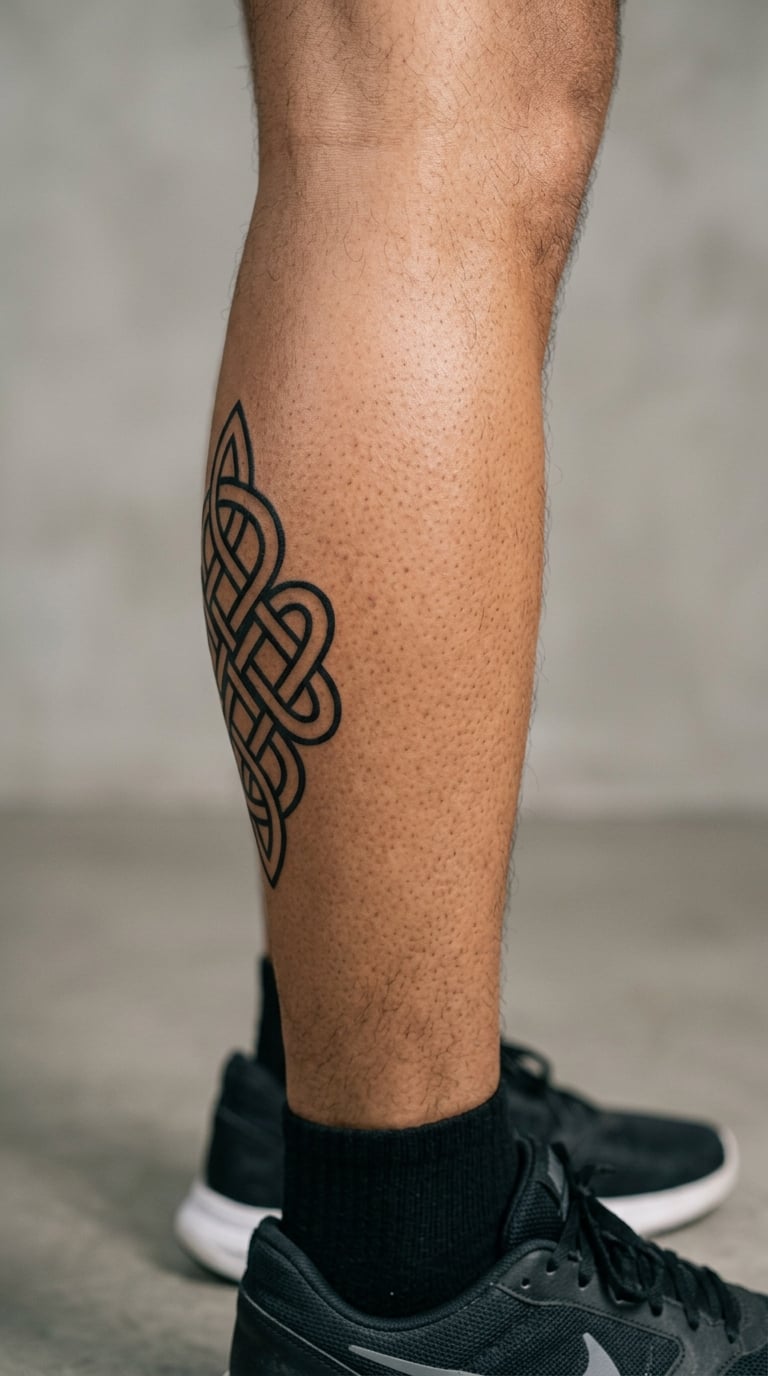
The ribbon interlaces over and under itself with no loose end, drawn in a single confident line weight so the crossings stay readable. Endless knot designs have long been used for continuity and interconnectedness, and they sit in protective roles in Celtic and modern neo-Pagan practice, where meaning varies by tradition.
Placement: calf, rib, or inner arm. Size: 2 inch (5 cm) wide is the practical minimum for readable crossings. Style: intricate linework or blackwork ribbon.
Pain: low to medium, though a dense knot takes longer and the tickling on the calf is the memorable part. Interlaced linework can fill in slightly as the ribbon thickens with age, so a bolder line is the safer choice. Make it yours: have the centre opening shaped into a small shield or heart.
8. Hamsa Hand with a Central Eye
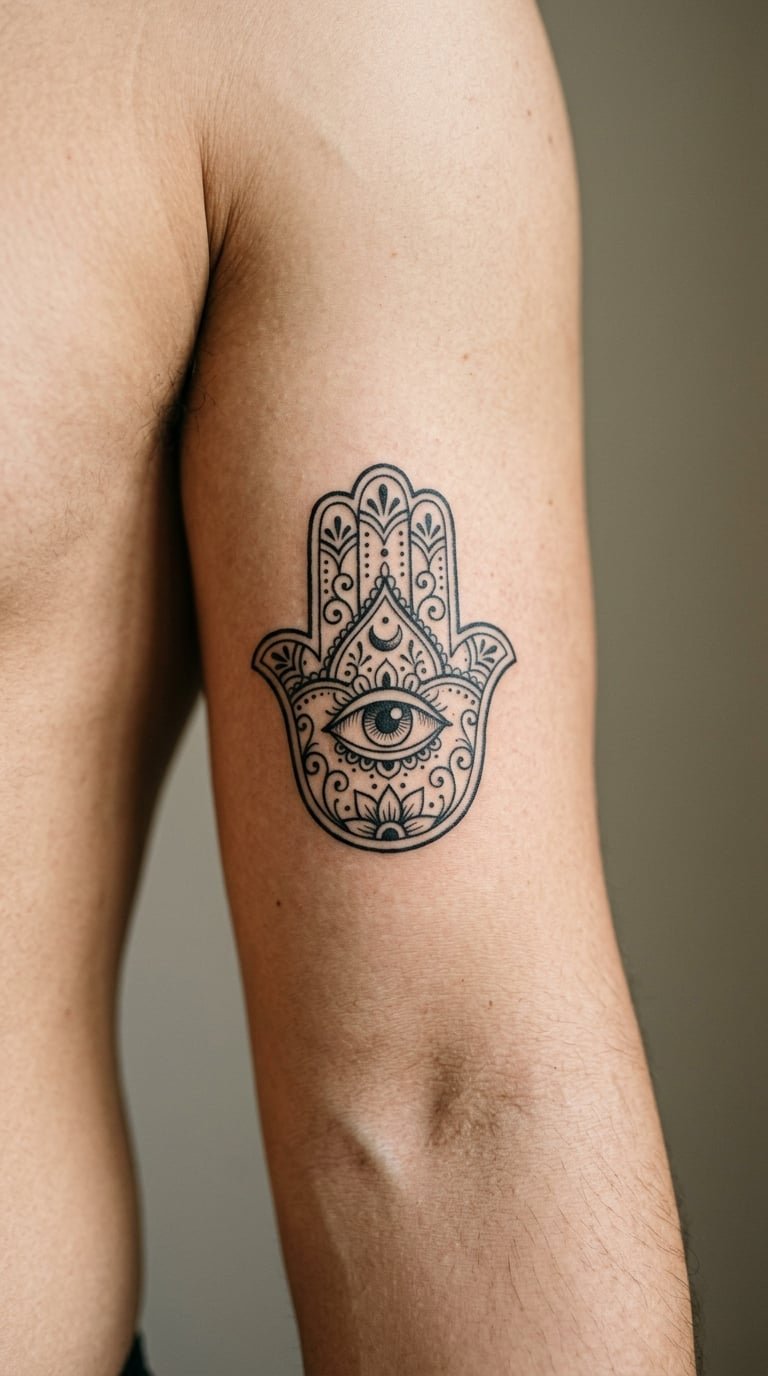
A symmetrical open palm with three fingers and a split thumb, framed by a clean outline, with a single eye in the centre. The hamsa belongs to Middle Eastern and North African protective traditions, and wearing it well means knowing where it comes from rather than treating it as decoration.
Placement: upper arm, upper chest, or the back of the hand. Size: 2.5 inch (6 cm) for full symmetry. Style: bold black linework, or traditional with ornamental detail.
Pain: low to medium on the arm, higher on the hand. The palm’s movement stretches fine interior detail over time, so keep the eye large and the ornament simple. Make it yours: have an artist add a small Arabic or Hebrew word that matters to you inside the wrist line.
9. Snake Wrapped Around a Dagger
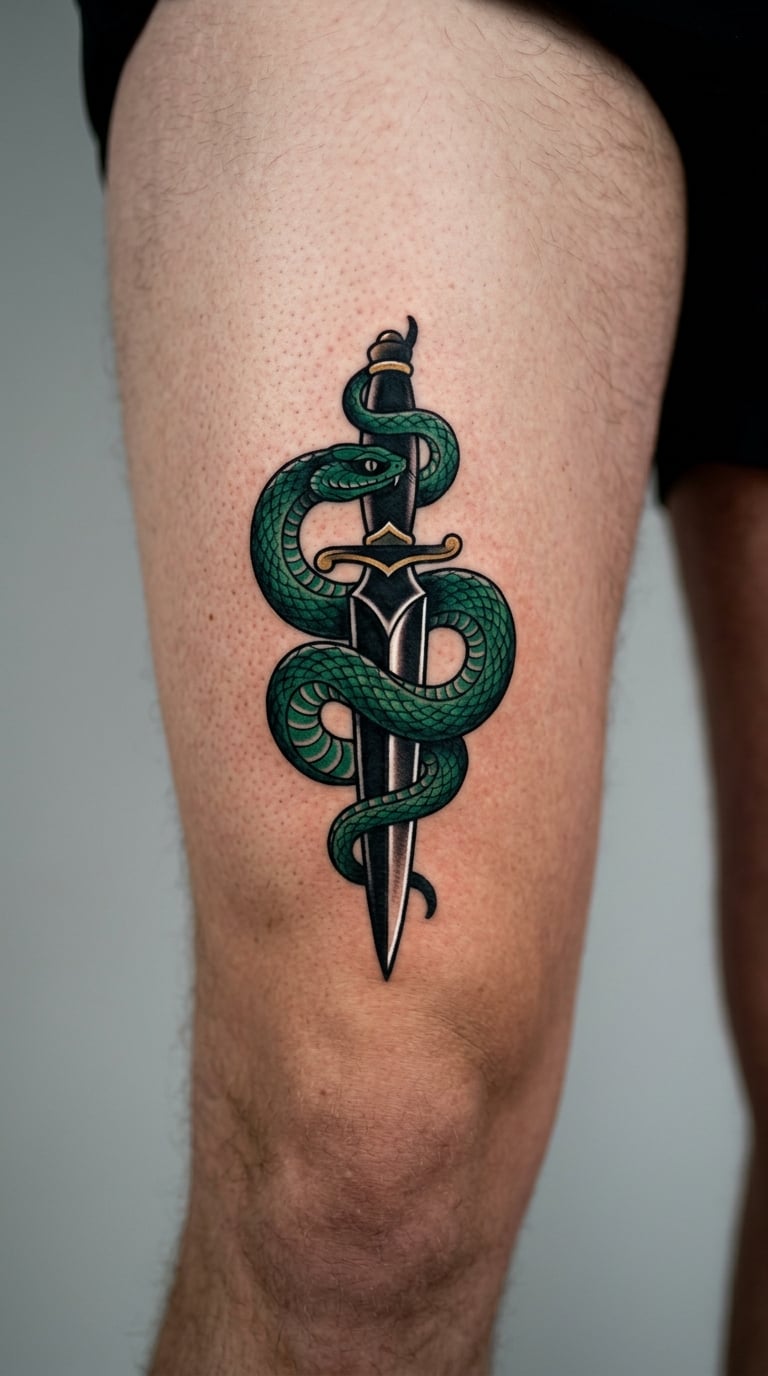
A snake coils around a narrow dagger, body in green with black scale texture, the blade rendered in flat black and a single white highlight. Snakes carry associations with renewal, defence and transformation, and pairing it with a dagger adds a second reading about being difficult to harm.
Placement: thigh, calf, or ribs. Size: 4 inch (10 cm) for the coil to read. Style: neo-traditional with strong black outlines and a limited palette.
Pain: medium on the thigh, and rib work runs high because of the bone and the movement there. Bold outline tattoos of this type hold colour for a long time, which is a good argument for traditional over photorealistic. Make it yours: set the dagger behind the snake rather than through it if you want a gentler, more guarded look.
10. Turtle with a Geometric Shell
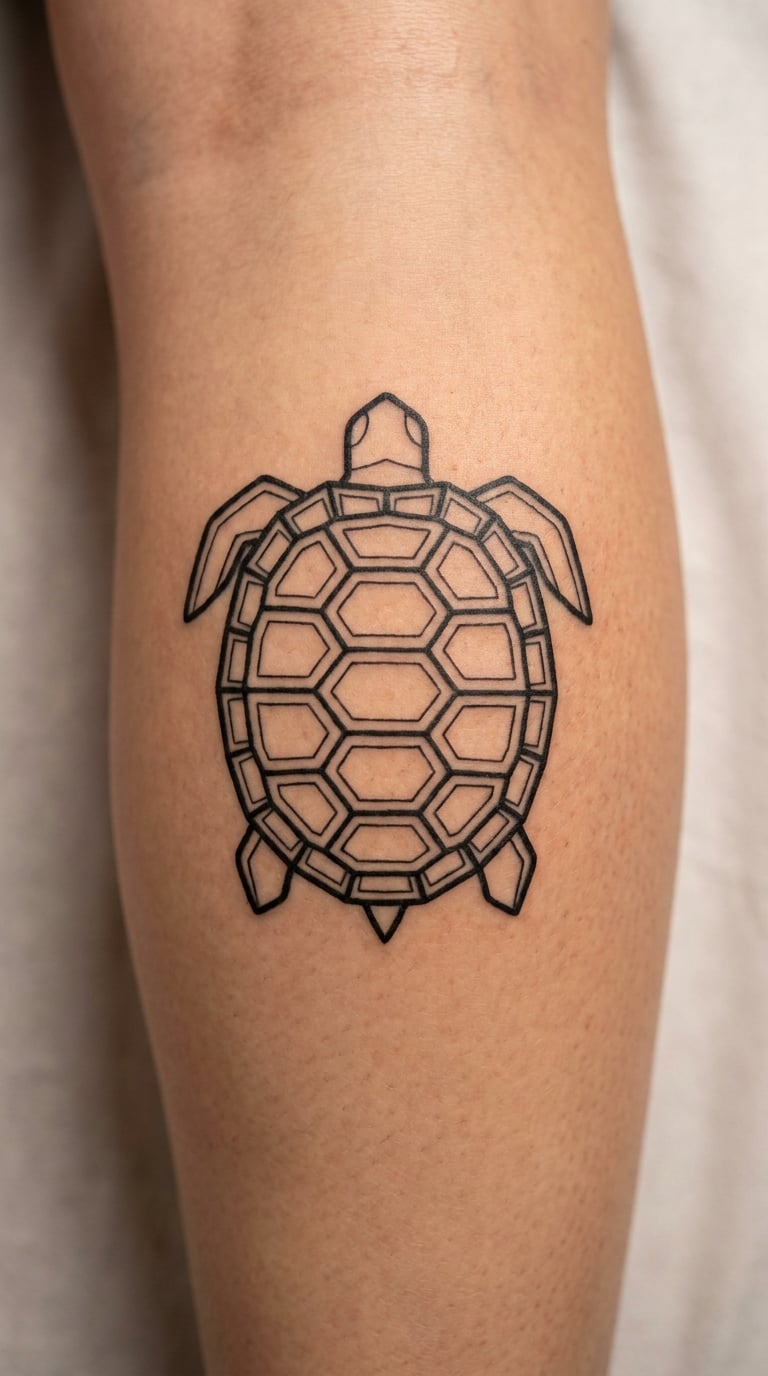
A side-view turtle built from clean geometric segments, the shell reduced to a symmetrical hex pattern and the flippers left simple. Turtles have a long-standing association with longevity, stability and carrying your home with you, which makes this a quietly protective shape.
Placement: calf, hip, or forearm. Size: 3 inch (7.5 cm) long. Style: geometric, black line and light dot shading.
Pain: low on the calf, and a long sitting session gets uncomfortable regardless of location. Small dotwork and hairlines inside the shell fade first, so a heavier outline on the silhouette is worth asking for. Make it yours: replace the shell pattern with the hex grid from a chessboard or a game you play.
11. Scarab Beetle with a Sun Disk
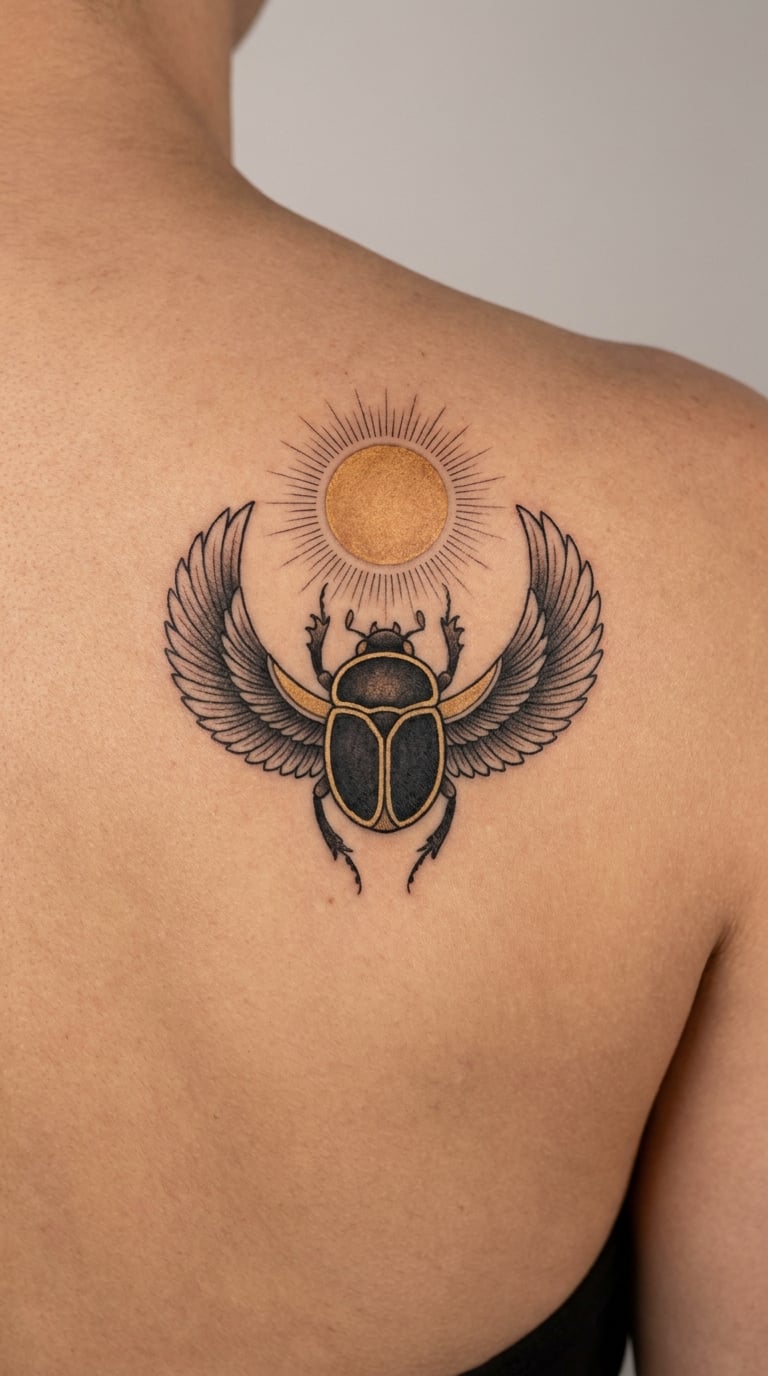
A stylised scarab with outstretched wings, drawn in black linework, sitting under a clean circle with short radiating rays. The ancient Egyptian scarab is most closely tied to rebirth and regeneration, so people who wear one for protection usually build that part themselves.
Placement: shoulder, chest, or mid-back. Size: 2 inch (5 cm). Style: blackwork with a single gold accent in the disk.
Pain: low to medium, rising on the sternum. Gold in small areas oxidises and reads differently against skin tones over the years, so ask to see it shaded in person before you commit. Make it yours: carve a short line of hieroglyph-inspired marks along the disk’s edge, kept abstract rather than copied.
12. Pair of Ravens Facing a Small Moon
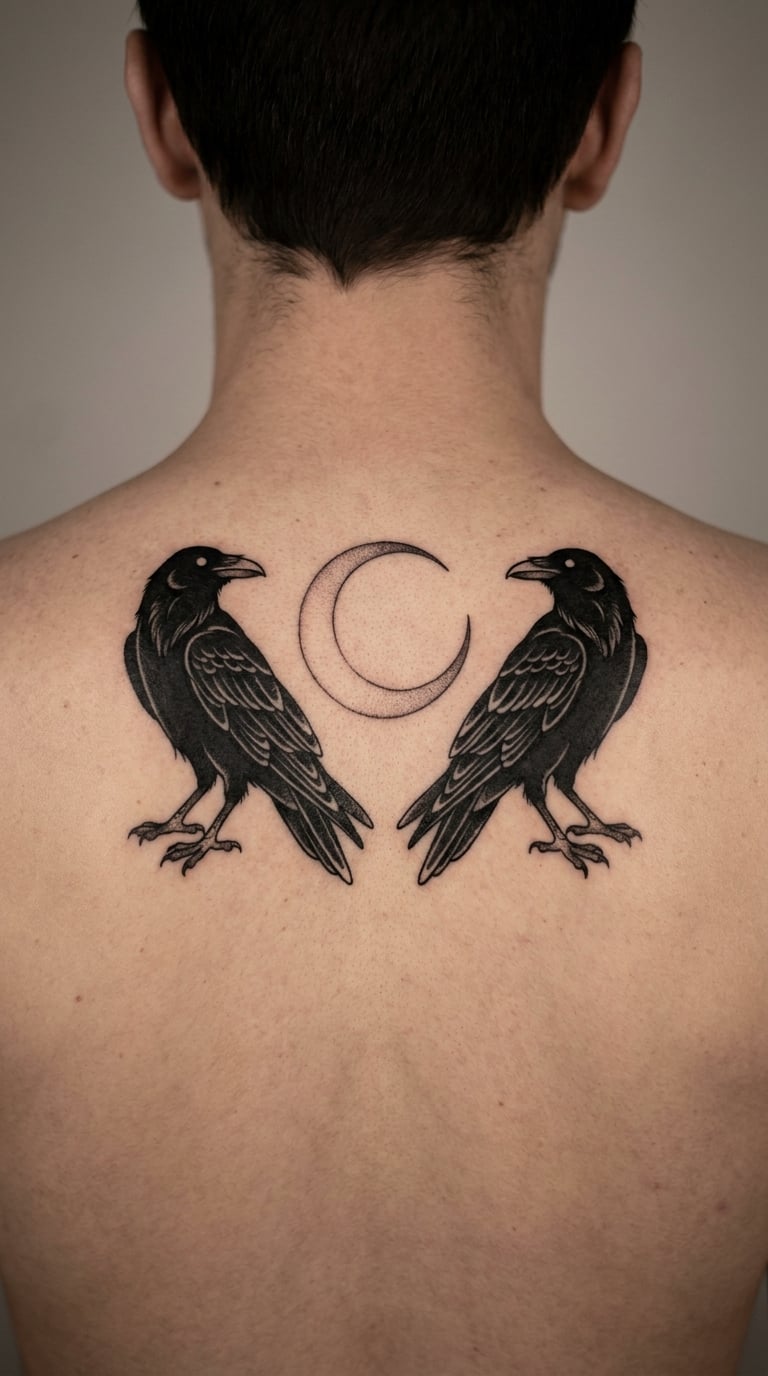
Two ravens sit mirrored, beaks angled toward a small pale moon, with heavy black bodies and fine feather texture. Ravens have carried associations with intelligence, mystery and the messenger role across many traditions, and the mirrored pair reads as watchful sentries.
Placement: upper back between the shoulder blades, or the sternum. Size: 3.5 inch (9 cm) across. Style: symmetrical blackwork with grey feather shading.
Pain: medium, and the upper back is a sensitive spot that people often underestimate. Symmetry is the saving grace here, since the eye reads the pair as one shape and forgives a millimetre of drift. Make it yours: move the moon to sit behind the birds instead of between them for a more watchful composition.
13. Thorned Branch Forming a Protective Circle
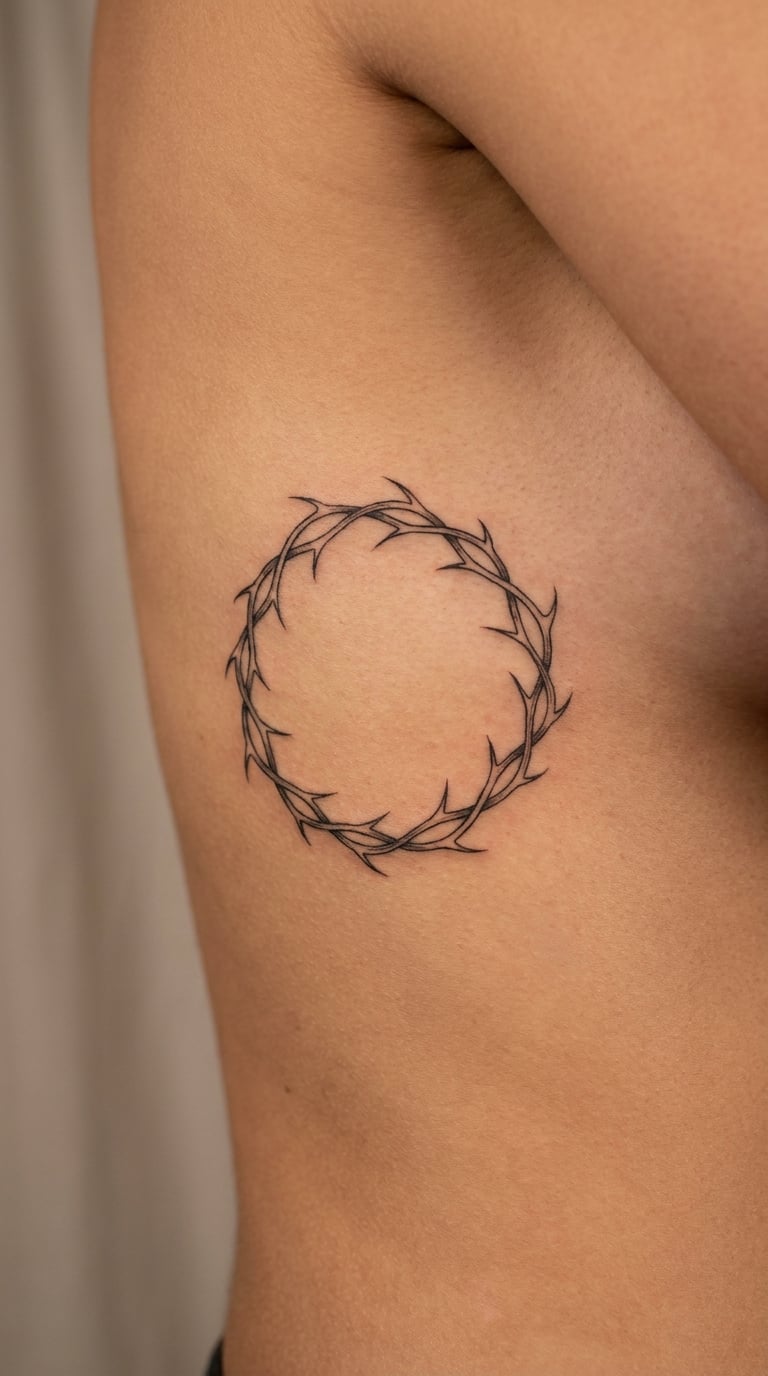
A single thorned stem curves around until it nearly meets itself, leaving one small gap in the circle. The enclosing shape does the protective work, and the thorns add a boundary. Thorn symbolism shifts from plant to plant and from story to story, so your reason is the one that counts.
Placement: rib, thigh, or along the forearm. Size: 3 inch (7.5 cm) across. Style: fine line with a few hand-drawn thorns.
Pain: medium, and rib work is one of the more talked-about spots for a reason. Fine line on a rib can soften noticeably as the skin stretches, so keep the branch at a confident single-needle weight. Make it yours: grow the branch from a real plant that matters to you, drawn from a photograph.
14. Key with a Heart-Shaped Bow
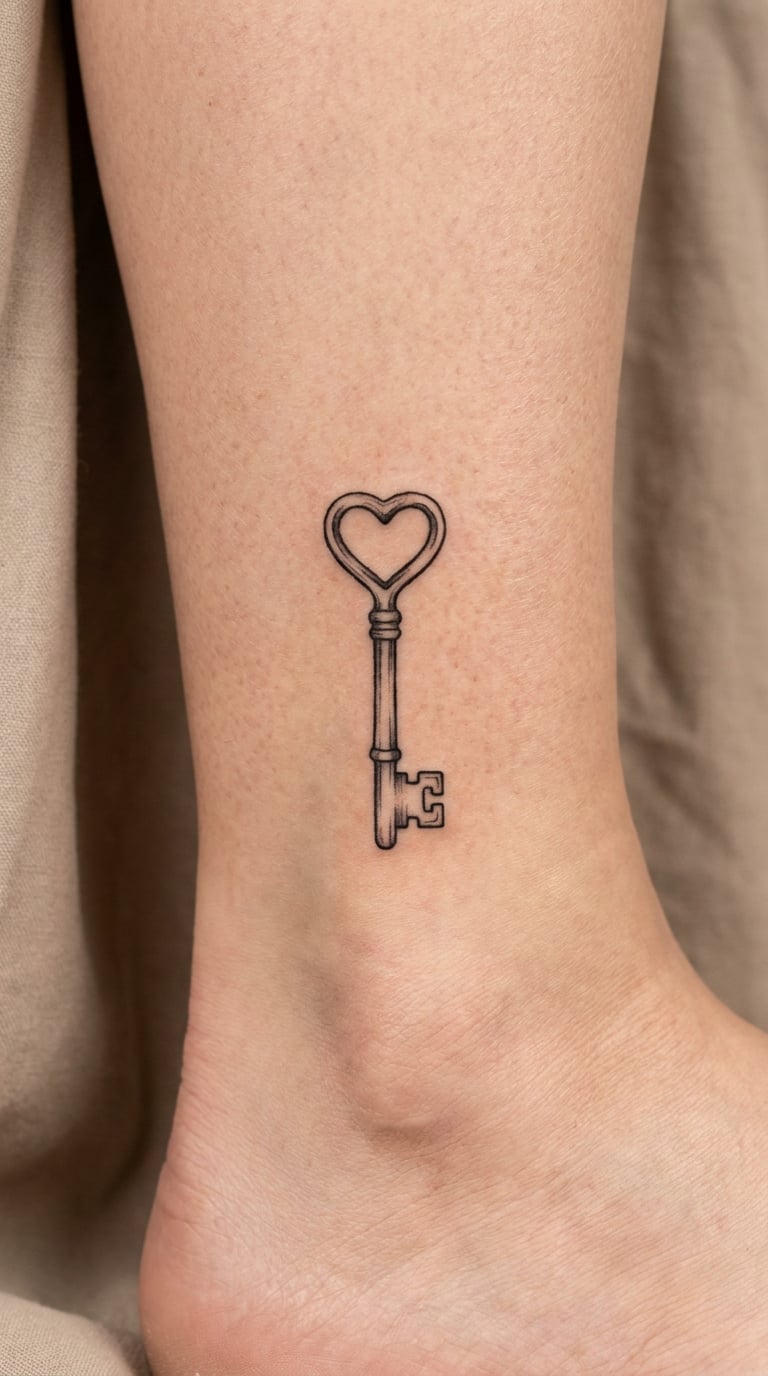
An old-fashioned skeleton key drawn in vintage black linework, with the bow shaped into a heart and the bit cut simply. Keys have long stood for access, safeguarding and the people you let in, which makes this a warm version of a protection symbol rather than a defensive one.
Placement: ankle, inner arm, or the back of the hand. Size: 2.5 inch (6 cm). Style: vintage linework with minimal shading.
Pain: medium on the ankle, and bony spots like the outer ankle make the session a long one. The bit and the small teeth of the key are the first details to blur, so keep them larger than instinct suggests. Make it yours: have a meaningful date stamped along the shaft in the same line weight.
15. Padlock Wrapped in Laurel
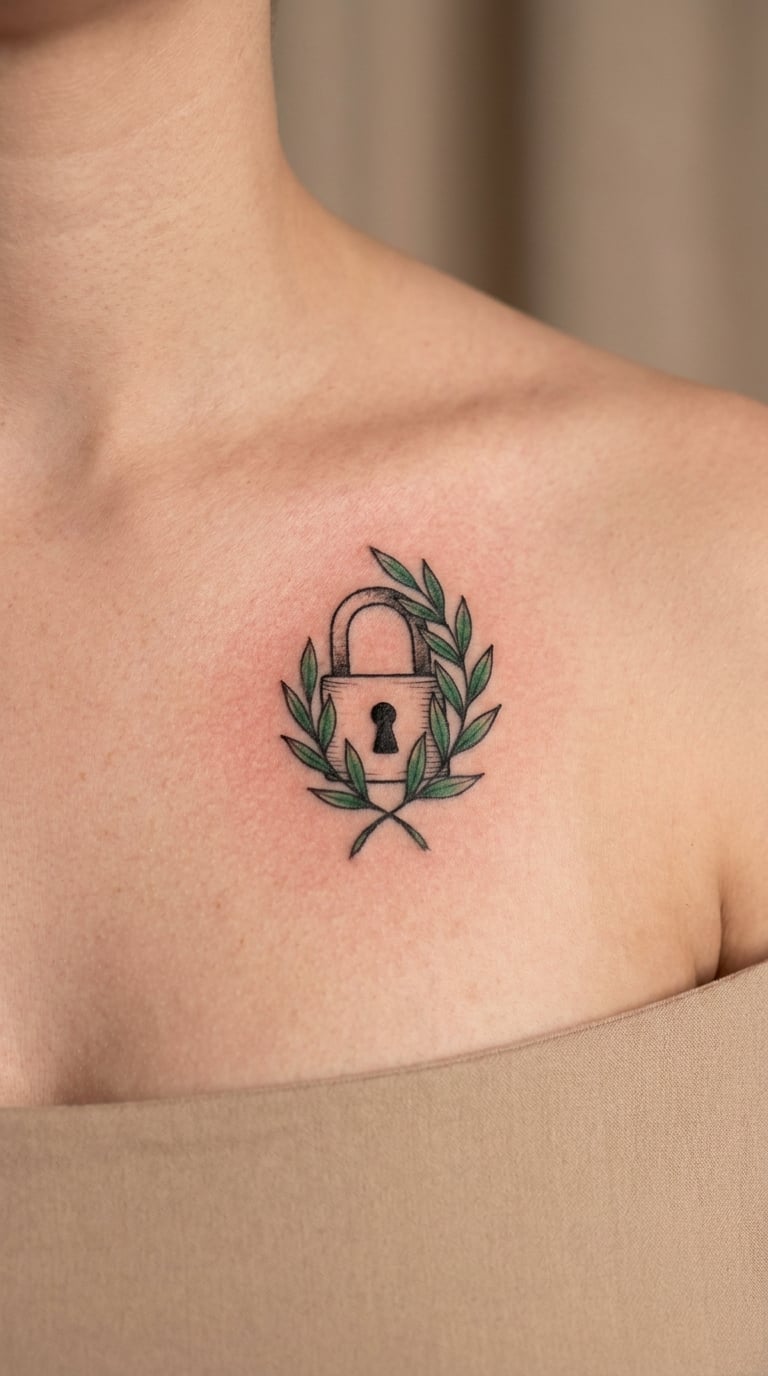
A small padlock with a rounded shackle, framed by laurel leaves curling up both sides in green with black outlines. The lock is about as direct as protection imagery gets, and the laurel softens it into something about keeping what you have built safe.
Placement: chest, forearm, or the back of the shoulder. Size: 2 inch (5 cm). Style: traditional botanical with flat green shading.
Pain: low to medium, and the sternum area stays tender for several days. Green shading on a small shape can look flat over time, so ask for a black outline underneath the colour. Make it yours: have the padlock engraved with a single initial in negative space inside the body.
16. Sword and Shield Divided by a Line
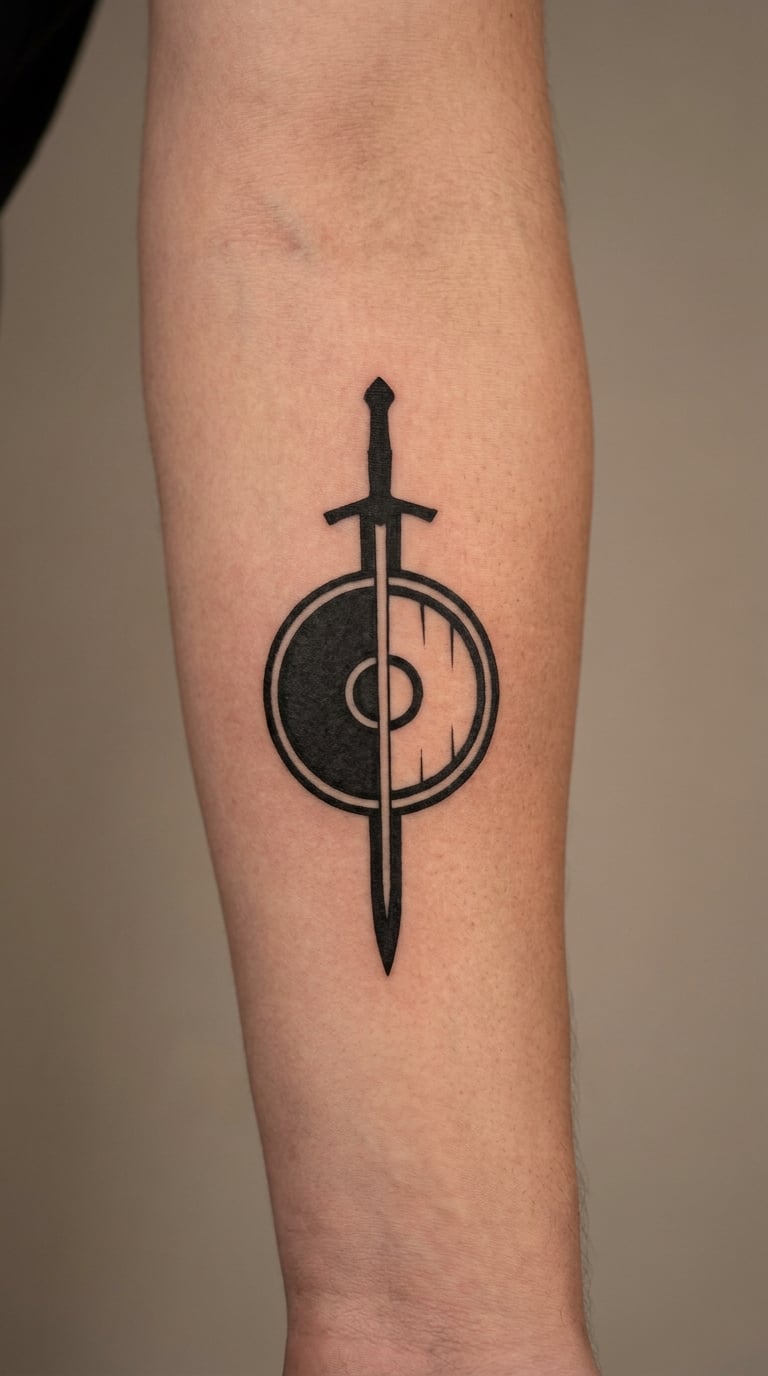
A narrow straight sword on one side, a plain shield on the other, with one vertical line running between them as the only divider. Readiness and balance are the readings people usually take from it. Worth saying plainly: a martial symbol is not a promise of physical safety.
Placement: outer arm, chest, or forearm. Size: 4 inch (10 cm). Style: bold blackwork with strong contours.
Pain: medium on the outer arm, and this style is high-contrast so the healing is easier to watch. Heavy black fills on a divider line can look heavy as the design ages, so a slightly thinner rule keeps the composition light. Make it yours: add a small date along the dividing line where the two shapes meet.
17. Bellflower Stem in Botanical Blackwork
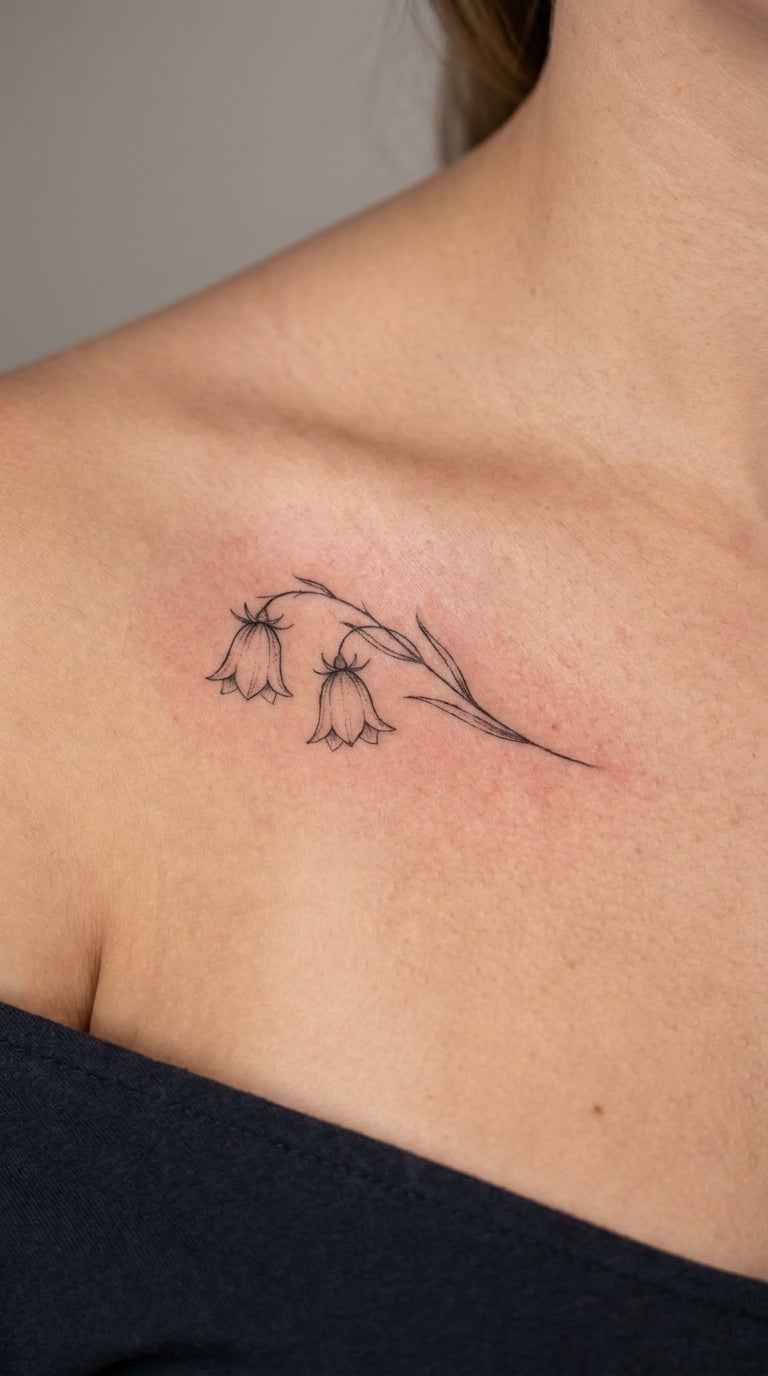
A single stem with two or three drooping bell-shaped blooms and a few narrow leaves, drawn in fine black botanical linework. Bellflowers carry protective associations in parts of European folk tradition. Those traditions belong to the flower, not automatically to any individual design.
Placement: collarbone, along the forearm, or the side of the calf. Size: 4 inch (10 cm) tall. Style: botanical fine line with light stippling.
Pain: medium, since the collarbone sits over bone and the skin moves constantly there. Botanical linework fades faster than almost anything else on this list, so a covered placement and a slightly heavier line are both worth it. Make it yours: grow or gather the plant in a season that mattered, and bring a pressed stem for the artist to draw from.
18. White Tiger in a Protective Circle
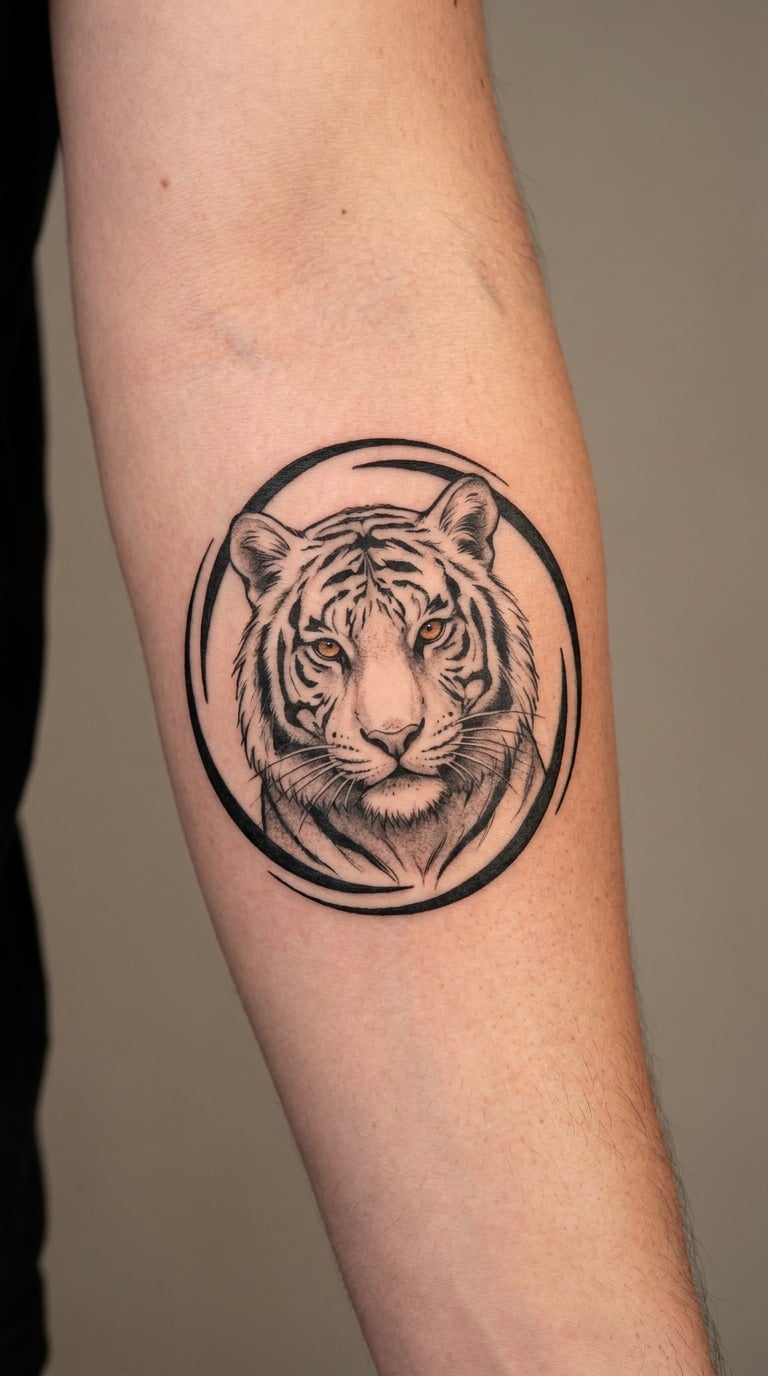
A tiger in profile, white fur shaded in black and grey with amber eyes, walking inside a circle that breaks at one point. Tigers carry broad associations with courage and formidable defence, and the broken ring keeps the frame from feeling sealed shut.
Placement: upper arm, thigh, or the mid-back. Size: 4 inch (10 cm). Style: black and grey realism with a graphic frame.
Pain: medium, and the shading on a tiger takes a long session. Fur detail softens into a soft grey mass over the years, so ask for a defined edge around the face and the stripes nearest it. Make it yours: orient the break in the circle toward the wrist or the heart, whichever direction you want the piece to face.
19. Open Wings Wrapping a Small Heart
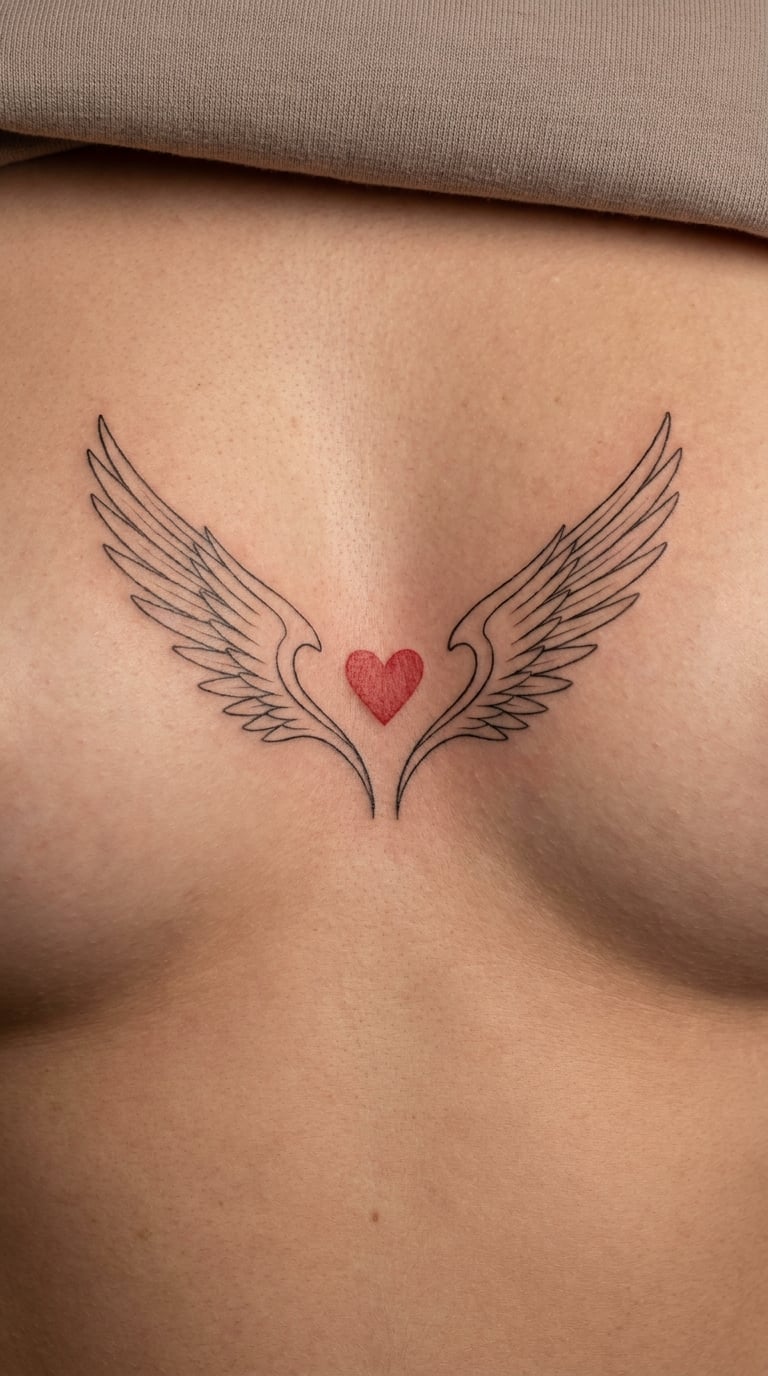
Two open wings curve inward, almost meeting, around a small solid heart at the centre. The enclosing form suggests shelter and care rather than defence, which suits people whose protective instinct runs toward other people. It is a personal symbol, not a guaranteed effect.
Placement: chest, shoulder blades, or the upper arm. Size: 3 inch (7.5 cm) across. Style: fine line wings with one spot of colour.
Pain: low to medium on the chest, and the sternum stays bruised-looking for a while. Symmetry is forgiving, but feather barbs near the tips blur first, so a bolder primary line along the wing edge is worth the ask. Make it yours: set a small date in the negative space between the heart and the wings.
20. Micro-Realism Crow Holding a Stone
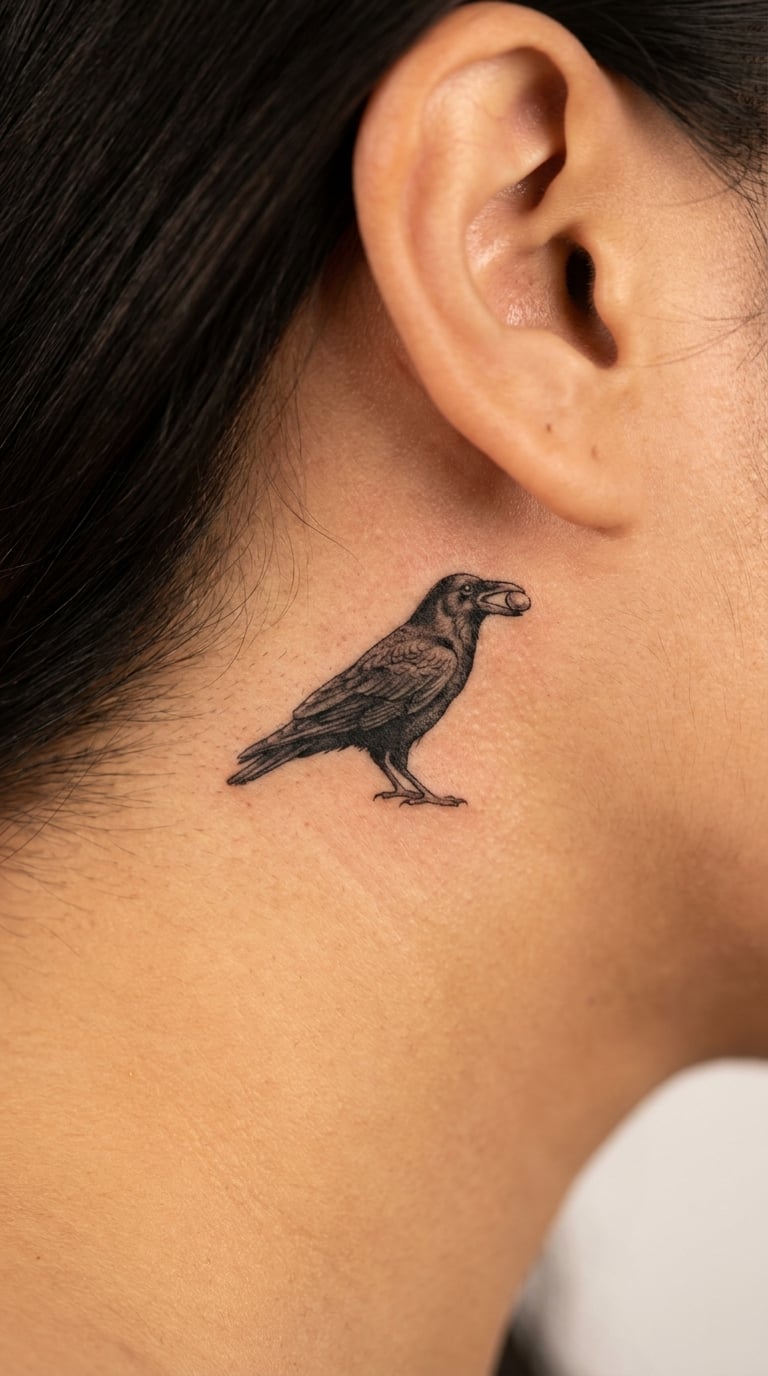
A crow in profile, feathers rendered in soft grey and black, holding one rounded stone in its beak. Crows and ravens have a long association with intelligence and memory across many cultures. The stone is a free element you can make mean anything.
Placement: behind the ear, on the wrist, or at the ankle. Size: 1.5 inch (4 cm). Style: micro-realism with a soft wash.
Pain: medium, and behind the ear is a spot people underestimate because the skin is so thin. Micro-realism is the least durable style on this list, so expect a touch-up in five to seven years if the area sees sun. Make it yours: use a stone from somewhere that matters, described in detail so the artist can render its exact shape.
How to Choose the Right Design
Start with the symbol, not the style. When you narrow tattoo ideas that symbolize protection down to a few drawings you actually want on your skin, the right technical choice is usually the one that serves the meaning you already have.
- Know what you are asking the symbol to do. Write the sentence in your own words before you look at flash. If it is grief, a memorial form like the wings or the owl carries it more honestly than a warrior motif.
- Match the line weight to the size. Under roughly 1.5 inch, work in bold black or a filled shape. Single-needle hairline and fine shading need more room than most people expect, especially over a curving part of the body.
- Let the placement carry the reading. Chest and sternum feel personal and intimate, the forearm and calf are visible and bold, behind the ear is private. If you want people to ask about it, choose an exposed spot; if you do not, choose a covered one.
- Account for sun and washing. A fine-line piece on the outer forearm will change faster than the same drawing on the rib. A covered placement buys years of clarity for free.
- Check the cultural record before you book. Hamsa, scarab, Celtic knotwork, the owl and the wolf all come from specific traditions. Know where yours sits and what it does and does not mean, and if you are not sure, ask the artist who works in that style.
- Decide whether it stands alone. A 2 inch shield works as a standalone piece. A 4 inch traditional owl or a sword-and-shield composition usually sits better as part of an existing arm or chest project. If you already collect tattoos, plan the whole layout before the first session.
If your instinct leans toward strength rather than safety, the 16 tattoo ideas that represent strength for women covers a lot of the same ground from a different angle.
Cost and Session Time
There is no fixed price for a tattoo and no honest way to quote one from a screen, so these are the ranges most US studios actually charge for this category of work. Every shop sets its own numbers, and travel, city and artist experience move them a lot.
- Micro pieces under 1 inch: roughly 80 to 200 dollars for a simple shape such as the crow, the compass star or a tiny eye.
- Small pieces, 1 to 2 inches: roughly 150 to 350 dollars. The endless knot, the scarab, the padlock and the mountain circle all land here.
- Medium pieces, 2 to 3 inches: roughly 250 to 600 dollars. The shield, the hamsa, the raven pair and the geometric turtle sit in this range.
- Larger pieces, 4 inch and up: roughly 450 to 1,500 dollars, or priced by the hour. The traditional owl, the snake and dagger, the white tiger and the sword-and-shield composition are all in this band.
Simple single-line work and micro pieces are often one sitting of an hour or two. Dense blackwork, knotwork, geometric patterns and anything with grey shading usually need two to four sessions, because detail and healing both take longer than people expect. Most studios bill by the hour, commonly somewhere between 80 and 250 dollars, with a shop minimum of roughly 50 to 100 dollars that covers the short appointments in between sessions. A consultation is normally free or credited toward the final price, and it is worth booking one before you commit to a design you have only seen in a gallery.
Aftercare Basics
- Start with your artist’s aftercare instructions. Every artist has their own protocol based on the style, the depth of the work and the skin. Follow theirs first, then the general guidance below.
- Wash gently, twice a day, for the first few days. Use lukewarm water and a fragrance-free cleanser, pat dry with clean hands or a paper towel, and leave the skin alone otherwise.
- Keep it moisturised but not wet. A thin layer of a plain healing ointment or unscented lotion supports the skin without trapping moisture under a film. Do not soak, swim or cover the tattoo tightly for the first two weeks.
- Treat it as sunburn waiting to happen. No direct sun, no tanning and no solarium while the tattoo is healing, which is usually the first two weeks. Once healed, covered placements still fade more slowly than exposed ones.
- Let loose clothing be. Wear soft, breathable fabric over the area for the first days. Tight waistbands, bra bands and collars rubbing on a fresh piece are a reliable way to damage the linework.
- Know the healing arc. Expect redness, swelling and a slight raise for the first days, then a dull stage, then the dark settling that people sometimes mistake for a bad tattoo. A tattooed line should be smooth after healing. If scabbing, heavy itch or spreading redness continues past two weeks, contact the studio and, if needed, a doctor.
Frequently Asked Questions
What tattoo symbol most commonly represents protection?
The hamsa hand and the nazar eye are the two most requested, drawn from Middle Eastern, North African and Mediterranean traditions as amulets against envy and the evil eye. The endless knot, the algiz rune, the owl and the Eye of Horus run close behind. Which one you choose matters less than whether you can explain the meaning in your own words.
What is the best small tattoo idea that symbolizes protection?
The fine-line shield at 2 inches, the compass rose with a star, or the mountain range inside a circle all hold up at small sizes because they rely on outline rather than interior detail. Keep the smallest element no thinner than a single-needle line and avoid placing them on the hands and fingers, where fine work fades fastest. A covered spot will hold its shape longest.
Are protective tattoos spiritual or purely symbolic?
Both, and the honest answer is that the meaning lives with the wearer rather than in the design. Some people treat a symbol as a working talisman in a specific spiritual tradition, some use it as a personal promise, and many sit between the two. Say which one you are, because an artist working in a traditional style will want to know.
Where should I place a tattoo that represents protection?
Placement is a personal read rather than a rule, but the common pattern is chest and sternum for something intimate and private, forearm and calf for visibility, and behind the ear or the ankle for a discreet piece. Choose based on how much you want to explain it, and favour covered placements if you care about how the line looks in ten years.
Can I personalize a traditional protective symbol?
Yes, and most wearers do. Common routes are adding a meaningful date, swapping the colour palette, placing a small heart or initial in negative space, or joining two symbols into one composition. If you are adapting a design from a living spiritual tradition, tell your artist, since some traditions treat their symbols as fixed forms rather than as a starting point.
Which protective tattoo styles age best?
Bold blackwork and traditional tattoos with thick outlines and flat colour hold their shape longest, usually for decades. Single-needle fine line, grey washes, micro-realism and dense dotwork fade or soften noticeably sooner, often within five to seven years on sun-exposed skin. A covered placement and a heavier line weight do more for longevity than any aftercare product.
Conclusion: Choose Your Symbol of Protection
If this is your first tattoo, the fine-line shield with the heart detail is the practical pick of all the tattoo ideas that symbolize protection here. It is small, quick to heal, cheap to fix if something drifts, and it carries a meaning you can put into a sentence without borrowing anyone else’s story.
If you already collect work, the traditional owl or the sword-and-shield composition will hold more detail and reward the bigger canvas. Whichever you pick, confirm what the symbol means to you, ask the artist where the design will sit best, and book the consultation before you book the appointment.