
20 Fox Tattoo Ideas for Women: Best Small & Simple (2026)
A fox is one of the few animals that carries two opposite things at once: real cunning and real softness. Fox tattoo ideas for women lean into that mix, which is why a fox can read as sly, gentle, clever or quietly independent depending on how the artist draws it. The right fox design for you depends far less on the exact image than on three things agreeing with each other: the style, the size, and the spot on your body.
Below are 20 fox designs I would happily show someone in a consultation, from a 1.5 inch fox peeking out from behind the ear to a 6 inch watercolor piece on a shoulder. Each one comes with the placement that suits it, an honest size range, a pain note, and one way to make it your own. Updated September 2026.
Fox Tattoo Ideas for Women: Quick Guide
Here is the short version before the detail. Read across the row for a design, then check that the placement and size still work for the curve of your body and how visible you want it to be.
| Idea | Style | Best placement | Size | Pain |
|---|---|---|---|---|
| 1. Fine-line sleeping fox | Fine line | Inner forearm | 3 in (7.5 cm) | Medium |
| 2. Minimalist fox head outline | Minimalist line | Back of the hand | 2 in (5 cm) | Medium-high |
| 3. Fox head with floral accent | Fine line with color | Collarbone | 3.5 in (9 cm) | Medium-high |
| 4. Curled fox in a crescent | Fine line | Outer upper arm | 3 in (7.5 cm) | Medium |
| 5. Blackwork fox head | Blackwork | Upper arm | 5 in (12.5 cm) | Medium-high |
| 6. Watercolor fox in profile | Watercolor | Shoulder | 4 in (10 cm) | Medium |
| 7. Tiny fox behind the ear | Fine line | Behind the ear | 1.5 in (4 cm) | Low-medium |
| 8. Fox tail wrist design | Fine line | Wrist | 2.5 in (6 cm) | Medium-high |
| 9. Geometric fox portrait | Geometric | Outer forearm | 4 in (10 cm) | Medium |
| 10. Fox and moon forearm | Fine line narrative | Inner forearm | 4 in (10 cm) | Medium |
| 11. Traditional rose-colored fox | Traditional | Calf | 5 in (12.5 cm) | Medium |
| 12. Micro-realism fox face | Micro-realism | Rib area | 3 in (7.5 cm) | High |
| 13. Running fox thigh design | Fine line | Outer thigh | 6 in (15 cm) | Medium |
| 14. Dotwork fox | Dotwork | Ankle | 3 in (7.5 cm) | Medium |
| 15. Neo-traditional fox with berries | Neo-traditional | Shoulder | 4 in (10 cm) | Medium |
| 16. Fox silhouette on the spine | Black silhouette | Upper spine | 5 in (12.5 cm) | Medium-high |
| 17. Two foxes facing each other | Fine line | Upper chest | 2.5 in each (6 cm) | Medium |
| 18. Fox in a small circle | Fine line | Hip | 3 in diameter (7.5 cm) | Medium-high |
| 19. Colorful fox sleeve element | Illustrative color | Upper arm | 6 in (15 cm) | Medium |
| 20. Fox and wildflower field | Fine line scenic | Outer forearm | 5 in (12.5 cm) | Medium |
How to compare fox tattoo ideas for women
Five filters make choosing between 20 designs fast, and most of them are decided in the consultation rather than at your desk.
- Linework. A single-needle fine line design looks soft and elegant but blurs fastest. A heavier outline holds its shape for years and reads bolder.
- Color. Black and grey ages predictably. Orange and red need sun protection forever, because warm pigments fade first.
- Detail level. Fur texture needs roughly 3 inches of width to survive. Below that, ask the artist to simplify the face rather than shrink it.
- Visibility. Inner forearm, chest and spine are easy to cover. Hands, collarbone and behind the ear are visible at all times.
- Size against placement. A 5 inch piece on an ankle looks crowded. A 2 inch piece on a thigh disappears. Match the design to the surface area, not to a reference photo.
If you want more on the delicate end of the range, our 18 Best Fine Line Tattoo Ideas for Women (September 2026) covers line weight and single-needle work in more depth.
1. Fine-Line Sleeping Fox
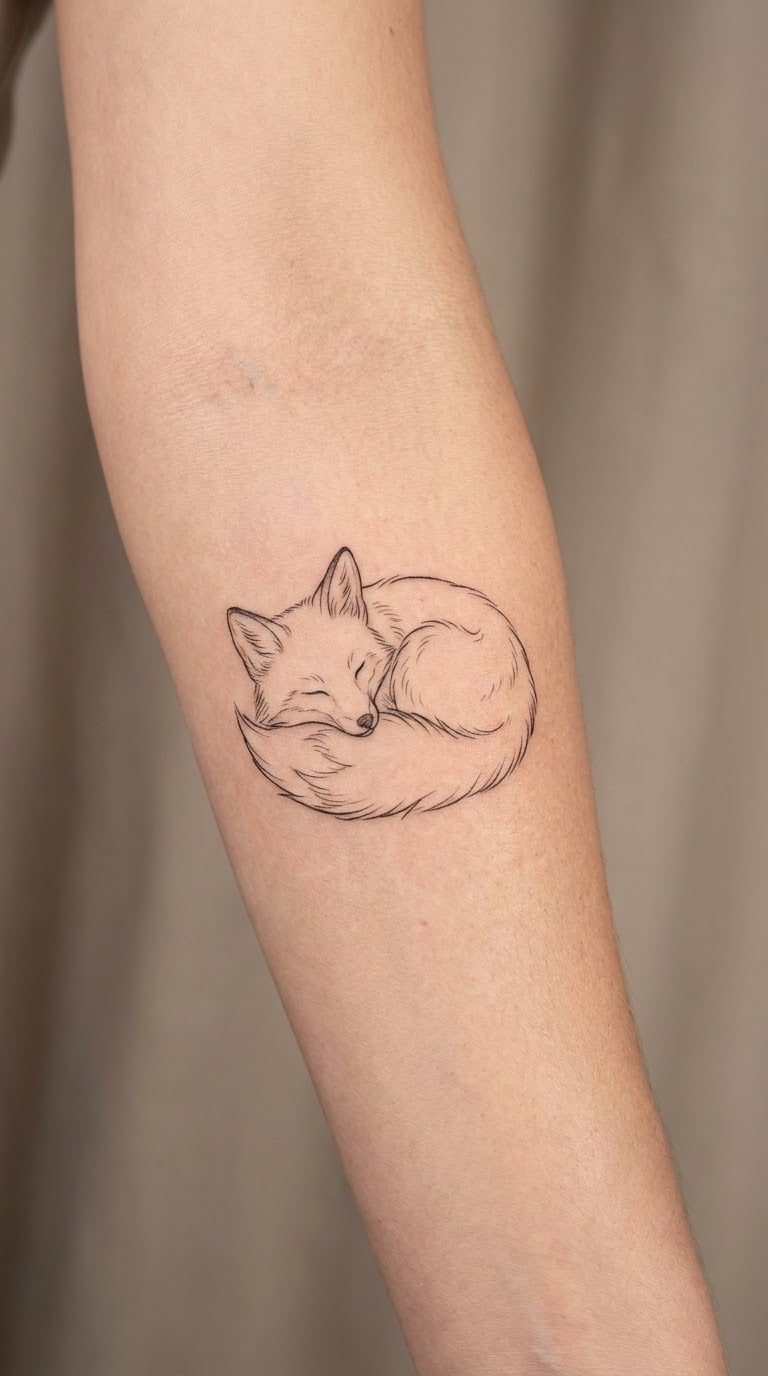
A sleeping fox is drawn with sparse, graceful linework: a curved back, one tucked paw, a tail curled around the body and a single closed eye. Almost no shading, which is exactly what makes it look soft rather than busy. The line follows the length of the forearm so the body reads as resting.
People choose the sleeping fox for rest, for a person or pet who rested beside them, or simply because a curled animal is gentler than a prowling one.
Placement: inner forearm, wrist crease, or the soft dip below the collarbone. Size: 2.5 to 3.5 inches (6 to 9 cm). Style: fine line, single needle. Pain: medium on the inner arm, sharp but short, usually 20 to 30 minutes. Fine line on the hands fades fastest, so keep this one on the forearm. Make it yours: add a small date in the same line weight beneath the curled tail.
2. Minimalist Fox Head Outline
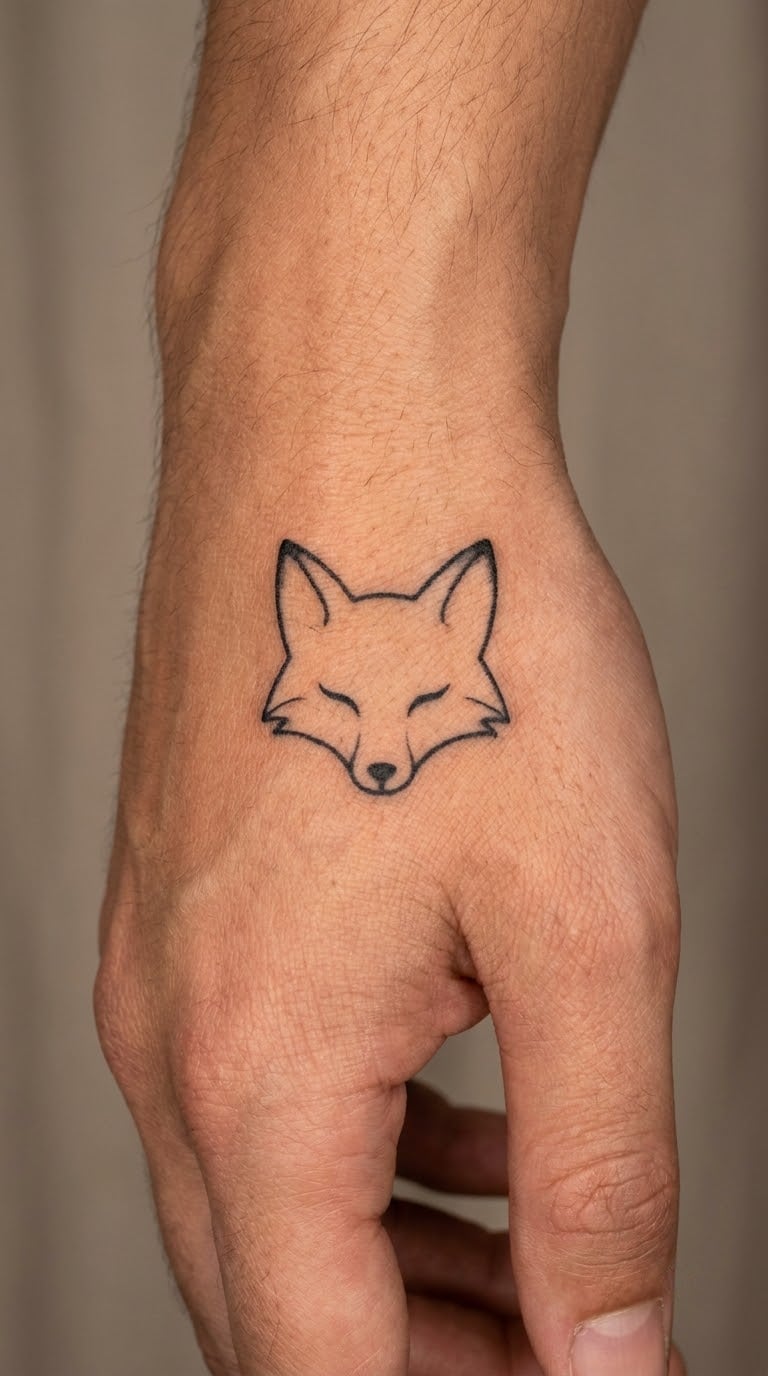
This is the smallest useful fox: two long ears, closed eyes, a narrow muzzle and one cheek line, all built from a few confident strokes. Nothing else. At 2 inches the artist has to drop the nose detail and the fur marks, otherwise the lines close up on themselves.
It is the design people pick for a first tattoo, or for a hand or finger where space decides the design for you.
Placement: back of the hand, thumb side of the wrist, or behind the ear. Size: 1.5 to 2.5 inches (4 to 6 cm). Style: minimalist single-weight line. Pain: medium-high on the hand, where the skin is thin and the veins sit close. Expect an hour, not a quick flick. Hand linework softens and fades noticeably within a few years, so plan on a refresh. Make it yours: add a single dot for the eye instead of a closed eye shape.
3. Fox Head with Floral Accent
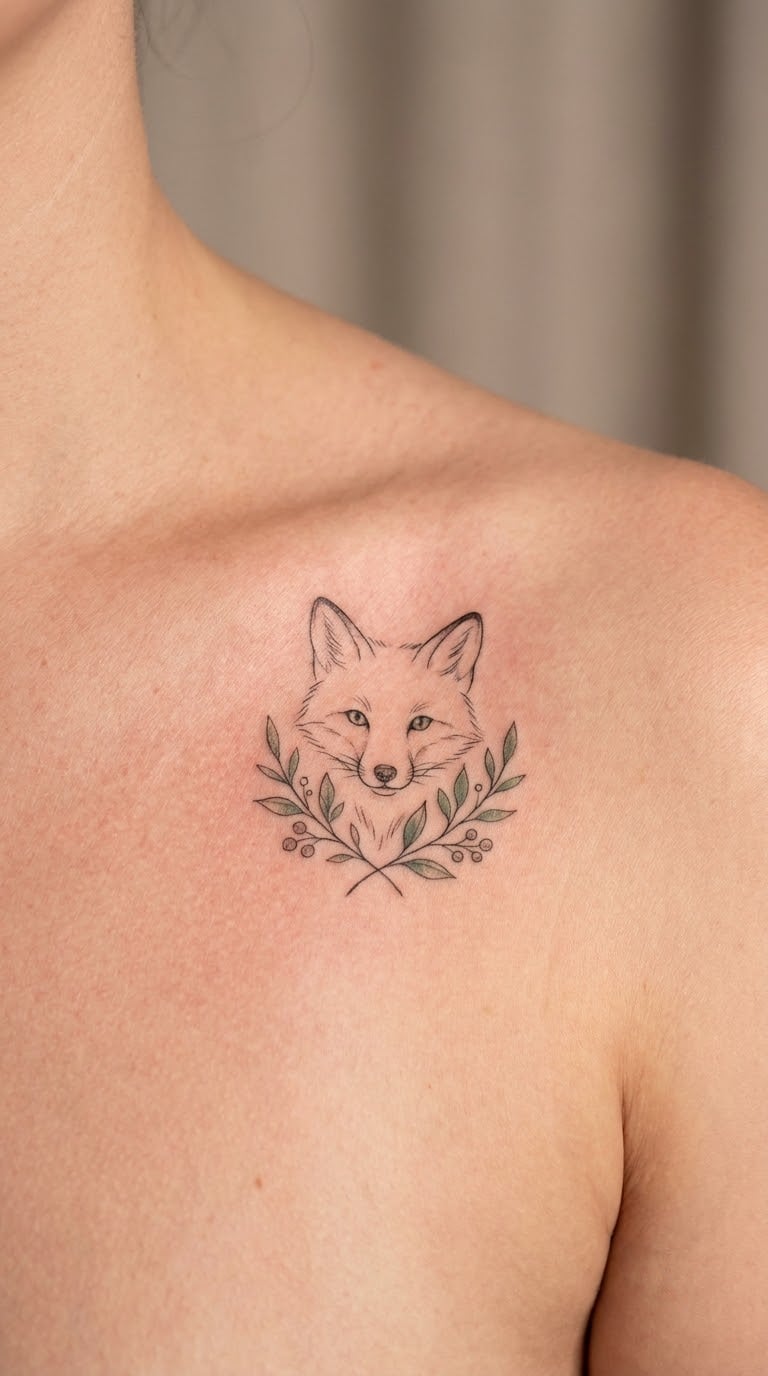
A fox head in clean linework paired with a few small stems, leaves or blossom sprigs that tuck under the jaw. The fox stays the subject and the florals act as a frame, so the piece reads balanced instead of crowded. Muted green or dusty pink works better than a bright color, which pulls focus off the animal.
Wildflowers, eucalyptus and plum blossom are the versions I see requested most. Some people add a flower for each person who matters to them.
Placement: collarbone, shoulder, or the outer forearm. Size: 3 to 4 inches (7.5 to 10 cm). Style: fine line with a small color accent. Pain: medium-high on the collarbone, sharp and specific because the bone is close under thin skin. A 3.5 inch piece here is a 45 minute session. Make it yours: choose each flower for a person, then tell the artist which one to place closest to the ear.
4. Curled Fox in a Crescent
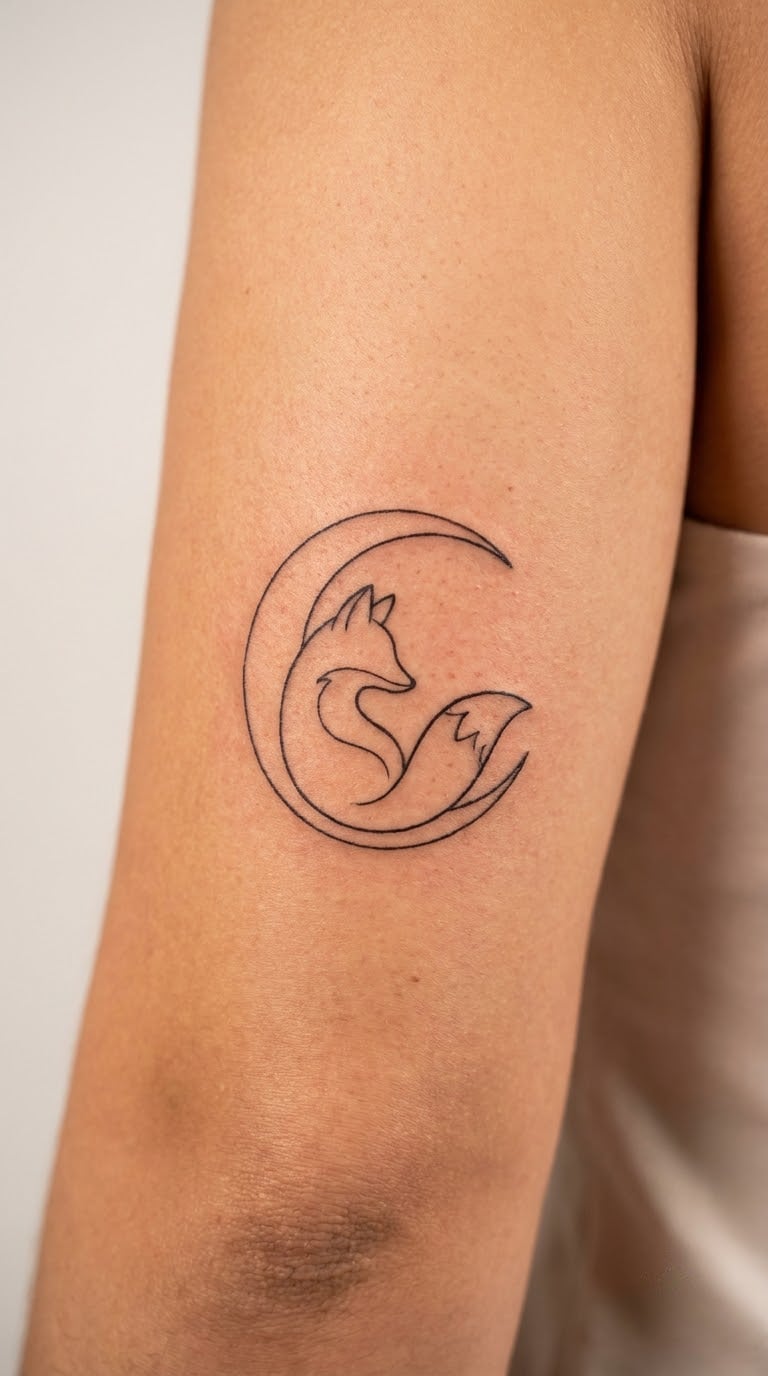
A crescent shape holds a compact fox curled inside it, the tail wrapping along the inner curve so the moon doubles as the outline of the design. The trick is that the tail does the drawing work: at small scale the silhouette stays readable because the body and the moon reinforce each other.
Fox and moon together read as the traditional night-watcher pairing, and plenty of people use it as a memorial piece for someone who was awake when they were not.
Placement: outer upper arm, rib flank, or the small of the back. Size: 2.5 to 3.5 inches (6 to 9 cm). Style: fine line. Pain: medium on the upper arm, fairly flat skin, and one of the easier spots for a first piece. Make it yours: put a star or a small year inside the crescent next to the fox.
5. Blackwork Fox Head
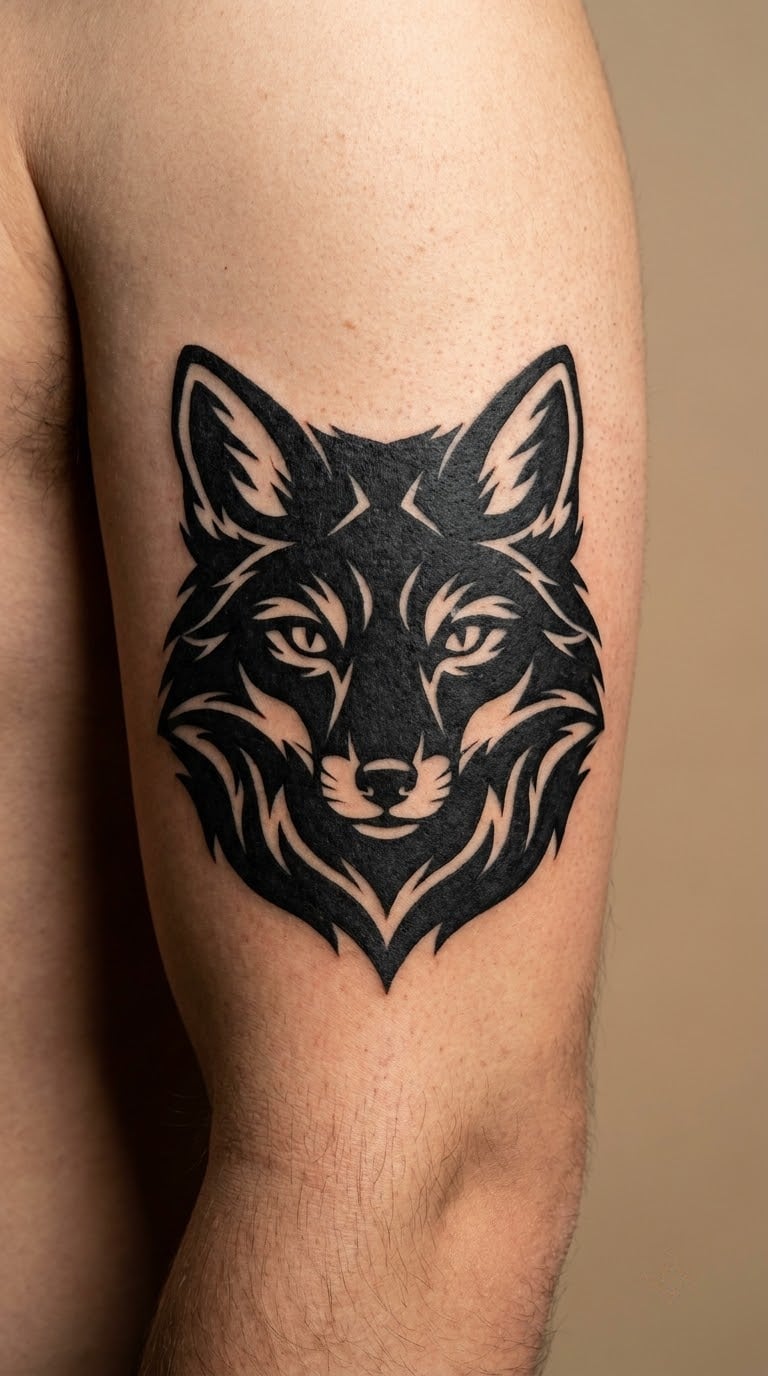
Blackwork means solid black fills and heavy linework with no grey shading, and a fox suits it because the dark mask, the black ear backs and the shadowed side of the muzzle give the artist solid shapes to work with. The white highlights are negative space, left as bare skin rather than painted in.
It is a strong, high-contrast piece and it reads as confident rather than delicate, which is a different mood from most of the designs here.
Placement: upper arm, outer thigh, calf, or shoulder blade. Size: 4.5 to 6 inches (11 to 15 cm). Style: blackwork. Pain: medium-high, and a filled area takes more passes, so budget 90 minutes to two hours. Blackwork holds line best, but the solid black can look heavy on a small or pale frame. Make it yours: break the black with one narrow white gap through the cheek to keep the face alive.
6. Watercolor Fox in Profile
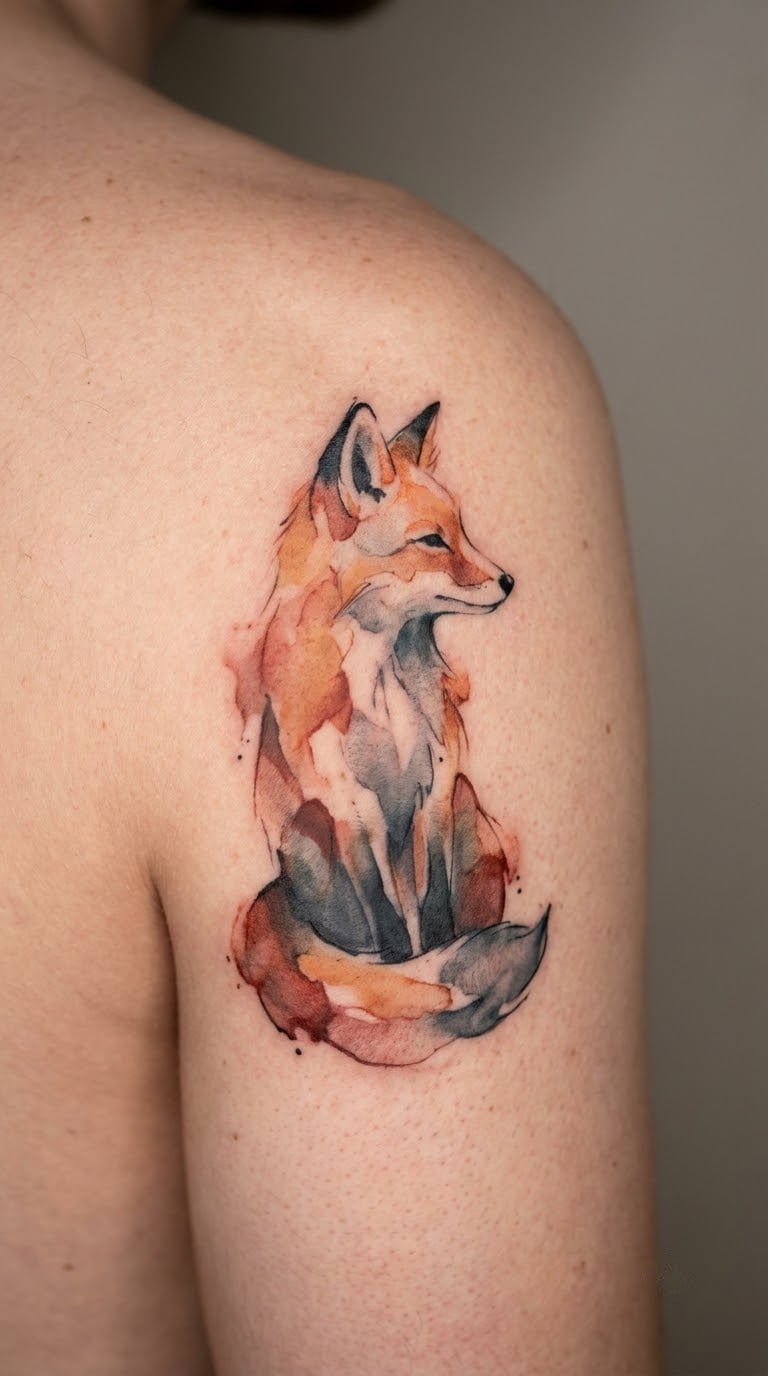
A watercolor fox is built from translucent washes rather than outlines: rust and orange for the body, grey along the back, a darker wash at the tail tip, and a few hard lines only for the eye and the ear edge. Loose edges are the point, so do not ask the artist to tidy every bleed.
It suits people who want color without the graphic weight of a traditional piece, and it hides a slightly rough surface better than clean linework does.
Placement: shoulder, upper arm, or the back of the calf. Size: 4 to 5 inches (10 to 12.5 cm). Style: watercolor with sparse linework. Pain: medium, and the shading means more passes, so 1.5 to 2 hours. Warm pigments fade first, so plan on a color refresh every few years. Make it yours: add a loose splash of color behind the head so the background carries some of the hue.
7. Tiny Fox Behind the Ear
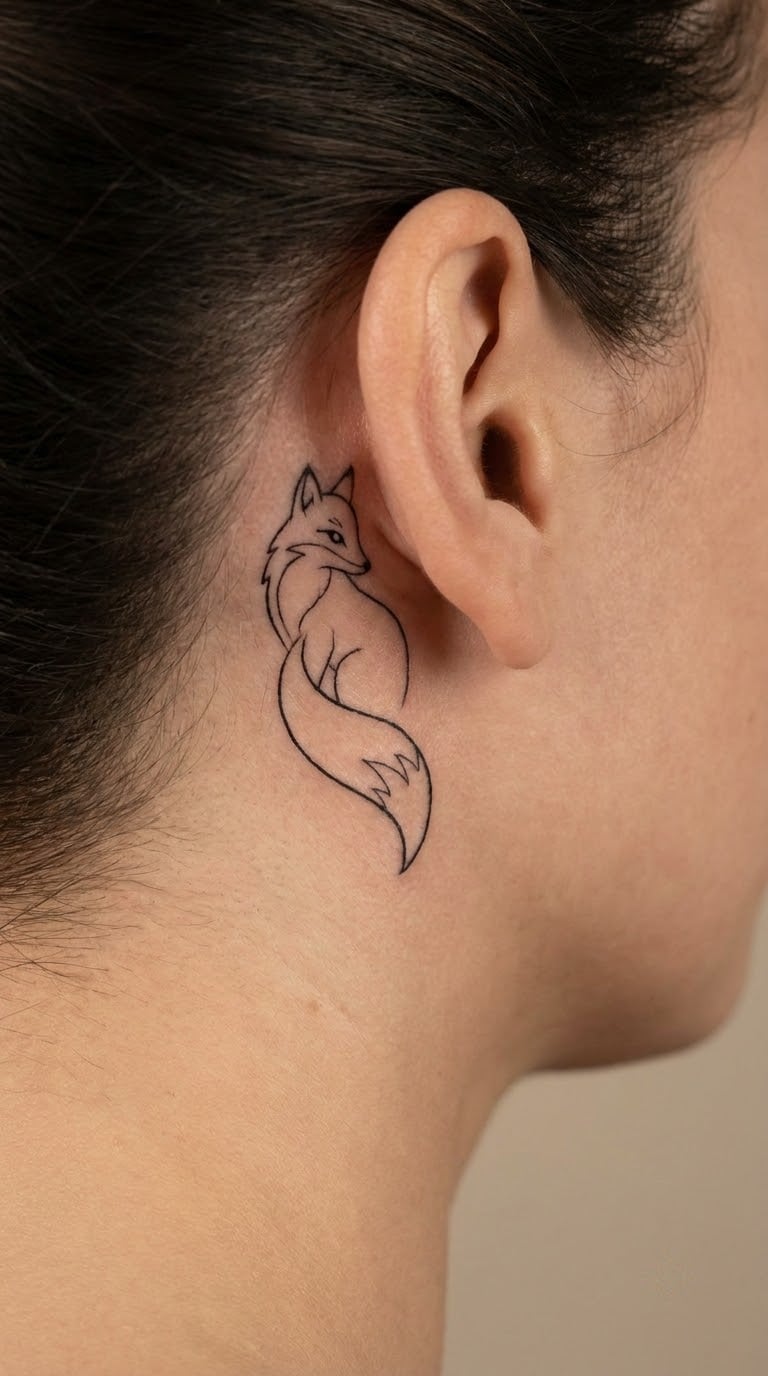
Here the ear does part of the drawing. A tiny fox body, one eye and a curved tail sit tucked against the crease so it looks like the fox is peering round from hiding, and the hairline hides part of the outline. That trick is what makes a 1.5 inch tattoo look designed rather than shrunk.
It is popular as a first piece and as a companion to a larger fox elsewhere, one calm animal and one curious one.
Placement: directly behind the ear, or just under it on the neck. Size: 1.5 to 2 inches (4 to 5 cm). Style: fine line. Pain: low to medium, one of the easier spots, and 15 to 25 minutes. Fine line behind the ear softens faster than most areas because the skin moves constantly, so keep the design simple. Make it yours: angle the fox so it points into the hair, and let the artist hide the back half of the body under the ear itself.
8. Fox Tail Wrist Design
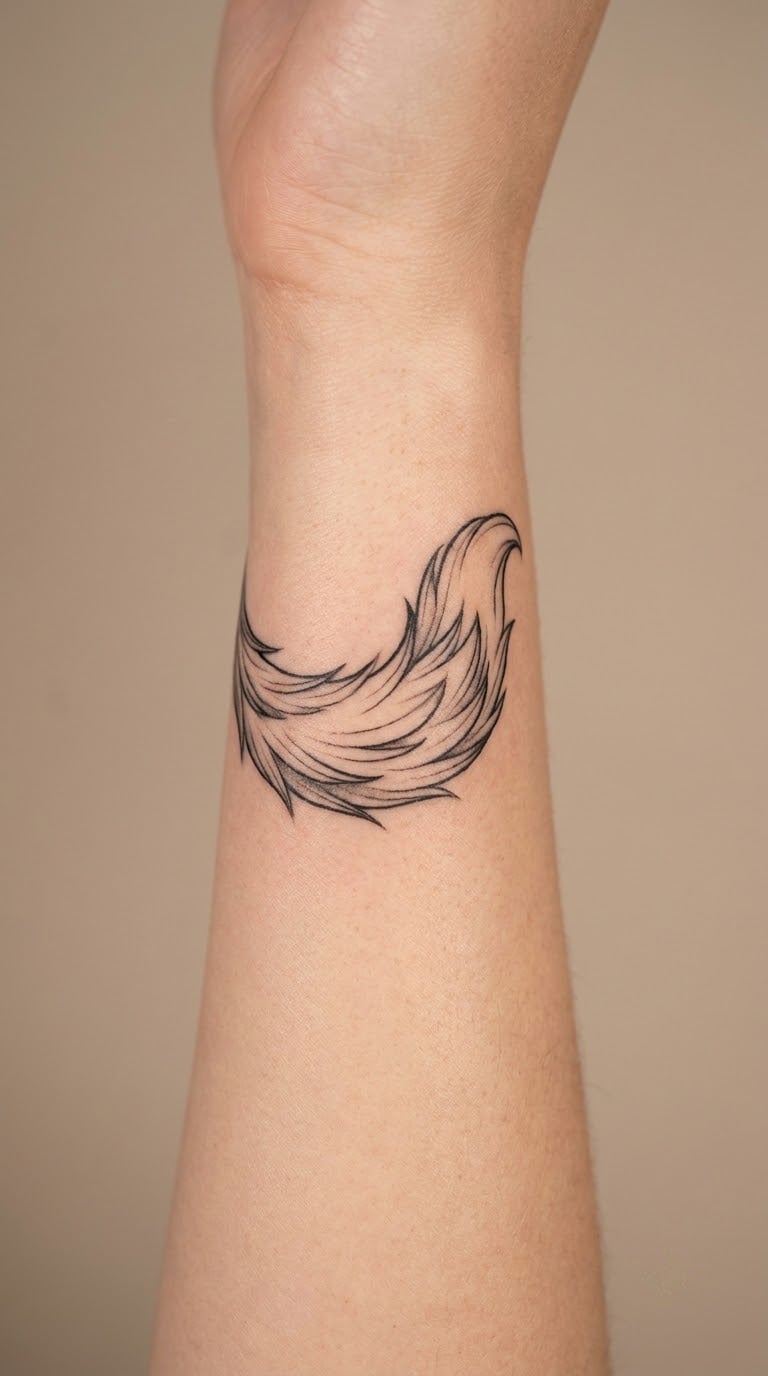
Not the whole animal, just the tail: layered tapered strokes that thicken and thin as they curve, ending in a soft point that wraps toward the underside of the wrist. Because the tail is mostly outline, it can carry a suggestion of fur texture without needing much width.
It works as a standalone piece and as a placeholder for the full fox later, which is a common progression for a first-timer who is not sure yet how much ink they want.
Placement: wrist, lower forearm, or the ankle. Size: 2.5 to 3.5 inches (6 to 9 cm). Style: fine line with tapered strokes. Pain: medium-high, and the wrist has both thin skin and visible bone. The curve means a 30 to 45 minute session. Make it yours: use a rust or deep red wash inside the tail, then have a plain black fox added later in the same spot.
9. Geometric Fox Portrait
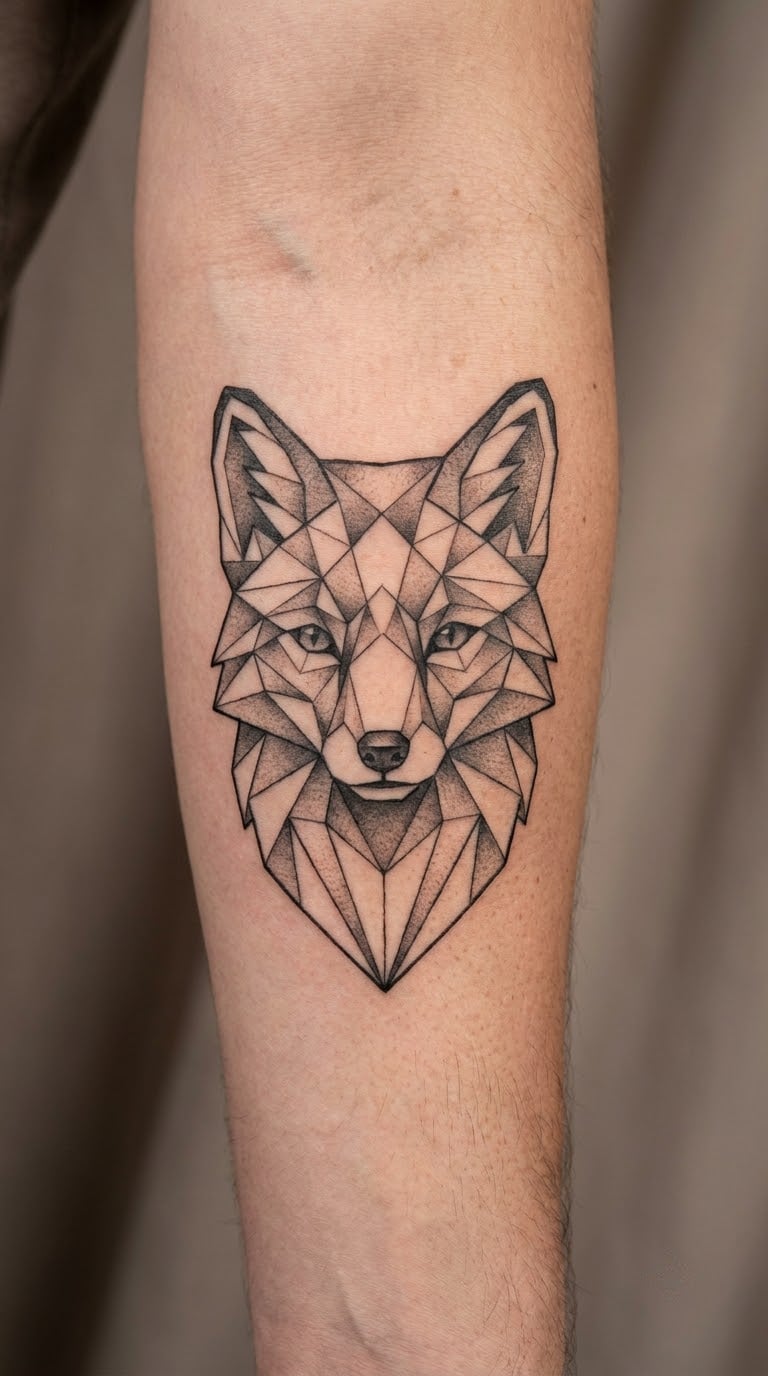
A geometric fox is built from flat angular facets that meet in straight edges, with the ears placed symmetrically and the eyes reduced to two clean shapes. Some versions add a thin grey wash in a few facets only, which stops the piece looking flat without losing the hard geometry.
It is a design for someone who likes maths in their art. The symmetry also means it adapts well to curved surfaces, because the artist can rebalance the facets around the shape of the limb.
Placement: outer forearm, shoulder, or the thigh. Size: 3.5 to 4.5 inches (9 to 11 cm). Style: geometric with optional grey wash. Pain: medium, mostly flat skin, 60 to 90 minutes. Fine geometric edges blur if the line weight is too thin, so ask for at least a single-needle-plus-needle contrast. Make it yours: add one accent color to a single facet, and keep everything else black.
10. Fox and Moon Forearm Tattoo
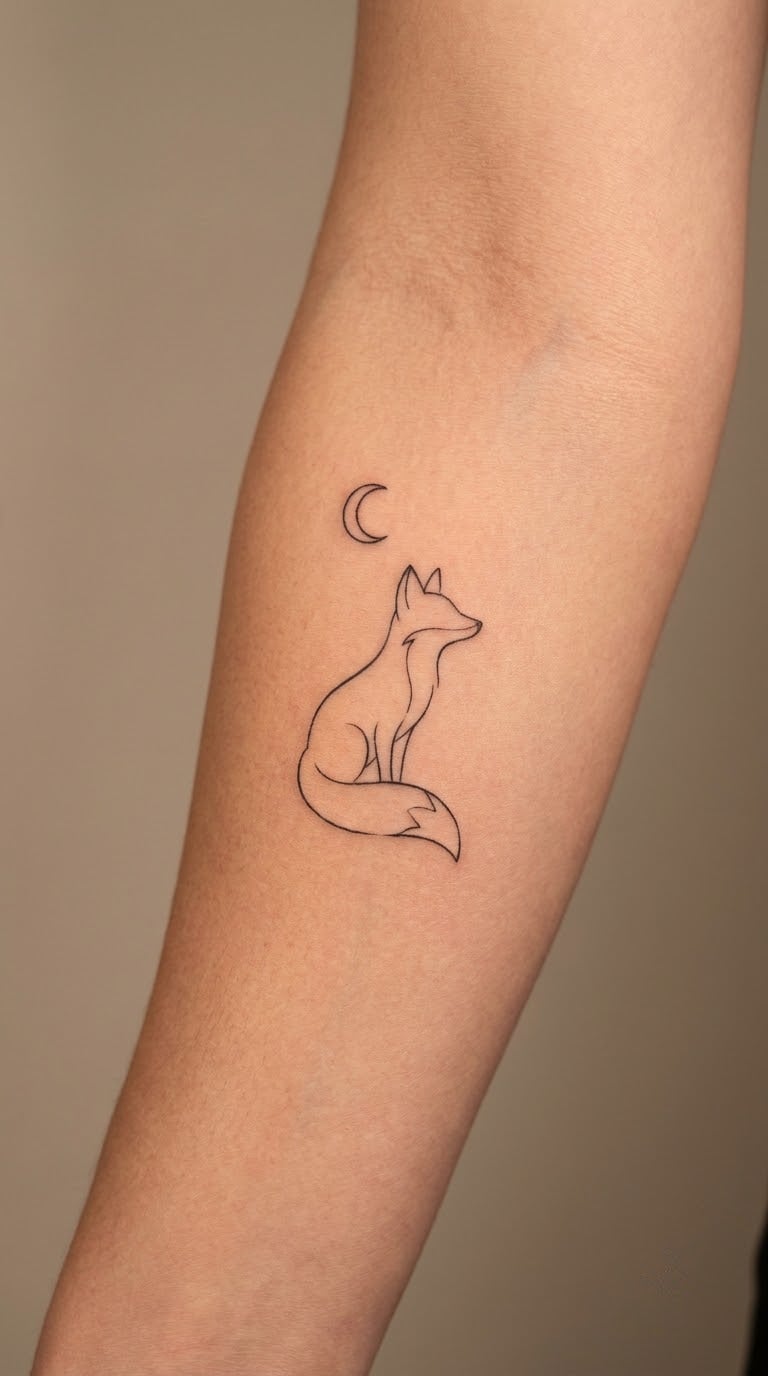
This is a small narrative scene: a fox sitting and looking up at a crescent placed above and slightly ahead of it, with open space between the two so the eye travels. Restraint is the whole craft here. Cram the two elements closer and it turns into a sticker.
It reads as watchfulness and patience, and it is one of the designs people choose when they want a piece that says something without needing a word for it.
Placement: inner forearm, wrist to elbow, or the outer arm. Size: 3.5 to 4.5 inches (9 to 11 cm). Style: fine line. Pain: medium on the inner arm, and the open spacing keeps the session under an hour. Make it yours: angle the moon to catch a specific light, and have the artist break a few stars out of the gap in short dashes.
11. Traditional Rose-Colored Fox
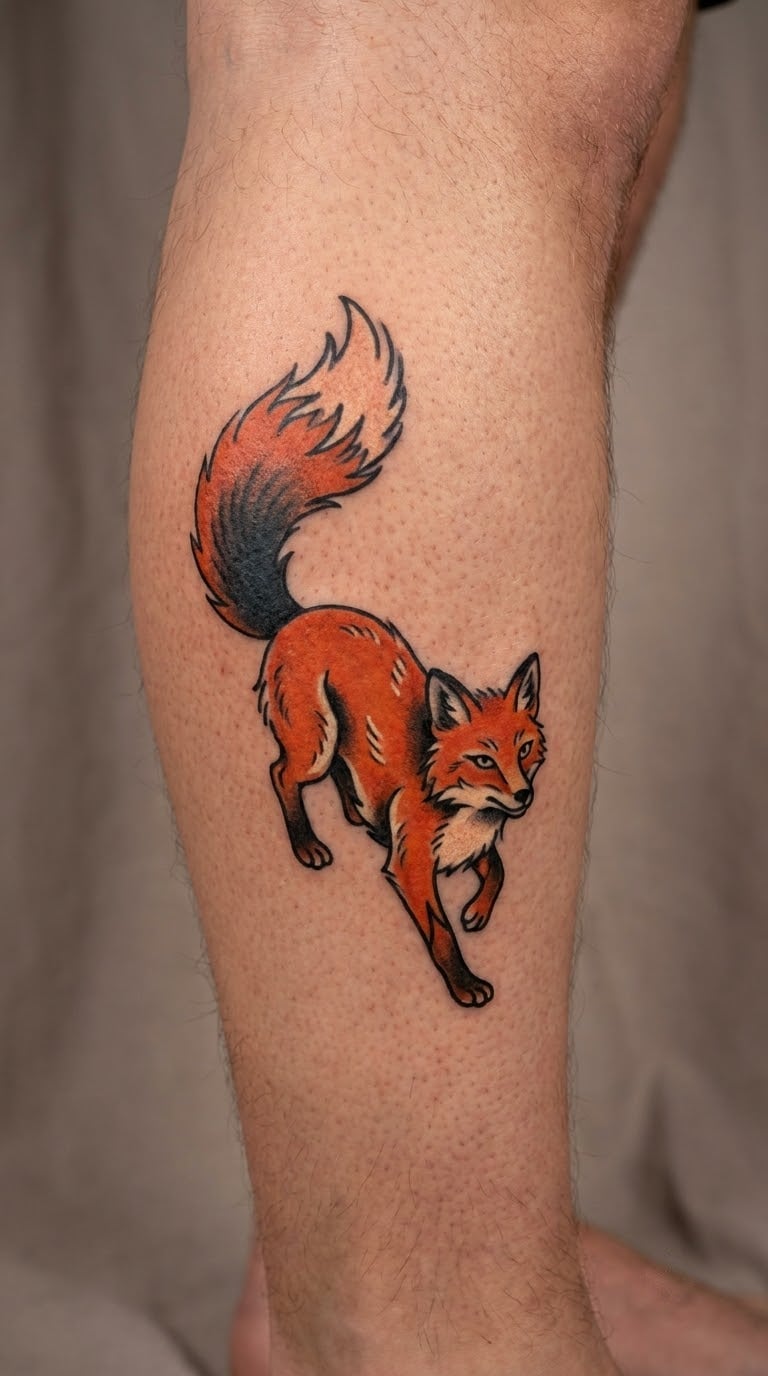
Traditional style means a bold black outline, warm orange-red fills, dark shading on the tail and ear backs, and a small highlight or two to keep the color from going flat. The classic red fox palette is close to a warm orange with a cream underside, which is why this style has held up for decades.
People gravitate to it because it is instantly readable from across a room, which very few fine-line fox designs are.
Placement: calf, outer arm, or the shoulder. Size: 4.5 to 6 inches (11 to 15 cm). Style: traditional American. Pain: medium, and color filling takes time, so two hours is a fair estimate. Red and orange are the pigments that fade first, so sunscreen on a bare leg matters. Make it yours: choose a deeper rust for the back and a brighter orange for the chest, and keep the tail tip near black.
12. Micro-Realism Fox Face
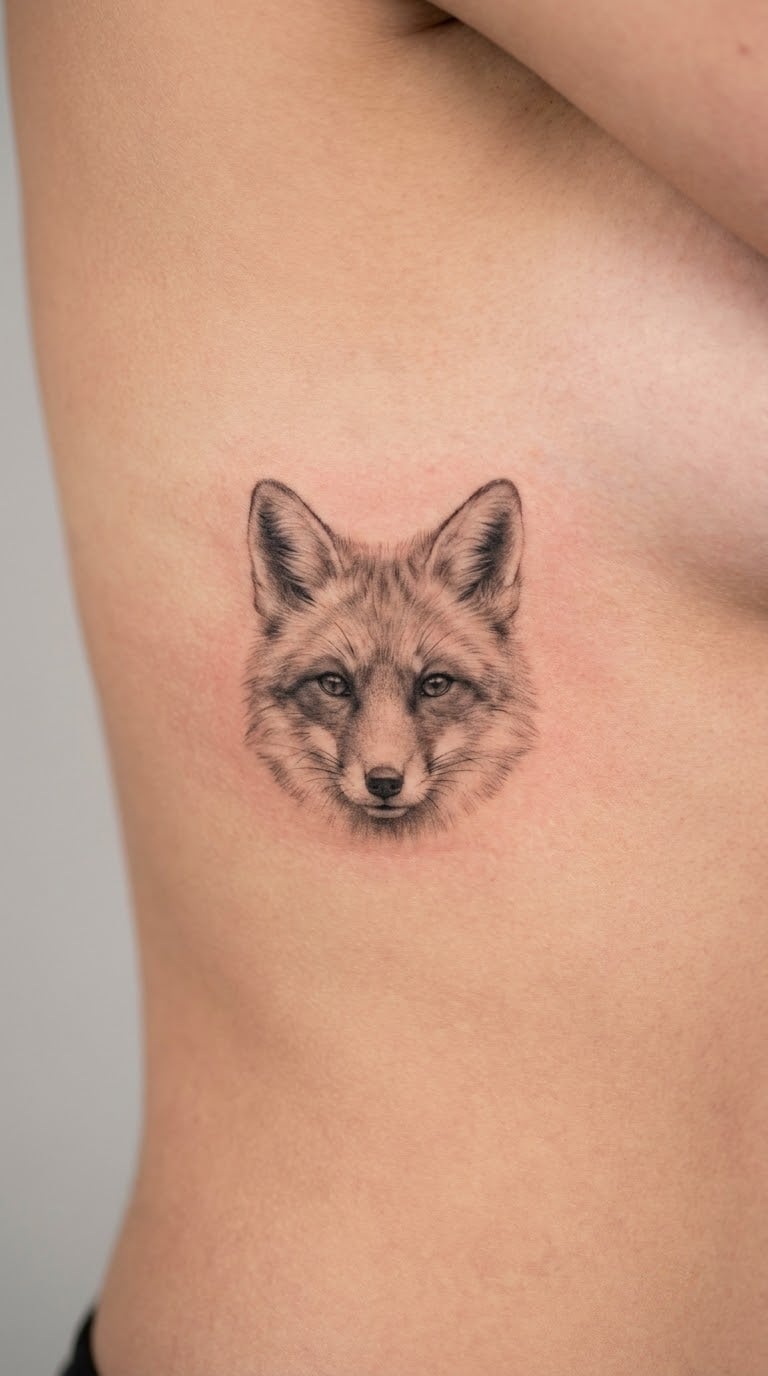
A realistic fox face in soft black and grey shading: the dark mask around the eyes, pale cheek fur, a black nose and one catchlight in the eye. Done small, realism needs restraint, because every extra hair stroke costs a year of legibility.
It is frequently a memorial tattoo, often for someone connected to foxes or to the countryside the wearer grew up in. Get the proportions right and the resemblance reads immediately.
Placement: rib area, inner arm, or the calf. Size: 3 to 3.5 inches (7.5 to 9 cm). Style: micro-realism. Pain: high on the ribs, the sharpest of the twenty in this guide, because the skin is thin and stretched over bone. Small size keeps the session to about an hour. Make it yours: keep the dark mask and simplify everything else, and ask the artist to leave one strand of pale fur unpainted as a highlight.
13. Running Fox Thigh Design
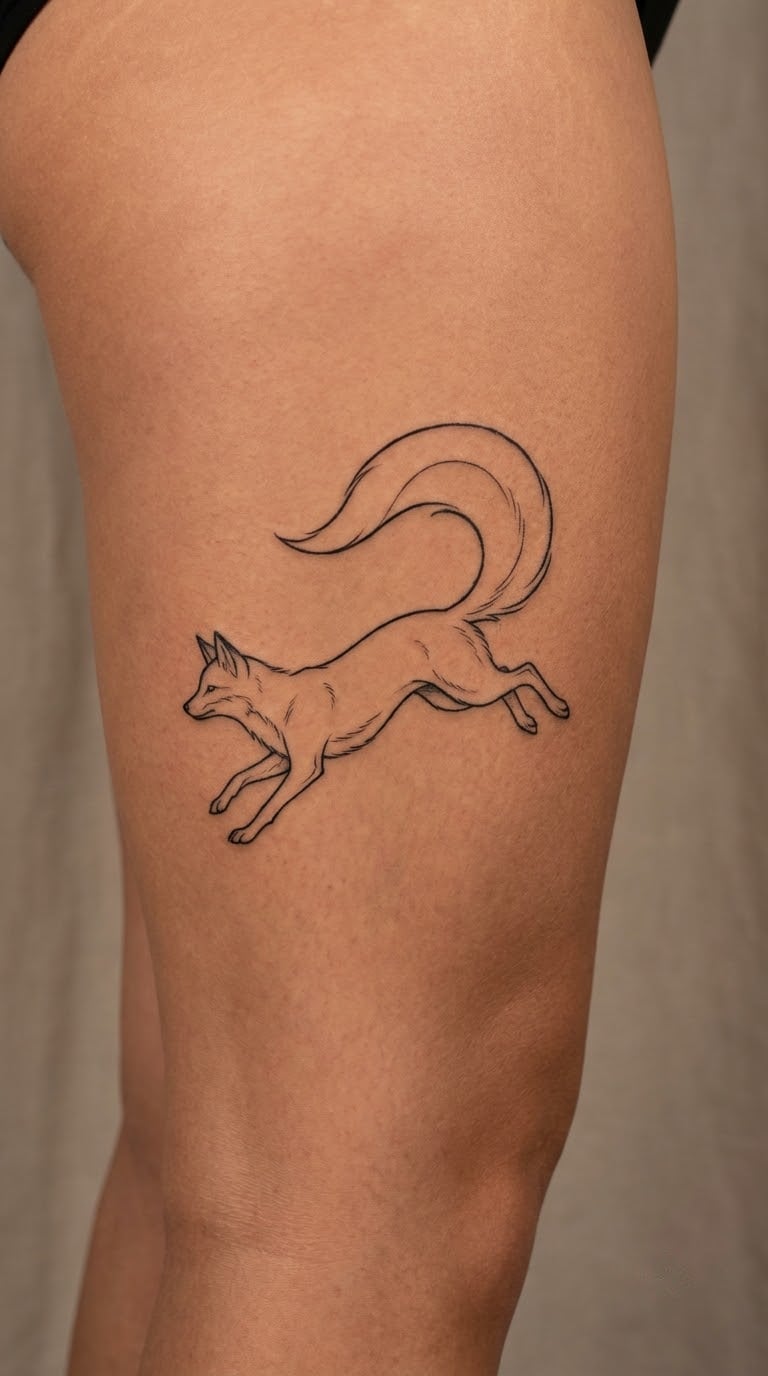
A fox mid-stride, front legs extended and back legs gathered, with the tail sweeping out behind as the longest line in the design. The thigh gives the artist a long surface, so the motion reads as motion instead of a standing animal squashed into a small shape.
Energy and forward motion is the meaning people read into it, which suits anyone marking a move, a new chapter or finishing something.
Placement: outer thigh, rib flank, or the calf. Size: 5 to 7 inches (12.5 to 18 cm). Style: fine line or black and grey. Pain: medium, and the larger size pushes you toward a two-hour session, so ask for a break before the shading pass. Make it yours: have a few short ground lines under the back feet so the fox looks like it is pushing off something.
14. Dotwork Fox
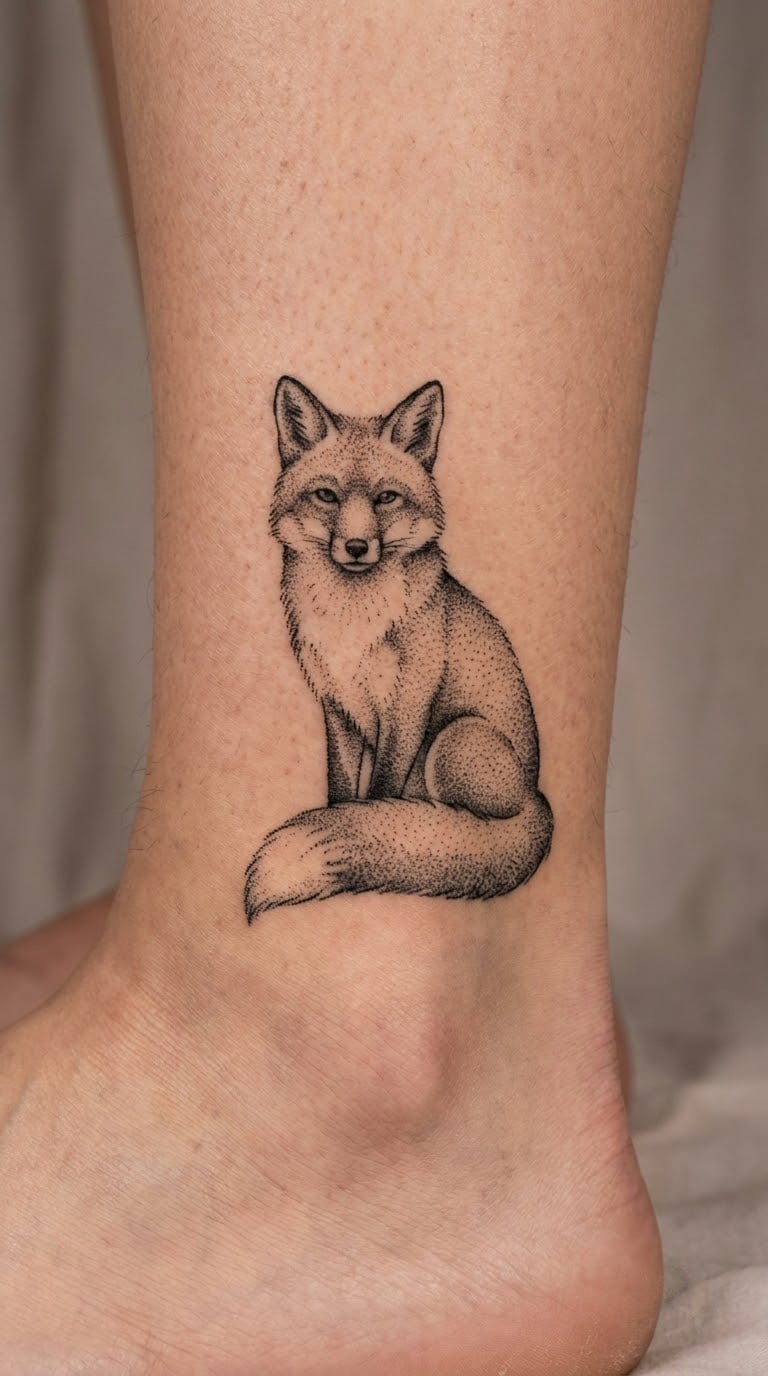
Dotwork builds tone out of dots: dense clusters for the shadowed side of the body, widely spaced single dots for the lit fur, and nothing at all for the white of the tail tip. The texture is the image, so the graduation between tight and loose is what makes it read as a fox rather than a smudge.
It is a patient style. A 3 inch dotwork fox can take as long as a traditional piece of the same size, which surprises people.
Placement: ankle, inner forearm, or the upper arm. Size: 3 to 4 inches (7.5 to 10 cm). Style: dotwork. Pain: medium on the ankle, sharp because of the bone, and 1.5 to 2 hours for a small piece. Dots are hard to touch up individually later, so agree the density before the session starts. Make it yours: have the lowest-density dots fade out into a scattering of marks around the tail, like the animal dissolving into the skin.
15. Neo-Traditional Fox with Berries
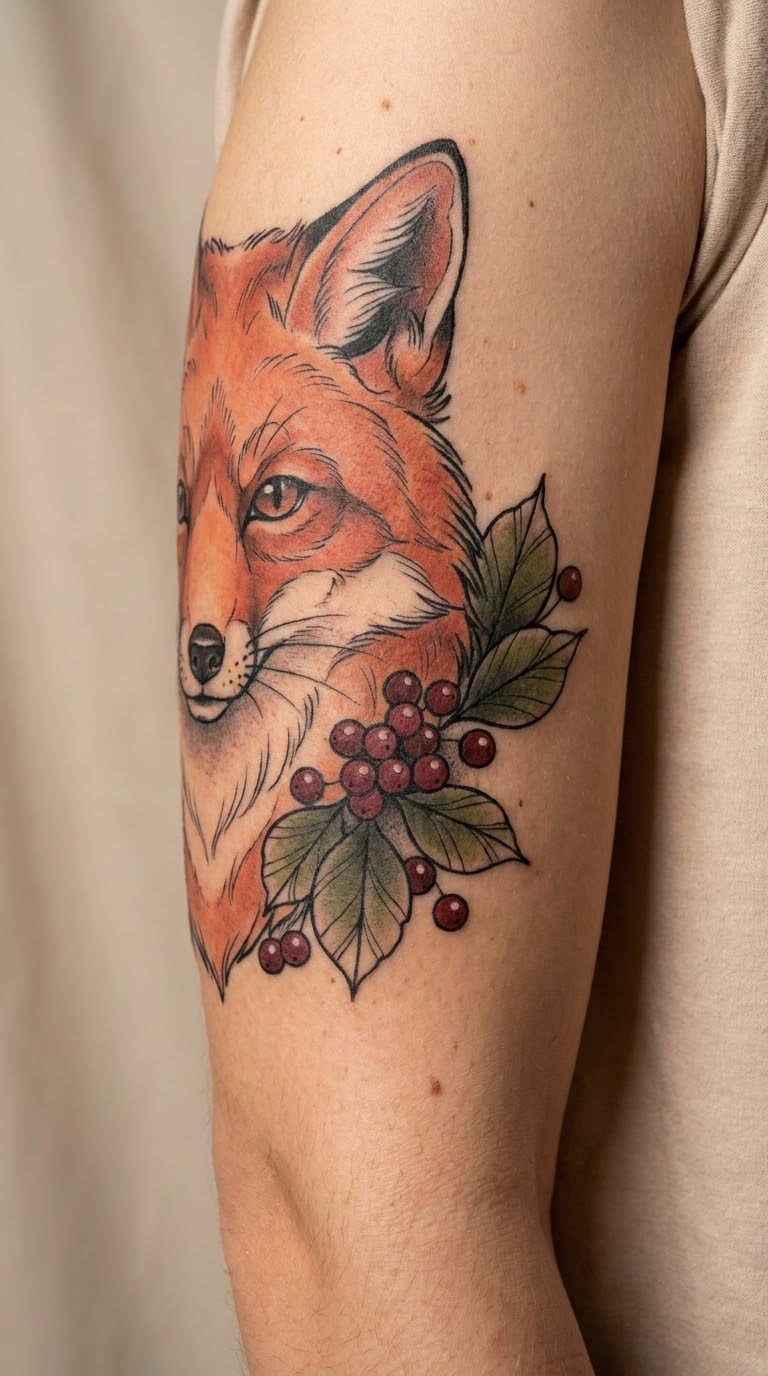
Neo-traditional takes the bold traditional outline and adds deeper color, smooth shading and a decorative surround. A fox head with a small berry sprig keeps the ornament secondary: the berries and shaded leaves frame the face without competing with the eyes.
It is a good choice when you want color and presence but not a full sleeve, and the rich orange reads warmer than a traditional red fox.
Placement: shoulder, outer forearm, or the back of the calf. Size: 3.5 to 4.5 inches (9 to 11 cm). Style: neo-traditional. Pain: medium, and the shading and color work make it a 1.5 to 2 hour sitting. Make it yours: tie the berry leaves into a shape that echoes the fox ear line, and keep the eye the sharpest point in the design.
16. Fox Silhouette on the Spine
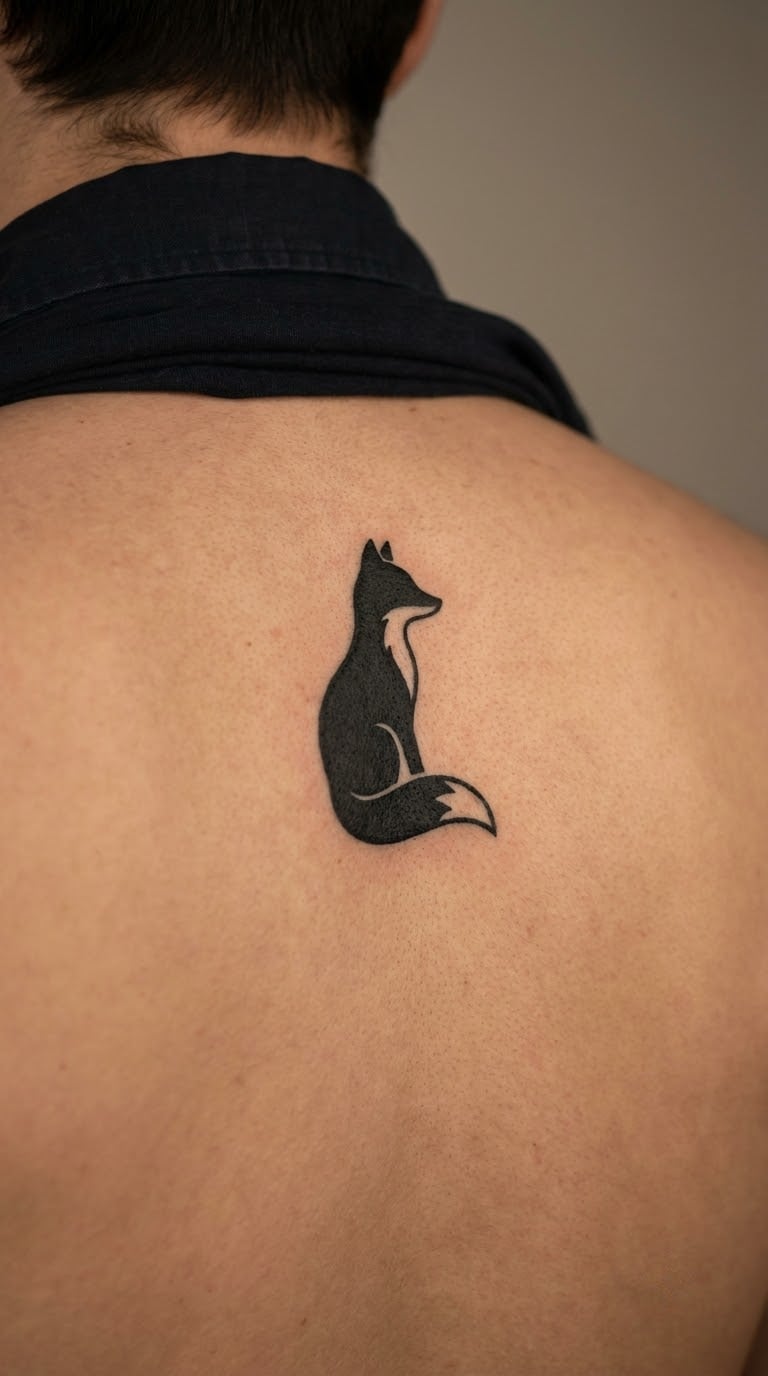
A solid black fox, seated, tail curved around the feet, placed vertically along the upper back so the body sits between the shoulder blades. The vertical line of the spine gives the silhouette room to sit straight, and the piece stays hidden under most clothing.
People put something on the spine that they carry but do not show, which is usually how this one is described to me.
Placement: upper spine between the shoulder blades, or the lower back. Size: 4.5 to 5.5 inches (11 to 14 cm). Style: black silhouette, no shading. Pain: medium-high, a sore position to lie in for two hours, so a pillow under the chest helps more than anything. A solid fill at this size takes about 90 minutes. Make it yours: add a thin outline in a lighter ink a few millimetres outside the silhouette so the shape lifts off the back. More ideas for this spot are in our 20 Best Back of Neck Tattoo Ideas for Women (September 2026).
17. Two Foxes Facing Each Other
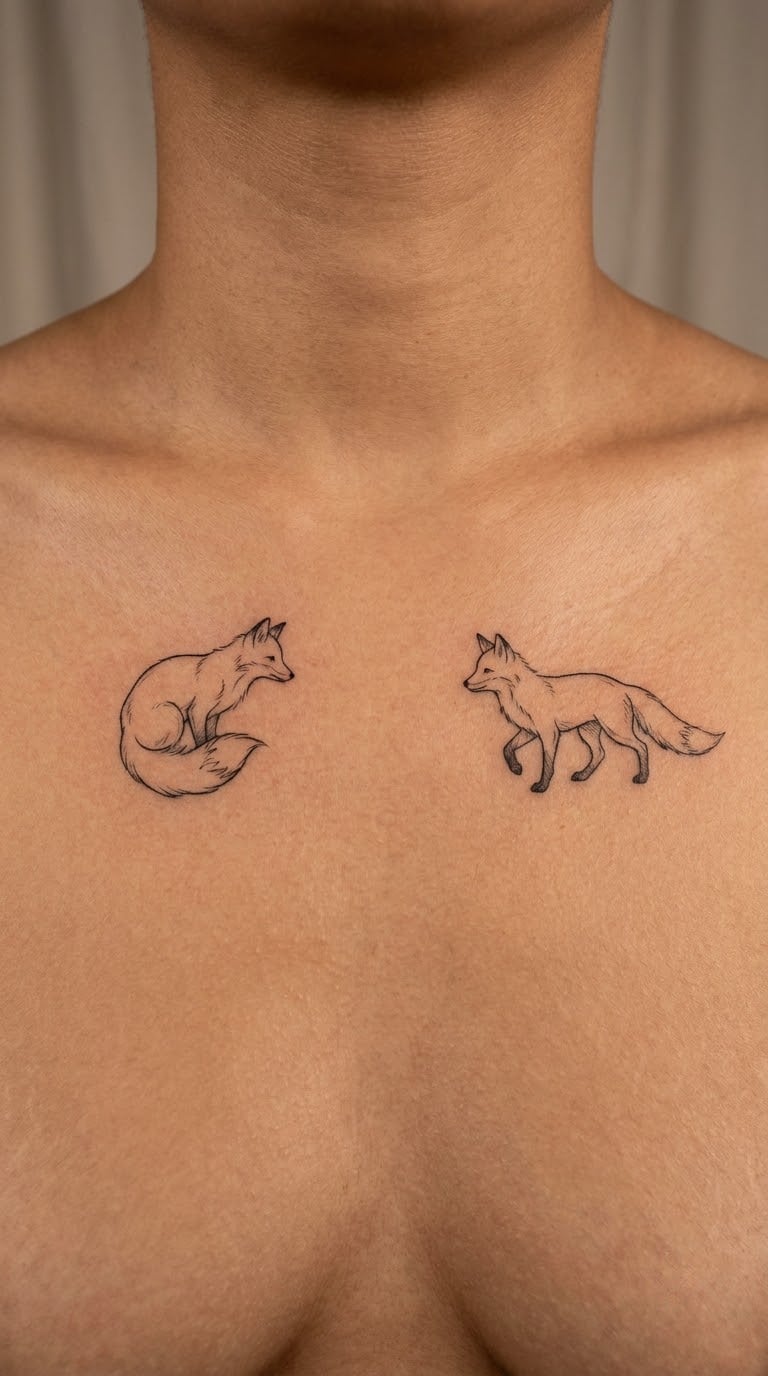
Two foxes in mirrored positions, one calm and curled, one alert and upright, placed so they look at each other across a small gap. Symmetry in placement, difference in pose. That contrast is what makes the pair feel like two personalities rather than a duplicated sticker.
Matching pairs show up constantly, usually for sisters or friends, and sometimes for one person marking two sides of themselves.
Placement: upper chest below the collarbones, the forearms as a pair, or one on each ankle. Size: 2.5 to 3 inches each (6 to 7.5 cm). Style: fine line. Pain: medium on the chest, and the sternum area stings more than most people expect, though each fox is only a 30 minute job. Make it yours: give one fox a grey wash and keep the other black, so the pair reads as two animals rather than one reflected.
18. Fox in a Small Circle
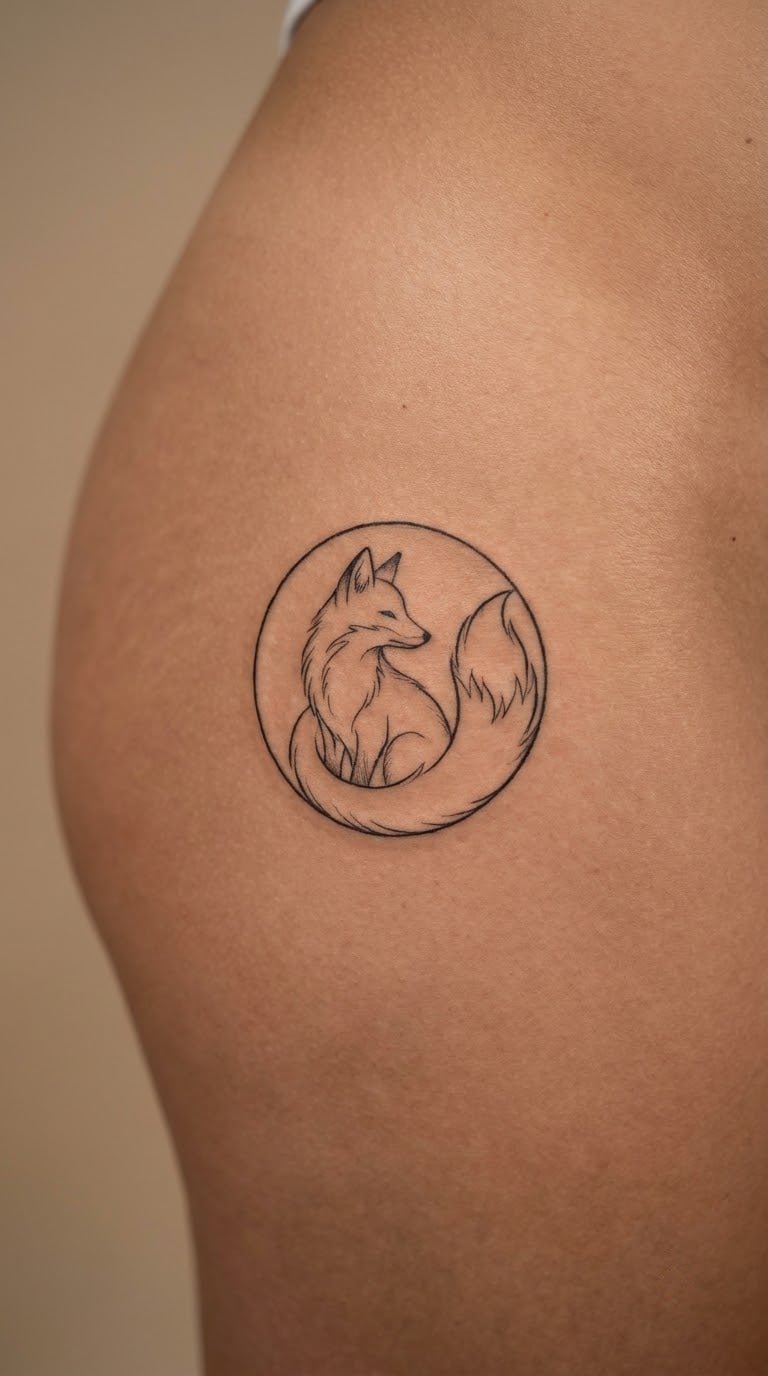
A thin black circle with a fox curled inside it, the tail running along the inner edge so the circle closes the composition. The frame makes the design look finished and intentional, and it also gives you a clear edge to grow into if you add to it later.
It is one of the easiest designs to hand an artist as a reference because the geometry of the circle tells them the scale before the drawing does.
Placement: hip, hipbone, outer arm, or the shoulder blade. Size: 2.5 to 3.5 inches in diameter (6 to 9 cm). Style: fine line. Pain: medium-high on the hip, where the skin is soft and sensitive, so plan on 45 to 60 minutes. The circle line must stay one consistent weight or it will look uneven. Make it yours: have the artist break the circle in two small gaps where the fox tail meets it, so the animal reads as escaping the frame.
19. Colorful Fox Sleeve Element
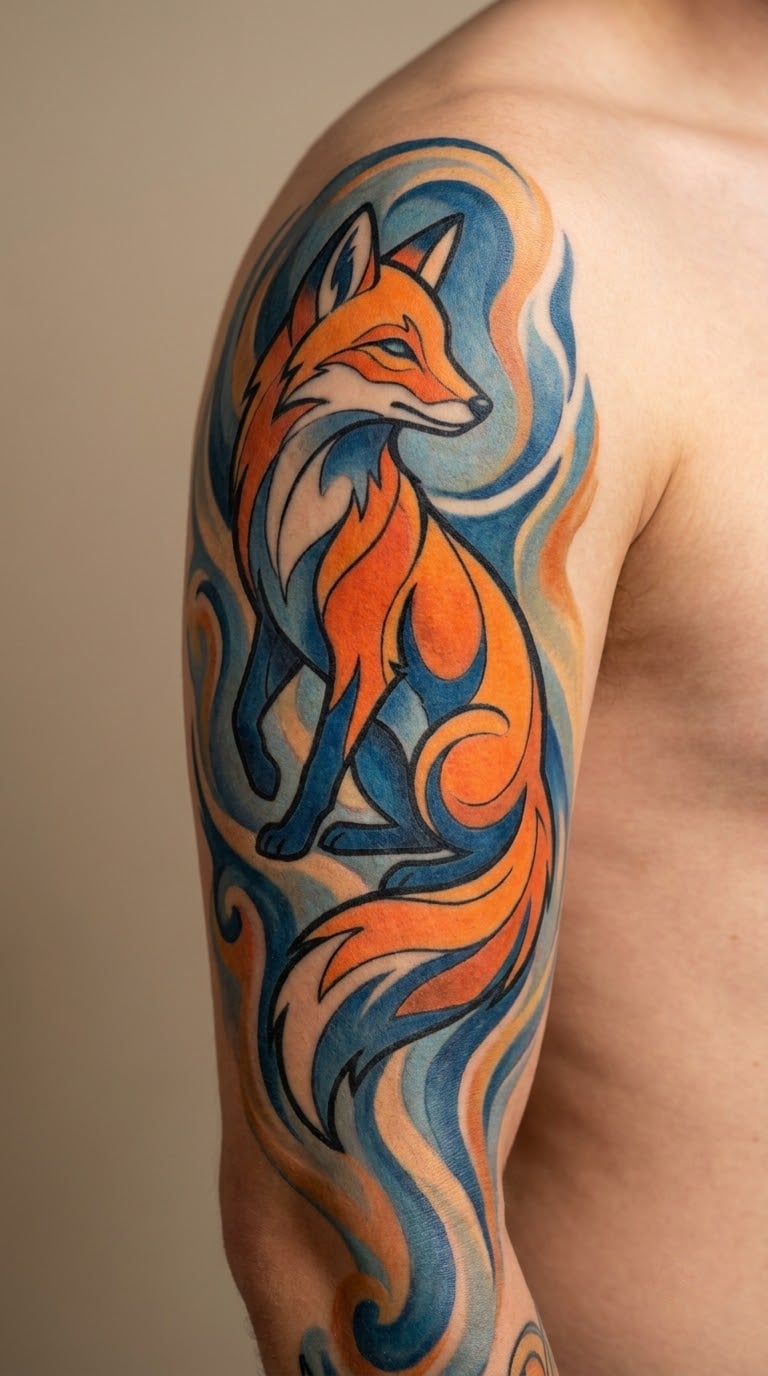
A fox built as one piece of a bigger composition: bold black outline, warm orange body, a cool blue or teal accent in the background shapes, and open space deliberately left around it so later elements have somewhere to go. The accent color is what keeps a sleeve from turning into one brown mass.
If you are adding to an existing piece, bring your artist the earlier work so the fox matches its line weight and color depth exactly.
Placement: outer upper arm, or the back of the arm in a developing sleeve. Size: 5.5 to 7 inches (14 to 18 cm). Style: illustrative color with black outlines. Pain: medium, and a 6 inch element is a two-hour-plus job. Blue and orange sit next to each other in the warm-to-cool range, so add a dark outline between them. Make it yours: pick a second color that means something to you and keep it to one accent, used twice only.
20. Fine-Line Fox and Wildflower Field
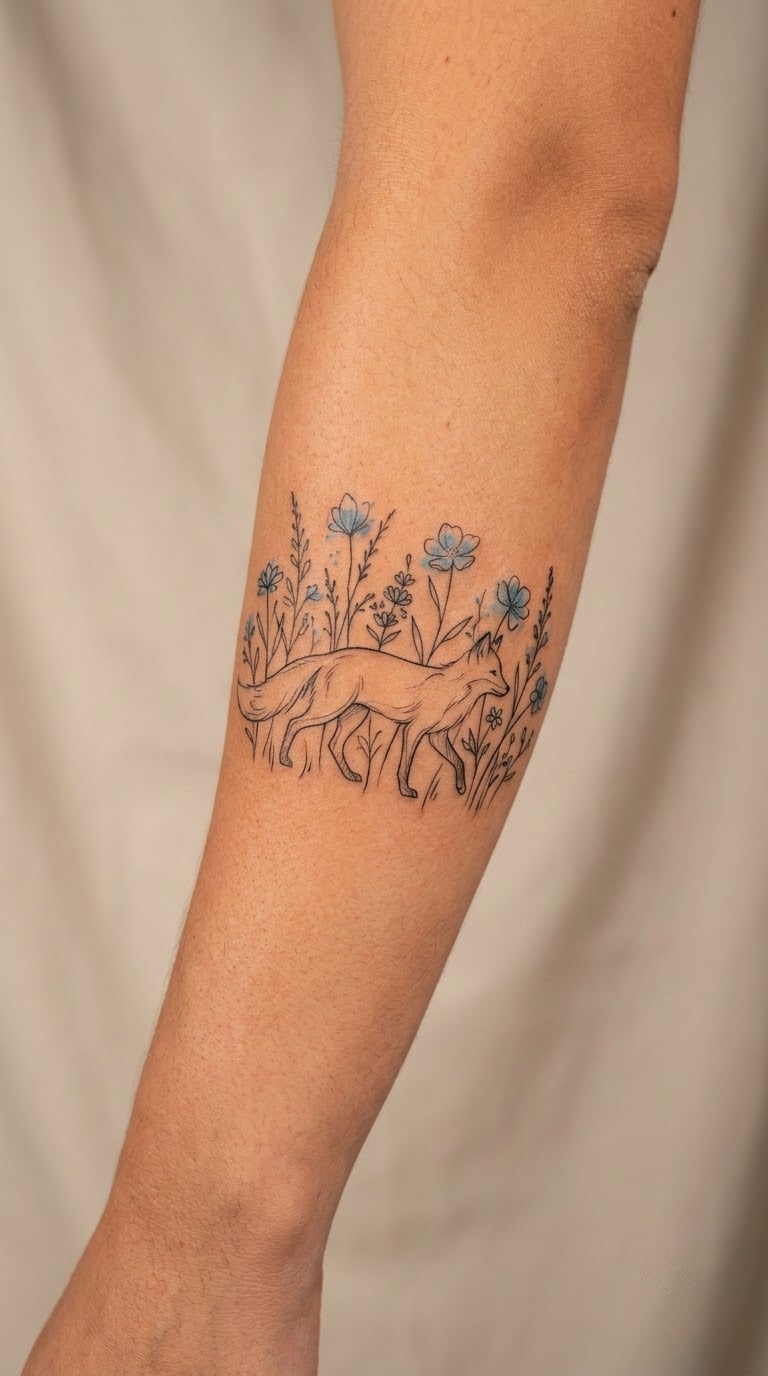
A fox walking through low wildflowers, the stems thin and varied in height, the fox the tallest and darkest shape in the scene. The trick is keeping the flowers sparse: a crowded field turns into noise and the fox disappears into it. Two or three light blue accents give the piece color without adding a wash.
It reads as belonging to a place, which is why it is often chosen as a memorial piece for a garden, a field or a childhood spent outdoors.
Placement: outer forearm, calf, or the thigh. Size: 4.5 to 5.5 inches (11 to 14 cm). Style: fine line scenic with light color. Pain: medium and brief per pass, but the session runs 1.5 to 2 hours because of the stem count. Fine stems in a scene this size blur over the years, so expect a touch-up in the first year. Make it yours: plant one flower species you recognise from a real place, and have the artist keep the fox’s outline slightly heavier than the flowers.
How to Choose the Right Design
Six checks, in the order they matter once you are sitting in a studio.
- Match style to size. Any design with fur texture, whiskers or an eye catchlight needs about 3 inches of width. Below that, simplify rather than shrink.
- Match size to placement. Measure the flat area in front of you, not the curve. A piece that looks right on paper can look cramped on a wrist or lost on a thigh.
- Decide visibility honestly. Inner arm, ribs, chest and spine are easy to hide. Hands, collarbone, behind the ear and the upper arm are visible all day, including in photos.
- Check line weight against the skin. Thinner skin on the inner arm, wrist and ribs shows fine line beautifully. The same line on the outer arm or thigh can look scratchy.
- Decide how much color you will maintain. Black and grey needs nothing. Warm orange and red need daily sunscreen on exposed skin, forever.
- Leave room to grow. Leave roughly a third of the surrounding skin free, so a second piece can follow later. A lot of fox tattoos end up as a pair, a red fox and then a grey fox, a year apart.
One last practical check before you commit: look at the artist’s portfolio specifically for fox or animal work, not just pretty pieces. If there is none, ask to see how they plan line weight and detail at your size, and get a drawing or a clear stencil placement agreed before any ink goes in.
Cost and Session Time
US studios most often charge an hourly rate with a shop minimum, so a small piece and a large one both start from that floor. Rates vary a lot by city and by how booked an artist is.
- Small pieces, under 2 inches: usually 20 to 30 minutes. Common on the wrist, behind the ear, on a finger or in a hand.
- Medium pieces, 2 to 4 inches: 45 to 90 minutes. This covers most of the fine-line and small portrait designs in this guide.
- Larger pieces, 4 to 7 inches: two to three hours, sometimes split across two sittings. Traditional, neo-traditional, blackwork and dotwork fall here, because filling and shading take far longer than the outline.
What pushes a bill up: a custom drawing fee charged on top of the session, a detail level that does not fit the size, a placement that needs a second sitting for position, and a very booked artist. Ask about the custom fee at the consultation rather than at the chair.
Aftercare Basics
Always start with your artist’s own aftercare instructions, since they depend on the style and the skin. Alongside those, these are the practical basics.
- Follow your artist’s aftercare sheet. It comes first, every time, and it overrides anything general you read online.
- Wash gently, twice a day, for the first few days. Lukewarm water, a fragrance-free cleanser, patted dry with a clean towel. No scrubbing and no soaking.
- Protect it for the first few weeks. Loose clothing over the area, and no swimming pools, hot tubs, saunas or lakes until the skin has sealed and the ink has settled.
- Avoid friction and sun. Bras, waistbands and backpack straps rubbing a fresh piece are the usual cause of a patchy heal. On a sun-exposed placement such as a forearm or calf, use sunscreen once healed, which matters most for orange and red pigment.
- Care for your clothes. Dark garments can hold ink transfer from a fresh tattoo for weeks. Wash them separately, cold, before they set.
- Contact the studio if something changes. Call the artist about heavy bleeding, spreading redness, yellowing ooze after the first week, a raised line that will not flatten, or any spot that stays itchy and bumpy after a few weeks. Do not wait it out.
Frequently Asked Questions
What does a fox tattoo mean for a woman?
A fox usually represents intelligence, cunning, adaptability, resilience, mysteriousness and transformation. On a woman it is often read as a sly, independent character who is quick on her feet. Many people tie it to a specific person or memory instead, which matters more than the general symbolism. Choose the design for what you want it to say to you first.
How small can a fox tattoo be and still read clearly?
Around 2 inches wide for a simple outlined fox head, and 3 inches if you want fur texture, shading or a second element like a moon or flowers. Under 1.5 inches, drop the nose detail, the whiskers and the fur marks, because the lines will close up and blur as the piece heals. Ask your artist to simplify the design instead of scaling it down.
What are the most painful placements for a fox tattoo?
Ribs, the sternum, the inner forearm, the spine and the back of the knee rate highest, with ribs and inner arms the most commonly chosen. The collarbone is sharp and specific rather than dull, but the area is small so the session is short. Wrist, ankle and hand sit in the middle: moderate pain, mostly from the bone sitting close under thin skin.
Should a fox tattoo be colored or black and grey?
Black and grey ages predictably and needs no maintenance beyond ordinary sun care. A colored red fox is instantly more traditional and more eye-catching, but orange and red pigments fade first, so a bare forearm or calf needs daily sunscreen. If you are nervous about upkeep, a blackwork or dotwork fox is the easier long-term choice.
Is a fox a good choice for a first tattoo?
Yes, if the design is sized to hold detail and placed where the skin takes linework well. A 2 inch outlined fox head on the upper arm, or a 1.5 inch fine-line fox behind the ear, is a sensible first piece and finishes in under half an hour. A detailed realistic fox face at under 2 inches is the version that most often disappoints, because the features cannot hold.
If this is your first fox, start small: idea 2 or idea 7 give you the shape of a fox in under half an hour, and you can add a second, larger piece later once you know how your skin takes ink. If you are already collecting, ideas 6, 13 and 19 give you enough scale and color to hold their own next to existing work. These 20 fox tattoo ideas for women cover everything from a 2 inch outline to a full sleeve element, so pick the design that matches the space you actually have, then book the consultation.