
20 Best Otter Tattoo Ideas for Animal Lovers (September 2026)
These 20 otter tattoo ideas cover everything from a fine-line swimmer on the inner forearm to a large blackwork river otter across the upper back. Each one comes with a realistic size, the placement that suits it best, an honest pain note, and a way to make the design yours.
What makes an otter work as a tattoo subject is the combination of a rounded head, small ears, a whiskered muzzle, webbed feet and a long tapering tail, plus a behaviour pose that gives the design its personality. Floating on its back or holding paws does more for the piece than any amount of shading. If those details are off, the healed tattoo reads as a seal or a beaver, which is the single most common complaint I see in tattoo design forums.
If you are planning ahead, book a consultation several weeks out rather than picking a design on the day. Sizes here are given in inches with centimetres in brackets, and they assume a fully settled, healed design rather than a fresh one.
Otter Tattoo Ideas: Quick Guide
| Idea | Style | Best placement | Size | Pain |
|---|---|---|---|---|
| 1. Fine-line swimming otter | Fine line | Inner forearm | 3-5 inches (8-13 cm) | Low to medium |
| 2. Traditional otter with pearl | Neo-traditional | Outer upper arm | 4-6 inches (10-15 cm) | Medium |
| 3. Blackwork otter family | Blackwork | Outer calf | 6-9 inches (15-23 cm) | Medium to high |
| 4. Cozy otter in a blanket | Illustrative realism | Outer forearm | 3-5 inches (8-13 cm) | Medium |
| 5. Watercolor otter on ribs | Watercolor | Front or side ribs | 5-8 inches (13-20 cm) | High |
| 6. Micro-realist otter portrait | Micro-realism | Outer biceps | 3-4 inches (8-10 cm) | Medium to high |
| 7. Line-art otter behind the ear | Minimal fine line | Behind the ear | 2-3 inches (5-8 cm) | Medium |
| 8. Otter peeking from a rockpool | Traditional, restrained colour | Wrist | 3-4 inches (8-10 cm) | Medium to high |
| 9. Dotwork otter in waves | Dotwork | Calf or upper arm | 5-7 inches (13-18 cm) | Medium to high |
| 10. Otter and pups under water | Black and grey realism | Outer thigh | 7-10 inches (18-25 cm) | Medium |
| 11. Two otters holding paws | Cute minimalist | Upper arm or inner arm | 3-5 inches (8-13 cm) | Medium |
| 12. Neptune otter with a shell | Illustrative blackwork | Shoulder or back | 5-8 inches (13-20 cm) | Medium to high |
| 13. Sleeping curled otter | Soft realism | Inner forearm | 2.5-4 inches (6-10 cm) | Medium |
| 14. Pop-art otter | Pop art colour | Calf or shoulder | 5-7 inches (13-18 cm) | Medium to high |
| 15. Sea otter with a stone | Fine-line realism | Outer forearm | 3-5 inches (8-13 cm) | Medium |
| 16. Otter peeking round the forearm | Playful realism | Outer forearm | 3-4 inches (8-10 cm) | Medium |
| 17. Floral and river otter | Illustrative with colour | Shoulder or upper arm | 6-9 inches (15-23 cm) | Medium to high |
| 18. Paw-print trail | Minimalist blackwork | Inner or outer ankle | Prints 0.4-0.7 inch (1-2 cm) | Medium |
| 19. Mosaic river-stone otter | Mosaic illustrative | Shoulder or upper back | 6-8 inches (15-20 cm) | Medium to high |
| 20. Large blackwork river otter | Blackwork, negative space | Upper back | 8-12 inches (20-30 cm) | High |
1. Fine-Line Swimming Otter on the Inner Forearm
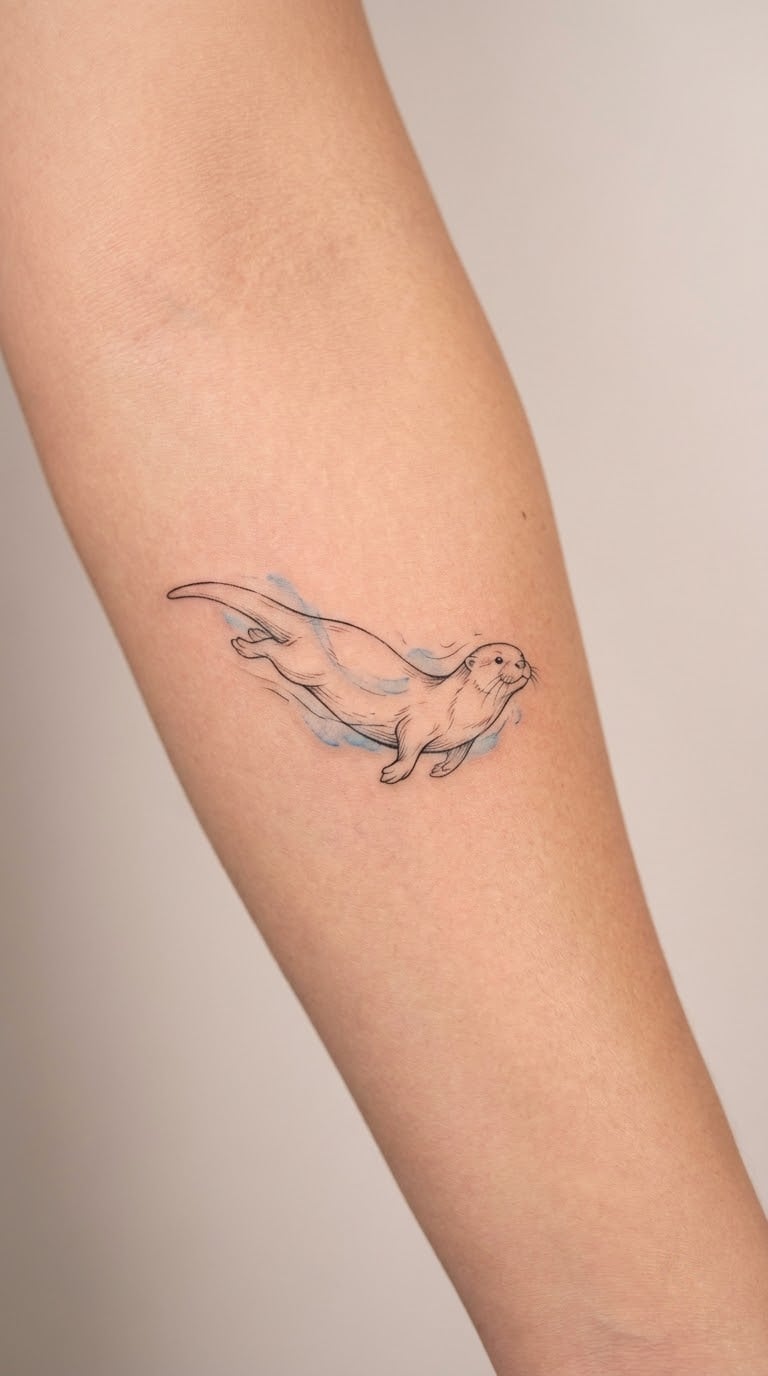
This otter tattoo idea is a minimalist otter curled into a swimming pose, drawn with delicate black linework and one optional pale-blue water accent. The body is a single continuous contour, the face carries a few short whisker marks, and the tail trails behind rather than curling underneath.
People choose it for its gentle, affectionate character, though the meaning is entirely personal. Ask for a solid outline rather than shading if you want it to stay crisp.
Placement: inner forearm, running along the length of the arm. Size: 3-5 inches (8-13 cm). Style: fine line with a single colour accent. Pain: low to medium on the inner arm, though the inner forearm is a sensitive area and the wrist end of it stings more. Fine lines on a spot that gets washed often can soften sooner than the same line on the upper arm.
Make it yours: add the otter’s name, a birthdate in a small arc above the water line, or matching blue details to a second piece.
2. Traditional Otter Holding a Pearl
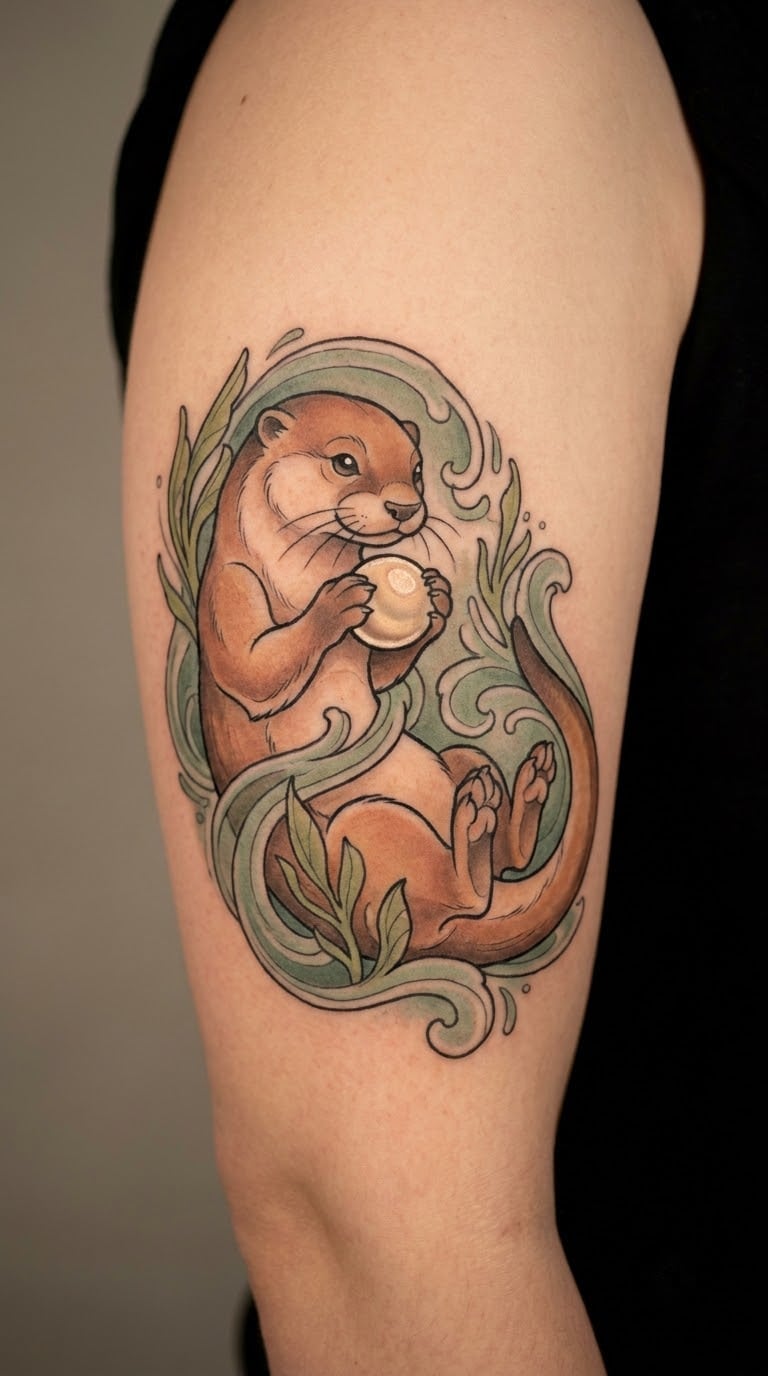
A neo-traditional otter here cradles a pearl in both paws, with clean black outlines, warm brown fur, cream highlights and a muted green water shape underneath. The composition is a compact oval so it sits well on a curved arm without stretching.
Treat the pearl as something you personally value rather than a fixed otter symbol, and the design carries your meaning without anyone having to explain it.
Placement: outer upper arm, centred on the deltoid. Size: 4-6 inches (10-15 cm). Style: neo-traditional. Pain: medium on the upper arm, a fleshy spot that grips needle reasonably well. Saturated small colour details, especially the pearl highlight, can soften with sun exposure over the years.
Make it yours: pick a pearl shade tied to something real, a birthstone colour or a team, then repeat it in the water.
3. Blackwork Otter Family on the Calf
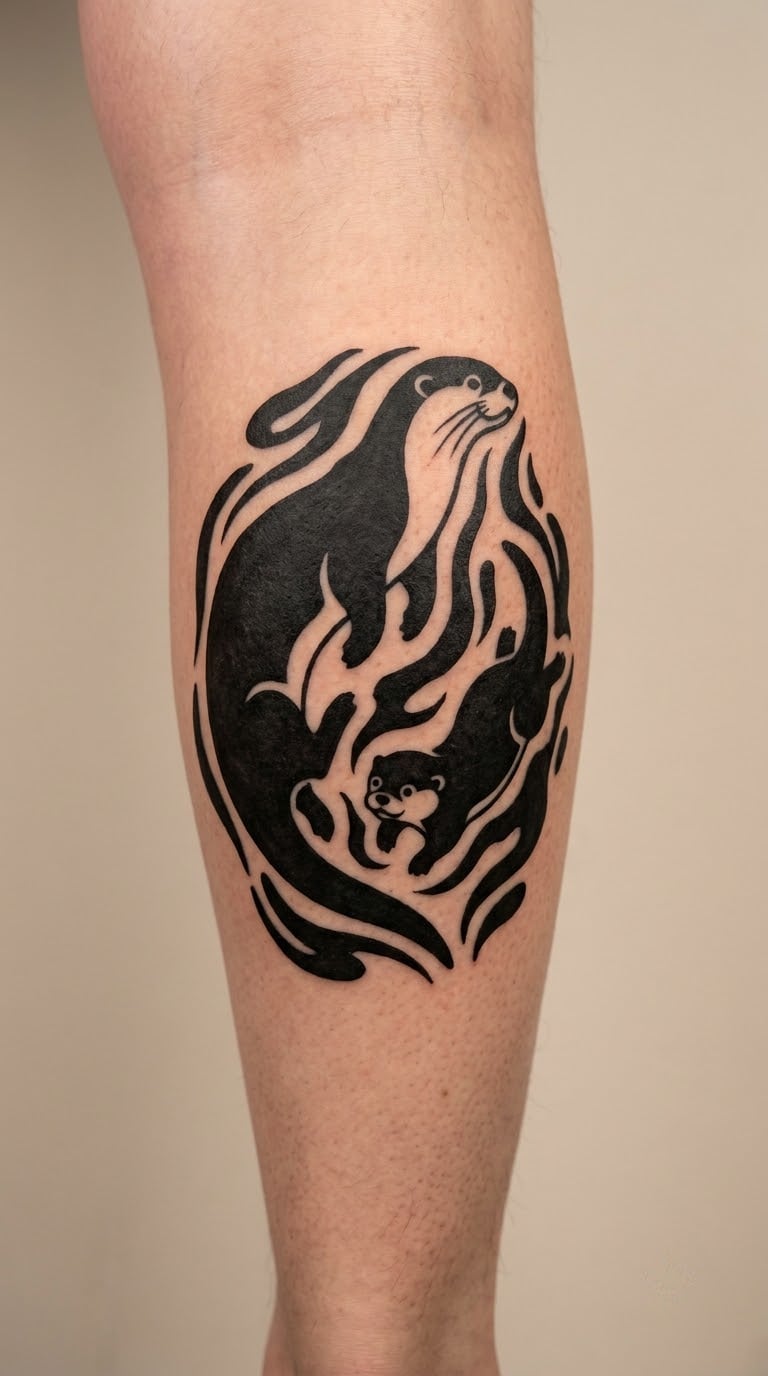
This design shows a bold group: an adult otter and two smaller otters swimming together in solid black with negative-space water cutting through the composition. Heavy black fills define the bodies, and the water stays as untouched skin.
It is a good choice for family, companionship or a favourite animal, and the meaning stays personal rather than symbolic. Ask for hard edges and clean counters between the bodies so three animals stay legible.
Placement: outer calf, aligned with the muscle. Size: 6-9 inches (15-23 cm). Style: blackwork. Pain: medium to high; the calf is sensitive and a large solid black area takes a while to work through. Dense black on the calf can develop slight line softening and a change in texture over time, and sun exposure fades solid black faster than mid-tone shading.
Make it yours: add a date, a set of paw prints or a separate river motif on the opposite leg.
4. Cozy Otter Wrapped in a Blanket
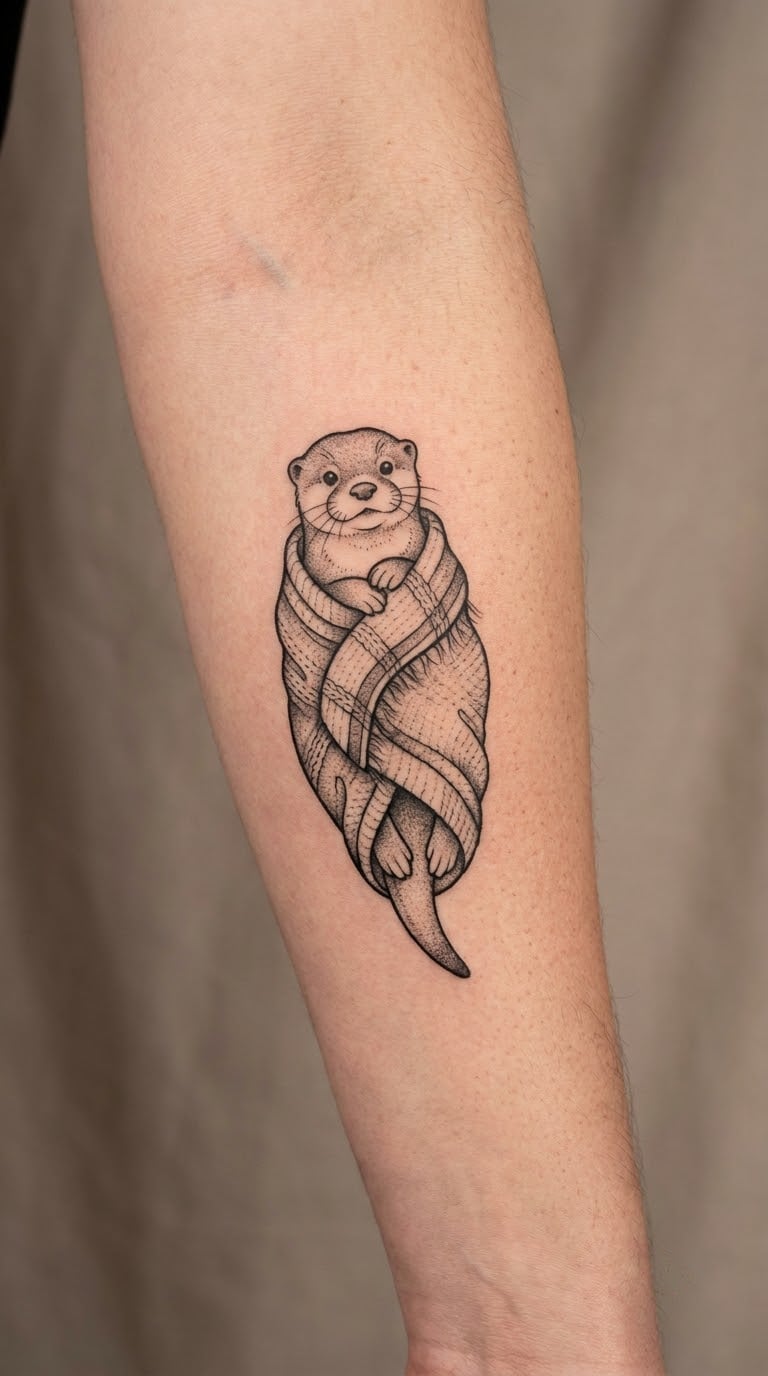
A small otter peeks out from a patterned blanket here, balancing a relaxed pose with enough detail to hold a forearm composition. The blanket gets a simple repeating pattern, the fur gets grey shading, and the whole thing stays inside a soft rounded shape.
Some people choose cozy animal designs for comfort, humour or a personal character, and the blanket is just a prop rather than a fixed symbol. This is also a rare otter design that reads clearly at a very small size.
Placement: inner or outer forearm. Size: 3-5 inches (8-13 cm). Style: illustrative realism with black and grey shading. Pain: medium. The tiny facial and blanket details can blur over the years, so an artist who works small regularly is worth the extra wait.
Make it yours: use a blanket pattern drawn from a real blanket, a rug or a wallpaper in your home.
5. Watercolor Otter Floating on the Ribs
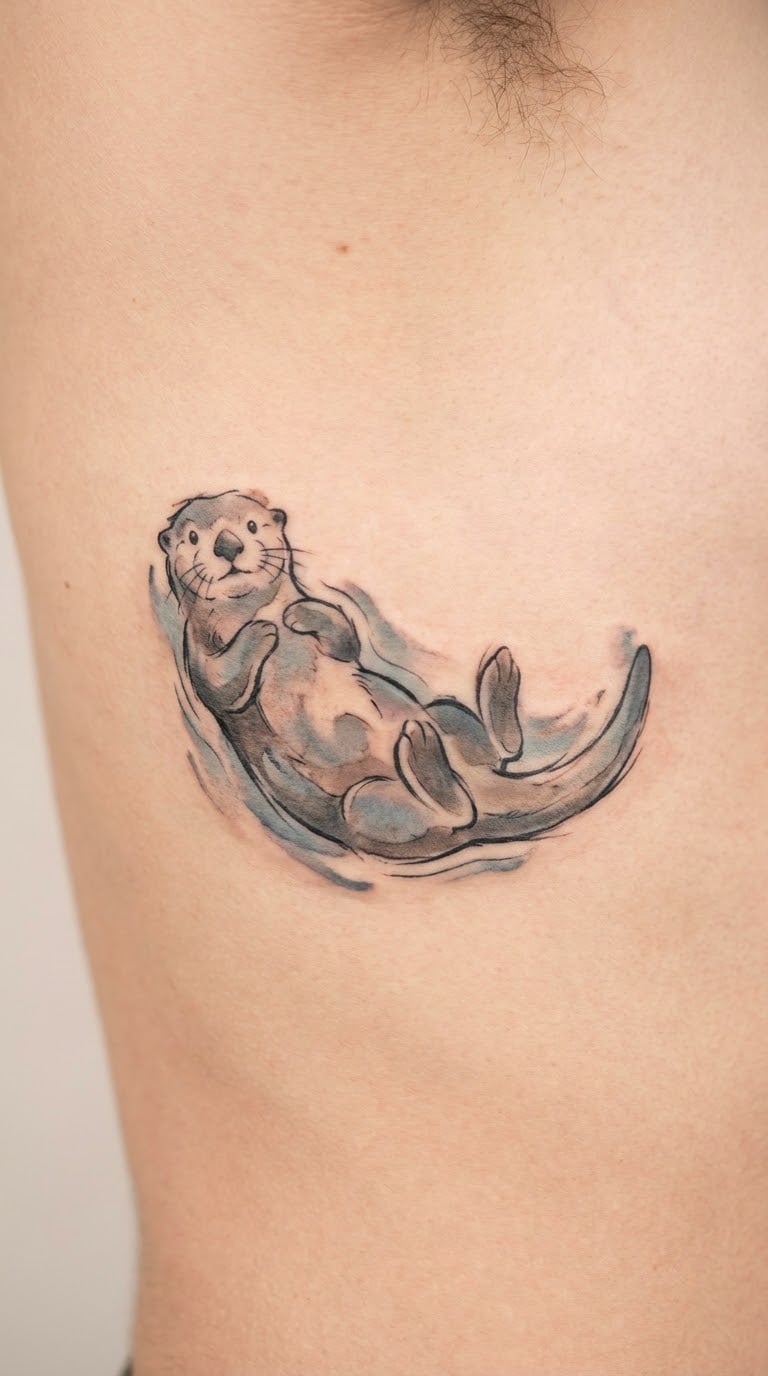
An otter floating on its back with loose grey, brown and blue washes is the whole idea here, and part of the linework stays soft and deliberately unfinished. It gives you colour without committing to a dense sleeve, which is why it turns up so often on rib placements.
Pick it if you want an expressive piece rather than a portrait. There is no single correct reading of the design, so the subject matter speaks for itself.
Placement: front or side ribs, which curve around the body. Size: 5-8 inches (13-20 cm). Style: watercolor. Pain: high; ribs are close to bone and the skin there is thin and mobile. Pale washes can fade unevenly, especially with heavy sun exposure, and the palest blues usually go first.
Make it yours: choose water colours connected to a real place, or have a date inked in the one area of dense pigment.
6. Micro-Realist Otter Portrait on the Biceps
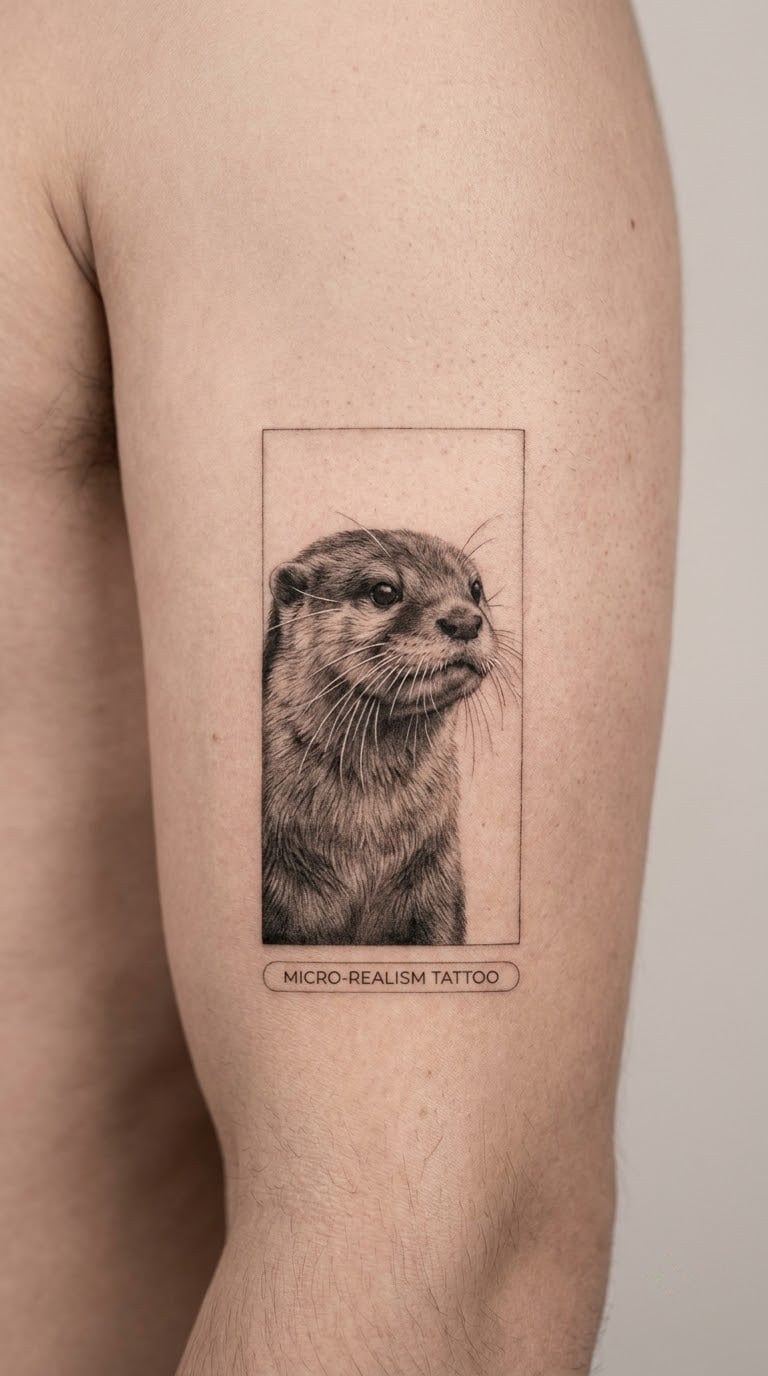
A compact head-and-shoulders otter portrait is the entire piece here, with realistic whiskers, wet fur texture and subtle black-and-grey shading building up under the jaw. The eyes get the most attention because that is where a portrait lives or dies.
It is chosen for a lifelike likeness of a favourite species, a pet or a remembered animal rather than for an invented symbolic meaning. Artists working in realism regularly take otter commissions, so this style has real demand.
Placement: outer biceps, where the muscle gives a flat-ish canvas. Size: 3-4 inches (8-10 cm). Style: micro-realism. Pain: medium to high; the biceps is sensitive and a detailed portrait takes longer than its size suggests. Whisker and fur lines need careful placement because they blur faster than broad shading.
Make it yours: supply a meaningful reference photo, ideally a high-resolution shot of the actual animal, or use your pet as the model.
7. Minimal Line-Art Otter Behind the Ear
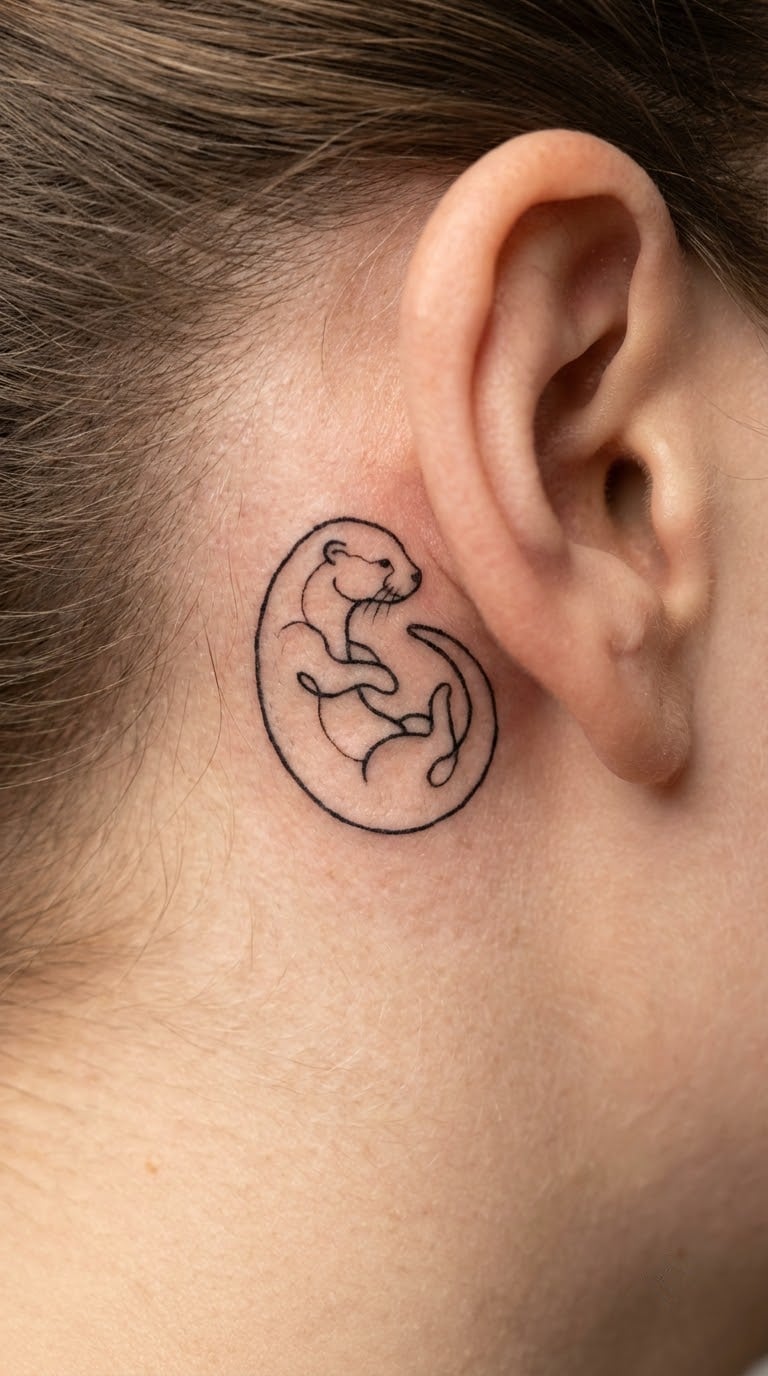
A tiny continuous-line otter curled beneath the ear is the whole design: one clean silhouette, almost no interior detail, and a shape that follows the curve of the neck. Its compact profile suits people who want an animal tattoo in a less obvious spot.
The appeal is discretion as much as the drawing. Ask the artist to keep the muzzle a single unbroken curve, since that is what makes the silhouette read as an otter.
Placement: behind the ear or along the upper neck. Size: 2-3 inches (5-8 cm). Style: minimalist fine line. Pain: medium; the skin behind the ear is thin and the nape of the neck is a spot most people underestimate. Very fine linework here can blur or lose definition over time, so a slightly heavier line is the safer choice at this size.
Make it yours: exaggerate the otter’s distinctive muzzle shape, or tuck a small initial into the curve of the curl.
8. Otter Peeking From a Rockpool
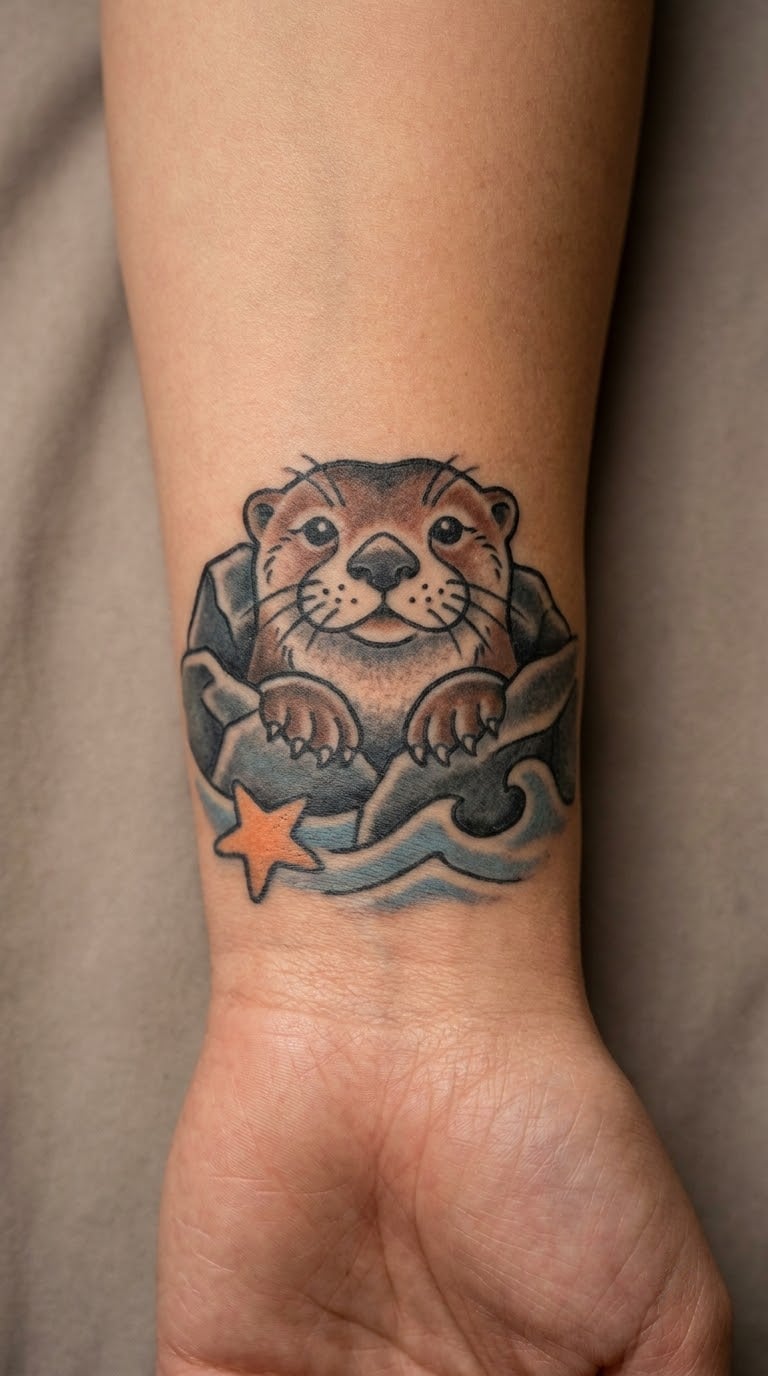
This one builds a scene rather than a portrait: an otter head between rounded rocks, a small starfish and two curling waves in restrained colour. The rocks carry grey wash, the water stays muted, and the whole thing fits a rounded wrist shape.
The rockpool is picked for its playful personality or for a connection to a favourite coastline, not for a universal meaning. Scene tattoos are the ones where the artist’s compositional skill matters most.
Placement: wrist, inner or outer side. Size: 3-4 inches (8-10 cm). Style: traditional linework with restrained colour. Pain: medium to high; the wrist is bony on the outside and full of nerve endings on the inside. Repeated sun exposure shows in the orange and blue details first, so ask for deeper saturation in those areas.
Make it yours: hide a real coordinate inside one of the waves, or use the colour of a specific stretch of coast.
9. Dotwork Otter Swimming in Geometric Waves
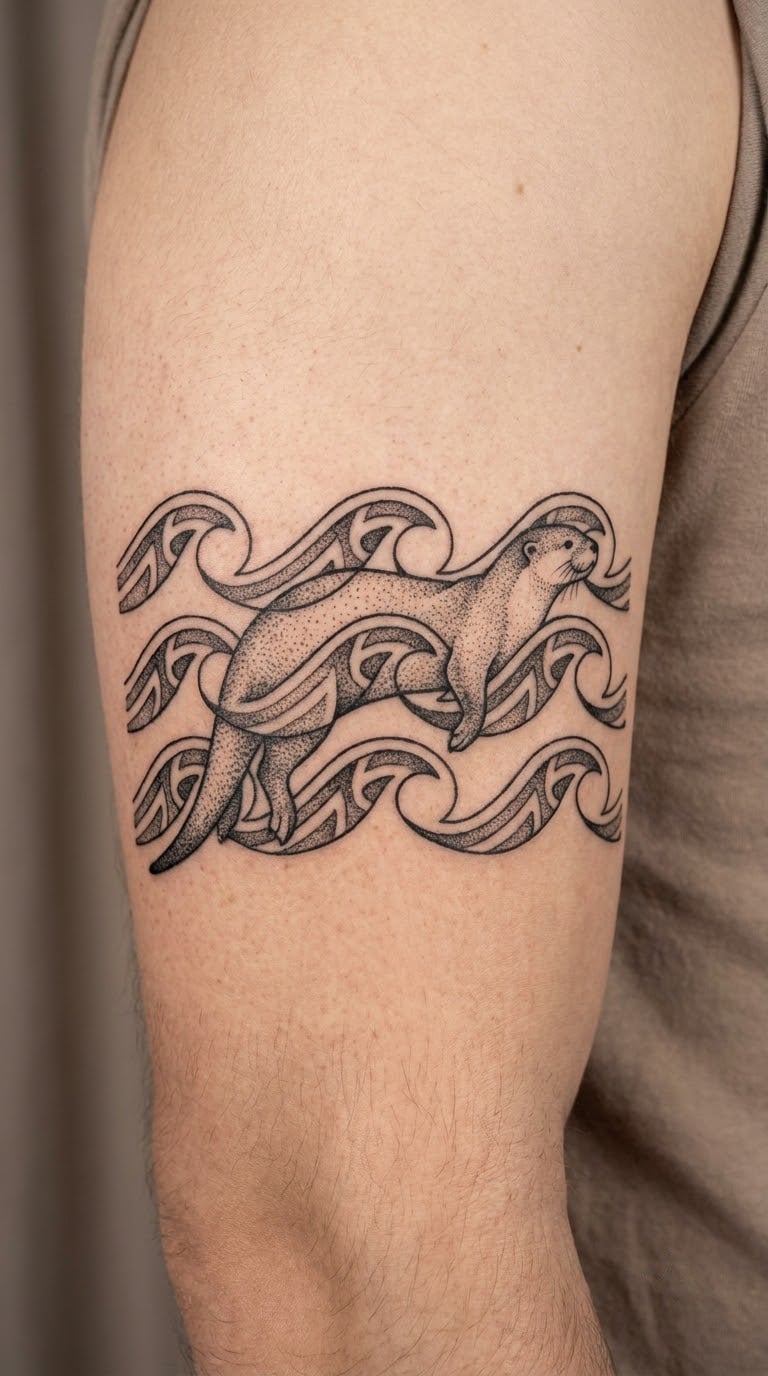
A side-view otter sits between three bands of hand-drawn dotwork and geometric waves here, which creates rhythm without turning the piece into a sleeve. The animal stays solid and soft-edged while the water around it is built from pattern.
People choose this direction for texture, pattern and the contrast between a soft animal and structured water. The dots are decoration, not a code with a hidden meaning.
Placement: calf, shoulder or upper arm. Size: 5-7 inches (13-18 cm). Style: dotwork. Pain: medium to high, and long, because dotwork means a high number of small punctures across a wide area. Very small dots can spread or soften over time, and the calf and shoulder both see a lot of sun.
Make it yours: adjust the dot density to disguise a small mark nearby, or vary the wave pattern to echo another tattoo you already have.
10. Black-Grey Otter and Pups Under Water
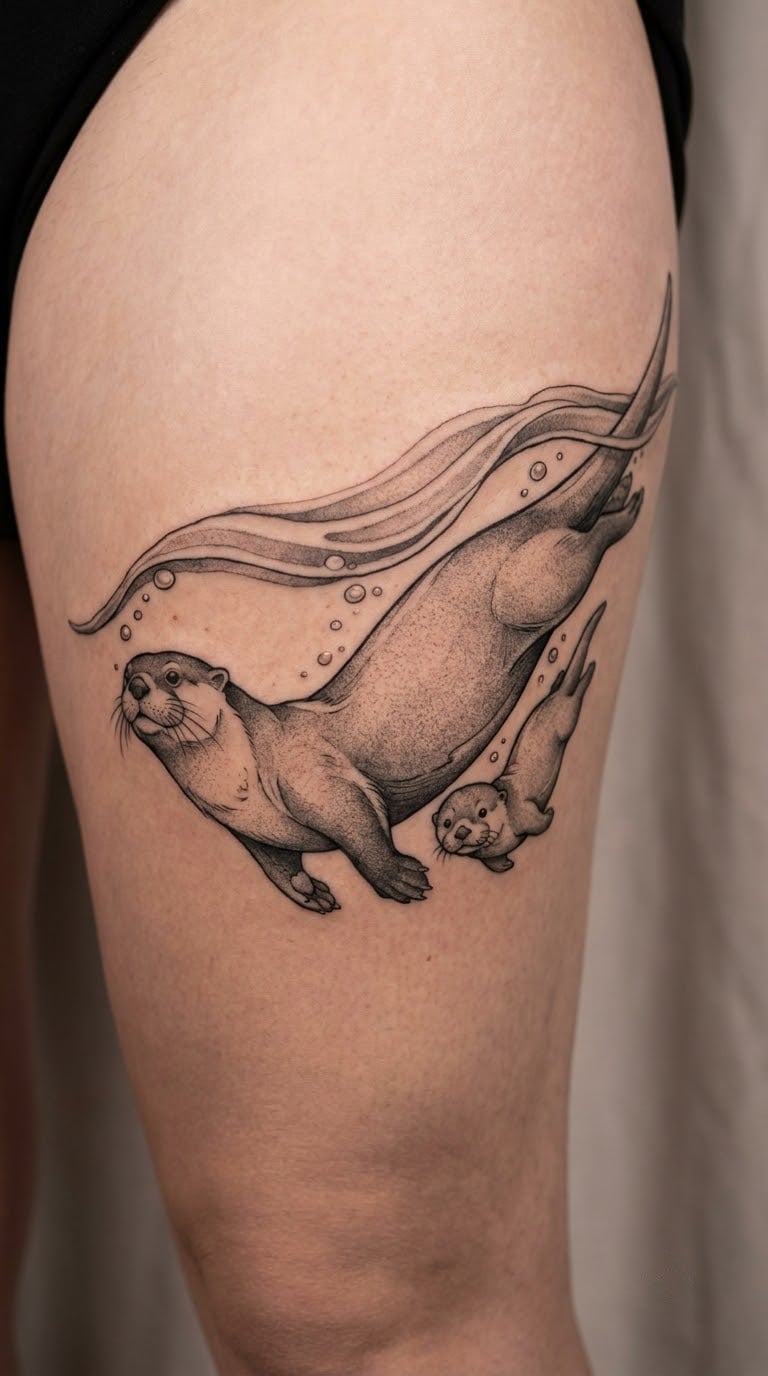
A monochrome otter family scene beneath a waterline is the centre of this design, with layered grey washes giving depth and open negative space left above the water. The animals read as a group, not as three separate animals in a row.
This works well as a larger memorial, family or companionship piece, and any personal meaning in it is yours to define. It is a bigger commitment than the other realistic option here, both in size and in healing time.
Placement: outer thigh, which has enough flat surface for a wide scene. Size: 7-10 inches (18-25 cm). Style: black and grey realism. Pain: medium on the thigh, though the session itself is long. Broad shaded areas need more aftercare than line-only pieces and can show minor line changes as they settle.
Make it yours: build in accurate family features, a river name, or a specific date in the water’s edge.
11. Two Otters Holding Paws
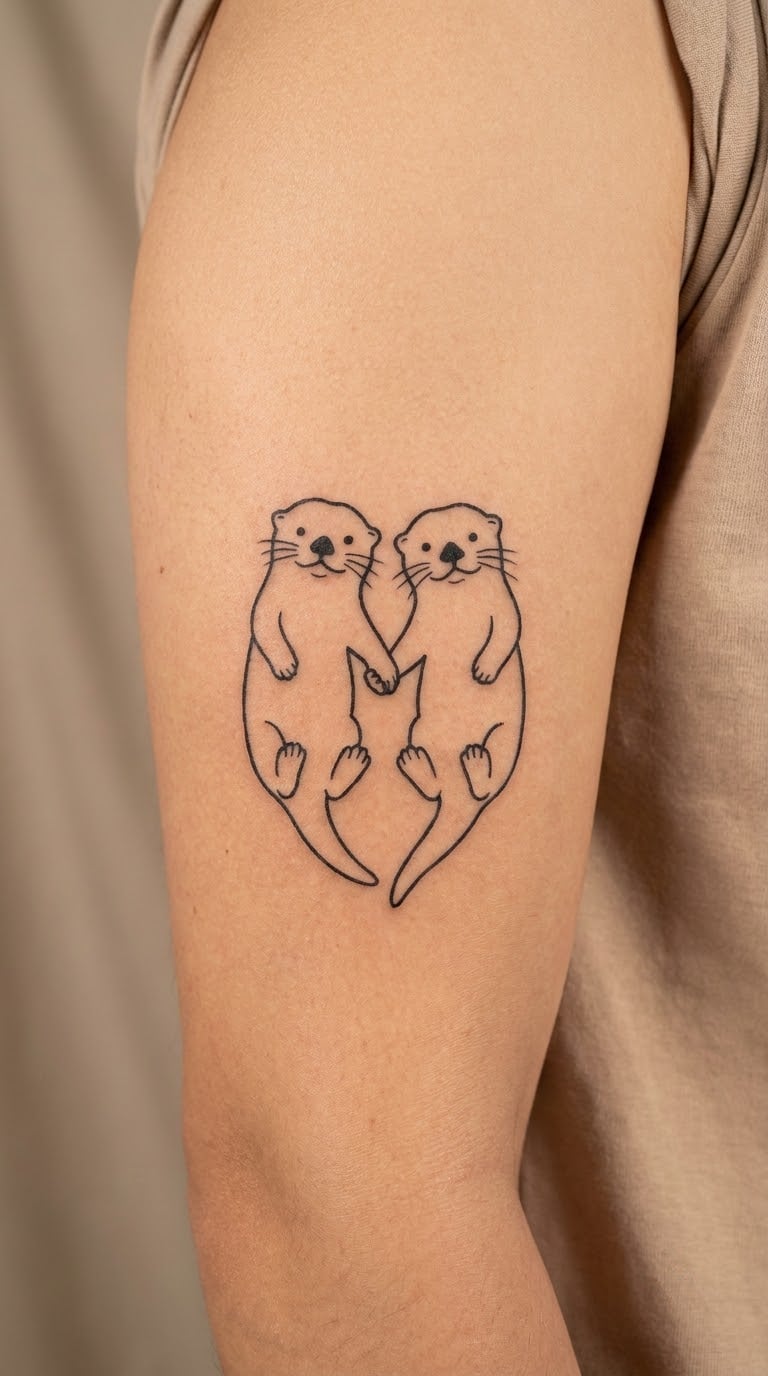
Two otters face one another and hold paws, with rounded silhouettes and almost no background detail. The paws meet in the centre and the bodies curve outwards, which keeps the pair balanced from any angle.
It is usually chosen for friendship, partnership, siblings, children or a meaningful animal bond, but there is no single meaning attached to the pose. Artists get asked for this more than almost any other otter design.
Placement: upper arm, chest edge or inner arm. Size: 3-5 inches (8-13 cm). Style: cute minimalist or soft illustrative. Pain: medium. The small inner-finger details where the paws meet need simplifying if you want the piece to age well, so a slightly larger size pays off here.
Make it yours: add real initials on the inner arms, or give each otter a different collar or marking you recognise.
12. Neptune Otter with a Shell
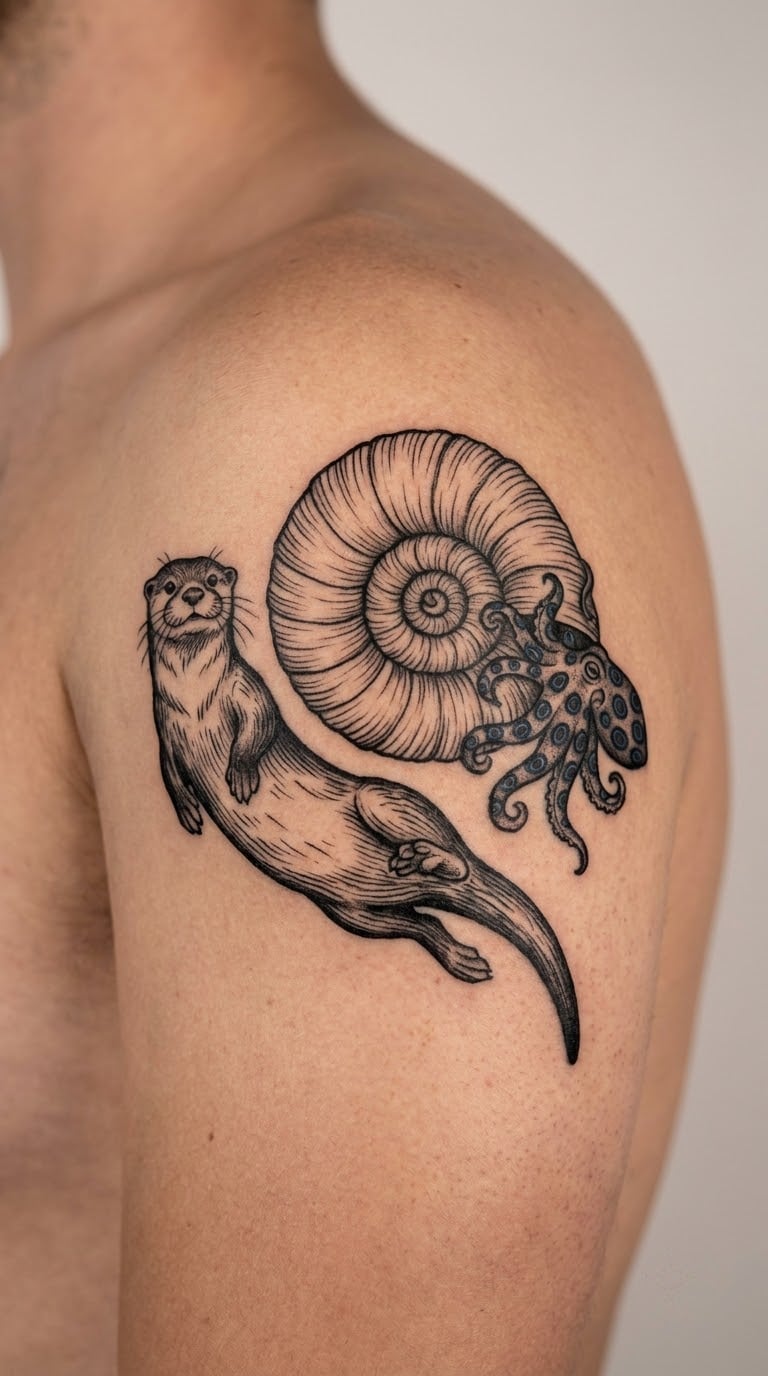
This is an imaginative maritime scene: an otter swimming beside a large spiral shell while a small octopus curls below it, combining fine detail with a strong composition. The shell anchors the centre and the octopus adds a second, smaller focal point.
Fantasy maritime imagery tends to be picked for storytelling or a connection to the sea. Neptune is a classical figure here, not a fixed otter symbol, so read it however you like.
Placement: shoulder, upper arm or back. Size: 5-8 inches (13-20 cm). Style: illustrative blackwork with one accent colour. Pain: medium to high; the shoulder is a bony area and the octopus arms are fiddly work. Those tiny arms need bold shaping or they turn to mush, so ask for a thicker line weight on the octopus specifically.
Make it yours: use a shell you actually collected, or set the whole scene at a specific depth or coastline.
13. Sleeping Otter Curled on an Inner Arm
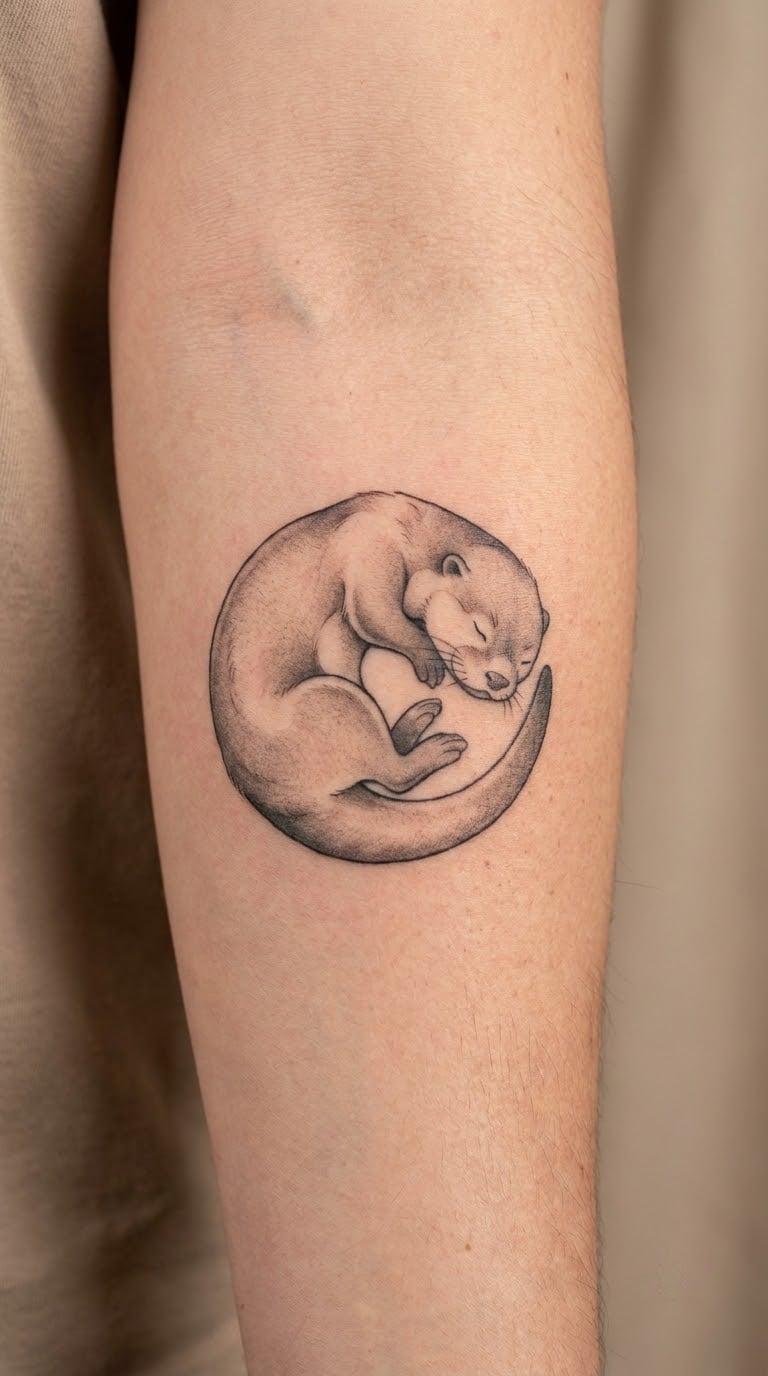
A compact curled otter with closed eyes and overlapping paws fills this design, and sparse contour shading keeps it calm. The circle of the body does most of the work, so the piece holds together even at a small size.
People select it for the peaceful pose, for a resemblance to a real otter, or as a personal reminder to rest. The interpretation stays with the person wearing it.
Placement: inner forearm. Size: 2.5-4 inches (6-10 cm). Style: soft realism or illustrative linework. Pain: medium on the inner arm. If the face and the curled tail are rendered too finely they will blur, so ask the artist to prioritise a readable face over a detailed tail.
Make it yours: mirror a pet’s curled sleeping posture, or tuck a small word into the open curve of the body.
14. Colourful Pop-Art Otter
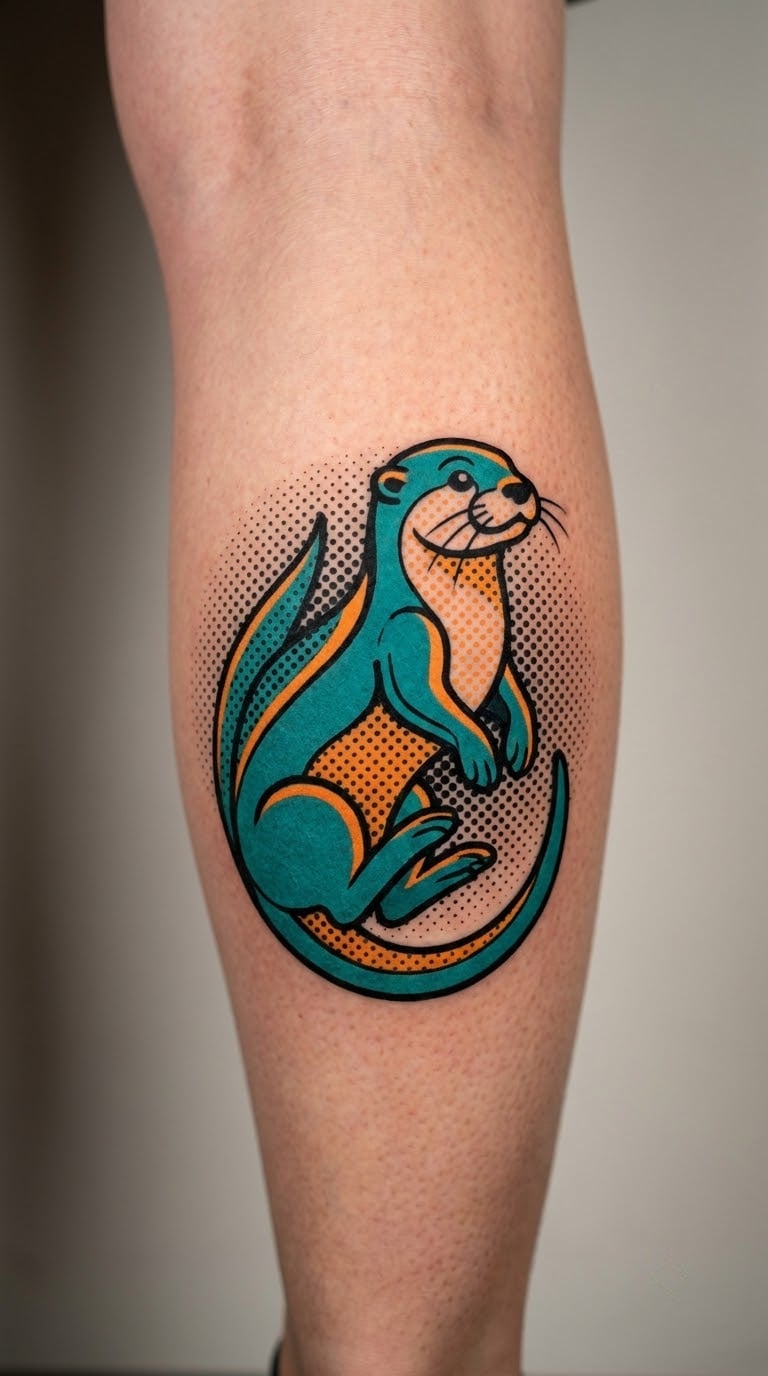
An otter in bold black contours, bright teal water and warm orange fur sits against a simple halftone background here. The fills are flat and graphic rather than shaded, which is what gives the design its poster quality.
It is the contemporary option for someone who wants an animal tattoo to read clearly from across a room. Brightness is the entire point, so this suits people who find black-and-grey work too quiet.
Placement: calf, upper arm or shoulder. Size: 5-7 inches (13-18 cm). Style: pop art or neo-traditional colour. Pain: medium to high across a wide filled area. Bold outlines age better than tiny internal features, but bright fills do shift with sun exposure, so this is a piece to keep covered when you can.
Make it yours: use a favourite colour pairing, or set the otter inside a halftone circle echoing a comic you love.
15. Sea Otter Anchored to a Stone
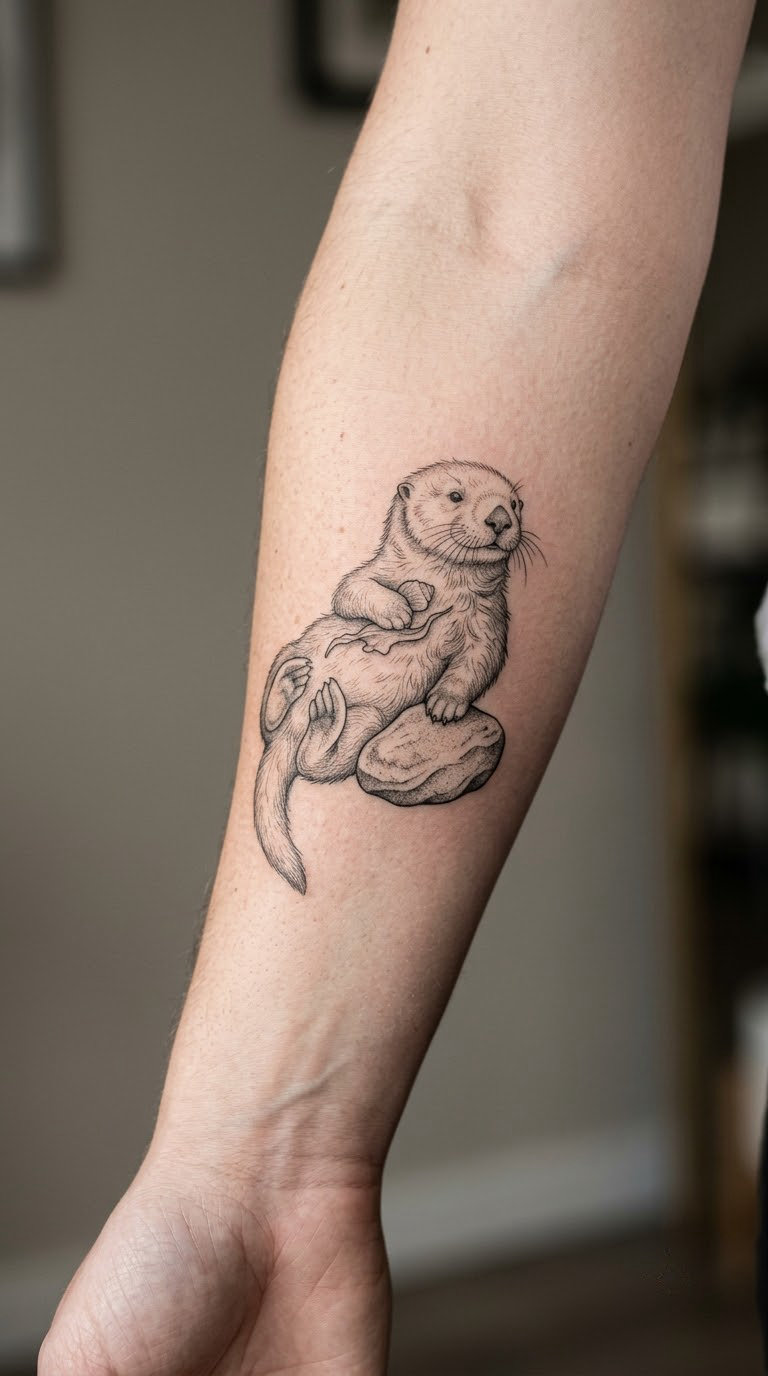
This design gets the species right: a sea otter with one paw resting on its chest and the other against a simple stone, drawn with accurate anatomy rather than turned into a vague animal portrait. That accuracy is the whole appeal, and it is what stops it reading as a seal.
The recognisable behaviour is usually chosen by people who admire otters or want a nature-focused piece, without any fixed meaning attached. If you want a realistic otter, bring species-correct reference photos, not a mix of river and sea otter images.
Placement: outer forearm. Size: 3-5 inches (8-13 cm). Style: fine-line realism. Pain: medium on the outer arm. Very fine chest and paw details can blur, so a slightly bolder line in those areas is worth asking for.
Make it yours: name the actual place where you first saw sea otters, or add a kelp strand in the same line weight.
16. Sneaky Otter Emerging From the Forearm
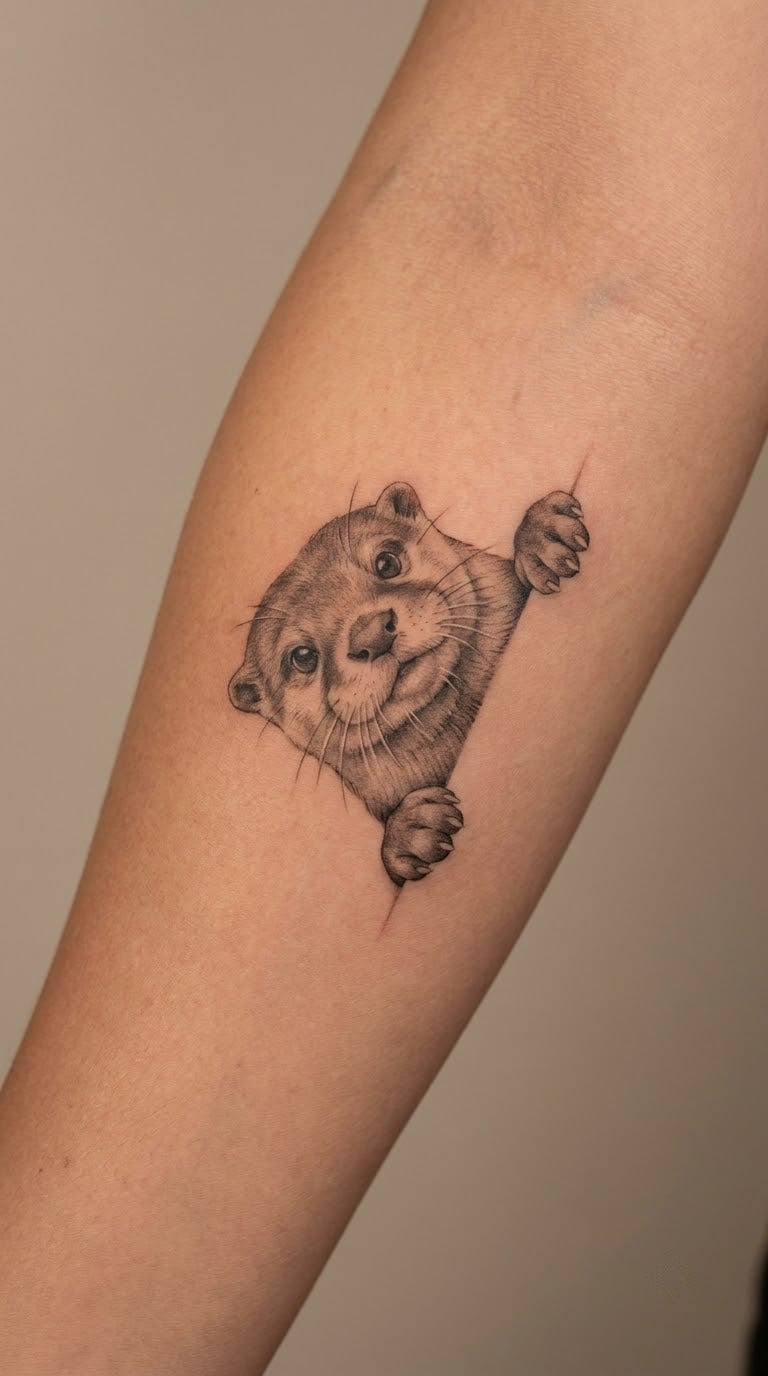
A trompe-l’œil composition: an otter’s head and both paws appear to peek around the edge of the forearm, using only light shadowing to create the illusion. The trick works because the body disappears at the curve of the arm rather than being drawn in full.
It is a playful choice for someone who wants the tattoo to reveal itself from a particular angle. Forearms are the natural home for it because the piece changes as the arm turns.
Placement: outer forearm, ideally where the arm narrows at the wrist side. Size: 3-4 inches (8-10 cm). Style: playful realism or illustrative. Pain: medium. The illusion depends on consistent perspective, so it needs an artist who has done wraparound work before, and the tiny claws will blur if they are done too thin.
Make it yours: change the expression, add a paw wrapped around the edge, or have the otter hold something small in its mouth.
17. Floral and River Otter on the Shoulder
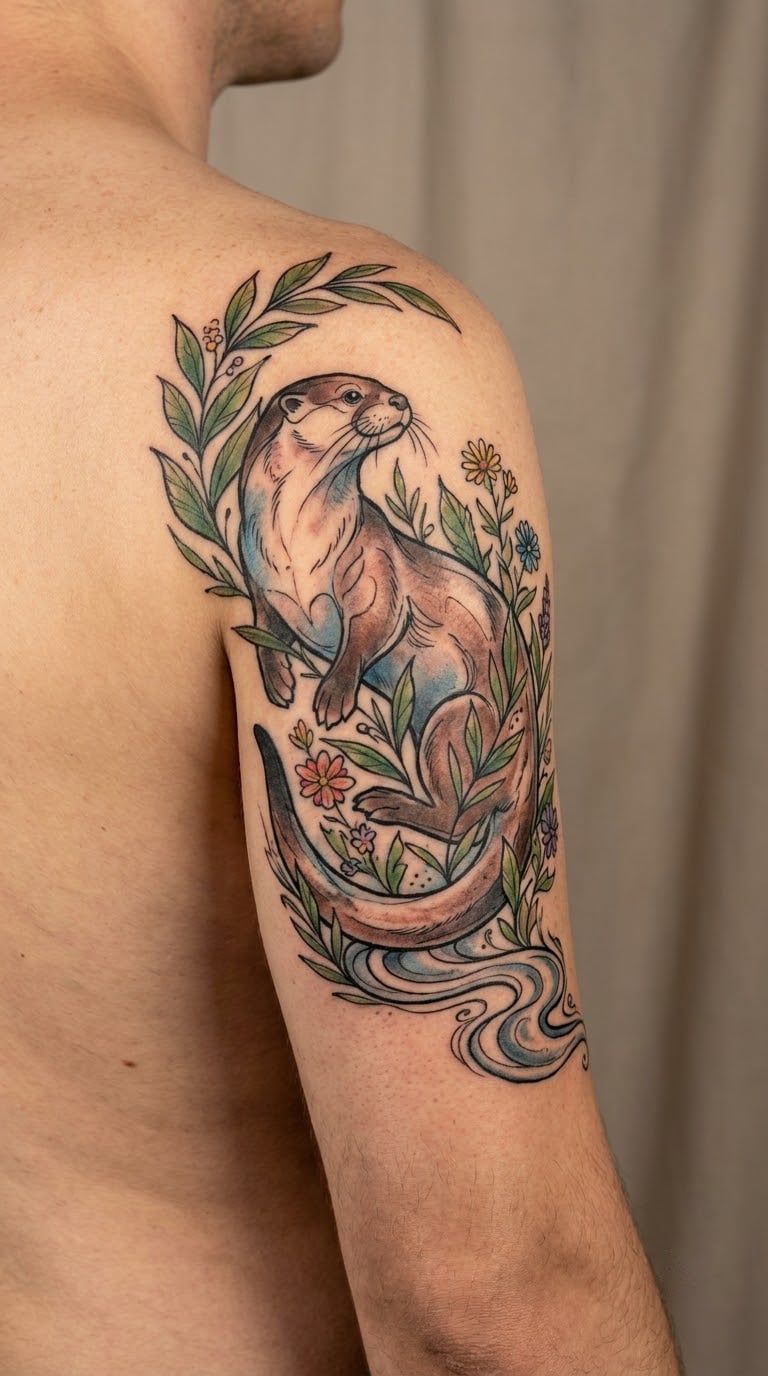
A side-profile otter is paired here with native-looking flowers, leaves and a flowing river that runs beneath it, with the animal kept dominant and the botanicals soft around the edges. The river acts as a base line that anchors the whole composition.
This direction suits people who want an animal tattoo to sit inside a broader nature theme rather than stand alone. If you already have botanical work, matching the leaf style matters more than matching the species of flower.
Placement: shoulder or upper arm, where the piece can follow the muscle. Size: 6-9 inches (15-23 cm). Style: illustrative realism with restrained botanical colour. Pain: medium to high; the shoulder cap is sensitive and a piece this size runs long. Sun-exposed colour needs care, and tiny petal details soften faster than leaves.
Make it yours: use flowers native to a river you have actually visited, and let the water follow the shape of the shoulder.
18. Tiny Paw-Print Trail on the Ankle
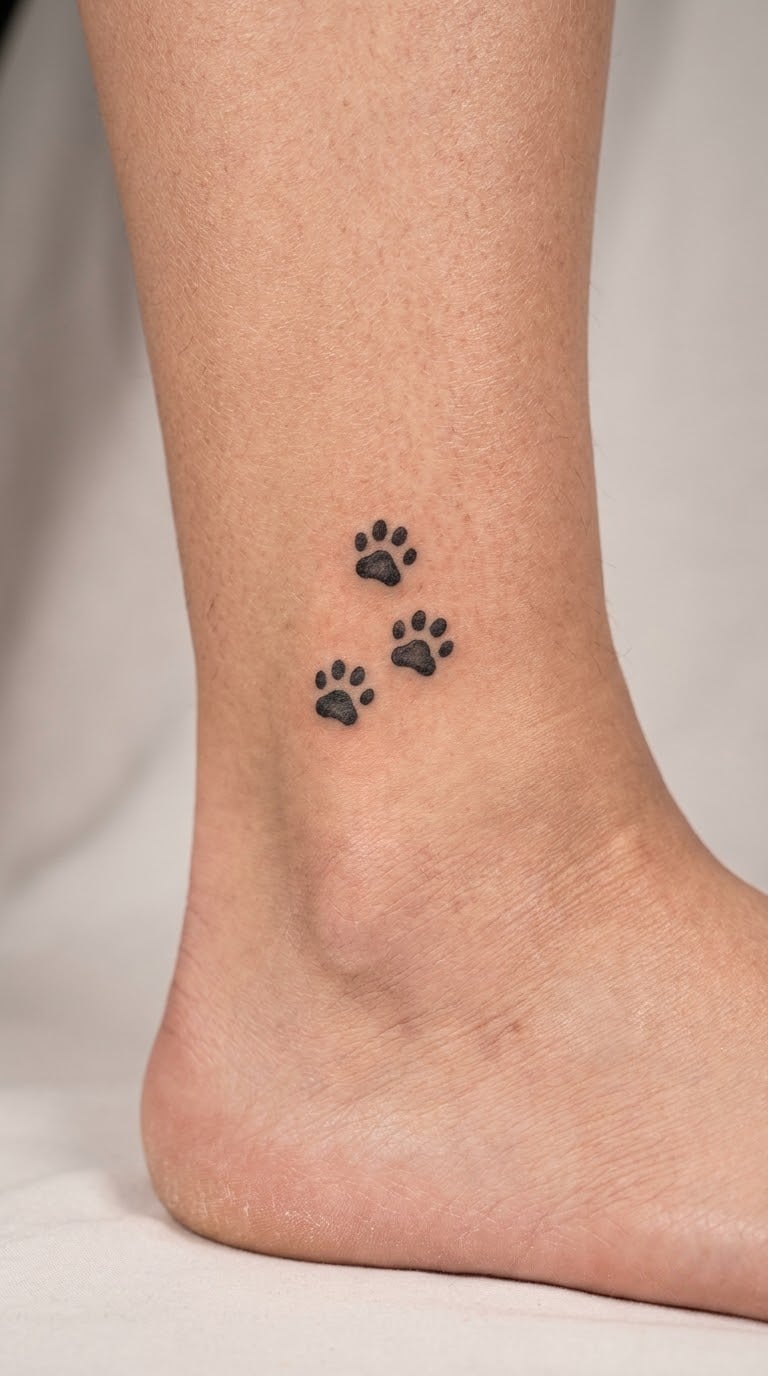
A simple trail of three small otter-style paw prints with rounded toe pads, and no otter portrait anywhere, which keeps the design subtle. Each print is a soft black shape with four toes and a small pad.
People choose a pattern like this as a personal otter reference, as a concealed starting point, or so it can sit alongside future animal tattoos. It is the quietest option in the whole list.
Placement: inner or outer ankle. Size: each print 0.4-0.7 inch (1-2 cm), with the whole trail about 3-4 inches (8-10 cm) long. Style: minimalist blackwork. Pain: medium; the ankle is bony and the bone sits close under the skin. Prints placed there can fade noticeably with sun exposure, and the toe pads spread a little as skin ages, so a slightly bolder fill helps.
Make it yours: make the prints different sizes so the trail looks like it is moving, or angle them to follow the line of the Achilles tendon.
19. Mosaic Otter Made of River Stones
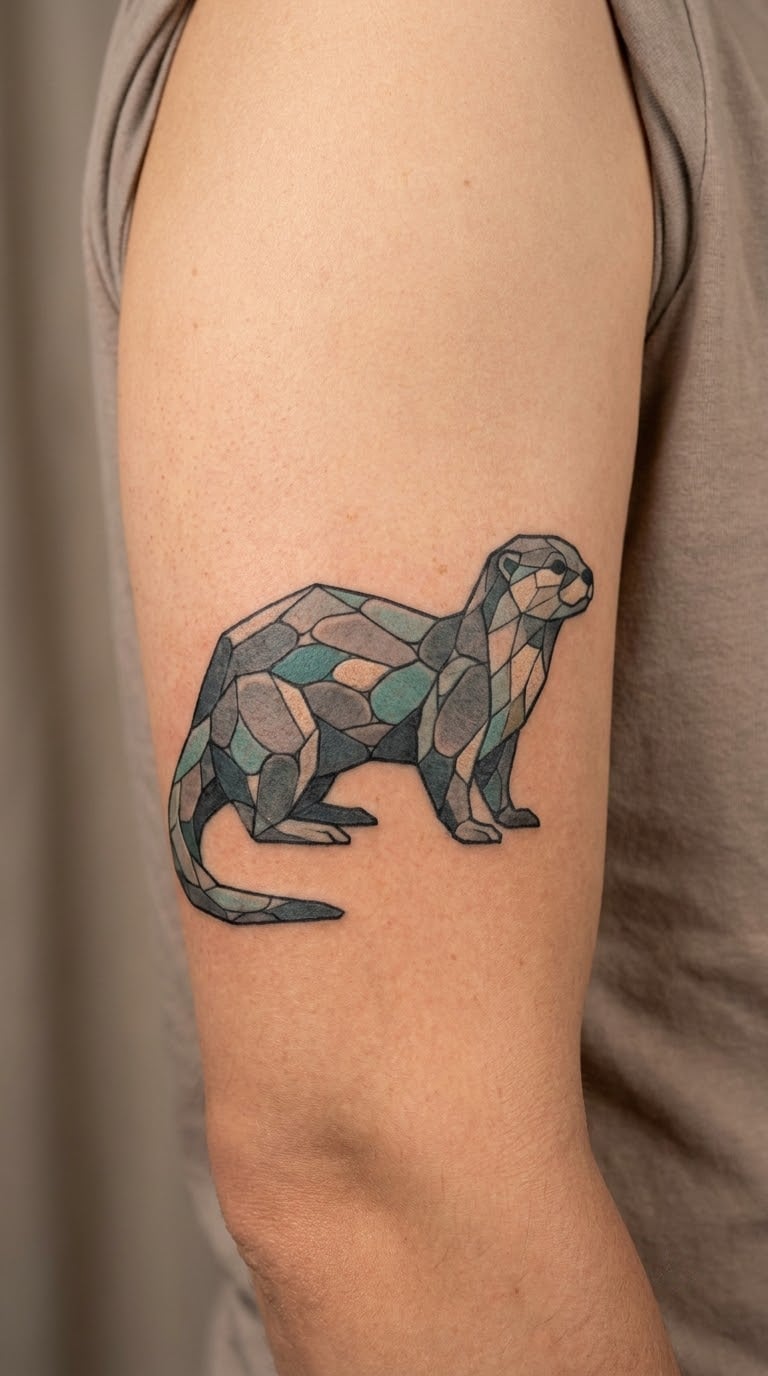
An otter silhouette built from individually outlined river stones in grey, charcoal, muted teal and sand fills the frame, with the face held in negative space so it stays readable. Each stone is a separate closed shape, and the gaps between them do the outlining.
This is the abstract option for someone who likes texture and wants an animal form without a conventional portrait. The mosaic approach suits people whose other work is geometric.
Placement: shoulder, thigh or upper back. Size: 6-8 inches (15-20 cm). Style: mosaic illustrative. Pain: medium to high, and slow, because every stone edge is its own set of lines. Many tiny edges can soften over time, so ask for a bold outer outline around the whole animal to keep the form clear.
Make it yours: use the actual colours of stones from a river you have been to, or make the arrangement trace a river’s course.
20. Large Blackwork River Otter on the Back
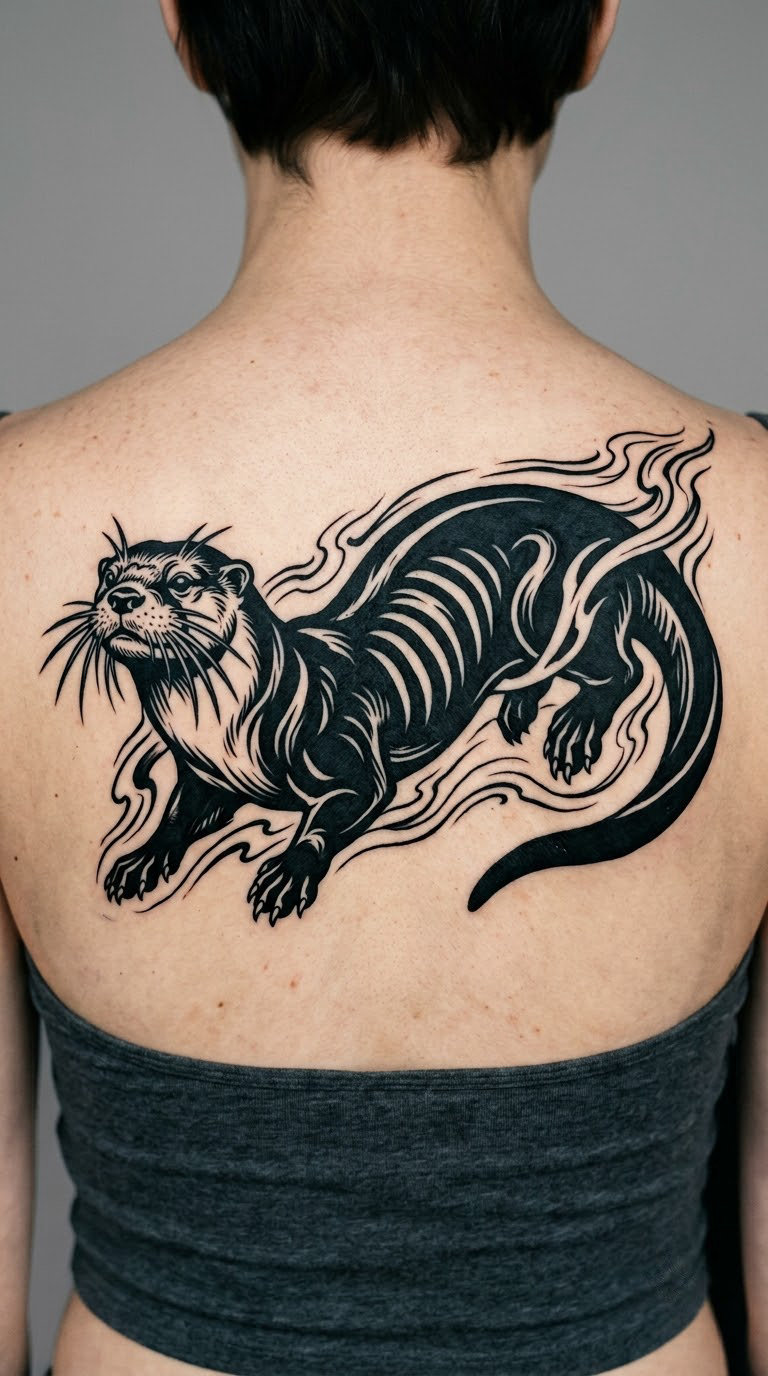
This is the statement piece in the collection: a muscular river otter gliding through negative-space water, rendered in solid black with bold ribs, paws and whiskers. The animal is heavy and dark, the water is bare skin, and the contrast does all the work.
A larger portrait gives an artist room for accurate anatomy, and it works well for someone building a dedicated animal or nature collection rather than a single small piece.
Placement: upper back, across the shoulder blades. Size: 8-12 inches (20-30 cm). Style: blackwork with selective negative space. Pain: high; the upper back is sensitive and this is a long session, likely more than one. Large solid areas need an artist with real blackwork experience, and they can develop subtle patchiness during healing before evening out.
Make it yours: build the piece around a real river from your life, and leave a band of open skin where a later sleeve can grow.
How to Choose the Right Design
Most disappointing animal tattoos come down to a mismatch between the design and the body it lands on, not from a bad drawing. Five things are worth settling before you book.
- Style versus artist. Look for healed work in the exact style you want rather than fresh photos on an Instagram page. Fine-line animal work and large solid blackwork are different specialities.
- Motif complexity. Count the separate elements. An otter head, a shell and an octopus is a three-element design, and it needs more space than a single curled otter of the same overall size.
- Size against detail. The rule of thumb tattoo artists use is roughly a third of the final size per major detail, so whiskers and toes need real room. A 2-inch otter with whiskers turns into a smudge; the same design at 4 inches holds up.
- Placement against visibility. Decide now whether you want this seen or found. Wrist, forearm and calf are visible and also the most sun-exposed, which matters more for pale colour than for blackwork.
- Personal connection. A design tied to a real name, place or animal holds up better over decades than one picked purely because it looked good in a photo.
Bring your own references, and if possible the same artist’s own healed work on that style, rather than a saved pin. Artists on r/TattooDesigns repeat that advice constantly, and it is the fastest way to avoid the gap between a reference-board expectation and the healed result.
otter tattoo ideas for small placements
Below about 2 inches, only four of these designs hold together well without simplification, and each needs a reduced feature set rather than a shrunken version of the full drawing.
- Minimal line-art otter behind the ear is the smallest option at 2-3 inches (5-8 cm), and it works precisely because it has almost no interior detail to lose.
- Sleeping curled otter on the inner arm at 2.5-4 inches (6-10 cm) survives small sizes better than most, because the circle of the body is a single readable shape. Ask to drop the tail detail.
- Tiny paw-print trail on the ankle needs the least detail of all, and ankle placement keeps it concealed under a shoe or trouser cuff.
- Fine-line swimming otter on the inner forearm works from 3 inches (8 cm) upward. Below that, the whiskers have to go entirely or the face loses its character.
Wrist, ankle, behind the ear and inner arm are all narrow or curved, so a design that reads well on a flat upper arm can get distorted when wrapped around them. An artist should adapt the drawing to the placement rather than shrink the flat version. If otters turn out to be the start of a wider animal theme, 20 Best Cat Silhouette Tattoo Ideas for Minimalists (September 2026) works through the same sizing and placement questions for a different animal.
Cost and Session Time
Rough US ranges by design size, assuming an experienced artist at an independent studio:
- Tiny 1-2 inch pieces: about 150 to 350 US dollars
- Small 2-4 inch pieces: about 250 to 600 US dollars
- Medium 4-7 inch pieces: about 500 to 1,200 US dollars
- Large 7-12 inch pieces: about 900 to 2,500 US dollars and up
Detailed colour, dense blackwork and custom composition all push a piece up. Shop minimums, hourly rates, city and the number of sessions can move the total more than the size does, so it is worth asking for a session estimate in writing. A fine-line otter is usually a single sitting; anything with a full scene or a large back piece is typically two or more.
Aftercare Basics
Start with your artist’s aftercare instructions, because they match the way your tattoo was actually done. Beyond those five points:
- Wash gently with clean water and a mild unscented soap, then pat dry with a clean towel rather than rubbing.
- Protect the tattoo from direct sun and from friction, such as a waistband or a watch strap rubbing across it, especially while it is still settling.
- Avoid swimming, soaking and covering the tattoo under water during early healing, since moisture held against the skin is the commonest cause of trouble.
- Expect some flaking and a faded look in the first couple of weeks. That is normal healing, not a mistake.
- Contact your artist first with any concern, and see a qualified clinician if you develop spreading redness, heat or pain that is getting worse.
Frequently Asked Questions
What are the best otter tattoo ideas for a first tattoo?
For a first tattoo, the fine-line swimming otter on the inner forearm and the two otters holding paws are the easiest to live with. Both use simple outlines, need only one session and heal quickly. Avoid starting with a micro-realist portrait or a large blackwork back piece, because the detail and the size make them unforgiving if the result is not quite right.
Where is the most suitable placement for an otter tattoo?
The inner forearm suits most otter designs because the skin is flat, the canvas is wide enough for detail and the arm gives you a second placement if the first one ages badly. Wrist and ankle work for smaller, simpler pieces. Ribs and the upper back give you room for a large scene but are noticeably more painful and harder to hide.
Should I choose a colour or black-and-grey otter tattoo?
Black and grey ages more predictably and suits most placements, especially anything in the sun. Colour gives you more personality and reads well in bold pop-art and neo-traditional designs, but pale washes fade unevenly and bright fills shift over the years. If you work outdoors or swim often, black and grey is the lower-maintenance choice.
How do I stop small otter tattoo details from fading?
Keep the design simple enough that the features are large rather than merely small, ask for a slightly heavier line weight than looks necessary in the drawing, and cover the tattoo from direct sun once it has healed. Fine whisker and fur lines soften faster than bold outlines, and toe pads on a paw-print design can spread as skin changes, so solid shapes hold up best.
How can I personalize an otter tattoo without adding too much detail?
Add one thing rather than three. A single date, one colour pulled from the otter’s fur, a real river name hidden in a wave, or a matching piece on someone else all personalise a design without crowding it. Keeping the added element to one line or one small block of colour is the most reliable way to stop the design losing its shape over time.
Conclusion: Find the Otter Tattoo That Fits
Start with the fine-line swimming otter if this is your first animal tattoo. It is small enough to hide, simple enough to heal cleanly and flexible enough to move later if your taste changes.
If you are already building a nature-themed collection, the large blackwork river otter is the one worth planning around. Budget more sessions, expect real pain, and give the artist time to schedule it properly.
Whichever way you go, pick the artist by healed portfolio work in the exact style you want, bring your own references, and settle the placement at the consultation rather than in the chair. Those three decisions prevent nearly every regret I hear about.