
Does a Rib Tattoo Hurt? Pain, Placement & Healing Guide 2026
Yes, a rib tattoo hurts, and most people put it in the 7 to 9 range out of 10. The skin over your ribs is thin, there is very little fat or muscle cushioning it, and the machine’s vibration travels straight through to bone. Add the fact that the area moves every time you breathe, and it is no surprise this placement tops the “worst spots” lists.
Here is the part that matters more than the number: what you actually feel is set by three things. How big the piece is, which segment of the ribcage it sits on, and how long the session runs. Get those three right and the experience is very manageable. Plan around 2026 weddings, big sessions and no sleep and it is a different story entirely.
Does a Rib Tattoo Hurt?
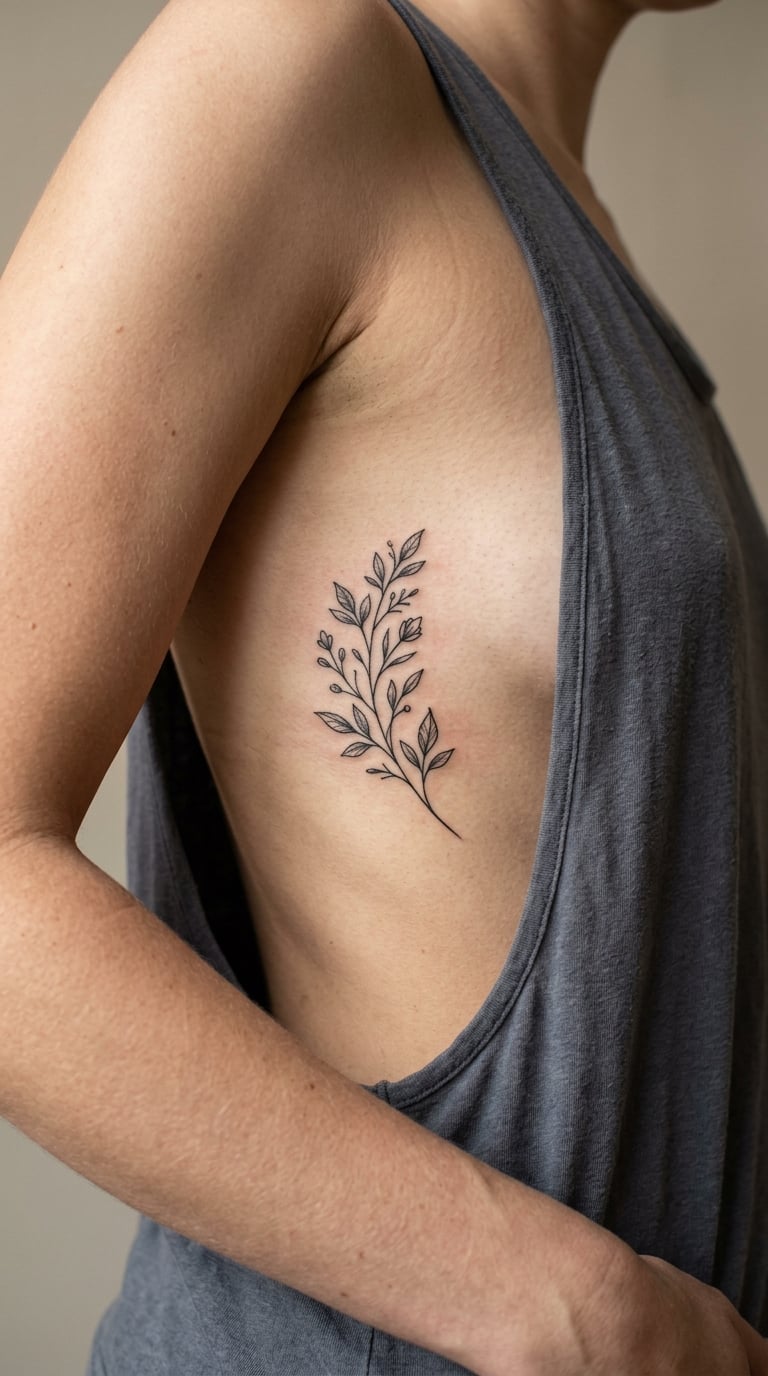
Does a rib tattoo hurt? Moderately to highly, depending on size and style. Small fine-line work on the side ribs is often described as a 4 to 6. A large shaded or full-colour composition running hip to underboob is regularly reported as an 8 or 9 by people with several tattoos already under their belt.
The sensation people describe most often is a hot, dragging scratch that sits right on the edge of unbearable and never quite crosses it. Others talk about a deep, aching burn that shows up a day later. What nobody finds is sharp, clean pain, because there is so little padding between the needle and bone.
Two people can book the same placement on the same day and rate it a 3 and a 9. That is not a contradiction, it is size, spot and session length. Treat online pain scales as a rough guide for the area, not a prediction of your afternoon.
How Painful Are Rib Tattoos by Placement?
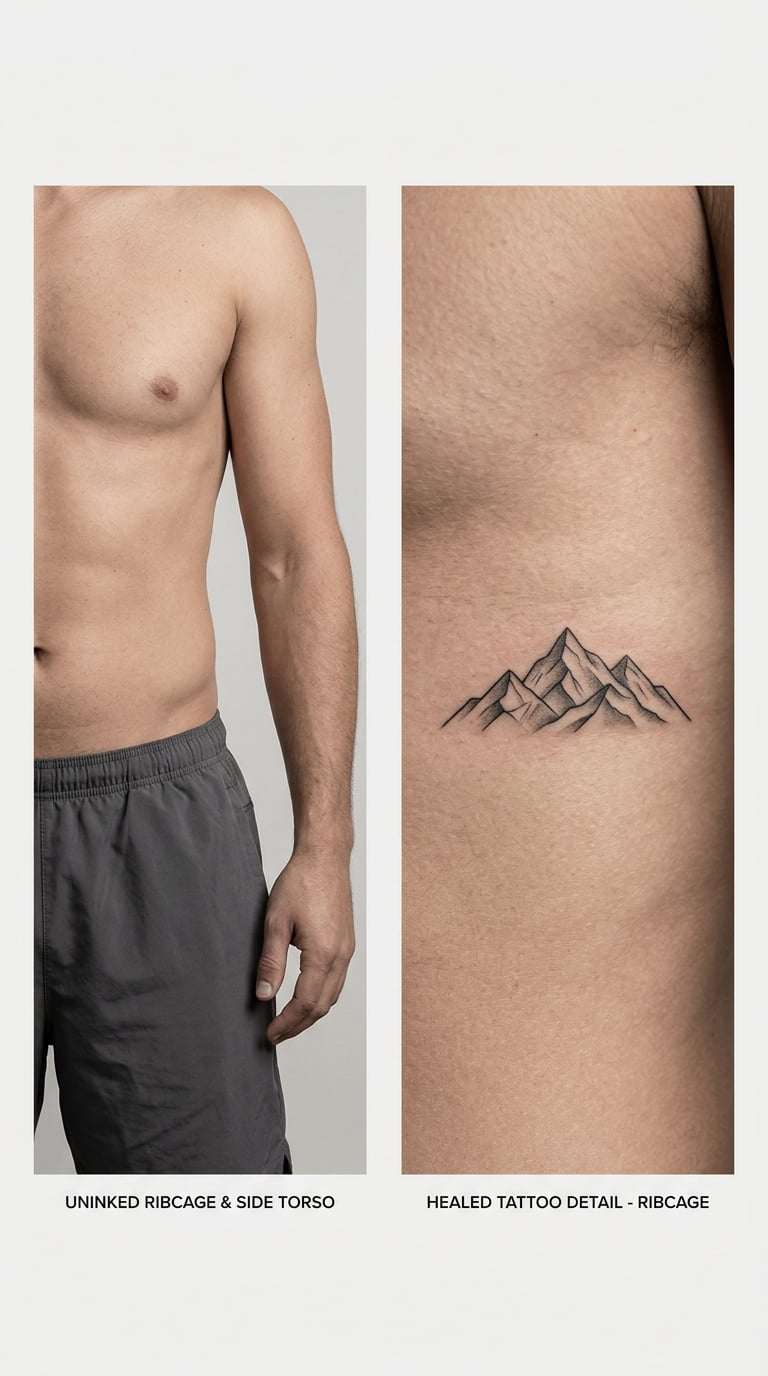
The ribcage is not one zone. It runs from the soft space under the armpit down to the bony shelf where your ribs meet your hip, and the feel changes along that whole run.
| Placement | Typical pain | What drives the sensation | Practical note |
|---|---|---|---|
| Front ribs, near the sternum | 7 to 9 | Thin skin, visible rib edges, chest rises noticeably with each breath | Best viewed sitting up; harder to hide under most clothing |
| Mid side ribs | 6 to 8 | Largest area of work, longest sessions, constant movement under the arm | The most common placement and the most common first mistake |
| Upper ribs, toward the armpit | 8 to 9 | Sensitive underarm-adjacent skin, very little support, hard to keep still | Best saved for a later piece, not a first one |
| Lower ribs, at the upper iliac crest | 7 to 9 | Bony ridge with no soft tissue, and the twist of the waist pulls the skin | Frequently named the single worst spot on the ribcage |
| Back ribs, near the spine | 6 to 8 | Bone close under the skin, plus the twitchy lower-back area | Easier to sit still for than the front or side |
Tattooers who work on ribcages say the same thing: it is not the side that gets you, it is the two ends. The armpit end and the hip end both sit on hard edges, and the middle of the ribcage is comparatively forgiving by comparison.
What Factors Change Rib Tattoo Pain?
Size and style do most of the work here. A single-needle fine-line vine gets one quick pass. A shaded blackwork panel gets outlined, then shaded, then revisited for saturation, which means many more passes over the same sensitised skin.
Session length is the variable people underestimate. Plenty of accounts describe two comfortable hours followed by a sharp climb once the artist reaches untouched mid-to-upper rib skin. One person with eight tattoos said ribs were the worst placement they have had even though it was the smallest piece on their body, which tells you placement outweighs size for a lot of people. Timing works the same way, and it is worth reading How Long Does a Sleeve Tattoo Take? Timing Guide before you assume a similar pattern for a torso piece.
Body position matters too. Sleeping on that side afterwards, a waistband pressing into the hip-end ribs, or a bra band sitting across fresh work all turn a manageable heal into a grumpy one.
How to prepare for a rib tattoo without overthinking it
Eat a proper meal beforehand, drink water, and get a full night’s sleep. Skip alcohol the day before. Wear the loose top you will be sitting in for two hours and bring a second layer for afterwards, so nothing tight touches the area on the walk home. If you take a bra, decide on the band placement before you sit down, not after the first hour.
Talking with the artist about breaks and placement
Ask how many times they have tattooed a ribcage and what their split looks like for a piece your size. Agree on break length before you start, keep those breaks short, and tell them early if the breathing is getting shallow or the shaking is starting. Artists prefer hearing it at hour two rather than hour five.
Best Rib Tattoo Placements and Design Sizes
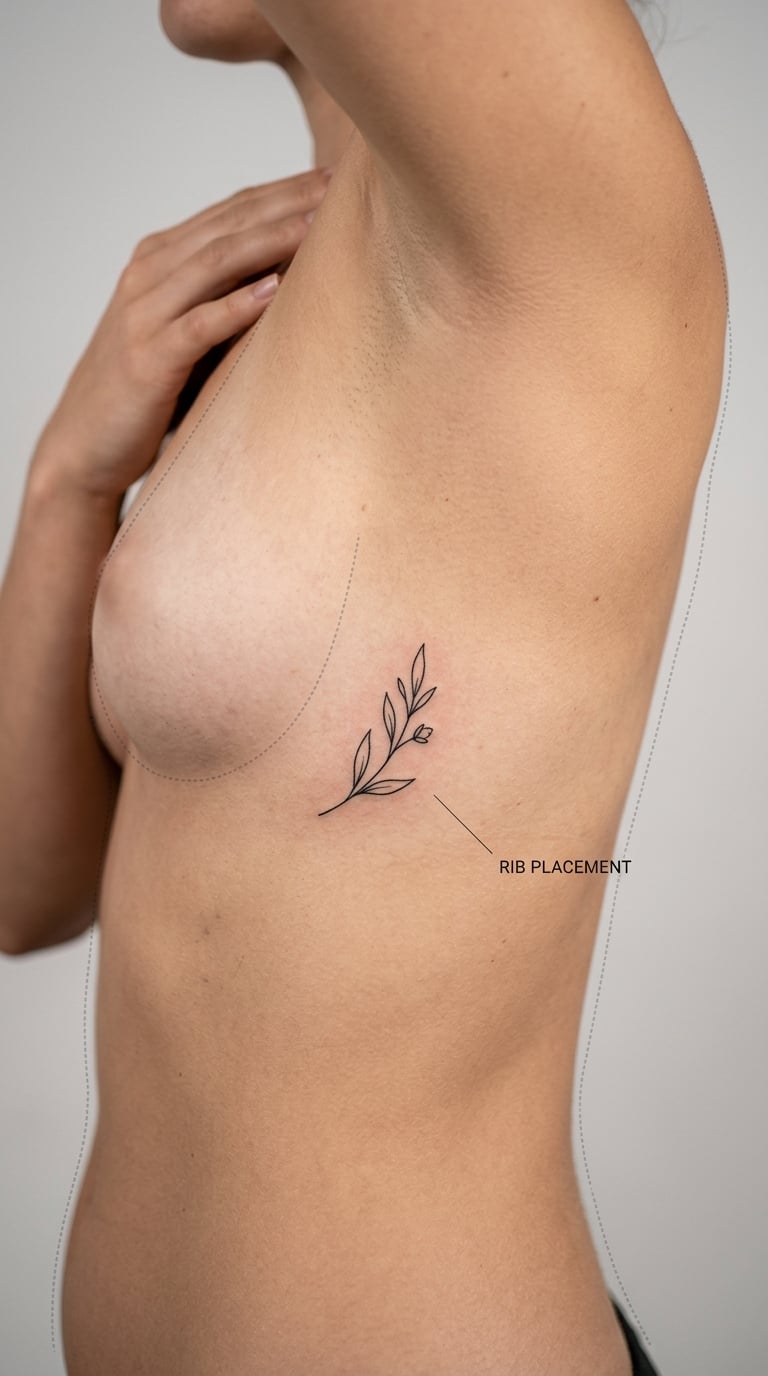
Placement and size are one decision, not two. A design that sits well across the side ribs will look stretched if it starts on the front ribs, and anything with a lot of fine internal detail suffers on a curve.
| Design type | Best placement | Realistic size | Visual balance | Good as a first rib piece? |
|---|---|---|---|---|
| Small symbol or single motif | Mid side ribs | 1.5 to 3 inch (4 to 8 cm) | Reads clearly, easy to cover if needed | Yes, the safest starting point |
| Fine-line botanical or script line | Side ribs following the rib line | 3 to 5 inch (8 to 13 cm) | Follows the curve naturally | Yes, if it is not over-detailed |
| Small illustrative piece | Lower side ribs or back ribs | 4 to 7 inch (10 to 18 cm) | Stays inside one panel | Possible, expect a longer session |
| Large shaded composition | Flank running hip to chest | 8 inch (20 cm) and up | Needs an uninterrupted surface | No, and definitely not first |
If you want symbolism in your design rather than decoration, 24 Tattoo Ideas That Symbolize Growth for First Timers is a good place to start sketching before the consultation.
One more thing worth planning: weight changes stretch and compress rib skin, and a design with straight lines and hard geometry shows that more than a curved, organic one does.
Rib Tattoo Cost and Session Time
Cost here is driven by hours, not by placement. Most shops bill by the hour, with a minimum that covers a short appointment no matter how small the work is, so a tiny symbol and a small fine-line piece can cost about the same.
| Piece type | Typical session length | What moves the total |
|---|---|---|
| Tiny symbol, single motif | Under 1 hour | Mostly the shop minimum |
| Small fine-line design | 1 to 2 hours | Artist hourly rate, one needle pass |
| Medium illustrative piece | 3 to 4 hours | Freehand detail, longer setup, harder placement |
| Larger shaded or colour composition | 5 to 8 hours, often split into two visits | Multiple passes, colour mixing, shading time |
Rib work takes longer than the same design on an arm. The artist is working around a moving surface, on skin that cannot be flattened, so setup time is a real line in the estimate. Colour and heavy shading add more, since those need repeated passes over the same skin.
If a session gets stopped early, the finished work is still charged for at the usual rate and the remainder is booked as a new appointment. That is another argument for splitting a large piece across two sessions from the start rather than gambling on one long sitting.
How Long Does a Rib Tattoo Take to Heal?
Rib tattoos take longer than most placements to settle, mostly because the area rubs, flexes and gets pressed every night.
| Time | What you will feel and see | What helps |
|---|---|---|
| First 3 days | Warmth, tenderness, visible redness and swelling | Follow your artist’s aftercare instructions, keep clothing loose |
| Days 4 to 7 | Peeling and flaking begins, second-day soreness often peaks here | Moisturise as directed, do not pick or rub |
| Weeks 2 to 3 | Itching, patchy fading as the top layer of skin sheds | Expect the colour to look duller than the day it was finished |
| Weeks 4 to 6 | Surface heals, colour settles, tenderness fades | Return to normal clothing gradually |
| Later settling | Deeper layers continue to settle over the following months | Book any touch-up with the same artist |
Sleeping on the tattooed side is the most common complaint in week one. Try the other side, or back with a pillow behind your knees, and change positions as often as you can in the first few days. A waistband sitting on the hip-end ribs does the same kind of damage, so loose clothing is not optional here.
Mistakes to Avoid
Choosing an oversized or heavily detailed design for a curved surface is the big one. Fine internal detail has nowhere to go on a rib, and the artist has to fight the curve for every line.
Placing work where clothing or a bra band rubs every day guarantees a worse heal and a duller result. Ignoring how much the area moves is the same mistake in a different form: reaching for a spot you cannot hold still or breathe into is how people end up tapping out.
Booking without checking the artist’s ribcage portfolio is worth avoiding too. This is a placement where experience shows clearly, and a shop full of beautiful arms tells you nothing.
Scheduling a long session with no recovery time afterwards, and treating an online pain scale as an exact prediction, round out the list. The scale is a rough guide for the area. Only your session tells you anything about you.
Check the final placement in every position
Before the stencil goes on, look at yourself standing, sitting down, and turned sideways in a mirror. Check it while wearing the clothes you actually live in. If the design shifts, distorts or disappears when you sit, that is the moment to move it, not after it is healed.
Frequently Asked Questions
How painful is getting a rib tattoo on a scale of 1 to 10?
Most people rate a rib tattoo between 7 and 9 out of 10, with small fine-line work at the lower end of that range and a large shaded piece at the top. The number depends far more on size, exact placement and session length than on body shape or toughness. Treat any single score you read online as a rough guide for the area, not a prediction of your own session.
Is a rib tattoo a good idea as my first tattoo?
It can be, if you keep it small and pick an artist who has done the placement before. A small symbol or a simple fine-line motif on the mid side ribs is a reasonable first rib piece. A large rib-to-hip composition is a poor first choice, because the session length is the part that catches people out rather than the pain itself.
Can I sleep on my side after a rib tattoo?
Try not to for the first few days if you can manage it. Pressure from your weight plus the movement of that area slows the surface heal and can leave the design patchy. Sleep on your back, or on the other side with a pillow to stop you rolling over. Most people can resume their usual sleeping position once the tenderness and swelling have settled.
When will my rib tattoo stop hurting?
Soreness usually eases within the first week, though the second day is often the peak. Expect warmth, redness and tenderness for two or three days, peeling and flaking from around day four to seven, and a dull ache that fades somewhere in the second or third week. Deep settling continues for a couple of months, and a waistband rubbing the hip-end ribs can restart the discomfort quickly.
Do rib tattoos need a touch-up?
Often, and that is normal for this placement. Because the area flexes and gets pressed at night, the ink settles differently than it does on a forearm. Fading shows up first in the middle of shaded areas and anywhere the design crossed the curve of a rib. Book the touch-up with the artist who did the original piece and wait until the surface has fully healed first.
Do rib tattoos change with weight gain or weight loss?
They do. The skin here stretches and compresses with weight change, and a design with straight lines and hard geometry will show it more clearly than a curved or organic one. Many people choose flexible fine-line work on the side ribs specifically because it moves with the body instead of fighting it. If big weight changes are likely, talk that through at the consultation.
Conclusion
So yes, a rib tattoo hurts, and most people land somewhere between a 6 and a 9 depending on what is being done. But the people who have good experiences are almost never the ones with the highest tolerance. They are the ones who chose a small, clean design, picked a placement that suits how they sit and sleep, and booked an artist with a real ribcage portfolio.
Choose placement, size and design together rather than picking a design and forcing it onto a curve. Then book the consultation before you commit to anything.