
22 Zelda Tattoo Ideas: Best Small, Classic and Bold (2026)
These 22 Zelda tattoo ideas are original fantasy-adventure designs built from the imagery fans actually care about: shields, blades, forest spirits, temples, maps and small glowing jars. Every entry gives you the look, the meaning, a realistic size in inches, a placement that suits the shape, and one way to make it personal. Nothing here is a traced copy of game art, which is also the version most artists are comfortable tattooing.
That last point matters more than people expect. Nintendo art is protected, and shops vary widely on what they will accept as reference, so a clean original design is both safer and usually a better tattoo. A general searcher lands here for a picture, but the readers who book end up asking two things: what does it mean, and will it still read in ten years. Both get answered here, motif by motif. If you are also collecting nature and symbol work, the 20 wisteria tattoo ideas for floral designs and 20 north star tattoo ideas galleries pair well with the compass and star pieces below.
22 Zelda Tattoo Ideas: Quick Guide
| Idea | Style | Best Placement | Size | Pain |
|---|---|---|---|---|
| 1. Minimal three-motif shield | Fine line, minimalist | Inner forearm | 2 to 3 inch | Low to medium |
| 2. Slender hero’s sword | Fine line, illustrative | Outer forearm | 3 to 5 inch | Medium |
| 3. Forest spirit mask | Fine line, blackwork | Upper chest | 3 to 4 inch | Medium |
| 4. Hidden temple doorway | Blackwork, illustrative | Outer calf | 3 to 5 inch | Medium |
| 5. Tiny adventurer’s compass | Engraving-style fine line | Inner wrist | 1.5 to 2.5 inch | Medium |
| 6. Kokiri-style forest eye | Fine line, dotwork | Outer shoulder | 2 to 3 inch | Medium |
| 7. Songbird in a circular frame | Illustrative, fine line | Outer wrist | 2 to 3 inch | Medium |
| 8. Celestial fairy tower | Blackwork, fine line | Outer forearm | 4 to 6 inch | Medium |
| 9. Deku leaf crescent | Micro fine line | Behind the ear | 1 to 2 inch | Medium |
| 10. Wind-up mechanical bird | Illustrative, neo-traditional | Outer upper arm | 3 to 4 inch | Medium |
| 11. Royal game-table motif | Illustrative, traditional | Inner forearm | 2.5 to 4 inch | Medium |
| 12. Mountain and sunrise panel | Illustrative, traditional | Outer upper arm | 5 to 7 inch | Medium |
| 13. Guardian statue in blackwork | Blackwork, neo-traditional | Outer shoulder | 4 to 6 inch | Medium to high |
| 14. Watercolour wind ribbon | Watercolour | Inner forearm | 3 to 5 inch | Low to medium |
| 15. Royal crown with ivy | Fine line, ornamental | Inner forearm | 2 to 3 inch | Medium |
| 16. Moss-covered temple key | Illustrative, blackwork | Outer forearm | 2 to 3 inch | Medium |
| 17. Four-season tree | Illustrative, neo-traditional | Outer calf | 5 to 7 inch | Medium |
| 18. Stealthy hood and leaf | Blackwork, minimal line | Upper arm | 3 to 5 inch | Medium |
| 19. Original guardian companion | Micro-realism, kawaii | Inner calf | 2 to 4 inch | Medium |
| 20. Ruined arch exploration scene | Illustrative, blackwork | Outer forearm | 4 to 6 inch | Medium |
| 21. Firefly jar micro-tattoo | Micro fine line | Inner upper arm | 1 to 2 inch | Medium |
| 22. Hero’s quest map | Illustrative | Outer forearm | 5 to 8 inch | Medium |
22 Zelda Tattoo Ideas by Detail Level
Bold symbol tattoos, medium-detail compositions and tiny fine-line motifs age in completely different ways. A shield shape, a leaf or a crown is built from thick edges and open space, so it still reads clearly at ten years old. A landscape panel with a winding path and a distant tower is the opposite: it looks richer, but it needs enough room for every line, and small versions turn to grey mush.
Micro work sits at the other end. A firefly jar or a curled leaf behind the ear is beautiful in week one and honestly risky after year three, because fine single-needle shading and the smallest dots soften first. If this is your first tattoo, start in the bold or medium column. Save the micro pieces for after, when you know how your skin heals and how much fading you actually mind.
1. Minimal Three-Motif Shield
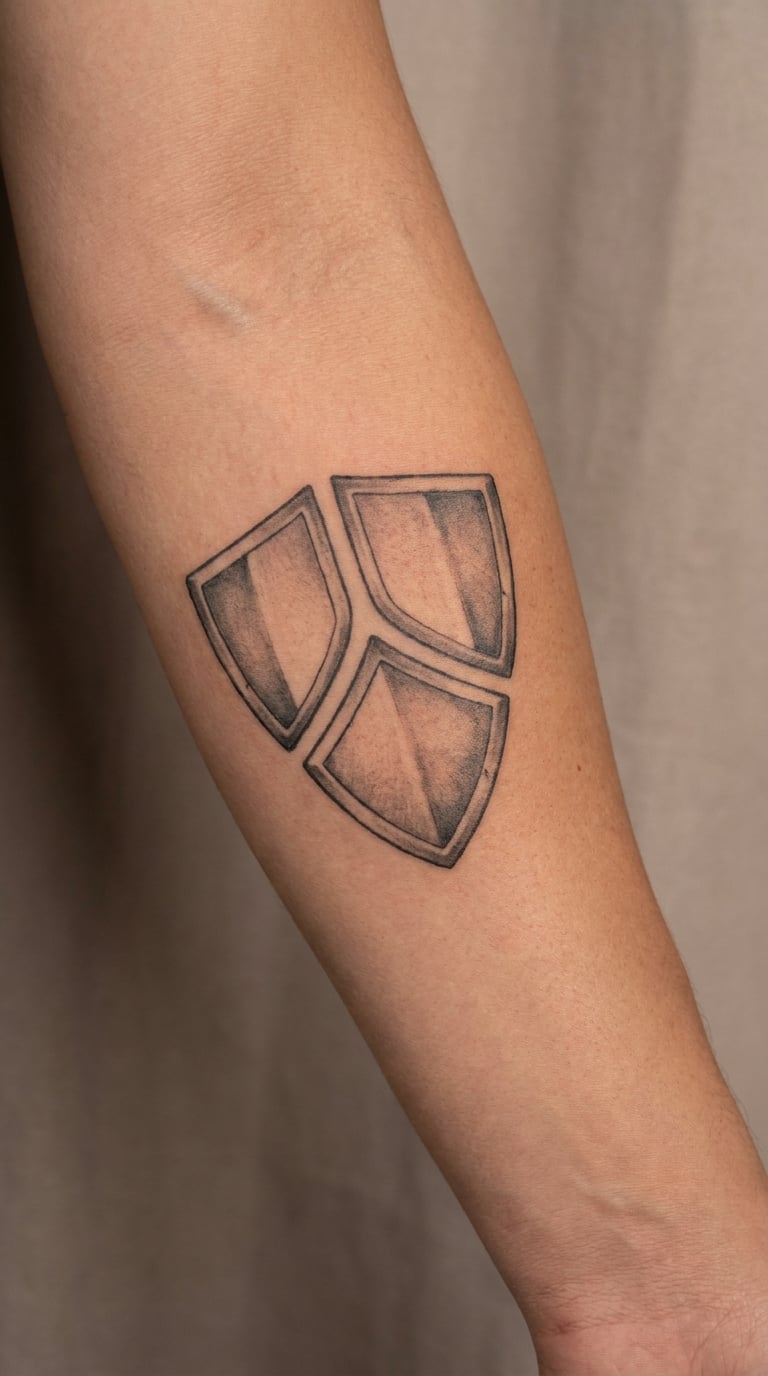
A rounded shield split into three clean sections by two simple lines, with a small emblem in each. No crest, no logo, no copied game asset. Black and grey linework does all the work, and the shape carries the meaning on its own.
Shields are usually about protection and loyalty, and the three-part division quietly nods to the courage, wisdom and power idea that fans recognise from the game. One r/tearsofthekingdom poster told me their Triforce-style piece existed because they had named their dog Zelda, which is a good reminder that the meaning is personal, not lore trivia.
Placement: inner forearm, or the flat of the upper arm. Size: 2 to 3 inch (5 to 8 cm). Style: fine line or minimalist blackwork. Pain: low to medium on the inner forearm. Fine interior details blur faster than the outer silhouette, so keep the section marks simple. Make it yours: have the artist engrave coordinates or a short date inside the lower band.
2. Slender Hero’s Sword
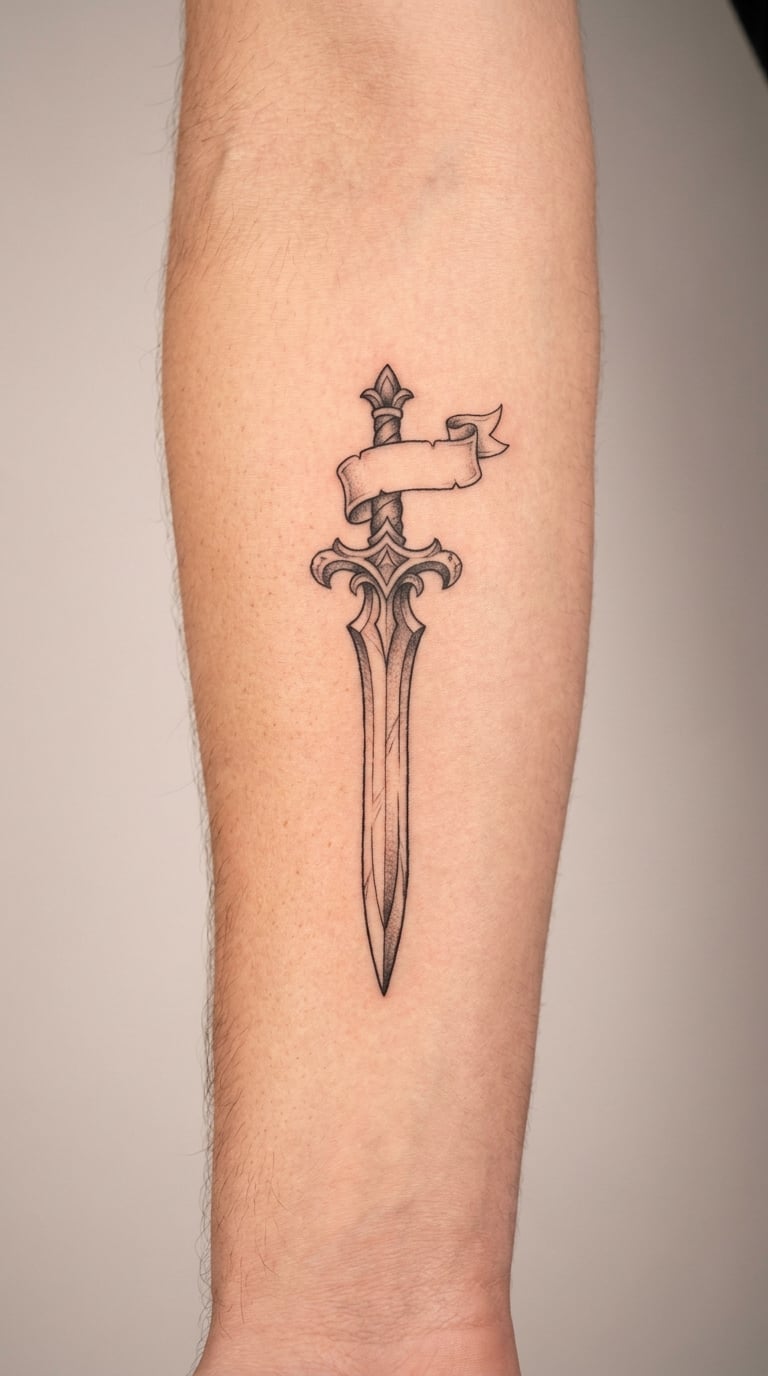
A single elegant blade with a distinct hilt, a short crossguard and one restrained banner trailing from the grip. The outline is confident and the interior stays open, so it never turns into a grey smudge. Avoid recreating any specific in-game weapon down to the pommel details.
Sword tattoos mean courage and resolve, usually less about slashing and more about pushing through something difficult. Fits a life that changed direction, and it reads well on people who later want a matching piece on a partner.
Placement: outer forearm running vertically, or a calf. Size: 3 to 5 inch (8 to 13 cm). Style: fine line or illustrative with light shading. Pain: medium, and the outer forearm bleeds less than you would expect. Thin crossguard lines are the first thing to soften, so ask for a slightly heavier weight there. Make it yours: add a colour in the grip wrap, or a small engraved date under the blade.
3. Forest Spirit Mask
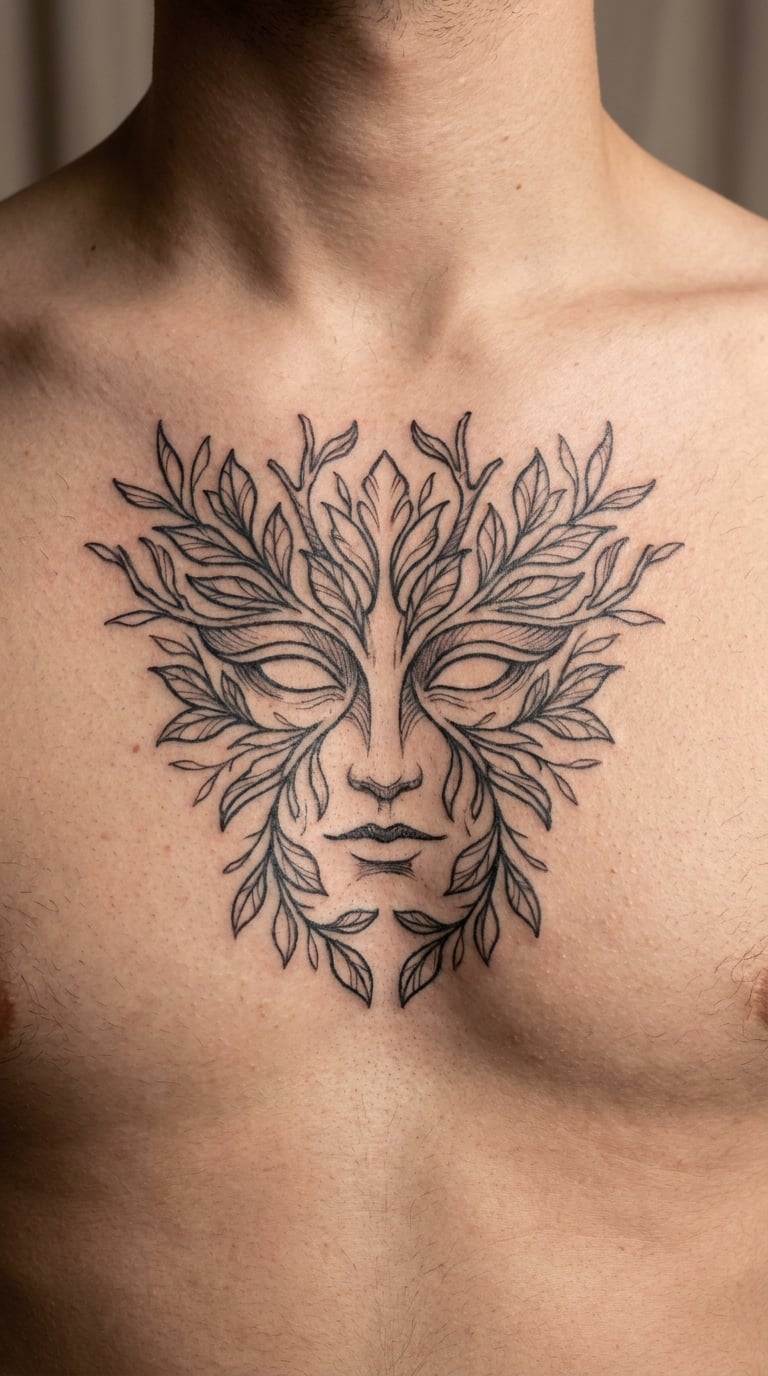
A symmetrical woodland mask built from flowing contour lines, two almond eye shapes and a crown of small leaves. Drawn as an original emblem rather than a portrait of any game character, with soft black-and-grey shading under the cheekbones.
People choose masks for the mystery they hold, and this version leans into that without a face attached to it. It also reads as woodland spirit imagery, which is a whole mood of its own, separate from any one title.
Placement: upper chest between the pecs, or the upper arm. Size: 3 to 4 inch (8 to 10 cm). Style: fine line with soft grey wash, or bolder blackwork. Pain: medium on the chest, and the sternum area tends to be sensitive near the bone. Fine leaf tips blur with sun exposure over time, so placement under a shirt helps. Make it yours: work a tiny birth-year leaf into the crown of leaves.
4. Hidden Temple Doorway
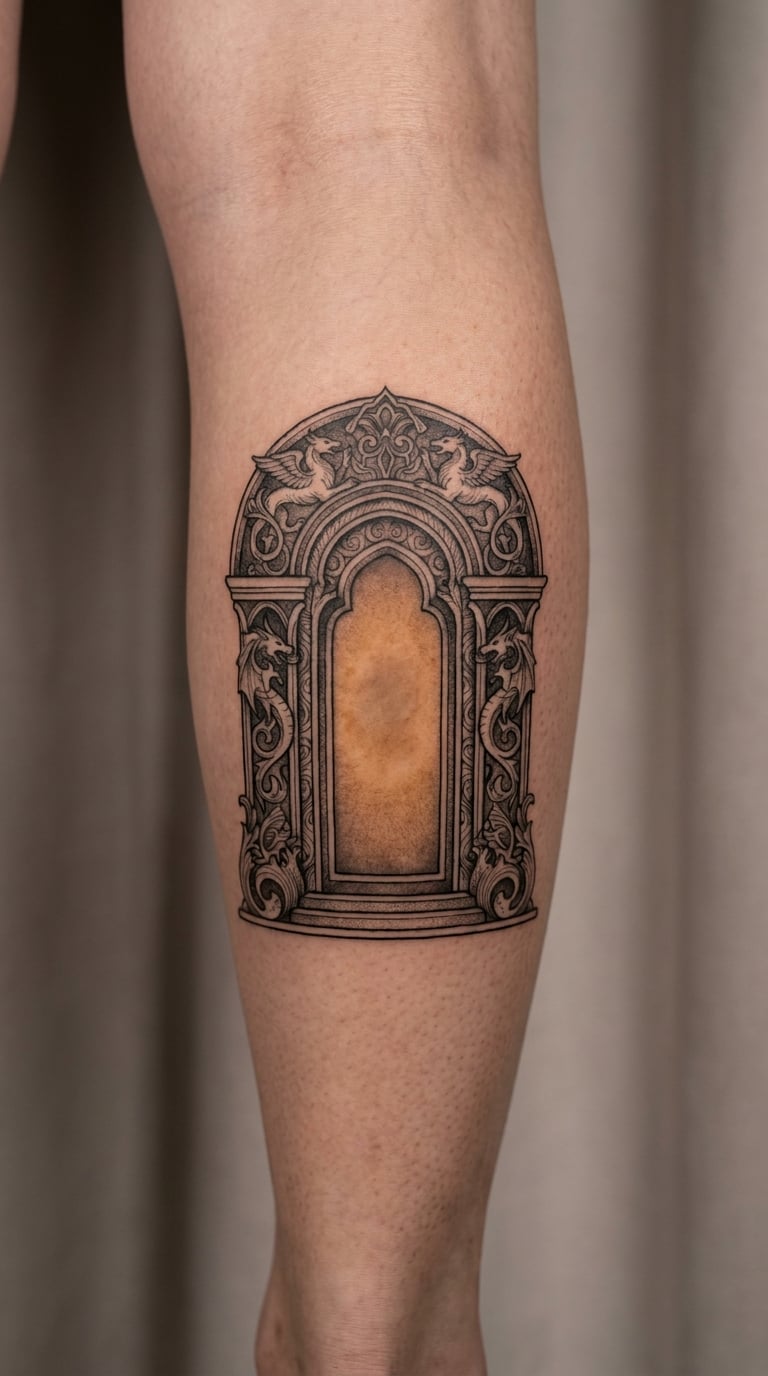
A compact temple entrance built from rough stone blocks, a triangular arch and a doorway that glows in muted amber against black and grey. The masonry stays simple, a few hand-drawn lines with stippled texture rather than rendered brickwork.
Doorways in tattoo culture mean discovery and entering the unknown, and the ruined-building version carries curiosity with it. It is one of the designs people describe as the tattoo that marks a move to a new city or a new chapter.
Placement: outer calf, forearm, or ribs. Size: 3 to 5 inch (8 to 13 cm). Style: blackwork, optionally with a single warm colour. Pain: medium, and the calf gives you a tall clean canvas. Keep the interior glow simple, since heavy colour over black can cloud. Make it yours: engrave a real or fictional destination name in the lintel above the arch.
5. Tiny Adventurer’s Compass
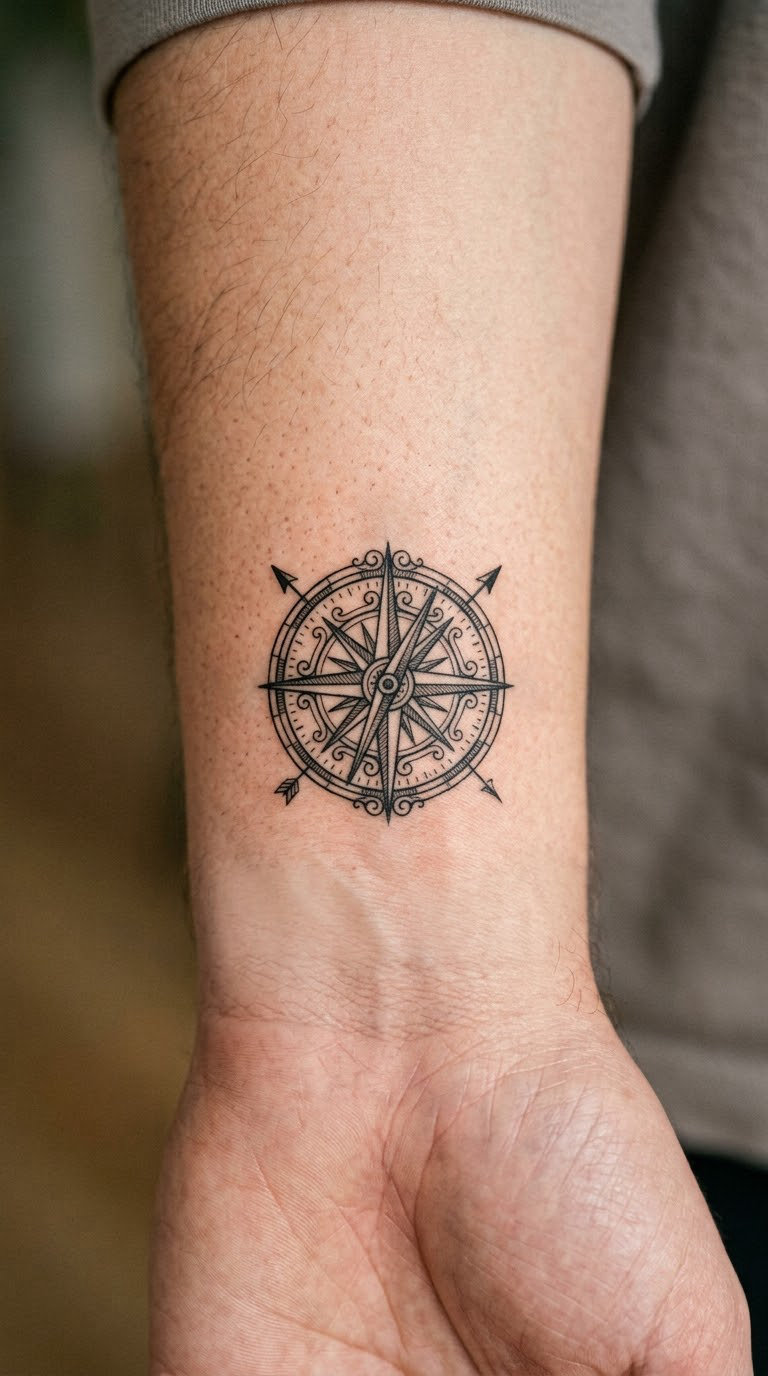
A small compass with a decorative needle, four cardinal points and a hand-inked look that resembles an old engraving. Ink the points solid black and keep the interior sparse so it stays legible at thumb size.
Compasses mean direction and travel, and this one is a good pick for someone who has moved countries or is about to. It also slips nicely into a lineup of small tattoos without feeling like filler.
Placement: inner wrist or ankle. Size: 1.5 to 2.5 inch (4 to 6 cm). Style: engraving-style fine line. Pain: medium on the inner wrist, which is fleshy but crowded with nerves. Any lettering around the rim fades first, so ask for a single-needle weight. Make it yours: put your home coordinates in the centre instead of a needle flourish.
6. Kokiri-Style Forest Eye
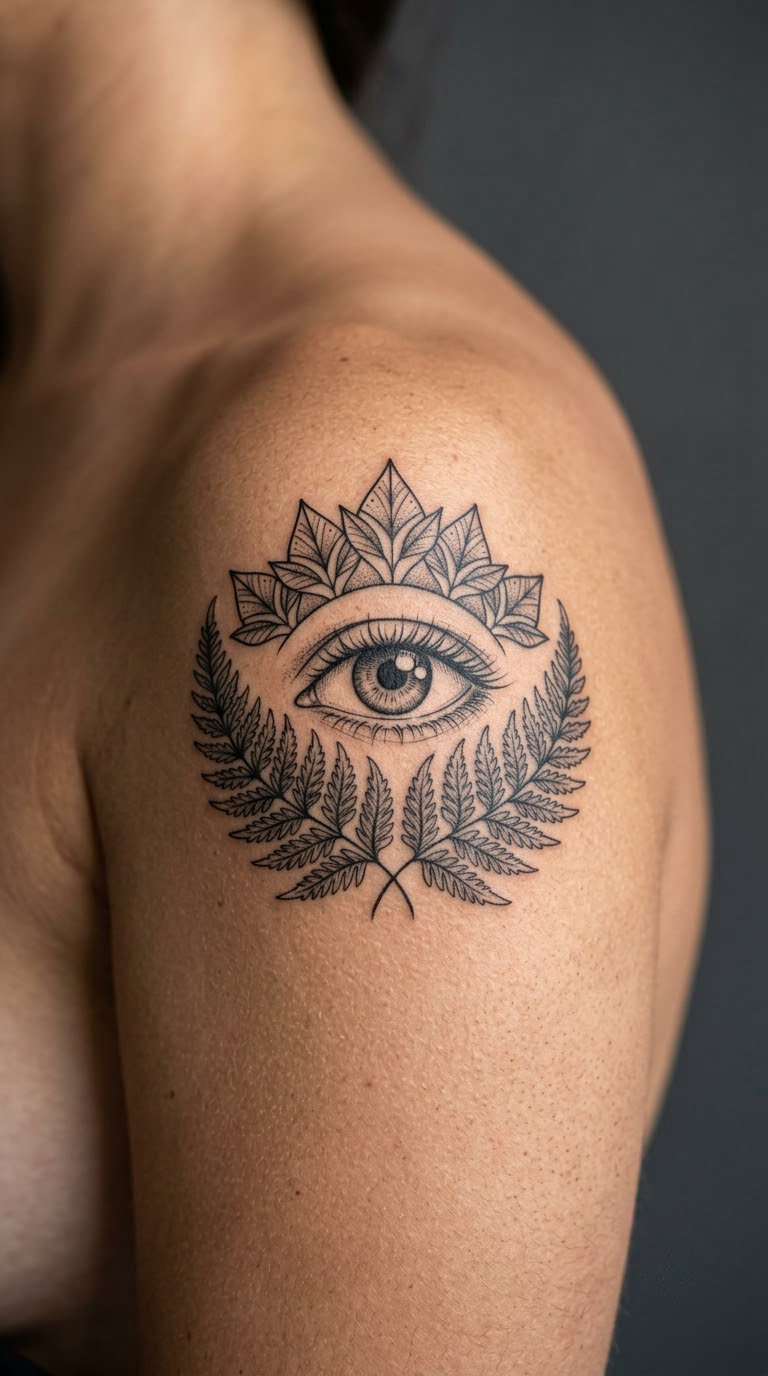
A single watchful eye framed by fern fronds and simple triangular leaf geometry, drawn as an original woodland emblem. The lashes and iris get the most attention, the surrounding leaves stay bold and flat, and nothing reproduces an in-game symbol exactly.
Eyes mean watchfulness, and this framing adds a direct tie to the forest. It suits people who feel like the one keeping an eye on things, and it is a common request in the mythical-creature threads on r/zelda.
Placement: shoulder blade, outer shoulder, or the bicep. Size: 2 to 3 inch (5 to 8 cm). Style: fine line or dotwork around the leaves. Pain: medium, and the shoulder cap gets uncomfortable after about 45 minutes. Dotwork around the eye is what softens first, so keep the dot count modest. Make it yours: fill the iris with one colour, or set a GPS coordinate in the pupil.
7. Songbird in a Circular Frame
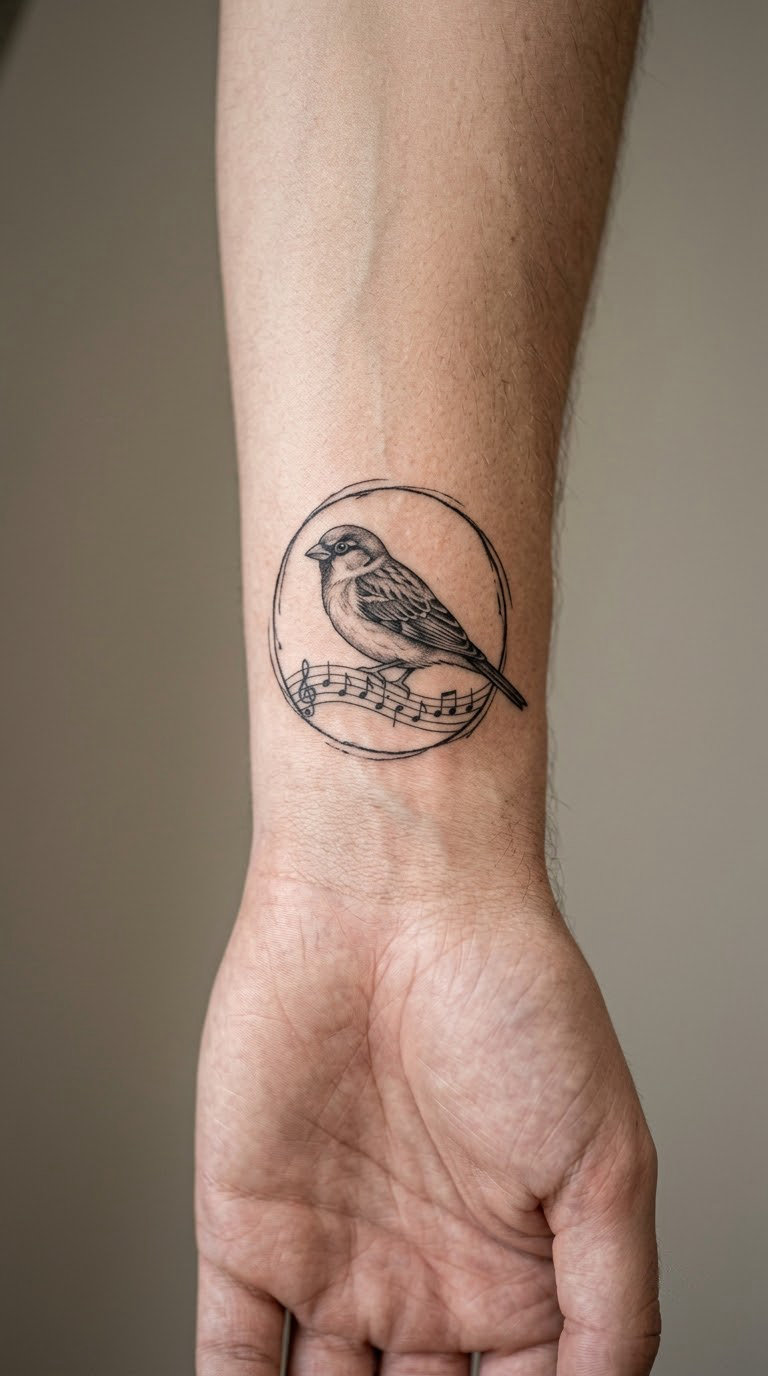
A small bird perched inside a loose, hand-drawn circle, with two or three music lines floating beside it and a few leaves filling the gap. Black and grey with restrained shading under the wing, the circle left open so it never looks like a stamped seal.
Birds get chosen for freedom, and the song element turns it toward memory instead, usually a song tied to someone or a period of your life. That is a heavier meaning than a plain bird, and it is why people add the lines.
Placement: outer wrist, rib, or behind the ear. Size: 2 to 3 inch (5 to 8 cm). Style: illustrative black and grey or fine line. Pain: medium on the wrist and ribs, and ribs feel sharper than people expect. The thinnest music lines blur into a smear within a few summers, so ask for them a touch heavier. Make it yours: use lyrics you can read instead of abstract notes, or a single chord shape.
8. Celestial Fairy Tower
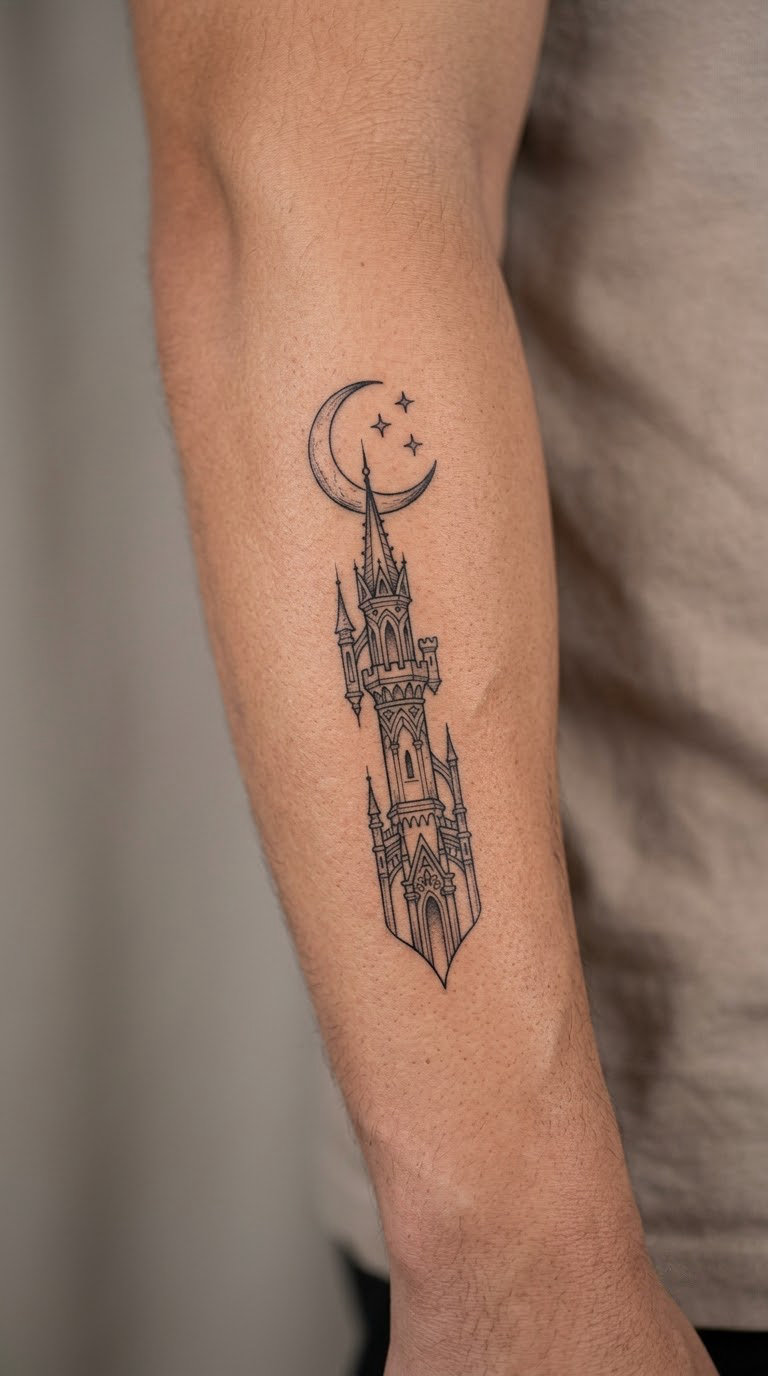
A slender tower silhouette with a tapered body, a few arched openings and a small balcony, set under a crescent moon and three scattered stars. Nothing copies a specific in-game building; the architecture is invented and clean, drawn mostly in solid black.
Towers reach upward, so the meaning leans toward aspiration and looking ahead. It is a common choice for people who finished something long, or who want something visible that a sleeve could later grow around.
Placement: outer forearm, calf, or the back of the arm. Size: 4 to 6 inch (10 to 15 cm). Style: blackwork or fine line with solid fills. Pain: medium, with the inner forearm and the bicep crease the sore spots. Star shapes are the first detail to close up, so keep them chunky. Make it yours: map a real constellation from your birth chart above the tower.
9. Deku Leaf Crescent
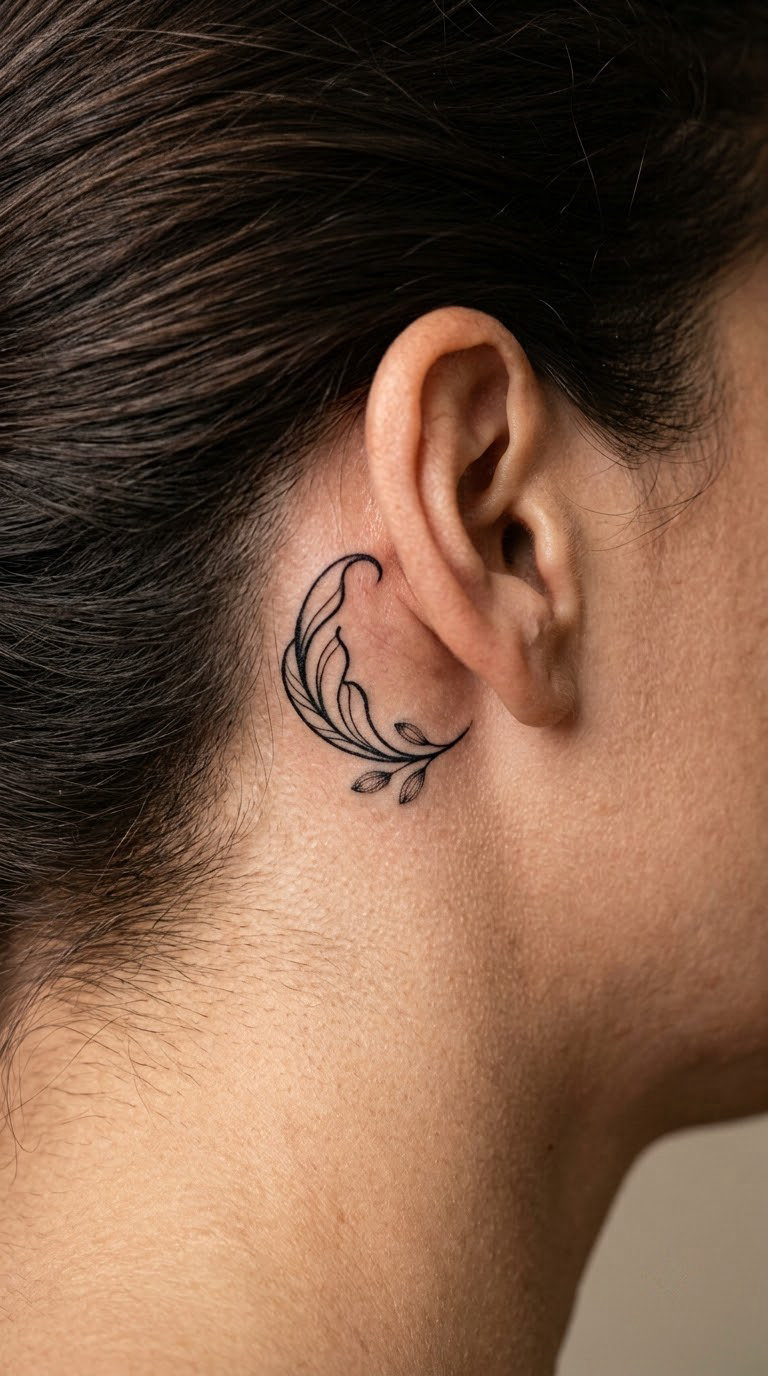
A stylised curled leaf crescent with a single central vein and two small seed or spark shapes, kept clearly distinct from any exact in-game emblem. It is a micro piece: a curve, a vein, two dots of shading.
Botanical forms get chosen for resilience and growth, and this one is small enough to sit anywhere. It also photographs well, which matters if you want a subtle piece that still reads in a photo.
Placement: behind the ear, on the ankle, or at the wrist. Size: 1 to 2 inch (3 to 5 cm). Style: micro fine line or minimalist. Pain: medium, and behind the ear is a common sore spot. Hand-adjacent placements fade fastest because of hand washing, sun and friction, so expect this one to need a touch-up eventually. Make it yours: add one small colour accent to the seed shapes.
10. Wind-Up Mechanical Bird
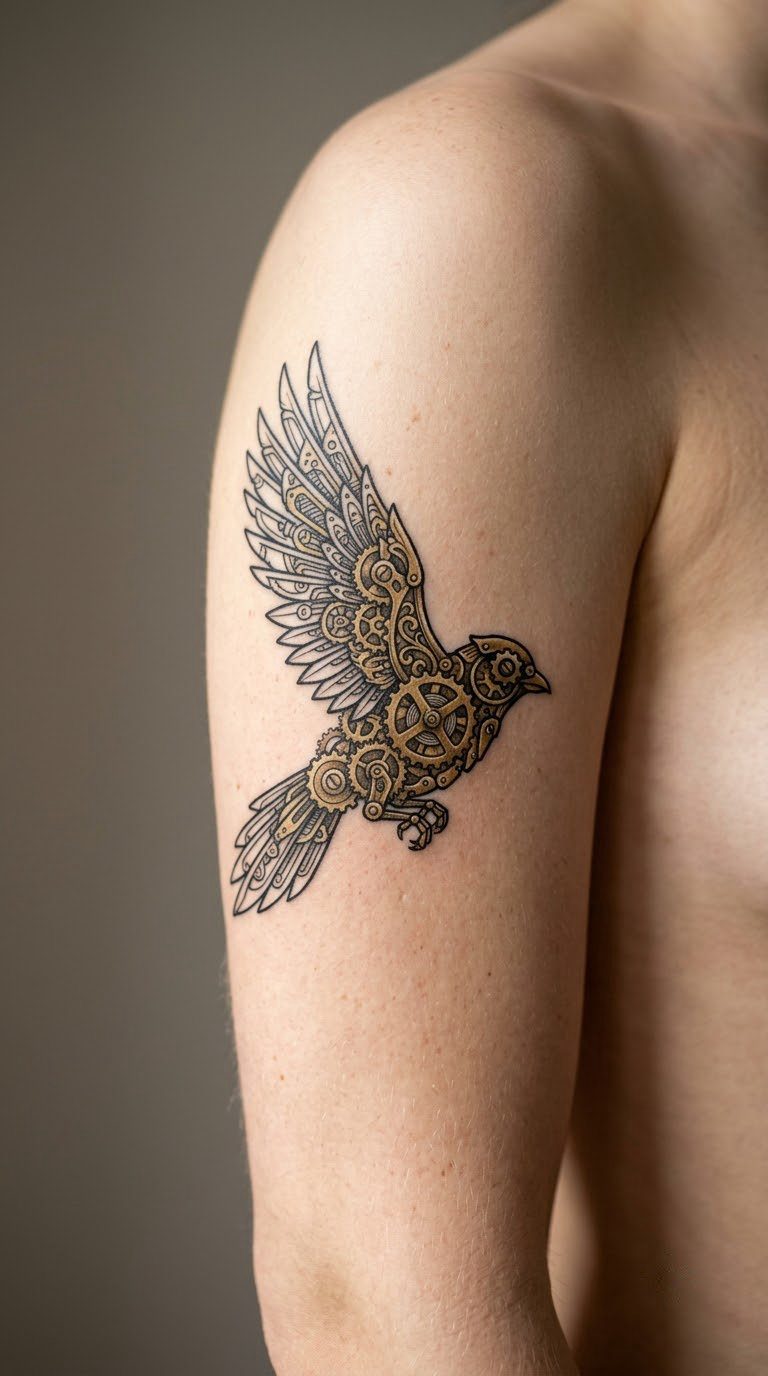
A small clockwork bird with visible gears in the body, a pointed beak and layered feather shapes outlined in black. The gears sit in brass or blue tones while the feathers stay monochrome, so the design has one clear focal point.
Mechanical creatures appeal to people drawn to craftsmanship and how things are built. R/zelda threads about mythical creature tattoos come back to exactly this: birds, giants and machines that feel like they were built by a forgotten civilisation.
Placement: outer upper arm, calf, or thigh. Size: 3 to 4 inch (8 to 10 cm). Style: illustrative or neo-traditional. Pain: medium, and the upper arm is one of the easier spots to sit through. Small gear teeth are what lose definition, so the artist should simplify the mechanism rather than shrink it. Make it yours: set the visible gears in brass, copper or deep blue.
11. Royal Game-Table Motif
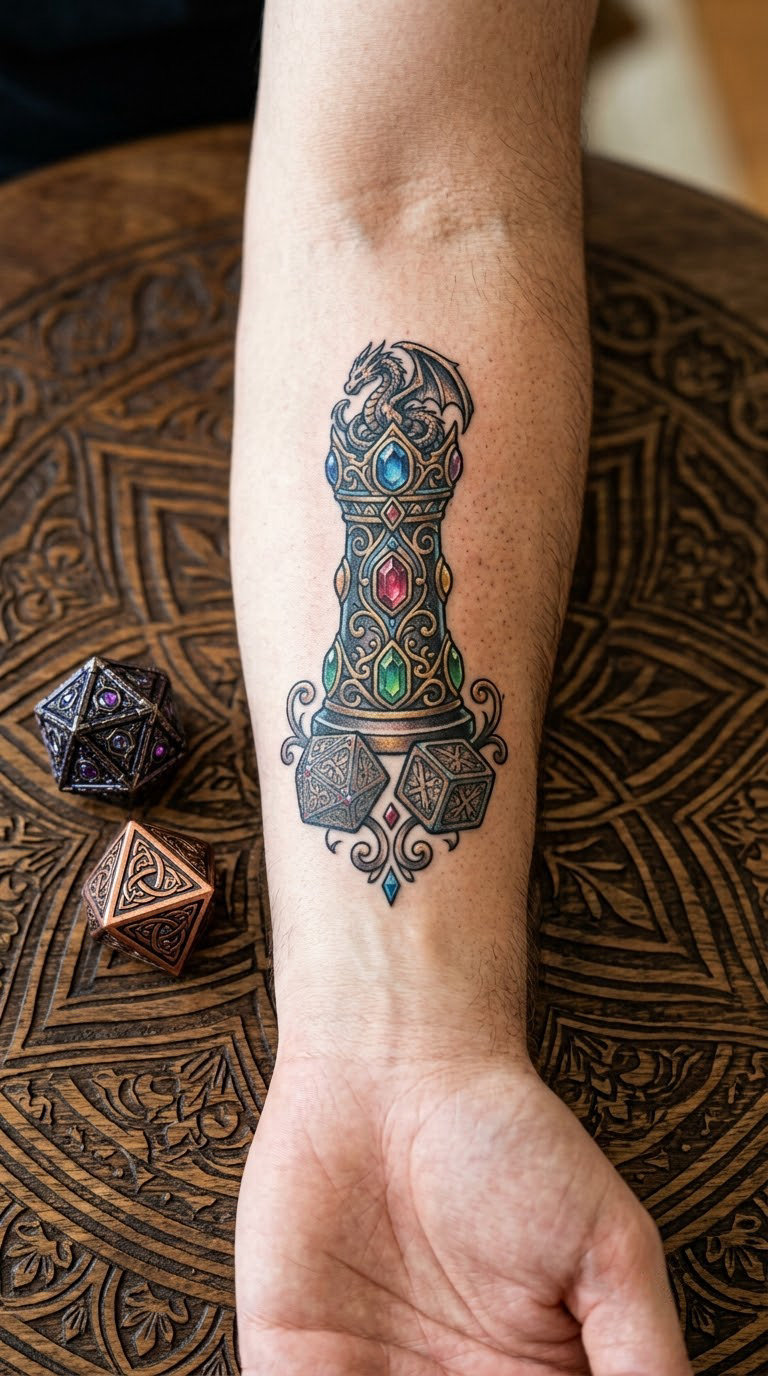
A close-up of a jeweled game piece standing on a patterned tabletop, with two abstract dice and a folded map corner nearby. The piece is your own invention, unbranded, and the tabletop pattern is drawn as loose geometric shapes rather than any real game surface.
It reads as strategy and chance, and it works well as a playful tribute rather than a lore reference. People like it because it is a table game motif without being about any specific table.
Placement: forearm, thigh, or the inside of the upper arm. Size: 2.5 to 4 inch (6 to 10 cm). Style: illustrative or traditional. Pain: medium. The fine pattern on the tabletop needs a decent size to hold together, and it will fade faster than the central piece, so keep the pattern large. Make it yours: engrave player initials on the map corner or a date under the tabletop edge.
12. Mountain and Sunrise Sleeve Panel
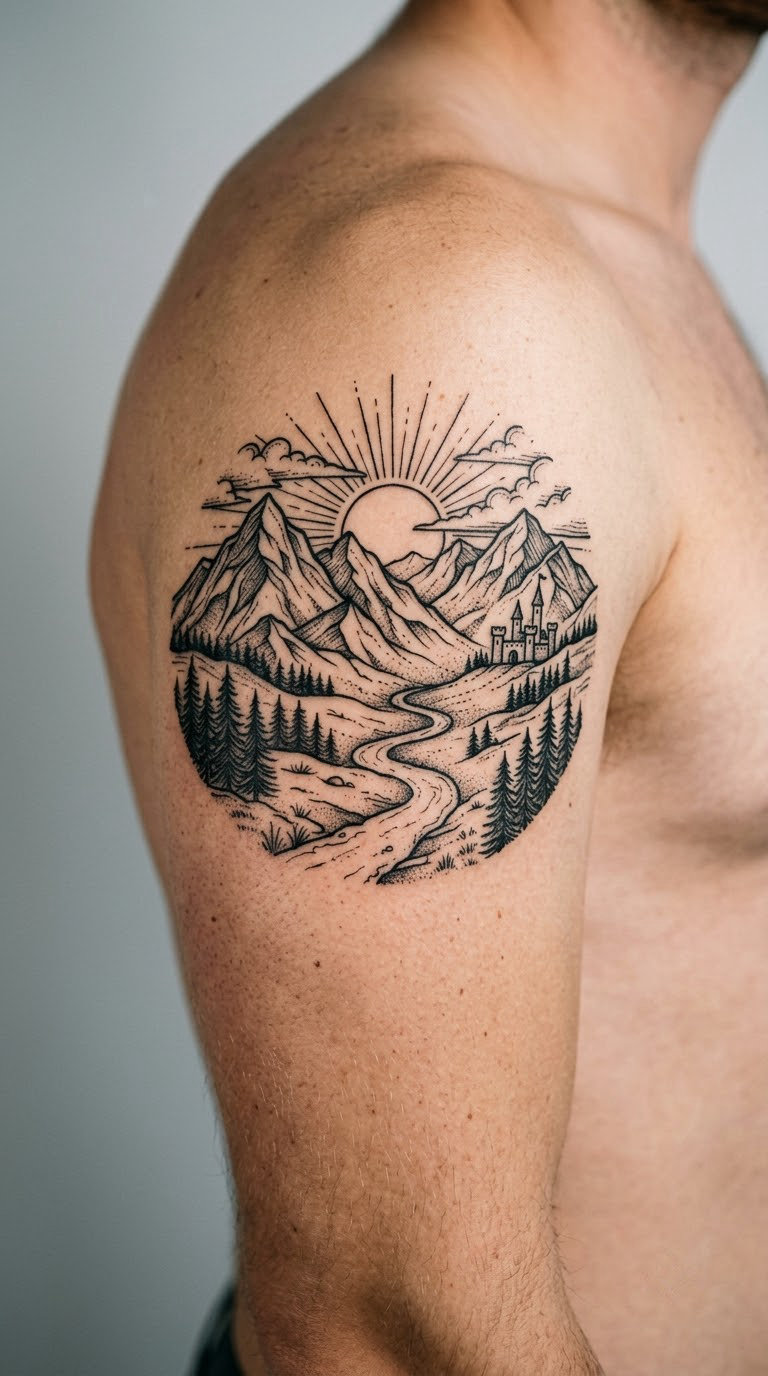
A broad panel built from layered mountain ridges, a rising sun with soft rays, a path winding from the foreground to a small distant tower in an invented silhouette. This one wants colour, though a black-and-grey version works if the shapes are strong.
Layered ridges with a path usually mean perseverance and a fresh start, and a distant destination reads as something still to reach. It is the best single panel here if you want a piece that a future sleeve can wrap around.
Placement: outer upper arm, calf, or as a panel on the back. Size: 5 to 7 inch (13 to 18 cm). Style: illustrative or traditional. Pain: medium, and a panel this size runs into a second session if the artist works slow. The tiny distant tower loses definition first at that scale, so expect it to simplify. Make it yours: add real coordinates pointing at a place that matters to you.
13. Guardian Statue in Blackwork
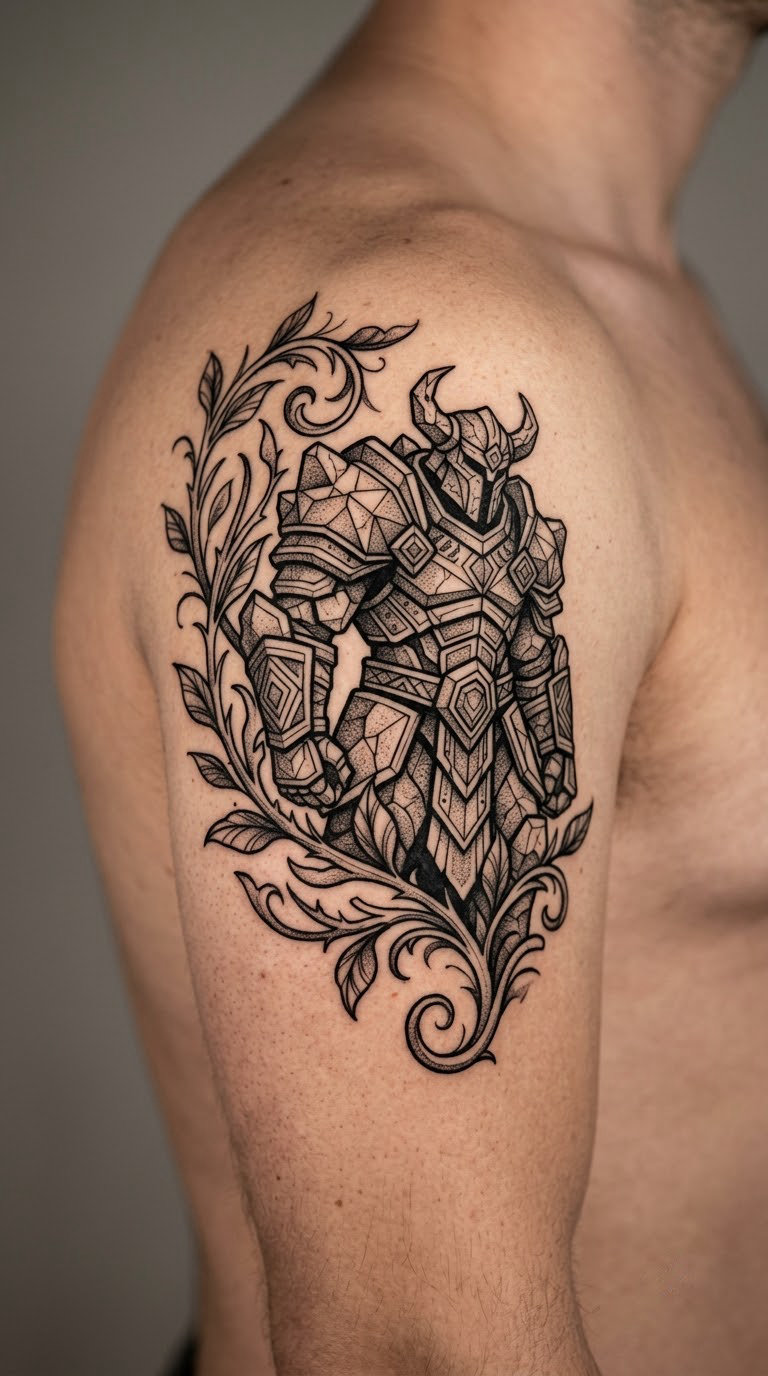
A single stone guardian figure with a calm expression, geometric armour plating and a plant curling around one leg. Heavy black fills, carved-looking shadow and a few speckled texture marks for weathered stone.
Stone figures are chosen for resilience and old protection, and the plant adds something softer. It suits anyone into ruins, archaeology and fantasy architecture more than anything cute or comic.
Placement: shoulder, upper arm, or chest. Size: 4 to 6 inch (10 to 15 cm). Style: blackwork or neo-traditional. Pain: medium to high, because the shoulder cap and collarbone are both bony. Solid black areas need more than one pass and can feel warm for a while. Make it yours: work a single blue flower or family initials into the stonework.
14. Watercolour Wind Ribbon
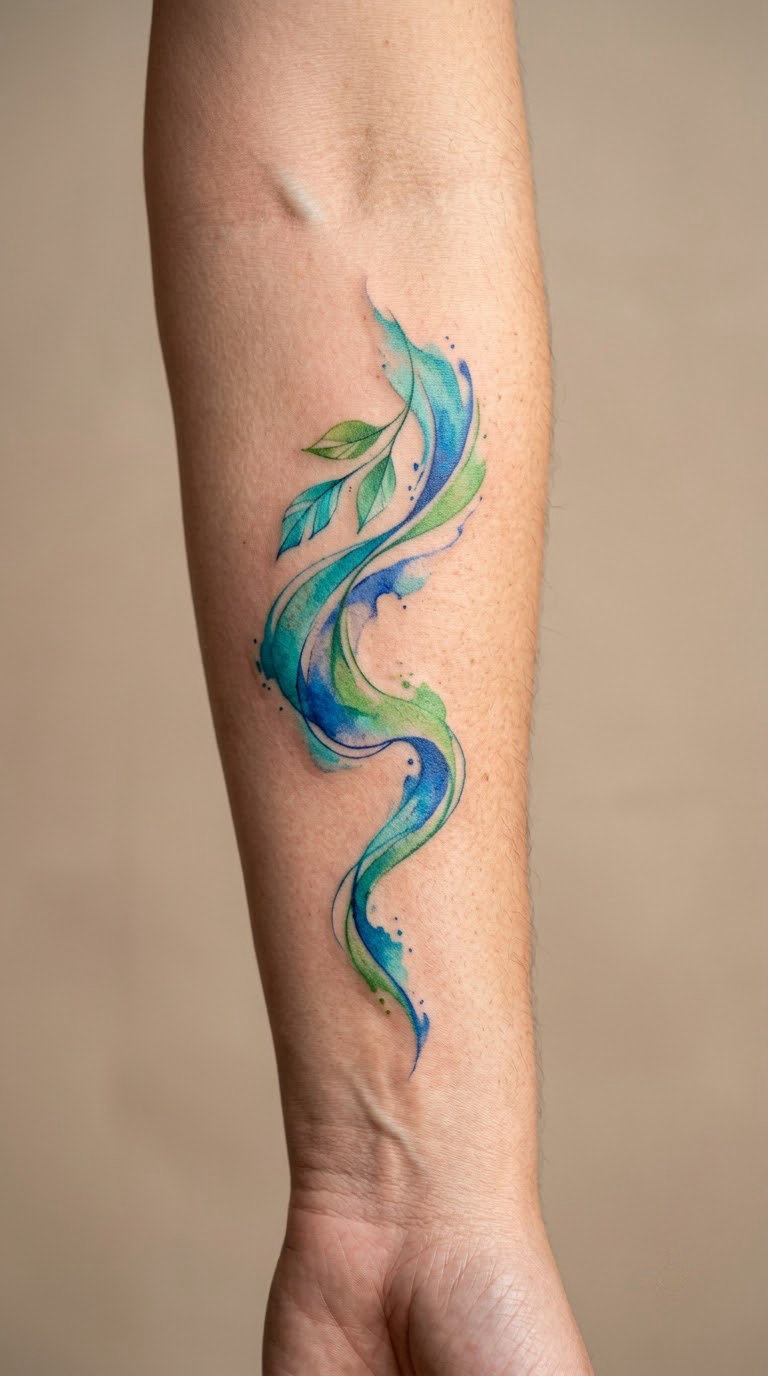
Wind turned into a flowing ribbon of turquoise, cobalt and soft green, with three leaves caught along its curve. Loose pigment bleeds beyond the linework in places, which is the whole point of the style.
It means movement and change without forcing a game-specific story onto it. Fans pick it when they want colour but not a story-heavy piece, and it layers well with black linework done years earlier.
Placement: inner forearm, calf, or ribs. Size: 3 to 5 inch (8 to 13 cm). Style: watercolour wash. Pain: low to medium, because it is a light single-pass piece. Watercolour fades faster than solid black, especially in turquoise and green, so treat sun as the main enemy. Make it yours: tuck your initials into the trail of the ribbon.
15. Royal Crown with Botanical Detail
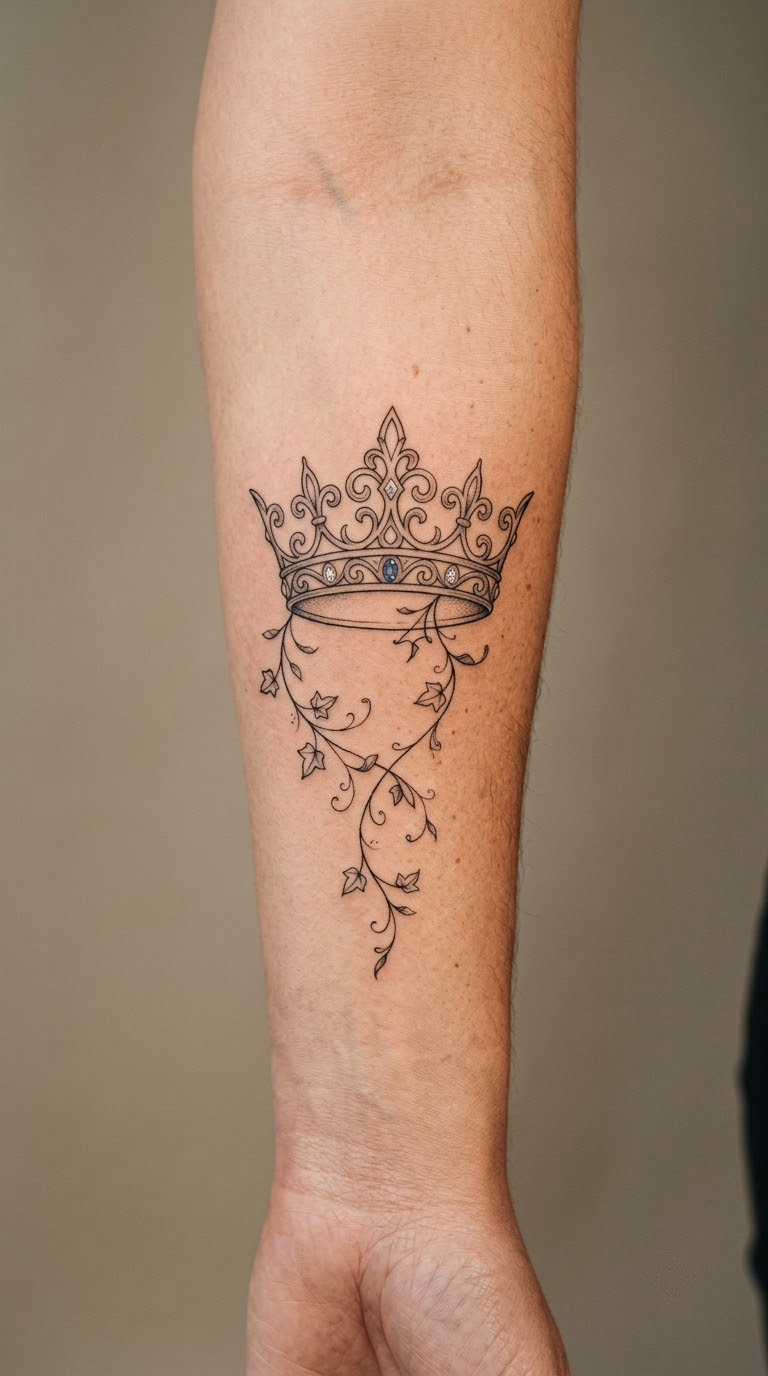
A simplified open crown with pointed arches, three small stone shapes and ivy trailing down one side. Linework only, drawn as an ornamental fantasy crown rather than a reproduction of any royal crest.
Crowns tend to mean responsibility and heritage, and pairing it with ivy softens that into something about growth through rank. It also stacks well with other small ornamental pieces later.
Placement: inner forearm, calf, or above the heart. Size: 2 to 3 inch (5 to 8 cm). Style: fine line or ornamental. Pain: medium, and the chest near the sternum is more sensitive than the arm. The trailing ivy is the part that softens first, so keep the leaves on the larger side. Make it yours: use three birthstones instead of plain filled shapes.
16. Moss-Covered Temple Key
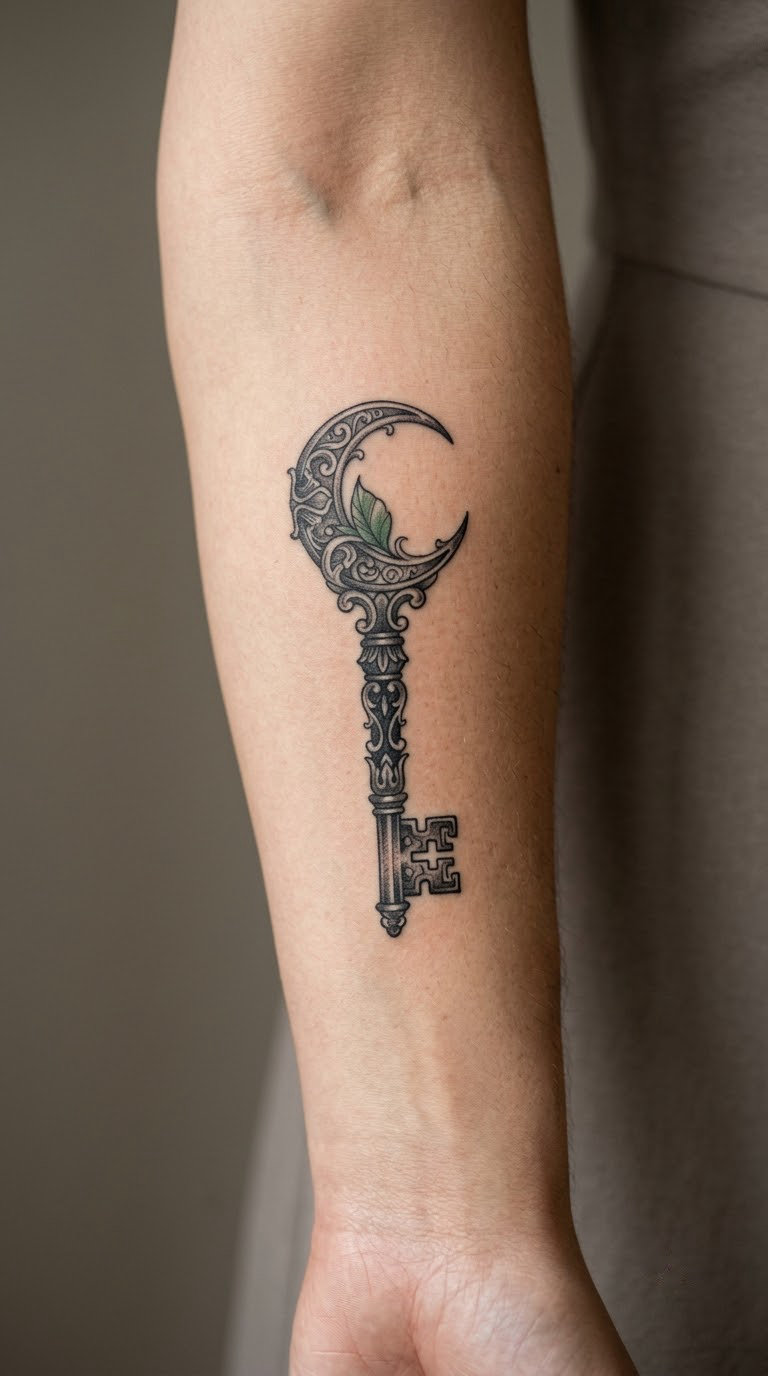
An old key with a crescent-shaped bow, geometric teeth and a small sprouting leaf at the shaft. Black and grey throughout with a single green leaf, so the design has one clear spot of colour.
Keys mean access, secrets and unlocks, and the moss on it implies something worth going back to. It is a quiet design that gets asked about more often than people expect.
Placement: forearm or upper arm. Size: 2 to 3 inch (5 to 8 cm). Style: illustrative or blackwork. Pain: medium. The teeth are the fragile element: a tattooed key usually needs simplified teeth or they will fill in, and your artist will tell you this before you start. Make it yours: put a date on the shaft, or use your birth month flower as the leaf.
17. Four-Season Tree
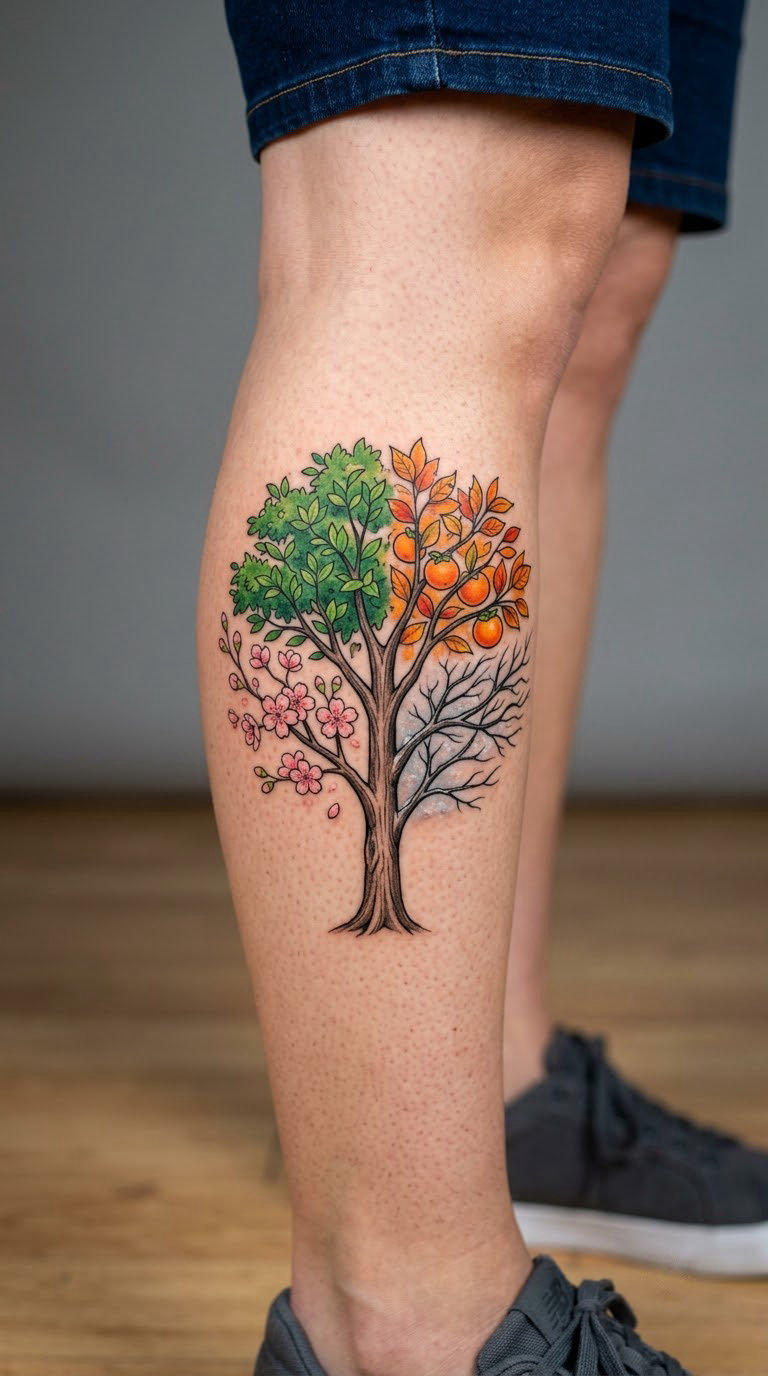
One branching tree drawn across four quadrants: spring blossom at the top, summer leaves, autumn fruit, then bare winter limbs. Colour does a lot of the work here, though a stippled black-and-grey version can carry the same idea.
A tree split into seasons is about cycles and time passing, which is broader than any one game. It is the kind of design that keeps meaning something years later, long after the fandom context fades.
Placement: calf, back, or upper arm. Size: 5 to 7 inch (13 to 18 cm). Style: illustrative or neo-traditional. Pain: medium, and the calf is one of the better places to sit for a long session. Fine blossom detail is what fades first, so plan on simplifying it with your artist. Make it yours: mark four dates in the four seasons, such as births or milestones.
18. Stealthy Hood and Leaf Outline
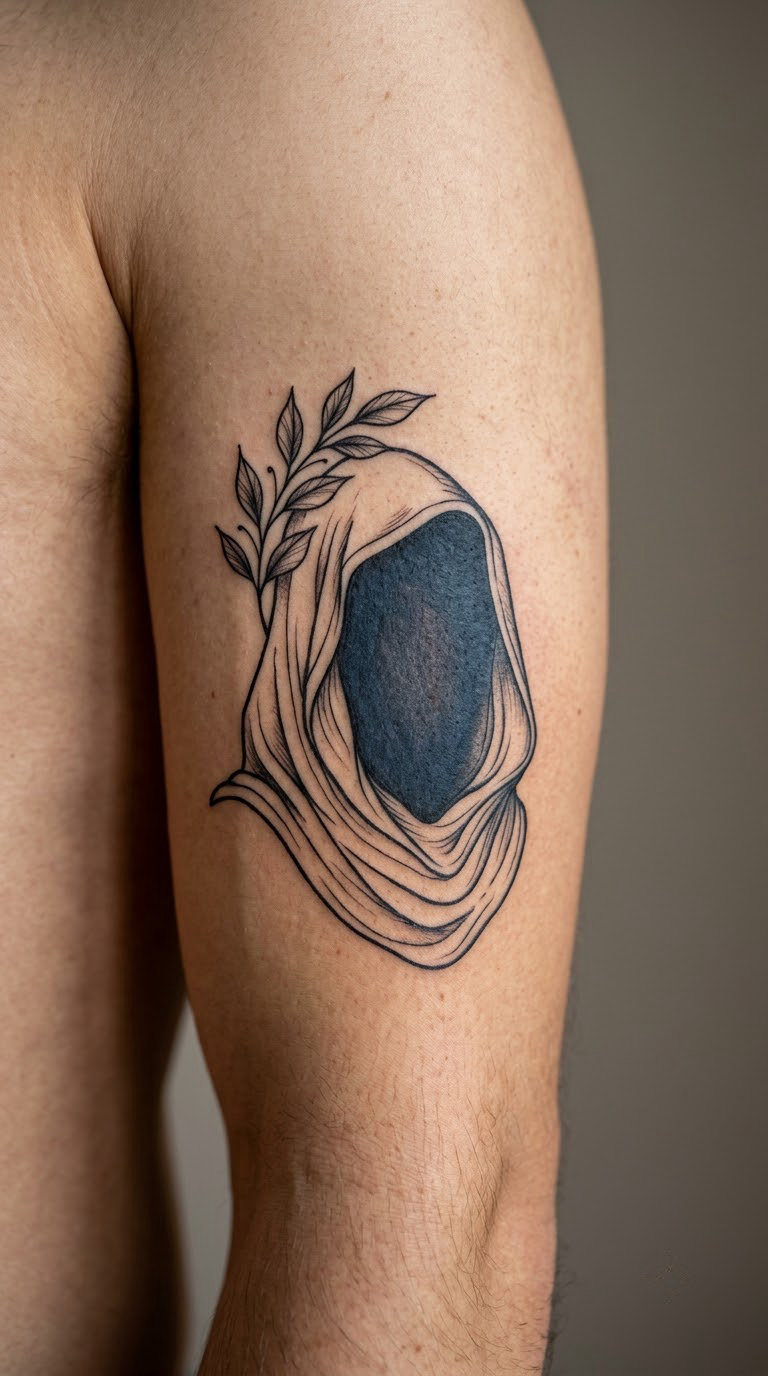
A blank, faceless hooded outline in solid black with a single leaf sprig beside it. No face, no portrait, no copied character design. The shape of the hood and the fall of the fabric do all the work.
It is about quiet confidence and independence, which is a more adult reading of the stealthy archetype. Fans often like it precisely because it suggests the character without showing one.
Placement: upper arm, calf, or the back. Size: 3 to 5 inch (8 to 13 cm). Style: blackwork or minimal linework. Pain: medium, and solid fills on the upper arm are more of a heat and endurance thing than a sharp one. The hood edge should be kept crisp, since a soft outline muddies into the surrounding skin. Make it yours: fill the inside of the hood with one hidden colour.
19. Original Guardian Companion
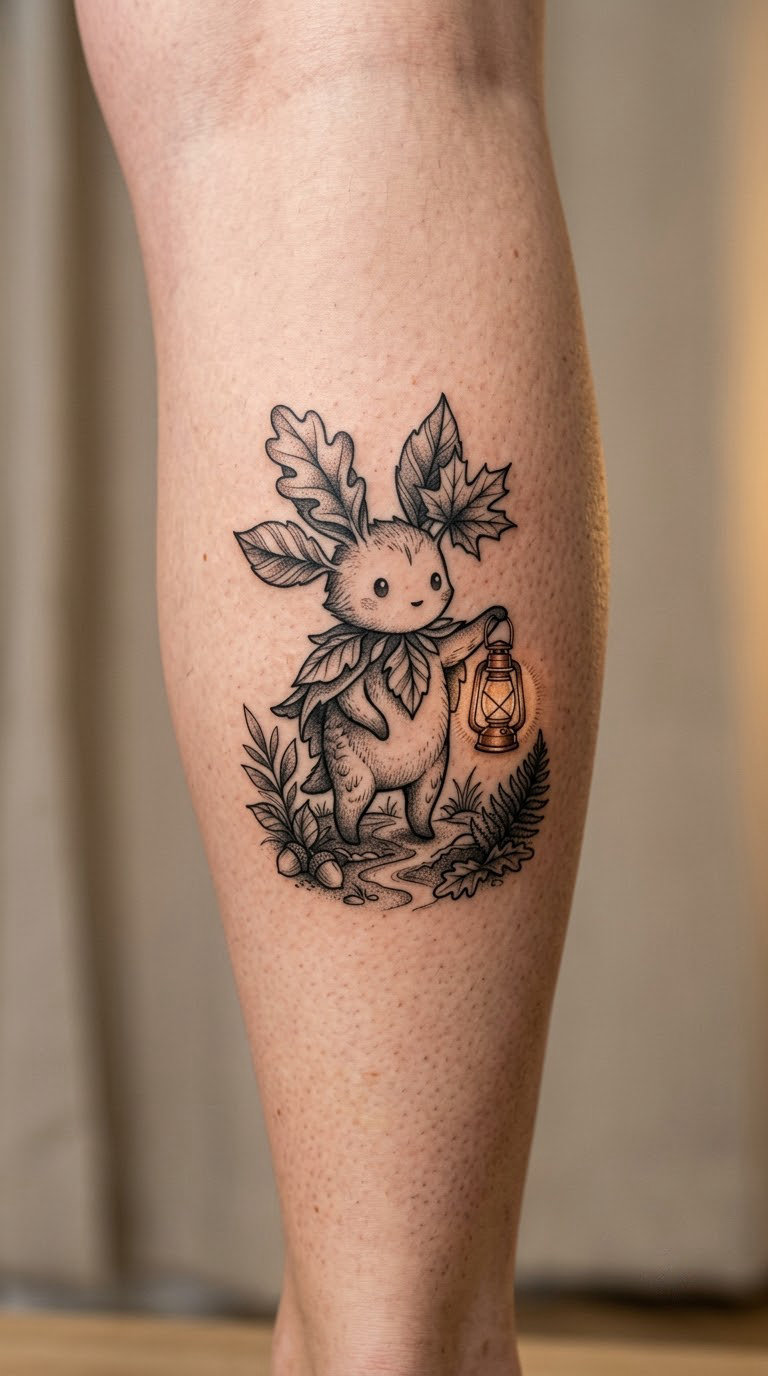
A small forest creature with a rounded body, leaf-shaped ears, dot eyes and a lantern held in front of it. It is deliberately not any recognised character: round, warm, slightly kawaii, with a lantern glowing amber.
Companion designs get chosen for loyalty and comfort, and the ones people keep are usually the friendly ones. It also works well as a matching piece, since the creature can be repeated at different sizes.
Placement: inner calf, forearm, or upper arm. Size: 2 to 4 inch (5 to 10 cm). Style: micro-realism, illustrative, or kawaii-inspired. Pain: medium, and the inner calf is tender near the shin. The smallest eye dots and the lantern glow are the first things to fade, so size them up slightly. Make it yours: give it a collar in a colour that matches a partner’s piece.
20. Ruined Arch Exploration Scene
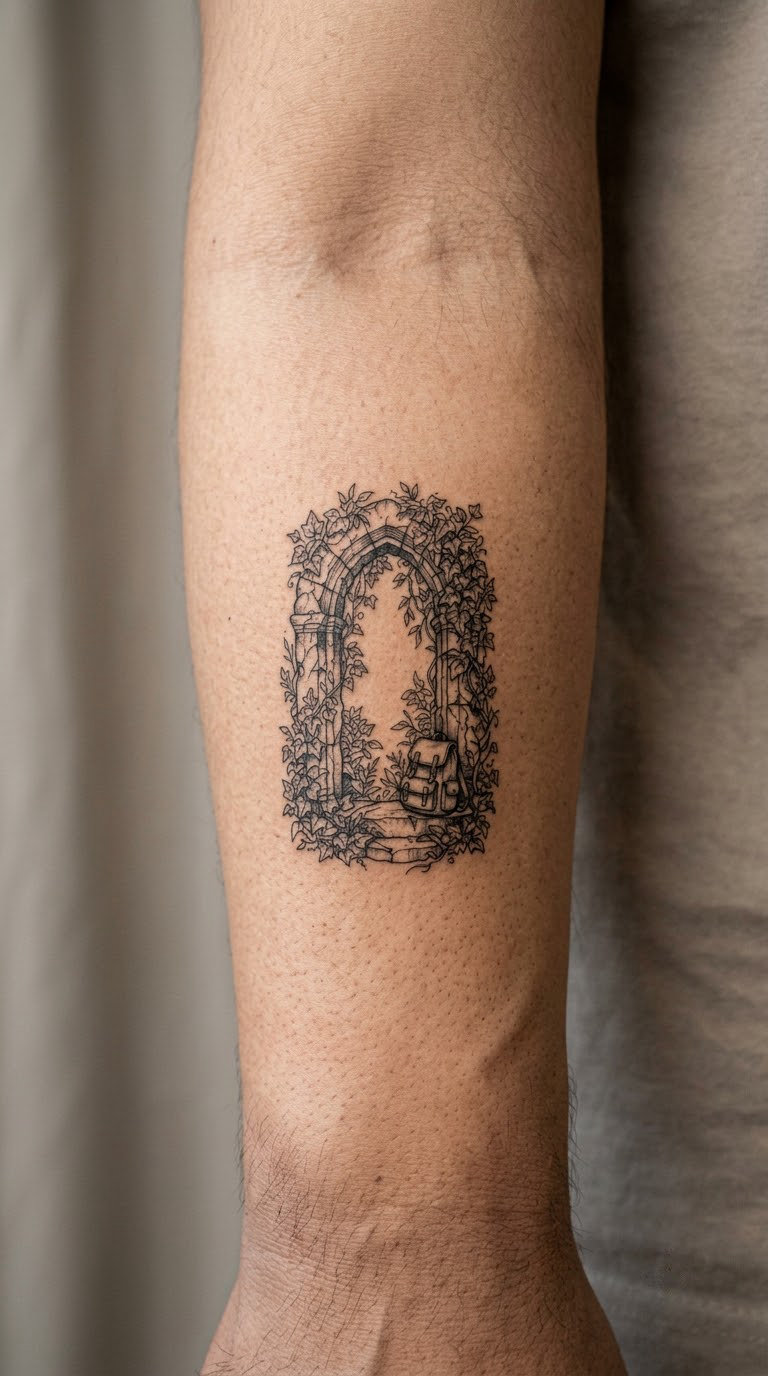
An archway with broken columns, climbing vines and a small backpack resting at the base. The masonry is drawn with hand-inked texture and a few cracks rather than rendered detail, and the scene stays open so it breathes.
It points at curiosity and travel, and specifically at places people left behind. That combination is why it comes up so often in cover-up conversations on r/tattooadvice, where busy older linework gets repurposed into scenes like this one.
Placement: forearm, calf, or as a back panel. Size: 4 to 6 inch (10 to 15 cm). Style: illustrative or blackwork. Pain: medium, and the column edges near the wrist are the tender part. A busy scene like this covers old linework well but needs clear reference and a patient artist. Make it yours: engrave a real travel date beneath the arch.
21. Firefly Jar Micro-Tattoo
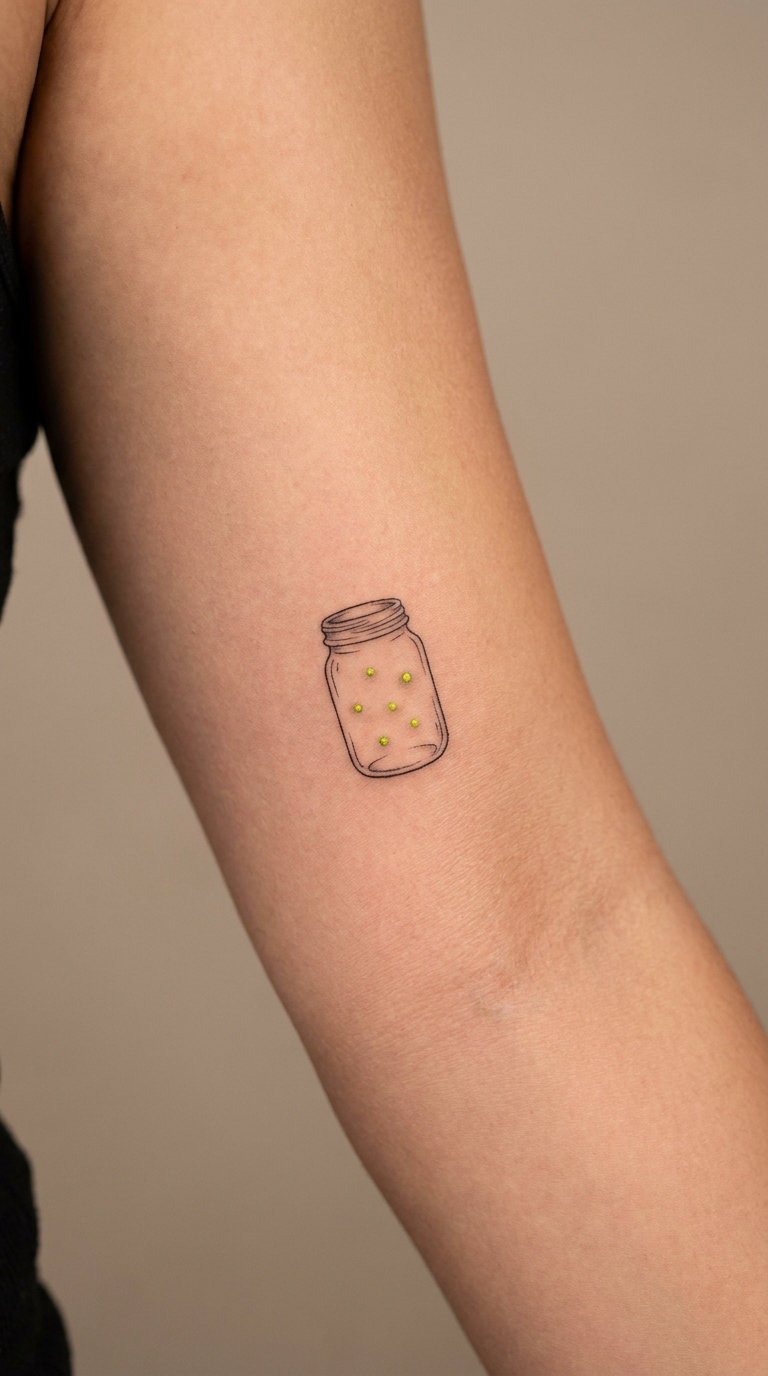
A simple glass jar with a cloth lid, five small glowing dots inside and one tiny firefly resting on the rim. Minimal lines, almost no fill, just a few short strokes for the glass.
The mood is calm rather than epic, which is what draws people to it. It can hold a small memory, or the idea that something is lighting the way.
Placement: inner upper arm, behind the ear, or ankle. Size: 1 to 2 inch (3 to 5 cm). Style: micro fine line. Pain: medium. The dots are the weak point: they soften within a few years, and the ones on the hand side fade quickest, so keep this off the fingers. Make it yours: set the number of glowing dots to a meaningful number.
22. Hero’s Quest Map
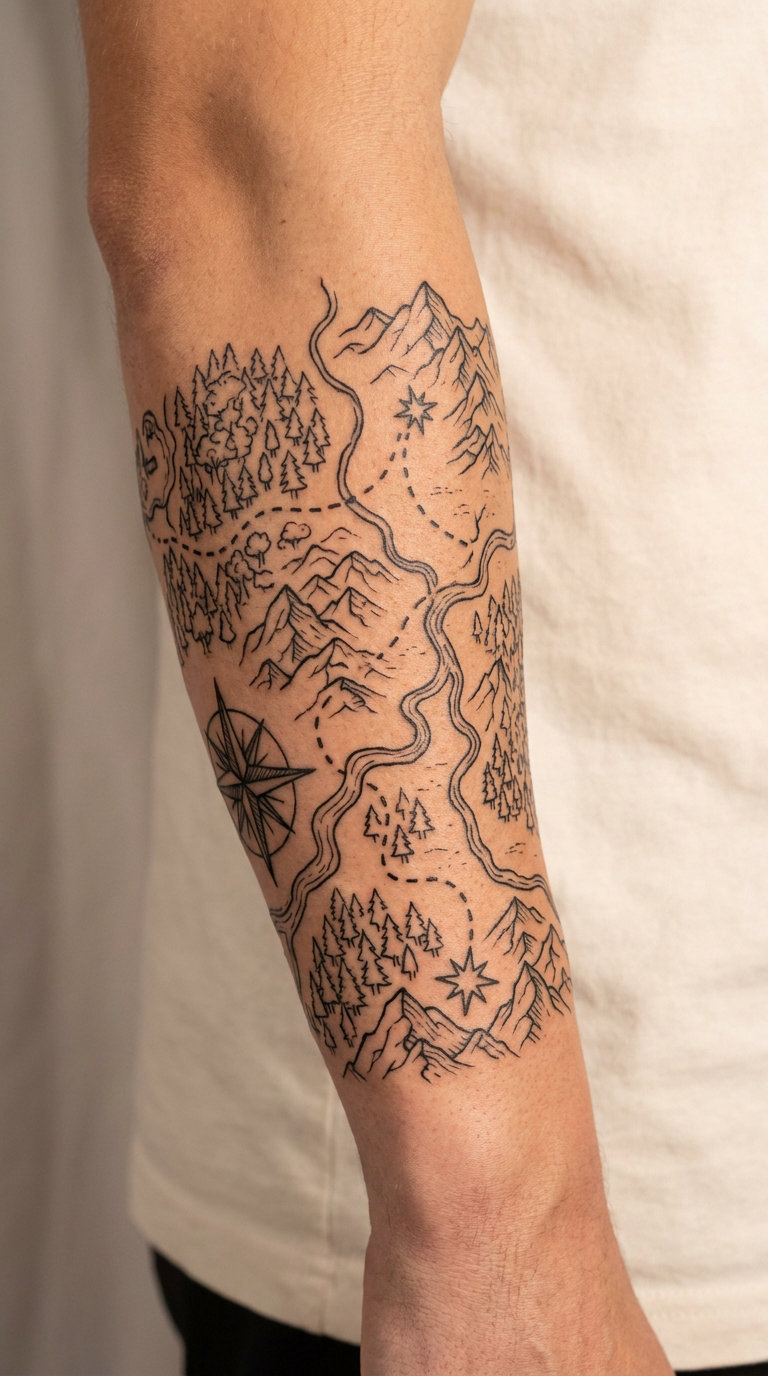
A hand-drawn map with forests, mountain ranges, a river, a compass rose and a dotted route leading to a star. The borders, place names and layout are invented, so nothing resembles a real game map or a real cartographic sheet.
Maps work as a record of where you came from, and people often add a real route between two places that matter. It is the most personal design in the collection and the one that takes the longest session.
Placement: forearm, calf, thigh, or the back. Size: 5 to 8 inch (13 to 20 cm). Style: illustrative, optionally with a little colour in the water and trees. Pain: medium, and at this size expect two sessions rather than one. Hand-lettered place names blur the most, so a short single word beats a long invented one. Make it yours: trace the real route from your home to a place that matters.
How to Choose the Right Design
Most disappointments come down to scale, not subject. Check these before you book.
- Line visibility: if a design has an internal detail smaller than a pencil line, it needs real space. Ask the artist to test one small area at the size you are considering before committing.
- Size before placement: decide the height or width in inches first, then find the spot that holds it. A design that is forced into a space is the one that ends up cramped.
- Existing tattoos: tell your artist about every piece already on that area, including faded ones. Most can work around them, but only if they know.
- Colour choice: blackwork holds its shape longest and is cheaper per hour. Watercolour and turquoise fade noticeably faster, which matters most on a forearm that sees sun.
- Originality: an invented emblem gives you a design that is genuinely yours and easier for a shop to accept. Describe the idea in the words used above and let the artist draw it.
- Portfolio fit: look for healed work in the style you want, not fresh photos. If nobody in the shop has healed micro work, they may not be the right person for a one inch piece.
One more thing: bring two or three saved reference images, even if they are from this page. Artists work faster when you arrive with a direction rather than an empty idea.
Cost and Session Time
Micro work and small standalone designs are usually quoted by the piece, while everything above about three inches tends to be charged by the hour. Across the US, expect roughly 80 to 150 dollars for a micro piece under one inch, 150 to 300 dollars for a small standalone design, 300 to 700 dollars for a medium composition, and 600 to 1500 dollars for a large illustrative panel or map.
Most shops set a minimum, and it can be higher than the price of the smallest design on this list. A good estimate is that anything under two inches takes 30 to 60 minutes, a three-to-five inch design takes one to two hours, and a five-to-eight inch panel runs two to four hours, often split across two sessions.
Hourly rates vary a lot by geography and by who is holding the machine, and complexity, colour, travel and shop minimums all move the final number. Treat the ranges above as orientation, then ask for a quote after the artist has discussed exact placement, size and reference with you.
Aftercare Basics
- Follow your artist’s aftercare instructions first. Every artist has a specific routine for their ink and skin type, and it outranks anything general you have read online.
- Wash gently. Clean with lukewarm water and a mild unscented soap, then pat dry with a clean towel rather than rubbing.
- Use the product they recommend. A thin layer of whatever ointment or film they specify keeps the area protected while it settles.
- Avoid friction and excess sun. Loose clothing over a fresh piece, and skip tanning beds and long uncovered days while it heals.
- Do not pick. Flakes and scabs that are pulled off take the new linework with them and are the main cause of patchy results.
- Ask for help early. Contact the artist, or a qualified clinician, if something unexpected happens such as spreading redness, heat, pus or pain that keeps increasing after the first few days.
Frequently Asked Questions
What is the smallest good Zelda-inspired tattoo design?
A minimal shield outline, a curled leaf or a small jar are the most reliable tiny designs, and two to three inch is the practical floor. Anything with lettering or interior shading below one inch will blur within a few years, especially on hands. If small is the priority, ask your artist to draw the simplest version that still reads.
Can I get a tattoo of a Zelda character or an exact in-game logo?
Officially protected character art and logos are best avoided. Shops differ on what they accept as reference, and some decline franchise work outright, which can leave you with a cancelled booking. An original emblem that captures the feeling of a design is accepted far more often and usually ages better, so describe the idea in your own words.
Should a fantasy-adventure tattoo be done in colour or blackwork?
Blackwork holds its edges longest, costs less by the hour and ages more predictably, so it is the safer default for shields, towers and guardians. Watercolour and turquoise give a landscape or wind piece real movement but fade faster, particularly on sun-exposed arms. If you are undecided, look at healed work in both styles before you decide.
Which design works best as a first Zelda-inspired tattoo?
The minimal three-motif shield is the easiest starting point, since it is small, sits well on a forearm and stays legible for years. A compass, leaf or crown works about as well. Avoid maps, landscapes and anything under an inch for a first tattoo, because those depend on fine detail that beginners tend to underestimate.
How can I personalize a Zelda tattoo without copying the game?
Add your own layer to an original design: real coordinates on a compass, a travel date under an arch, four meaningful dates across a four-season tree, or a colour that matters to you. These 22 zelda tattoo ideas are built as original interpretations for exactly this reason, so you get the fantasy-adventure feeling without tracing protected art.
Conclusion
Start with the minimal three-motif shield if you want a first tattoo that is small, cheap to fix and still reads in a decade. If you already collect game pieces and want a focal artwork, go for the hero’s quest map or the four-season tree, and book it as a two-session piece rather than rushing it.
Whichever you pick, decide on the motif, the placement and a realistic level of detail before the consultation. Bring two or three saved references, ask the artist what they would change for your skin and your body, and let them redraw it. That conversation is the difference between a design that photographs well and one that still means something to you years later.