
20 Tattoo Ideas That Represent Overcoming Hard Times (September 2026)
Tattoo ideas that represent overcoming hard times usually fall into three groups: a symbol you can read in one glance, a quiet piece of linework that only means something to you, or a date or word set in lettering. The first is the easiest to explain to a stranger. The second is the one people tend to keep for decades.
These 20 designs are built around the details that actually decide whether a piece works: what it looks like, where it sits, how big it can honestly go, and what it will look like in ten years. I have seen people come in planning a phoenix and leave with a small compass once they realised the bird would not fit the space they had in mind.
Updated for September 2026. If you already know you want a resilience piece but need more options for a different read, our guide to tattoo ideas that represent strength for women runs a different angle on the same idea.
Tattoo Ideas That Represent Overcoming Hard Times: Quick Guide
| Idea | Style | Best placement | Size | Pain |
|---|---|---|---|---|
| 1. Mountain range with rising sun | Fine line | Inner forearm | 2.5-4 in | Low |
| 2. Minimal blackwork sunrise | Blackwork | Outer upper arm | 3.5-5 in | Medium |
| 3. Koi through broken waves | Japanese grey | Calf | 4-6 in | Medium |
| 4. Phoenix in minimal flames | Black and grey | Side of ribs | 4-5.5 in | High |
| 5. Sprout between two lines | Fine line | Inner wrist | 1.5-2.5 in | Low |
| 6. Dotwork lighthouse in a circle | Dotwork | Upper arm | 2.5-3.5 in | Medium |
| 7. Storm cloud with a clear line | Blackwork | Outer forearm | 3.5-5 in | Medium |
| 8. Watercolor phoenix and feather | Watercolor | Shoulder blade | 5-7 in | High |
| 9. Open door with a path | Fine line | Calf | 3-4.5 in | Medium |
| 10. Laurel wreath around a date | Fine line | Inner upper arm | 2.5-3.5 in | Low |
| 11. Red ink rising flame | Red ink | Inner forearm | 2.5-3.5 in | Medium |
| 12. Arrow through an open circle | Fine line | Behind the ear | 1.5-2.5 in | Low |
| 13. Peak inside a diamond | Geometric | Outer arm | 2.5-3.5 in | Low |
| 14. Blackwork tree, one empty branch | Blackwork | Thigh | 5-7 in | Medium |
| 15. Semicolon with a raised dot | Fine line | Inner wrist | 1-1.5 in | Low |
| 16. Dotwork compass rose | Dotwork | Upper back | 3.5-4.5 in | Medium |
| 17. Watercolor wave under a horizon | Watercolor | Lower ribs | 6-8 in | High |
| 18. Roman numeral milestone | Lettering | Inner forearm | 2-2.5 in | Low |
| 19. Sparrow with an open wing | Fine line | Side of neck | 1.5-2.5 in | Low |
| 20. Mountain and river infinity | Blackwork | Wrist | 2.5-3.5 in | Medium |
1. Fine-Line Mountain Range With a Rising Sun
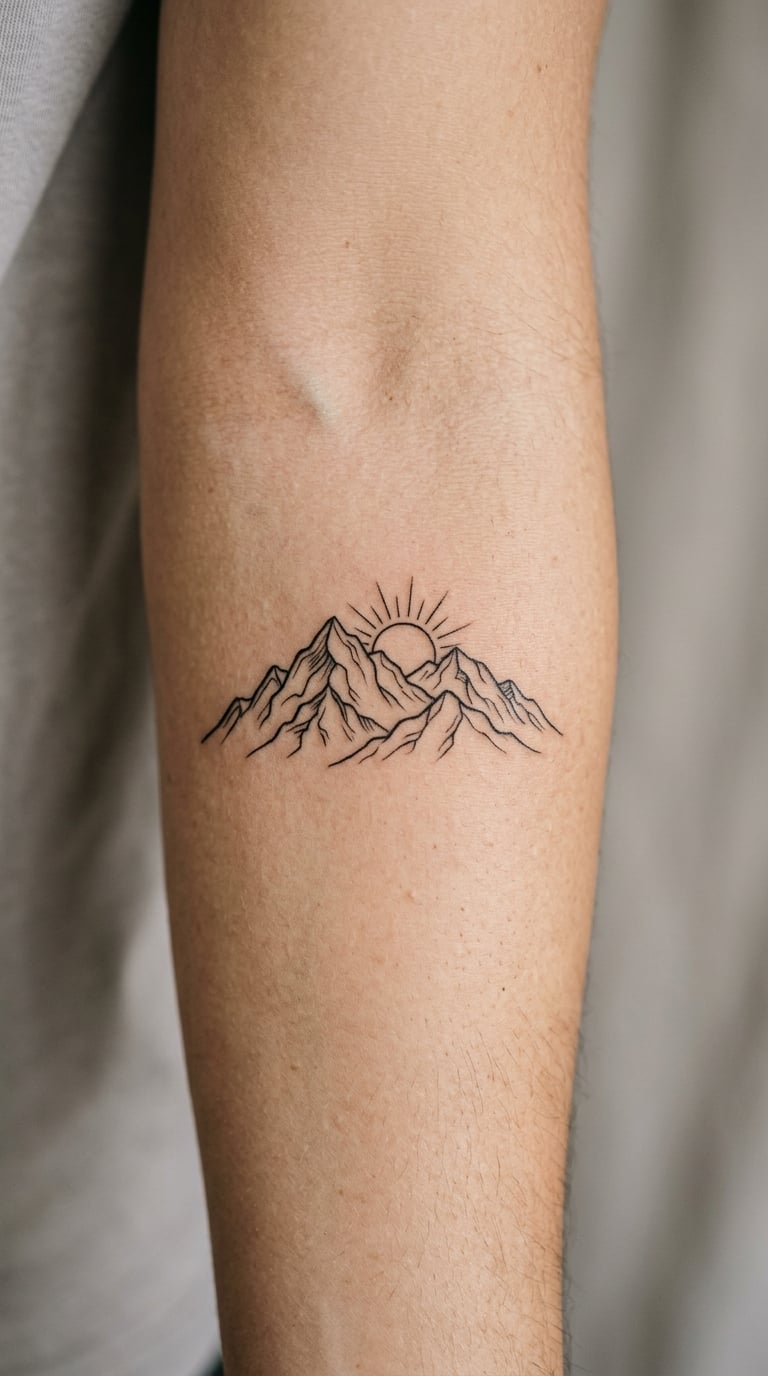
A single line of peaks drawn in thin black ink, with a small half-sun just clearing the highest ridge. The sun is usually left as a plain arc with a few short rays, or filled solid, depending on how much weight you want it to carry.
Mountains read as the thing you kept walking toward rather than the thing that knocked you down, and the rising sun adds the part where you got far enough to see it. Plenty of people attach the range to a real hike or a specific place that mattered during a hard stretch.
Placement: inner forearm, outer forearm, or the side of a calf. Size: 2.5 to 4 inches (6 to 10 cm) across. Style: fine line, single-needle, no shading. Pain: low on the inner forearm, closer to a scratch than a deep ache. Fine line on the forearm softens and lightens with sun exposure, so plan on a touch-up every few years if you want the peaks to stay crisp.
Make it yours: add the latitude and longitude of the peak, or the year the range was tattooed, in a small line under the drawing.
2. Minimal Blackwork Sunrise
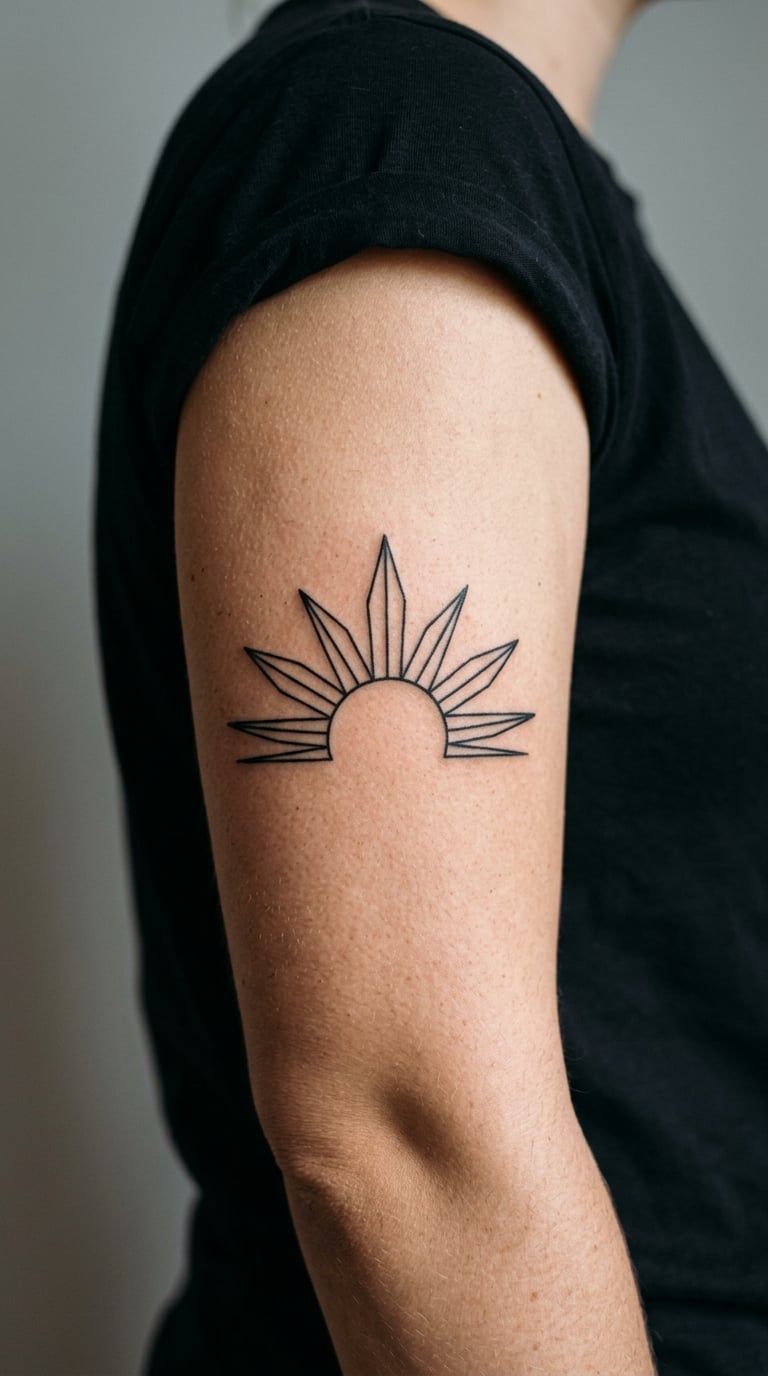
A half-circle with straight rays alternating long and short, done in solid black with no gradient. The best versions keep every ray the same weight and leave clean skin between them, which is what makes it look deliberate rather than busy.
A sunrise is the most literal symbol on this list. It says a difficult stretch ended and something started, without asking you to explain a backstory to anyone who asks.
Placement: outer upper arm, shoulder, or across the chest. Size: 3.5 to 5 inches (9 to 13 cm). Style: blackwork, geometric, solid fill. Pain: medium on the upper arm, more on the collarbone and ribs because the skin there is thinner and the bone sits close under it. Solid black holds its shape better than fine line, so this is a good pick if sun exposure is part of your life.
Make it yours: have the rays numbered and turned into a small date, or add one warm colour to a single ray so it reads as the year that changed everything.
3. Koi Swimming Through Broken Waves
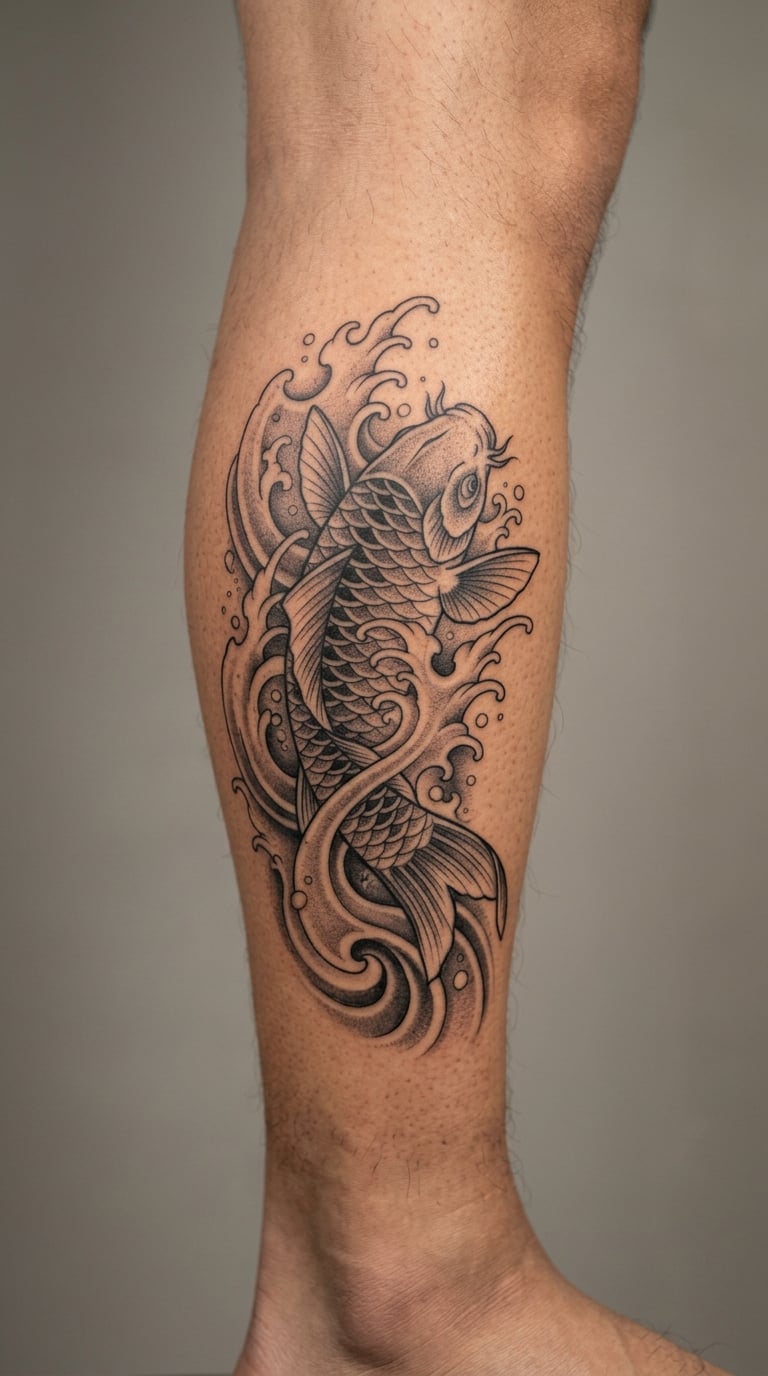
A grey-shaded koi with fine scale work, curved so it feels like it is pushing forward, set against a few broken wave forms rather than a full ocean. In Japanese work the wave shape matters, so it is worth finding an artist who draws them regularly rather than improvising them.
The fish is the oldest cliché in tattooing, which is exactly why it works here. The movement is the point: something alive going forward through water that keeps breaking over it. Most people who get one are not choosing it for the tradition, they are choosing the direction of the body.
Placement: calf, thigh, or the back of the upper arm. Size: 4 to 6 inches (10 to 15 cm) long. Style: Japanese grey, black and grey. Pain: medium on the calf, genuinely high on the inner thigh. Grey wash fills a lot of skin and the needle goes over the same spot repeatedly, so budget more time than the size suggests.
Make it yours: put a small kanji or a set of initials in the negative space between waves, kept out of the fish’s outline so it stays readable.
4. Phoenix Rising From Minimal Flames
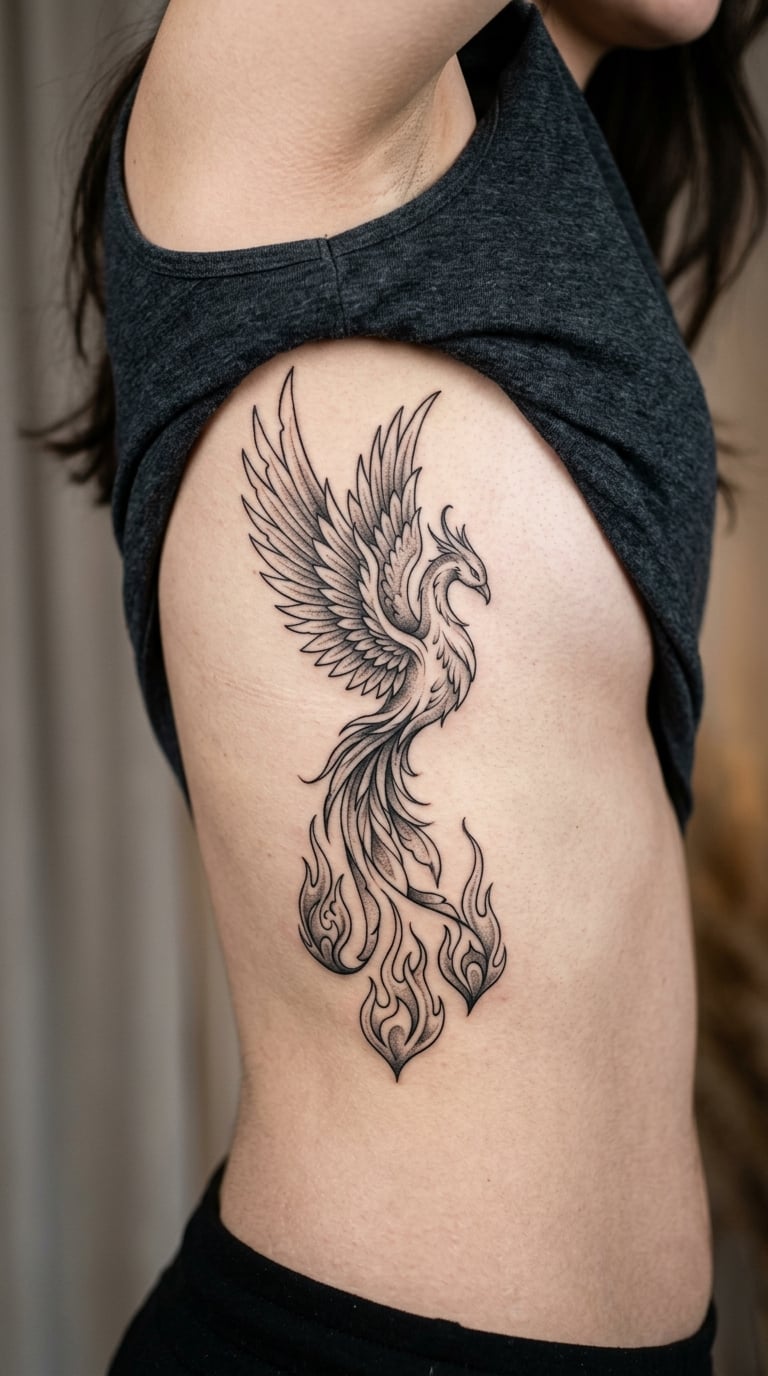
Three or four stylised flames at the base, and a bird above them with wings mid-lift. The restraint is what separates a good one from the usual poster art: fewer feathers, no flames wrapping the body, no gradient everywhere.
A phoenix rising from ashes is the most widely recognised symbol for surviving something that should have ended you. It is also the design people are most likely to have already seen on someone else, so if you go this route, the small choices carry all the weight.
Placement: side of ribs, upper back, or forearm. Size: 4 to 5.5 inches (10 to 14 cm). Style: black and grey, illustrative. Pain: high on the ribs, and you will feel it in your breath. On the forearm it drops to medium. Fine feather detail on the wing tips is the first thing to blur, so keep the tips simplified if you want this to hold up.
Make it yours: have the flames reduced to two, or add a single feather tucked into the wing gap to reference someone specific.
5. Tiny Sprouting Plant Between Two Lines
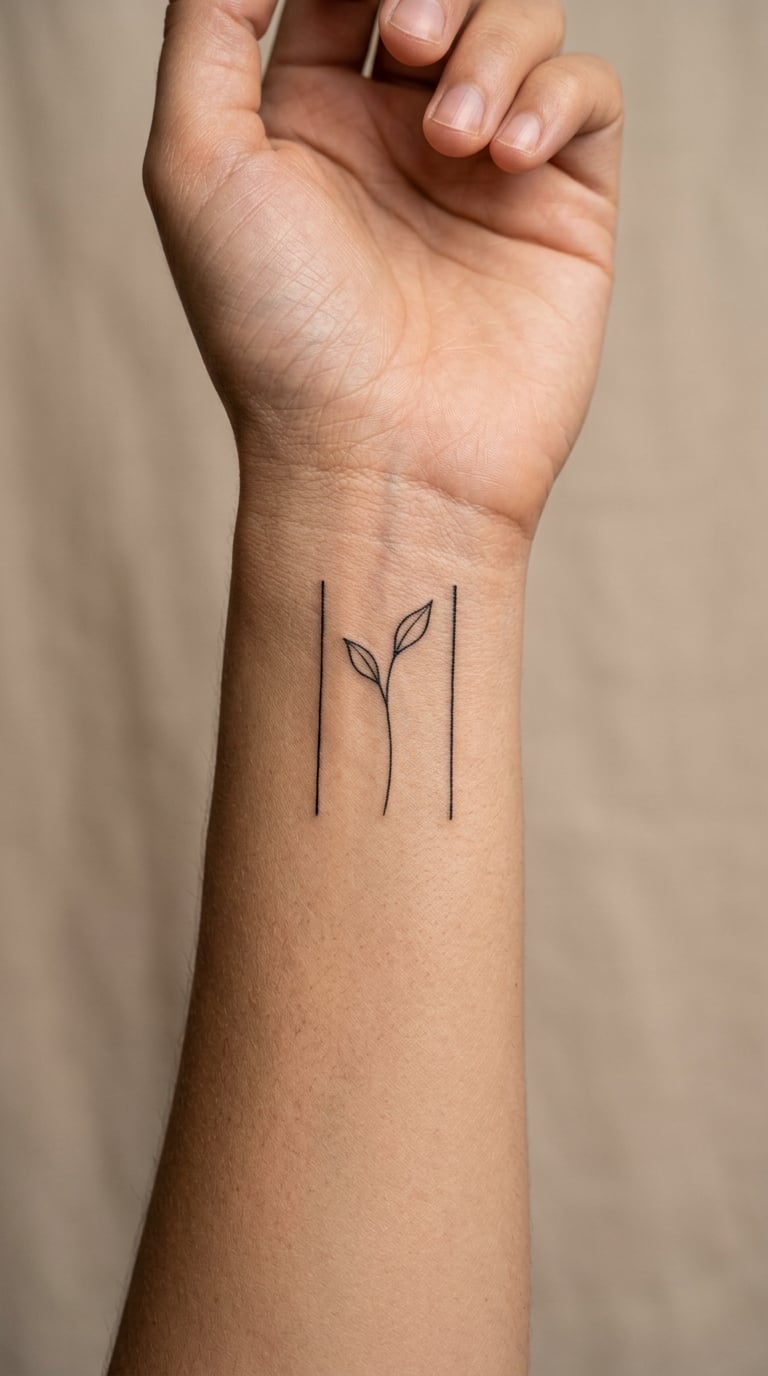
Two short vertical lines with a small shoot rising between them, two or three leaves max, drawn in one consistent line weight. The restraint here is the whole design. Anything more and it stops being small.
Growth out of a narrow space is a straightforward metaphor for getting through a period that left you very little room. Leave the plant unnamed, because the specific species tends to add a meaning you did not choose.
Placement: inner wrist, ankle, behind the ear, or the side of a finger. Size: 1.5 to 2.5 inches (4 to 6 cm) tall. Style: fine line, single-needle, botanical. Pain: low. This is one of the designs that looks best slightly under-healed, so give it a full healing window before judging the line quality.
Make it yours: keep the leaves and add a small date in the same line weight underneath, or use a real leaf from a place that helped you through.
6. Dotwork Lighthouse in a Circle
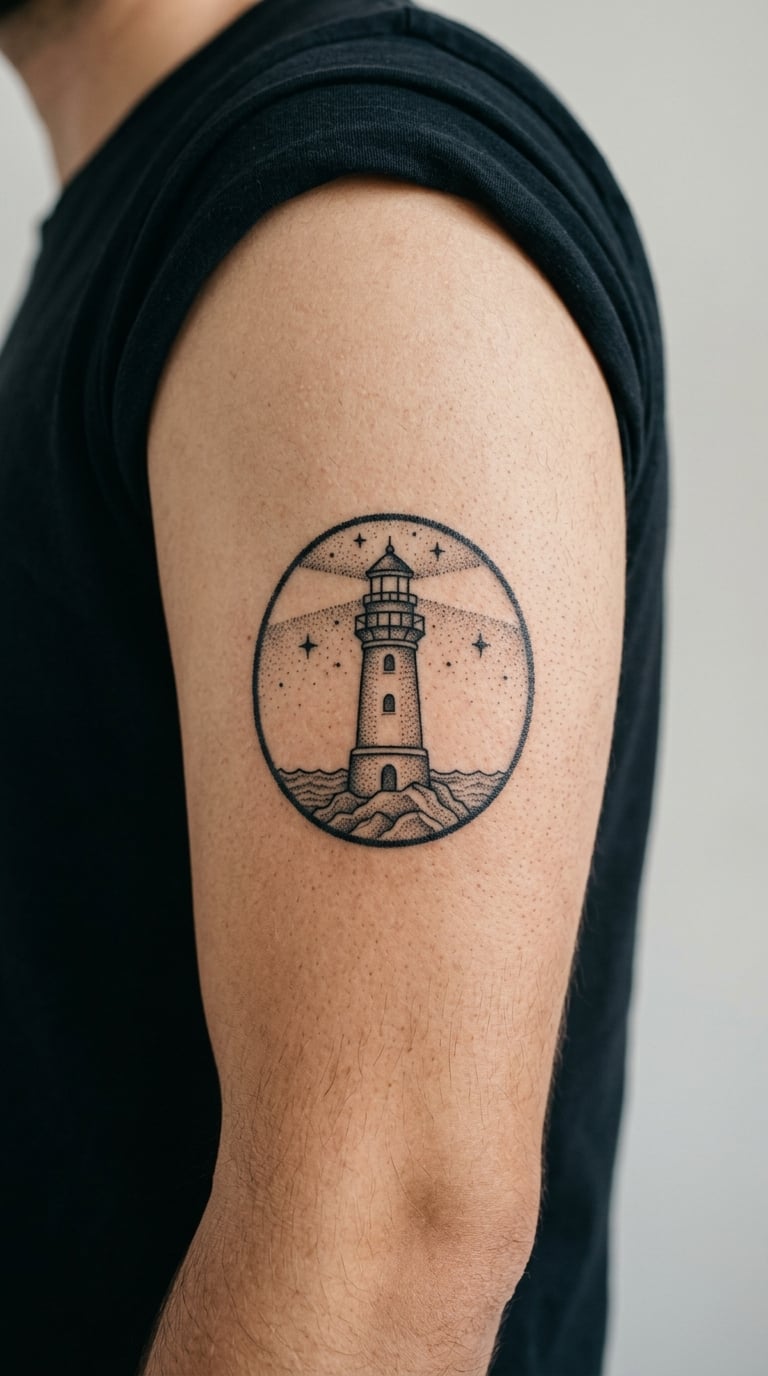
A tapered lighthouse tower with a small lamp room, two or three short beam lines, and light rays reaching the inside edge of a thin circular border. Dot shading in the water below gives it weight without turning it into a full landscape.
A lighthouse is a symbol about lasting through a long rough stretch, not a sudden one. People often choose it after something that took years, where the sunrise and phoenix options feel too fast and too celebratory.
Placement: upper arm, forearm, or calf. Size: 2.5 to 3.5 inches (6 to 9 cm) tall. Style: dotwork with line work. Pain: medium, because dotwork takes longer in one sitting and the skin gets tender before the design is finished. Small dots can spread slightly as they heal, so a slightly heavier dot gives you a sharper result.
Make it yours: put a coordinate inside the circle instead of the lamp beam, or break the border at one point so the beam appears to leave the frame.
7. Blackwork Storm Cloud With a Clear Line
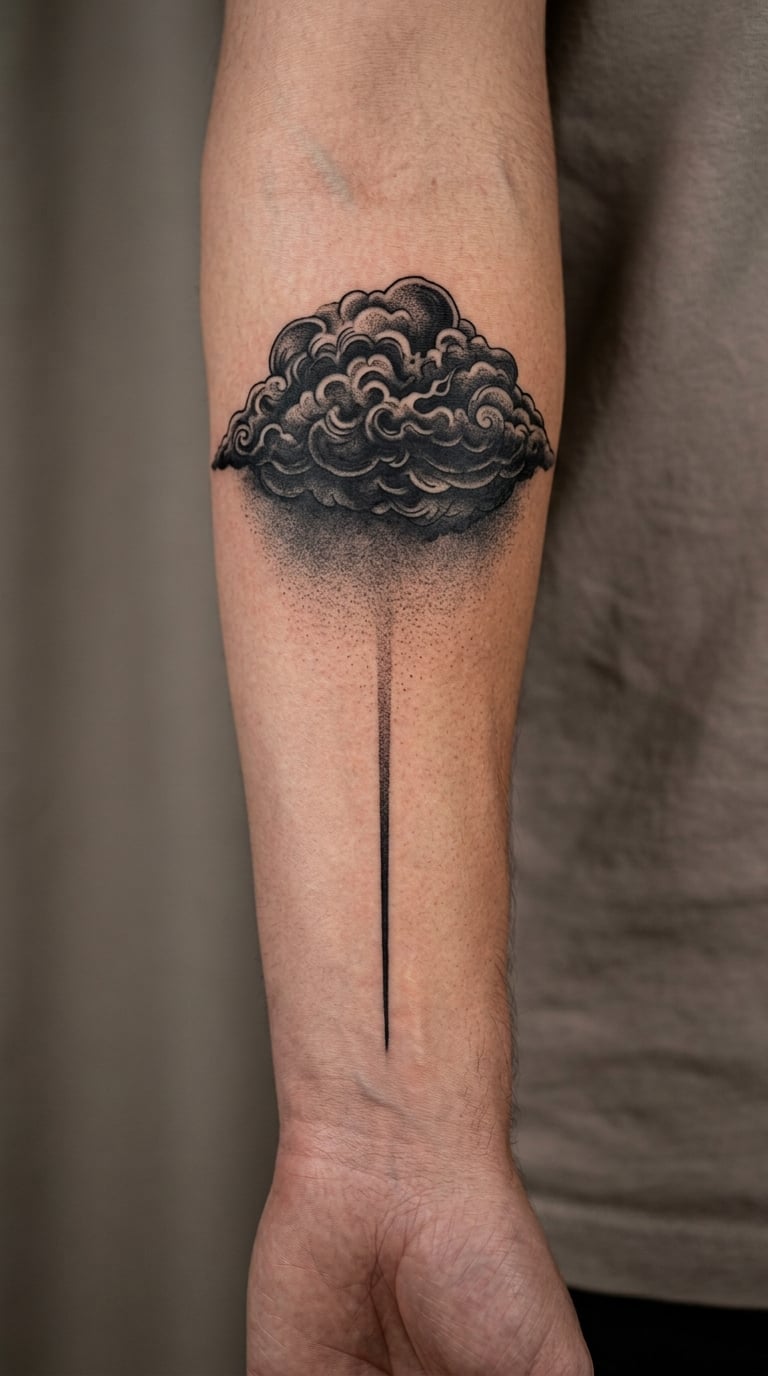
A solid black cloud mass on one side, worked into a cluster of dots and then into nothing at all, with a single hairline stroke running out of it into bare skin. The gradient between dense and open is the entire idea, so do not let an artist add a second shape to fill the gap.
The contrast is the meaning: the heavy part is finite and the clean line is what comes after. It tends to land better than a straight sunrise for people who describe their hard time as a period rather than an event.
Placement: outer forearm, upper arm, or calf. Size: 3.5 to 5 inches (9 to 13 cm) wide. Style: blackwork, stipple fade. Pain: medium. The solid fill is the uncomfortable part and the machine will work the same patch repeatedly.
Make it yours: run the clean line into an existing tattoo so the two connect, or have the cloud shaped to a real cloud you saw during a bad week.
8. Watercolor Phoenix and Feather
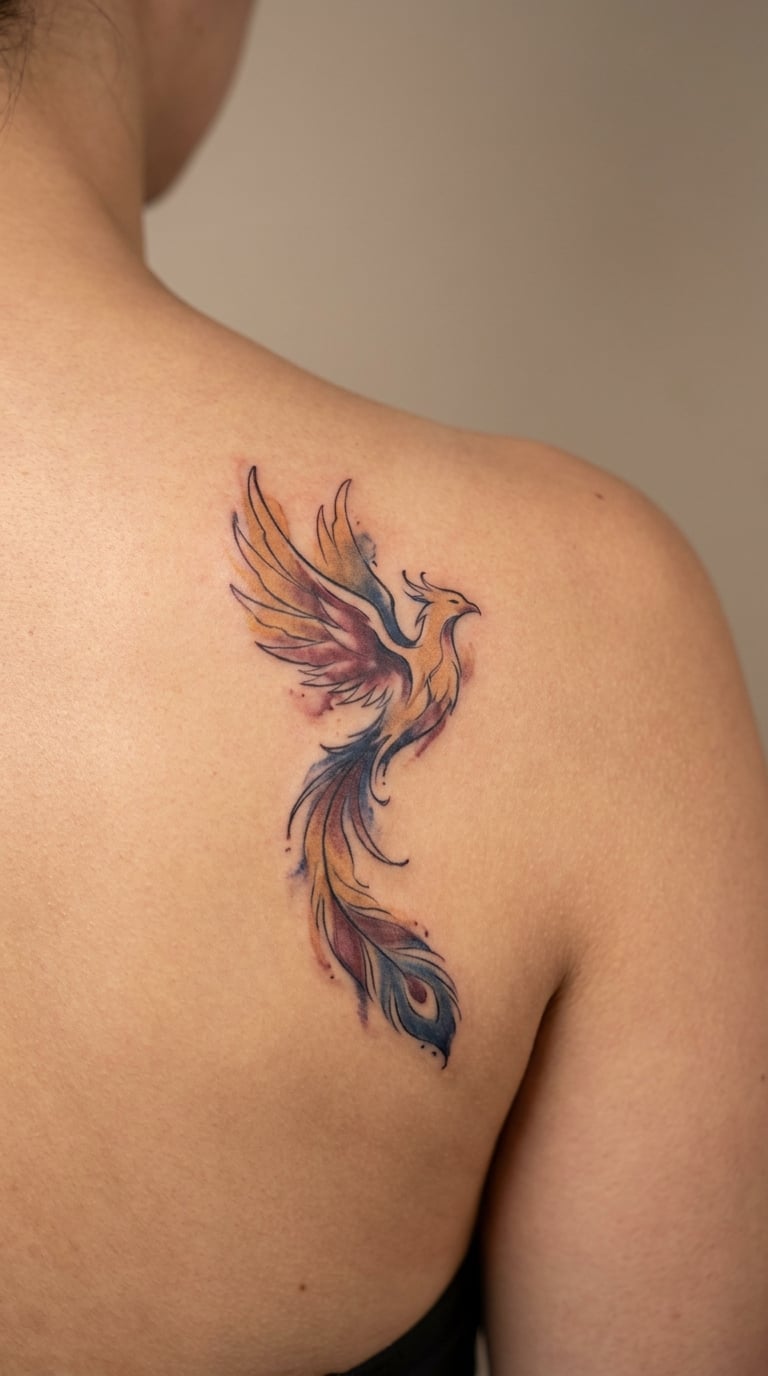
Loose washes of colour with the pigment running slightly outside the line work, an open wing shape, and a single feather set apart below. Colour bleeds are deliberate here, and an artist who treats them as a mistake is the wrong artist for this piece.
Same symbol as number 4, a completely different feeling. This version suits someone who wants the meaning visible without the design looking heavy or committed to a single mood.
Placement: shoulder blade, upper back, or outer thigh. Size: 5 to 7 inches (13 to 18 cm) wide. Style: watercolor, loose illustrative. Pain: high on the shoulder blade and ribs, since colour work takes several passes. Wash tattoos also need a touch-up, usually within the first month, because the first layer sits lighter once healed.
Make it yours: use two colours only, taken from somewhere specific, instead of a full palette.
9. Open Door With a Minimal Path
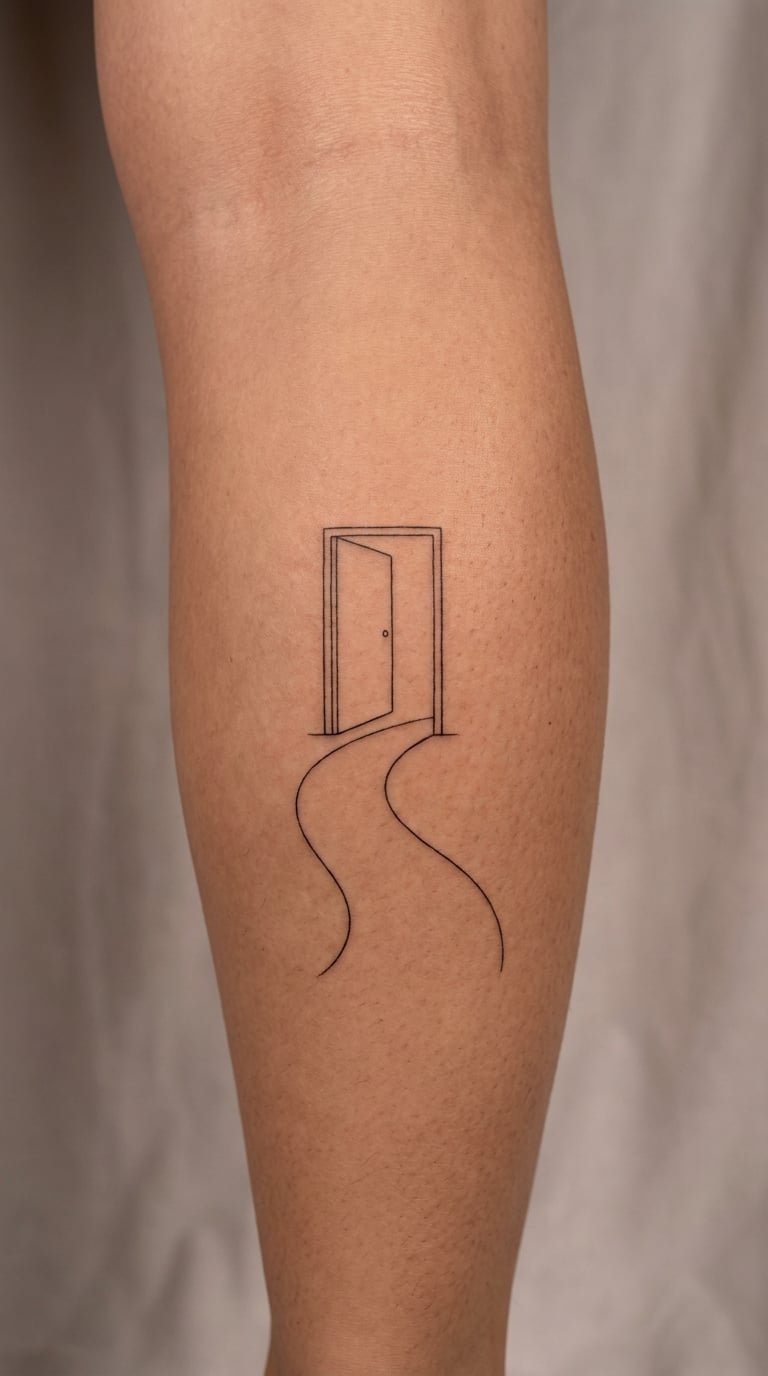
A simple rectangular door frame, hinged open about thirty degrees, with a single path curving away and thinning out until it disappears. No handle detail, no doormat, no lettering. The gap between door and frame is what makes it read as open rather than closed.
This one marks a change of chapter. It suits endings that were planned, a move, a new job, a relationship that ended, anything where the story is about what is next rather than what was lost.
Placement: calf, forearm, or the back of the shoulder. Size: 3 to 4.5 inches (8 to 11 cm) tall. Style: fine line, architectural. Pain: medium on the calf, low on the forearm. The door frame gives the artist a lot of straight edge to line up, so expect a slightly longer sitting and some stencil placement before starting.
Make it yours: have the path curve toward the inside of your body rather than away from it, which changes the feel completely.
10. Laurel Wreath Around a Small Date
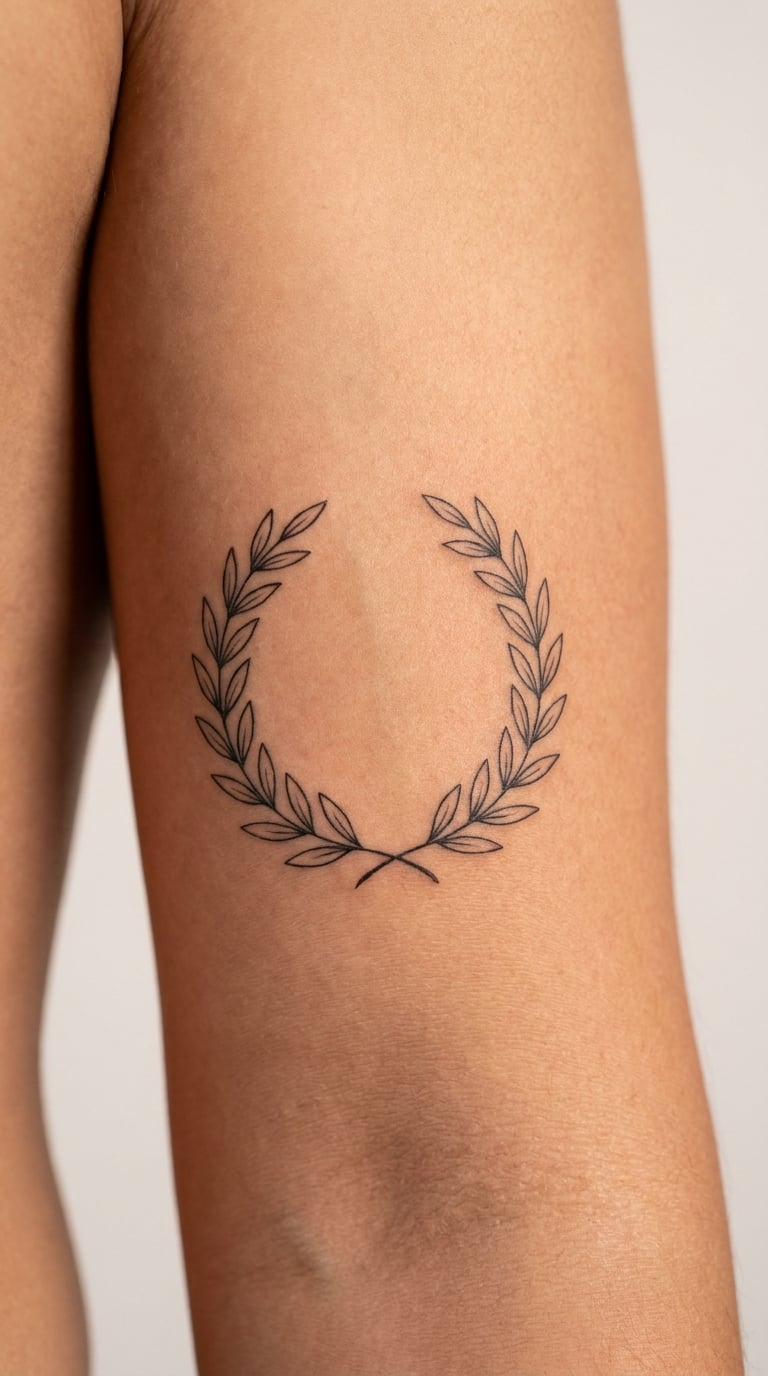
Two symmetrical branches of leaves curving up from a small point at the bottom, framing a short date in the centre in a plain serif or a simple script. Symmetry is what carries this design, so if one side is heavier than the other it will read as a mistake.
A wreath reads as honouring something, and the date anchors it to one specific event. That combination works well for a recovery date, a sobriety marker, or the anniversary of a hard goodbye.
Placement: inner upper arm, forearm, or calf. Size: 2.5 to 3.5 inches (6 to 9 cm) wide. Style: fine line, classical. Pain: low. The inner upper arm bruises visibly for a day or two, so plan around that if you have a photo or event the next day.
Make it yours: put the date in Roman numerals inside the wreath, or add a small mark at the bottom point for the year you started the counting.
11. Red Ink Rising Flame
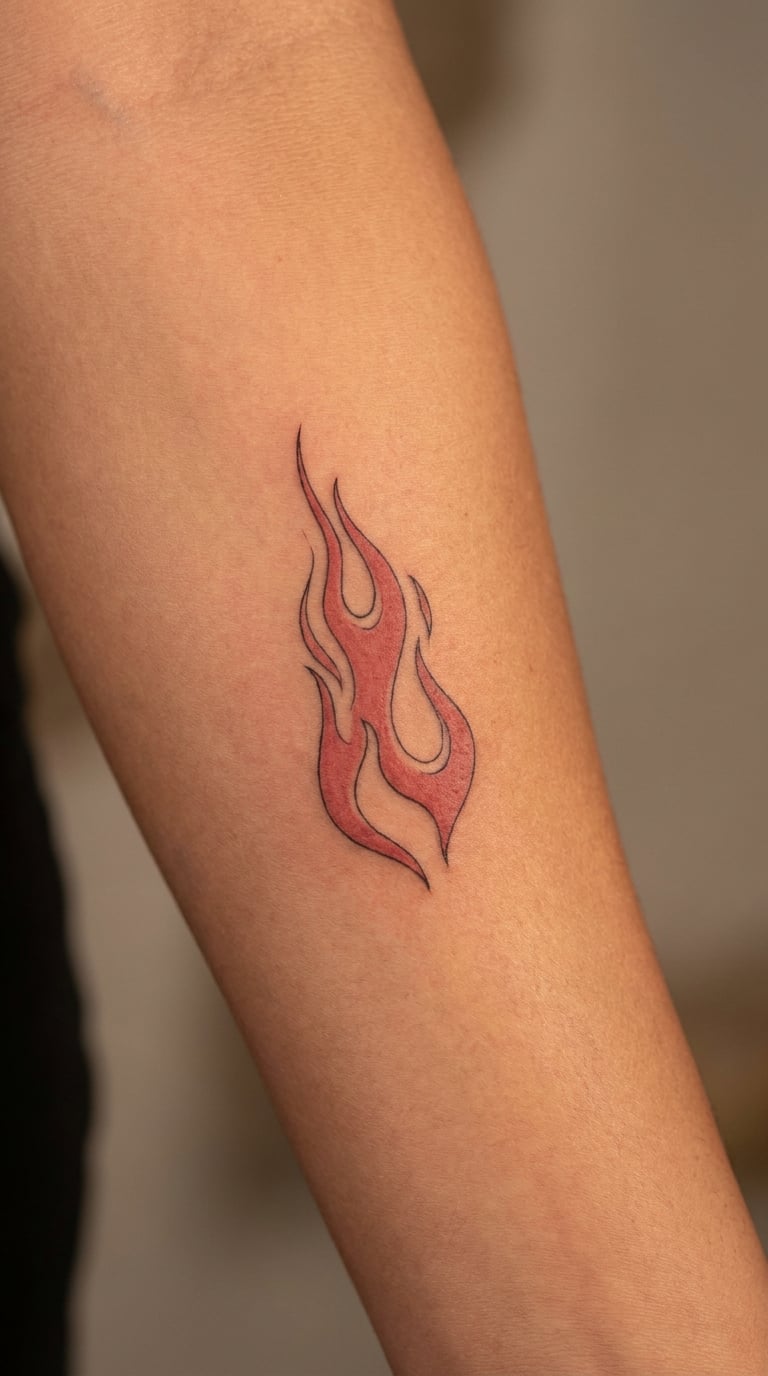
One flame shape, filled in a red wash with soft edges, maybe a small black outline and nothing else. Red ink is a bigger decision than most people expect, because it fades faster than black and it is permanent in a way that is visible to everyone.
A single flame is a short, unreadable-until-asked-about symbol for heat and survival. It works when you want something bold that does not need explaining to a stranger, and you are comfortable owning the attention.
Placement: inner forearm, calf, or upper arm. Size: 2.5 to 3.5 inches (6 to 9 cm) tall. Style: red ink, soft wash. Pain: medium, more for the forearm near the wrist than the bicep. Expect to come back for colour saturation in the first few months; reds go pink on lighter skin as the pigment settles.
Make it yours: run a second thin flame in black beside it, or add a single drop of black at the base so it reads as a shadow.
12. Tiny Arrow Passing Through a Circle
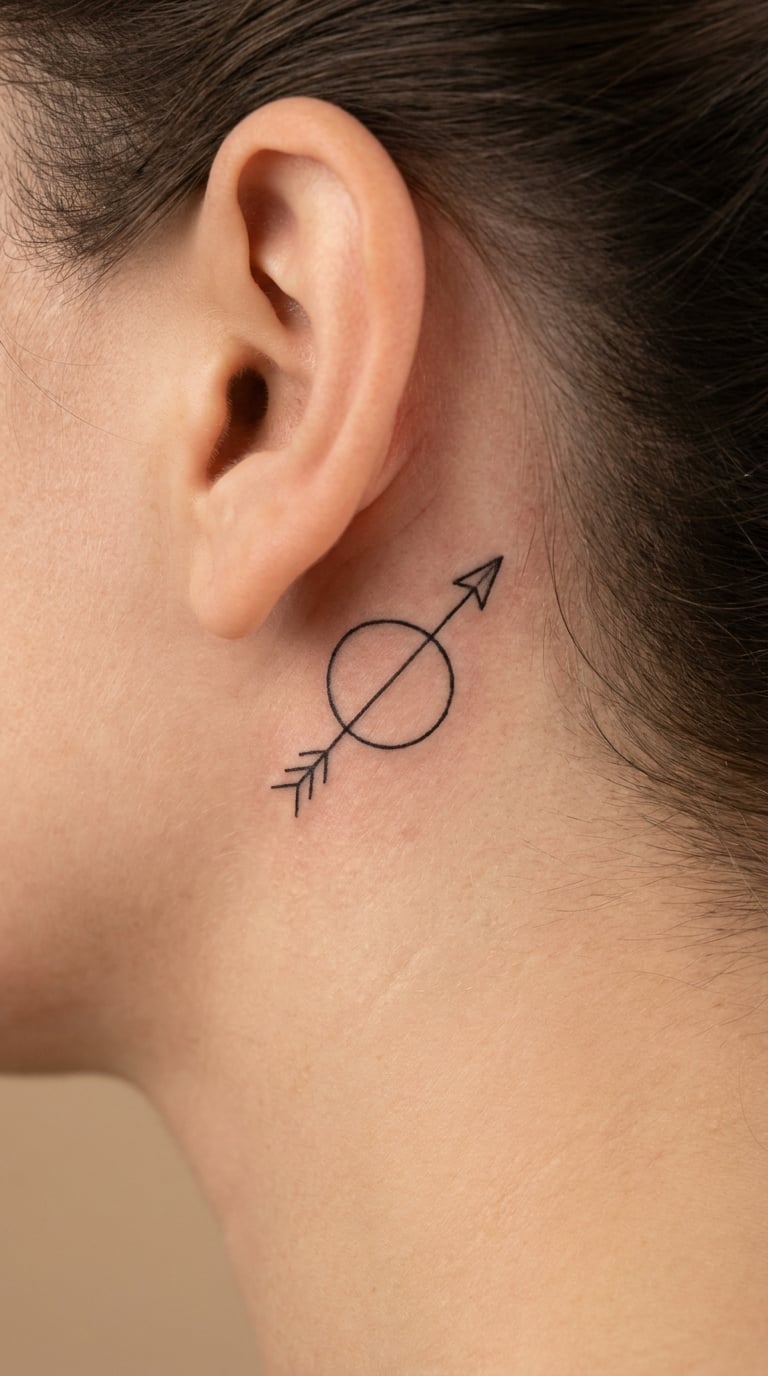
A thin shaft with two small barbs, passing through a circle that is broken where the arrow crosses it. The break is optional but it stops the circle looking like a target the arrow missed.
Movement past a closed shape. It is a geometric way of saying the stuck part is behind you without using any words, which is why it does not date the way a phrase does.
Placement: behind the ear, on the ribs, or the inside of the wrist. Size: 1.5 to 2.5 inches (4 to 6 cm) wide. Style: fine line, geometric. Pain: low, though the spot behind the ear is more sensitive than most people expect and the skin moves when you talk. Fine line this small and this close to the hairline will blur at the edges first, so ask for a slightly heavier line than feels right in the drawing.
Make it yours: have the arrow pass through two circles, or through a circle and a short line, one for each thing you came out of.
13. Mountain Peak Inside a Geometric Diamond
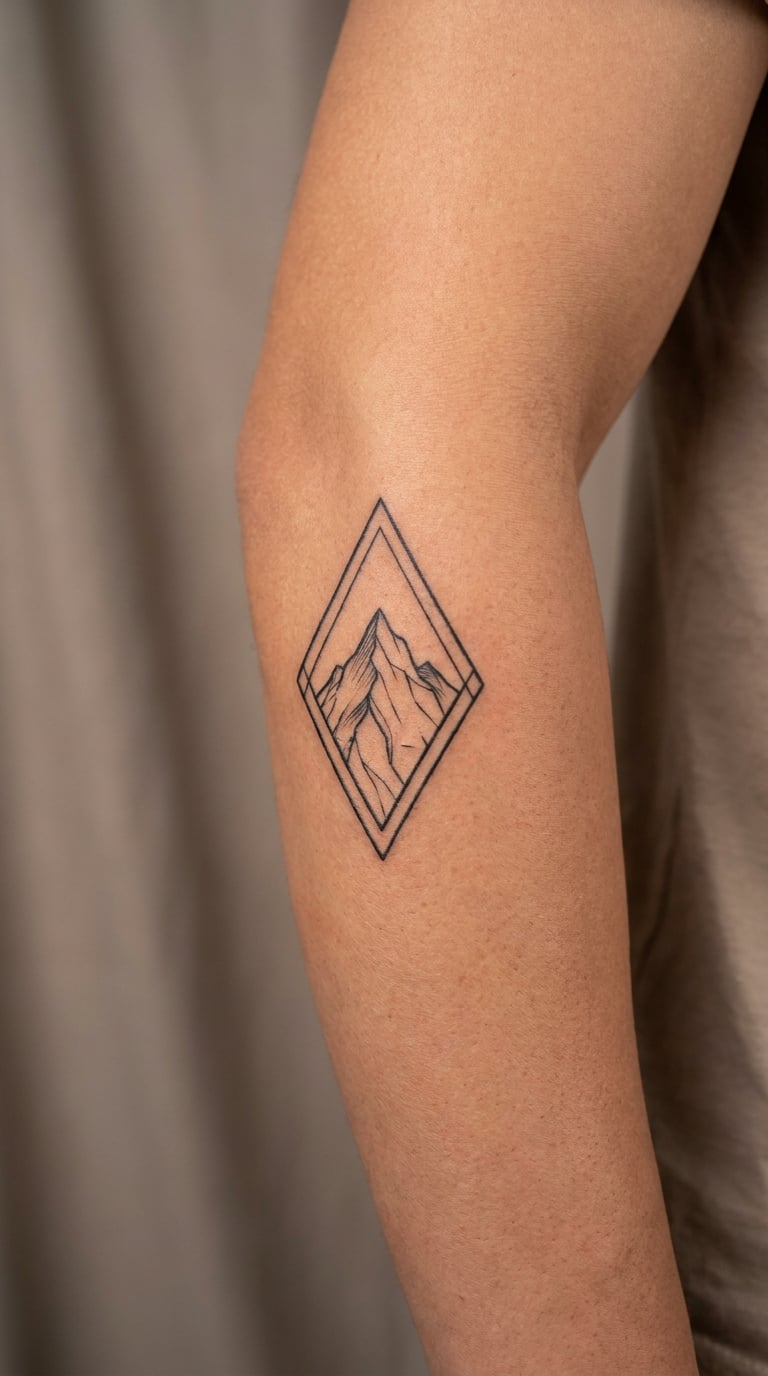
One triangular peak with two or three interior facet lines, sitting inside a clean diamond outline with a small gap between the two shapes. Keeping that gap is what makes it feel designed rather than traced.
This is the durable version of the mountain idea from number 1. The facet lines do the shading work, so it is not dependent on fine hairlines that will soften, and it reads clearly at arm’s length.
Placement: outer arm, forearm, or the back of the hand. Size: 2.5 to 3.5 inches (6 to 9 cm) tall. Style: geometric line work, black ink. Pain: low on the arm, medium on the back of the hand. Back-of-the-hand tattoos fade and blur faster than almost anywhere else, and a design this small will need a refresh every few years.
Make it yours: add a second smaller peak offset to one side so it reads as a range instead of a logo.
14. Blackwork Tree With One Empty Branch
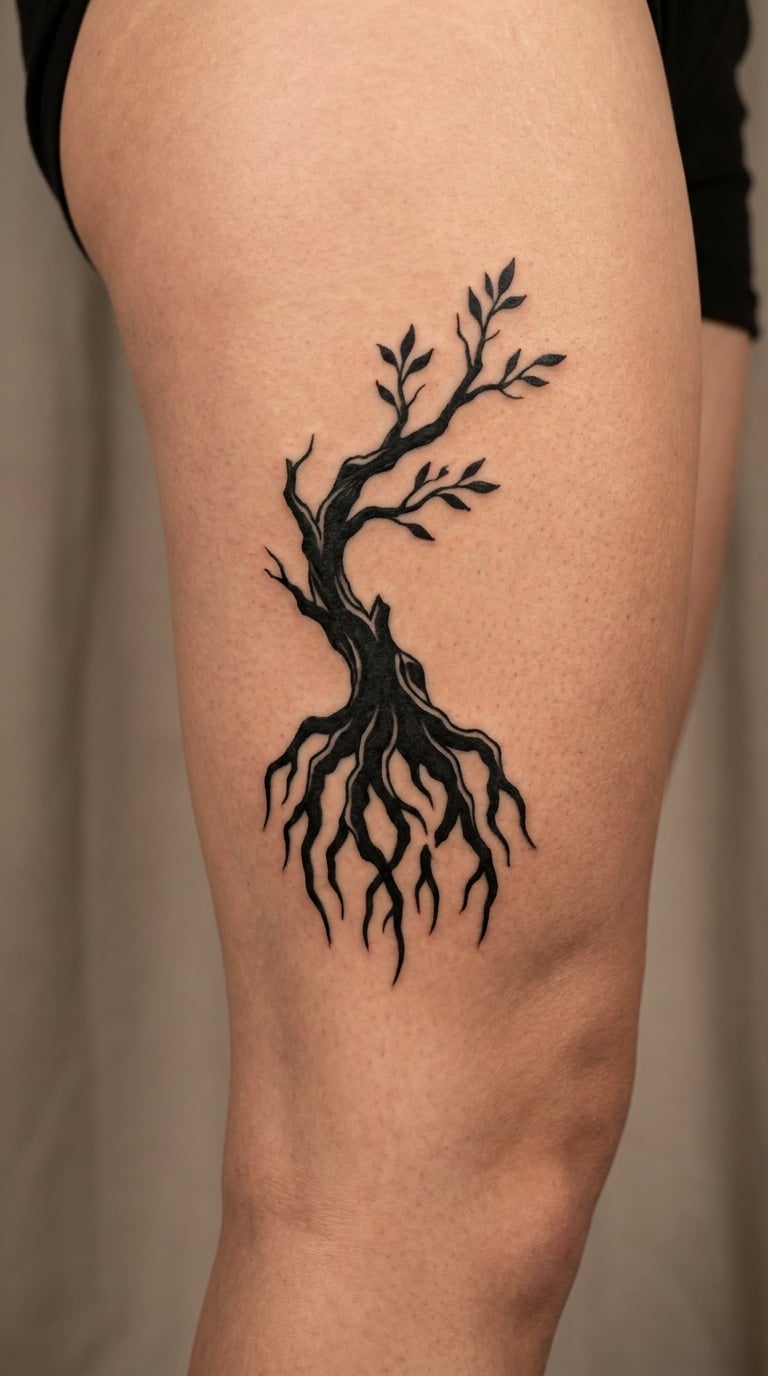
A solid black trunk with a heavy root mass at the base, a full canopy above, and one branch on the right that is bare, with a few smaller twigs and no leaves. The empty branch should be clearly deliberate, not an unfinished corner of the work.
Roots and canopy give you endurance and growth. The bare branch is where the meaning sits, and it is a good design for someone who is still in the middle of the thing rather than looking back at it finished.
Placement: outer thigh, calf, or along the spine area. Size: 5 to 7 inches (13 to 18 cm) tall. Style: blackwork, illustrative. Pain: medium, and a sitting this size is a long one. The thigh and calf have a large flat area that makes big black fills easier than they would on a forearm, and you can stop and start without a visible seam.
Make it yours: have the bare branch carry a date along its length in a thin line, or put small initials at the root mass.
15. Fine-Line Semicolon With a Rising Dot
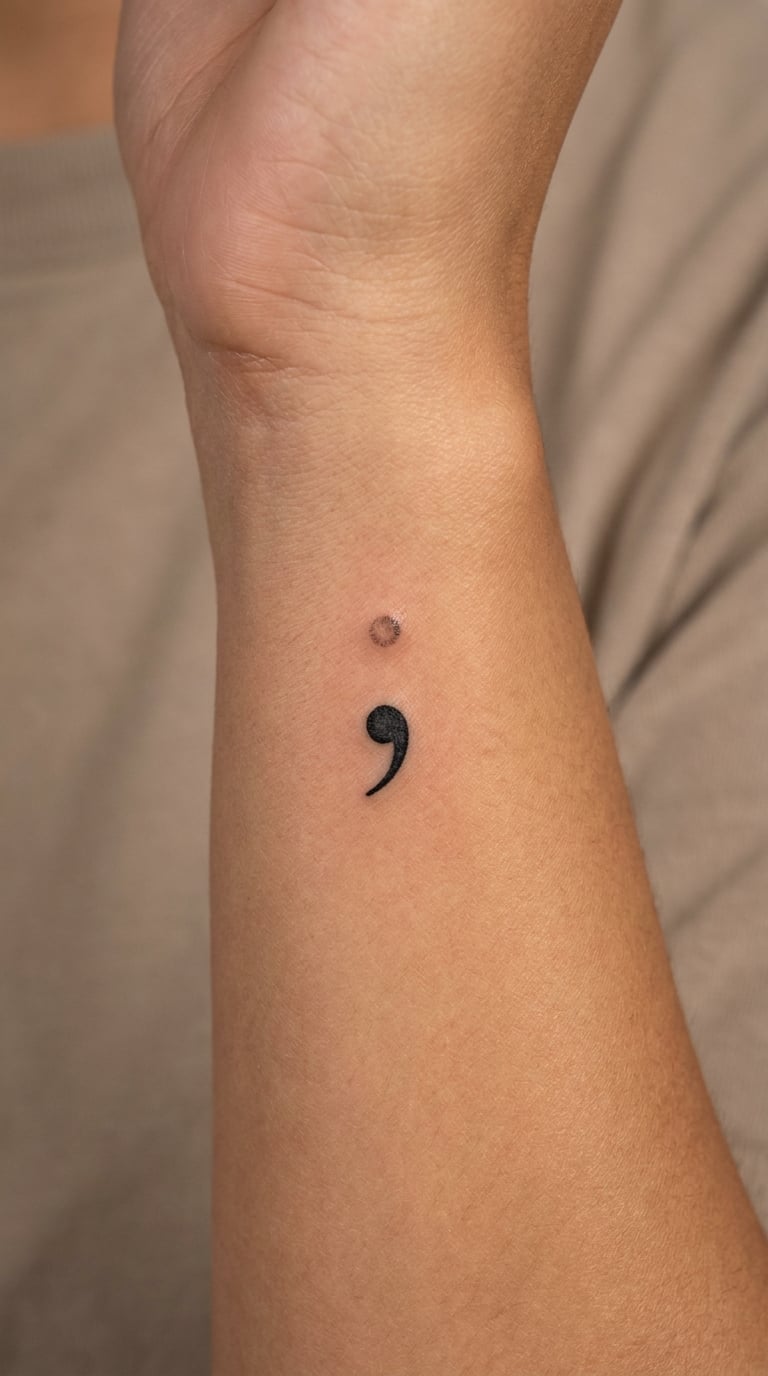
A semicolon drawn in a single line with a slightly heavier dot, plus one small separate dot floating above it. The extra dot is the personal part. Without it you have a very common tattoo; with it, you have yours.
The semicolon came out of the mental health awareness movement as a mark for choosing to keep going. It is widely recognised, which is the point and the drawback, and adding the raised dot is the simplest fix if the plain version feels borrowed.
Placement: inner wrist, behind the ear, or the ankle. Size: 1 to 1.5 inches (2.5 to 4 cm) tall. Style: fine line, minimal. Pain: low. This is the smallest design on the list and the one most likely to need a touch-up, because a fine dot on the inner wrist wears down faster than the line beside it.
Make it yours: make the raised dot a colour, or a small solid shape instead of a round dot, so the piece is unmistakably not a stock design.
16. Dotwork Compass Rose
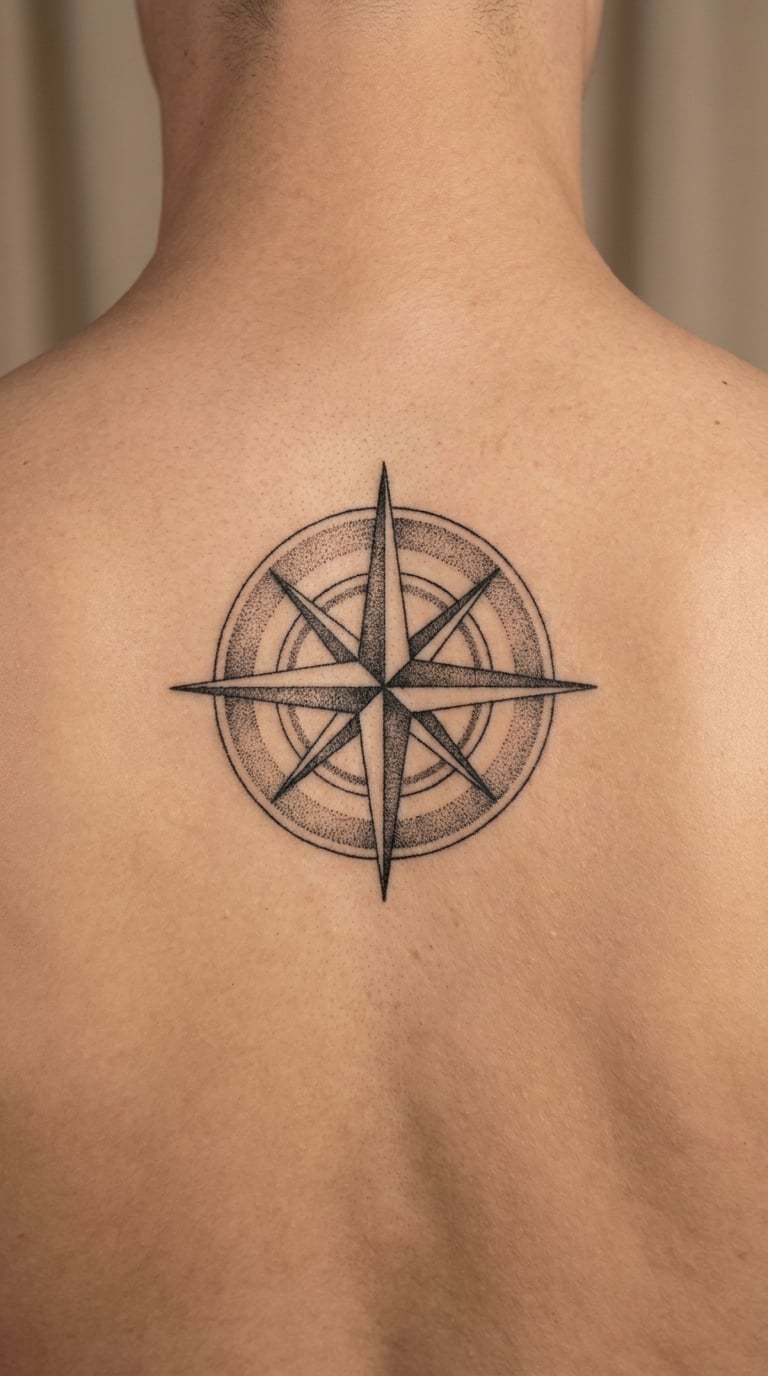
Four or eight points with alternating filled and dotted sections, a small circle at the centre, and a thin N marking. Symmetry is the whole job here. A compass with an off-centre middle reads as a mistake, not a compass.
Direction after feeling untethered. It is one of the more requested symbols in this category and the one that rewards a good artist most, since dot density decides whether it looks sharp in five years.
Placement: upper back, upper arm, or chest. Size: 3.5 to 4.5 inches (9 to 11 cm) wide. Style: dotwork, geometric. Pain: medium on the arm, high on the upper back, where you cannot see the work and the skin is thin. Dotwork takes a long sitting, so a four-inch compass is more realistically two appointments than one.
Make it yours: add a real coordinate at the centre instead of a plain circle, or put a date in the negative space of one of the points.
17. Watercolor Wave Beneath a Straight Horizon
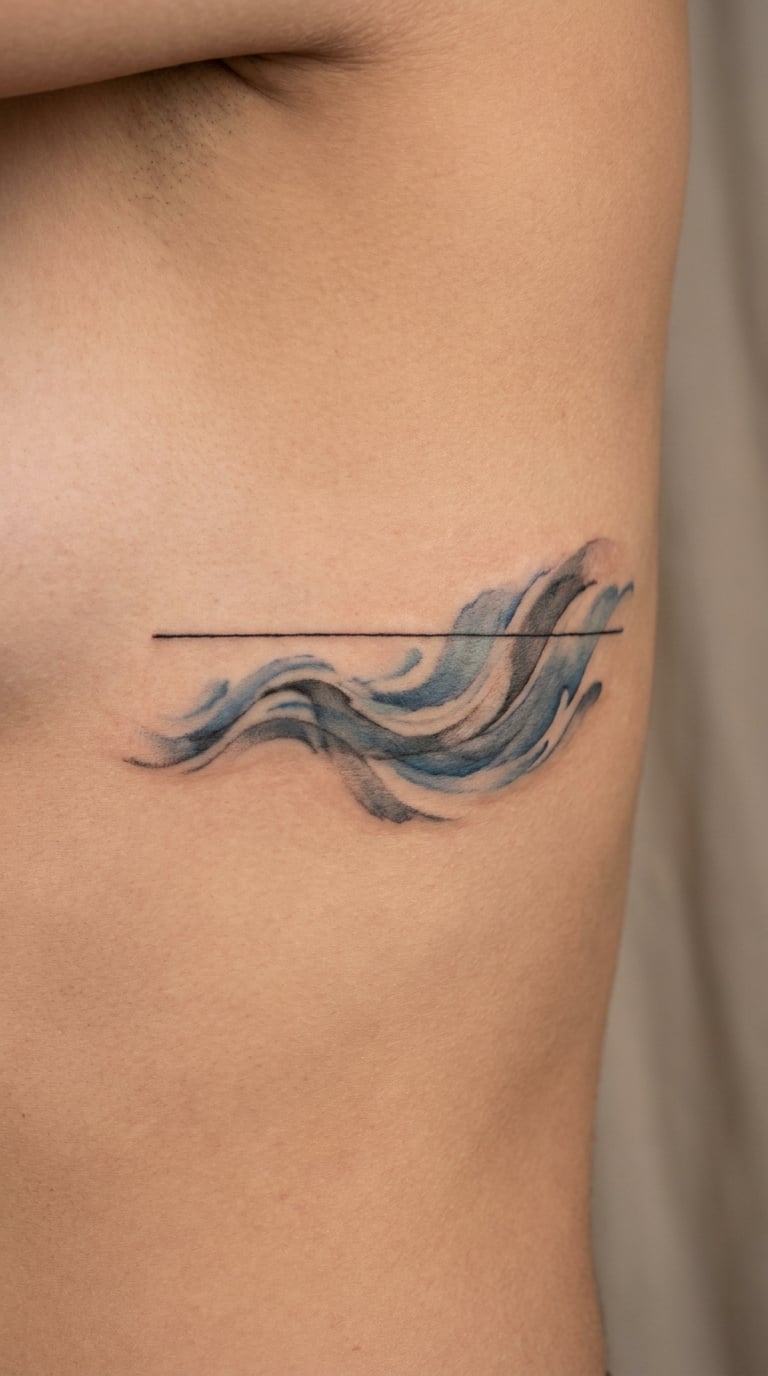
One broad wave built from blue and grey washes, with foam suggested by unpainted skin rather than by white ink. Above it, a single hairline horizon running the full width. The contrast between the loose wave and the dead-straight line is the design.
The wave is the turbulence, the horizon is what stayed level. People choose this after a period where the outside looked chaotic and something on the inside did not, and they want the tattoo to hold both halves of that.
Placement: lower ribs, forearm, or the back of the calf. Size: 6 to 8 inches (15 to 20 cm) wide. Style: watercolor, loose line. Pain: high, especially across ribs. Colour work means multiple passes and a warm, stretched feeling that lasts most of the session. Plan a break halfway, and expect to come back for a second session if the artist is being careful with saturation.
Make it yours: keep the horizon perfectly straight and let the wave break it at one point, or use two colours pulled from a specific place.
18. Roman Numeral Milestone
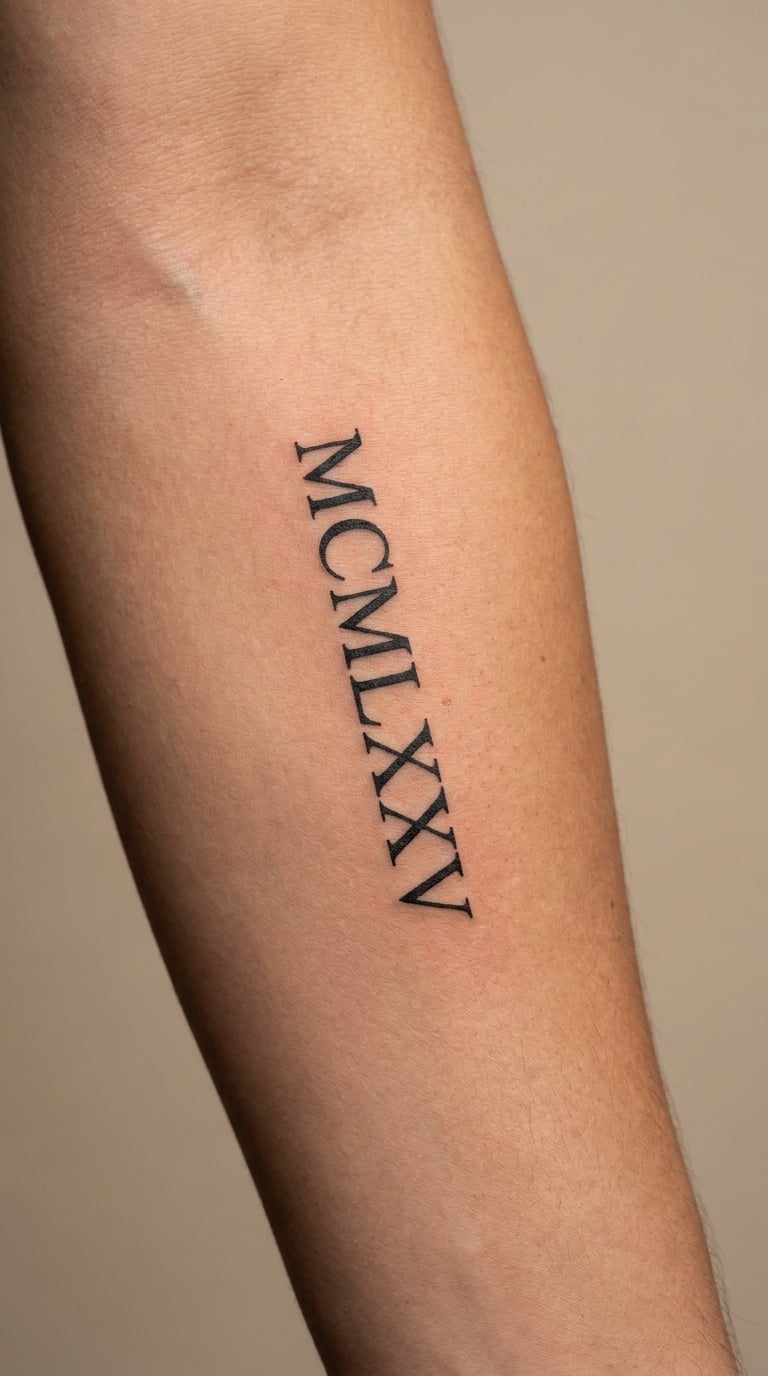
Four to six characters in a serif or a simple line font, evenly spaced, with no frame and no flourishes. A thin rule above and below works if you want the date to feel deliberate rather than typed.
A Roman numeral date is the least sentimental option here and often the most meaningful. It marks a decision, a recovery milestone, or the start of a count, and it does it without a slogan that can start to feel like pressure in a few years.
Placement: inner forearm, wrist, or the space between the shoulder and collarbone. Size: 2 to 2.5 inches (5 to 6 cm) wide. Style: lettering, black ink. Pain: low. Lettering is one of the few designs where font choice matters more than size. Check that the letterforms are drawn rather than traced from a font file, because traced thin serifs fill in over time and the wrong I becomes an L.
Make it yours: run the date with a line of small text underneath in the same font, or add a single symbol beside it that only you read.
19. Small Sparrow With an Open Wing
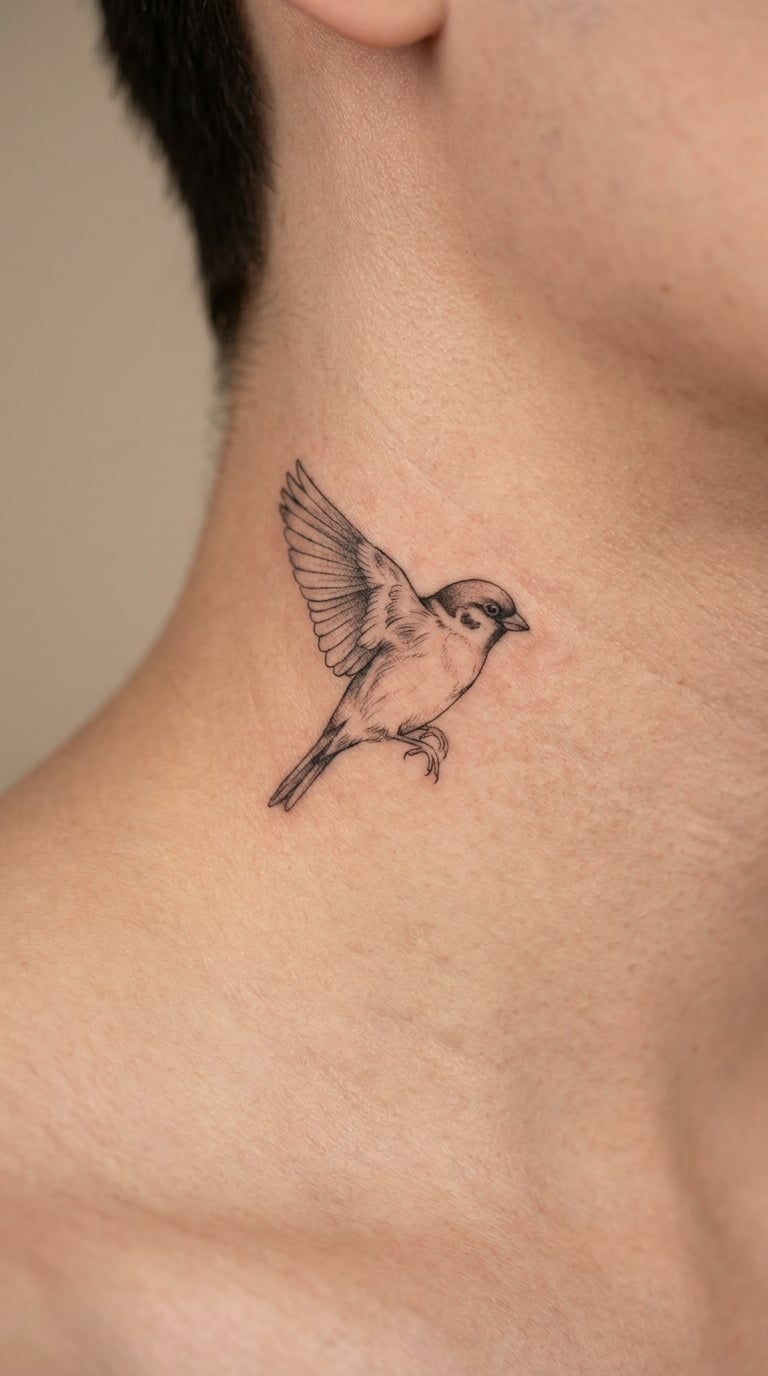
A small bird in profile with one wing lifted and a few short feather lines on the back, no background, no branch, no gradient. Fine line with a slightly thicker outline on the wing edge so the shape holds.
Small birds are chosen for lightness and speed rather than for a fixed traditional meaning. If the sparrow means something specific to you, that reading is the correct one, and it is worth telling your artist so they can push the drawing toward it.
Placement: side of neck, behind the ear, or the inner wrist. Size: 1.5 to 2.5 inches (4 to 6 cm) long. Style: fine line, micro illustrative. Pain: low. This is one of the fastest fades in the list, because fine line at this scale on the neck and wrist softens noticeably within a few years. Ask the artist to push the line weight a little heavier than the reference photo.
Make it yours: add a matching small bird on the other side later, or have the second one face a different direction so they look like a pair rather than a set.
20. Blackwork Mountain and River Infinity Symbol
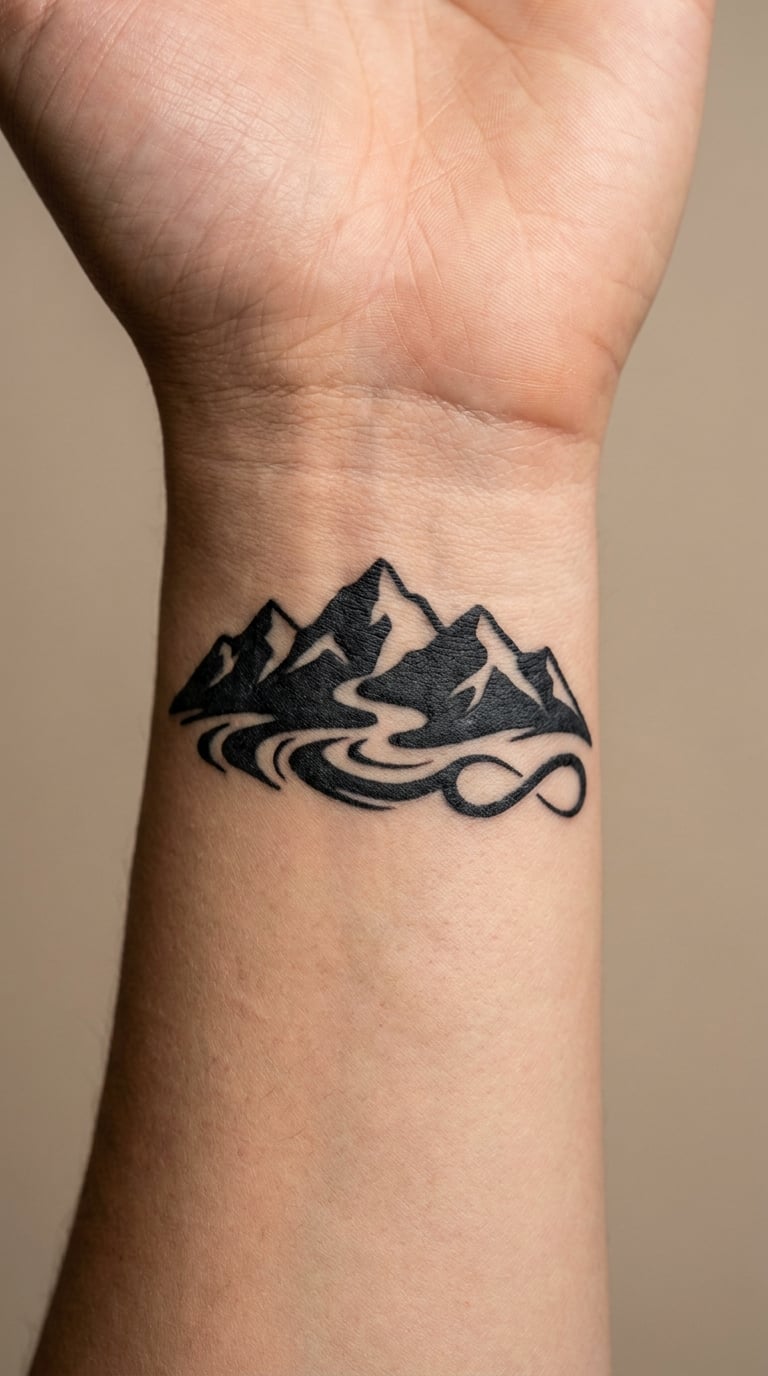
Two solid black peaks in the upper half, a white river channel cutting through the base, and the whole thing closing into a small infinity shape. The river has to stay unpainted for the design to work, because the white line is what forms the loop.
Endurance, an ongoing path, and continuity in one compact mark. This is the option for someone who wants one piece that says resilience without a single recognisable cliché in it, and it holds up better than any fine-line design in this list.
Placement: wrist, forearm, or the back of the hand. Size: 2.5 to 3.5 inches (6 to 9 cm) wide. Style: blackwork, geometric. Pain: medium on the wrist, and higher on the inner wrist where the bone is close and the skin is thin. The solid peaks take a while in one spot, so expect a tender last pass.
Make it yours: put a small date in the white river channel, where the negative space is already there to use.
How to Choose the Right Design
Six checks that narrow it down before you sit down with an artist. Most of the people who regret a meaningful piece skipped one of these, not because they chose badly but because they chose in a hurry.
- Write the meaning in one sentence first. If you cannot say it without hedging, the drawing will be vague too. This is the check that catches designs that look borrowed, and it costs nothing.
- Match size to the flat area, not to the reference image. A design that reads well on a phone screen on a flat back sheet can need two sessions on a rounded forearm. Ask your artist what fits the space you actually have.
- Decide how visible you want it to be. Wrist, ribs, and behind the ear are seen constantly and described constantly. Inner arm and inner thigh are yours unless you show them. Both are valid, they just suit different weeks.
- Pick a line weight that suits your habits. Fine line looks delicate and softens fastest, especially on hands, fingers, neck and inner wrist. If you work with your hands or spend a lot of sun, blackwork or a heavier line will age better.
- Test readability at two inches. Hold a printed reference at arm’s length. If you cannot tell what it is, the detail is too fine and will not improve with age.
- Check the meaning stays true in ten years. Some hard periods are meant to be behind you. A sunrise or an open door keeps pointing forward; a design built around an active struggle may not be the piece you want to read at forty. Choose the version that describes where you are going rather than where you were.
Where the design is only half the decision, a second read on small hand tattoo ideas that age well is useful if you are considering something on the hand, since that placement is the hardest on any line work.
Cost and Session Time
Tattoo pricing varies so much by city, shop and artist that a fixed figure would be misleading. What does hold true is how the number gets built: most shops work by the hour, and the hour covers the artist’s time, a chair, needles and sterilization, so the cost of a piece tracks the time it takes rather than the size of the drawing.
A few practical anchors. Micro work under an inch, such as the semicolon, is often quick enough to fit inside a shop’s minimum charge, and the minimum is a real thing that exists at most shops regardless of how small the design is. A small piece in the two-to-four-inch range is commonly a single sitting. Anything past about five inches, or anything with colour, dotwork, or detailed shading, is more often two appointments.
Colour and dotwork both add time that does not show in the design’s footprint. Dotwork can triple a sitting because the needle places individual dots rather than shading an area. Watercolour needs a second pass for saturation and usually a touch-up within the first few months.
When you book, ask for the artist’s hourly rate, the shop minimum, and an honest estimate of sessions for your specific design. Getting all three up front is normal and any artist worth booking will give them to you. For more on placement and sizing before you commit, our piece on tattoo ideas that age well for women over 50 goes into how designs change as they settle.
Aftercare Basics
- Follow your artist’s aftercare instructions first. They know what they did to your skin on the day. Everything below is a general baseline, and it does not replace what you were told in the chair.
- Wash gently, twice a day, for the first stretch of healing. Lukewarm water, a fragrance-free cleanser, and clean hands. Pat dry with something disposable rather than a towel you reuse.
- Use a thin layer of unscented moisturizer. Thick ointment traps heat under the tattoo and is a common cause of irritated healing. A thin coat is enough.
- Keep it covered when it needs to be covered. Loose clothing over fresh work for the first day or two, and clean sheets on the night you get it. After that, most artists prefer it exposed to the air.
- Do not soak, swim, or cover it tightly. Pools, hot tubs, and long showers soak the skin and lift ink while it is still settling. Saunas and steam rooms are a poor idea in the early weeks too.
- Do not pick or scratch, and protect it from sun. If a scab lifts on its own, leave the thin layer. Once healed, sunscreen on exposed ink matters more than most people expect, since UV is the main reason line work fades unevenly.
Frequently Asked Questions
What symbolizes overcoming hard times in tattoo art?
The most recognised symbols are the phoenix, the semicolon, a mountain range, an arrow, a compass and an infinity mark. Each one takes the idea slightly differently: a phoenix for renewal, a sunrise for a period ending, a mountain for endurance, an arrow for forward motion, a compass for direction. There is no single correct answer, and the version that means something to you is the right one.
What is a good first tattoo for someone recovering from a difficult period?
For a first tattoo, pick something small, high-contrast and hard to over-interpret. A fine-line mountain, a two-inch compass, a semicolon or a Roman numeral date all sit comfortably under three inches and heal in a few weeks. Avoid anything tiny on the fingers or inner wrist as a first piece, since those fade fastest and are the hardest to touch up.
Where should I place a small resilience or recovery tattoo?
Inner forearm and inner wrist are the most common first placements because they are flat, easy to cover, and easy to see privately. Outer arm and calf give more room for larger work. Behind the ear and the side of the neck suit micro designs but fade faster and are more sensitive. Placement should follow how visible you want the piece to be, not just the design.
Should a meaningful tattoo include a quote or date?
A date often works better than a quote. A specific date stays true no matter how your mood changes, while a phrase can start to feel like pressure in a few years. If you do want words, short script that follows the curve of the body ages better than a long line, and an artist drawing the lettering by hand will keep thin serifs from filling in.
How do I choose a tattoo design that will still look good as it ages?
Choose solid black over fine line, larger over tiny, and simpler over detailed. Fine line on hands, fingers, neck and inner wrist softens fastest, and small dotwork spreads slightly as it heals. Test the reference at arm’s length: if the design is not readable from a few feet away, the detail is too fine and will only blur further over the years.
Can I combine a personal milestone with a traditional symbol?
Yes, and it usually produces a more personal piece than the symbol alone. The common way to do it is to place a date or small lettering in existing negative space, a white river channel or the gap between waves, rather than adding a third element. Two shapes work. Three usually turns cluttered, so let the artist cut something out to make room.
For a first tattoo in this category, the fine-line mountain range with a rising sun is the safest bet: it sits flat, it is easy to hide at work, and it carries a full meaning without needing an explanation. If you already have pieces and want this one to sit differently in a collection, the blackwork mountain and river infinity design gives you something with more weight next to lighter work.
Whichever of these tattoo ideas that represent overcoming hard times you settle on, take a photograph of the reference before the stencil goes on. Ten years from now, that photo and the note you write yourself today will explain it better than anyone asking will get from you.