
18 Small Hand Tattoo Ideas for Women That Age Well (2026)
Small hand tattoo ideas for women fall into a narrower, more practical category than most tattoo galleries suggest. We’re talking tiny designs, usually a quarter inch or smaller, on the fingers, knuckles, back or side of the hand, or the inner wrist. Most are drawn in single-needle linework rather than filled colour, so they read as a detail rather than a statement. Women tend to choose this placement when they want something that looks deliberate up close and almost invisible from across a room, and that still works with an office wardrobe, a ring stack and a lifetime of hand movement.
There’s a practical side to booking a hand tattoo in autumn. A healed small hand tattoo needs about four to six weeks before you judge it properly, and skin needs longer than that before it settles into its final tone. If you’re planning ahead, spring and early summer bookings heal in warmer months when sleeves and sunscreen are easy habits, while autumn appointments let a piece sit under layers and stay out of the sun for the first few weeks. Whichever you pick, the design itself matters less than the spot you put it in and the artist you trust with the scale.
18 Small Hand Tattoo Ideas for Women and Where Each One Sits
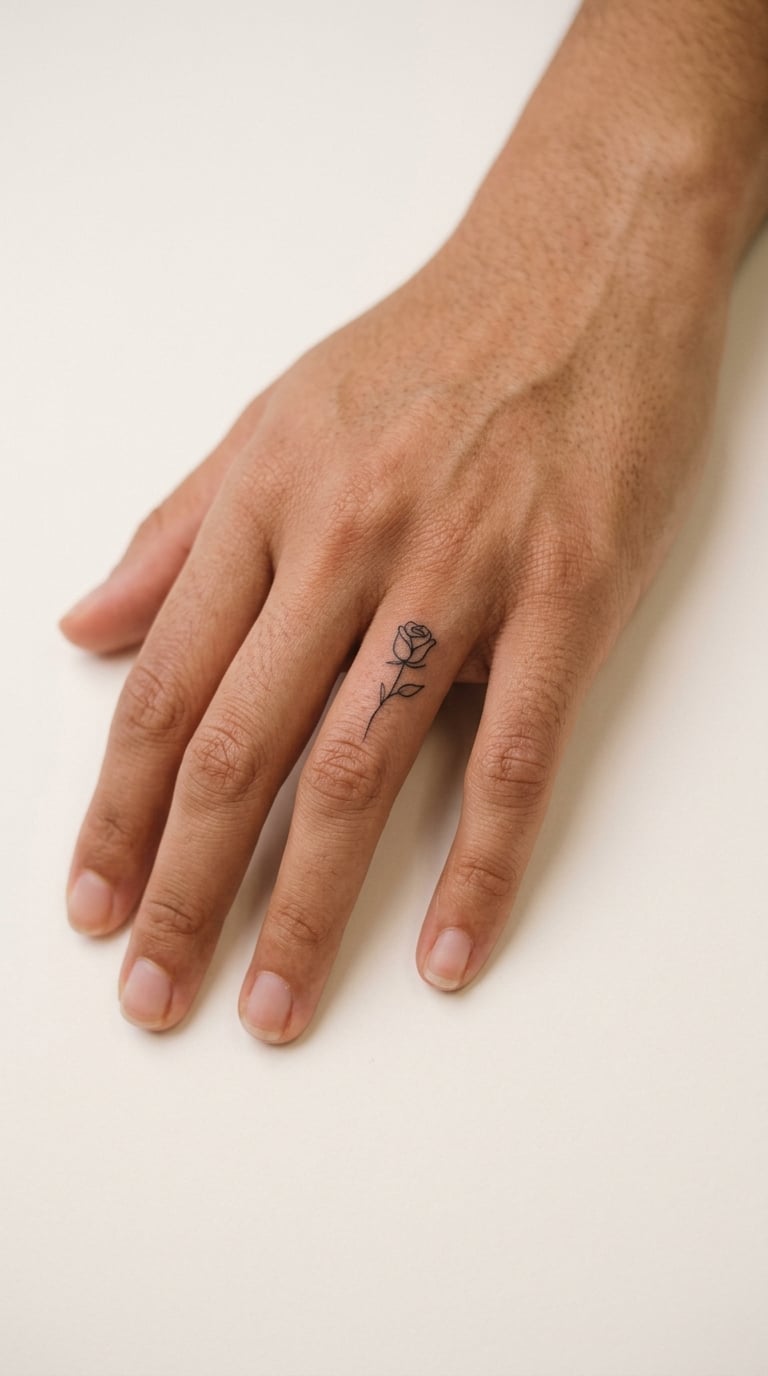
The most-requested small hand tattoos for women cluster around four families: botanicals, celestial marks, script and single letters, and tiny memorial symbols. Below are eighteen of them, each with the placement it suits, the size to ask for, and how it holds up over time. Every one is designed to be under half an inch so it stays legible on a finger, and every one is paired with an honest note on fading, because hands age differently from arms.
1. Single-Line Rose on the Side of the Ring Finger
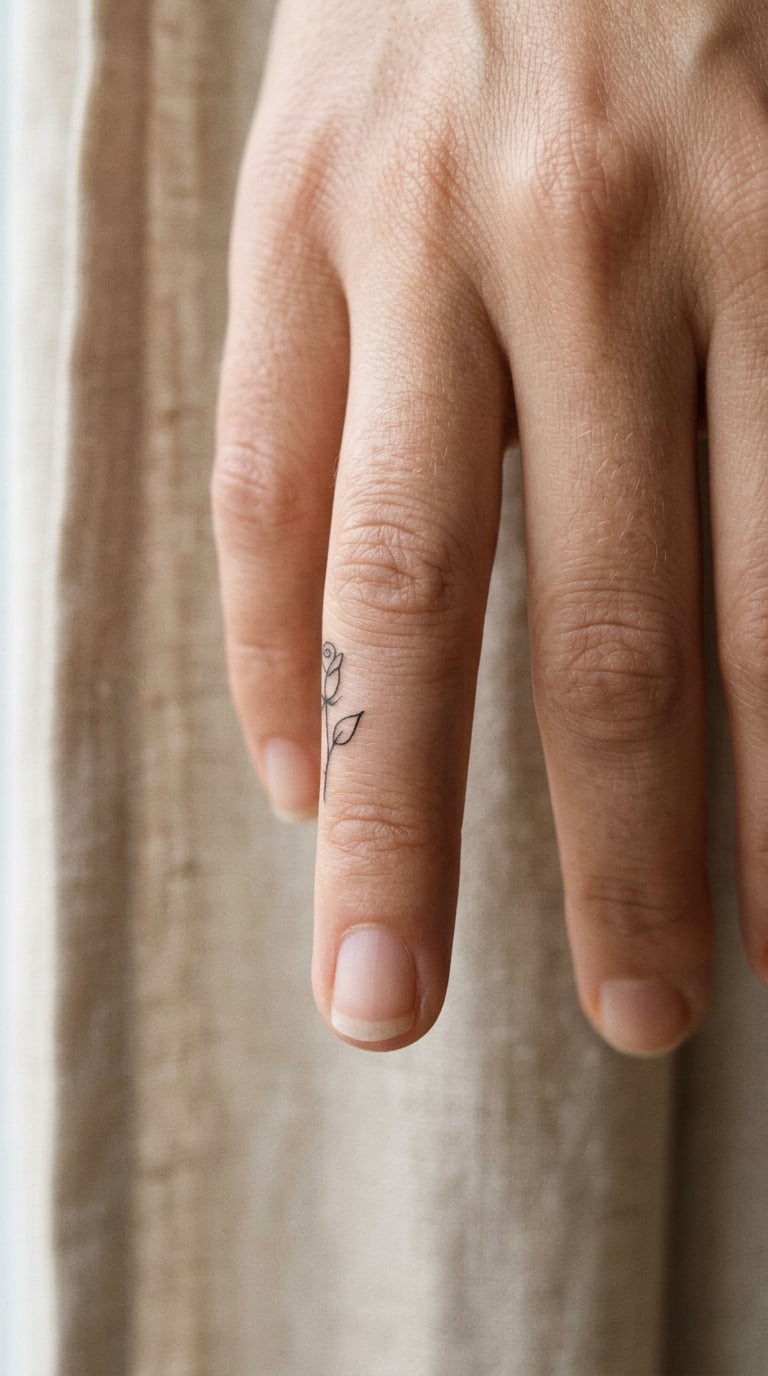
A rose drawn with one continuous line, no shading, sitting on the side of the ring finger. It reads as love, balance and something that softens without fading into mush, which is why it keeps turning up in requests. On a petite finger the artist can fit a bud rather than a full bloom, roughly a quarter inch tall.
Ask for a single-needle liner and a stem that stops before it wraps the finger, because a line that circles the whole digit gets stretched in two directions as the finger bends. It reads as a soft black mark in about four years rather than a sharp drawing, so treat a touch-up at month eight as normal upkeep, not failure. Pain & time: the side of the ring finger is fleshy enough to be mild, roughly a three out of ten, and a piece this size takes five to fifteen minutes.
2. Crescent Moon Tucked Into the Thumb Cuff
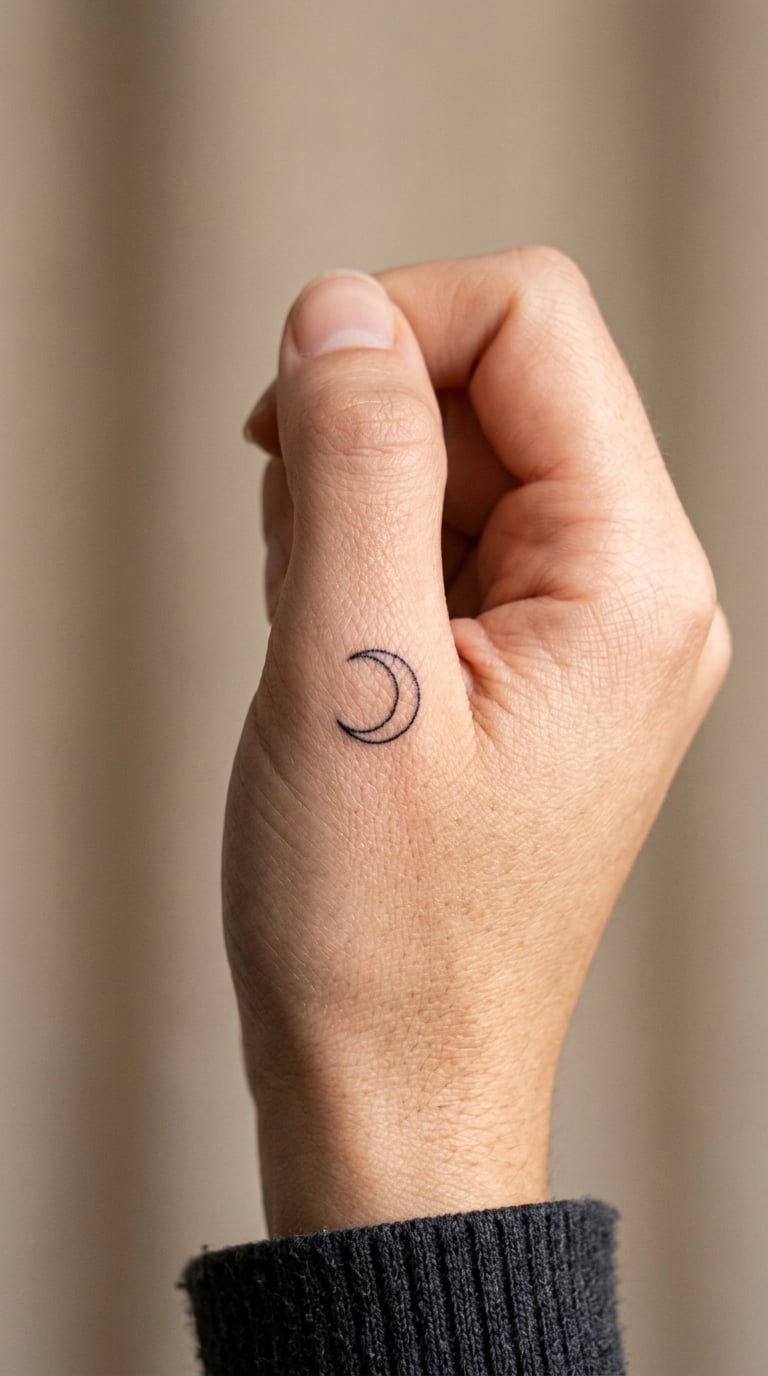
A thin crescent resting in the soft pad below the thumb joint, no background, no stars. The moon is a cycle, a return, and a reminder of the dark parts of a year, which people read differently depending on what season they book it. It also sits in a curved surface where the skin never goes completely flat.
Keep the crescent under three-quarters of an inch and let the artist tune the curve to the thumb’s natural bend, otherwise the two tips drift apart visually within a year. The thumb cuff holds colour better than the finger creases because the skin here is thicker, so a fine line stays legible longer than you might expect. Pain & time: the thumb pad is padded but densely nerve-suffixed, closer to a five out of ten, and takes about ten minutes.
3. Micro Heart on the Side of the Middle Finger
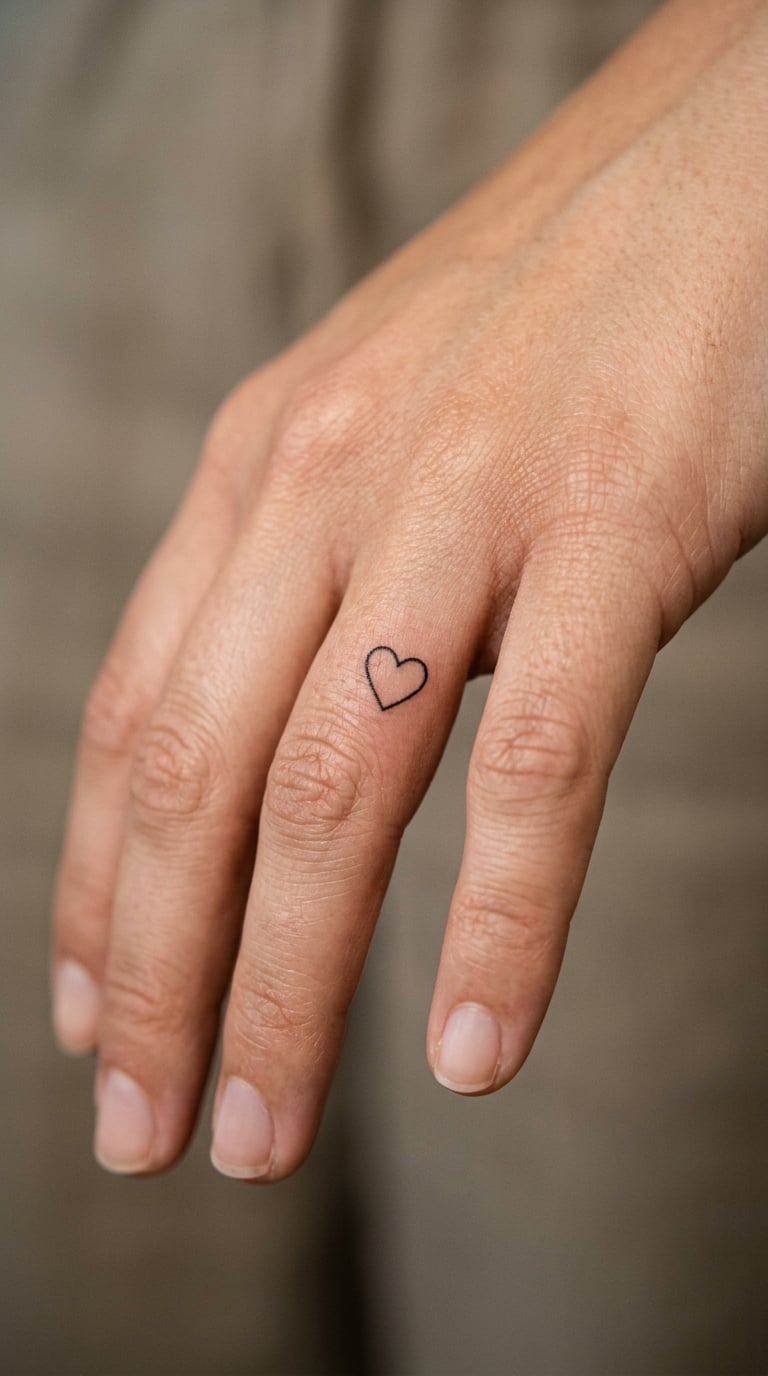
The simplest thing on this list, and still the one that gets finished most often. A single outline heart, no fill, no shading, usually under a quarter inch. Traditionally it means affection or self-love, and plenty of women take it as a private reminder rather than a message for anyone else to read.
One warning worth saying out loud: hearts on the middle finger fade unevenly, because that side of the finger rubs against the neighbouring fingers all day. Ask the artist to line the heart slightly heavier than feels necessary, and expect to need a top-up somewhere between year one and year two. Black line holds its shape here far better than a red or pink fill, which will blur into the skin tone. Pain & time: the side of the middle finger is one of the more sensitive spots on the hand, closer to a six, and the same quick session applies.
4. One Fine-Line Word Running Down the Index Finger
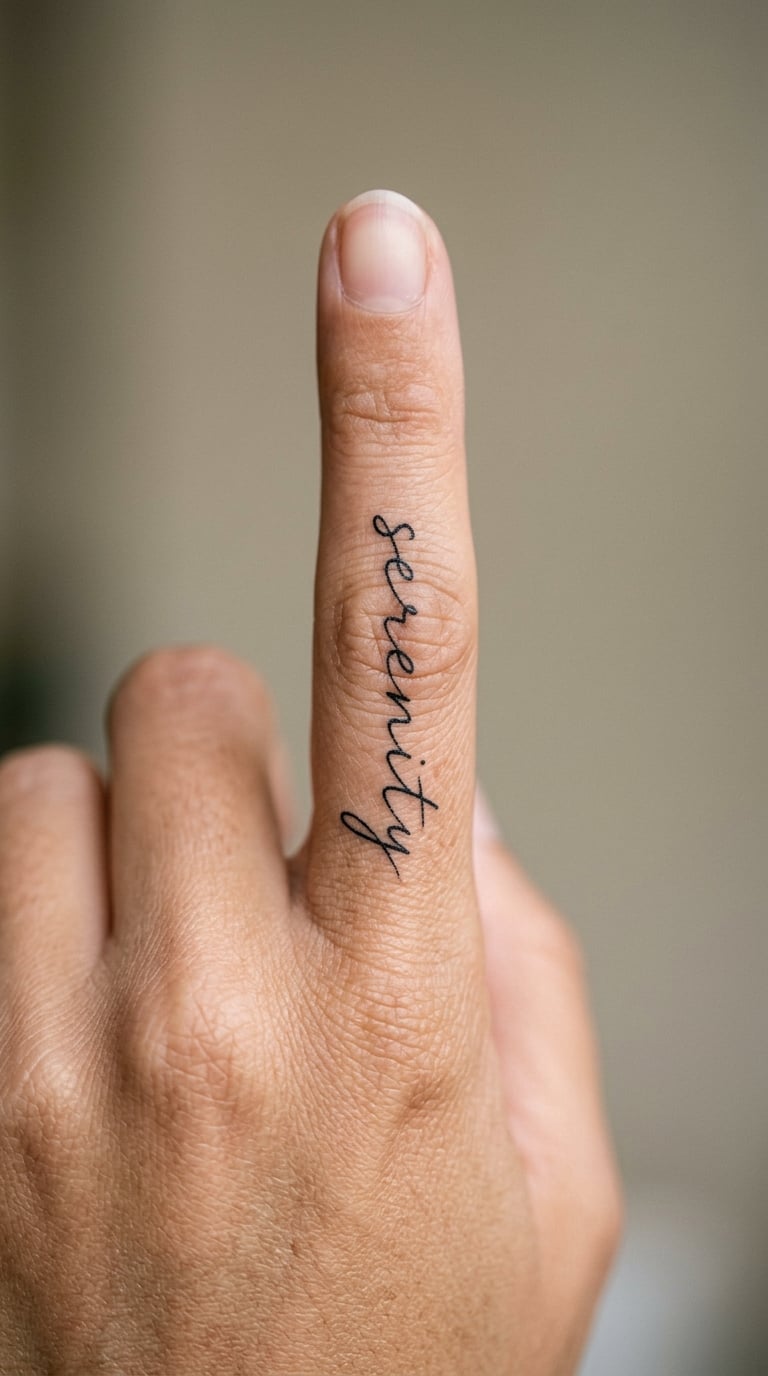
A short word, two or three letters at most, set in a script hand and placed along the length of the index finger. The word usually carries a name, a date or a private instruction, and the placement turns the finger into a scroll you read by curling your hand inward. Script is the most requested lettering style on hands right now.
Script fades fastest of any fine-line work on a hand because thin curves and letter joins lose contrast first, so ask the artist to open the spacing a little and avoid hairlines. If the word is longer than the finger can hold at a readable scale, it belongs on the side of the hand or the inner forearm instead, where the skin is flat. Pain & time: along the top of the index finger is a thin, bony strip, closer to a six out of ten, and takes ten to twenty minutes depending on length.
5. Dot-Work Constellation Spread Across the Back of the Hand
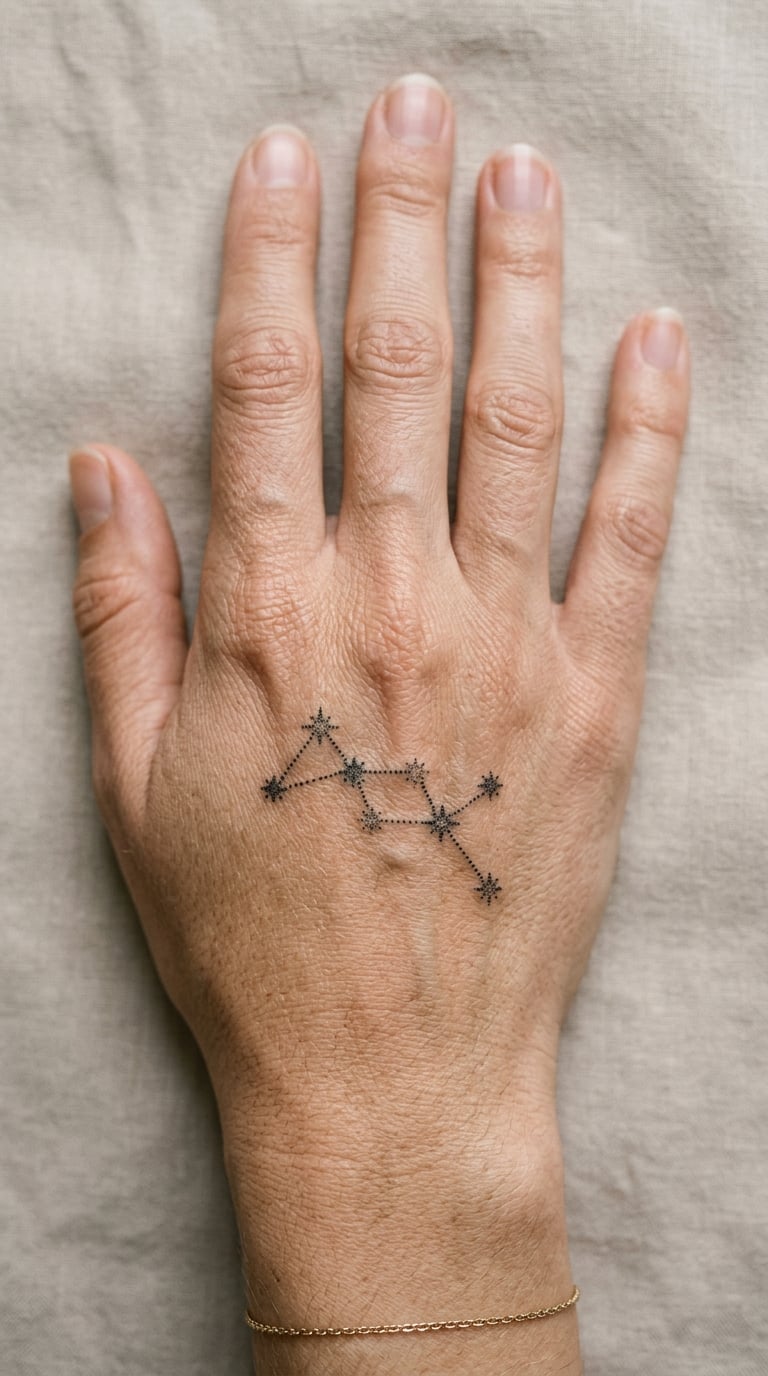
A scatter of fine black dots connected by whisper-thin lines, placed across the back of the hand between the knuckles and the wrist. The usual pick is a real constellation tied to a birth date or a place. It is the one design here that works at a larger scale, around two inches, because the back of the hand is the flattest surface on the whole limb.
Dot work hides small imperfections better than solid outlines, which helps in a high-wear area, but the connecting lines are still thin and will soften. Expect the dots to remain crisp and the lines to look slightly feathered by year three. Plan it as a design you can add to later, since the back of the hand takes an extension down the forearm well. Pain & time: the back of the hand is the least painful spot on this list, around a three, and a piece this size takes twenty to thirty minutes.
6. Clasped Hands on the Inner Wrist
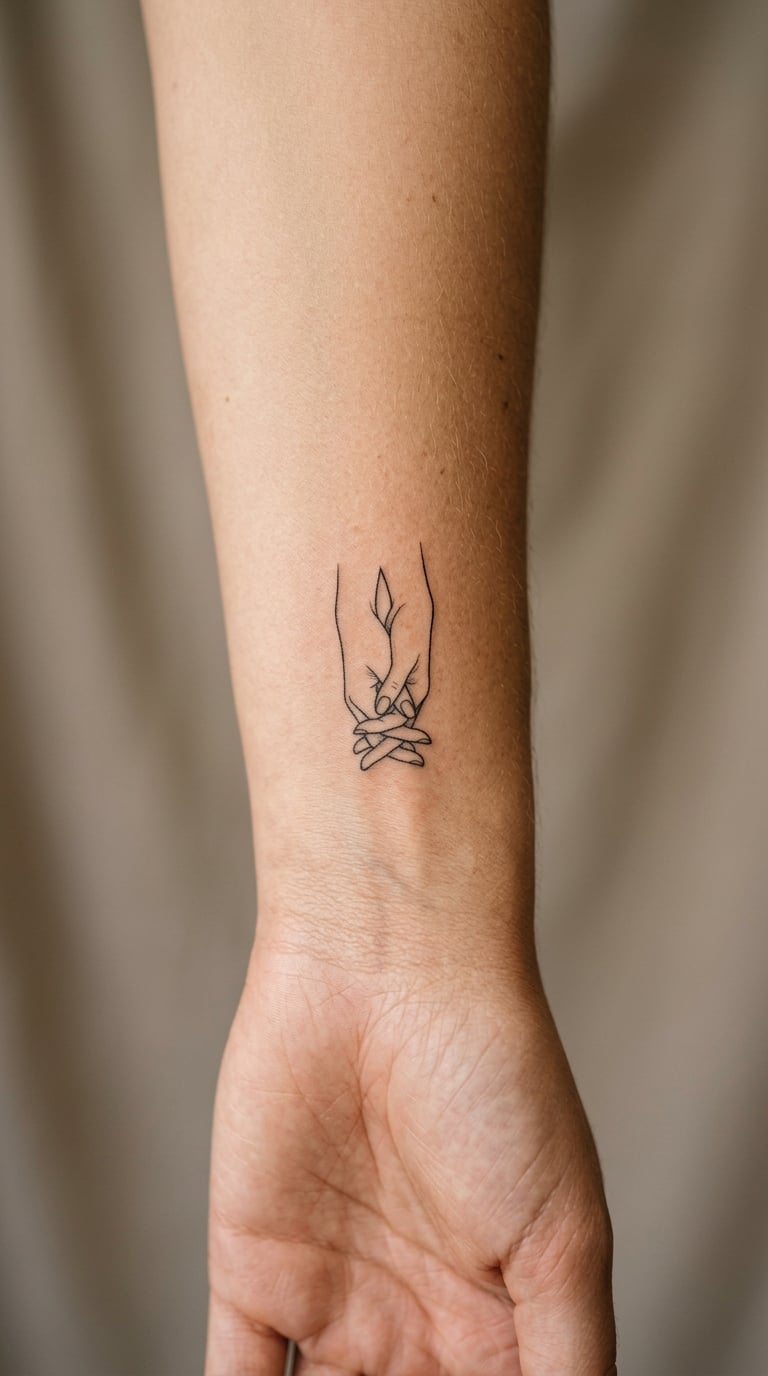
Two tiny hands holding each other, a quarter inch across at most, placed on the inner wrist just above the bone. The meaning is nearly always the same: a person, a friendship or a partnership that mattered. It works in pure line with no shading, which keeps it looking like an etching rather than a drawing.
The inner wrist is one of the warmer, more protected spots on the arm, though sun exposure through a shirt cuff is real over decades. Two small shapes side by side on a curved surface can drift apart if the artist stretches the skin while drawing, so a stretched-skin placement session is worth requesting. Pain & time: the inner wrist has a nerve bundle running under the skin, closer to a six out of ten, and takes ten to fifteen minutes.
7. Laurel Half-Wreath Along the Index Knuckles
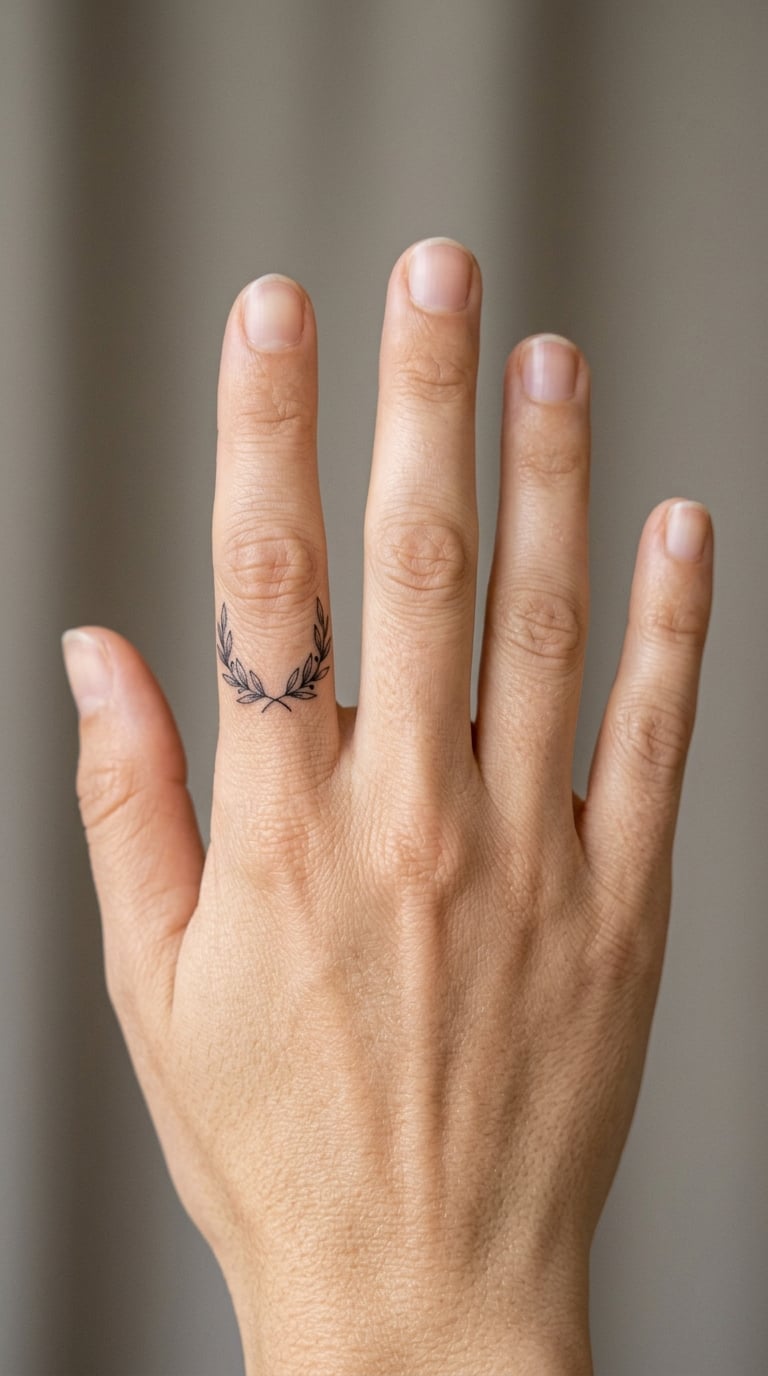
A half-wreath of laurel leaves arcing over the knuckles of the index finger, one leaf per knuckle. Laurel is victory and endurance, which makes it a common choice for a graduation, a first job or a finish line of some kind. Traditionally it leans neoclassical, and paired with tiny line weight it stays quiet.
Knuckles are the hardest-wearing real estate on a finger because they bend hundreds of times a day, so this one fades faster than a ring-finger design and that’s simply physics. Ask the artist to keep leaves a touch heavier and to leave a clear gap between each leaf, since thin gaps fill in. Plan on a refresh every year or two if you want it crisp. Pain & time: knuckles are bone-close to the surface and sting, closer to a seven out of ten, and take ten to fifteen minutes.
8. Two Crossing Arrows in Thin Blackwork
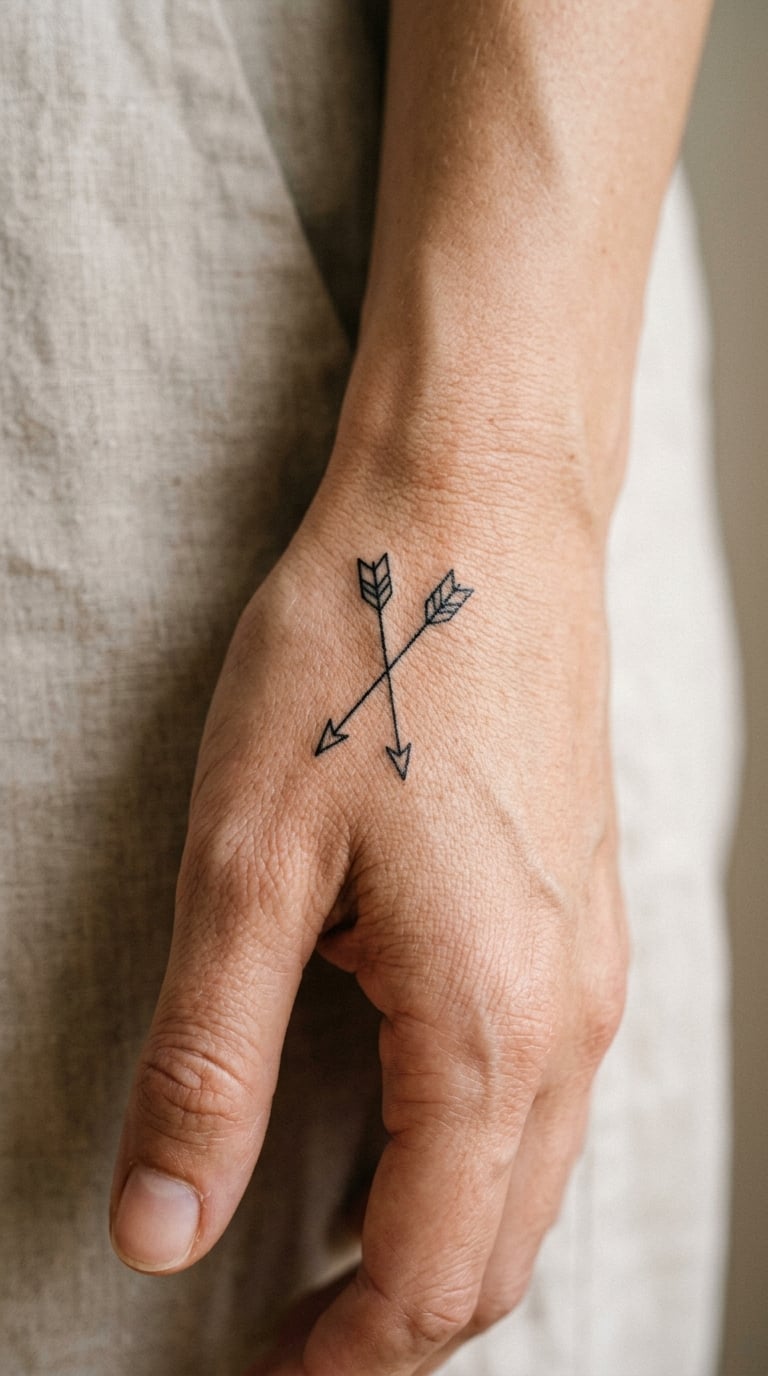
Two slim arrows crossing at the wrist or sitting on the side of the hand, drawn in black line with a few short fletching marks. Direction, movement, forward motion, sometimes a date hidden in the coordinates. It reads slightly more graphic than the botanical designs, which makes it useful when you want a hand tattoo that isn’t soft in style.
Keep the arrows straight and few rather than long and detailed, because diagonal fine lines across a knuckle or joint stretch the most and blur the most. If the arrows sit on the back of the hand, a designer can align them with the finger tendons so they follow the hand’s own lines rather than fighting them. Pain & time: the side of the hand near the thumb is moderate, about a four, and takes fifteen minutes for a pair.
9. Initial With a Tiny Heart on the Ring Finger Side
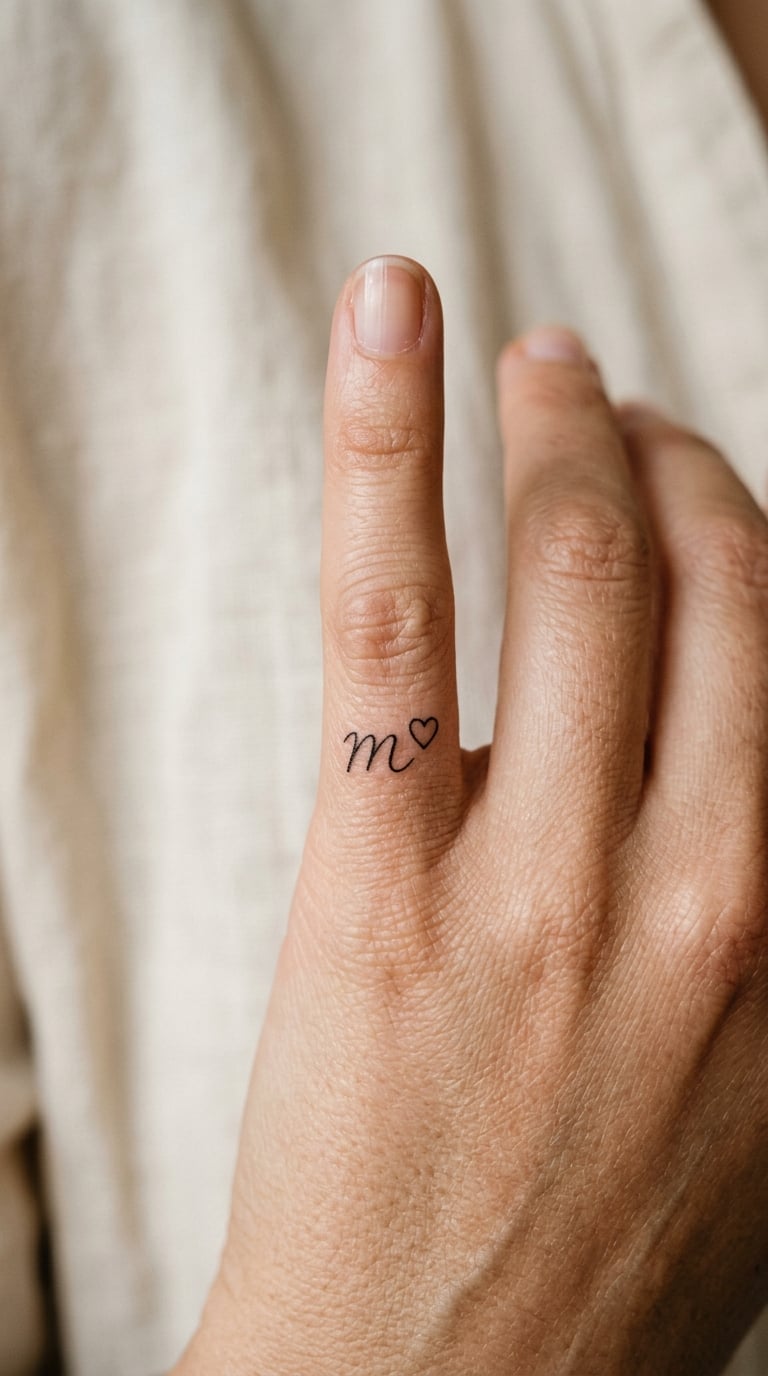
One capital letter in a plain serif or a hand-drawn script, with a small heart tucked under it. On the ring finger side it often marks a wedding band you aren’t wearing, a grandmother, a sister or a child. The letter is legible at a conversational distance, which is more than most of the designs here can promise.
Serif capitals have more ink in them than script capitals and hold their edges noticeably better on a hand, so a serif is the smarter choice if you want this one to still read in five years. Ask the artist to make the heart optional, because it is the element that will soften first. Pain & time: the ring finger side is one of the more forgiving spots, about a three out of ten, and takes under ten minutes.
10. Coordinates on the Inside of the Wrist
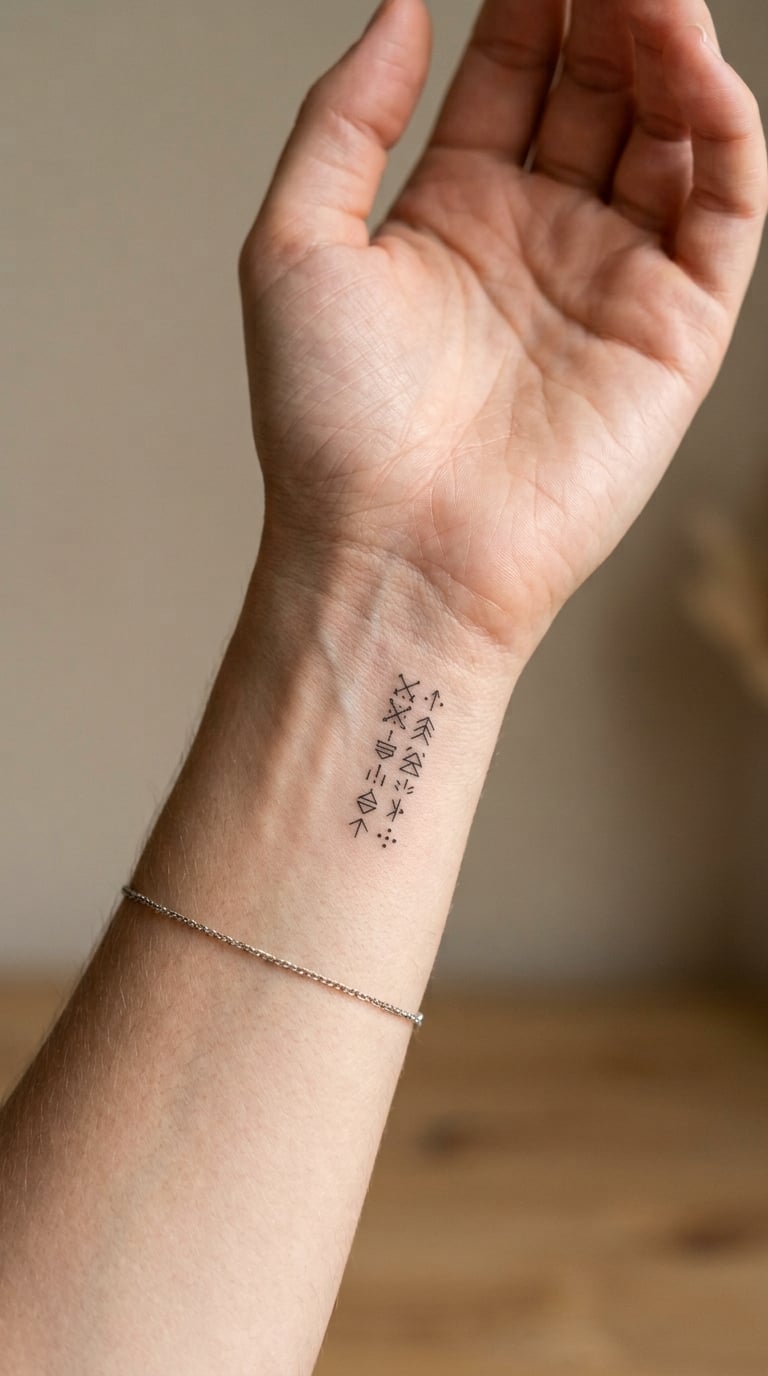
A line or two of numbers and degrees, small enough to fit inside a wristband, marking a place that mattered. It’s one of the few hand-adjacent designs that people get specifically because nobody else can tell what it says. Most wearers pair it with a matching tattoo elsewhere or keep it entirely to themselves.
Numbers are dense with straight lines, which is good news on a wrist, and the inside of the wrist doesn’t crease or flex as a finger does. Keep the whole thing under two inches so it can be hidden by a watch strap or bracelet when needed. The main risk is asking for too many decimal places, which turns a legible mark into a grey smudge within a couple of years. Pain & time: the inner wrist is nerve-rich, about a six, and takes fifteen to twenty minutes.
11. Tiny Bee on the Webbing Between Thumb and Finger
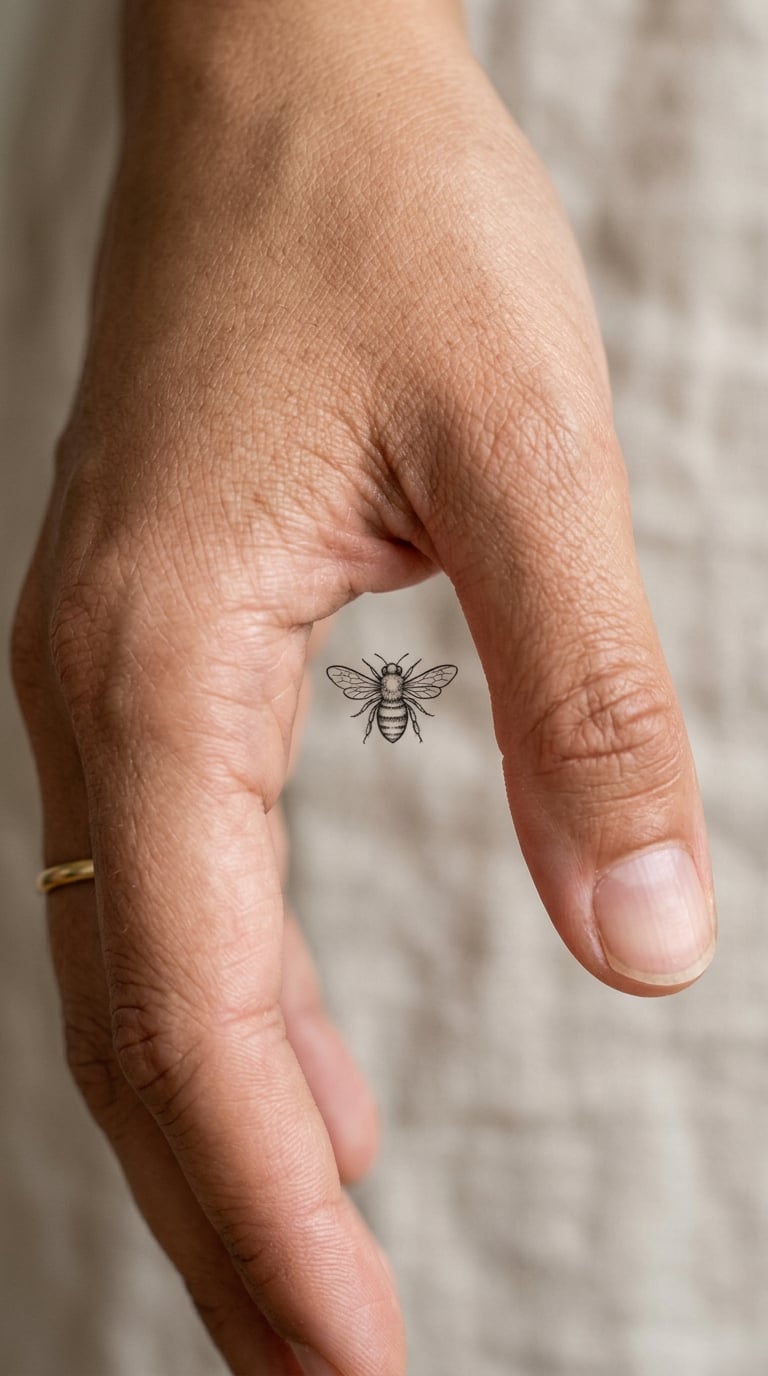
A bee, roughly a quarter inch, drawn with two or three strokes of line and a striped body, sitting in the webbing between thumb and index finger. The traditional reading is diligence, busyness and a working household, but most people choose it because it looks like a small piece of jewellery from a distance. It’s one of the most photographed placements in the category.
The webbing is a clever spot because almost nothing rests against it, so the design gets very little friction. What it does get is movement: the skin there stretches every time the thumb opens, so a design with any symmetry or a face will warp. Simple shapes survive that stretch far better than figurative ones. Pain & time: thin webbing skin over bone, about a five out of ten, and takes ten minutes.
12. Snake Coiling Around the Middle Finger
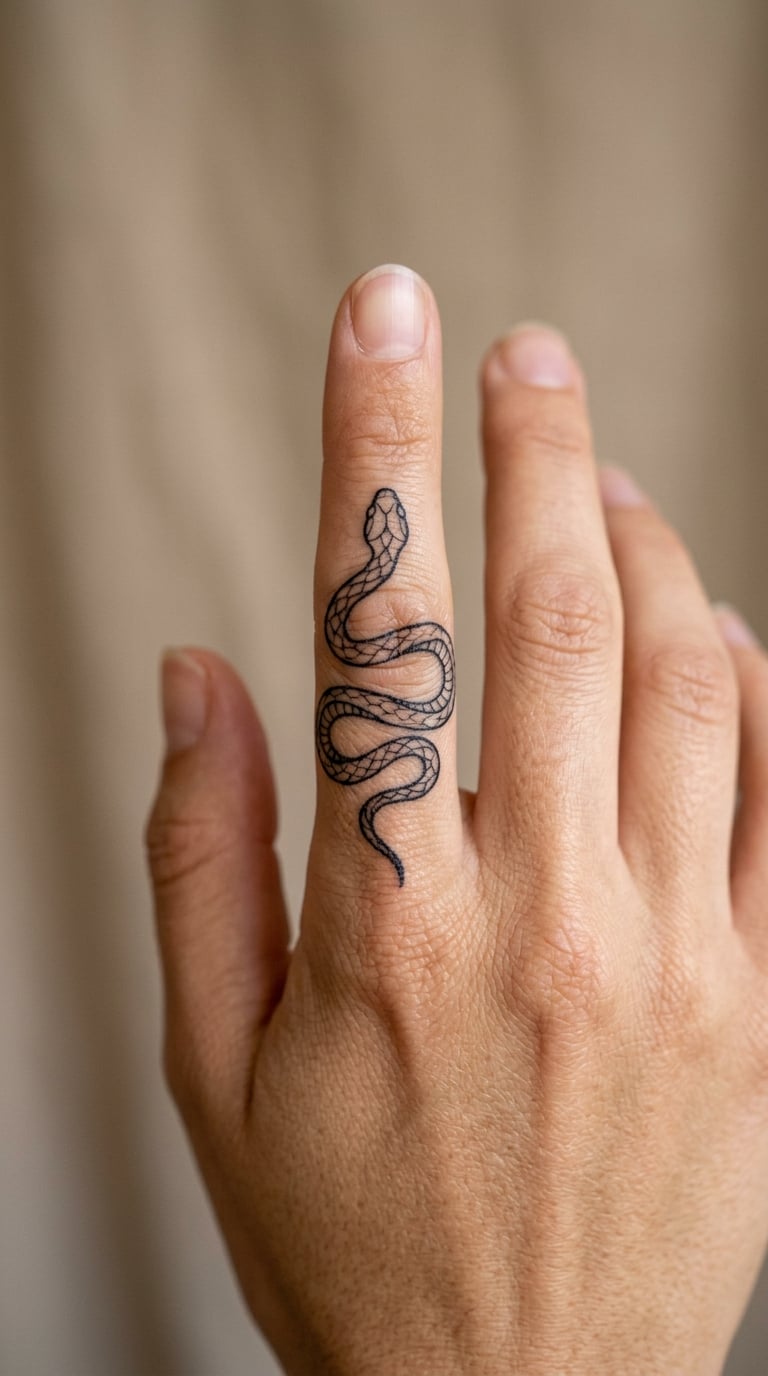
A thin snake winding once around the middle finger, head resting near the knuckle, drawn in a single continuous line. It means transformation, healing and a willingness to shed something, and it has been the most-requested design in the trend conversations of the past couple of years. The reason is the line quality: a snake is naturally one long line, which is exactly what fine-line work is good at.
A coil that fully circles the finger will stretch where the joint bends, so ask for the loop to sit on the phalanx rather than across the knuckle, and keep the head away from the crease. Black outline snakes keep their silhouette far longer than a snake rendered with red or yellow detail, which turns muddy in the hand’s constant warmth. Pain & time: the middle finger is sensitive, about a six, and takes fifteen to twenty minutes.
13. Butterfly Split Between Hand and Wrist
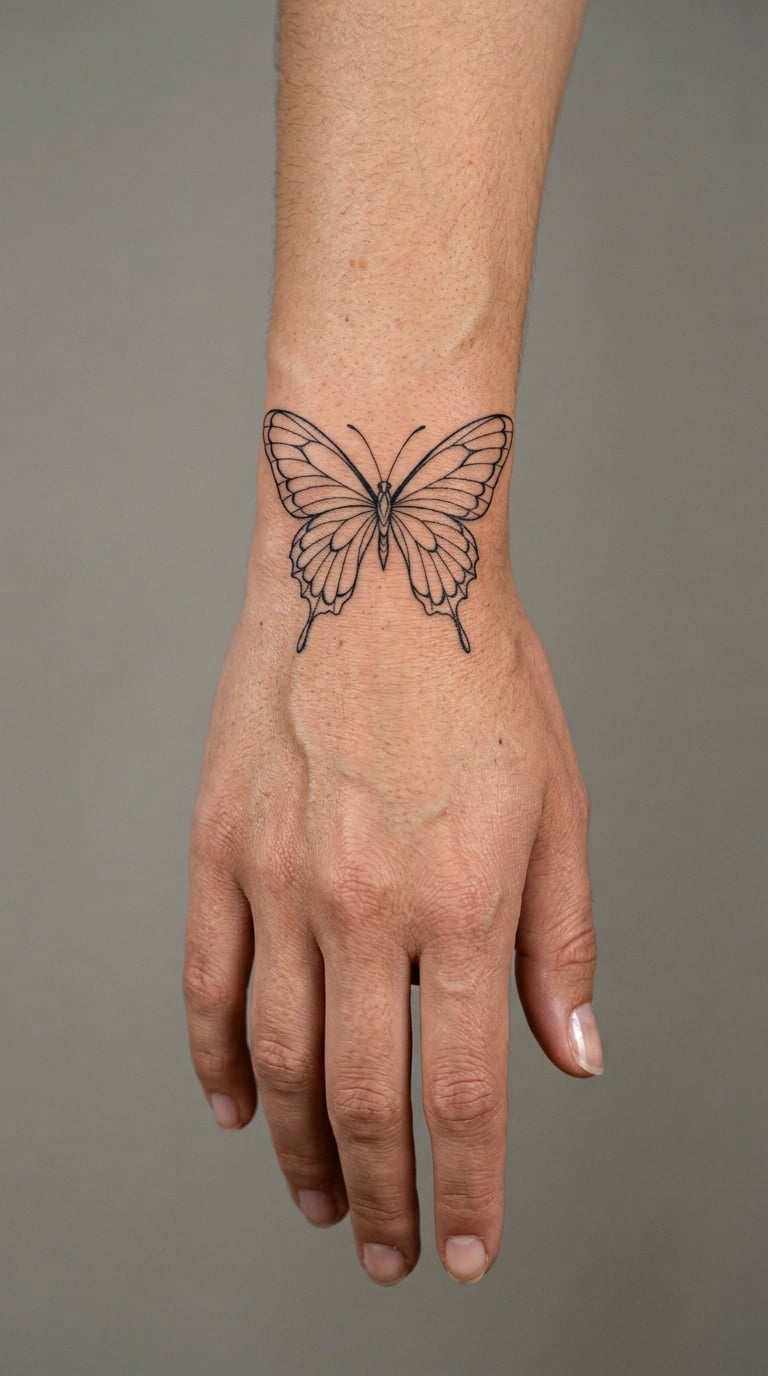
A butterfly drawn so the top half sits on the back of the hand and the lower half runs onto the wrist, with the body landing in the gap. Transformation, change, a chapter ending and another beginning. Split designs look considered rather than impulsive, which is usually the point for a hand.
Ask the artist to plan the composition around the exact gap where your hand meets your wrist, because that distance changes how the design reads and it’s the part that can’t be adjusted later. Fine-line wings lose their internal detail first, so a butterfly with a few large shapes instead of eight tiny ones will still look right when it’s three years old. Pain & time: this covers two areas, so expect thirty minutes, with the wrist half the sharper part at about a six.
14. Single Birth Flower Stem on the Little Finger
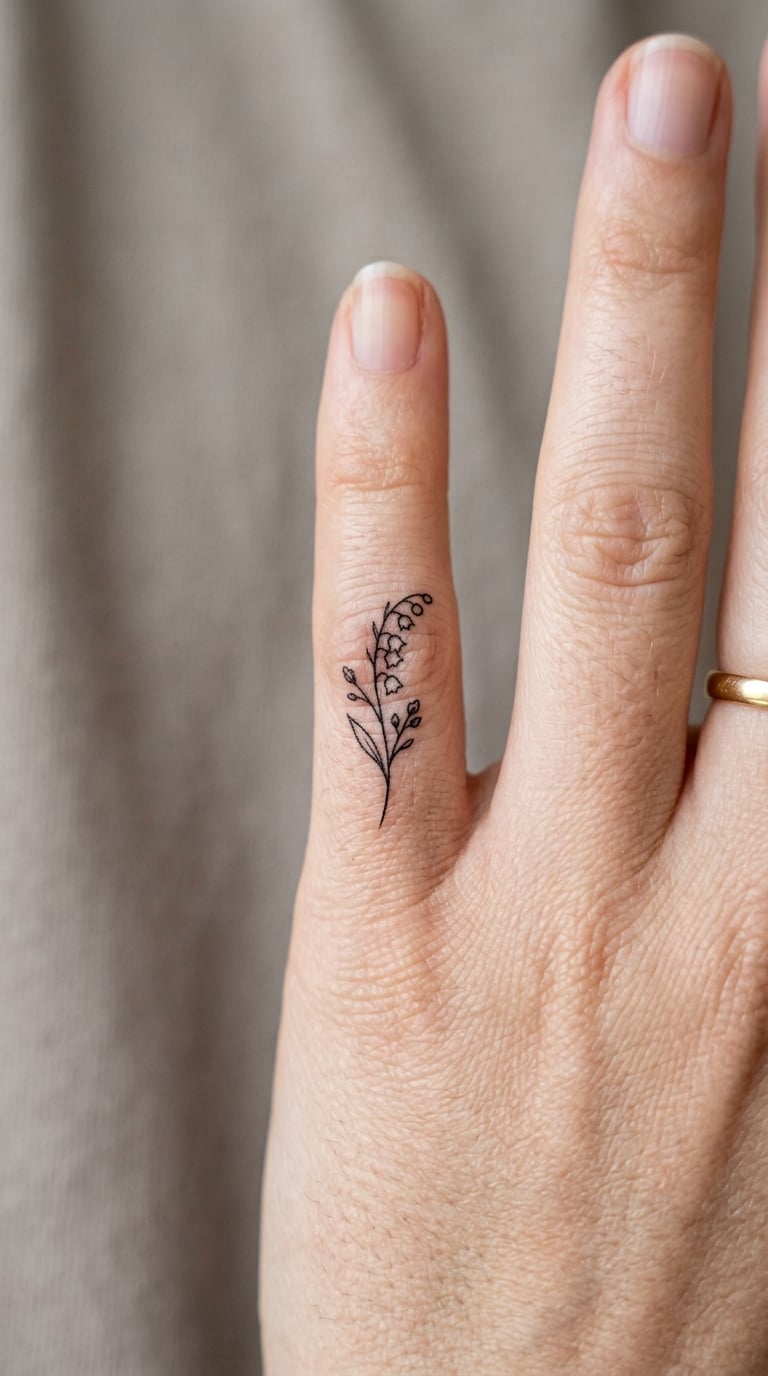
One stem with a single bloom and one leaf, no vase, no name, placed on the side of the little finger. The birth flower is an old idea that keeps coming back because it is personal without being explanatory. Popular choices include a poppy, a chrysanthemum, a hellebore and a peony.
A stem with negative space between the leaves is a better fit for a finger than a full bouquet, because the gaps stay visible as the line softens. Peonies and chrysanthemums have lots of petal edges, so ask for a simplified version with five or six petals rather than twenty. The little finger is narrow, so a bud smaller than a pea is usually the right call. Pain & time: the little finger is thin but less nerve-dense than the middle finger, about a four out of ten, and takes ten minutes.
15. Small Sun on the Outer Knuckle
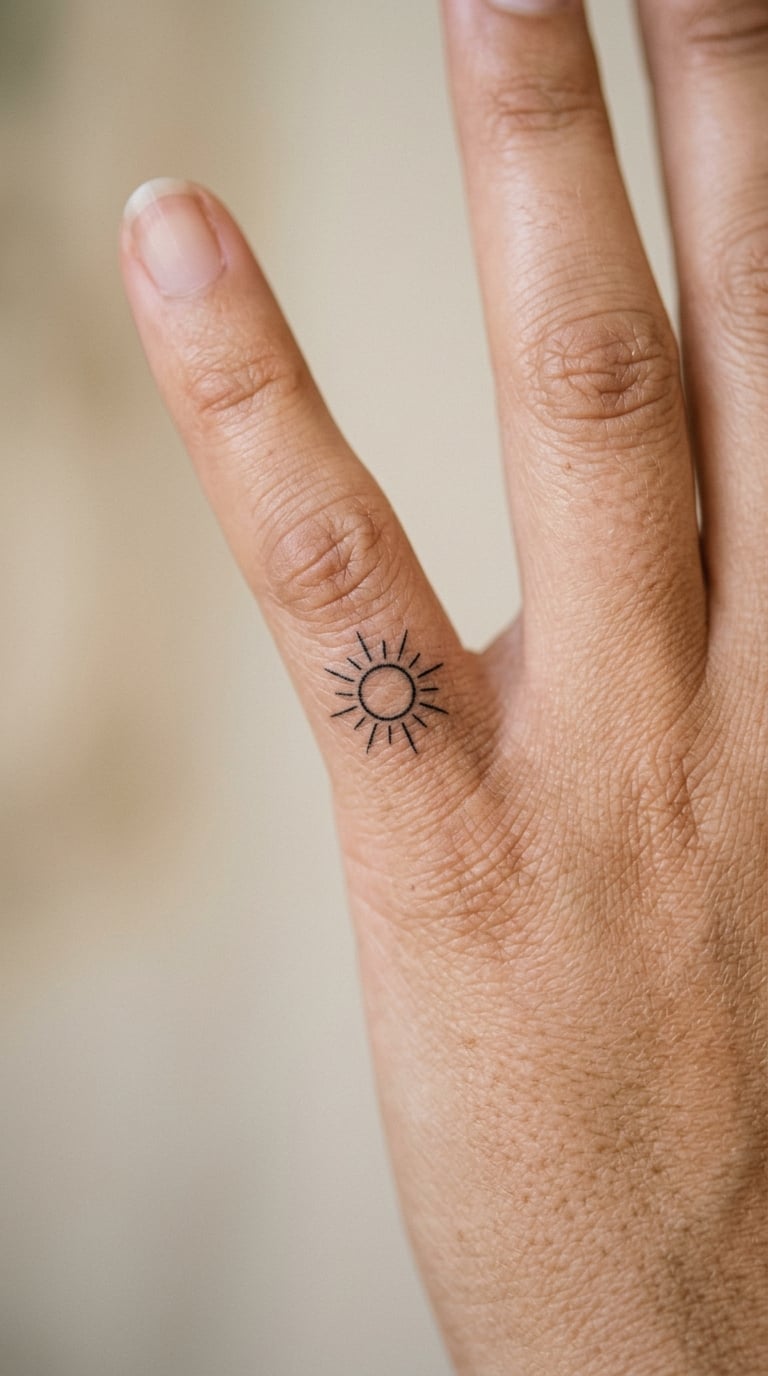
A simple sun with short triangular rays, no face unless you want one, on the outer knuckle of the hand. The meaning shifts with the person: vitality, a new beginning, a summer birthday, or the return of something you thought was gone. It’s one of the few designs here that reads as cheerful rather than moody.
Knuckle skin flexes constantly, so keep the rays short and widely spaced and ask the artist to avoid a design that crosses the joint crease itself. A sun drawn on the fleshy side of the knuckle, where it sits between two joints rather than on one, will hold noticeably better. Pain & time: knuckles are the most sensitive part of the hand, around a seven out of ten, and takes ten minutes.
16. Roman Numerals Tucked Into Three Finger Creases
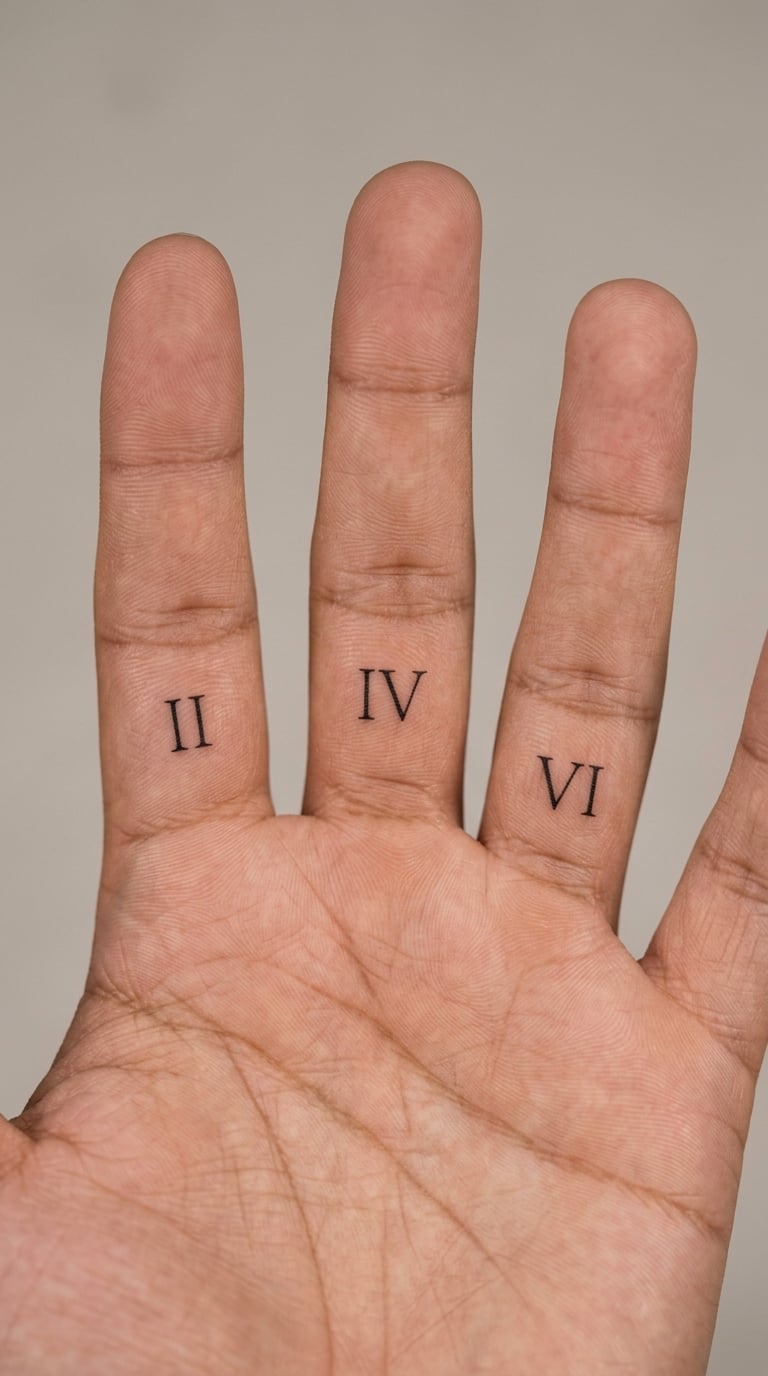
A date, a set of initials or a short phrase in roman numerals, split so each crease in three fingers carries a piece of the line. The effect is a private sentence that only resolves when you make a fist. It’s clever, it’s specific to hands, and it does not read as a generic tattoo from across the room.
This is the least durable design on the list and the artist should say so. Creases collect friction and moisture, and the skin there stretches in the opposite direction each time the finger bends, so numerals break apart at the joints of the letters first. If you want the idea to survive, put the same phrase in fine line on the side of the hand instead and keep the creases bare. Pain & time: crease work is quick but stingy, about a five out of ten, and takes five minutes per crease.
17. Bird in Flight on the Side of the Thumb
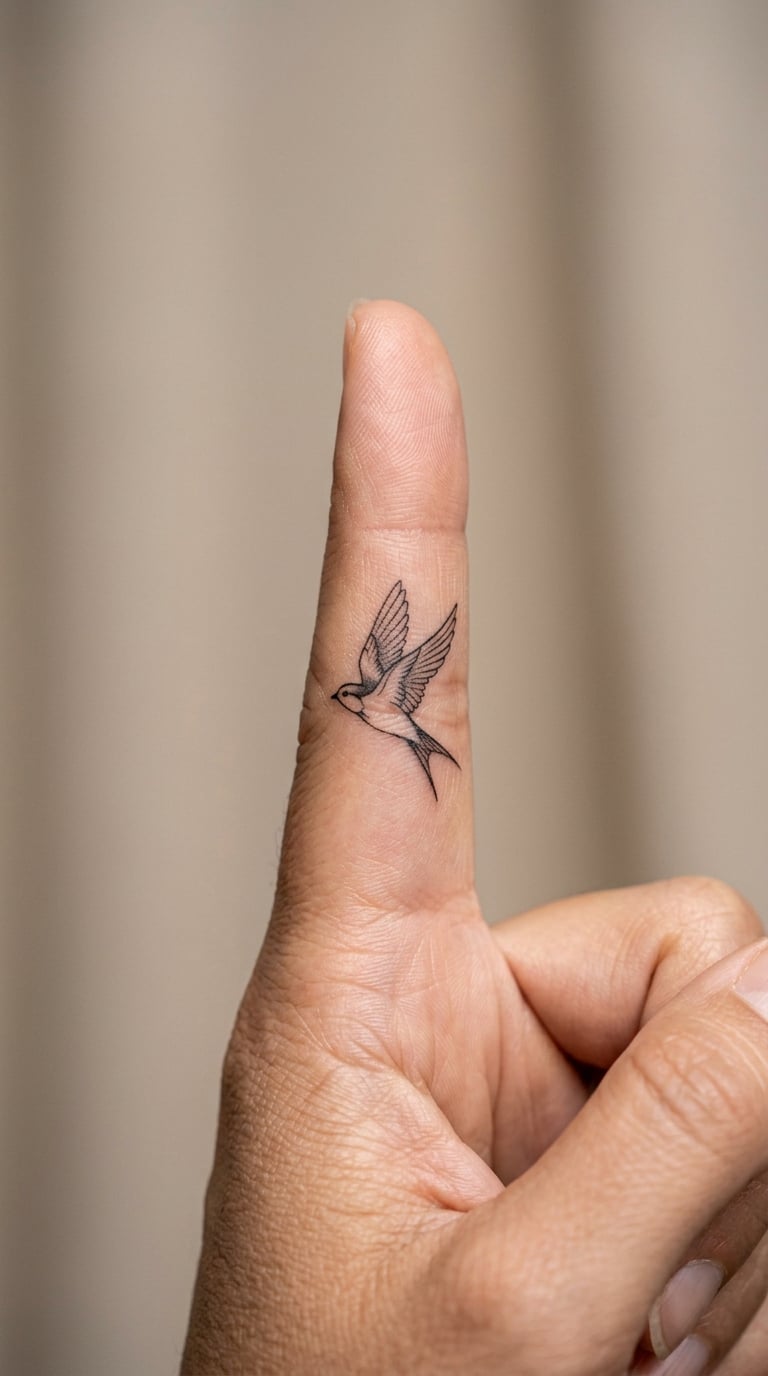
A single bird with wings mid-beat, side profile, about half an inch long, running along the side of the thumb. Freedom, leaving, coming home, or a specific person. Side profile rather than front-facing matters here, because a front-facing bird has symmetry that a curved thumb surface will immediately distort.
Wingspread birds placed on the side of the thumb follow the bone’s line nicely, so an artist can angle the design almost parallel to the digit and it will read as intentional. Keep the wing feathers to three or four lines instead of a dozen, since the ones nearest the webbing are the first to blur. Pain & time: the thumb side is moderate, about a four out of ten, and takes ten to fifteen minutes.
18. Rosebud With a Thorn in Black and Grey
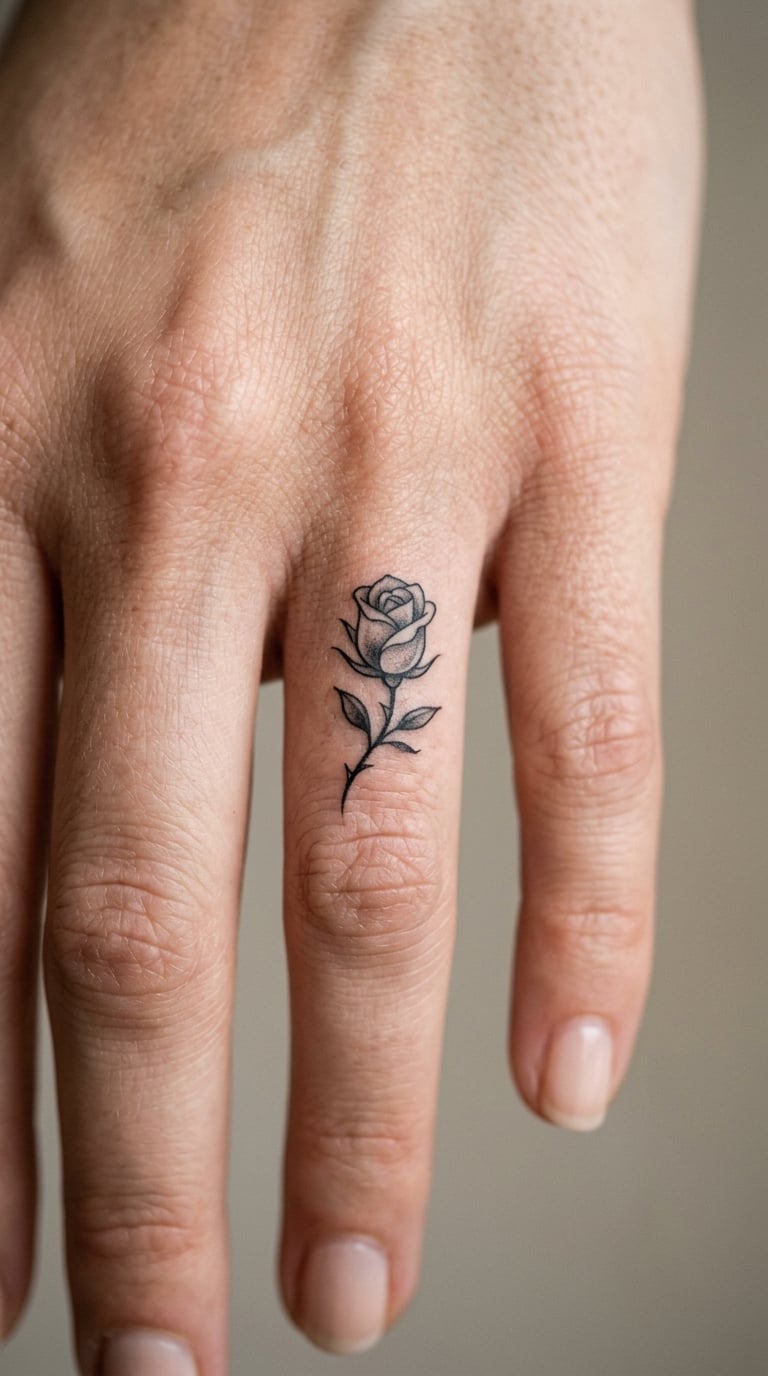
A closed rosebud with a single thorn on the stem, done in black and grey with soft shading rather than pure line, placed on the side of the index or ring finger. The meaning is beauty that has boundaries, which is why people often get it after a hard year. Shading gives it more presence than any of the fine-line designs here while staying small.
Shaded black and grey holds up better on a hand than any colour work because there’s no hue to fade, but the gradient still softens and the outline needs a top-up more often. Ask for a soft-shading approach without a hard outline box, since a fully outlined shaded piece looks dated within a few years. Pain & time: shading takes longer than a line, so budget twenty to thirty minutes, at about a four out of ten for the ring finger side.
Things to Know Before You Book a Hand Tattoo
- Look at healed work, not fresh work. A portfolio full of photographs taken the same week tells you nothing about how the artist handles fine line. Ask to see small hand pieces healed six months and two years in. Most of the fading problems on hands come down to a line weight that was too thin to begin with.
- Get the size agreed before the stencil goes on. Anything under a quarter inch on a finger is genuinely tiny, and anything over half an inch stops being small and starts competing with a ring. Bring your hand measurements or a photo of your own hand next to your reference images so the artist is designing for your proportions, not a template.
- Expect hand ink to fade faster than arm ink. Hand skin regenerates quickly, gets washed and moisturised constantly, rubs against everything, and sees more sun than most people expect. A fine-line finger design that is looked after properly often needs a refresh somewhere between year one and year three, and a knuckle design sooner. Treat that as maintenance, the same as a barbell needing re-racking.
- Plan for the first two weeks properly. Wash gently twice a day with unscented soap, pat dry instead of rubbing, keep it out of running water and away from swimming pools and baths for a fortnight, and use a thin unscented moisturiser as it dries out. Once healed, daily sunscreen on the back of the hand is the single most effective thing you can do to keep the line sharp.
- Expect it to hurt more than you think on fingers and knuckles. The hand is a dense bundle of nerves over very little soft tissue. Finger sides and the inner wrist sit around the middle of the scale, and knuckles sit at the top of it. Sessions are short, usually ten to thirty minutes, so the intensity passes quickly.
- Decide how discreet it needs to be. The back of the hand and the outer knuckle are visible to everyone, including on video calls. Finger sides, the webbing, the inner wrist and anything near the thumb are far easier to hide under a watch, a bracelet or a long cuff. A design you love but can’t see across a meeting table is the one you’ll regret.
Frequently Asked Questions
What are the best small hand tattoo ideas for women?
The most popular small hand tattoos for women fall into four groups: botanicals like a single-line rose or a birth flower stem, celestial marks like a crescent moon or a dot-work constellation, script and single letters, and small memorial symbols such as clasped hands or coordinates. A bee on the thumb webbing and a tiny snake around the middle finger are the two most requested of the moment. All of these read best under half an inch, in single-needle linework rather than filled colour.
What style of tattoos look best on hands?
Fine single-needle linework in black is what suits hands best, because the surface is curved, bony and constantly moving, and thin controlled lines are easier for an artist to keep consistent across that movement. Black and grey shading is the second safest option since it has no colour to fade. Bright colour, heavy fills and heavily outlined traditional pieces sit awkwardly on fingers and lose definition much faster.
Which finger hurts the least to get a tattoo on?
The ring finger and the side of the hand near the thumb are the least sensitive spots, because there is more soft tissue and fewer nerve endings underneath. The middle finger sides, the inner wrist and the knuckles are noticeably sharper, and knuckles are usually called out as the most uncomfortable part of a hand tattoo. A session on any finger is short, so the sharp part tends to be over quickly.
Do small hand tattoos fade faster than other tattoos?
Yes. Hand skin regenerates faster than most body sites, takes constant friction from daily life, gets washed and moisturised many times a day, and sees more sun than people expect. A fine-line design that is sun protected and moisturised usually needs a refresh between year one and year three, and knuckle and crease work fades sooner still. Black line lasts considerably longer than colour or grey shading.
How long do small finger tattoos take to heal?
The surface of a small finger tattoo usually settles within two to three weeks, with the itching and flaking stage in the first ten days. The deeper layers take considerably longer, which is why colour and shading can look slightly muted for a good six to eight weeks before the final tone shows. Judge the healed result around the two-month mark, and avoid swimming or soaking for at least a fortnight.
Can you hide a small hand tattoo at work?
Partly, and placement decides it. Finger sides, the webbing between thumb and finger, the inner wrist and the inside of the arm are easy to conceal with a watch, a bracelet or a longer cuff. The back of the hand, the outer knuckle and full fingers are difficult to hide in daylight. If the placement has to work under office clothing, choose a spot on the inner side of the hand rather than the back.
Where to Start With Your First Small Hand Tattoo
If you have been saving small hand tattoo ideas for women for a while, start with placement, not the picture. Decide how discreet you need it to be, then pick the spot that fits: the thumb webbing and finger sides for something nearly hidden, the back of the hand if you want it seen, the inner wrist if you want a private line of text. Then bring three or four references to the consultation and let the artist redraw the idea to fit your hand, rather than copying a saved image at a size that won’t hold together.
Small hand tattoos for women are the easiest kind of ink to live with and the easiest to get slightly wrong, because the difference between a design that ages well and one that blurs is usually about two millimetres of line weight. Choose black over colour, keep it under half an inch, buy sunscreen you’ll actually use, and accept one or two touch-ups as part of the deal rather than a sign of poor work.