
18 Sunflower Tattoo Ideas for the Shoulder (September 2026)
Sunflower tattoo ideas for the shoulder are easy to find and surprisingly hard to choose from, because almost every reference is a flat photo of a flower on a flat shoulder. The real decision is how a round motif sits on a rounded bone: the deltoid cap, the top of the shoulder, the shoulder blade, the upper arm and the collarbone each take the same bloom very differently.
One more thing worth knowing before you start collecting references. Most people who get a sunflower shoulder tattoo booked it in autumn or winter, then healed it through the cooler months, so the yellow had set before the first beach day. If you are reading this in September 2026 and you want the colour in summer, you are already a session or two behind. That is fine, but it changes how you plan.
What Does a Sunflower Tattoo on the Shoulder Mean?
A sunflower tattoo usually stands for warm, steady optimism: the flower turns toward the light all day and keeps growing, so people read it as loyalty, adoration and resilience rather than a mood that fades. On the shoulder it picks up a second layer, because the placement is visible and open, so the flower reads as something the wearer is happy to be seen carrying. It is also the birth flower for anyone born between July 23 and August 22.
Common readings behind the design include:
- Positivity and good luck carried where people can see it
- Adoration and loyalty, from the flower turning toward the sun
- Resilience, since a sunflower grows through rough ground and still stands up
- Hope and a new beginning, usually after a hard year or a move or a recovery
- Leo birth flower, if your birthday falls in late July or August
- Remembrance of a person or a place, often with a name or a date in the stem
None of that is fixed. Meaning travels from person to person, and the shoulder placement is popular enough that nobody reads your flower for you unless you tell them.
Where to Put a Sunflower Tattoo on the Shoulder
There is no single right spot, because the shoulder is really several canvases with different curves, different amounts of daily sun and different amounts of bone under the skin. Pick the canvas first, then pick the flower.
- Deltoid cap: the rounded top of the shoulder. Wants a bold, circular bloom sized to the cap itself, around 3 to 4 inches across, with the petals breaking slightly over the edge. The most common choice, and the one that reads best from a distance.
- Top of the shoulder, near the collarbone: a narrow band of skin between the neck and the cap. Better suited to a small single bloom, a half flower or a name, because there is not much width to work with.
- Shoulder blade and upper back: the flattest and largest area, so bouquets, fields, half sleeves and painterly pieces land here without fighting the body. Also the easiest place to hide work under a shirt for the first year.
- Upper arm, just below the cap: a long strip of skin that curves with the bicep. Small and mid-size pieces sit well here and look good in a sleeveless top without crowding the shoulder.
- Collarbone: a thin strip close to bone, ideal for a delicate bloom, a stem or script. Visibility is high in a low neckline and it fades fastest in direct sun.
- Half sleeve, cap to bicep: a project, not a sitting. Sunflowers work as the main flower with filler, or as the whole idea if the sleeve is purely botanical.
The most common mistake is a round motif inked too small on a broad shoulder. It reads as lost. The second most common is stretching a bloom so wide that it stops following the curve of the deltoid and starts to look like a sticker.
1. Single Realistic Sunflower on the Deltoid Cap
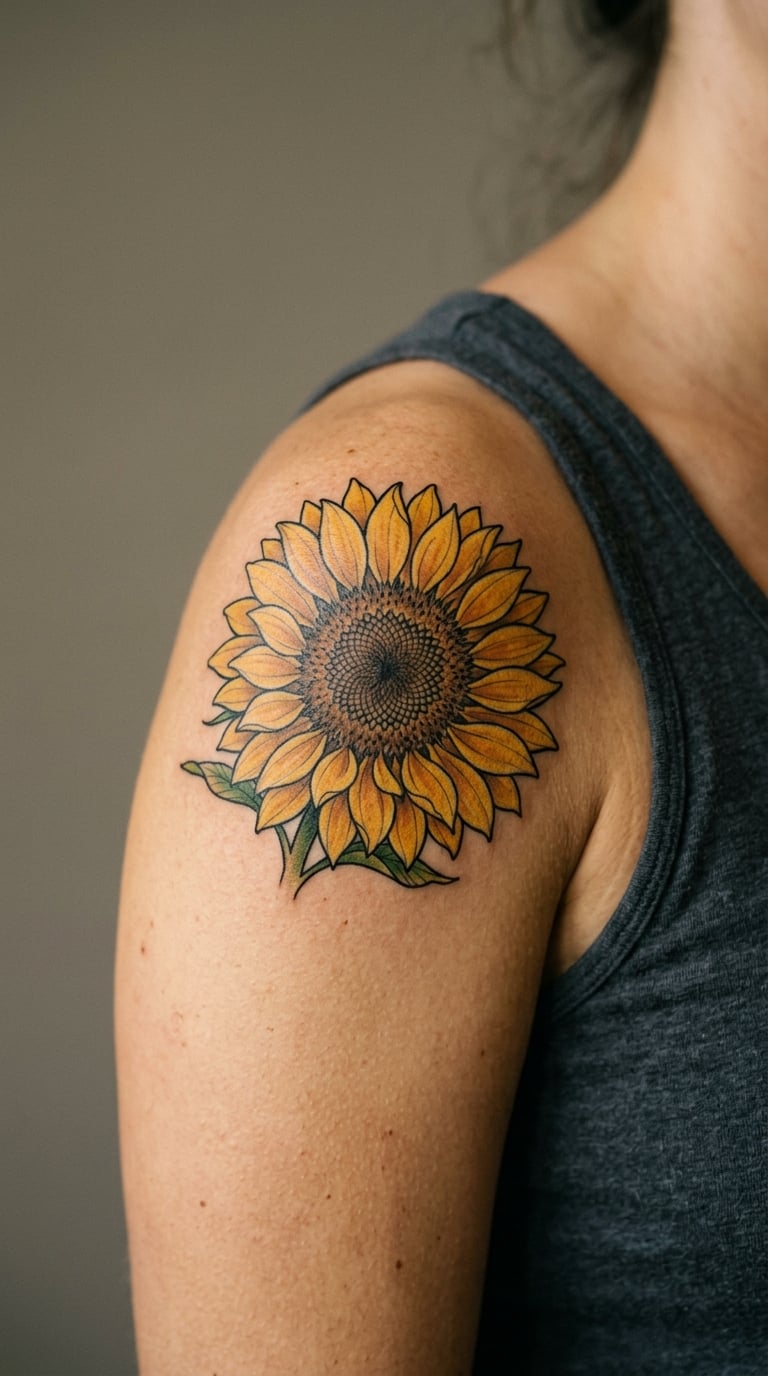
The one bloom that fills the cap and nothing else. Petals layered from gold at the centre to pale yellow at the tips, a seeded head shaded so it does not look flat, and a stem that drops toward the upper arm to stop the piece feeling like a sticker.
Two and a half to three and a half inches across is the sweet spot here, in colour realism. It is the version most people picture when they search for a shoulder sunflower tattoo, and it ages predictably: the outline stays crisp for years, the yellow softens first if you sunbathe in a tank top.
Pain and time: the cap sits on bone, so expect a solid mid-level ache. Two to three hours for a piece this size, and you will feel it in your neck by the end.
2. Fine-Line Outline Sunflower Behind the Shoulder
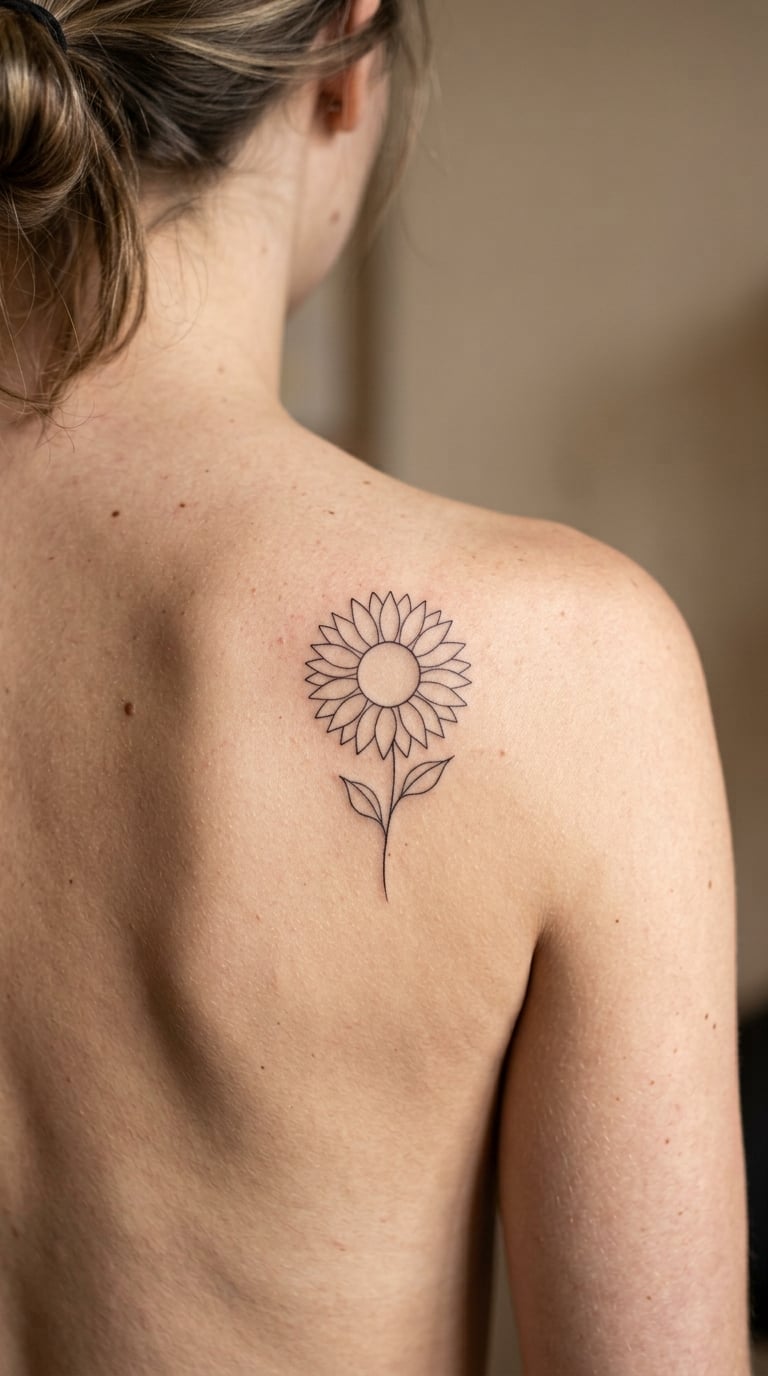
Nothing but the outline. One continuous line for the outer petals, a few short strokes for the seed head, no shading at all. It looks like a drawing somebody sketched in a notebook, which is exactly the appeal.
Keep it around two inches and place it high on the back shoulder, near the blade’s outer edge where the skin is flatter. Fine line is the style that ages most kindly on skin that gets sun, though thin lines can soften over the years, so a slightly heavier needle weight is worth asking for.
Pain and time: the upper back near the blade edge is one of the easier places to sit through. One to two hours, and the session passes quickly.
3. Bold Blackwork Sunflower Over the Top of the Shoulder
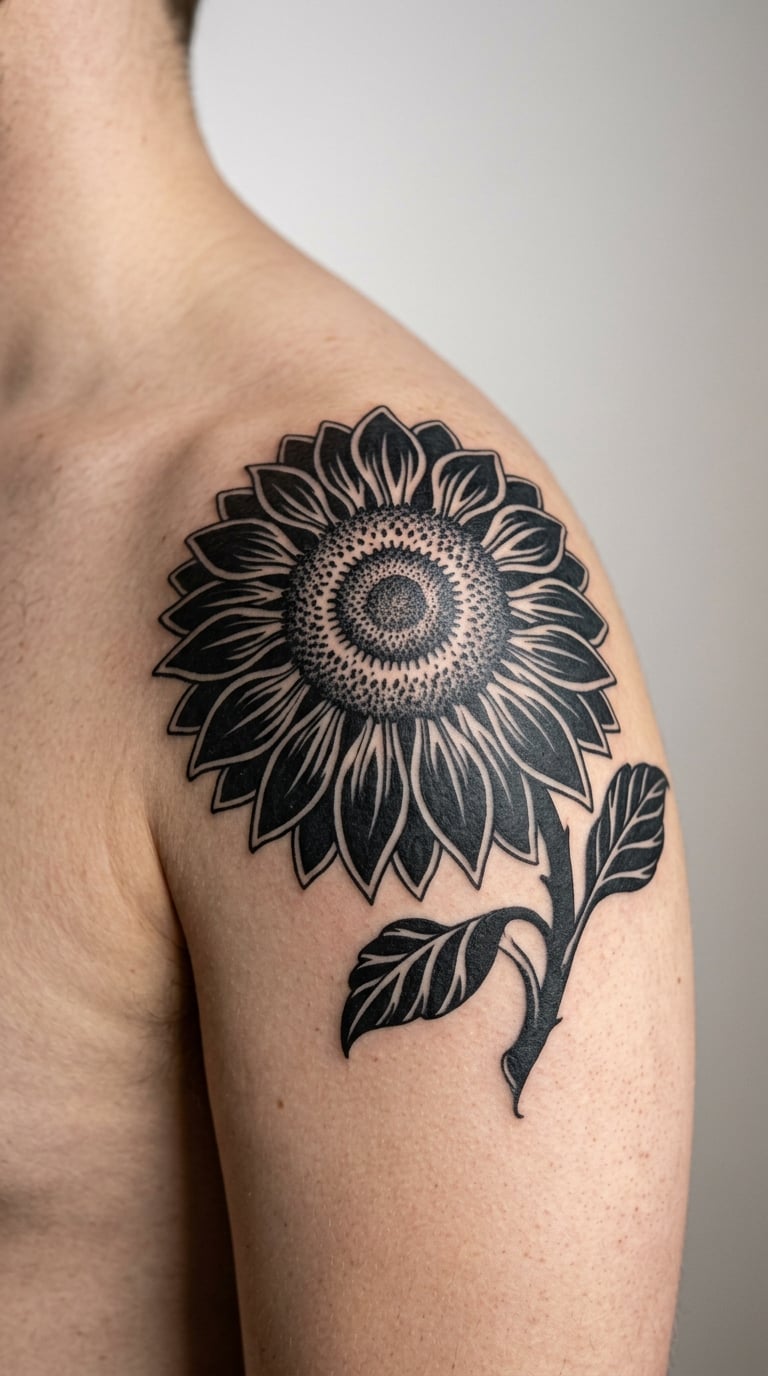
Heavy petal shapes filled solid black, seed head left white with carved-out texture, one or two highlights cut out of the black. No colour at all, which is what makes it read as graphic rather than decorative.
Four inches or bigger on the top of the shoulder works because the design can run with the curve instead of sitting on it. This is the one on the gallery that never needs a colour decision, and the linework holds up better than a coloured equivalent on sun-exposed skin.
Pain and time: the top of the shoulder is tender where the bone sits close under the skin. Two to three hours, and it stays sensitive for a good while after.
4. One-Inch Greyscale Sunflower on the Upper Arm
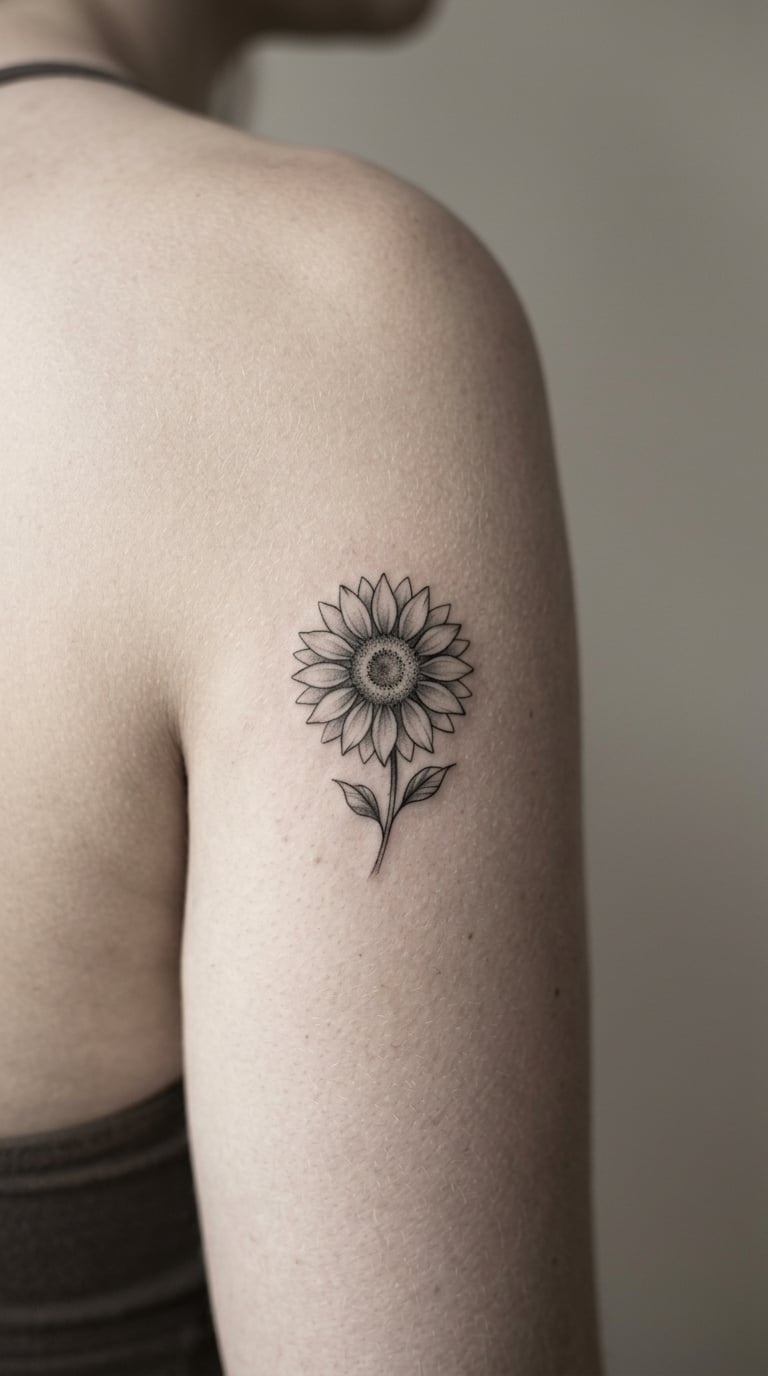
The smallest option on the list, and the one people pick when they want a sunflower without announcing it. Grey shading instead of yellow, a simple outline, no stem, nothing else.
One inch on the upper arm just below the cap. It is a genuinely good first tattoo because the upper arm curves gently, there is no bone right under the middle of it, and the design is finished before you get bored. Small and greyscale also means there is very little colour to fade.
Pain and time: under an hour, and most of that is the sting of the first few lines. You can sit through this one comfortably and keep still.
5. Sunflower Bouquet Curving Around the Shoulder Blade
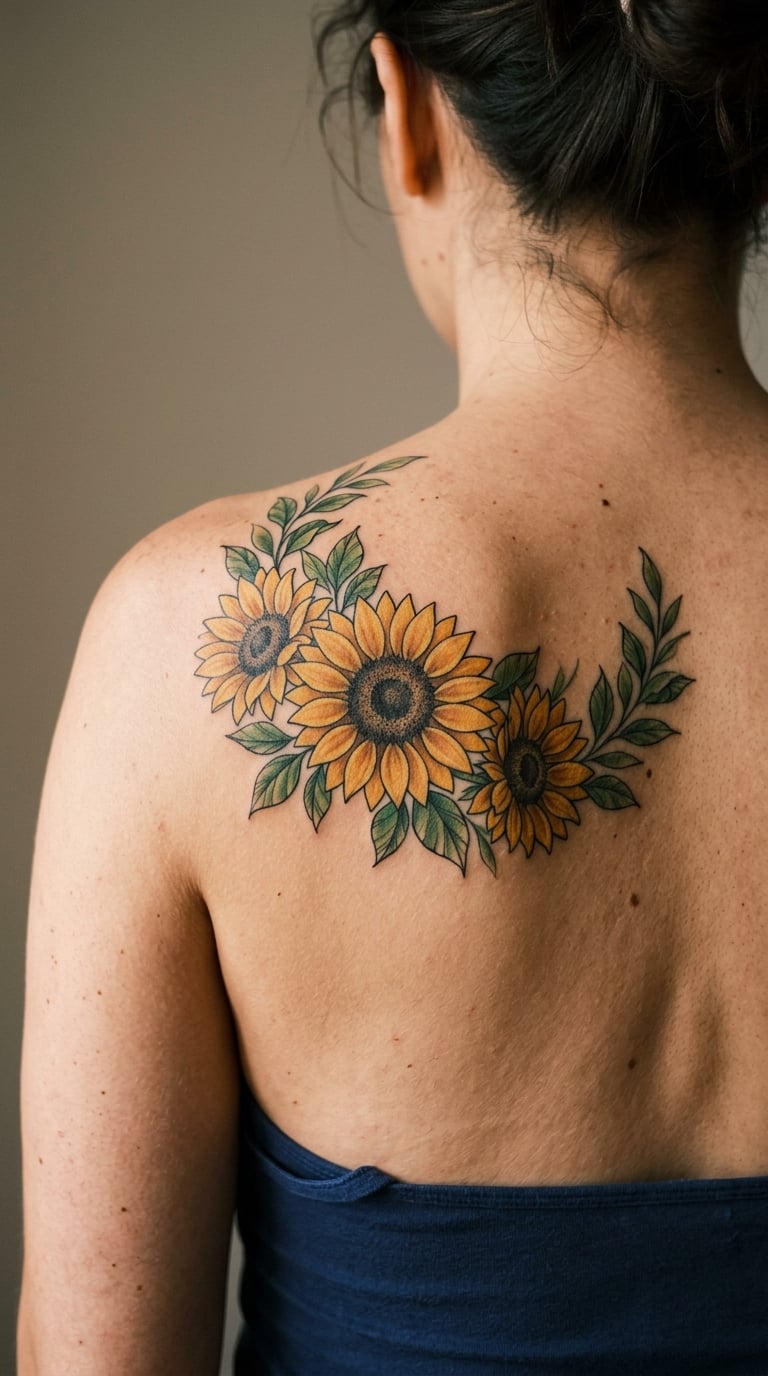
Three or four blooms at different heights with green leaves and a loose stem, arranged in an arc so the piece follows the line of the shoulder blade instead of sitting square. This is the shoulder sunflower tattoo that looks like a painting rather than a sticker.
Five to six inches across the upper back is realistic, and the back shoulder is the flattest place on you, which lets an artist lay in the detail that colour realism needs. Green is the part to watch, because it fades on sun-exposed skin faster than the petals do.
Pain and time: three to four hours, and you will be sitting or lying on your front for part of it. Bring something to read and plan a long break before it.
6. Loose Watercolour Sunflower on the Collarbone
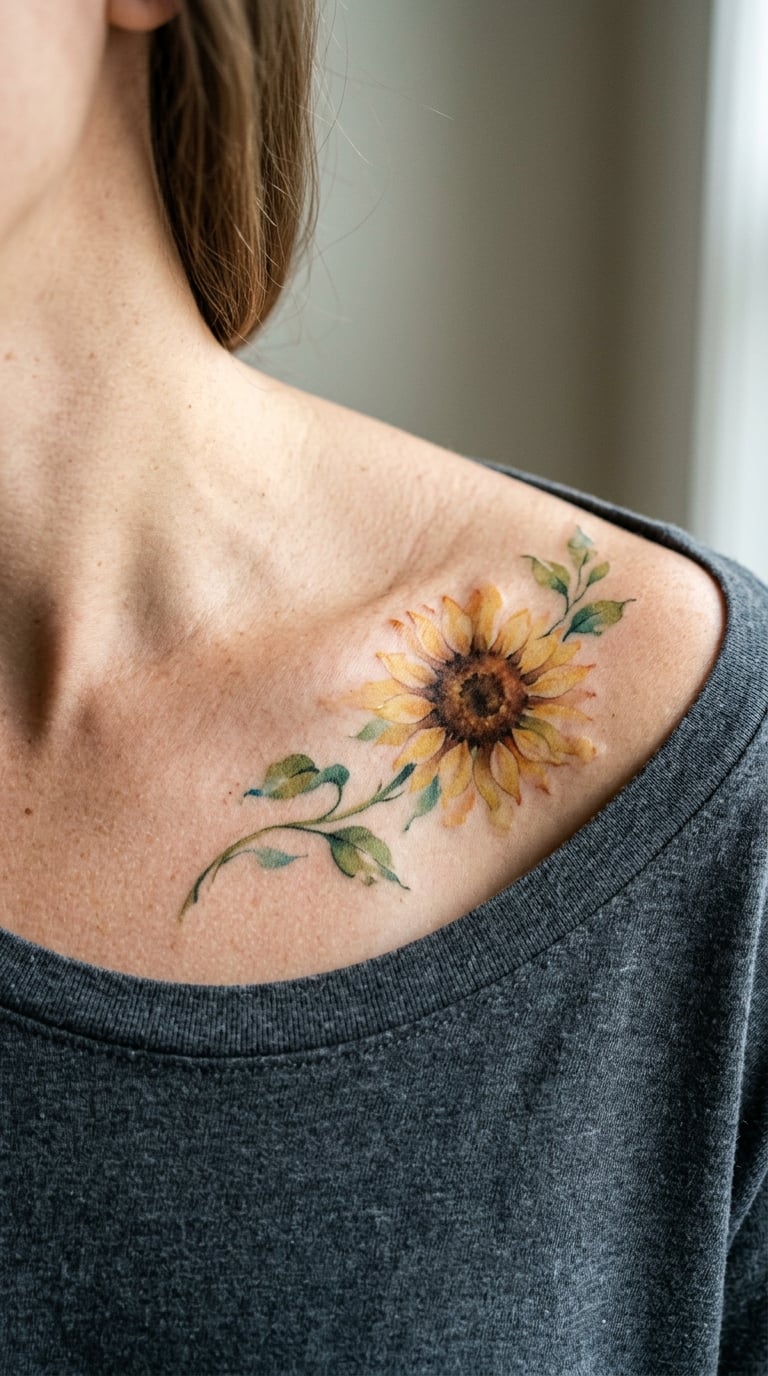
Colour applied as pigment rather than as clean line, edges bleeding into the skin the way watercolour on paper does. No outline, so the bloom has a soft, unfinished look from a distance and real detail up close.
Two and a half inches along the collarbone, positioned so the flower sits between the collarbone and the base of the neck. Watercolour is forgiving, because the pigment sits lighter in the skin and does not need heavy saturation to read. It is also the one style on the shoulder that suits a delicate, feminine placement.
Pain and time: the collarbone is close to bone, so this one stings more than it should for such a light design. Around two hours.
7. Neotraditional Sunflower Half Sleeve, Cap to Bicep
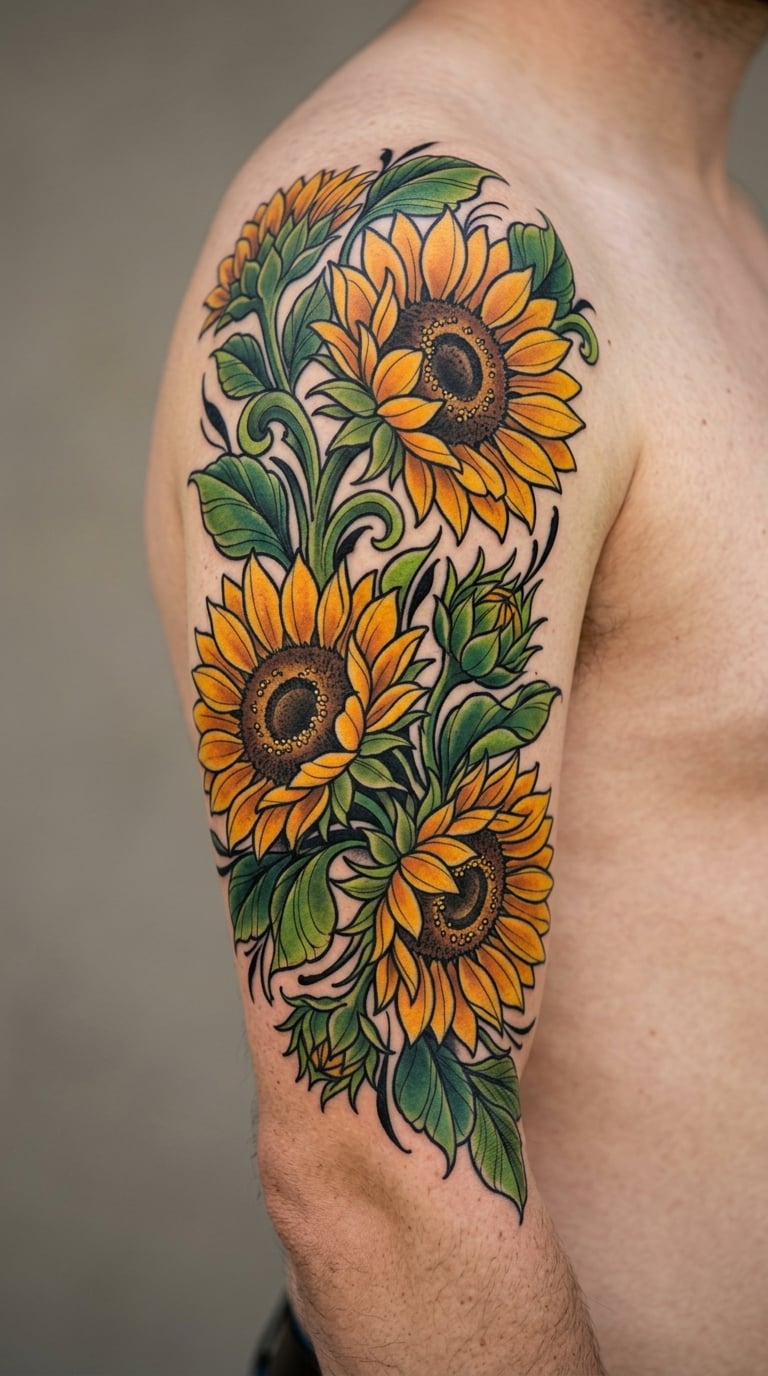
Big black outlines, saturated yellow fill, deep green leaves, and sunflowers spaced along the arm with breathing room between them. Traditional line work with a modern colour spread, which is where most half sleeves have landed.
From the cap to roughly the midpoint of the bicep, using two to four blooms at 3 to 4 inches each. This is a multi-session project, usually two to three appointments, and the shoulder cap goes first because it is the most awkward angle to leave until later. Plan the whole layout before the first session starts.
Pain and time: three to four hours per session, repeated. Your arm will feel worked over for a day or two after each sitting.
8. Sunflower Growing Through Cracked Concrete on the Outer Shoulder
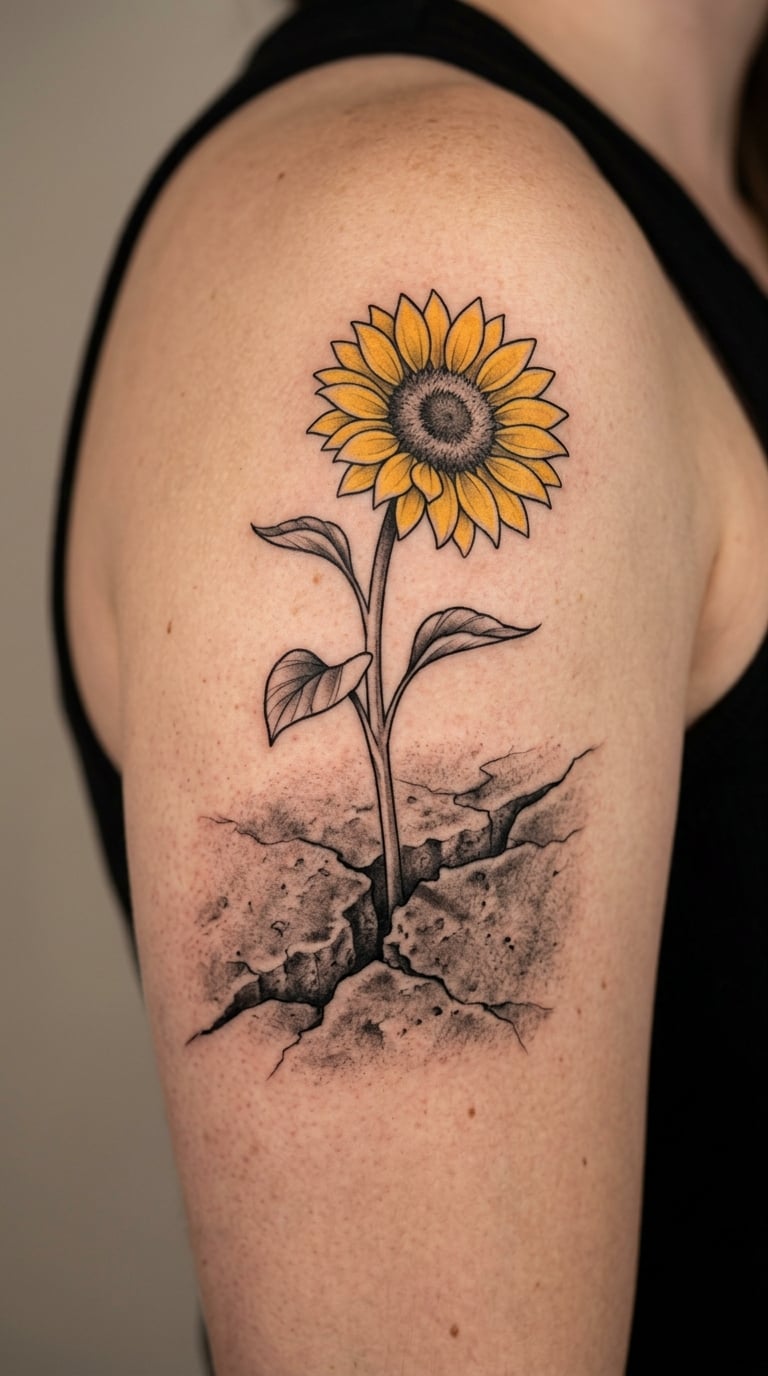
A stem forcing its way up through a fracture in a block of grey concrete, one yellow bloom at the top, everything else in black and grey. The contrast between the hard surface and the soft flower does the emotional work.
Three to four inches on the outer shoulder, just behind the cap. Black and grey holds its shape far better than a fully coloured piece in a spot that gets sleeve-free sun all summer, and one yellow bloom gives you the colour without committing the whole design to it.
Pain and time: two to three hours. The grey shading in the concrete takes patience, so the session usually runs longer than the line work suggests.
9. Painterly Sunflower Field in a Block on the Back Shoulder
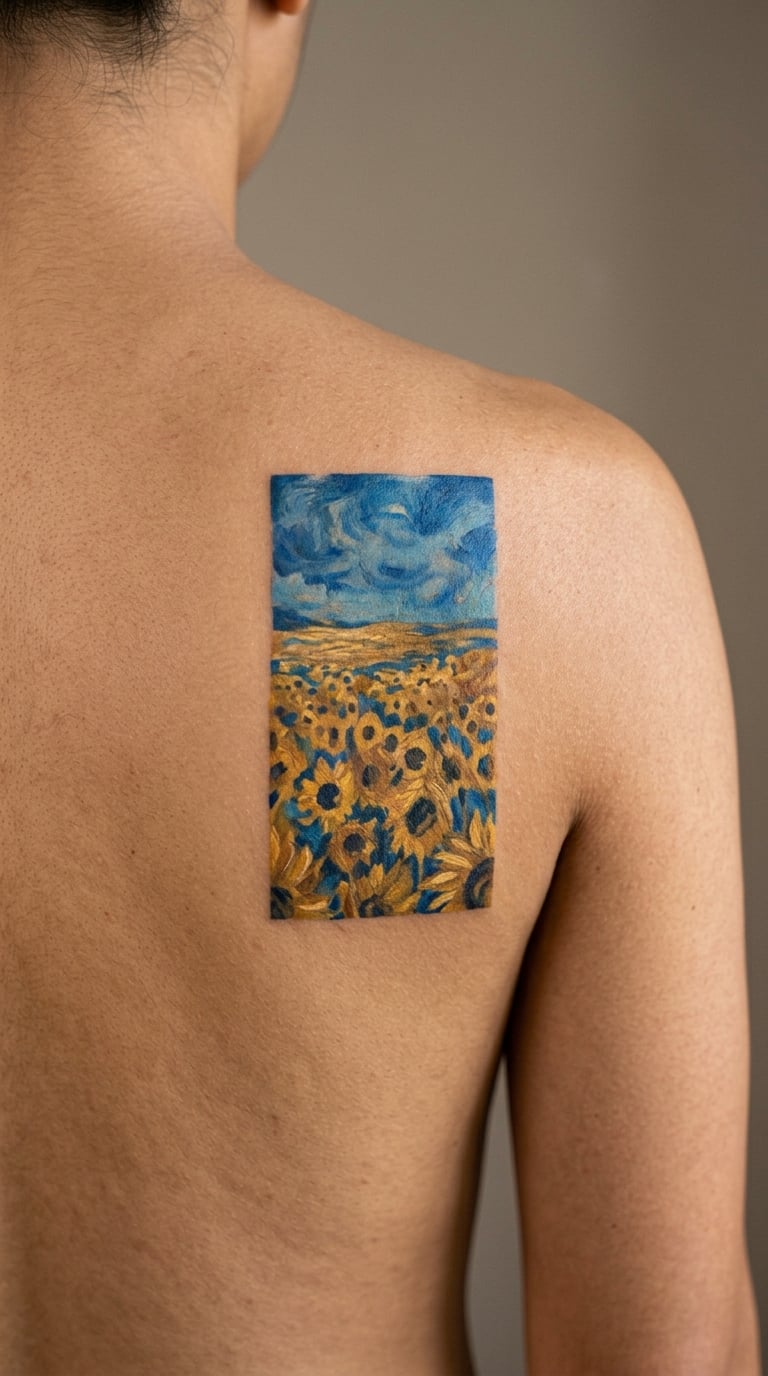
A rectangle of painted colour, not a single flower. Rows of sunflowers receding, heavy blues in the shadows, ochre and deep yellow in the light. It is the one on this list that is explicitly an art piece rather than a motif.
Six inches or wider across the back shoulder, where there is enough flat area to hold a composition. Painted colour reads well from several feet away and gives you a piece that does not look like every other floral tattoo in a studio waiting room. It is the hardest of these to heal evenly, because large areas of blended colour need more time to settle.
Pain and time: three to four hours, possibly split over two sessions depending on the detail you want in the field.
10. Single-Line Stem Sunflower on the Shoulder Blade
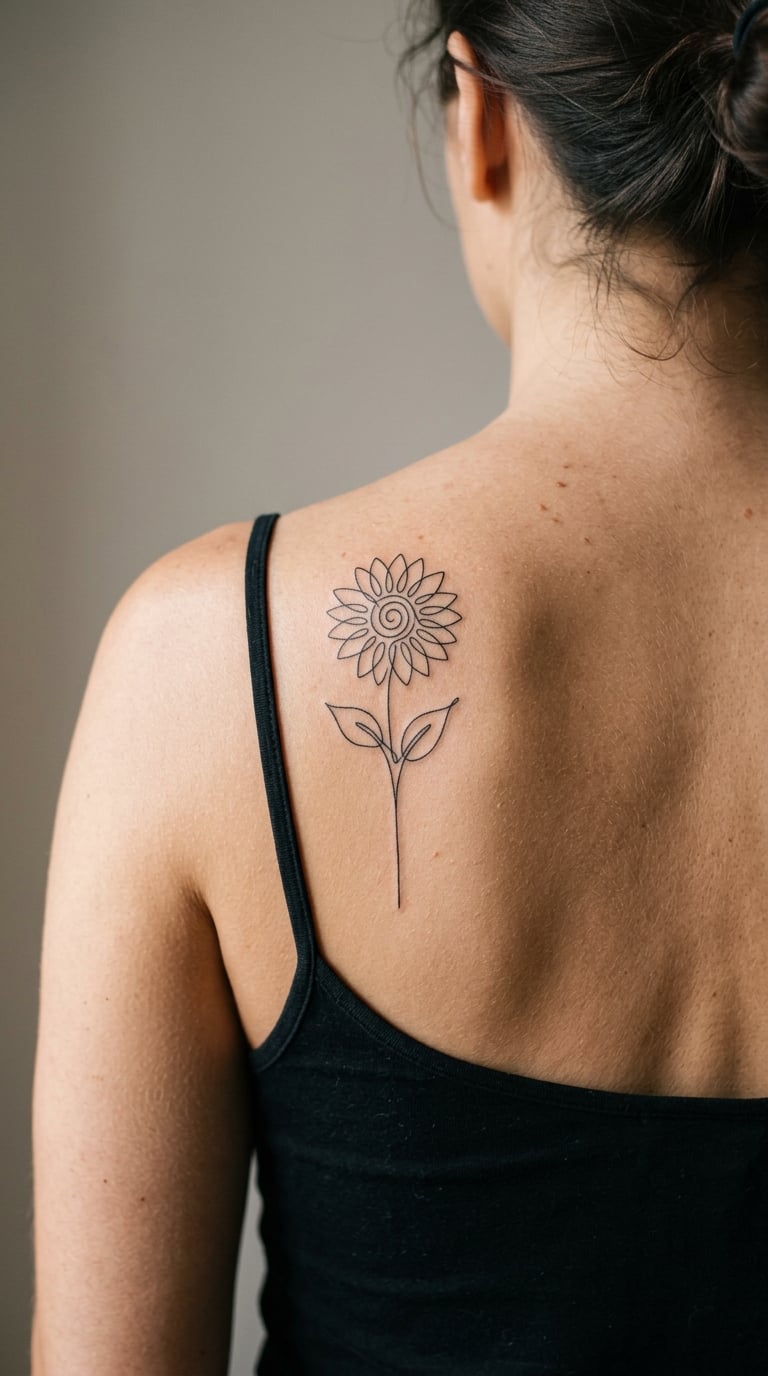
One unbroken line from the tip of the stem to the top of the bloom, drawn as a single continuous stroke. Fewer marks than anything else here, and the restraint is the whole point.
Three inches on the flat of the shoulder blade, angled so the stem runs with the blade rather than across it. Single-line work shows every wobble, so pick an artist whose fine line you have actually seen healed, not just fresh on the day. The line reads well at a distance and fades gracefully because there is very little ink holding it together.
Pain and time: one to two hours. The back shoulder is comfortable, so this is a good design to bring when you are nervous about sitting still.
11. Geometric Mandala Sunflower on the Deltoid Cap
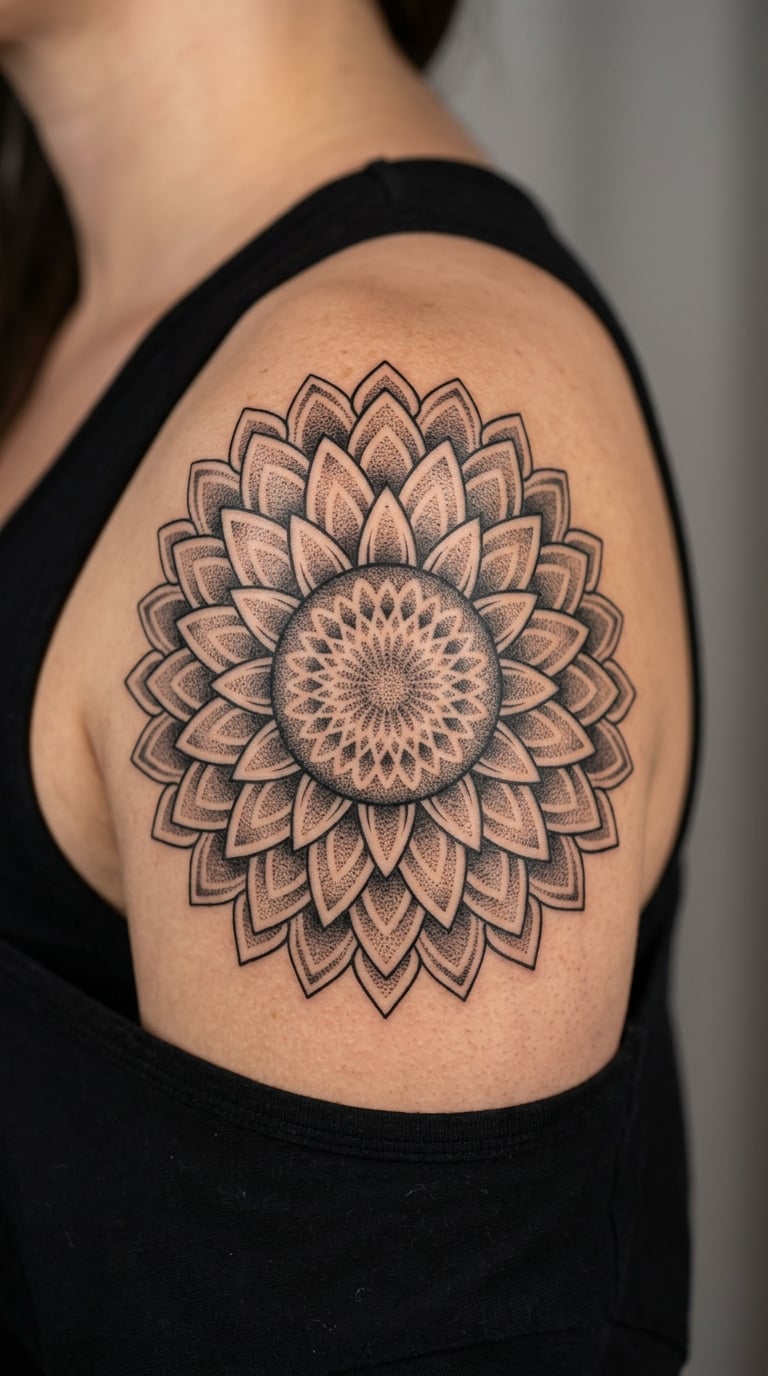
A sunflower rebuilt as a mandala, with radiating petal shapes, symmetry down the centre and dot work filling the negative space. It keeps the seed head and the petal rhythm but removes everything soft about the plant.
Four to five inches centred on the cap, because the symmetry needs the round surface to sit on. This is the most technically demanding design in the gallery and the one most likely to need a second session to finish the line work cleanly. It is also the design that ages best here, since it is mostly black line and no pale colour to lose.
Pain and time: two to three hours, more if the dot work is dense. Ask your artist how many sessions they think the detail needs before you start.
12. Sunflower and Bee on the Front of the Shoulder Cap
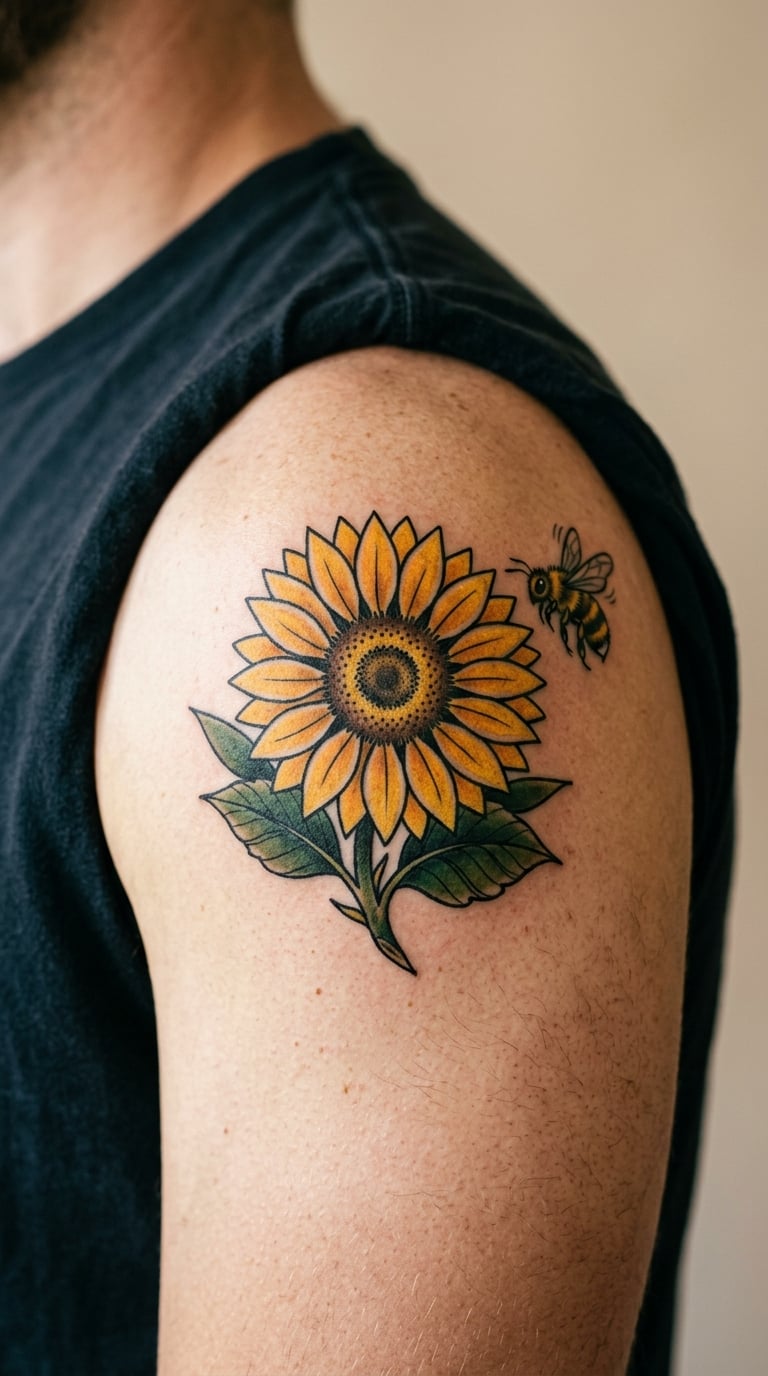
One bloom facing forward with a bee at the edge of the petals, wings caught mid-hover. Traditional and a bit playful, and the bee adds motion to a design that would otherwise be static and symmetrical.
Two and a half to three inches on the front of the cap, angled so the bee sits on the upper edge where it stays visible when your arm is down. Bees read well at small sizes because the shape is distinctive, but the wings are where an artist earns their keep, so look at healed examples.
Pain and time: one and a half to two hours. The front of the cap is easy to reach, so this is a comfortable sitting.
13. Half-Mandala Sun Rising Over the Shoulder Cap
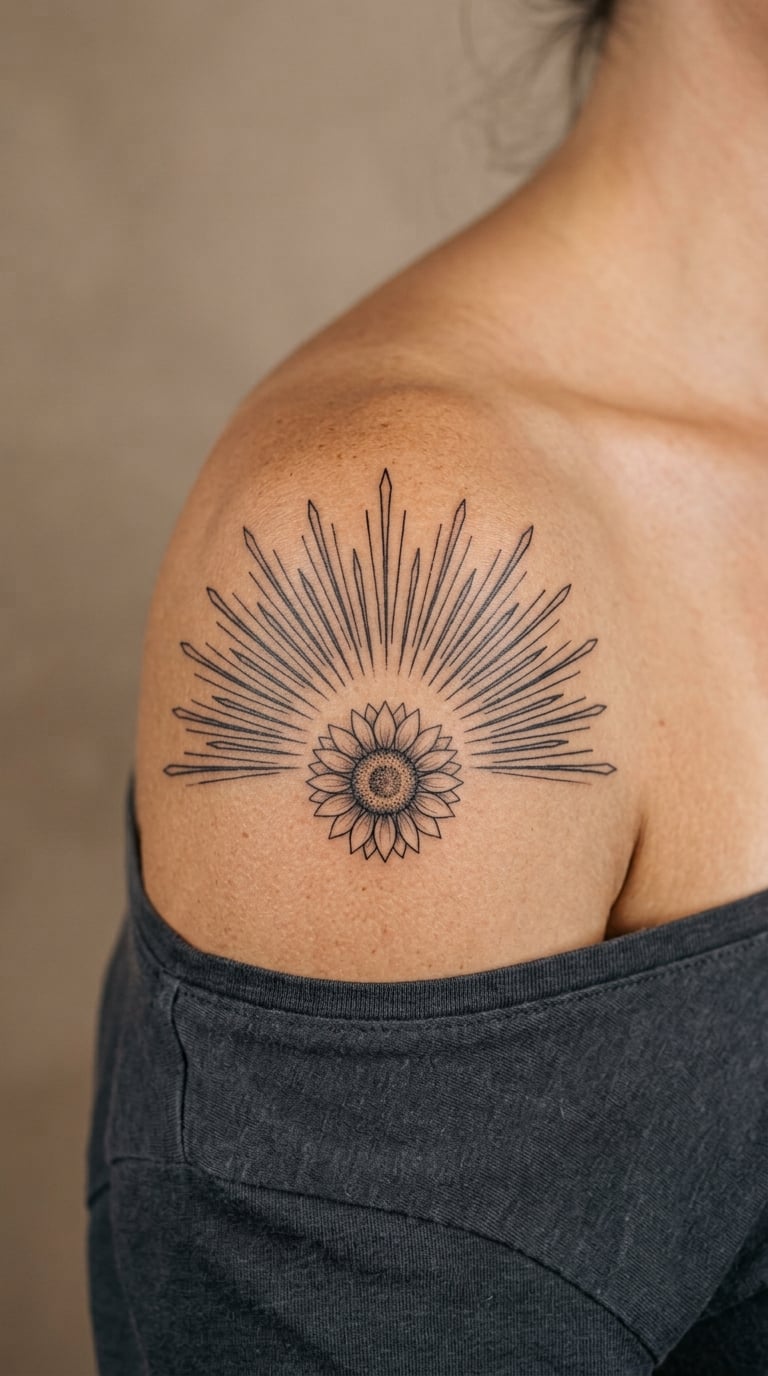
Radiating fine lines fanning out from a point on the seam of the shoulder, half a mandala, with a small sunflower sitting at the base of the rays. The cap is a natural centre for this because it is the one place a symmetrical shape can wrap around itself.
Three inches, centred on the shoulder tip, with the rays following the curve of the deltoid. It is the design that most obviously looks designed for the shoulder rather than moved onto it. Fine line means less ink, so it heals faster and needs less commitment than a fully shaded piece.
Pain and time: two to three hours. The shoulder tip itself is the sensitive point, so the first twenty minutes set the tone for the session.
14. Matching Small Sunflowers on Both Shoulder Caps
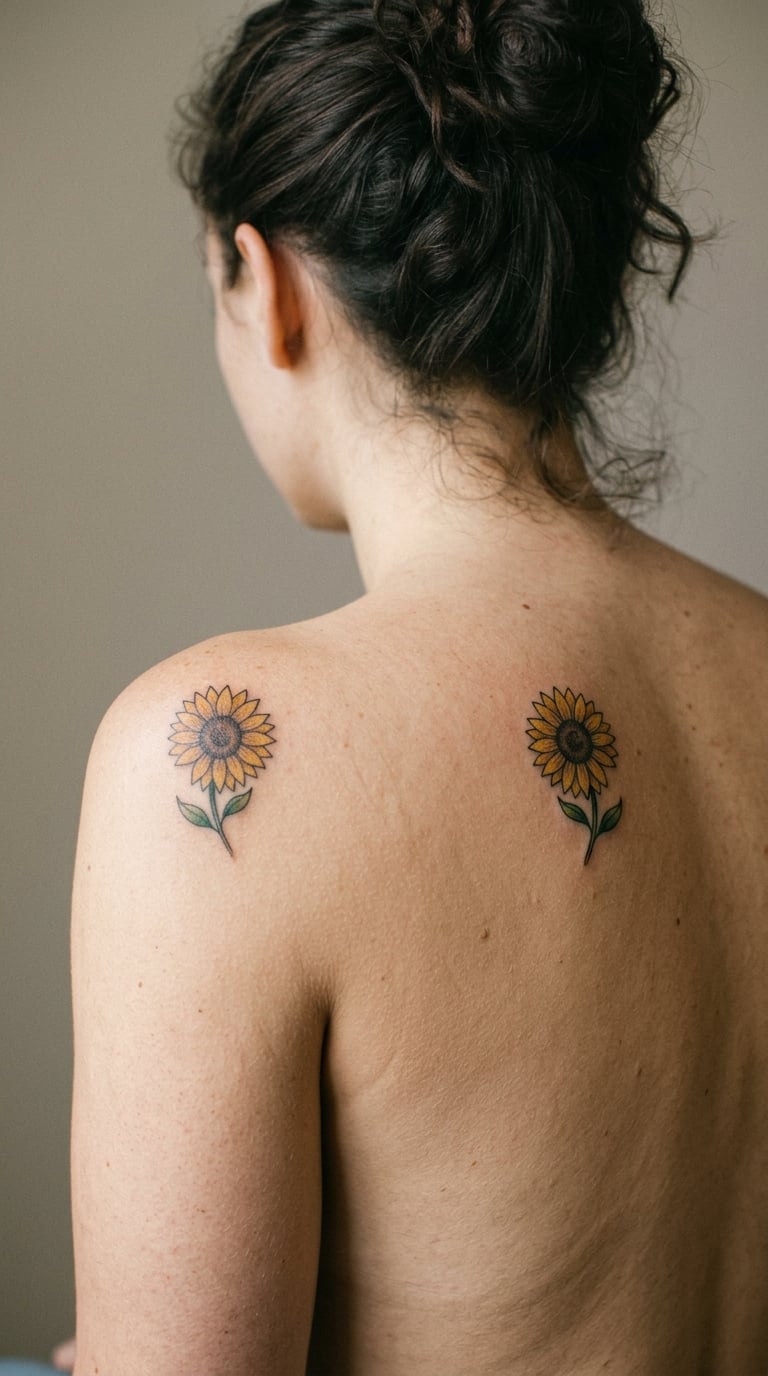
One small sunflower on each shoulder cap, identical, so the design reads as a pair when you wear a vest or a swimsuit and a detail when you do not. Simple, symmetrical, and a common choice for couples and for parent-and-child matching sets.
One and a half to two inches each, placed on the same point of each cap so the height matches. Two separate appointments, one cap at a time, which lets you check healing on the first before the second happens. Yellow ages fastest here, so both people need to be honest about sunscreen before committing to colour.
Pain and time: one to one and a half hours per cap. Budget two appointments and a few weeks between them.
15. Three Sunflowers in Greyscale on the Outer Upper Arm
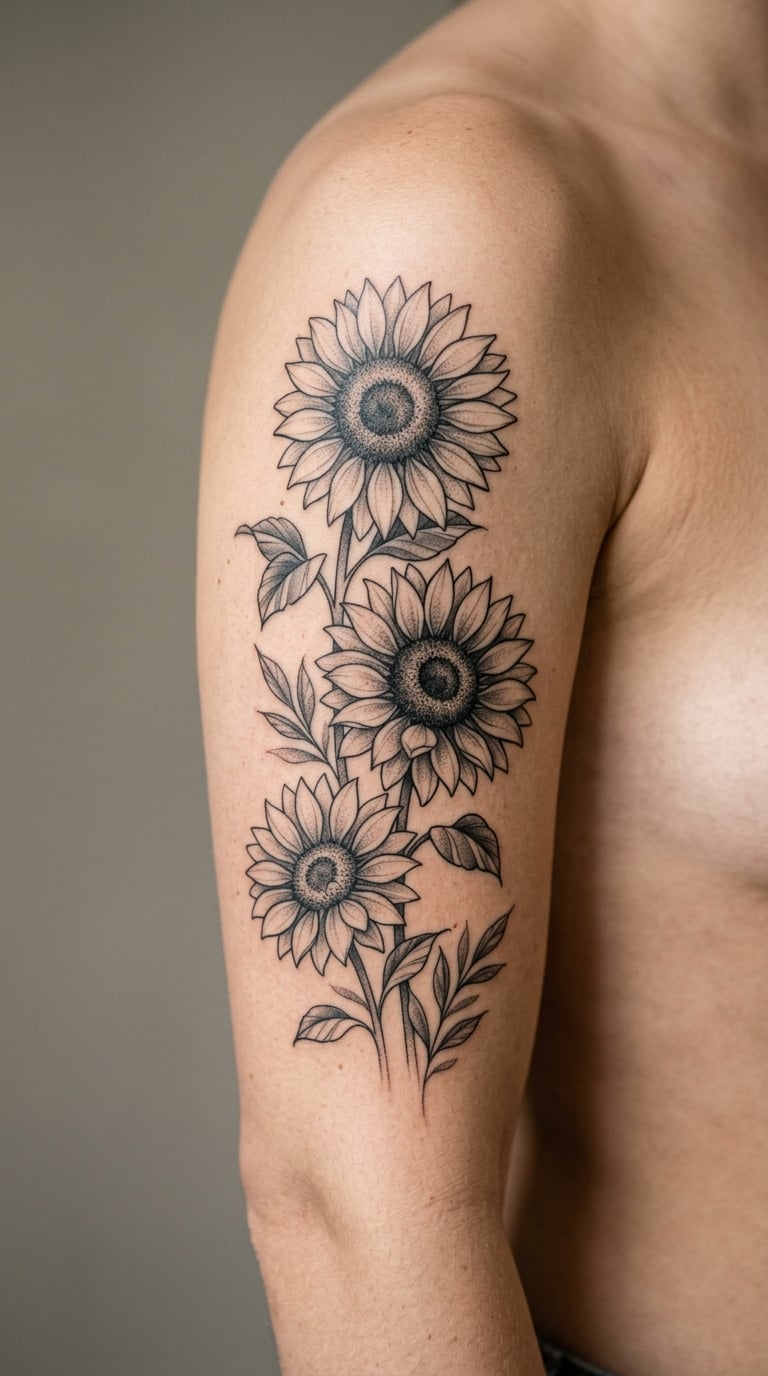
Three blooms stacked up the arm, each one a little different, leaves running between them, all in grey. The repetition gives it rhythm without needing colour to keep it interesting.
Two to three inches each, stacked vertically along the outer upper arm below the cap. Greyscale is the smart option on an arm that wears short sleeves in summer, because the value range survives sun exposure far better than bright pigment does. It also sets up an easy later addition if you want colour in another year.
Pain and time: two to three hours across the stack. The outer arm is accessible and settles into an uncomfortable position after a while, so take the break when they offer it.
16. Sunflower With a Curved Name or Date Beneath It
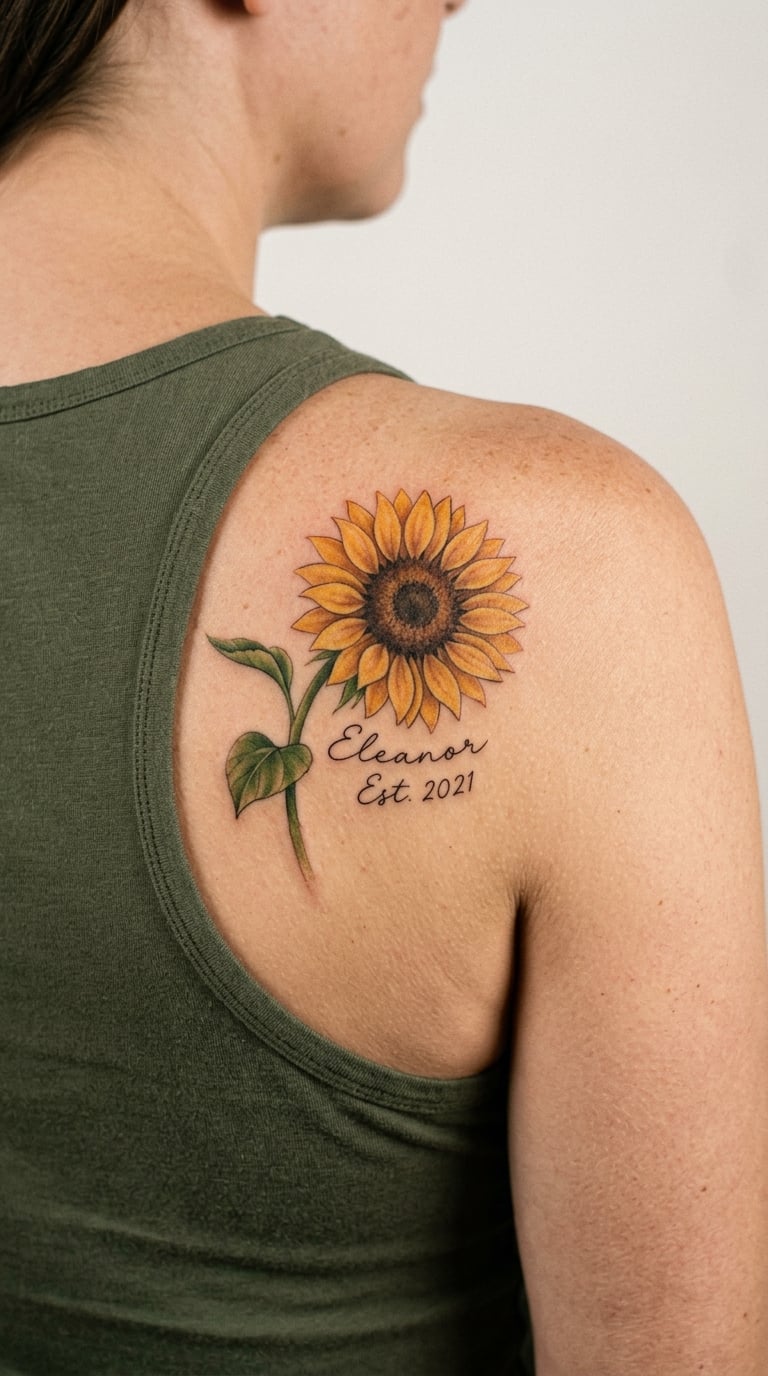
A bloom with a name, a date or a short word set in fine script curving beneath it, following the line of the shoulder. Memorial and remembrance tattoos often land in this format, and the script turns a motif into something specific.
Three inches for the flower on the back shoulder, with the script running under it along the shoulder blade. Check spelling twice, because script cannot be covered and reworking letters on healed script is a long conversation. Ask for a slightly larger script than you think you need; tiny script on the back is the part that blurs first.
Pain and time: two hours. The upper back is comfortable, and the back shoulder is easy to photograph for reference and spell-checking.
17. Bronze and Ochre Portrait Sunflower Filling the Deltoid Cap
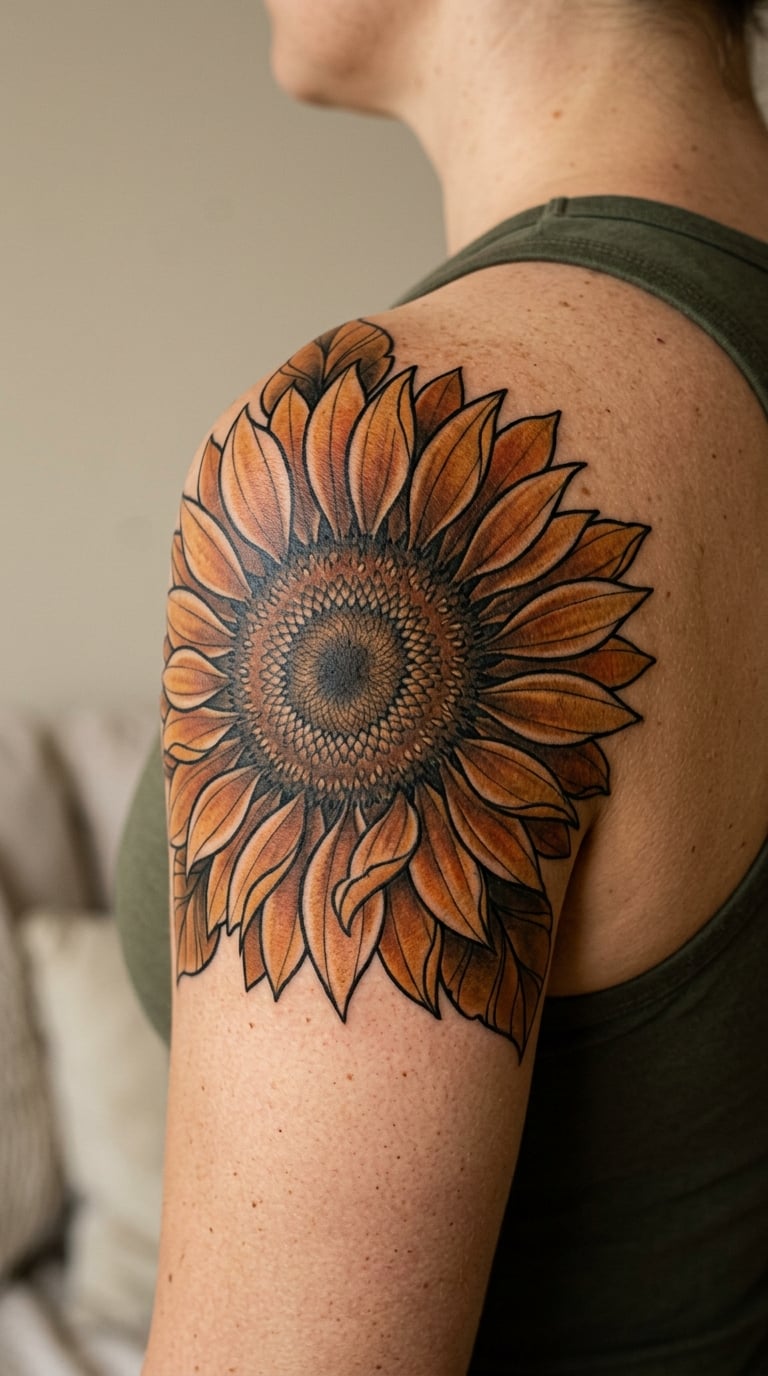
A big portrait bloom built from bronze, ochre and burnt orange rather than bright yellow, with heavy shading in the seed head and shadowed petals underneath. The warmer palette reads more grown-up than lemon yellow and fills a broad cap better.
Four to five inches across the cap, which is the size that makes sense if the shoulder is wide. Portrait shading is slower work than line work and needs a steady sit, but the payoff is depth, and this is the design that reads clearly from across a room. Warm tones hold their saturation slightly better in sun than a pale lemon yellow.
Pain and time: three to four hours, and a second session is common for the shaded centre.
18. Blackwork Sunflower Reworking a Scar on the Back Shoulder
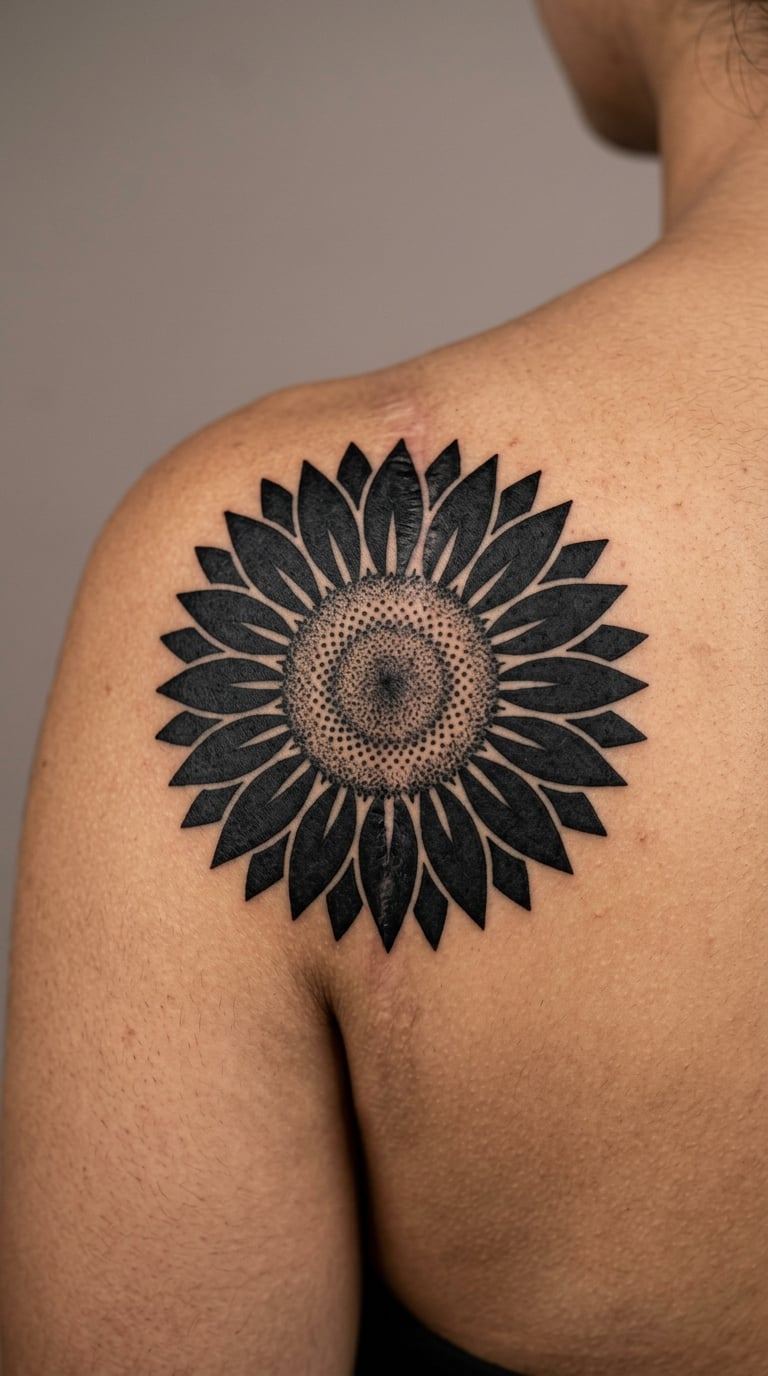
A solid blackwork sunflower worked over an old scar, with irregular petals and a textured seed head filling the mark. Black is the most useful colour in cover-up work because it puts something where something already is.
Four to six inches on the back shoulder, sized to the scar plus enough margin that the edges of the mark disappear inside the design. Scar tissue takes ink differently from untanned skin, so scars do not always heal flat and the result needs an honest conversation beforehand. Bring photos of the mark in different light, and expect a touch-up session after it heals.
Pain and time: two to four hours depending on the scar. Scar tissue feels different under the needle and can sting longer after, so plan a quiet evening afterwards.
Things to know before you book
- Choose the artist by healed work, not fresh work. Sunflowers are unforgiving, because a petal with no shading looks flat. Ask to see healed photographs of the same style, and follow an artist whose work you would want in greyscale too.
- Get the size right for the placement. Under an inch and the flower disappears on a broad shoulder; past six inches and you are committing to a multi-session piece. Two to four inches suits most single-bloom shoulder placements.
- Expect yellow to fade first. The shoulder and upper arm get more direct sun than a rib or an inner forearm, and the shoulder is usually bare in summer. Sunscreen on a healed shoulder tattoo is not optional if you want the colour you paid for. Greyscale, blackwork and warm ochre tones age more calmly here.
- Let it heal before you judge it. Fresh ink on the shoulder sits brighter and more raised than it will in two weeks. A yellow that looks almost neon on day three settles into something warmer and calmer.
- Ask how many sessions it needs. A single 3-inch bloom is usually one sitting. Cap work, half sleeves and painted colour are commonly two to three appointments, and studios charge by size and hours, so the session count is the biggest cost driver on a large piece.
- Do not hand an artist a screenshot to copy. A flat reference has to be rebuilt for the curve of your shoulder. Artists say this constantly, and it is why the same design sits completely differently on two people.
How to brief your artist on sunflower tattoo ideas for the shoulder
The brief is short and it decides most of the outcome. Send a small set of references, all in the direction you want, and add four specifics: the exact spot, the size in inches, the style in one word, and the palette.
- Placement: cap, top of shoulder, shoulder blade, outer arm, collarbone or a sleeve. Say it in words and mark the spot on a photo of yourself.
- Scale: give a size, not a vibe. Two inches, three inches, half the width of your cap.
- Style in one word: realism, fine line, blackwork, greyscale, watercolour or traditional. Blended briefs produce blended results.
- Palette: full yellow, warm ochre, or greyscale. Deciding this before the day saves an argument in the chair.
- Direction: if you want the bloom angled across the shoulder rather than facing forward, say that. It is the difference between a design that flows and one that looks stuck on.
Good artists will redraw your reference for your own proportions anyway. If they plan to trace a flat online image as-is, that is a conversation to have before you start, not after.
Frequently Asked Questions
What does a sunflower tattoo on the shoulder mean?
A sunflower tattoo usually stands for optimism, loyalty and resilience, because the flower turns toward the light and keeps growing through rough ground. On the shoulder it carries an extra layer: the placement is open and visible, so the bloom reads as something the wearer is happy to be seen carrying. It is also the birth flower for anyone born between July 23 and August 22.
What are the best sunflower tattoo ideas for the shoulder?
The strongest shoulder designs are the ones built for the curve: a single realistic bloom sized to the deltoid cap, a bouquet arcing across the shoulder blade, a bold blackwork piece over the top of the shoulder, or a half mandala centred on the cap seam. Small and delicate options suit the collarbone, and larger painterly pieces need the flat area of the upper back rather than the round cap.
Can a man get a sunflower tattoo?
Yes, and a lot of men do. The flower is not read as feminine when it is executed with heavier linework, blackwork shading, monochrome greyscale or a traditional look at four inches or larger. If you want the design to sit confidently on a broad shoulder, go bold on scale and line weight rather than trying to make the motif smaller and quieter.
What tattoos go with sunflowers?
Bees, butterflies and moths are the most natural partners because they belong in the same garden. Roses give a softer contrast, suns and half mandalas push the piece toward geometry, and script names or dates turn it into a memorial piece. On a shoulder, fewer companion elements work better than a busy scene, because the cap is a small canvas.
Does a shoulder tattoo hurt, and how long does it take?
The shoulder cap and the collarbone sit on bone, so they sting more than the fleshy outer arm, and the upper back is one of the easiest spots. A three-inch bloom on the cap usually takes two to three hours, a shoulder blade bouquet three to four, and half sleeves are split across two or three sittings. Fade the yellow properly or it will lose its colour first.
Conclusion
Start with the placement, not the picture. Whether you end up with a single realistic bloom on the deltoid cap, a fine-line outline on the upper back, or a blackwork piece reworking an old scar, the shoulder decides which versions of a sunflower tattoo work and which ones fight the body.
Bring your consultation two or three references in the direction you like, a size in inches, and a clear answer on whether you want yellow. If you are weighing the sunflower tattoo ideas for the shoulder still, the single realistic bloom on the cap is the one most people come back to, because the round surface of the shoulder was made for it.