
18 Stunning Lavender Tattoo Ideas for the Arm (September 2026)
Lavender tattoo ideas for the arm work because the flower already grows the way an arm runs: one tall, slim stem capped with a dense purple spike. That shape follows the line of the forearm, tucks into the crook of the elbow, or wraps the bicep without fighting the body underneath it.
Most people who land on this idea are after calm, not colour. A lavender sprig reads quiet and considered, which is exactly why it keeps showing up as a first floral piece and as something added years later to a sleeve that needed softening.
Booking usually happens a season ahead. If you are planning a spring piece, give yourself 30 to 45 days for the initial heal before you judge the result, because fresh linework always looks sharper than it will at month eight.
What Does a Lavender Tattoo Symbolize?
A lavender tattoo is a botanical design of one or more slender purple sprigs with clustered buds and narrow grey-green leaves, rendered in fine line, black and grey, watercolor or full colour. On the arm it usually sits lengthwise along the forearm, across the bicep or wrapped around the upper arm, and it commonly stands for serenity, healing, fidelity and quiet elegance.
Most of that meaning comes from the flower’s real history rather than tattoo tradition. Lavender has been used in aromatherapy and healing washes for centuries, and the Victorian language of flowers gave it a reading of devotion and constancy. The colour adds a third layer: purple dye was once so costly that it marked royalty, so a purple-heavy piece carries a note of rarity.
None of that is fixed. A sprig can be a memorial, a birthday month, a nickname, or simply the one plant that survived your grandmother’s garden.
Lavender for anxiety, grief and the calm after
For a lot of clients the flower arrives through calmer waters, not happy ones. People get it after a rough stretch, after someone died, after therapy that worked, or as a quiet marker of a version of themselves that got through a hard year.
There is no clinical claim here, and I would not make one. A tattoo is a marker you can see every day, and for some people that is the entire point of it.
Where to put a small lavender tattoo on your arm
If the piece is under 5cm, the inner wrist and the inside of the forearm are the easiest places for an artist to place a small sprig cleanly. The inner forearm gives the most flat, forgiving surface, and the wrist shows the piece when your sleeve rolls.
Whichever zone you pick, ask for the drawing scaled to your arm before it is stencilled. A design copied at the exact size of a reference photo is usually too small to hold its line once it wraps a limb.
Quick Lavender Tattoo Ideas for the Arm by Zone
Six short cuts if you already know your zone. Each line names one design from the gallery below and the reason it suits that stretch of arm.
How to narrow 18 lavender tattoo ideas for the arm down to one
- Inner forearm: the single vertical sprig, because the arm reads as a straight page there.
- Outer forearm: the blackwork branch, since there is room to thicken the stems.
- Elbow crease: the watercolor spike, because a soft edge hides better in a moving joint.
- Bicep: the botanical wrap, since the muscle already curves the stems for you.
- Upper arm: the field of half-sleeve sprigs, because that skin is flat and stays out of daily wear.
- Wrist: one micro bud, because anything larger crowds the joint.
1. The Single Fine-Line Sprig on the Inner Forearm
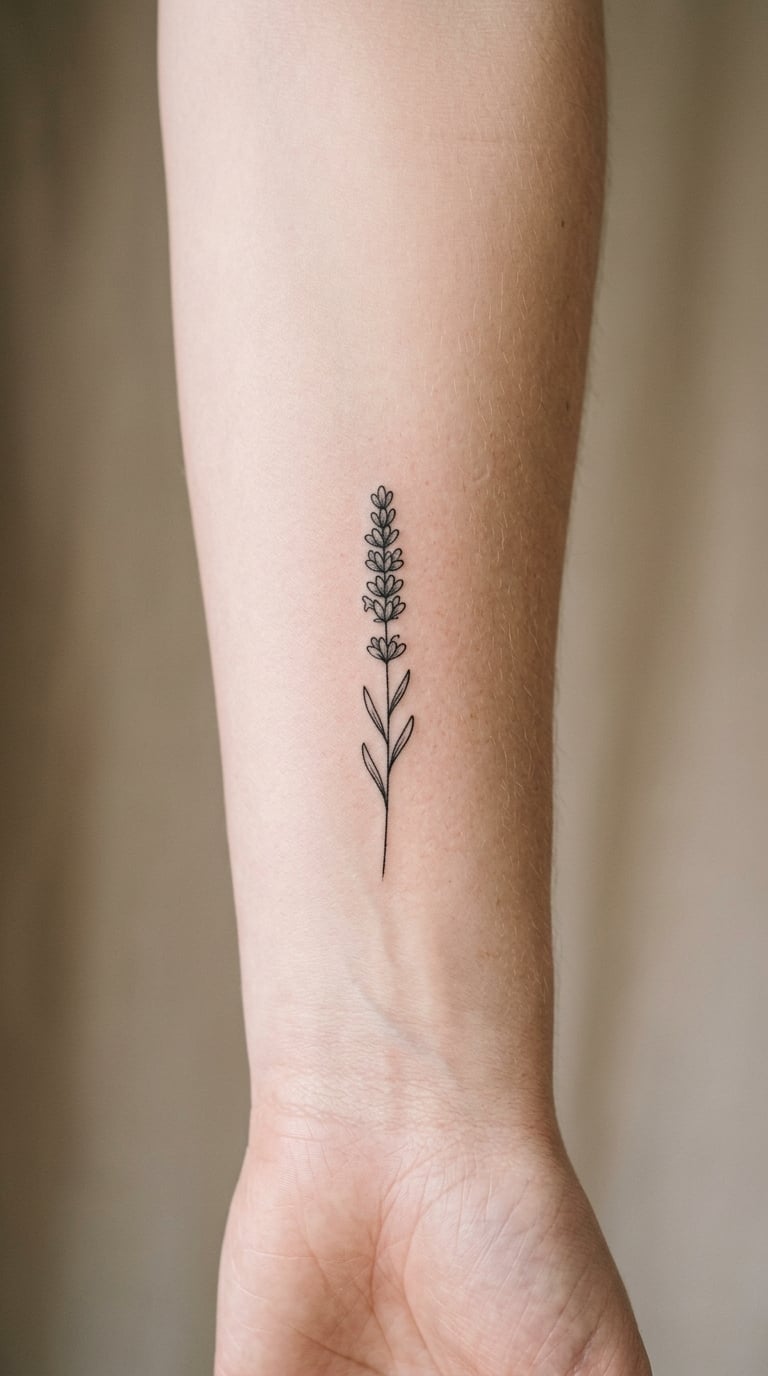
One stem, one spike of buds, maybe two narrow leaves near the base. It is the least committed design in this list and the one most first-time clients land on. I have met people who waited years for a bigger piece and never got round to it, because this one takes an hour and satisfies the itch.
Place it lengthwise on the inner forearm, roughly 8 to 12cm tall, with the buds pointing up toward the elbow. Fine line thins fastest of any style, so expect the stems to soften within a few years on the forearm. Skin rolls and stretches here, and that movement is what loses the thinnest lines first.
Pain and time: inner forearm is a 4 out of 10, mostly a scratchy feeling. Budget 45 to 60 minutes.
2. The Three-Stem Bouquet Running Down the Inner Arm
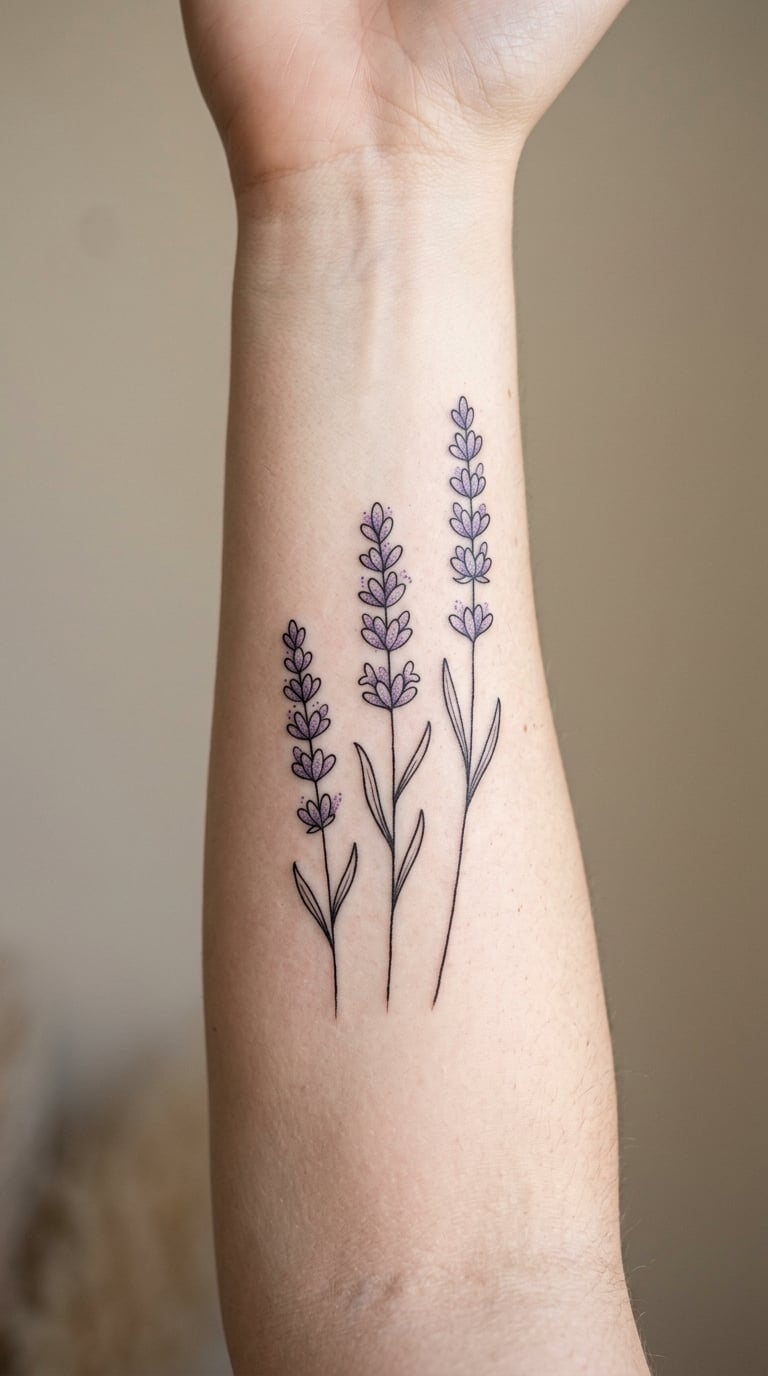
Three sprigs at graduated heights, the tallest in the middle, tied with a thin line at the base. It reads like a small gathered bunch rather than a repeat pattern, which stops it looking like wallpaper.
Inner forearm again, but this one wants 15 to 20cm of vertical room so the stems can breathe. Keep the line single-weight and let the artist shade only the buds in violet. Stems that end mid-forearm without tapering are the single most common complaint about botanical arm pieces, so ask where the line will finish before you start.
Pain and time: about a 4 out of 10 across a longer stretch. Allow 90 minutes for this size.
3. The Lavender Wrap Around the Bicep
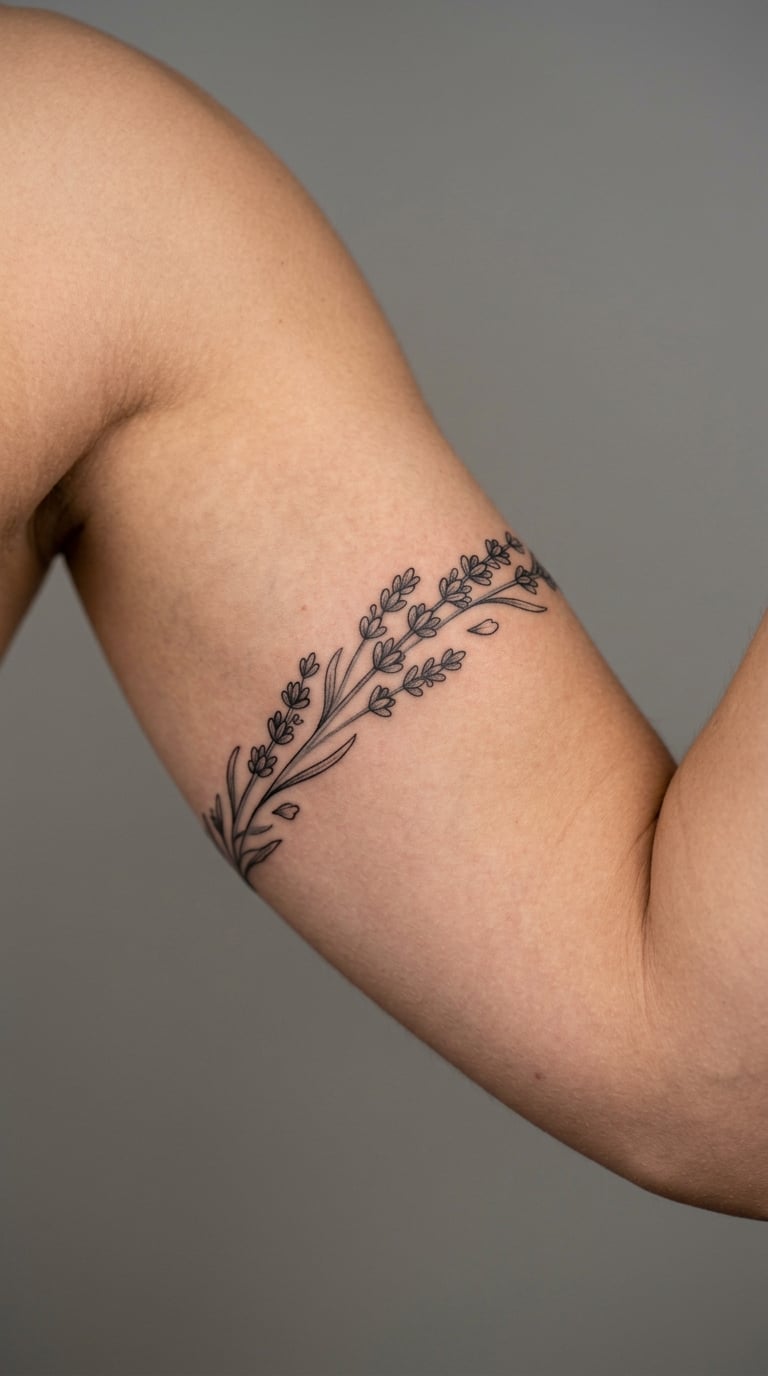
A single band of sprigs circling the bicep, stems meeting stem to stem so the piece disappears around the back of the arm. From the front it reads as a botanical wristband enlarged, which is why it works so well on a sleeve.
The bicep is the easiest wrap on the body because the muscle is round and even. Keep the band between 6 and 10cm wide, and have the artist adjust where the stems meet rather than repeating one sprig exactly. It sits well under a shirt sleeve and stays out of friction zones.
Pain and time: the bicep itself is a 3, though the back and underside of the arm climb toward a 6. Two hours is realistic.
4. The Blackwork Lavender Branch on the Outer Forearm
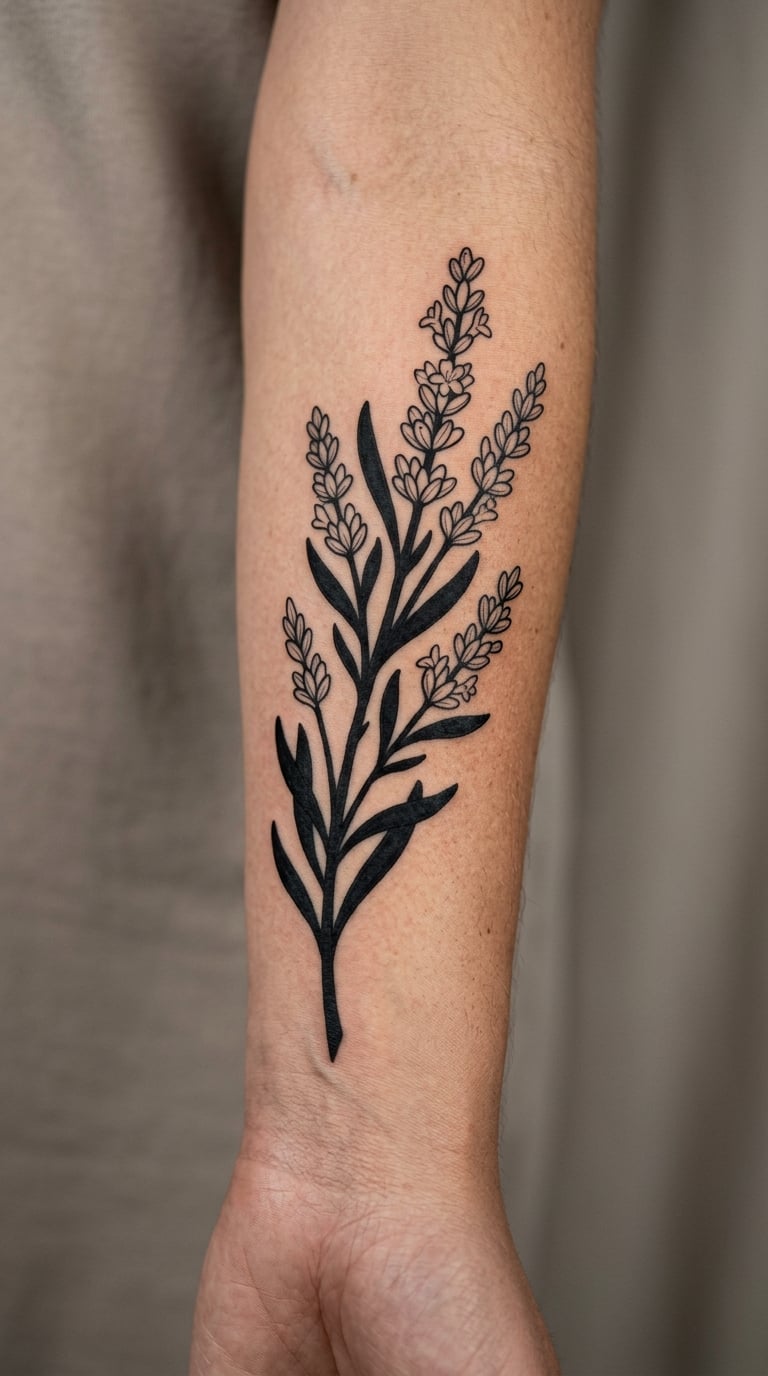
Solid black leaves, heavy stems, buds left as open line shapes. Blackwork gives the same flower a graphic weight that fine line cannot, and it ages far more politely because there is less detail to lose.
Run it lengthwise along the outer forearm, 12 to 18cm, where you have the widest uninterrupted view of the arm. Blackwork holds its edges well but still fades faster on the forearm than on the upper arm, because forearms live in sleeves and sleeves live in sunlight. This is the one to pick if you want a bolder arm piece that still reads botanical.
Pain and time: outer forearm is a 5 out of 10 with more of a burning edge. Two to two and a half hours.
5. The Watercolor Spike Tucked in the Elbow Crease
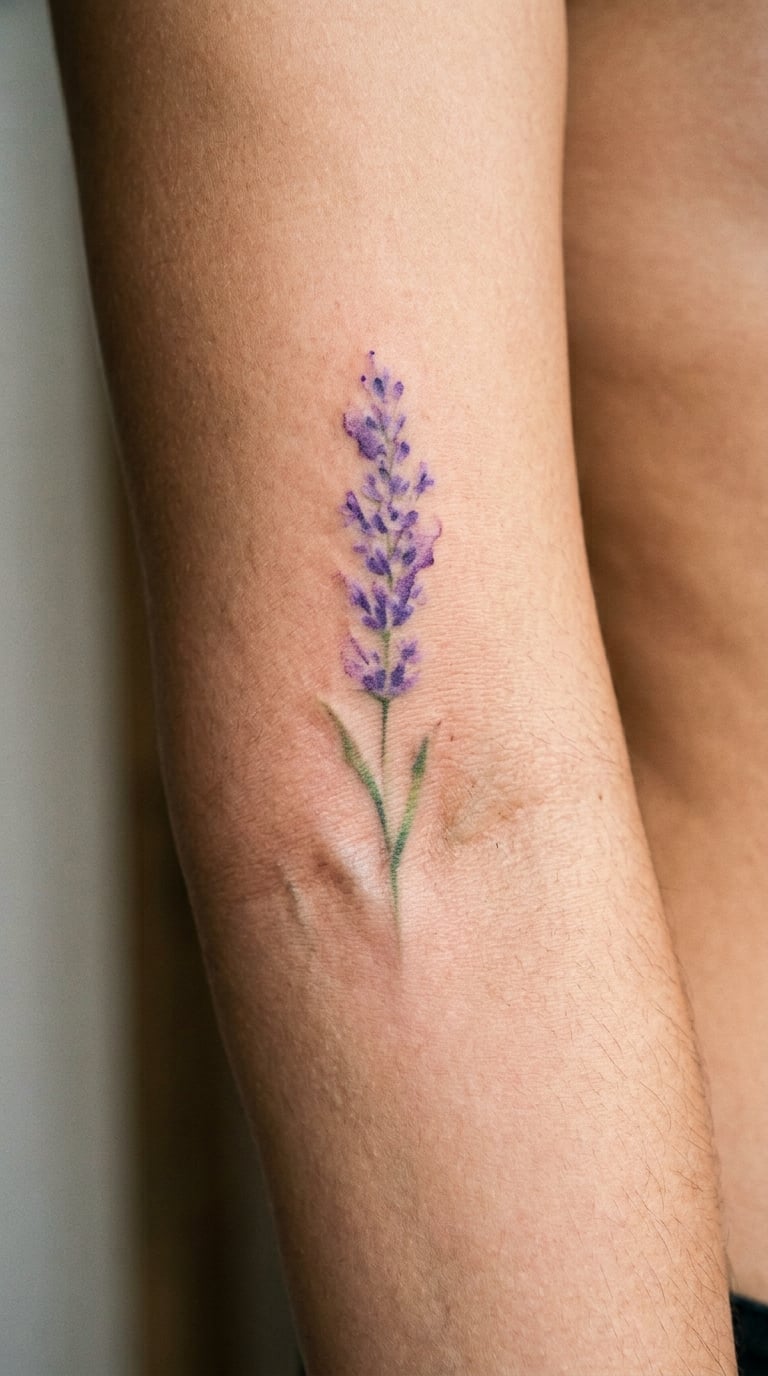
One spike, painted rather than drawn, with the purple bleeding past the line work into a soft halo. Watercolor suits a small subject because there is less precision to judge, and it hides an uneven healing patch better than a hard outline.
Sit it in the inner elbow crease, 6 to 9cm, buds pointing down the forearm. This is a joint, so the skin moves twice as much as anywhere else on the arm. Choose a design that tapers at both ends, and expect the pigment in the crease to look deeper for the first few weeks because ink settles in the fold.
Pain and time: the inner elbow and the crease just above it run 7 to 8 out of 10, the sharpest spot in this guide. Short session, 60 to 75 minutes.
6. The Micro Bud on the Outer Wrist
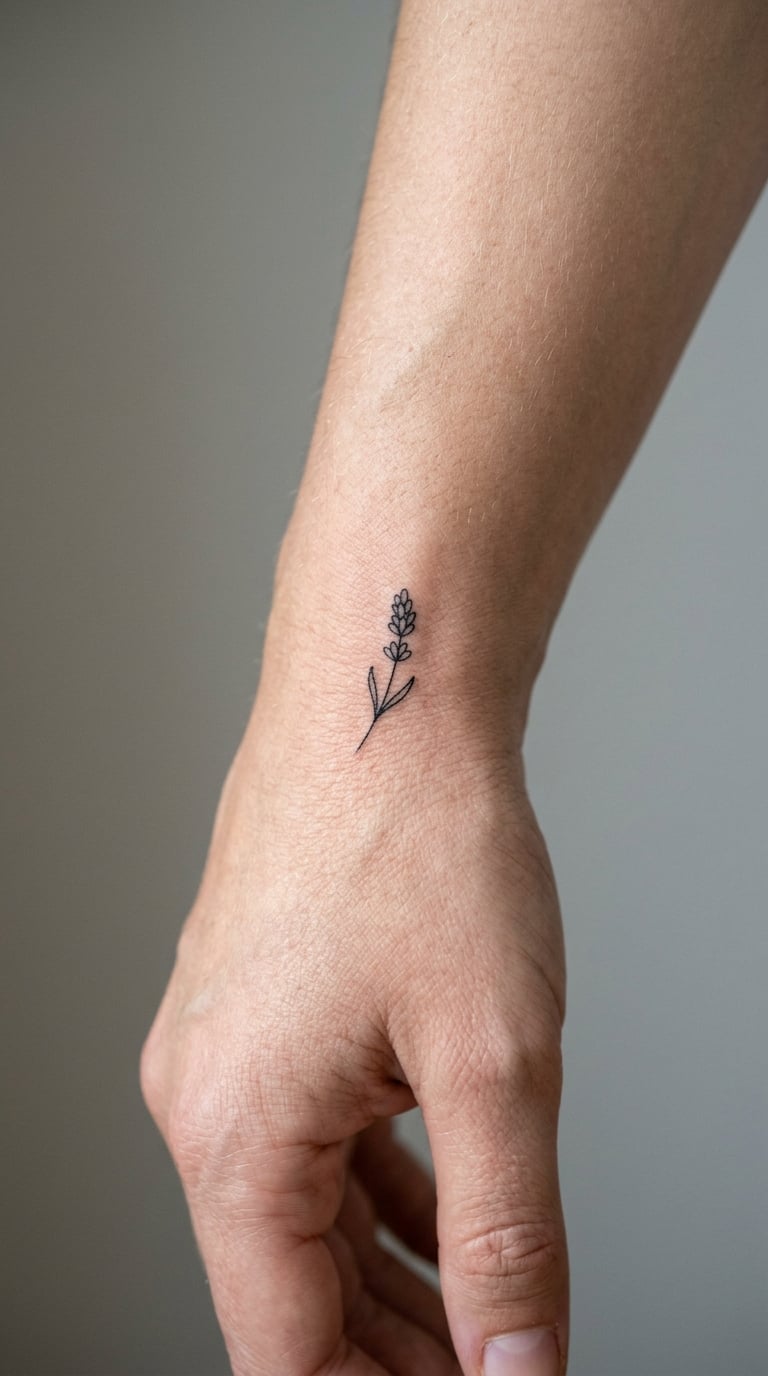
A single bud about 2cm tall, no stem, no leaves. At that scale you are really getting one purple shape and a few lines, which is why it is a genuinely low-commitment first tattoo.
Outer wrist, just inside the thumb-side joint, where the bone gives you a natural flat spot. Micro pieces like this need fewer lines than a full sprig, so the fade is less noticeable, but they also need a steady hand, so pick an artist whose small work you have actually seen healed. Expect a touch-up sooner than you would on a bolder piece.
Pain and time: the wrist is a 6 to 7, sharp and close to the bone. 30 to 40 minutes.
7. Lavender and Lemongrass Paired on the Inner Forearm
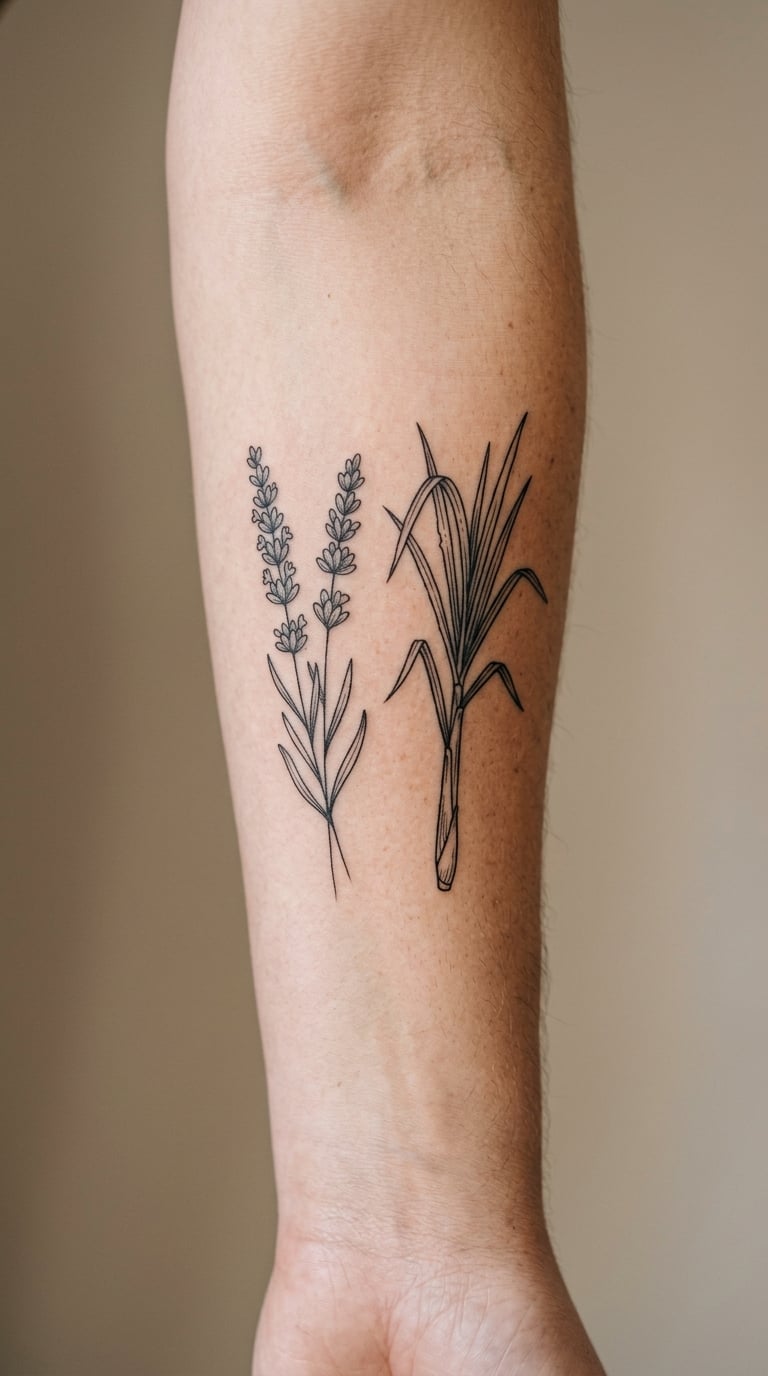
One lavender stem next to one lemongrass stalk, side by side, no binding. The pairing is herbal rather than floral, and it gives you two thin verticals that balance each other without looking like a repeat.
Inner forearm, 10 to 14cm total, with the lavender slightly taller so the purple sits as the focal point. Botanical line work of this kind needs consistent needle depth across the whole piece, so check healed work, not just fresh posts. The leaves are the first thing to blur as the skin relaxes, so ask for slightly heavier leaves than the reference shows.
Pain and time: a 4 out of 10. About 90 minutes.
8. The Botanical Wreath Encircling the Upper Arm
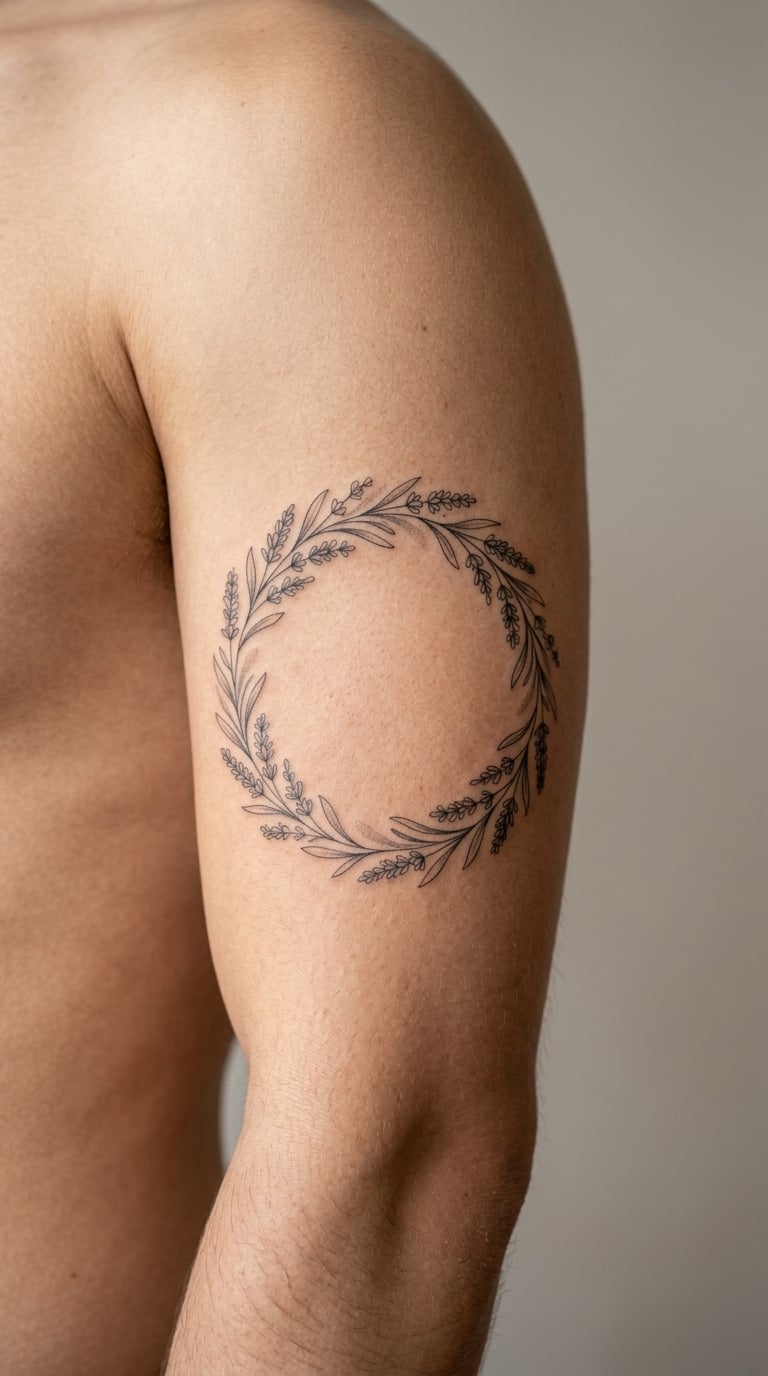
A full circle of sprigs with a small gap at the front, wreath style, with the binding hidden behind the join. It reads as a finished object rather than a pattern that got interrupted.
Upper arm, 10 to 14cm across, sitting above the bicep where the skin is flat and stable. The upper arm is the best-fading zone on the whole limb, so this is where a fine-line piece ages best. A ring shape is also forgiving about small size differences between arms, since you can scale it to fit.
Pain and time: upper arm is a 3 out of 10, one of the easier places to sit. Two hours.
9. The Lavender Field Half-Sleeve on the Upper Arm
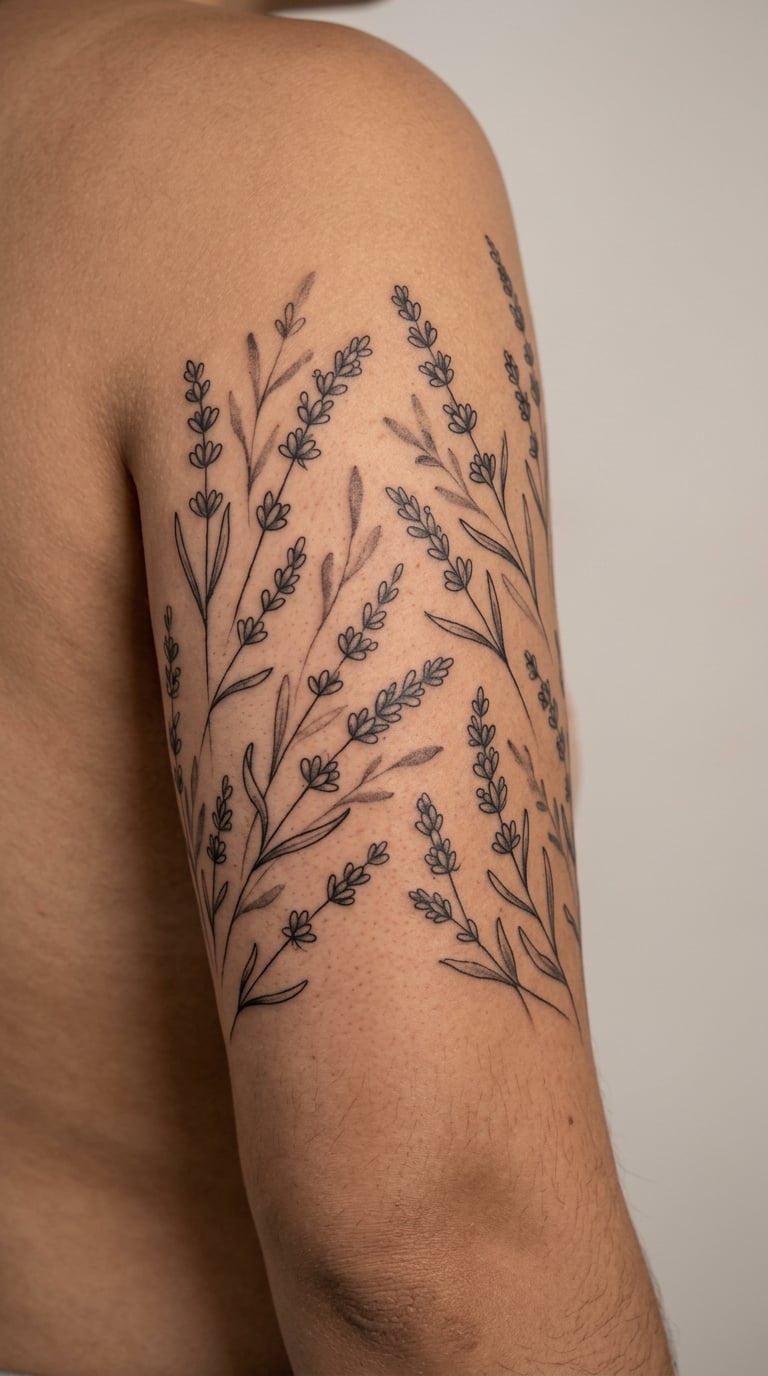
A loose scattered field rather than a repeating stencil, with gaps of bare skin between sprigs so it breathes. It is the big commitment on this list and the one that takes a full session and usually a second.
Cover the outer upper arm from the shoulder toward the elbow, roughly 15 to 20cm. This is the placement to choose if you want lavender to read as a background texture in a future sleeve, because it leaves room to add around it later. Plan on two sittings, and agree in advance where the piece will stop so the field does not just trail off.
Pain and time: upper arm is a 3, but the session is long, so fatigue becomes the issue. Two sittings of two hours.
10. Lavender Running Alongside the Forearm Vein
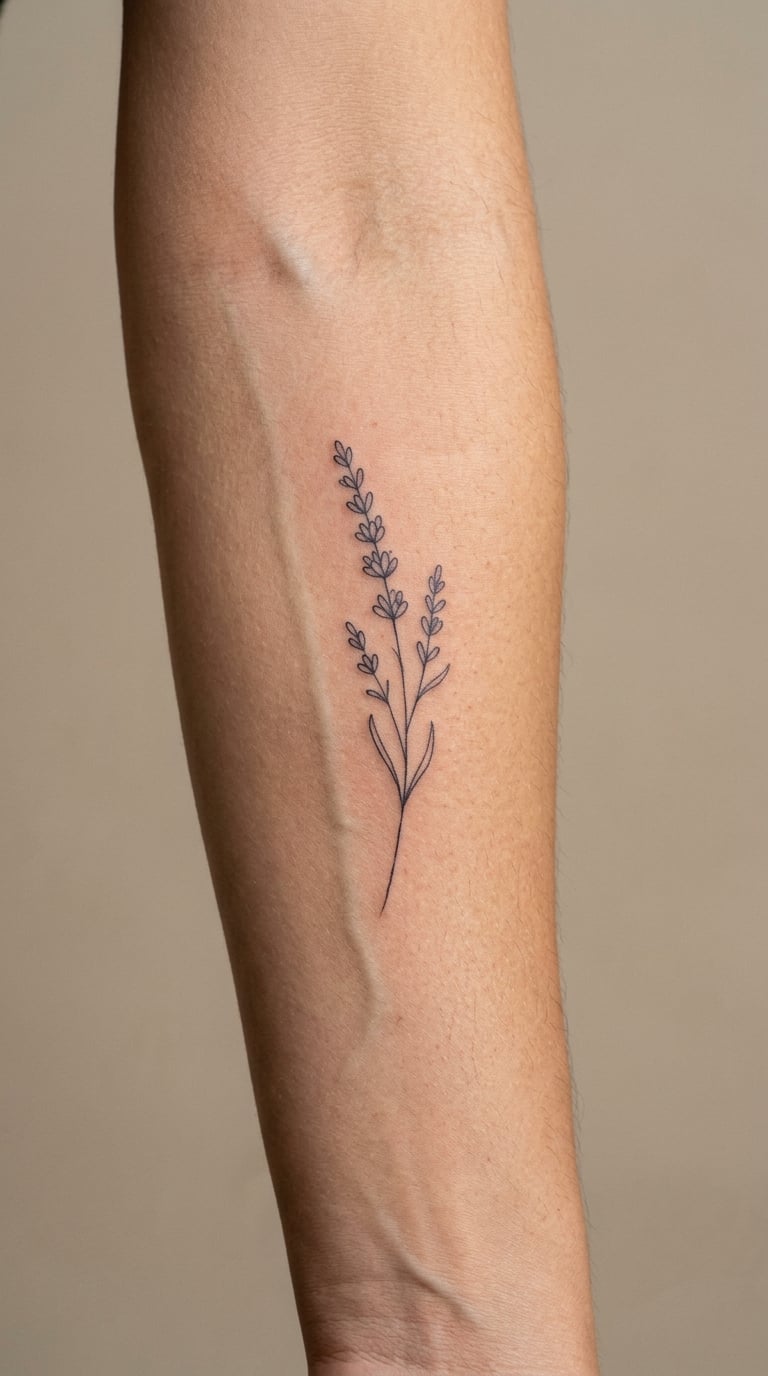
One sprig positioned so the stem follows the line of a forearm vein, and it looks like the plant grew there. It is the least decorated idea here and the one that gets the most comments.
Inner forearm, 12 to 15cm, aligned with your own anatomy rather than a vertical ruler. You will need to point out the vein at the consultation, and you may want a small freehand adjustment rather than a straight stencil. Alignment is what makes this work, so do not accept a generic placement if your vein runs somewhere else.
Pain and time: a 4 out of 10, plus a little sting where skin is thin over the vein. 60 to 75 minutes.
11. The Lavender and Moth on the Back of the Upper Arm
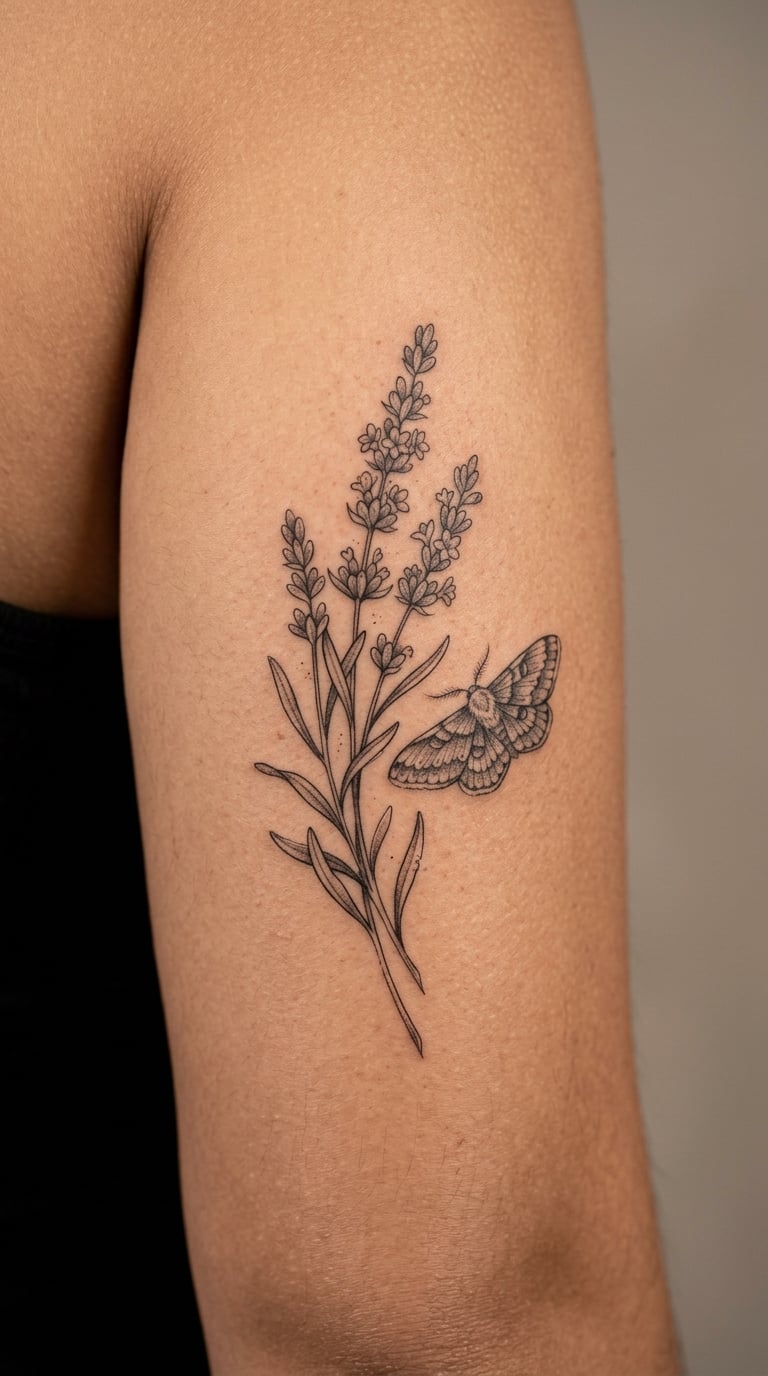
A sprig with a moth resting on the top of the spike, wings in fine detail. Moths read as night, attraction and things that navigate by light, so the piece carries a nocturnal mood a plain botanical does not.
Back of the upper arm, 10 to 13cm, in black and grey so the wing detail stays readable at that size. Moths are a current trend and they hold up well on the upper arm, which barely flexes. Leave real space between the wings, because a moth drawn too small turns into a smudge within a couple of years.
Pain and time: a 3 to 4 out of 10. Around 90 minutes.
12. The Matching Inner Forearm Pair
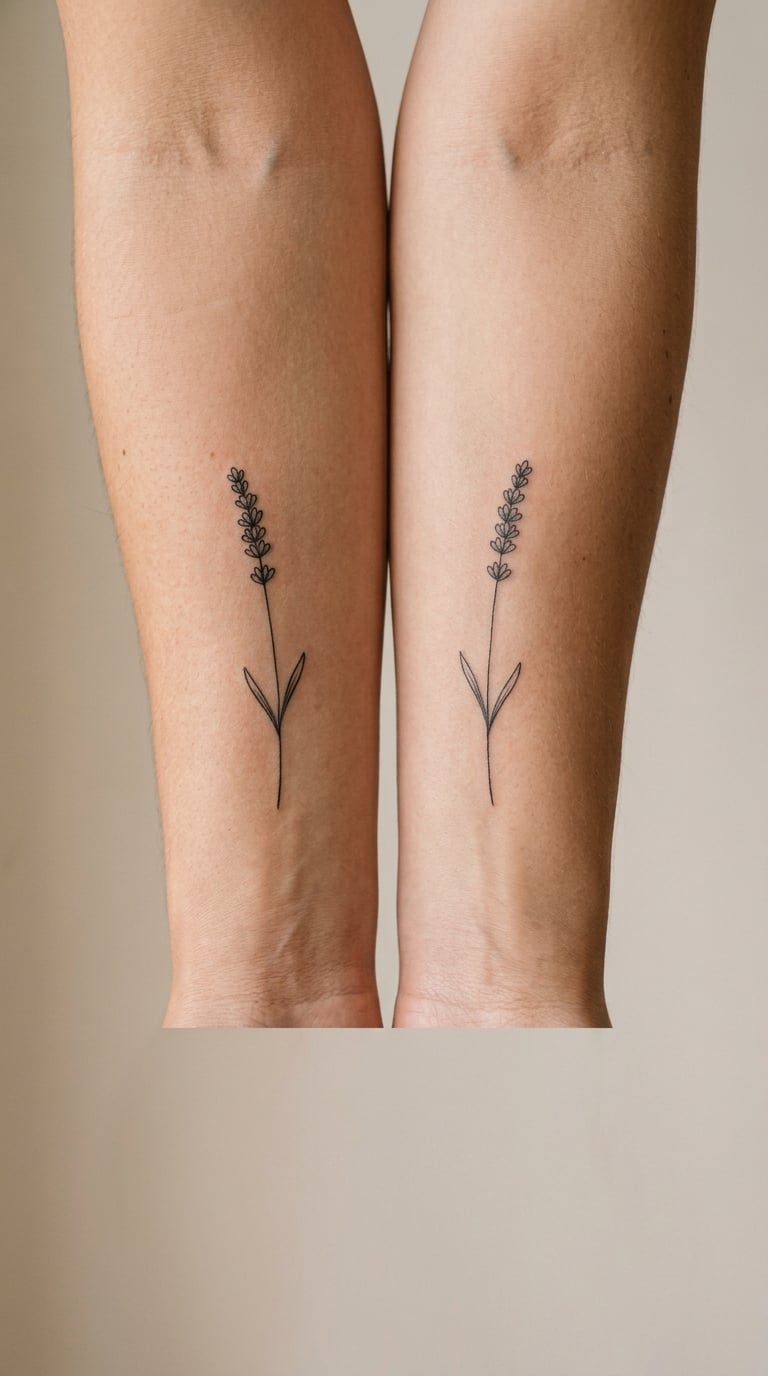
One small sprig per arm, mirrored so they read the same when your arms hang at your sides. It is the least flashy entry here and probably the most common one people actually get.
Inner forearms, 7 to 10cm each, with both pieces done in the same session so the line weight matches. Matching tattoos drift apart over time if they are done months apart on different skin, so get them together. Keep them above the wrist crease, where the skin flexes hardest.
Pain and time: a 4 out of 10 each. 45 to 60 minutes per arm, so about two hours in the chair.
13. Lavender and Olive Branch on the Outer Forearm
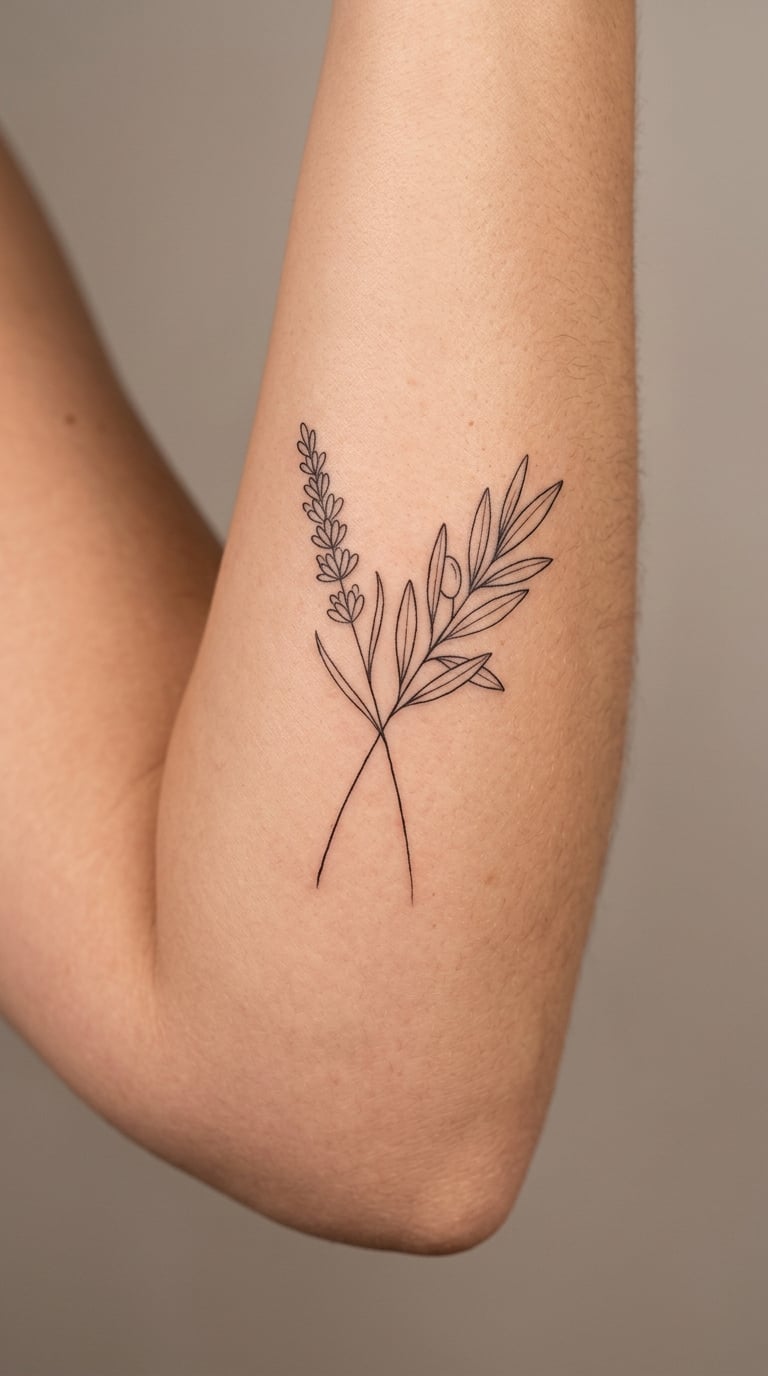
Two botanicals crossing rather than standing side by side, the lavender stem laid over the olive. It gives the piece movement and a bit of tension, which a vertical row of sprigs never has.
Outer forearm, 12 to 16cm, angled slightly so the stems run along the limb instead of across it. Crossing stems need a deliberate line weight, because overlapping line work turns to mud when the detail is too fine. Olive leaves are small and numerous, so ask for fewer, larger leaves rather than a dense botanical study.
Pain and time: a 5 out of 10 on the outer forearm. Two hours.
14. The Purple Gradient Bud on the Shoulder Cap
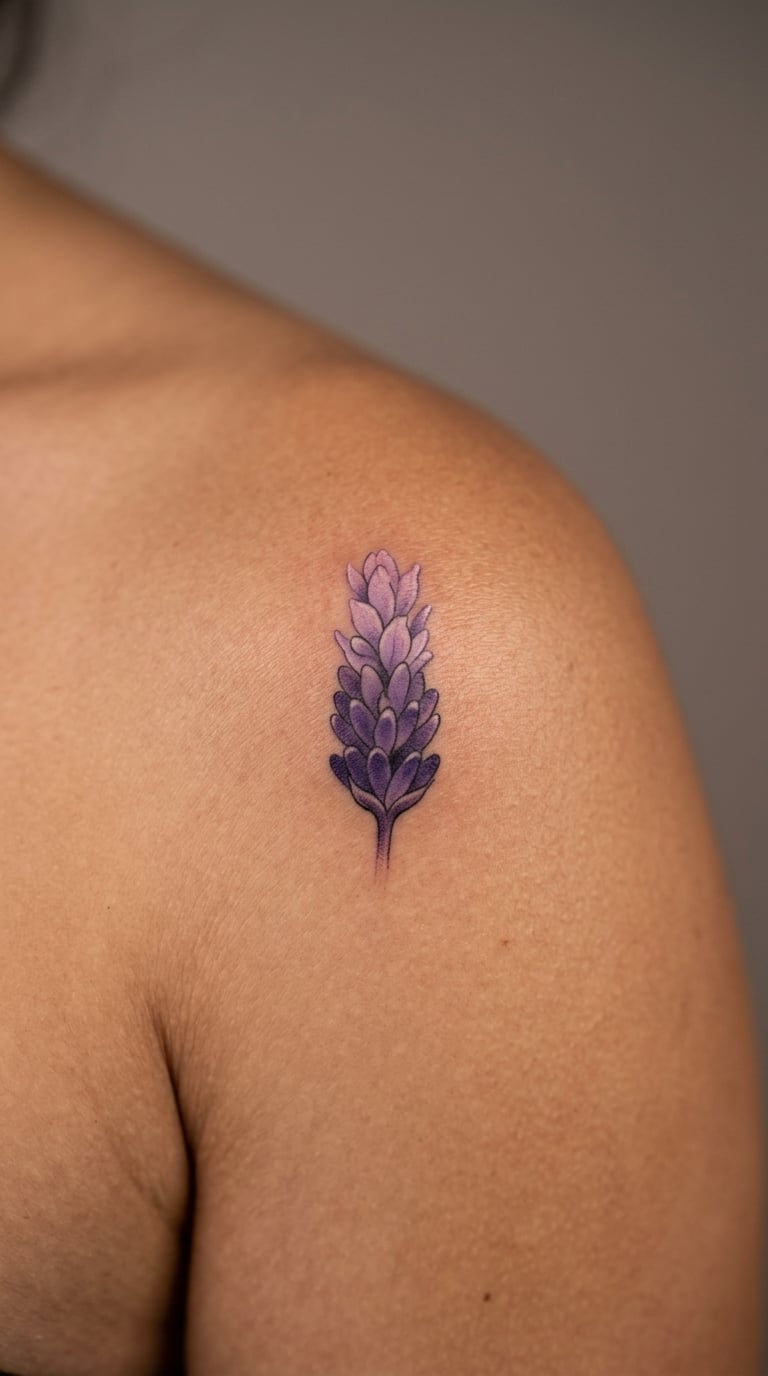
One bud shaded from a deep violet base to a pale tip, no stem, no outline. It is the most abstract idea on the list, closer to a colour study of a flower than a drawing of one.
Shoulder cap, about 5cm, tucked where the deltoid starts. Gradient work needs a second pass to get the deep end right, so expect this to be a two-visit piece if the purple matters to you. Shoulder skin is rarely exposed to the sun, which is why a saturated purple holds here longer than anywhere else on the arm.
Pain and time: shoulder is a 3 out of 10. Two short visits of about an hour.
15. The Lavender and Bees at the Inner Elbow
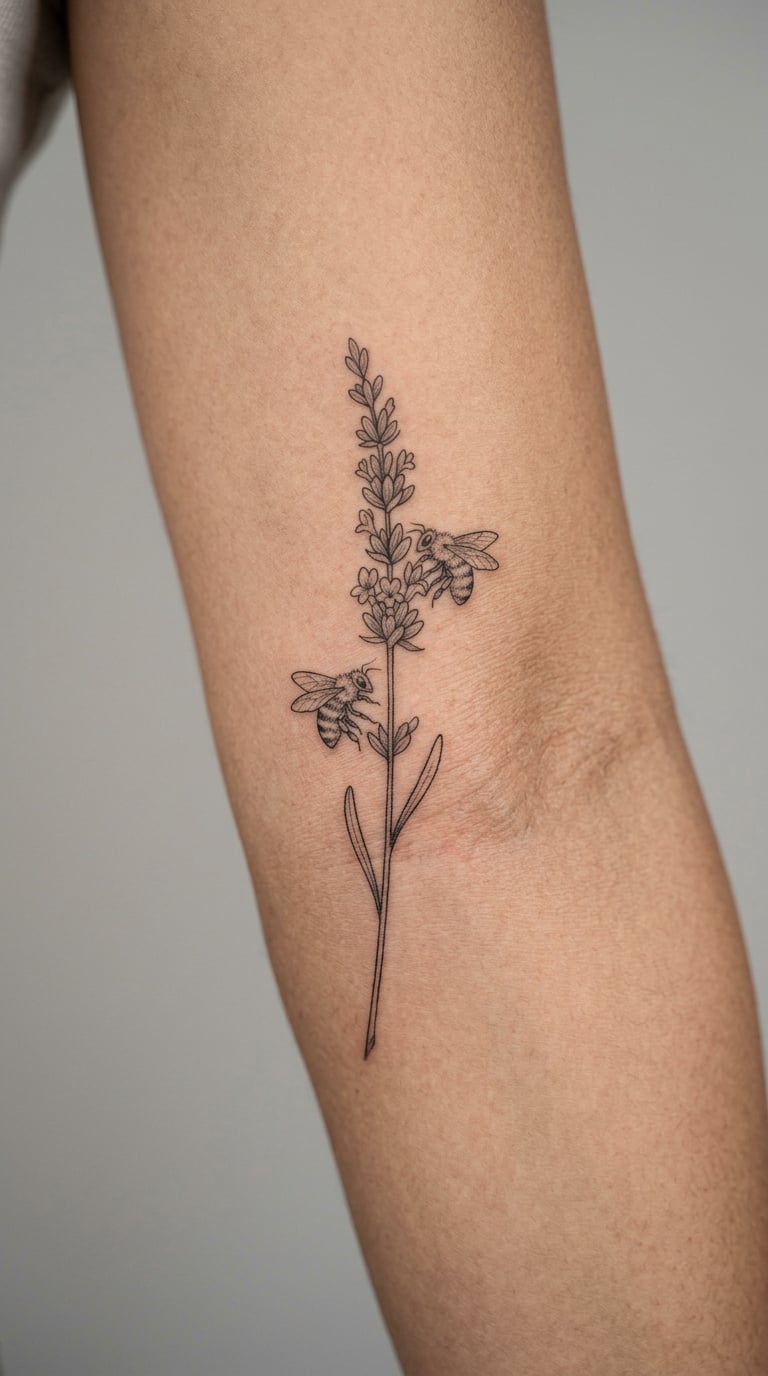
A sprig with two small bees circling it, drawn small enough to stay readable. Bees carry industry and good fortune, and the whole thing stays quiet rather than cartoonish at this scale.
Inner elbow, 8 to 10cm, above the crease where the skin is thinner and less mobile. Bees are a fine-detail trap: at 6mm long the wings disappear into a dot within a few years, so a good artist will draw them at 10mm or push the outline heavier. Ask to see a healed example of bee work, not a fresh one.
Pain and time: inner elbow is a 7 out of 10, so go in knowing the first ten minutes. 60 to 75 minutes.
16. The Lavender Constellation Along the Forearm
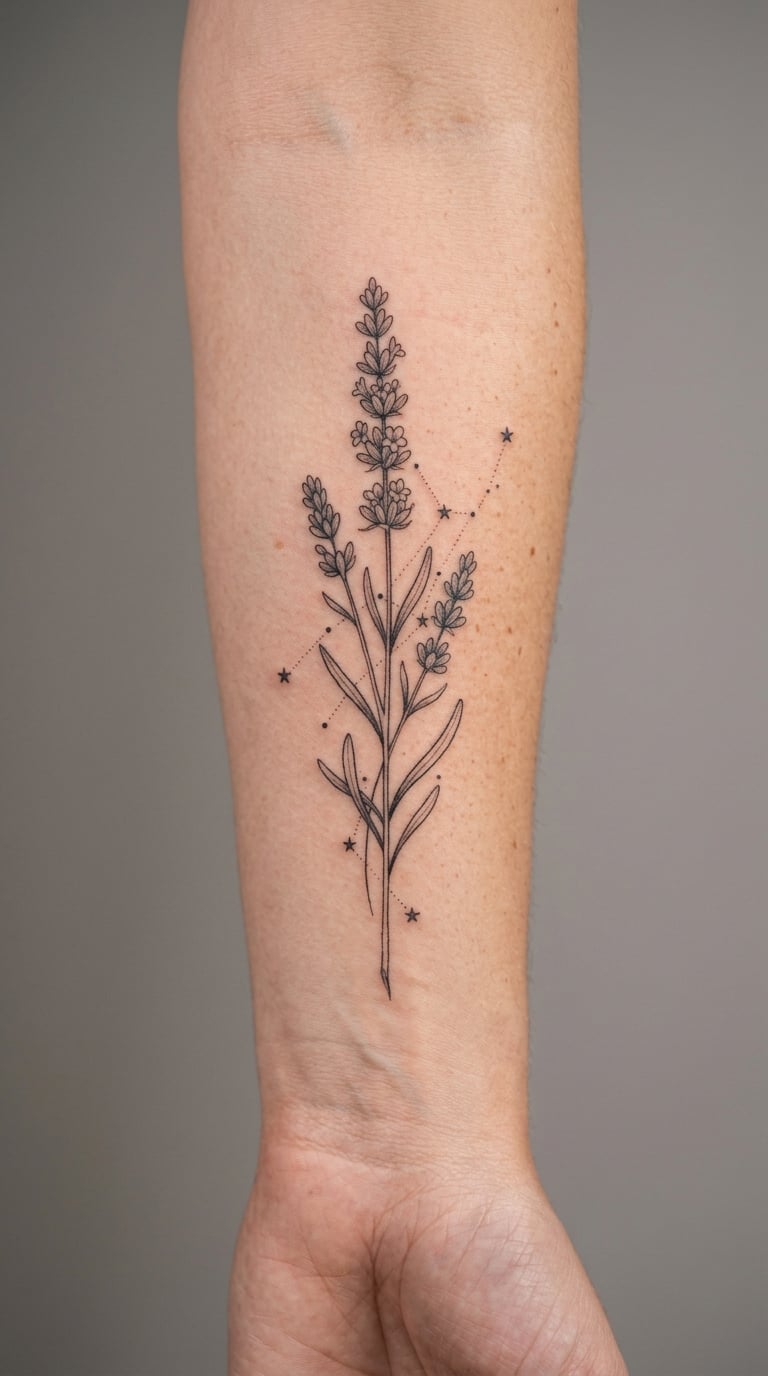
A lavender stem with a constellation running through it, small stars joined by hairline dots, one or two stars picked out in fine violet. It is the most personal design here, and the least portable if you ever want a sleeve.
Forearm, 15 to 20cm, with the stem and the star field sharing one axis. The hairline dot work is the fragile part of the whole piece, so the artist who does this needs a genuinely fine hand. Plan the star positions with your own dates or names rather than accepting a generic pattern, because that is the part you will keep noticing.
Pain and time: a 4 to 5 out of 10, and the most time-consuming detail on this list. Two to three hours.
17. The Lavender and Eucalyptus Ring on the Mid Upper Arm
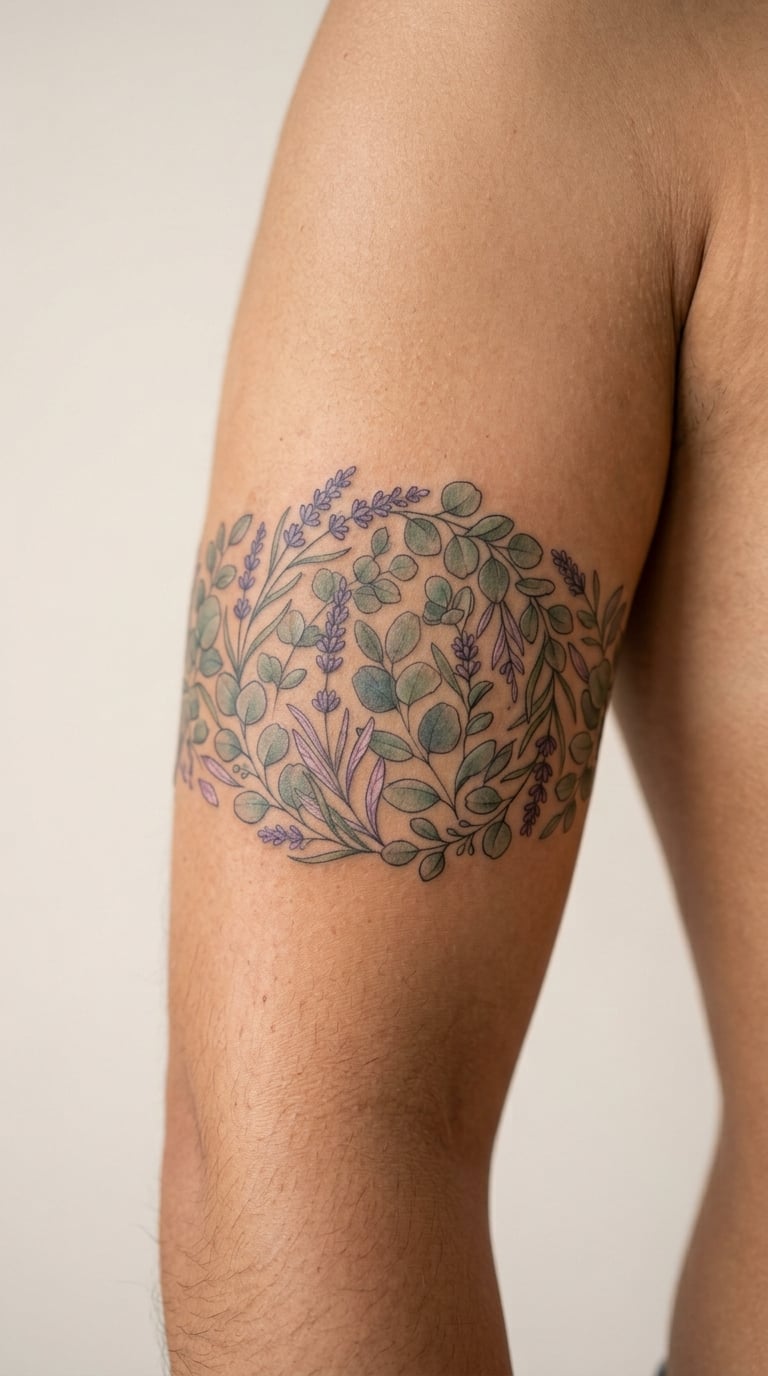
A thin band of lavender sprigs threaded through eucalyptus, muted green against the purple. Eucalyptus gives the piece a filler leaf that is bigger and calmer than lavender’s own, so the composition holds together at a distance.
Mid upper arm, 5 to 7cm wide, worn like a bracelet of plants. Green is the hard part of any botanical piece: olive and eucalyptus hold their colour better than bright green, and any artist who tells you otherwise has not done many of these. The upper arm sees almost no UV, so this is where colour lasts longest.
Pain and time: a 3 out of 10. Around two hours.
18. The Lavender Arm Bracer Above the Elbow
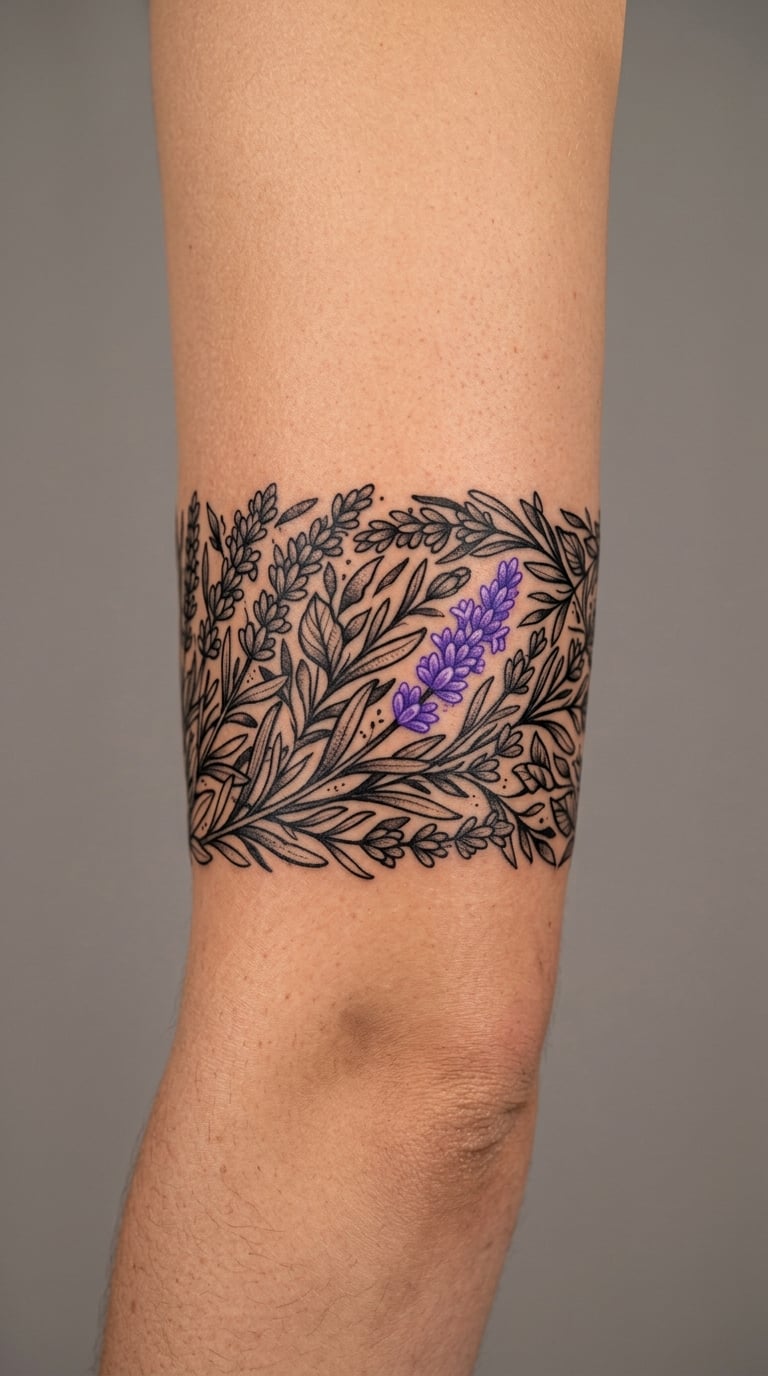
The opposite end of the scale from the micro bud: a dense band of tightly packed sprigs that reads as a piece of jewellery from across the room, with the ends meeting at the front or hidden at the back.
Above the elbow on the upper arm, 8 to 12cm wide, which is the widest spot that still counts as a single sitting rather than a sleeve. A bracer is where a bold, graphic hand shows best, so blackwork with one violet accent suits it better than full colour. Dense line work needs a plan for breaks in the stems, or the whole band turns into a grey smudge as it heals.
Pain and time: upper arm is a 3, with a long session. Two to three hours.
Which Part of the Arm Hurts Most?
Ranked from most to least painful, the elbow and inner bicep come first, then the wrist and inner elbow, then the outer forearm, then the inner forearm, and the upper arm sits easiest of all. Bone proximity is the whole story, along with how thin and tightly stretched the skin gets.
| Arm zone | Pain | Visibility | Typical size | Best style |
|---|---|---|---|---|
| Inner elbow and crease | 7-8 | Low | 6-10cm | Watercolor, soft edges |
| Inner bicep | 6-7 | Low | 8-15cm | Bold blackwork |
| Wrist | 6 | High | 2-8cm | Fine line, micro |
| Outer forearm | 5 | Medium | 10-18cm | Blackwork, crossing stems |
| Inner forearm | 4 | Medium | 7-20cm | Fine line, single weight |
| Shoulder cap | 3 | High | 4-8cm | Colour gradient |
| Upper arm and bicep | 3 | Low | 5-20cm | Fine line, colour, wrap |
Most people rate the elbow crease the worst part of the arm, and a few find the wrist nearly as bad. If pain is a real concern for you, the upper arm is the calmest canvas on the whole limb, and it is also the zone that holds colour longest.
On recovery, expect 3 to 5 days of tenderness on the forearm and up to a week of soreness on a large upper arm piece, with the elbow taking the longest to settle because the joint keeps moving. Mild itching around day four is normal. Get medical advice for anything that spreads, stays hot, or weeps beyond the second week.
Things to Know Before You Book a Lavender Tattoo
- Look at healed work, not fresh photos. Fine-line tattoos look best the day they are done and fade fastest, and judging a portfolio from a week-old post is how people end up disappointed. Ask to see a piece that is two to five years old.
- Ask the artist to adapt the drawing to your anatomy. Copying a reference at its exact size almost never fits an arm, because arms differ in length, taper and vein placement. This is the question people on tattoo advice forums ask most often.
- Check line work consistency in the style you want. Botanical work lives or dies on whether a stem is straight from base to tip. Browsing a general portfolio tells you nothing.
- Agree where the piece ends before it starts. Botanical branches that stop abruptly mid-limb are the most repeated complaint about this style. Tapered ends cost you nothing and fix most of it.
- Size it for healing, not for the photo. A 15cm sprig on the inner forearm and a 6cm one do not survive at the same quality. Tiny details under 6mm will soften within a couple of years.
- Plan the sessions. Small sprigs are usually one sitting of 45 to 90 minutes. Anything that wraps the arm or covers the upper arm is a multi-hour job and often needs two appointments.
- Ask about touch-ups in advance. Free touch-ups inside a set window are normal studio practice, and it is much easier to agree that in the first session than to ask afterwards.
How to Keep Lavender From Fading on Your Arm
The forearm is the worst zone on the limb for any colour, lavender included, because it spends most of the day out of a sleeve and in daylight. Sunscreen on a healed forearm is not optional if you want the purple to still be purple in five years.
Fine line fades faster on the arm than the upper arm, mostly because the forearm is thinner, more mobile, and closer to the sun. If you are choosing between two placements and your design is delicate, the upper arm is the one that will look best longest.
Elbow and wrist pieces wear differently rather than fading: the crease holds more ink early on and can look darker than it is, while the wrist takes a beating from cuffs and sleeves. Sleeve edges rubbing a healed design is the quietest cause of a muddy botanical.
After the initial heal, wash it like ordinary skin, keep hand cream off it for a few weeks, and stop picking flakes. That last one causes more permanent damage than anything else on this list.
Frequently Asked Questions
What does a lavender tattoo symbolize?
A lavender tattoo usually symbolizes serenity, healing, fidelity and quiet elegance. The serenity reading comes from the plant’s long use in aromatherapy and healing washes, while fidelity and devotion come from the Victorian language of flowers. Purple, once a rare and expensive dye, adds a note of rarity and status. Plenty of people choose it for entirely personal reasons, like a birth flower or a garden that mattered.
Which part of the arm is most painful to tattoo?
The inner elbow and the crease just above it are usually the most painful spot on the arm, commonly rated 7 or 8 out of 10, because the skin is thin, tight over bone and constantly moving. The wrist and inner bicep follow. The upper arm and bicep are the easiest, usually 3 out of 10, and they also hold colour and fine line best.
How long should my arm hurt after a tattoo?
A small forearm piece is usually tender for 3 to 5 days, and a larger upper arm piece can ache for up to a week. Mild itching around day four is normal as skin sheds. The elbow takes longest to settle because the joint keeps flexing. See a doctor if redness spreads, the area stays hot, or it weeps past the second week.
What is the prettiest flower to get tattooed?
It genuinely depends on placement and personal taste, but the most-tattooed flowers are rose, peony, lotus, cherry blossom and daisy. Lavender sits in a different category: it is slim and linear rather than full and layered, which makes it far easier to fit along a forearm or wrap a bicep. Choose by the space you have, not just by how the flower photographs.
Does a lavender tattoo fade on the arm?
Yes, and the forearm is the fastest-fading zone on the whole arm because it sits in sleeves and in the sun. Purple in particular loses saturation over time. The upper arm, shoulder and bicep fade slowest, and heavier blackwork holds its shape longer than fine line. Sunscreen on a healed forearm makes a real difference to how long the purple lasts.
What should I avoid getting tattooed on my arm?
Avoid tiny botanical detail under 6mm, because it blurs into nothing within a couple of years. Avoid fine line on a forearm you wear uncovered, since it softens fastest there. Avoid branches that stop abruptly mid-limb, which is the most common complaint about this style. And avoid a very small design on a large forearm, which tends to look lost.
Where to Start With Your Lavender Arm Tattoo
Pick the zone first and the design second, because the zone decides the size, the line weight and how well the piece will hold up. The inner forearm is the easiest canvas and the fastest to fade. The upper arm and bicep are the calmest to sit through and the best for fine line and colour.
Then bring three references to the consultation, not one, and ask the artist to redraw the design to fit your arm rather than tracing a photo. Lavender tattoo ideas for the arm are easy to find; the work is choosing the one that suits your anatomy and your patience for touch-ups. Start small if this is your first floral piece, then build.