
20 Best Rain Tattoo Ideas: Minimalist to Bold (October 2026)
Rain tattoo ideas fall into two camps: designs that whisper and designs that hit you in the chest. A single fine-line raindrop behind the ear sits in the first group. A solid black storm cloud eating down an upper arm sits in the second, and honestly both look good.
Rain is one of those motifs that carries real weight without a word of lettering. People choose it for the reset it stands for, the calm of a grey afternoon, or a season they have already lived through. This guide walks through twenty designs with honest sizes, real placements, what each one tends to hurt like, and how to make it yours. Bring the one you like to an artist rather than a screenshot of someone else’s tattoo.
If you like this mood, our heartbeat tattoo ideas with meaning list works the same way, small designs first.
Rain Tattoo Ideas: Quick Guide
Every design below is listed with the style, the spot it sits best, a size an artist can actually work at, and a rough pain read for that spot. Scroll to the full write-up for the detail and the personalisation angle.
| Idea | Style | Best placement | Size | Pain |
|---|---|---|---|---|
| 1. Fine-line raindrop | Fine line | Behind the ear | 1 inch (2.5 cm) | Low |
| 2. Cloud with three drops | Minimalist | Inner wrist | 2 inches (5 cm) | Medium |
| 3. Watercolor shower | Watercolor | Forearm | 4 inches (10 cm) | Medium |
| 4. Blackwork rain cloud | Blackwork | Outer upper arm | 3 inches (7.5 cm) | Medium |
| 5. Realistic raindrop | Micro-realism | Collarbone | 1.5 inches (4 cm) | Medium |
| 6. Dotwork rain shower | Dotwork | Shoulder | 3 inches (7.5 cm) | Medium |
| 7. Traditional blue rain | Traditional | Outer forearm | 3.5 inches (9 cm) | Medium |
| 8. Tiny cloud shower | Fine line | Behind the ear | 1.5 inches (4 cm) | Low |
| 9. Grey watercolor rain | Watercolor | Outer ankle | 2.5 inches (6 cm) | Medium |
| 10. Geometric rain lines | Geometric | Sternum | 4 inches (10 cm) | High |
| 11. Cloud burst on the rib | Fine line | Ribcage | 3 inches (7.5 cm) | High |
| 12. Umbrella in black rain | Blackwork | Outer calf | 4 inches (10 cm) | Medium |
| 13. Botanical rain vine | Botanical | Forearm | 5 inches (13 cm) | Medium |
| 14. Diagonal rain marks | Minimalist | Back of hand | 0.5 inch (1.3 cm) each | High |
| 15. Watercolor storm cloud | Watercolor | Outer thigh | 5 inches (13 cm) | Low |
| 16. Traditional red raindrop | Traditional | Finger | 0.75 inch (2 cm) | High |
| 17. Micro-realism neck rain | Micro-realism | Side of neck | 2 inches (5 cm) | Medium |
| 18. Gothic black rain | Blackwork | Back of upper arm | 4 inches (10 cm) | Medium |
| 19. Matching watercolor cloud | Watercolor | Inner arm | 2.5 inches (6 cm) | Medium |
| 20. Rain over a horizon | Fine line | Inner forearm | 3 inches (7.5 cm) | Medium |
1. Fine-Line Raindrop Behind the Ear
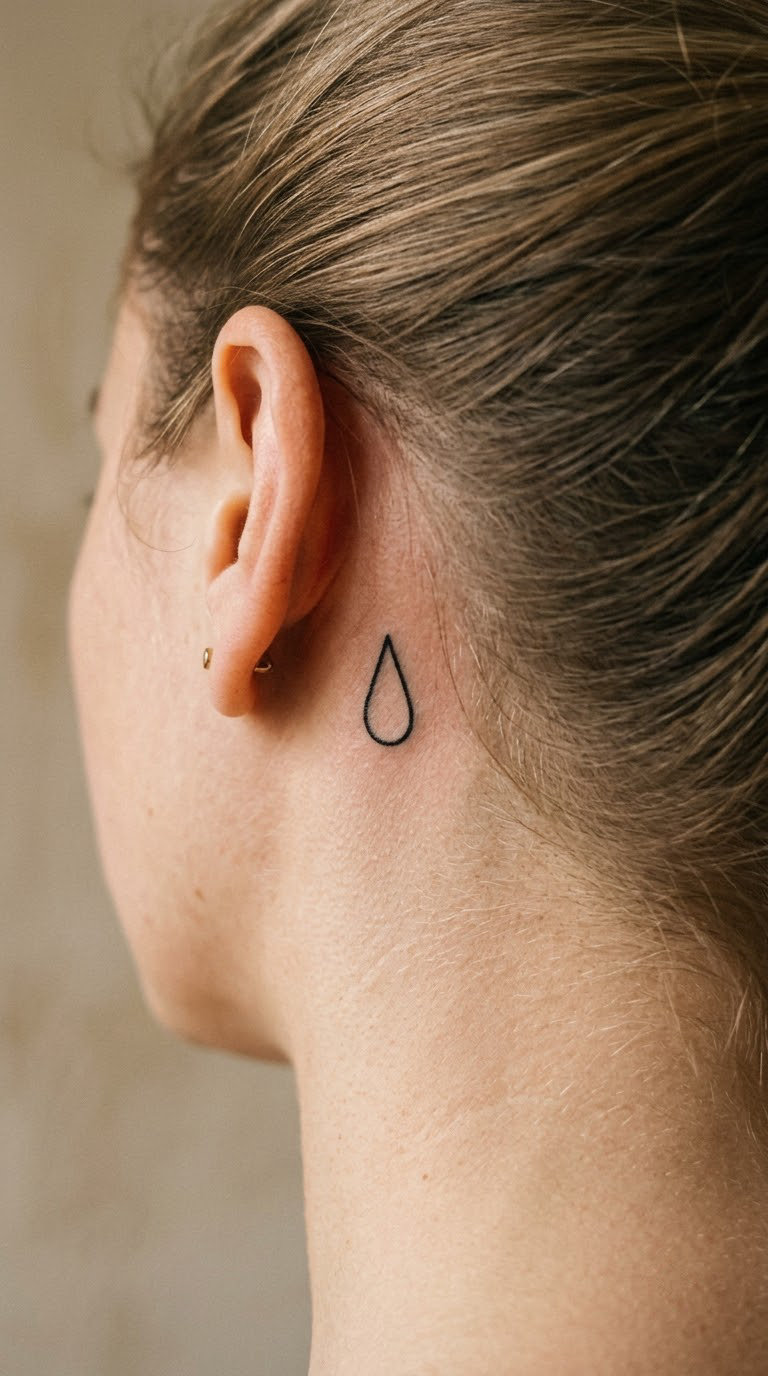
A fine-line raindrop behind the ear is the smallest useful rain tattoo I can think of. The artist draws one teardrop in a single black line, often with a second inner line offset a hair to give it weight, and leaves the rest of the shape as bare skin.
There is no set meaning, and that is part of the appeal. Plenty of people attach a private one, a person or a date, while others just like a small weather symbol near the hairline. The teardrop shape is the point, not a code.
Placement: just behind the ear or in front of it on the cartilage edge. Size: 0.75 to 1.25 inches (2 to 3 cm). Style: fine line or single needle.
Pain: low to medium, mostly a scratchy feeling. The skin is thin, so the discomfort fades quickly, and a line this fine softens over the years, so ask for a slightly heavier line than looks right on paper.
Make it yours: two tiny drops, one slightly smaller, or a short word in the same lineweight underneath.
2. Minimal Rain Cloud and Drops on the Wrist
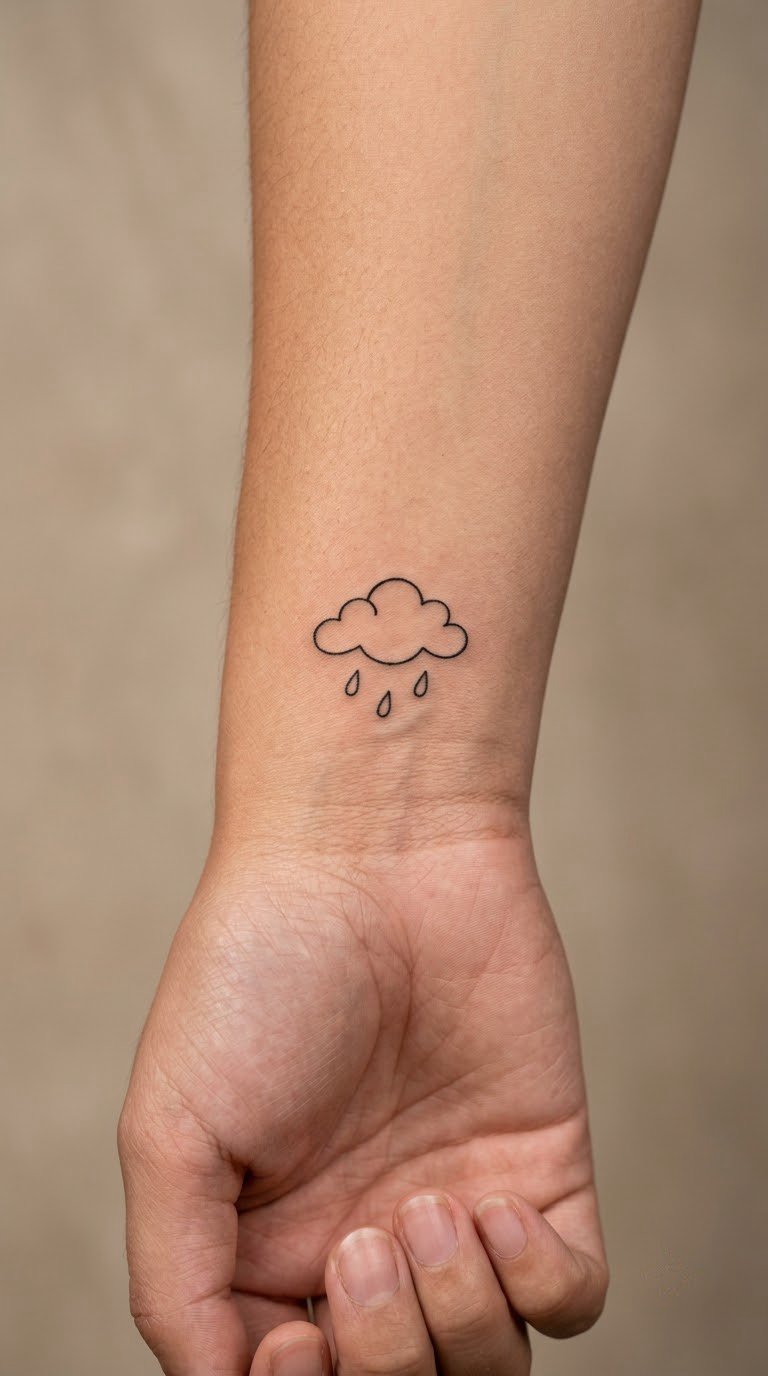
The wrist version is a small cloud outline with three drops falling from its base. One continuous line forms the cloud, the drops are two curved lines each, and the whole thing stays under a couple of inches so it reads as a wrist detail rather than a statement.
This is the most-requested first tattoo in the rain family because it is quick, cheap to heal and easy to hide at work. The symbolism is soft, usually a period of change or a person who arrives slowly and stays.
Placement: inner wrist, just above the bone on the thumb side. Size: 1.5 to 2.5 inches (4 to 6 cm). Style: minimalist fine line.
Pain: medium on the inner wrist. Expect a stretchy, scratchy feeling and some bleeding that stops on its own. Fine line on the wrist fades first, so spacing between the three drops matters more than precision.
Make it yours: add a small date in the same weight below the cloud, or one drop in a colour you actually wear.
3. Watercolor Rain Shower on the Forearm
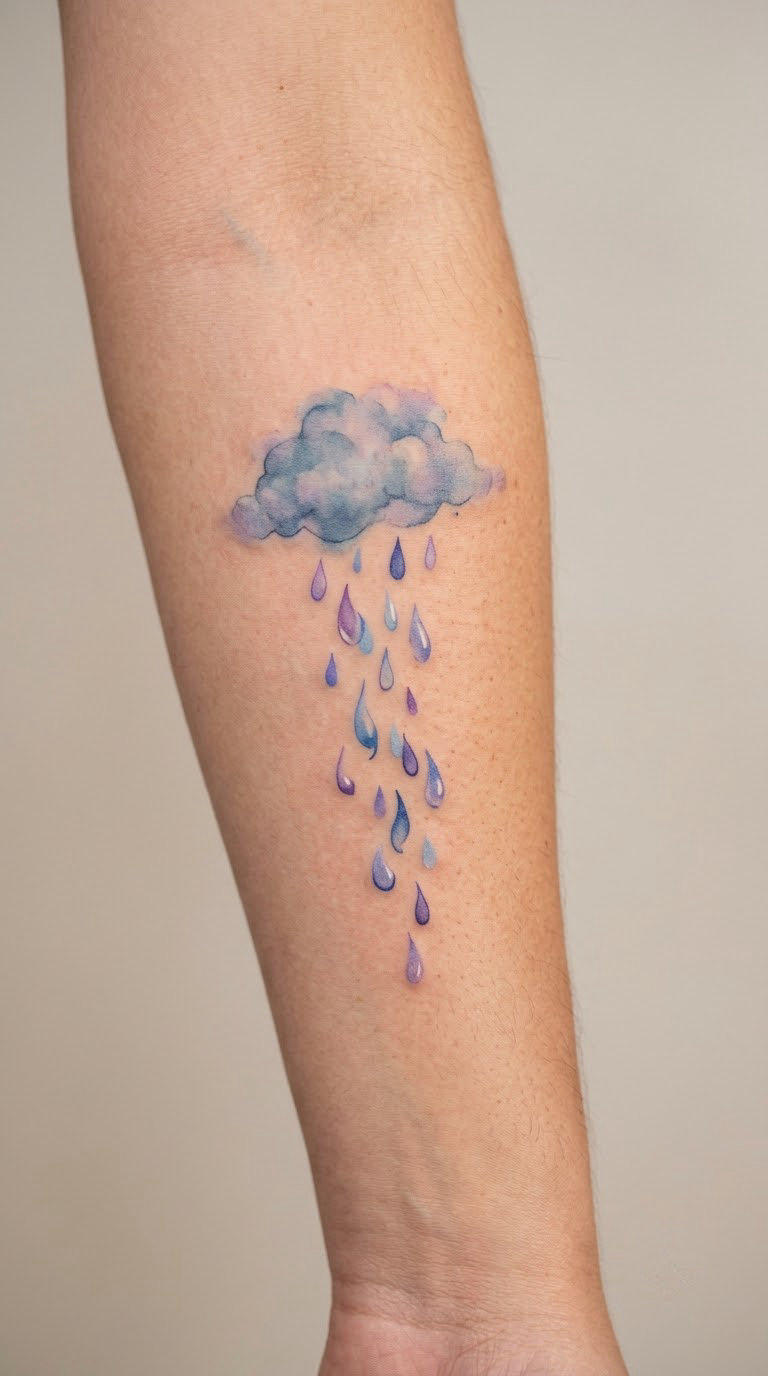
A watercolor rain shower is the one to pick if you want movement rather than an object. The cloud is a soft grey-blue wash with an unfinished bottom edge, and the drops below it trail off in violet, cerulean and pale grey with a few hard edges left in on purpose.
Watercolor suits rain because rain has no outline. It is the style most likely to soften and shift as the years pass, which is either the appeal or the deal-breaker depending on who is asking.
Placement: inner or outer forearm, running lengthwise with the arm. Size: 3.5 to 5 inches (9 to 13 cm). Style: watercolor with fine line accents.
Pain: medium, a long scratchy session. Large soft-shaded areas weep more than line work, so plan the aftercare properly.
Make it yours: pick two colours instead of the full palette, or have the drops fade out into bare skin at the bottom.
4. Blackwork Rain Cloud on the Upper Arm
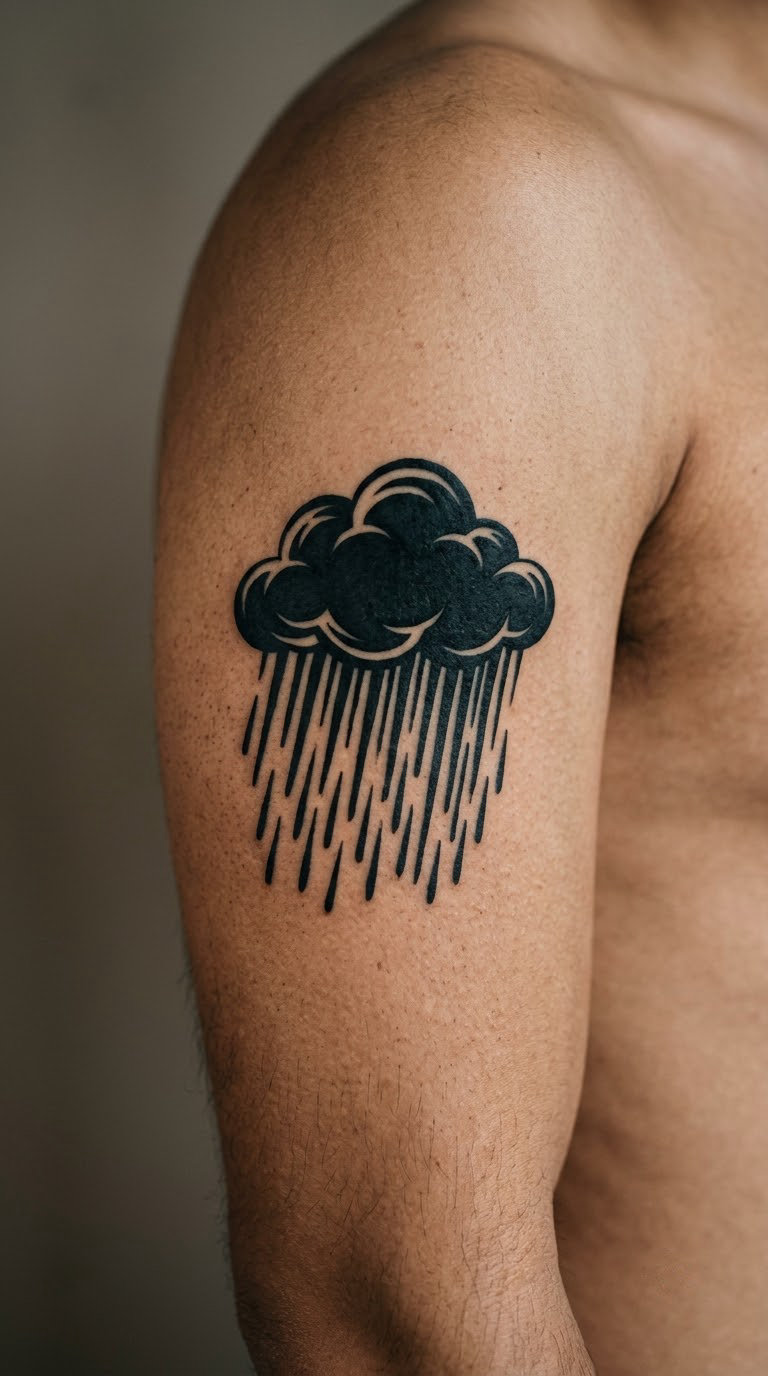
Blackwork is where rain turns mean. The cloud is filled solid, the rain underneath is a block of tapered black streaks, and there is no shading to soften the edges. Simple shapes, high contrast, readable from across a room.
It reads as weight and pressure, the kind of thing people pick when they want the weather to look like it has teeth. It also holds its shape better than a delicate design, which matters if the piece has to survive on a forearm for twenty years.
Placement: outer upper arm, centred on the deltoid or slightly lower. Size: 2.5 to 4 inches (6 to 10 cm). Style: bold blackwork.
Pain: medium, deeper and more blunt on the upper arm. Solid black takes longer to fill than line work, so budget a longer sitting.
Make it yours: have the cloud silhouette based on a cloud you actually photograph, or add a second layer of rain beneath the first.
5. Realistic Raindrop on the Collarbone
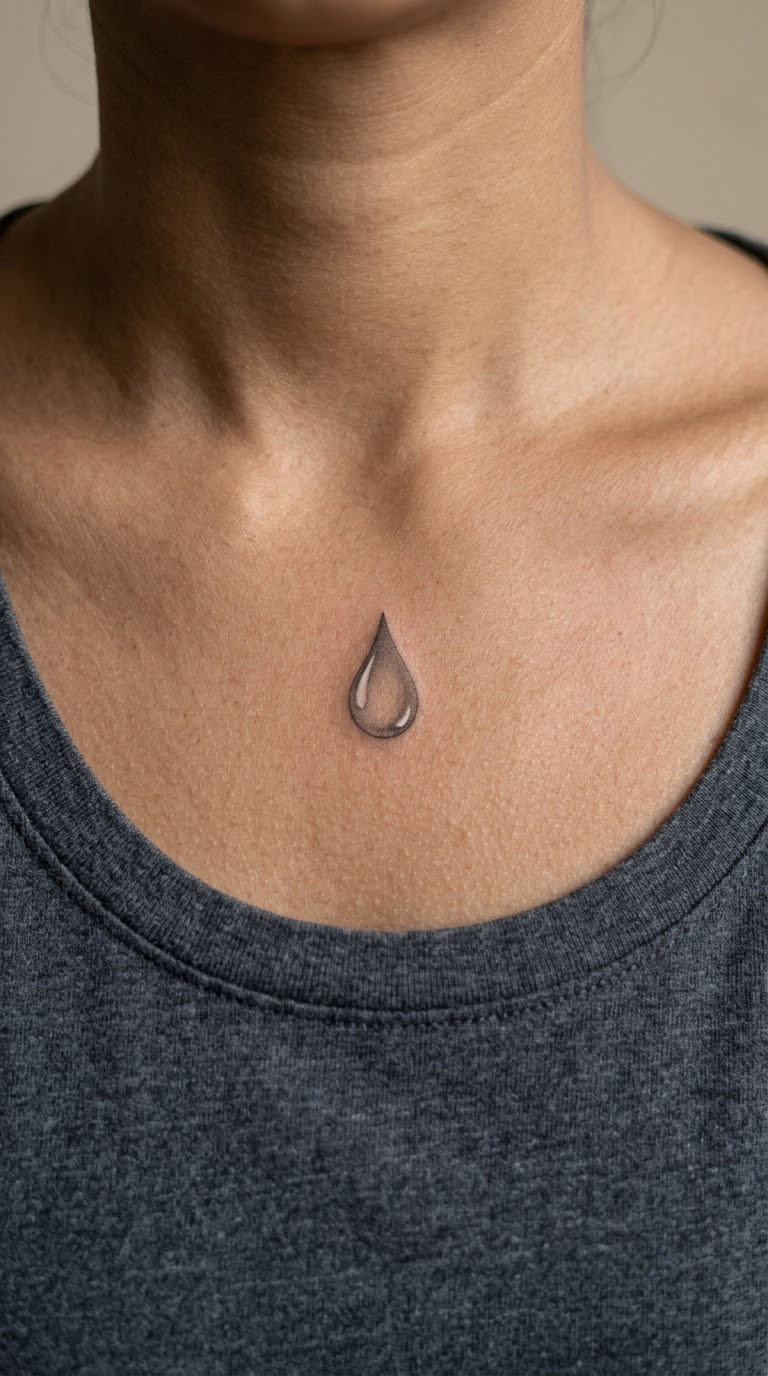
A micro-realistic raindrop is drawn like a photograph of water: a soft grey body, a darker edge on one side, a bright highlight left as bare skin near the top. That untouched highlight is what makes it look wet instead of grey.
It is a quiet design that catches light as you move. People tend to choose it for a private reset, and it wears well at a small scale, which is why it makes a sensible first piece that still looks considered.
Placement: just below the collarbone, or the hollow between collarbone and throat. Size: 1 to 1.75 inches (2.5 to 4.5 cm). Style: micro-realism black and grey.
Pain: medium. Bony areas sting more, and the hollow of the collarbone is sensitive. The soft grey shading blurs with age, so the highlight is what keeps it reading.
Make it yours: two drops, a second smaller one above, or a faint ripple line beneath.
6. Dotwork Rain Pattern on the Shoulder
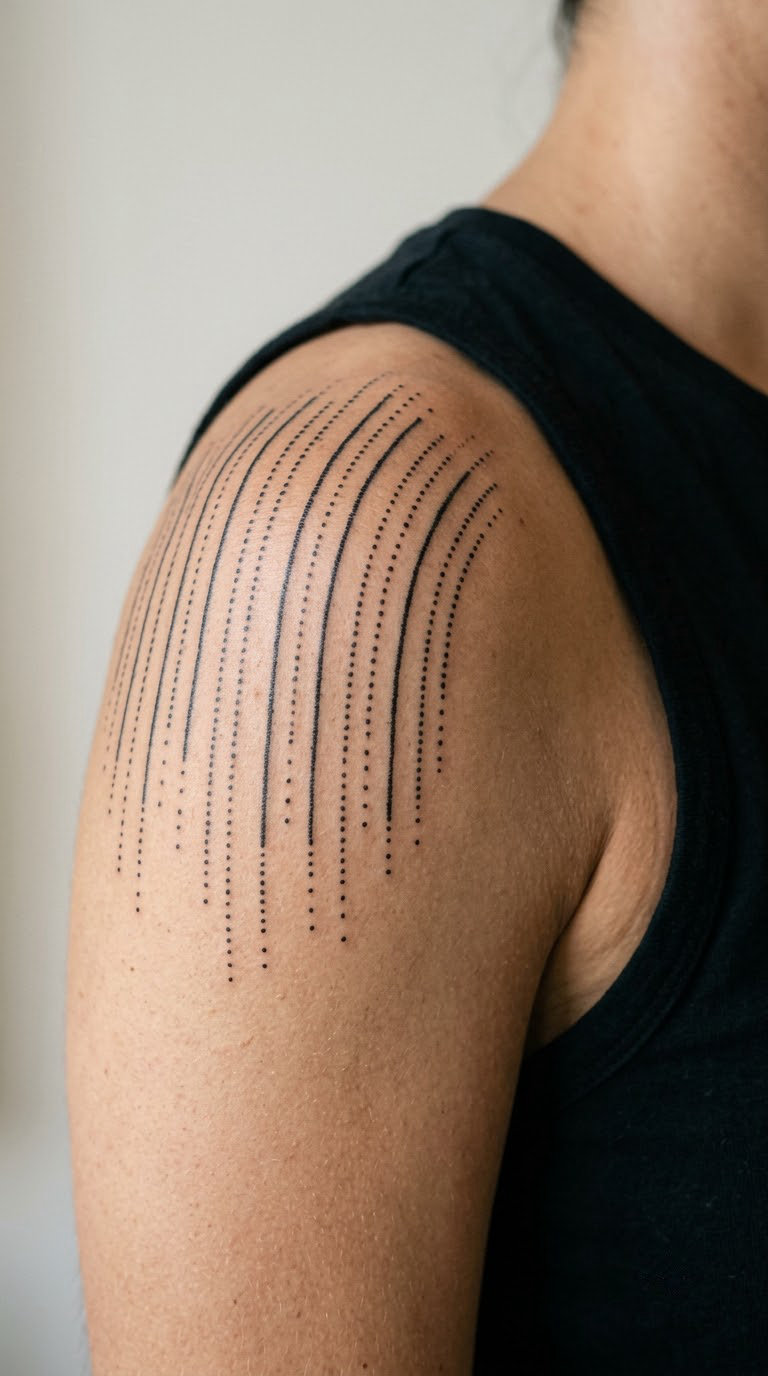
Dotwork rain turns the shower into a rhythm. Short lines of graduated dots fall from a soft cloud, denser at the top and opening out as they descend, so the pattern already shows movement before any colour is added.
It suits people who like texture more than outline. Dotwork also photographs well once healed, because the pattern holds up at arm’s length in a way a tiny realistic drop does not.
Placement: shoulder cap, following the curve so the dots drift down toward the arm. Size: 2.5 to 4 inches (6 to 10 cm). Style: dotwork with fine line.
Pain: medium and slow. Dot work is a lot of needle passes, and the shoulder tightens up over a long sitting, so take the break your artist offers.
Make it yours: change the dot sizes so the shower speeds up, or leave a blank band of skin through the middle as negative space.
How Rain Tattoo Ideas Stay Readable on Skin
Rain linework fades faster than almost anything else in tattooing, and the worry comes up constantly in r/tattoo threads. Parallel lines blur together, and a shower that read clearly on day one can start to look like a grey smudge five years in.
Three things help. Ask for a line weight the artist is comfortable running, not the thinnest one in the reference photo. Leave gaps between the drops wide enough that a healed line still has bare skin on both sides. And keep the design simplified at small sizes, because detail on a wrist or behind an ear is the first thing to soften.
7. Traditional Cloud with Blue Rain
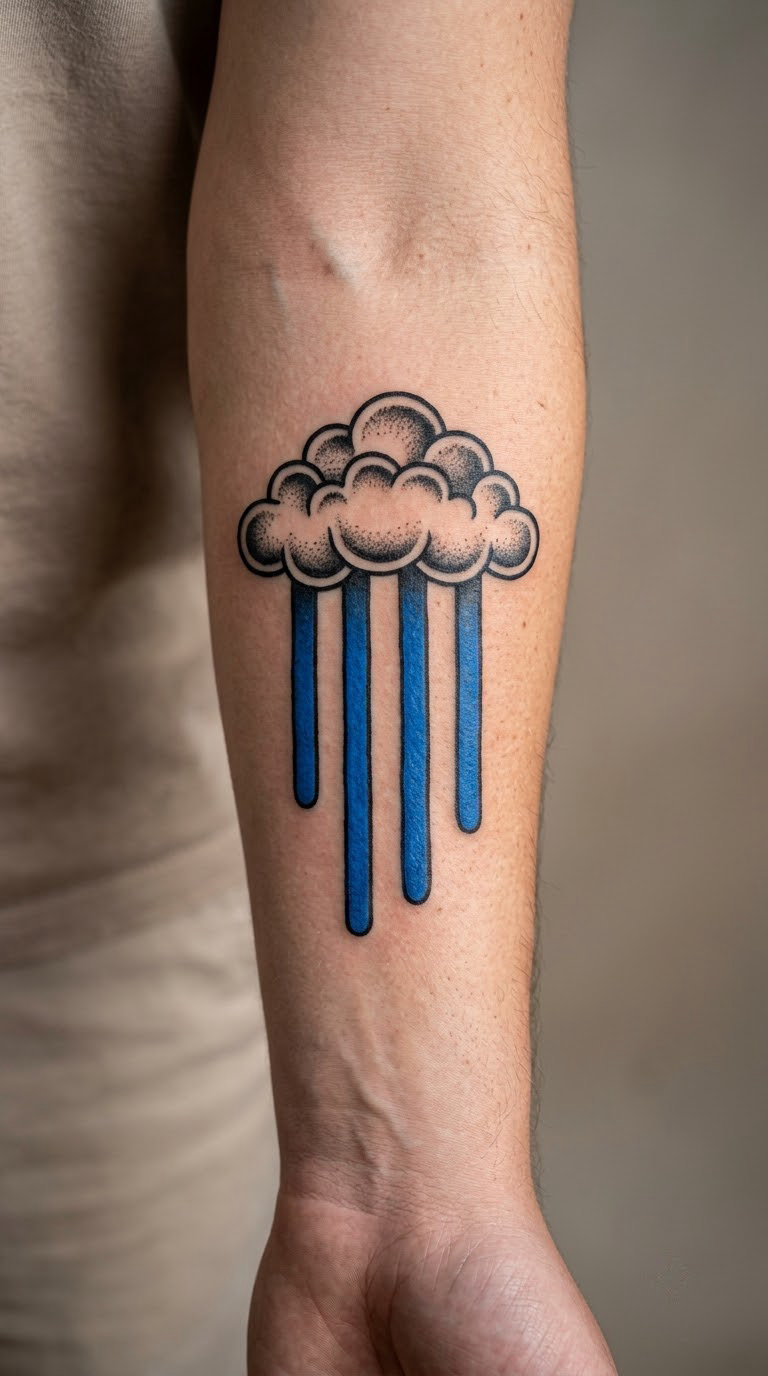
Traditional rain is built the old way: a heavy black outline, a cloud filled with a colour, and rain rendered as thick streaks in a second colour. The lines are uniform, the shapes are simple, and nothing about it pretends to be a photograph.
It is a loud design in the good sense. People choose it for the colour more than the meaning, and because traditional pieces stay legible as they age rather than dissolving into grey.
Placement: outer forearm or upper arm. Size: 3 to 4.5 inches (7.5 to 11 cm). Style: American traditional.
Pain: medium, and colour packing on the cloud is the slow part. Traditional shading usually needs a second session or a touch-up, which is normal for the style.
Make it yours: swap the rain colour for a deep red or a bottle green, or have the cloud shaded in a six-pack gradient the way traditional work often is.
8. Tiny Rain Shower Behind the Ear
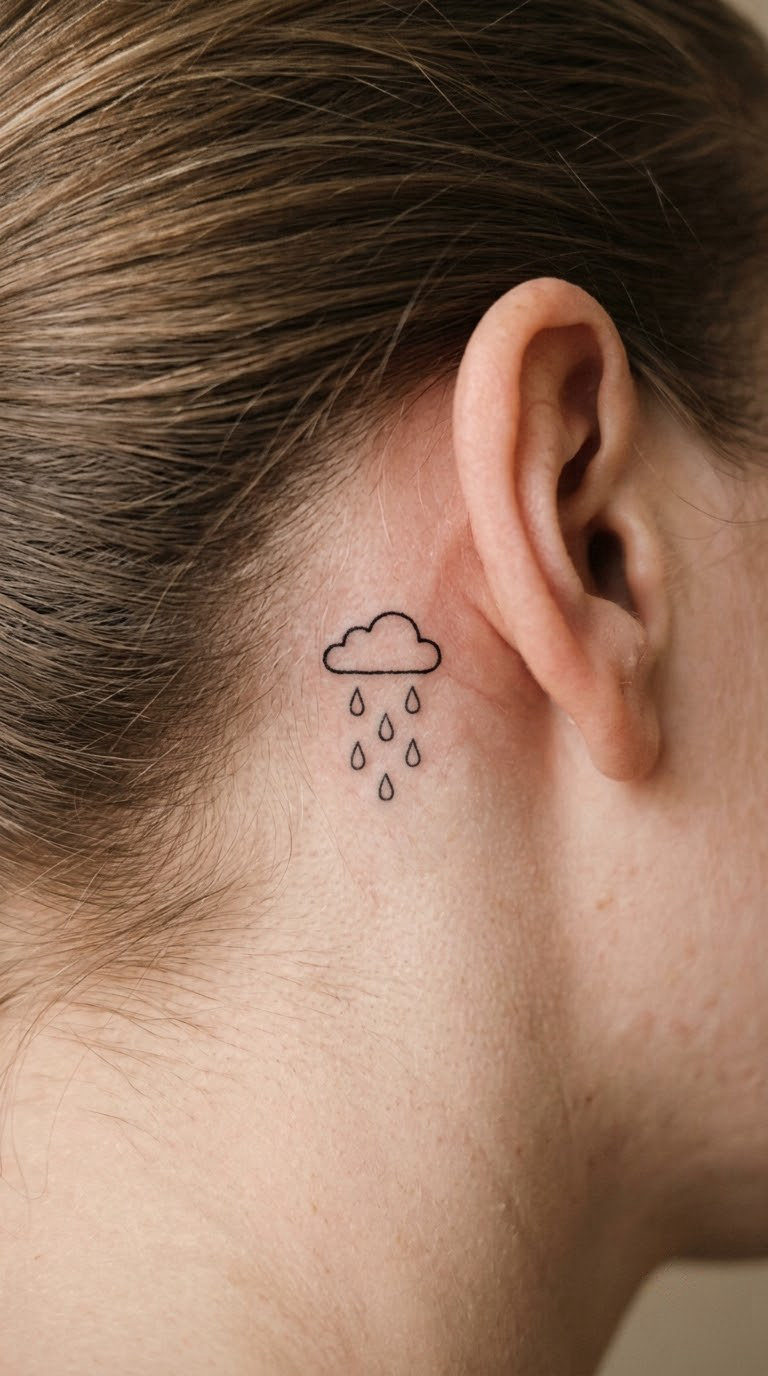
This is the discreet first-tattoo version. A small cloud sits behind the ear with five narrow drops falling from it, all in fine black line, sized so it hides under hair in an office and shows when you want it to.
Compared with the single raindrop, it says a little more. The cloud adds weather, the shower adds movement, and the whole thing still takes well under an hour.
Placement: behind the ear, trailing down toward the neck. Size: 1.25 to 2 inches (3 to 5 cm). Style: fine line.
Pain: low to medium. Behind the ear feels papery in places and more sensitive near the hairline, so the last few drops can get spicy.
Make it yours: make the drops uneven lengths, so it looks like wind is pushing them, or add a single tiny star for a rain-and-stars piece.
9. Grey Watercolor Rain on the Ankle
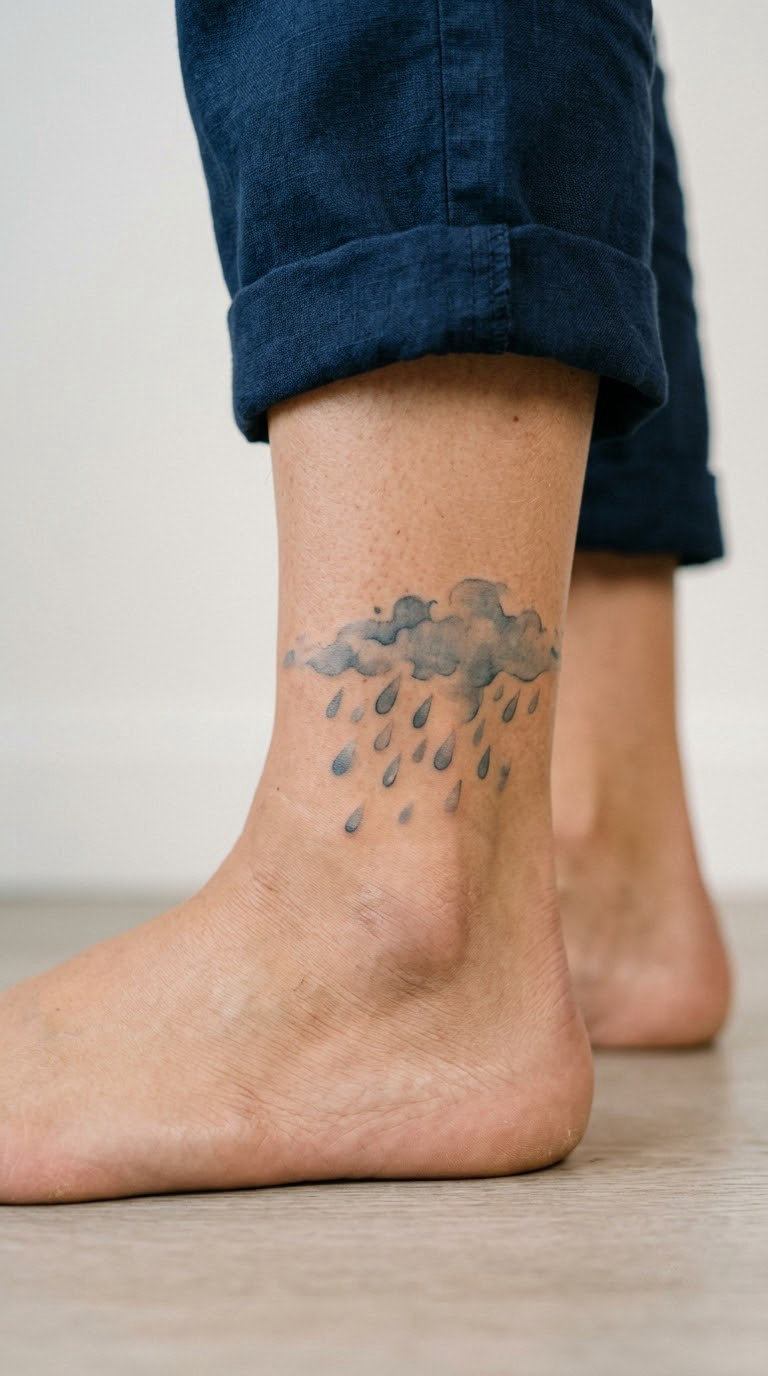
An ankle rain tattoo is usually a loose vertical run of translucent grey and pale blue, with no hard outline anywhere. The wash looks like condensation on glass, and the edges stay deliberately unfinished.
It is the easiest rain placement to make look like it belongs to the body, because the ankle already curves. People tend to choose it for a quiet, unhurried feel, and it sits well under a trouser cuff.
Placement: outer ankle, wrapping slightly. Size: 2 to 3 inches (5 to 7.5 cm). Style: watercolor or grey wash.
Pain: medium, with an odd ticklish edge on the inside of the ankle. Expect the skin to flake for about a week, more than a line piece would.
Make it yours: mirror it on the other ankle as a pair, with one cloud and one shower in a matching but different scale.
10. Geometric Rain Lines on the Sternum
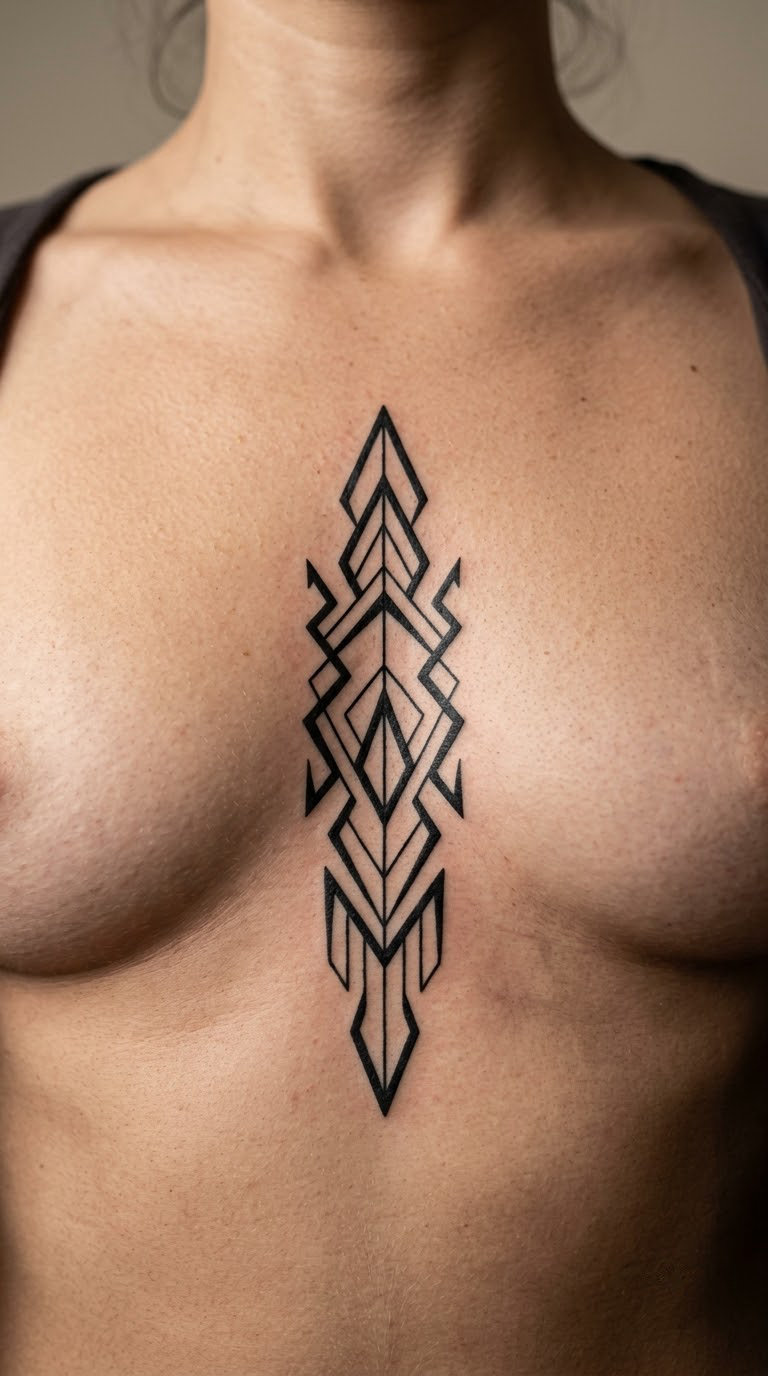
Geometric rain drops the curve out of it. The shower becomes a set of crisp angular marks, cut at a consistent angle, mirrored down the centre of the sternum so the body itself supplies the symmetry.
It looks engineered, which is the point. The meaning is usually left open, or attached to something orderly about a messy period.
Placement: sternum, vertical, centred between the pecs. Size: 3.5 to 5 inches (9 to 13 cm). Style: geometric line work.
Pain: high, and not only because of the bone. Sternum skin is thin, the breastbone is close to the surface, and people often tense up in exactly this spot, which makes it hurt more than it needs to. Breathe through it.
Make it yours: vary the spacing so the marks speed up toward the bottom, or run one colour through every third line.
11. Fine-Line Cloud Burst on the Rib
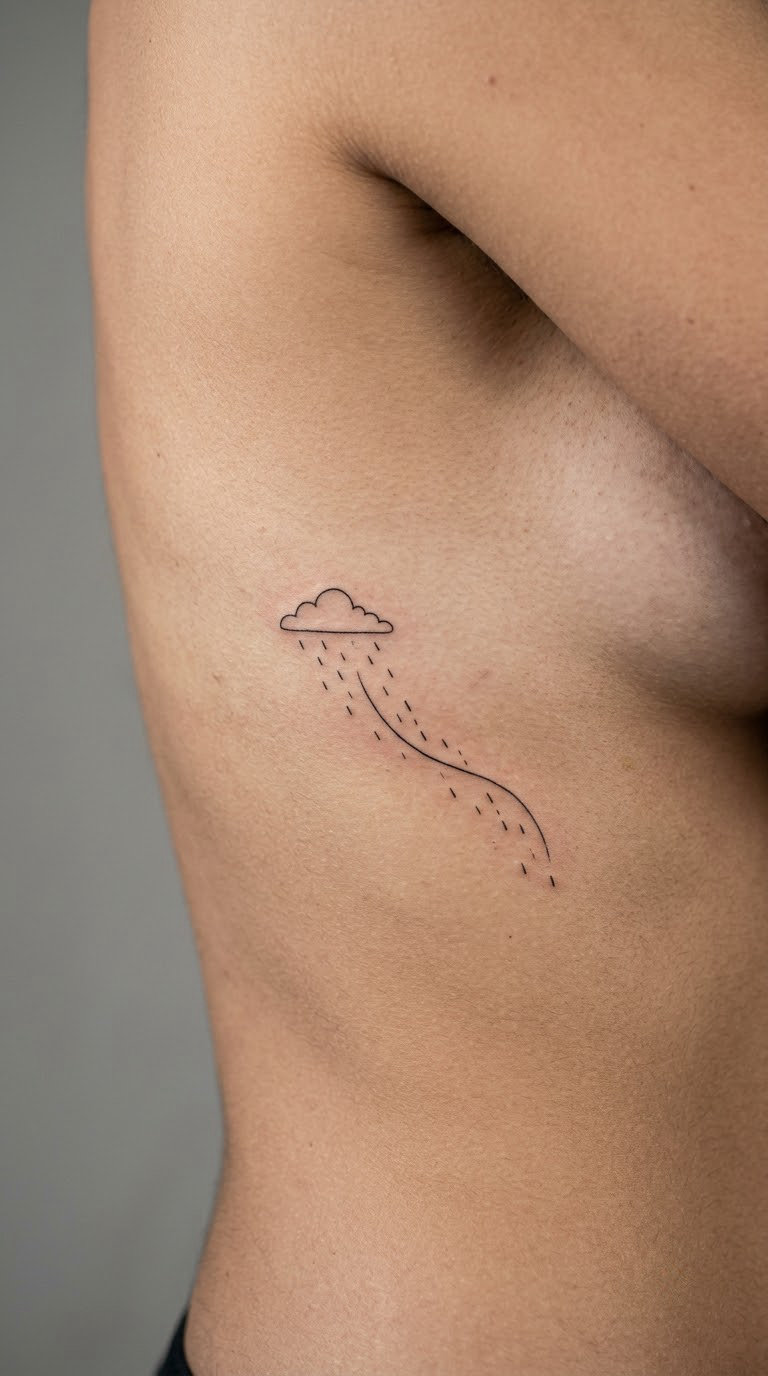
The rib design is a narrow cloud that bursts sideways, with the drops falling along the curve of the ribcage rather than straight down. Drawing them diagonally does two things: it fits the body, and it makes the rain look blown sideways.
It is a private placement, which is often the reason people choose it. The meaning is personal in the same way a raindrop behind the ear is, and the narrow shape suits the long flat canvas.
Placement: side of the ribcage, front to back. Size: 2.5 to 3.5 inches (6.5 to 9 cm). Style: fine line.
Pain: high. The ribs are bone-on-top-of-bone with very little soft tissue, and the skin stretches when you breathe and laugh. Pick a day when you can keep your breathing slow.
Make it yours: add a small outline cloud in the negative space, or end the shower in a single dot that looks like a period at the end of a sentence.
12. Blackwork Umbrella and Rain on the Calf
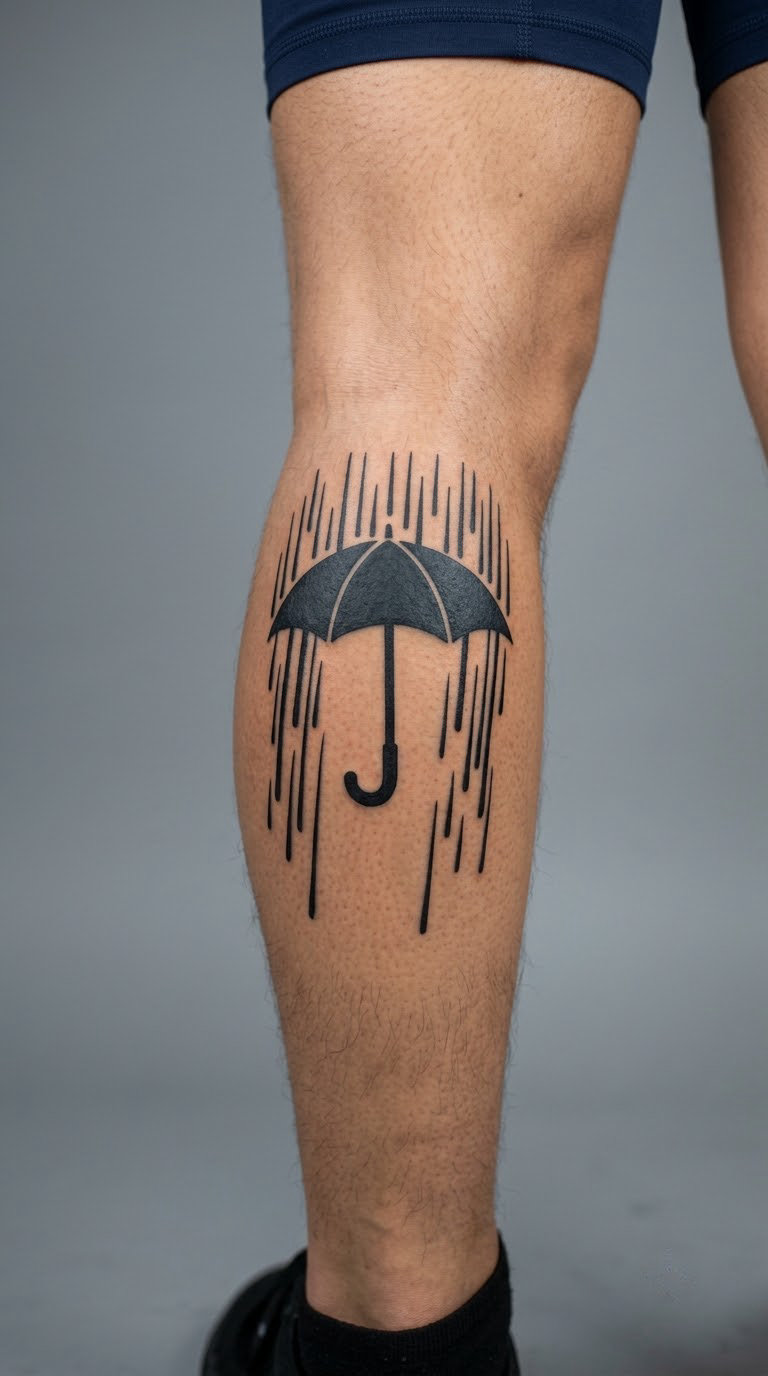
This one tells a small story. A solid black umbrella sits under falling black streaks, and the whole thing is drawn as silhouette, so it reads instantly even at a distance or in a photo.
The umbrella gives the piece its meaning: shelter, someone you walk through weather with, or being the thing that keeps the rest of you dry. The calf is an unusual spot for rain and that is part of the appeal.
Placement: outer calf, vertical. Size: 3.5 to 5 inches (9 to 13 cm). Style: bold blackwork.
Pain: medium, though the calf is a fiddly shape to wrap a design around. Solid black takes time, so expect a long sitting and a leg that cramps near the end.
Make it yours: tilt the umbrella so rain hits it from one side, or have a single drop land on the shoulder of the canopy.
13. Blue Botanical Rain Vine on the Forearm
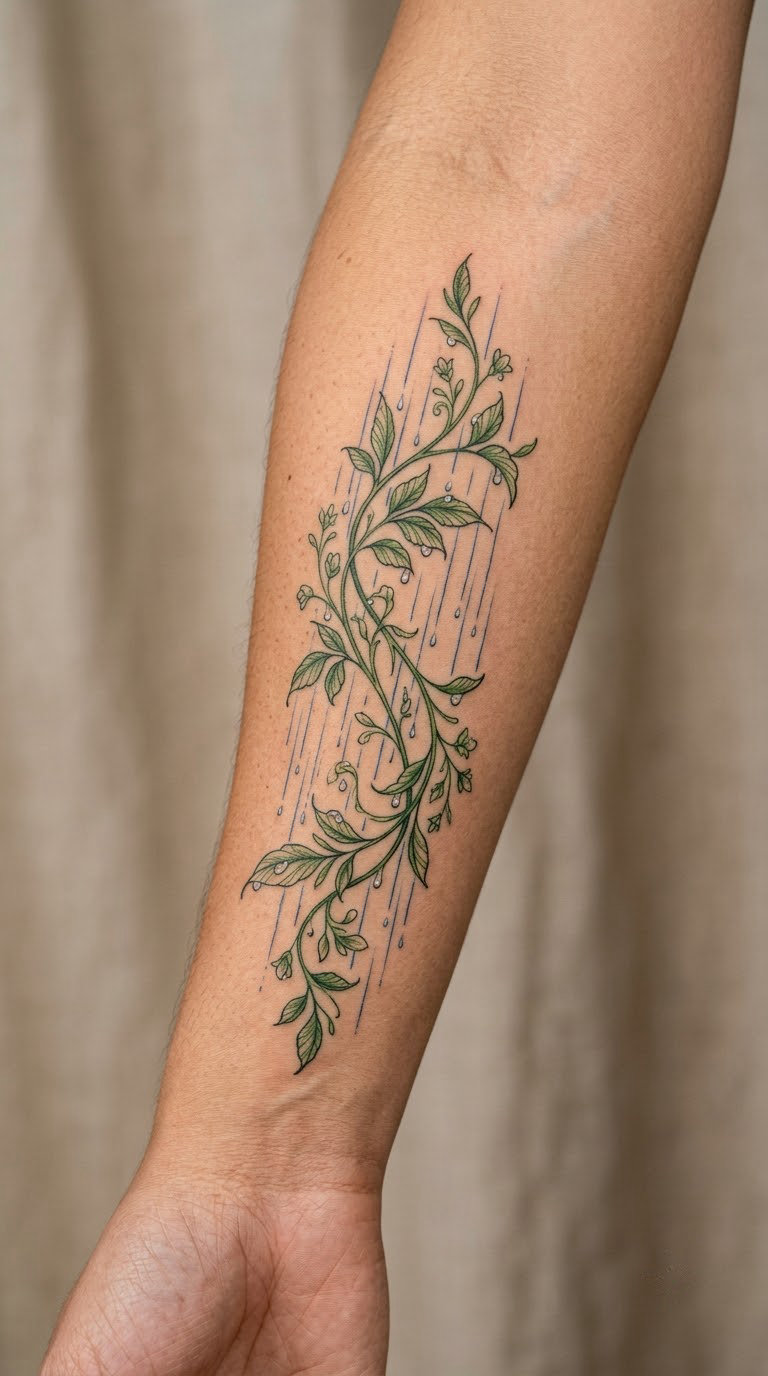
Here rain stops being weather and becomes water. A trailing vine winds up the forearm with small leaves in green, and thin blue lines run beside it like rainfall through the planting. The rain and the plant share the same space instead of sitting in a cloud above it.
It is the design people choose when they want growth as much as weather, the same idea behind a no rain, no flowers tattoo but drawn as a picture instead of a sentence.
Placement: inner or outer forearm. Size: 4 to 6 inches (10 to 15 cm). Style: botanical with colour.
Pain: medium. Colour on a small area is fine, but this design is detailed enough to take two hours or more.
Make it yours: use the plant you actually grow, or add a small blooming flower at one end to show growth over time.
14. Minimal Diagonal Rain Marks on the Hand
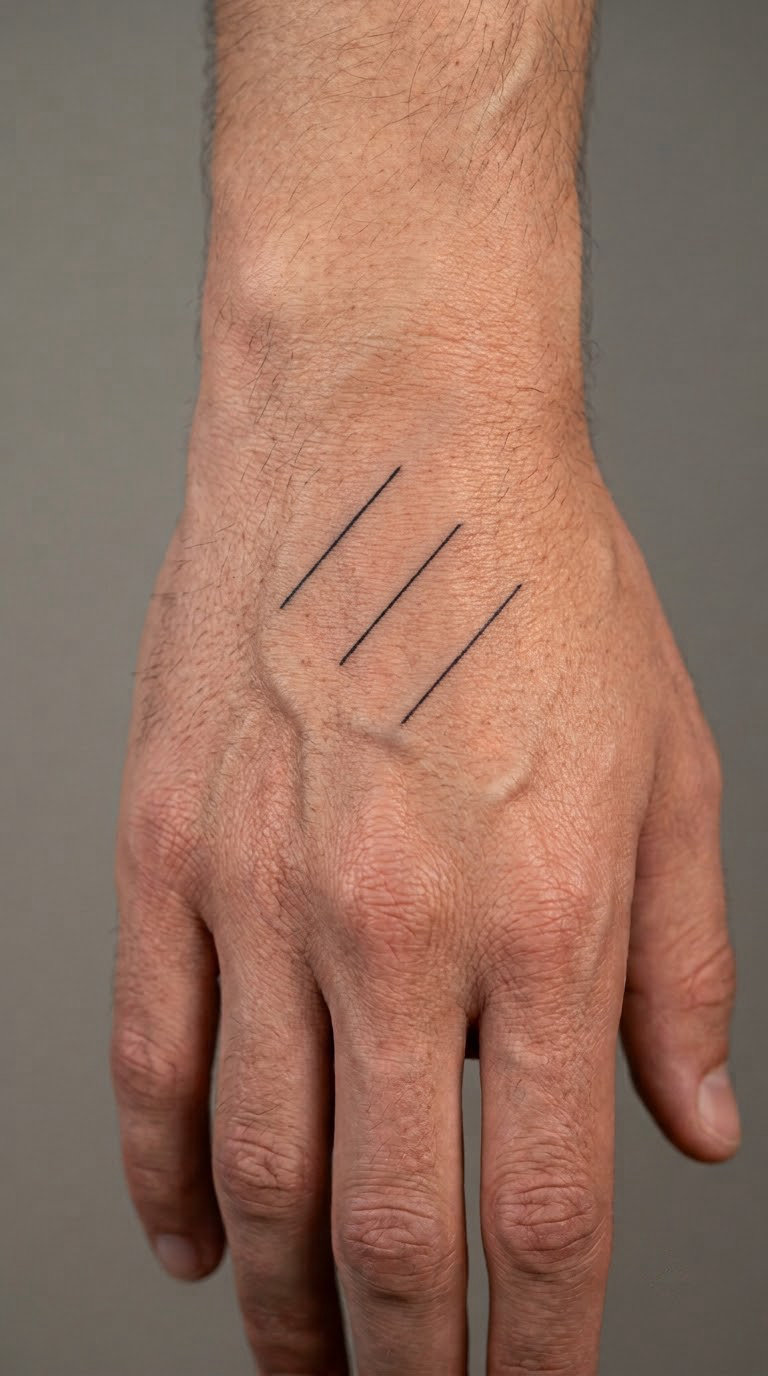
Three short diagonal marks on the back of the hand is about as spare as a rain tattoo gets. There is no cloud and no colour, just angled lines that read as falling water to anyone who looks twice.
Hands weather hard. Sun, washing and work wear them down, so this is a design to want deliberately, and to ask an experienced hand specialist for rather than a generalist on a whim.
Placement: back of the hand, between the knuckles, or along a finger. Size: 0.4 to 0.75 inch (1 to 2 cm) each. Style: minimalist fine line.
Pain: high. Bony, thin and extremely sensitive, and hands swell for a day or two afterwards, so plan loose sleeves.
Make it yours: make the marks uneven, like real drizzle, or put one on each hand as a matching pair with a different angle.
15. Watercolor Storm Cloud on the Thigh
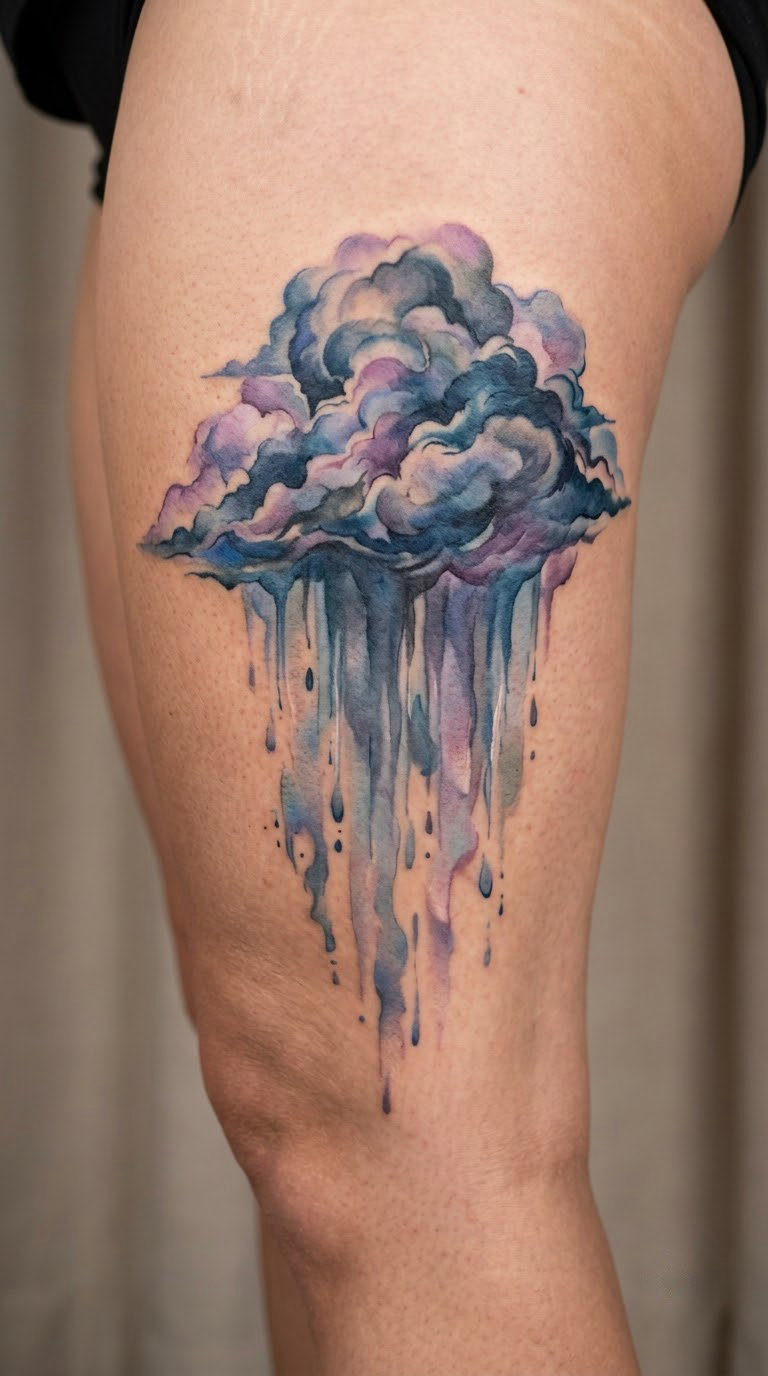
A thigh storm cloud is the biggest single-motif design on this list. A wide cloud sits in blue, grey and violet wash, with the rain falling in loose vertical bleeds underneath and the colour running out at the edges rather than stopping.
Because rain is drawn as colour bleeding, the piece changes as it fades, which people tend to find far less upsetting than they expect. The thigh gives the artist room to build a real sky.
Placement: outer thigh, which is a large flat area with little interference from bone. Size: 4 to 6 inches (10 to 15 cm). Style: watercolor.
Pain: low to medium, and the thigh is a comfortable place to sit through a long session. Expect flaking and a slightly mottled look for the first week or two.
Make it yours: add a thin band of lightning through the cloud, or fade the top of the cloud into bare skin so the storm looks like it arrived from nowhere.
16. Traditional Red Raindrop on the Finger
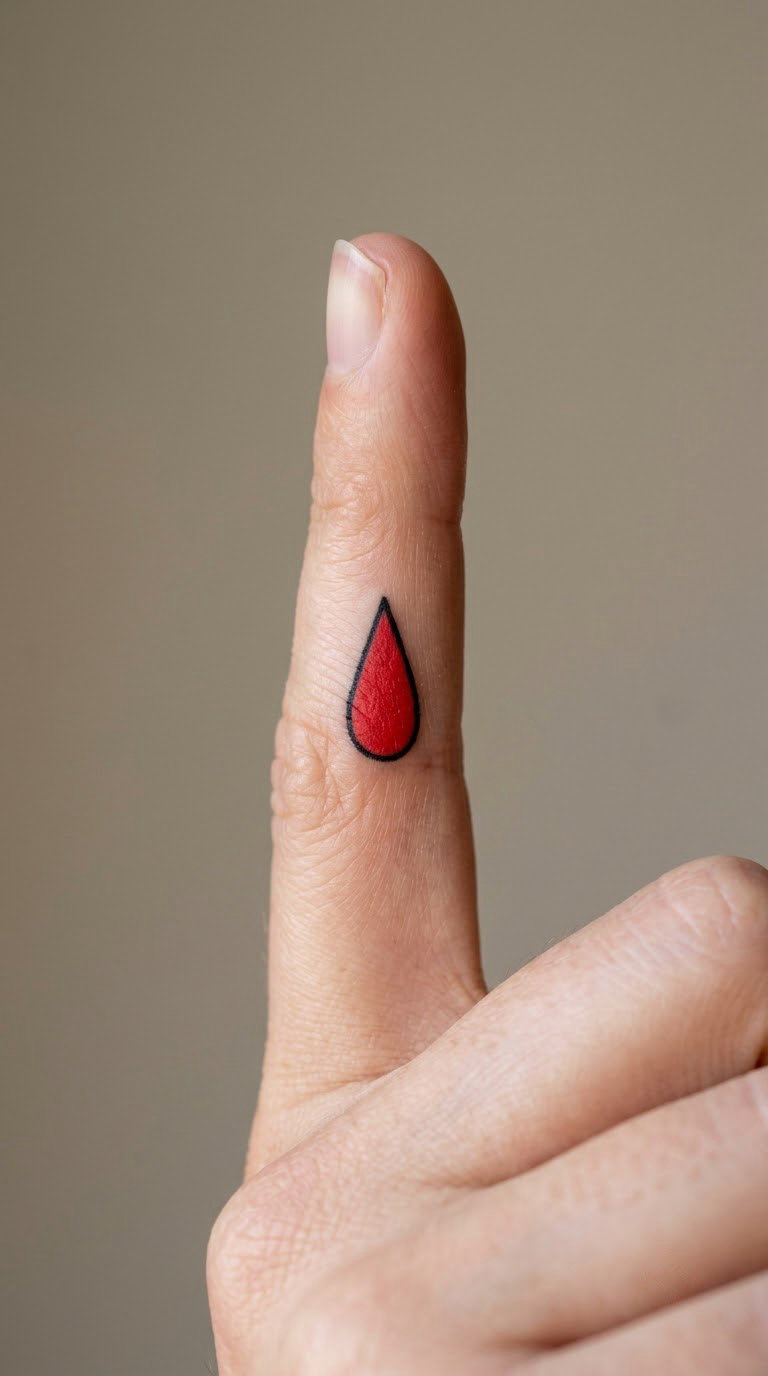
A red raindrop on the side of a finger is small, saturated and unmistakable. Heavy black outline, flat red fill, no shading, and it reads from a few feet away because red carries on skin the way black line does not.
Colour on fingers fades faster than people expect, and the side of a finger takes a beating from washing and keys. Worth knowing before you commit, and worth keeping the design simple enough that it still reads when the red softens.
Placement: side of a finger, or on the knuckle. Size: 0.5 to 1 inch (1.3 to 2.5 cm). Style: traditional or neo-traditional.
Pain: high, one of the sharpest spots on the body. It is over quickly, which is a mercy.
Make it yours: add a hand-lettered initial inside the drop, or have three small drops run down the finger instead of one.
17. Micro-Realism Rain on the Neck
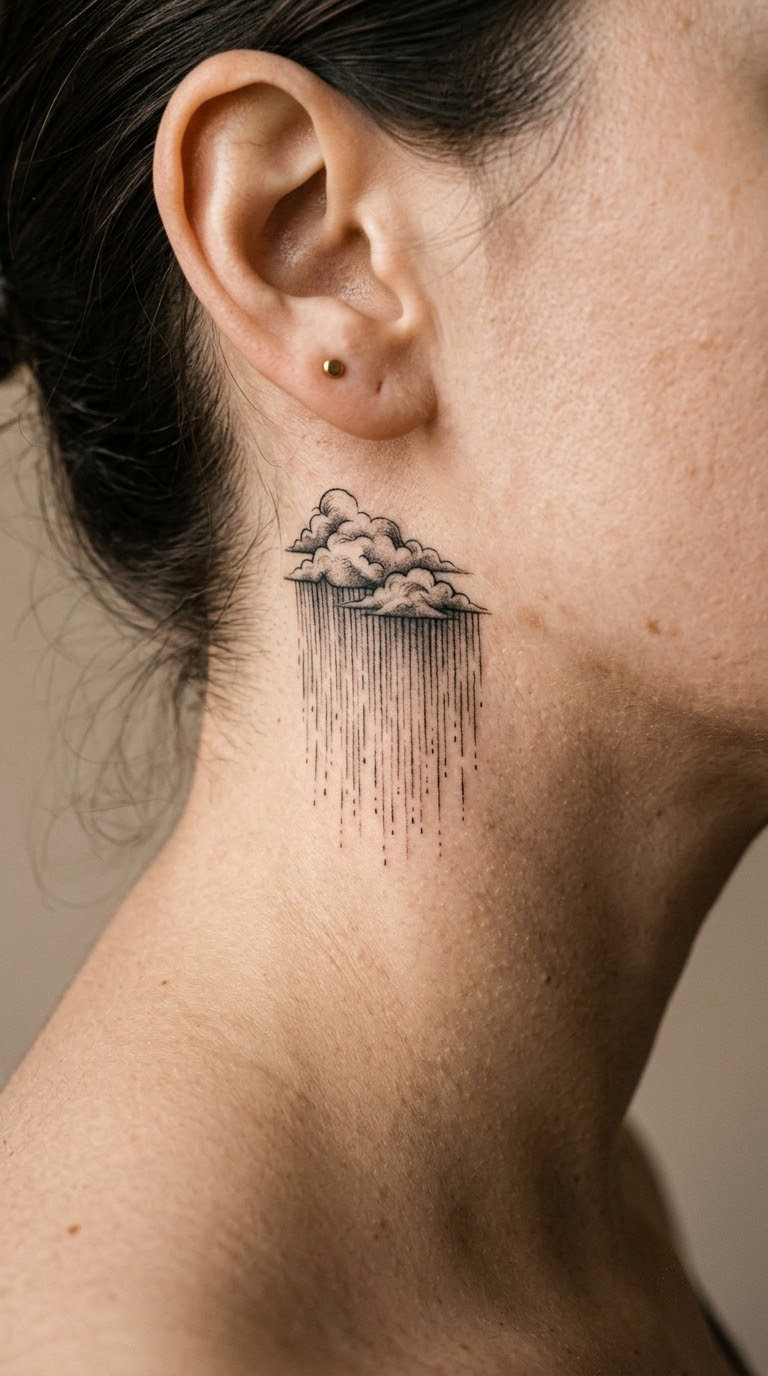
This is a shower of translucent black and grey lines falling beneath the ear, each drop shaded slightly differently so some look solid and some look like they are passing through. The edges stay soft, which is what keeps it from looking like a barcode.
Neck pieces are visible and unmissable, and people tend to choose this one for that reason. It works best as a standalone rather than as the start of a large neck piece.
Placement: side of the neck, below the ear and above the collarbone. Size: 1.5 to 2.5 inches (4 to 6.5 cm). Style: micro-realism.
Pain: medium to high, and you will feel every pass. Neck skin is expressive, so the lines shift as you talk or swallow.
Make it yours: keep one drop darker than the rest so the shower has a clear direction, or add a very pale blue wash behind the whole thing.
18. Gothic Black Rain on the Back of the Arm
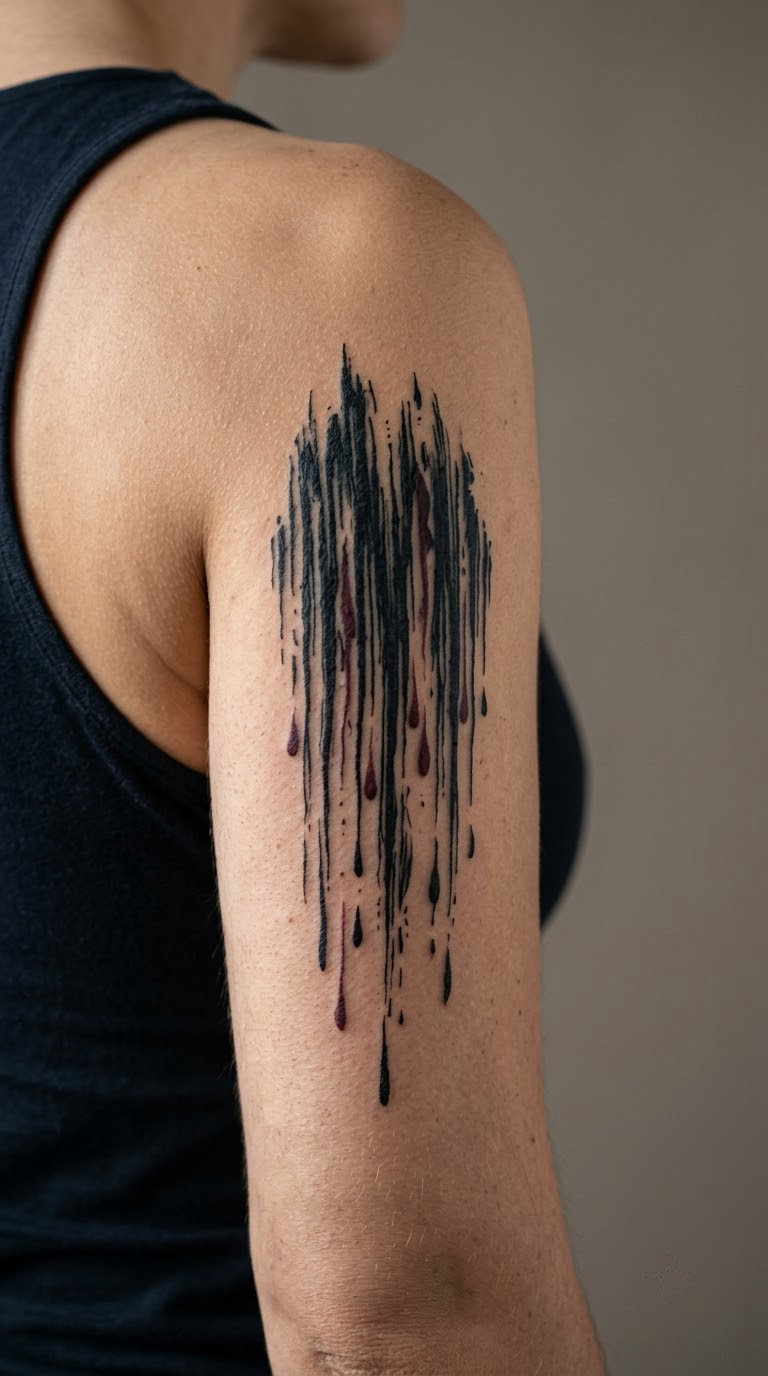
Gothic rain is rain with weight. Long textured streaks run the length of the upper arm, black layered over black, and a single muted burgundy accent cuts through the middle. It is closer to a photograph of a window in a storm than a weather icon.
The dark, heavy version is what men gravitate to when they want rain, and it is a genuinely striking design rather than a soft one. If you have been put off by soft cloud-and-rain designs feeling like they are not for you, this is the other direction.
Placement: back of the upper arm or shoulder blade. Size: 3.5 to 5 inches (9 to 13 cm). Style: blackwork with grey shading.
Pain: medium, longer than it looks because grey shading is many passes. The burgundy accent is a separate colour layer, so allow time.
Make it yours: change the accent to a deep teal or keep it pure black and grey, which ages more predictably.
19. Watercolor Rain Cloud Matching Piece on the Inner Arm
A matching pair works best as two clouds, not two copies. The same palette and the same soft edge, but one cloud slightly larger or sitting at a different height, so the pair reads as related rather than stamped.
It suits couples, siblings, or one person with two arms. The inner arm is visible when you turn your palm up, which gives a private piece an accidental audience.
Placement: inner arm, mirrored on the left and right. Size: 2 to 3 inches (5 to 7.5 cm) each. Style: watercolor.
Pain: medium, and the inner arm is a slightly harder canvas than the outer, so ask for a good break halfway. Get both pieces on the same day if you can, so the colours match.
Make it yours: add a tiny detail inside one cloud, such as a small star, that only the two of you know about.
20. Fine-Line Rain Over a Coastal Horizon
The last design pairs rain with a place. A single-line horizon with a low sea and a few short rain lines falling from above it, sparse enough that most of the forearm stays bare. It is small, quiet, and specific to you.
Rain over a place usually means the place mattered. A coastline, a window, a city you lived in. Sparse line work like this shows its age less than a dense design, and the untouched skin keeps it from feeling cluttered.
Placement: inner forearm, horizontal so the horizon sits level with the arm. Size: 2.5 to 3.5 inches (6.5 to 9 cm). Style: fine line, single needle.
Pain: medium, an easy placement to sit through. The thin single-needle lines are quick, so the whole design can be done in a short session.
Make it yours: sketch the horizon from a photo of the real spot, or add a small boat on the water line so it reads as a scene rather than an abstraction.
How to Choose the Right Design
Pick the meaning first, then let everything else follow from it. A design you cannot put into a sentence tends to feel flat on you after a while, and that is the one thing nobody warns new collectors about.
Match line weight to size. Anything under two inches needs the fewest possible lines, because a shower of hairlines on a wrist becomes a smudge. A forearm or thigh can carry real detail.
Let contrast decide the style. Solid black stays bold for decades, soft grey washes soften quietly, and saturated colour asks more of your aftercare. If you do not enjoy fussing with sunscreen and moisturiser, black and grey suits you better.
Follow the body, not the drawing. Rain wants to fall with gravity, so angled lines work better on a rib, vertical lines suit a forearm, and anything symmetrical wants a sternum. An artist will move your reference for you if you let them.
Book the artist who draws well, not just the one who is free. Look at healed work, not fresh Instagram posts, and check that you can see their pieces two, five and ten years old. Our forearm band tattoo ideas for men guide covers the same point about healed work on arms.
Cost and Session Time
Most studios charge by the hour, with a shop minimum that covers the first part of the appointment, so a small design still has a floor price. That floor is why a one-inch raindrop behind the ear and a two-inch one can cost a similar amount.
Session length is easier to predict than cost. A small fine line piece usually runs under an hour. A 4 to 6 inch watercolor design, a blackwork cloud or anything with heavy colour packing needs two to four hours, sometimes across two appointments.
A forearm, shoulder or calf piece with dense fills can run five hours or more, and traditional work is often booked as a first session plus a colour or shading session. Your artist will tell you before you start, and splitting a long design into two sittings is normal and gives a better result.
Rates vary a lot by city, shop and how much work is in the queue of the artist you want. Get the number from your artist at the consultation rather than guessing, and treat a quote far below the going rate in your area as a warning rather than a bargain.
Aftercare Basics
Start with your artist’s aftercare instructions, because they will know what they did in the session.
Wash the area gently with lukewarm water and unscented soap, then pat it dry. A soft wash is usually better than heavy ointment over a large shaded area like a watercolor cloud, which tends to weep more than a line piece.
Keep it covered loosely for the first few hours if the artist recommends it, and change the covering if it soaks through. Then leave it open to the air.
Do not soak, swim, or sit in a hot tub while it is healing. Skip sun on the spot for the weeks right after, and once healed keep using sunscreen, since UV is the fastest way to fade both black line and colour.
Expect flaking and a faded-looking surface during the first week or two. That is the skin shedding, not the tattoo disappearing. Do not pick it, and if you see anything that concerns you, call the studio rather than guessing.
Frequently Asked Questions
What does a rain tattoo symbolize?
Rain usually points to renewal, cleansing and fresh beginnings, because rain is what makes growth possible. People also choose it for cathartic release, ending a hard season, or the calm of a quiet afternoon. A storm version carries more weight: pressure, resilience, weathering something. The meaning is personal, so expect your own reason to sit behind the same image.
What does a u0022no rain, no flowersu0022 tattoo mean?
It means growth depends on hardship. Without rain nothing blooms, so the phrase frames a difficult stretch as the thing that made the good part possible. People often choose it after a breakup, a move, a recovery or a hard year at work. As a design it works well as script, or as flowers with rain falling into the same composition.
What does a 3-teardrop tattoo mean?
A three-teardrop design is usually read as the past, present and future, or as the three people in a story the wearer is telling. Some people pick it simply because three drops read better than two or one in a row. Artists and wearers both tend to treat the number as personal rather than a fixed piece of symbolism.
Do fine-line rain tattoos fade easily?
Yes, thin parallel lines are among the fastest fading elements in tattooing. Once several lines blur together the shower stops reading as rain. Ask for a slightly heavier line weight than the reference photo shows, leave wide gaps between drops, and keep small designs simplified. Solid blackwork and traditional colour hold their shape far better over the years.
Where do rain tattoos look best on the body?
Behind the ear and the inner wrist suit small fine line showers. The forearm takes watercolor and traditional work well because it is flat and easy to read lengthwise. The shoulder, calf and outer thigh have room for bigger storm scenes, while ribs and sternum work when you want the rain to follow the curve of the body.
How much does a small rain tattoo cost?
Cost depends on the shop minimum, the artist hourly rate and how long the design takes, and rates change with your area and the artist you want. A small fine line raindrop is usually the fastest and cheapest thing on this list, while large watercolor or blackwork pieces need several hours. Ask for a number at your consultation rather than assuming from size alone.
Start small if this is your first tattoo. The fine-line raindrop or the tiny cloud shower will teach you how you handle a sitting without a three-hour commitment, and you will know your own aftercare habits before you commit to a forearm piece.
Already collecting? Go bigger and bolder. The blackwork storm cloud or a watercolor thigh piece gives you room to work, holds up as the small pieces on your arms soften, and turns a weather symbol into the centre of the collection.