
20 Matching Tattoo Ideas for Mother and Son: Best September 2026
Matching tattoo ideas for mother and son work best when the two designs share a motif rather than a photocopy, so the pair reads as connected without looking handed down. Most people land somewhere between identical and completely different: the same symbol, drawn in a scale and line weight that suits each body.
That is why the twenty designs below all carry matching tattoo ideas for mother and son in the same section — placement, real size in inches, style and an honest pain note. If you want a bigger set of options first, 68 beautiful mother-son tattoo ideas that show special love is worth a scroll. Then come back here and check the numbers against your own skin and your son’s.
A word on timing. If you are planning a milestone tattoo, book the artist four to eight weeks out and give an artist a full month with the design before you commit. People who rush a design they are not sure about are the ones who regret it, not the ones who chose a plain motif too carefully.
Matching Tattoo Ideas for Mother and Son: Quick Guide
What are the best matching tattoos for mother and son?
The strongest pairs are the ones with a shared shape and a personal detail attached to it: a floral branch from a garden you planted, coordinates for the house you moved into, a date only the two of you know. The table below covers all twenty ideas in this guide with the placement, realistic size and pain level for each, so you can scan for something that fits before reading the detail.
| Idea | Style | Best placement | Size | Pain |
|---|---|---|---|---|
| Floral branch | Fine line | Inner forearm | 3-5 in | Medium |
| Sun and moon | Fine line | Upper arm and forearm | 2-3 in | Low to medium |
| Infinity with initials | Minimalist line | Wrist or inner arm | 1.5-2.5 in | Medium |
| Heartbeat line | Single-weight line | Inner forearm | 3-4 in | Medium |
| Constellation | Dotwork | Shoulder or back | 3-4 in | Medium |
| Animal footprints | Silhouette | Inner arm and ankle | 1-2 in | Low |
| Arrow and line | Minimalist line | Forearm | 2-3 in | Low |
| Rose linework | Fine line | Wrist and forearm | 2-3 in | Medium |
| Mountain range | Line art | Upper arm | 3-5 in | Medium |
| Musical notes | Line art | Inner wrist | 1.5-2.5 in | Medium |
| Feather | Fine line | Forearm | 3-4 in | Low to medium |
| Coordinates | Clean numerals | Inner arm | 2-3 in | Medium |
| Butterfly | Fine line | Wrist or forearm | 1.5-2.5 in | Medium |
| Botanical leaf | Single line | Inner arm | 2-3 in | Low |
| Puzzle pieces | Outline | Forearm | 1.5-2 in | Low |
| Wave line | Fine line | Forearm | 3-4 in | Medium |
| Date and Roman numerals | Minimalist type | Wrist or ribs | 2-3 in | Medium |
| Tree of life | Fine line or blackwork | Forearm | 3-5 in | Medium |
| Compass | Fine line | Upper arm | 2-3 in | Medium |
| Word or nickname | Clean lettering | Wrist or forearm | 1-2 in | Medium |
1. Matching Floral Branch Tattoos
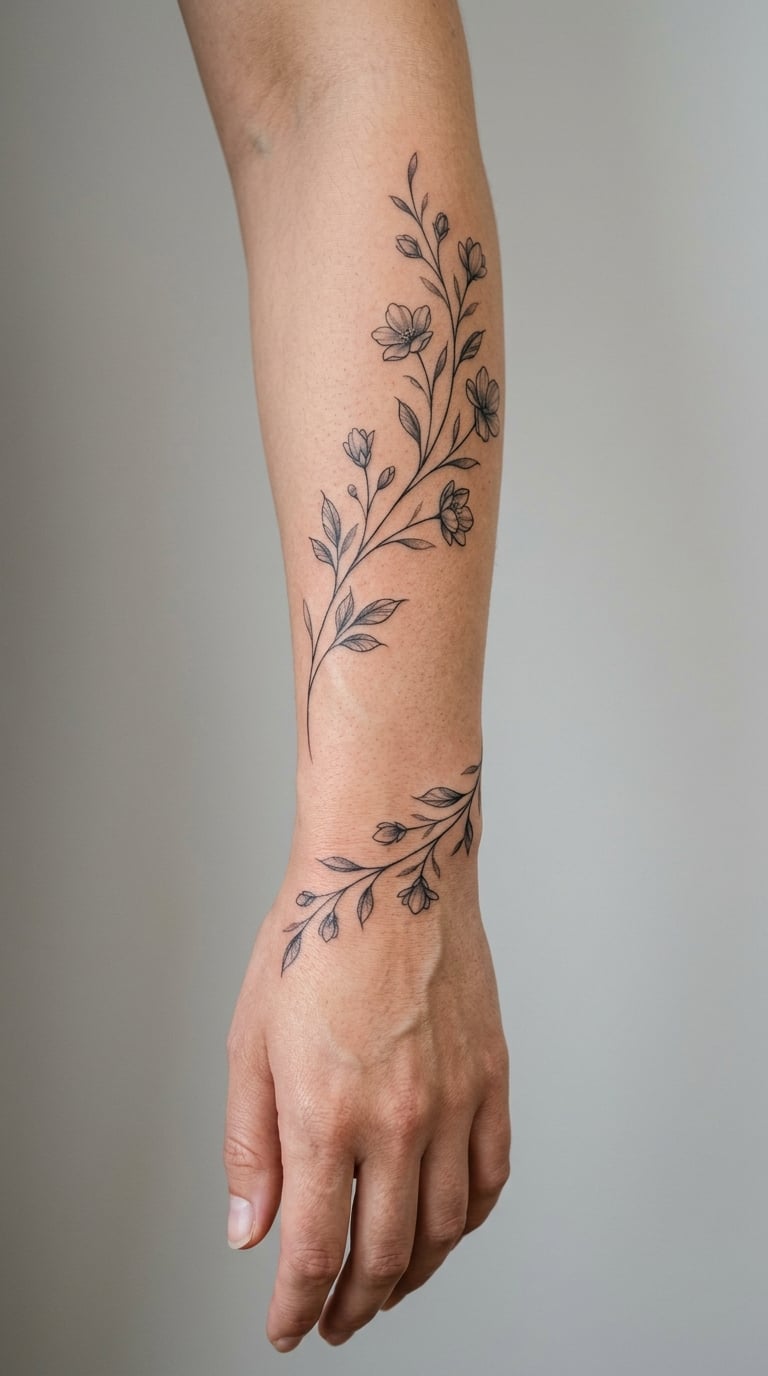
Two versions of the same branch in single-weight linework, one curving along the forearm and one fitted into the curve of a wrist, look coordinated from across a room. Ask the artist for the same stem, same leaf count and same line thickness, then let scale be the only difference.
Botanical work is one of the most requested tattoo families because a branch reads as growth and continuity without anyone having to explain it.
Placement: inner forearm, outer forearm, or the inside of the wrist for the smaller piece. Size: 3-5 inches for the forearm branch, 1.5-3 inches at the wrist. Style: fine line or single-needle black and grey.
Pain: medium on the forearm, sharper on the wrist where skin is thinner over bone. Fine-line leaves blur over the years, so expect a soft grey look after a decade. Make it yours: use a specific plant from your own garden or the tree you both climbed as kids.
2. Mother and Son Sun and Moon Tattoos
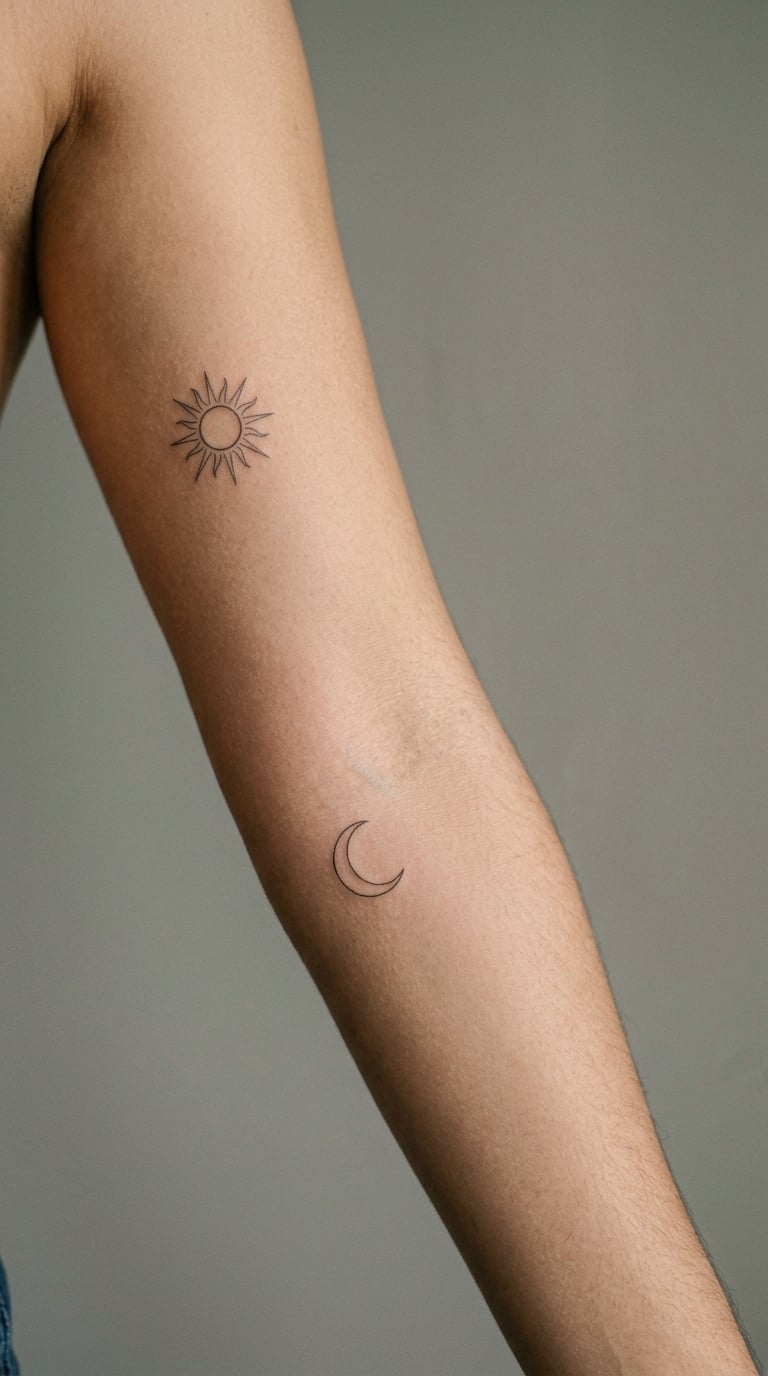
A sun with fine radiating rays next to a crescent moon, or a sun on one forearm and a moon on the other, gives you a pair that obviously belongs together. The two symbols are complementary rather than identical, which is what makes this one of the easiest matches to actually execute well.
Sun and moon pairings traditionally represent the constant presence of both halves, and they are a common choice when one person is very fair-skinned and the other is heavily tanned or freckled.
Placement: upper arm for the larger motif, inner forearm for the smaller. Ribs work if you want it hidden under clothing. Size: 2-3 inches across. Style: fine line, minimal line art, or a single solid black fill.
Pain: low to medium on the upper arm, medium on the ribs since the bone sits close there. Tiny ray detail fills in a bit with age. Make it yours: put the birth moon phase on one side and the birth date’s moon phase on the other.
3. Matching Infinity Symbols with Initials
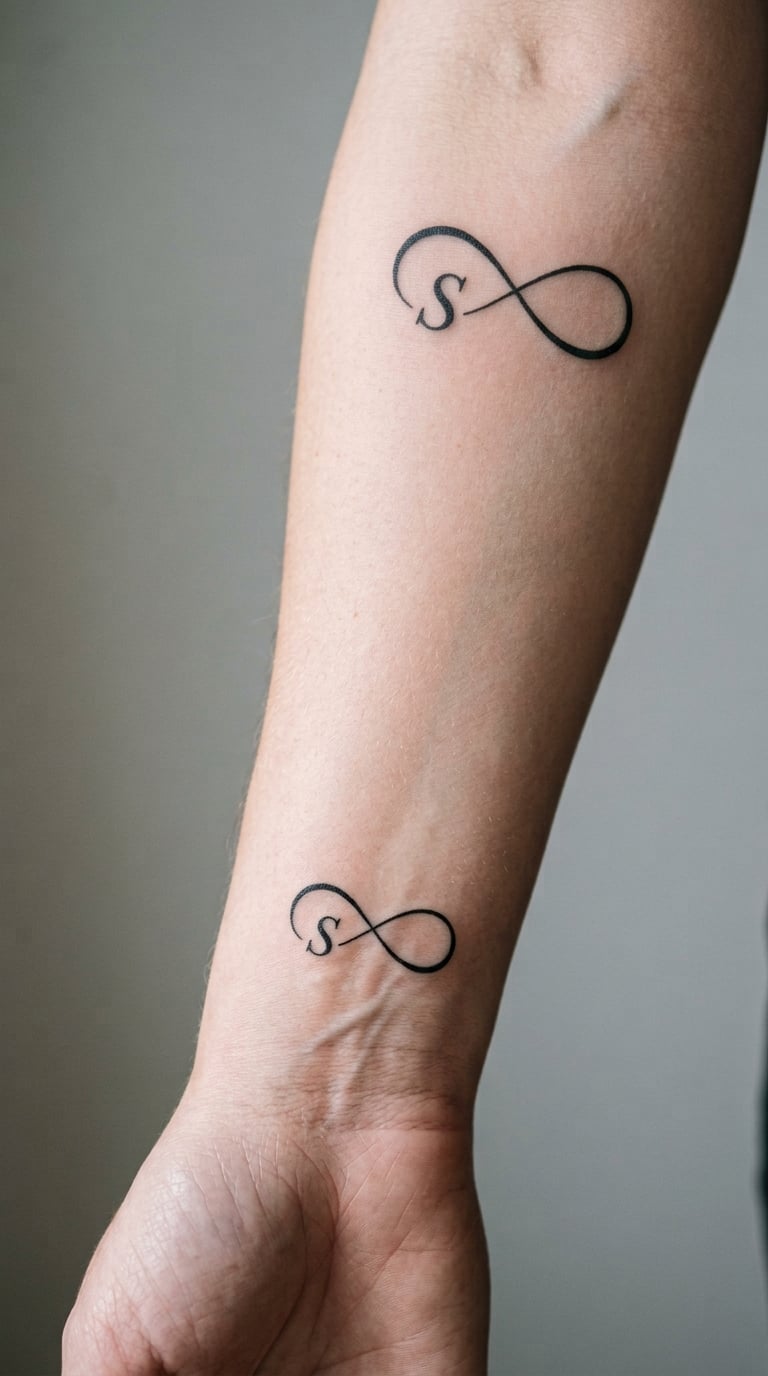
An infinity symbol is the plainest way to say that a bond does not end, and adding a different initial inside each loop personalises it without turning it into a copy. The line weight matters more here than the ornament: a hairline loop on a wrist disappears, while a 1.5pt loop holds up.
The infinity mark has long been used for endless love and continuity, which is why it keeps showing up in mother-son designs.
Placement: wrist, inner arm, behind the ear, or the back of the shoulder. Size: 1.5-2.5 inches wide. Style: minimalist line, or a bolder blackwork version for a son who wants more weight.
Pain: medium, higher behind the ear and on the ribs. Wrist versions fade fastest and can need a touch-up every few years. Make it yours: put a different initial in each loop and keep the loop shape identical between the two.
4. Matching Heartbeat Line Tattoos
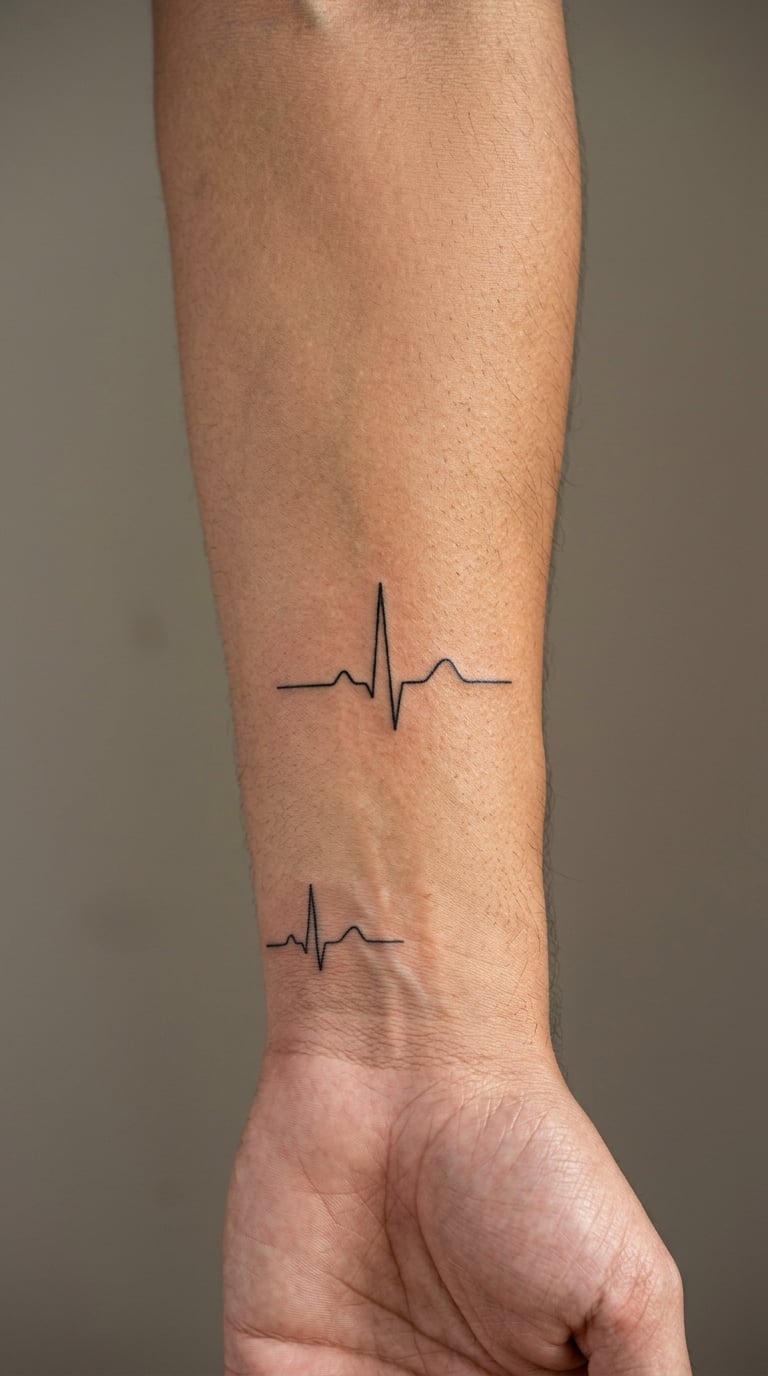
A flat ECG trace, either the same stretch of rhythm for both of you or the real trace from a monitor, is a design that reads instantly and costs little in ink. The flat line with a single spike is the version most artists draw from.
Heartbeat lines are popular for birth, pregnancy and memorial versions, and the paired version usually represents two people on the same timeline.
Placement: inner forearm along the natural line above the wrist, or across the ribs. Size: 3-4 inches for the forearm, longer if you use a real trace. Style: single-weight line, no shading.
Pain: medium on the forearm, noticeably more on the ribs. Hairline lines soften and blur over time, so ask for a slightly heavier line than you think you need. Make it yours: use the tracing from one shared appointment so both tattoos are literally the same rhythm.
5. Matching Constellations
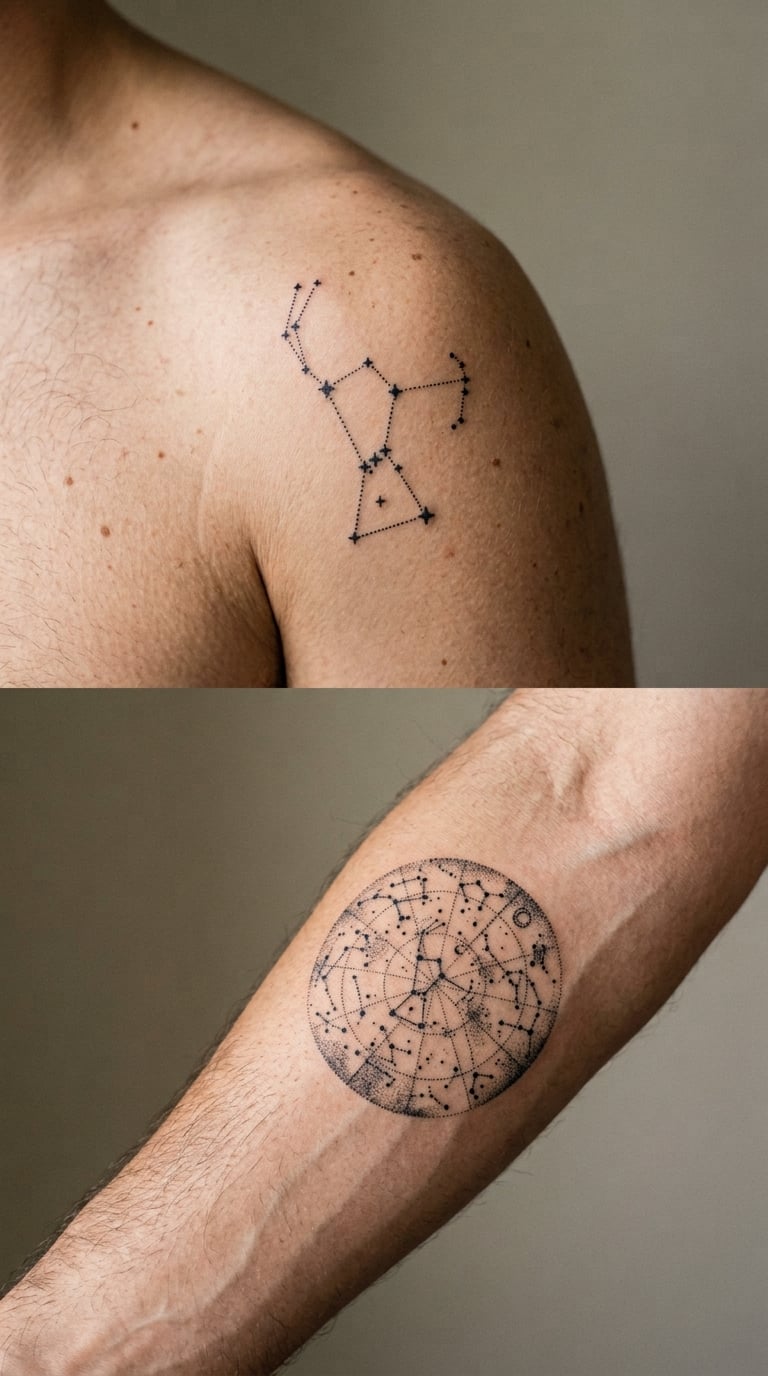
Dots joined by hairline strokes, arranged as a real constellation, work as a pair when both of you pick the same sky. Star maps from your birth dates are the personal version, and they are impossible for anyone else to copy exactly.
Constellation tattoos usually point to guidance, direction and the idea that you navigate by the same stars.
Placement: shoulder, upper back, back of the arm, or forearm for a smaller set. Size: 3-4 inches for a full constellation, 1-2 inches for three stars. Style: dotwork or micro dotwork in black.
Pain: medium over the shoulder, mild on the forearm. Dotwork is a long sit because the artist works point by point, and the small dots spread with age. Make it yours: use the constellation visible from the field or beach where you used to go together.
6. Matching Animal Footprints
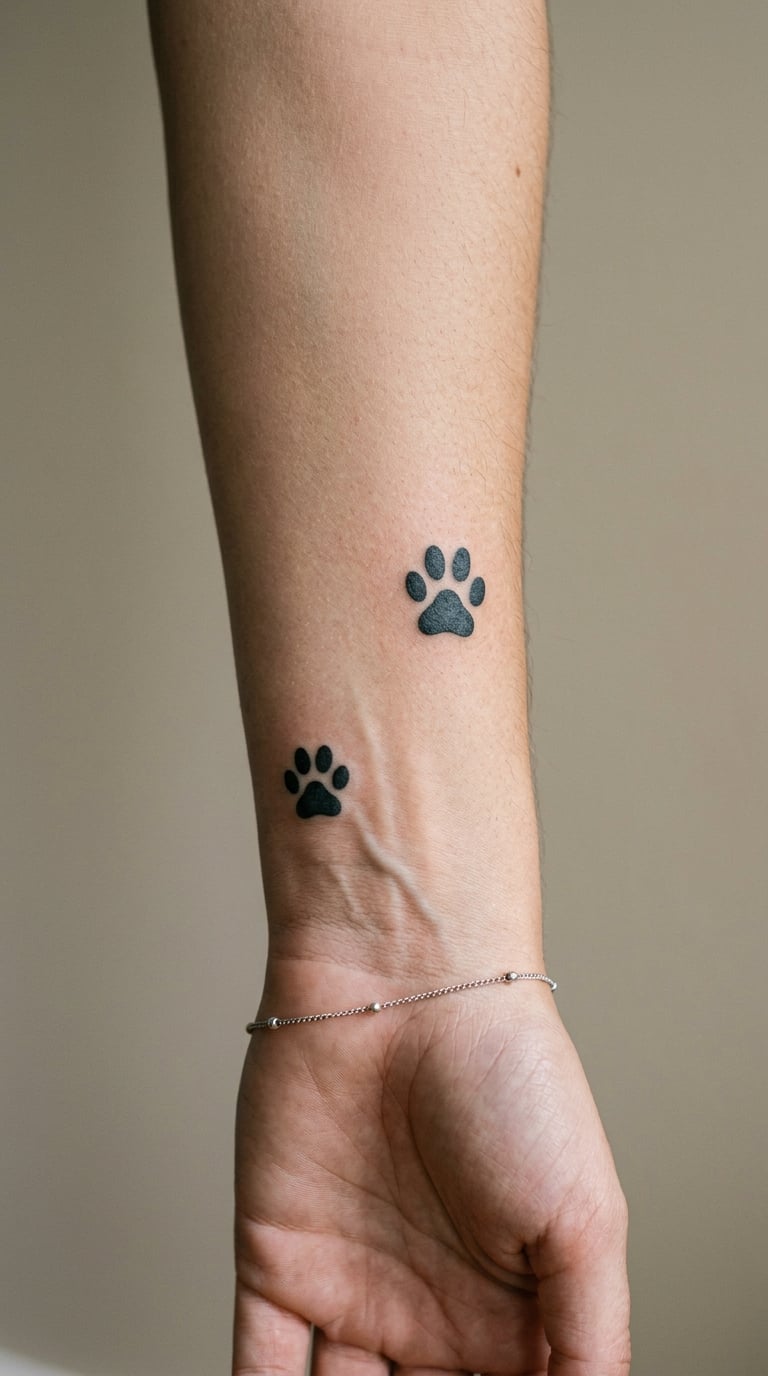
Two or three paw prints, sometimes with a small heart pad detail, is a design that survives a big difference in body size. A paw print in solid black silhouette needs almost no linework, so it stays crisp on both an adult forearm and a smaller arm.
Footprint motifs are usually picked for a shared pet, or for the idea of always walking alongside each other.
Placement: inner forearm, ankle, calf, or behind the ear. Size: 1-2 inches per print, or a trail of three prints running 4 inches. Style: solid black silhouette or simple line art.
Pain: low on the forearm, moderate on the ankle where the bone is close. Solid silhouettes age far better than fine line, which is the reason to pick this route. Make it yours: use a real print from your dog, traced as a stencil, rather than a generic paw shape.
7. Matching Arrow and Line Tattoos
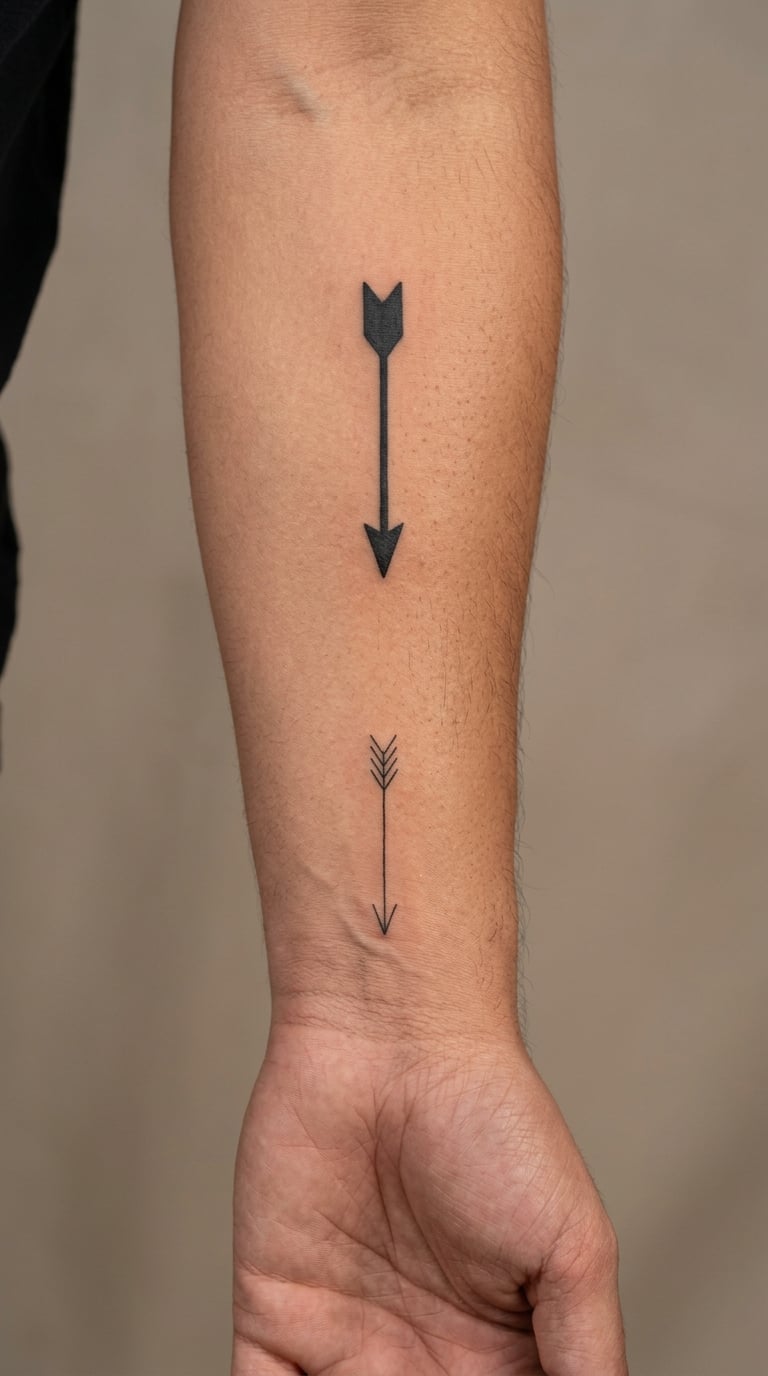
A simple line arrow needs almost no skill to render cleanly, and the pairing options are wide: two arrows pointing the same way, two pointing at each other, or an arrow and a plain line trailing behind it.
Arrows usually stand for direction, moving forward together, or protection in some traditions, and the pointing-toward-each-other version is a favourite.
Placement: inner forearm along the natural bone line, or the upper arm. Size: 2-3 inches long. Style: minimalist line, or blackwork with a filled fletching.
Pain: low, one of the more comfortable small placements. Feathered fletching detail blurs first, so keep the tails simple. Make it yours: engrave the coordinates of a first hike on the shaft in tiny type, or add a date under the point.
8. Matching Rose Linework Tattoos
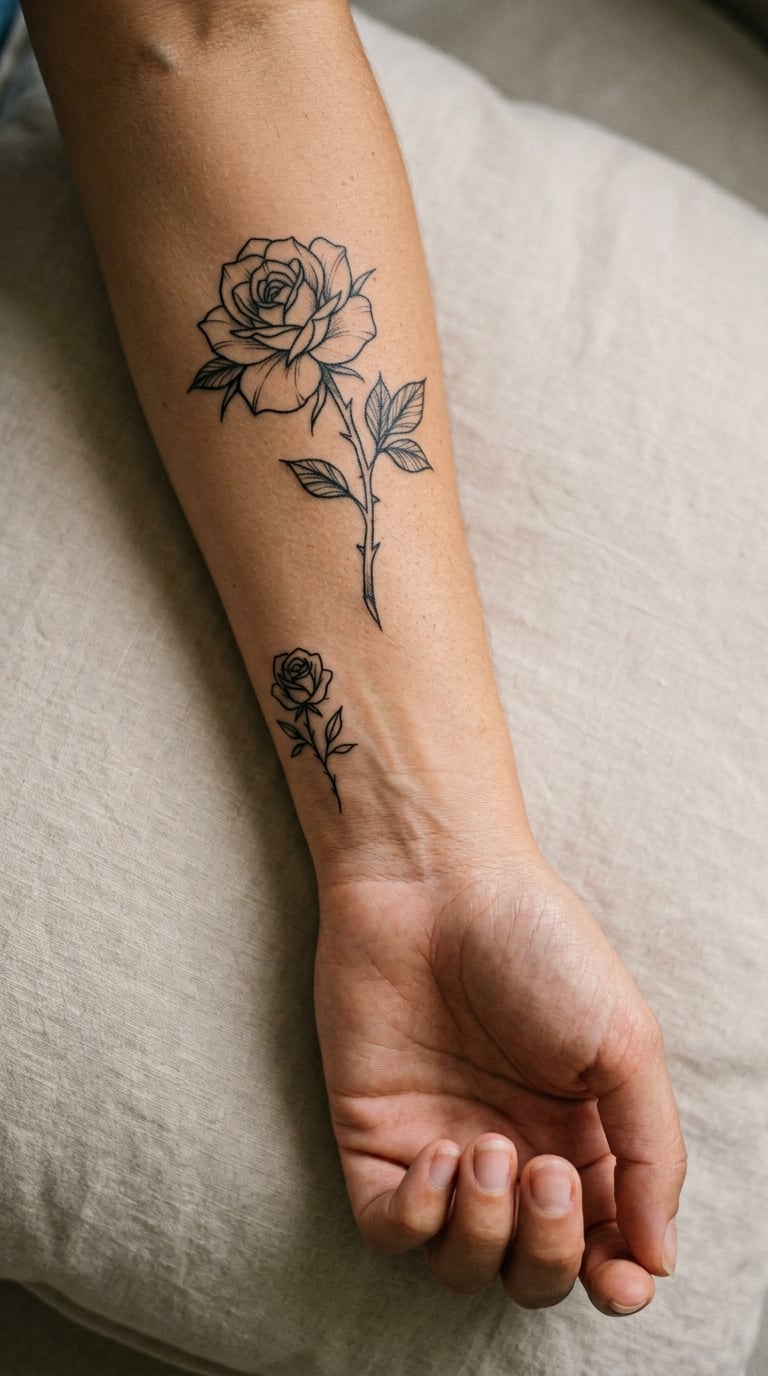
A rose drawn in fine line, one large on a forearm and one small at a wrist, is a pair that looks like the same hand drew both. The trick is the petal count: ask the artist to use five outer petals on each so the silhouettes actually match.
Roses are one of the oldest tattoo motifs in Western work and are usually chosen for love rather than for a specific story.
Placement: forearm, wrist, upper arm, or behind the ear. Size: 2-3 inches for the rose itself. Style: fine line, dotwork rose, or a shaded black and grey bloom.
Pain: medium, more on the wrist and behind the ear. A fine-line rose is a common touch-up candidate because the internal shading spreads first. Make it yours: one in black and grey, one with a single colour accent so both keep the same drawing underneath.
9. Matching Mountain Range Tattoos
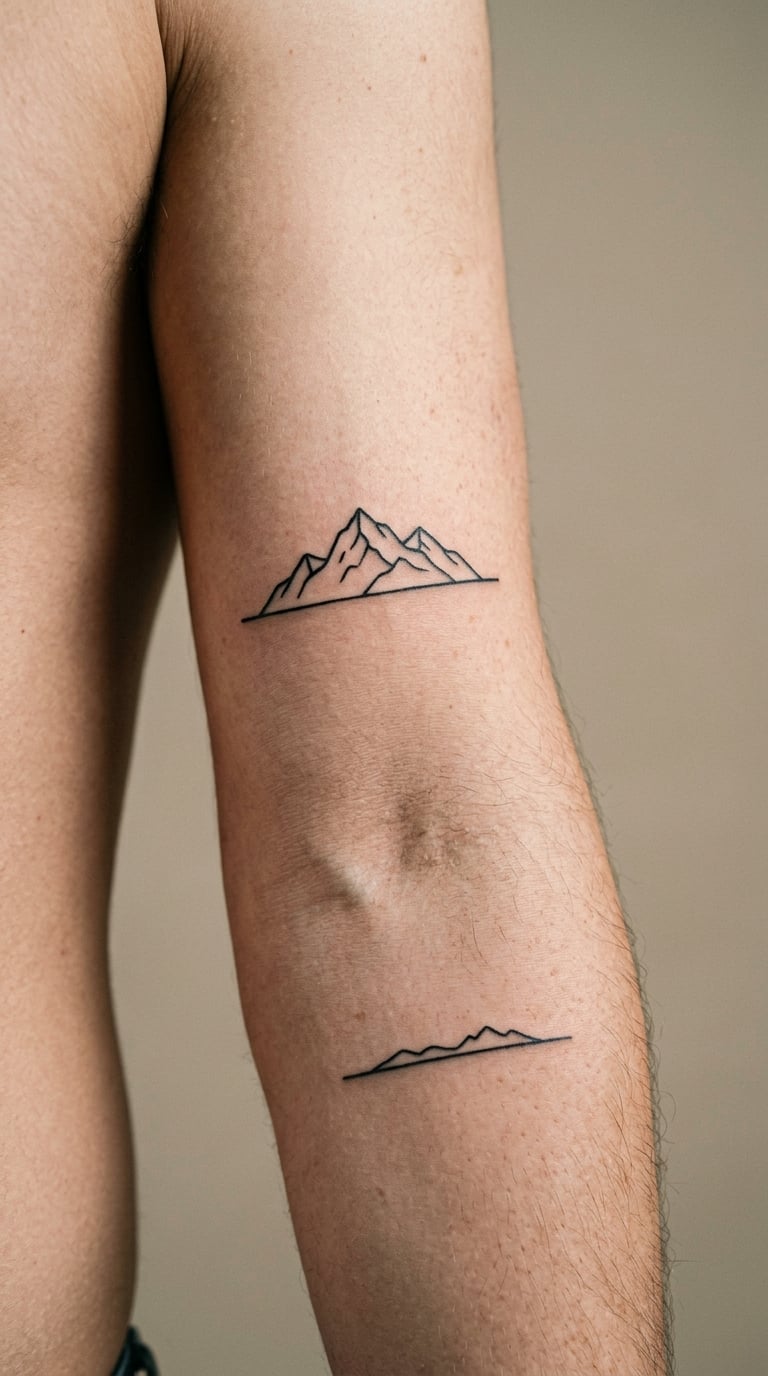
Peaks, a horizon line and a treeline are three ways to draw the same view, so a mother and son can each take a different slice of one landscape and still be wearing the same place. Outdoorsy pairs often use the range they actually walk in.
Mountain and horizon tattoos point to a place that matters to both people, and to being somewhere together rather than anywhere at all.
Placement: outer upper arm, forearm, or across the upper back. Size: 3-5 inches across for a full range, 2 inches for a single peak. Style: line art, minimal blackwork, or a shaded ridge silhouette.
Pain: medium on the arm, higher over the shoulder blade because the skin there is thinner. Straight line peaks hold up far better than any shading or texture inside them. Make it yours: sketch your own ridge from a photograph of the trail, and let the son use the same profile at a smaller scale.
10. Matching Musical Notes Tattoos
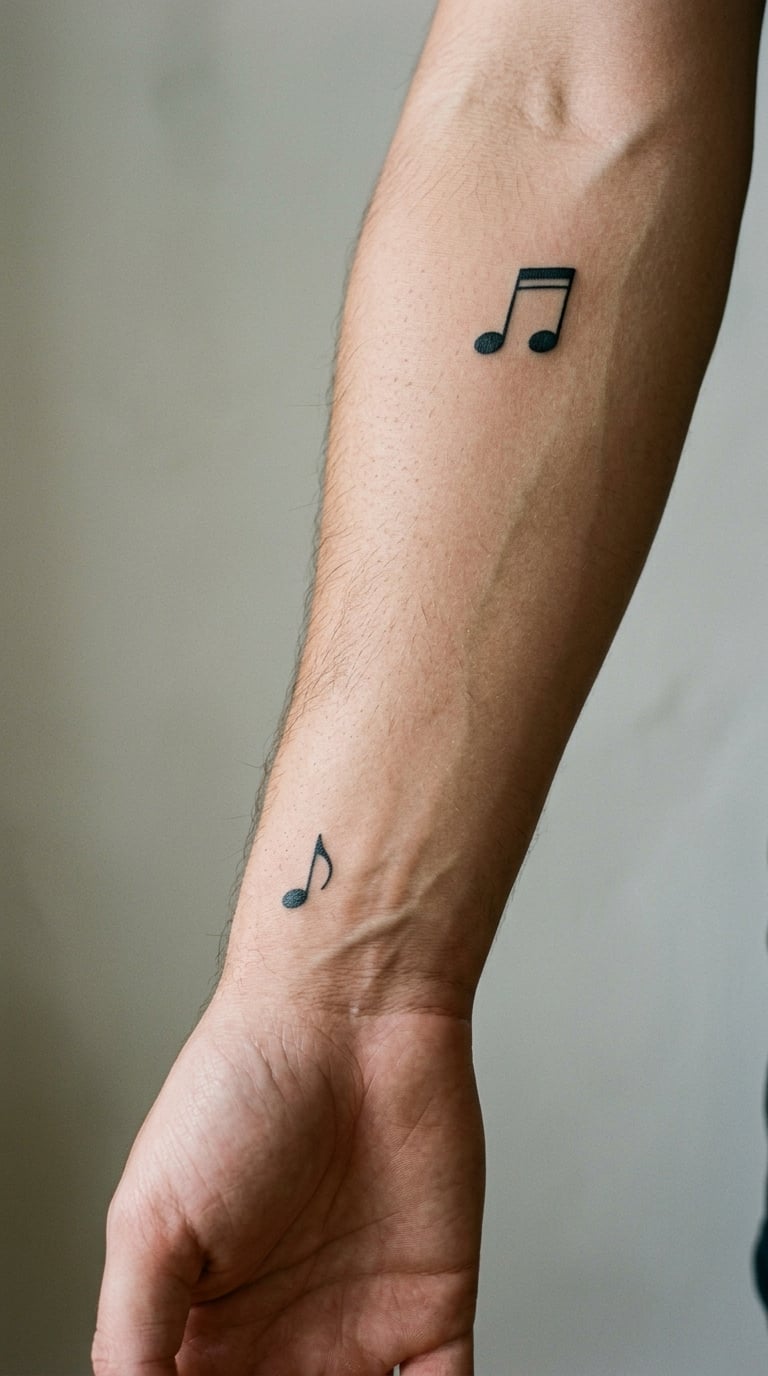
A line of two or three notes, a treble clef, or the silhouette of the instrument you both play are all easy to pair. A short phrase from a song you play together is the version nobody else will have.
Music tattoos usually mean the instrument, a teacher, or a specific song, and they are the natural pick when a mother and son share a hobby.
Placement: inner wrist, behind the ear, forearm, or the back of the shoulder. Size: 1.5-2.5 inches. Style: line art, small realism, or a bold blackwork instrument shape.
Pain: medium on the inner wrist, low on the upper arm. Note stems and beams are thin lines that need a slightly heavier gauge or they fade fast. Make it yours: engrave the actual notation for a song you play together, which needs almost no extra space.
11. Matching Feather Tattoos
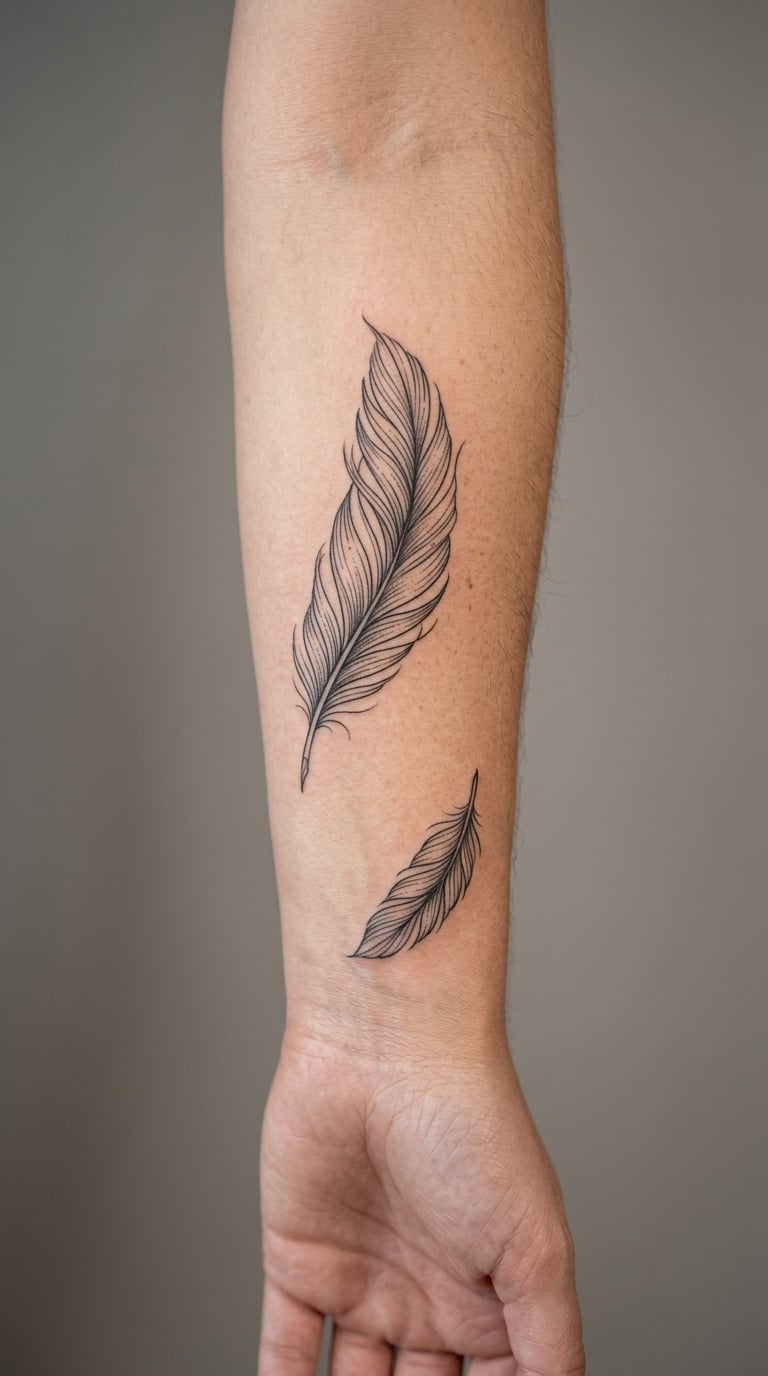
A single feather in fine line, drawn with the same spine and barbs in both, is a design that scales cleanly. Rotating one so the quill points in the opposite direction hides the fact that the two are the same drawing.
Feathers are usually chosen for freedom, travel or a connection to someone, and in several traditions they also carry a memorial weight.
Placement: forearm, upper arm, calf, or behind the ear. Size: 3-4 inches for a full feather, 1.5-2 inches for a small quill study. Style: fine line, or a shaded black and grey feather with a split quill.
Pain: low to medium, lower than most botanical work because the shape is simple. Barb detail spreads with sun exposure, so expect the fine version to read softer after ten years. Make it yours: use a real feather from a trip, drawn from a photograph rather than traced from clip art.
12. Matching Coordinates Tattoos
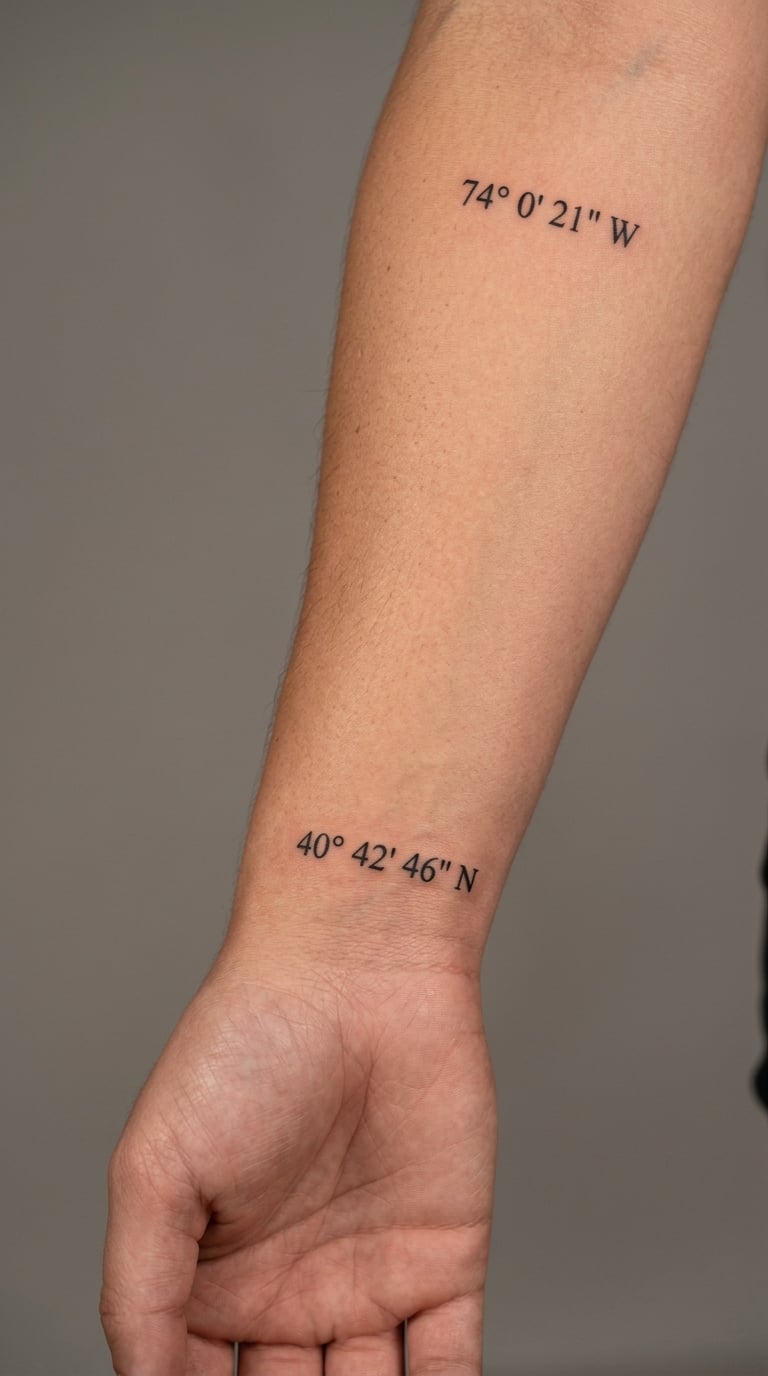
Latitude and longitude in a clean sans-serif, one number set per person or one shared set for both, is a design that looks the same in ten years. Numbers are a bad fit for tiny script sizes, so this one needs a slightly bigger canvas than people expect.
Coordinate tattoos mark a specific place, most often a home, a birth hospital or a spot that meant something to the two of you.
Placement: inner forearm, wrist, upper arm, or behind the ear. Size: 2-3 inches wide. Style: clean numerals, minimal type, no decorative frame.
Pain: medium, and wrist placement stings more because of the bone and the veins. Numerals blur into each other if the type is too small, so ask for 8mm minimum height. Make it yours: use the exact coordinates of the house you moved into together, plus a tiny compass dot at the start of the line.
13. Matching Butterfly Line Tattoos
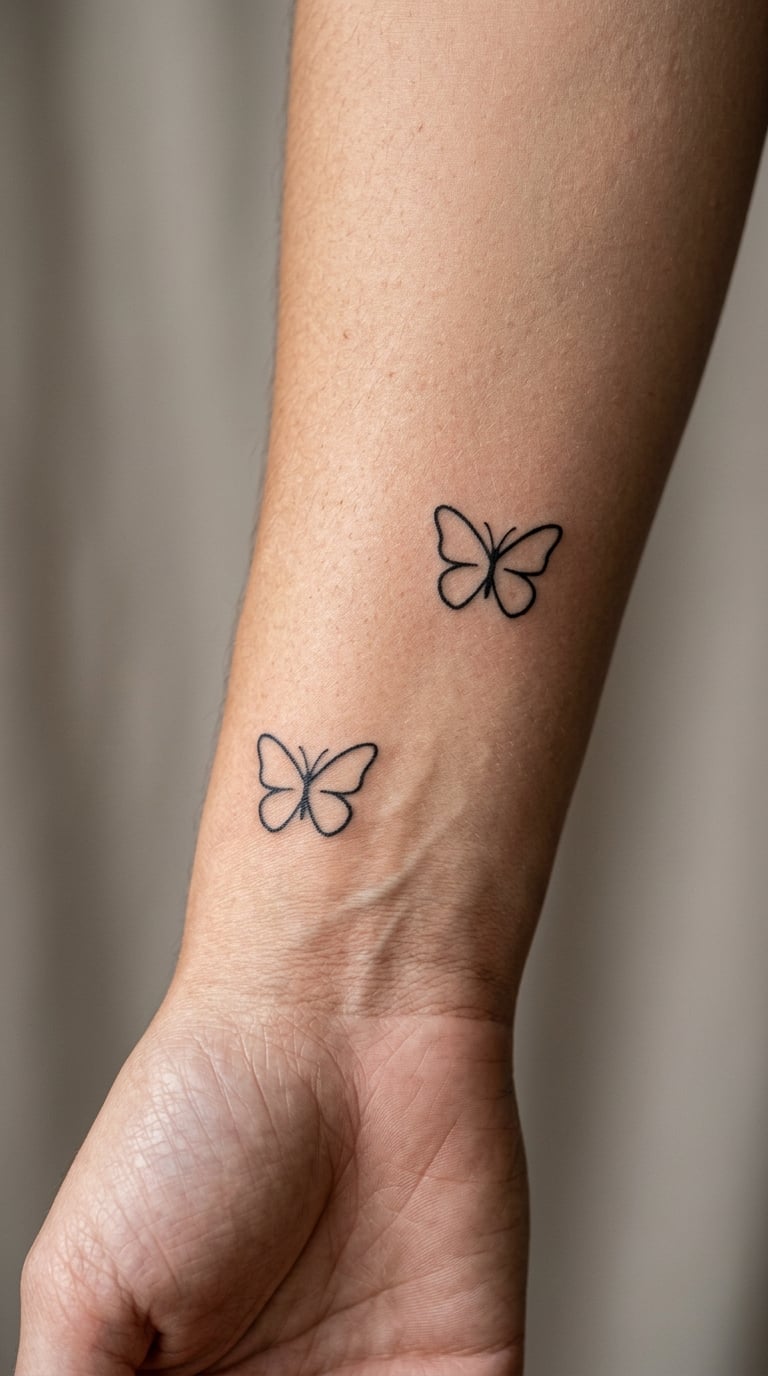
An outline butterfly, wings slightly open, is one of the easiest motifs to match because the shape is symmetrical and the interior can be left empty. One small at the wrist and one larger on a forearm gives you a clean set without identical sizing.
Butterflies are the most requested symbol for change and for a child growing into an adult, which is why they work so well for a mother and an older son.
Placement: wrist, ankle, forearm, back of the shoulder, or behind the ear. Size: 1.5-2.5 inches wingspan. Style: fine line outline, dotwork, or black and grey with shaded wing edges.
Pain: medium on the forearm, moderate on the wrist and ankle. Pattern fills inside the wings blur fastest, so a plain outline ages better. Make it yours: put a small date on one wing of the larger piece and leave the matching one plain.
14. Matching Botanical Leaf Tattoos
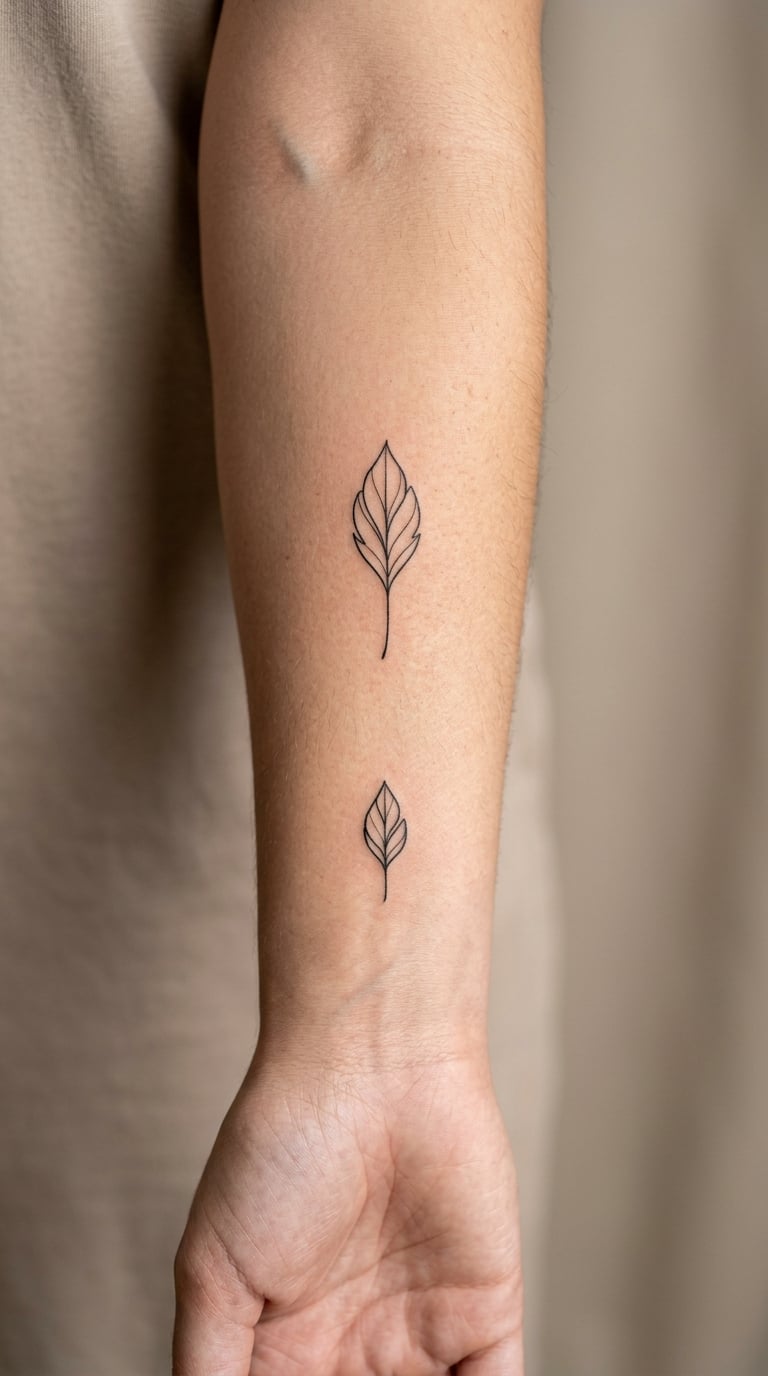
Different leaves from the same plant, or one mirrored leaf, gives you a matching pair that never looks like two identical tattoos. Eucalyptus, fern, olive and monstera are all common requests because their shapes are readable at a small size.
Leaf motifs are usually about growth, and taking two leaves from one stem suits a mother-son pairing where each person is meant to stay themselves.
Placement: inner forearm, wrist, behind the ear, or the calf. Size: 2-3 inches long. Style: single-line leaf, fine line with light vein detail, or a solid black silhouette.
Pain: low, since most of the work is one continuous line. Vein detail fades first on fine-line versions. Make it yours: press and trace a leaf from your own yard, then both of you wear the same plant in different sizes.
15. Matching Puzzle Piece Tattoos
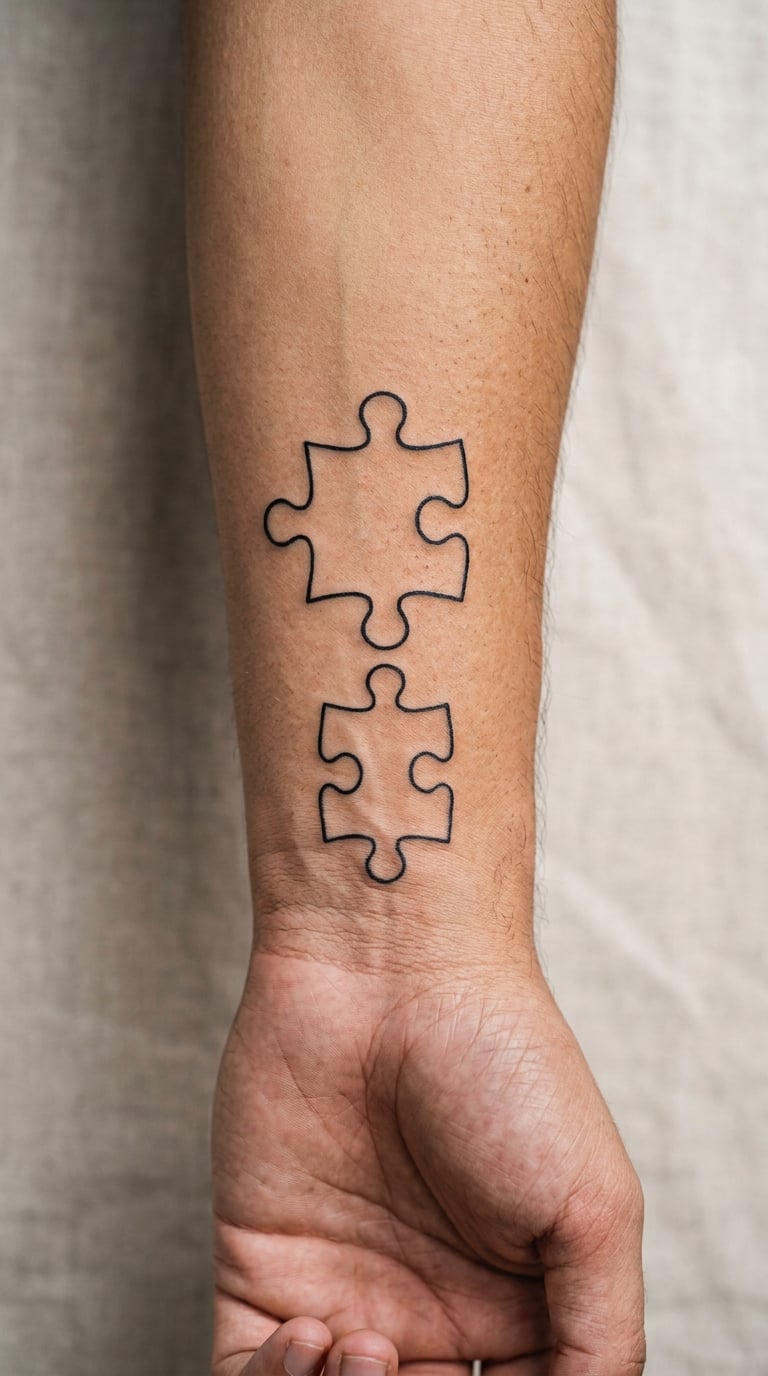
Two puzzle pieces drawn so their edges would meet, one large on a forearm and one small at a wrist, is the clearest statement of the complementary-over-identical idea. Show the artist both pieces side by side so the tab and notch actually line up.
Puzzle pieces are used to say that two people fit together and complete each other, and the interlocking version is the one people ask for by name.
Placement: forearm, wrist, upper arm, or the back of the calf. Size: 1.5-2 inches per piece. Style: bold outline or traditional blackwork, which holds up better than a hairline outline.
Pain: low, mostly a single outline pass. The thin outer line of a hairline version spreads noticeably over the years, so bold line weight is worth asking for here. Make it yours: add your birth months inside the two pieces in a plain block numeral.
16. Matching Wave Tattoos
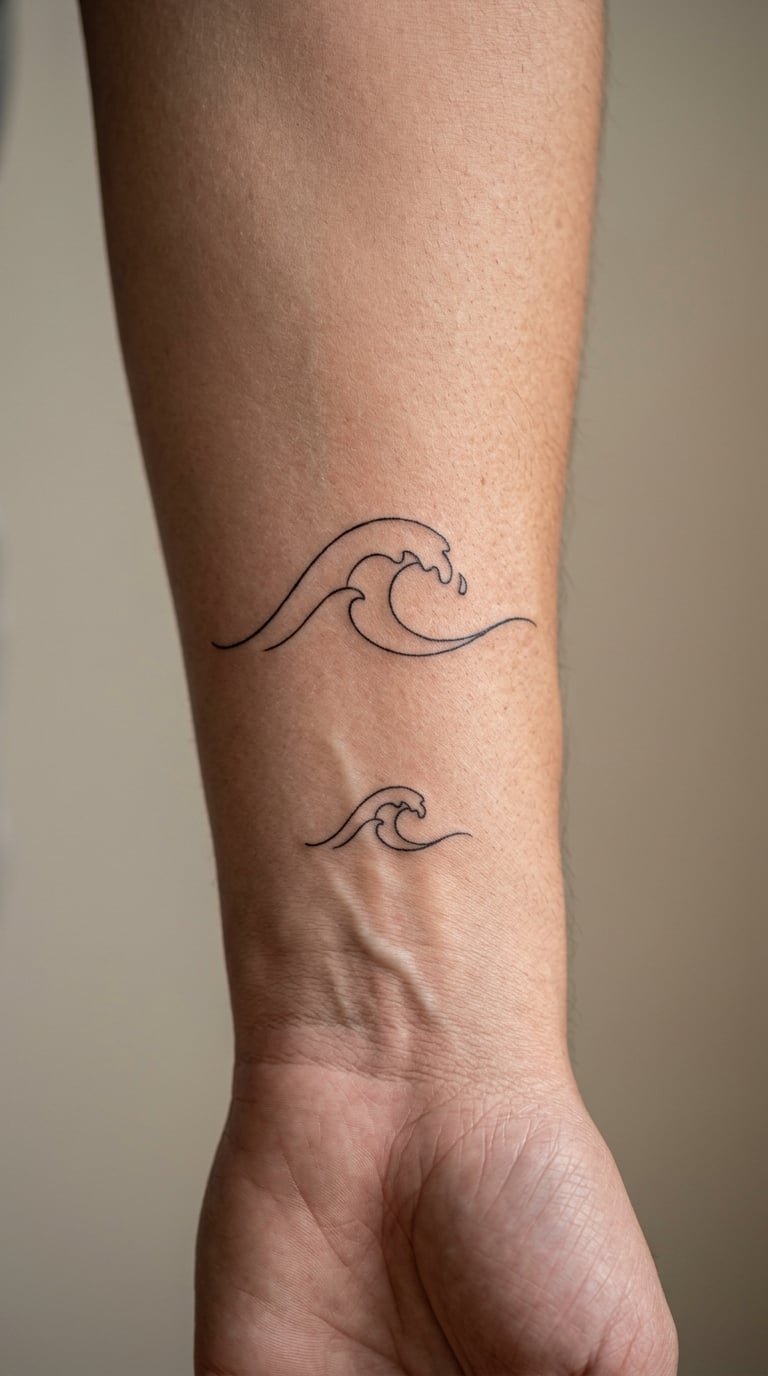
A single breaking wave with a foam line under it, or a stack of three parallel wave lines, reads clearly at a small size and needs very little shading. Direction is the easiest way to differentiate the pair: one crest pointing up the arm, the other pointing down.
Waves are picked for the sea, for a shared surf trip, or for the idea of something that keeps moving without losing its shape.
Placement: forearm, calf, upper arm, or the ankle. Size: 3-4 inches for a full wave, 1.5 inches for a small foam line. Style: fine line, or a single solid black wave silhouette.
Pain: medium on the forearm, lower on the calf. The fine foam detail under a wave is the first thing to soften, so keep it to two or three short lines. Make it yours: draw the wave from a photograph of your favourite break rather than the standard clip art shape.
17. Matching Date and Roman Numeral Tattoos
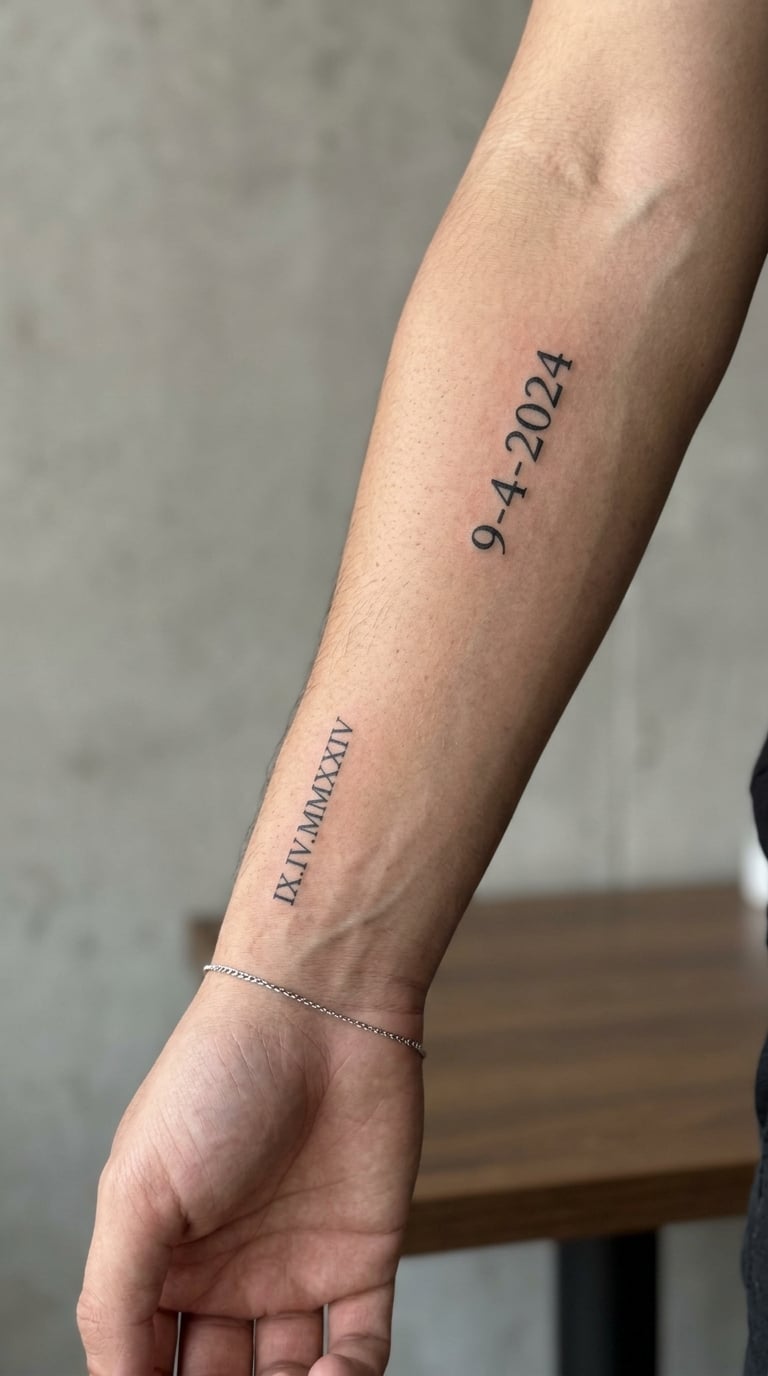
The same date written two ways, Roman numerals on one and plain numerals on the other, gives you a pair that says the same thing in different handwriting. It also solves the size problem, because the longer Arabic version needs more room than the compressed Roman one.
Date tattoos mark a birth, a due date, a wedding, or a loss, and they are the format most chosen when a mother wants something her son will still read at sixty.
Placement: wrist, inner arm, ribs, or the back of the shoulder. Size: 2-3 inches wide. Style: minimalist type, clean serif, or a thin sans-serif.
Pain: medium, and the ribs hurt noticeably more than the arm. Small serif lettering fills in and muddies, so ask for a plain weight. Make it yours: use a due date on one side and the birth date on the other, both in the same hand.
18. Matching Tree of Life Tattoos
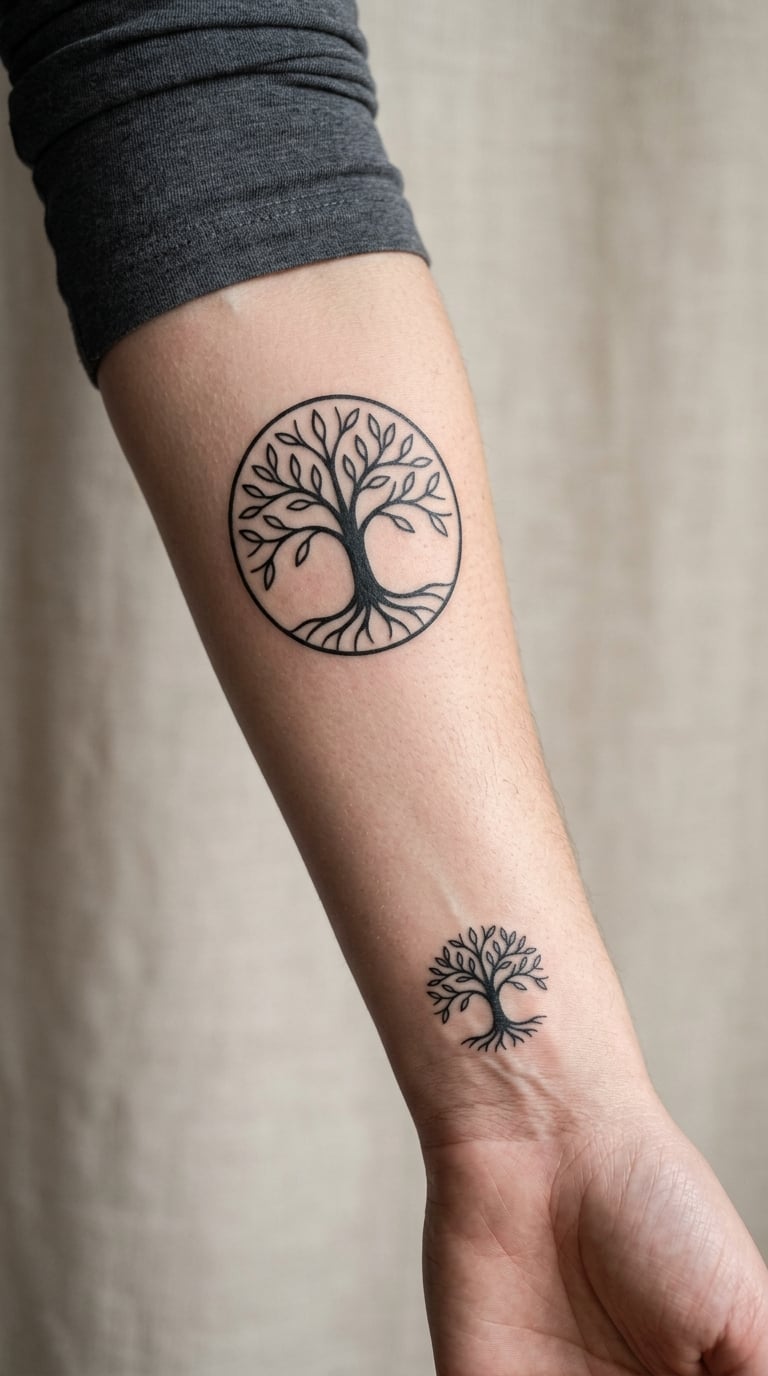
A simplified tree with a few branches and a root flare is the version that works as a pair, and the drawing is easier than the ornate versions usually posted. Keep both trees in the same simplified style, otherwise the small one turns to mush next to the large one.
Tree of life designs represent family, growth and roots, and the family connection is why they keep appearing in mother-and-son galleries.
Placement: forearm, calf, upper arm, or centred on the back of the shoulder. Size: 3-5 inches for the larger tree, 1.5-3 inches for the wrist version. Style: fine line, or solid blackwork without interior detail.
Pain: medium, higher on the calf and shoulder blade. Interior leaf clusters fill in with age, so fewer leaves in one design is the longer-lasting choice. Make it yours: put your family surname in the negative space between the roots rather than adding a banner below.
19. Matching Compass Tattoos
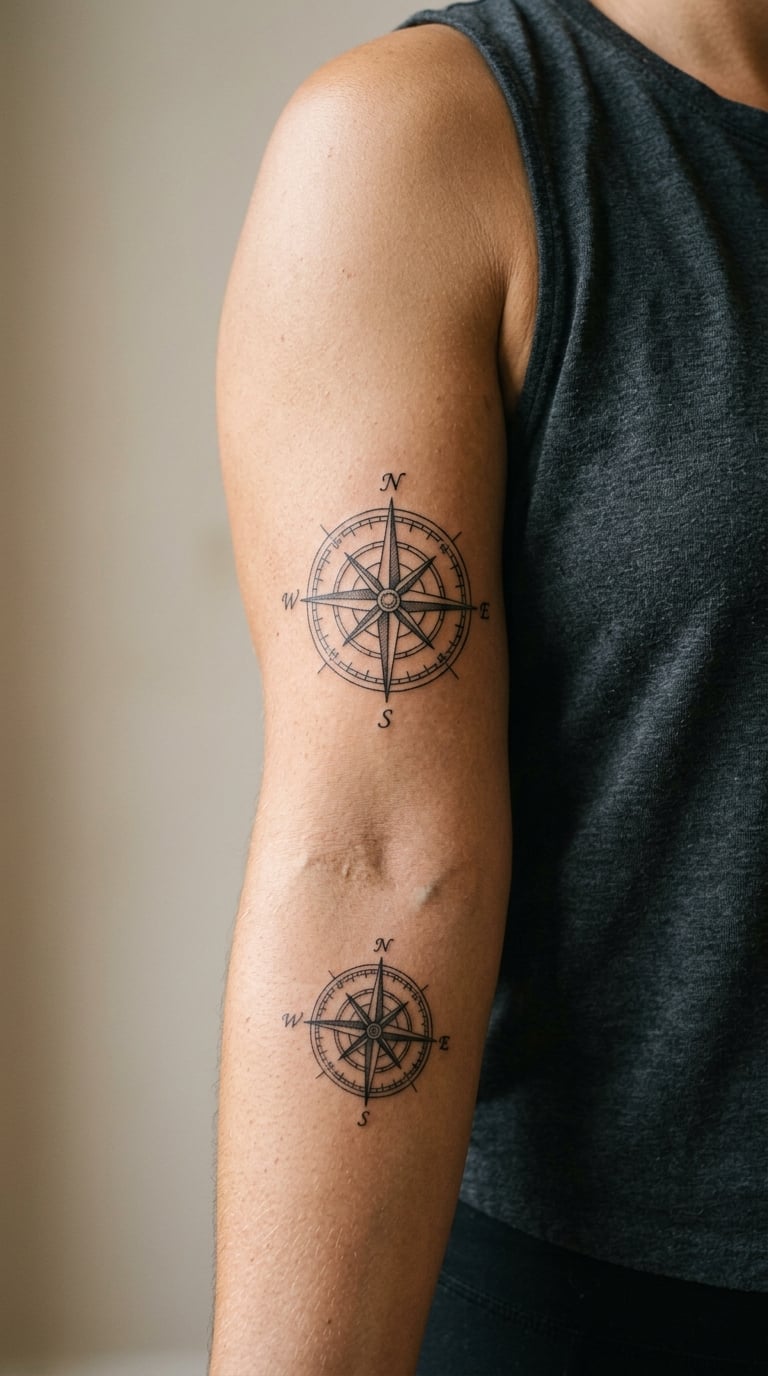
A compass rose with four points and a small circle centre is symmetrical enough that both versions can be traced from the same reference, and the star shape keeps the detail readable. Pairing options include a full rose on one side and a single needle on the other.
Compass tattoos point to direction, protection and finding your way, and a compass with a single point often works as a memorial design.
Placement: outer upper arm, forearm, or the chest just below the collarbone. Size: 2-3 inches across. Style: fine line with a thin circle, or a bolder geometric compass with solid points.
Pain: medium on the arm, and the chest placement is tender. The tiny N and S letters inside the rose blur first, so request them larger or drop them. Make it yours: set the needle to point toward the direction of a place you both lived, and engrave that direction as a bearing on the circle.
20. Matching Word Tattoos
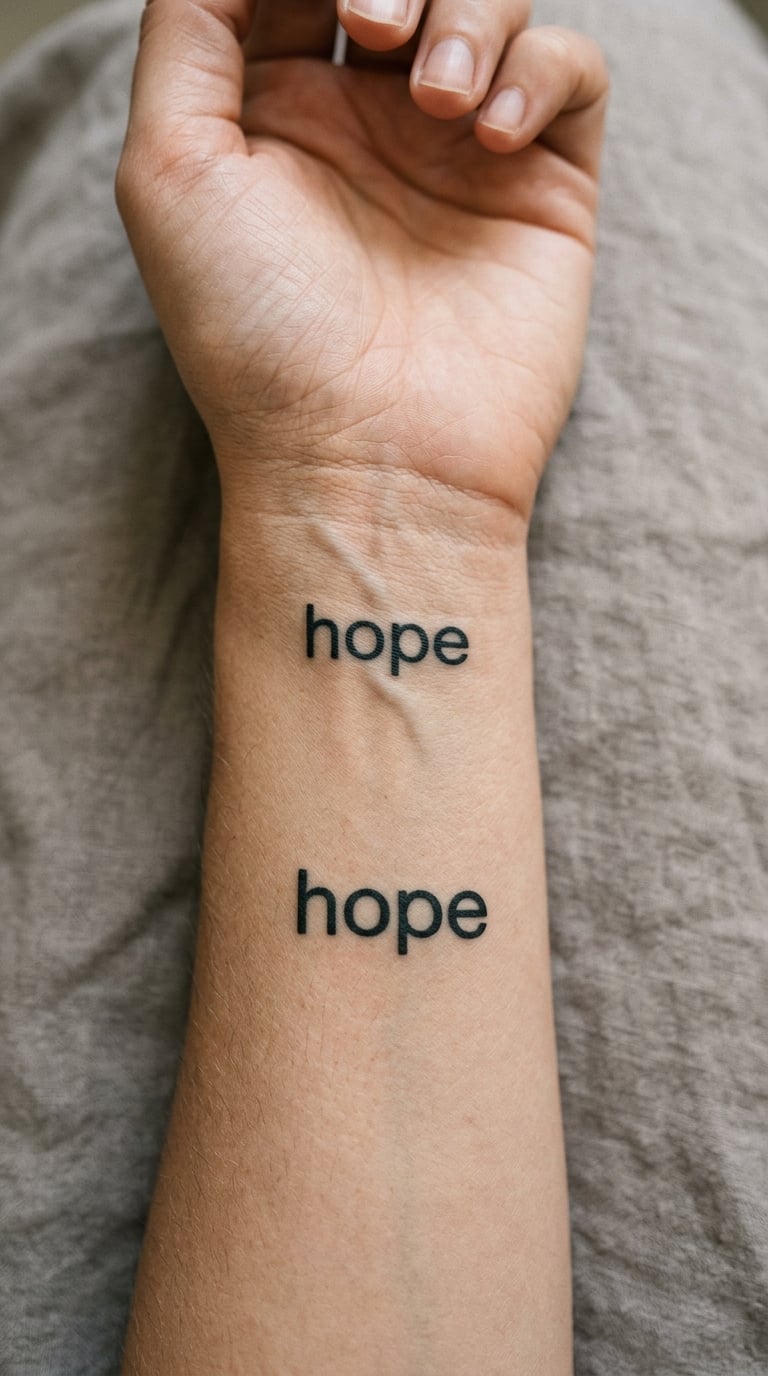
One short word in a clean typeface, the same word on both of you at different sizes, is the simplest version of this pair and the hardest to make look cheap. One word works; a full sentence on a forearm does not, unless you have a lot of flat space and a long sitting.
Word tattoos are almost always a nickname, a family name or a single promise, and people tend to regret words more than symbols, so pick something you would both be comfortable seeing at seventy.
Placement: wrist, inner forearm, or the upper arm. Size: 1-2 inches for a single short word. Style: clean sans-serif, thin serif, or hand-lettered block capitals.
Pain: medium on the inner forearm and wrist, where skin is thin. Thin script fills in fastest of all, so a block weight holds its shape longer. Make it yours: use a word you both actually say, and give each of you a different weight of the same typeface.
How to Choose the Right Design
Six checks will get you most of the way there, and the first one does most of the work.
1. Start from the shared thing, not the symbol. A garden you planted, a house, a song, a dog, a stretch of coast. Designs tied to a real memory are the ones people still feel something about decades later, and they are also the hardest for anyone to copy.
2. Decide identical or complementary. Identical suits a pair with similar skin tone, similar style and similar body scale. Complementary, where both of you carry the same motif at different sizes or in different placements, is safer when your styles differ.
3. Check the line weight against the placement. Hairline work on a wrist fades in a few years. If the design is under two inches or sits on the inner wrist, ask for a heavier gauge or choose a bolder style.
4. Test it flat before you commit. Print or trace the design at the real size and tape it on the placement. A drawing that looks right small on a screen looks wrong on a curved forearm.
5. Look at the artist’s healed work, not their fresh work. Ask to see healed pieces in the style you want. That is the only accurate way to judge how a line will look in five years.
6. Sit with it for a month. If you have not asked the artist to start, you have not started. Designs you keep coming back to a year later are the ones worth the chair time.
Once you have both designs, 20 matching family tattoo ideas for four covers the same coordination problem across a larger group, and the rules for placing several related designs on different bodies are the same ones.
Cost and Session Time
Tattoo pricing is driven by two things: the hourly rate the artist charges, and how many hours the design takes. Rates vary a lot by city, shop and artist, and there is no single number that applies everywhere, so treat any range you read online as a starting point and get a quote from your own artist before you commit.
A rough sense of the scale:
- Small fine-line or single-word pieces are usually the quickest, often well under an hour of chair time.
- Medium botanical, wave, feather or tree work typically run one to two hours depending on line density.
- Large forearm or upper arm designs are often split across two sessions rather than pushed into one.
- Dotwork and constellation pieces are slow by nature, since the work is placed point by point.
Most studios set a shop minimum that covers the first part of any booking, so a very small design still has a floor. Booking both of you on the same day is worth asking about, since it saves a second trip, but ask the studio how they handle two people in one session before you assume it works for your placements.
Aftercare Basics
- Follow your artist’s aftercare instructions first. Every artist has their own protocol for cleaning and aftercare products, and it overrides anything generic.
- Wash gently, twice a day, with unscented soap and lukewarm water. Pat dry with a clean towel rather than scrubbing or soaking.
- Keep it covered and leave it alone. Loose clothing over a fresh tattoo helps with rubbing and drying. Do not soak, swim or submerge it until it has healed over.
- Moisturise a thin layer as directed once the skin has started to dry out, and skip heavy greases or fragranced lotions.
- Protect it from the sun for the first few weeks and keep it out of tanning beds entirely, since sun exposure is what fades fine line fastest over the years.
- Contact the studio if you see spreading redness, thick swelling, yellow-green discharge, or a fever, or if anything simply looks wrong to you. Do not wait it out.
Healing is usually a two to four week process on the surface, with the deeper layers settling over a few months. Expect the fresh tattoo to look bolder and shinier than the healed version, which is normal and not a reason to panic in week two.
Frequently Asked Questions
What tattoo symbolizes mother and son?
There is no single official answer, and that is part of what makes the choice personal. The most requested symbols are the infinity loop, a sun and moon pairing, interlocking puzzle pieces, a heartbeat line and a tree of life, all of which stand for continuity, protection and a bond that does not end. Plenty of people choose something far more personal, like a coordinate or a handwritten word. The symbol matters less than the memory you attach to it.
Should we get identical or complementary designs?
Identical designs suit pairs with similar styles, similar skin tone and similar body scale, and they read clearly as a set. Complementary designs, where both of you carry the same motif at different sizes or on different placements, are more forgiving and usually age better as the two tattoos change at different rates. If one of you favours bold blackwork and the other prefers fine line, go complementary.
What size should a small matching mother-son tattoo be?
For a wrist or inner forearm design, aim for 1.5 to 2.5 inches across, and never go under about 8mm for letters or numbers. Anything smaller than that on the inner wrist will blur within a few years. For a forearm branch, tree or mountain range, 3 to 5 inches is realistic and gives the linework room to stay clean.
Which placement hurts the least for a matching pair?
The upper arm, outer forearm and calf tend to be the more comfortable options because there is more soft tissue under the skin. Wrists, ankles, ribs, the spine and the back of the shoulder sit over bone and sting more. Whatever you choose, the pain difference between two matching designs is usually minor compared with the size of the difference between inner wrist and upper arm.
Do matching tattoos fade differently over time?
Yes, and it comes down to placement, line weight and sun exposure. Inner wrist and hand tattoos fade and spread fastest because they are thin, frequently washed and often in the sun, while forearm and upper arm work holds its shape much longer. If you want the pair to still match in fifteen years, keep both designs off the inner wrist and use a heavier line weight than feels necessary.
How long does a small matching tattoo take to heal?
The surface of a small piece usually looks settled in two to three weeks, with redness and peeling lasting about a week. The deeper layers of skin keep settling for a few months, which is why the colour can shift slightly even after the surface looks done. Keep it out of the sun, avoid swimming while it is still peeling, and follow your artist’s aftercare instructions for the full period.
If this is a first tattoo for either of you, start with something small and structural: a single leaf, a puzzle piece, a compass. A simple outline is faster, cheaper to fix later, and the kind of design that still looks deliberate in twenty years.
If you are adding to an existing collection, take the pair somewhere new instead of another small wrist piece. A branch or a mountain range on a forearm gives you room to build around it, and it matches a design like a fine-line rose at the wrist without crowding either one.