
12 Koi Fish Tattoo Meaning by Color, Explained (September 2026)
A koi fish tattoo stands for perseverance, strength and transformation, and the colour decides which part of that story you are telling. In koi fish tattoo meaning by color, black marks the hardship you pushed through, red adds love and grit, gold asks for wealth, and blue stands for a son or for peace.
The base meaning is old. It comes from a Chinese legend about carp swimming upstream until they reach a waterfall called the Dragon Gate, where a small number of them turn into dragons. Most of the colour-by-colour code, though, is modern Western tattoo culture rather than Japanese doctrine, and I will keep flagging that line as we go.
Here is the short version, the part most people actually came for:
- Black: the hardship you survived, and the one that pushed hardest
- Red and pink: love, courage and a stubborn streak
- Gold and yellow: wealth, prosperity and good fortune
- Blue: a son, peace and calm strength
- White: new beginnings and a clean page
- Silver or platinum: business success and steady progress
- Purple: rarity, ambition and spiritual depth
- Orange: warmth, playfulness and a soft landing
- Red with black: passion and pain, held together
- Multi-colour Showa: a whole life, all of it in one fish
1. Black Koi, the Hardship You Came Through
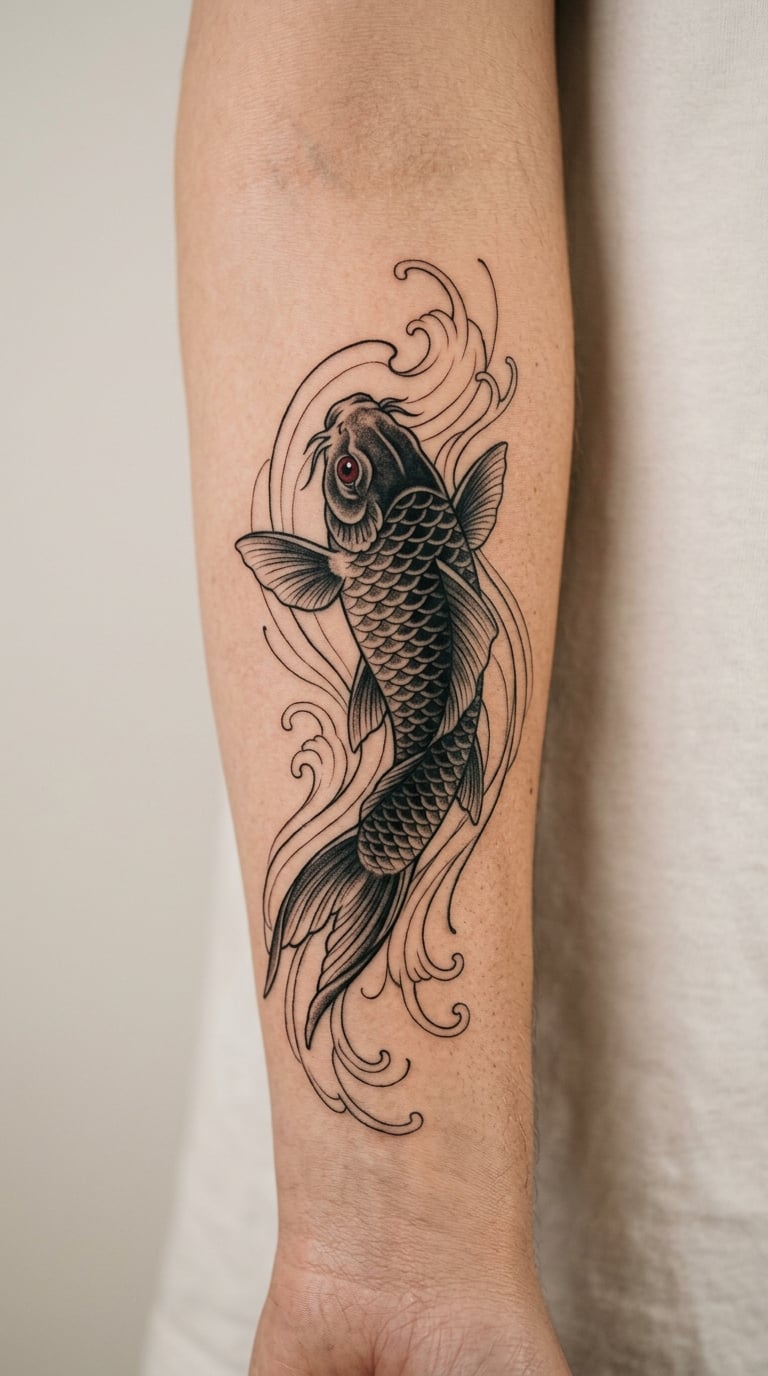
A black koi reads as the hardest swim of the three. People choose it after recovery, after a bad year, or after getting through something they would rather not discuss, and the colour is usually the reason, not the fish.
Real koi carry the same idea. Karasu are the black carp, and Magoi are black with a faint metallic sheen that catches light in a pond. On skin, black is also the most forgiving colour to tattoo because the ink holds its line longest, so it is the safest choice if you want a detailed scale pattern that still reads in ten years.
Pain and time: an inner forearm koi of 4 to 6 inches takes roughly 1 to 2 hours, sits at low to moderate pain, and the wrist end always stings more than the shoulder end.
2. Red Koi for Love, Courage and a Stubborn Streak
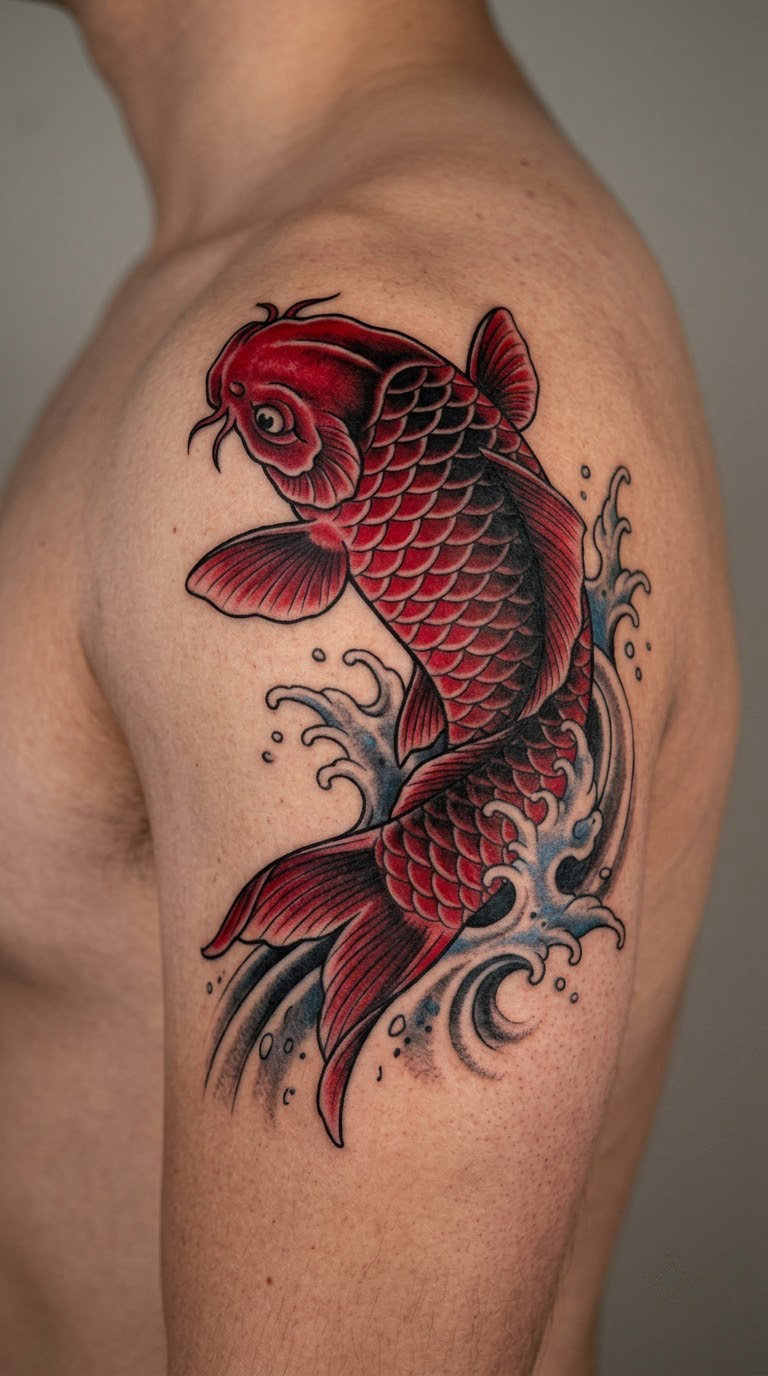
Red is the most personal colour on the list. It turns up for partners, for parents, and for people who simply liked how it looked and decided love was close enough.
Red also carries weight in traditional Japanese tattooing, where it is not treated as decoration. The practical drawback is ageing: bright red drifts toward orange and brown in sun, and a fine red line that looked crisp on day one can look like a bruise by year five. Bigger shapes fade better than thin ones, so ask for a bolder red koi with fewer micro-lines if this one is going on an arm that sees daylight.
Pain and time: a shoulder or upper-arm red koi of 5 inches runs about 2 to 3 hours, moderate pain, with the bony area above the collarbone the most sensitive part of the session.
3. Gold and Yellow Koi: Wealth in Koi Fish Tattoo Meaning by Color
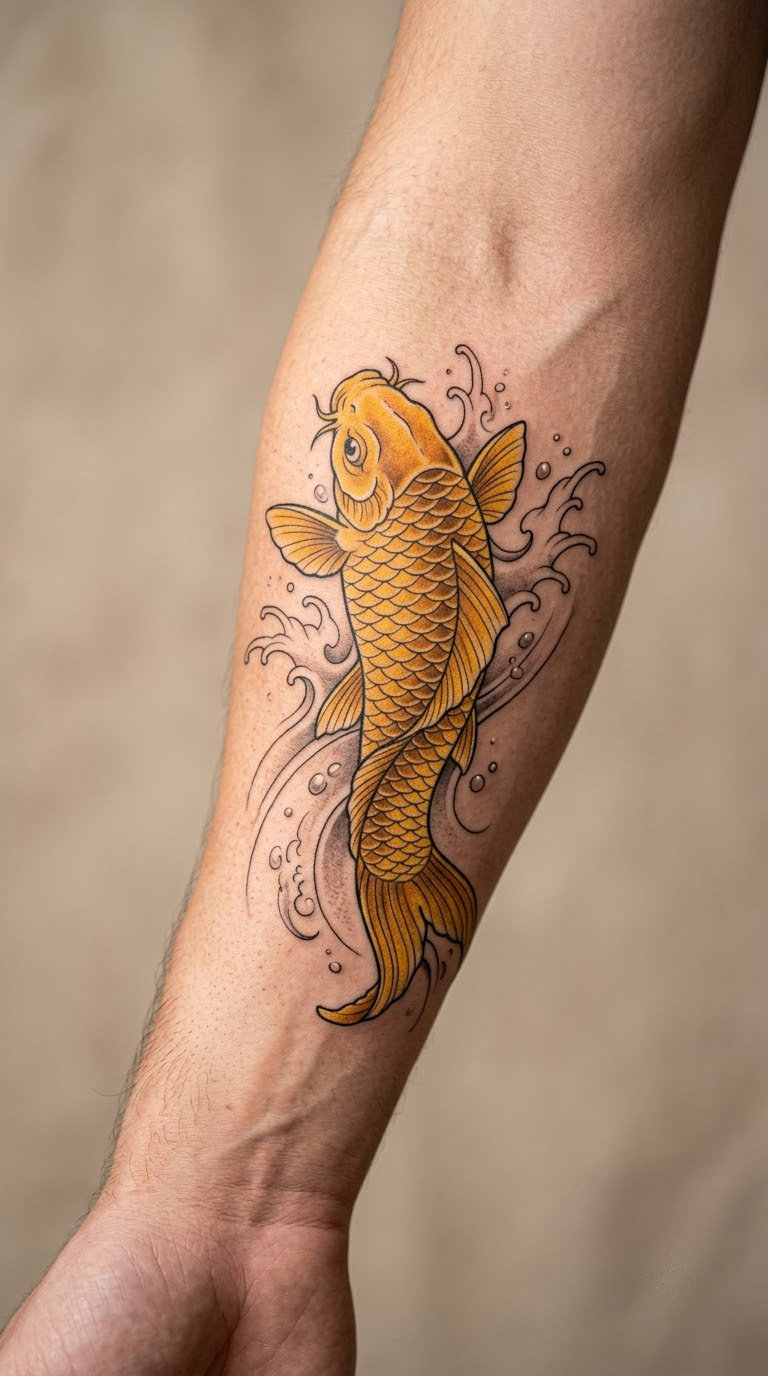
Gold is the most direct request in the whole colour chart. People pick it when they want money, a business to work, a promotion, or just a brighter tattoo than the black ones they already have.
Yamabuki Ogon is the real koi everyone is copying, a solid metallic yellow carp that looks almost like a bar of soft metal underwater. The catch is that yellow is the first colour to go. It is the lightest ink in the box and it has nowhere to hide, so a gold koi on pale skin will look washed out in a way a red or black one never will. A black outline, or a deeper amber shade instead of lemon, buys you years.
Pain and time: a 4 inch gold koi on the outer forearm takes about 1.5 to 2.5 hours. The forearm skin is thick and the sensation is more of a steady scratch than a sharp pain.
4. Blue Koi for a Son, Peace and Still Water
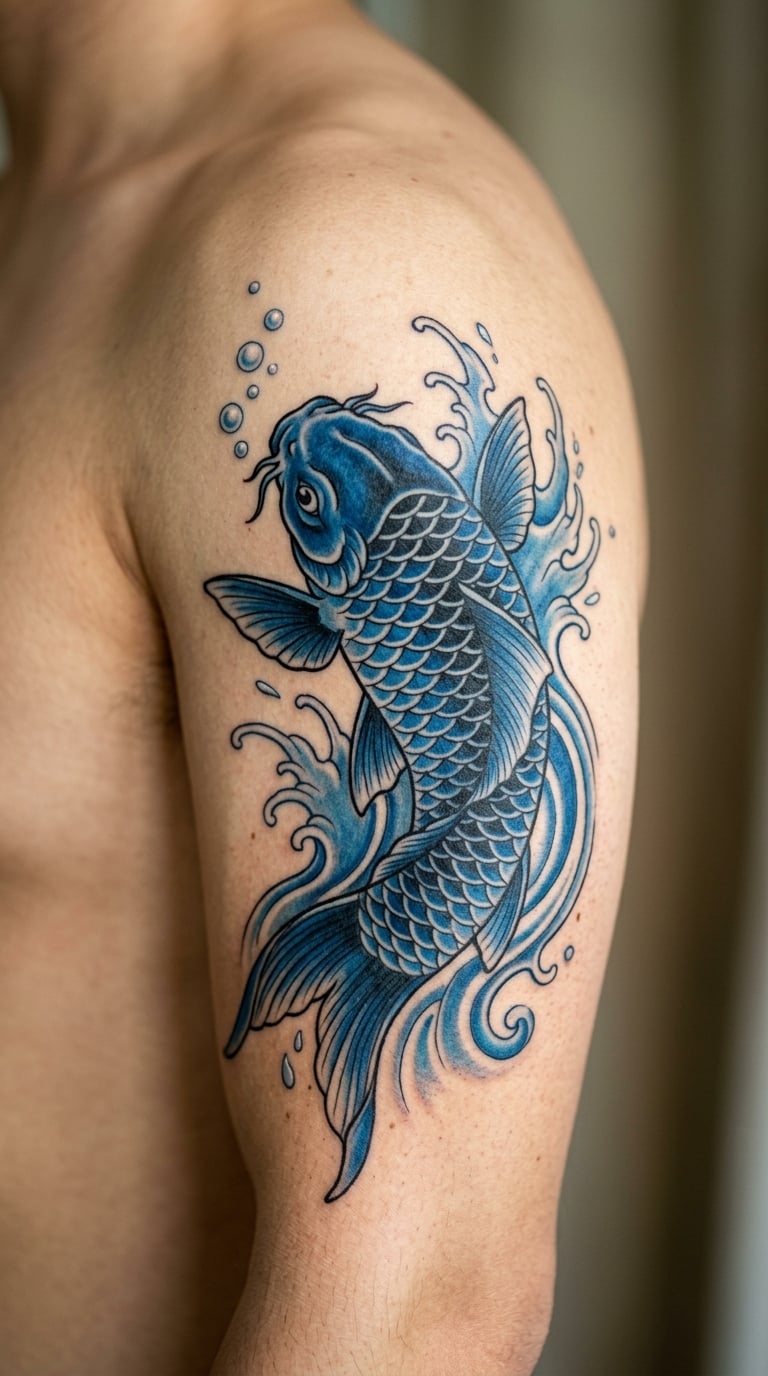
Blue is the one people get quiet about. Tattoo artists regularly describe it as the colour clients ask for when a child is coming, and the same reading turns up as masculinity and as a wish for peace, which are not as far apart as they sound.
Blue sits close to a real koi called Indigo Ginrin, a carp with a metallic blue sheen instead of gold. On skin it behaves better than it has any right to, holding colour for years, but it does drift toward grey-green. Keep some black shading in the design, especially along the back, and blue will still look like blue when everything else has softened.
Pain and time: an upper-arm blue koi of 5 to 6 inches takes around 2 to 3 hours, moderate pain, and the inner upper arm near the armpit is the part to breathe through.
5. White Koi for New Beginnings and a Clean Page
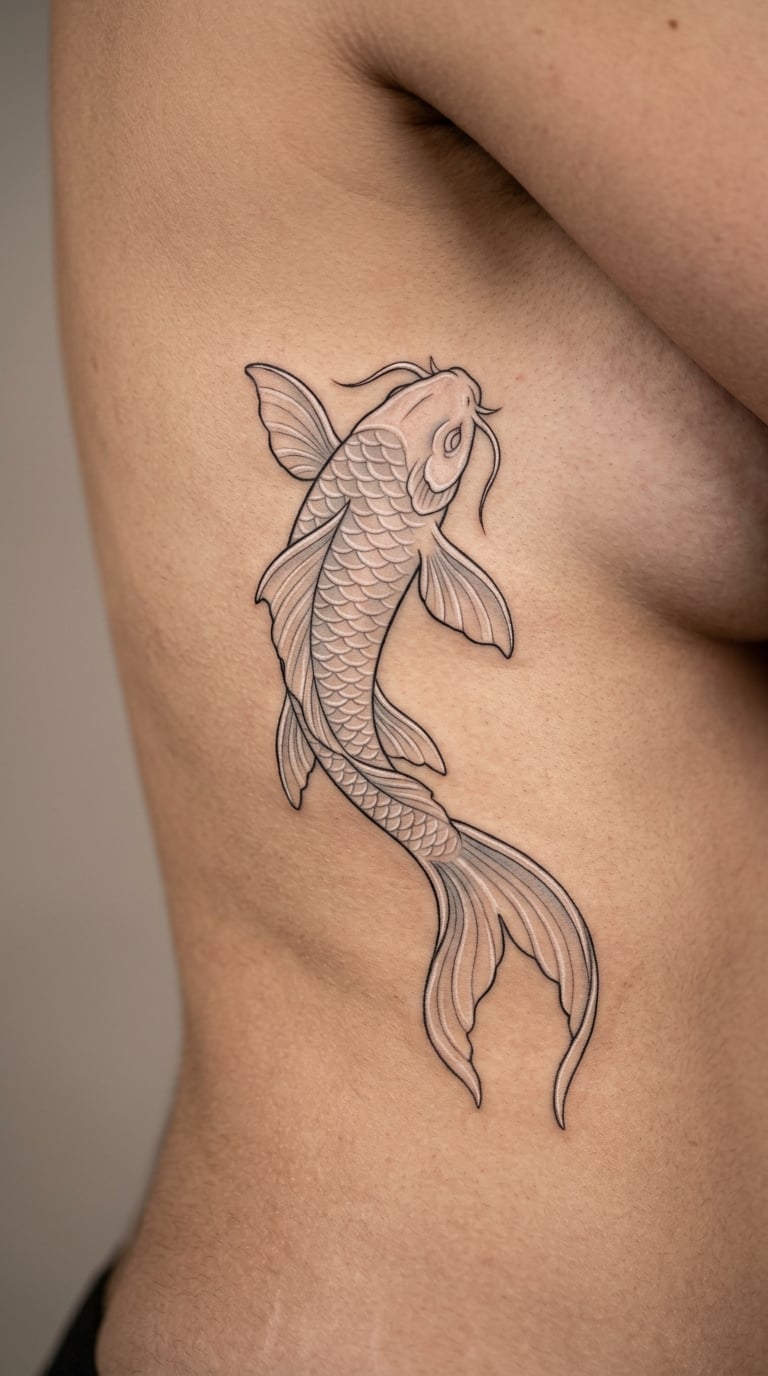
White is the reset. Divorce, a new city, a first sober year, the end of a chapter that had stopped being fun. It shows up more than the colour charts suggest, and the people who get it usually know exactly why.
There is a practical problem. White ink is barely visible when it goes in, and on lighter skin it can look like nothing at all for the first few weeks until the pigment settles. Artists solve it with a thin black contour, and some add a red spot near the gill so the eye knows where to land. I would also push a white koi towards five inches or larger, because a small white fish is a smudge waiting to happen.
Pain and time: ribs are the worst spot on this list for anyone who breathes shallowly. Allow 2 to 3 hours for a 5 inch rib koi, and expect the pain to come in waves rather than staying at one level.
6. Pink Koi for Tenderness and Open-Hearted Strength
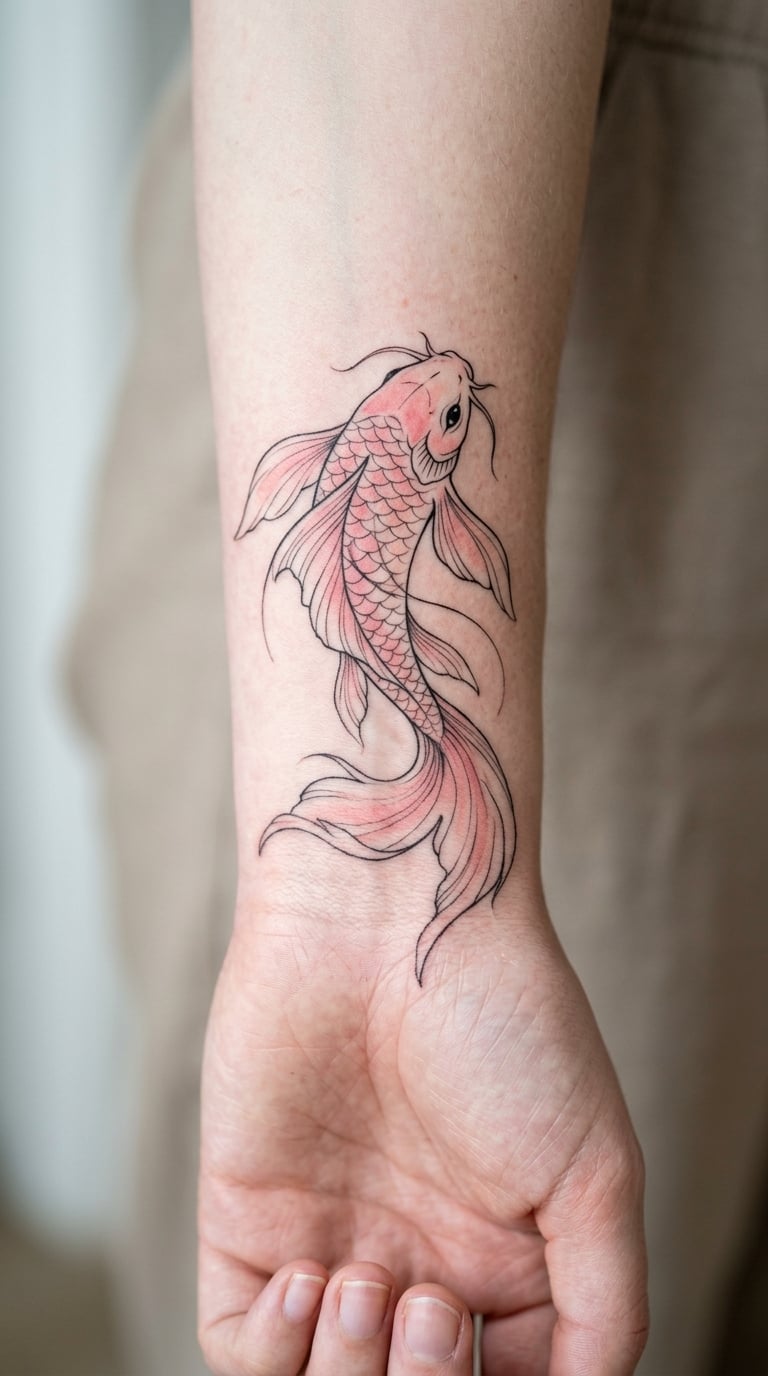
Pink arrived late. It is a Western addition to the colour list rather than something a koi breeder would recognise, and it gets picked for softness: new motherhood, a gentle person in a hard year, a daughter.
It is also the fastest fading colour there is. Pink sits in the same ink family as red, and because it is a dilution, sun turns it pale fast. That is not a reason to skip it. A pink koi in a watercolour style with a black outline can look like the most expensive thing on an arm for a good two or three years, and touch-ups are cheap compared to a large piece.
Pain and time: a small pink koi of 3 to 4 inches on the wrist takes 1 to 1.5 hours. Wrist work is stingy, mostly because the skin is thin and the bone is right under it.
7. Orange Koi for Warmth and a Soft Landing
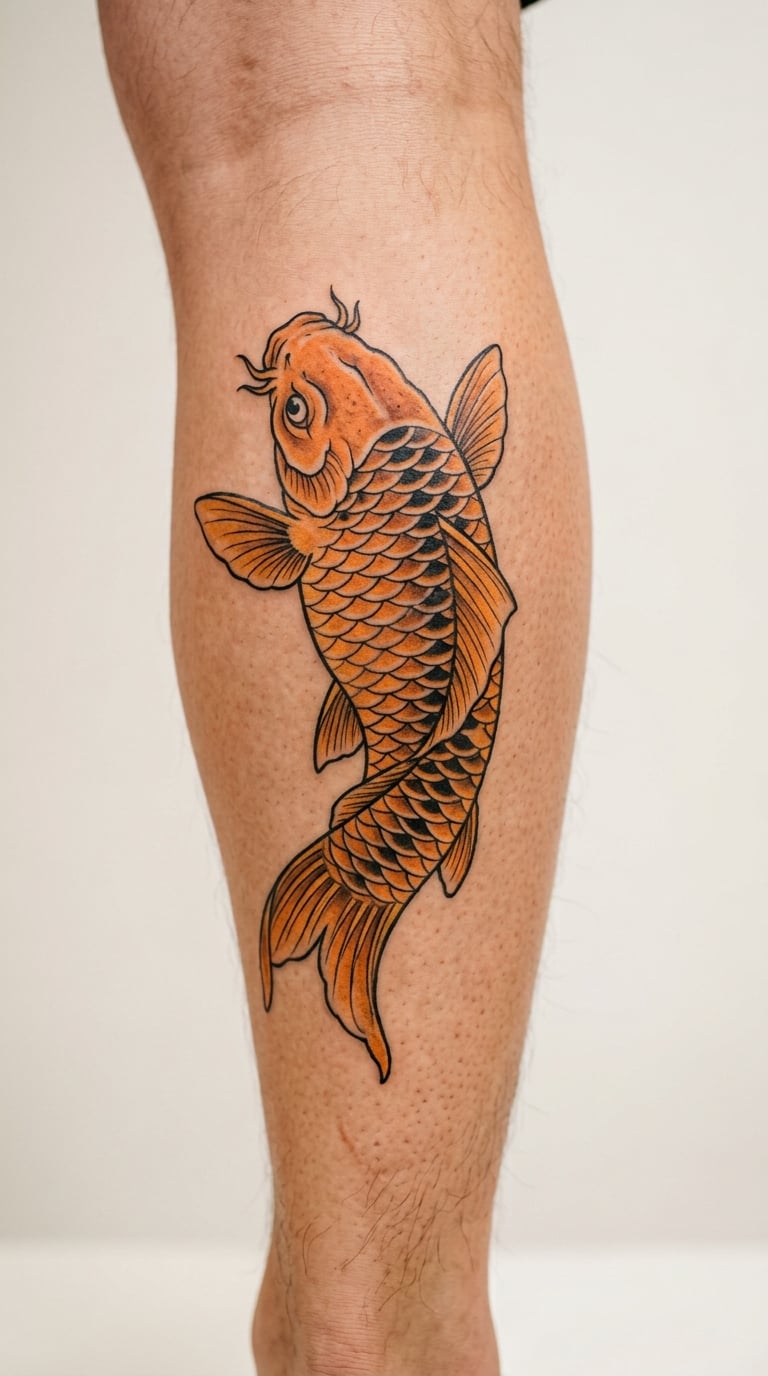
Orange is the quiet one. It barely appears on any of the old colour charts, and when it does, it is usually described as a lighter red rather than as its own thing.
That makes it a good pick for someone who loves how red koi look but does not want the drama of saturated red. Hi Ugoi, the bright orange carp, is the real animal behind it. Ink-wise, orange is easier to keep than pink because it carries more pigment, and it looks good in a soft realist style where the watercolour blooms out into the background rather than sitting on hard black linework.
Pain and time: a calf koi of 5 inches takes about 1.5 to 2 hours. Calf skin is thick and springy, so it feels more like being scratched hard than stabbed.
8. Silver and Platinum Koi for Quiet Business Success
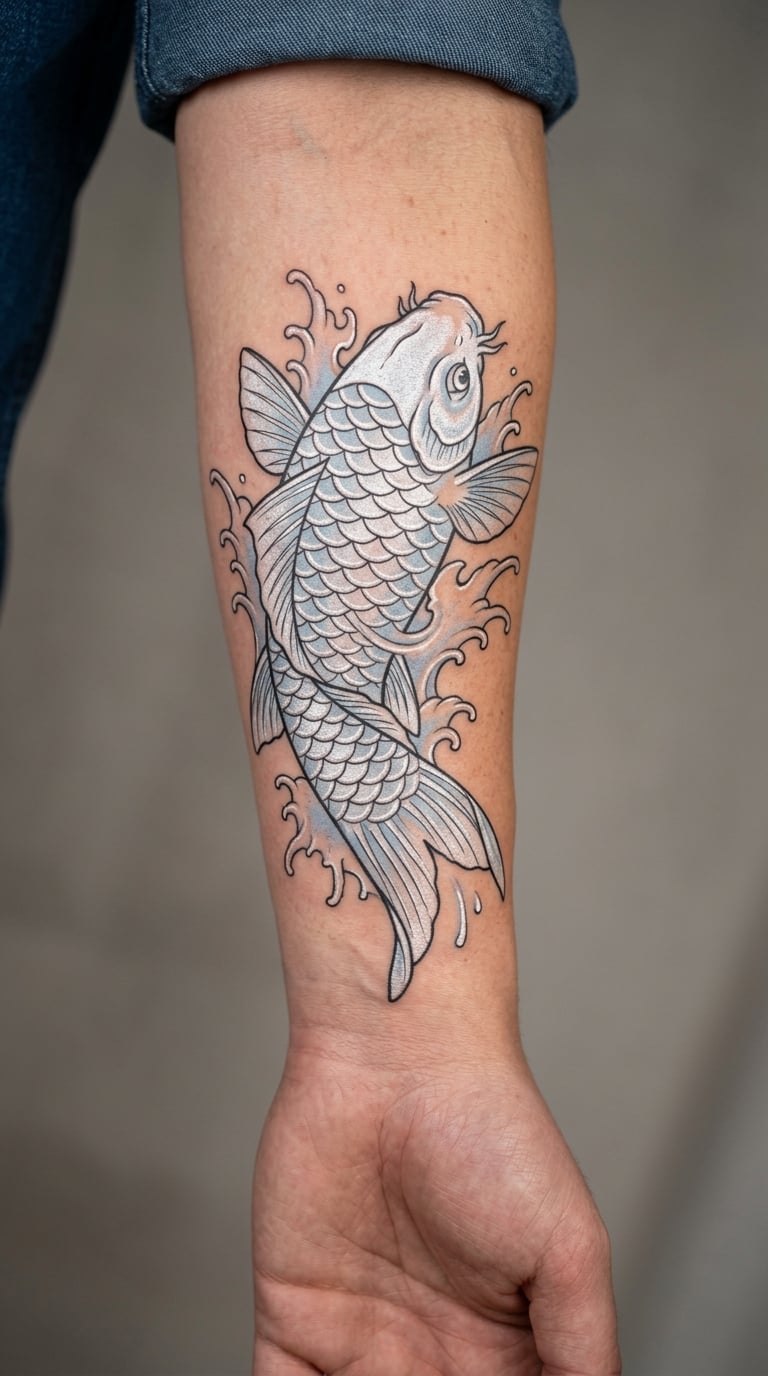
Silver and platinum are the least sentimental colours on the list and probably the most useful. They get chosen for work: contracts closed, a business that survived a rough year, a slow climb that has not peaked yet.
Platinum Ogon is the real koi, a flat metallic silver carp with no pattern at all. The trick with metallic inks is that they need a light grey base, because you cannot add a highlight once the metal is down. Done well it looks like a piece of brushed steel swimming. Done badly it looks like a grey blob, so look for an artist whose portfolio already has one.
Pain and time: a forearm platinum koi of 4 to 5 inches takes around 2 hours, low to moderate pain, and expect a slightly longer session because metallic inks are laid in thinner layers.
9. Purple Koi for Rarity, Ambition and Inner Depth
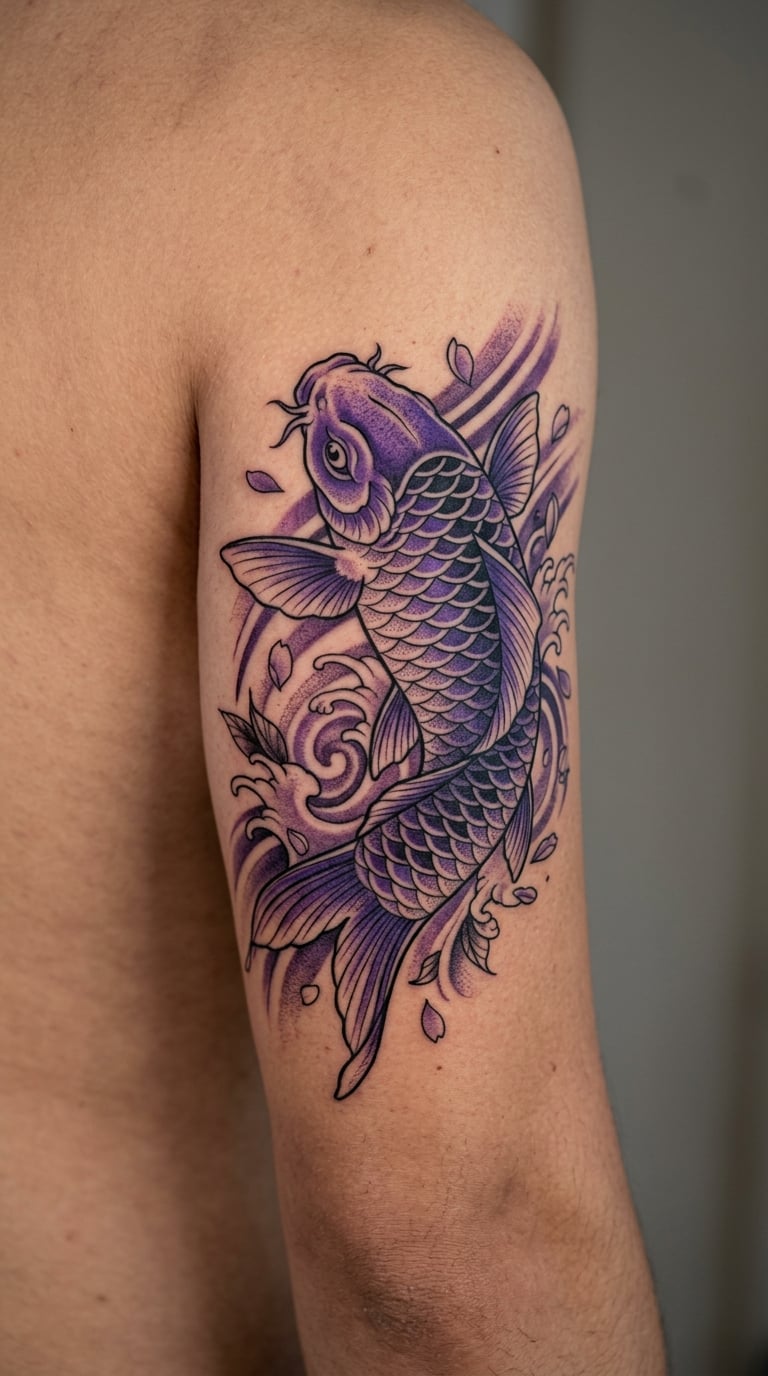
Purple is the least documented colour here, which is exactly why people like it. It is uncommon, it is not a real koi variety, and it reads as a little bit mysterious on a big empty back piece.
Mostly it is chosen for ambition, or for a spiritual life that sits outside the usual symbolism. Technically, violet is the hardest to keep clean because on fair skin it can look bruised once it fades, so the design needs strong value contrast. Blackwork with a violet wash in the water and the shadow side of the fish holds up better than a fully purple koi.
Pain and time: a back-of-arm purple koi of 5 inches takes 2 to 3 hours, moderate pain, and the awkward angle is the reason it needs a break halfway through.
10. Multi-Colour Showa Koi, a Whole Life in One Fish
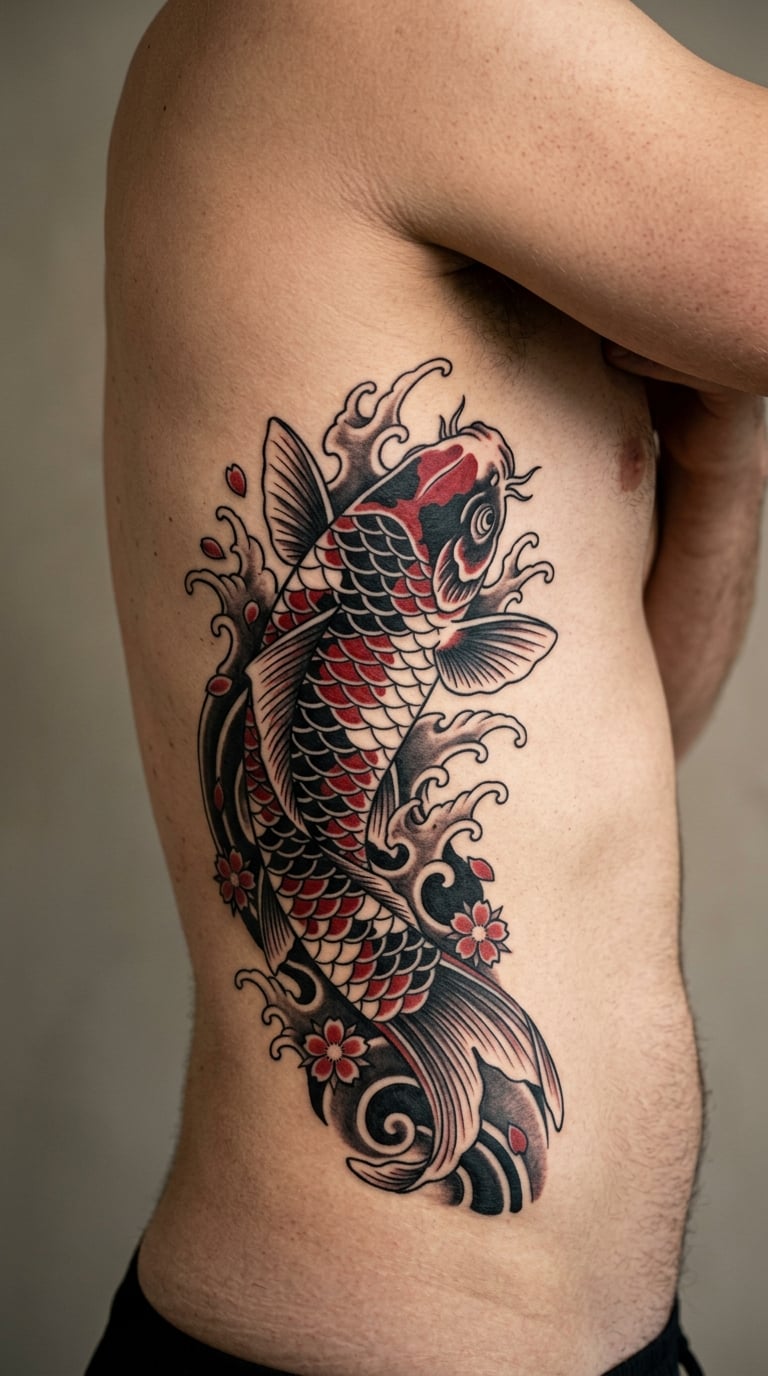
Showa is the only colour scheme on this list that is a real, named variety doing exactly what it looks like. A Showa is a black carp with red and white patches across its back, and it is the most forgiving pattern to tattoo because the busy colour placement hides small mistakes.
It is also the one that rewards size. A tri-colour Showa at four inches looks busy rather than detailed, and a Showa across a rib panel or half sleeve looks like the pond it came out of. As these pieces age the black deepens and the red softens, which reads as character rather than decay. If you want one koi to mean your whole life so far, this is the one.
Pain and time: a torso Showa of 7 inches or more needs 3 to 5 hours, and a half sleeve is planned across two or three sittings rather than one.
11. Red and Black Koi Together: Passion With the Scars to Show
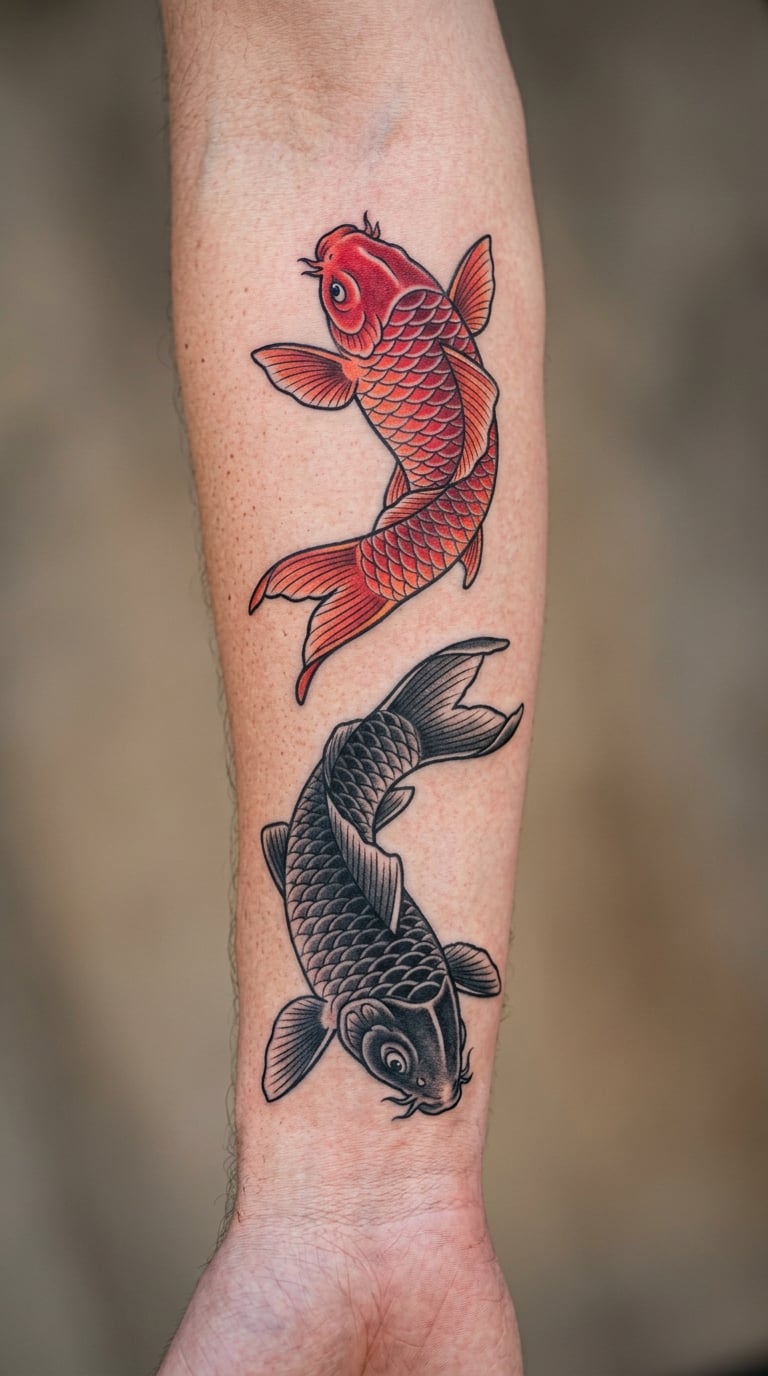
Put red and black together and the meaning stops being about one of them. The red is the love, the heat, the fight you are proud of. The black is what it cost. Together they say you went through something and came out the other side still feeling it.
There are two ways to build it. Two fish, one red and one black, swimming the same way reads as a before-and-after of the same person. One fish with red patches breaking through a black body reads closer to a Showa, and lands on a slightly different idea: hard-won joy inside something difficult. People choose the first after recovery or the end of a hard relationship. They choose the second for a parent, or for themselves.
Pain and time: a two-fish forearm piece takes 2 to 3 hours, moderate pain, and the two fish need about a hand span between them so the shapes do not merge as the ink settles.
12. Two Koi Swirling in a Yin Yang Arrangement
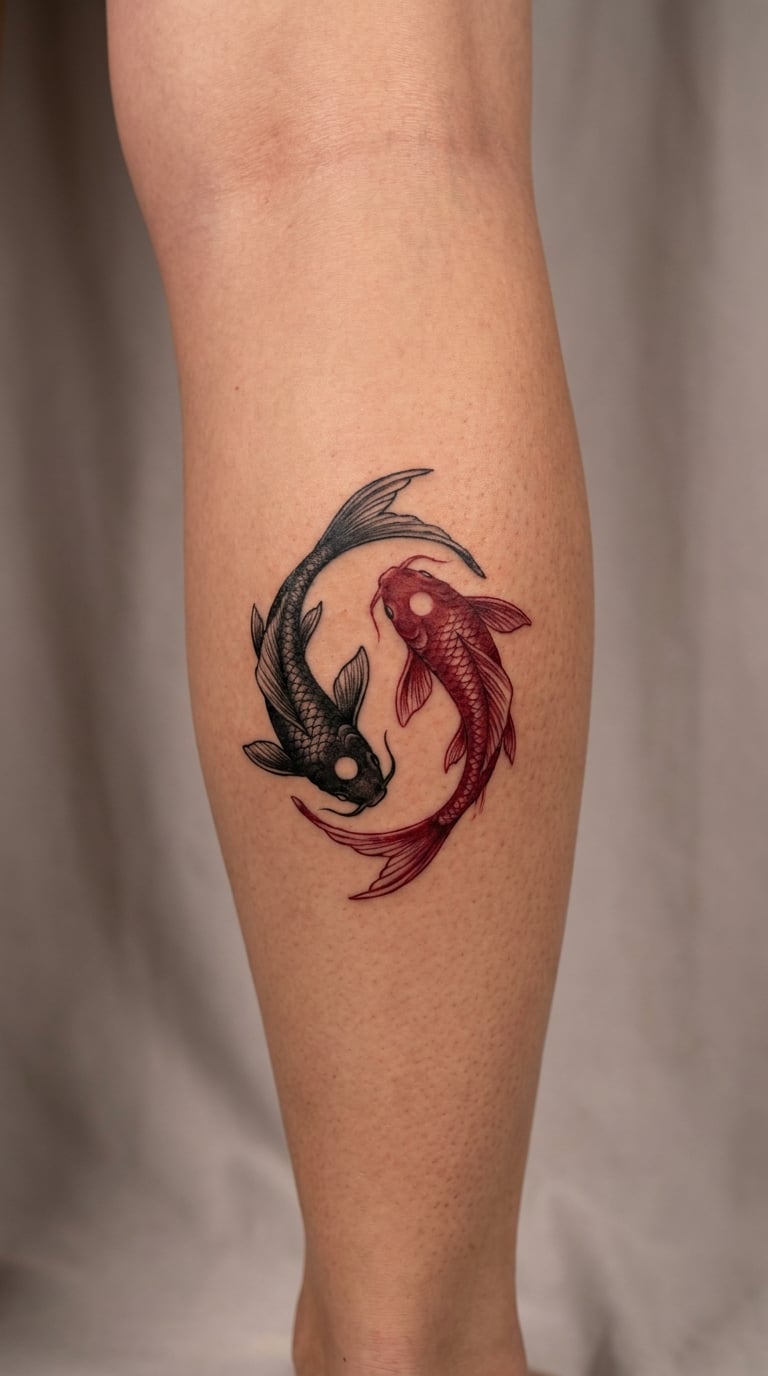
Two koi circling each other is the most requested composition after a single fish, and almost everyone who books it already knows why. It means a pair, or a balance: parent and child, two partners, the two halves of one person.
The direction inside the circle is what separates the readings. Two fish swimming opposite ways in a yin yang layout is duality, and artists describe it as perfect balance. Two fish swimming the same way is companionship and shared luck instead. The question comes up constantly in the r/tattoo community, where people with a downstream koi for family contentment keep wondering whether a second fish swimming the other way would fight with it. It does not, as long as the two are designed as one composition rather than two tattoos that happen to be near each other.
Pain and time: a circular two-koi piece on the calf runs 3 to 4 hours, moderate pain, and the calf is the easiest place to fit a round composition without it distorting when you move.
Things to Know Before You Book a Koi Tattoo
Koi are one of the tattoos people are most disappointed by, and it is almost never because the meaning was wrong. It is because the design was too small, too detailed, or in a colour that faded. These are the things worth settling before you sit down.
- Choose the artist on koi work, not general talent. You want a portfolio where the scales stay readable and the water does not crowd the fish.
- Bring photos of real koi, not tattoo references. A kohaku, a showa and a yamabuki shot in a pond tells an artist far more than a screenshot does.
- Treat 4 inches as the floor. Under that size the scale detail blurs and the fish starts reading as a generic fish within a few years.
- Plan for sun and healing. Keep the piece covered for the first two weeks, and expect the ink to sit darker than you want for a month before it settles into its real colour.
- Ask for the number of sessions and the full quote in writing before the first sitting. A coloured koi of this size runs roughly 150 to 400 in most shops, and larger pieces are planned across two or three appointments.
- Book 6 to 8 weeks ahead of any date you want the tattoo for, so the healed result shows up in the photographs instead of the fresh ink.
Which way should a koi face?
The rule everyone repeats is that an upstream koi means you are still fighting for something, and a downstream koi means you have arrived and can rest. That rule is modern Western shorthand, not documented Japanese practice. In the older readings the direction shows the fish’s own effort, not your situation, so an upstream koi can just as easily mean a long fight that paid off.
Pick the direction that matches the design. A koi curling up a waterfall needs the upward angle, and a koi drifting through still water looks wrong pushed against the current.
Keeping your koi fish tattoo meaning readable as ink fades
Gold and yellow go first, then pink and pale blue, then light green. Red drifts toward orange and black is the last thing to change. A few habits slow all of it down: keep covered during the first two weeks, use sunscreen on exposed pieces for the rest of your life, and ask your artist to build a warm base layer under anything light.
That is also why a strong black outline matters more than most people realise. The colour fades toward whatever is underneath, and the outline is what keeps a pale koi from turning into a smudge.
Frequently Asked Questions
What does each color of koi tattoo symbolize?
Every colour adds a layer on top of the base meaning of perseverance and transformation. Black marks a hardship survived, red or pink love and courage, gold and yellow wealth, blue a son or peace, white new beginnings, silver steady business success, and purple ambition. Treat the list as a modern Western shorthand rather than ancient doctrine.
What does a red and black koi fish represent?
A red and black koi usually reads as passion and pain held together. The red half is the love, the heat or the fight you are proud of, and the black half is what it cost. People choose the pairing after recovery, after a relationship that ended hard, or as a tribute to someone fierce and loyal.
Which direction should a koi fish tattoo face?
The common rule says an upstream koi means you are still fighting for something and a downstream koi means you have made it and can rest. That rule is modern Western shorthand rather than documented Japanese practice. Older readings treat the direction as showing the fish’s own effort, not your situation.
What is the meaning of a 2 koi fish tattoo?
Two koi usually mean a pair or a balance: parent and child, two partners, or two versions of yourself. Swirling in opposite directions in a yin yang layout reads as duality and perfect balance. Swimming side by side in the same direction reads as harmony, companionship and shared luck instead.
Is a koi fish tattoo a symbol of luck?
A koi is widely treated as a luck symbol, and that reading is older than tattooing itself, coming from the Chinese Dragon Gate story where a carp that swims upstream hard enough becomes a dragon. Whether a colour raises or lowers the odds is a Western question. The tradition attaches the luck to the effort, not the shade.
What does a fish tattoo mean on a woman?
There is no fixed gender meaning attached to a fish. People read placement, style and colour, not the wearer’s sex, and a realistic coloured koi on the ribs tells the same perseverance story whoever gets it. If you want the meaning to be unmistakable, choose the colour and the direction deliberately rather than relying on the fish alone.
Conclusion
Start with the story, not the colour chart. Decide what the koi is marking, then pick the shade that carries it, and take a photo of a real koi in that colour to your consultation.
That is the whole of koi fish tattoo meaning by color in practice. The colour you choose is personal anyway, and an artist who understands the fish will help you say it properly.