
24 First Tattoo Ideas for Women (October 2026): Beginner-Friendly
The best first tattoo ideas for women are small, readable designs placed somewhere you can cover and somewhere that heals predictably. A fine-line sprig, a single-line crescent or a tiny birth flower on the inner forearm will read clearly at almost any size and cost one short session. Bigger, busier color work is worth saving until you know how your skin takes ink.
What separates a design that looks great in a photo from one that looks great on your body is line clarity, contrast, scale and placement. Fine black lines fade on hands and fingers faster than solid shapes do, and a design drawn at postage-stamp size on a rib has nowhere to breathe. Every idea below comes with a realistic size in inches and centimeters, the spot it sits best, an honest pain note and one way to make it yours. If you want the fine-line category in full, start with 18 best fine line tattoo ideas for women.
First Tattoo Ideas for Women: Quick Guide
Compare all 24 concepts side by side before you commit. The rows run in the same order as the numbered sections that follow.
| Idea | Style | Best placement | Size | Pain |
|---|---|---|---|---|
| Fine-line botanical sprig | Fine line | Inner forearm, collarbone | 2-4 inch (5-10 cm) | Low to medium |
| Single line crescent moon | Fine line, minimalist | Outer upper arm, rib, behind ear | 1.5-3 inch (4-8 cm) | Low to medium |
| Mini paper plane | Minimalist, geometric | Wrist, forearm, rib | 2-3 inch (5-8 cm) | Low |
| Watercolor butterfly | Watercolor | Shoulder blade, upper arm, calf | 3-6 inch (8-15 cm) | Medium |
| Tiny birth flower | Micro-realism, fine line | Wrist, forearm, ankle | 2-4 inch (5-10 cm) | Low to medium |
| Fine-line mountain range | Fine line, illustrative | Forearm, rib, calf | 3-7 inch (8-18 cm) | Medium |
| Red abstract heart | Illustrative, neo-traditional | Forearm, upper arm, chest | 2-4 inch (5-10 cm) | Medium |
| Minimal sun and waves | Minimalist, fine line | Forearm, calf, ankle | 2.5-5 inch (6-13 cm) | Medium |
| Dainty interlocking line | Fine line, minimalist | Wrist, finger, behind ear | 1.5-3 inch (4-8 cm) | Low to medium |
| Small floral branch | Illustrative, neo-traditional | Collarbone, forearm, upper arm | 3-6 inch (8-15 cm) | Medium |
| Geometric arch | Geometric, minimalist | Forearm, upper arm, abdomen | 2-5 inch (5-13 cm) | Medium |
| Tiny realistic eye | Micro-realism, fine line | Inner arm, wrist, behind ear | 1.5-3 inch (4-8 cm) | Medium |
| Simple line-art face | Fine line, minimalist | Forearm, calf, upper arm | 3-6 inch (8-15 cm) | Medium |
| Simple sunflower outline | Illustrative, neo-traditional | Forearm, calf, upper arm | 2-4 inch (5-10 cm) | Low to medium |
| Blackwork leaf pair | Blackwork | Forearm, calf, upper arm | 3-6 inch (8-15 cm) | Medium |
| Minimal musical note | Fine line, minimalist | Wrist, behind ear, forearm | 1.5-3 inch (4-8 cm) | Low to medium |
| Small house outline | Fine line, minimalist | Forearm, chest, shoulder, rib | 2-4 inch (5-10 cm) | Low |
| Pastel petal trio | Watercolor | Shoulder, rib, ankle | 2-4 inch (5-10 cm) | Medium |
| Simple infinity symbol | Fine line, minimalist | Wrist, forearm, collarbone | 1.5-3 inch (4-8 cm) | Low |
| Fine-line rosebud | Fine line, neo-traditional | Forearm, rib, collarbone | 2-4 inch (5-10 cm) | Low to medium |
| Minimal bird in flight | Minimalist, blackwork | Wrist, forearm, rib | 2-4 inch (5-10 cm) | Low to medium |
| Soft-color rainbow | Watercolor, illustrative | Forearm, calf, collarbone | 2-4 inch (5-10 cm) | Medium |
| Dainty word in signature script | Fine line, script | Forearm, wrist, collarbone | 2-4 inch (5-10 cm) | Low to medium |
| Blackwork crescent and sparkle | Blackwork, illustrative | Upper arm, calf, rib, shoulder | 3-6 inch (8-15 cm) | Medium |
1. Fine-Line Botanical Sprig
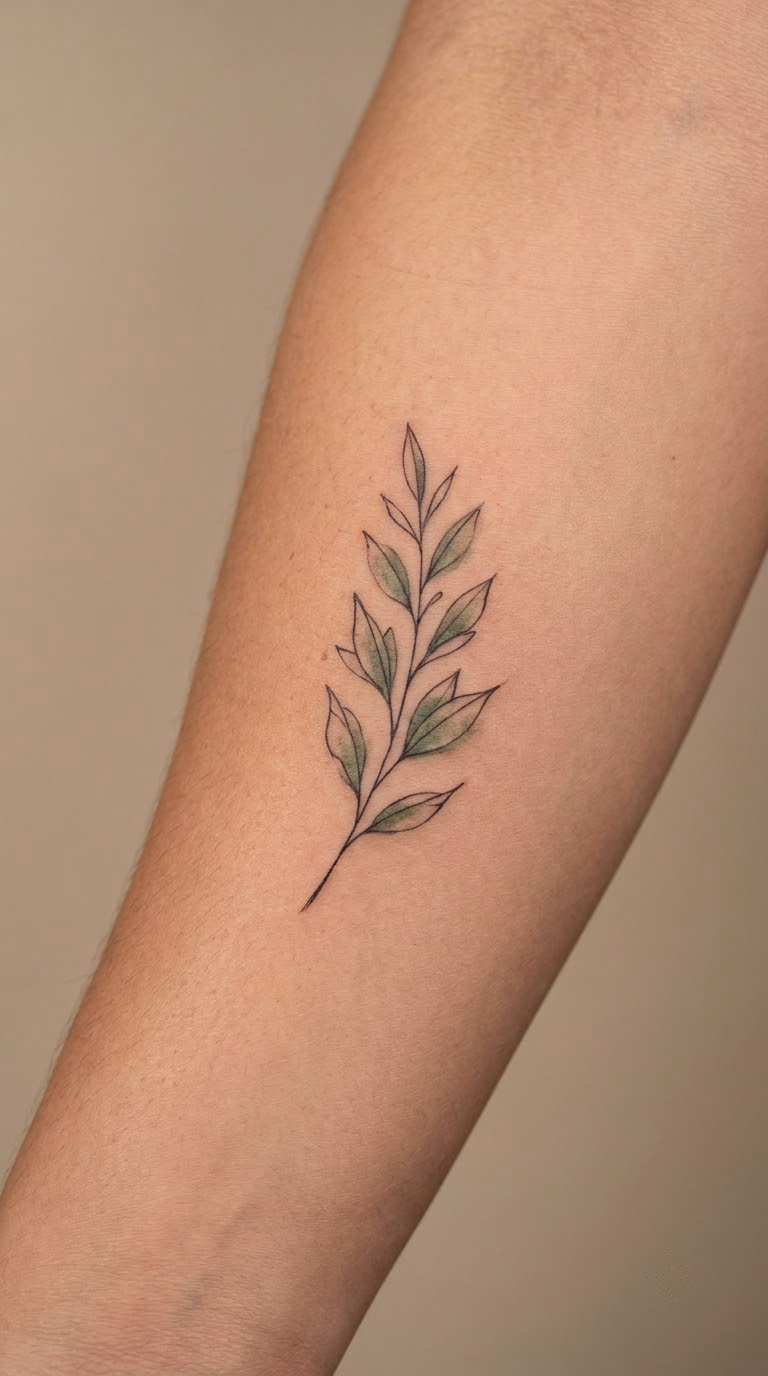
A fine-line botanical sprig is drawn with a single tapering stem, small pointed leaves, and a few short interior vein lines. Some wearers add muted green shading in a couple of leaves and leave the rest black, which gives the piece depth without turning it into a color piece. It is a genuinely common first tattoo because the silhouette stays readable even when the line weight is light.
People choose it because of the plant itself, not because of any fixed meaning. Some pick a herb their grandmother grew, others the first flower from a garden they visited. Any of those reasons works. What matters is that you can say what it is to you, because that is the answer you will still like in ten years.
Placement: inner forearm or collarbone. Size: 2 to 4 inches (5 to 10 cm). Style: fine line. Pain: low to medium; the inner forearm has thin skin but plenty of soft tissue under it.
Honest aging note: hairline stems soften in the first couple of years, so a touch-up early on keeps the shape crisp. Make it yours: add the birth month of someone you are thinking of at the base of the stem, or ask for two sprigs instead of one.
Why This First Tattoo Idea for Women Works
A good artist will adjust line weight to the area rather than copy the same stroke everywhere. On the inner forearm, where skin moves and stretches with the wrist, a slightly heavier single line holds together better than a hairline. On a collarbone, the bone sits close to the surface, so thinner lines and wider spacing between leaves keep the piece from crowding.
Skin tone plays a role too. Fine black linework on lighter skin needs less weight than the same design on deeper skin, where a touch more spacing around each leaf keeps the edges legible. Bring healed photos of the artist’s own linework when you consult, and first tattoo ideas for women go much further when the artist is adjusting the drawing for your body rather than tracing a screen.
2. Single Line Crescent Moon
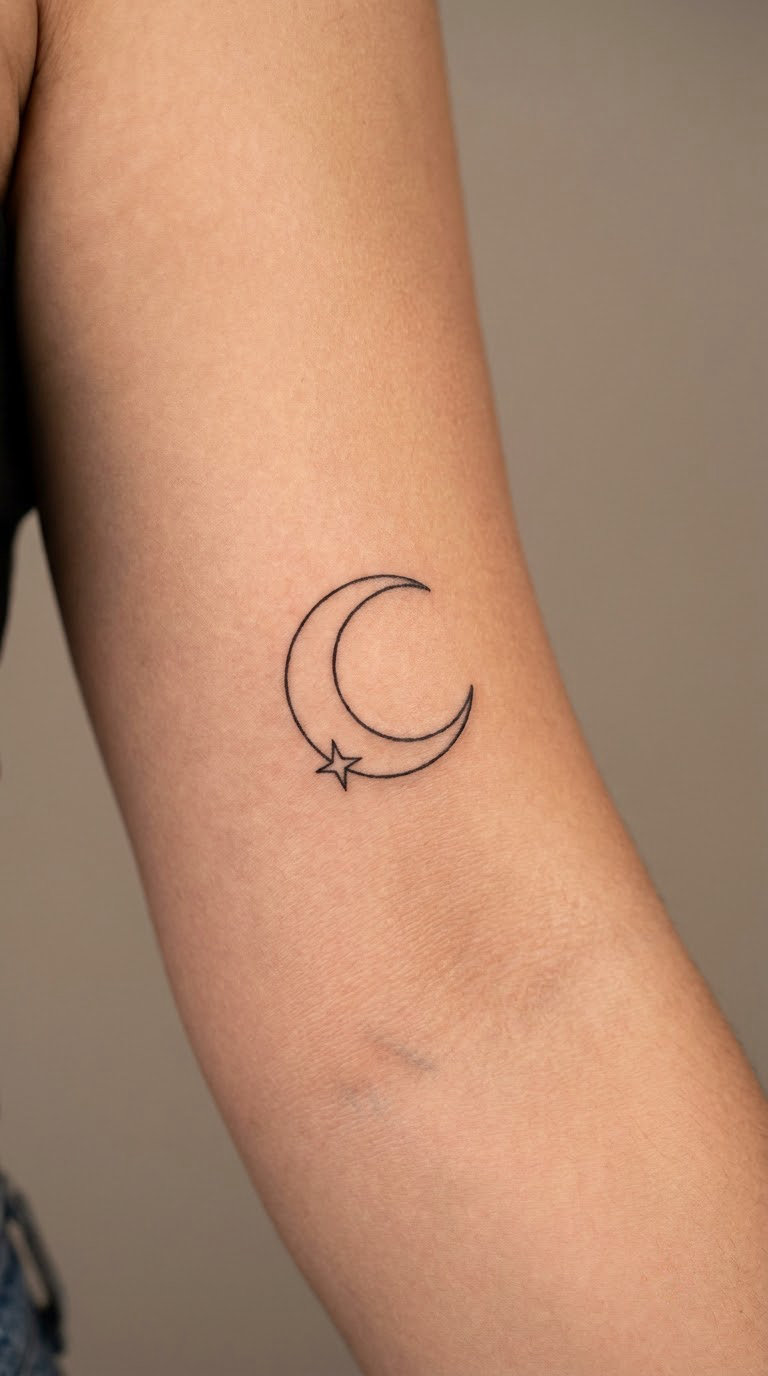
The single-line crescent is built from one confident black stroke that thins as it curves and thickens through the outer edge, with nothing else competing for attention. A few wearers add a single small star just off the tip of the curve. The appeal is restraint. One line has nowhere to hide, so the whole design rests on whether the artist can control the taper.
Crescents and stars get chosen for the sky, for night, for a person born under a particular sign, or simply because the shape is quiet and does not compete with anything else. There is no single reading, and the people who love these tattoos rarely treat them as a message anyway.
Placement: outer upper arm, rib, or behind the ear. Size: 1.5 to 3 inches (4 to 8 cm). Style: fine line or minimalist. Pain: low to medium. Behind the ear flicks more than the arm does because the skin there is thin and the cartilage shifts under the needle.
Aging note: ultra-thin curves and a tiny star blur faster than the main crescent, so expect one or two free touch-ups in the first years. Make it yours: set a small birth-date star a finger’s width away from the moon.
3. Mini Paper Plane
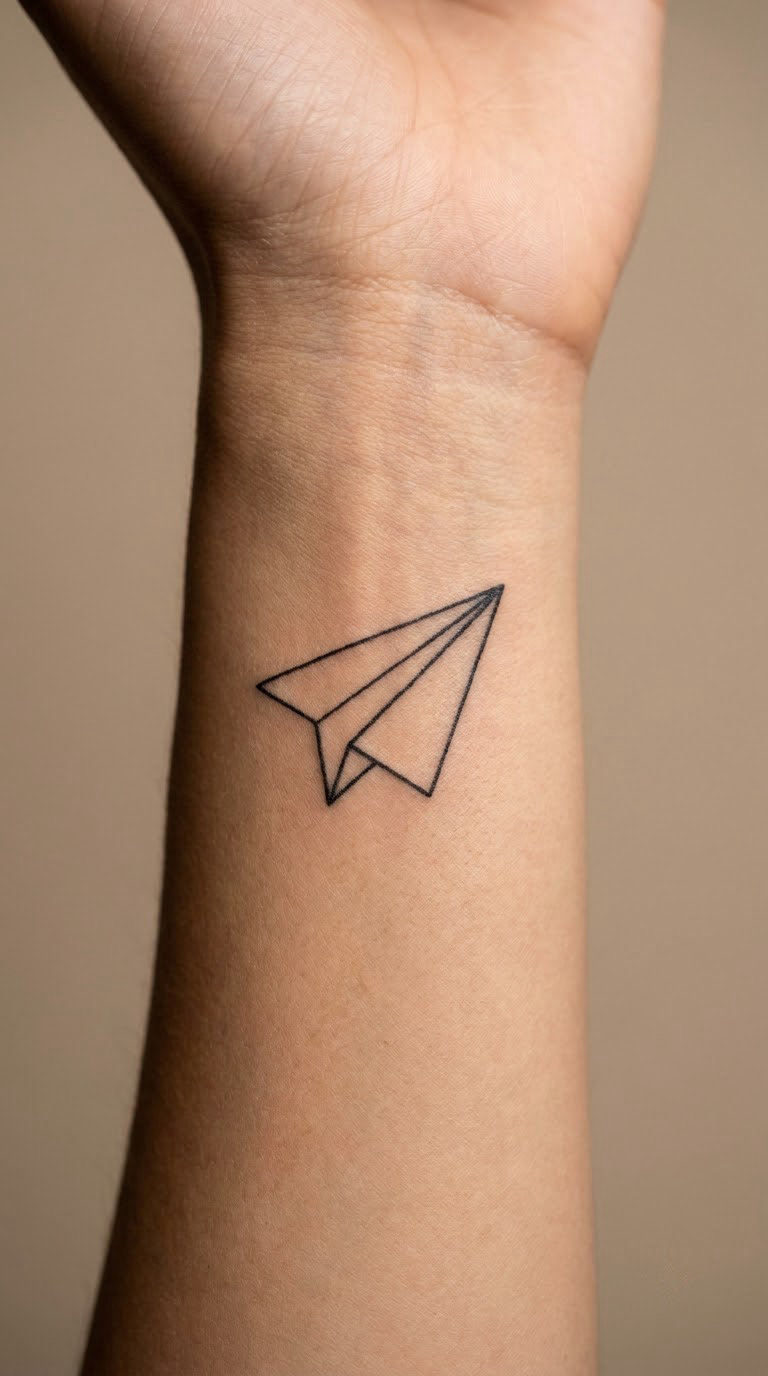
A mini paper plane is two or three straight black outlines meeting at a nose point, with a single fold line inside the wing. Done well, it is almost all negative space. The geometry is forgiving because a paper plane has no texture to imitate, which is why it works as a first piece even when the artist is drawing at an unusual angle.
Travel, leaving somewhere, ambitions, the first trip someone took alone, a move to a new city. People pick it for whatever it marks, and the design stays open enough to hold any of those without claiming them.
Placement: wrist, forearm, or rib. Size: 2 to 3 inches (5 to 8 cm). Style: fine line or minimalist geometric. Pain: low. The wrist is more tender than the forearm but there is very little area to get through.
Aging note: internal folds are the first thing to fade because they are the thinnest lines in the design, so keep the artwork at a size where those lines stay at least a hair above skin level. Make it yours: have the artist tuck the coordinates of a place that mattered underneath the wing.
4. Watercolor Butterfly
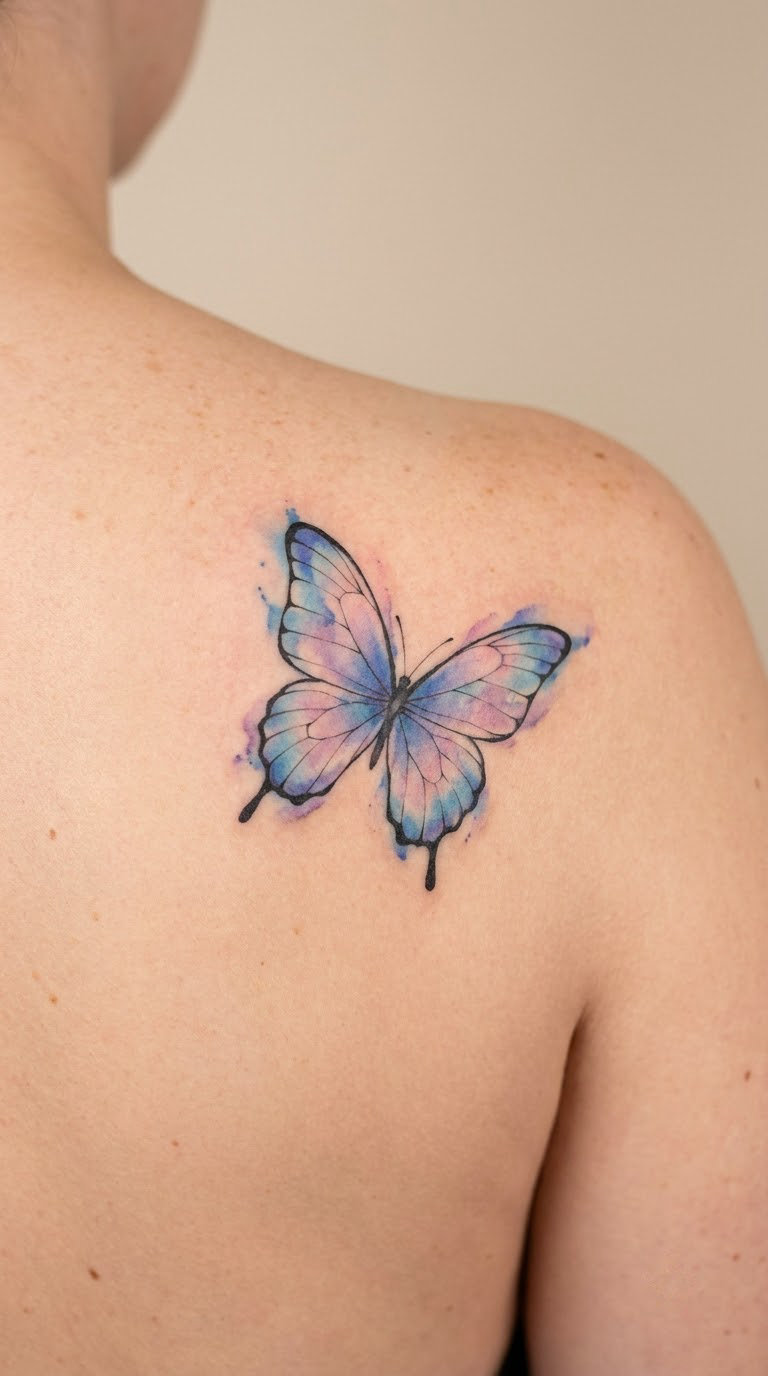
A watercolor butterfly is built from translucent washes rather than outlines, with darker pigment pooling at the wing edges and the middle left soft and open. The effect is movement in a way outline butterflies never quite manage. It is also the first design on this list that genuinely needs more than one sitting if you go large, so scope it carefully.
Butterflies get picked for change, for leaving one thing and becoming another, or because the colors are lovely and that is reason enough. None of those needs to be true for you, but the ones who keep it usually know which one they meant.
Placement: shoulder blade, upper arm, or calf. Size: 3 to 6 inches (8 to 15 cm). Style: watercolor. Pain: medium. The shoulder blade and calf are broad areas, so the needle stays in roughly the same spot for a while and the sensation builds.
Aging note: ink settles into the skin and the pale washes lighten noticeably in the first year, so pick colors with enough saturation to survive that shift. Make it yours: add a single restrained color accent, like one solid black wing edge against the wash.
5. Tiny Birth Flower
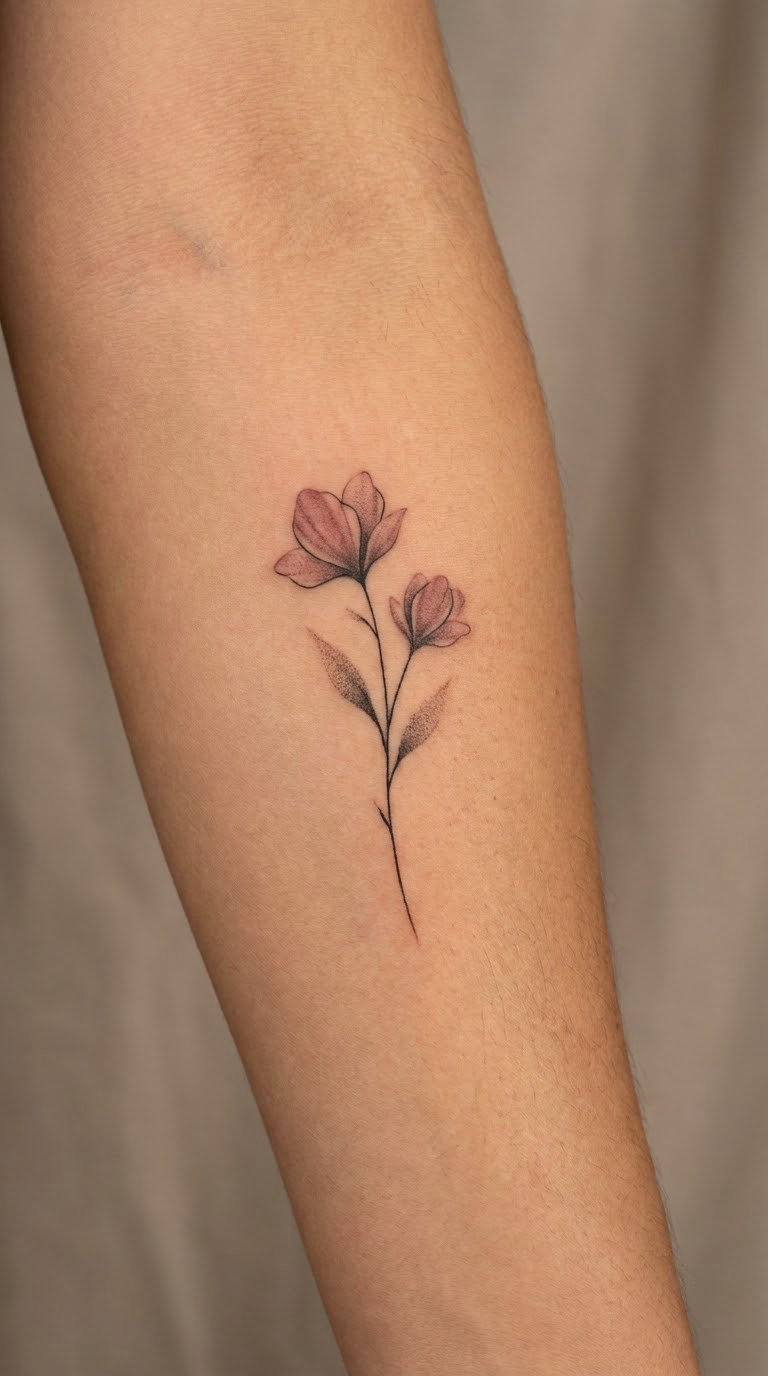
A tiny birth flower is your birth month’s bloom drawn recognizably: a curved stem, two or three balanced leaves, and a flower head in either soft black-and-gray shading or one natural color. Recognizable is the key word. A rose that reads as a blob is a disappointment; a rose with a clear outer petal edge and a dark center reads in a glance.
People choose it for their own birthday, for a child, a sister or a friend born in the same month, or for a month that holds a memory. The flower is just the carrier, and the reason behind it is what makes it yours.
Placement: wrist, forearm, or ankle. Size: 2 to 4 inches (5 to 10 cm). Style: micro-realism or fine line. Pain: low to medium. The ankle is bony, so expect more of a scratch-then-ache feeling there than on the forearm.
Aging note: avoid petal detail small enough to sit inside a single line weight, because the edges of neighboring petals merge as the design settles. Make it yours: pair it with a small date underneath, or ink the same flower on someone else in a matching spot.
6. Fine-Line Mountain Range
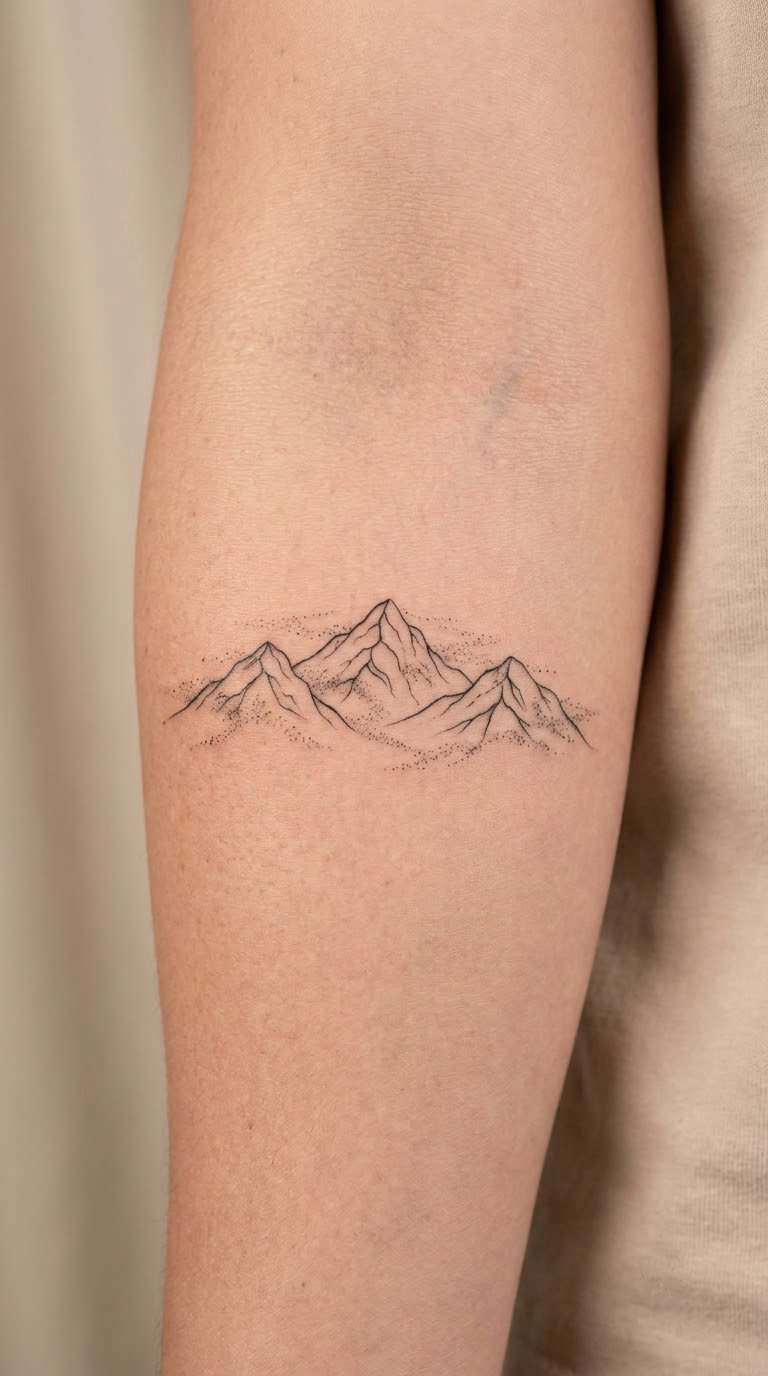
A fine-line mountain range uses one or two outlines for the peaks, a handful of short contour lines for the slopes, and often a scatter of very light dotwork to suggest mist sitting in the valley. Heights vary from peak to peak, which is what stops it looking like a repeated pattern. The design rewards a slightly wider canvas than the small pieces on this list.
Home, a specific trip, a difficult year, a place someone wants to return to. Landscape tattoos are usually about a location more than about mountains as such, so the shape you draw can be the real range or a generic silhouette. Both work.
Placement: forearm, rib, or calf. Size: 3 to 7 inches (8 to 18 cm). Style: fine line or illustrative. Pain: medium, mostly because the design is wide and the session runs longer than a small piece.
Aging note: very small background dots soften first, so keep mist sparse or give it enough spacing to stay separate. Make it yours: add one travel date beneath the peaks in the same line weight.
7. Red Abstract Heart
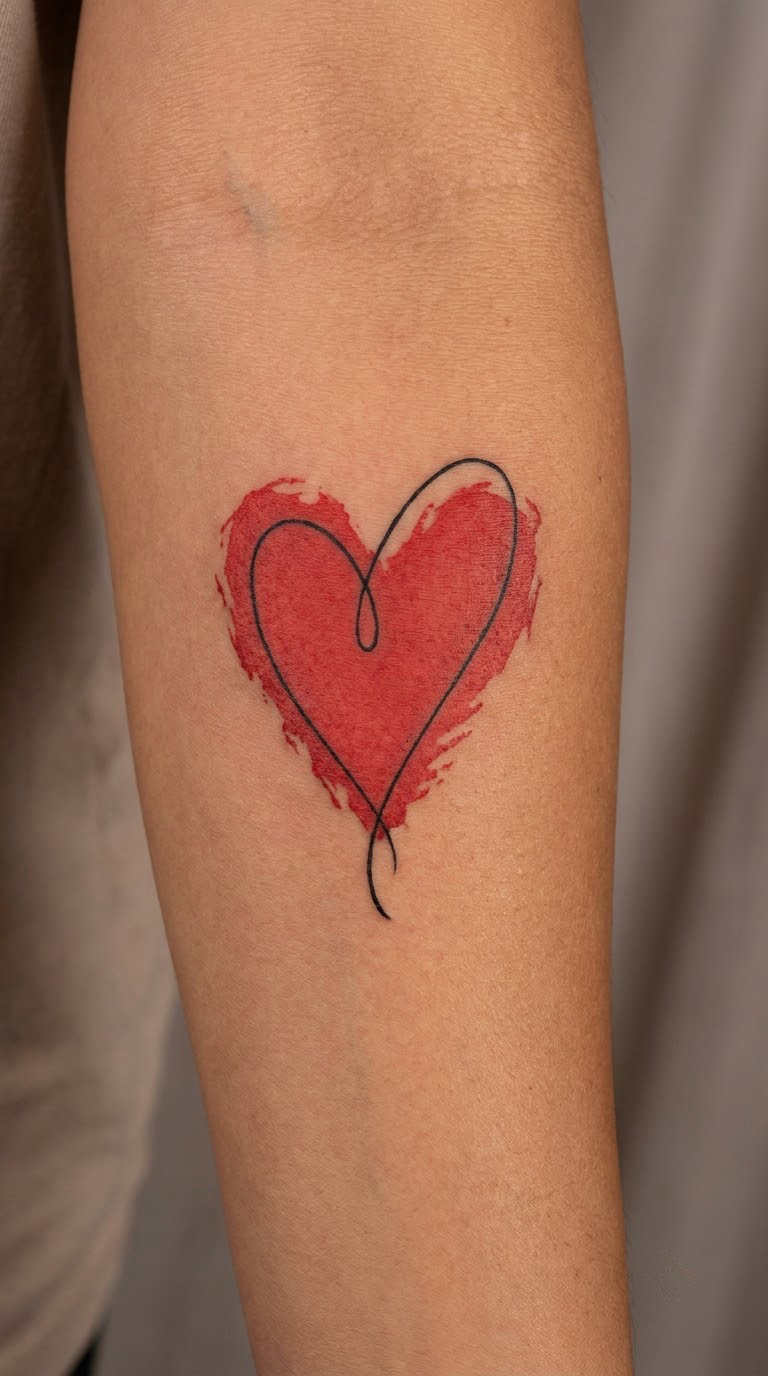
An abstract red heart is deliberately imperfect. The edges can be rough, some pencil-like texture can show through the fill, and a single loose black line might sit offset from the shape rather than tracing it exactly. The point is the look of something drawn by a person rather than exported from a vector file.
Love, family, self-love, or simply the pleasure of wearing a color that has no occasion attached to it. The heart is the most overloaded symbol in tattooing, which is exactly why abstracting it frees it up.
Placement: forearm, upper arm, or chest. Size: 2 to 4 inches (5 to 10 cm). Style: illustrative or neo-traditional. Pain: medium, and longer than the size suggests because solid color needs more passes than linework.
Aging note: bold red holds its shape more predictably than tiny fine-line detail, so this design tends to need fewer touch-ups than its delicate neighbors on the list. Make it yours: use a red pulled from an object that matters to you, or leave one gap in the fill so the skin shows through.
8. Minimal Sun and Waves
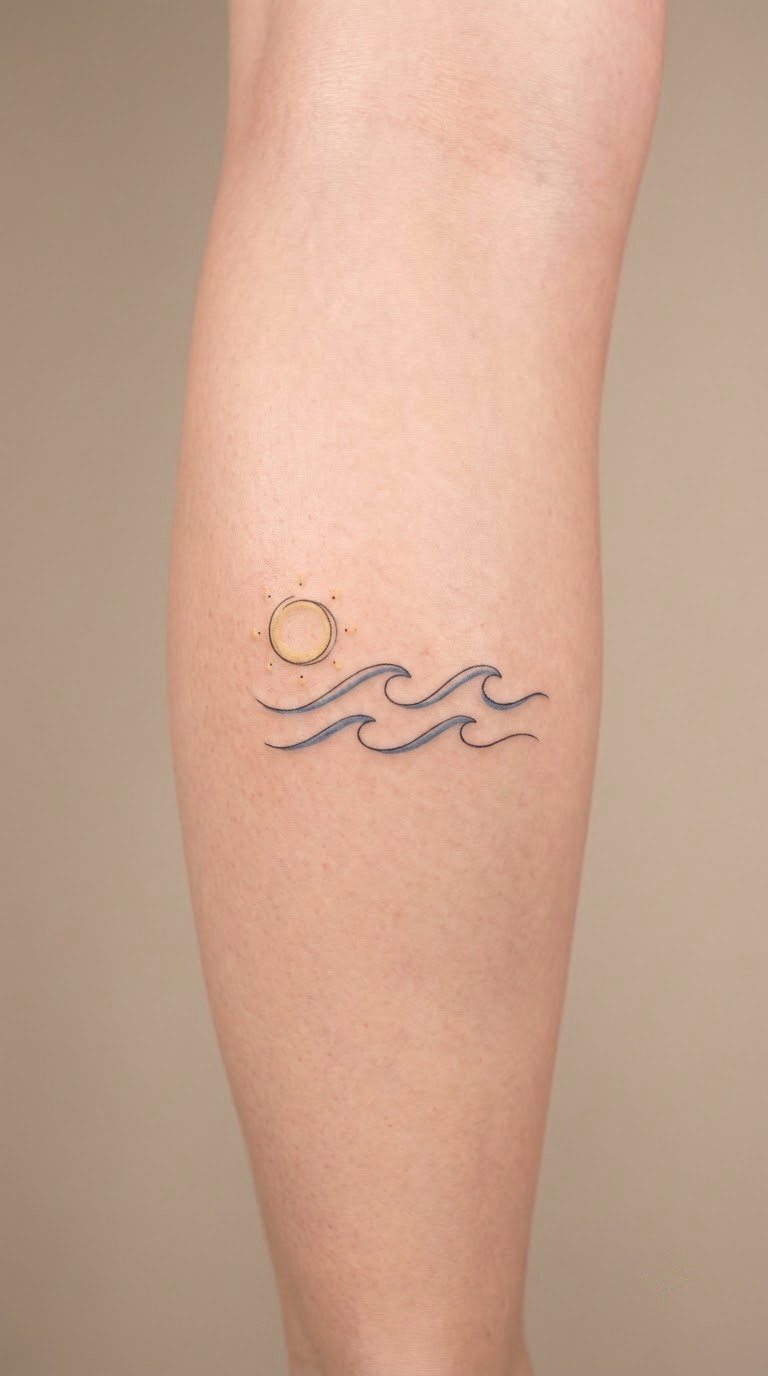
A minimal sun and waves tattoo is a semicircle sun sitting above two flowing wave lines, with balanced negative space between them. Optional pale yellow in the sun and a single blue in the water are enough color. The composition works because the two shapes are simple enough that the eye reads the whole thing instantly.
Optimism, a favorite coast, a holiday that mattered, a job that happened. Sun-and-water designs usually come from a good memory, and that is worth saying out loud at the consultation.
Placement: forearm, calf, or ankle. Size: 2.5 to 5 inches (6 to 13 cm). Style: minimalist or fine line. Pain: medium. The calf is fleshy but the outer calf tightens as you move, and the ankle is bone-close.
Aging note: hairline wave crests are the first casualty, so ask for the crests to sit at a consistent weight rather than tapering to nothing. Make it yours: add the town and month of a favorite coastline in small text below.
9. Dainty Interlocking Line
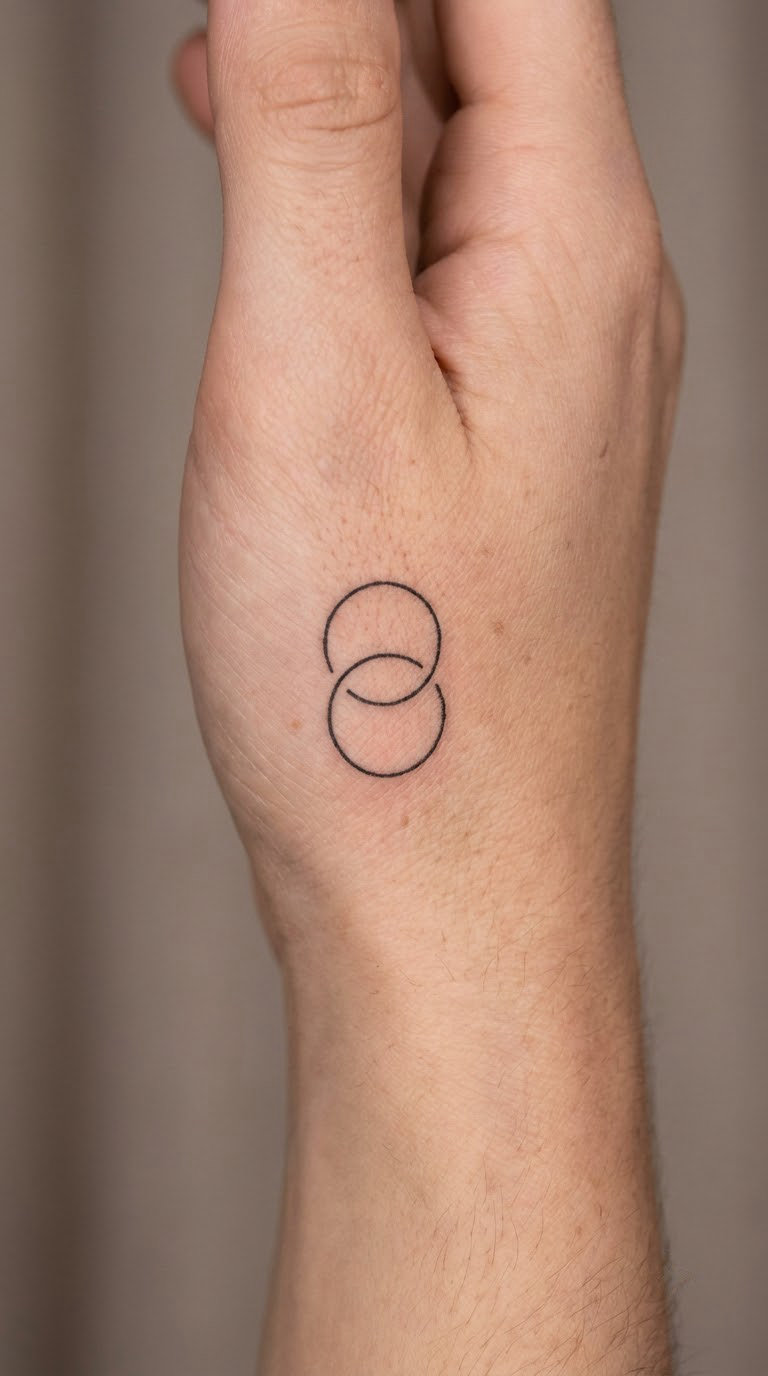
A dainty interlocking line is one continuous black stroke that loops into two connected forms without lifting. The design is about flow rather than a symbol, which is what appeals to people who like the graphic look but not anything with assigned meaning.
Connection, unity, two things that stay linked, or simply an elegant shape. Because it reads as a form rather than a picture, most wearers keep the reason to themselves.
Placement: wrist, finger, or behind the ear. Size: 1.5 to 3 inches (4 to 8 cm). Style: fine line or minimalist. Pain: low to medium.
Aging note: hand and finger linework changes faster than almost anything else you can get, because those areas are washed, flexed and exposed all day. Plan on a touch-up within a year or two if you go there. For a fuller set of options that hold up over time, 18 small hand tattoo ideas for women that age well goes into this in more detail. Make it yours: ask the artist to link the two loops into an initial or a date rather than an abstract shape.
10. Small Floral Branch
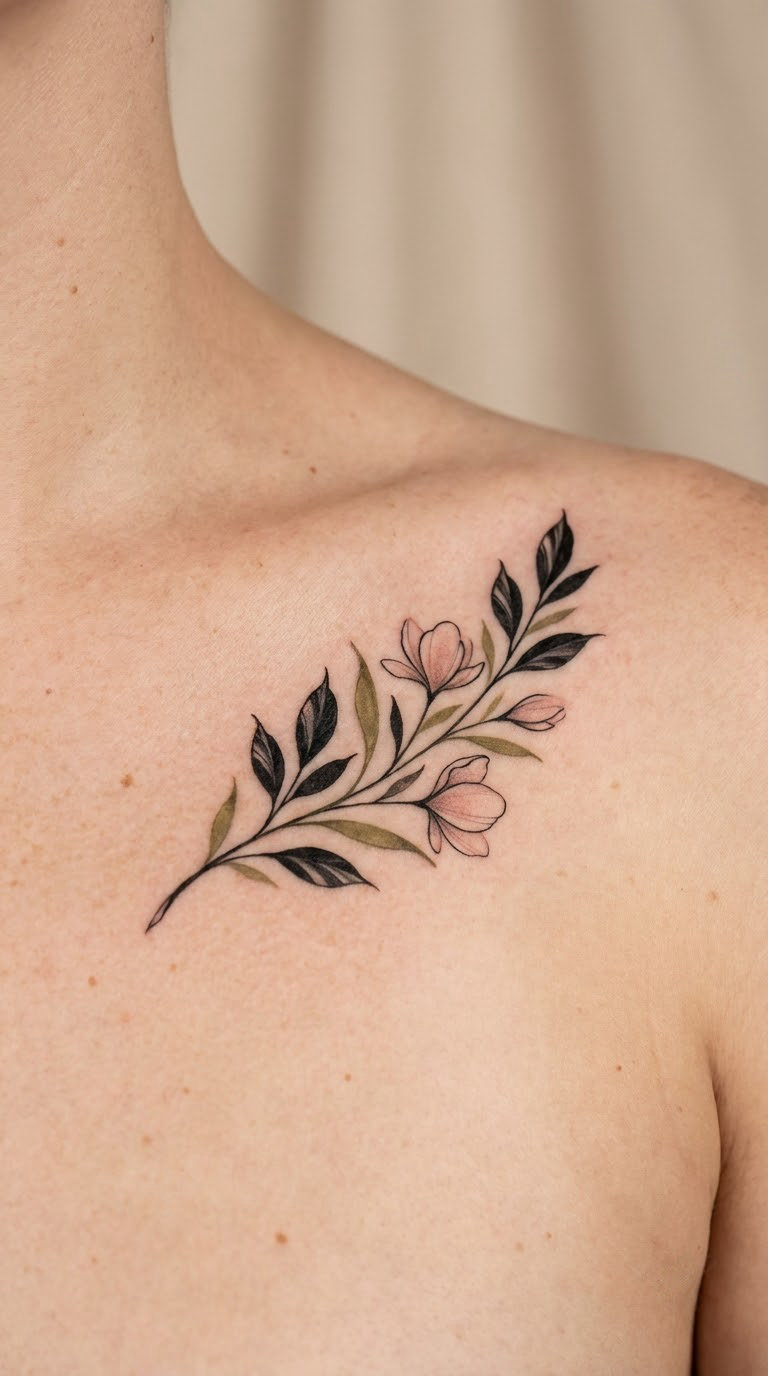
A small flowering branch curves across the skin with a limited palette: black line work for the leaves, muted green for the stems, and soft blush or cream for the petals. Keeping the palette to three or four colors keeps it cohesive and stops a small design from looking busy.
Nature, growth, a grandmother’s garden, a person who is growing into something. Florals are the most requested category I see, and the reason is nearly always a specific person or place rather than an abstract idea.
Placement: collarbone, forearm, or upper arm. Size: 3 to 6 inches (8 to 15 cm). Style: illustrative or neo-traditional. Pain: medium, since the collarbone is one of the more talk-about areas on a first-timer’s list.
Aging note: small petal details lose their edges first, so ask for fewer, larger petals rather than many tiny ones. Make it yours: use your birth flower, or the flower from a place you want to keep.
11. Geometric Arch
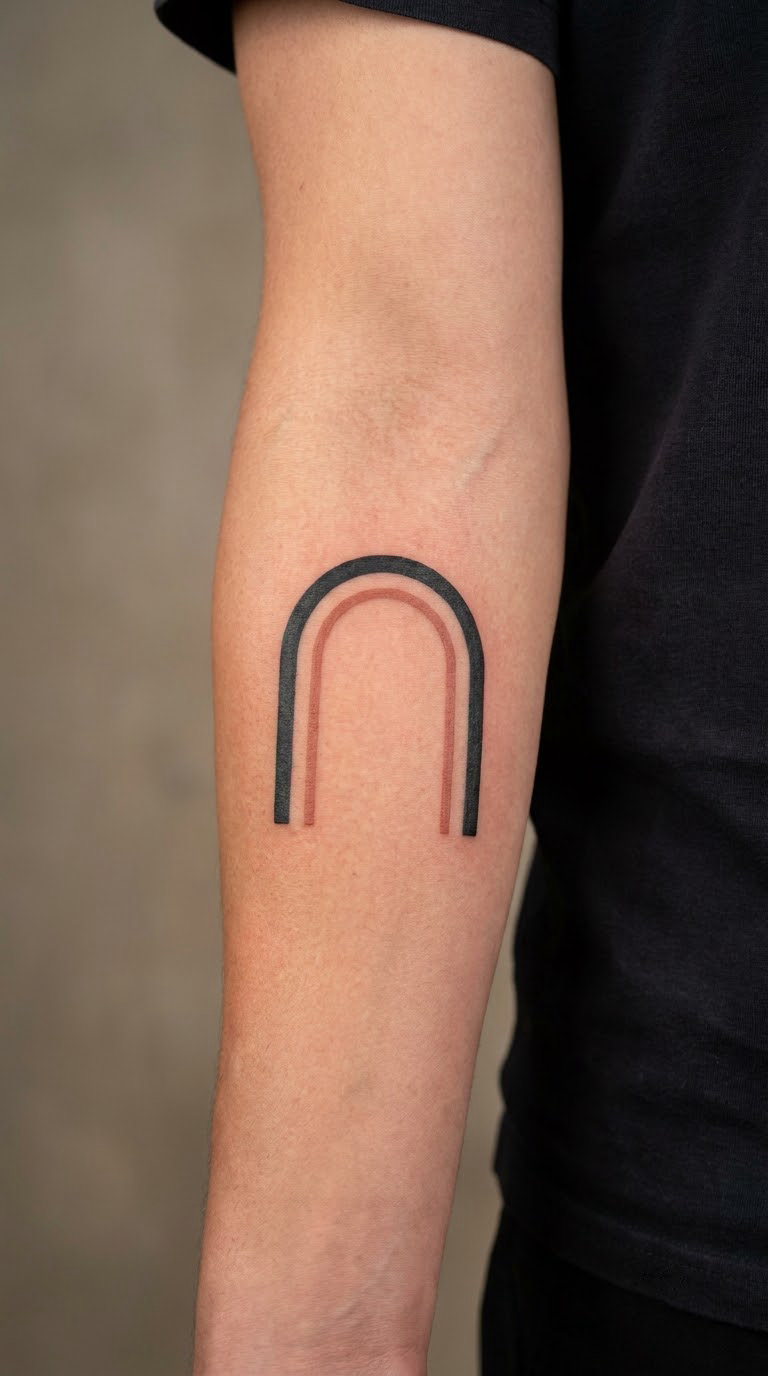
A geometric arch is a clean semicircle built from one or two black lines, sometimes with dotwork inside the curve or a restrained terracotta fill in the inner edge. It borrows from architecture and reads as a shape first, an object second, which keeps it flexible.
Structure, balance, a doorway, a building that matters, or the appeal of the geometry on its own. The design is popular with people who like order in their visuals, and the meaning stays personal.
Placement: forearm, upper arm, or abdomen where appropriate. Size: 2 to 5 inches (5 to 13 cm). Style: geometric or minimalist. Pain: medium.
Aging note: shallow dotwork blurs quickly, so keep dot density low or set the dots deep enough to hold their edge. Make it yours: add a small date beneath the arch, or two short lines of script inside the curve.
12. Tiny Realistic Eye
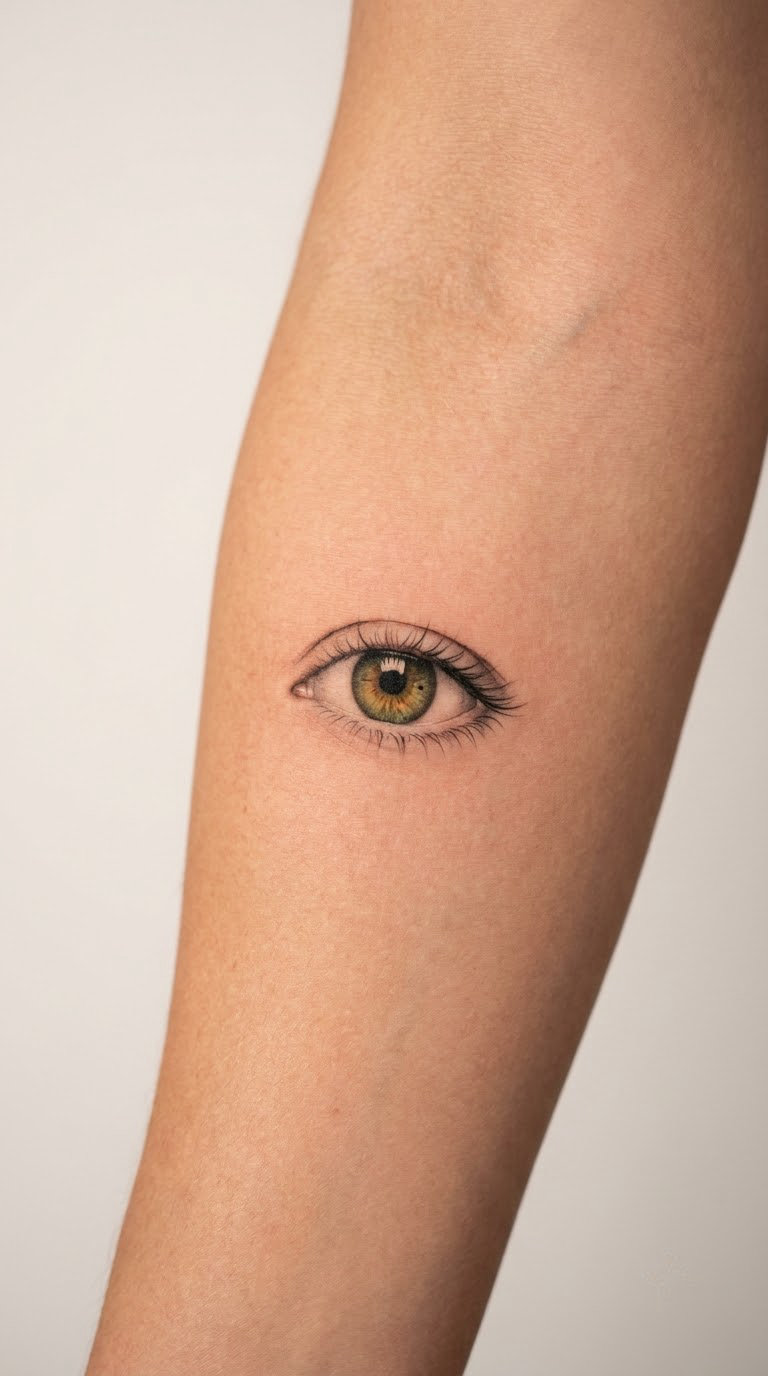
A tiny realistic eye needs a controlled iris, a defined pupil, restrained lashes and just enough black-and-gray shading under the lid to give it depth. That restraint is the whole trick. Eyes drawn with heavy shading at 2 inches look like smudges, while a cleanly lit eye reads as an eye.
Watchfulness, perception, being seen, or a portrait-like tribute to someone. It is a design people react to, so consider whether you want conversation about it before you choose it.
Placement: inner arm, wrist, or behind the ear. Size: 1.5 to 3 inches (4 to 8 cm). Style: micro-realism or fine line. Pain: medium, and slower than the size implies because the shading is built in thin layers.
Aging note: tiny lashes and a small pupil soften noticeably, and an eye that loses its pupil stops reading as an eye, so keep the pupil at a workable size. Make it yours: use the eye color of someone specific, and let the artist tint only the iris.
13. Simple Line-Art Face
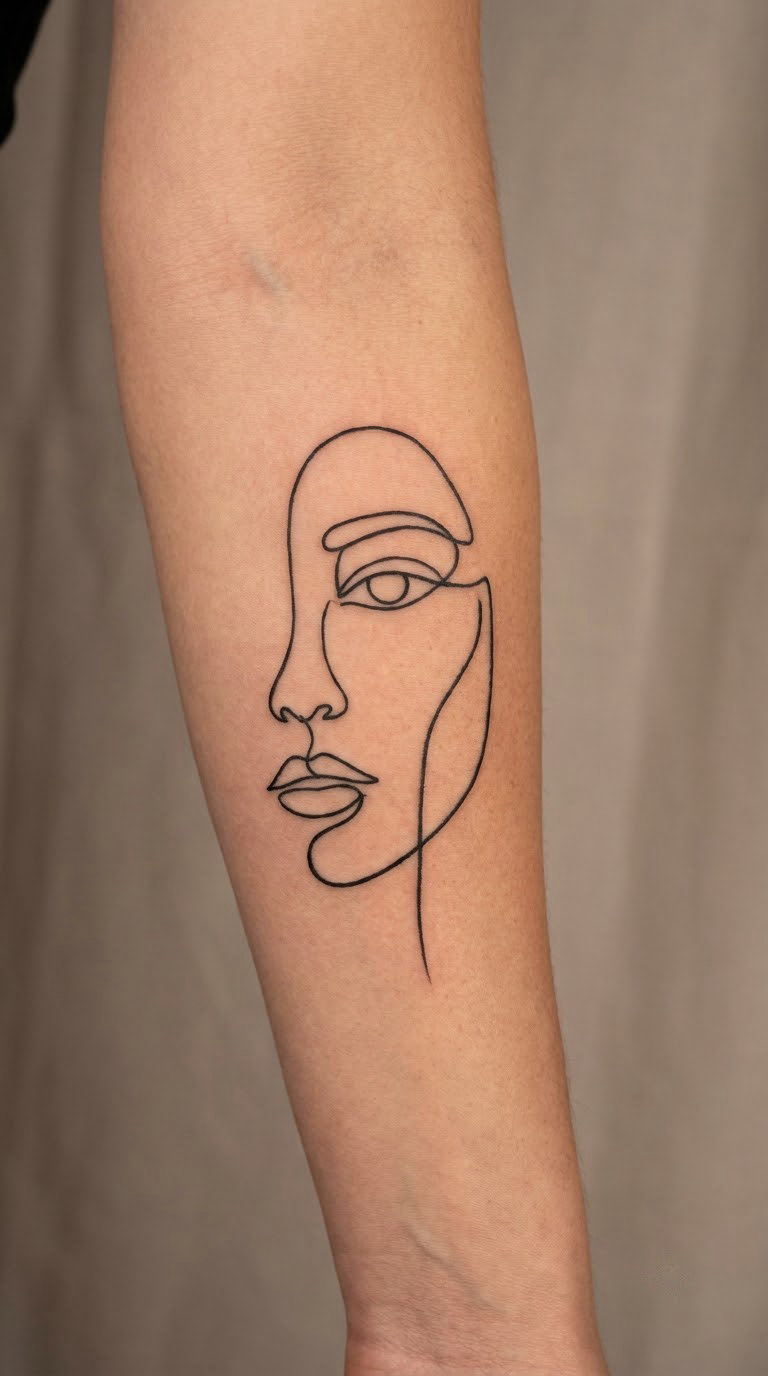
A simple line-art face uses a single continuous line to describe a profile or three-quarter view with only a handful of decisive features: a brow, a nose, a lip, one eye. Generous negative space does the rest. There is no photorealistic shading anywhere in the design.
A loved one, a pet, or a portrait of yourself drawn in a style that stays abstract. The reference matters, so bring several angles and say clearly whether you want a likeness or a mood.
Placement: forearm, calf, or upper arm. Size: 3 to 6 inches (8 to 15 cm). Style: fine line or minimalist. Pain: medium.
Aging note: facial proportions have to be adapted to the curve of the body, otherwise a nose that reads correctly on paper will foreshorten once it wraps around a forearm. Make it yours: use a pet or a family member as the reference and let the artist keep the features loose.
14. Simple Sunflower Outline
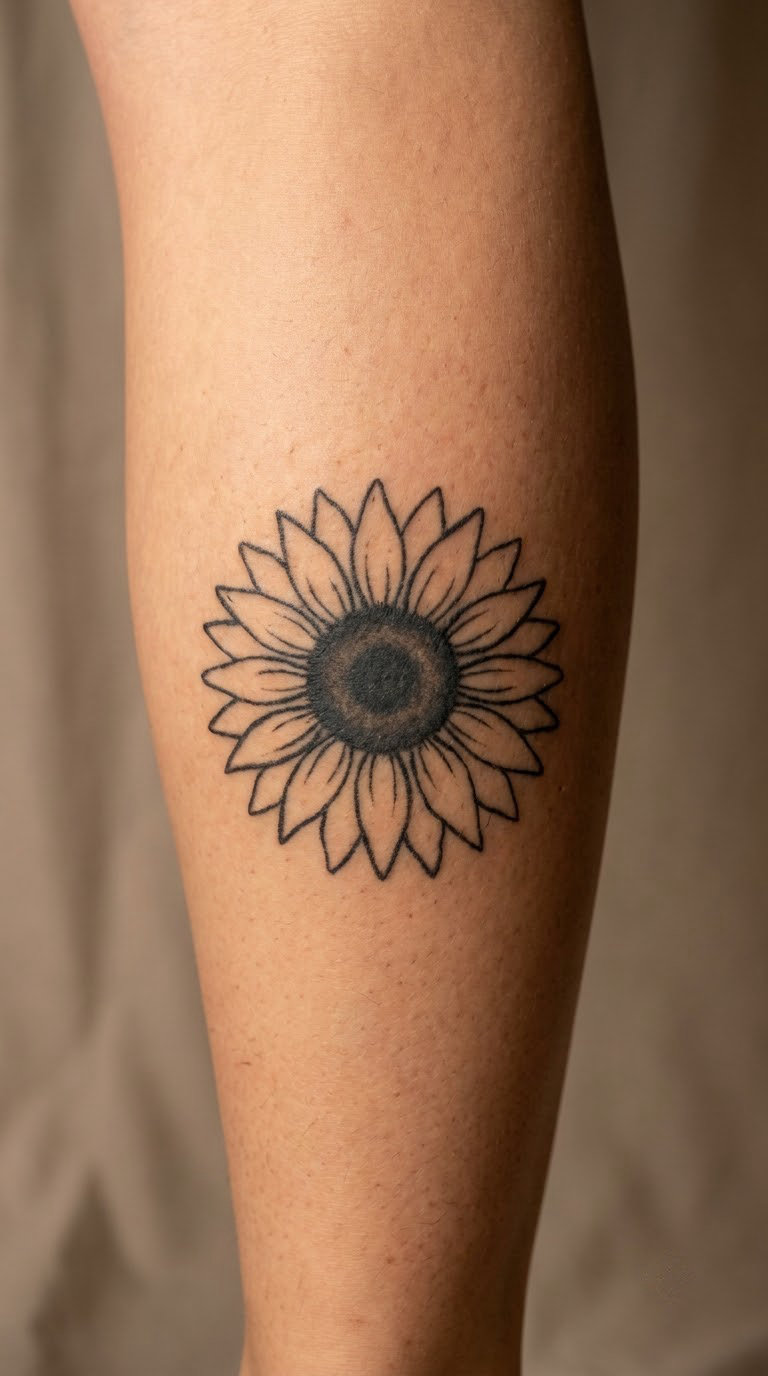
A simple sunflower outline is a ring of clear petal outlines around a dark circular center, with a slightly uneven handmade line. The imperfection is what keeps it from looking clip-arted. A few wearers take one color into the center and leave the petals black, which adds depth cheaply.
Warmth, loyalty, encouragement, or a favorite person. Sunflowers are one of the most requested florals for first tattoos, mostly because the silhouette stays friendly at small sizes.
Placement: forearm, calf, or upper arm. Size: 2 to 4 inches (5 to 10 cm). Style: illustrative or neo-traditional. Pain: low to medium.
Aging note: the seed texture in the center is the first detail to blur, so ask for a solid or lightly stippled center rather than individual drawn seeds. Make it yours: add a short word or a date along the stem.
15. Blackwork Leaf Pair
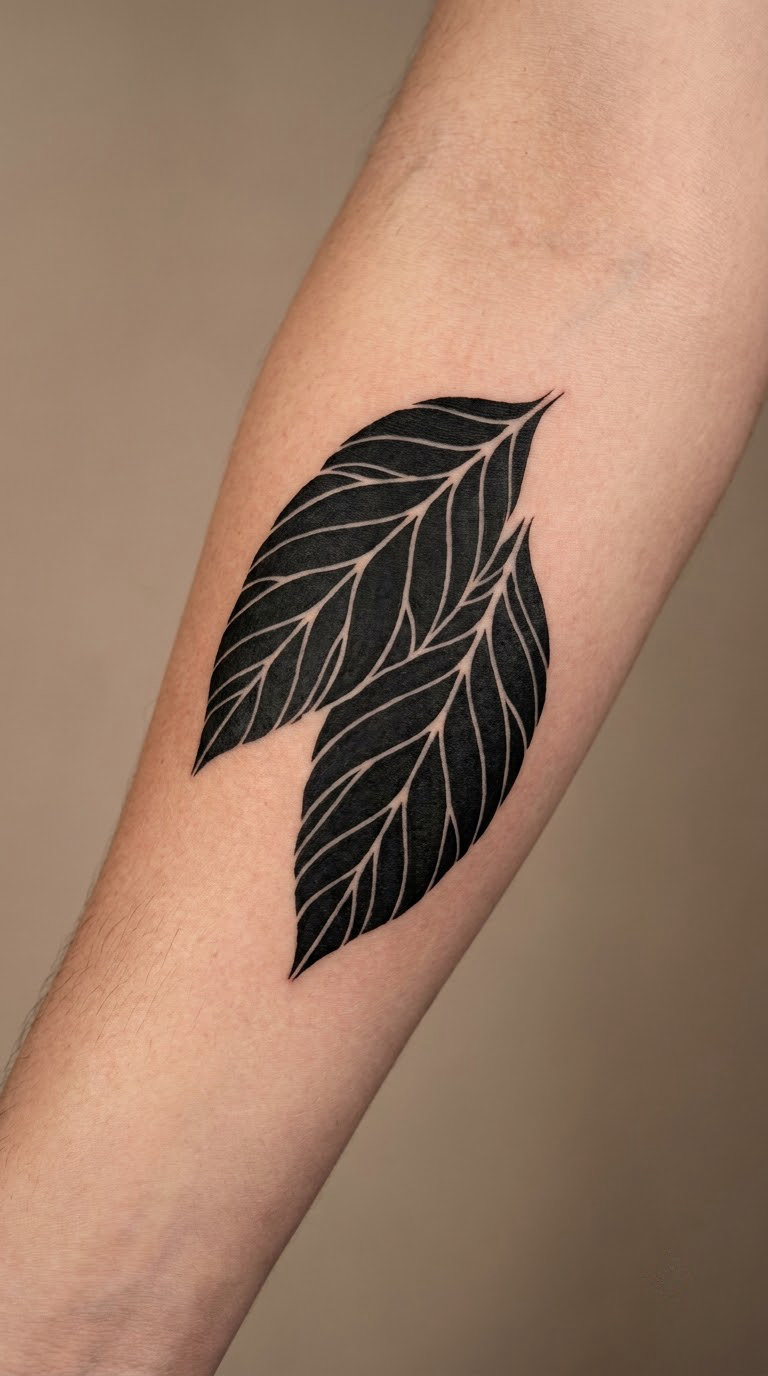
Two solid black leaves, mirrored, with the veins cut out as negative white lines through the fill. Blackwork is forgiving in one specific way: a solid shape has no internal detail to lose, so the design stays legible even as the edges soften. That makes it a smart first choice for anyone nervous about fine detail.
Nature, renewal, simplicity, or a bold silhouette that reads from across a room. It also works as the first piece in a build-out, since a second leaf can be added later in a matching style.
Placement: forearm, calf, or upper arm. Size: 3 to 6 inches (8 to 15 cm). Style: blackwork. Pain: medium, mostly the sustained pass over a solid area.
Aging note: solid fills stay bold while the outer edge rounds off a little over the years, which is a slow change rather than a blur. Make it yours: plan for a matching second leaf placed lower on the same limb, inked six months apart.
16. Minimal Musical Note
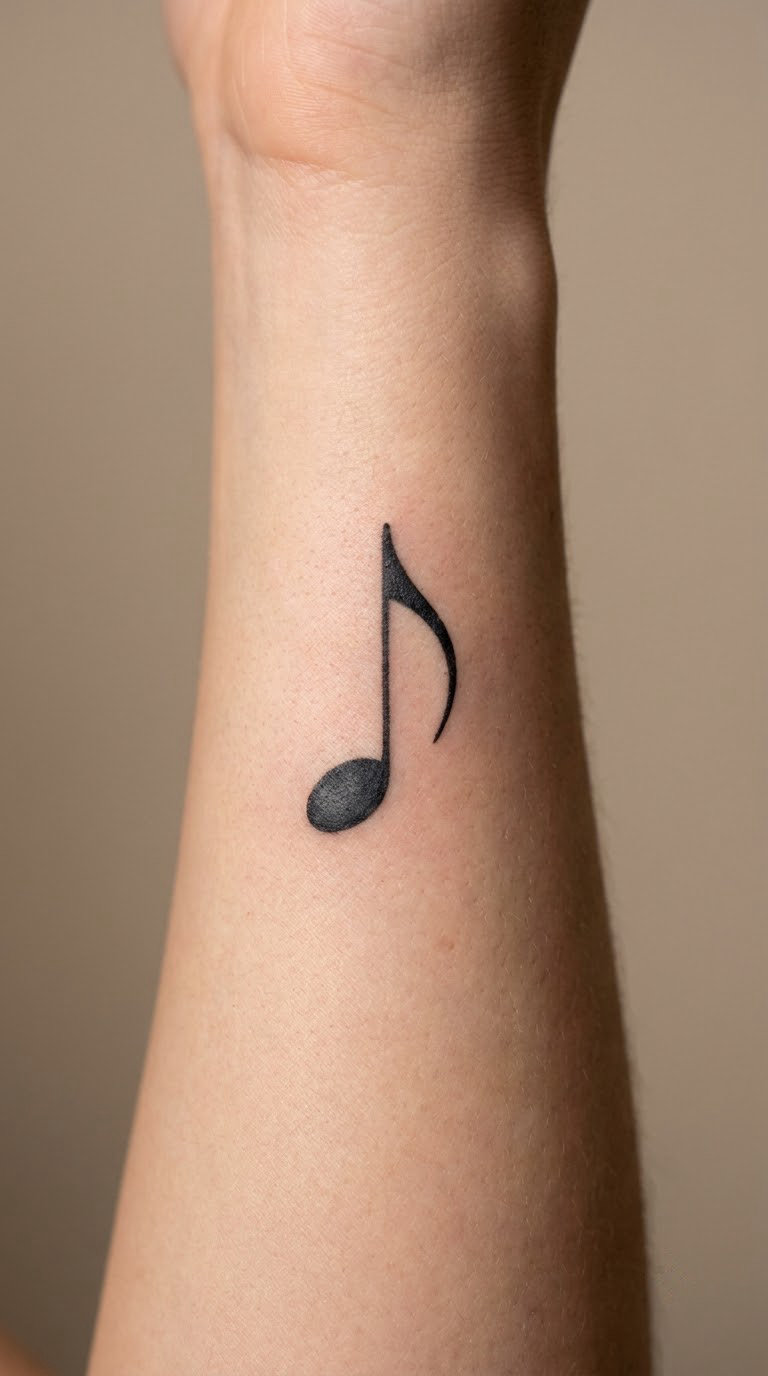
A minimal musical note is one note head and one stem with a flag, drawn with graceful curves and enough spacing that it never looks like a stray mark on the skin. Treble clef versions are more recognizable but also busier, so a single note is usually the cleaner first design.
A song, an instrument, a performance, a person. Music tattoos tend to be the most personal on the list, because almost nobody else in the room knows the reference.
Placement: wrist, behind the ear, or forearm. Size: 1.5 to 3 inches (4 to 8 cm). Style: fine line or minimalist. Pain: low to medium, and brief.
Aging note: narrow curves in the flag can blur, so ask for the curve to be a touch wider than looks right in the drawing. Make it yours: incorporate initials, or ask for a short staff line of five notes from a song that matters.
17. Small House Outline
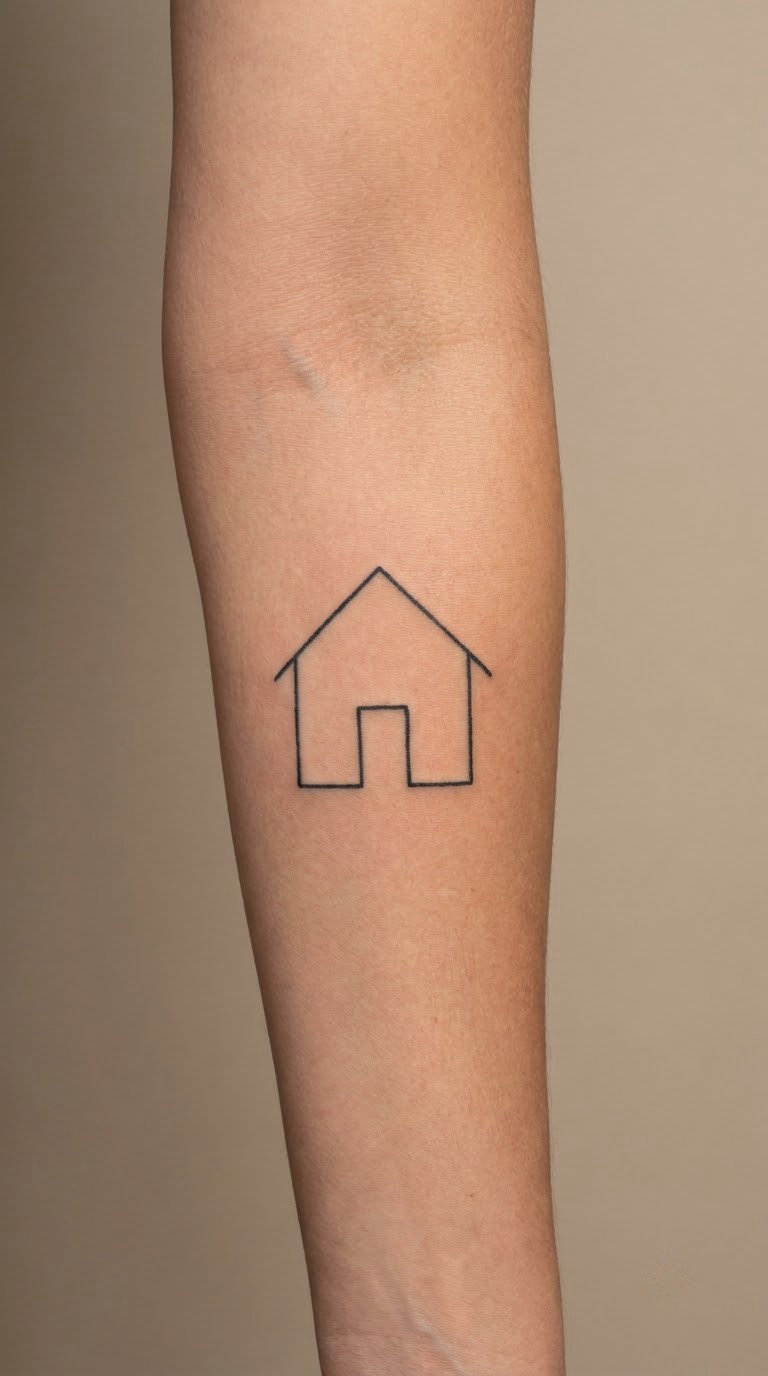
A small house outline is a pitched roof, two walls, one doorway and usually a single window, drawn in black line with no interior detail at all. The simplicity is the point. It is a shape most people can draw themselves, and the artist only has to make the proportions sit well on the body.
Home, family, a new chapter, a particular building, or a place that no longer exists. It is one of the few symbols that reads as warm rather than heavy.
Placement: forearm, chest, shoulder, or rib. Size: 2 to 4 inches (5 to 10 cm). Style: fine line or minimalist. Pain: low on the forearm, more on the rib and chest.
Aging note: very small windows and doors blur into the wall lines, so keep openings at least as wide as the line weight is thick. Make it yours: put the family street name in small text underneath, or add one tiny window per person in the house.
18. Pastel Petal Trio
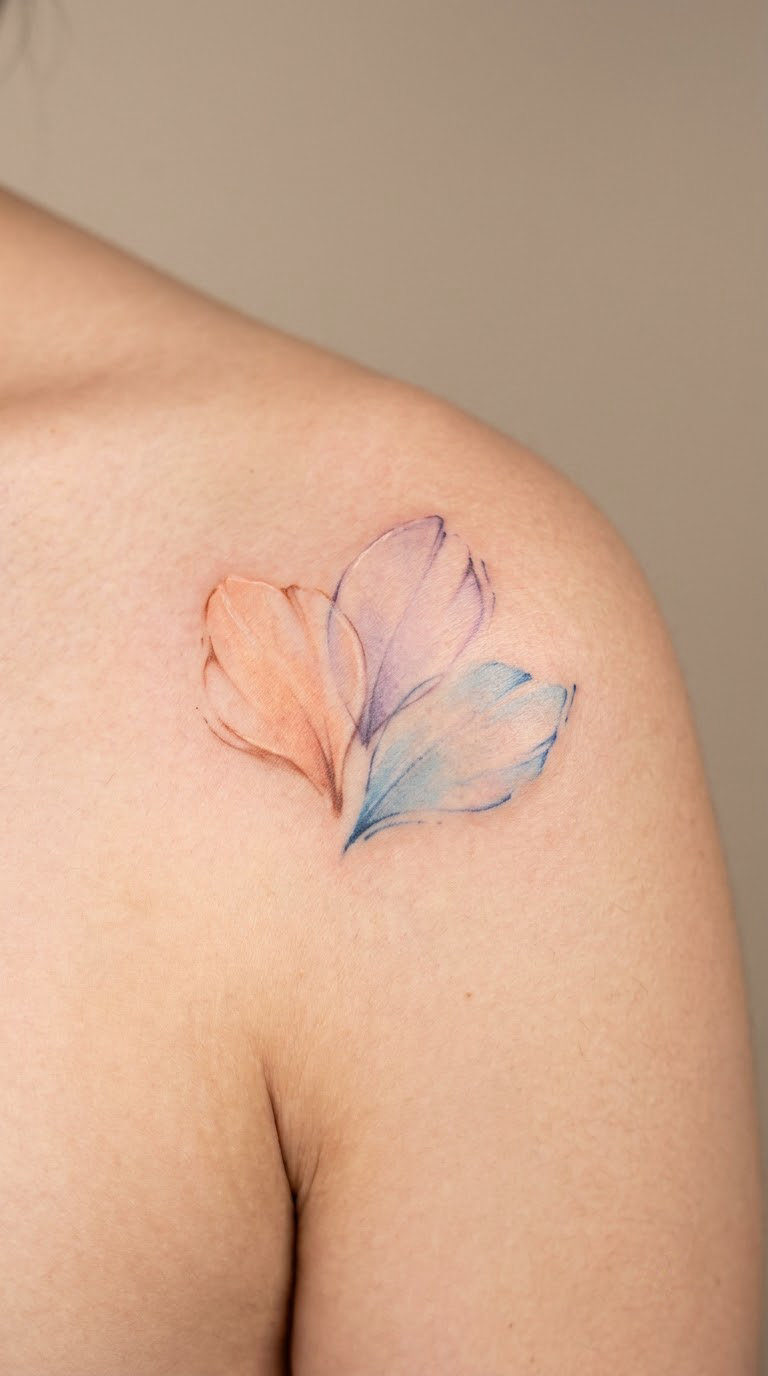
A pastel petal trio is three loosely painted petals in peach, lavender and pale blue with translucent edges and a small central stem. The washes overlap slightly so the colors mix where they meet, which is what makes it read as watercolor rather than three flat shapes.
Softness, friendship, family, or a palette someone simply likes. The design is chosen for how it looks far more often than for what it stands for.
Placement: shoulder, rib, or ankle. Size: 2 to 4 inches (5 to 10 cm). Style: watercolor. Pain: medium, since layered color takes more passes than linework.
Aging note: pale pigments settle and look softer and slightly lighter than the day they were done, so ask for slightly deeper saturation than you think you want. Make it yours: match the three colors to a favorite bouquet, a room, or a season.
19. Simple Infinity Symbol
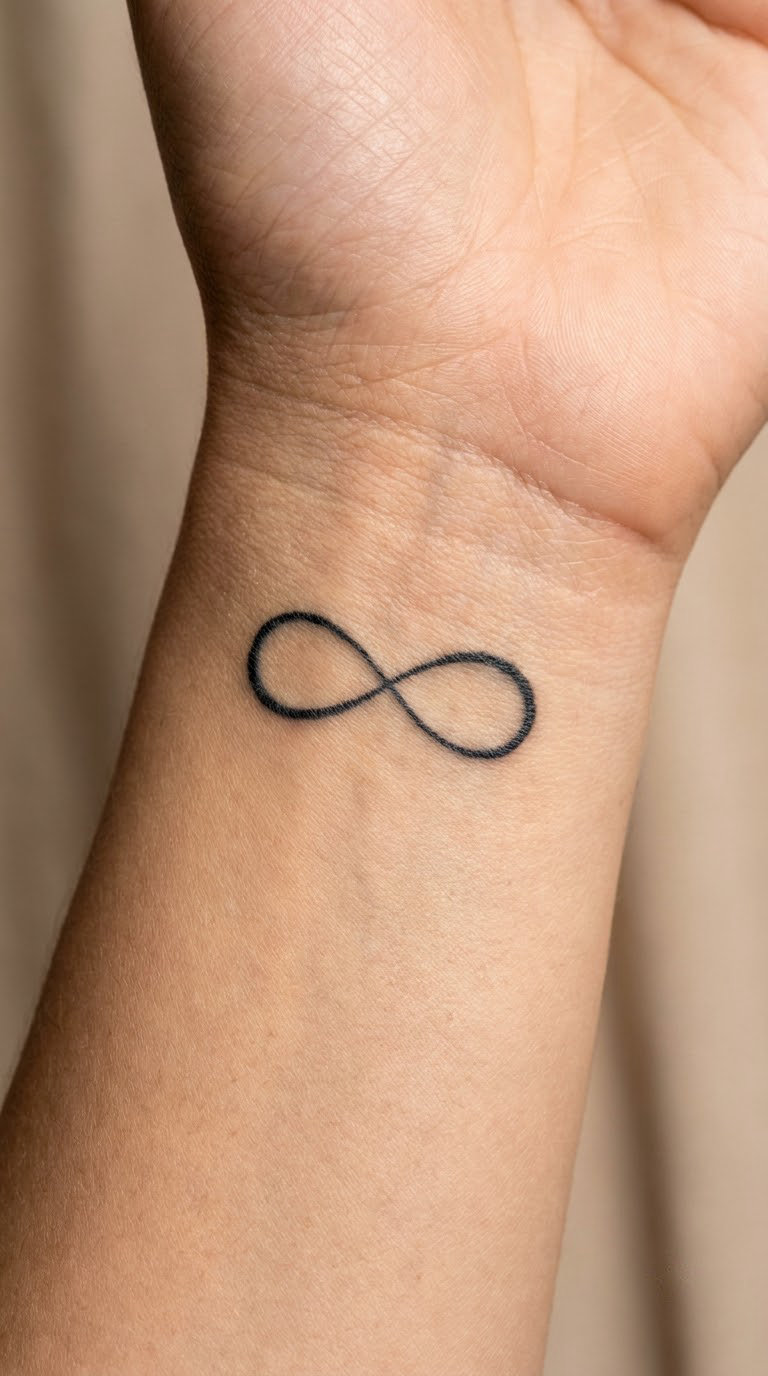
A clean infinity symbol is one continuous figure-eight with smooth curves and no extra decoration, unless you ask for it. The chain-like versions with little circles or hearts are popular too, but the plain form is the one that still looks current in a decade.
Lasting love, family, balance, resilience, continuity. The interpretation is entirely personal, and most wearers are not trying to send a specific message.
Placement: wrist, forearm, collarbone, or behind the ear. Size: 1.5 to 3 inches (4 to 8 cm). Style: fine line or minimalist. Pain: low.
Aging note: the narrow crossing point in the center is where the shape changes as skin and ink age, and finger placements distort fastest of all. Make it yours: add a small date or initial inside one of the two loops.
20. Fine-Line Rosebud
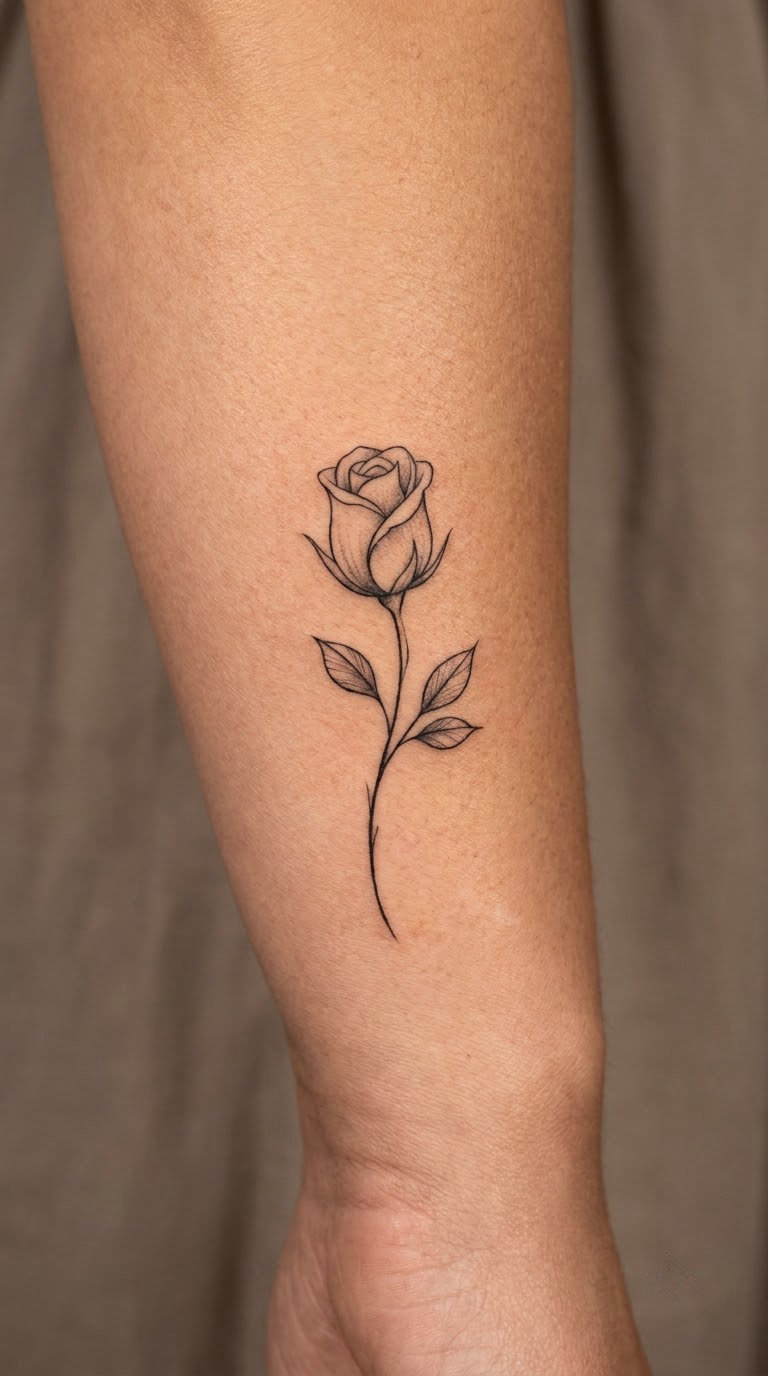
A fine-line rosebud is a partially opened bud with a few selective petal lines, a curved stem and two small leaves, deliberately avoiding dense shading. The bud form is easier to keep clean than a full open rose, which is why it suits a first piece so well.
Love, new beginnings, a person, or simply an appreciation of flowers. The bud carries as much of that as a full bloom without the work.
Placement: forearm, rib, or collarbone. Size: 2 to 4 inches (5 to 10 cm). Style: fine line or neo-traditional. Pain: low to medium.
Aging note: fine petal lines need more regular touch-ups than bold shapes, so expect a free refinement within the first year or so. Make it yours: tint it with the color of your birth month, or add a single thorn on the stem.
21. Minimal Bird in Flight
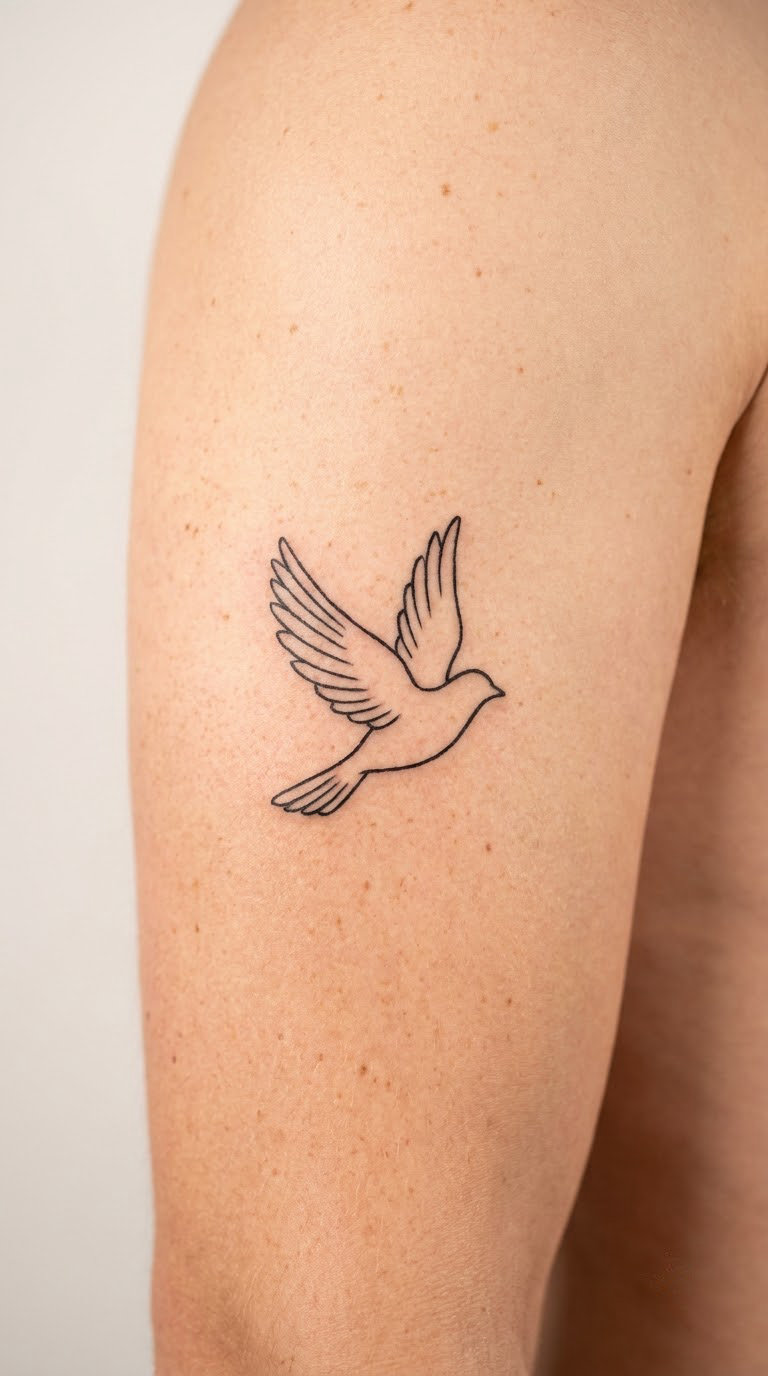
A minimal bird in flight is a simplified silhouette with two clean wings and a short understated body, drawn without detail so it stays abstract. Keep it away from any recognizable character or team mark, both for originality and because those designs date badly.
Freedom, travel, direction, or a personal story about leaving or arriving. Leaving the meaning open is what keeps the design from feeling like a slogan.
Placement: wrist, forearm, rib, or behind the ear. Size: 2 to 4 inches (5 to 10 cm). Style: minimalist or blackwork. Pain: low to medium.
Aging note: tiny wing tips are the first part to fade into the background, so give the wings a defined point rather than a taper to nothing. Make it yours: add a small location marker or a flight-path line beneath it.
22. Soft-Color Rainbow
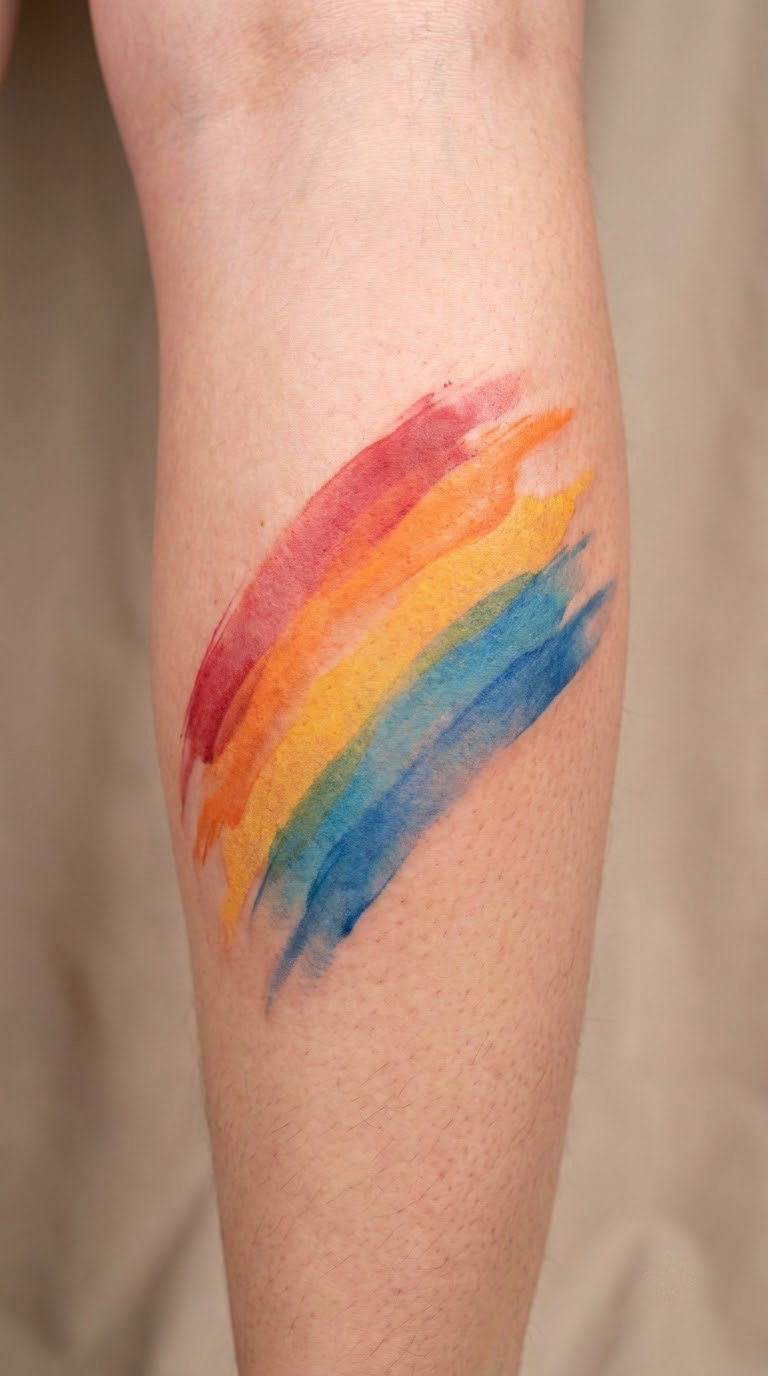
A soft-color rainbow is made from three or four broad bands rather than many ultra-thin stripes, with slightly translucent pigment so the colors sit next to each other instead of stacking opaquely. Four bands read as a rainbow; ten hairlines turn into a smudge within a few years.
Hope, identity, family support, or simply cheerful color. The meaning depends entirely on the person wearing it.
Placement: forearm, calf, or collarbone. Size: 2 to 4 inches (5 to 10 cm). Style: watercolor or illustrative. Pain: medium.
Aging note: many small color bands merge or fade unevenly, so fewer and broader is the durable choice here. Make it yours: use a meaningful color order, such as a family member’s birth flowers, or add the year the rainbow was completed.
23. Dainty Word in Signature Script
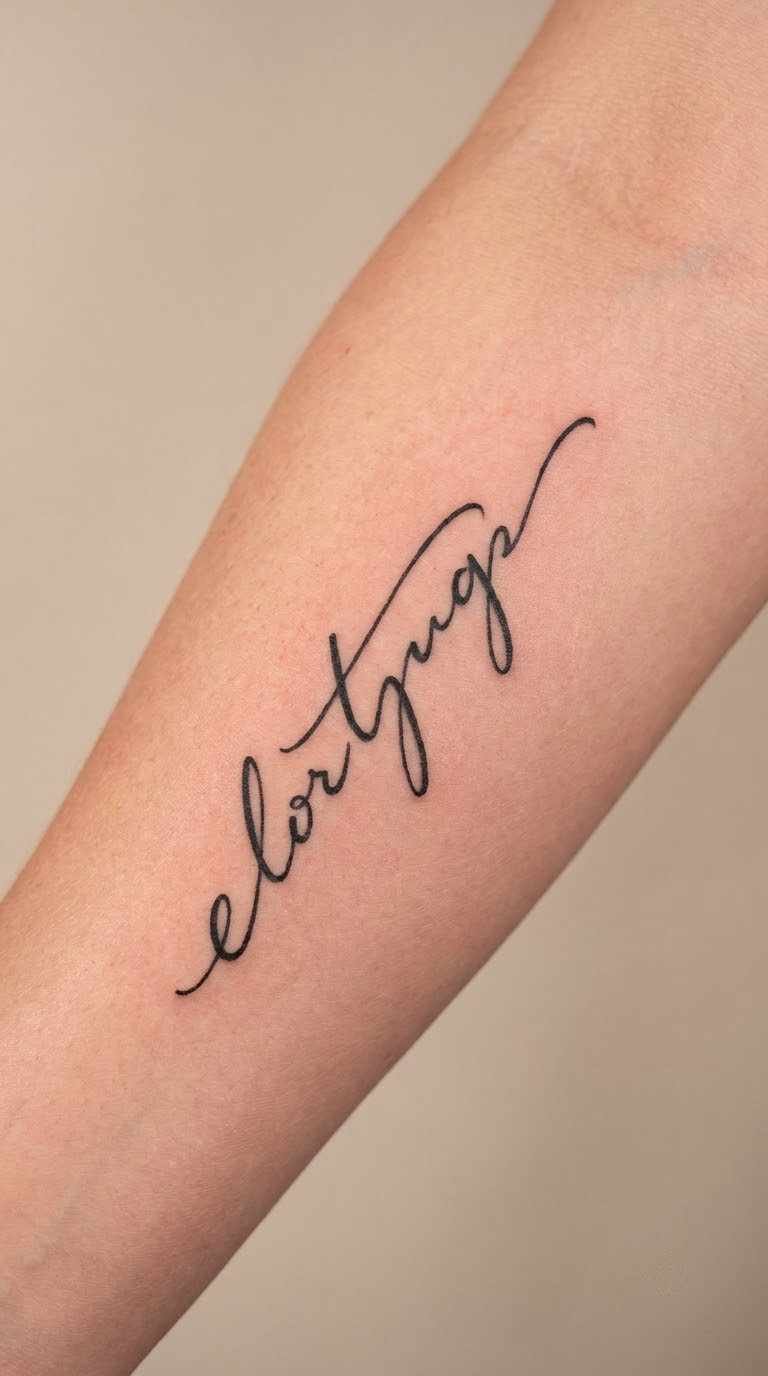
A dainty word in signature script is one short word in readable flowing script with deliberate letter spacing and a signature-like final letter, drawn on a single weight line. Readability is the whole design: if a stranger cannot tell what it says from across a room, the artist needs to redraw it larger.
A name, a reminder, a gratitude note, a private mantra. Words get chosen more than almost anything else in this article, and they are also the hardest to age well.
Placement: forearm, wrist, or collarbone. Size: 2 to 4 inches (5 to 10 cm). Style: fine line or script. Pain: low to medium.
Aging note: cursive loops, thin downstrokes and hand placement all need careful planning, because those strokes blur first and a script word becomes a squiggle. Make it yours: use your own handwriting as the reference so the letterforms genuinely belong to you.
24. Blackwork Crescent and Sparkle
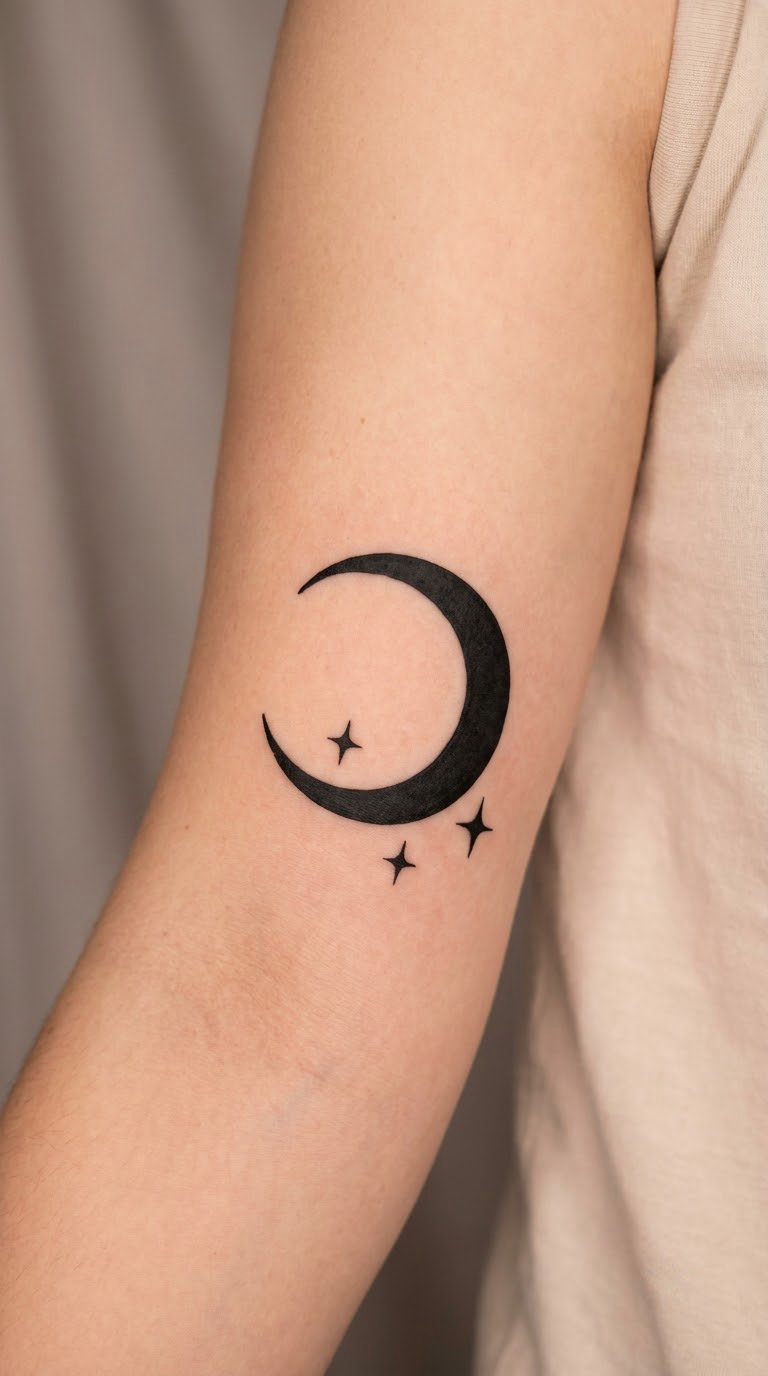
A blackwork crescent is a bolder relative of the fine-line moon: a clean solid-black body, a few small sparkle marks, and enough negative space around it to keep the weight from taking over. It reads as one strong shape, which is what makes it forgiving of imperfect symmetry.
Night, intuition, cycles, or a personal relationship with the moon. None of those is a fixed reading, and plenty of wearers picked it because it looked good in black.
Placement: upper arm, calf, rib, or shoulder. Size: 3 to 6 inches (8 to 15 cm). Style: blackwork or illustrative. Pain: medium, and longer than a line piece because of the solid fill.
Aging note: the tiny sparkle marks become less defined over time even though the crescent stays strong, so keep the sparkles slightly larger than they look in the drawing. Make it yours: add a date, or place a second small moon to echo the first one later.
How to Choose the Right Design
- Start with the style, not the picture. If you have no tattoo yet, choosing a style you can live with across a whole family of designs gives you somewhere to go next. Browse 18 best fine line tattoo ideas for women and the botanical collections before you settle on a single image.
- Check the scale on a real body. Ask to see healed examples at roughly the same size on a similar area. A design that reads well in a photo often loses its interior detail at actual size, and going too small is the most common beginner regret.
- Favor readable silhouettes. Shapes with a clear outline, a solid fill or a recognizable profile hold up longest. Interior shading, tiny petals and hairline curves are the first things to soften.
- Match the design to how the body moves. An arm that bends, a rib that rises and falls, a wrist that turns all change how linework looks. Ask the artist how the design will sit in motion, not just at rest.
- Pick something you can explain. The designs that age best are the ones with a reason behind them. If your answer is only that a photo was pretty, keep looking a while longer.
Skin and age change the calculation too. If you are in your forties or fifties, slightly bolder line weight and a somewhat larger design age more gracefully than delicate work. There is more guidance in 15 tattoo ideas for women over 50 that age well.
Cost and Session Time
Tattoo pricing in the US is usually quoted per hour, with many shops setting a minimum charge that covers the setup time on small pieces. So a design that takes twenty minutes can still cost the same as one that takes forty. These are typical bands, not quotes.
- Small and simple, under 2 inches and mostly line work: roughly 100 to 250 USD, or one short session of about 30 to 60 minutes.
- Medium, 2 to 4 inches with some detail or two or three colors: roughly 250 to 600 USD, usually 60 to 150 minutes.
- Larger, 4 to 7 inches, or watercolor and illustrative pieces: roughly 500 to 1,500 USD or more, commonly split across two to three hours in one sitting.
Hourly rates vary widely by city and by artist, and travel, shop minimums and deposit policies all change the total. The single most useful thing you can do is ask for a written estimate before the session, including what happens if the design needs a second sitting, and what the deposit covers.
Aftercare Basics
- Follow your artist’s aftercare instructions first. They took into account the design, the placement and how your skin responded, and they take priority over anything generic, including this list.
- Wash the area gently with unscented soap and clean water, then pat it dry rather than rubbing it with a towel.
- Keep the area protected. Loose clothing over a fresh tattoo rubs more than you expect, and a wrap left on too long is not protection either.
- Avoid swimming, soaking and prolonged sun exposure while the tattoo is in its early healing stage.
- Contact your artist, or a qualified clinician, if you have spreading redness, increasing pain, heat, swelling that is getting worse, or any discharge. Do not wait it out and do not treat it yourself.
Frequently Asked Questions
What should I get for my first tattoo?
Choose a design you can explain, small enough to heal cleanly and placed somewhere you can cover at work. A fine-line botanical sprig, a single-line crescent or a tiny birth flower all read well at 2 to 4 inches. Bring reference images from more than one angle to the consultation, and let the artist adjust the drawing to your placement rather than copying a screen.
Where is the least painful place for a first tattoo?
The outer forearm, upper arm, shoulder and calf are the easiest first placements because there is soft tissue between the skin and the bone. The inner arm, elbow, collarbone and ribs are the ones first-timers worry about most, since those areas are thinner and closer to nerve-dense bone. If pain is your main concern, ask your artist about the outer upper arm.
How small should a first tattoo be?
Small enough to heal without much stress, but not so small that the interior detail disappears. Most beginner designs land between 2 and 4 inches. The most common regret is going too small, because petals, lashes and thin wave crests blur together once the ink settles. Ask to see healed work at the same size before you commit.
How much does a first tattoo cost in the US?
Most small line-work tattoos fall between 100 and 250 USD, medium detailed designs between 250 and 600 USD, and larger illustrative or watercolor pieces from 500 to 1,500 USD or more. Shop minimums, hourly rates, travel and deposit policies all change the total, so request a written estimate before the session.
What should I save for later instead of getting first?
Chest, neck, face, and large back or rib pieces are the ones most people would save. Large solid-color work, partner or family names, and anything copied from a trend are also worth waiting on. Beginners usually do best with a small design in a simple style, and a large colorful piece is far harder to hide or revise later.
Choosing Your First Tattoo with Confidence
If you want one recommendation, a fine-line botanical sprig or a minimalist house outline is the most approachable place to start. Both are simple shapes with clear outlines, both sit comfortably on an inner forearm or upper arm, and neither depends on a trend staying current. If you already have a piece or two and want something that adds to a collection rather than starting one, a small birth flower is the better fit, since it reads as a considered addition next to almost anything.
Save two or three favorites from this list, then look at each one at the size you would actually get it and on the body part you would actually use. Bring the shortlist to a consultation and ask the artist to adapt the best concept to your skin tone, your placement and the way your body moves. If you have not started yet, these first tattoo ideas for women are a solid place to narrow the field, and no decision needs to be made today.