
20 Line Art Tattoo Ideas for Women: Simple Picks (September 2026)
Line art tattoo ideas for women come down to one clean line and the space you leave around it. A single-needle outline, no fill, no heavy shading, just enough room for the drawing to breathe. These read as delicate rather than loud, which is exactly why so many women pick one as a first tattoo.
What makes a line design hold up on skin is spacing. Thin lines that sit a comfortable distance apart survive years of movement and sun; lines packed shoulder to shoulder tend to blur into each other while healing. Every idea below comes with a realistic size, a placement that suits its shape, and an honest note on how it ages.
Planning ahead for autumn or a spring booking? Fine line tattoos need a couple of weeks of careful aftercare before they settle, so give yourself four to six weeks before an event where the ink will be on show. Updated for September 2026.
Line Art Tattoo Ideas for Women: Quick Guide
Here is everything below in one table, in the same order as the detailed sections. Scan the placement and pain columns first; they narrow twenty options down to two or three realistic ones fast.
Line Art Tattoo Ideas for Women by Size and Placement
| Idea | Style | Best placement | Size | Pain |
|---|---|---|---|---|
| Botanical hand tattoo | Fine line botanical | Inner wrist or back of hand | 2-3 in | Low to medium |
| Abstract female face | Fine-line micro-realism | Outer forearm | 2.5-4 in | Medium |
| Continuous-line dance pose | Continuous fine line | Shoulder blade | 3-5 in | Medium |
| Fine-line mountain range | Fine-line landscape | Collarbone | 2-4 in | Medium |
| Minimalist rose | Minimalist fine line | Inner arm | 1.5-3 in | Low to medium |
| Geometric sun | Minimalist geometric | Ankle or forearm | 2-3 in | Low to medium |
| Sideways elephant | Micro-line illustration | Outer calf | 2.5-4 in | Medium |
| Crescent moon and wildflower | Fine line with botanical | Outer arm | 2-3.5 in | Low to medium |
| Single-line butterfly | Fine-line symmetry | Shoulder | 1.5-3 in | Medium |
| Rose and stem brace | Fine-line floral | Inner wrist | 2.5-4 in | Medium |
| Handwritten word | Fine-line calligraphy | Forearm | 2-4 in | Medium |
| Bird in flight | Minimalist fine line | Collarbone | 1.5-3 in | Low to medium |
| Lavender stem | Fine-line botanical | Calf or ankle | 1.5-3 in | Low to medium |
| Abstract face, open contours | Abstract fine line | Rib or hip | 3-5 in | High |
| Wave with a rising dot | Minimalist fine line | Ankle or wrist | 2-4 in | Medium |
| Coffee cup still life | Fine-line illustrative | Forearm | 2-3 in | Medium |
| Paw print with heart | Minimalist fine line | Ankle | 1.5-2.5 in | Low to medium |
| Landscape in a circle | Fine line with geometry | Outer calf | 2.5-4 in | Medium |
| Laurel branch | Fine-line botanical | Forearm | 2.5-5 in | Medium |
| Vase with single flower | Fine-line illustrative | Thigh or hip | 3-5 in | High |
1. Fine-Line Botanical Hand Tattoo
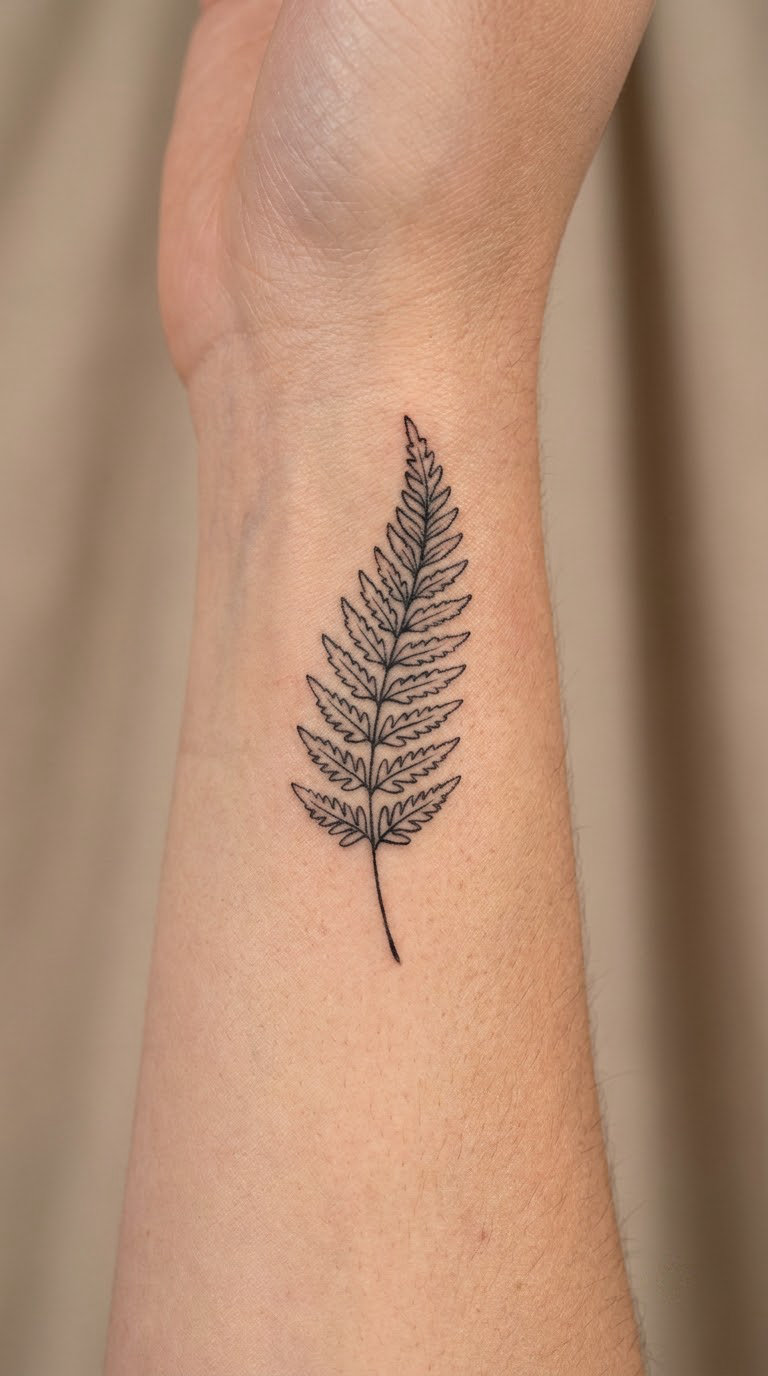
One stem, two or three leaves, drawn with delicate contour lines and no fill at all. The whole thing reads like a pencil sketch that stayed on skin, which is exactly the effect women chasing uncluttered plant studies want.
Placement: inner wrist, outer forearm or the back of the hand. Size: 2-3 inches (5-7.5 cm). Style: fine line. Pain: low to medium on the wrist.
Honest ageing note: fine-line work on hands fades noticeably, and hand skin shifts a lot with movement. Make it yours: add a tiny leaf, one birth-stem colour, or a small set of coordinates beneath the stem.
2. Abstract Female Face in Contour Lines
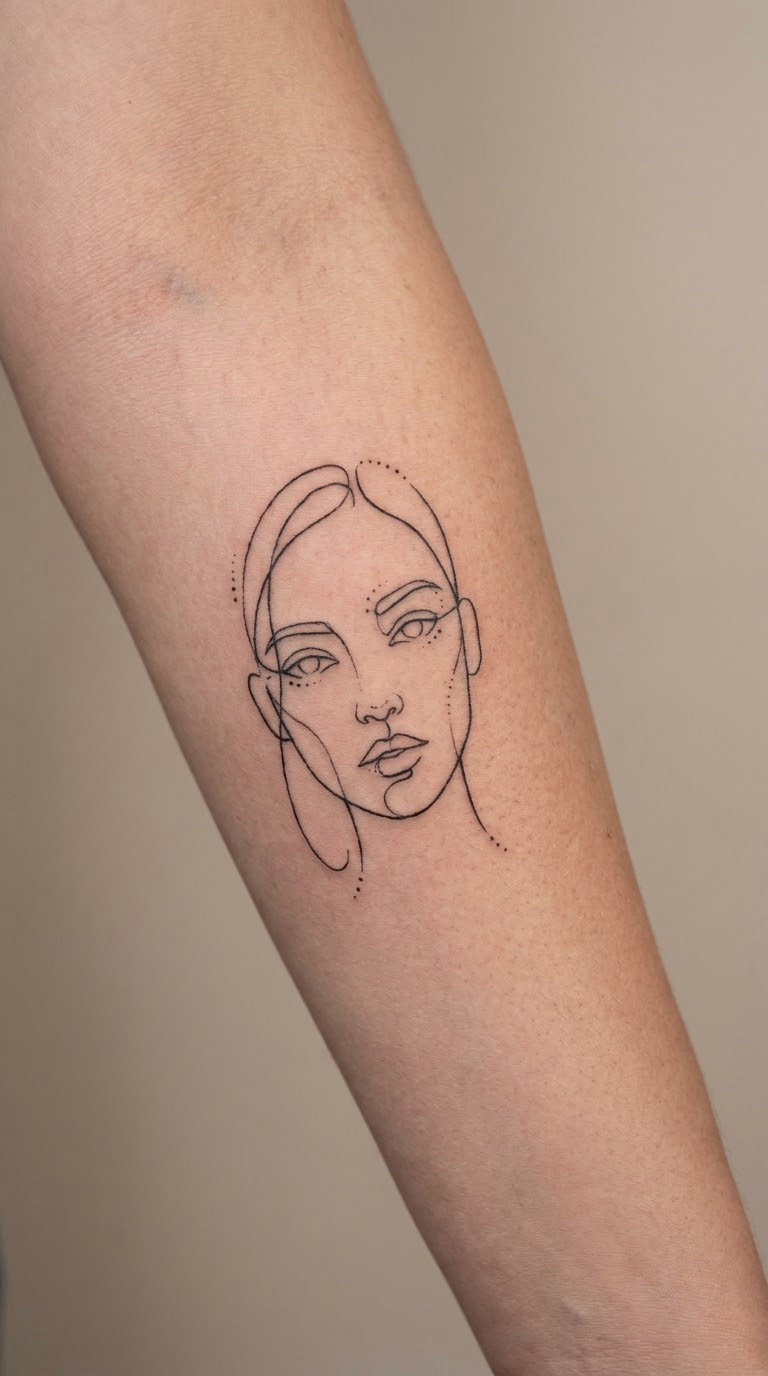
A profile built from a handful of continuous facial contours: brow, nose bridge, lip, chin, one suggestion of hair. Generous empty space does the rest, with a few deliberate dots near the eye for texture.
Placement: forearm, upper arm or thigh. Size: 2.5-4 inches (6.5-10 cm). Style: fine-line micro-realism with abstract contour work. Pain: medium on the forearm.
Tiny eyes and hairlines need careful spacing or they close up as the piece settles. Make it yours: adapt the profile to your own nose and jaw, or shift the gaze direction so it looks outward rather than at the viewer.
3. Continuous-Line Dance Pose
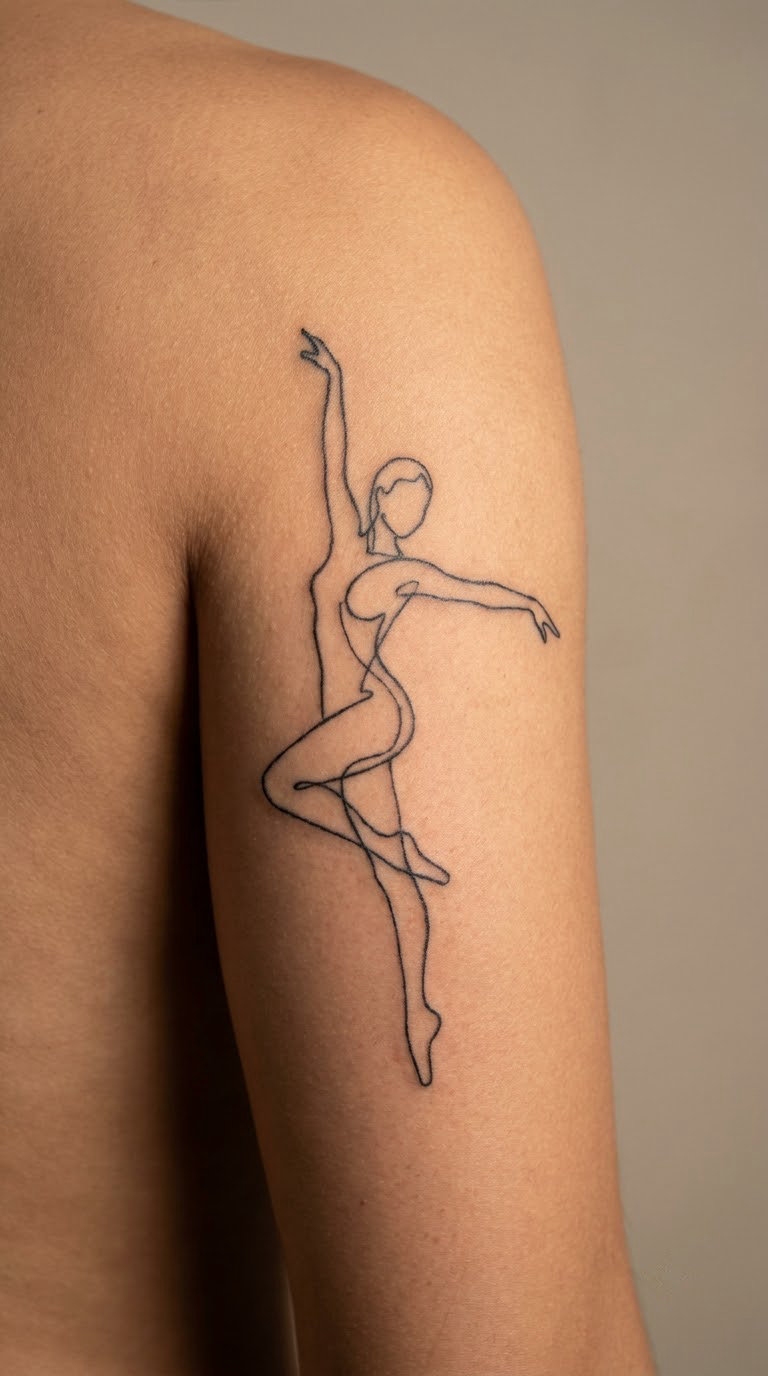
One line enters at the raised hand, travels through the torso and hip, and exits at the trailing foot without lifting from the skin. Selective negative space stands in for detailed anatomy.
Placement: shoulder blade, outer thigh, calf or forearm. Size: 3-5 inches (7.5-12.5 cm). Style: continuous fine line. Pain: medium on the shoulder or thigh.
Intersecting ultra-thin loops can soften over time, so ask for slightly wider spacing where the line crosses itself. Make it yours: have the pose adapted to a movement you actually do, from ballet to climbing, and consider more of our 18 best fine line tattoo ideas for women for a companion piece.
4. Fine-Line Mountain Range
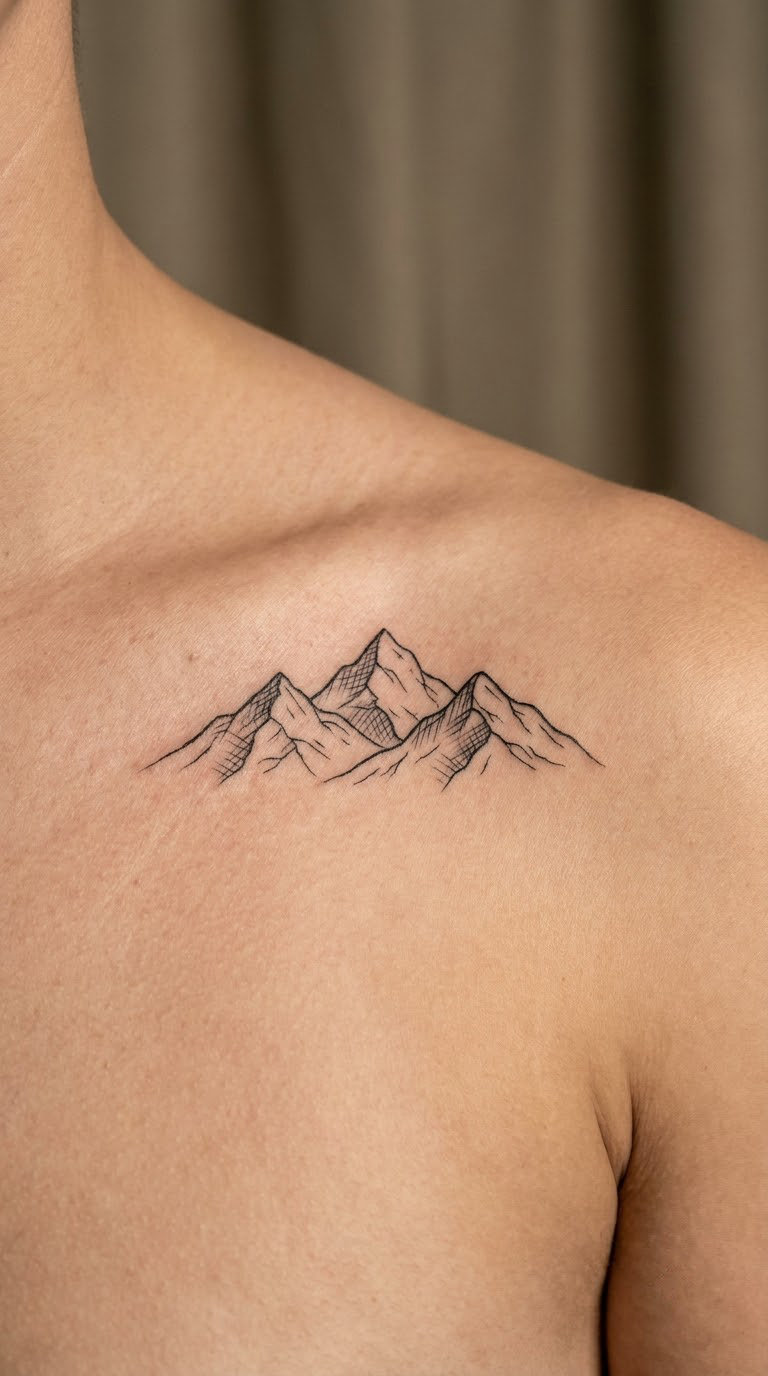
Overlapping peaks built from clean contour lines, a few sparse hatch marks on one face, and possibly a single horizon line running beneath them. It is a landscape without being a shaded one.
Placement: collarbone, forearm, calf or ribs. Size: 2-4 inches (5-10 cm). Style: fine-line landscape. Pain: medium on the collarbone or ribs.
Keep it away from dense hatching on the hand; that area ages badly on any fine line. Make it yours: add the name of a first-visit destination, a mountain you climbed, or the date the trip happened.
5. Minimalist Rose Line Drawing
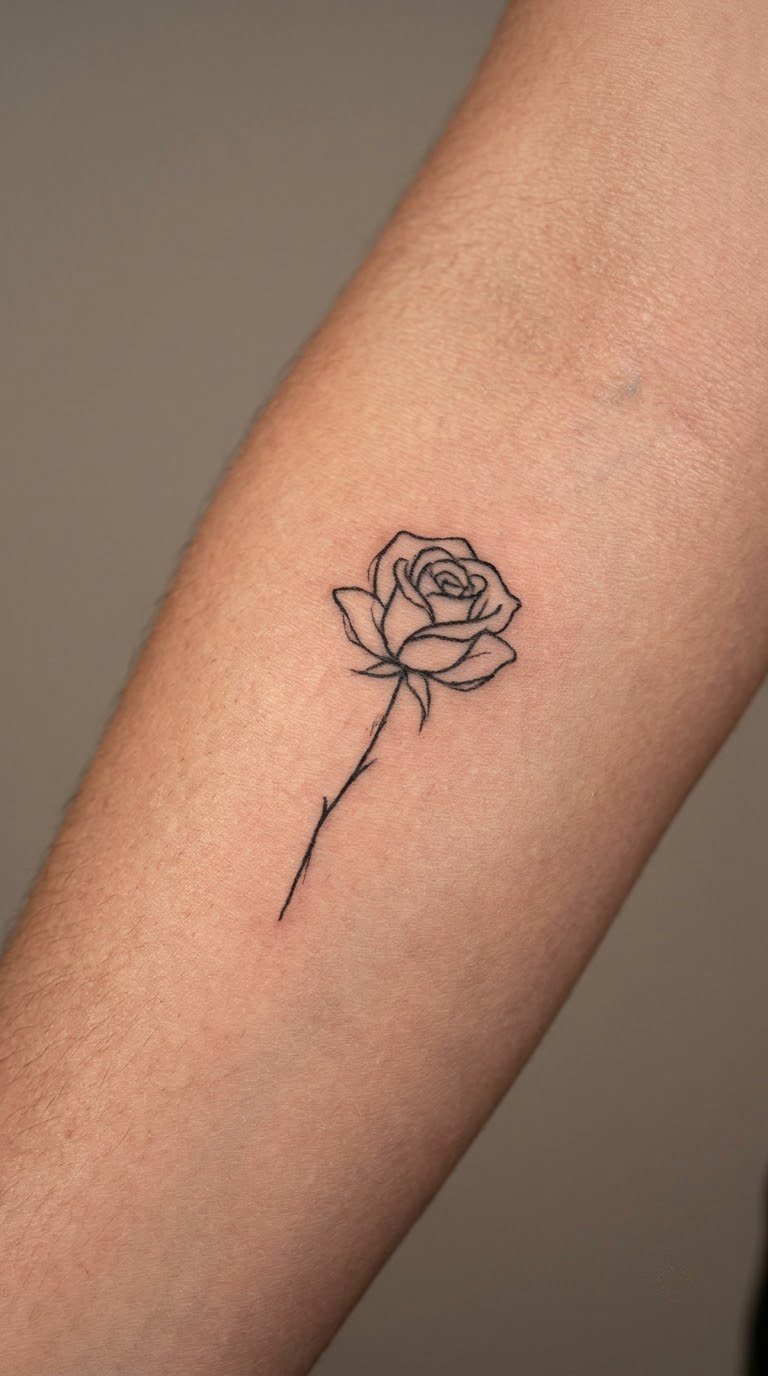
A rose that reads clearly from a few feet away: a loose spiral for the centre, three or four overlapping petal outlines, a thin stem. No red fill, no traditional shading, just structure.
Placement: inner arm, wrist, ankle or thigh. Size: 1.5-3 inches (4-7.5 cm). Style: minimalist fine line. Pain: low to medium on the inner arm.
Very fine spiral lines can blur if the needle depth is rushed, so this one rewards a patient artist. Make it yours: use your birth-month flower in the same style instead, or run the stem into two small leaves at the wrist.
6. Geometric Sun with Open Rays
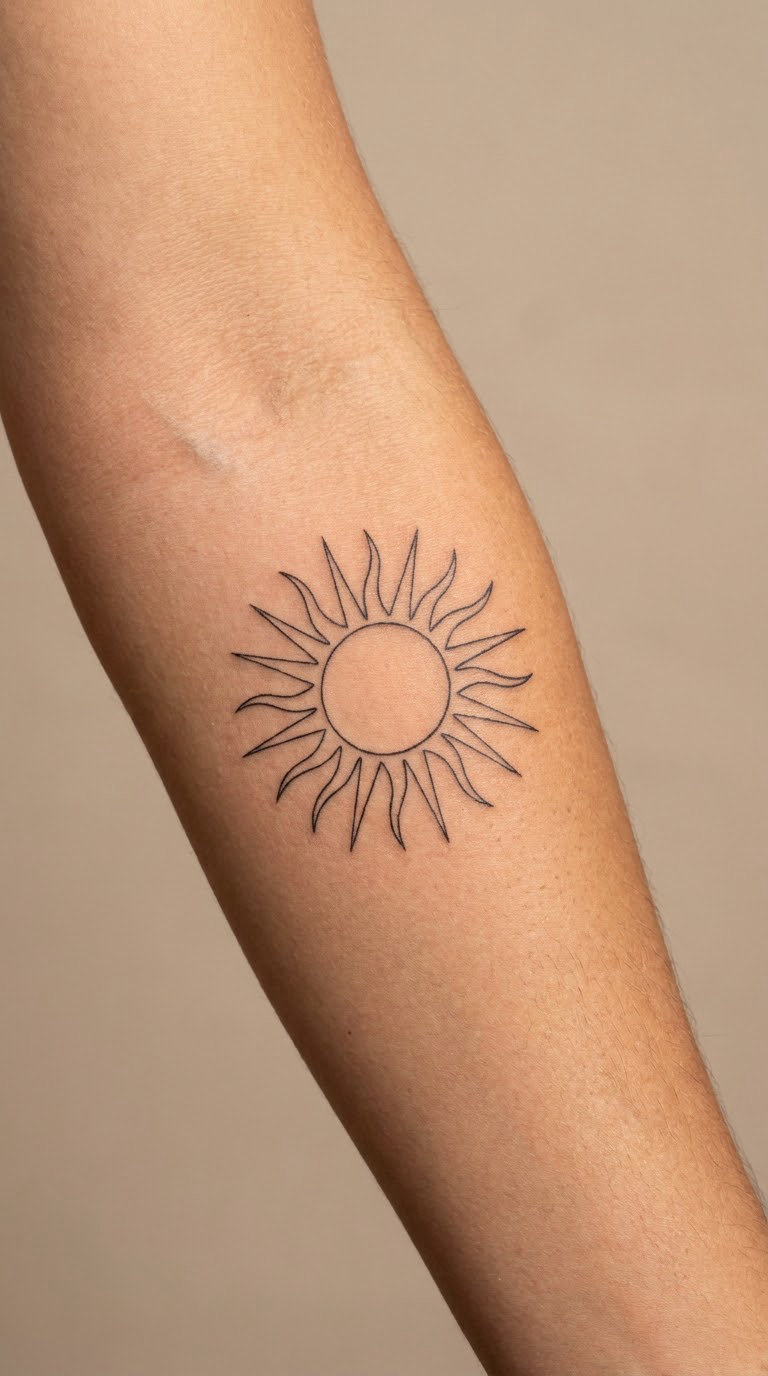
A simple circle left unfilled, ringed by individually drawn rays in slightly varied lengths. One restrained detail, such as a small semicircle or a single dot, keeps it from feeling mechanical without adding weight.
Placement: ankle, forearm, chest, upper arm or behind the ear. Size: 2-3 inches (5-7.5 cm). Style: minimalist fine line with geometric elements. Pain: low to medium on the ankle or forearm.
Many needle-thin rays need deliberate spacing or they merge during healing. Make it yours: turn the open centre into a tiny sun face, or alternate long and short rays to echo a sun that has just risen.
7. Sideways Elephant with Minimal Detail
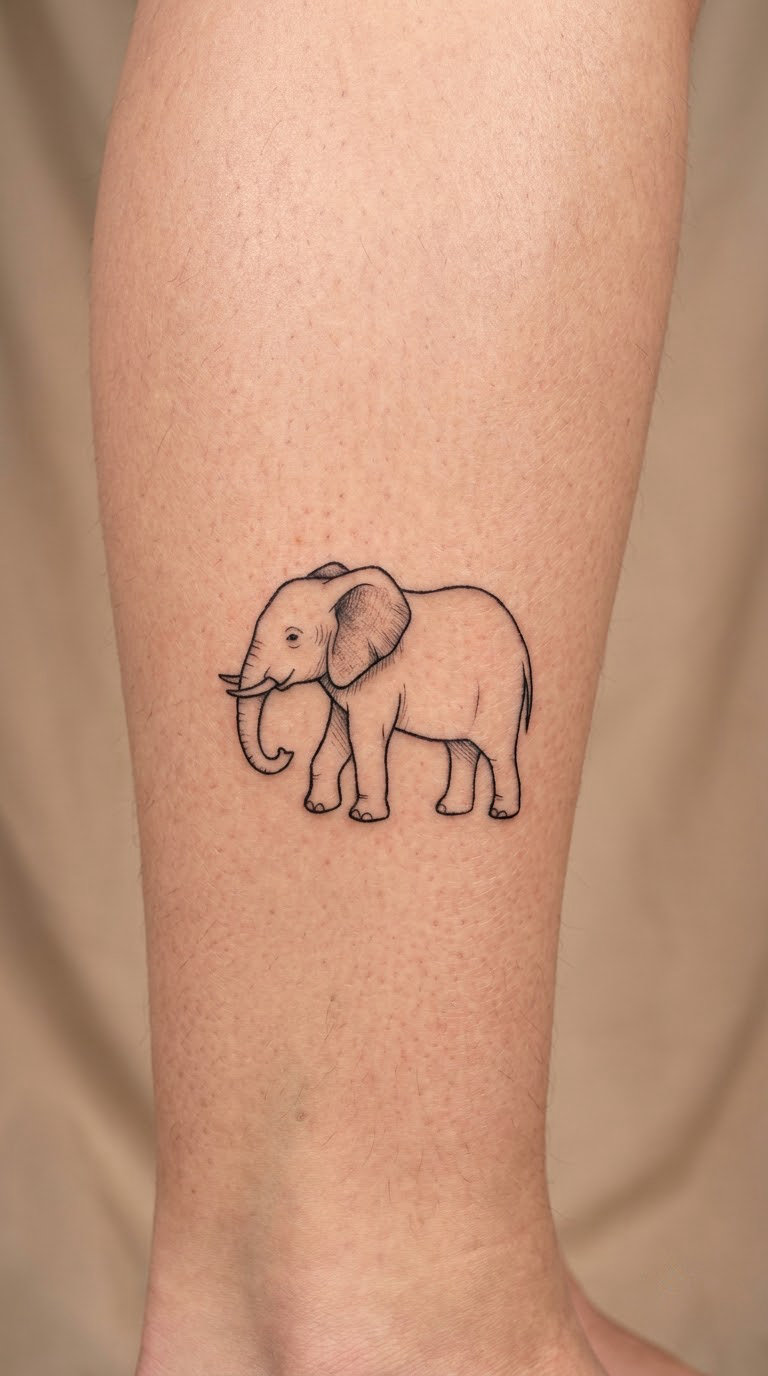
A small elephant in profile: one curved ear, a trunk curling forward, a short tusk, four simple legs. The body is left largely unfilled, which is what keeps the piece light on a small canvas.
Placement: forearm, calf, thigh or ribs. Size: 2.5-4 inches (6.5-10 cm). Style: micro-line illustration. Pain: medium on the forearm or calf.
Closely spaced trunk wrinkles and tiny eyes are the first things to blur, so an artist should thin out the detail as the design shrinks. Make it yours: tuck a floral spray or a small sun above the back, or draw an elephant walking beside a smaller one.
8. Crescent Moon and Wildflower
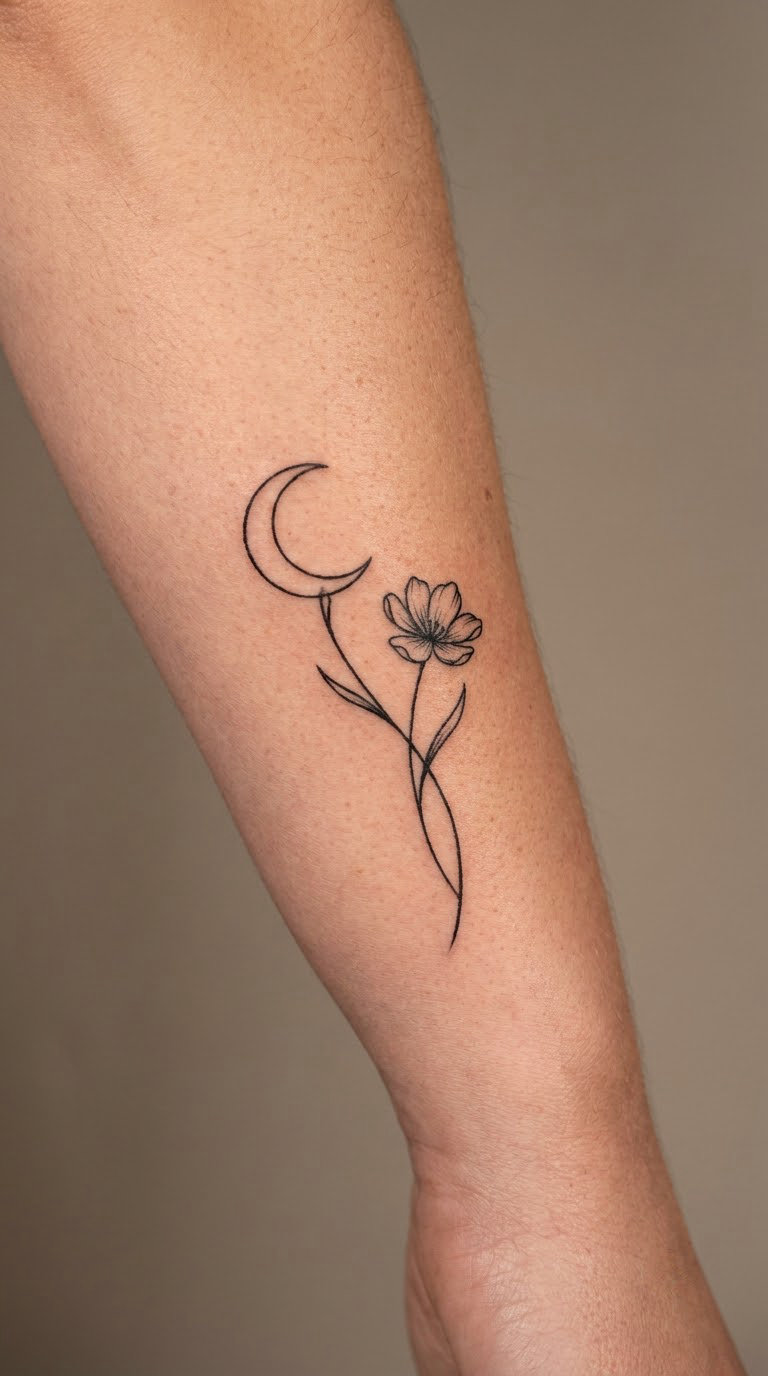
A slim crescent outline paired with one trailing wildflower, its stem curving out of the moon’s lower point. The contrast between a simple celestial shape and organic movement is what gives the composition its balance.
Placement: outer arm, ankle, thigh, ribs or behind the ear. Size: 2-3.5 inches (5-9 cm). Style: fine line with light botanical illustration. Pain: low to medium on the outer arm.
Moon points and the flower centre are the fragile bits, and both soften faster than the stem. Make it yours: angle the crescent so it frames a birth-date numeral, and read more on placement in our 16 best behind the ear tattoo ideas for women.
9. Single-Line Butterfly Symmetry
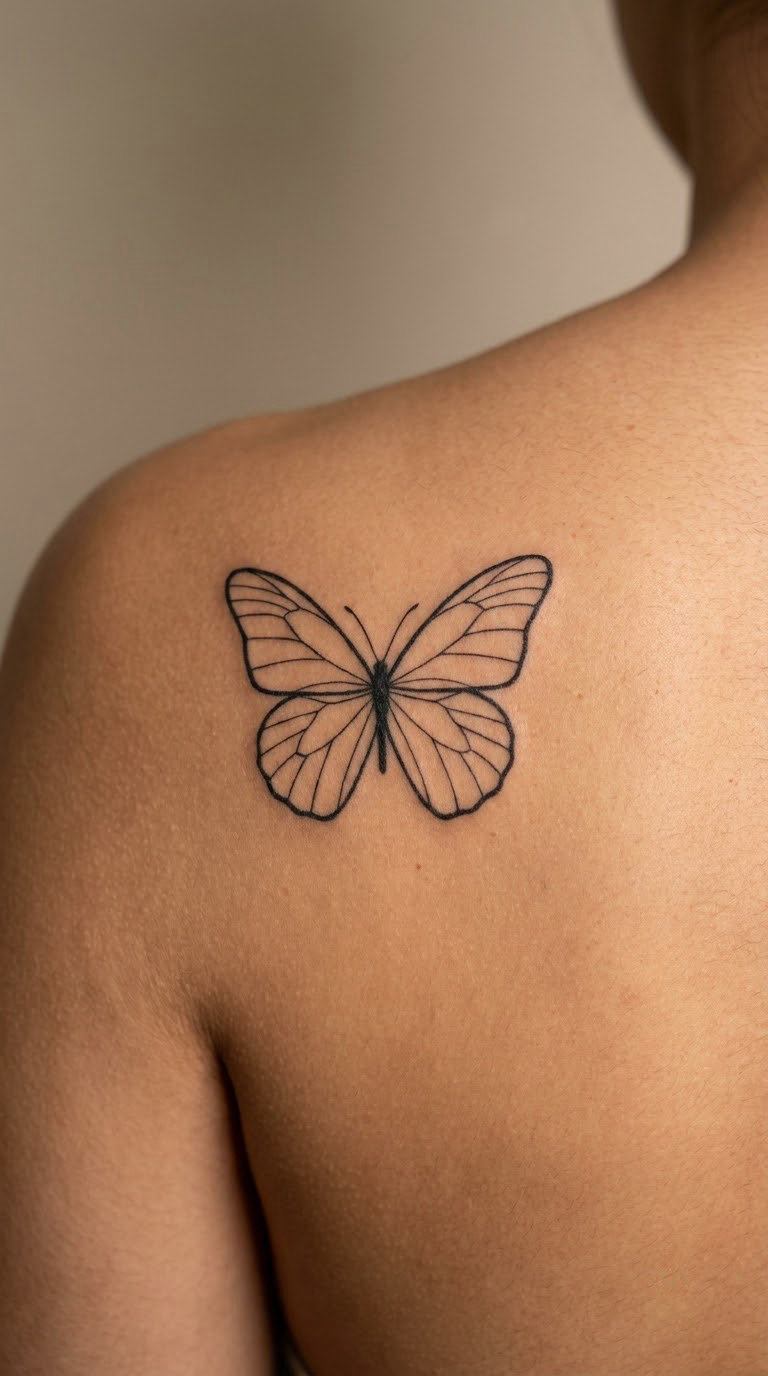
Balanced upper and lower wing contours with a few restrained vein lines and a small open body. Symmetry is doing the visual work, so the wings can stay simple without looking unfinished.
Placement: shoulder, collarbone, calf or upper back. Size: 1.5-3 inches (4-7.5 cm). Style: fine-line symmetry. Pain: medium on the shoulder or collarbone.
Tiny wing veins soften more than the outer contour, so ask the artist to leave real gaps between them. Make it yours: match the vein pattern to a real butterfly you saw on a trip, and consider a second one at a matching spot on the other arm.
10. Fine-Line Rose and Stem Brace
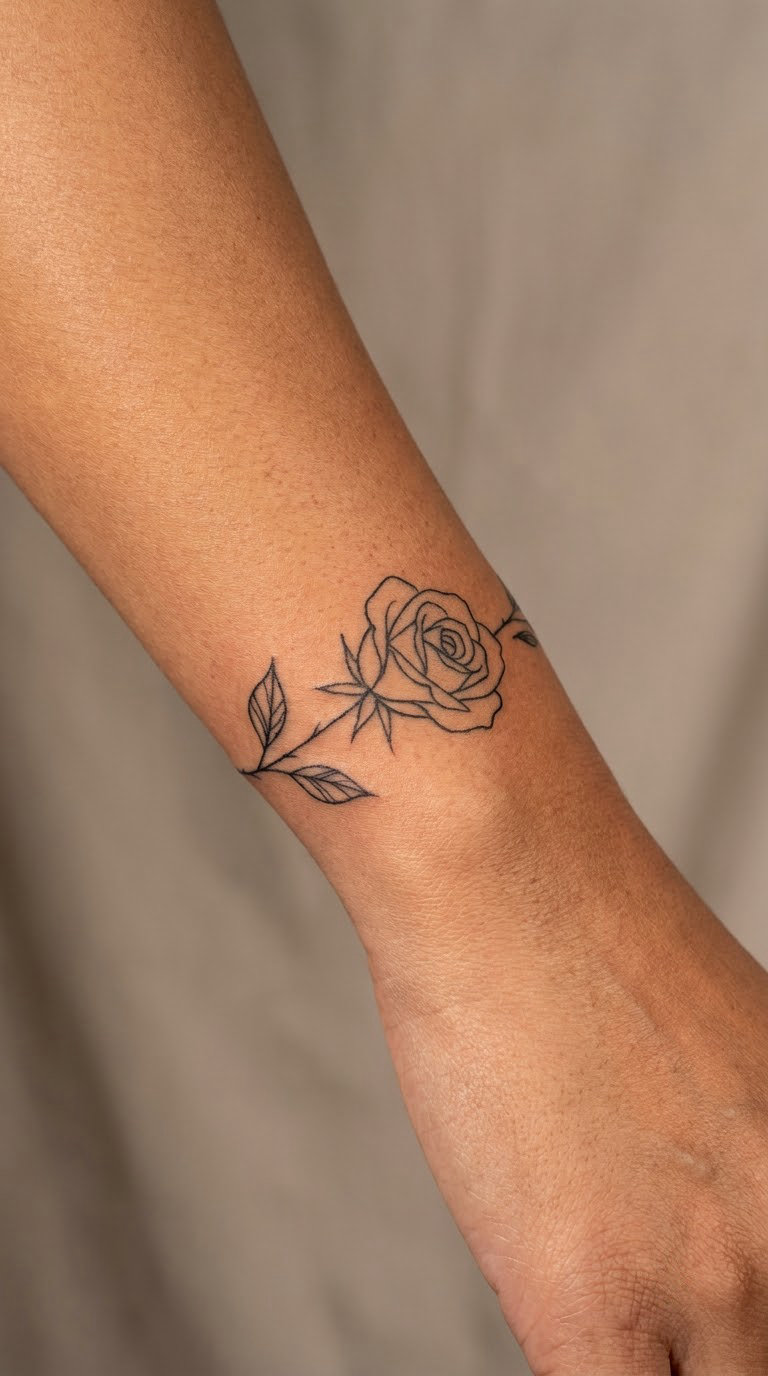
The classic rose adapted to the wrist: a bloom angled with the forearm, a bent stem, two small leaves and enough open space that the whole thing sits comfortably rather than crowding the bone.
Placement: inner wrist, forearm, ankle or calf. Size: 2.5-4 inches (6.5-10 cm). Style: fine-line floral. Pain: medium on the wrist.
Wrist linework can blur with use, and any colour added later will shift over time, so plan for a touch-up. Make it yours: add a meaningful initial, a graduation date or a tiny secondary stem running the other way.
11. Minimal Handwritten Word
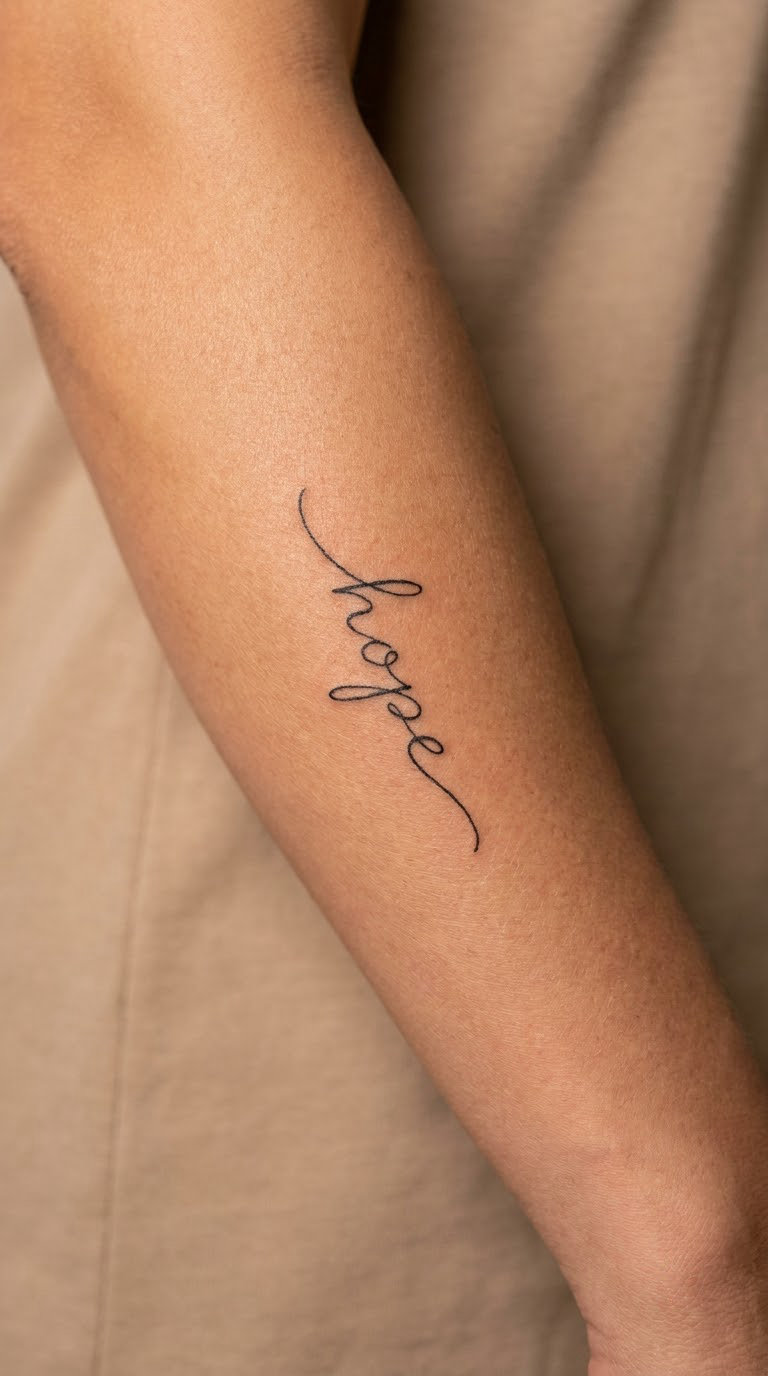
A short word in fine handwritten script, ideally two or three words rather than a sentence. Baseline consistency matters more than flourishes here, since a wobbling baseline reads as a mistake rather than style.
Placement: forearm, upper arm, ribs, collarbone or discreetly on the chest. Size: 2-4 inches (5-10 cm) depending on the lettering. Style: fine-line calligraphy. Pain: medium on the forearm or ribs.
Lettering on fingers and hands fades fastest, because of movement, washing and sun. Make it yours: use one word that means something specific to you, and have it drawn to match your own handwriting sample.
12. Minimalist Bird in Flight
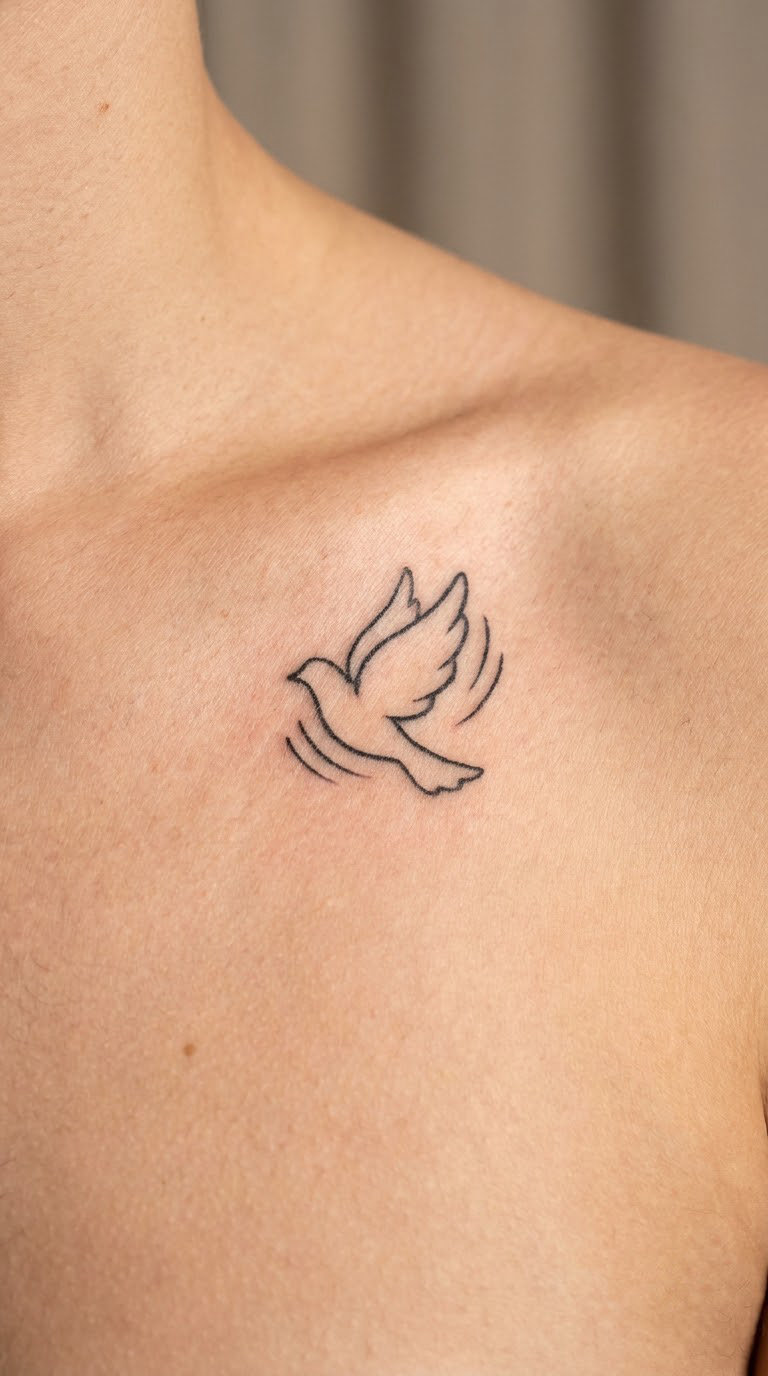
A small bird defined by a curved back, one pointed wing, a narrow beak and two short motion lines. No background, no shading, nothing competing with the outline.
Placement: collarbone, upper arm, calf, ribs or behind the ear. Size: 1.5-3 inches (4-7.5 cm). Style: minimalist fine line. Pain: low to medium at most of these spots.
The beak and the wing junction are the first details to blur as the piece ages. Make it yours: match a bird from your own garden or a species from a place that matters to you, and ask for a second bird facing the other way later.
13. Single Stem of Lavender
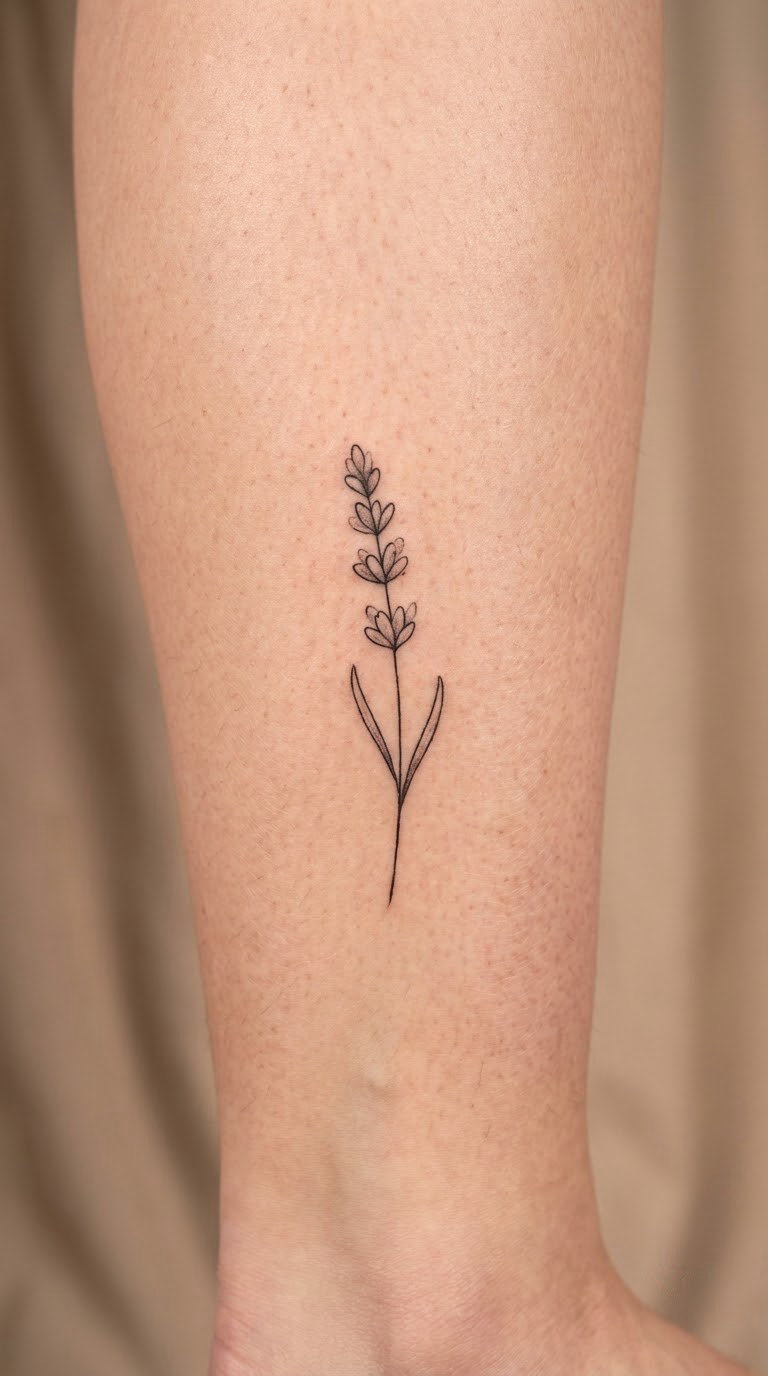
A narrow lavender stem: one central line, paired narrow leaves and spaced buds along the top. Airy rather than realistic, which is what keeps it readable at small sizes.
Placement: forearm, calf, ankle, wrist or ribs. Size: 1.5-3 inches (4-7.5 cm). Style: fine-line botanical. Pain: low to medium on the forearm or ankle.
Individual buds can merge into a smudge while healing unless the artist spaces them generously. Make it yours: repeat three stems at slightly different heights for a larger cluster, or add a single muted purple tone to the buds only.
14. Abstract Face with Open Contours
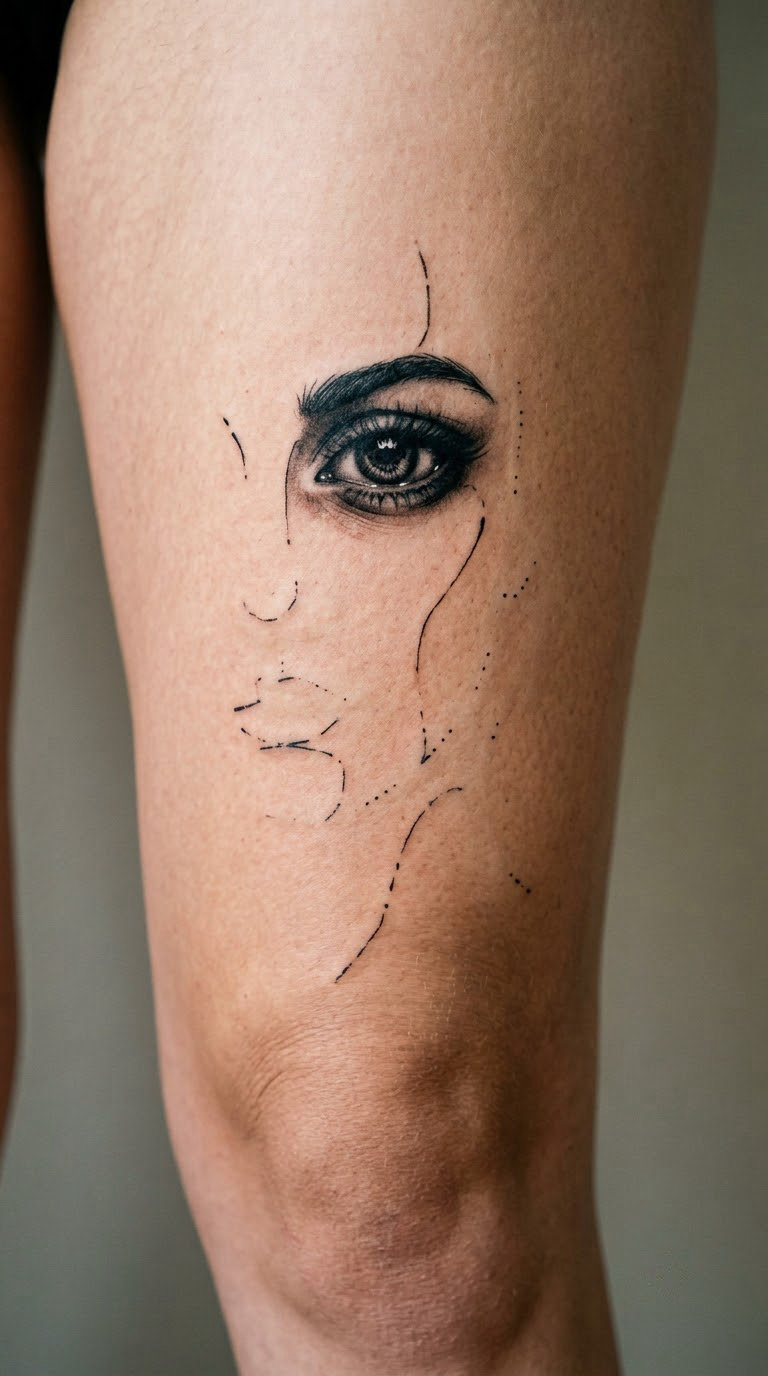
More abstract than a profile: one well-drawn eye, a partial nose line, fragmented lips, and no enclosing outline at all. Negative space carries the composition, so the piece reads differently from every angle.
Placement: ribs, hip, thigh, forearm or side torso. Size: 3-5 inches (7.5-12.5 cm). Style: abstract fine line with micro-realistic details. Pain: high on the ribs or hip.
Curved torso areas can distort otherwise straight facial lines over time, so expect the composition to shift slightly as skin moves. Make it yours: customise the eye shape and lashes to feel like your own, then place the piece on the body curve that flattens it best.
15. Minimal Wave with a Rising Dot
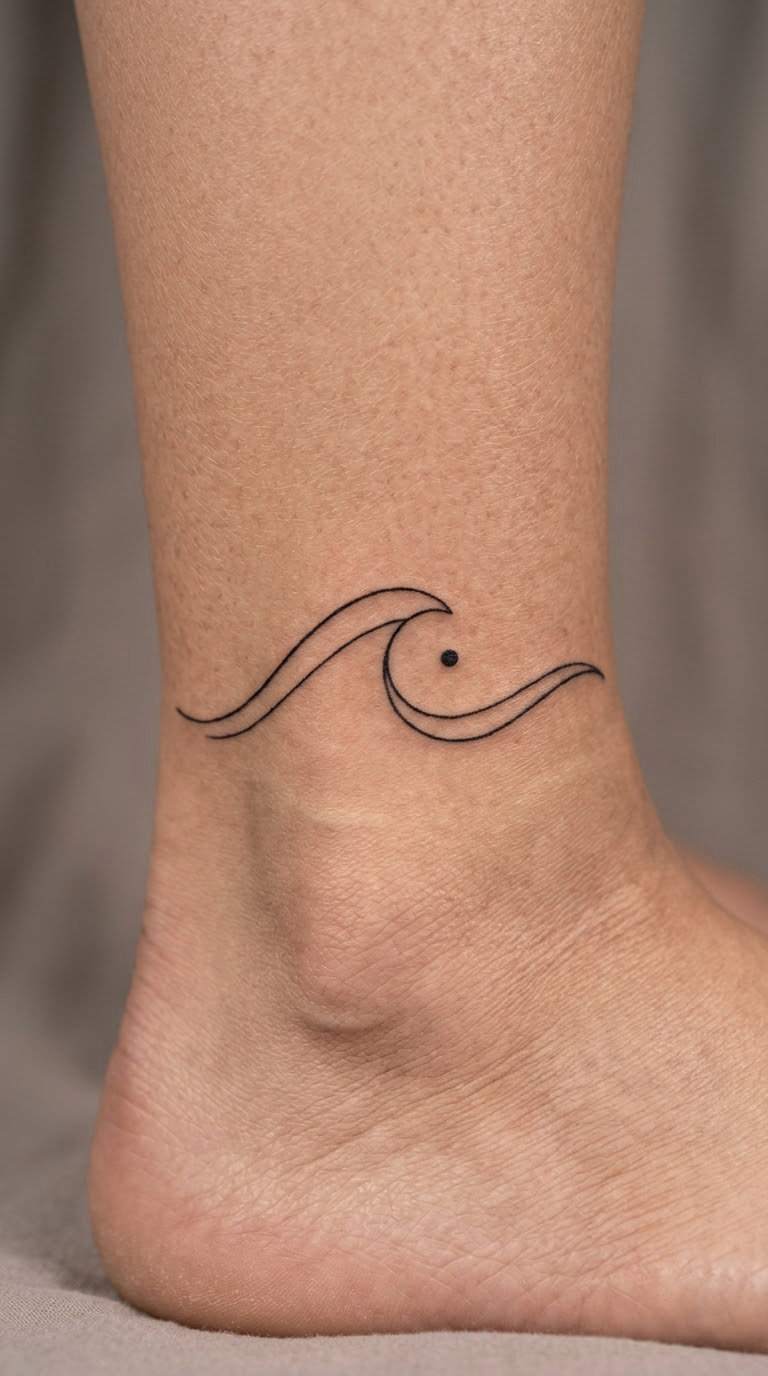
A calm wave built from two long curved lines, a few broken inner strokes and a single raised dot. It borrows the open spacing of a Japanese wave composition without copying a fixed traditional motif.
Placement: wrist, ankle, calf, forearm or side ribs. Size: 2-4 inches (5-10 cm). Style: minimalist fine line with a subtle Japanese influence. Pain: medium on the wrist or ribs.
Thin line ends feather first, so a slightly rounded finish on each stroke helps. Make it yours: set the wave at the ankle for a beach memory, or place it at the wrist where it reads like a bracelet.
16. Fine-Line Coffee Cup Still Life
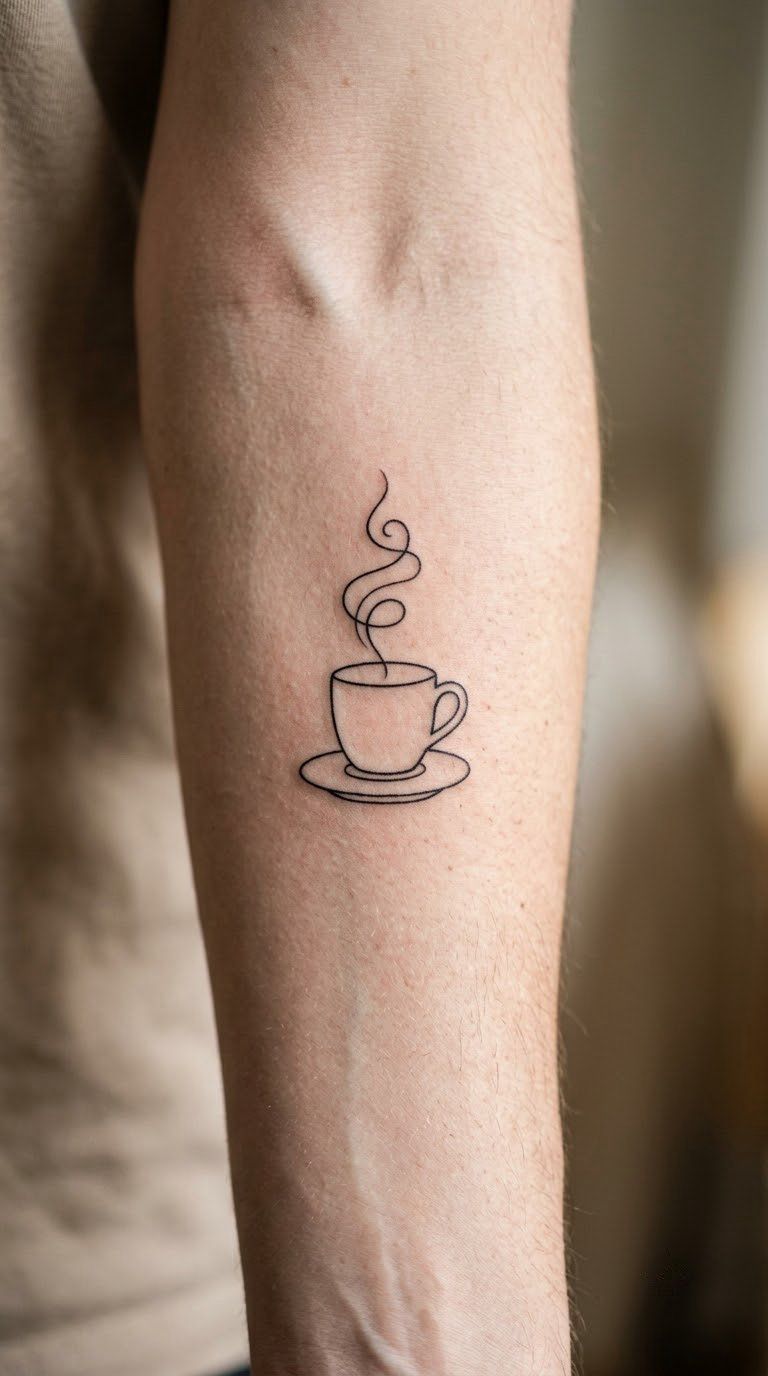
An ordinary moment drawn as still life: a cup, a saucer, one curling steam line and the edge of a small book. All of it in plain contour lines with no tonal range at all.
Placement: forearm, wrist, calf or upper arm. Size: 2-3 inches (5-7.5 cm). Style: fine-line illustrative linework. Pain: medium on the forearm or wrist.
Steam curls and small overlaps need generous spacing, since steam is the first line to disappear. Make it yours: swap in your own mug shape and add a date underneath, or pair it with a matching piece of a pastry to sit beside it.
17. Minimal Paw Print with Heart Detail
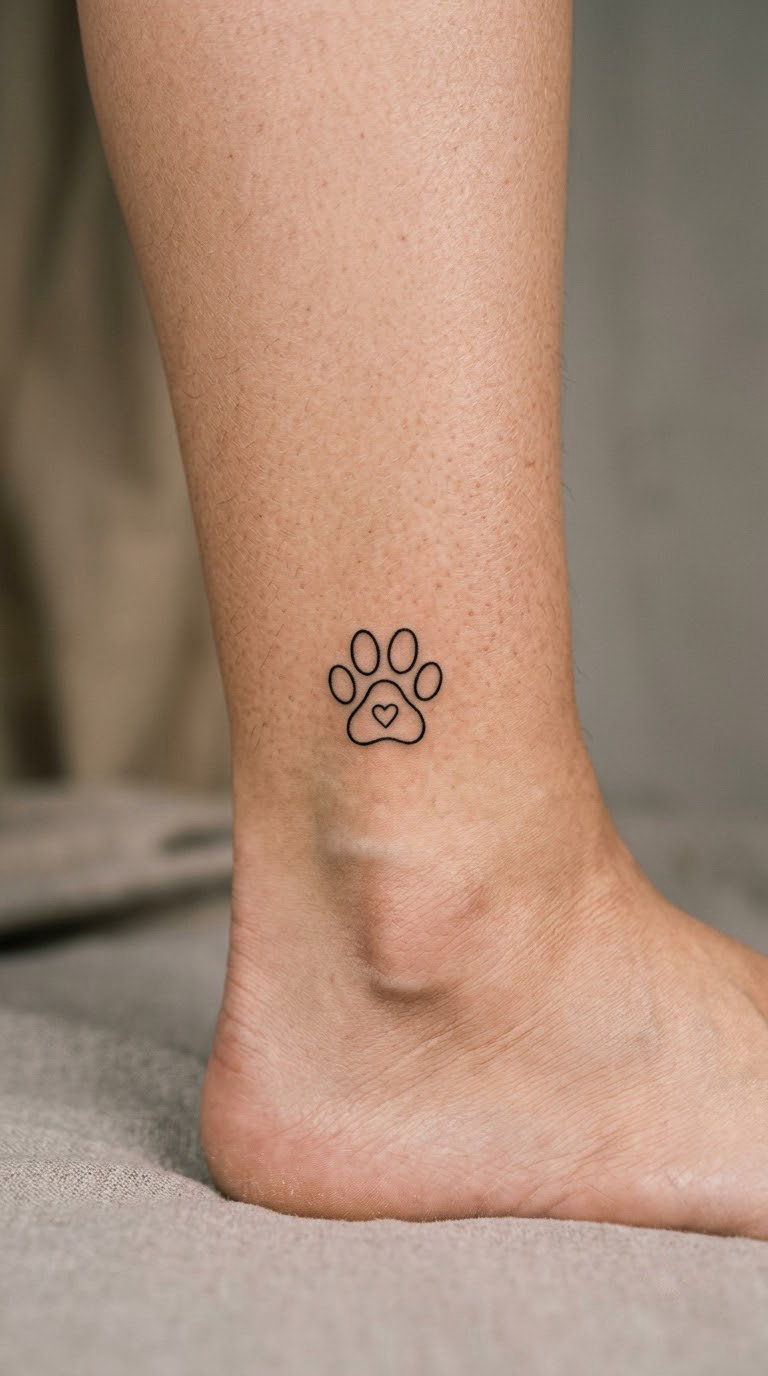
Four clean toe-bean outlines and one larger pad, with a single small heart replacing one of the beans or a heart-shaped gap cut into the pad. Simple, warm and easy to read at a distance.
Placement: ankle, calf, wrist, forearm or chest. Size: 1.5-2.5 inches (4-6.5 cm). Style: minimalist fine line. Pain: low to medium on the ankle or wrist.
Small toe beans lose definition fastest, so keep the outlines a touch heavier than you think you need. Make it yours: work in a pet’s initial or birth year along the ankle bone, and keep the heart detail as the only personal mark.
18. Fine-Line Landscape in a Circle
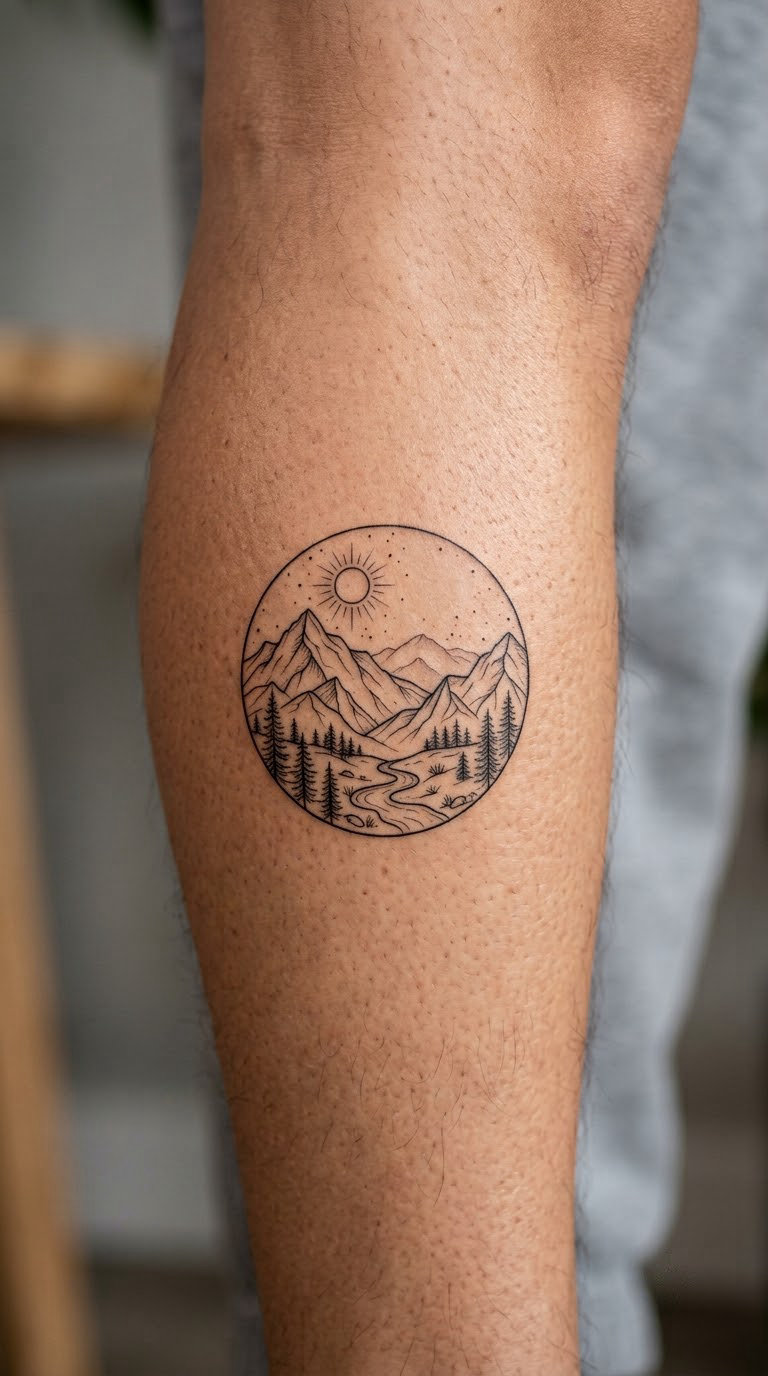
A circular frame holding a low sun, two mountain layers and a few ground lines. The thin geometric border balances the organic landscape inside and makes the piece look deliberate rather than floating.
Placement: forearm, calf, upper arm or chest. Size: 2.5-4 inches (6.5-10 cm). Style: fine-line landscape with geometric framing. Pain: medium on the forearm or calf.
Dense horizons and a tiny sun inside a circle blur faster than an open composition would. Make it yours: include the coordinates of a home region, or turn the sun into a small moon for a destination you still want to reach.
19. Delicate Laurel Branch
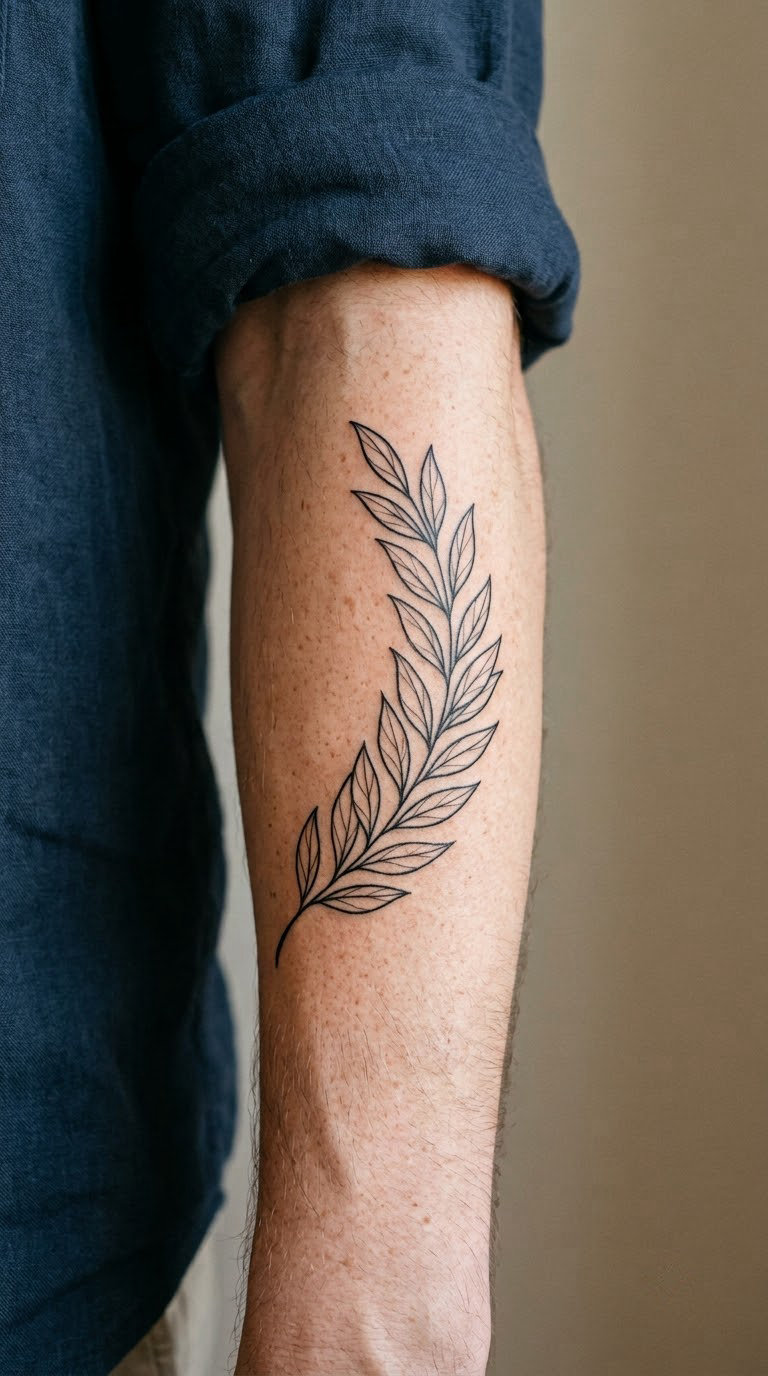
A curved stem with alternately placed leaves, drawn in clean outlines with selective interior veins instead of dense shading. Classical in look without turning into a traditional ornamental sleeve.
Placement: forearm, ribs, hip, thigh or upper arm. Size: 2.5-5 inches (6.5-12.5 cm). Style: fine-line botanical. Pain: medium on the forearm or ribs.
Interior veins and narrow leaf tips need protective spacing or they fill in with ink as it settles. Make it yours: add a small ribbon or date at the base of the stem, and mirror the branch on the opposite forearm for a symmetrical pair.
20. Fine-Line Vase with Single Flower
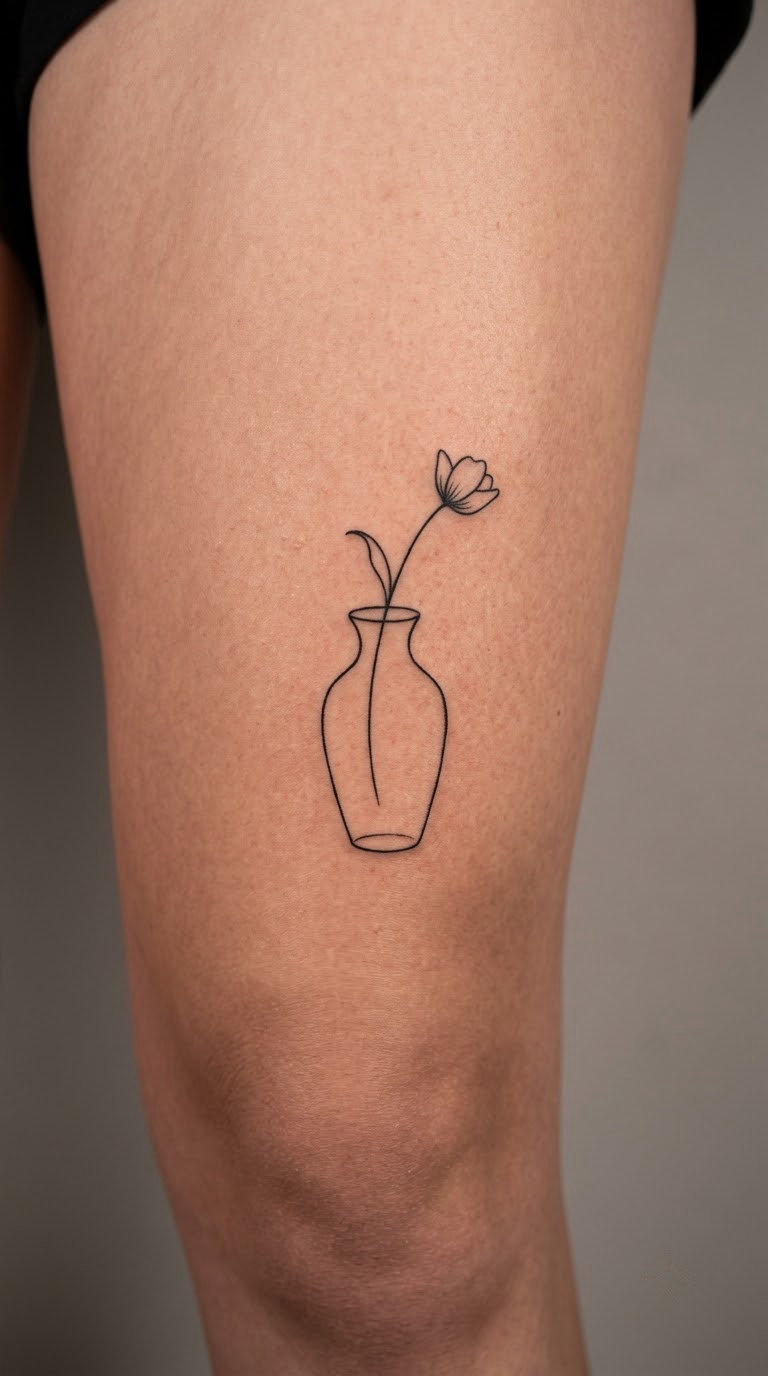
A simple still life: an unshaded vessel outline, one curved stem and one distinct bloom, with the shapes kept separate and slightly unfinished. It reads more like a gallery sketch than a botanical close-up.
Placement: thigh, hip, forearm, calf or the back of the arm. Size: 3-5 inches (7.5-12.5 cm). Style: fine-line illustrative tattooing. Pain: high on the thigh or hip.
Long fine stems can shift with body contours, so the artist should place the stem to follow the muscle rather than fight it. Make it yours: draw your own vase shape, and add a second stem later to grow the composition over time.
How to Choose the Right Design
Start with the honest questions, not the pretty pictures. Picking between twenty line art tattoo ideas for women is the easy part; these six checks have saved more bad tattoo appointments than any gallery wall.
- Is fine line the right style at all? It suits a small first tattoo and a discreet addition, but it fades faster than bold work. If you want something that still looks strong in fifteen years, ask for heavier line weight or filled shapes.
- Is the size realistic for the detail? A face, a landscape or a script word needs enough area to keep its structure. Below roughly two inches, detail collapses. Ask the artist what the design will look like at your chosen size before you commit.
- Does the placement suit your body shape? Curved and moving areas distort straight lines. Check the design in a mirror at different angles, and try walking and bending your arm or leg before the stencil goes on.
- Is the spacing deliberate? Fine line tattoos survive when lines have room to breathe. If the reference design is packed detail to detail, ask the artist to simplify it, or plan on a future touch-up.
- Does the design mean something to you? A design tied to a person, place or date tends to outlast a trend-driven one, and it is easier to feel good about ten years in.
- Black only, or a colour accent? Black line work fades predictably and can be reinforced. Colour holds its own issues, since small filled areas can look patchy and are harder to cover later. If you want one accent, keep it to a single small element.
One more step that people skip: look at healed photographs, not fresh ones. Fresh tattoos are darker, sharper and more saturated than they will ever look again, so a portfolio full of new work tells you very little about how a piece will settle. Tattooers themselves say this more than any other tip, and it is the single most useful question to ask before booking.
Cost and Session Time
Line art is priced by size, detail and time, so a one-line stem and a three-inch face can differ a lot even though both are “small”. US ranges typically run well below what a bold sleeve costs, and most artists charge by the hour with a shop minimum. Always get a written quote at the consultation rather than assuming.
| Piece | Typical size | Session length | What drives the price |
|---|---|---|---|
| Custom line drawing, minimal detail | Under 2 in | 45-90 minutes | Design simplicity, artist minimum |
| Simple fine-line placement | 2-3 in | 1-2 hours | Line spacing, custom versus flash |
| Medium illustrative composition | 3-5 in | 2-4 hours | Number of elements, facial or landscape detail |
| Larger connected piece | 5 in and up | Split into two sessions | Total hours, body curve, touch-up planning |
Artist rates, travel, regional pricing, shop minimums and design complexity all move the final number around, so treat any range as a starting point for a conversation. Larger or highly detailed work is often better split across two sessions than rushed into one.
Aftercare Basics
Whatever the artist tells you on the day wins, but these are the fundamentals most studios repeat.
- Follow your artist’s aftercare instructions first. They know exactly what they did on your skin, and their advice overrides anything general.
- Wash gently with lukewarm water and a mild unscented cleanser, then pat dry with a clean towel rather than rubbing.
- Keep fresh line work away from prolonged sun, hot baths, swimming pools and saunas while the ink settles.
- Use only the product your artist recommends, and apply it in the thin layer they specify rather than a thick coat.
- Do not pick, scratch or flake the healing skin; if a scab lifts, leave it alone and let it fall on its own.
- Go back to the artist if an area stays raised, painful or unusually pale instead of settling down within the normal healing window.
Frequently Asked Questions
Should I get line art tattoo ideas for women in black or colour?
Black is the safer default for a first piece because a single-needle line is what the style was built around, and black can be reinforced at a touch-up more easily than colour. Colour works well as one small accent, such as a single bud or a wash behind a shape, but small filled areas often settle patchy. If you want colour, ask to see healed examples of that exact design first.
What is the smallest line-art tattoo that can stay legible?
About two inches (5 cm) is a sensible floor for most motifs, and three inches or more gives a face, landscape or script word room to keep its structure. Below two inches, fine details tend to merge as the tattoo heals, and the artist has to simplify the design. If you are set on something tiny, pick a simple subject with a few bold lines rather than a detailed one.
Where do fine-line tattoos fade or change the most?
Fingers, hands, feet and ankles fade fastest, because skin movement, washing and sun exposure wear the thin line down quickly. Inner forearms, upper arms, thighs and the upper back hold detail much better. If you love a design but know your hands are hard on it, plan on a top-up every year or two rather than choosing a different subject.
How many details are too small for a line-art tattoo?
If two lines end up closer together than the width of a hair, they will likely fill in during healing and read as one thick line. A good test is to view the design at arm’s length in a photograph; anything that disappears at that size is too small. Ask the artist to simplify it or increase the overall size before the stencil goes on.
Do I need a touch-up for a fine-line tattoo?
Most fine-line pieces soften noticeably within the first year, and one free or low-cost touch-up in that window is normal and expected. Touch-ups are near-certain on fingers, hands and feet, and rare on the upper arm and thigh. Book the top-up with the same artist who did the original work so they can match the line weight exactly.
Which Line Art Idea Should You Choose First?
Start small if this is your first line art tattoo: a botanical stem, a wave, a sun or a bird gives you a real sense of the artist’s line weight without committing to a large composition, and it is a sensible way to test an artist before a bigger piece later. If you already have tattoos and know what you want to say, go with something personal such as a face, a landscape or a vase.
Save two or three references, ask to see healed work, and confirm the finished result before you book.