
22 Marathon Tattoo Ideas: Best October 2026 Designs
A marathon tattoo is any piece that marks a 26.2-mile (42.195 km) finish, or the training block behind it. The most common formats are a route map, the distance itself, a bib number or a medal, and each one carries a detail only the runner would recognise: a city, a year, a split time, a first-marathon date.
These 22 marathon tattoo ideas each come with a real size in inches, a placement that suits the design, a style name an artist will recognise, and an honest note on discomfort. Winter and spring race entries are opening now, so if you want the ink finished before a spring marathon, plan a session at least six weeks out and keep the first two weeks easy.
22 Marathon Tattoo Ideas: Quick Guide
Start here if you want the whole list at a glance. The table runs in the same order as the sections below, so you can match a style to a body spot and a size before you book anything.
22 Marathon Tattoo Ideas by Style and Placement
Scan the Style column first. Fine line and minimalist designs sit well anywhere flat and read as small, quiet pieces. Illustrative and traditional work needs a broader area, usually the upper arm or thigh. Dotwork survives body movement better than tiny text, and script on the ribs is beautiful and genuinely uncomfortable.
| Idea | Style | Best placement | Size | Pain |
|---|---|---|---|---|
| 1. Finish-line crossbar | Fine line | Inner forearm | 2 to 3 inches | Low |
| 2. Personal-record split time | Minimal typography | Inner forearm | 2.5 to 3.5 inches | Low |
| 3. Vintage course map | Single-colour fine line | Outer calf | 4 to 6 inches | Medium |
| 4. Watercolour finish flags | Watercolour | Outer upper arm | 3 to 4 inches | Medium |
| 5. Race bib number | Bold blackwork | Outer forearm | 2 to 2.5 inches | Low |
| 6. Shoe with finish-line laces | Fine line blackwork | Lower calf | 3 inches | Medium |
| 7. Mountain-to-sea scene | Micro-realism, black and grey | Outer forearm | 5 to 6 inches | Medium |
| 8. Heart-rate finish line | Minimal line | Inner forearm near elbow | 3 inches | Medium |
| 9. Four finishes | Minimal icon set | Inner forearm, spaced row | 1 inch each | Low |
| 10. Route heart | Fine line | Wrist or inner forearm | 2 to 2.5 inches | Medium |
| 11. 26.2 script | Brush script | Side of the ribs | 2 inches | High |
| 12. Marathoner in motion | Traditional | Outer upper arm | 4 to 5 inches | Medium |
| 13. Water bottle milestone | Fine line realism | Outer forearm | 2.5 inches | Low |
| 14. City skyline race | Fine line illustrative | Outer forearm | 4 inches | Low |
| 15. Dotwork 26.2 | Dotwork | Upper arm | 3 inches | Medium |
| 16. First-marathon postcard | Vintage stamp illustrative | Outer upper arm | 3 inches | Medium |
| 17. Relay baton | Minimal line | Inner bicep | 2 inches | Low |
| 18. Track at dawn | Fine line with soft colour | Lower calf | 4 inches | Medium |
| 19. Medalling finish line | Minimal with one accent | Upper arm | 2.5 inches | Low |
| 20. Elevation profile | Fine line data drawing | Outer forearm | 3.5 inches | Low |
| 21. Matching set for four | Coordinated fine line | Inner forearms | 2 inches each | Low |
| 22. Abstract end to end | Geometric abstract | Outer forearm | 4 inches | Low |
1. Minimalist Finish-Line Crossbar Marathon Tattoo
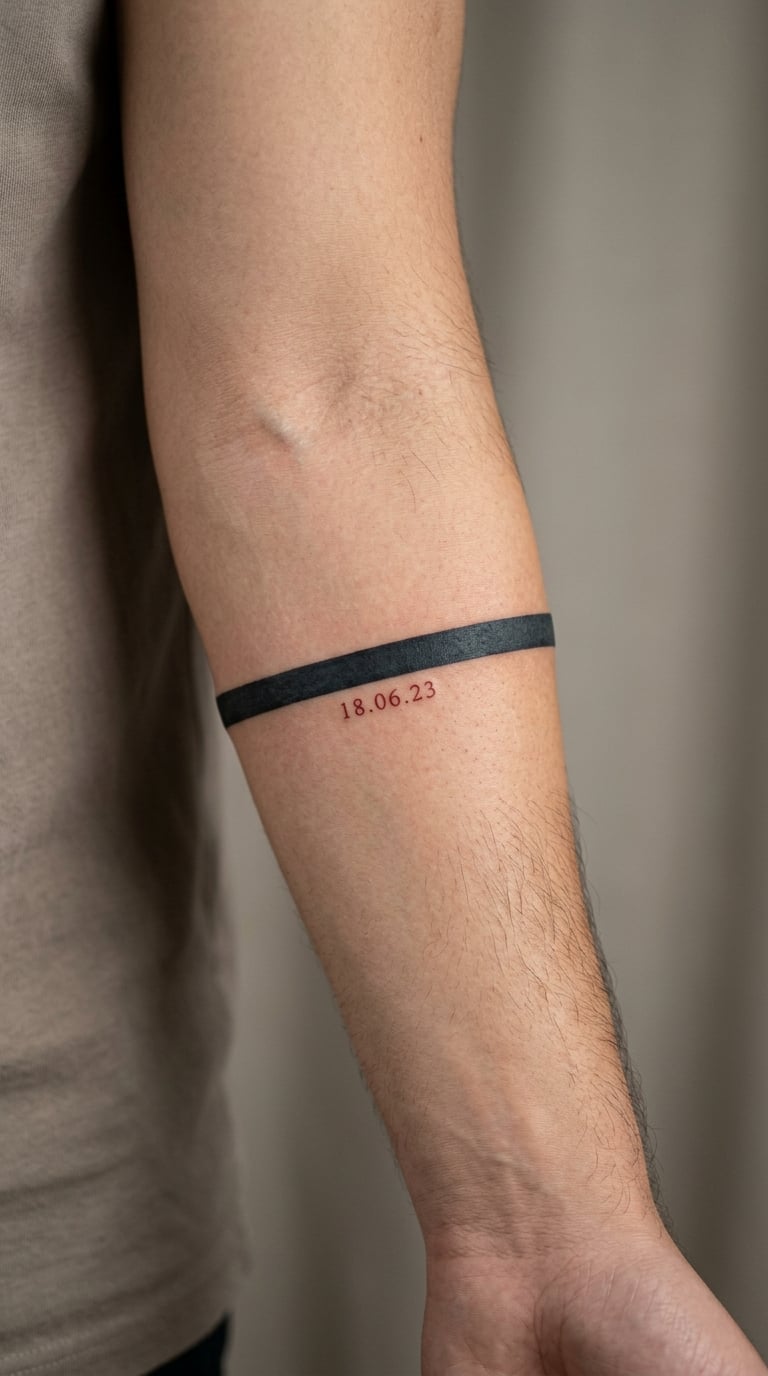
This is one clean horizontal band, sometimes doubled, crossed by a single line. That is the whole design: a finish-line crossbar reduced to one confident stroke. Runners pick it because the shape is instantly readable to anyone who has stood at a finish chute, and because it stays legible at a very small size.
Placement: inner forearm, wrist to elbow · Size: 2 to 3 inches (5 to 7.5 cm) · Style: fine line · Pain: low on the inner forearm, a scratchy, restless feeling rather than sharp.
Make it yours: add the race date or city in small hand-lettering underneath, set 1/8 inch below the band. A one-colour accent, usually red, keeps it restrained.
2. Personal-Record Split-Time Marathon Tattoo
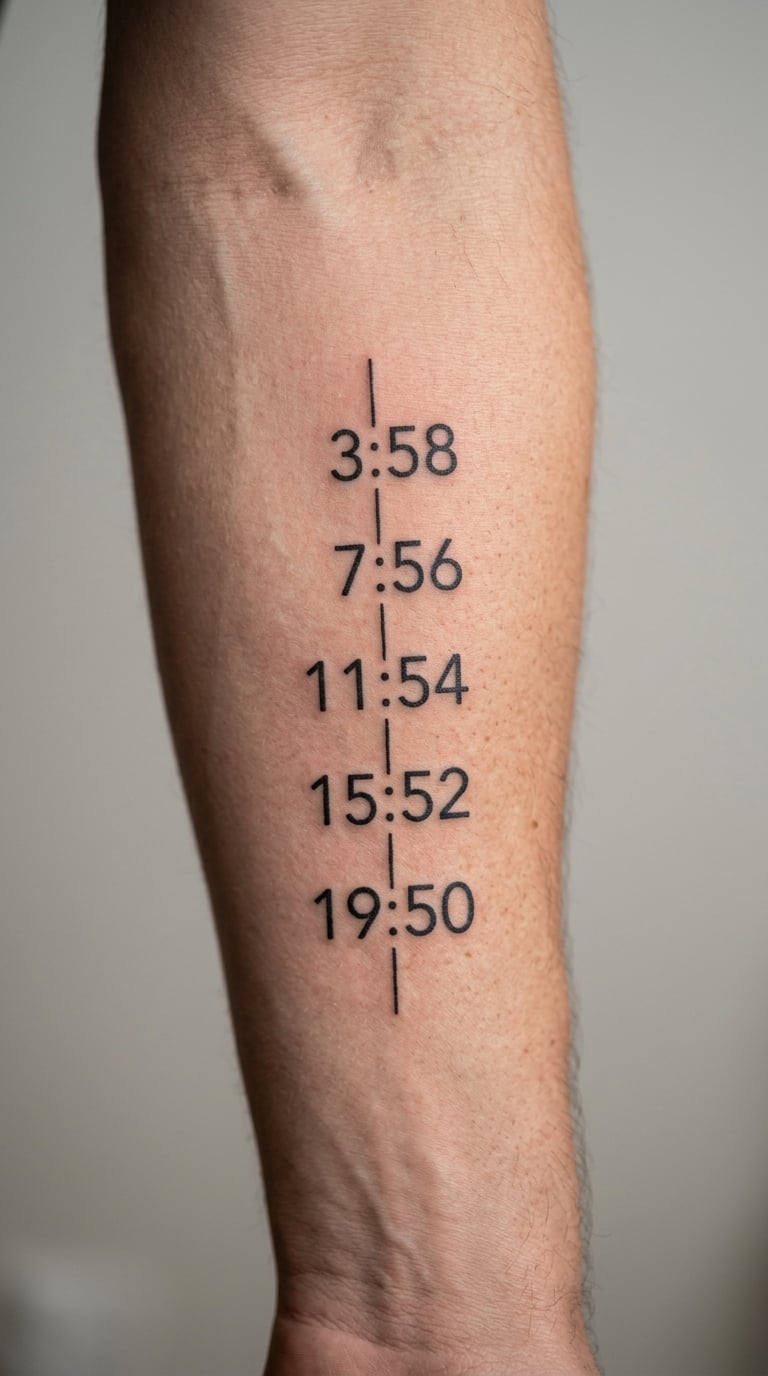
Numbers, not pictures: a finish time, a pace, a half split, set in a plain grotesque typeface with nothing decorative around it. It works because typography carries meaning without an artist inventing symbolism for you. The number is the memory.
Placement: inner forearm set vertically, or stacked on the outer bicep · Size: 2.5 to 3.5 inches (6.5 to 9 cm) · Style: minimal typography · Pain: low; thin line work on the forearm burns briefly, then settles into a deep ache.
Make it yours: bring the exact time formatted the way you want it, and say so at the consultation. Custom text is where design regrets start, because the studio default typeface rarely matches the one you had in your head.
3. Vintage Course Map Marathon Tattoo
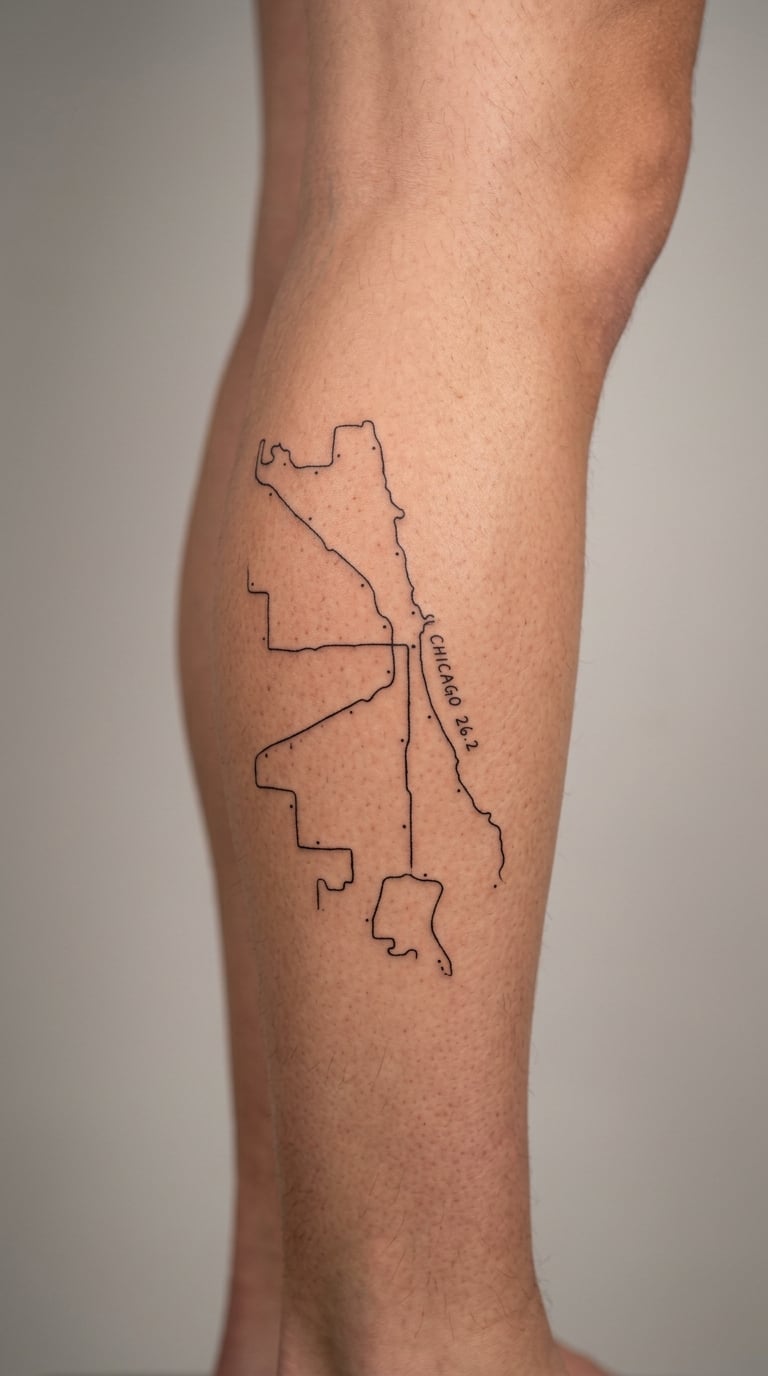
One continuous line follows the shape of your race: the turns, the switchbacks, the long straight where the crowd thinned out. Mile markers sit along the trace as small dots or open circles. A route map on the calf is the most common format in running circles for a reason, people keep it simple and let the route do the talking.
Placement: outer calf reads best, though the outer forearm works · Size: 4 to 6 inches (10 to 15 cm), below 3 inches the turns turn to mush · Style: single-colour fine line, or a soft grey wash if you want more depth · Pain: medium on the calf, mostly from the muscle under the ink.
Make it yours: trace your actual course. Bring the route file rather than a screenshot, and check with the artist how many of the small markers will still read at your chosen size.
4. Watercolour Finish-Line Flag Marathon Tattoo
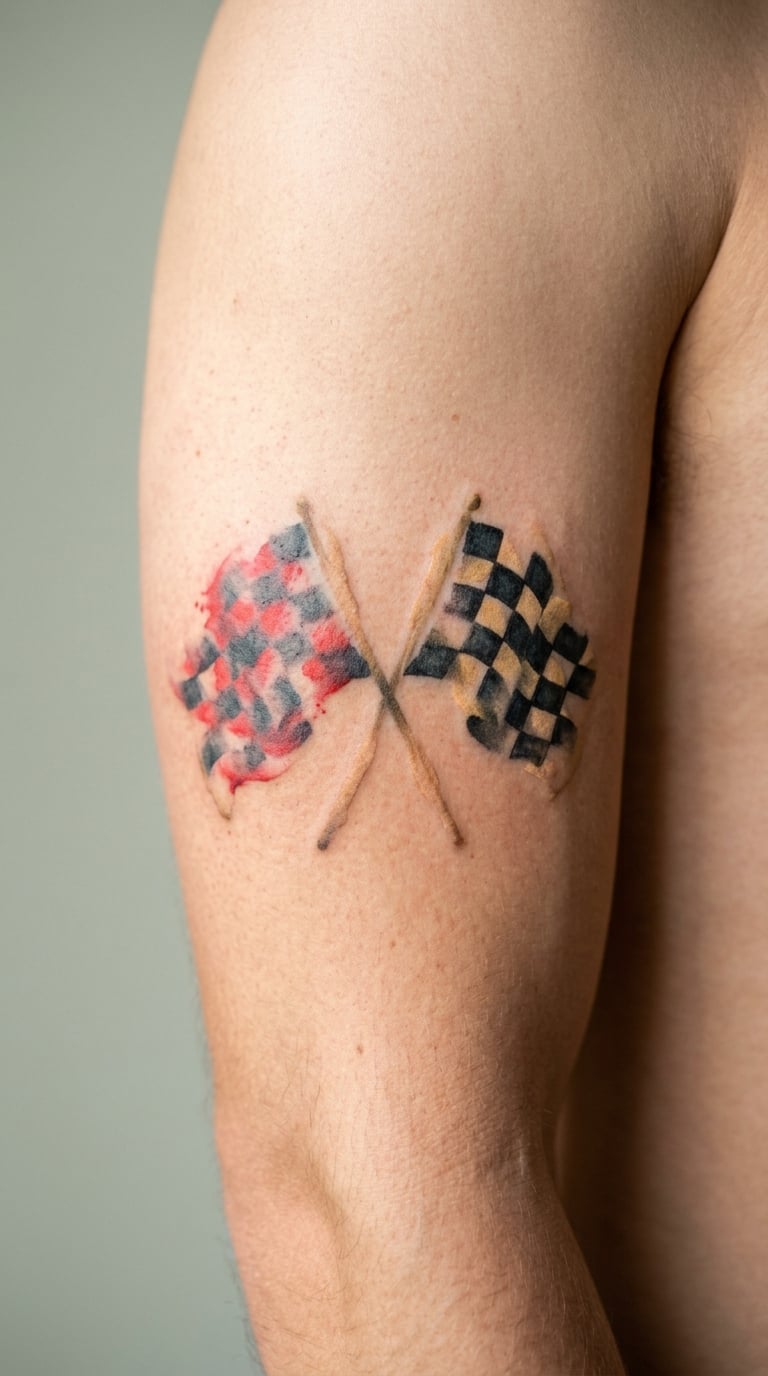
Two flags or a ribbon, rendered in loose watercolour with soft edges bleeding into clean black line at the bottom. This is the celebratory option in the list. Watercolour suits a race you finished and felt good about, where blackwork would feel like an invoice.
Placement: outer upper arm, shoulder to elbow · Size: 3 to 4 inches (7.5 to 10 cm) · Style: watercolour with fine line · Pain: medium, longer session and more needle passes on the upper arm.
Make it yours: choose two colours that connect to something else you own. Light pigment sits high in the skin and softens sooner, so expect the edges to drift over the years rather than vanish.
5. Race Bib Number Marathon Tattoo
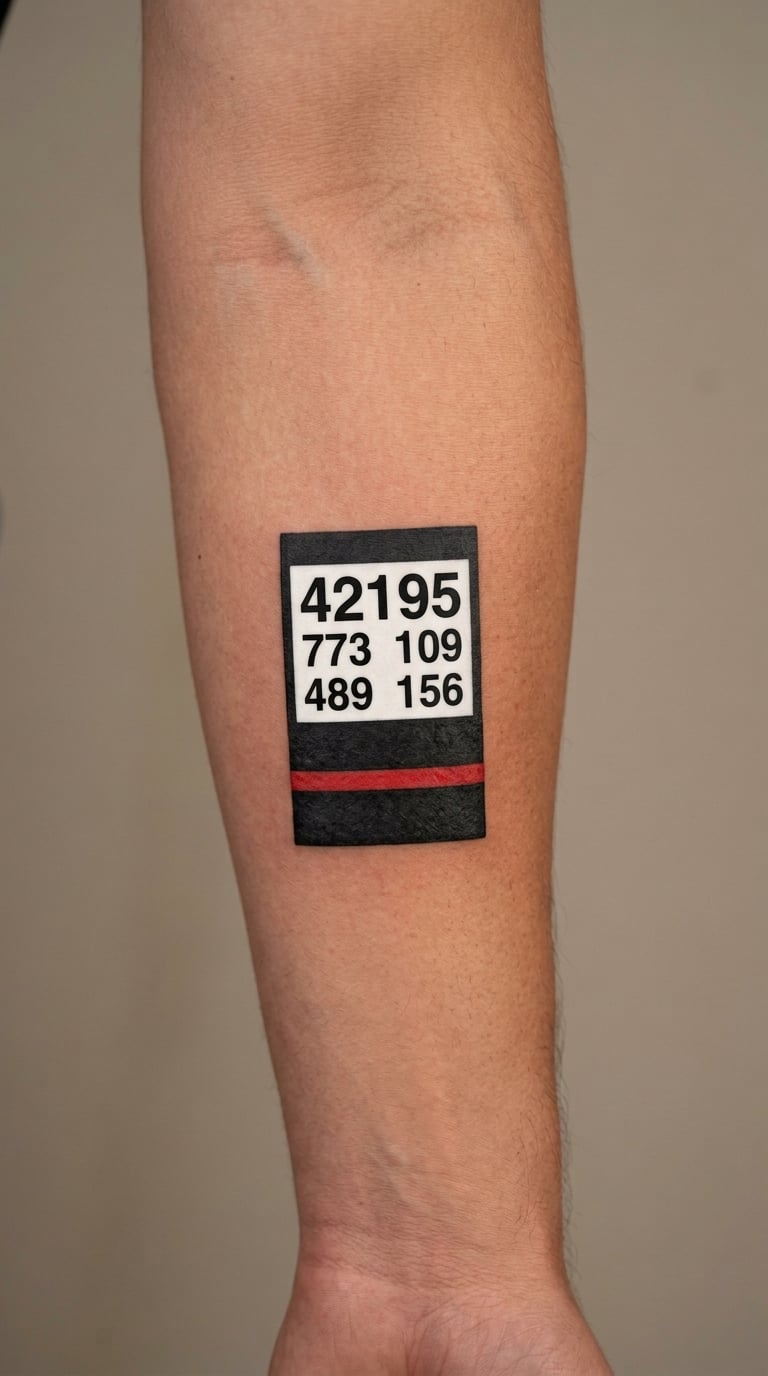
A rectangle with a big number, a small name line above it and maybe a pin or two at the corners. Runners use the bib because it is the object they grabbed off their chest at the start corral and handed in at the finish. It marks having been there, not a message.
Placement: outer forearm, wrist-side, so the number reads when the arm hangs · Size: 2 to 2.5 inches (5 to 6.5 cm) · Style: bold blackwork or block lettering · Pain: low.
Make it yours: use your real number and bib name if you want it on the record, or invent a number if not. Check the block weight at small size, thin numerals vanish once healed.
6. Running Shoe with Finish-Line Laces Marathon Tattoo
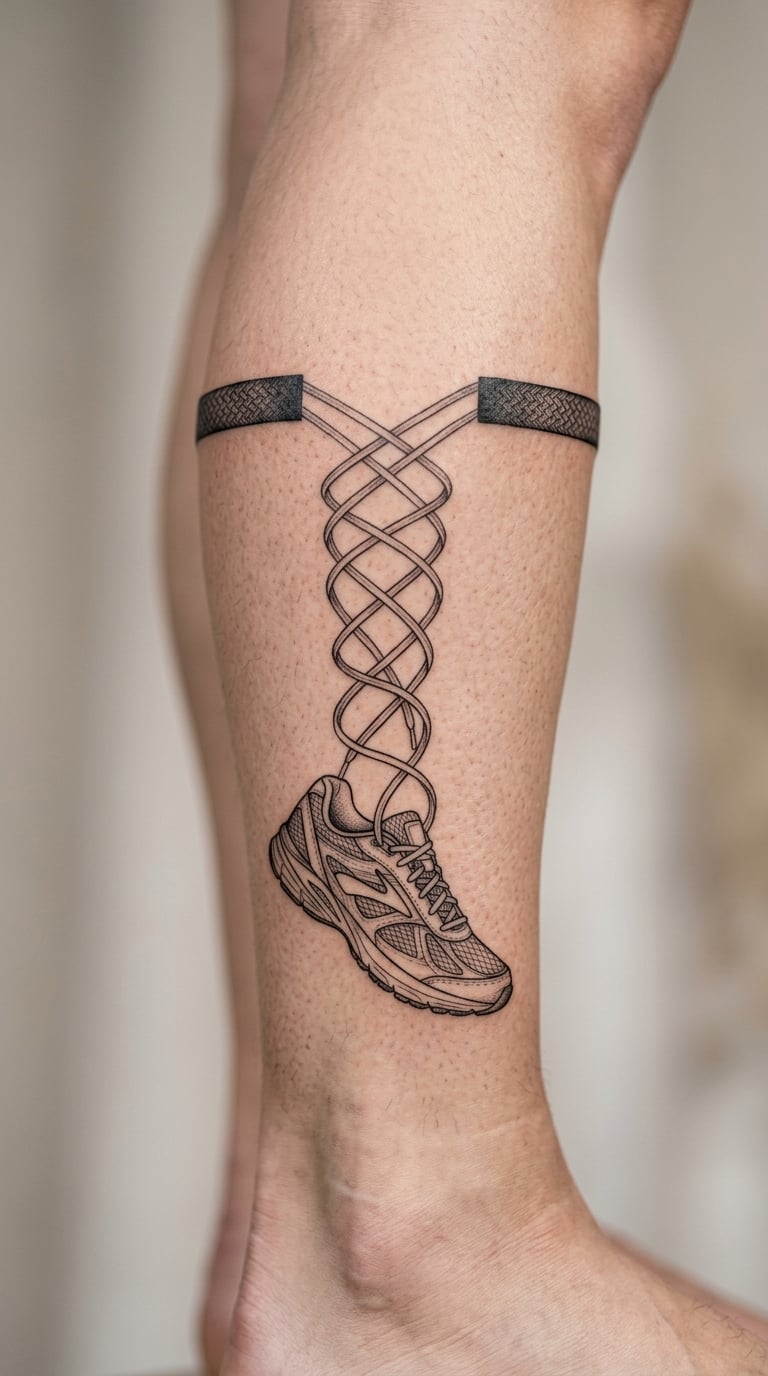
A single shoe in profile, the laces looping down into a finish-line band beneath it. The shoe is the object runners know best and the design is easy to keep simple, which is why it works small. One shoe reads better than a pair, a pair turns into clutter below 3 inches.
Placement: outer lower calf or inner calf · Size: 3 inches (7.5 cm) minimum for one shoe · Style: fine line blackwork · Pain: medium on the calf, and expect sensitivity where your sock or shoe collar sits while it heals.
Make it yours: give the artist your actual shoe as a reference so the sole pattern and heel tab are recognisable to you, even if nobody else spots it.
7. Mountain-to-Sea Marathon Sleeve Design
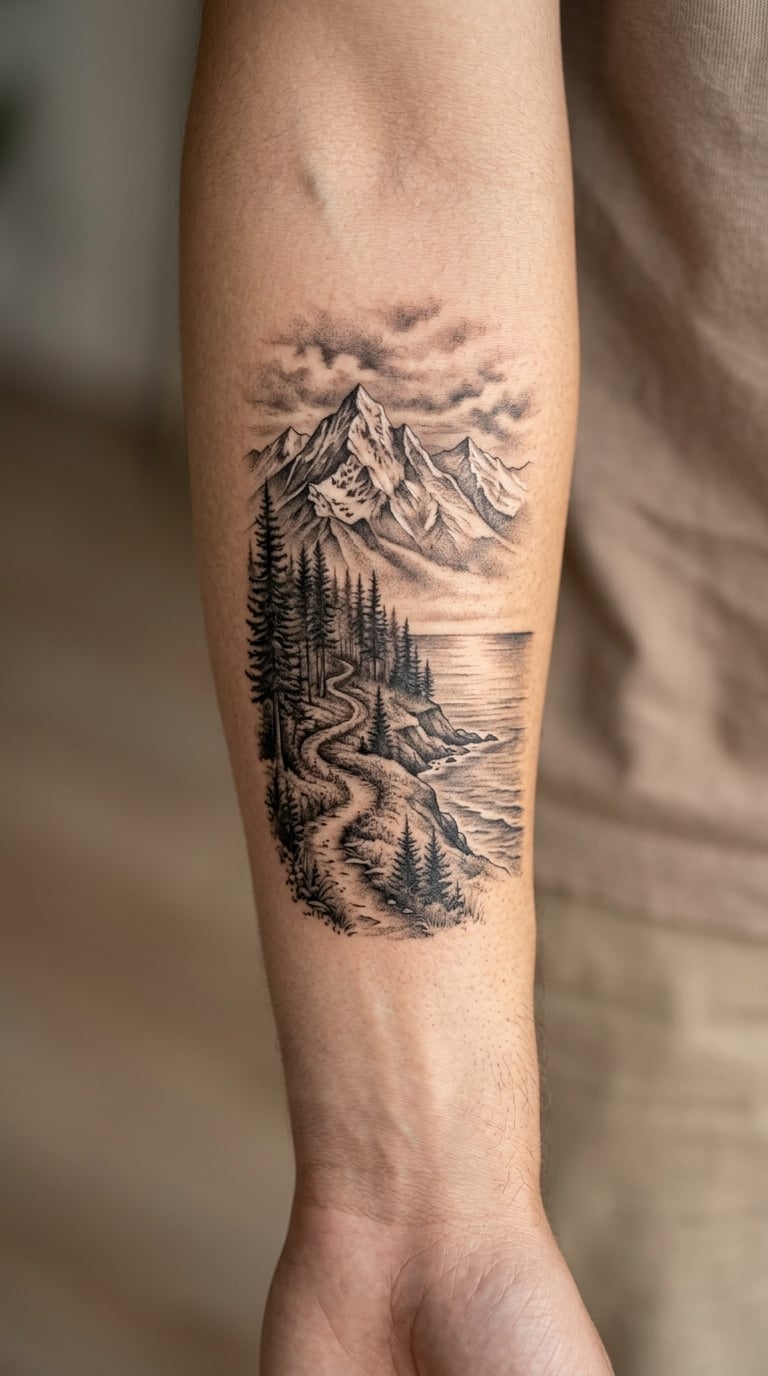
A compact terrain scene: a ridgeline, a treeline, a stretch of coast, stacked in shallow depth. It suits someone whose races have not all looked the same, coastal and mountain races rather than one flat city course. It is also a natural anchor for a larger arm piece later.
Placement: outer forearm or outer upper arm, depending on the scale you want · Size: 5 to 6 inches (13 to 15 cm) for the full three-band scene · Style: micro-realism in black and grey · Pain: medium; long sessions on the forearm get uncomfortable in waves rather than one spike.
Make it yours: name the races that shaped the terrain, for example the climb that broke you and the flat last ten. Leave room at one end so a second piece can join the scene later.
8. Heart-Rate Finish-Line Marathon Tattoo
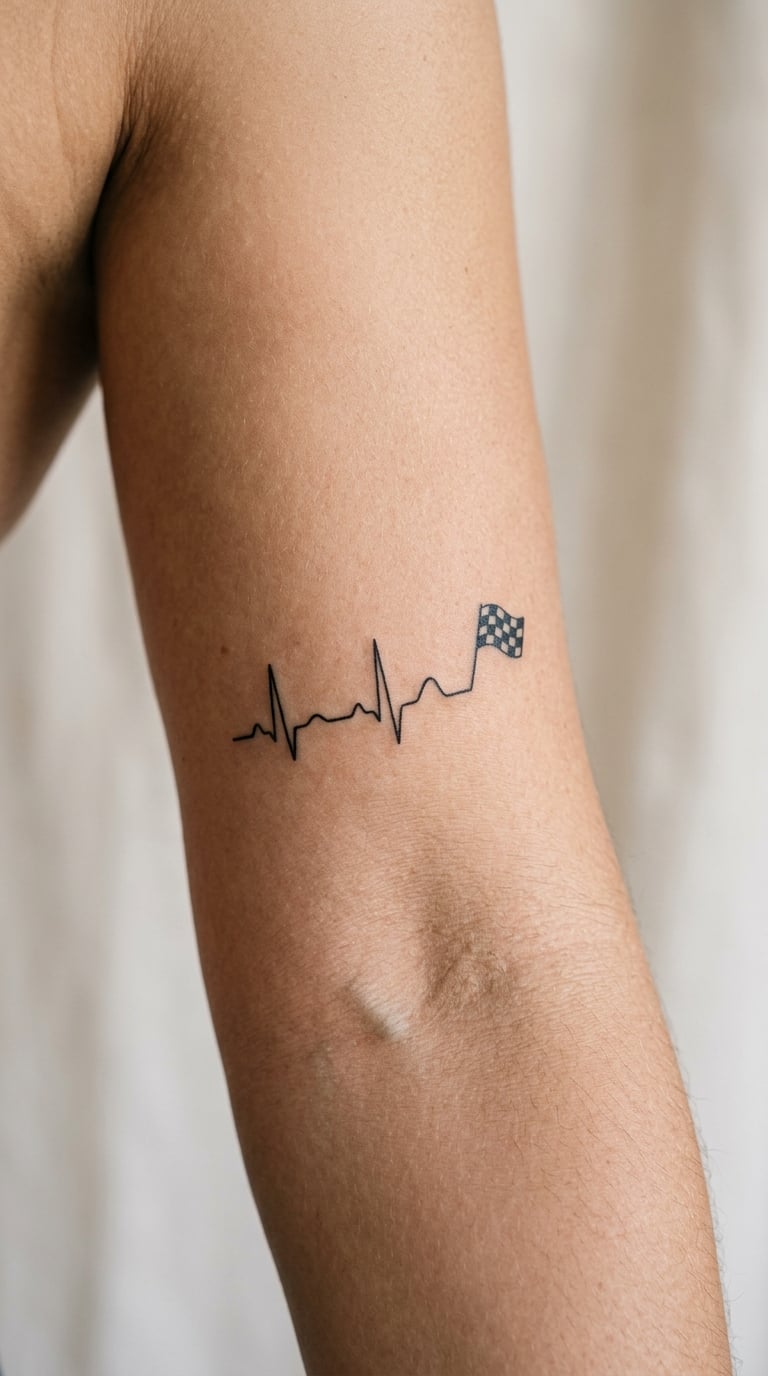
A flat heartbeat line that climbs, spikes once where the effort peaked and resolves into a small finish flag. It reads as a training readout, effort over distance, and nothing more. The line is a data shape, not a claim about your health.
Placement: inner forearm near the elbow crease, or the wrist · Size: 3 inches (7.5 cm) long · Style: minimal line, one accent colour optional · Pain: medium near the elbow crease, a genuinely tender spot.
Make it yours: export a real heart-rate file from a watch and hand it to the artist. The irregularity of a genuine trace is what separates this from a stock heartbeat line.
9. Four Finishes Marathon Tattoo
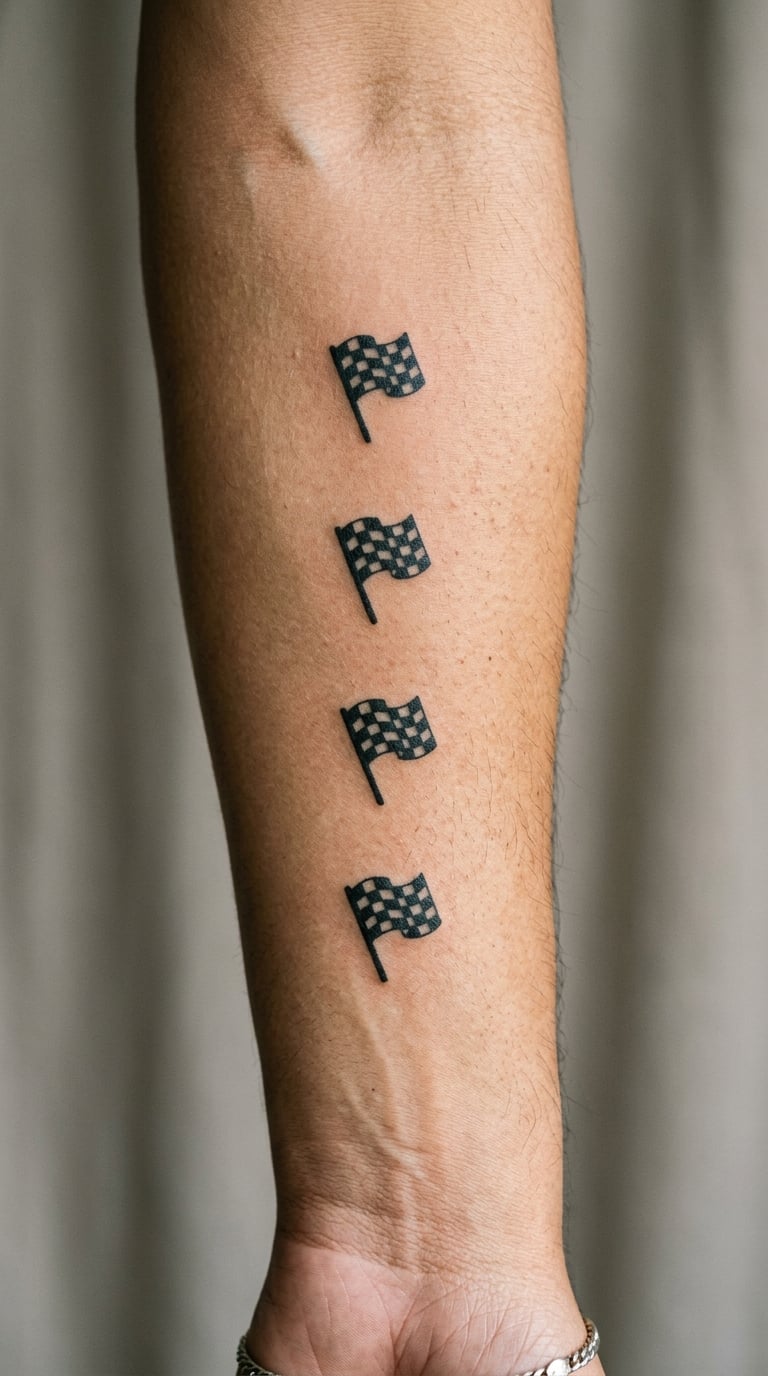
Four identical tiny finish icons in a row, one for each marathon finished, with a fifth space left open. Runners with a stack of finishes usually want a system that grows rather than a single large piece. A tallied design, one commemorative tattoo plus a small mark for every marathon after it, makes a collection legible at a glance.
Placement: inner forearm in a spaced row, or stacked along the outside of the forearm · Size: 1 inch (2.5 cm) each, with 1/4 inch of skin between · Style: minimal icon · Pain: low.
Make it yours: keep the icon identical every time and add the year under each one, so a fifth session simply extends the row rather than redesigning it.
10. Marathon Route Heart Tattoo
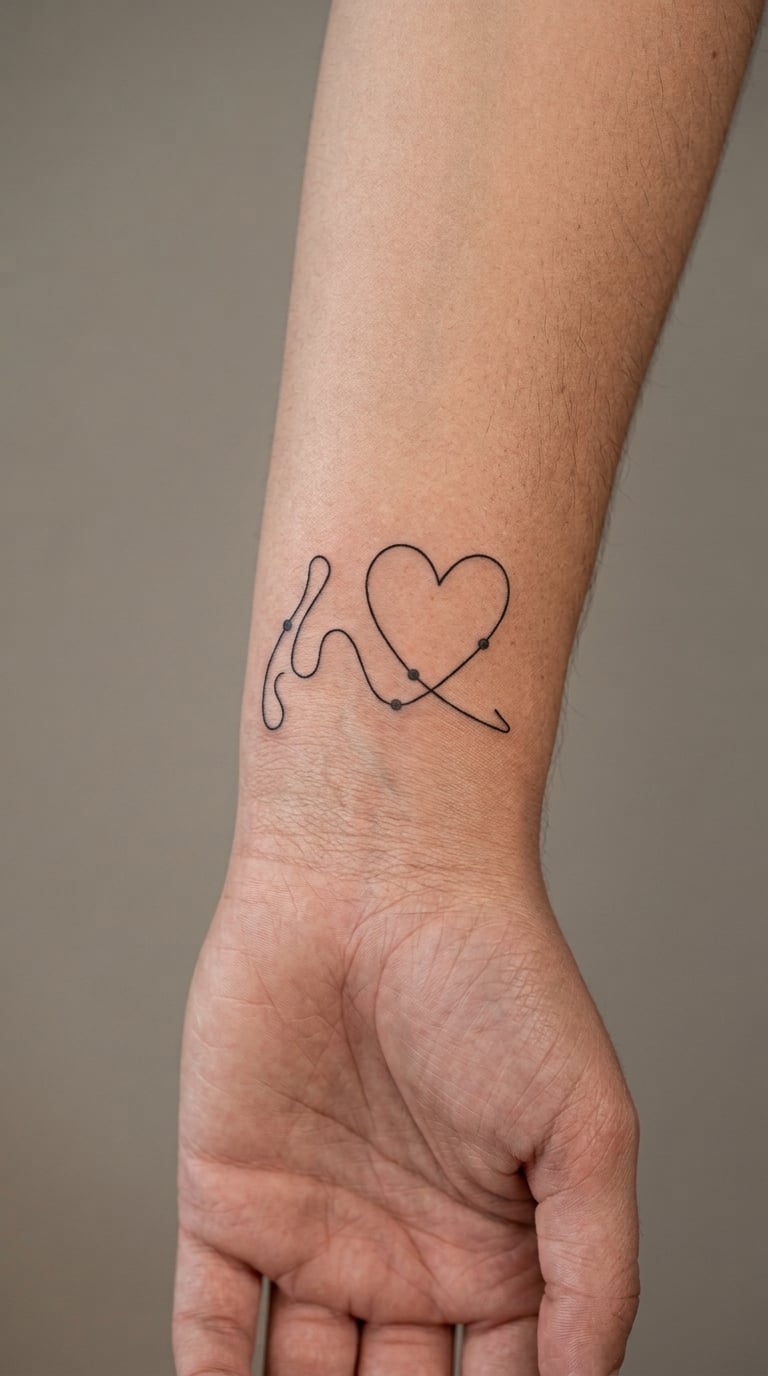
The outline of a heart, and inside it the line of your course looping and doubling back the way a race route does. It looks like a heart because the shape is a heart, not because it means something romantic. Runners usually pick it as a compact way to carry a long shape on a small area of skin.
Placement: inner wrist or inner forearm · Size: 2 to 2.5 inches (5 to 6.5 cm) · Style: fine line · Pain: medium on the wrist, near the bone and next to your watch strap.
Make it yours: three interior checkpoints work better than twelve, since fine detail inside a small outline fills in with scar tissue over time. Ask the artist to keep the interior line one unbroken stroke.
11. 26.2 Script Marathon Tattoo
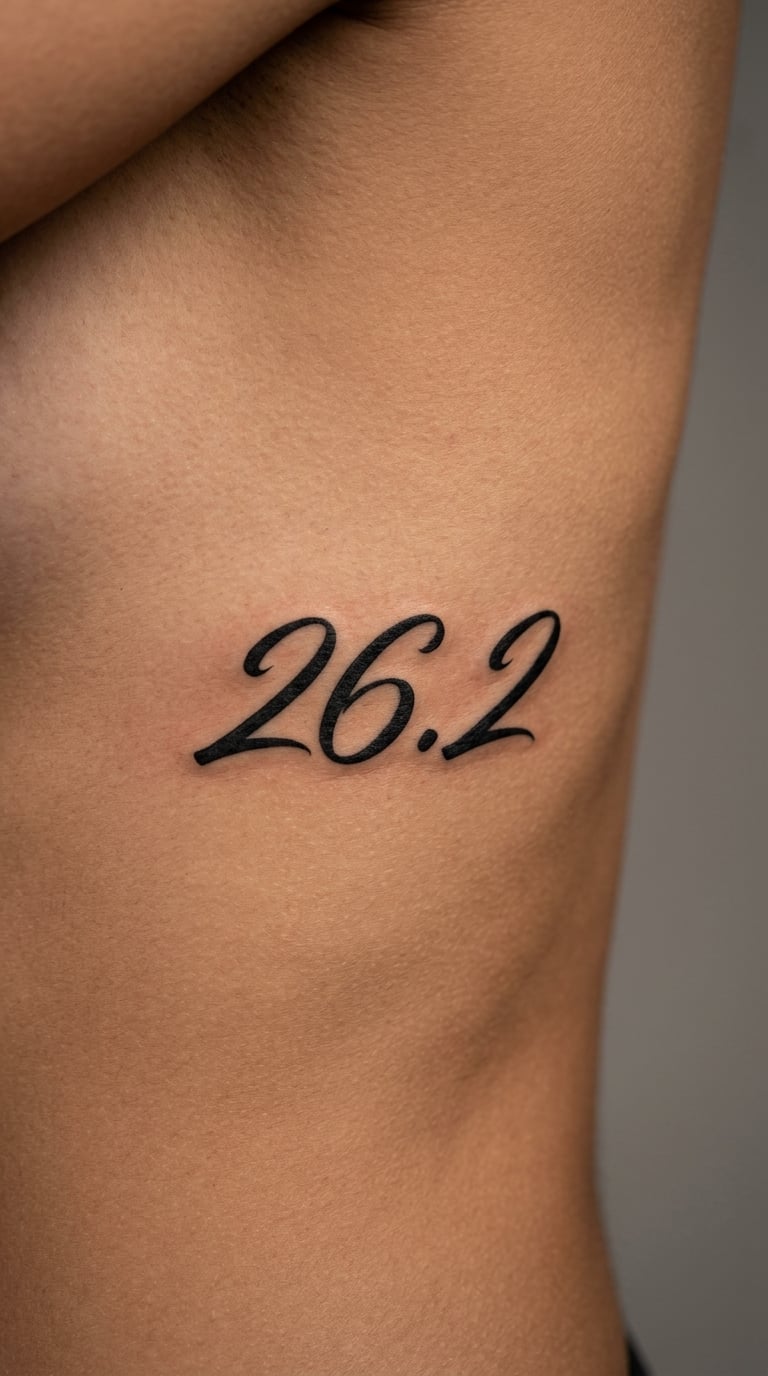
26.2 in flowing script, or the same figures in a clean sans-serif block. The script version feels like a signature you signed at the finish. The block version reads more like a label, sits flatter and stays crisper. Pick based on the rest of your ink rather than which looks better in a photo.
Placement: side of the ribs, running vertically, or the side of the forearm · Size: 2 inches (5 cm) tall for script, 1.5 inches in block · Style: brush script or minimal sans-serif · Pain: high on the ribs, bone and thin skin, and it goes deep.
Make it yours: choose the script before the session and ask to see it drawn at full size on paper. Thin script tails on the ribs are the first thing to blur, so keep the stroke generous rather than delicate.
12. Traditional Marathoner in Motion Marathon Tattoo
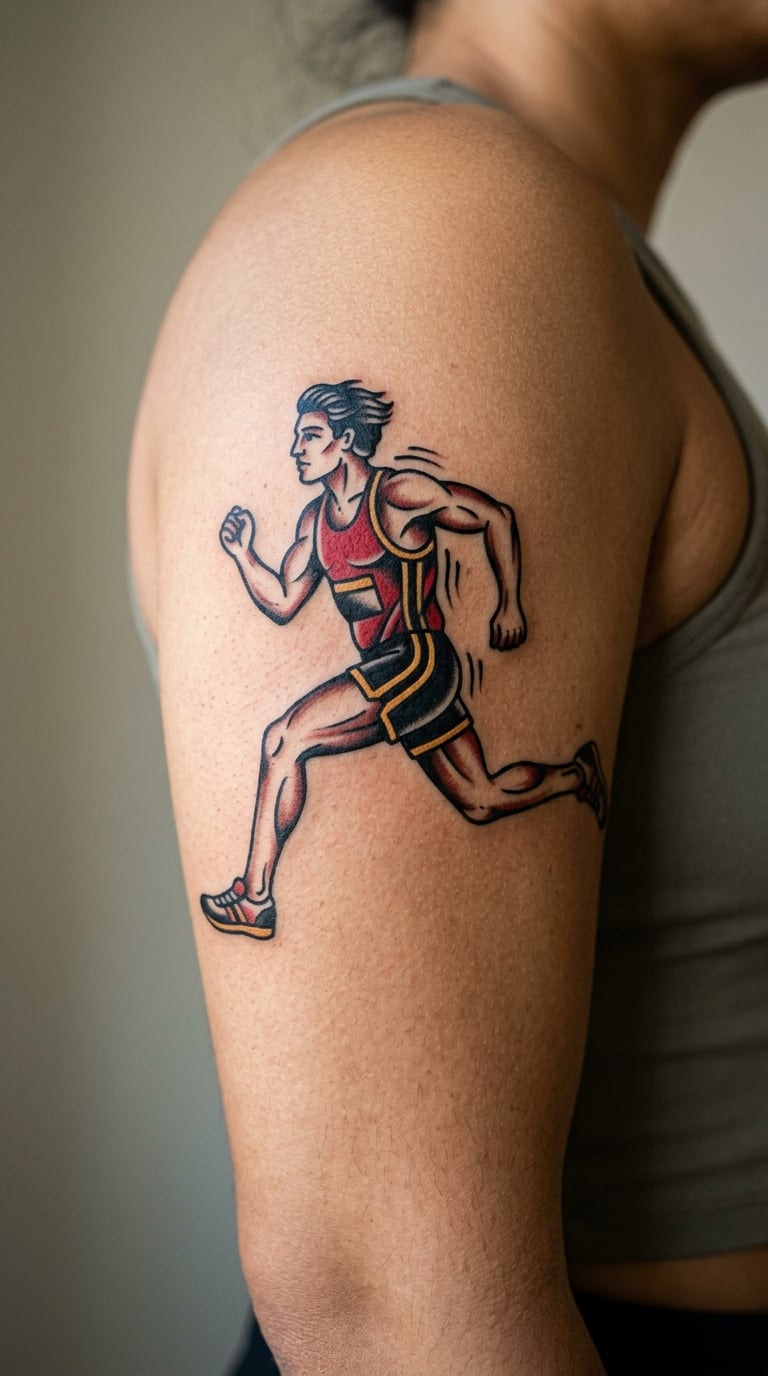
A runner mid-stride with heavy black outlines and flat colour, in the old-school style that came from sailors and gym culture. Bold outlines survive body movement and decades of sun better than soft shading, which is the practical argument for traditional when the subject is a person in motion.
Placement: outer upper arm, deltoid to mid-bicep · Size: 4 to 5 inches (10 to 13 cm) tall · Style: traditional or neo-traditional · Pain: medium, though colour packing in the background takes the longest.
Make it yours: describe the pose rather than the meaning, forward lean, one arm driving, a specific shoe. That detail is what keeps it from reading like clip art.
13. Water Bottle Milestone Marathon Tattoo
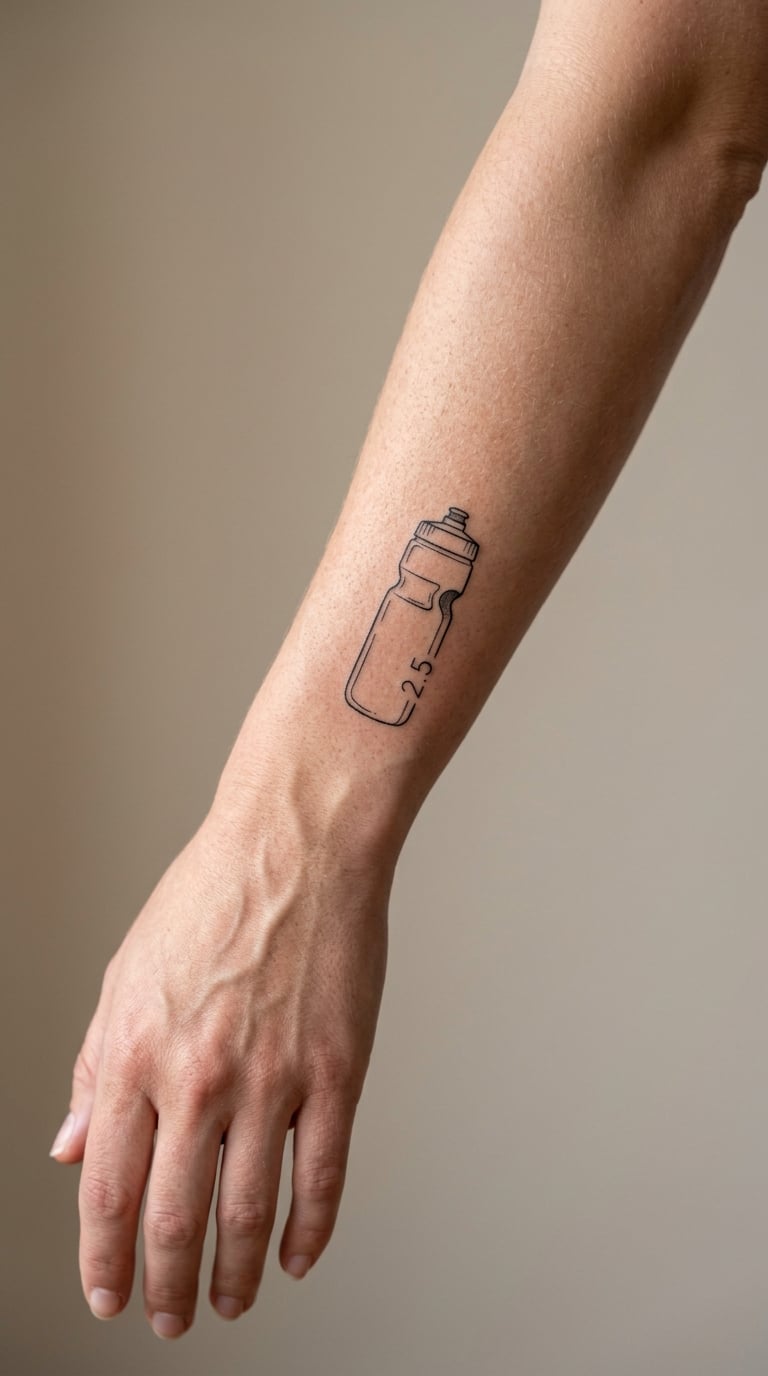
A soft-drink bottle with a screw cap and a mileage number beside it, done in clean line work. It is an honest object rather than a grand symbol. The number is whatever you want it to be, the miles in a training block, a lifetime total, one very specific week.
Placement: outer forearm or the flat of the upper inner arm · Size: 2.5 inches (6.5 cm) tall · Style: fine line realism · Pain: low.
Make it yours: write the number in plain digits, no thousands separator, so it stays legible once healed. Two small condensation drops beside the bottle are a nice touch and cost you nothing extra.
14. City Skyline Race Marathon Tattoo
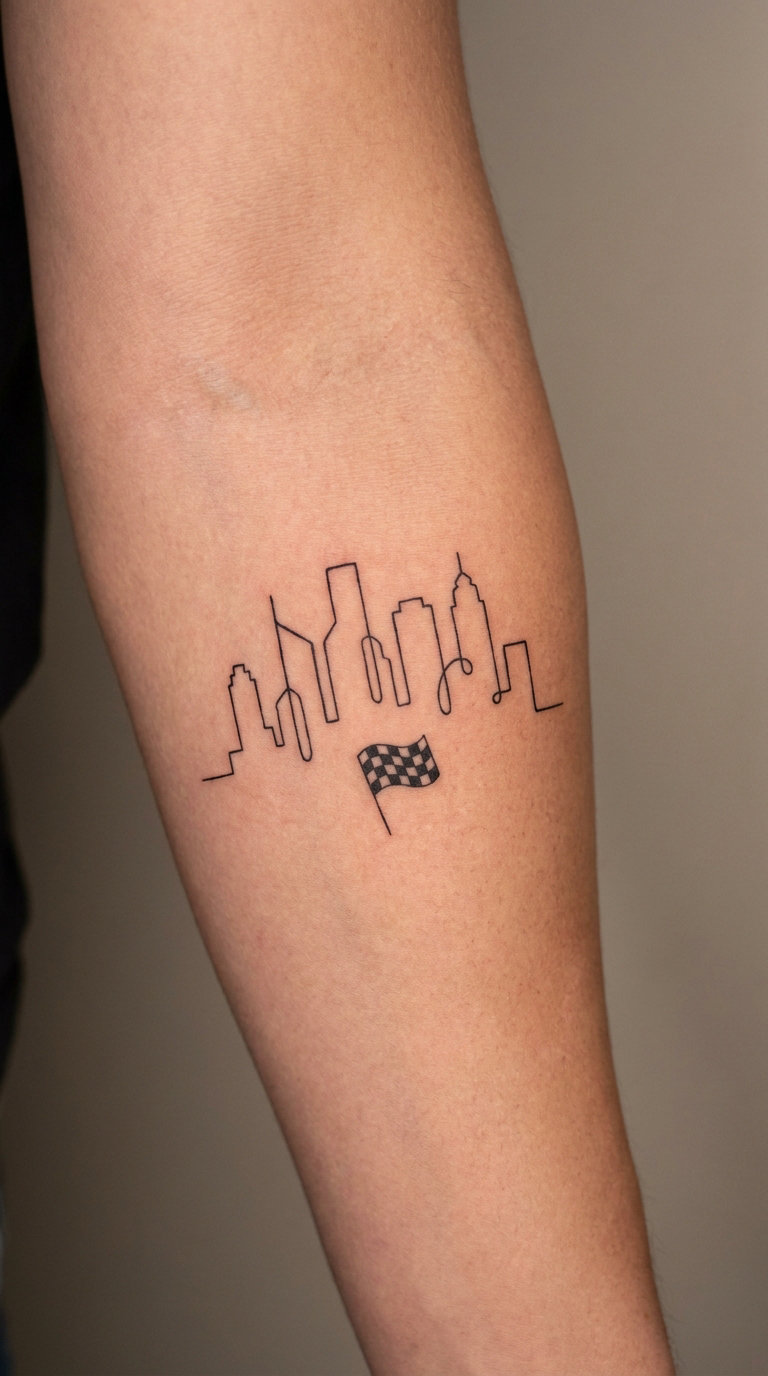
A compact skyline of the race city, drawn as an outline rather than a photograph, with a small finish flag tucked underneath. It commemorates a destination race, the city you travelled to run. Pick your own landmarks, the ones you actually recognised at mile 12 when the road turned.
Placement: outer forearm, set horizontally, or the chest · Size: 4 inches (10 cm) wide · Style: fine line illustrative · Pain: low on the forearm, medium on the chest.
Make it yours: keep the skyline to four or five buildings and add one icon that only locals would read, a unicorn finial, a park gate, the bridge where the course turned. A single specific detail beats a generic full-city outline every time.
15. Dotwork 26.2 Marathon Tattoo
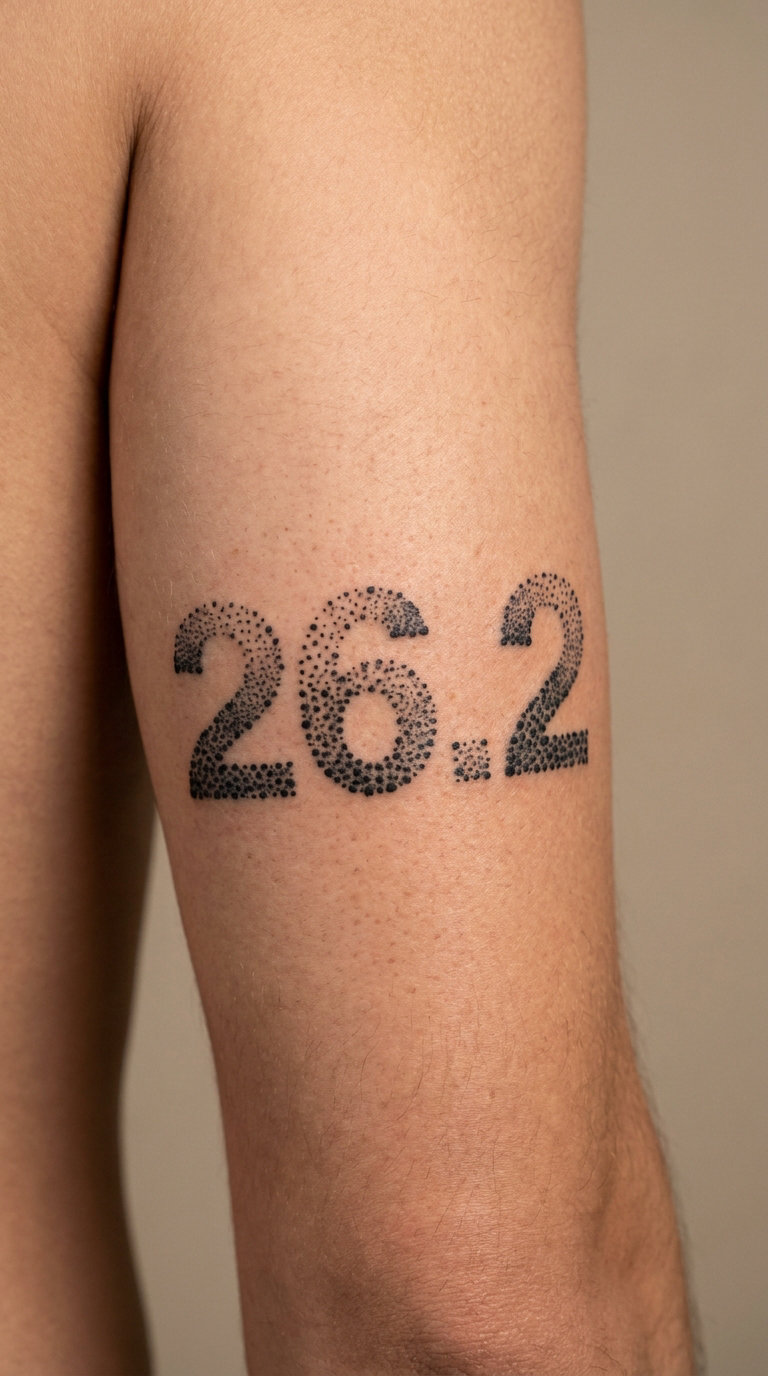
The figures 26.2 built entirely from dots, with the density shifting so the numbers hold their shape. Dotwork is the most forgiving way to render something hard-edged in something soft. Because the whole design is one texture, it ages evenly instead of losing one element while the rest holds.
Placement: upper arm, outer forearm, or the calf · Size: 3 inches (7.5 cm) wide · Style: dotwork, sometimes mandala framing · Pain: medium, dotwork is slow and needs more passes than line work.
Make it yours: check dot size in the artist’s stencils. Dots under half a millimetre can be hard to tattoo evenly and are the first thing to soften, so ask for the number to run larger with coarser dots.
16. First-Marathon Postcard Marathon Tattoo
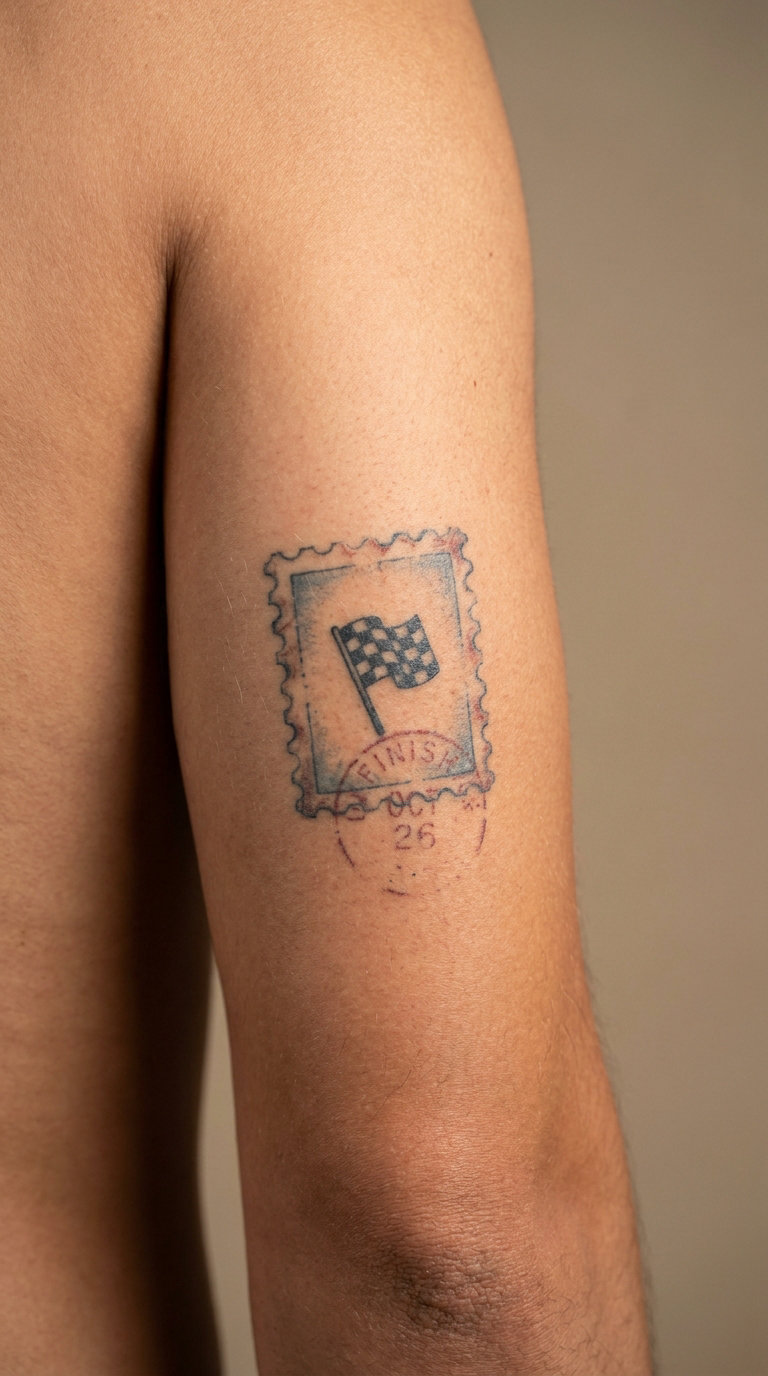
A stamp-shaped rectangle with a perforated edge, a small finish icon inside and a date along the bottom, printed in one or two muted colours. It works as a keepsake, a fixed postcard from a city you are not going back to. First marathons get more of these than any other race.
Placement: outer upper arm, inner forearm, or the ankle · Size: 3 inches (7.5 cm) wide · Style: vintage illustrative, stamp or ticket style · Pain: medium.
Make it yours: put the city, the year and your first-marathon date on it, then stop there. Perforated edges need a steady needle, so expect a longer session than the design’s size suggests.
17. Marathon Relay Baton Marathon Tattoo
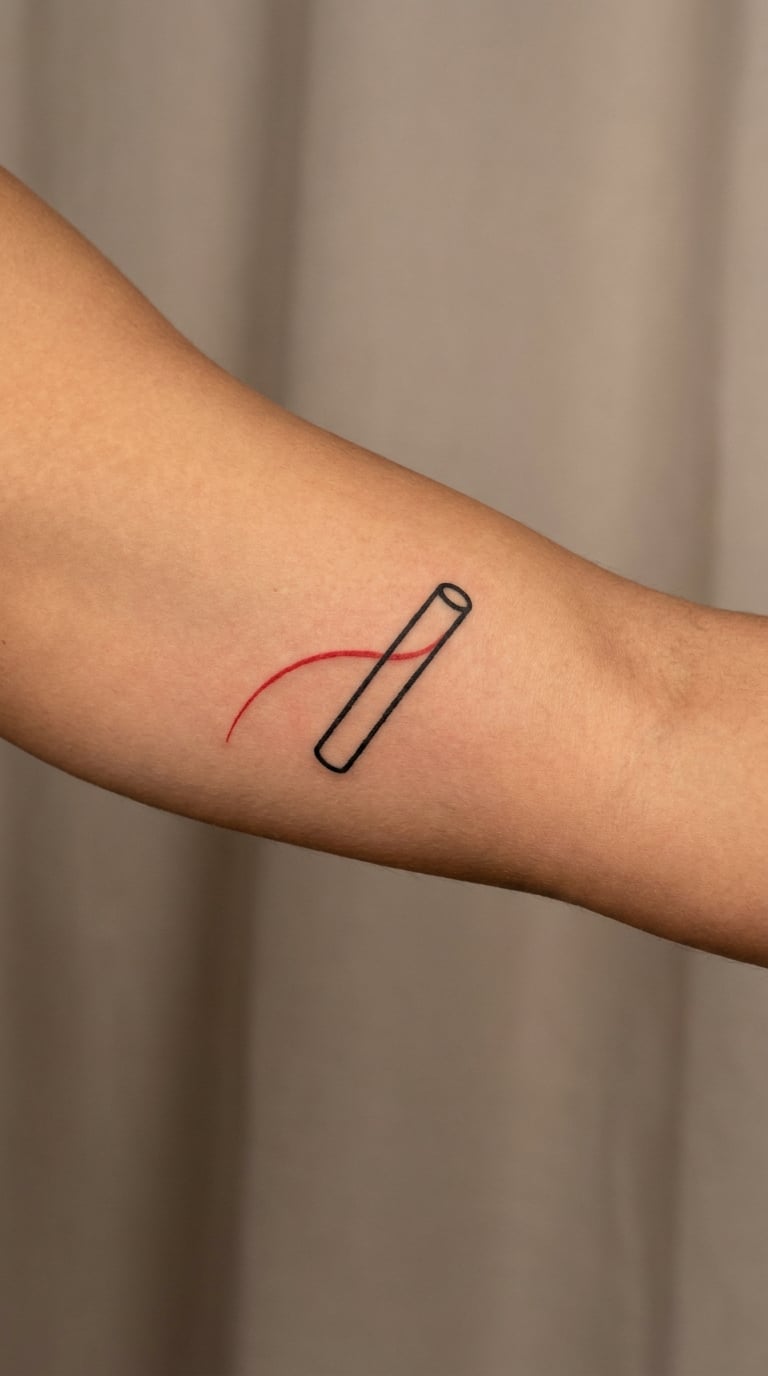
A short baton wrapped by a single motion line, no runners, no flags. Relay runners pick it because the baton is the object that changed hands, the thing that made the race a team event. It also works as a nod to a training partner if that is who you ran with.
Placement: inner bicep, or the side of the forearm · Size: 2 inches (5 cm) long · Style: minimal line, one accent colour · Pain: low on the inner arm, medium higher up on the bicep.
Make it yours: use your team colour as the single accent on the motion line. A matching runner gets the same baton with the motion line in their own colour, which reads as a pair without looking identical.
18. Track at Dawn Marathon Tattoo
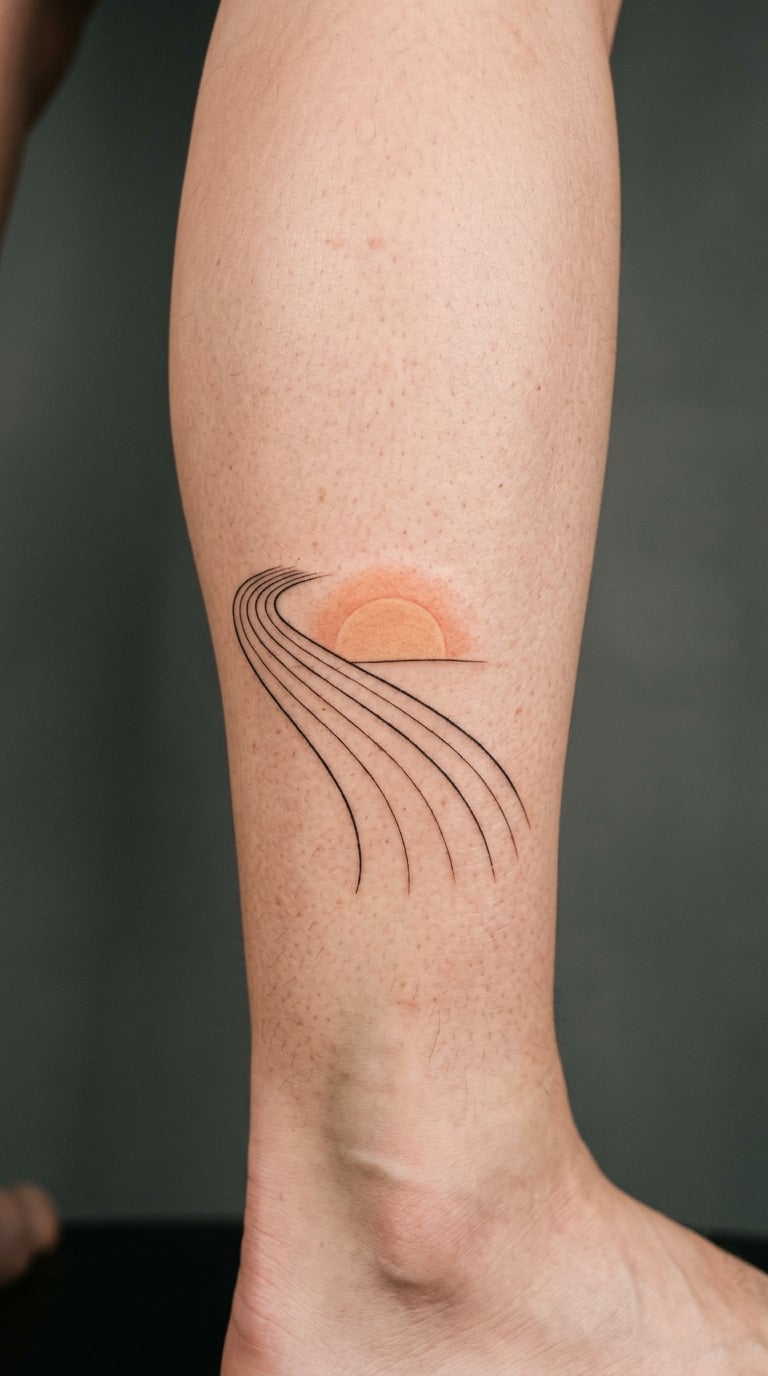
Curved track lanes sweeping around a half-risen sun, mostly black line with a single wash of warm colour. It is the design for early long runs, when the sun comes up and the park is empty. If you enjoy sunrise imagery on its own, our sunrise tattoos with meaning gallery has more in that vein.
Placement: lower calf or inner forearm · Size: 4 inches (10 cm) long · Style: fine line with a soft colour wash · Pain: medium on the calf, and the colour needs more passes than the line work.
Make it yours: add the start time of the run that mattered, in small hand-lettering on the curve. Keep the colour to one hue, two wash colours in a 4-inch space fight each other.
19. Medalling Finish-Line Marathon Tattoo
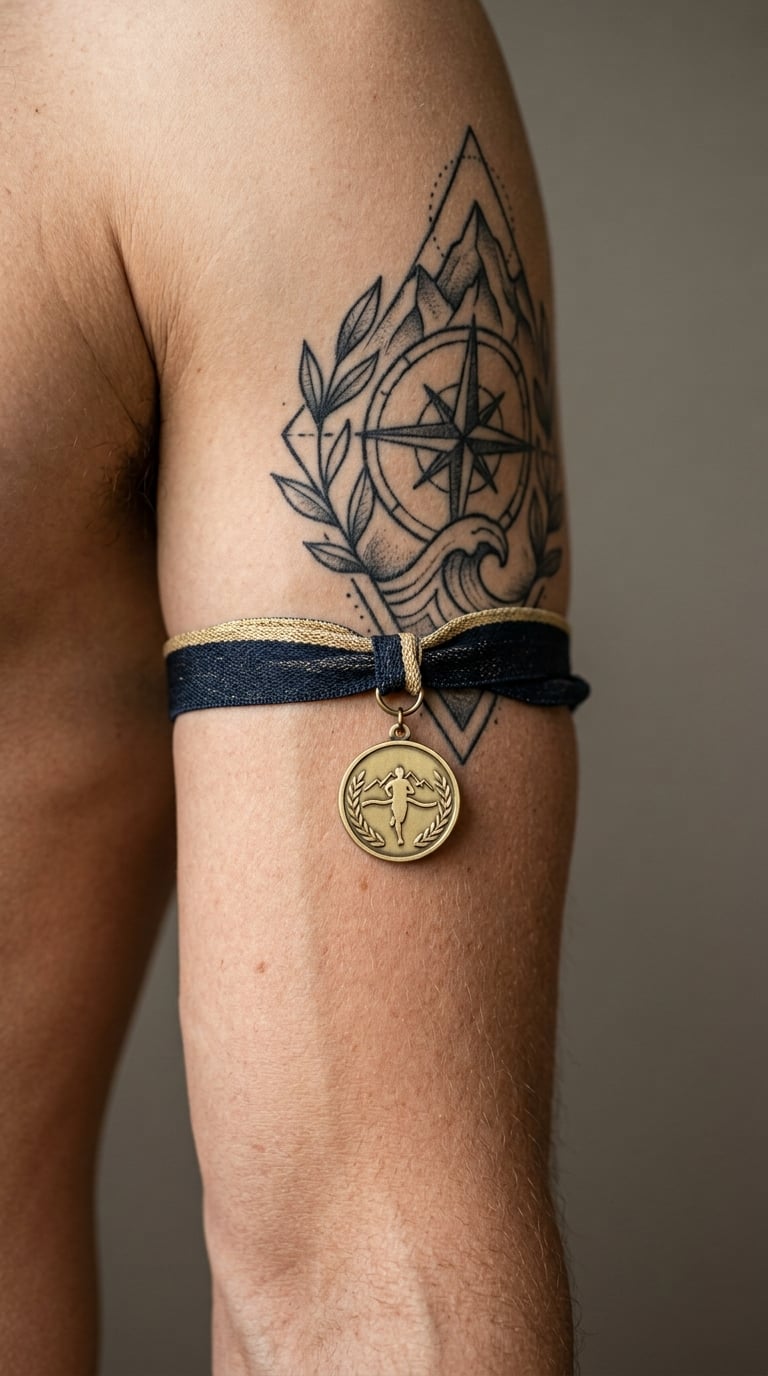
A simple circular medal hanging from a band that doubles as a finish line. Some runners mark the medal they actually earned, others use it for a finish they decided to call their own, a first 26.2 at an easy pace. Both readings are fine and neither is better.
Placement: upper arm, outer forearm, or the back of the shoulder · Size: 2.5 inches (6.5 cm) tall · Style: minimal with one metallic or muted colour accent · Pain: low on the arm, medium on the shoulder blade.
Make it yours: put the year and city on the band rather than inside the circle, where the small type would crowd. Leave the centre plain and let it be a quiet spot.
20. Marathon Elevation Profile Marathon Tattoo
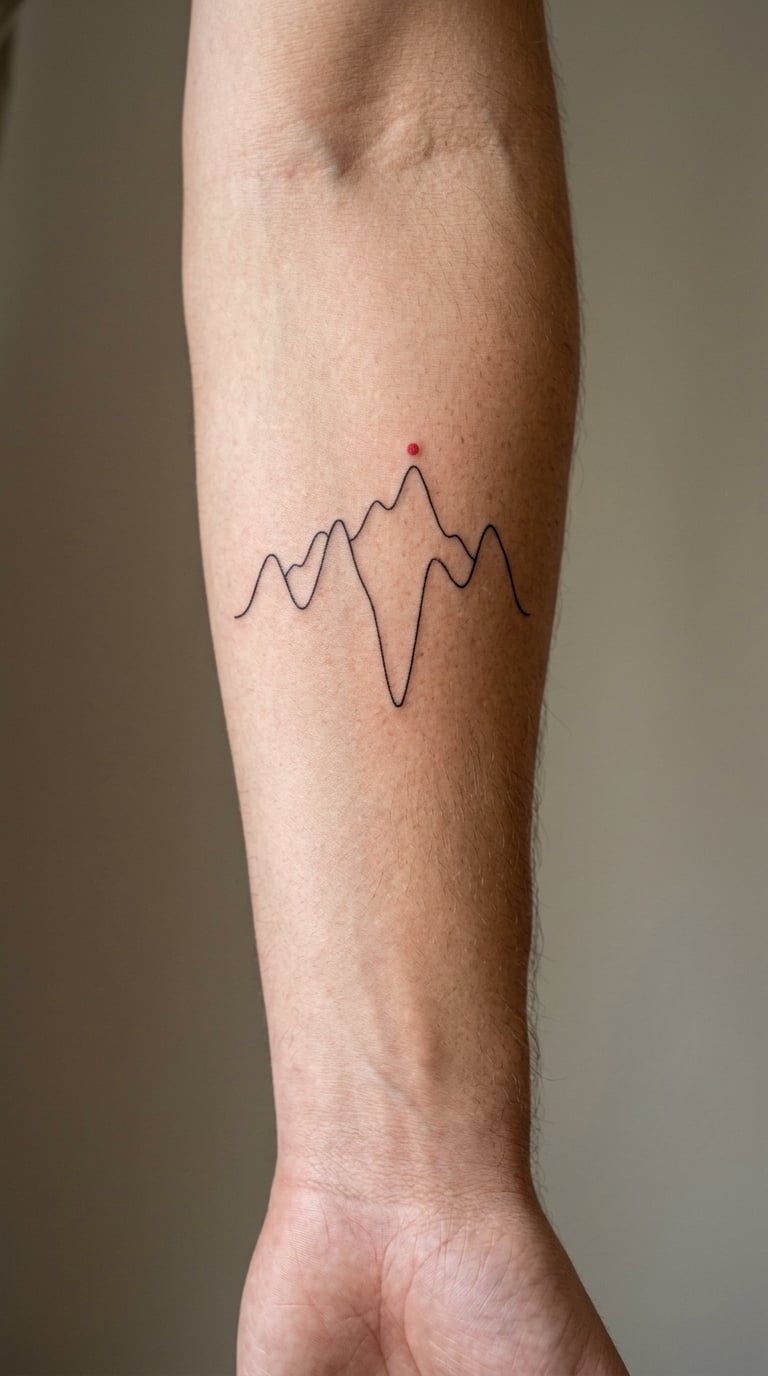
The climb-and-descent graph of one race, drawn as a small hill profile with a single accent at the worst climb. It is the most factual design in the list and the most useful for anyone who wants a race tattoo that looks like data. Every one of these 22 marathon tattoo ideas carries a fact; this one carries a shape you can check.
Placement: outer forearm, the flat of the upper arm, or the calf · Size: 3.5 inches (9 cm) long · Style: fine line data drawing · Pain: low on the forearm, medium on the calf where the skin moves more.
Make it yours: bring the elevation file, not a screenshot, and ask the artist to keep the baseline flat rather than curving with the limb. A flat baseline makes the profile readable at a glance.
21. Matching Four-Person Marathon Tattoos
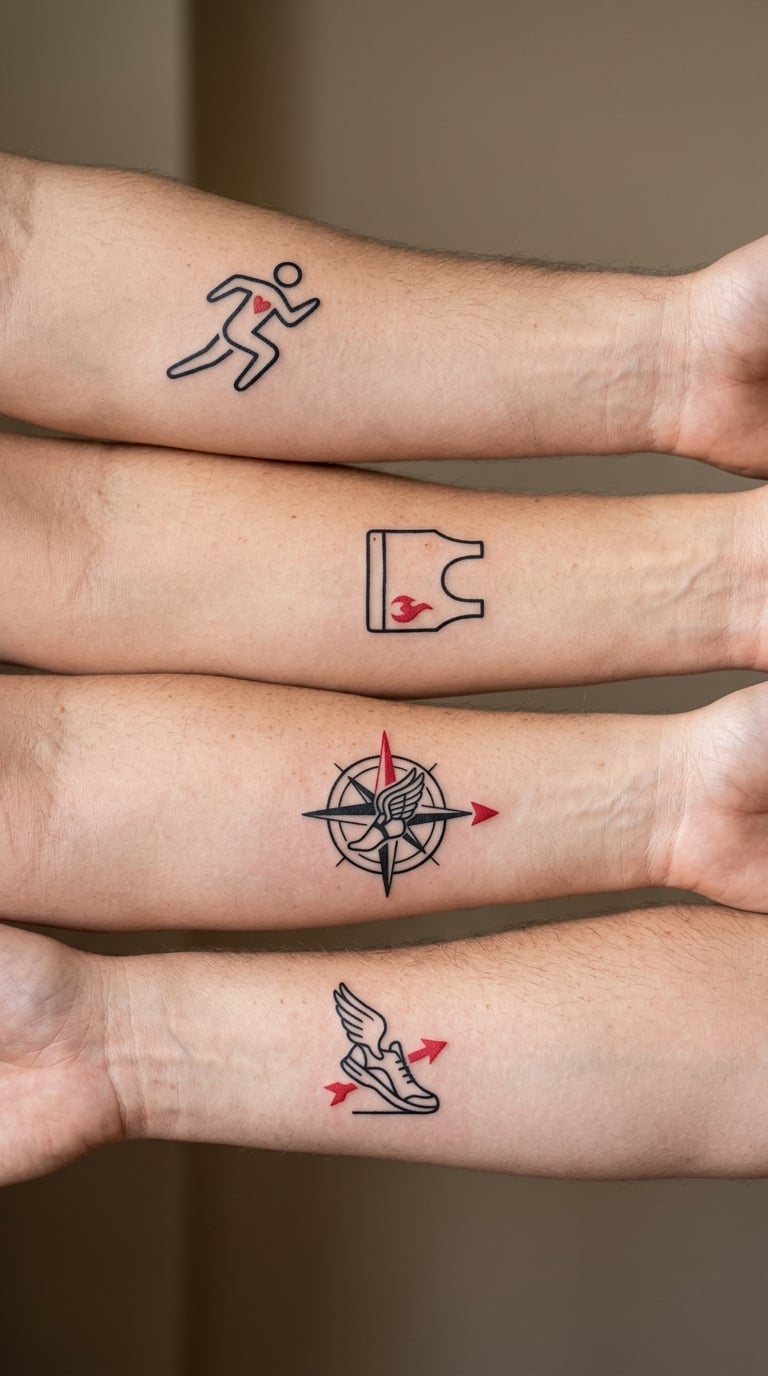
Four runners, four tattoos, one shared line weight and one shared accent colour, each design genuinely different. The format that works best is a common frame rather than a common picture: every piece has the same border or the same small marker in the same colour, and the motif inside changes. For group tattoos more broadly, our matching tattoo ideas for roommates covers the planning side.
Placement: matching inner forearms, or the same spot on the outer arm · Size: 2 inches (5 cm) each · Style: coordinated fine line · Pain: low on the forearm, and low across the board if everyone picks a calm spot.
Make it yours: agree the line weight and accent colour in the group chat before anyone books, and send the same reference to all four artists. Same file, same size, same colour name.
22. Abstract End-to-End Marathon Tattoo
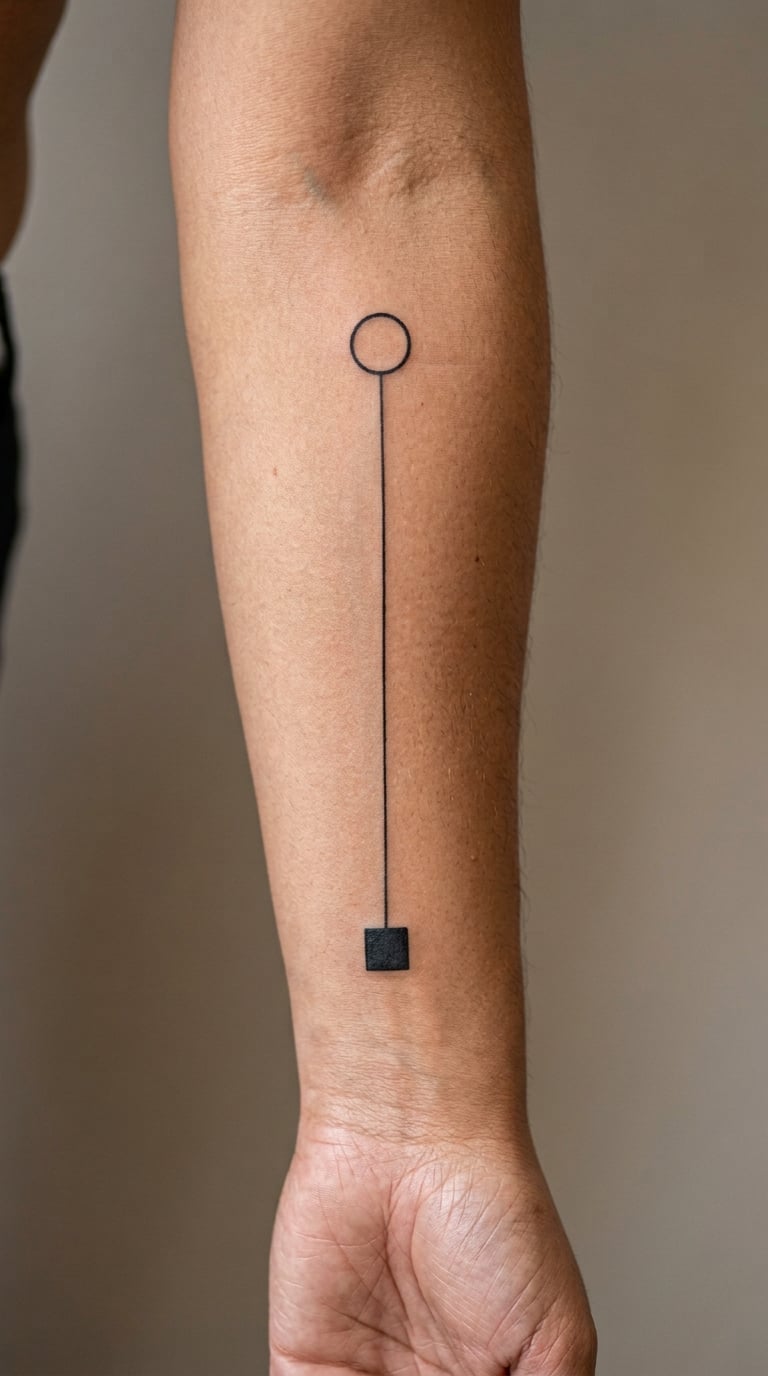
A geometric line that starts at one point and arrives at another, with the distance printed beneath it, and no literal running imagery anywhere. It is the option for someone who likes the achievement and not the clip art. Straight lines also hold their shape better than curves on areas that flex.
Placement: outer forearm or the side of the ribcage · Size: 4 inches (10 cm) long · Style: geometric abstract, single weight · Pain: low on the forearm, high on the ribs.
Make it yours: have the line break into segments for each major race, so the composition tells you how many you have done. Keep every segment the same thickness, mixed weights look like a mistake once healed.
How to Choose the Right Design
Six checks, in the order they actually matter.
- Pick the fact you want to keep. One year, one city, one time, one number. Designs built around a single verifiable detail age better than designs built on a general idea, and you will still recognise it in ten years.
- Budget the size honestly. A number fits in 1.5 inches. A course map needs 4 to 6. If a design will not read at the size you want, the detail has to go, not the size.
- Choose placement before style. The calf takes a route map, the ribs take one short piece and nothing crowded, the inner forearm takes numbers and fine line. Decide the spot, then find the design that fits it.
- Bring a real reference to the consultation. The route file, the bib photo, the exact digits, the font. Artists who stencil from a file produce a different result from artists freehanding off a phone screen.
- Check it against the rest of your ink. People who regret marathon tattoos most often regret the placement, not the picture. Lay the design out with your existing pieces and look at the whole arm before you commit.
- Time the session around your training. There is no single rule for when to run again, and the honest answer comes from your artist and your body. Plan roughly two to three weeks of easy movement and no sweat, sun, pool or compression gear, and do not schedule a race inside the first two weeks of healing.
One more thing runners ask about constantly: if you are chasing a big block, book the tattoo for a deload week, not for the week of a long run. Fresh ink and hard training do not need to happen at the same time. If you also ride, our tattoo ideas for cyclists covers the placement problems that come with a different kind of repetitive movement.
Cost and Session Time
Studios almost always price by the hour, so size drives cost more than detail does. In the US, expect roughly $75 to $150 an hour for an established or senior artist and $40 to $80 an hour for a newer one, with most shops enforcing a minimum of $100 to $150 for any session. A small numeral or a bib number often lands at that shop minimum, which is the flat floor a shop charges no matter how quick the work takes.
As a working range, micro pieces around an inch usually come out at $100 to $200, small designs in the 2 to 3 inch range run $150 to $350, medium work at 4 inches such as route maps and skyline scenes runs $400 to $900, and a detailed piece like the mountain-to-sea scene is quoted per project across several sessions and can pass $1,500.
Session time tracks the same way. Micro pieces take well under an hour. Small designs are usually one session of one to two hours. Medium pieces are commonly two to three hours and sometimes a second session. Colour and watercolour add time rather than size, and touch-ups, travel, and the choice between a senior artist and a newer one all move the final figure, so treat any number here as a starting point and ask for a written estimate before the first session.
Aftercare Basics
- Follow your artist’s aftercare instructions first. They know exactly what they did in your skin, and their advice outranks anything general you read online, including this list.
- Wash gently, twice a day, with clean water and unscented soap. Pat dry with something disposable rather than a towel you use for your face.
- Protect it from sun for the whole healing period. Fresh ink that gets sun early fades unevenly, and a forearm or calf in shorts is exposed every run.
- Keep sweat, pools, hot tubs and compression gear off it. Friction from socks, waistbands and shoe collars matters as much as the ink itself, which is why runners get calf and foot pieces slow to settle.
- Use only the product your artist recommends, thinly. Thick layers of ointment trap heat and slow the settling of the line work.
- Contact your artist, not the internet, about anything unexpected. That includes redness that spreads rather than fading, a line that stays raised weeks later, or a colour that looks wrong. They would rather hear from you early.
Frequently Asked Questions
What size should a marathon tattoo be?
It depends on how many facts the design carries. A number, a bib or a small icon works at 1.5 to 2.5 inches. A course map or skyline needs 4 to 6 inches or the turns and mile markers will blur together within a few years. Measure against the spot, not against your screen.
Can I include my race time, bib number, or finish time?
Yes, and runners tattoo finish times more often than any other detail. The practical rule is formatting: write the time exactly as you want it read, keep the block weight heavy enough to hold, and ask the artist to stencil it at full size before any line work starts. Numbers below half a centimetre tall will not survive.
Are marathon tattoos a good choice for fingers or hands?
They can be, but they are a poor fit for anything detailed. Fingers swell with heat, movement and weather, and a number on a finger looks different every month as the skin stretches. Hands also meet friction, sun and washing all day. If you want marathon ink on a hand, keep it to a single small symbol in a spot your grip does not cover.
How do I personalize a running or marathon design?
Add one detail nobody else would guess: the city, the year, your bib name, the mile where the race clicked, the exact time. Bring the original file rather than a screenshot, and decide the detail before the stencil so it is not squeezed in later. Personal specificity is what separates a keepsake from a stock design.
Will fine-line marathon tattoos fade over time?
Fine line softens first. Expect hairlines to thicken slightly, tiny mile markers on a course map to fill in, and thin script tails on the ribs or wrist to blur within five to eight years. Bold blackwork and dotwork hold their edges much longer. Bigger is the real protection: line weight and total size matter more than anything you do afterwards.
For a first marathon tattoo, keep it small and factual: the 26.2 script, a bib number or a single finish icon. You will want to add more later, and a compact first piece leaves room for it. If you already have running ink, these 22 marathon tattoo ideas are built to extend a set, so a route map or an elevation profile joins what you have without fighting it. Bring the date, the file and the number, and the design writes itself.