
24 Puerto Rican Tattoo Ideas: Bold Cultural Designs (October 2026)
Puerto Rican tattoos are designs rooted in Taíno heritage, Spanish colonial history and modern Boricua pride. The most requested are the coquí frog, the Taíno sun, the hibiscus, the leatherback turtle, geometric bands and the island outline. Some clients want a bold ancestral piece; others want something small enough for an inner wrist. Both can be culturally accurate, and both can age well if the scale and the line weight are matched to the body part.
Below are 24 puerto rican tattoo ideas, each with what the design looks like, where it sits best, a realistic size, and one honest note about how it ages. Planning something like this takes four to six weeks of lead time, so if you are heading to a family trip or a celebration, book the appointment first.
24 Puerto Rican Tattoo Ideas: Quick Guide
Here is the whole list at a glance. Use it to narrow things down before you sit down with an artist.
| Idea | Style | Best placement | Size | Pain |
|---|---|---|---|---|
| 1. Taíno sun | Blackwork, fine line | Outer forearm | 3-4 in | Low to medium |
| 2. Coquí frog | Black and green watercolor | Inner forearm | 2.5-3 in | Low |
| 3. Flag map | Colour realism | Shoulder blade | 4-5 in | Medium |
| 4. Old San Juan wall | Fine-line blackwork with pastel wash | Upper arm | 3.5-4 in | Medium |
| 5. Maraca trees | Fine line, black and grey | Outer forearm | 4 in tall | Low |
| 6. Salsa dancer | Black and grey realism | Calf | 5 in | Medium |
| 7. Coffee branch | Botanical fine line | Inner forearm | 3 in | Low |
| 8. Taíno petroglyph | Solid black geometric | Wrist | 2 in | Low to medium |
| 9. Cueva de la Olla | Layered line and watercolor | Forearm | 4-5 in | Medium |
| 10. Flamenco dancer | Bold black silhouette with red | Shoulder blade | 5-6 in | Medium |
| 11. Palm tree and sun | Minimalist line with muted colour | Ankle | 3 in | Low |
| 12. La Fortaleza | Black and grey with red door | Chest | 5-6 in | Medium |
| 13. Igneous rock | Abstract blackwork | Side rib | 4-5 in | Medium |
| 14. Vejigante mask | Traditional blackwork | Upper arm | 5 in | Medium |
| 15. Barceloneta waves | Black and blue watercolor | Forearm | 3.5-4 in | Medium |
| 16. Coffee cup and mountains | Line art | Inner arm | 2.5-3 in | Low |
| 17. Small island outline | Fine line with one accent | Wrist | 2-2.5 in | Low |
| 18. Tropical bird | Micro-realism with colour accent | Forearm | 3.5-4 in | Low |
| 19. Music notes | Fine-line calligraphy | Forearm | 3-3.5 in | Low |
| 20. Colorful casita | Illustrative colour | Calf | 4 in | Low to medium |
| 21. Rainforest fern | Dotwork and fine line | Side of forearm | 3.5-4 in | Low |
| 22. Bioluminescent bay glow | Abstract colour | Shoulder blade | 5-6 in | Medium |
| 23. Taíno sun and moon | Bold geometric blackwork | Upper back | 6-7 in | Medium |
| 24. Heritage map | Detailed map work | Outer arm | 6-7 in | Medium |
1. Taíno Sun Symbol
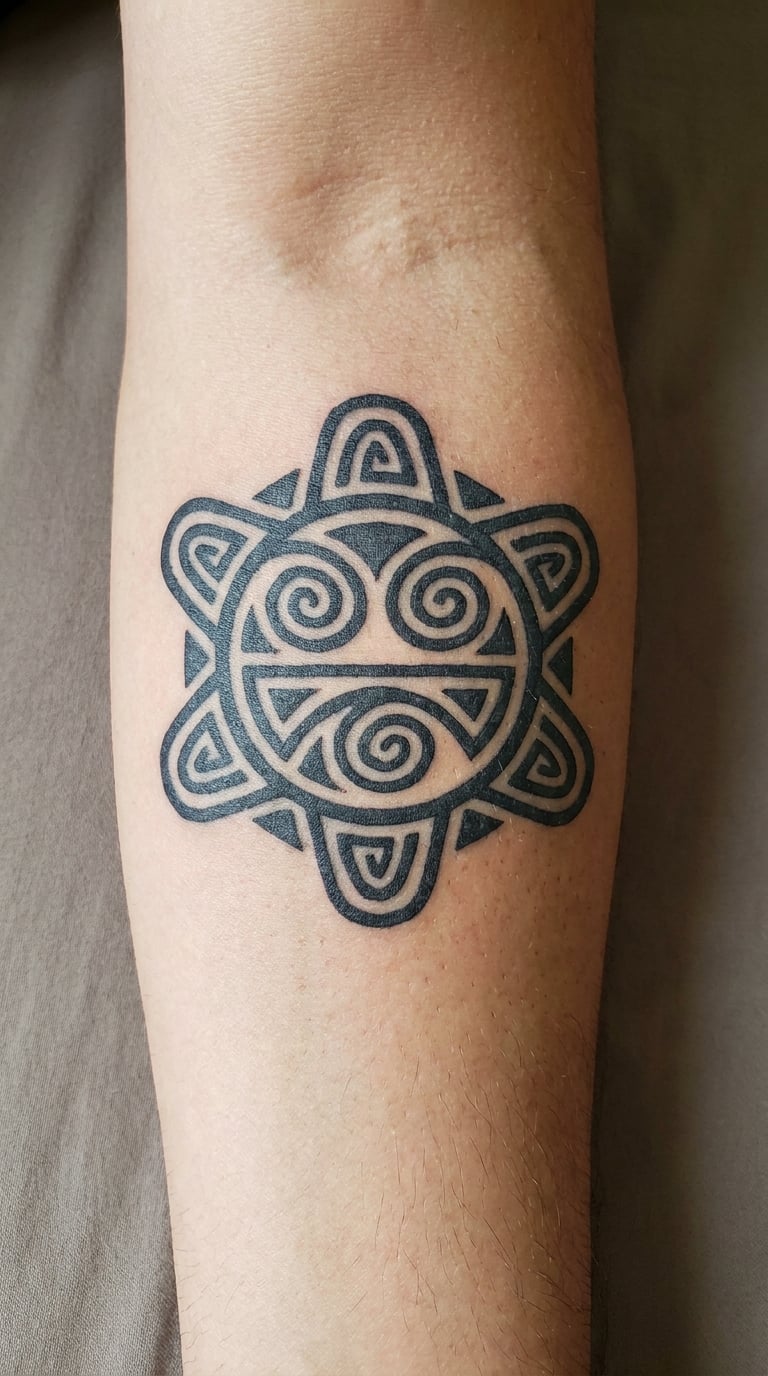
The Taíno sun, often called the Sol de Jayuya, is drawn as a circle of triangular rays with a face at the centre. Most artists build it from straight geometric linework so each ray stays crisp and even.
It stands for the sun as a life-giving force and, for many clients, for Borikén itself, the Taíno name for the island. Ask for the true documented form rather than a generic tribal band.
Placement: outer forearm, upper arm, or the top of the shoulder. Size: 3 to 4 inches across. Style: bold blackwork, or fine line with a single red centre.
Pain: low to medium on the forearm. The centre face detail softens and needs a touch-up more often than the rays.
Make it yours: put a real date inside the centre circle, or add your hometown’s Taíno name beneath the rays in small lettering.
2. Coquí Frog
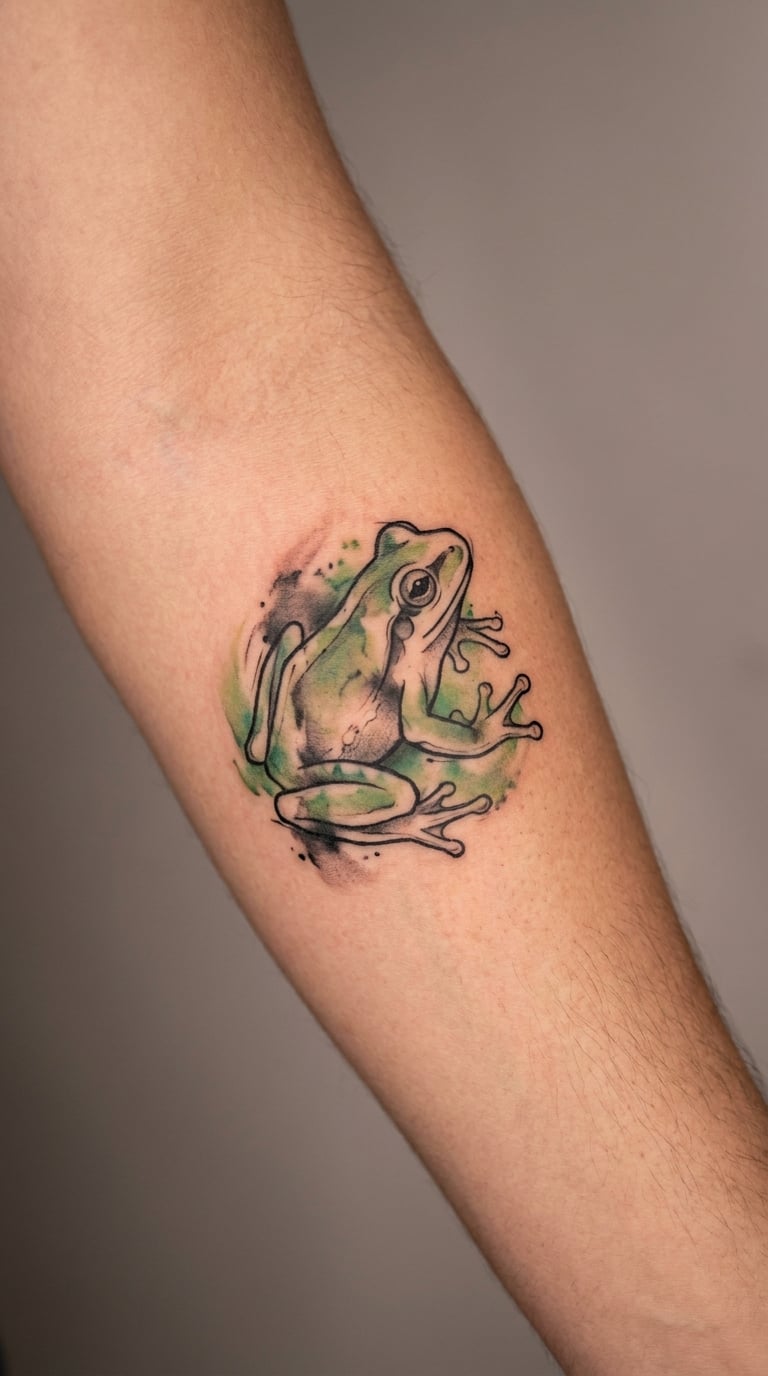
A coquí frog tattoo is a plump tree frog with wide eyes and a slight smile, usually in black with soft green shading on the back. Artists report it as the single most requested Puerto Rican design, especially among Boricuas living on the mainland.
The coquí is the endemic Puerto Rican tree frog and the sound of its call is treated almost like a person in Taíno folklore, so the frog carries warmth, home and resilience more than any single symbol.
Placement: inner forearm, ankle, or behind the ear. Size: 2.5 to 3 inches long. Style: black and green watercolor, or soft realism.
Pain: low on the inner arm, a little more on the ankle bone. Very fine eye detail is the first thing to blur over the years, so keep it simple if you want it to stay crisp.
Make it yours: have the frog perched on a single maraca leaf, or pair it with a matching tiny one on the other wrist.
3. Puerto Rican Flag Map
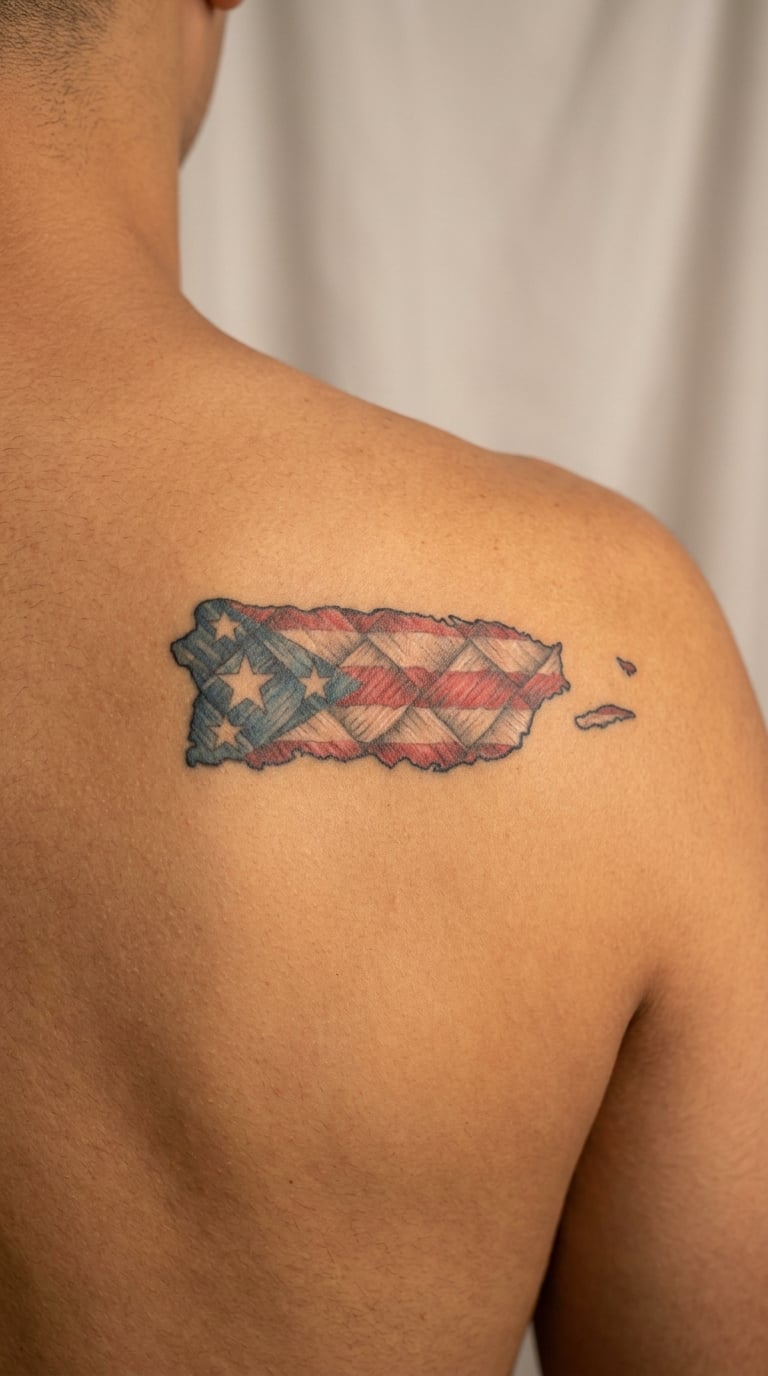
This design takes the outline of the island and fills it with restrained flag colours, usually a red stripe and a small blue triangle rather than the whole flag at full saturation. Full-colour versions exist, but they photograph heavily and fight with the map outline.
Clients pick it as a straightforward statement of origin, and for US citizens it carries extra weight given the flag’s history of prohibition under federal law and the decades of reclaiming it back.
Placement: shoulder blade, outer arm, or calf. Size: 4 to 5 inches wide. Style: illustrative colour with clean black edging.
Pain: medium on the shoulder blade, medium to high on the ribs. Small colour fills inside the outline need a second visit once healed.
Make it yours: add a small star cluster for the constellation your family name comes from, or a wave under the island for the town you grew up in.
4. San Juan Old City Wall
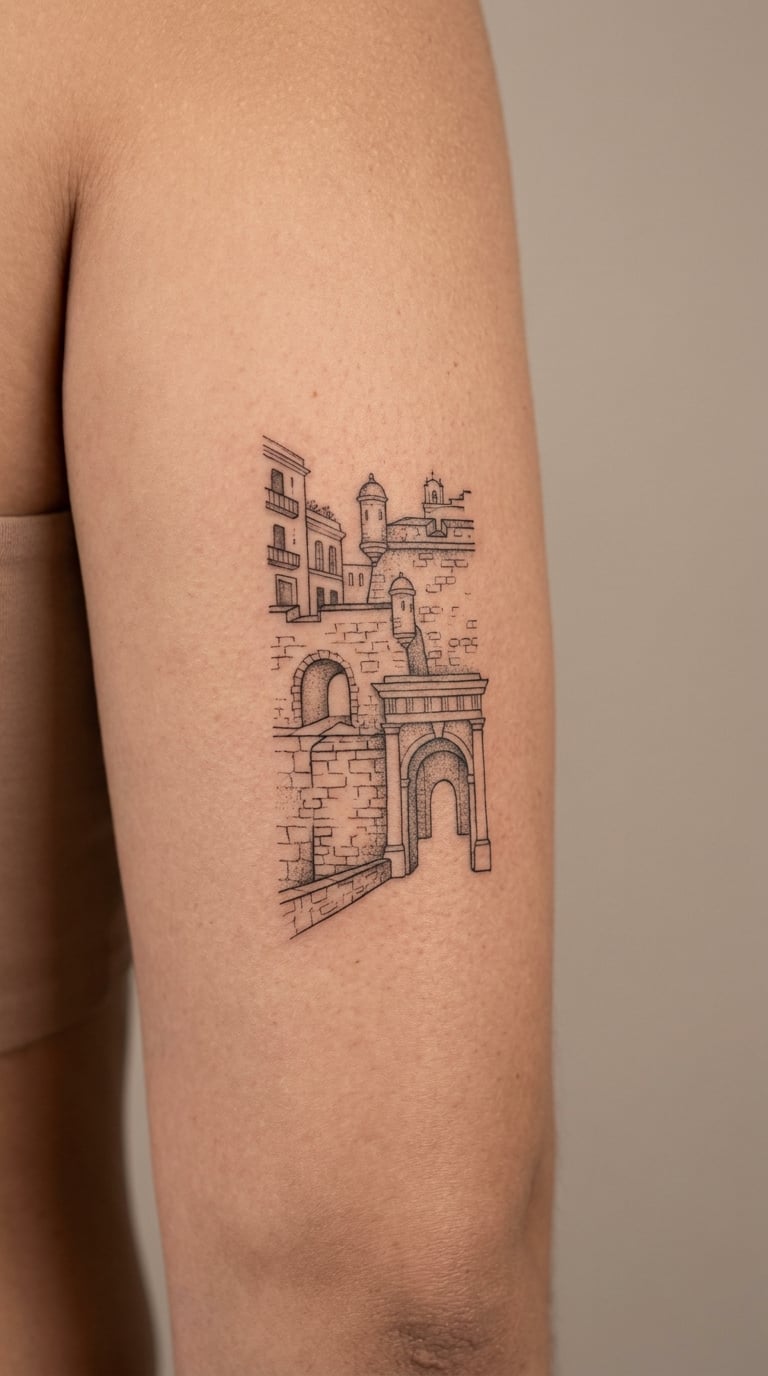
An Old San Juan wall piece shows the pastel fortification facades, arched doorways and balconies in fine black line with a soft wash of pink, yellow or mint. One or two buildings with strong arches read better than a full row.
It is a place tattoo, picked by people who miss the walk down Fortaleza Street or who carry a specific doorway from childhood.
Placement: outer upper arm or along the forearm. Size: 3.5 to 4 inches long. Style: fine-line blackwork with a light pastel wash.
Pain: medium on the upper arm. Window and balcony details are small and grey over a decade of sun; a slightly heavier line here is worth asking for.
Make it yours: request the arch from your family’s building rather than a famous one, and put the street name underneath in a thin script.
5. Maraca Trees
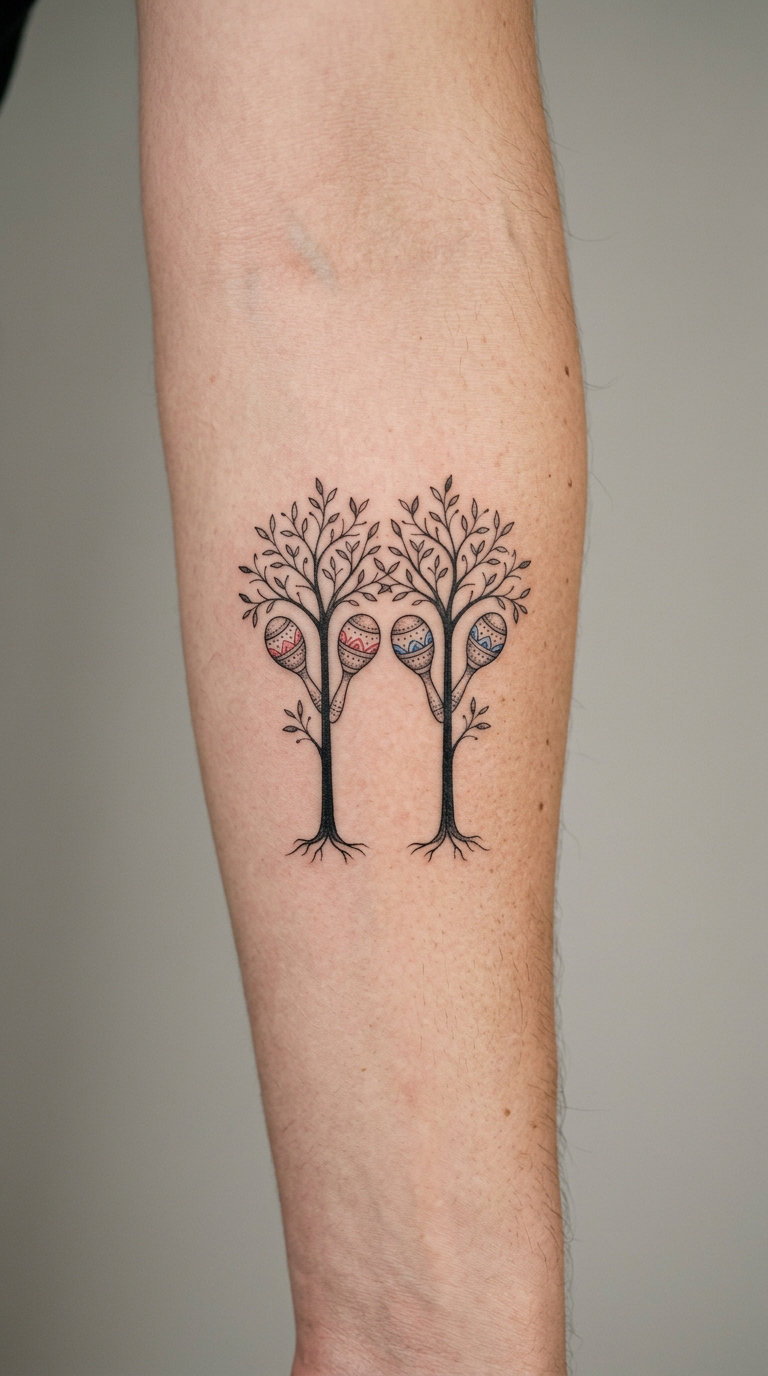
Maraca trees come from the island’s dry south coast and grow in a distinctive forked shape, so two of them rising together read instantly as a coastal scene. Most artists draw thin trunks, open branching and small leaf clusters.
The tree is the island’s national tree and shows up often in childhood memory, so clients tend to describe this one as a piece of home rather than a statement.
Placement: outer forearm, calf, or behind the shoulder. Size: about 4 inches tall. Style: fine line, or black and grey with one colour accent.
Pain: low, since the forearm has forgiving nerve placement. The thinnest twigs fade first, so ask for a line weight that will still read at ten years.
Make it yours: set the trees over a low horizon line with the town you grew up in named underneath.
6. Salsa Dancer
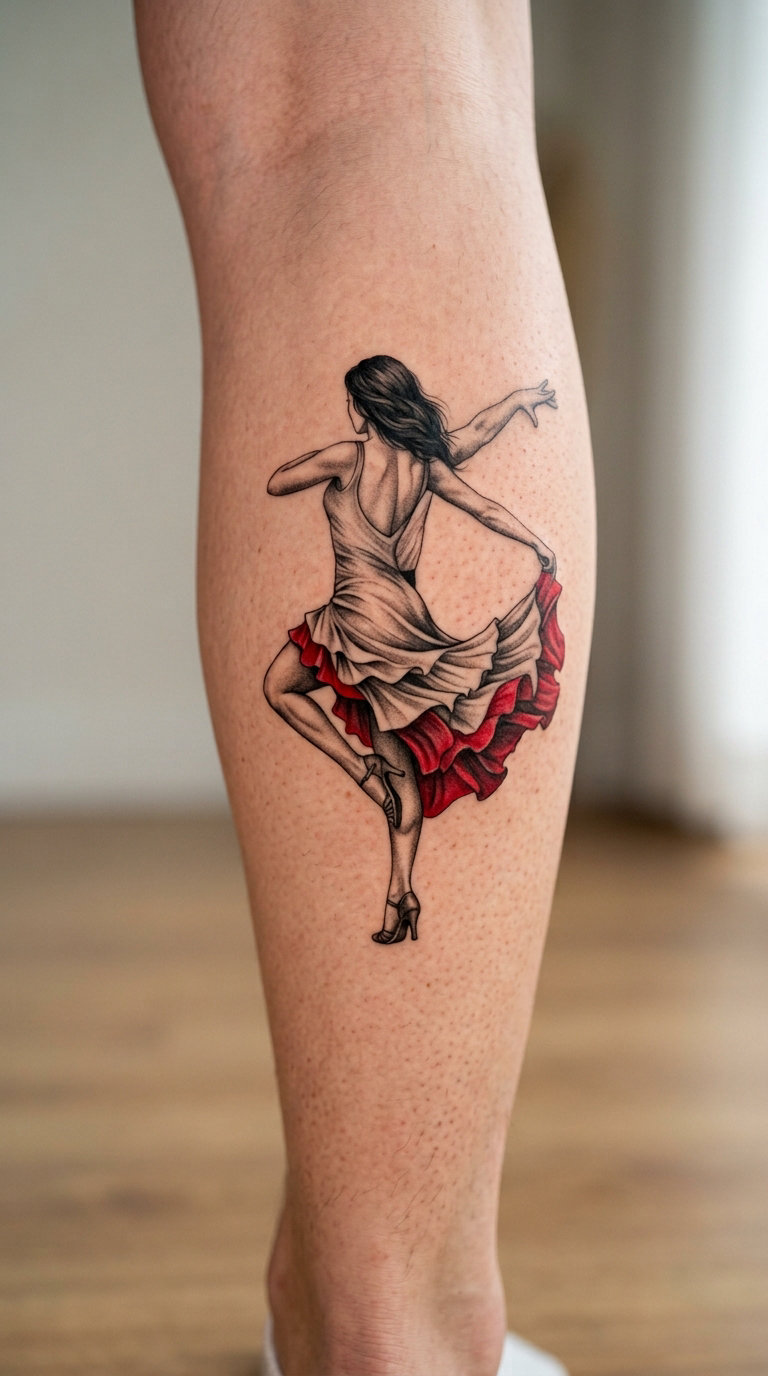
A salsa dancer piece shows a couple mid-turn, one partner’s arm wrapped over the other’s shoulder and a skirt caught mid-swirl. Black and grey shading does most of the work, with red reserved for the dress or a flower in the hair.
It is the most requested design tied to music rather than landscape, and it often becomes a memorial or a tribute to a parent or partner who taught the client to dance.
Placement: calf, outer arm, or thigh. Size: around 5 inches tall. Style: black and grey realism with a single colour accent.
Pain: medium on the calf, medium to high where the piece wraps the ribs. Faces rendered small will soften noticeably, so a mid-scale face or a turned head works better.
Make it yours: name the song or the salsa night the design comes from, and let the artist hide it in the negative space of the skirt folds.
7. Puerto Rican Coffee Branch
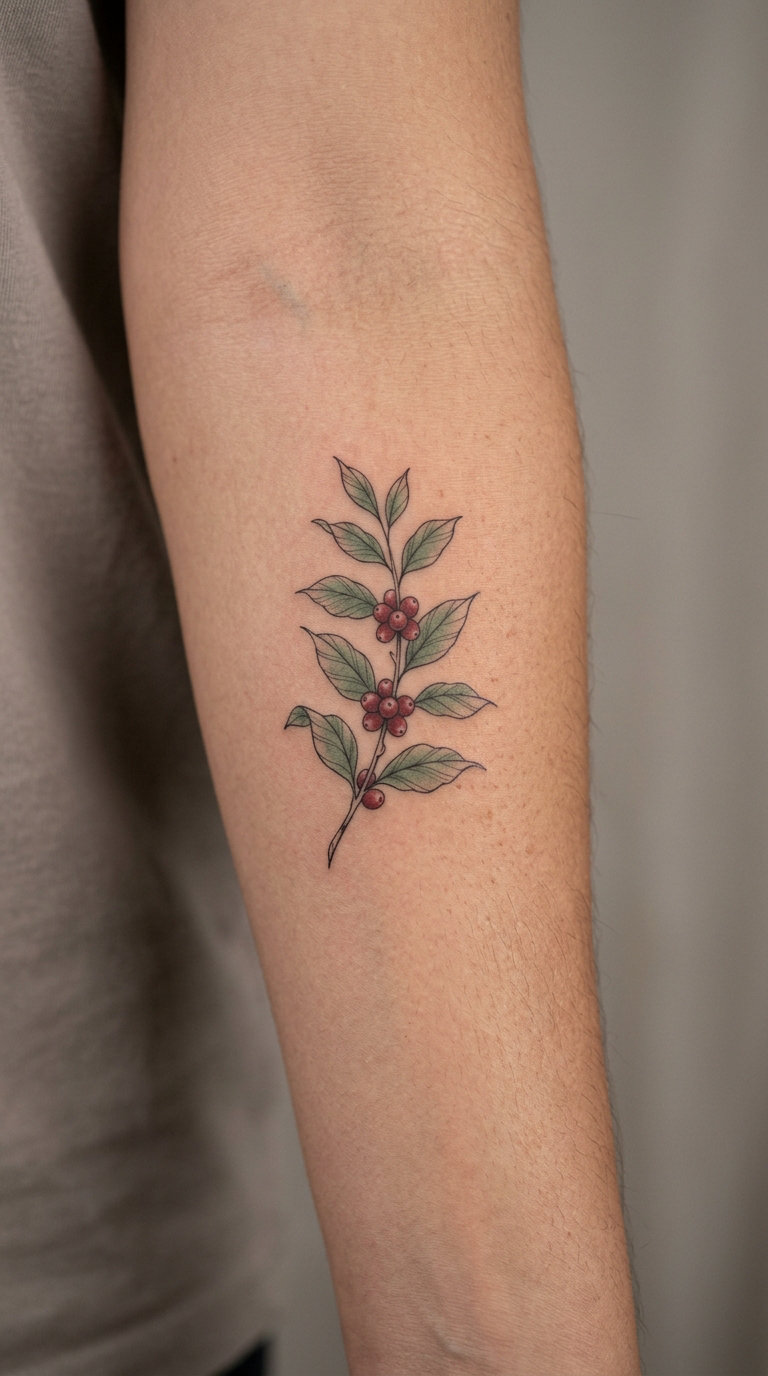
A coffee branch is a curved stem with paired oval leaves and a few round cherries, drawn in a soft botanical style with muted green and small red berries. Puerto Rico grows serious coffee, mostly in the central mountains, so this is a place piece in miniature.
Clients choose it for the everyday ritual rather than the history, which is exactly why it feels personal instead of ceremonial.
Placement: inner forearm, wrist, or behind the calf. Size: 3 inches long. Style: botanical fine line with restrained colour.
Pain: low. Cherry highlights are the first detail to fade, so let the artist simplify them into solid dots rather than shaded spheres.
Make it yours: have the branch bend around a coffee stain ring or pair it with the name of the town your family farms in.
8. Taíno Petroglyph
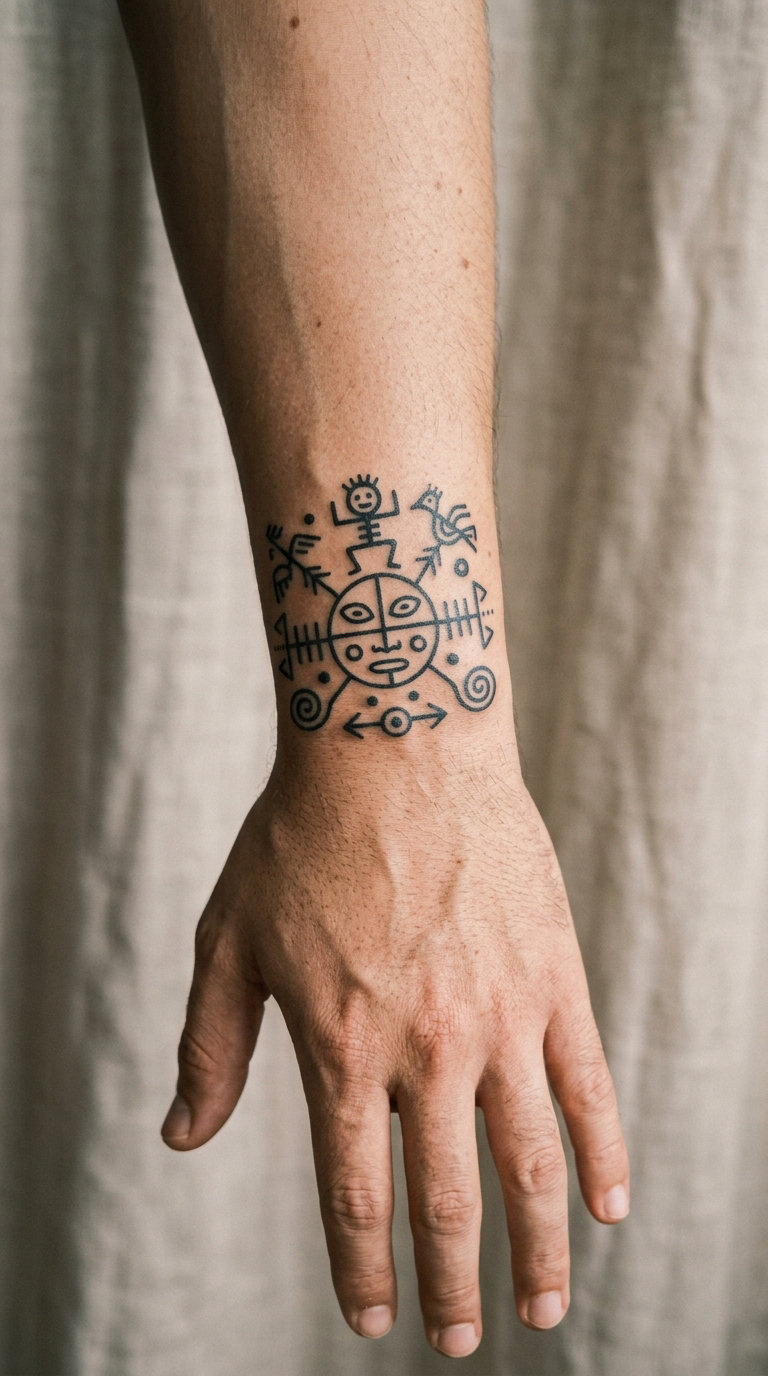
A petroglyph piece uses a real documented Taíno motif from sites such as La Piedra Escrita, reduced to solid black geometry. The spiral, the stepped diamond and the three-pointed zemi figure are the ones most often chosen.
Documented motifs carry real archaeological weight, which is why this design gets more thoughtful reactions than a drawn-from-memory tribal band.
Placement: inner wrist, behind the ear, or the back of the hand. Size: 2 inches across. Style: solid black geometric, no shading.
Pain: low to medium, with the wrist bones and inner elbow tender in spots. Small carvings on the inner wrist will blur first, so scale up slightly if you want the geometry sharp.
Make it yours: book the artist to reference a specific documented carving rather than a mood board, and note the site name in your flash file.
9. Cueva de la Olla
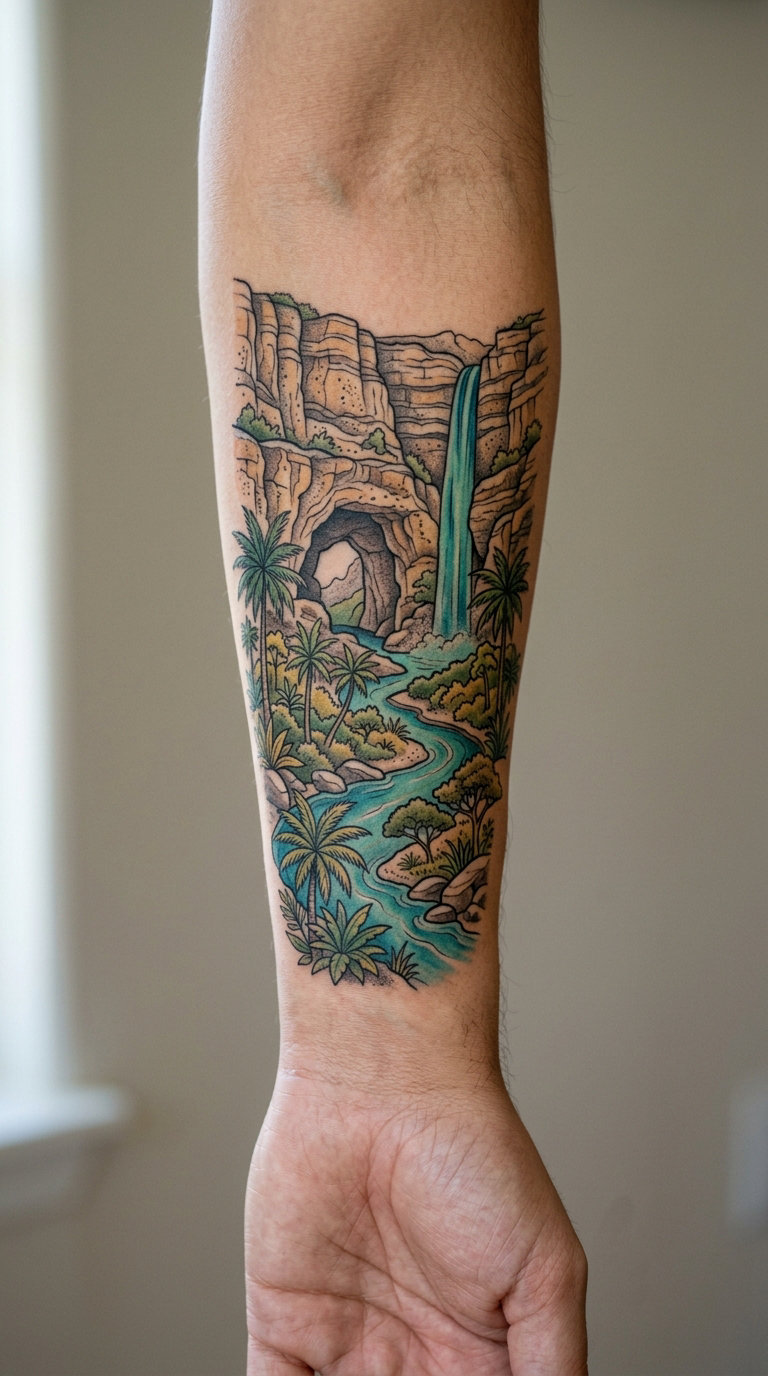
Cueva de la Olla is a mountain valley with layered cliffs, palms and a waterfall, which artists translate as stacked horizontal line bands with a single blue-green water column. The banding is what sells it as that place rather than any coastline.
Clients tend to be hikers, or people from the central mountains who grew up near the trailhead.
Placement: forearm, calf, or along the ribs. Size: 4 to 5 inches long. Style: layered line work with a soft watercolor wash.
Pain: medium, and the ribs are a real sitter. Watercolour blue placed too lightly fades within a few summers, so ask for a deeper pigment.
Make it yours: add the actual trail marker or a small compass bearing to the lookout you always stopped at.
10. Flamenco Dancer
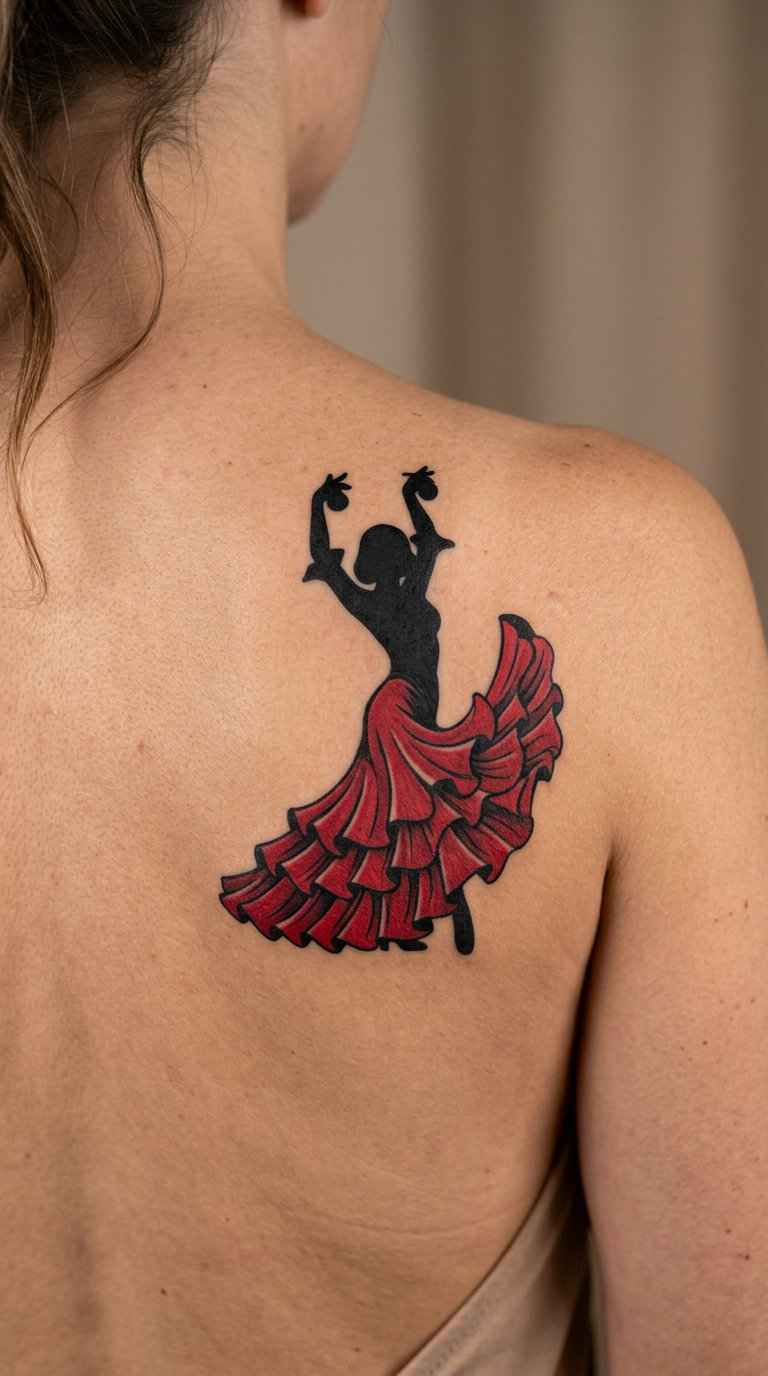
A flamenco dancer tattoo is built on one strong silhouette: arched back, one arm lifted, skirt thrown wide. Artists work in dense black with the skirt folds carrying a deep red, so the figure reads from across a room.
Flamenco arrived in Puerto Rico through Spanish and Afro-Caribbean routes and holds a different emotional register from salsa, so clients often pair this with a memory of a grandmother, mother or aunt.
Placement: shoulder blade, back, or outer thigh. Size: 5 to 6 inches tall. Style: bold black silhouette with red accents.
Pain: medium on the shoulder blade. Solid black fills hold their edges far better than any thin detail here, which makes this a good choice for a back piece that must survive sun exposure.
Make it yours: have the skirt turned into a small map of Puerto Rico, or set a date in the space between the dancer’s arms.
11. Palm Tree and Sun
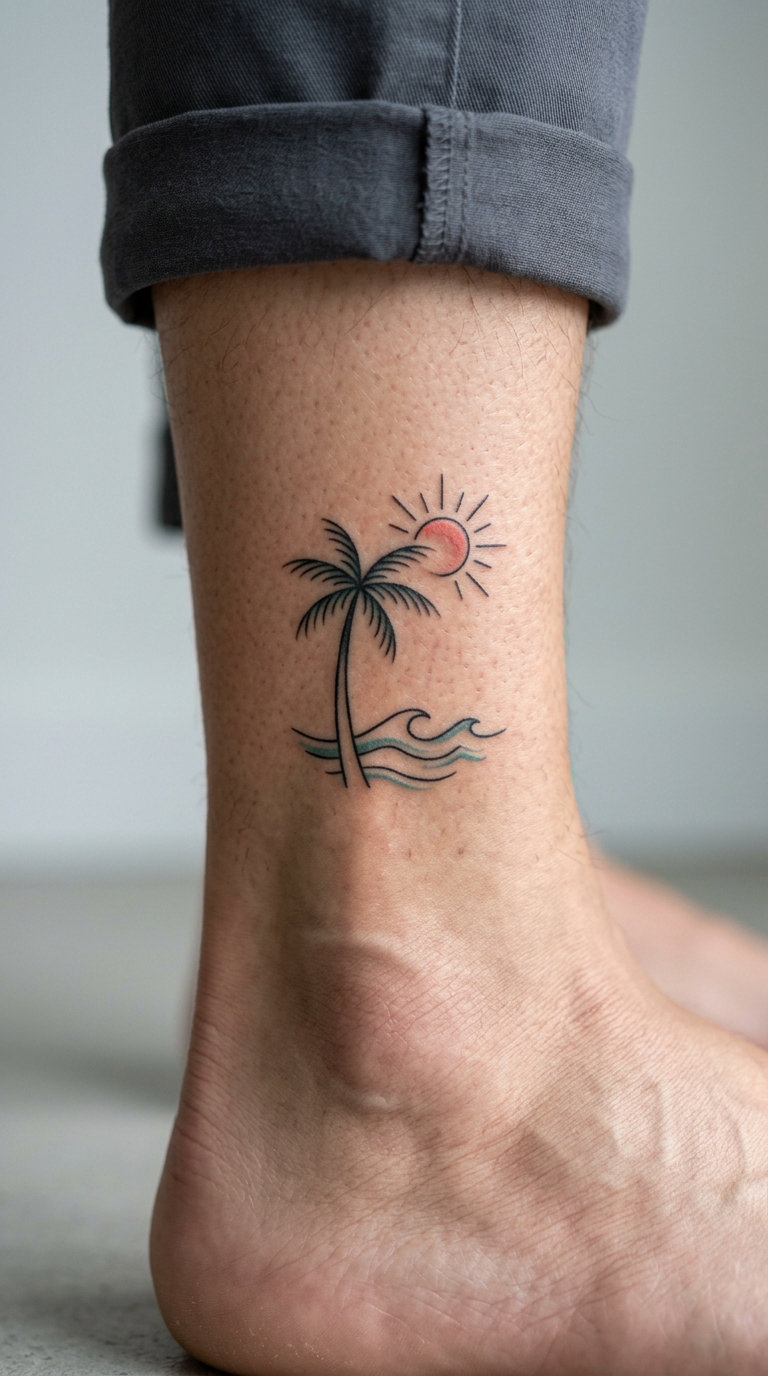
The trick to a palm tree and sun is restraint. Most good versions use a single curved trunk with four or five fronds, a half circle of sun, and two flat lines for water. Anything busier reads as generic beach souvenir art.
Puerto Rico gives this familiar motif its own frame, which is also how it connects to a set of broader scenic ideas like our 20 best desert tattoo ideas if you like environment-led pieces.
Placement: ankle, calf, or lower back. Size: about 3 inches tall. Style: minimalist line with two muted colours.
Pain: low on the ankle, medium on the calf. Fine frond lines on the inside of the wrist or ankle bone fade fast, so keep the fronds chunky at this scale.
Make it yours: swap the sun for a small coquí silhouette in the negative space above the horizon.
12. La Fortaleza
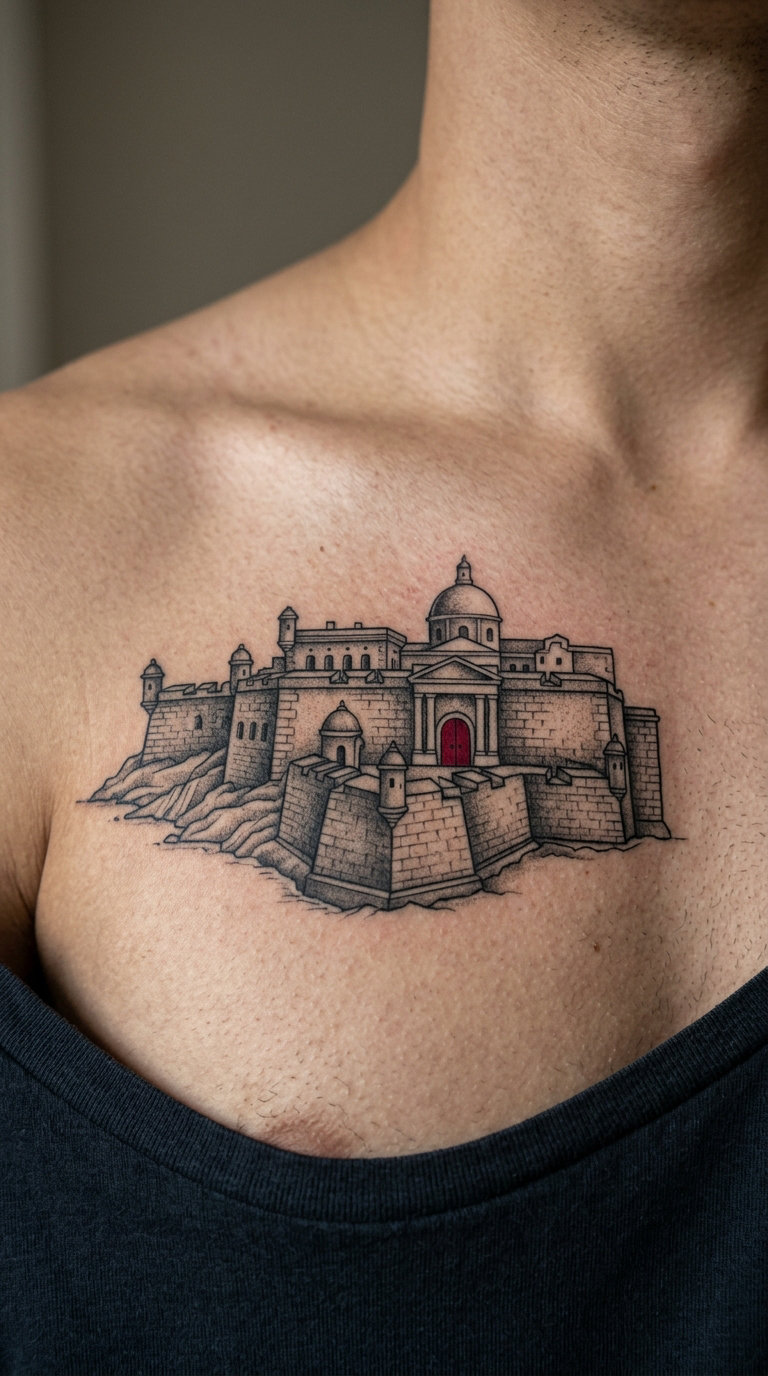
La Fortaleza, the citadel at the edge of Old San Juan, gives artists heavy stone walls, deep archways and one saturated red door. Most versions are black and grey rendering with the door left as the only colour, which makes the doorway the focal point.
It works as a place tattoo with a longer history behind it than a beach scene, and El Morro across the bay is the usual companion piece.
Placement: chest, upper arm, or across the back. Size: 5 to 6 inches wide. Style: black and grey realism with one red accent.
Pain: medium, rising toward the sternum and collarbone. Stone texture built from fine grey washes tends to look tired after a decade outdoors, so push the contrast.
Make it yours: include a figure standing in the archway at the scale of a single dark shape rather than a detailed person.
13. Igneous Rock Formation
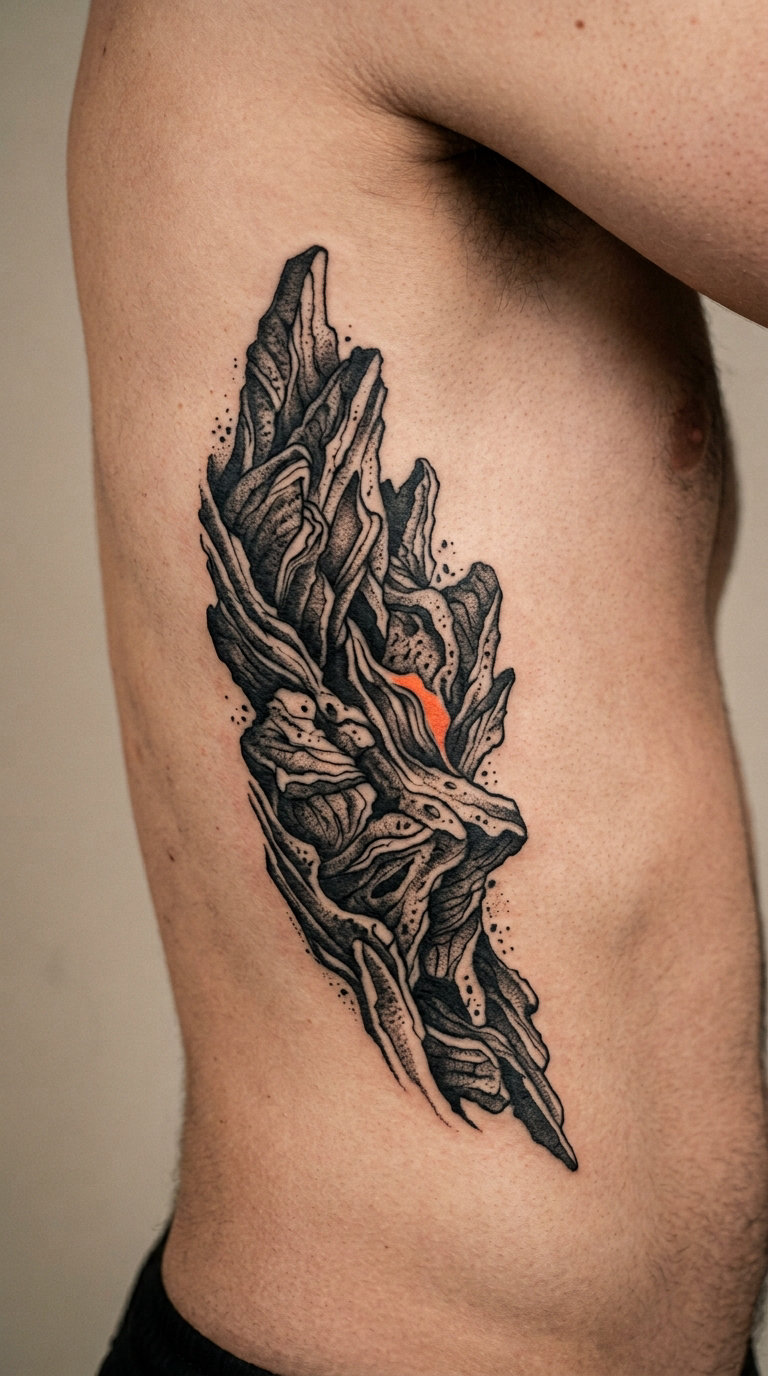
Some clients want the island’s volcanic western terrain without a literal landscape, and this abstract version does it with heavy charcoal-black forms, broken angular edges and one small orange glow inside a fissure.
It reads as geology rather than scenery, which suits people who want a Puerto Rican piece that describes the land without naming a landmark.
Placement: side rib, forearm, or calf. Size: 4 to 5 inches long. Style: abstract blackwork with one warm accent.
Pain: medium, and ribs are the worst of it. This is a good candidate for a larger follow-up session once you know how much you can sit through.
Make it yours: put your hometown’s coordinates in the negative space between two rock masses.
14. Vejigante Mask
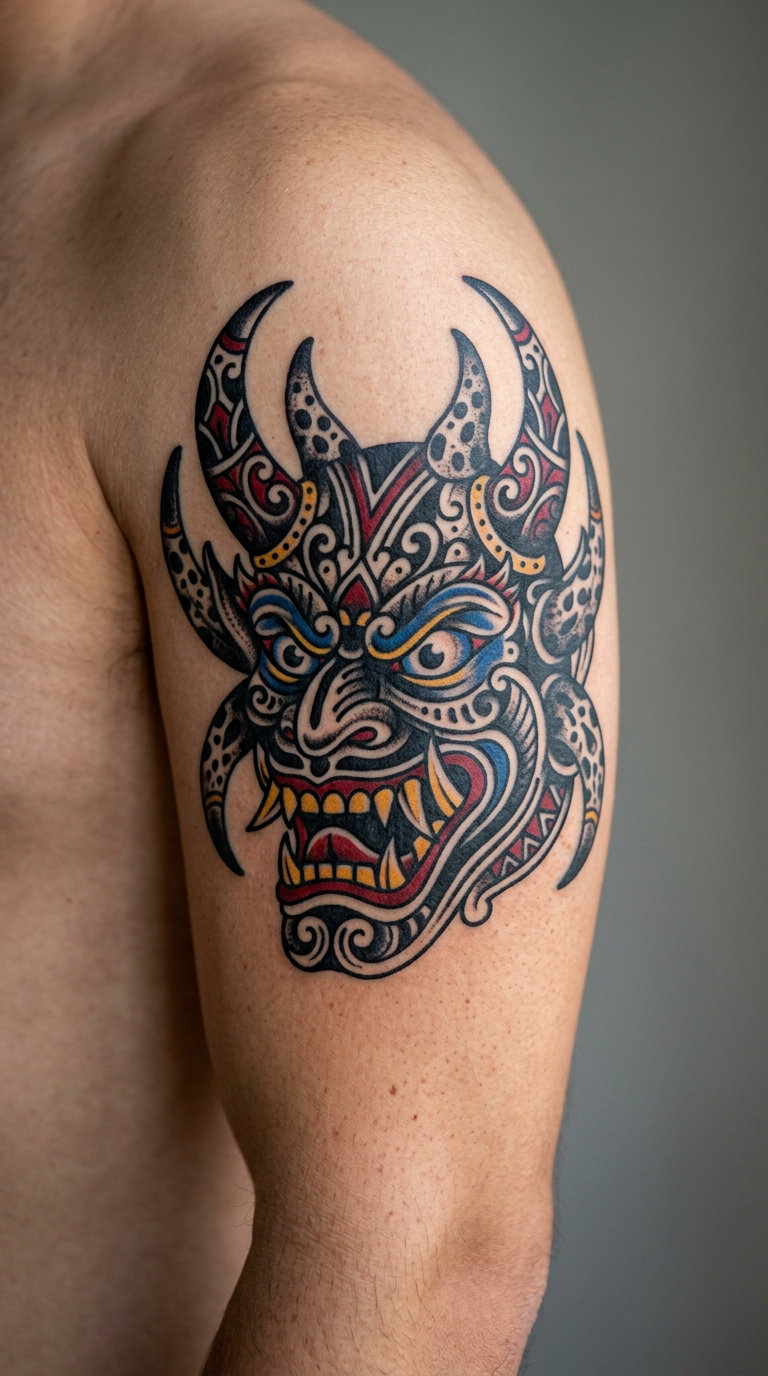
The vejigante is the horned carnival figure of Puerto Rico, drawn with wide eyes, curved horns and a row of teeth. Traditional blackwork handles the structure, with red, blue and yellow accents placed in the horns and around the eyes.
Vejigante art comes out of the island’s carnival tradition rather than Taíno iconography, and no other design here gets mistaken for anything else.
Placement: upper arm, chest, or back. Size: about 5 inches tall. Style: traditional blackwork with bold colour.
Pain: medium, and the chest over the sternum is the rough patch. Teeth and small eye shapes lose definition over time, so keep them chunky and let the horns carry the detail.
Make it yours: commission a version based on the mask from your town’s carnival parade rather than a stock drawing.
15. Barceloneta Waves
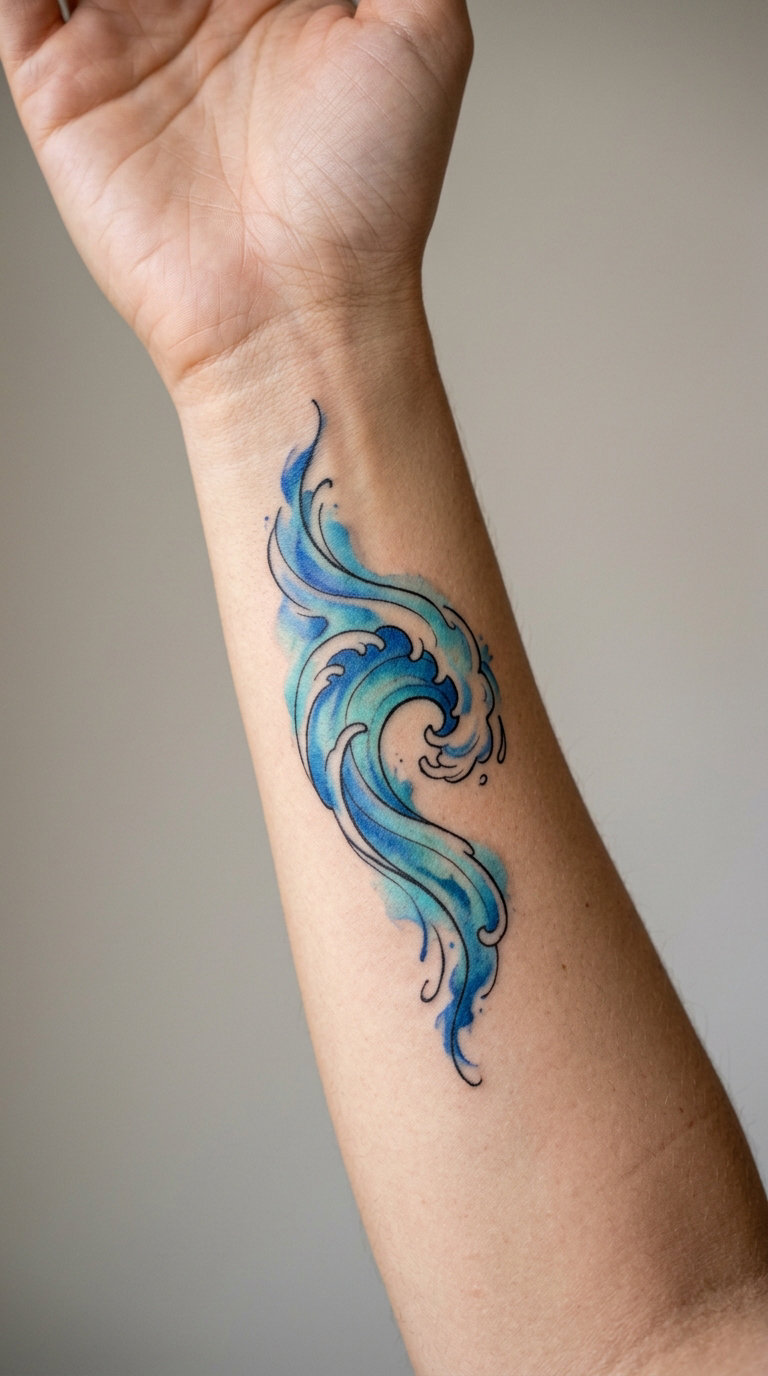
A Barceloneta wave piece uses one breaking wave with a foam crest and a few spray dots, drawn in black line with a translucent blue wash. Leaving real empty skin between the wave arms is what makes it look clean.
Barceloneta is the city beach, so this version usually means growing up in San Juan rather than surfing, and it pairs naturally with other water-led designs in our 20 best waterfall tattoo ideas.
Placement: forearm, calf, or rib. Size: 3.5 to 4 inches long. Style: black and blue watercolor.
Pain: medium on the forearm, medium to high on the ribs. Light blue washes fade first on sun-exposed skin, so either deepen the pigment or keep the wave mostly black.
Make it yours: work your birth month into the foam spray as small numerals.
16. Coffee Cup and Mountains
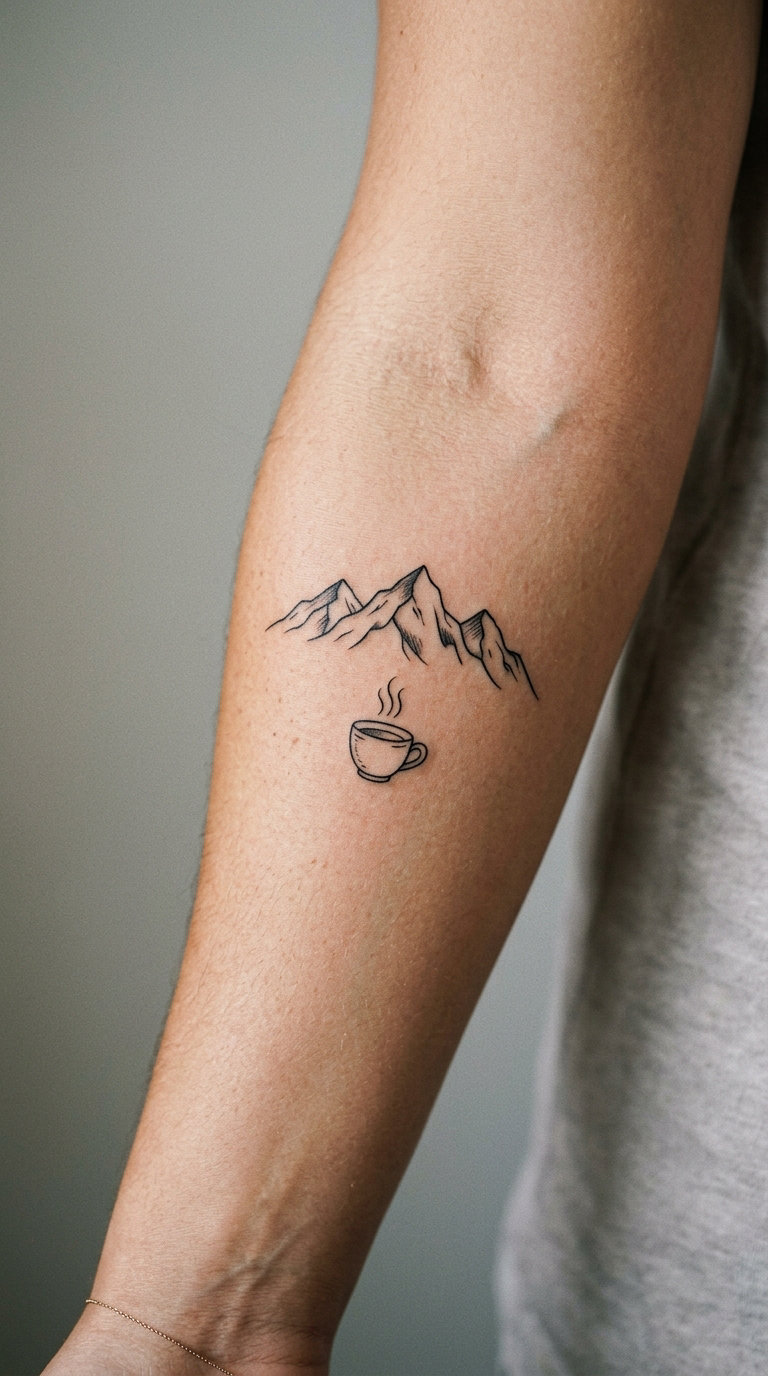
This compact design pairs a single line-art cup with a low mountain range behind it, usually in black line with one warm accent on the coffee. Small scale is the point, so the artist keeps it to two shapes.
It comes from the everyday café ritual set against the island’s central coffee country, which is why it works as a design for someone who is not trying to announce anything.
Placement: inner arm, wrist, or behind the ear. Size: 2.5 to 3 inches wide. Style: line art, minimal shading.
Pain: low. At this size the mountains must be drawn with a slightly heavier line than feels natural or they disappear within a few years.
Make it yours: have the steam curl into a small island outline.
17. Small Island Outline
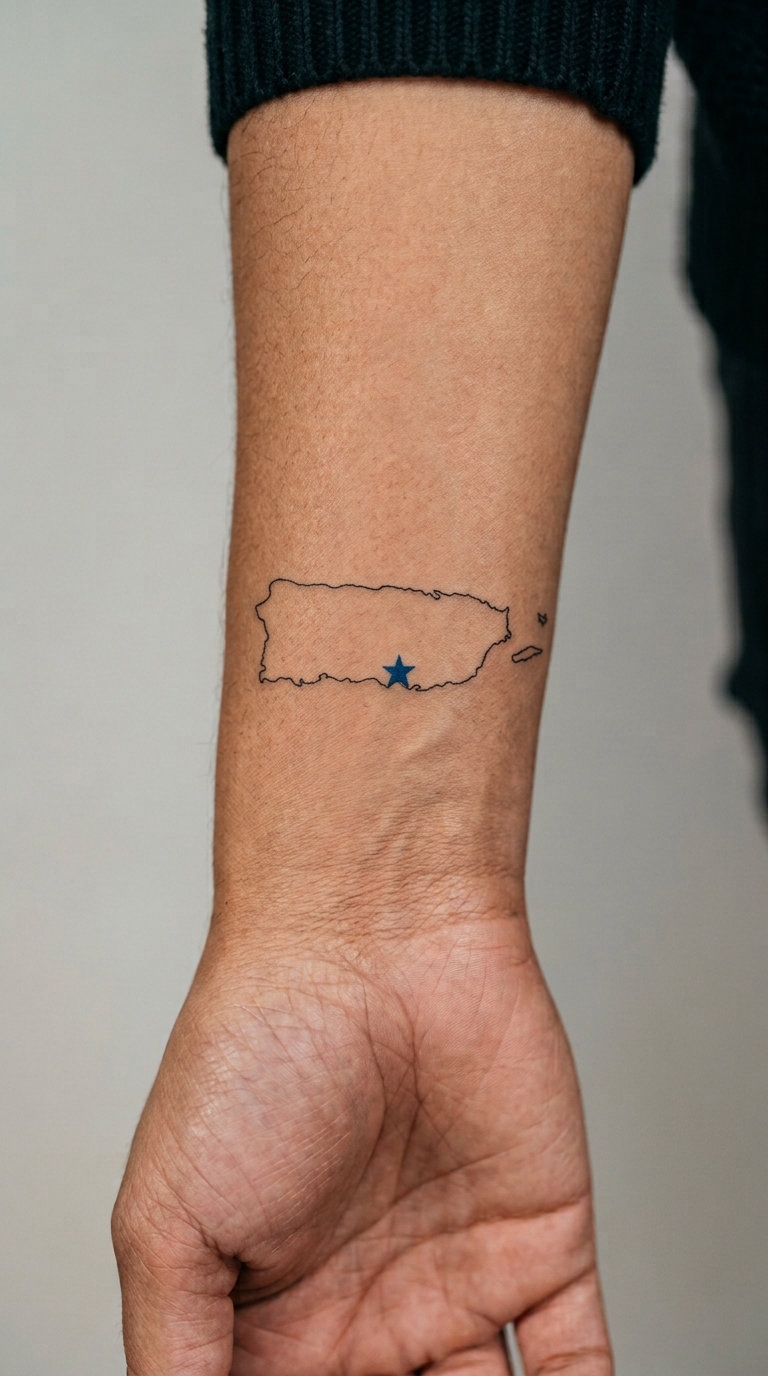
The island outline is a clean single contour of Puerto Rico with one accent inside, usually blue or red. It is the smallest design on this list that still reads as the island from across a room.
This is the first tattoo most people in this list come back to, either as a standalone piece or as the anchor for a heritage collection.
Placement: inner wrist, behind the ear, or ankle. Size: 2 to 2.5 inches long. Style: fine line with one accent colour.
Pain: low. A thin single line on the inner wrist is the first thing to soften, so ask for a medium line weight even if the flash looks delicate.
Make it yours: place a small dot for your hometown and one for where you live now.
18. Tropical Bird
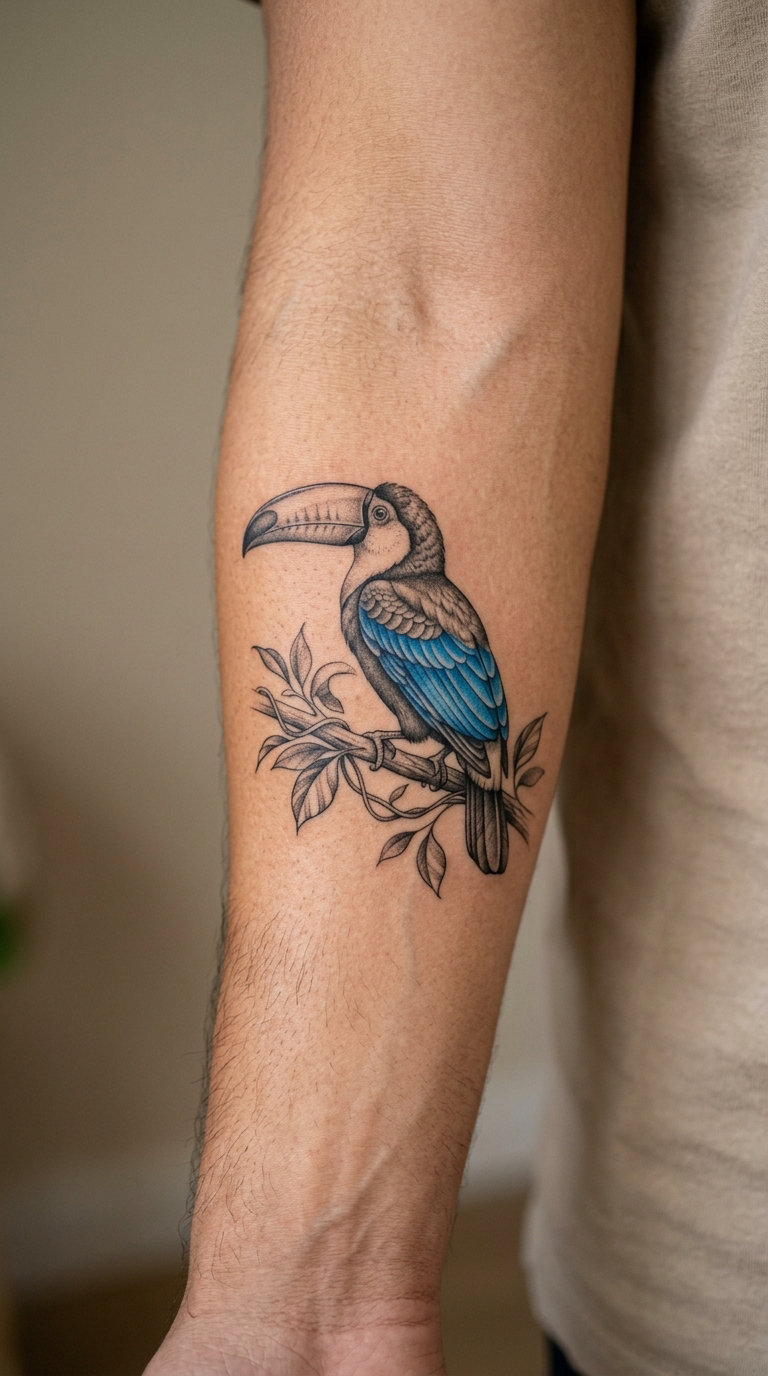
The striped-headed tanager and other island birds work well as compact realism pieces, with layered grey feather shading and one bright colour on the wing or crest. Perched on a branch reads better than mid-flight at small sizes.
Birds usually stand in for a particular place or a person from it, and this design gets asked about more often in the diaspora than the frog does.
Placement: forearm, calf, or upper arm. Size: 3.5 to 4 inches long. Style: micro-realism with a colour accent.
Pain: low on the forearm. Feather detail is the main risk here, so a slightly larger size with fewer strokes will outlast a tiny dense version.
Make it yours: have the branch be a specific tree from a park you grew up near, and add the town’s name in thin script below.
19. Afro-Puerto Rican Music Notes
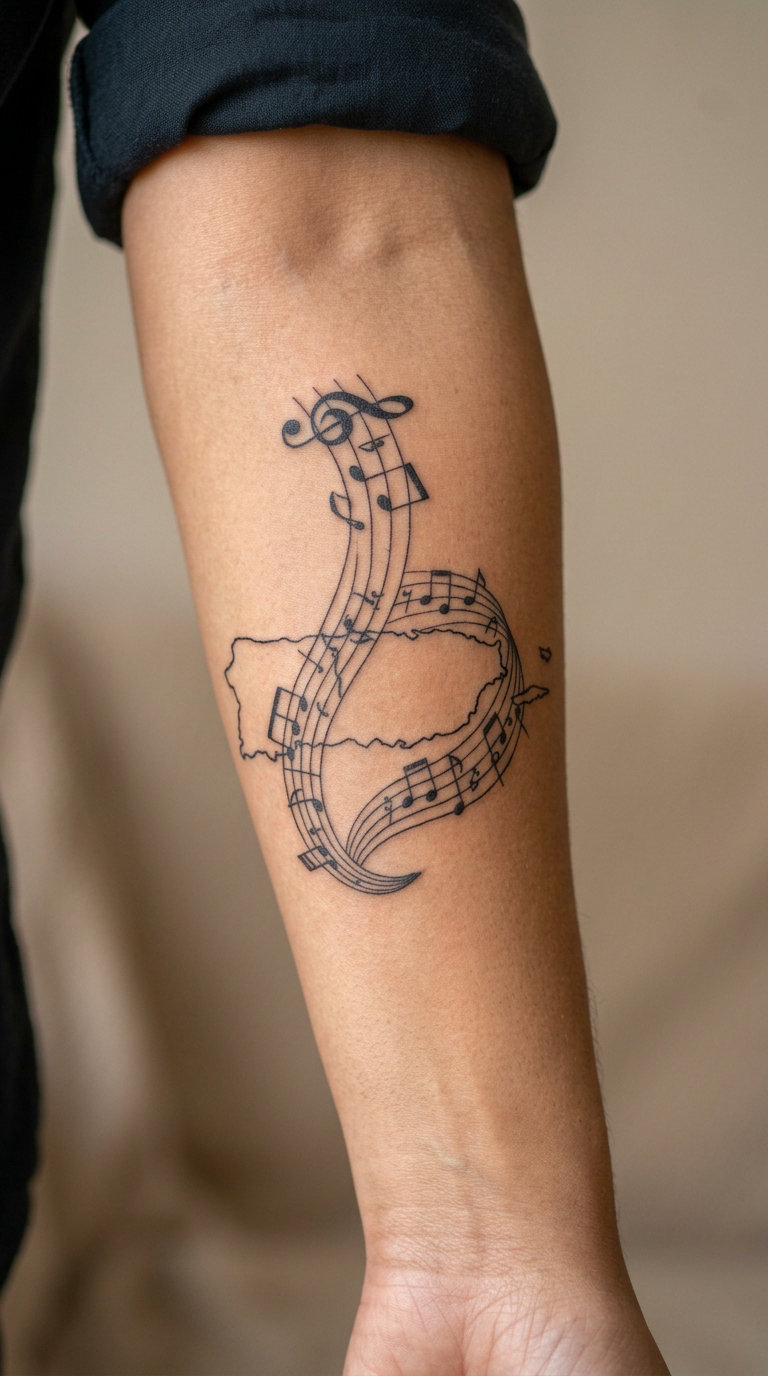
This design runs a single line of notes and staff lines around a faint island outline, all in fine black. The island sits low and quiet so the notes read first, which keeps it from looking like two tattoos fighting.
It is the design for family, performance or a musical path, and it usually becomes a piece for someone whose heritage arrives through a parent’s instrument or voice.
Placement: forearm, ribs, or along the collarbone. Size: 3 to 3.5 inches long. Style: fine-line calligraphy.
Pain: low, though the collarbone area is sharper than it looks. Fine staff lines soften quickly in sun, so a bolder note head and heavier staff line are worth requesting.
Make it yours: have the notes spell out a song title in Spanish, checked for spelling and accents before the stencil goes on.
20. Colorful Casita
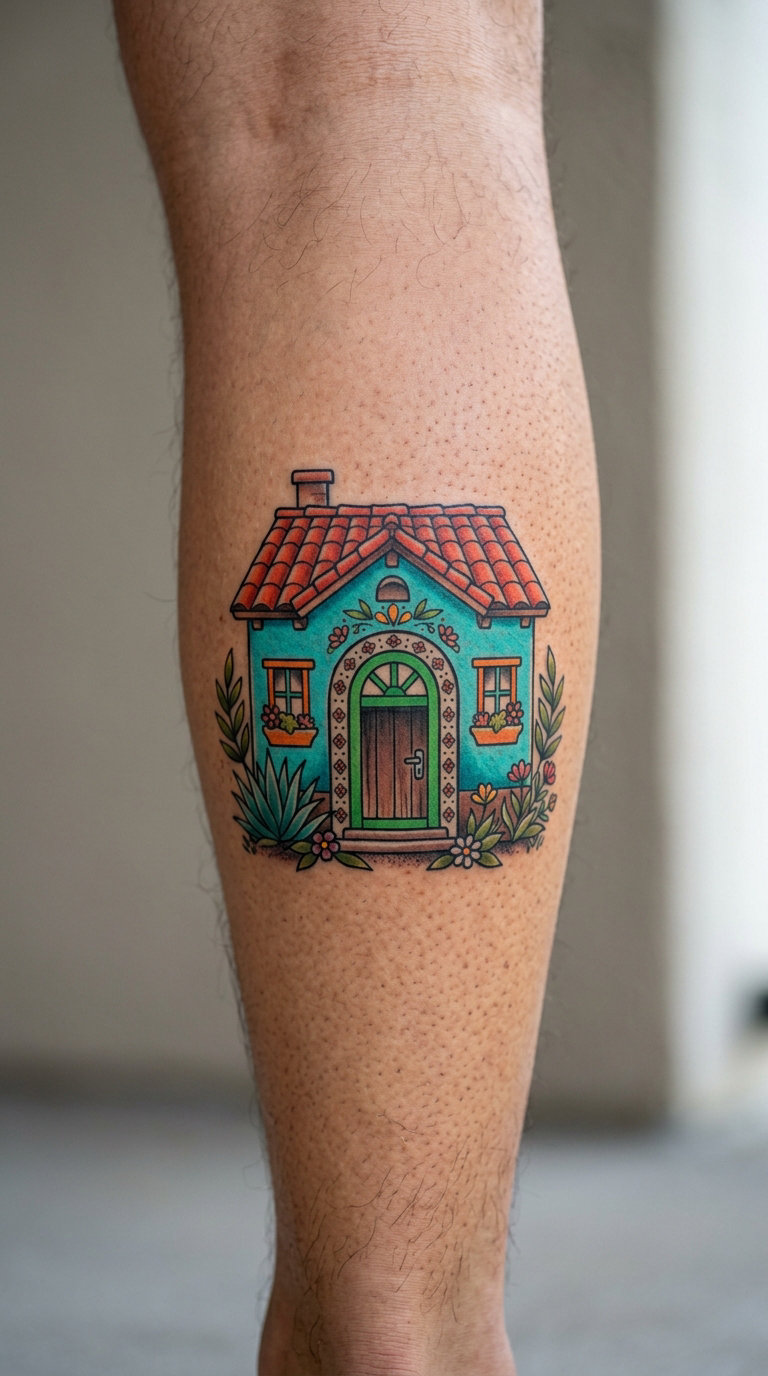
A casita is a simple gabled house with a doorway, shuttered window and a plant in front. Good versions keep the shape graphic and flat, with turquoise walls, a red roof and a green door rather than photorealistic shading.
It is a childhood-home design, chosen by people who want the house itself rather than a landmark or a symbol.
Placement: calf, forearm, or upper arm. Size: about 4 inches tall. Style: illustrative colour, clean edges.
Pain: low to medium, with the calf holding up well. Three flat colours hold their tone better than any shaded version, so keep the palette small.
Make it yours: use your family’s actual house colours, which is a detail nobody else in the room will have.
21. Rainforest Fern
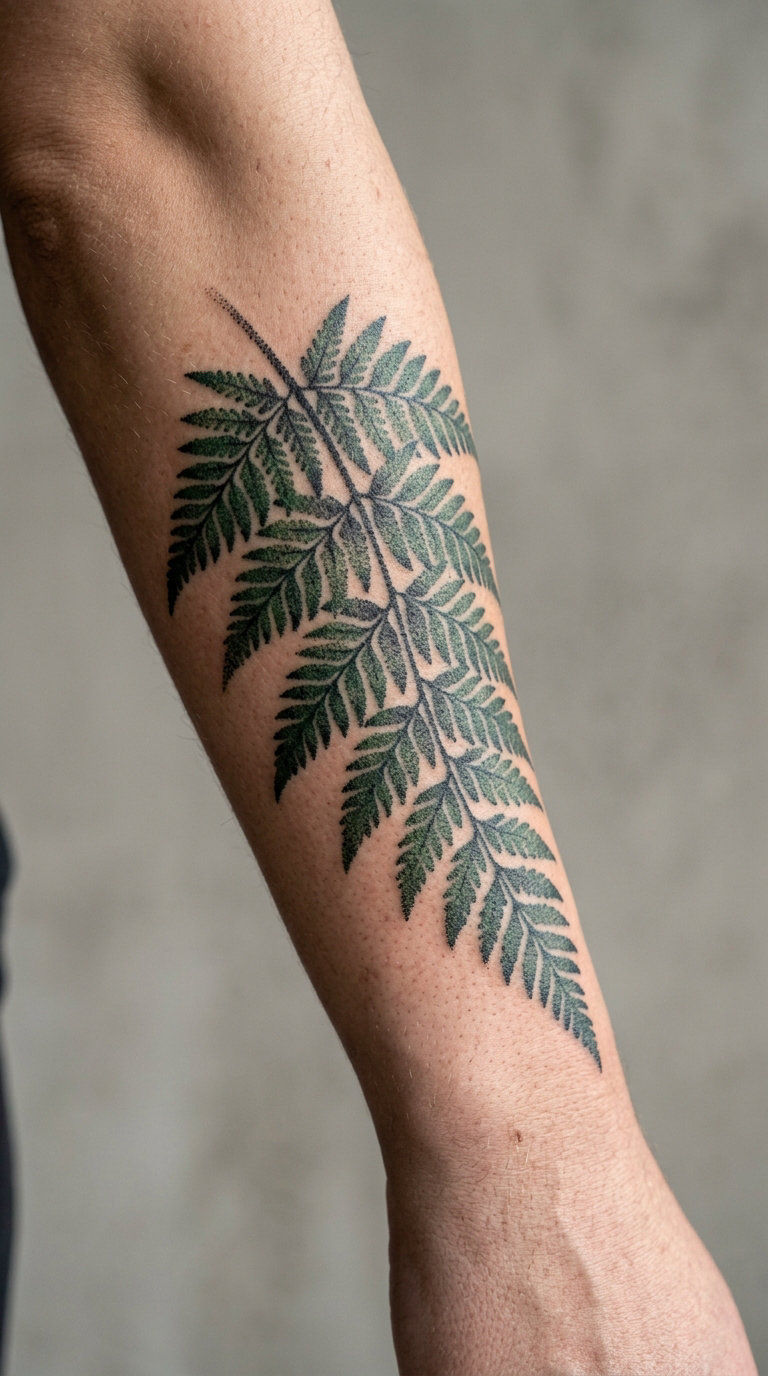
The rainforest fern comes from El Yunque, the only tropical rainforest in the US national forest system, and is drawn as a central stem with tapering leaflets. Dotwork shading gives it depth without heavy black.
It suits clients who want a botanical piece tied to a specific island setting instead of a generic plant.
Placement: side of the forearm, calf, or ribs. Size: 3.5 to 4 inches long. Style: dotwork and fine line, optional green wash.
Pain: low on the arm, medium on the ribs. Dotwork in thin green fades noticeably, so ask for a deeper green or leave the piece black only.
Make it yours: wrap a second fern around the first in reverse, or tuck a small coquí into the curl of a top leaflet.
22. Bioluminescent Bay Glow
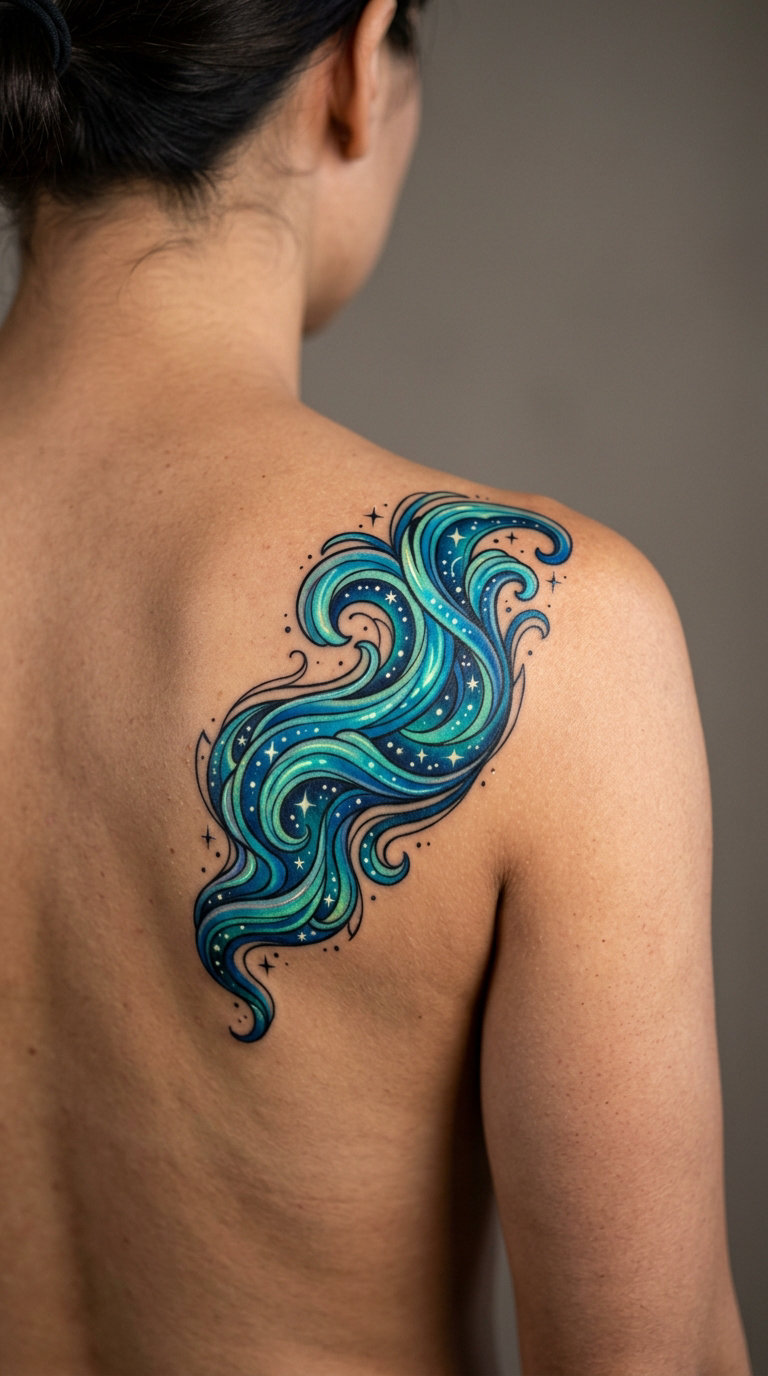
The bioluminescent bays glow blue-green when the water is disturbed, and artists render this as soft overlapping wave forms in turquoise, teal and deep navy with a scatter of tiny stars above.
It is a mood piece rather than a place portrait, and clients usually describe it as the version of the island they carry when they cannot describe the island in words.
Placement: shoulder blade, back, or outer arm. Size: 5 to 6 inches wide. Style: abstract colour, no hard outlines.
Pain: medium, with long unbroken needle passes on the shoulder blade. Soft colour work needs more sessions because the healing skin scabs over pale washes more easily.
Make it yours: set the glow over a real night-swatch photo from a visit to a bay in Vieques or Fajardo.
23. Taíno Sun and Moon
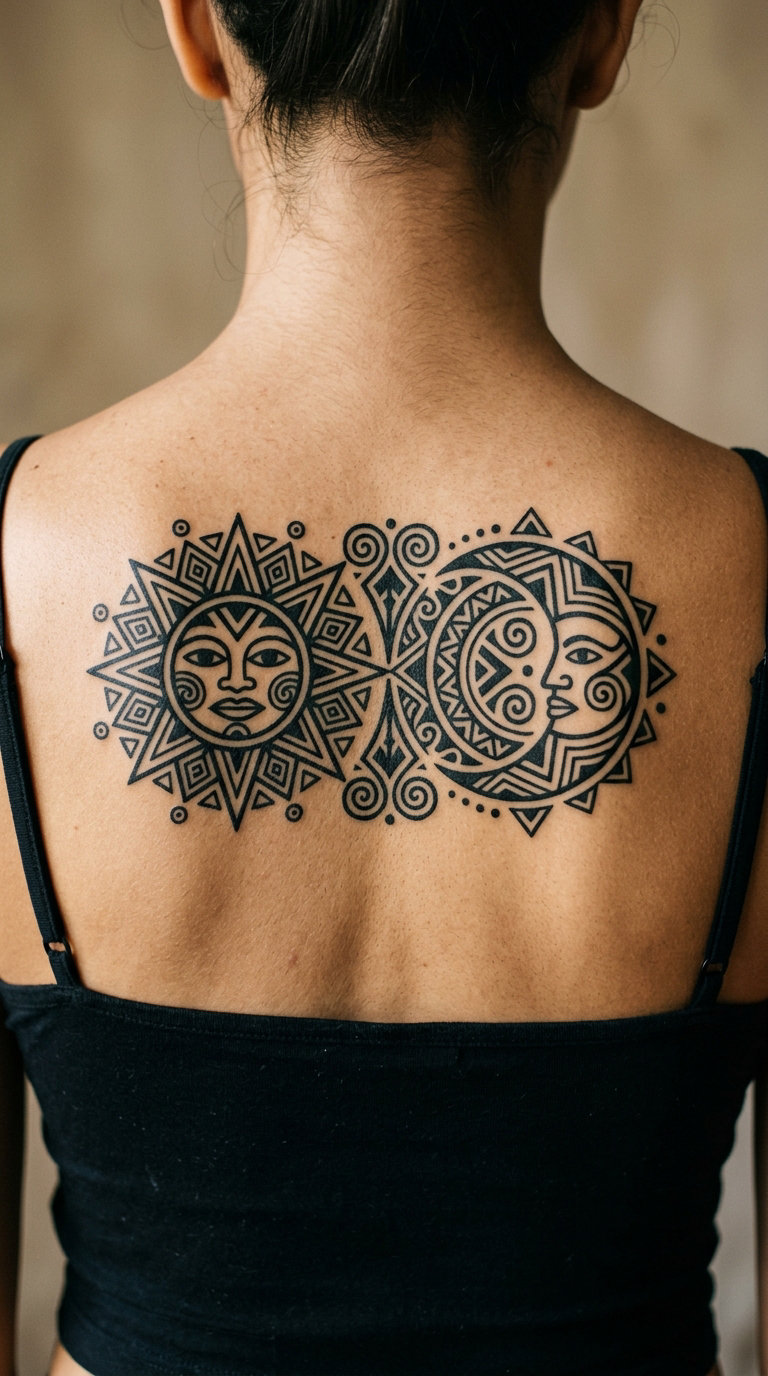
Pairing the sun disc with a crescent moon builds a balanced composition, with the two forms echoing each other’s geometry in bold black. The mirror symmetry is what makes this design work across a wide back placement.
It reads as a cycle rather than a single emblem, and it works well as the centrepiece of a back piece. For that kind of directional design, our 20 north star tattoo ideas cover the same large-format planning.
Placement: upper back, shoulder blades, or a flat chest panel. Size: 6 to 7 inches wide. Style: bold geometric blackwork.
Pain: medium, longer in the session because the two halves have to match. Symmetry means the artist works one side, photographs it, then mirrors it, so budget extra chair time.
Make it yours: put a meaningful date inside the moon and keep the sun plain, so the piece carries one specific detail.
24. Puerto Rico Heritage Map
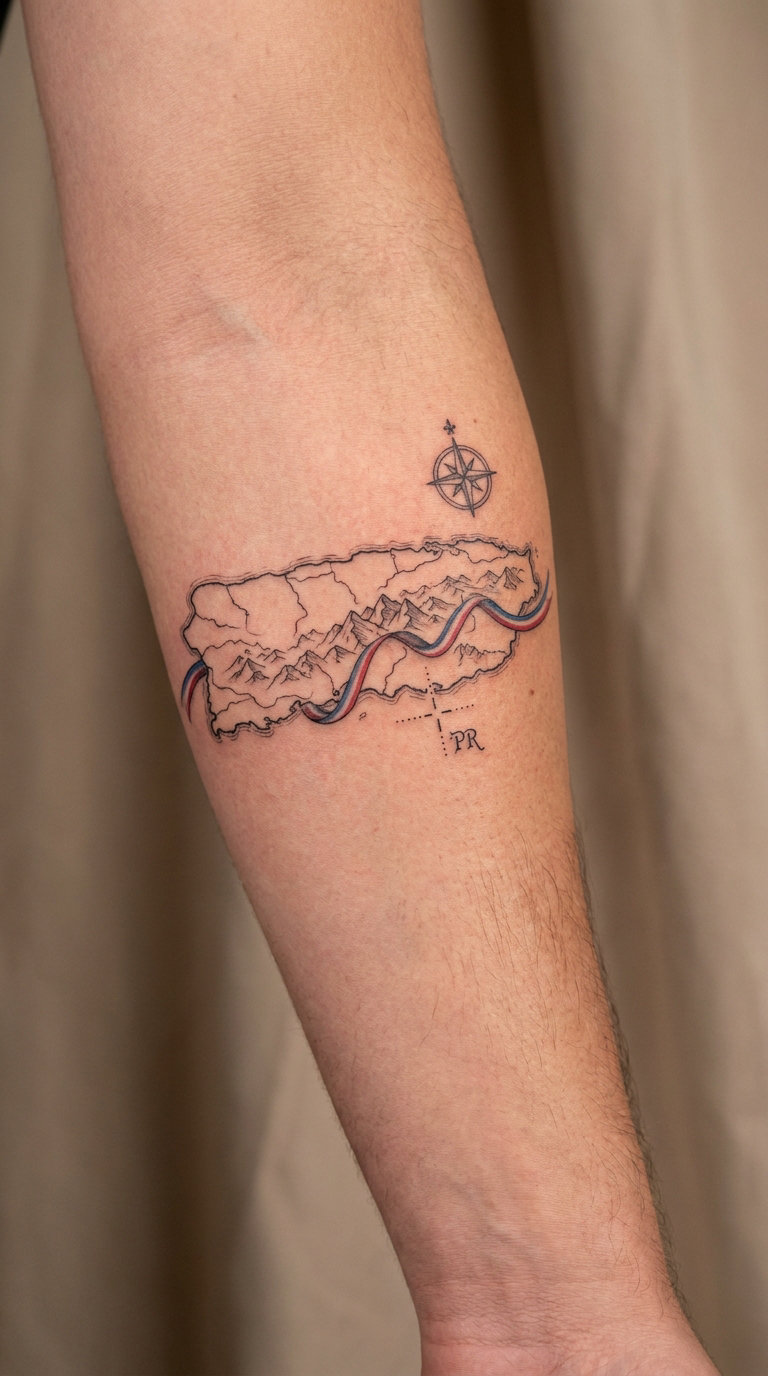
The heritage map is the most ambitious design here: a full island outline with an interior town marker, subtle flag accents and room for additional symbols. It is built as a collection piece, with space for the coquí, a petroglyph or numerals added later.
786 and 787 numerals often end up in the composition, marking area codes that carry real family weight, and plenty of clients layer the map over a forearm piece already in place.
Placement: outer arm or forearm, ideally a flat run. Size: 6 to 7 inches long. Style: detailed map work with restrained colour.
Pain: medium, and small coordinate text is genuinely uncomfortable on the inner edge of the forearm. Expect this one to take two sessions rather than one.
Make it yours: mark your hometown, your grandparents’ town and where you live now, then leave blank space for the next piece you add in five years.
How to Choose the Right Design
Match the design to the canvas before you match it to the meaning. A five-inch composition on the inside of a forearm is a different tattoo from the same composition on a shoulder blade, and the artist will tell you so in the first ten minutes.
Here is the short version of the decision.
- Start with meaning, not image. Decide what you want the piece to say about Puerto Rico, then pick among designs that carry it. Clients who start from a picture usually end up with something generic.
- Let the body part pick the size. Wrists and ankles support small, high-contrast pieces. Ribs and backs can carry a full composition with breathing room.
- Ask for a heavier line than the flash shows. Fine line looks beautiful fresh and noticeably softer after five summers of sun, and most of the designs here are fine line by default.
- Keep colour to two or three shades. The flag, the casita and the bioluminescent bay all depend on a controlled palette, and small saturated fills need touch-ups.
- Ask what the motif actually is. A good artist will tell you whether a shape is a documented petroglyph or a modern invention. Clients in every artist thread I read wanted that answer before booking.
- Leave room in the design. If this is the first of several, tell the artist now so the scale and placement can hold later pieces.
Cost and Session Time
Tattoo prices in the US are usually quoted by the hour, with most shops setting a shop minimum that covers small pieces. For Puerto Rican designs, realistic US ranges are roughly 100 to 200 dollars for a small single-motif piece such as the island outline, the coffee branch or the coquí, and 200 to 400 dollars for a mid-size piece like the flag map, the vejigante mask or a botanical composition.
Larger work runs higher. A heritage map, a sun and moon panel or anything built for a future sleeve typically lands somewhere between 400 and 800 dollars across two or three sessions, and detailed colour work such as the bioluminescent bay needs the most chair time because soft washes heal patchy more often than solid black.
Two things move the number most: how small the smallest element in the design is, and how curved the placement is. Rates vary a lot by city and by artist, so treat these as planning ranges and ask your artist for a quote at the consult.
Aftercare Basics
- Follow your artist’s aftercare instructions first. They know what they did in the session, and their advice overrides anything general you have read online.
- Clean it gently, twice a day at most. Lukewarm water and a fragrance-free cleanser, patted dry with clean hands or a paper towel. Over-washing is the most common mistake I see people make.
- Protect it from sunlight for the healing period. Loose clothing over fresh work, and no beach trips or pool visits until it has healed and settled.
- Let the film do its job. When a tattoo peels or flakes, the skin underneath is new and delicate. Picking at it is the fastest route to a patchy result.
- Keep products off it. No lotions, fragrances or sunscreen during the initial healing, and check with your artist before you use anything on it afterwards.
- Know the signs worth a phone call. Spreading redness, warmth, swelling or discharge that gets worse instead of better means contact the studio or a clinician rather than waiting it out.
Frequently Asked Questions
What do Puerto Rican tattoo ideas usually represent?
Puerto Rican tattoo ideas most often represent heritage, home and Boricua pride. The coquí frog and the Taíno sun point to the island’s Taíno roots, the hibiscus and palm designs reference the landscape, and the flag carries a history of prohibition and reclaiming. Clients usually pick one that ties to a family memory or a specific town rather than a symbol chosen for looks alone.
Are Taíno-inspired tattoos considered respectful?
They are, when the artist treats the motifs as documented Taíno art rather than generic tribal decoration. Ask your artist where the design comes from, and check that any Taíno or Spanish words are spelled and accented correctly. Atabey and the zemi figures are sacred rather than decorative, so it is better to leave them out than to wear them casually.
Which Puerto Rican tattoo design is best for a first tattoo?
The small island outline and the coquí frog are the easiest first tattoos on this list. Both sit well at two to three inches, both heal predictably, and neither carries fine detail that will blur before you have had your first touch-up. Keep the first piece simple, and you can always add a heritage map later on the same arm.
Should I choose a color or black-and-grey Puerto Rican tattoo?
Choose colour when the design depends on it, such as the flag map, the casita or the bioluminescent bay. Choose black and grey when you want the piece to age quietly, since solid black and deeper greys hold their edges far longer. Small colour fills also need more touch-ups, and pale blue or green washes fade first in sun.
How painful are Puerto Rican cultural tattoos?
Pain tracks the body part far more than the theme. Forearms, outer arms and ankles rate low to medium, while ribs, the chest over the sternum and the inner elbow rate medium to high. Highly detailed pieces hurt more simply because they take longer. If this is your first tattoo, the island outline or coffee branch on an outer forearm is the gentlest place to start.
How should I care for a new Puerto Rican-themed tattoo?
Follow your artist’s instructions first, then clean the area twice a day with lukewarm water and a fragrance-free cleanser, pat it dry, keep it covered from sun, and leave peeling skin alone. Skip lotions and fragrances while it heals. If you notice spreading redness, swelling or discharge that worsens, contact the studio or a clinician instead of waiting it out.
Conclusion
For a first tattoo, the island outline or the coquí frog is the safest place to start: small, clear, and it heals without drama. If you are adding to an existing collection, the heritage map, the vejigante mask or the sun and moon panel give you room to build over years.
Whichever you choose, ask the artist where the motif comes from and get the spelling right. That conversation is what separates a Puerto Rican tattoo from a generic tribal one, and it takes five minutes at the consult.