
20 Minimalist Tattoo Ideas for Women: Simple Picks (October 2026)
A minimalist tattoo is a small, low-detail design built from clean single-weight lines, simple shapes and negative space, usually in black ink, with little to no shading. The art sits in what the artist leaves out, not in what they add. If you have been saving reference images for months, that restraint is usually what you are actually drawn to.
These 20 minimalist tattoo ideas for women are all small, quiet and easy to keep private until you decide otherwise. Each one comes with the linework, placement, realistic size, pain level and a way to make it your own, so you can walk into a consultation knowing more than just the shape. If you are booking around autumn or winter, remember the healing window runs two to four weeks before the ink settles into its final fade level.
Planning a first piece, or adding to a collection that already has a few pieces? The 20 line art tattoo ideas for women cover the same restrained territory with a different set of motifs.
20 Minimalist Tattoo Ideas for Women: Quick Guide
Every design below is listed in the same order as the detail sections that follow, so you can scan the table, pick a favourite, then read the longer version.
| Idea | Style | Best placement | Realistic size | Pain |
|---|---|---|---|---|
| 1. Paper plane | Fine line | Behind the ear | 1 to 1.5 inch wide | Low |
| 2. Sunburst | Fine line | Collarbone | 1.5 to 2 inches across | Low to medium |
| 3. Botanical stem | Fine line botanical | Inner forearm | 2.5 to 3 inches long | Low |
| 4. Crescent moon | Micro line | Side of neck | 0.75 to 1 inch tall | Low |
| 5. Abstract face profile | One-line fine line | Outer upper arm | 2 to 2.5 inches tall | Medium |
| 6. Open heart | Micro line | Inner wrist | 0.75 to 1 inch wide | Medium |
| 7. Mountain peaks | Geometric line | Outer ankle | 2 to 2.5 inches wide | Medium |
| 8. Single wave | One-line fine line | Side rib | 2.5 to 3 inches long | High |
| 9. Four-point star | Micro geometric | Side of finger | Under 0.5 inch | High |
| 10. Cherry pair | Minimal line with colour | Top shoulder | 1.25 to 1.5 inches wide | Medium |
| 11. Butterfly outline | Fine line | Back of the hand | 1.5 to 2 inches wide | Medium to high |
| 12. Dotwork crescent | Micro dotwork | Upper helix | 0.5 to 0.75 inch tall | High |
| 13. Rose outline | Single-needle line | Outer hip | 1.5 to 2 inches tall | Medium |
| 14. Eye symbol | Micro line | Behind the ear | 1 to 1.25 inches wide | Low |
| 15. Diamond | Geometric fine line | Upper chest, below collarbone | 0.75 to 1 inch tall | Medium |
| 16. One-string sun | Minimal line | Outer calf | 1.5 to 2 inches across | Low to medium |
| 17. Single initial | Fine line lettering | Inner bicep | 0.75 to 1 inch tall | Low |
| 18. Cloud outline | Single-needle line | Inner wrist | 1.5 to 1.75 inches wide | Medium |
| 19. Laurel branch | Fine line botanical | Side rib | 2 to 2.5 inches long | High |
| 20. Rainbow arch | Minimal colour line | Inner forearm | 1.5 to 2 inches wide | Low |
1. Fine-Line Paper Plane Behind the Ear
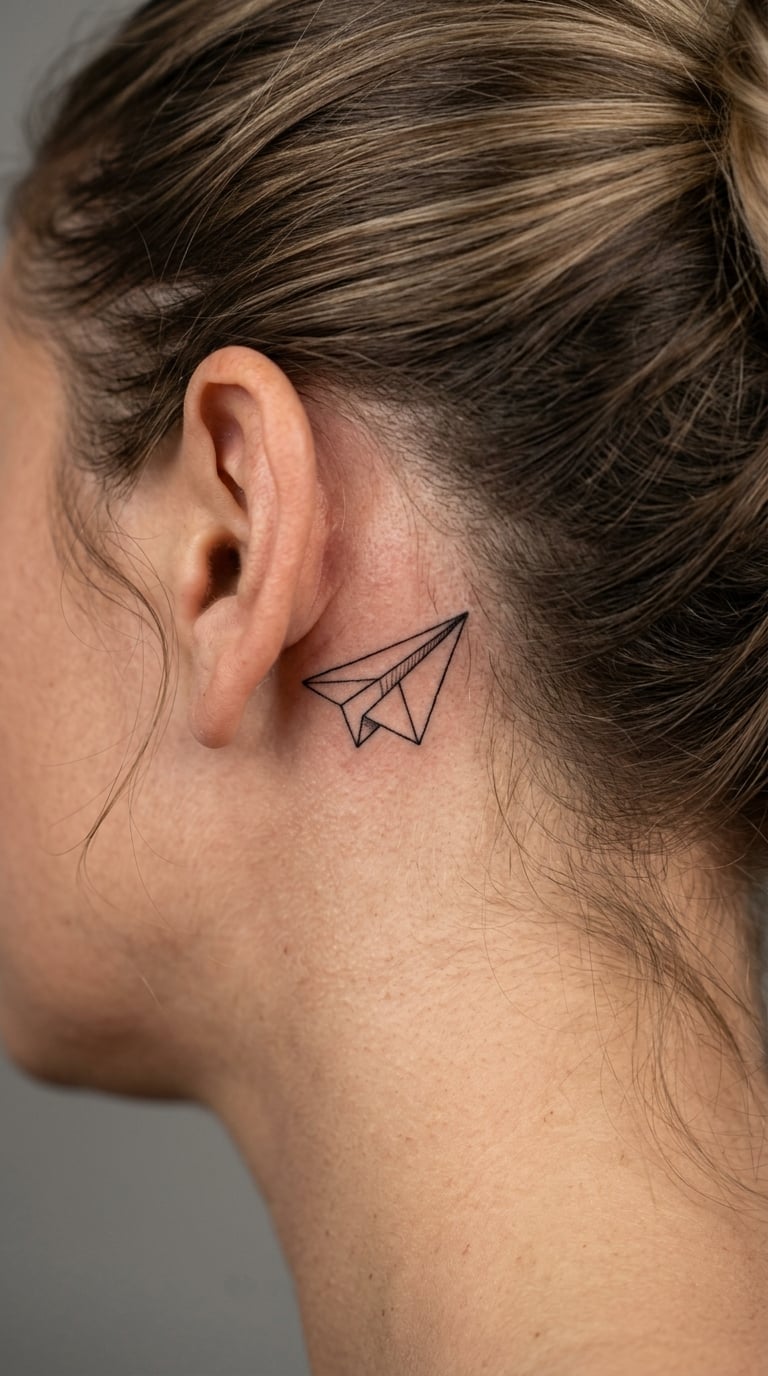
A paper plane drawn in one unbroken outline, with a single fold line across the middle and no shading at all. The whole thing reads as two clean triangles meeting at a nose point, and that simplicity is the point.
People usually pick it for a sense of direction and momentum rather than a fixed meaning, sometimes tied to a move they made or a trip they still talk about.
Placement: behind the ear, centred on the flat of the cartilage or just below the lobe. Size: 1 to 1.5 inches wide. Style: fine line, single-needle pass. Pain: low, a scratchy tugging feeling. Behind-the-ear skin is thin and barely moves, but hair and pillow friction catch this spot, so the thinnest lines soften first here. Make it yours: add a short dotted flight trail behind the plane, angled to follow the curve of your ear.
2. Minimalist Sunburst on the Collarbone
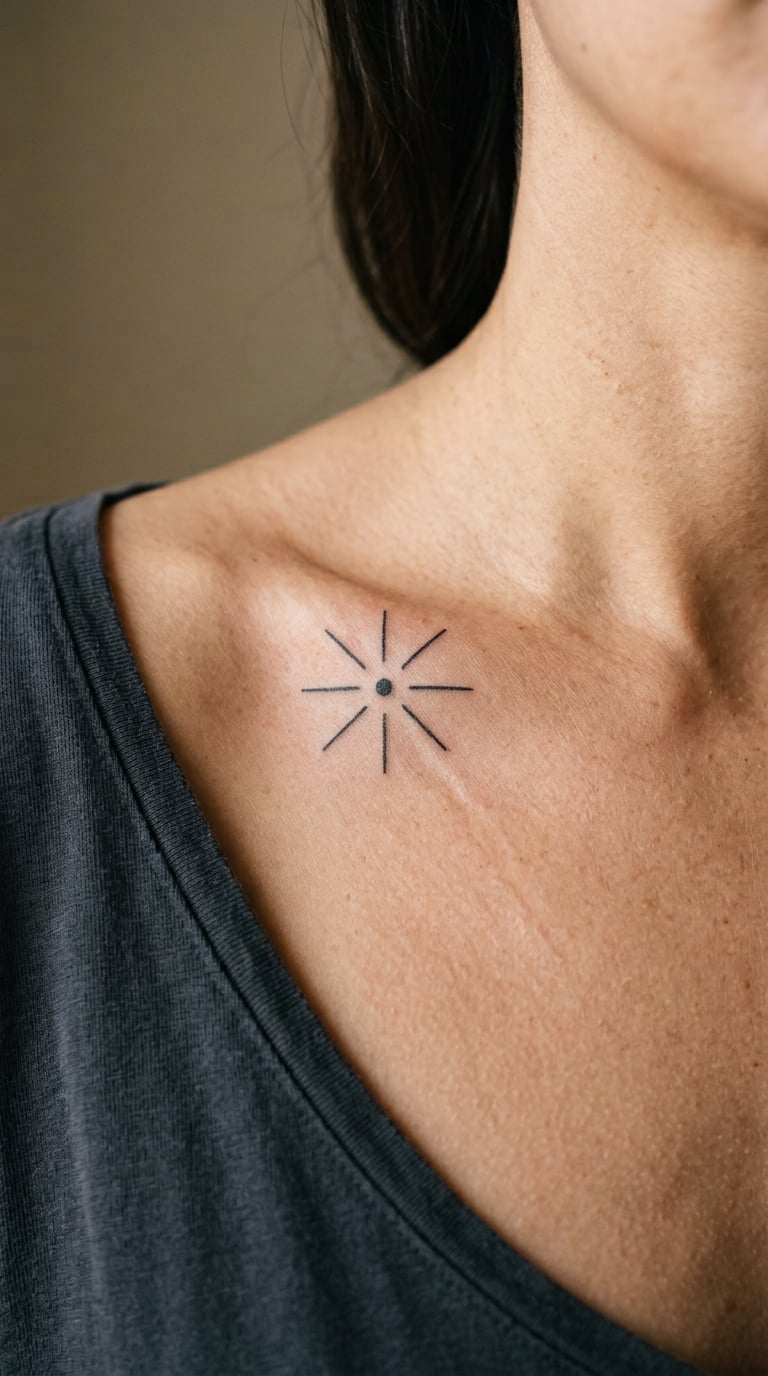
Seven or eight straight rays radiating from a small open centre, all the same weight, none of them filled in. Keeping the centre empty instead of dotting it makes the design look lighter and more contemporary.
It gets chosen for its bright, optimistic visual character. Most people describe it as cheerful rather than symbolic.
Placement: one collarbone, tucked into the hollow where the bone meets the neck, or centred between both. Size: 1.5 to 2 inches across. Style: fine line, evenly spaced rays. Pain: low to medium. The collarbone is bony, so the needle hits close to the surface, but the area recovers quickly. Collarbone skin creases when you sleep on that side, which softens fine rays over time. Make it yours: keep three rays and leave the rest open, or add one warm colour wash behind the centre.
3. Single Botanical Stem on the Forearm
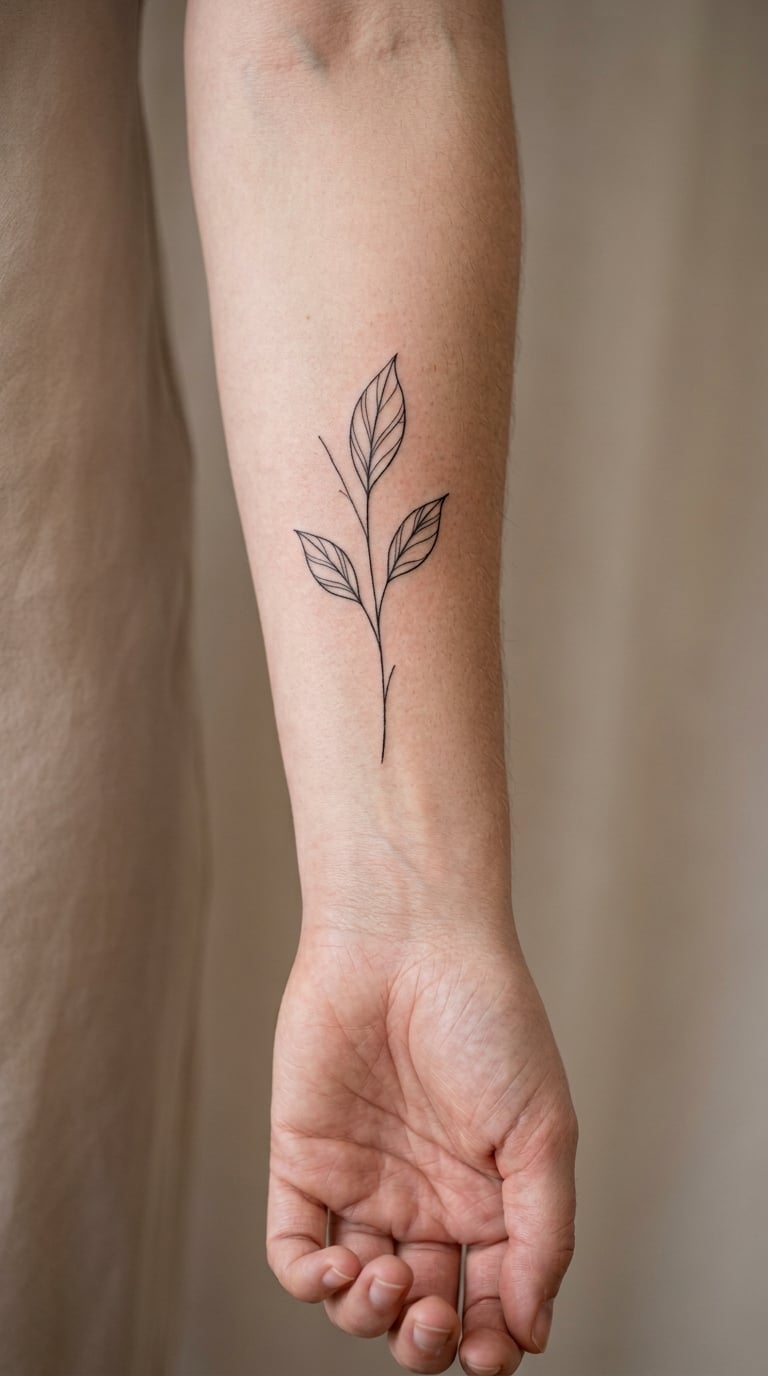
One stem, three or four leaves alternating along it, and nothing else. The artist keeps every vein line thin and slightly uneven, which stops it looking machine-drawn.
Quiet nature imagery is the most common reason people choose this shape. A growing stem is an easy personal reference without having to explain it to anyone.
Placement: inner forearm, running along the length of the muscle, or the outer forearm if you want it visible more often. Size: 2.5 to 3 inches long. Style: fine-line botanical. Pain: low, one of the easiest spots on the body. Forearms see a lot of sun in summer, so this design fades faster than the same drawing placed under a sleeve. Make it yours: swap the leaves for a single olive branch or a eucalyptus sprig.
4. Tiny Crescent Moon at the Side of the Neck
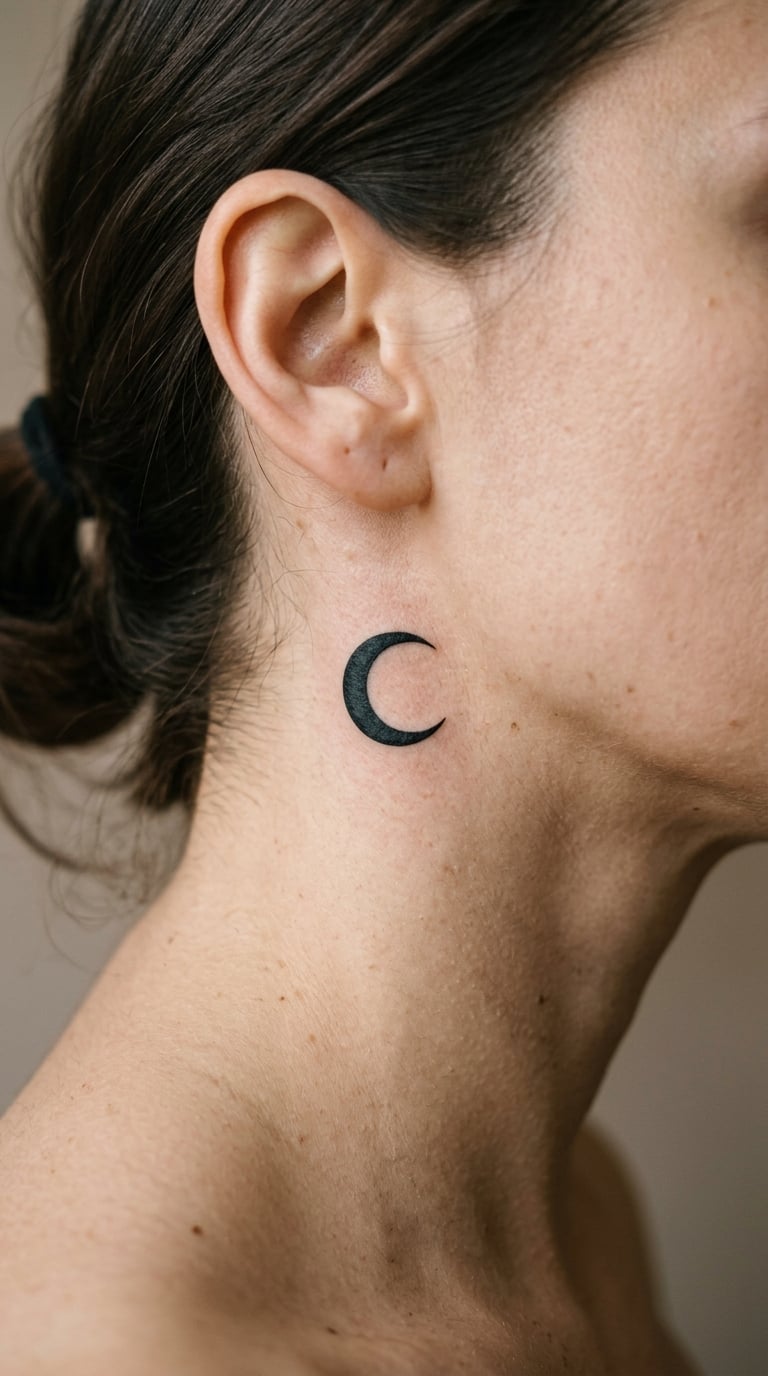
A crescent drawn as a single curved line for the outer edge and a second line for the inner curve, with no stars, no face, no dots. The restraint is what separates a minimalist moon from the heavily decorated version.
It is picked up as a general shorthand for change and intuition, though the meaning shifts with whoever wears it. Treat any single explanation as too neat.
Placement: side of the neck, just below and slightly behind the earlobe, or higher along the sternocleidomastoid line. Size: 0.75 to 1 inch tall. Style: micro line. Pain: low, brief. The neck is thin-skinned but you will feel every pass more than you would on a forearm. Hair and pillowcases rub this spot nightly. Make it yours: add a second crescent in the opposite phase to make a small paired design.
5. Abstract Face Profile on the Upper Arm
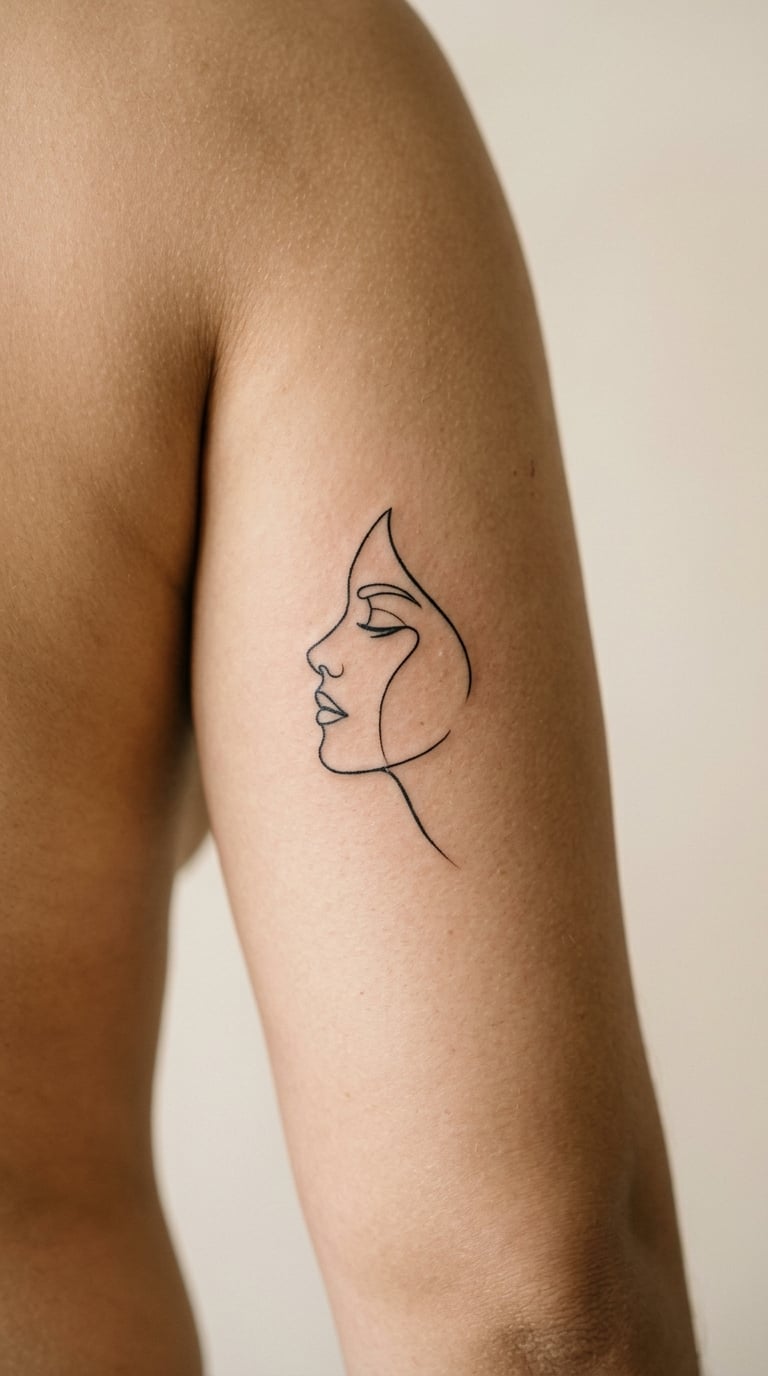
One continuous line that starts at the forehead, breaks at the nose, dips for the lips and closes at the chin, with the eye suggested by a single short stroke. Most of the line never closes, so the drawing stays open and modern.
The appeal is editorial and graphic rather than decorative. It suits anyone who wants something that reads as art at conversation distance.
Placement: outer upper arm, or the flat of the upper shoulder. Size: 2 to 2.5 inches tall. Style: one-line fine line. Pain: medium, longer session because the line is continuous. The nose and lip details are the first parts to soften, so expect a slightly softer profile in a few years. Make it yours: have the artist finish the line at the back of the head with a loose hair stroke.
6. Small Open Heart on the Wrist
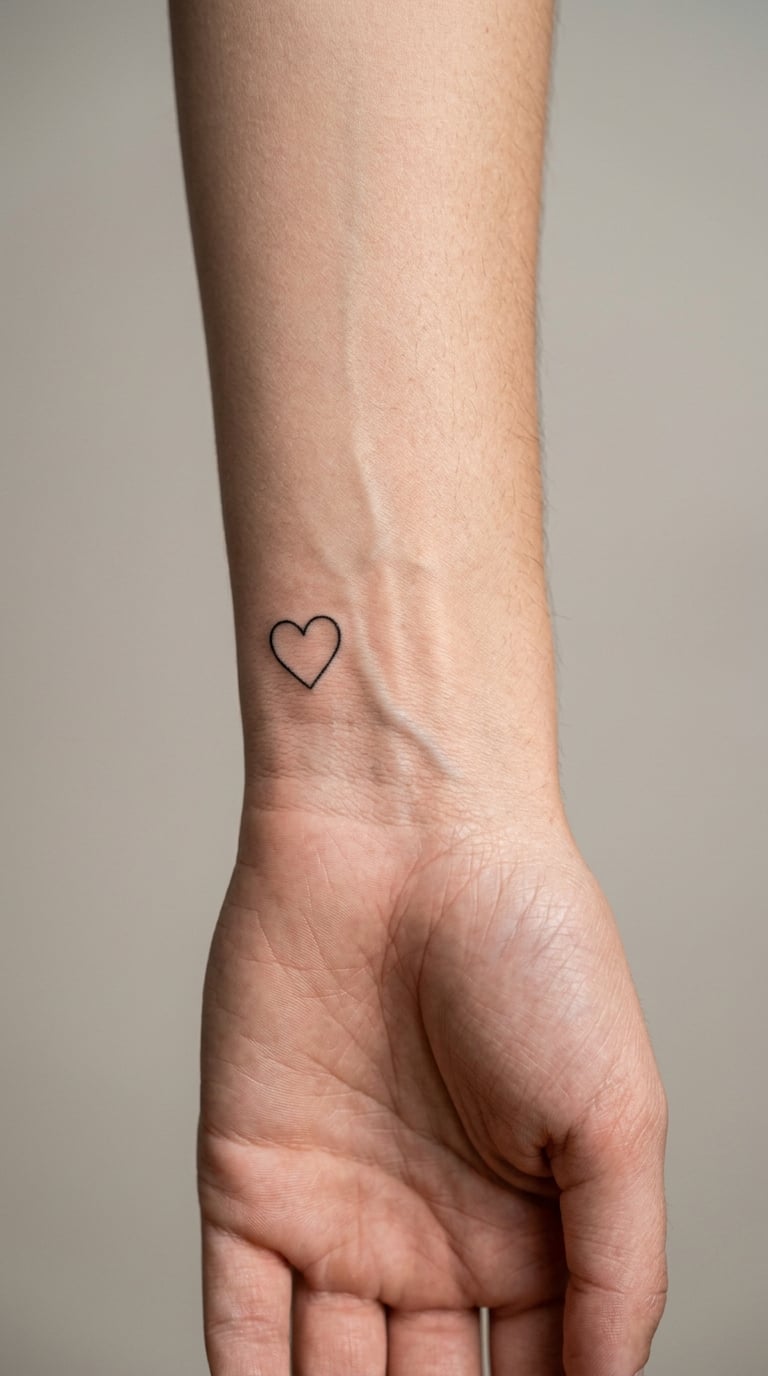
An outline heart with no fill, drawn slightly open at the top so the two curves do not quite meet. The gap is a small design decision that stops it looking like a stock clipart shape.
It is chosen for how light it looks, and often for something personal that never has to be explained at work.
Placement: inner wrist, 1 to 2 inches above the wrist crease. Size: 0.75 to 1 inch wide. Style: micro line. Pain: medium. Inner wrists are thin and the nerve endings run close, so it is a sharper feeling than the size suggests. This is the spot that fades and blurs fastest on the whole list, because hands get washed, sun-exposed and scraped daily. Make it yours: add a heartbeat line trailing from the point of the heart.
7. Minimal Mountain Peaks on the Ankle
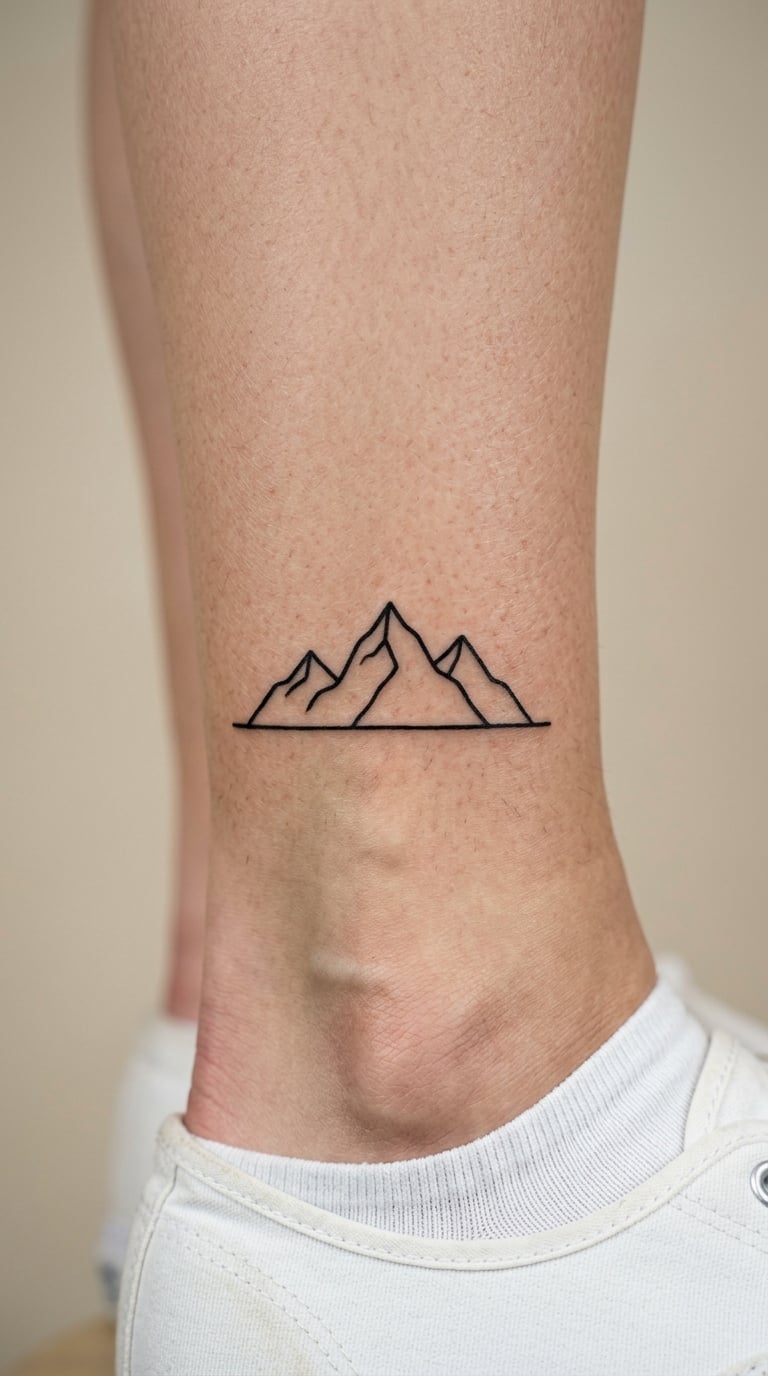
Two or three peaks drawn as a single zigzag line with straight segments, each side of the triangle meeting cleanly at the summit. No shading, no hatching, no trees underneath.
The reference is calm, familiar terrain rather than a specific summit, which keeps it readable by anyone.
Placement: just above the outer ankle bone. Size: 2 to 2.5 inches wide. Style: geometric line. Pain: medium, because ankle skin is thin over bone. It shows whenever you wear sandals or cropped trousers, and it is a spot that gets scraped on holiday. Straight segments blur into soft humps faster than curves do. Make it yours: have the artist underline the range with a single thin line to suggest water.
8. One-Line Wave on the Side Rib
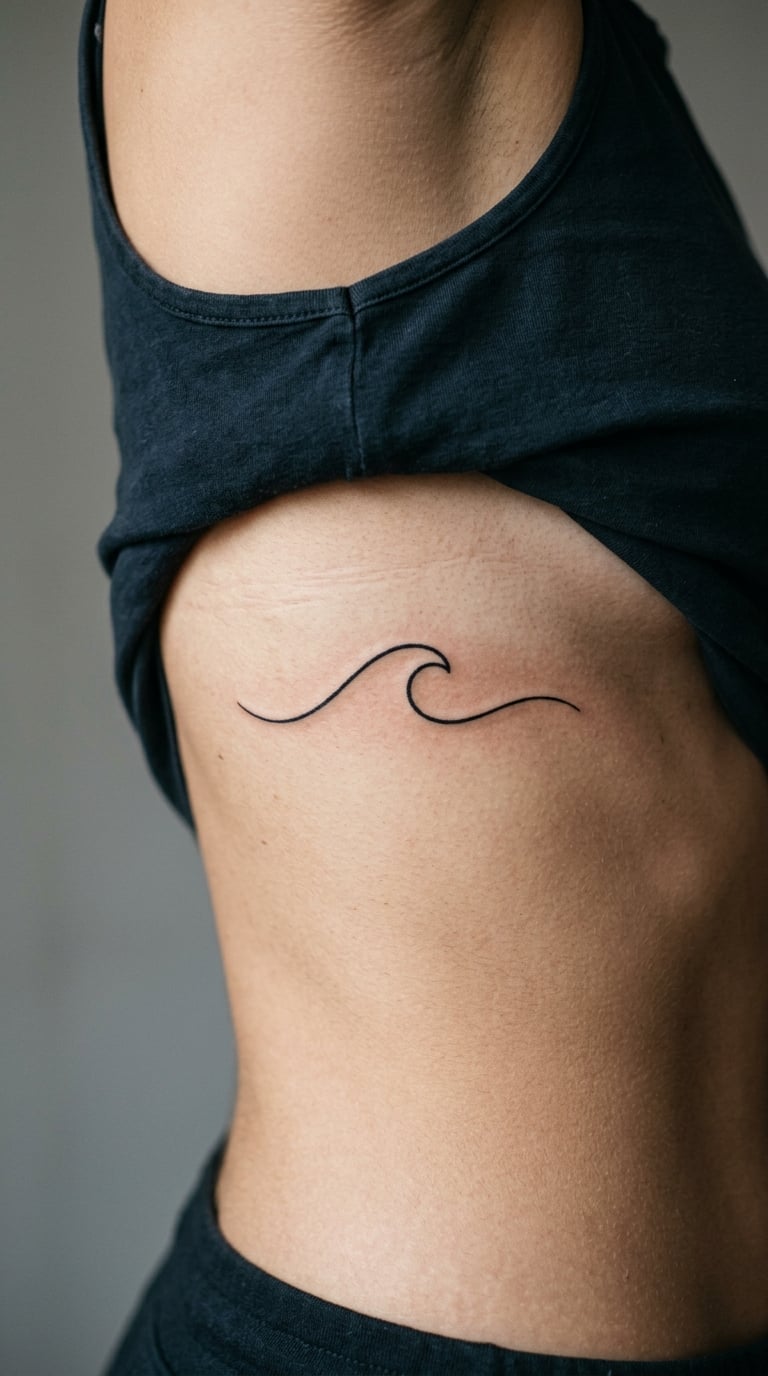
One long unbroken curve that rises and falls twice, like a single ocean swell. The line should be the same weight from end to end, which is the hardest part of the drawing.
It reads as calm and movement, and gets chosen for how little it asks the eye to do. Nobody assigns it a fixed meaning that holds up under questioning.
Placement: side rib, following the natural curve between the last rib and the waist. Size: 2.5 to 3 inches long. Style: one-line fine line. Pain: high, the rib area is the most sensitive spot on this list. Stretching, breathing and laughing all move the skin, so the artist may ask you to hold still through a wave of laughing. Breathing shifts the line slightly over time. Make it yours: add a second, smaller wave offset beneath the first to create depth. More single-line options sit in our line art tattoo roundup.
9. Tiny Four-Point Star on the Finger
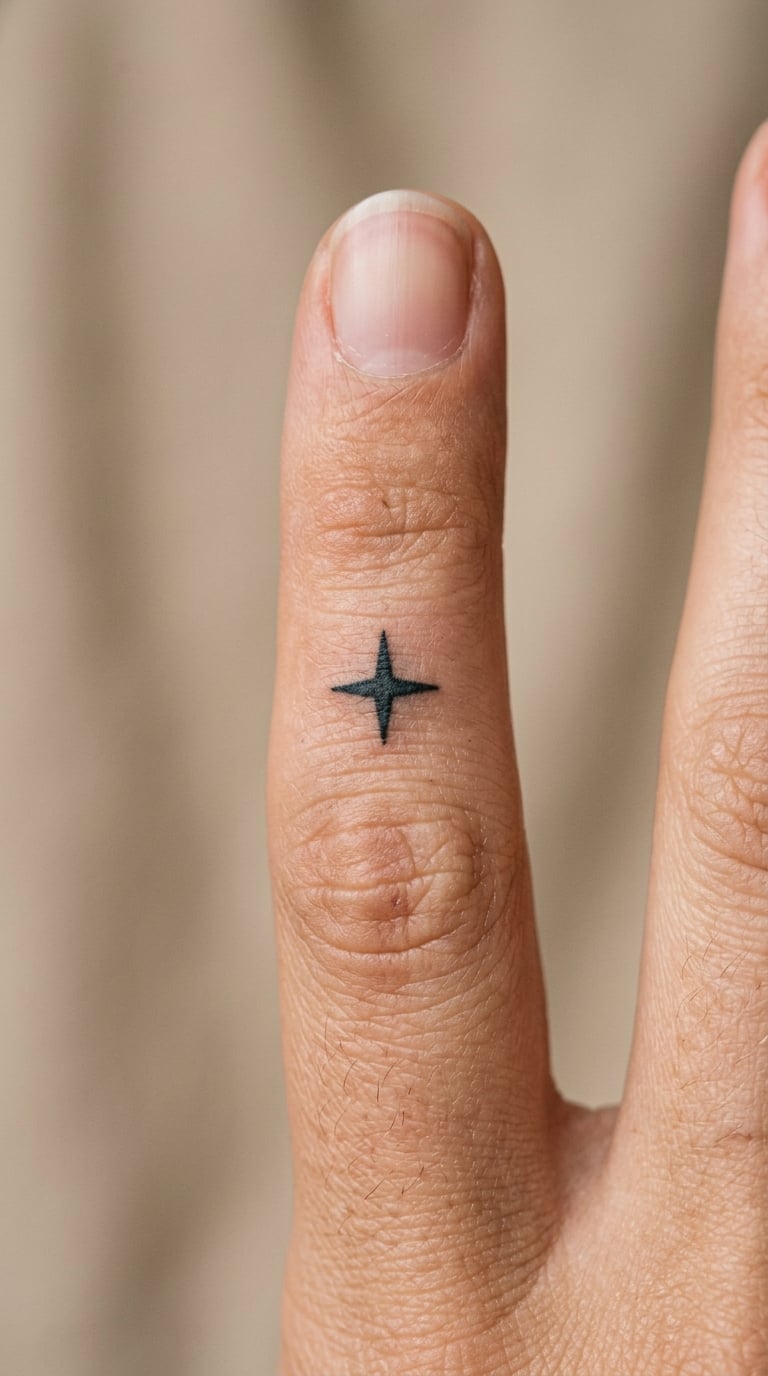
Four straight points meeting at a centre with long, thin arms and a hollow middle. Four points rather than five keeps it graphic and avoids the star-and-pins look.
It is a small marker rather than a statement, which is exactly why a lot of people start here.
Placement: side of the index or middle finger, or on the knuckle. Size: under 0.5 inch across. Style: micro geometric. Pain: high for its size, because fingers are bony and full of nerve endings. This is the design most likely to need a touch-up in a year, since hands are exposed to water, sun and friction and the line is barely there. Make it yours: fill the centre with a single dot of deep red or gold to lift it off the skin.
10. Minimalist Cherry Pair on the Shoulder
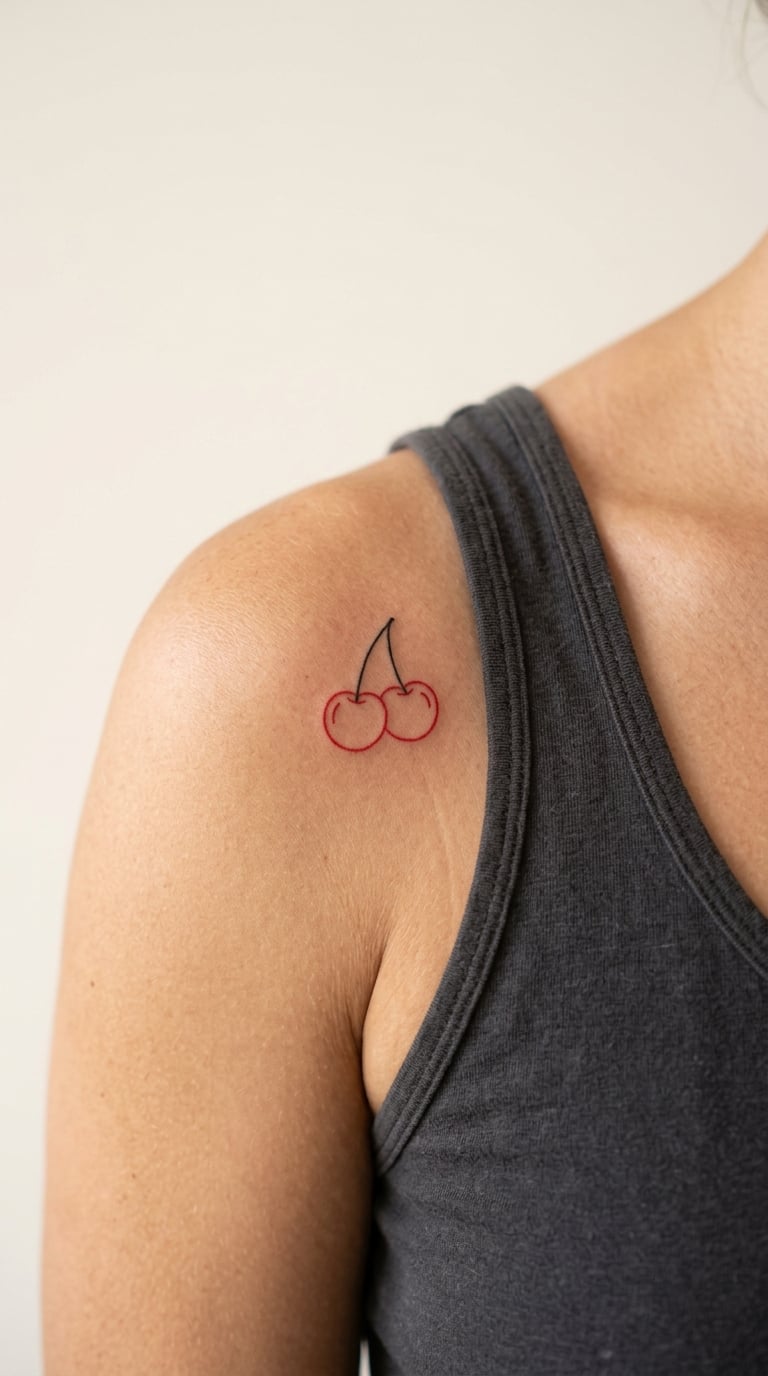
Two round fruits outlined in black, filled with a flat wash of red, joined by two stems that cross once and meet in a single line. The colour stays flat with no highlight, so it still reads as minimal work.
It carries a bit of playfulness that most minimalist designs avoid, and people often choose it as a second piece once a first fine-line tattoo has healed.
Placement: top of the shoulder, near the edge of the sleeve line. Size: 1.25 to 1.5 inches wide. Style: minimal line with a single colour. Pain: medium, the shoulder has thicker skin in places. Red on skin fades faster than black, and shoulder skin often creases when you sleep. Make it yours: have the stems extend into a tiny date in numerals underneath.
11. Line-Art Butterfly on the Back of the Hand
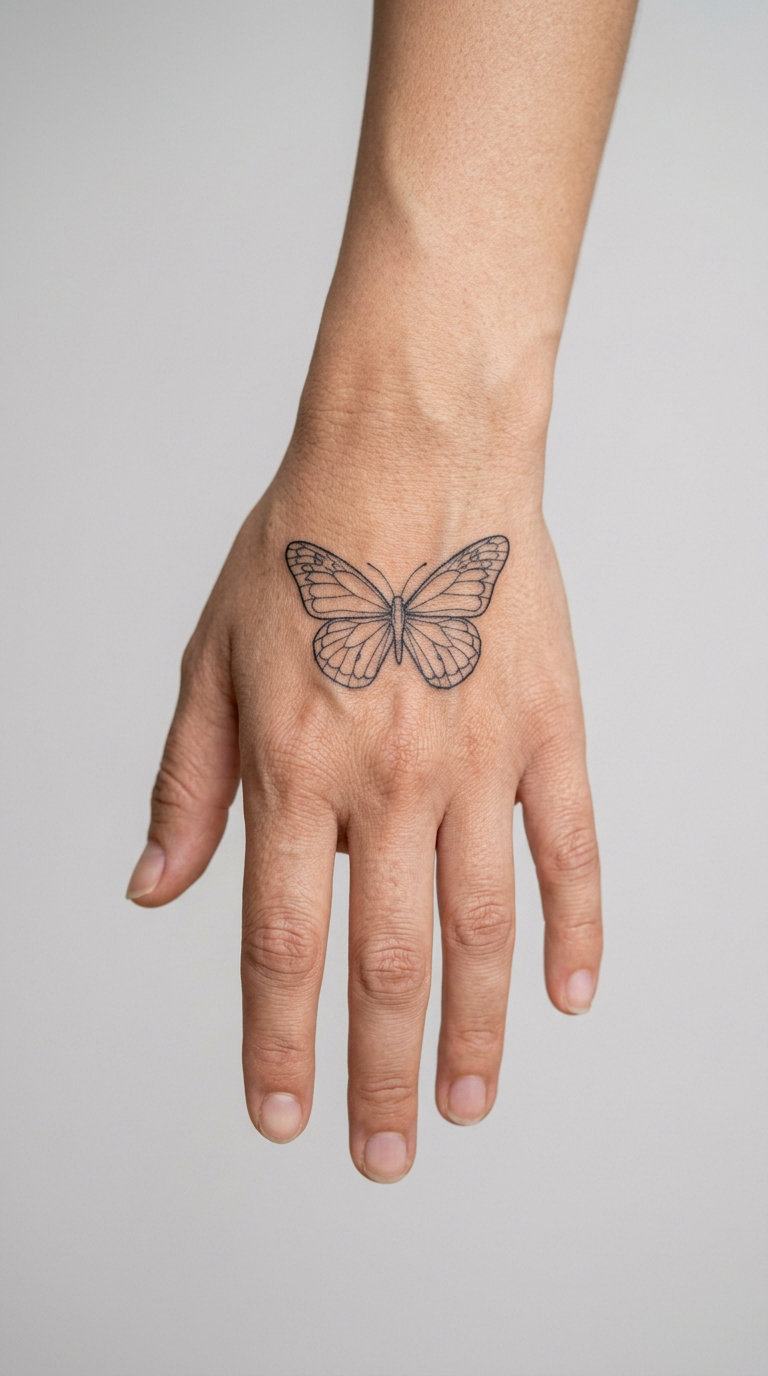
A symmetrical outline with four wings, drawn with clean outer edges and a few interior vein lines. No colour, no gradient, just the wing shapes and a slim body.
Transformation is the theme people most often mention when they pick a butterfly, though plenty of people just like the shape of the wings.
Placement: back of the hand, across the knuckle line so the wings follow the width of the hand. Size: 1.5 to 2 inches wide. Style: fine line. Pain: medium to high, and knuckle areas sting. The back of the hand is one of the most exposed spots on the body, so sun protection and moisturising decide how this one looks at year five. If you are still deciding between hand placements, our 18 small hand tattoo ideas that age well compares the options side by side.
Make it yours: have the artist leave one wing as a half outline that trails into a few dots, so the design looks mid-flight rather than symmetrical and static.
12. Tiny Dotwork Crescent on the Helix
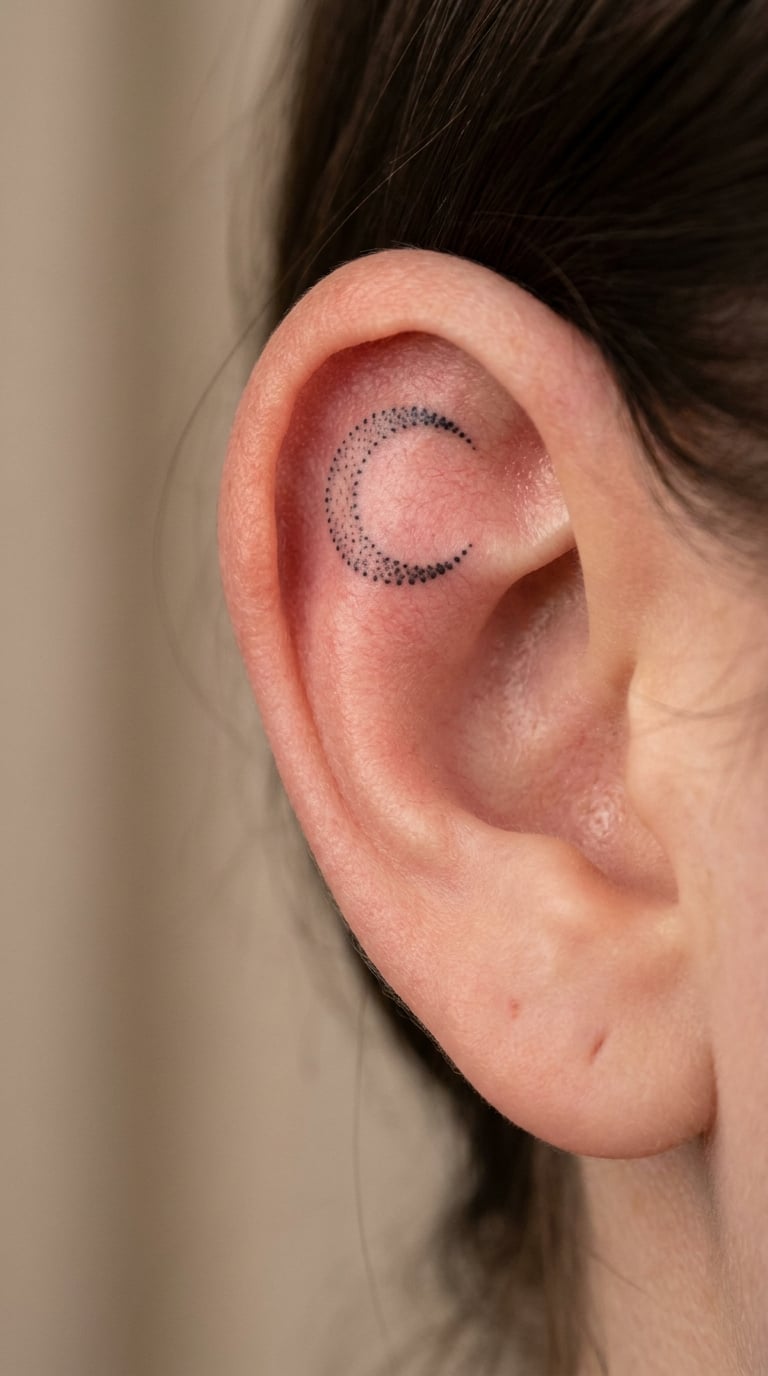
A crescent built entirely from dots that vary in size, larger along the outer curve and smaller towards the tips, with a few open gaps in the shading so the shape stays light.
Texture without a drawing. It reads as one shape from a step back and as a pattern of dots up close.
Placement: upper helix, above the middle of the ear. Size: 0.5 to 0.75 inch tall. Style: micro dotwork. Pain: high, and it takes longer than the size suggests because each dot is a separate placement. Dot spacing and the fine gradient at the tips are the first details to blur, and cartilage takes ink differently from the lobe. Make it yours: add a number of dots equal to something that matters to you, spaced around the outer curve.
13. Minimal Rose Outline on the Hip
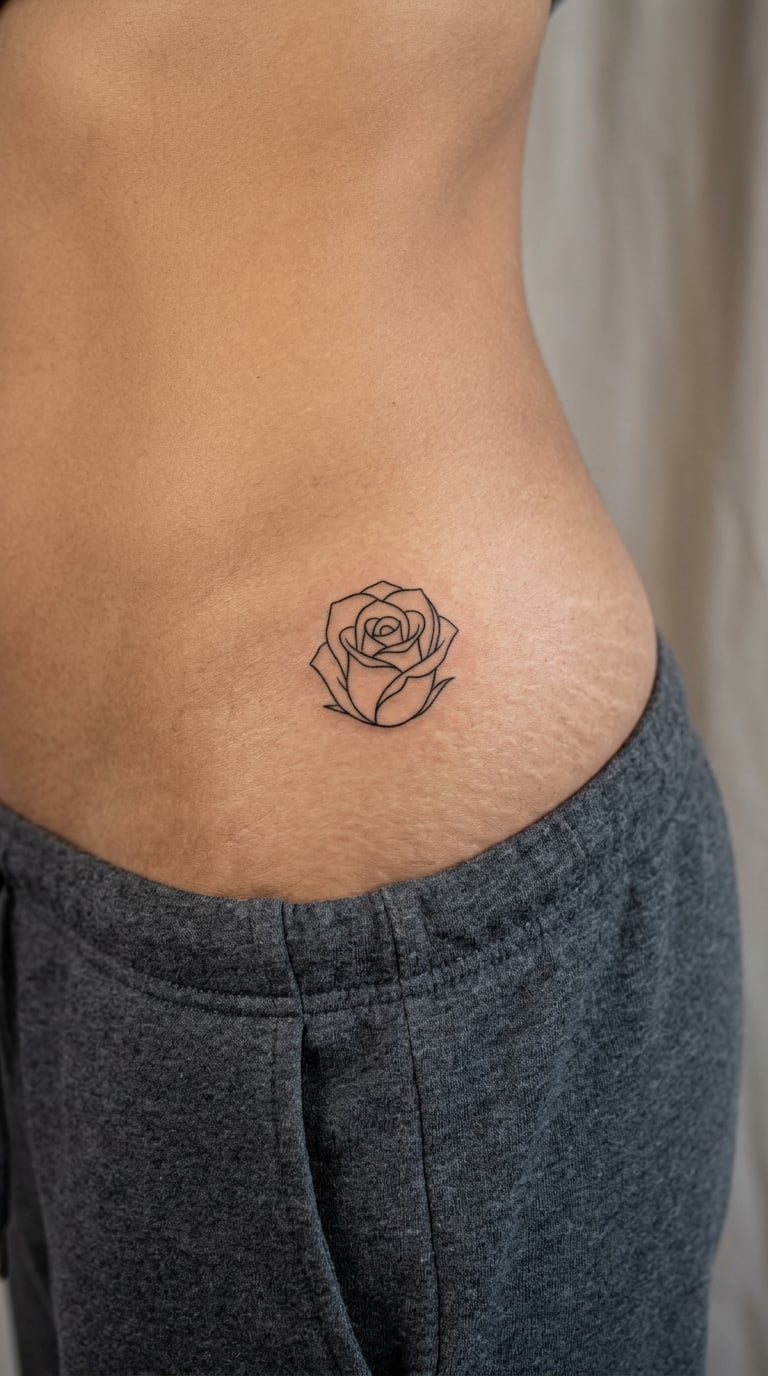
One bloom drawn with a spiral centre, a few outer petals suggested by separate arcs, and no stem or leaves. The interior linework stays sparse so the rose never fills in with grey over time.
It is the most traditional subject here rendered in a modern register, which gives it a quiet longevity that trend-driven motifs lack.
Placement: outer hip, along the curve above the belt line, or on the high hip near the waist. Size: 1.5 to 2 inches tall. Style: single-needle line. Pain: medium, the hip has good padding but the skin moves when you sit. Hip skin stretches with weight change and sitting, so the spiral centre can loosen over time. Make it yours: add two small leaves at the base without extending them into a full stem.
14. Simple Eye Symbol Behind the Ear
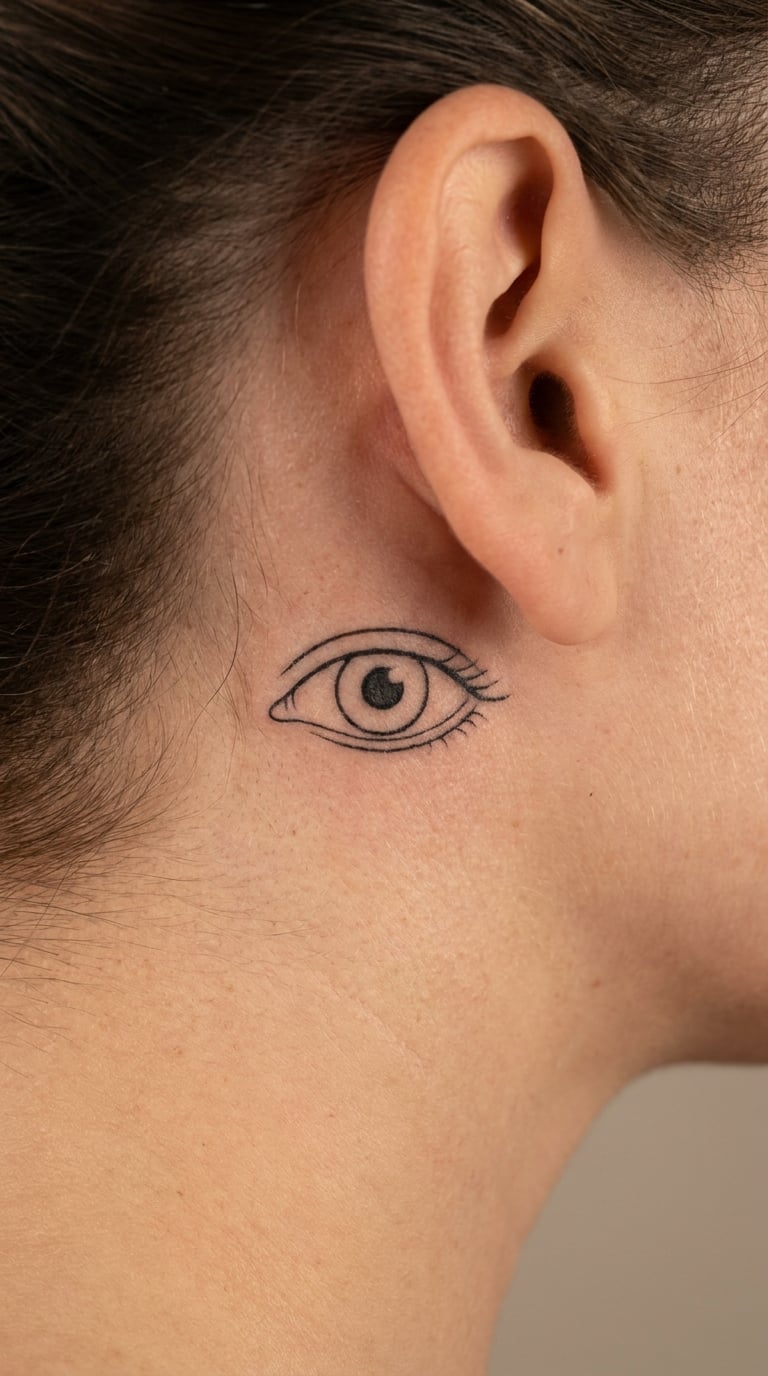
An almond-shaped outline with a solid round pupil at the centre and a single lid line above it, so the eye reads as open and watchful. No lashes, no rays, no ornament around it.
It sits between a literal eye and a watch face, which is why people describe it as alert rather than symbolic.
Placement: behind the ear, low on the flat behind the lobe. Size: 1 to 1.25 inches wide. Style: micro line. Pain: low, quick and sharp. The almond shape holds its form well, but the pupil is a tiny area of dense ink that stays darker than the outline, so the two may not age at quite the same rate. Make it yours: add three short lashes to the outer corner, or a single dot above the lid.
15. Minimal Diamond on the Chest
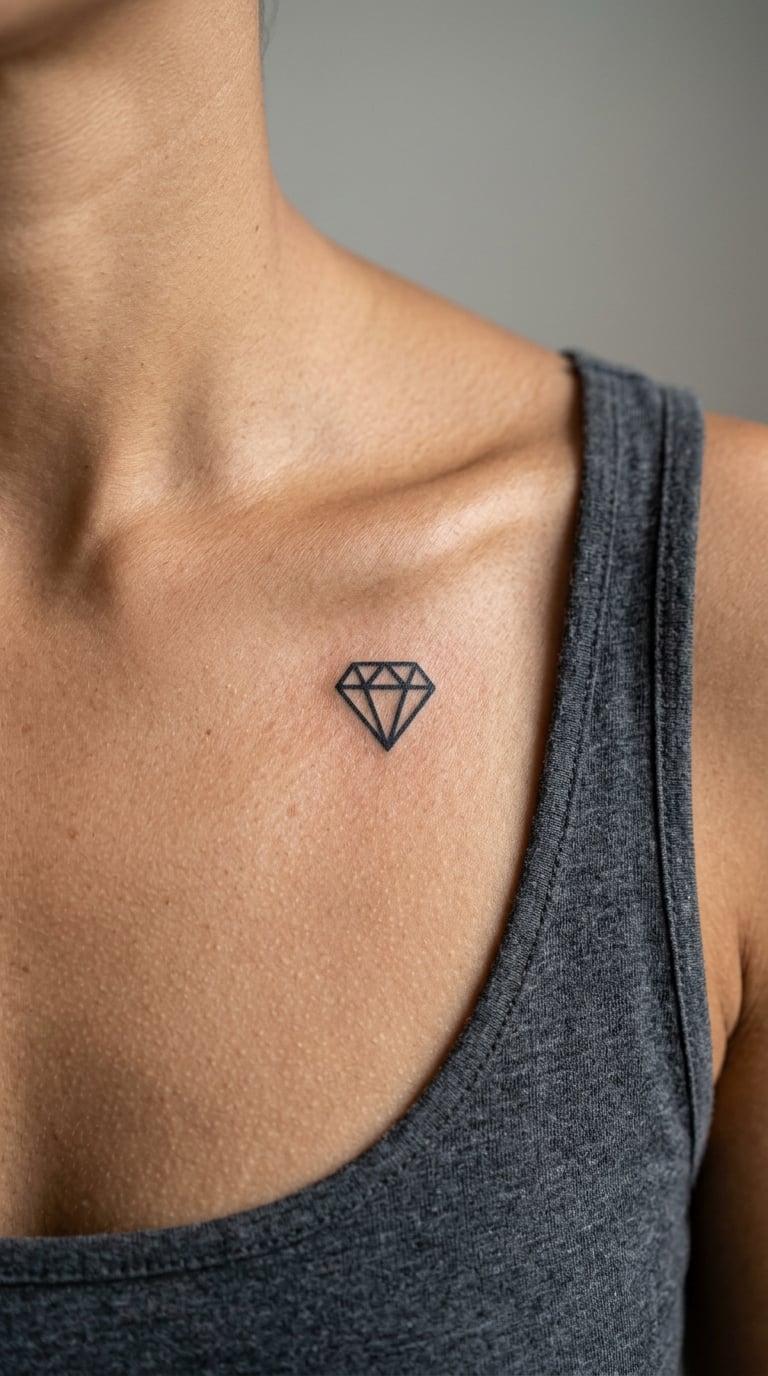
A geometric diamond drawn with straight ruled edges, a horizontal line across the middle, and a couple of facet lines inside, kept to a minimum so it stays a solid readable shape.
It is a quiet shorthand for clarity and worth, chosen for how neatly it sits under a neckline rather than for decoration.
Placement: upper chest, a few inches below the collarbone, or centred just below the sternum. Size: 0.75 to 1 inch tall. Style: geometric fine line. Pain: medium, the chest is fleshy but movement shifts the line when you breathe deeply. Deep cleavage and folding of chest skin can mark the facet lines first. Make it yours: have the artist break the bottom point with a thin gap, turning it into an open geometric shape.
16. One-String Sun on the Calf
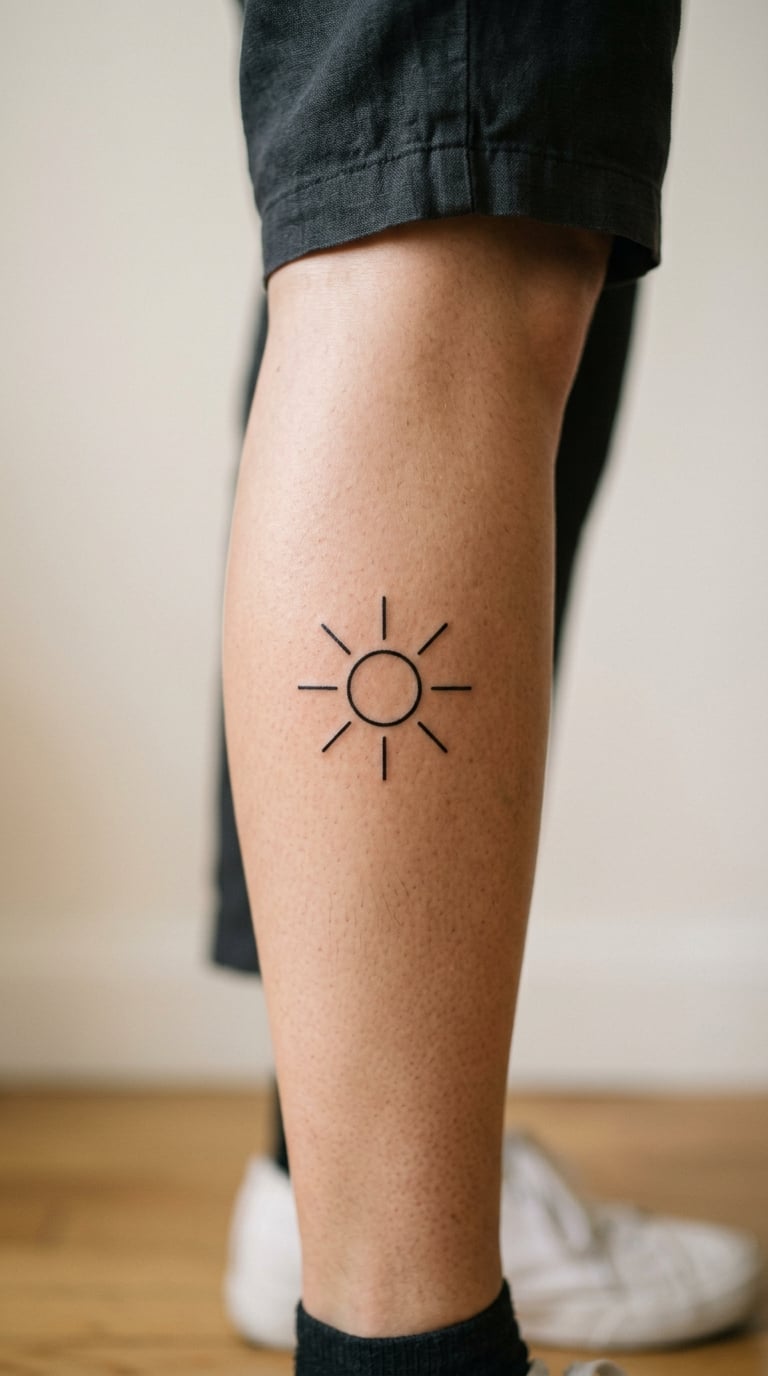
A circle drawn as one clean ring with eight short rays spaced evenly around it, all the same length and weight. Leaving the circle empty is what keeps it quiet.
It is the counterpart to the crescent moon, and a lot of people book both years apart, one on each leg.
Placement: outer calf, mid-way between knee and ankle. Size: 1.5 to 2 inches across. Style: minimal line. Pain: low to medium, the calf is a meaty and forgiving area. The calf muscles shift under the skin when you walk, which can stretch the ring very slightly over the years. Short rays hold better than long tapering ones. Make it yours: drop the lower three rays so the sun reads as a rising half rather than a full circle.
17. Tiny Initial on the Inner Bicep
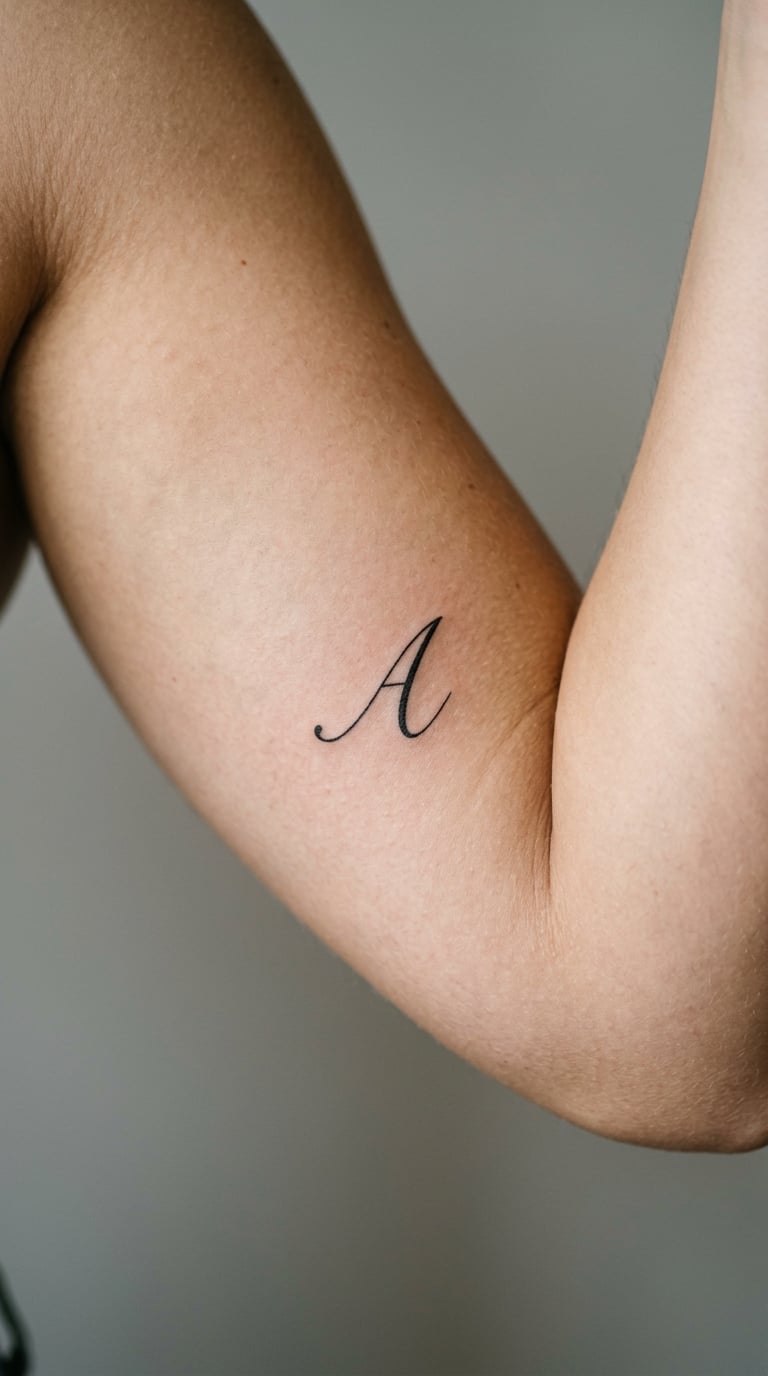
One capital letter drawn as a clean outline in a plain serif or a thin geometric sans, with no flourishes, no frame, no accompanying name. The style of the letter does more work here than the letter itself.
It is personal, discreet and easy to read as something other than initials if you want it to stay private.
Placement: inner bicep, on the inside of the arm where it shows when the sleeve rides up. Size: 0.75 to 1 inch tall. Style: fine-line lettering. Pain: low and quick. Lettering is the first thing to blur because thin serif details and hairline strokes have nowhere to go when the line spreads, so a geometric letterform ages better than a script one. Make it yours: keep the same letter and add a small year underneath in the same line weight.
18. Minimal Cloud Outline on the Wrist
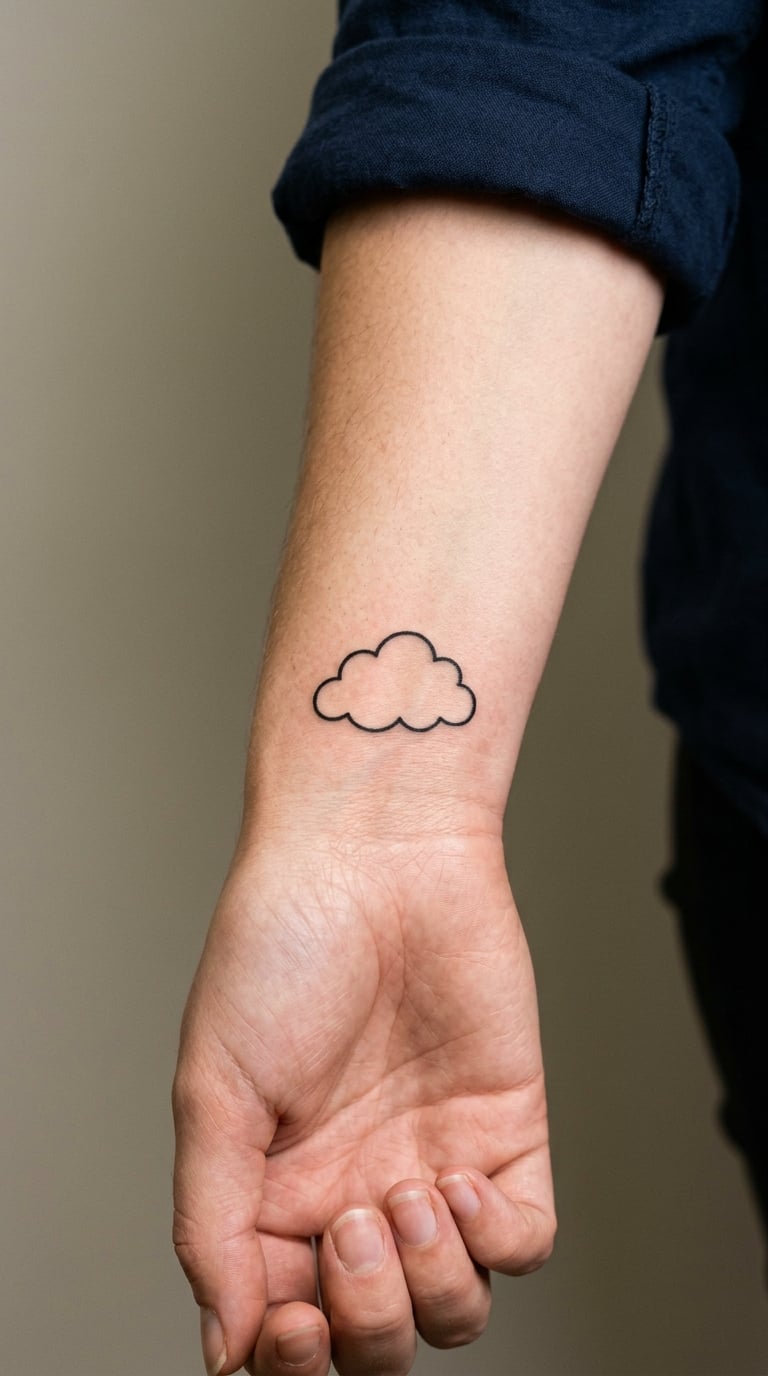
A cloud drawn as one continuous scalloped line that lifts and dips three times, with a flat base and no interior detail. The single unbroken line is what separates it from an outline cloud with shading.
It is chosen for a soft, dreamy look, and the flat base makes it sit well against a straight wrist line.
Placement: inner wrist, or on the wrist crease just above the hand. Size: 1.5 to 1.75 inches wide. Style: single-needle line. Pain: medium, same nerve density as the heart on the wrist. Wrist ink is repeatedly wiped, washed and flexed, so a cloud with many small bumps loses definition faster than a design with fewer, wider curves. Make it yours: run a hairline straight line through the middle of the cloud, splitting it into two halves.
19. Tiny Laurel Branch on the Rib
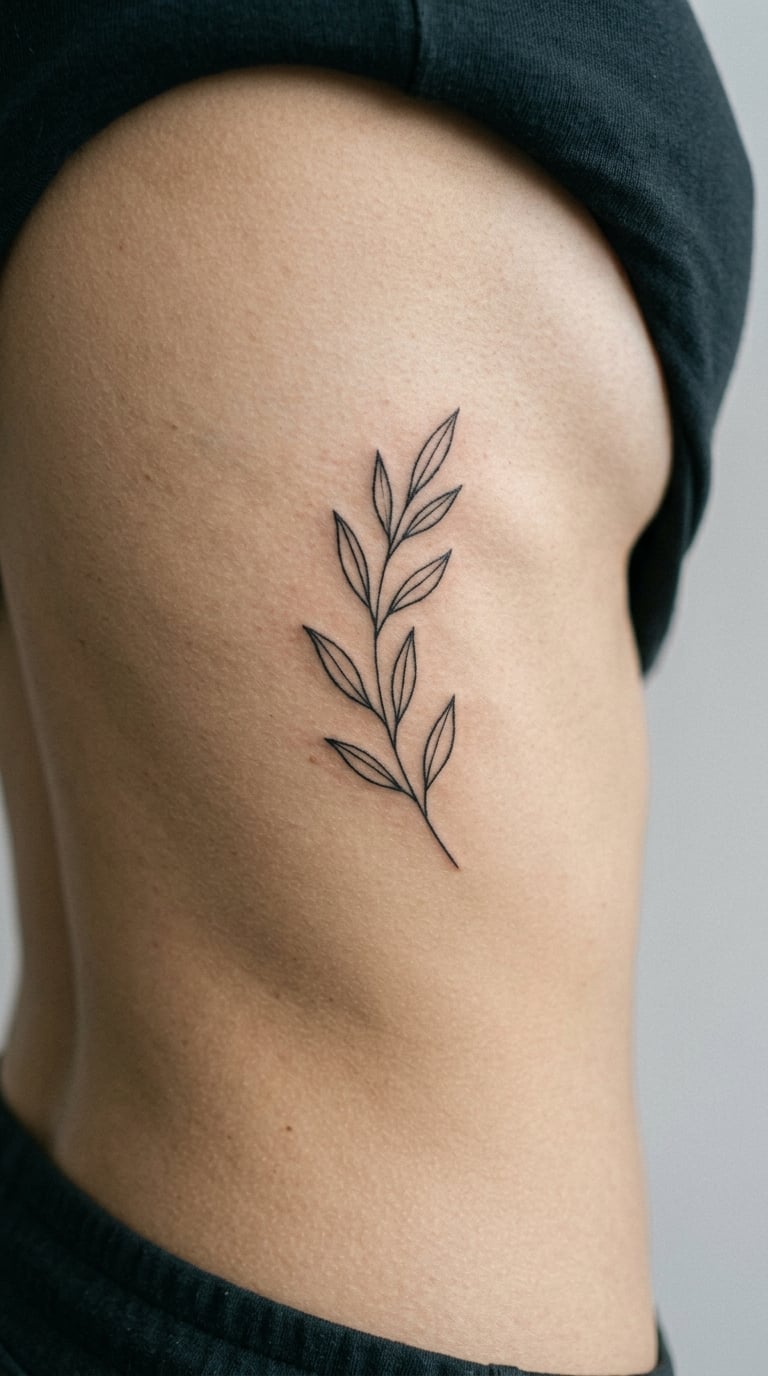
A single curved stem with seven small leaves alternating along it, each leaf a simple almond shape with one centre vein. No second branch, no ribbon, no surrounding wreath.
Laurel carries a classical visual language of recognition and growth, and the sparse version keeps that reference without the trophy-ribbon feel.
Placement: side rib, angled along the rib line, or on the outer hip. Size: 2 to 2.5 inches long. Style: fine-line botanical. Pain: high, rib work again, and leaf shapes mean more line changes. Each small leaf point fills in first, so a version with fewer, larger leaves holds its shape for longer. Make it yours: tuck a small numeral date into the curve of the stem where the leaves thin out.
20. Minimal Rainbow Arch on the Forearm
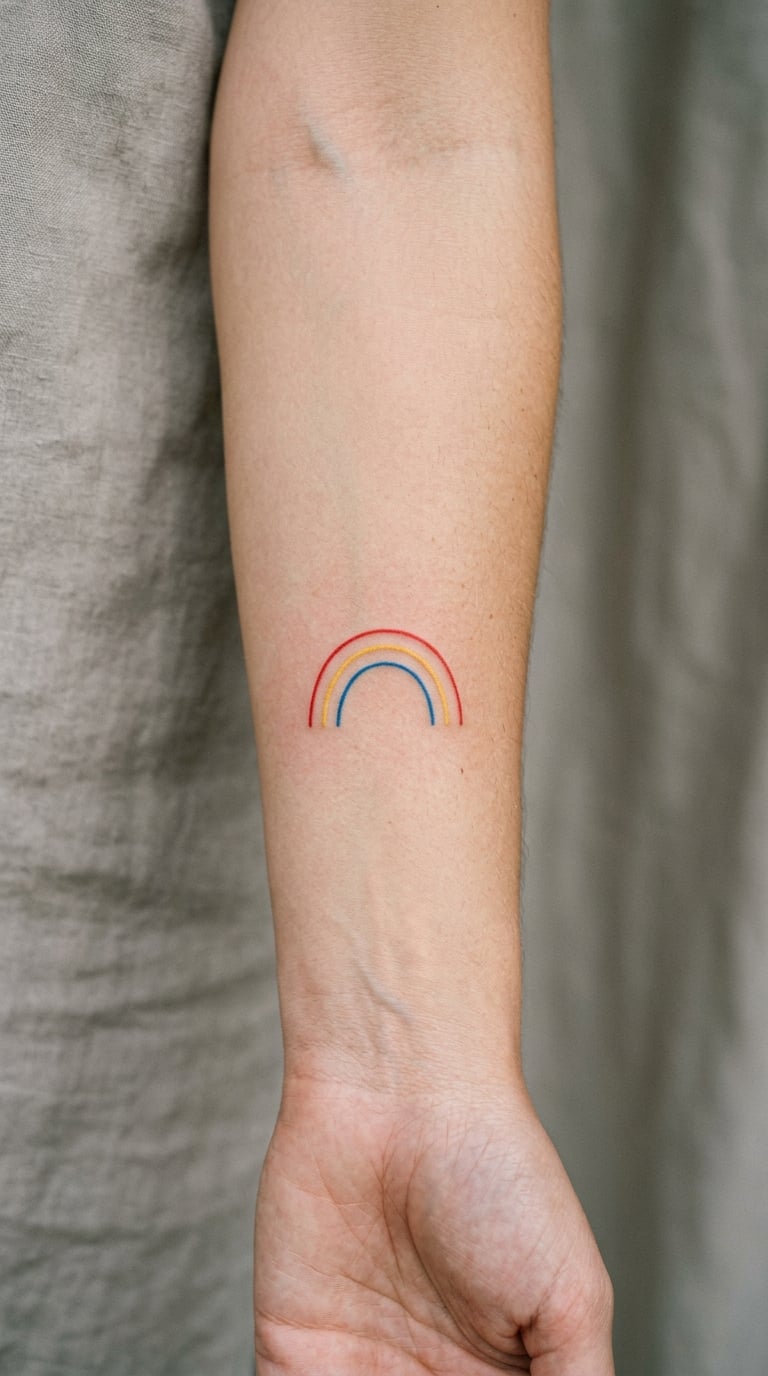
Three thin concentric arcs, each a different colour, with visible skin between the lines and no clouds at either end. Limiting it to three lines keeps it minimal and keeps the cost and touch-up risk down.
It reads as hopeful and warm, and it works as a matching piece for friends or siblings without needing to match exactly.
Placement: inner forearm, running across the width. Size: 1.5 to 2 inches wide. Style: minimal colour line. Pain: low. Fine colour lines on an exposed forearm fade much faster than black, especially the yellow, so plan on a refresh every few years if you want it bright. Make it yours: make the middle arc thinner than the outer two, or start the three lines at slightly different heights on each side.
Fine-Line Placement: What Makes Minimalist Tattoos Work on Skin
A drawing that looks elegant in a phone gallery can fall apart on skin, and the difference is almost always line weight, spacing and how the design handles a curve. Single-weight lines are the foundation: an artist who varies the thickness randomly mid-stroke gives you an uneven result that reads as sloppy rather than expressive. Ask to see healed work, not fresh work, because swelling fattens every line for the first week.
Negative space does the quiet work. Empty skin between elements is what keeps a design from turning into a grey smudge once healed, so the gaps matter as much as the lines. Curved surfaces help more than flat ones, which is why a paper plane behind the ear and a wave on the rib read better than the same design stamped on a shoulder blade.
One practical rule shows up in every fine-line advice forum: anything under 1 to 2 cm starts losing detail as ink spreads under the skin. Above that minimum, a simple shape holds. Below it, you are gambling.
How to Choose the Right Design
Five checks, in the order I would run them at a consultation:
- Style match. Decide whether you want fine line, single-needle line, dotwork or micro geometric. All four read as minimalist but they age at very different speeds.
- Size reality. Pick the design, then scale it up until it is at least 1 to 2 cm in its smallest dimension. Below that, detail does not survive healing.
- Placement honesty. Tiny designs disappear on the outer wrist and on the ankle if the surrounding area is larger than you expect. Stand in front of a mirror with tape on your skin before you commit.
- Line clarity. Ask the artist to show healed photos of a piece the same size as yours. If every healed example is grey and soft, that is the result you will get.
- Long-term wear. Hands, fingers and any sun-exposed placement fade first. Inner upper arm, rib and behind the ear hold noticeably better.
If calm and grounding matter to you, the 20 minimalist tattoo ideas for anxiety and calm covers the same restrained style filtered by meaning instead of placement.
Cost and Session Time
Small minimalist work is priced by artist, city and shop minimum rather than by design. A useful way to think about it in the US: micro pieces such as a finger star or a helix crescent land somewhere around 80 to 200 dollars, small pieces like a wrist heart or a neck moon around 150 to 300 dollars, medium pieces such as a butterfly or a hip rose around 250 to 450 dollars, and larger minimal work above that.
Most of these designs take 20 to 60 minutes. The exceptions are the rib pieces, the helix dotwork and anything with an open hand, which can run past an hour even though the drawing is small.
Most shops charge a minimum that covers the appointment whether you are in for ten minutes or forty, so a tiny design in a high-rent studio can cost more than a medium one in a quieter room. Ask about the shop minimum and the hourly rate before you book.
Aftercare Basics
- Follow your artist’s aftercare instructions first, since they know exactly what they did. Everything below is general.
- Wash it gently twice a day with lukewarm water and unscented soap, then pat dry rather than rubbing.
- Protect it from sun for the healing period and beyond, which matters more for the colour designs on this list than the black ones.
- Wear loose clothing over the area, since tight fabric grinding a fresh tattoo is the fastest route to an irritated healing.
- Keep a thin layer of plain moisturiser on it once it has stopped weeping, and reapply whenever the skin feels tight.
- Leave scabs and flakes alone. Picking is the most common cause of patchy thin lines in healed minimalist work.
Frequently Asked Questions
What is the smallest minimalist tattoo that will still be legible?
Anything under 1 to 2 cm loses detail as ink spreads under the skin, so the practical floor is about that. Below roughly half an inch, fine lines and small shapes fill in and the design turns into a grey smudge within a year. If you want something smaller than that, choose a shape with no interior detail, such as a solid crescent or a single four-point star, and expect a touch-up.
Do minimalist tattoos hurt more than bigger ones?
Not usually, but size and location interact. A tiny design on the rib or the finger can hurt more than a larger one on the forearm, because ribs and fingers are thin-skinned and dense with nerve endings. An upper arm or inner forearm fine-line piece is among the easiest. Wrist and hand work falls somewhere in between, sharp but quick.
How long does a small fine line tattoo take to heal?
Most small fine-line tattoos are surface healed within two to three weeks, but the ink keeps settling for a month or more. The true final colour only shows up after roughly six to eight weeks, which is why a good artist will ask you to come back then rather than a few days after the session. Keep following the aftercare instructions for the whole period.
Why do fine line tattoos fade faster than bolder work?
A fine line puts less ink in the skin, so there is simply less pigment to lose. Hand washing, sun exposure, swimming and friction thin it further, and hands and fingers go through all of that daily. Placements that are covered by clothing, such as the inner bicep, rib and behind the ear, tend to hold their lines for noticeably longer.
How do I know if a fine line artist is any good?
Ask to see healed photographs, not fresh ones. Fresh tattoos are swollen and lines look smoother and heavier than they will end up. Check that line weight stays consistent across a range of healed pieces, and look specifically for small work the same size as yours. An artist who is honest about designs being too small is a good sign.
Which Minimalist Tattoo Fits Your First Piece?
If this is your first tattoo, pick a fine-line botanical stem or a small crescent moon. Both are simple shapes with minimal interior detail, both sit in placements that are easy to keep private, and neither depends on tiny details that will fade. Bring a reference image and ask the artist to scale it up slightly before they start.
Adding to an existing collection? Go for something with a bit more visual character: the abstract face profile, the butterfly outline, or the three-line rainbow arch. Just make sure the line weight matches what you already have, because a new piece that is noticeably bolder than an old one reads as a mistake rather than a contrast.
Whichever you pick, the reference photos you save matter less than the healed work the artist can show you. That is the single best predictor of what you will actually end up with.