
20 One Day at a Time Tattoo Ideas: Small Designs (October 2026)
One day at a time tattoo ideas work best when the design carries the message instead of the words. Most people searching this phrase want a small, permanent nudge to keep going, and a sunrise, a single step on a path or a circled date does that without turning their skin into a quote.
These twenty designs range from a one-inch bell behind the ear to a two-inch calendar on the forearm, and every one of them can be personalised with a date, an initial or a single colour accent. If you are new to getting inked, start with the tiny calendar. If you already have a full collection, the single-step path or the arrow and circle will sit quietly next to what you have.
Booking in October 2026? Small designs still sell out fast, and a good artist needs a few weeks with a reference before they draw you a custom version.
20 One Day at a Time Tattoo Ideas: Quick Guide
Here is every design in this list side by side, so you can compare style, placement, size and pain before you pick one.
| Idea | Style | Best placement | Size | Pain |
|---|---|---|---|---|
| Fine-line sunrise | Fine line | Inner forearm | 2 inches wide | Low to medium |
| One step on a path | Minimal line | Outer forearm | 2.5 inches long | Medium |
| Open window | Fine line | Inner upper arm | 2 inches tall | Low |
| Calendar with one circled date | Micro line and grey | Forearm | 1.5 inches wide | Medium |
| Three stepping stones | Fine line | Inner wrist | 2 inches wide | Medium |
| Seedling through soil | Botanical line | Outer forearm | 2 inches tall | Low |
| Single candle | Black and grey | Inner upper arm | 2.5 inches tall | Low |
| Wave crossing a grid | Geometric line | Forearm | 2 inches wide | Medium |
| Arrow through a circle | Minimal black | Inner wrist | 1.5 inches wide | Medium |
| Imperfect pebbles | Dotwork | Outer forearm | 2 inches tall | Medium |
| Doorway with leaves | Fine line botanical | Side thigh | 2.5 inches tall | Low |
| Moon phases | Fine line | Inner forearm | 2 inches wide | Low |
| Sprout in a coffee cup | Minimal line | Inner wrist | 2 inches wide | Medium |
| Footprint on a dotted route | Micro realism | Calf | 2.5 inches long | Medium |
| Bell with a sound line | Fine line | Behind the ear | 1 inch tall | Medium to high |
| Hands releasing a bird | Blackwork | Upper arm | 3 inches wide | Medium |
| Hourglass with one grain | Minimal black | Forearm | 2 inches tall | Medium |
| Ridge with one peak | Geometric | Outer upper arm | 2.5 inches wide | Low |
| One dot in a grid | Dotwork | Inner forearm | 1.5 inches wide | Low |
| Lantern on a hill | Fine line | Outer arm | 2 inches tall | Low |
1. Fine-Line Sunrise Over a Horizon
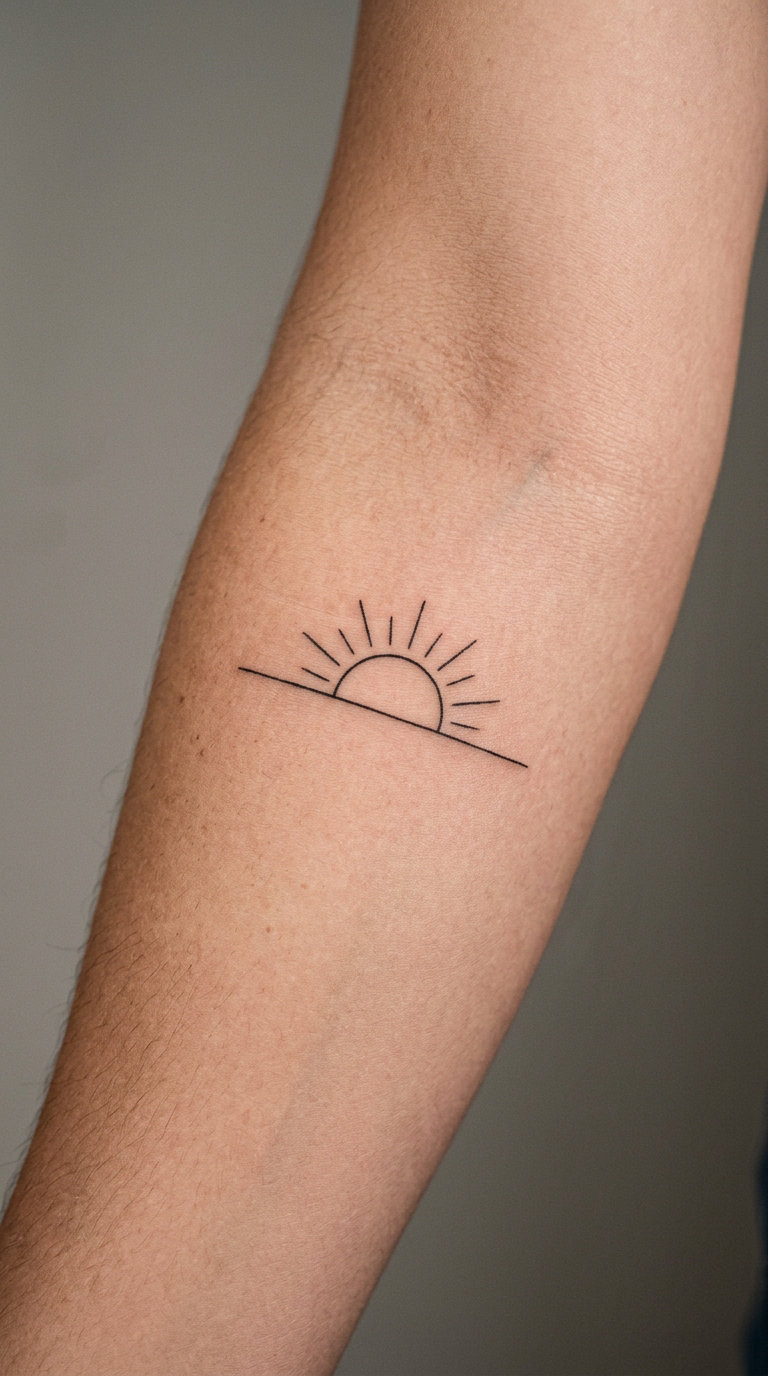
A single hairline horizon with half a sun rising behind it, drawn in one weight of black with a few short ray lines. People pick it because a new day is the one thing nobody can skip, so it turns into a fresh start every morning.
Placement: inner forearm, or the inside of the upper arm. Size: 2 to 2.5 inches wide (5 to 6 cm). Style: fine line, single-needle work. Pain: low to medium, a scratchy sting that settles once the outline is in. Fine line on the inner arm fades fastest because of sun and daily movement, so expect to need a touch-up every few years. Make it yours: have the artist tint the rays with one warm colour instead of pure black.
2. Single Step on a Winding Path
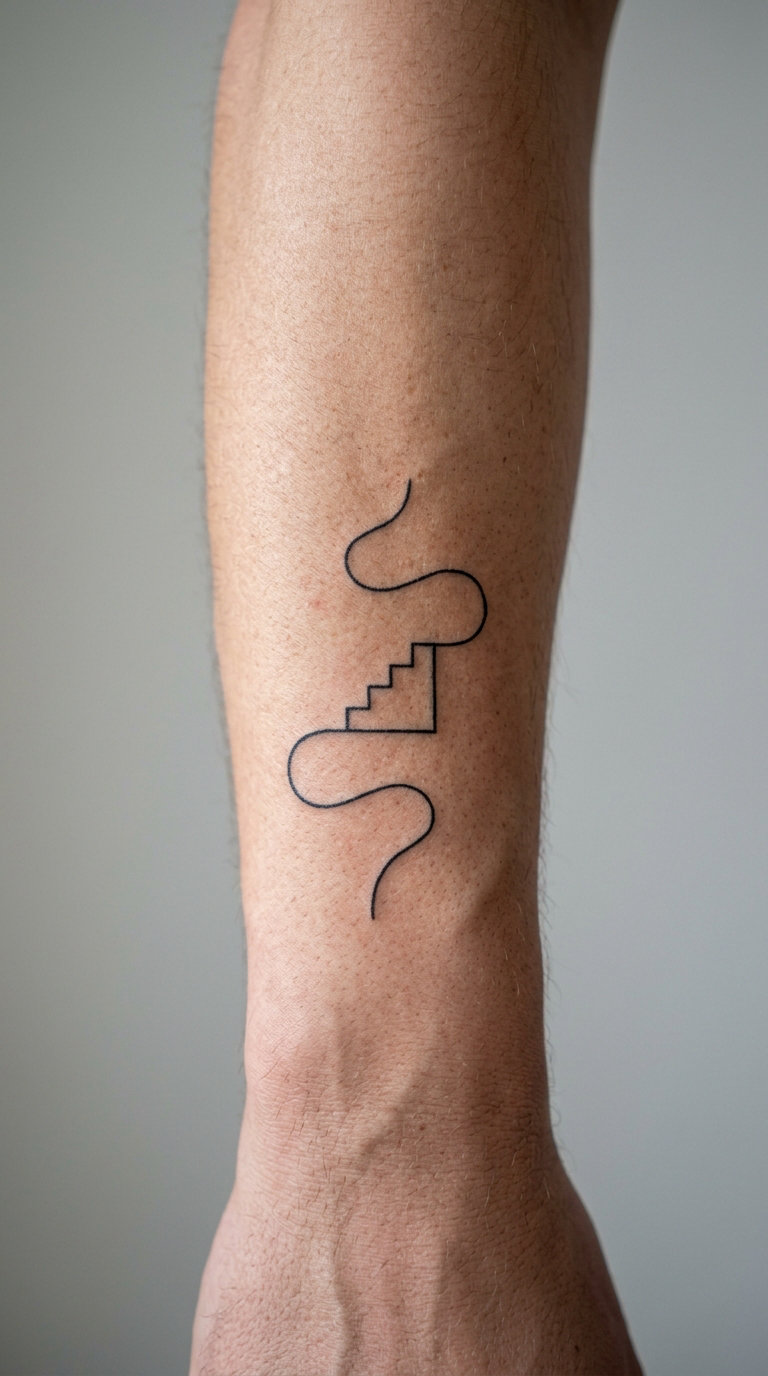
A thin line curves in from one side, and one square block on that line is drawn heavier than the rest. That single emphasised step is the whole idea: you do not need the full route, just the next piece of it.
Placement: outer forearm along the muscle, where a long line sits flat. Size: 2.5 to 3 inches long (6 to 7.5 cm). Style: minimal line, one weight throughout. Pain: medium, since the outer forearm has less give than the inner. Make it yours: add a small date under the step in the same weight of line, or dot the end of the path so it looks unfinished on purpose.
3. Open Window with Morning Light
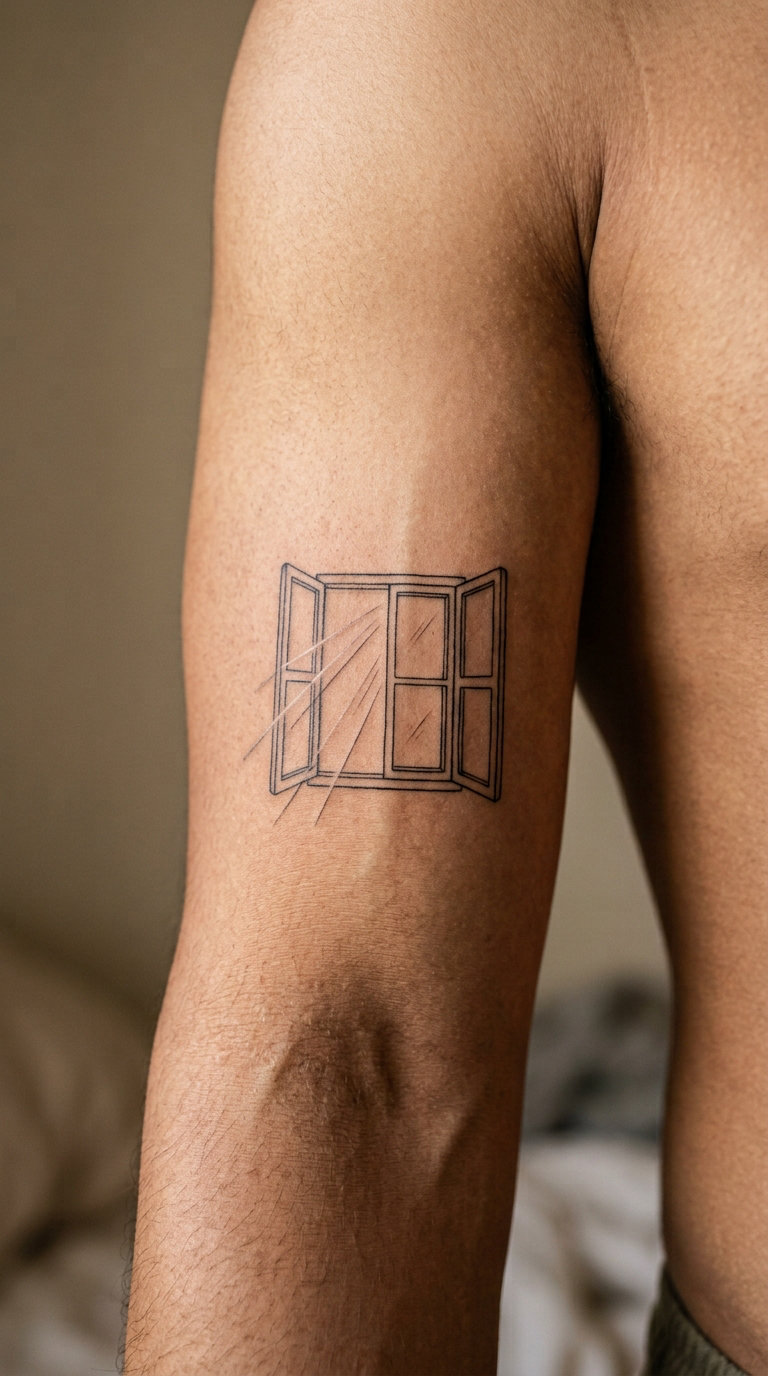
A simple four-pane window with one casement swung open, and two or three straight rays falling into the room. It reads as meeting the day openly rather than bracing against it, which is why it suits people recovering from burnout.
Placement: inner upper arm, where there is flat skin to hang the vertical shape. Size: 2 inches tall (5 cm). Style: fine line architectural. Pain: low, soft inner-arm skin. Make it yours: have the sill extended into a name or a short word in the same line.
4. Tiny Calendar with One Marked Day
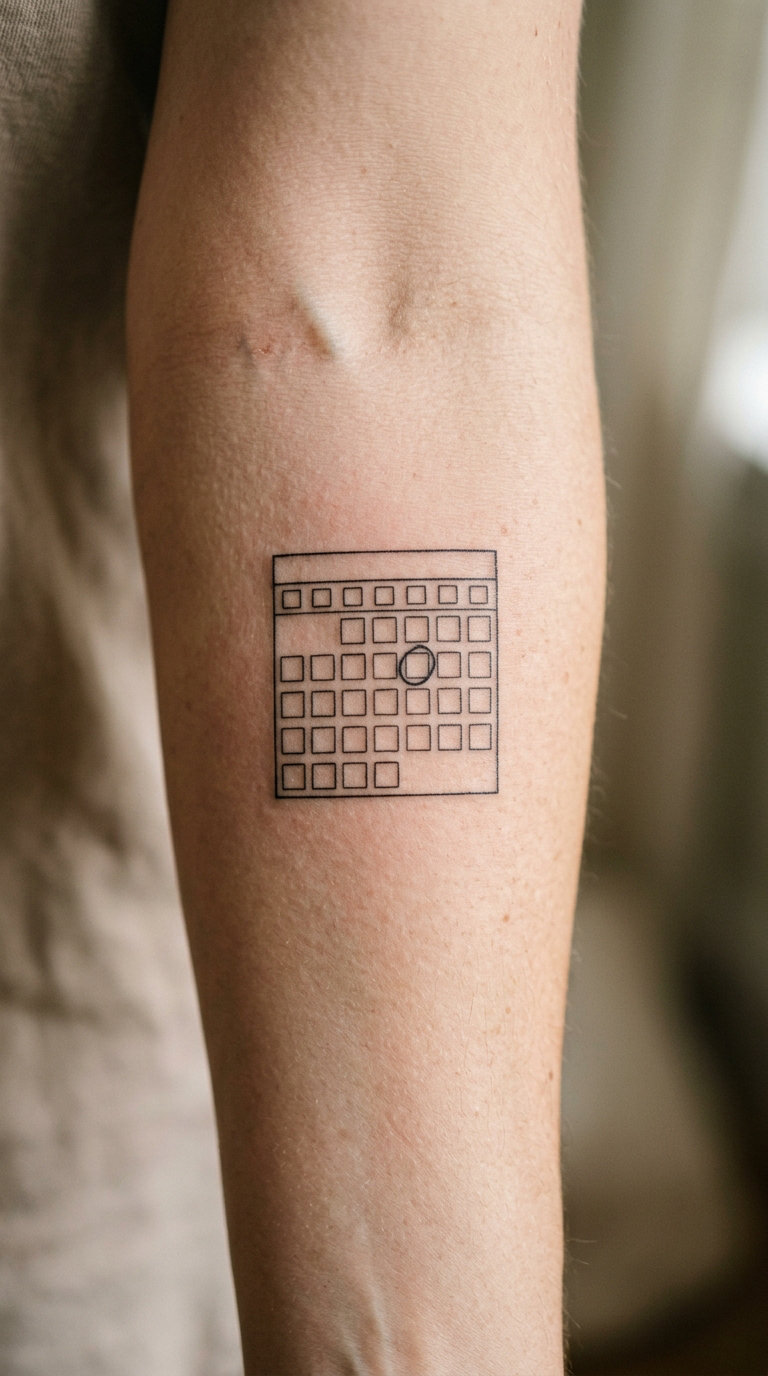
A miniature calendar page with a ring at the top and a handful of grid squares, one of them circled. It is the most literal design here, and that is exactly why it works: all that grid, and only today matters.
Placement: flat forearm, above the wrist. Size: 1.5 inches wide (4 cm). Style: micro line with light grey shading. Pain: medium. The grid squares are where fine line gets hard, so ask for fewer squares and slightly thicker lines than the reference image shows. Make it yours: fill in a real date in the circled square, or use Roman numerals for the month.
5. A Series of Three Stepping Stones
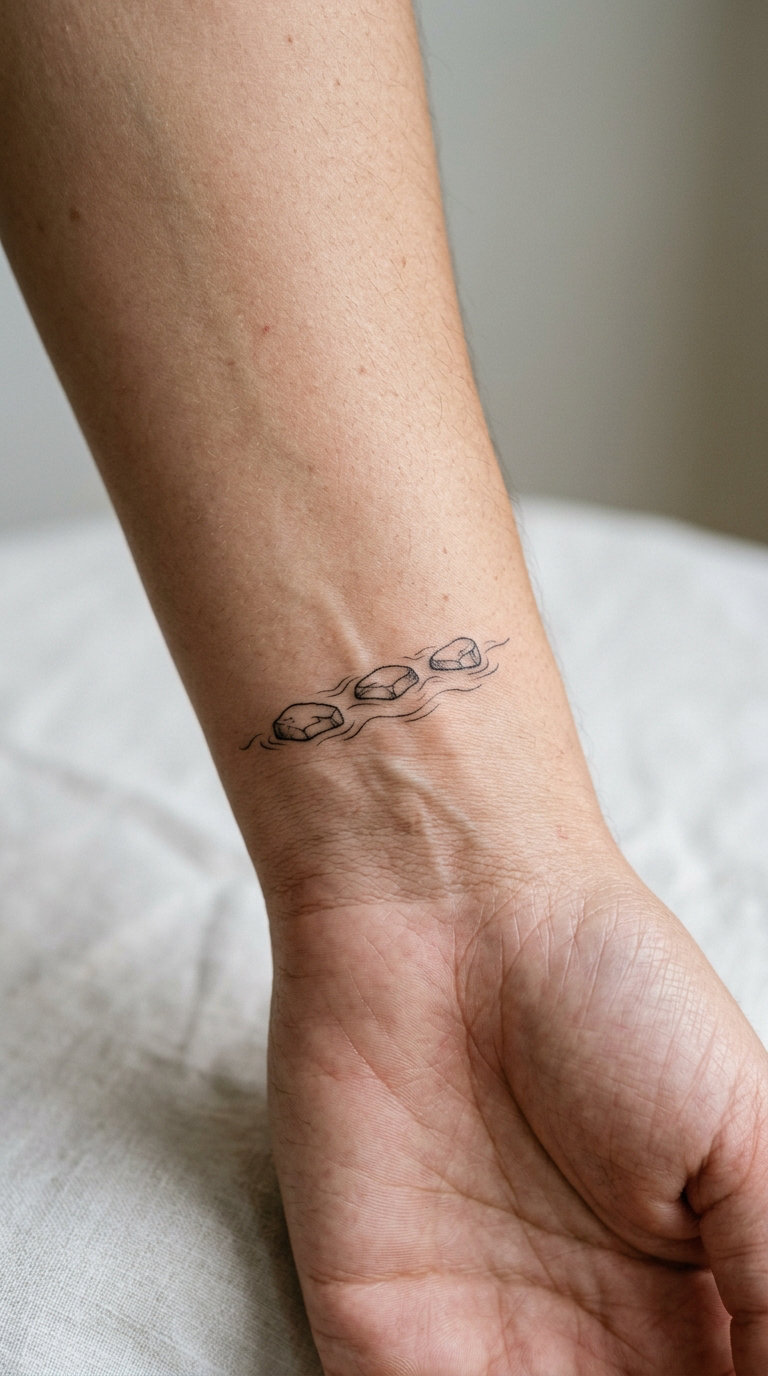
Three rounded stones in a row, with two short ripple lines under each one. Three is enough to suggest a sequence without drawing a whole route, and the water keeps the piece light.
Placement: inner wrist, running along the tendon, or the ankle if you want it hidden some days. Size: 2 inches wide (5 cm). Style: fine line with minimal stippling. Pain: medium, and wrist bones make it sting more than the arm. Make it yours: have the middle stone shaded solid and leave the outer two as outlines, which reads as the day you are standing on.
6. Seedling Breaking Through Soil
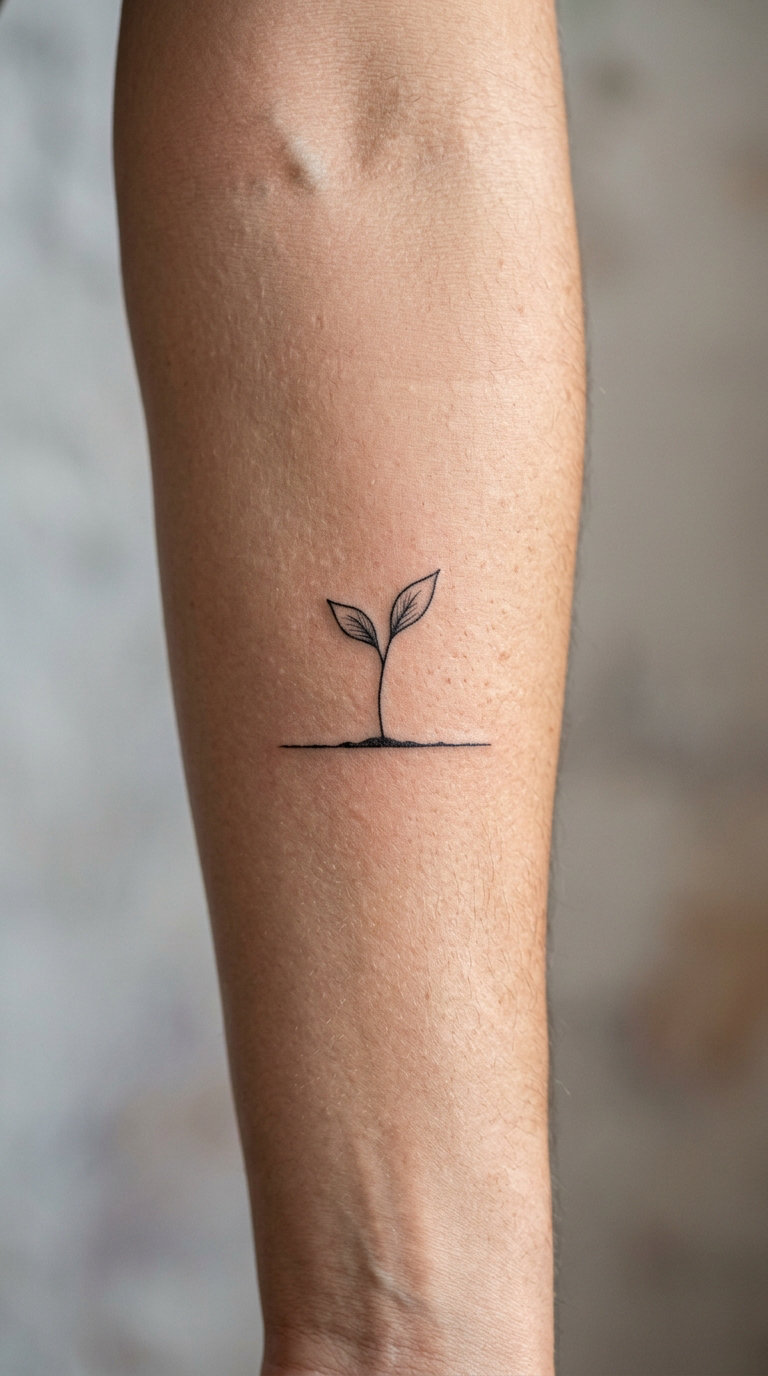
Two small leaves on a short stem rising out of a single unbroken ground line. Nothing about it is loud, which is the point: growth that happens quietly still counts.
Placement: outer forearm or the inside of the elbow crease, where the curve looks natural. Size: 2 inches tall (5 cm). Style: botanical line work. Pain: low. Make it yours: add a second, smaller sprout beside it for a date you are counting toward, or leave one leaf as an outline and fill the other.
7. One Candle Burning in a Dark Field
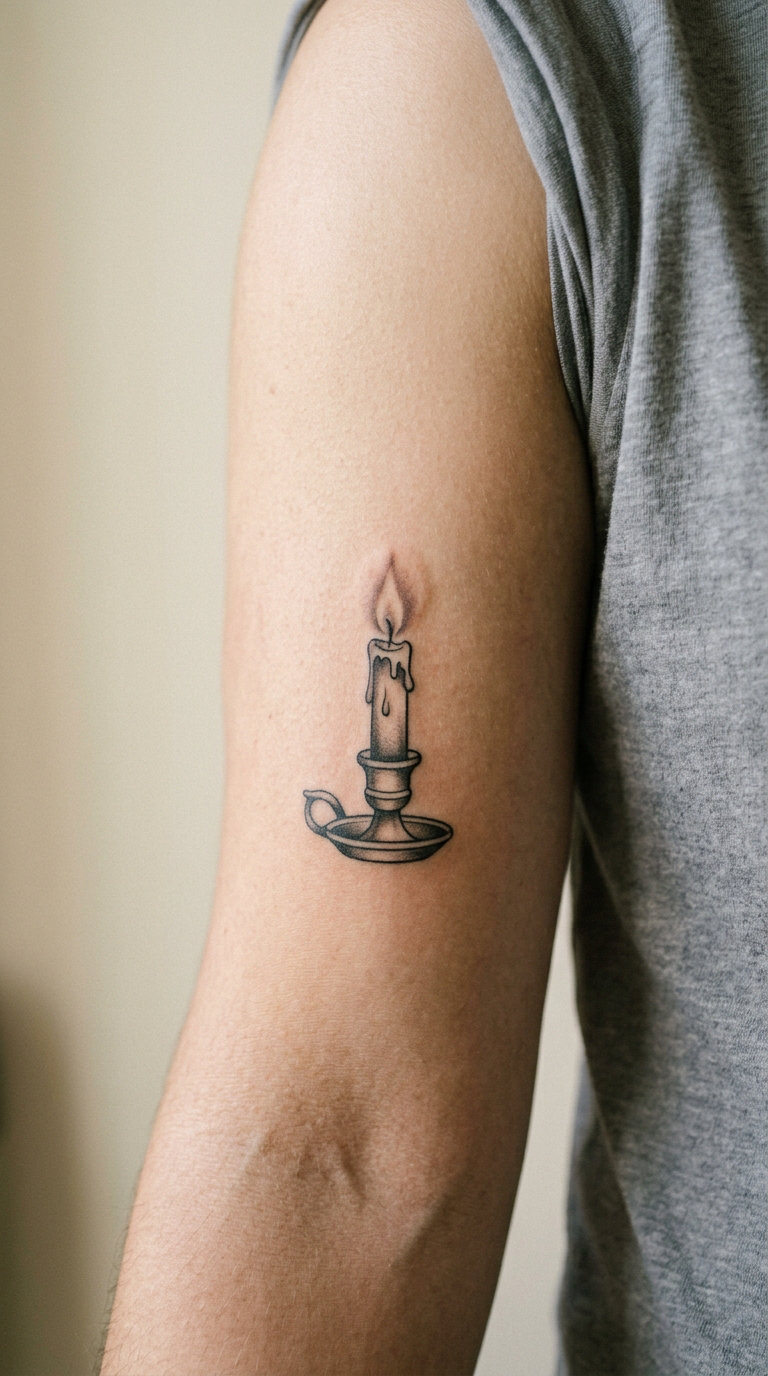
A slim candle body in black and grey with a small flame and a faint halo of shading around it, so the ink carries most of the darkness and the flame carries the light. People choose this one as a reminder to be the steady thing in a heavy stretch.
Placement: inner upper arm or the back of the forearm. Size: 2.5 inches tall (6 cm). Style: black and grey realism. Pain: low to medium; the grey wash takes longer, so the session stretches. Make it yours: have the halo left unfilled so it stays soft, or ask for a faint gold flame that will dull gracefully over the years.
8. Wavy Line Across a Minimal Grid
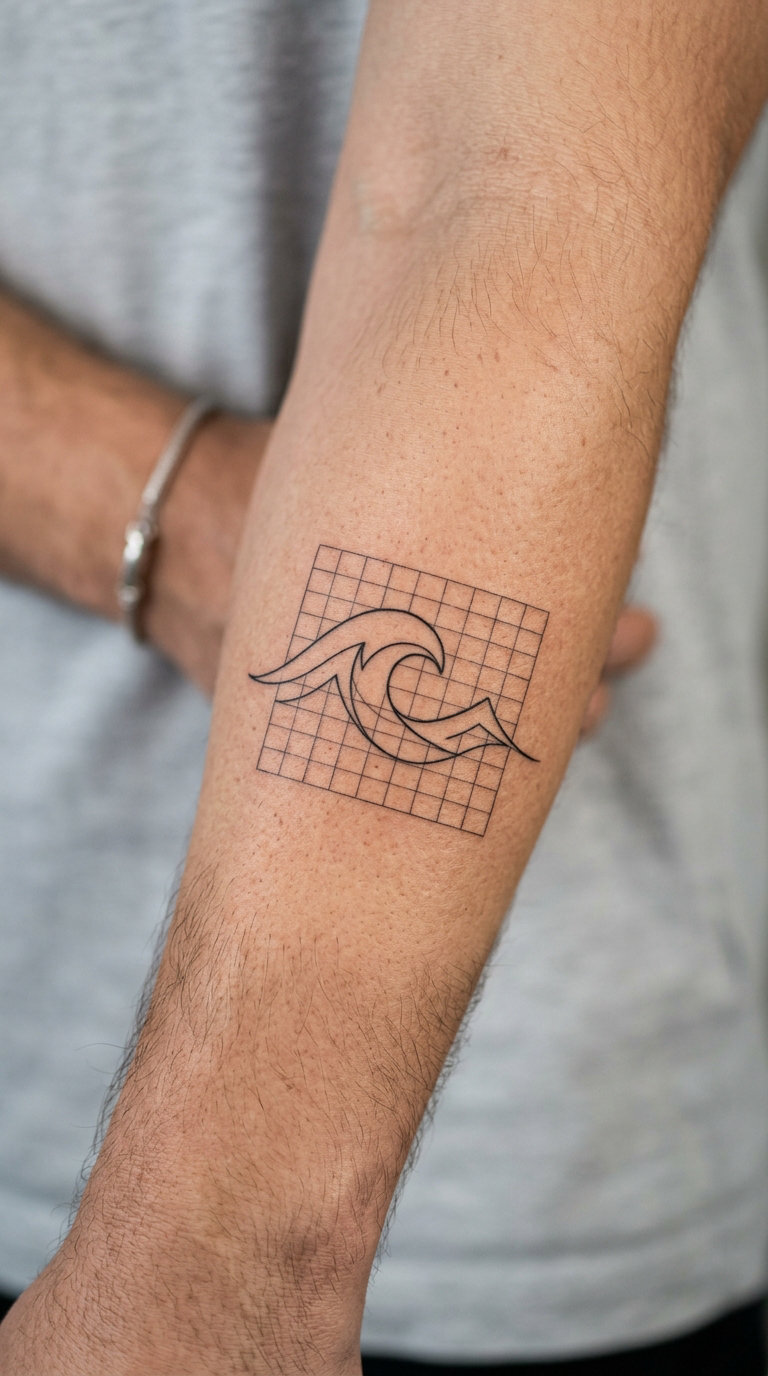
One continuous wave line cutting across a light square grid, breaking out past the edges. It splits into an orderly version and a moving one, which is an easy way to picture holding structure while still moving.
Placement: forearm, or wrapped around the upper arm if you scale it up. Size: 2 inches wide (5 cm) for the flat version, up to 4 inches for a wrap. Style: geometric line. Pain: medium. Make it yours: have the wave exit the grid on both sides and re-enter nowhere, which keeps it open-ended.
9. Small Arrow Passing Through a Circle
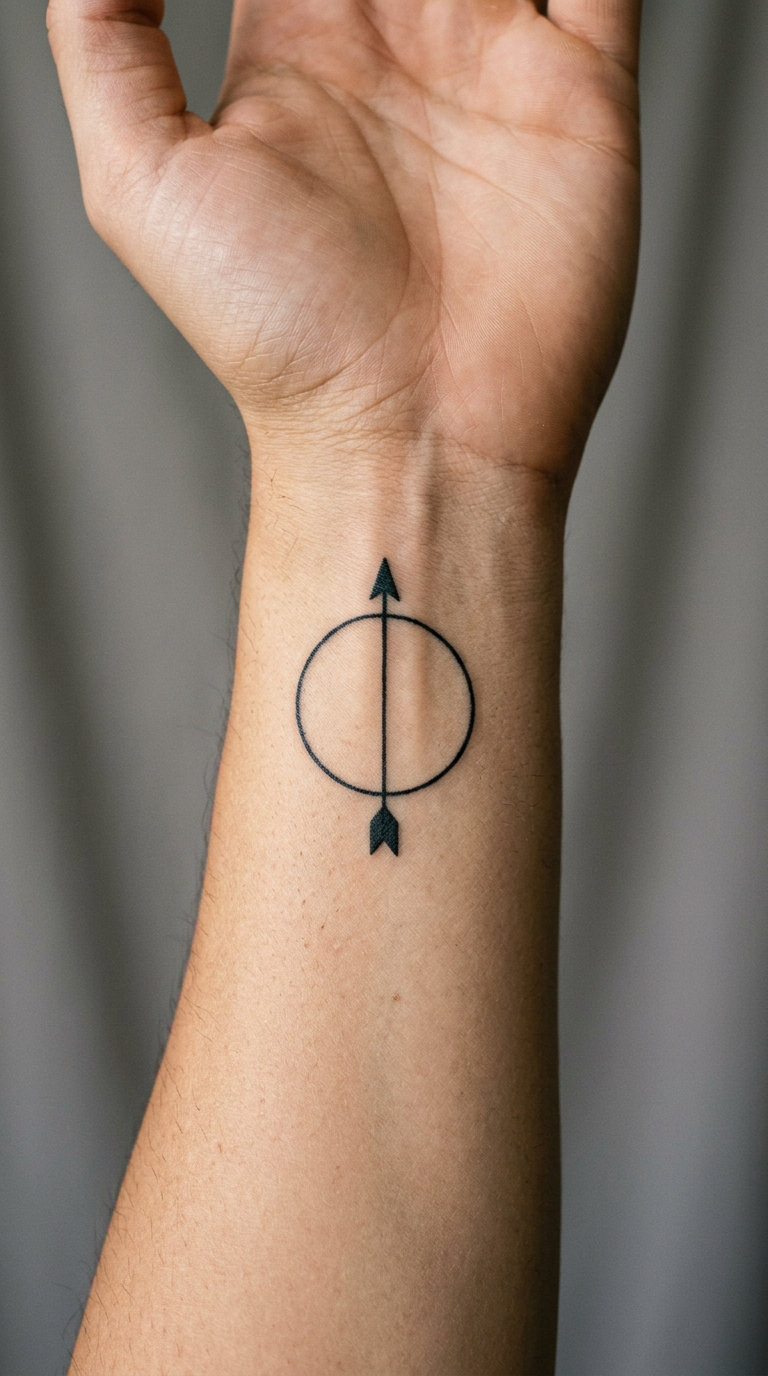
A plain arrow with a thin circle behind it, the arrowhead landing just past the line. Kept in balance, it says keep moving through the uncertain stretch rather than around it.
Placement: inner wrist, upper arm or the back of the hand. Size: 1.5 inches wide (4 cm). Style: minimal black, solid line weight. Pain: medium, higher over knuckles if you go to the hand. Make it yours: thicken the arrow, leave the circle as a single hairline, and put a date inside the circle rather than beside it.
10. Stack of Imperfect Pebbles
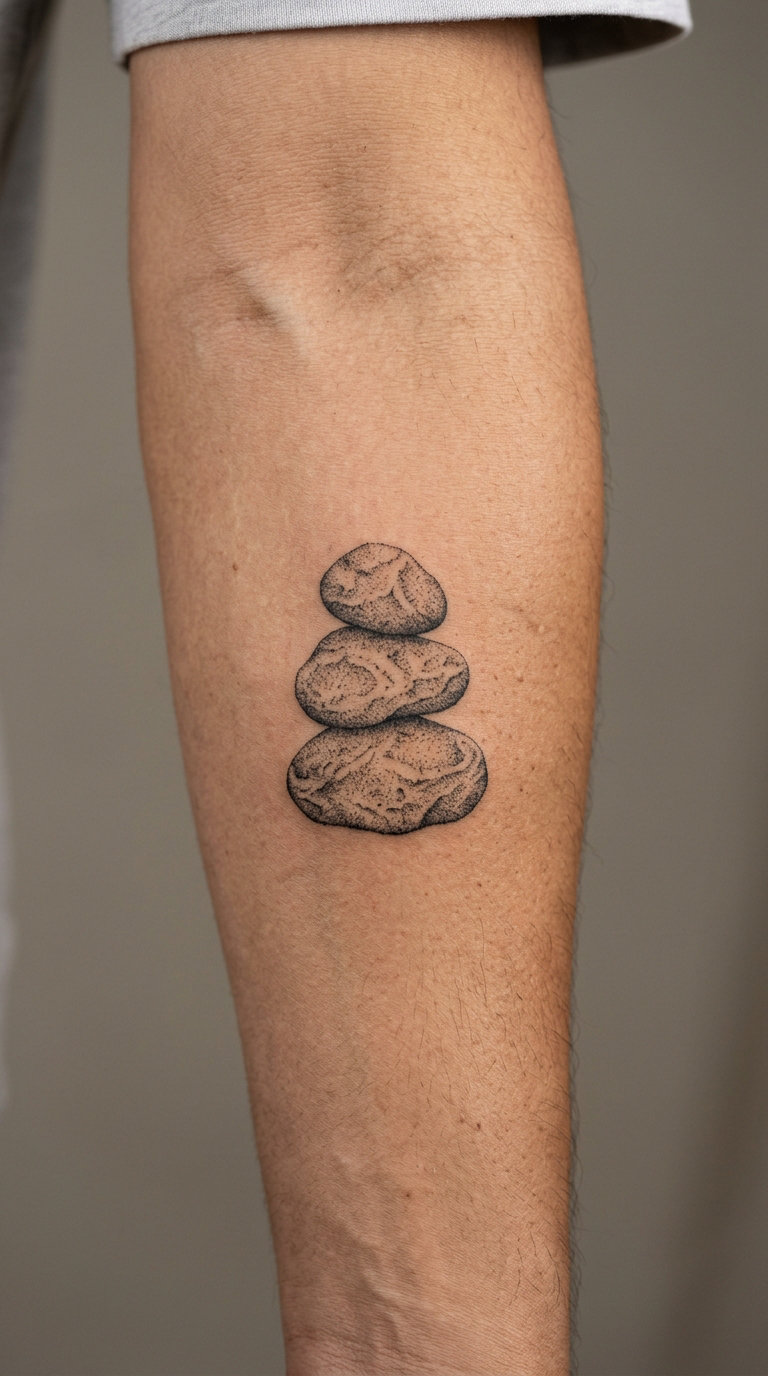
Three pebble shapes stacked unevenly, each one slightly lopsided, filled with sparse dotwork rather than solid black. The wobble is deliberate: it shows small steps that were never meant to be neat.
Placement: outer forearm, or the inside of the wrist below the crease. Size: 2 inches tall (5 cm). Style: dotwork. Pain: medium, and dotwork is a long sitting because the needle stops constantly. Make it yours: have one pebble shaded at a different density, marking the step that mattered most.
11. Open Door in a Botanical Frame
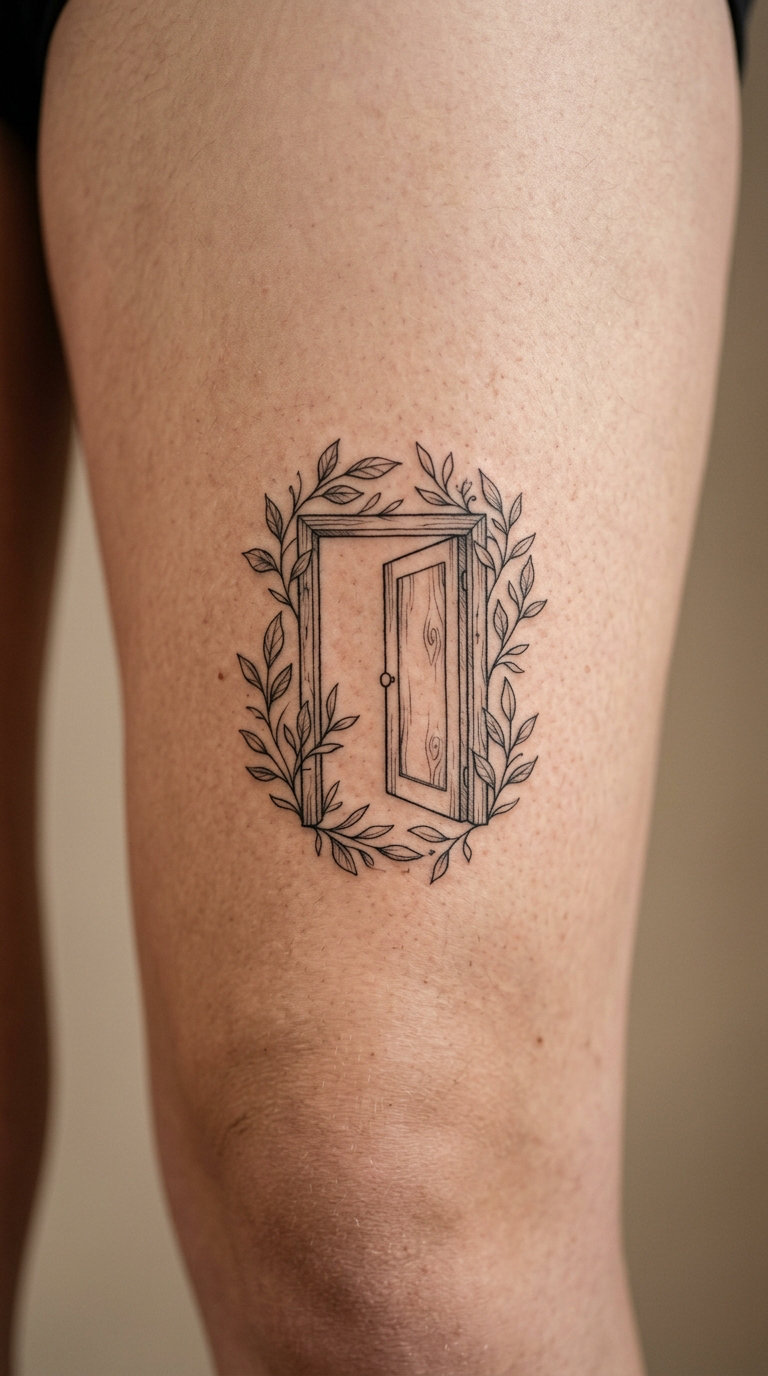
A plain open door with a handful of small leaves and stems curving up around the frame. Botanical framing usually turns romantic, so keep the leaves to two or three species and let the door stay plain.
Placement: side thigh, ribs or the inside of the upper arm. Size: 2.5 inches tall (6 cm). Style: fine line botanical. Pain: low on the thigh, medium to high on the ribs. Make it yours: ask for one plant native to where you grew up, in line style only.
12. Moon Phases with One Highlighted
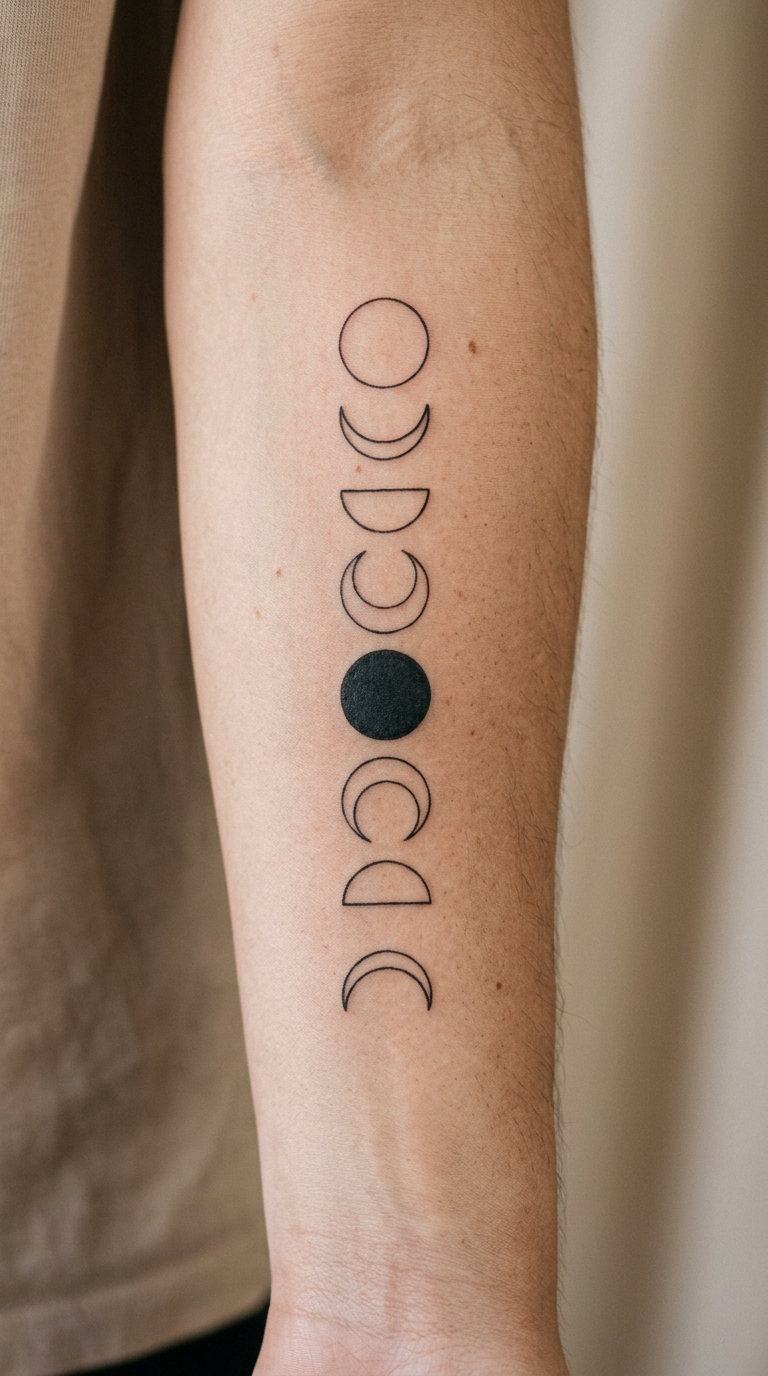
Five or six moon phases in a row, with one of them filled solid while the rest are outlined or lightly shaded. Change you accept a stage at a time, rather than trying to skip ahead.
Placement: inner forearm along the arm, or a curved line of phases wrapping the wrist. Size: 2 to 3 inches wide (5 to 7.5 cm). Style: fine line. Pain: low on the inner forearm. Make it yours: fill in the phase that matches your start date, or the one you are in now, and leave the future ones open.
13. Tiny Sprout Inside a Coffee Cup
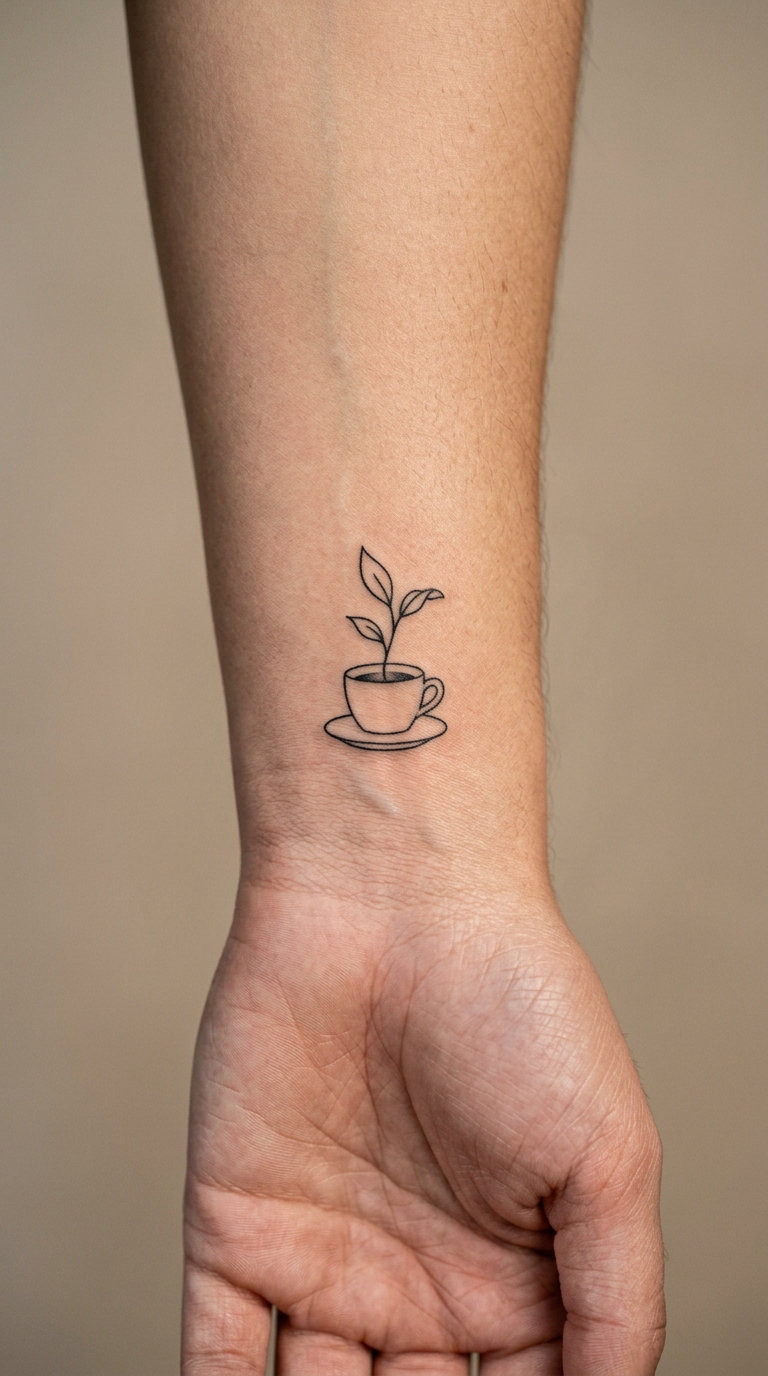
A cup and saucer in outline with a small sprout coming out of the top where steam would be. It ties two daily habits together: the routine you repeat and the thing that grows because of it.
Placement: inner wrist, or just above the elbow. Size: 2 inches wide (5 cm). Style: minimal line. Pain: medium on the wrist, low higher up the arm. Make it yours: swap in a mug shape with a handle, or leave the saucer off for a smaller version.
14. Single Footprint on a Dotted Route
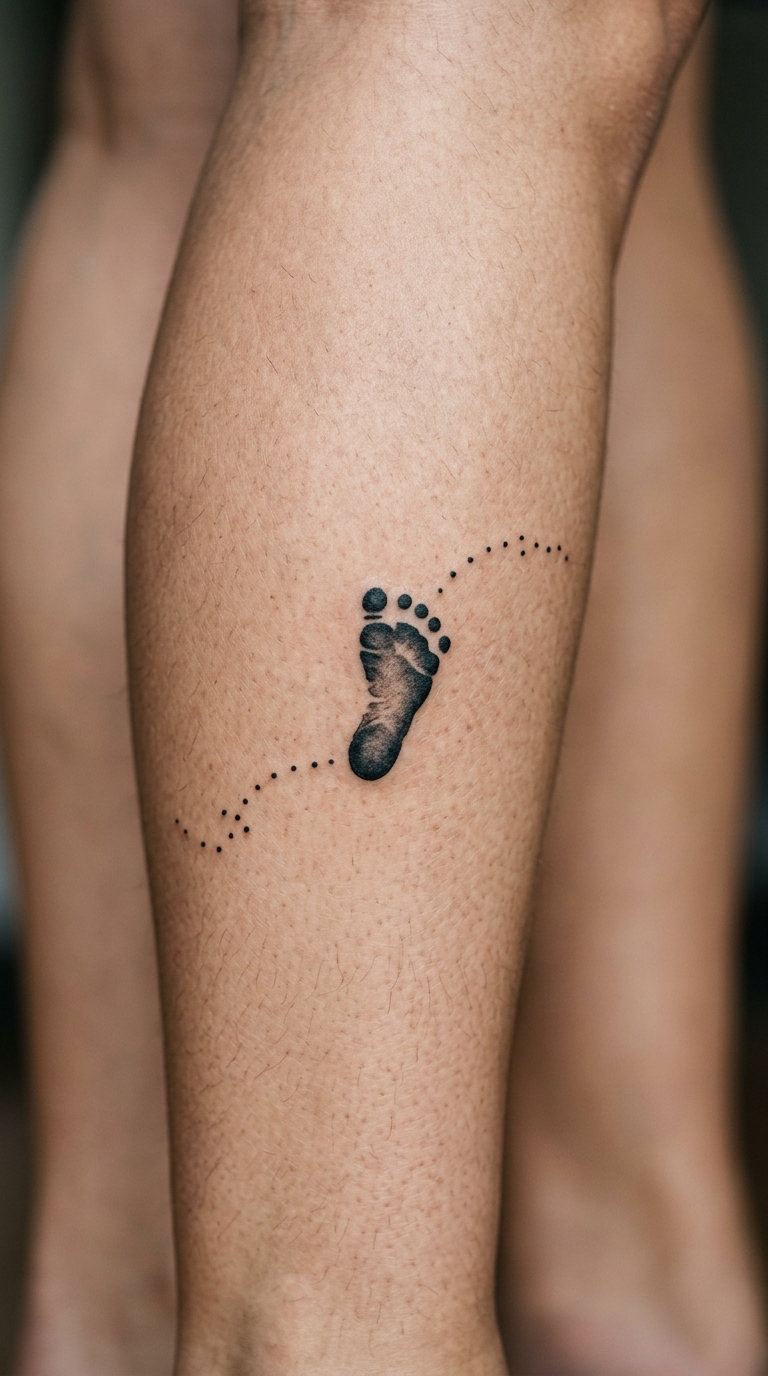
One footprint in a simple realistic style, with a dotted line trailing away from it. The footprint is the part you already walked; the dots are the part you have not seen yet.
Placement: calf, outer arm or the back of the hand. Size: 2.5 inches long (6 cm). Style: micro realism. Pain: medium, and the calf is a fleshy spot that hurts less than expected. Make it yours: use a real cast of your own foot, or add a small number to the first dot as your count.
15. Simple Bell with a Single Line
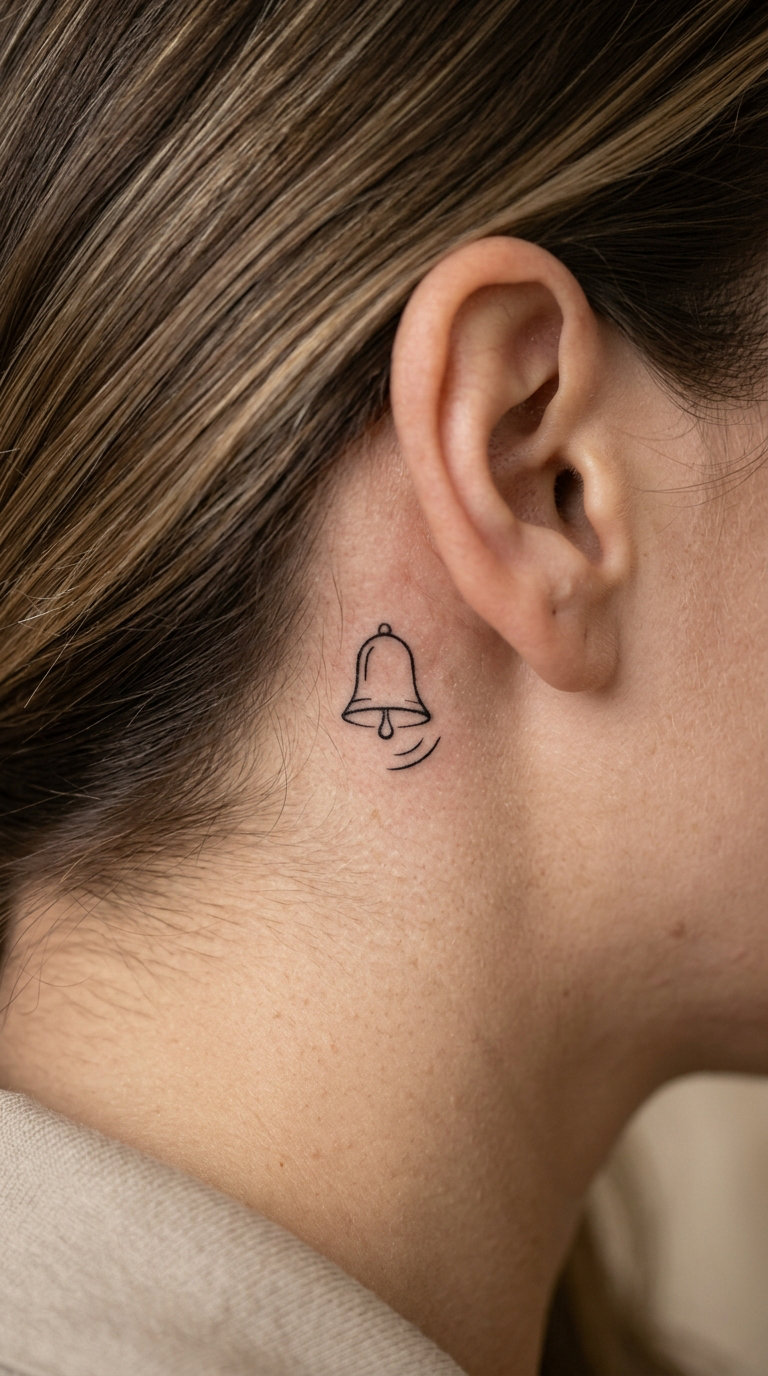
An outlined bell no bigger than a thumbnail with one curved line beside it for the sound. It marks a reset: a new attempt, a fresh routine, starting again on purpose.
Placement: behind the ear, or on the inner wrist. Size: 1 inch tall (2.5 cm). Style: fine line. Pain: medium to high behind the ear, where the bone is close and the skin is thin. Make it yours: have the sound line curved twice instead of once, or add a tiny date under the bell.
16. Two Hands Releasing a Bird
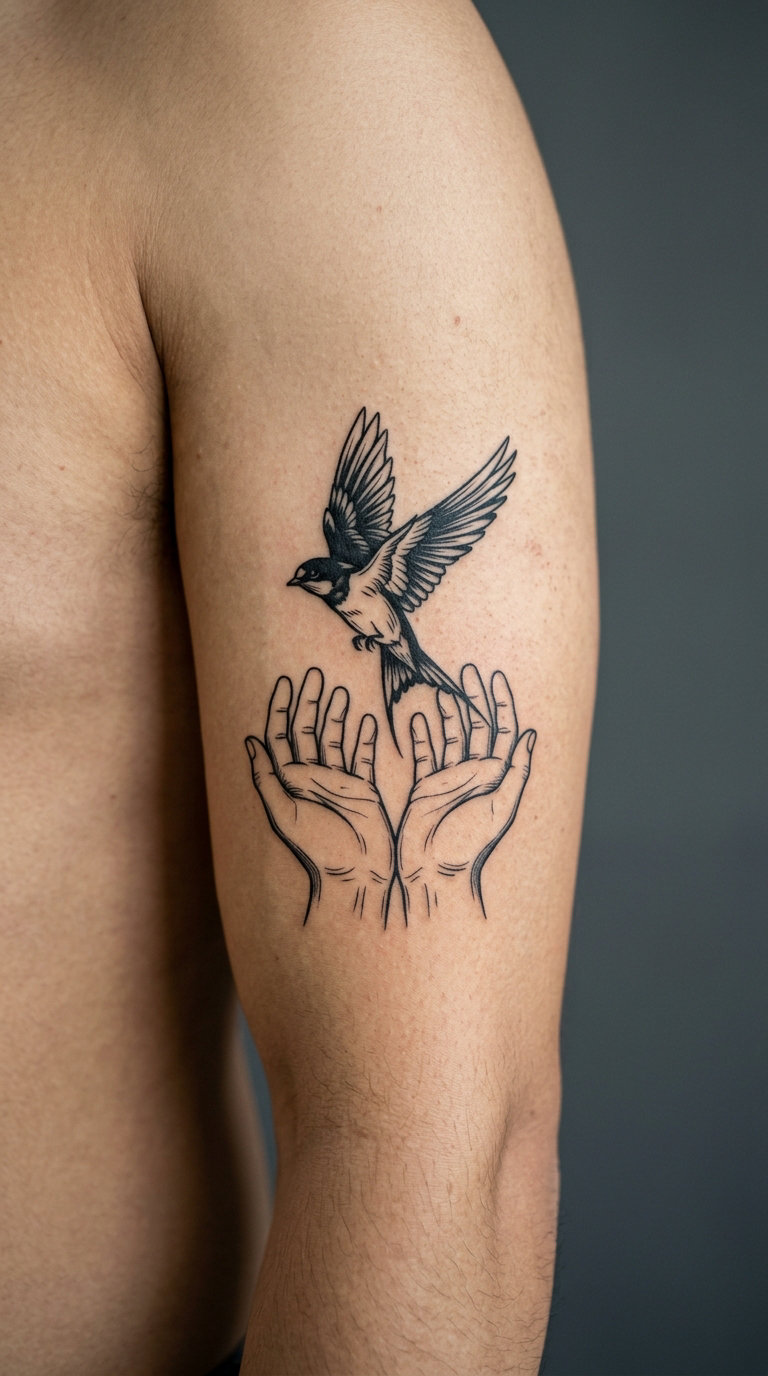
Two open hands drawn in solid blackwork, palms up, with a single bird lifting off above them. This is the only design on the list that needs real space, and the only one that reads instantly from across a room.
Placement: outer upper arm or the flat of the forearm. Size: 3 inches wide (7.5 cm) at minimum. Style: blackwork. Pain: medium; solid black fills take their time. Make it yours: change the bird species to something local to you, or let the hands be outline only and keep the bird solid.
17. Hourglass with a Single Falling Grain
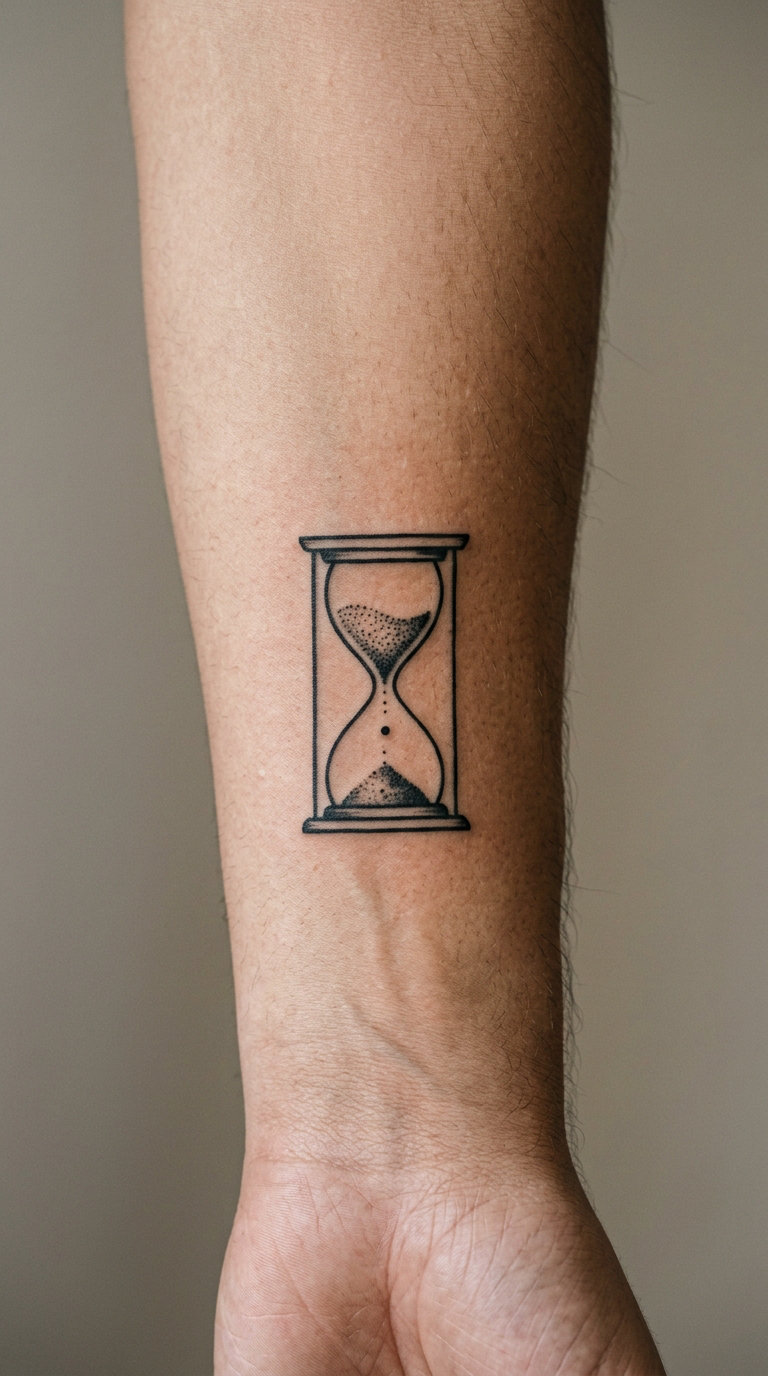
A clean outlined hourglass with one grain of sand caught mid-fall between the two bulbs. One grain instead of a full stream keeps it from feeling like a memento mori and points at attention rather than loss.
Placement: forearm, or the inner upper arm. Size: 2 inches tall (5 cm). Style: minimal black outline. Pain: medium. Make it yours: have the top bulb left completely empty, which reads as time you have not spent yet.
18. Mountain Ridge with One Visible Peak
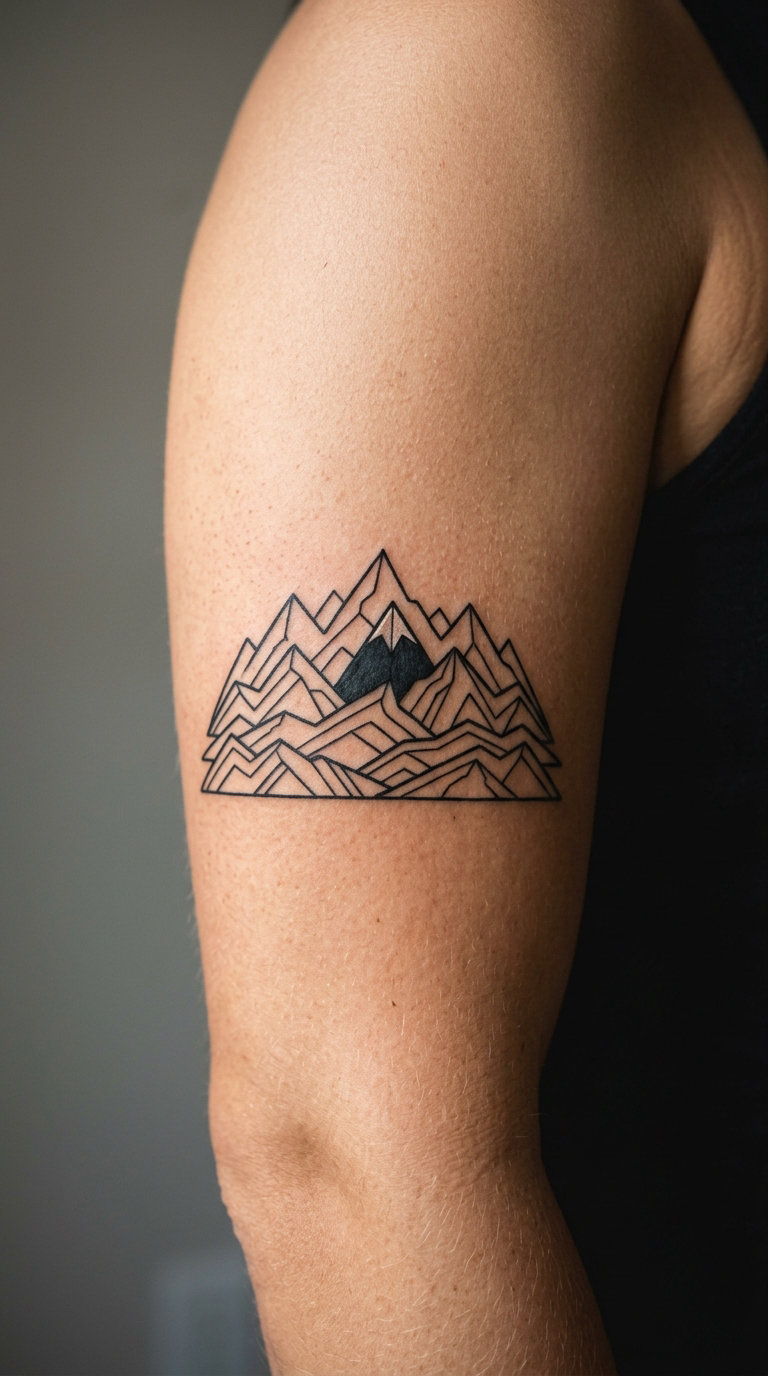
Three low ridges in simple geometric angles with one clear peak behind them, maybe left as a solid triangle. It gives you a single visible target inside something much larger, which is a friendlier picture than the whole climb.
Placement: outer upper arm, calf or the side of the thigh. Size: 2.5 inches wide (6 cm). Style: geometric, minimal shading. Pain: low on the arm and thigh, medium on the calf. Make it yours: have the peak match the outline of a mountain you have actually stood on.
19. One Dot Advancing Through a Grid
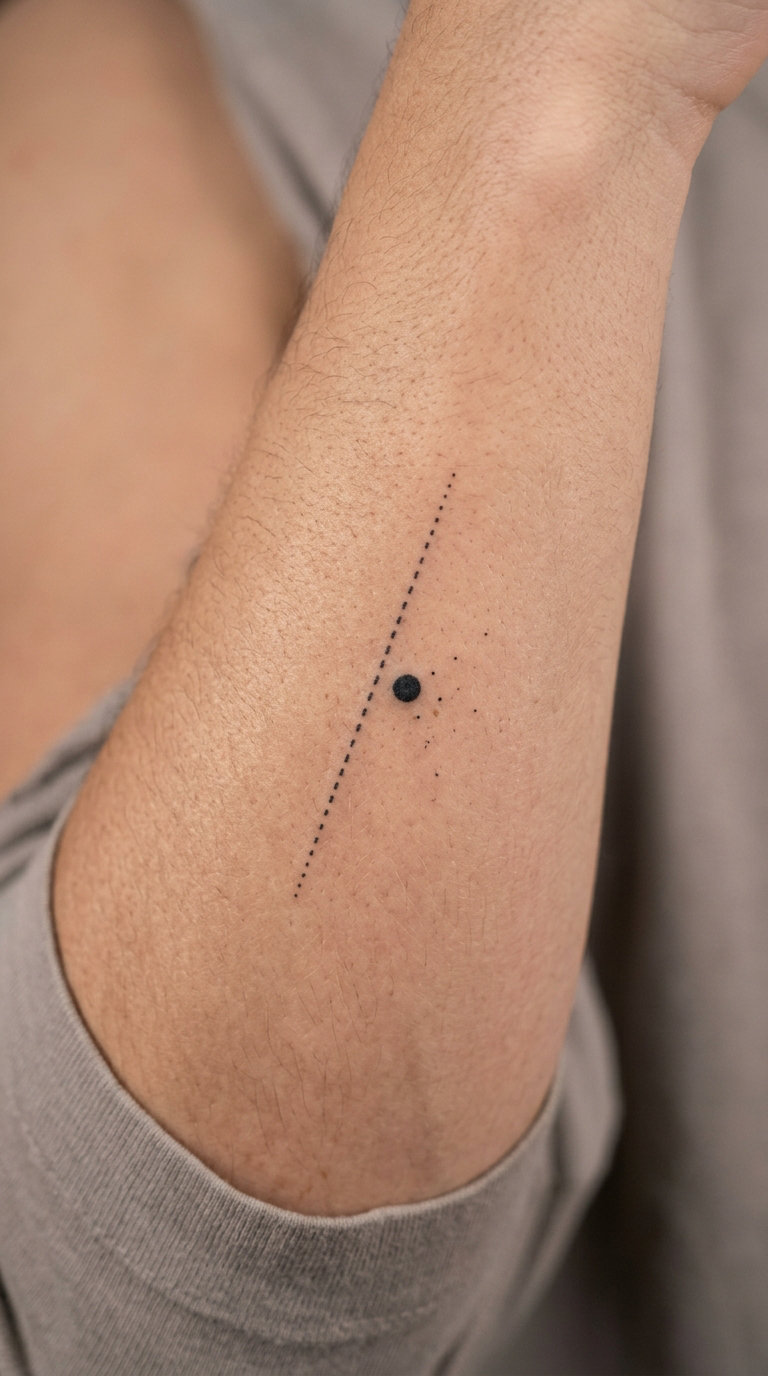
A sparse dotwork grid with a dashed boundary line and one solid dot sitting just past it. Almost nothing is happening, which is the point: steady movement through a structure you did not build in a day.
Placement: inner forearm or the side of the wrist. Size: 1.5 inches wide (4 cm). Style: dotwork. Pain: low, though it takes a longer appointment than its size suggests. Make it yours: have the solid dot in a single colour, or count the dots so the grid equals a number that matters to you.
20. Tiny Lantern on a Quiet Hill
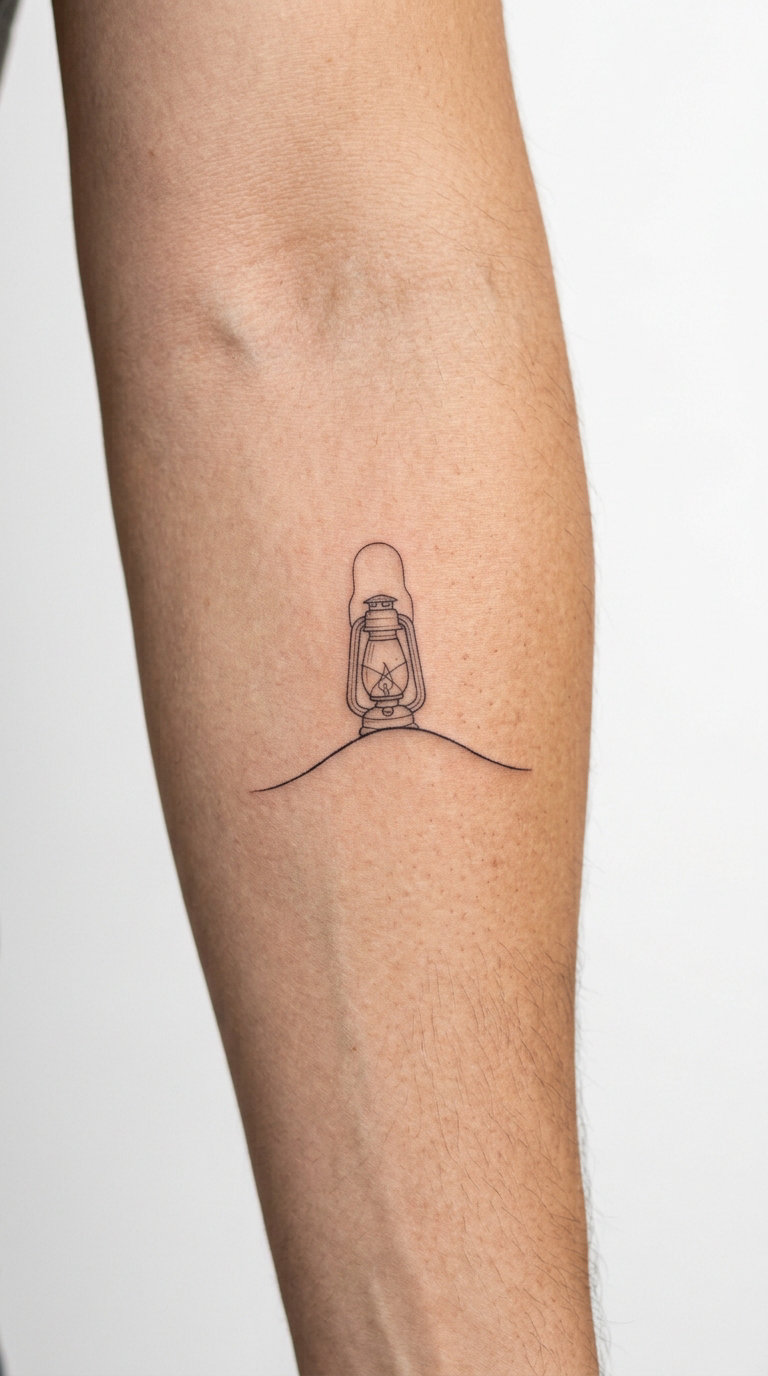
A small linework lantern set just above a single curved hill line, no handle detail, no background. Guidance and steadiness in one compact silhouette, and it sits well anywhere with a bit of room around it.
Placement: outer arm, upper back or the inside of the thigh. Size: 2 inches tall (5 cm). Style: fine line. Pain: low on the arm, higher over the ribs. Make it yours: ask for the glow left as an open glow rather than a dotted one, which keeps the whole piece lighter as it ages.
How to Choose the Right Design
Six questions narrow twenty options down to one fast.
- Can you read it at a glance? If someone standing back cannot tell what the design is, it will read as a smudge to them. Simple shapes hold up better than detailed ones.
- Does the meaning live in the shape or in the words? Decide before the consultation. If it is the shape, keep the piece wordless. If it is the words, ask how the lettering will sit at your chosen size.
- How much room does the placement give you? A 2-inch design needs roughly that much flat skin. Wrist and rib placements bend, so anything with fine detail will warp there over time.
- Is the line weight too thin for the spot? Hands, fingers and the inner forearm fade and blur fastest. Thicker line survives those placements better.
- Will a matching piece be crowded? If you already have work on that arm, sketch both together before booking so the second one does not fight the first.
- Has your artist done this style before? Look at healed work in their portfolio, not fresh Instagram posts. If they have no healed micro line samples, find someone who does.
One honest note: the phrase can start to feel wrong on skin once it is permanent, particularly if you book during a hard week rather than a calm one. A symbolic design like the single step or the arrow through a circle gives you the same nudge with no wording to outgrow.
Cost and Session Time
Small does not mean cheap or quick. A micro design still costs a shop minimum, and a shop minimum is the smallest bill any artist will take, regardless of how little work you need.
As a rough US guide, expect somewhere in the region of $80 to $150 for a micro piece under an inch, $150 to $300 for a small one to two inches, and $300 to $600 once you go past three inches or add blackwork fill and shading. A custom drawing rather than a flash design pushes it higher. Those numbers move a lot by city and artist, so treat them as a starting range, not a quote.
A one-inch design such as the bell or the grid of dots usually takes 20 to 40 minutes. A two-inch fine-line piece with light grey shading, like the calendar or the candle, runs closer to an hour. Anything with solid black fill or dotwork shading takes longer than its size suggests because the needle keeps lifting and restarting.
Hourly rates and shop minimums vary a lot by city and by artist, so ask the studio for a total before you book rather than guessing from size alone. Some shops quote a flat price per design; others charge by the hour. A consultation fee is common and usually comes off the final bill if you go ahead with the artist.
What changes the quote most: solid black fill, dotwork, colour, a placement over bone or a spine, and a design that has to be custom-drawn rather than pulled from an existing flash sheet.
Aftercare Basics
Start with whatever your artist tells you on the day. Their instructions beat any general list, including this one.
- Wash gently, twice a day. Lukewarm water, unscented soap, patted dry with clean paper rather than a towel.
- Keep it covered while it works. A breathable film or loose gauze for the first stretch of healing helps when clothing rubs it.
- Skip swimming, soaking and saunas. Standing water and heat pull ink out while the skin is still settling.
- No picking, no scratching, no scabs. If a scab lifts, more ink leaves with it and you end up with a patch.
- Keep sun off the fresh area. Fine line on the inner forearm fades fastest when it gets both daylight and movement.
- Ask the artist before switching products. Some soaks irritate new ink, and healed fine line is easy to damage with anything abrasive.
A day-old tattoo feeling sore or tender to the touch is normal. If the pain gets worse after day two, or the area goes hot, swollen and red with thick yellow discharge, contact your artist or a doctor rather than waiting it out.
Frequently Asked Questions
What size should a one day at a time tattoo be?
Most daily-reminder designs sit between 1 and 3 inches. Anything under one inch loses detail once healed, and anything over three turns into a statement piece that needs space. If the design has grid detail or fine line, aim for 2 inches or larger. Ask your artist to size it on your actual placement, since the same drawing looks smaller on a narrow forearm than on a flat upper arm.
Are these small tattoo ideas suitable for a first tattoo?
Yes, and a small symbolic design is a good pick for a first one. Most of these take 30 to 60 minutes, so you are not sitting for hours, and the meaning stays private unless you want to explain it. The tiny calendar is the easiest first tattoo on this list because it is compact, low in detail and holds meaning without any text. Come with references and be honest if you are nervous.
Do one day at a time tattoos always include words or a date?
No. Words are one option, not a requirement. A sunrise, a single step, three stepping stones or an arrow through a circle carry the same reminder without lettering, which many people prefer because nothing has to be legible forever. If you do want words, keep the phrase short and give the artist a clear font reference, since small cursive gets hard to read after healing.
Where is the least painful placement for a small daily-reminder tattoo?
The upper arm, the outer thigh and the calf tend to be the calmest spots, because there is more muscle cushioning and less bone near the surface. Inner forearm, wrist, ribs and the inside of the ankle get called out as more sensitive in tattoo advice forums. Placement matters more than size, so moving a small design to a fleshy spot often makes it easier than shrinking a design somewhere uncomfortable.
Can I personalize one day at a time tattoo ideas without making them too detailed?
Usually, yes. The easiest personalisations are a date inside the circled square of the calendar, a named colour on the sunrise rays, a peak drawn from a mountain you have stood on, or a countdown in dots inside the grid. All four add meaning while keeping the line work simple enough to heal cleanly. Show your artist the reference images and the date together so the custom element matches the rest.
Are one day at a time tattoos associated with recovery or sobriety?
They are, which is worth knowing before you commit. The phrase comes from 12-step recovery culture and from the idea of staying sober for the next 24 hours, and it echoes Matthew 6:34 about not worrying about tomorrow. Many people wear it for that reason, and plenty wear it for burnout, anxiety, grief or just daily motivation, with no recovery history at all. Both readings are normal.
Conclusion
If this is your first tattoo, take the tiny calendar with one circled date. It is compact, it carries the meaning on its own, and you can fit a real date into it later without a redesign.
If you are adding to an existing collection, go with the single step on the winding path or the arrow passing through a circle. Both are quiet enough to sit beside existing work, and both scale up if you decide you want them larger later.