
22 Lord of the Rings Tattoo Ideas for Fans (October 2026)
These 22 lord of the rings tattoo ideas are all original drawings: mountains, forests, old cities, script-inspired flourishes and small symbols rather than characters, film stills or replica props. Each one comes with a realistic size, a placement that suits the shape, an honest pain note and a way to make it personal. Last updated October 2026.
What makes a Tolkien design work on skin is contrast. A jagged range reads instantly at forearm scale, a broken crown still reads at two inches, and a winding path gives the eye somewhere to travel. Pick the version that matches how loud you want it to be, then let your artist redraw it properly rather than tracing anything you found online.
One warning before you start: script is the single most-requested element and the single most-mistaken. If you want lettering, have the wording checked character by character before the stencil goes on. Bad grammar in a fantasy language is permanent, and nobody can un-ink it.
22 Lord of the Rings Tattoo Ideas: Quick Guide
| Idea | Style | Best placement | Size | Pain |
|---|---|---|---|---|
| 1. Fine-line mountain range | Fine line | Inner forearm | 3-5 inch | Medium to high |
| 2. Elvish-style flourish | Fine line ornamental | Collarbone | 2-3 inch | Medium |
| 3. Blackwork tree of tales | Blackwork | Upper back | 6-9 inch | Medium |
| 4. Mountain-and-moon symbol | Minimalist | Outer ankle | 1.5-2.5 inch | Medium to high |
| 5. Watercolour forest path | Watercolour | Outer calf | 4-7 inch | Medium |
| 6. Dotwork fellowship knot | Geometric dotwork | Inner upper arm | 3-4 inch | Medium |
| 7. Raven with a quill | Traditional | Outer shoulder | 5-7 inch | Medium |
| 8. Hand holding a tiny flame | Micro-realism | Outer forearm | 2.5-4 inch | Medium |
| 9. Ancient map grid | Illustrative realism | Outer biceps | 4-6 inch | Medium |
| 10. Flame behind the ear | Minimalist fine line | Behind the ear | 1-2 inch | Medium |
| 11. Old growth tree with hidden birds | Illustrative blackwork | Outer thigh | 7-10 inch | Medium |
| 12. Castle silhouette | Blackwork | Calf or lower leg | 5-8 inch | Medium |
| 13. River of white ink | Fine line blackwork | Inner forearm | 5-7 inch | Medium |
| 14. Sunlit ruins | Watercolour | Shoulder blade | 5-7 inch | Medium |
| 15. Iron gate geometry | Geometric realism | Sternum or upper chest | 4-6 inch | Medium to high |
| 16. Tiny fortified tower | Micro blackwork | Inner wrist | 1.5-2.5 inch | Medium to high |
| 17. Lost ring compass | Blackwork illustrative | Back of the hand | 2-3 inch | High |
| 18. Dragon-scale stipple panel | Dotwork blackwork | Outer upper arm | 4-7 inch | Medium |
| 19. Star map with a custom path | Fine line dotwork | Side ribs | 5-8 inch | High |
| 20. Greenwood arch | Fine line | Nape | 2-4 inch | Medium |
| 21. Miniature broken crown | Ornamental blackwork | Inner or outer wrist | 1.5-2.5 inch | Medium to high |
| 22. Mountain panel with an empty centre | Black-grey realism | Outer upper arm | 8-12 inch | Medium |
1. Fine-Line Mountain Range on the Forearm
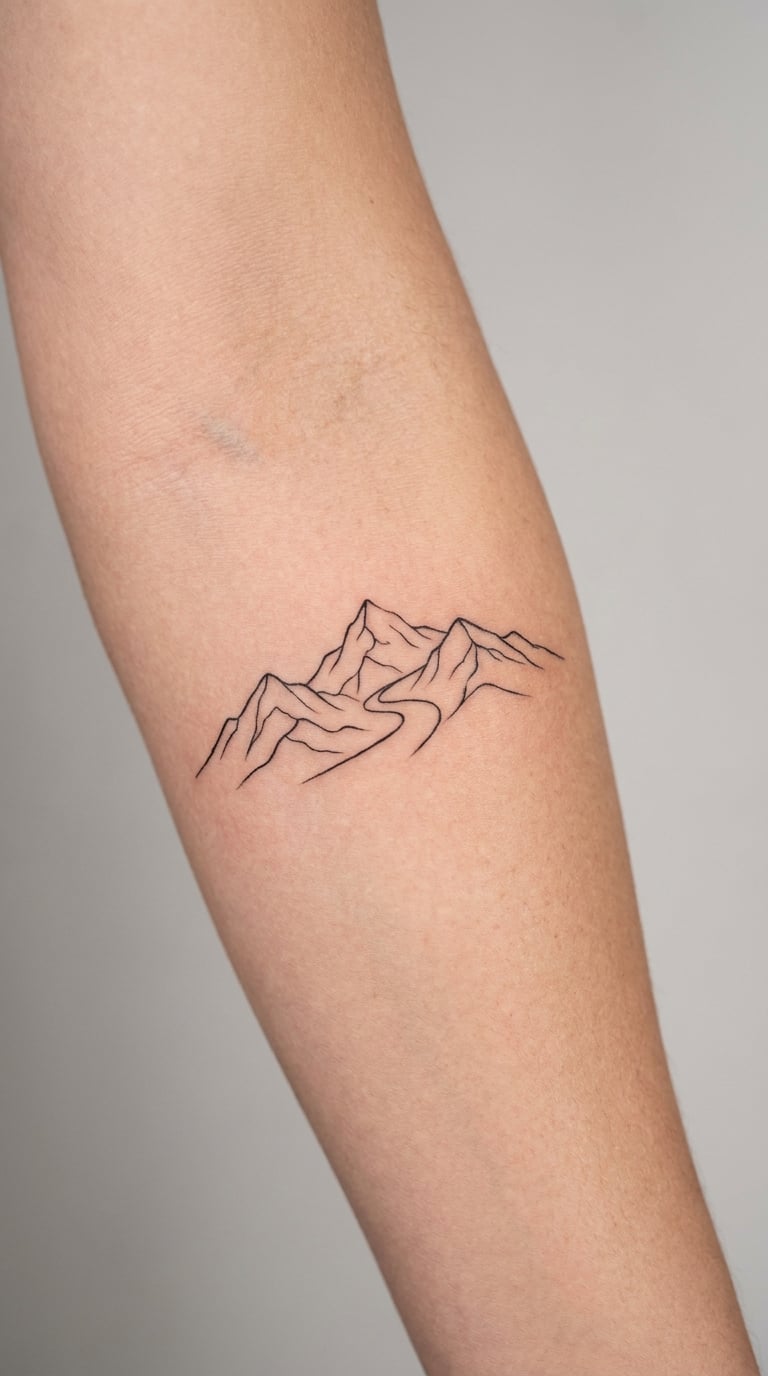
A jagged range drawn in thin single-weight black lines, with a pale path winding away between two peaks and no shading beyond a few hatch lines. It reads as terrain rather than a location, which is exactly why it works without borrowing from a film frame.
People choose it for the feeling of moving toward something, not for any fixed canon meaning. The forearm is the most reliable flat surface on the body for a wide, low shape like a range.
Placement: inner forearm, wrist to mid-forearm. Size: 3-5 inch wide (8-13 cm). Style: fine line. Pain: medium to high, and the inner forearm runs close to bone. Fine line on an inner arm softens noticeably within a few years, so thicker the strokes a little than feels necessary.
Make it yours: redraw the ridgeline from a hike you have actually done rather than a traced reference.
2. Original Elvish-Style Flourish on the Collarbone
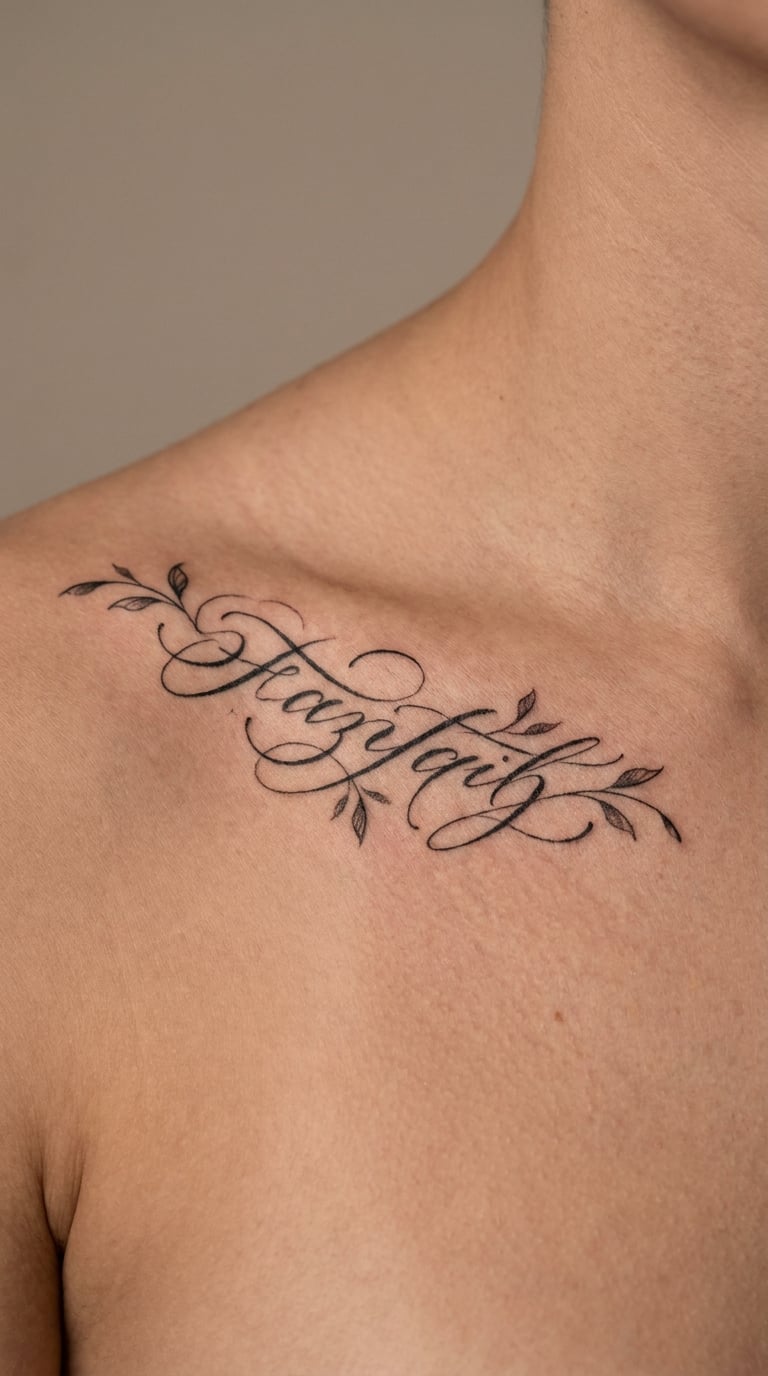
Flowing calligraphic strokes that lean like an elegant hand, with two or three tiny leaves tucked into the negative space. It reads as script at a glance and as ornament up close, and it contains no readable words, so nothing needs translating.
Collarbones take curves beautifully because the line follows an existing dip in the body. This is the version most first-timers in my experience ask for when they want a Tolkien tattoo that nobody can read.
Placement: collarbone, either side, angled along the bone. Size: 2-3 inch (5-8 cm). Style: fine line or ornamental. Pain: medium, worse where bone sits close under the skin. The thin strokes can lose definition, so ask for a slightly heavier line weight here.
Make it yours: have the artist build a real word or a date into the stroke rhythm once the design is drawn.
3. Blackwork Tree of Tales on the Upper Back
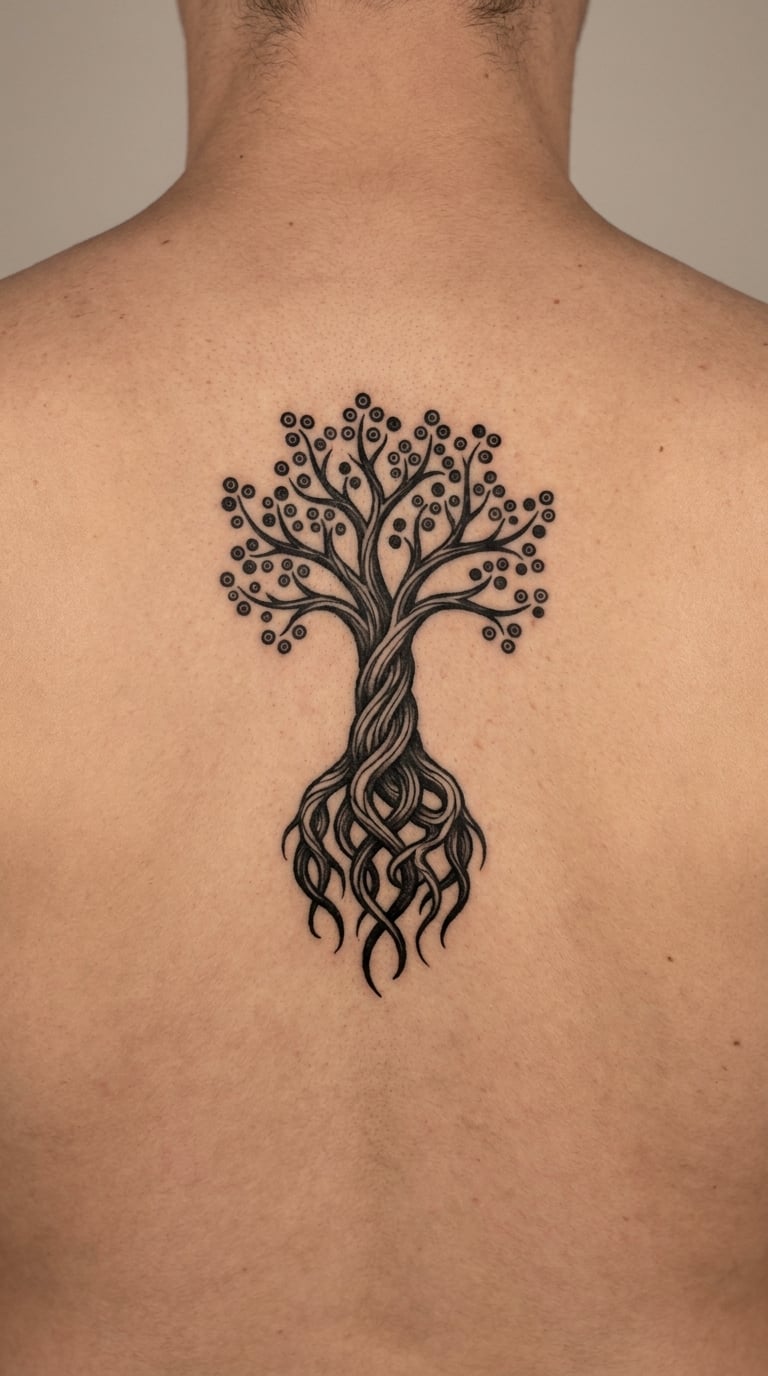
A broad tree in dense black ink: heavy trunk, twisting roots, and a canopy thinned out into a scatter of small circular leaves. Between the branches sit a few tiny marks, like notches, that suggest stories collected over a life without illustrating any of them.
It is a storytelling piece, which is the thread running through most Tolkien fandom, rather than a symbol with a fixed entry in the books.
Placement: upper back, centred between the shoulder blades and a little high so the roots can run down. Size: 6-9 inch (15-23 cm). Style: blackwork. Pain: medium; the upper back is fleshy but the shoulder blades make it uneven. Solid black fills hold up far better than fine detail here.
Make it yours: convert the tiny marks into initials or dates, one per branch.
4. Minimal Mountain-and-Moon Symbol on the Ankle
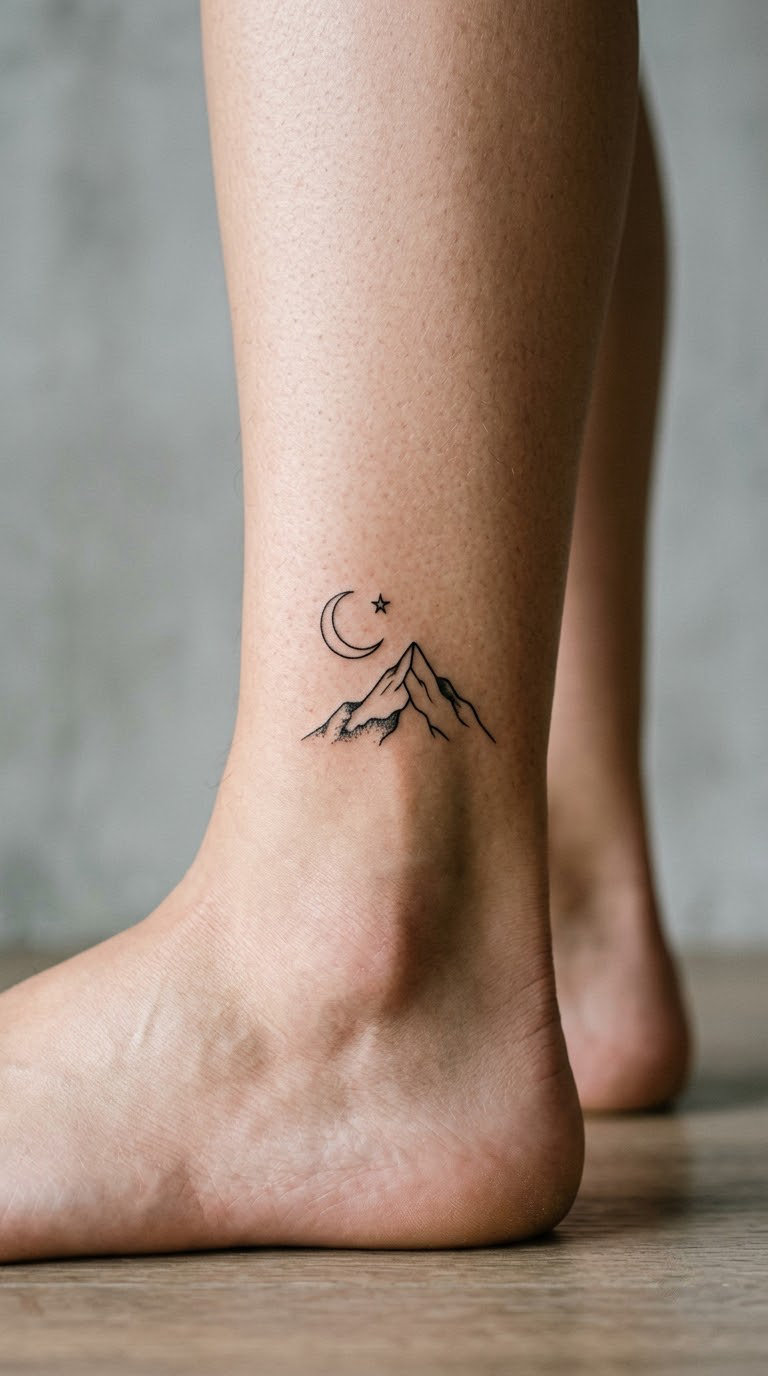
One pointed peak, a thin crescent above it and a single star, all in black line with wide empty space between them. That negative space is doing the work: three shapes and nothing else still suggest enormous scale.
It is a good first tattoo because it is small, geometric and hard to over-interpret. Wearers say it marks a love of the books without announcing it. If you like the celestial half of it more than the mountain, our 24 best planet tattoo ideas for women runs through the same reasoning in more detail.
Placement: outer ankle, above the bone. Size: 1.5-2.5 inch (4-6 cm). Style: minimalist. Pain: medium to high, the ankle is bony and the nerve endings sit close to the surface. Ankle linework also smudges easily in the first weeks, so plan for long sleeves.
Make it yours: change the star count to match something personal, or redraw the peak profile from a mountain you have seen.
5. Watercolour Forest Path on the Calf
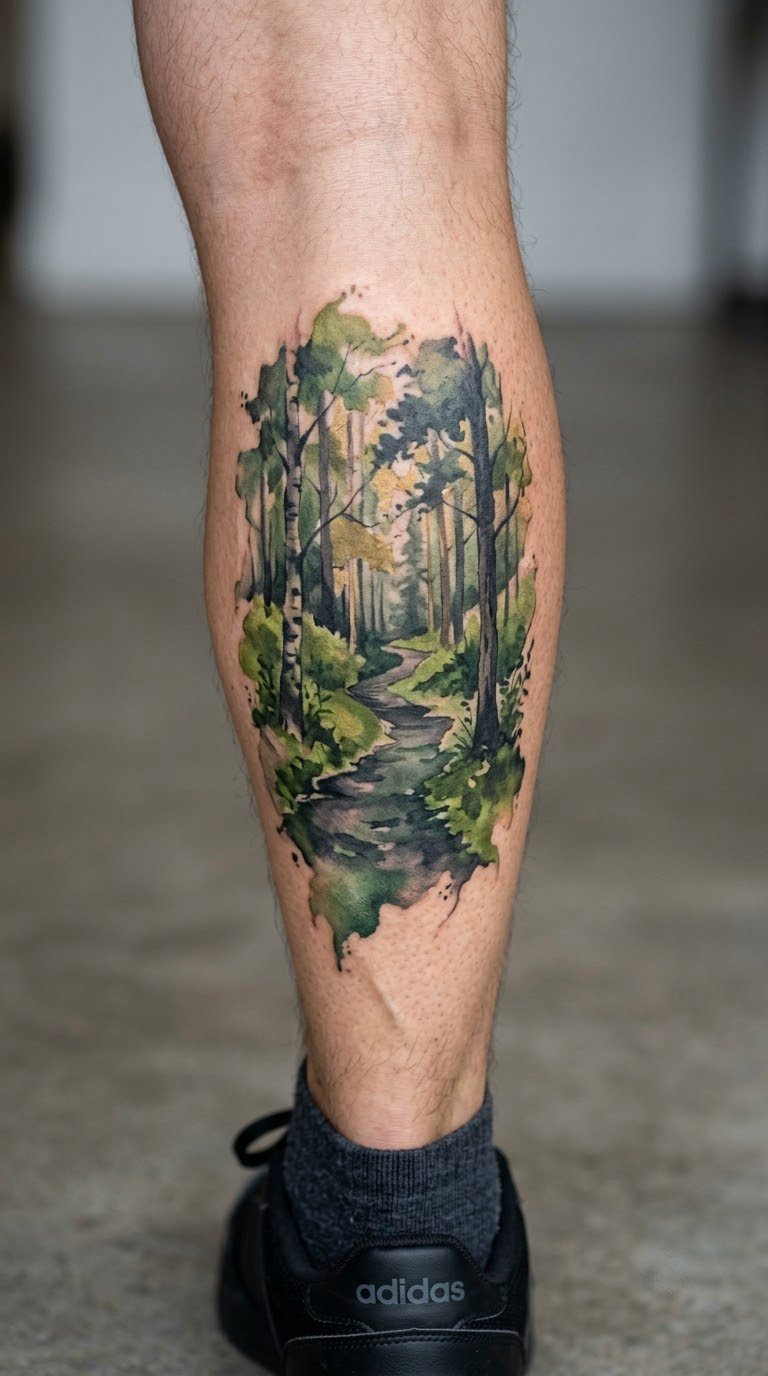
A trail winding between tree trunks, painted in moss green, charcoal grey and a muted gold that catches the light, with restrained linework holding the edges together. The colours bleed slightly at the borders the way wet pigment does on paper.
It is meant to be an invented scene, not a still from anywhere, and the softness makes it forgiving of imperfect shapes on a leg.
Placement: outer calf, running vertically. Size: 4-7 inch (10-18 cm). Style: watercolour. Pain: medium. Expect more sessions than a black piece of the same size, since colour layering is slower, and a little edge softening over time is normal for this style.
Make it yours: base the greenery on your birth flower or swap the palette for one colour that matters to you.
6. Dotwork Fellowship Knot on the Inner Arm
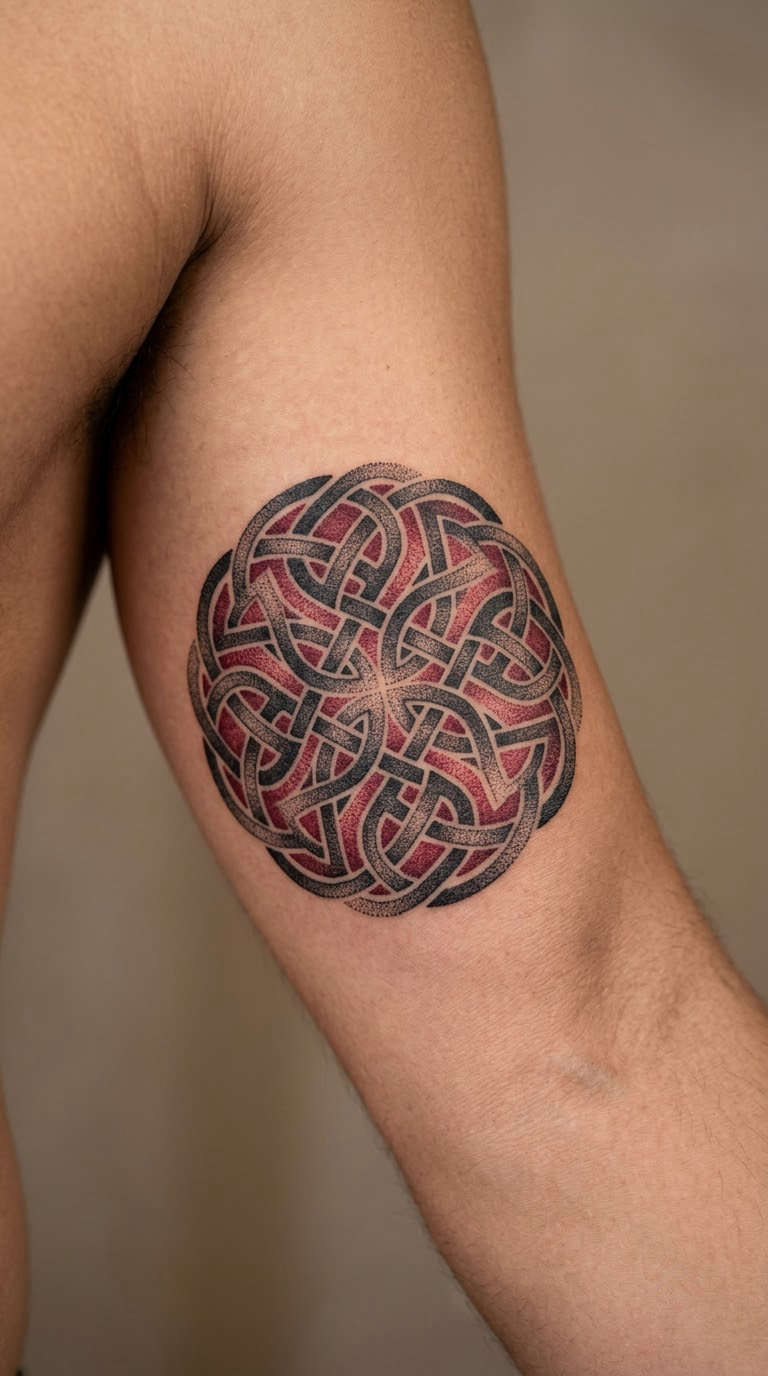
A circle of interwoven routes drawn in dots, looping and crossing until it is hard to trace where one line began. A few dots break into deep red, which gives the piece warmth without adding a second colour to maintain.
It stands for companionship and shared purpose in a purely abstract way, with no figures and no recognisable insignia anywhere in it.
Placement: inner upper arm. Size: 3-4 inch across (8-10 cm). Style: geometric dotwork. Pain: medium. Dots take longer than they look on paper, so book more time than the outline suggests.
Make it yours: add a coordinate, a date or a set of coordinates as extra nodes on the paths.
7. Traditional Raven With a Quill on the Shoulder
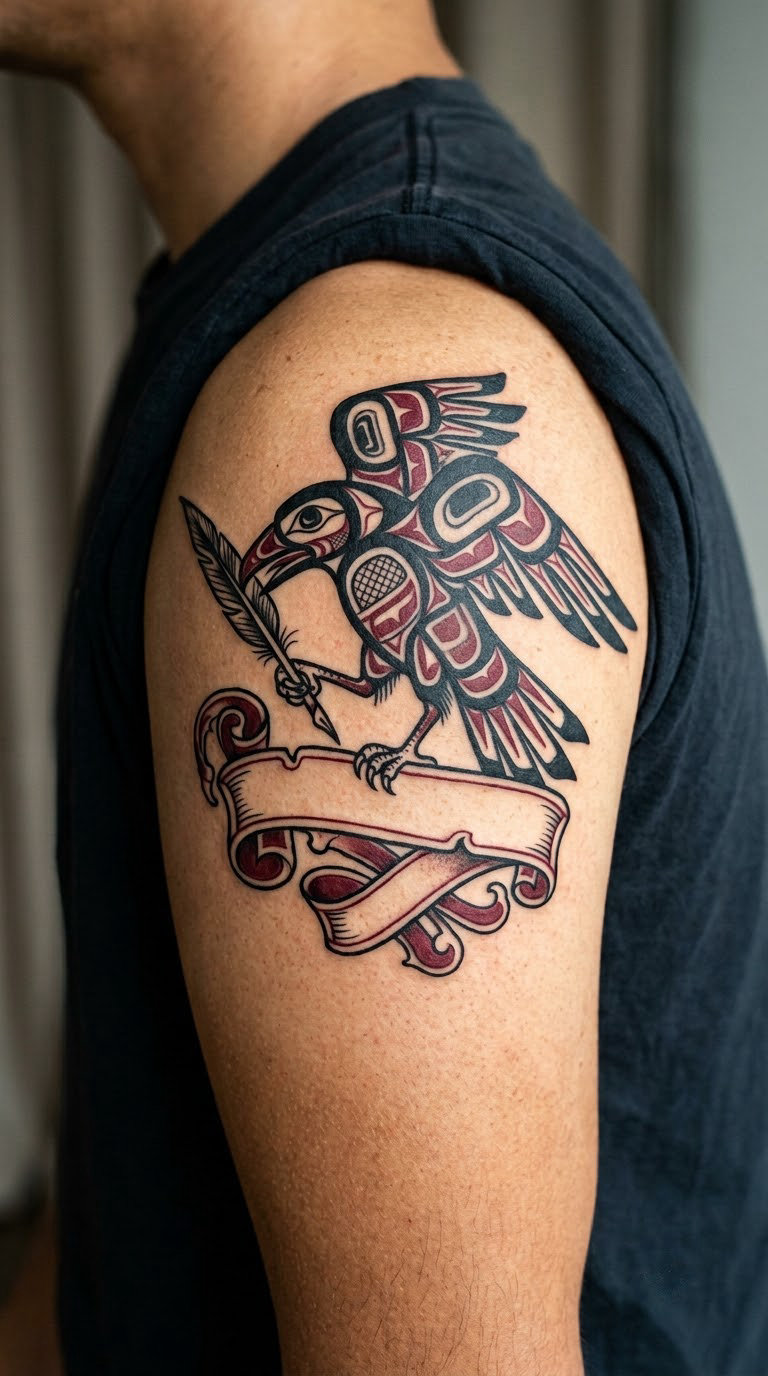
A bold raven in bold black line and deep red shading, wings folded, a small quill held in its beak above a plain scroll banner. The banner carries no lettering, which keeps it original and leaves the composition open.
It is the loudest idea in this list, and the shoulder can carry the width that traditional style needs. Fans pick it for the story-and-song association rather than any single character.
Placement: outer shoulder or deltoid. Size: 5-7 inch (13-18 cm). Style: traditional or neo-traditional. Pain: medium. Colour saturation dips a little over the years, and the red is the first thing to fade.
Make it yours: date the banner in a script you can actually read, or have the banner left blank on purpose.
8. Realistic Hand Holding a Tiny Flame on the Side of the Arm
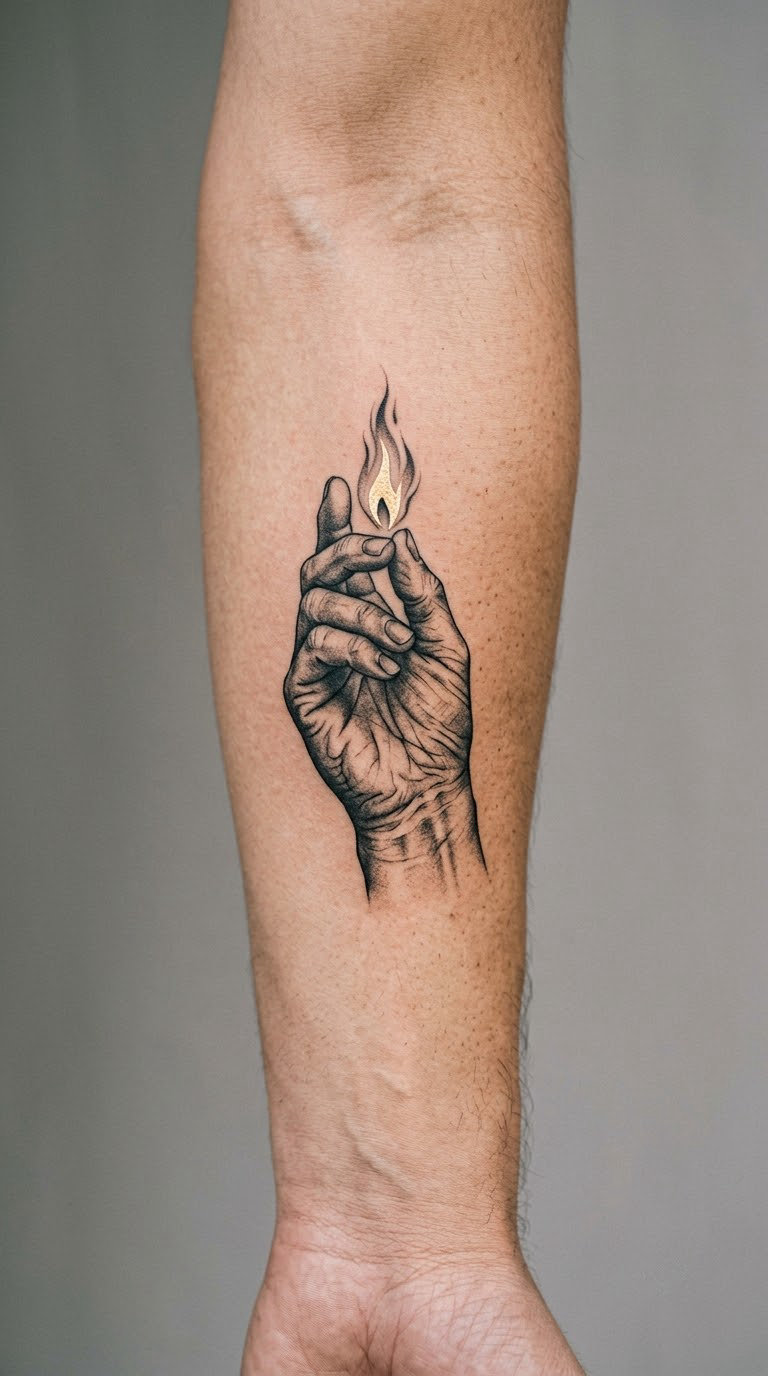
A gaunt, weathered hand in black and grey, slightly cupped, holding one small flame picked out in gold. There is no scene around it, just the hand and the light, which is what keeps it from reading as a film frame.
It is usually chosen for the idea of holding on to something small through hard conditions, which is a personal reading rather than a canon definition.
Placement: outer forearm or inside of the upper arm. Size: 2.5-4 inch (6-10 cm). Style: micro-realism. Pain: medium. Tiny flame details blur within a few years, so ask the artist to simplify the flame rather than shrink it.
Make it yours: have the hand wear a ring or bracelet in a birthstone colour you choose.
9. Ancient Map Grid on the Biceps
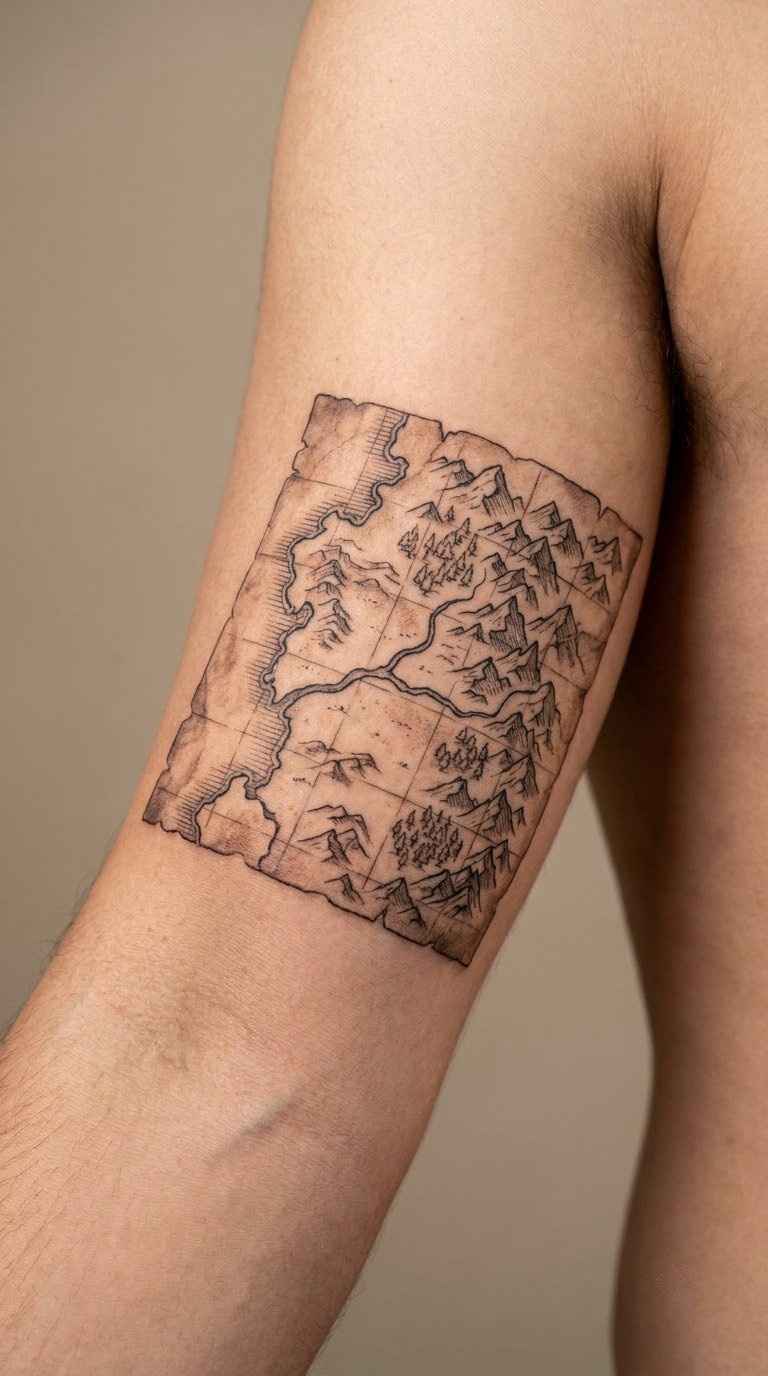
An invented coastline, a river system, a hatched mountain range and a hand-drawn grid, all in sepia and charcoal so it looks like an old document without copying any published chart. Compass rose in one corner, a few blank land masses, nothing legible as a real place.
It suits readers who want a literary, documentary-looking piece rather than a symbol. The grid gives the composition structure, so it never looks unfinished.
Placement: outer biceps, wrapping slightly. Size: 4-6 inch across (10-15 cm). Style: illustrative realism or blackwork. Pain: medium. Small hatch lines and grid numerals are the first detail to soften, so keep line weight generous.
Make it yours: plot coordinates from a real trip in the blank land, or mark your own home as a single dot.
10. Minimal Fellowship Flame Behind the Ear
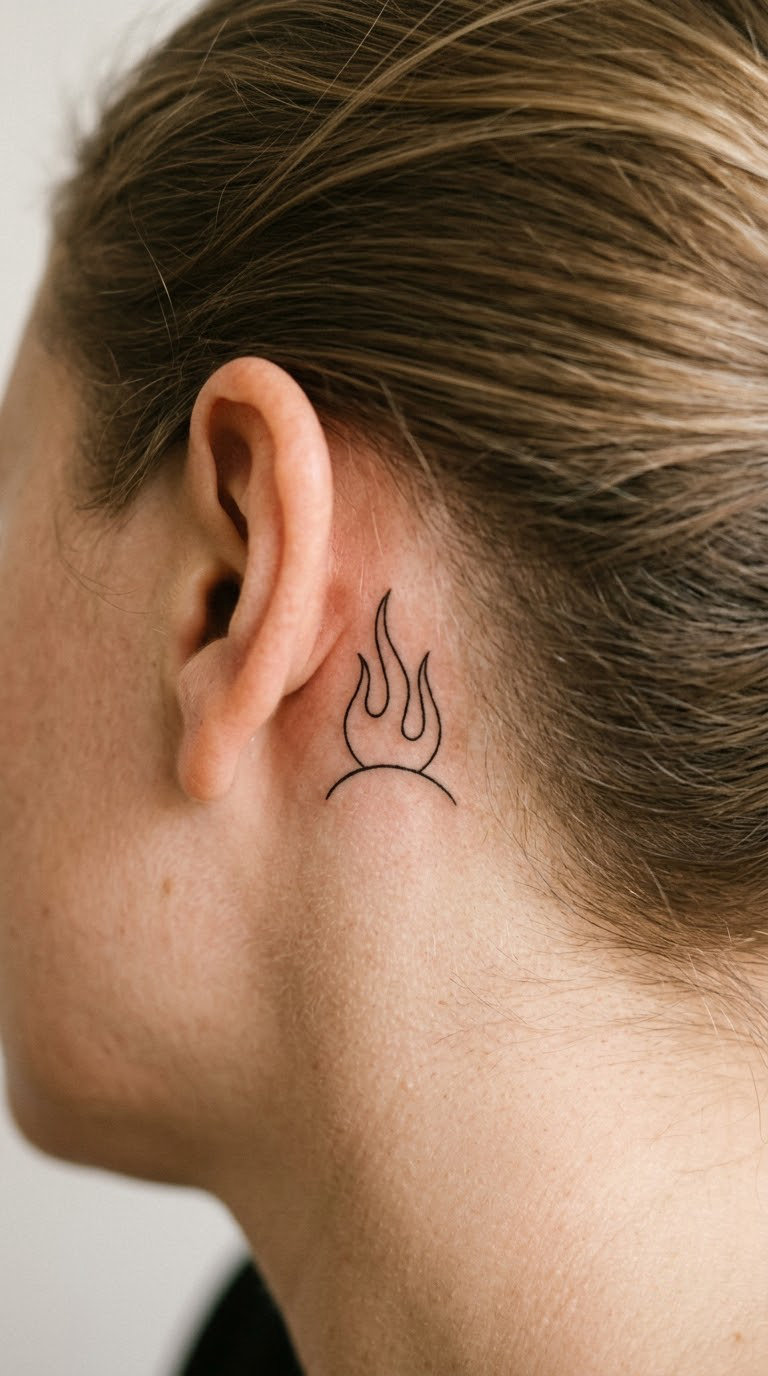
A newly drawn three-point flame with a single low arc beneath it suggesting a horizon, in thin black line. It resembles the general shape of a franchise flame without reproducing any logo or prop, which is the line to stay on the right side of.
Behind the ear is the one spot where a tiny piece stays slightly private, so it works for people who want the reference without announcing it.
Placement: behind the ear, tucking under the cartilage. Size: 1-2 inch (3-5 cm). Style: minimalist fine line. Pain: medium, and the skin here is thin and warm. Details near the hand and hairline blur faster than elsewhere, so keep the arc simple.
Make it yours: place a tiny birthstone or coloured dot inside the centre point.
11. Old Growth Tree With Hidden Birds on the Thigh
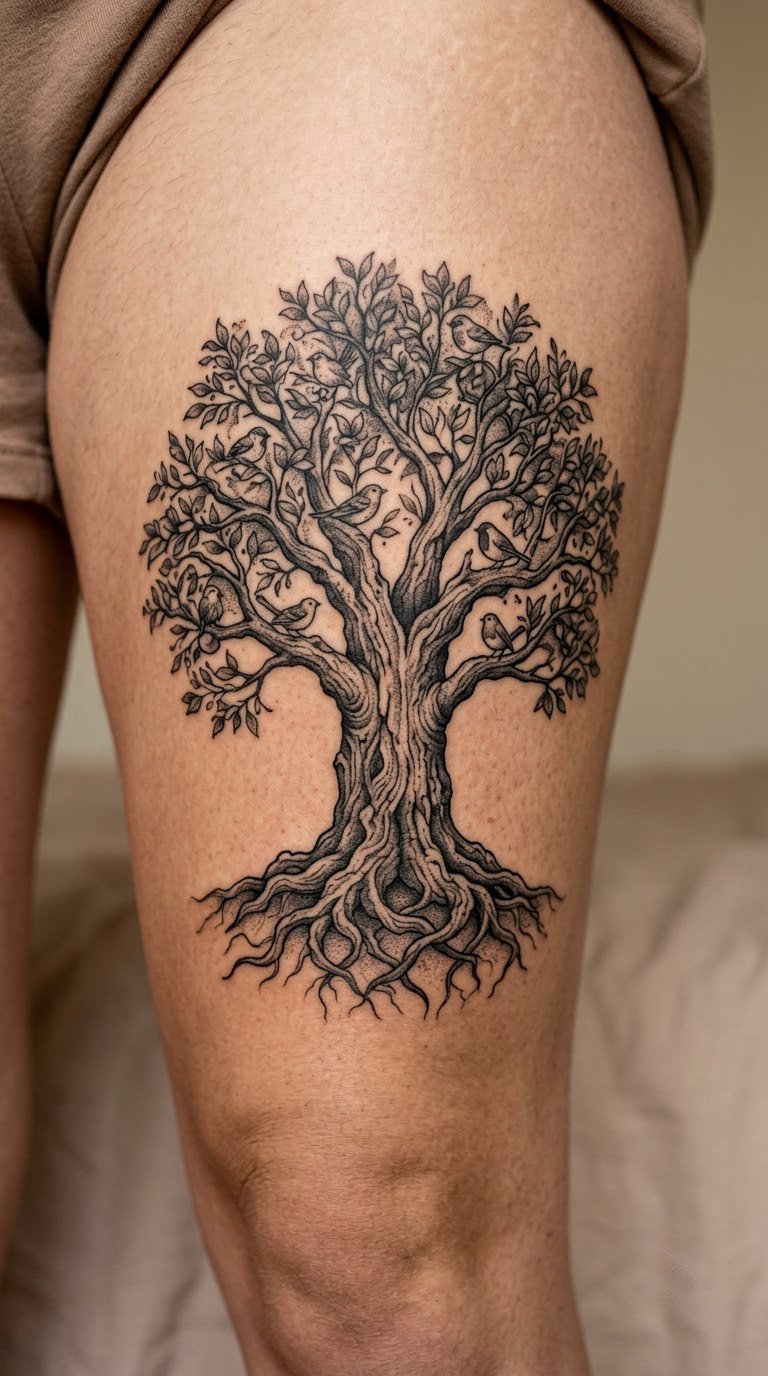
A wide, textured tree with layered roots, a hollow trunk and deeply worked bark, with several small birds tucked into the canopy where you only find them on second look. Black and grey, no colour, no creature portraits.
It reads as shelter and discovery in general terms. Nothing about it is tied to a specific text, which gives the artist plenty of room to draw bark rather than tracing anything.
Placement: outer thigh, where there is room for height. Size: 7-10 inch (18-25 cm). Style: illustrative blackwork. Pain: medium. The thigh is a forgiving area, and the bark texture hides small imperfections better than open linework.
Make it yours: set the number of birds to match something real, or ask for a specific local species.
12. Black-Grey Castle Silhouette on the Calf
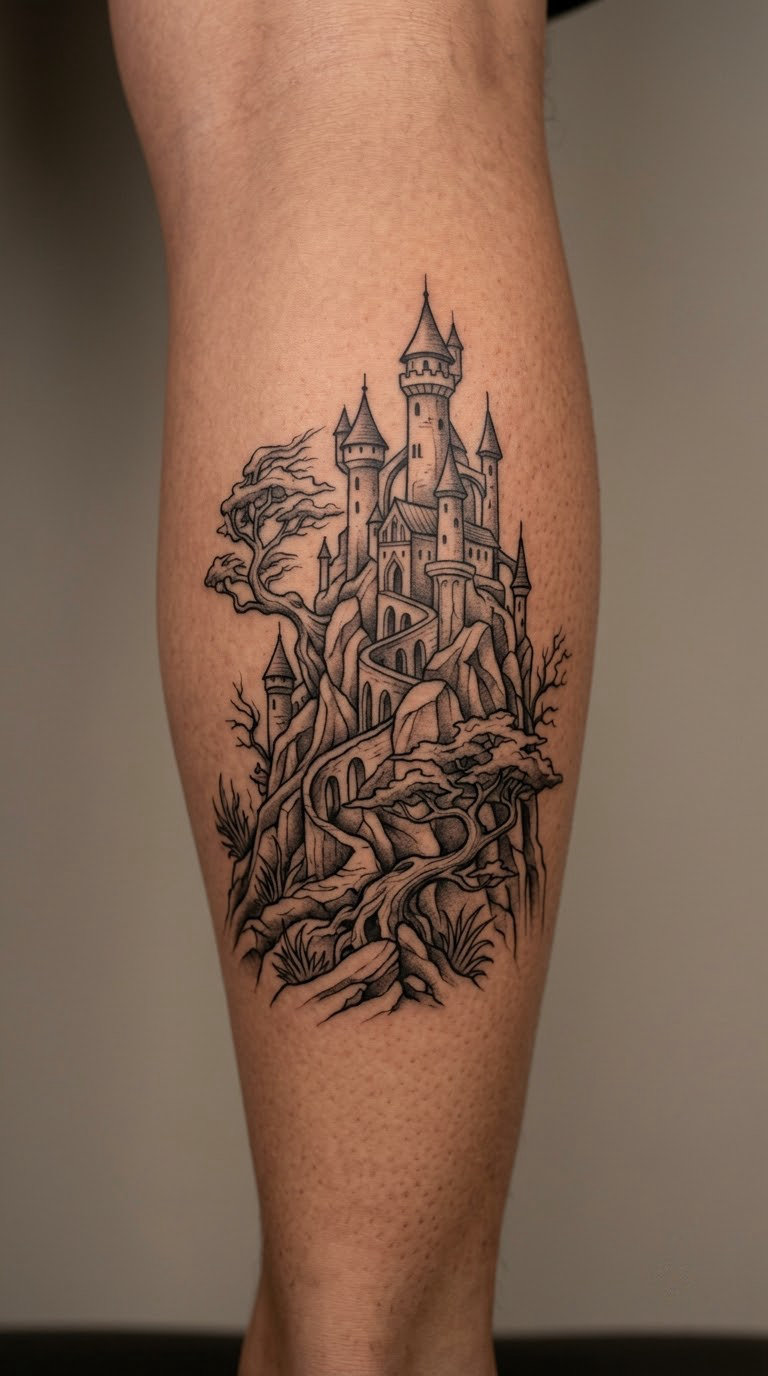
An original hilltop fortress: round and square towers, narrow lit windows, a wall climbing the slope, and wind-shaped trees leaning past the gate. Black and grey shading does the work, with no surrounding scenery that could be traced to a set.
The eye reads the silhouette before the detail, which is what makes a city design survive at moderate size. Calf or lower leg gives you a tall, narrow canvas.
Placement: calf, or outer lower leg. Size: 5-8 inch (13-20 cm). Style: blackwork or illustrative realism. Pain: medium, and the calf muscle shifts under the needle, so a slightly thicker line helps.
Make it yours: have the skyline rebuilt from a city you love, or add local stonework to the wall texture.
13. Flowing River of White Ink on the Forearm
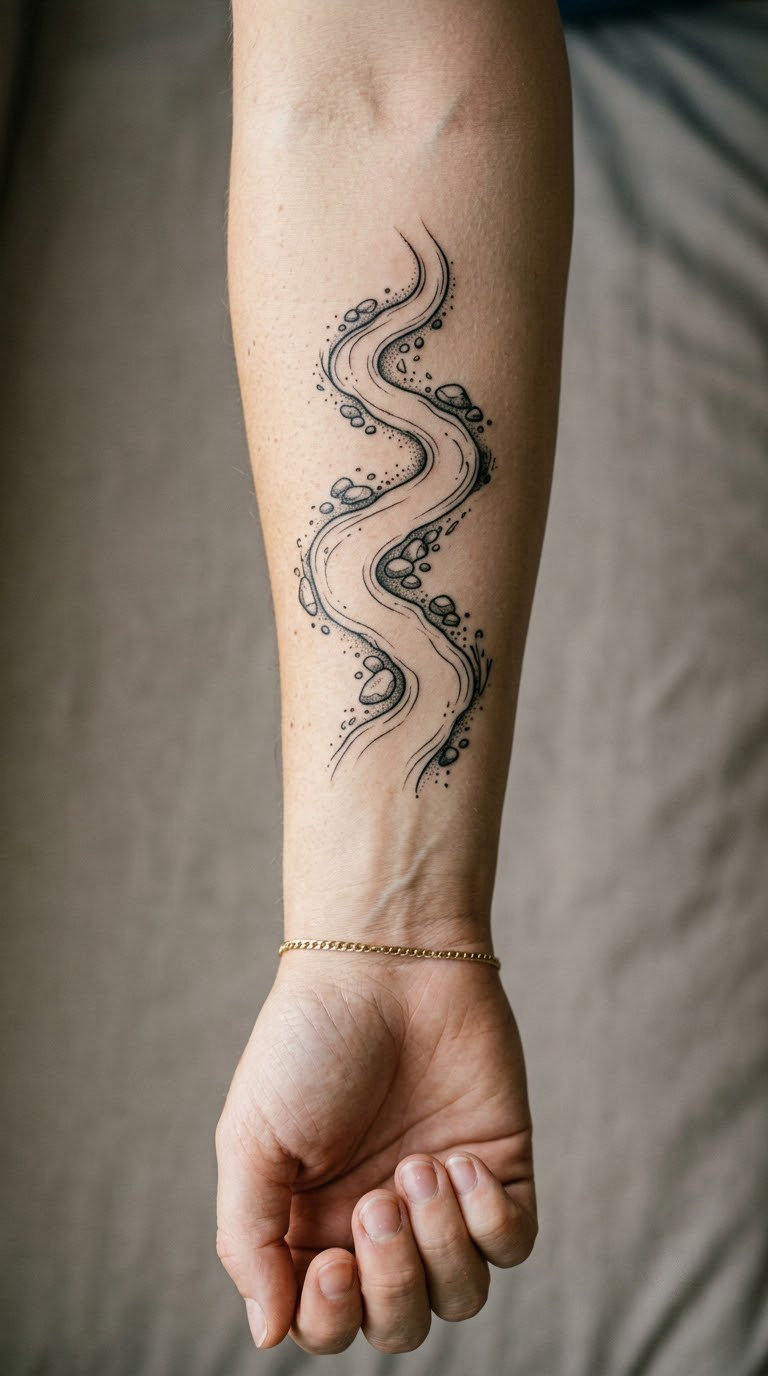
A river drawn as untouched skin, bordered by sparse black contour lines, a scatter of dots and a few small stones. The water is negative space, so the piece is light on the arm and reads as a shape rather than a picture.
It is usually picked as a quiet marker of change over time, a personal reading rather than anything the books assign to a river.
Placement: inner forearm, following its length. Size: 5-7 inch (13-18 cm). Style: fine line or minimalist blackwork. Pain: medium. The border lines are thin and will fade, so a slightly heavier contour keeps the river shape legible.
Make it yours: repeat a thinner version of the same river on the other forearm as a matching pair.
14. Sunlit Ruins in Watercolour on the Shoulder Blade
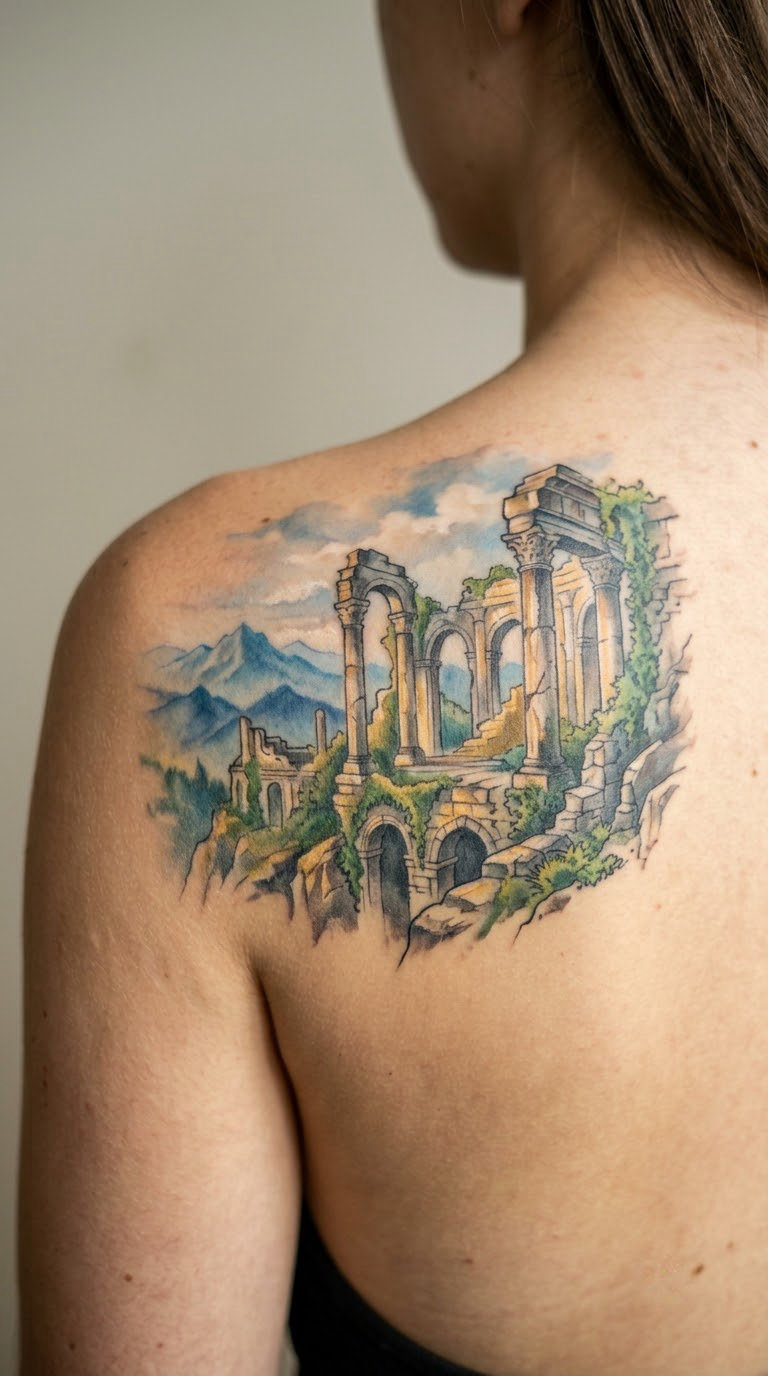
Broken columns, a floor of reflected gold light and a distant blue range behind them, all in loose watercolour with soft edges and no hard outlines. Deliberately unplanned, so it cannot be matched to a specific location.
The shoulder blade gives a flat-ish plane for a wide, low composition, and the soft washes suit skin better than hard-edged colour blocking.
Placement: shoulder blade, angled along the bone. Size: 5-7 inch (13-18 cm). Style: watercolour. Pain: medium, and expect a long sitting because colour work is slow. Light washes are easy to rework at a touch-up, which helps.
Make it yours: grow your birth flowers out of the broken columns instead of leaving them bare.
15. Iron Gate With Symmetrical Geometry on the Chest
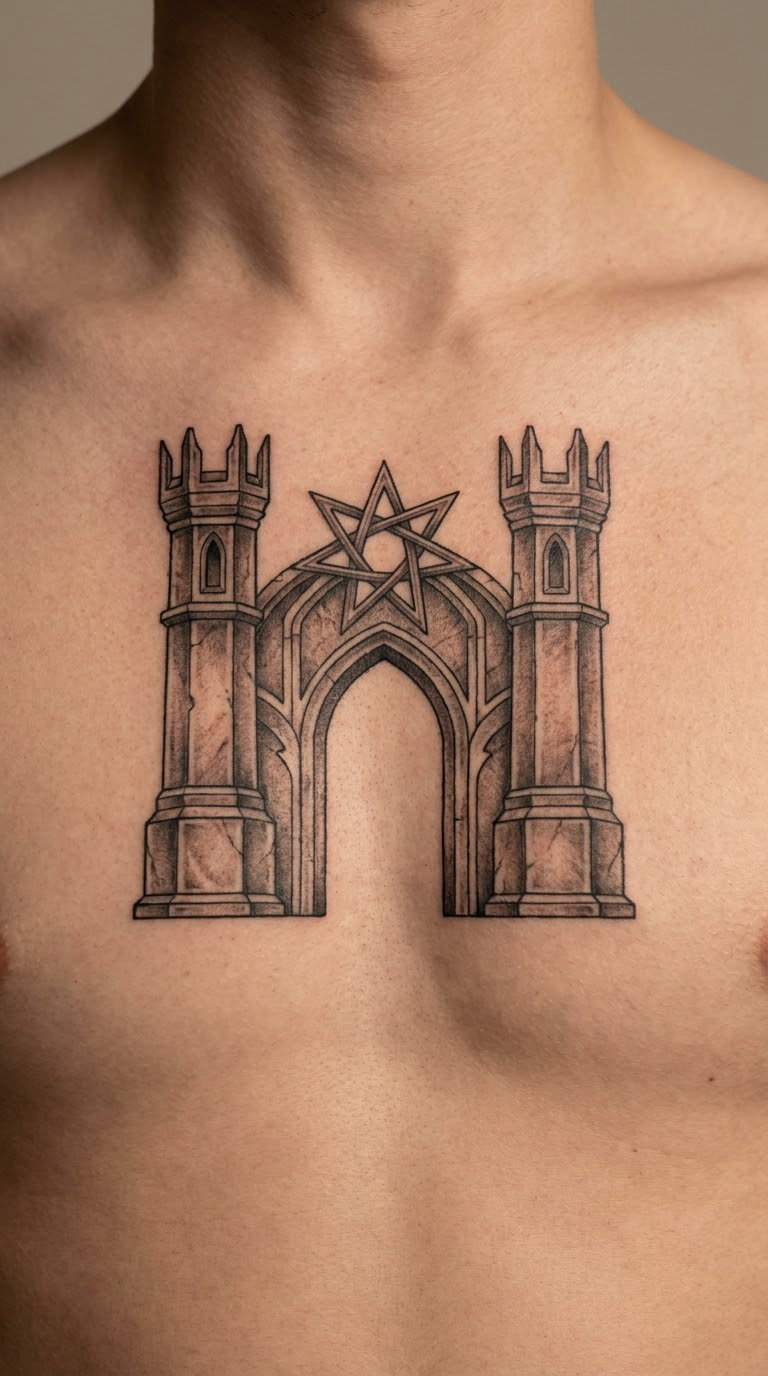
A symmetrical gate: twin towers, a barred arch and a seven-point geometry set into the structure, shaded like weathered iron with dark edges and lighter worn centres. Original drafting throughout, so it is not a replica of any film prop or emblem.
Symmetry is the appeal. It reads as order and endurance, and it flatters the sternum line.
Placement: sternum or upper chest, centred. Size: 4-6 inch (10-15 cm). Style: blackwork or geometric realism. Pain: medium to high, since bone and thin skin sit close under the chest. Weathered shading is more forgiving than crisp metal rendering.
Make it yours: distress one edge more than the other, or set family initials into the lintel.
16. Tiny Fortified Tower on the Wrist
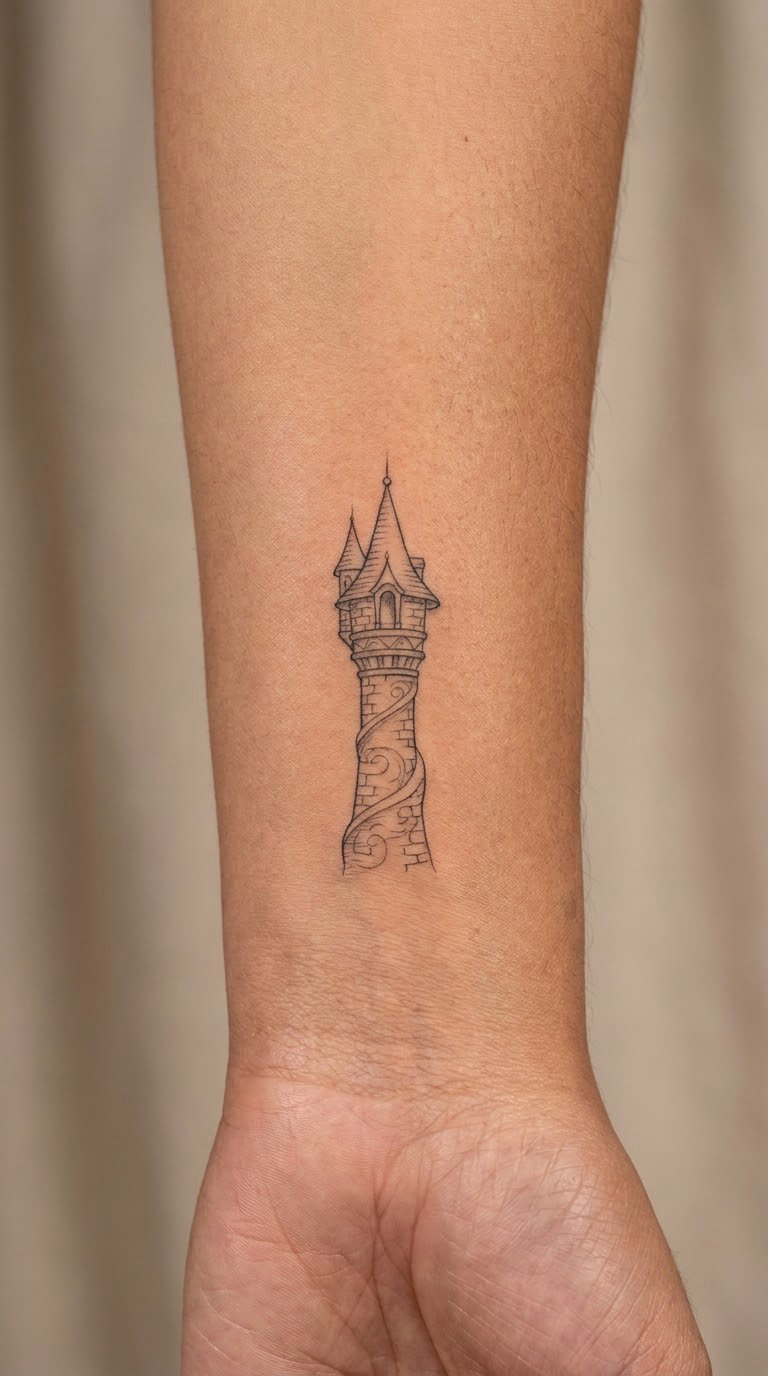
A simplified single tower in fine black line: a stepped roofline, a doorway, a few masonry marks and a small pennant shape with no lettering inside it. It borrows the atmosphere of a fortified city without copying any specific emblem.
At two inches it is a mark, not an illustration, which is exactly what most people are after from a wrist piece.
Placement: inner wrist, above the pulse point. Size: 1.5-2.5 inch (4-6 cm). Style: fine line or micro blackwork. Pain: medium to high, and wrists are among the most commonly regretted placements. Small masonry lines blur within a few years, so fewer marks is the safer call.
Make it yours: replace the tower with a single tower from a city skyline you actually know.
17. Lost Ring Compass on the Hand
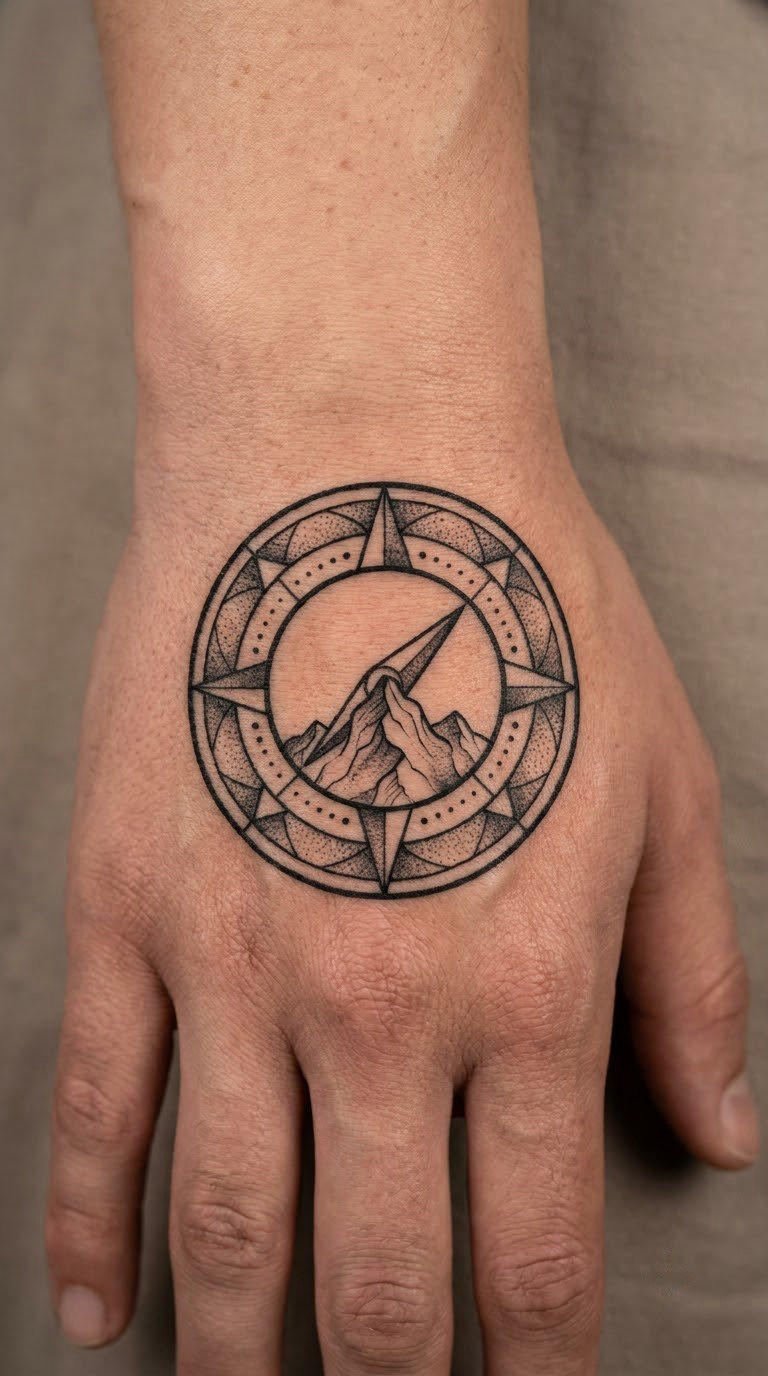
An original circular compass with a hollow ring at its centre, four cardinal points and a needle drawn as two small mountain contours. A newly designed interpretation rather than a copy of a screen prop.
The combination works because the ring is the container and the mountains are the direction. It is one of the more meaningful small pieces in this group.
Placement: back of the hand, between the knuckles and the wrist. Size: 2-3 inch across (5-8 cm). Style: blackwork or illustrative. Pain: high. The hand is bony, the skin is thin, and knuckles and veins shift the surface constantly. Fine internal detail is the first thing to blur.
Make it yours: have real coordinates set into the ring band as tiny numerals.
18. Dragon-Scale Stipple Panel on the Upper Arm
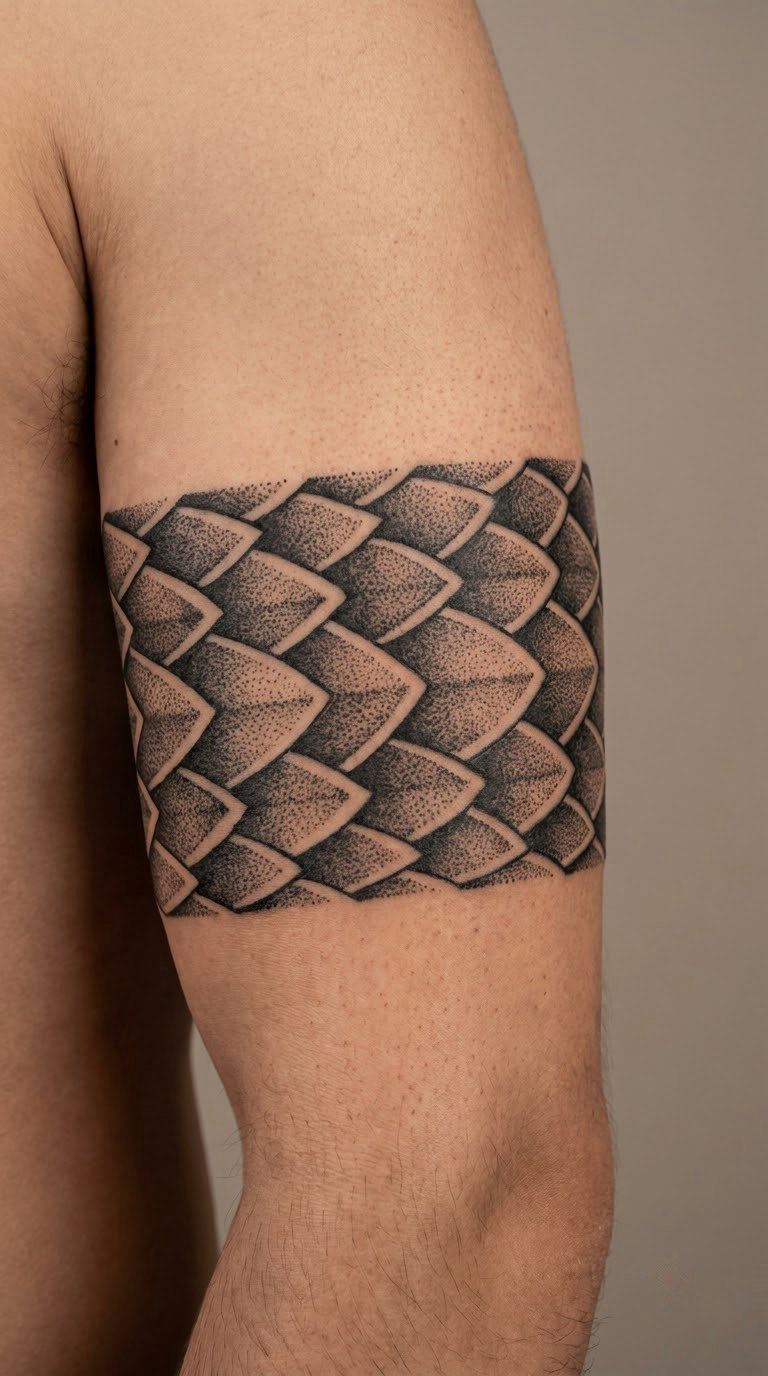
A field of overlapping scales built entirely from stipple and negative space, tightening from sparse dots at one edge to solid black at the other. No head, no limbs, no creature, just the pattern and the suggestion of protection.
It works well as a filler or a connecting panel between two pieces, and it adds weight to an arm without a fixed story attached.
Placement: outer or upper arm. Size: 4-7 inch (10-18 cm). Style: blackwork, dotwork or illustrative realism. Pain: medium. Stipple is slow going and often needs a second session to reach solid density.
Make it yours: run a two-tone gradient from one end, or clip a small hero image into the densest area.
19. Star Map With a Custom Birth-Moment Path on the Ribs
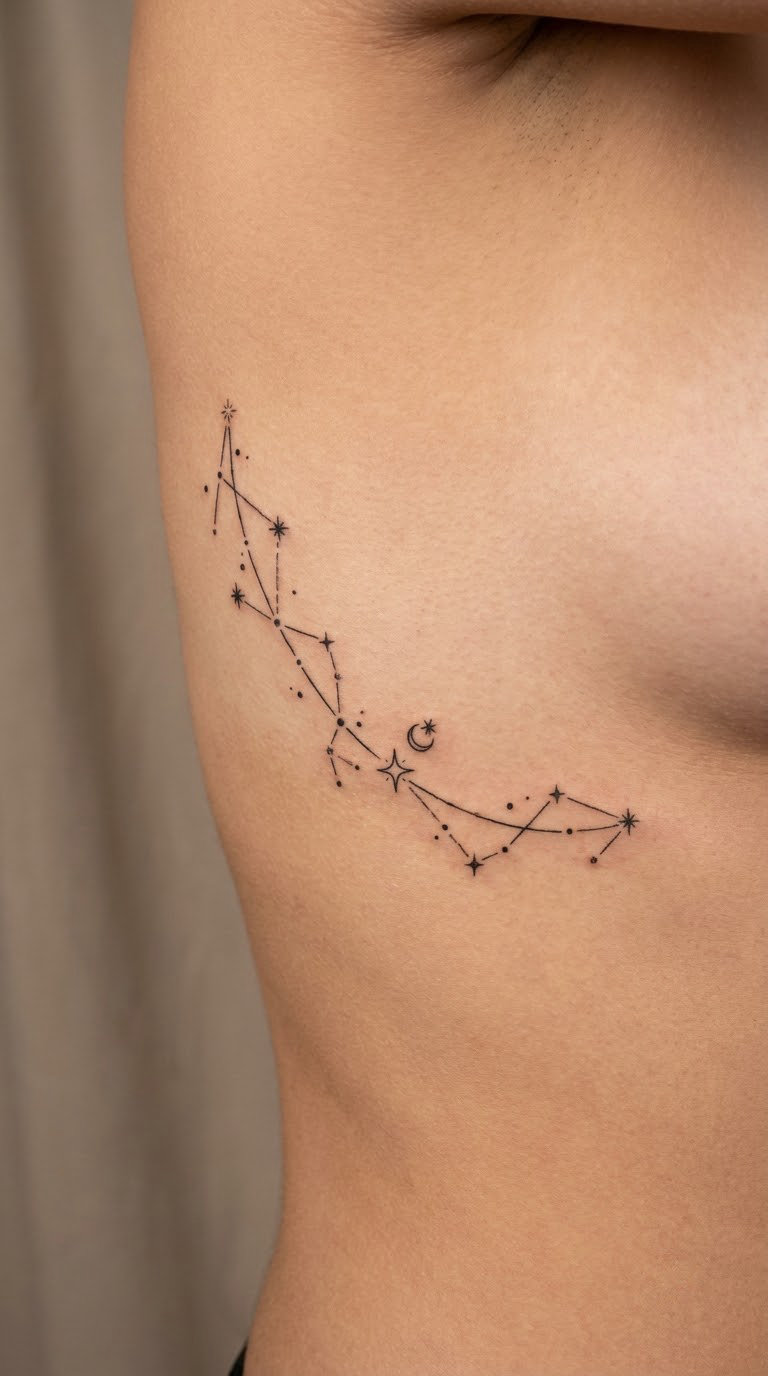
A constellation-like scatter of stars linked by one curved path that marks the date, place or moment that matters to you, with a single small marker at the point it starts. An original arrangement rather than a reproduced chart.
It is one of the more personal pieces you can commission, because the data is yours and the design has to be built around it. If you want more star work in general, our 24 constellation tattoo ideas for women covers the sizing and placement in more depth.
Placement: side ribs, following the curve. Size: 5-8 inch (13-20 cm). Style: fine line or dotwork. Pain: high. The ribs are thin, close to bone and very responsive. Dot sizes need to be large enough to survive here, and the skin stretches.
Make it yours: use your actual birth coordinates or your birth constellation rather than a stock star field.
20. Greenwood Arch on the Back of the Neck
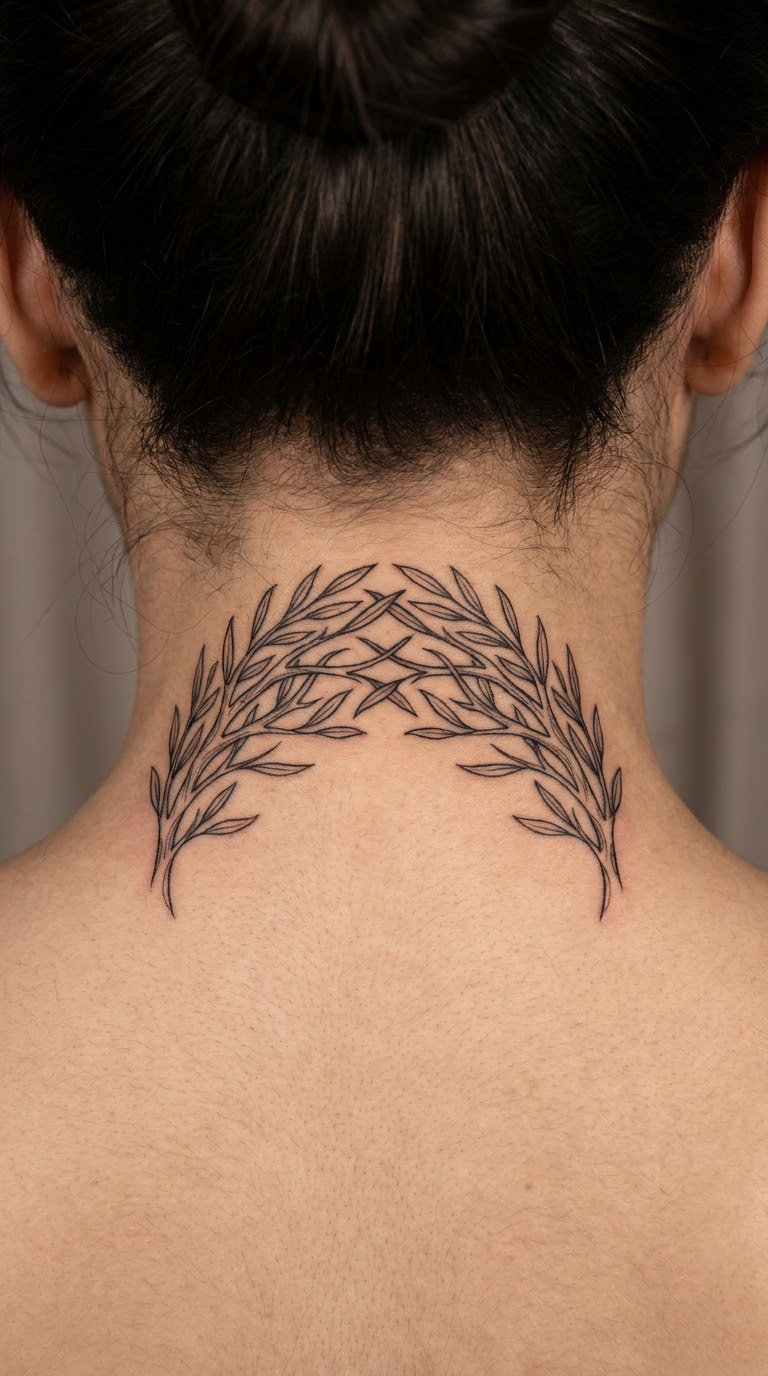
A symmetrical arch of intertwined trees and narrow leaves, drawn as a new composition in fine black line, with a denser canopy above and open space below. It has the atmosphere of an old forest without copying any illustration.
It sits at the back of the neck, so it shows when your hair is up and disappears when it is down. That in-and-out visibility is the reason people choose it.
Placement: nape, just above the hairline. Size: 2-4 inch (5-10 cm). Style: fine line or illustrative. Pain: medium, and the neck moves a lot while you sit. Fine line in this spot fades faster than most, so plan on a touch-up or accept a softer look later.
Make it yours: swap the arching leaves for native leaves from where you grew up, or build in a small family-tree detail.
21. Miniature Broken Crown on the Wrist
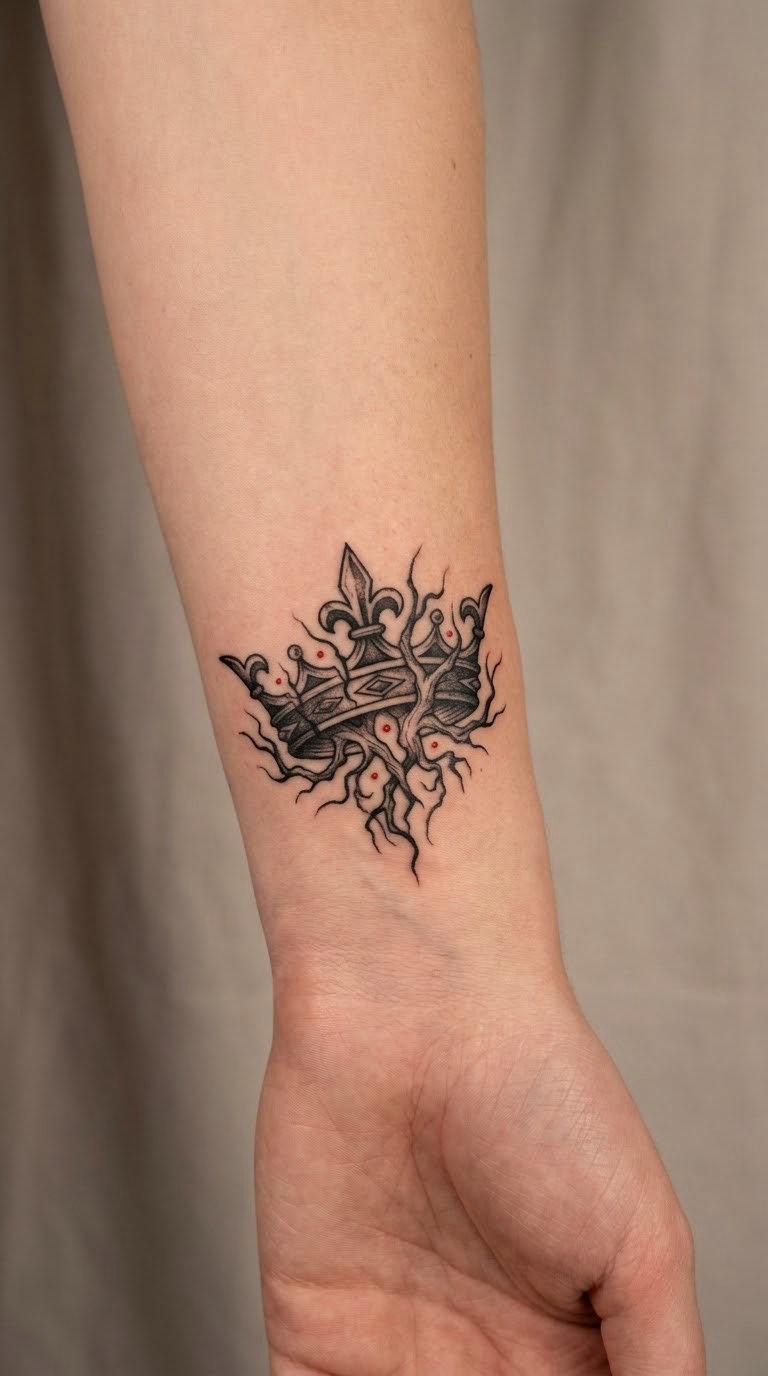
A small ornamental crown with chipped and uneven points, sitting on a root-like base that runs into the skin. Black line and shading with three small red dots, and no resemblance to any named crown from the films.
Fragility and endurance sit together in it, which is why it turns up on wrists more often than anywhere else.
Placement: inner or outer wrist. Size: 1.5-2.5 inch (4-6 cm). Style: ornamental blackwork. Pain: medium to high. The tiny shading inside the chips softens with age, and the red dots can fade out of line, so ask the artist to size them up.
Make it yours: place birthstones in the three dots, or run one deliberate crack through a specific point.
22. Fantasy Mountain Panel With an Empty Centre
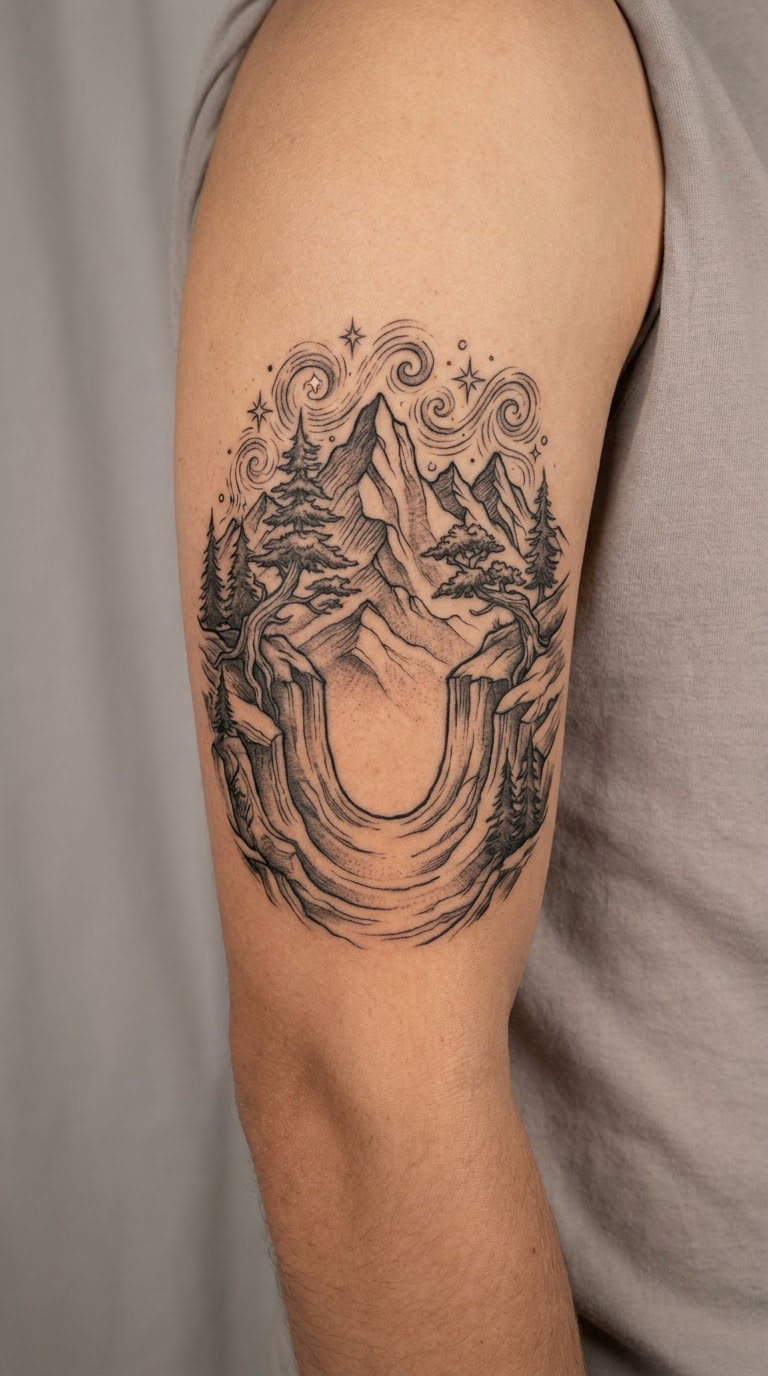
Layered mountains, a forest silhouette and a scatter of stars above a wide valley that is deliberately left uninked. The empty middle is part of the design, not a space the artist has left to finish later.
That open centre is what makes it useful: you can add a quilt pattern, birth flowers or a date into it years later, or never, and the piece still looks finished. If the stars rather than the mountains pull you, 22 comet tattoo ideas handles that same small-scale sky work.
Placement: outer upper arm, or shaped over the shoulder blade. Size: 8-12 inch (20-30 cm). Style: illustrative blackwork or black-grey realism. Pain: medium over the fleshy outer arm, higher near the shoulder blade. This is a full-day piece, usually split across two sessions.
Make it yours: fill the empty valley with a quilt square, your birth flowers or a date you want added later.
How to Choose the Right Design
Choosing From These 22 Lord of the Rings Tattoo Ideas
Most people pick with their heart and then find out the placement was wrong. Work through these six checks before you book anything.
- Originality. Fan tattoos get rejected for looking like screenshots. A newly drawn mountain range or city silhouette will outlast a traced scene every time, and it is the version you will not regret.
- Scale. If a design has more than three kinds of detail inside it, it wants to be at least four inches. Below that, simplify it with your artist rather than shrinking it.
- Placement against your existing work. Lay your saved references out on your arm or leg before you commit. Most regret I hear about is really a spacing mistake between two pieces.
- Visibility. Behind the ear, inner forearm and ribs are the quieter options. Shoulder, calf and chest are the ones people will comment on. Pick deliberately.
- Detail survival. Fine line fades, hands and wrists blur, ribs stretch. Anything under two inches works best as a simple shape, not a scene.
- Artist fit. Send your references to the artist before the session and ask which of your ideas suits their hand. Illustrative blackwork, watercolour and micro-realism are different specialities.
If you are commissioning lettering, add a seventh check: send the wording to a translator or a speaker of the language and confirm it character by character before the stencil is cut. Artists working in invented scripts can only draw what they are given.
Cost and Session Time
Custom tattoo cost tracks two things: how long the artist is working and how detailed the design is. Hourly rates vary widely by city, by shop and by artist, and most studios set a shop minimum that covers small pieces. Ask your studio for a quote based on a specific size rather than a vague theme, because a two-inch mark and a ten-inch panel are not the same job.
Session time is easier to estimate from size. A one-hour sitting comfortably covers a small symbol around two inches, or a wrist or ankle piece with clean linework. Three to four hours is typical for a forearm composition at four to six inches, and anything from eight inches up is a full-day piece that most artists split into two sessions.
Fine detail stretches the clock. Dotwork, stipple and watercolour all run slower than solid black, and a six-inch stipple panel can take the same time as a much larger simple piece. If you are travelling, add the first session to your trip rather than hoping to squeeze a touch-up in before a flight home.
Aftercare Basics
- Follow your artist’s aftercare instructions first. They know what they did in your session. Everything below is general guidance that sits underneath that, not instead of it.
- Wash gently. Clean with lukewarm water and unscented soap, then pat dry with something clean. No scrubbing, no soaking, no shaving over it.
- Let it dry and breathe. Keep the fresh tattoo loose and uncovered at home. A tight collar, a waistband or a bra strap rubbing the area causes most early problems.
- Protect it from sun. No sunbeds, no beach, no uncovered swimming pools until it has healed. New colour especially fades faster than the black line around it.
- Wash away sweat rather than pushing through it. A workout is fine if you rinse the area afterwards. Grit from gym equipment does more harm than the movement does.
- Contact the studio if something looks wrong to you. Heavy bleeding, spreading redness, yellow crusting, a hot spot or a line that looks like it is lifting are all reasons to call the artist who did the work. Describe what changed and when. If something does not settle, your artist can tell you whether it needs medical advice.
Frequently Asked Questions
Are Lord of the Rings tattoos legal to get?
Getting a Tolkien-inspired tattoo is legal almost everywhere. What is protected is the specific artwork: film stills, character likenesses, film prop designs, logo-style emblems and the Tengwar text used on the One Ring are copyrighted or trademarked material, and reproducing them can get a design refused or, rarely, challenged later. A newly drawn mountain range, invented city silhouette or original script-inspired flourish carries no such issue.
Can I copy a character, map or quote from the movies?
You can bring any reference to a consultation, but copying a character, a film frame or a published map is a different matter from being inspired by one. Artists working in commercial studios are usually asked to redraw commercial material, and traced images produce the flat, screen-printed look that fades badly. A better route is to describe the feeling you want and let the artist draw a new scene, then have the wording of any quoted line checked before the stencil is made.
What size is best for a first Lord of the Rings tattoo?
For a first tattoo, two to four inches in one colour is the sweet spot. Small enough to sit in a single session, large enough to hold a shape like a mountain-and-moon symbol or a tiny tower, and simple enough that you can see how your skin handles ink. First-timers who regret their first piece nearly always regret the size or the placement, not the subject. Book a consultation and hold it up against your arm before anything is cut.
Should I choose a blackwork or fine-line fantasy tattoo?
Blackwork holds its shape longer and is easier to touch up, because solid fill covers small imperfections and fades less visibly than a hairline stroke. Fine line looks more delicate and more subtle, which suits small pieces, but it softens within a few years, especially on hands, wrists and anywhere the skin stretches. If you want something you will still read clearly in ten years, go heavier. If you want it to be private and almost unnoticed, fine line is the better fit.
Where is the best placement for an original Middle-earth-inspired tattoo?
It depends on the shape of the design and how visible you want it. Wide horizontal pieces such as a mountain range or a city gate suit the forearm or the calf. Tall vertical pieces such as a castle silhouette or a star map suit the outer arm or the side ribs. Small marks suit the wrist, collarbone or behind the ear. Bony areas hurt more and blur detail faster, so if the design has fine detail, choose a flat fleshy surface such as the upper arm or outer thigh.
Conclusion
If this is your first tattoo, the minimal mountain-and-moon symbol is the one I would point you at: two inches, two colours of ink at most, and almost no detail to lose. If you have been collecting pieces for years, the map grid and the mountain panel with an empty centre will hold up better than anything small on that list, and both have room for you to add to later.
Save the two or three references that actually speak to you, find a tattoo artist whose work matches the style you picked, and finalise a fully original design before you book. For these 22 lord of the rings tattoo ideas, the one rule is that your artist draws it fresh, and that any wording gets checked twice before the stencil goes on.