
25 Sobriety Tattoo Ideas: Best Minimal Recovery (October 2026)
If you are looking for 25 sobriety tattoo ideas that still look good a decade from now, the shortlist is simpler than most galleries suggest. The designs that age best are the small ones with one clear shape, a readable line weight, and a meaning you can explain in a sentence. A phoenix, a sunrise, a single wave and a plain sober date all do that job well, and each can sit quietly on the inner forearm or go on display across the shoulder.
Most people I talk to about this kind of tattoo are not first-timers and plenty of them already have a sleeve. They want one design that holds a specific year without turning into a logo, a slogan poster, or something they will have to explain at a family dinner. I have grouped these 25 by what the design actually does, and each one comes with the placement, size and pain notes that galleries usually leave out.
One practical note before you start scrolling. If you are marking an anniversary, work backwards from the date. A small piece takes one session, but the skin needs two to three weeks of calm after it, and swim season, sun holidays and manual work all complicate healing. Book the session a few weeks before the milestone rather than the day before, and tell your artist exactly how small you want it to stay.
25 Sobriety Tattoo Ideas: Quick Guide
The same 25 designs run in the same order below, so you can scan the columns first and jump to the one that fits your placement and pain budget.
| Idea | Style | Best placement | Size | Pain |
|---|---|---|---|---|
| Infinity with date | Fine line | Inner forearm | 2-3 in (5-8 cm) | Low to medium |
| Sunrise | Fine line, black and grey | Inner wrist | 1.5-2.5 in (4-6 cm) | Medium |
| Roman numeral date | Fine line lettering | Inner forearm | 2-4 in (5-10 cm) | Low to medium |
| Tree of life | Fine line, blackwork | Outer forearm | 3-5 in (8-13 cm) | Low |
| Wave and horizon | Fine line | Lower forearm | 2.5-4 in (6-10 cm) | Low |
| Lotus | Blackwork | Wrist, ankle | 1.5-2.5 in (4-6 cm) | Medium |
| Sober date in script | Fine line script | Inner forearm | 2-3 in (5-8 cm) | Low to medium |
| Mountain range | Fine line silhouette | Outer forearm | 2-3.5 in (5-9 cm) | Low |
| Phoenix | Black and grey fine line | Upper arm | 3-5 in (8-13 cm) | Medium |
| Dotwork sun | Dotwork | Inner arm | 2-3 in (5-8 cm) | Medium |
| Path through grass | Fine line | Forearm | 2-3 in (5-8 cm) | Low |
| One-word lettering | Clean sans or fine line | Inside forearm | 1.5-3 in (4-8 cm) | Low |
| Anchor with wave | Fine line | Inner forearm | 2.5-3.5 in (6-9 cm) | Medium |
| Watercolor grapes | Watercolor | Wrist | 2-3 in (5-8 cm) | Medium |
| Open doorway | Blackwork | Forearm | 2.5-4 in (6-10 cm) | Low |
| Mountain and moon | Fine line | Upper arm | 2.5-3.5 in (6-9 cm) | Low |
| Milestone number | Fine line serif | Inner wrist | 0.5-1 in (1.5-3 cm) | Medium |
| Butterfly | Fine line | Wrist, ankle | 1.5-2.5 in (4-6 cm) | Medium |
| Branch with leaves | Fine line botanical | Inner forearm | 2-3.5 in (5-9 cm) | Low |
| Single flame | Fine line | Wrist | 1.5-2.5 in (4-6 cm) | Medium |
| Dotwork compass | Dotwork | Forearm | 2-2.5 in (5-6 cm) | Medium |
| Red thread line | Blackwork with colour | Inner arm | 2-3 in (5-8 cm) | Low |
| Watercolor cloud | Watercolor | Forearm | 2-3 in (5-8 cm) | Low |
| Key with date | Fine line | Inner forearm | 2-3 in (5-8 cm) | Low to medium |
| Circle with a word | Fine line | Wrist | 1.5-2 in (4-5 cm) | Medium |
1. Fine-Line Infinity Symbol with a Recovery Date
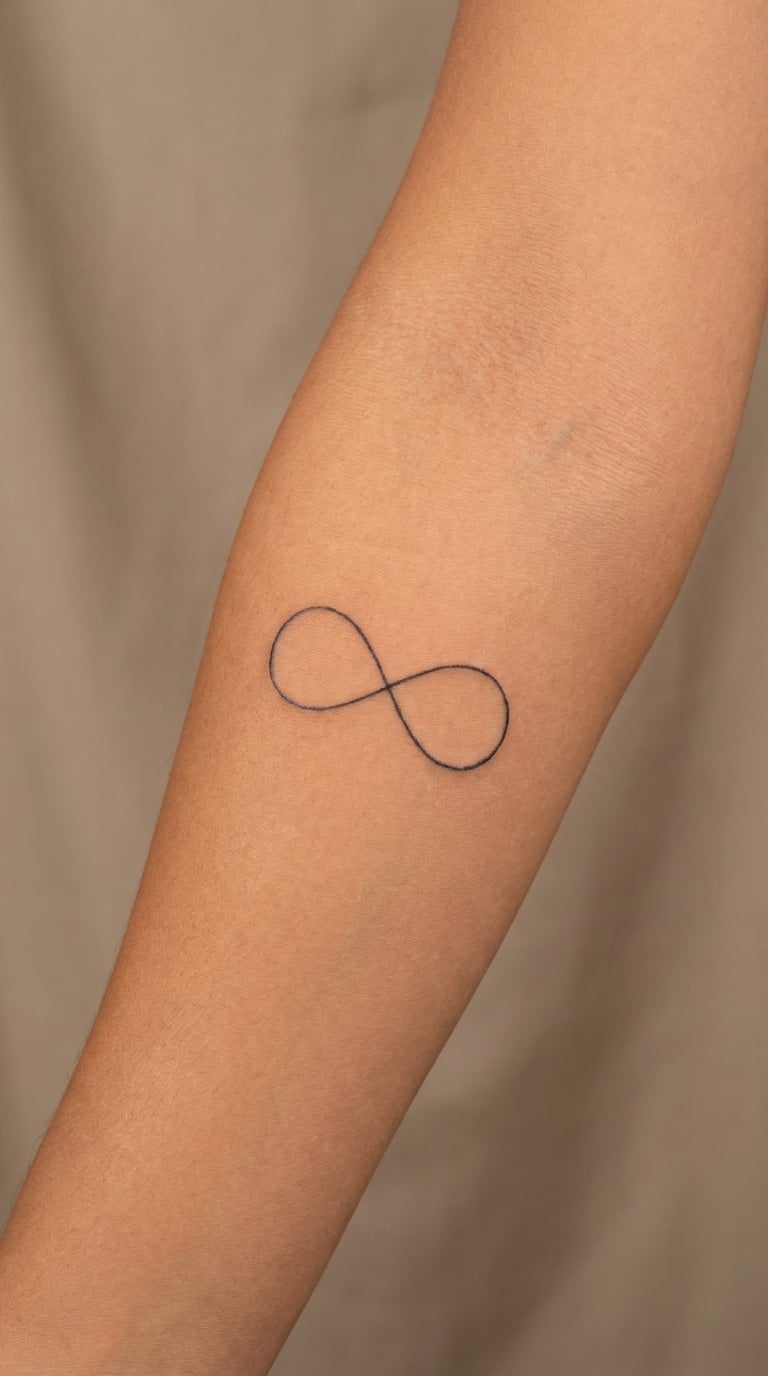
A thin single-line infinity, drawn with one unbroken contour and nothing filling the loops, with a small date tucked into the gap where the lines cross. It is a continuing thing without needing a sentence around it, and the date is what makes it yours rather than a stock symbol.
People choose it because the mark has to hold a beginning point they care about, and an infinity shape already says the rest.
Placement: inner forearm, wrist crease, or the soft area just below the elbow. Size: 2-3 in (5-8 cm) across. Style: fine line, single-needle weight. Pain: low to medium, with the inner forearm closer to medium near the elbow. Fine line on the inner arm softens first, so ask your artist for a slightly heavier line than looks right on paper.
Make it yours: put the sober date in the crossing point rather than underneath, so the whole design reads as one object.
2. Minimal Sunrise Over the Wrist
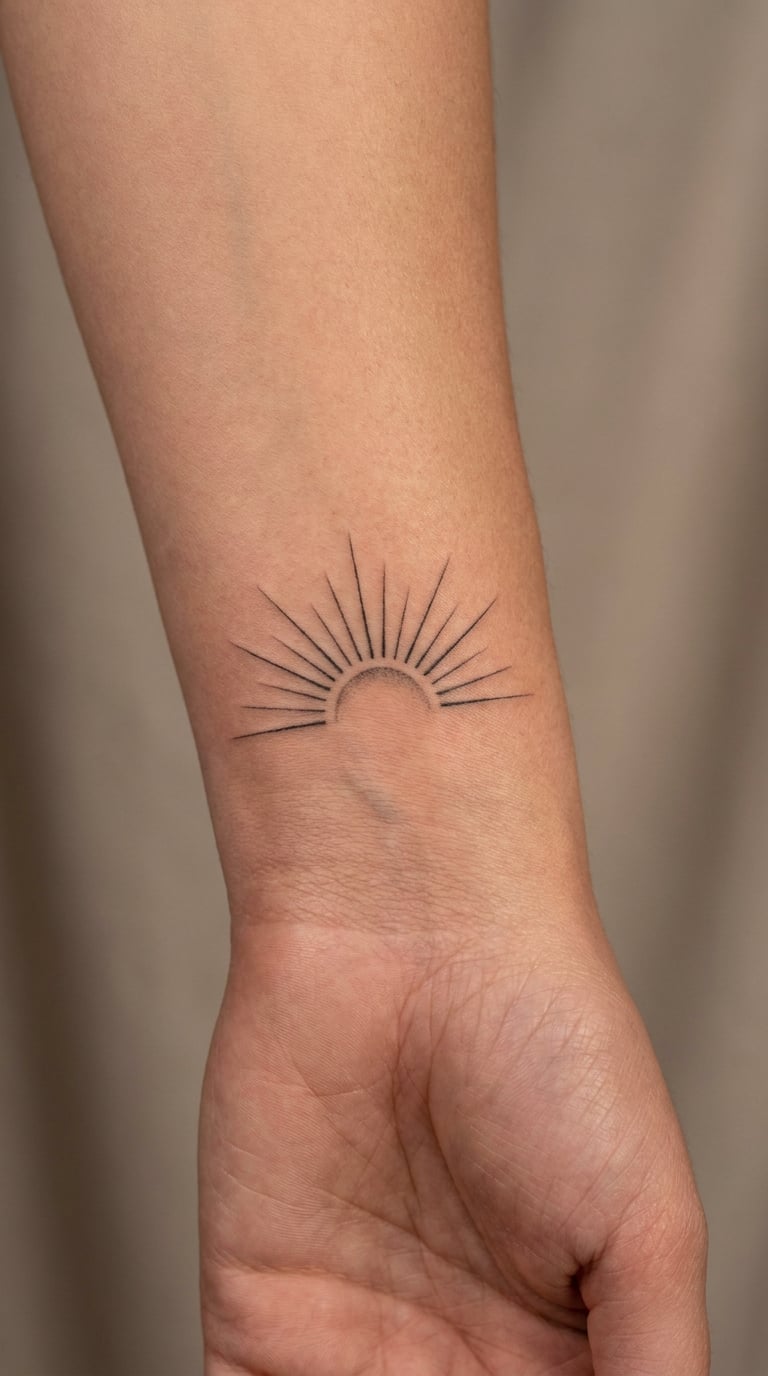
A half circle sitting on a straight horizon line, with three to five thin rays fanning upward and no gradient work. The whole thing can be drawn in a single sitting with one needle, which is exactly why it works for a first small piece.
Day one, again, in the plainest visual language there is. Plenty of wearers say they picked it for the new-morning reading rather than any fixed tradition.
Placement: inner wrist or the flat of the forearm just above it. Size: 1.5-2.5 in (4-6 cm). Style: fine line, light black and grey shading under the arc. Pain: medium on the inner wrist, which is bony and close to a nerve bundle. Very fine rays are the first thing to blur, so keep them short and few.
Make it yours: add one short ray longer than the others instead of adding more of them.
3. Roman Numeral Sobriety Date
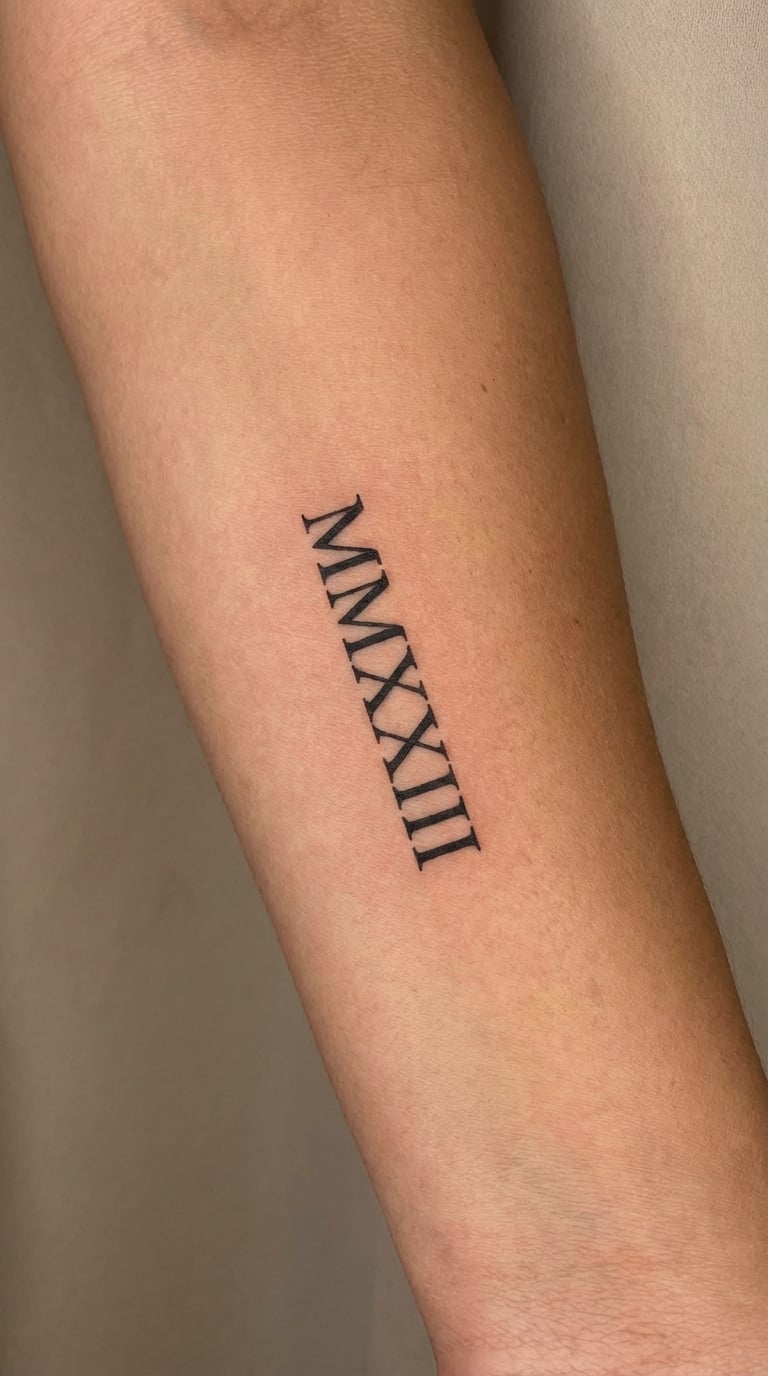
A date set in Roman numerals, no month name, no brackets, no decorative banner. The classic choice when someone wants a sober date to look like a fact rather than a message.
It reads as a keepsake to almost anyone who passes it, which is useful if you do not want to explain yourself at work or at home.
Placement: inner forearm, above the wrist, or across the top of the foot. Size: 2-4 in (5-10 cm) depending on whether the year runs long or short. Style: fine line lettering with an even stroke. Pain: low to medium. Long years written as numerals are more fragile than short ones, so the lettering should be no thinner than 1 mm.
Make it yours: write the date in the month-name form your family uses, then let the artist convert it. It keeps the personal part and loses the ink weight.
4. Minimal Tree of Life
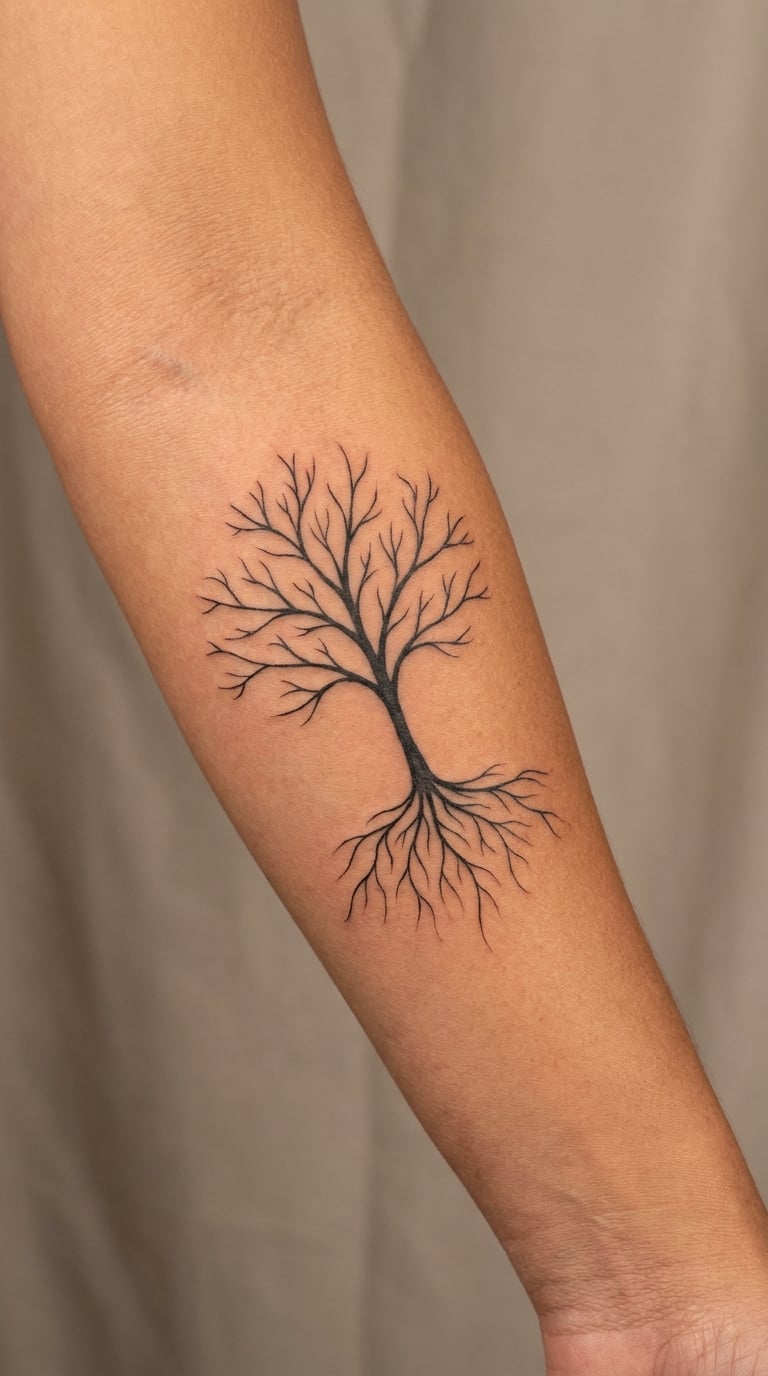
A single trunk splitting into a rounded canopy, with a few roots mirroring the branches underneath. Trunk, canopy and roots, nothing else, no fruit and no birds.
Growth that takes years rather than days, which suits a recovery measured in anniversaries instead of morning checklists.
Placement: outer forearm, calf, or along the outer rib. Size: 3-5 in (8-13 cm) tall. Style: fine line or light blackwork with solid black in the trunk. Pain: low on the outer forearm and calf, medium if you push it onto the rib. The thinnest twig lines are the ones that disappear first, so fewer branches is the better bet.
Make it yours: add a date along one root, hidden inside the branch structure rather than printed underneath.
5. Single Wave with a Calm Horizon
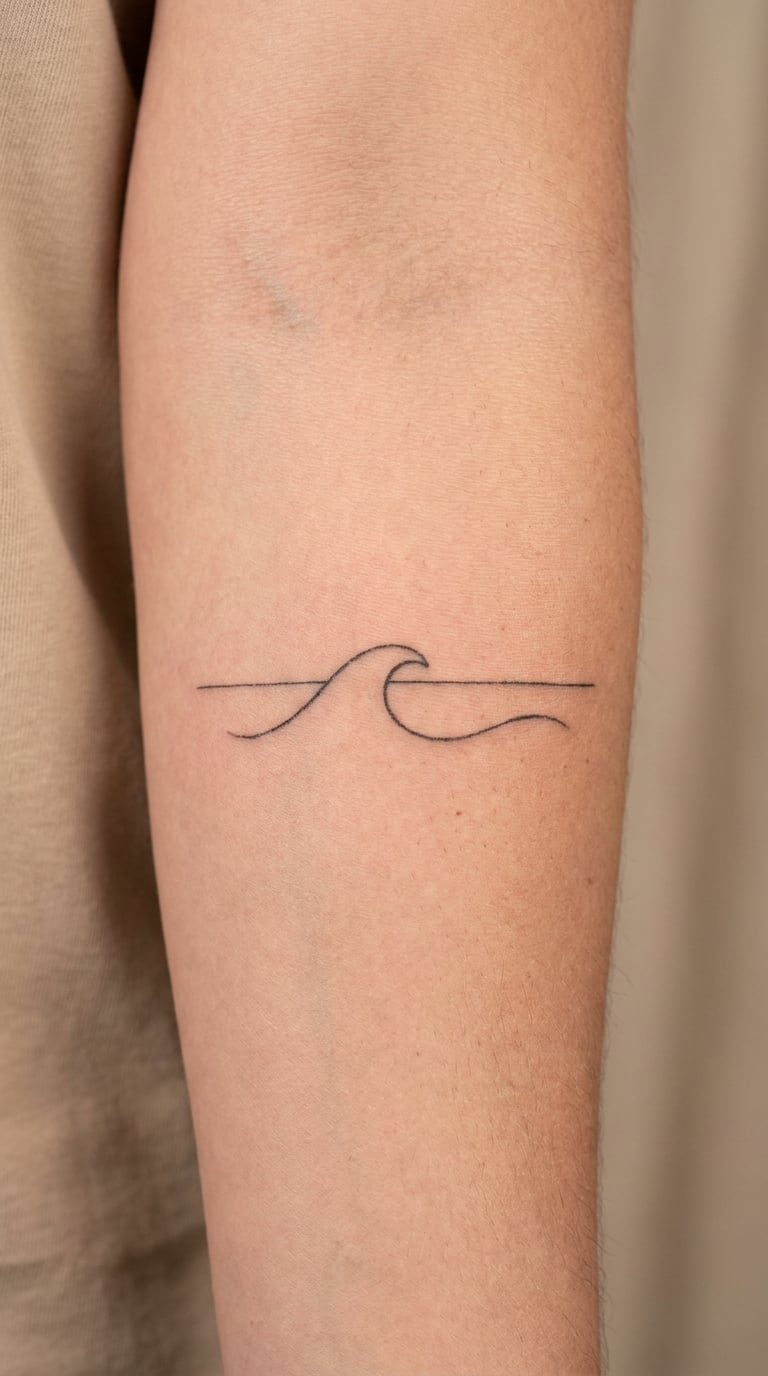
One breaking wave drawn in a single contour with a few parallel lines for water, and a straight horizon line sitting above it with clear space between the two. The gap is doing most of the work.
It is the steady version of the sunrise idea. Things keep moving, and the shape of the water does not change with the weather.
Placement: lower forearm, calf, or across the shoulder blade. Size: 2.5-4 in (6-10 cm) wide. Style: fine line, no colour. Pain: low on the lower forearm and calf. Foam detail made of separate short strokes will smear into grey over time, so ask for a simplified crest.
Make it yours: run the horizon line into a date at one end so the two elements read as one mark.
6. Tiny Lotus in Blackwork
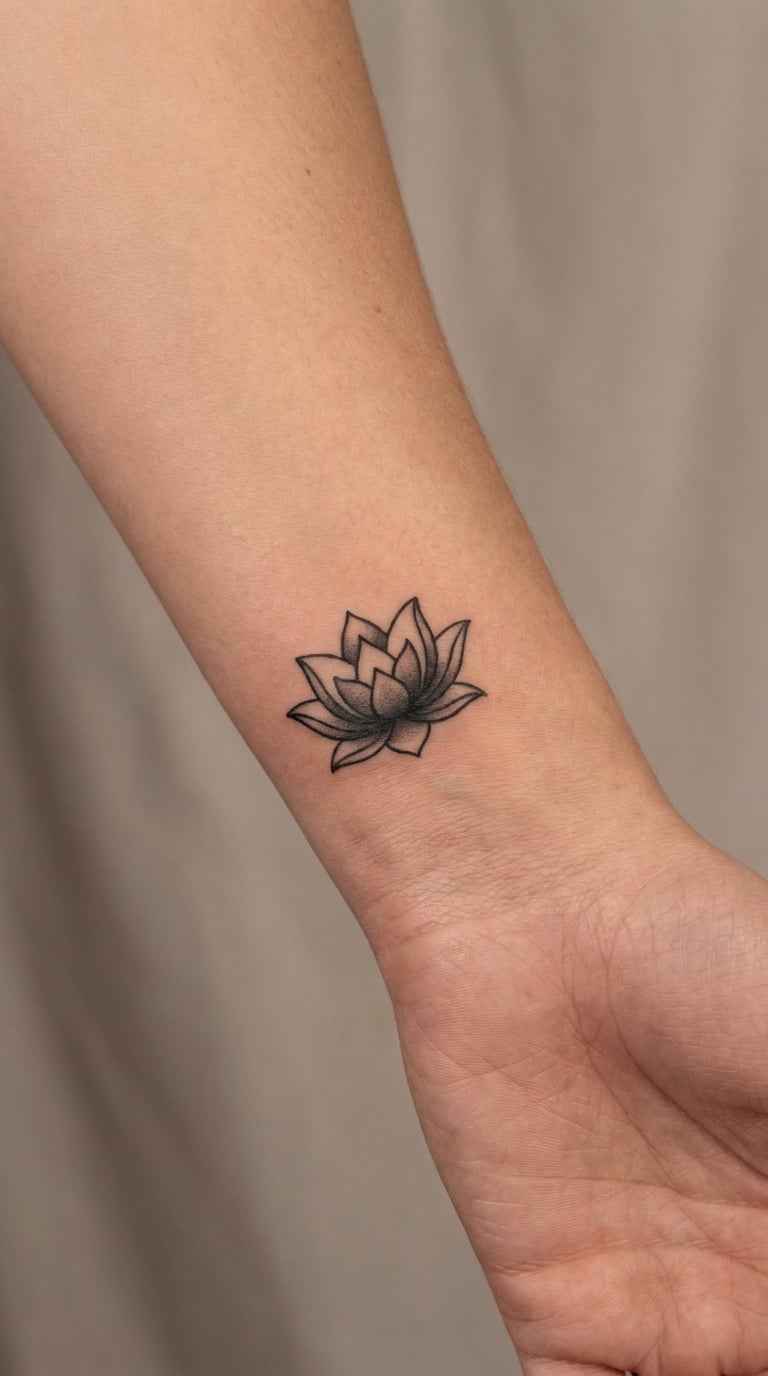
A lotus drawn with solid black petal shapes and one white gap in the centre where the flower opens, no stem, no water, no shading gradients. The contrast between the black petals and the empty centre is what makes a small version readable.
Blooming out of mud into something clean is the usual reading, and it is a long-standing one rather than a slogan invented for tattoos.
Placement: wrist, inner ankle, behind the ear, or the top of the foot. Size: 1.5-2.5 in (4-6 cm). Style: blackwork with solid fill. Pain: medium on the wrist and ankle bones, lower on the top of the foot. Black fill holds up far better than hairline petals, which is the argument for keeping it solid at this size.
Make it yours: colour just the centre petal. A single spot of colour in an otherwise black piece draws the eye and adds a layer that is yours alone.
7. Sober Date in Fine-Line Script
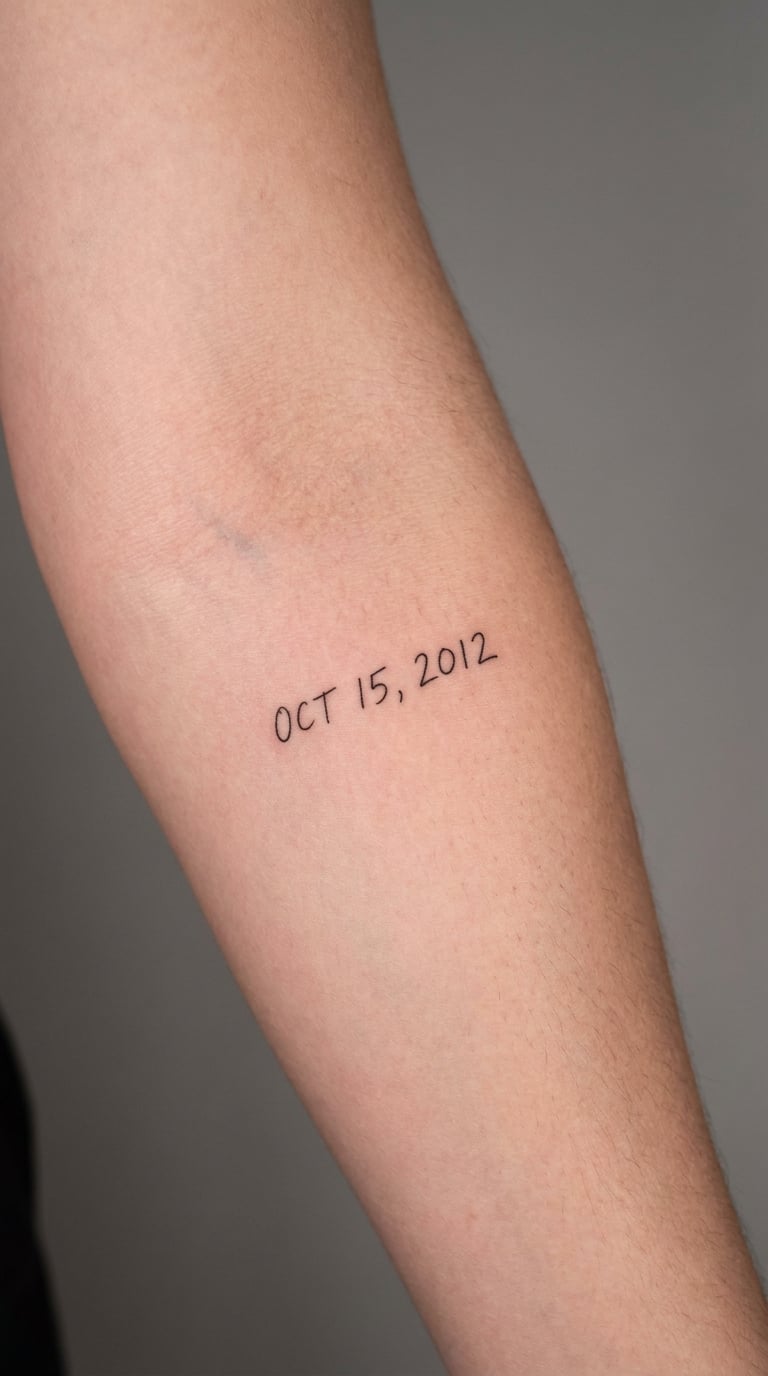
The date written in a small connected hand rather than in numerals, usually month and year with no day. The trick is spacing: the letters need air between them or the script turns into a black smudge as it settles.
Some people find a numeral date too clinical, and a handwritten date feels like something from their own notebook.
Placement: inner forearm, rib, or the inside of the upper arm. Size: 2-3 in (5-8 cm) long. Style: fine line script with a consistent 1 mm stroke. Pain: low to medium, and the inner forearm is one of the easier places to hold still. Script fades fastest on the rib because skin there stretches, so inner forearm is the safer spot for longevity.
Make it yours: write the date out longhand first and bring the paper. The artist’s hand does not have to match yours, but the spacing you are used to reading should survive.
8. Minimal Mountain Range
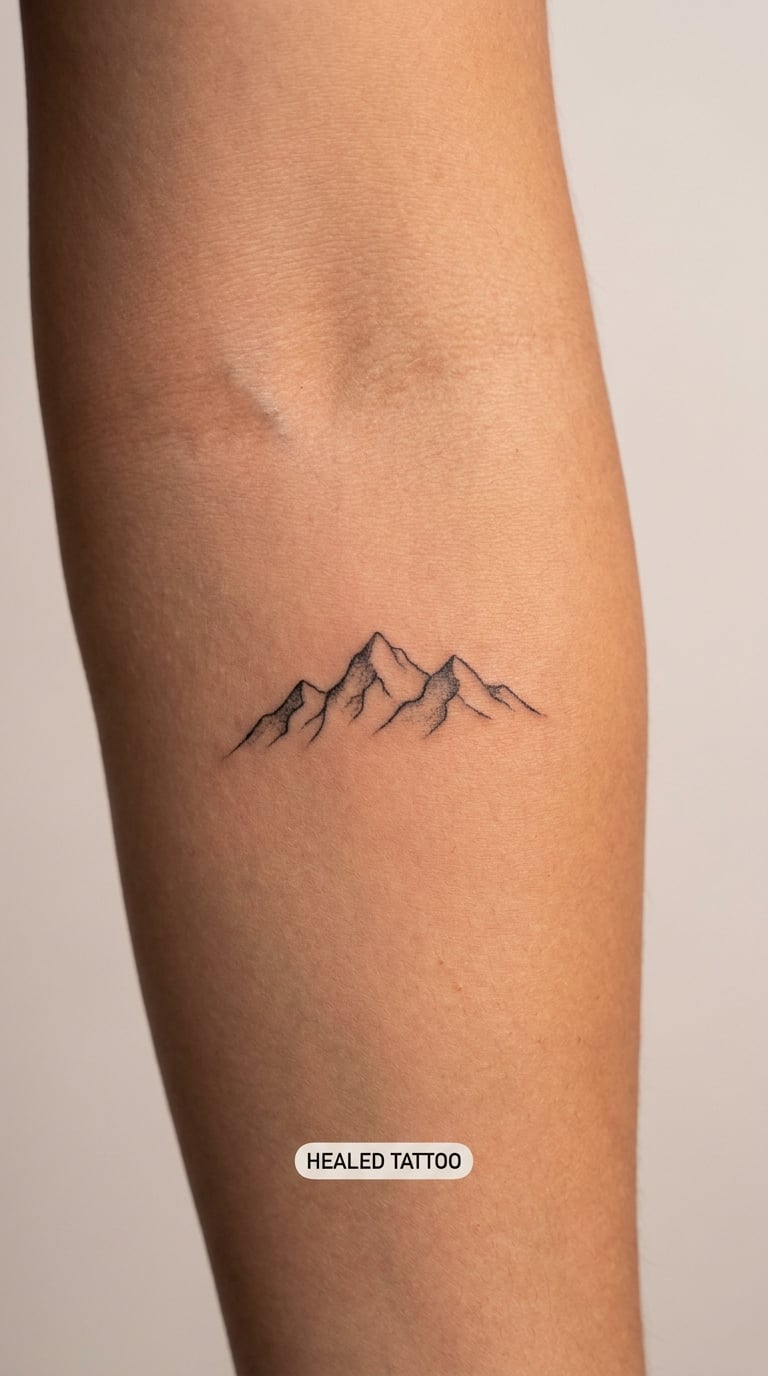
Three triangular peaks in solid black, overlapping slightly, with a single straight line under them for ground. No snow caps, no pine trees, no sun. A silhouette holds together far better than a drawn scene and reads at any size.
It tends to be chosen for the view-from-the-top idea and for the difficulty of getting there, which is the part most people recognise straight away.
Placement: outer forearm, chest, or along the collarbone. Size: 2-3.5 in (5-9 cm) wide. Style: fine line with solid black fill, or pure silhouette. Pain: low on the forearm, medium across the chest and collarbone because the bone sits right under the skin there. A black silhouette needs almost no healing time and very little touch-up.
Make it yours: make the central peak taller than the other two. It becomes a mountain range with one clear summit instead of a repeating pattern.
9. Phoenix in Black-and-Grey Fine Line
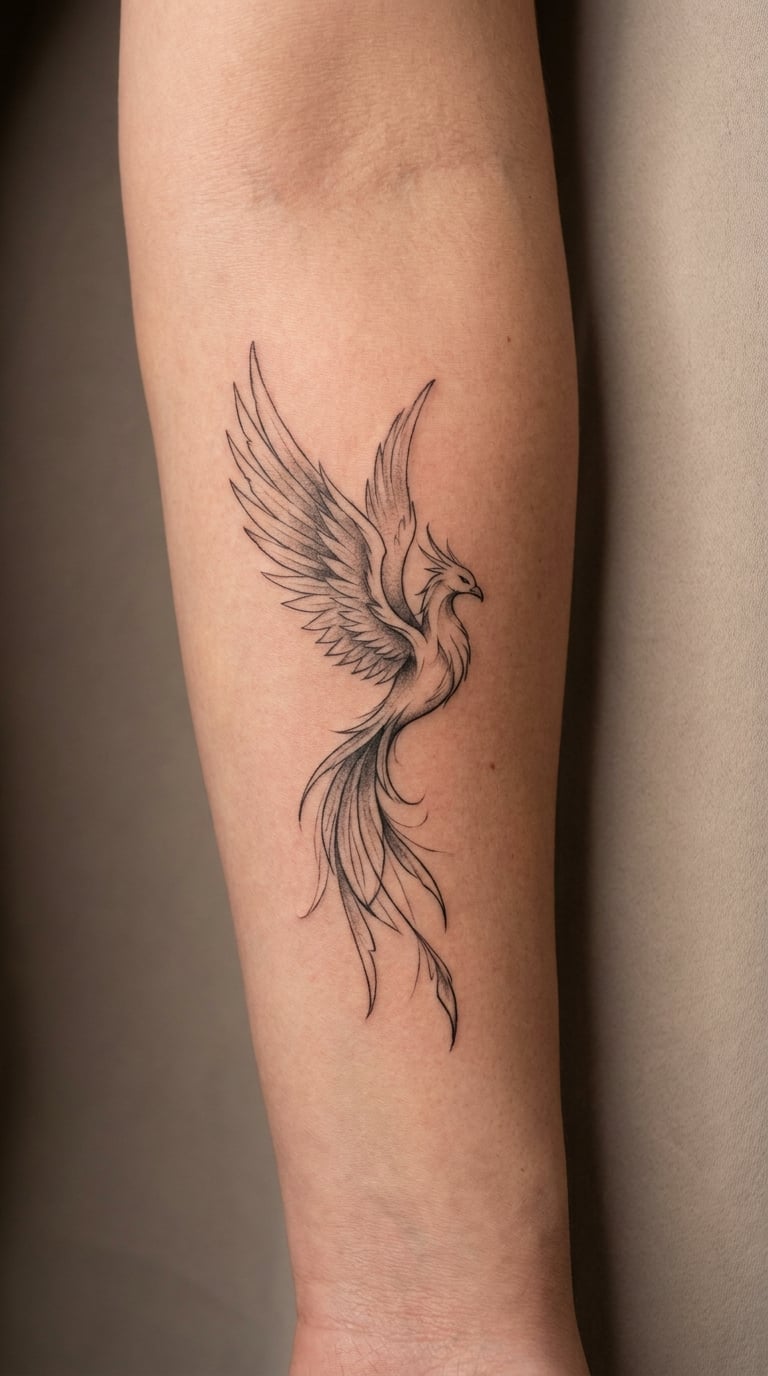
A phoenix built from an outline rather than a filled illustration, with the body in clean line, one wing raised, and light grey wash only in the tail feathers. The tail can be five or six tapered strokes instead of fifty individual feathers, which is what keeps it small enough for a single session.
Rising from ashes is the oldest idea attached to this bird, and it is the reason it keeps appearing in recovery galleries.
Placement: upper arm, outer forearm, or the back of the shoulder. Size: 3-5 in (8-13 cm) tall. Style: black and grey fine line with restrained wash. Pain: medium on the upper arm. Feather detail is where a compact phoenix stops holding up, so keep the line count low and let the silhouette carry it.
Make it yours: have the tail trail into a date in a small serif font rather than ending in points.
10. Dotwork Sun with a Milestone
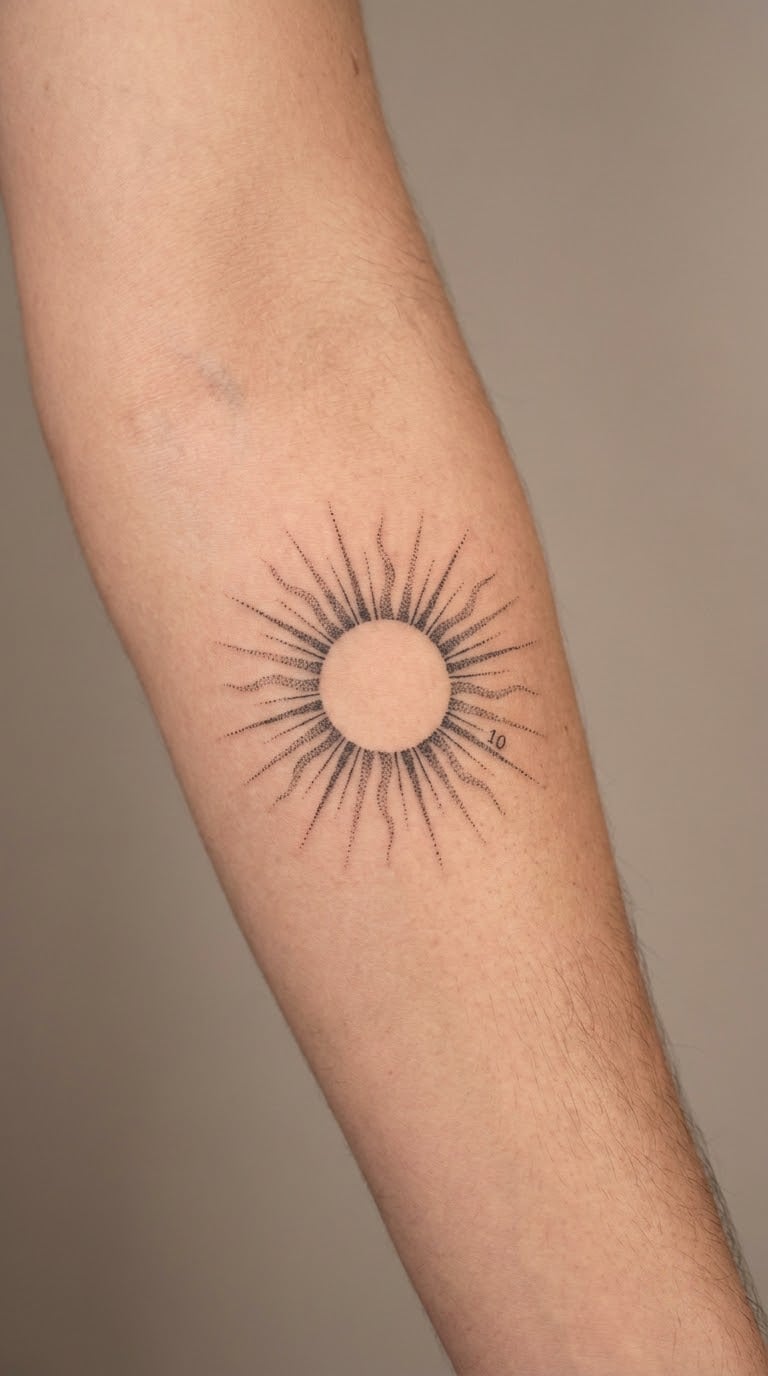
A circle built from radiating dots that get smaller towards the rim, with a plain ring around the outside and your milestone in the empty middle. Dotwork gives an even tone that photographs well and needs no gradient shading.
It is a way to celebrate a number of days or years without turning the number into the whole design.
Placement: inner arm, upper arm, or the calf. Size: 2-3 in (5-8 cm) across. Style: dotwork, black only. Pain: medium, and dotwork takes longer on the skin than the final picture suggests. Dots at the centre of the sun should be no larger than about 1.5 mm or they close up during healing.
Make it yours: put the milestone in the centre ring in a plain sans font so the number stays crisp against all that texture.
11. Minimal Path Through Tall Grass
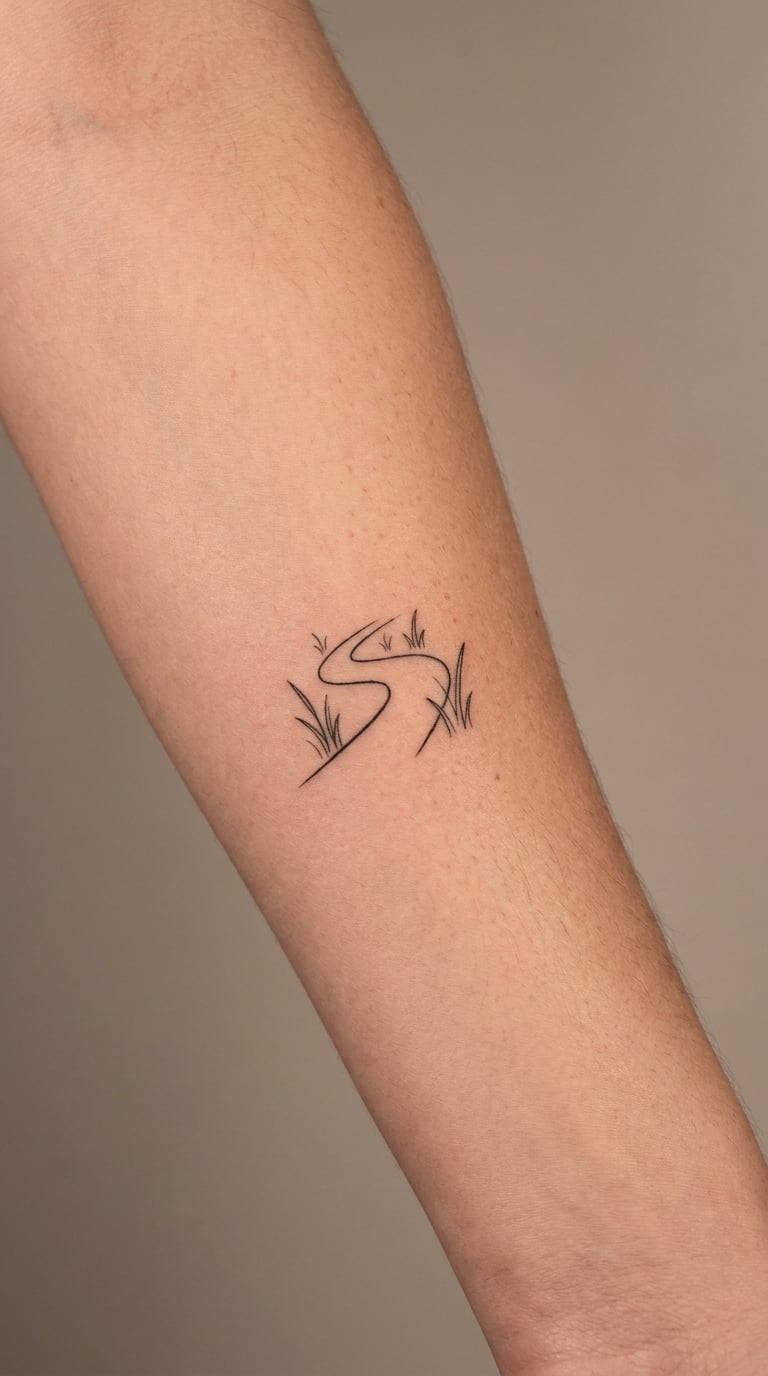
A narrow path drawn in one line that narrows as it goes, with five or six simple grass blades leaning inward on either side and the far end left open. The suggestion of somewhere to go is the whole design, so the detail stops early.
Progress with a direction attached, which is the version of the idea that feels active rather than reflective.
Placement: forearm, calf, or the outer upper arm. Size: 2-3 in (5-8 cm) tall. Style: fine line illustration, no shading. Pain: low on the forearm and calf. Blades of grass are hairlines; ask for a minimum 1.5 mm stroke or the tips disappear within a few years.
Make it yours: put a milestone number at the far end of the path where it narrows, small enough to need a second look.
12. One-Word Sobriety in Clean Lettering
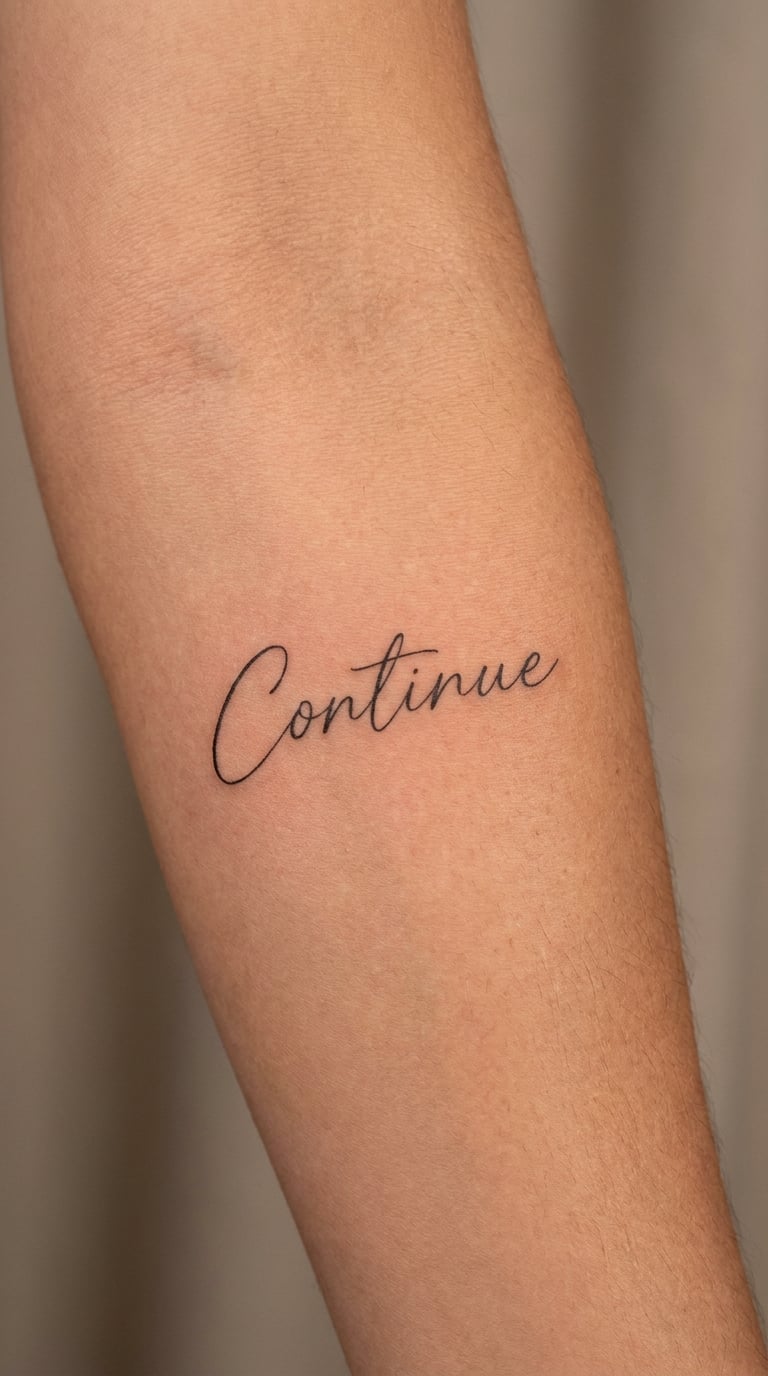
A single word in clean sans-serif capitals, letterspaced so each one stands on its own, with no banner and no flourishes. Words that show up often include Present, Breathe, Continue, Today and One Day.
The right word is the one you would actually say out loud on a bad afternoon. That is a personal test, and it rules out a lot of tattoos that look good on a screen.
Placement: inside forearm, collarbone, or across the knuckles. Size: 1.5-3 in (4-8 cm) long. Style: clean lettering, single weight, no outline. Pain: low on the forearm, medium on the knuckles because the skin moves constantly there. Lettering fades faster than imagery since there is no silhouette to hold the shape.
Make it yours: pick a word in your own language, not English. It is the one version of a quote tattoo that nobody else will recognise as a slogan.
13. Minimal Anchor with a Wave
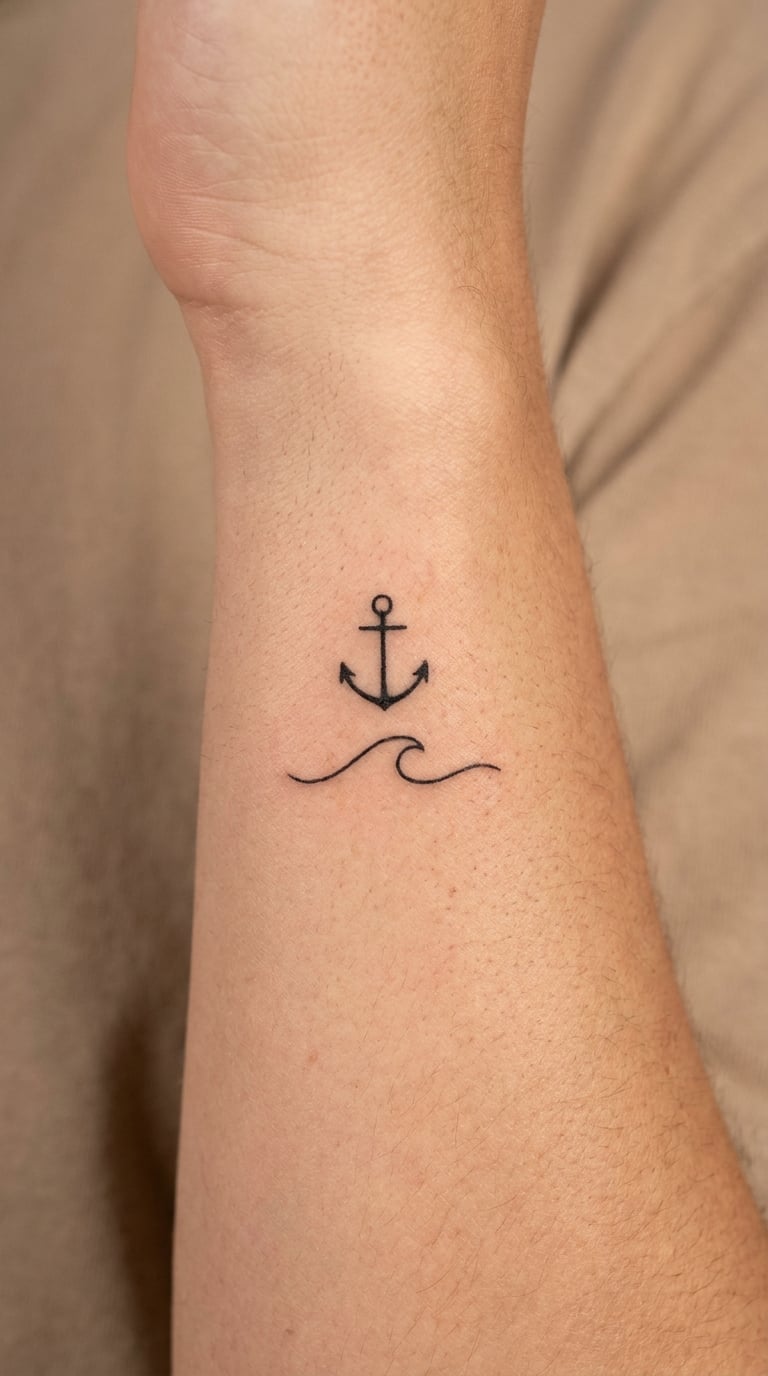
An anchor drawn in outline with a plain stock, a short shank and two curved flukes, with a single wave line passing underneath. No rope, no chain, no banner lettering.
Stability and a routine you keep returning to, which is the practical side of recovery rather than the triumphant side.
Placement: inner forearm, ankle, or the upper arm. Size: 2.5-3.5 in (6-9 cm) tall. Style: fine line, optional light stippling on the stock. Pain: medium on the inner forearm, low on the upper arm. Fine detail in the flukes is the weak point at small sizes, so ask for simplified curves rather than exact nautical shapes.
Make it yours: swap the wave for your sober date in Roman numerals running along the base.
14. Watercolor Grapes with Minimal Stems
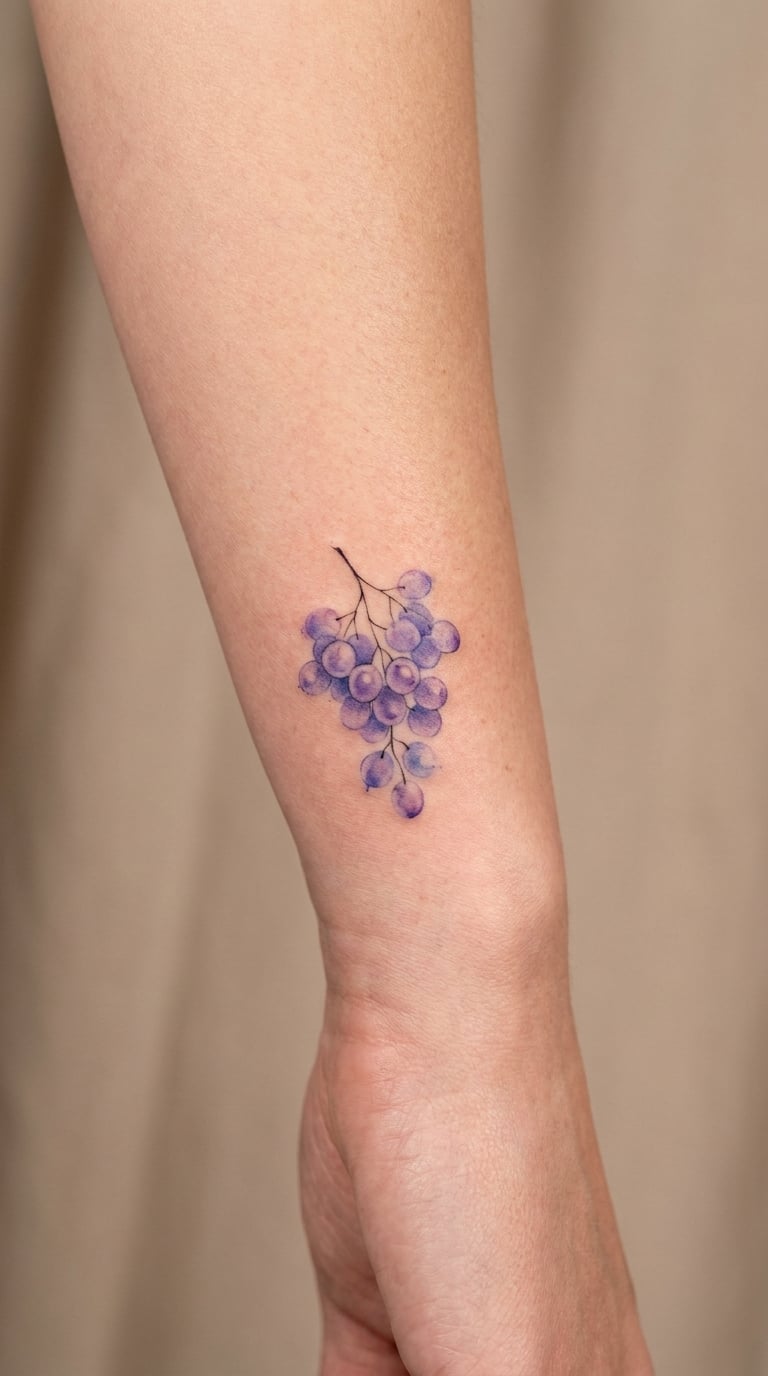
A small cluster of five to seven grapes in soft purple and blue wash, with thin black stems and one loose leaf. Loose watercolour bleeds outside the line work, so the outline should be a suggestion rather than a hard border.
Grapes have a long history in temperance symbolism, and the botanical version sits somewhere between a nature tattoo and a marker piece.
Placement: wrist, behind the ear, or the top of the foot. Size: 2-3 in (5-8 cm) long. Style: watercolor with fine line stems. Pain: medium on the wrist, low on the upper arm. Pale washes are the first thing to fade, so expect to need a colour refresh every few years on lighter skin.
Make it yours: add a single tendril that curls into the shape of a number you care about. The botanical part stays honest and the number hides in it.
15. Blackwork Open Doorway
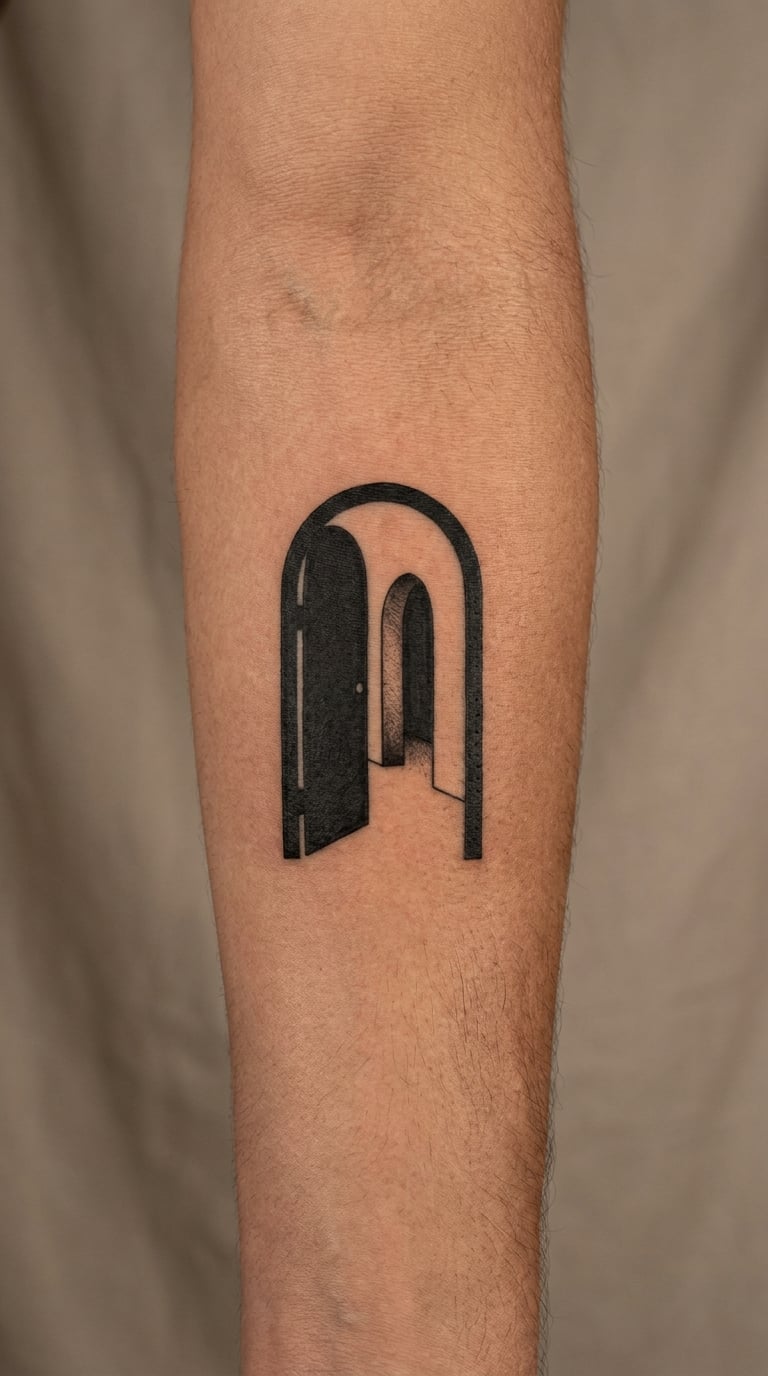
A solid black rectangle with a tall narrow opening cut out of the middle, and the interior of the doorway left as skin. That negative space is the design. No handle, no doorstep, no light spilling out.
Walking into a different phase, expressed as architecture rather than as a picture of anything. The bold version photographs well and heals predictably.
Placement: forearm, upper arm, or the side of the rib. Size: 2.5-4 in (6-10 cm) tall. Style: blackwork, solid fill. Pain: low on the forearm, medium on the rib. Large areas of solid black take a while to settle and may grey out for a couple of weeks, which is normal and not a failure.
Make it yours: have the opening drawn slightly off-centre and a touch narrower than you expect. It stops the design reading as a symbol rather than a door.
16. Minimal Mountain and Moon Combination
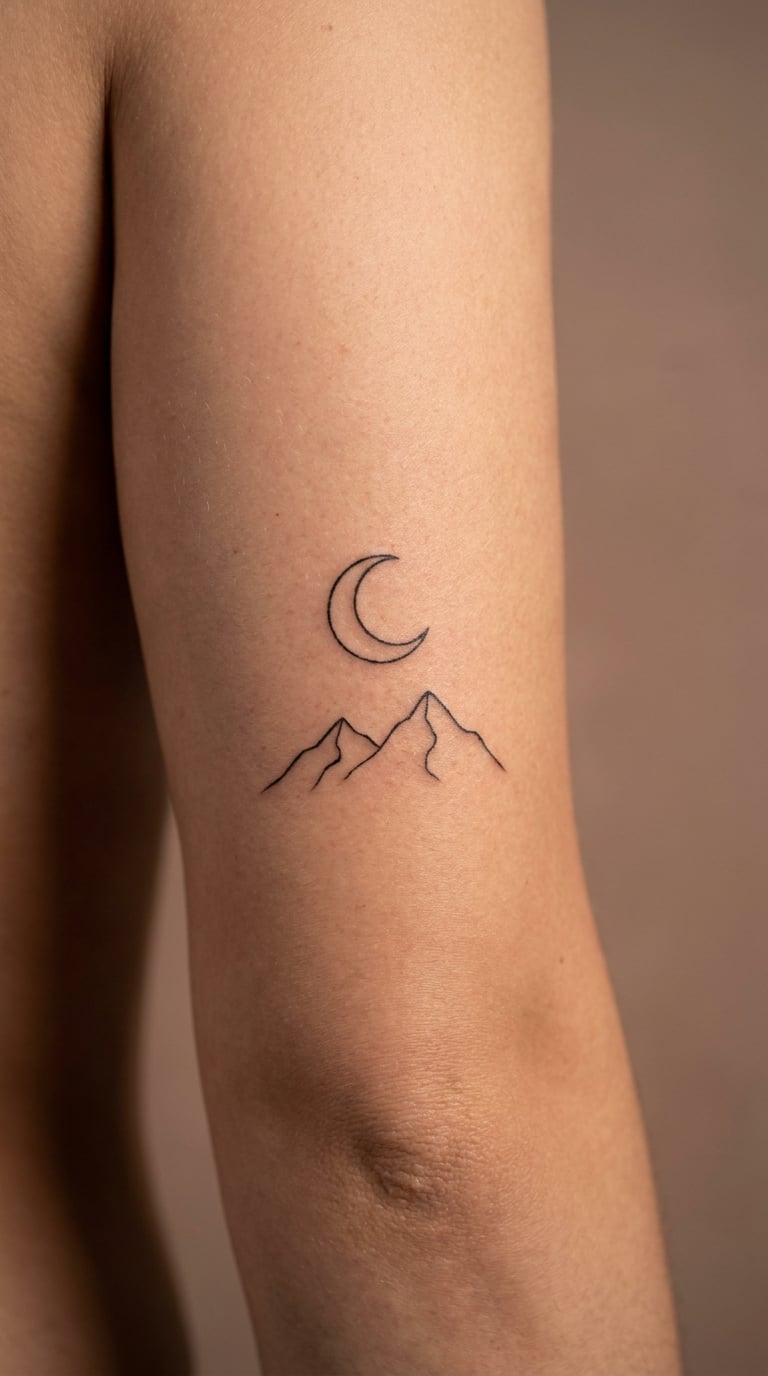
Two overlapping peaks in solid black with a thin crescent moon sitting above and slightly to one side, plus a handful of dots for stars. Balanced weight, nothing on the left that is missing on the right.
It tends to be picked for patience and for taking the long view, and the night sky does the quiet half of the work.
Placement: upper arm, outer forearm, or behind the ear at a larger size. Size: 2.5-3.5 in (6-9 cm). Style: fine line and solid black fill. Pain: low on the upper arm and outer forearm. Behind the ear hurts more and has a shorter healing window because the skin there is thin and mobile.
Make it yours: have the crescent hollow, with the solid shape the moon, so the sky stays light against the black peaks.
17. Tiny Recovery-Milestone Number
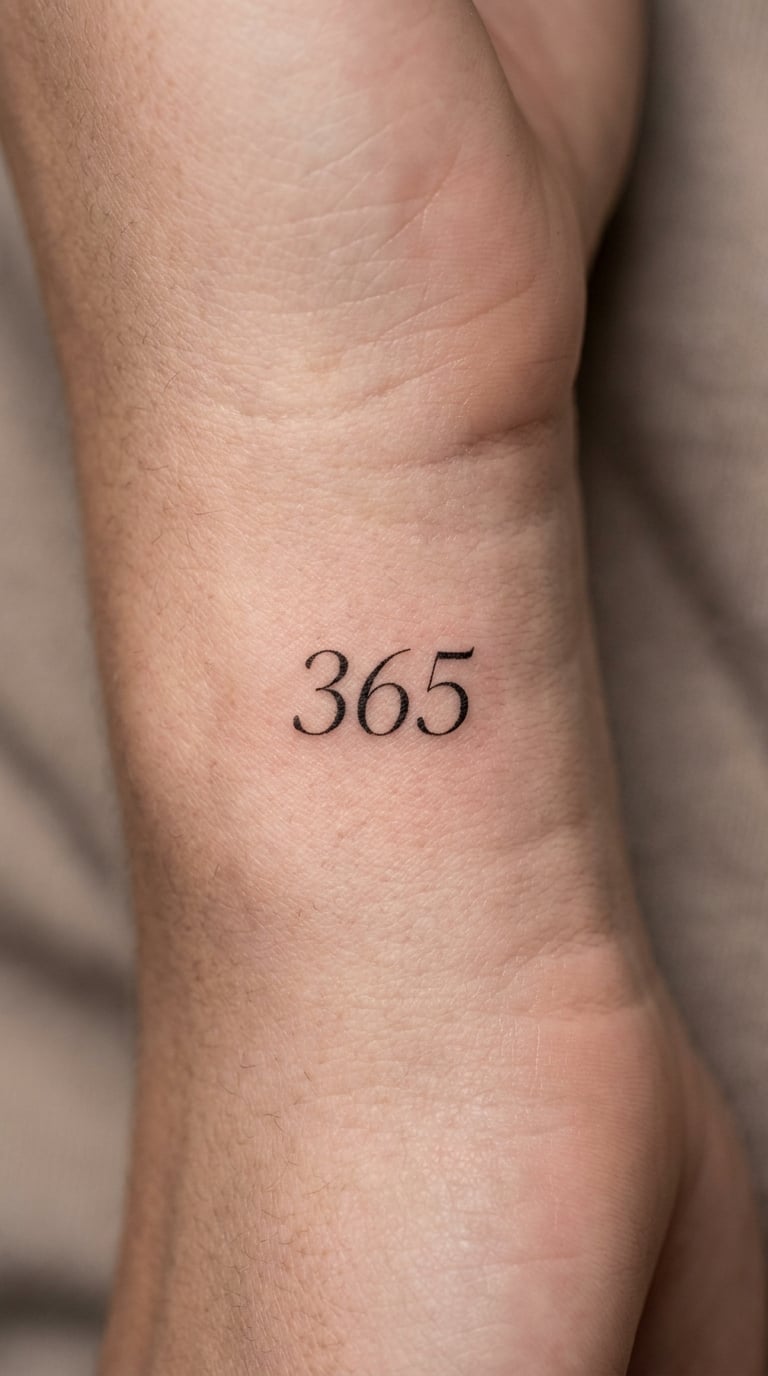
Just a number, in a serif or a clean geometric font, with a small amount of space around it and no underline, no frame, no symbol. The most discreet design in this whole list, and the one that gets read correctly most often.
It records a fact instead of making an argument. A milestone number holds its meaning whether it is a day count, a year, or a figure from your own story.
Placement: inner wrist, the soft spot below the thumb, or the inside of the ankle. Size: 0.5-1 in (1.5-3 cm). Style: fine line lettering, single weight. Pain: medium at this size, because the needle has to be moved slowly over a small area with no room to build a rhythm. Keep the font simple; thin serifs at 1.5 cm tall will not survive.
Make it yours: use the figure you would say out loud, not the number you think sounds more impressive.
18. Minimal Butterfly with Open Wings
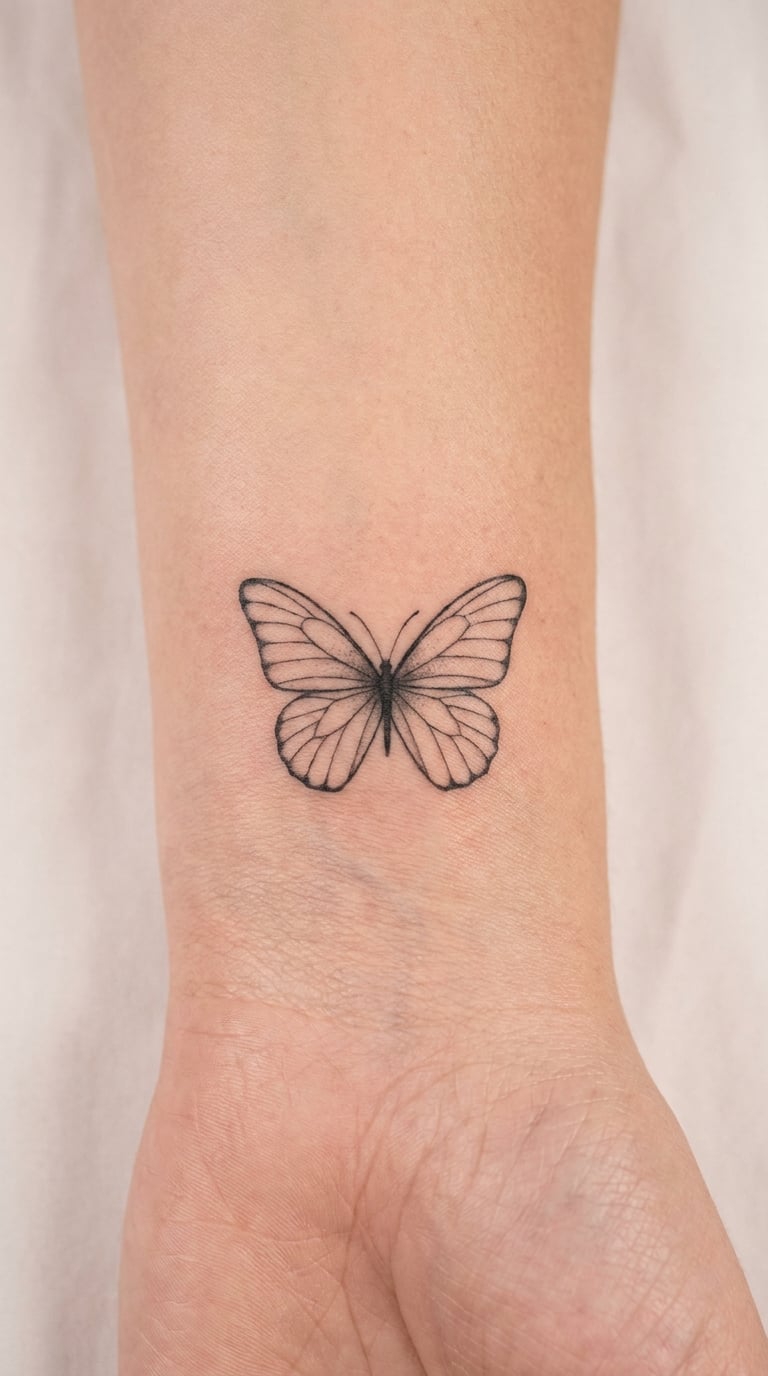
Four wing shapes drawn in outline, symmetrical left to right, with two short antennae and a plain body. No spots, no colour, no ornate patterning across the wings.
Transformation is the reading, and it has been for a long time in almost every culture that uses it. People still choose it because the shape is genuinely beautiful at small scale.
Placement: wrist, ankle, or the back of the hand. Size: 1.5-2.5 in (4-6 cm) wide. Style: fine line, symmetrical. Pain: medium on the wrist, low on the calf. Butterfly symmetry has to be right or it looks like a moth with a bad wing, so ask to see the stencil placement before starting.
Make it yours: have the two antennae curve into a small date. It is the one place most people never expect to find numbers.
19. Single Branch with New Leaves
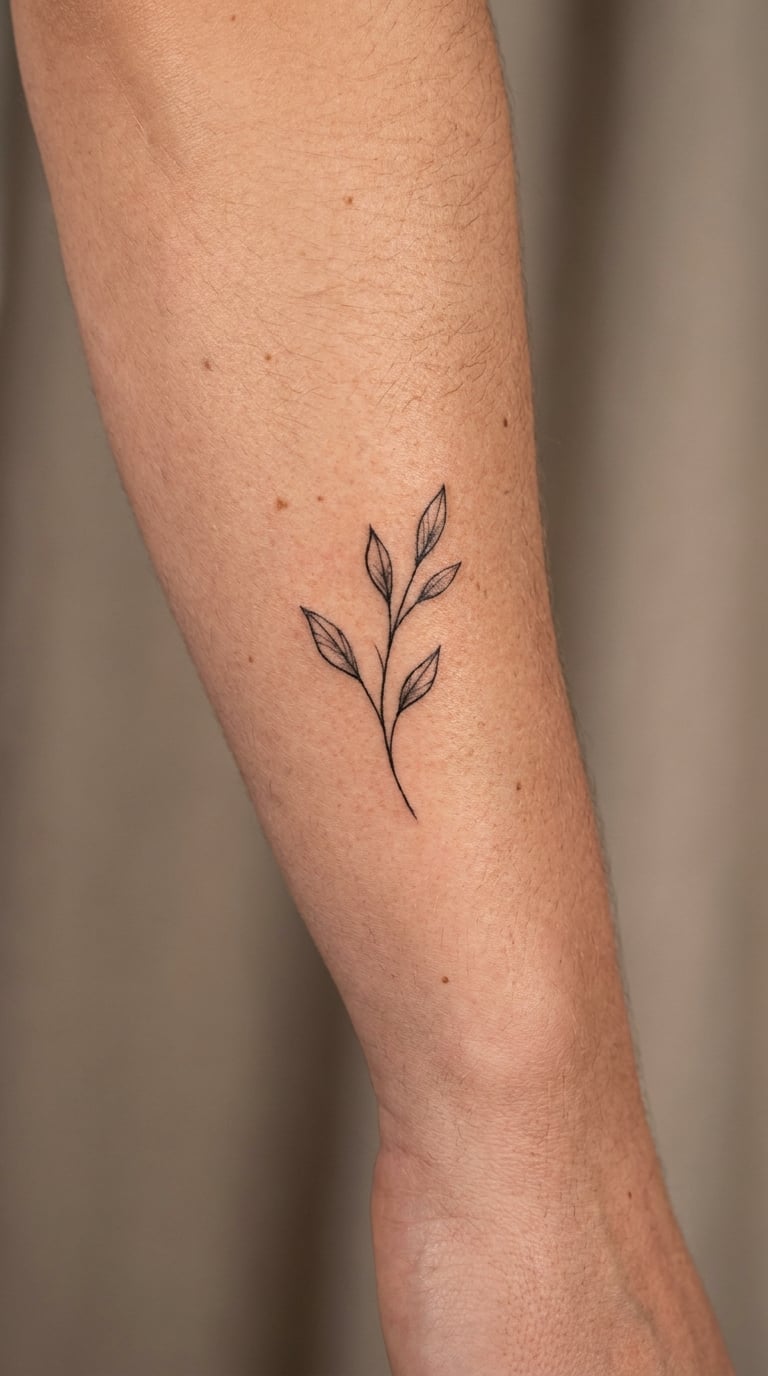
One curved stem with three or four leaves, two of them smaller than the others, and nothing behind it. A single branch is quieter and cheaper to tattoo than a full botanical piece, and it leaves room on the arm for the next one.
Change that is still in progress, which is a different mood from the finished bloom in idea six.
Placement: inner forearm, along the rib, or the ankle. Size: 2-3.5 in (5-9 cm) long. Style: fine line botanical with a solid black stem. Pain: low on the forearm, medium on the rib. Leaf veins drawn as hairlines are the part that greys out, so keep veins to one or two per leaf.
Make it yours: plan the branch as a progressive piece and add one leaf each sober year at the growing end.
20. Minimal Flame in Fine Line
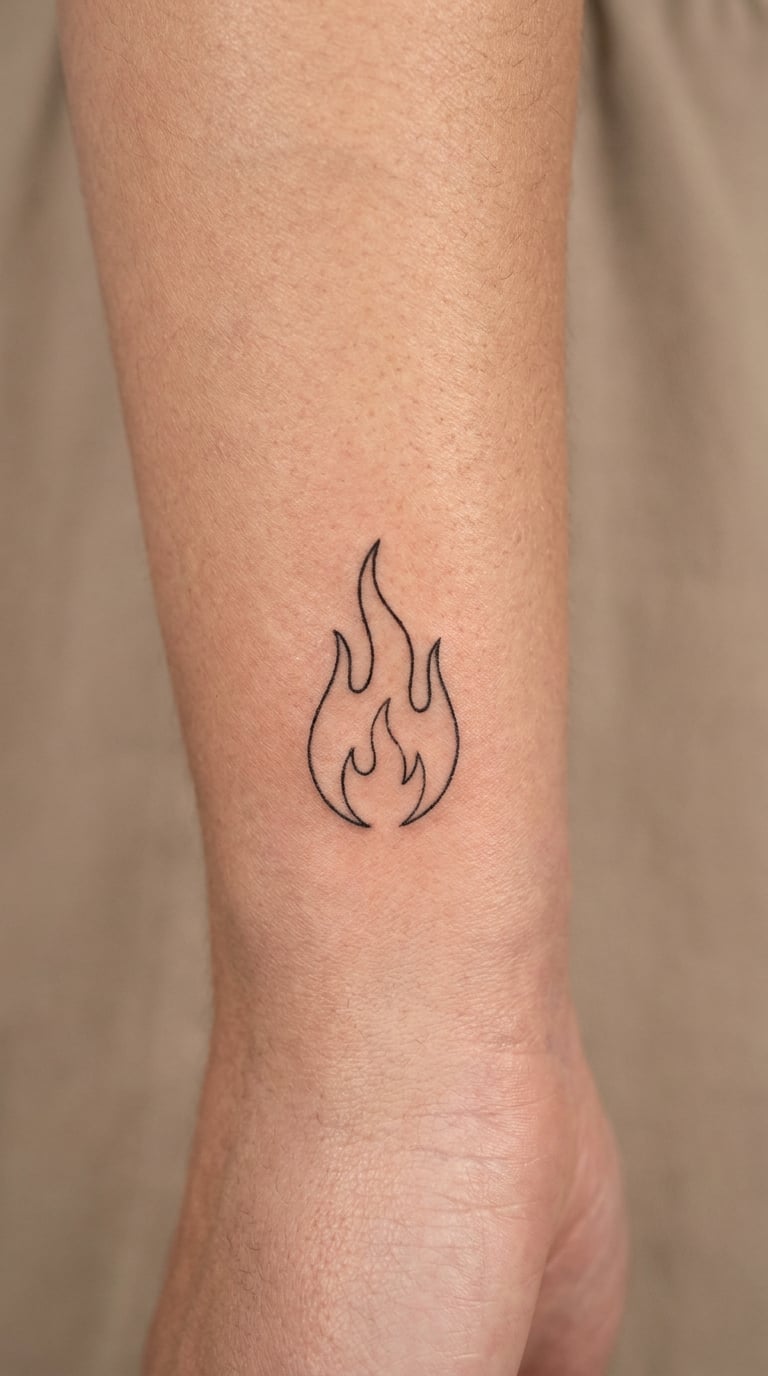
A single flame drawn in one continuous contour with a pointed tip, a curved base and one inner curl to show movement. A flame drawn as an outline rather than filled keeps it small and keeps it from reading as a traditional flash design.
It gets chosen for resilience and for burning off something, and people like that it carries heat in the symbolism without any words attached.
Placement: wrist, inner arm, or the back of the hand. Size: 1.5-2.5 in (4-6 cm). Style: fine line, minimal interior detail. Pain: medium on the wrist and back of the hand. The pointed tip is the first part to lose definition, so ask for the tip to be slightly blunter and the line at least 1 mm.
Make it yours: set the flame inside the open circle from idea 25, and you have one design rather than two.
21. Dotwork Compass with a Personal Direction
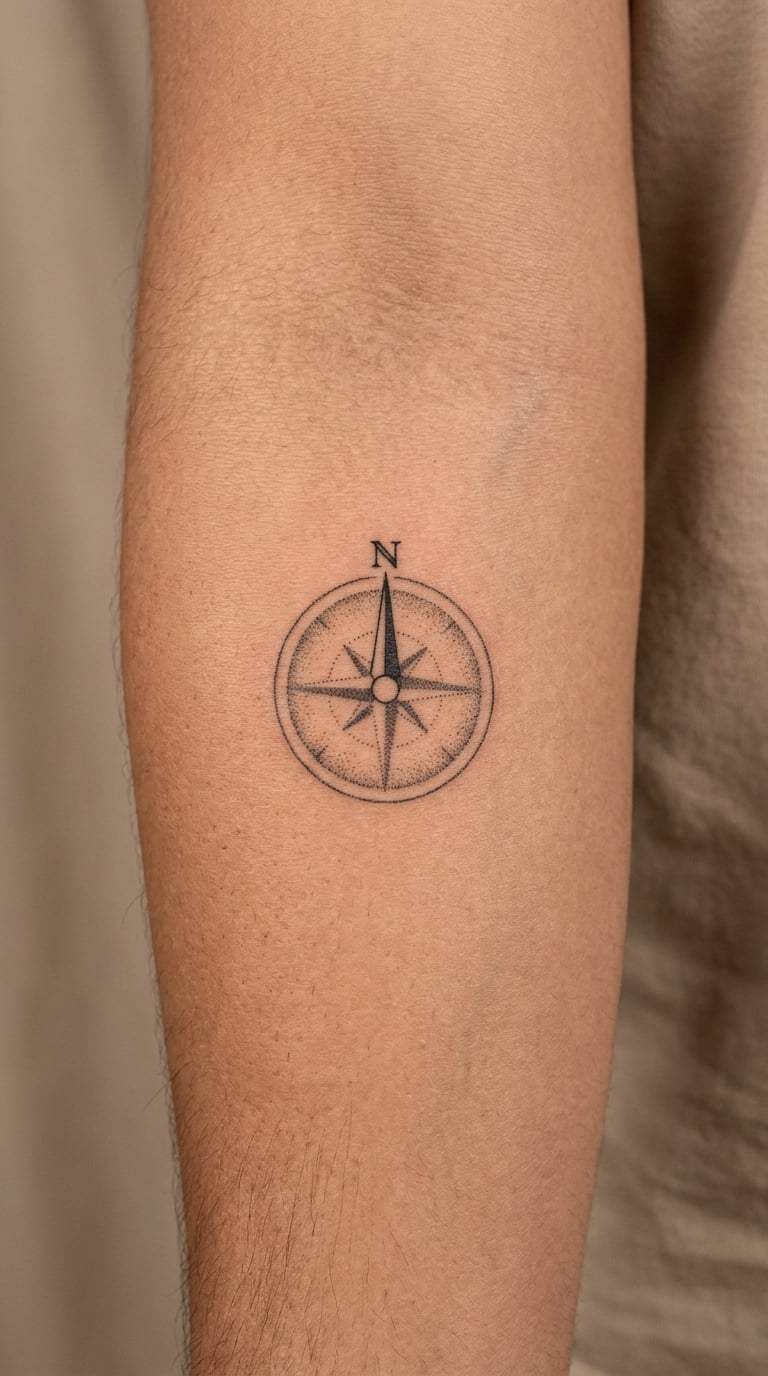
A circle of even dots with a clear border, a four-point star at the centre and a small north marker, plus a set of coordinates or a date tucked under the ring. Even dot density reads as a solid tone at a distance and as texture up close.
Direction and choice, which is the part of recovery people talk about most. The coordinates give it somewhere specific to point to.
Placement: forearm, upper arm, or the calf. Size: 2-2.5 in (5-6 cm) across. Style: dotwork with a solid line border. Pain: medium, and dotwork takes roughly twice the time per square inch of line work. Dots need to be spaced about 1 mm apart or the design closes up into a grey disc as it heals.
Make it yours: use the coordinates of a place that mattered during your recovery. It is a detail almost nobody else can read.
22. Minimal Red Thread on Blackwork
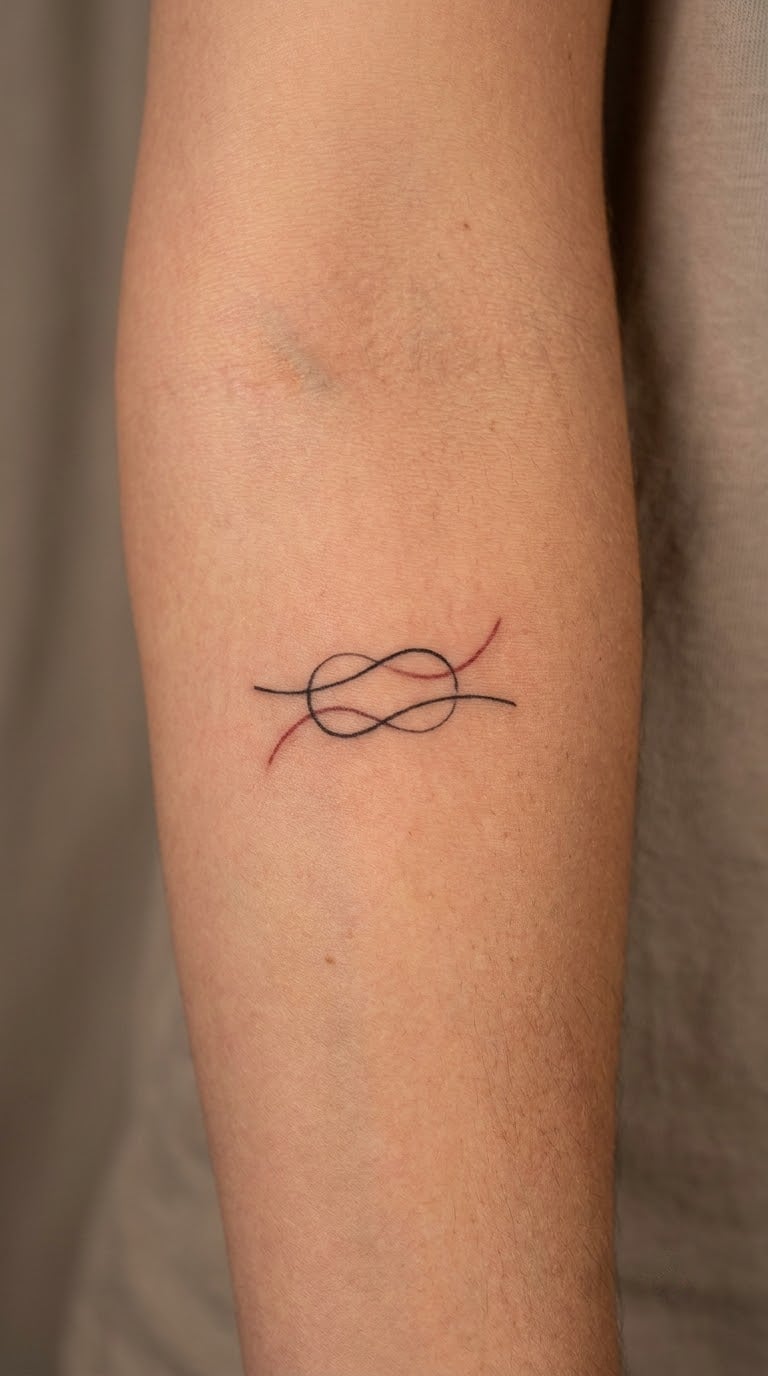
A single black line that loops once and crosses itself, with one short segment of muted red running through the crossing point. One line, one knot, one colour, nothing else in the frame.
It is the design in this list that stays visually quiet while still being noticed, because the red does all the work and it is a small amount of ink.
Placement: inner arm, wrist, or the side of the calf. Size: 2-3 in (5-8 cm) long. Style: blackwork line with a single colour accent. Pain: low on the inner arm and calf. Red holds its own line quality well, which is not true of every bright colour, and it needs less depth in the skin than black.
Make it yours: pick a red that is muted rather than pure. A flat bright red is the first thing that reads as cheap once it ages.
23. Watercolor Cloud with a Clear Line
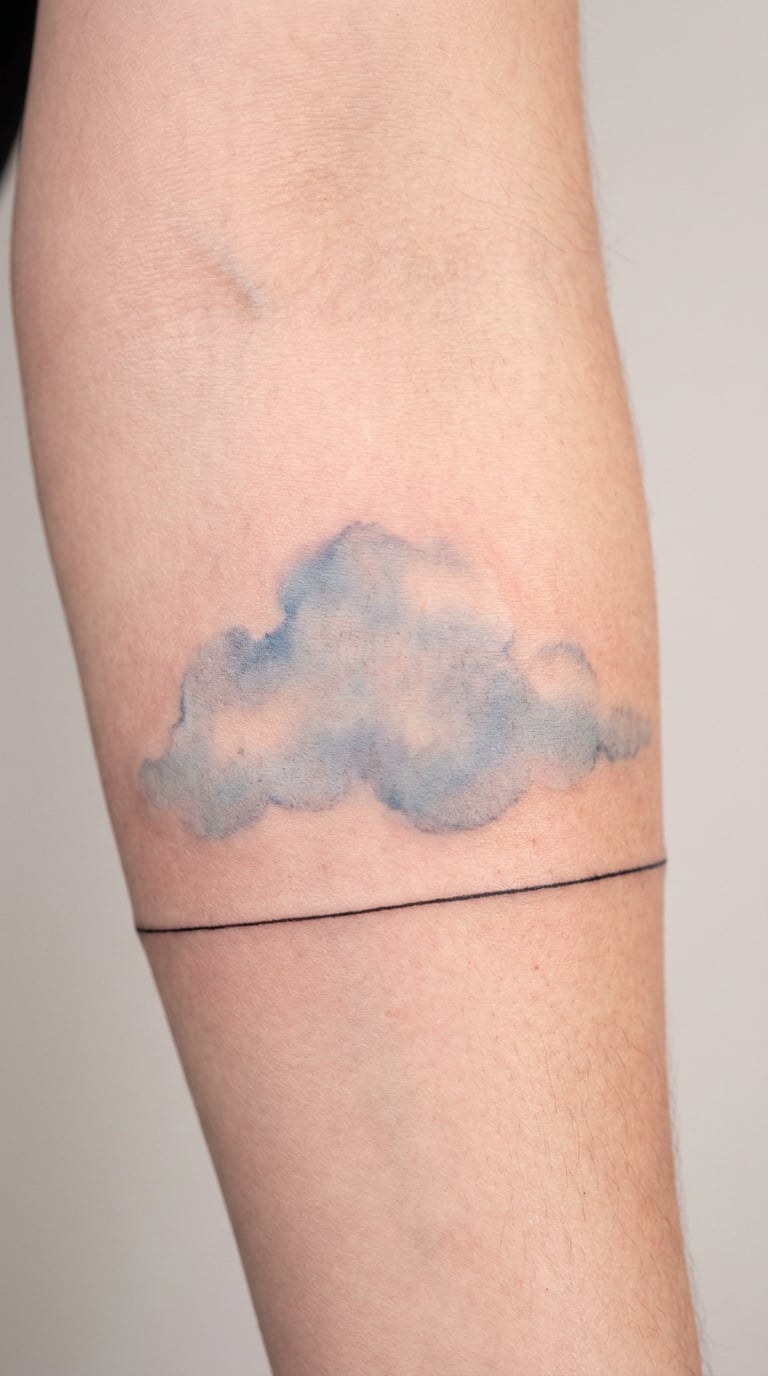
A soft cloud in pale blue and grey wash with a hard black line running underneath it, so the two textures sit next to each other instead of mixing. The contrast is what keeps a loose design from looking unfinished.
Weather passing, difficulty passing, or just a calm reference point. The straight line underneath is what makes it read as a decision rather than a smudge.
Placement: forearm, calf, or under the collarbone. Size: 2-3 in (5-8 cm) wide. Style: watercolor with one fine line element. Pain: low on the forearm and calf, medium under the collarbone. Pale grey wash is the first colour to go, so a light blue base fades more gracefully than a very light skin-tone wash.
Make it yours: have a small date sit on the line, so the horizon doubles as an underline.
24. Minimal Key with a Small Date
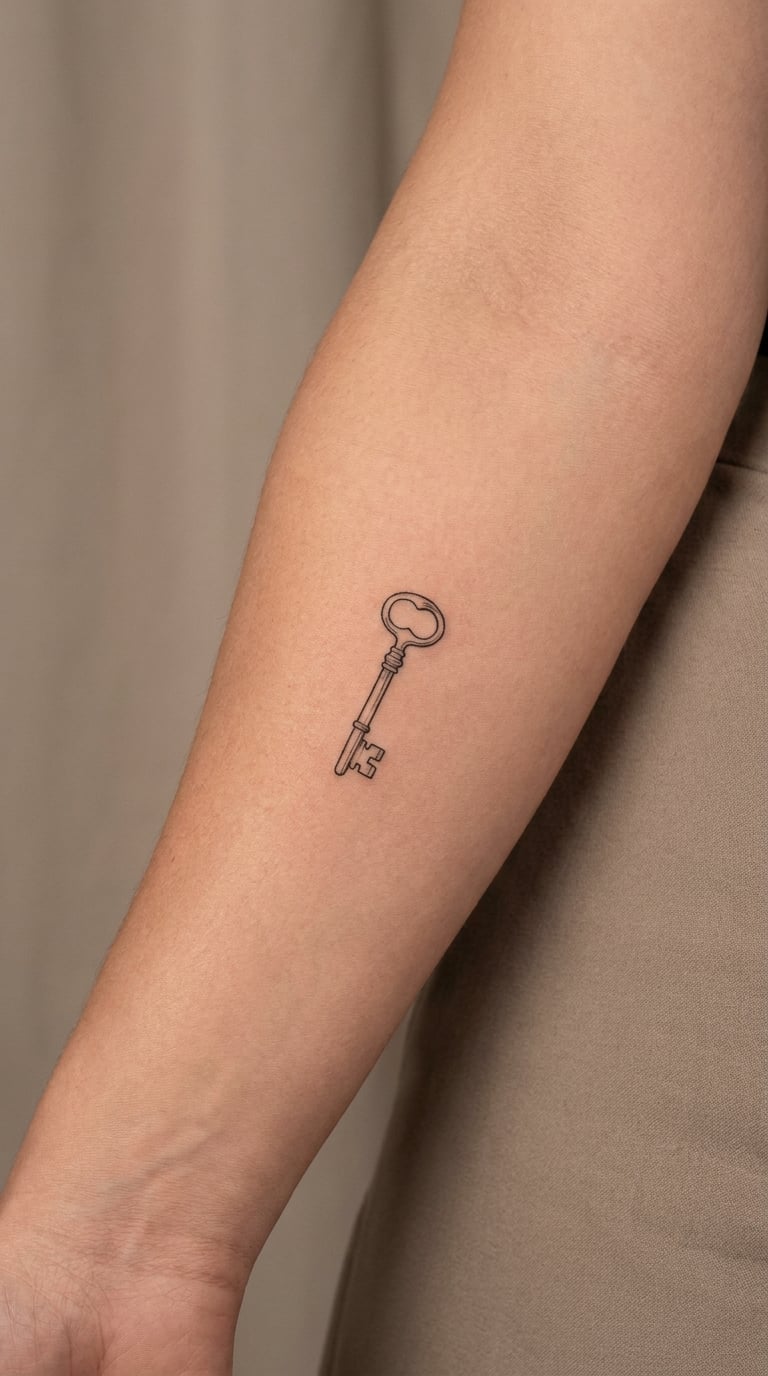
A simple key drawn in outline with a round bow, a short shaft and two or three teeth, with a small date running along the shaft. The key is a personal reference and does not carry one fixed meaning on its own.
Access, freedom, or the thing that opened a door for them. Plenty of wearers pick it precisely because the meaning stays theirs.
Placement: inner forearm, behind the ear, or the ankle. Size: 2-3 in (5-8 cm) long. Style: fine line outline. Pain: low to medium on the inner forearm, medium behind the ear. Teeth on a small key are the same problem as feather tips: fine gaps close up. Two teeth will hold; six will not.
Make it yours: engrave a single initial inside the bow rather than adding more detail to the key itself.
25. Minimal Circle with a Personal Word Inside
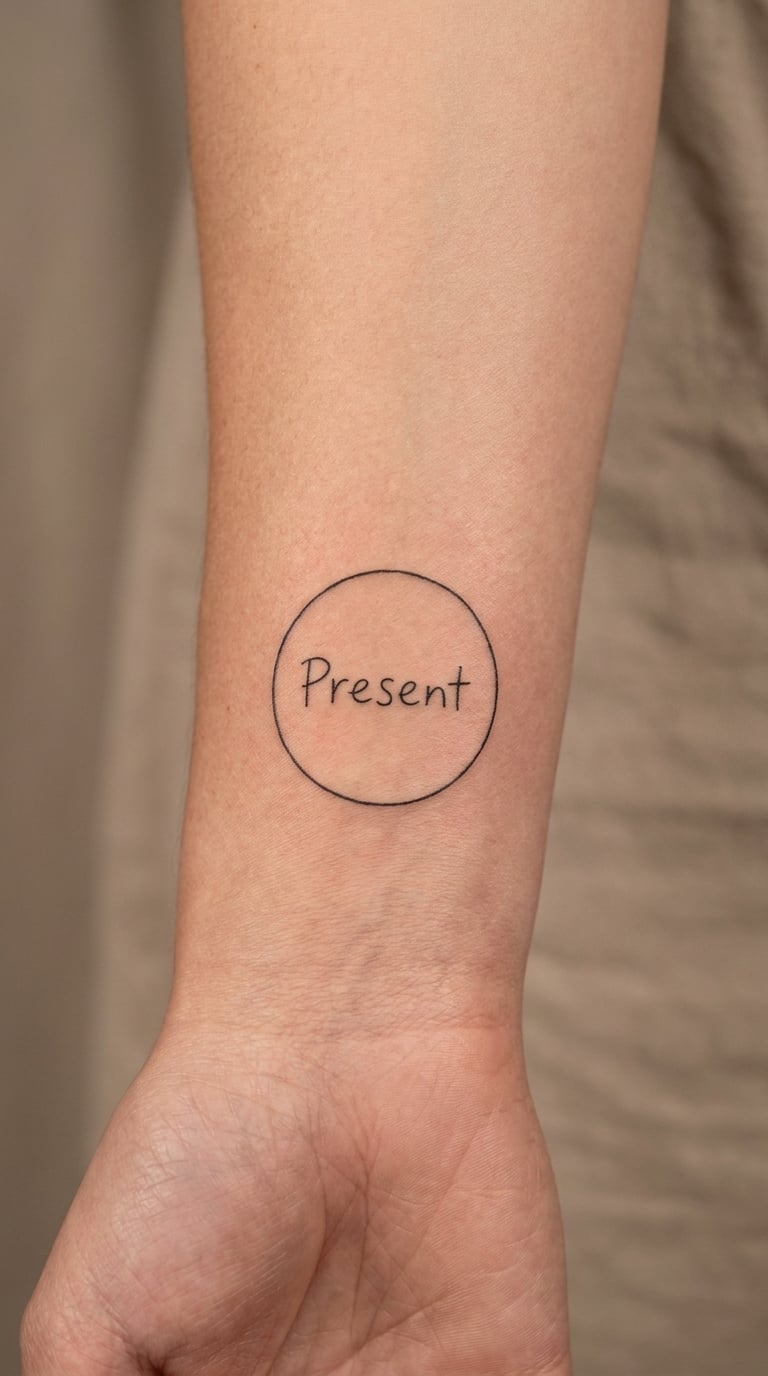
A thin black circle with one word set inside it, centred, in a plain font, with the circle maybe two millimetres wider than the word on each side. A completed version of the open circle, and a good last mark because it reads as finished.
A boundary around the word rather than an explanation of it. The word is whatever you have been working on saying to yourself.
Placement: wrist, inside forearm, or the back of the hand. Size: 1.5-2 in (4-5 cm) across. Style: fine line, single weight. Pain: medium on the wrist, low on the upper arm. The circle needs to be perfectly round, and freehand circles wobble, so this is one for an artist who works with a ruler or a machine pass rather than a stick-and-poke.
Make it yours: leave the circle open at the bottom instead of closing it, which makes the design feel unfinished in a useful way.
How to Choose the Right Design
Start with the meaning, not the picture. Write a sentence explaining the tattoo to someone who has never heard your story. If the sentence is longer than the design needs, the design is carrying more than it can hold, and a smaller symbol with a cleaner line will look better at every size.
Then pick the placement before the artist, because placement decides the line weight. A design chosen for the inner wrist has to survive thin, stretched, bony skin, which rules out hairlines and detailed interiors. The same design on the outer thigh has room to breathe.
| Placement | Visibility | Pain | Suits |
|---|---|---|---|
| Inner forearm | Hidden by default | Low to medium | Dates, script, single-line symbols |
| Inner wrist | Visible when the hand turns | Medium | Sunrise, numbers, small circles |
| Outer forearm | Visible | Low | Mountains, trees, dotwork, compasses |
| Upper arm | Visible when wearing a short sleeve | Low to medium | Phoenix, larger composition work |
| Ribs and side | Visible when undressed | Medium to high | Script, longer horizontal designs |
| Spine | Hidden by default | High | Long vertical pieces only |
| Behind the ear | Hidden by default | Medium to high | Small single motifs, botanical |
| Ankle and foot | Seasonal | Medium | Lotus, key, fine-line branch |
Size is the second decision. Under half an inch, meaning has to be simple, and anything with interior detail starts to look like a smudge within a few years. Between 1.5 and 3 inches is the range where you can keep a distinct shape, a word, or a date and still have room for clean line work. Above 4 inches you are looking at a second session and a different conversation with your artist.
Lettering deserves its own rule. Set the line weight no thinner than 1 mm, check the spacing on a stencil before it goes on, and avoid the rib for anything you want to read clearly in ten years. If you want words and a symbol, give the words the priority and keep the symbol to one shape.
On the conversation with the artist, the useful trick is to describe the design, not the story. You do not owe a stranger the details of your recovery, and most tattooists do not want them. Say the size, the placement, the line weight you want, and one sentence about what the symbol means to you. That is a complete brief.
Send your artist references as images with a note on what you like about each one, and ask to see a stencil placement in the mirror before the stencil comes off. If you are adding to an existing collection, ask for the new work to match the scale of what you already have rather than the size of your phone screen.
Cost and Session Time
Almost every design in this list is a single-session piece, and a single session is where the money is predictable. The two-hour minimum is the norm at most shops, so anything genuinely tiny, like the milestone number in idea 17, is usually booked as the first part of that window and finished well before the end.
US rates give a useful ballpark. A small fine-line symbol or date under two inches usually lands somewhere around $120 to $250. A mid-size design in the 2 to 4 inch range with solid black fill, dotwork or a phoenix runs roughly $250 to $600. Anything above 4 inches, or anything split across two sessions, starts at $600 and climbs quickly, and a blackwork doorway is the one on this list most likely to need the second appointment.
Rates vary more by city and by artist reputation than by design difficulty. A simple fine-line symbol in a small town costs considerably less than the same symbol from an artist with a booked-out list, and a large blackwork doorway or a detailed phoenix runs past the single session and into a second appointment.
Factors that genuinely move the number: size above 4 inches, solid black fill over a wide area, dotwork, colour, and a placement where the artist has to work fast, such as the rib or the spine. Line-only fine-line work at a moderate size is the cheapest category here, which is worth knowing if the budget is the deciding factor.
Shop minimums are the thing people get caught by. A one-hour design on a two-hour minimum still costs two hours, so if a friend is coming along and you want a small mark, sharing the session slot is the most common way people handle it.
On touch-ups, plan for a free or low-cost visit six to eight weeks after healing if anything has greyed out or a line has blown. Fine-line and dotwork pieces need one more often than bold blackwork does. Do it inside the first year, and do it with the artist who did the original piece, since another artist is working from a healed version rather than the original line.
Aftercare Basics
Follow your artist’s aftercare instructions first, because they will know what they put in your skin on the day.
- Keep the area clean with plain water and a mild unscented soap, and pat it dry rather than rubbing it.
- Wash it a couple of times a day for the first week or two, which matters more than any product you buy.
- Leave the film or dressing alone if the artist applied one. Most artists no longer seal a tattoo, and peeling it is the fastest way to pull out pigment.
- Keep it out of direct sun, and skip swimming pools, hot tubs and saunas while the skin is still open.
- Sleep on clean sheets and change a pillowcase, because nobody remembers to wash the pillowcase.
- Do not soak it or wrap it tight. If it is itchy, that is normal healing; the tight and dry feeling settles within a week or two.
- Watch for anything spreading redness, warmth or discharge after the first few days, and ask the artist or a pharmacist about it rather than treating it yourself.
For anyone in early recovery, the practical side of this is worth thinking about before the session rather than after. Pick a date when nothing is due, nobody is relying on you, and nobody will be watching your hand. Tell the person driving you home that you have a two-hour appointment, and have food ready when you get back. The appointment is boring and short. The recovery around it is the part that takes planning.
Frequently Asked Questions
What tattoo symbolizes sobriety most clearly?
The most widely recognised sobriety symbols are the triangle inside a circle used in Alcoholics Anonymous, the semicolon standing for a life and story that continues, the lotus rising clean from mud, the phoenix rising from ashes, the sun coming out, and a sober date written in Roman numerals. None of them has one official meaning. They are recognised because the recovery community uses them, and a stranger reads them far more easily than they read abstract art.
Should I tattoo my sobriety date or how long I have been sober?
A date is the most traditional choice and the easiest for you to read later, because it stays accurate forever. The honest concern people raise is that a date makes a permanent claim on a number that only moves one way, and some wearers prefer a symbol instead for that reason. A count such as 365, a number of years, or a symbol with no number in it holds its meaning whatever your future looks like.
What is a good size for a first sobriety tattoo?
Between 1.5 and 3 inches is the range most tattooists recommend for a first small piece. Below half an inch there is no room for a distinct shape or a legible word. If your design has interior detail, go larger rather than smaller, because fine detail blurs as the skin heals and continues to soften over the years.
Do fine-line sobriety tattoos fade badly over time?
Fine line fades faster than bold blackwork, particularly on the inner forearm, the rib and the wrist where the skin moves and stretches. Ask your artist for a line weight of at least 1 mm and expect that a purely hairline design will need a touch-up over the years. Designs with solid black fill hold their shape much longer and need less maintenance.
Can a sobriety tattoo be completely hidden?
Yes, if you pick the placement for visibility rather than for looks. The inner forearm, the inner upper arm, the spine, behind the ear and the rib are all hidden under ordinary clothing or by long hair in most situations. A design on the outer forearm, wrist or calf is visible far more often and is worth choosing only if you are comfortable explaining it when someone asks.
What should I avoid putting on a healing tattoo?
Keep the design itself free of anything that fights the healing process: no occlusive plastic wrap left on for days, no fragranced or alcohol-based products, no sun, no swimming pools, no shaving over the area, and no scratching while the skin peels. If you work with your hands, plan the session around a few days where you do not need to grip anything wet.
Conclusion
For a first tattoo in this category, the sunrise, the Roman numeral date and the tiny lotus are the safest picks. They are single shapes, they hold a 1 mm line, and they look intentional rather than elaborate on any part of the arm. If you are adding to an existing collection, the phoenix, the blackwork doorway and the red thread piece give you enough scale and enough contrast to sit properly next to work that is already there.
Whichever you choose, the design that lasts longest is the one you can explain in one sentence. Sort the 25 down to two or three, put them in your recovery language, and take the rest of your planning to the consultation. 20 north star tattoo ideas is a good next look if you want something with a direction built into it, and DNA-inspired tattoo designs covers the inherited-strand style if you like line work with depth. A book or a long climb is another route to the same idea, and hiking tattoos with meaning has 20 worth scrolling through.