
20 Strength Symbol Tattoo Ideas: Bold and Timeless October 2026
These 20 strength symbol tattoo ideas cover every version of the idea, from a fine-line north star on the inner wrist to a colour phoenix across the shoulder blade. Each entry gives you a real size in inches, the placement it actually suits and how the session will feel, so you can book with something clearer than a vague feeling.
Strength symbols work because the meaning is already in the image. A lion reads as courage, an anchor reads as staying grounded, a mountain reads as slow steady progress, and you do not need a paragraph of explanation for either you or anyone who asks. The trick is picking a design whose line weight can survive years of healing, and that is where most people get it wrong.
If you want a wider look at designs built around resilience rather than raw power, our collection of tattoo ideas that represent strength for women is worth a scroll before you commit. Autumn and winter are the busy season for most studios, so if you are planning a piece for a particular date, count backwards about six to eight weeks and book early.
20 Strength Symbol Tattoo Ideas: Quick Guide
Every design below has a different size floor, because a mountain lion and a single arrow do not need the same canvas. Use this table to match a symbol to a body part before you talk to an artist.
| Idea | Style | Best placement | Realistic size | Pain |
|---|---|---|---|---|
| Lion head | Black and grey realism | Outer upper arm or forearm | 3-4 in (8-10 cm) | Medium |
| Mountain range | Fine line with one accent | Inner forearm or chest | 3-5 in (8-13 cm) | Low to medium |
| Spartan helmet | Blackwork or illustrative | Outer shoulder | 3-4 in (8-10 cm) | Medium |
| Iron fist | Solid blackwork | Forearm or bicep | 2.5-3.5 in (6-9 cm) | Medium |
| Oak tree | Black and grey realism | Calf or upper arm | 4-6 in (10-15 cm) | Medium |
| Crown | Fine line or blackwork | Inner wrist or forearm | 1.5-3 in (4-8 cm) | Low to medium |
| Elephant | Micro-realism | Outer ankle or calf | 1.5-2.5 in (4-6 cm) | Low to medium |
| Warrior shield | Geometric linework | Upper arm or chest | 2.5-4 in (6-10 cm) | Medium |
| Phoenix rising | Colour realism or blackwork | Shoulder blade or thigh | 5-8 in (13-20 cm) | High |
| North star | Fine line | Forearm, wrist or nape | 1.5-3 in (4-8 cm) | Low |
| Anchor | Traditional or minimal | Upper arm, calf or forearm | 2-4 in (5-10 cm) | Medium |
| Arrow | Minimalist linework | Wrist or forearm | 2-3 in (5-8 cm) | Low |
| Wolf head | Blackwork | Forearm or calf | 3.5-5 in (9-13 cm) | Medium |
| Koi fish | Illustrative with colour | Calf, thigh or forearm | 4-6 in (10-15 cm) | Medium |
| Mountain lion | Realism or blackwork | Outer thigh or upper arm | 3-5 in (8-13 cm) | Medium |
| Flaming heart | Red ink or blackwork | Forearm, chest or ribs | 2.5-4 in (6-10 cm) | Medium to high |
| Viking raven | Blackwork | Outer shoulder or upper back | 3-5 in (8-13 cm) | Medium to high |
| Barbed wire heart | Fine line or traditional | Hand, forearm or chest | 2-3 in (5-8 cm) | Medium to high |
| Diamond | Faceted realism | Forearm or wrist | 2-3.5 in (5-9 cm) | Low to medium |
| Rising sun | Colour, dotwork or minimal | Sternum or upper chest | 3-6 in (8-15 cm) | High |
1. Lion Head Strength Symbol Tattoo
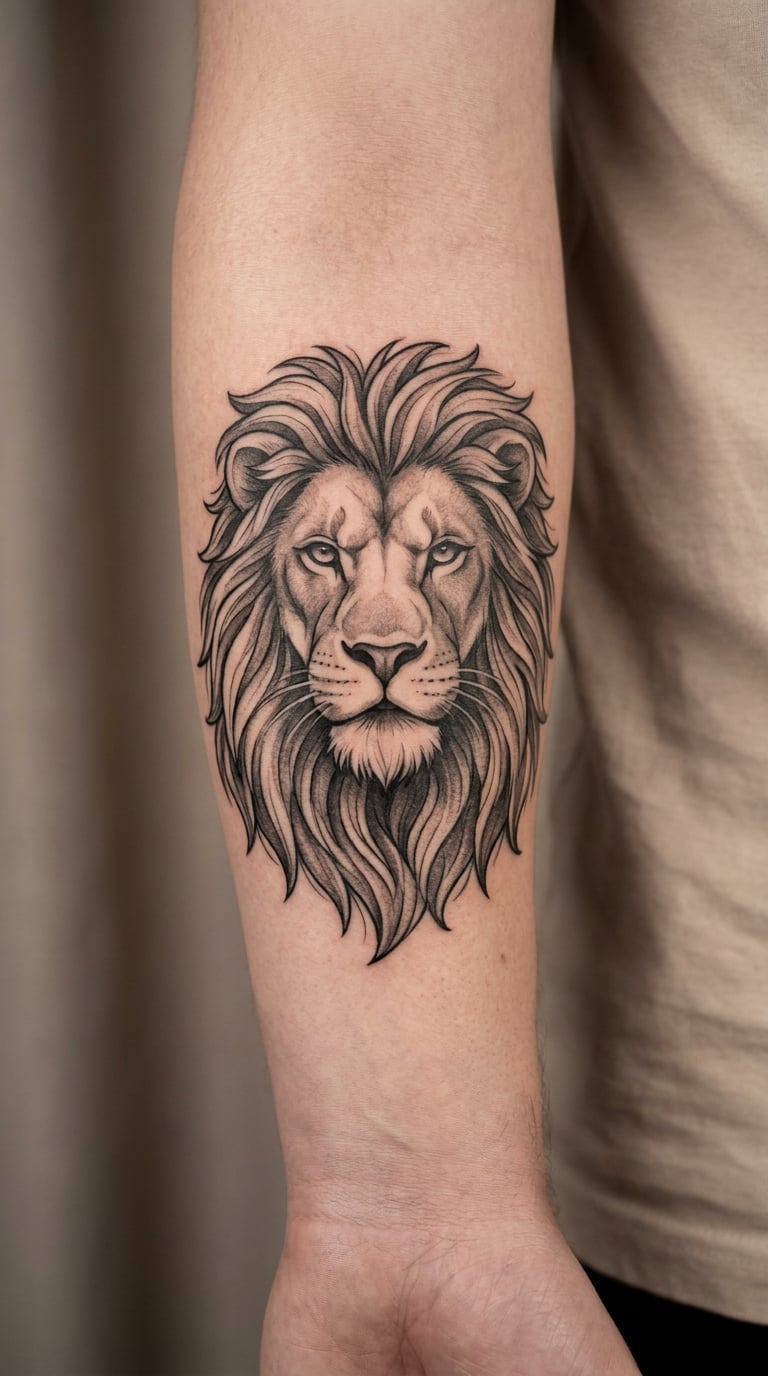
A lion head is the most requested strength symbol there is, and most people end up somewhere between a traditional mane built from solid black shapes and a portrait that fades into soft grey shading. The face usually gets the detail, with eyes rendered as small dark accents and the mane fanning out in long tapered strokes.
The associations are old and widely agreed: courage, leadership, authority and the kind of physical power that does not need to announce itself. People rarely pick it for the symbolism alone, though. More often it is the one image that felt like them.
Placement: outer upper arm, forearm or upper chest. Size: 3 to 4 inches (8 to 10 cm) wide for a head, more like 5 inches (13 cm) if you want a full mane. Style: black and grey realism or traditional. Pain: medium on the outer arm, noticeably more on the inner biceps.
Ageing note: the eyes and nose are the first details to soften. Go slightly larger than feels necessary.
Make it yours: a small date tucked into one ear, or a single gold leaf in the mane if you want colour in an otherwise grey piece.
2. Mountain Range Strength Symbol Tattoo
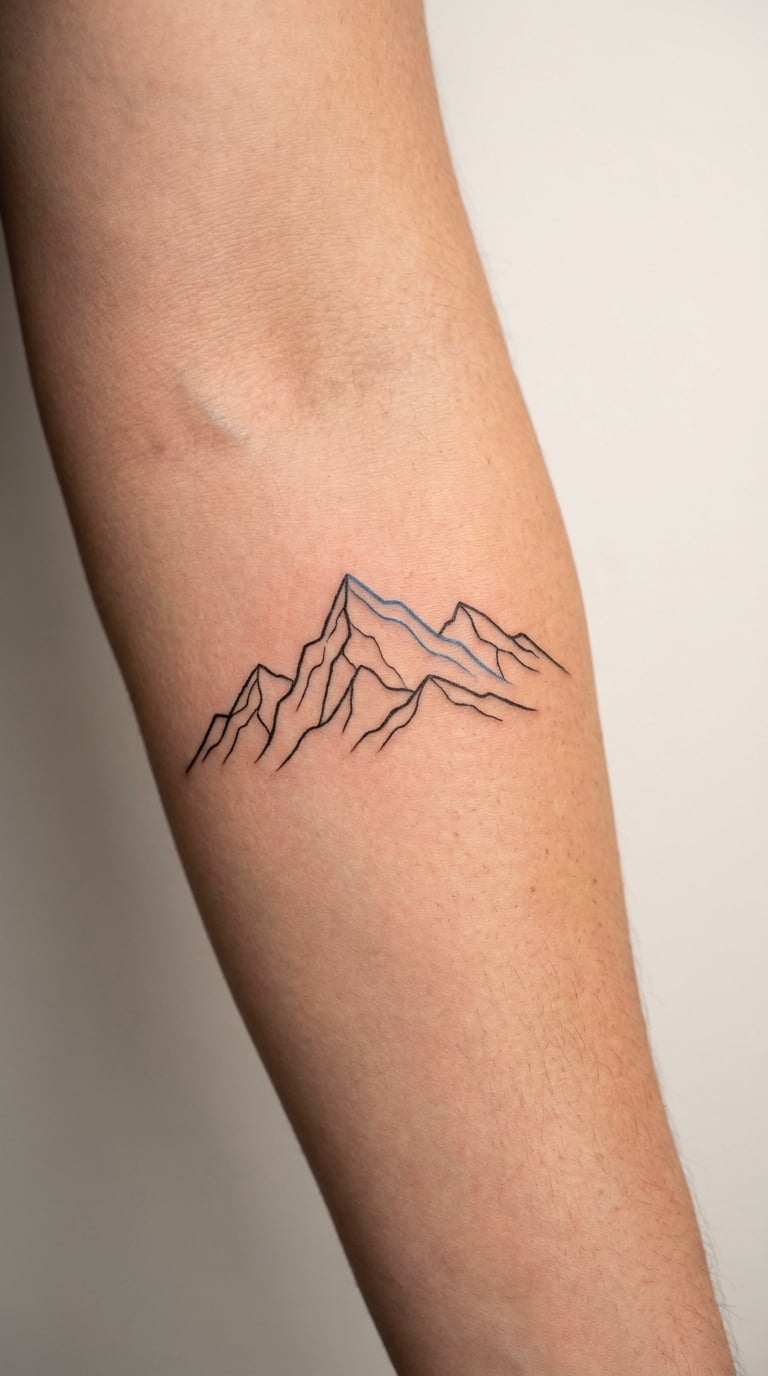
Mountain designs are the quietest of these 20 ideas. A jagged line of peaks, a few interior ridge lines for depth, and maybe a single band of blue in the sky behind them. It is a design you can look at daily without it shouting anything.
The reading is endurance rather than dominance: slow progress, hard conditions, the idea that the thing you are building takes time. That is why it suits people who picked the symbol after a long grind rather than a dramatic event.
Placement: inner forearm, chest or across the collarbone. Size: 3 to 5 inches (8 to 13 cm) wide. Style: fine line with one colour accent. Pain: low to medium on the forearm, more on the collarbone because of bone proximity.
Ageing note: very fine ridge lines thin out over time, so ask for slightly heavier line weight than the reference photo shows.
Make it yours: use the silhouette of a range you have actually stood on, drawn from a photo you took yourself.
3. Spartan Helmet Strength Symbol Tattoo
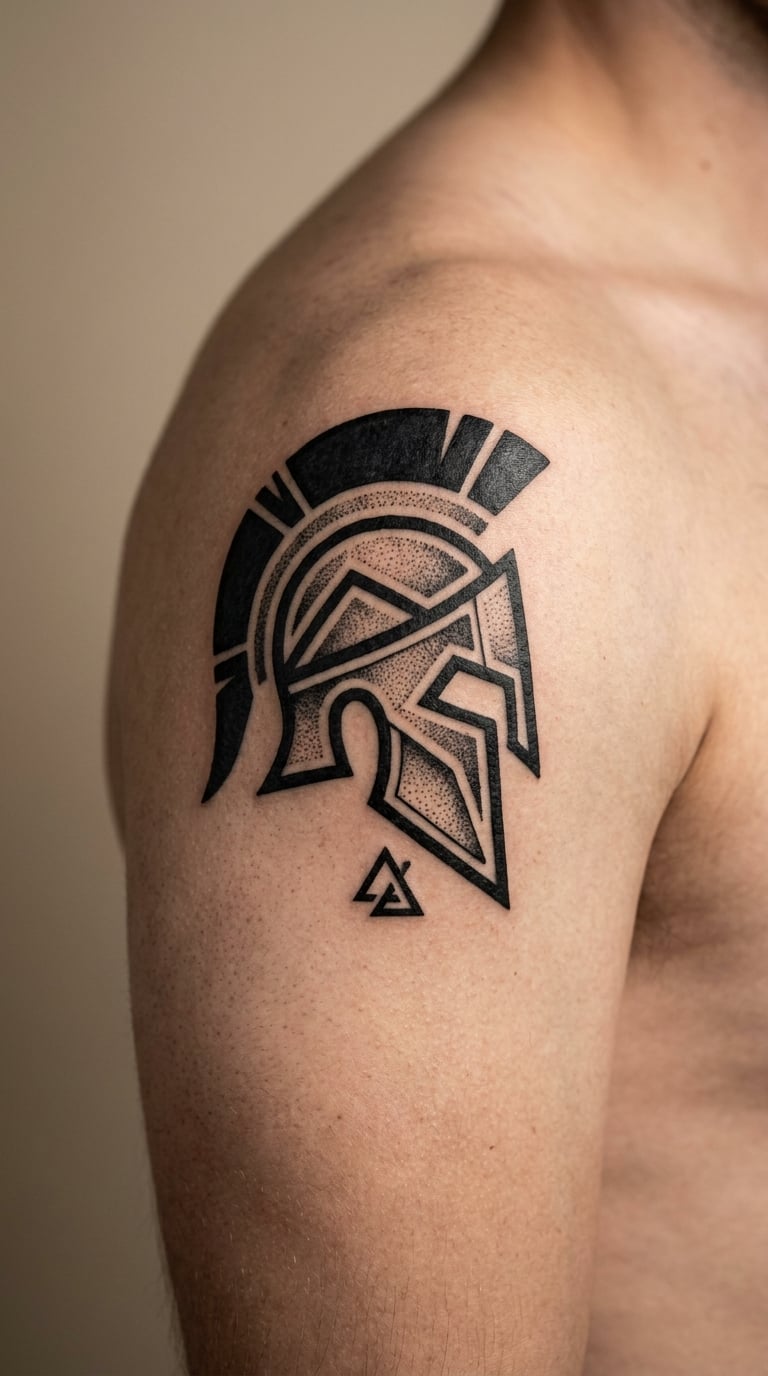
A Spartan helmet works in two directions. Simplified, it is a clean geometric crest with a nose guard and cheek pieces in flat black. Illustrated, it becomes a full Corinthian-style helmet with vents, cheek guards and heavy contrast between polished metal and shadow.
People choose it for discipline and fortitude. The helmet is armour that already did its job and is no longer needed, which is an oddly hopeful version of the idea.
Placement: outer shoulder, upper arm or chest. Size: 3 to 4 inches (8 to 10 cm) for the simplified version, 4 to 5 inches (10 to 13 cm) for an illustrated one. Style: blackwork or illustrative. Pain: medium, and the outer shoulder curves enough that an inexperienced hand can drift off line.
Ageing note: the small vent slots blur together as the piece heals. Simplify them or drop them.
Make it yours: add a thin laurel or olive branch behind the crest rather than more detail on the helmet itself.
4. Iron Fist Strength Symbol Tattoo
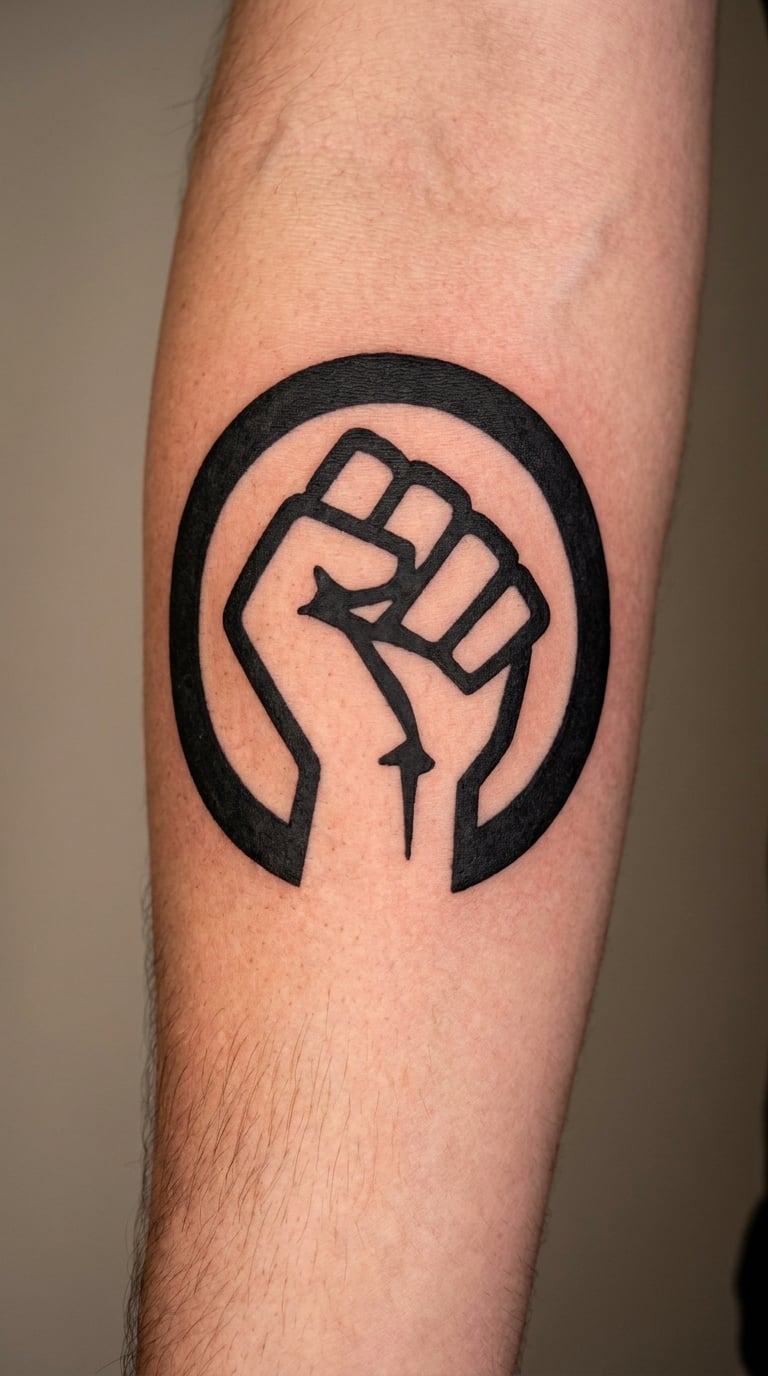
Solid black, thick outlines, four knuckles squared off, thumb across the fingers. That is the whole design and there is not much room to hide behind it, which is part of the appeal for anyone who wants something with no decoration.
One thing worth knowing before you book: the clenched fist on a straight downward arm carries a 20th-century political and military association that is still read that way by some people. A fist at a slight angle, or two interlocked hands, avoids the straight-down reading.
Placement: forearm, bicep or hand side. Size: 2.5 to 3.5 inches (6 to 9 cm). Style: solid blackwork. Pain: medium, higher on the wrist end of the forearm where the bone is close to the skin.
Ageing note: solid black is the most durable finish in tattooing, so this one holds up well.
Make it yours: rotate the fist slightly off vertical and add a thin band or wrapping at the wrist to shift the reading.
5. Oak Tree Strength Symbol Tattoo
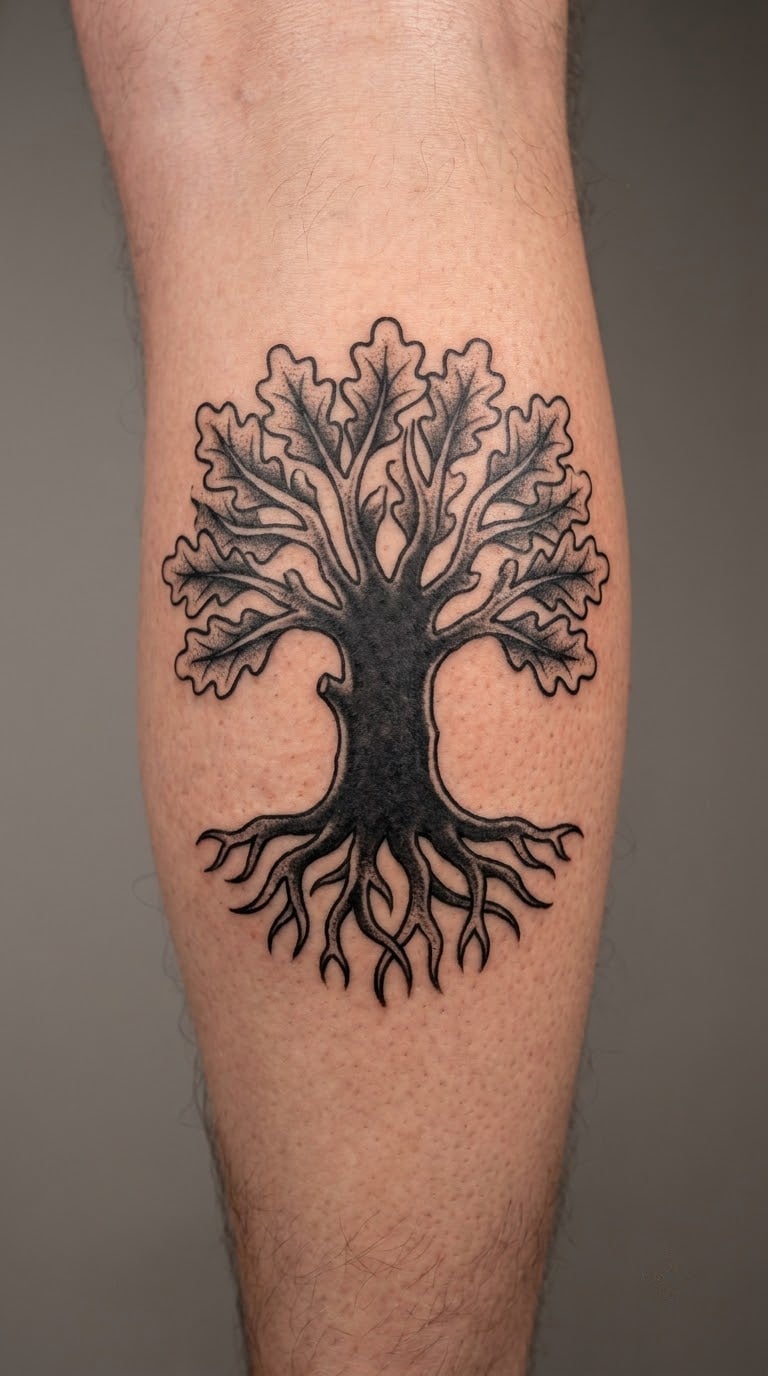
An oak tree tattoo is one of the few symbols with a genuinely self-evident meaning: deep roots, thick trunk, branches that have survived a lot of weather. Most versions are black and grey, with the bark suggested by short curved strokes and the roots fading into grey wash rather than a hard edge.
It is a patience symbol more than a power symbol, and it suits people who think of strength as something accumulated quietly over a long time.
Placement: calf, forearm or upper arm. Size: 4 to 6 inches (10 to 15 cm) tall. Style: black and grey realism. Pain: medium on the calf, and the calf is one of the placements that bruises more visibly for the first few days.
Ageing note: the fine root tendrils blur fastest. End the roots in grey rather than hairline black.
Make it yours: carve a family surname into the trunk in a simple script band, kept small enough that the artist can still read the bark.
6. Crown Strength Symbol Tattoo
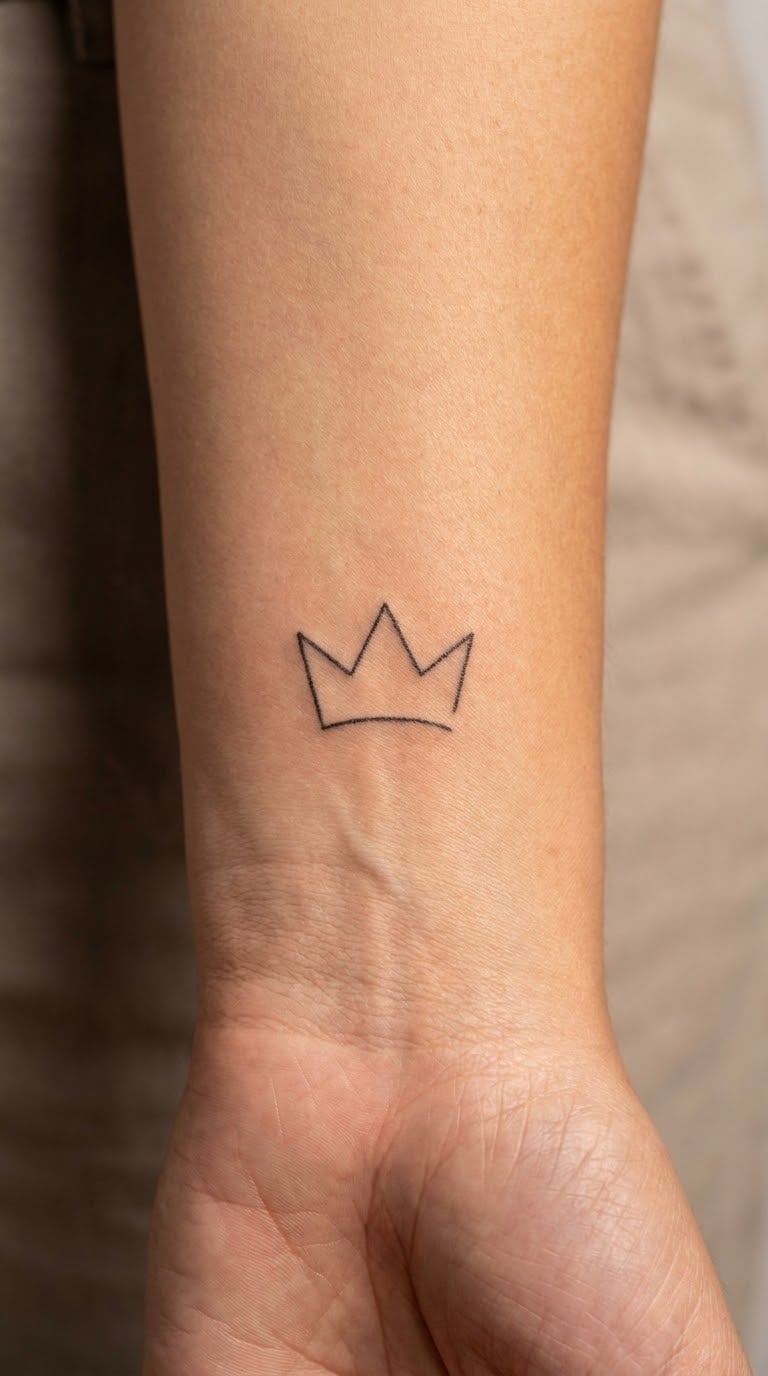
Crowns are the easiest strength symbol to make subtle. The minimal version is a single line drawing three points and a base, small enough for the inner wrist. The maximal version is ornate blackwork with jewels, filigree and a band of shading, usually a forearm piece.
What it claims is self-worth and authority, and it carries that more quietly than a lion does. It is also the design people most often describe as a private reminder, since the meaning sits closer to self-recognition than to any outside audience.
Placement: inner wrist, forearm or behind the ear. Size: 1.5 to 3 inches (4 to 8 cm). Style: fine line for the minimal version, blackwork for the ornate one. Pain: low on the forearm, high on the wrist and behind the ear.
Ageing note: a crown this size loses its internal detail within a few years, so keep the shape readable without shading.
Make it yours: set the three points at uneven heights, each one representing something specific, rather than a symmetrical outline.
7. Elephant Strength Symbol Tattoo
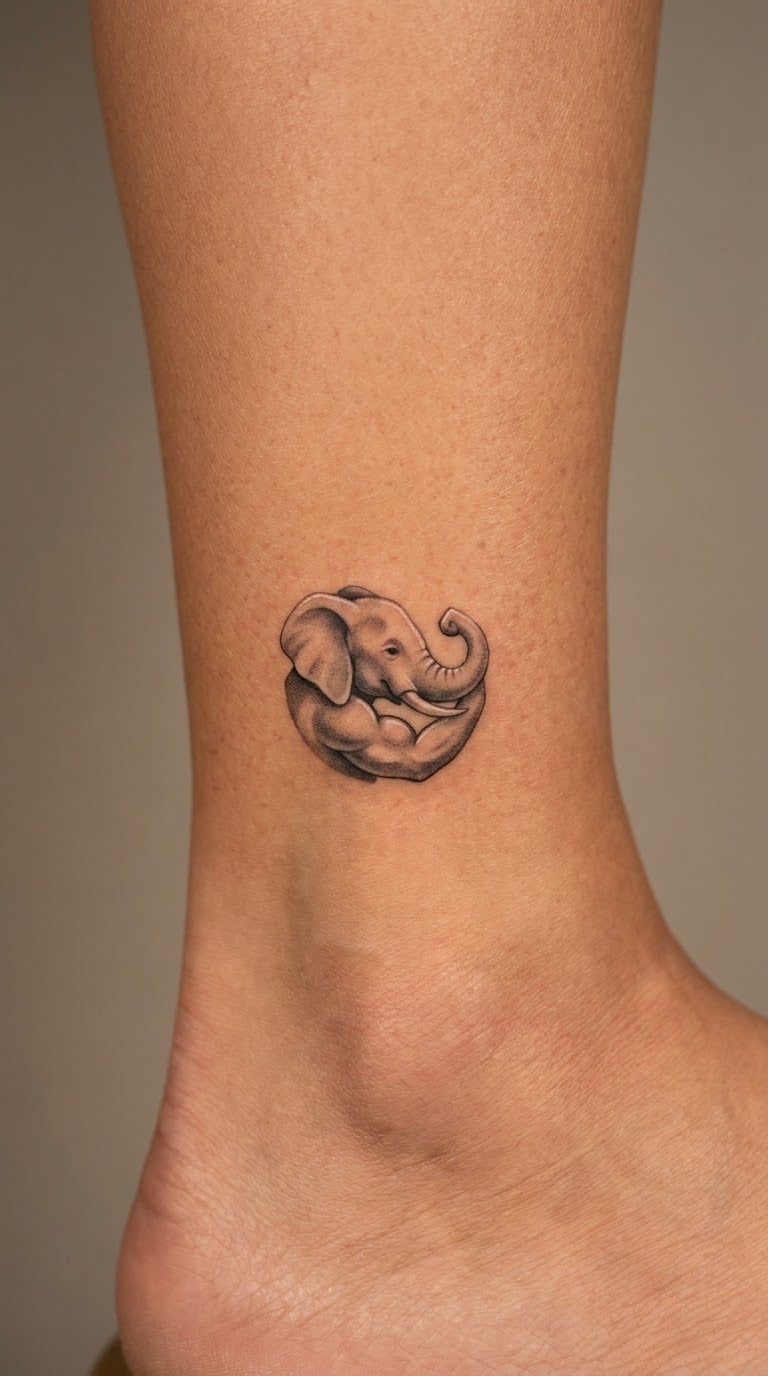
The elephant version people keep choosing is a side profile with the trunk curled slightly, ear shaped with soft grey shading and a few lifted dust motes or water drops for movement. At small sizes it is a compact piece of readable silhouette.
The associations are wisdom, patience and quiet force rather than speed or aggression, which is why it reads very differently from a wolf. It suits people who want a strength symbol that does not look like one from across a room.
Placement: outer ankle, calf, upper arm or rib. Size: 1.5 to 2.5 inches (4 to 6 cm) works well. Style: micro-realism or illustrative linework. Pain: low to medium on the calf, moderate on the ankle bone.
Ageing note: ankle and foot tattoos fade faster than arm pieces because of shoe rub and sun exposure.
Make it yours: have the trunk wrap slightly around a thin band or a second smaller element, so the design feels composed rather than placed.
8. Warrior Shield Strength Symbol Tattoo
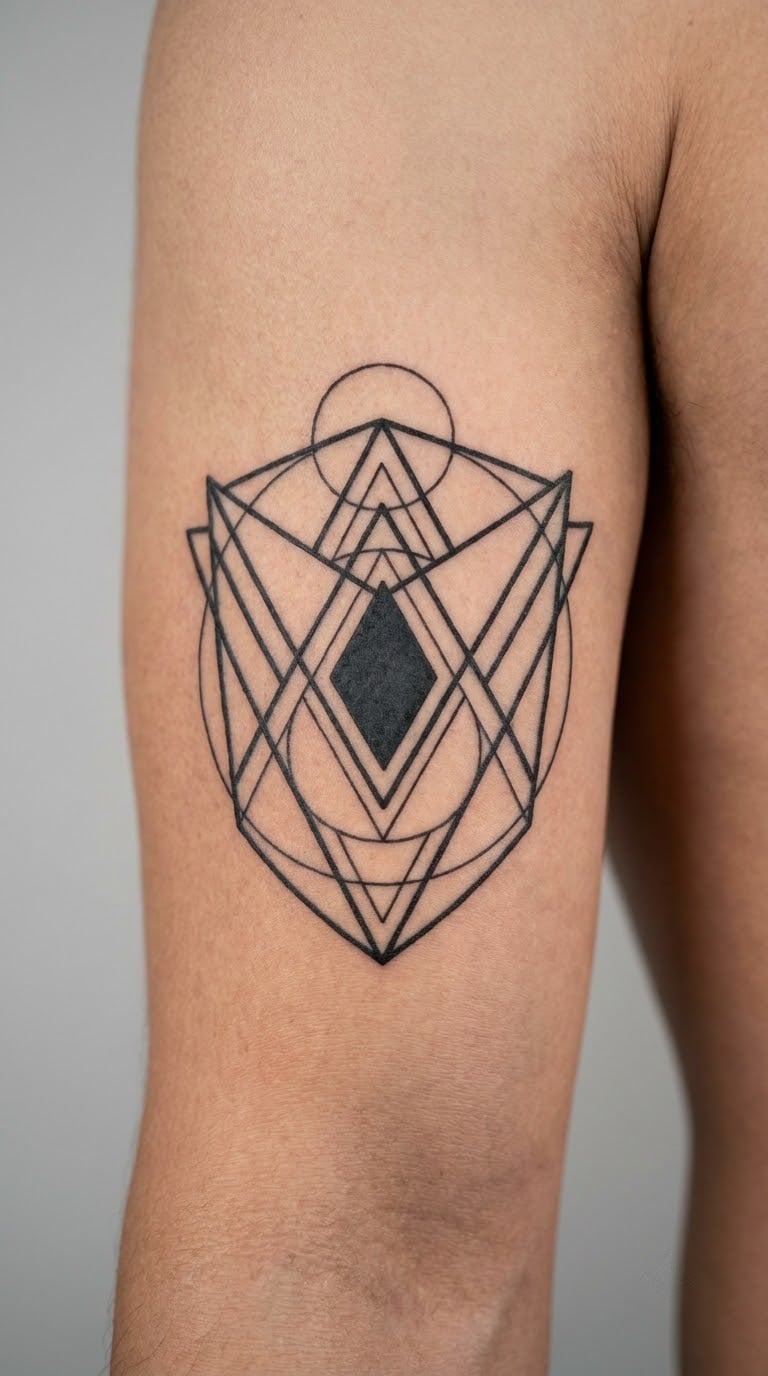
Shields split into two schools. Geometric versions use straight black lines, quartered panels and a central chevron or boss, and they hold up extremely well because there is nothing soft to fade. Traditional versions are a curved heater shield with a rivet border, drawn in heavier black with a highlight left in the metal.
The idea is boundaries and protection: something standing between you and what you do not have to take. A lot of people pick it after a period of being the person who absorbs everything.
Placement: upper arm, chest, or paired on the forearms. Size: 2.5 to 4 inches (6 to 10 cm). Style: geometric linework or blackwork. Pain: medium on the arm, high on the sternum if you go centred on the chest.
Ageing note: the only real risk is symmetrical linework drifting during the session, which is an artist problem rather than a healing one.
Make it yours: mirror a pair of smaller shields on both forearms and add a single larger version elsewhere later.
9. Phoenix Rising Strength Symbol Tattoo
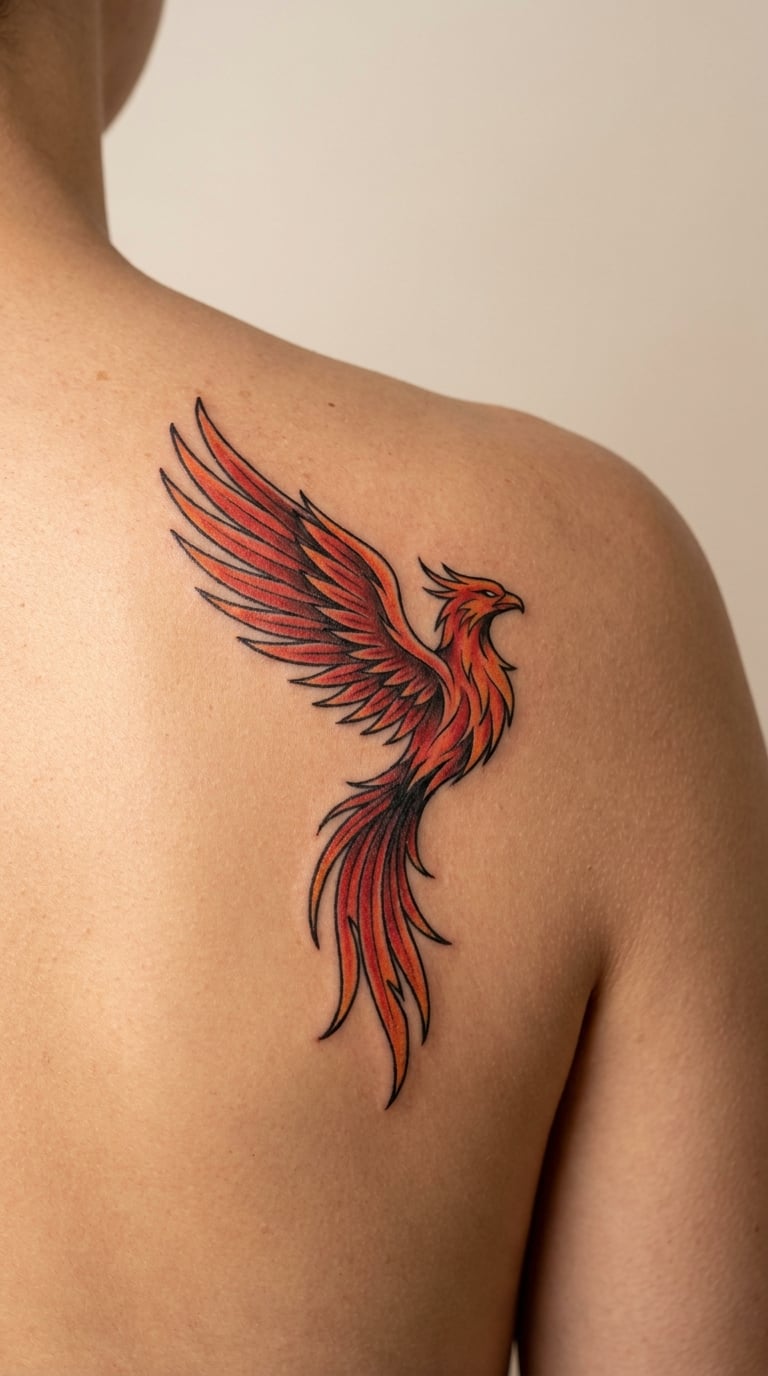
A phoenix is the one design in this list that genuinely needs room. Colour versions run red, orange and yellow with a black outline and flames built from overlapping shapes; blackwork versions drop the colour and lean on solid blacks for the body and thin lines for the flame tips.
Rebirth and transformation are the standard readings, and they are the reason this design shows up after recovery, a breakup, or the end of a chapter. It is the most popular strength symbol for something you survived rather than something you have.
Placement: shoulder blade, outer thigh, upper back or calf. Size: 5 to 8 inches (13 to 20 cm), and going smaller than that is the most common mistake. Style: colour realism or blackwork. Pain: high on the shoulder blade and ribs, which puts you in a genuinely uncomfortable position for a couple of hours.
Ageing note: yellow and light orange fade first. Expect to need a colour refresh on the flames within five or six years.
Make it yours: hide a small word in the negative space between the flames rather than adding another element.
10. North Star Strength Symbol Tattoo
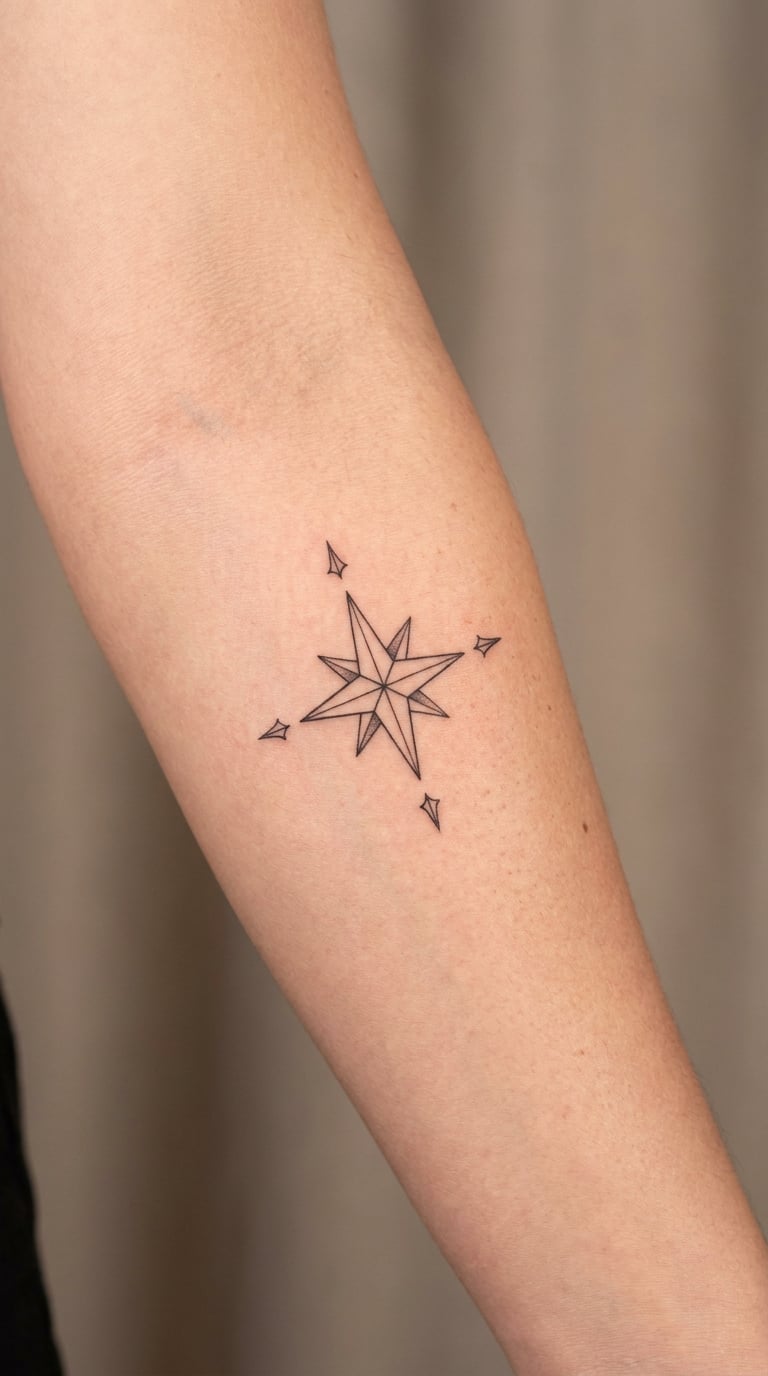
Minimal version: a five-point star with four short lines at the cardinal points. Slightly fuller versions extend the points, and constellation versions run a handful of smaller stars in a curve underneath. All of them read clearly at a small size.
Direction and staying true to a path is the meaning, and it is a private one. The wrist and forearm versions are usually for you rather than for other people, which is exactly the point for many of the people who choose it.
Placement: forearm, inner wrist, nape of the neck or behind the ear. Size: 1.5 to 3 inches (4 to 8 cm). Style: fine line. Pain: low on the forearm, high on the neck and behind the ear.
Ageing note: this is one of the few symbols that can go genuinely small without turning to mush, as long as the artist keeps the lines confident.
Make it yours: use the actual star pattern from the night you set out to do the thing, and we have a longer set of 20 north star tattoo ideas if you want more layouts to choose between.
11. Anchor Strength Symbol Tattoo
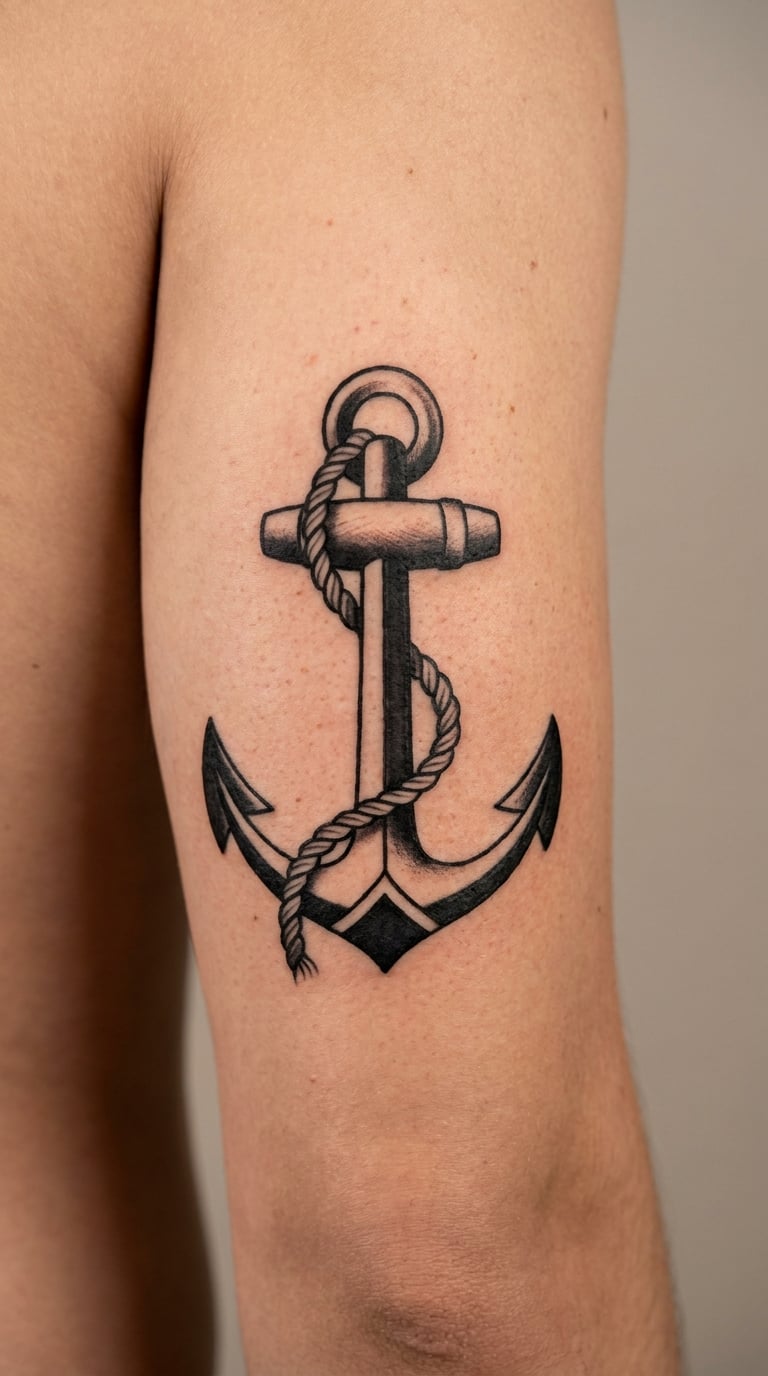
Traditional anchors are heavy black shapes with a curved shank, a crossbar and two flukes, often with a rope looped through the ring. Modern versions strip it to an outline with no fill at all. Both have been tattooed for a long time, which cuts both ways: it is a safe design and some people find it unoriginal.
The meaning is stability, loyalty and being grounded, and it is the one symbol on this list that is also a literal object people get for a specific reason, like a partner, a hometown or a service.
Placement: upper arm, forearm, calf or ankle. Size: 2 to 4 inches (5 to 10 cm). Style: traditional or minimal outline. Pain: medium, easier than most arm work because the skin is thicker.
Ageing note: rope detail is where the fading shows. If you want it for decades, have the artist simplify the rope into two or three shapes.
Make it yours: add a set of coordinates, a depth reading or a small wave pattern underneath in a single line weight.
12. Arrow Strength Symbol Tattoo
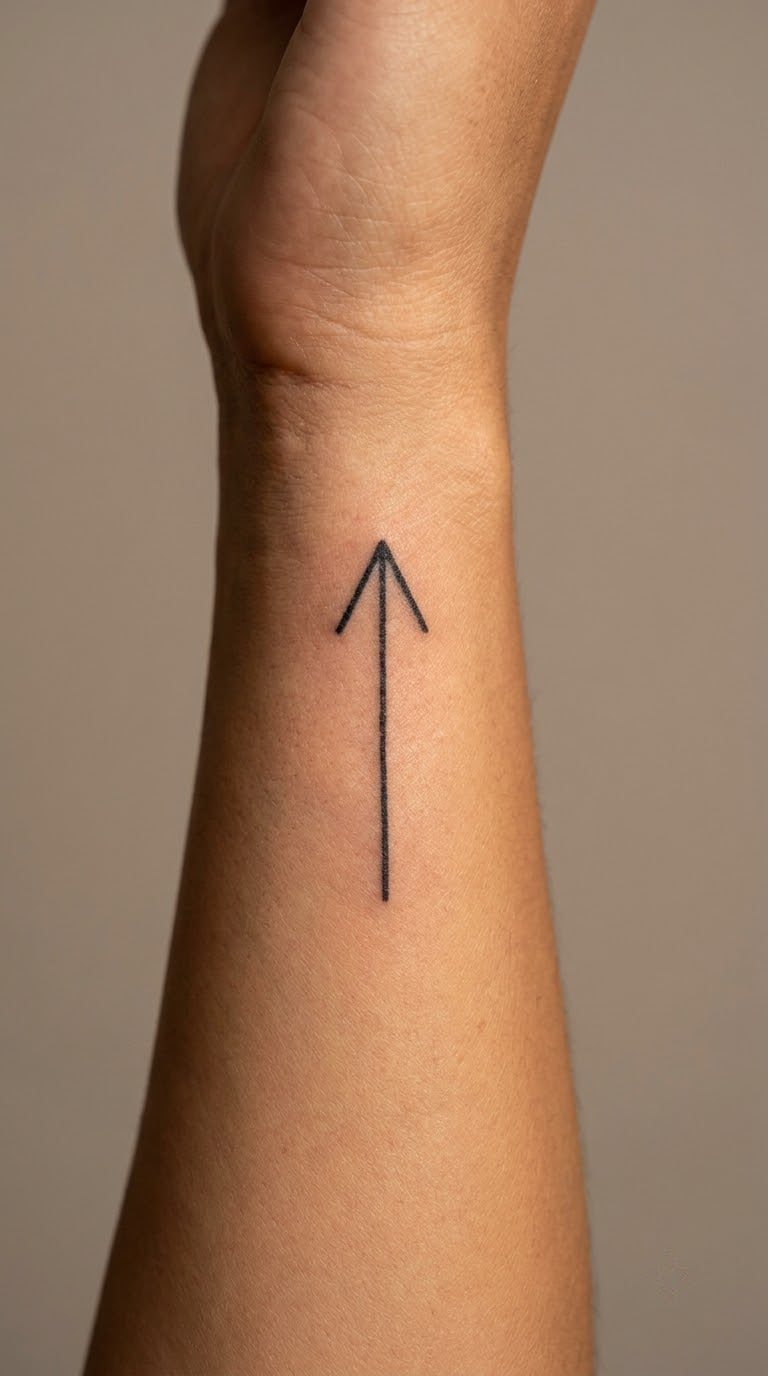
The single arrow is a straight shaft, a point and two short fletching lines. It can be drawn at 2 inches (5 cm) and still be completely legible, which makes it one of the few designs here that works at almost any size and on almost any body part.
Direction, momentum and moving past something. People pick it after finishing something, or while starting something, and it carries more momentum than it does toughness.
Placement: wrist, forearm, behind the ear or on the rib. Size: 2 to 3 inches (5 to 8 cm). Style: minimalist linework. Pain: low on the arm, higher on the ribs and behind the ear.
Ageing note: the fletching is the fragile part at small sizes. Two lines are enough; a fully detailed feather head will not survive.
Make it yours: run a second, thinner arrow parallel to the first in the opposite direction, which turns a simple mark into a composition.
13. Wolf Head Strength Symbol Tattoo
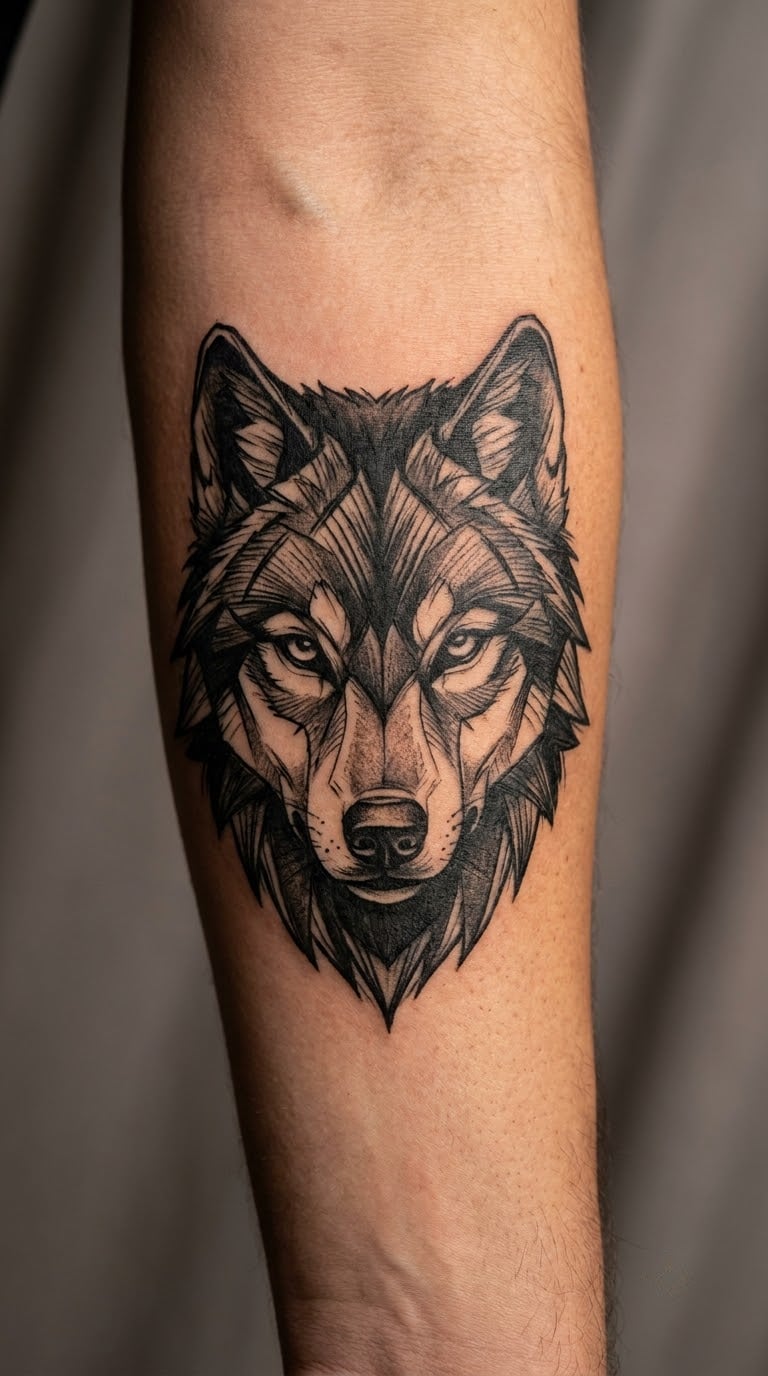
Wolf heads need fur to work, and fur needs space. Most versions are blackwork with a strong black background behind the head, white and grey shapes building the muzzle, and short angular strokes for the ruff of fur around the neck.
Loyalty, instinct and independence are the usual readings, and it is a symbol people tend to get as part of a pairing or a family group. It carries a wilder energy than most of the designs on this list, closer to the mountain lion than to the anchor.
Placement: forearm, calf, upper arm or chest. Size: 3.5 to 5 inches (9 to 13 cm) is the practical floor for readable facial detail. Style: blackwork or traditional. Pain: medium on the arm, high over the sternum.
Ageing note: at the small end of that range the eyes can soften into a blur. Ask the artist to keep the eye shape simple and hard-edged.
Make it yours: half the face in black and half left as skin, with the division running down the centre, which is a much easier piece to heal than a full portrait.
14. Koi Fish Strength Symbol Tattoo
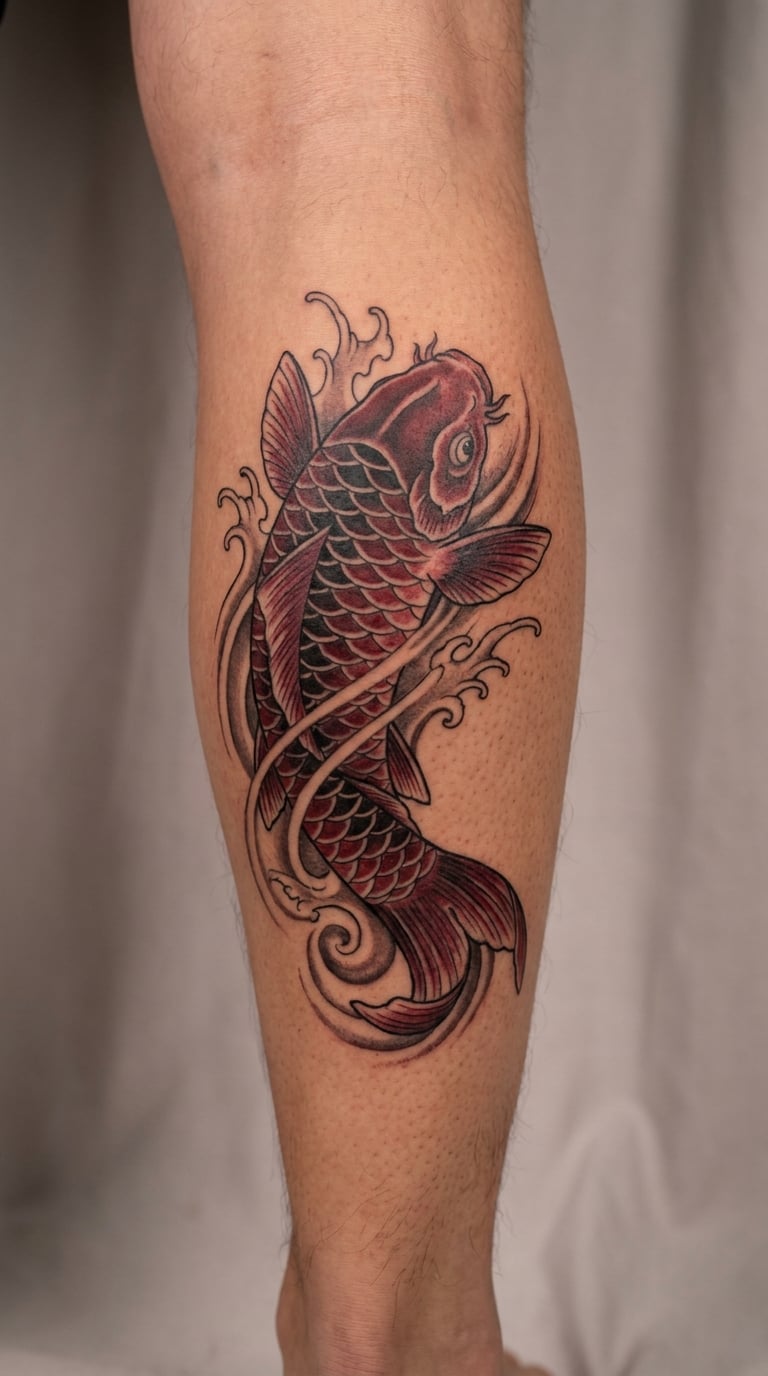
Koi are usually drawn in flowing water, with a red and black body, pale belly and long ribbon fins trailing behind. The Japanese-inspired versions are restrained, more ink-wash than illustrative. Western illustrative versions go bright, with a heavy dorsal pattern and long whiskers.
On persistence and keeping going against current, which is the most honest reading people give it. It is worth saying that the deeper koi symbolism varies by source and translation, so if you are getting a Japanese-style composition specifically for a particular meaning, ask the artist what they are drawing from.
Placement: calf, thigh, forearm or shoulder. Size: 4 to 6 inches (10 to 15 cm). Style: illustrative with colour. Pain: medium on the calf, higher on the thigh and ribs.
Ageing note: the pale belly is the first thing to go yellow-grey. A mid-tone grey holds up better than white.
Make it yours: add three or four sparse water lines rather than a full wave background, which keeps the fish the focus and the session shorter.
15. Mountain Lion Strength Symbol Tattoo
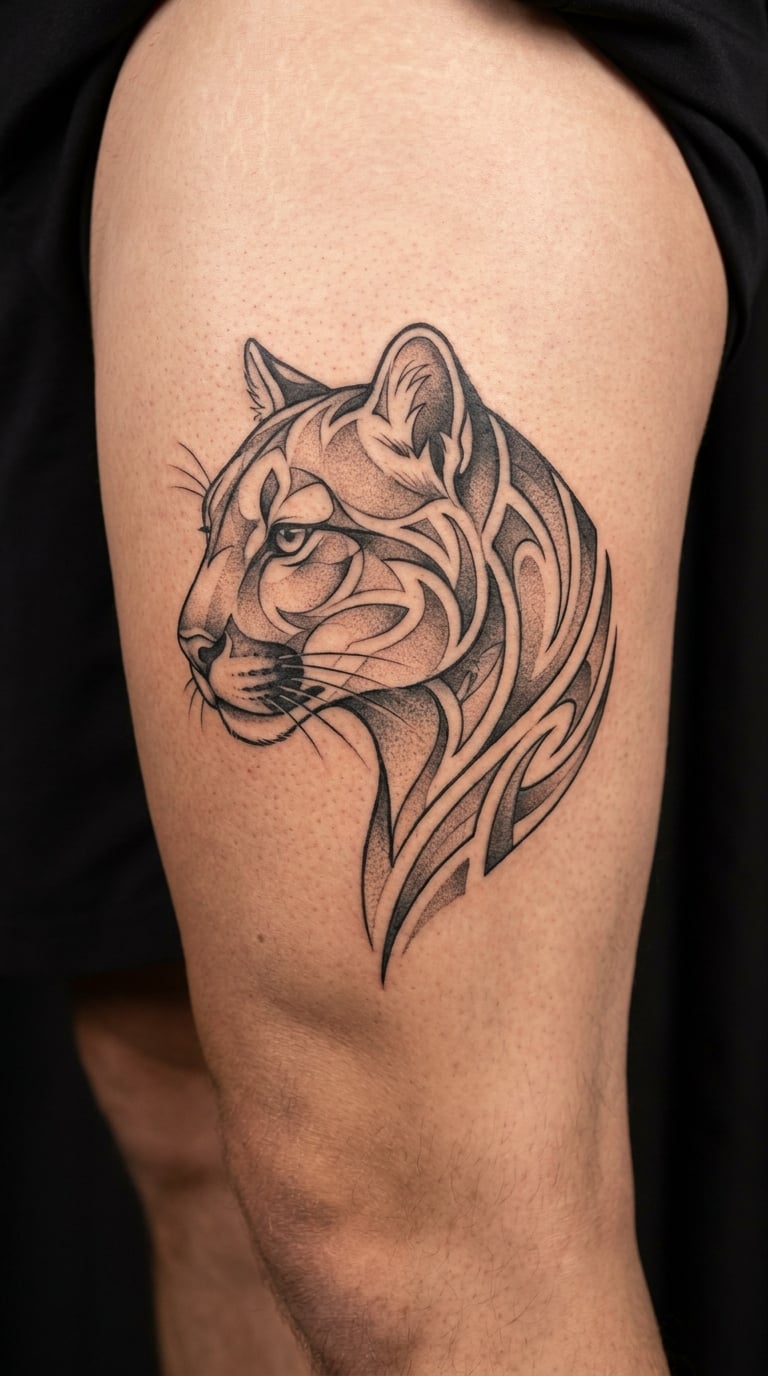
A mountain lion in profile, head low, drawn in black and grey with a soft shoulder line and restrained shading. Minimal blackwork versions reduce it to an outline with solid black ears and a hard jaw. Realistic versions add the whiskers and the eye, and they are the ones that need space.
Composure and self-possession, more than dominance. It is a quieter cousin of the lion head, and people who like the lion idea but find a frontal face too much usually end up here.
Placement: outer thigh, calf, upper arm or hip. Size: 3 to 5 inches (8 to 13 cm). Style: realism or blackwork. Pain: medium on the outer thigh, which is a good long sitting position for a big piece.
Ageing note: whiskers drawn as single hairline strokes disappear. Suggest tapered grey instead.
Make it yours: place it low on the thigh with only the head visible, so the body is implied rather than drawn.
16. Flaming Heart Strength Symbol Tattoo
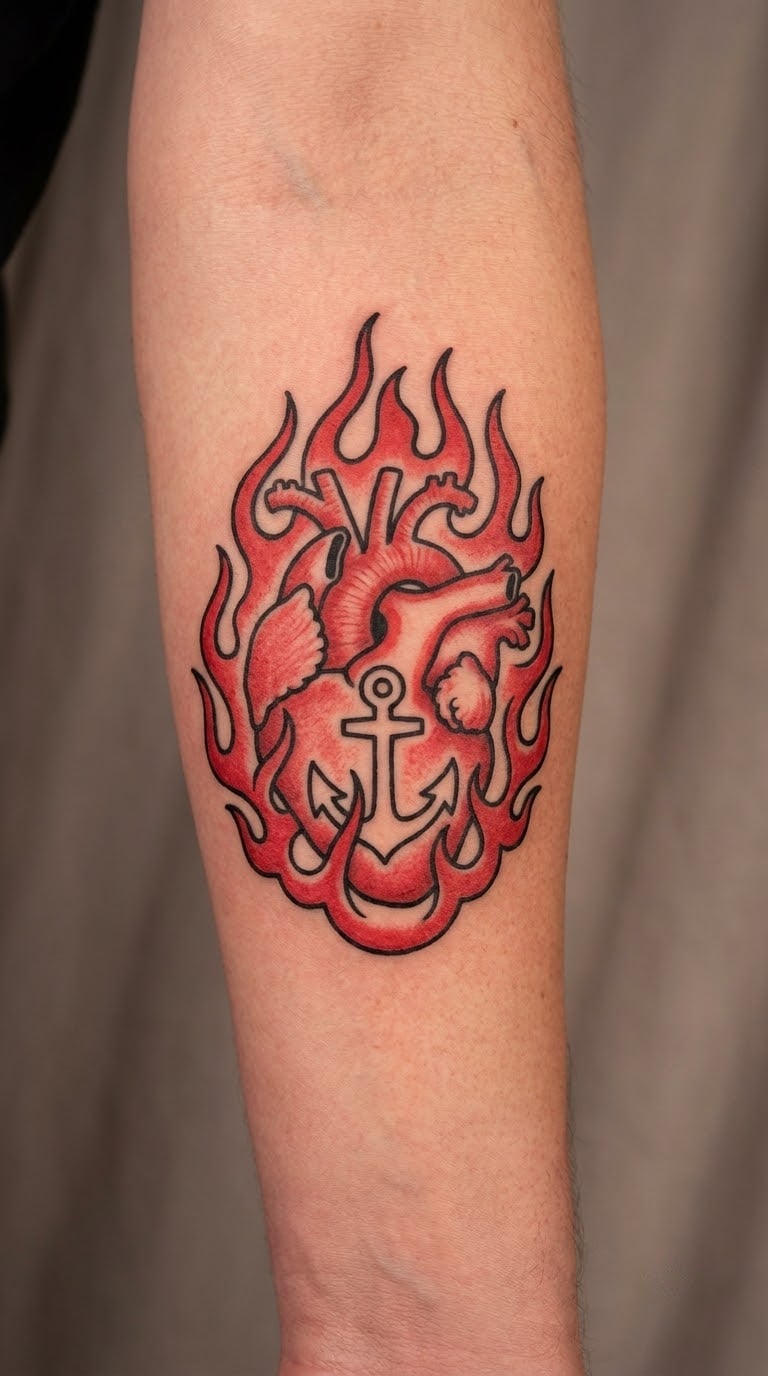
A heart with fire rising off the top, in red ink with a black outline, or in blackwork with the flames as solid shapes. The strongest versions keep the flame language simple: three or four clean tongues rather than a full fireball.
Courage and emotional intensity together, which is a more demanding meaning than most strength symbols carry. People tend to choose it when the thing they survived was emotional rather than physical.
Placement: inner forearm, chest or ribs. Size: 2.5 to 4 inches (6 to 10 cm). Style: red ink or blackwork. Pain: medium on the forearm, high on the ribs.
Ageing note: red is one of the harder colours to keep fresh, and the outline matters more than the fill. Solid black line work will still read when the red fades.
Make it yours: have the flame tips form a word or a set of initials when they are read from the side.
17. Viking Raven Strength Symbol Tattoo
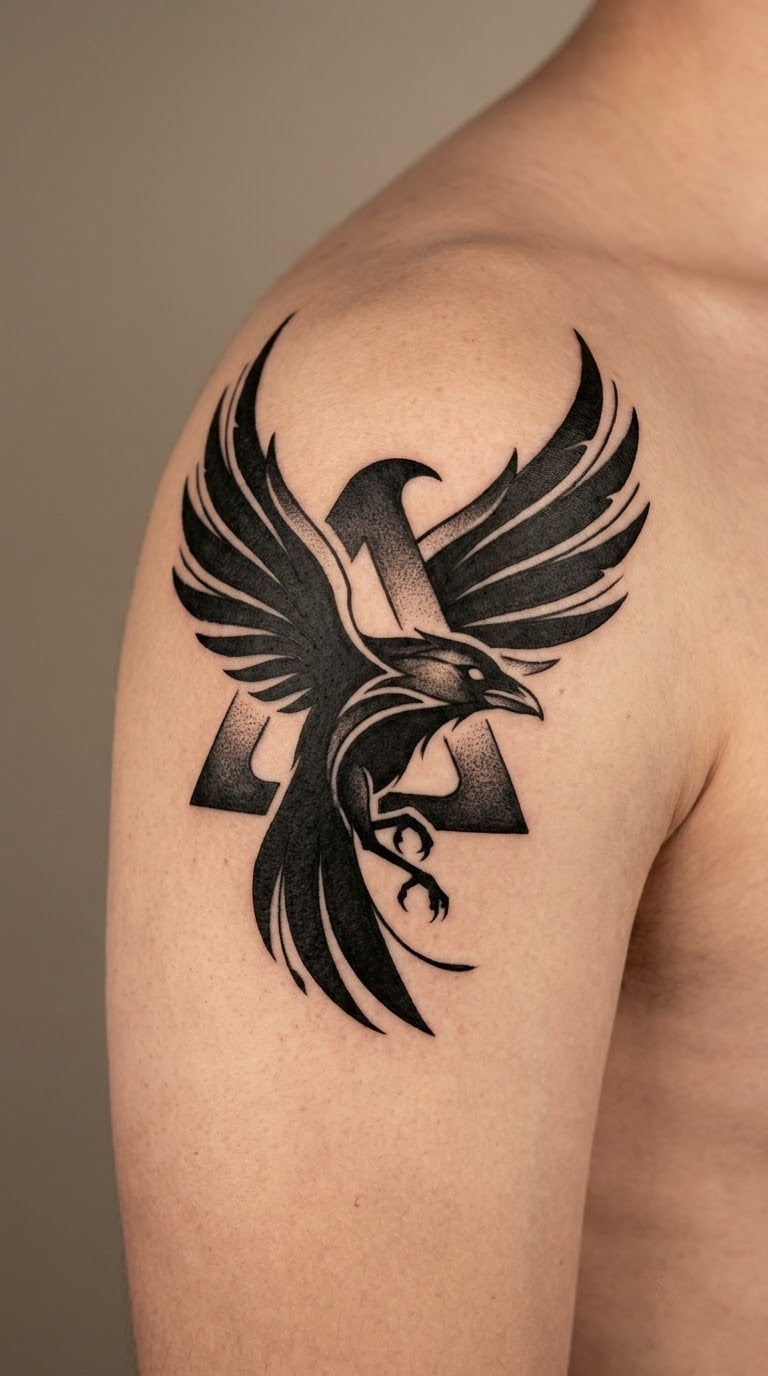
Ravens are usually drawn in side profile with a heavy beak, a solid black body and broad wing feathers separated by white or grey cuts. Blackwork suits them better than any other style, since the design is mostly silhouette with a few internal cuts.
Insight, adaptability and a commanding presence. The raven is also the most Norse-flavoured design here, and if you want that association, the way to go is an artist who works in that idiom rather than borrowing a runic border onto a bird that does not need one.
Placement: outer shoulder, upper back, calf or forearm. Size: 3 to 5 inches (8 to 13 cm). Style: blackwork or traditional. Pain: medium to high, because the shoulder and upper back are awkward positions to hold still in.
Ageing note: feather separation depends on thin white lines, so ask for slightly wider gaps than the reference image shows.
Make it yours: have the wing break into an unfinished outline on one side, trailing off toward the shoulder.
18. Barbed Wire Heart Strength Symbol Tattoo
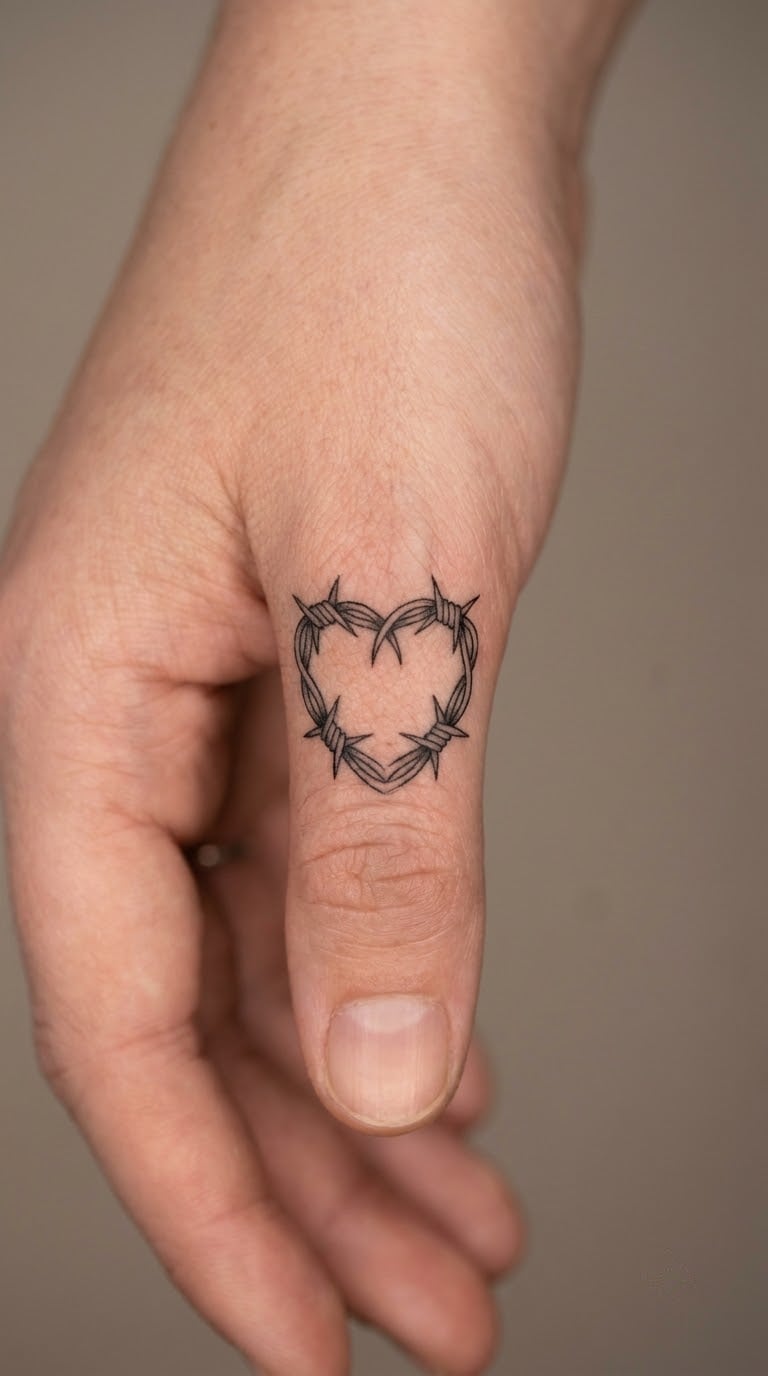
A solid black heart with one or two loops of barbed wire wrapped around it. Fine-line versions draw the wire as a single continuous line with small barb ticks; traditional versions fill the heart and use heavier wire. The fine-line version is far more popular now.
Enduring something difficult and still being whole. It is a memorial design more than an aspirational one, and it carries less about future strength than about what already happened.
Placement: side of the hand, forearm or chest. Size: 2 to 3 inches (5 to 8 cm). Style: fine line or traditional. Pain: medium to high, and the side of the hand is one of the placements people consistently rate as sharper than they expected.
Ageing note: hand and finger tattoos fade faster than arm work because of washing, sun and general wear. Expect to need a touch-up sooner.
Make it yours: unwrap the wire so it trails off into a single line that becomes a matching piece somewhere else on the body.
19. Diamond Strength Symbol Tattoo
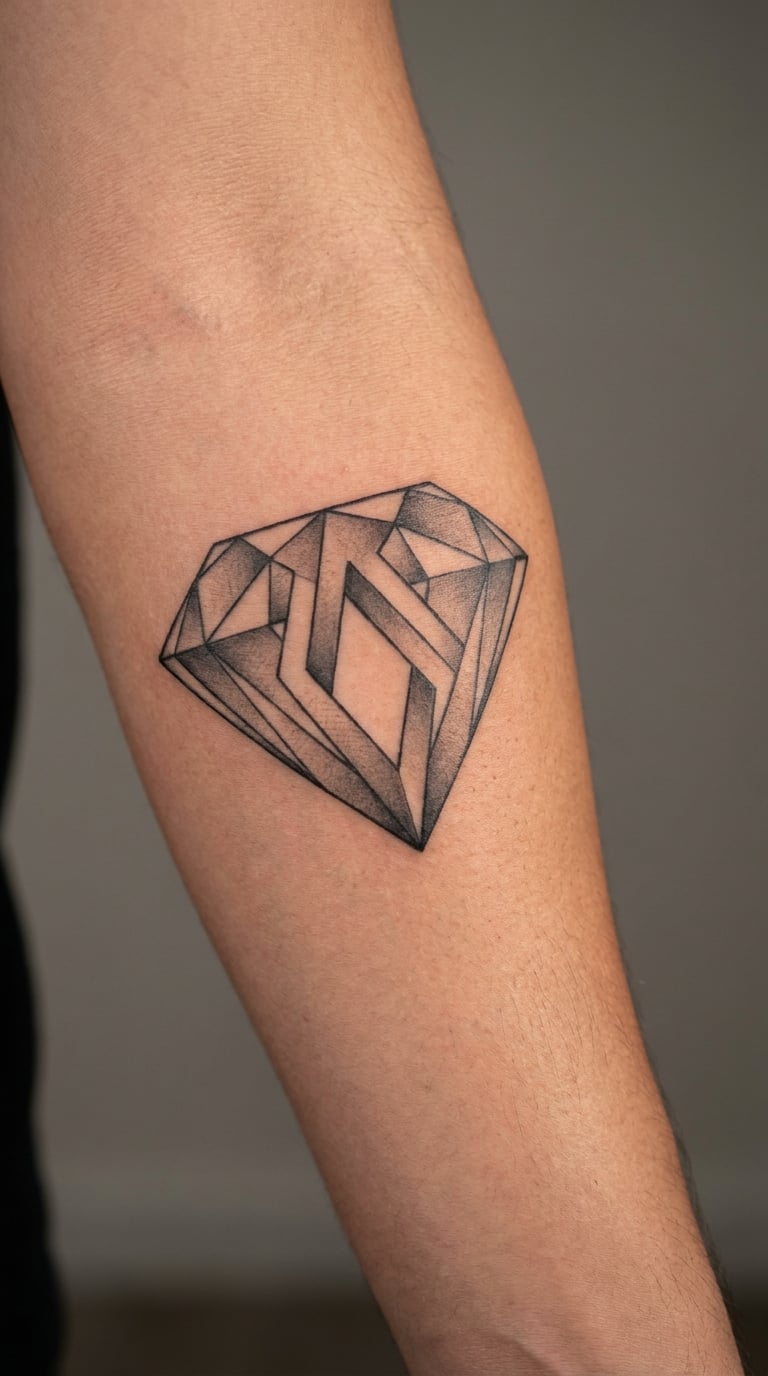
Faceted realism gives a diamond crisp geometric planes with hard white highlights and hard black shadows, and it holds together at small sizes because the shape is pure geometry. Minimal versions trace the outline with a few inner lines. A few people add a band, which is where the durability problems start.
Clarity, resilience and value that holds. It is a more corporate-sounding meaning than the rest of this list, and it is often chosen after a period of making a hard, clear decision.
Placement: forearm, wrist, behind the ear or knuckle. Size: 2 to 3.5 inches (5 to 9 cm). Style: faceted realism, minimal line art or blackwork. Pain: low to medium on the arm, high on the knuckle and behind the ear.
Ageing note: the very light facets take on skin tone as they heal, so expect the highlight to look warmer in year two than in week one.
Make it yours: cut the number of facets down and make each one larger, which is the single most effective way to make a small diamond last.
20. Rising Sun Strength Symbol Tattoo
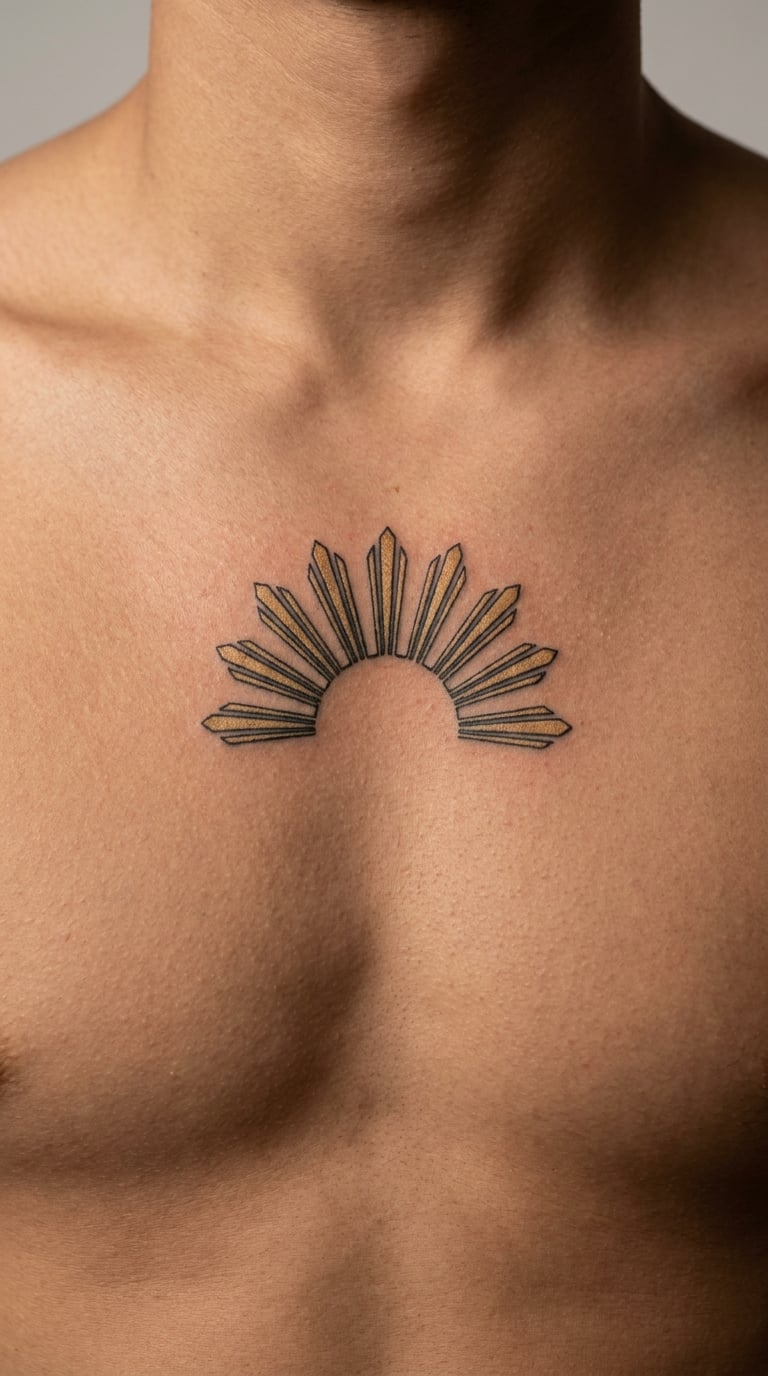
Rising suns are done four ways: colour, with an orange or gold gradient behind black rays; dotwork, with rays built from stippling that fades outward; traditional, with thick black rays and a red centre; or minimal, with a semicircle and five or six short lines. The dotwork version is the most underrated of the four.
Hope, renewal and forward movement, and it is a favourite for the first day of a new year, which is exactly when studios are busiest.
Placement: sternum, upper chest, forearm or calf. Size: 3 to 6 inches (8 to 15 cm). Style: colour, dotwork, traditional or minimal. Pain: high on the sternum and chest because of bone, low to medium on the arm.
Ageing note: light gold and yellow fade first. Black rays will still be sharp long after the colour has gone.
Make it yours: set the sun slightly off-centre on the chest so the rays follow the collarbone line rather than sitting symmetric.
How to Choose the Right Strength Symbol Design
Six things decide whether a design is worth living with for thirty years, and every one of them is easier to check now than after the first session.
- Line weight over detail. Thin lines thicken as they heal and small dots spread into each other. If a design only reads at 1x magnification, it will not read at all in ten years.
- Match the design to the body part. Flat surfaces like the forearm take detail well. The sternum, ribs and inner bicep curve, stretch and compress, which distorts fine linework during healing.
- Size for the detail, not for the space. A wolf head at 3 inches is a smudge. The same design at 4.5 inches is readable from across a room.
- Check it against what is already there. Existing blackwork in the same visual weight will swallow a fine-line piece. Ask for healed photos of the artist’s work, not the fresh ones on their feed.
- Decide on colour deliberately. Black and grey ages more predictably, but it also means a cover-up or a future change of heart is harder. Colour is a commitment.
- Pick a symbol you can explain in one sentence. This comes up constantly in tattoo communities and it is the best filter there is. If you need three sentences, you are not sure yet.
If you want a design that carries a specific personal reference rather than a general idea, our 20 DNA tattoo ideas cover a different kind of personal specificity well.
One more thing that comes up on forums constantly: if your design involves kanji, Sanskrit, runes or any other non-Latin script, have a native speaker confirm the wording before you book. A wrong character is permanent and expensive to cover. The same goes for borrowed motifs such as Indigenous regalia or specific religious symbols, where the meaning belongs to a tradition and not to you. People post about this in r/kanji and r/Symbology constantly, and the advice there is consistent: verify before you sit down.
Cost and Session Time for Strength Symbol Tattoos
Tattoo cost follows size, detail, placement, artist and location, in roughly that order. The two things worth asking at your consultation are the shop minimum and the hourly rate, because almost every quote is one or the other multiplied by the hours the work takes.
- Very small pieces, 1 to 2 inches (3 to 5 cm): about 30 to 60 minutes. Most studios have a minimum charge that a design this small will hit anyway.
- Small to medium, 2 to 4 inches (5 to 10 cm): roughly one to two hours. This covers most of the ideas on this list, including the lion head, the wolf and the anchor.
- Medium, 4 to 6 inches (10 to 15 cm): two to four hours, and a break is normal partway through on a leg piece.
- Larger, 6 inches (15 cm) and up: the phoenix, the rising sun across the chest, anything with colour. Expect half a day and a second session, which is completely standard for a piece this size.
Two things move the price more than most people expect. Placement does: ribs, sternum, spine and the neck usually carry a premium because the position is hard to hold and the skin is thinner. Detail density does too, and a design that can be simplified is usually worth simplifying before the first line goes in rather than after.
Rates vary enormously by city and by how well an individual artist is booked, so the only honest way to get a real number is a consultation where the artist sees the design. Get the total, the hourly figure and the number of sessions in writing before you commit.
Aftercare Basics for a New Symbol Tattoo
Start with your artist’s aftercare instructions, because they will know exactly what they put in your skin and how deep it went. Everything below is general and sits underneath that.
- Wash it, gently and twice a day. Clean lukewarm water and a mild unscented soap, then pat dry with something clean and lint-free. Loose skin that is not washed ends up under the skin or on top of the new tattoo.
- Keep it dry for the first few hours. Most artists will tell you to leave it alone once you have cleaned it, so no soaking, no swimming, no baths, no hot tubs.
- Protect it with clothing, not plastic. A loose layer over fresh ink for the first sleep or two helps if the area catches fabric. Leave any wrap your artist applied on for as long as they said to.
- Apply a thin layer of ointment. A plain ointment rather than a fragranced lotion, and only enough to look slightly shiny. Heavy creams block healing and are the main reason fresh tattoos turn patchy.
- Keep it out of the sun. UV fades colour and softens line work permanently. This matters most for the colour designs here, and it matters on old tattoos too.
- Contact the artist if something changes. Redness that spreads, heat, swelling that increases after a few days, a cloudy or weeping area, or a colour that drops out in a patch. Do not wait it out and do not treat it yourself. If something goes wrong beyond normal healing, your artist should point you to their own aftercare contact or a clinician.
Expect the tattoo to look slightly raised, darker and warmer than you expected for the first week or two. That is not how the healed piece will look, so judging it too early is the most common source of regret.
Frequently Asked Questions
What tattoo symbol means strength the most?
A lion head is the most widely recognised symbol of strength, followed by the phoenix for renewal and the anchor for stability. But recognition is not the same as personal fit, and the most tattooed symbols can feel unoriginal. Choose the one whose meaning you can explain in a single sentence, because that is the version you will still want in ten years.
What is a symbol for inner strength?
Symbols usually read as inner rather than physical strength when they are small, abstract or private in placement. A fine-line north star on the inner wrist, a mountain range on the inner forearm or a single arrow at the wrist all work this way. The small private placement is doing part of the work, so the same symbol on a chest plate reads very differently.
Where should I put a strength symbol tattoo?
Forearm, calf and upper arm are the easiest places to work with, and they age well. Wrist, behind the ear and neck hurt more but hold a fine-line symbol cleanly. Sternum, ribs and inner bicep are the worst for fine detail because the skin moves and stretches there. If the design has tight detail, put it somewhere flat and bone-free.
What size strength tattoo ages best?
Most of these designs need 2 to 4 inches (5 to 10 cm) to survive healing, and anything with fur, facial detail or fine inner lines needs the larger end of that. Small dots spread, thin lines thicken and light colours fade first, so more size always beats more detail. A simplified design at a larger size will outlive a detailed one at a smaller size every time.
Do small strength symbol tattoos last?
They last, but they change. Hand, finger and foot placements fade faster than arm work because of washing, sun and rub, and very fine line work blurs within a few years. A small piece also has less to lose visually if you decide you want something bigger later, which is why a small first tattoo is a genuinely good testing ground rather than a compromise.
What size is right for a first tattoo?
For a first tattoo, somewhere between 2 and 3 inches (5 and 8 cm) on the forearm, outer arm or calf is the sweet spot. Large enough that the design is legible, small enough to finish in one sitting, and on a placement that heals predictably. Avoid the hands, neck, ribs and sternum for a first piece unless you already know you want a difficult session.
Conclusion
If this is your first symbol, start small and simple. A fine-line north star, a single arrow or a minimal mountain range at two to three inches on the forearm finishes in one sitting, heals predictably and gives you a real sense of how you handle a tattoo before you commit to something large.
If you are adding to an existing collection or you want the piece to be the piece, go bigger and bolder: a black and grey lion head, a blackwork raven across the shoulder or a colour phoenix on the shoulder blade. Those are the designs people still point at years later.
Whichever way you go, match the design to the placement, keep the line weight honest, and pick the symbol whose meaning you could say out loud in one sentence. That last test does more work than any of the rest.