
How Long Does a Small Tattoo Take? Timing and Size Guide 2026
Most small tattoos take 15 to 60 minutes of actual needle time, and you should budget one to two hours for the full studio visit once the consultation, stencil placement and aftercare are counted. Quicker than most people expect, but not instant.
So how long does a small tattoo take, really? The short answer sits above, and the honest one depends on detail, placement and how much setup the studio folds into the booking. That gap between needle time and appointment time is where nearly every first-timer gets caught out. You plan your afternoon around forty minutes, and then you are sitting in a chair for two, wondering whether your artist is running slow. Usually they are not.
This guide breaks the answer down by size, detail, colour, placement and the preparation work that happens before a needle ever touches you. I will stick to ranges rather than fake precision, because the honest answer is that no artist can promise a number before they see the design and the placement.
How Long Does a Small Tattoo Take?
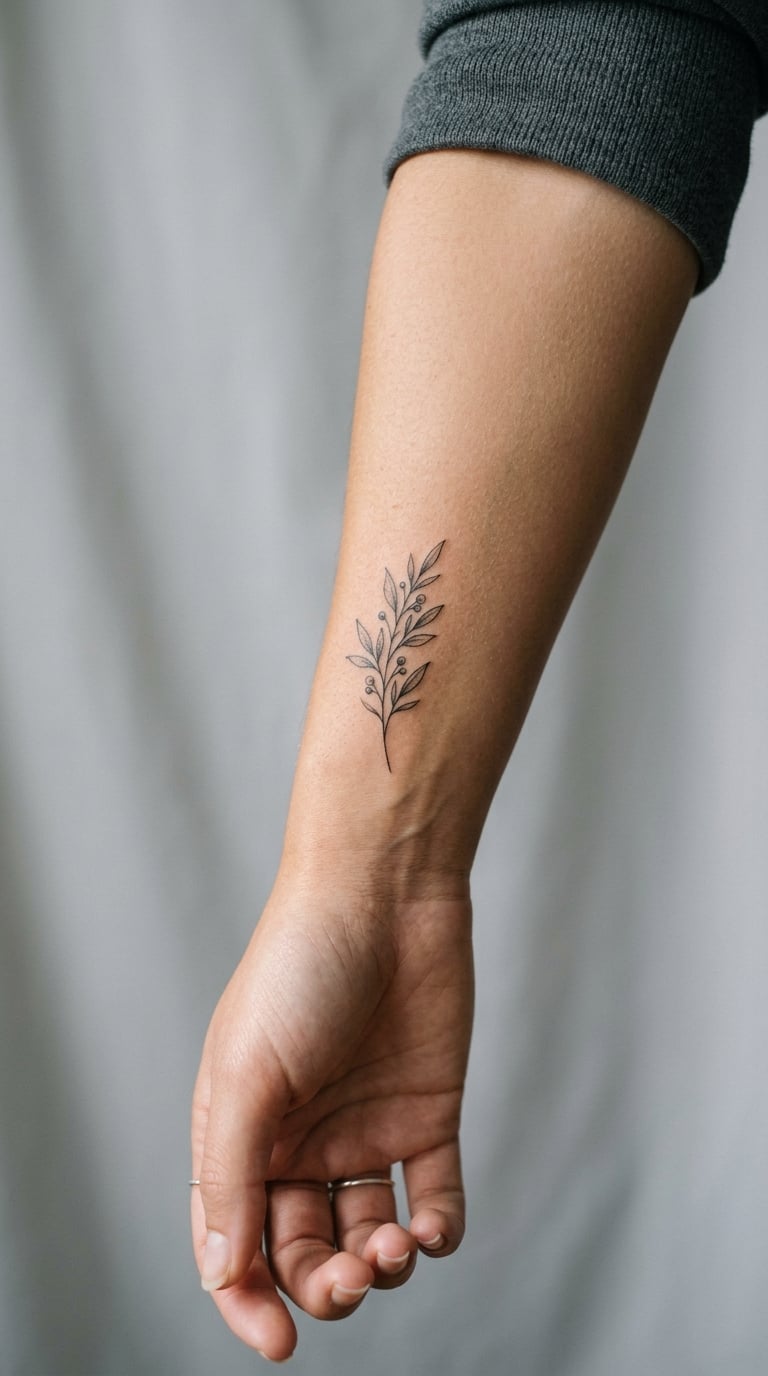
Here is the honest range, broken into the three parts that matter. Most artists quote from these same three buckets.
- Needle time: 15 to 60 minutes for a small, simple design.
- Prep and setup: 20 to 40 minutes for the consult, stencil placement, skin cleaning and ink setup.
- Total visit: 1 to 2 hours door to door for a small tattoo.
Where the time actually goes in a typical ninety-minute appointment:
- Consult and reference check: 5 to 15 minutes
- Stencil transfer and placement on the skin: 10 to 20 minutes
- Skin preparation, sanitising and ink setup: 5 to 10 minutes
- Tattooing itself: 15 minutes to 2 hours, depending on detail density
- Aftercare walkthrough, photos and cleaning: 5 to 10 minutes
That works out to roughly a quarter of a short appointment spent on things that are not the tattoo. It also explains the most common complaint in tattoo communities: clients plan for the needle time and then feel cheated by the overhead. r/tattooadvice threads about short sessions almost always come back to this arithmetic.
A dense, coloured or finely detailed small design is a different animal. Those routinely run one and a half to three hours of chair time even at a compact size, because the work is measured in passes and layers rather than square centimetres.
If you want to see what this looks like on real skin at a compact scale, the guide to how small a tattoo can be walks through the size thresholds artists actually work to.
What Determines the Appointment Time?
Size is the least useful of the variables. A five-centimetre design packed with stipple shading takes far longer than a fifteen-centimetre single-line outline. Here is what actually moves the clock.
Detail density beats surface area
A bold black outline goes down fast. Fine line work, hair-by-hair rendering, dotwork, filigree and stipple shading all mean the needle changes direction constantly, and that is where hours disappear. A small piece can be quick in size and slow in practice.
Colour and shading add whole layers
Black and grey work needs at least one pass, often two for solid black. Colour means packing, blending and often a second sitting for saturation and fixing. A small colour piece routinely takes double the time of the same design in blackwork alone.
Placement decides how often you have to stop
The needle needs skin that holds still. Wrinkles, joints, a ribcage that rises with each breath, an area that moves when the client shifts position all force the artist to stop, reposition and wipe. That downtime is invisible on the finished piece and easy to forget when you read an estimate.
Skin type and line weight
Thicker, oilier skin takes more passes to build solid black. Very fine single-needle lines that read beautifully in a photo can need a second pass, and the artist has to be deliberate rather than fast.
Prep, breaks and the setup involved
Custom work is drawn or redrawn in front of you on the day. Reference chasing, stencil fiddling, a client who needs a break, a short nap for a nervous first-timer: all of it adds to the booking, and your artist will usually book a slot with a little padding in it for that reason.
Whether it is one piece or part of a bigger plan
If the small tattoo is the first stage of a larger piece, the artist may build in extra time for freehand placement and showing you how the finished composition will read. People researching full work usually want the sleeve timing guide, which covers the multi-session side properly.
How Long Does a Small Tattoo Take by Size?
Use this as a starting conversation with your artist, not a promise. Every column assumes a reasonably simple design in black or black and grey.
| Size | What it looks like | Typical needle time | Time to book out |
|---|---|---|---|
| Under 2 cm | A tiny symbol, initial, dot or single small star | 5 to 15 minutes | 45 to 60 minutes |
| 2 to 5 cm | A small icon, minimal flower, heart, small animal, one word of script | 15 to 30 minutes | 1 to 1.5 hours |
| 5 to 8 cm | A compact fine-line design, a small botanical piece, a simple mandala segment | 30 to 60 minutes | 1.5 to 2 hours |
| 8 to 12 cm | A small detailed piece, a shaded rose, a small illustrative animal | 1 to 2 hours | 2 to 3 hours |
| 12 cm and up | Illustrative work, colour pieces, anything with a grey gradient or colour packing | 2 to 4 hours, sometimes split into two sittings | Half a day or a second appointment |
How long does a small tattoo take in each booked slot?
This is the reverse question, and it is the one most first-timers actually want answered. Working backwards from a booked slot:
| Booked session | What usually fits | What will not fit |
|---|---|---|
| 30 minutes | Under 2 cm, single element, minimal detail | Anything with shading, colour or more than one line direction |
| 1 hour | 2 to 6 cm, simple icon, short word, single-subject linework | A dense mandala, a shaded flower, anything in colour |
| 2 hours | 6 to 10 cm, moderate detail, black and grey with light shading | Heavy stipple, portraits, colour realism |
| 3 to 4 hours | 10 to 15 cm, detailed illustrative work, a full colour piece | Multi-element compositions that still need a second sitting |
If your slot is shorter than the design needs, a good artist will say so at the consult rather than rush it. Shrinking the design to fit the time is usually the better outcome.
Which Placements Usually Take Longer?
Placements fall into two groups: flat, still, easy-to-reach areas, and everything else. Wrist, inner forearm, upper arm, calf and shoulder are quick. Ribs, collarbone, spine, hands, fingers, ankles and the side of the neck are slow.
Placements that slow a session down
Ribs move with every breath, so the artist works between movements. Spine and the lower back are hard to reach and easy to smear before the ink settles. Ankles and the tops of feet have bone right under thin skin and are awkward to hold still. The neck and throat are tense for many clients, and tension shows up as movement.
Hands and fingers need slow, deliberate single-needle work in a small area, and the client is usually fighting the urge to pull back. They also fade faster than most placements, which is worth knowing before you commit.
Placement, time and pain at a glance
Pain ratings below are general impressions, not a promise. Everyone’s experience differs, and pain has much more to do with placement than with the size of the design.
| Placement | Estimated needle time for a small design | Pain impression |
|---|---|---|
| Inner forearm | 15 to 40 minutes | Low to moderate |
| Upper arm or shoulder | 20 to 50 minutes | Low to moderate |
| Calf or thigh | 20 to 45 minutes | Mild, ticklish on the inner thigh |
| Back of the shoulder | 25 to 50 minutes | Moderate |
| Chest | 25 to 50 minutes | Moderate, harder on the sternum |
| Wrist | 20 to 45 minutes | Moderate, sensitive near the bone |
| Collarbone | 30 to 60 minutes | Moderate, the bone is close to the surface |
| Ribs | 40 to 90 minutes | Moderate to high |
| Spine and lower back | 45 to 90 minutes | Moderate |
| Ankle or top of foot | 30 to 60 minutes | Moderate to high |
| Neck or throat | 30 to 60 minutes | Moderate to high |
| Fingers and hands | 45 to 90 minutes | High, and detail is very fine |
One thing worth saying plainly: a longer session does not mean a better tattoo. Rushing is the thing to avoid, and plenty of small, quick pieces are excellent work.
How Much Does a Small Tattoo Cost?
Most studios charge one of two ways: a flat price per piece, or an hourly rate. In most US cities a small simple tattoo lands somewhere around 80 to 200 USD, and hourly rates commonly run 100 to 250 USD. Prices vary a lot by city, shop and artist, so treat these as orientation rather than a quote.
| Design | Typical US price range |
|---|---|
| Tiny symbol or initial, under 2 cm | 80 to 150 USD |
| Small icon or short word, 2 to 5 cm | 100 to 200 USD |
| Small fine-line or black and grey piece, 5 to 8 cm | 150 to 300 USD |
| Colour piece or shaded illustration, 8 to 12 cm | 250 to 500 USD, sometimes quoted per session |
Why a tiny tattoo can cost as much as a big one
The shop minimum is the reason. Nearly every studio has a floor price that covers the artist’s set-up, sterilising, stenciling and the booked slot, and a fifteen-minute tattoo still triggers it. If you have ever been quoted the minimum for something that took ten minutes, that is the explanation, and it is not a trick.
On hourly billing the same thing happens. A dense five-centimetre design that takes two hours of careful shading costs more than a plain fifteen-centimetre outline that takes forty minutes, because you are paying for the hour, not the square centimetre. Artists in tattoo forums are blunt about this: nobody quotes per centimetre.
Tipping is a separate habit and a common source of confusion. A standard tip is around ten to twenty percent of the total, and many clients add more when the work is detailed or the session runs long.
How Long Does a Small Tattoo Take to Heal?
Session time and healing time are two completely different clocks. A tattoo can be finished in half an hour and still be settling weeks later.
| Stage | Typical timing | What it looks like |
|---|---|---|
| Fresh | First 24 hours | Red, raised and tender, with ink on the surface |
| Weeping and settling | Days 2 to 5 | Oozing clear fluid, forming a protective film |
| Peeling | Days 5 to 14 | Dry, flaking skin; the design looks dusty and patchy |
| Visible tattoo | 3 to 4 weeks | The design reads clearly once the flakes are gone |
| Settled and healed | 6 to 8 weeks | Full colour depth and smooth skin; this is the true result |
Two things people consistently get wrong: judging a fresh tattoo, which always looks angry and duller than the finished work, and going to a beach, pool or sauna in the first two weeks. Follow your artist’s aftercare instructions over anything you read online, including this. Our full healing and aftercare guide covers the detail.
Plan a touch-up after four to six weeks rather than sooner, and expect it to be short, usually fifteen to thirty minutes.
How to Prepare for a Small Tattoo Appointment
Most delays in a small session come from things you can sort out the night before.
- Send your reference and the size in centimetres. An artist needs both to quote honestly. “Small forearm tattoo” is not enough; a specific size and a clear placement is.
- Eat beforehand and drink water. Low blood sugar and dehydration make a short session feel much longer than it is.
- Skip alcohol for 24 hours. It thins the blood and dilates the skin, which affects both bleeding and how the ink settles.
- Sleep. A tired client is a flinching client, and flinching costs time.
- Wear clothing that gives easy access. A tight collar or a sleeve you have to fight your way out of adds minutes to a thirty-minute job.
- Agree break times in advance. Say how often you want to stop. Artists appreciate being told rather than guessing.
- Ask what the session includes. Consult, stencil, the tattoo itself and aftercare. If you only wanted the needle time, you now know what the rest of the hour is for.
- Confirm the estimate in writing. If the artist quotes 45 minutes, ask what happens if it runs to 90. Nobody minds the question.
On the day, ask the artist to place the stencil and check it with you before any ink goes in. That check costs five minutes and prevents the single most common regret in small tattoos: a design that is not quite where you wanted it.
Mistakes to Avoid
Picking a design with more tiny detail than you actually want. A dense five-centimetre design is harder to execute and harder to read at that size. Simpler reads better and finishes faster.
Arriving with no clear reference. Artists cannot design on the spot to a vague idea, and the consult runs long. Bring at least one image you actually like, plus the placement in mind.
Booking a slot that is too short. A 30-minute booking for a 60-minute design guarantees either a rushed piece or a second session. Ask for the estimate before you book, not after.
Reading the design too early. The first two days are the worst-looking phase of every tattoo. Judge it at week four, and let your artist judge it at week eight.
Assuming every small tattoo is quick. Small only means compact. Detail, colour and awkward placement all add time regardless of size.
Skipping the questions about price. Ask how the studio charges, what the minimum is and what a tip looks like before the work starts, not after. It saves everyone the awkward part.
Forgetting that the design may take lead time. Custom work is often drawn and refined before the appointment, and that lead time can be weeks.
Frequently Asked Questions
Can I get a small tattoo done in 30 minutes?
Yes, if it is under about 2 cm and simple, such as an initial, a tiny symbol or a small dot. A single bold line or a minimal icon fits comfortably. Anything with shading, colour or several line directions will not fit in that slot without rushing, and a good artist will tell you so at the consult and offer a longer booking or a simplified design instead.
How big is a one hour tattoo?
Roughly 2 to 6 cm across, and simple in structure. In that hour you are looking at a short word, a small icon, a single-subject line drawing or a minimal botanical. A dense mandala, a shaded flower or anything in colour will run past the hour, even at the same size, because detail density rather than surface area drives the time.
What size tattoo takes two hours?
Around 6 to 10 cm, with moderate detail, usually in black and grey with light shading. Two hours also covers a smaller design that needs colour packing or a second pass. If your design is larger than 10 cm or heavily illustrative, plan on three to four hours or ask the artist to split it into two sittings.
Why does my small tattoo take so long?
Usually one of four things: high detail density, colour or shading layers, a placement that forces the artist to stop and reposition, or appointment overhead. The last one surprises people most. A 30-minute job can sit inside a 90-minute booking because the consult, stencil placement and aftercare are not optional. Ask your artist to break the estimate into those parts if it feels off.
Do small tattoos hurt less than big ones?
Not reliably. Pain tracks with placement, skin thickness and how tense the client is, not with how long the needle is on you. A tiny design on the ribcage, the spine or a finger can be more uncomfortable than a large piece on the upper arm. The good news is that a small session is usually over quickly, and breaks can be arranged.
How long should I block off for the appointment?
One to two hours for a small, simple tattoo, and up to three for a detailed, shaded or coloured piece. If you can only spare ninety minutes, tell the artist in advance so the design is scoped to fit. Walking out mid-piece because the day was booked too tight is the outcome worth avoiding.
What to Do First
Send your artist the design, the placement and the size in centimetres before you book anything. That message is what turns a vague “how long does a small tattoo take?” into a real estimate, and it takes you five minutes.
Then book for the full visit, not the needle time, and give yourself a few weeks before you judge the result.