
How Long Do Tattoos Take to Heal? Essential Aftercare Guide 2026
Most tattoos look healed on the surface in two to four weeks, and the ink keeps settling into the deeper layers of skin for another two to six months after that. So the honest answer to how long do tattoos take to heal is two answers at once: quick on the outside, slow underneath.
That gap is where most of the panic happens. Day six, a tattoo looks dull, milky and slightly patchy, and the owner assumes the ink is falling out. It is almost never falling out. It is a fresh layer of skin forming over the work, and the colour comes back up through it over the following weeks.
If you are planning around a trip, a pool, a gym schedule or a wedding, count backwards from the date. A small piece needs about a month of careful handling, a large back piece needs three, and neither is finished until the skin underneath stops adjusting. I will walk through the week-by-week timeline, then the placements and tattoo sizes that change the answer.
How Long Do Tattoos Take to Heal by Week?
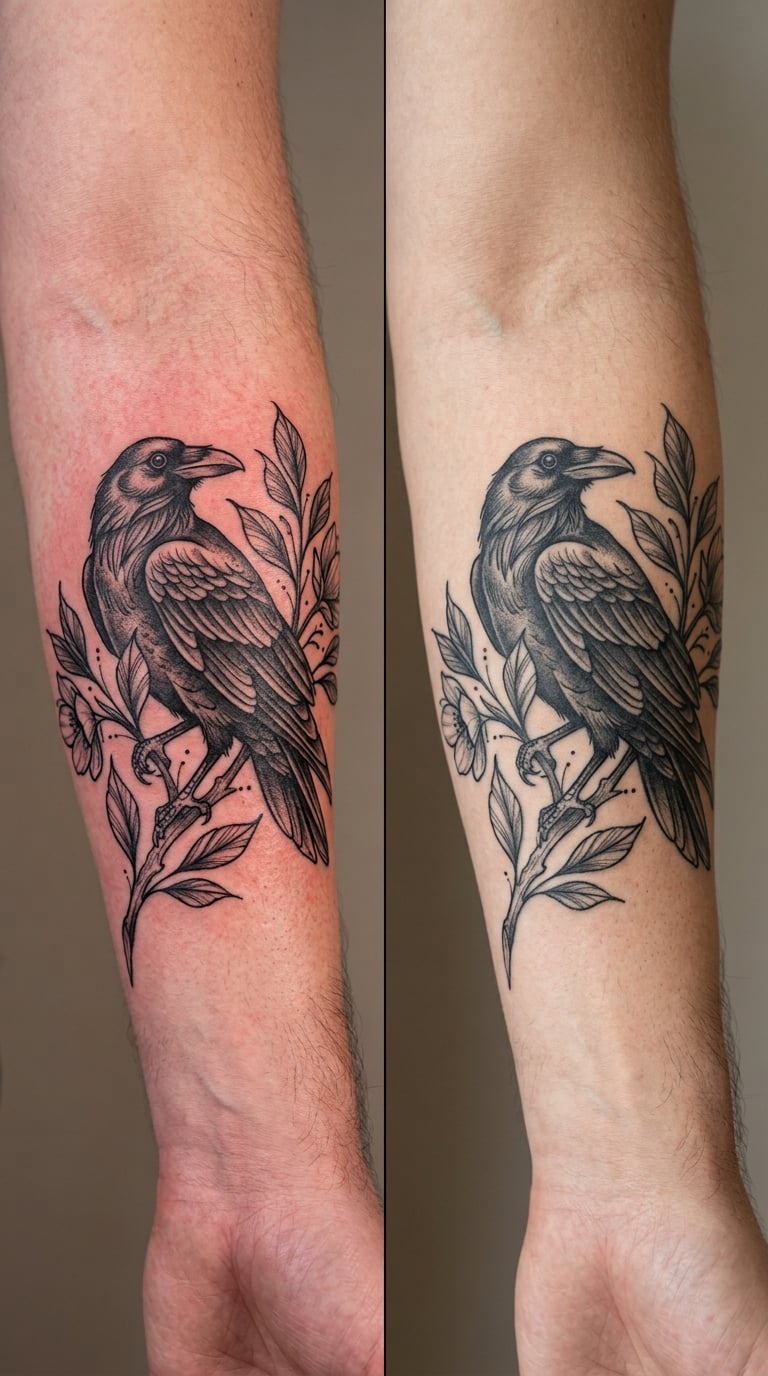
Surface healing runs two to four weeks for most people. Beneath the surface, the dermis rebuilds itself and pushes the ink particles into a stable position over roughly three to six months, and on large or deep pieces that can stretch closer to a year. A tattoo is genuinely done healing when the skin feels like ordinary skin again, not when the scab falls off.
Tattoo Healing Timeline by Week: What Is Normal at Each Stage
This is the lookup table I wish every client had on their phone in week one. Read the right-hand column before you start worrying about the middle one.
| Time | What you see | What to do |
|---|---|---|
| First 24 hours | Redness, swelling, warmth, and a clear or pale yellow fluid called plasma weeping from the lines | Leave whatever covering your artist applied alone, or clean gently if they told you to remove it |
| Days 2 to 7 | Peeling and flaking begin, often in sheets that look alarming. Itchy and tight. Some people scab lightly | Wash with unscented soap, pat dry, moisturise a thin layer a few times a day. Never pick or peel |
| Days 5 to 10 | The dip. Ink looks faded, grey or milky, as new skin sits on top of it | Keep going. This is the hardest stretch visually and it passes |
| Weeks 2 to 4 | Flaking slows and stops. The surface closes and colour starts returning to normal | Switch to lighter care. Sun protection becomes the priority now |
| Weeks 4 to 8 | Skin looks and feels ordinary. Slight dull sheen can linger for a couple of months | Resume normal activity, keep the new skin covered in strong sun |
| Months 3 to 6 and beyond | Deep settling. Colour deepens and evened-out lines soften slightly | Ask your artist about touch-ups only after this point, never before |
Individual results vary with placement, size, skin type, sun exposure and how consistently you cared for it. The table is a map, not a deadline.
Tattoo Healing Time by Placement
Where the tattoo sits changes the job your skin has to do. A placement that flexes all day, gets shaved, rubs against fabric or sits on a joint keeps getting irritated, so it stays tender longer and is more likely to heal patchy.
| Placement | Typical surface healing | Why |
|---|---|---|
| Upper arm, outer thigh, calf | 2 to 3 weeks | Still skin with relatively little daily movement |
| Inner forearm, shoulder, back of the shoulder | 2 to 4 weeks | Mostly still, but often under a sleeve or shirt that rubs |
| Chest and sternum | 3 to 4 weeks | Skin moves with breathing and sits under fabric |
| Lower back | 3 to 4 weeks | Deep work over bone and a spot many people scratch unconsciously |
| Ribs and side torso | 4 to 6 weeks | Ribcage stretches and compresses constantly, and the skin here is thin |
| Neck, throat, collarbone | 2 to 4 weeks | Constantly exposed to sun, shaving and movement |
| Wrist, elbow, knee, ankle | 4 to 6 weeks | Joint skin bends every time you use the limb, so the scab keeps cracking |
| Hands, fingers, feet | 4 to 6 weeks | Frequent washing, sun, and constant use. Fine lines here fade faster over the years |
A palm design needs all that patience, which is exactly what a gallery of 22 palm tattoo ideas that heal bold should be judged by. Thick black linework on a palm fades faster than the same linework on a forearm, and picking the right artist for that is worth more than any aftercare product.
Tattoo Pain by Placement
Pain is not a sign of a good tattoo. It is a signal about nerve density, skin thickness and how long you sat still, and it says nothing about how well the work will age. Everyone’s threshold is different, and two people getting the identical design on the same day will describe it differently.
| Placement | Expected discomfort |
|---|---|
| Outer upper arm, calf, thigh | Low |
| Inner forearm, shoulder, back | Low to medium |
| Chest, collarbone, lower back | Medium |
| Neck, ribs, side torso, sternum | Medium to high |
| Spine, armpit, elbow, knee, ankle | High |
| Fingers, hands, feet, face, near the elbow crease | High to very high |
Keep the difference between session pain and healing tenderness in your head. Session pain ends the minute the needle stops. Tenderness during healing fades with the scabbing and the itching, usually easing by around day ten to fourteen. Tenderness that gets worse after that, rather than better, is the thing worth raising with your artist.
Sessions matter too. A four-hour sitting on ribs is not more painful per minute than a one-hour forearm piece, but your body is under more strain by the end of it, so ask for breaks.
What Affects How Long a Tattoo Takes to Heal?
- Size. A large piece covers more ground, takes longer per sitting and settles for longer afterwards.
- Depth and style. Bold black, heavy colour and grey wash put more ink into the skin, and black and grey work generally heals without the patchiness colour shows. Fine line and single-needle detail sit closer to the surface and show any irritation quickly.
- Placement. Joints, ribs, the spine and the lower back all take longer, as the table above shows.
- Skin type. Oily skin tends to reject ink more readily, while very dry or sun-damaged skin slows surface recovery.
- Sun exposure. UV hits new skin hard. Exposure in the first weeks is the single biggest avoidable cause of patchy healing.
- Movement and friction. Tight clothing, a bra strap across a fresh chest piece or a wristband on a wrist tattoo will undo careful aftercare in a day.
- Sleep and food. Skin rebuilds during sleep. Short nights and skipped meals show up in the mirror as a slower, duller recovery.
- Smoking. Smoking slows blood flow to the skin and is the most commonly reported self-inflicted delay.
- Aftercare consistency. The routine does not have to be elaborate. It does have to be done every day, including on days when the tattoo looks fine.
How to Care for a New Tattoo
Every studio gives aftercare instructions and yours wins. Where studios disagree, here is the routine most of them are describing.
- Follow your artist’s written and verbal instructions. They know how deep they went and what they used.
- Wash with unscented, fragrance-free soap, ideally one that does not need to be rinsed off heavily. Use lukewarm water.
- Pat dry with a clean towel or paper. Rubbing with a terry cloth or paper towel lifts the new skin.
- Apply a very thin layer of a plain, water-based moisturiser several times a day while the skin is flaking. A thick waxy or petroleum-based layer traps heat and ink under the surface, which is why some studios warn against it outright.
- Do not pick, scratch or peel. Every scab you pull is a small scar and a patch of missing ink.
- Wear loose clothing over the area, and change out of anything damp.
- Keep it out of prolonged sun and skip tanning beds while the skin is new. Once healed, a broad-spectrum SPF keeps the colour where you want it.
- Let it breathe. Loose gauze for sleeping is fine if your artist suggested it. So is air.
If your artist applied a derm bandage, a film that seals the tattoo under a second skin, follow the product rules instead of washing on day one. A lot of people in the r/tattoo forum thread on average healing times describe the film route as the calmest two or three days, and the no-wash period is the whole point of the product. Ask your artist which track you are on before you clean anything.
How Long Do Small, Large, and Deep Tattoos Take to Heal?
Size changes the surface window far more than most people expect. A small fine-line piece that takes three weeks surface can keep adjusting for months, and a large sleeve that looks finished at week six may still be settling at month six.
| Tattoo type | Surface healing | Settling |
|---|---|---|
| Small fine-line, 2 to 3 inch | 2 to 3 weeks | 2 to 3 months |
| Small to medium colour piece | 2 to 4 weeks | 3 to 4 months |
| Bold black or grey wash | 3 to 4 weeks | 4 to 6 months |
| Large piece on the back, thigh or calf | 4 to 6 weeks | 6 to 9 months |
| Half sleeve or full sleeve | 4 to 8 weeks | 6 to 12 months |
| Cover-up over old ink | 4 to 6 weeks | 6 to 12 months |
These are the pieces worth planning a whole season around. If you like the look of a full sleeve, it helps to read a gallery of 70 beautiful patchwork tattoos so you can see how densely packed designs behave on skin.
When Does a Tattoo Look Fully Healed?
Surface healed is easy to spot. Fully healed takes longer and never comes with a clear line.
Signs of a healed tattoo:
- No more acute redness, warmth or raised swelling.
- Scabbing, peeling and flaking have completely stopped.
- Itchiness has gone, apart from the odd dry patch.
- It feels like ordinary skin under your fingers, not tight or raised.
- The colour has evened out, and any sheen has faded.
The catch is that the top layer can look finished while the deeper skin is still remodelling. A faint sheen and a little softness in the lines can persist for a couple of months, particularly on large pieces. If you ask your artist for a touch-up at week three, the honest answer is usually to wait. Judging the work at month six is fairer to both of you, and it protects a design that was never meant to be touched up.
Colour lovers should look at the same idea in a calmer set. A gallery of 95 palm tree tattoo designs shows how much the finished look depends on giving the ink months rather than weeks to settle.
How Much Does a Tattoo Cost to Heal?
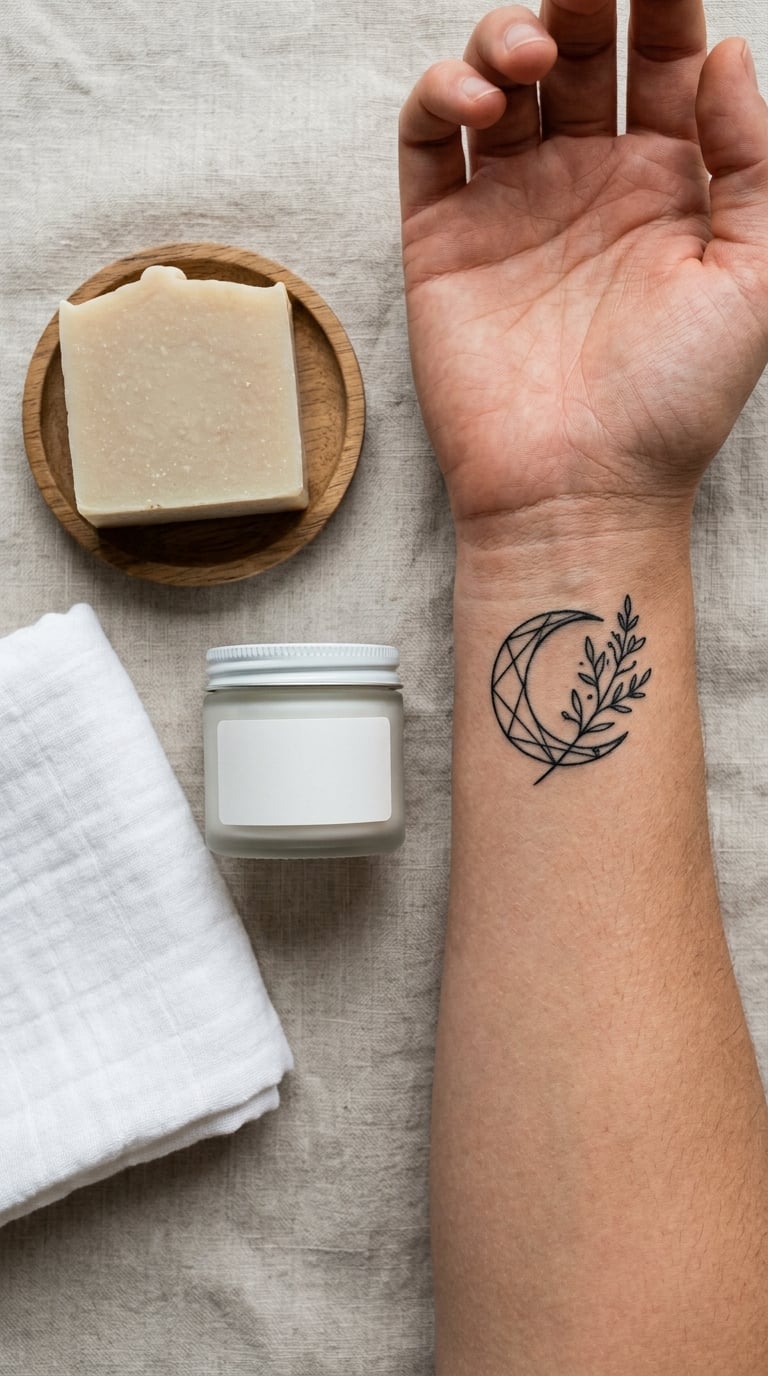
Healing itself has no fee. There is nothing to pay for scabs flaking off. What costs money is the handful of aftercare items, any travel you do to see your artist, and touch-ups you would not have needed if you had waited out the settling period.
Typical US prices for tattooing by size, so you can judge what you are looking at:
| Size | Typical US price in dollars |
|---|---|
| Small fine-line, 2 to 3 inch | 100 to 300 |
| Small to medium colour piece | 250 to 700 |
| Half sleeve | 1500 to 4000 |
| Full sleeve | 3000 to 9000 |
| Large back, thigh or calf piece | 2000 to 8000 |
| Cover-up session | 400 to 1200 per session |
Overheads during healing are modest. A bottle of unscented moisturiser runs roughly 8 to 20, a tube of broad-spectrum sunscreen about 12 to 25, and most artists include a touch-up within the first few months. Shop minimums and hourly rates vary widely by city and by artist, so a quote from a studio you trust beats any figure here.
Mistakes to Avoid
- Covering a fresh tattoo too early or too tightly. Condensation under a wrap is worse than air.
- Soaking, swimming or sitting in a bath. Standing water and pool chemicals hit an open skin barrier hard. Wait until the surface is fully closed, usually two to three weeks, and confirm with your artist.
- Picking scabs or peeling flakes. That is the fastest route to a patchy healed result.
- Harsh or fragranced products. Perfumed soaps, scented lotions and heavy oil-based balms irritate new skin.
- Prolonged sun on fresh ink. A sunburn on a healing tattoo can leave permanent light patches.
- Changing advice every few days because four different sources say four different things. Your artist’s instructions, written down, are the baseline.
- Rough house with the area while the scab is on. If you are the type to pick, do not go out in a fitted top for the first two weeks.
Showering is the one that worries people most and it is the least dramatic. Keep the water short, lukewarm, and keep the soap fragrance-free, and go easy on the first couple of washes. Gym sessions can usually resume once the flaking is done and nothing is sticking to clothing, but skip the shared benches and the communal showers for now.
One last thing. If you see spreading redness, warmth, pus, a foul smell, a fever, or pain that keeps building instead of fading, stop guessing from photos. Message your artist, and talk to a healthcare professional. Nobody will think less of you for asking early, and that is the entire reason aftercare advice exists.
Frequently Asked Questions
Can a tattoo look healed but still be healing underneath?
Yes, and that is the normal state of a tattoo for months. The outer skin can close in two to four weeks while the dermis underneath rebuilds and shifts the ink into position for another two to six months. On a large or deep piece that stretches closer to a year. A slight sheen and soft-looking lines are signs of settling, not damage.
Why is my tattoo still itchy after the scabbing has stopped?
Itchiness usually peaks around days four to ten and eases once the flaking finishes, because new skin is still tight and dry. If the itch stretches well past three or four weeks, or comes with a rash or weeping, message your artist rather than treating it yourself. A plain water-based moisturiser applied in thin layers is usually enough for the ordinary version.
Can I exercise or swim while a new tattoo is healing?
Wait until the surface is fully closed, usually two to three weeks, and ask your artist first. Avoid pools, hot tubs and ocean water for longer, since soaking and chlorine are harder on new skin than a quick shower. Light exercise can often resume once nothing is sticking to your clothes, but skip shared showers and sweaty gear for now. Keep the area covered in strong sun.
Why do some tattoos take longer to heal than others?
Size, placement, depth and style all matter. Bold black, grey wash and colour deposit more ink, so they need longer. Joints, ribs, the spine and the lower back heal more slowly because that skin flexes all day. Friction from clothing, sun exposure, smoking, short sleep and inconsistent aftercare all add time. Two people with the same design can be a full month apart.
Does tattoo darkness or style change the healing time?
Heavily saturated and black work usually heals without the patchiness that colour shows, but it takes longer to settle because more ink sits in the skin. Fine-line and single-needle detail sits closer to the surface, so it looks finished sooner and shows irritation quickly. Cover-ups over old ink take the longest of all, since two layers of tattoo have to settle together.
When should I contact my tattoo artist or healthcare professional?
Message your artist for anything tattoo-specific: a tattoo that looks patchy long after flaking stopped, a line that has lost ink, or aftercare you are unsure about. Contact a healthcare professional for spreading redness, increasing pain, pus, a foul smell, chills or fever. Never try to diagnose an infection from a photo yourself, and never switch aftercare products because someone online disagreed with your artist.
Take a photo of the tattoo on day one, then leave it alone. Wash it once or twice a day, moisturise thinly, keep it out of the sun, and give it a full month before you judge anything, six months before you ask for a touch-up. Everything else in this guide is detail on top of those four habits.