
How Much Does a Half Sleeve Tattoo Cost? 2026 Price Guide
How much does a half sleeve tattoo cost? In the United States most half sleeves land somewhere between $800 and $3,500 all in, with simpler black and grey work at the low end and detailed full-colour pieces, or artists with a long waitlist, at the high end. Most take 8 to 15 hours spread across two to four appointments.
A half sleeve is a connected design covering roughly half the arm. It is usually shoulder to elbow on the upper arm, or elbow to wrist on the lower arm and forearm. Because it is one of the largest pieces that fits on a single limb, it is priced by time rather than by size of a small piece, and that is where the number comes from.
Updated for October 2026.
Half Sleeve Tattoo Cost: What to Expect
The quote is an hour estimate multiplied by an hourly rate. Artists working by the hour charge $80 to $150 in smaller markets and $150 to $250 in cities, with in-demand names running $250 to $400 or more. A black and grey half sleeve at $150 an hour across 9 hours is $1,350 before anything else.
Some studios quote a flat price per piece instead. The total you pay is the same either way, but per-piece pricing protects you when the design turns out simpler than the mock-up, and per-hour pricing is kinder when it turns out harder. Ask which model the artist uses before you agree to a number.
One thing worth clearing up early: an upper-arm half sleeve is not automatically cheaper than a full sleeve. It is only one half of the arm, but a real full sleeve is a connected composition running the whole length, and artists price composition, not just surface area. Plenty of people start with an upper half and add the forearm months later.
| Artist level | Hourly rate | Typical total for a half sleeve |
|---|---|---|
| Apprentice or shop minimum | $80 to $120 | $600 to $1,200 |
| Mid-level professional | $120 to $200 | $1,200 to $2,500 |
| Senior or in-demand artist | $200 to $400+ | $2,500 to $5,000+ |
Every studio has a shop minimum, usually a flat floor for any session, and a first-timer hits that floor more often than anyone expects. A four-hour session at a $150 minimum still comes to $150 even if the work only needs two hours. If you want a read on smaller pieces before committing to a sleeve, how much small tattoos cost covers the tiering at the other end of the scale.
How Much Does a Half Sleeve Tattoo Cost by Size and Detail?
Size sets the floor, detail sets the ceiling. These are indicative US ranges, not quotes.
| Design size | Coverage | Hours | Sessions | Indicative total |
|---|---|---|---|---|
| Small compact piece | Shoulder to mid-bicep, 6 to 8 inches long, bold black and grey | 4 to 6 | 1 to 2 | $500 to $1,000 |
| Medium half sleeve | Shoulder to elbow, moderate shading, limited colour | 8 to 12 | 2 to 3 | $1,000 to $2,500 |
| Large shoulder-to-elbow piece | Full upper arm, layered composition, several colour changes | 12 to 18 | 3 to 4 | $2,000 to $4,000 |
| Large wraparound half sleeve | Circumference of the arm, detailed realism, full colour | 18 to 30 | 4 to 6 | $3,500 to $8,000 |
Only the artist looking at your skin, your design and their own booking calendar can give you a real number. Treat everything above as a range you can plan around.
What Factors Change the Final Price?
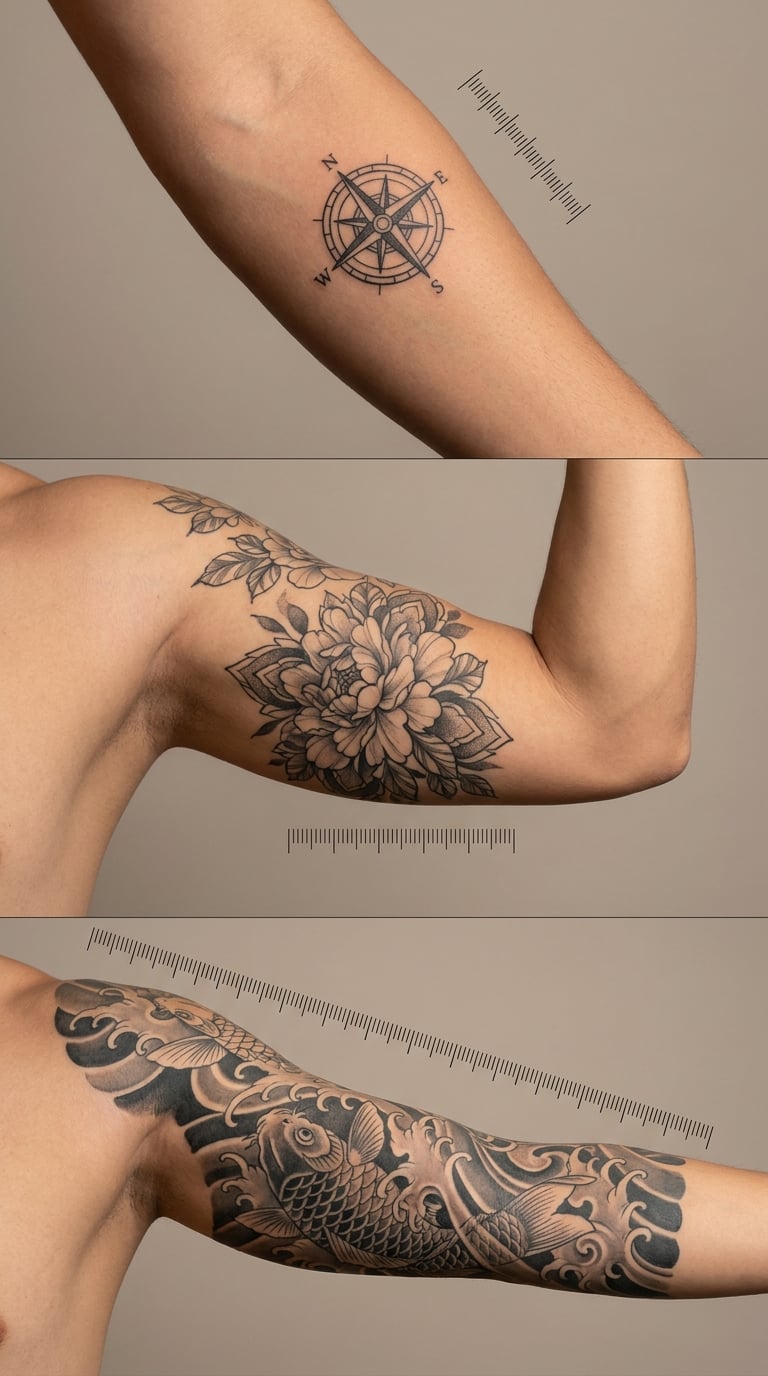
Design complexity is the biggest lever. Fine line work and open negative space are fast. Smooth colour transitions, portrait realism and layered shading are slow, and an artist working hour by hour will quote them that way. A design with open space around it also scales up more cheaply than a fully connected one, because there is less surface to fill.
Colour adds passes. Black and grey needs an outline pass and a shading pass. Full colour adds a separate colour session, and a design that changes hue across the arm, say red fading into black, needs time to blend rather than dab, which is a cost the client pays for in chair time.
Custom work costs more than picking something from a portfolio. Some studios charge a design fee that comes off the final total, others fold it in, and others do not offer a design fee at all. Placement matters too, since a shoulder cap is a harder canvas than a flat outer arm and takes longer to draw on cleanly. If you are still choosing, browsing half sleeve tattoo ideas for women is a reasonable way to see which compositions actually fit an arm.
Then there is the part that shocks people. Your artist is not keeping the whole quoted figure. Studios take commission or rent a booth, and the artist’s take-home is lower than the number on the quote. That is the single most common source of confusion in tattoo pricing threads, and it is worth asking about directly if you want to understand the gap.
Location follows rent. A shop in a small town can charge $100 an hour and a downtown studio $220 for work that takes the same number of hours. Travel adds a plane ticket and a hotel, and chasing a specific well-known artist sometimes means a waitlist measured in months plus a deposit that is not refundable. Budget for the trip as part of the sleeve, not after it.
Finally, the smaller items add up faster than most people expect: a deposit, a tip of 15 to 20 percent on an 8 hour session, aftercare products, and a possible touch-up window. A conservative estimate is the tattoo price plus a fifth. A firm quote is a number with an hour estimate, a session plan and deposit terms written down.
How to Compare Quotes Before Booking
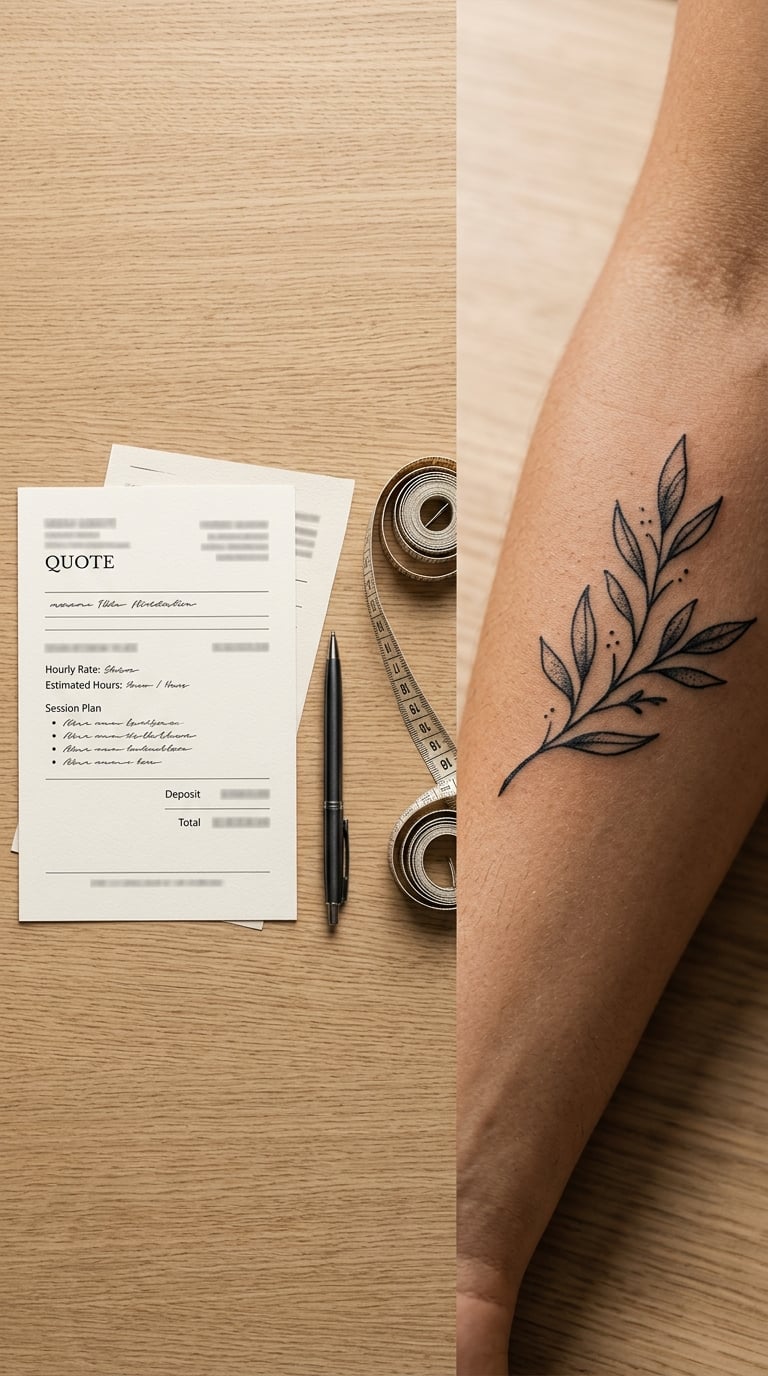
Send every artist the same thing: two or three reference images, an approximate measurement of the area you want covered, your budget range, and the date you are hoping to start. Identical information produces comparable quotes. Vague messages produce numbers you cannot compare.
Ask for the hourly rate, the estimated hours, and the session cap in the same message. Then ask whether the quote covers all planned sessions or just the first one, because plenty of studios quote session one and treat the rest as a new conversation. Ask what the deposit covers and whether it comes off the final total, and get the touch-up window in writing.
Look at healed work, not day-one photos. A fresh tattoo is swollen, red and sitting proud of the skin, and the difference three months later is dramatic. If a portfolio is all fresh shots, ask to see work that is two years healed before you commit.
The lowest number is rarely the best value. A quote far under the going rate for that artist’s tier usually means a rushed session, a copied design, or a portfolio built from images that are not theirs, and a cheap half sleeve that needs a cover-up later costs more than the good quote would have. Two artists quoting the same design $1,000 apart is normal; the reasons are usually artist tier, hours, and whether the shop prices the piece flat or hourly.
Half Sleeve Tattoo Pain by Placement
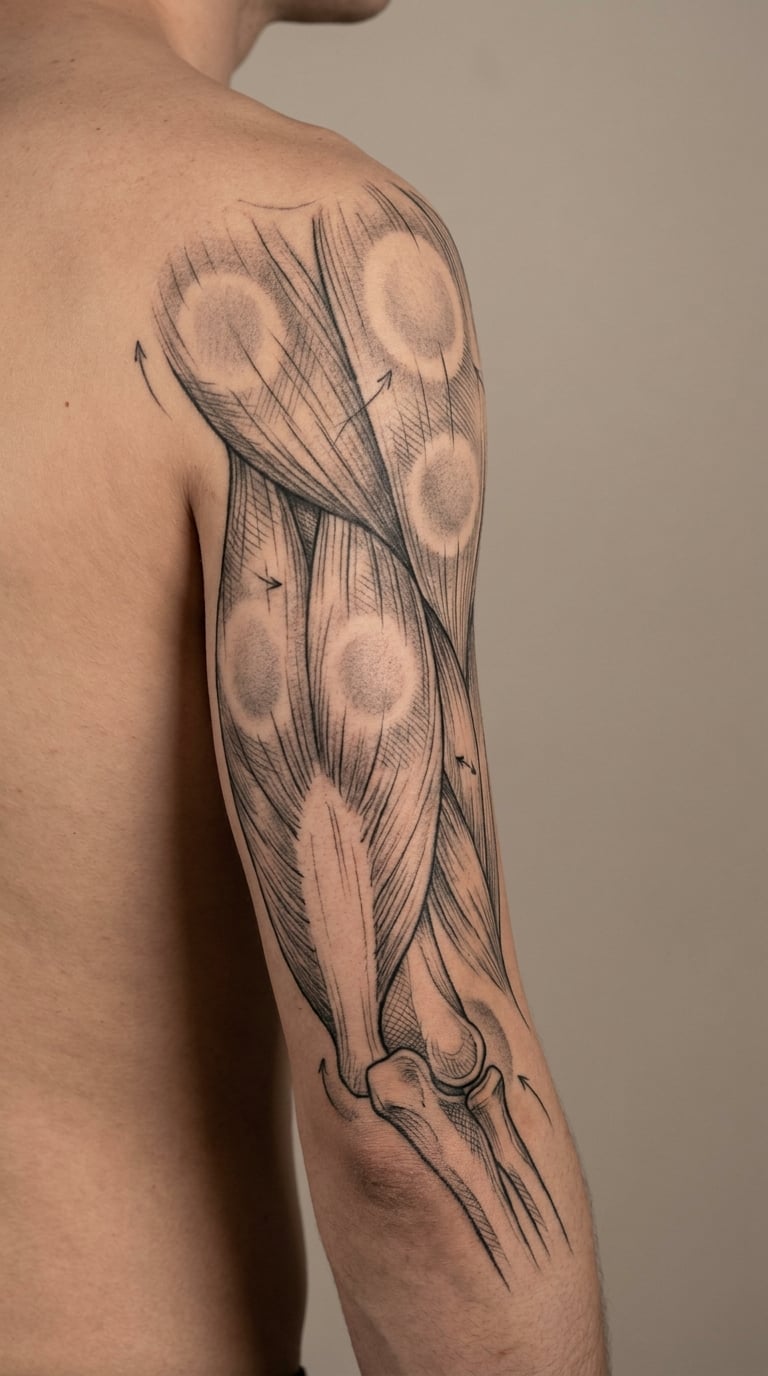
Sensitivity varies a lot person to person, so treat this as a rough map rather than a promise.
| Placement | Pain level | What to expect |
|---|---|---|
| Outer upper arm | Low to medium | The easiest large canvas. Most people settle after the first ten minutes. |
| Inner upper arm | Medium to high | Thinner skin and more nerve endings, especially near the elbow crease. |
| Shoulder cap | Medium | Awkward to reach and hard to clean, so it grumbles more than it stings. |
| Elbow edge | High | Bony with almost no soft tissue. Bounce pads, short sessions and good aftercare help. |
| Near the armpit | High | Very sensitive, and movement during the session makes it worse for everyone. |
Two rounds of numbing cream applied early usually takes the edge off, and most studios will stop for a break rather than push through. Pain tells you nothing about how good the tattoo will be, how well it will hold colour, or whether the artist is charging fairly. Plenty of pieces that will last decades were painful to get.
How Long Does a Half Sleeve Tattoo Take?
A small compact piece fits in one sitting of 3 to 4 hours. A medium black and grey half sleeve usually splits into two sessions of 4 to 5 hours, with an outline session first and a shading session a few weeks later. Full colour and realism designs often need three or four appointments because each pass has to heal a little before the next one goes over it.
Most artists cap a session somewhere between four and six hours. Past that, fatigue sets in, your attention drifts, and fine line quality drops. That cap is not the artist being difficult; it is the same reason nobody books eight hours of driving in one go. Our sleeve tattoo timing guide covers the longer timeline in more detail.
| Period | What you will see | What to do |
|---|---|---|
| Days 1 to 3 | Redness, swelling, a tender surface | Follow your artist’s aftercare instructions, clean gently, keep it out of sun and water |
| Days 4 to 10 | Peeling or flaking, ink looking lighter and patchier | Leave the flakes alone, do not pick or scrub |
| Weeks 2 to 4 | Surface healing done, colour settling, slight fading in the skin | Keep moisturising as directed, avoid long hot showers on the area |
| Months 2 to 6 | Final settled colour, the real sharpness of the line work | Protect from sun, follow your artist’s touch-up window if anything looks patchy |
Contact the artist if redness or swelling returns after the first few days, if ink comes off in patches, or if anything looks raised well past the normal healing window. Follow whatever guidance your own artist gave you, since aftercare varies a little between studios.
Mistakes to Avoid
Choosing the design before you talk to anyone. A drawing that looks right on paper may not fit your arm’s shape, skin tone or available space. Artists adjust scale and flow, and that adjustment usually changes the hour estimate.
Copying a tattoo exactly, including someone’s line work and placement. You will be quoted for reproducing someone else’s piece, and the result can look like a copy rather than something that belongs on you. Use it as a reference, not a template.
Underestimating the size and the hours. People routinely budget for a piece half the size of what they actually want. Measure the space, from shoulder to elbow and around the arm, and take a photo with a ruler in frame before you start a conversation.
Shopping purely on hourly rate. A low rate times a high hour count is not a bargain, and the cheapest artist in the city is rarely the reason a piece looks good in ten years.
Pushing to finish in one session. Rushing produces thinner lines, weaker saturation and a longer heal. If the design does not fit the time available, the answer is another appointment, not a faster hand.
Starting hard against the shoulder cap or the elbow edge. A composition that runs into a joint or the spine of the shoulder will distort as you move and as the design ages. Leaving clean space at the edges gives the piece room to grow, and leaves you somewhere to put a future addition.
Frequently Asked Questions
How much does a half sleeve tattoo cost in the United States?
Most US half sleeves fall between $800 and $3,500 total, with simple black and grey work near the lower end and full colour, realism or a senior artist pushing past $2,000. The number is built from an hourly rate multiplied by 8 to 15 hours of work. Add 15 to 20 percent for a tip and allow for a deposit, aftercare and a possible touch-up.
Is a small half sleeve cheaper than a full sleeve?
Almost always, though not always by as much as people expect. A small half sleeve is a compact design on one part of the arm and needs roughly half the hours of a connected full sleeve. But a full sleeve is priced as one composition, so some artists quote the whole thing generously and a simple half sleeve gets a fair chunk of that.
Are half sleeve touch-ups included in the original price?
Many studios include one free touch-up within a stated window, commonly three to six months, and many do not. Ask before you book, in writing, along with the size of the area covered. If touch-ups are not included, expect a separate session fee on top of the artist rate. Free touch-ups usually cover line loss and patchy ink, not a design you dislike.
Can I lower the cost by choosing a simpler design?
Yes, and it is the least risky way to cut a price. Less shading, fewer colour changes and more open negative space all reduce hours, and hours are what you pay for. What does not work is shrinking a detailed design until it is unreadable, or asking an artist to imitate a style they do not draw. Simpler takes hours off; compressed does not.
Do tattoo studios offer payment plans for half sleeves?
Some do, since a multi-session piece rarely gets paid in one go. Common structures are a deposit that comes off the final total, a per-session payment on the day, or a booked-out piece paid in instalments. Ask whether the deposit is refundable if you cancel, and get the whole schedule in writing before the first appointment.
Can an artist tattoo over a blemish or uneven skin?
They can, and plenty of people live with a mole, freckle or scar inside a sleeve. What matters is where the ink crosses it, because texture differences change how colour sits and can leave a visible patch. Ask the artist to look at the area in person, and expect to adjust the design so the uneven skin becomes part of the composition instead of a flaw in it.
Conclusion
Most people pay between $800 and $3,500 for a half sleeve in the US, and the spread comes down to hours, artist tier and how much colour the design needs. Start by saving two or three reference images, then measure the available upper-arm area with a tape measure so you can describe it in inches. Send that to a few artists whose healed work you actually like and ask for an itemised quote with an hour estimate, a session plan and deposit terms.
Once the numbers come back, the real question is simple: how much does a half sleeve tattoo cost for the piece you want, from an artist whose work you can live with for the rest of your life. That answer comes from a conversation, not a website.