
14 Best Wolf Tattoo Meaning for Men Ideas (September 2026)
Wolf tattoo meaning for men comes down to five things most wearers land on: loyalty to family, strength under pressure, leadership, independence, and sharp instinct. Wolves hunt and raise pups in family groups, and the way a designer frames the animal changes the message. A howling head reads as belonging to something. A solitary head reads as standing apart. A caged or chained one reads as freedom won.
Most of these designs are booked two to six weeks out, and if the piece is going on an arm or neck that sees sun, autumn through early spring is the kinder window. I have listed fourteen designs below with placement, size, style, and an honest note on pain and time for each one.
1. Howling Wolf Portrait: The Wolf Tattoo Meaning for Men in One Design
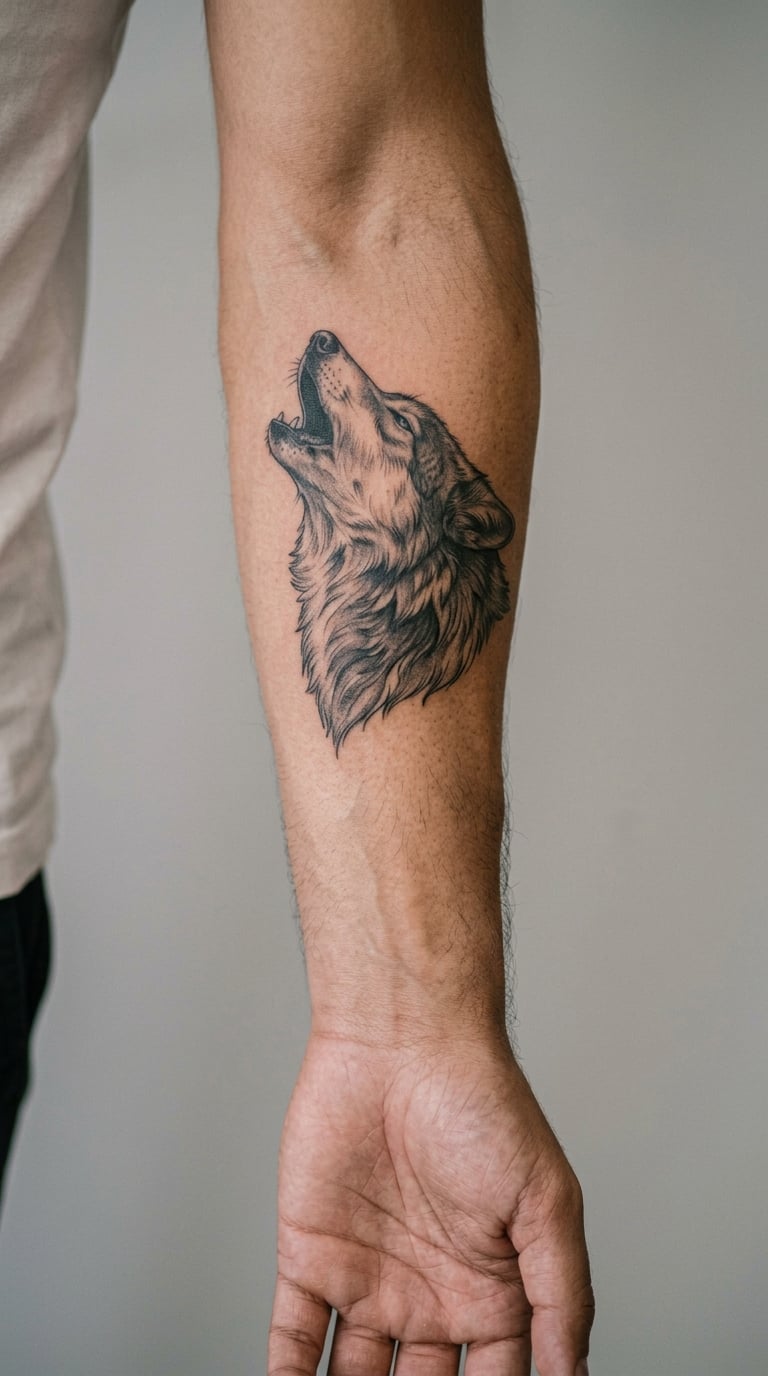
This is the one most men ask about first, and the reason is simple: the pose already carries the meaning. The head tilts back, muzzle open, throat exposed, chest lifted. Nothing about that posture is aggressive. It is the animal calling to the group and getting an answer back, which is why so many people read it as family, belonging, or faith that their people are still out there.
Six to seven inches on the outer forearm is the sweet spot, because that size holds fur texture without turning the line work into grey mush after healing. A front-facing portrait on the upper arm tends to twist when the arm moves, and it competes with the shoulder muscle. Side-profile on a forearm also stays legible when you make a fist, which is the real test.
Pain and time: outer forearm sits around a 5 out of 10, mostly the bony ridge near the wrist and the inside edge where bone sits close under skin. Expect two to three sessions of two or three hours.
2. Snarling Wolf Head in Solid Blackwork on the Upper Arm
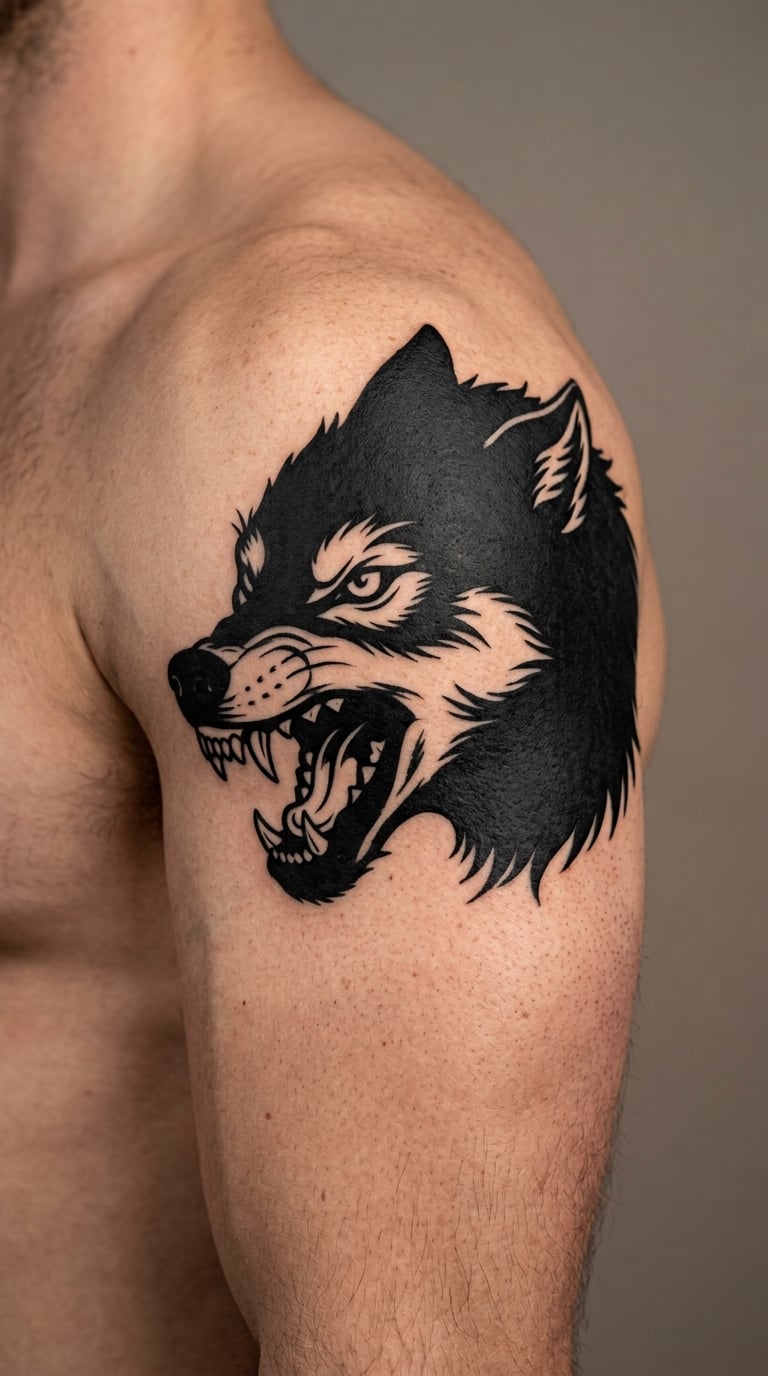
Where the howling wolf is about connection, the snarling one is about defence. Bared teeth, flattened ears, a forward-leaning head. Men who pick this usually mean it as a warning or a boundary rather than an attack, and that reading comes straight from the posture: the animal is braced, not lunging.
Solid blackwork without any greyscale is the smart version. Fur rendered in black patches and negative space survives fifteen years far better than soft grey shading, and it suits a deltoid because the muscle gives the design a natural curve to sit on. Keep it under five inches or the head rounds out and loses the edge that makes it read as a snarl.
Pain and time: the deltoid is a 4 out of 10, one of the easier canvases, and it heals fast because the skin is thick there. A design this size usually takes one long session or two shorter ones.
3. Fine-Line Wolf Outline Behind the Ear
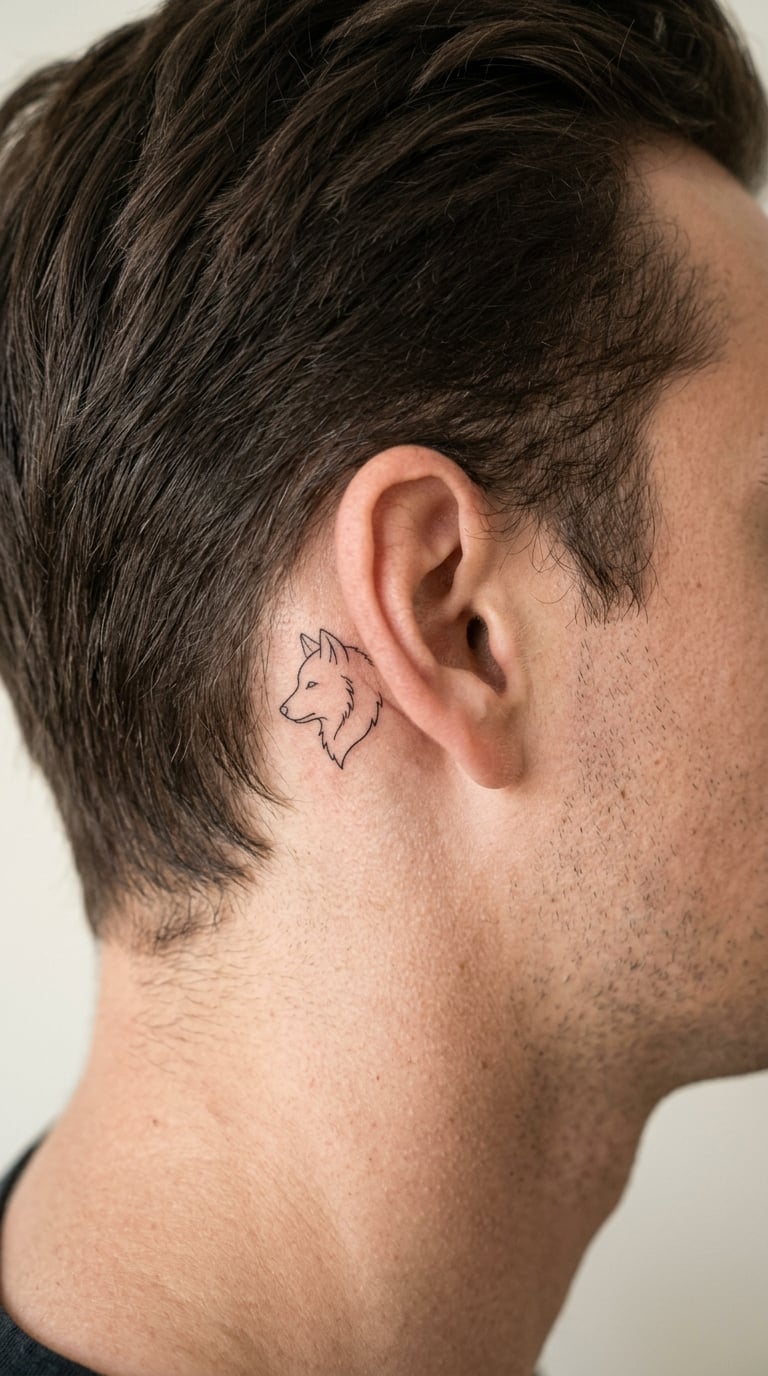
Behind the ear is the placement people glance at twice, so keep the drawing simple or lose the whole effect. A single line from the ear’s inner curve into a profile head works because the ear hides the messy join and the design only needs to survive being seen at a glance and in a photograph.
Two inches is the ceiling here. Fine line skin sits close to the skull, the skin is thinner than an arm, and hair regrowth over the first few weeks obscures it more than most clients expect. Black and grey shading is a bad fit at this size because there is nowhere to put the gradient. Solid black line, one weight, no shading.
Pain and time: behind the ear is around a 6 out of 10 because the skin is thin and the spot sits over bone. Two hours is usually enough, though the client has to stay very still in an awkward position.
4. Geometric Low-Poly Wolf Across the Shoulder Blade
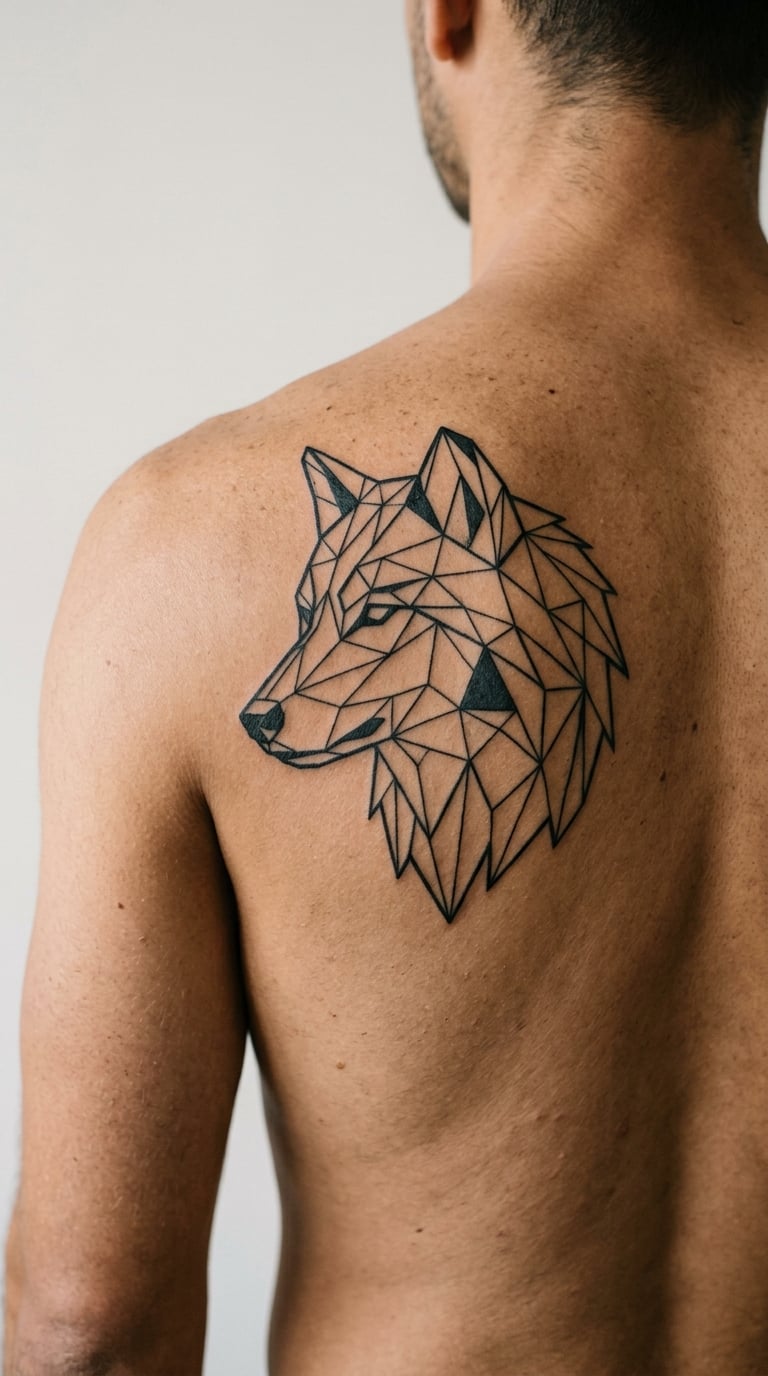
The low-poly wolf is a design that says control. Break the animal into flat angular planes and it stops being a portrait and starts being a diagram, which suits men who want the meaning without the sentiment. It also photographs well and hides ink spread better than you’d expect, because there are no soft edges to blur.
Eight inches across the upper back gives the triangles room to read as a wolf. Under six inches the geometry collapses into a smudge of dots. The upper back is one of the least painful canvases and the hair has to be fully grown out for the stencil, so plan around that. Shoulder blades also move, so the design should sit slightly above the joint rather than right on it.
Pain and time: upper back is a 3 or 4 out of 10 and you can lie down for it. Three to four sessions for a piece this size, and it is a common pick for a first back tattoo.
5. Two Wolves Facing Each Other on the Side Ribs
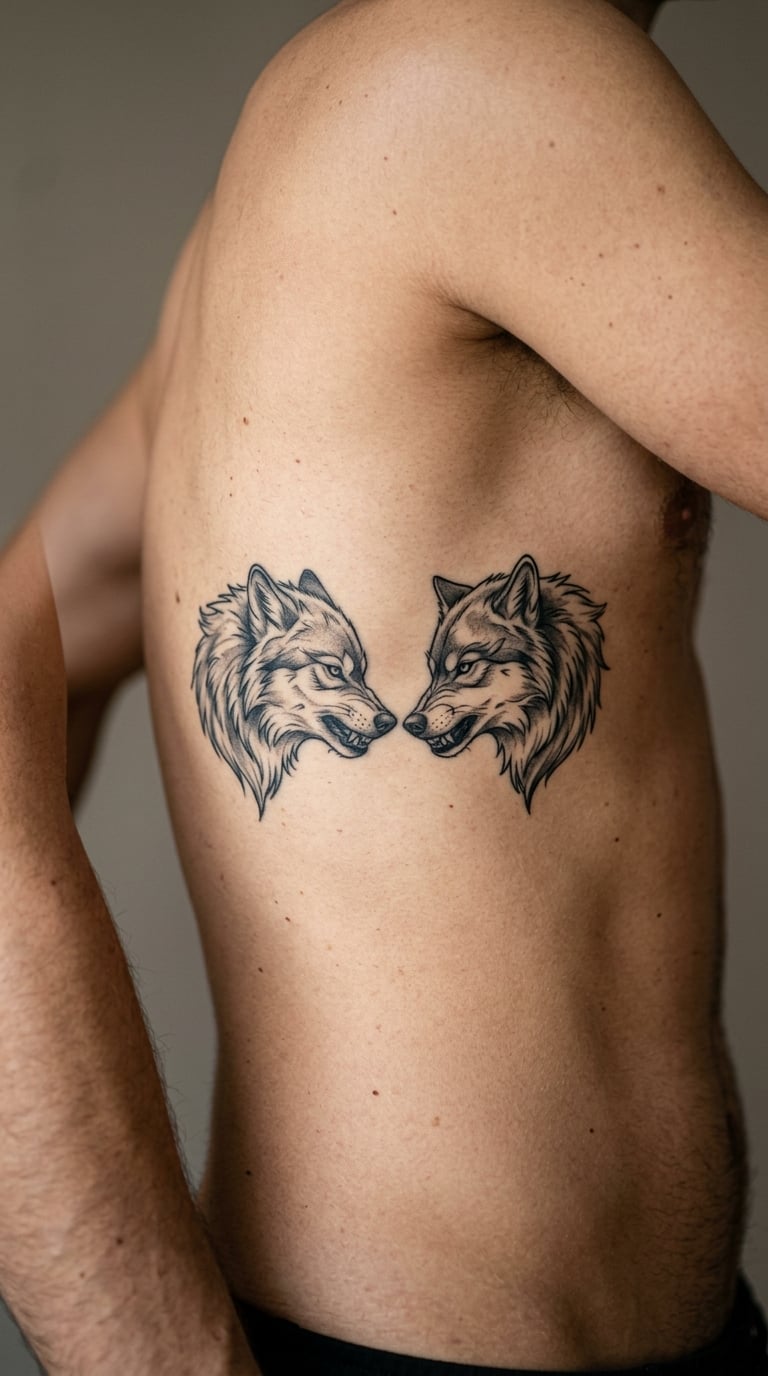
Two wolves facing each other is the oldest idea in this gallery and it is not really about wolves at all. The pairing comes from a widely retold story about the conflict inside a person: the part that is disciplined and the part that is free, or the version of you that provides and the version that runs. Men use it for addiction recovery, for a difficult divorce, for a year that was hard to talk about.
Seven to eight inches per side, ribs, illustrated realism rather than photography. The ribs are curved, so anything with a straight horizon line in it will bow. Artists usually angle the wolves slightly inward so the snouts almost touch at the centre, which pulls the eye inward instead of letting it wander off the side. Ageing is the honest weak point here: ribs stretch and the shading follows that stretch.
Pain and time: side ribs are 7 or 8 out of 10, and the lower ribs near the side are the sharpest part. Two long sessions, and you will feel this one the next morning when you cough.
6. Wolf and Full Moon Wrapped Around the Calf
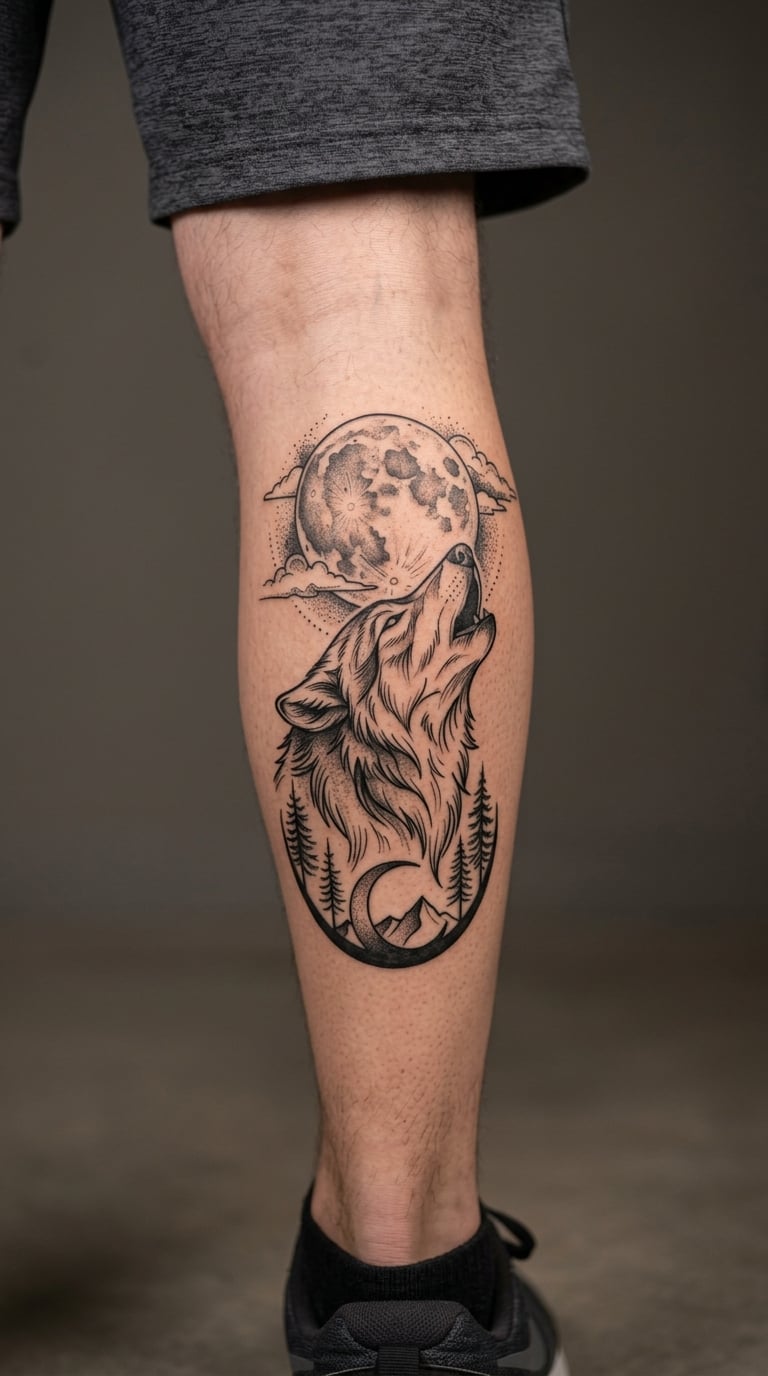
Wolf and moon is the most reproduced wolf design in existence, and it is popular for a reason that has nothing to do with being original. The moon pulls the whole composition upward, so the piece reads as vertical even when the leg is a cylinder. It is an easy way to make a modest-sized tattoo look deliberate.
Five inches on the outer calf is enough for the moon to sit above the head without crowding. Keep the wolf’s eyes as the only place with a highlight in the pupil, otherwise the moon steals the focus. Calves hold colour reasonably well, but the lower outer calf is a spot that gets scraped by chair frames and boots, and the inner calf catches a lot of sun when you wear shorts.
Pain and time: outer calf is about a 5 out of 10, and the area near the knee is the sore bit. Two sessions of a few hours each.
7. Wolf Paw Print Trail Down the Spine
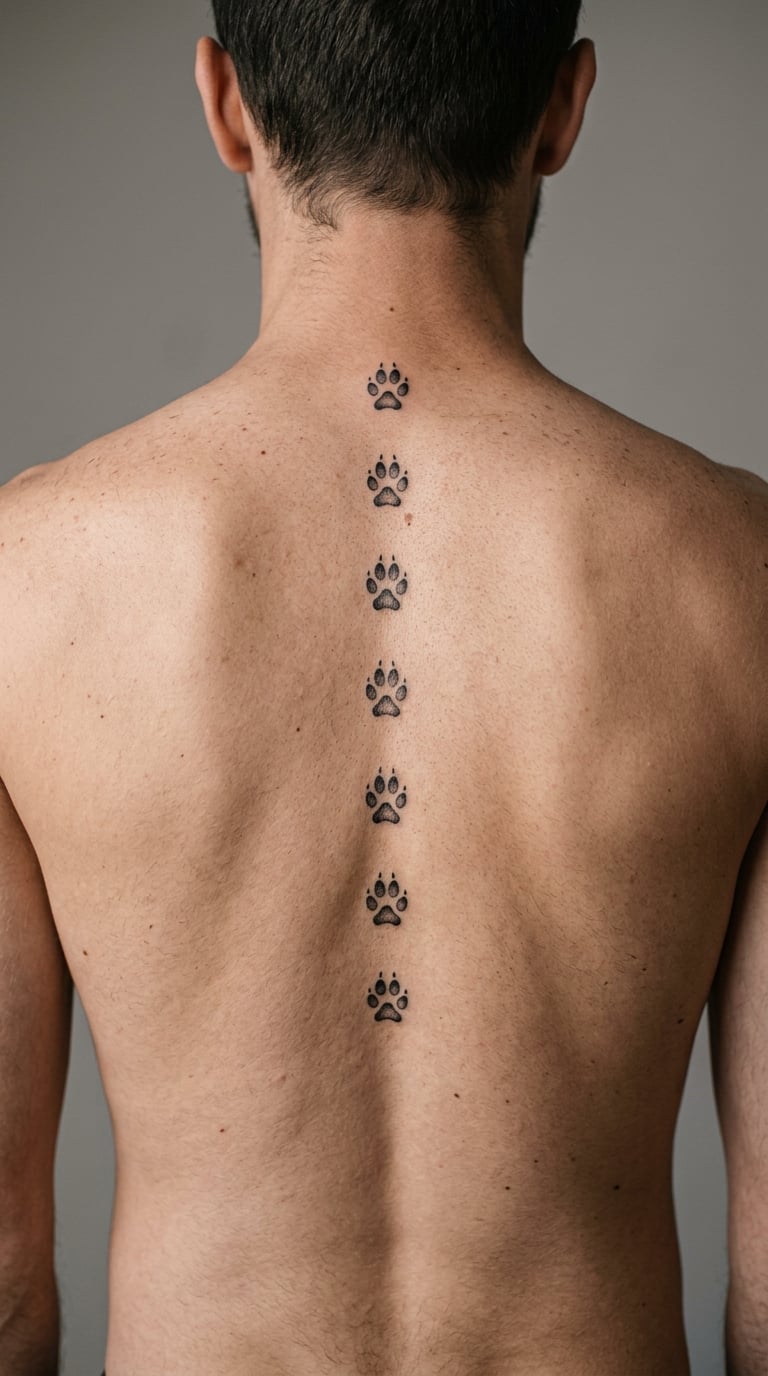
A paw print trail is the least obvious option here and the most flexible, because it is a sequence rather than a portrait. Eight prints walking up from the nape or down from the shoulder blade says movement, a path taken, a line of people rather than a single animal. Several clients use it for chosen family, with each print standing for a person.
Two inches per print, six to eight of them, single-needle, no greyscale at all. The trick is to make them read as one animal walking, so the toes and the pad shape stay identical every time. Along the spine you get a natural line to follow, which makes spacing easy. What you need to know is that this is a long appointment and the client lies face down for hours, sometimes with breaks, so book it early in the day.
Pain and time: the spine itself is around a 4 out of 10 but the vertebrae are sore in a strange deep way. Three sessions of two to three hours, and you will be flattened out afterwards.
8. Fenrir With Broken Chains on the Outer Thigh
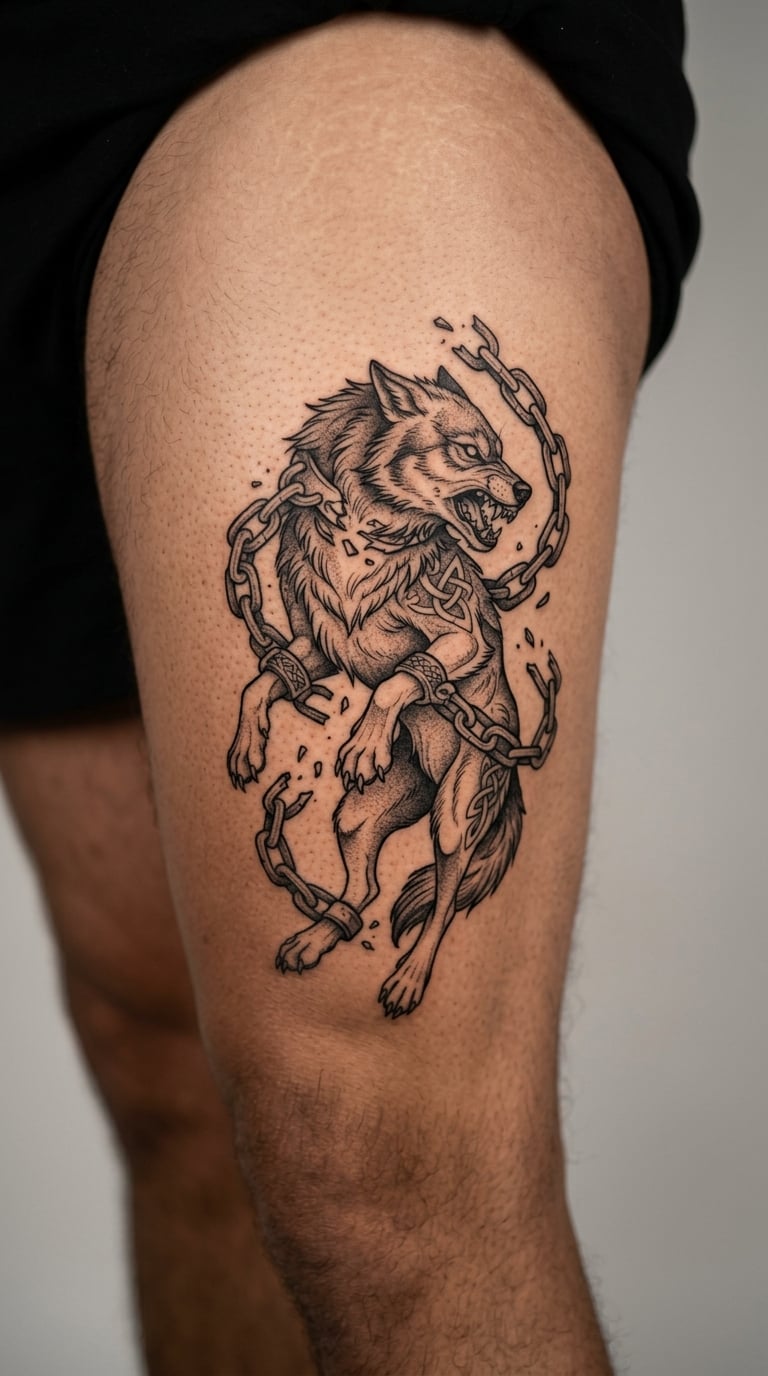
Fenrir is the wolf of Norse myth, the one the gods bound because they feared what he would do. He broke every chain they made, which is why the design almost always includes the broken links rather than the wolf alone. Meaning here is escape from constraint, defiance of authority, or a personal transformation you had to fight for rather than receive.
Seven inches on the outer thigh gives room for the chain links to separate from the body of the wolf. Thighs hold detail well and the leg gives a big flat surface for chain ends to trail off. Avoid placing the chain over the knee joint, where a hard metal-looking element will crease and wrinkle as you bend. Thigh also changes shape more than most placements when weight moves, so keep the design’s centre of gravity in the middle of the muscle rather than out near the edge.
Pain and time: outer thigh is a 4 out of 10. Two sessions, and the second one is usually the colour or shading pass if the artist went realistic.
9. Wolf and Raven Paired on the Inner Forearm
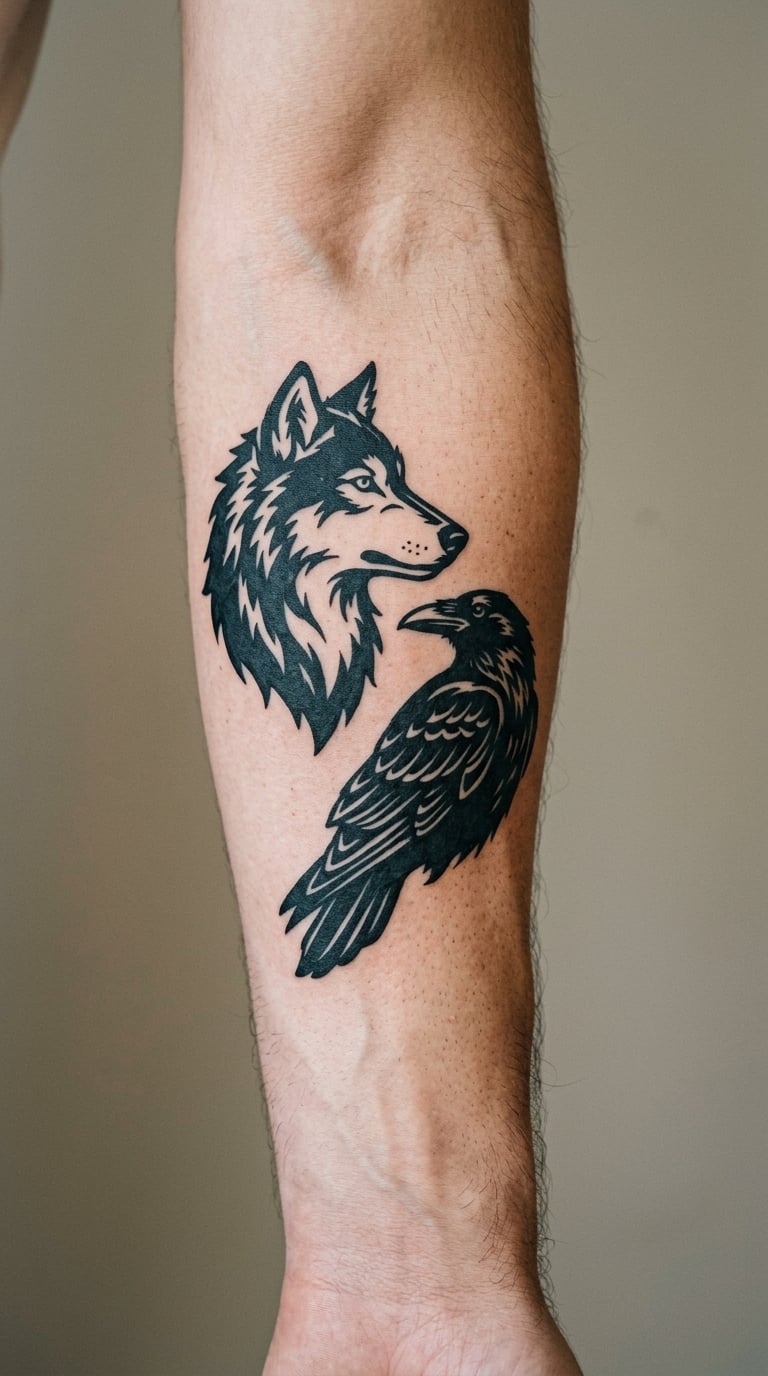
Wolf and raven is the most useful pairing in the gallery because the two animals mean different things and together they mean something bigger. The raven is intelligence, memory, foresight, the messenger. The wolf is loyalty to the ground, to family, to the physical world. Put them together and you get the idea of a person who thinks ahead and still belongs somewhere.
Five inches, inner forearm, graphic with minimal shading rather than full realism. Two competing subjects need two clear silhouettes, and grey shading turns them into mud at this size. Inner forearm means the design is visible in most settings, which suits a piece meant to say something, though it also means a lot of people show it in a job interview. If that matters to you, move it to the outer arm or the calf.
Pain and time: inner forearm is 5 or 6 out of 10, mostly along the inner elbow crease. Two sessions, two or three hours each.
10. Wolf and Mountains in Watercolour Across the Chest
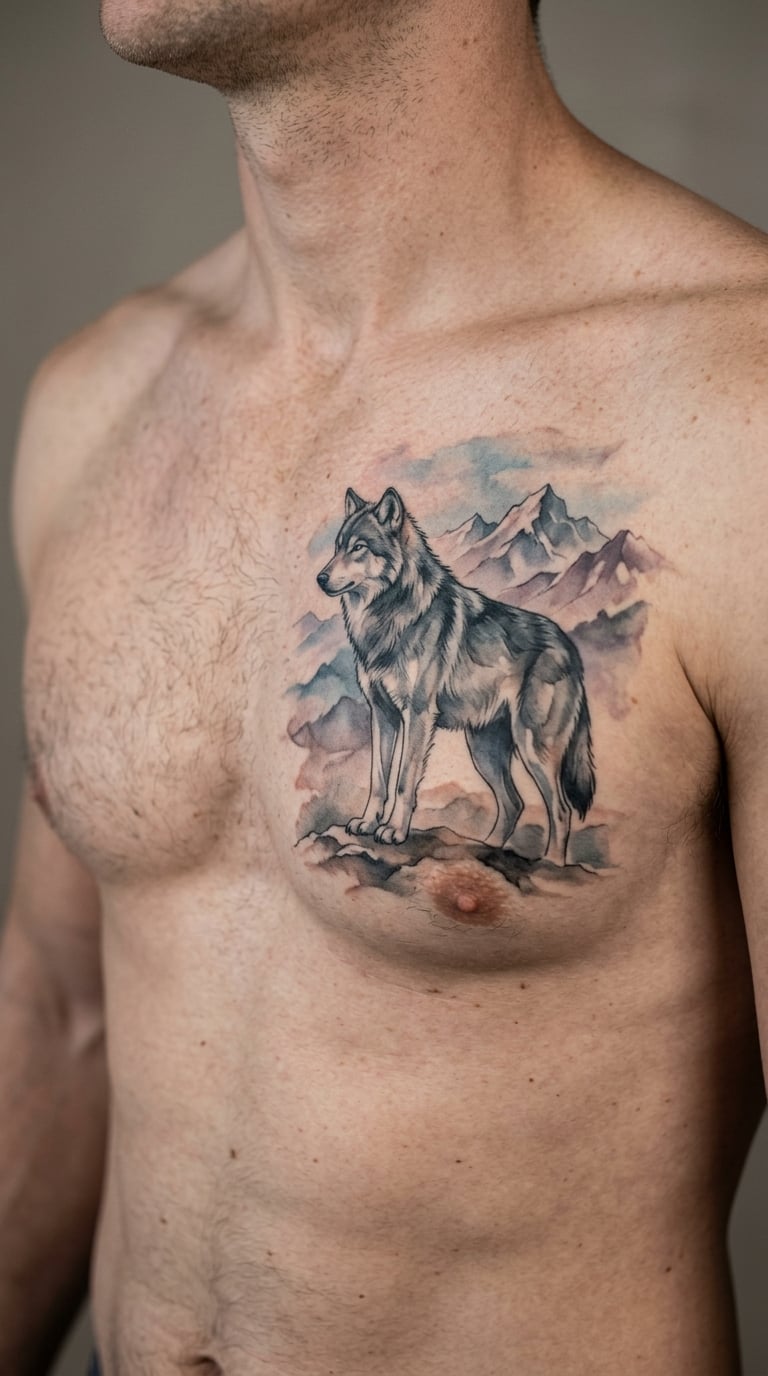
Watercolour mountains and a wolf is the version for men who want a scene instead of a portrait. The mountains do the emotional work, giving you scale, distance, and a horizon, while the wolf stays small and grounded in the foreground. It reads as belonging to a landscape rather than posing on top of one, which is a quieter kind of strength.
Ten inches wide across the chest is the minimum for a scene like this. Below that you are asking a watercolour wash to describe three mountain ridges in a space the size of a fist, and it turns grey. Chest hair is the practical issue people underestimate: it has to be shaved for the stencil and the session, and it grows back unevenly over two to three weeks, so the fresh tattoo looks patchy for a while. That is normal and it settles.
Pain and time: the sternum is 7 or 8 out of 10 and the collarbone edges are 6. Two long sessions, with the shading done as a separate appointment so the wash has healed underneath.
11. Nordic Knotwork Wolf on the Inner Bicep
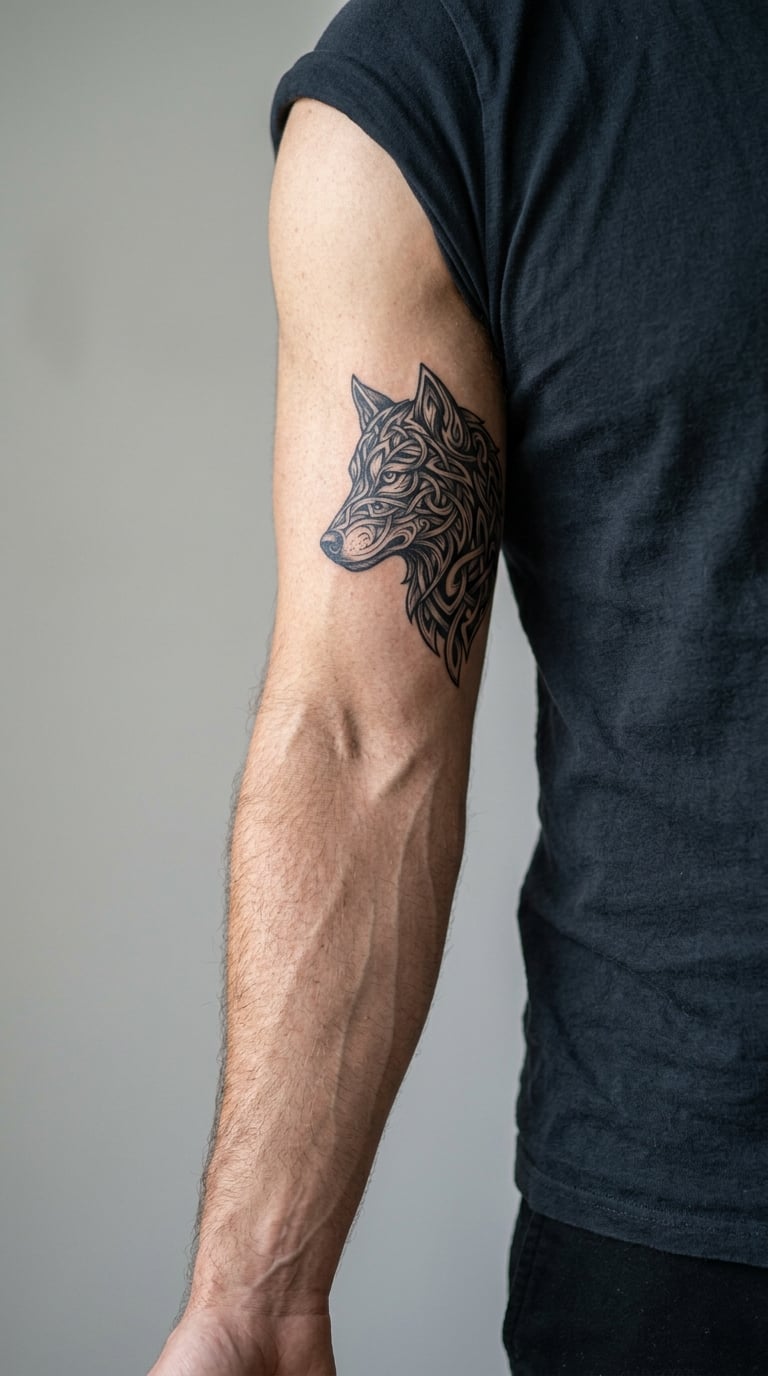
Knotwork turns an animal into a woven shape, and the meaning shifts with it. The wolf becomes continuity, something that loops back on itself, which men often connect to ancestry, to coming home, to family that repeats. The interlacing also means the design has no obvious front and back, so it does not read as a portrait that could age into a cartoon.
Five inches, inner bicep, bold line weight. Knotwork fails when the gaps are too thin, because healed lines close up and the whole thing turns into a solid band of black. Ask to see healed work where the interlacing is still legible, and do not accept a design thinner than about two millimetres of negative space. The inner bicep is also a spot that stretches when you flex, so the artist needs to draw for a half-flexed arm.
Pain and time: inner bicep is about a 4 out of 10, one of the more relaxing spots on the arm. Two sessions, two to three hours each.
12. Wolf Eyes Only, Fine Line on the Wrist
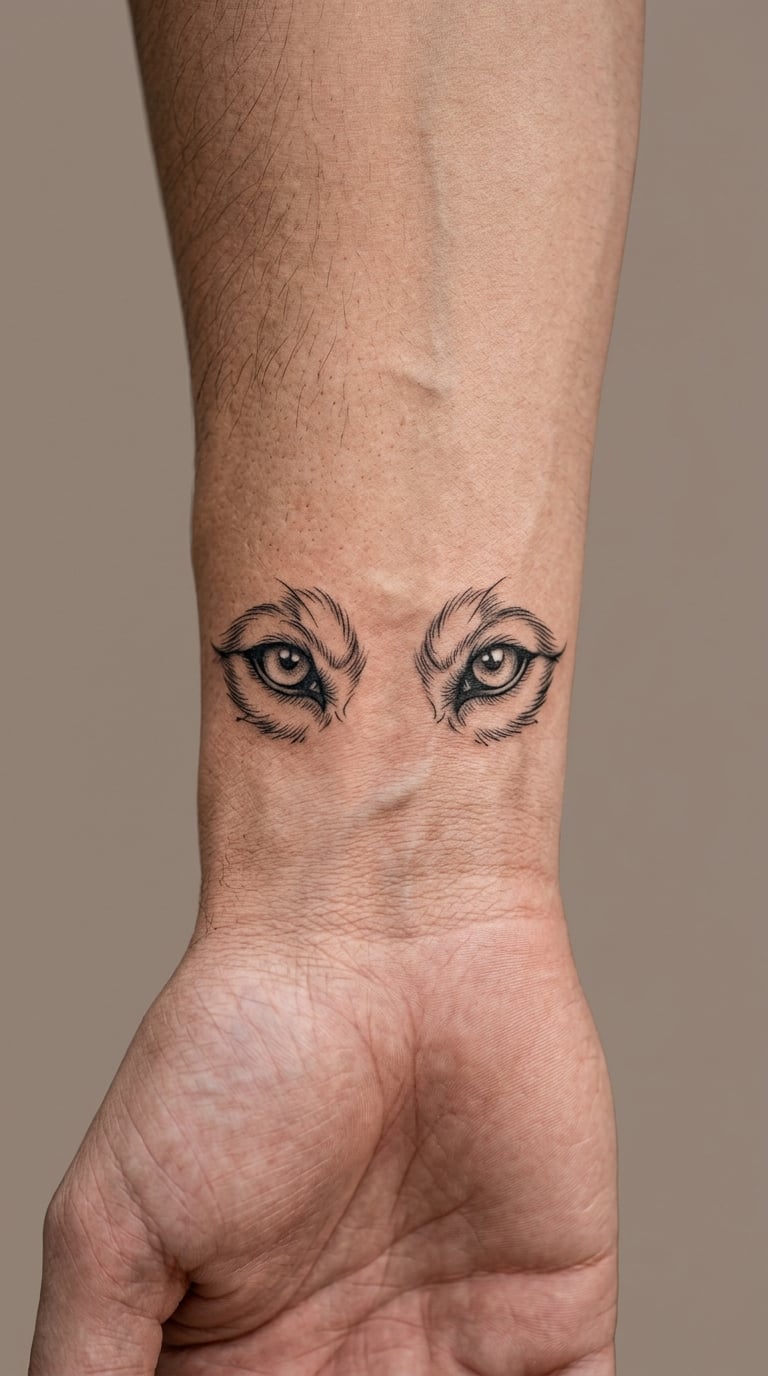
Eyes and nothing else. A pair of almond shapes, slightly narrowed, is a wolf if you know what to look at, and that recognition delay is exactly what makes it work. It is the smallest, most discreet design in this gallery and the easiest to get wrong, because the whole thing depends on the set and the tilt of the eyes rather than on detail.
Two inches maximum on the inner wrist, single needle, no shading. Keep the eyes narrow; rounded eyes read cartoonish and aggressive in a way that changes the meaning entirely. Wrist line work spreads slightly as skin loses elasticity over the years, so a bolder line weight than you would normally use is the smart call here. Some men add the nose bridge two inches above the eyes later, though it can look like an afterthought.
Pain and time: inner wrist is 4 or 5 out of 10 and it bleeds more than most areas, which makes fine line harder to place. One session, an hour or so.
13. Wolf Silhouette Howling at the Nape of the Neck
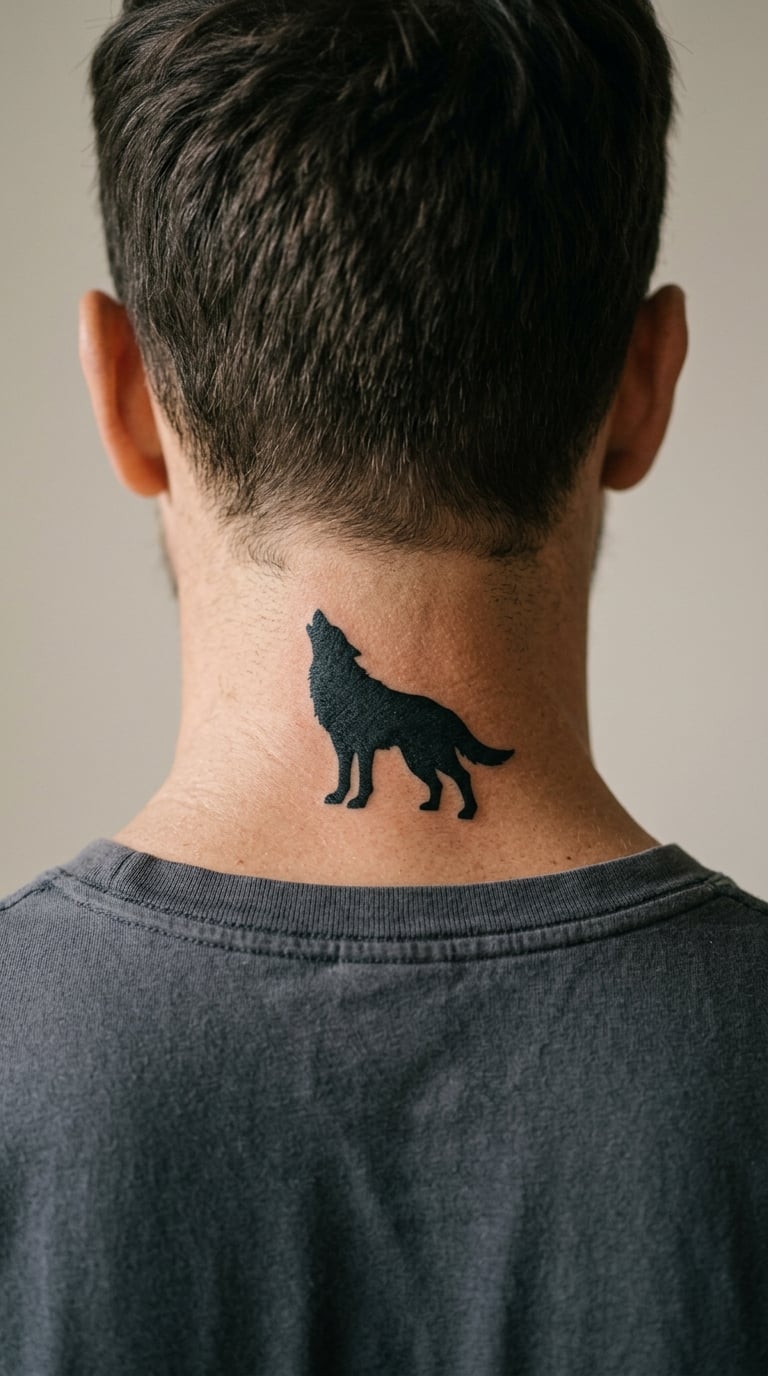
A silhouette asks for no realism at all, which is why it ages so well. The nape placement is the classic: hair falls over it, the neck tilts back and it catches light from behind, so people read the outline before they read anything else. Men who cannot sit for a long portrait session, or who want something that survives a hard life, choose this one.
Four inches, solid black, hairline-to-necklace distance. The nape is curved, so the silhouette has to be drawn larger than you think and centred on the dip between the two neck muscles, not on the spine itself. Solid black is mandatory at this size and in this place, because greyscale on the back of the neck fades fast and there is nothing to hide behind. Hair regrowth is the other thing to plan, since half the design is usually under it.
Pain and time: nape is a 5 out of 10, and the spot where the neck meets the skull is the tender part. One session, two hours.
14. Minimalist One-Line Wolf Head on the Collarbone
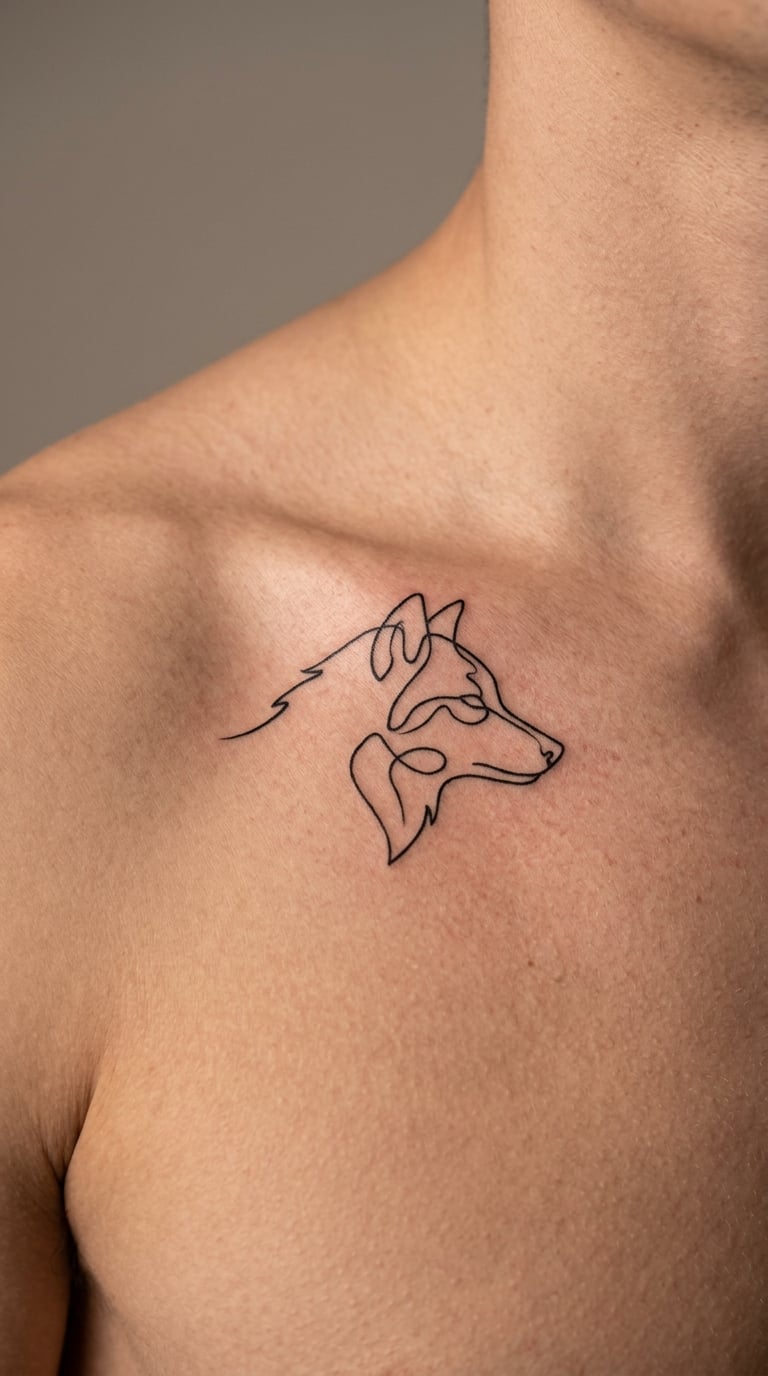
One line, one weight, no shading. The whole design is an outline that starts at the nose and ends wherever the hand ran out of arm. It is the answer for a first tattoo, and plenty of men use it as a placeholder shape to test how they feel about being marked before committing to something large.
Three inches on the collarbone, horizontal. Collarbone is a curved, bony ridge with very little flat skin, so long straight lines ripple across it and a horizontal design sits far better than a vertical one. The skin here is thin and moves every time you shrug, so anything more detailed than a single outline will not hold. Expect the line to soften and lighten over the first few weeks as it settles, which is normal for one-line work on that ridge.
Pain and time: collarbone is 6 out of 10 because you feel every stroke on bone. One session, about an hour.
Things to Know Before You Book
Choose the artist, not the shop front
A studio’s Instagram does not tell you who will be holding the machine. Ask which artist is doing your piece and look at their healed animal work specifically, not their flash and not their Pinterest board. Healed work is the only honest portfolio a tattooer has, because fresh ink looks better than the same tattoo will ever look again.
Ask to see healed animal portraits
A good realistic wolf has fur moving in one direction, a nose with texture, a wet highlight in the eye, and a muzzle that is long rather than short and cute. If those four things are missing, the artist is working from a reference photo and not from the animal. In person, ask to see a healed wolf or dog head on skin, not on a flash card.
Pick the meaning you can still live with at forty
The regret men describe most often is not the design, it is designing for who you were at twenty-one. A survivor wolf from a rough patch in your life is a good symbol to have earned. The same design aimed at a man who got clean eight years ago and has been steady ever since can read as a claim he is not making. Ask yourself whether the meaning still fits in five years, and be honest if it does not.
Book the season around sun exposure
Fresh ink on an exposed arm, neck, or lower leg in high summer means two weeks of covering it, sweating in it, and remembering sunscreen on a part of the body you do not naturally think about. Autumn through early spring is easier. If you are booked in summer anyway, keep the piece under clothing and treat any sun exposure as a delay to fading, not a risk to take.
Have the cover-up conversation early
Nineties tribal wolves and early-2000s portrait heads are the two most common things men ask to rework now. Artists can usually go over or around them, but not always, and a rework costs more than the original would have. If you are torn between two designs and one is trendier, pick the one that still means something in fifteen years rather than the one doing well this year.
Know that a chest piece means managing hair
Chest hair has to come off for the stencil and it grows back in patches that make a fresh piece look uneven for a couple of weeks. It is temporary and cosmetic, but it is the thing people forget, and it can make a good tattoo look damaged while it is still healing fine.
Frequently Asked Questions
What does a wolf tattoo mean for guys?
Mostly loyalty, family, strength, leadership, independence, and instinct. Wolves live and hunt in family groups, so the animal carries pack devotion. The design decides the rest: a howling head means belonging and calling out to your people, a snarling head means protection and boundaries, and a pair of wolves means an internal struggle or chosen family.
Is a wolf tattoo a red flag?
Not on its own. People in tattoo forums generally say a plain wolf is just a popular animal design, and the concern only comes up when it is combined with specific hate group symbols or when paired with the lone wolf phrase, which has been used by violent extremists. A realistic or geometric wolf by itself reads as a family and loyalty symbol, nothing more.
Where is the best place to put a wolf tattoo?
Match the shape of the design to the canvas. Side-profile portraits sit best on the outer forearm or calf, wide horizontal scenes go across the upper back or chest, small single-line work fits the collarbone, and silhouettes belong at the nape. Ribs and sternum look dramatic but hurt more and stretch sooner than most other spots.
What does a Fenrir tattoo symbolize?
Fenrir is the wolf from Norse myth that the gods bound because they feared him, and he broke every chain they made. A Fenrir tattoo usually means freedom from constraint, resistance to authority, or a transformation you had to fight your way through. Designers almost always include the broken links, because the chains breaking is the point of the story.
How much does a wolf tattoo cost?
Pricing follows size, detail, and how many sessions it takes. A small fine-line piece is often a single short session, a realistic portrait on the forearm is usually two or three longer ones, and a chest or rib scene takes three or more. Hourly rates vary hugely by city and by artist, so the fairest comparison is the total for the whole design rather than the first appointment.
How long does a wolf tattoo take to heal?
The surface heals in two to three weeks, when the skin stops flaking and looks normal again. The ink itself settles deeper and keeps settling for months, which is why fresh colour looks brighter than the healed result. Keep it clean, keep it out of direct sun, and hold off on swimming pools and hot tubs until the surface has fully closed.
What are some tattoos to avoid?
For a wolf specifically, the ones worth walking away from are copies of another living artist’s piece, designs that copy a traditional form belonging to a specific Indigenous nation, and portraits booked at a size that cannot hold the detail. On a first tattoo, the most regretted choice is picking a design for the trend rather than for the meaning, and mixing eight symbols into one piece nobody will read.
Conclusion: What to Do First
Start with the meaning, not the picture. Decide whether you are marking family loyalty, a survival you got through, a leadership role, a life you built on your own, or something you inherited, and then pick a design from the fourteen above that says that without needing a paragraph of explanation.
Then find an artist whose healed animal work you actually like, send the placement and the size you want, and ask for a total session count and a total cost for the finished piece. That wolf tattoo meaning for men is already settled in your head. The last piece is just getting it onto skin well.