
22 Resilience Tattoo Ideas: Small and Symbolic Designs (2026)
These 22 resilience tattoo ideas are built for one job: turning something you survived into a picture you can carry. Some are tiny enough for a first inner-wrist piece, some are bold enough to anchor a forearm. Every entry below tells you how the design should actually be drawn, where it sits best, how big it needs to be, and what it will look like in ten years. Updated for October 2026.
I have sat in on enough tattoo consultations to know the thing that actually derails people. It is not picking the wrong artist or the wrong placement. It is choosing a symbol because it is the recognised one, and then feeling slightly foolish about it five years later. If the meaning is yours, the design works. If it is borrowed, no amount of good linework saves it.
A word on timing, since autumn is when a lot of these get booked. If you are planning around a milestone, a sobriety date, a move, or the anniversary of something hard, count back thirty to forty-five days. Fresh tattoos are shiny, raised and slightly puffy, and they settle into their real line weight over weeks. Judge the piece after it heals, not the day you get it.
One practical note before we start. A resilience symbol is not a treatment for anything, and it does not fix a hard week. It is a marker, a private reminder, sometimes a conversation starter. If you are in an acute crisis, talk to someone who can help rather than booking a chair. The designs below are for the steadier part of the story, the part where you have room to choose something on purpose.
22 Resilience Tattoo Ideas: Quick Guide
| Idea | Style | Best Placement | Size | Pain |
|---|---|---|---|---|
| Fine-line phoenix | Fine line | Inner forearm | 3 in | Medium |
| Cracked shell and seed | Micro-realism | Inner wrist | 2 in | Medium |
| Bent iron into circle | Blackwork | Forearm, vertical | 3 in | Low to medium |
| Mountain with gold line | Fine line | Outer upper arm | 2.5 in | Low |
| Laurel wreath and heart | Bold blackwork | Collarbone | 2 in | Medium |
| Kintsugi-style crack | Blackwork with gold | Forearm | 4 in | Low |
| Wave over shield | Bold blackwork | Calf | 3 in | Low to medium |
| Sapling through stone | Illustrative colour | Inner arm | 2.5 in | Medium |
| Arrow through circle | Geometric linework | Side of forearm | 2 in | Low |
| Red thread on black line | Minimal line and colour | Inner forearm | 2.5 in | Medium |
| Storm cloud and clear sky | Black and grey | Behind the ear | 2 in | High |
| Open hand with flame | Neo-traditional | Outer forearm | 3 in | Medium to high |
| Tree rings and new segment | Contour linework | Wrist | 2 in | Medium |
| North star compass | Dotwork and blackwork | Upper arm | 2.5 in | Low |
| Boot print over mountain | Bold blackwork | Outer arm | 2.5 in | Low |
| DNA becoming a line | Modern linework | Forearm | 3 in | Low to medium |
| Two interlocking hands | Fine line | Inner arm | 2.5 in | Medium |
| Small sun on horizon | Geometric | Inner forearm | 2 in | Medium |
| Bird leaving a frame | Blackwork silhouette | Upper arm | 3 in | Low |
| Seedling and boulder | Watercolour | Calf | 2.5 in | Low |
| Broken chain and butterfly | Black and grey with accent | Forearm | 3 in | Low |
| Resilience wordmark | Blackletter-inspired | Forearm | 4 in | Low to medium |
1. Fine-Line Phoenix Rising from a Minimal Flame
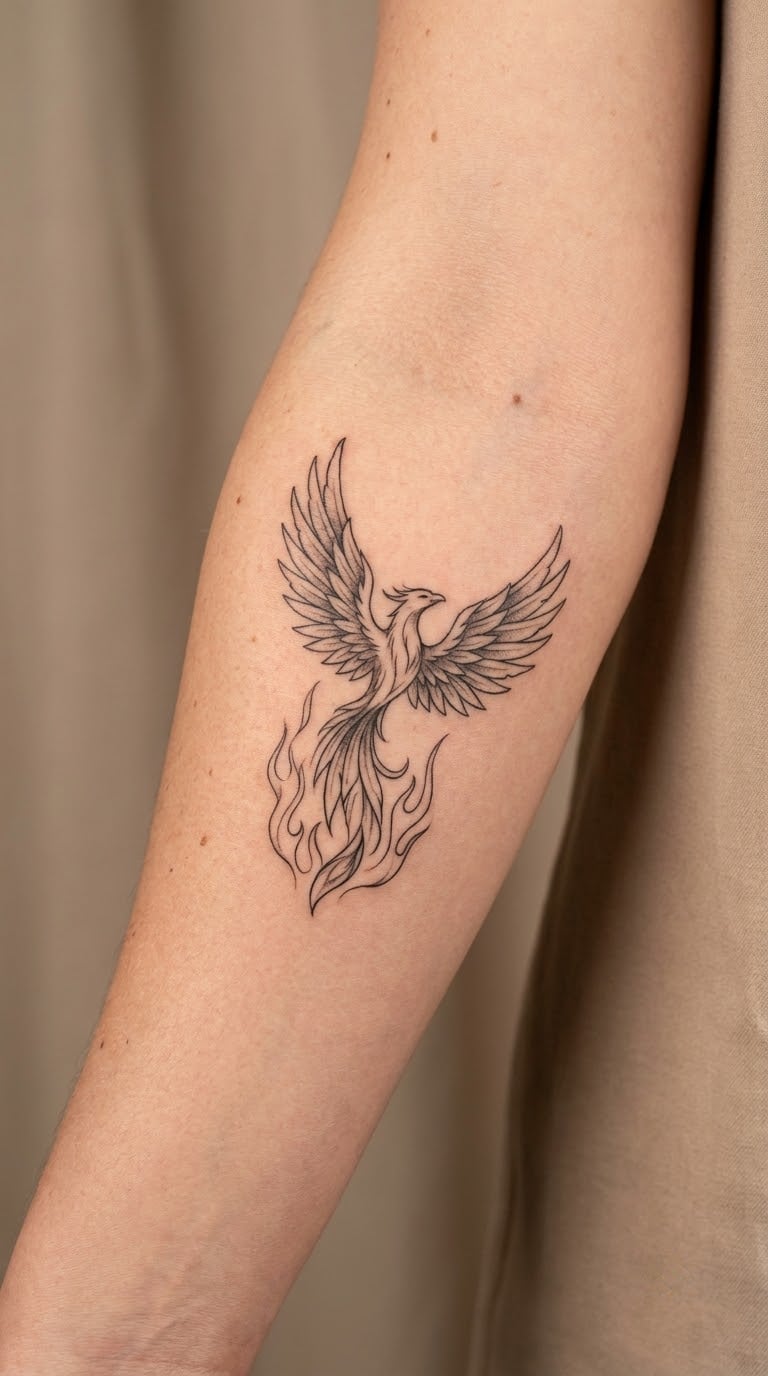
One bird, drawn with a single continuous feather outline and a small loose flame underneath it, nothing else in the frame. The flame is three short tapered strokes, not a full fire, so the bird stays the subject. Wings spread upward, head turned slightly so the beak reads in profile.
The phoenix has been tied to renewal and rising again for centuries, which is why it keeps showing up on resilience lists. Pick it if you want a symbol that a stranger will read correctly without explanation.
Placement: inner forearm, outer forearm, or the calf, running with the bone. Size: 2.5 to 3.5 inches (6 to 9 cm) wide. Style: fine line, minimal black and grey. Pain: medium on the inner forearm, and the flame base sits closer to the wrist bone, which is the sharper part. Ageing note: feather detail at three inches will soften into a wing shape within a decade, so keep the interior lines sparse on purpose.
Make it yours: a single colour on the flame only, or the year a chapter ended tucked into the wing gap in tiny numerals.
2. Cracked Shell with a Sprouting Seed
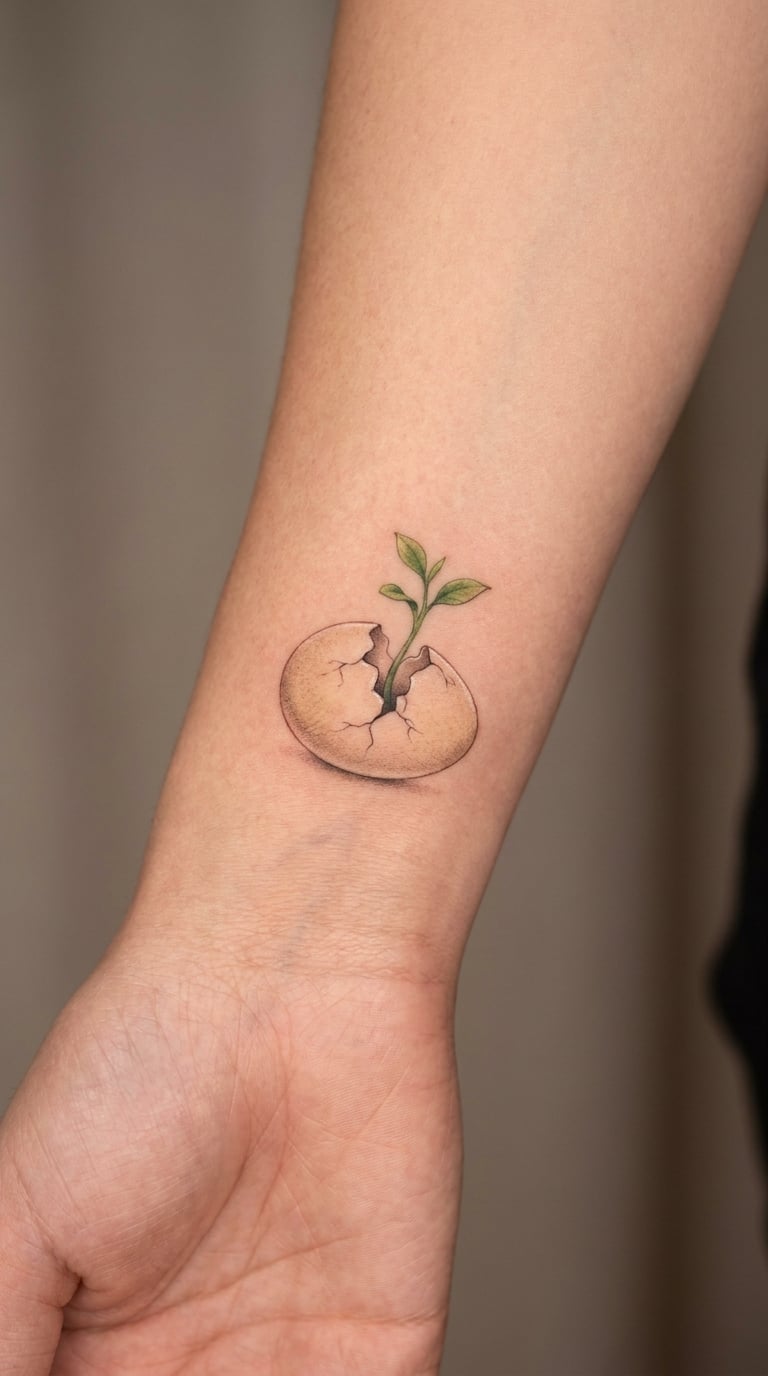
A soft beige shell split across one line, with a two-leaf green seedling growing out of the split. Fine outline work on the shell, a light stipple for the ridges, minimal shading inside the crack so it stays open rather than filled.
Change and growth through damage, without a slogan attached. This one suits people who like a quiet design that only reads as a shell to everyone else.
Placement: inner wrist, inner bicep, or the ankle. Size: 1.5 to 2.5 inches (4 to 6 cm). Style: micro-realism with a light botanical touch. Pain: medium on the inner wrist; the wrist has thin skin over bone, and the crack line needs a steady hand. Ageing note: keep the green to two small leaves, because filled colour at wrist scale spreads within a few years.
Make it yours: a real seed species from somewhere that mattered, drawn in instead of a generic sprout.
3. Bent Iron Rebounding into a Circle
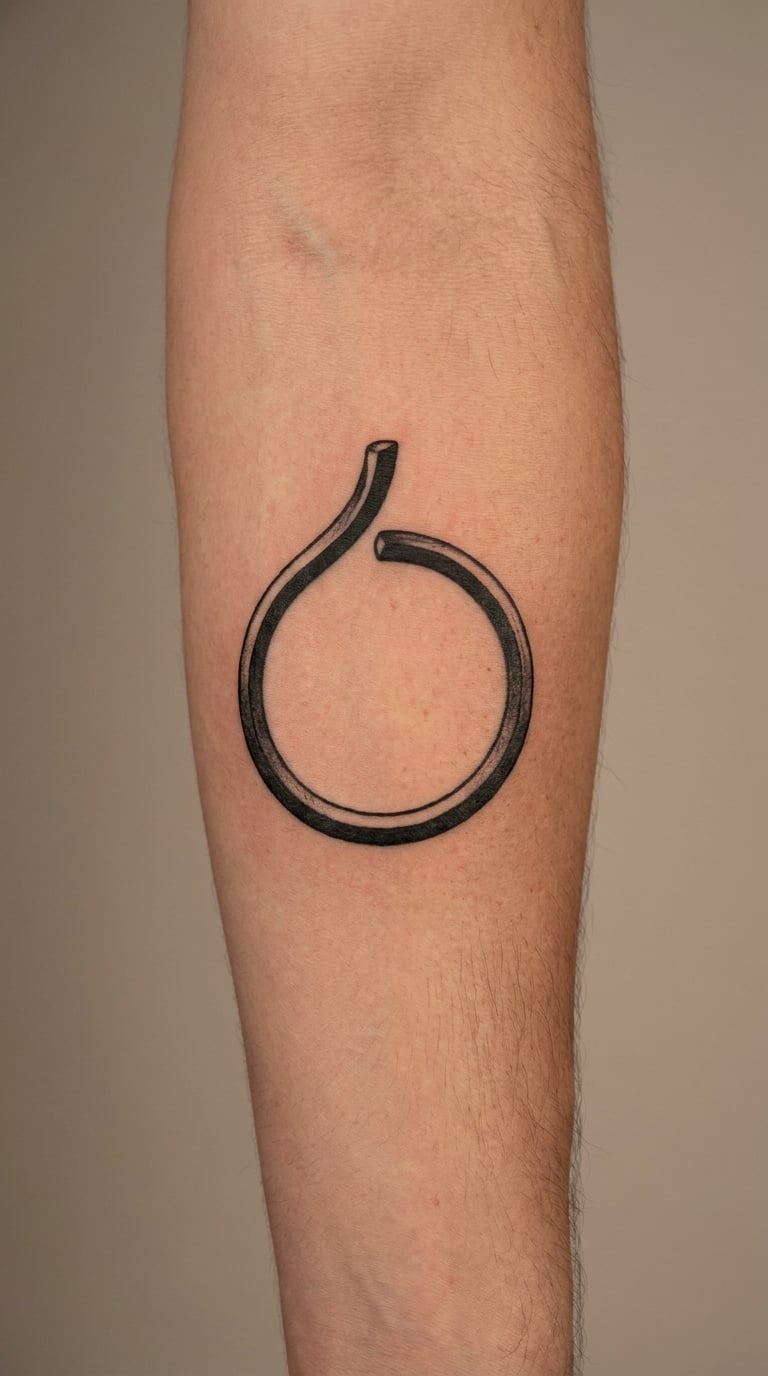
A straight bar of iron with a visible kink in it that resolves into a complete, unbroken circle. Solid black line, constant weight, no gradient. The bend is the whole point, so it should sit about a third of the way down the design.
Visual interest rather than a statement. It looks like good graphic design, which is the appeal for anyone who finds phoenixes and butterflies too on the nose.
Placement: forearm, vertical, or along the outer bicep. Size: 2.5 to 3.5 inches (6 to 9 cm) long. Style: minimalist blackwork. Pain: low to medium, and it is a quick sitting because there is very little shading. Ageing note: solid black holds its edge better than almost anything else in this list, which makes it a good first piece.
Make it yours: two kinks instead of one, or a small gap in the circle so it is clearly deliberate.
4. Mountain Peak with One Clear Line
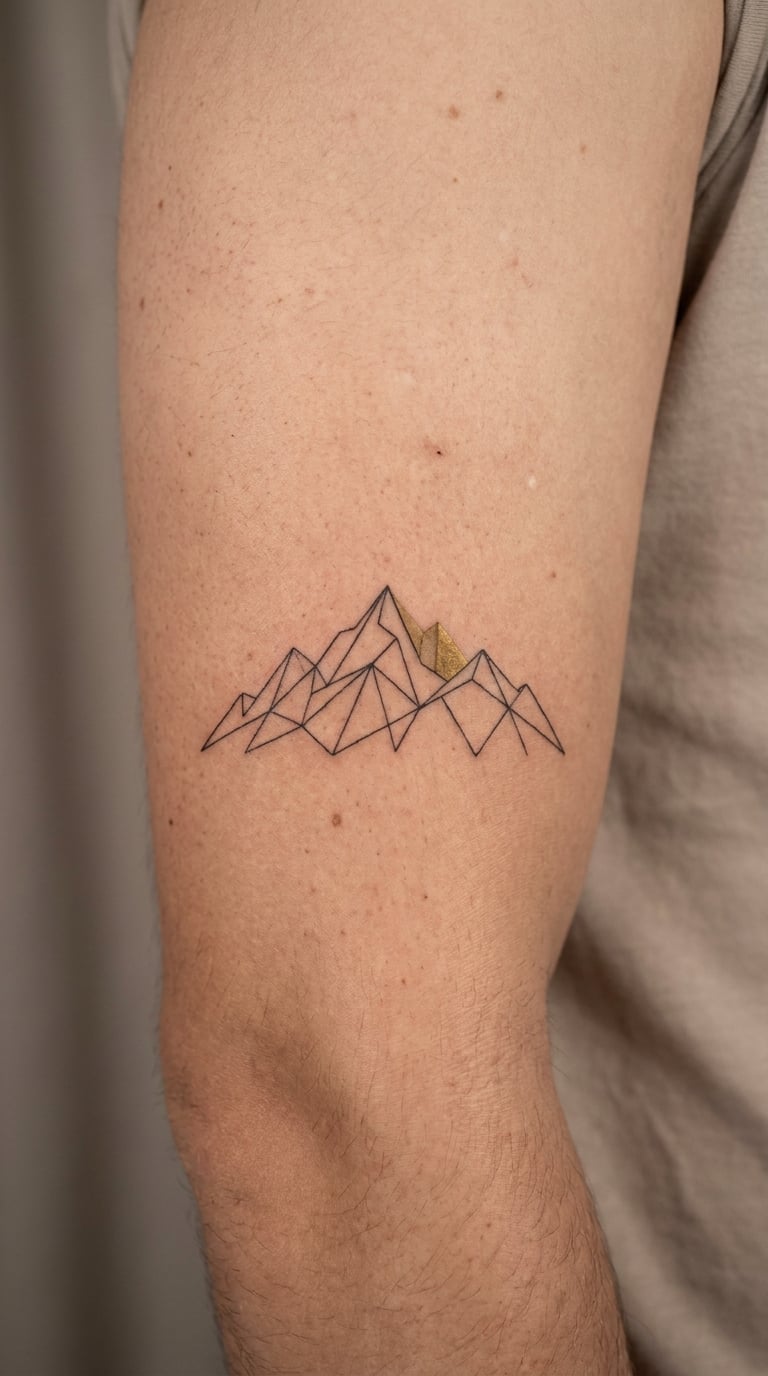
Three angular peaks in a single-weight black line, with one fine gold line tracing the tallest summit. Negative space does the rest, so the sky above and the valley below stay completely empty. No sun, no clouds, no pine trees.
Mountains have long stood for endurance and for perspective, and the shape reads clearly at small sizes where detail cannot. Good for someone who wants the idea without the illustration.
Placement: outer upper arm, forearm, or ribs. Size: 2 to 3 inches (5 to 7.5 cm) wide. Style: fine line with one colour accent. Pain: low on the upper arm, medium on the ribs. Ageing note: the gold accent is the part that fades first, usually to a warm grey within five or six years, which suits most people.
Make it yours: the gold line follows a ridgeline you have actually walked, sketched from a photo.
5. Tiny Laurel Wreath Around a Heart
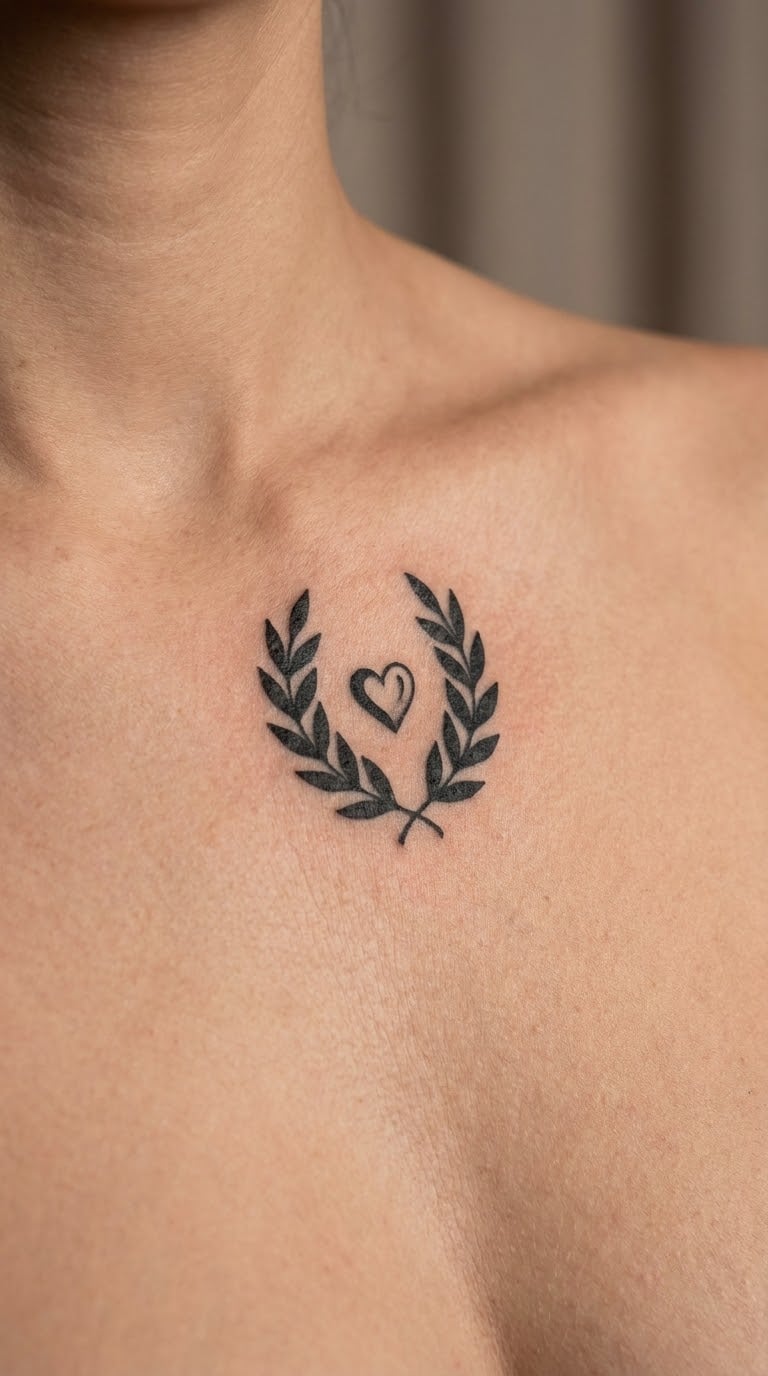
A small outlined heart centred between two symmetrical laurel branches, five or six leaves per branch, drawn with bold black line and almost no interior detail. Symmetry is what makes it look finished, so the leaves need to be evenly spaced.
Honour and self-regard, in the older symbolic sense. It is one of the few designs in this group that most people will clock as classy rather than motivational.
Placement: above the collarbone, sternum, or the inner forearm. Size: 1.5 to 2.5 inches (4 to 6 cm) tall. Style: bold blackwork, traditional outline. Pain: medium, and the collarbone is a bony spot, so expect to take breaks. Ageing note: symmetrical leaf detail blurs into a general leafy shape with time, so keep the leaf count low and the line weight solid.
Make it yours: an open heart rather than a closed one, or one branch slightly longer than the other.
6. Kintsugi-Style Broken Ceramic Line
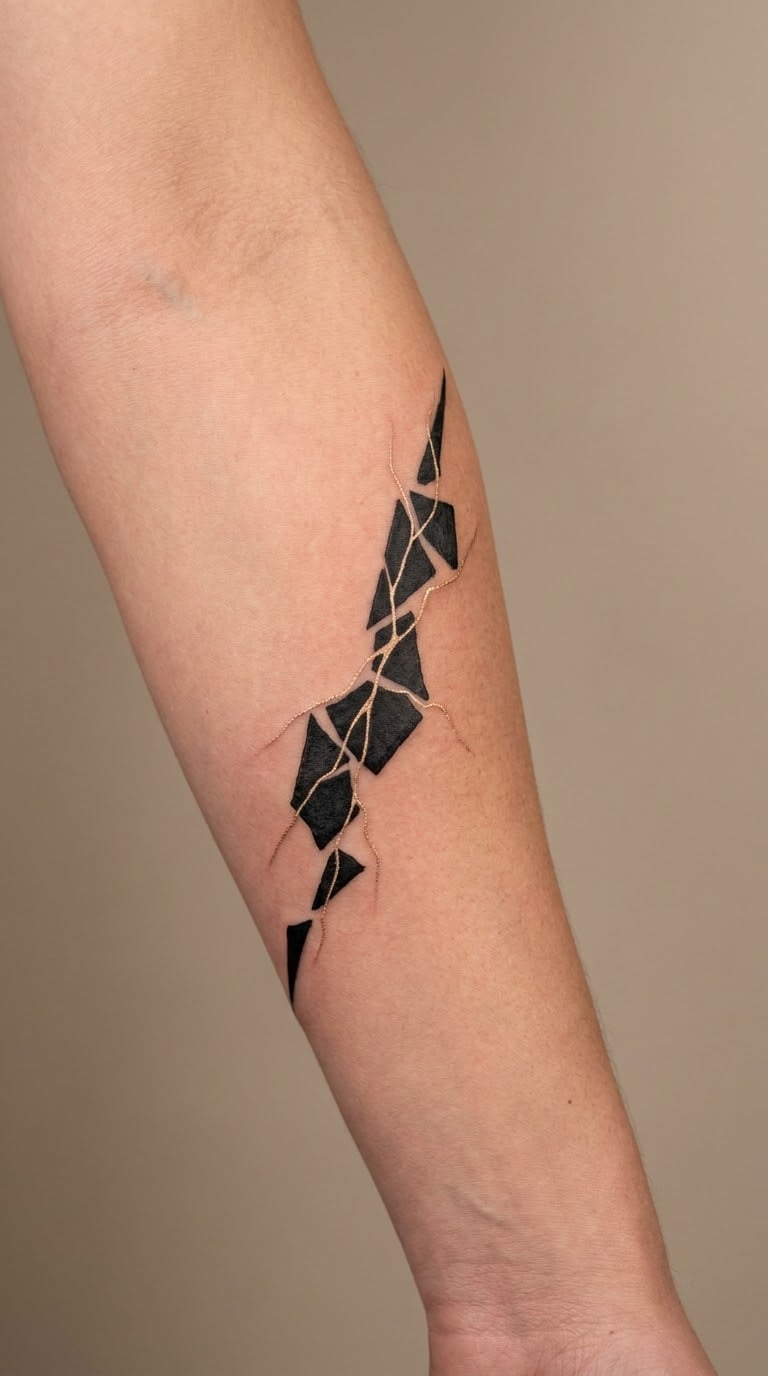
An abstract crack running across skin, drawn in black, with thin metallic-gold lines filling the gaps. No actual bowl or plate is drawn, which keeps it abstract and avoids copying a specific object.
This is the popular modern metaphor for repair, where the broken thing is treated as worth more for having been mended. It sits in the same family as the phoenix but reads quieter and more grown-up.
Placement: forearm along the length of the bone, or across the shoulder. Size: 3 to 5 inches (7.5 to 12.5 cm) long. Style: blackwork with a gold or white ink accent. Pain: low, because a single line of any length is a quick job. Ageing note: gold ink is metallic and stays stronger than mixed colour, but it can look dull next to fresh black that has not yet oxidised, so allow for a touch-up on the black.
Make it yours: branch the crack lines so they follow a scar, a healed fracture line, or a road you drive often.
7. Wave Breaking Over a Small Shield
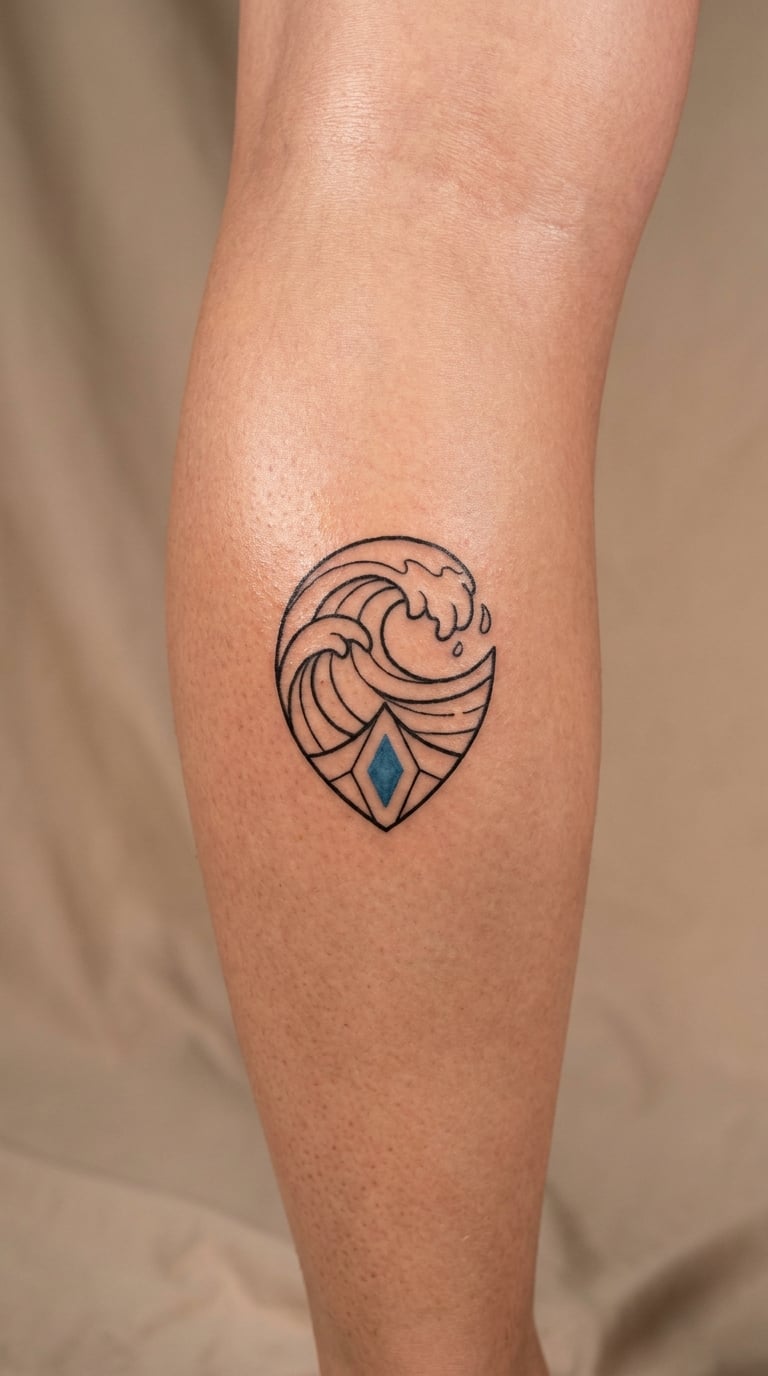
A single curling wave, drawn with clean black outlines and two or three interior water lines, breaking over a simple shield made of straight geometric segments. One blue fill inside the crest is the only colour.
Facing difficulty and staying protected through it. The marine half reads as grit, the shield half reads as support, and together they make a fairly compact story.
Placement: calf, forearm, or ribs. Size: 2.5 to 3.5 inches (6 to 9 cm) wide. Style: bold blackwork with one accent colour. Pain: low to medium; the calf bruises a little but the nerve endings there are calmer than the wrist. Ageing note: the blue will fade first and shift toward grey-blue, so pick a shade you would accept in neutral.
Make it yours: swap the shield outline for a specific shape, such as a badge or a family crest shape you already use.
8. Sapling Growing Through Stone
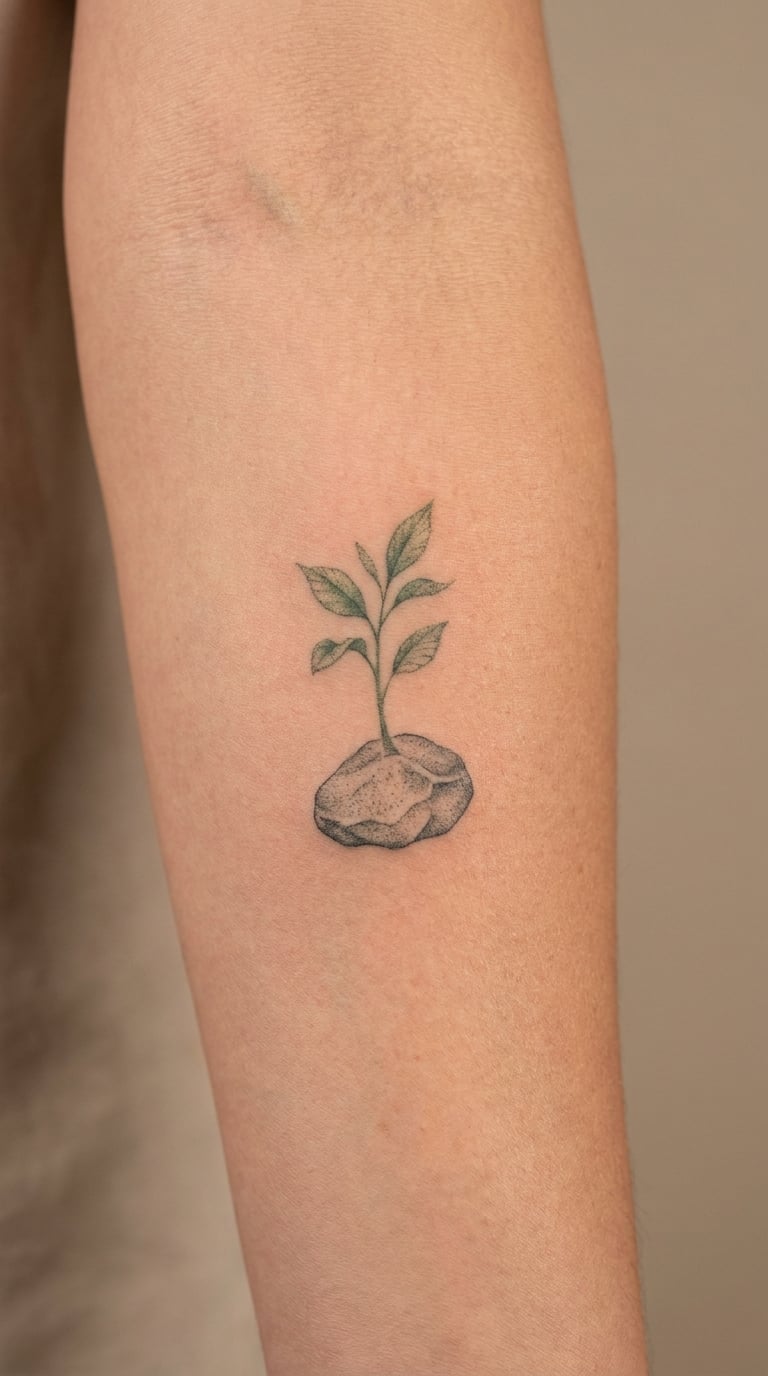
One small tree with a brown trunk, three to five muted green leaves, rising out of a grey stone rendered with stippling rather than heavy black. The tree must be the larger of the two elements, or the composition reads as a rock with weeds.
Persistence that keeps going. Popular, yes, but it is popular because it does the job cleanly at small sizes.
Placement: inner arm, forearm, calf, or the back of the shoulder. Size: 2 to 3 inches (5 to 7.5 cm) tall. Style: illustrative realism with limited colour. Pain: medium, and the stipple work on the stone takes longer than the tree, so allow a longer sitting. Ageing note: five leaves is plenty. Ten leaves will merge into a green smudge.
Make it yours: a specific species rather than a generic sapling, a birch if you have one, or an olive branch.
9. Arrow Passing Through a Circle
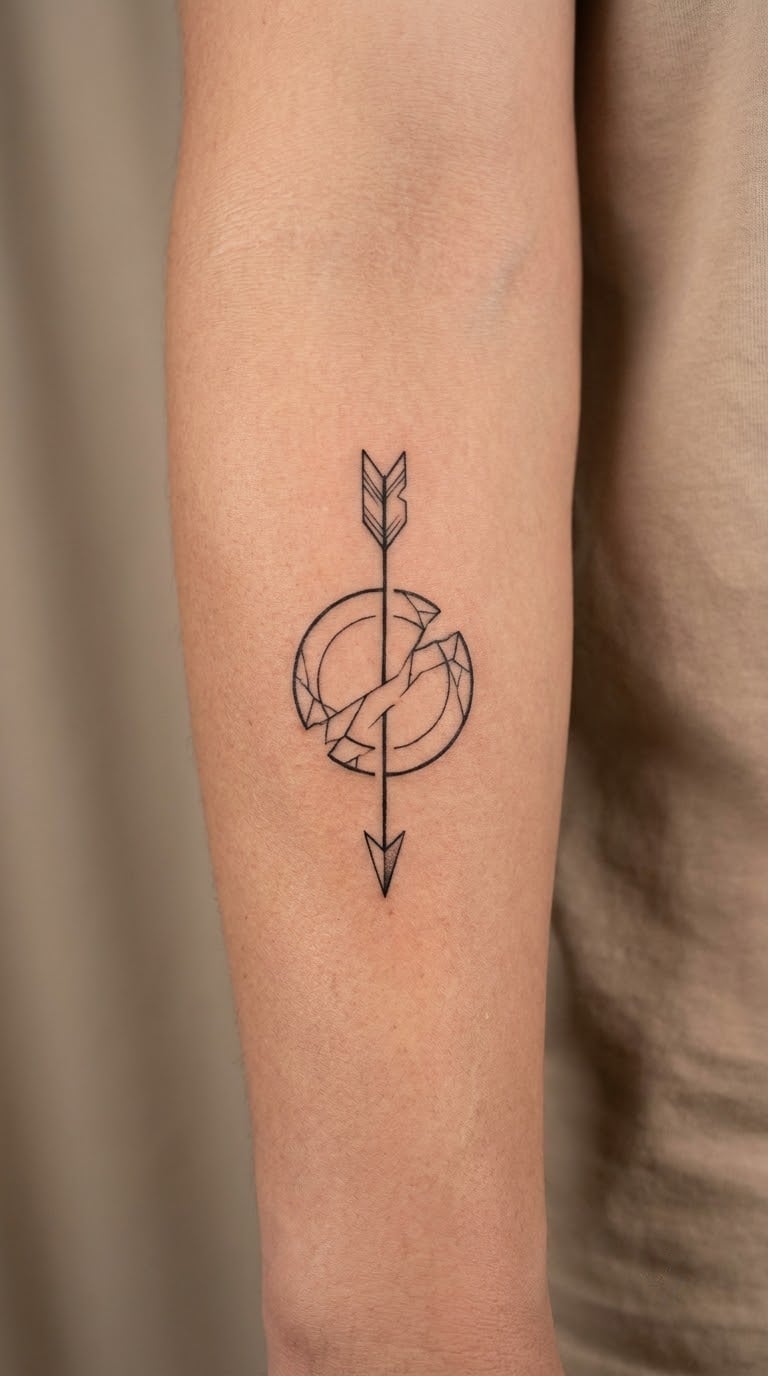
A single straight arrow, one consistent line weight, passing through a circle that is deliberately open at two points where the arrow crosses it. No fletching detail beyond three short lines, no shading anywhere.
Forward movement and moving past a limit. It is geometric, so it looks designed rather than drawn, which suits people who want symbolism without anything organic.
Placement: side of the forearm, wrist, or the back of the hand. Size: 1.5 to 2.5 inches (4 to 6 cm) long. Style: geometric linework, fine to medium weight. Pain: low. Ageing note: geometric designs are the safest bet here for longevity, provided the artist does not go sub-one-needle on the circle.
Make it yours: make one of the two breaks in the circle wider than the other, so the break looks intentional rather than incomplete.
10. Red Thread Rewrapping a Black Line
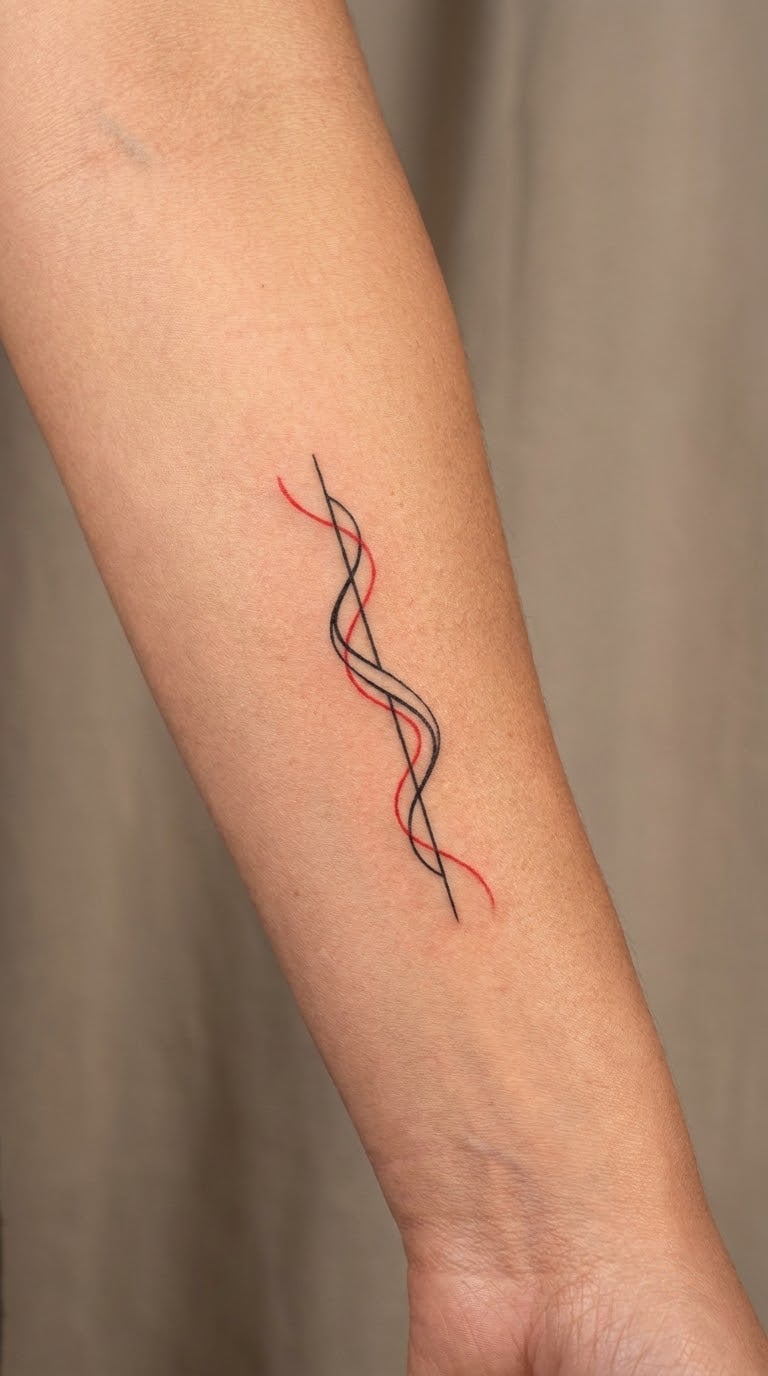
One thin black line that waves or dips, with a single vivid red thread wrapped around it at three points. Nothing else, no background, no frame. The contrast between the two colours is the entire design.
Support and repair, quietly. The thread motif turns the black line into something held together rather than something broken, without stating it.
Placement: inner forearm, wrist, or behind the arm. Size: 2 to 3 inches (5 to 7.5 cm) long. Style: minimal linework with one colour accent. Pain: medium on the inner forearm. Ageing note: bright red is the fastest-fading colour in tattooing, so ask the artist for a pigmented rather than a pastel red, and expect a touch-up on the thread.
Make it yours: a real hand-tied thread or bracelet wrapped around the design is a genuinely lovely way to make a specific object permanent.
11. Storm Cloud with a Clear Patch of Sky
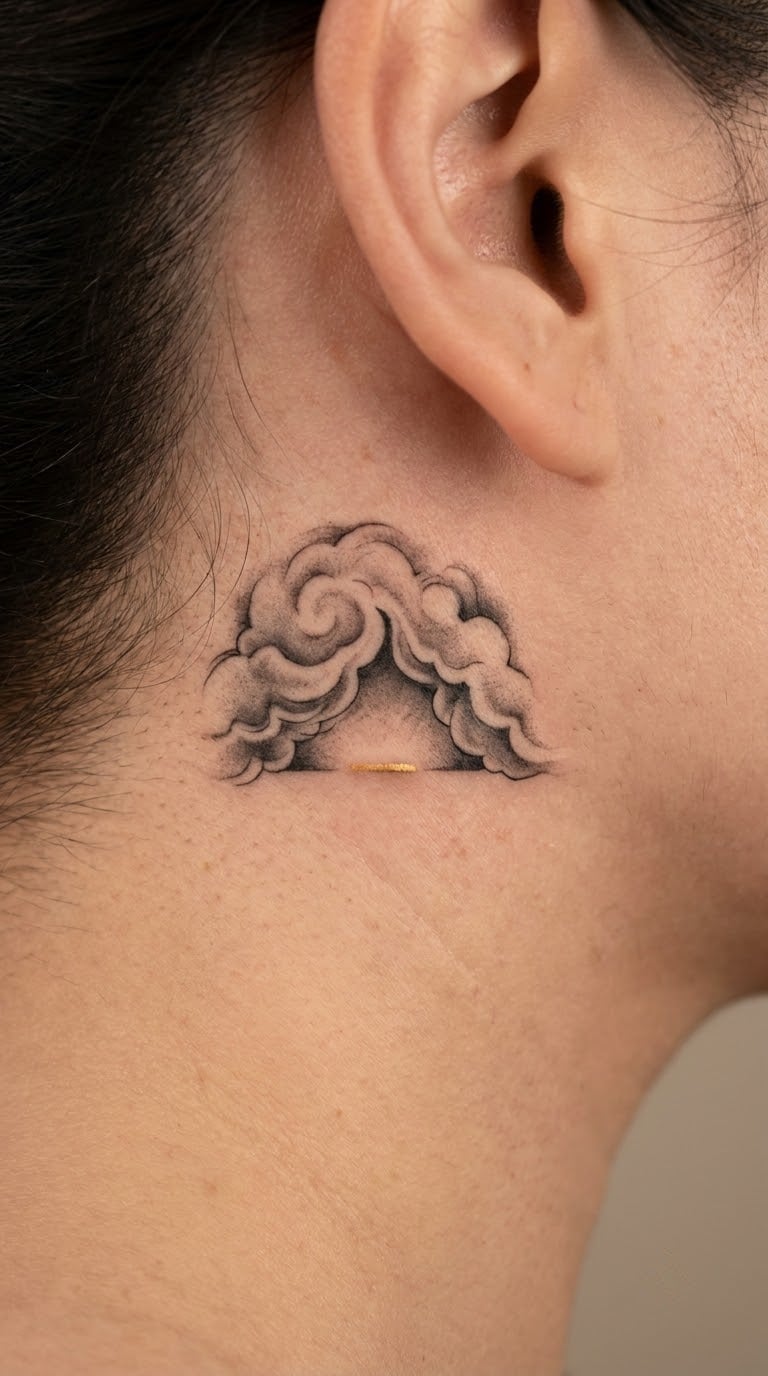
A soft grey storm cloud with one open area where a single thin gold line suggests a horizon. No rain streaks, no lightning bolts, no sun disc. The gold line is the entire bright element.
A difficult period giving way to clarity. It is the most poetic entry in this list, and it is also the one that most needs restraint to stay tasteful.
Placement: behind the ear, nape of the neck, or the upper arm. Size: 1.5 to 2.5 inches (4 to 6 cm) wide. Style: black and grey realism with a fine accent. Pain: high, and the nape and behind the ear are among the more sensitive spots on the body. Ageing note: grey wash clouds lose their soft edges over time, so a defined top and bottom edge helps more than extra detail.
Make it yours: have the gold line sit at a specific height on the arm, so the design measures something only you would know.
12. Open Hand Holding a Small Flame
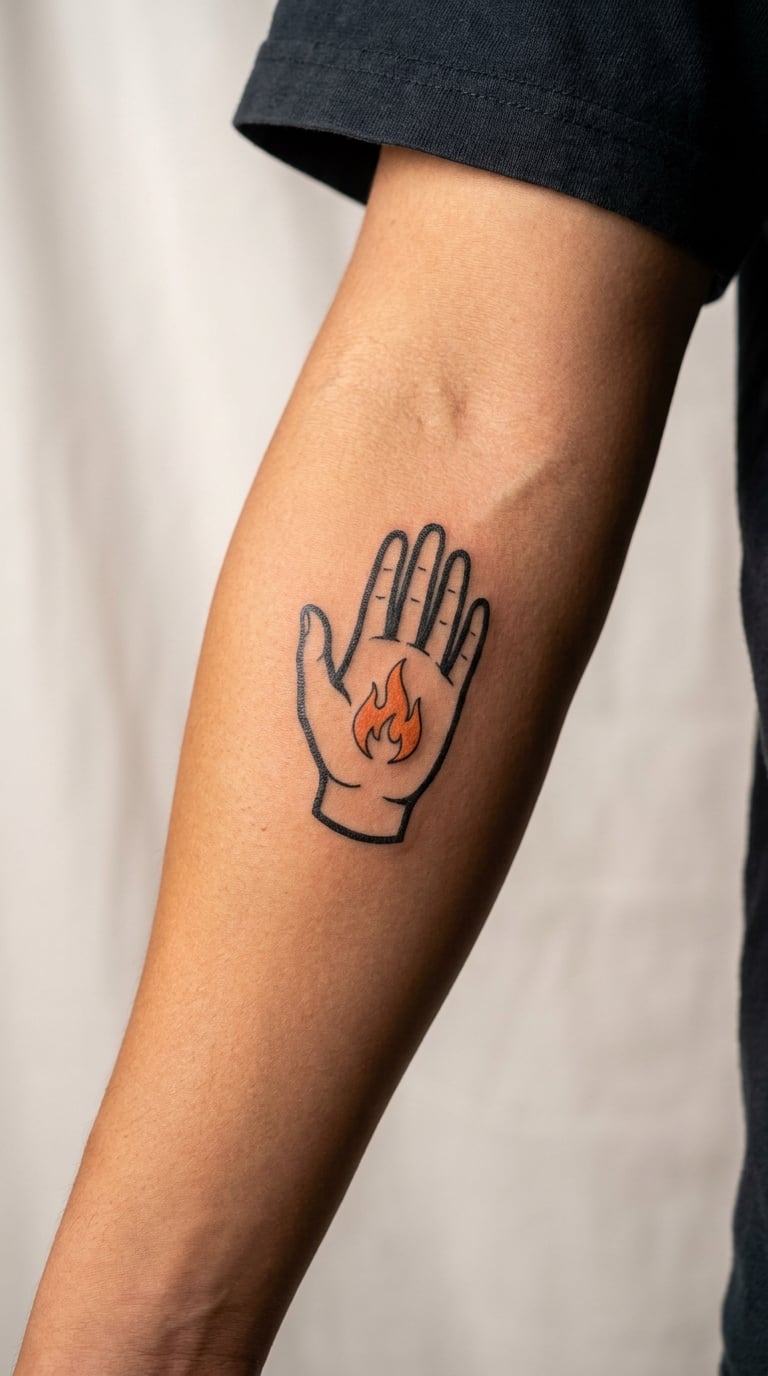
A simplified open hand, palm up, with one small orange flame sitting in the centre of the palm. Bold black outlines, limited shading in the fingers, no lettering and no decorative background. The flame is a simple teardrop with one inner curl.
Courage and inner warmth, held rather than reached for. It is the most traditional-looking entry here and the one that reads clearest from across a room.
Placement: outer forearm, inner forearm, or the sternum area. Size: 2.5 to 3.5 inches (6 to 9 cm) tall. Style: neo-traditional, bold outline. Pain: medium to high, since hands carry a lot of nerve endings. Ageing note: hands age visibly, and a bold outline on the outer hand changes shape over decades. On the forearm or the sternum, it holds far better.
Make it yours: a hand position that matches your own, drawn from a photo of your own hand, which is a small thing that makes the piece unmistakably yours.
13. Tree Rings with One Growing Circle
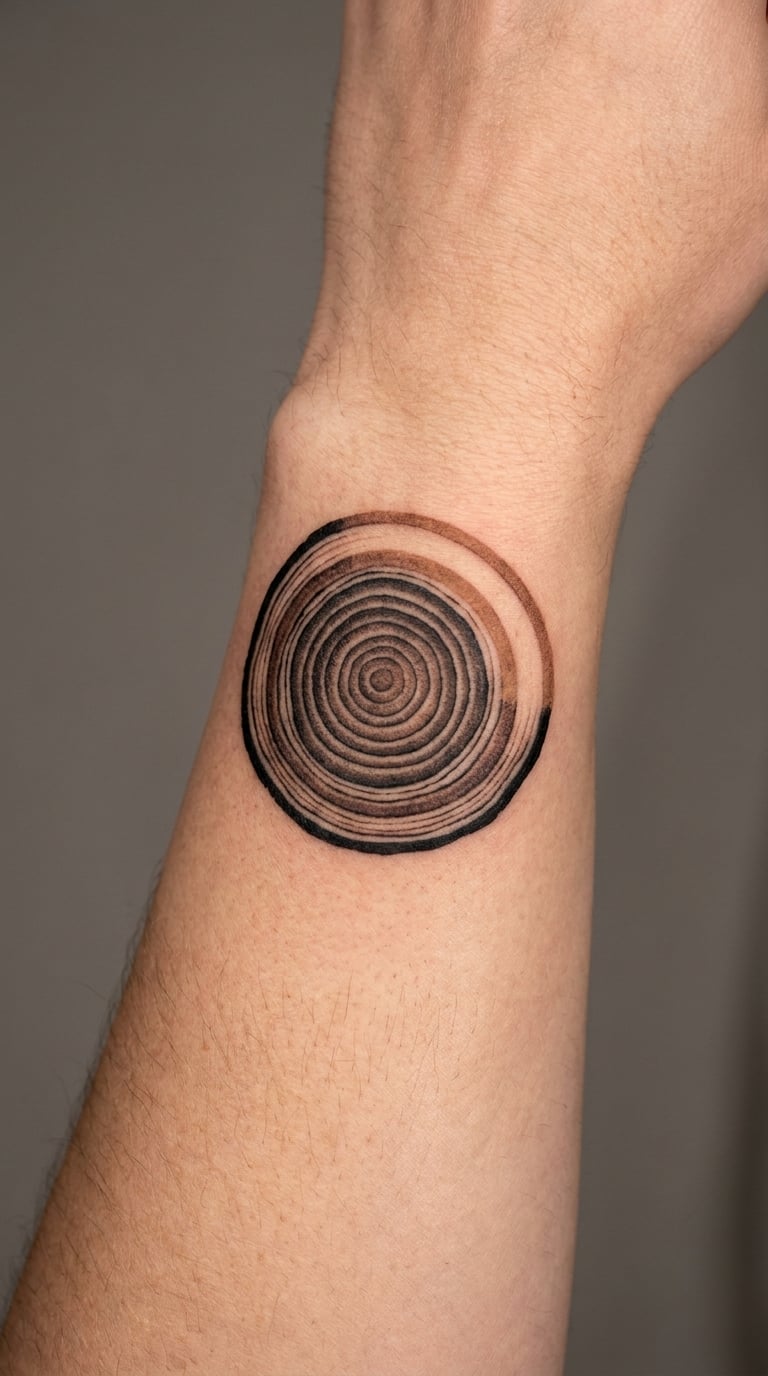
Concentric contour rings in black and dark brown, slightly uneven, ending in one clean new circular segment in a lighter tone. No trunk, no branches, no outer border. The irregularity is what makes it look like a cross-section rather than a target.
Accumulated experience with continued growth attached. Grounded and understated, and it is one of the easiest designs in this list to make genuinely personal.
Placement: wrist, inner forearm, or the calf. Size: 1.5 to 2.5 inches (4 to 6 cm) across. Style: contour linework, minimal. Pain: medium, and wrist placement sits on top of a bone. Ageing note: solid brown holds better than a light tan wash, so keep the new segment in line work or dark brown rather than pale fill.
Make it yours: count the rings to a real number, a year, a set of years, or the number of attempts it took.
14. North Star with Four Compass Points
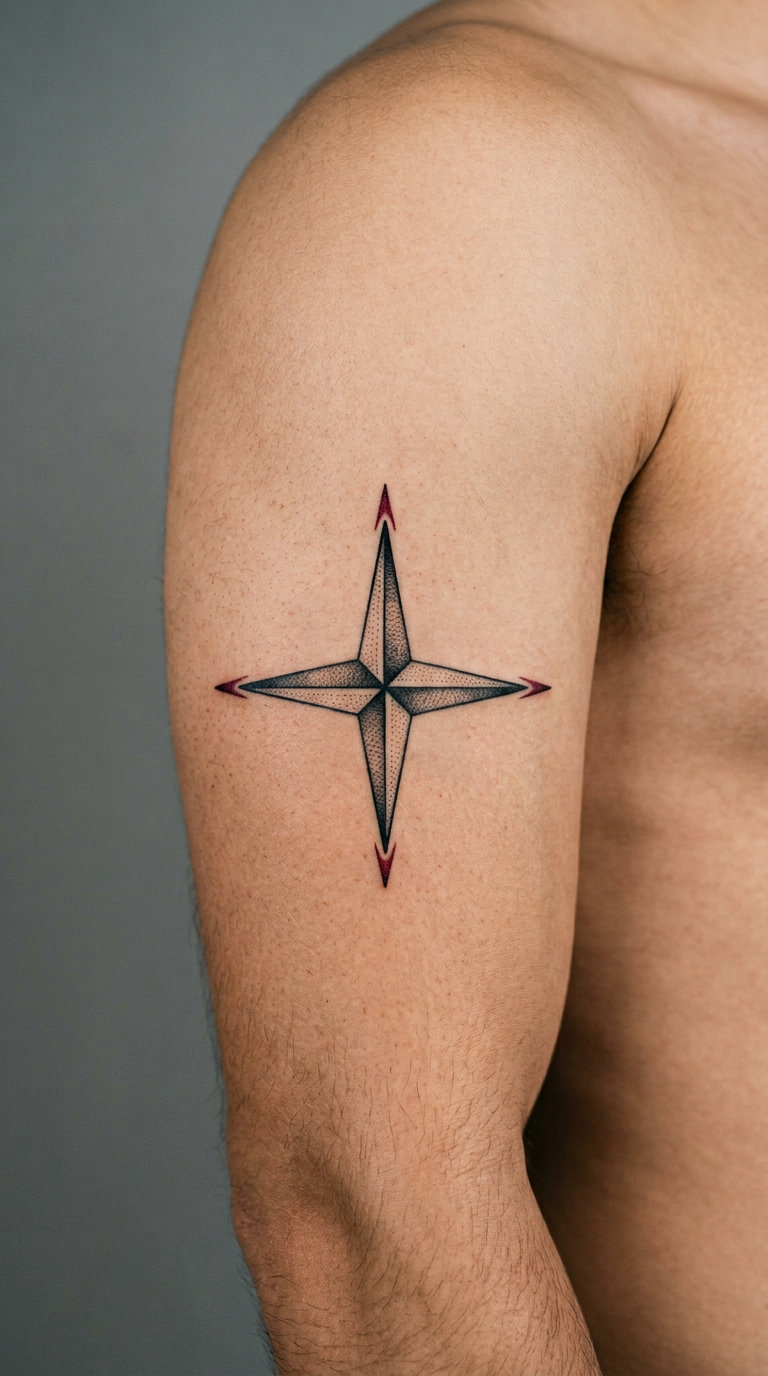
A four-point star at the centre of a simple compass, with selective dotwork radiating outward and subtle red at the four tips. No full rose, no ornate border, no N and S lettering, which is what separates this from a standard nautical design.
Direction and steadiness when you have lost your bearings. For more of this family, our guide to 20 North Star Tattoo Ideas goes deeper on the variations.
Placement: upper arm, forearm, or the chest. Size: 2 to 3 inches (5 to 7.5 cm) across. Style: blackwork with dotwork. Pain: low, though dotwork takes a while and can be fiddly. Ageing note: dotwork spreads over the first years into a soft grey haze, so keep the star itself solid black and let the dotwork be the background, not the subject.
Make it yours: a real bearing, the direction of a place you needed to find, or a fixed point in the sky.
15. Hiking Boot Print Over a Mountain Line
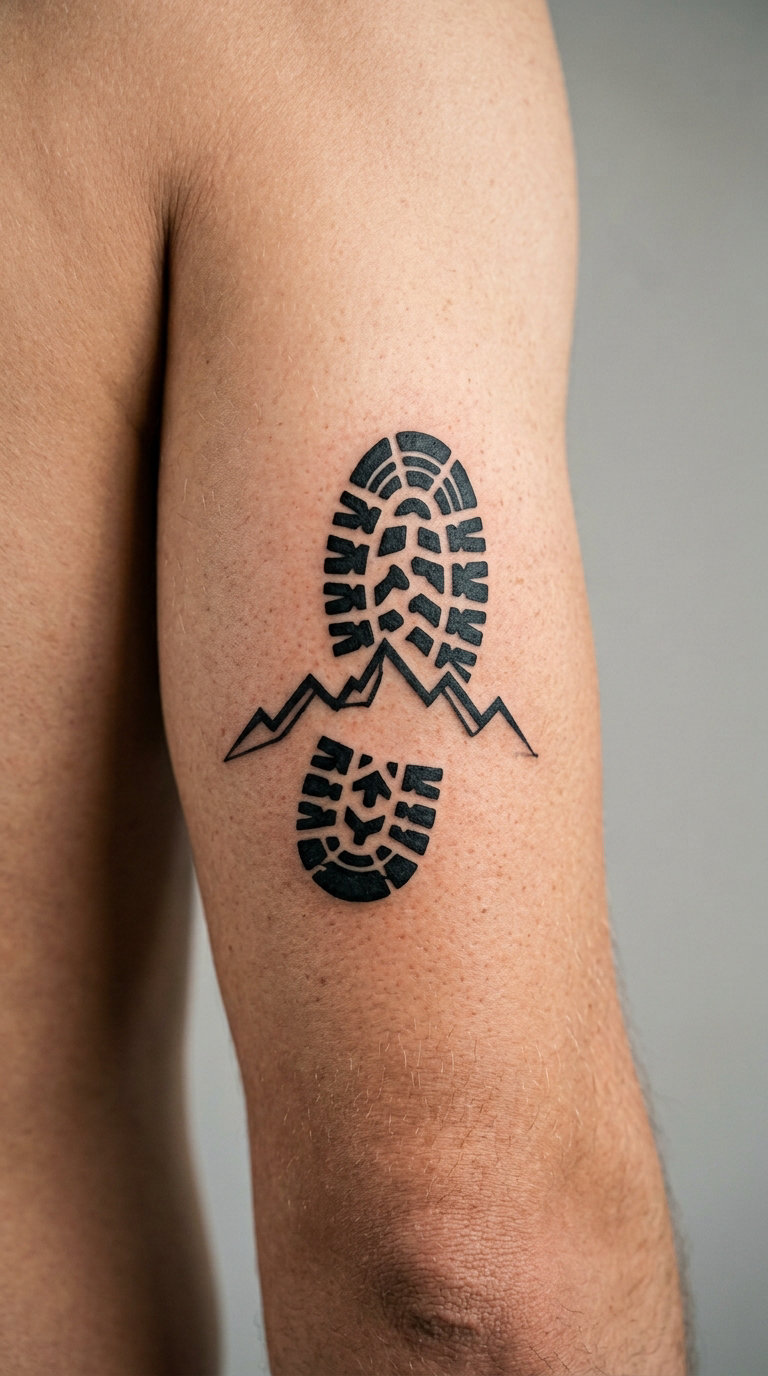
One hiking boot sole print in solid black, angled, crossing a single angular mountain contour line. The tread pattern is suggested with a few short marks rather than every lug. No trees, no trail, no camp.
Walking the hard route rather than the easy one. It has a slightly outdoorsy, documentary feel, which suits people who actually spend time outside.
Placement: outer arm, calf, or the shoulder. Size: 2 to 3 inches (5 to 7.5 cm) long. Style: bold blackwork, graphic. Pain: low. Ageing note: solid black shapes hold up better than almost anything on this list, and a simplified tread pattern ages better than a detailed one. Our picks in hiking tattoos with meaning cover the range from minimal prints to full ridge-line scenes.
Make it yours: your actual boot, if you have a distinctive tread. It is a flat graphic and it translates cleanly.
16. DNA Helix Becoming a Straight Line
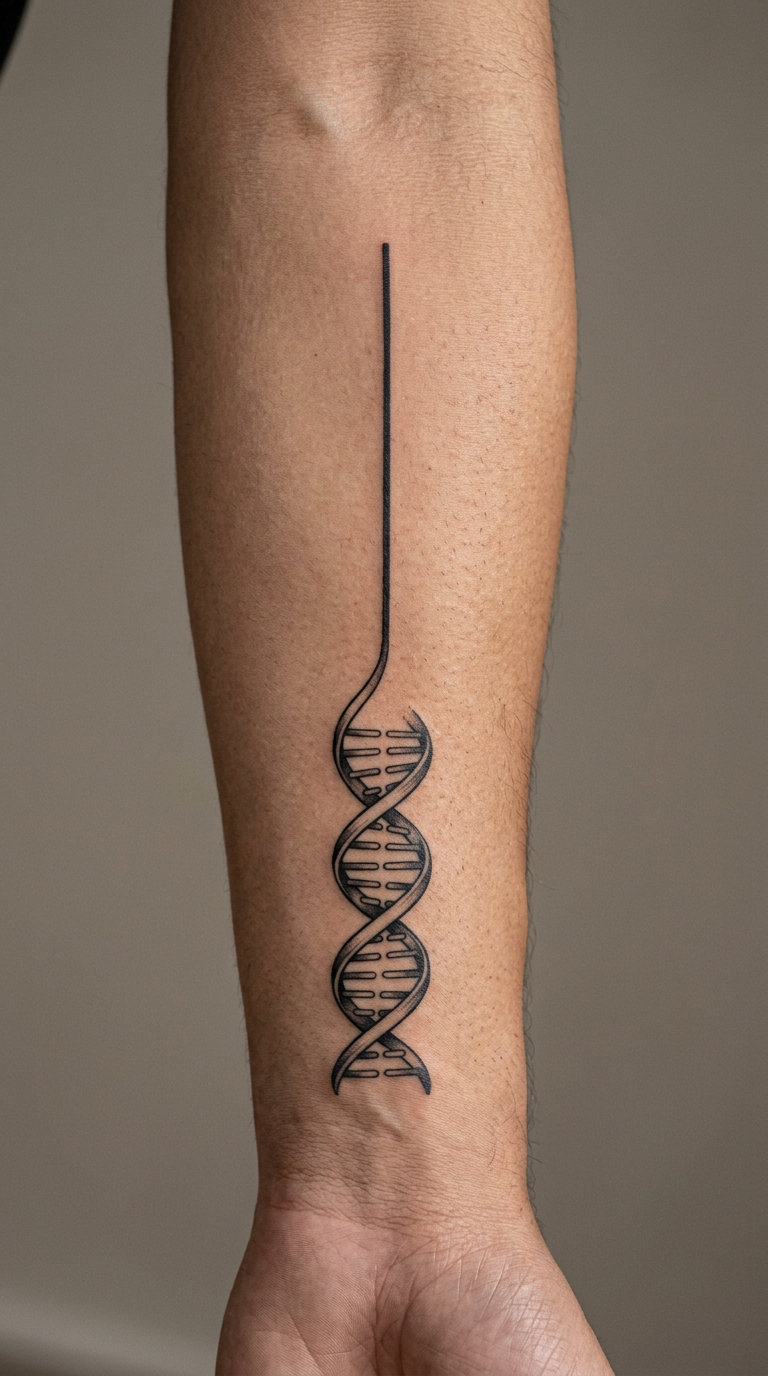
A recognisable double helix on the left that progressively simplifies until it resolves into a single clean black line on the right. The rungs are simple bars, and the whole thing avoids micro-detail so it stays legible.
Inherited strength, and personal direction on the other end of it. It works well as a visual argument, something becoming something else.
Placement: forearm along the bone, upper arm, or the calf. Size: 2.5 to 3.5 inches (6 to 9 cm) long. Style: modern linework, minimal. Pain: low to medium. Ageing note: the helix rungs are the weak point, so keep them spaced and never thinner than the outer strands. More detail in this design means faster blur. See our DNA tattoo ideas for fuller helix options.
Make it yours: have the straight line end at a real date, or run a matching helix on the other arm with a different resolution.
17. Two Interlocking Hands in Fine Line
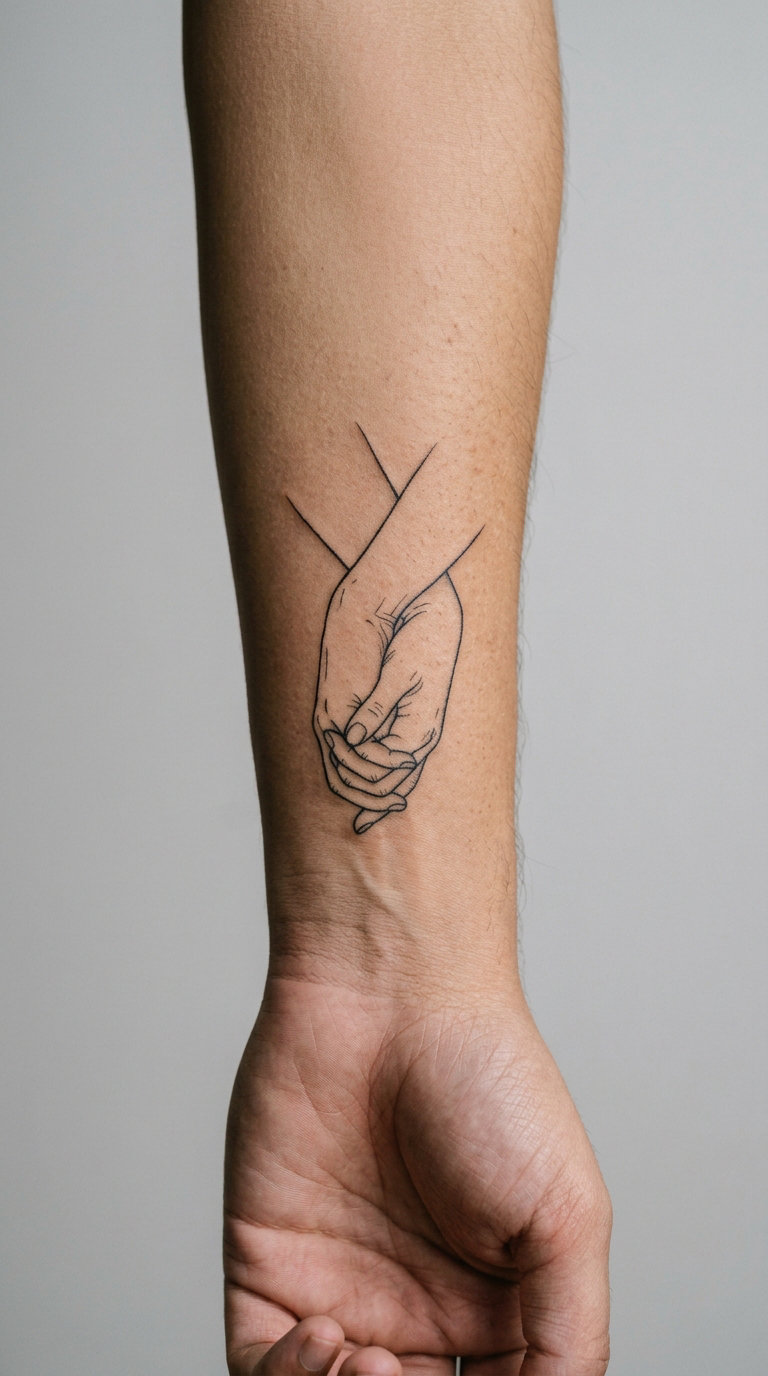
Two simplified hands, palms toward each other, linked at the wrists. Accurate contours, minimal interior shading, and no unnecessary fingers, which is where fine-line hand tattoos usually go wrong. Four fingers plus a thumb, and let the artist get the proportions right.
Mutual support, and support you gave as well as received. This one often ends up being about a specific person, which makes it a common choice for a memorial.
Placement: inner arm, forearm, or the chest. Size: 2 to 3 inches (5 to 7.5 cm) wide. Style: fine line, single weight. Pain: medium. Ageing note: hands are hard to keep crisp at small scale. Ask for the least number of interior lines you can get away with, and expect a possible touch-up in the first year.
Make it yours: send a photo of the real hands and let the artist draw from it, even in fine line. Proportions carry the meaning.
18. Small Sun Rising from a Straight Horizon
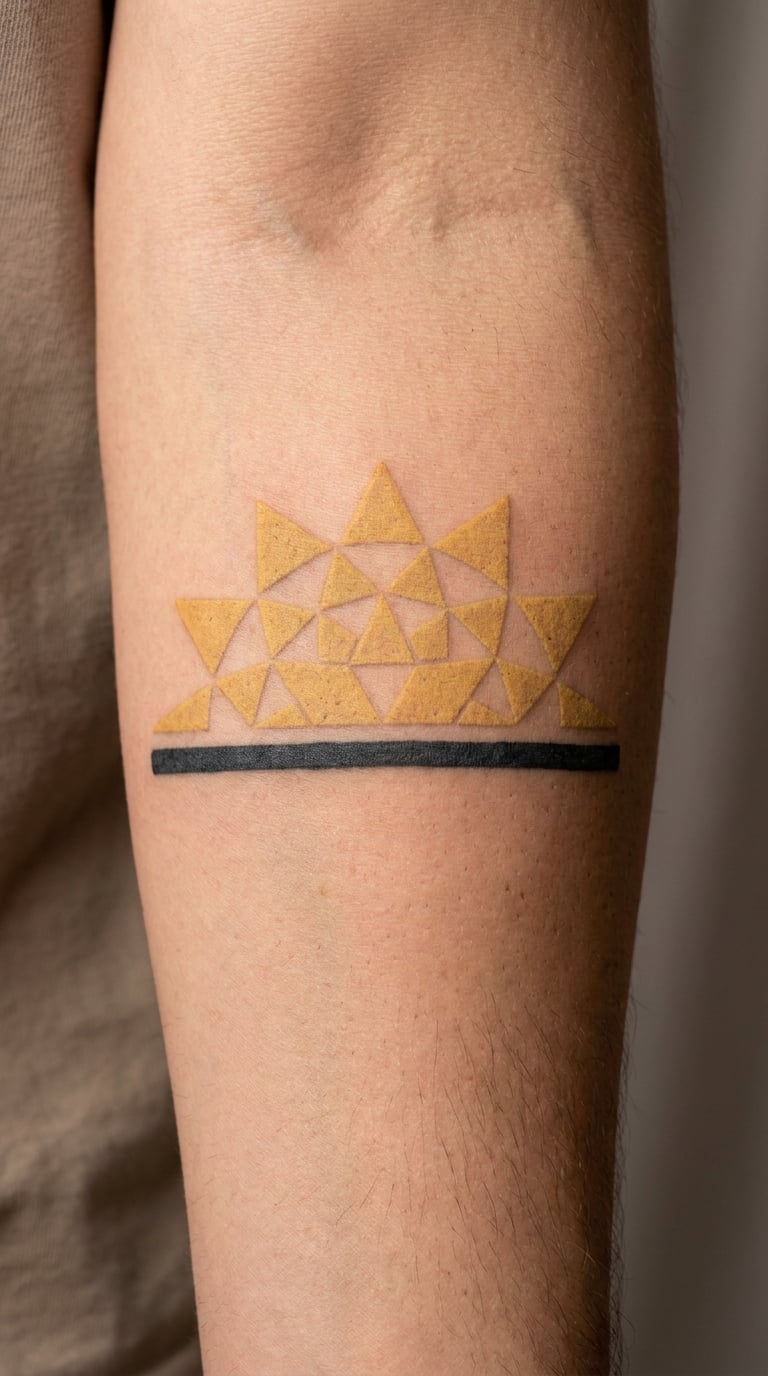
A half-circle sun in muted yellow sitting on one dead-level black horizon line, with a few straight rays above it. Geometric rather than realistic, and deliberately quiet in colour, mustard rather than bright orange.
Renewal and hope, the oldest sunrise reading there is. It is a good first tattoo because the shape is forgiving and the colour is easy to hide under a sleeve.
Placement: inner forearm, wrist, or the ankle. Size: 1.5 to 2.5 inches (4 to 6 cm) wide. Style: geometric, minimal. Pain: medium on the inner forearm, low on the ankle. Ageing note: filled colour that light will fade noticeably. Muted yellow ages more gracefully than a bright one, and it can be re-shaded rather than fully rebuilt.
Make it yours: a sunrise date, or a real horizon you have seen, drawn from a photograph.
19. Bird Escaping an Open Geometric Frame
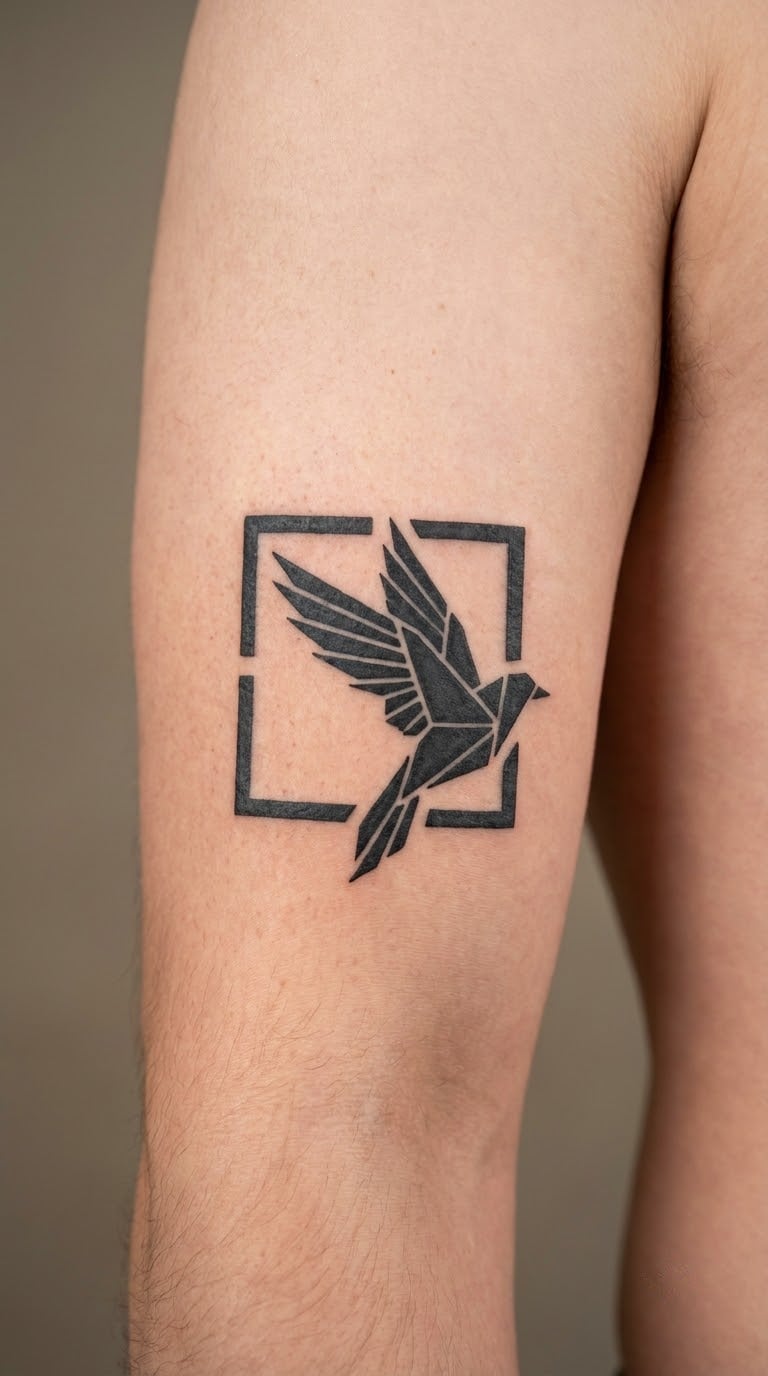
A single blackwork bird, silhouette style, mid-flight with a sharp angular shape and one spread wing, breaking through the boundary of an incomplete square frame. One corner of the square is missing. No background, no foliage, no additional elements.
Freedom and forward motion, in a purely graphic way. The frame is doing most of the work here, so it needs to be a clean unbroken line everywhere the bird is not.
Placement: upper arm, forearm, or the thigh. Size: 2.5 to 3.5 inches (6 to 9 cm) tall. Style: blackwork silhouette, graphic. Pain: low, and solid black is quick work. Ageing note: solid black is one of the most durable things you can put in skin, which makes this a low-maintenance choice.
Make it yours: a specific species if one means something, and no bird names needed. The shape does the work.
20. Seedling and Boulder in Watercolour
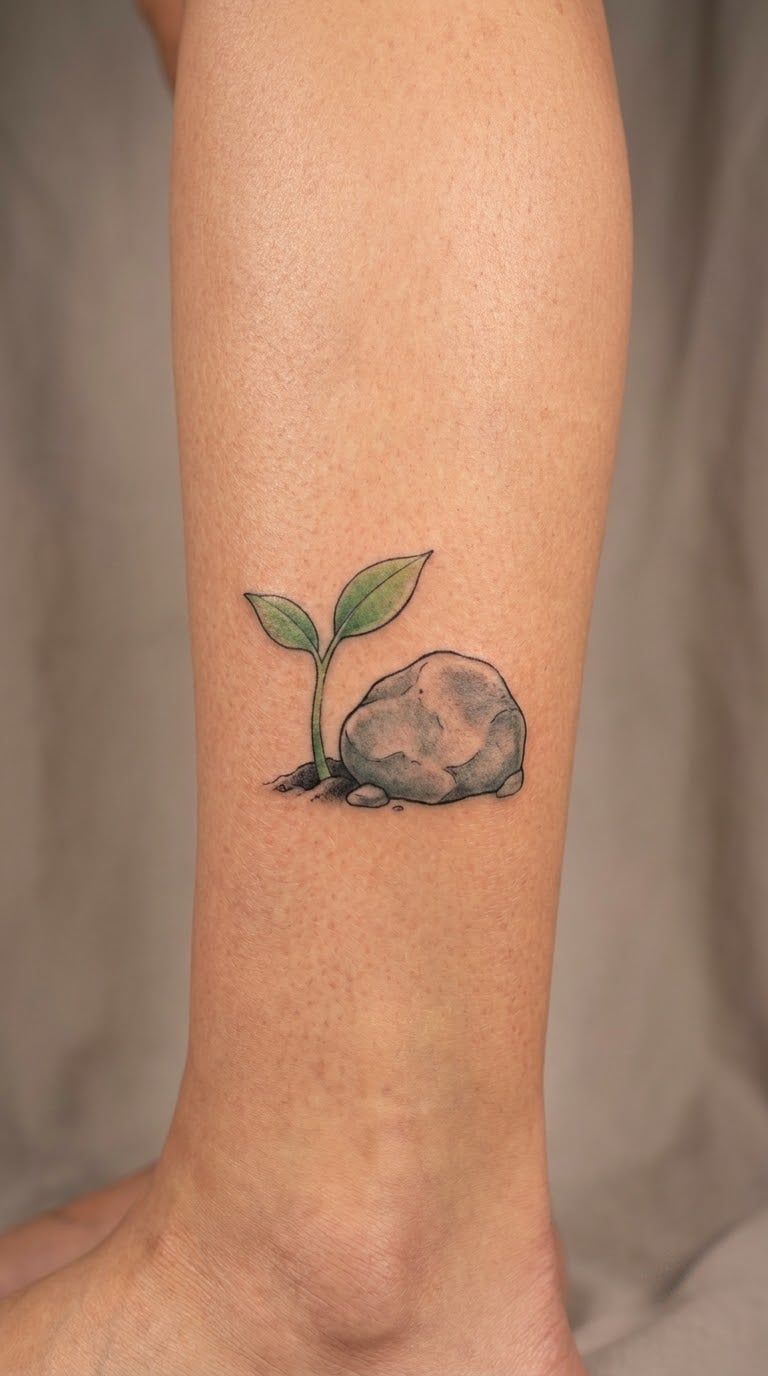
One soft green seedling with two leaves beside a muted grey boulder, painted rather than outlined. The colour bleeds slightly at the edges, but the seedling keeps a defined centre so it does not dissolve. No wash background, no splatter.
Slow growth next to something immovable. Watercolour suits people who would never choose bold blackwork and still want the meaning to be there.
Placement: calf, forearm, shoulder, or the back of the hand. Size: 2 to 3 inches (5 to 7.5 cm) tall. Style: watercolour, soft shading. Pain: low, and often quite pleasant. Ageing note: watercolour is soft by design, so it softens further. That is expected rather than a mistake, but very pale yellows and light pinks lose their shape within a few years.
Make it yours: one leaf shape from a real plant pressed in a book, drawn rather than guessed.
21. Broken Chain Ending in a Single Butterfly
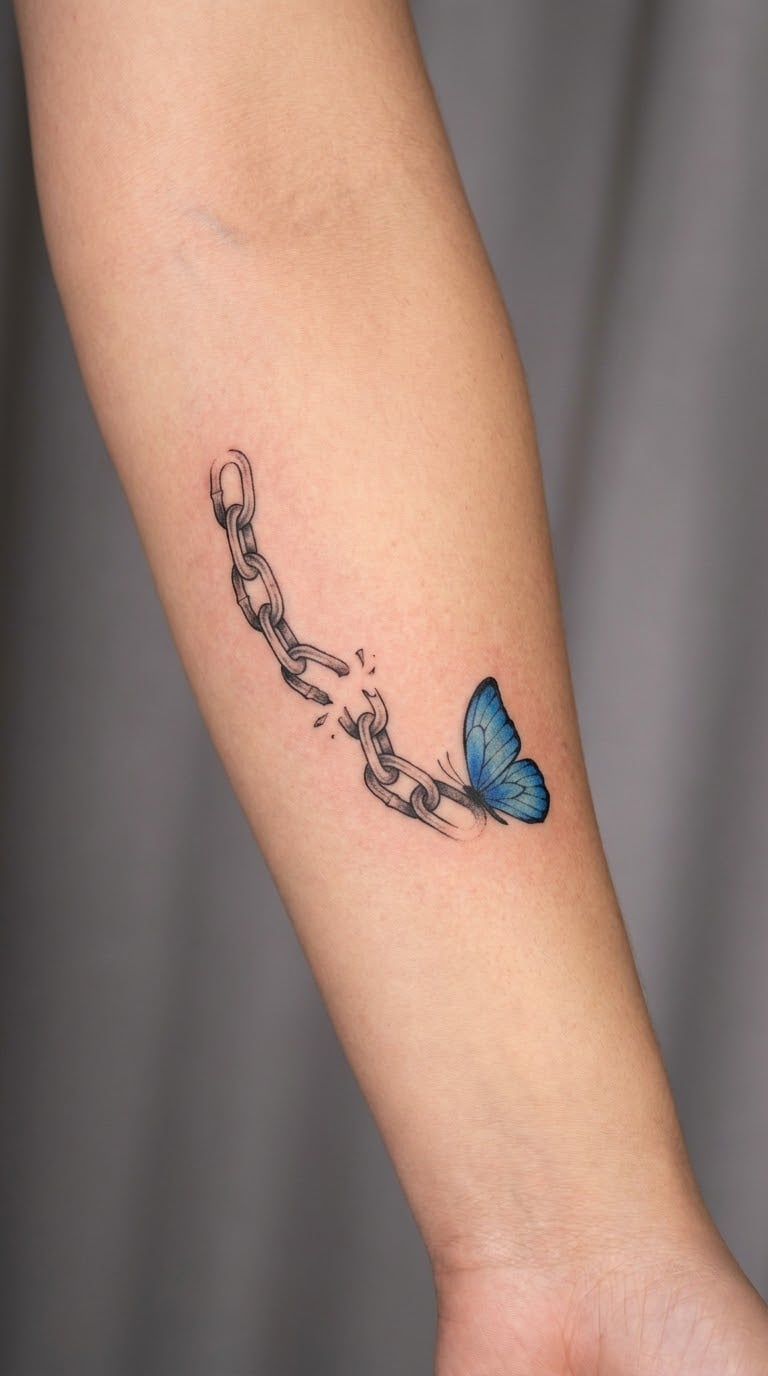
A bold black-and-grey chain link by link, with one clean break, and past the break a single small butterfly in soft blue. The two halves have to stay visually distinct, or it turns into a busy collage.
Constraint giving way to something free. It borrows two very well-known symbols and uses the break between them as the actual message.
Placement: forearm, upper arm, or the ankle. Size: 2.5 to 3.5 inches (6 to 9 cm) long. Style: black and grey with one colour accent. Pain: low. Ageing note: the links are the durable part, the butterfly is the fragile part, and they will age at visibly different rates. That contrast is fine as long as you do not expect them to match.
Make it yours: a chain style that matches something you own, a bracelet or a necklace, rather than the generic link.
22. Minimal Resilience Wordmark with Root Detail
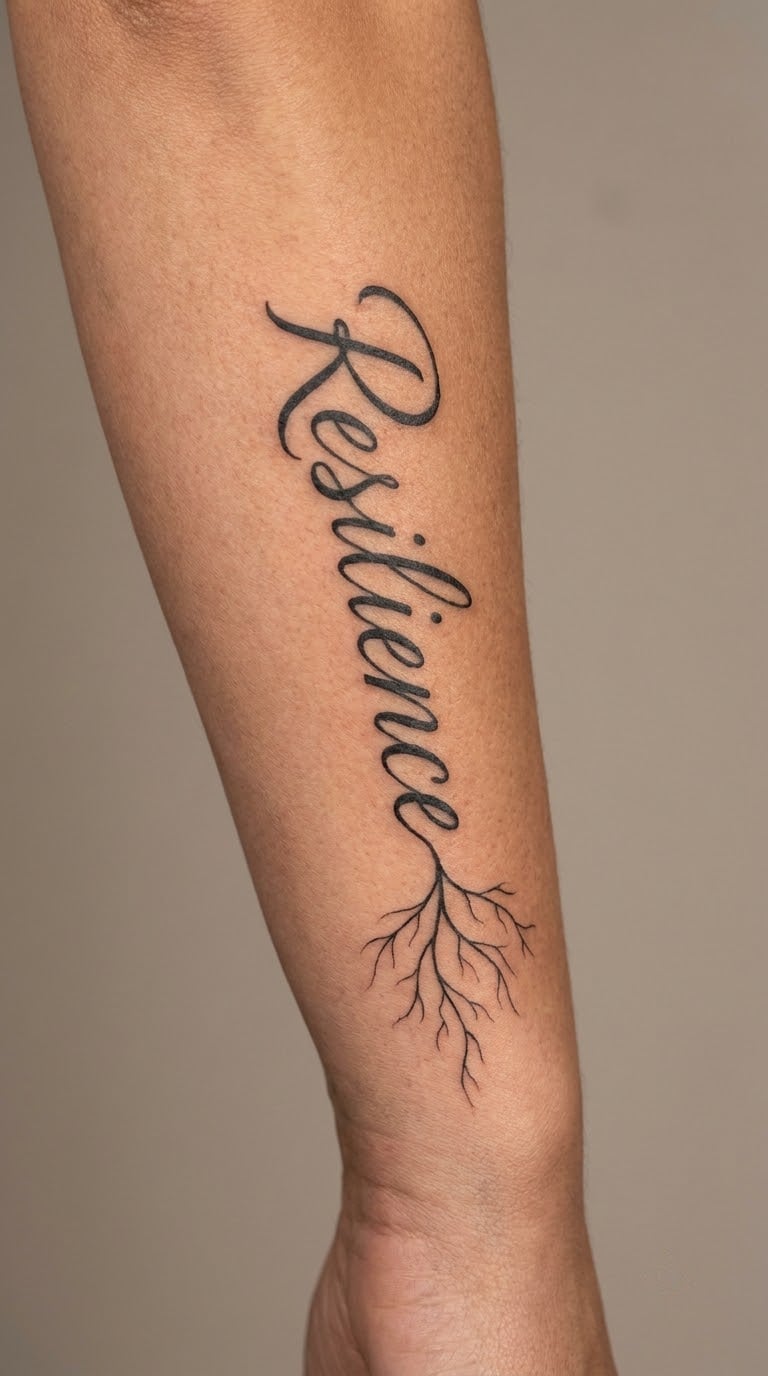
The word Resilience set in a blackletter-inspired but clean style, with one fine branching root or tendril extending down from a single letter. Even letter spacing, consistent stroke weight, and a full four inches of width so the word does not crowd.
Word tattoos carry meaning the wearer defines, and nobody else gets to redefine it for you. The root detail keeps it from looking like plain text.
Placement: forearm, outer arm, or the calf. Size: 3.5 to 5 inches (9 to 12.5 cm) wide. Style: blackletter-inspired line lettering. Pain: low to medium, but lettering takes time, so allow a long sitting and a possible second. Ageing note: fine script fades faster than block lettering, and this one is block, which is exactly why it works. Ask for generous letter spacing and you will avoid a smear in five years.
Make it yours: a year, a longitude, or a word you and one other person share, tucked into the root detail at small scale.
How to Choose the Right Design
If you have been scrolling for an hour with nothing chosen, the deciding factor is usually line weight, not symbolism. These are 22 resilience tattoo ideas that work at human sizes, and they fail for a predictable reason: too much detail for the space you have.
- Start with legibility at the smallest size you can tolerate. If the design has to be under two inches, it needs solid black shapes and few interior lines. Phoenix feathers, tree-ring contours and grey-wash clouds all need more room than people expect.
- Match the style to how visible you want it to be. Bold blackwork and traditional designs announce themselves. Fine line and watercolour sit quietly until you are close. Decide which you want before you pick the symbol.
- Pick the placement first, then the design. The inner forearm is the most versatile spot on the body for this theme. The ribs and sternum are private and take longer. Behind the ear and the fingers fade fastest.
- Check what survives at that scale. A semicolon, an arrow through a circle and a compass star all hold up small. A DNA helix and a pair of hands do not, unless you go bigger than you planned.
- Be honest about whether the meaning is yours. The most common regret I hear about is not a bad tattoo. It is a good tattoo of somebody else’s idea. If a symbol only means something because it is the recognised one, keep scrolling.
- Ask your artist to redraw it, not to trace it. Bring the meaning rather than a screenshot. A good artist will tell you honestly if your reference will not survive at the size and placement you want, and that conversation is worth more than the reference image.
Cost and Session Time
Session length is easier to predict than price, and it is the number that actually decides whether your idea works. Micro designs under one inch are often a short sitting. One to three inches is a standard appointment. Three inches and up, or anything with grey wash, watercolour or colour packing, is a long sitting or more.
For US pricing, think in bands rather than a single number. A micro piece under one inch, or a simple geometric mark, commonly lands somewhere around $80 to $200 once the shop minimum is applied. Small designs from one to three inches, which covers most of the entries above, tend to sit in the $200 to $450 range. Medium work from three to five inches runs higher, often $500 to $1,200, and larger or fully rendered pieces can pass $1,500 once shading and colour are involved. Colour, grey wash and watercolour sit at the expensive end of every band because they take far longer per square inch than clean line work.
What pushes cost up is rarely the size alone. It is the artist, the complexity, where you are, and how the shop is set up. A shop minimum means a small design still has a floor. A flat hourly rate in a high-rent city costs more per hour than the same artist in a smaller town.
Deposits are normal and they usually come off the final total. A design that genuinely needs more than one sitting will be priced and planned that way, and that is not a bad sign. It is usually better than a single rushed appointment on a piece you will see every day.
Ask the artist for an estimate before the first sitting, and ask what the plan is if the piece turns out to need a second session. Those two questions tell you most of what you need to know about how they work.
Aftercare Basics
- Follow your artist’s aftercare instructions first. Everyone’s advice differs slightly, and the person who did your tattoo knows your skin and your ink. Their guidance outranks anything general you read online, including this list.
- Wash gently with clean water and mild unscented soap. Wash it a couple of times a day for the first stretch, then pat dry with something clean rather than rubbing.
- Protect it in the first days. Loose, clean clothing beats a tight sleeve. If the area is being covered, keep the covering clean and change it rather than leaving one on.
- Do not pick or scrape. Flaking is normal and it is the single most avoidable cause of a patchy result. Every flake you pull takes ink with it.
- Keep it out of strong sun when you can. New tattoos fade faster than healed ones, and colour is affected before black. This is easier in autumn and winter, which is one reason so many people book in cooler months.
- Give it time before you judge it. The surface settles in the first few weeks and the piece keeps settling for a couple of months. Ask your artist about a touch-up window rather than booking one yourself.
If something looks wrong to you during healing, contact the shop first. They have seen it hundreds of times and will tell you honestly whether it needs attention.
Frequently Asked Questions
What does a resilience tattoo usually represent?
A resilience tattoo usually represents surviving something and continuing anyway. The common thread across the symbols is that each one breaks, bends, burns or grows through difficulty: a phoenix is reborn from ashes, a lotus pushes up through mud, a semicolon marks a sentence the writer chose not to end, and a mountain represents a long climb. What it means to you personally matters far more than the traditional reading.
What is a good small resilience tattoo for the wrist or forearm?
For the wrist, the cracked shell with a sprout, the small sun on a horizon, and the bent iron bar all work well between one and two and a half inches, because each keeps a simple outline. On the forearm you have more room, so a fine-line phoenix around three inches or a bent iron bar reads properly. The DNA helix and the pair of hands need closer to three inches to stay legible.
Should a resilience tattoo be in colour or blackwork?
Blackwork lasts longer, ages more predictably, and hides minor imperfections. Colour makes a design more personal and more visible, and it is the better choice if the meaning depends on a specific hue, like a red thread or a green seedling. Whichever you pick, ask the artist to use a pigmented ink rather than a pastel, and plan a touch-up if colour matters to you.
Which resilience tattoo placement is least painful?
The upper arm, outer forearm, calf and thigh are usually the calmest spots, mostly because the bone sits deeper and there is more soft tissue. The inner forearm, ribs, sternum, neck and behind the ear tend to hurt more. Hands and fingers hurt and fade quickly. Placement also changes how visible the piece is, so weigh that against comfort before you choose.
How can I personalise a resilience tattoo without adding a quote?
Add something only you would recognise rather than words. A real year, coordinates, a hand-tied thread, your own handwriting reduced to one letter, a specific plant species, or a mountain ridgeline from a photo all work. Pairings also help: a date threaded through an infinity loop, or a small semicolon tucked into the negative space of a compass. Ask your artist to redraw it rather than tracing a reference.
Whichever one of these 22 resilience tattoo ideas has been sitting with you, that is usually the answer. If you are new to ink, the bent iron bar, the small sun on a horizon or the arrow through a circle are the safest first pieces, because solid simple shapes hold their shape for decades. If you already have a sleeve and are adding to it, the tree rings, the compass star or a second element that answers an earlier piece will sit better than anything that stands alone.
Bring the meaning to the consultation, not just the picture. That is the part the artist cannot pull from a reference folder, and it is what turns a good tattoo into yours.