
16 Tiny Mountain Tattoo Ideas, Each With a Placement (September 2026)
Tiny mountain tattoo ideas are the easiest way to carry a big idea in a small mark. A single ridgeline, one clean peak, or a two-inch range in fine line black ink says perseverance, freedom and the reward of a hard-earned view without turning into a statement piece you have to explain at work. Most people who book one are first-timers, hikers, or travellers tying a specific summit or trail to a specific year.
Scale is the whole craft here. A landscape that looks convincing in a phone photo turns to mush at one inch, so the good versions are built from a handful of confident lines and let the empty skin do the work. Below are 16 of them, each with the placement it suits, the size it holds, and an honest note on pain and chair time.
What Does a Tiny Mountain Tattoo Symbolize?
A tiny mountain tattoo symbolizes endurance, perspective and the reward of work that was hard. Mountains stand for obstacles you got past, the quiet strength of someone who kept going, freedom of movement and a horizon worth climbing toward. Because a small version holds the same meaning as a full landscape piece, the size says nothing about the feeling. It only says you would rather wear it privately than announce it.
16 Tiny Mountain Tattoo Ideas, Each With a Placement
1. Single-Line Ridgeline on the Inner Forearm
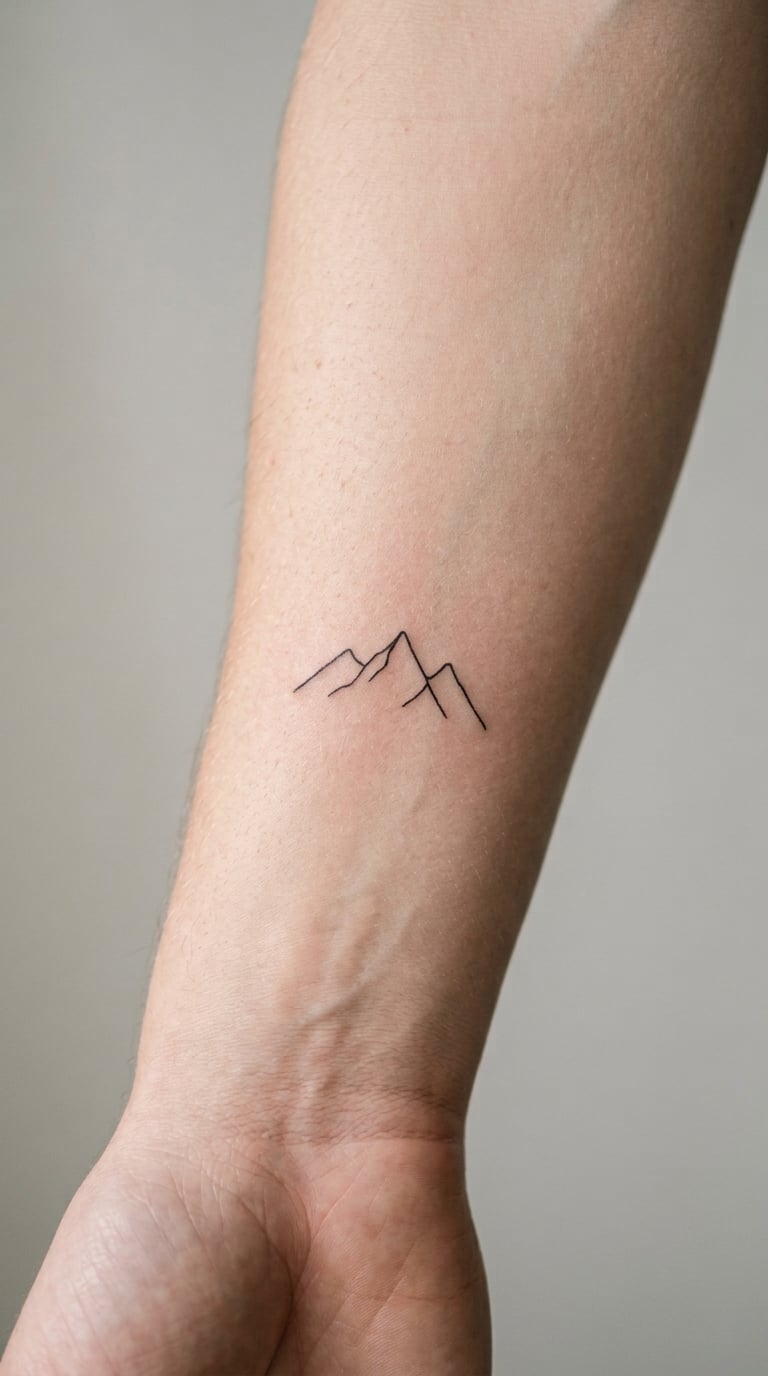
One continuous line climbs and falls across the skin, three peaks, no shading and no outline weight change. It reads like a horizon rather than a picture, which is exactly why it survives at one and a half inches. Most people pick this for a place they actually went, or for the idea of a road that keeps going.
Sits about an inch above the wrist crease, roughly one and a half to two inches wide, done in single-needle black. The line will soften slightly in the first couple of years, and asking for a touch heavier than the reference photo helps it hold its edge. A little line blur there never looked like a mistake to me.
Pain & time: inner forearm skin is thin and warm, usually about a 4 out of 10, and a piece this size takes 20 to 35 minutes.
2. Fine-Line Three-Peak Range on the Wrist
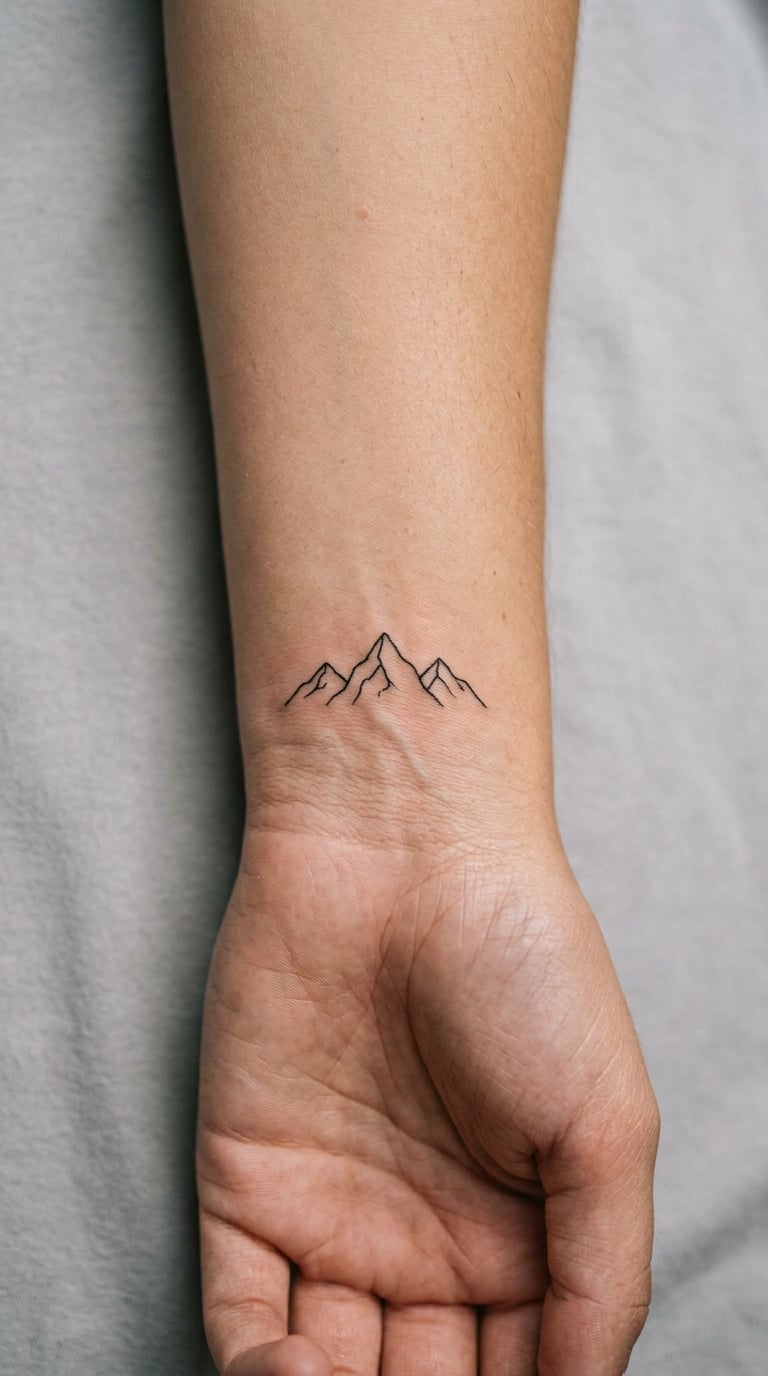
Three peaks of different heights in a row, drawn with a fine line needle and no fill. The varied heights are the point: an even row of triangles reads as a logo, an uneven row reads as a real range. This is the most requested version in the group, and it suits a person who wants a first tattoo that is not too precious.
Outer wrist, centred a finger’s width above the crease, one to one and a quarter inches wide. Wrist skin stretches and moves with the hand, so fine lines here need a slightly heavier weight than they would on the forearm. It also catches sleeves and watch bands, which means more sun exposure and more fading over time.
Pain & time: about a 5 out of 10 on the wrist, 20 to 30 minutes for the range.
3. Dotwork Mountain With One Darker Peak on the Ankle
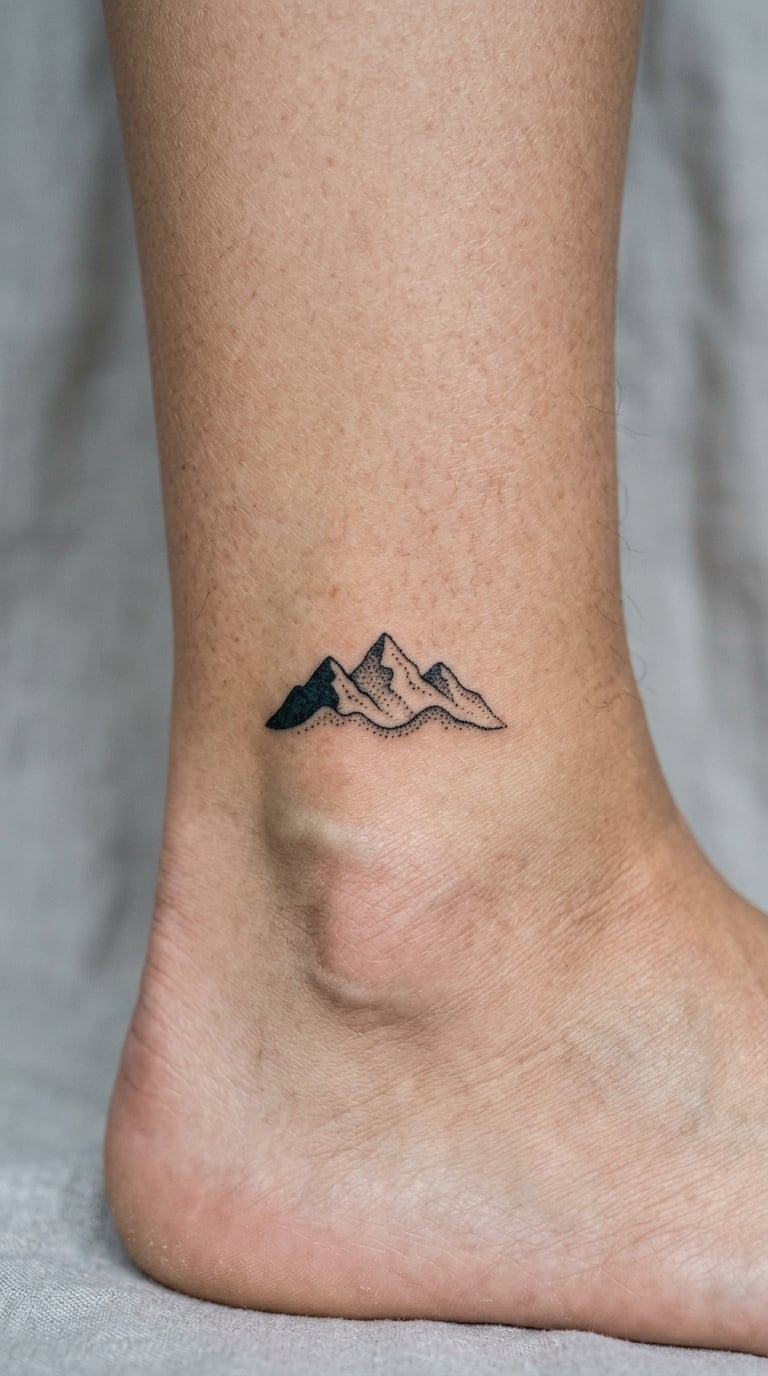
A mountain built entirely from dots, with one peak filled solid so it stands out. That single dark peak is the personal touch people keep talking about: your mountain, the hard one, the one you actually climbed. The rest can be pure stipple and it still reads as terrain.
Outer ankle, centred over the bone, one to one and a half inches. Dotwork at that scale is slow going, so expect the longest sitting of any design on this page, usually 45 to 70 minutes. Ankles swell, shrink and take a beating from shoes, so the skin here needs careful aftercare and hides sun well on a sock.
Pain & time: ankle bone is bony, about a 5 to 6 out of 10, and 45 to 70 minutes.
4. Geometric Triangle Mountain on the Side of a Finger
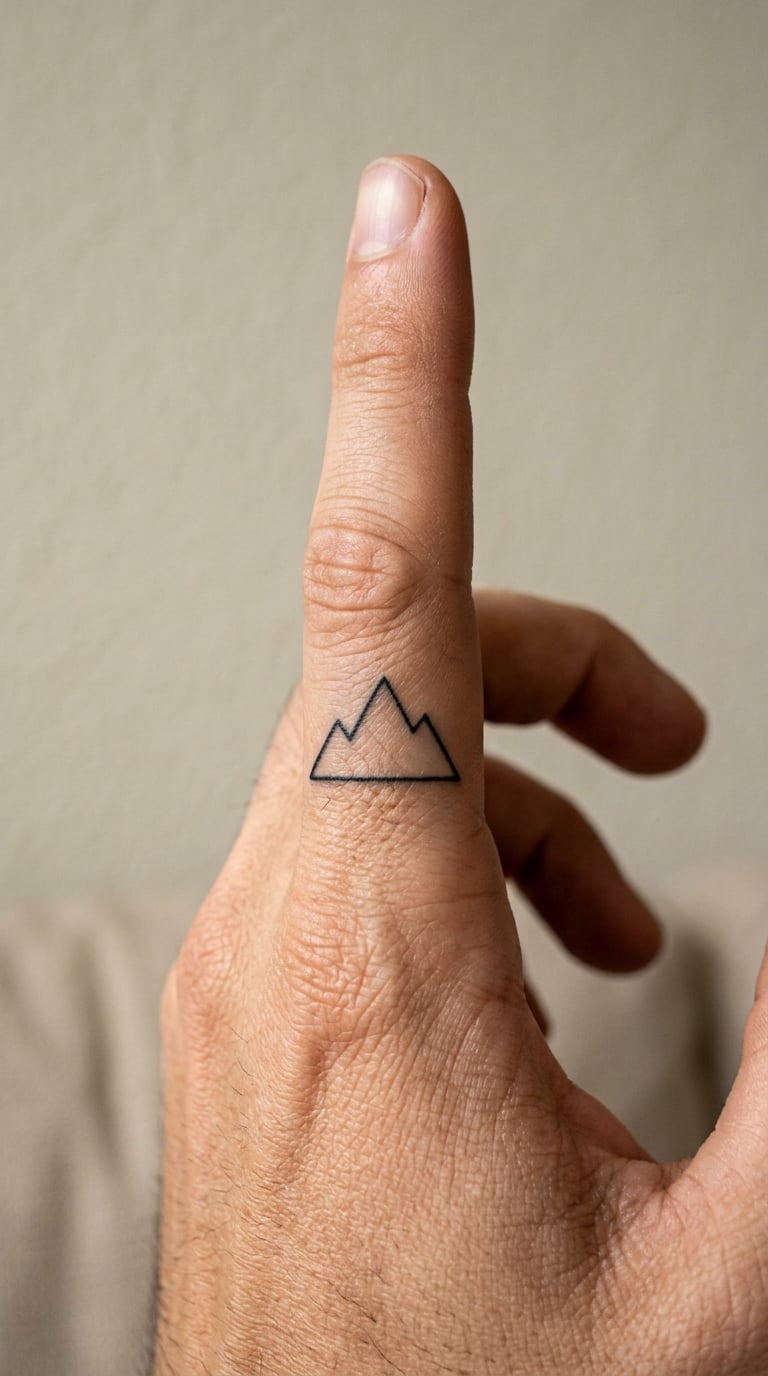
One triangle, outline only, maybe a second smaller one behind it. There is no detail to lose, which makes it the most reliable micro design going. It suits hands that work, or anyone who wants a mountain they never have to explain.
Side of the index or middle finger, half an inch to three quarters of an inch tall, sitting between knuckle and knuckle. Finger skin stretches when you grip things, and ink there can soften faster than anywhere else on the body. Most people accept that trade and plan a touch-up every couple of years, or live with a softer line.
Pain & time: fingers are sensitive, about a 6 out of 10, but the sitting is 10 to 15 minutes.
5. Watercolour Mountain at Sunrise on the Collarbone
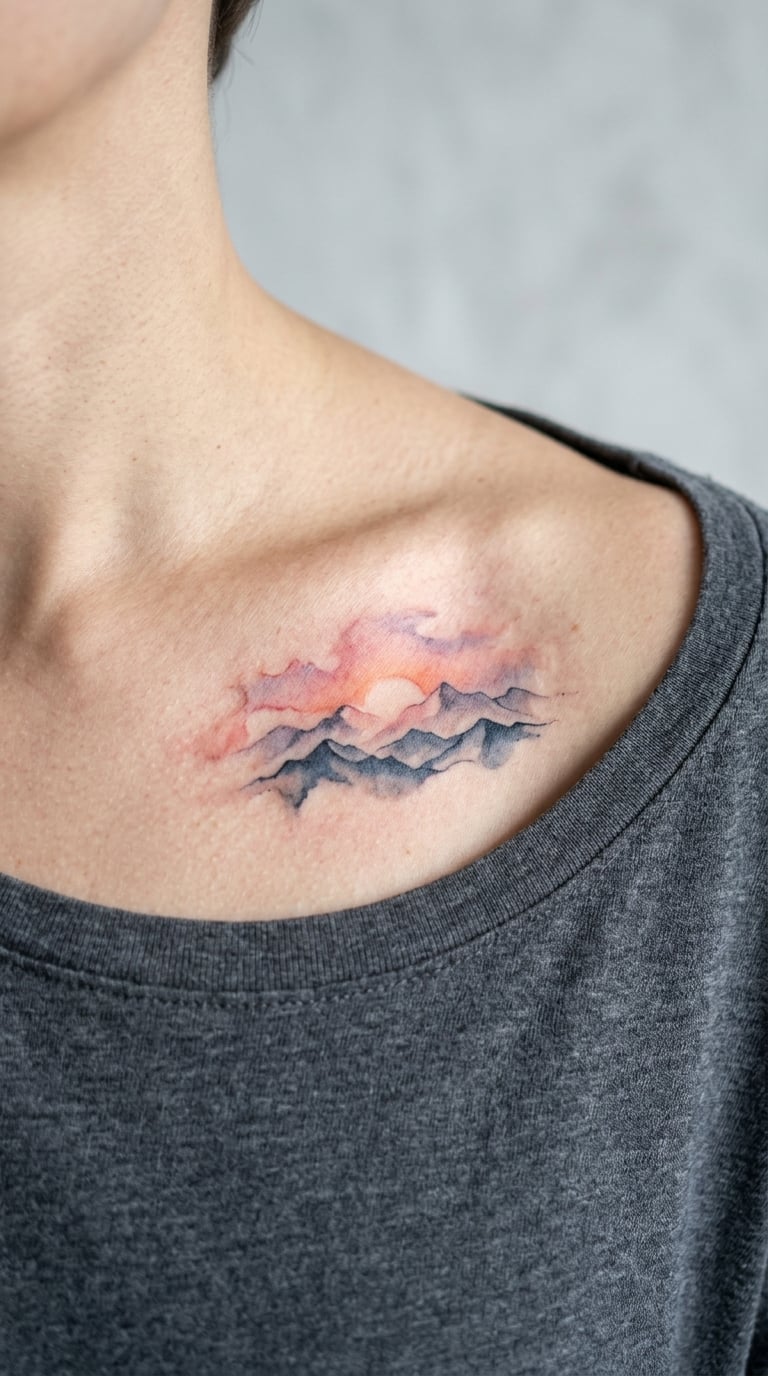
Soft pink and orange bleeding above a small dark ridgeline, loose at the edges like wet paint. Watercolour is the least common mountain style and the one most people save for a meaningful date, because colour fades and they know it. A sunrise wash says something about beginnings, which fits a new year, a move or a finish line.
Collarbone, following the bone, about two inches across. The bone is a hard surface with very little soft tissue, and a wash needs more passes to build colour, so this one is 30 to 50 minutes. Cover it in the shower for the first few weeks if you can, because the first month decides how the colour settles.
Pain & time: collarbone is a classic ouch spot, about a 6 to 7 out of 10, 30 to 50 minutes.
6. Solid Blackwork Peak on the Upper Arm
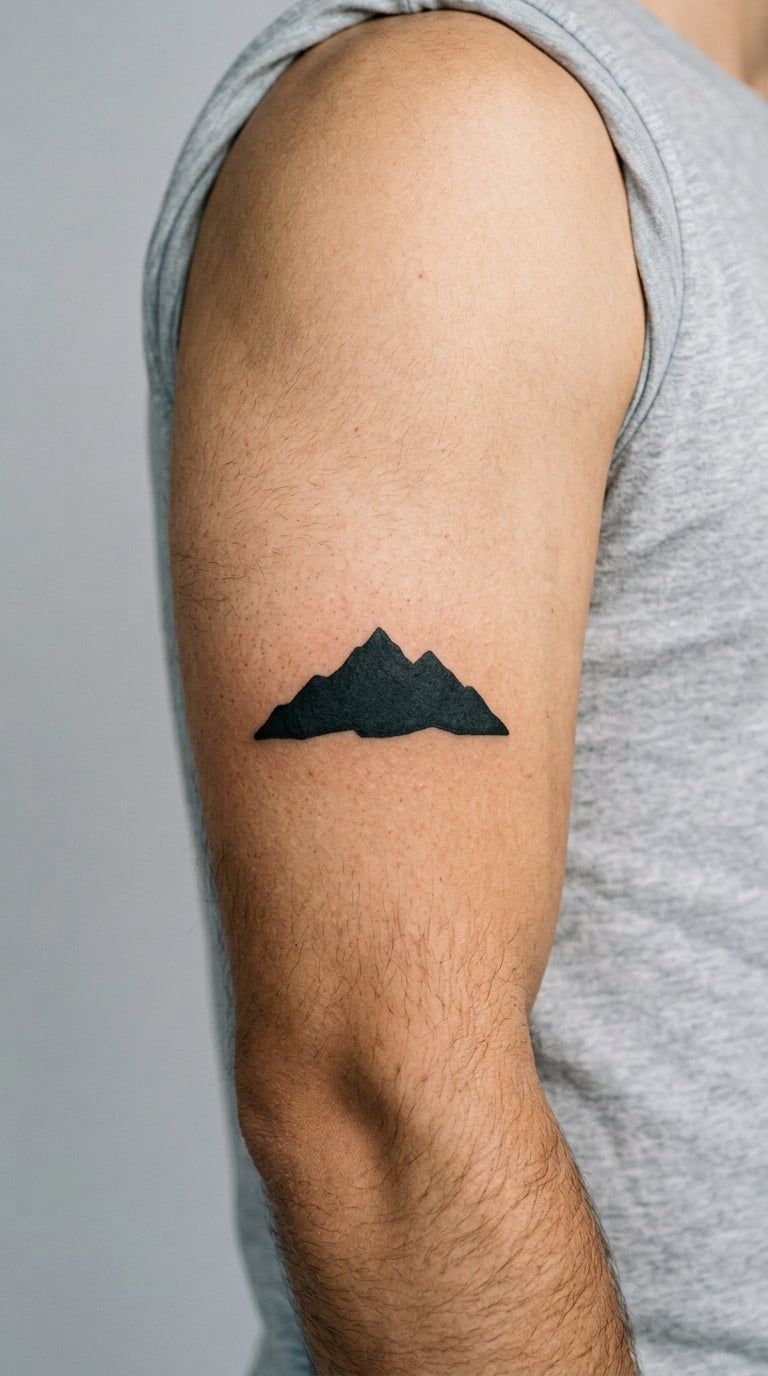
A solid black peak with a hard edge, no linework at all, about one and a half inches tall. Solid shapes are the most durable thing you can get at micro scale because there is no fine line to blur, and the boldest of these read well from across a room. It is a good compromise for someone who wants visible ink but a small design.
Outer upper arm, or the top of the shoulder where the skin is flat and unbroken. Black fills hold their edges for years and need almost no maintenance. It is also the easiest of all these designs to heal because there are no hairlines to scab and lift.
Pain & time: about a 3 out of 10, 20 to 30 minutes.
7. Mountain and Moon Pair on the Back of the Neck
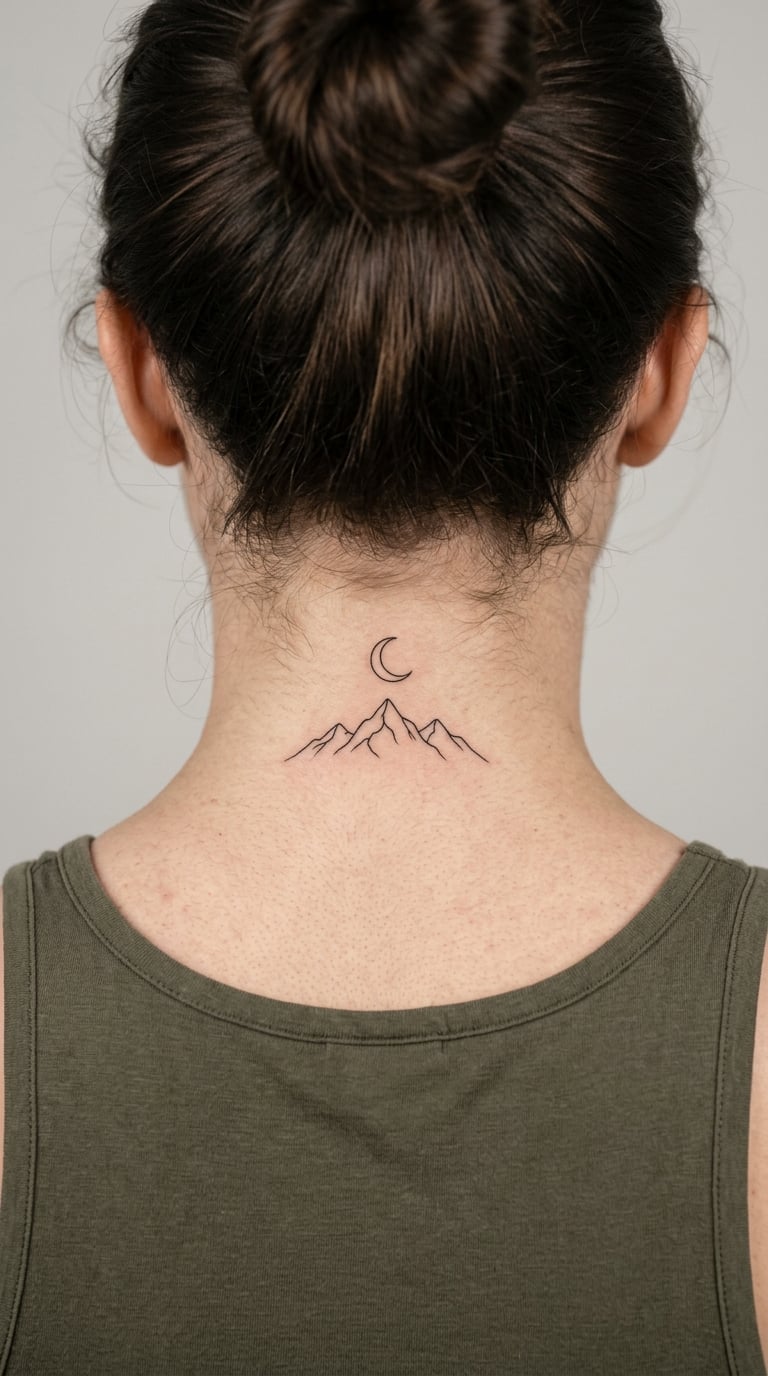
A small range with a thin crescent floating above one peak. The moon is what turns a landscape into a memory: night hikes, a particular camp, a sleepless drive home. Neck versions suit people whose wrists are covered by gloves and watches for most of the working year.
Base of the neck, just above the collar line, one and a half inches wide. That skin is sensitive and the position means you cannot see it yourself while it is being done. Hair in the area can be shaved or trimmed, and the piece needs a touch-up sooner than most because sun hits the back of the neck constantly.
Pain & time: about a 5 out of 10, 30 to 45 minutes with the moon.
8. Mountain Above Coordinates on the Inner Arm
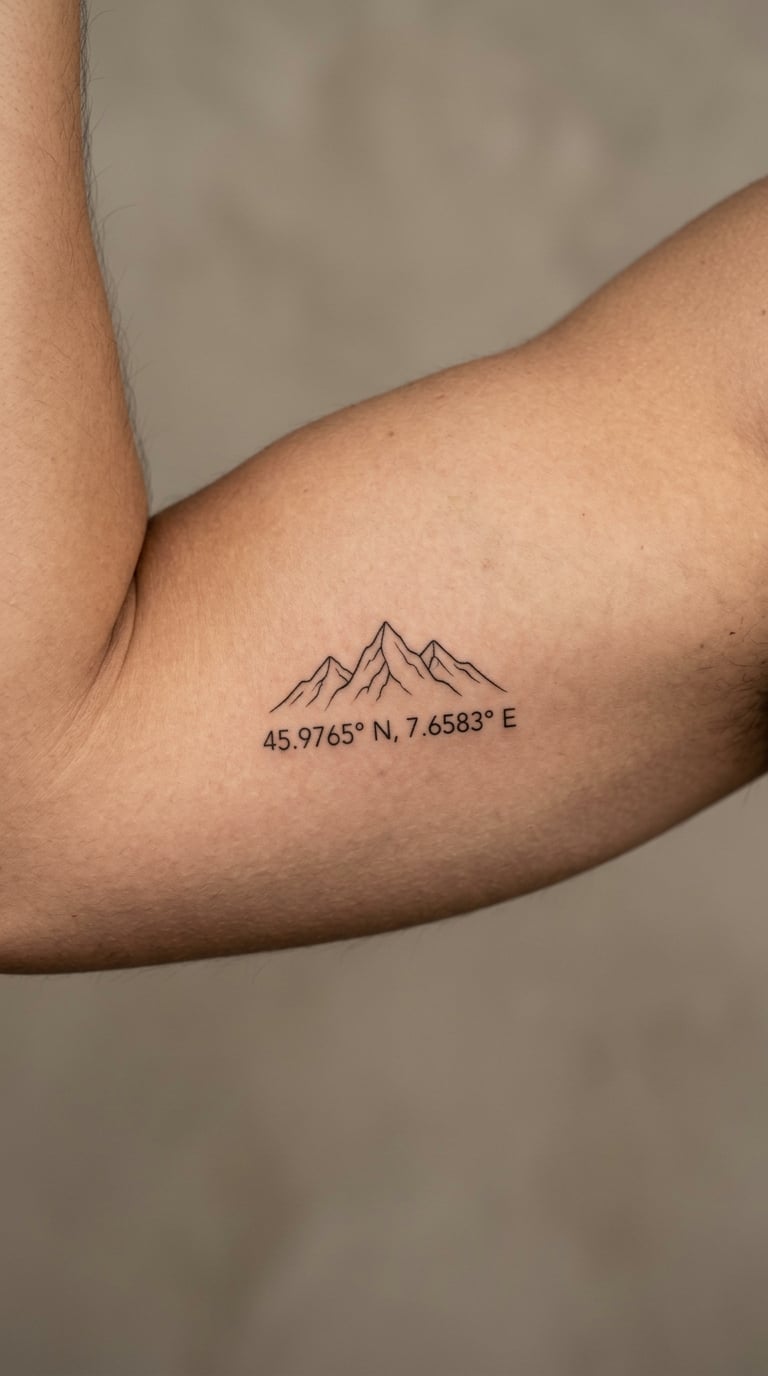
Three peaks, then a line of latitude and longitude numbers underneath in a small plain font. This is the one people get for a specific trailhead, a campsite or a summit with a name they will never have to explain. The coordinates turn a generic range into a place only two people know about.
Inner arm, with the range about one and a quarter inches wide and the numbers in a single line below. Numbers are the hard part: every digit has to be under a tenth of an inch tall, so a hand-lettered style or a larger pair of coordinates in an abbreviated format works better than a full decimal. Expect a longer sitting of 40 to 60 minutes.
Pain & time: about a 4 out of 10, 40 to 60 minutes.
9. Stippled Mountain With Pines on the Calf
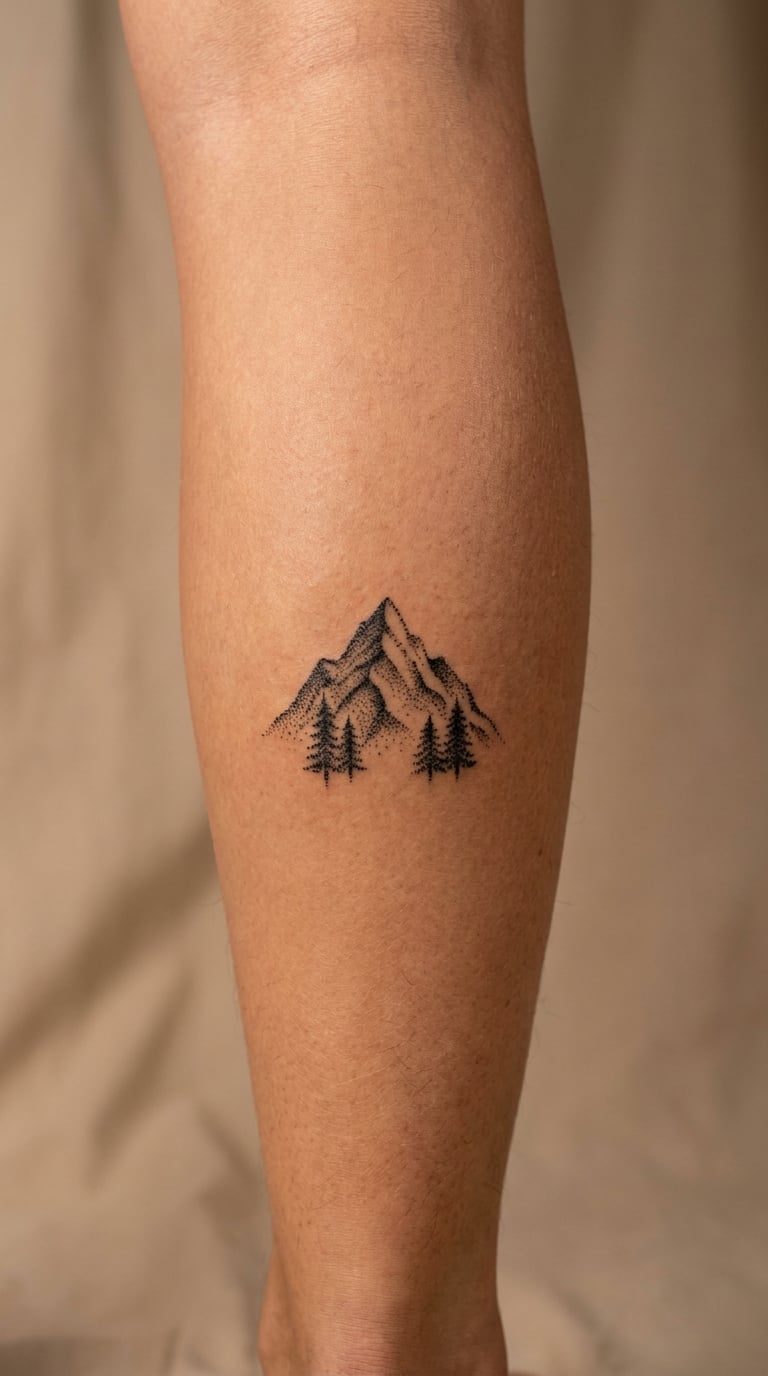
A shaded peak with two small pines at the base, done in fine stippling rather than solid black. The trees give the scale, so the mountain reads as a mountain and not as a triangle. It is a landscape in miniature, which is harder to pull off than it looks and worth asking an artist who has done it before.
Calf, outer side, two to three inches long. Calves are curved, so the drawing has to follow the round of the muscle or the linework bends oddly when the leg flexes. The hiding places are long trousers, and the skin takes a lot of sun in summer so this is one that needs a plan.
Pain & time: about a 5 out of 10, 40 to 55 minutes.
10. Mirrored Two-Peak Mountain on the Back of the Shoulder
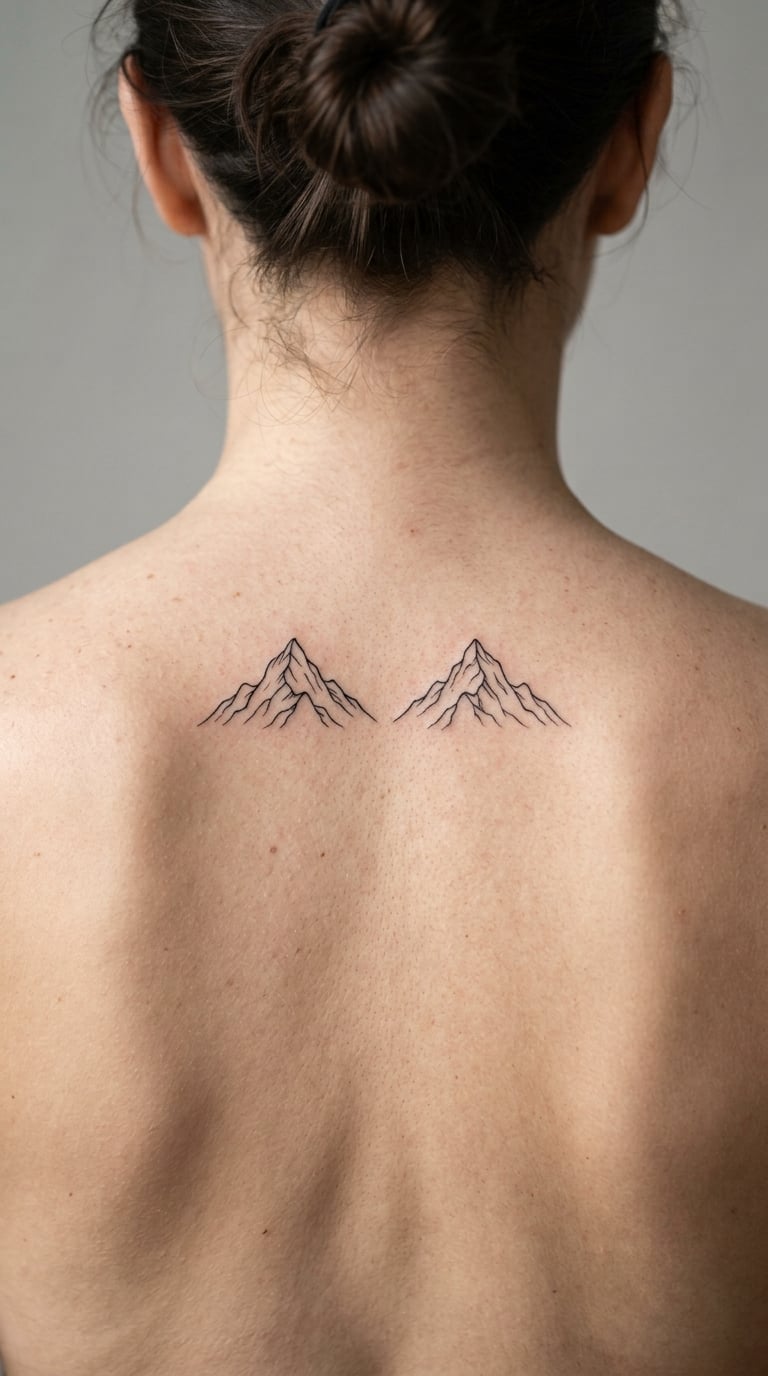
Two peaks facing each other, one on each shoulder blade, forming a valley in the middle. It is a matching set by design: two separate small tattoos that only make sense together. People do it for a shared trip, or for two siblings who grew up somewhere with hills in view.
Upper back, one and a quarter inches each, same height on both sides. The back is a strange place to reach and the artist usually has you lie face down, so the work takes longer than the drawing suggests. Fine line here is unusually safe because the skin stays still under clothing.
Pain & time: about a 4 to 5 out of 10, 30 to 40 minutes per peak.
11. Mountain and Sun on the Bicep
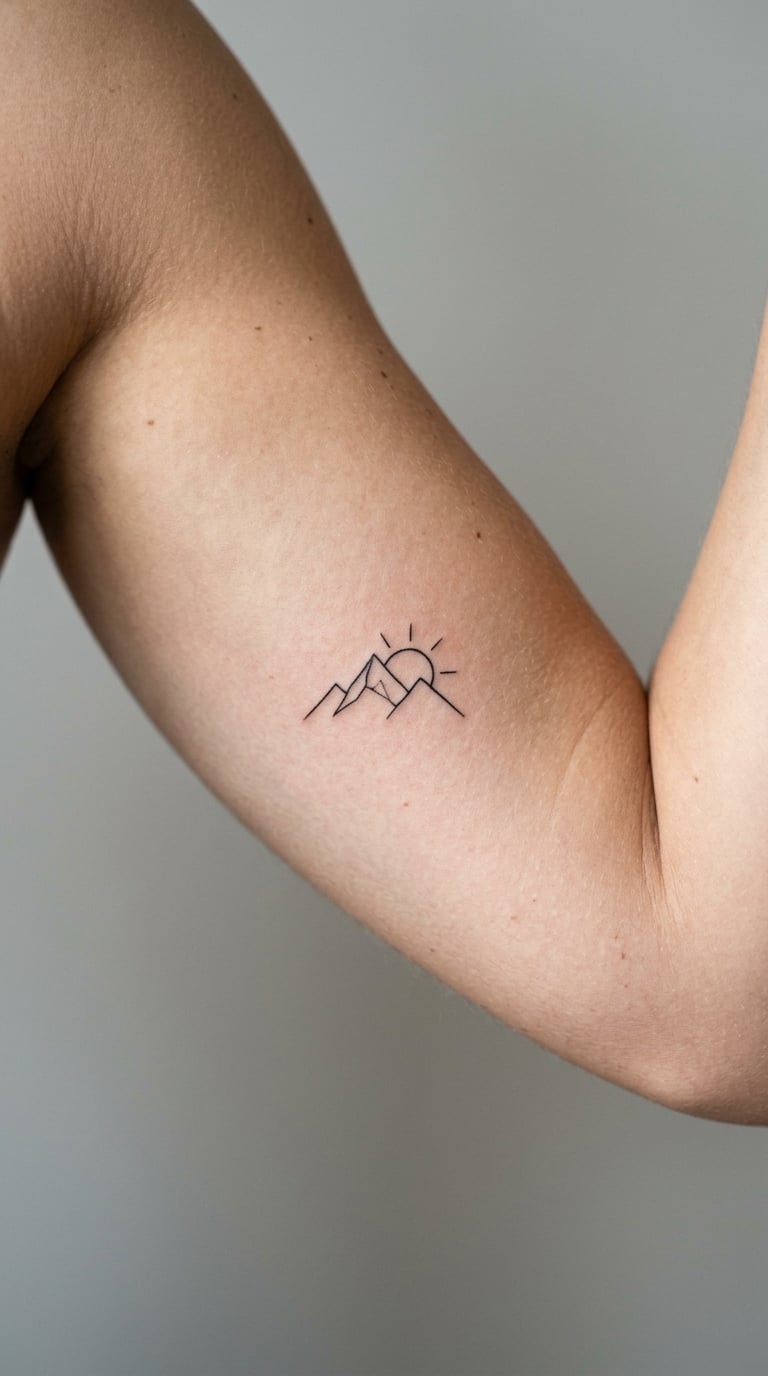
A peak with a small half sun rising behind it, done in one weight of line so the sun is a simple arc. Sun and mountain together read as a start and an end in the same mark, which is why it keeps showing up as a first tattoo. It also sits well on a curved arm without looking stretched.
Inner bicep, about one and a half inches tall overall, tucked inside the arm where it stays out of sight. The arm flexes constantly, so a design with lots of internal detail would distort, and this one deliberately keeps the detail to a single arc. A good arm surface heals quietly because there is little friction from clothing.
Pain & time: about a 3 to 4 out of 10, 25 to 35 minutes.
12. One Minimal Peak on the Knuckle Side of the Hand
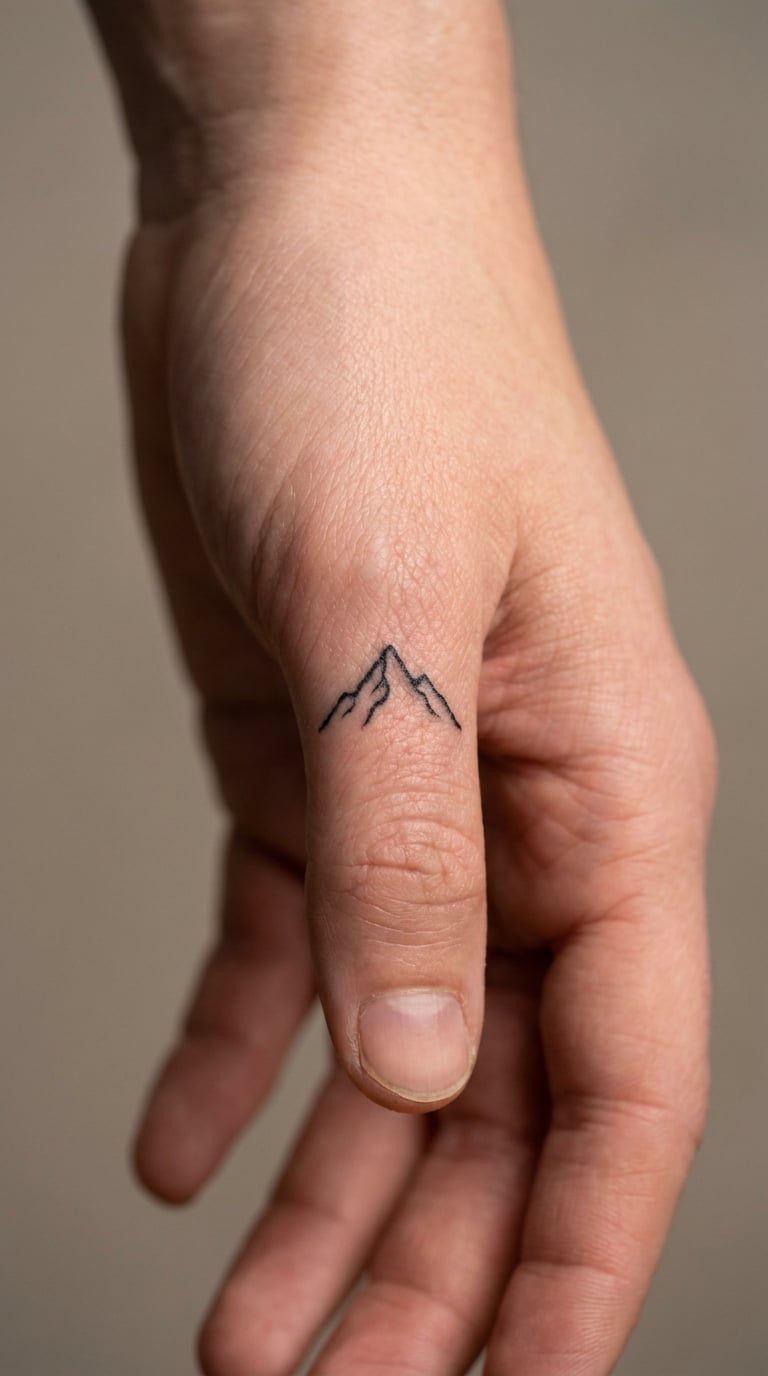
One peak, outline only, placed where a ring or bracelet sits. It is the smallest design in this gallery at about half an inch, and it works precisely because there is nothing to lose at that size. People who want a mountain on them every day tend to end up with something this spare.
Base of the thumb, or the back of the hand between the knuckles. Hands get washed forty times a day, which is honestly fine for a single outline but unkind to anything detailed. The skin here is soft and the line will soften with it, so keep the reference simple.
Pain & time: about a 5 out of 10, 10 to 15 minutes.
13. Mountain Over a Single Wave on the Ankle
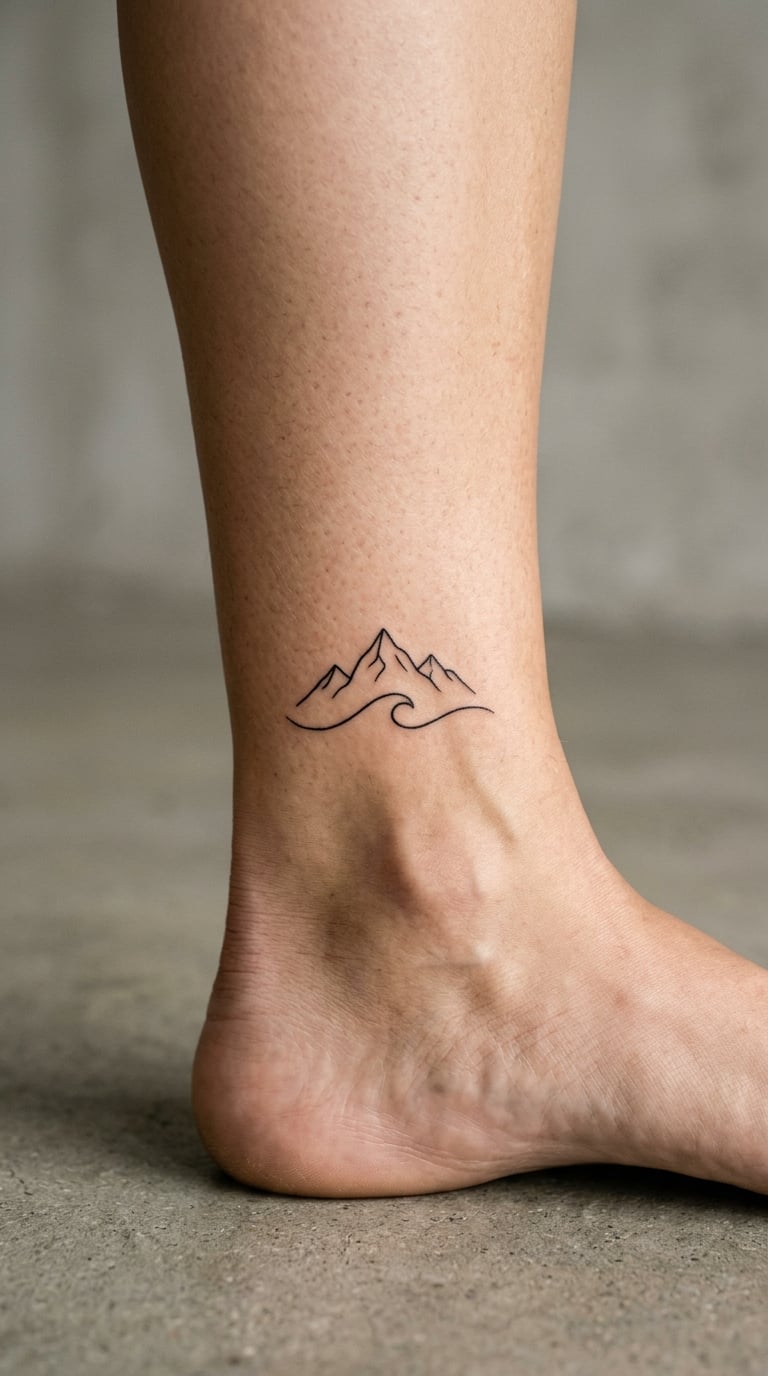
A range sitting on top of a single wave line, the land and the sea stacked. The pairing means a coast you love, or a choice between staying and going, and it fills a flat stretch of skin better than a range alone. It also hides well inside a boot and a sock.
Inner ankle, about two inches wide, or the back of the heel if you want it lower. Two lines that need to stay parallel will drift apart as the ankle moves, so a loose hand-drawn look forgives more than a geometric one. Sun exposure on the ankle is high in summer and the wave is the first line to go.
Pain & time: about a 5 to 6 out of 10, 30 to 40 minutes.
14. Dotwork Gradient Mountain on the Ribs
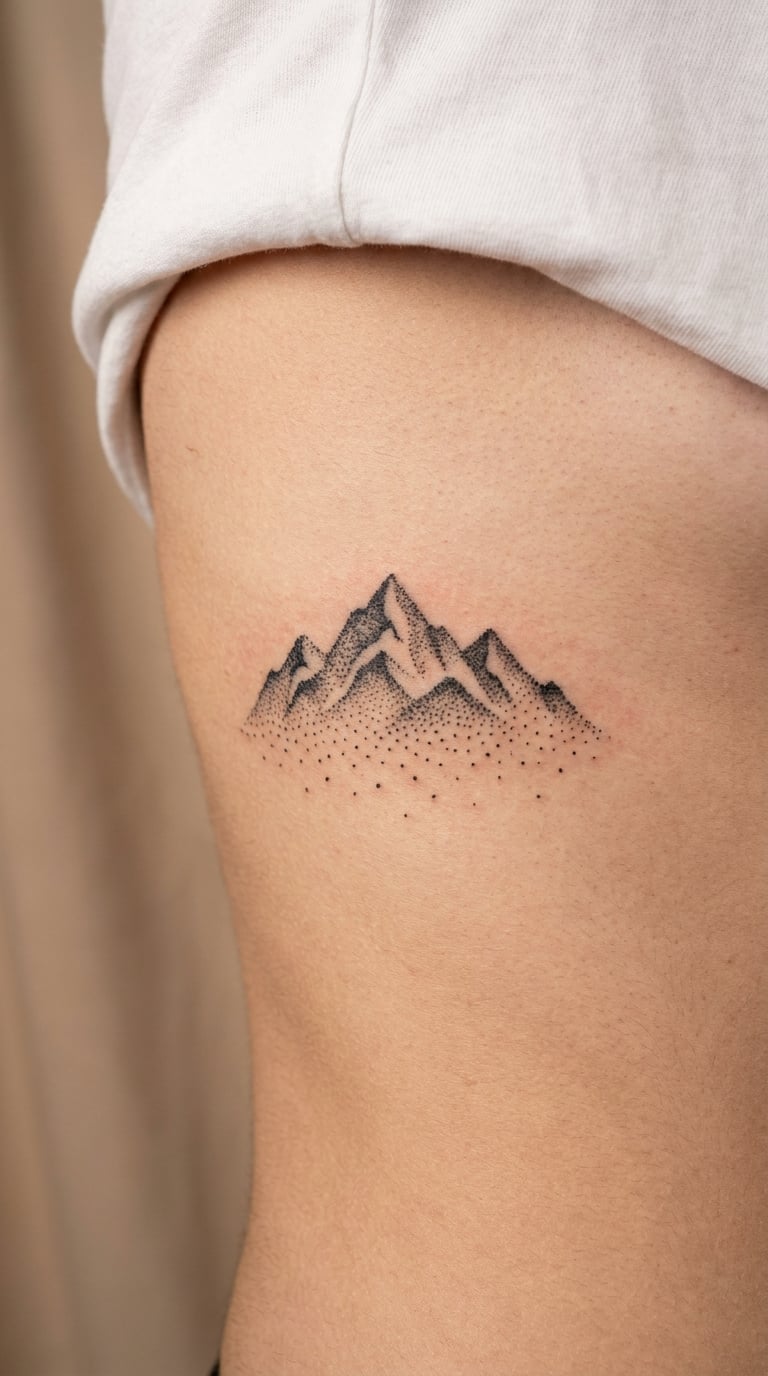
A mountain where the dots fade out toward the bottom, so the ink thins into skin instead of ending. It looks like distance, which is a nice trick for a design that is only two inches tall. This one takes real stippling patience, so look for an artist who already works in dots.
Side ribs, between the lowest two ribs, one and a half to two inches. Ribs are the most painful spot on this list and the skin is permanently in motion with breathing, so anything fine or pale will soften faster here. It is also the placement most people keep covered, which defeats the point if you wanted to see it.
Pain & time: about a 7 out of 10, 40 to 60 minutes.
15. Fine-Line Mountain Behind the Ear
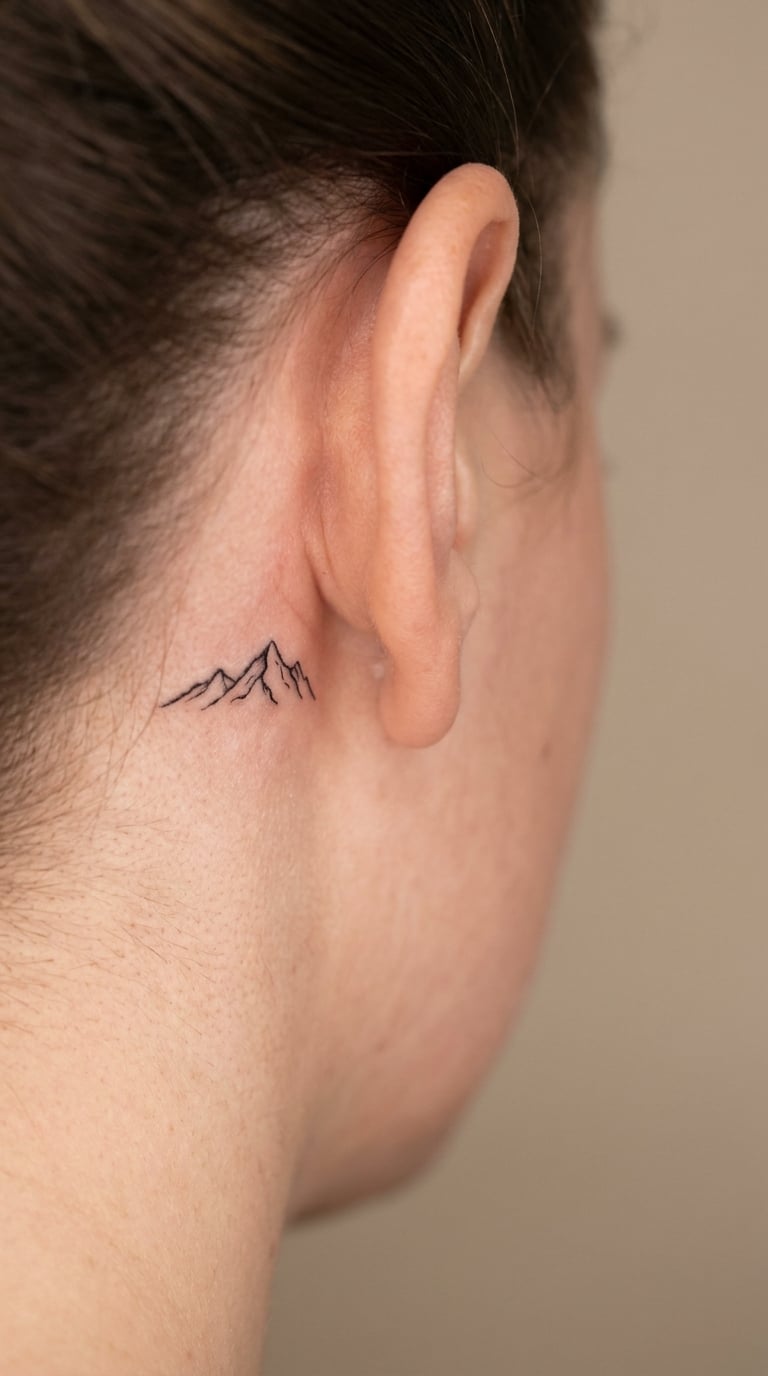
A small range running along the line where the ear meets the skull, so the peaks appear when you turn your head or tie your hair up. Half of it is always hidden, which people like and others find maddening. It is the most discreet option in the gallery.
Behind the ear, about one to one and a quarter inches long, following the curve of the ear cartilage. That skin is thin and creases when you sleep on that side, so a bold line holds up better than a fine one. If the ear is not pierced, check before you commit, because lobes change the look entirely.
Pain & time: about a 5 out of 10, 20 to 30 minutes.
16. Mountain with a Winding Trail on the Forearm
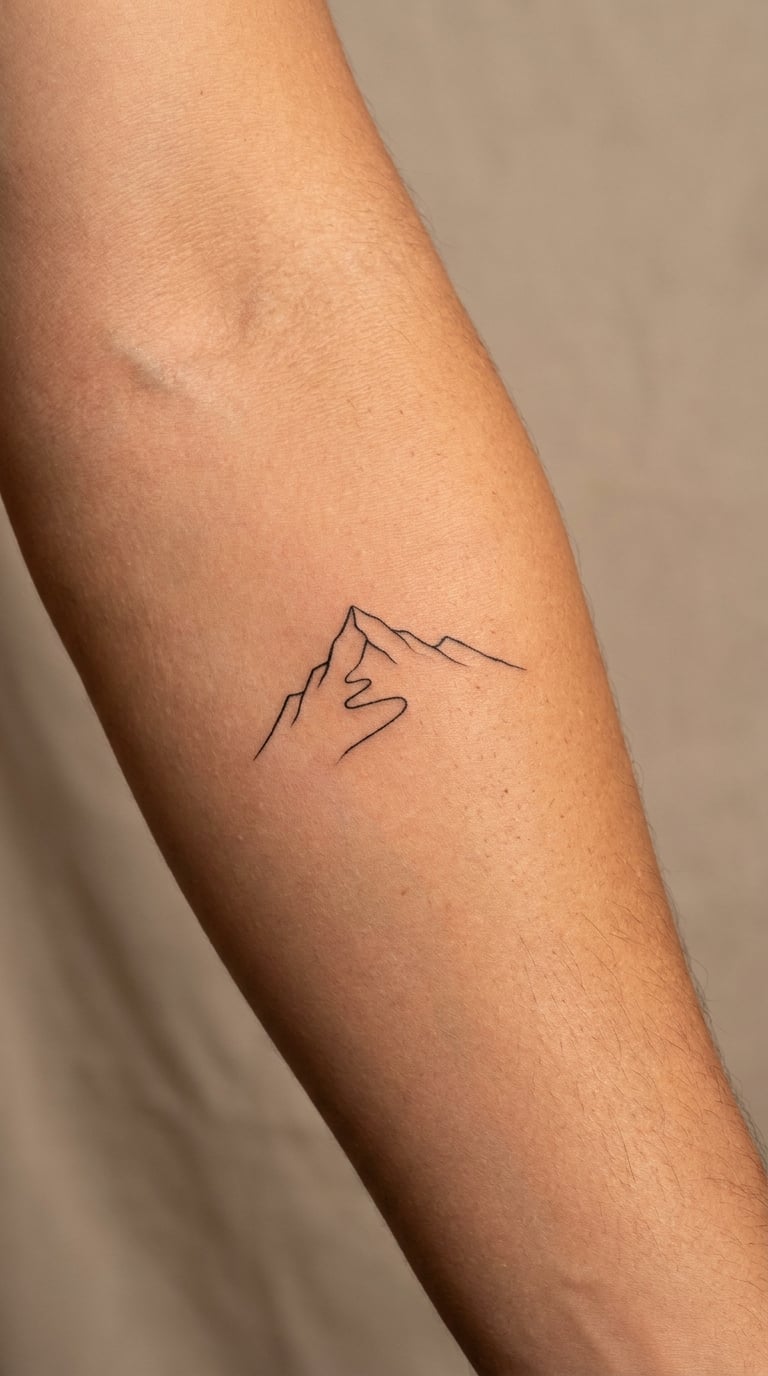
A peak with a small switchback trail climbing up to it, the two lines crossing the skin. It tells the whole story in one mark: the long way round to something worth reaching. The crossing lines add interest without adding size, which is the trick most of these designs use.
Outer forearm, two inches, running along the length of the muscle so it reads when the arm is straight. Forearms take sun constantly in summer, so this is the one to keep covered or to plan a touch-up for. A trail that crosses itself is a risk for an ink blip, so pick an artist who works in that kind of overlap.
Pain & time: about a 4 out of 10, 30 to 45 minutes.
Things to Know Before You Book a Tiny Mountain Tattoo
How small is too small for a tiny mountain tattoo?
- One inch wide is the floor for a range, and half an inch is the floor for a single peak. Below that, you are asking for a line, not a mountain.
- Two inches is the comfortable width for anything with depth, a sun, a moon or trees. If a reference photo has more than two peaks, it will not read at micro scale no matter how good the photo looks.
- Tell the artist the exact width in inches on the spot, not just the placement. Half the disappointments I have seen came from a design that was beautiful and a third of an inch too small.
Healing, sun and what fades first
- Fine hairlines scab, lift and lose their edge more than any solid shape. Keep it clean, keep it out of the sun, and give it the full healing time your artist asks for before you judge the line weight.
- Colours fade first, then fine lines, then solid black. Dotwork sits somewhere in the middle and needs a touch-up every few years. Sunscreen on a visible ankle or forearm is not optional if you want the piece to look the same in five years.
- Most people put tiny mountain tattoos somewhere they can cover, so fading is slower than it would be on a bare forearm. That is a quiet benefit of going small.
Price, pain and the artist conversation
- Tiny does not mean cheap. Most studios work to a flat minimum that applies whether the piece is one inch or four, so the design, the time and the artist matter far more than the size. A one-inch mountain usually takes 15 to 45 minutes of actual work.
- Bring three to five references, one of them a real photo of a healed tattoo on skin, and say which one detail you actually want. A picture of a landscape you liked is not the same as a picture of a landscape tattoo you liked, and artists know the difference.
- Ask the artist what they would change at your size before you agree. A good answer is usually less detail and a heavier line. A refusal to talk about size is a sign to find someone else.
Frequently Asked Questions
What does a tiny mountain tattoo symbolize?
It symbolizes endurance, freedom and the reward of hard work. Mountains represent obstacles you got past, the strength of someone who kept going, and a horizon worth climbing toward. A one-inch version carries exactly the same meaning as a full landscape piece, since the size of the ink has nothing to do with the size of the feeling.
Where should I put a mountain tattoo?
The wrist, inner forearm, ankle and behind the ear are the most popular spots for tiny mountain tattoos, because the skin is flat, small and easy to cover. The collarbone, calf, bicep and ribs all work too, though ribs are the most painful and hands and fingers fade fastest. Pick the spot that matches how often you want to see it.
What is the best placement for a wrist tattoo?
Just above the wrist crease on the inner side, angled slightly with the forearm, is the classic choice, and it keeps the piece small and easy to hide under a watch band. The outer wrist above the crease shows more. Either way, wrist skin stretches with the hand, so ask for a slightly heavier line than the reference photo shows.
Do tiny tattoos hurt more than big ones?
Pain tracks the placement, not the size. A one-inch mountain on the ribs will hurt far more than a four-inch one on an upper arm, because the rib area is thin, bony and permanently in motion. Tiny pieces are also quick, usually 15 to 45 minutes, and most people say the anticipation is worse than the sitting.
What tiny mountain tattoo designs should you avoid?
Skip anything with more than two peaks, or with trees, a river, a sun and a moon all crammed into one inch, because the detail turns to mush when it is small. Also avoid very pale hairlines on wrists, fingers and ribs, where sun and skin movement will blur them fastest. Fewer lines, heavier weight, one idea only.
How much does a tiny mountain tattoo cost?
Tattoos are priced by time, artist and a shop minimum, not by size, so a one-inch mountain can cost nearly the same as a much larger piece if the sitting is similar. That surprise floor is the most common complaint from first-timers. A simple fine-line range is usually the shortest booking of the design types on this page.
Conclusion
Start with the placement, not the picture. Decide where on your body you would be happy seeing something every day for thirty years, then find the simplest design that fits that patch of skin. If you are booking your first tattoo, the single-line ridgeline or the outlined peak will give you the most satisfaction and the least to regret.
Most of the tiny mountain tattoo ideas on this page work in one to two inches of black line. Say the width out loud at the appointment, ask the artist what they would cut, and let the healing do the rest. What survives is a small honest mark that still means the same thing in ten years.