
20 Tiny Moon Tattoo Ideas for Small Delicate Ink (September 2026)
Most pages of tiny moon tattoo ideas show you the same three crescents in a row, which is no help when you are trying to picture one on your own wrist. This is a different kind of list: twenty designs grouped by placement, size and style, with an honest note on how each one settles in once the ink has healed.
A tiny moon tattoo is a miniature celestial piece, usually a single-line crescent, a half moon or a run of moon phases, sized so it can sit on the wrist, behind the ear, on a finger or along the collarbone. People book these for a first tattoo, a matching set with someone close, or a small mark tied to a person or a period of change. Updated for September 2026.
Booking a micro piece usually means waiting a few weeks for a slot, so if you are planning around a date, work backwards from it rather than hoping for a cancellation.
What Does a Small Moon Tattoo Mean?
A small moon tattoo usually symbolizes cycles, intuition and change. The moon has always been the marker of a month turning over, which is why it turns up for new beginnings, for grief and remembrance, and for a relationship with someone who is not there any more. People pick it because it carries something without having to spell it out.
Which phase you choose narrows the reading. A waxing crescent leans toward growth and plans in motion, a full moon toward fullness or completion, and a waning one toward letting go. Behind the ear and on the wrist both add a private quality, because neither is easy for other people to read from across a room.
1. Fine-Line Crescent Behind the Ear
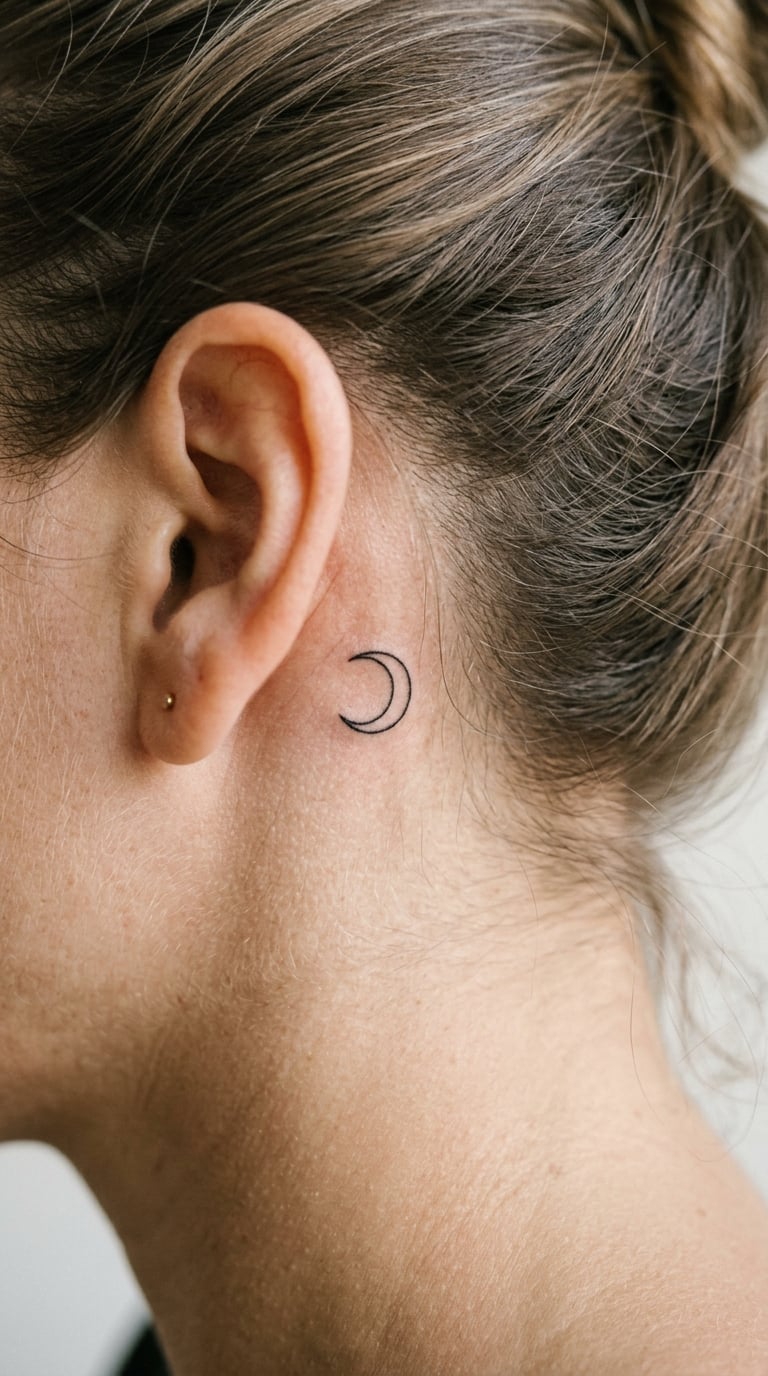
A thin crescent tucked into the dip behind the ear is the one people picture first, and it is still the most requested moon design there is. It reads as small and deliberate rather than decorative, which suits anyone who wants a tattoo that belongs to them rather than to everybody else.
Keep it between four and seven millimetres tall, one line weight, no fill. Behind the ear catches hair and sun, so plan for the line to soften a little over the years. Inner arm skin is friendlier to fine work, so ask your artist what they would change for that spot.
Pain and time: brief and mostly a quick sting where the skin is thin, done in a few minutes. It stings more for the first ten seconds than it does for the rest.
2. Single Crescent on the Inner Wrist
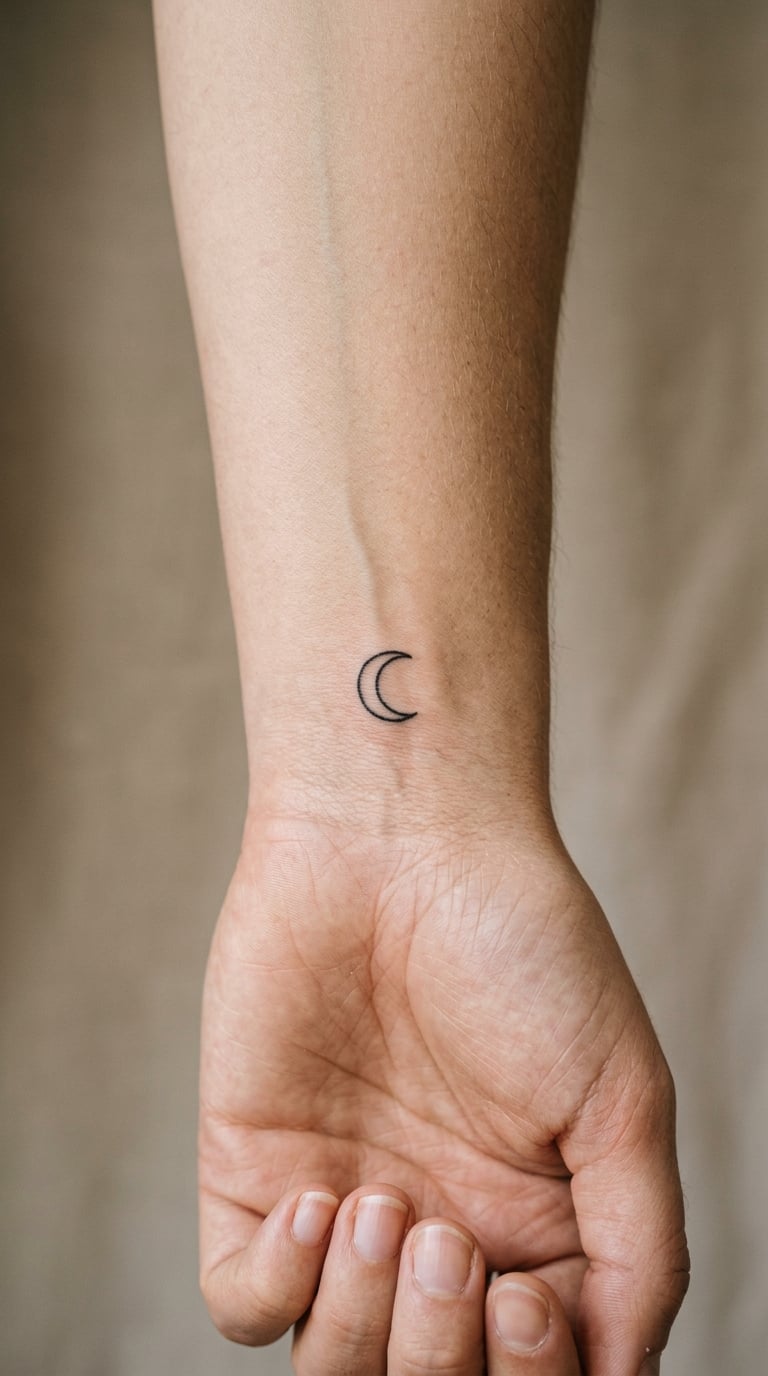
This is the everyday-jewelry placement. A small crescent on the inner wrist sits where you feel it every time you roll a sleeve or rest your hands on a table, and people describe it as wearing something rather than showing something.
Six to eight millimetres is the sweet spot at this spot, thick enough to read as a moon and thin enough to sit flat. Line weight matters more here than size, so bring a reference with a confident line rather than a delicate one. It ages more gently than exposed placements because the wrist stays covered most of the day.
Pain and time: one of the easier small spots, though the inner wrist is sensitive and you will feel it in the hand. Five minutes, start to finish.
3. A Row of Moon Phases on the Inner Forearm
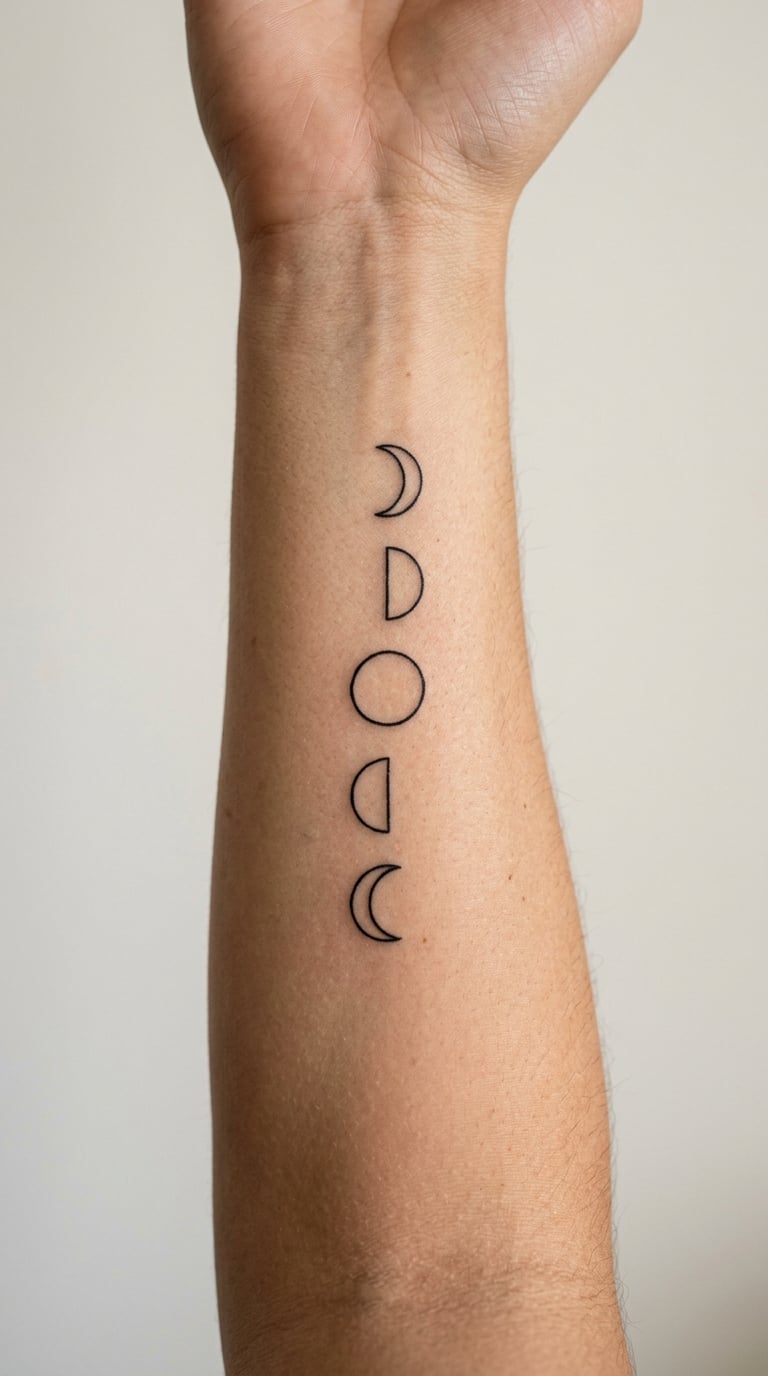
Five small circles running up the inner forearm tell the whole story in order, from new to full to gone. It reads as a design rather than a symbol, which makes it a good choice when you want people to ask about it.
Each circle can sit around five to eight millimetres, spaced about a millimetre apart, so the whole row lands near seven centimetres long. Outline the circles and leave the interior empty, otherwise the small ones fill in solid as they heal. Leave roughly a centimeter of clear skin above the elbow so the row can be extended later.
Pain and time: the inner forearm is a low-pain area but a long session for a five-piece design, usually around twenty to thirty minutes with breaks.
4. Outline Full Moon on the Side of the Index Finger
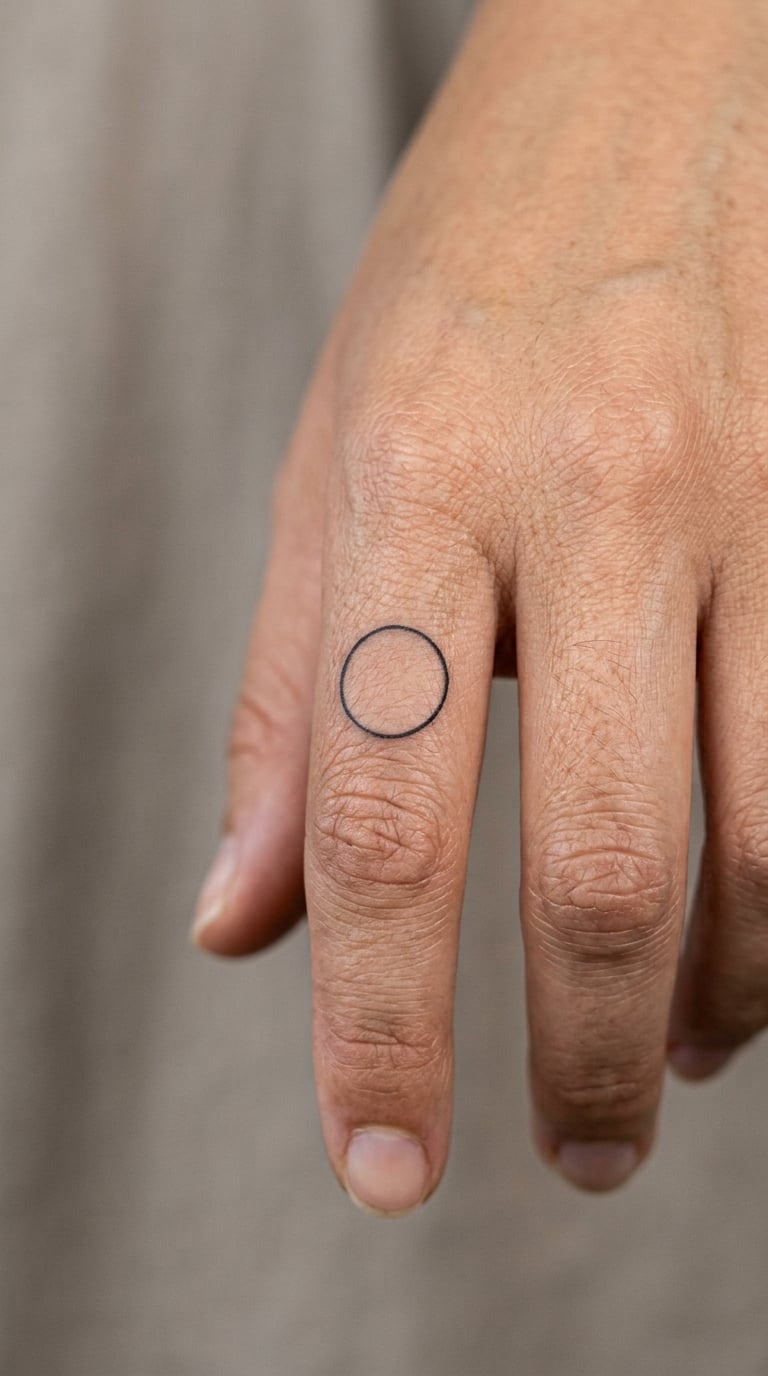
An empty circle on the side of a finger is a full moon with nothing added, and the restraint is the whole point. On a finger it looks almost printed rather than drawn, and it stacks naturally with rings or a plain band.
Six millimetres across fits comfortably between knuckle and knuckle. On fingers, lines migrate a little as skin moves over the years, so a slightly heavier line than you would normally ask for is sensible. Tell your artist you want it on the side rather than the knuckle, because side skin stretches and knuckle skin creases.
Pain and time: fingers sting more than they should because the bone sits right under a thin layer. Very short session, five to ten minutes.
5. Solid Black Half Moon on a Knuckle
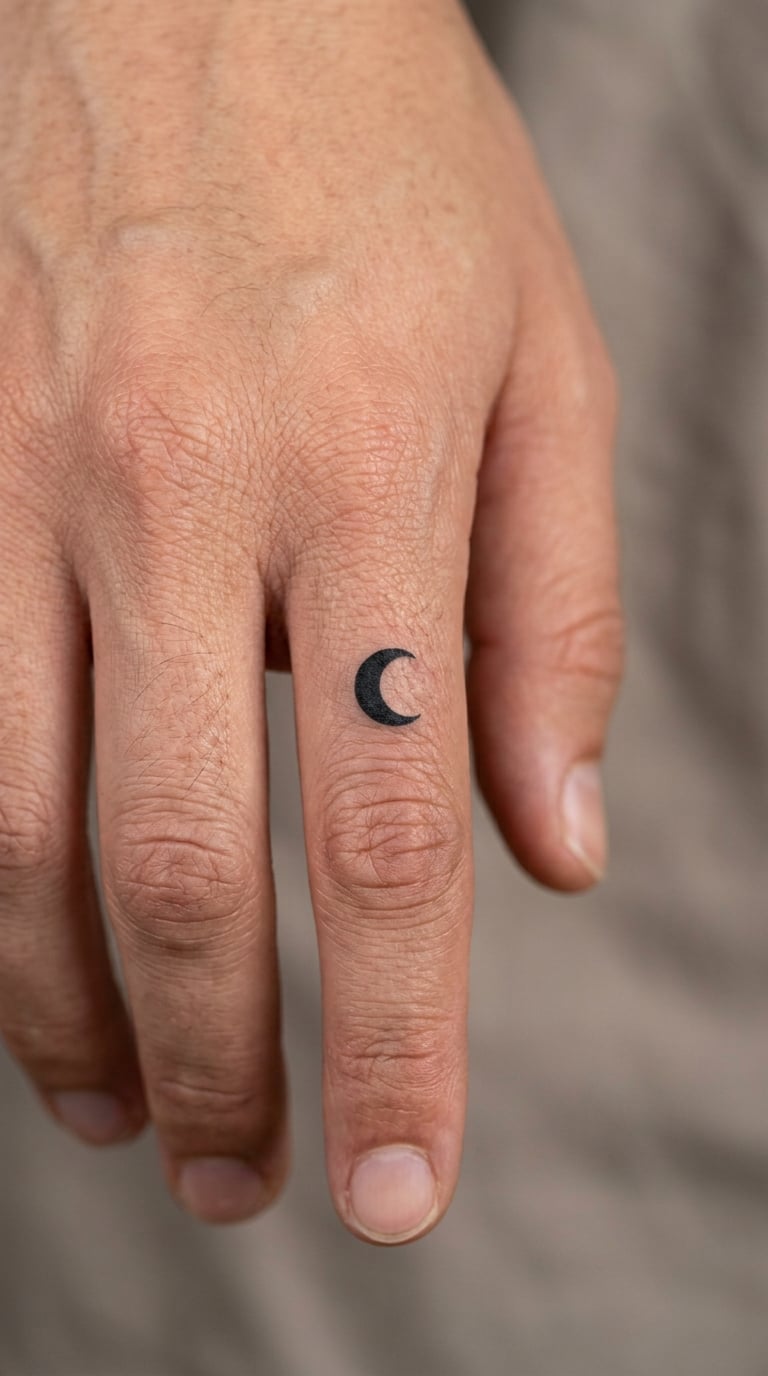
A filled half moon on a knuckle is the boldest of the small options and the easiest to read from across a room. Solid black survives micro size better than any fine line, which makes it the smart pick if you want something that still reads in ten years.
Five millimetres is plenty when the shape is solid. The trade is that solid fill sits slightly proud of the skin and can flatten a little as it heals, so expect the edge to soften into the shape rather than stay razor sharp. It pairs well with a plain thin band on the same hand.
Pain and time: knuckles are bony and hot to work on, but it is over quickly. Under ten minutes.
6. Crescent and One Star on the Collarbone
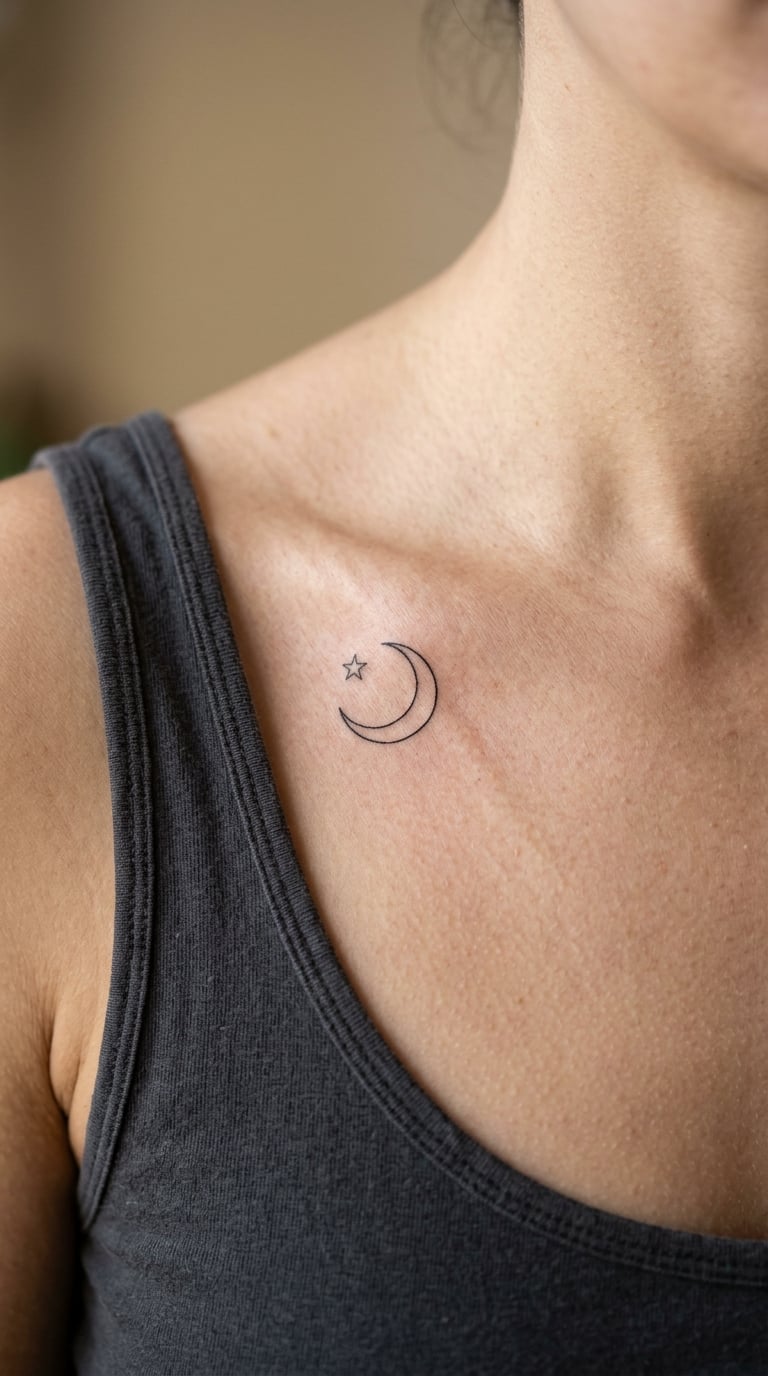
A crescent with a single five-pointed star beside it is the version most people picture when they say moon tattoo, and it still looks fresh because the two shapes balance each other without filling space.
Keep the crescent around one centimetre and the star smaller, or the eye reads two separate tattoos. Collarbone skin is smooth and takes a clean line, but it moves when you shrug, so ask for placement with a little breathing room above the bone. Under a collar or a boat neck is a good cover story for office settings.
Pain and time: shallow bone means more discomfort than the arm, though the design itself is small. Roughly ten minutes.
7. Sun and Moon in Fine Line on the Inner Ankle
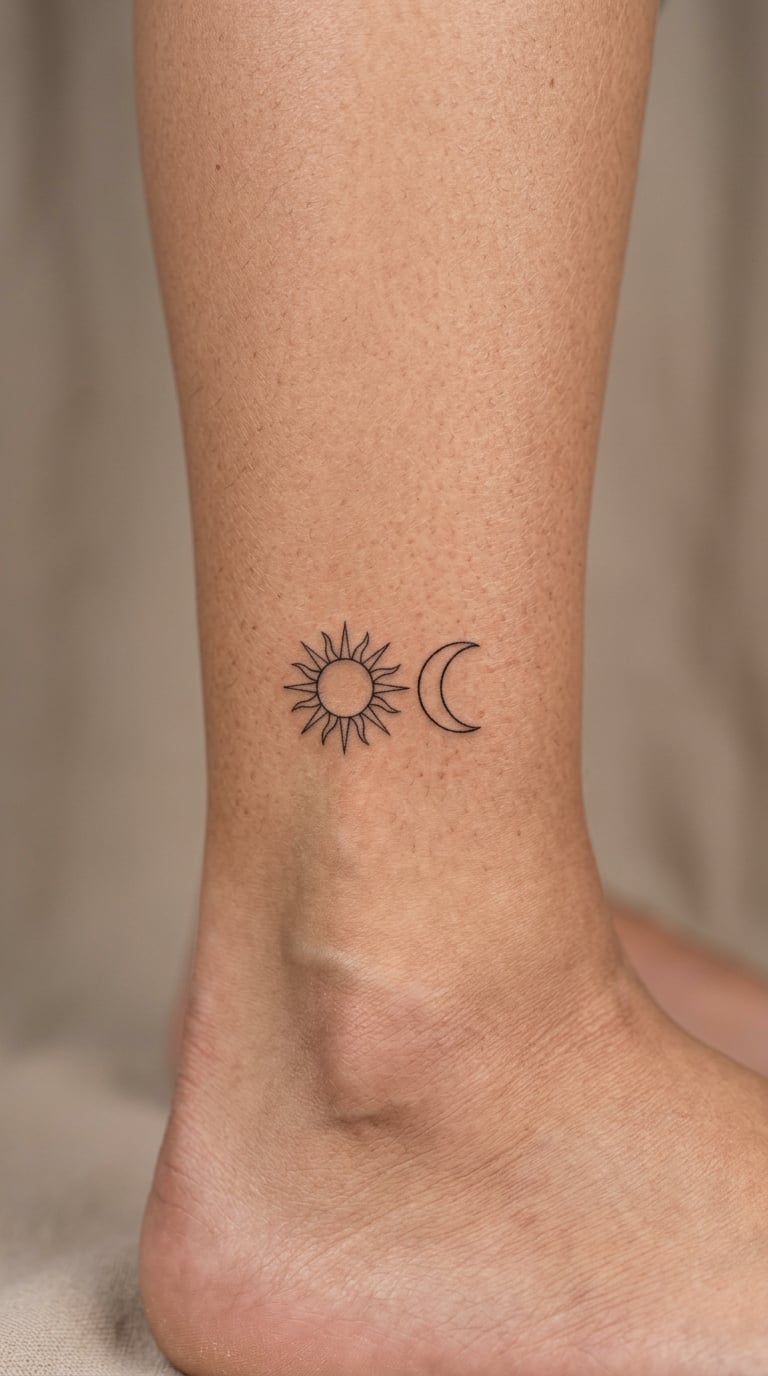
Sun and moon side by side is the oldest pairing in this whole list, and the reason it works is that the two shapes are opposites at the same scale. On the inner ankle it reads as a piece of jewellery nobody else notices.
One to one and a half centimetres each, with a gap no wider than the width of the smaller shape. The inner ankle has more subcutaneous fat than the wrist, so lines there blur a little faster and it is worth going one step bolder. Sitting down, the design sits in view more than you would expect.
Pain and time: the ankle bone catches the needle and it is a sore spot for some people. Ten to fifteen minutes.
8. Solid Black Crescent on the Outer Forearm
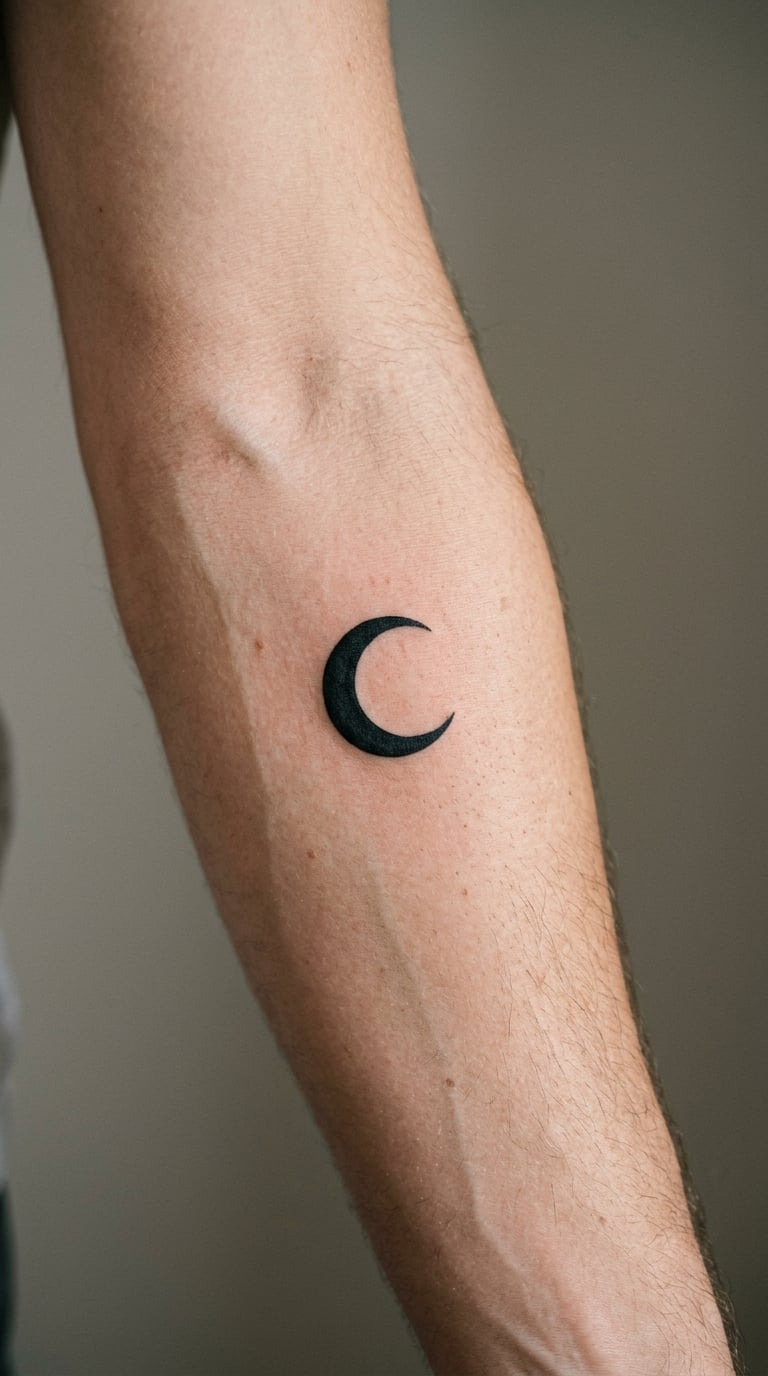
If you want a moon that reads from across a room, fill it in. A solid crescent at around two centimetres on the outer forearm looks deliberate and graphic rather than delicate, and it hides the small imperfections that a hairline crescent shows.
Two centimetres is the point where the shape stops being a suggestion and becomes clearly a moon. Blackwork at that size holds its edge well, so this is the most forgiving of the options for a first tattoo. Sleeves, summer tops and gym photos all reveal it, so it is less discreet than the wrist version.
Pain and time: the outer forearm is one of the more comfortable spots on the body. Fifteen minutes.
9. Three Stacked Crescents in a Forearm Column
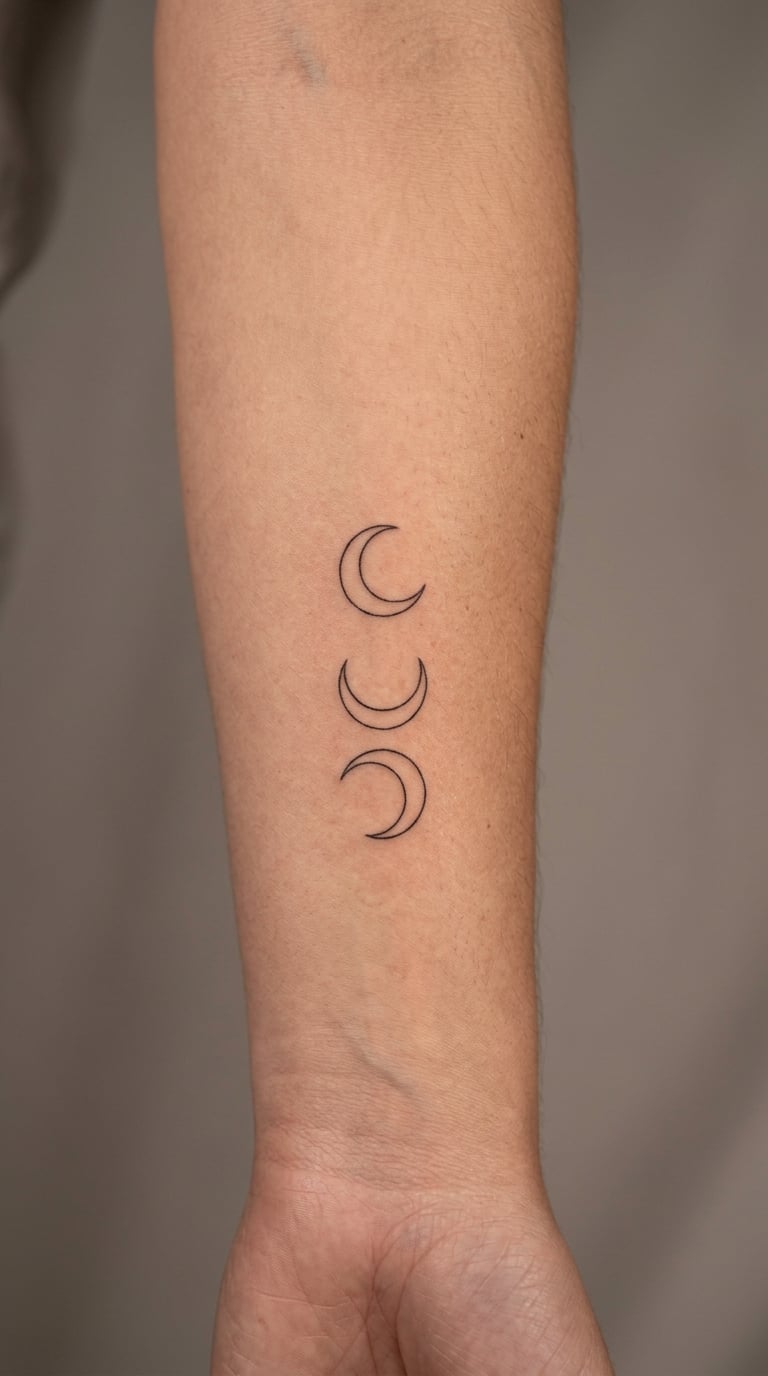
Three crescents in a column, each one smaller than the one above it, turns a single symbol into a small composition. It is the most understated version of the moon phases idea and it fits where a sleeve might grow later.
Four to six millimetres each, in a column about four centimetres tall. Tapering the sizes keeps it from looking like a mistake, and freehand placement lets each moon follow the curve of the arm rather than sitting in a straight column. Sun on the outer forearm is unkind to it; the inner arm is kinder.
Pain and time: three small shapes on the inner arm, so about fifteen minutes with a break in the middle.
10. Moon Phases in a Ring of Dotwork
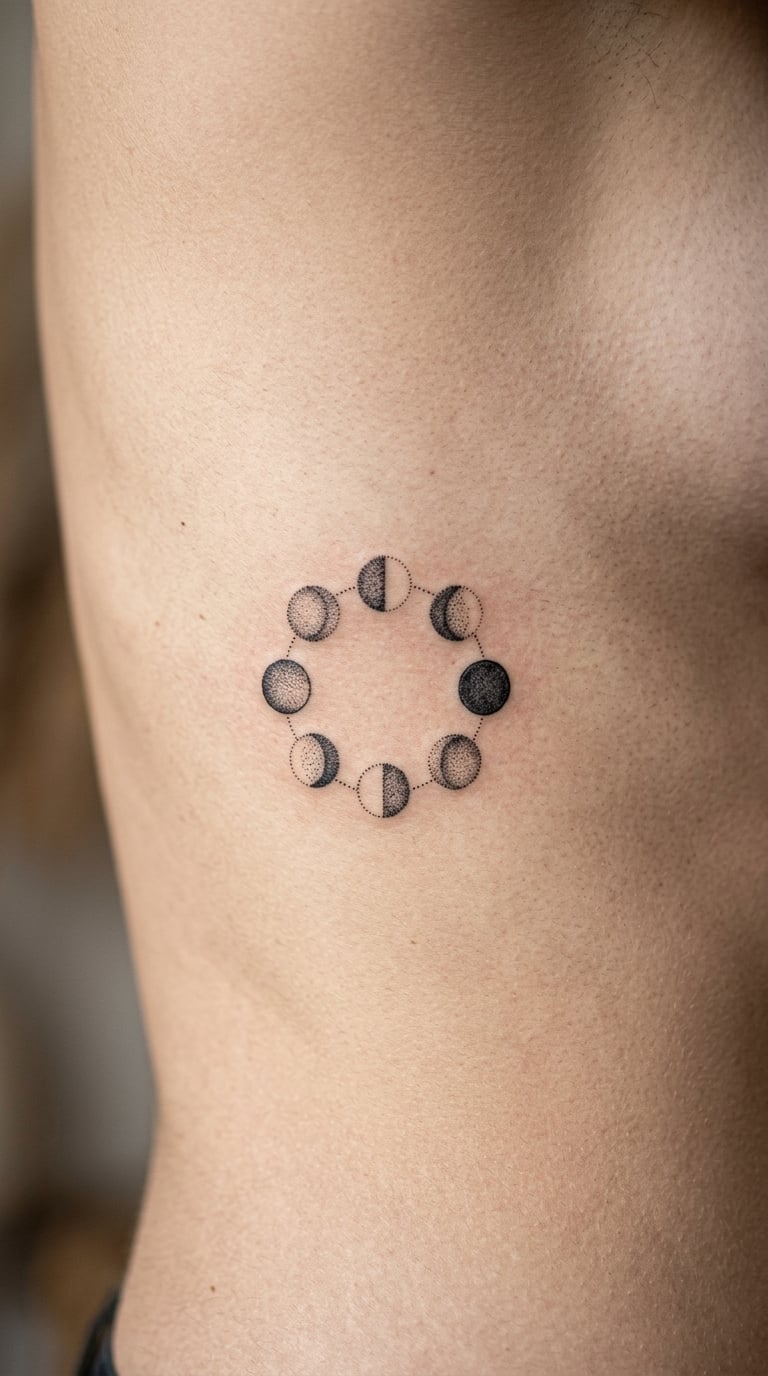
A ring of moon phases surrounded by scattered dots sits on the side of the ribs or the inner upper arm. The circle gives it structure so it does not read as a row, and the dotwork fills the space without adding detail that will fade.
Three centimetres across is the smallest this still works, because you need room for several shapes and a border. Dots are easier on the eye than line detail at micro scale and they fade more evenly, which is why this style holds up. Side of the torso skin is soft and stretches when you breathe, so ask for placement with a hand’s width of space around it.
Pain and time: the ribs are among the more painful places to get a small tattoo, and the time is worth budgeting for. Twenty to thirty minutes.
11. Crescent with a Fine Chain on the Wrist
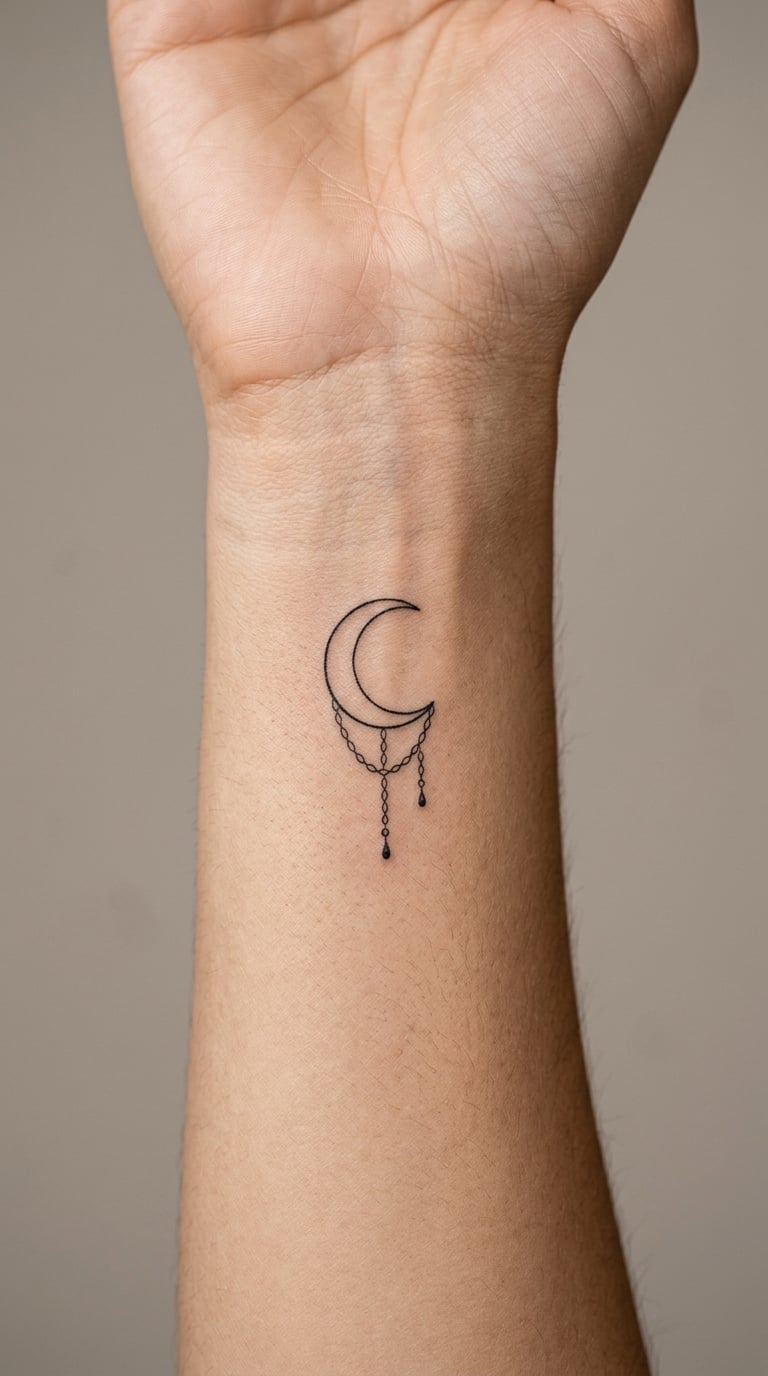
A crescent with a short chain dropping from one horn is the goth-leaning version of the classic, and it is the only small moon design that suggests something heavy. It is the darker cousin of the plain single-line crescent.
Two centimetres total, with the chain made of oval links rather than dots so each link survives healing. Chains are the part most likely to blur into a smear, so make them slightly larger than the reference suggests. A cuff bracelet hides it completely if you need to.
Pain and time: inner wrist again, so sensitive but quick. Around fifteen minutes for the chain detail.
12. Crescent in a Wildflower Wreath on the Calf
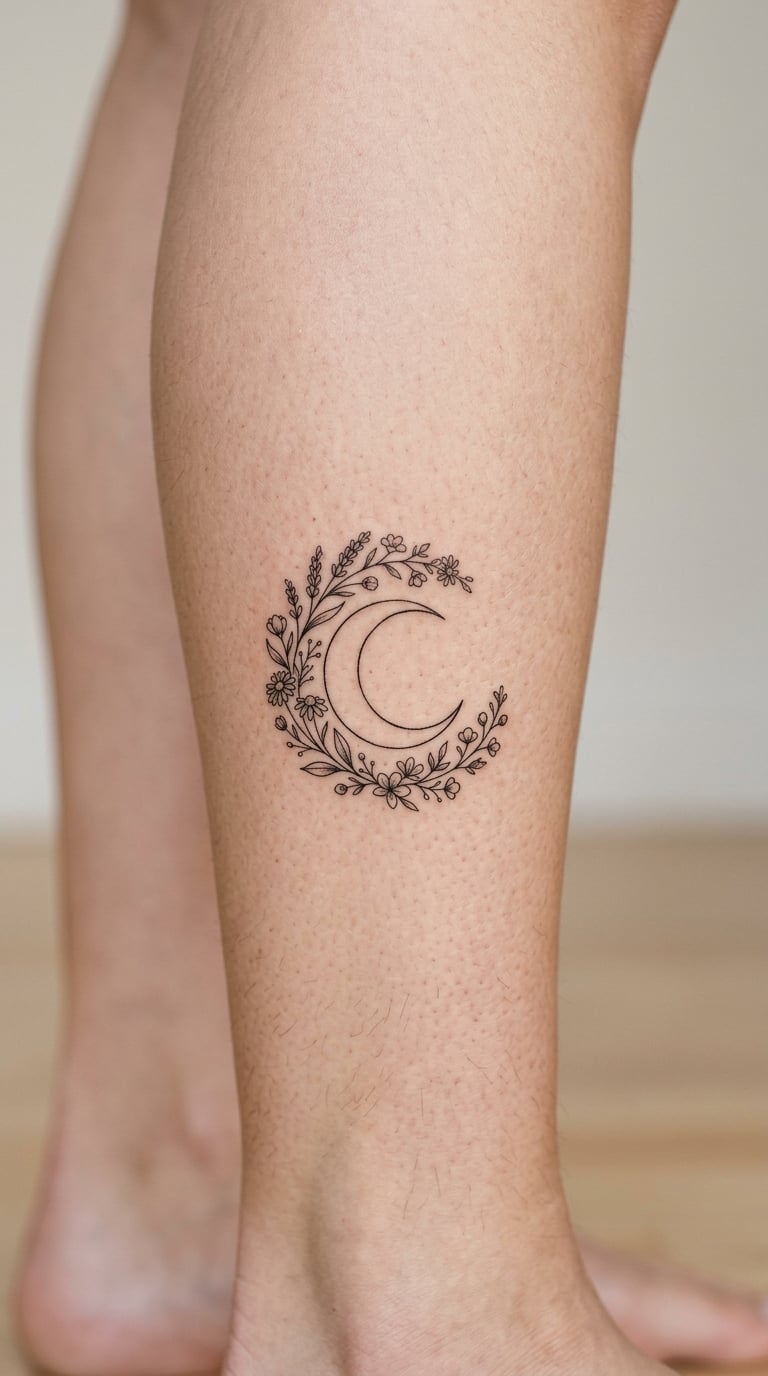
A crescent tucked into a small ring of wildflowers is the botanical take, and it suits people who like a design with a bit of softness in it. The flowers make the moon read as part of a scene rather than an icon.
Three centimetres across the whole wreath, with the flowers kept simple, three or four petals each. Fine botanical line work fades faster than a solid shape, so this is a design to expect to soften within a few years. The calf has decent coverage with trousers, which makes it more discreet than the placement suggests.
Pain and time: calf skin is thick and takes ink well, so the sensation is more scratchy than sharp. Twenty minutes or so.
13. Crescent on the Hairline Above the Ear
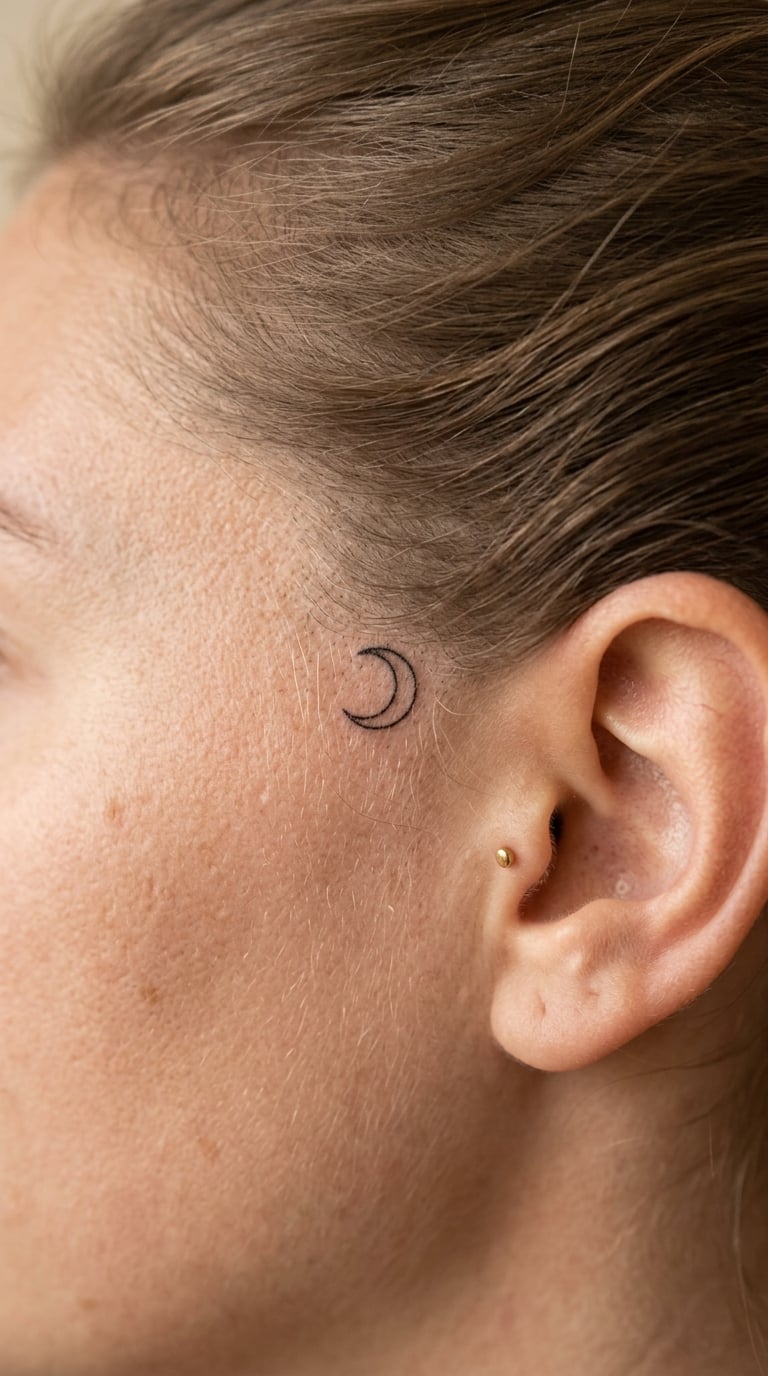
Sitting on the hairline above the ear, a crescent looks like it is peeking out from under your hair, and the effect changes every time you tie your hair back. It is the placement that makes people ask about it.
Four to six millimetres, positioned a few millimetres behind the hairline rather than on it, so growing the hair out covers it. Hairline skin is thin and warm, which means the line takes a while to settle and needs careful aftercare in the first weeks. It is not a first-tattoo spot, mostly because you cannot see it yourself while it is being done.
Pain and time: uncomfortable and twitchy, and you cannot watch. Ten minutes.
14. Matching Crescents on Wrist and Ankle
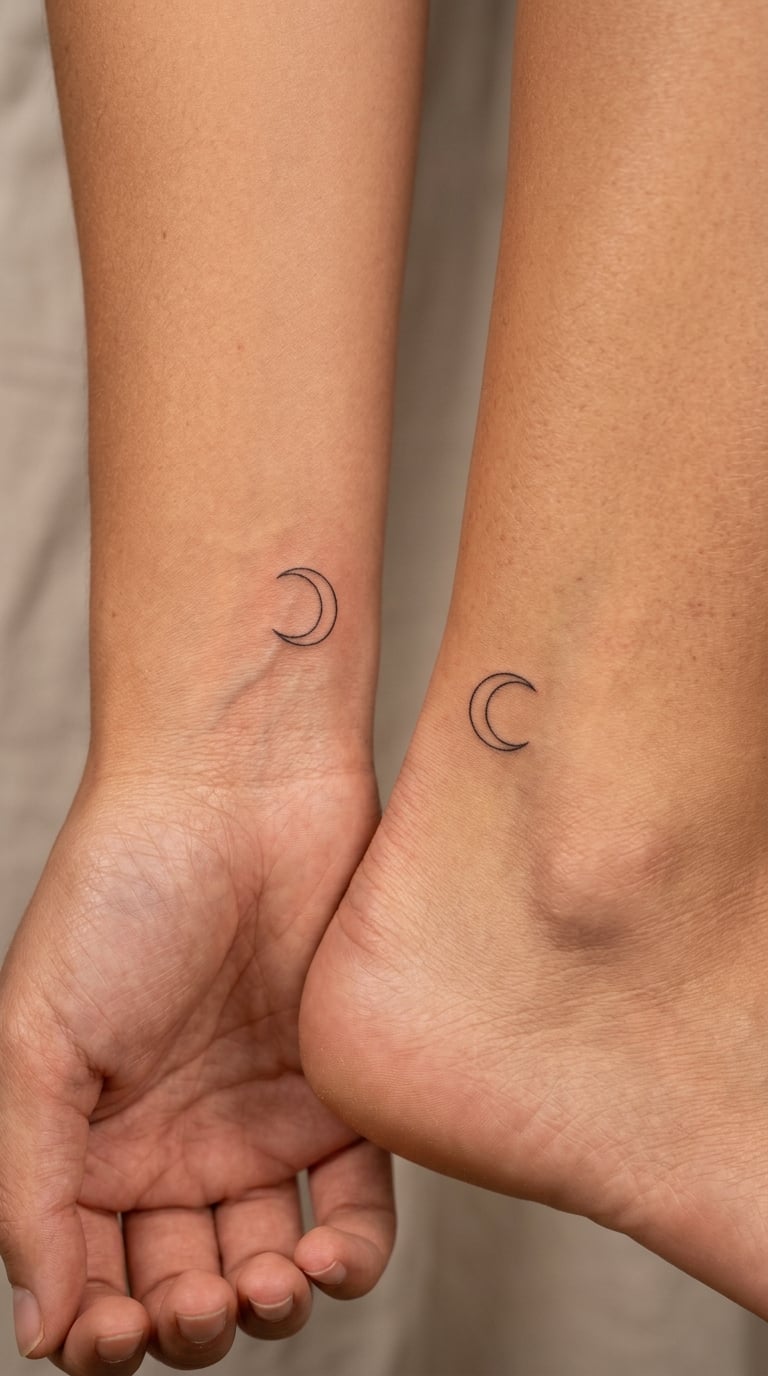
A matching pair of small crescents, one on the inner wrist and one on the inner ankle, is a quiet way to do a matching tattoo without identical designs turning into a set. Most people in a couple want the same shape at different scales rather than the same picture twice.
Five millimetres on the wrist and a slightly larger six on the ankle, because the ankle takes a softer line. Book them as two appointments unless the studio will do both in one sitting, which depends entirely on the artist. Same reference, same line weight, but ask each artist to adjust for their spot.
Pain and time: two short appointments of ten minutes each, or one longer sitting. Wear shoes you can pull off easily for the ankle.
15. Filigree Crescent on the Inner Bicep
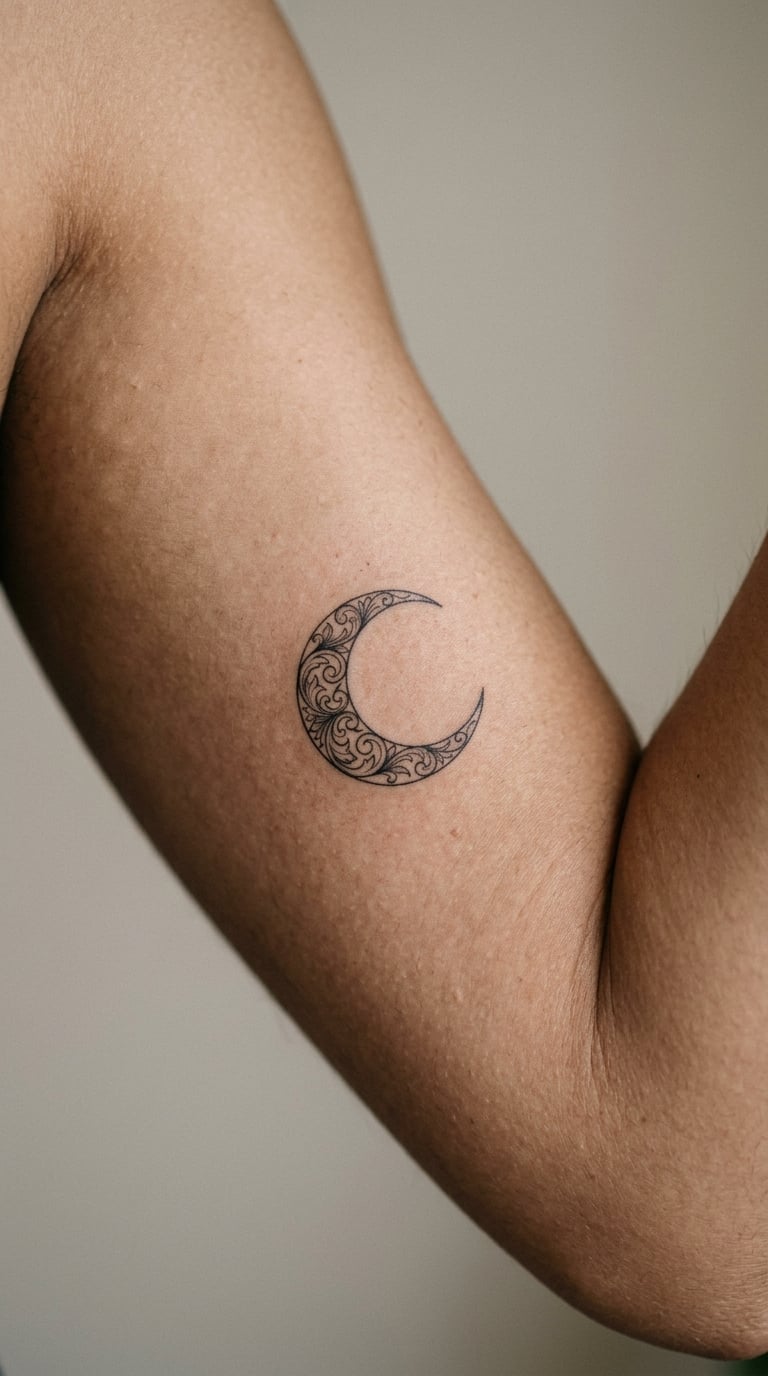
Filling a crescent with scrollwork is the more decorative of the fine-line options and the closest thing here to a traditional moon. It looks antique without being an old-school piece, which is why it keeps showing up in current reference collections.
Two centimetres is the minimum that leaves room for interior detail; at one centimetre the scroll becomes noise. The inner bicep takes a fine line cleanly and is one of the least awkward places to sit for a session, since the arm can stay out of the way. Roll your sleeve past it and the design disappears.
Pain and time: comfortable area, longer session because of the detail. Twenty-five minutes or so.
16. Dotwork Moon on the Thumb Knuckle
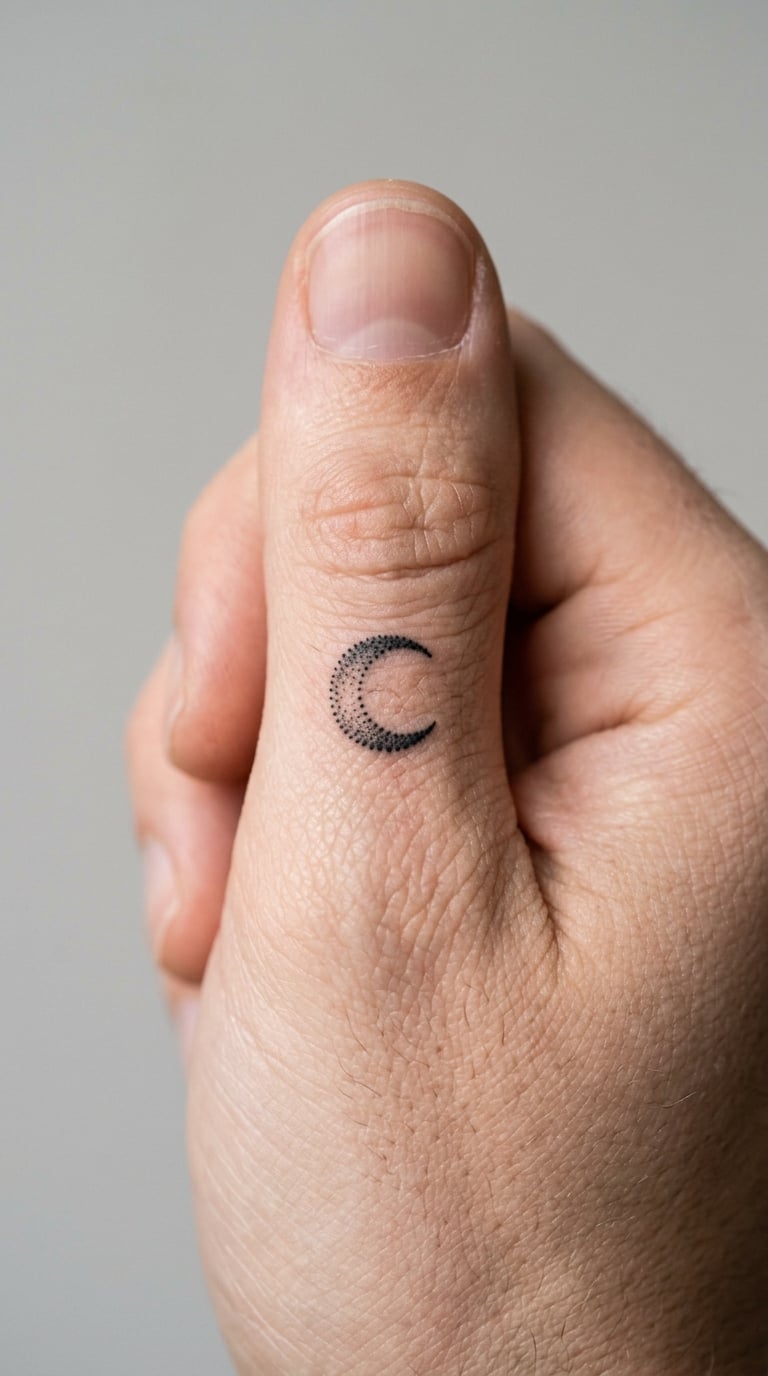
Dots instead of lines, on the thumb knuckle, is the smallest and most unusual option here. Dotwork is the style most likely to survive at a scale that would flatten a drawn line, because each dot heals as its own small island of ink.
Four to five millimetres is realistic at this size, which is smaller than a lined crescent can go. The thumb knuckle moves constantly and the skin creases, so keep the design off the joint itself and just above or below it. It is easy to cover with a hand, and it shows when you use your hands for work.
Pain and time: dotwork takes longer per shape because each dot is a separate pass. Fifteen minutes, and your hand will be sore for a while after.
17. Crescent and an Eye on the Inner Forearm
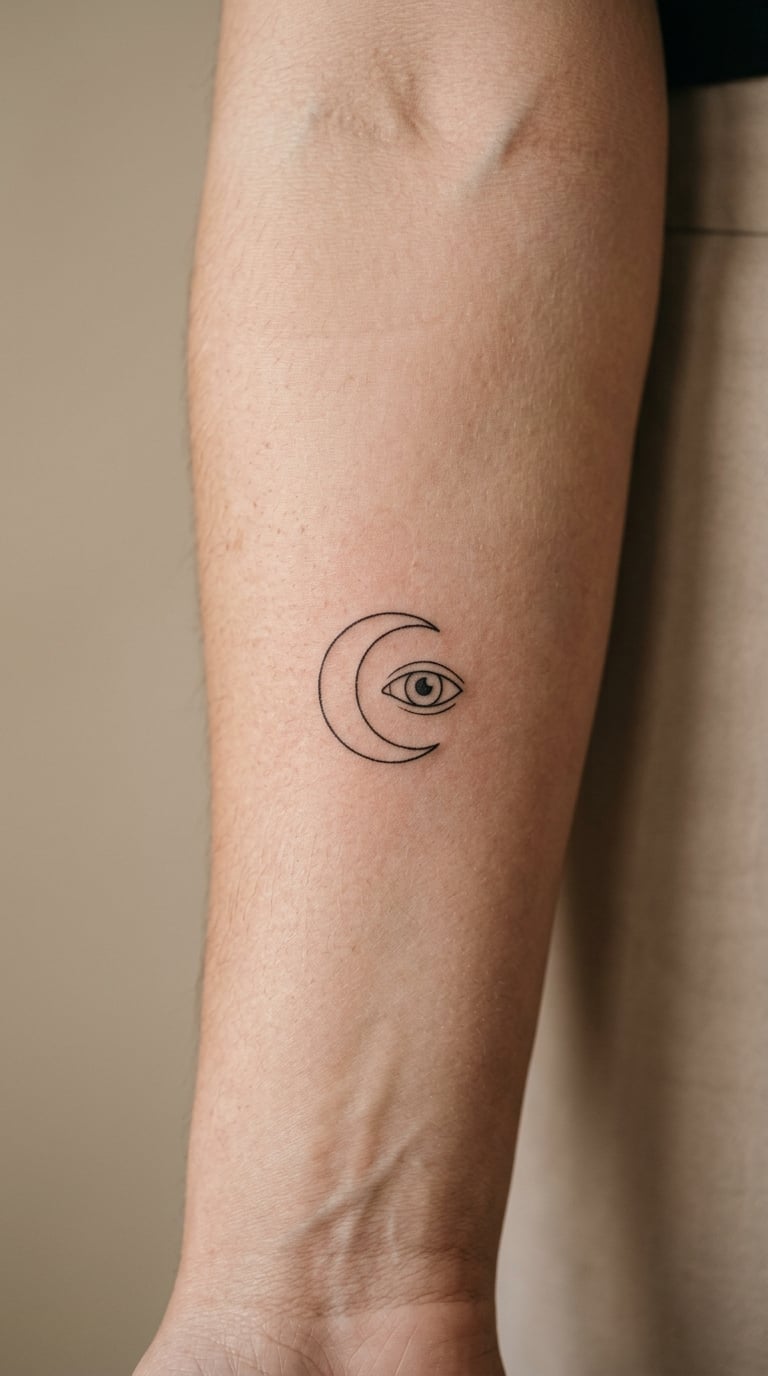
A crescent next to a simple eye is the design with the most meaning attached to it. The eye is often about watching, protecting someone or staying awake to something that matters, and pairing it with the moon turns it into a quiet idea about paying attention.
Two and a half centimetres across both shapes, with the eye no larger than the moon. The eye needs a lid line that is slightly heavier than the crescent or it disappears within a year. A setup with someone who died, or a parent, is a common reason this one gets chosen.
Pain and time: inner forearm, comfortable, about twenty minutes for both shapes.
18. Crescent Over Mountain Peaks on the Shin
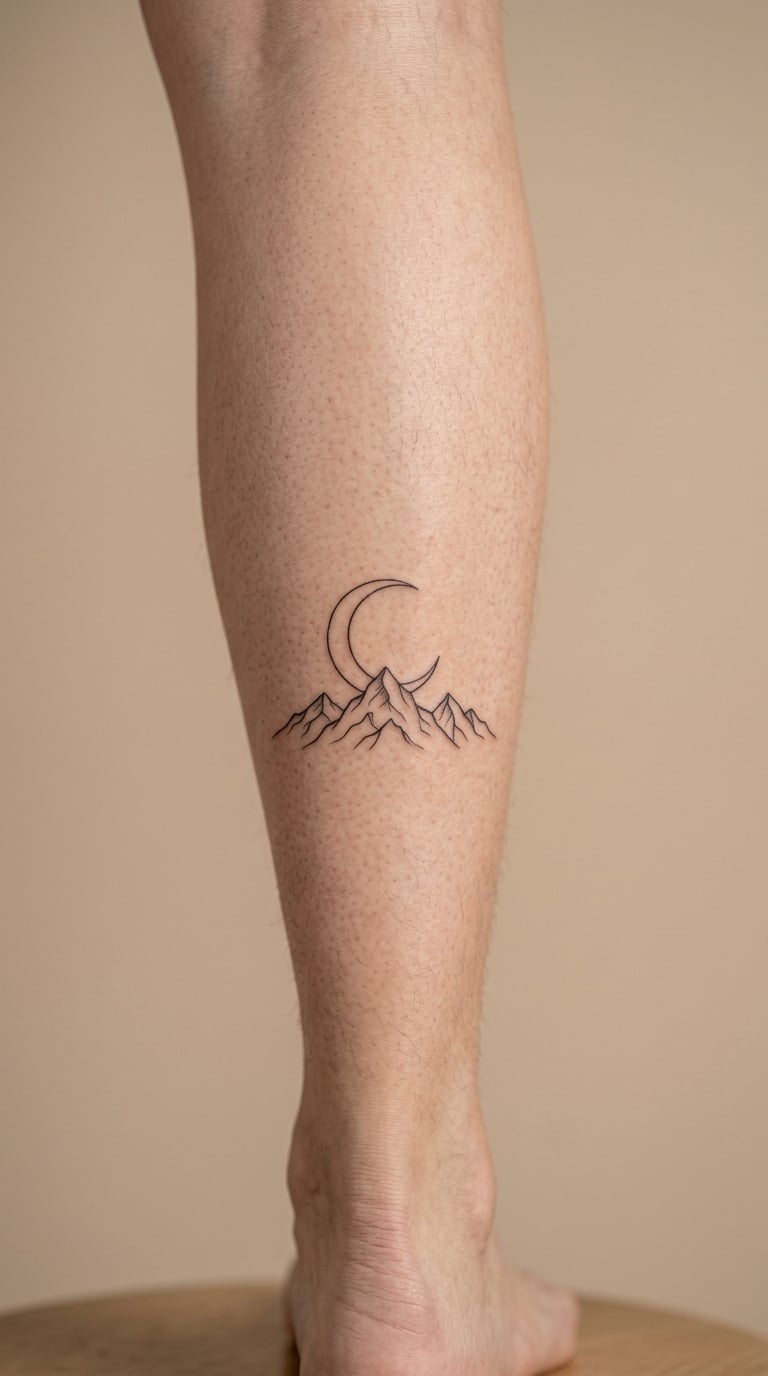
A crescent resting above a row of mountain peaks makes a tiny landscape rather than a symbol, and it is a good compromise if you like scenery but do not want a full illustrative piece. It also hides well under a long skirt or trouser cuff.
Four centimetres across the peaks, with the crescent sitting a millimetre or two above the highest point so they do not merge. Horizontal fine lines blur faster than curves, so ask for the peaks slightly heavier than the moon. On the shin the surface curves around the bone, and the artist will need to work around that.
Pain and time: the shin is close to bone and sensitive in a sharp way. Fifteen to twenty minutes.
19. Moon Phases Under the Collarbone
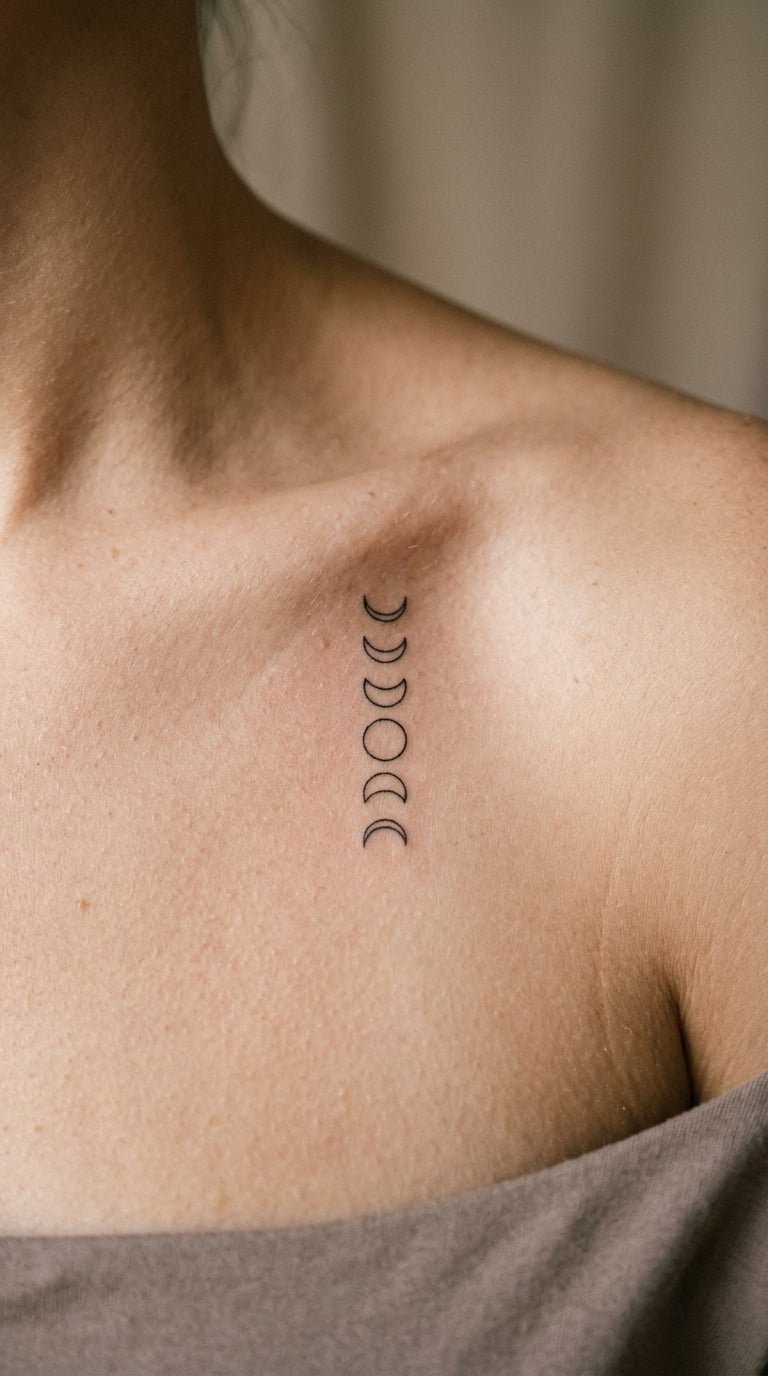
Under the collarbone, a short vertical run of moon phases reads like a private note, and the vertical arrangement suits a body part where horizontal designs tend to sit awkwardly against the bone.
Three centimetres tall, with four phases in a thin column. The hollow under the collarbone is one of the nicer places on the body to take a fine line because the skin is taut there. Very visible in a low neckline, so if that is not your style, the same column works on the inner arm or the side of the ankle.
Pain and time: sensitive where the bone is close, but quick. Fifteen minutes.
20. A Small Moon in Warm Red Ink on the Ankle Bone
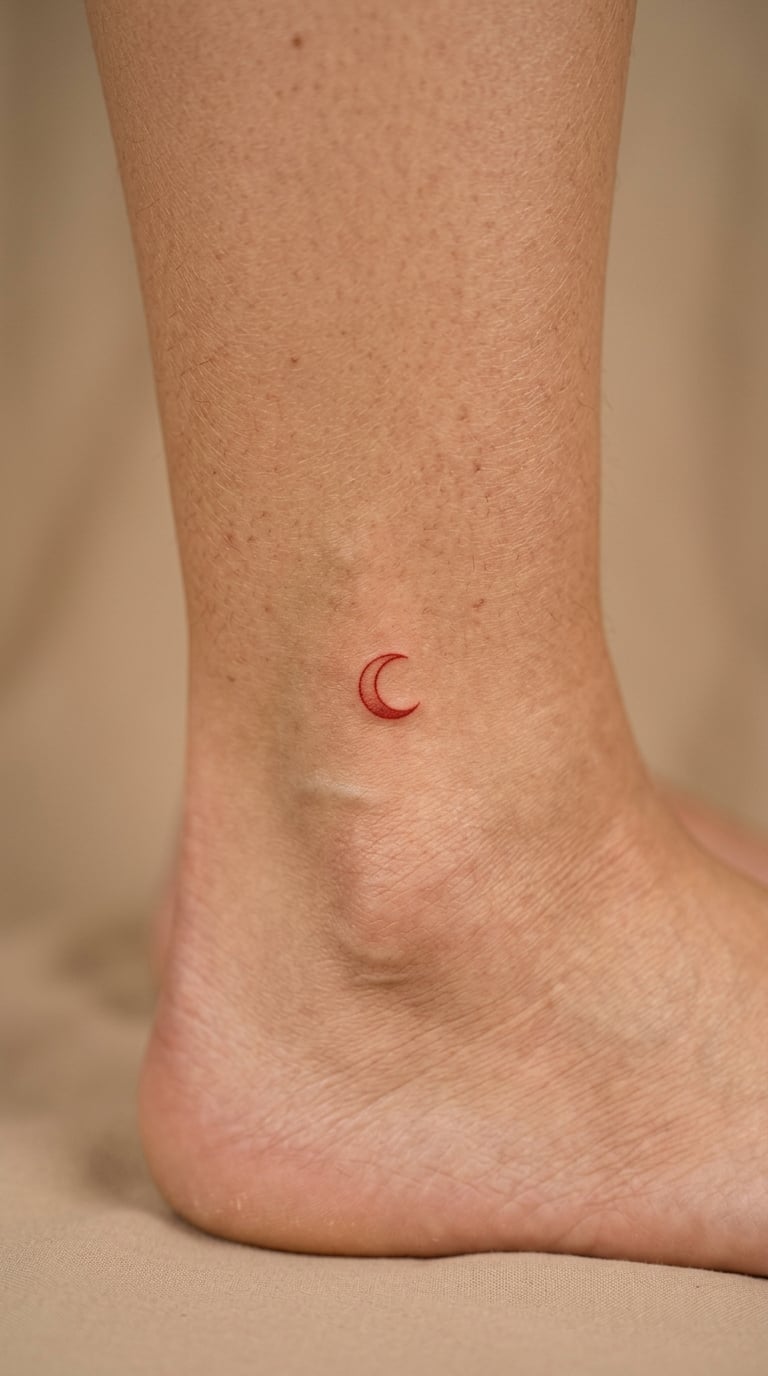
The one non-black option here, a small moon in a muted warm red, is worth considering if black fine line has started to feel like everyone else’s default. Warm reds on the ankle bone stay soft and low-contrast, which reads differently from a black crescent even at the same size.
Six millimetres, with the artist mixing a red that is a shade lighter than you think, because skin lightens over the ink. Reds are the first colour to fade, so expect a warmer, lighter version of this within three years. It works best as a standalone piece, since a colour this soft does not pair easily with black linework nearby.
Pain and time: the ankle bone is a sore spot. Ten minutes.
Where to Put a Tiny Moon Tattoo: Placement, Size and Pain
Tiny moon tattoo placements, ranked by how discreet they are
Most people searching for a tiny moon are trying to solve two problems at once: a design that still reads clearly, and a spot that is not the first thing anyone sees. Those two goals do not always agree, so the table below pairs each common placement with the size that actually works there and how visible it tends to be.
| Placement | Size that works | Visibility at work | What to keep in mind |
|---|---|---|---|
| Inner wrist | 6-8 mm | Easy to hide with a watchband or cuff | Everyone at the gym sees it, and it catches a sleeve |
| Behind the ear | 4-7 mm | Hidden by hair, obvious when wet | Warm skin and constant sun, so expect soft edges |
| Side of the finger | 5-6 mm | Shows in handshakes and photos | Lines migrate as skin moves over time |
| Knuckle | 4-5 mm solid | Very visible, impossible to hide | Solid fill reads best here, not fine line |
| Collarbone | 1-1.5 cm | Depends entirely on neckline | Smooth skin, takes a clean line, moves when you shrug |
| Inner ankle | 1-1.5 cm | Hidden by shoes and long trousers | Softer skin, go one step bolder than you think |
| Side of the ribs | 3 cm | Covered by most everyday clothes | Real pain, worth budgeting time and breaks for |
| Nape of the neck | 1-2 cm | Hidden by hair most days | You cannot watch the work, and it is tender |
For someone who wants it invisible, the inner wrist, the inner ankle and the nape of the neck are the three that work with clothing rather than against it. Behind the ear is the same idea, with the difference that it is out of sight only while your hair is down.
Things to Know Before You Book a Micro Moon
- Look at healed work, not flash. A portfolio full of straight-from-the-arm photos tells you what fine line looks like two weeks in, not two years in. Ask to see healed work at the size you want.
- Know the minimum readable size. A lined crescent stops reading somewhere under five millimetres and can heal as a blob or, oddly, as a croissant shape. The fix is a thicker line, not a smaller shape.
- Say the size out loud, with a limit. Artists scale references up when the picture is small, because they want it to hold. Tell your artist the maximum width in millimetres and ask them to work to that number.
- Plan for a short session. A single crescent is often under ten minutes. If a quote implies a long appointment for one small shape, that artist is probably designing a larger piece than you booked.
- Ask what it costs before you sit down. Micro work sits at the low end of a studio’s range and is usually charged as a flat rate for the smallest pieces rather than by the hour. Every shop publishes its starting price, and no reputable one will be vague about it.
- Skip the sun and alcohol. Fresh skin holds pigment more evenly, and sunburn or a night out the day before shows up in the healed result. Sleep, eat, and avoid the beach the week before.
How Tiny Moon Tattoos Heal and Fade
A micro moon is a fine line in a very small space, and that combination is why it softens faster than most tattoos. Expect the first three days to be dark and slightly raised, then a flaking stage around days four to seven where the line looks worse than it is.
By week two the design should look like itself again. The honest part is what happens after: hairlines on a small shape lose definition within a year or two, and anything with a chain, dotwork or fine landscape detail goes first. Solid black, dotwork and a single confident outline last longest, which is the same reason the solid crescents in this list are the ones that still read after a decade.
You cannot stop fading, and sun makes it faster, so cover the spot when you are out. What you can do is refuse designs that need more line thickness than your chosen size allows. That is the tattoo version of not overpacking a small bag.
Frequently Asked Questions
What does a small moon tattoo symbolize?
A small moon tattoo most often stands for cycles, intuition and change, because the moon marks the month turning over. People also choose it for grief and remembrance, or for a new beginning in work, love or where they live. Which phase you pick changes the reading: a waxing crescent leans toward growth, a full moon toward completion, and a waning one toward letting go.
What is the best placement for a moon tattoo?
It depends on how discreet you need it to be. The inner wrist, inner ankle and nape of the neck hide under normal clothing, and behind the ear hides under hair. Finger and knuckle placements show constantly in handshakes and photos. For fine line work, pick skin that is flat and covered, such as the inner forearm, and avoid anywhere that flexes hard all day.
What does a moon tattoo behind the ear mean?
Behind the ear reads as private and slightly secretive, which is the main reason people choose it. Because the spot is usually covered by hair, the design feels like it belongs to the wearer rather than to the room. Symbolically it carries the same meaning as anywhere else, though most people pick the crescent or the full circle for that spot.
What does a moon tattoo on the wrist mean?
A moon on the wrist means the same thing it means anywhere else, cycles, intuition and change, but the wrist adds a sense of constant reminder since you see and feel it constantly. People who pick the inner wrist often say it feels like everyday jewellery rather than a statement. A crescent facing a specific direction, or set at a particular phase, usually carries a personal detail worth asking about.
How small can a moon tattoo be?
Around five millimetres is the practical floor for a lined crescent, and below that the shape stops reading and can heal as a smudge. Go smaller only if you switch style: dotwork moons work at four millimetres, and solid black holds its edge at five. Tell your artist the maximum width in millimetres before the session so the design is not quietly scaled up.
Is a moon tattoo a good idea for a first tattoo?
Yes, because it is small, quick and in a place you can cover, which makes it a forgiving first piece. The two things worth getting right are line thickness and placement. Bring a reference with a confident line, ask to see healed work in that size, and avoid the ribs, the neck and the inner bicep if you are not ready for an uncomfortable session.
What to Do First
Start with the placement, not the picture. Decide how discreet the tattoo has to be, look down the table, and pick the spot that fits your actual week rather than the one that looks best in a photo. Everything else, the size, the line weight, whether the design is a crescent or a phase, follows from that decision.
Then send two or three references to your artist with your maximum width written in millimetres. If you are still comparing, the twenty tiny moon tattoo ideas above are ordered by how forgiving they are to heal, so start with the solid black or dotwork versions if you are nervous about how a small line will look in a year.