
Tattoos During Pregnancy and Breastfeeding (October 2026)
Most medical bodies, including the American College of Obstetricians and Gynecologists and the UK NHS, advise waiting until after pregnancy and ideally after breastfeeding ends before getting a new tattoo. The caution is not about a single known harm. It is about three unknowns stacked together: how a pregnant or nursing immune system handles a controlled skin wound, whether ink and metal pigments cross into breast milk or the placenta in meaningful amounts, and how unpredictable skin changes (stretching, swelling, hormonal sensitivity) will treat a fresh design. The safer default is to wait, plan, and book when your body has settled.
This walkthrough covers what doctors and reputable artists actually weigh, what the research says (and does not say), how risk shifts by trimester and postpartum stage, and what safer alternatives and aftercare look like. No scare tactics, no pretending one bad session will end in disaster, just the honest picture most articles skip.
Tattoos During Pregnancy and Breastfeeding: The Short Answer
Medical guidance in the US, UK, Canada, and Australia leans the same way: defer tattoos during pregnancy, and most reputable studios will not ink a client who is pregnant or actively breastfeeding. The reason is not a single proven harm. It is the combination of infection risk from a fresh skin wound, unknown absorption of ink pigments, and hormonal skin changes that can distort healing. After delivery, the typical wait is 9 to 12 months postpartum, by which point nursing-related skin changes have settled and most breastfeeding patterns are more predictable.
Why Most Doctors Recommend Waiting
The recommendation to wait is not a moral stance. It is a risk-management one, and the risks fall into three buckets that hit at the same time.
The first is infection risk. A tattoo is a controlled wound: a needle deposits pigment through the epidermis into the deeper skin layer thousands of times a minute. Any break in sterile technique (a reused needle, contaminated ink, poor hand hygiene) can introduce bacteria like Staphylococcus aureus or, in rare cases, blood-borne pathogens like hepatitis B or HIV. Pregnancy already alters immune response, so what a non-pregnant client shrugs off can become a more serious localized or systemic infection in someone carrying a baby.
The second is ink absorption. Tattoo pigments are made of metal salts, carbon, and organic compounds. Most pigment particles are too large to enter the bloodstream in significant amounts, which is why physicians at lactmed-style resources often say a tattoo on a breastfeeding parent does not require pausing nursing. The honest qualifier is that long-term data on low-level, repeated exposure is thin. When in doubt, medical bodies default to caution.
The third is skin behavior. Pregnancy hormones (relaxin, estrogen, cortisol shifts) change how skin stretches, holds pigment, and heals. A piece that looks crisp at booking can blow out, distort, or heal unevenly if the skin underneath is changing fast. This is the same reason fine line work in particular needs a stable canvas; if you are weighing delicate designs, our piece on Do Fine Line Tattoos Fade Faster? Causes, Timelines & Care explains why unstable skin is the first thing to age a tattoo.
What the Research Actually Says
Two facts are well established. First, tattoo pigment particles sit in the dermis, trapped by collagen fibers, and most are too large to migrate meaningfully into the bloodstream. Second, there is no robust peer-reviewed study showing that a single, properly done tattoo causes harm to a fetus or to a breastfeeding infant through milk.
What the research does not establish is the long-term picture. Pigment composition varies by brand, color, and country of manufacture, and ingredient labels are not always accurate. Studies of tattoo ink have found heavy metals and polycyclic aromatic hydrocarbons in colors marketed as “organic” or “vegan.” Without long-term, controlled data on cumulative exposure during pregnancy and lactation, professional guidelines stay conservative.
That is why bodies like ACOG and the NHS still frame the issue as “defer until after pregnancy and weaning,” even while individual lactation physicians point out that an established tattoo or a single new, sterile session is unlikely to require interrupting breastfeeding. The safer default wins when the evidence is incomplete.
Risks by Trimester
Risk is not flat across pregnancy. Here is how the three main concerns tend to shift.
First trimester (weeks 1 to 12): Hormonal skin sensitivity is at its peak for many people, and the immune system is actively remodeling to support the pregnancy. A localized infection is more likely to escalate, and any reaction (fever, systemic response) carries a closer link to fetal risk in these early weeks. Most studios will not ink anyone in the first trimester even if pregnancy is not yet confirmed.
Second trimester (weeks 13 to 26): Often called the “safe window” for travel and exercise, it is not a safe window for tattoos. Skin is beginning to change, pigment can heal unevenly as the belly expands, and an infection that requires antibiotics still means choosing medications that are pregnancy-safe.
Third trimester (weeks 27 to birth): Stretching skin is at its most unpredictable. A fresh piece on the hip, rib, or thigh can distort within weeks of sitting for it. Lying flat for a long session becomes uncomfortable, and any infection this close to delivery complicates both birth choices and newborn care.
Breastfeeding and Fresh Ink
Breastfeeding changes the math, but it does not flip it to “fine.” Here is what to weigh specifically during lactation.
Positioning risk. A new tattoo on the chest, shoulder, or anywhere a baby rests against you is exposed to saliva, milk dribble, and friction during feeds. Cracked or peeling skin is a contamination risk in both directions: bacteria from the baby’s mouth into the healing tattoo, and ink or plasma from the tattoo onto the baby’s face.
Systemic transfer through milk. There is no strong evidence that tattoo pigment passes into breast milk in clinically meaningful amounts. Pigment particles are large, and the dermis is not a free exchange surface. The honest read: probably fine, but the long-term data is thin enough that lactation consultants usually suggest waiting until weaning is well established.
Immune load and “tattoo flu.” Some people experience a day or two of fatigue, mild fever, and achiness after a tattoo, the body’s immune response to the wound. While nursing, that immune load can briefly affect milk supply or leave you feeling run down during a stretch when you already need rest.
If You Already Have a Tattoo and Just Found Out You’re Pregnant
Breathe. An existing tattoo, even one you got recently before knowing you were pregnant, is not associated with fetal risk in the available research. The ink is already trapped in the dermis, and the wound has closed.
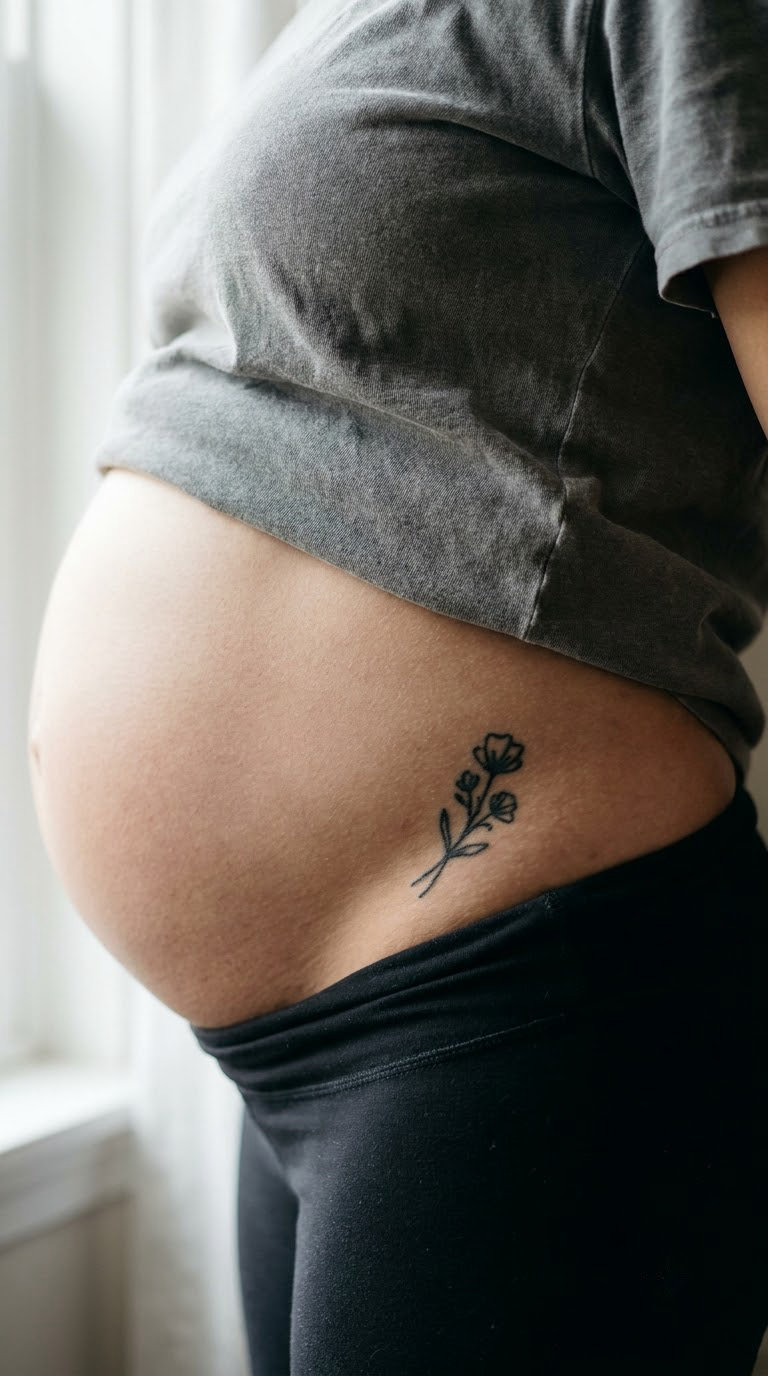
What can shift is the skin over the tattoo. Stomach and side tattoos are most likely to stretch as the belly grows; hip and breast tattoos follow the same pattern if those areas expand. If your tattoo sits on a part of the body likely to stretch significantly, plan mentally for some distortion and consider a refresh session 9 to 12 months postpartum, once your skin has settled.
The exception worth flagging is lower back tattoos and epidurals. Most anesthesiologists will work around a small, healed lower back tattoo, but a fresh, raised, or large piece may complicate the conversation at delivery. Raise it with your OB and anesthesiologist early so there is no surprise at the hospital.
Safer Alternatives While You Wait
Waiting does not mean sitting still. There are real ways to scratch the tattoo itch without booking a session.
Natural henna. Pure, plant-based henna (the reddish-brown kind sold for body art, not hair dye) is generally considered safe during pregnancy and breastfeeding when applied to intact skin. Avoid “black henna” at all costs. Black henna is typically henna mixed with paraphenylenediamine (PPD), a known skin sensitizer that can cause severe allergic reactions and lifelong PPD sensitivity.
Temporary and semi-permanent tattoos. Stick-on and jagua-based temporary tattoos give you a real preview of placement, size, and shape without commitment. Useful for testing whether the design sits where you imagine.
Book the consult now. Many reputable studios offer paid consultations where you walk the portfolio, finalize the design, and lock in placement and timing. By the time you are 9 to 12 months postpartum, the design is done and you are booking the slot, not starting from scratch.
Choosing a Studio for When You’re Ready
Use the waiting months to vet studios. A clean, reputable shop is non-negotiable when your immune system is still recalibrating postpartum. The checklist below covers what to look for, and what to walk away from.
- Single-use needles opened in front of you. Needles and tubes should come out of sealed sterilization pouches in your presence. If they are pre-set on the machine when you arrive, ask why.
- Autoclave sterilization for reusable equipment. Reusable grips, ink caps, and metal tools should be processed in a medical-grade autoclave with regular spore testing. Ask to see the autoclave and the test logs.
- Inks with transparent ingredient lists. Brands that publish full ingredient lists and respond to questions about pigment sourcing are a good sign. “Vegan” or “organic” labels are not regulated the same way food labels are, so ask what they actually mean.
- A written aftercare sheet. Reputable artists send you home with detailed aftercare instructions and a phone number for the first 24 hours. If they wave you off with “just keep it clean,” keep shopping.
- A health questionnaire you can answer honestly. A studio that asks the right medical questions and either clears or declines you based on the answers is a studio worth trusting. For budgeting your piece, our How Much Do Small Tattoos Cost? Simple Pricing Guide walks through realistic US ranges so you can plan around shop minimums and hourly rates.
Aftercare Once You Do Get Inked
The healing window matters as much as the session itself. For a postpartum tattoo, the most important variable is timing: wait 9 to 12 months after delivery, longer if you are still nursing frequently or your skin has not fully settled.
Once you are sitting down, standard aftercare is standard for a reason. Clean the area with fragrance-free soap and clean hands, apply a thin layer of the aftercare product your artist recommends (most reputable shops have moved away from petroleum-heavy ointments toward lighter, breathable options), wear loose clothing over the area, and avoid soaking (no baths, pools, hot tubs, or ocean for at least two weeks). Sun exposure on a fresh tattoo is the fastest route to fade and scarring, so keep it covered or use SPF once the skin has closed. For a deeper look at the weeks-long timeline, our How Long Do Tattoos Take to Heal? Essential Aftercare Guide walks through what each phase looks like.
Mistakes to Avoid
Five pitfalls come up over and over in parenting and breastfeeding forums when moms talk about tattoos they regret, not the tips they wish they had.
Booking impulsively in the second trimester. The “I feel fine, I’ll book it now” feeling is real, and so is the regret when the skin starts stretching six weeks later. Push the session out.
Hiding the pregnancy from the artist. A studio that inks a pregnant client without knowing it cannot warn you about timing, placement, or skin behavior. Honesty gets you a better piece or a polite deferral. Both are wins.
Choosing an artist who skips a medical history. If the questionnaire does not ask about pregnancy, breastfeeding, allergies, or medications, that studio is cutting corners elsewhere too.
Tanning or using retinoids before the session. Tanned, exfoliated, or retinol-treated skin holds pigment differently and is more prone to scarring. Stop retinoids two weeks out and skip the sunbed.
Skipping the aftercare sheet. The first two weeks of healing decide how the tattoo looks for the next ten years. Treat the aftercare instructions like a prescription, not a suggestion.
Frequently Asked Questions
Can I get a tattoo while pregnant if the studio is sterile?
Sterility handles the infection risk, but it does not address the other unknowns: how hormonal skin changes will treat the design, whether pigments absorb in meaningful amounts, and how your immune system will respond. Even with a sterile studio, the safer default is to wait until after delivery and ideally after breastfeeding ends.
Do tattoo ink particles pass into breast milk?
Most pigment particles are too large to migrate meaningfully into breast milk, and physicians are divided on how far outliers can pass through. There is no robust evidence of clinically significant transfer, but the long-term data is thin. That is why lactation consultants usually suggest waiting until weaning is well established.
How long after giving birth should I wait to get tattooed?
Most reputable studios and lactation consultants suggest 9 to 12 months postpartum, longer if you are still breastfeeding frequently. By that point, hormonal skin changes have usually settled, your immune system has recalibrated, and your milk supply is well established if you are still nursing.
Is it safe to get a tattoo while breastfeeding?
There is no proven harm to a breastfeeding infant from a single, sterile tattoo, but most medical bodies still advise waiting until weaning is well established. The caution comes from infection risk, immune load on the parent, and the thin long-term data on pigment transfer rather than any single proven harm.
Can I get a tattoo on my hip or rib while pregnant?
Hip and rib tattoos during pregnancy are not recommended. Both areas are prone to stretch as the pregnancy progresses, and any design placed now is at high risk of distortion within weeks of sitting for it. It is worth waiting until 9 to 12 months postpartum, when skin has settled.
Will my existing tattoo stretch or distort during pregnancy?
Tattoos on areas that stretch significantly (stomach, hips, breasts, sides) are most likely to distort. Tattoos on the arms, back, shoulders, and ankles usually hold up well. If distortion happens, a refresh session 9 to 12 months postpartum is usually enough to restore the original look.
The Bottom Line
Wait, plan, and book with a reputable artist when your body has settled, ideally 9 to 12 months postpartum. Use the waiting months to finalize a design you will want on your skin for decades, vet studios against the checklist above, and lean on safer alternatives like natural henna and temporary tattoos to test placement and size. When you do sit down, follow the aftercare sheet like a prescription, and the tattoo you walk out with will be the one you wanted from day one.