
24 Ribbon Tattoo Ideas (October 2026): Small and Bold Designs
Ribbon tattoo ideas get searched more than almost any small motif, and the reason is simple: a ribbon is decoration and meaning in the same shape. A loop, a knot and two tails stay readable at any scale, so the same design works as a three-quarter inch mark on a finger knuckle and as a six inch statement piece on a thigh.
What follows is 24 of them, ordered so the quiet small ones come first and the big colour work comes later. Every entry gives you placement, realistic size, style and an honest note on how it ages, so you can walk into a consultation with something more useful than a screenshot. Bring your shortlist and your own colour reference, and give yourself four to six weeks before any date you care about, since a fresh tattoo needs that run-up to settle.
24 Ribbon Tattoo Ideas: Quick Guide
Same order as the numbered sections below, so you can scan this table and jump straight to the one you want to see on skin.
| Idea | Style | Best placement | Realistic size | Pain |
|---|---|---|---|---|
| 1. Minimal single-line bow | Fine line | Inner wrist | 1 to 1.5 inch (3 to 4 cm) | Low |
| 2. Flowing watercolor ribbon | Watercolour | Inner forearm | 3 inch (7.5 cm) wide | Low to medium |
| 3. Blackwork curling ribbon | Blackwork | Outer upper arm | 4 inch (10 cm) long | Medium |
| 4. Botanical victory ribbon | Botanical | Shoulder | 3 inch (7.5 cm) long | Medium |
| 5. Red rosette ribbon | Traditional | Upper chest | 2 inch (5 cm) wide | Medium |
| 6. Black-and-grey knotted ribbon | Realism | Forearm | 2.5 inch (6 cm) wide | Medium |
| 7. Fine-line wedding ribbon | Fine line | Behind the ear | 2 inch (5 cm) wide | Low |
| 8. Neon abstract ribbon | Abstract colour | Calf | 4 inch (10 cm) long | Medium |
| 9. Bow with pearl detail | Fine line with shading | Collarbone | 1.5 inch (4 cm) wide | Medium |
| 10. Geometric ribbon loop | Geometric | Upper arm | 2.5 inch (6 cm) wide | Medium |
| 11. Ribbon with rose outline | Fine-line floral | Outer hand | 3 inch (7.5 cm) long | High |
| 12. Western scroll ribbon | Traditional Western | Thigh | 4 inch (10 cm) wide | Medium |
| 13. Gradient ombre ribbon | Colour gradient | Inner arm | 3 inch (7.5 cm) long | Low |
| 14. Ribbon-wrapped heart | Fine line | Wrist | 2 inch (5 cm) tall | Low |
| 15. Floral ribbon wreath | Botanical | Behind the ear | 3 inch (7.5 cm) wide | Low |
| 16. Minimal ribbon initial | Fine-line lettering | Forearm | 2 inch (5 cm) tall | Low |
| 17. Traditional banner ribbon | Traditional | Upper arm | 3 inch (7.5 cm) wide | Medium |
| 18. Dotwork ribbon spiral | Dotwork | Shoulder | 2 inch (5 cm) across | Medium |
| 19. Ribbon with small star | Fine line | Inner wrist | 2 inch (5 cm) long | Low |
| 20. Gothic blackwork ribbon | Blackwork | Forearm | 4 inch (10 cm) long | Medium |
| 21. Pastel rainbow ribbon | Illustrative colour | Ankle | 2.5 inch (6 cm) long | Medium |
| 22. Micro fine-line ribbon | Micro fine line | Finger, near the knuckle | 0.75 inch (2 cm) wide | High |
| 23. Ribbon with musical note | Fine line | Upper chest | 2 inch (5 cm) wide | Medium |
| 24. Large painterly ribbon | Painterly colour | Outer thigh | 6 inch (15 cm) long | Low |
1. Minimal Single-Line Bow Ribbon
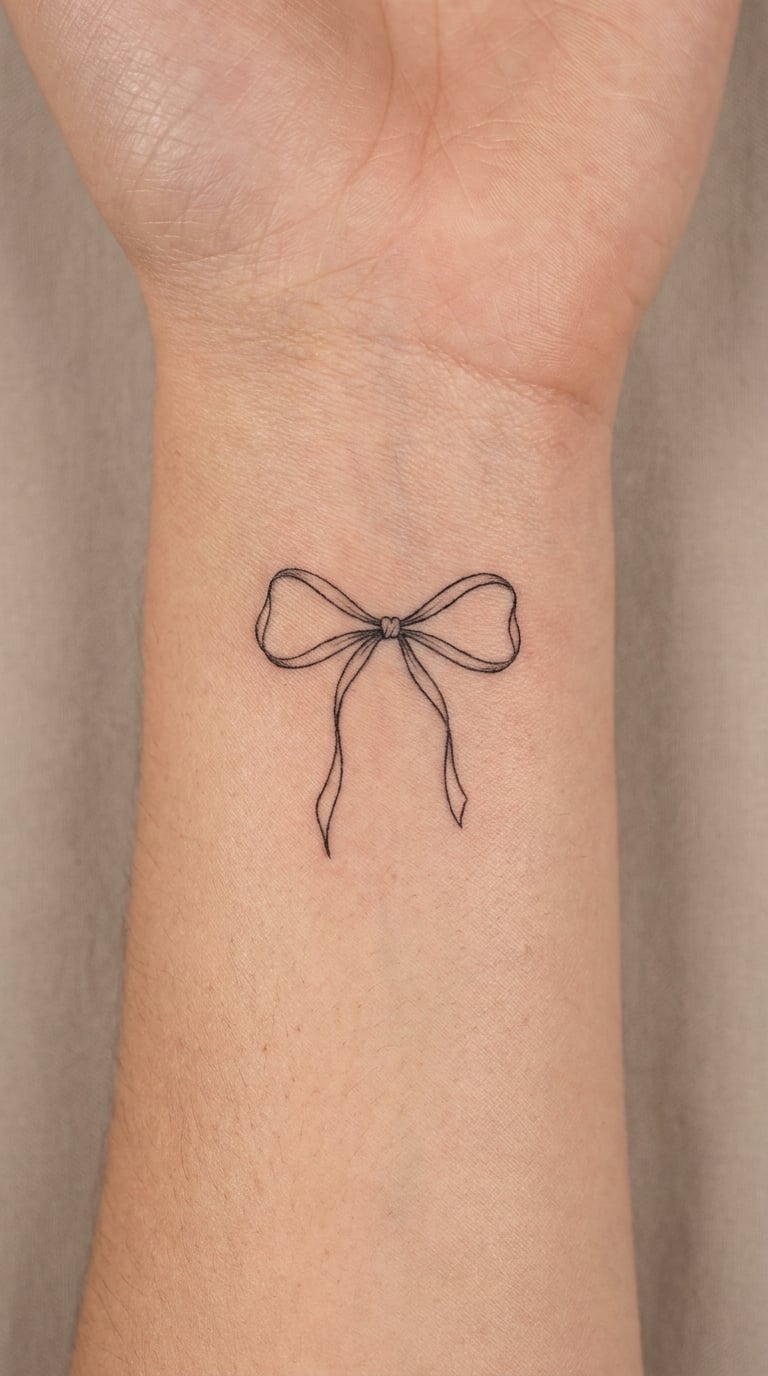
A minimal single-line bow is one continuous hairline loop with two short tails, no shading and no fill. It is the cleanest of all 24 ribbon tattoo ideas, and the one that disappears into a sleeve or looks like it was always part of you. Most people pick it because it does not shout.
It also works well as a first tattoo, since the appointment is short and the mark is easy to hide at work if you want.
Placement: inner wrist, inner forearm, behind the ear, or the soft spot just below the collarbone. Size: 1 to 1.5 inch (3 to 4 cm) across. Style: fine line, single needle.
Pain: low. Inner wrists throb a little but the nerve endings are shallow, so the discomfort passes quickly. Ageing note: single-needle lines on the wrist fade first because that skin flexes all day, so ask for a slightly heavier line weight than feels comfortable at first.
Make it yours: have the tails cut at different lengths, one long and one short, so the bow sits slightly off-centre and looks drawn rather than stamped.
2. Flowing Watercolor Ribbon
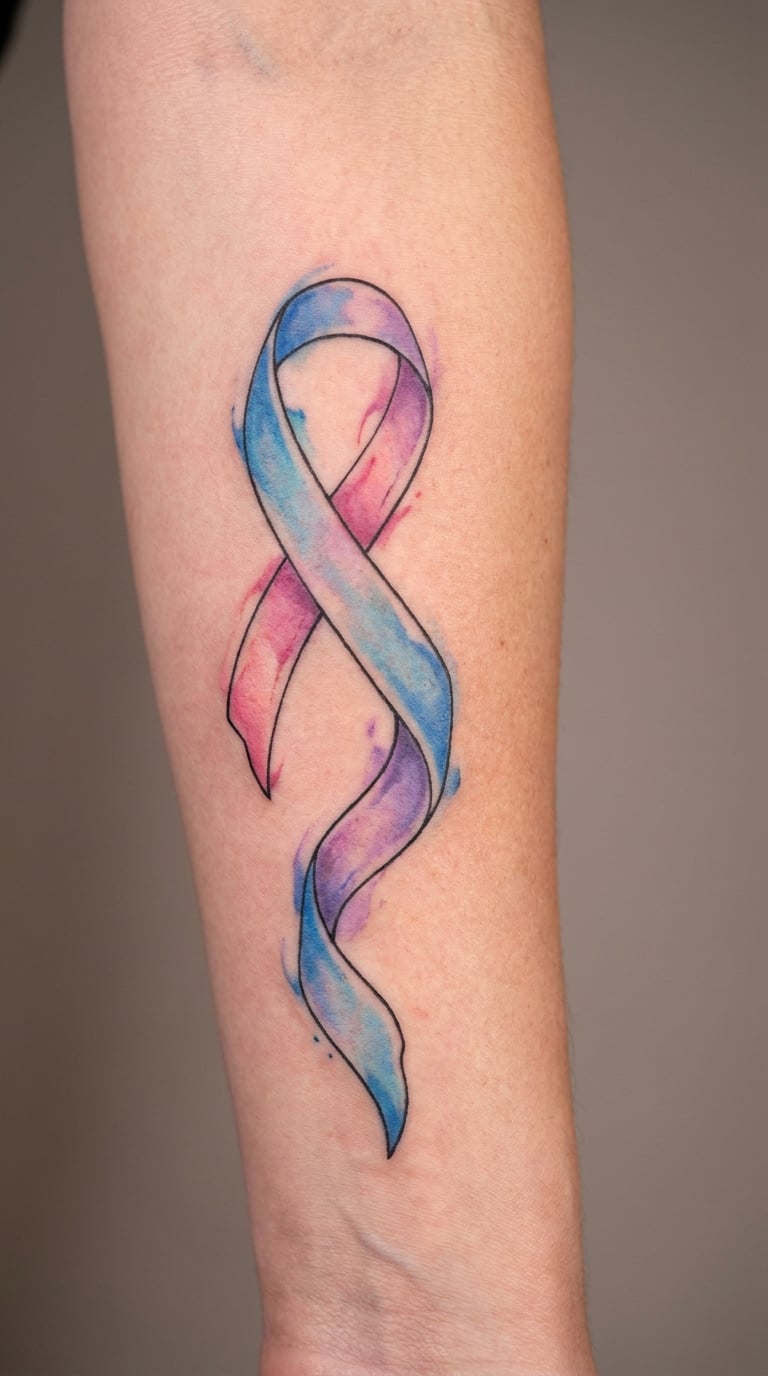
A watercolour ribbon is built from soft translucent washes that bleed past each other at the edges, with a thin outline or no outline at all. The tails trail off into colour rather than ending on a hard edge, which is what gives it movement across skin that curves.
This one suits people who find flat black linework too severe and want the tattoo to sit under a sleeve conversation rather than announce itself.
Placement: inner forearm, upper arm, ribs, or the shoulder where there is a flat plane for the wash to spread. Size: 3 inch (7.5 cm) wide, bigger if you want it to read from across a room. Style: watercolour, abstract.
Pain: low to medium. Washes mean more passes over the same skin, so expect a longer session and a warm, scratchy feeling. Ageing note: watercolour always lightens over the years, so pick shades with some depth rather than pale pastels that will fade toward skin.
Make it yours: use the colours of a flag, a football team, a festival or a landscape you love instead of stock rainbow gradients.
3. Blackwork Curling Ribbon
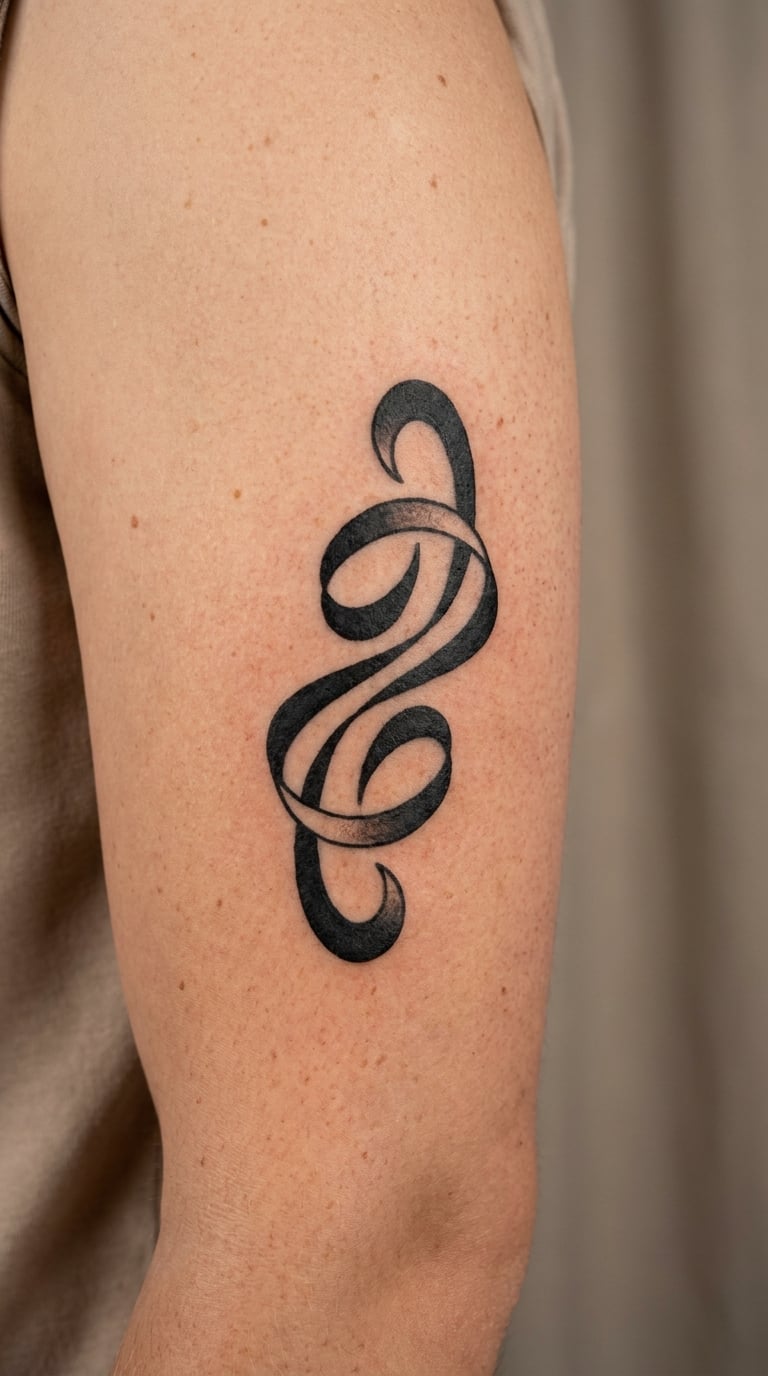
Blackwork curling ribbon uses solid black shapes with no grey at all, and the ribbon twists through them so the empty skin does the shading. The tails curl like a wave breaking, which gives the design energy that a small flat bow never has.
It reads as confident and graphic rather than delicate, so it suits anyone who wants a motif that survives being seen.
Placement: outer upper arm, shoulder, outer thigh, or along the calf. Size: 4 inch (10 cm) long or more. Style: blackwork, negative space.
Pain: medium. Solid black fills take repeated passes, and the outer arm is a meaty spot that tires before it really hurts. Ageing note: because the whole design is solid, it holds its shape well and can be filled in at a touch-up rather than re-lined.
Make it yours: tuck a second, smaller curl behind the first so the design reads as movement rather than a single squiggle.
4. Botanical Victory Ribbon
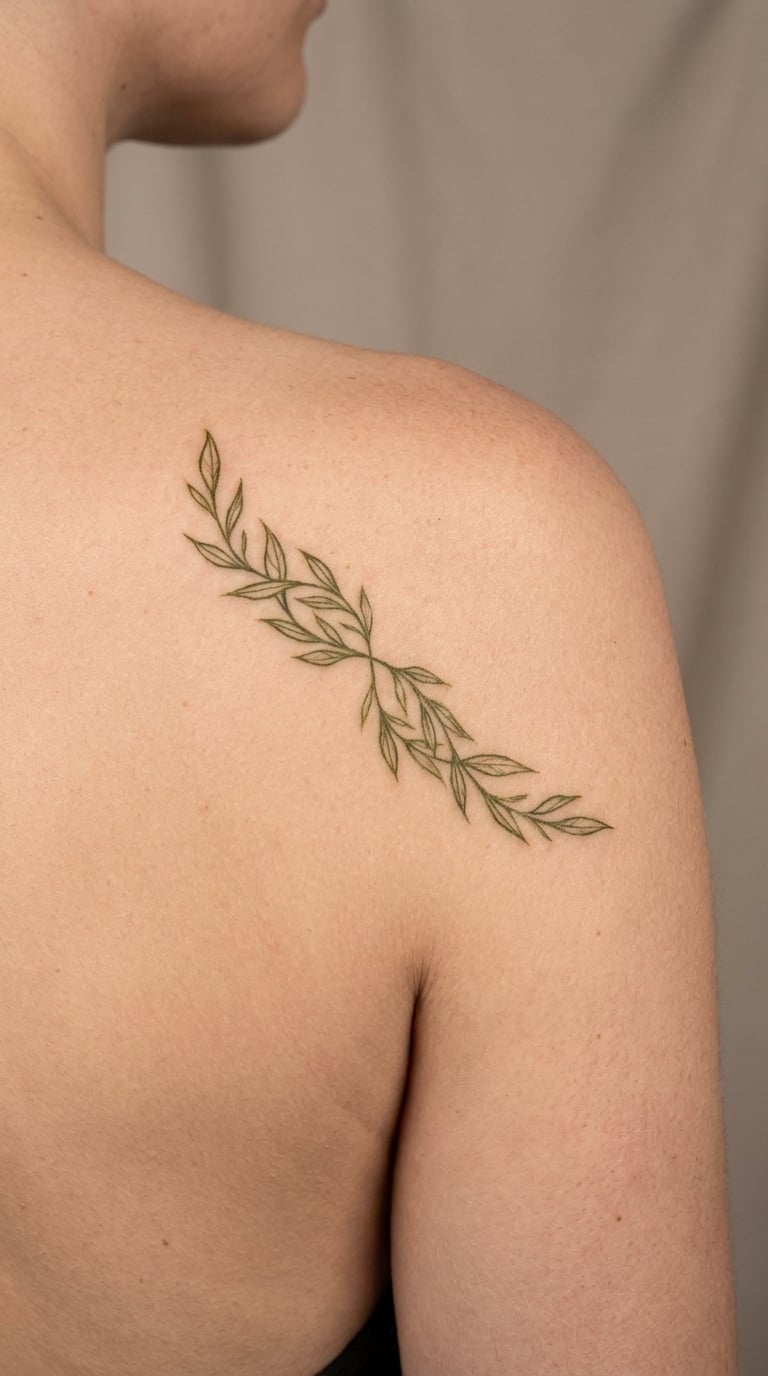
A botanical victory ribbon ties a narrow band of leaves and small blossoms into a bow shape, with thin stems running through the loops. The line work stays light while the greens do the work, and the result feels grown rather than placed.
People tend to choose it as a marker for finishing something hard, a course, a recovery or a year they wanted written down.
Placement: shoulder, upper arm, outer forearm, or the back of the shoulder where it can be seen when you turn. Size: 3 inch (7.5 cm) long. Style: botanical, neo-traditional.
Pain: medium. Fine leaf detailing is a lot of small stops and starts, and shoulders feel that stop-and-start more than a solid fill does. Ageing note: thin green lines can grey out, so ask for one or two darker leaves to carry the shape when the rest fades.
Make it yours: use the birth flower of someone you are marking, or the plant that means something to the person the tattoo is for.
5. Red Rosette Ribbon
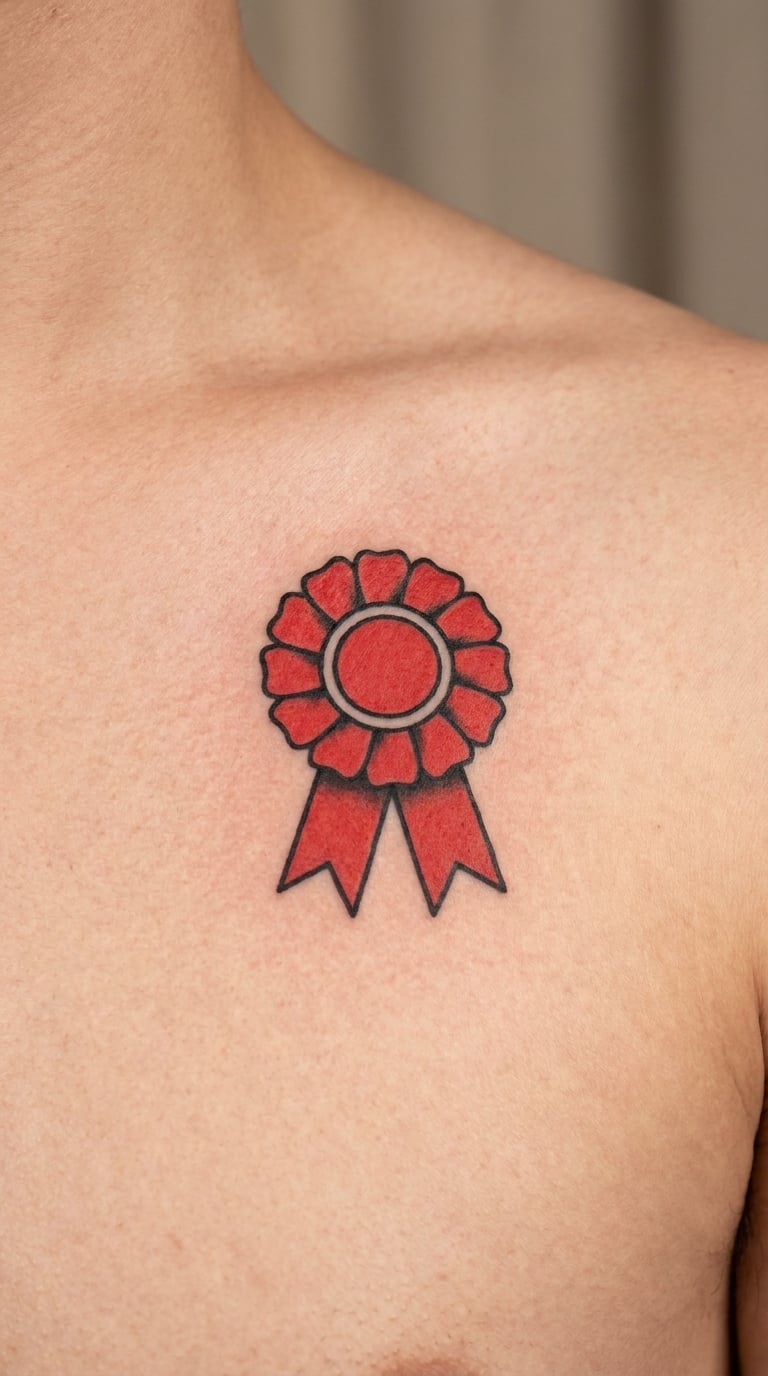
A red rosette ribbon is a length of ribbon folded into a tight circle of petals, outlined in black with a flat red fill. It is the closest thing on this list to a flower bow, and it carries the old-fashioned polish of a wrapped gift.
It suits people who want a ribbon that reads clearly without being a symbol for a cause, and it stacks well with floral pieces.
Placement: upper chest below the collarbone, shoulder, or the outer forearm. Size: 2 inch (5 cm) wide. Style: traditional.
Pain: medium. The sternum area is bony and the ribs underneath make it sensitive, though the design is small enough to be over quickly. Ageing note: red is the fastest-fading ink there is and drifts toward orange, so this is the one to touch up on a schedule rather than wait on.
Make it yours: have the ribbon trail one short tail off the rosette so it looks unwrapped, or add a single year in fine print underneath.
6. Black-and-Grey Knotted Ribbon
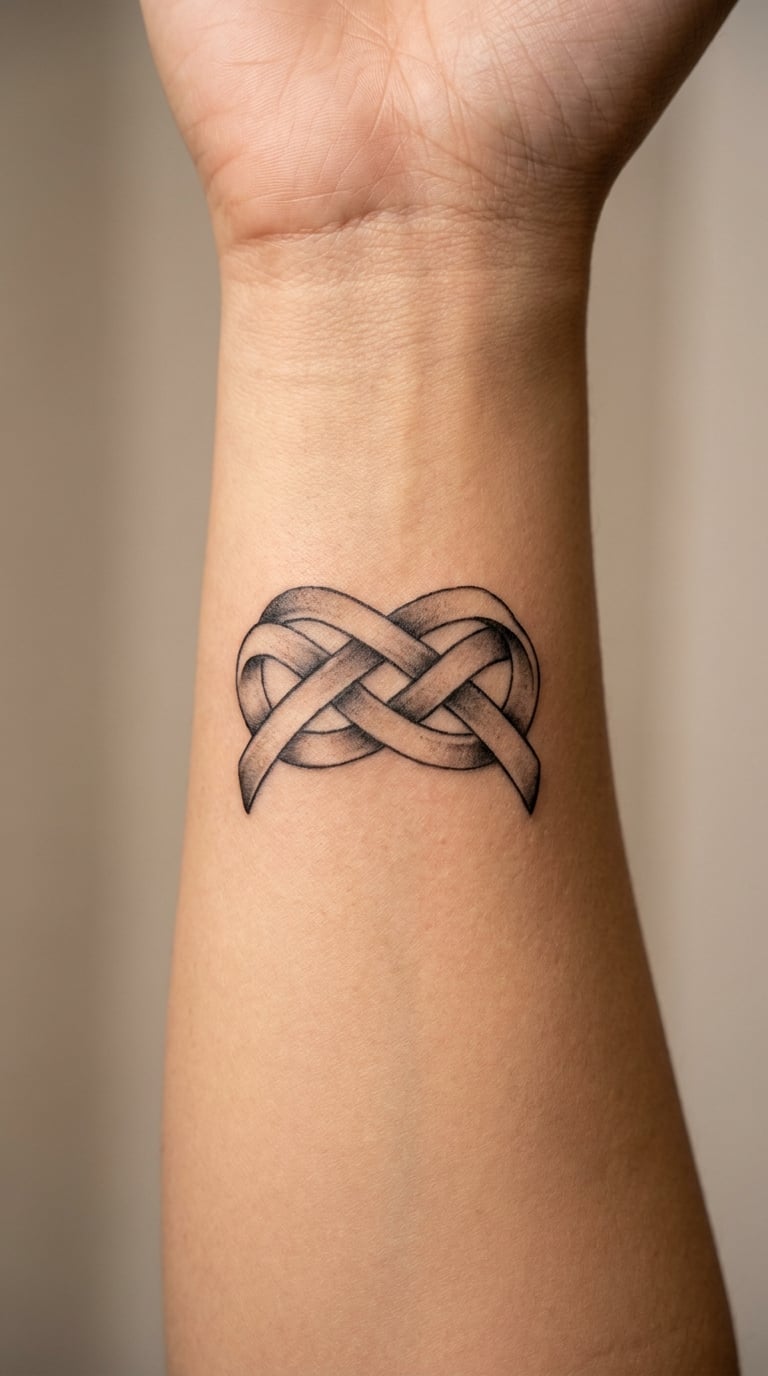
A knotted ribbon is drawn as fabric rather than symbol: soft folds, a real twist at the centre, and grey shading that shows where one strand passes over another. The knot is the whole design, so it works at a compact size in a way a full bow does not.
People choose it when they like something that looks traditional and permanent but does not carry a message they would have to explain.
Placement: forearm, upper arm, ribs, or the back of the hand. Size: 2.5 inch (6 cm) wide. Style: realism, black and grey.
Pain: medium. Shading means a longer session with lots of light passes, which stings more gently but for longer than a single line. Ageing note: grey wash spreads and softens over time, so the knot keeps its weight while the fine fold shadows blur, which most wearers like.
Make it yours: ask for a small date tucked inside the fold where only you will know it is there.
7. Fine-Line Wedding Ribbon
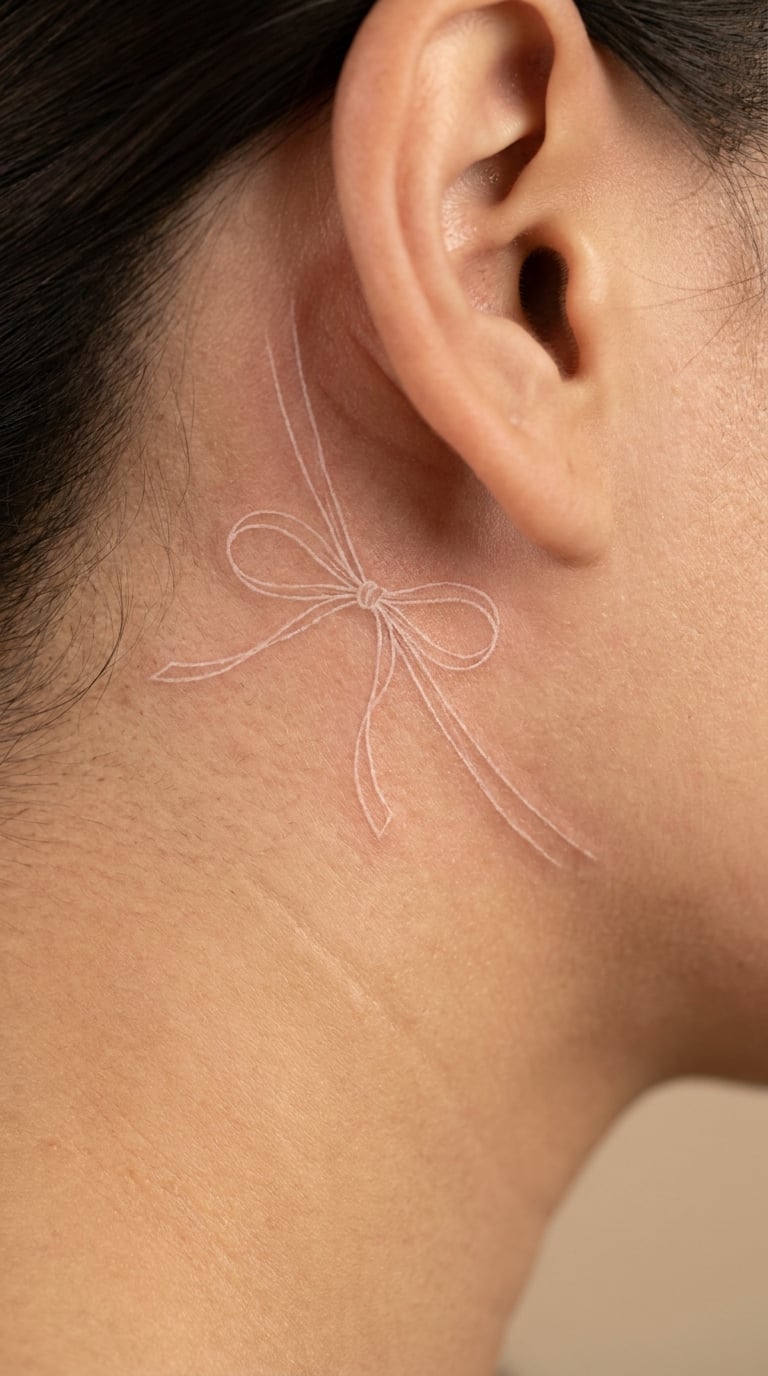
A fine-line wedding ribbon is a small bow with a narrow band trailing behind it, done in one light weight with no fill. It is usually placed somewhere intimate, and most people who get it are marking a commitment or a personal milestone rather than any specific tradition.
It works as a quiet alternative to a date tattoo, because the shape carries the idea and the words stay off your skin.
Placement: behind the ear, inner arm, ankle, or along the collarbone. Size: 2 inch (5 cm) wide. Style: fine line.
Pain: low, though the area behind the ear is bony and the skin is thin, so it feels sharper there than the wrist does. Ageing note: a single needle behind the ear is one of the first places to fade and to blur at the edges, so expect a refresh every few years if you want it crisp.
Make it yours: have the trailing band wrap slightly around the ear’s edge, or plan for a matching small ribbon later if you are getting tattooed with someone.
8. Neon Abstract Ribbon
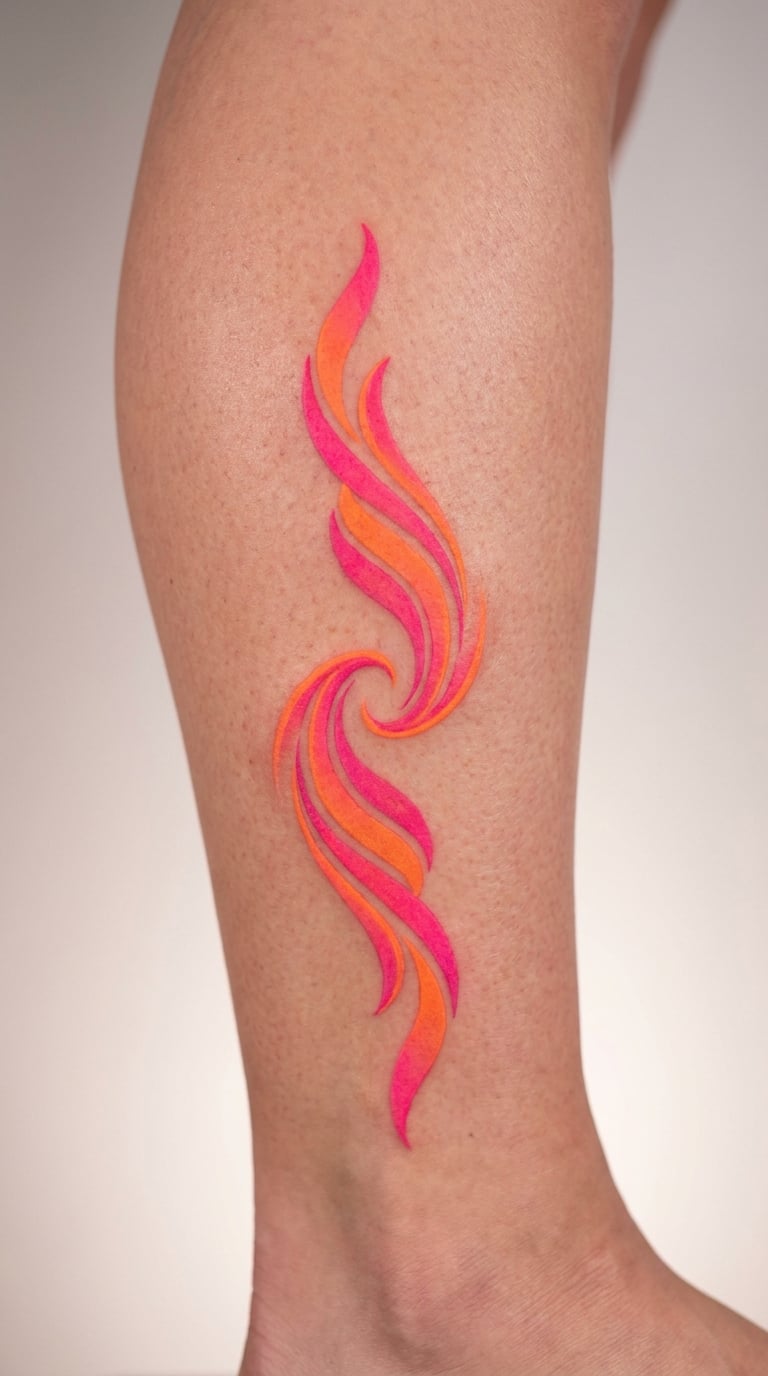
A neon abstract ribbon drops the knot entirely. It is a ribbon suggested by a pair of hard-edged colour bands that cross and pull apart, in electric shades that do not exist in fabric. It is the loudest idea here and the hardest to make look accidental.
It suits people building a colourful collection where a small black bow would disappear between the pieces.
Placement: calf, outer arm, ribs, or the back of the shoulder. Size: 4 inch (10 cm) long. Style: abstract, colour.
Pain: medium. Calves sting more than most areas because the muscle is dense and the ink is layered heavily for saturation. Ageing note: bright saturated colour is what you see fade first, so expect the neon to mellow toward a deeper tone rather than disappearing.
Make it yours: run the bands in two colours only. Three or more read as busy at a distance and lose the shape in a photograph.
9. Bow With Pearl Detail
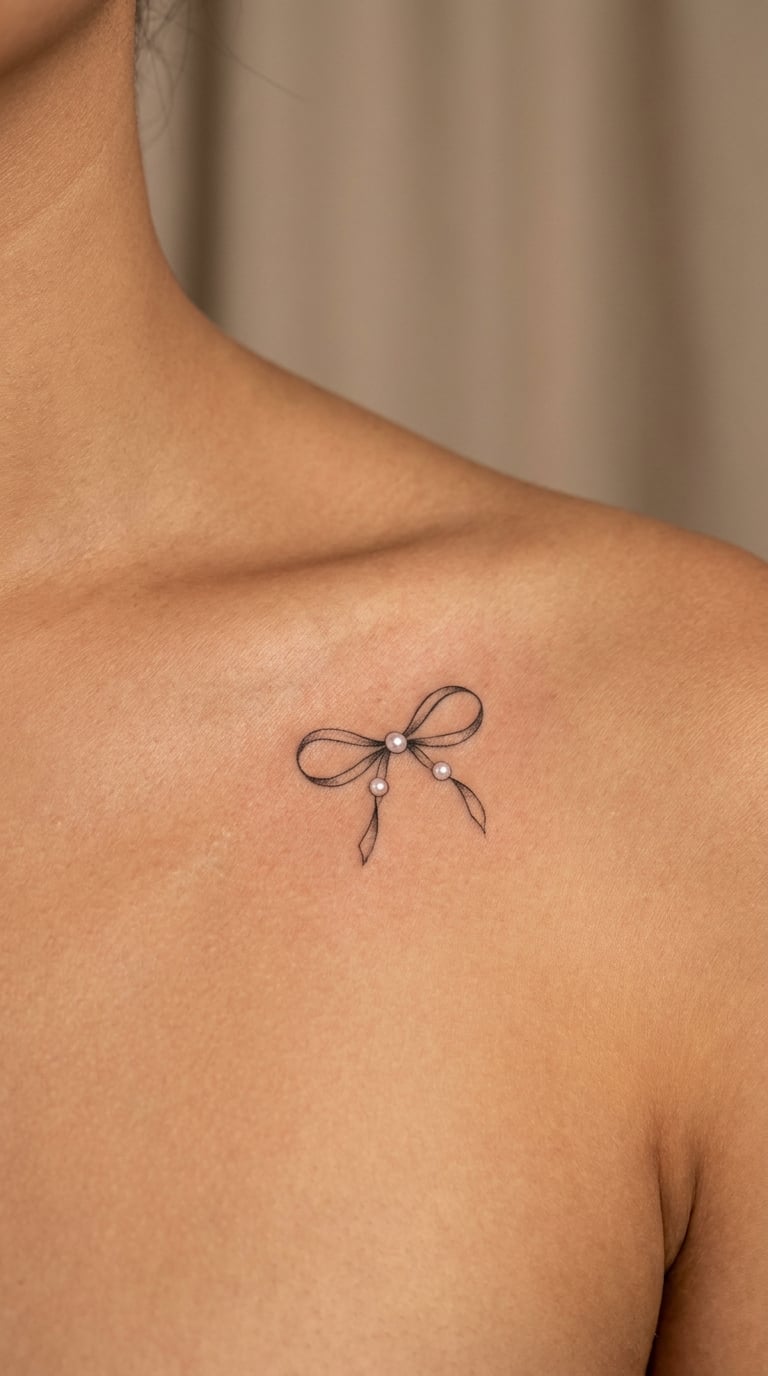
A bow with pearl detail is a fine-line bow finished with two or three small shaded spheres, each one built from a few dots of soft grey. The pearls are the only part of the design with any shading, which is exactly why the whole thing looks finished.
It reads refined and a little formal, and it is a good choice when you want something decorative that does not read as a cause symbol.
Placement: collarbone, behind the ear, inner wrist, or the knuckle of a finger. Size: 1.5 inch (4 cm) wide. Style: fine line with light shading.
Pain: medium. The collarbone is a bony ridge and the dots mean repeated taps in one small area, which is more uncomfortable than the outline alone. Ageing note: pearl dots are the smallest elements on the design, so they blur into soft grey blobs within several years.
Make it yours: use a single pearl hung from the knot on a short line, like a charm, rather than a row across the bow.
10. Geometric Ribbon Loop
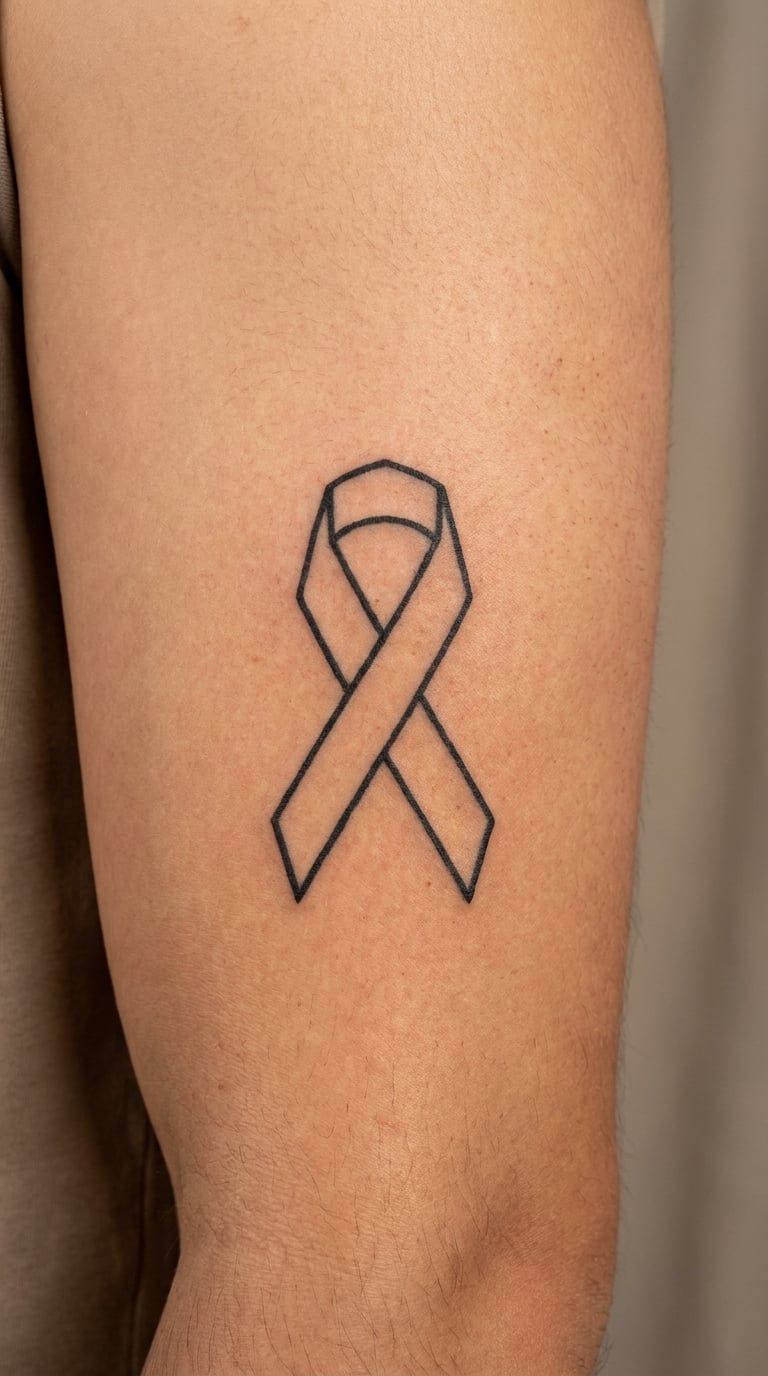
A geometric ribbon loop is built from straight segments and repeating angles that only just resolve into a ribbon if you step back. Faceted folds replace the soft shading, and the tails become chevrons. It is a graphic design that happens to be a bow.
It suits people who dislike organic florals and want something that looks like drawing rather than decoration.
Placement: upper arm, forearm, calf, or the inner thigh. Size: 2.5 inch (6 cm) wide. Style: geometric, blackwork.
Pain: medium. Angular line work has more hard stops than a smooth curve, and the forearm is a place you will notice every stop. Ageing note: hard geometry holds its edges well, though a filled-in facet will fade lighter than an outline, so treat the two as different weights.
Make it yours: repeat the same angle through the tails so the whole design is built from one shape, and keep the count low.
11. Ribbon with Rose Outline
A ribbon with a rose outline is a fine-line ribbon that loops once around a single rose drawn in outline, with no leaves and no stem. The crossing point is placed so the rose sits inside the loop rather than beside it, which is what makes the two read as one design.
It is the most classic pairing on this list, and it draws heavily on ideas for tattoo ideas that symbolize love for family when it is worn as a tribute.
Placement: outer hand, forearm, upper arm, or behind the ear. Size: 3 inch (7.5 cm) long. Style: fine-line floral.
Pain: high on the hand and sternum, medium elsewhere. Hands and ribs are the two spots most people describe as the worst. Ageing note: the rose spiral has the tightest line work in the whole design, and inner spirals are the first part to go soft.
Make it yours: skip the stem and leaves entirely, which reduces the piece of the design that fades fastest and keeps the silhouette clean.
12. Western Scroll Ribbon
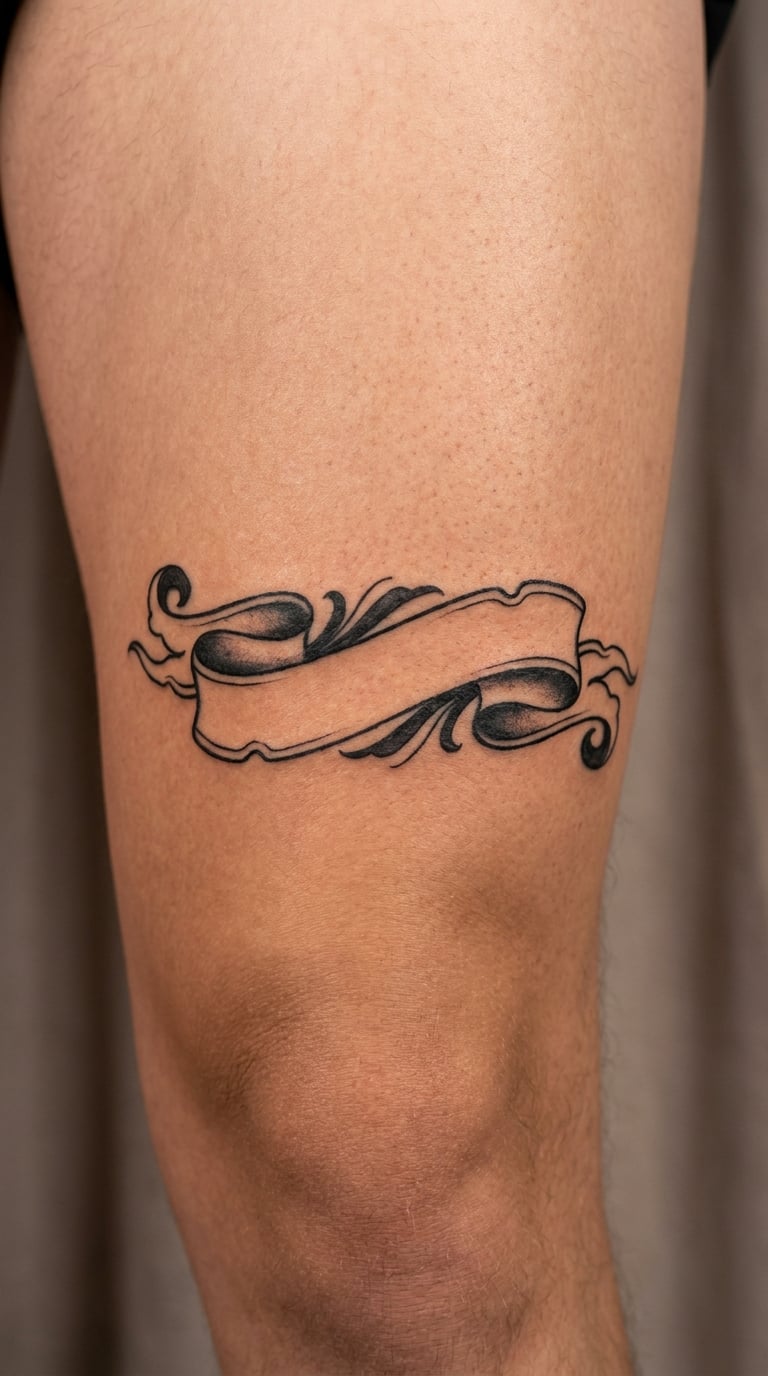
A Western scroll ribbon is a banner with rolled, curled ends and a slightly concave face, drawn with a heavy outline and optional muted colour. It belongs to the old tattoo tradition of banners carrying a name, a trade or a place, so it has more visual weight than a decorative bow.
It suits anyone who likes vintage tattooing and wants a motif that looks like it belongs next to other traditional pieces.
Placement: thigh, upper arm, calf, or across the back of the shoulder. Size: 4 inch (10 cm) wide. Style: traditional, Western.
Pain: medium. The line work is thick and the fill is optional, so the deciding factor is how much of it ends up shaded. Ageing note: heavy outlines are durable, which is a good reason to pick this over a fine-line banner if you want it to last a decade without a refresh.
Make it yours: leave the banner face blank and add the lettering in a second session once the shape has healed and settled.
13. Gradient Ombre Ribbon
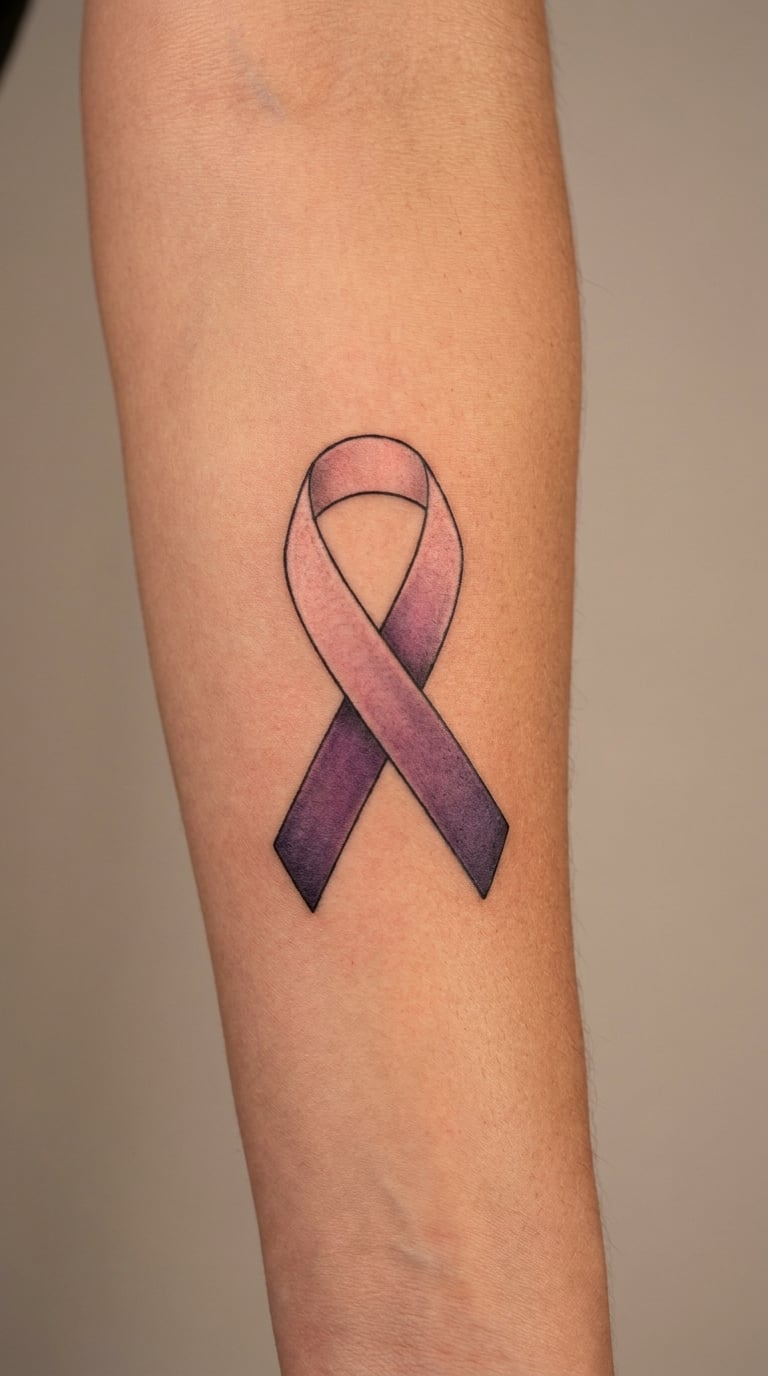
A gradient ombre ribbon runs from one colour to another along its length, usually light at the knot and deep in the tails, with no hard line where the two meet. It is the easiest ribbon style to make look bigger than it is, because the colour does the scaling.
It works when you want a soft, dreamy look that still holds a clear shape on a curved surface like the inner arm.
Placement: inner arm, calf, ribs, or the shoulder blade. Size: 3 inch (7.5 cm) long. Style: colour gradient, ombre.
Pain: low. The inner arm is close to the surface and the shading is light, so this is usually a comfortable one. Ageing note: gradients fade unevenly, and the pale end goes first, so over time the ribbon will read darker and more saturated at the tails than it did on day one.
Make it yours: pick two colours with a personal link, such as the birthstones of two children or the colours of a team you grew up watching.
14. Ribbon-Wrapped Heart
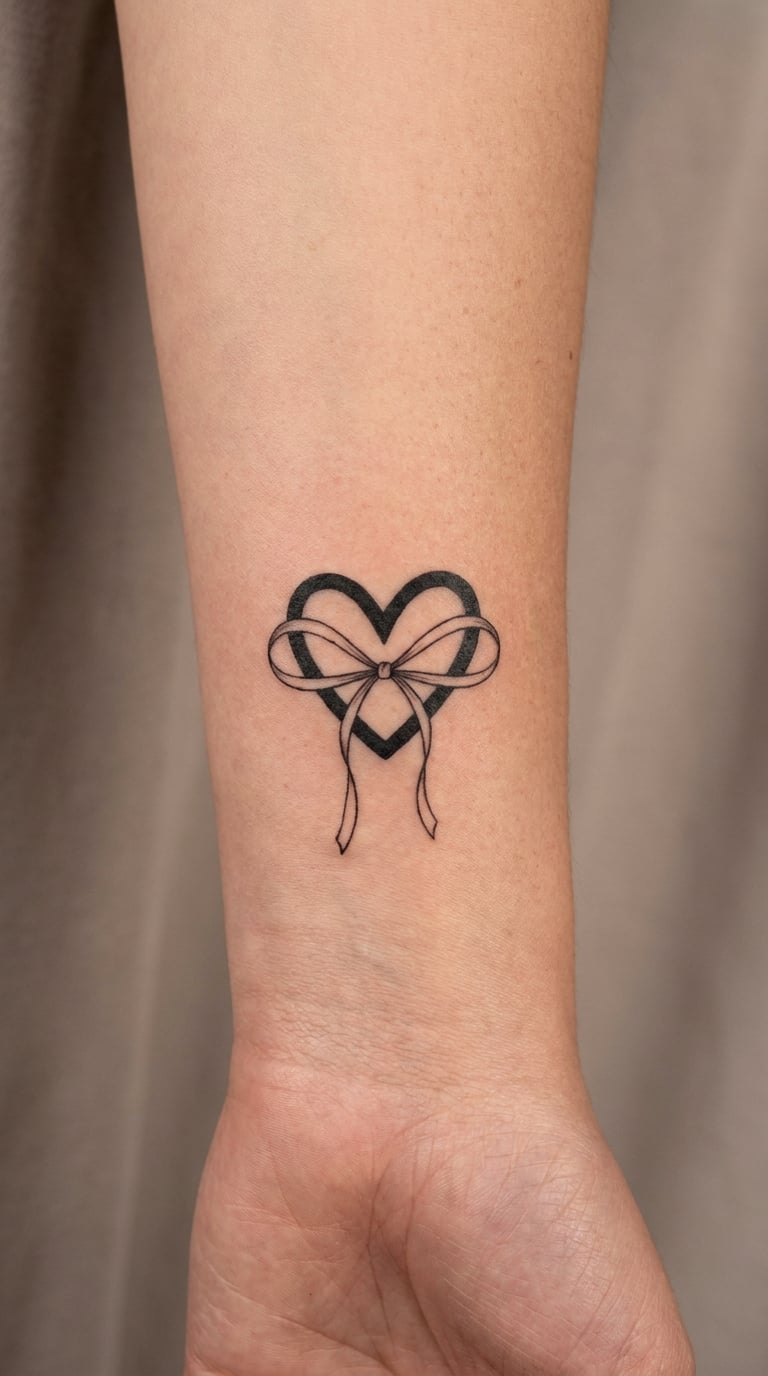
A ribbon-wrapped heart is a small heart encircled once by a ribbon that crosses at the top and trails off to one side. Because everyone already recognises a heart, the ribbon only has to do the decorative work, and the pair stays legible at wrist size.
Most people wear it for a person rather than an idea, which is why it is one of the most requested designs in this format.
Placement: wrist, inner forearm, ankle, or behind the ear. Size: 2 inch (5 cm) tall. Style: fine line.
Pain: low at the wrist, and higher if you move it to the ribs or the chest. Ageing note: a two-inch heart is at the lower end of what holds detail, so ask for a bolder outline than feels necessary on paper.
Make it yours: have the ribbon trail toward the hand as if untying, which turns a static heart into something in motion.
15. Floral Ribbon Wreath
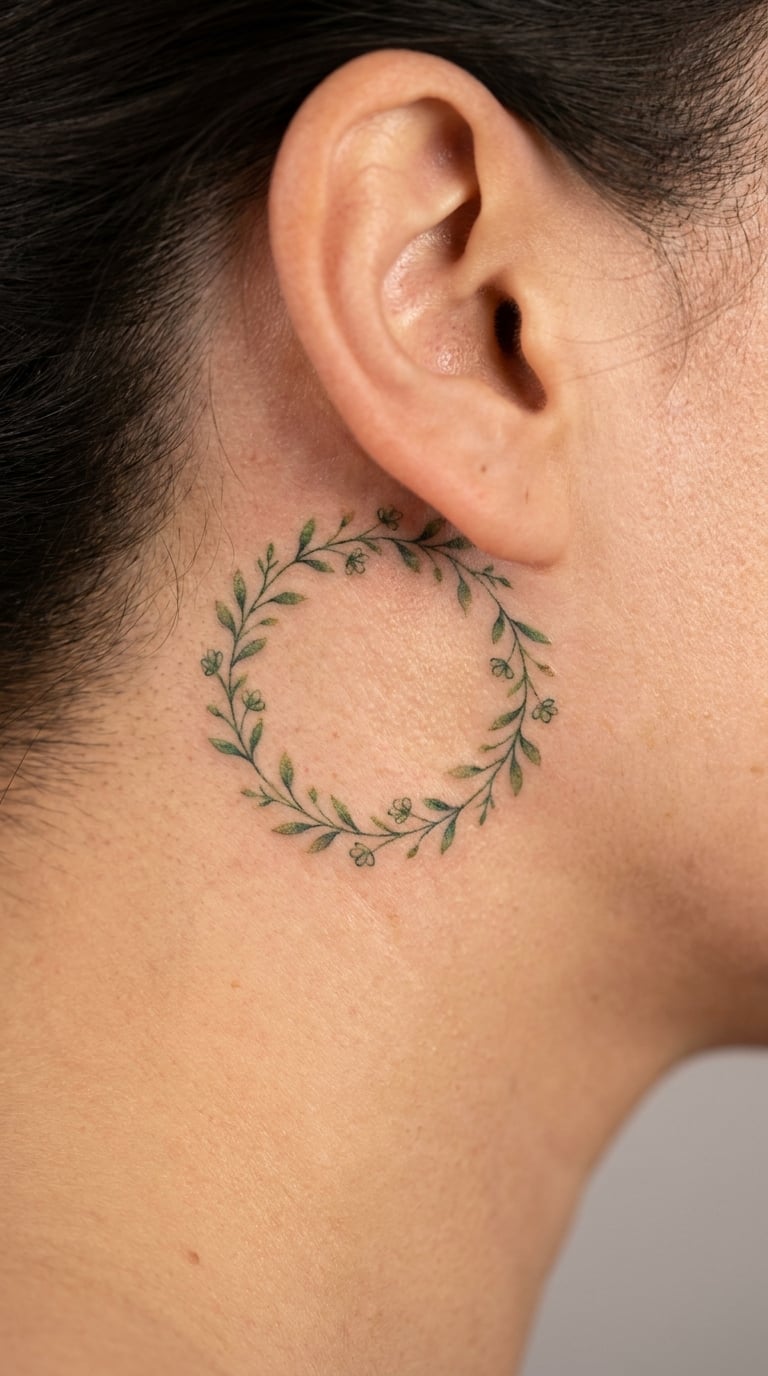
A floral ribbon wreath closes the loop into a circle of small leaves and occasional blossoms, so the ribbon is read as a garland rather than a bow. The circle is the point: it works behind the ear, on a shoulder, or anywhere a round mark balances a shape you already have.
It is a good second piece, because the circle gives you a fixed boundary to fit around an existing tattoo instead of competing with it.
Placement: behind the ear, shoulder, upper back, or the outer upper arm. Size: 3 inch (7.5 cm) wide. Style: botanical, fine line.
Pain: low behind the ear, medium on the shoulder and upper back. The back of the shoulder is a spot people underestimate. Ageing note: small leaves inside a closed circle tend to blur toward each other first, so keep the leaf count modest.
Make it yours: leave one section of the circle open rather than closing it, and hide the gap under existing hair or behind the ear itself.
16. Minimal Ribbon Initial
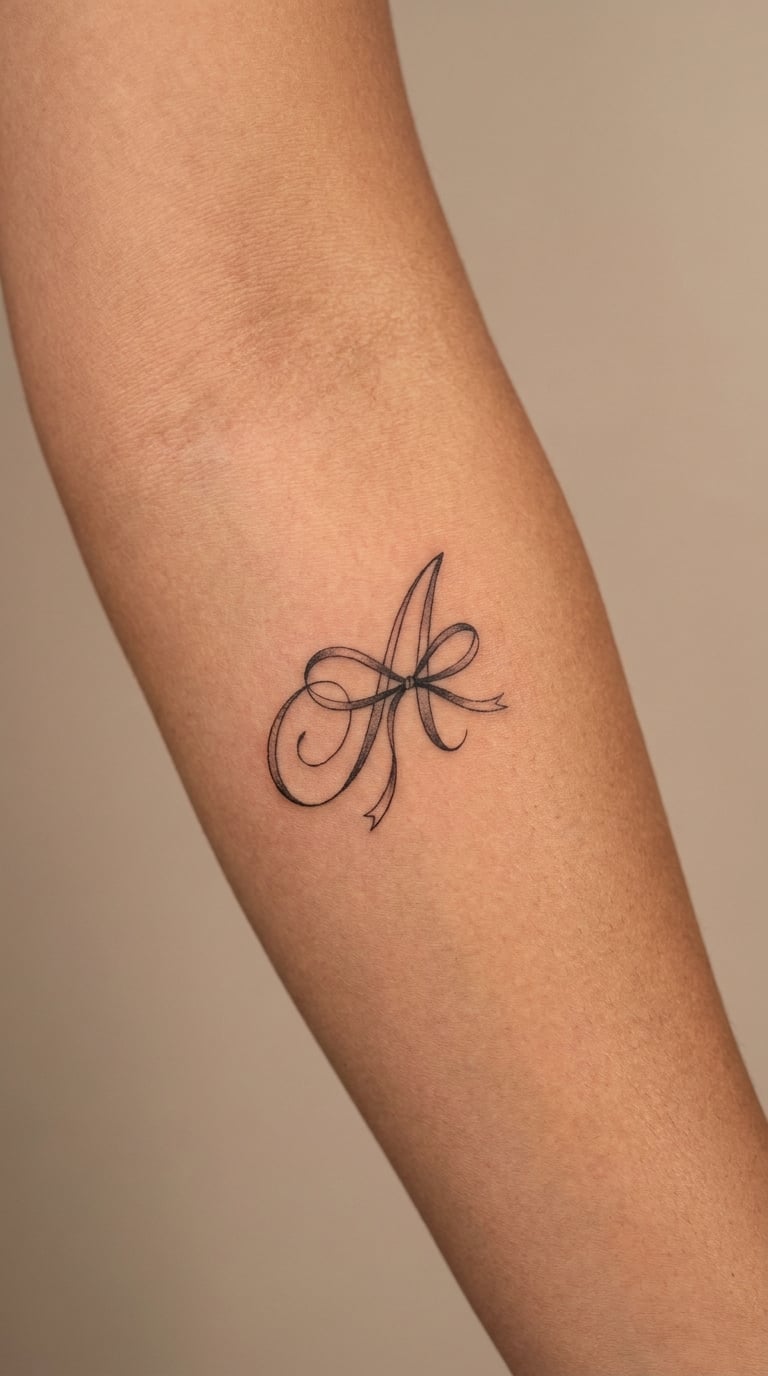
A ribbon initial is a single capital letter set in a clean line weight, with a narrow ribbon passing behind the letter and one tail dropping below it. The ribbon never crosses the letter itself, so the name stays readable at a glance.
It is the most customisable design here, because the letter is doing the personalising and the ribbon is only framing.
Placement: forearm, inner arm, behind the ear, or the back of the hand. Size: 2 inch (5 cm) tall. Style: fine-line lettering.
Pain: low on the forearm, medium to high on the hand and ribs. Ageing note: letterforms depend on a small number of hairlines, so pick a letter with few counters, because every enclosed space is a place the line can fill in and blur.
Make it yours: bring the ribbon tail down to meet the baseline of the letter, which makes the two look designed together rather than stacked.
17. Traditional Banner Ribbon
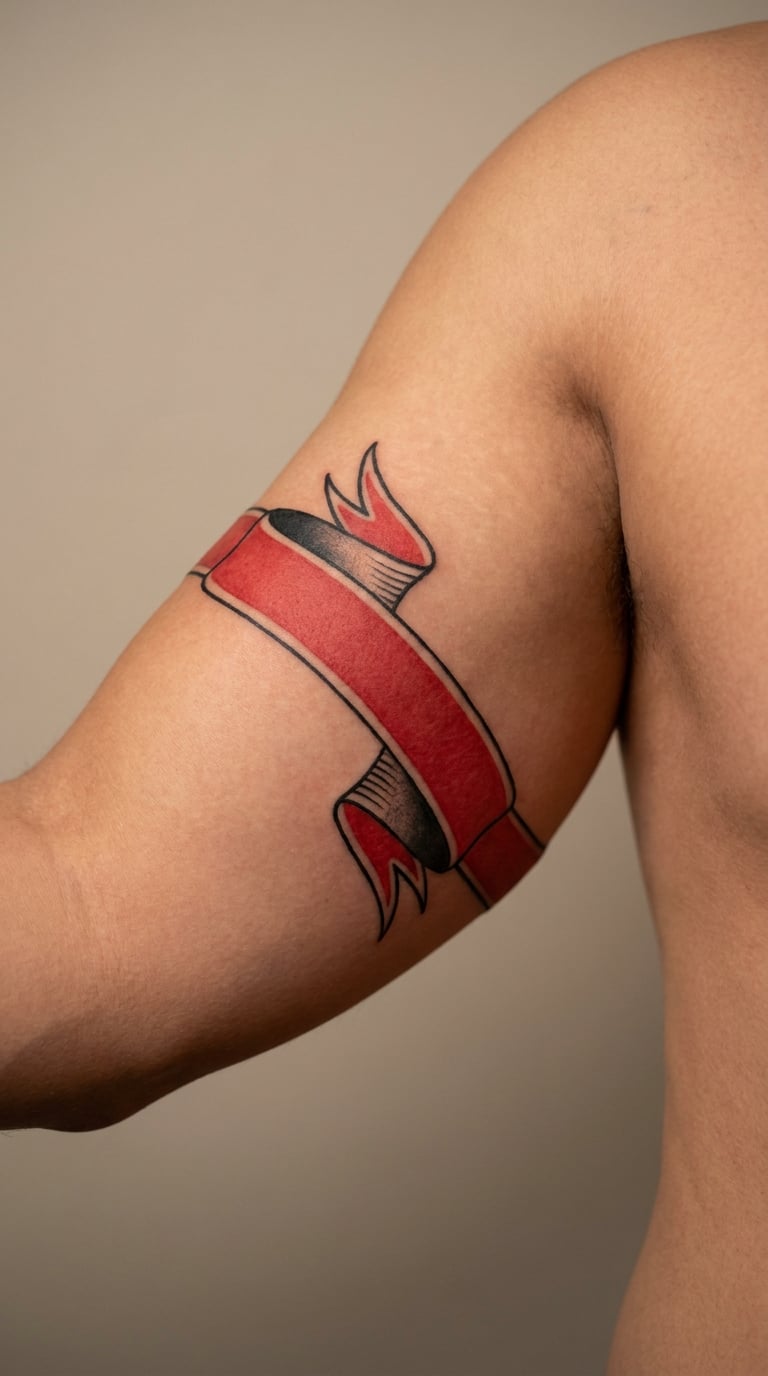
A traditional banner ribbon is a flat band with folded, notched ends and a slight curve along the top and bottom edges, filled in one bold colour with black shading in the folds. It reads as a label, which is why it usually carries lettering, a date or nothing at all.
It suits someone who wants a timeless motif they can add to later, since a blank banner leaves room for a word you are not ready to wear yet.
Placement: upper arm, thigh, calf, or across the back of the shoulder. Size: 3 inch (7.5 cm) wide. Style: traditional.
Pain: medium. A filled banner means laying down a solid colour, which is a lot of work over a broad area. Ageing note: the red fill will fade toward orange while the black shading holds, so the contrast softens even when both parts are technically intact.
Make it yours: have the artist draw the banner with a slightly deeper fold on one side, so the shape still reads three-dimensional once the colour lightens.
18. Dotwork Ribbon Spiral
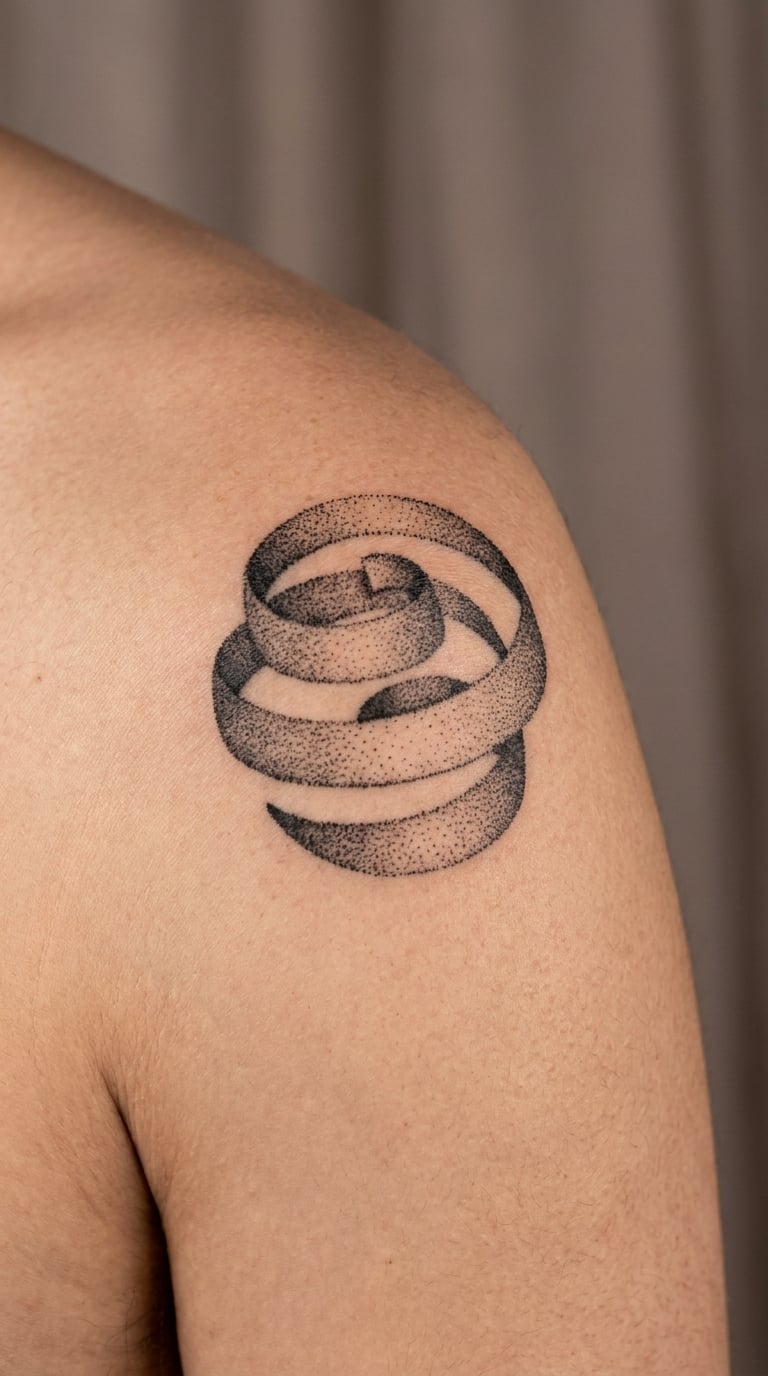
A dotwork ribbon spiral builds the ribbon entirely from dots of varying size, tight where the form turns and looser where it flattens, with no line work anywhere. The eye resolves the ribbon from the density of the dots rather than from an outline, which is what makes it look like fine lace.
It is the quiet show-off option, and it pairs well with matching dotwork elsewhere.
Placement: shoulder, upper arm, forearm, or the upper back. Size: 2 inch (5 cm) across. Style: dotwork.
Pain: medium, and the most stop-and-start sensation of any style on this list because the needle keeps lifting. Ageing note: individual dots soften and spread over the years, so a dotwork ribbon eventually reads as a shaded shape rather than separate dots. That is normal, but ask for slightly larger dots than the reference photo if you care.
Make it yours: ask for the dot size to graduate along the tails, tight near the knot and opening out, so the ribbon has direction.
19. Ribbon with Small Star
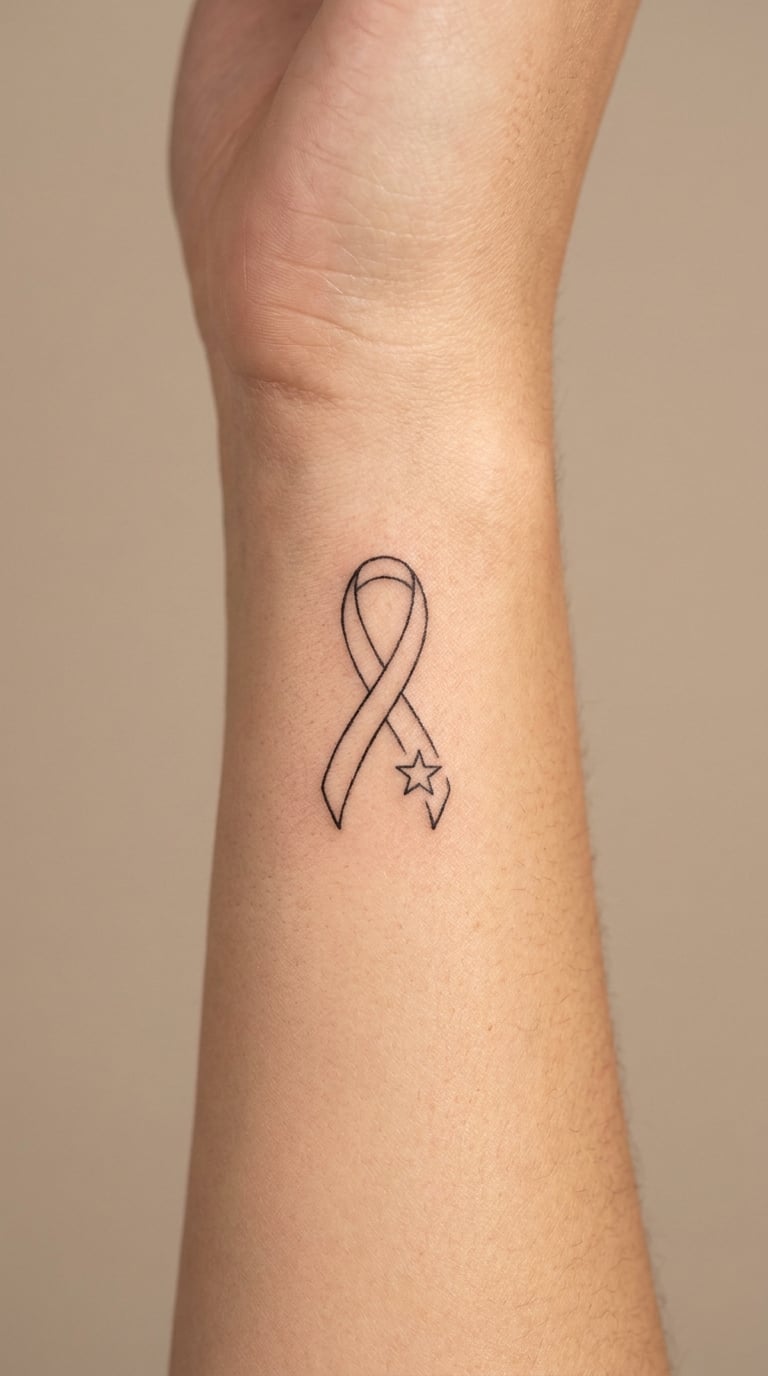
A ribbon with a small star is a fine-line ribbon with a single outlined star sitting just off one tail, no more. One secondary element is the whole trick. Two stars turns it into a motif about stars; one star turns it into a small personal note that people read as a wish or a person.
It is the design most often picked by someone who wants meaning without a symbol anyone can look up.
Placement: inner wrist, inner arm, ankle, or behind the ear. Size: 2 inch (5 cm) long for the ribbon, with the star under a quarter inch. Style: fine line.
Pain: low. The whole piece is fast. Ageing note: a star that small is the element most likely to end up an indistinct mark, so place it somewhere with less rubbing, like the inner arm rather than the wrist crease.
Make it yours: tuck the star so the ribbon tail passes behind it, which makes the two look like they arrived together.
20. Gothic Blackwork Ribbon
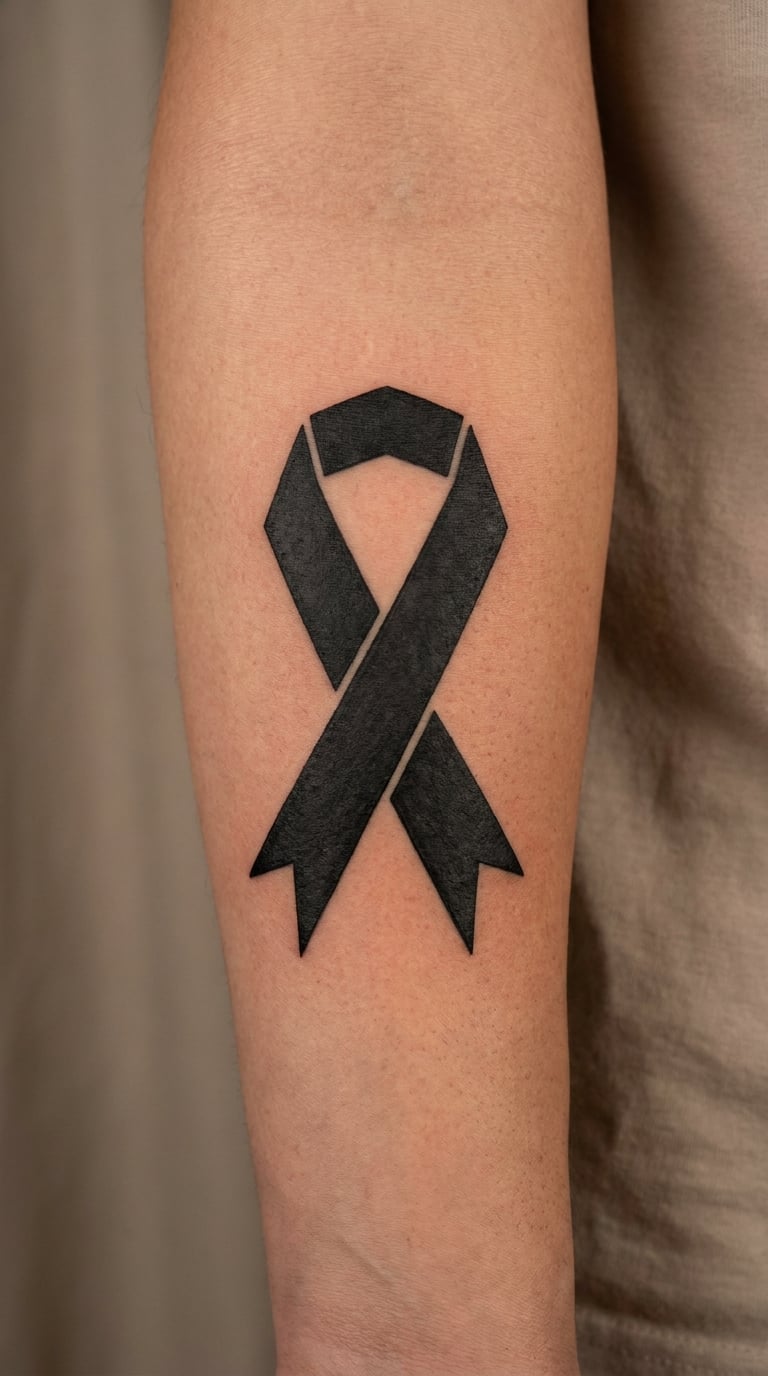
A Gothic blackwork ribbon is all shadow: sharp folds, near-solid black areas, and a few restrained ornamental spikes or thorn shapes where the tails end. The result is heavy and architectural, and it behaves more like a piece of blackwork art that happens to be a ribbon.
It suits people who want a dark palette and a design that holds attention without colour.
Placement: forearm, upper arm, thigh, or the back of the calf. Size: 4 inch (10 cm) long. Style: blackwork, ornamental.
Pain: medium. Large black areas need many passes and the forearm fatigues before the piece is finished. Ageing note: this is one of the few ribbon styles that improves with age, because solid black that lightens still reads as a clear, heavy shape.
Make it yours: keep the ornament to a single thorned tail, and let the other tail stay plain so the design has somewhere to rest.
21. Pastel Rainbow Ribbon
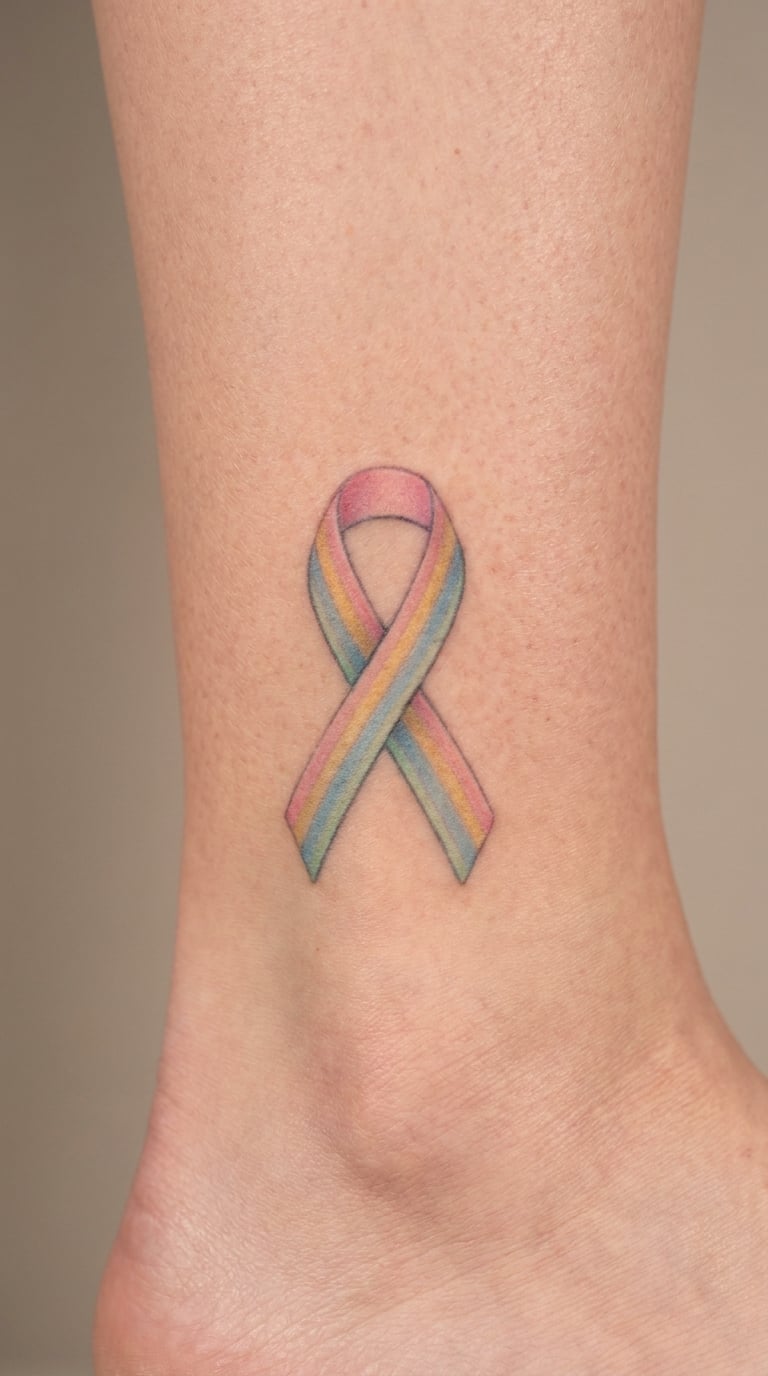
A pastel rainbow ribbon is a series of soft translucent colour bands in pinks, yellows, blues and greens, each one lightened with white so the palette reads airy. The bow is small and the colour does the growing, which is unusual for this motif.
It suits a first colour tattoo and a summer book of work, where the piece needs to be cheerful without shouting across a room.
Placement: ankle, calf, inner forearm, or the shoulder. Size: 2.5 inch (6 cm) long. Style: illustrative colour.
Pain: medium on the ankle, low on the inner forearm. Ankles are bony and the skin moves a lot over the bone. Ageing note: pastels have less pigment in them to start with, so they are the first colours to look tired. Ask for them to be mixed a shade stronger than the reference.
Make it yours: narrow it to three colours from something personal instead of the full spectrum, which keeps the pale palette from washing out.
22. Micro Fine-Line Ribbon
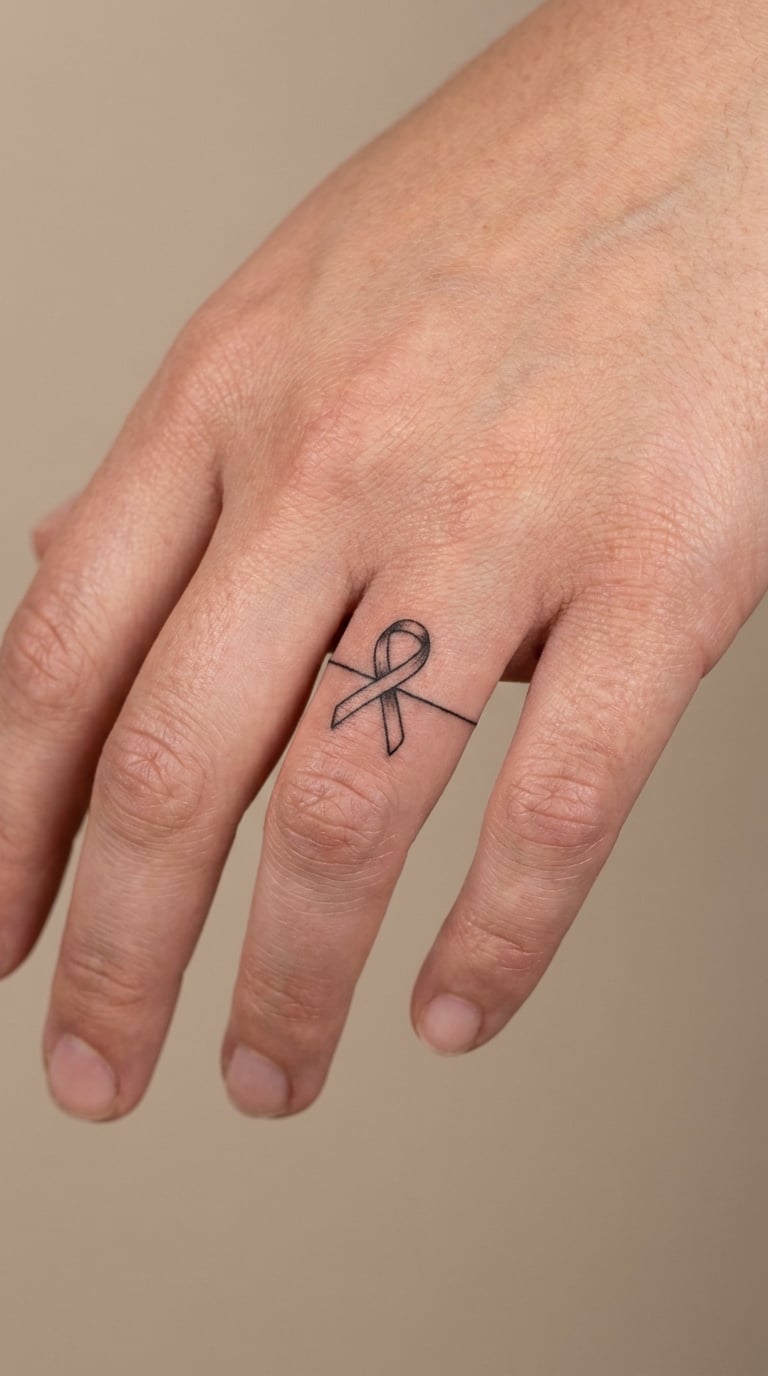
A micro fine-line ribbon is the same bow reduced to almost nothing: a knot, two loops and two short tails, done in one needle width inside three quarters of an inch. There is no shading and no detail to negotiate, which is what makes micro work at this scale.
It is the natural choice for a minimalist collection, where several small marks spaced along the body read as a set.
Placement: finger near the knuckle, inner wrist, behind the ear, or the ankle. Size: 0.75 inch (2 cm) wide. Style: micro fine line.
Pain: high on the finger, low anywhere else. Fingers have a dense supply of nerves against the bone, so it is sharp and short rather than long and dull. Ageing note: fingers get washed, stretched and knocked constantly, and micro fine line on hands is the fastest-fading category in tattooing. Expect a refresh every couple of years.
Make it yours: add a second micro ribbon an inch or two away, or on the other hand, and let the pair be the design.
23. Ribbon with Musical Note
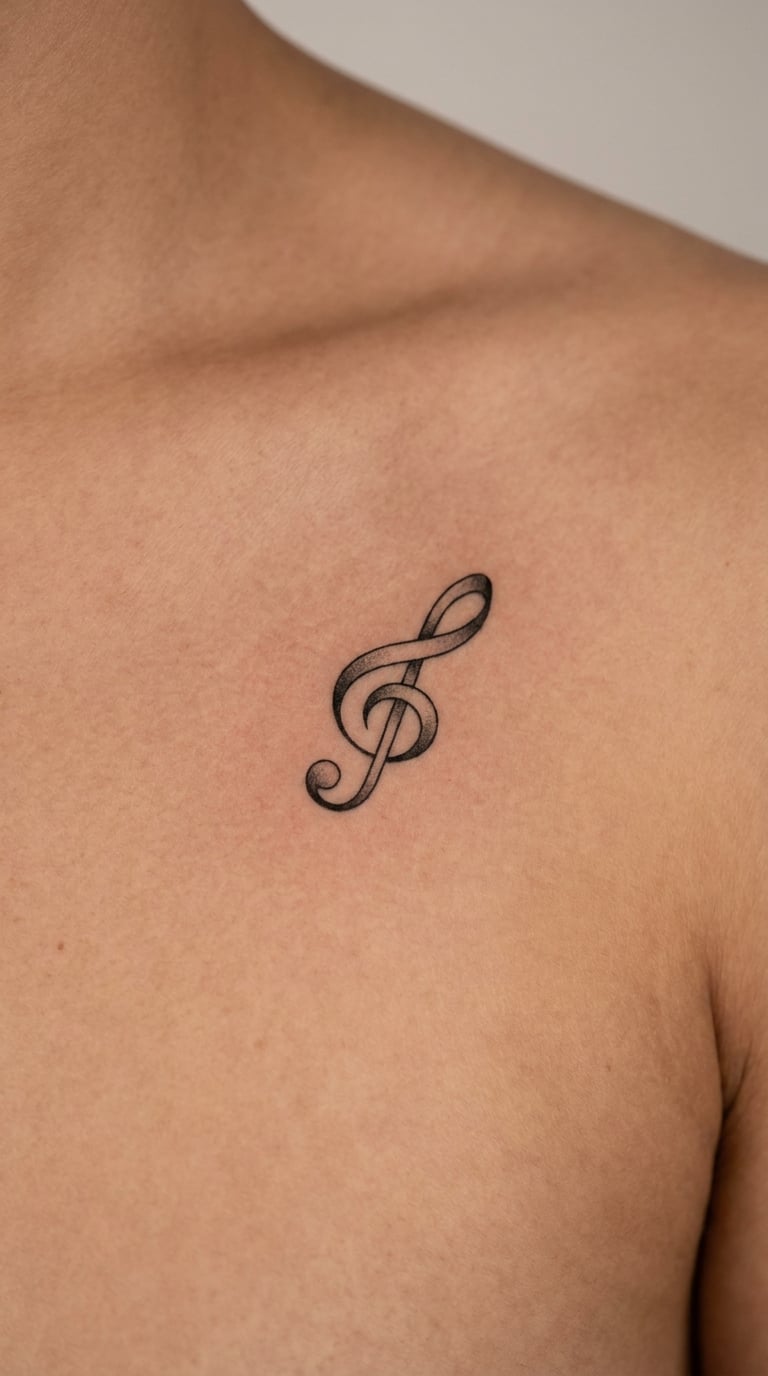
A ribbon with a musical note is a loose fine-line ribbon with a single note near one tail, or a short run of two or three notes following the curve. It is a personal marker for playing music or for someone who plays, and most wearers explain it in their own words rather than through any fixed symbol.
It also works well with more than one note if the spacing follows the ribbon, so the two elements share one rhythm.
Placement: upper chest, inner forearm, wrist, or behind the ear. Size: 2 inch (5 cm) wide. Style: fine line.
Pain: medium on the chest, low on the forearm. The sternum area presses the skin against bone and hurts more than people expect. Ageing note: note heads are small filled shapes, and they are the part that softens first, so ask for slightly larger heads than the drawing suggests.
Make it yours: have the notes follow the ribbon’s curve rather than sit in a straight line, so they read as one flowing shape.
24. Large Painterly Ribbon
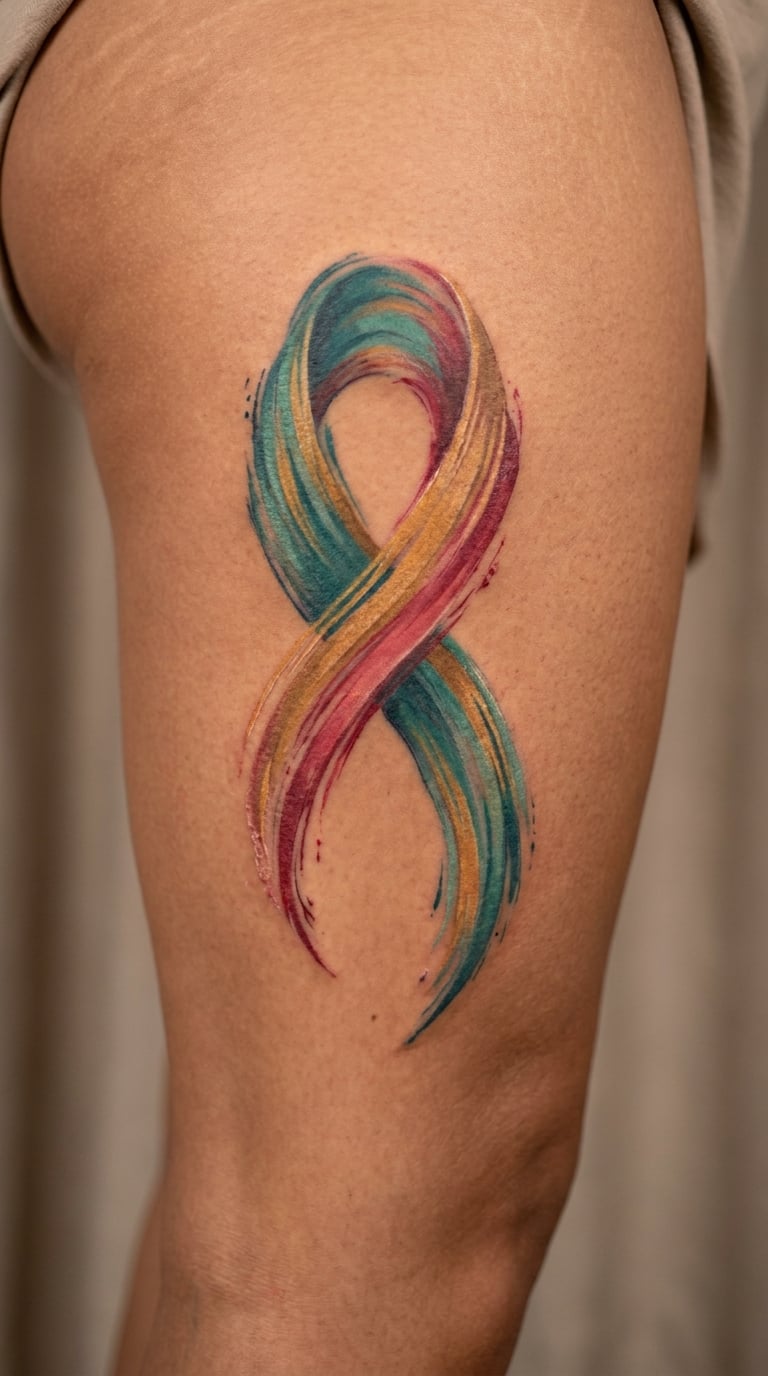
A large painterly ribbon is loose, layered colour with edges that were never fully resolved, built from a few strong hues rather than a gradient. At six inches or more the ribbon can twist, overlap itself and trail off the composition, which is what gives it scale without needing a second subject.
It suits someone who wants a statement piece, and someone whose collection has outgrown dainty additions.
Placement: outer thigh, upper arm, back, or across the ribs for a wrap. Size: 6 inch (15 cm) long or larger. Style: painterly, abstract colour.
Pain: low relative to the size, because the thigh and upper arm are forgiving, but expect a multi-hour session. Ageing note: loose layered colour settles into a softer, more unified image over time rather than degrading, so this is a good style to commit to early.
Make it yours: limit it to three colours and let the artist keep the edges open, so the piece looks painted rather than outlined.
How to Choose the Right Design
Most people pick a ribbon by the pin, then regret the scale. Work through these six filters in order and the right one tends to announce itself.
- Match the style to the body part. Micro fine line dies on fingers, solid blackwork looks heavy on a small wrist, and a painterly wash needs a flat surface. Thighs, upper arms and ribs have room; wrists, fingers and behind the ear do not.
- Size for the area, not the reference photo. A design that reads across a forearm collapses to a smudge on a finger. A reverse translation is just as common: a tiny pin on a large frame becomes a faint nothing in real life.
- Decide how much detail you want to maintain. Outline-only tails are the least durable version of this motif, and the ones tattooers most often have to outline and fill in later. A solid or shaded ribbon holds its shape far better, at the cost of weight.
- Check contrast against your skin and your other work. Pale pastel ribbons disappear on fair skin that reddens easily, and a grey ribbon on already-grey skin needs a darker value than you would pick on paper.
- If the colour carries a cause, get the shade exact. People in the community treat a wrong shade as a real problem, because a ribbon in the wrong colour can misrepresent the thing it stands for. Bring a physical reference or a clear swatch rather than describing it from memory.
- Leave room to add to it later. A lot of wearers come back wanting a name, a date, a second ribbon or wings. Ask your artist to design the current version so a later addition can sit beside it instead of on top of it.
Cost and Session Time
Most US shops charge by the hour, and a small ribbon is often booked at a flat shop minimum rather than as a timed session. Expect a simple one-line bow to sit at the low end of a typical rate, and expect a large painterly ribbon to run well into the hundreds for a multi-hour session.
Three rough brackets, if you want a number to plan around before you send a reference. A small ribbon under two inches usually runs $80 to $150 and is often priced at the shop minimum, which means you are paying for the appointment rather than the design. A medium ribbon of three to four inches typically takes one to two hours and lands around $200 to $400, depending on the hourly rate. A large piece above five inches is a proper session, sometimes split across two appointments, and artists who work in painterly or blackwork styles often quote a flat price rather than time it, so expect roughly $600 to $1,500 in that bracket.
Shop minimums matter more than people expect. Many studios put a floor on every appointment, often $150 to $300, so a design that takes fifteen minutes can cost the same as one that takes forty, and it is worth asking about the minimum before you book. City matters just as much: rates in a high-cost city can be a multiple of a small town’s, and the fairest comparison is between studios near you, not between two cities.
Aftercare Basics
- Follow your artist’s aftercare instructions first. They know what they put in your skin, and their advice overrides anything general you read here.
- Wash it gently, twice a day, with unscented soap and clean water. Pat it dry with something clean rather than rubbing it, and let plain air do most of the work.
- Protect it from sun for the first couple of weeks. Fresh ink is at its most vulnerable, and early sun exposure is the fastest way to lose saturation from a colour ribbon.
- Wear loose clothing over the area for a few days. A tight waistband, a collar or a watchband rubbing a fresh inner-arm ribbon is the most common cause of an early scab.
- Skip the unneeded treatments. Avoid soaking, swimming pools and hot tubs while the skin is still sealing, and leave heavy healing ointments to your artist, since some of them hold heat in.
- Watch it rather than poke it. Light flaking and a dull look are normal in the first weeks. If something looks genuinely wrong, contact the studio rather than treating it at home.
Frequently Asked Questions
What does a ribbon tattoo mean?
A ribbon tattoo usually means one of two things. In colour, it is an awareness ribbon tied to a specific cause, such as a pink ribbon for breast cancer awareness or a teal ribbon for organ and tissue donation, and the exact shade matters. In black, it is usually decorative or personal: a gift ribbon, a remembrance, a hope symbol, or a bow with no fixed meaning at all. Most wearers explain their own reason rather than borrowing a universal one.
Are ribbon tattoos suitable for small placements?
Yes, and the ribbon is one of the few motifs that works at very small sizes, because the loop and two tails stay readable when almost nothing else does. Micro fine-line ribbons under one inch work on fingers and behind the ear. The trade-off is durability. Single-needle lines on hands and fingers are the fastest-fading category in tattooing, so a slightly heavier line or a solid filled ribbon ages better.
Where is the best place for a ribbon tattoo?
The inner forearm is the most common choice, and the closest match to what you see in the image results, followed by the wrist, collarbone and behind the ear. Larger designs suit the thigh, calf, shoulder or a rib wrap. Avoid putting a fine-line ribbon straight over a joint, since skin flexes there daily and will thin the line faster than anywhere else on the body.
Do fine-line ribbon tattoos fade quickly?
They can, and the ribbon tails are usually the first part to go. Outline-only tails blur and grey within a few years, and micro work on fingers fades faster still. Solid or shaded ribbons hold their shape much better and are easier to restore at a touch-up, since a faded brush-style ribbon can simply be outlined and filled as a solid ribbon later. Ask for a slightly heavier line weight than the reference photo shows.
How much does a ribbon tattoo cost?
A small ribbon under two inches is often charged at the shop minimum, while a medium three or four inch design usually takes one to two hours at the studio’s hourly rate. Large painterly or blackwork pieces above five inches can run into the many hundreds and may need a second appointment. Rates vary widely by city, so compare studios near you rather than reading national averages.
Can a ribbon tattoo be personalized with a name or date?
Yes, and it is one of the easiest motifs to customise. A date or name can sit inside a banner, trail from a ribbon tail in fine lettering, tuck into the fold of a knotted ribbon, or be added later as a second session. If you might want it later, ask your artist to design the current version with space beside it, so a later addition sits next to the original instead of covering it.
If this is your first tattoo, the minimal single-line bow or the micro fine-line ribbon are the lowest-commitment ways in, and both are quick sessions. If you already have a few pieces and want the next one to add something, go for a solid blackwork curling ribbon or a gradient ombre ribbon, which reads as a deliberate change of direction rather than another small addition.
Whichever you choose, bring your own reference and check the artist’s portfolio for ribbon work specifically. Symmetry and even line weight are what people judge a ribbon on, and a shop that has done plenty of them will show you that in their own healed work, not just in a flash drawing. Good ideas to narrow your search: tattoo ideas that symbolize freedom and 20 matching tattoo ideas for roommates, if you are thinking beyond a one-off.