
25 Soundwave and Name Tattoo Ideas: Best Personal 2026
A soundwave and name tattoo puts two things in one piece of ink: the visual shape of a recording and the name of the person it came from. A baby’s first words, a wedding vow, a chorus your brother hummed for years, a dog’s bark, a parent’s voice you miss. The waveform is the picture of the sound, and the lettering tells you whose it was.
They work because the pairing is readable at a glance. A waveform alone is a curiosity; a name alone is a signature. Together they say something specific, and they give you room to be subtle or bold depending on how much line work you want. Below are 25 soundwave and name tattoo ideas, each with a realistic placement, size and pain note, so you can walk into a consultation knowing roughly what you are asking for.
25 Soundwave and Name Tattoo Ideas: Quick Guide
| Idea | Style | Best placement | Size | Pain |
|---|---|---|---|---|
| 1. Name along a heartbeat wave | Fine line | Inner forearm | 3 to 5 in (8 to 13 cm) | Low to medium |
| 2. Handwritten name wrapping a voiceprint | Fine line script | Outer upper arm | 4 to 6 in (10 to 15 cm) | Medium |
| 3. Birth-month name under a minimal waveform | Fine line, mixed casing | Wrist | 2 to 3 in (5 to 8 cm) | Medium |
| 4. Vertical name beside an equalizer line | Geometric line | Inner forearm | 3 to 4 in (8 to 10 cm) | Low |
| 5. Child’s name formed from a flowing wave | Fine line script | Side rib | 4 to 7 in (10 to 18 cm) | High |
| 6. Name beneath concentric sound ripples | Bold blackwork | Upper chest | 4 to 6 in (10 to 15 cm) | Medium |
| 7. Infinity wave with two initials | Fine line | Wrist | 1.5 to 2.5 in (4 to 6 cm) | Medium |
| 8. Blackwork voiceprint portrait with a name | Blackwork and grey | Outer forearm | 6 to 9 in (15 to 23 cm) | High |
| 9. Name inside a guitar-riff wave | Bold line | Upper arm | 4 to 6 in (10 to 15 cm) | Medium |
| 10. Watercolour name with an audio bloom | Watercolour | Shoulder or collarbone | 4 to 7 in (10 to 18 cm) | Medium |
| 11. Coordinates beneath a song wave | Fine line, serif caps | Inner bicep | 3 to 4 in (8 to 10 cm) | Medium |
| 12. Name in a speech-bubble wave | Fine line with outline | Forearm | 3 to 4 in (8 to 10 cm) | Low to medium |
| 13. Split wave with a name through the centre | Symmetrical line | Outer forearm | 5 to 7 in (13 to 18 cm) | Medium |
| 14. Minimal name and one recording line | Single-needle minimal | Behind the ear | 1.5 to 2.5 in (4 to 6 cm) | Low |
| 15. Dotwork sound field around a name | Dotwork | Upper back | 4 to 6 in (10 to 15 cm) | Medium |
| 16. Stencil-edge name cut by a wave | Raw edge and black fill | Upper arm | 4 to 6 in (10 to 15 cm) | Medium |
| 17. Two matching audio lines, two names | Fine line pair | Matching wrists | 3 to 4 in (8 to 10 cm) | Medium |
| 18. Name engraved in a microphone grille | Micro fine line | Side of index finger | Under 1.5 in (4 cm) | High |
| 19. Retro broadcast wave with a signature name | Traditional line, two inks | Calf or outer thigh | 4 to 6 in (10 to 15 cm) | Medium |
| 20. Vertical podcast wave beside a host name | Vertical line | Inner forearm | 4 to 6 in (10 to 15 cm) | Medium |
| 21. Name in the negative space of a wave | Blackwork with knockout | Outer arm | 4 to 6 in (10 to 15 cm) | Medium |
| 22. Heartbeat line ending in a name | Fine line | Side of chest or wrist | 4 to 6 in (10 to 15 cm) | Medium |
| 23. Soundwave mountain with a name at the peak | Minimal fine-line art | Outer calf | 4 to 7 in (10 to 18 cm) | Low to medium |
| 24. Circular audio halo around a name | Fine line, radial | Upper back or calf | 4 to 6 in (10 to 15 cm) | Medium |
| 25. Voiceprint and name sleeve panel | Layered blackwork | Outer upper arm | 8 to 12 in (20 to 30 cm) | High |
1. Fine-Line Name Along a Heartbeat Wave
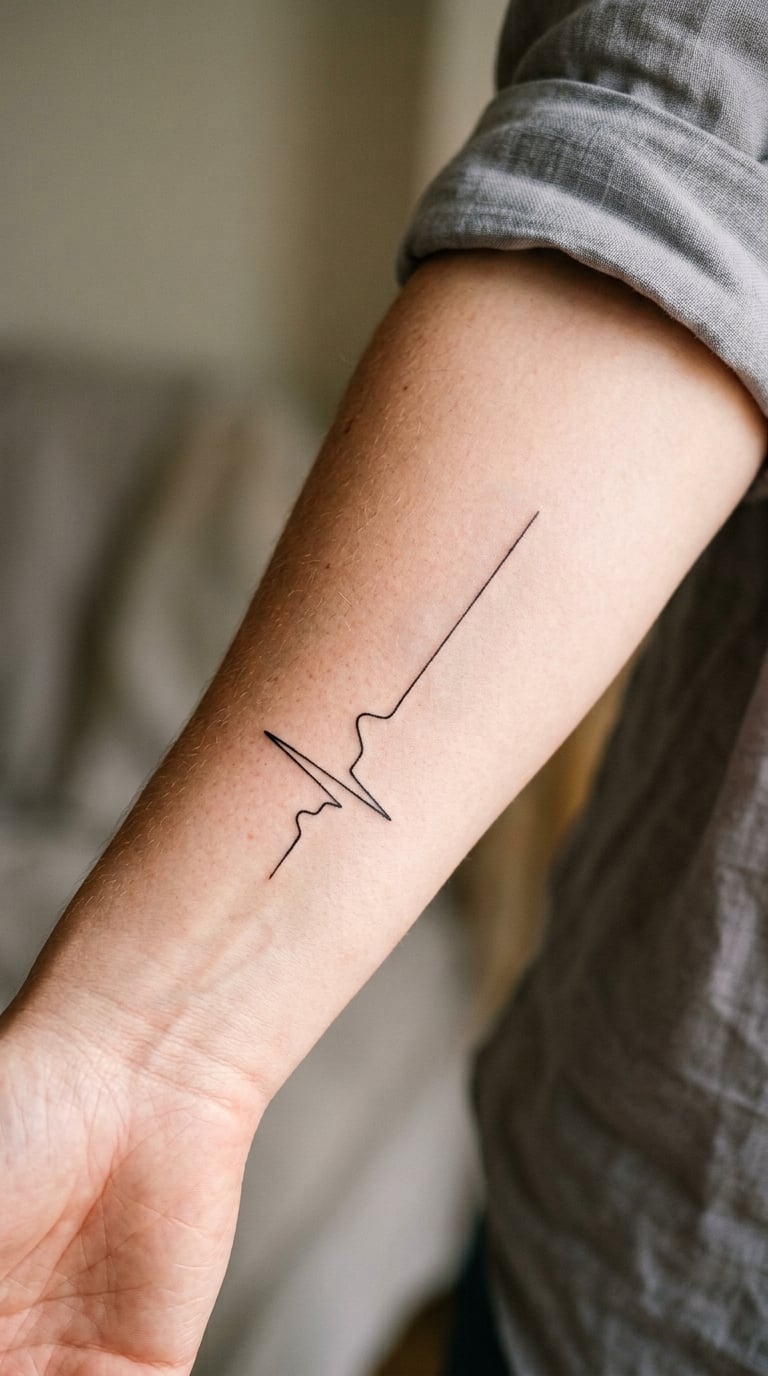
This is the one most people picture when they hear the phrase. A single heartbeat-style trace runs across the forearm and the name follows the same rise and fall, so the letters sit in the wave instead of beside it. The line stays thin, one needle, no fill.
Heartbeat waveforms get chosen for a first tattoo, a pregnancy, a birth, or a person whose arrival changed the shape of your life. There is no fixed meaning, so the reason stays yours.
Placement: inner forearm, ribs, or the soft area just above the wrist. Size: 3 to 5 in (8 to 13 cm) across. Style: fine line. Pain: low to medium on the inner arm, and the line will soften over the years if you keep it too thin, so ask for a slightly heavier pass than feels necessary. Make it yours: use the trace from a monitoring visit rather than a stock heartbeat line, and set it in a simple serif rather than script.
2. Handwritten Name Wrapping a Voiceprint
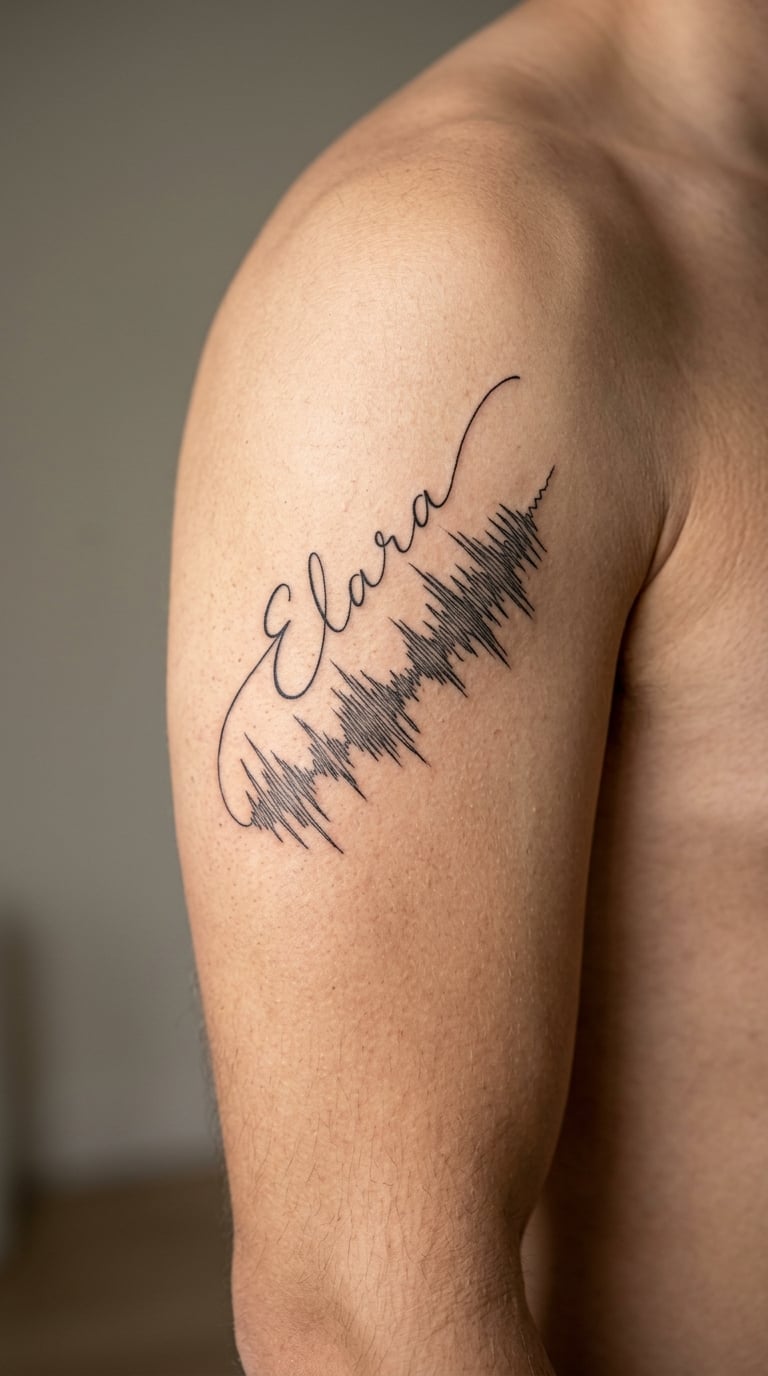
Here the voiceprint is the loose one, the irregular fingerprint-style curve of a voice rather than a music waveform, and the name bends around its outer edge. Restrained black linework, nothing filled in, the two elements touching but not merging.
People use this for a birth story, a tribute, or a phrase somebody actually said out loud. Because the curve is irregular, it suits a voice that was personal rather than a song everybody recognises.
Placement: outer upper arm or the back of the shoulder, where a curved composition has room to breathe. Size: 4 to 6 in (10 to 15 cm). Style: fine line script. Pain: medium on the upper arm, and irregular curves collect ink differently across the shoulder, so the outer edge can patch and need a second look. Make it yours: have the artist trace your own name by hand once, then use that drawing as the lettering reference.
3. Birth-Month Name Under a Minimal Waveform
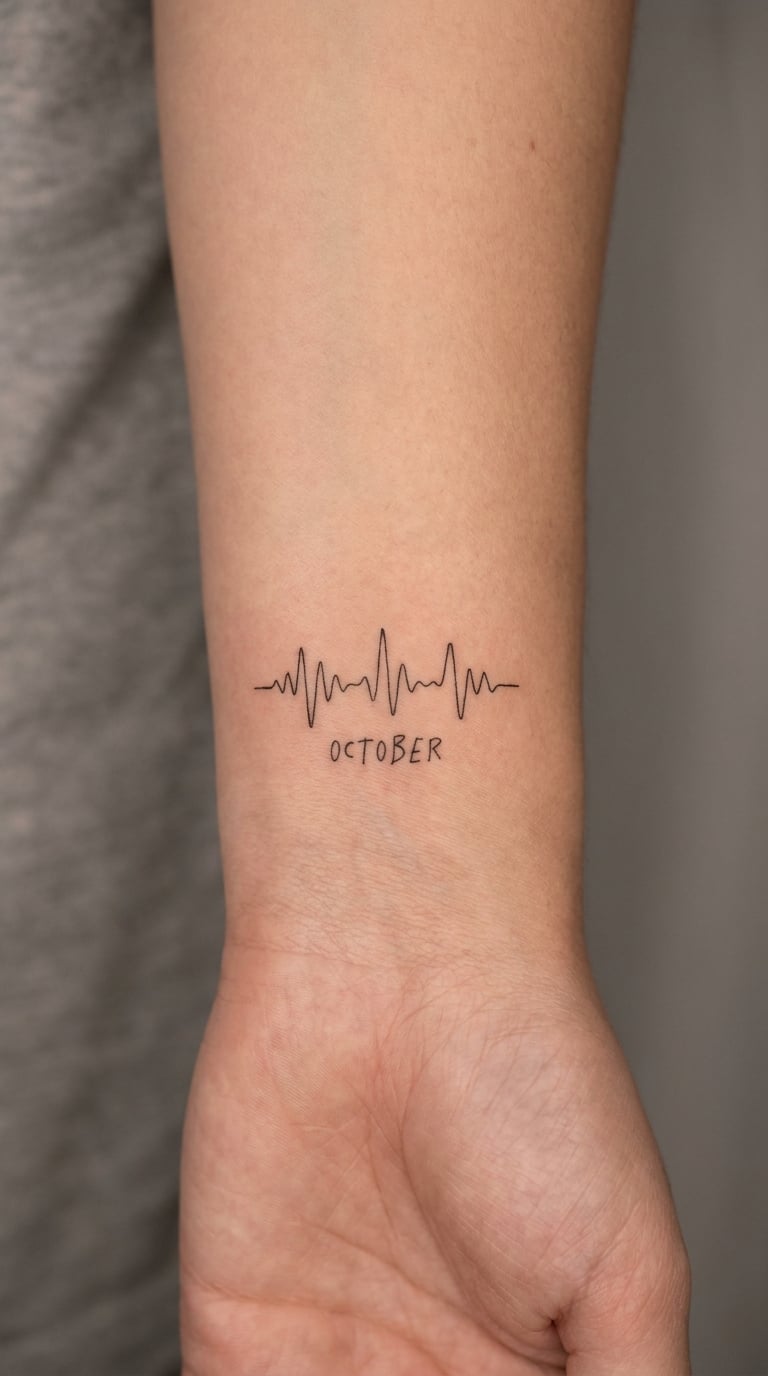
A compact design with three layers: a short waveform across the top, the name beneath it, then the birth month in tiny modern lettering. Everything sits on one baseline so it reads as a block, not a pile.
The month is the part people add later and regret rushing, because the smallest element is the first to blur. Letters under about a quarter inch tall lose their inner counters within a few years, especially in a warm bath or long sun exposure.
Placement: inner wrist, just above the wrist bone. Size: 2 to 3 in (5 to 8 cm) wide. Style: fine line, mixed casing. Pain: medium on the wrist, and inner wrist skin stretches with every movement, so a thin line can stretch and thin out faster than the same line on the upper arm. Make it yours: drop the month to two letters rather than cramming the full word in, or move the month under the name and give it more width.
4. Vertical Name Beside an Equalizer Line
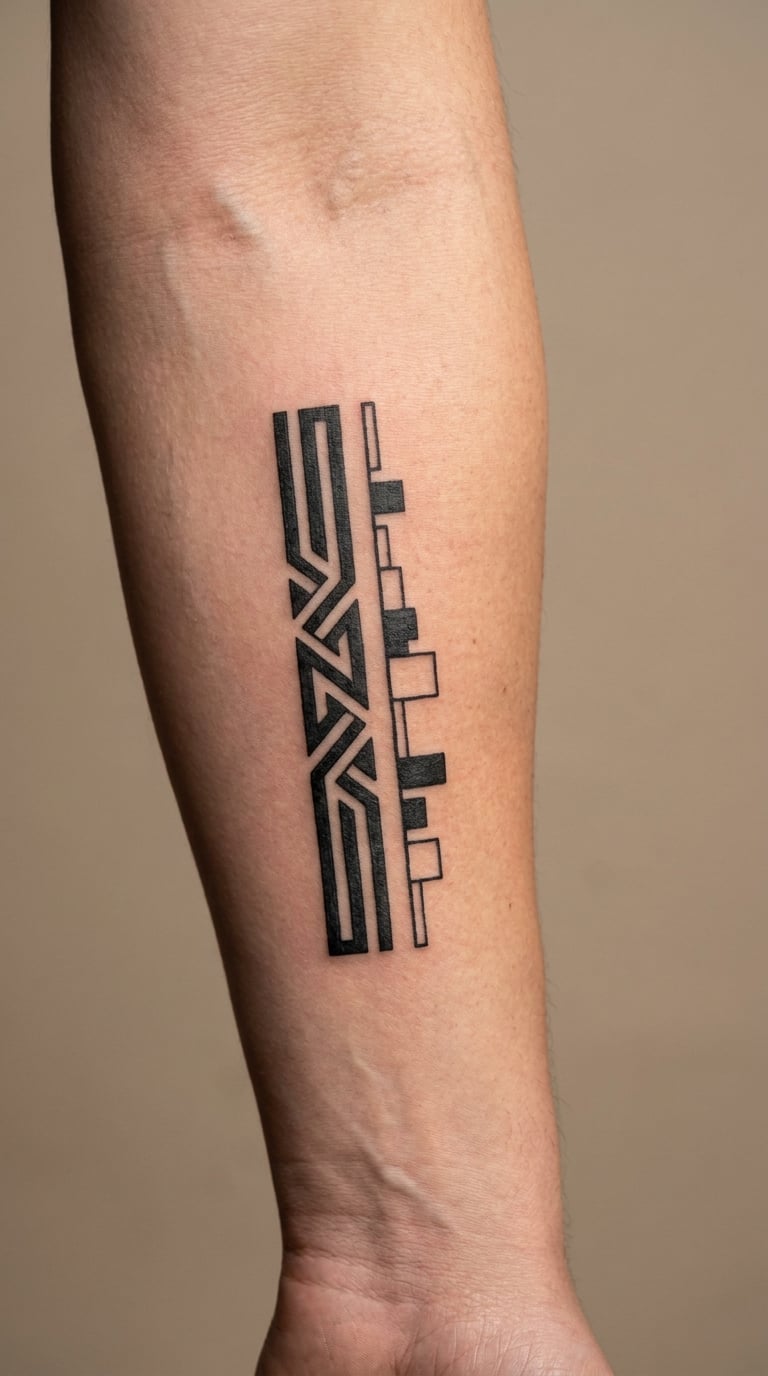
Clean and almost architectural. The name runs top to bottom in a narrow sans serif, and beside it a straight line of equalizer bars of varying height gives the piece its rhythm. No curves to fuss over, which makes it forgiving for first-tattoo lettering.
This one tends to be chosen for the look rather than the story, though the bar heights can be arranged to mirror the actual clip if you want the meaning to be there too.
Placement: inner forearm, running along the bone. Size: 3 to 4 in (8 to 10 cm) tall. Style: geometric line. Pain: low, and one of the faster sittings in this list. Make it yours: set the bar heights from your own recording and cap the tallest bar so the name stays the focus.
5. Child’s Name Formed from a Flowing Wave
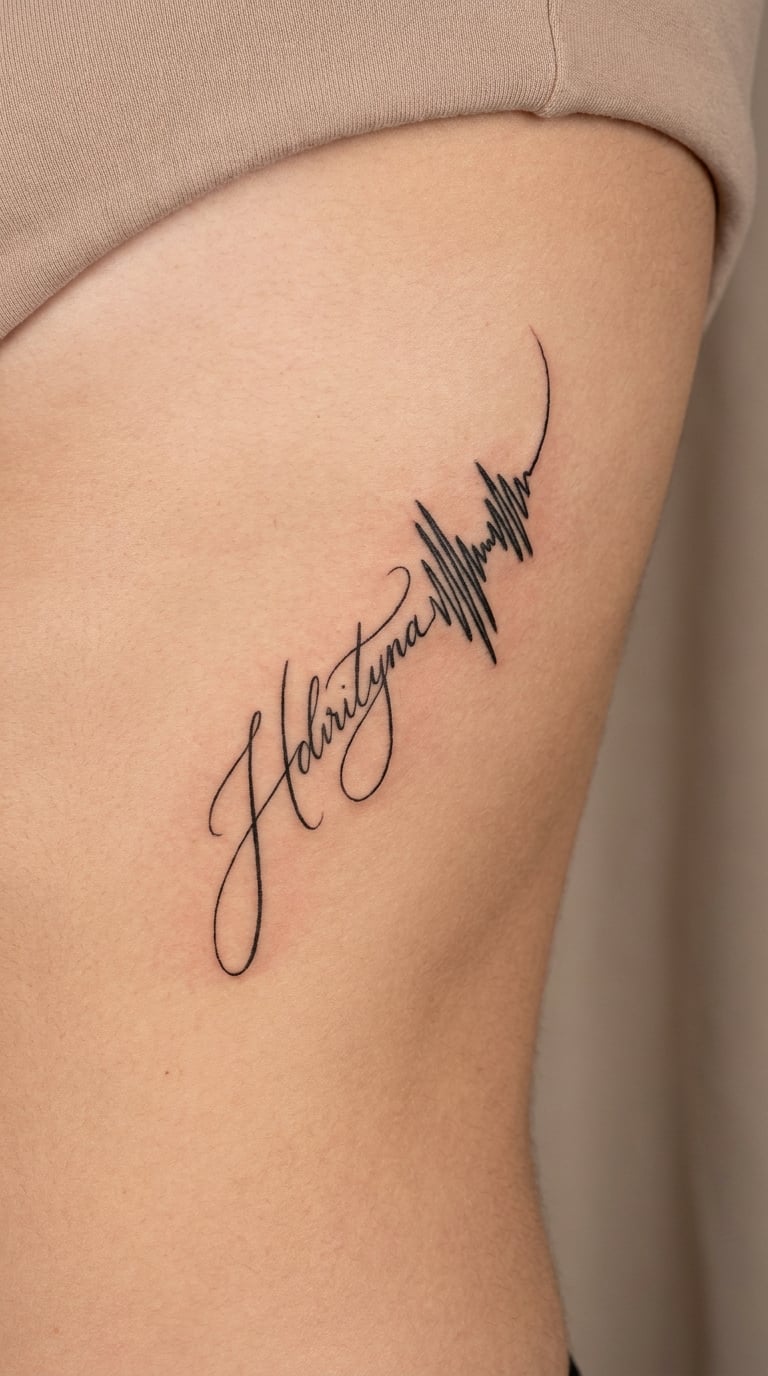
The name does not sit on the wave, it becomes part of it. Each letter rises on a crest and drops into a trough, so the whole word reads as one continuous movement. It takes a steady hand and a script with enough open counters to survive the distortion.
Longer names work better here than short ones, because the wave gives the letters somewhere to go. Single-letter names usually need a different layout.
Placement: side ribs, or the outer thigh if ribs are off the table. Size: 4 to 7 in (10 to 18 cm). Style: fine line script. Pain: high on the ribs, and rib skin is bony and thin, so the first pass on each letter can feel sharper than the shaded areas around it. Make it yours: give the artist a printed copy of the name and let them hand-tune the spacing letter by letter rather than stretching a font.
6. Name Beneath Concentric Sound Ripples
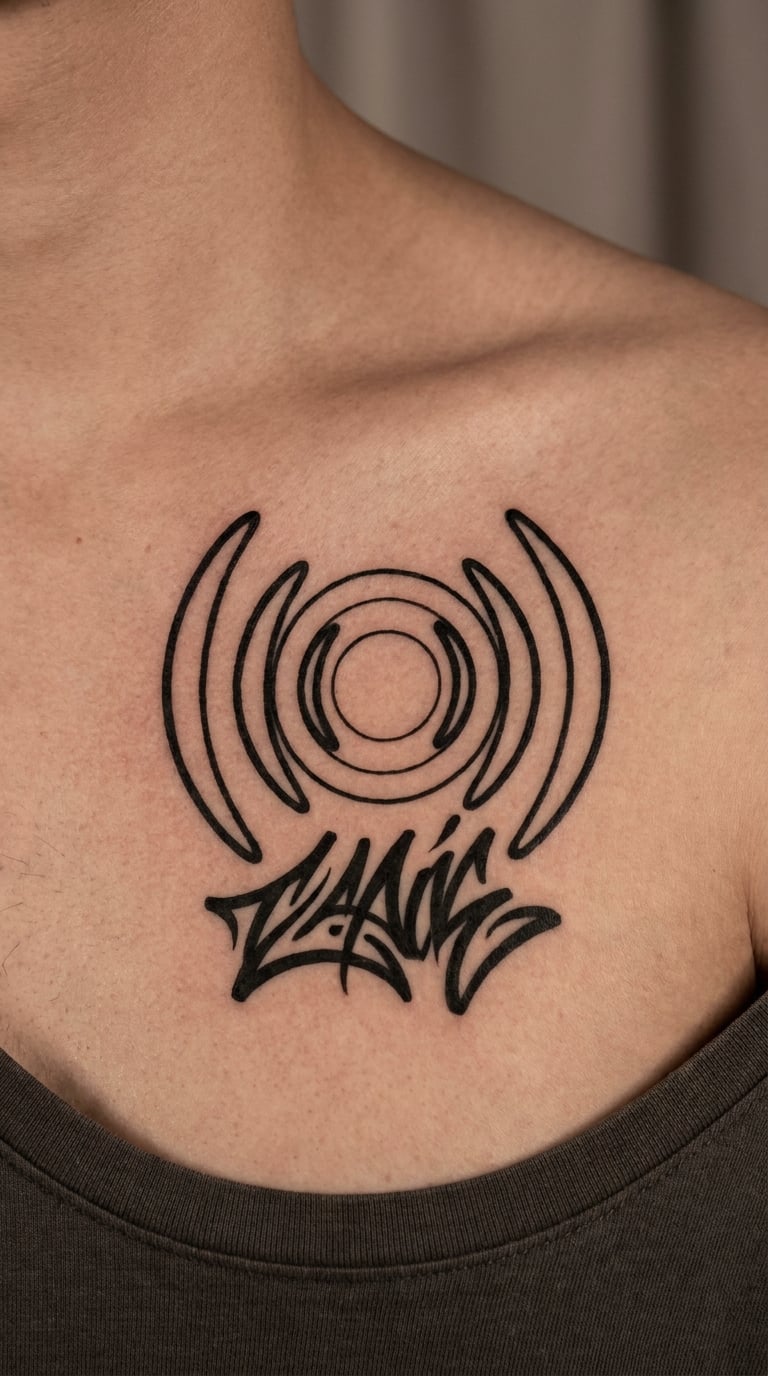
Three expanding rings, evenly spaced, with a bold name centred below them. The waveform is implied rather than drawn, which keeps the piece calm. The open space between the rings is doing the work here.
Rings read as a voice carrying outward, so this suits something you want to feel like it travelled. It also sits well as a first piece on the chest because the composition is symmetrical and forgiving of minor line wobble.
Placement: upper chest, centred, or over the heart. Size: 4 to 6 in (10 to 15 cm) wide. Style: bold blackwork. Pain: medium on the sternum, rising near the collarbone. Make it yours: vary the gap between the three rings so the middle one is wider, which reads as a sound moving outward rather than a target.
7. Infinity Wave With Two Initials
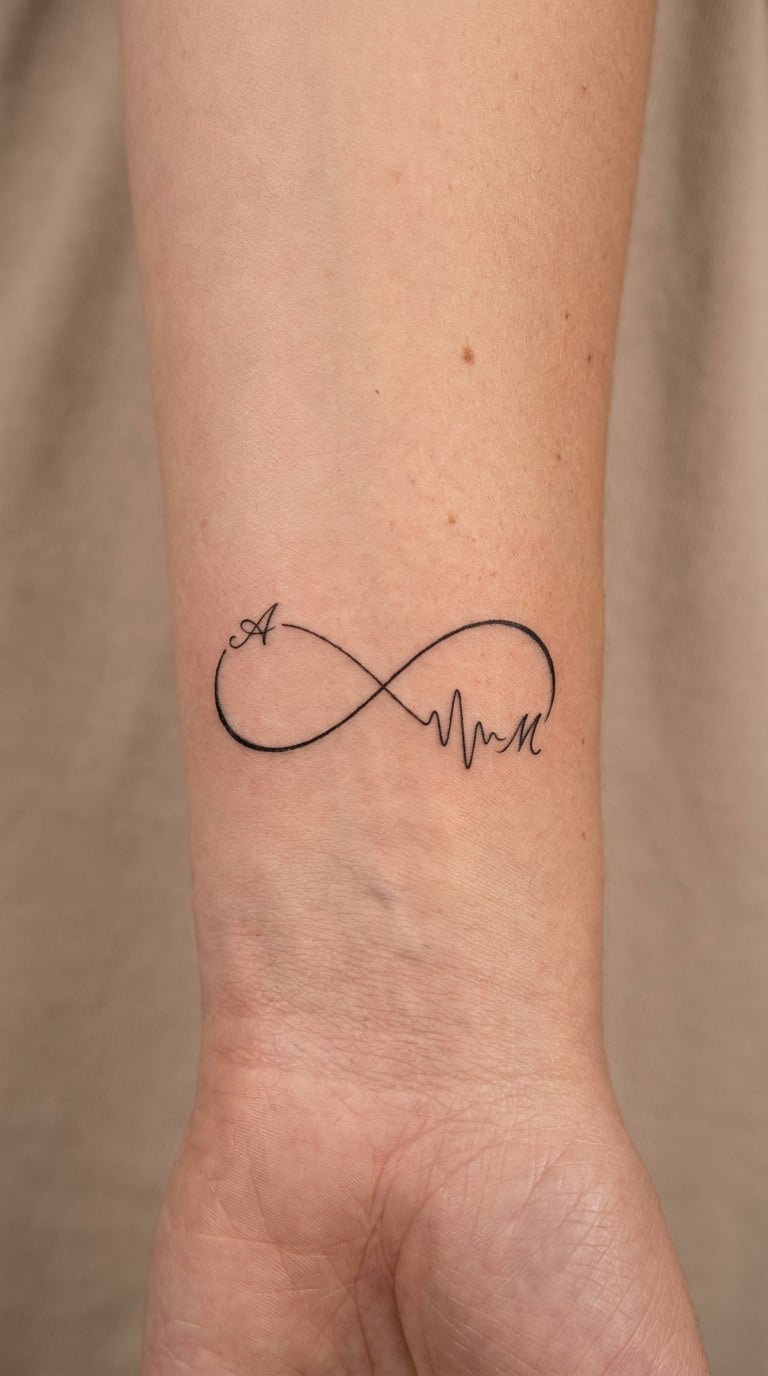
The central stroke of the infinity symbol turns into a short waveform, and the two names or initials sit at opposite ends, level with the loops. Balanced, small, and it reads well from both sides of the wrist.
Fingers are a bad home for this one. The loops need a continuous curve, and fingers bend, stretch and get callused in ways that pull a thin loop into a lens shape within a year or two. The wrist is the better canvas.
Placement: side of the wrist, or the ankle. Size: 1.5 to 2.5 in (4 to 6 cm) wide. Style: fine line. Pain: medium, and the wrist has a lot of nerve near the thumb-side bone. Make it yours: use two different waveform lengths so each loop carries its own recording rather than repeating one shape twice.
8. Blackwork Voiceprint Portrait With a Name
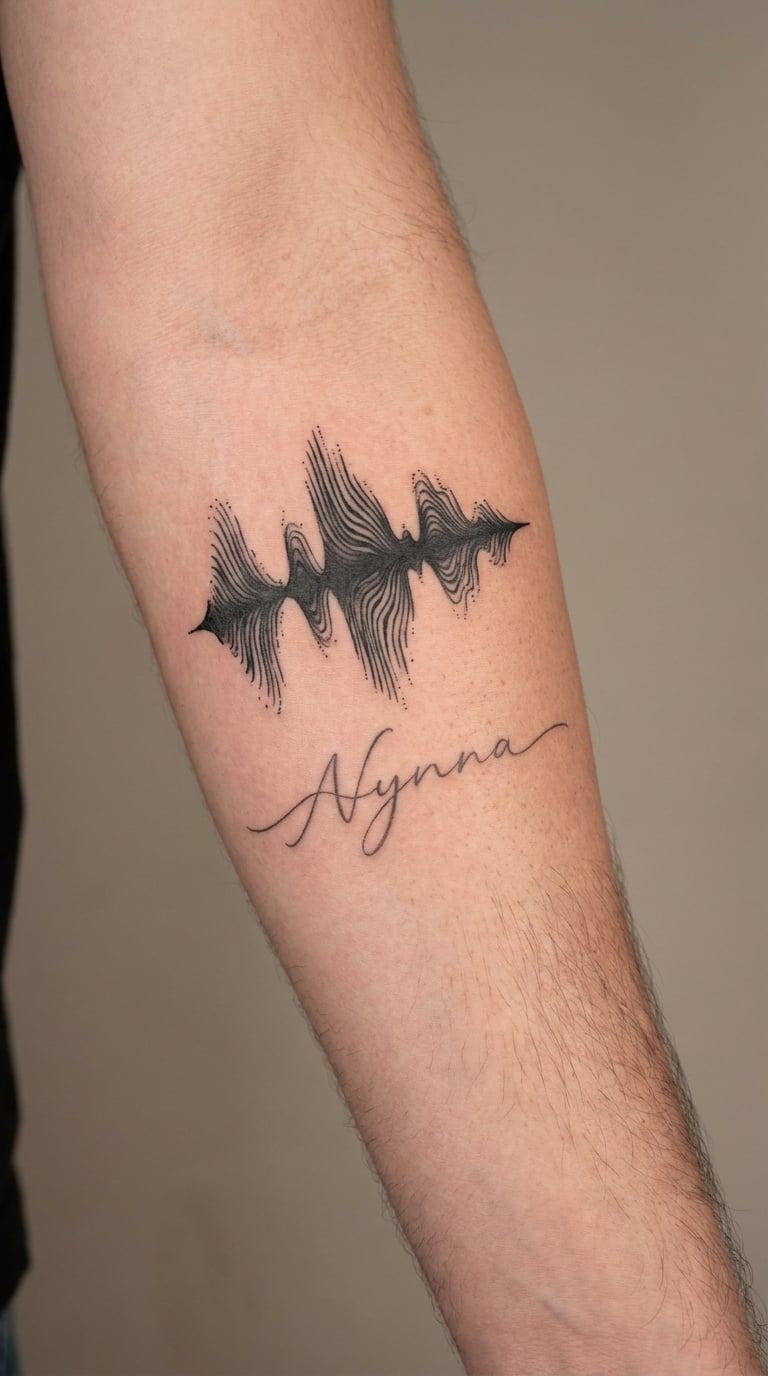
The largest single-piece option on this list. A voiceprint is drawn as a tall, dense black shape with grey shading inside it, and the name sits clear of the block on its own baseline so it never gets lost in the mass of ink.
It suits someone who already has other work, or a forearm with room to carry detail. The voiceprint is where the density lives, so the name can stay small and simple without looking under-designed.
Placement: outer forearm, or the upper arm. Size: 6 to 9 in (15 to 23 cm) tall. Style: blackwork and grey. Pain: high, and this usually runs past a single sitting, so expect a stencil structure planned across two sessions. Make it yours: crop the voiceprint to the section of speech that matters rather than the whole recording, which also keeps the block narrower.
9. Name Inside a Guitar-Riff Wave
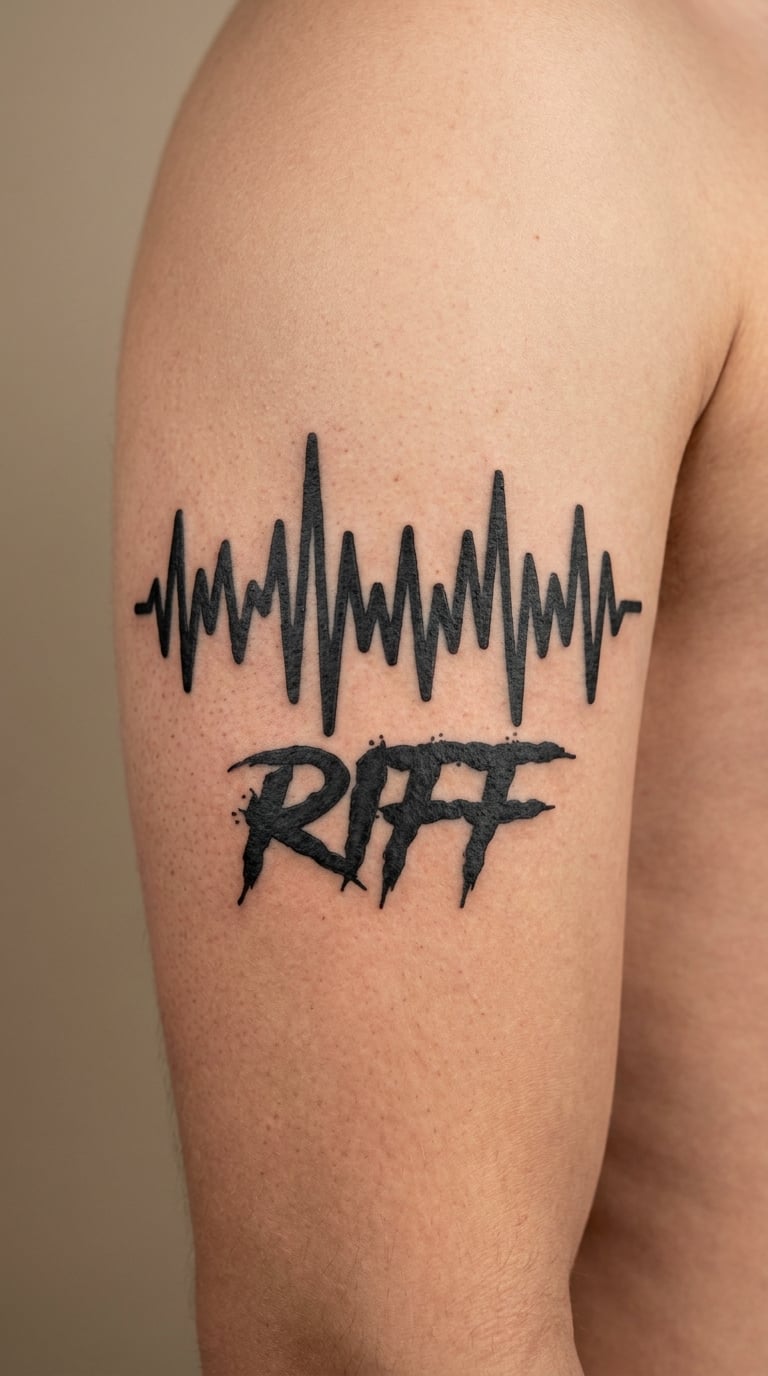
A sharp, rhythmic waveform built from a guitar phrase, with the name set underneath in a matching weight. The peaks of a riff are spikier and more regular than speech, which gives the design a hard, driving edge that a voiceprint never has.
There is a difference worth knowing between a riff someone played and a song everyone knows. A borrowed melody on skin can feel like a claim that is not yours, so plenty of people use their own playing or a song they wrote instead.
Placement: upper arm or the back of the shoulder. Size: 4 to 6 in (10 to 15 cm). Style: bold line. Pain: medium. Make it yours: use six to eight seconds of the phrase, not the whole solo, and set the name in a blocky sans so it holds its own against the spikes.
10. Watercolour Name With a Soft Audio Bloom
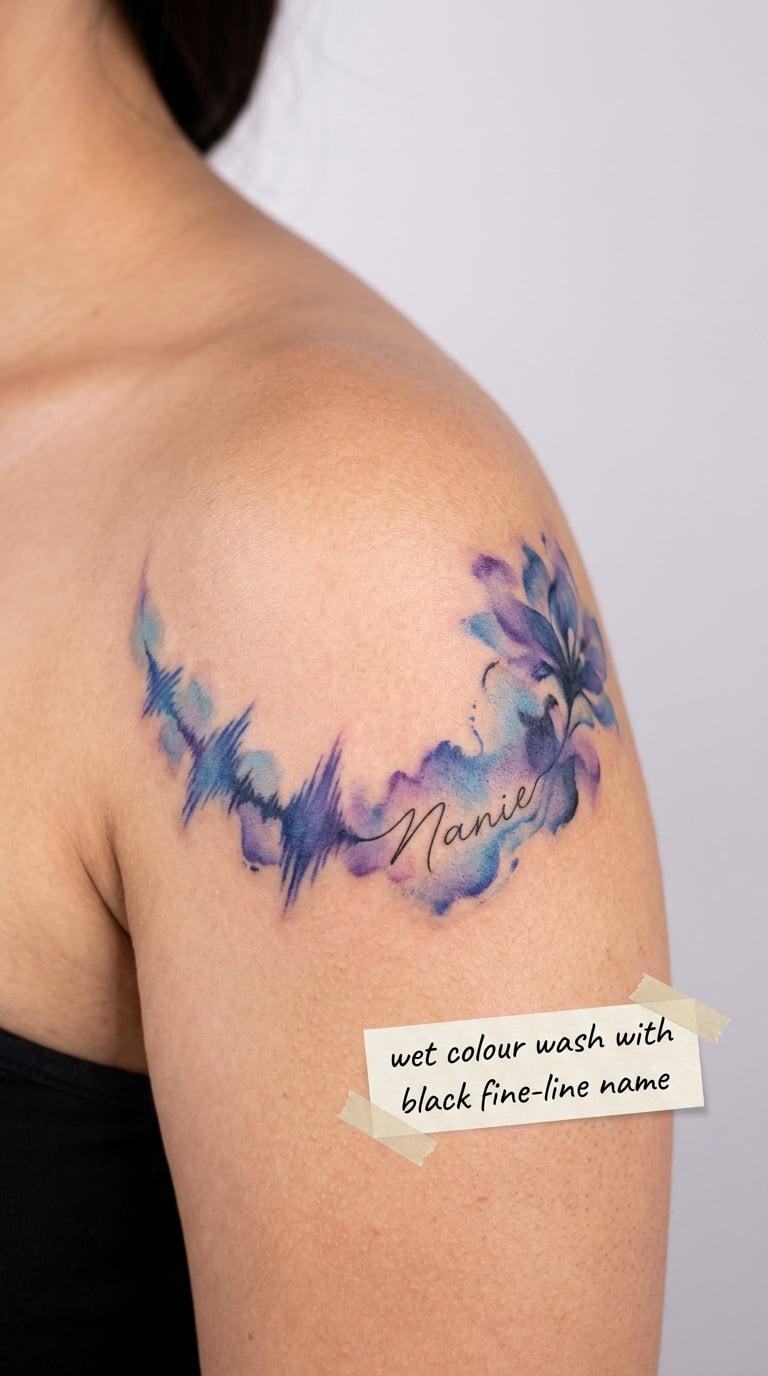
The waveform is rendered loosely, almost like a wet wash rather than a measured trace, and the name emerges from it in flowing script. Colour is the whole point here, and the two inks bleed into each other at the join.
Colour tattoos on shoulders and collarbones hold better than colour on hands or feet, where sun and water do most of the damage. The name itself is best kept black so it stays sharp while the wash fades.
Placement: shoulder, collarbone, or the back of the arm. Size: 4 to 7 in (10 to 18 cm). Style: watercolour. Pain: medium, and colour work takes longer than the line work suggests. Make it yours: pick two colours that sit next to each other on the wheel, and ask the artist to keep the black name entirely out of the wash so the edges stay crisp.
11. Coordinates Beneath a Song Wave
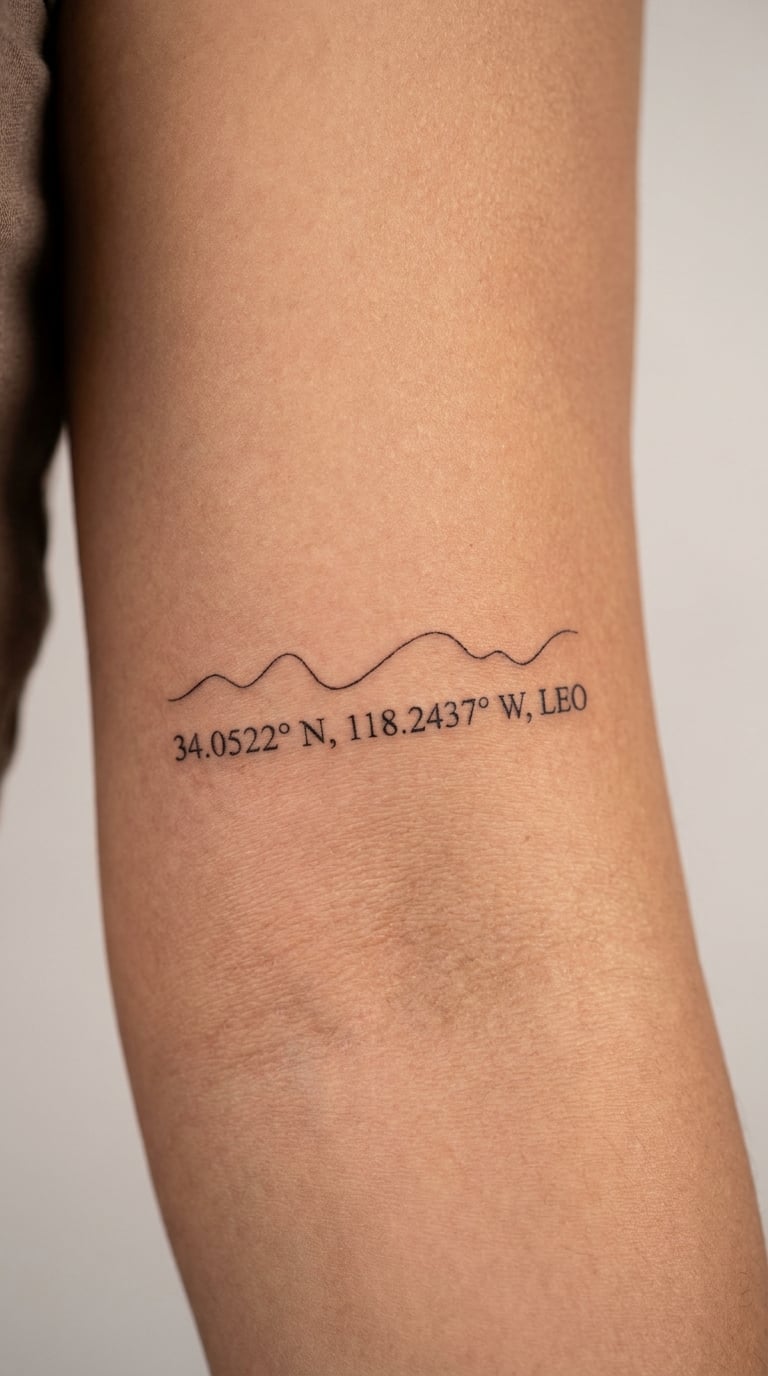
Three stacked elements: a waveform, a line of coordinates, then the name. The hierarchy matters more than anything else here, because three small text rows in one spot will fight each other unless one of them is clearly smaller.
Coordinates only earn their place if the place is real to you. The spot where you met, where someone was born, where you were standing when a song came on. Decoration is easy to spot later.
Placement: inner bicep or the side of the forearm. Size: 3 to 4 in (8 to 10 cm) tall. Style: fine line with small serif capitals. Pain: medium on the inner arm. Make it yours: put the coordinates under the name rather than between the two elements, which gives the waveform room to run full width.
12. Name in a Speech-Bubble Wave
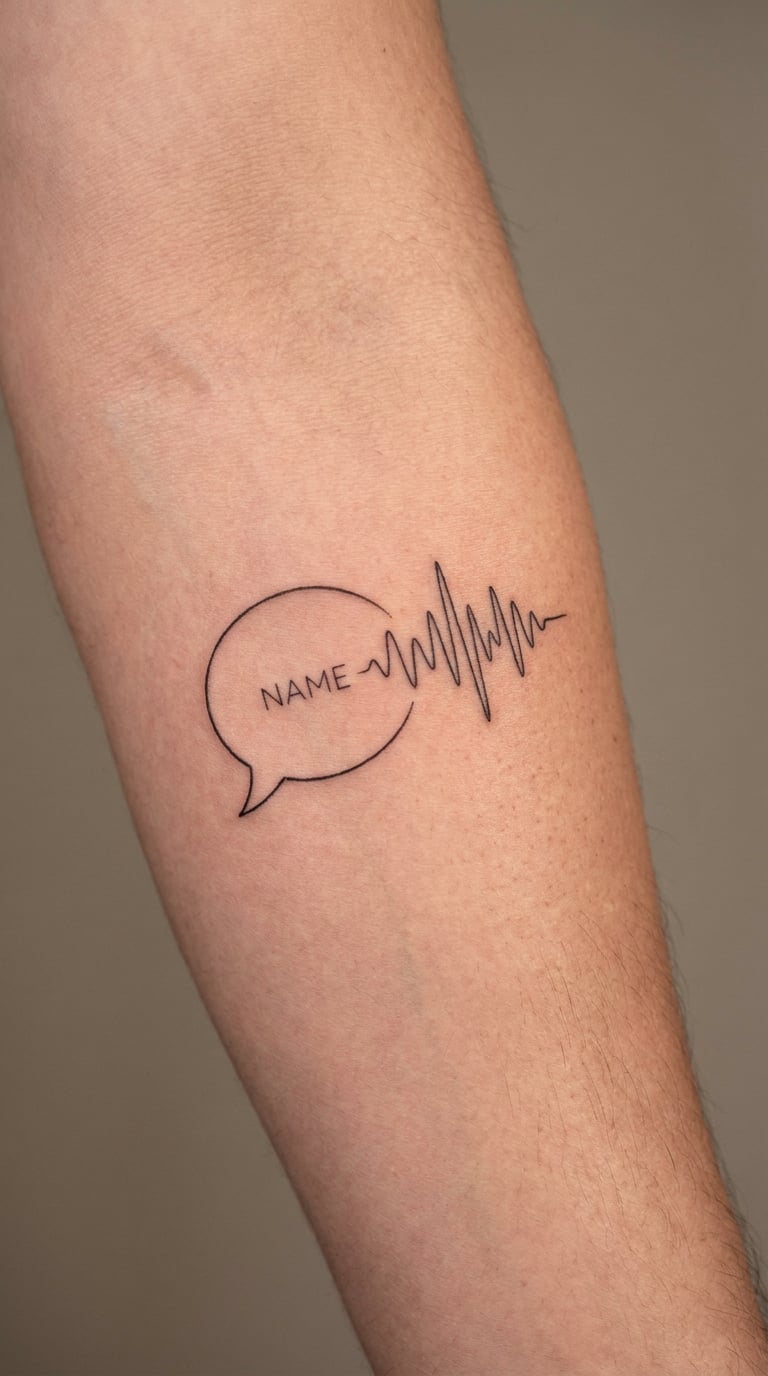
A rounded speech-bubble outline sits around the name, then the tail of the bubble unrolls into a waveform that trails away. It is the most playful design here, and it works because the joke reads instantly.
Keep the bubble wide enough that the name does not touch the outline. Lettering crowded against a border looks nervous, and the eye reads the shape before the word.
Placement: forearm, calf, or the upper arm. Size: 3 to 4 in (8 to 10 cm) wide. Style: fine line with a bold outline. Pain: low to medium. Make it yours: make the trailing waveform the length of something that means something, such as the length of the recording itself, and the bubble stops being a joke.
13. Split Wave With a Name Through the Centre
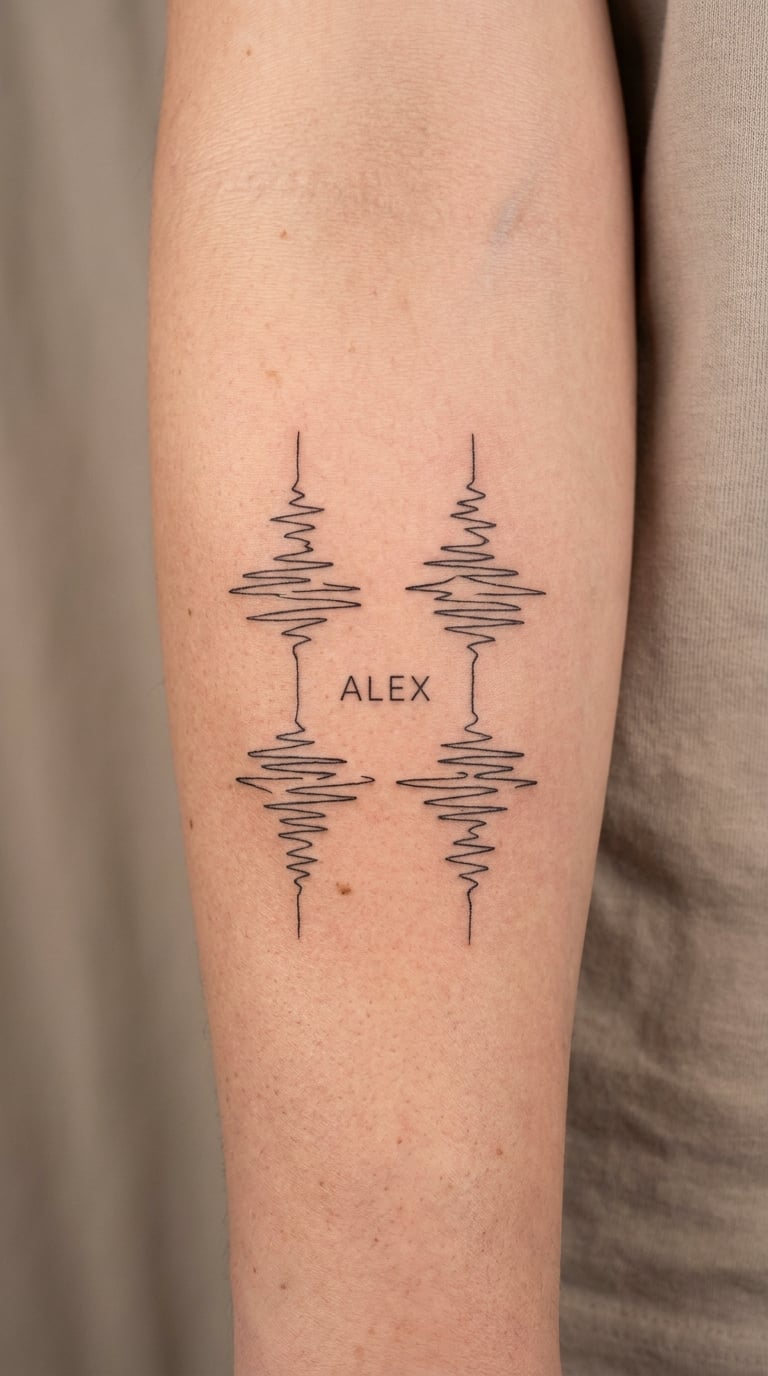
Two waveform halves, mirror images of each other, with a clear gap running down the middle and the name sitting in that gap. The negative space is doing the work, so the design looks larger than its actual line coverage.
Symmetry is the whole challenge. A mirrored drawing on paper comes out slightly different every time on skin, because the arm is a curve and not a flat page, and the artist will need to check one side against the other as they go.
Placement: outer forearm, centred along the bone. Size: 5 to 7 in (13 to 18 cm) wide. Style: symmetrical fine line. Pain: medium. Make it yours: instead of a perfect mirror, run one half forward and the other reversed, which is easier to keep balanced and looks deliberate.
14. Minimal Name and One Recording Line
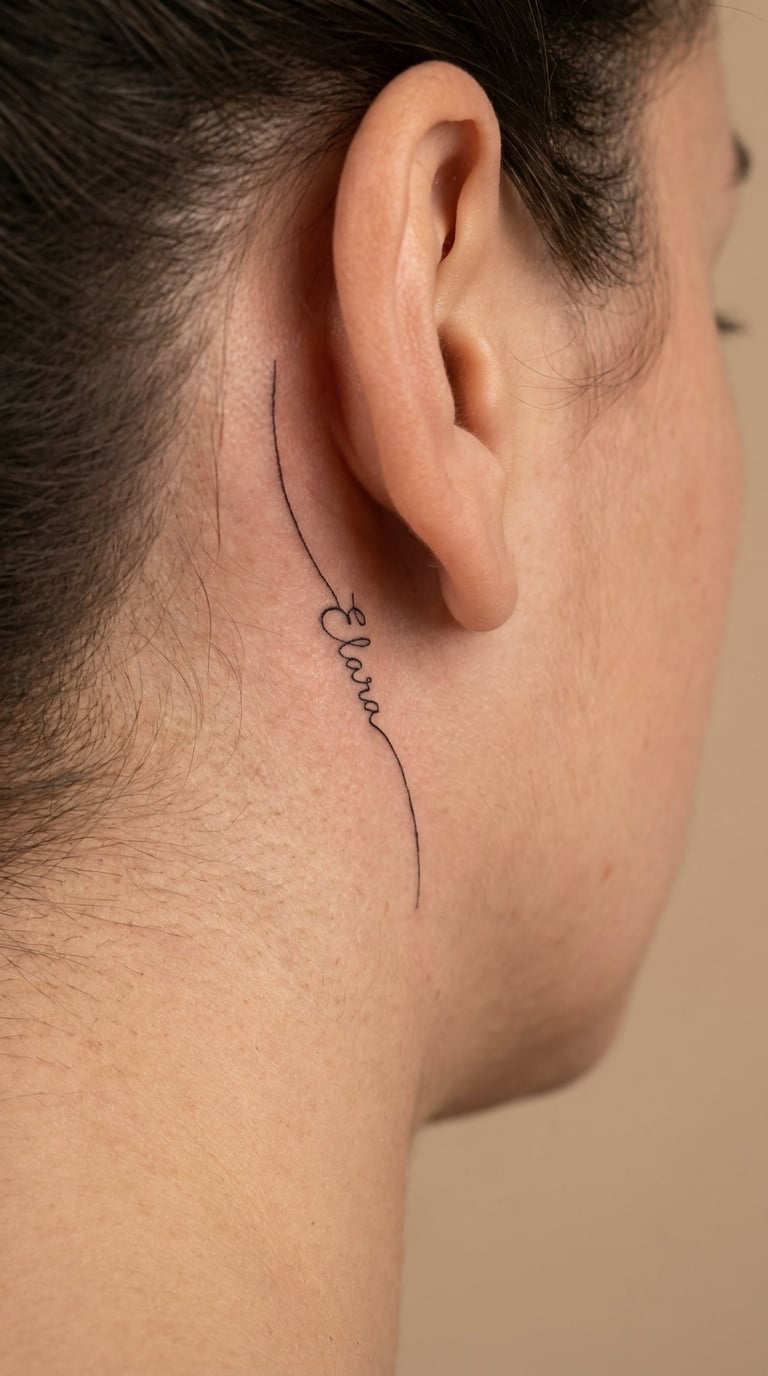
The simplest design in the list. One name, one unbroken audio trace, nothing else. No frame, no fill, no secondary text. Behind the ear is the classic home for it because the design can be small and the meaning does the talking.
Small behind the ear tattoos are easier to hide at work than almost anywhere else, and the skin there is thin, so healing is quick. The tradeoff is that you cannot see it yourself without a mirror.
Placement: behind the ear, along the curve where the ear meets the skull. Size: 1.5 to 2.5 in (4 to 6 cm) long. Style: single-needle minimal. Pain: low, and it is over quickly. Make it yours: resist adding a date. One line and one name is what makes it hold up at that size.
15. Dotwork Sound Field Around a Name
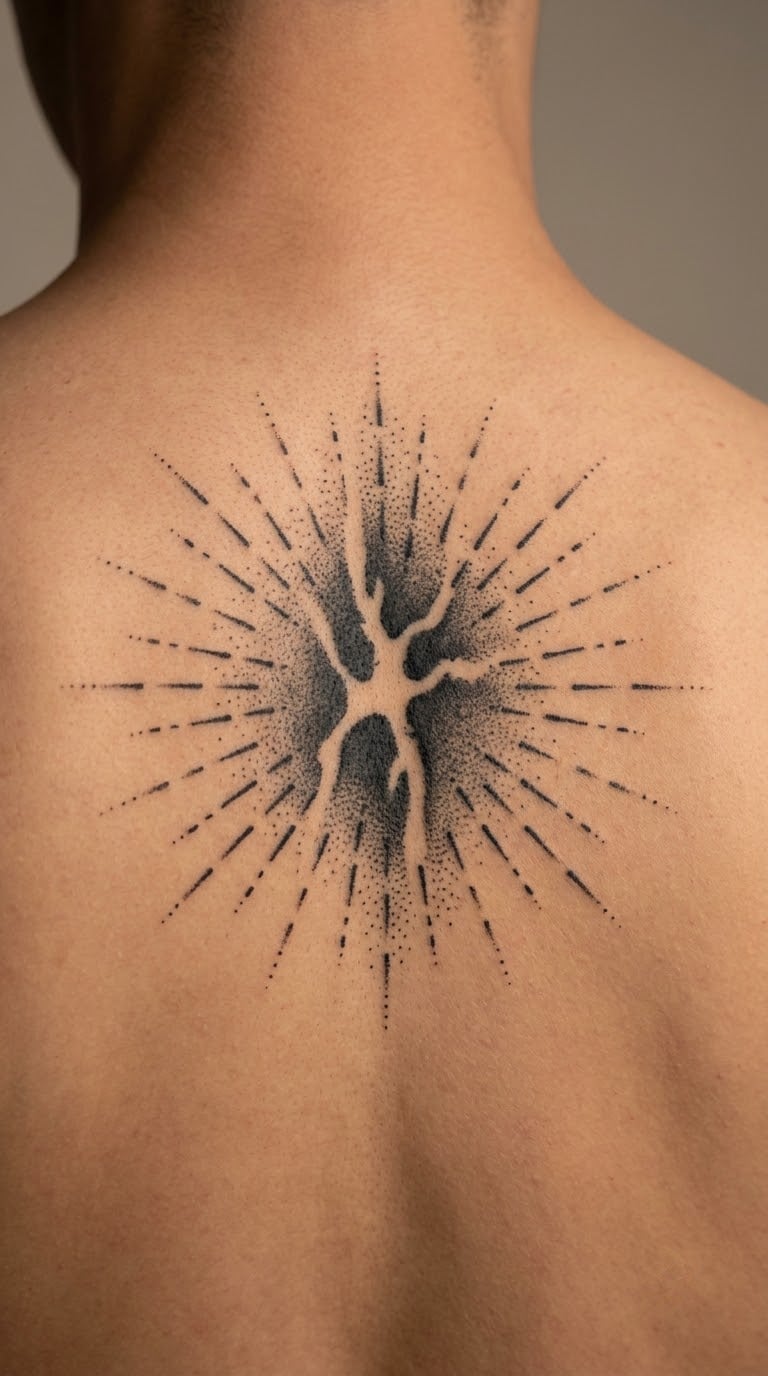
No literal waveform here. Instead, dots and short radiating lines spread out from the name, dense near the letters and thinning toward the edges, which reads as sound moving through space.
Dotwork holds its shape better than hairline work because each dot is a small, solid deposit of ink. The risk is the opposite one: on fingers and hands, dot fields fill in and turn grey as the skin thickens with use.
Placement: upper back between the shoulder blades, where there is flat space and low daily wear. Size: 4 to 6 in (10 to 15 cm) wide. Style: dotwork. Pain: medium, and dotwork takes a long sitting because of the density. Make it yours: shape the field into a rough circle so the falloff reads as a halo, and leave a clear band of untouched skin around the name.
16. Stencil-Edge Name Cut by a Wave
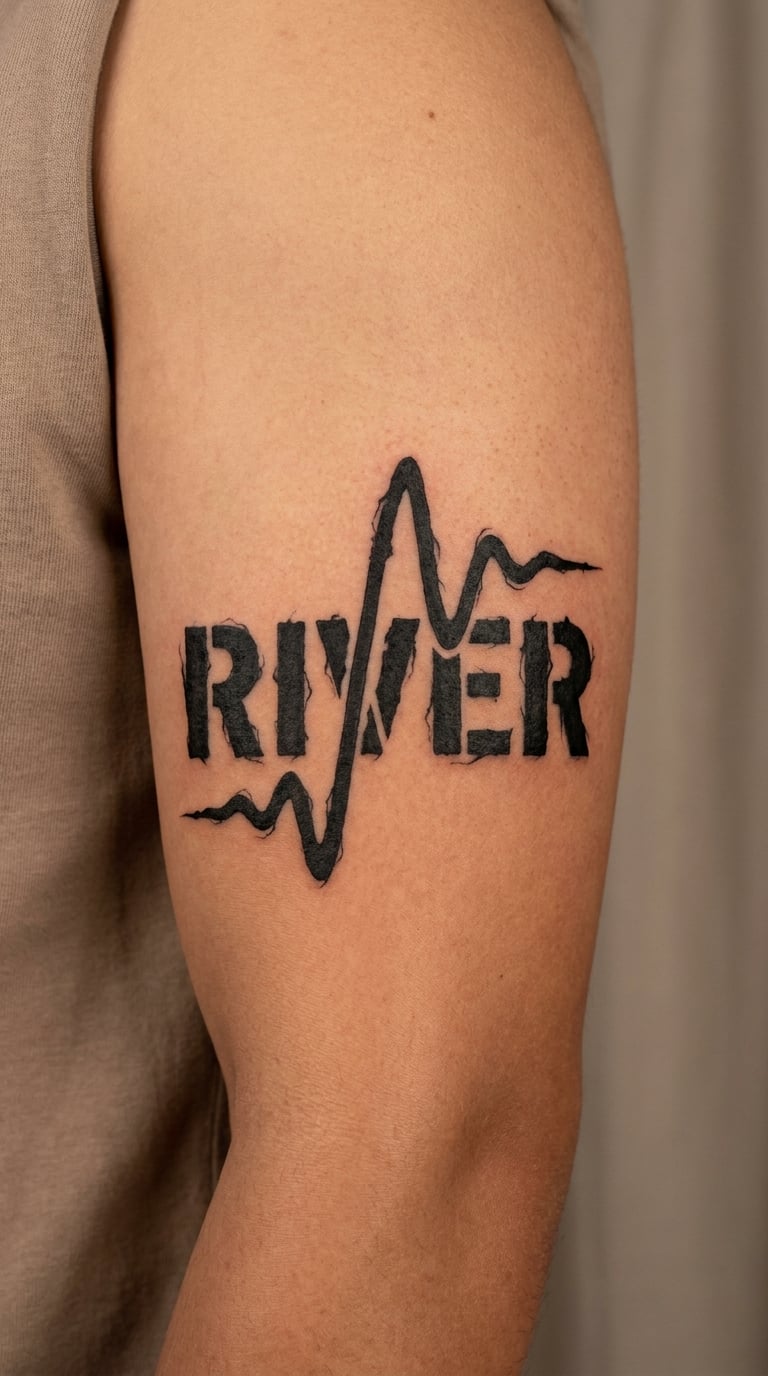
A name set in a rough, torn stencil typeface, interrupted by a fluid black waveform that cuts across the middle of the letters. The contrast between the crisp mechanical letterforms and the moving wave is what makes it interesting.
Raw edges and skin do not always get along. The torn texture depends on the stencil sitting very still, so ask your artist to test the edge on a small patch first. If it does not take cleanly, a softer, feathered edge is a better plan than fighting it.
Placement: upper arm, outer bicep. Size: 4 to 6 in (10 to 15 cm). Style: raw stencil edge with black fill. Pain: medium. Make it yours: have the wave overlap the middle of the word rather than the ends, so part of the name is solid black and part is still readable.
Names change, and sometimes a name tattoo has to change with them. Our cover up tattoo ideas for a name walkthrough covers the practical side of redrawing old lettering before you commit to a new waveform.
17. Two Matching Audio Lines, Two Names
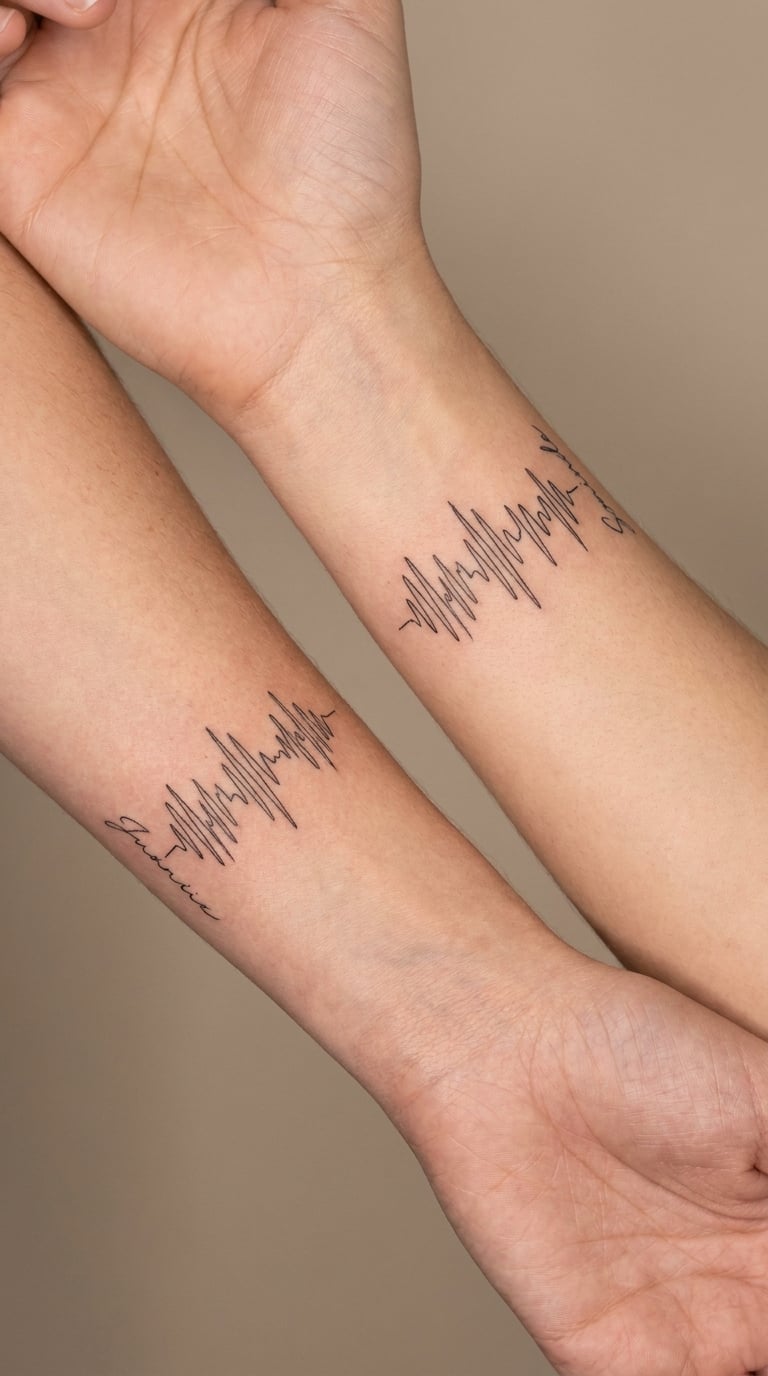
Two separate pieces, not one mirrored design. Each waveform belongs to one person, each name sits at the opposite end, and the two lines answer each other across the body. The waveforms need to be the same weight and the same line thickness, which is where most matching pairs go wrong.
Couples, siblings, a parent and child, two friends. Nothing about the design requires it to be romantic, and a lot of the best matching work comes from people who simply share a place in a story.
Placement: matching inner wrists, or one wrist and one ankle for a more hidden pair. Size: 3 to 4 in (8 to 10 cm) each. Style: fine line. Pain: medium on both wrists, and two sensitive areas in one week is worth spacing out. Make it yours: match the line weight and the name’s typeface, not the waveform shape, so each recording stays honestly itself.
18. Name Engraved in a Microphone Grille
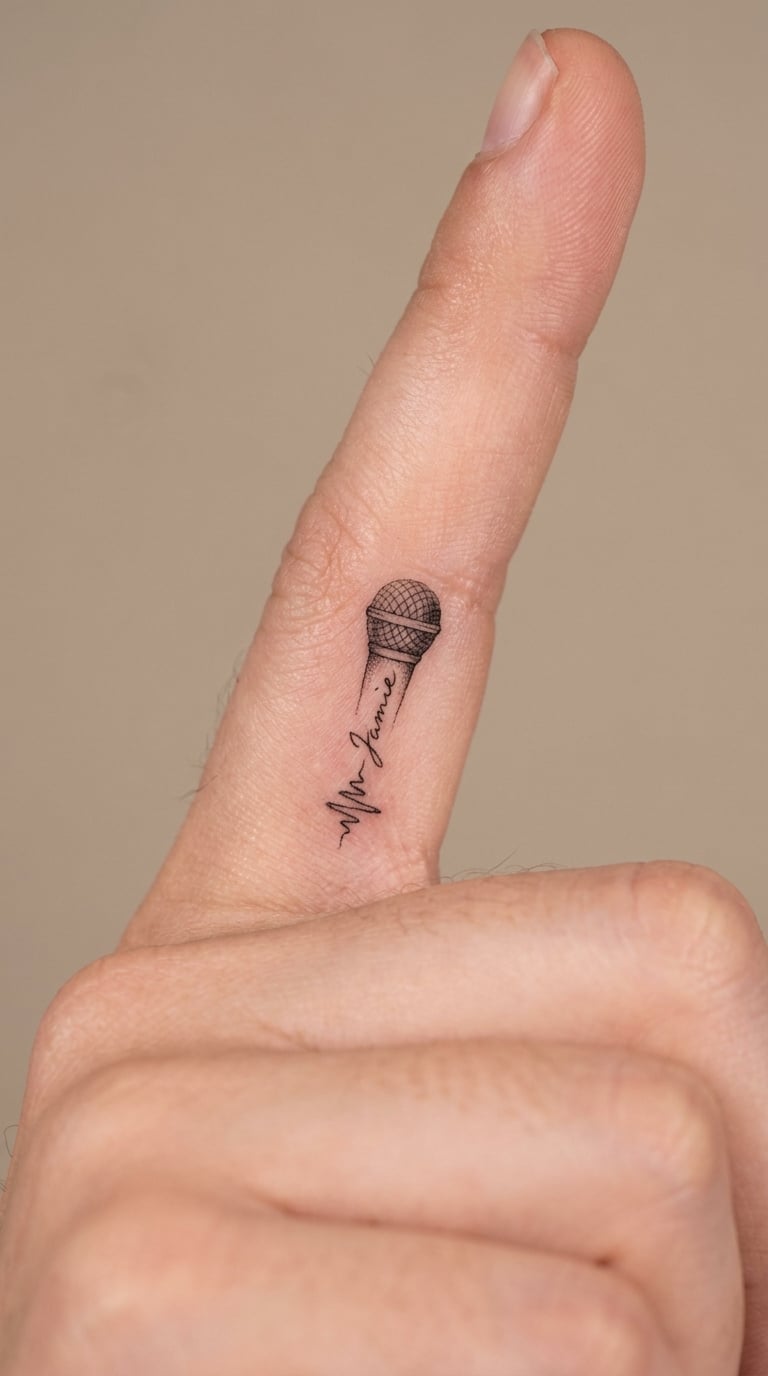
A compact microphone shape where the grille bars are made from the name’s letterforms, with a tiny waveform tucked underneath. Genuinely clever, and genuinely hard to tattoo. Lettering at finger scale leaves no margin for error.
Fingers are the harshest surface on the body for fine line. Skin thickens across the joints with use, ink softens faster, and the name is the one element you will be able to read longest, so it should be the boldest part of the design.
Placement: side of the index finger, along the flat of the phalanx, avoiding the knuckle. Size: under 1.5 in (4 cm). Style: micro fine line. Pain: high, and fingers are bony, so the sensation sits close to the bone. Make it yours: use a short name or a surname, and let the microphone supply the “voice” part of the meaning.
19. Retro Broadcast Wave With a Signature Name
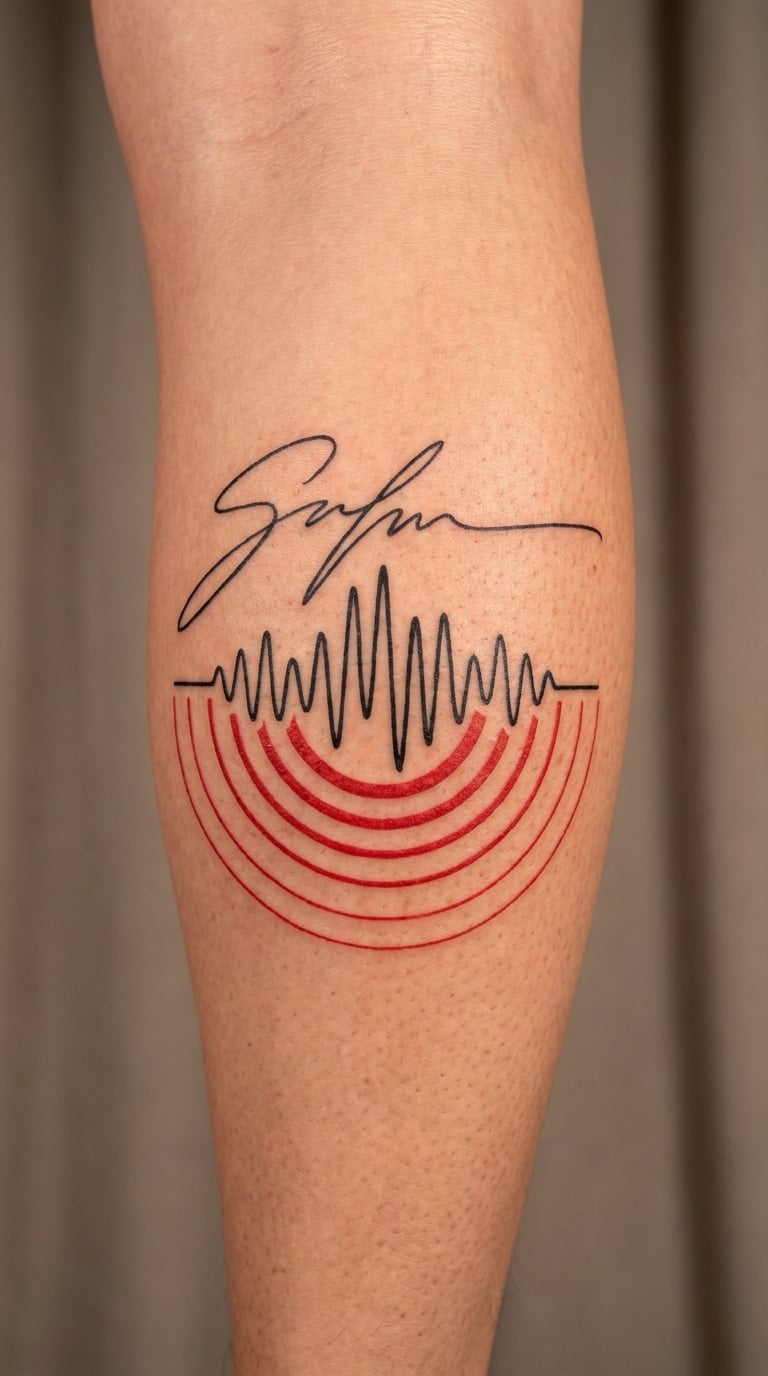
Vintage broadcast styling: a signature-style name above a set of concentric radio arcs, drawn with a slightly heavier line and one accent colour. It reads like an old transmitting station plate from the middle of the last century.
The retro treatment is what does the ageing work here. Heavier outlines and a limited palette lose less than hairline script, though red ink on a sun-exposed calf is the first thing to fade and will need topping up.
Placement: outer calf, or the outer thigh. Size: 4 to 6 in (10 to 15 cm) wide. Style: traditional line with two inks. Pain: medium on the calf, lower on the thigh. Make it yours: have the name drawn as an actual signature rather than a script font, then set the broadcast arcs at a consistent radius so it looks like a station mark.
20. Vertical Podcast Wave Beside a Host Name
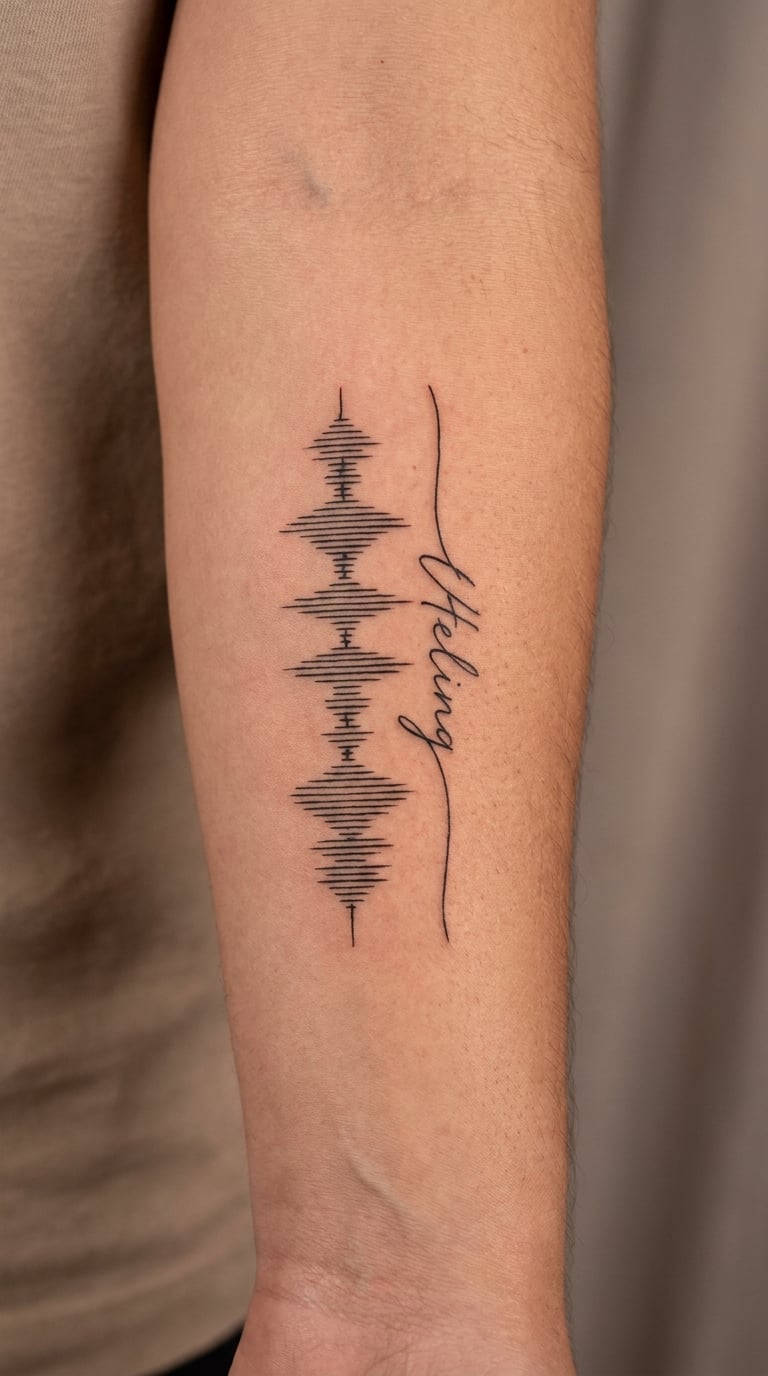
A vertical composition for people who make or host audio. A simplified waveform runs top to bottom on one side, and the name or show name runs alongside it in a narrow, modern typeface.
Vertical is the smart format here because a phone screen is vertical, so a short clip reads well as a thumb-sized graphic. It also uses forearm length properly, which a horizontal waveform would waste.
Placement: inner forearm. Size: 4 to 6 in (10 to 15 cm) tall, and small at about 3 in (8 cm) on the wrist. Style: vertical fine line. Pain: medium. Make it yours: simplify the waveform to a dozen bars instead of a dense trace, which is what keeps it legible at wrist size and on a phone screen.
21. Name in the Negative Space of a Wave
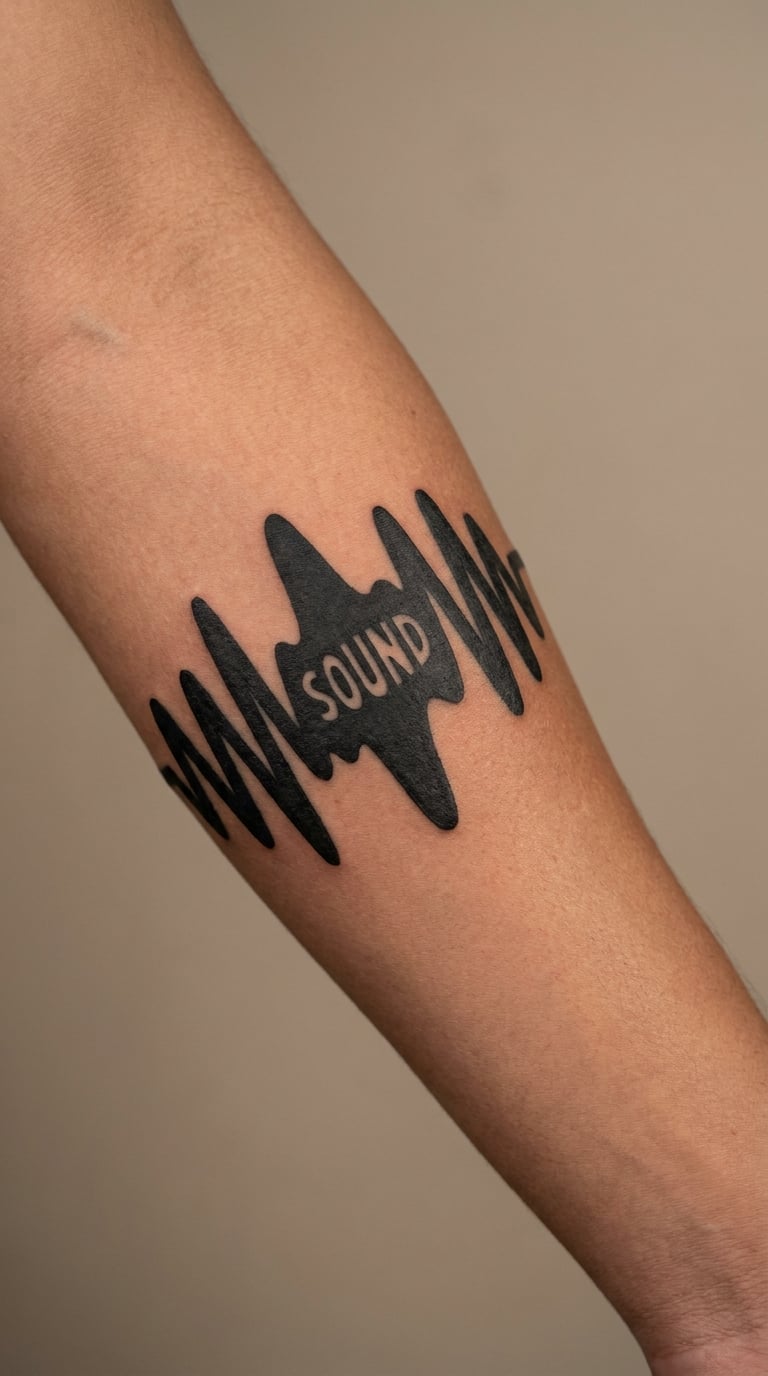
A dense black waveform shape with the name cut out of it in skin colour. Reversed white lettering on black is the oldest trick in tattooing, and it is still the most legible thing in this whole list when it works.
It works when the counters stay open. Thin bowls in letters like a, e and o fill in with black ink at speed, so the name needs a wider, sturdier typeface and generous spacing between letters. Reversed lettering also shows every change in skin texture, so flatter skin is worth choosing.
Placement: outer arm or the flat of the upper arm. Size: 4 to 6 in (10 to 15 cm) wide. Style: blackwork with knockout. Pain: medium, and the solid black fill takes a long time to lay down. Make it yours: reverse the name so it reads from the other side of the arm, which lets you keep the design narrow.
22. Heartbeat Line Ending in a Name
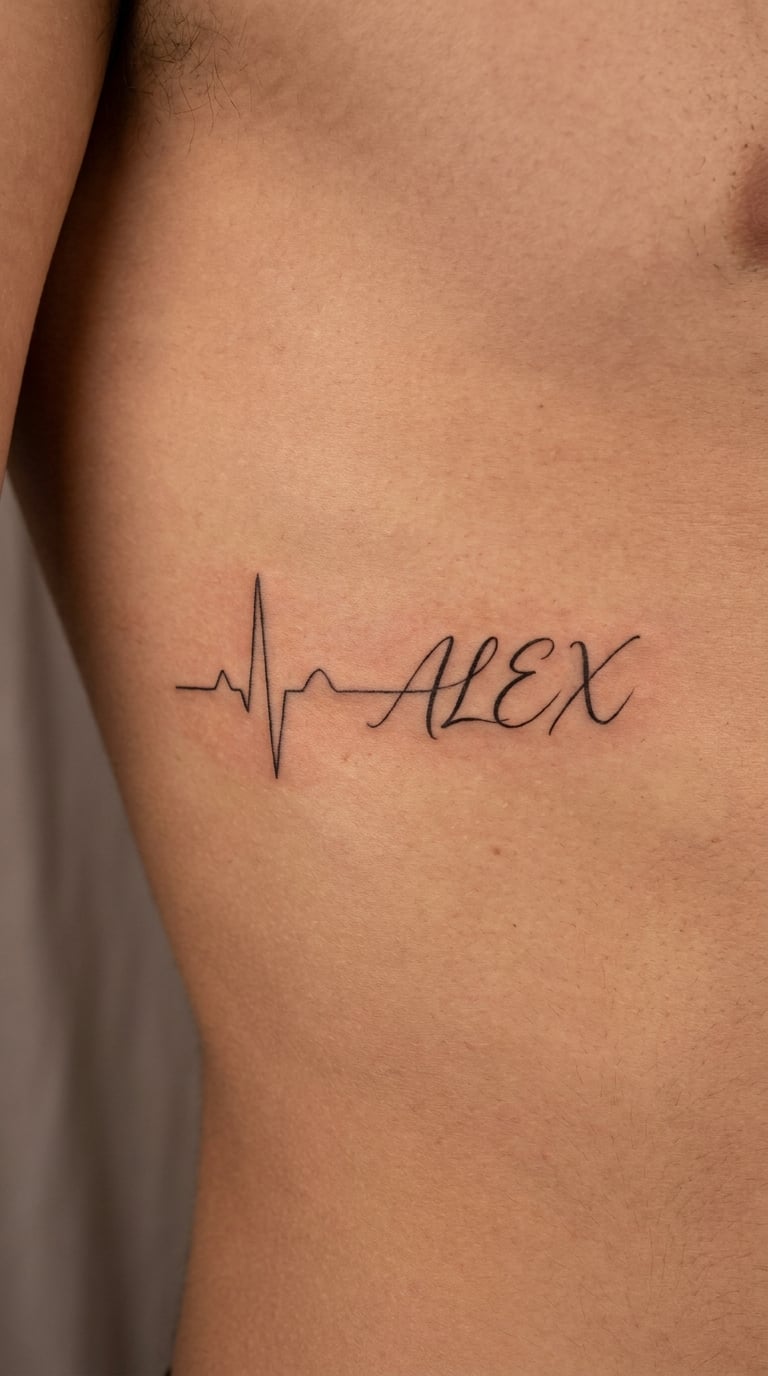
A restrained heartbeat trace that runs flat, spikes twice, and then becomes the name as it reaches the end. The transition is the whole design, and it needs to happen slowly enough that the letters do not feel cramped.
People choose this for a life, a pregnancy, or a person. Worth saying plainly: the heartbeat is a symbol people attach meaning to, not a fixed code that means one specific thing, so the significance is entirely in the choice of recording.
Placement: side of the chest, along the collarbone, or the inner wrist. Size: 4 to 6 in (10 to 15 cm) long. Style: fine line. Pain: medium on the chest, high over the collarbone bone. Make it yours: let the first two spikes be larger than the rest and let the name take up the last third of the length, so the eye travels along the line instead of stopping at the name.
23. Soundwave Mountain With a Name at the Peak
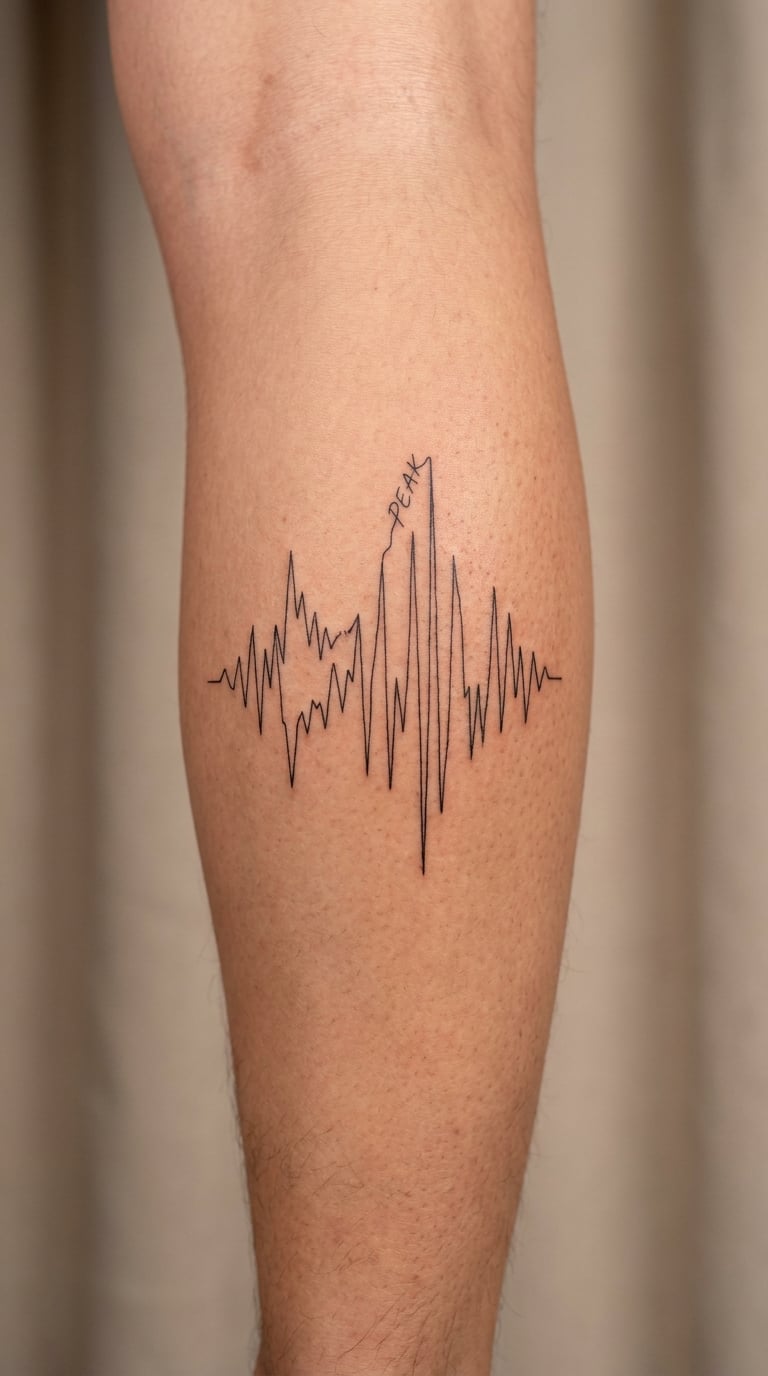
A mountain-ridge line where the waveform peaks are treated as a range, and the name sits at the highest point, small, level with the summit. Minimal line art with one clear focal point.
It is the design that travels well, because it works at forearm size and at the size of a whole calf. The name is small by design, so keep it short if you want it to read from a step back.
Placement: outer calf, forearm, or across the shoulder. Size: 4 to 7 in (10 to 18 cm) wide. Style: minimal fine-line art. Pain: low to medium, and calves are one of the easier places to sit through. Make it yours: set the name on the tallest peak rather than above the range, so it looks placed in the scene instead of labelled on it.
24. Circular Audio Halo Around a Name
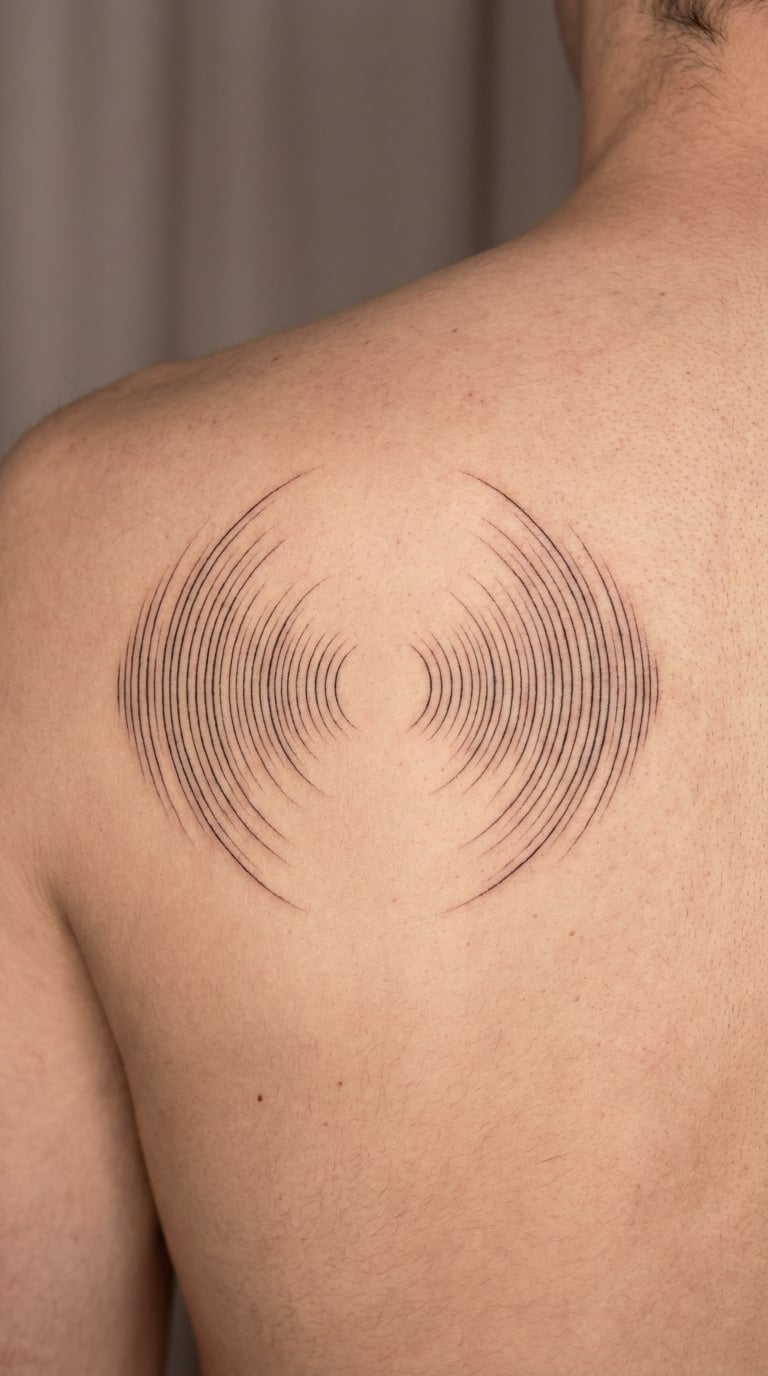
A balanced circular composition: a central name with a halo of short waveform strokes radiating evenly around it, opening and closing like a ring of sound. Symmetrical, quiet, and it reads well from a distance.
Radial layouts need even spacing, and a circle drawn freehand drifts. Ask your artist to work from a compass or a printed template so the ring stays circular, and check the spacing before the name goes in.
Placement: upper back, calf, or the flat of the upper arm. Size: 4 to 6 in (10 to 15 cm) diameter. Style: radial fine line. Pain: medium. Make it yours: add one gap in the halo where the waveform is loudest, a small deliberate break that pulls the eye back to the name.
25. Grand Voiceprint and Name Sleeve Panel
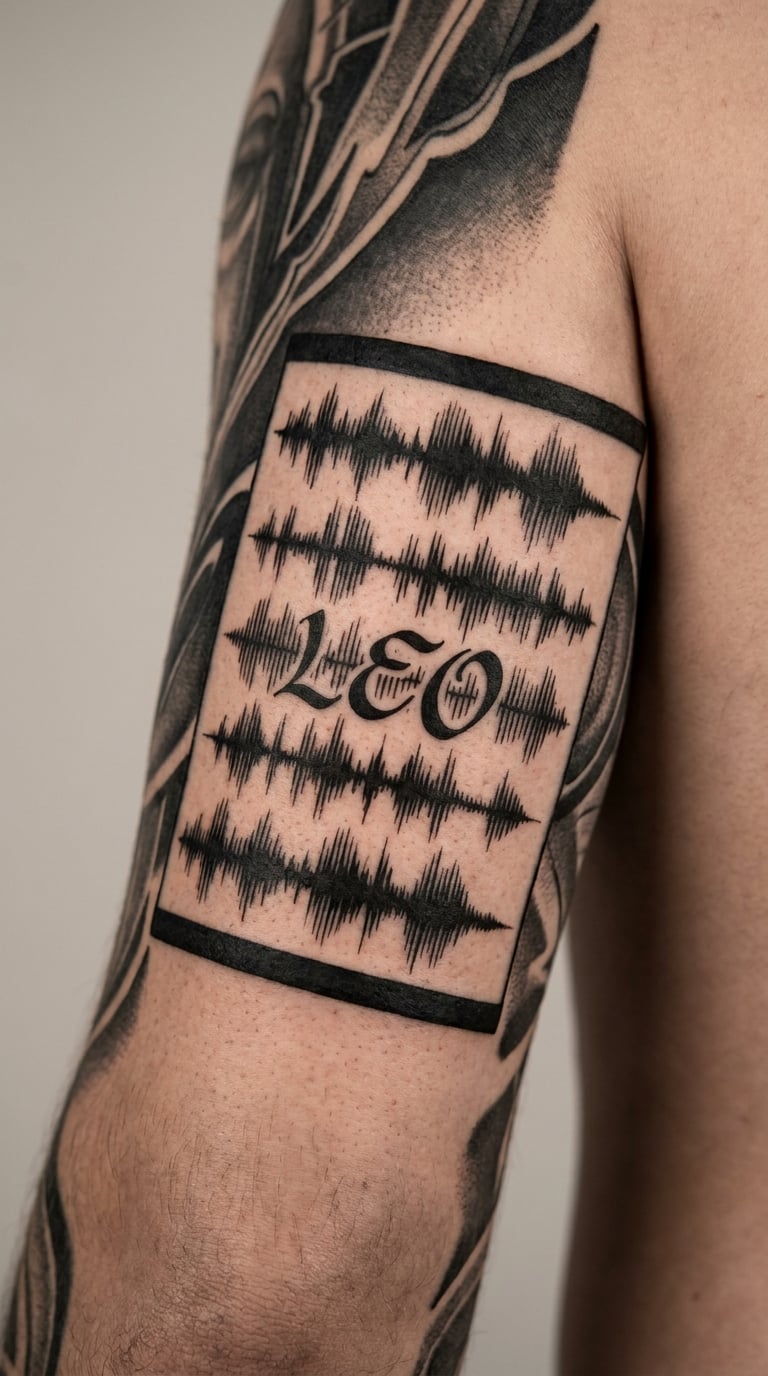
The most detailed option here. A broad panel where a voiceprint silhouette, layered blackwork shading, and the name share one composition, finished with a clear border so the panel has edges rather than fading into the arm.
Plan this one properly or do not plan it at all. A piece this size does not fit in one sitting comfortably, so the artist will break it into stencil sections, and each session needs a defined border to work against. If you only have one free weekend, a standalone version of the same idea at half the scale is the sensible call.
Placement: outer upper arm, as a panel or the start of a sleeve. Size: 8 to 12 in (20 to 30 cm) tall. Style: layered blackwork. Pain: high, and shading out several square inches in one sitting is a lot to ask of anyone. Make it yours: keep the name as the only un-shaded element in the panel, which gives the eye one resting point in a busy piece.
How to Choose the Right Soundwave and Name Tattoo
These soundwave and name tattoo ideas all work, so the deciding factors are practical rather than aesthetic: how long your name is, how much ink survives on the body part you have in mind, and whether the recording you chose will still mean something in twenty years. Five questions settle most of it.
- How long is the name? Count the letters before anything else. Up to about six characters sits comfortably beside a waveform at most sizes. Beyond that, the waveform has to run underneath the name or the design needs real space, usually the forearm or the calf.
- Which waveform style suits the source? Heartbeat and equalizer bars are geometric and forgiving. Voiceprints are irregular and reward a larger canvas. Music waveforms vary in density, so check how much of your clip is quiet.
- Where will it go? The inner forearm and ribs take the most detail. The outer arm takes bold work well. Hands and fingers hold fine line worst, and the upper back is the least disturbed skin you will find.
- How big should it be? Larger than you think, honestly. Fine line and thin lettering lose definition over time, and a design that reads clearly at 5 inches today can fade into a smudge at 2 inches of visible detail. Have your artist draw the name at final size before you commit.
- Black or colour? Black holds its shape longest and is far easier to touch up. Colour suits watercolour and retro styles but needs a plan for sun protection and eventual fading.
- Is the source accurate? The waveform should come from the actual recording, trimmed to a section that says something on its own. Most tattooers will draw from a file you supply, and free audio editing software will turn a clip into a clean line trace in a few minutes.
Soundwave and Name Tattoo Ideas for Small Placements
Small placements have their own rules, and most of them come down to line weight. Anything on a hand or finger needs a heavier line than feels comfortable, and anything under three inches needs fewer elements rather than tinier ones. So: a single-needle line behind the ear, a vertical name with twelve equalizer bars on the inner wrist, a name inside an infinity loop at about two inches, or one recording line with a name beside it. Drop the coordinates, drop the month, drop the secondary text. Two elements survive at small size. Four do not.
Cost and Session Time
Custom soundwave work prices the same way most custom tattooing does, which is hourly plus sometimes a design fee. Tiny pieces, under about 2 inches, often land in the low hundreds of dollars, though many shops have a minimum that sits well above that. Small to medium pieces, 2 to 4 inches, usually run in the low to mid hundreds. Medium pieces, 4 to 7 inches, and large blackwork panels, 7 inches and up, commonly reach the mid hundreds and into the thousands depending on the artist and the number of sessions.
Expect a design fee for anything custom, which is sometimes credited against the tattoo and sometimes not. Hourly rates vary widely by city and by reputation, and shop minimums can quietly add to a small piece. Anything panel-sized gets split across sessions, so ask what a session buys you and what the full piece costs before the first appointment, not after. If the total feels steep, a smaller standalone design is a reasonable trade rather than a compromise.
One honest note about the tech side, because it comes up at almost every consultation. These tattoos do not store audio. A waveform tattoo is a picture of a sound’s shape, and the apps that appear to play it work by recognising the image with a phone camera and pulling up a file that was uploaded in advance. The design still means something as a picture of a voice, but the recording lives with whoever holds the file, not in your skin. Nobody needs to sell you that, and an artist who does is telling you something worth hearing.
Aftercare Basics
- Follow your artist’s aftercare instructions first. They know what they did, and their advice outranks anything general.
- Wear loose, soft clothing over the area for a few days, and change it daily. Bottoms and waistbands rub new work hardest.
- Wash gently with unscented soap and lukewarm water, then pat dry. Do not soak, and keep the area out of baths, pools and hot tubs while it heals.
- Keep the skin moisturised with a plain, fragrance-free ointment or cream your artist recommends. Dry skin is what makes fine line crack and flake.
- Protect it from the sun. Fresh ink should stay covered, and healed line work darkens fastest in summer. That matters most for the thinner designs in this list.
- Leave the healing film alone. Picking flakes off is the most common way a thin waveform turns blurry, and touch-ups only work once the skin is fully settled.
Frequently Asked Questions
What does a soundwave and name tattoo usually mean?
It means the sound came from the person named beside it. The waveform is the visual trace of a recording and the name identifies whose voice, phrase, song or sound it is, so the two together tell the whole story at a glance. People use them for a child’s first words, a wedding vow, a song that belongs to one person, or a memorial voice. The meaning is entirely personal, not a fixed code.
Can any voice recording be turned into a soundwave tattoo?
Yes. Take the clip, cut it to a few seconds, and run it through free audio editing software to produce a clean black-on-white waveform trace. Most tattooers are happy to draw from a file you supply, and many will make the trace for you if you send the audio. Trim the silence off the ends first, since empty space becomes empty ink space on skin.
How large should a name and soundwave tattoo be?
Larger than most people picture. A short name beside a waveform wants at least 3 inches across on the inner forearm, and anything on a hand or finger needs more space than that. Fine line loses definition over time, so scaling up protects both elements. Have your artist draw the name at its final size before you agree to the design.
Do fine-line soundwave tattoos fade on fingers and hands?
Faster than anywhere else on the body. Skin on the hands thickens with use, ink softens, and fine detail blurs within a few years. If you want a waveform there, ask for a heavier line than feels right, keep the design to two elements, and expect touch-ups. The inner forearm and ribs hold the same work noticeably longer.
What placement works best for a long name and waveform?
The outer forearm or the outer calf, with the waveform running underneath the name as a baseline. Long names need horizontal room, and both areas are flat enough to keep lettering from distorting. The ribs work too, but they are bony and a long piece there usually means a harder sitting. Avoid the wrist for anything over six characters.
How much does a custom soundwave and name tattoo cost?
Most tattooers price hourly, and many add a design fee for custom work. Tiny pieces start in the low hundreds of dollars, small to medium pieces run low to mid hundreds, and large blackwork panels with multiple sessions can reach into the thousands. Shop minimums and city rates change the total more than the design does, so ask for the full figure before the first appointment.
Conclusion: Choose Your Meaning Before the Detail
Start with the audio, not the artwork. Decide which voice, phrase, song or sound you want on your skin, confirm the exact spelling of the name, then pick a placement that fits the length of it. Bring a clean reference and a clear idea of the size, and your artist will handle the rest.
For a first tattoo, the heartbeat line or the minimalist one-line recording will hold up longest, because both are small, quiet and easy to read. For a collector, the grand voiceprint panel is the piece that rewards a bigger canvas. And if you are still browsing shapes and motifs, our 22 comet tattoo ideas roundup works the same way: meaning first, then design.