
24 Hebrew Word Tattoo Ideas: Best October 2026 Designs
These 24 hebrew word tattoo ideas pair accurate Hebrew script with a plain English meaning, a sensible placement, a realistic size and an honest pain rating, so you walk into the consultation knowing more than “it looks nice”. Hebrew script is one of the most tattooed writing systems in the world and one of the easiest to get permanently wrong.
A Hebrew word tattoo is a piece of body lettering that spells a single word, name or short phrase in the 22 block letters of the Hebrew alphabet. People choose it for the meaning (life, peace, love, faith), to honour a family name, or simply because the script looks like nothing else on their body. What works on skin is restraint: clean letterforms, enough space around each character, and a script weight thick enough to survive healing.
Before you pick from the list, one honest warning. Hebrew is read from the right side of a line toward the left, and a design copied from a photo can end up mirrored, misspelled, or accidentally rude. Have a native speaker or a qualified translator check the exact lettering before the needle touches you. I’ll say more on that under how to choose, and every script spelling below is written for you to check rather than copy blind.
24 Hebrew Word Tattoo Ideas: Quick Guide
Here is the whole list in one place, with the Hebrew script, the transliteration, the meaning, the style, the placement, the realistic size and the pain level. The numbered rows match the sections that follow, in the same order.
| # | Hebrew word | Transliteration | Meaning | Style | Best placement | Size | Pain |
|---|---|---|---|---|---|---|---|
| 1 | אהבה | ahava | love | fine line | inner forearm | 2-3 in (5-8 cm) | low to medium |
| 2 | שלום | shalom | peace, also hello and goodbye | minimal blackwork | wrist | 1.5-2.5 in (4-6 cm) | medium |
| 3 | אמת | emet | truth | traditional lettering | outer upper arm | 2-3 in (5-8 cm) | low to medium |
| 4 | חי | chai | life | bold black ink | forearm | 1.5-2 in (4-5 cm) | medium |
| 5 | ברוך | baruch | blessed | fine-line typography | rib area | 2-2.5 in (5-6 cm) | medium to high |
| 6 | אני | ani | I, me | small handwritten | inner wrist | 1-1.5 in (2.5-4 cm) | medium |
| 7 | עתיד בסדר | atid beseder | the future is fine | optimistic script | outer forearm | 3-4 in (8-10 cm) | medium |
| 8 | אדוני | adonai | my Lord, the Lord | devotional fine line | upper chest, collarbone | 2-2.5 in (5-6 cm) | medium |
| 9 | רוח | ruach | spirit, wind, breath | watercolour | shoulder | 2-3 in (5-8 cm) | medium |
| 10 | תורה | torah | teaching, instruction, law | blackwork | upper arm | 2.5-3.5 in (6-9 cm) | low to medium |
| 11 | מלך | melech | king | geometric lettering | side of forearm | 1.5-2.5 in (4-6 cm) | medium |
| 12 | ישראל | yisrael | Israel | traditional | upper arm | 2.5-3.5 in (6-9 cm) | low to medium |
| 13 | הים | hayam | the sea | minimal script | inner bicep | 1.5-2 in (4-5 cm) | low |
| 14 | ארץ | eretz | land, earth | fine-line handwriting | side of wrist | 1.5-2 in (4-5 cm) | medium to high |
| 15 | שמחה | simcha | joy | expressive calligraphy | forearm | 2-2.5 in (5-6 cm) | medium |
| 16 | אתה | anata | you | fine line | inner wrist | 1-1.5 in (2.5-4 cm) | medium |
| 17 | שקרן | shukran | commonly read as thank you in Mizrahi usage, literally liar in Hebrew | minimal blackwork | forearm | 2-2.5 in (5-6 cm) | medium |
| 18 | צדק | tzedek | justice, righteousness | vertical fine line | inner forearm | 3-4 in tall (8-10 cm) | medium |
| 19 | אורות | orot | lights | watercolour and black | shoulder | 2.5-3 in (6-8 cm) | medium |
| 20 | רחם | racham | womb, mercy (rachim, mercies, is the plural form) | bold script | outer upper arm | 2-2.5 in (5-6 cm) | low to medium |
| 21 | ברוך אדוני | baruch adonai | blessed is the Lord | fine-line phrase | forearm | 4-5 in (10-13 cm) | medium |
| 22 | שיר | shir | song | traditional calligraphy | upper arm | 1.5-2 in (4-5 cm) | low to medium |
| 23 | נשמה | neshama | soul | fine line, portrait scale | chest, collarbone | 2.5-3.5 in (6-9 cm) | medium |
| 24 | your family word | your transliteration | a name, or a word your family chose | matching script | inner forearms, matching | varies with the name | medium |
1. Hebrew Word Ahava in Fine-Line Script
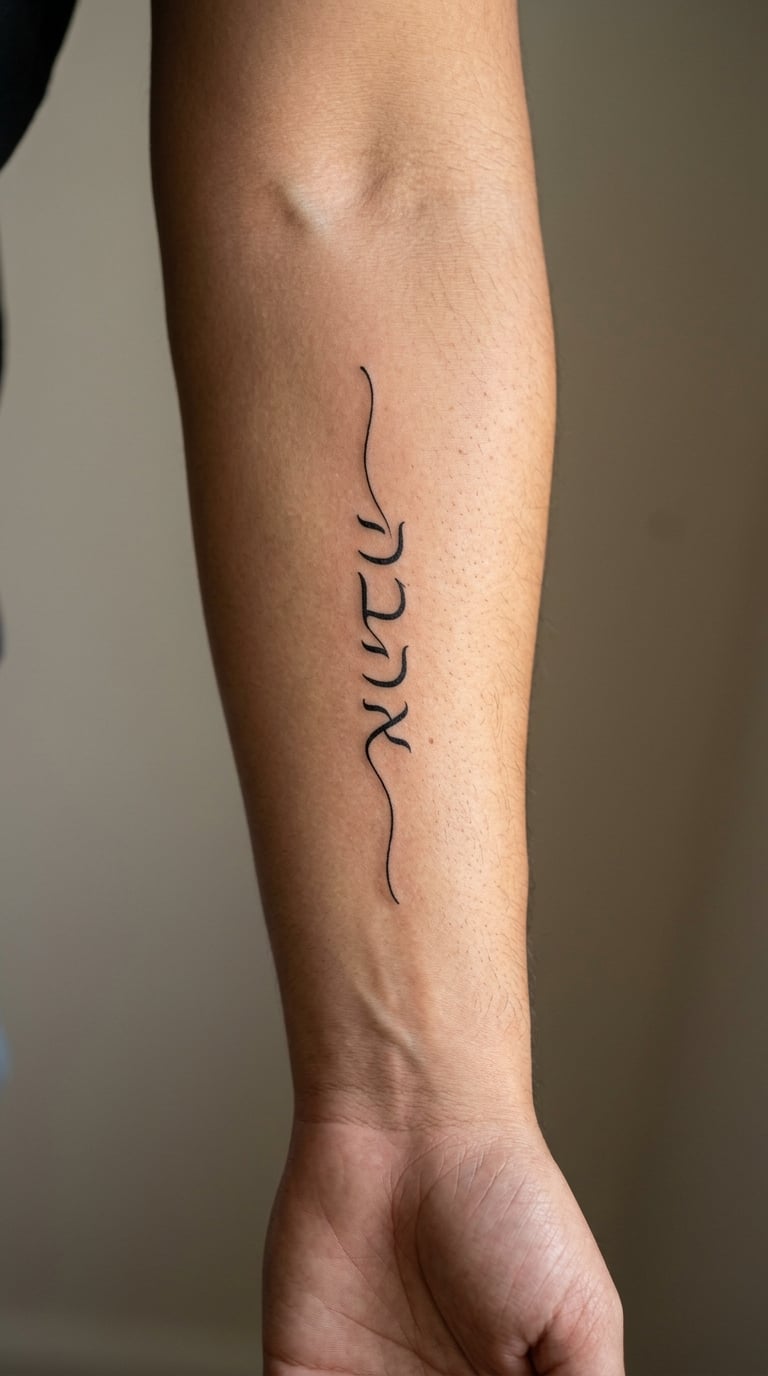
Ahava is four letters and reads אהבה, meaning love. In fine-line script it becomes four thin, slightly connected strokes with a delicate foot on the bet and a final he that trails off, which is what keeps it from looking plain.
People choose it for the simplest possible reason: it says exactly what they mean. It reads as intimate rather than loud, and it suits a first tattoo because there is very little to get wrong once the letters are checked.
Placement: inner forearm, or along the underside of the bicep where skin stays soft.
Size: 2-3 in (5-8 cm) across.
Style: fine line, single-needle, black ink only.
Pain: low to medium on the inner forearm; the inner elbow and wrist crease sting more. Honest ageing note: very fine hairlines on the inner arm soften and blur over roughly five to seven years, so a slightly heavier single needle is the smarter choice.
Make it yours: add the Hebrew of a date underneath in a smaller line, or ink the same word in your partner’s hand lettering as a matching pair.
2. Hebrew Word Shalom in Minimalist Blackwork
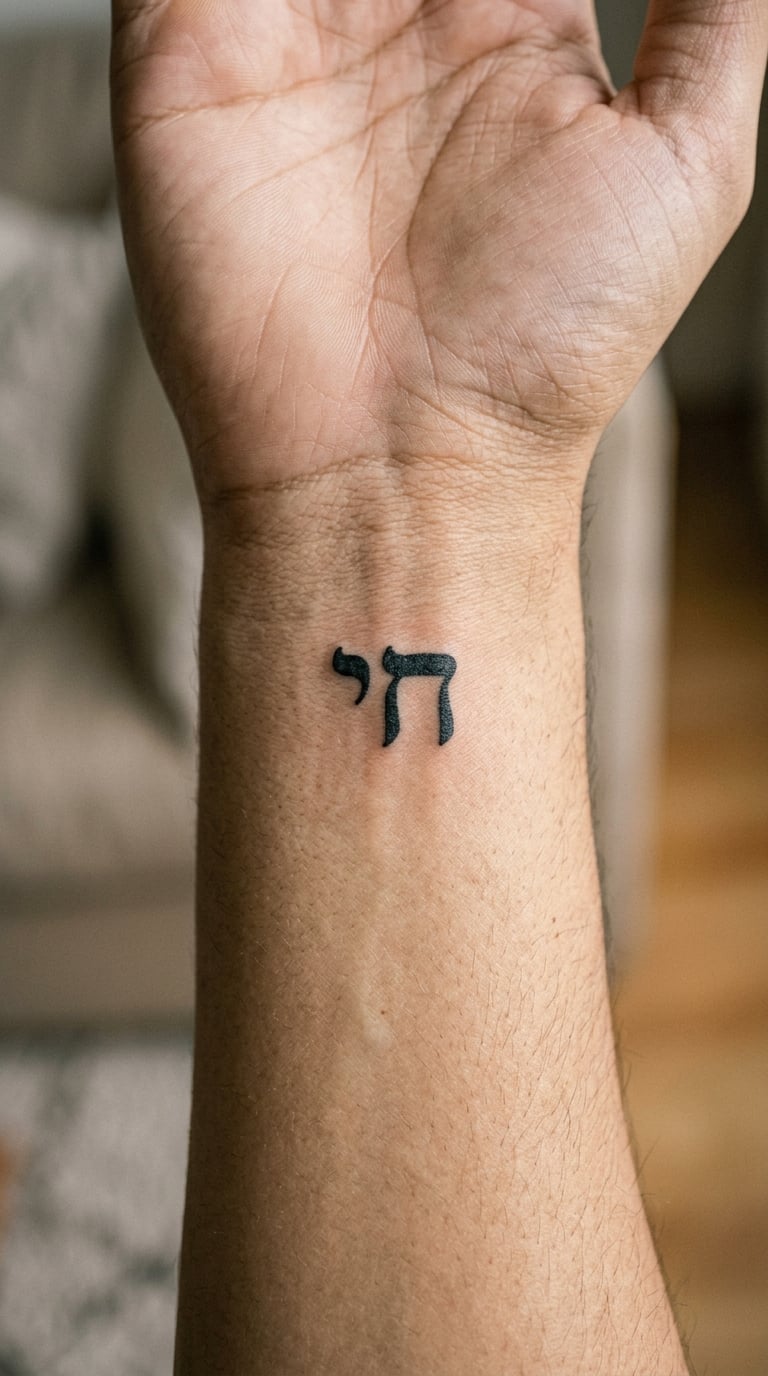
Shalom reads שלום and means peace, though it also works as hello and goodbye depending on who says it. The word suits a solid, unfussy treatment: a clean line of standard Hebrew lettering, no shading, no framing.
It is the most versatile of the 24 because it is polite everywhere. Non-Hebrew speakers, Jewish readers, someone who moved countries last year, someone getting married this year. It rarely lands wrong.
Placement: inner wrist for a discreet read, or the outer forearm if you want it visible.
Size: 1.5-2.5 in (4-6 cm).
Style: minimalist blackwork, even stroke weight, matte black.
Pain: medium. The wrist is bony and the veins sit close to the surface. Ageing note: wrist ink shows wear fastest from hand washing and sleeve cuffs.
Make it yours: mirror it on your partner’s wrist in the same size and weight, which turns one word into a companion piece.
3. Hebrew Word Emet in Traditional Lettering
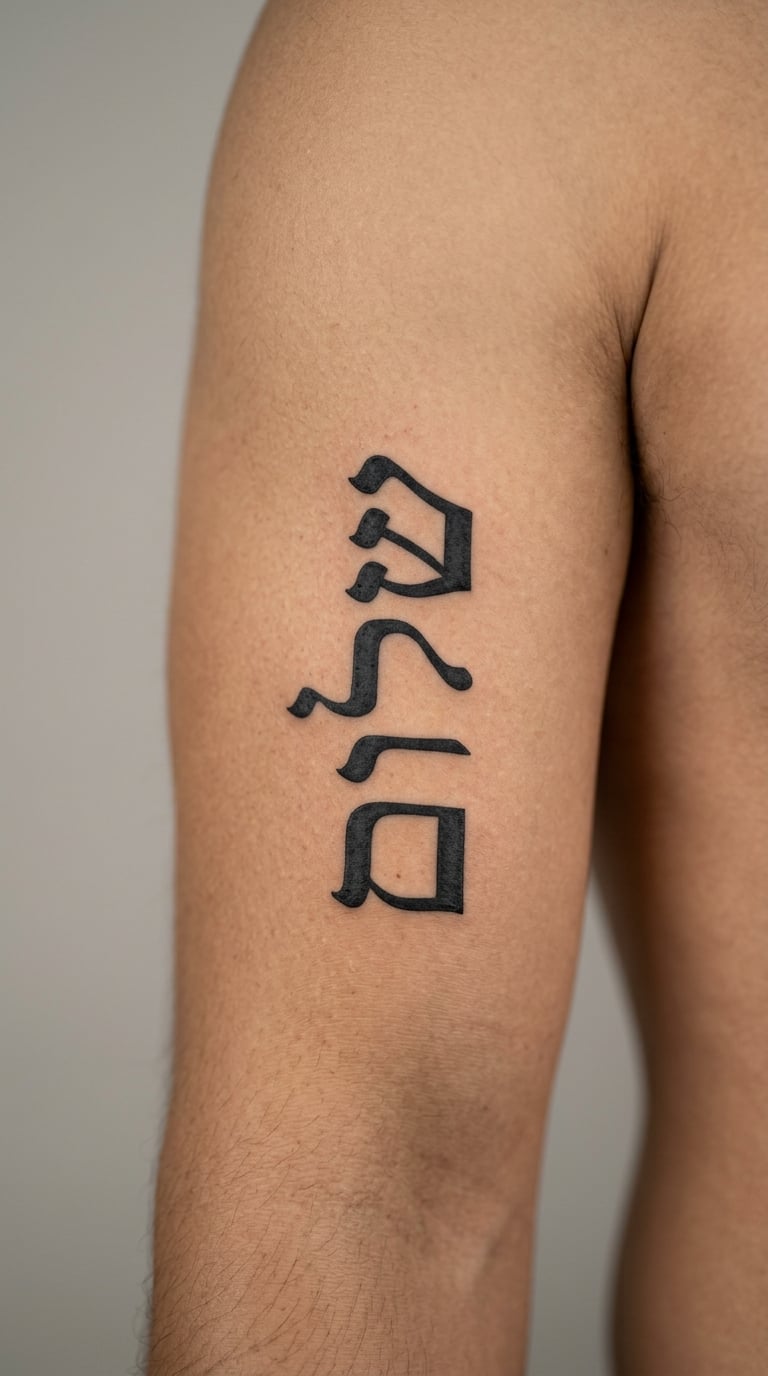
Emet is three letters, אמת, and means truth. Traditional Hebrew lettering means the heavier classical forms, with squared serifs and a consistent thick-and-thin rhythm rather than a casual handwritten feel.
Truth is one of the oldest words in Hebrew and it shows up all over Jewish ethical writing, so people reach for it as a value statement rather than a name. Three letters also make it one of the easiest words to letter beautifully.
Placement: outer upper arm, high on the shoulder cap area.
Size: 2-3 in (5-8 cm).
Style: traditional lettering, black, no colour.
Pain: low to medium. The upper arm is meaty and the skin there barely moves.
Make it yours: run the word through a calligrapher in a square script and get a clean digital drawing to hand your tattooer, rather than a screenshot.
4. Hebrew Word Chai in Bold Black Ink
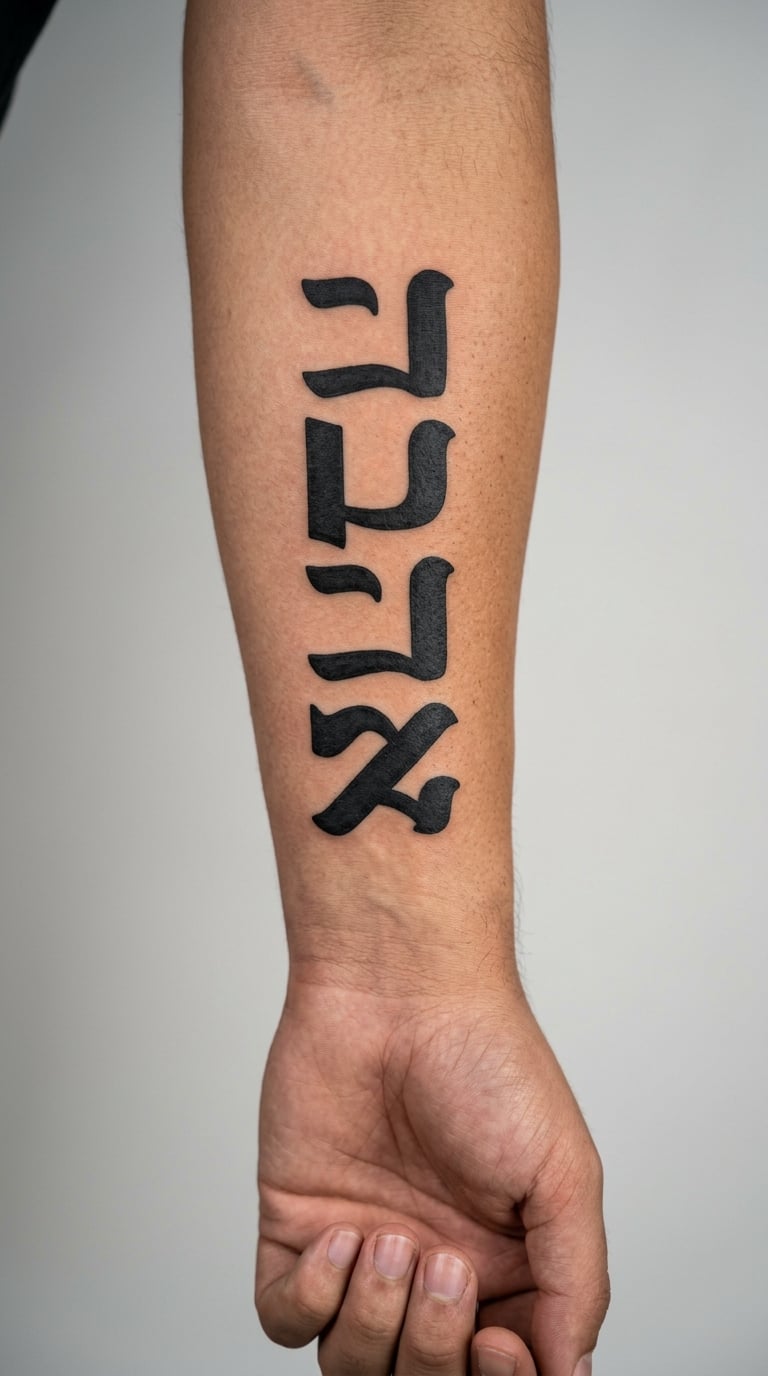
Chai is two letters, חי, and means life. In bold black ink the wide het and the narrow yud sit side by side, which makes it one of the most legible Hebrew words you can get tattooed at small sizes.
It is also the most common Hebrew word tattoo in the world, largely because chai also works as an acronym for chai im sveta, meaning a toast to life. Its gematria value is 18, so you will often see the number 18 tattooed in the same place.
Placement: forearm, running across the muscle.
Size: 1.5-2 in (4-5 cm). Two letters need very little room.
Style: bold black, brush-style lettering with a matte finish.
Pain: medium on the forearm, and the inner forearm above the wrist is the stingy part.
Make it yours: pair the word with the numeral 18 in the same ink weight underneath, which is the traditional gematria form of the same meaning.
5. Hebrew Word Baruch in Fine-Line Typography
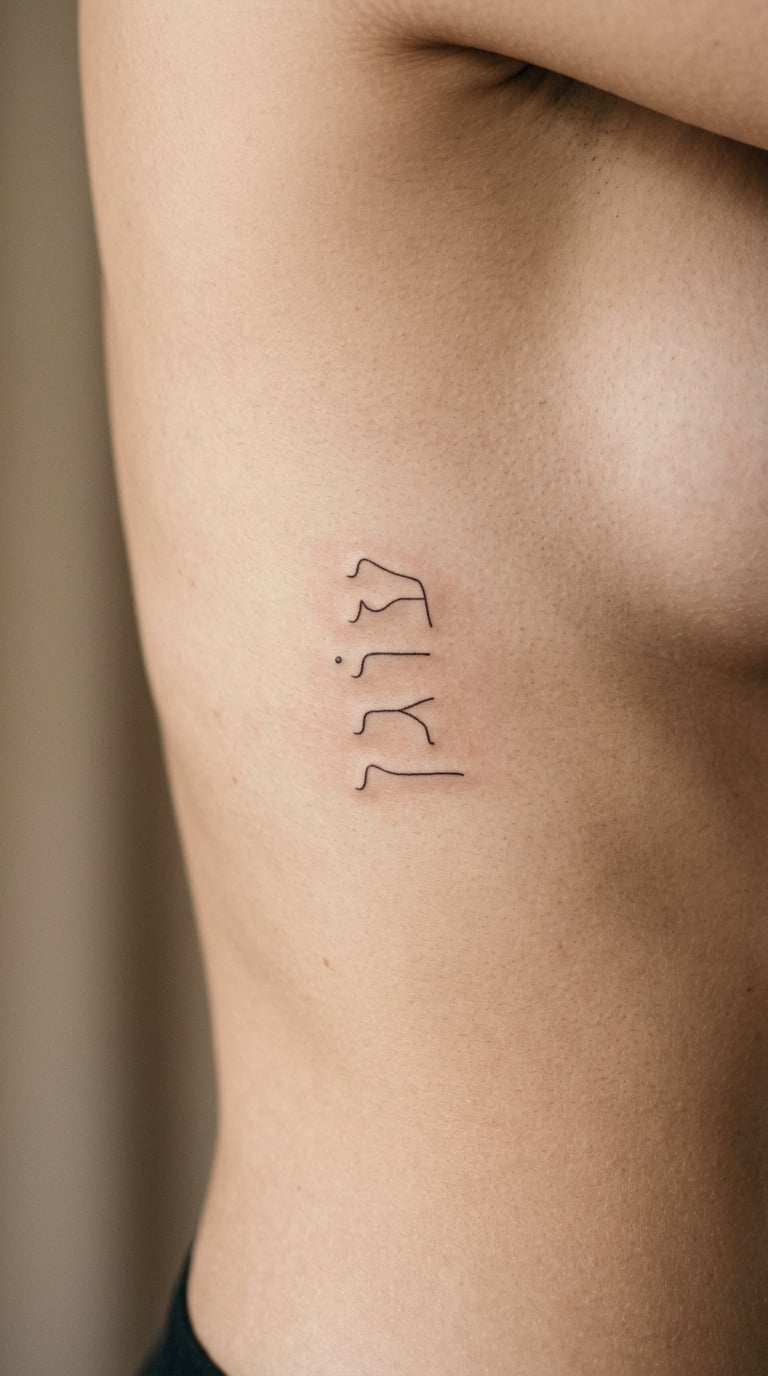
Baruch reads ברוך and means blessed. Five letters with a resh that wants careful spacing, and it works best as pure typography: even letters, generous gap between the resh and the kaf, nothing else in the frame.
It appears at the start of a great many traditional Hebrew blessings, which is where most people meet it. As a standalone word it reads as gratitude rather than religion, though the context is close to the surface.
Placement: along the ribs, following the line of the body.
Size: 2-2.5 in (5-6 cm) across the ribs, or longer if you set it along the side.
Style: fine-line typography, single needle, hairline weight.
Pain: medium to high. Ribs are bone close to the surface and the skin moves when you breathe. Ageing note: rib skin stretches, so plan for a gentle warp over the years.
Make it yours: add the opening word of a blessing that matters to you, checked by a speaker, on a second line below.
6. Hebrew Word Ani in Small Handwritten Script
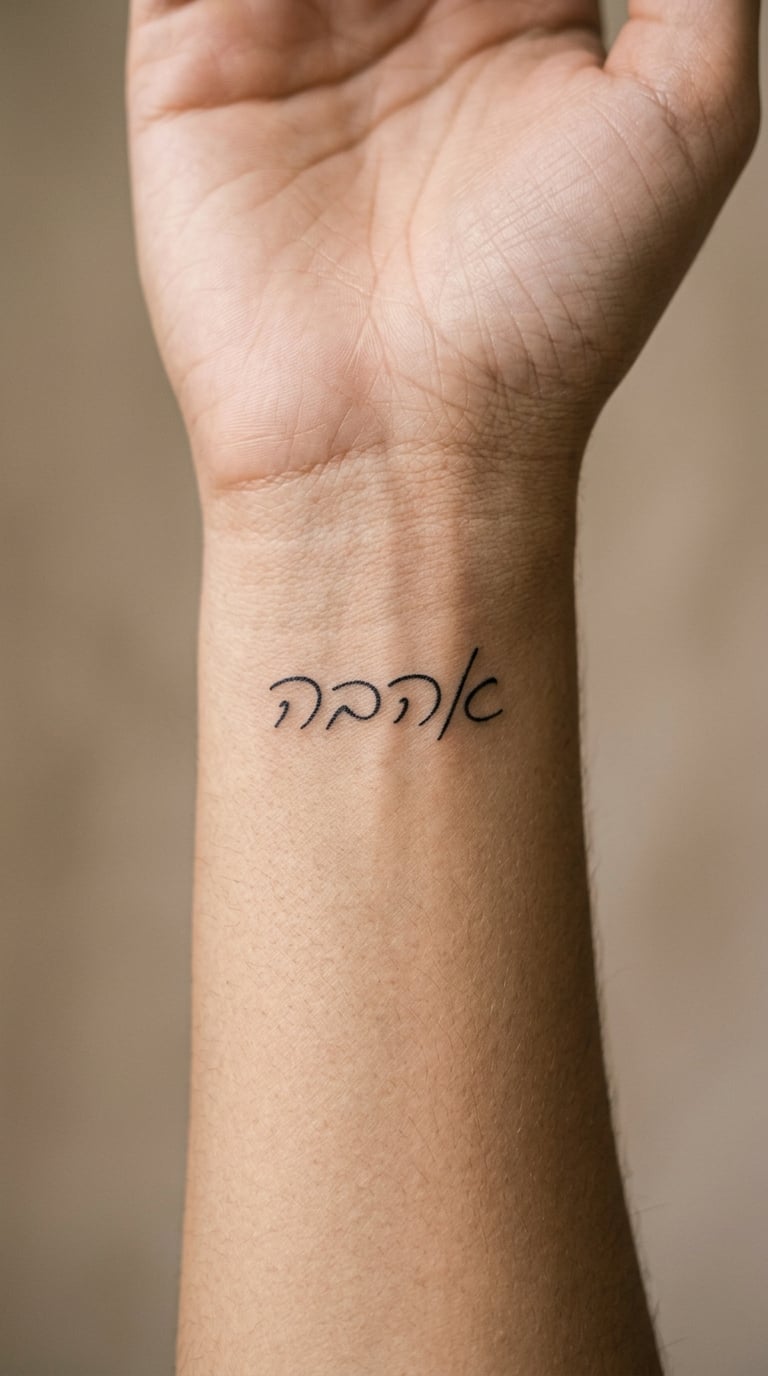
Ani is three letters, אני, and means I or me. A handwritten script treatment makes it look like a signature, which is exactly the appeal: a small, quiet word that belongs to the person wearing it.
It pairs well with a name, and it works as a first tattoo because the whole design is small. The risk is scale, not meaning. If the letters are too small they lose definition within a year or two.
Placement: inner wrist, above the wrist crease, or behind the ear.
Size: 1-1.5 in (2.5-4 cm). Do not go smaller than that for three letters.
Style: handwritten, thin black lines with natural stroke variation.
Pain: medium at the wrist, low behind the ear. Behind the ear fades faster because of hair growth and washing.
Make it yours: hand your artist a sample of your own handwriting in Latin script and ask them to translate that rhythm into Hebrew rather than copying a generic font.
7. Hebrew Word Atid Beseder in Optimistic Script
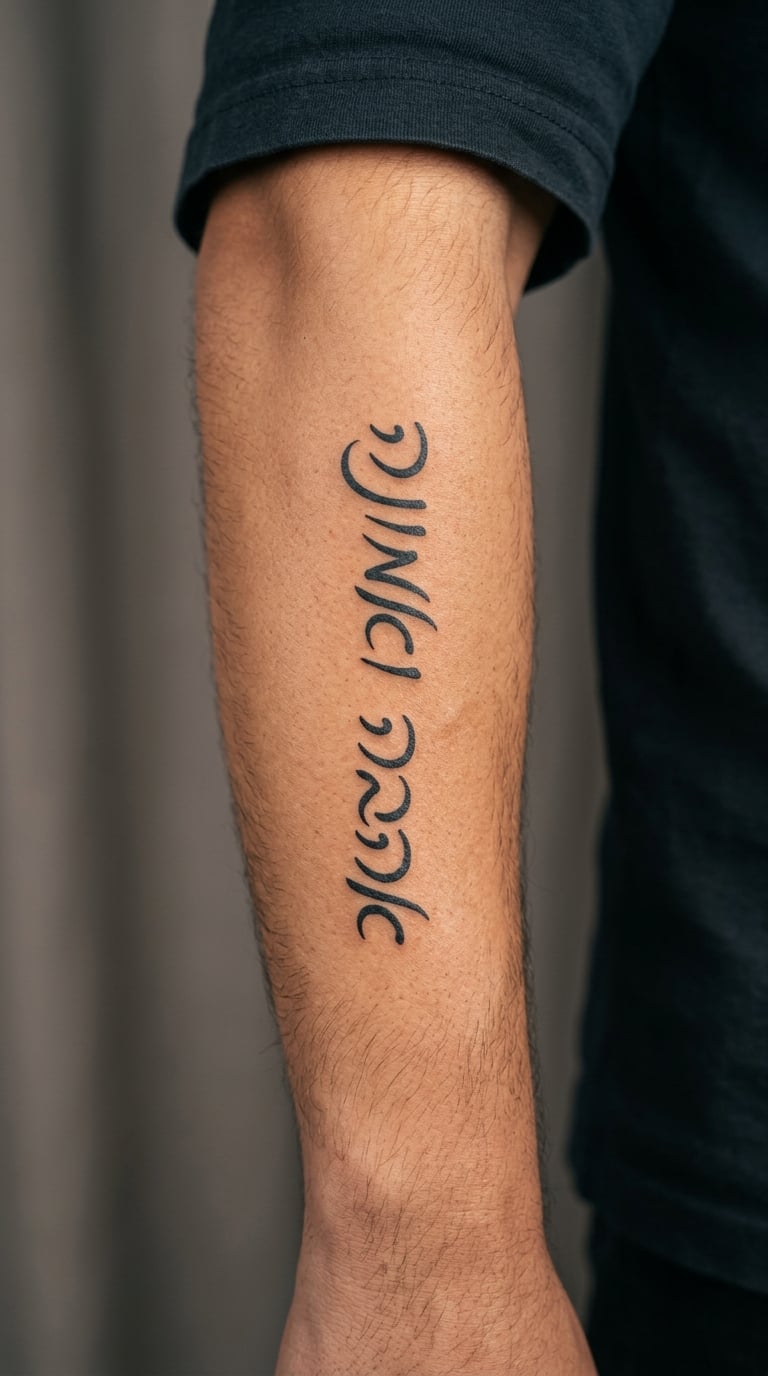
Atid beseder, עתיד בסדר, means the future is fine. It is a modern Israeli phrase, the sort of thing a friend says when a plan falls apart, and it makes an unusually good motto tattoo.
Two words means twice the letters, so this is where sizing starts to matter. Hand-lettered script keeps the character count manageable and gives the phrase a handwriting quality that block lettering would make look severe.
Placement: outer forearm, where there is a flat stretch of skin to run a horizontal line along.
Size: 3-4 in (8-10 cm) across for both words on one line.
Style: flowing script, connected, black.
Pain: medium. Longer sittings on the forearm get uncomfortable around the two-hour mark regardless of style.
Make it yours: set the two words on separate lines, the second indented, so the phrase reads as a sentence rather than a banner.
8. Hebrew Word Adonai in Devotional Fine Line
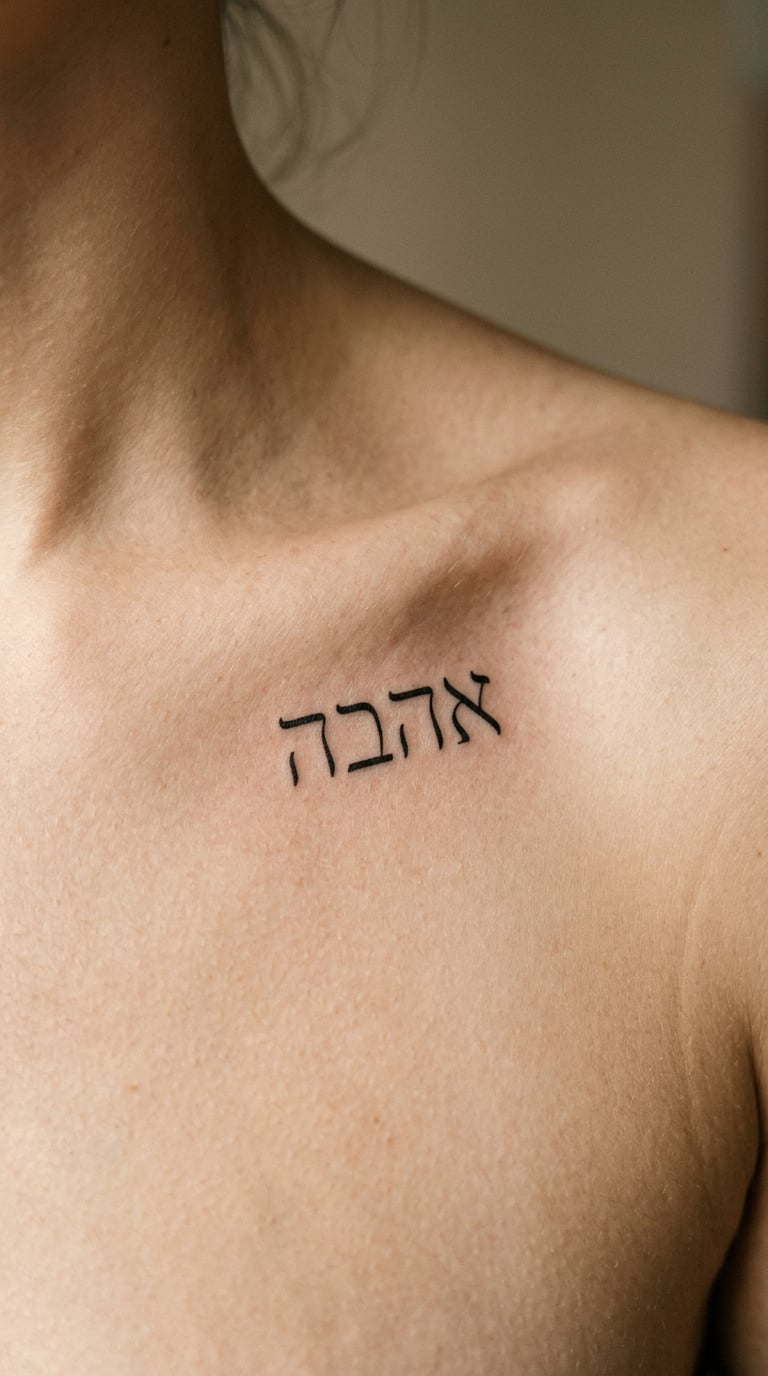
Adonai reads אדוני and means my Lord or the Lord. Fine line is the respectful treatment here: no shadow, no embellishment, no religious symbols added around it. The word stands on its own.
This one carries the most religious weight of the 24, and people choose it carefully. Some who are not Jewish wear it as a general expression of faith rather than a specific religious statement.
Placement: upper chest near the collarbone, or centred on the sternum.
Size: 2-2.5 in (5-6 cm).
Style: fine line, single needle, no decorative framing.
Pain: medium. The sternum is sensitive, the collarbone area is bony, and the chest skin moves with breathing.
Make it yours: have the lettering checked by someone who reads Hebrew every day rather than a translation app, then bring the verified drawing to the session.
9. Hebrew Word Ruach in Watercolour Style
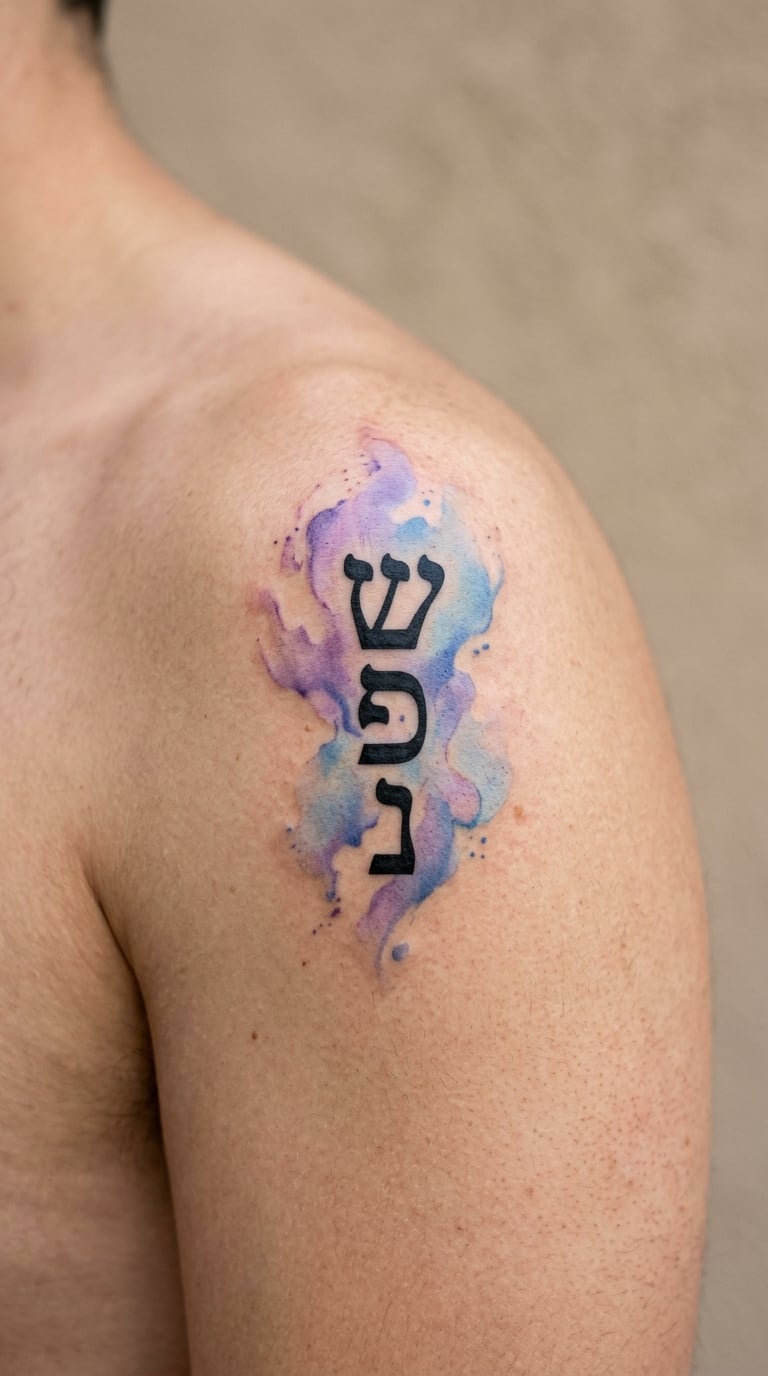
Ruach is three letters, רוח, and means spirit, which in Hebrew also carries wind and breath in the same word. It is a good candidate for watercolour because the word already implies something moving through air.
Keep the wash behind the letters rather than across them. Soft blue, violet or smoky grey pigment bleeding outward from behind solid black Hebrew characters gives you a soft, expressive result without turning the word into something illegible.
Placement: shoulder or upper back, where a large flat area lets the wash breathe.
Size: 2-3 in (5-8 cm) for the letters, with colour extending beyond.
Style: watercolour with solid black linework on top.
Pain: medium, and colour packing means a longer sitting. Shoulder skin is fibrous, so expect a gritty feeling in patches.
Make it yours: add a second, fainter word in the wash behind the first, so the colour is doing work even if you keep the reading simple. Similar star-map layouts are covered in 20 North Star Tattoo Ideas.
10. Hebrew Word Torah in Blackwork
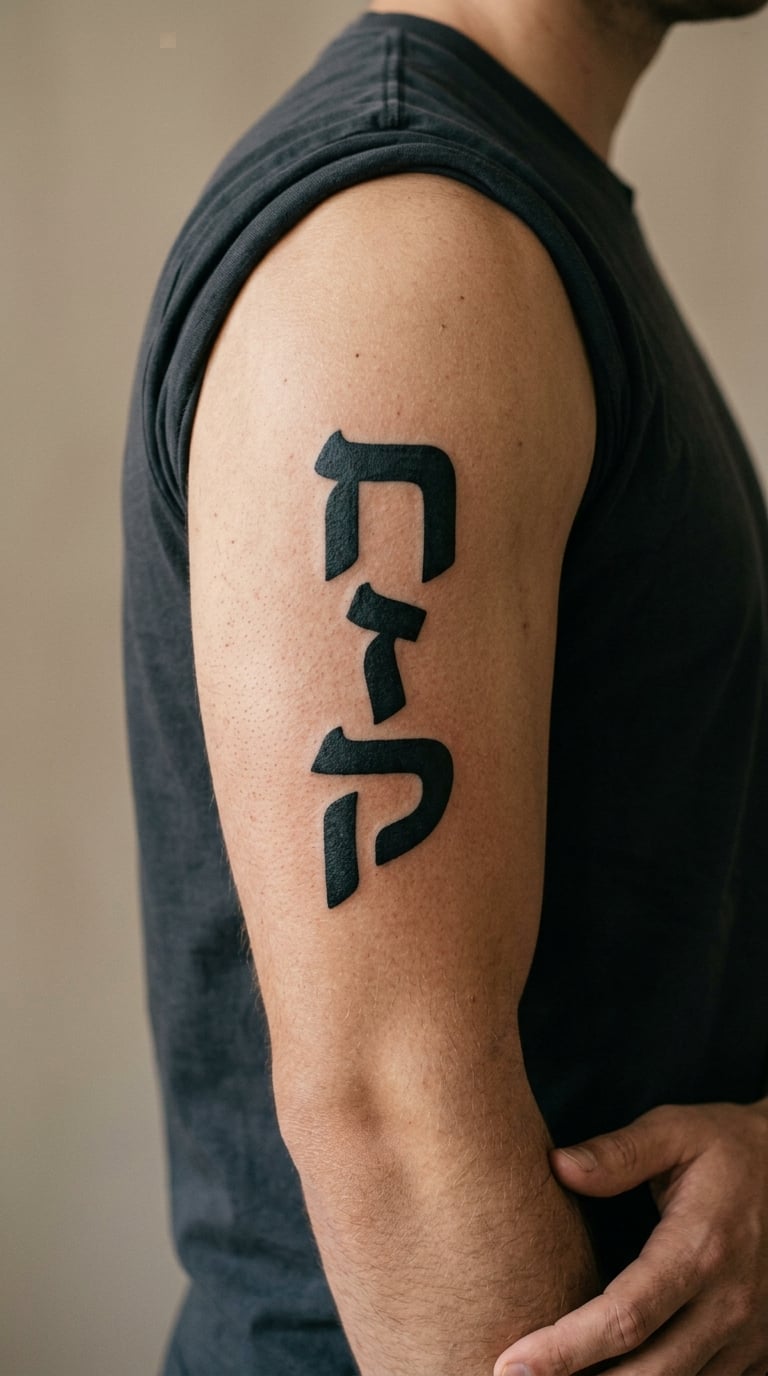
Torah reads תורה and means teaching, instruction or law. The four letters are wide, which gives the artist plenty to work with for a heavy blackwork treatment where the strokes are packed solid.
As a word tattoo it is a statement about learning and tradition more than a piece of scripture. If you want the text itself, a verse in Hebrew needs far more space and belongs on a forearm or a rib panel, not a small spot.
Placement: outer upper arm or shoulder.
Size: 2.5-3.5 in (6-9 cm).
Style: blackwork, dense solid fill, no shading.
Pain: low to medium. Black packing is repetitive rather than sharp, which some people find easier than detail work.
Make it yours: have the letters filled to different densities, darkest at one end, so a bold design still has a sense of movement.
11. Hebrew Word Melech in Geometric Lettering
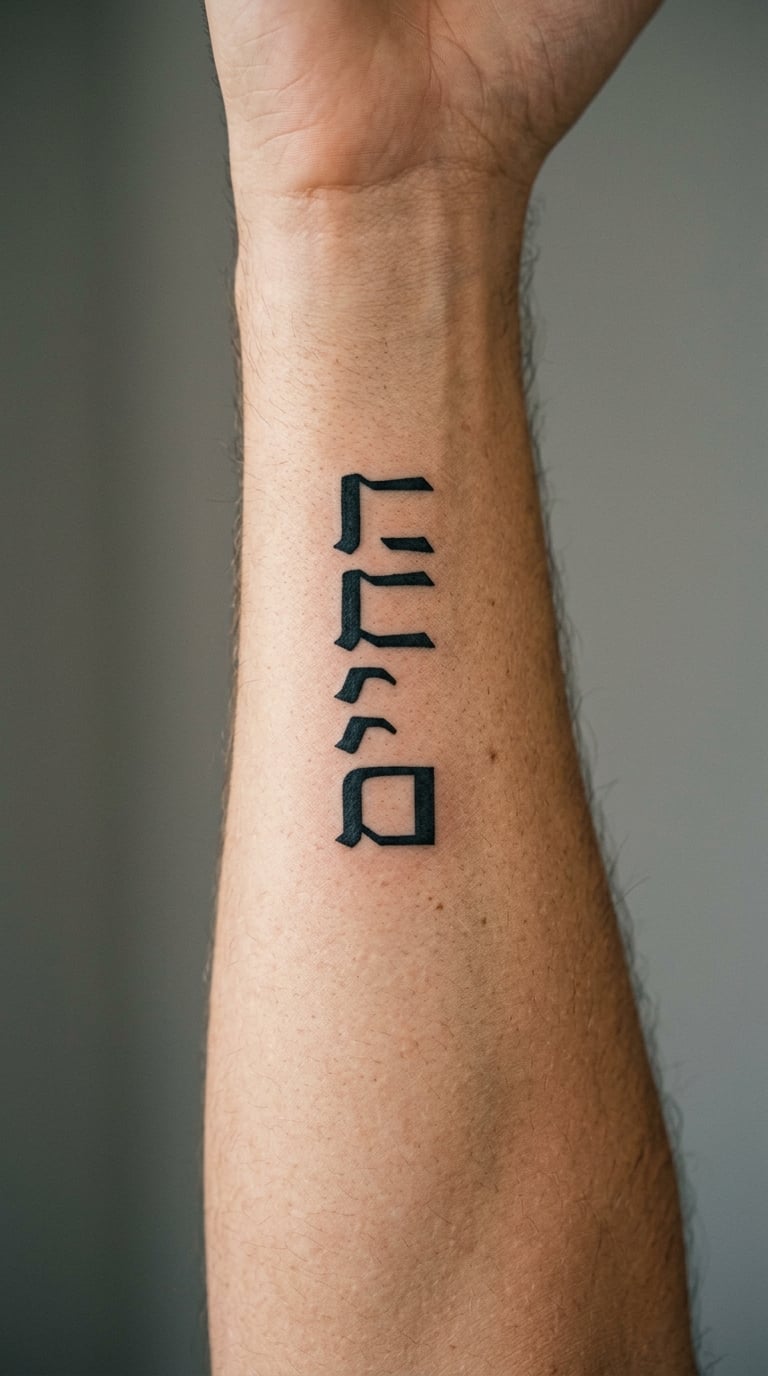
Melech is מלך and means king. Geometric lettering means the letters are built from straight segments and hard corners, letting the block structure of Hebrew do the work instead of a brush script.
It is the most contemporary-looking word tattoo here. The wide mel and the final kaf give you a word that fills a narrow strip of skin well, which makes it practical for a forearm panel that already has other linework.
Placement: side of the forearm, or between existing linework pieces.
Size: 1.5-2.5 in (4-6 cm).
Style: geometric, black, angular letterforms.
Pain: medium, slightly less on the outer edge of the forearm than the inner side.
Make it yours: align the word on a shared baseline with another piece in the same style so the whole forearm reads as one drawing.
12. Hebrew Word Yisrael in Traditional Style
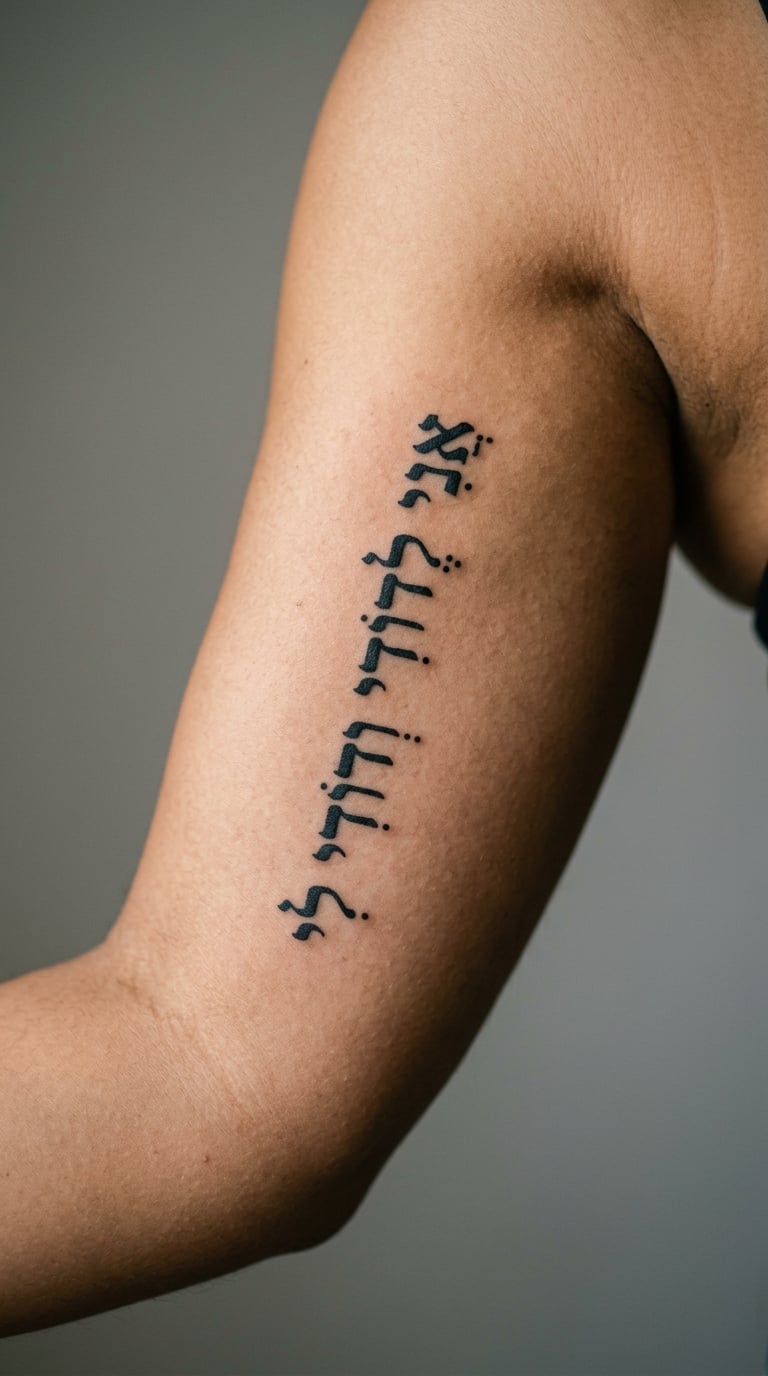
Yisrael reads ישראל, five letters including the distinctive final lamed, and it is the name Israel. Traditional style means the classic squared Hebrew forms, evenly weighted, with no stylisation.
People wear it for heritage, for a place, or for a family connection that does not need explaining. The lamed rises above the other letters, so give the artist a little extra headroom when you plan the height.
Placement: outer upper arm, chest, or across the upper back.
Size: 2.5-3.5 in (6-9 cm).
Style: traditional, black, balanced proportions.
Pain: low to medium on the arm, medium on the chest.
Make it yours: add a small line of nikkud, the vowel points, beneath the word in a much finer weight, which adds a scholar’s texture without doubling the size.
13. Hebrew Word Hayam in Minimal Script
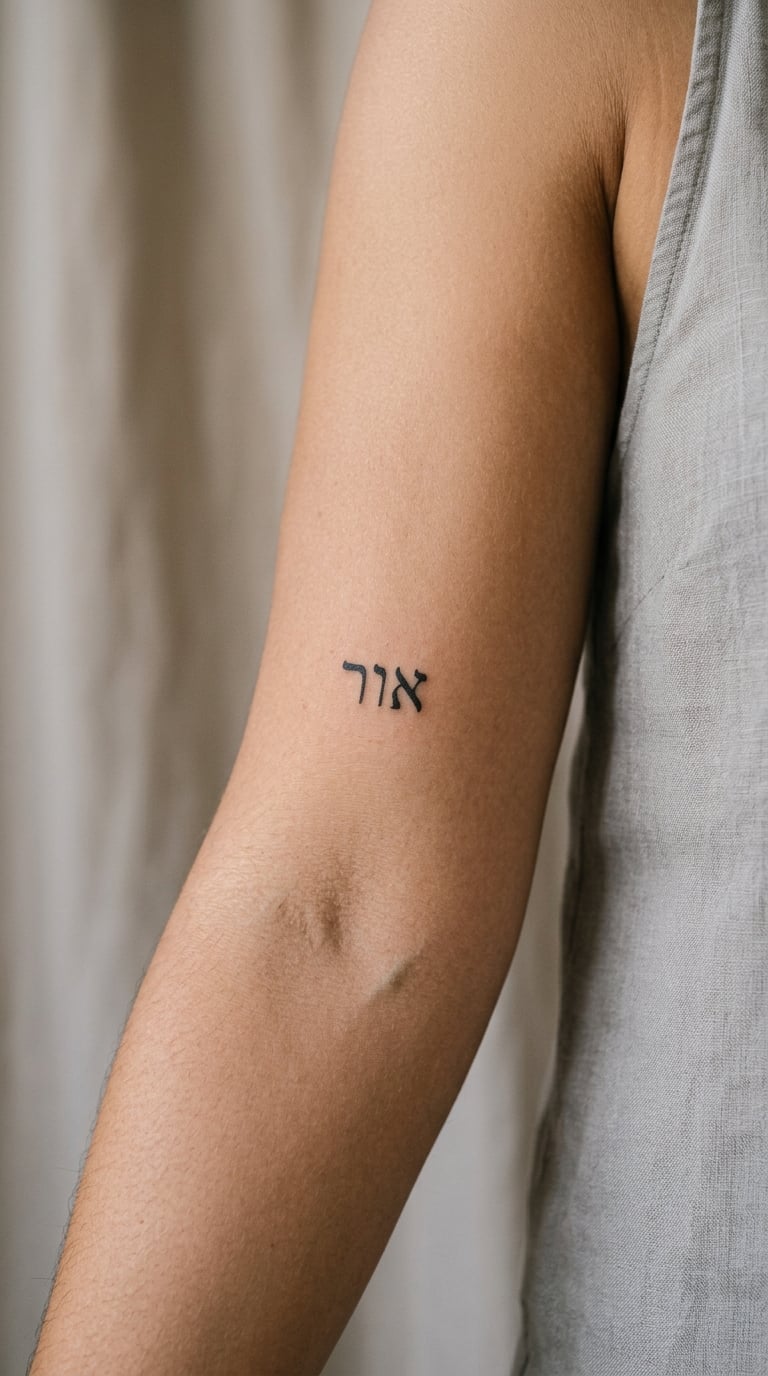
Hayam is הים and means the sea. Three letters, one of them a wide final mem, and nothing else in the design. The word is doing all the work, so resist the urge to add a wave or an anchor.
It suits people who grew up near water or who just like a short word that sounds good read out loud. Minimal script also ages the best of any style here, because there is less fine detail to soften.
Placement: inner bicep, or the flat inside of the forearm.
Size: 1.5-2 in (4-5 cm).
Style: minimal script, single line of black lettering.
Pain: low. The inner bicep is soft and has good padding.
Make it yours: add a single thin line beneath it, the length of the word, as a horizon line without drawing anything below it.
14. Hebrew Word Eretz in Fine-Line Handwriting
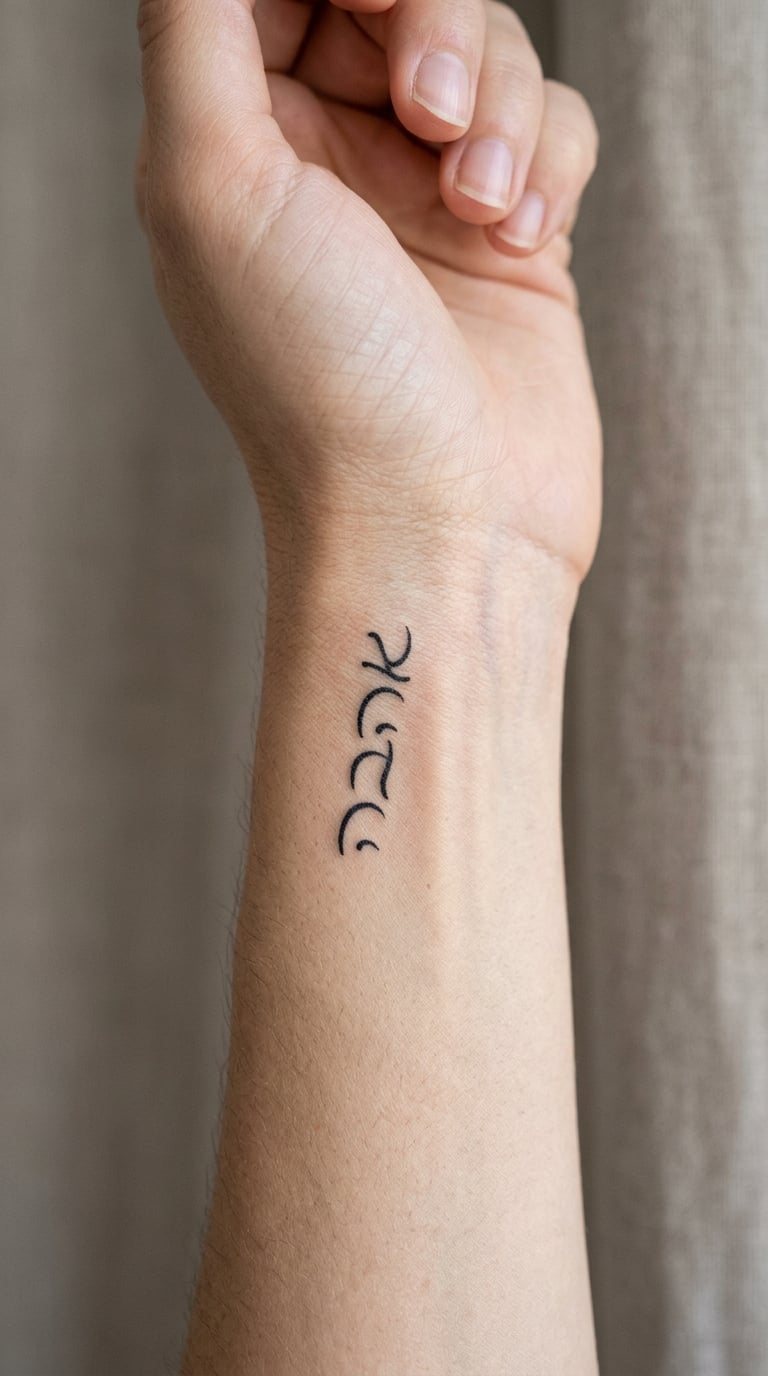
Eretz reads ארץ and means land or earth, sometimes homeland. Hand-lettered in fine line, with a thin kof and a resh that leans into the flow, it looks personal rather than formal.
It is a word about belonging, and it shows up on people who have moved between countries. Check the spelling carefully here, because it is short enough that a single swapped letter changes the word.
Placement: side of the wrist, or the inner forearm above the crease.
Size: 1.5-2 in (4-5 cm).
Style: fine-line handwriting, thin black, slightly uneven by hand.
Pain: medium to high at the wrist edge, where skin is thin over a hard surface and the letters cross veins.
Make it yours: have the artist hand-letter the word once on paper first, so you approve the exact stroke shapes before anything permanent happens.
15. Hebrew Word Simcha in Expressive Calligraphy
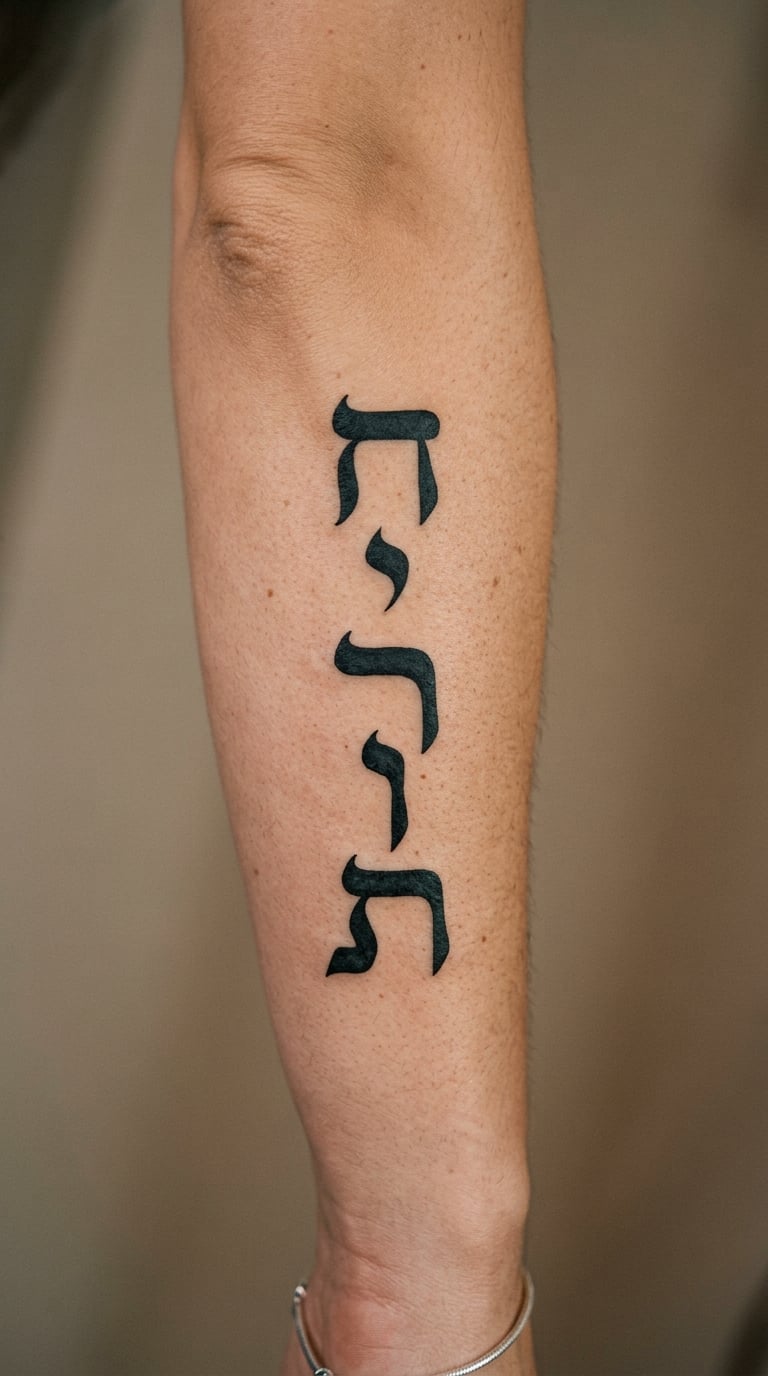
Simcha reads שמחה and means joy. Expressive calligraphy means visible variation in stroke weight, wide at the start of a letter and thin at the end, with generous space between the four characters.
It is the most energetic of the fine-line ideas, and the wide final he gives you somewhere to let the strokes run. Coming out of the word meaning joy, a loose hand-lettered version suits people who dislike anything too neat.
Placement: forearm, or the inside of the upper arm.
Size: 2-2.5 in (5-6 cm).
Style: expressive calligraphy, black, varying weight.
Pain: medium. Variation in weight means the artist changes needles, which slows the session and adds to the sting.
Make it yours: let the last letter run out into a single fine tail that fades rather than stops, so the word ends in motion.
16. Hebrew Word Anata in Fine-Line Script
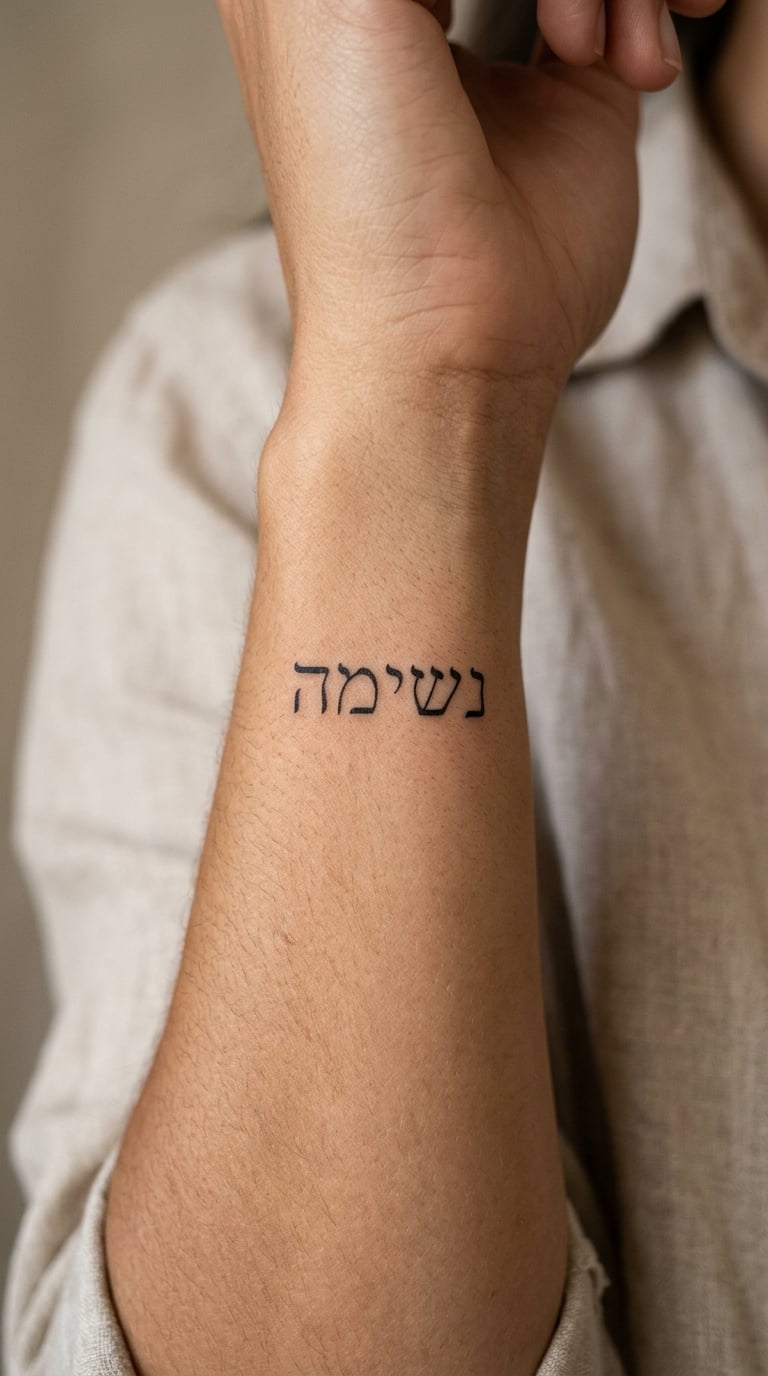
Anata is אתה and means you. Three short letters, which makes it a natural partner word for the ani tattoo further up this list, and a good choice when the word is aimed at someone else.
Fine line keeps it discreet enough for a work setting. Written plainly it reads as a dedication, and because it is only three letters it can live in a small space that a longer phrase could never fit into.
Placement: inner wrist, or the ankle above the bone.
Size: 1-1.5 in (2.5-4 cm).
Style: fine line, delicate black script, careful spacing.
Pain: medium at the wrist, high over the ankle bone.
Make it yours: place anata in the same style and size as anani, ani on the opposite wrist, so the two words sit as a pair without a date attached.
17. Hebrew Word Shukrun in Minimal Blackwork
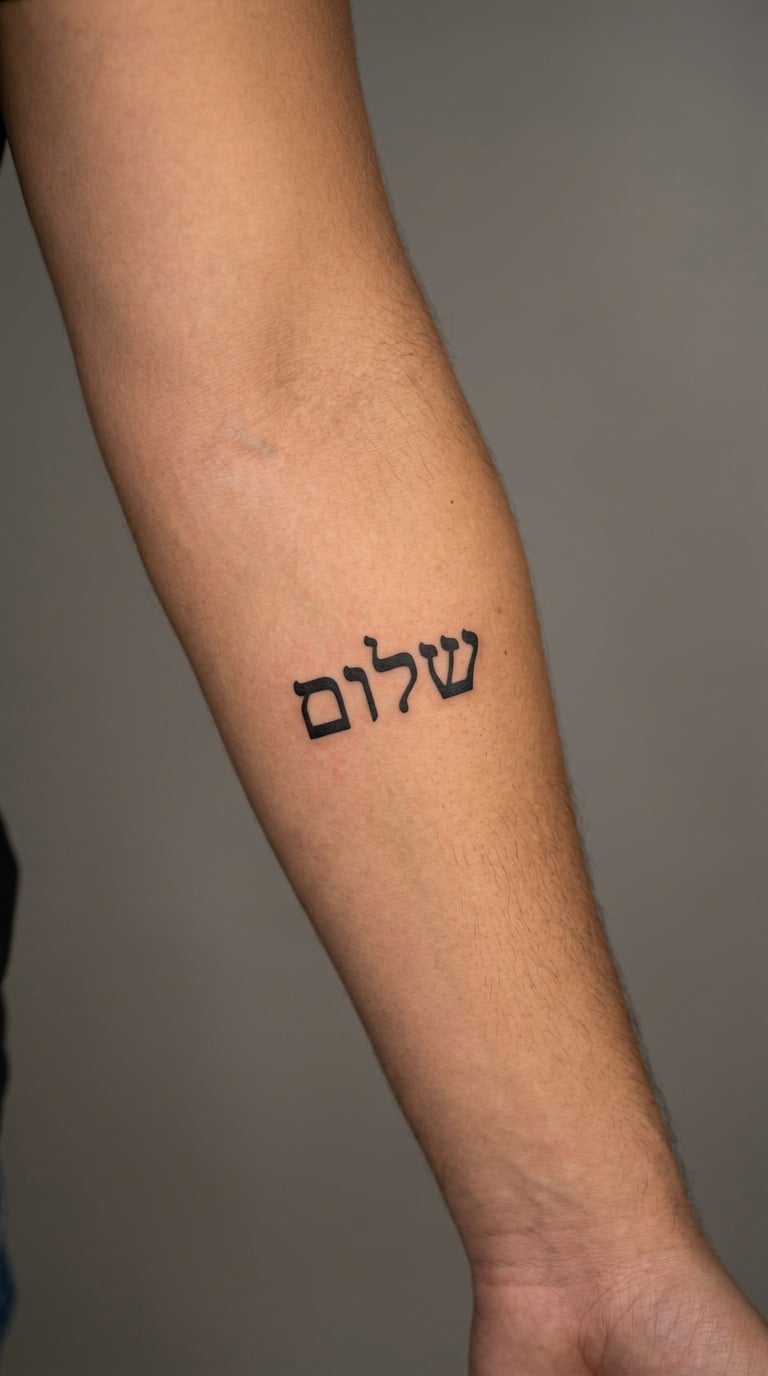
Shukran, written שקרן in Hebrew letters, is a case worth knowing about. In Mizrahi and Arabic-influenced usage, transliterated into Latin letters it means thank you. Read as a Hebrew word, the letters mean liar. It is one of the few entries on this list where the source language decides the meaning.
That ambiguity is why verification matters so much here. If this is your word, confirm with a Hebrew speaker which spelling you want and be aware that some readers will take one meaning and some the other.
Placement: forearm, compact and centred.
Size: 2-2.5 in (5-6 cm).
Style: minimal blackwork, plain lettering, no decoration.
Pain: medium on the forearm.
Make it yours: have the artist redraw the word twice, once in a heavier weight and once in a lighter one, and pick the version you can read at arm’s length.
18. Hebrew Word Tzedek in Fine-Line Vertical Tattoo
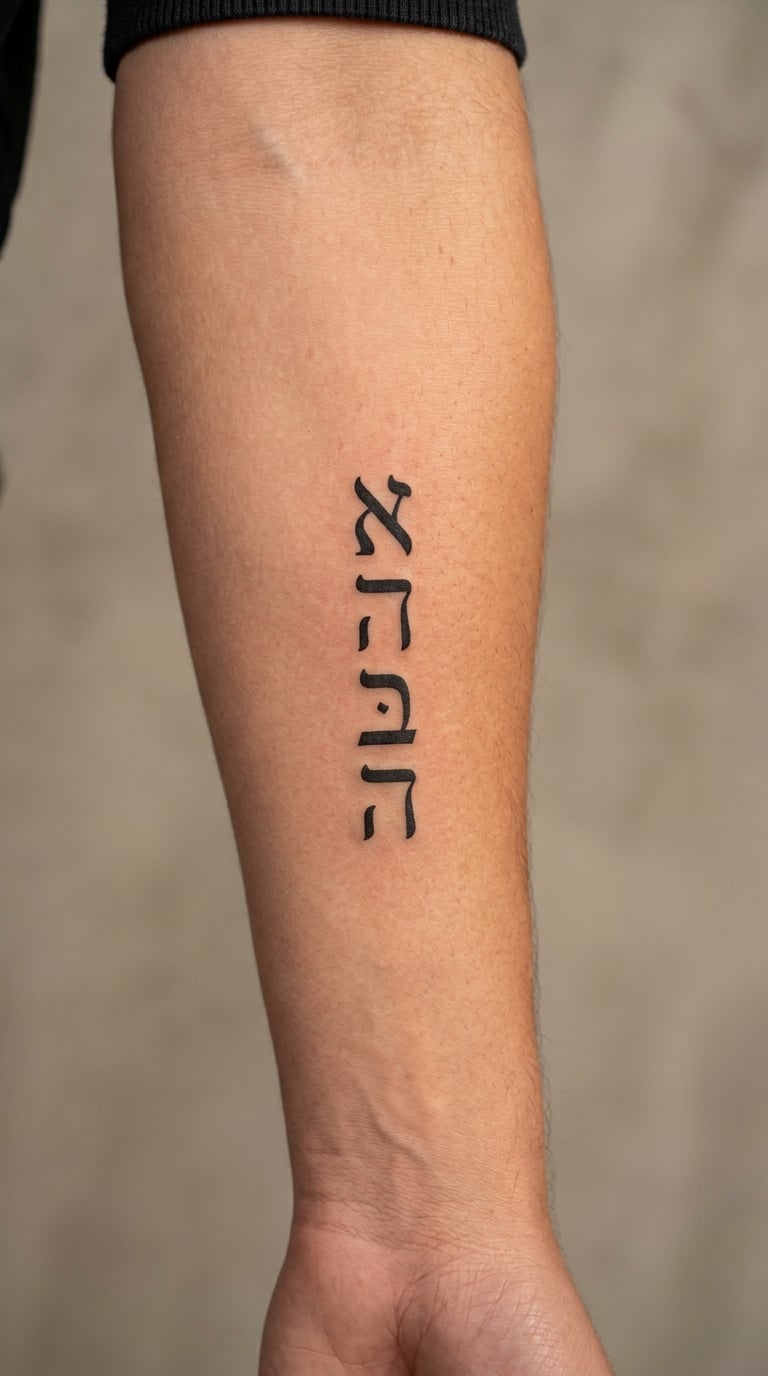
Tzedek reads צדק and means justice or righteousness. Stacking the three characters vertically turns a short horizontal word into a narrow column, which is the trick that makes a big statement in a small footprint.
Vertical text also suits the flow of a limb. On the inner forearm, a column of three characters follows the arm’s length and reads naturally from shoulder down to wrist.
Placement: inner forearm running lengthwise, or down the side of the ribcage.
Size: 3-4 in tall (8-10 cm), 1-1.5 in wide.
Style: fine line, single needle, evenly spaced characters.
Pain: medium over a long narrow area, which takes longer than the letter count suggests.
Make it yours: space the characters far apart and run a thin hairline down the centre of the column, so the negative space does as much work as the ink.
19. Hebrew Word Orot in Watercolour and Black
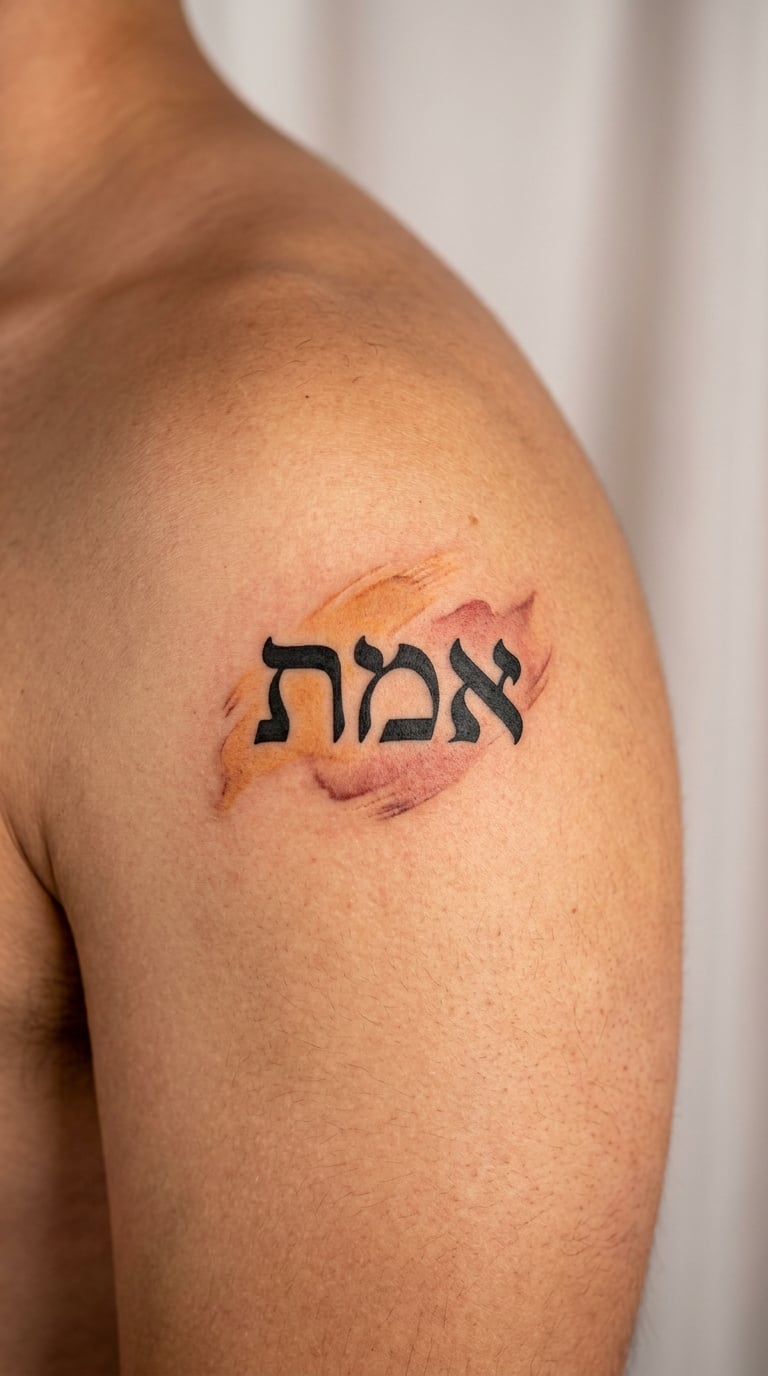
Orot is אורות and means lights, plural. Black Hebrew lettering with a single restrained watercolour accent, amber, gold or a soft red bleeding out from behind the characters, gives you a colourful result that still reads as a word first.
The contrast is the whole point here. Pure black letters against a wash stay legible from across a room, which pure colour letters usually do not. This is the safe way to try watercolour if you have never had colour work before.
Placement: shoulder, upper back, or outer thigh.
Size: 2.5-3 in (6-8 cm) for the word, with colour bleeding past the edges.
Style: watercolour and black, one accent colour only.
Pain: medium. Colour work on the shoulder tends to need a second session once the wash settles.
Make it yours: use a colour with a personal link, a birthstone shade or a family object, instead of a default blue.
20. Hebrew Word Racham in Bold Script
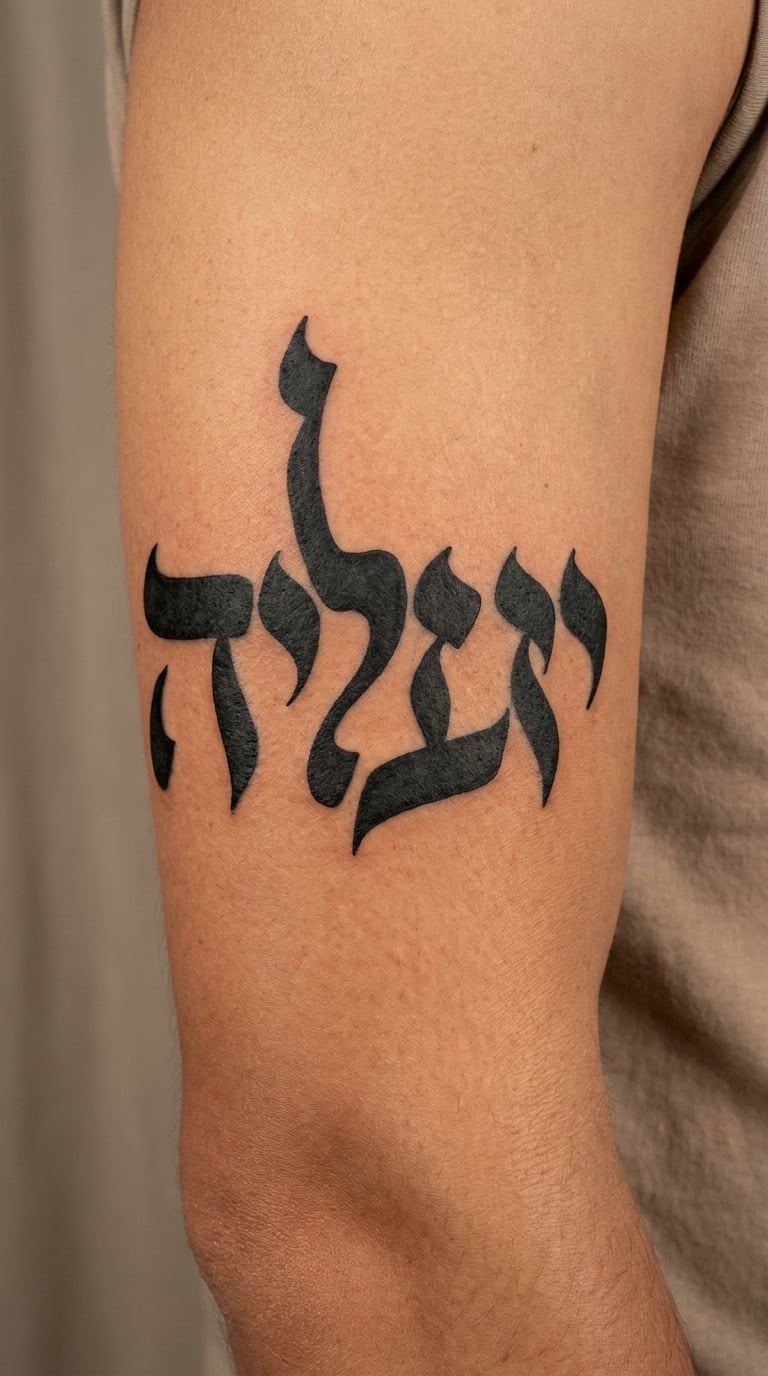
Racham reads רחם, meaning womb, and by extension mercy or compassion. The plural form rachim, רחמים, is the more common word for mercies. Both circulate in Hebrew tattoos, so decide which one you actually want before the design is drawn.
Bold script handles the small letter count well. Heavy strokes make a short word readable from a distance, and the single open space in the middle of the word keeps it from becoming a black block.
Placement: outer upper arm or across the chest.
Size: 2-2.5 in (5-6 cm).
Style: bold script, heavy black, single word, no frame.
Pain: low to medium on the arm, medium on the chest.
Make it yours: ask for the version with slightly rounded terminals, which softens a heavy word without losing the weight.
21. Hebrew Word Baruch Adonai in Fine-Line Phrase Tattoo
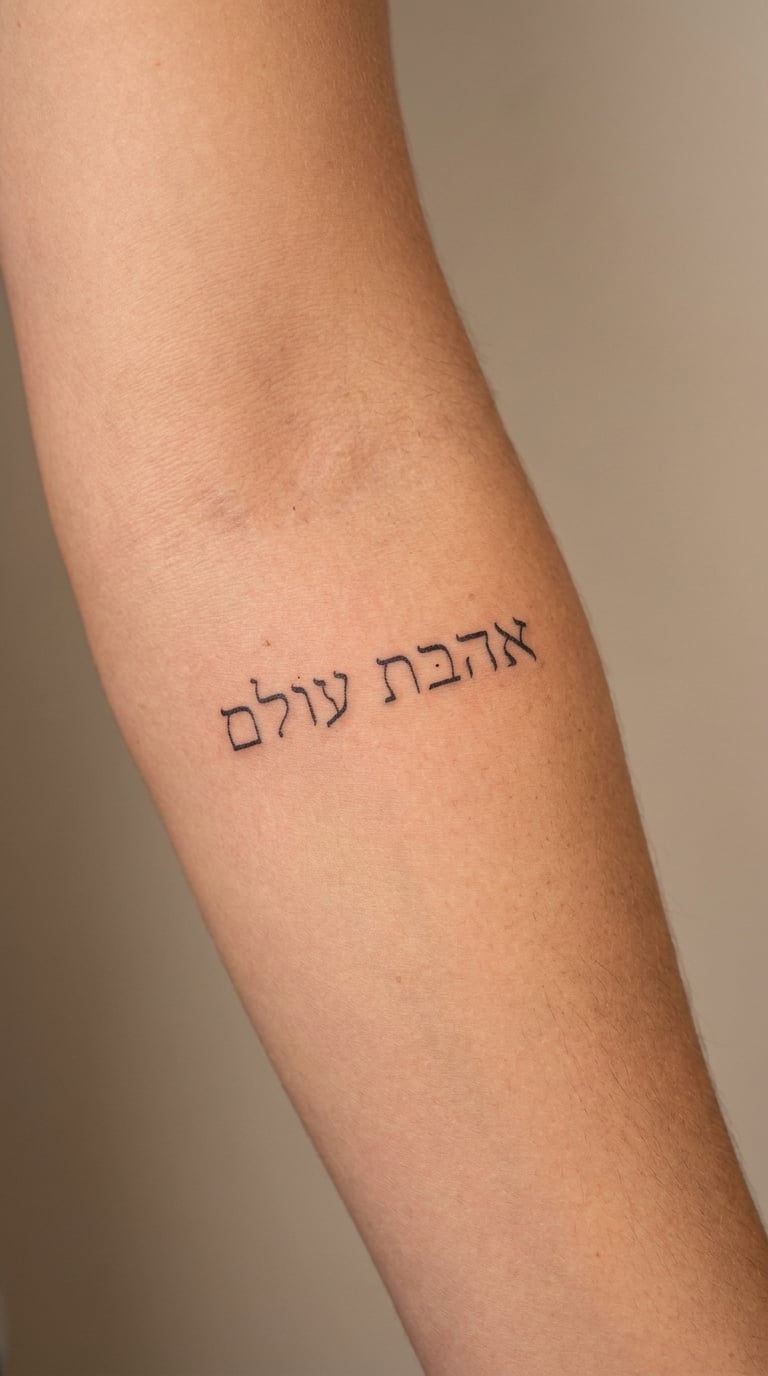
Baruch adonai, ברוך אדוני, means blessed is the Lord. Two words, ten letters including the space, which puts it firmly in phrase territory and makes this the one to plan carefully rather than improvise.
Fine line keeps a phrase from looking heavy, but ten letters in a hairline weight on an inner forearm will need a touch-up after healing. Ask your artist in advance how they plan to handle that, and budget a second short sitting.
Placement: outer forearm along the muscle, or across the chest.
Size: 4-5 in (10-13 cm) across on one line.
Style: fine-line phrase, black, one continuous line.
Pain: medium over a long area, with an extended session.
Make it yours: set the two words in two lines, the second one shorter and offset, which shortens the overall run and keeps the proportions balanced.
22. Hebrew Word Shir in Traditional Calligraphy
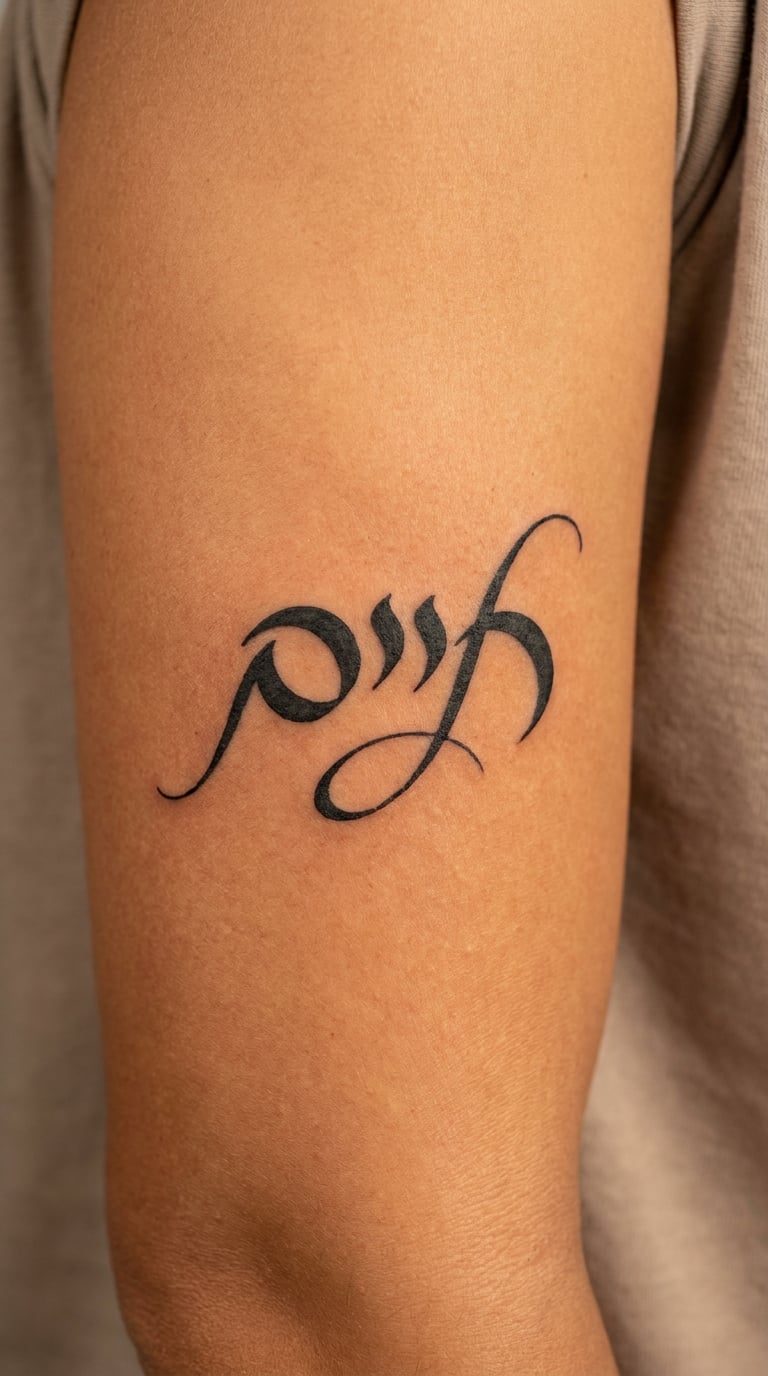
Shir is שיר and means song. Traditional calligraphy gives the three letters a formal, slightly curved quality, with the strokes weighted by hand rather than drawn flat.
It is an elegant, low-key word, and it works particularly well for people who came to Hebrew through music or through family rather than through study. It also pairs naturally with a line of nikkud underneath.
Placement: outer upper arm, or behind the ear for a small version.
Size: 1.5-2 in (4-5 cm).
Style: traditional calligraphy, black, classic proportions.
Pain: low to medium on the arm; behind the ear is low but fades faster.
Make it yours: add the nikkud, the small vowel points, in a much lighter weight under the three letters, as a quiet second layer.
23. Hebrew Word Neshama in Delicate Portrait-Scale Script
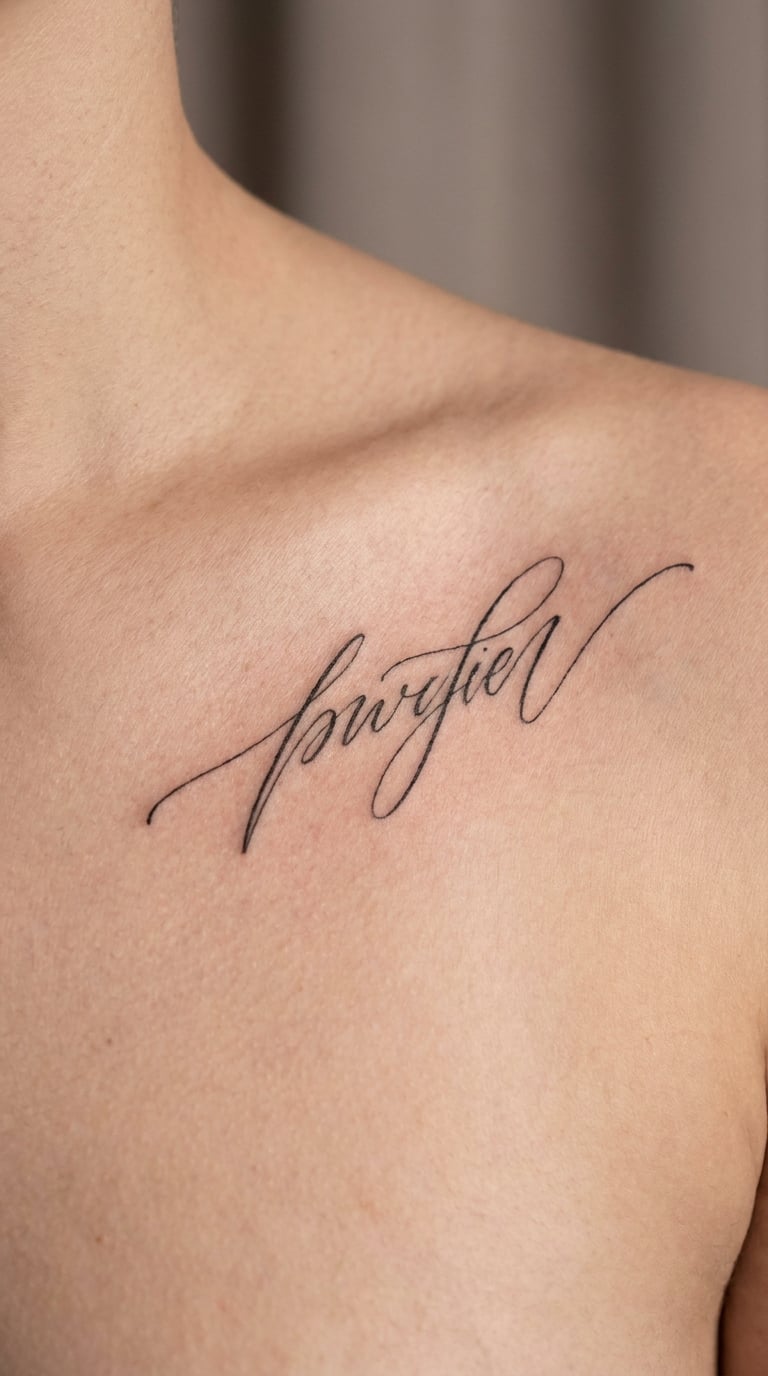
Neshama reads נשמה and means soul. Five letters including a final he, which makes it one of the longer single words on this list and one that benefits from a slightly larger canvas.
Script at a generous scale gives each character room to breathe, which is what keeps five letters legible. Placed near the collarbone it reads as something quiet and close to the body, and there is space to add a date below if the word has one.
Placement: chest near the collarbone, or the upper back between the shoulder blades.
Size: 2.5-3.5 in (6-9 cm).
Style: fine line at a generous scale, black.
Pain: medium. The chest is sensitive and the collarbone sits close to bone.
Make it yours: set the word in two lines, ani on top and neshama below, which keeps each word readable and turns a single design into a short phrase about the self.
24. Hebrew Family Word Tattoo with Matching Placement
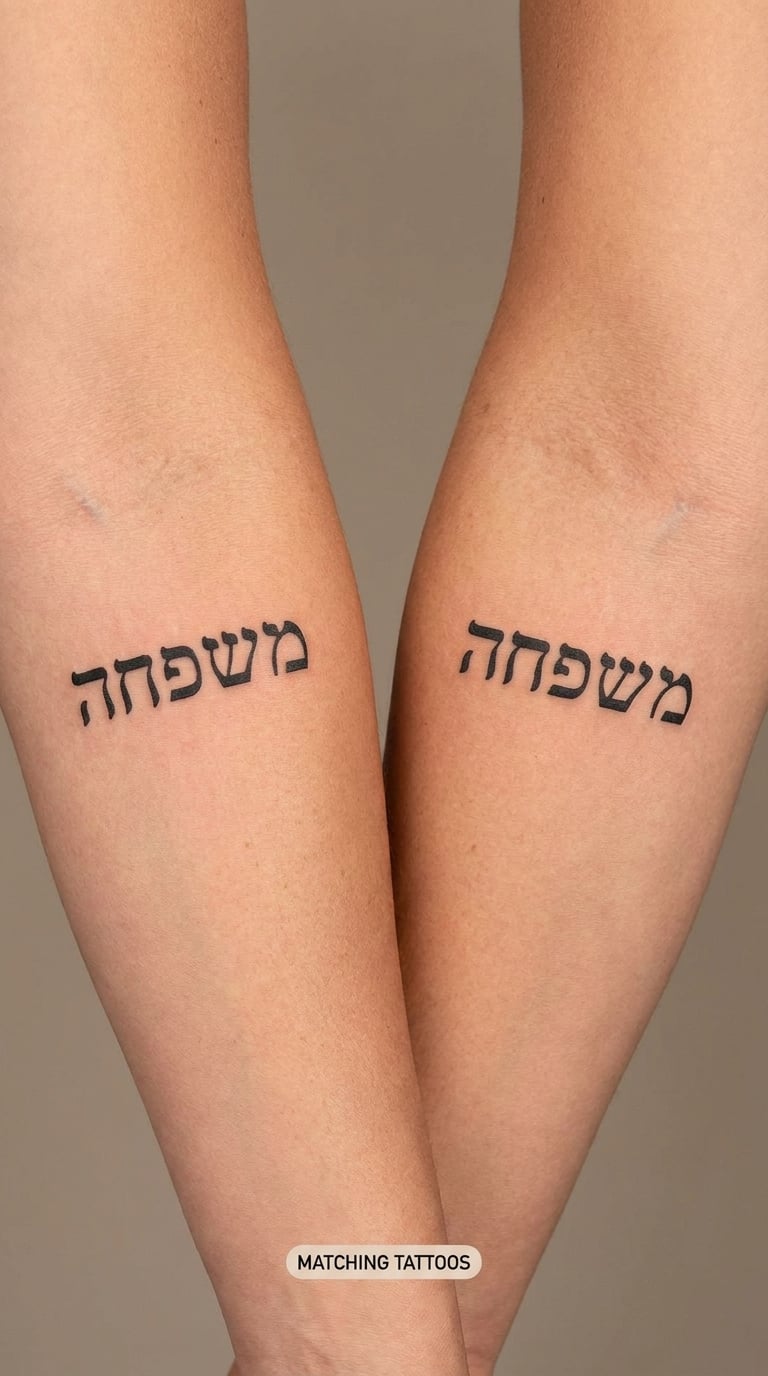
The most personal option on this list is not a fixed word at all. It is a family name, a Hebrew given name, or a single word your family chose, designed once and tattooed on two people in the same style, size and placement.
Matching Hebrew name tattoos have been the most requested version of this idea for years, largely because people want a name rendered properly rather than transliterated. Have the name verified in Hebrew script by a native speaker, agree on a style, and both of you go in with the same drawing.
Placement: inner forearms, inner arms, or matching wrist positions, so the two pieces read as a pair when you are together.
Size: 2-3 in (5-8 cm) for a short name, 3-4 in (8-10 cm) for a longer one.
Style: matching handwritten or fine-line script, identical in both tattoos.
Pain: medium, and a shared design can be scheduled in the same sitting if you book back to back.
Make it yours: add one small matching element, such as a shared date in numerals, in a finer weight than the names themselves. If you want a different kind of paired design, the layout ideas in 24 Constellation Tattoo Ideas for Women and 20 DNA Tattoo Ideas work well as a second pairing.
How to Choose the Right Design
Choosing from 24 hebrew word tattoo ideas comes down to a handful of decisions you can make in order. Start with the word, because everything else is decoration around a word you will live with for the rest of your life.
How to narrow 24 Hebrew word tattoo ideas down to one
Write your candidates on paper with the meaning next to each one, then remove anything you would be embarrassed to explain to a stranger. The words that survive are usually the ones tied to a specific person, a place or a period of your life, not the ones that simply sound good.
Verify the spelling before the needle
Get the exact Hebrew lettering checked by a native speaker or a qualified Hebrew translator before you commit to a design. Do not rely on a translation app, and do not trust a photo you found online, because reversed images of Hebrew lettering are extremely common.
Ask for the check in writing. A short message confirming the spelling and the meaning is enough, and it takes a native speaker a minute. Have the artist show you the drawing on paper or on a tablet before any stencil is placed, and read it in the correct direction, from the right side of the word toward the left.
Short words or full phrases
Two to four letters can sit almost anywhere, including the inner wrist, the ankle or behind the ear. Seven letters and up needs a flat area such as the forearm, the outer arm or the chest. Past roughly ten letters, a phrase belongs on a forearm or a rib panel, and going bigger is better than going smaller.
Watch the direction of the script
Hebrew reads right to left, and a mirrored design is the most common way these tattoos go wrong. A mirrored word is still a real word, just a different one, or a nonsense string. This is why the final drawing gets checked in the correct direction before the stencil goes on.
Words worth a second thought
Some Hebrew words are sacred vocabulary rather than general sentiment, and wearing one is a statement about your relationship to the tradition it comes from. Adonai and El Shaddai are the clearest examples. Others carry a meaning in Hebrew that does not survive translation, as shukran shows earlier in this list. Neither is a reason not to tattoo them, but both are reasons to slow down and ask a speaker.
It is also worth knowing that Jewish tradition prohibits tattooing the body, and a Hebrew word tattoo is not something every Jewish person views the same way. The tradition is taught differently across communities, and some people who come to Hebrew through family wear these words without hesitation. Ask rather than assume, especially if the word is a religious one.
Gematria: the same meaning as a number
Every Hebrew letter also has a numerical value, and those values are called gematria. Chai totals 18, which is why the number 18 appears beside or instead of the word so often. If you like the meaning but not the script, a number tattoo is a compact alternative that still reads correctly to people who know the system.
Cost and Session Time
Small single-word Hebrew tattoos are among the quicker pieces of work a shop does. A two or three letter word at a modest size often takes 30 to 60 minutes, and most shops quote by the piece with a minimum that covers the smallest tattoo on the price list. That minimum is the number to ask about, since it sets the floor before your word’s size is even discussed.
A four to five letter word runs closer to 60 to 90 minutes, and a phrase like baruch adonai at 4-5 in (10-13 cm) across is a two-hour job or a session split in two. The total you are quoted moves with the artist’s hourly rate, the city, the detail in the lettering and whether you add colour. Watercolour ideas like ruach and orot cost more and usually need a second sitting for the wash.
A few practical things. A free line preview before the session is normal and worth asking for, and it is the moment to catch a spelling or spacing problem for free. Touch-ups on fine-line Hebrew are common because hairlines heal lighter than they were tattooed, so ask whether the artist includes one. Shop minimums mean a small word tattoo and a large one can cost a similar amount, which makes a slightly bigger design better value if you were heading there anyway.
Aftercare Basics
Follow your artist’s aftercare instructions first, since they know what they did to your skin. The general guidance below is what most artists agree on.
- Keep it clean. Wash gently with unscented soap and lukewarm water, then pat dry. Loose skin flaking off in the first week is normal and should not be picked or pulled.
- Moisturise thinly. A thin layer of a plain fragrance-free ointment a few times a day for the first week keeps the ink from drying out and flaking away with the skin.
- Leave the film alone. The skin tightens, forms a protective layer and becomes itchy. Scratching it is the fastest way to pull ink out of a fine-line letter.
- Cover it, then stop covering it. Loose clothing over the tattoo for the first few days helps with clothing catching, but tight fabric and compression can irritate the fresh work.
- Protect it from the sun. Keep new work out of direct sun and off the beach for several weeks, because UV hits light tattoo lines and coloured work hardest.
- Know the healing timeline. Surface healing takes about two weeks, with settling and darkening over the following weeks. Judge the final result at two to three months, not at day ten, before asking for a touch-up.
Skip the swimming pools, hot tubs and saunas while the skin is healing, and if you notice spreading redness, heat, swelling, discharge or pain that is getting worse, take the bandage off and see a doctor rather than waiting it out.
Frequently Asked Questions
Is it a sin to get a tattoo in Hebrew?
Jewish tradition prohibits tattooing the body, which is taught in the Torah and discussed in rabbinic law. Views differ widely between communities and individuals, and many Jewish people are not categorically opposed. If the word you want is a religious one such as Adonai, ask someone in the tradition rather than assuming it is welcome, and choose a word you can explain honestly.
What does chai mean in a Hebrew tattoo?
Chai, written חי, means life. It is one of the most common Hebrew word tattoos, partly because it also serves as an acronym for chai im sveta, a toast to life. By gematria, the numerical value of Hebrew letters, the word also equals 18, so the number is sometimes tattooed beside it or instead of it.
How do I make sure a Hebrew tattoo is spelled correctly?
Have a native speaker or qualified translator confirm the exact lettering in writing before your session, and keep that confirmation. Show the artist a verified drawing rather than a screenshot, and check the final stencil in the correct direction, from the right side of the word toward the left. Ask for a free line preview first, since changes there are free and changes on skin are not.
Where should I place a small Hebrew word tattoo?
Two to three letter words work on the inner wrist, the inner bicep and behind the ear, all of which are relatively flat. Longer words need a wider surface such as the outer forearm, the outer upper arm or the chest. Bony and stretched areas hurt more, so the wrist, the collarbone and the ribs are the placements to expect to feel sharpest.
Which Hebrew words should you think twice about?
Words can mean something quite different in Hebrew than a translation suggests, so shukran, which reads as thank you in Mizrahi usage but literally reads as liar, is a good example to check. Sacred vocabulary such as Adonai or El Shaddai also carries weight that a general-interest search will not show you. Ask a speaker before choosing either, rather than after.
Do Hebrew word tattoos mean what you think they mean?
Only if the lettering is accurate. Hebrew reads right to left, and designs copied from photos are often mirrored, which produces a different real word or a nonsense string. Automatic translation also mangles word order and idiom. Verify the script with a speaker and confirm the meaning separately, so both the letters and the intended sense check out before anything permanent happens.
Conclusion
If this is your first tattoo, shalom, chai or hayam are the gentlest places to start: two or three letters, a clean style, a placement that takes under an hour. If you are building a collection or you want something that carries real weight, the phrase options and the matching family-word idea give you room to work with and a reason to keep going back to the same artist.
Before you book anything, get the exact Hebrew lettering verified by a native speaker and confirm the meaning in plain English. Take that confirmed drawing to a consultation, read the stencil in the right direction, and only then start.