
22 Inner Wrist Tattoo Ideas for Minimalist and Bold Looks 2026
These 22 inner wrist tattoo ideas run from a one-inch heart to a fine-line rose stem that follows the forearm, so there is something here whether you are planning your first tattoo or your tenth. The inner wrist is the strip of skin on the palm side of the arm between the wrist crease and the elbow, and it is one of the few spots you see every single time you look at your hand.
That visibility is the whole appeal and the whole problem. A fine line rose looks elegant from across a cafe, and it also softens in full view of your own eyes every day for the rest of your life. Plan for a design that still reads well when you are tired, not only on day one.
22 Inner Wrist Tattoo Ideas: Quick Guide
| Idea | Style | Best placement | Size | Pain |
|---|---|---|---|---|
| 1. Fine-Line Paper Plane | Fine line | Centre of inner wrist | 2 in (5 cm) | Low to medium |
| 2. Delicate Lotus Flower | Fine line, light shading | Vertical, mid-wrist | 2 in (5 cm) | Medium |
| 3. Tiny Red Heart | Minimal colour | Centre, near crease | 1 in (2.5 cm) | Low |
| 4. Minimalist Mountain Range | Fine line | Across the wrist, horizontal | 2.5 in (6 cm) | Medium |
| 5. Small Sun and Moon Pair | Fine line, dot accents | Stacked vertically | 2 in (5 cm) | Medium |
| 6. Single Cherry Branch | Fine line with pink accents | Diagonal along forearm | 2.5 in (6 cm) | Medium |
| 7. Micro-Realism Butterfly | Micro-realism | Centre of inner wrist | 1.5 in (4 cm) | Medium |
| 8. Simple Infinity Symbol | Minimal line or blackwork | Centre, slightly angled | 1.5 in (4 cm) | Low |
| 9. Small Snake Winding Around a Line | Single line | Forearm-to-palm curve | 3 in (7.5 cm) | Medium to high |
| 10. Dotwork Rose | Dotwork | Vertical, mid-wrist | 2 in (5 cm) | High |
| 11. Tiny Floral Branch | Minimal botanical | Vertical, lower forearm | 2 in (5 cm) | Low to medium |
| 12. Small Compass Rose | Fine line with black accents | Centre of wrist | 2 in (5 cm) | Medium |
| 13. Minimal Script Word | Handwritten script | Horizontal, above crease | 2 in (5 cm) | Low to medium |
| 14. Tiny Crescent and Sparkle | Fine line | Slightly inside of centre | 1.5 in (4 cm) | Low |
| 15. Small Bird in Profile | Fine line silhouette | Angled toward the hand | 2 in (5 cm) | Low to medium |
| 16. Blackwork Heart Outline | Blackwork | Centre, forearm to palm | 1.5 in (4 cm) | Medium |
| 17. Watercolor Peony | Watercolour | Vertical, mid-forearm | 2.5 in (6 cm) | Low to medium |
| 18. Traditional Rosebud | Traditional | Vertical, above crease | 2 in (5 cm) | Medium |
| 19. Small Geometric Triangle | Geometric | Centre of wrist | 1.5 in (4 cm) | Low |
| 20. Delicate Dragonfly | Fine line or dotwork | Diagonal, parallel to wrist | 2.5 in (6 cm) | Medium to high |
| 21. Small Matching Sparkle | Minimal symbol | Anywhere, often paired | 1 in (2.5 cm) | Low |
| 22. Fine-Line Rose Stem | Fine line | Vertical along inner forearm | 3.5 in (9 cm) | Medium |
1. Fine-Line Paper Plane
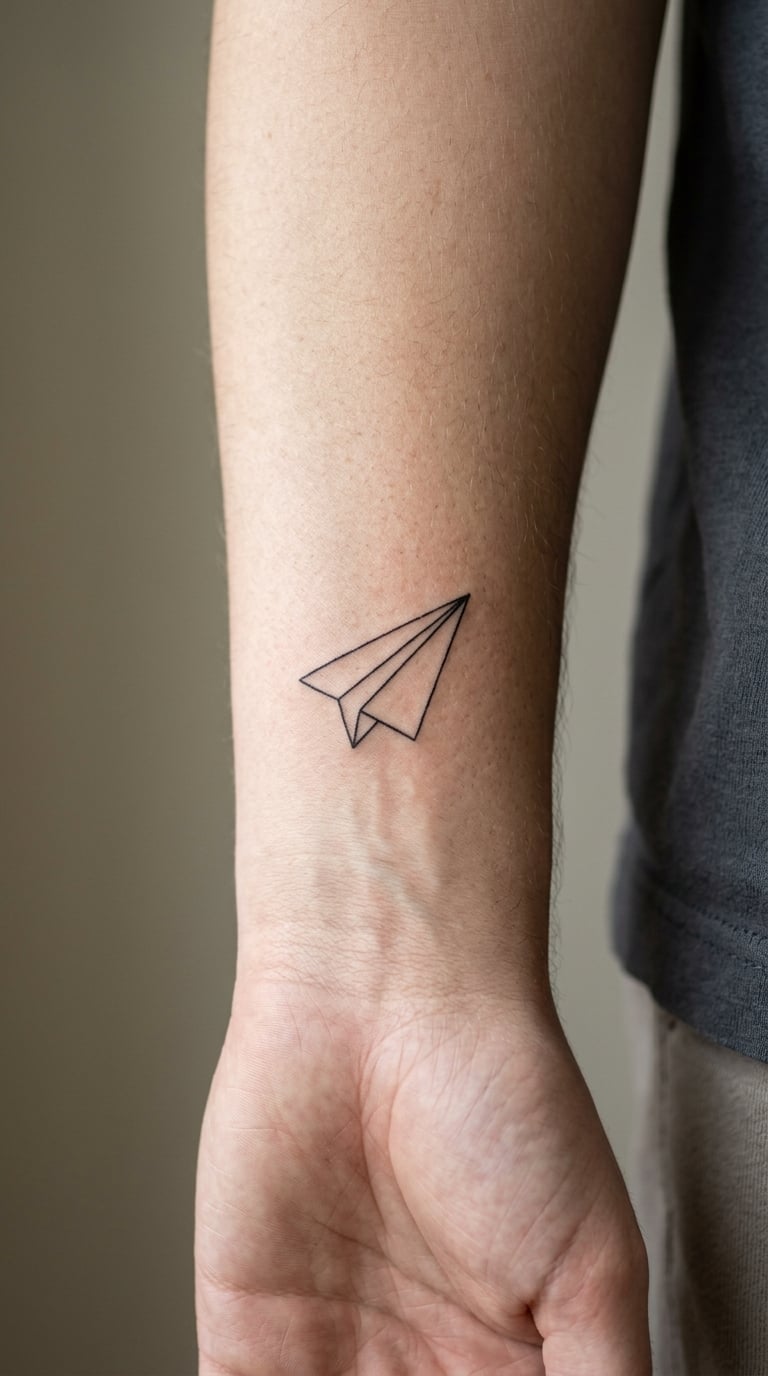
A paper plane drawn as a single sharp outline, with two folded wings meeting at a point, is the sort of design an artist can build freehand in a couple of hours. People usually reach for it because it points somewhere, and it reads as movement without needing a whole scene around it.
Placement: centred on the flat part of the inner wrist, nose angled toward the elbow or the thumb depending on which way you want it to read. Size: 1.5 to 2.5 inches (4 to 6 cm) nose to tail. Style: fine line, one or two stroke weights. Pain: low to medium. Make it yours: add a thin dotted flight path behind the tail, or have the artist trail a single line away from it.
2. Delicate Lotus Flower
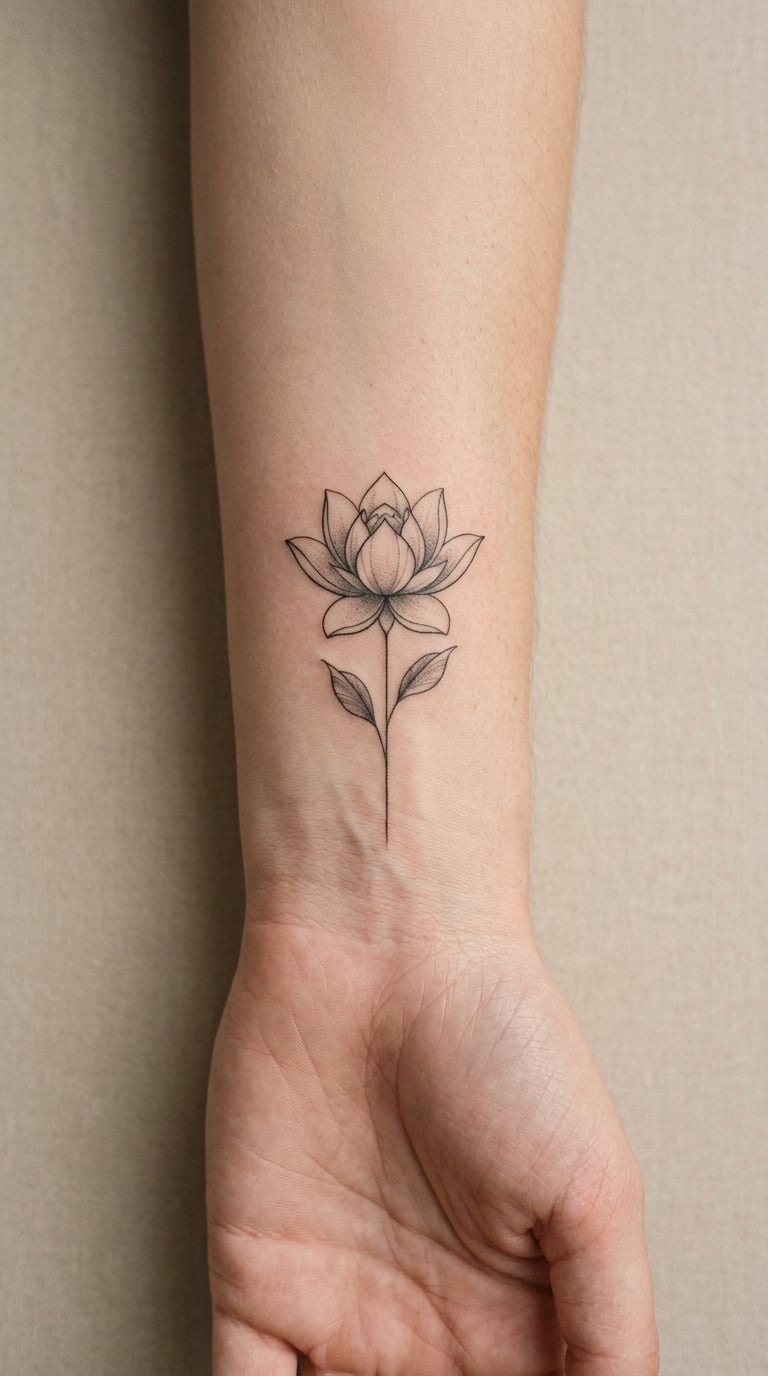
One bloom, layered petals opening upward, with a soft grey wash in the lower petals for depth. The balance is what makes it work: the artist has to keep the outer petals thin enough to look airy and the inner ones dark enough to hold the shape.
Placement: vertical, centred just above the wrist crease so the base of the flower sits on the flattest skin. Size: 1.5 to 2.5 inches (4 to 6 cm) tall. Style: fine line with light black and grey shading. Pain: medium, and the shading in the petal bases stings a little more than the outlines. Make it yours: a single line of small dots beneath it turns the flower into a full stem-and-bloom piece.
3. Tiny Red Heart
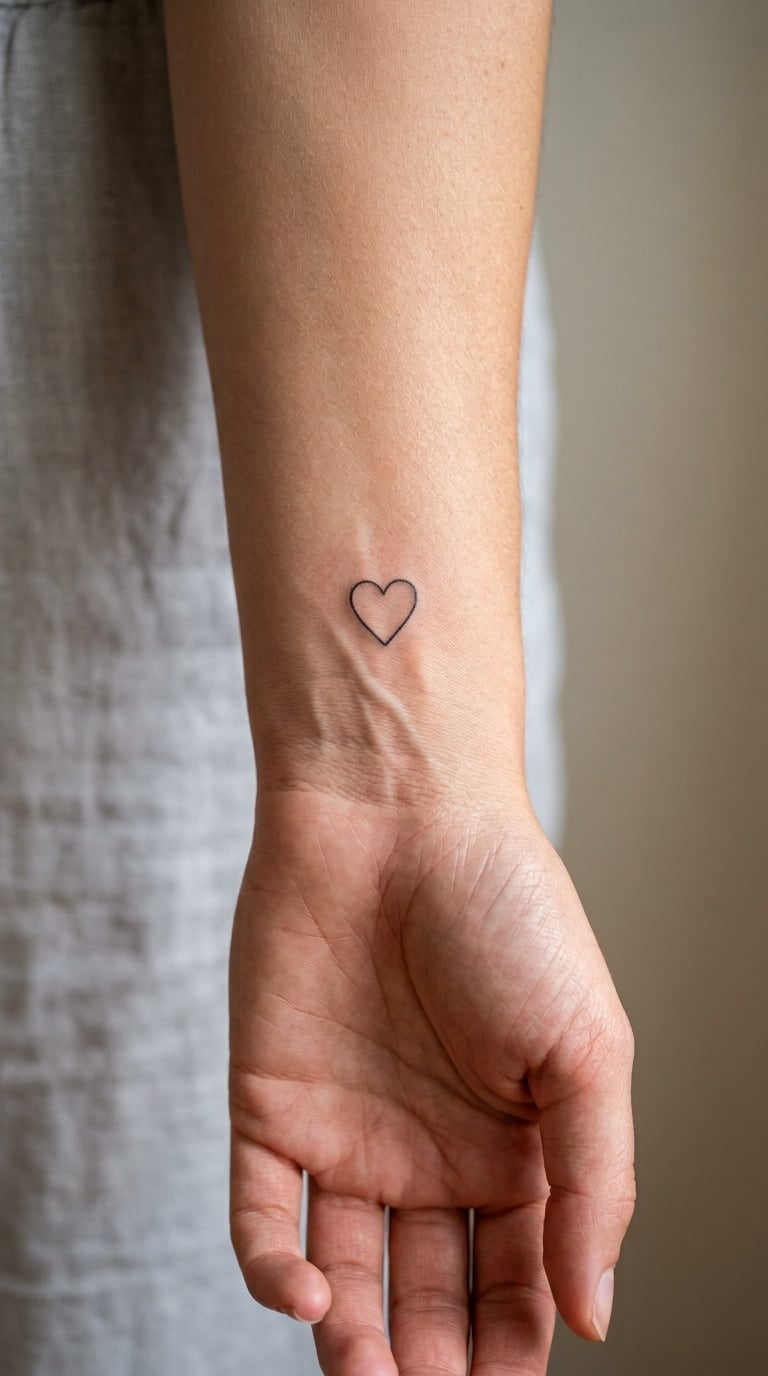
A clean black outline filled with flat red, no gradient, no shading. At one inch it reads instantly from across a room, which is exactly why so many people get it first.
Placement: dead centre of the inner wrist, or slightly toward the heel of the hand if you want it lower on the arm. Size: 0.75 to 1.25 inches (2 to 3 cm). Style: minimal colour with a bold outline. Pain: low, it is over in a few minutes. Make it yours: make one half a matching piece on a friend, or put a real date in the outline rather than filling it.
4. Minimalist Mountain Range
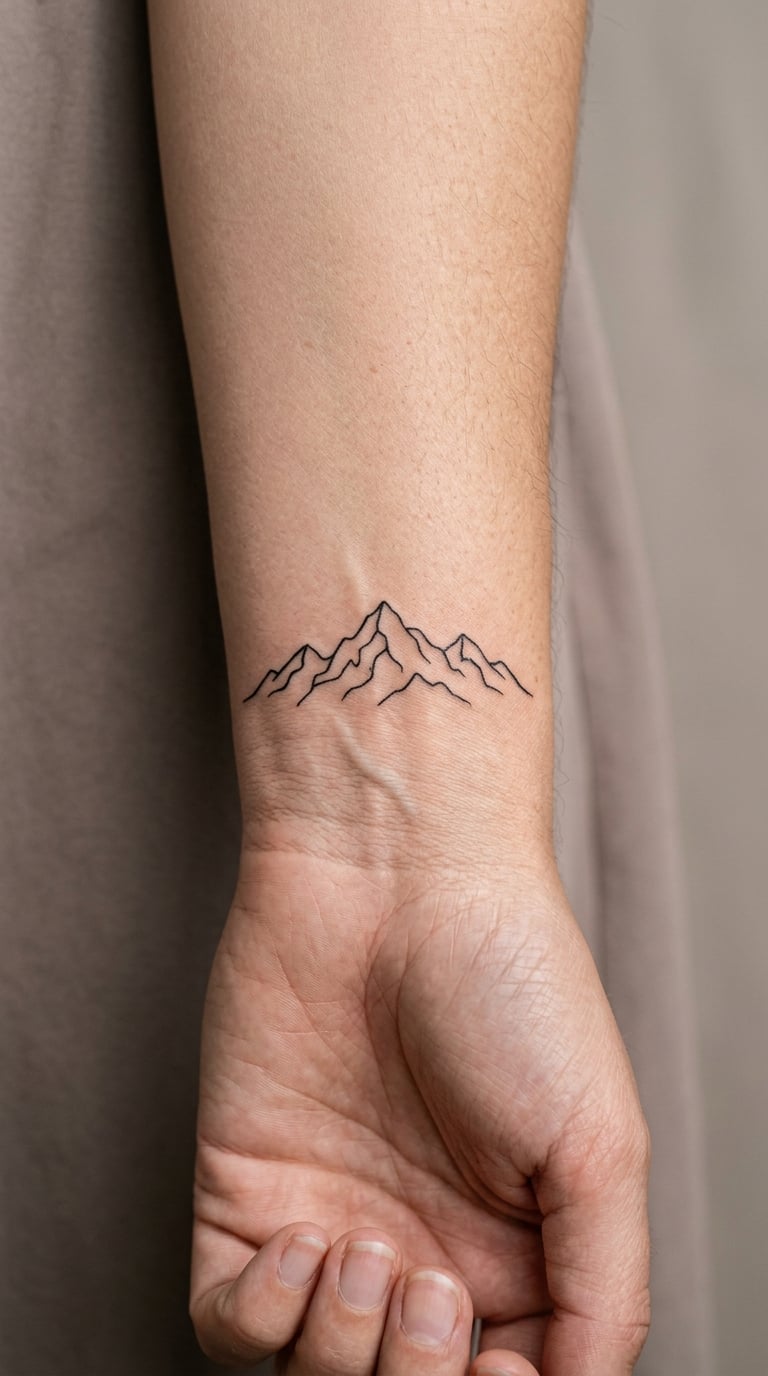
A single line of peaks, no fill, running horizontally across the wrist so the ridge follows the arm from elbow toward hand. Choose a real range, a single mountain from a hike, or a simplified geometric set of triangles if you want it abstract.
Placement: horizontal across the inner wrist, because the ridge reads as a horizon only when it crosses the arm. Size: 2 to 3 inches (5 to 7.5 cm) wide. Style: fine line, single weight, no shading. Pain: medium. Make it yours: put the real elevation of a peak in tiny numerals under the ridgeline, or pick the date you summited.
5. Small Sun and Moon Pair
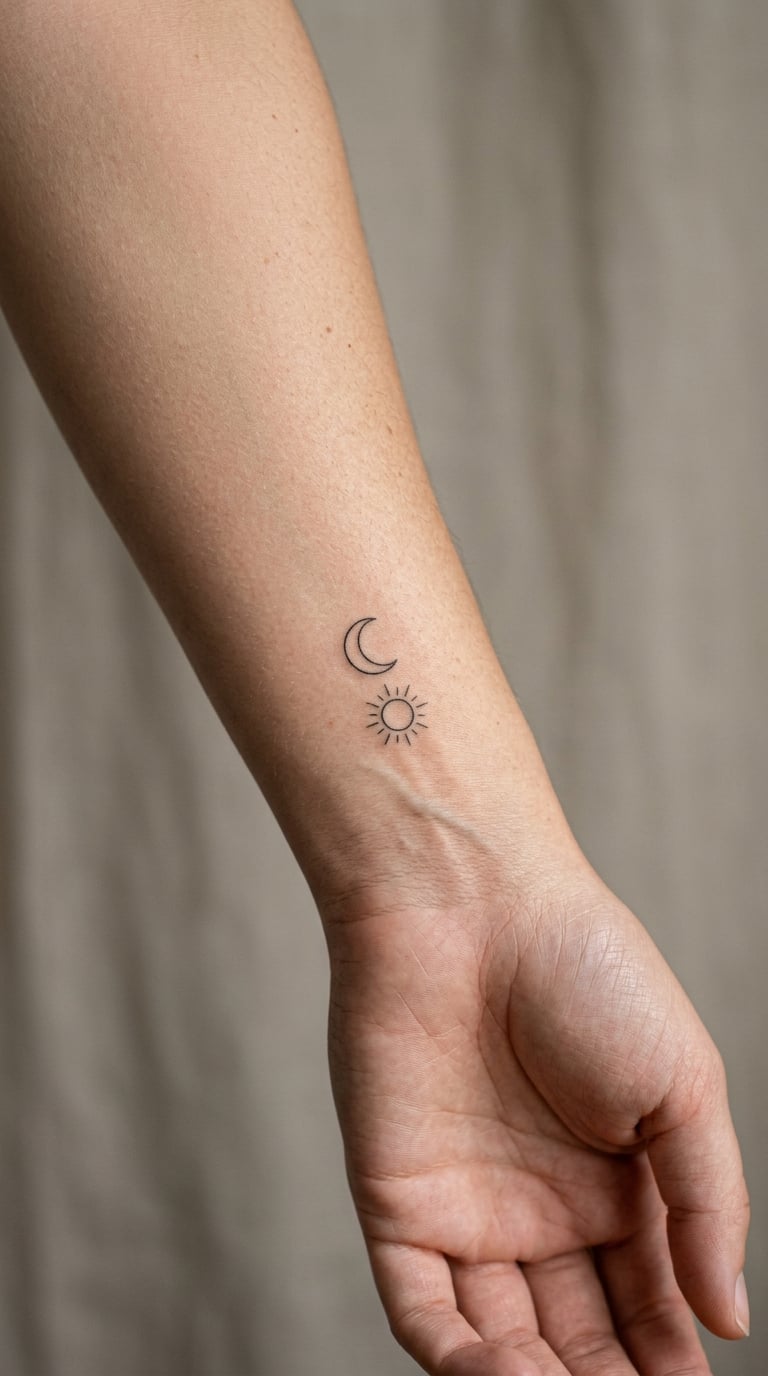
A slim crescent on one side, a plain circle with short rays on the other, stacked with a few dots between them. It is a compact way to hold two ideas at once, and it stacks neatly without crowding the narrow wrist.
Placement: vertical, moon above sun or the reverse, both sitting in the flat centre of the wrist. Size: about 2 inches (5 cm) tall for the pair. Style: fine line with dotwork detail. Pain: medium. Make it yours: use dots between the two bodies to spell a date, or set the moon phase to the week you were born.
6. Single Cherry Branch
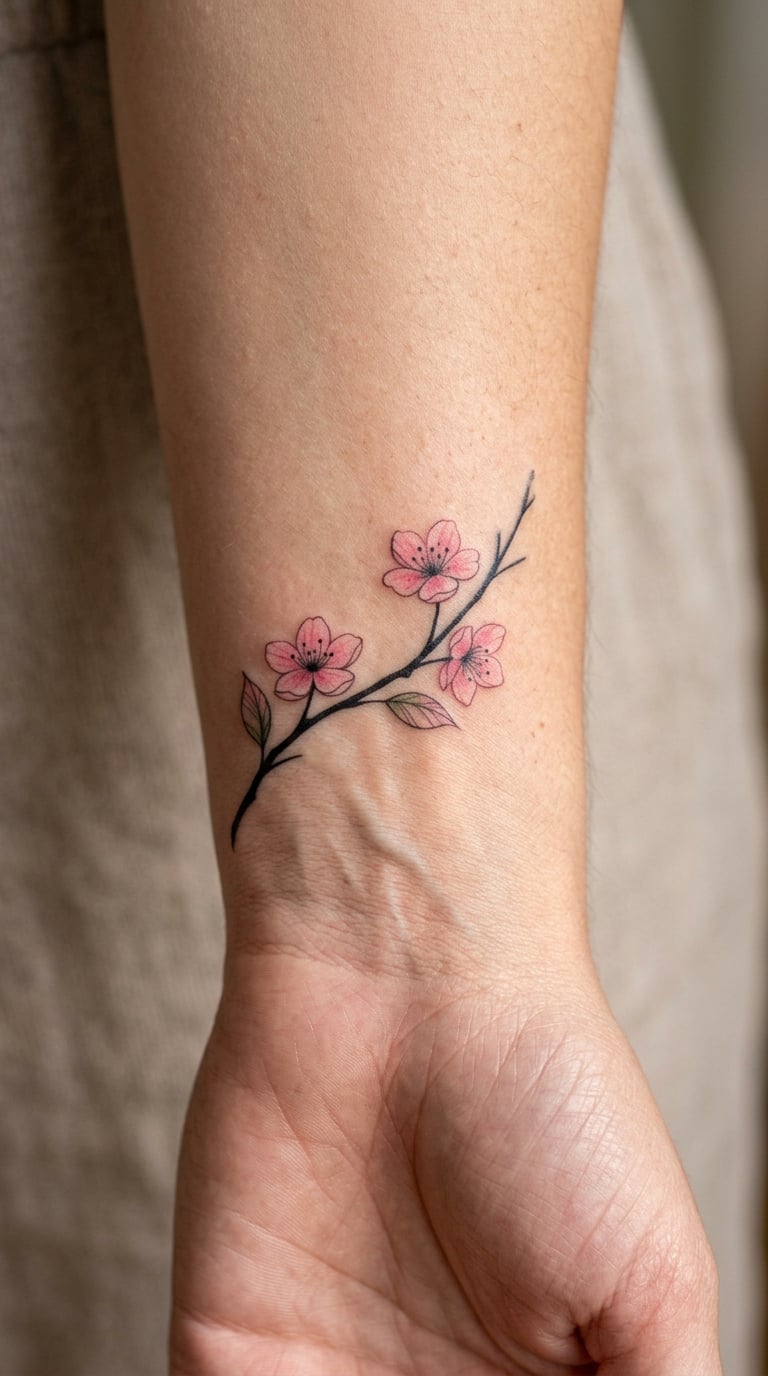
A thin branch carrying three blossoms and a couple of leaves, angled so it runs along the forearm rather than across it. The linework is the whole piece here, so the artist has to keep the twig thin without letting it disappear.
Placement: diagonal, from the lower forearm up toward the wrist crease. Size: 2 to 2.5 inches (5 to 6 cm) long. Style: fine line with pale pink petal accents. Pain: medium. Make it yours: add a fruit-bearing version for a birth month, or keep it monochrome if the pink worries you about fading.
7. Micro-Realism Butterfly
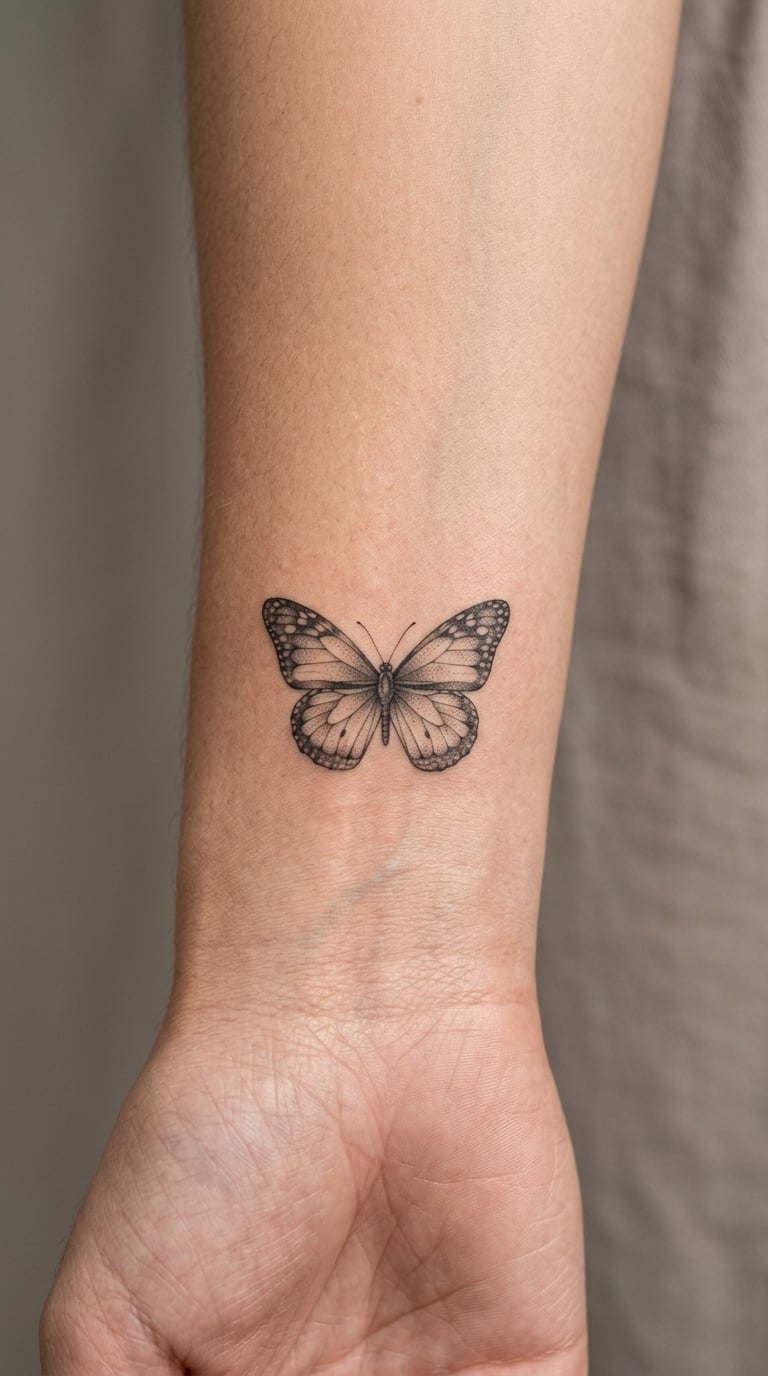
A single butterfly with separated wings and restrained grey shading, done small enough that you have to lean in to see the detail. It takes a steady hand and a steady wrist from the artist, so ask to see healed work in their portfolio before you book.
Our pick for anyone building a small collection: 16 tiny butterfly tattoo ideas for the wrist has the size and placement variations worth comparing first.
Placement: centred, with the body running lengthwise so the wings spread across the arm. Size: 1.25 to 1.75 inches (3 to 4.5 cm) wide. Style: micro-realism in black and grey. Pain: medium. Ageing note: wing edges blur with sun and time, and a touch-up after a year keeps it readable. Make it yours: match the underside wing markings to a real species you have seen.
8. Simple Infinity Symbol
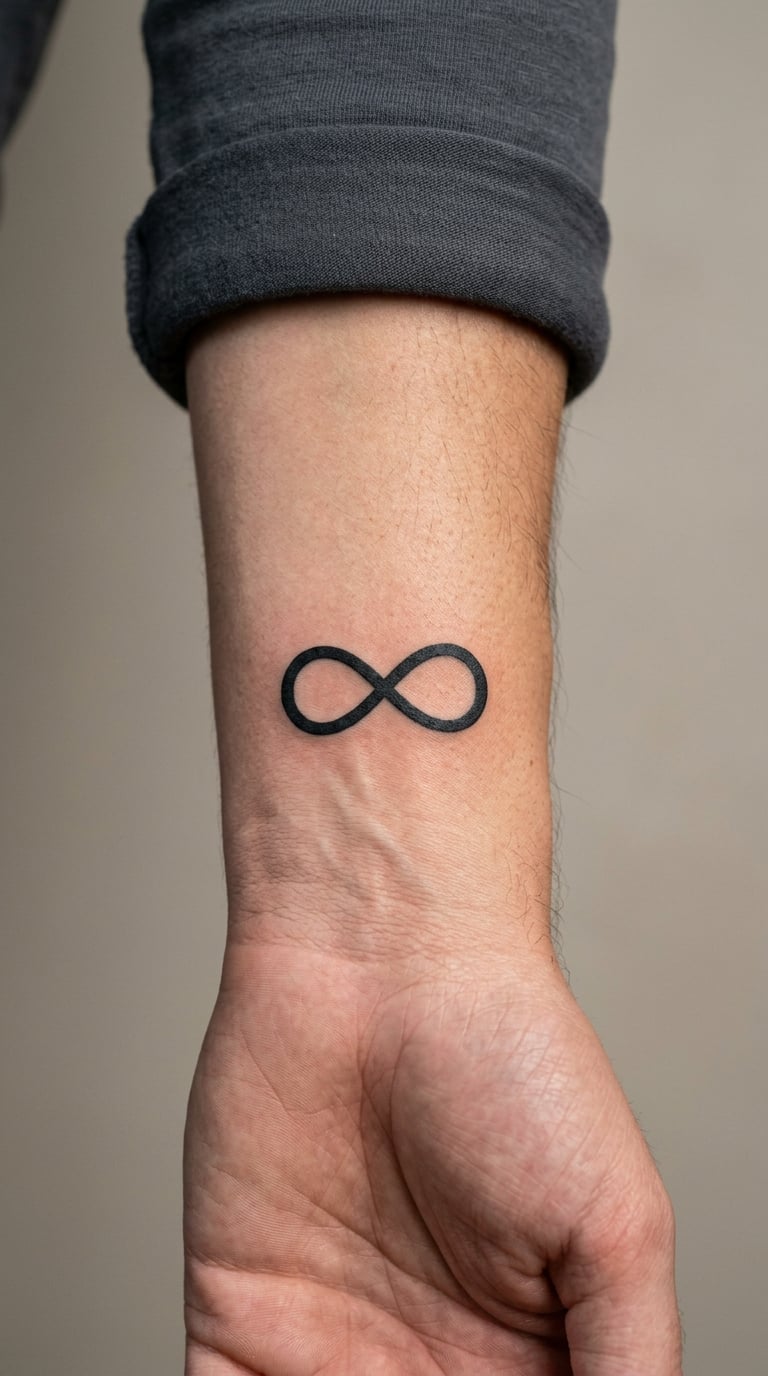
One continuous line looping back on itself, with equal loops and a clean crossing point. Drawn thin it looks like jewellery, drawn thicker it reads as a small piece of blackwork, and the same sketch works either way.
Placement: centred and tilted very slightly so the loops follow the natural angle of the wrist. Size: 1 to 2 inches (2.5 to 5 cm) wide. Style: single line or light blackwork. Pain: low. Make it yours: have the artist taper the line to nothing at one end so it looks like it runs off the skin.
9. Small Snake Winding Around a Line
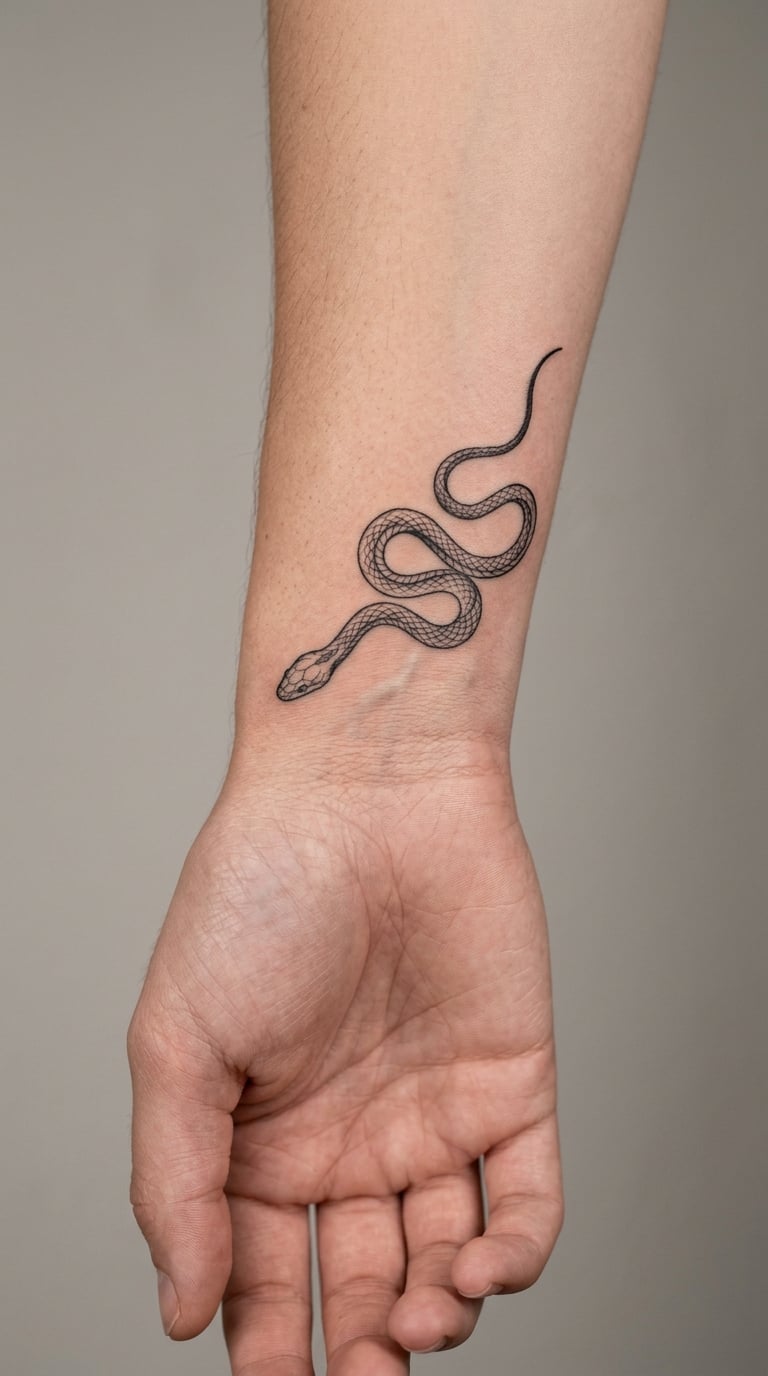
A slim snake body following the curve of a single thin line, coiling once or twice before the head. Done as a pure outline it is quiet and graphic; add scales or shading and the same sketch turns into something with more weight.
Placement: along the forearm-to-palm transition, where the natural curve supports the coil. Size: 2.5 to 3.5 inches (6 to 9 cm) long. Style: single line or fine line with light shading. Pain: medium to high, and the forearm end of the placement is the more tender stretch. Make it yours: run the line through the coil and off the arm, so the snake looks like it is escaping the design.
10. Dotwork Rose
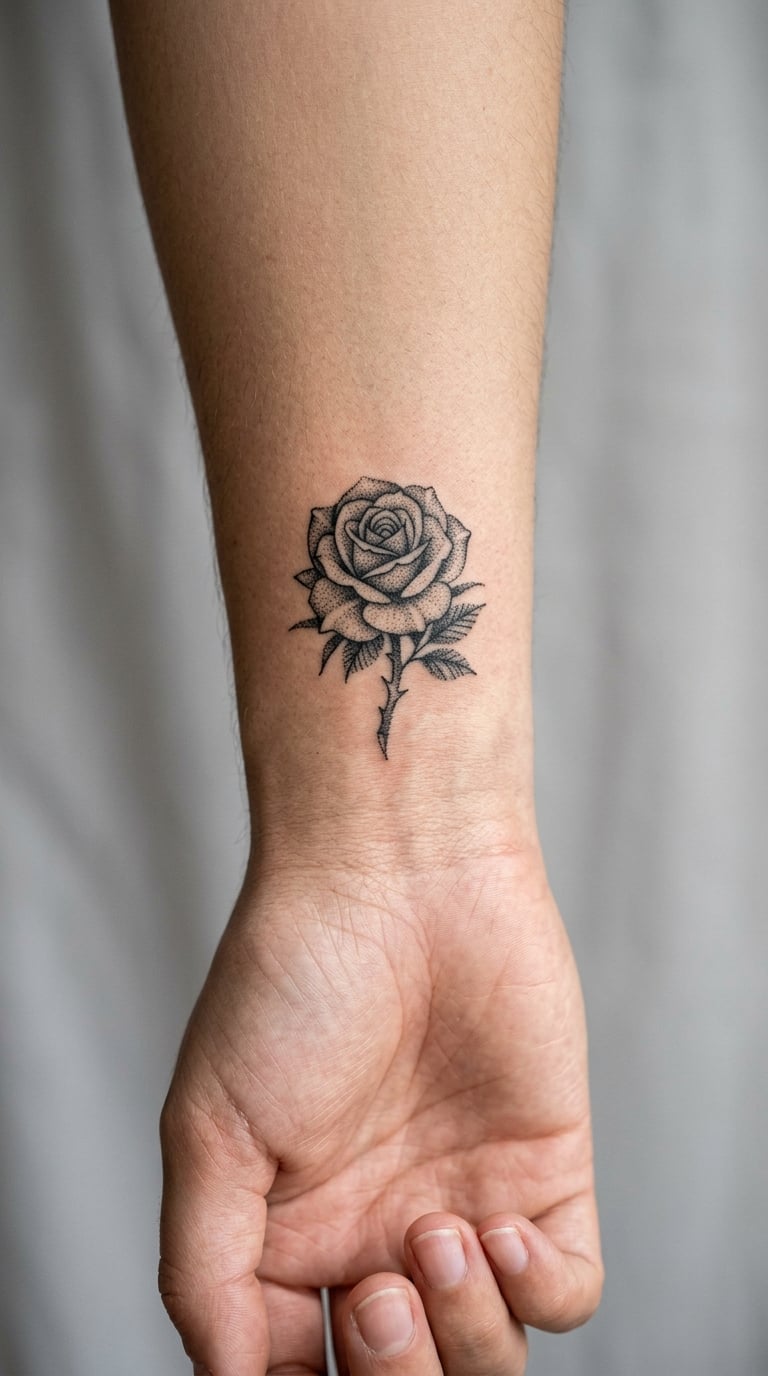
A rose built entirely from dots, with a few thin contour lines holding the outer petals. Spacing is everything: dots too close merge into a grey block, dots too wide fall apart, and the artist has to keep the gradient even around the curve of the bloom.
Placement: vertical, mid-wrist, so the circular bloom sits on flatter skin. Size: 1.5 to 2.5 inches (4 to 6 cm) tall. Style: dotwork. Pain: high for its size, since dotting is a lot of separate needle passes in a small area. Make it yours: ask for a small stem and one leaf to break the circle and add movement.
11. Tiny Floral Branch
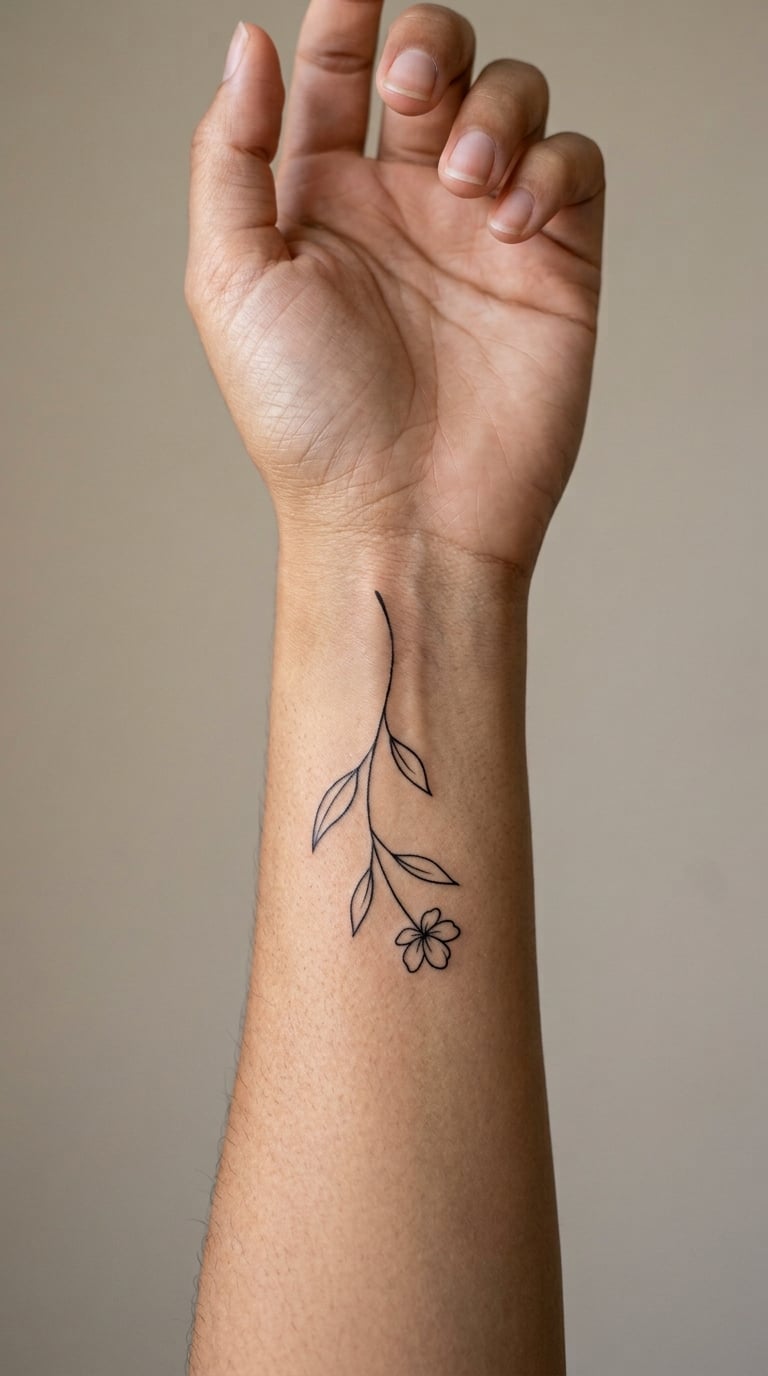
Three or four leaves on a thin stem with one small bloom, drawn with clean contour lines and no fill. It is botanical without being a full bouquet, which makes it a good middle ground if a dense floral piece feels like too much weight for this spot.
Placement: vertical on the inner forearm, running down from the wrist crease. Size: 1.5 to 2 inches (4 to 5 cm) long. Style: minimal botanical line work. Pain: low to medium. Make it yours: name the plant you are commemorating and have the leaf shapes follow it accurately rather than generically.
12. Small Compass Rose
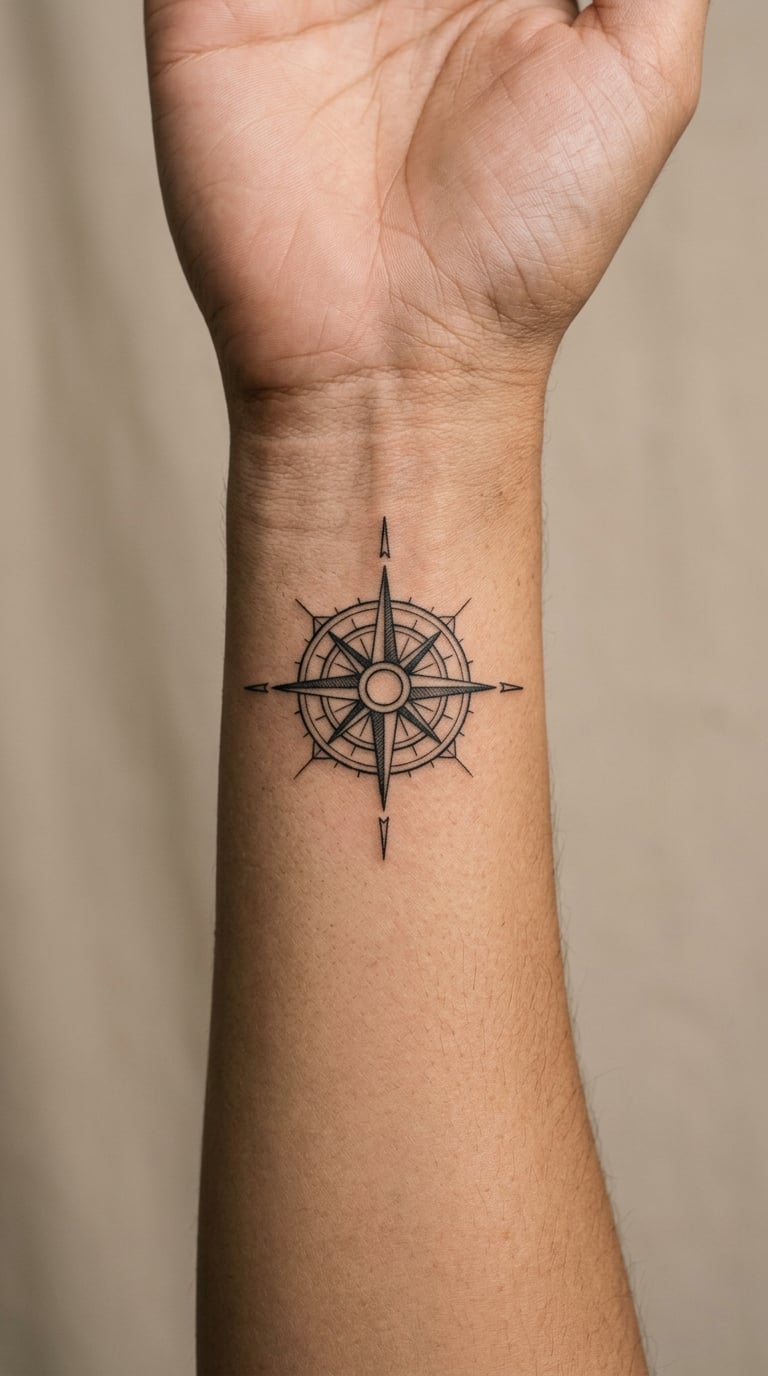
Four pointed directions with a circle between them, alternating fine lines and solid black tips so it holds together at a distance. It suits people who travel or who want a directional piece that is not literally an arrow.
Placement: centred on the wrist, where the compass can sit flat. Size: 1.5 to 2.25 inches (4 to 5.5 cm) wide. Style: fine line with blackwork tips. Pain: medium. Make it yours: swap one point for a letter that matters to you, or use the exact coordinates of a place you wanted to reach.
13. Minimal Script Word
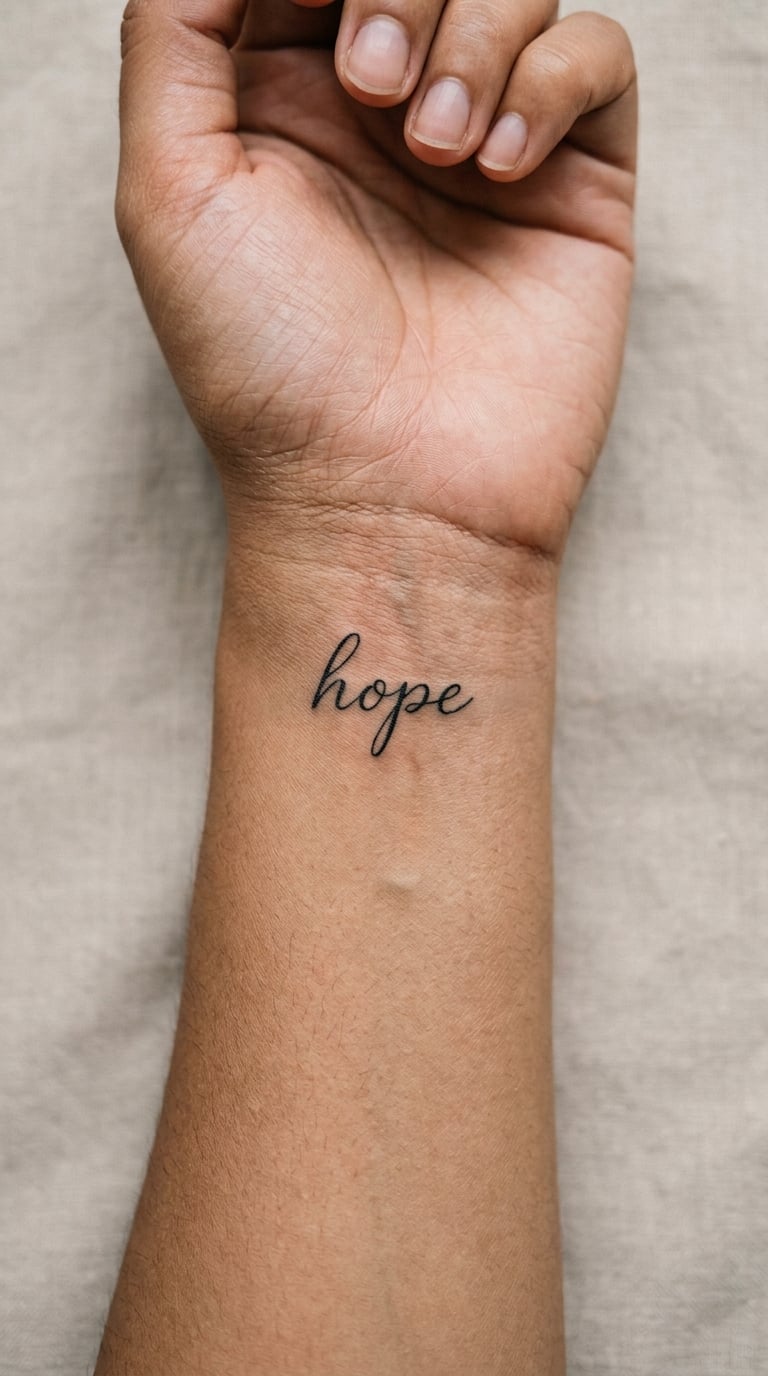
One short word in a readable handwritten script, whether that is hope, stay, home, or something only you would recognise. Letter spacing matters more than font choice here, and the wrist flexes every time you type, so a cramped word will blur faster than an open one.
Placement: horizontal, just above the crease where there is the least movement. Size: 1.5 to 2.5 inches (4 to 6 cm) wide, with letter height no thinner than about an eighth of an inch. Style: fine line script. Pain: low to medium. Make it yours: have the artist write it in your own handwriting from a photo, and add a matching piece in the same ink on a close family member.
14. Tiny Crescent and Sparkle
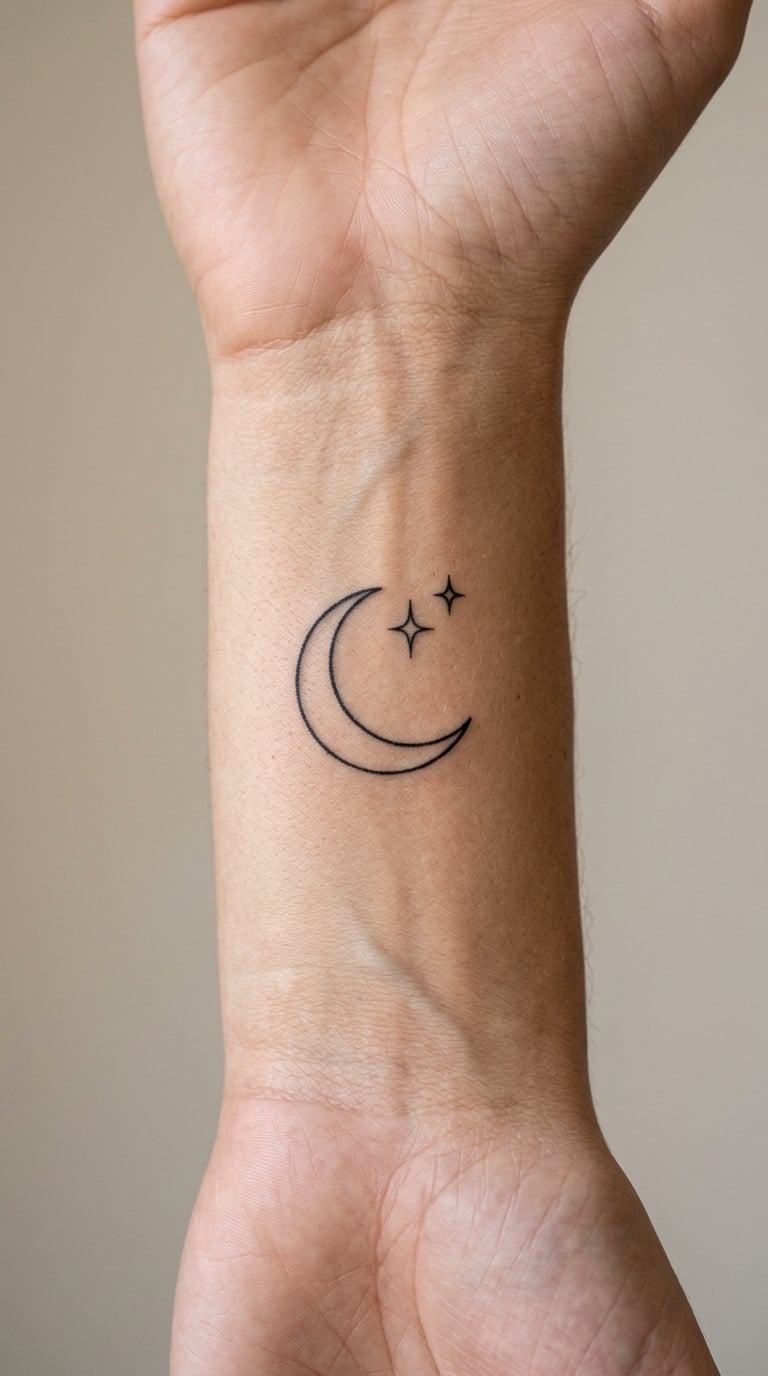
A narrow crescent with one or two four-point sparkle marks beside it, small enough to sit in a tight spot without crowding. Keep the crescent an outline and the whole thing stays quiet; give it a shaded inner curve and it gains a little more presence.
Placement: slightly inside of centre, or under the wrist crease if you plan to wear a watch above it. Size: 1.25 to 1.75 inches (3 to 4.5 cm) tall. Style: fine line, outline or light shading. Pain: low. Make it yours: repeat the sparkle on the other wrist at a matching size for a pair that still works separately.
15. Small Bird in Profile
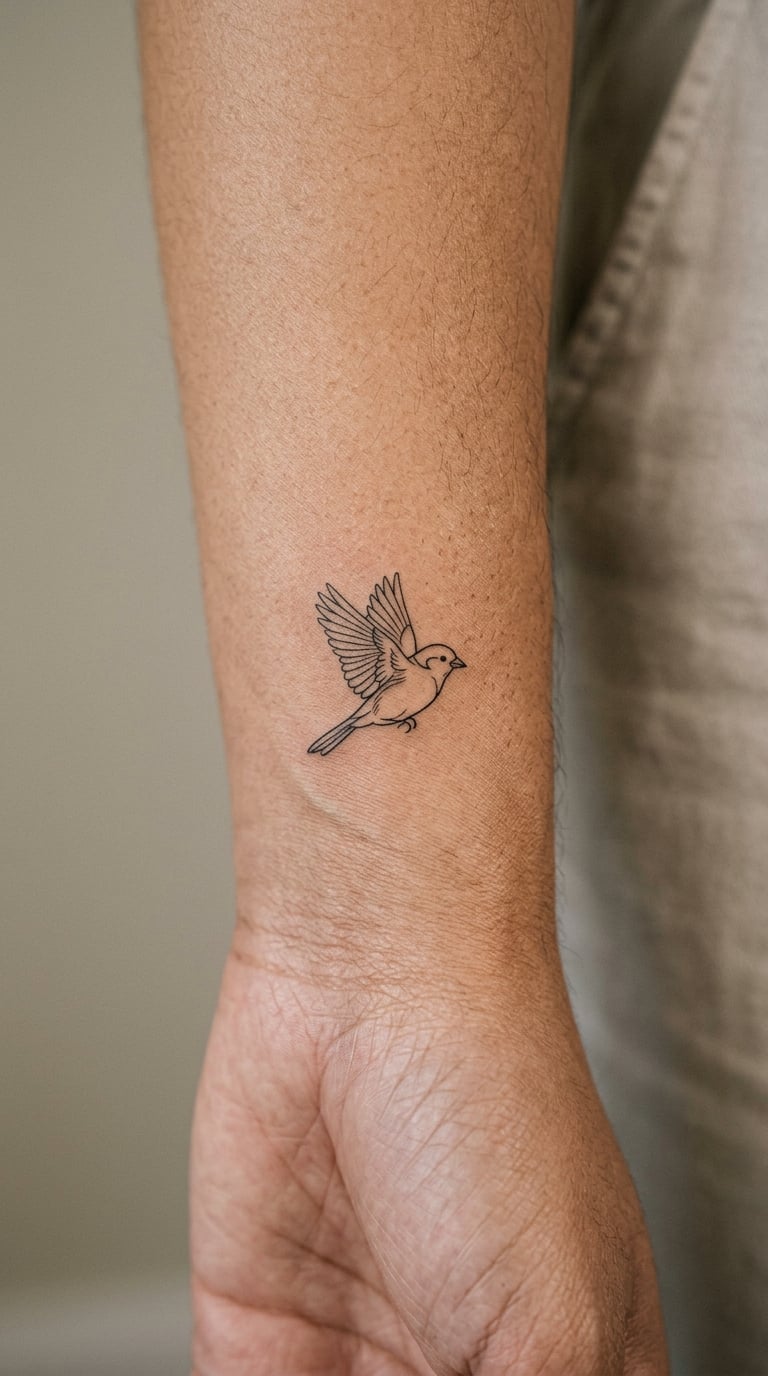
A single bird seen from the side, drawn with a few confident strokes and plenty of empty space around the body, perched on nothing. A wren, a swallow, a sparrow, or a more stylised shape all work, and the empty space is what keeps it light.
Placement: angled toward the hand so the bird appears to be looking where you are going. Size: 1.5 to 2.25 inches (4 to 5.5 cm) wide. Style: fine line silhouette or light profile drawing. Pain: low to medium. Make it yours: choose a species that shows up in your actual life, and have the artist match its posture rather than a generic songbird.
16. Blackwork Heart Outline
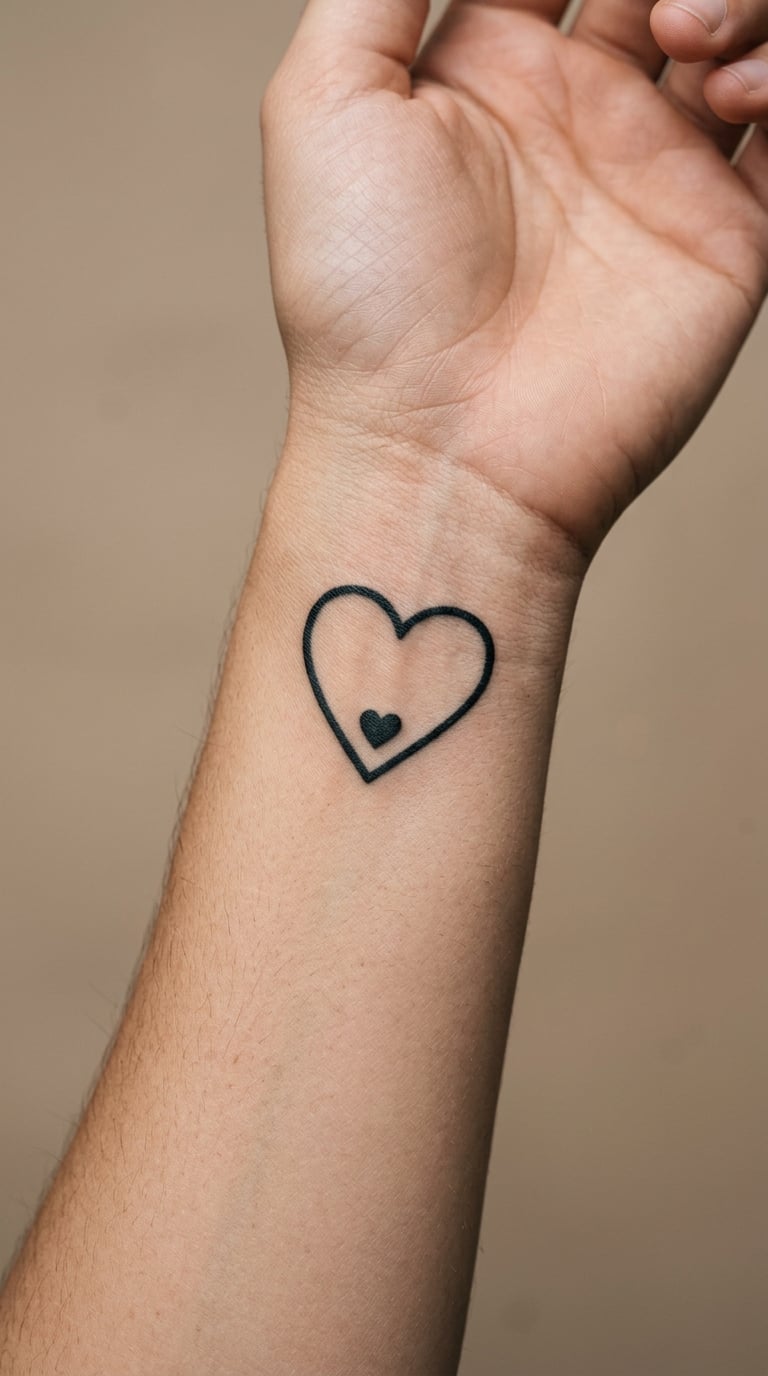
A heart with a thick black contour and a small solid shape filling the centre, close in weight to the blackwork heart but far less heavy than a filled one. It gives the same visual punch as a bold design while staying compact enough for the inner wrist.
Placement: centred, running from the forearm toward the palm so the point aims down the arm. Size: 1.5 to 2 inches (4 to 5 cm) wide. Style: blackwork. Pain: medium, and the solid areas take longer than the outline. Make it yours: turn the inner solid shape into a date, an initial, or a small key shape that means something to you.
17. Watercolor Peony
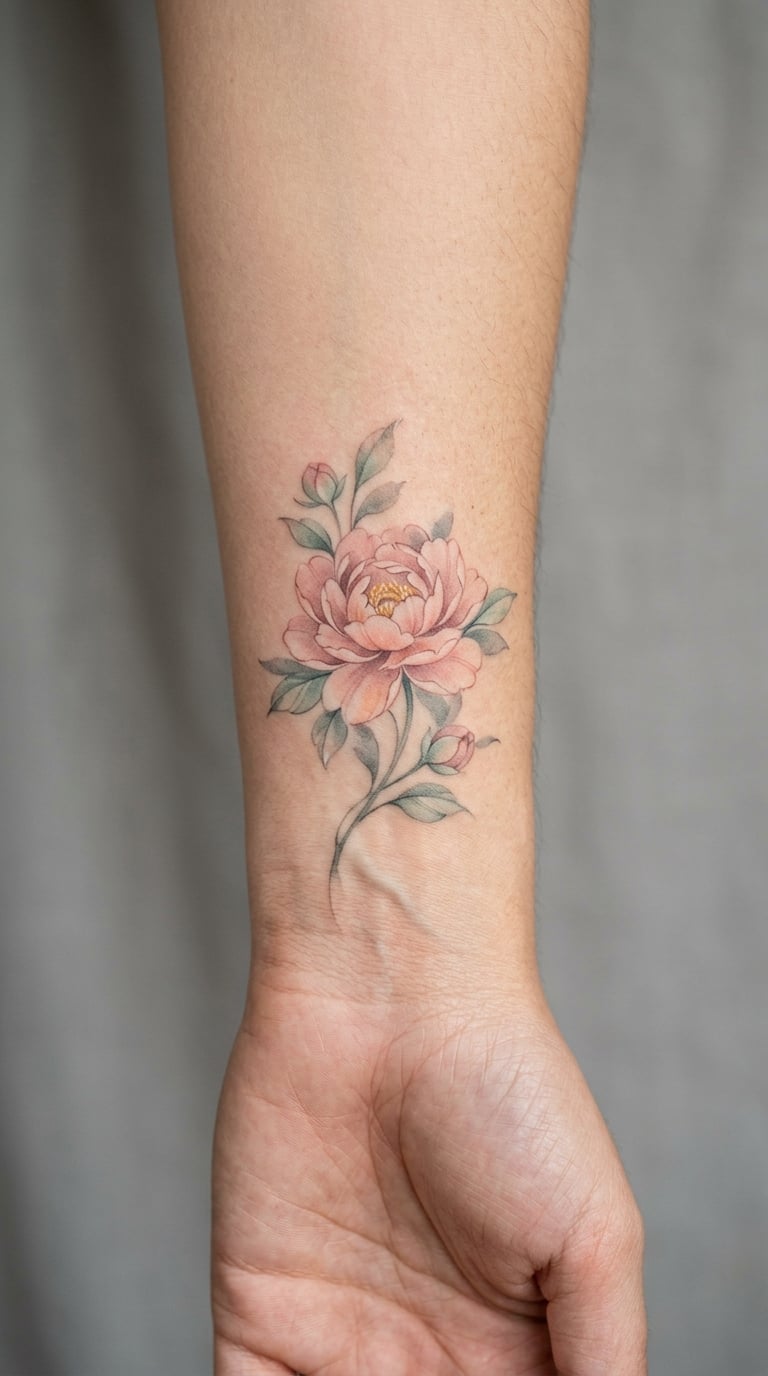
A peony with translucent washes of pink, muted green, and grey, edges softening outward into the skin. Watercolour depends almost entirely on the artist, so look for healed pieces in the style rather than work that is still freshly healed in the shop photos.
Placement: vertical, centred on the mid-forearm where the wash has room to bleed. Size: 2 to 3 inches (5 to 7.5 cm) tall. Style: watercolour realism. Pain: low to medium, since there is little line work, but a colour piece takes far longer to tattoo. Make it yours: bring a photograph of one specific bloom, and ask for that exact flower rather than a generic peony.
18. Traditional Rosebud
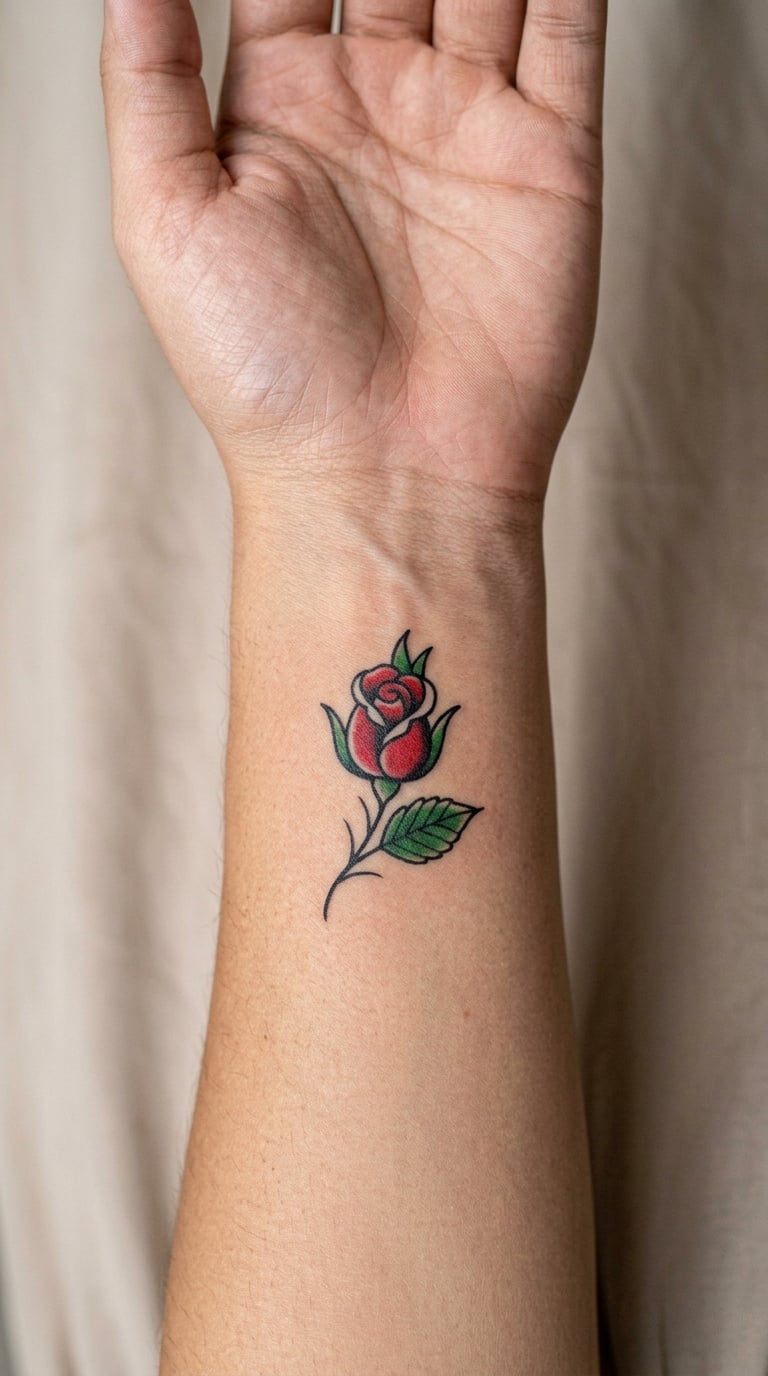
A closed rosebud with a heavy black outline, a red fill shaded in two or three tones, and one green leaf. Traditional structure means bold shapes and clean separation, which is exactly what survives a narrow placement better than fine detail does.
Placement: vertical, above the wrist crease, with the stem pointing down the arm. Size: 1.75 to 2.5 inches (4.5 to 6 cm) tall. Style: traditional. Pain: medium. Make it yours: ask for your birth month in the flower, or have the colour palette matched to an existing tattoo elsewhere.
19. Small Geometric Triangle
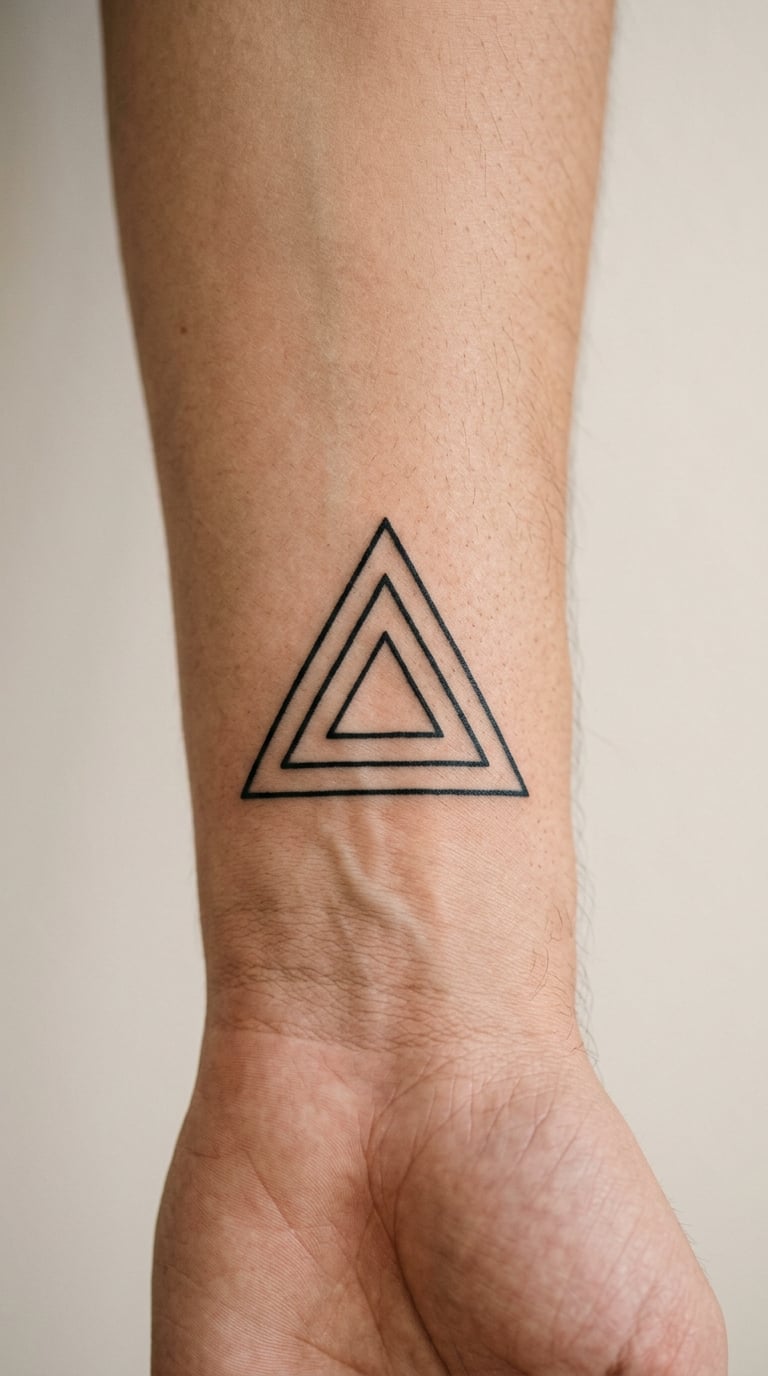
Three nested triangles, or a single triangle with clean line weight and no ornament. Outlined it looks almost like an engraving; filled solid it becomes a blackwork shape. The proportions decide which, and the artist will want to know which you want before the stencil goes on.
Placement: centred, which is where the symmetry has the most room to work. Size: 1 to 1.75 inches (2.5 to 4.5 cm) tall. Style: geometric. Pain: low. Make it yours: repeat the shape up the inner forearm at increasing sizes for a graduated stack, or reverse the point direction each time.
20. Delicate Dragonfly
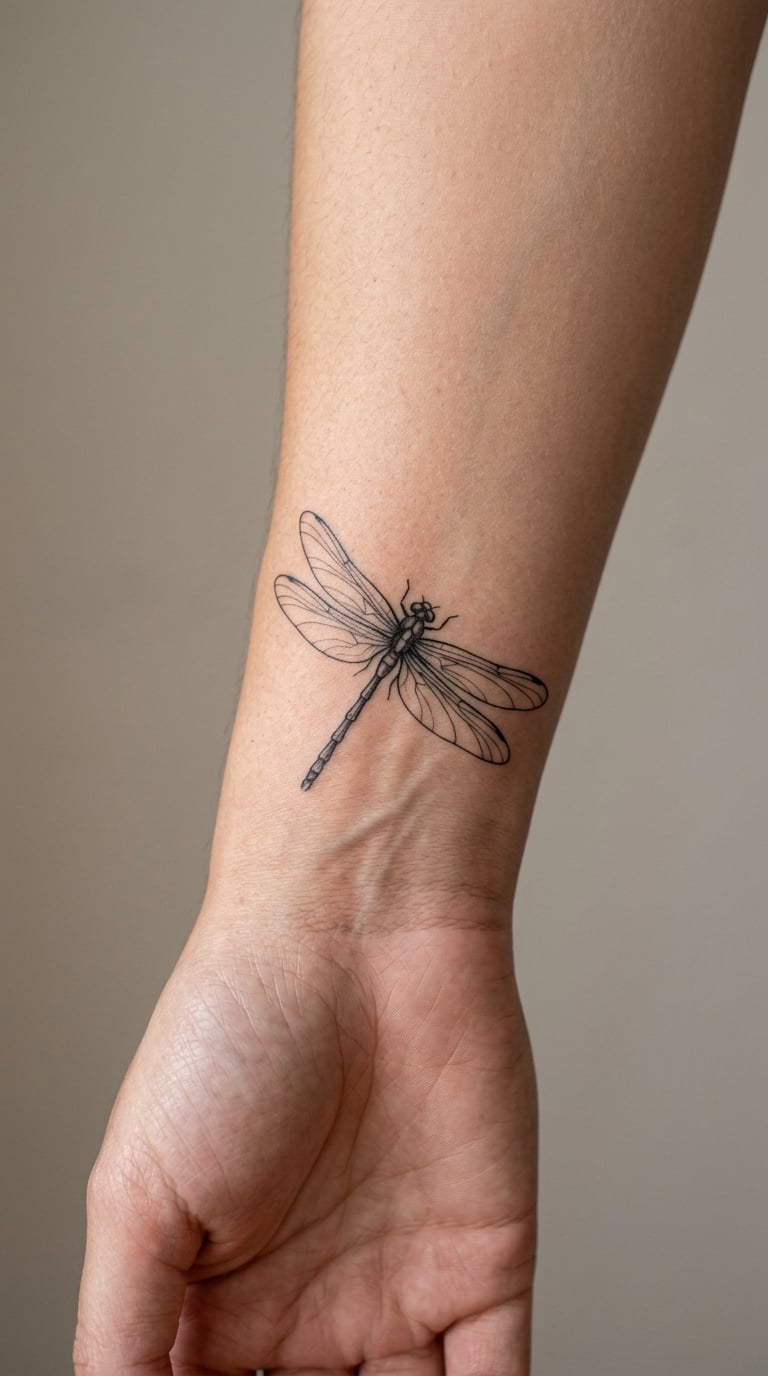
A slim body with four wings, drawn either as fine outlines with transparent interiors or as a dotwork pattern inside the wings. The wing symmetry is the hard part, and a small uneven pair is visible long before anyone notices a body detail.
Placement: diagonal, parallel to the line of the wrist, so the wings span the arm rather than the forearm. Size: 2 to 2.75 inches (5 to 7 cm) wide. Style: fine line or dotwork. Pain: medium to high; dotwork wings add real time and real passes. Make it yours: have the artist adapt the wing pattern from an actual species you like rather than a stock dragonfly.
21. Small Matching Sparkle
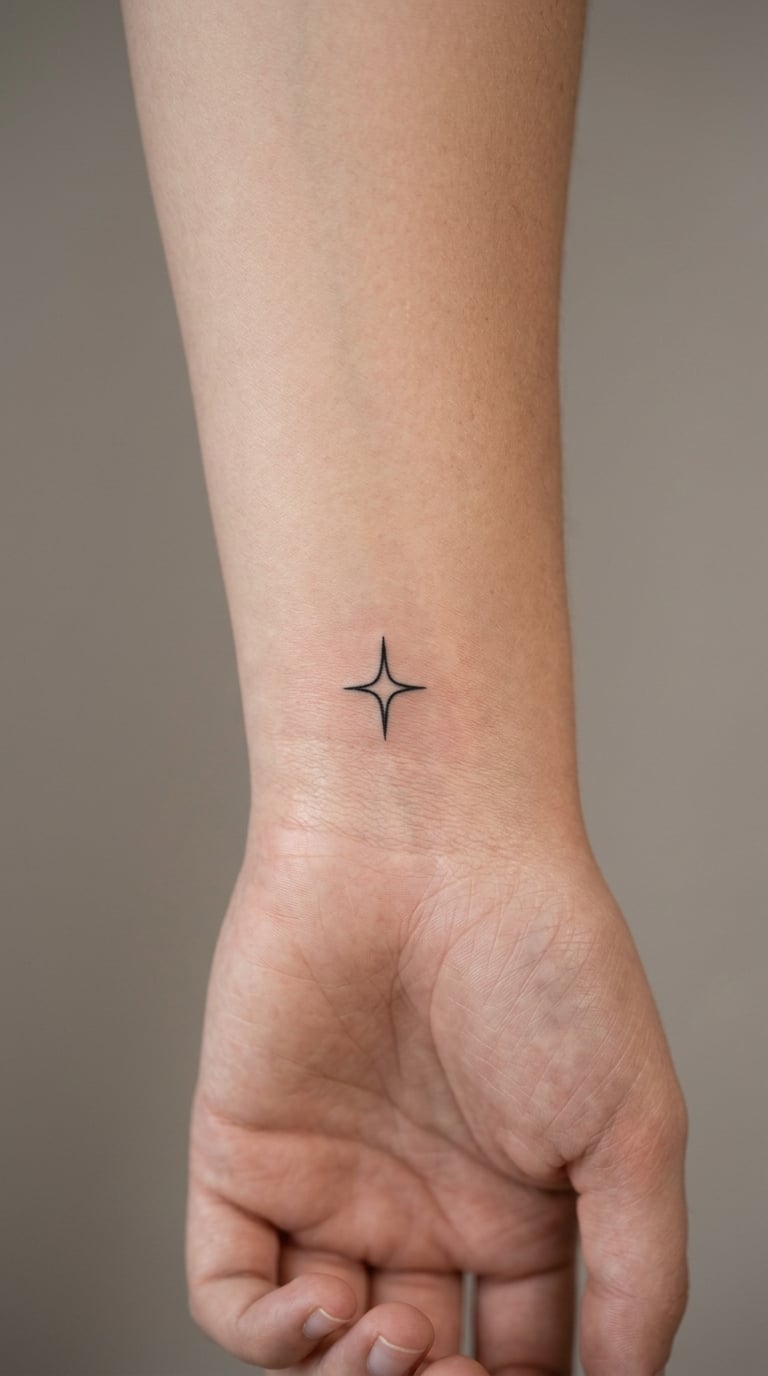
A single four-point sparkle mark, crisp and symmetrical, usually the smallest thing on this list. It works on its own for a minimal look, and it works as an addition to an existing collection, which is how most people end up with it.
Placement: anywhere along the inner wrist, often tucked near an older piece. Size: 0.5 to 1 inch (1.25 to 2.5 cm) tall. Style: minimal symbol. Pain: low, a few minutes at most. Make it yours: get a second one somewhere else on the body at the same size, so the two read as deliberate rather than accidental.
22. Fine-Line Rose Stem
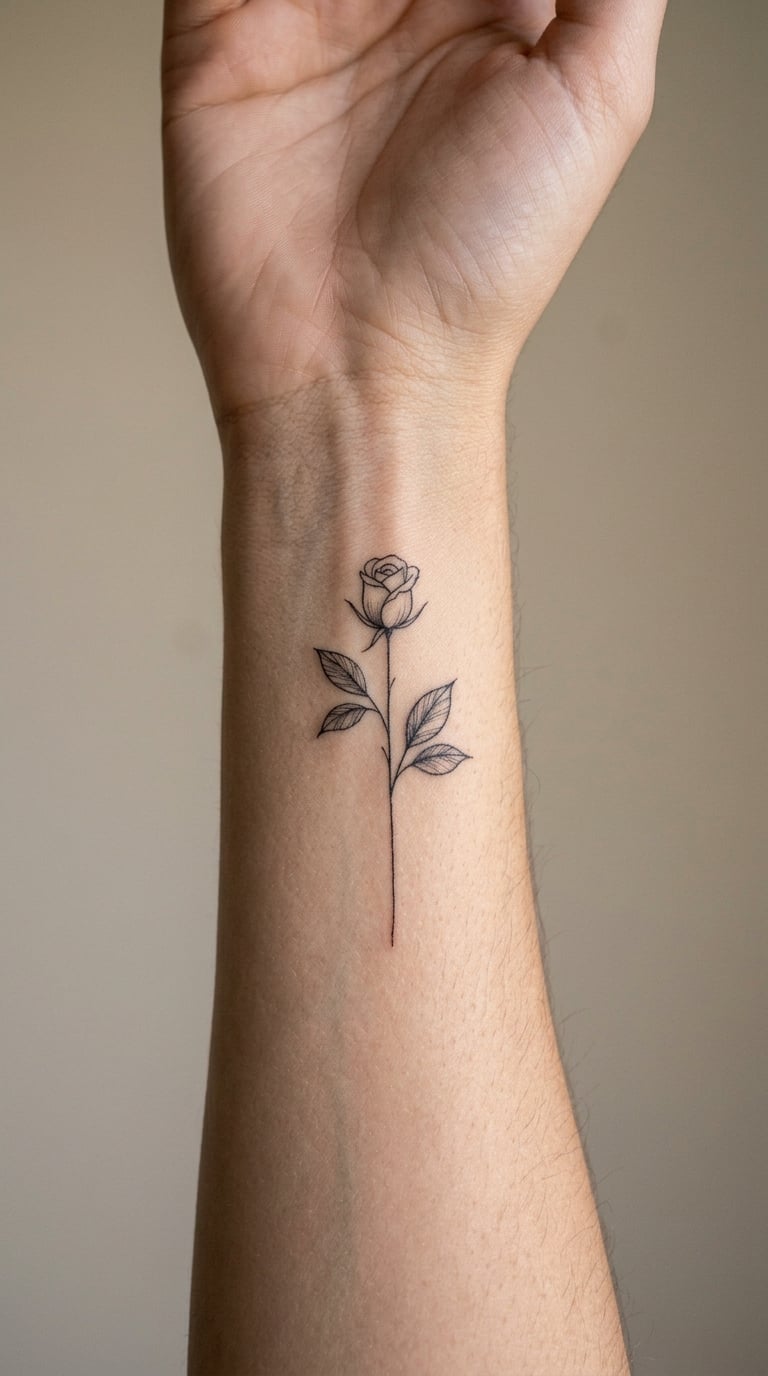
A single stem with two leaves and one bloom at the top, running vertically along the inner forearm. It is the longest piece here, and the one that most rewards an artist who is good with long uninterrupted line work, because the line has to hold steady for the full run.
Placement: vertical, starting near the wrist crease and following the forearm upward. Size: 3 to 4 inches (7.5 to 10 cm) long. Style: fine line botanical. Pain: medium, and the sessions are long. Ageing note: fine line here softens faster than blackwork does, so plan on a touch-up in a year or so. Make it yours: have the bloom match a specific rose you grew or someone gave you.
How to Choose the Right Design
Pick the style before the picture
Decide first whether you want line work, blackwork, or colour, because that choice determines the artist. A fine line piece and a watercolour piece are different jobs, and plenty of strong tattooers only do one of them well.
- Style and artist type. Fine line and micro work needs a portfolio of healed thin-line pieces. Blackwork needs someone comfortable with solid fills. Watercolour needs a specific painterly style, not a generalist. Ask to see healed work, not fresh photos from this week.
- Size against placement. The inner wrist is a narrow, slightly curved surface. Anything under an inch reads as a dot, and anything past four inches starts to compete with the arm. Save our 20 best wrist band tattoo ideas for minimalist looks if you are planning something that wraps the wrist rather than sitting on the inner side.
- Orientation. Run the design along the arm for stems, snakes and stems of flowers. Run it across the arm for mountain ridges and script. A design turned the wrong way looks off the moment the wrist bends.
- Line visibility. Thin single-needle lines are the most elegant and the first to blur. Ask your artist to run lines a touch heavier than the reference photo, and expect a touch-up later.
- Colour durability. Pastel and watercolour on an inner wrist will soften noticeably. Black and grey hold their shape longest on this placement.
- Your existing tattoos. A wrist tattoo is easy to see and easy to crowd. Leave at least a finger-width of clean skin between new work and anything already there, or plan the addition as a deliberate pair.
Is the inner wrist a good place for a tattoo?
It is a good place if you want the design visible and small, and a harder one if you want something bold. The surface is narrow and curved, skin is thin over the wristbone, and healing takes a little longer here than on the forearm because the area never stops moving.
On pain, opinions genuinely conflict online. Most people who have had this placement rate it around 6 out of 10, and the top and side of the wrist are usually worse than the inner side. Skinny, bony wrists report more discomfort, especially when a design runs close to the wristbone. Tattooers say the sensitivity comes from the nerves and tendons in the area rather than the veins, which is a relief for anyone worried about hitting one.
Cost and Session Time
Most US shops charge a flat minimum, and for a piece this small that minimum often is the entire price. As a rough guide, a tiny design of an inch or less runs about $80 to $150, a small design of two to three inches runs about $150 to $350, and a larger or more technical inner wrist piece runs about $350 to $700 or more. Rates vary a lot by city, so a small heart in a small-town shop can cost less than the same heart from a booked-out artist downtown.
Tiny designs, anything around an inch or under, usually take well under an hour. A small design of two to three inches is commonly a one to three hour sitting depending on how much detail it carries, and the longer botanical and wrap-style pieces on this list often need two sessions.
What drives the final number is the hourly rate, the shop minimum charge, the complexity of the detail, and where you are. City shops and artists with a waiting list sit at the top of the range, and more technical styles such as dotwork, watercolour and micro-realism take longer per inch than plain line work. Book a consultation first, and ask whether your design fits a single sitting before you commit to a date.
Aftercare Basics
- Follow your artist’s aftercare instructions first. They know how they worked your skin and which products they use, and their advice overrides anything general you have read.
- Wash gently with lukewarm water and unscented soap, twice a day, pat dry with something clean, and let the air do the rest.
- Protect it from sun for the whole healing period and afterwards if you want the line to hold. Sleeves and sun exposure wear inner wrist ink out faster than almost anywhere else.
- Choose loose clothing. A watch, bracelet or tight cuff rubbing against a fresh wrist tattoo is the most common way people damage one in week one.
- Do not soak, swim, or cover it tightly. Baths, hot tubs and swimming pools are worth skipping until the skin has fully closed over.
- Watch for anything spreading redness, or heat and swelling after the first few days, and contact your artist or a clinician if it appears rather than settling down on its own.
If you are still comparing directions, the wrist tattoo ideas for women round-up covers more placements than the inner side alone.
Frequently Asked Questions
Is an inner wrist tattoo painful?
Most people rate inner wrist ink around 6 out of 10. The skin is thin and there are plenty of nerves and tendons in the area, though the veins are not the issue people fear. The top and side of the wrist are usually more uncomfortable than the inner side, and bony wrists tend to hurt more. Expect a scratchy, insistent feeling rather than sharp pain.
Is the inner wrist a good place for a tattoo?
It suits small, fine line, script and symbolic designs, because the surface is narrow and reads clearly at arm’s length. It is less suited to large or heavily detailed work, and the skin sits close to the wristbone, so line weight matters. Healing takes slightly longer than the forearm because the area never stops moving. Choose it if you want the design visible and small.
What to avoid with wrist tattoos?
Avoid catchphrases, names and dates in tiny script on the inner wrist. You will read them every day, and small lettering on a moving, frequently washed area blurs faster than anywhere else. Skip thick cuffs and watches while it heals, keep it out of strong sun, and avoid a first design that reads as a word rather than a picture. Line-heavy fine work needs a touch-up plan.
How long does a wrist tattoo take to heal?
The surface usually settles within two to three weeks, when the flaking and redness go. Full dermal healing takes closer to three months, and the wrist runs a little slower than the forearm because of constant movement and friction from sleeves. A tattoo can look faded and patchy around week two and still settle properly after that. Judge the final result at three months, not at three weeks.
Do inner wrist tattoos fade faster?
Yes, compared with areas like the upper arm. The inner wrist gets more hand washing, more sleeve and cuff friction, more movement, and more incidental sun than most placements. Black and grey holds its shape better than pastel or watercolour here. Choosing a line weight a little heavier than the reference photo, wearing a watch on the opposite wrist, and covering it in strong sun all slow the fade.
What size should an inner wrist tattoo be?
Most designs that work sit between one and three inches. Under an inch and the piece reads as a dot at normal viewing distance, and past four inches it starts fighting the arm. Match the size to the detail you want, since fine line needs more room than a solid black shape. Ask your artist to scale the design to your actual wrist, because proportions vary a lot from person to person.
Conclusion
If this is your first tattoo, the fine-line lotus or the tiny red heart are the two easiest places to start: small, quick, and readable at a glance. If you are already collecting pieces, the blackwork heart or the watercolour peony hold more visual weight and reward an artist who works in those styles.
Pick the design first, then find an artist whose healed portfolio matches it, and only then book the date. Check that size suits the detail, that the orientation follows the wrist, and that you are comfortable seeing it every day. That last check is the one people skip and the one they regret.