
20 Paramedic Tattoo Ideas for 2026: Best EMS Tattoo Designs
These 20 paramedic tattoo ideas all come out of the same drawer: an ECG trace, a Star of Life, a pair of trauma shears, a radio on your shoulder. What separates the ones that age well from the ones that turn muddy in five years is scale, line weight, and whether the symbol is drawn correctly.
The list below suits paramedics, EMTs, flight and critical care transport clinicians, wilderness medics, EMS students and instructors, and the partners who want to mark the same thing from the other side of the story. Each entry carries a real size range, an honest pain note for the placement, and one way to make it personal. Sizes are the finished height or width on skin, not the size of the reference image.
20 Paramedic Tattoo Ideas: Quick Guide
| Idea | Style | Best placement | Size | Pain |
|---|---|---|---|---|
| Fine-line ECG heartbeat | Fine line | Inner forearm | 2-5 inch (5-13 cm) | Medium |
| Minimalist Star of Life | Fine line or blackwork | Inner upper arm | 2-4 inch (5-10 cm) | Low to medium |
| Rod of Asclepius | Fine line | Neck, behind the ear | 1.5-3 inch (4-8 cm) | Medium |
| Blackwork ambulance | Blackwork | Calf or forearm | 3-6 inch (8-15 cm) | Medium to high |
| Micro-realism trauma shears | Micro-realism | Forearm | 2-4 inch (5-10 cm) | Medium |
| Gloved hand with heartbeat | Blackwork | Wrist or forearm | 3-5 inch (8-13 cm) | Medium |
| Syringe and anatomical heart | Fine line | Inner forearm | 2.5-4 inch (6-10 cm) | Medium |
| Color ECG wrapping the arm | Illustrative linework | Outer forearm | 3-7 inch (8-18 cm) | Medium |
| Red medical cross patch | Traditional | Upper arm | 2-4 inch (5-10 cm) | Medium to high |
| Dotwork helmet and laurel | Dotwork and traditional | Upper arm or calf | 3-6 inch (8-15 cm) | Medium to high |
| Anatomical lungs | Blackwork and grey wash | Chest, side of ribs | 4-7 inch (10-18 cm) | High on ribs |
| Paramedic silhouette | Micro-realism or blackwork | Calf or upper arm | 2-5 inch (5-13 cm) | Medium |
| Fine-line radio headset | Fine line | Forearm or upper arm | 2-4 inch (5-10 cm) | Medium |
| Trauma bag checklist | Illustrative blackwork | Outer upper arm | 3-5 inch (8-13 cm) | Medium |
| Watercolor pulse and rose | Watercolor | Forearm | 3-6 inch (8-15 cm) | Medium |
| Mountain rescue scene | Blackwork | Calf or upper arm | 3-6 inch (8-15 cm) | Medium to high |
| Footprint and heartbeat memorial | Fine line or blackwork | Calf or wrist | 2-4 inch (5-10 cm) | Medium |
| PARAMEDIC wordmark | Blackwork lettering | Forearm or calf | 3-6 inch (8-15 cm) | Medium |
| Red and black staircase heart | Neo-traditional | Outer forearm | 3-5 inch (8-13 cm) | Medium to high |
| Minimal two-hand pulse | Fine line or blackwork | Forearm or ribs | 2.5-5 inch (6-13 cm) | Medium, high on ribs |
1. Fine-Line ECG Heartbeat on the Forearm
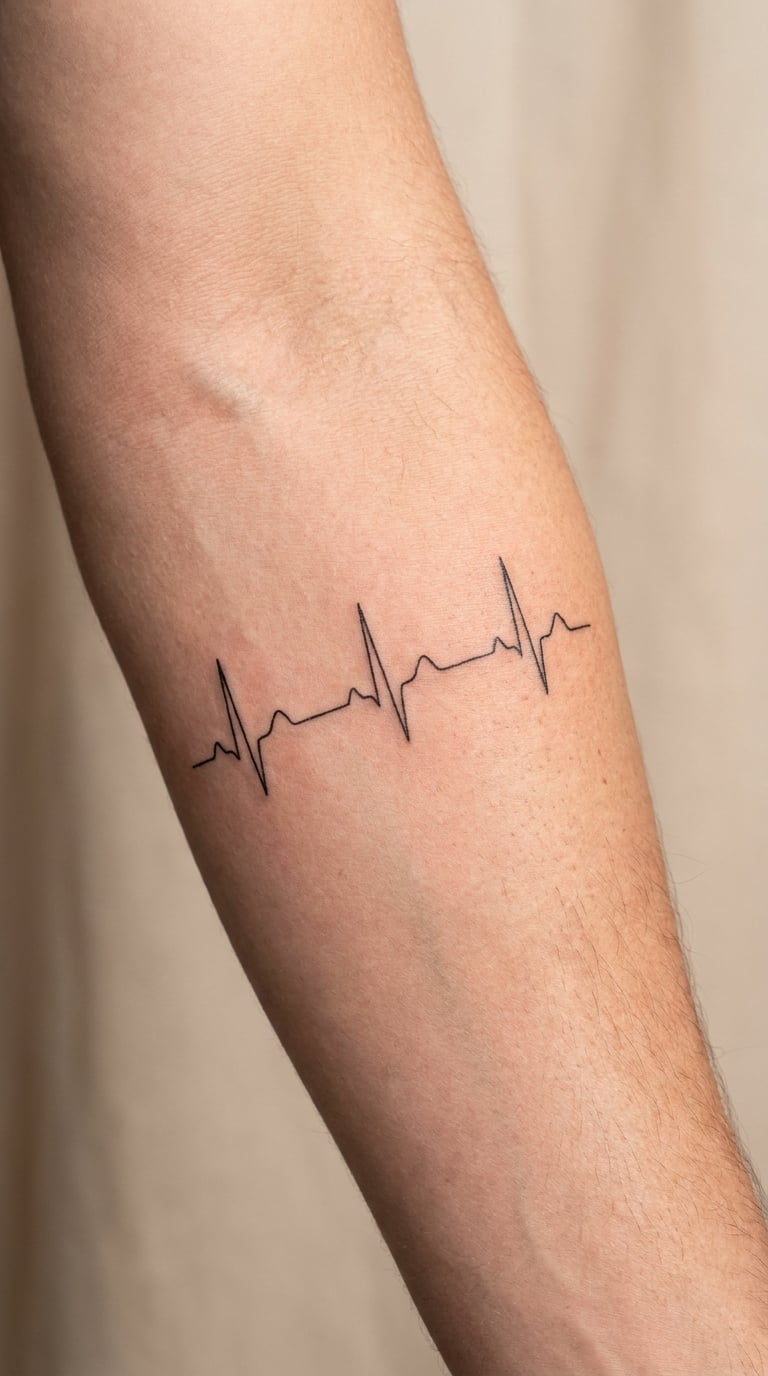
A clean ECG heartbeat tattoo is one unbroken line: a flat baseline, a sharp narrow spike, a rounded wave, then flat again. Drawn at hairline weight, it reads as a rhythm strip rather than a logo, and it needs no text to explain itself.
Most people choose it because it marks the job without a slogan attached. For a first responder it usually points to a specific call, a partner, or the day the career started, and the wearer is the only person who needs to know which one.
Placement: inner forearm, running parallel to the radius from wrist toward elbow. Size: 2-5 inch (5-13 cm) long. Style: fine line, single weight, no shading. Pain: medium on the inner forearm, and thin lines on the inner arm fade faster than most designs, so expect to need a touch-up within a few years. Make it yours: use the rhythm of someone you have worked with, or the one that shows up on the monitor when you walk into a certain kind of call.
2. Minimalist Star of Life on the Inner Arm
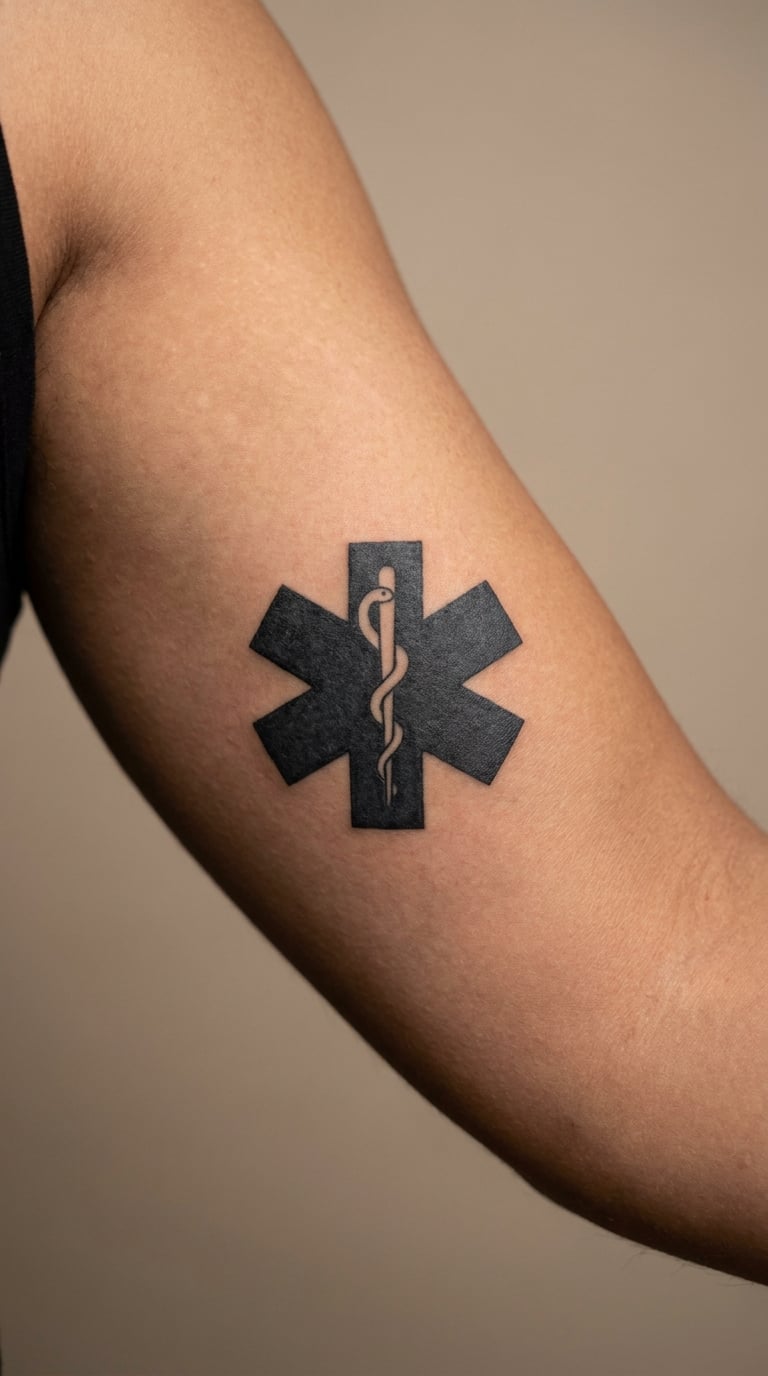
A Star of Life done small is just a six-pointed star with a straight staff through the middle, outlined in black with no interior clutter. Drawn in crisp blackwork with even line weight, it holds its shape for decades.
The six points are not decoration. They stand for the six functions of emergency medical care: detection, reporting, response, on-scene care, care in transit, and transfer to definitive care. The blue six-point star was developed by NHTSA partly because the red cross emblem is legally protected and cannot be used on civilian ambulances, and it later became the standard EMS mark.
Placement: inner upper arm or inside of the forearm. Size: 2-4 inch (5-10 cm) across. Style: fine line outline or solid blackwork. Pain: low to medium on the upper arm, and bold outer lines age far better than intricate interiors. Make it yours: add one small color hit, or a coordinate for the agency you serve.
3. Rod of Asclepius Behind the Ear
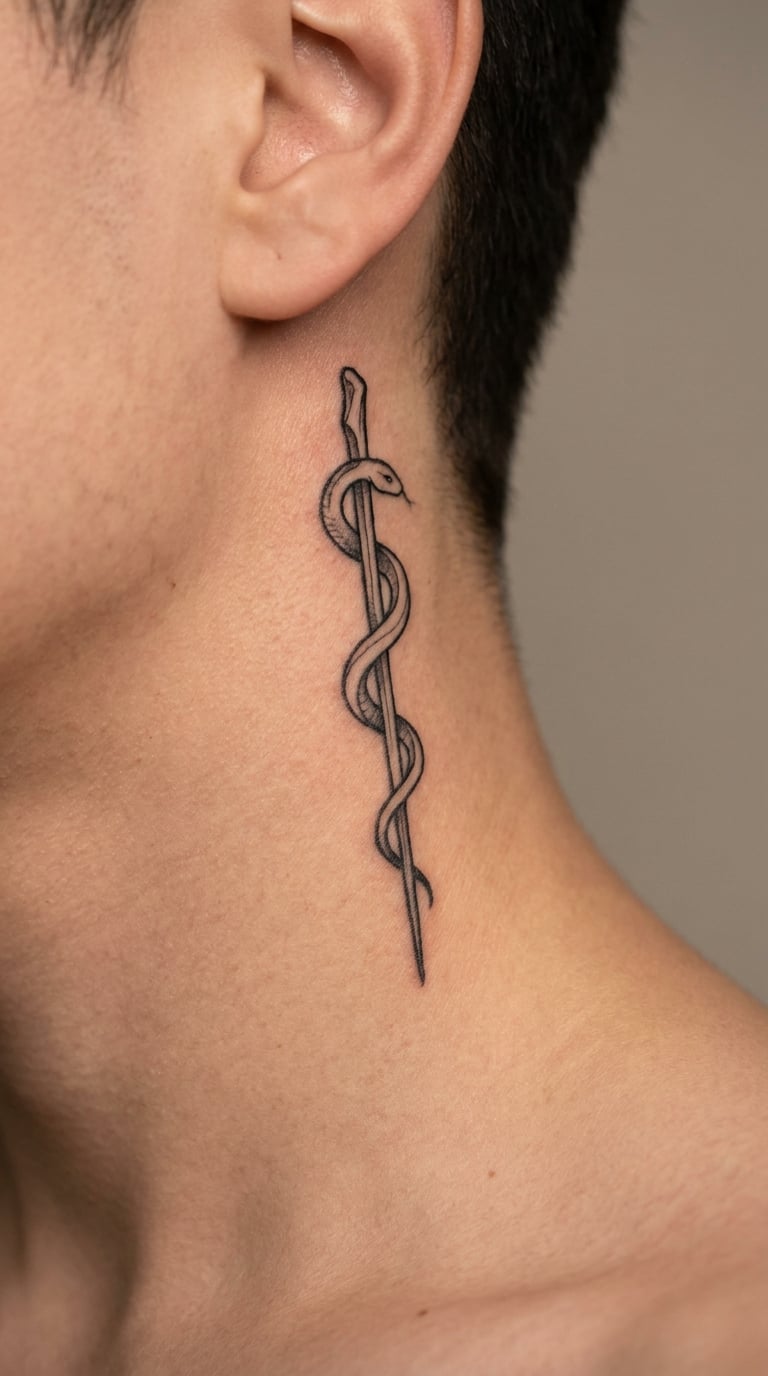
A Rod of Asclepius is one staff with a single snake wrapped around it, and the compact version sits perfectly in that small patch of skin behind the ear. Fine line, slightly thicker than an ECG trace so the coils stay separate.
It is the older and more accurate medical emblem, rooted in the classical tradition of Asclepius. The two-snake caduceus is a different symbol that officially means commerce and negotiation, and tattooists mix the two up constantly, so bring a reference.
Placement: side of the neck, behind the ear, or the small area where the neck meets the shoulder. Size: 1.5-3 inch (4-8 cm). Style: fine line. Pain: medium on the neck, and the thin coils and snake head will soften noticeably over time. Make it yours: keep the snake single-serpent for accuracy, and pair it with a tiny matching mark elsewhere.
4. Blackwork Ambulance on the Calf
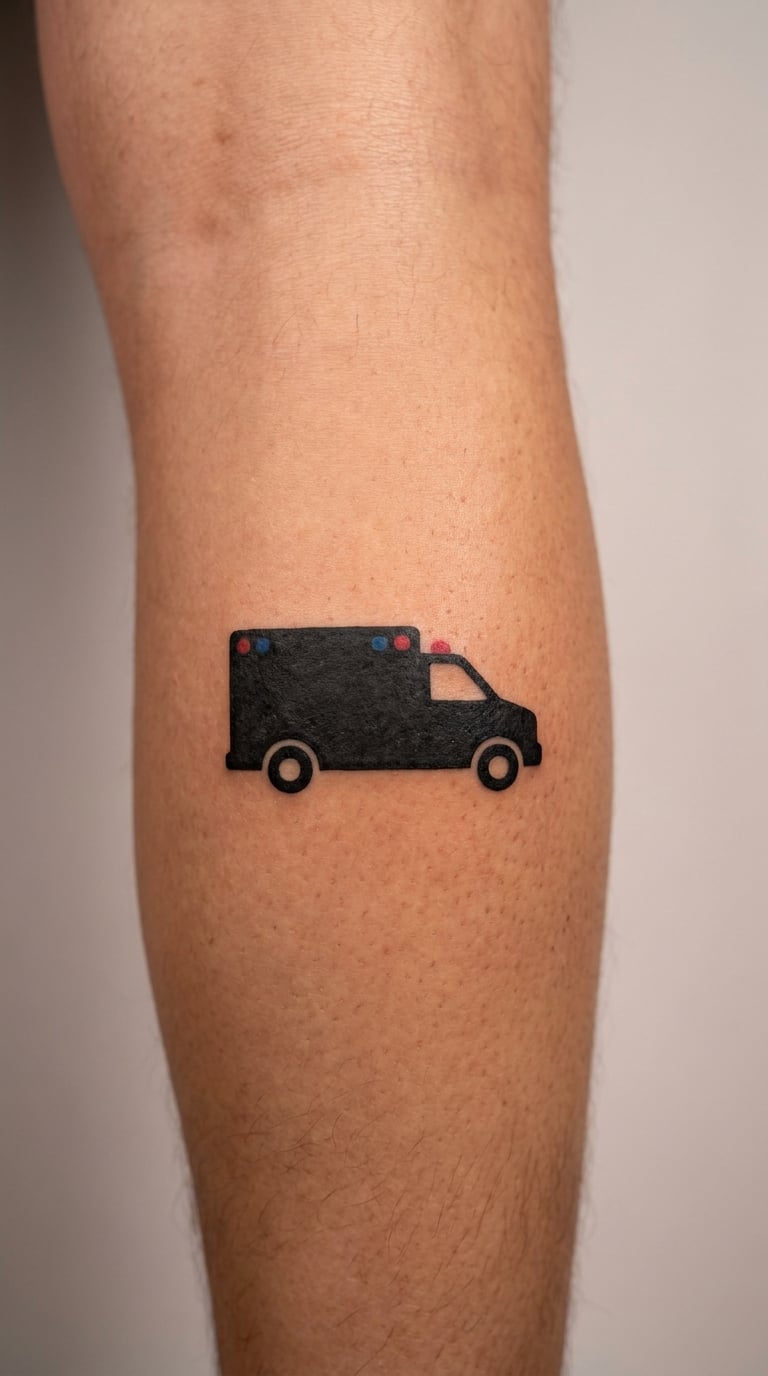
An ambulance rendered as a flat black side profile is one of the most legible EMS tattoos there is. Strong silhouette, solid wheels, two thin bars of colored light across the roof, and no windows to worry about.
People reach for a vehicle rather than an emblem because it is a career object rather than an organisation. It reads instantly to anyone in EMS and quietly to everyone else.
Placement: outer calf or forearm. Size: 3-6 inch (8-15 cm) long. Style: blackwork with selective red or blue accents. Pain: medium to high on the lower leg, and small glazing details on the body soften first if they are thinner than the silhouette. Make it yours: match the light colors to your uniform, or add a city skyline and your service year underneath.
5. Micro-Realism Trauma Shears on the Forearm
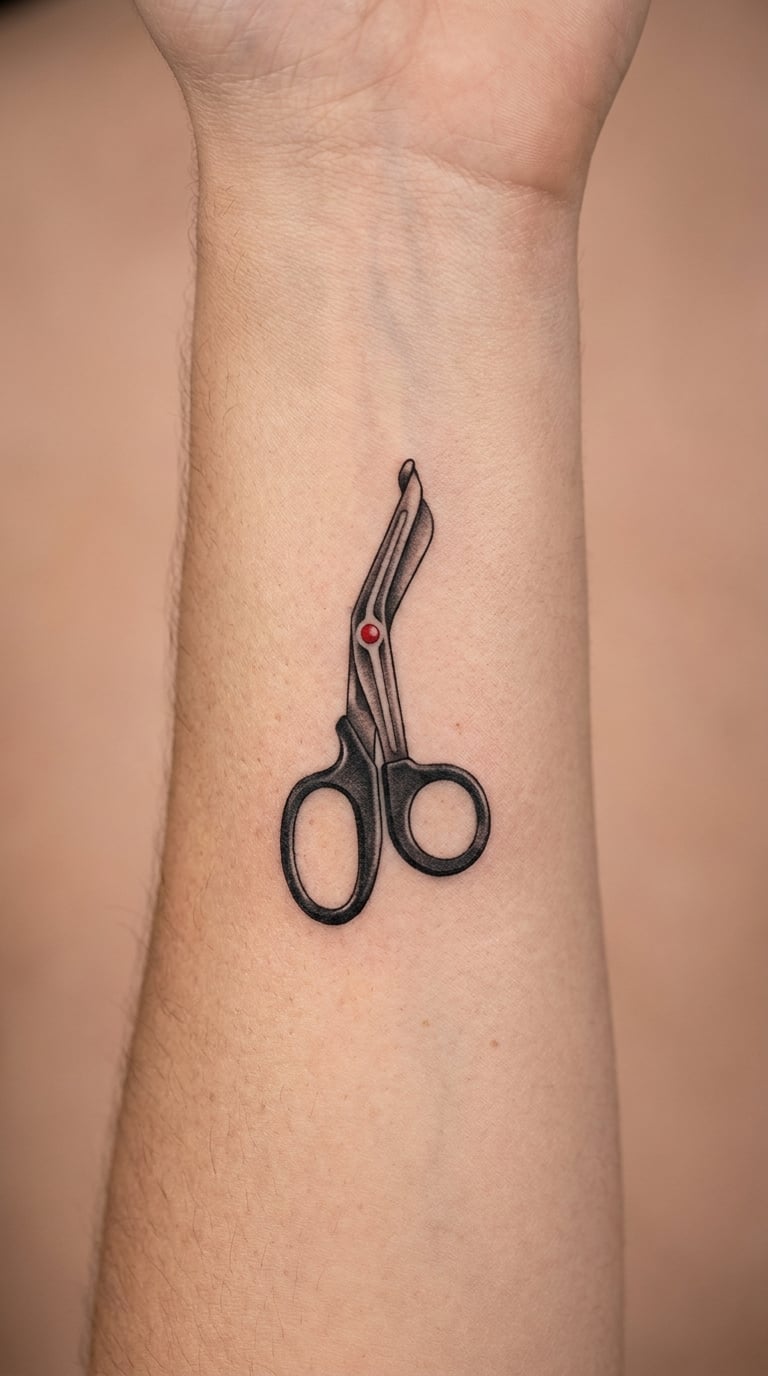
Trauma shears at micro scale are just shears. Black and grey shading on the blades, a slightly warmer grey on the handles, and one restrained color accent at the pivot. The whole thing fits in a fist-sized area.
It is a tool tattoo rather than a symbol tattoo, and that is the point. Daily equipment often carries more personal weight than a badge, especially for crews who cut their own gear out of habit.
Placement: forearm, usually inner or near the elbow crease. Size: 2-4 inch (5-10 cm). Style: micro-realism. Pain: medium, and the hinge detail and tiny handle notches are the first parts to blur as the piece ages. Make it yours: have the artist engrave a small date on the handle, or add a sprig of a plant you pass on every shift.
6. Gloved Hand Holding a Heartbeat
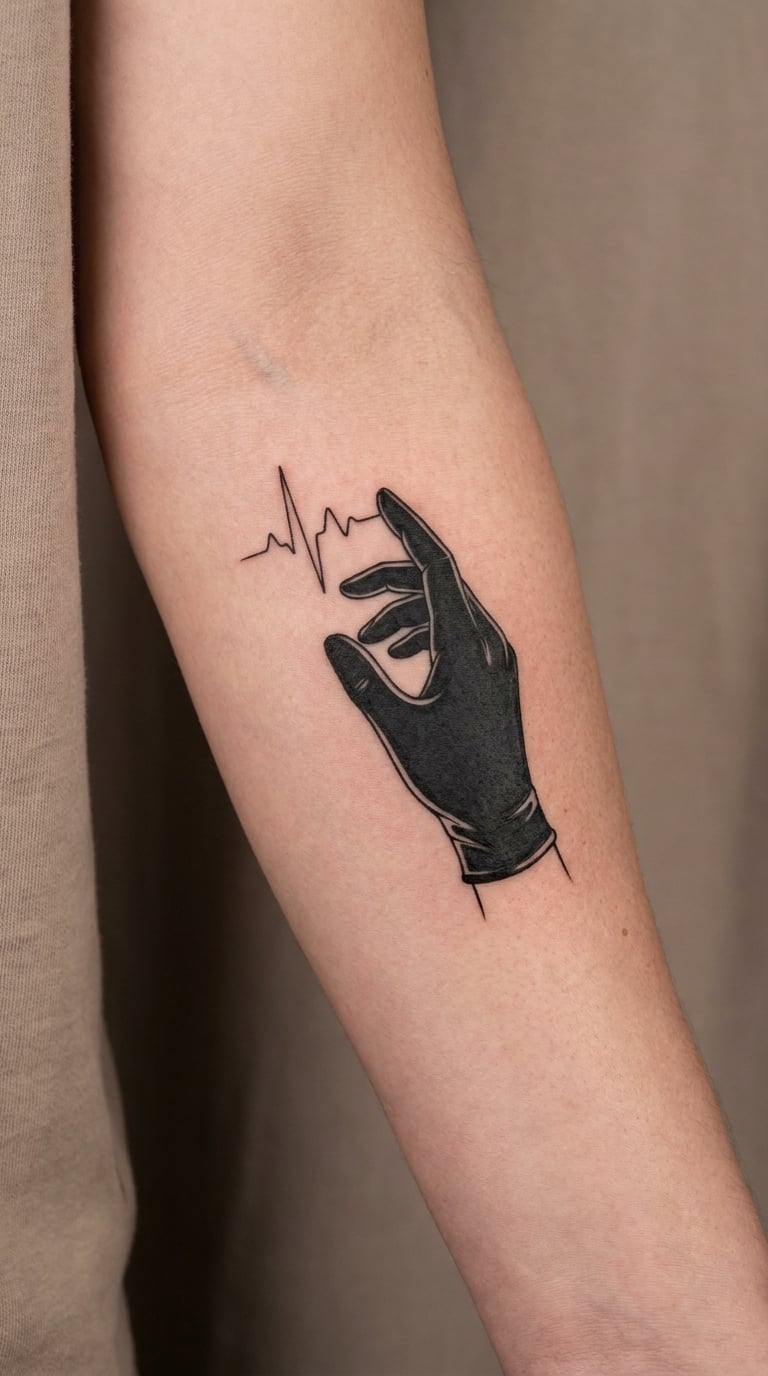
This one puts a gloved hand in the foreground with the fingertips meeting a fine ECG line that runs away from the contact point. Blackwork for the glove, thin line for the trace, and grey shading only inside the cuff.
It balances the technical side of the job with the human one. Many crews describe their work as half clinical skill and half being the person a frightened family sees first, and this composition holds both halves.
Placement: inner forearm or wrist. Size: 3-5 inch (8-13 cm). Style: blackwork with fine line and grey. Pain: medium, and the finger joints are the vulnerable area, so simplify knuckles and fingernails before you start. Make it yours: tint the pulse line in your service color, or set the cadence to a rhythm you actually recognise.
7. Fine-Line Medical Syringe and Heart
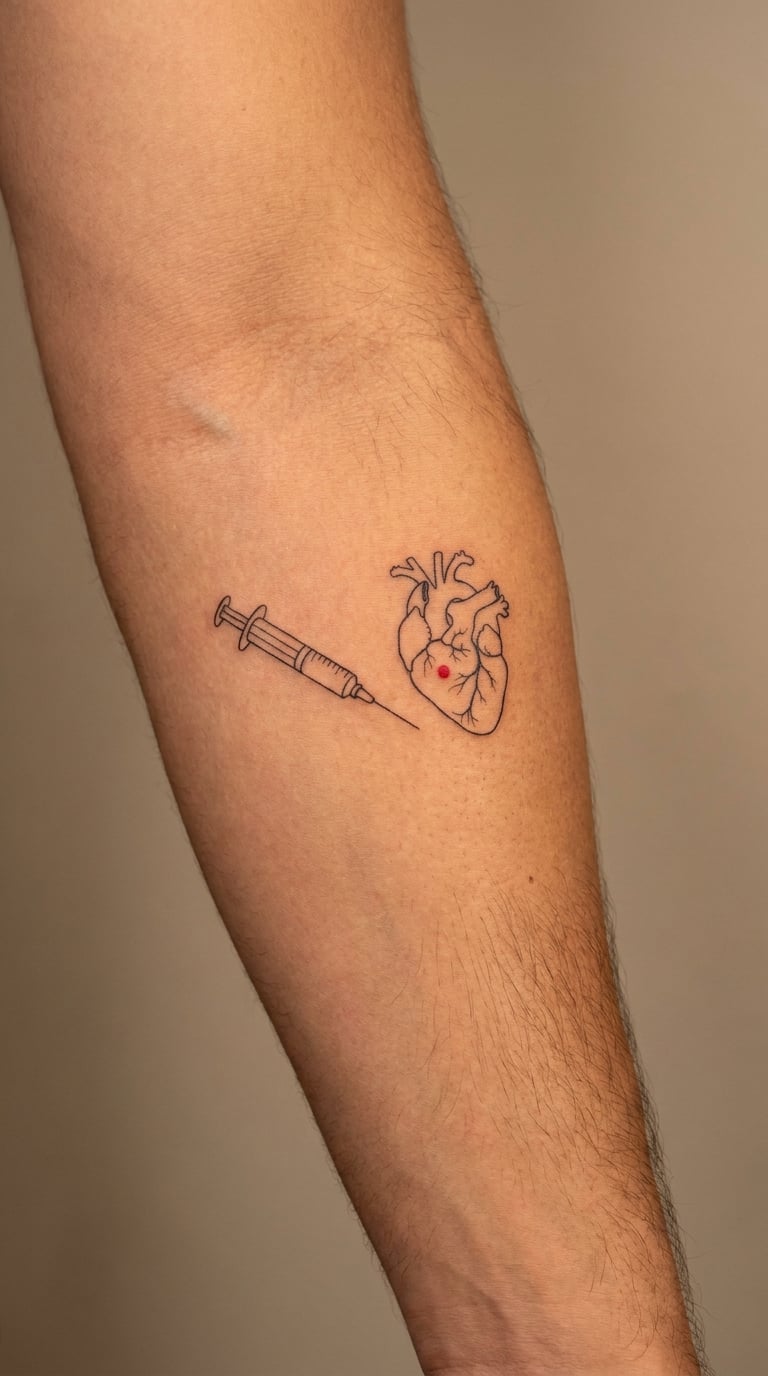
A syringe angled down toward a stylized anatomical heart, drawn with minimal lines and one small red fill in the heart, is a compact way to say medicine without a word. The heart is simplified: an outline, the aortic arch, two short vessel stubs.
There is no fixed symbolic meaning here, and that is the appeal. People usually pick it for the medical identity rather than any message attached to it.
Placement: inner forearm, angled with the syringe tip pointing toward the elbow or the wrist. Size: 2.5-4 inch (6-10 cm). Style: fine line with light color. Pain: medium, and the inner forearm is exposed to sun and friction, which fades fine line and light red faster than most placements. Make it yours: build a date from a dose calculation, or use a muted green accent pulled from your uniform.
8. Color ECG Trace Wrapping Around the Arm
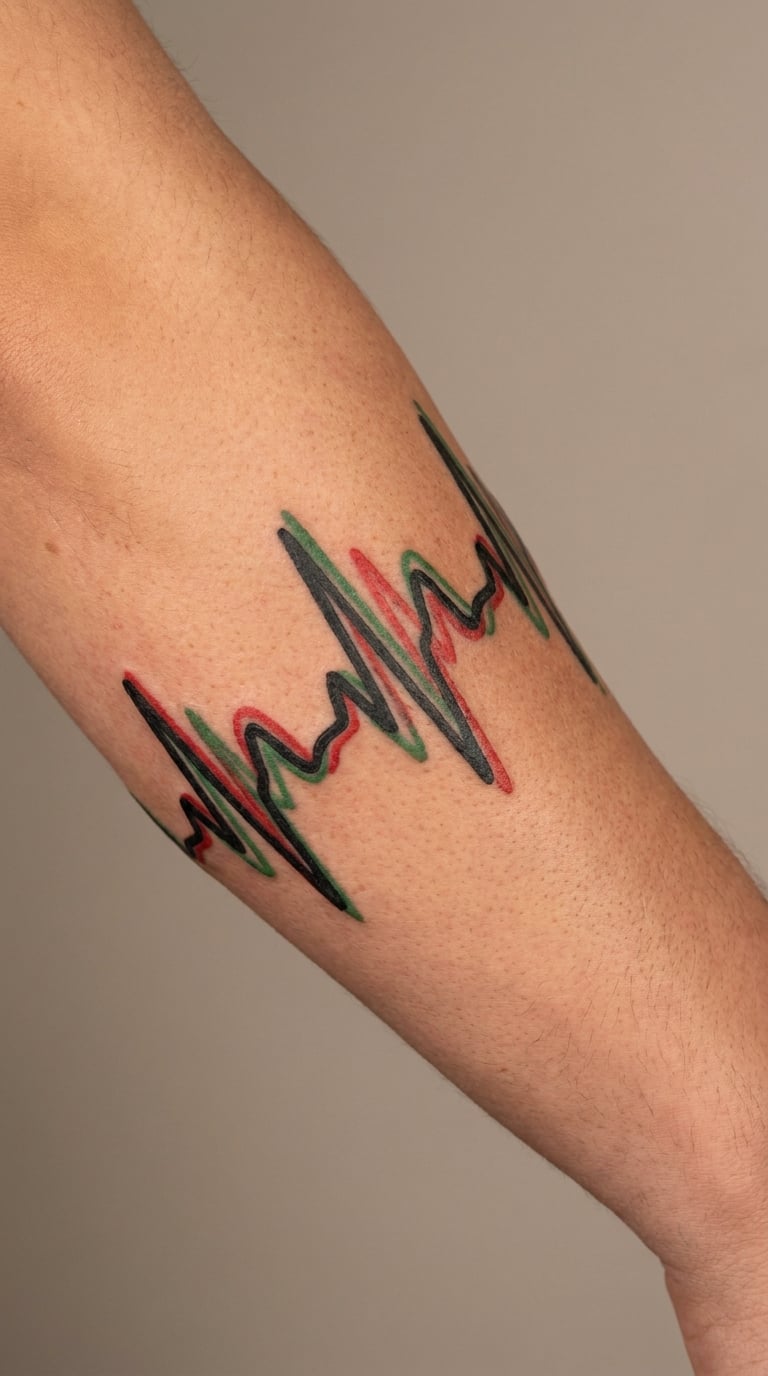
Instead of a flat strip, the line follows the curve of the forearm and disappears around the arm, so the design reads differently from every angle. Segments in black, red, and green give it a neo-traditional rhythm.
It suits people who want a piece that interacts with the shape of the limb rather than sitting on it. It also fills a mid-forearm section without becoming a full sleeve.
Placement: outer or inner forearm, wrapping two-thirds of the way around. Size: 3-7 inch (8-18 cm) of total line length. Style: neo-traditional or illustrative linework. Pain: medium, and color choice drives longevity here, since saturated red warms and reddens over time while black stays put. Make it yours: pull the three colors straight from your department uniform so the piece belongs to a specific crew.
9. Traditional Red Medical Cross Patch
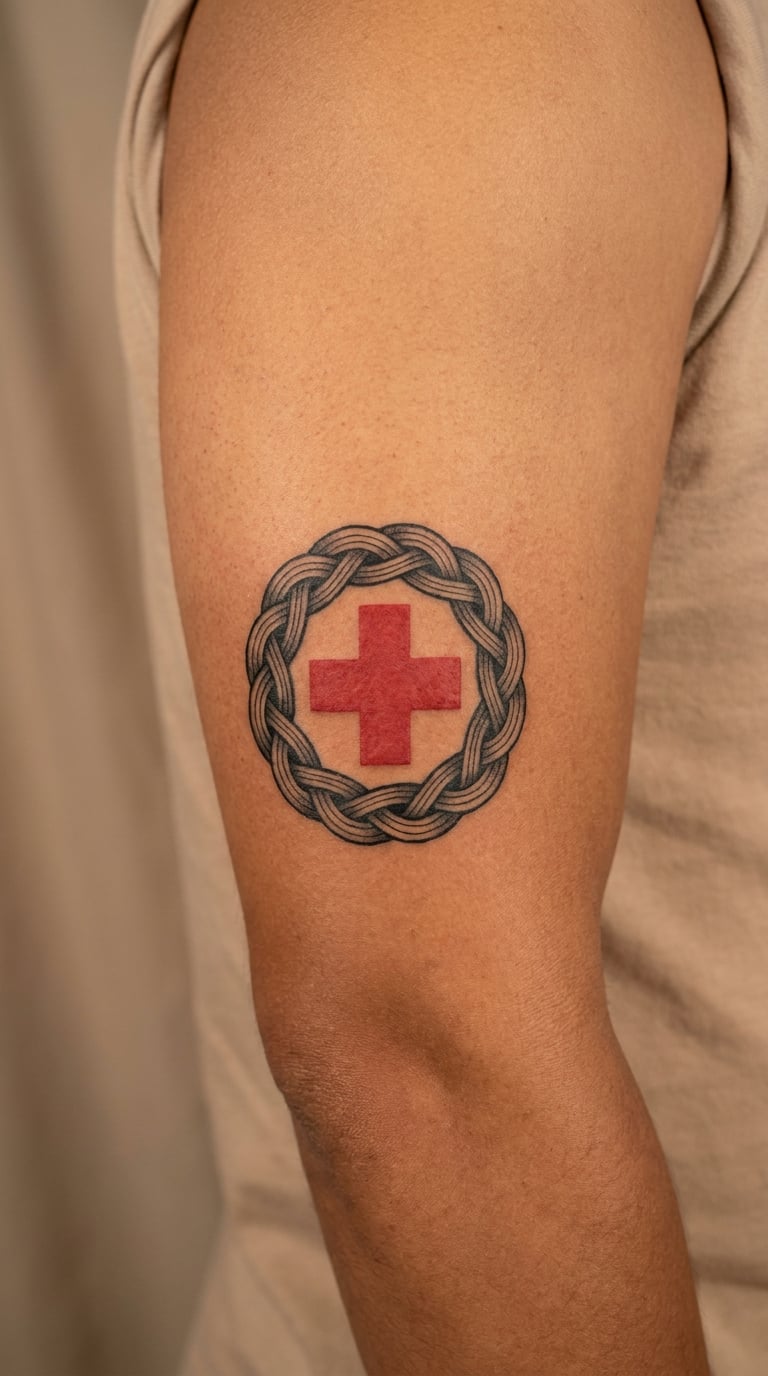
A red cross in a traditional patch shape, thick black outline, a white inner border, and nothing else crowded around it. A wordmark can sit beneath it, but only if the artist handles lettering well.
One caution: do not reproduce the protected red cross emblem itself. It is a legally protected symbol of the medical corps, and in the United States civilian EMS uses the blue Star of Life precisely because that emblem was unavailable. A generic red cross in a personal patch layout is a different thing, but check with your artist before drawing it.
Placement: outer upper arm or shoulder. Size: 2-4 inch (5-10 cm). Style: traditional American. Pain: medium to high on the upper arm, and small lettering blurs quickly, so keep the wordmark short or leave it out. Make it yours: add a single first name in script underneath, or a restrained black shading pass behind the cross.
10. Dotwork Medical Helmet and Laurel
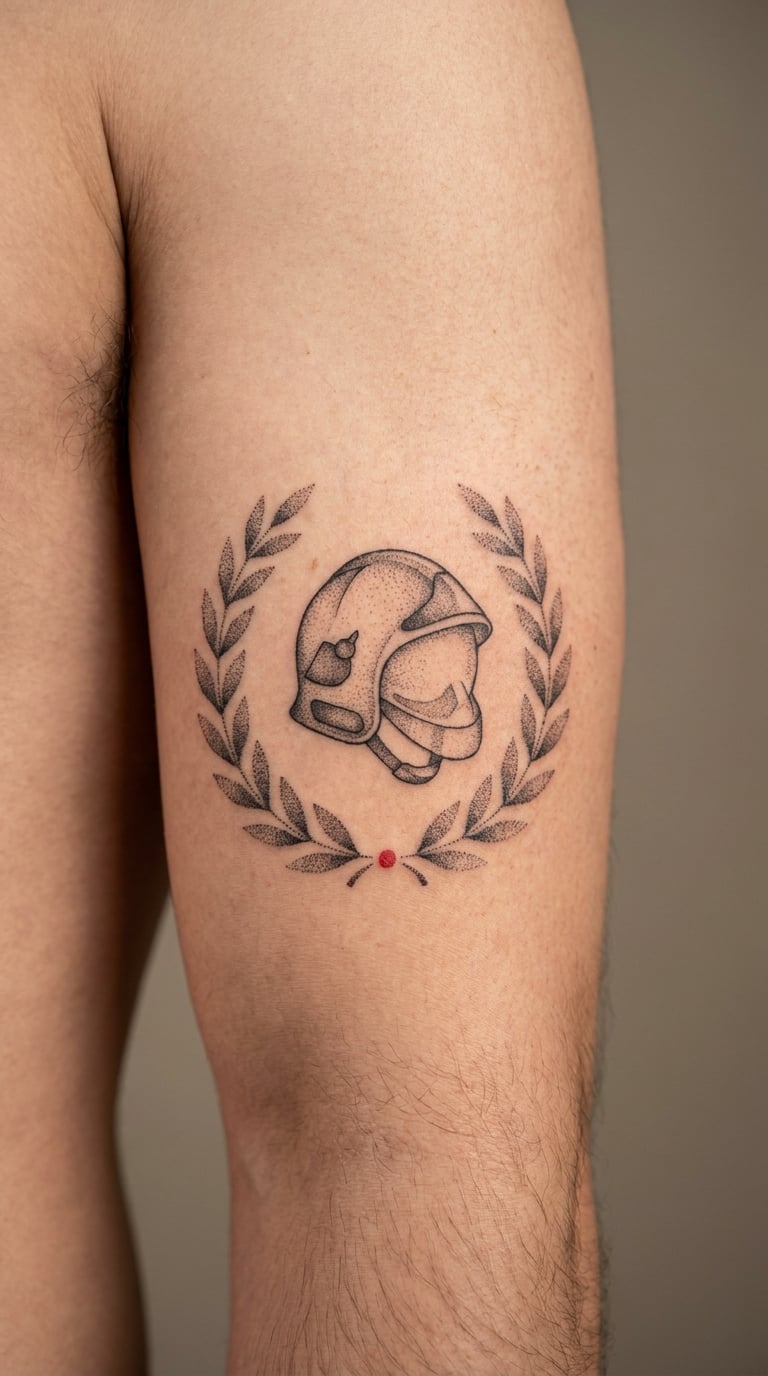
A rescue helmet built from stippled dots, framed by a symmetrical laurel that curves around it, is a hybrid of dotwork and traditional composition. The dots do the shading; one small red detail keeps it from going flat.
This is the design for people who move between fire and EMS roles. The helmet carries the fire-service half of the identity, the laurel carries the honor language, and the whole piece stays career-neutral enough to keep after a change of job.
Placement: outer upper arm, deltoid, or calf. Size: 3-6 inch (8-15 cm). Style: dotwork with traditional structure. Pain: medium to high, and dots spread and soften on the upper arm over time, so a bolder dot density now saves you a session later. Make it yours: add a rank bar, a station name, or the year you started.
11. Anatomical Lungs with an Airway
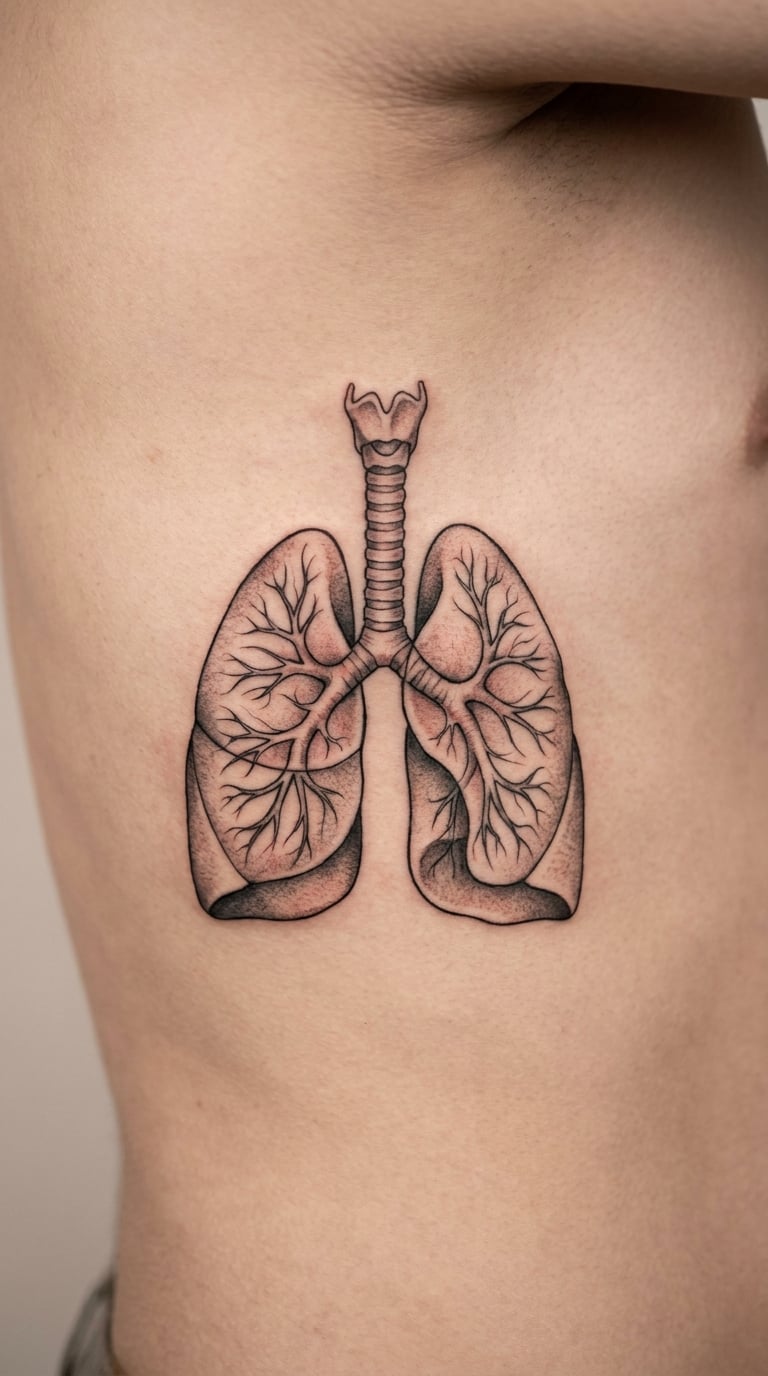
Anatomical lungs mean real structure: two lobes with visible branching, a trachea splitting into the bronchi, and grey wash sitting in the shadowed tissue. Blackwork contour lines keep it from looking like a diagram.
It is a body-centered design, and that is usually the reason. Lungs sit close to breathing and to the chest, so people describe it as marking the part of themselves the work costs most.
Placement: sternum-adjacent or on the side of the ribs. Size: 4-7 inch (10-18 cm) across. Style: blackwork with grey wash and restrained color. Pain: high to medium, since ribs and the bony sternum take the needle badly, and rib movement permanently disturbs the symmetry. Make it yours: run a single pulse line through the trachea or add a small red highlight where the bronchi split.
12. Micro-Realism Paramedic Silhouette
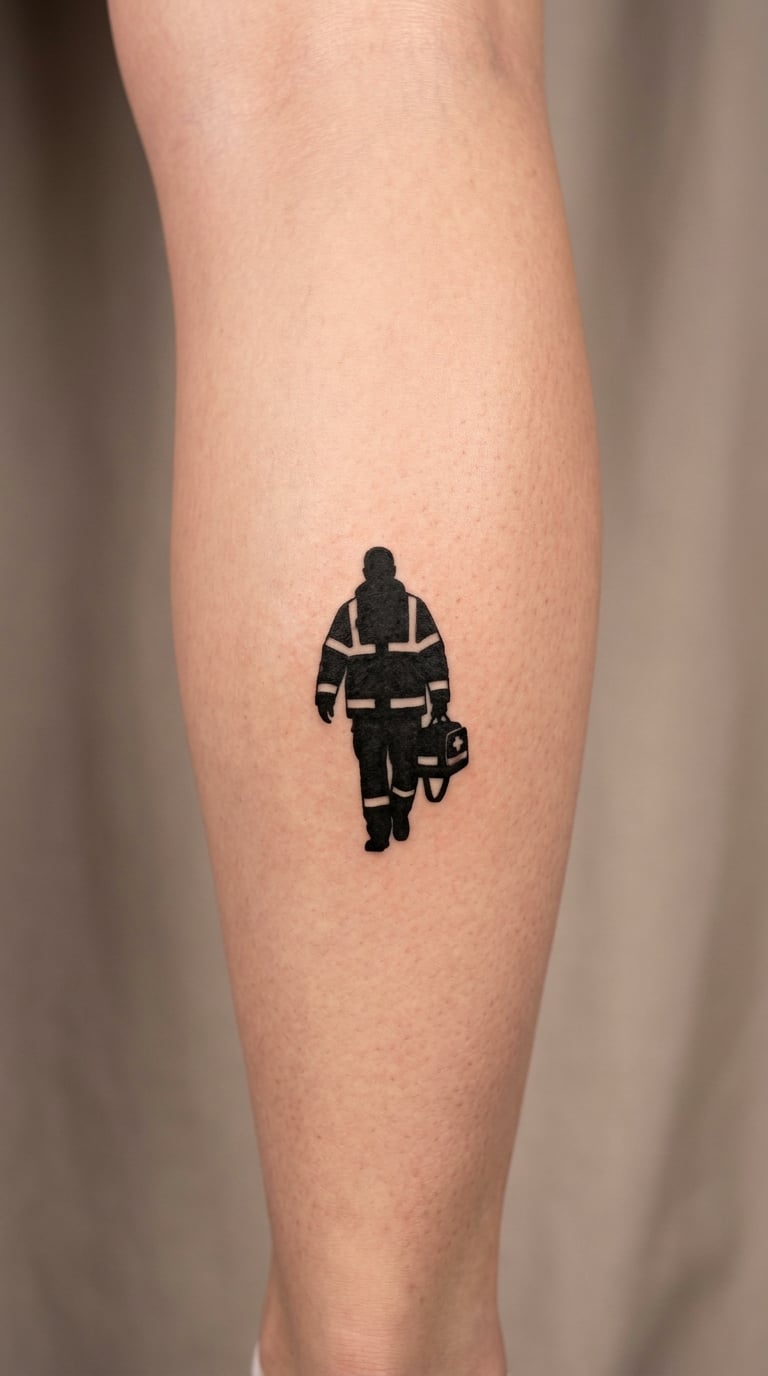
A compact side-profile scene: a figure in a work jacket, a medical bag in one hand, one clear identifying feature such as a radio on the shoulder. Rendered in clean silhouette rather than a crowd of props.
Supporters and partners choose this one often, and so do paramedics who want a person instead of an object. Keep the composition to a single figure; adding a second person or a scene turns it into a mural.
Placement: calf, forearm, or upper arm. Size: 2-5 inch (5-13 cm) tall. Style: micro-realism or blackwork. Pain: medium, and tiny facial and equipment details blur within a decade, so the silhouette should read on its own without them. Make it yours: add a date and a place name in small type underneath, well away from the figure.
13. Fine-Line Radio Headset
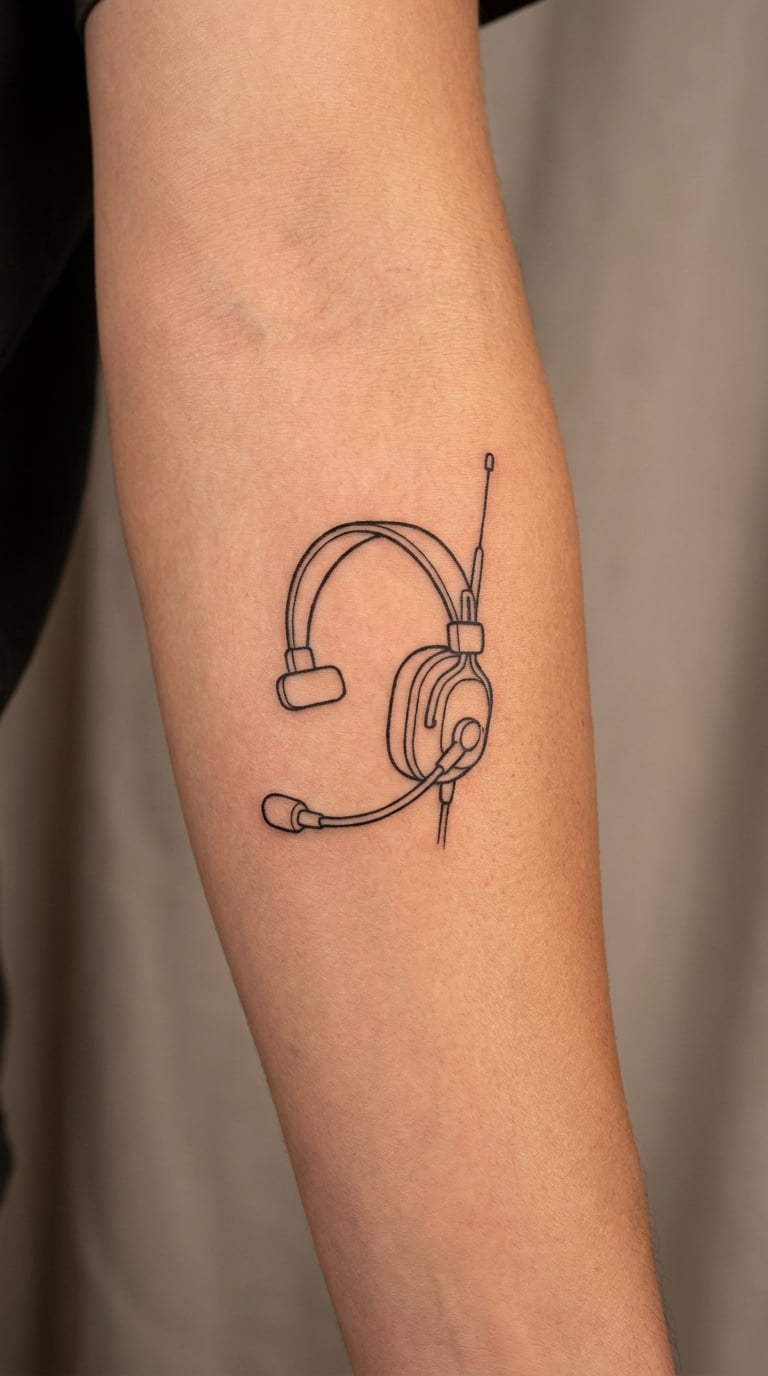
A communications headset in fine line: the ear cup, the band that goes over the head, the boom mic, and a short antenna. Stripped of any branding, it is one of the most recognisable EMS objects after the shears.
Dispatch is the part of the job most people never see, and a headset tattoo is a quiet nod to coordination and to the partners on the other end of the radio.
Placement: outer forearm or upper arm. Size: 2-4 inch (5-10 cm). Style: fine line. Pain: medium, and short strokes plus the mic and antenna are the first lines to fade on an exposed forearm. Make it yours: add your call sign, or a repeating pattern of dashes inspired by a dispatch code, plus one muted blue accent.
14. Trauma Bag Checklist Tattoo
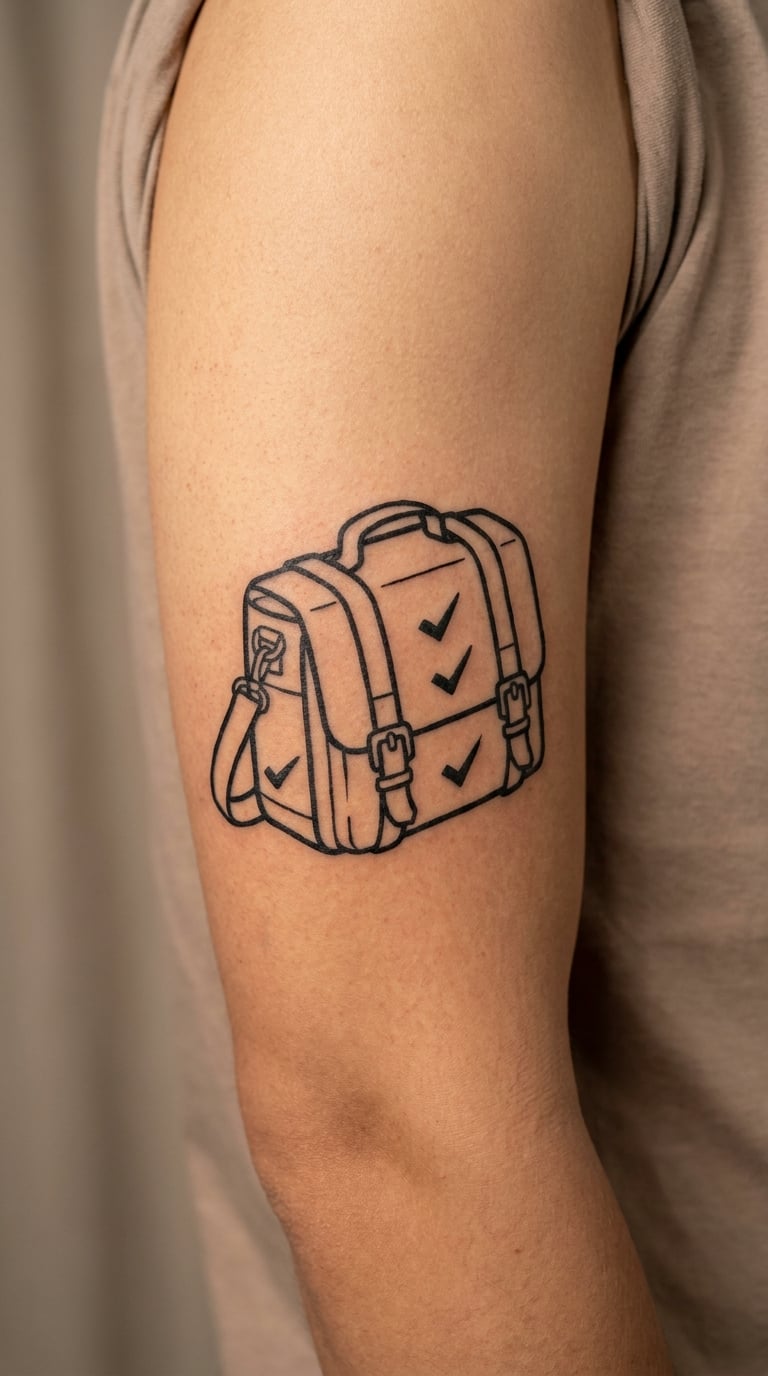
A trauma bag drawn in illustrative blackwork with its straps, zips, and a small column of check marks beside it. No realistic labels, no manufacturer marks, just the shape and the routine.
It celebrates preparedness and order, which is what most crews say they actually value about the job. The check marks can stand in for a real checklist, a packing habit, or the list you run before every shift.
Placement: outer forearm or outer upper arm. Size: 3-5 inch (8-13 cm). Style: illustrative blackwork or neo-traditional. Pain: medium, and the tiny checklist lines are the first thing to go grey and unreadable, so keep the marks chunky. Make it yours: set one mark beside the tool that matters most to you on a bad-call night.
15. Watercolor Pulse and Rose
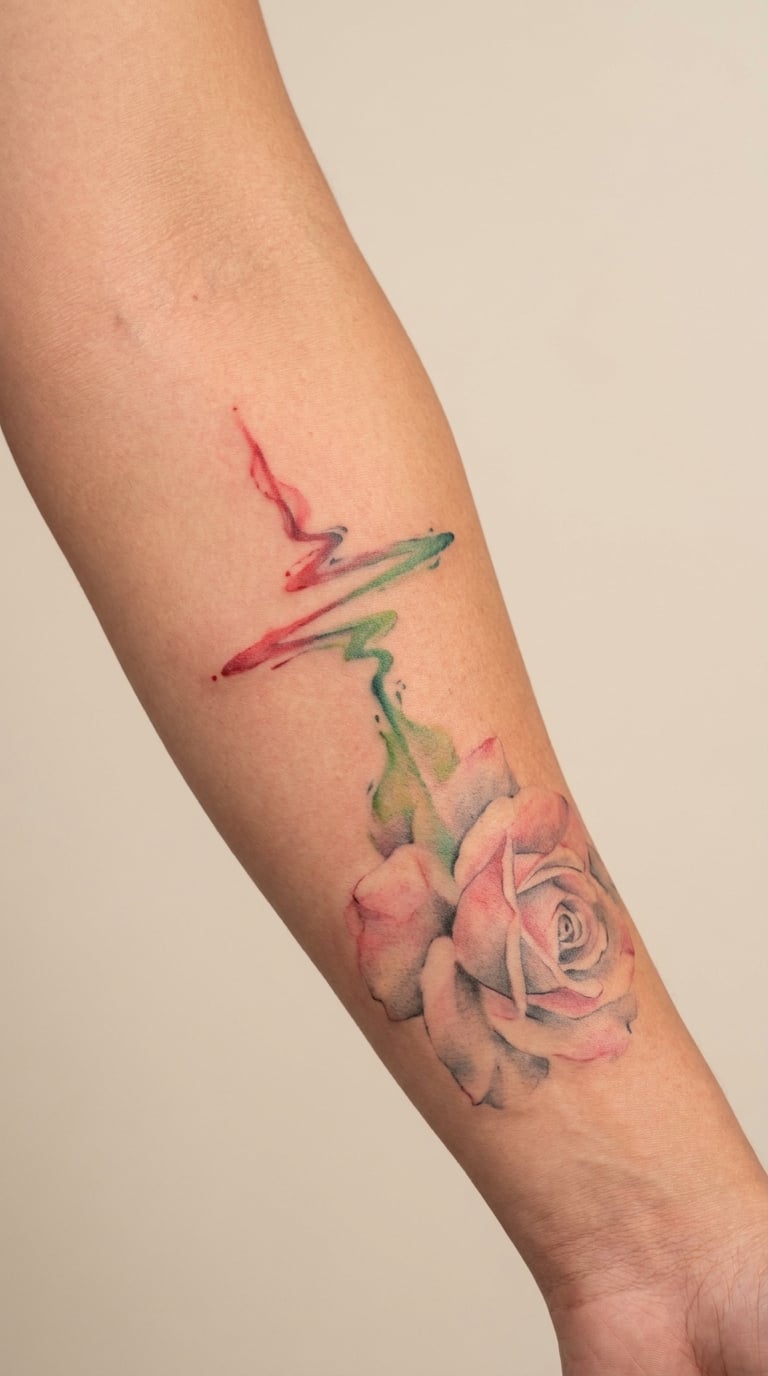
A flowing ECG line that grows into a rose stem and passes through loose watercolor petals, with pigment bleeding softly outside the lines. The medical half stays thin and precise; the flower half is allowed to be messy.
This is the softer register of the same career, and it tends to suit people whose work does not sit easily with hard-edged iconography. Care, resilience, and relationships come up more often than the job title.
Placement: inner or outer forearm. Size: 3-6 inch (8-15 cm). Style: watercolor with fine line. Pain: medium, and watercolor pigment on skin fades and shifts in tone noticeably faster than blackwork, so pick a palette you will still like softer. Make it yours: set the pulse to a date, or use two colors from your uniform and let the rest of the flower run gray.
16. Blackwork Mountain Rescue Scene
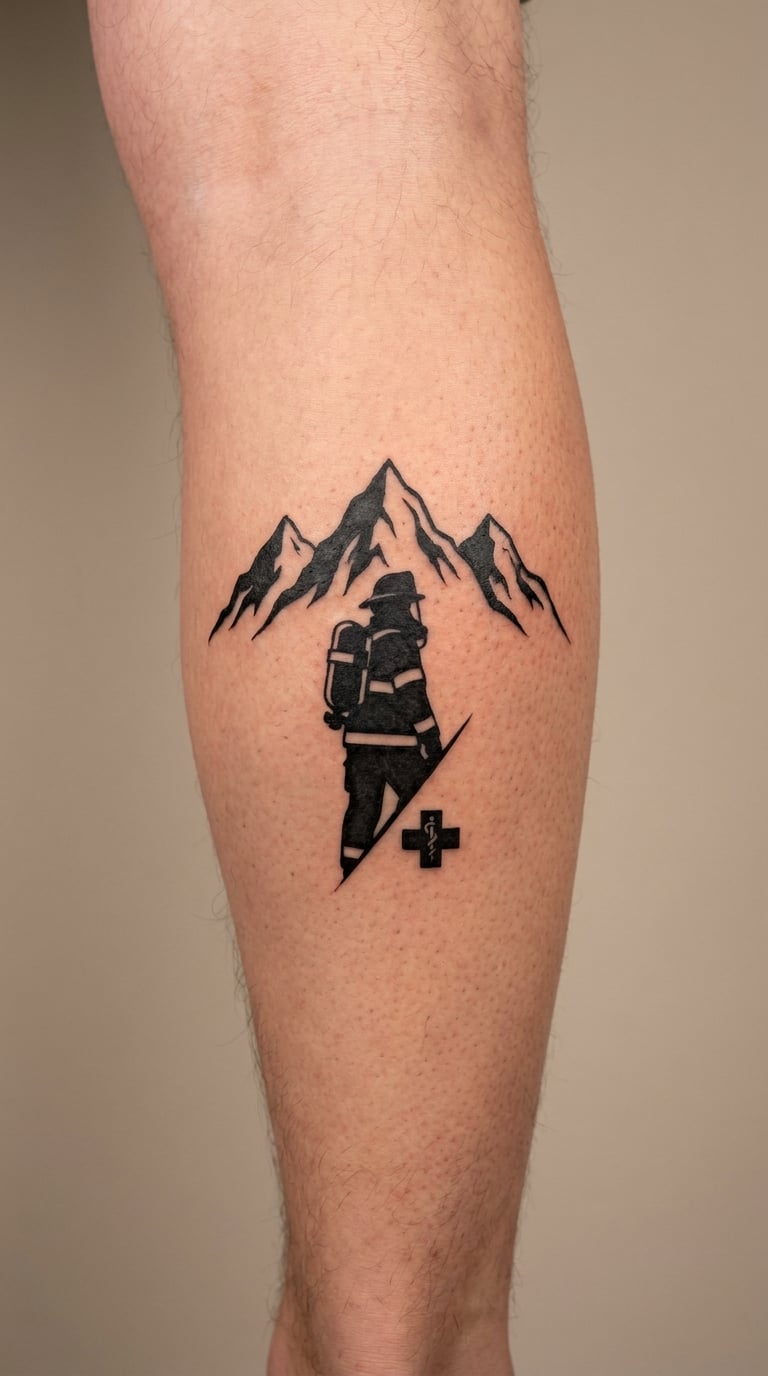
A compact landscape: a single responder silhouette against two or three mountain peaks, with one small medical cross worked into the scene. Solid blacks for the figure, simplified rock shapes behind it.
Wilderness and alpine medics usually reach for this one, along with flight and remote-area crews. The mountains say where the work happens rather than what the title is.
Placement: calf, forearm, or upper arm. Size: 3-6 inch (8-15 cm). Style: blackwork. Pain: medium to high, and background peaks crowd the silhouette fast, so the artist needs restraint more than skill here. Make it yours: name the rescue location or the elevation of a call you remember, worked into the rock line.
17. Footprint and Heartbeat Memorial
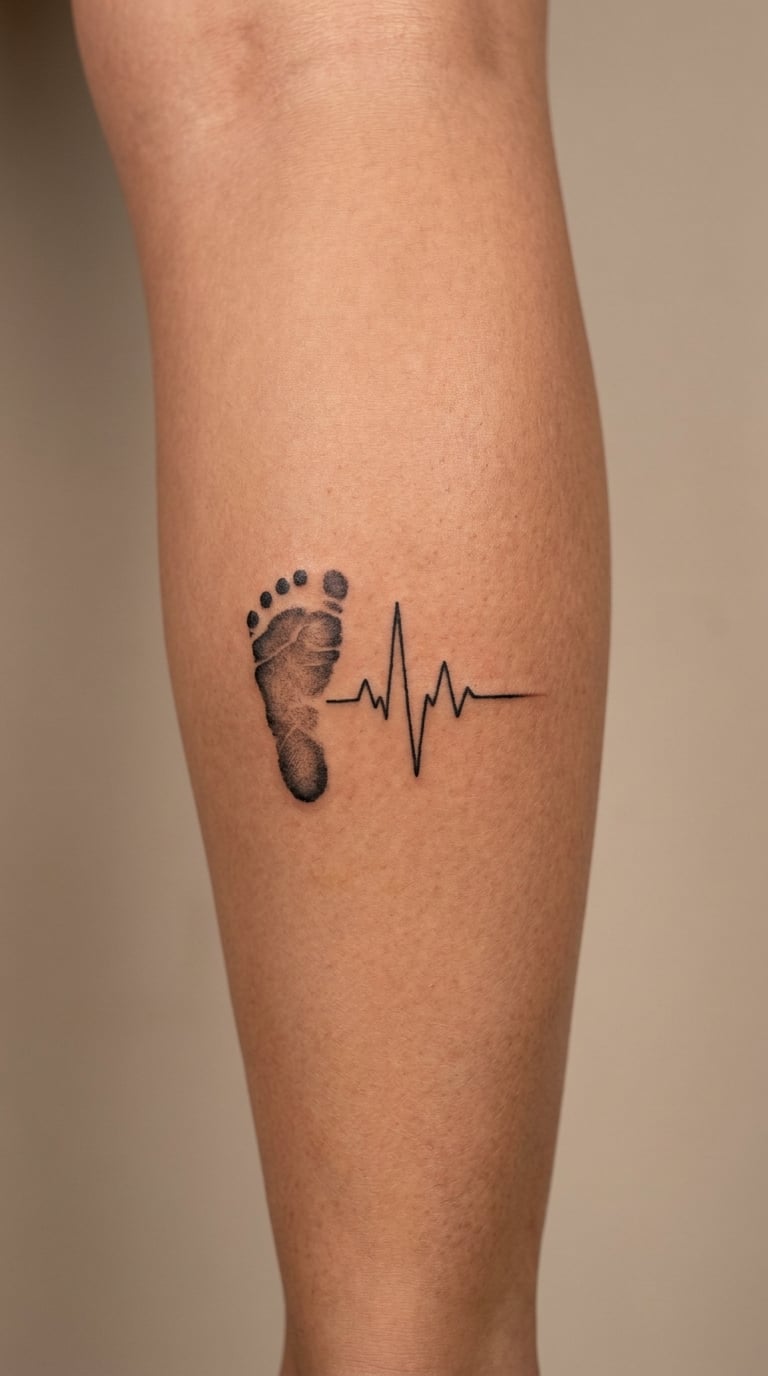
A small footprint with a heartbeat line tapering away beside it, both in fine line. It works for a medic, for a student, and for a partner carrying a piece for someone they have lost or someone they are still working beside.
The composition communicates presence and absence without claiming a fixed meaning. Most wearers explain it privately, and that private explanation is usually the point.
Placement: inner calf, inner wrist, or forearm. Size: 2-4 inch (5-10 cm). Style: fine line or thin blackwork. Pain: medium, and narrow foot detail and a thinning pulse line both fade faster than solid shapes, so keep the footprint toes simplified. Make it yours: add a date, or use a step count from the run or hike that meant something to both of you.
18. Bold PARAMEDIC Wordmark
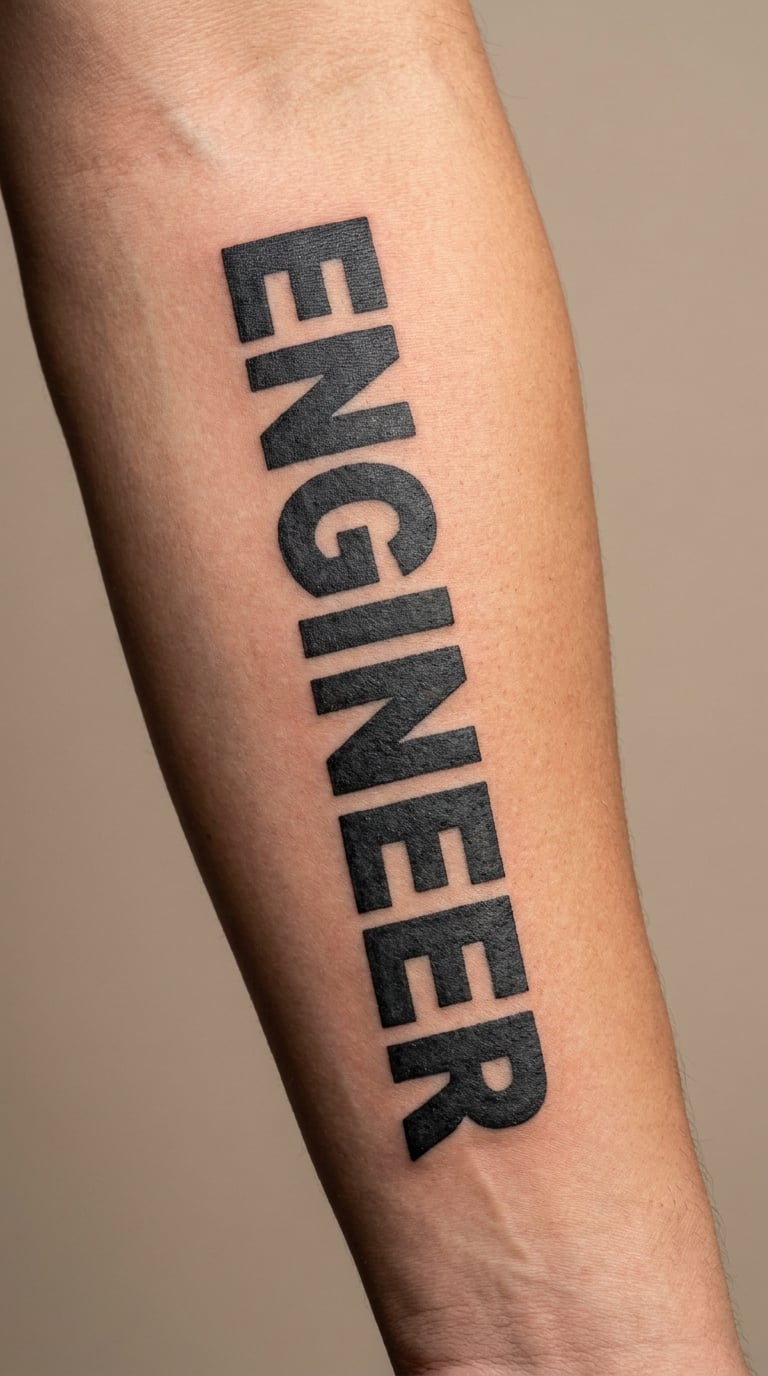
A legible custom wordmark spelling PARAMEDIC in strong capitals with generous letter spacing and no decorative clutter. Typography alone carries the whole piece, which is why it needs a lettering artist rather than a generalist.
A wordmark gives you a career tribute that is easy to read from across a room and easy to explain without symbolism. It is also the design people most often add to an existing sleeve as a closing band.
Placement: forearm, upper arm, or calf. Size: 3-6 inch (8-15 cm) of letter length. Style: blackwork lettering or traditional lettering. Pain: medium, and small characters blur when the letter height drops under about half an inch, so do not shrink it to fit a tight spot. Make it yours: run a single pulse line through the word, or set a small star at one end and leave the rest clean.
19. Red and Black Staircase Heart
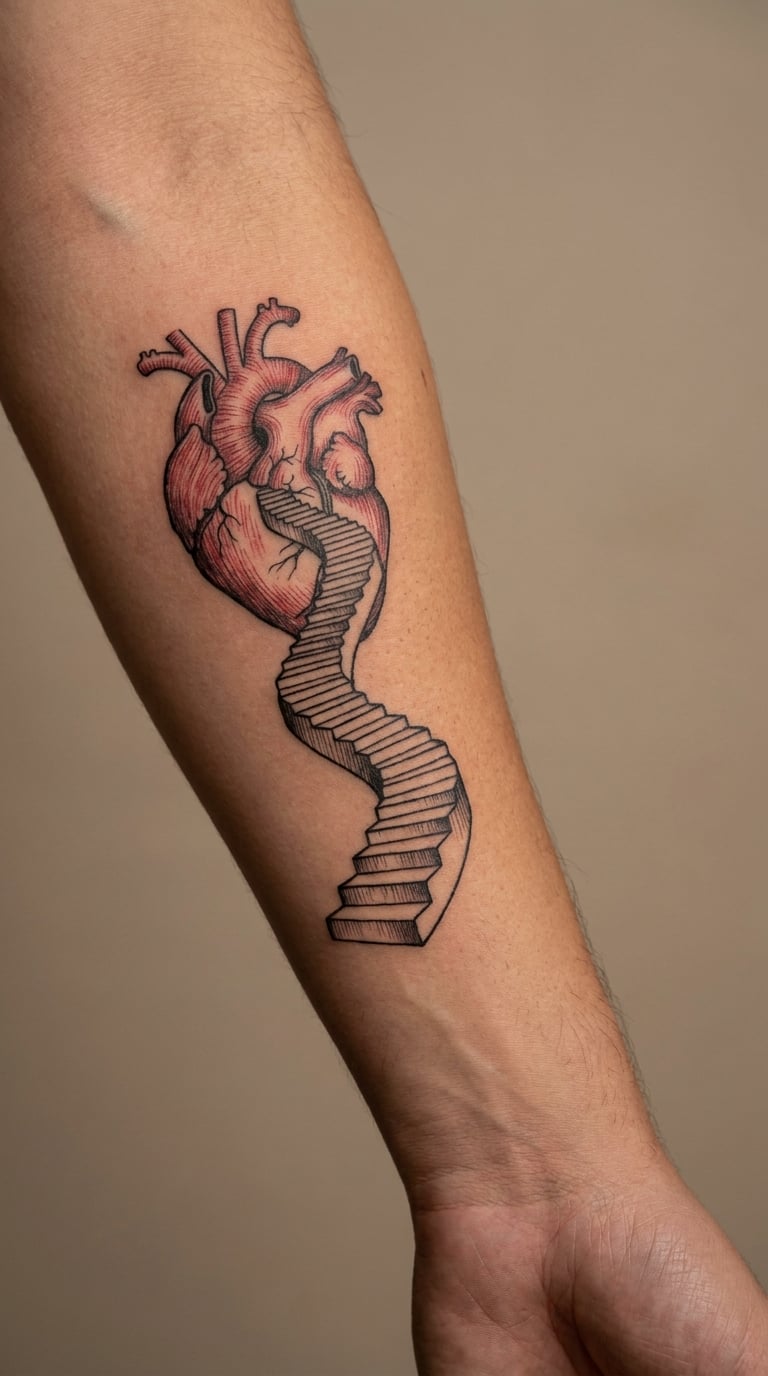
An abstract staircase in solid black climbing toward a heart with controlled red shading, the steps getting narrower as they rise. Neo-traditional outline work, heavy black, and just enough red to keep it from reading as a funeral piece.
People read progression and dedication into the steps, and some pair it with emergency medicine explicitly. Others use it as a design about getting through something difficult, which is a fair reading too.
Placement: outer forearm or calf. Size: 3-5 inch (8-13 cm). Style: illustrative or neo-traditional. Pain: medium to high, and red pigment warms and shifts toward orange as it ages, so expect a color change rather than a fade. Make it yours: match the step count to years in service, a stretch of training, or a certification you fought for.
20. Minimal Two-Hand Pulse
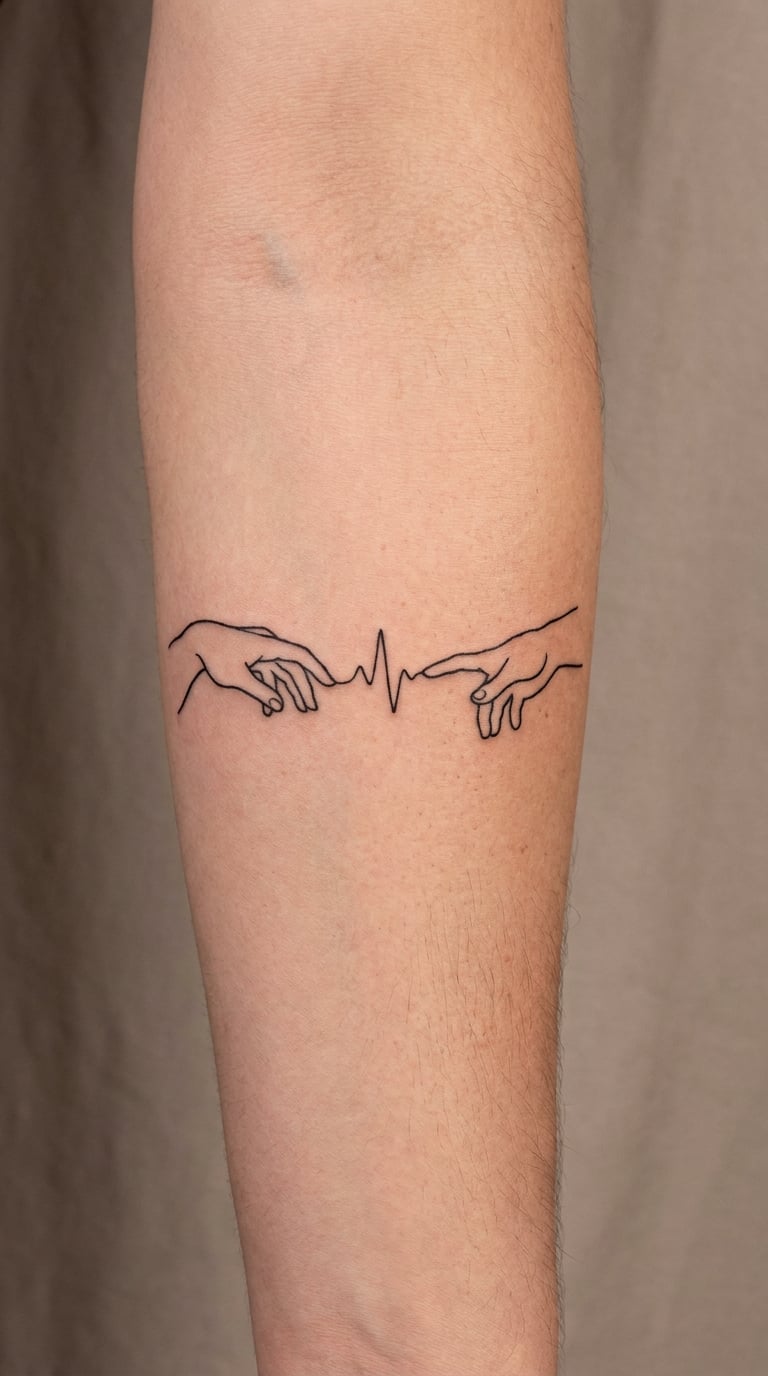
Two simplified hands facing each other, fingertips nearly touching, with a single pulse line bridging the gap. Clean black contour lines, optional soft grey in the palm, and no anatomical detail that will not survive.
It is about connection and care rather than equipment, and it works just as well for a supporter as for a medic. Pairing it with a matching small mark on someone else’s arm turns it into a companion piece.
Placement: forearm, wrist, or between the ribs. Size: 2.5-5 inch (6-13 cm) across. Style: fine line or blackwork. Pain: medium, and high when it goes between the ribs, where the needle meets bone and the skin moves with breathing. Make it yours: color the connecting line to match a unit or department, or echo it with a single small emblem elsewhere.
How to Choose the Right Design
Start with the meaning, because everything else follows from it. If your connection is to one call, one partner, or one patient, the number, date, or footprint will carry more weight for the rest of your life than a badge-shaped symbol will.
Then check the placement against what you actually wear. Forearm and upper arm sit under short or long sleeves and stay hidden when you want them to. Hands, neck, and face get far more scrutiny, and that is a separate decision from whether you like the design. Plenty of people working EMS keep every mark covered, and plenty of others have visible ink and no trouble with it. If guardian and shield imagery is more your register than medical symbols, the 20 best tattoo ideas that symbolize protection roundup is worth a look before you settle.
Look at the line weight next. Anything thinner than about 1.5pt on skin smaller than 2 inches will need touch-ups. If the design only reads at that scale, make it bigger or simplify it.
Consider how long you want the piece to describe your job. A forearm or upper arm piece ages into a normal tattoo. A hand, neck, or face piece keeps announcing your career every day, which is worth thinking about if burnout is even a distant possibility.
Last, brief the artist properly. For anything medical, bring a real reference image you trust and say what must be correct: single-serpent staff, six even star points, a rhythm strip that actually reads as a rhythm. Artists will happily invent anatomy, and it is much easier to fix a reference than a healed tattoo.
Once you have narrowed it down, save three or four reference images in the same style and bring a clear size range to the consultation. Comparing small designs side by side before you commit is the fastest way to see which ones still read when they are small. If your first tattoo is still a few years away, the tattoo ideas that symbolize growth list is a good place to test how a symbol feels on you in sticker form first.
Cost and Session Time
Tattoo pricing in the US works by the hour, and the hourly rate matters far more than the design title. Most working artists sit somewhere between USD 80 and USD 200 an hour depending on city, experience, and shop minimum.
A micro tattoo under 2 inches usually takes 20 to 40 minutes. A compact design in the 2-4 inch range is a 45 to 90 minute session, and anything at 4-7 inches with grey wash, dotwork, or a full composition runs 2 to 4 hours, often split across two sittings.
Detail drives the bill more than size. Dotwork, fine shading, and small lettering take far longer per square inch than solid black shapes, so a stippled helmet can cost more than a blackwork ambulance twice its size.
Set aside for a touch-up. Free within a few weeks is normal, and a line-heavy piece usually needs one more session in the first year as the ink settles. Your studio will give you healing guidance specific to what they did, which sits alongside the general advice in our tattoo care guide.
Shop minimums are the detail people forget. Plenty of studios will not book anything under an hour, so a one-inch design can cost the same as a three-inch one.
Aftercare Basics
- Follow your artist’s aftercare instructions first. They know what needle depth and ink they used, and those instructions come before anything on this page.
- Wash gently with clean water and a fragrance-free soap for the first few days, then pat dry with something soft rather than rubbing.
- Keep it dry and uncovered while it works. Loose dark clothing over a fresh piece traps more irritation than it hides.
- Once healed, protect it from sun and friction. UV light is the fastest way to fade fine line and light red ink on an exposed forearm.
- Contact the studio first if the tattoo looks uneven, scabbing heavily, or losing detail early. If you have spreading redness, heat, swelling, pus, or a fever, seek advice from a qualified healthcare professional.
Frequently Asked Questions
What do paramedic tattoos usually mean?
A paramedic tattoo usually marks a working identity, a specific call, a partner, or a person lost. Popular motifs include the Star of Life, an ECG line, a call or employee number, a motto, and gear such as trauma shears or a radio headset. Meanings are personal, and the wearer is normally the only person who knows the full story behind a date or a number.
Are paramedic tattoo ideas suitable for EMS students and family or partners?
Yes. Plenty of EMS students get a small symbol before their first shift, and partners or family often carry a matching or related piece. Many students choose something generic enough to keep if they change direction in the career. Just bring a clear size range to the consultation, since a design tied to one agency can feel narrow later on.
What is the best placement for a small paramedic tattoo?
The inner forearm, the outer upper arm, and the calf are the easiest places to hide under a uniform and to expand later if you want more. The inner forearm suits line work, the upper arm tolerates heavier blackwork, and the calf handles both. Hands, neck, and face are the placements that draw the most attention, whatever the design is.
How much does a paramedic tattoo cost in the US?
Most US studios bill by the hour, usually between USD 80 and USD 200 depending on the artist and the city. A micro design under 2 inches takes about half an hour, a 2-4 inch piece runs an hour or two, and a 4-7 inch composition with shading takes several hours. Shop minimums and fine detail like dotwork push the total up.
Which paramedic tattoo details are most likely to age well?
Solid black shapes, bold outlines, and large simple symbols hold up best. Fine single-line work, tiny lettering, dotwork at low density, and narrow pulse lines fade or blur within a few years, especially on sun-exposed arms. If a design is mostly small detail, plan on a touch-up, or scale it up so the lines have room to stay crisp.
Conclusion: Choose a Design That Lasts
If this is your first tattoo, the fine-line ECG heartbeat at number 1 is the gentlest place to start: small, quick, easy to cover, and it still means something to you in ten years. The bold PARAMEDIC wordmark is a good second option when you want something readable rather than decorative.
If you are adding to an existing collection, the blackwork ambulance and the anatomical lungs give you a substantial career-inspired piece that carries real weight and none of the slogan cliché. Just give the artist an accurate reference and a clear size range at the consultation.
Pick the version of these 20 paramedic tattoo ideas that describes a person rather than a job title, save your references, and take them to a shop that does the style you want. That is the whole process. If someone you love wants a piece that pairs with yours, the matching tattoo ideas roundup covers how those usually get laid out.