
22 Eucalyptus Tattoo Ideas: Best Botanical Designs (October 2026)
These 22 eucalyptus tattoo ideas cover the full range, from a single fine-line leaf behind the ear to a blackwork half sleeve that fills an arm. Eucalyptus suits almost any style because the leaves are simple ovals with a clean centre vein, which means a sprig reads clearly even at a quarter inch.
What makes the plant work so well in ink is the curve of the stem. Eucalyptus branches arc, so a design can follow the line of a forearm, collarbone or rib without forcing the leaves into a shape they were not born in. If you are planning a tattoo for a specific season, most people book four to six weeks ahead, so get your reference picked now.
Every design below comes with the details that actually decide how it turns out: placement, realistic size, style and how much it will hurt. Read the whole list once, then come back to the two or three that made you stop scrolling.
22 Eucalyptus Tattoo Ideas: Quick Guide
| Idea | Style | Best placement | Size | Pain |
|---|---|---|---|---|
| 1. Fine-line sprig | Fine line | Inner forearm | 2 to 3 in | Low to medium |
| 2. Single leaf | Minimal line | Behind the ear | 1.5 to 2 in | Medium |
| 3. Watercolor branch | Watercolor | Outer shoulder | 3 to 4 in | Medium |
| 4. Half sleeve | Blackwork | Forearm to elbow | 8 in long | High |
| 5. Poppy pairing | Fine line | Outer upper arm | 3 to 4 in | Medium |
| 6. Curved stem | Fine line | Collarbone | 3.5 to 5 in | Medium |
| 7. Micro leaves | Micro-realism | Inner wrist | 1 to 1.5 in | Medium |
| 8. Seed pod | Dotwork | Side of forearm | 2 to 3 in | Low to medium |
| 9. Wreath | Fine line | Outer upper arm | 3 to 4 in | Medium |
| 10. Laurel pair | Minimal line | Inner arm | 2.5 to 3.5 in | Low |
| 11. Green branch | Traditional | Calf | 4 to 5 in | Medium |
| 12. Tree ladder | Illustrative | Spine | 10 to 14 in | Medium to high |
| 13. Snake vine | Fine line | Outer thigh | 6 to 8 in | Medium |
| 14. Rib cluster | Realistic | Ribs | 3 to 4 in | High |
| 15. Sun circle | Line and dot | Forearm | 2.5 to 3.5 in | Low to medium |
| 16. Watercolor sleeve | Watercolor | Full forearm | Full sleeve | High |
| 17. Flower and leaf | Fine line and grey | Shoulder blade | 3 to 4 in | Low to medium |
| 18. Geometric stalk | Geometric | Shin | 4 to 6 in | Medium |
| 19. Koala branch | Illustrative | Upper arm | 2.5 to 3.5 in | Medium |
| 20. Letter monogram | Fine line | Inner wrist | 1.5 to 2.5 in | Medium |
| 21. Fern and moon | Fine line | Behind the ear | 2 to 2.5 in | Medium |
| 22. Back piece | Blackwork | Centre back | 12 in or more | High |
1. Fine-Line Eucalyptus Sprig on the Forearm
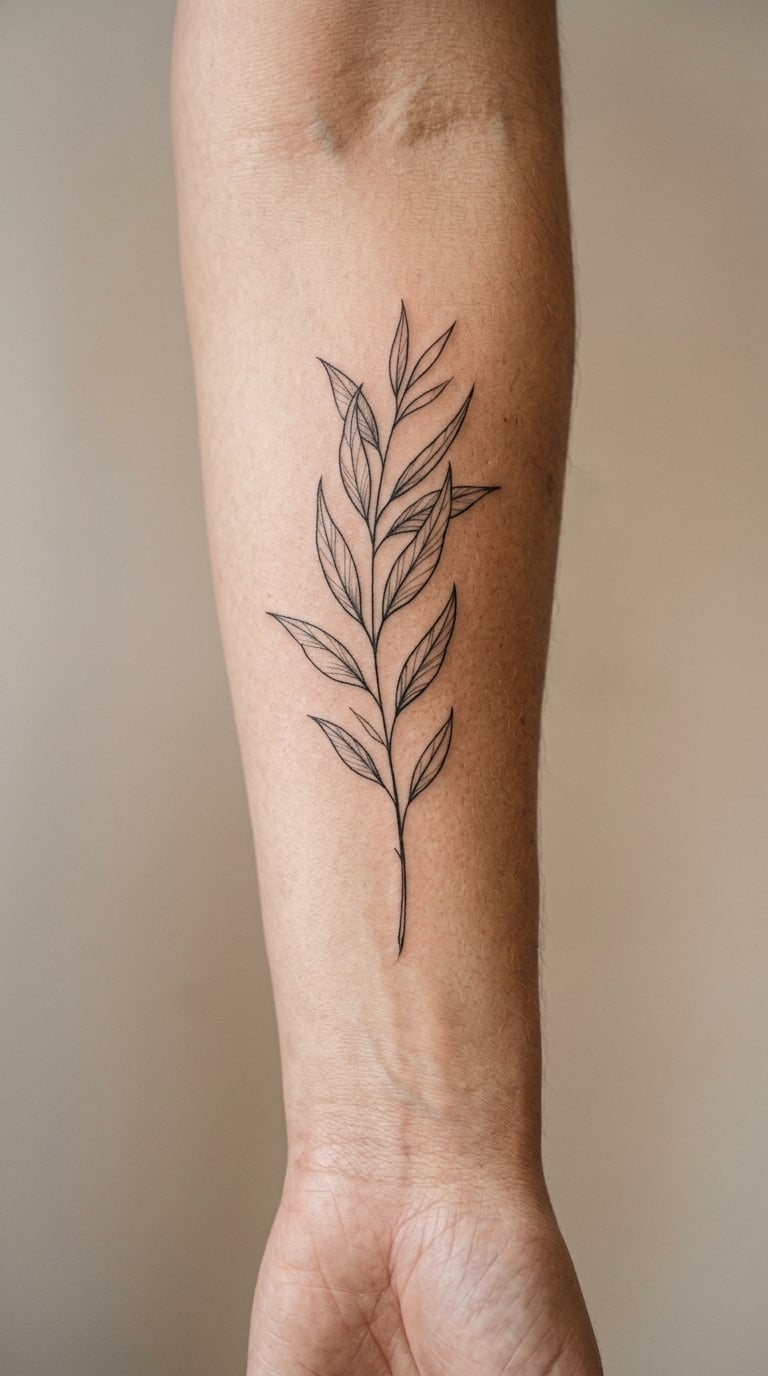
A fine-line eucalyptus sprig tattoo is the cleanest place to start. One curved stem, five or six leaves spaced along it, and a single needle building a hairline outline with one or two vein marks per leaf. No shading, no colour, nothing to fill in.
People choose it because it is discreet and because a sprig grows from a single point, so it reads as a beginning rather than a finished arrangement. It suits a first tattoo better than almost any other design in this list.
Placement: inner forearm, running from just above the wrist toward the elbow · Size: 2 to 3 inches (5 to 7.5 cm) long · Style: fine line single needle · Pain: low to medium on the inner arm, more a scratch than a sting. Thin single-needle work softens and spreads over the years, so keep line weight a little heavier than looks right on paper. Make it yours: add a tiny date or a set of coordinates in matching script beneath the stem.
2. Minimal Eucalyptus Leaf Behind the Ear
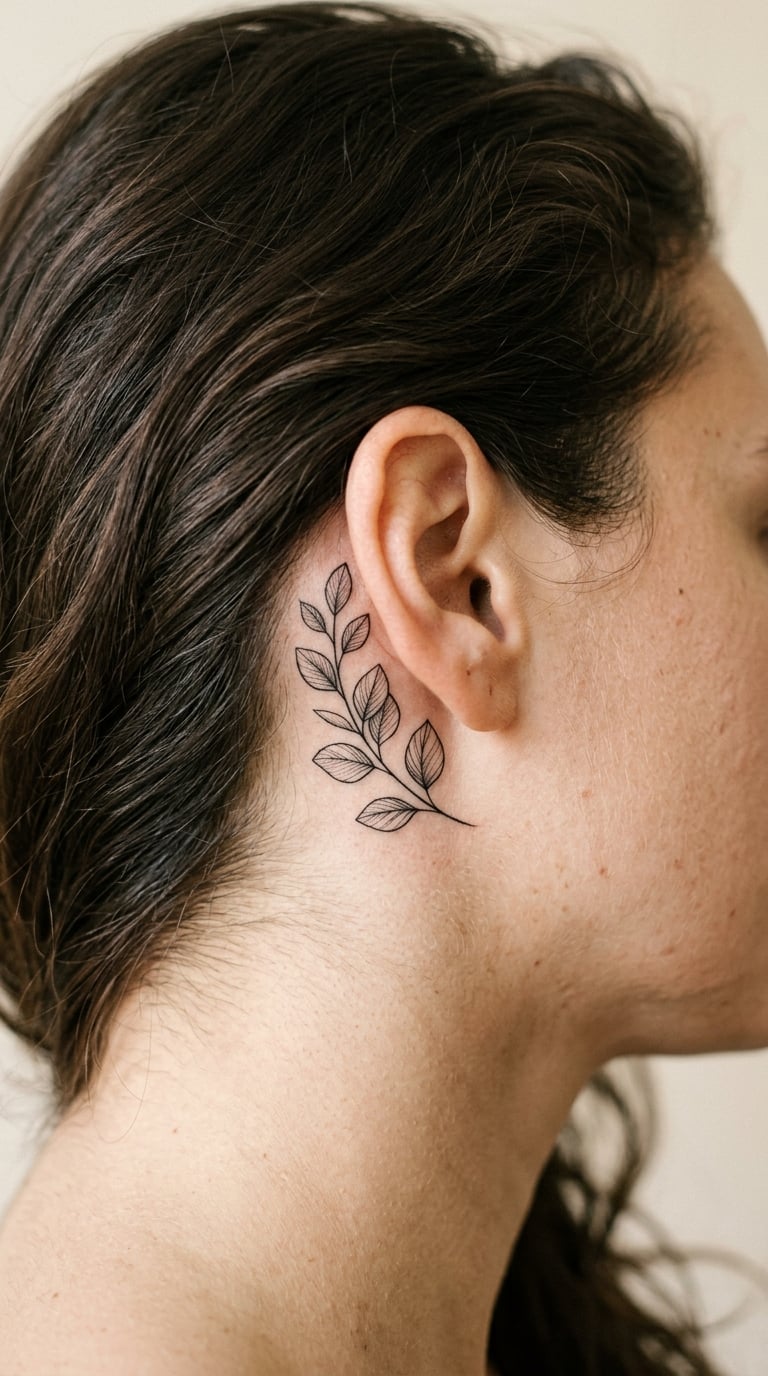
This one is a single leaf with a curved stem, drawn in sparse black line with a few lightly etched veins and nothing else. The whole thing is usually smaller than a coin, so it works in the tight skin behind the ear where anything detailed would crowd.
It reads as a small private mark rather than a statement, which is exactly why it stays popular. People who like the look of a botanical tattoo but do not want to explain it tend to land here.
Placement: just behind the ear, or along the hairline where hair covers it · Size: 1.5 to 2 inches (4 to 5 cm) · Style: minimal fine line · Pain: medium. The neck and the bony ridge behind the ear are sensitive, and a short line is worse than a long one because your jaw clenches. This is also one of the placements where ink softens fastest, since hair and sun reach it. Make it yours: mirror the same leaf on the other side as a matching piece, leaving a small difference between the two.
3. Watercolor Eucalyptus Branch on the Shoulder
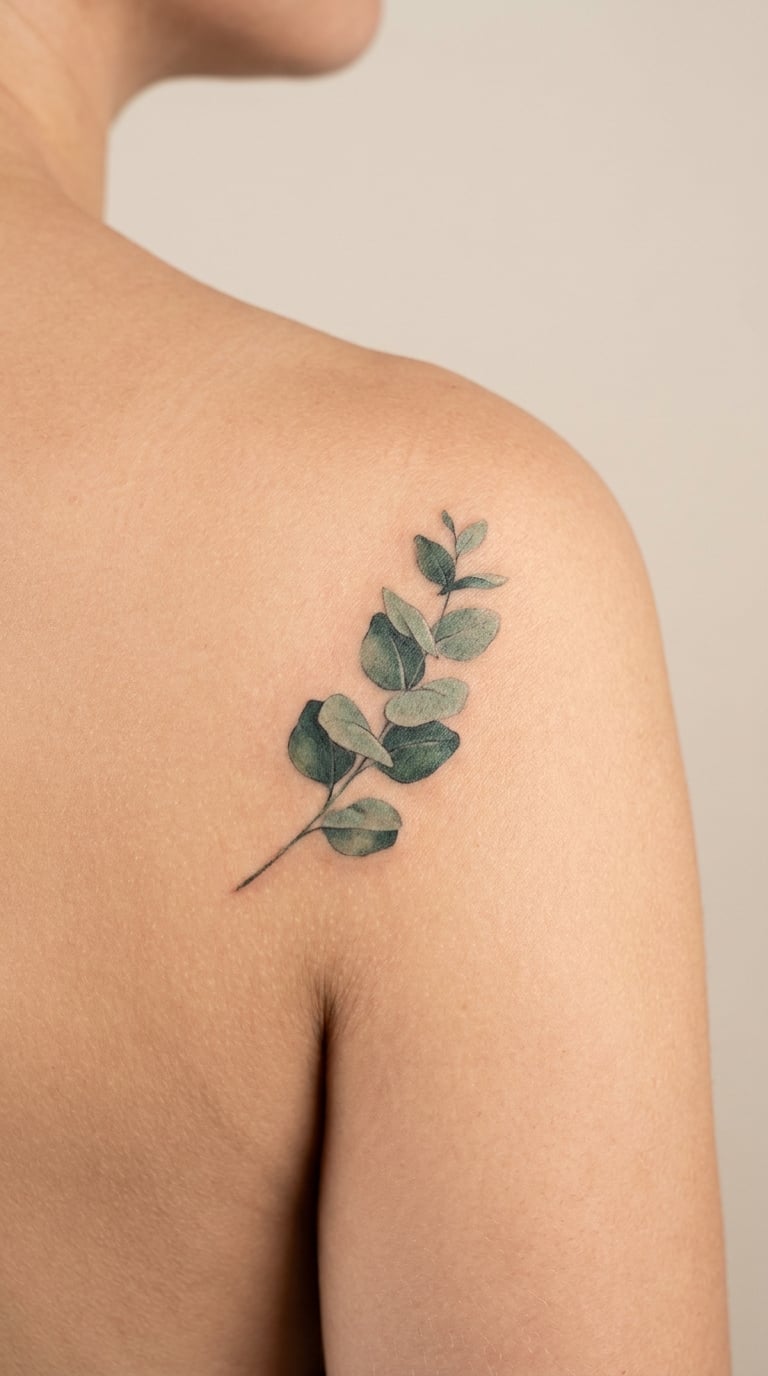
A watercolor eucalyptus branch is painted rather than drawn. The artist lays down a wash of sage and deep green, lets the edges bleed slightly, then adds a few darker strokes for the stem and leaf separation. You can see brush edges, and that is the point.
It suits people who want the softness of a plant study without a full sleeve. Watercolor foliage also hides small imperfections, so a first-timer who is nervous about straight linework often feels safer here than with fine line.
Placement: outer shoulder, angled down toward the arm · Size: 3 to 4 inches (7.5 to 10 cm) · Style: watercolor with soft edges · Pain: medium. Shoulders are fleshy and forgiving, though the collarbone side is not. Green ink always drifts toward warmer olive and brownish tones as it ages, so expect a softer piece in a few years. Make it yours: add two or three leaves in a contrasting colour such as rust or deep teal.
4. Blackwork Eucalyptus Half Sleeve
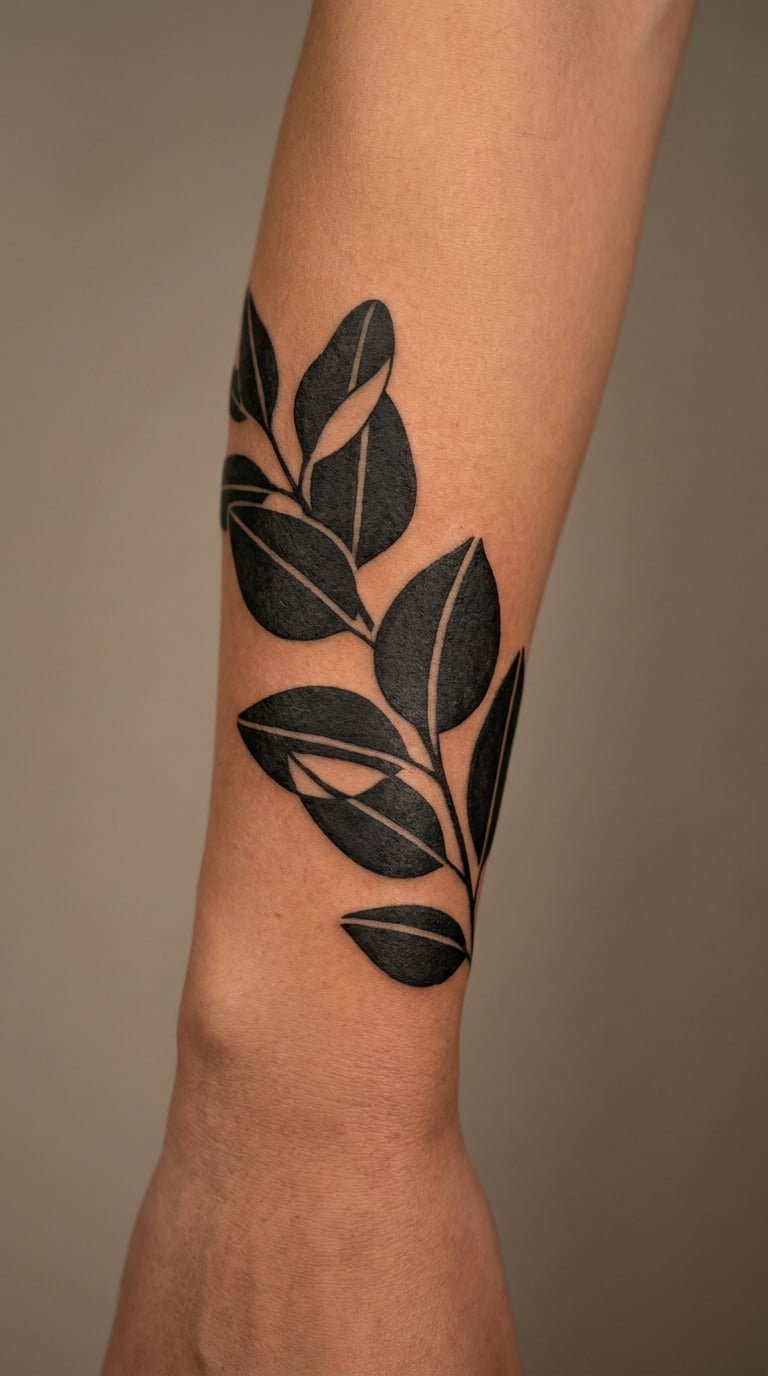
Blackwork turns the same branch into something with weight. Dense leaves cluster along a thick stem, solid black shapes alternate with clean gaps of skin, and the negative space does half the drawing. Nothing here is delicate, which is the appeal.
Most people choosing this design already have at least one tattoo and want something that holds attention across a whole arm. The solid black also ages more predictably than hairlines, though very heavy fills can settle into a slightly grey, textured look over time.
Placement: forearm from wrist to elbow, or elbow into upper arm · Size: roughly 8 inches (20 cm) long, 4 to 5 inches wide · Style: blackwork with negative space · Pain: high, and it is a long sitting. The inner elbow, wrist crease and inner forearm are the spots that make people grip the chair. Plan it as two or three sessions. Make it yours: wrap the branch so it appears to continue past the elbow, giving you a natural place to add later.
5. Eucalyptus and Poppy Botanical Pairing
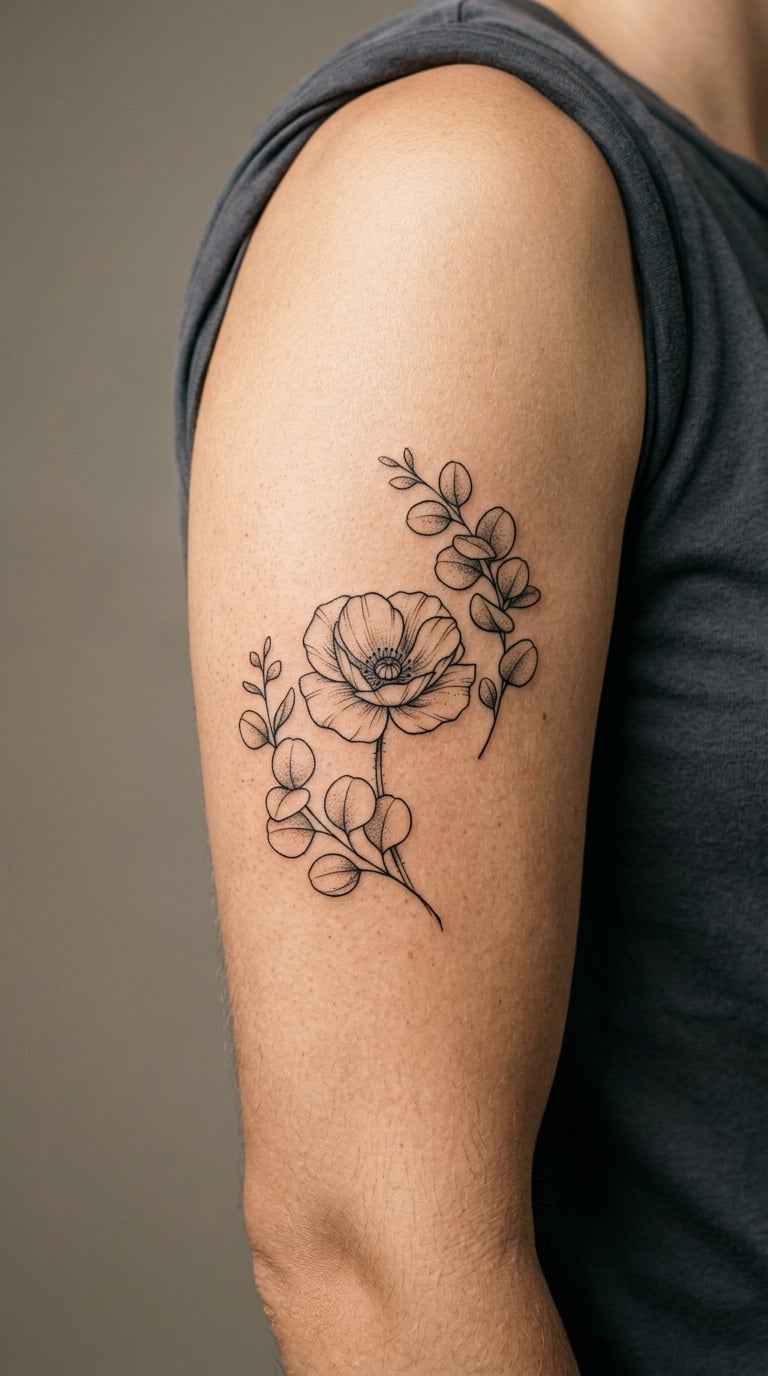
Pairing a eucalyptus leaf with a poppy is a study in contrast. Eucalyptus is round, matte and steady; the poppy is thin, crinkled and slightly wild. Done in fine black line, the two shapes argue pleasantly with each other rather than blending.
People usually want one element calm and one alive, so the pairing feels balanced. It is a common way to hold a personal date next to something softer without making the piece heavy.
Placement: outer upper arm, or just under the collarbone where both shapes have room · Size: 3 to 4 inches (7.5 to 10 cm) across · Style: fine line botanical pairing · Pain: medium. The outer arm is one of the easier places, but thin poppy petals blur sooner than solid leaves, so ask for slightly heavier petal edges. Make it yours: swap the poppy for a native bloom from wherever you grew up and keep the eucalyptus as the frame.
6. Curved Eucalyptus Stem on the Collarbone
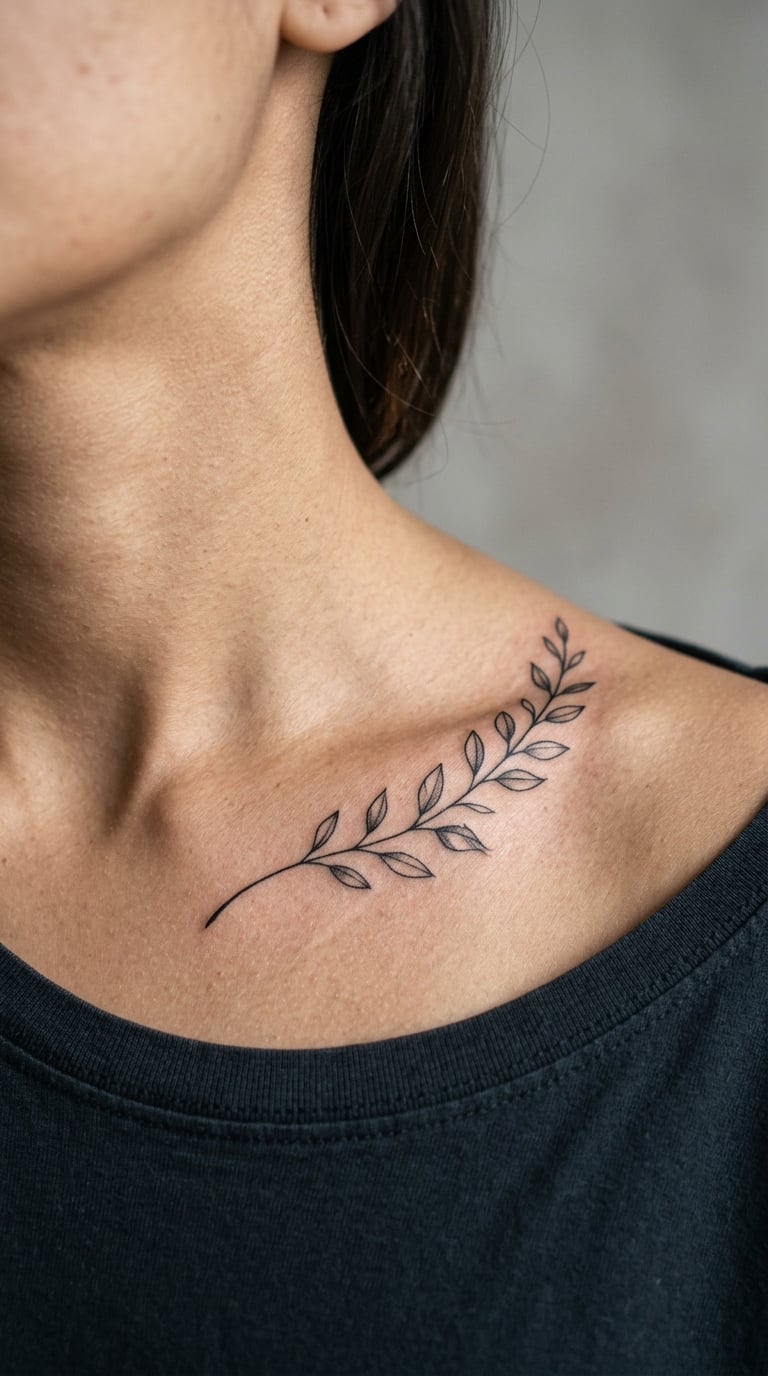
This design does almost nothing except follow the bone. A slim stem runs horizontally along the collarbone with alternating leaves above and below, all in one clean line weight. The curve of the bone does the shaping, and the artist barely has to force it.
It suits people who want a tattoo that reads as elegant rather than loud, and it is a very common second piece for someone who already has a botanical cluster elsewhere. It also works well as a matching design with a sibling or partner.
Placement: above the collarbone, angled slightly down toward the shoulder · Size: 3.5 to 5 inches (9 to 12.5 cm) wide · Style: fine line · Pain: medium, because the collarbone is bone with thin skin over it. Expect a scratchy, bright sensation right on the edge of the bone. Skin movement here is minimal, so line detail holds better than on the ribs. Make it yours: let the stem break at both ends and fade the first and last leaves, so it looks like part of a larger branch you cannot see.
7. Micro-Realism Eucalyptus Leaves on the Wrist
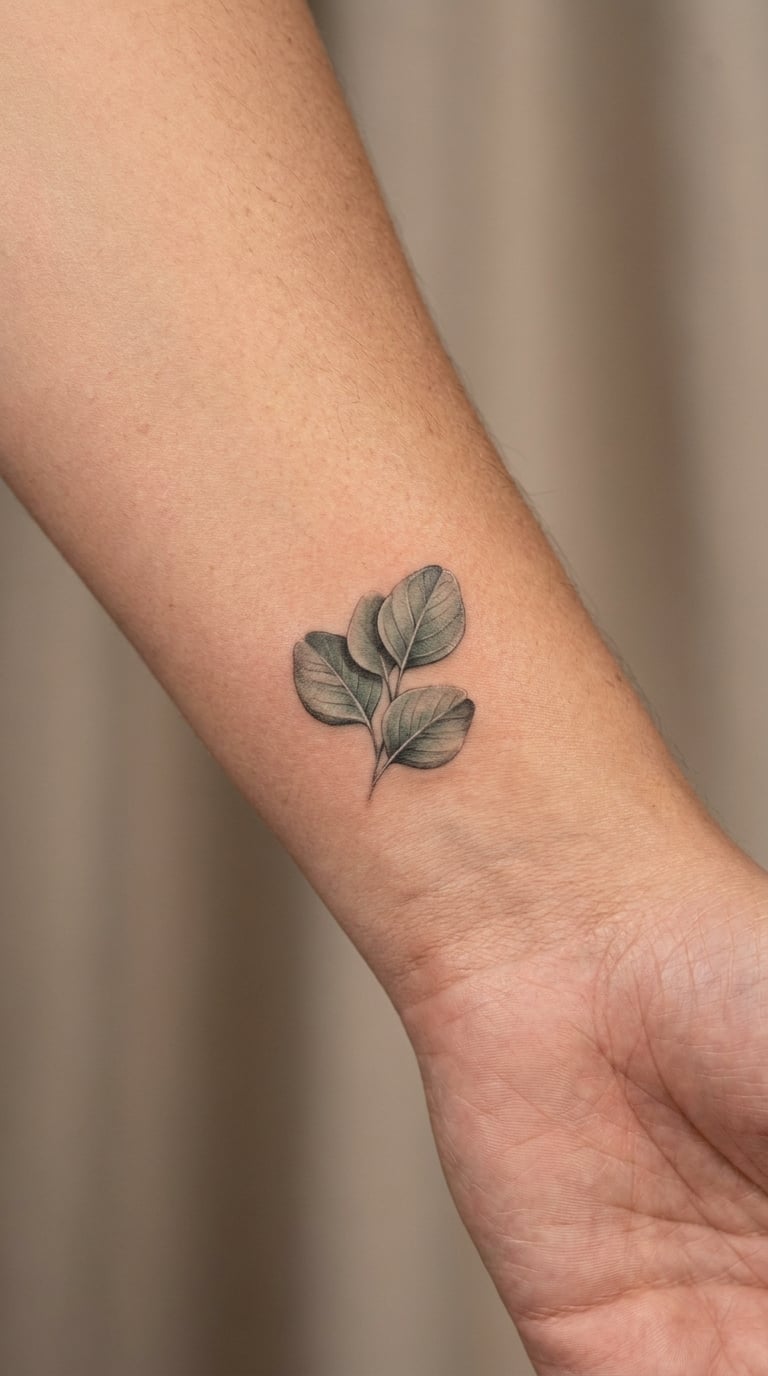
Micro-realism here means three small leaves with soft grey-green shading and a faint suggestion of a stem, done in a cluster small enough to lose in a cupped palm. The shading is what sells it. Flat outlines at this size just look like scribbles.
It is a discreet option for people who work somewhere visible, and the muted green reads as foliage rather than as a colour statement. Shaded petals and leaves at this scale are where skill matters most, so pick an artist who does small colour work daily.
Placement: inner wrist, above the pulse point · Size: 1 to 1.5 inches (2.5 to 4 cm) across · Style: micro-realism with grey-green wash · Pain: medium. The wrist has thin skin over a lot of nerve and vein, and small work takes longer per inch, so you feel it more than a larger piece nearby. Fine shading loses definition fastest, so keep the detail simple. Make it yours: match a second small cluster behind the other ear so the pair only reads together.
8. Dotwork Eucalyptus Seed Pod
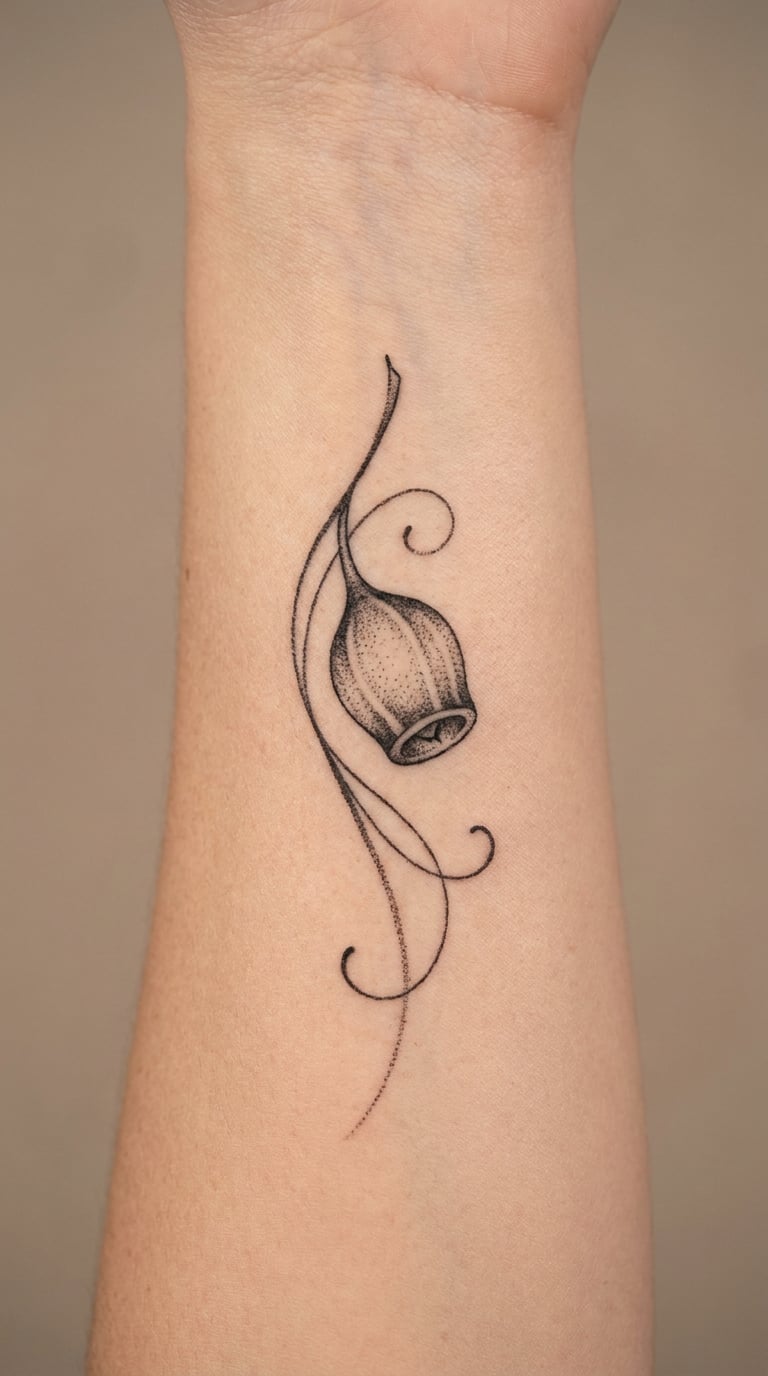
A eucalyptus seed pod is a hard, cup-shaped gumnut, and dotwork suits it almost perfectly. The artist builds the pod with graduated dots, darkest along one edge where the light does not hit, and leaves a light curved stem coming off the top. The result is graphic rather than realistic.
It is a good choice if you like pattern work and want something that does not depend on colour. Plenty of people choose it as a first tattoo because dots are forgiving and the finished shape is easy to read from across a room.
Placement: side of the forearm, or the inner bicep · Size: 2 to 3 inches (5 to 7.5 cm) tall · Style: dotwork and stippling · Pain: low to medium. Dotting is repetitive, which keeps each individual pass gentle, though the outer forearm can sting near the elbow. Dots spread slightly as skin ages, so the pod looks softer and more tonal over time. Make it yours: add a second, smaller pod hanging from the same stem so the pair reads as one plant.
9. Eucalyptus Wreath on the Upper Arm
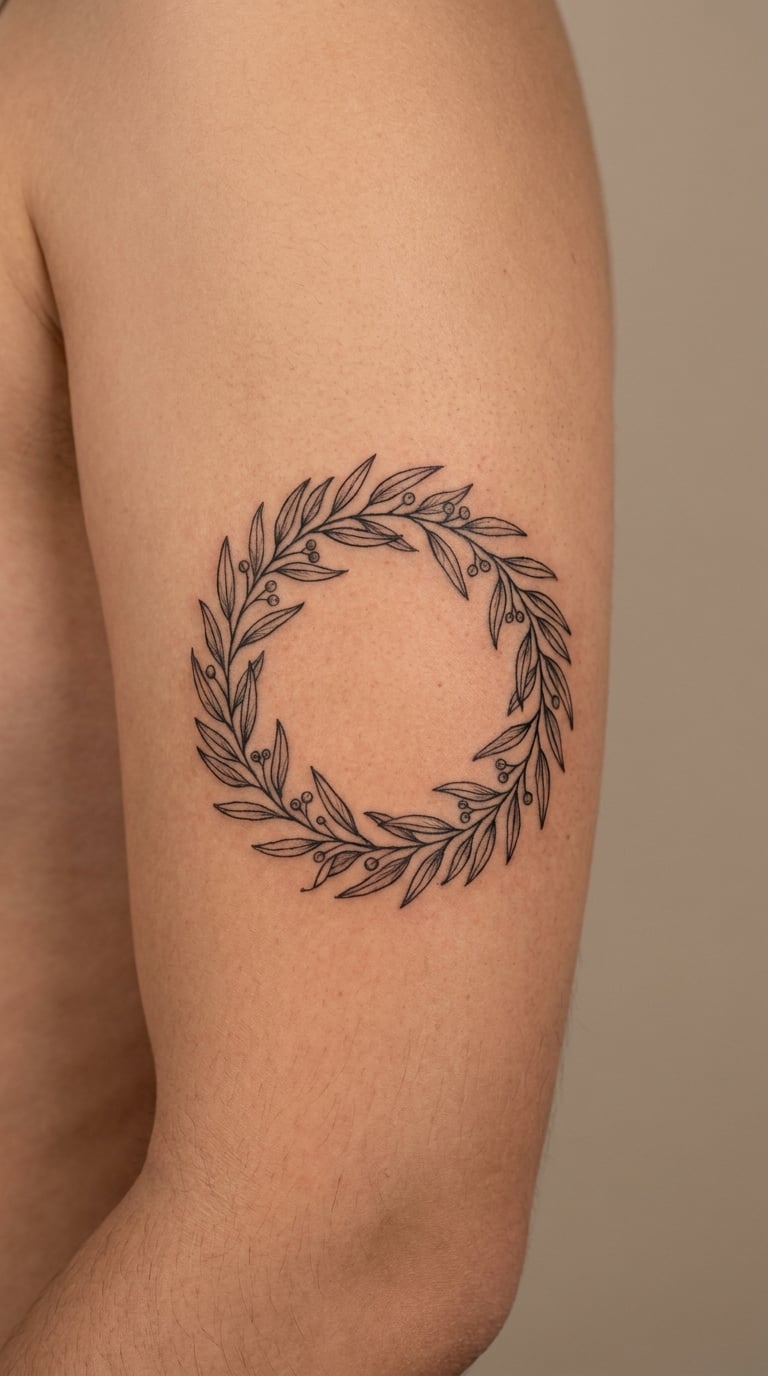
A eucalyptus wreath is a circle of stems meeting at one point, usually with open space inside and leaves kept the same size all the way round. The calm comes from the even spacing, so the artist plans the leaf count before starting rather than adding as they go.
It is one of those designs people choose for a milestone, and the closed shape gives it a sense of completion that a sprig does not. It also flatters the deltoid because the round form follows the muscle.
Placement: outer upper arm, centred over the deltoid · Size: 3 to 4 inches (7.5 to 10 cm) diameter · Style: fine line wreath · Pain: medium, higher around the shoulder cap where the bone sits close under the skin. A wreath reads as one shape, so uneven line weight shows more than it would on a scattered branch. Make it yours: leave a gap in the circle and put one meaningful date in the gap rather than closing it completely.
10. Minimal Botanical Eucalyptus and Laurel
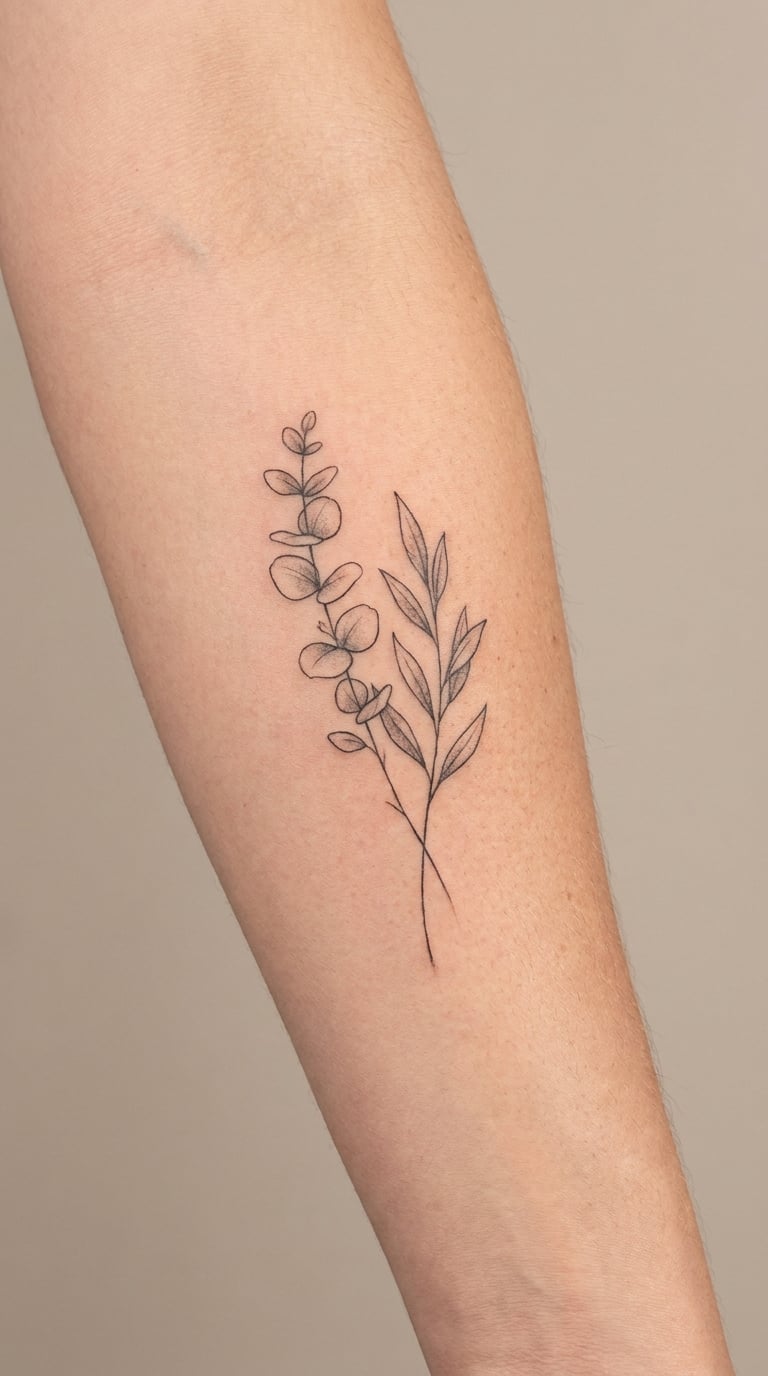
Two stems, one line weight, almost no shading. Eucalyptus on one side with its rounded leaves, a slender laurel with pointed leaves on the other, and a small gap between them so neither one dominates.
Pairing two classic botanical symbols is a quiet way to hold two things at once, a person and a place, or two periods of your life. It also gives an easy second tattoo later, since you already own the eucalyptus half.
Placement: inner arm or inner forearm, stems running side by side · Size: 2.5 to 3.5 inches (6 to 9 cm) tall · Style: minimal fine line · Pain: low, since the inner forearm is one of the easier canvases. Laurel leaves are small and pointed, so they lose definition faster than the eucalyptus, which is worth mentioning to your artist. Make it yours: give each stem a different number of leaves and set the count to match something that matters to you.
11. Traditional Eucalyptus Branch in Green Ink
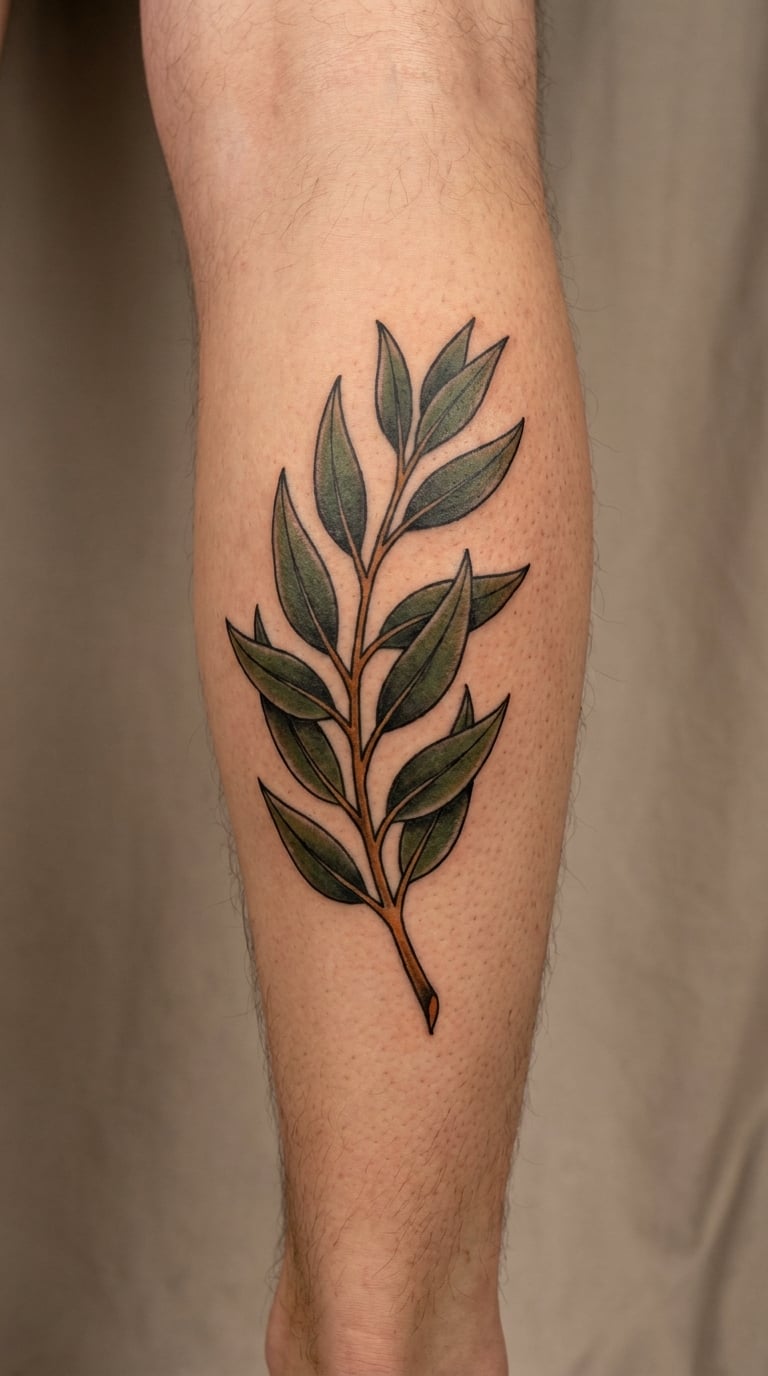
Traditional eucalyptus looks nothing like a botanical study. Leaves are outlined in black, filled with layered green shading, and outlined again, while the stem is warm brown. That outline-and-fill approach is what gives traditional work its permanence, and it suits the sturdy, rounded eucalyptus leaf well.
People come to this style because it holds colour for decades without much fuss. It reads clearly from a distance, which fine line never does.
Placement: calf, outer thigh, or the flat of the upper arm · Size: 4 to 5 inches (10 to 12.5 cm) long · Style: traditional, black outline with green and brown · Pain: medium. Large colour fills take a pass or two, and the calf is a fleshy, decent place to sit. Green is the first hue to drift, so pick a slightly deeper green than you want in the end. Make it yours: add a small wattle flower in yellow beneath the branch to tie the two native species together.
12. Eucalyptus Tree Ladder on the Spine
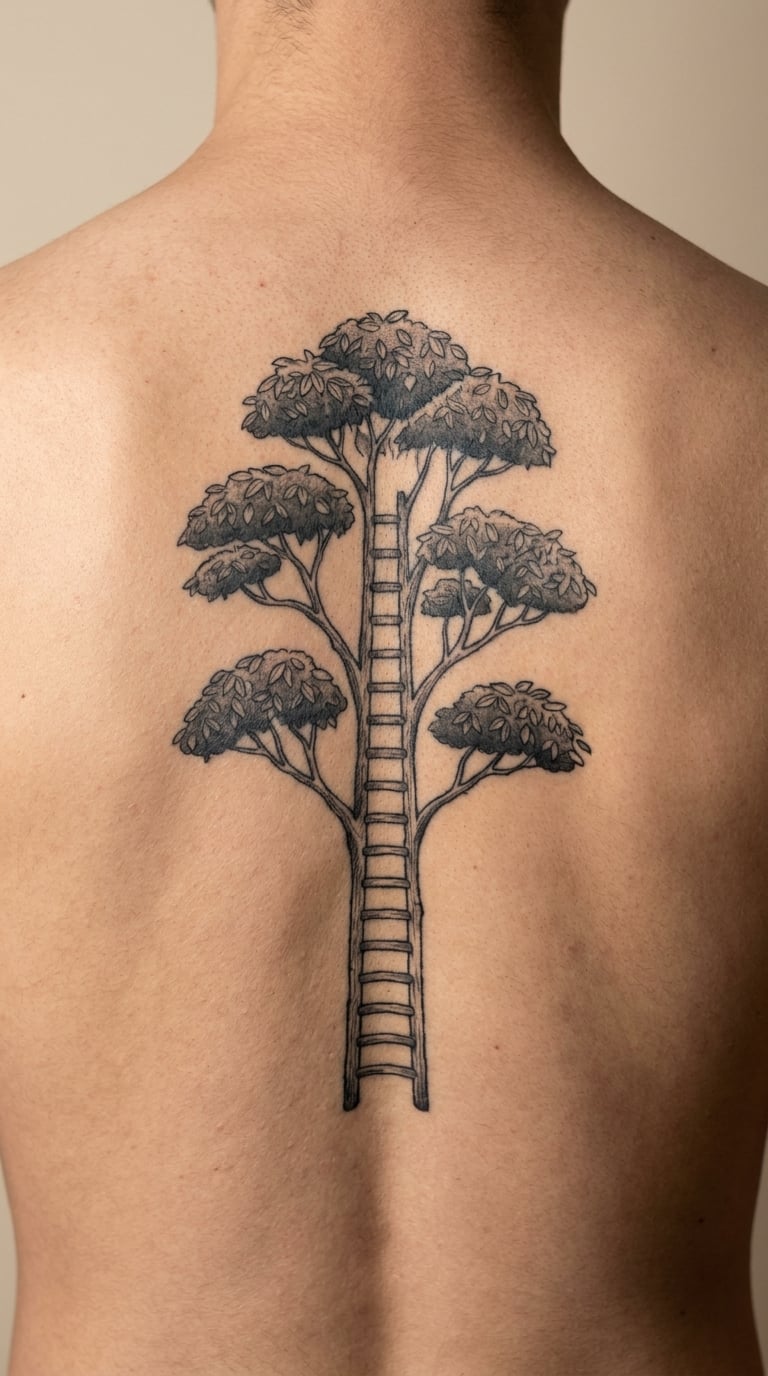
The trunk here is a ladder, rungs climbing through the middle of a eucalyptus tree, and the canopy is built from layered leaf clusters that widen as they rise. The symmetry makes it read as a diagram of something, which is exactly the effect people are after.
It suits a spine placement almost better than anywhere else, because the ladder wants a vertical run and the spine gives you one. People often read climbing imagery as effort, and pairing it with a native tree gives the piece a grounded, Australian note.
Placement: along the spine, typically from the mid back to the shoulder blades · Size: 10 to 14 inches (25 to 35 cm) tall · Style: illustrative line and stipple · Pain: medium to high, because the spine is bony and the skin between the shoulder blades moves constantly. Rungs will soften and blur faster than the leaves, so expect the ladder to read more loosely after a few years. Make it yours: set the number of rungs to the years it took to get somewhere.
13. Eucalyptus Snake Vine on the Leg
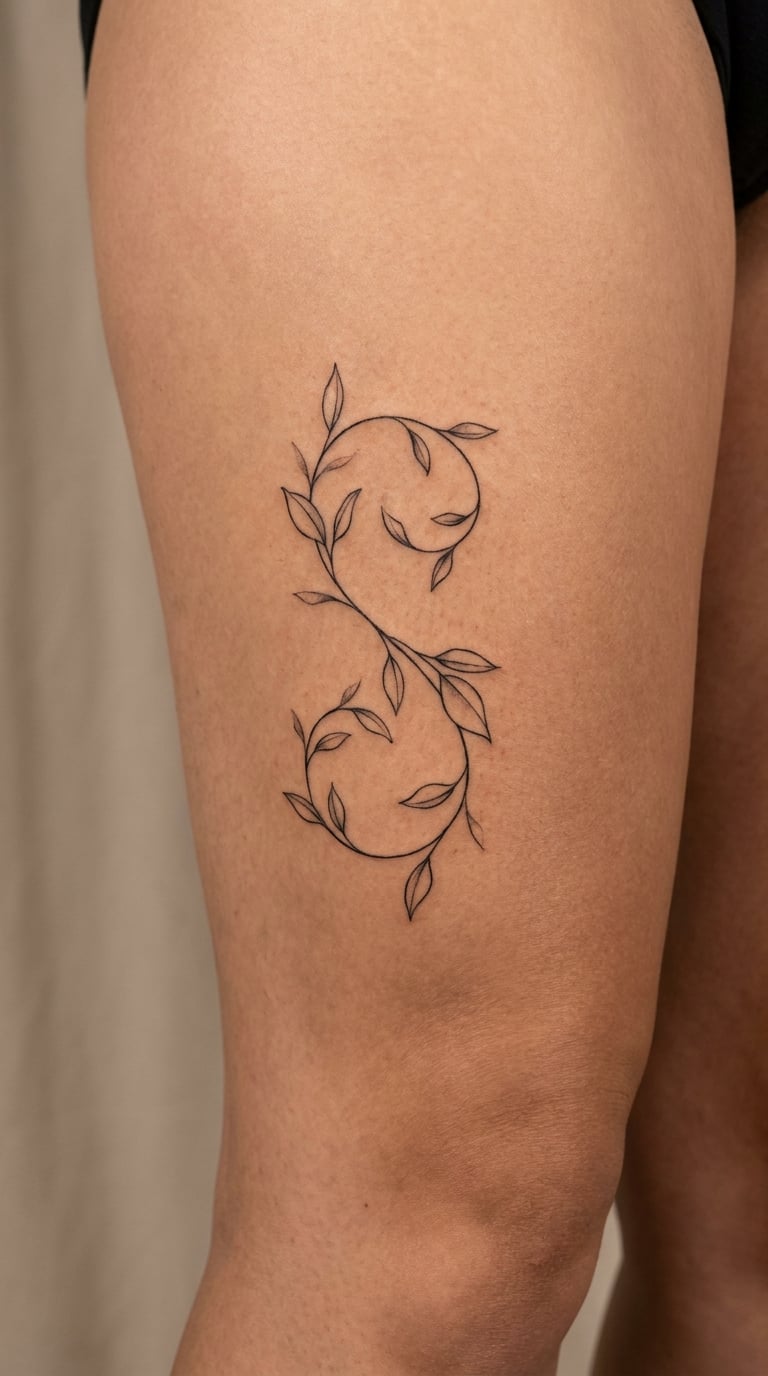
A snake vine runs in a long S from hip toward knee, with narrow eucalyptus leaves set at intervals and a healthy amount of bare skin between them. The negative space is doing the work. Because the curve follows the line of the leg, the design looks longer and leaner than its actual size.
It reads as movement rather than a static branch, and that suits people who already have straight, symmetrical botanical work and want something with more direction.
Placement: outer thigh, calf, or the side of the torso where a long curve has room · Size: 6 to 8 inches (15 to 20 cm) long · Style: fine line vine · Pain: medium, and the outer thigh is comfortable for most people. The inner thigh and knee crease are not, so the path matters more than the motif. Sparse line work on a moving area wears unevenly, so keep the curve off the knee. Make it yours: add a tiny snake head tucked at the upper curve if you want the double reading.
14. Scented Eucalyptus Leaves on the Ribs
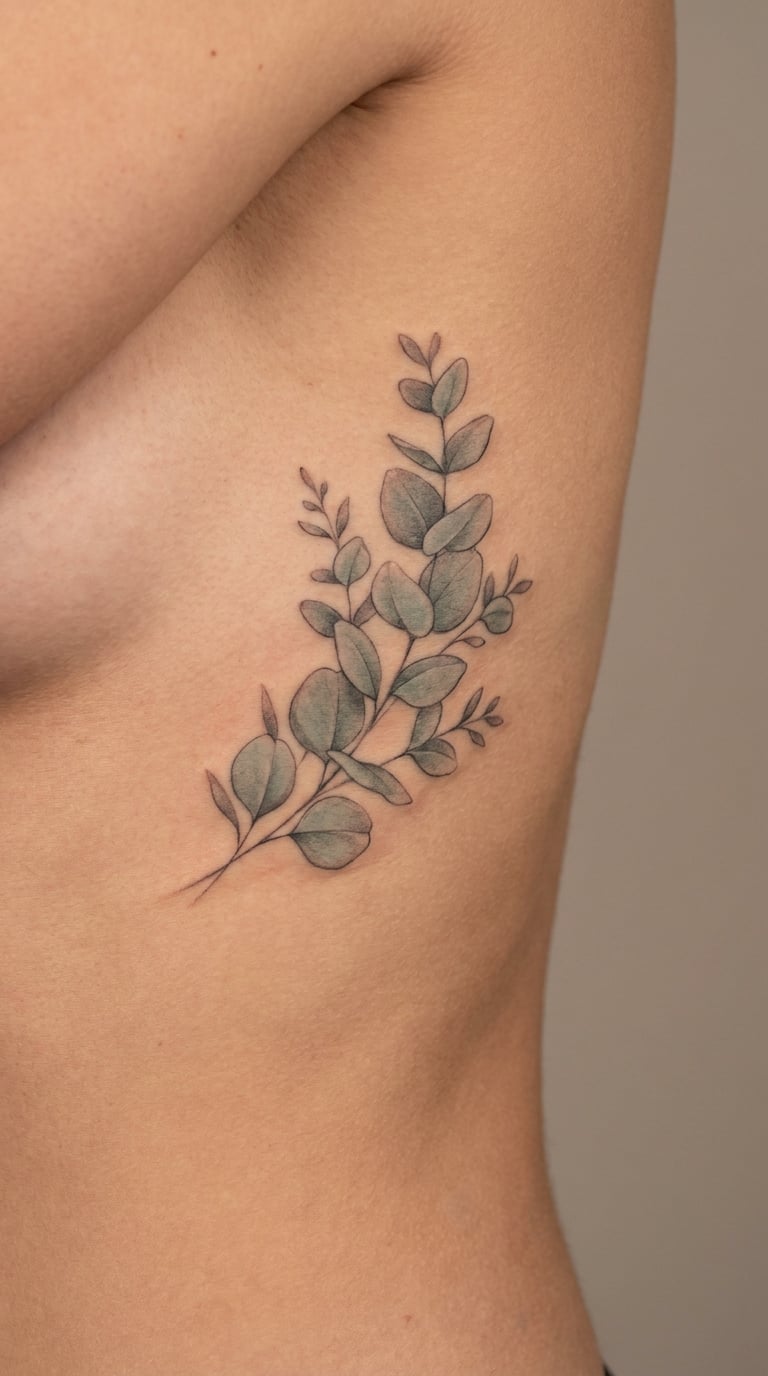
This is a small cluster of overlapping leaves with realistic shading, placed on the side of the ribs where the skin is thinnest and most expressive. The leaves are shaded rather than outlined, so they carry a soft, three-dimensional look that reads differently depending on the light.
People tend to choose it for the emotional weight of the placement rather than the size of the design. Ribs are a spot you choose with your body in mind, and a eucalyptus cluster there feels intimate without being tiny.
Placement: side of the ribs, angled toward the hip · Size: 3 to 4 inches (7.5 to 10 cm) across · Style: grey-green realism · Pain: high, and it earns that. The ribcage is bone, the skin stretches when you breathe and twist, and shaded realism means many passes over the same soft area. Start small here. Make it yours: run the cluster at a slight angle along the rib curve instead of stacking it straight, which reduces the pull on the edges.
15. Eucalyptus and Sun Circle Design
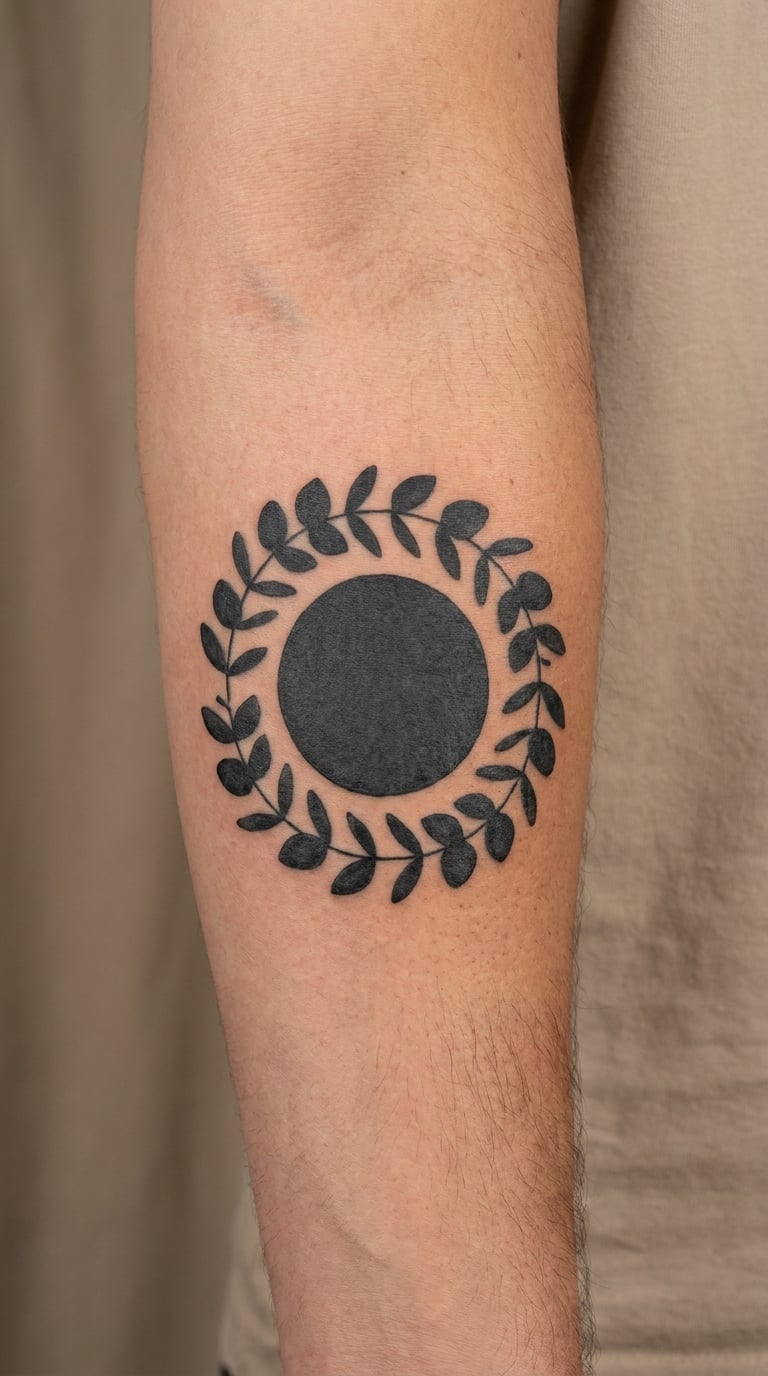
A plain black circle for the sun, with eucalyptus leaves radiating evenly around it in clean line. The circle anchors the whole thing and gives the composition a centre, which a loose spray of leaves never has.
Sun imagery is about warmth and return, and the eucalyptus adds steadiness, so the combination suits people who want something optimistic but not sentimental. It also works as a filler design to close a gap in an existing arm piece.
Placement: forearm, upper arm, or beside a matching piece on the other arm · Size: 2.5 to 3.5 inches (6 to 9 cm) diameter · Style: line with light dotwork shading · Pain: low to medium. Even spacing keeps the sittings short, and the forearm is well padded. The leaves closest to the circle edges will fade first, so the artist should keep them a touch heavier than the ones at the rim. Make it yours: add a small number of rays inside the circle, like a date written in tally marks.
16. Dreamy Watercolor Eucalyptus Sleeve
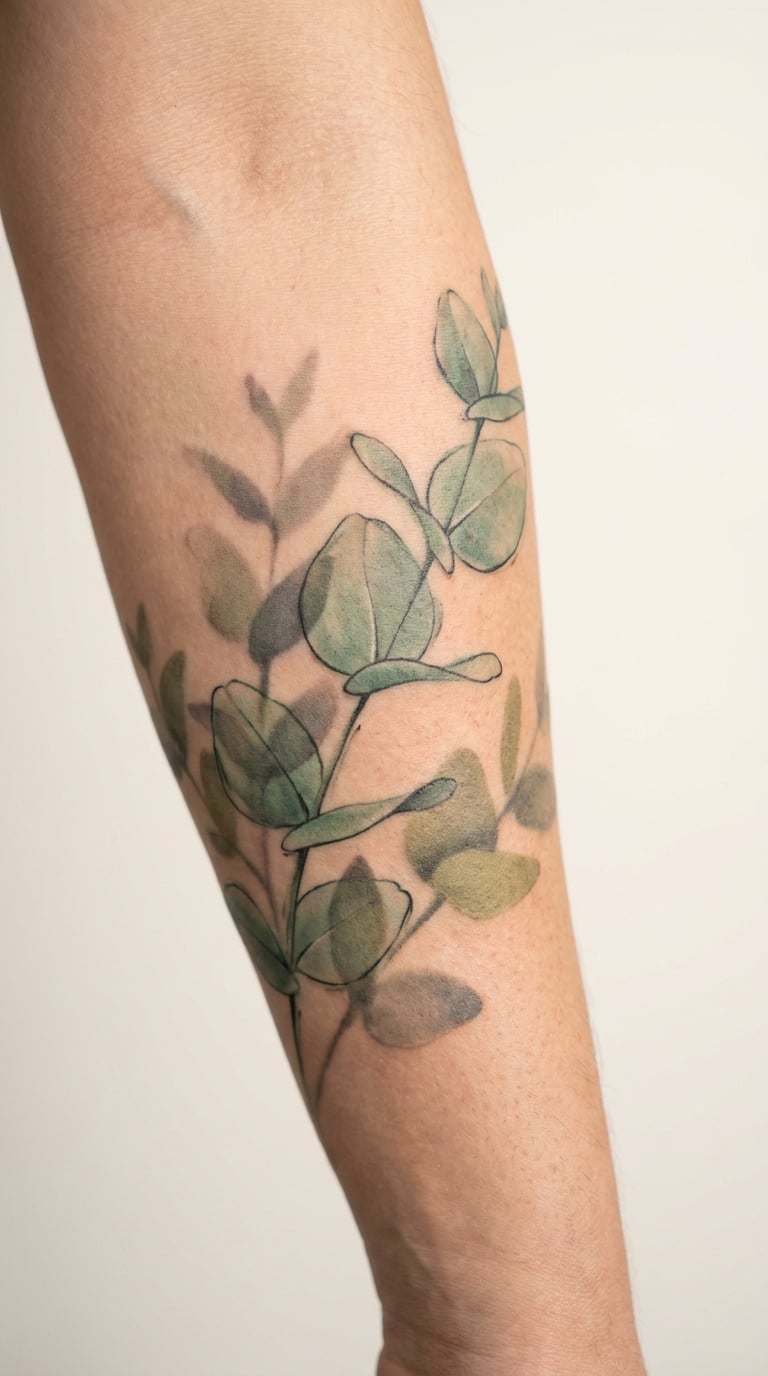
This is a larger piece with translucent green washes, loose leaves scattered rather than lined up, and a soft botanical background that fades in and out. Nothing has a hard edge, so the eye moves around the arm without a single focal point.
It suits people who already know they want a sleeve but not a specific subject. It is also forgiving about placement, because the colour spreads and fills whatever shape the arm gives it. If you are still deciding between botanical and marine, our roundup of ocean sleeve tattoo ideas is worth a look for how much a wrap can carry.
Placement: full forearm, from wrist to elbow · Size: full sleeve area · Style: watercolor sleeve · Pain: high over a long session, though the watercolor shading is less insistent than solid black. Expect this to take three sessions or more, and do not rush it. Translucent colour fades noticeably toward the edges, so the design will soften more than a black piece. Make it yours: leave one section of the arm almost empty as negative space, which makes the painted areas read brighter.
17. Eucalyptus Flower and Leaf Combo
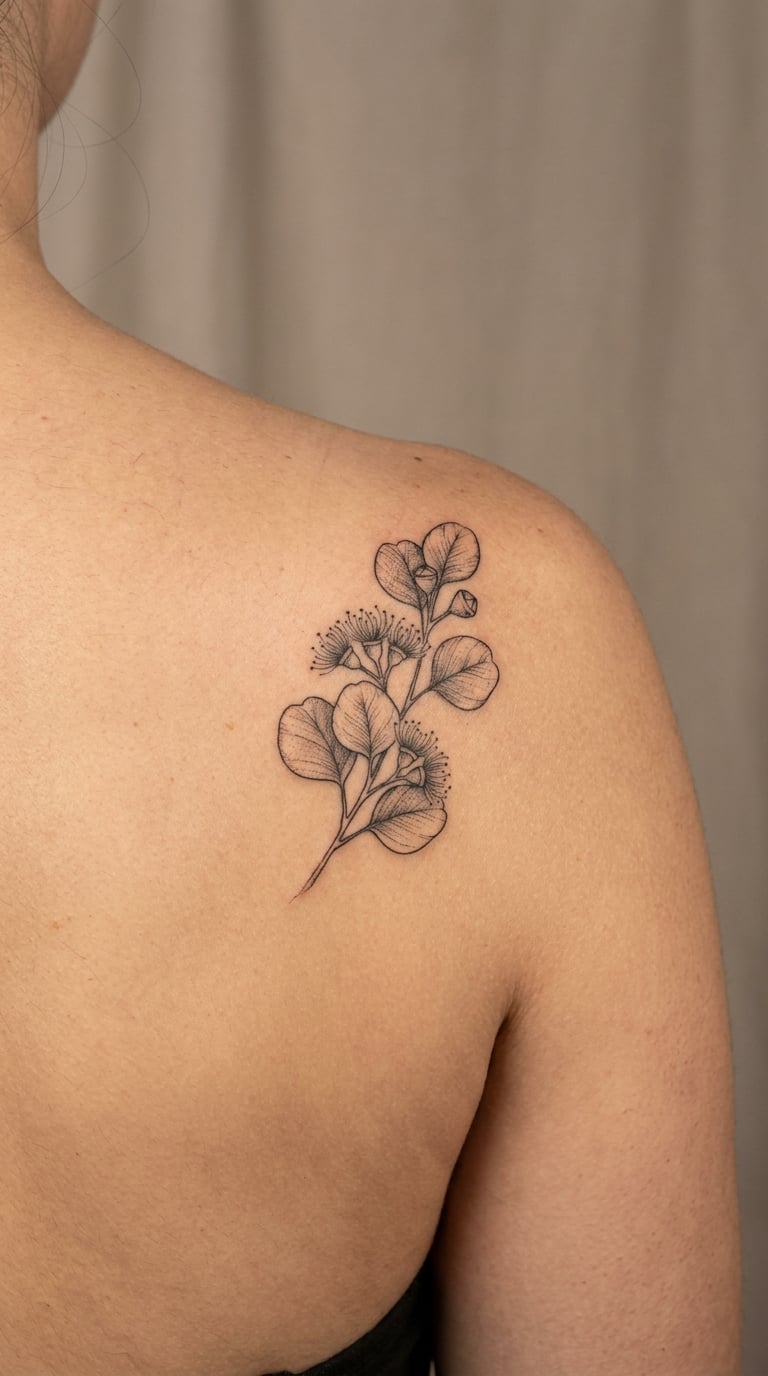
Eucalyptus does produce flowers, small and fluffy rather than showy, and this design uses them alongside the familiar rounded leaves in fine black line with light grey shading. It is a botanical study rather than an arrangement, so the balance is between accuracy and clarity.
People pick it when they want eucalyptus specifically, not as a stand-in for some other leaf. The shoulder blade gives a flat enough plane for a study that benefits from being looked at properly.
Placement: shoulder blade, upper back, or the flat of the upper arm · Size: 3 to 4 inches (7.5 to 10 cm) across · Style: fine line with grey shading · Pain: low to medium. The back is not painful, but it is an awkward place to sit still, so book a long appointment. Fine grey shading in the flower centres will soften before the outlined leaves do. Make it yours: include a gumnut beside the blossoms so the design shows two stages of the same plant.
18. Geometric Eucalyptus Stalk on the Shin
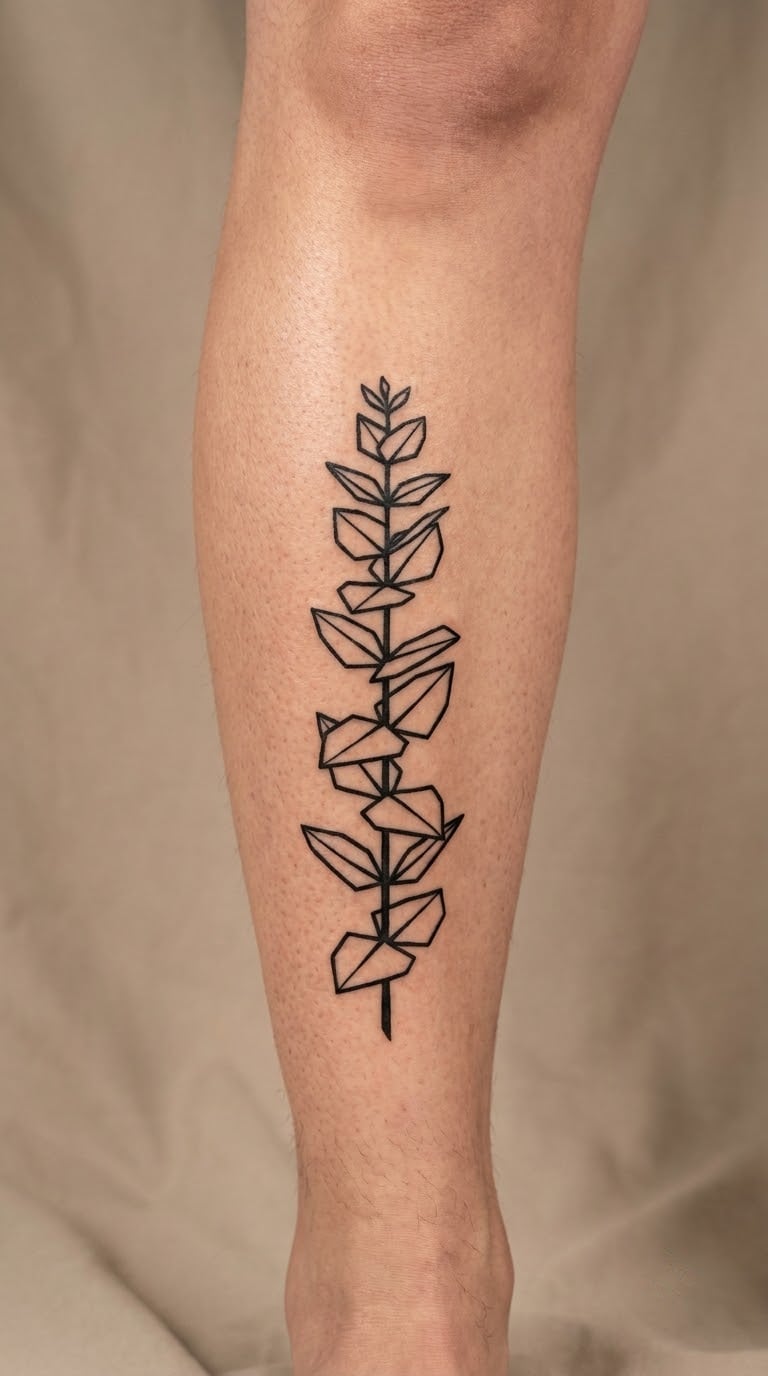
Here the leaf is redrawn as a polygon. A central black stalk runs vertically with angular leaves branching off it in clean, straight-edged forms, and the whole thing is mirrored so it reads as a diagram of a plant rather than a picture of one.
It suits people who like precision and repetition, and it makes a nice contrast next to softer botanical work elsewhere on the body. Geometric line work also holds its edges remarkably well.
Placement: shin, calf, or the inner forearm · Size: 4 to 6 inches (10 to 15 cm) long · Style: geometric black line · Pain: medium. The shin is bony, though the calf below the knee is well padded and takes a long piece more comfortably than you would expect. Straight lines on a curved surface need correction as they go, so the sitting runs longer than the size suggests. Make it yours: colour only the outermost leaf in a single accent shade while the rest stays black.
19. Eucalyptus Koala Branch
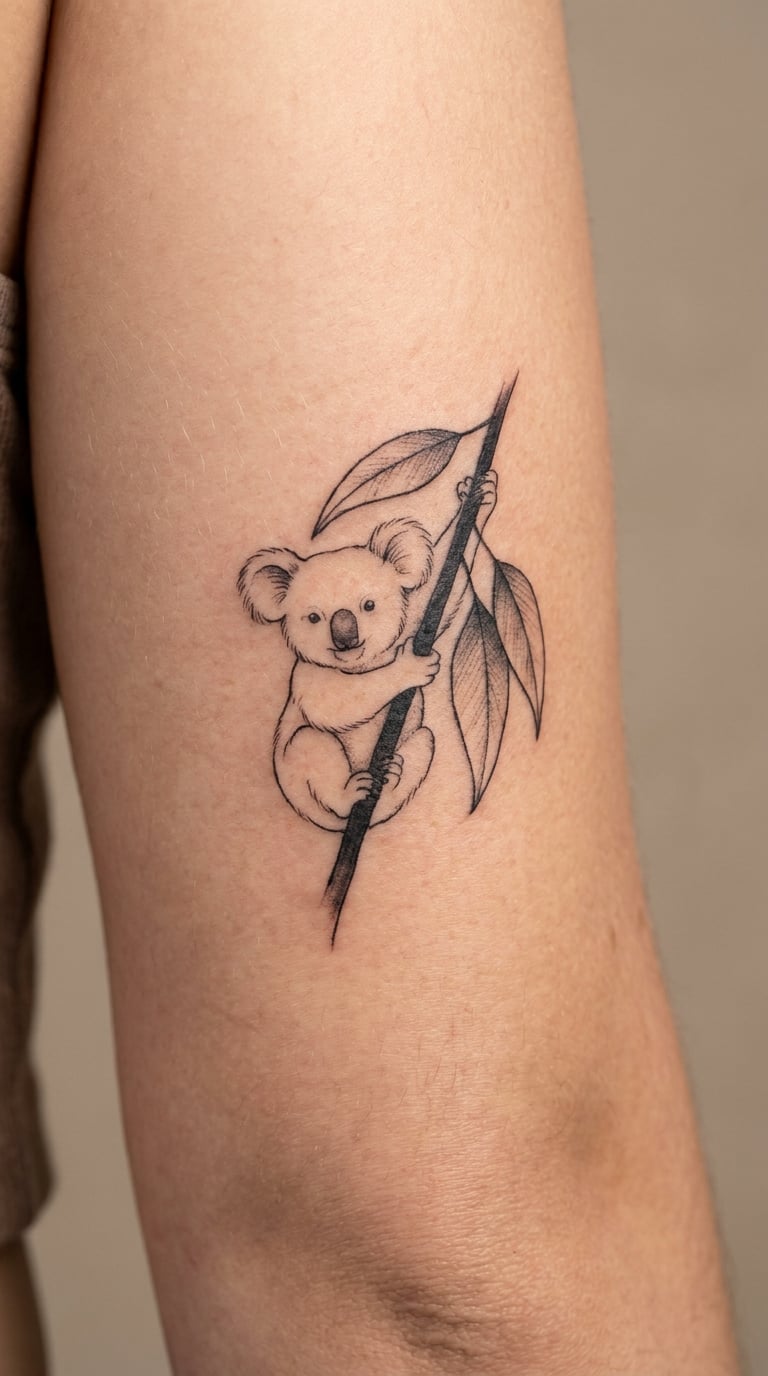
A small koala gripping a eucalyptus branch, drawn in fine line with enough detail on the face and claws to feel like a drawing rather than a doodle, and only three or four leaves to keep the botanical side honest. The branch is what stops it drifting into cartoon territory.
It is a warm, slightly sentimental design, usually chosen by people with a connection to Australia or a fondness for the animal. The koala and the tree are inseparable, so the pair tells one small story rather than two separate ideas.
Placement: outer upper arm, calf, or somewhere with soft skin for the face detail · Size: 2.5 to 3.5 inches (6 to 9 cm) tall · Style: illustrative fine line · Pain: medium. Small facial features mean short fine passes, which are more irritating than a single confident line, so the sitting takes longer than the size. The koala’s fur is usually left as open skin, which ages well. Make it yours: set the koala on a flowering gum branch so it holds one small burst of yellow.
20. Eucalyptus Letter Monogram
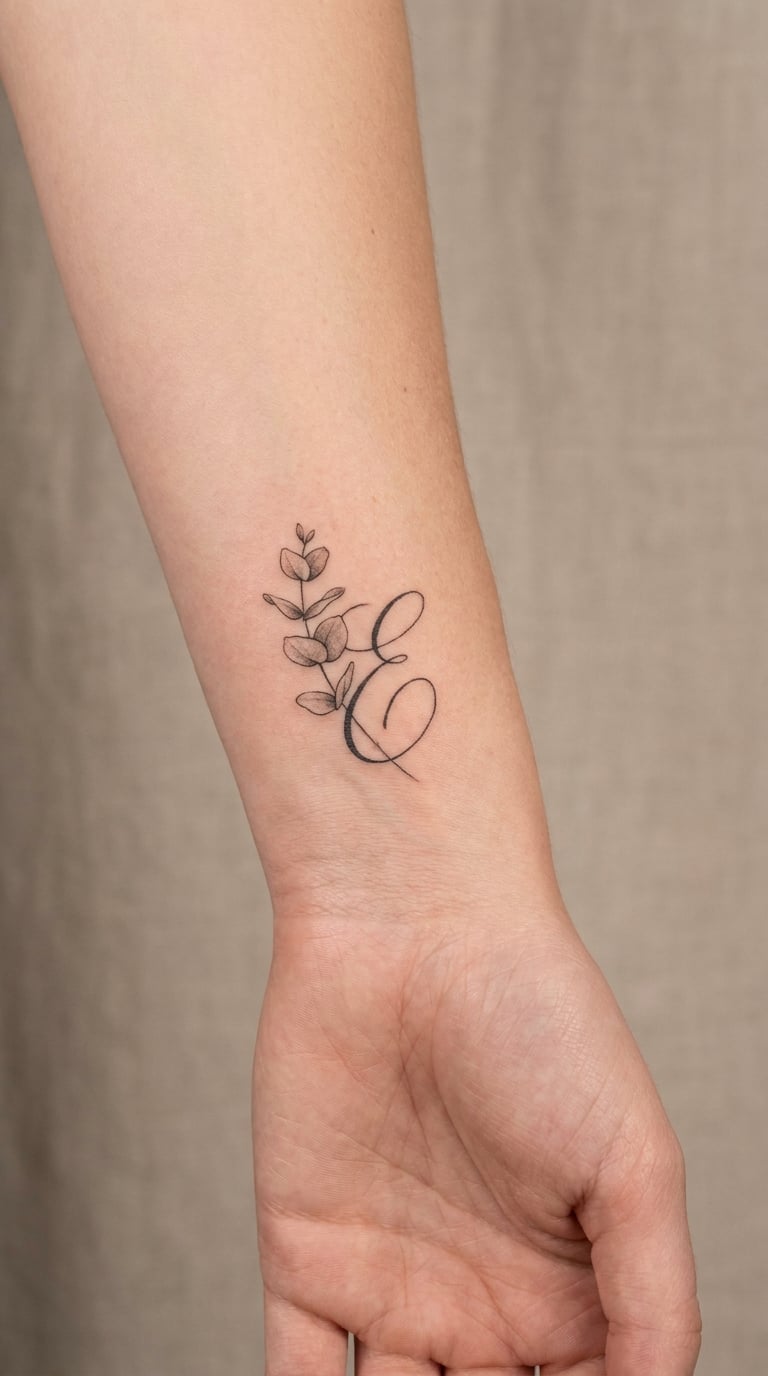
A single initial, drawn cleanly, with a eucalyptus stem curling around it. The stem starts below the letter, wraps once, and ends in two or three leaves pointing back at the shape of the letter. That single wrap is what keeps it from looking like clip art.
It is a personal design that still reads as a botanical piece, which makes it a good choice when you want meaning without a full back piece. Initial tattoos are also the most common place to outgrow a decision, so pick a letter you will not regret.
Placement: inner wrist, behind the ear, or on the side of the ankle · Size: 1.5 to 2.5 inches (4 to 6 cm) tall · Style: fine line monogram · Pain: medium. The wrist is nerve-dense and the letter plus the stem needs consistent line weight across a curve, which takes patience and time. Letters on the wrist are visible in most jobs, and fine lines there wear faster than on the upper arm. Make it yours: let the terminal leaves form a small second letter, so the design holds two initials rather than one.
21. Eucalyptus Fern and Moon Composition
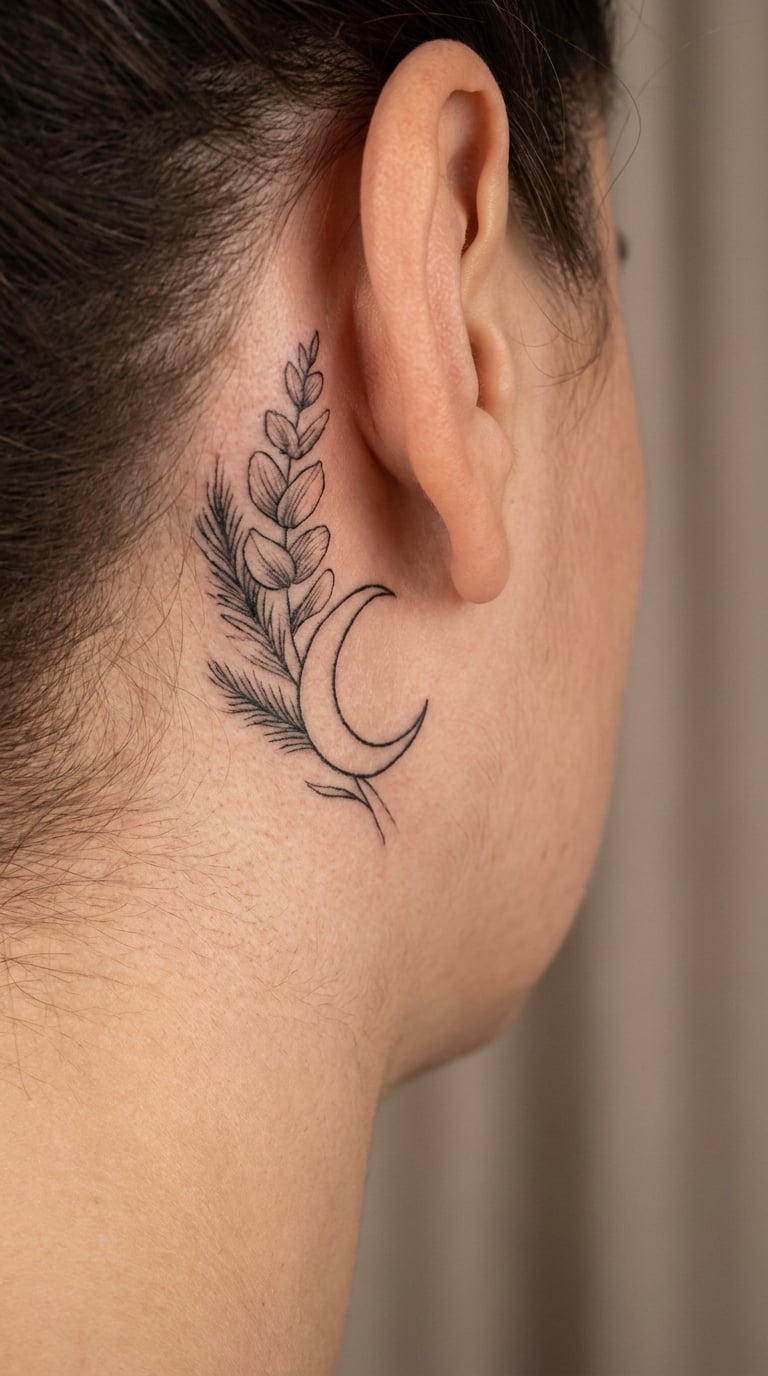
A thin crescent moon with feathery foliage curling around it, the leaves small and fernlike so the whole thing stays light. The composition is compact and roughly circular, and the moon is drawn as an outline rather than filled, which keeps it airy.
It suits people who want a piece that feels protective or quiet without being heavy. A crescent behind the ear is a small, private thing, and most people who get one describe it as a reminder rather than a display.
Placement: behind the ear, on the shoulder, or at the top of the spine · Size: 2 to 2.5 inches (5 to 6 cm) across · Style: fine line with light stippling in the crescent · Pain: medium. Behind the ear is sensitive and the session is short, which some people prefer for a first tattoo. Feathery detail at this scale blurs with sun exposure, so keep the leaves a little bolder than the moon. Make it yours: add a phase line, a small waxing or waning crescent, underneath the main crescent.
22. Sculptural Black Eucalyptus Back Piece
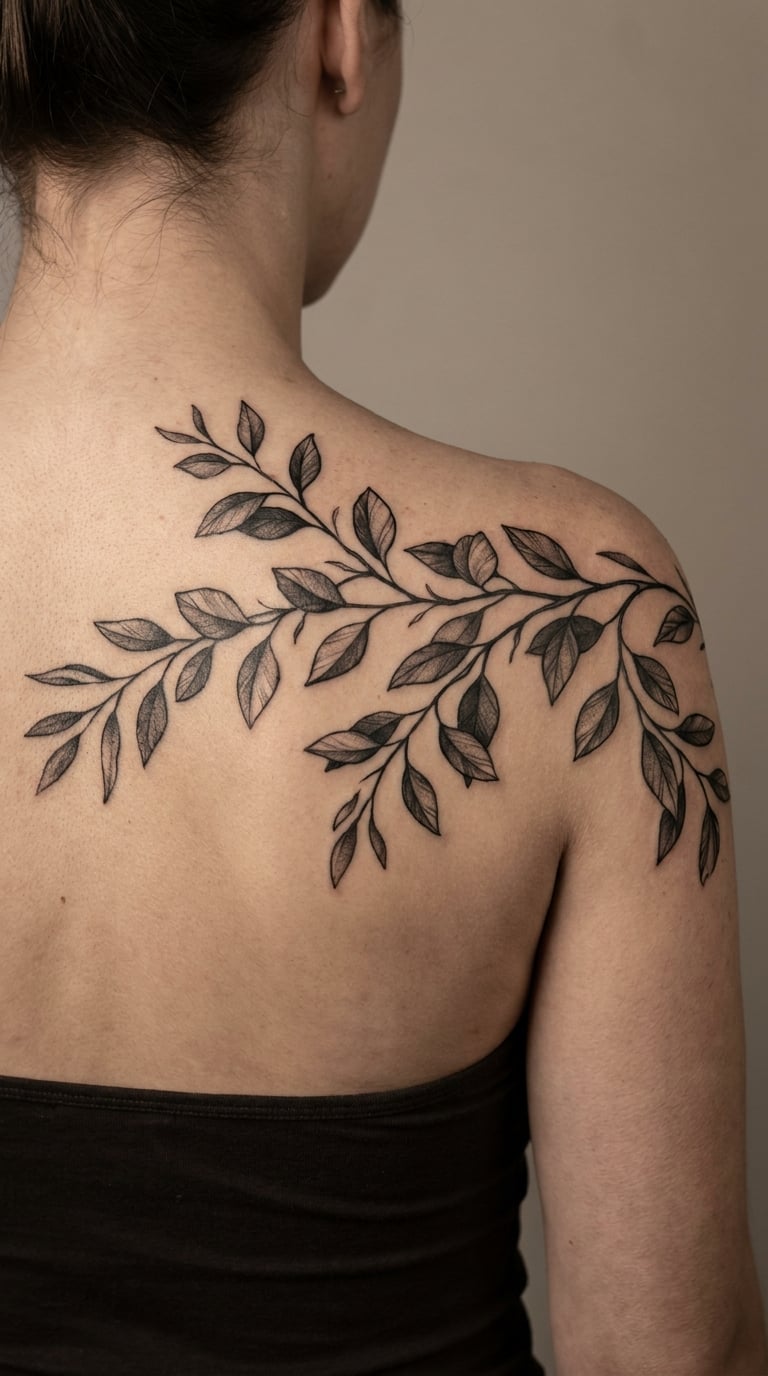
This is a large composition of shaded black leaves and winding stems that flow across the back, with strong tonal shifts from solid black to open skin. It is closer to a piece of illustration than a tattoo motif, and it takes several sittings to build properly.
It is the right choice for someone who already collects work and wants a centrepiece. If you are new to tattoos, this is not a starting point, and a smaller branch version of the same idea will give you the same subject with far less commitment.
Placement: centre back, upper back, or wrapping from the spine toward one shoulder blade · Size: 12 inches (30 cm) or larger · Style: sculptural blackwork with grey wash · Pain: high, mostly from the duration and the bony areas across the shoulder blades. A piece this size is a multi-visit plan over weeks, not a single appointment, and sitting still for that long is the real challenge. Shaded grey transitions blend over time, softening the contrast. Make it yours: design the negative spaces first, so the open skin becomes part of the drawing rather than what is left over.
How to Choose the Right Design
Match the line weight to the body part, not to the trend. Thin single-needle work belongs on flatter, less exposed skin like the inner arm or behind the ear. Anything heavy, shaded or geometric handles a larger canvas such as the calf, thigh or back far better.
Be honest about the scale you can actually commit to. A sprig at 2 inches and a branch at 10 inches are different appointments, different sittings and different budgets, and a design that is too big for the space will be scaled down or forced.
Check what is already on the body before you book. Eucalyptus works well as filler between existing pieces, but a fine line sprig laid on top of a half sleeve will disappear into the surrounding black within a few years.
Decide about colour early, because it changes the artist you need. Green in a traditional style is a completely different skill set from grey wash realism, and mixing the two in one piece needs an artist who does both.
Look at the design in black and white first. If it does not read without colour, the composition is doing too little and the ink will not rescue it. For pieces where growth is the point, our list of tattoo ideas that symbolize growth covers motifs that hold up at every size.
Where to Place 22 Eucalyptus Tattoo Ideas
Visibility is the first filter. A design you want to see every morning suits the inner forearm, collarbone or shoulder. One you would rather keep to yourself belongs behind the ear, on the ribs or along the spine.
Agree with the position, and eucalyptus is a forgiving subject. A branch that follows the collarbone or the line of the shin will look designed, while the same stem across a flat area will look placed there. Ask the artist to trace the actual curve of the body part before finalising the drawing.
Pain tolerance and scale are linked. Longer pieces move over more nerve-dense areas, and the ribs, inner elbow and spine hurt in ways that surprise people. If you have never sat through a long session, start under three inches and build up.
Existing artwork sets the boundary. New line work beside a bold piece will disappear over time, so either leave a clear gap or work with an artist who can add to the existing style. If you want to know how a calm, low-key design pairs with existing meaning-driven tattoos, our guide to tattoo ideas for anxiety and calm covers that thinking in more detail.
Cost and Session Time
Rates vary by region and by artist, but US shops usually charge by the hour, with a shop minimum that covers the smallest piece. A micro leaf of 1 inch or less often sits at the minimum and takes 20 to 40 minutes.
A small to medium fine line piece of 2 to 4 inches generally takes one session of about an hour, though shaded work takes closer to two. Medium colour pieces, especially traditional green branches, commonly need two sessions of 2 to 3 hours each.
A half sleeve of roughly 8 inches long usually takes three to five sessions. Large back pieces of 12 inches or more are planned over two to three months, with each session 3 to 5 hours, and the artist will not rush the shading because healing changes how the next pass looks.
Artists who specialise in fine line and micro work often charge more per hour than generalists, and that premium is usually worth paying for a design this small. Bringing a clear reference and a fixed placement saves consultation time, which some shops bill for.
Aftercare Basics
Always follow your artist’s aftercare instructions first, because they know exactly what they did in your skin.
Wash the area gently with lukewarm water and unscented soap twice a day for the first few days, then pat dry with clean hands rather than a towel.
Apply a thin layer of whatever ointment or lotion your artist recommends. A heavy layer traps heat and slows the healing, so less is genuinely more here.
Keep the fresh tattoo out of direct sun and out of swimming pools, hot tubs and saunas while the surface is open, since chlorine and heat are hard on a healing line.
Do not pick, itch, scrub or peel anything. If a scab lifts on its own, let it go, and if the piece looks irritated for more than a few days, send your artist a photo before assuming the worst.
Once healed, sun protection is what decides how the piece looks in ten years, and green ink in particular drifts toward warmer olive tones over time.
Frequently Asked Questions
Are eucalyptus tattoos suitable for beginners?
Yes, and a fine-line sprig is about as gentle a first tattoo as you can pick. The design is simple, the sitting is short, and the inner forearm is a forgiving place to work. Pick an artist who does fine line regularly, avoid a design with more detail than you are excited about, and be honest if you need a break.
What is the best placement for a eucalyptus leaf tattoo?
The inner forearm and the collarbone are the two most popular spots because the skin is relatively flat and the area is easy to keep covered or out of sight as needed. Behind the ear works for a small single leaf, while the ribs suit a shaded cluster. Whichever you choose, have the artist trace your actual body shape first.
Do fine-line eucalyptus tattoos fade quickly?
Fine line softens faster than any other style, usually within three to five years, because thin lines have less ink in them to begin with. The effect shows first on hands, fingers and anywhere with heavy sun exposure. Ask your artist to run a slightly heavier line than looks right in the drawing, and protect the healed piece with sunscreen.
Should I choose a colored or black-and-grey eucalyptus tattoo?
Black and grey is the safer long-term choice, and a bold outline with grey shading holds its shape far better than delicate colour. Green and watercolor eucalyptus look beautiful fresh but drift toward warm olive and brown tones as they age. Choose colour if you want the botanical softness now, and accept that the piece will look different in a few years.
How much does a small eucalyptus tattoo cost?
A small eucalyptus tattoo of one to two inches usually lands between 100 and 250 USD in the US, since shops charge by the hour and apply a minimum for the shortest pieces. Micro line artists often charge more per hour than generalists, and shaded or colour work takes longer for the same size. Regional rates and shop minimums vary widely, so ask for a total before booking.
Conclusion
If this is your first tattoo, go with the fine-line sprig on the inner forearm. It is small, quick to heal and easy to hide at work, and it gives you a realistic sense of how you handle a sitting before you commit to something large.
If you already collect work and want the eucalyptus motif to carry real weight, the blackwork half sleeve is the stronger pick, with plenty of negative space left for a future addition later.
Whichever of these 22 eucalyptus tattoo ideas pulls you, settle the design, the placement and the size before you book. The consultation is where those three decisions actually get made, and getting them right in advance is the difference between a piece that fits and one that needs covering.