
12 Best Floral Shoulder Tattoo Ideas for Women (September 2026)
Floral shoulder tattoo ideas for women come down to one thing: a flower that follows the curve of the shoulder instead of sitting on it like a sticker. The shoulder is one of the easiest placements on the body to make look elegant, because the deltoid already gives you a natural arc for petals, leaves and stems to travel along.
It is also one of the harshest. Shoulder skin gets sun, movement, bag straps and bra straps all day, so a design that looks delicate in a photo can look tired in five years. Every idea below is written with that in mind. Pick the mood you like, then ask your artist about line weight before you settle on a flower.
What Does a Floral Shoulder Tattoo Mean?
A flower tattoo on the shoulder most often stands for growth, softness and a season of your life that has already happened. Peony reads as prosperity and good fortune, rose as love, cherry blossom as the short and beautiful things worth marking, hibiscus as openness and confidence, and lily as remembrance. Most wearers pick the flower for how it looks and let the meaning arrive later, which is honestly the better order.
The shoulder placement adds its own layer. On the back shoulder it reads as something semi-private, visible when your hair is up and gone when it is down. On the front deltoid it is bold and out in the open, the kind of detail that makes a plain sleeveless top look deliberate.
1. Single Fine-Line Peony on the Shoulder Cap
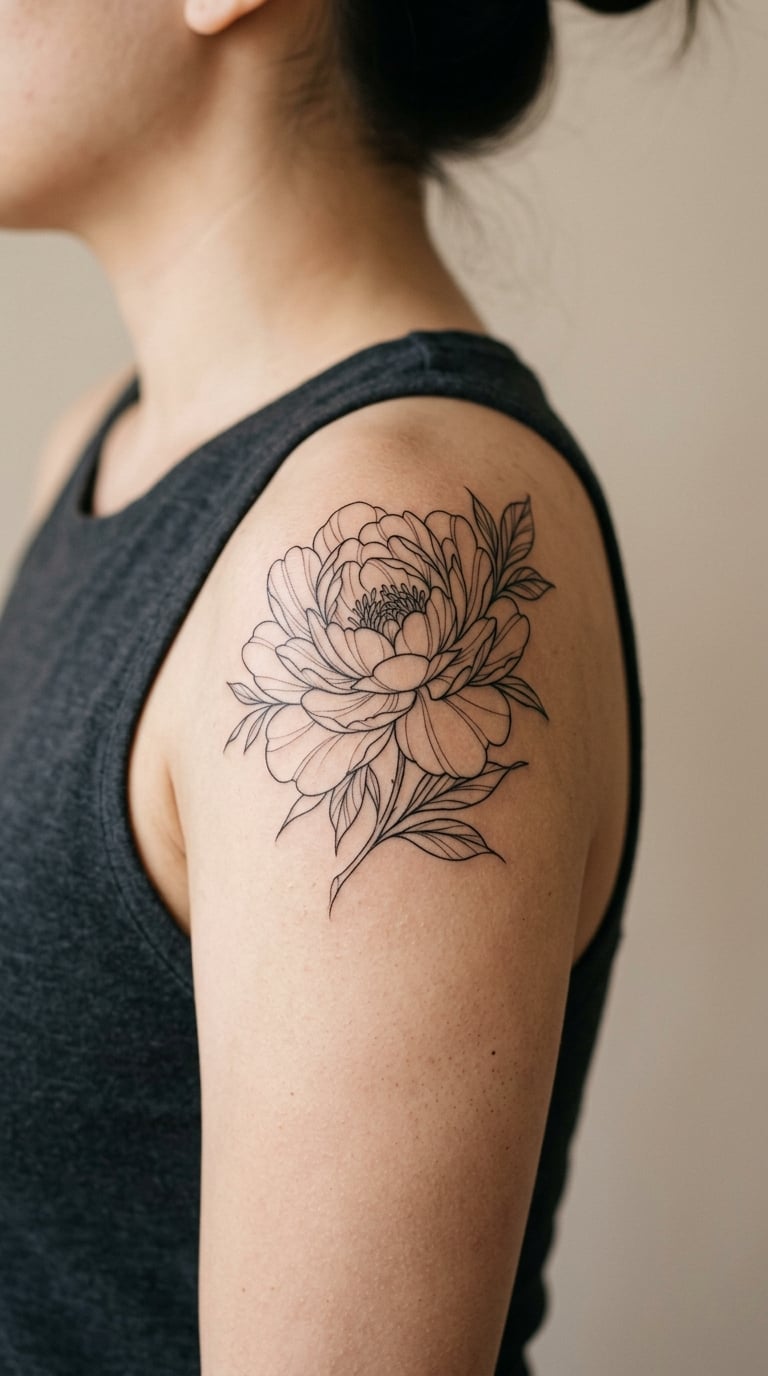
One peony, centred on the shoulder cap, drawn in a single weight of line. This is the one I would pick for a first tattoo, and it is also the one most artists get asked for again when the client wants a second piece later. A layered peony holds up at a distance, so it never looks like a smudge from across a room.
Keep it around 5 to 7 cm across and let the stem trail about two centimetres toward the neck so the eye follows the line. Fine line softens and spreads over the years, so ask for a single-needle pass rather than a hairline one, and expect a colour top-up session. Fine line sits badly with heavy black shading on the same piece, so keep it alone.
Pain and time: The top of the shoulder is a fleshy, well-cushioned spot, usually a 4 or 5 out of 10. A single peony is a 30 to 60 minute sitting, sometimes under 30.
2. Cherry Blossom Branch Wrapping the Back Shoulder
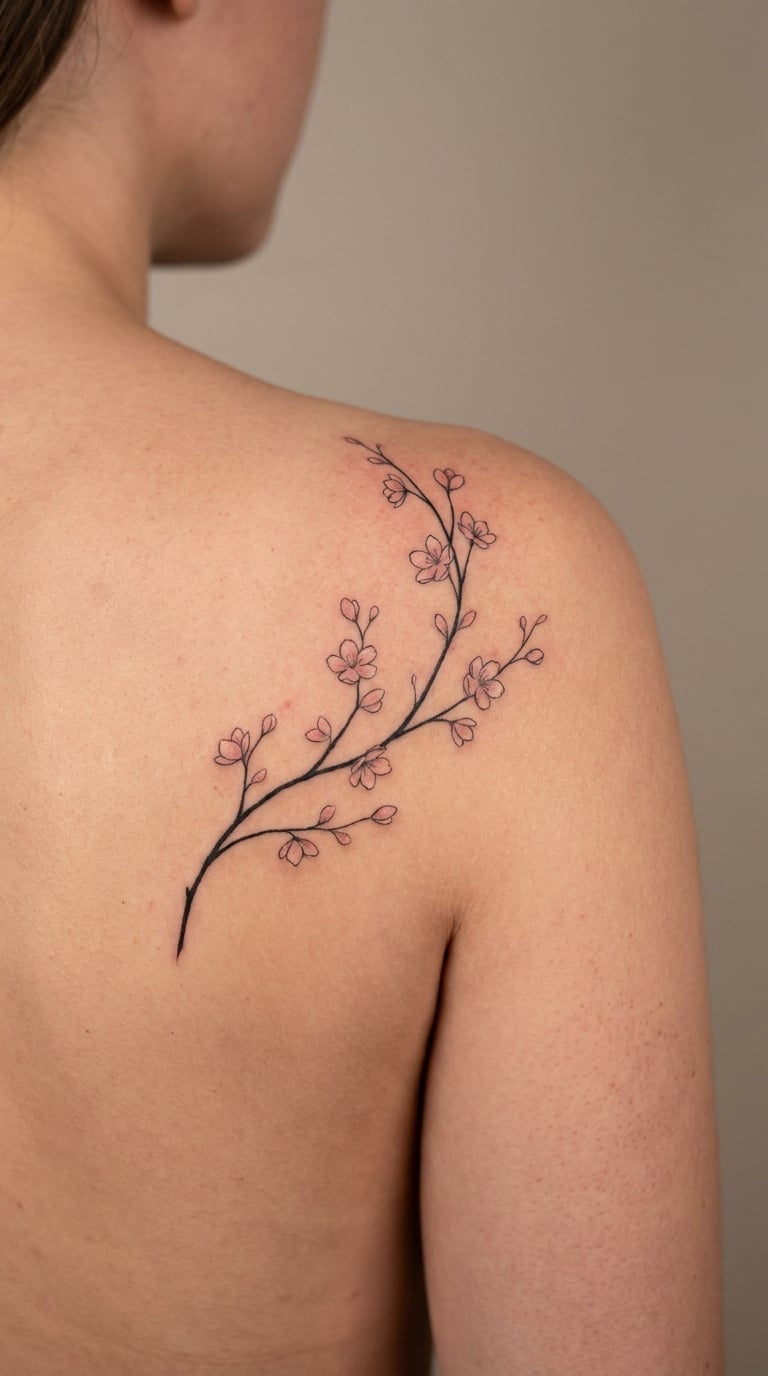
Cherry blossom is the most feminine choice in the gallery, and the branch shape handles a curved placement better than any single bloom. Ask for the branch to arc from the back shoulder around toward the shoulder blade, with a few open flowers and two or three unopened buds for depth.
Blossom petals are pale by nature, so this is a design that lives or dies on line weight. Go slightly heavier than feels right in the drawing, because pale soft colour on an exposed shoulder will blur first. It settles into a healed fine line that looks better at month six than at week two, which is why healed photos matter more than fresh ones here.
Pain and time: The back shoulder near the spine edge is more sensitive than the cap. Allow 45 to 90 minutes, and expect a break halfway.
3. Bold Red Rose in Neo-Traditional Colour
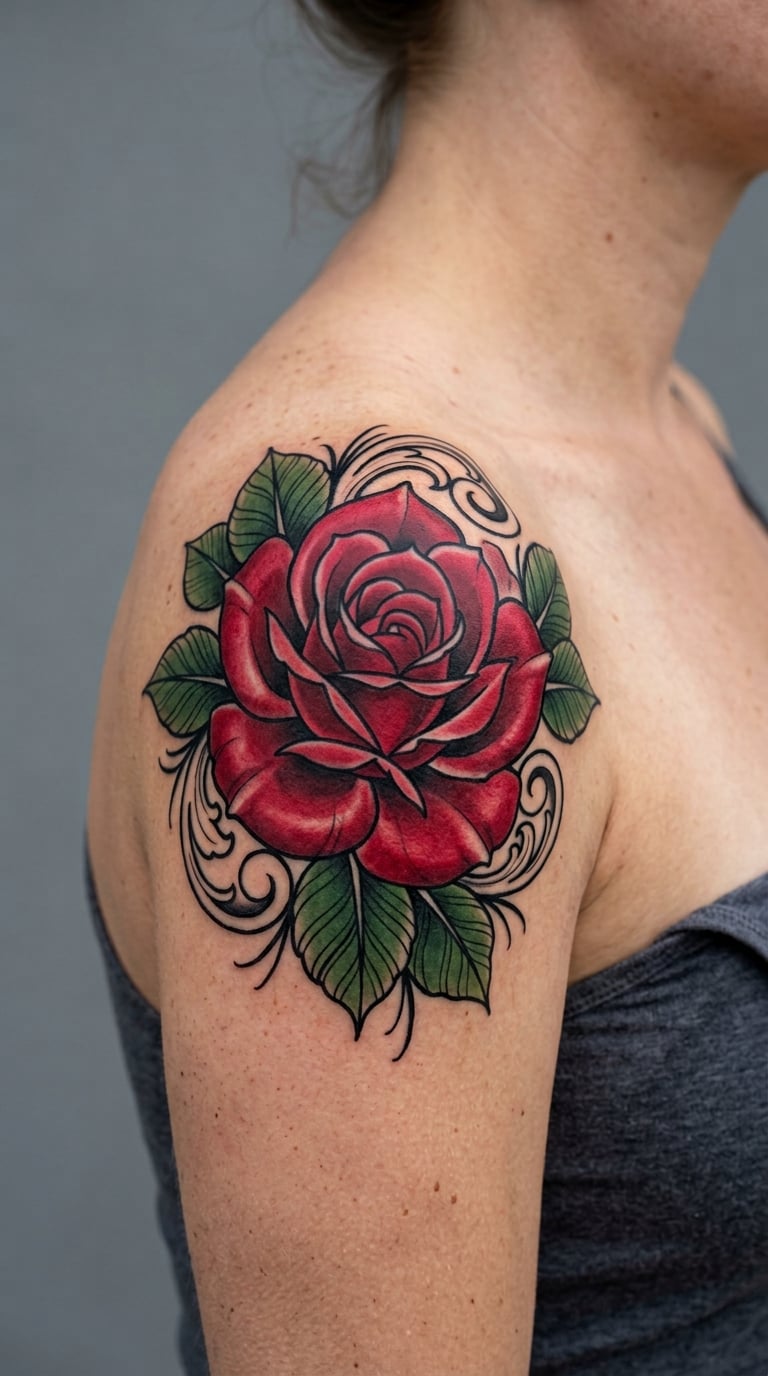
If you want a shoulder flower that reads as confident rather than soft, a neo-traditional rose is hard to beat. Heavy black outlines, saturated red petals and a few hard green leaves give it a presence that survives a small size, which fine line never manages.
It is also the most forgiving style for the shoulder, because thick outlines blur far less than single needles. The trade-off is that it commits you to a bolder look, and it is hard to hide entirely under a work shirt. Place it on the front deltoid at roughly 7 to 10 cm so the rose fills the curve instead of stretching across it.
Pain and time: The deltoid is a rounded muscle, so the needle catches a lot of surface at once. About a 6 out of 10, and 60 to 90 minutes for a rose with leaves.
4. Watercolour Peony and Eucalyptus on the Back Shoulder
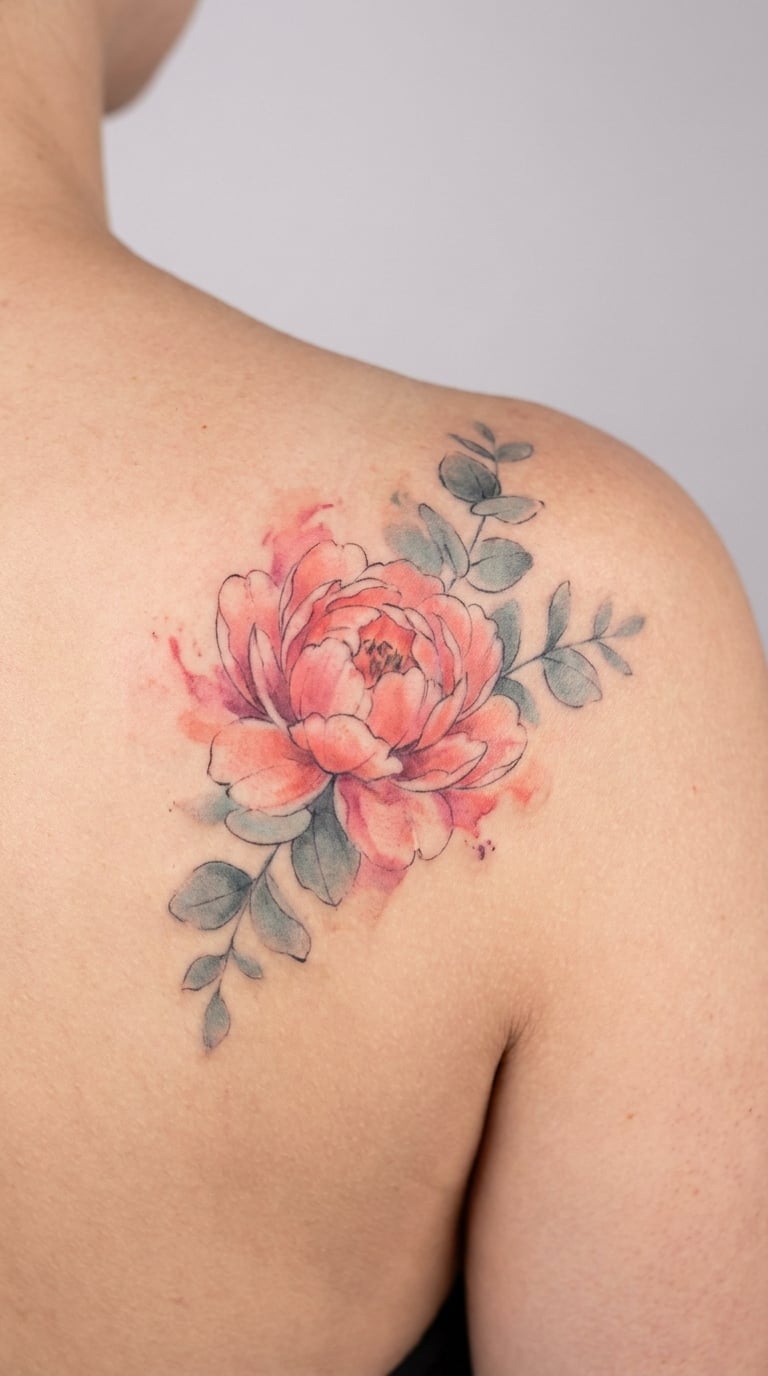
Watercolour florals are the softest of the lot, with colour that bleeds past the outline the way wet paint does on paper. Pairing a pink peony with grey-green eucalyptus keeps the palette restrained and stops the piece looking like a novelty.
The catch is that watercolour hides nothing. A pale wash on the shoulder cap fades at a noticeably different rate from the line work, so six months in you can have a soft bloom with a crisp stem sitting next to it. Ask for the deepest colour in the petal centre and let the edges stay light, and plan on a refresh every few summers if you care about saturation.
Pain and time: Uncomfortable rather than sharp, around a 5. Watercolour fills take longer than line work, so budget 90 minutes to two hours.
5. Trailing Vine with Small Buds from Shoulder to Upper Arm
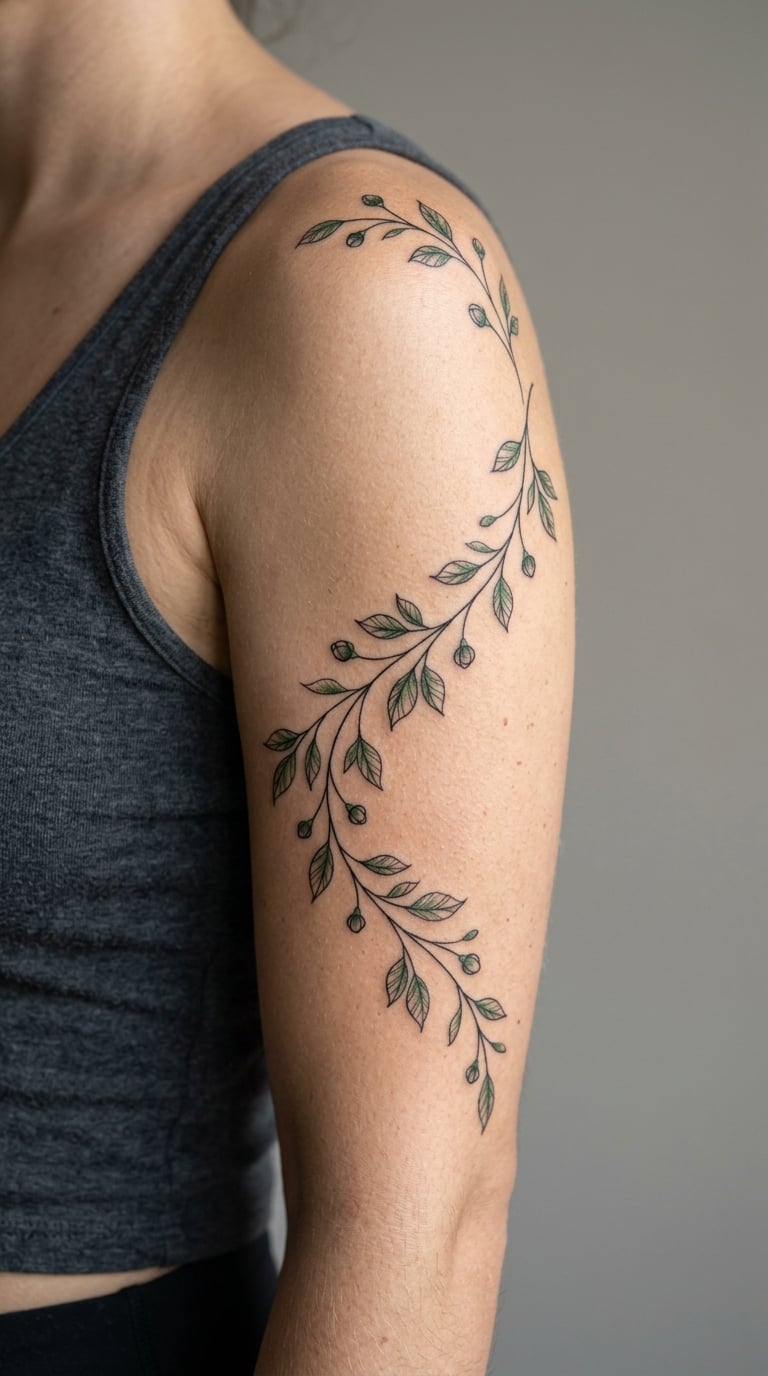
A vine that starts at the shoulder cap and trails down the upper arm is the easiest of these to grow into later. You can book a small stem now, then add leaves, filler and a bigger bloom over the next few years as a sleeve-in-progress, which is exactly how a lot of shoulder pieces are built.
Ask the artist to map the vine along the natural line of the arm rather than across it, because a vine that runs against the grain of the muscle gets stretched every time you reach for something. Leave 3 to 4 cm of open skin between buds so the design still breathes once the arm moves and the lines spread.
Pain and time: The outer upper arm is a 4 out of 10. A short vine is a 45 minute sitting.
6. Black and Grey Magnolia Shading Across the Shoulder Blade
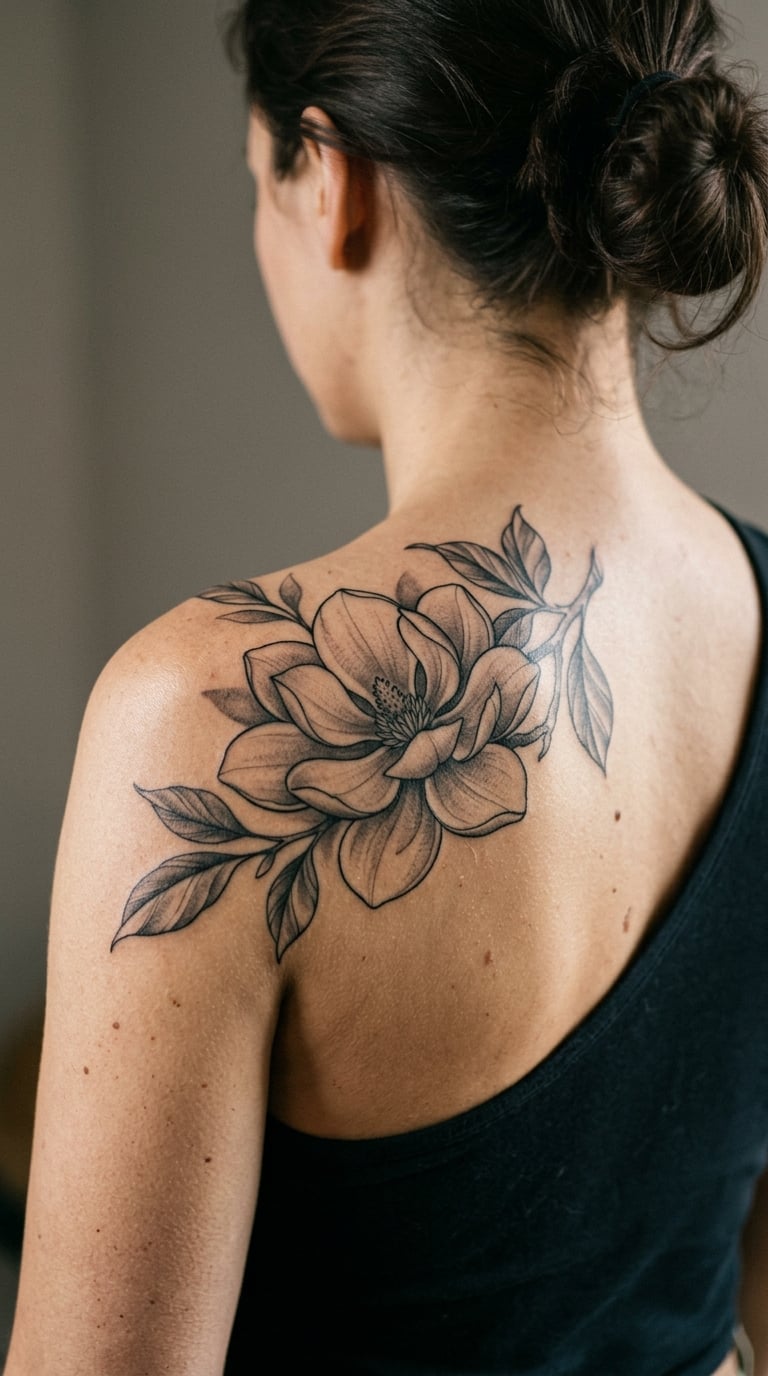
Magnolia is bigger and more open than a peony, which makes it the right flower if you want drama without colour. Rendered in soft black and grey shading, it has depth that stays readable in low light, and grey ages more gracefully than the pastel washes on this list.
Place it flat on the back shoulder blade rather than over the cap, and let the bloom follow the flat of the blade instead of wrapping the deltoid. It works well at 12 to 15 cm across, which is large enough that the shading gradients have room to do their job. This is one of the pieces that looks best healed, since the grey settles into a softer tone over the first few months.
Pain and time: The shoulder blade edge and the spot just under it are the tender parts of this placement, closer to a 6. Two hours, and it may need a second session for the shading.
7. Minimal Daisy Chain Along the Collarbone Edge
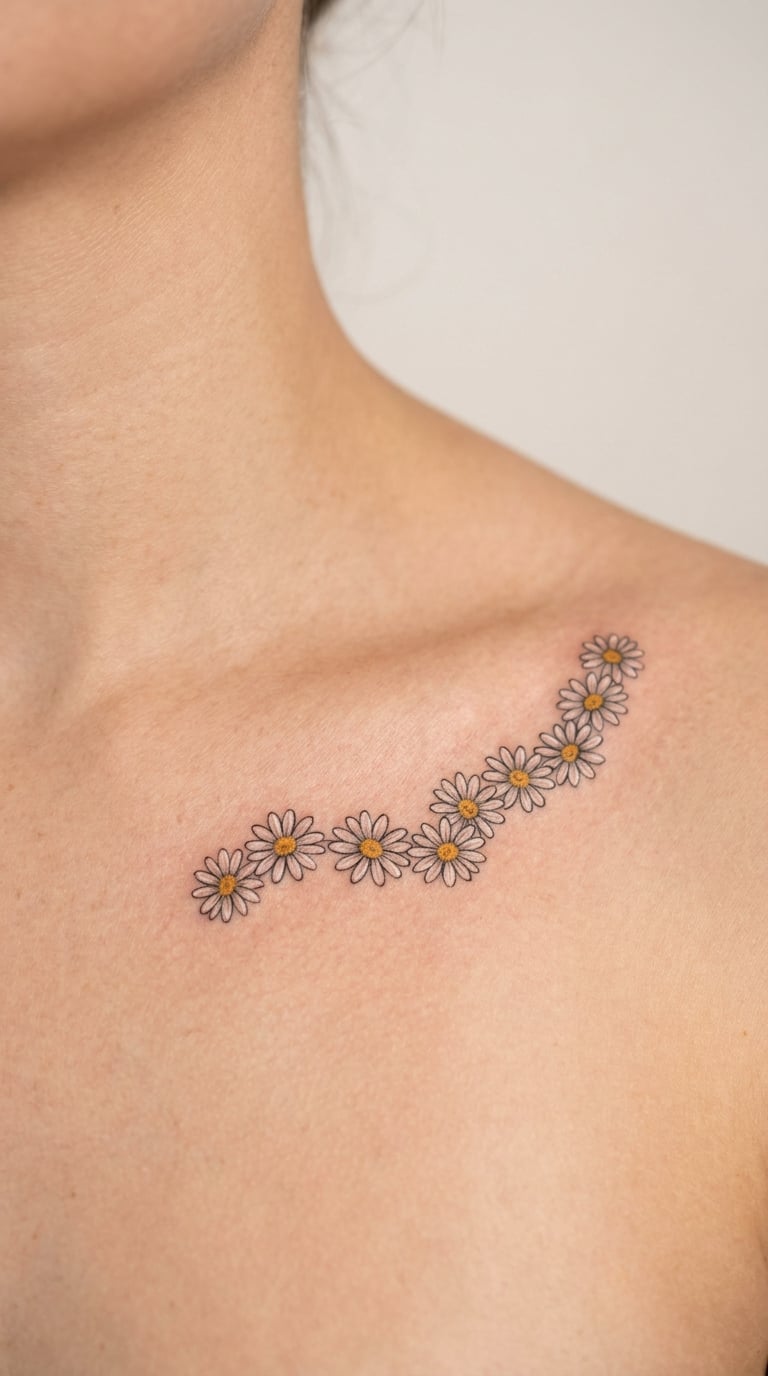
Small daisies in a line along the collarbone edge are the quietest option here, and they work well for someone who wants flowers without announcing them. The chain should follow the collarbone rather than cross it, so each flower sits just below the bone where the skin is flatter.
Keep every daisy the same size and space them evenly, because uneven spacing is what makes a chain look amateur. Small line florals like this one lose definition fastest on an exposed chest, so a strict daily sunscreen habit is the difference between a delicate chain and a row of faint circles by year three.
Pain and time: Close to bone, so a 6 out of 10 and the most sensitive spot in this gallery. 45 to 60 minutes.
8. Hibiscus Half Sleeve in Colour Realism
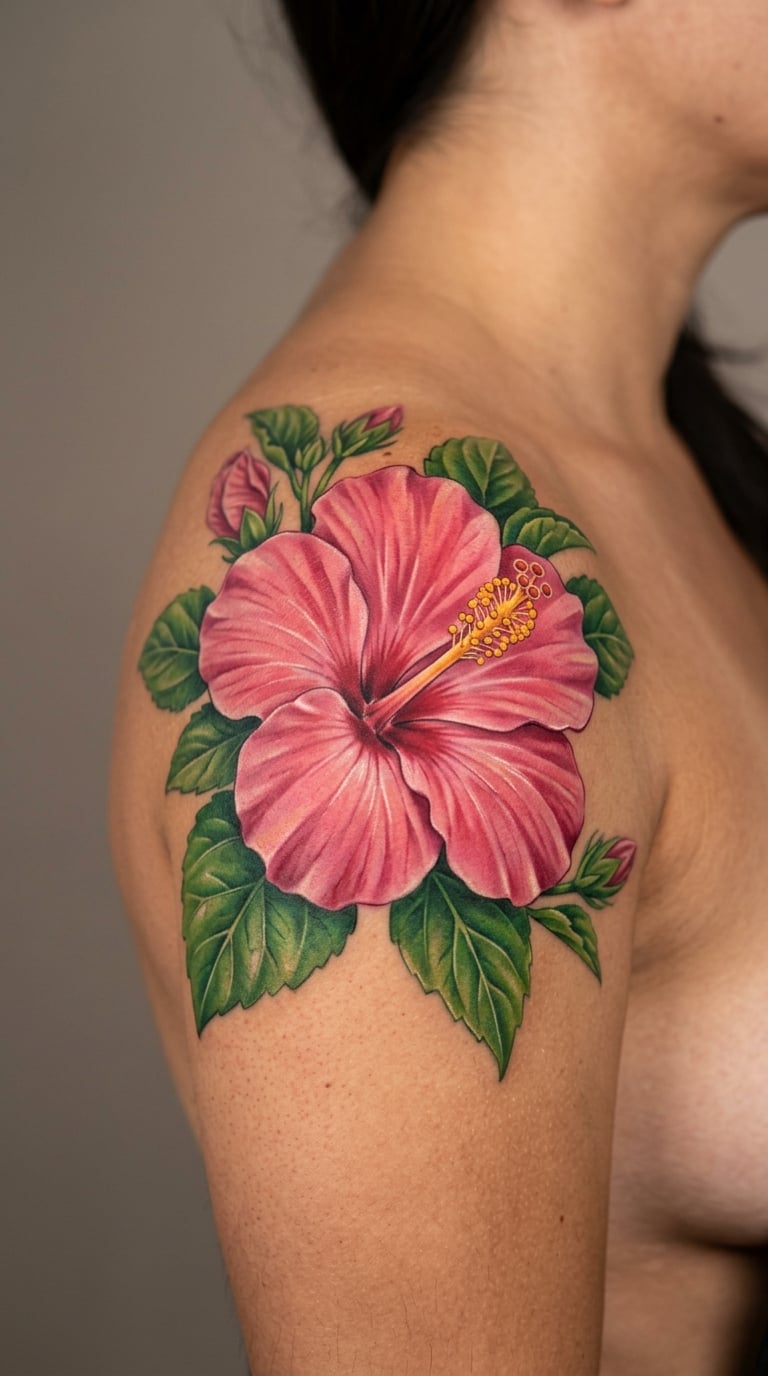
Hibiscus is the boldest colour flower here, and a colour realist can make it look almost photographic, especially with the long stamen that sticks out from the centre. Start at the shoulder cap and let two or three blooms run down the upper arm, which gives you a half sleeve you can finish or stop at any point.
Because the hibiscus has a distinct central stamen, ask for it to point in the direction your arm moves, so it reads as part of the composition rather than a stamp. The large petals take a lot of colour saturation to stay vibrant, so a small one is a compromise here, not a reduction.
Pain and time: Longer sessions because of the colour packing. 6 out of 10 and 90 minutes, likely two sessions.
9. Sunflower Cluster on the Front Deltoid
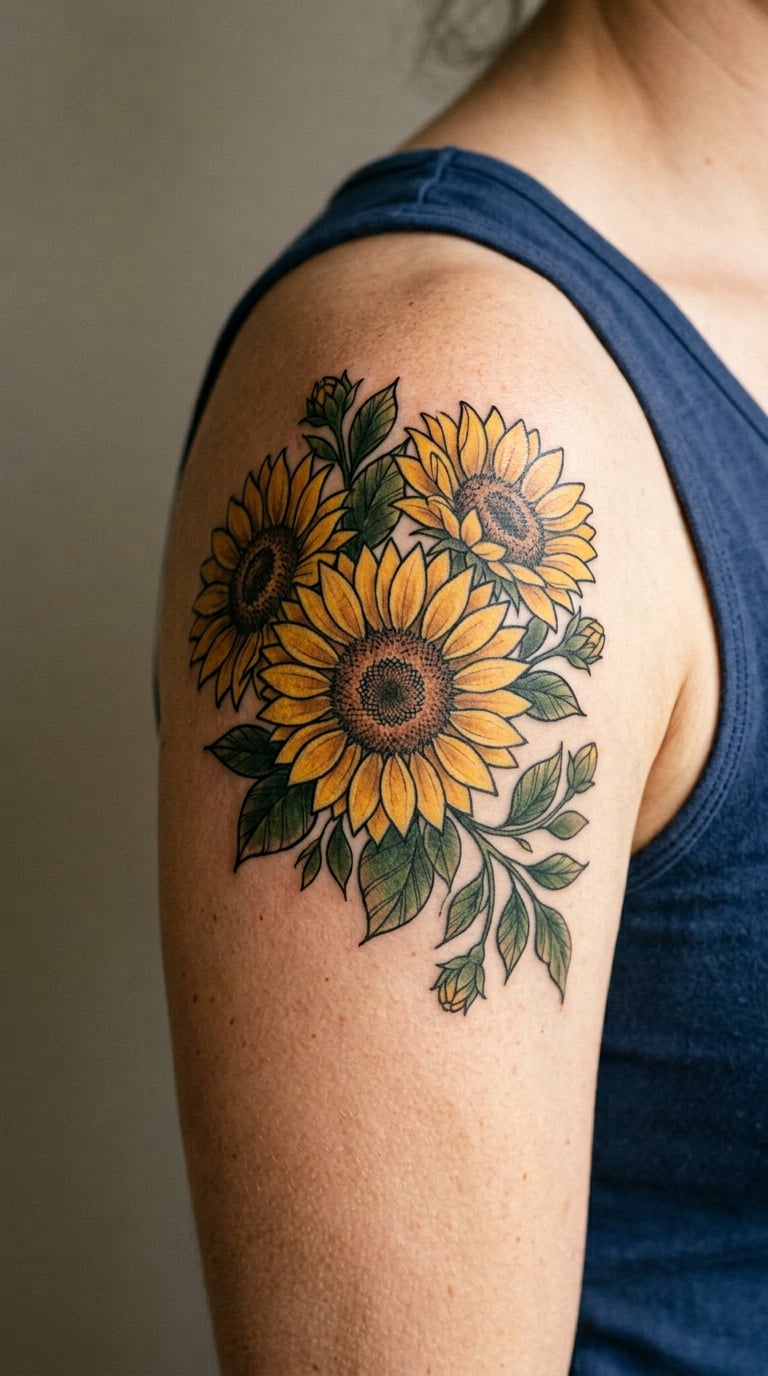
A cluster of two or three sunflowers reads as warm, rural and slightly retro, and it suits a fuller shoulder shape better than a single bloom because the cluster fills the curve. Place the largest flower highest, near the top of the deltoid, and let the smaller ones drop down toward the arm.
The seed heads are where the piece lives or dies, so ask for texture in the centres rather than flat brown circles. Give the cluster a green base of leaves and a few stems disappearing under the arm, which hides the far edge and makes the design look like it continues past what you can see.
Pain and time: 5 out of 10 on the deltoid. 60 to 90 minutes for a small cluster, more for three.
10. Botanical Study of a Single Lily, Black and Grey
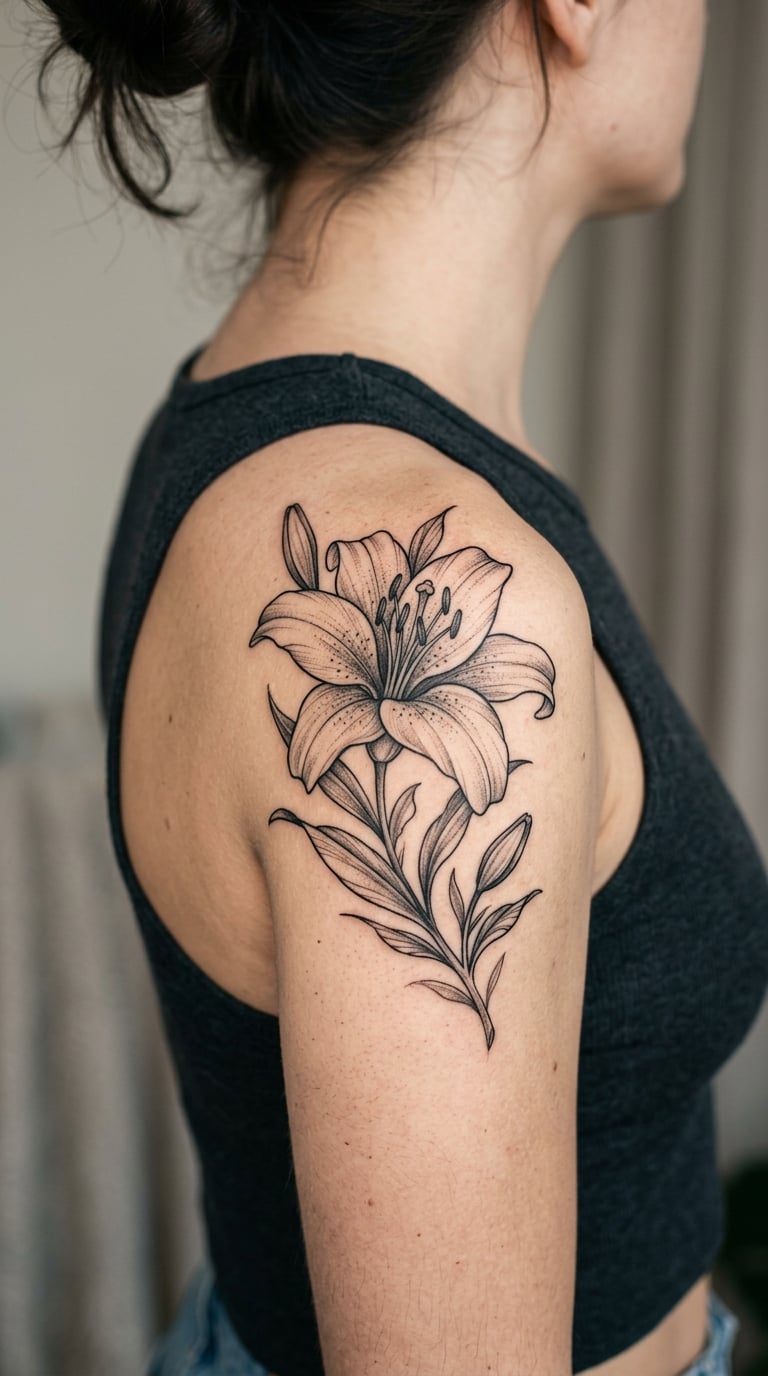
A lily has a very different silhouette to a peony, which is why it works when the shoulder already has one floral piece on it. The long trumpet shape gives you a vertical line on a horizontal placement, and that contrast keeps two pieces from competing.
Rotate the lily so the bloom points down toward the arm and the stem trails back, and the vertical line follows the shoulder more naturally than it would pointing up. Black and grey keeps it quiet and lets the petal structure carry the detail, and the stamens are worth the extra time because they are the most recognisable part of the flower.
Pain and time: The back shoulder is a 5. 60 minutes for the line work, more if you want full shading.
11. Mixed Wildflower Meadow on the Shoulder Cap
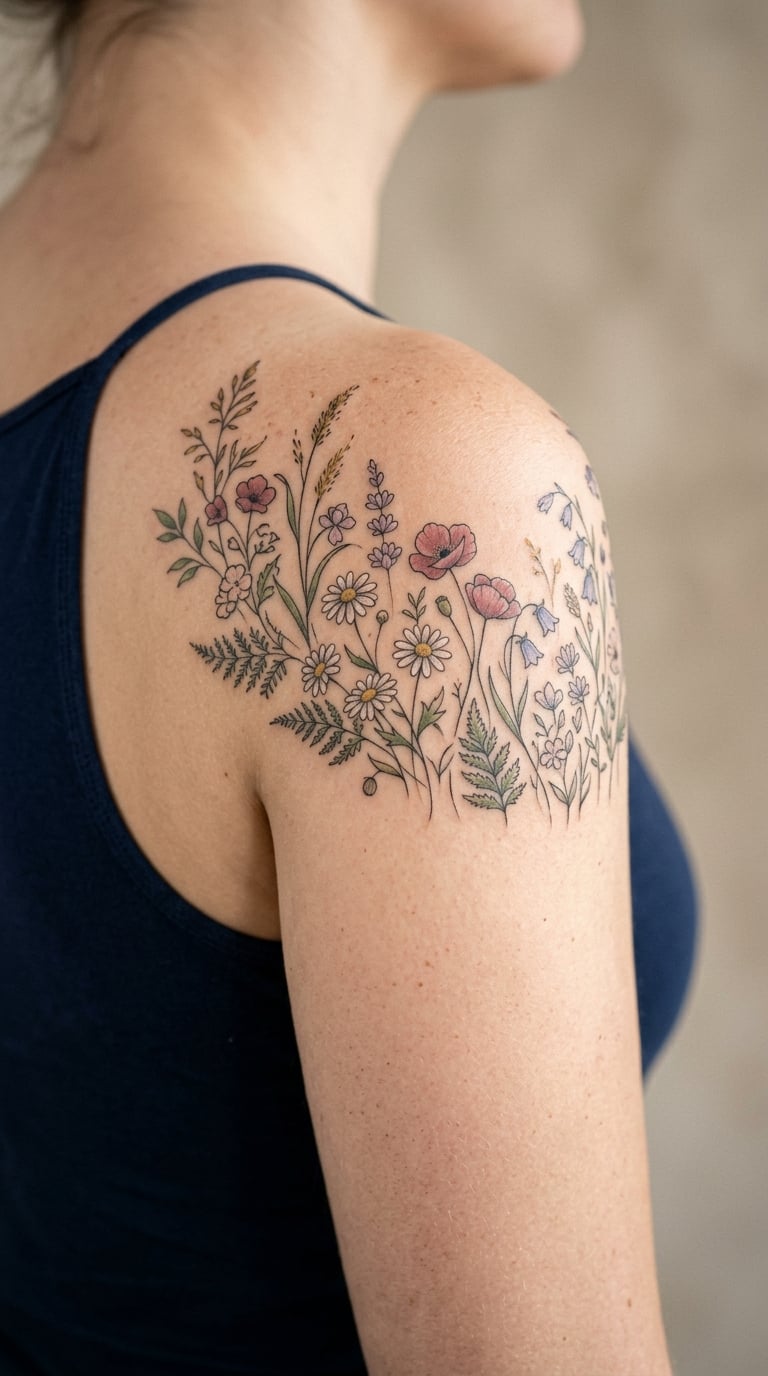
A wildflower meadow is the least precious option and often the most flattering, because a dozen small blooms have far more forgiving proportions than one large perfect one. Small poppies, grasses, tiny daisies and a few seed heads scattered unevenly read as a real meadow rather than a florist’s display.
Keep the palette muted, mostly greens and soft pinks, and avoid anything with heavy black outlines mixed in, since the outlines will make the whole thing look older than the soft pieces. Muted colour in a small format also ages better than saturated colour in the same spot, which matters a lot on a shoulder you wear with sleeveless tops.
Pain and time: Many small elements take a long time. 4 out of 10, but 90 minutes to two hours, most likely split across two sittings.
12. Matching Botanical Sprig Worn by Sisters or Friends
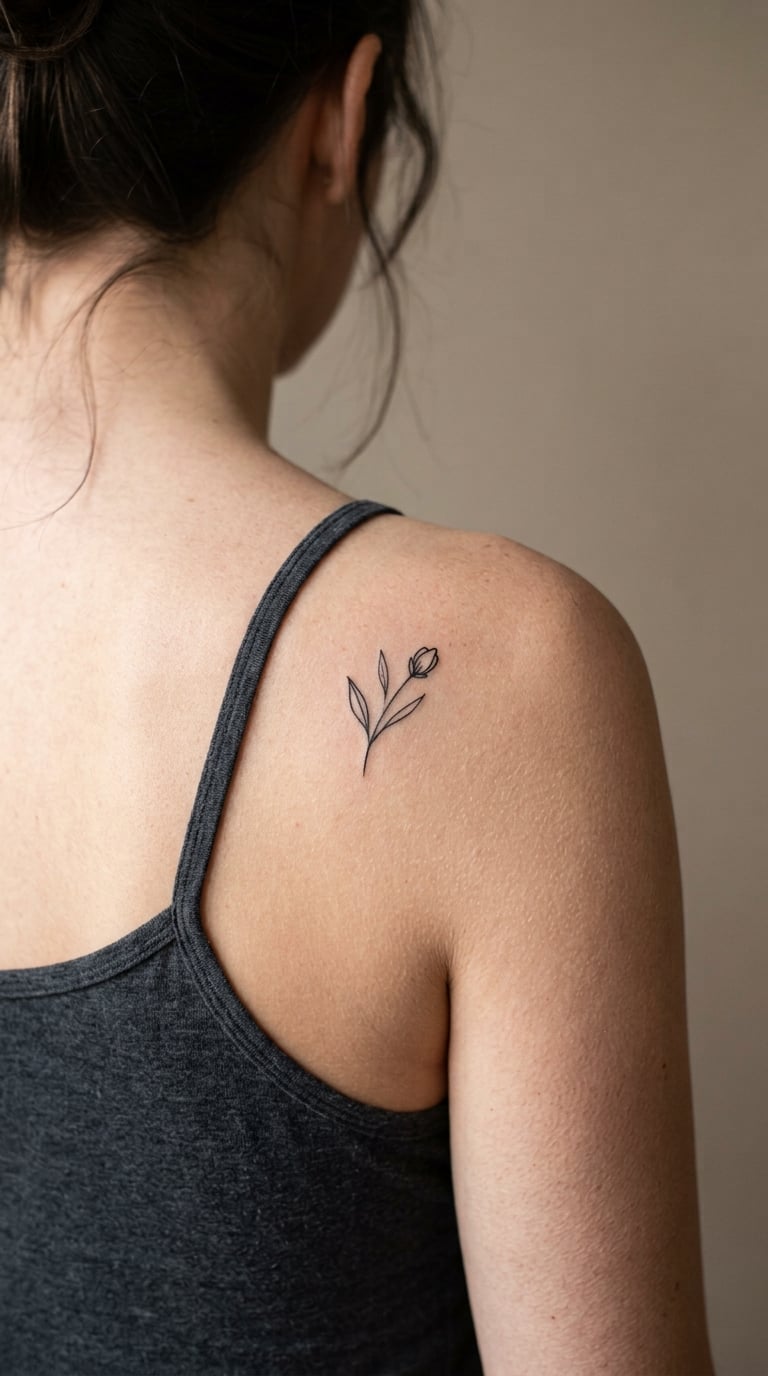
A small sprig on the back shoulder is the one design here that is built to be repeated, because it is small enough that two or three people can carry the same line without it looking like a uniform. Two leaves and a single bud, same placement, same size, done.
Put it on the back shoulder rather than the cap so it stays semi-private, and pick a size that reads clearly at a distance even though it is physically small, around 4 to 5 cm. Matching tattoos only work when the designs are simple, because any added detail will be the thing that looks different from one person to the next.
Pain and time: A 4 out of 10 and under 30 minutes, which makes it a good first-tattoo choice for anyone nervous about a long sitting.
Things to Know Before You Book a Floral Shoulder Tattoo
Which placement suits which design
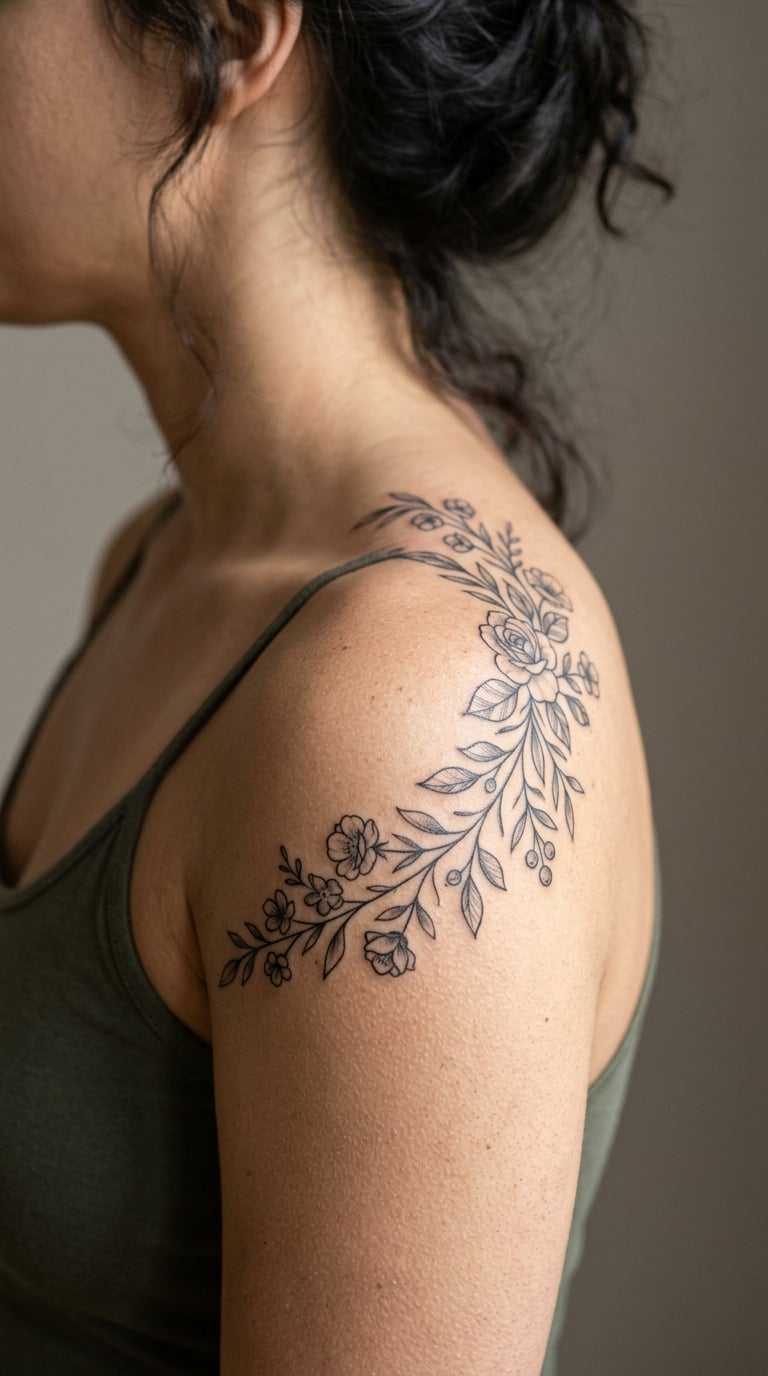
Getting the placement right matters more on the shoulder than almost anywhere else, because the deltoid changes shape with weight, muscle gain and age. A design drawn for a flat back gets stretched over a curve, and the outer edge of the shoulder cap is where fine line stretches and blurs first. Back shoulder placement is described as semi-private: visible when your hair is up, easy to hide for work.
| Placement | Visibility | Pain | Ideal size | Best for |
|---|---|---|---|---|
| Shoulder cap | High, out in the open | 4-5 out of 10 | 5-7 cm single bloom | One statement flower |
| Back shoulder | Medium, semi-private | 5 out of 10 | 8-15 cm cluster | Work-appropriate pieces |
| Shoulder blade | Low to medium | 6 out of 10 near the edge | 12-15 cm | Larger black and grey work |
| Front deltoid | High | 6 out of 10 | 7-10 cm | Bold colour and neo-traditional |
| Shoulder into upper arm | Medium | 4 out of 10 | Vine or 2-3 blooms | Sleeve you will extend later |
Which flower to pick and what each one means
The prettiest flower to get tattooed is whichever one your artist is best at, so look through their healed work rather than deciding on the flower first. On symbolism, the common thread across every flower here is growth and beauty that does not last, and most wearers attach their own meaning to that. Pick the table row closest to the mood you want and take the meaning as a bonus.
| Flower | Symbolism | Best style | Best placement | How it ages |
|---|---|---|---|---|
| Peony | Prosperity, good fortune | Colour realism or soft black and grey | Shoulder cap, back shoulder | Very well |
| Rose | Love, balance | Neo-traditional | Front deltoid | Very well, bold outlines hold |
| Cherry blossom | Impermanence, renewal | Fine line | Back shoulder | Fades fastest, needs sun care |
| Lily | Remembrance | Black and grey linework | Back shoulder | Well |
| Hibiscus | Openness, confidence | Colour realism | Shoulder into upper arm | Colour fades, outline holds |
| Sunflower | Warmth, loyalty | Illustrative colour | Front deltoid | Well if the seed heads have texture |
| Daisy | New beginnings | Fine line | Collarbone edge | Quickest to lose detail |
| Magnolia | Strength, grace | Soft black and grey | Shoulder blade | Very well |
How big should it be
Match the size to the curve, not to the reference photo. On the shoulder, a design that is too small gets swallowed by the round of the deltoid, and one that is too large has nowhere to put its edges, so it ends up wrapping somewhere you did not want it. Bring reference images drawn for a flat back and expect to redraw them in the consultation. People save flat references and end up unhappy with how they sit on a curve.
Fine line, black and grey, or colour
- Soft and airy: fine line, watercolour, muted colour. Delicate and feminine, but the first thing to need a touch-up.
- Bold and sculpted: neo-traditional outlines and saturated colour. Heavier to wear, far more forgiving to age.
- Flowing wrap: vine and branch compositions that follow the shoulder into the upper arm. The easiest to extend into a sleeve later.
Soft black and grey shading ages better than very fine single-line work on the shoulder, and the shoulder is the worst possible spot for delicate line work because of the sun it takes. Choose thin lines if you love them and you are willing to maintain them, which is a fair trade as long as you know it going in.
How painful is a shoulder tattoo
Most people describe the shoulder as a 4 to 6 out of 10, and the difference between those numbers is entirely about where on the shoulder you sit. The top of the cap and the outer upper arm are cushioned and comparatively easy. The collarbone-adjacent spots and the outer edge of the shoulder blade are the two places people describe as the most painful areas on the whole placement.
- Use a decent numbing cream or ointment about 30 minutes before, applied thickly and covered.
- Eat properly and stay hydrated the day before; low blood sugar makes everything louder.
- Keep sessions short. A break every 40 minutes beats pushing through a two-hour stretch.
- Take paracetamol or ibuprofen as directed after, and get straight into a long warm shower when you get home.
Healing, clothing friction and sun
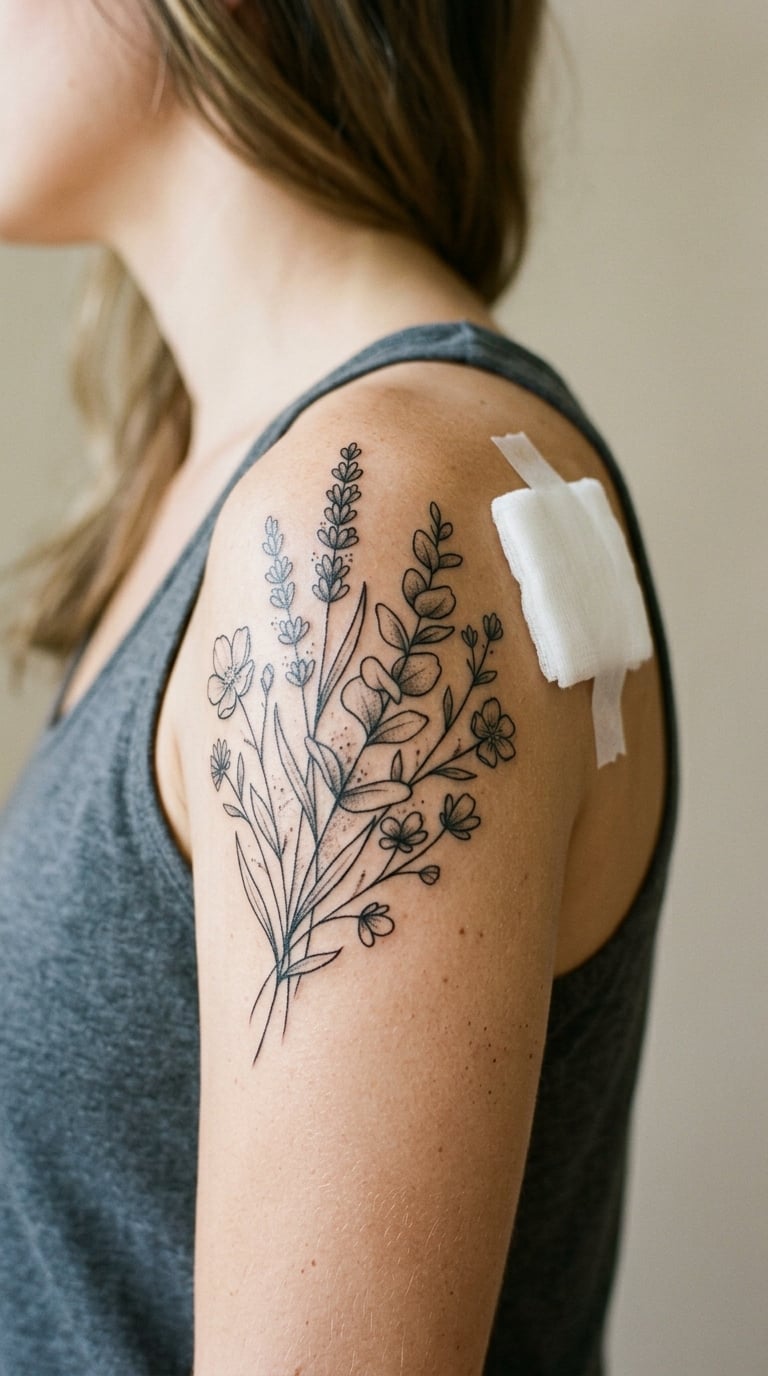
You can usually go back to a normal bra about two weeks after a shoulder tattoo, as long as the skin is fully closed and no scabs remain. The first two weeks are the vulnerable ones, and that is exactly the period when straps do the most damage. The friction lifts scabs, and every scab that comes off takes pigment with it.
- For the first 72 hours, wear loose clothing or nothing over the area, and keep bedding clean.
- Wash gently once or twice a day with unscented soap, pat dry, and moisturise with a plain ointment.
- Do not soak until the skin is closed, and skip the swimming pool, hot tubs and saunas for two to three weeks.
- Skip the bra, the backpack strap and the seatbelt beltline on the back shoulder until roughly week two, then go back to them slowly.
- Use sunscreen on the shoulder daily, year round, and keep it out of direct sun while it heals.
After a month the piece looks settled, and what you see around week eight is close to the healed result. Anything that looks slightly flat at that point is a sign about touch-ups, not failure.
Cost, sessions and choosing an artist
Cost tracks size and style more than flower choice. A small fine-line sprig, a mid-size black and grey cluster and a full-colour hibiscus wrap are three completely different jobs, and hourly rates only tell you part of the story. A single bloom is usually one sitting, a shaded cluster often needs two, and anything heading into a sleeve is a multi-year plan rather than an appointment. Ask for the estimated session count and the hourly rate separately, and ask what a touch-up costs later, because a floral shoulder tattoo that is sun-faded is the one you will most likely bring back.
For the consultation, bring a small board of five to ten references, say your placement out loud, and tell the artist how much fade you can live with. Artists who specialise in florals will talk you out of an over-detailed design, because detail at that scale on a curve turns into a dark blob as the ink settles.
Frequently Asked Questions
What does a flower tattoo on the shoulder mean?
It most often stands for growth, softness, and a season you have already lived through. Peony suggests prosperity, rose love, cherry blossom the fleeting things worth marking, hibiscus confidence, and lily remembrance. Placement changes the read too: on the back shoulder it feels private, on the front deltoid it feels bold and open.
Which flower is the prettiest to get tattooed on the shoulder?
The best-looking flower is the one your artist draws best, so check their healed work before you choose. Peony is the most requested and ages very well because its layered petals read at a distance. Cherry blossom is the most delicate and fades fastest. Lily, magnolia, hibiscus and sunflower each suit a different style and size.
How painful is a shoulder tattoo for a woman?
Most people rate it 4 to 6 out of 10. The top of the shoulder cap and the outer upper arm are cushioned and easier, while spots near the collarbone and the outer edge of the shoulder blade hurt noticeably more. Numbing cream, eating well, short sessions and a warm shower afterwards make a real difference.
How long after a shoulder tattoo can I wear a bra?
About two weeks, once the skin is fully closed with no scabs left. The first fortnight is when straps, backpack straps and seatbelt belts do the most damage, because friction lifts scabs and scabs take pigment with them. Wear loose clothing over the area until then, then go back to your normal bra slowly.
Do floral shoulder tattoos fade?
They do, more than tattoos almost anywhere else, because the shoulder is exposed to sun, movement and clothing friction every day. Soft black and grey shading and bold outlines hold up best. Very fine single-line work and pale watercolour washes fade first. Daily sunscreen on the area and a touch-up every few years keep a delicate piece looking intentional.
Where to Start With Your Floral Shoulder Tattoo
Pick a placement before you pick a flower, then find an artist whose healed floral work looks like the reference you saved. If you are starting small, a single peony on the shoulder cap or a botanical sprig on the back shoulder is the least risky first step, and both leave the door open to building a full sleeve later.
These floral shoulder tattoo ideas for women are built around what ages well and what does not, so use them as a starting point rather than a finished plan. Bring the one you love to a consultation and let the artist redraw it for the curve of your shoulder. That single conversation does more for the final result than any style name on this list.