
16 Best Small Flower Tattoo Ideas for the Ankle (September 2026)
Search for flower tattoo ideas for the ankle and you land on the same handful of photos: a rose, a sprig, something trailing down into a sandal strap. Here is the fuller picture. An ankle floral is any botanical design inked on or around the joint, and the reason people choose that spot is the curve. It reads as a natural line, hides under a sock or a loafer, and looks deliberate in sandals rather than accidental.
The flower matters less than people think. Size, contrast and placement decide whether a design still reads in ten years, and a small high-contrast bloom outlasts a large pale wash almost every time. If you are booking now, remember that studios fill the autumn calendar first, so a September idea usually lands in October or November.
1. Single Peony Sitting on the Outer Ankle Bone
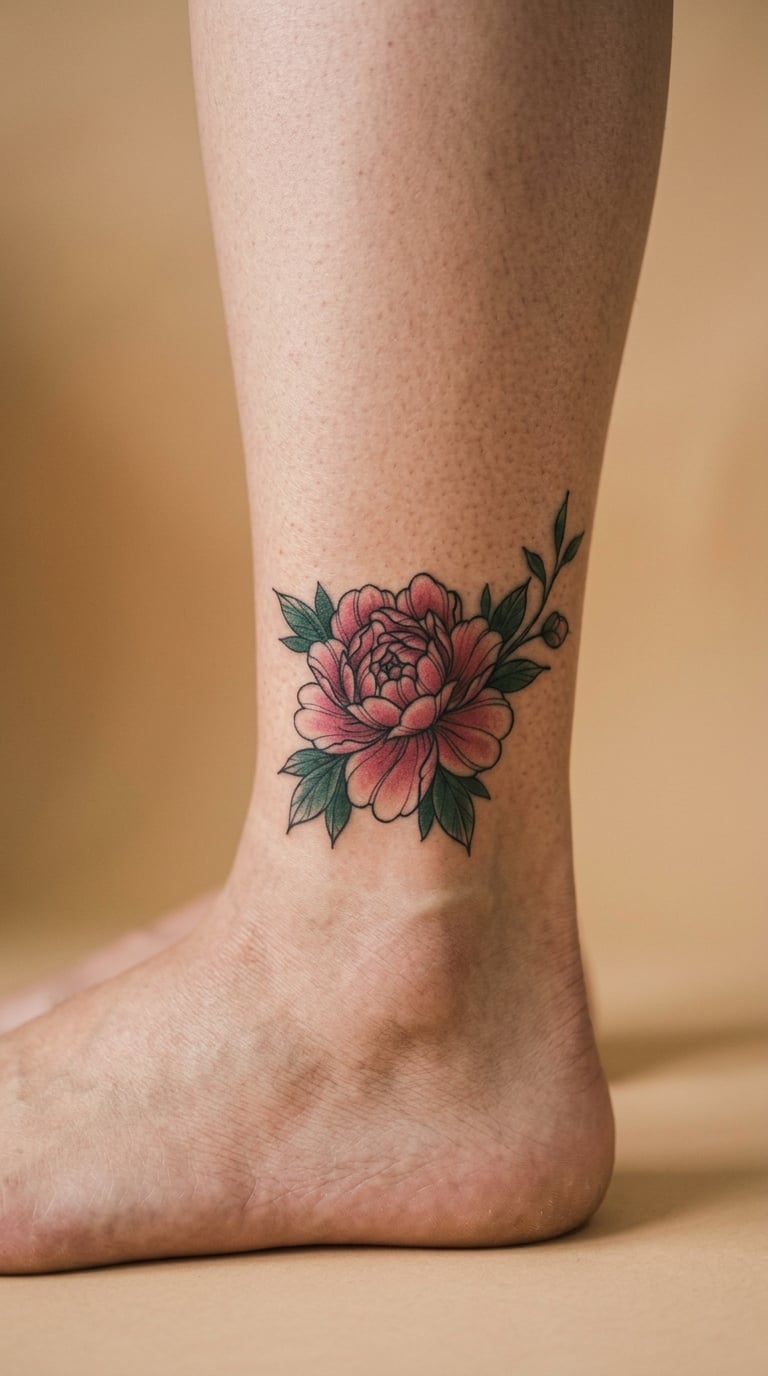
A lone peony centred on the outer malleolus is the most popular shape in this whole list, and the reason is geometric. The bone gives you a flat, slightly raised surface, so a round bloom sits level instead of curving away on both sides.
Peonies carry meaning around prosperity, good fortune and a happy home, and a real bloom carries the same associations. Most people here get one peony in a single rich colour rather than a whole bouquet, around 4 to 6 cm across, with dark green leaves for contrast against the pink.
Pain and time: the outer ankle bone is firm but well padded, so expect a moderate sting and roughly 30 to 60 minutes for a single bloom.
2. Fine-Line Rose Curving Around the Inner Ankle
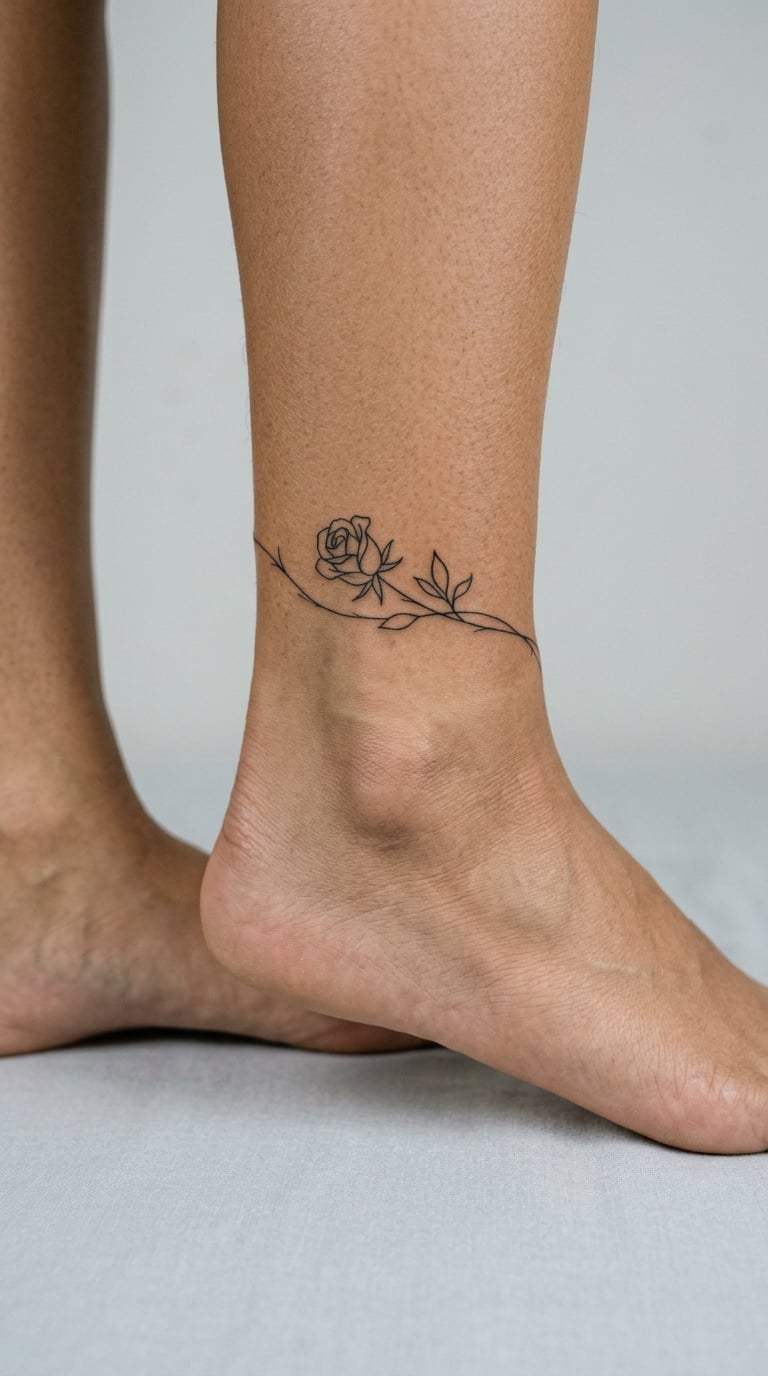
The inner ankle is where a rose turns into a proper tattoo rather than a sticker. The stem follows the tendon line and the flower itself lands just above the bone, angled so nobody standing at a normal distance can read it upside down.
Roses are the safest meaning to carry here. Red reads as love, white as new beginnings or a tribute, and leaving the bloom uncoloured keeps it quiet enough for an office. This is a fine-line design, so it wants a heavier line weight than instinct suggests. Ask for a needle depth that stays confident, not whisper-thin.
Pain and time: skin over the inner ankle is thin and sensitive, and the bone sits close underneath. Plan on 45 to 90 minutes and bring something to hold.
3. Wildflower Sprig Climbing the Lower Calf
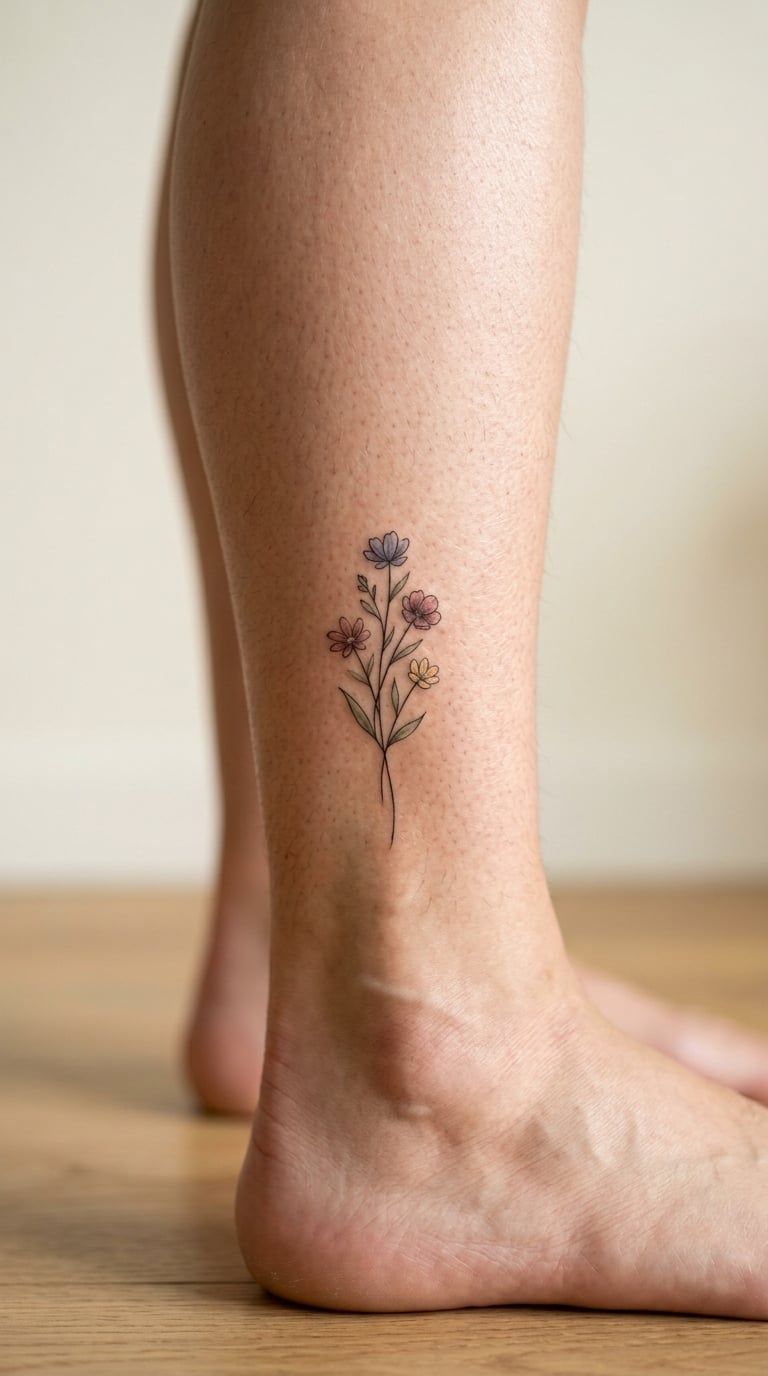
Rather than one flower on the ankle, this design treats the ankle as the starting point and climbs. Three or four small blooms sit on the shin side, each one slightly smaller than the last, and the whole thing reads as a stem that keeps growing.
A wildflower tattoo usually means freedom, impermanence, or a person who refuses to be pinned down. The practical appeal is that the calf is flatter than the ankle, so detail survives. Keep the blooms under 3 cm each or they will blur together once healed.
Pain and time: the calf muscle absorbs a lot of the sting, which makes this one of the more comfortable ankle-area options. 40 to 70 minutes.
4. Floral Anklet Wrap With a Trailing Vine
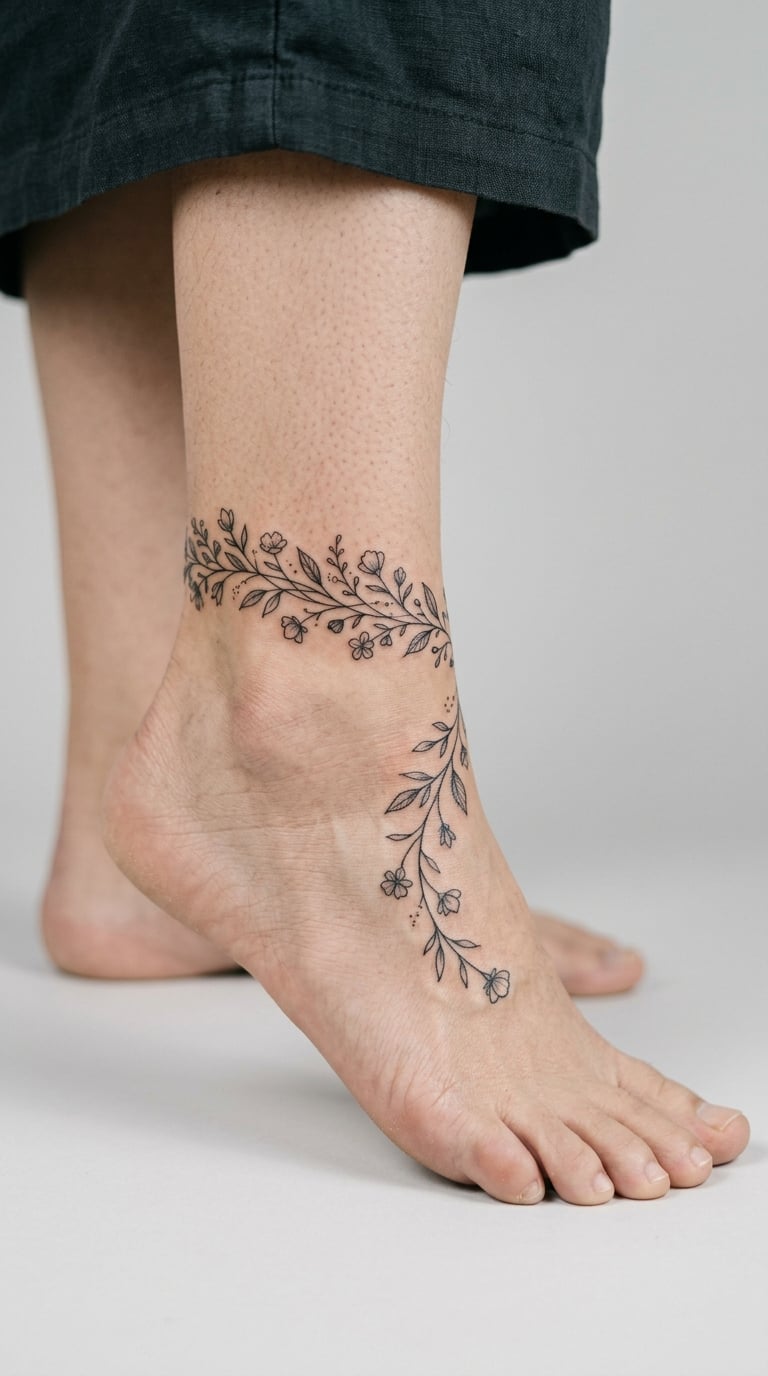
This is the fake anklet, and it is the one design people come back for. A band of small leaves and blossoms circles the ankle, with a single vine trailing down towards the foot so it does not look like a bracelet drawn by a machine.
Keep the band even. If the artist places one flower at the front and then spaces the rest by eye, you will see the drift immediately. Ask them to mark the front of the ankle first, then build outward from that point in both directions.
Pain and time: the wrap covers the entire circumference, so expect 90 minutes to two hours. It also means two sessions if the detail is tight.
5. Watercolour Cherry Blossom at the Achilles
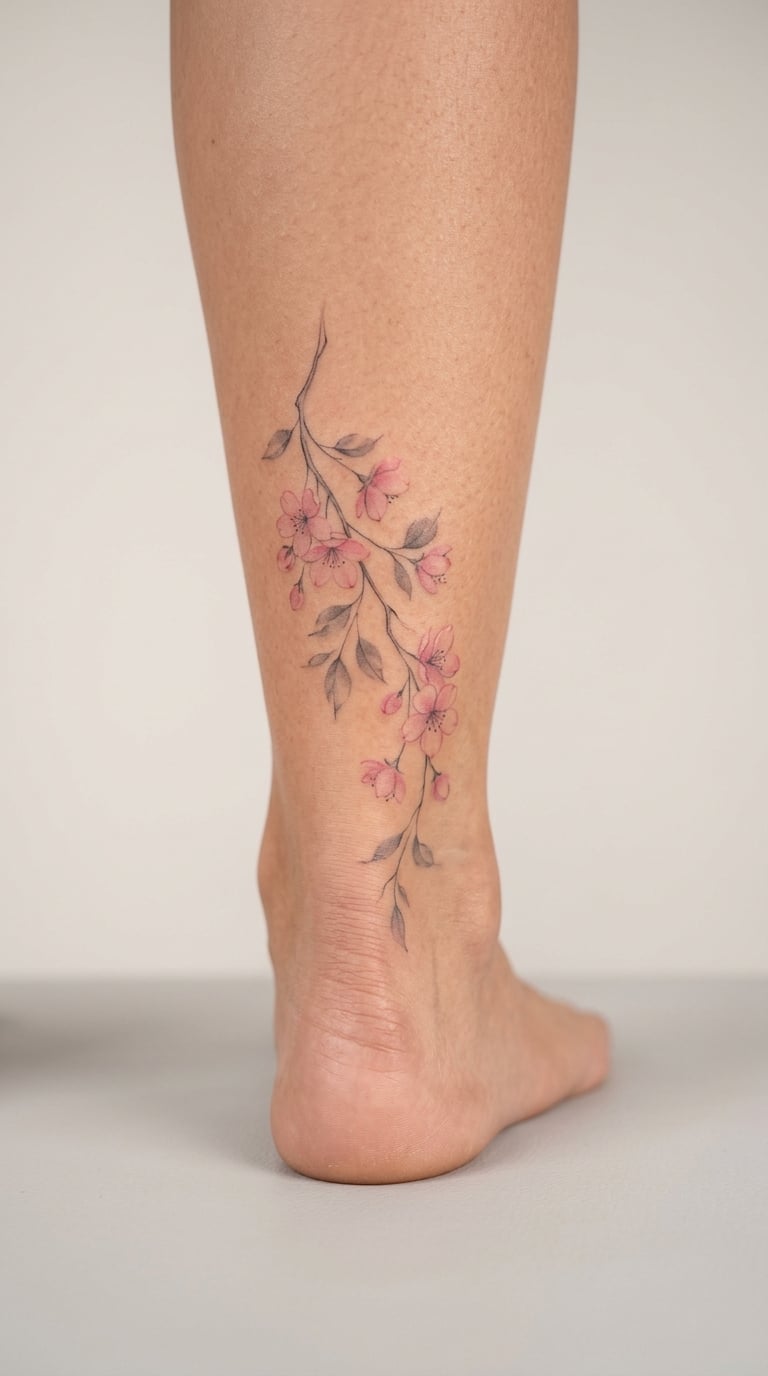
Cherry blossom over the Achilles is the design people show off in a low sandal. The branch trails down the tendon and a few petals break away below it, which gives the watercolour something to fade into instead of a hard edge.
The meaning is renewal and the shortness of good things, which is why so many people pair it with a date. The cost of choosing this style is maintenance. Pastel washes on a sun-exposed ankle are the first thing to fade, so budget for a refresh every few years.
Pain and time: the back of the ankle near the tendon is sore and the skin moves when you flex your foot. 60 to 90 minutes, and sit still through it.
6. Mandala Medallion Centred Above the Ankle Bone
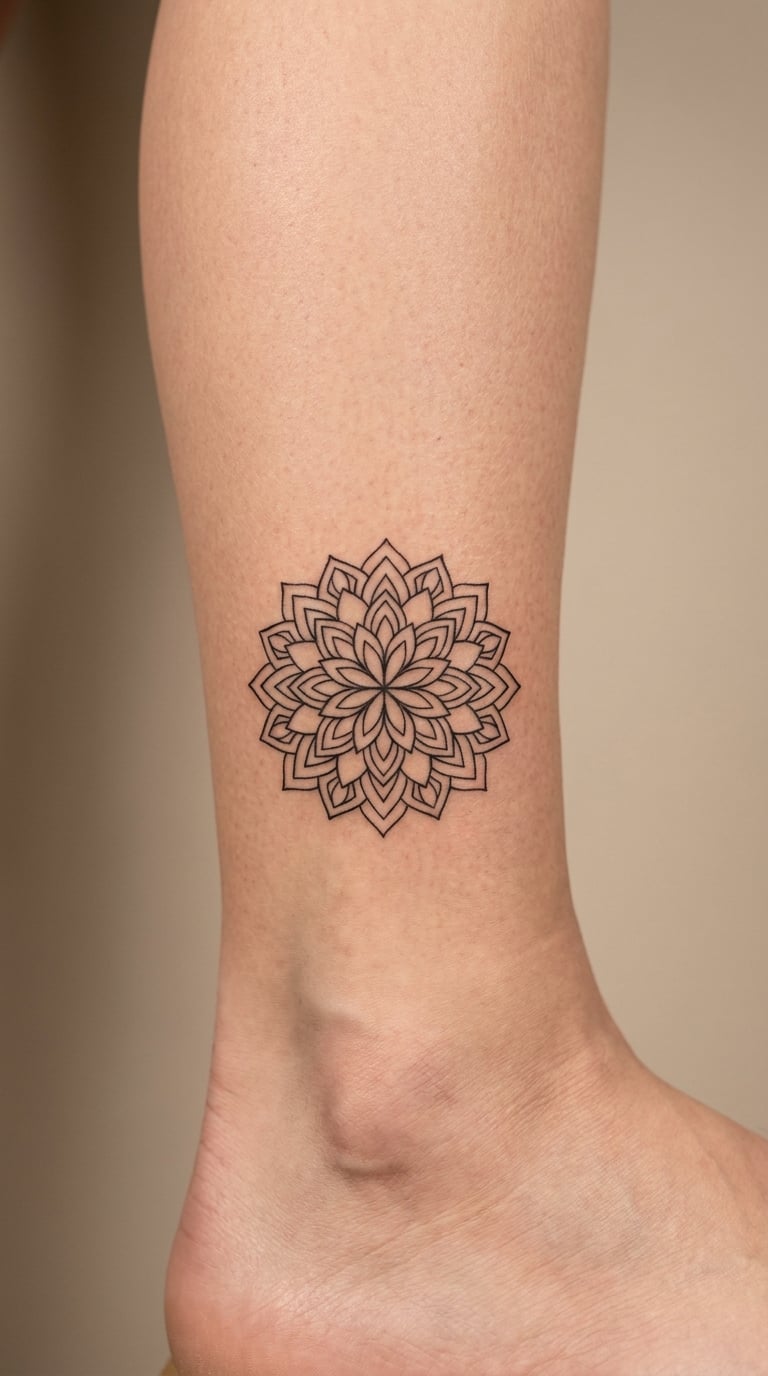
A mandala above the ankle is the one idea on this list that is not a single bloom. Symmetry does the heavy lifting, and the small curved surface above the bone is a good place for it because the eye can take in the whole shape at once.
Floral mandalas usually carry balance, the idea that a life keeps returning to the same shape. Keep the whole medallion under 7 cm or the inner petals will close up. Pair it with small leaves at two opposite points so it does not float on the leg.
Pain and time: lots of short lines and dot work, so it stings more in many places rather than one hard spot. 90 minutes to two hours.
7. Lotus Rising Along the Achilles Tendon
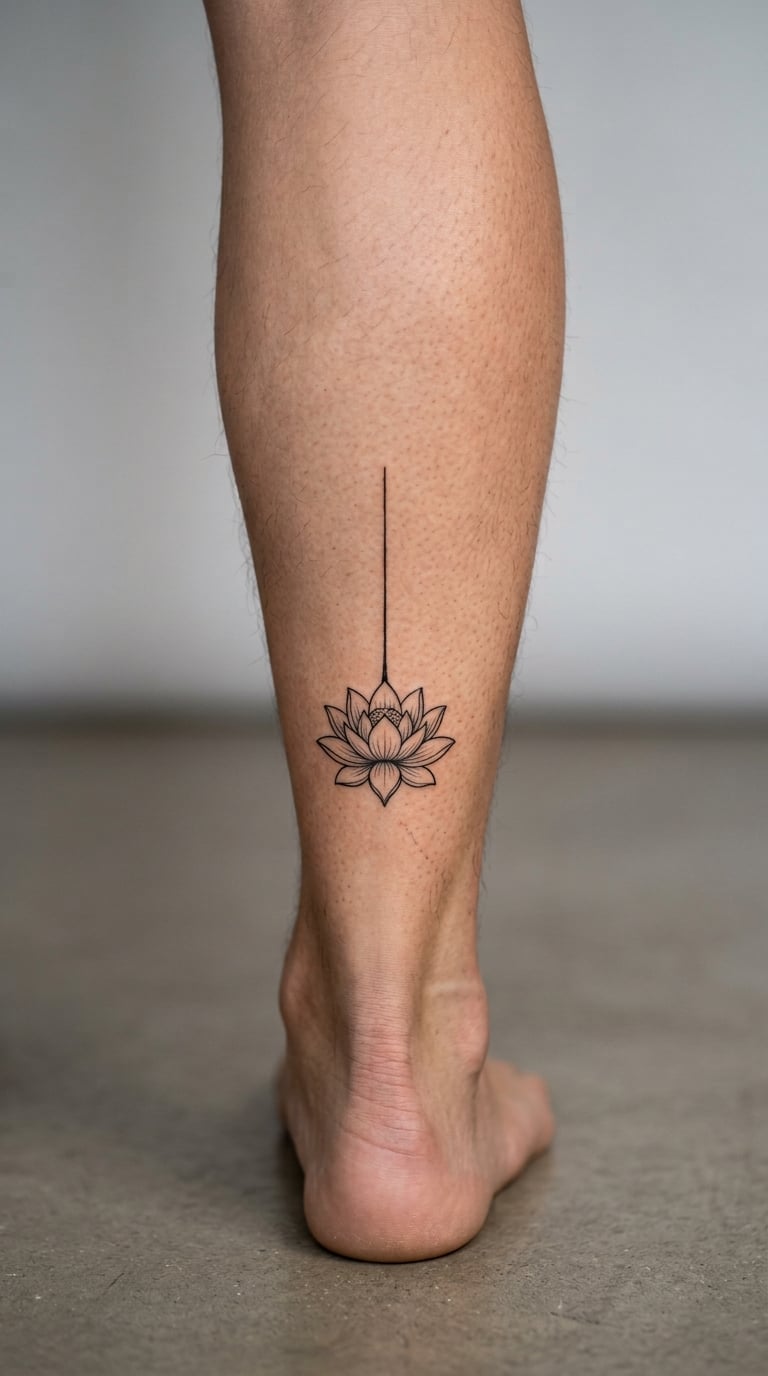
Vertical designs suit the Achilles better than anything else on the body. A lotus climbing up the tendon line from just above the heel reads as growth, and the long straight tendon gives the artist a natural guide for the stem.
Lotus tattoos mean rebirth, clarity and starting again after something ended, which is why so many people arrive at this one after a year they would rather forget. Two or three buds spaced along the stem make it feel alive rather than symmetrical.
Pain and time: the Achilles area is bony and the skin is tight, so this one bites. Sit down, and expect 45 to 75 minutes.
8. Sunflower on the Inner Ankle in Warm Yellow
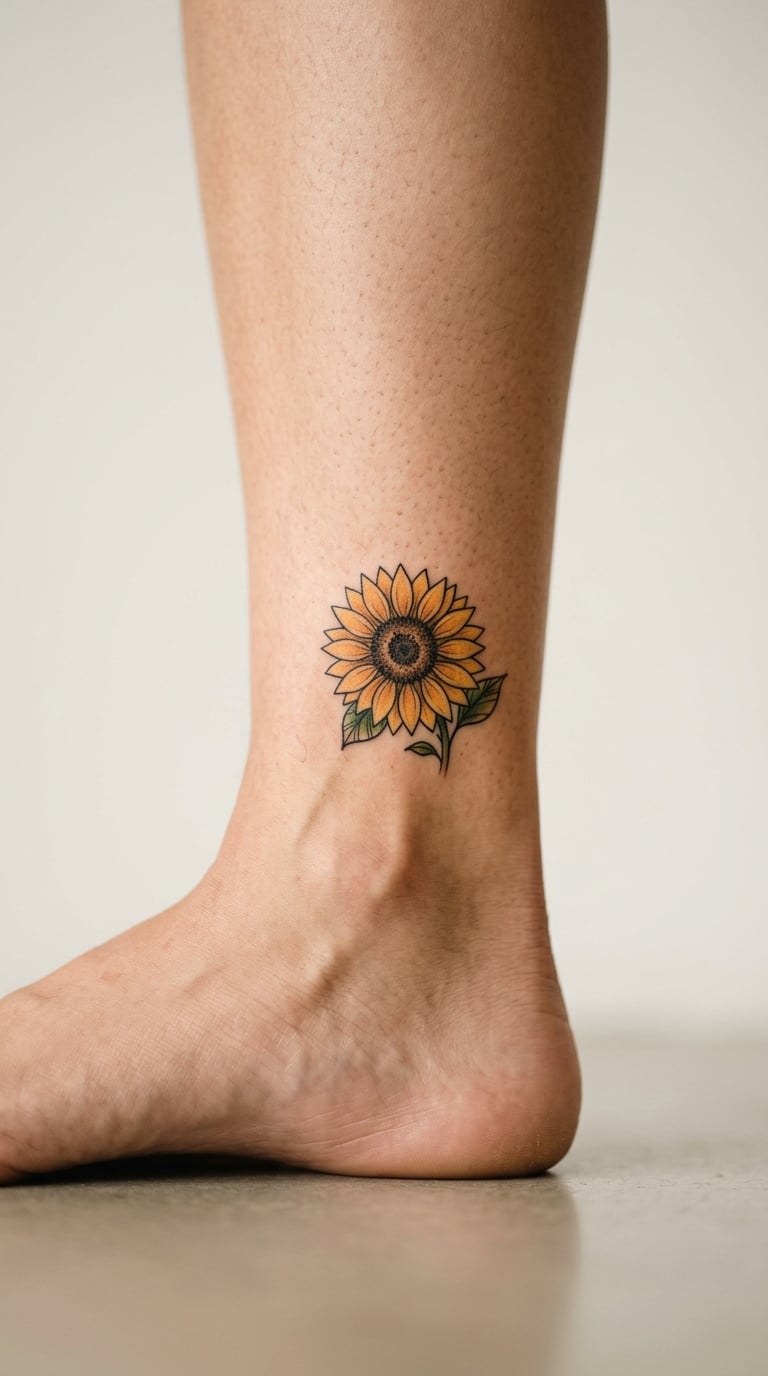
Sunflowers are the loudest flower here, which is exactly why a small one works. On the inner ankle the bloom sits under the leg where it gets noticed late rather than head on, and the yellow reads warm against skin all year.
The meaning is loyalty, warmth and adoration, and plenty of people get it for a person rather than a principle. Keep the seed head detailed or simplify it completely into a black centre with loose petals. Half-detail is where these go muddy.
Pain and time: inner ankle, same sensitivity as a rose. 40 to 60 minutes for a bloom this size.
9. Daisy Chain in One Continuous Line
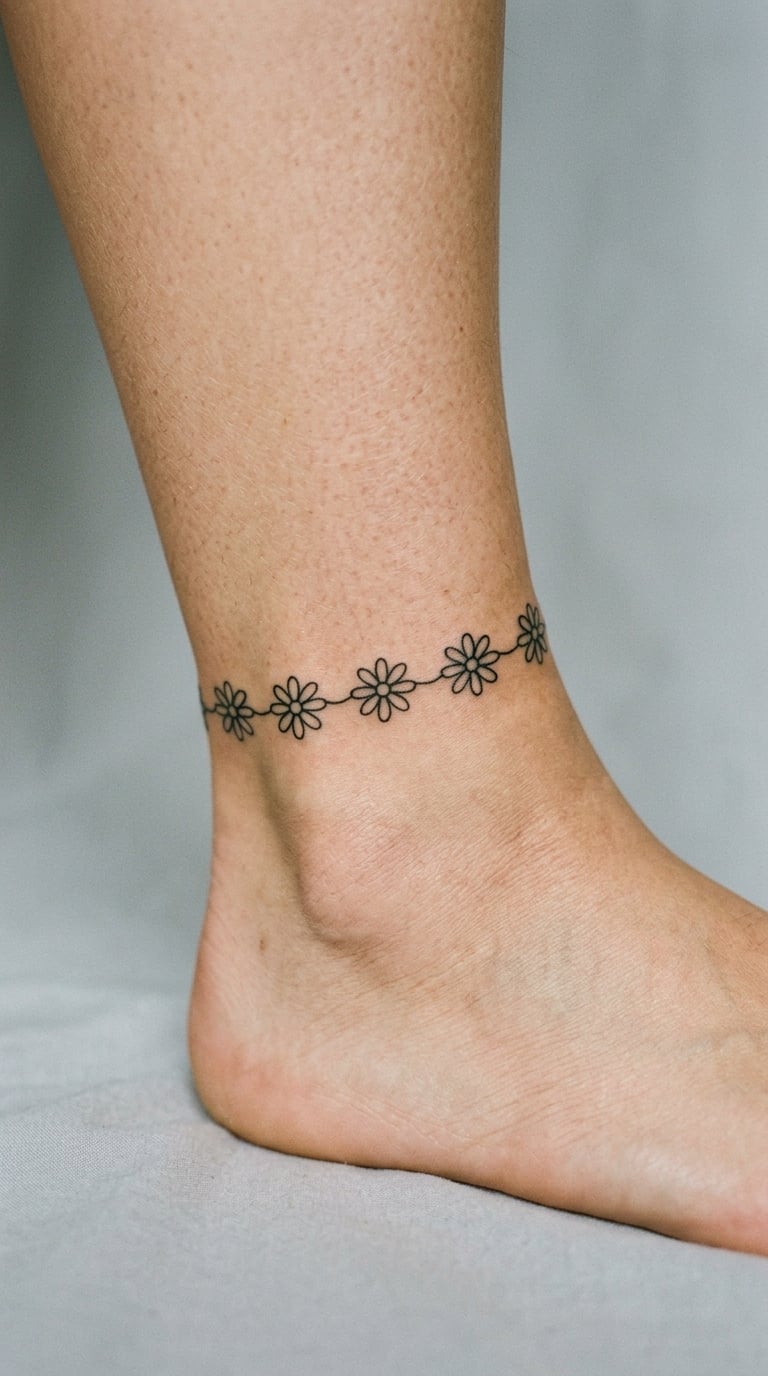
The daisy chain is the simplest version of an ankle floral and the easiest to hide. Small outline daisies run in a single unbroken line around the ankle, each one about 2 cm, and the whole thing can disappear under a trainer.
Daisies mean innocence, new beginnings and the kind of happiness that does not announce itself. That reads as a compliment rather than a cliché, which is why this style keeps coming back for first tattoos. It also ages well, because plain black outline has no wash to lose.
Pain and time: mostly outline work, so 30 to 50 minutes. The awkward part is standing still while someone works around your heel.
10. Lily in Blackwork Grey Wash on the Outer Ankle
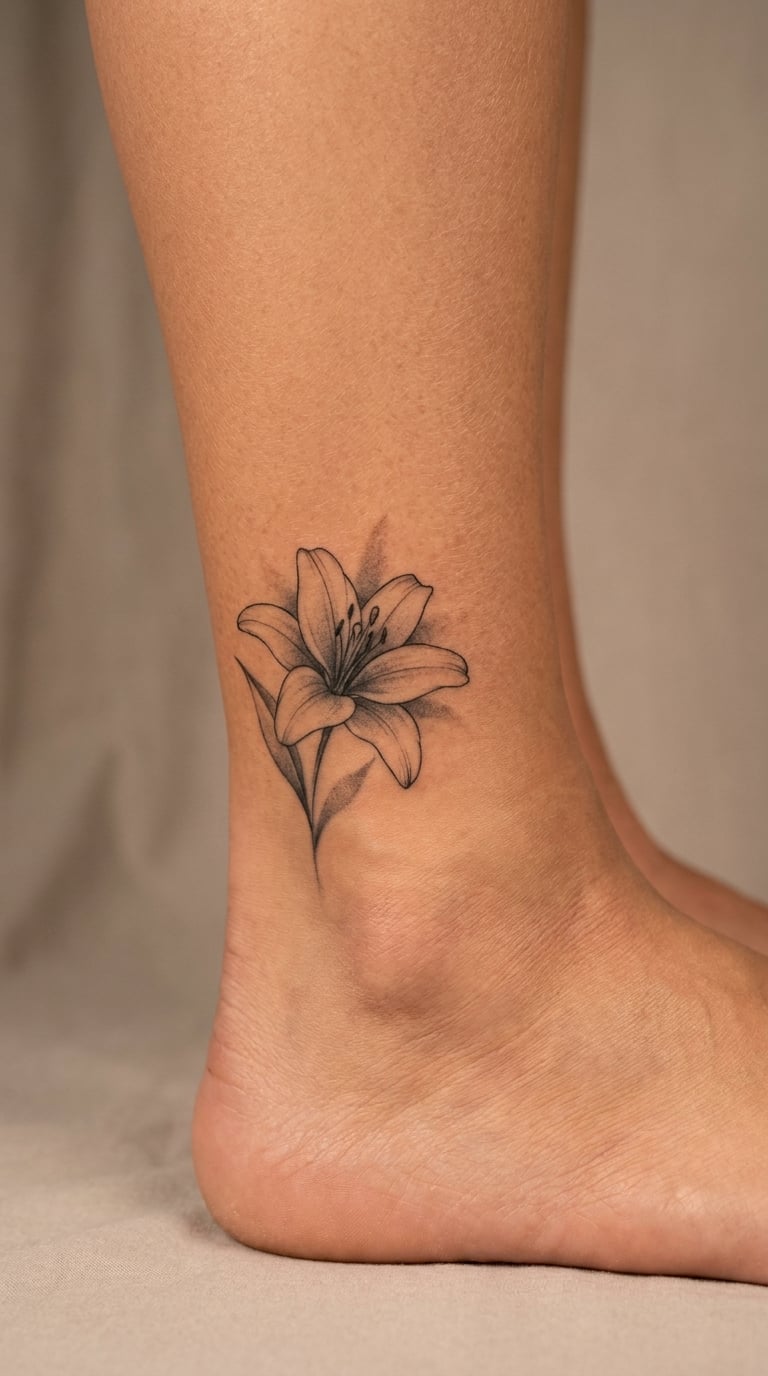
If colour is not your thing, a lily done in blackwork with grey wash holds up far better on an ankle than a colour version would. The wash gives it depth without relying on pigment that fades, and the long petals give you a shape that suits a vertical space.
Lilies stand for purity, renewal and the balance between two sides of a life, and they turn up a lot on memorials. Keep the grey lighter than you think. Wash that looks mid-grey on day one settles to a soft silver within a year.
Pain and time: shading is more needle work than line work, so 60 to 90 minutes. The outer bone keeps it bearable.
11. Wisteria Cascading Down From the Calf
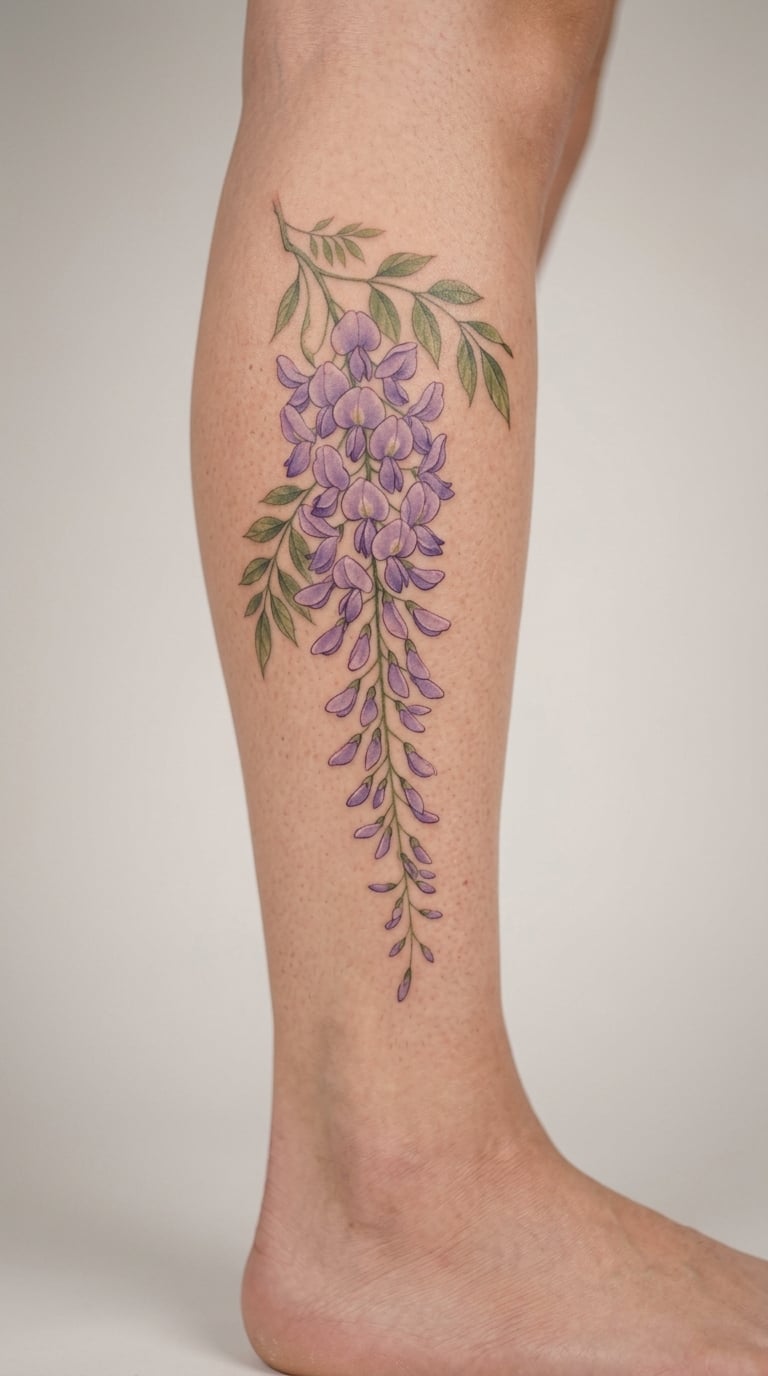
Wisteria works best in reverse, starting on the calf and falling towards the ankle, because the hanging shape follows gravity and looks right on a leg. The cluster ends just above the bone, so it frames the ankle rather than sitting on it.
Wisteria carries gentle endurance, patience and a love that does not rush. That is why it is often split between two people, one cluster each. Make the hanging flowers uneven in length, because a straight-cut cluster looks printed on.
Pain and time: calf placement is one of the easier spots, but the length makes it a long sitting. 90 minutes to two hours.
12. Two Matching Ankle Blooms for Two People
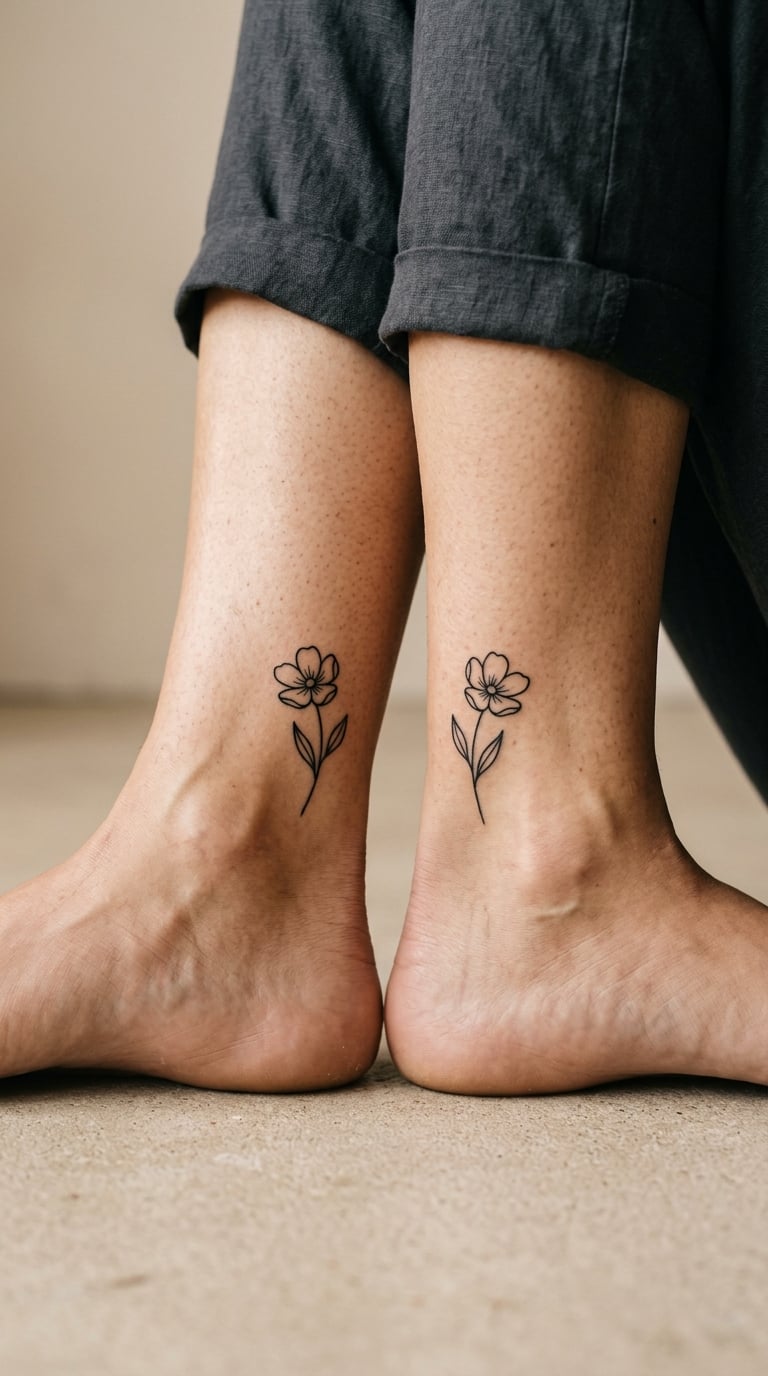
Matching ankle tattoos work here because the design can be small enough that neither of you has to commit to something loud. Same flower, same size, on opposite ankles, or the same flower mirrored on matching sides so the two tattoos face each other.
Pick a bloom that reads clearly at 3 cm, which rules out anything with layered petals or fine texture. If the flower means something specific, agreeing on the species in advance saves an awkward conversation later.
Pain and time: the same 30 to 60 minutes as a single bloom, done in one sitting each. Book together if you can, so the sizes match.
13. Botanical Poppy With a Seed Pod
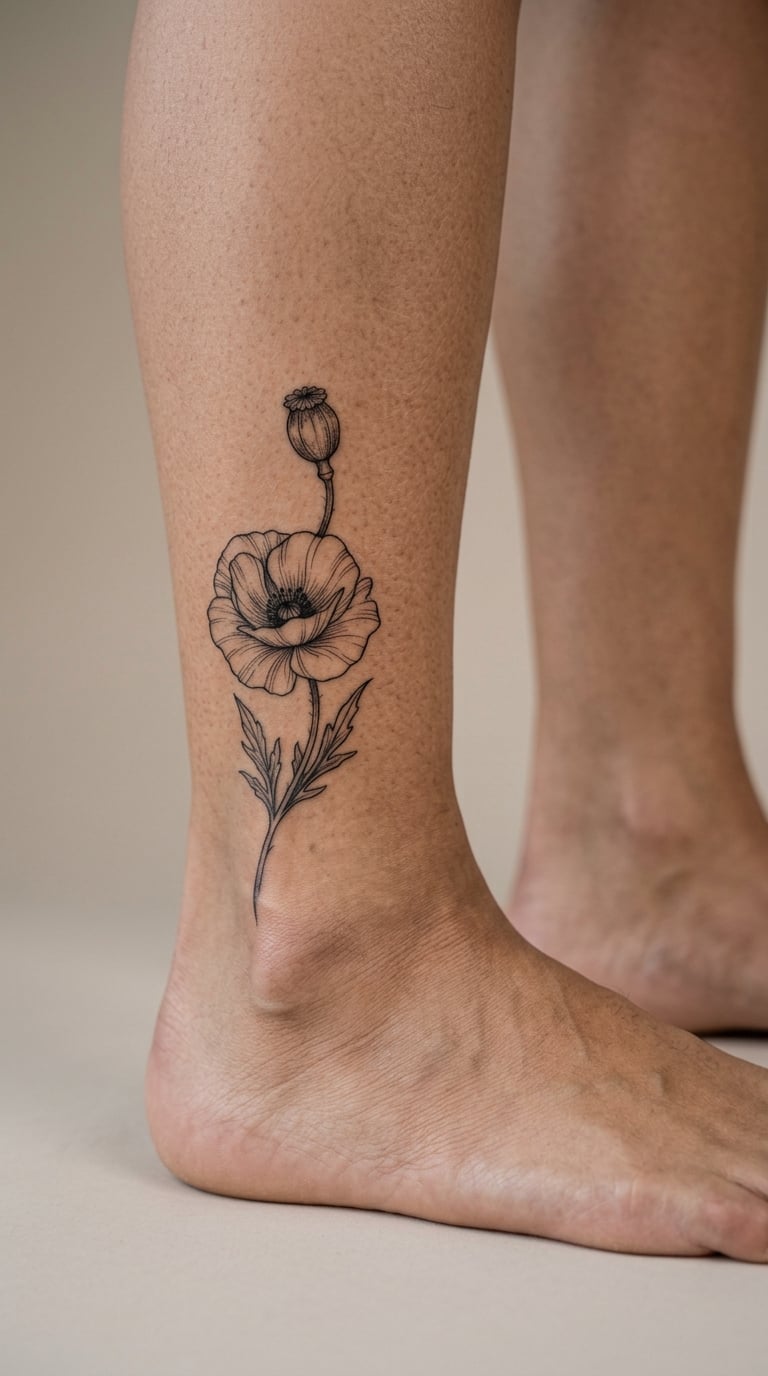
Poppies are the most honest botanical option, because an artist can render the seed pod accurately and the result looks like a plant study rather than decoration. One bloom and one pod, stacked vertically above the outer ankle, is the version I would pick.
Poppies mean sleep, oblivion and the people who are gone, which puts them in the same family as the lily. They also fade gracefully, since the shape stays recognisable even when the red softens toward orange.
Pain and time: botanical shading is detailed work, so 60 to 90 minutes. Sits on the outer bone, which is one of the kinder spots.
14. Lavender Stems Wrapping the Ankle Bone
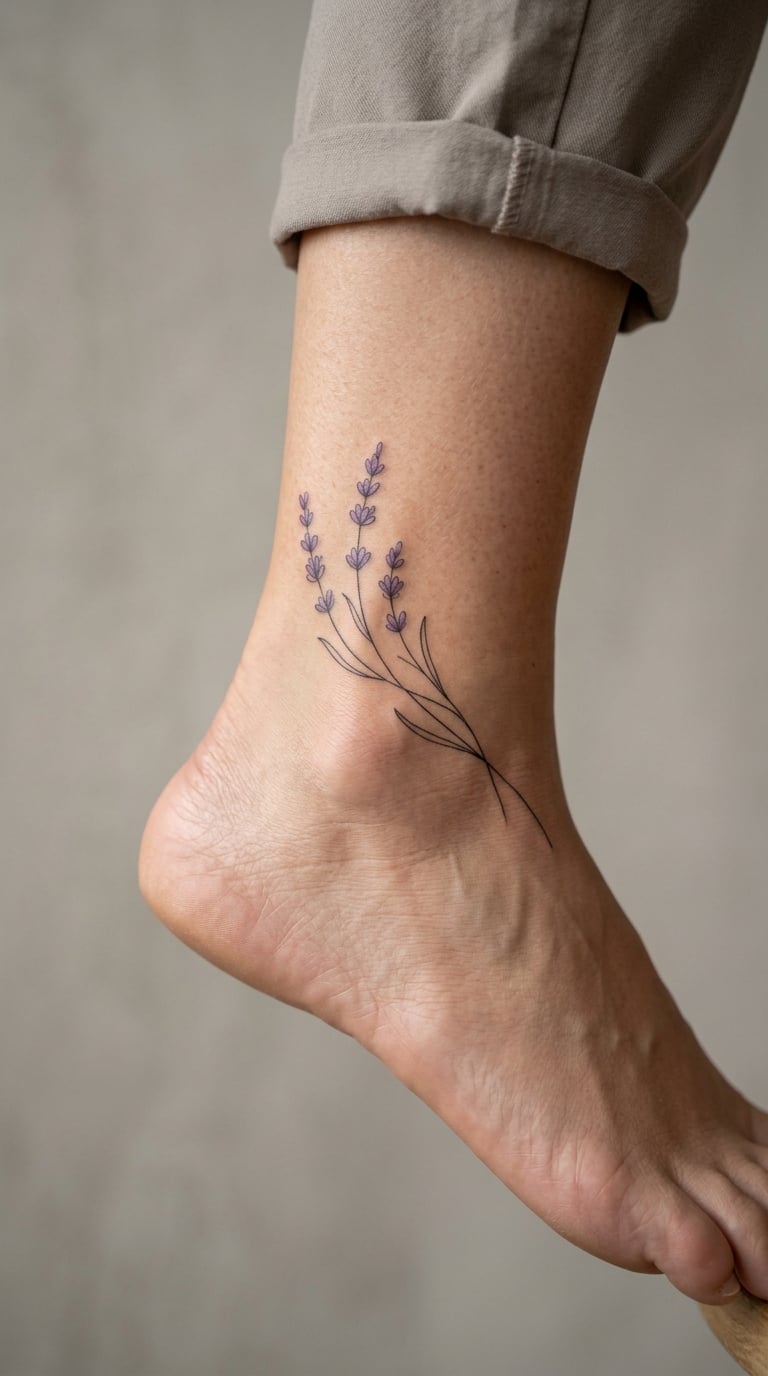
Lavender suits the ankle because the stems are thin, upright and slightly unruly, which matches a shape that curves in two directions at once. Three stems rising from the outer ankle and disappearing behind the heel is a small design that still looks considered.
Lavender means calm, purity and quiet devotion, and it is the one bloom here that works well in full colour without needing a dark outline to hold it. Keep the stems at 4 to 5 cm so the buds stay separate once healed.
Pain and time: fine-line work over a bony curve means the artist is chasing the surface. 45 to 75 minutes.
15. Hibiscus Tucked Behind the Malleolus
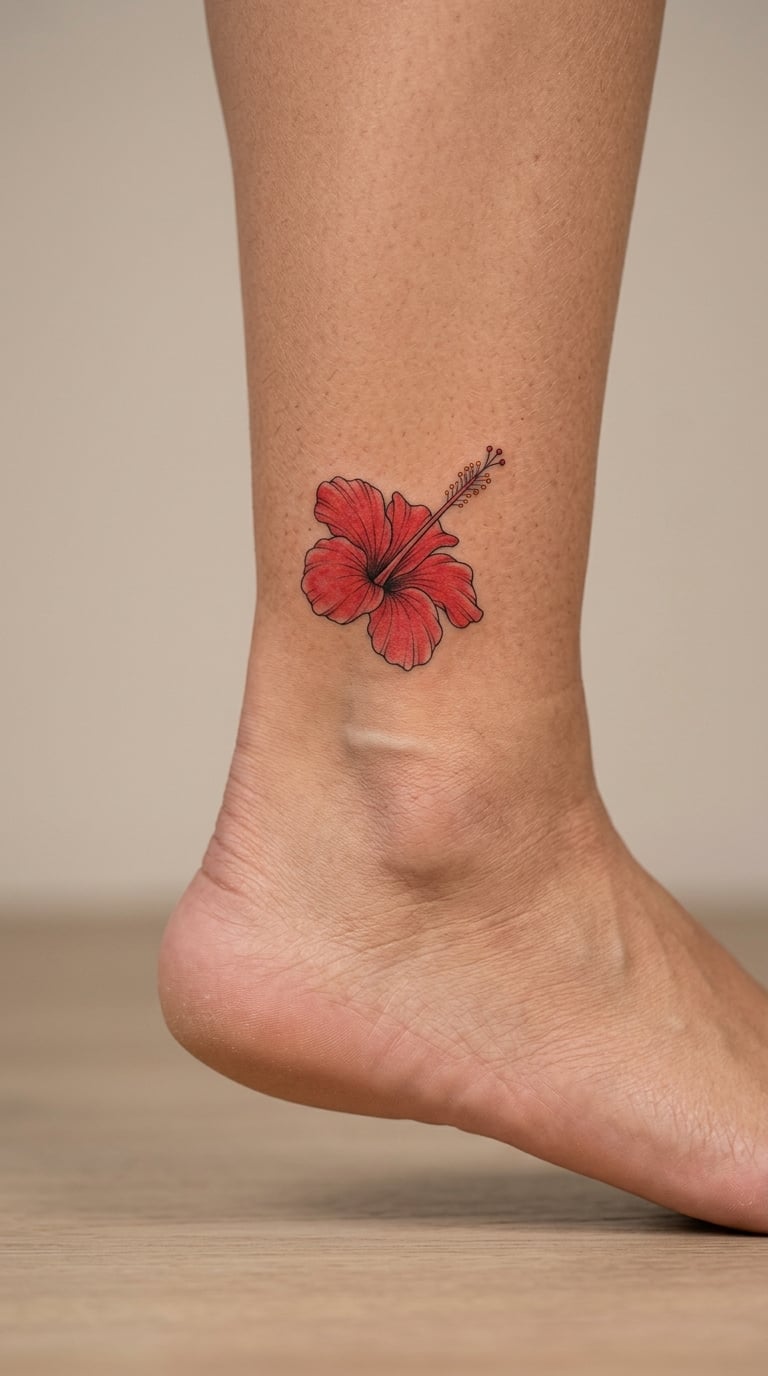
The back of the ankle is the placement nobody photographs and everybody asks about. A single hibiscus behind the malleolus shows only when you wear a low back sandal or roll a trouser cuff, which makes it the most private floral on this list.
Hibiscus means beauty that lasts a single day, along with courage and femininity in several traditions. The long stamen is the whole design here, so ask for it to stay sharp. That one line is what people see when the tattoo peeks out.
Pain and time: the skin over the back ankle is thin and the position is awkward to hold still. 40 to 60 minutes.
16. Hummingbird Feeding From a Bellflower
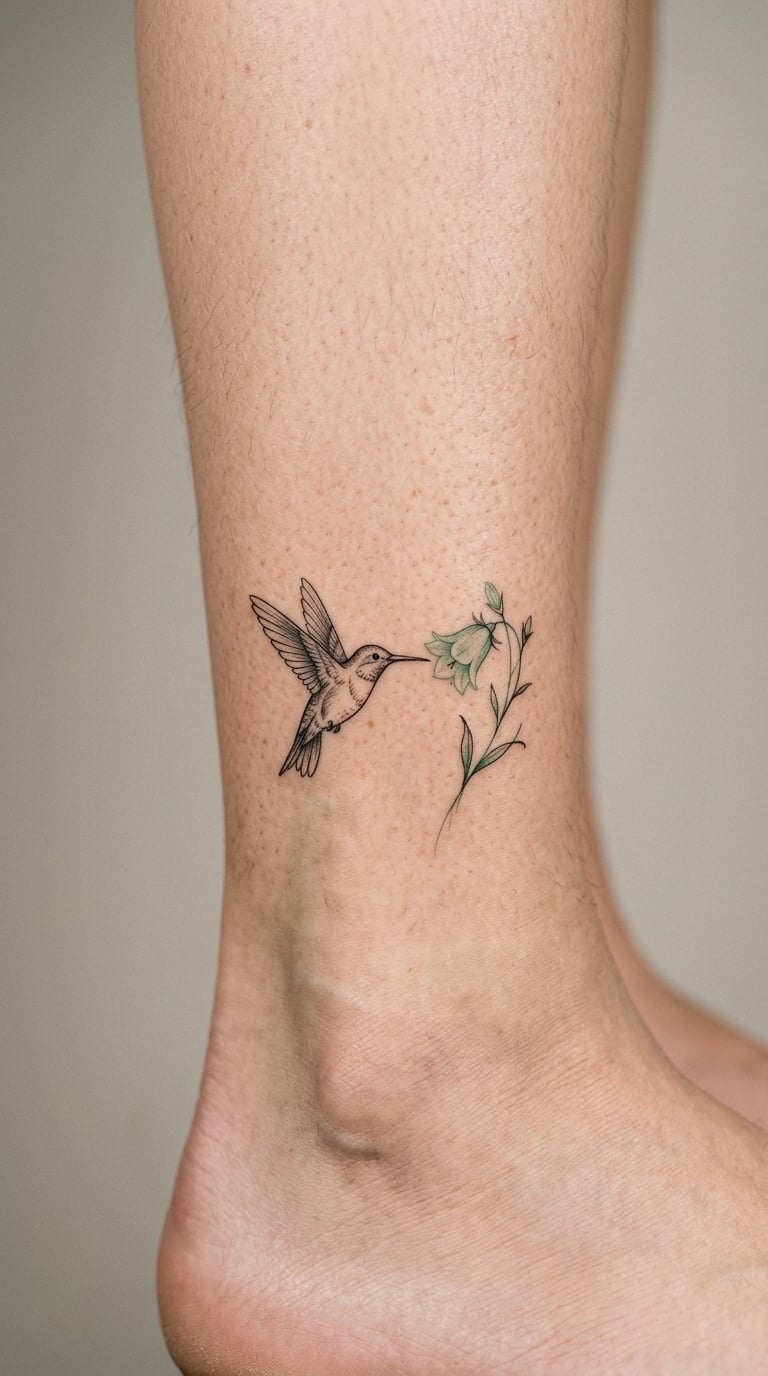
Adding a small bird turns a floral into a scene, and it gives an ankle design a direction to move in. The hummingbird hovers above a single bellflower on the outer ankle, wings held mid-beat, with the tail pointing towards the foot.
A hummingbird is usually about endurance, joy and being present in small moments, and it works as a quiet mark for a person rather than a principle. Keep the bird under 4 cm. Any larger and the wing detail starts to clog at this scale.
Pain and time: wings mean lots of very short lines, which stings more than a stem would. 60 to 90 minutes.
Things to know before you book
What size should an ankle flower tattoo be?
Most of the trouble with ankle florals is size. The joint is smaller than it looks in a photo, and a design that fits on the screen spills over the bone in real life. Use these bands as a starting point and adjust with your artist.
- Small, about 2 to 3 cm (under 1.2 inch): one outline bloom, a daisy chain, a single tiny bud. Disappears under a sock.
- Medium, about 4 to 6 cm (1.5 to 2.4 inch): the most common range. One peony, lotus or sunflower, or two small blooms with a stem.
- Large, about 7 to 10 cm (2.7 to 4 inch): a mandala medallion, a small bouquet, a hummingbird scene. Needs a flat area like the calf or above the ankle.
- Wrap, full circumference: measured in length around the leg rather than height. Leave a finger-width gap at the top and bottom of a design that has no vine trailing off it.
If your idea does not fit one of those bands, it usually needs a different spot. A design that insists on being 12 cm tall wants the calf, not the ankle.
Which part of the ankle hurts most?
Ankle skin is thin and sits close to bone, so the pain is sharper and more localised than on an arm. It is not dangerous, but it is hard to ignore. The pattern is fairly consistent.
- Inner ankle, above the bone: the most sensitive area. Thin skin, visible nerve path, and it burns rather than stings.
- Achilles and the back of the heel: very sore, and hard to sit still through because the foot wants to flex.
- Outer malleolus: firm rather than painful. The bone takes the pressure instead of the skin, and this is the easiest placement on the joint.
- Lower calf, above the ankle: the muscle cushions it. A sprig or wisteria here is a good choice for a nervous first timer.
- Top of the foot: sensitive and ticklish, especially near the tendons. Expect to laugh more than it hurts.
Take a short break every 20 or 30 minutes on a long wrap. A distracted artist rushing through the last stretch of a circle is how thin, uneven lines happen.
How these designs age, and what fades first
Fresh ink looks bolder and more saturated than the healed result. On day one a peony can look almost purple; once the epidermis settles, it softens to pink. Artists tattoo slightly deeper for that reason, so do not panic in week one.
Fine line and pale watercolour are the first things to lose definition on an ankle, mostly because ankles are in sandals and in the sun. If your design depends on hairline detail, plan on a refresh every few years. Outline work and flat black hold their shape far longer, and a botanical illustration with shading survives better than a soft wash.
Skin texture matters here too. Hair on the lower leg and ankle can make fine line look patchy in photos even when the tattoo is clean, so shaded or filled designs are the safer pick if you have noticeable hair in that area.
Healing and aftercare for an ankle floral
The standard aftercare applies, with two ankle-specific extras: friction from footwear and sun exposure.
- Leave the bandage on for the time your artist says, usually a few hours, and treat it like a fresh injury.
- Wash gently with fragrance-free soap twice a day, then pat dry and apply a thin layer of plain moisturiser.
- Expect surface healing in two to three weeks, with the scab and peel stage around days four to ten. Full deep recovery runs four to six weeks.
- Keep boots and tight trainers off the area for the first two weeks. Friction on a fresh ankle tattoo is the fastest route to a blown-out patch.
- Cover the tattoo with clothing or a sock in direct sun, and use high-factor sunscreen once it is fully healed.
- No swimming, soaking or baths for about two weeks. Showers are fine once the surface has sealed.
How to brief the artist before the session
Bring three to five reference images and, if you can, one photograph of a tattoo you already like on someone else. It helps to say the size out loud in centimetres rather than describing the mood.
Ask to see the stencil placed while you are standing, then sitting, then with the foot pointed. Placement that looks right standing can sit badly when you are sitting with your legs crossed, and the ankle moves constantly. Check where the design lands in a sandal strap, since that line is unforgiving.
On cost, expect the price to follow size, detail and colour. A single small bloom is a short session, while a full wrap or a detailed botanical study is a long one or two. If a quote feels far from your budget, the cheapest fix is usually simplifying the design rather than shrinking it, because tiny line work costs the same time and fades sooner.
Frequently Asked Questions
What size flower tattoo works best on an ankle?
Most ankle florals land between 4 and 6 cm, roughly 1.5 to 2.4 inch, which fits above the bone without crowding the joint. Go smaller, 2 to 3 cm, for a single outline bloom you can hide in a sock. Anything above 7 cm needs a flat area like the lower calf. When you are comparing flower tattoo ideas for the ankle, judge each design by whether its petals stay separate once healed.
Are ankle tattoos more painful than tattoos elsewhere?
Yes, generally. The skin on the ankle is thin and the bone sits close underneath, so the needle is felt more sharply than on a forearm or thigh. The inner ankle and the Achilles are the most sensitive points, the outer malleolus is firm but bearable, and the lower calf is the easiest area. Sessions are usually short enough that most people manage without medication.
How long does an ankle tattoo take to heal?
Surface healing takes two to three weeks, with the scabbing and peeling stage around days four to ten. Deeper recovery runs four to six weeks, and the ankle can feel tender or itchy for longer because it flexes all day. Avoid boots and tight footwear for the first fortnight, and keep the area out of direct sun while it settles. A touch-up is usually offered once the healing is complete.
Do ankle flower tattoos fade faster than other tattoos?
They can, mostly because ankles are exposed in sandals and in sunlight more than most other placements. Fine line and pale watercolour lose definition first, while flat black and outline work holds its shape far longer. Plan on a refresh every few years if you choose a delicate style, and use high-factor sunscreen on the area once the tattoo is fully healed.
Can you tattoo a flower directly on your ankle bone?
Yes, and many designs sit there on purpose. The outer malleolus is a flat, slightly raised surface that suits a round bloom such as a peony or lotus, and the bone takes the pressure so the area is less tender than the inner ankle. Tell your artist if the design will cross the bone, because they may shift it slightly higher to keep the shape level.
Can I combine different flowers in one ankle tattoo?
You can, but two or three species is the practical limit at this scale. A rose with leaves, or a cherry blossom branch with fallen petals, stays readable because the shapes differ in size. Packing six similar blooms into an area this small turns them into a smudge. If you want more than one flower, plan the composition so the largest bloom anchors one side and the smaller ones trail away.
Where to start with your ankle floral
Start with placement, not the flower. Decide whether you want the design on the outer bone, the inner ankle, the Achilles or wrapping the whole joint, then choose a bloom that fits that space at 4 to 6 cm. That order solves most of the problems people regret later.
Take two or three of these flower tattoo ideas for the ankle to your consultation, pick the one that matches your skin and your season of sun, and let the artist adjust the scale. Book early, wear the sandals afterwards.