
16 Elephant Tattoo Meaning and Design Ideas (September 2026)
Elephant tattoo meaning and design ideas come down to four things: the animal, the direction of the trunk, how many elephants you pick, and where the piece sits. Most people who book this one want strength, wisdom, loyalty, protection and good luck in ink they will still recognise in twenty years. Everything past that is personal, and that is the good part.
The worry I hear most is that elephants are too common to feel like your own. Fair question, and the fix is not a busier drawing. It is one specific detail that only makes sense to you. So read the symbolism first, then pick the style. Sixteen designs follow, each with what it means, where it works, and what it costs you in an afternoon.
1. Fine-Line Elephant Outline on the Inner Forearm
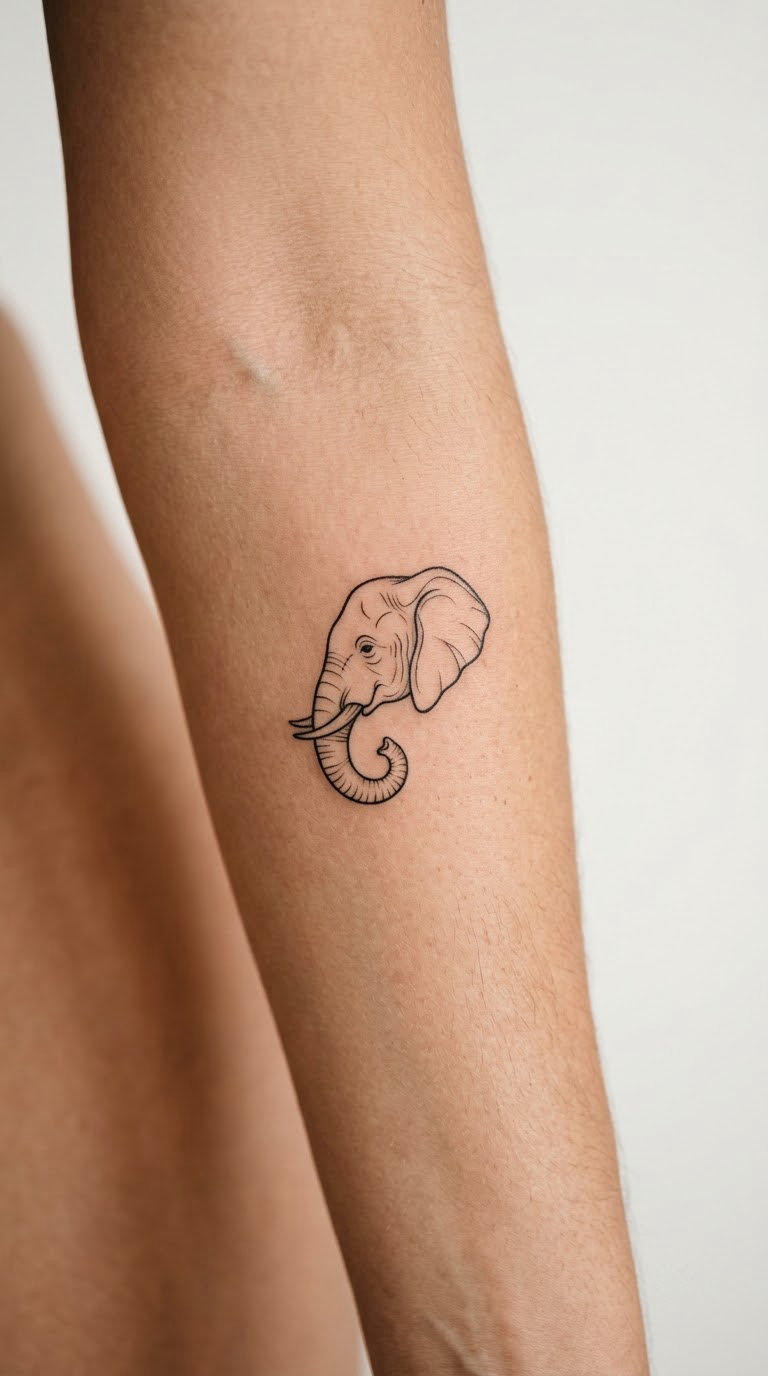
A one-line elephant with the trunk curled up is where most people start, and it carries the same readings as the loud versions: calm, strength, longevity. What changes is the tone. Minimalist outline work feels reflective rather than declarative, and it is the style that survives being small.
Keep it above about four centimetres tall. Below that, the trunk collapses into a squiggle and the whole animal turns into a smudge within a couple of years. Fine line also fades faster than solid black, so expect a light tidy-up every few years if you want the tip of the trunk to stay legible.
Pain and time: 20 to 40 minutes, roughly a 4 out of 10. The inner forearm stings more than most people expect, but it is over quickly.
2. Mandala Elephant Head on the Upper Arm
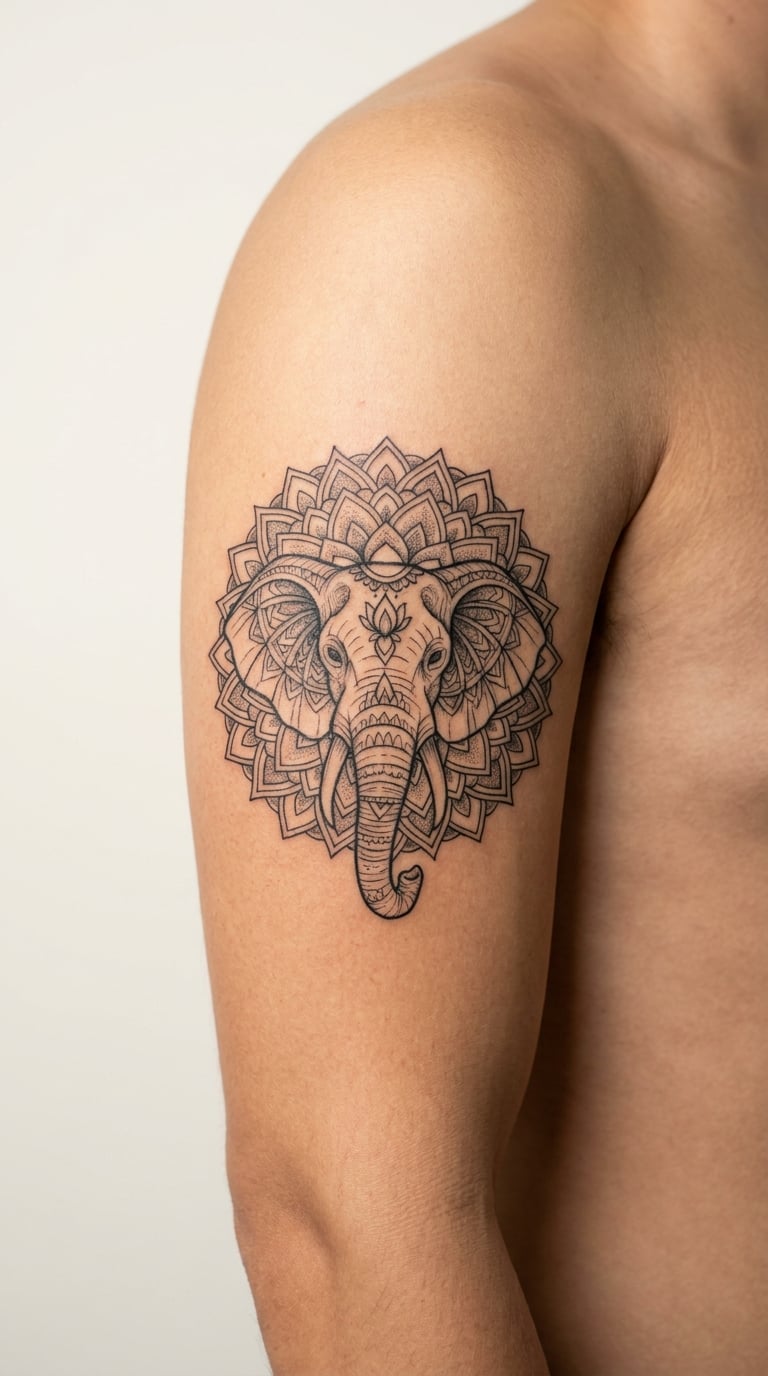
The mandala is a circular geometric motif borrowed from Buddhist and Hindu art, and on an elephant it reads as calm, order and protection. Wrapped around an elephant head it also gives the design a sense of completeness, which is why so many people pick it after a hard year rather than for decoration alone.
Symmetry is the practical win here. A mandala drawn around a face hides the small asymmetries that give a realistic elephant away. Upper arm skin takes a 12 to 18 centimetre piece well. Keep the hairlines in the outer ring thin, though, because fine geometric detail is the first thing to blur as skin ages.
Pain and time: 90 minutes to three hours depending on the ring detail, about a 3 out of 10 on the upper arm.
3. Mother and Calf Walking in Simple Line Art
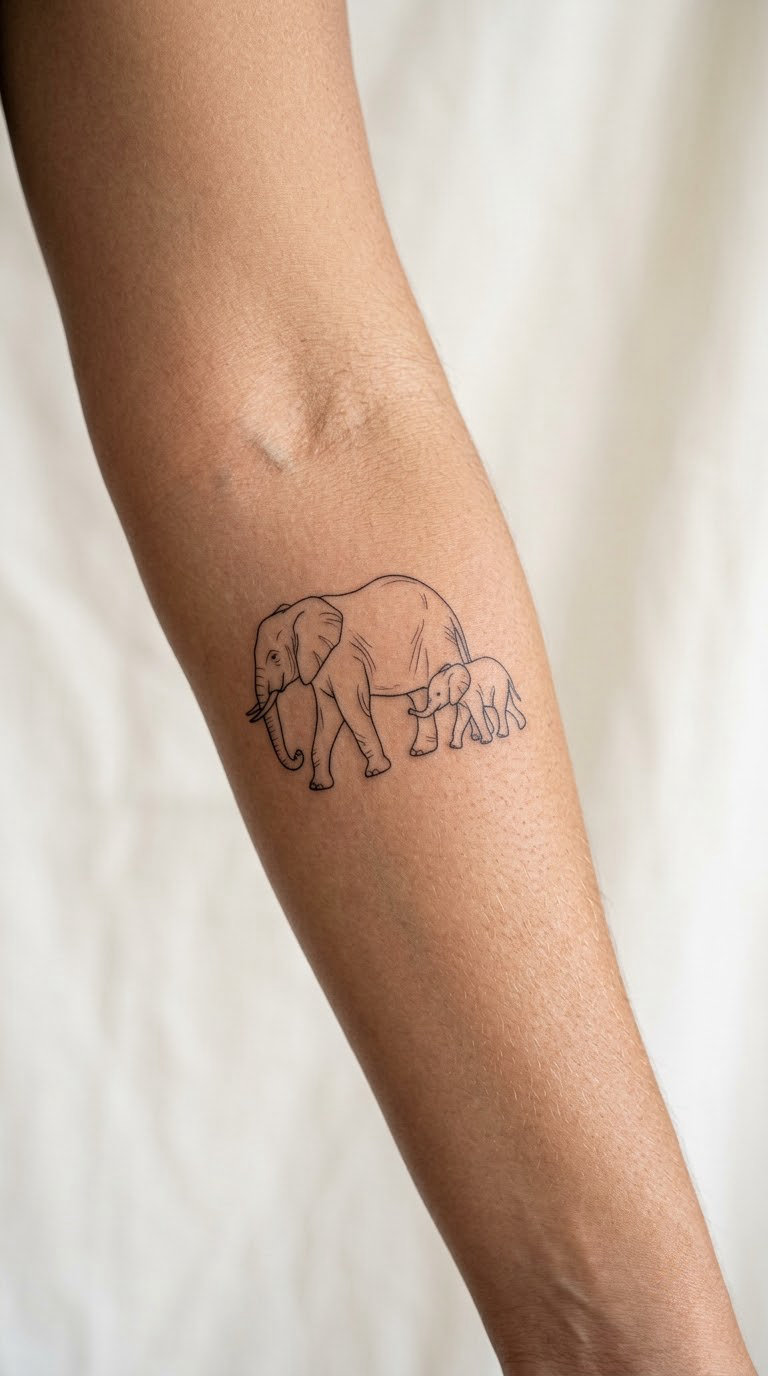
Two elephants, one large and one small, is the most emotionally loaded version of this tattoo. It reads as a parent and child, as protection, as family that stays close, and for a lot of people it is quietly a memorial to a mother or grandmother.
Give the pair horizontal room. The calf and the inner arm below the elbow work well at ten to fourteen centimetres, where the calf can stay a simple shape instead of turning to mud. Draw the calf first and scale the adult around it, the other way round the size relationship drifts and it looks like two unrelated animals.
Pain and time: one to two hours, a 4 out of 10 on the inner arm.
4. Solid Blackwork Elephant Head on the Ribs or Thigh
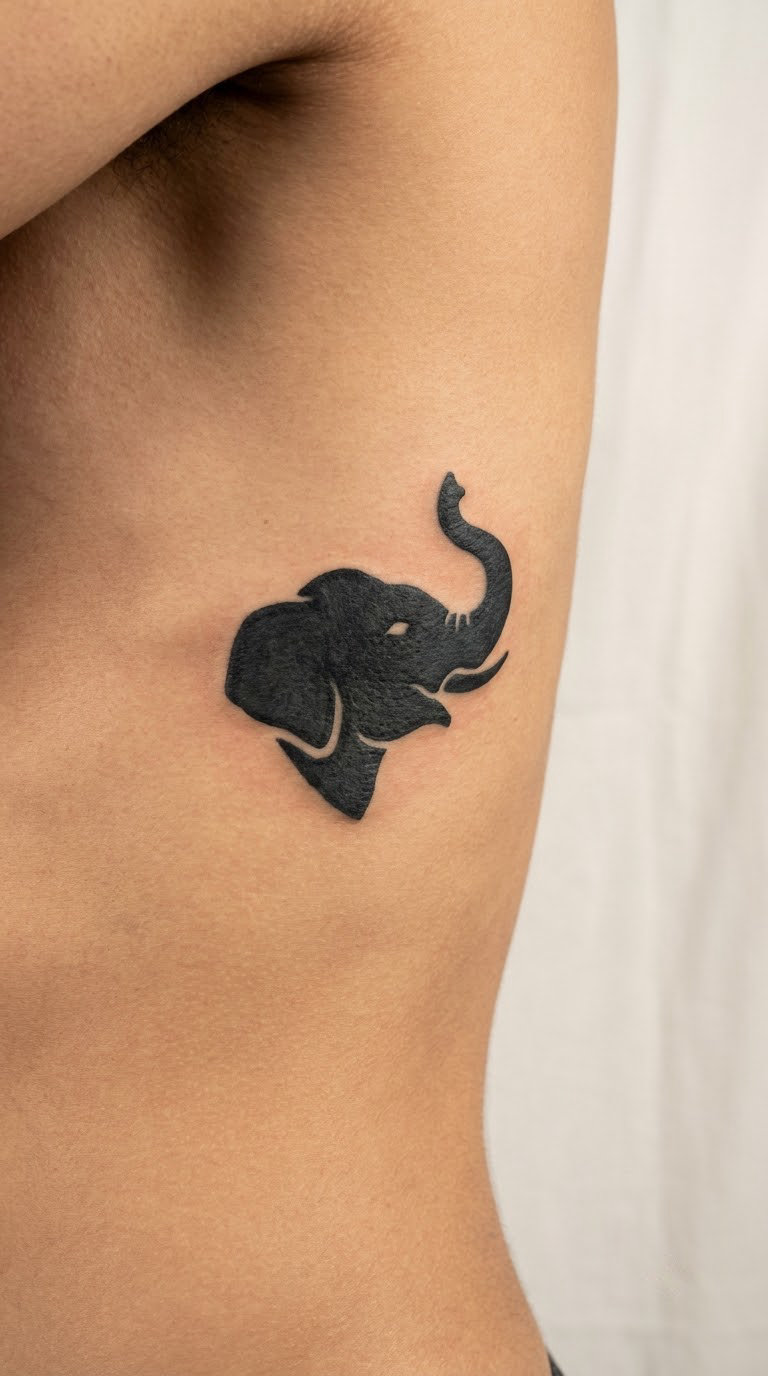
Blackwork is built from solid black rather than shading, so an elephant in this style looks like a shape cut out of the page. Trunk up in blackwork is the strength-and-protection reading, loud and unmistakable, with none of the softness a realistic render would give it.
Solid black holds its edges longer than any grey-heavy alternative, which is why this is my pick if you want something that still looks sharp in fifteen years. The ribs and the outer thigh both give you the width for fifteen to twenty centimetres. Avoid the full rib cage area unless you are prepared to sit still, because the skin there moves with every breath.
Pain and time: two to three hours, and ribs sit around a 7 out of 10.
5. Loose Watercolour Elephant Herd Across the Upper Back
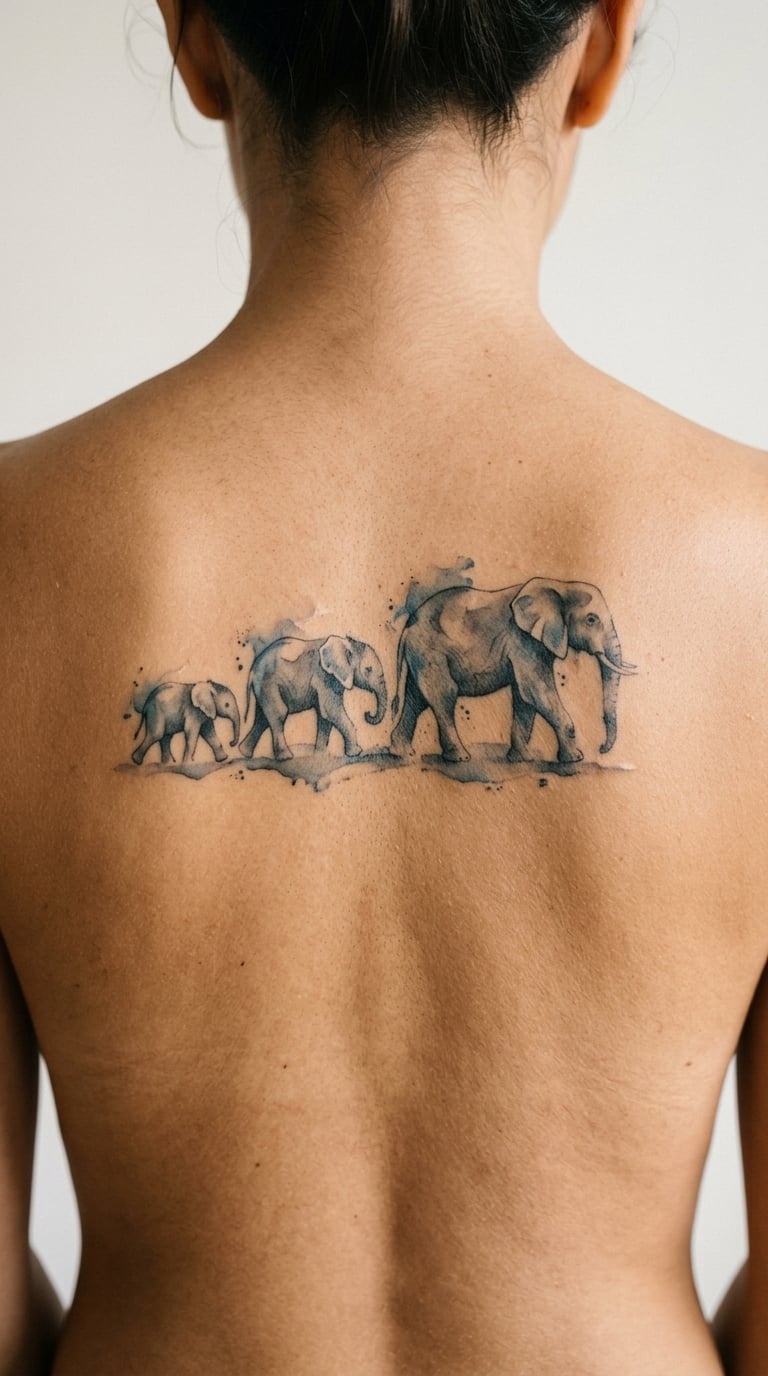
Watercolour elephants feel like a memory rather than a statement. Bleeding edges and pale washes suit designs about family, travel or grief, and the herd format lets you vary the size of each animal so one reads as an adult and two read as younger.
This style needs space and a light hand. The upper back or the space between the shoulder blades handles a 20 to 25 centimetre herd comfortably, and the flatter skin there lets washes blend rather than pool. The trade-off is fading: sun-bleached greys and pale blues go patchy first, so a good artist will build the shadows deeper than you think they need.
Pain and time: two to three hours, around a 3 out of 10 on the upper back. Healing takes closer to four weeks because of the ink coverage.
6. Baby Elephant Tucked Under a Lotus, Low on the Leg
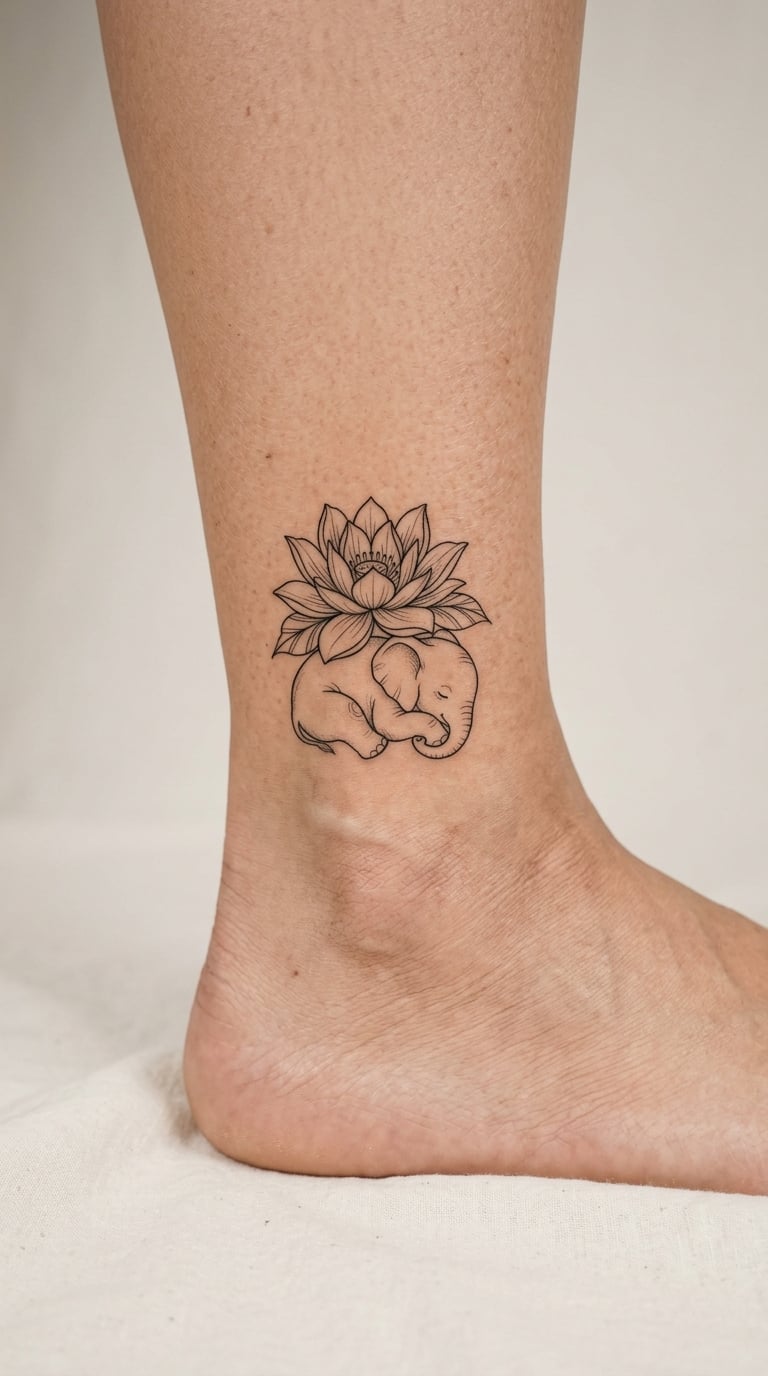
A baby elephant under a lotus combines two symbols that sit naturally together. The calf carries innocence, new beginnings and something worth protecting, and the lotus adds growth after a hard season, which is why this design keeps showing up around graduations and recoveries.
Plan the sizes so the lotus sits above the calf rather than behind it, and keep the whole thing eight centimetres or taller. Petals that overlap the animal turn to grey smudge within a couple of summers. The ankle is the classic home for it, and the calf is the safer one if you work outdoors, since ankle ink takes more sun than most placements.
Pain and time: 60 to 90 minutes, a 4 out of 10 on the ankle.
7. Low-Poly Geometric Elephant Along the Forearm
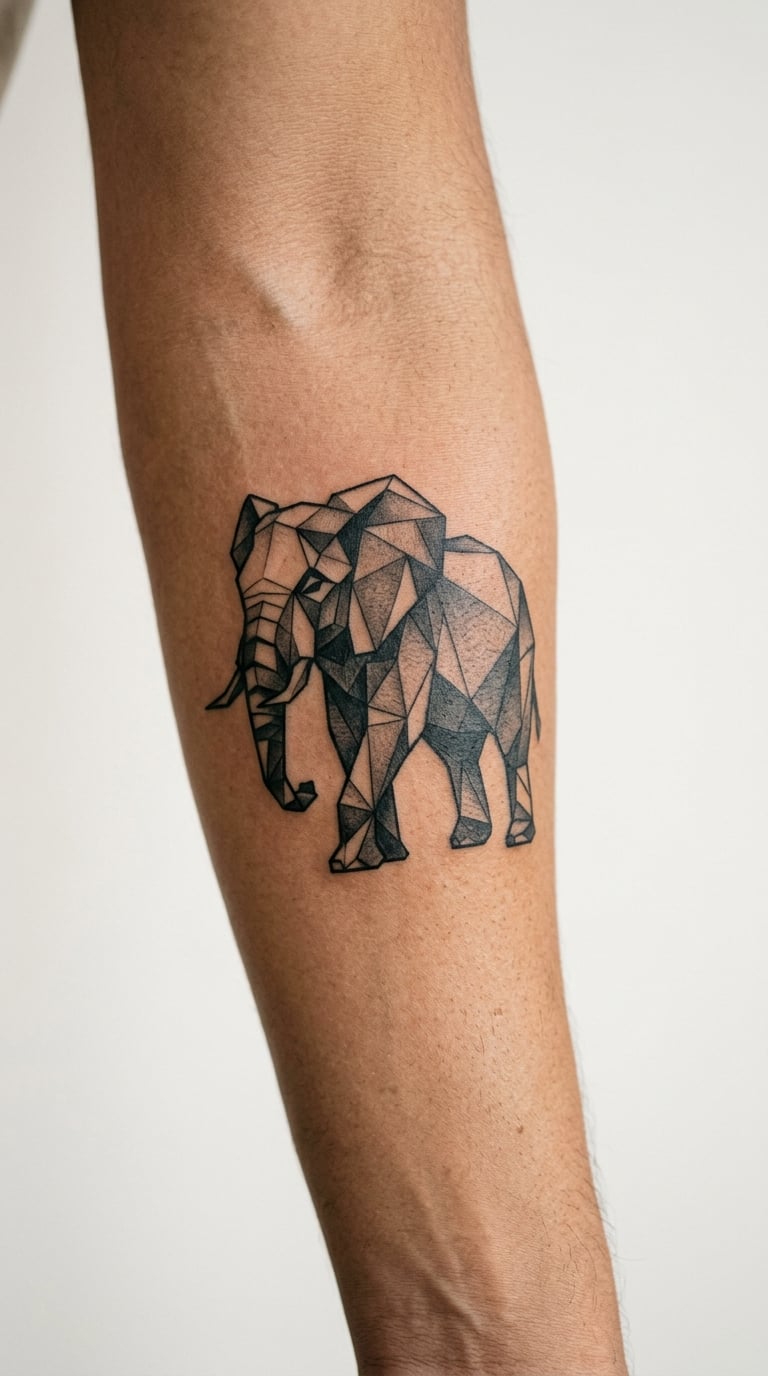
Geometric elephants hide in plain sight. Facets and straight edges forgive a lot, which is genuinely useful, because ear shape and trunk proportion are where most elephant drawings go wrong. If an artist is stronger with shapes than with anatomy, this is the style that will still look like an elephant five years later.
The forearm suits eight to twelve centimetres in a running or walking pose, because the line of the arm follows the animal’s back. Keep the facets large, six or seven per flank, since small ones fill in with ink once healed. Solid blacks and a limited grey scale here age better than a full-spectrum render.
Pain and time: two to three hours, about a 5 out of 10 on the forearm.
8. Neo-Traditional Elephant Head With an Ornamental Headdress
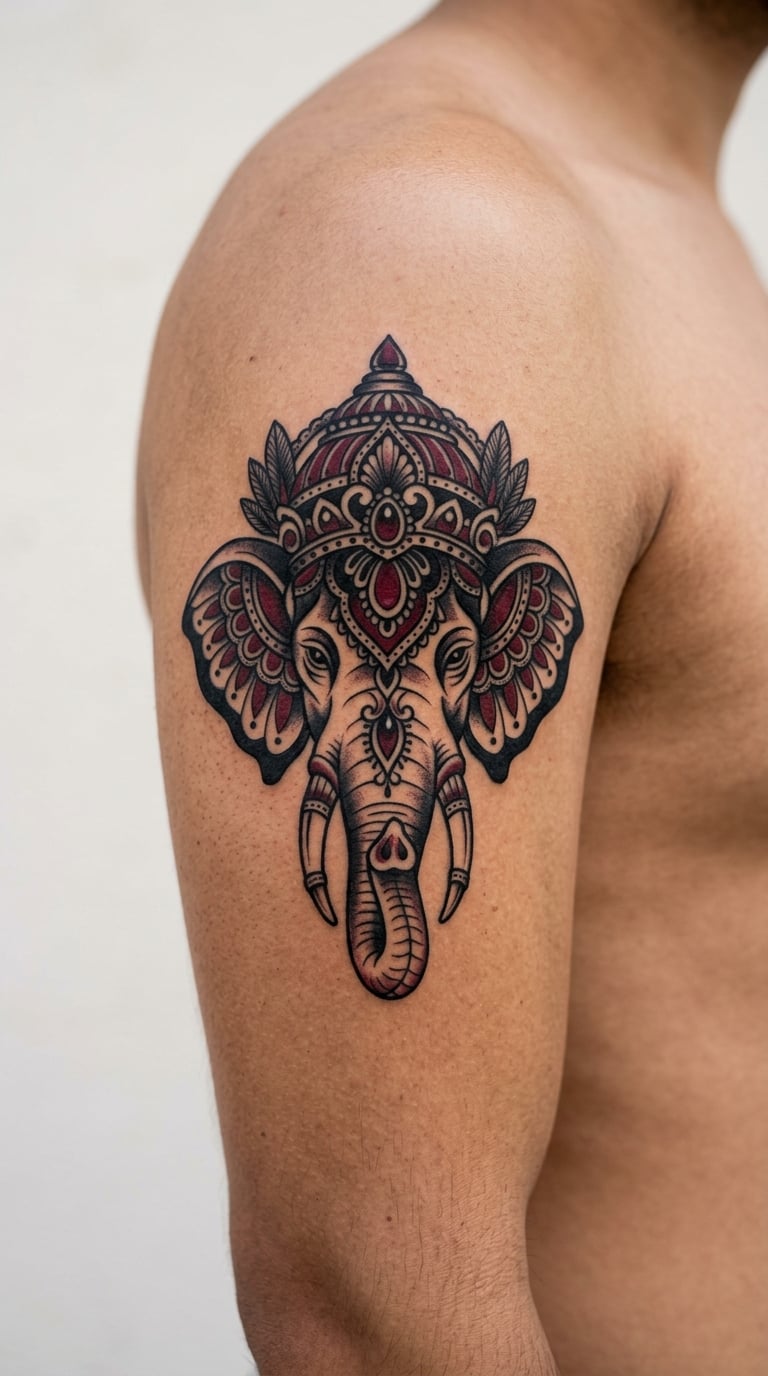
Neo-traditional takes the heavy black outline of old school ink and adds decorative detail, usually a headdress, a floral frame or ornamental patterns around the head. It suits people who want the elephant to read as dignified and rooted rather than soft, and it holds its own at arm’s length.
Twelve to fifteen centimetres is the sweet spot on the outer upper arm, and the flat muscle there takes the ornament cleanly. Expect the reds to shift and the outline to soften over five to eight years, which is normal for this style and worth asking about at your touch-up appointment.
Pain and time: two to three hours, about a 3 out of 10 on the upper arm.
9. Tribal Elephant Built From Bold Geometric Shapes
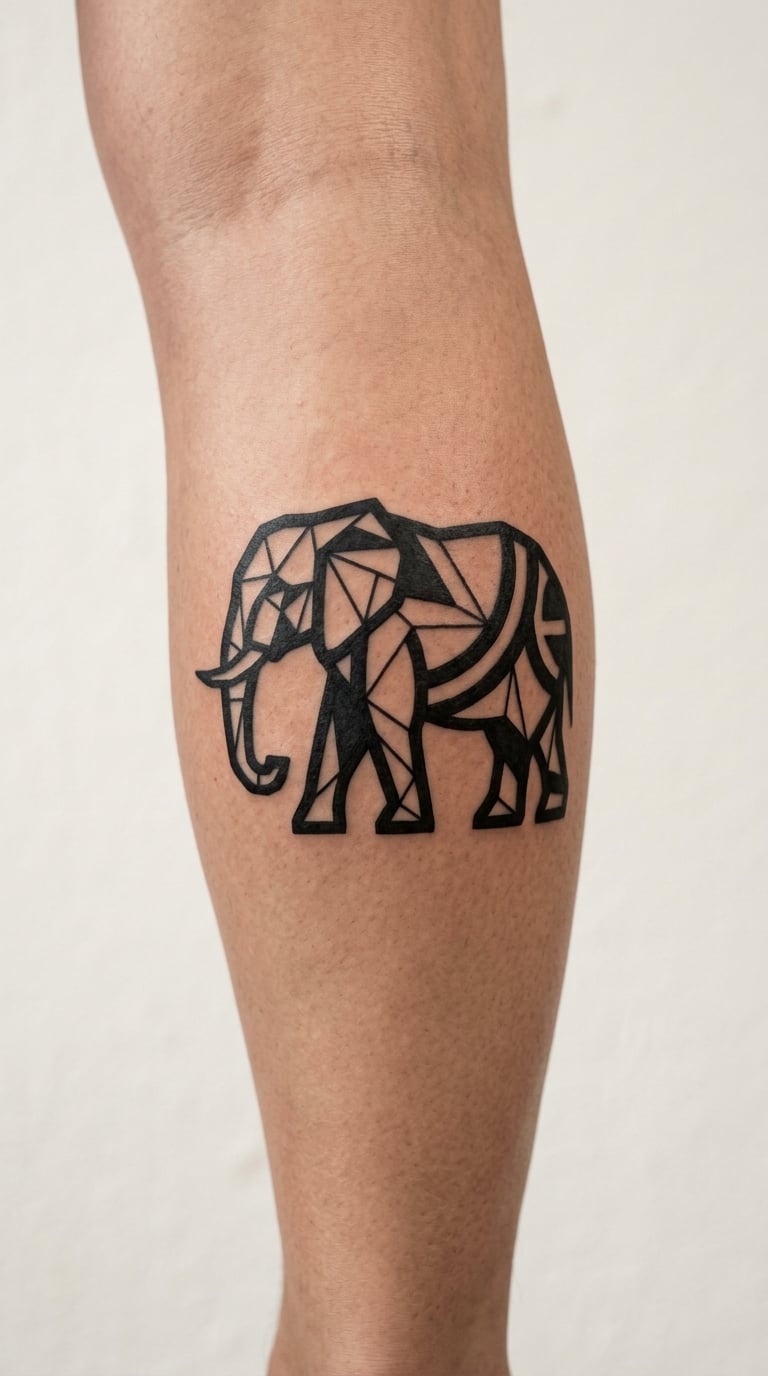
Bold geometric elephant work draws on African mask carving and some of the geometric black line that runs through West and Central African tattoo traditions. It reads as ancestry, endurance and strength, and the large shapes are forgiving in a way fine detail never is.
Ask the artist what their own training in this style is before you book, and be wary of anyone presenting a copied pattern as an authentic traditional piece. On the body, the calf or outer thigh takes twelve to eighteen centimetres without crowding, and the solid shapes hold their edges for years. Skip the greys if you want it to stay crisp; the style works better in pure black.
Pain and time: two hours, a 5 out of 10 on the calf.
10. Realistic Grey Elephant Portrait on the Thigh
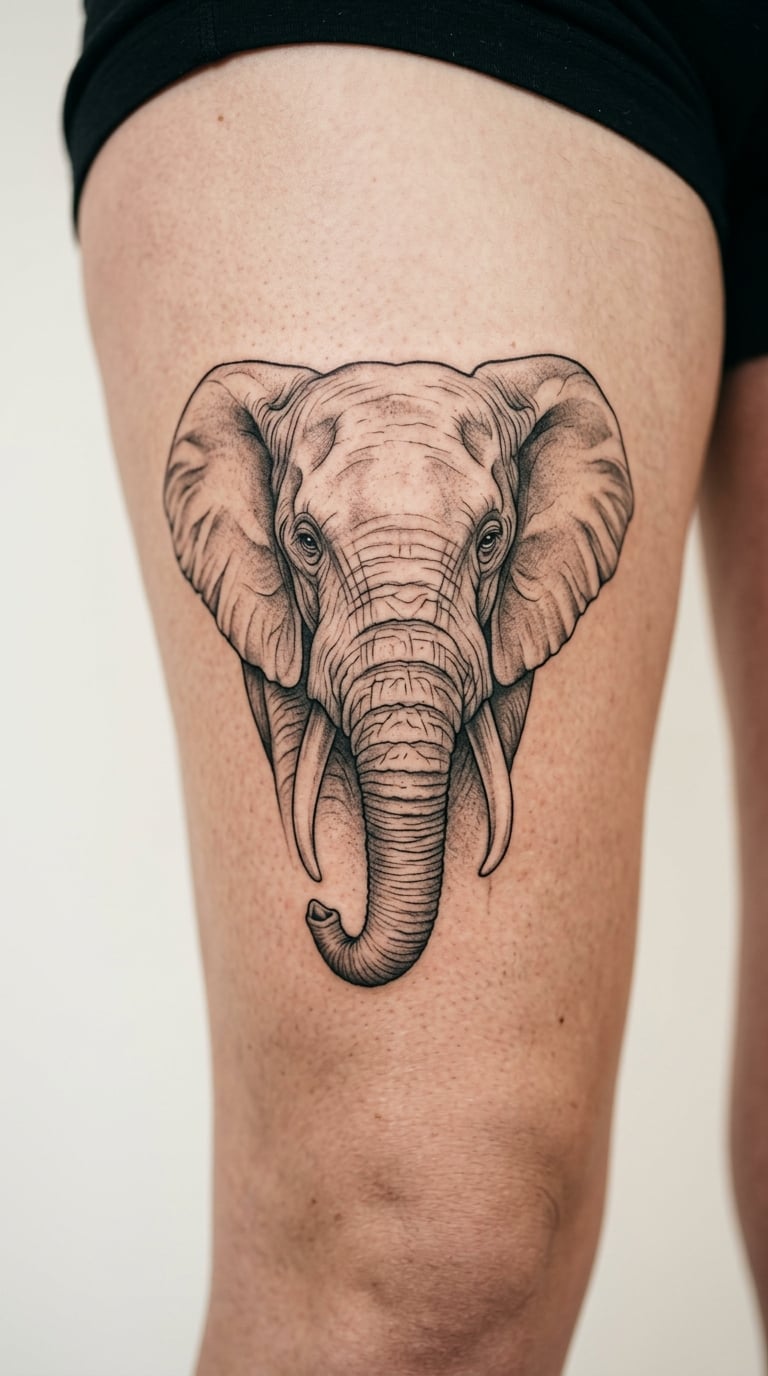
A realistic portrait gives you the elephant as an individual rather than an icon, and it rewards patience. Deep skin creases, dust on the legs, a slightly tired eye, the whole point of this style is that it looks like a photograph of one specific animal.
Realistic work needs a big flat area. Twenty to twenty-five centimetres on the outer thigh is about the minimum for the face to hold detail, and smaller than that the wrinkles merge. Before you commit, look for healed elephant work in their portfolio rather than fresh work, because greys shift a lot in the first weeks and only healed photos tell you how they hold up.
Pain and time: three to five hours, often split over two sessions, around a 4 out of 10 on the thigh.
11. Elephant Head Wrapped in Birth Flowers
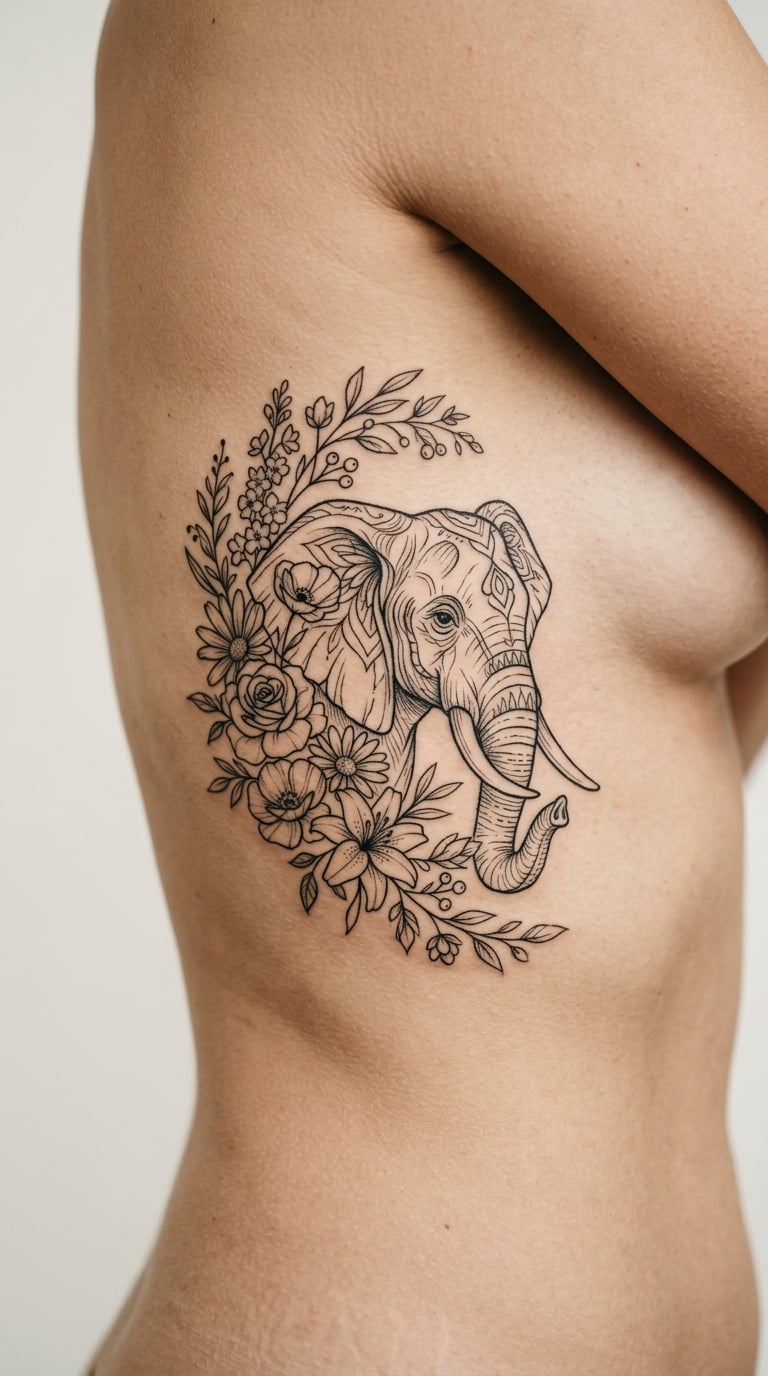
Wrapping an elephant head in the birth flowers of someone specific turns a popular animal into a private piece. It is one of the most requested personalisations I see, and it works because the flowers identify the person without a date or a name having to be tattooed.
Along the ribs gives you a long horizontal field for the florals, with the head placed toward the front. Small blossoms need at least eight centimetres of room before they start merging into a single green-grey mass, so scale the head down rather than the flowers. It is a design that heals well and photographs badly in the first fortnight, so be patient with it.
Pain and time: two to three hours, a 7 out of 10 on the ribs.
12. Single-Line Dotwork Elephant on the Inner Wrist
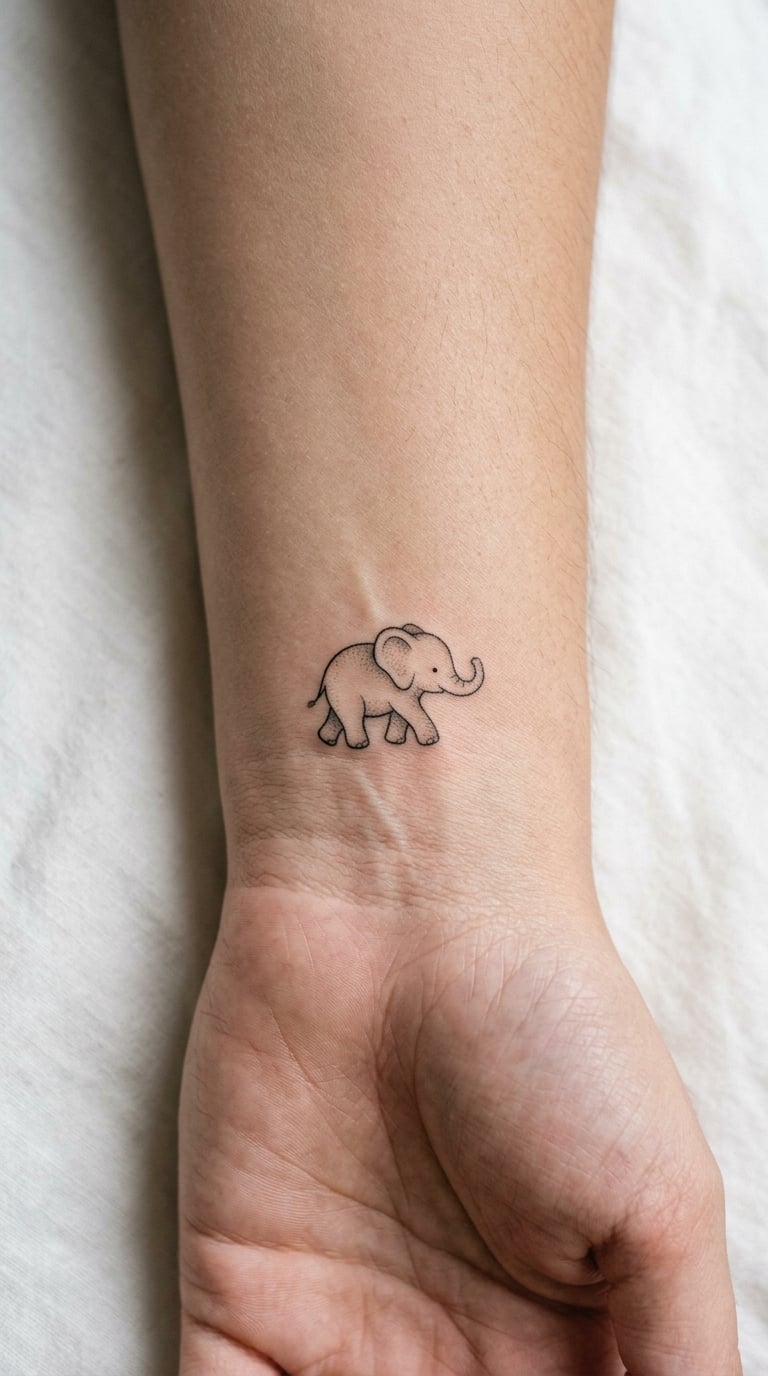
A single continuous line, with dots building the shadow underneath, is the quietest elephant tattoo there is. Four to six centimetres, no colour, no fill, and it still reads as an elephant to anyone who knows the animal.
The inner wrist is a popular home for small, personal pieces and it shows when the hand moves. Dotwork fades faster than solid line because each dot is small, so plan on a refresh every two to three years if you care about the shading. Keep it above five centimetres, or the trunk and the ear merge into one shape.
Pain and time: 45 to 60 minutes, a 5 out of 10 on the inner wrist.
13. Ganesha-Inspired Seated Elephant, Upper Arm or Back
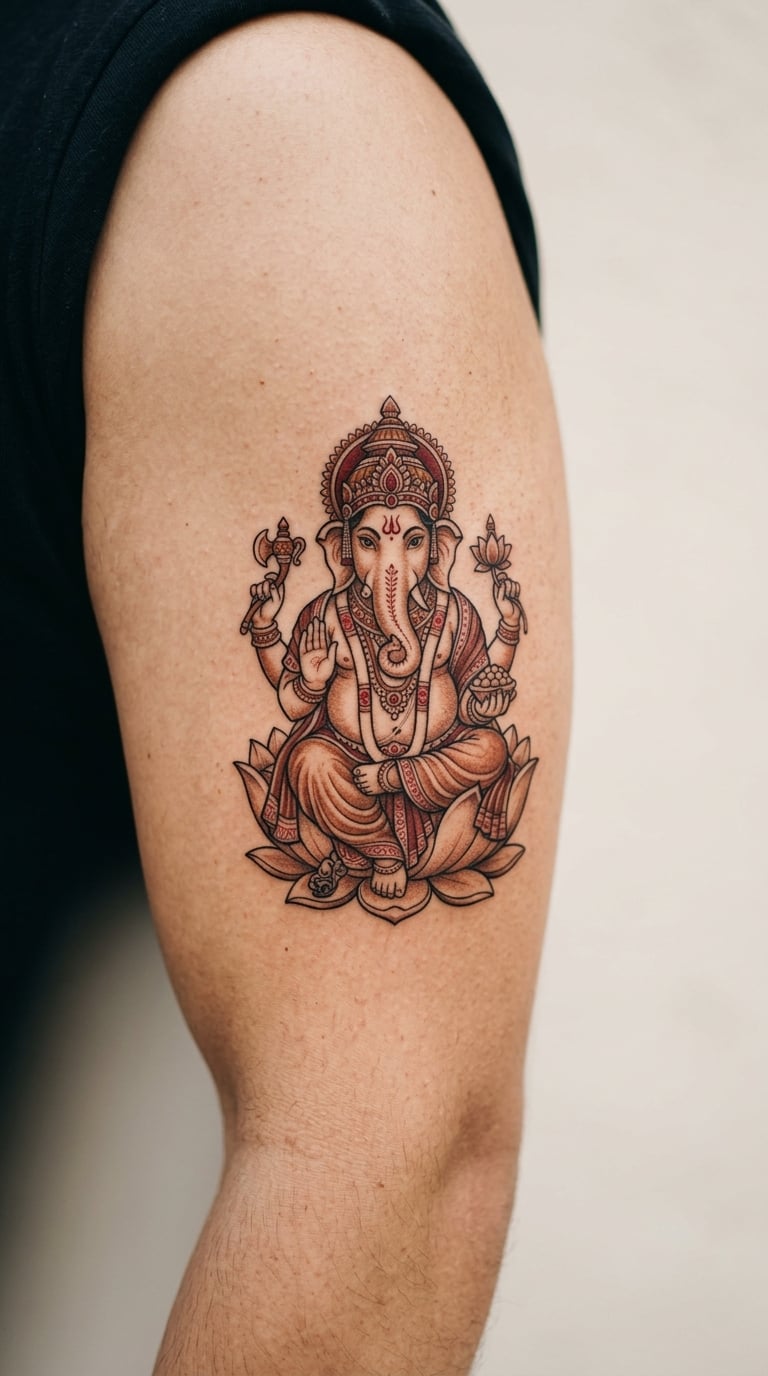
Ganesha is the elephant-headed Hindu deity associated with removing obstacles and with new beginnings, and a seated elephant design in that tradition carries more than the general strength reading. Airavata, the many-headed white elephant of Hindu myth, is the other name you will hear in the same conversation.
If you want this one, go to someone who works in the tradition rather than someone copying a generic ornament. A crown, curved tusks and seated posture are the elements that separate a deity design from a lucky-charm elephant. Twenty centimetres or more on the upper arm or the mid back gives room for the ornament, and the warm skin tones involved fade faster than blacks, so keep them deep.
Pain and time: three to four hours, a 3 out of 10 on the upper arm.
14. Elephant Silhouette Inside a Crescent Moon
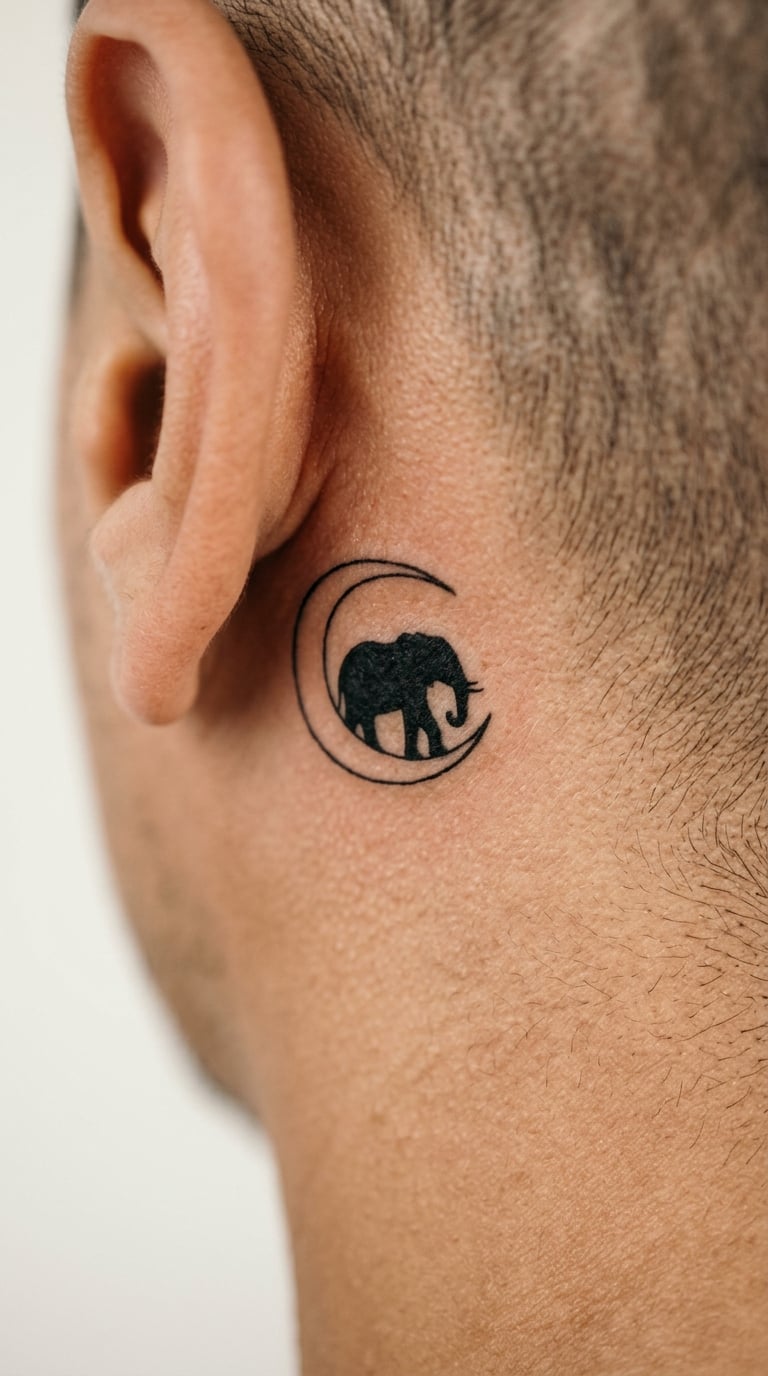
An elephant held inside a crescent moon reads as calm, cycles and a change of season, and the negative space does most of the work. It is one of the designs that looks considered rather than copied, because the circle forces the artist to compose instead of just outline.
Six to nine centimetres works, and the space behind the ear is the ideal home for a piece this small, since it stays out of the way and shows when the hair is tied back. Keep the moon stroke consistent, and remember that a crescent behind the ear will move and flatten slightly as you age. The same design sits well on the inner ankle if you prefer something you can see.
Pain and time: 60 to 90 minutes, about a 3 out of 10 behind the ear.
15. Baby Elephant Holding a Single Flower, Scaled Up
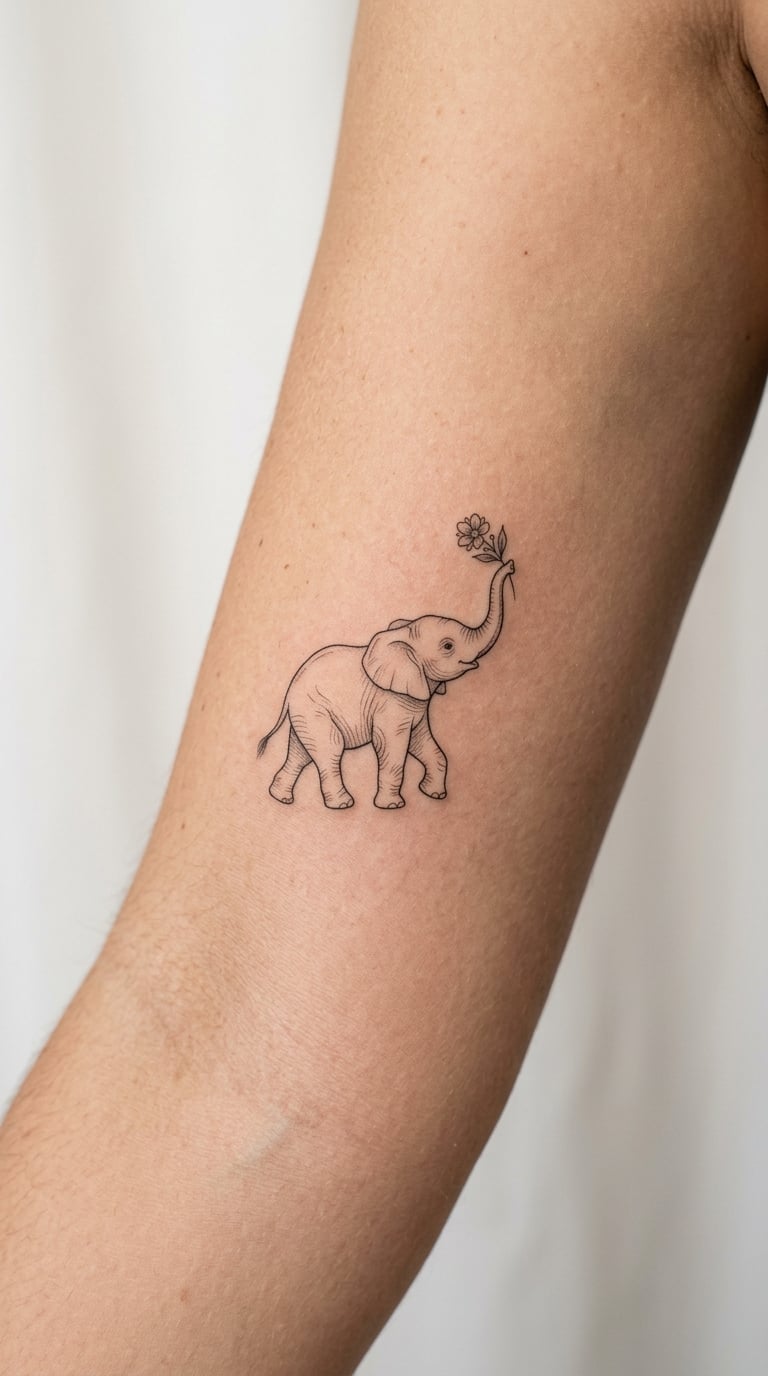
The calf reaching up with a flower in its trunk is about something small being carried carefully. People choose it after a birth, a move, or the year they decided to stop doing what everyone else did, and the upward trunk keeps the good-luck reading intact.
Scale it up rather than down. Six to nine centimetres on the inner upper arm gives the trunk room to curve, and the flower at the tip doubles as a place to hide a date, a set of initials or a tiny word. The calf’s ear should be a single simple shape here, since small ears are where detail turns to grey.
Pain and time: 60 to 90 minutes, a 4 out of 10 on the inner upper arm.
16. A Herd of Three Elephants as a Half-Sleeve
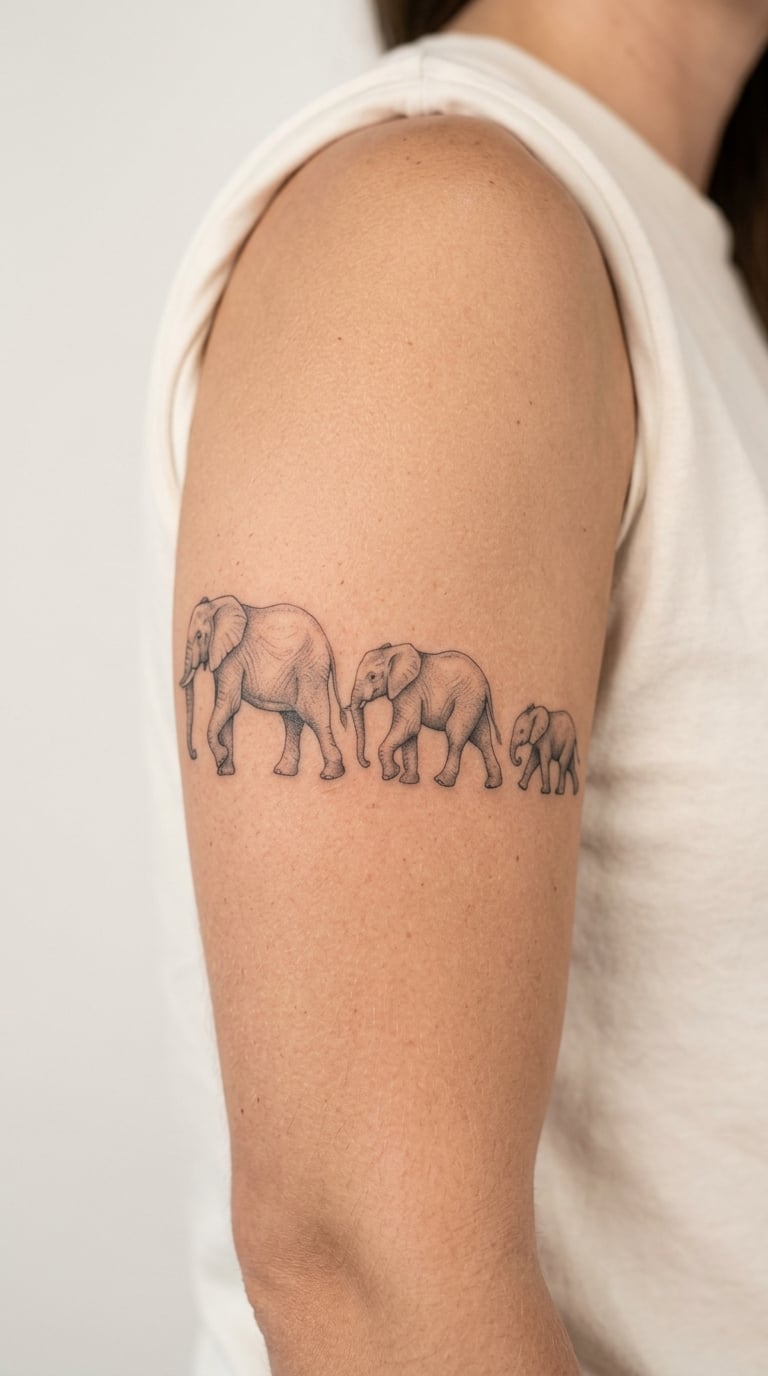
Three elephants is the version that answers a question people ask constantly, because the number carries its own reading. A group is usually understood as family or as a whole, and three is often read as the three-part nature of a person, or a parent with two children.
A half-sleeve from the outer upper arm towards the elbow gives each animal about fifteen centimetres of height, which is the least you can give them and still have three distinct heads. Grey realist work at this scale needs deeper shadows than a single elephant would, and it usually runs past three hours, so plan a long sitting and a second session rather than rushing the last animal.
Pain and time: three to four hours, sometimes two sittings, about a 3 out of 10 on the upper arm.
Things to Know Before You Book an Elephant Tattoo
Two things decide whether an elephant piece ages well: the meaning you chose and the anatomy the artist can actually draw. Everything else, the placement, the size, the session length, all follows from those. A few honest questions at the consultation save a lot of disappointment later.
How to choose the right elephant tattoo meaning and design ideas
- Look at healed elephant work in the portfolio, not fresh photos. Grey-heavy designs shift noticeably in the first weeks, and only healed work shows whether the artist fixes the trunk line.
- Check the ear shape and tusk placement. A badly drawn ear is the single most common complaint I read about this animal, along with trunks that are too thick to lift off the body.
- Decide the meaning before the drawing. Trunk up, trunk down, a mandala behind the head, a lotus underneath, and the number of elephants all change the message.
- Ask what happens when the design does not fit the placement. A good artist will redraw for a forearm or an ankle rather than shrink a back piece into something unreadable.
- Bring one real personal detail, a flower, a date, coordinates, handwriting. It is the difference between a tattoo people recognise and a tattoo that is yours.
How many elephants, and what each number means
The number is the least understood part of elephant symbolism, and it is the easiest way to make a design personal without adding a single extra line.
| Number of elephants | What it usually means |
|---|---|
| One | Strength and steadiness on its own. The most common choice, and a full design rather than a small symbol. |
| Two | Partnership, mother and child, or two people who stayed. |
| Three | Family groups, or the three-part reading of mind, body and spirit. Often one adult with two young. |
| Four | A herd in motion. Used for stability, the idea that nothing moves without the group. |
| Five or more | Read as a journey, memory or a home group rather than a single meaning. |
Three is the most requested, and the least explained anywhere else. One adult leading two smaller elephants is a fairly literal family reading, and the count alone does not have one fixed translation, which is another reason to make it your own.
What the trunk direction changes
Trunk position is body language, and it is the fastest way to change the tone of the same drawing.
| Trunk position | What it reads as |
|---|---|
| Raised straight up | Strength, protection, good fortune. |
| Curled inward | Calm, focus, inward strength. |
| Hanging down | Grief, memory, or a settled, grounded energy. |
| Reaching forward | Movement, a new beginning, something still ahead. |
Where each design sits best
| Placement | Visibility | Pain | Workable size |
|---|---|---|---|
| Inner forearm | Seen when the arm is turned | 4/10 | 5 to 12 centimetres |
| Outer upper arm | Visible in most movement | 3/10 | 12 to 20 centimetres |
| Shoulder | Seasonal, under fabric | 4/10 | 10 to 18 centimetres |
| Upper back | Shown when wanted | 3/10 | 20 to 25 centimetres |
| Ribs | Very visible, moves with breath | 7/10 | 15 to 20 centimetres |
| Wrist or ankle | Always visible | 5/10 | 4 to 8 centimetres |
Colour, fading and aftercare
Elephants are usually grey, and grey is the first colour to go. Black linework holds its edge for years, so most artists build the shadows deeper than a portrait needs on day one. Once it is healed, keep it out of strong sun, wash it with plain soap rather than anything fragranced, and moisturise the dry patch that appears in week three. The last point people miss: touch-ups on elephant work are routine, not a sign of a bad tattoo.
Frequently Asked Questions
What do elephant tattoos represent?
Elephant tattoos most often stand for strength, wisdom, loyalty, protection and good luck. Depending on the design they also carry grief, memory, prosperity, family bonds and calm. The details decide the reading: trunk up for strength, trunk down for grief or grounding, a mandala behind the head for calm and order, and the number of elephants for family or a group.
What does the 3 elephant tattoo mean?
Three elephants usually mean family, or a whole group moving together. One adult with two smaller animals is the most literal reading, and three is also read as the three parts of a person, such as mind, body and spirit. There is no single fixed translation, so the design reads as much from the style, the placement and any added detail as from the count itself.
What does a small elephant tattoo mean for a woman?
A small elephant keeps every core reading, strength, wisdom, loyalty and good luck, in a size that suits a wrist, an inner forearm or an ankle. Fine-line outline and single-line dotwork are the two styles that stay readable under about six centimetres. Many women choose a calf or a mother and calf version, which leans toward family and protection rather than dominance.
What does a baby elephant tattoo symbolize?
A baby elephant stands for innocence, new beginnings, something worth protecting and being carried carefully. Pairing a calf with a lotus adds growth after a hard season, and a calf reaching up with a flower in its trunk often marks a birth, a move or a decision. Drawn small and in simple line, the calf is the easiest elephant to place discreetly.
What is the meaning behind the mandala elephant tattoo?
A mandala is a circular geometric motif from Buddhist and Hindu art, and around an elephant head it signals calm, order, balance and protection. The symmetry also makes it a practical choice, since the pattern hides small asymmetries that give a realistic elephant away. It suits the upper arm or shoulder at twelve to eighteen centimetres, though the fine outer ring lines soften as skin ages.
What does an elephant tattoo mean in mental health?
Elephants often come up for anxiety and recovery, because the animal is both enormous and gentle, and that contrast maps onto feeling too much and being kind anyway. Common choices are a calf held in a lotus for growth after a bad period, or a trunk-down design for a grounded, settled calm. For autism awareness, elephants are used as a gentle, non-medical symbol alongside the puzzle piece.
Where to Start With Your Elephant Tattoo
Start with the meaning, not the picture. Elephant tattoo meaning and design ideas only come together once you know whether you are asking for strength, grief, family or a new start, because the trunk direction, the number of animals and the surrounding symbols all follow from that answer. Write the meaning in one sentence before you look at any design, and if you cannot, you are probably choosing a trend rather than a tattoo.
Then take the single detail that makes it yours, a birth flower, a date, a word in someone’s handwriting, and find an artist whose healed work shows good ears and a believable trunk. Bring both to the consultation. Everything else, size, placement and session length, sorts itself out once those two are settled.