
25 Tattoo Ideas for Men With Meaning: Best Picks (October 2026)
A meaningful tattoo for a man is any design that carries personal weight: a symbol, date, word or image chosen to stand for a person, a place, a value or a hard-won lesson, rather than decoration alone. These 25 tattoo ideas for men with meaning cover the whole range, from a two-inch fine-line compass to a six-inch rising phoenix, and each one comes with the placement, size, style and honest ageing notes you need before you sit down.
What makes a design hold up on skin is simpler than most galleries suggest: one idea, drawn clearly, at a size the body can carry. If you can explain the tattoo in a single sentence, it works. Everything below is written to be shown to an artist, so bring the entry you like, the placement you had in mind, and a rough idea of size. Book a consultation a few weeks ahead, especially if you are planning anything in autumn or winter, when shops fill up.
25 Tattoo Ideas for Men With Meaning: Quick Guide
| Idea | Style | Best placement | Size (inches) | Pain |
|---|---|---|---|---|
| Fine-line compass rose | Fine line | Inner forearm | 2.5-3.5 | Low |
| Minimal mountain peaks | Fine line, black and grey | Outer forearm | 3-4.5 | Low |
| Coordinate map with a heart | Fine line, one colour accent | Inner bicep | 2.5-3.5 | Low |
| Geometric arrow | Blackwork, geometric | Forearm above wrist | 2-3 | Low |
| Roman numeral date | Traditional serif | Inner forearm | 1.5-2.5 | Low |
| Small laurel wreath | Black and grey | Outer upper arm | 3.5-4.5 | Medium |
| Hourglass with sparse sand | Blackwork | Inner bicep | 2-2.5 | Low |
| Tree of life roots | Blackwork, illustrative | Outer calf | 4.5-6 | Medium |
| Home in one-line lettering | Fine line script | Inner wrist | 1.5-2.5 | Medium |
| North star constellation | Fine line, micro dots | Inner elbow crease | 1.5-2 | Medium |
| Feather quill | Black and grey | Inner forearm, diagonal | 3.5-4.5 | Low |
| Snake around a dagger | Bold blackwork | Outer forearm | 4-5 | Medium |
| Owl in profile | Micro-realism | Upper outer arm | 2.5-3.5 | Medium |
| Anchor with rope | Traditional American | Outer forearm | 3.5-4.5 | Medium |
| Wave and sun | Traditional, bold colour optional | Inner upper arm | 3.5-4.5 | Medium |
| Infinity with grounding line | Fine line | Inner wrist | 1.5-2 | Medium |
| Semi-colon | Minimal black | Behind the ear | 0.75-1 | Medium |
| North star with true north | Traditional clean line | Upper arm | 2.5-3.5 | Medium |
| Phoenix rising | Black and grey, illustrative | Shoulder blade | 5-7 | High |
| Native-language word for home | Hand lettering | Forearm | 2-3 | Medium |
| Fingerprint trail | Fine line realism | Side of index finger | 2-2.5 | High |
| Hand-pressed diamond | Line art, bold ink | Side of torso | 2.5-3.5 | Medium |
| Memento mori hourglass skull | Black and grey realism | Outer upper arm | 2.5-3.5 | Medium |
| Bicycle route line | Fine line cartography | Calf above ankle | 3.5-4.5 | Medium |
| Mountain and compass combination | Fine line, black and grey | Inner upper arm | 3-3.5 | Low |
1. Fine-Line Compass Rose
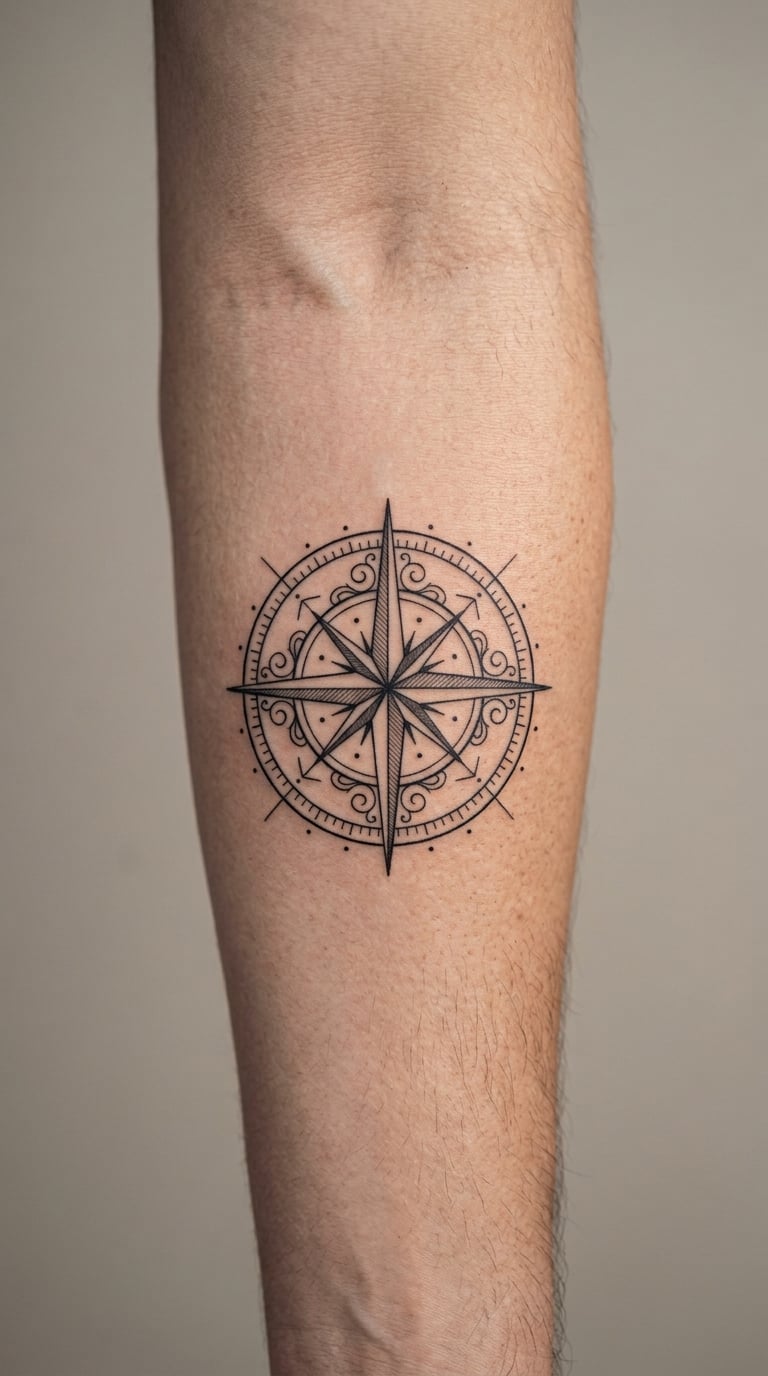
The compass rose is the cleanest way to say direction without saying anything heavy. One point is often made longer than the others, a small circle sits at the centre, and everything is drawn in a single-weight black line with no shading. Men usually pick it for guidance, values and the idea of always knowing which way is next.
Placement: inner forearm beside the elbow, or the outer forearm where it reads clearly in a short sleeve. Size: 2.5 to 3.5 inches across. Style: fine line, single needle weight. Pain: low. A fine line on the inner forearm softens and spreads after a decade, so ask for a slightly heavier line than looks right on paper.
Make it yours: add a single coordinate line beneath the rose, in a smaller hand, and the piece becomes personal rather than generic.
2. Minimal Mountain Peaks
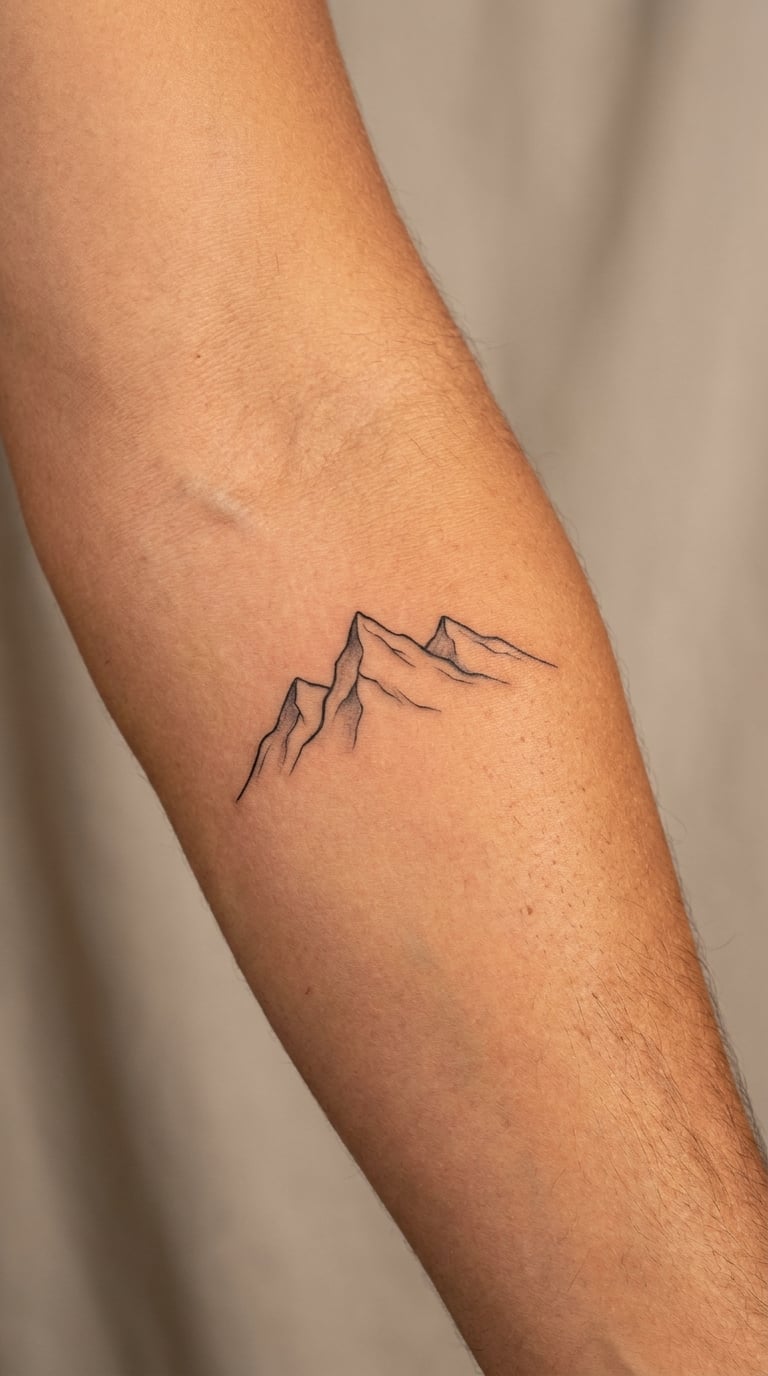
Three peaks in a single unbroken outline is the design that survives a long sleeve being five years away. A thin shadow band under the lowest ridge gives it depth without crowding the shape. People read mountains as challenge, ambition and the trips or chapters that changed them, though nobody claims a single official meaning.
Placement: outer forearm, chest near the collarbone, or across the upper back. Size: 3 to 4.5 inches wide. Style: fine line with light black-and-grey shading. Pain: low on the arm, moderate across the collarbone. Thin ridge lines catch sun and soften, so slightly heavier line work ages better than hairlines.
Make it yours: add one small notch or extra peak that matches the range you actually climbed, then keep everything else clean. If you want more of that restraint, our roundup of 16 minimalist tattoo ideas for men with meaning goes deeper into single-line work.
3. Coordinate Map with a Heart
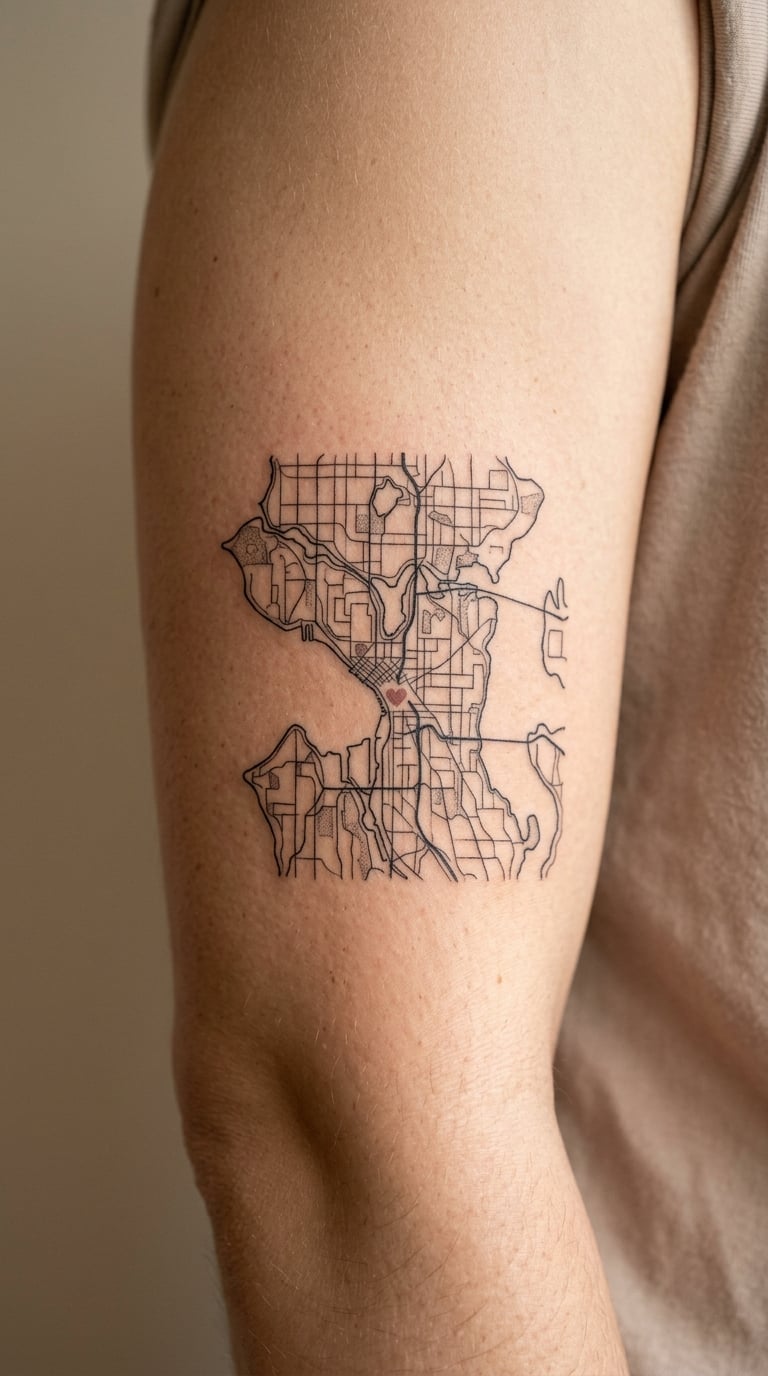
This is a map of one place that matters, drawn as a coastline or street grid, with a single small heart marking the spot. The heart is usually the only colour in the piece, and keeping it that way stops the design from turning into a postcard. A place tattoo often means home, a turning point or a person connected to that location.
Placement: inner bicep, upper arm or the back of the calf. Size: 2.5 to 3.5 inches across. Style: fine line with one muted colour accent. Pain: low on the upper arm, medium on the calf. Map lines are lots of tiny separate marks, so plan for a longer session even on a small design.
Make it yours: use the exact latitude and longitude of the spot rather than an outline, and put them in the smallest hand your tattooist can keep crisp.
4. Geometric Arrow
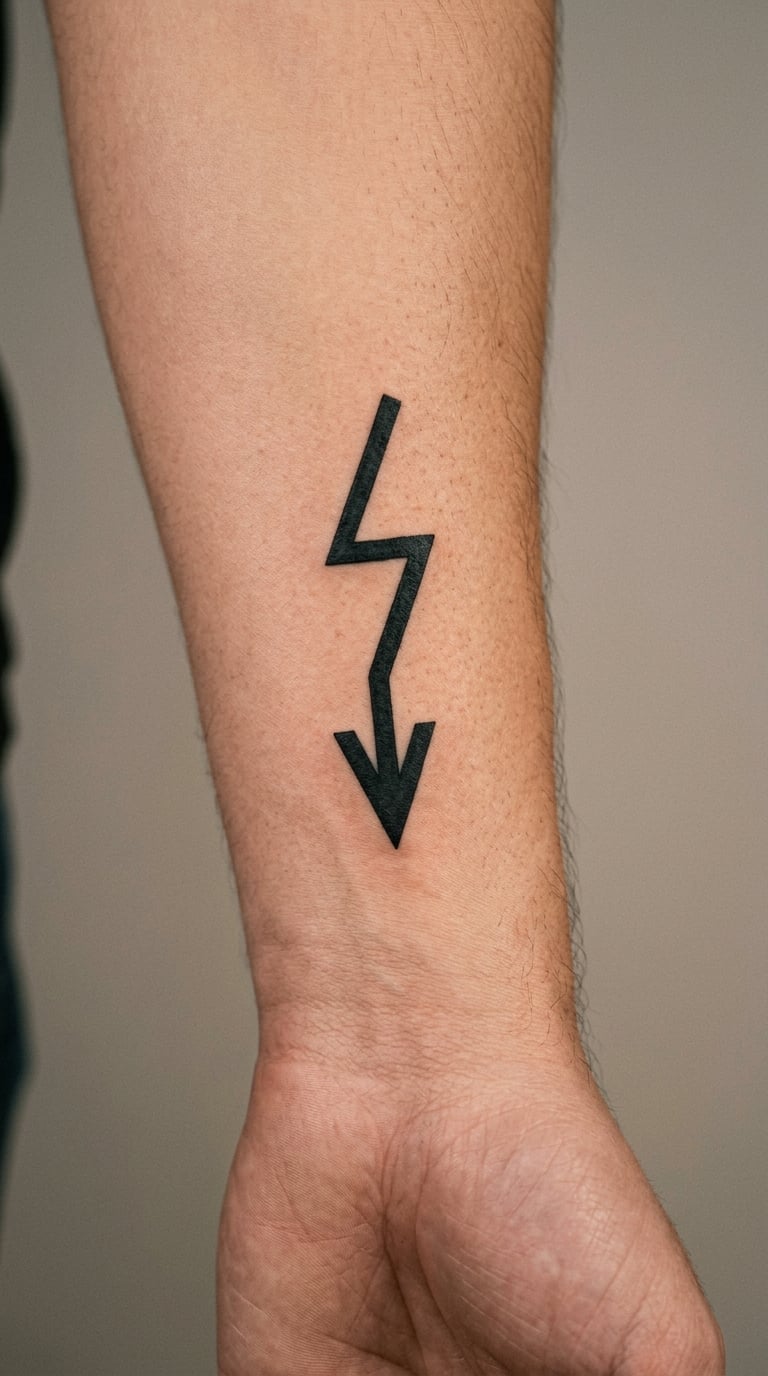
A geometric arrow is built from straight segments: a clean triangular head, a shaft, and often one line that bends away from it. Done in solid black with no gradient, it looks sharp and graphic rather than illustrative. The reading is forward motion, protection, focus and occasionally military or hunting heritage, all chosen by the wearer.
Placement: forearm just above the wrist, inner forearm, or the chest. Size: 2 to 3 inches long. Style: blackwork, geometric. Pain: low. Geometry is unforgiving in a good way: because there is no shading, edges stay crisp for decades if the fills are solid.
Make it yours: bend the loose line at a point that matters, such as the date or place you started the thing the arrow points toward.
5. Roman Numeral Date
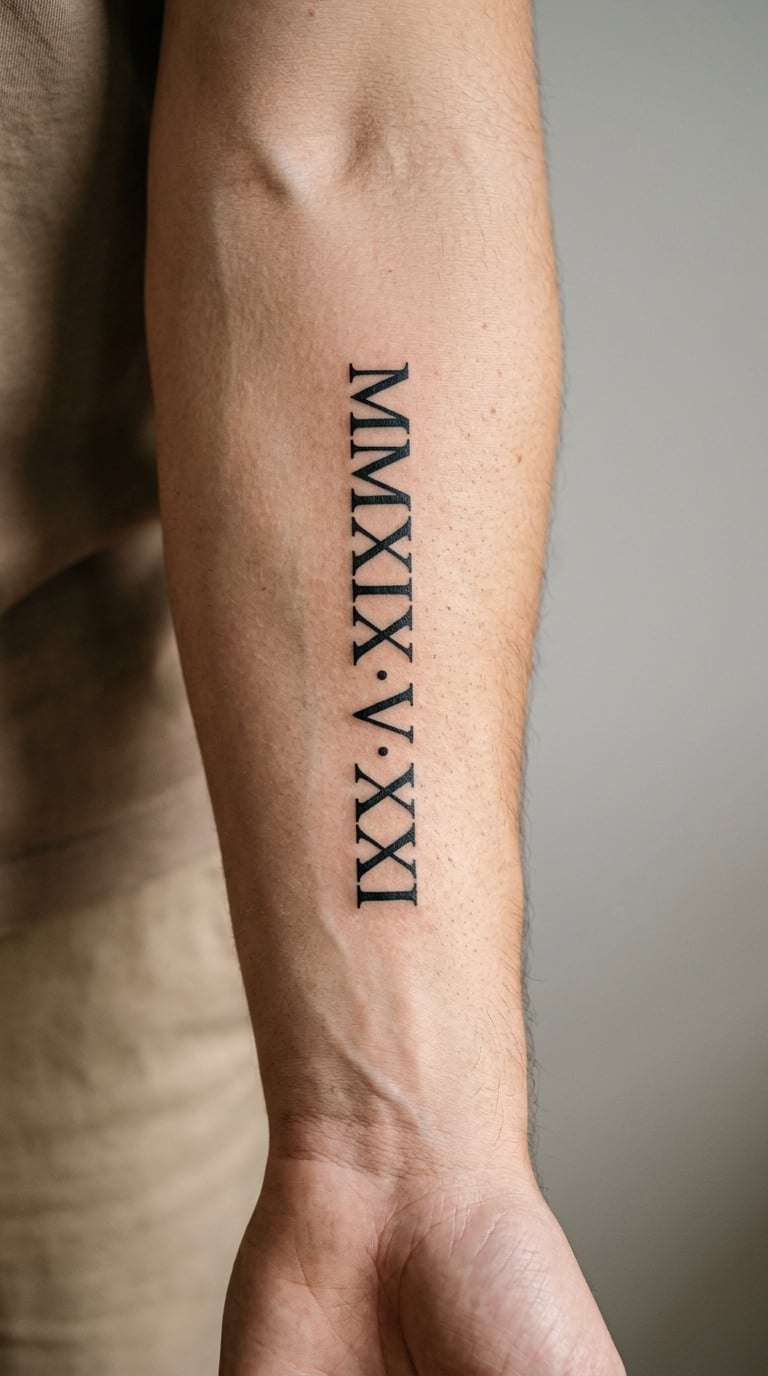
Roman numerals are the most personal design in this list because the meaning belongs entirely to the wearer: a wedding date, a birth date, the day something ended or began. A traditional serif face with clean stroke endings reads as considered rather than decorative. Set the numerals in a straight line, or curve them slightly along the forearm.
Placement: inner forearm, above the wrist, or the chest. Size: 1.5 to 2.5 inches wide. Style: traditional serif lettering in black. Pain: low to medium, more a burn than a scratch. Lettering ages far better than imagery, though thin serifs on the inside of the forearm can blur over time.
Make it yours: include the month in a smaller size beneath the numerals, which also gives the piece visual balance.
6. Small Laurel Wreath
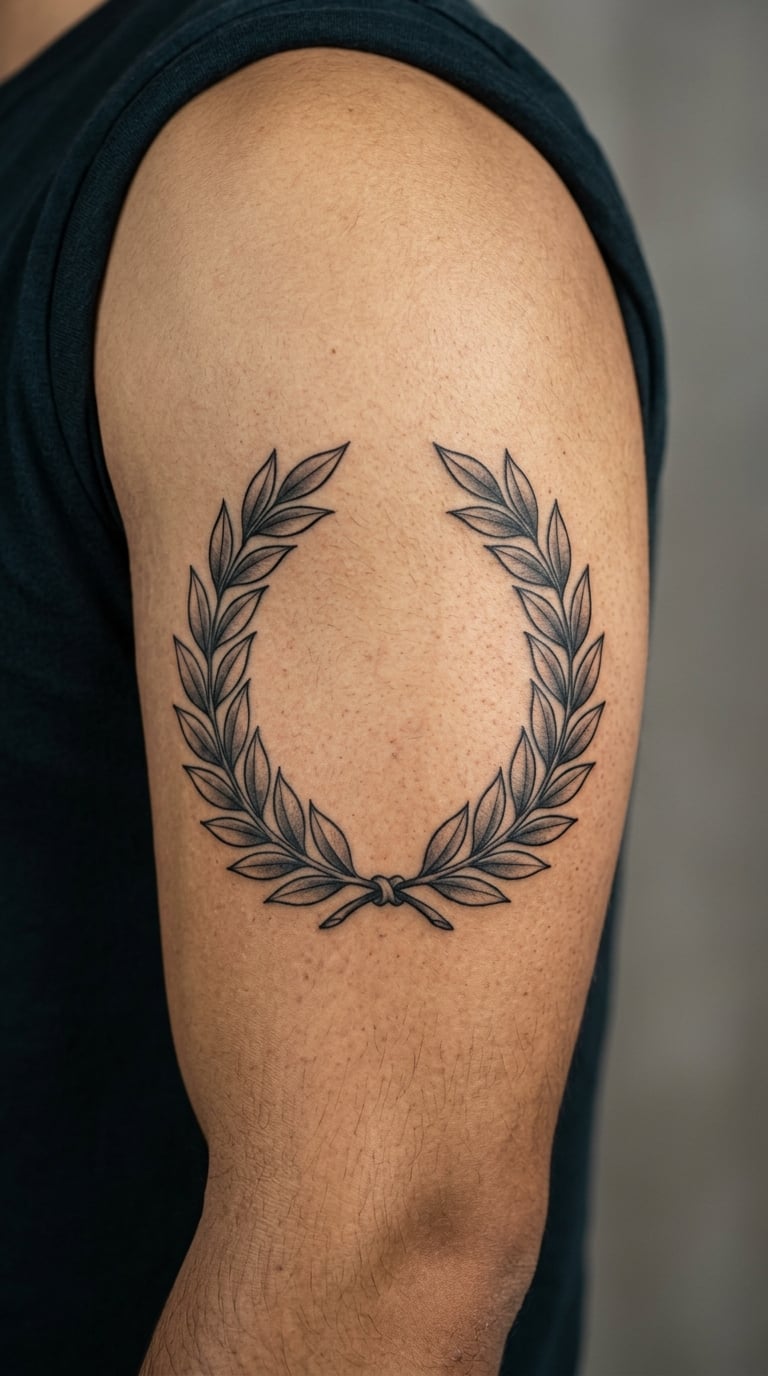
Laurel wreaths come from Greek and Roman tradition, where laurel was tied to victory and athletic achievement. Modern wearers usually keep that association: effort recognised, growth over years, staying steady. A half wreath that follows the curve of the arm suits a growing collection better than a closed symmetrical ring.
Placement: outer upper arm, shoulder, or along the side of the bicep. Size: 3.5 to 4.5 inches tall. Style: black and grey with soft leaf shading. Pain: medium. Leaf detail and shading need a couple of sessions at this size, and the middle of the arm feels more than the edges.
Make it yours: add a small date or initials inside the open centre, kept to one line so the wreath still reads as the main shape.
7. Hourglass with Sparse Sand
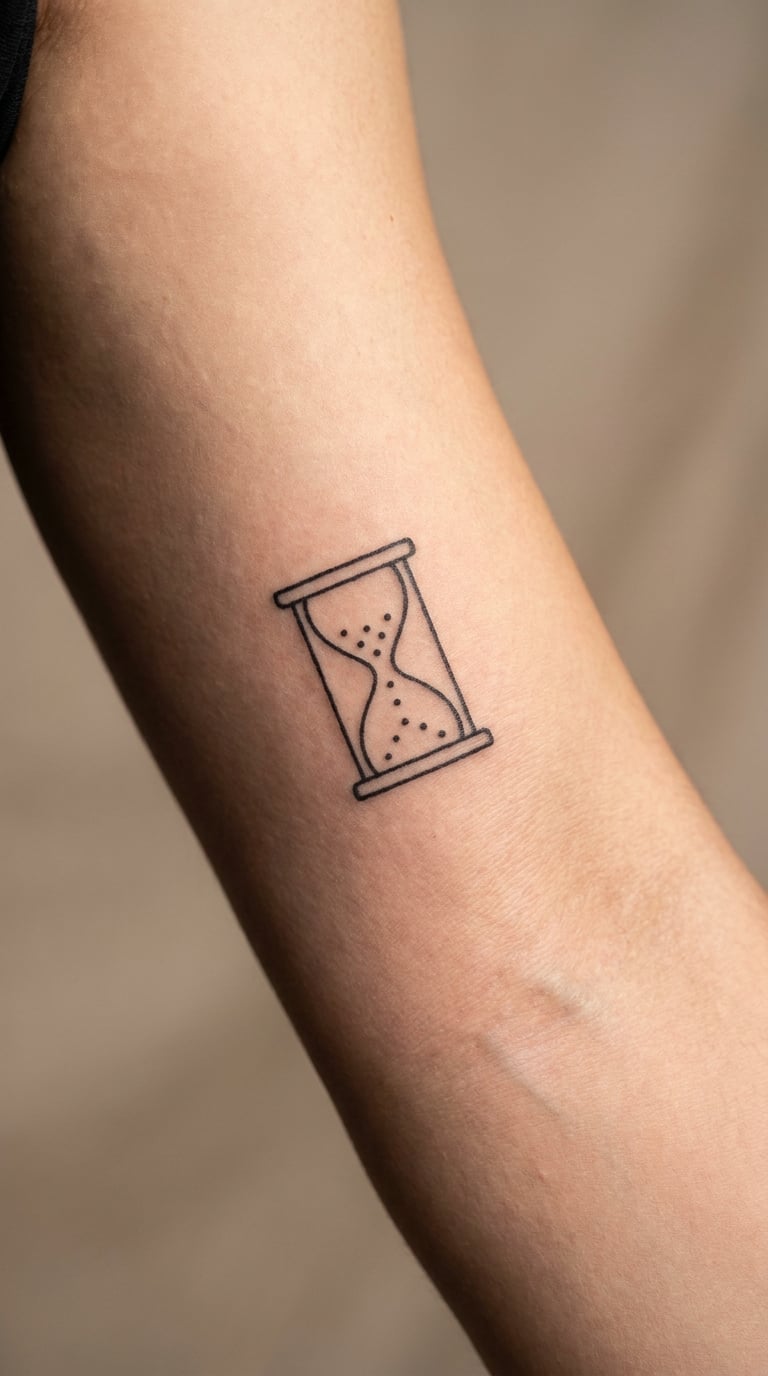
An hourglass draws on the memento mori tradition, where objects like this mark the fact that time is finite. Men often choose it for priorities, urgency or a reminder to use the years properly, though it can also read as patience. The restraint is what makes it work: two solid shapes, a frame, and a handful of grains rather than a stream.
Placement: inner bicep, forearm, or the chest. Size: 2 to 2.5 inches tall. Style: blackwork, solid silhouette. Pain: low to medium. Solid fills hold their shape well, which makes this a good design if you want something small that still reads from across a room.
Make it yours: have the frame drawn as two thin lines instead of solid blocks, and add a single date on the upper plate.
8. Tree of Life Roots
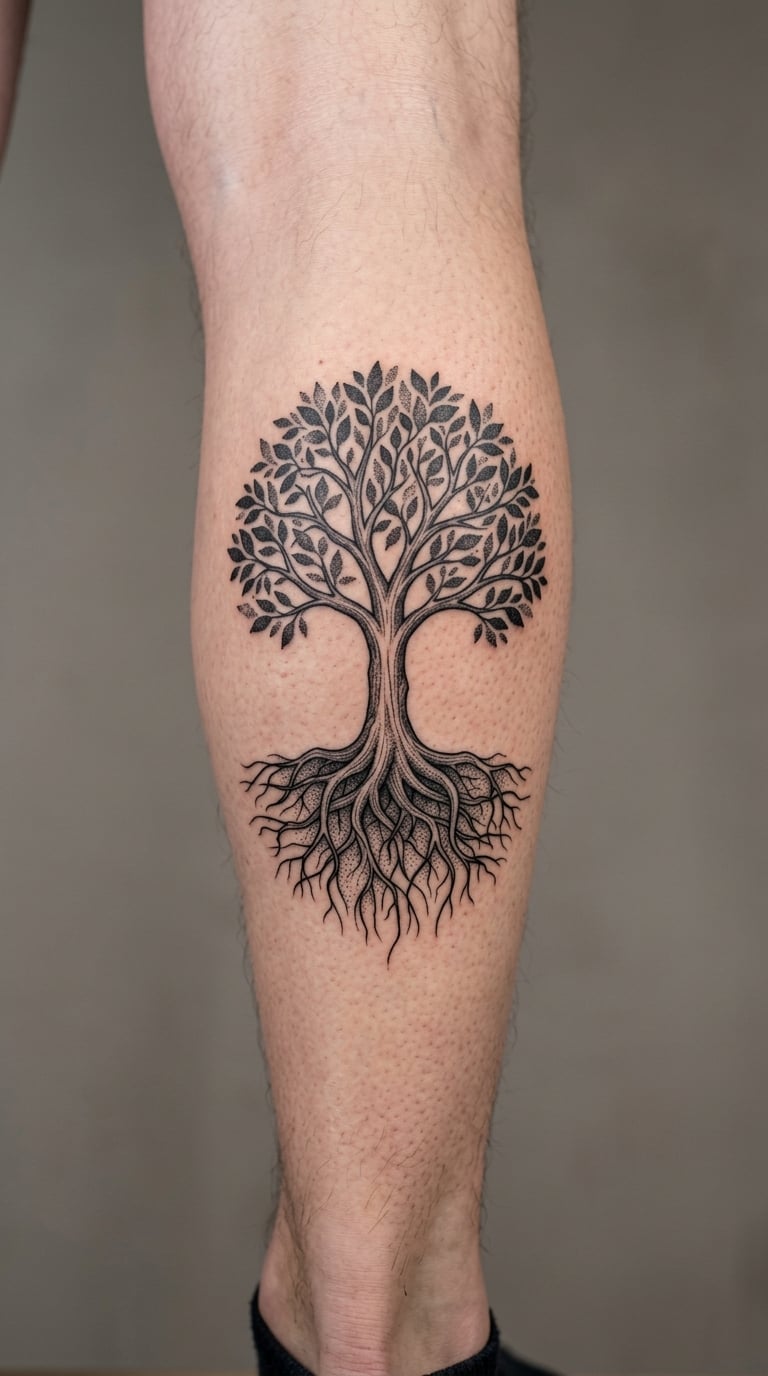
A roots-and-branches tree is one of the most requested symbols in tattoo galleries, usually for family, resilience or growth from a difficult period. The strongest versions show the roots as clearly as the canopy, since the roots are what tie the piece to its meaning. A balanced silhouette with stippled root texture works better than heavy realism at this size.
Placement: outer calf, forearm, or centred on the chest. Size: 4.5 to 6 inches tall. Style: blackwork, illustrative. Pain: medium on the calf, higher on the ribs. Fine root lines are the part that softens first, so ask for a bolder line than the reference photo shows.
Make it yours: add a few small leaves, or a handful of initials hidden in the root spread, so the tree carries a specific person.
9. Home in One-Line Lettering
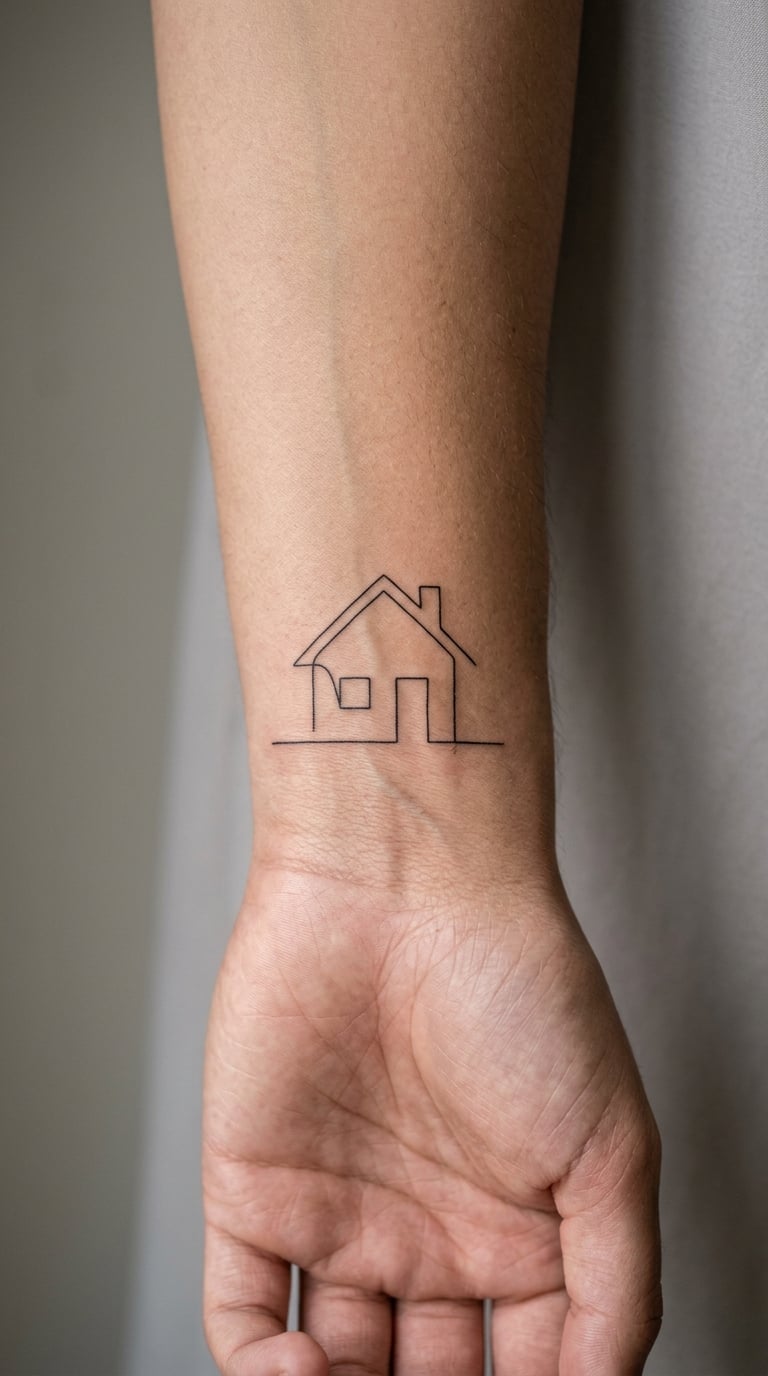
One continuous line draws a house, a doorway or a single word, and the simplicity is the point. It can stand for a childhood address, a person who made a place feel like home, or the idea of building one. Because there is no shading, the design sits quietly on the skin and reads as deliberate rather than decorative.
Placement: inner wrist, inner forearm, or behind the ear. Size: 1.5 to 2.5 inches wide. Style: fine line, one-needle script. Pain: medium. The inner wrist is bony and the skin moves a lot, so line weight matters more here than anywhere else. Ask the artist to test the line weight at your chosen size before the full piece.
Make it yours: draw the outline of the house you grew up in rather than a generic home, with no windows or door, so it stays abstract.
10. North Star Constellation
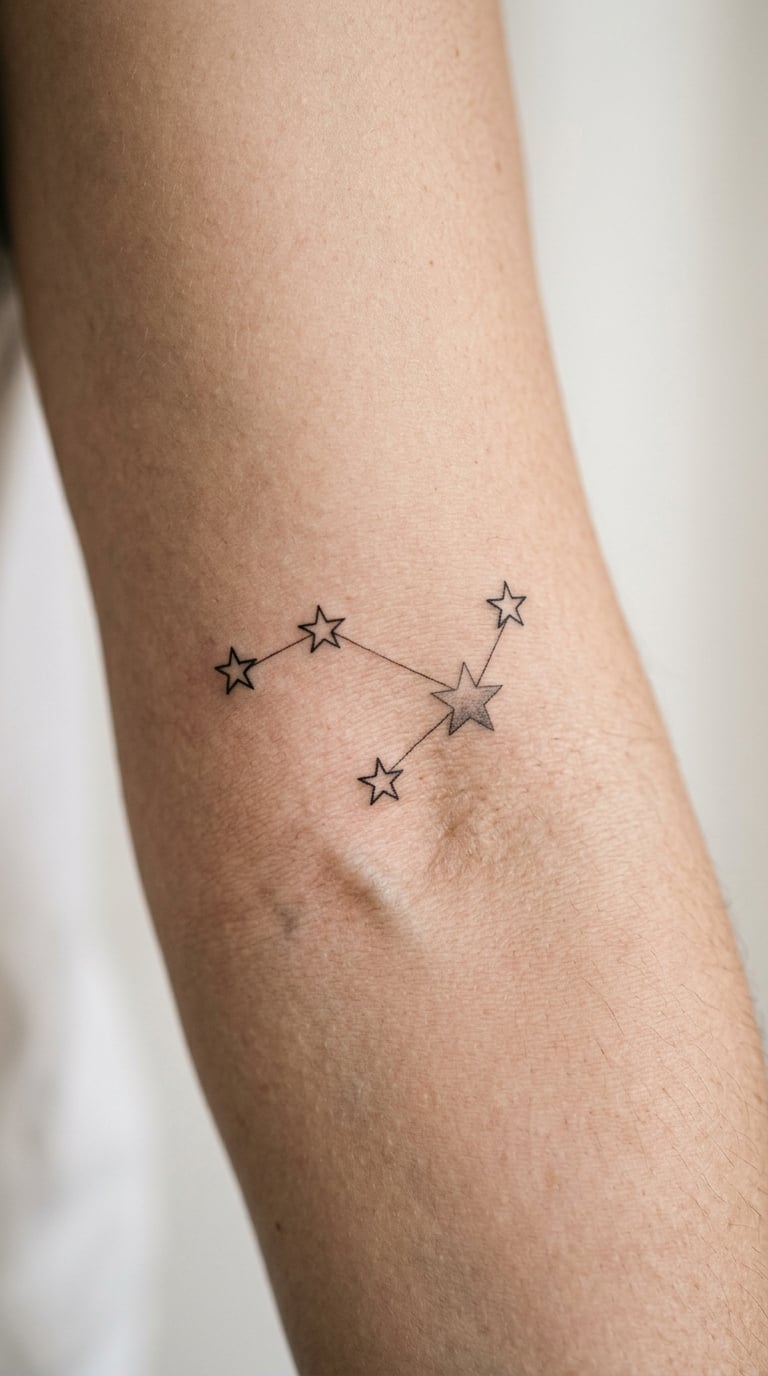
A constellation uses the real star positions of a specific date, so it can mark a wedding, a birth or the night something happened. Guides and travellers have long used the north star for direction, and that meaning carries into the tattoo. One star is usually shaded or outlined slightly heavier so the eye knows where to land.
Placement: just inside the elbow crease, upper arm, or behind the ear. Size: 1.5 to 2 inches wide. Style: fine line with micro dots for the smaller stars. Pain: medium. The elbow crease stretches as the arm bends, so the connecting lines will soften noticeably over the years.
Make it yours: give the artist the exact date and location and let them plot the real sky, then mark one star in a muted colour.
11. Feather Quill
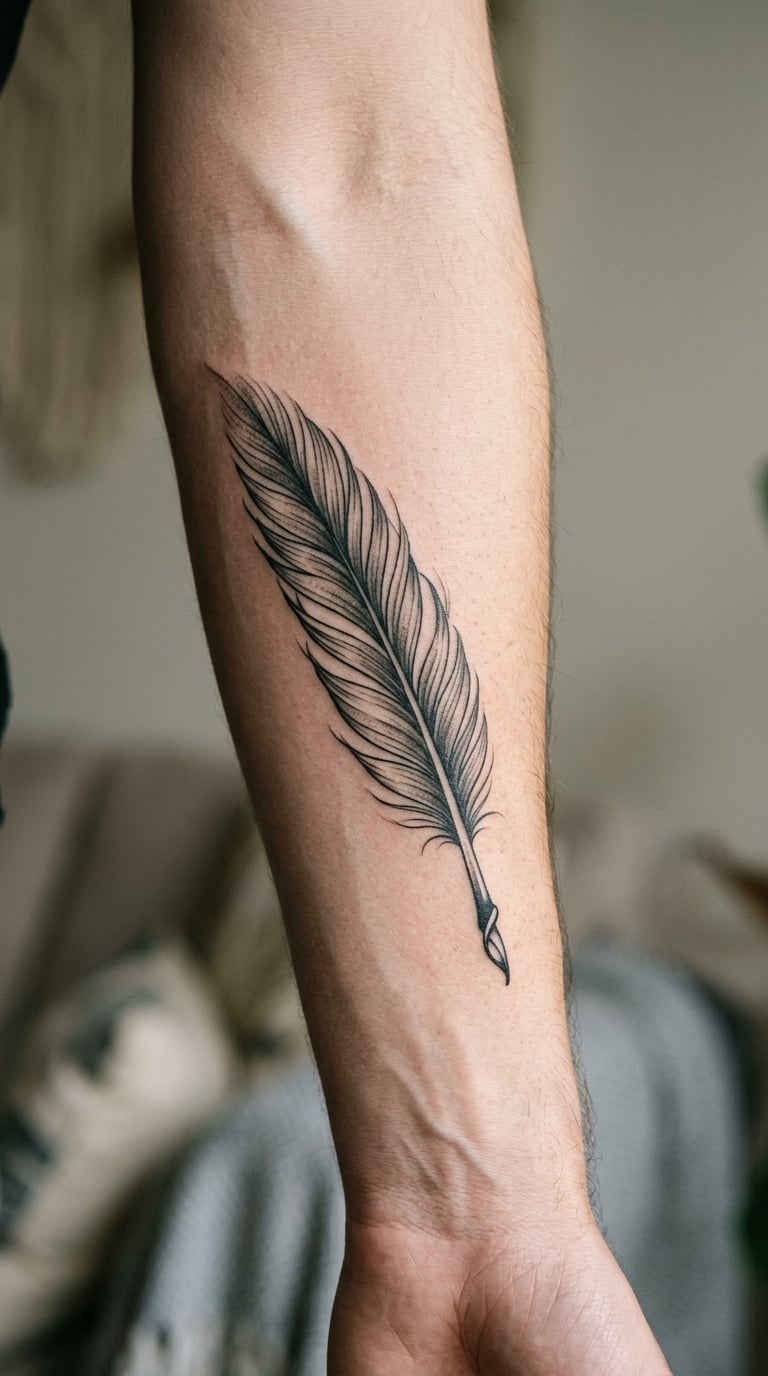
A single feather or quill is drawn with a central shaft and separated barbs fanning out to one side, sometimes with a nib at the base. It is associated with writing, communication and keeping perspective, and it quietly suits someone who spends time writing things down. Black and grey keeps it classic; a muted colour tip can lift it without turning it loud.
Placement: inner forearm on a diagonal, or the upper arm. Size: 3.5 to 4.5 inches long. Style: black and grey realism with restrained shading. Pain: low to medium. Barb detail is the ageing risk: the fine separations between them fill in over time, so keep the gaps wide.
Make it yours: have the feather carry a real ink line from a letter, worked into the shaft instead of drawn as text.
12. Snake Woven Around a Dagger
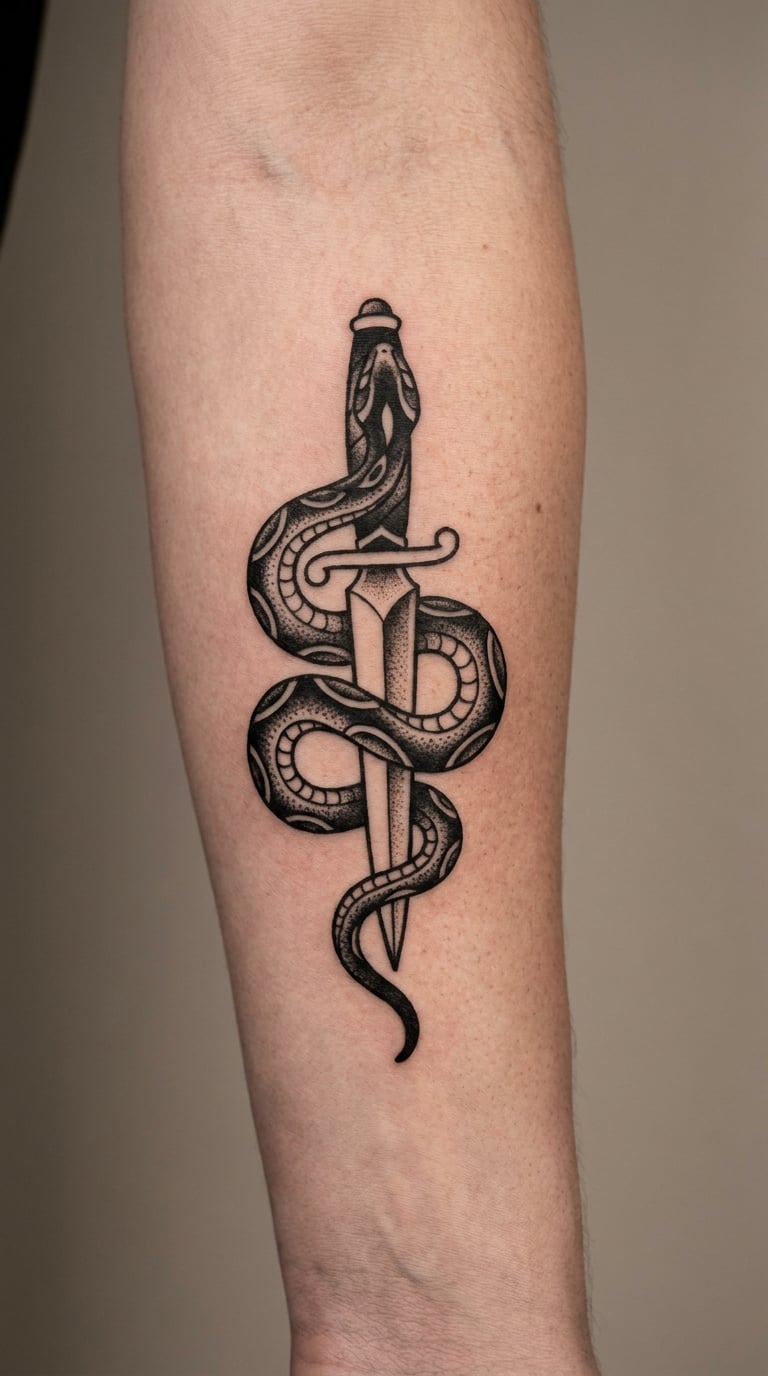
The snake-and-dagger pairing is old maritime tattoo language, sitting alongside the anchor, the swallow and the nautical star, and it once marked a seaman who had crossed an ocean. Today it is read as danger handled, protection, or simply a bold traditional image. Bold blackwork suits it; soft pastel versions of the same motif usually feel wrong.
Placement: outer forearm, upper arm, or the calf. Size: 4 to 5 inches long. Style: bold blackwork or American traditional with heavy outlines. Pain: medium. At five inches the piece is a two-to-three hour sitting, and the dagger end near the wrist feels more than the coil.
Make it yours: replace the dagger with a single object from your own story, keeping the snake wrapped around it in the same way.
13. Owl in Profile
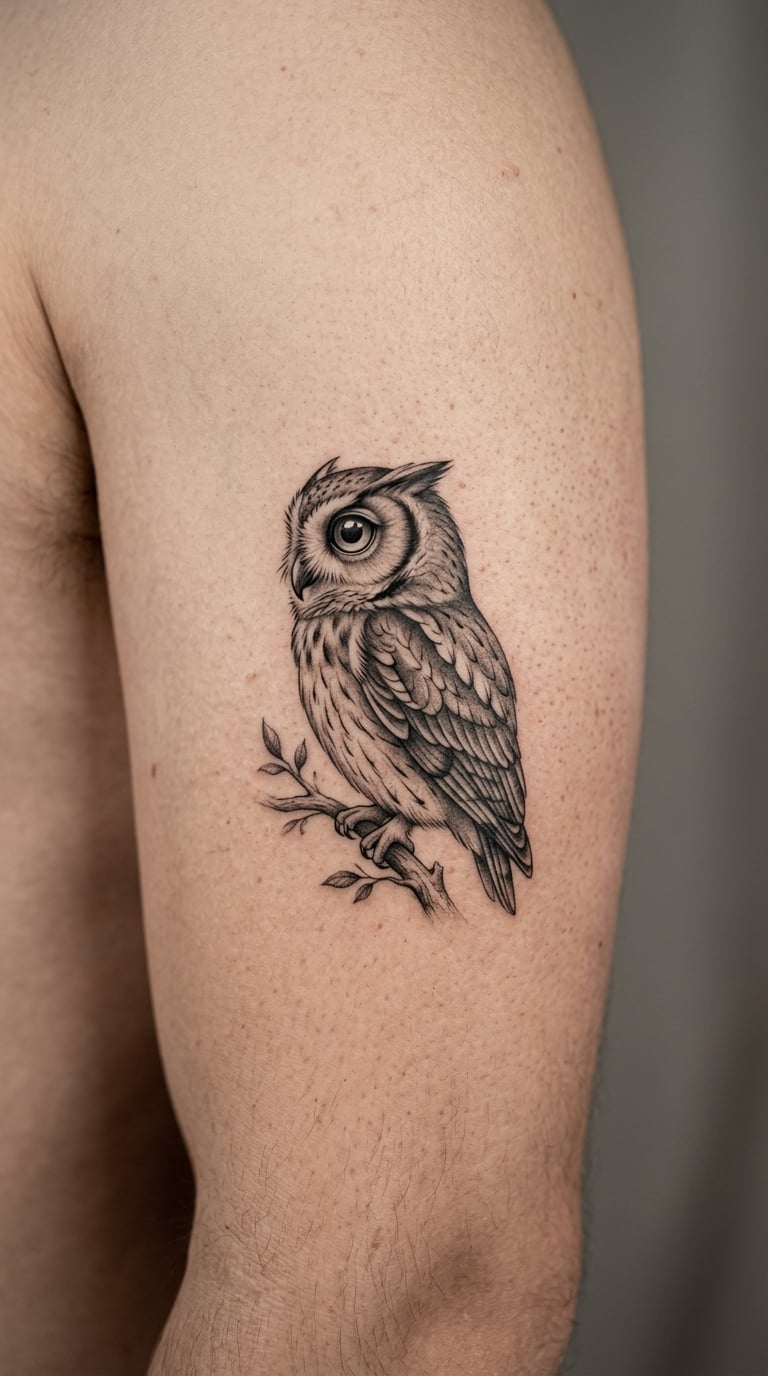
An owl in profile is drawn facing one direction, with a rounded head, a defined eye and folded wings. Wisdom, awareness and seeing a situation clearly are the usual reasons people choose it, and owls also carry a long association with night and observation. The detail that sells it is the eye, not the feathers.
Placement: upper outer arm, chest, or the back of the calf. Size: 2.5 to 3.5 inches tall. Style: micro-realism or black and grey. Pain: medium. Feather micro-shading is exactly the kind of detail that softens, so at three inches the artist should simplify rather than chase photographic texture.
Make it yours: have the owl face a specific direction, and pair it later with a small companion bird on the opposite arm.
14. Anchor with Rope
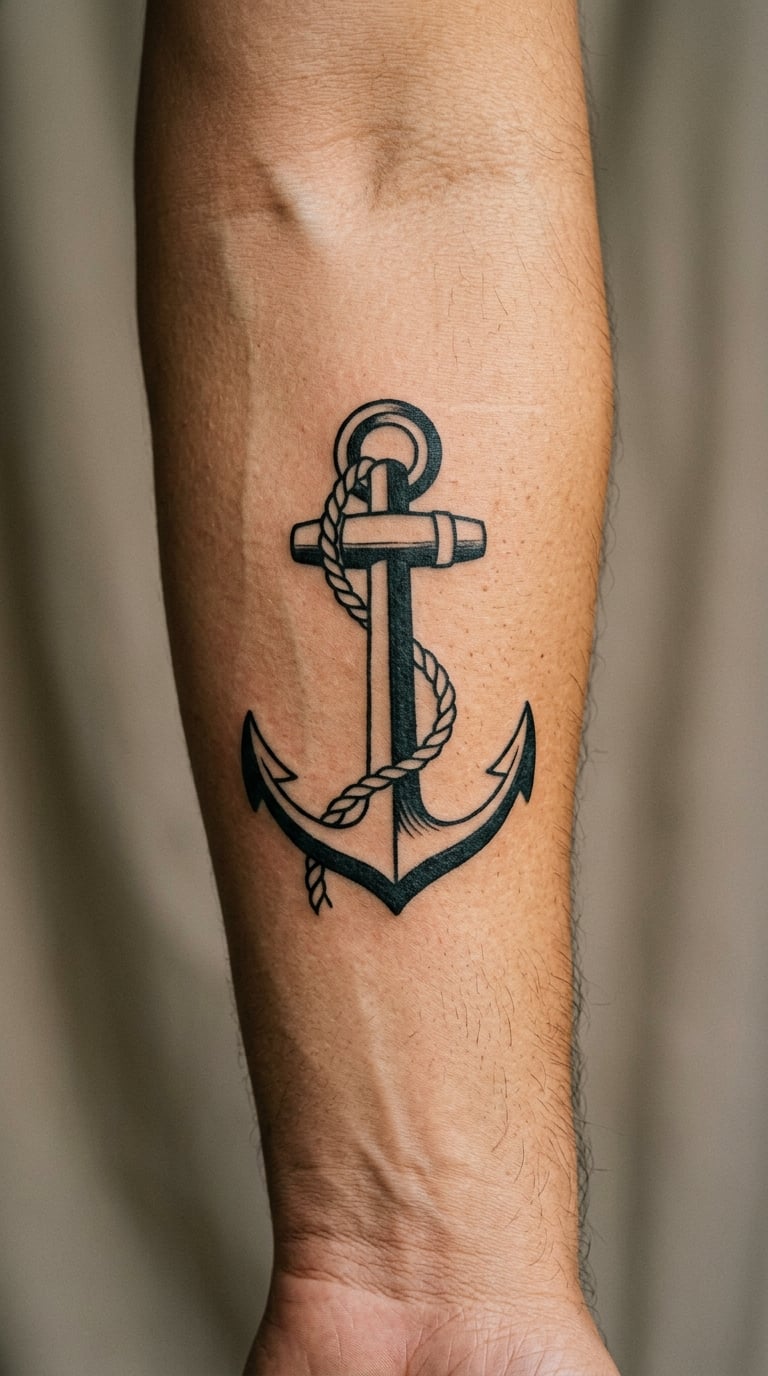
The anchor is maritime through and through, standing for stability, hope and staying put when conditions are bad. It is one of the oldest motifs in Western tattooing, which is why it reads as classic rather than trendy. A simplified version with one loose rope and a clean ring at the top feels modern without losing the symbol.
Placement: outer forearm, calf, or the inner upper arm. Size: 3.5 to 4.5 inches tall. Style: American traditional with bold outlines and light shading. Pain: medium. Bold outlines stay sharp, so this is one of the better choices if you want a traditional design that still looks right in twenty years.
Make it yours: use a rope knot tied in a specific way, or have a small weathered detail added where the anchor meets the flukes.
15. Wave and Sun
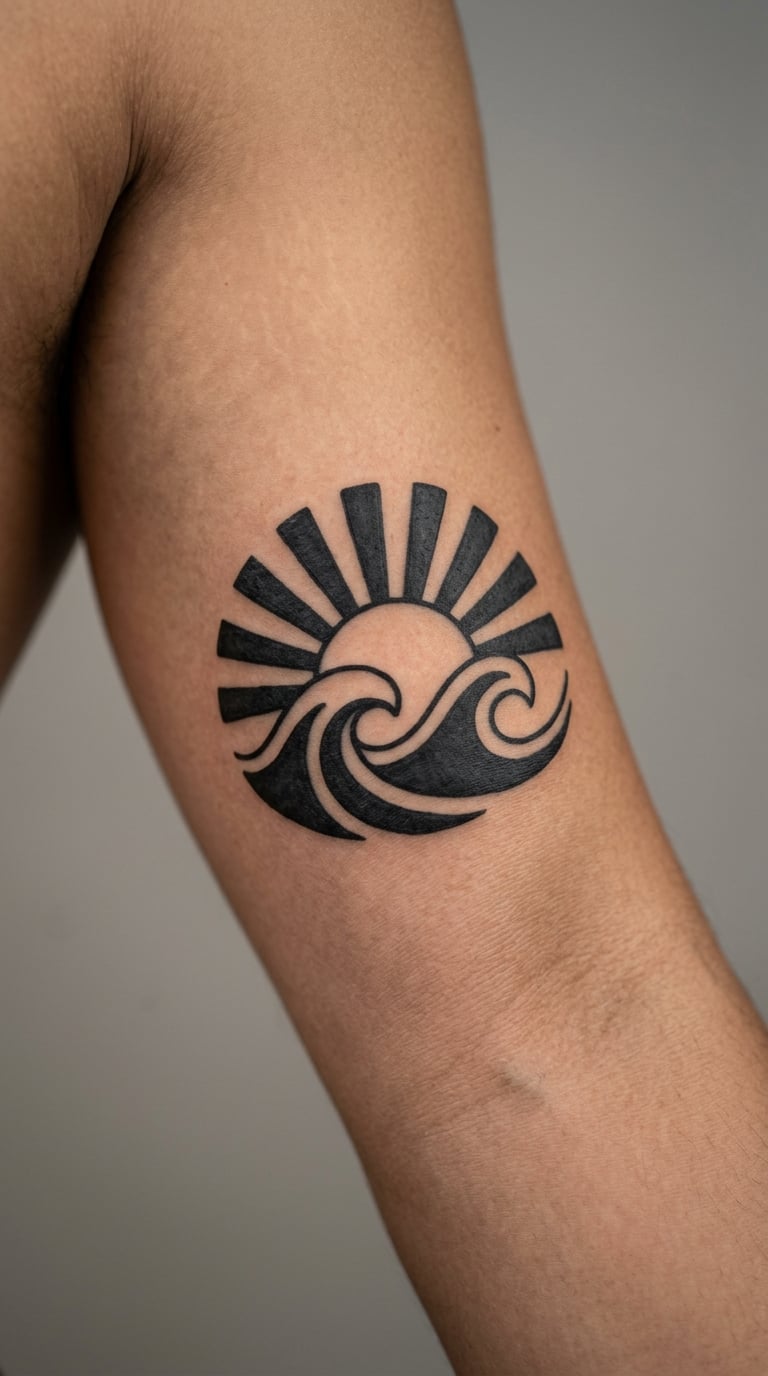
A rising sun over two curved waves is a coastal composition that can stand for calm, cycles, optimism or a life lived near the water. Traditional American versions use thick black outlines with flat colour inside the rays, while fine-line versions keep the same shapes in a single weight. The negative space between the two waves is what keeps it readable.
Placement: inner upper arm, outer forearm, or across the calf. Size: 3.5 to 4.5 inches wide. Style: traditional American, colour optional. Pain: medium. Colour on an outer forearm or calf fades faster because of sun exposure, so expect a touch-up on the reds and yellows. If the sun is the main event, our guide to 20 best sunrise tattoo ideas with meaning is worth a look.
Make it yours: pick a specific sunrise direction and set the sun at the back of the composition, which changes the balance of the whole piece.
16. Infinity Symbol with Grounding Line
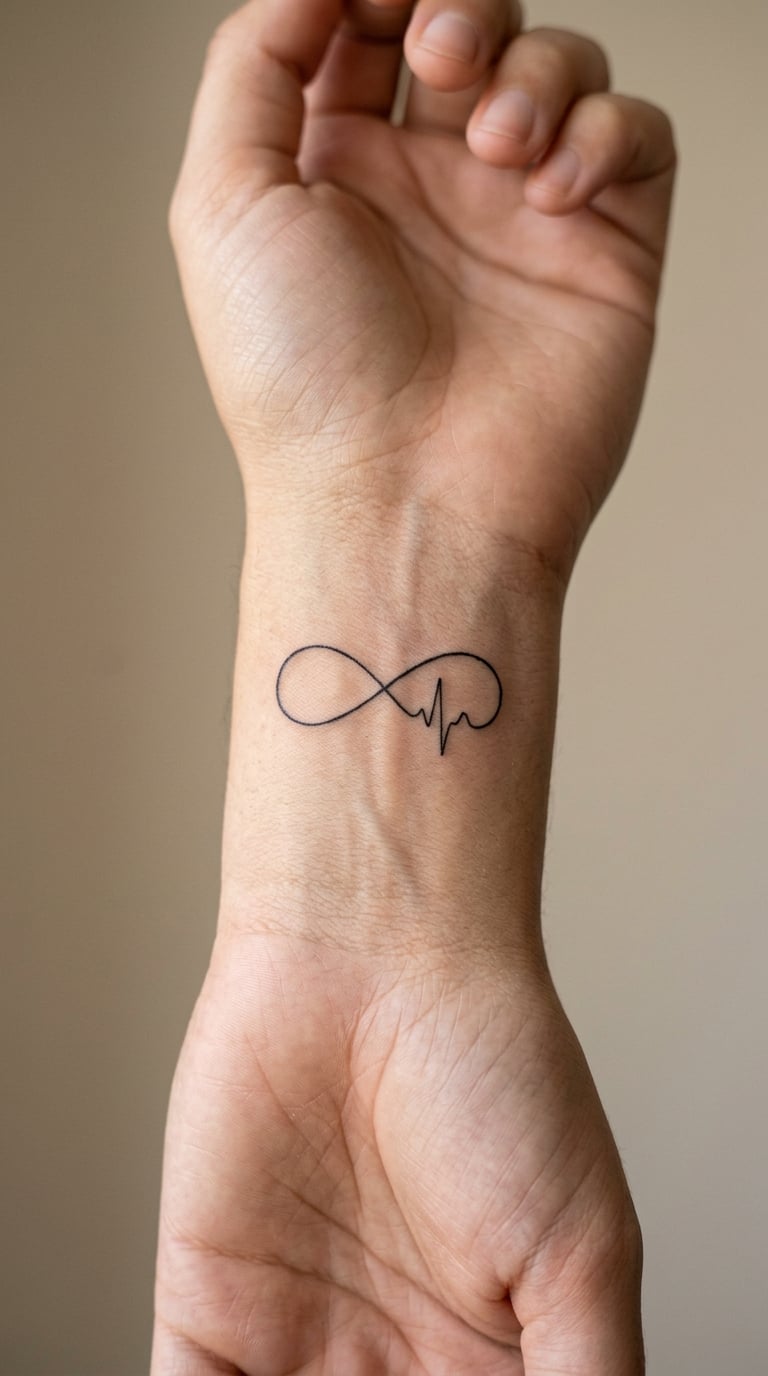
An infinity symbol on its own is small, balanced and quick to heal. Many men add a single heartbeat line running through it, which quietly shifts the meaning from endlessness to life and health, or to a specific person. The line has to cross at the exact centre of the symbol, otherwise the whole thing looks accidental.
Placement: inner wrist, behind the ear, or the ankle. Size: 1.5 to 2 inches wide. Style: fine line, single weight. Pain: medium. Wrist and ankle placements are bony and take a fair amount of fiddly line work, so the session runs longer than the size suggests.
Make it yours: replace the heartbeat with a horizon line or a short path, but keep it to one extra element so the piece stays calm.
17. Semi-Colon
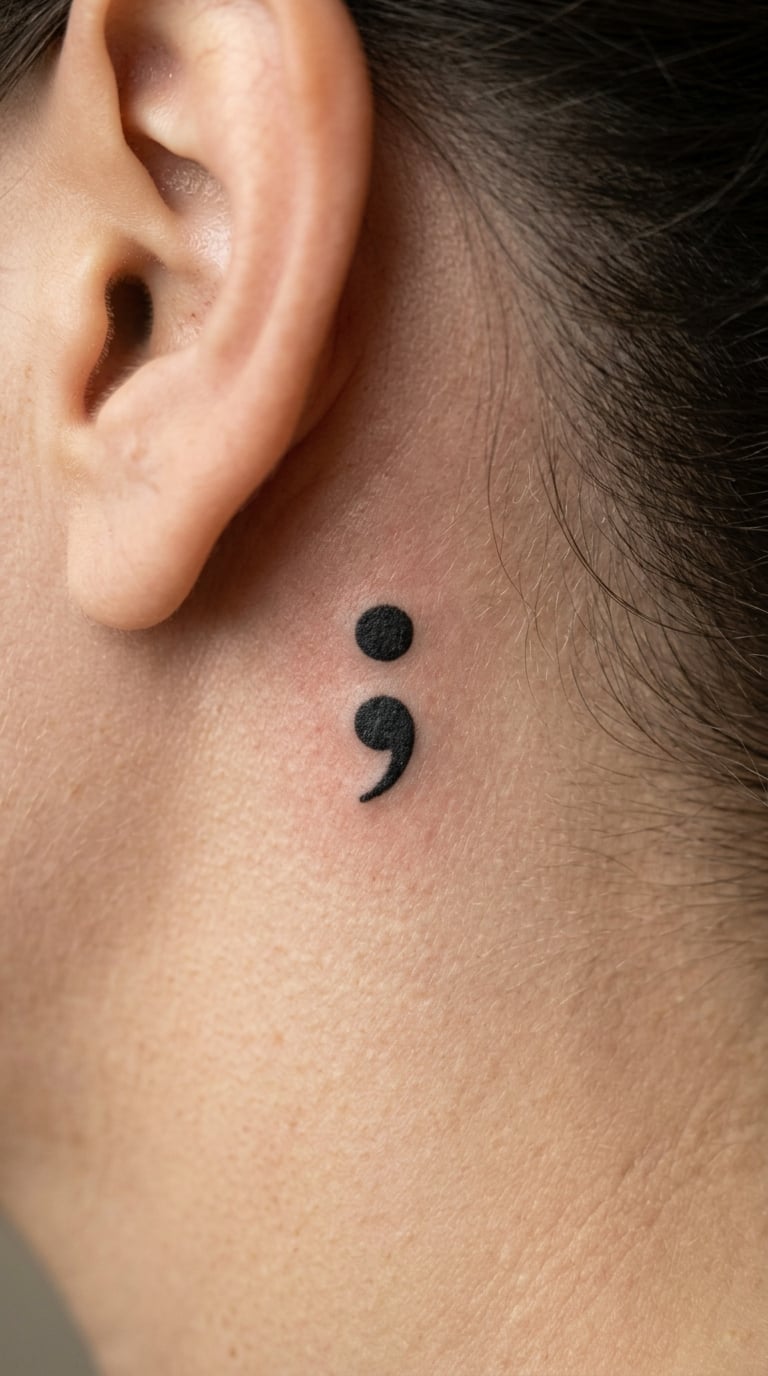
A semicolon began as a movement mark in 2013, and it is now worn by people connected to mental health recovery, suicide prevention and the survival of a crisis. A dot above a comma, no other symbols, is the whole design. Behind the ear suits it because it is nearly invisible in conversation and entirely visible when you want it to be.
Placement: behind the ear, inner forearm, or the sternum. Size: 0.75 to 1 inch tall. Style: minimal black, bold line. Pain: medium. The skin behind the ear is thin, and the curve means the artist works slowly in sections rather than in one pass.
Make it yours: have it drawn in a slightly heavier weight than a hairline mark, which is what keeps a tiny symbol readable years later.
18. North Star with True North
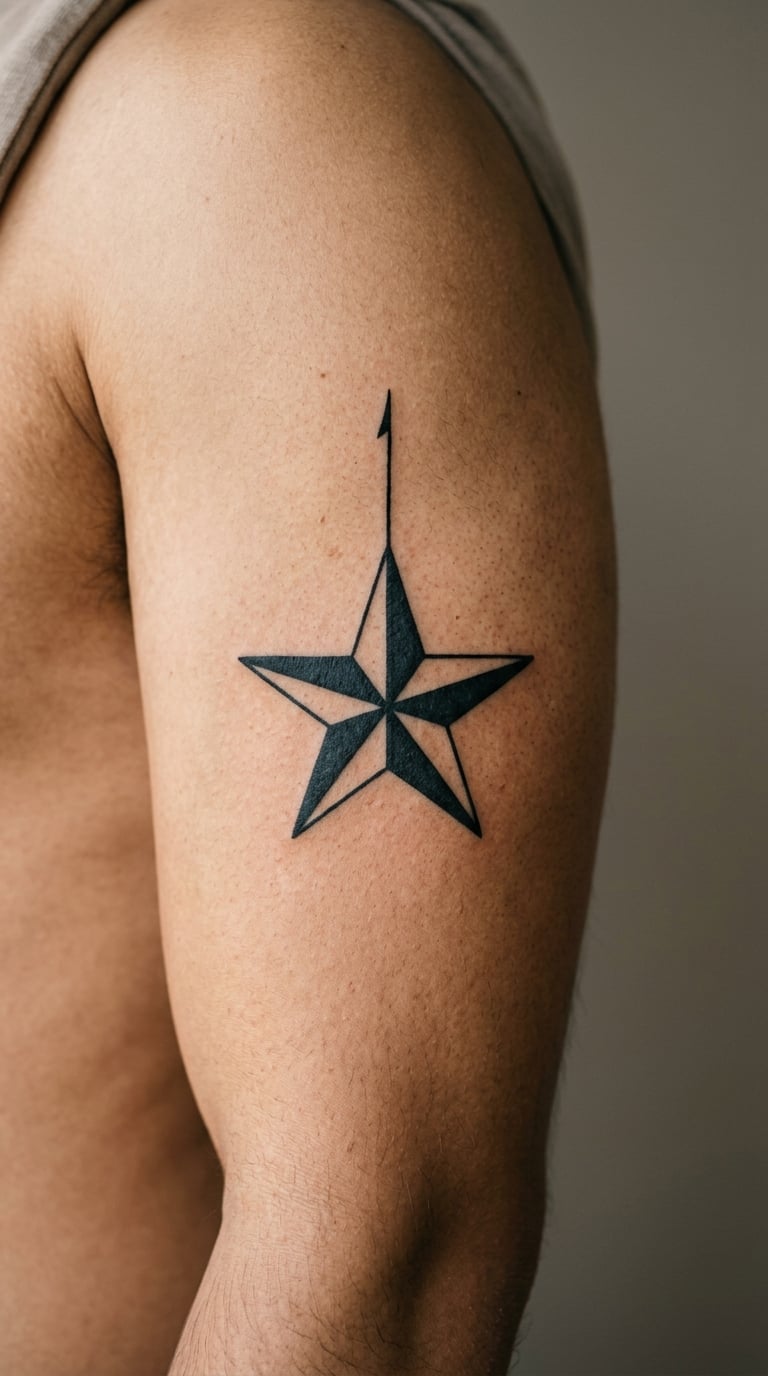
The nautical star is the compass rose reduced to its essentials: an eight-pointed star with one point longer, which is the north point. Sailors used it as a navigational marker, and today it reads as guidance, being someone’s north star and knowing your way. It is bolder and more graphic than a fine-line compass rose, so it works better on a larger placement.
Placement: upper arm, chest, or the upper back. Size: 2.5 to 3.5 inches across. Style: traditional clean linework, black. Pain: medium. The long points and sharp inner angles need a steady hand, and the chest feels more than the upper arm.
Make it yours: let the extended north point double as an arrow, so the design carries both the navigation and the forward-motion readings at once.
19. Phoenix Rising
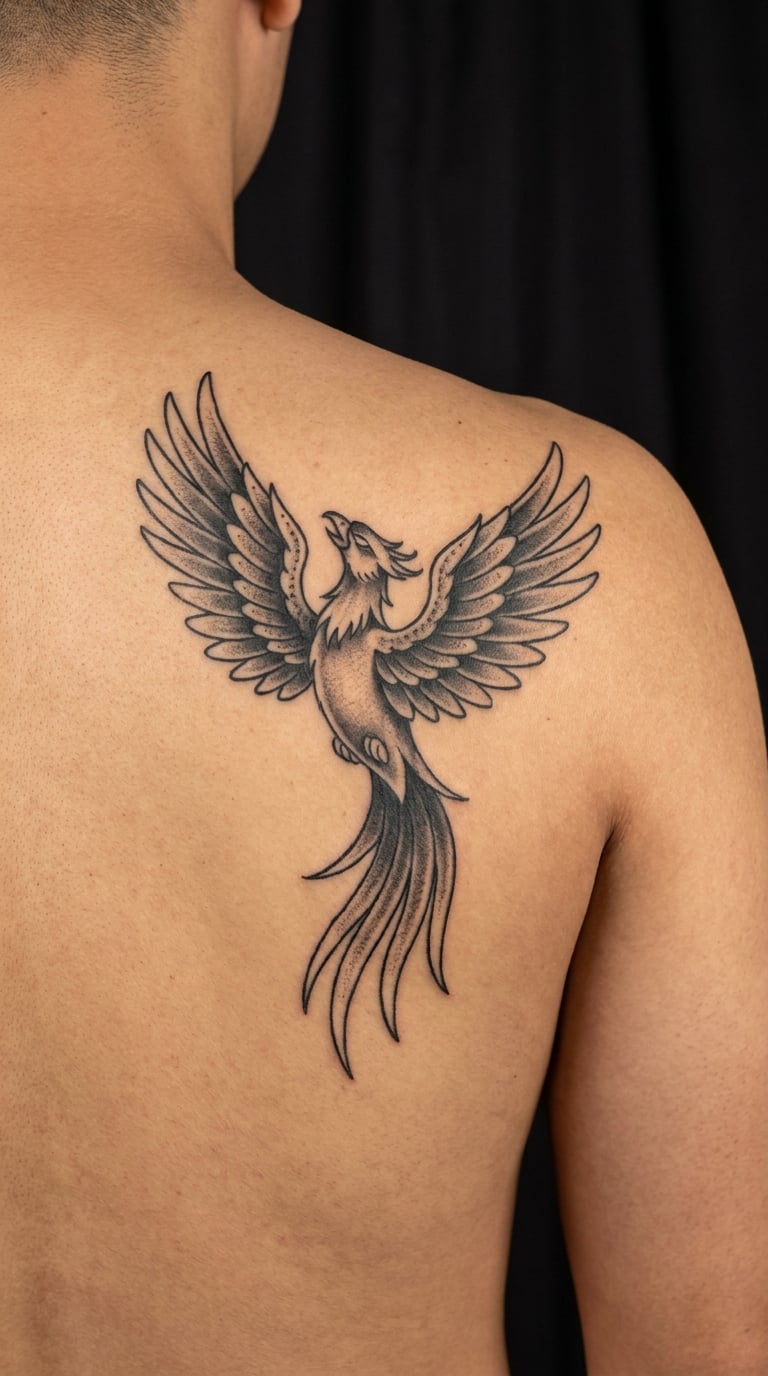
The phoenix is the most requested rebirth symbol in tattoo galleries, standing for transformation, recovery and starting again after something ended badly. The bird is usually drawn rising, wings open, with a few flame shapes underneath. Whether it is a good choice depends on the size you are willing to give it, because feather detail at four inches will not survive.
Placement: across the shoulder blade, upper arm, or the chest. Size: 5 to 7 inches wide. Style: black and grey, illustrative or traditional. Pain: high on the shoulder blade, which is one of the more sensitive spots on the body. A piece this size is two to four hours and usually more than one sitting.
Make it yours: keep the wings to five or six clean feathers and drop the flame detail entirely, which is the difference between a phoenix that ages well and one that turns soft in a decade.
20. Native-Language Word Meaning Home
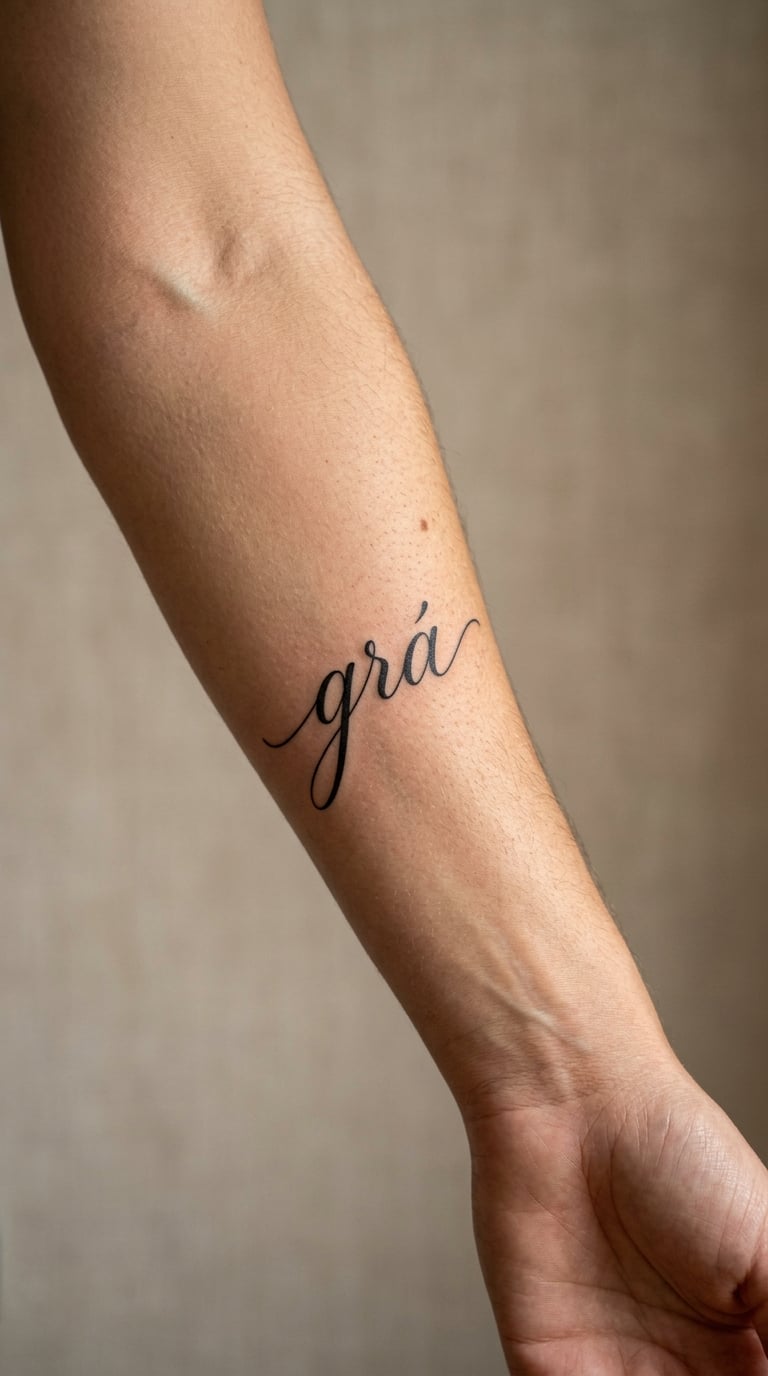
One word in a language that matters to you, sometimes the home language of a parent or grandparent, is quietly one of the most personal tattoos a man can get. The work here is in the lettering: consistent hand, correct spelling, and a clear line weight. Translation accuracy matters, so have the word checked by a native speaker or a qualified translator before the stencil goes on.
Placement: forearm, inner bicep, or the chest. Size: 2 to 3 inches wide. Style: hand lettering in black, fine line or bold. Pain: medium. Lettering with diacritics needs extra time, and the forearm curves, so the word should be drawn slightly arched to follow the limb.
Make it yours: choose a word you can pronounce aloud and explain to a stranger, which is usually a better choice than a phrase you cannot.
21. Fingerprint Trail
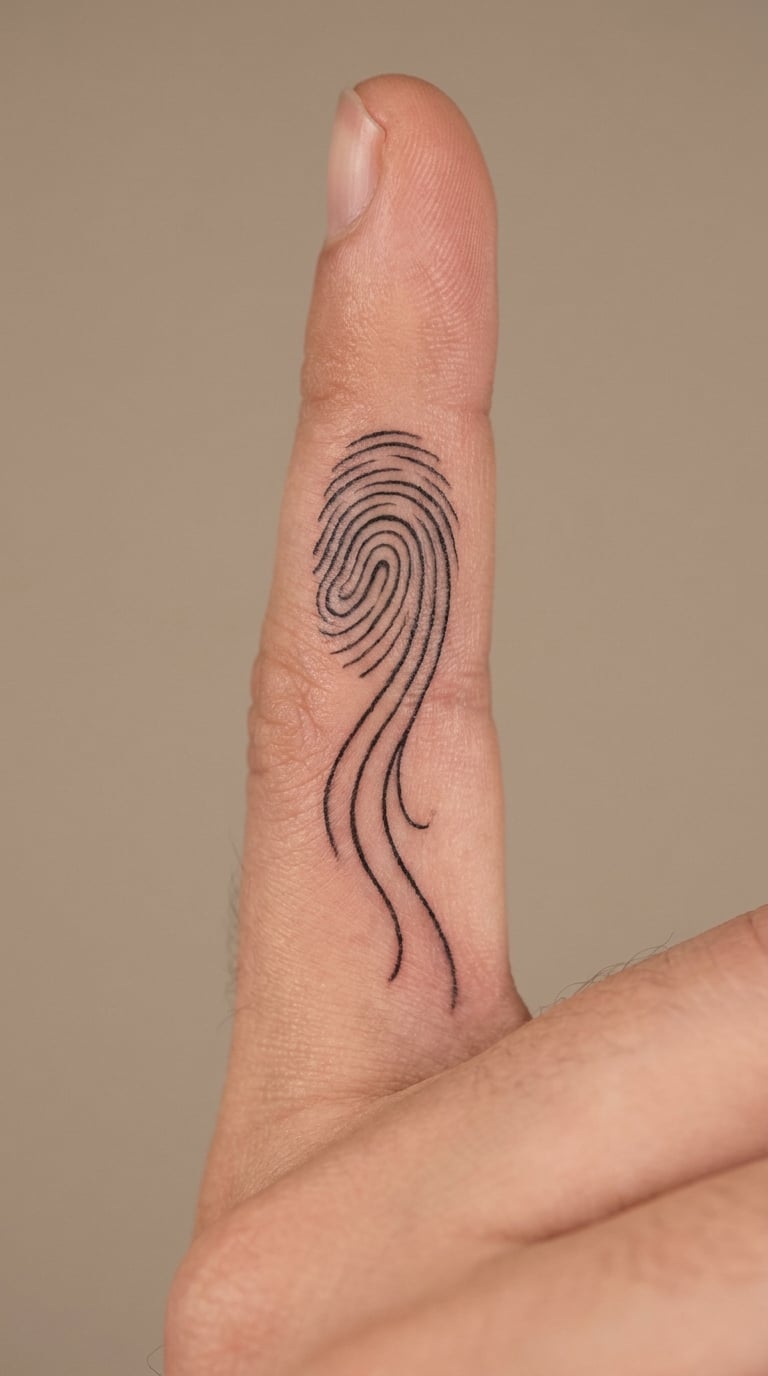
A fingerprint can be a real one from your own hand, your child’s hand or someone who is gone, drawn as fine parallel ridges that trail away into a few flowing lines. It carries identity, uniqueness and sometimes a person you do not want to forget. Fine-line realism is the right style here, but the ridge spacing has to be wide or the whole thing fills in.
Placement: the side of the index finger, or along the outer hand. Size: 2 to 2.5 inches long. Style: fine-line realism. Pain: high. Finger skin is thin, bony and constantly in motion, and the ink tends to settle into the ridge lines themselves, which softens the edges early.
Make it yours: use a real fingerprint scan rather than a stock image, and ask for the trails to be slightly bolder than the ridges so the outline survives.
22. Hand-Pressed Diamond
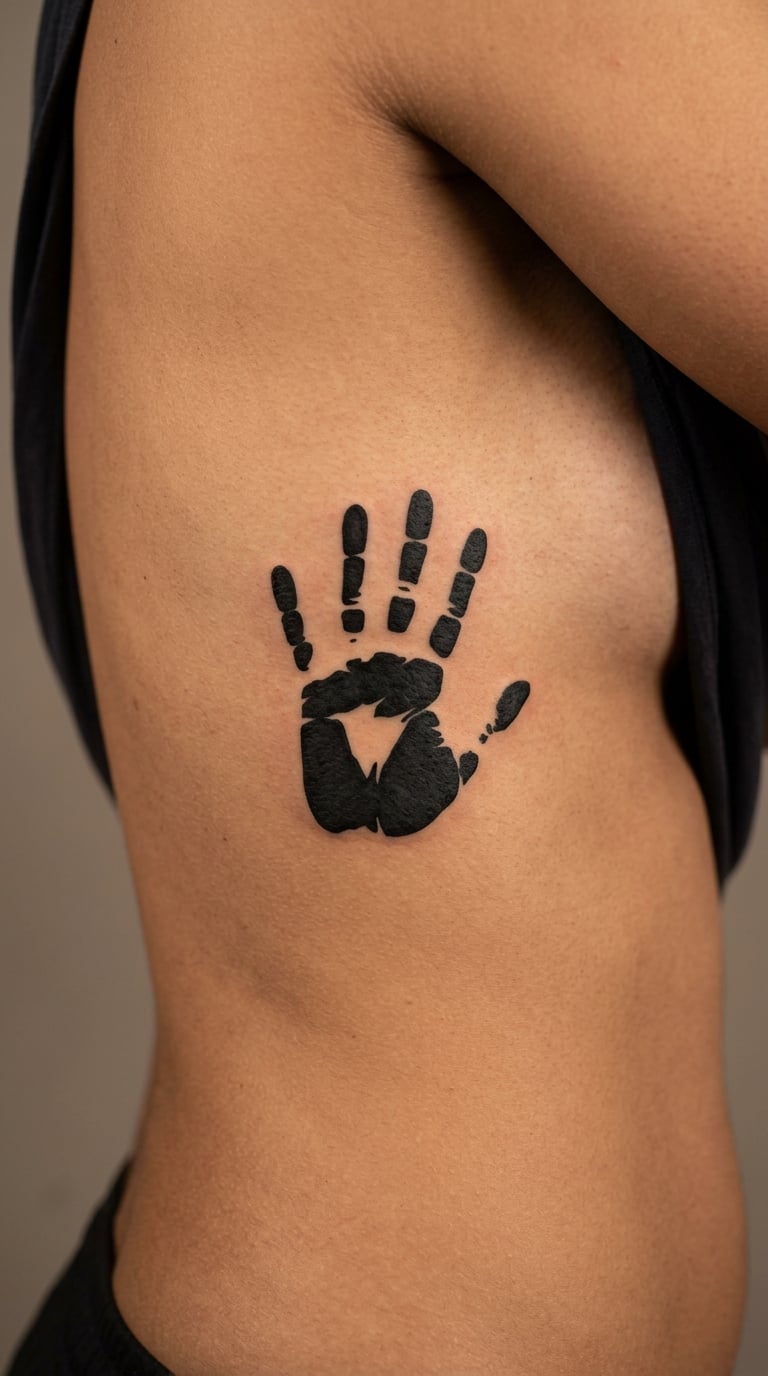
A handprint is usually pressed in ink, photographed, then reduced to line art or solid black before it becomes a tattoo. The meaning is family, identity, a partner or a newborn, and a real print has far more weight than a traced version. A simplified palm with bold fingers and no palm lines is what tends to age well.
Placement: side of the torso, forearm, or the calf. Size: 2.5 to 3.5 inches wide. Style: bold line art or solid black silhouette. Pain: medium on the arm, more on the ribs. Hands distort when printed, so a professional photo of the print straightens it before the artist draws it.
Make it yours: mirror the real print rather than correcting it, which keeps it recognisable to the person it belongs to and nobody else.
23. Memento Mori Hourglass Skull
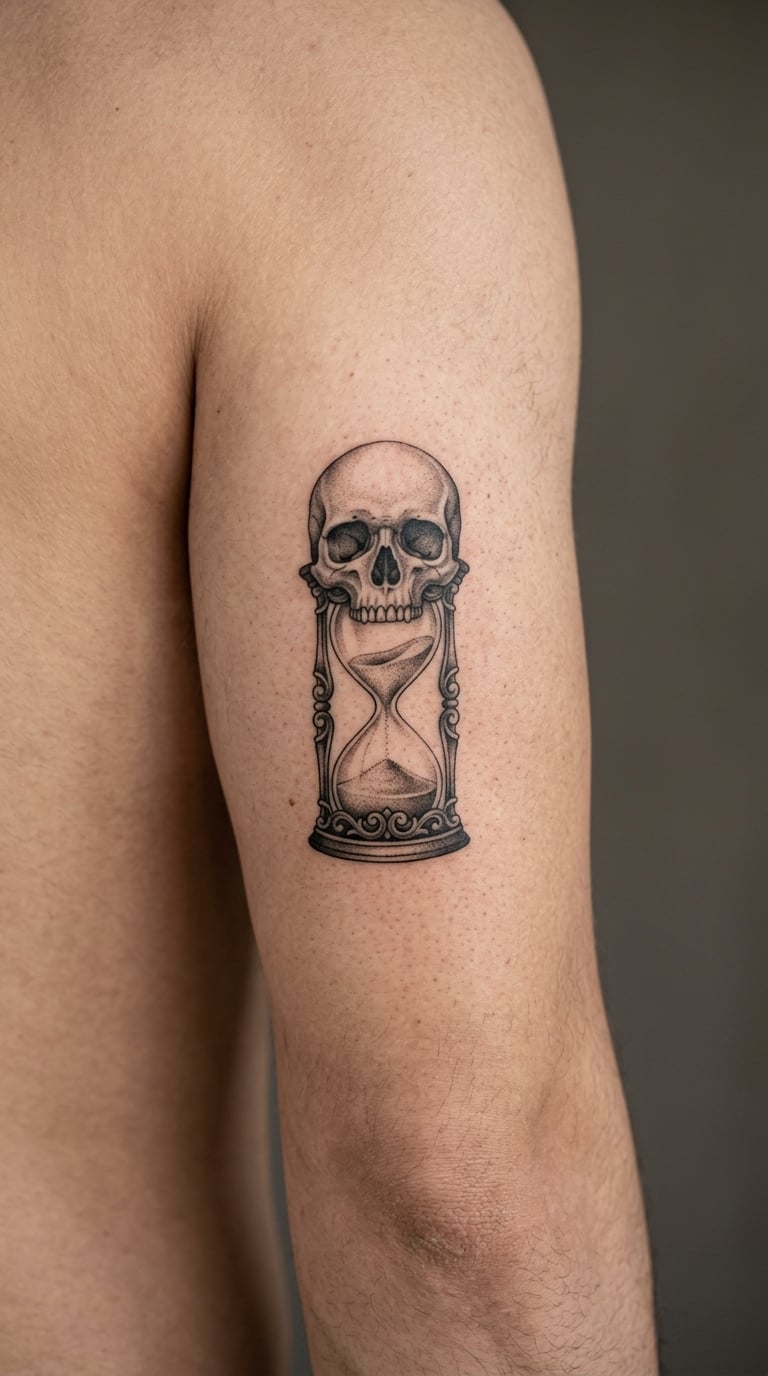
Skulls go back to the memento mori tradition, where a reminder of mortality was meant to make the present count. Merging the skull with an hourglass makes that idea explicit and gives the design one central shape to work with. It suits men who want mortality as a motivation rather than as something grim, and it reads as considered rather than morbid.
Placement: outer upper arm, chest, or the thigh. Size: 2.5 to 3.5 inches tall. Style: black and grey realism. Pain: medium. The face is the weak point: at three inches the artist should simplify the teeth and eye sockets, because fine facial shading blurs faster than anything else in a realistic piece.
Make it yours: let the hourglass sand fall through the skull’s eye sockets instead of below it, so the two halves stay one image.
24. Bicycle Route Line
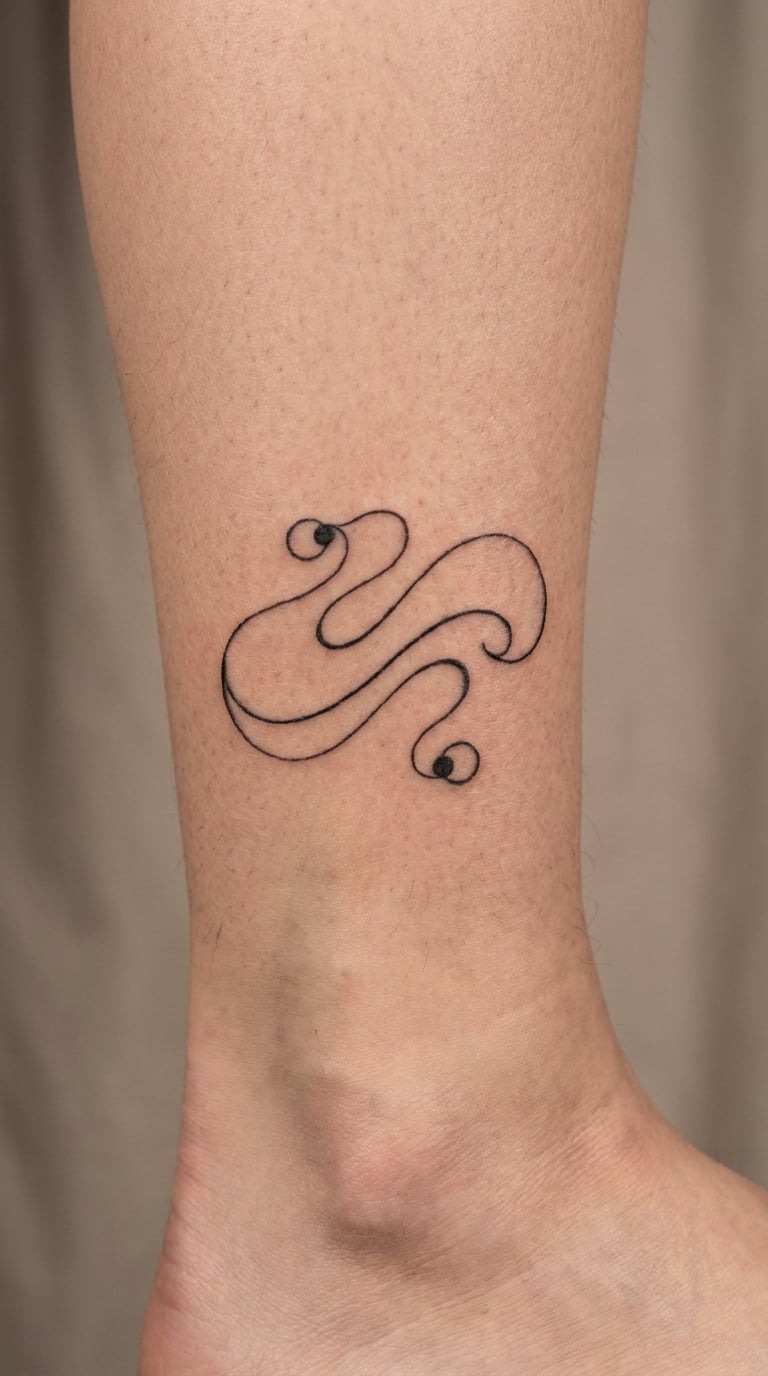
A mapped cycling route, with the actual road shape and two circular endpoints, records a ride that mattered: a first century, a charity event, a route done with someone you have lost. Because the line follows a real path, it looks specific in a way a generic mountain or wave never does. Keep it in one weight and let the shape do the work. There is more ground covered in our roundup of 18 travel map tattoo ideas with meaning.
Placement: calf above the ankle, forearm, or the shoulder. Size: 3.5 to 4.5 inches across. Style: fine-line cartography in black. Pain: medium. A route is hundreds of tiny turns, so expect a long session for a design this small, and expect the artist to need the map projected at tattooing size.
Make it yours: plot the real GPS trace of the ride instead of redrawing a map, and keep the endpoints as plain circles with no labels.
25. Minimal Mountain Compass Combination
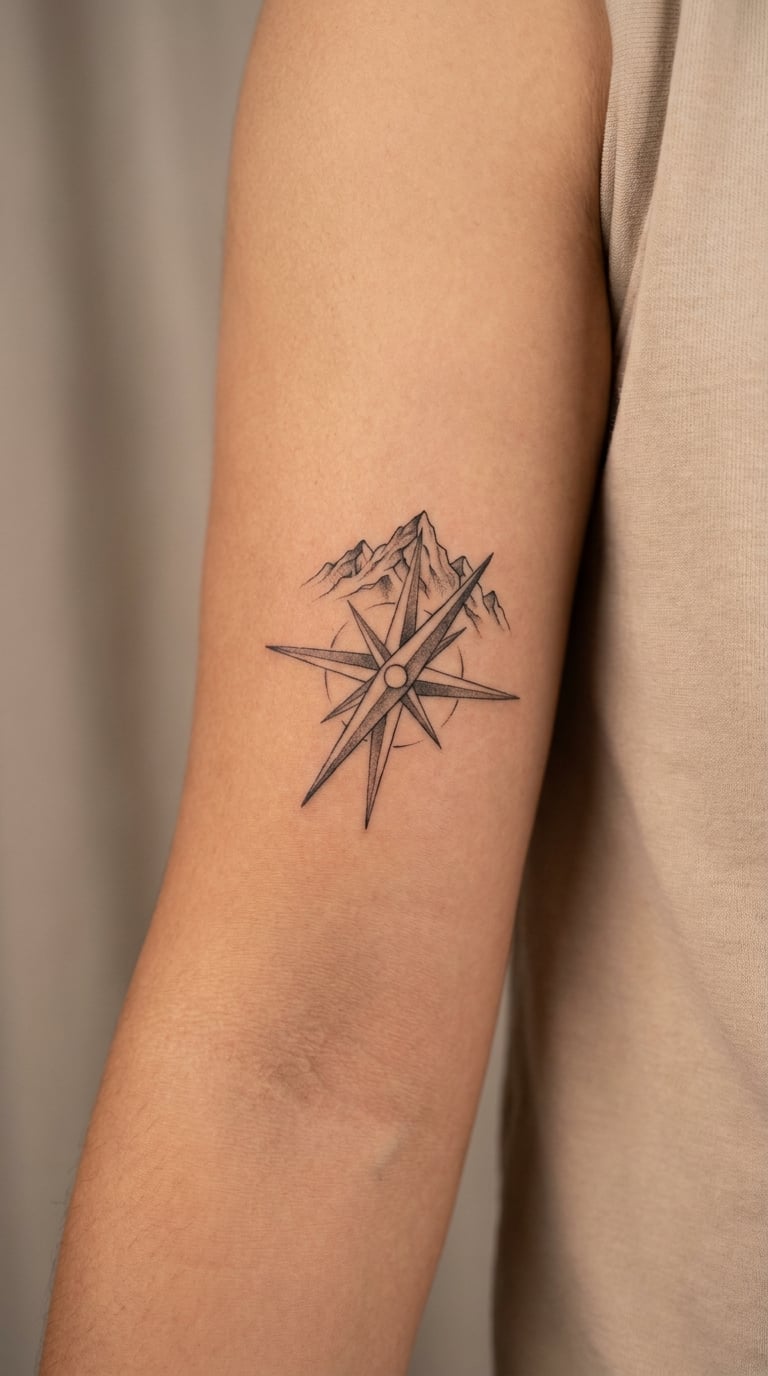
This combines two of the most requested symbols in one controlled image: a mountain range rising out of a single compass needle. The overlap is the whole point, and it only works if one element reads as foreground and the other as background. Fine line with light grey shading keeps the piece open, which is what stops it from looking like a logo.
Placement: inner upper arm, outer forearm, or the chest. Size: 3 to 3.5 inches wide. Style: fine line with light black-and-grey shading. Pain: low to medium. Combined designs take longer than either symbol alone because the artist has to plan where the lines meet before starting.
Make it yours: use three peaks and one needle rather than more, and let the needle sit slightly off-centre so the composition does not look symmetrical or stamped.
How to Choose the Right Design
Most regret in this category comes down to picking a symbol that looked good in a photo, not one you can explain. Five checks will narrow twenty-five options down to the right one.
1. Can you say what it means in one sentence? If the answer is vague, keep looking. A tattoo can mean whatever you want it to mean, so the pressure to make it elaborate is not real.
2. Does the style match the size? Fine line suits two to four inches and ageing well only when the line is medium-thick. Traditional and blackwork styles need four inches or more to show their detail.
3. Where will it sit on a moving body? The inner forearm stretches, the elbow crease bends, the finger sides wear against everything. Placement changes the design more than most people expect.
4. What will it look like in twenty years? Bold black fills and clean lettering hold up best. Micro-realism, tiny scripts and hairline detail are the first things to blur.
5. Does it fit the rest of your plans? If you are already planning a forearm sleeve, a small standalone piece on the same arm will eventually fight with it.
One practical first step: write the meaning on a card in plain words, in a single sentence, before you look at any reference images. That sentence usually picks the design for you, and it is also exactly what you will say at the consultation when someone asks what it is.
How to compare 25 tattoo ideas for men with meaning
Comparing 25 tattoo ideas for men with meaning comes down to two variables nobody expects: how much ink the design needs, and how much it moves once it is on. This table groups the 25 ideas above by visual weight, location, minimum readable size and personal detail.
| Visual weight | Ideas | Best location | Minimum readable size | Personal detail needed |
|---|---|---|---|---|
| Very light, one line | Compass rose, home lettering, infinity, semi-colon, arrow | Inner wrist, forearm, behind the ear | 1 inch | Very little |
| Light, one image | Mountain peaks, hourglass, feather, owl, north star, wave and sun, laurel | Forearm, upper arm, chest | 2.5 inches | A date or a single detail |
| Medium, two or three elements | Coordinates, constellation, snake and dagger, anchor, native-language word, bicycle route, mountain compass | Forearm, upper arm, calf | 3.5 inches | One accurate personal fact |
| Heavy, illustrative | Tree of life, phoenix, handprint, skull hourglass, fingerprint | Calf, shoulder blade, torso, hand | 4.5 inches | A real image, date or person |
Anything in the top row can be done in under an hour and hidden under a shirt cuff. Anything in the bottom row needs a proper consultation, a clear schedule for a second sitting, and a placement you will still be happy to see in a short sleeve.
Cost and Session Time
Tattoo pricing in the US follows two structures. Small work is often charged at a shop minimum, which covers a tiny piece and the chair time around it, and anything larger is billed by the hour, usually in blocks of an hour or a half hour.
A realistic split by size: fine-line and lettering pieces under three inches are usually a short single session of about an hour. Designs between three and five inches, with shading or many small marks, commonly take two to three hours and may be split across two sittings. A phoenix or a detailed tree of that scale usually needs three to five hours of work in total.
Price tracks artist reputation and detail, not size alone. A highly booked artist with a full book may charge well above the local average for the same two-inch compass, and a mid-tier artist with strong fine-line work can produce a better result for less. Shop minimums, city rates and travel costs all shift numbers, so ask two studios in your area for their current rate and hourly block before booking.
Set aside a touch-up window. Free touch-ups are common for six to twelve months on black and grey work, and colour that sees a lot of sun, such as on an outer forearm or calf, usually needs one sooner.
Aftercare Basics
These are the general points, but your artist’s instructions come first and replace anything here that differs.
- Follow your artist’s aftercare instructions exactly, and ask what they want you to use before you leave the studio.
- Wash the area gently with lukewarm water and unscented soap, then pat it dry with clean hands rather than a towel.
- Protect it from sun and friction: loose clothing over the first few days, no tight sleeves or watch straps on a fresh forearm piece.
- Watch how it settles rather than touching it. Itching, flaking and a dull look in the first two weeks are normal parts of healing, not a sign something went wrong.
- Contact the studio if redness and swelling spread beyond the tattoo, if the ink stays run-looking after the first week, or if anything simply feels wrong before you are due for a check-in.
Frequently Asked Questions
What is the best first meaningful tattoo for a man?
A fine-line compass rose, a geometric arrow or a Roman numeral date are the safest first choices. Each has one idea, a clean outline and enough negative space to look good before it is fully healed. Pick something between two and three inches on the inner forearm, and go to a shop that does the style you want rather than the closest one. A first tattoo is mostly about learning how the process feels, not about making a statement.
Which meaningful tattoo designs stay readable at a small size?
Simple outlines with no interior detail survive best at small sizes: an arrow, an hourglass, a single star, a semicolon or a one-line word. Anything with shading, faces or multiple thin lines needs roughly half an inch of height per detail, so it belongs at three inches or more. Ask the artist to test the line weight at your chosen size before starting, since a design that looked delicate in a photo usually needs a slightly heavier line on skin.
Do meaningful tattoos always have one fixed meaning?
No. Symbols like the compass, the anchor, the phoenix and the hourglass carry established associations, but the personal reading is yours to set. A compass can mean guidance, a family trip or simply a habit of finding north. Tattoos in general mean whatever the wearer says they mean, which is genuinely freeing when you are choosing a first design and worried about getting it wrong.
Are small finger tattoos likely to blur or fade?
More than most placements, yes. Finger skin is thin, moves constantly and rubs against everything, and fine ridges or thin script settle into the skin lines early. If you want a finger piece, go bolder than the reference photo suggests, keep detail to a minimum, and expect to need a touch-up. Many men start with a hand or wrist design instead and add finger work later once they know how their own skin holds ink.
How should I choose a meaningful tattoo before consulting an artist?
Write the meaning in one plain sentence first, then pick a symbol that carries that idea. Check the design against two things: whether it stays readable at the size you want, and whether it will look right on the body part you have in mind. Bring a shortlist of two or three reference images, your sentence, and the size range you are aiming for. That is more useful at a consultation than a folder of forty pictures.
If this is your first tattoo, the fine-line compass rose or the Roman numeral date will teach you the process without crowding your arm, and both are easy to add to later. If you already have a sleeve and want the piece to hold a place in it, the mountain compass combination or a bold anchor give you something with weight that fills a gap rather than starting a new argument.
Whatever you choose, give it one real month of thinking time before you book. None of these 25 tattoo ideas for men with meaning will get any less meaningful because you waited, and a few of them will tell you something new about why you wanted them in the first place.